New Drug Approvals
Follow New Drug Approvals on WordPress.com

FLAGS AND HITS

Flag Counter
DRUG APPROVALS BY DR ANTHONY MELVIN CRASTO

Archives

Categories

Join me on Linkedin

View Anthony Melvin Crasto Ph.D's profile on LinkedIn

Join me on Researchgate

Anthony Melvin Crasto Dr.

  Join me on Facebook FACEBOOK   ...................................................................Join me on twitter Follow amcrasto on Twitter     ..................................................................Join me on google plus Googleplus

MYSELF

DR ANTHONY MELVIN CRASTO Ph.D ( ICT, Mumbai) , INDIA 36Yrs Exp. in the feld of Organic Chemistry,Working for AFRICURE PHARMA as ADVISOR earlier with GLENMARK PHARMA at Navi Mumbai, INDIA. Serving chemists around the world. Helping them with websites on Chemistry.Million hits on google, NO ADVERTISEMENTS , ACADEMIC , NON COMMERCIAL SITE, world acclamation from industry, academia, drug authorities for websites, blogs and educational contribution, ........amcrasto@gmail.com..........+91 9323115463, Skype amcrasto64 View Anthony Melvin Crasto Ph.D's profile on LinkedIn Anthony Melvin Crasto Dr.

Enter your email address to follow this blog and receive notifications of new posts by email.

Join 37.9K other subscribers
DR ANTHONY MELVIN CRASTO Ph.D

DR ANTHONY MELVIN CRASTO Ph.D

DR ANTHONY MELVIN CRASTO, Born in Mumbai in 1964 and graduated from Mumbai University, Completed his Ph.D from ICT, 1991,Matunga, Mumbai, India, in Organic Chemistry, The thesis topic was Synthesis of Novel Pyrethroid Analogues, Currently he is working with AFRICURE PHARMA, ROW2TECH, NIPER-G, Department of Pharmaceuticals, Ministry of Chemicals and Fertilizers, Govt. of India as ADVISOR, earlier assignment was with GLENMARK LIFE SCIENCES LTD, as CONSUlTANT, Retired from GLENMARK in Jan2022 Research Centre as Principal Scientist, Process Research (bulk actives) at Mahape, Navi Mumbai, India. Total Industry exp 32 plus yrs, Prior to joining Glenmark, he has worked with major multinationals like Hoechst Marion Roussel, now Sanofi, Searle India Ltd, now RPG lifesciences, etc. He has worked with notable scientists like Dr K Nagarajan, Dr Ralph Stapel, Prof S Seshadri, etc, He did custom synthesis for major multinationals in his career like BASF, Novartis, Sanofi, etc., He has worked in Discovery, Natural products, Bulk drugs, Generics, Intermediates, Fine chemicals, Neutraceuticals, GMP, Scaleups, etc, he is now helping millions, has 9 million plus hits on Google on all Organic chemistry websites. His friends call him Open superstar worlddrugtracker. His New Drug Approvals, Green Chemistry International, All about drugs, Eurekamoments, Organic spectroscopy international, etc in organic chemistry are some most read blogs He has hands on experience in initiation and developing novel routes for drug molecules and implementation them on commercial scale over a 32 PLUS year tenure till date Feb 2023, Around 35 plus products in his career. He has good knowledge of IPM, GMP, Regulatory aspects, he has several International patents published worldwide . He has good proficiency in Technology transfer, Spectroscopy, Stereochemistry, Synthesis, Polymorphism etc., He suffered a paralytic stroke/ Acute Transverse mylitis in Dec 2007 and is 90 %Paralysed, He is bound to a wheelchair, this seems to have injected feul in him to help chemists all around the world, he is more active than before and is pushing boundaries, He has 100 million plus hits on Google, 2.5 lakh plus connections on all networking sites, 100 Lakh plus views on dozen plus blogs, 227 countries, 7 continents, He makes himself available to all, contact him on +91 9323115463, email amcrasto@gmail.com, Twitter, @amcrasto , He lives and will die for his family, 90% paralysis cannot kill his soul., Notably he has 38 lakh plus views on New Drug Approvals Blog in 227 countries......https://newdrugapprovals.wordpress.com/ , He appreciates the help he gets from one and all, Friends, Family, Glenmark, Readers, Wellwishers, Doctors, Drug authorities, His Contacts, Physiotherapist, etc He has total of 32 International and Indian awards

Verified Services

View Full Profile →

Recent Posts

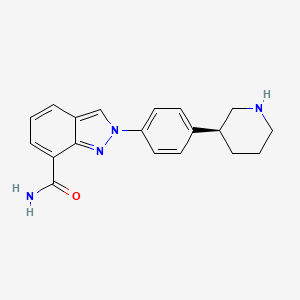
Niraparib; MK 4827


ChemSpider 2D Image | Niraparib | C19H20N4ONiraparib.svgNiraparib.png

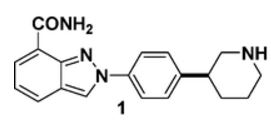
MK-4827,(S)-2-(4-(piperidin-3-yl)phenyl)-2H-indazole-7-carboxaMide

Niraparib; MK 4827; MK4827
UNII:HMC2H89N35
Antineoplastic, Poly(ADP-ribose) Polymerase Inhibitors

1038915-60-4 CAS, free form

str1

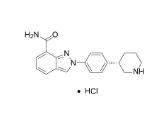
1038915-64-8 CAS HYDROCHLORIDE

1613220-15-7 cas TOSYLATE MONOHYDRATE

Figure imgf000023_0001

1038915-73-9  TOSYLATE

str1

MK-4827(Niraparib) tosylate is a selective inhibitor of PARP1/PARP2 with IC50 of 3.8 nM/2.1 nM; with great activity in cancer cells with mutant BRCA-1 and BRCA-2; >330-fold selective against PARP3, V-PARP and Tank1.
IC50 value: 3.8 nM/2.1 nM( PARP1/2) [1]
Target: PARP1/2
in vitro: MK-4827 displays excellent PARP 1 and 2 inhibition with IC(50) = 3.8 and 2.1 nM, respectively, and in a whole cell assay, it inhibits PARP activity with EC(50) = 4 nM and inhibits proliferation of cancer cells with mutant BRCA-1 and BRCA-2 with CC(50) in the 10-100 nM range [1].
in vivo: MK-4827 is well tolerated in vivo and demonstrates efficacy as a single agent in a xenograft model of BRCA-1 deficient cancer [1]. In addition, MK-4827 strongly enhances the effect of radiation on a variety of human tumor xenografts, both p53 wild type and p53 mutant. The enhancement of radiation response is observed in clinically relevant radiation-dose fractionation schedules. The therapeutic window during which time MK-4827 interacts with radiation lasts for several hours. These biological attributes make translation of this therapeutic combination treatment feasible for translation to the treatment of a variety of human cancers [2].

[1]. Jones P, et al. Discovery of 2-{4-[(3S)-piperidin-3-yl]phenyl}-2H-indazole-7-carboxamide (MK-4827): a novel oral poly(ADP-ribose)polymerase (PARP) inhibitor efficacious in BRCA-1 and -2 mutant tumors. J Med Chem. 2009 Nov 26;52(22):7170-85.

[2]. Wang L, et al. MK-4827, a PARP-1/-2 inhibitor, strongly enhances response of human lung and breast cancer xenografts to radiation. Invest New Drugs. 2012 Dec;30(6):2113-20.

MERCK

Image result for MERCK

TESARO

Image result for TESARO

An inhibitor of poly (ADP-ribose) polymerase (PARP) with potential antineoplastic activity. PARP Inhibitor MK4827 inhibits PARP activity, enhancing the accumulation of DNA strand breaks and promoting genomic instability and apoptosis. The PARP family of proteins detect and repair single strand DNA breaks by the base-excision repair (BER) pathway. The specific PARP family member target for PARP inhibitor MK4827 is unknown. (NCI Thesaurus)

Niraparib (originally MK-4827)[1] is an orally active[2] small molecule PARP inhibitor being developed (by Tesaro) to treat ovarian cancer.

It is an inhibitor of PARP1 and PARP2.[3]

Niraparib is due to be submitted for FDA approval (for maintenance therapy in ovarian cancer) later in 2016.[4]

Chemically, MK-4827 is C19H20N4O[5] (ignoring a possible tosylate group).[6]

A 2012 study found that PARP inhibitors exhibit cytotoxic effects not based solely on their enzymatic inhibition of PARP, but by their trapping of PARP on damaged DNA, and the strength of this trapping activity was ordered niraparib >> olaparib >> veliparib.[7]

MEDICINAL CHEMISTRY APPROACH

Figure

The Medicinal Chemistry approach to compound 1 is shown in Scheme ABOVE. The racemic piperidine 2 was accessed by reduction of the 3-aryl pyridine 3 and then resolved by salt formation with tartaric acid. Protection of the piperidine nitrogen in enantiomerically upgraded piperidine 2 and condensation with aldehyde 4 afforded imine 5 which, after displacement of the nitro group with sodium azide, underwent a thermally promoted cyclisation to afford the 2-aryl indazole 6. Conversion of the ester functionality to a primary amide and deprotection afforded the active pharmaceutical ingredient (API) as the hydrochloride salt. A final chiral HPLC purification was then required to upgrade the enantiomeric purity to >98% ee, followed by lyophilization to give the desired compound 1 as an amorphous HCl salt.

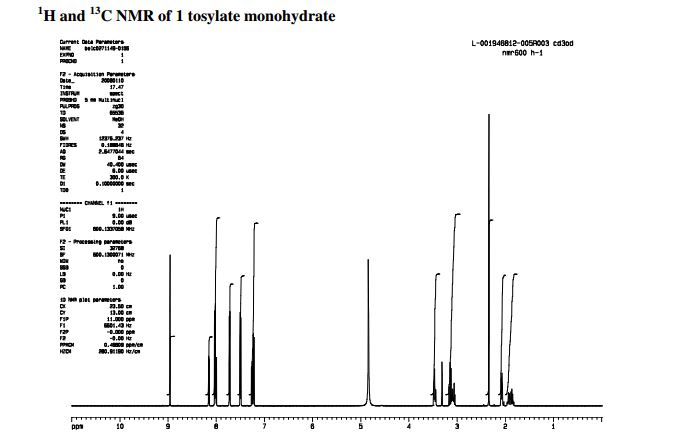
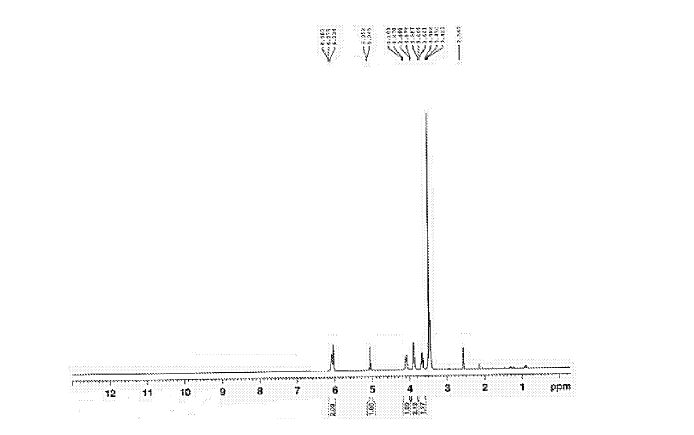
str1NMR CD3OD

Clinical trials

It has undergone a phase III trial for ovarian cancer.[8] It is reported that the primary endpoint (progression-free survival, PFS) was met.[4] Patients with and without a BRCA mutation both showed longer PFS.[4]

As of June 2016 seven clinical trials have been registered for MK-4827.[9]

PAPER

http://pubs.acs.org/doi/abs/10.1021/op400233z

Process Development of C–N Cross-Coupling and Enantioselective Biocatalytic Reactions for the Asymmetric Synthesis of Niraparib

Department of Process Chemistry, Merck & Co., Inc., Rahway, New Jersey 07065, United States
Department of Medicinal Chemistry, Merck & Co., Inc., Boston, Massachusetts 02115, United States
§ Department of Chemical Process Development and Commercialization, Merck & Co., Inc., Rahway, New Jersey 07065, United States
Org. Process Res. Dev., 2014, 18 (1), pp 215–227
DOI: 10.1021/op400233z
This article is part of the Transition Metal-Mediated Carbon-Heteroatom Coupling Reactions special issue.

Abstract

Abstract Image

Process development of the synthesis of the orally active poly(ADP-ribose)polymerase inhibitor niraparib is described. Two new asymmetric routes are reported, which converge on a high-yielding, regioselective, copper-catalyzed N-arylation of an indazole derivative as the late-stage fragment coupling step. Novel transaminase-mediated dynamic kinetic resolutions of racemic aldehyde surrogates provided enantioselective syntheses of the 3-aryl-piperidine coupling partner. Conversion of the C–N cross-coupling product to the final API was achieved by deprotection and salt metathesis to isolate the desired crystalline salt form.

PAPER

http://pubs.acs.org/doi/full/10.1021/op2000783

Development of a Fit-for-Purpose Large-Scale Synthesis of an Oral PARP Inhibitor

Global Process Chemistry, Merck Sharp and Dohme Research Laboratories, Hertford Road, Hoddesdon, Hertfordshire EN11 9BU, U.K.
Global Process Chemistry, Merck Research Laboratories, Rahway, New Jersey 07065, United States
Department of Chemical Process Development and Commercialization, Merck and Co., Rahway, New Jersey, 07065, USA
WuXi APPTec (Shanghai) Pharmaceutical Co. Ltd., 288 Fute Zhong Road, Waigaoqiao Free Trade Zone, Shanghai 200131, China
Org. Process Res. Dev., 2011, 15 (4), pp 831–840
DOI: 10.1021/op2000783

Abstract

Abstract Image

Compound (1) a poly(ADP-ribose)polymerase (PARP) inhibitor has been made by a fit-for-purpose large-scale synthesis using either a classical resolution or chiral chromatographic separation. The development and relative merits of each route are discussed, along with operational improvements and extensive safety evaluations of potentially hazardous reactions.

str1 str2

str1 as tosylate H20

1613220-15-7 cas

Free form 1038915-60-4

(S)-2-(4-(Piperidin-3-yl)phenyl)-2H-indazole-7-carboxamide Tosylate Monohydrate 1

………………. The solid was collected and dried in vacuo at 40 °C to afford 1 as the tosylate monohydrate salt (797 g, 86%, >99 wt %, >99%ee) as a tan-coloured solid.
Mp = 144 °C. 1H NMR (600 MHz, CD3OD) δ 8.95 (1H, s), 8.15 (1H, dd, J = 7.1, 1.2 Hz), 8.02 (2H, m), 8.00 (1H, dd, J = 8.3, 1.2 Hz), 7.72 (2H, m), 7.49 (2H, m), 7.25 (1H, dd, J = 8.3, 7.1 Hz), 7.22 (2H, d, J = 8.0 Hz), 3.49–3.43 (2H, m), 3.16–3.04 (3H, m), 2.34 (3H, s), 2.09–2.05 (2H, m), 1.96–1.82 (2H, m).
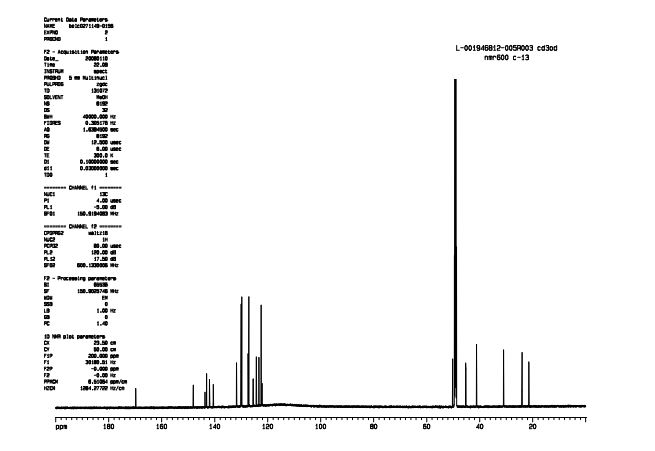
13C NMR (150.9 MHz, CD3OD) δ 169.7, 148.1, 143.7, 143.0, 141.9, 140.5, 131.8, 130.0, 129.8, 127.3, 127.1, 125.4, 124.2, 123.3, 122.4, 50.2, 45.2, 41.1, 30.9, 24.0, 21.4.
 PAPER

Discovery of 2-{4-[(3S)-Piperidin-3-yl]phenyl}-2H-indazole-7-carboxamide (MK-4827): A Novel Oral Poly(ADP-ribose)polymerase (PARP) Inhibitor Efficacious in BRCA-1 and -2 Mutant Tumors

IRBM/Merck Research Labs Rome, Via Pontina km 30,600, 00040 Pomezia, Italy
J. Med. Chem., 2009, 52 (22), pp 7170–7185
*To whom correspondence should be addressed. Current address: Department of Medicinal Chemistry, Merck Research Labs Boston, Avenue Louis Pasteur 33, Boston, MA 02115-5727. Phone: +1-617-992-2292. Fax: +1-617-992-2405. E-mail: philip_jones@merck.com.

Abstract

Abstract Image

We disclose the development of a novel series of 2-phenyl-2H-indazole-7-carboxamides as poly(ADP-ribose)polymerase (PARP) 1 and 2 inhibitors. This series was optimized to improve enzyme and cellular activity, and the resulting PARP inhibitors display antiproliferation activities against BRCA-1 and BRCA-2 deficient cancer cells, with high selectivity over BRCA proficient cells. Extrahepatic oxidation by CYP450 1A1 and 1A2 was identified as a metabolic concern, and strategies to improve pharmacokinetic properties are reported. These efforts culminated in the identification of 2-{4-[(3S)-piperidin-3-yl]phenyl}-2H-indazole-7-carboxamide 56 (MK-4827), which displays good pharmacokinetic properties and is currently in phase I clinical trials. This compound displays excellent PARP 1 and 2 inhibition with IC50 = 3.8 and 2.1 nM, respectively, and in a whole cell assay, it inhibited PARP activity with EC50 = 4 nM and inhibited proliferation of cancer cells with mutant BRCA-1 and BRCA-2 with CC50 in the 10−100 nM range. Compound 56 was well tolerated in vivo and demonstrated efficacy as a single agent in a xenograft model of BRCA-1 deficient cancer.

PATENT

https://www.google.com/patents/WO2014088983A1?cl=en

Image result for niraparib

EXAMPLE 1

The following Example 1 describes synthesis of the compound 2-{4-[(3S)-Piperidin enyl}-2H-indazole-7-carboxamide:

Figure imgf000023_0001

2-{4-[(3S)-Piperidin-3-yl]phenyl}-2H-indazole-7-carboxamide tosylate monohydrate 1

Scheme

Figure imgf000024_0001

1.1 Acylation

Figure imgf000024_0002

2- crystalline

10

A mixture of succinic anhydride 1 (110 g) and bromobenzene (695 mL) was cooled to below 5°C then added A1C13 (294 g). The slurry was allowed to warm to RT and then aged until the reaction was complete judged by HPLC. The reaction mixture was then transferred slowly into a cold HC1 solution resulting in the formation of a white precipitate. The white slurry was filtered through a fritted funnel rinsing with H20. To the off-white product was added MTBE and extracted with aq. NaOH. The aqueous layer was cooled in an ice bath. Concentrated HC1 was added drop wise to adjust the solution pH to 1 , resulting in the formation of a white slurry. The slurry was collected on a fritted funnel, rinsed with H20, and dried under vacuum with a N2 sweep at RT to give the target compound (265 g, 93% corrected yield) as a white powder.

1.2 Esterification

Figure imgf000025_0001

A mixture of the acid 2 (205 g), IPA (4 L) and cone. H2S04 (2.13 mL / 3.91 g) was heated to a gentle reflux until the reaction was complete judged by HPLC. The solution was then cooled to RT and concentrated to a volume of 350-400 mL. The residue was dissolved in

MTBE (1.2 L), washed with aq. Na2C03 followed by water. After dried over MgS04 , the filtrate was solvent-switched into heptane. The slurry was then filtered, and the cake was washed with cold heptane. After drying under vacuum, the target compound (223.5 g, 93% corrected yield) was obtained as a white powder.

1.3 Epoxidation

Figure imgf000025_0002

A mixture of Me3SOI (230 g) and DMSO (300 mL) was added KOt-Bu (113 g) followed by DMSO (300 mL). The mixture was aged for a further 1.5 hr. In a separate flask, ketone 3 (230 g) was dissolved in a mixture of THF (250 mL) and DMSO (150 mL), and the resulting solution was added drop wise to the ylide solution. The mixture was aged for 2 hr at RT, added hexanes (1 L), and then quenched by the addition of ice-water (600 mL). The layers were cut, and the organic layer was washed with water then with brine. The slightly cloudy yellow organic layer was dried over Na2S04 and filtered through a fritted funnel. Product solution assay was 176.1 g (76%> assay yield). This solution was carried forward into the rearrangement step. 1.4 Epoxide rearrangement and bisulfite formation

Figure imgf000026_0001

5 – not isolated

Figure imgf000026_0002

A solution of crude epoxide 4 (assay 59.5 g) in hexanes was solvent switched into PhMe, and added ZnBr2 (10.7 g). When the rearrangement was complete judged by HPLC, the slurry was filtered through a fritted funnel. The clear filtrate was washed with 10% aq. NaCl and then stirred with a solution of sodium bisulfite (NaHS03, 24.7 g) in H20 (140 mL) vigorously at RT for 3 hr. The cloudy aqueous layer was separated and washed with heptanes. By 1H-NMR assay, the aqueous solution contained 71.15 g bisulfite adduct 6 (30.4 wt % solution, 90%) yield from crude epoxide 4). This solution was used directly in the subsequent transaminase step.

1.5 Transaminase DKR

Figure imgf000026_0003

45 C, inert, 40-46 hrs 7

100 g/L as 17.16 wt % aq solution 99.3% ee

85-87% yield

To a cylindrical Labfors reactor was charged pyridoxal-5 -phosphate (1.4 g, 5.66 mmol), 452 ml 0.2 M borate buffer pH 10.5 containing 1M iPrNH2, 52 g transaminase (SEQ ID NO: 180), and 75 ml DMSO, and the resulting mixture was warmed to 45°C. The pH was controlled at pH 10.5 using 8 M aq iPrNH2. To this was added dropwise a mixture of 17.16 wt% aq solution of ester bi-sulfite 6 (147.2 g, 353 mmol) and 219 ml DMSO under N2 atmosphere. When the reaction was complete judged by HPLC, the reaction mixture was cooled and extracted with 1 volume of 3:2 IPA:IPAc. The aq/rag layer was extracted again with 1 volume of 3:7 IPATPAc. The organic layer was washed with brine at pH >9. Assay yield in solution was 78 g (87%); 99.3% ee. After dried over MgS04, and filtered through a fritted funnel, the crude solution was concentrated under vacuum flushing with IP Ac to remove IPA. The resulting slurry was concentrated to a final volume of -200 mL, cool to below 0°C, and filtered to collect the solid. The cake was washed with ice-cold IPAc and dried at RT under vacuum to give the desired product (84% corrected yield, 99.3 LCAP) as a white powder. 1.6. Reduction of amide

Figure imgf000027_0001

(S)-3-(4-bromophenyl)piperidine

The lactam 7 can be reduced to form the i eridine 8 as described below:

Figure imgf000027_0002

7 – crystalline

A mixture of lactam 7 (10.25 g at 97.5 wt %) in THF (100 mL) was cooled to < 10°C, and added NaBH4 (4.47 g). EtOH (6.89 mL) was then added slowly over 20 min. The slurry was aged for an additional 1 hr at 2°C after which BF3 THF (13.03 mL) was added over 1 hr. The slurry was slowly warmed to RT and aged until complete conversion judged by HPLC. The reaction was then cooled to < 5°C then slowly quenched with MeOH (7.96 mL), added HC1 (9.69 mL), then the reaction was heated to 45°C until decomplexation of product-borane complex was complete, as indicated by LC assay. The reaction was cooled, diluted with IPAc (75 mL) and water (80 mL), and then pH was adjusted with aqueous NH4OH to pH 8. The organic layer was separated, added 75 mL water, then pH adjusted to 10.5 with 50 wt % NaOH. The layers were separated and the organic layer was washed with brine. After solvent-switched to IPAc, LC Assay yield was 9.1g; 95.9%.

1.7 Tosylate salt formation The tosylate salt of the piperidine 8 can be formed as described below:

Figure imgf000028_0001

The crude piperidine 8 free base in IPA was heated to ~40°C. TsOH H20 solids was added portion-wise. The slurry was warmed to 50°C and held at that temperature for 2 h, and then slowly cooled to RT and aged overnight. Supernatant concentration was measured to be 2.5 g/ml (free base concentration). The solids were filtered and washed with IP Ac (3×15 mL) and dried at RT. Isolated solides: 14.85 g, 96% corrected isolated yield.

1.8 Boc protection

The piperi ine 8 tosylate salt can be protected as described below:

Figure imgf000028_0002

To a stirred slurry of the tosylate salt of piperidine 8 (25.03 g, 60.6 mmol) in MTBE (375 ml) was added NaOH (aq. 1.0 N, 72.7 ml, 72.7 mmol) at RT. To the mixture, (BOC)20 (13.36 ml, 57.6 mmol) was added slowly over 3 min. The resulting mixture was stirred for 4.5 hr at RT, and then the aqueous layer was separated. The MTBE layer was washed with water (100 ml X 2). The organic layer was filtered, and DMAC (100 ml) was added to the filtrate and

concentrated under vacuum. Product assay: 21.86 g, quantitative yield.

1.9 Terf-Butylamide Formation

Figure imgf000028_0003

N-(tert-butyl)- 1 H-indazole-7-carboxamide

Figure imgf000029_0001

10 11

Indazole-7-carboxylic acid 10 (50.3 g, 295 mmol) was dissolved in DMF, and added CDI (59.1 g, 354 mmol) at RT. After 1.5hr, tert-butylamine (62.5 ml, 589 mmol) was added to the reaction mixture. The resulting reaction mixture was warmed to 40 °C until complete

conversion, then cooled to RT. Water (600 ml) was added dropwise causing the mixture to form a thick slurry. Solid was collected by filtration and washed with 10% DMF in water (250 ml) followed by water. The solid was dried under vacuum. Beige solid: 55.31 g, 86%> isolated yield.

1.10 Carbon-Nitrogen Coupling

Figure imgf000029_0002

(S)-tert-butyl 3-(4-(7-(tert-butylcarbamoyl)-2H-indazol-2-yl)phenyl)piperidine- 1 -carboxylate

Figure imgf000029_0003

A mixture of the protected piperidine 9 (113 g, 18.23 wt%, 60.6 mmol) in DMAc (160 mL), compound 11 (13.82 g, 63.6 mmol), and K2CO3 (25.6 g, 182 mmol) was degassed by bubbling nitrogen. To the mixture was added CuBr (0.444 g, 3.03 mmol) and 8- hydroxyquinoline 12 (0.889 g, 6.06 mmol), and the resulting mixture was warmed to 110°C until complete conversion. The reaction mixture was then cooled, filtered through a pad of Celite, and rinsed with DMAc (100 ml). The filtrate was warmed to 35°C and added citric acid aqueous solution (10%) dropwise to form a light green slurry. After cooled to room temperature, the slurry was filtered, and the cake was washed with DMAc/Water (2/1, 150ml) followed by copious amount of water. The solid was dried under vacuum with nitrogen. Net weight: 27.24g. LC assay: 26.77g, 98.3 wt %. Assay yield: 93.6%.

1.11 Double deprotection

Figure imgf000030_0001

To compound 13 (20.0 g, 41.2 mmol) was added MSA (60 ml) and o-xylene (40 ml), and the the reaction mixture was warmed to 40°C until the complete conversion judged by HPLC. The reaction mixture was cooled to RT and added water (140 ml) slowly maintaining the temperature < 25°C. When the water addition was completed, the organic layer was removed, and the aq. layer was washed with toluene. The aqueous layer was filtered through a glass funnel, and the filtrate was added an aqueos solution of TsOH (11.77g in 23.5 ml) slowly at RT causing a thick slurry to form. Solid was collected by filtration, washed with water, and dried under vacuum. The titled compound was obtained as a white powder. Net weight: 20.6 g. LC assay: 20.0 g, 97.3 wt %. Assay yield: 95.2%.

EXAMPLE 2

The following Example 2 describes synthesis of the trifluoromethylacetate salt of compound 2-{4-[(3S)-Piperidin-3-yl]phenyl}-2H-indazole-7-carboxamide:

2.1 Cumylamide Formation

Figure imgf000031_0001

N-(2-phenylpropan-2-yl)- 1 H-indazole-7-carboxamide

Figure imgf000031_0002

10 1 5

10

To the indazole-7-carboxylic acid 10 (400 mg, 2.47 mmol) in tetrahydrofuran (9.9 mL), was sequentially added HATU (1.13 g, 2.96 mmol), DIPEA (2.15 mL, 12.3 mmol), and cumylamine (500 mg, 3.70 mmol) at 50°C. The reaction was stirred overnight before being concentrated and loaded directly onto a silica column, eluting with 10-30% EtOAc/hexane. The product was collected and concentrated to afford the desired product as a colorless solid (557 mg, 81% yield).

2.2 Carbon-Nitrogen Coupling

Figure imgf000031_0003

-butyl 3-(4-(7-((2-phenylpropan-2-yl)carbamoyl)-2H-indazol-2-yl)phenyl)piperidine- carboxylate

Figure imgf000031_0004

15 16

A sealed vial containing the indazole-7-carboxamide 15 (50 mg, 0.18 mmol), copper(I) iodide (2.6 mg, 0.014 mmol), potassium phosphate tribasic (80 mg, 0.38 mmol), and aryl bromide 9 (73.1 mg, 0.215 mmol) was evacuated and backfilled with argon (x3). Trans-N,N’- dimethylcyclohexane-l,2-diamine (11.3 μΐ,, 0.072 mmol), and toluene (179 μΐ) were then added successively and the sealed vial was heated at 110 °C overnight. The vial was then cooled and toluene (0.30 mL) was added to the slurry. Crude LC/MS indicated >20: 1 selectivity for the desired indazole isomer. The crude product was purified by loading directly onto a Biotage Snap 10G silica column, eluting with 5-50% EtOAc/hexane. The product was collected and concentrated to afford the desired product as a colorless solid (78 mg, 81% yield).

2.3 Double deprotection

Figure imgf000032_0001

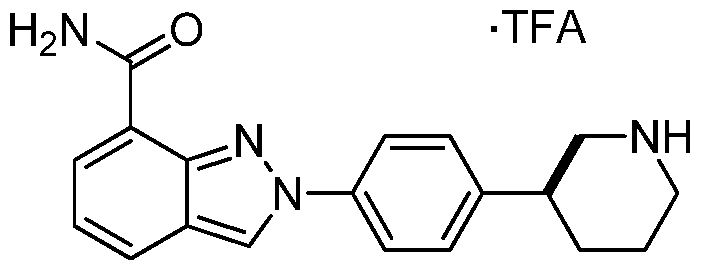
(5)-2-(4-(piperidin-3-yl)phenyl)-2H-indazole-7-carboxamide trifluoromethylacetate salt

Figure imgf000032_0002

16 17

To the piperidine-l-carboxylate 16 (45 mg, 0.084 mmol), was added triethylsilane (267 μί, 1.67 mmol) and TFA (0.965 mL, 12.5 mmol) at 25°C. The reaction was stirred for 4 hours and the reaction was concentrated in vacuo, and purified by mass triggered reverse phase HPLC (acetonitrile: water, with 0.1% TFA modifier). Lyphilization gave the desired product as the TFA salt and as a white solid (31 mg, 85% yield). HRMS (ESI) calc’d for Ci9H2iN40 [M+H]+: 321.1710, found 321.1710.

EXAMPLE 3

Following the conditions used in sections 2.1 and 2.2 of Example 2, this Example 3 shows regioselective N2 arylation of compound 9 using various amide protecting groups. The indazole-7-carboxylic acid 10 was reacted with various amines to generate a protected amide.

The amide protecting groups are indicated by the R group in Table 2. The amide coupling yield is provided in Table 2. The Cu-mediated carbon-nitrogen coupling of this indazole to compound 9 was then tested to determine if regioselective N2 arylation was possible. The arylation yield is also provided in Table 2. The data shows that various amide protecting groups on the indazole intermediate are suitable to generate efficient regioselective N2 arylation of compound 9.

Figure imgf000033_0001
Figure imgf000033_0002
PATENT
 WO 2008084261

The present invention relates to amide substituted indazoles which are inhibitors of the enzyme poly(ADP-ribose)polymerase (PARP), previously known as poly(ADP-ribose)synthase and poly(ADP-ribosyl)transferase. The compounds of the present invention are useful as monotherapies in tumors with specific defects in DNA-repair pathways and as enhancers of certain DNA-damaging agents such as anticancer agents and radiotherapy. Further, the compounds of the present invention are useful for reducing cell necrosis (in stroke and myocardial infarction), down regulating inflammation and tissue injury, treating retroviral infections and protecting against the toxicity of chemotherapy.
Poly(ADP-ribose) polymerase (PARP) constitute a super family of eighteen proteins containing PARP catalytic domains (Bioessays (2004) 26:1148). These proteins include PARP-1, PARP-2, PARP-3, tankyrase-1, tankyrase-2, vaultPARP and TiPARP. PARP-I, the founding member, consists of three main domains: an amino (N)-terminal DNA-binding domain (DBD) containing two zinc fingers, the automodification domain, and a carboxy (C)-terminal catalytic domain.
PARP are nuclear and cytoplasmic enzymes that cleave NAD+ to nicotinamide and ADP-ribose to form long and branched ADP-ribose polymers on target proteins, including
topoisomerases, histones and PARP itself (Biochem. Biophys. Res. Commun. (1998) 245:1-10).

Poly(ADP-ribosyl)ation has been implicated in several biological processes, including DNA repair, gene transcription, cell cycle progression, cell death, chromatin functions and genomic stability.
The catalytic activity of PARP-I and PARP-2 has been shown to be promptly stimulated by DNA strand breakages (see Pharmacological Research (2005) 52:25-33). In response to DNA damage, PARP-I binds to single and double DNA nicks. Under normal physiological conditions there is minimal PARP activity, however, upon DNA damage an immediate activation of PARP activity of up to 500-fold occurs. Both PARP-I and PARP-2 detect DNA strand interruptions acting as nick sensors, providing rapid signals to halt transcription and recruiting the enzymes required for DNA repair at the site of damage. Since radiotherapy and many chemotherapeutic approaches to cancer therapy act by inducing DNA damage, PARP inhibitors are useful as chemo- and radiosensitizers for cancer treatment. PARP inhibitors have been reported to be effective in radio sensitizing hypoxic tumor cells (US 5,032,617, US
5,215,738 and US 5,041,653).
Most of the biological effects of PARP relate to this poly (ADP-ribosyl)ation process which influences the properties and function of the target proteins; to the PAR oligomers that, when cleaved from poly(ADP-ribosyl)ated proteins, confer distinct cellular effects; the physical association of PARP with nuclear proteins to form functional complexes; and the lowering of the cellular level of its substrate NAD+ (Nature Review (2005) 4:421-440).
Besides being involved in DNA repair, PARP may also act as a mediator of cell death. Its excessive activation in pathological conditions such as ischemia and reperfusion injury can result in substantial depletion of the intercellular NAD+, which can lead to the impairment of several NAD+ dependent metabolic pathways and result in cell death (see Pharmacological Research (2005) 52:44-59). As a result of PARP activation, NAD+ levels significantly decline. Extensive PARP activation leads to severe depletion OfNAD+ in cells suffering from massive DNA damage. The short half-life of poly(ADP-ribose) results in a rapid turnover rate, as once poly(ADP-ribose) is formed, it is quickly degraded by the constitutively active poly(ADP-ribose) glycohydrolase (PARG). PARP and PARG form a cycle that converts a large amount OfNAD+ to ADP-ribose, causing a drop OfNAD+ and ATP to less than 20% of the normal level. Such a scenario is especially detrimental during ischemia when deprivation of oxygen has already drastically compromised cellular energy output. Subsequent free radical production during reperfusion is assumed to be a major cause of tissue damage. Part of the ATP drop, which is typical in many organs during ischemia and reperfusion, could be linked to NAD+ depletion due to poly(ADP-ribose) turnover. Thus, PARP inhibition is expected to preserve the cellular energy level thereby potentiating the survival of ischemic tissues after insult. Compounds which are inhibitors of PARP are therefore useful for treating conditions which result from PARP mediated cell death, including neurological conditions such as stroke, trauma and Parkinson’s disease.
PARP inhibitors have been demonstrated as being useful for the specific killing of BRCA-I and BRCA-2 deficient tumors {Nature (2005) 434:913-916 and 917-921; and Cancer Biology & Therapy (2005) 4:934-936).
PARP inhibitors have been shown to enhance the efficacy of anticancer drugs
{Pharmacological Research (2005) 52:25-33), including platinum compounds such as cisplatin and carboplatin {Cancer Chemother Pharmacol (1993) 33:157-162 and MoI Cancer Ther (2003) 2:371-382). PARP inhibitors have been shown to increase the antitumor activity of
topoisomerase I inhibitors such as Irinotecan and Topotecan (MoI Cancer Ther (2003) 2:371-382; and Clin Cancer Res (2000) 6:2860-2867) and this has been demonstrated in in vivo models (J Natl Cancer Inst (2004) 96:56-67).
PARP inhibitors have been shown to restore susceptibility to the cytotoxic and antiproliferative effects of temozolomide (TMZ) (see Curr Med Chem (2002) 9:1285-1301 and Med Chem Rev Online (2004) 1:144-150). This has been demonstrated in a number of in vitro models (Br J Cancer (1995) 72:849-856; Br J Cancer (1996) 74:1030-1036; MoI Pharmacol (1997) 52:249-258; Leukemia (1999) 13:901-909; GUa (2002) 40:44-54; and Clin Cancer Res (2000) 6:2860-2867 and (2004) 10:881-889) and in vivo models (Blood (2002) 99:2241-2244; Clin Cancer Res (2003) 9:5370-5379 and J Natl Cancer Inst (2004) 96:56-67). PAPR inhibitors have also been shown to prevent the appearance of necrosis induced by selective Λ3 -adenine methylating agents such as MeOSC>2(CH2)-lexitropsin (Me-Lex) {Pharmacological Research (2005) 52:25-33).
PARP inhibitors have been shown to act as radiation sensitizers. PARP inhibitors have been reported to be effective in radiosensitizing (hypoxic) tumor cells and effective in preventing tumor cells from recovering from potentially lethal {Br. J. Cancer (1984) 49(Suppl. VI):34-42; and Int. J. Radial Bioi. (1999) 75:91-100) and sub-lethal {Clin. Oncol. (2004) 16(l):29-39) damage of DNA after radiation therapy, presumably by their ability to prevent DNA strand break rejoining and by affecting several DNA damage signaling pathways.
PARP inhibitors have also been shown to be useful for treating acute and chronic myocardial diseases (see Pharmacological Research (2005) 52:34-43). For instance, it has been demonstrated that single injections of PARP inhibitors have reduced the infarct size caused by ischemia and reperfusion of the heart or skeletal muscle in rabbits. In these studies, a single injection of 3-amino-benzamide (10 mg/kg), either one minute before occlusion or one minute before reperfusion, caused similar reductions in infarct size in the heart (32-42%) while 1,5-dihydroxyisoquinoline (1 mg/kg), another PARP inhibitor, reduced infarct size by a comparable degree (38-48%). These results make it reasonable to assume that PARP inhibitors could salvage previously ischemic heart or reperfusion injury of skeletal muscle tissue {PNAS (1997) 94:679-683). Similar findings have also been reported in pigs {Eur. J. Pharmacol. (1998) 359:143-150 and Ann. Thorαc. Surg. (2002) 73:575-581) and in dogs (Shock. (2004) 21:426-32). PARP inhibitors have been demonstrated as being useful for treating certain vascular diseases, septic shock, ischemic injury and neurotoxicity {Biochim. Biophys. Actα (1989) 1014:1-7; J Clin. Invest. (1997) 100: 723-735). Oxygen radical DNA damage that leads to strand breaks in DNA, which are subsequently recognized by PARP, is a major contributing factor to such disease states as shown by PARP inhibitor studies (J Neurosci. Res. (1994) 39:38-46 and PNAS (1996) 93:4688-4692). PARP has also been demonstrated to play a role in the
pathogenesis of hemorrhagic shock {PNAS (2000) 97:10203-10208).
PARP inhibitors have been demonstrated as being useful for treatment of inflammation diseases (see Pharmacological Research (2005) 52:72-82 and 83-92).
It has also been demonstrated that efficient retroviral infection of mammalian cells is blocked by the inhibition of PARP activity. Such inhibition of recombinant retroviral vector infections has been shown to occur in various different cell types (J Virology, (1996)
70(6): 3992-4000). Inhibitors of PARP have thus been developed for use in anti- viral therapies and in cancer treatment (WO 91/18591).
In vitro and in vivo experiments have demonstrated that PARP inhibitors can be used for the treatment or prevention of autoimmune diseases such as Type I diabetes and diabetic complications {Pharmacological Research (2005) 52:60-71).
PARP inhibition has been speculated as delaying the onset of aging characteristics in human fibroblasts {Biochem. Biophys. Res. Comm. (1994) 201(2):665-672 and Pharmacological Research (2005) 52:93-99). This may be related to the role that PARP plays in controlling telomere function (Nature Gen., (1999) 23(l):76-80).
The vast majority of PARP inhibitors to date interact with the nicotinamide binding domain of the enzyme and behave as competitive inhibitors with respect to NAD+(Expert Opin. Ther. Patents (2004) 14:1531-1551). Structural analogues of nicotinamide, such as benzamide and derivatives were among the first compounds to be investigated as PARP inhibitors.
However, these molecules have a weak inhibitory activity and possess other effects unrelated to PARP inhibition. Thus, there is a need to provide potent inhibitors of the PARP enzyme.
Structurally related PARP inhibitors have previously been described. WO 1999/59973 discloses amide substituted benzene rings fused to 5 membered heteroaromatic rings;
WO2001/85687 discloses amide substituted indoles; WO 1997/04771, WO 2000/26192, WO 2000/32579, WO 2000/64878, WO 2000/68206, WO 2001/21615, WO 2002/068407, WO 2003/106430 and WO 2004/096793 disclose amide substituted benzo imidazoles; WO
2000/29384 discloses amide substituted benzoimidazoles and indoles; and EP 0879820 discloses amide substituted benzoxazoles.
It has now surprisingly been discovered that amide substituted indazoles of the present invention exhibit particularly high levels of inibition of the activity of poly(ADP-ribose)polymerase (PARP). Thus the compounds of the present invention are particularly useful as inhibitors of PARP-I and/or PARP-2. They also show particularly good levels of cellular activity, demonstrating good anti-proliferative effects in BRCAl and BRCA2 deficient cell lines.

The present invention provides compounds of formula I:

Scheme 1

A procedure to synthesize derivatives of those compounds of this invention is shown in scheme 1, whereby the substituted 2H-indazoles are prepared using a synthetic route similar to that described in WO 2005/066136. Following initial conversion of the 2-nitro-3-methyl-benzoic acid derivative into the corresponding ester, radical bromination of the methyl group using reagents like N-bromosuccinimide and benzoyl peroxide yields the key benzyl bromide derivative. Oxidation of this benzylic bromide to the corresponding benzaldehyde can be accomplished for instance using 7V-methylmorpholine-7V-oxide and molecular sieves. Following the condensation of the aldehyde with an amine, ring closure can be accomplished by treating the key intermediate with sodium azide at elevated temperature to introduce the final nitrogen atom and the resultant extrusion of nitrogen to furnish the indazole ring. A base such as lutidine can also be added to this reaction. Final conversion of the ester to the primary amide yields the desired derivatives. This can be accomplished either by heating the ester in an ammonia solution or by conversion to the corresponding carboxylic acid and then amide coupling.

Rx = C1-6alkyl
Oxidation
e.g. NMMO, mol sieves

NH3, THF or MeOH,
700C sealed tube, or
NaOH or KOH, NH3, HATU
or TBTU, DIPEA, DMF, RT
Scheme 1

Scheme 2
A variation of schemes 1 is shown below in scheme 2 and allows the introduction of substituents onto the indazole cores. When the required nitrobenzoic acid derivatives are not commercial available they can be prepared through nitration of the corresponding benzoic acid derivatives, for instance using potassium nitrate in concentrated sulphuric acid. Synthetic manipulations as decribed above allow the formation of the corresponding aniline which can either be cyclised to the indazole by firstly acetylation of the indazole and cyclisation with sodium nitrite in concentrated HCl acid at O0C. Alternatively, the aniline can be diazonitised with nitrosium tetrafluoroborate and the corresponding diazonium tetrafluoroborate salt decomposed at elevated temperatures to the corresponding dilfluorobenzene derivative by a Schiemann reaction
(Caution). Following the synthetic sequence as described in scheme 1 allows oxidation of the benzylic methyl group to the corresponding aldehyde and elaboration of the desired indazole derivatives by coupling with a (hetero)anilide and cyclisation with sodium azide.

Nitration Esterifi cation
KNO3, cone. e.g. AcCI, MeOH,


Reduction
H2, Pd/C

Scheme 2 Scheme 3
An alternative procedure involves functionalisation of the indazole at a late stage as shown in scheme 3. Here the indazole ester is first converted to the corresponding carboxamide and the subjected to nucleophilic aromatic substitution of the appropriate fluoro(hetero)aromatic bromide. This allows the preparation of a bromide derivative that can be cross coupled under Suzuki coupling conditions, for instance using tri(tert-butyl)phosphine and Pd2(dba)3 as catalysts in the presence of a base, such as sodium carbonate. Conversion to the desied piperidine moiety is then accomplished by a Fowler reaction using an acyl chloride, such as CBz-Cl and a reducing agent such as NaBH4. Final hydrogenation reaction can yield the corresponding piperidine derivatives.

Suzuki coupling

Scheme 3

PATENT
WO 2009087381
PATENT CITATIONS
Cited Patent Filing date Publication date Applicant Title
US8071623 * Jan 8, 2008 Dec 6, 2011 Instituto Di Ricerche Di Biologia Molecolare P. Angeletti Spa Amide substituted indazoles as poly(ADP-ribose)polymerase(PARP) inhibitors
US8129377 * Sep 29, 2005 Mar 6, 2012 Mitsubishi Tanabe Pharma Corporation 6-(pyridinyl)-4-pyrimidone derivates as tau protein kinase 1 inhibitors
US20100286203 * Jan 8, 2009 Nov 11, 2010 Foley Jennifer R Pharmaceutically acceptable salts of 2–2h-indazole-7-carboxamide
NON-PATENT CITATIONS
Reference
1 * CHUNG ET AL.: “Process Development of C-N Cross-Coupling and Enantioselective Biocatalytic Reactions for the Asymmetric Synthesis of Niraparib.“, ORGANIC PROCESS RESEARCH & DEVELOPMENT, vol. 18, no. 1, 2014, pages 215 – 227, XP055263728
2 * JONES ET AL.: “Discovery of 2-(4-[(3S)-Piperidin-3-yl]phenyl}-2H-indazole-7-carboxamide ( MK -4827): A Novel Oral Poly(ADP-ribose)polymerase (PARP) Inhibitor Efficacious in BRCA-1 and -2 Mutant Tumors.“, JOURNAL OF MEDICINAL CHEMISTRY, vol. 52, no. 22, 2009, pages 7170 – 7185, XP055263725
3 * WALLACE ET AL.: “Development of a Fit-for-Purpose Large-Scale Synthesis of an Oral PARP Inhibitor.“, ORGANIC PROCESS RESEARCH & DEVELOPMENT, vol. 15, no. 4, 2011, pages 831 – 840, XP055263721
REFERENCED BY
Citing Patent Filing date Publication date Applicant Title
WO2016025359A1 * Aug 10, 2015 Feb 18, 2016 Merck Sharp & Dohme Corp. Processes for the preparation of a bace inhibitor

References

Further reading

1 to 6 of 6
Patent ID Patent Title Submitted Date Granted Date
US2015299167 Regioselective N-2 Arylation of Indazoles 2013-12-03 2015-10-22
US8889707 Treatment of addiction 2013-02-07 2014-11-18
US2013184342 METHODS AND COMPOSITIONS FOR TREATMENT OF CANCER AND AUTOIMMUNE DISEASE 2013-03-13 2013-07-18
US2012035244 PARP1 TARGETED THERAPY 2012-02-09
US8071623 Amide substituted indazoles as poly(ADP-ribose)polymerase(PARP) inhibitors 2008-07-10 2011-12-06
US2010286203 PHARMACEUTICALLY ACCEPTABLE SALTS OF 2–2H-INDAZOLE-7-CARBOXAMIDE 2010-11-11
Niraparib
Niraparib.svg
Clinical data
Routes of
administration
By mouth
Legal status
Legal status
  • US: Investigational
Identifiers
CAS Number 1038915-60-4 Yes
PubChem (CID) 24958200
ChemSpider 24531930 Yes
UNII HMC2H89N35 Yes
ChEMBL CHEMBL1094636 Yes
Chemical and physical data
Formula C19H20N4O
Molar mass 320.394 g/mol
3D model (Jmol) Interactive image

P.S. : The views expressed are my personal and in no-way suggest the views of the professional body or the company that I represent.

//////////1613220-15-7, 1038915-60-4, 2-[4-(3S)-3-Piperidinylphenyl]-2H-indazole-7-carboxamide, Niraparib, mk 4827, Antineoplastic, Poly(ADP-ribose) Polymerase Inhibitors
c1(cccc2c1nn(c2)c1ccc(cc1)[C@H]1CNCCC1)C(=O)N

EMA issues new Guideline on “Chemistry of Active Substances”


DR ANTHONY MELVIN CRASTO Ph.D's avatarDRUG REGULATORY AFFAIRS INTERNATIONAL

Image result for active substances

The new EMA “Guideline on the chemistry of active substances” represents the current state of the art in regulatory practice and fits into the context of the ICH Guidelines Q8-11. Find out what information regarding active substances European authorities expect in an authorization application.

http://www.gmp-compliance.org/enews_05704_EMA-issues-new-Guideline-on-%22Chemistry-of-Active-Substances%22_15982,15721,S-WKS_n.html

A medicinal product authorization application requires comprehensive information on origin and quality of an active substance. What information is required was defined in two Guidelines so far: the Guideline “Chemistry of Active Substances” (3AQ5a) from 1987 and the “Guideline on the Chemistry of New Active Substances” from 2004. Because both Guidelines’ content do not take into account the ICH Guidelines Q8-11 issued in the meantime and do thus not meet the current state of the art in sciences and in regulatory practice, the EMA Quality Working Party (QWP) developed an updated document  entitled “Guideline on the chemistry of active substances” (EMA/454576/2016), which was issued…

View original post 738 more words

NEW PATENT, SUGAMMADEX, WO 2016194001


Image result for patent animation
NEW PATENT, SUGAMMADEX, WO 2016194001
WO2016194001,  PROCESSES FOR PREPARATION OF SUGAMMADEX AND INTERMEDIATES THEREOF
ALAPARTHI, Lakshmi Prasad; (IN).
PAL, Palash; (IN).
GINJUPALLI, Sadasiva Rao; (IN).
SHARMA, Uday; (IN).
CHOWDARY, Talluri Bhushaiah; (IN).
MANTRI, Anand Vijaykumar; (IN).
GADE, Bharath Reddy; (IN).
KULKARNI, Gaurav; (IN)
LINK

Sugammadex (Org 25969, Bridion) is chemically known as Cyclooctakis-(l-→4)-[6-S-(2-carboxyethyl)-6-thio-a-D-glucopyranosyl]. Sugammadex is an agent for reversal of neuromuscular blockade by the neuromuscular blocking agents (NMBAs) rocuronium, vecuronium, pancuronium in general anesthesia. It is the first selective relaxant binding agent (SRBA). SRBAs are a new class of drugs that selectively encapsulates and binds NMBAs.

The word Sugammadex is derived from Su= Sugar and Gamma cyclodex = Cyclodextrin. Sugammadex is inert chemically and does not bind to any receptor. It acts by rapidly encapsulating steroidal NMBDs to form a stable complex at a 1 : 1 ratio and thus decreasing the free concentration of the drug from the plasma. This creates a concentration gradient favoring the movement of the remaining rocuronium molecules from the neuromuscular junction back into the plasma, where they are encapsulated by free Sugammadex molecules. The latter molecules also enter the tissues and form a complex with rocuronium. Therefore, the neuromuscular blockade of rocuronium is terminated rapidly by the diffusion of rocuronium away from the neuromuscular junction back into the plasma.

NMBDs are quaternary ammonium compounds with at least one charged nitrogen atom. Cyclodextrins have a lipophilic center but a hydrophilic outer core, attributable to negatively charged ions on their surface. These negatively charged ions on the surface of Sugammadex attract the positive charges of the quaternary ammonium relaxant, drawing the drug in to the central core of the cyclodextrin. The binding of the guest molecule into the host cyclodextrin occurs because of vander waal’s forces, hydrophobic and electrostatic interactions. The structure of the cyclodextrin is such that all four hydrophobic rings of the steroidal relaxant fit tightly within the concentric doughnut forming an inclusion complex. This has been confirmed by calorimetry and X-ray crystallography. Such a reaction occurs in the plasma not at the neuromuscular junction and the concentration of free rocuronium in the plasma decrease rapidly after Sugammadex administration.

[0004] US 6670340 disclose process for preparation of Sugammadex sodium. The process as disclosed in example 4 of this patent involves reaction of iodo γ-cyclodextrin intermediate with 3-mercapto propionic acid in presence of sodium hydride and DMF to give 6-per-deoxy-6-per-(3-carboxyethyl)thio-Y-cyclodextrin, sodium salt (Sugammadex sodium). The preparation of iodo intermediate, 6-per-deoxy-6-per-iodo-y-cyclodextrin is as given in example 3 which involves reaction of γ-cyclodextrin with iodine in presence of triphenylphosphine (PPh3) and DMF. In practice, and to develop a process that has to be taken from lab scale to manufacturing scale, purity is one of the most important criteria. Since this process involves use of triphenylphosphine reagent there is formation of triphenylphosphine oxide as a by-product. Removal of triphenylphosphine oxide from the reaction mass is very difficult as it requires repeated washing with the solvent, which leads to inconsistency in yield of final product Sugammadex sodium. Furthermore, the product was dialysed for 36 hours to get pure compound. The dialysis purification is expensive and provides product in lower yield and hence such processes are not feasible and economical at industrial scale.

[0005] Another process for preparing the intermediate compound, 6-perdeoxy-6-per-chloro gamma cyclodextrin as disclosed in WO2012025937 involves use of phosphorous halide in particular, phosphorous pentachloride. WO2012025937 also disclose process for preparation of Sugammadex sodium using this intermediate which involves a) reaction of gamma-cyclodextrin with phosphorous pentachloride and dimethylformamide to obtain 6-perdeoxy-6-per-chloro gamma cyclodextrin and b) reaction of 6-perdeoxy-6-per-chloro gamma cyclodextrin with 3-mercapto propionic acid in presence of alkali metal hydrides and an organic solvent to give Sugammadex sodium. Preparation of chloro gamma cyclodextrine intermediate using phosphorous pentachloride is associated with formation of phosphorous impurities during the reaction, which are difficult to remove and also it involves tedious workup procedure.

[0006] WO2014125501 discloses preparation of 6-perdeoxy-6-per-chloro gamma cyclodextrin using phosphorous pentachloride (see example 1). The process as given in example 1 of this patent application was repeated by the present inventors. The first step provided yellow to brown mass which lacked the powder form and the flow properties. The mass was pasty at times and difficult to filter. Thus the process was unclean and tedious. Overall, no consistent product was obtained. WO2014125501 also disclose preparation of Sugammadex sodium using this intermediate which involves reaction of 6-perdeoxy-6-per-halo-gamma-cyclodextrin with 3-mercapto propionic acid in presence of alkali metal alkoxide such as sodium methoxide and organic solvent, the drawback of this this reaction is that it needs anhydrous conditions for completion of the reaction.

[0007] It has been reported that the generation of impurities and obtaining less pure compounds are major concerns with Sugammadex. Applicant Nippon Organon K.K.in their “Report on the Deliberation Results” submitted to Evaluation and Licensing Division, Pharmaceutical and Food Safety Bureau, Ministry of Health, Labour and Welfare, mentions as follows:

For related substances, specifications for 14 different related substances (Related Substance A, Org 48301, Related Substance B, Related Substance D, Related Substance E, Related Substance F, Related Substance G, Related Substance H, Related Substance I, Related Substance J, Related Substance K, Related Substance L, Related Substance M, Related Substance N), other individual related substances, and total related substances have been set. In the course of regulatory review, the specifications limit for 4 different related substances (Related Substance A, Related Substance D, Related Substance F, Related Substance G) have been changed based on the results of batch analyses. For related substances (degradation products), specifications for Related Substance E, Related Substance I, Related Substance C, Related Substance G, Related Substance D, Related Substance K, other individual degradation products, and total degradation products have been established. In the course of regulatory review, a specification for Impurity A which arises in *** (hidden part) step has been newly set and the specification limits for individual degradation products have been changed based on the results of batch analyses and stability studies.

The cause for change of the colour of the drug product (the light yellow-brown colour darkened) was investigated using liquid chromatography -ultraviolet-visible spectrophotometry (LC-UV/VIS) and liquid chromatography-mass spectrometry (LC-MS), which suggested that trace amounts of varieties of unspecified degradation products (unidentified), instead of a single degradation product, were involved and in addition to *** investigated in formulation development, *** and *** content of the drug substance, *** and *** during the manufacture of the drug product, and *** were considered to affect the color of the drug product. Therefore, *** and *** have been included in the drug substance specification and the relevant manufacturing process steps have been improved.

[0008] In view of the above it is clear that Sugammadex is not only prone to degradation but traces of degradation impurities affect and change the colour to yellowish brown and makes it unacceptable in quality. Therefore, it is crucial to carefully select the process to prepare pure Sugammadex sodium.

[0009] The reported purification techniques for Sugammadex sodium employ column chromatographic and membrane dialysis which are costly and not convenient in large scale operations. Therefore, the reported processes for preparation of Sugammadex sodium as discussed herein are time consuming and not economically and industrially viable.

Thus, there exist a need to provide a process of preparation of Sugammadex sodium which is simple, convenient, with easy work up procedure, economically efficient and the one which provides Sugammadex sodium in good yield and high purity.

str0

Figure 2 is 1HNMR of 6-perdeoxy-6-per-chloro gamma cyclodextrin

str0

Figure 6 is 1HNMR of Sugammadex prepared according to example 6

str0

Figure 7 is 13CNMR of Sugammadex prepared according to example 6

str0

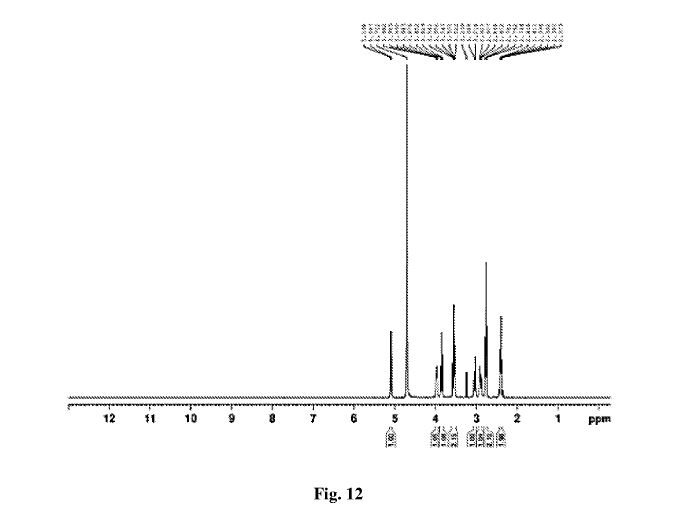
Figure 12 is 1HNMR of Sugammadex prepared according to example 8

SEE PATENT PLEASE

Figure 13 is HPLC profile of Sugammadex prepared according to process of example 1 of WO2014125501.

scheme 1.

scheme 2.

the process for preparation of Sugammadex sodium comprising reaction of 6-perdeoxy-6-per-chloro gamma cyclodextrin (Formula II) with 3-mercaptopropionic acid in presence of alkali metal amide selected from lithium amide, sodium amide (sodamide) or potassium amide to get Sugammadex sodium.

Sugammadex Sodium

scheme 4.

the present invention provides process for preparation of Sugammadex comprising reacting the acid of Sugammadex of formula (IV) with sodium hydroxide to form Sugammadex sodium of formula (I).

Formula IV Formula I

Scheme 6

scheme 7.

scheme 8.

scheme 9.

Examples

Example 1

[0079] Preparation of 6-perdeoxy-6-per-chloro gammacyclodextrin

In a four-neck round bottomed flask (2L) equipped with mechanical stirrer, thermometer pocket in a tub charged anhydrous DMF (250ml) under nitrogen atmosphere. Triphosgene (36.5g, 0.123mol) was added to the flask at 0-15°C and the mixture was stirred for lh. Dry gamma cyclodextrin (20g, 0.015mol) was added to the obtained slurry with stirring for 30 min followed by addition of DMF (50ml). The reaction mixture was heated at 65-70°C 16 h. After the completion of reaction, the reaction mixture was cooled and diisopropyl ether (800ml) was charged to the mixture to precipitate out the material. The solvent mixture of DMF and diisopropyl ether was decanted off from the reaction mixture to obtain gummy brown mass. The reaction mass was treated with saturated sodium bicarbonate solution (800ml) which leads to precipitation of the solid. The precipitated solid was filtered, washed with the water (250x3ml) and dried. This compound was used for the next step without any purification.

Yield: 95%, HPLC Purity: 99%

Example 2

[0080] Preparation of 6-perdeoxy-6-per-chloro gamma-cyclodextrin

In a 5L four-necked flask equipped with stirrer, dropping funnel, nitrogen inlet, and thermometer with pocket, oxalyl chloride (293.8g, 198.5ml, 2315mmol) was added to DMF (1200 ml) and maintained the mixture at 0-5°C under nitrogen followed by stirring at 20-25°C for lhr. A solution of gamma-cyclodextrin (lOOg, 77.16mmol) in DMF (500ml) was added to above mixture at 5-10°C under nitrogen. The mixture was stirred at 65-70°C for 14- 16 hr. After the completion of reaction, the reaction mixture was cooled to 20-25°C and diluted with diisopropyl ether (1.2L). The organic layer was decanted and the viscous residue was treated with 10% NaOH solution at 5- 10°C until PH = 8. The resulting slurry was stirred for one hour at 20-25°C. The slurry was filtered under vacuum and the solid was washed with water (3 x 500ml) and dried under vacuum. The crude material was suspended in methanol (750ml), stirred for 30min, filtered under vacuum and washed with diisopropyl ether (500ml). The solid obtained was dried at 55- 60°C in an oven for 12-16hr to afford the titled compound (95g).

Yield: 85%, Purity: 98%, melting point: 226-228°C

lH NMR (400 MHz, DMSO-d6): δ 6.0 (br s., 16 H), 4.99 (m, 8 H), 4.04 (d, J = 10 Hz, 8 H), 3.87

– 3.78 (m, 16H), 3.64 – 3.56 (m, 8 H), 3.46 – 3.34 (m, 16 H) ppm.

13C NMR (100 MHz, DMSO-d6): δ 101.98, 82.93, 72.30, 72.16, 71.11, 44.92 ppm.

Mass: m/z (M+Na)+ calcd for
1463.14; found: 1463.06.

Example 3

[0081] Preparation of 6-perdeoxy-6-per-chloro gamma-cyclodextrin

In a clean, dried 50L glass reactor equipped with stirrer, dropping funnel, nitrogen inlet, and thermometer with pocket was charged anhydrous dimethylformamide (15L, moisture content NMT 0.4%) while maintaining the temperature at 0-5°C (using dry ice acetone bath). Oxalyl chloride (2L, 23635mmol, 30eq) was added slowly over a period 4-5hr (while maintaining the temperature below 5°C) and stirring was continued for lhr at the same temperature. A solution of dry gamma-cyclodextrin (1.0kg, 770.94mmol) dissolved in dimethylformamide (5L) was added slowly into the above reaction mixture. The solution was heated at 65-70°C for 16hr. The reaction was monitored by TLC at regular intervals. After the completion of reaction, the reaction mixture was cooled to room temperature and diisopropyl ether (10L) was added to the reaction mixture with stirring. The gummy solid precipitate out. The upper layer solvent was decanted, the gummy brown material was cooled to 0 to 5°C and was neutralized (pH 8.0) with slow addition of aqueous sodium hydroxide solution (20%, 5L) with stirring. The slurry obtained was stirred for lhr at temperature 0 to 5°C. The precipitate was filtered, washed with the water (3 x 2L) and dried under vacuum. The wet cake was suspended into methanol (10L), stirred, filtered, washed with diisopropyl ether (2L) and dried in oven at 60°C for 14-16hr to give the titled compound (980g). Yield: 87.9%, Purity: 98.1% as measured by HPLC.

Example 4

[0082] Preparation of Sugammadex sodium

In a four-neck round bottomed flask (3L) equipped with mechanical stirrer, thermometer pocket in a tub under the nitrogen atmosphere, anhydrous DMF (300ml) and 3-Mercaptopropionic acid (18.3g, 0.172mol) were charged at 0-5°C followed by addition of sodamide (20g, O.38mol). The reaction mixture was stirred at the same temperature for lh. 6-perdeoxy-6-per-chloro gamma cyclodextrin (25g, 0.017mol, as obtained in example 1) was charged slowly. The reaction mixture was heated at 90-95°C for 16h. After completion of reaction, the reaction mixture was cooled to room temperature and methanol (300ml) was added to it. The mixture was stirred and the precipitated material was filtered off. The precipitated material was dissolved in a mixture of methanol (50ml) and water (50ml) and re-precipitated with the excess addition of methanol (450ml). The solid was filtered and dried. Yield: 76%

The dried solid was purified by the preparative HPLC method using formic acid buffer in mixture of acetonitrile and water (80:20%) followed by lyophilization to get acid of Sugammadex which is further converted to Sugammadex sodium using sodium hydroxide.

Example 5

[0083] Preparation of Sugammadex sodium

In a four-neck round bottomed flask (5L) equipped with mechanical stirrer, thermometer pocket in a tub under the nitrogen atmosphere, anhydrous DMF (1500ml) and 3-mercaptopropionic acid (HOg, 1038mmol) were charged at 0-5°C followed by addition of sodamide (81g, 2077mmol). The mixture was stirred at the same temperature for lh. 6-perdeoxy-6-per-chloro gamma cyclodextrin (lOOg, 69.25mmol, as obtained in example 1) was charged slowly. Extra DMF (500ml) was added to the mixture. The temperature of the mixture was raised to 80-85°C and maintained for 16h. After completion of reaction, the reaction mixture was cooled to room temperature and methanol (1500 ml) was added to it. The mixture was stirred and the precipitated material was filtered off. The precipitated material (wet cake) was dissolved in a mixture of methanol (800ml) and water (800ml). Charcoal (50g) was added and the mixture was stirred for 30mins at 50-55°C. The solution was filtered off through a pad of celite. Methanol (2500ml) was added the solution and precipitated solid was filtered and dried furnishing the titled compound (105g). Yield: 69.6%, Purity: 85.3%.

Example 6

[0084] Preparation of Sugammadex sodium

A clean, dried 10L four neck flask equipped with stirrer, dropping funnel, nitrogen inlet, and thermometer with pocket, was charged with a solution of sodium hydroxide (83g, 2077mmol) dissolved in water (100ml) followed by addition of anhydrous DMF (2L) maintained under inert atmosphere using nitrogen. A solution of 3-mercapto propionic acid (HOg, 1037mmol) in DMF (1L) was added slowly under nitrogen maintaining the temperature between 0-5°C. The mixture was stirred for another lhr at this temperature. A mixture of 6-deoxy-6-chloro gamma cyclodextrin (lOOg, 69mmol) in DMF (1L) was added slowly at 5-10°C. The resulting mixture was heated to 75-80°C for 16-20hr. After the completion of reaction, the reaction mixture was cooled to 25-30°C and methanol (1.5L) was added into the reaction mixture, the resulting precipitate was stirred at 20-25°C, filtered, and dried under vacuum. The dried solid was dissolved in water (1L), treated with activated carbon (50 g, 5%) at 50°C, stirred and filtered through celite. The filtrate was stirred at 60°C and excess methanol (2.5L) was added slowly to the filtrate to get the precipitate. The precipitated material was filtered under vacuum as white solid, washed with methanol (500ml) and dried in oven to give pure Sugammadex sodium (90 g).

Yield: 90 g, Purity: 91.2%.

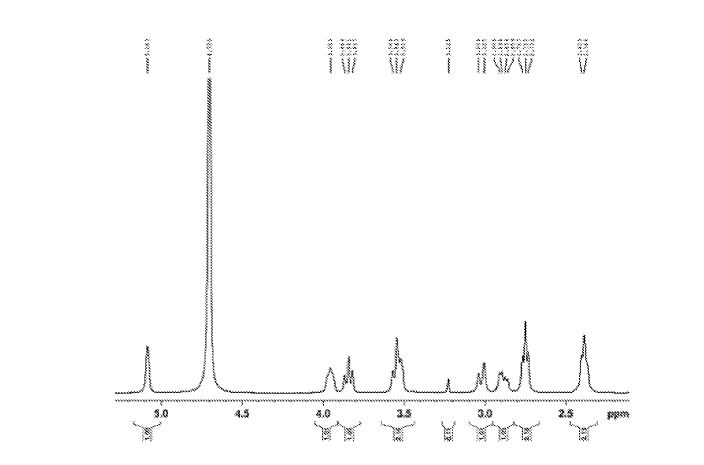
lU NMR (400 MHz, D20): δ 5.09 (m, 8H); 3.98-3.94 (m, 8H); 3.88-3.83 (m, 8H); 3.58-3.52 (m, 16H); 3.07-3.01 (m, 8H); 2.92-2.87 (m, 8H); 2.78-2.74 (m, 16H); 2.34-2.47 (m, 16H) ppm.

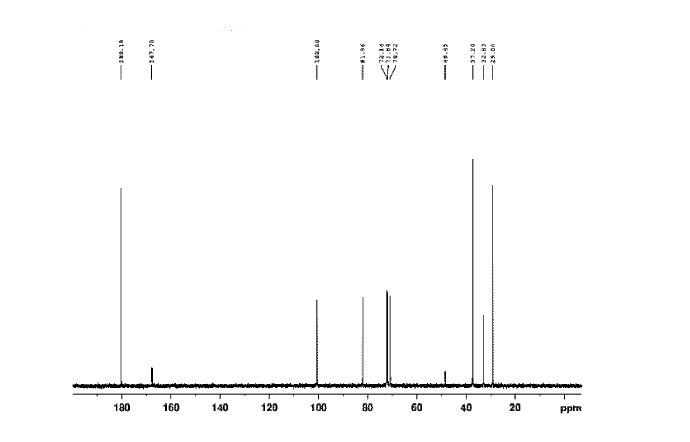
13C NMR (100 MHz, D20): δ 180.18, 100.60, 81.96, 72.14, 71.84, 70.72, 37.24, 32.83, 29.06 ppm. Mass: m/z (M-Na7+H6)+ calcd for C72HnoNa048S8: 2023.12; found: 2023.39.

Example 7

Preparation of Sugammadex acid (Compound of formula IV)

In a clean, dried 5L four neck flask equipped with stirrer, dropping funnel, nitrogen inlet, and thermometer with pocket was charged dimethylformamide (1500ml) followed by addition of potassium hydroxide (194.0 g, 3464mmol) and the mixture maintained at 0-5°C. A solution of 3-mercapto propionic acid (186.35g, 153.0ml, 1756mmol) in DMF (500ml) was added to the reactor over a period of 30 minutes under nitrogen while maintaining the temperature between 0-5°C. The

resulting mixture was stirred at this temperature for 60 minutes. A solution of 6-deoxy-6-chloro gamma cyclodextrin (lOOg, 69.22mmol) in DMF (500ml) was added to the flask. The resulting mixture was heated at 110-120°C for 1.5-2hr while monitoring the progress of the reaction through HPLC. After completion of the reaction, the temperature of the reaction mixture was brought to 40-50°C and methanol (1000ml) was added to the mixture. The resulted precipitate was stirred at 20-25°C for lhr, filtered under vacuum and washed with methanol (500ml). The wet solid was dissolved in water (2000ml) with vigorous stirring and the solution was acidified with concentrated hydrochloric acid to give the white solid precipitate. The precipitated solid was filtered and suspended in ethyl acetate (500 ml), stirred for 30 minutes and filtered. The solid was dried to afford the titled compound (75g).

Yield: 55%, Purity: 95.8% as measured by HPLC.

lH NMR (400 MHz, DMSO-d6): δ 5.94 (br. s, 16H), 3.82-3.73 (m, 8H), 3.63-3.54 (m, 8H), 3.43-3.32 (m, 16H), 3.08-3.02 (m, 8H), 2.89-2.81 (m, 8H), 2.78-2.72 (m, 16H), 2.55-2.43 (m, 16H) ppm.

13C NMR (100 MHz, DMSO-d6): δ 173.00, 102.01, 83.94, 72.45, 72.33, 71.36, 34.53, 33.08, 27.87 ppm.

Mass: m/z (M-H2+K) + calcd for C72Hno048S8K: 2039.24; found: 2039.26.

Example 8

Preparation of Sugammadex Sodium

In a clean, dried 3L four neck flask equipped with stirrer, dropping funnel, nitrogen inlet, and thermometer with pocket, the compound (75g) as obtained in example 4 was dissolved in solution of sodium hydroxide (37.5g, 0.937mol) in water (100ml) and methanol (100ml). The pH of resultant mixture was maintained between 8-10. To this mixture methanol (1.5L) was slowly added at room temperature and the mixture was stirred for additional 30 minutes. The precipitated white solid was filtered off under vacuum and thoroughly washed with methanol (500ml). The solid was dried at 50°C under vacuum oven for 24hr to afford Sugammadex sodium (79g).

Yield: 96.9%, Purity: 95.5% measured by HPLC.

FDA grants accelerated approval to new treatment for advanced ovarian cancer , Rubraca(rucaparib)


str0

The U.S. Food and Drug Administration today granted accelerated approval to Rubraca (rucaparib) to treat women with a certain type of ovarian cancer. Rubraca is approved for women with advanced ovarian cancer who have been treated with two or more chemotherapies and whose tumors have a specific gene mutation (deleterious BRCA) as identified by an FDA-approved companion diagnostic test.

Read more.

For Immediate Release

December 19, 2016

The U.S. Food and Drug Administration today granted accelerated approval to Rubraca (rucaparib) to treat women with a certain type of ovarian cancer. Rubraca is approved for women with advanced ovarian cancer who have been treated with two or more chemotherapies and whose tumors have a specific gene mutation (deleterious BRCA) as identified by an FDA-approved companion diagnostic test.

“Today’s approval is another example of the trend we are seeing in developing targeted agents to treat cancers caused by specific mutations in a patient’s genes,” said Richard Pazdur, M.D., director of the Office of Hematology and Oncology Products in the FDA’s Center for Drug Evaluation and Research and acting director of the FDA’s Oncology Center of Excellence. “Women with these gene abnormalities who have tried at least two chemotherapy treatments for their ovarian cancer now have an additional treatment option.”

The National Cancer Institute estimates that 22,280 women will be diagnosed with ovarian cancer in 2016 and an estimated 14,240 will die of this disease. Approximately 15 to 20 percent of patients with ovarian cancer have a BRCA gene mutation.

BRCA genes are involved with repairing damaged DNA and normally work to prevent tumor development. However, mutations of these genes may lead to certain cancers, including ovarian cancers. Rubraca is a poly ADP-ribose polymerase (PARP) inhibitor that blocks an enzyme involved in repairing damaged DNA. By blocking this enzyme, DNA inside the cancerous cells with damaged BRCA genes may be less likely to be repaired, leading to cell death and possibly a slow-down or stoppage of tumor growth.

Today, the FDA also approved the FoundationFocus CDxBRCA companion diagnostic for use with Rubraca, which is the first next-generation-sequencing (NGS)-based companion diagnostic approved by the agency. The NGS test detects the presence of deleterious BRCA gene mutations in the tumor tissue of ovarian cancer patients. If one or more of the mutations are detected, the patient may be eligible for treatment with Rubraca.

The safety and efficacy of Rubraca were studied in two, single-arm clinical trials involving 106 participants with BRCA-mutated advanced ovarian cancer who had been treated with two or more chemotherapy regimens. BRCA gene mutations were confirmed in 96 percent of tested trial participants with available tumor tissue using the FoundationFocus CDxBRCA companion diagnostic. The trials measured the percentage of participants who experienced complete or partial shrinkage of their tumors (overall response rate). Fifty-four percent of the participants who received Rubraca in the trials experienced complete or partial shrinkage of their tumors lasting a median of 9.2 months.

Common side effects of Rubraca include nausea, fatigue, vomiting, low levels of red blood cells (anemia), abdominal pain, unusual taste sensation (dysgeusia), constipation, decreased appetite, diarrhea, low levels of blood platelets (thrombocytopenia) and trouble breathing (dyspnea).  Rubraca is associated with serious risks, such as bone marrow problems (myelodysplastic syndrome), a type of cancer of the blood called acute myeloid leukemia and fetal harm.

The agency approved Rubraca under its accelerated approval program, which allows approval of a drug to treat a serious or life-threatening disease or condition based on clinical data showing the drug has an effect on a surrogate (substitute) endpoint that is reasonably likely to predict clinical benefit. The sponsor is continuing to study this drug in patients with advanced ovarian cancer who have BRCA gene mutations and in patients with other types of ovarian cancer. The FDA also granted the Rubraca application breakthrough therapy designation and priority review status. Rubraca also received orphan drug designation, which provides incentives such as tax credits, user fee waivers and eligibility for exclusivity to assist and encourage the development of drugs intended to treat rare diseases.

Rubraca is marketed by Clovis Oncology, Inc. based in Boulder, Colorado. The FoundationFocus CDxBRCA companion diagnostic is marketed by Foundation Medicine, Inc. of Cambridge, Massachusetts.

////////////Rubraca, rucaparib, Clovis Oncology, Boulder, Colorado, fda 2016, cancer, ovarian

Citarinostat


2D chemical structure of 1316215-12-9

str0

Citarinostat

Treatment of Hematological Malignancies, 

Molecular Formula, C24-H26-Cl-N5-O3, Molecular Weight, 467.9544,
RN: 1316215-12-9
UNII: 441P620G3P

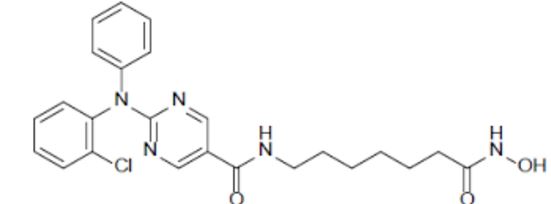
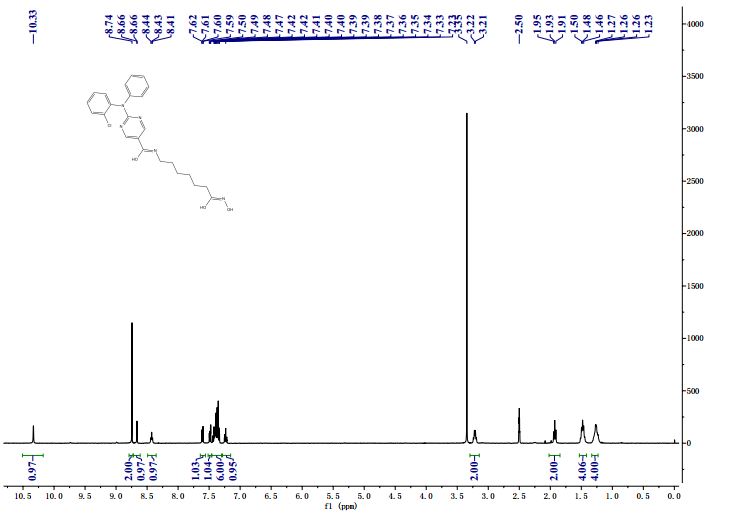
  • 2-[(2-Chlorophenyl)phenylamino]-N-[7-(hydroxyamino)-7-oxoheptyl]-5-pyrimidinecarboxamide

2-((2-Chlorophenyl)phenylamino)-N-(7-(hydroxyamino)-7-oxoheptyl)-5-pyrimidinecarboxamide

5-Pyrimidinecarboxamide, 2-((2-chlorophenyl)phenylamino)-N-(7-(hydroxyamino)-7-oxoheptyl)-

ACY-241; HDAC-IN-2

Histone deacetylase-6 inhibitor

Acute myelogenous leukemia; Cancer; Mantle cell lymphoma; Multiple myeloma

Image result for ACY 241

  • Mechanism of ActionHDAC6 protein inhibitors

Highest Development Phases

  • Phase IIMultiple myeloma
  • Phase IMalignant melanoma; Non-small cell lung cancer; Solid tumours

Most Recent Events

  • 12 Dec 2016Chemical structure information added
  • 04 Dec 2016Efficacy and safety data from a phase Ia/Ib clinical trial in Multiple myeloma released by Acetylon
  • 03 Jun 2016Phase-II clinical trials in Multiple myeloma in USA (PO)

In December 2016, citarinostat was reported to be in phase 1 clinical development. The drug appears to be first disclosed in WO2011091213, claiming reverse amide derivatives as HDAC-6 inhibitors useful for treating multiple myeloma, Alzheimers disease and psoriasis.
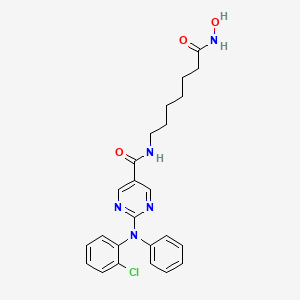
HDAC-IN-2.png

Duzer John H. Van, Ralph Mazitschek, Walter Ogier, James Elliott Bradner, Guoxiang Huang, Dejian Xie, Nan Yu, Less «
Applicant Acetylon Pharmaceuticals

The identification of small organic molecules that affect specific biological functions is an endeavor that impacts both biology and medicine. Such molecules are useful as therapeutic agents and as probes of biological function. Such small molecules have been useful at elucidating signal transduction pathways by acting as chemical protein knockouts, thereby causing a loss of protein function. (Schreiber et al, J. Am. Chem. Soc, 1990, 112, 5583; Mitchison, Chem. and Biol., 1994, 15 3) Additionally, due to the interaction of these small molecules with particular biological targets and their ability to affect specific biological function (e.g. gene transcription), they may also serve as candidates for the development of new therapeutics.

One biological target of recent interest is histone deacetylase (HDAC) (see, for example, a discussion of the use of inhibitors of histone deacetylases for the treatment of cancer: Marks et al. Nature Reviews Cancer 2001, 7,194; Johnstone et al. Nature Reviews Drug Discovery 2002, 287). Post-translational modification of proteins through acetylation and deacetylation of lysine residues plays a critical role in regulating their cellular functions. HDACs are zinc hydrolases that modulate gene expression through deacetylation of the N-acetyl-lysine residues of histone proteins and other transcriptional regulators (Hassig et al Curr. Opin. Chem. Biol. 1997, 1, 300-308). HDACs participate in cellular pathways that control cell shape and differentiation, and an HDAC inhibitor has been shown effective in treating an otherwise recalcitrant cancer (Warrell et al J. Natl. Cancer Inst. 1998, 90, 1621-1625). At this time, eleven human HDACs, which use Zn as a cofactor, have been identified (Taunton et al. Science 1996, 272, 408-411 ; Yang et al. J. Biol. Chem. 1997, 272, 28001-28007. Grozinger et al. Proc. Natl. Acad. Sd. U.S.A. 1999, 96, 4868-4873; Kao et al. Genes Dev. 2000, 14, 55-66. Hu et al J. Biol. Chem. 2000, 275, 15254-15264; Zhou et al. Proc. Natl. Acad. Scl U.S.A. 2001, 98, 10572-10577; Venter et al. Science 2001, 291, 1304-1351) these members fall into three classes (class I, II, and IV). An additional seven HDACs h ave been identified which use NAD as a cofactor. To date, no small molecules are known that selectively target any particular class or individual members of this family ((for example ortholog- selective HDAC inhibitors have been reported: (a) Meinke et al. J. Med. Chem. 2000, 14, 4919-4922; (b) Meinke, et al Curr. Med. Chem. 2001, 8, 211-235). There remains a need for preparing structurally diverse HDAC and tubulin deacetylase (TDAC) inhibitors particularly ones that are potent and/or selective inhibitors of particular classes of HDACs or TDACs and individual HDACs and TDACs.

Recently, a cytoplasmic histone deacetylase protein, HDAC6, was identified as necessary for aggresome formation and for survival of cells following ubiquitinated misfolded protein stress. The aggresome is an integral component of survival in cancer cells. The mechanism of HDAC6-mediated aggresome formation is a consequence of the catalytic activity of the carboxy-terminal deacetylase domain, targeting an uncharacterized non-histone target. The present invention also provides small molecule inhibitors of HDAC6. In certain embodiments, these new compounds are potent and selective inhibitors of HDAC6.

The aggresome was first described in 1998, when it was reported that there was an appearance of microtubule-associated perinuclear inclusion bodies in cells over- expressing the pathologic AF508 allele of the cystic fibrosis transmembrane conductance receptor (CFTR). Subsequent reports identified a pathologic appearance of the aggresome with over-expressed presenilin-1 (Johnston JA, et al. J Cell Biol. 1998;143:1883-1898), parkin (Junn E, et al. J Biol Chem. 2002; 277: 47870-47877), peripheral myelin protein PMP22 (Notterpek L, et al. Neurobiol Dis. 1999; 6: 450-460), influenza virus nucleoprotein (Anton LC, et al. J Cell Biol. 1999;146:113-124), a chimera of GFP and the membrane transport protein pi 15 (Garcia- Mata R, et al. J Cell Biol. 1999; 146: 1239-1254) and notably amyloidogenic light chains (Dul JL, et al. J Cell Biol. 2001;152:705-716). Model systems have been established to study ubiquitinated (AF508 CFTR) (Johnston JA, et al. J Cell Biol. 1998;143:1883-1898) and non-ubiquitinated (GFP -250) (Garcia-Mata R, et al. J Cell Biol. 1999;146:1239-1254) protein aggregate transport to the aggresome. Secretory, mutated, and wild-type proteins may assume unstable kinetic intermediates resulting in stable aggregates incapable of degradation through the narrow channel of the 26S proteasome. These complexes undergo active, retrograde transport by dynein to the pericentriolar aggresome, mediated in part by a cytoplasmic histone deacetylase, HDAC6 (Kawaguchi Y, et al. Cell. 2003;1 15:727-738).

Histone deacetylases are a family of at least 11 zinc -binding hydrolases, which

catalyze the deacetylation of lysine residues on histone proteins. HDAC inhibition results in hyperacetylation of chromatin, alterations in transcription, growth arrest, and apoptosis in cancer cell lines. Early phase clinical trials with available nonselective HDAC inhibitors demonstrate responses in hematologic malignancies including multiple myeloma, although with significant toxicity. Of note, in vitro synergy of conventional chemotherapy agents (such as melphalan) with bortezomib has been reported in myeloma cell lines, though dual proteasome-aggresome inhibition was not proposed. Until recently selective HDAC inhibitors have not been realized.

HDAC6 is required for aggresome formation with ubiquitinated protein stress and is essential for cellular viability in this context. HDAC6 is believed to bind ubiquitinated proteins through a zinc finger domain and interacts with the dynein motor complex through another discrete binding motif. HDAC6 possesses two catalytic deacetylase domains. It is not presently known whether the amino-terminal histone deacetylase or the carboxy-terminal tubulin deacetylase (TDAC) domain mediates aggresome formation.

Aberrant protein catabolism is a hallmark of cancer, and is implicated in the stabilization of oncogenic proteins and the degradation of tumor suppressors (Adams J. Nat Rev Cancer. 2004;4:349-360). Tumor necrosis factor alpha induced activation of nuclear factor kappa B (NFKB) is a relevant example, mediated by NFKB inhibitor beta (1KB) proteolytic degradation in malignant plasma cells. The inhibition of 1KB catabolism by proteasome inhibitors explains, in part, the apoptotic growth arrest of treated myeloma cells (Hideshima T, et al. Cancer Res. 2001;61:3071-3076). Multiple myeloma is an ideal system for studying the mechanisms of protein degradation in cancer. Since William Russell in 1890, cytoplasmic inclusions have been regarded as a defining histological feature of malignant plasma cells. Though the precise composition of Russell bodies is not known, they are regarded as ER-derived vesicles containing aggregates of monotypic immunoglobulins

(Kopito RR, Sitia R. EMBO Rep. 2000; 1 :225-231) and stain positive for ubiquitin (Manetto V, et al. Am J Pathol. 1989;134:505-513). Russell bodies have been described with CFTR over-expression in yeast (Sullivan ML, et al. J. Histochem. Cytochem. 2003;51 :545-548), thus raising the suspicion that these structures may be linked to overwhelmed protein catabolism, and potentially the aggresome. The role of the aggresome in cancer remains undefined.

Aberrant histone deacetylase activity has also been linked to various neurological and neurodegenerative disorders, including stroke, Huntington’s disease, Amyotrophic Lateral Sclerosis and Alzheimer’s disease. HDAC inhibition may induce the expression of antimitotic and anti-apoptotic genes, such as p21 and HSP-70, which facilitate survival. HDAC inhibitors can act on other neural cell types in the central nervous system, such as reactive astrocytes and microglia, to reduce inflammation and secondary damage during neuronal injury or disease. HDAC inhibition is a promising therapeutic approach for the treatment of a range of central nervous system disorders (Langley B et al., 2005, Current Drug Targets— CNS & Neurological Disorders, 4: 41-50).

Histone deacetylase is known to play an essential role in the transcriptional machinery for regulating gene expression, induce histone hyperacetylation and to affect the gene expression. Therefore, it is useful as a therapeutic or prophylactic agent for diseases caused by abnormal gene expression such as inflammatory disorders, diabetes, diabetic

complications, homozygous thalassemia, fibrosis, cirrhosis, acute promyelocytic leukaemia (APL), organ transplant rejections, autoimmune diseases, protozoal infections, tumors, etc.

Thus, there remains a need for the development of novel inhibitors of histone deacetylases and tubulin histone deacetylases. In particular, inhibitors that are more potent and/or more specific for their particular target than known HDAC and TDAC inhibitors. HDAC inhibitors specific for a certain class or member of the HDAC family would be particularly useful both in the treatment of proliferative diseases and protein deposition disorders and in the study of HDACs, particularly HDAC6. Inhibitors that are specific for HDAC versus TDAC and vice versa are also useful in treating disease and probing biological pathways. The present invention provides novel compounds, pharmaceutical compositions thereof, and methods of using these compounds to treat disorders related to HDAC6 including cancers, inflammatory, autoimmune, neurological and neurodegenerative disorders

Image result for ACY 241

Rocilinostat (ACY-1215)

Image result for ACY 241

PATENT

WO2011091213

https://patentscope.wipo.int/search/en/detail.jsf?docId=WO2011091213

Patent

US20160355486

WO 2013013113

WO 2015061684

WO 2015054474

US 20150099744

PATENT

CITARINOSTAT BY ACTYLON

WO-2016200919

Crystalline forms of a histone deacetylase inhibitor

Novel crystalline polymorphic forms of citarinostat, useful for treating cancer, eg multiple myeloma, mantle cell lymphoma or acute myelogenous leukemia. Also claims a method for preparing the crystalline form of citarinostat. Acetylon is developing citarinostat, a next generation selective inhibitor of HDAC6, for treating multiple myeloma and solid tumors, including melanoma.

Provided herein are crystalline forms of 2-((2-chlorophenyl)(phenyl)amino)-N-(7-(hydroxyamino)-7-oxoheptyl)pyrimidine-5-carboxamide (CAS No. 1316215-12-9), shown as Compound (I) (and referred to herein as “Compound (I)”):

Compound (I) is disclosed in International Patent Application No.

PCT/US2011/021982 and U.S. Patent No. 8,609,678, the entire contents of which are incorporated herein by reference.

Accordingly, provided herein are crystalline forms of 2-((2-chlorophenyl)(phenyl)amino)-N-(7-(hydroxyamino)-7-oxoheptyl)pyrimidine-5-carboxamide. In particular, provided herein are the following crystalline forms of Compound (I): Form I, Form II, Form III, Form IV, Form V, Form VI, Form VII, Form VIII, and Form IX. Each of these forms have been characterized by XRPD analysis. In an embodiment, the crystalline form of 2-((2-chlorophenyl)(phenyl)amino)-N-(7-(hydroxyamino)-7-oxoheptyl)pyrimidine-5-carboxamide can be a hydrate or solvate (e.g., dichloromethane or methanol).

EXAMPLES

Example 1: Synthesis of 2-((2-chlorophenyl)(phenyl)amino)-N-(7-(hydroxyamino)-7- oxoheptyl)pyrimidine-5-carboxamide (Compound (I))

I. Synthesis of 2-(diphenylamino)-N-(7-(hydroxyamino)-7-oxoheptyl)pyrimidine-5-carboxamide:

Synthesis of Intermediate 2: A mixture of aniline (3.7 g, 40 mmol), compound 1 (7.5 g, 40 mmol), and K2C03 (11 g, 80 mmol) in DMF (100 ml) was degassed and stirred at 120 °C under N2 overnight. The reaction mixture was cooled to r.t. and diluted with EtOAc (200 ml), then washed with saturated brine (200 ml χ 3). The organic layers were separated and dried over Na2S04, evaporated to dryness and purified by silica gel chromatography (petroleum ethers/EtOAc = 10/1) to give the desired product as a white solid (6.2 g, 64 %).

Synthesis of Intermediate 3: A mixture of compound 2 (6.2 g, 25 mmol), iodobenzene (6.12 g, 30 mmol), Cul (955 mg, 5.0 mmol), Cs2C03 (16.3 g, 50 mmol) in TEOS (200 ml) was degassed and purged with nitrogen. The resulting mixture was stirred at 140 °C for 14 hrs. After cooling to r.t., the residue was diluted with EtOAc (200 ml). 95% EtOH (200 ml) and H4F-H20 on silica gel [50g, pre-prepared by the addition of H4F (lOOg) in water (1500 ml) to silica gel (500g, 100-200 mesh)] was added, and the resulting mixture was kept at r.t. for 2 hrs. The solidified materials were filtered and washed with EtOAc. The filtrate was evaporated to dryness and the residue was purified by silica gel chromatography (petroleum ethers/EtOAc = 10/1) to give a yellow solid (3 g, 38%).

Synthesis of Intermediate 4: 2N NaOH (200 ml) was added to a solution of compound 3 (3.0 g, 9.4 mmol) in EtOH (200 ml). The mixture was stirred at 60 °C for 30min. After evaporation of the solvent, the solution was neutralized with 2N HCl to give a white precipitate. The suspension was extracted with EtOAc (2 χ 200 ml), and the organic layers were separated, washed with water (2 χ 100 ml), brine (2 χ 100 ml), and dried over Na2S04. Removal of the solvent gave a brown solid (2.5 g, 92 %).

Synthesis of Intermediate 6: A mixture of compound 4 (2.5 g, 8.58 mmol), compound 5 (2.52 g, 12.87 mmol), HATU (3.91 g, 10.30 mmol), and DIPEA (4.43 g, 34.32 mmol) was stirred at r.t. overnight. After the reaction mixture was filtered, the filtrate was evaporated to dryness and the residue was purified by silica gel chromatography (petroleum ethers/EtOAc = 2/1) to give a brown solid (2 g, 54 %).

Synthesis of 2-(diphenylamino)-N-(7-(hydroxyamino)-7-oxoheptyl)pyrimidine-5-carboxamide: A mixture of the compound 6 (2.0 g, 4.6 mmol), sodium hydroxide (2N, 20 mL) in MeOH (50 ml) and DCM (25 ml) was stirred at 0 °C for 10 min. Hydroxylamine (50%) (10 ml) was cooled to 0 °C and added to the mixture. The resulting mixture was stirred at r.t. for 20 min. After removal of the solvent, the mixture was neutralized with 1M HCl to give a white precipitate. The crude product was filtered and purified by pre-HPLC to give a white solid (950 mg, 48%).

II. Synthetic Route 1 : 2-((2-chlorophenyl)(phenyl)amino)-N-(7-(hydroxyamino)-7-oxoheptvDpyrimidine-5-carboxamide

Synthesis of Intermediate 2: A mixture of aniline (3.7 g, 40 mmol), ethyl 2-chloropyrimidine-5-carboxylate 1 (7.5 g, 40 mmol), K2C03 (11 g, 80 mmol) in DMF (100 ml) was degassed and stirred at 120 °C under N2 overnight. The reaction mixture was cooled to rt and diluted with EtOAc (200 ml), then washed with saturated brine (200 ml x 3). The organic layer was separated and dried over Na2S04, evaporated to dryness and purified by silica gel

chromatography (petroleum ethers/EtOAc = 10/1) to give the desired product as a white solid (6.2 g, 64 %).

Synthesis of Intermediate 3: A mixture of compound 2 (69.2 g, 1 equiv.), l-chloro-2-iodobenzene (135.7 g, 2 equiv.), Li2C03 (42.04 g, 2 equiv.), K2C03 (39.32 g, 1 equiv.), Cu (1 equiv. 45 μπι) in DMSO (690 ml) was degassed and purged with nitrogen. The resulting mixture was stirred at 140 °C for 36 hours. Work-up of the reaction gave compound 3 at 93 % yield.

Synthesis of Intermediate 4: 2N NaOH (200 ml) was added to a solution of the compound 3 (3.0 g, 9.4 mmol) in EtOH (200 ml). The mixture was stirred at 60 °C for 30min. After evaporation of the solvent, the solution was neutralized with 2N HC1 to give a white precipitate. The suspension was extracted with EtOAc (2 x 200 ml), and the organic layer was separated, washed with water (2 x 100 ml), brine (2 x 100 ml), and dried over Na2S04. Removal of solvent gave a brown solid (2.5 g, 92 %).

Synthesis of Intermediate 5: A procedure analogous to the Synthesis of Intermediate 6 in Part I of this Example was used.

Synthesis of 2-((2-chlorophenyl)(phenyl)amino)-N-(7-(hydroxyamino)-7-oxoheptyl)pyrimidine-5-carboxamide: A procedure analogous to the Synthesis of 2-(diphenylamino)-N-(7-(hydroxyamino)-7-oxoheptyl)pyrimidine-5-carboxamide in Part I of this Example was used.

III. Synthetic Route 2: 2-((2-chlorophenyl)(phenyl)amino)-N-(7-(hydroxyamino)-7-oxoheptyl)pyrimidine-5-carboxamide

(I)

Step (1): Synthesis of Compound 11: Ethyl 2-chloropyrimidine-5-carboxylate (7.0 Kgs), ethanol (60 Kgs), 2-Chloroaniline (9.5 Kgs, 2 eq) and acetic acid (3.7 Kgs, 1.6 eq) were charged to a reactor under inert atmosphere. The mixture was heated to reflux. After at least 5 hours the reaction was sampled for HPLC analysis (method TM-113.1016). When analysis indicated reaction completion, the mixture was cooled to 70 ± 5 °C and N,N-Diisopropylethylamine (DIPEA) was added. The reaction was then cooled to 20 ± 5°C and the mixture was stirred for an additional 2-6 hours. The resulting precipitate is filtered and washed with ethanol (2 x 6 Kgs) and heptane (24 Kgs). The cake is dried under reduced pressure at 50 ± 5 °C to a constant weight to produce 8.4 Kgs compound 11 (81% yield and 99.9% purity.

Step (2): Synthesis of Compound 3: Copper powder (0.68 Kgs, 1 eq, <75 micron), potassium carbonate (4.3 Kgs, 1.7 eq), and dimethyl sulfoxide (DMSO, 12.3 Kgs) were added to a reactor (vessel A). The resulting solution was heated to 120 ± 5°C. In a separate reactor (vessel B), a solution of compound 11 (2.9 Kgs) and iodobenzene (4.3 Kgs, 2 eq) in DMSO (5.6 Kgs) was heated at 40 ± 5°C. The mixture was then transferred to vessel A over 2-3 hours. The reaction mixture was heated at 120 ± 5°C for 8-24 hours, until HPLC analysis (method TM-113.942) determined that < 1% compound 11 was remaining.

Step (3): Synthesis of Compound 4: The mixture of Step (2) was cooled to 90-100 °C and purified water (59 Kgs) was added. The reaction mixture was stirred at 90-100 °C for 2-8 hours until HPLC showed that <1% compound 3 was remaining. The reactor was cooled to 25 °C. The reaction mixture was filtered through Celite, then a 0.2 micron filter, and the filtrate was collected. The filtrate was extracted with methyl t-butyl ether twice (2 x 12.8 Kgs). The aqueous layer was cooled to 0-5 °C, then acidified with 6N hydrochloric acid (HC1) to pH 2-3 while keeping the temperature < 25°C. The reaction was then cooled to 5-15 °C. The precipitate was filtered and washed with cold water. The cake was dried at 45-55 °C under reduced pressure to constant weight to obtain 2.2 kg (65% yield) compound 4 in 90.3% AUC purity.

Step (4): Synthesis of Compound 5: Dichloromethane (40.3 Kgs), DMF (33g, 0.04 eq) and compound 4 (2.3 Kg) were charged to a reaction flask. The solution was filtered through a 0.2 μπι filter and was returned to the flask. Oxalyl chloride (0.9 Kgs, 1 eq) was added via addition funnel over 30-120 minutes at < 30 °C. The batch was then stirred at < 30°C until reaction completion (compound 4 ❤ %) was confirmed by HPLC (method TM-113.946. Next, the dichloromethane solution was concentrated and residual oxalyl chloride was removed under reduced pressure at < 40 °C. When HPLC analysis indicated that < 0.10% oxalyl chloride was remaining, the concentrate was dissolved in fresh dichloromethane (24 Kgs) and transferred back to the reaction vessel (Vessel A).

A second vessel (Vessel B) was charged with Methyl 7-aminoheptanoate

hydrochloride (Compound Al, 1.5 Kgs, 1.09 eq), DIPEA (2.5 Kgs, 2.7 eq), 4

(Dimethylamino)pyridine (DMAP, 42g, 0.05 eq), and DCM (47.6 Kgs). The mixture was cooled to 0-10 °C and the acid chloride solution in Vessel A was transferred to Vessel B while maintaining the temperature at 5 °C to 10 °C. The reaction is stirred at 5-10 °C for 3 to 24 hours at which point HPLC analysis indicated reaction completion (method TM-113.946, compound 4 <5%). The mixture was then extracted with a 1M HC1 solution (20 Kgs), purified water (20 Kgs), 7% sodium bicarbonate (20 Kgs), purified water (20 Kgs), and 25% sodium chloride solution (20 Kgs). The dichloromethane was then vacuumdistilled at < 40 °C and chased repeatedly with isopropyl alcohol. When analysis indicated that <1 mol% DCM was remaining, the mixture was gradually cooled to 0-5 °C and was stirred at 0-5 °C for an at least 2 hours. The resulting precipitate was collected by filtration and washed with cold isopropyl alcohol (6.4 Kgs). The cake was sucked dry on the filter for 4-24 hours, then was further dried at 45-55 °C under reduced pressure to constant weight. 2.2 Kgs (77% yield) was isolated in 95.9% AUC purity method and 99.9 wt %.

Step (5): Synthesis of Compound (I): Hydroxylamine hydrochloride (3.3 Kgs, 10 eq) and methanol (9.6 Kgs) were charged to a reactor. The resulting solution was cooled to 0-5 °C and 25% sodium methoxide (11.2 Kgs, 11 eq) was charged slowly, maintaining the temperature at 0-10 °C. Once the addition was complete, the reaction was mixed at 20 °C for 1-3 hours and filtered, and the filter cake was washed with methanol (2 x 2.1 Kgs). The filtrate (hydroxylamine free base) was returned to the reactor and cooled to 0±5°C.

Compound 5 (2.2 Kgs) was added. The reaction was stirred until the reaction was complete (method TM-113.964, compound 5 < 2%). The mixture was filtered and water (28 Kgs) and ethyl acetate (8.9 Kgs) were added to the filtrate. The pH was adjusted to 8 – 9 using 6N HC1 then stirred for up to 3 hours before filtering. The filter cake was washed with cold water (25.7 Kgs), then dried under reduced pressure to constant weight. The crude solid compound (I) was determined to be Form IV/ Pattern D.

The crude solid (1.87 Kgs) was suspended in isopropyl alcohol (IP A, 27.1 Kg). The slurry was heated to 75±5 °C to dissolve the solids. The solution was seeded with crystals of Compound (I) (Form I/Pattern A), and was allowed to cool to ambient temperature. The resulting precipitate was stirred for 1-2 hours before filtering. The filter cake was rinsed with IPA (2 x 9.5 Kgs), then dried at 45-55°C to constant weight under reduced pressure to result in 1.86 kg crystalline white solid Compound (I) (Form I/Pattern A) in 85% yield and 99.5% purity (AUC%, HPLC method TM-113.941).

HPLC Method 113.941

Column Zorbax Eclipse XDB-C18, 4.6 mm x 150 mm, 3.5 μπι

Column Temperature 40°C

UV Detection Wavelength Bandwidth 4 nm, Reference off, 272 nm

Flow rate 1.0 mL/min

Injection Volume 10 μΐ. with needle wash

Mobile Phase A 0.05% trifluoroacetic acid (TFA) in purified water

Mobile Phase B 0.04% TFA in acetonitrile

Data Collection 40.0 min

Run Time 46.0 min

Gradient Time (min) Mobile Phase A Mobile Phase B

0.0 98% 2%

36.0 0% 100%

40.0 0% 100%

40.1 98% 2%

46.0 98% 2%

Example 2: Summary of Results and Analytical Techniques

Table 1. Summary of the Isolated Crystalline Forms of Compound (I)

Patent ID Patent Title Submitted Date Granted Date
US2016030458 TREATMENT OF LEUKEMIA WITH HISTONE DEACETYLASE INHIBITORS 2015-07-06 2016-02-04
US2015176076 HISTONE DEACETYLASE 6 (HDAC6) BIOMARKERS IN MULTIPLE MYELOMA 2014-12-19 2015-06-25
US2015150871 COMBINATIONS OF HISTONE DEACETYLASE INHIBITORS AND IMMUNOMODULATORY DRUGS 2014-12-03 2015-06-04
US2015119413 TREATMENT OF POLYCYSTIC DISEASES WITH AN HDAC6 INHIBITOR 2014-10-24 2015-04-30
US2015105358 COMBINATIONS OF HISTONE DEACETYLASE INHIBITORS AND IMMUNOMODULATORY DRUGS 2014-10-07 2015-04-16
US2015105383 HDAC Inhibitors, Alone Or In Combination With PI3K Inhibitors, For Treating Non-Hodgkin’s Lymphoma 2014-10-08 2015-04-16
US2015105384 PYRIMIDINE HYDROXY AMIDE COMPOUNDS AS HISTONE DEACETYLASE INHIBITORS 2014-10-09 2015-04-16
US2015105409 HDAC INHIBITORS, ALONE OR IN COMBINATION WITH BTK INHIBITORS, FOR TREATING NONHODGKIN’S LYMPHOMA 2014-10-07 2015-04-16
US2015099744 COMBINATIONS OF HISTONE DEACETYLASE INHIBITORS AND EITHER HER2 INHIBITORS OR PI3K INHIBITORS 2014-10-06 2015-04-09
US2015045380 REVERSE AMIDE COMPOUNDS AS PROTEIN DEACETYLASE INHIBITORS AND METHODS OF USE THEREOF 2014-10-22 2015-02-12
Patent ID Patent Title Submitted Date Granted Date
US2014378385 Histone Deacetylase 6 Selective Inhibitors for the Treatment of Bone Disease 2012-07-20 2014-12-25
US2014142117 REVERSE AMIDE COMPOUNDS AS PROTEIN DEACETYLASE INHIBITORS AND METHODS OF USE THEREOF 2013-11-11 2014-05-22
US8609678 Reverse amide compounds as protein deacetylase inhibitors and methods of use thereof 2012-04-02 2013-12-17
US8148526 Reverse amide compounds as protein deacetylase inhibitors and methods of use thereof 2011-12-02 2012-04-03
US2011300134 REVERSE AMIDE COMPOUNDS AS PROTEIN DEACETYLASE INHIBITORS AND METHODS OF USE THEREOF 2011-12-08

Acetylon Crafts New Buyout Deal With Celgene, Spins Out Startup Regenacy

Acetylon Crafts New Buyout Deal With Celgene, Spins Out Startup Regenacy

In the deal, Summit, NJ-based Celgene (NASDAQ: CELG) will get partial rights to two drug candidates developed by Acetylon: citarinostat (also known as ACY-241), and ricolinostat (ACY-1215). Specifically, Celgene will get worldwide rights to develop both drugs for cancer, neurodegenerative diseases, and autoimmune diseases, but nothing else.

Regenacy meanwhile, will also have partial rights to these two drugs, but only for other disease types, such as nerve pain. It also gets access to other preclinical drugs Acetylon has been developing for blood diseases like sickle cell disease and beta-thalassemia.

[Updated w/comments from CEO] Acetylon CEO Walter Ogier—who will be the president and CEO of Regenacy—said via e-mail that Celgene was only interested in the parts of Acetylon that fit with its current portfolio. Acetylon’s shareholders and executives, meanwhile, wanted to push the rest of the company’s experimental products forward. So the two companies let the original deal expire and came up with the new transaction.

“The remaining assets are exciting enough to create a new company to advance,” Ogier said.

Other “key members” of Acetylon’s executive team will switch over to the new company as well, according to the announcement. Ogier said Regenacy has acquired Acetylon’s remaining cash in the deal—he didn’t say how much—to get itself started.

Both citarinostat and ricolinostat interfere with what are known as histone deacetylases (HDACs), enzymes that help regulate gene expression and are implicated in a number of cancers. HDACs are a well-known molecular target, but Acetylon’s drugs are part of a newer breed of HDAC-blocking agents meant to be more precise, and thus less toxic, than their predecessors. Acetylon’s lead drug ricolinostat, for instance, is meant to block only the specific enzyme HDAC6. Citarinostat is a pill version of ricolinostat,

With Celgene’s help, Acetylon has been developing these drugs as potential treatments for breast cancer and the blood cancer multiple myeloma. It has been testing the drug in combination with Celgene’s own experimental drugs, like the myeloma drug pomalidomide (Pomalyst) and the breast cancer drug nab-paclitaxel (Abraxane).

[Updated w/CEO comments] Citarinostat, for instance, is being tested as a multiple myeloma treatment in a Phase 1b trial in combination with pomalidamide and dexamethasome in multiple myeloma. Acetylon and Celgene just reported early data at the American Society of Hematology’s annual meeting. Ricolinostat is in a mid-stage study in multiple myeloma as well as several investigator-sponsored studies in lymphoma, chronic lymphocytic leukemia, and ovarian and breast cancer, according to Ogier.

Regenacy will take ricolinostat into a Phase 2 trial in peripheral neuropathy next year, he says.

The two companies aren’t disclosing the terms of the deal. Co-founder and chairman Marc Cohen said in a statement that the deal is a “favorable outcome” for Acetylon’s shareholders—an unusual mix of private financiers, non-profits, public companies, and federal grant sources including Celgene itself, Kraft Group (the holding company founded by New England Patriots owner Robert Kraft), Cohen, and the Leukemia & Lymphoma Society. (All of those shareholders aside from Celgene will be the owners of Regenacy.)

But it’s a different outcome than Acetylon and Celgene anticipated when they signed a broad deal in 2013. At that time, Celgene paid Acetylon $100 million for the option to buy it outright for at least an additional $500 million (the actual price was to be tied to an independent valuation). The deal included another $1.1 billion in “bio-bucks,” future payments tied to clinical progress that may or may not materialize. All told, that meant the Celgene deal could have been worth $1.7 billion to Acetylon and its shareholders. Acetylon raised $55 million from shareholders before it struck that deal with Celgene.

Celgene extended its partnership with Acetylon in the summer of 2015, but that included a contingency that the relationship would end in May 2016 if it didn’t buy Acetylon. A regulatory filing in July showed that’s exactly what happened: the collaboration between the two companies ended this year, and that Celgene was no longer on the hook for any future payments related to 2013 deal.

Though that deal is now history, Acetylon shareholders were at least able to generate some type of return—and take another shot on some of the same assets. Ogier said these shareholders have “ample capacity” to make further investments in Regenacy, though the company will try to find new partners to help move its programs forward as well.

“We are excited to continue Acetylon’s legacy through the receipt of rights to many of Acetylon’s most promising compounds and the continued advancement of these clinical and preclinical programs in disease indications outside of Celgene’s areas of strategic focus, where we believe patients may especially benefit from selective HDAC inhibition,” he said in a statement.

REFERENCES

http://www.acetylon.com/docs/ACE-MM-200_Poster_Final%20Draft.pdf

References:
[1].  Quayle SN, Almeciga-Pinto I, Tamang D, et al. Selective HDAC inhibition by ricolinostat (ACY-1215) or ACY-241 synergizes with IMiD® immunomodulatory drugs in Multiple Myeloma (MM) and Mantle Cell Lymphoma (MCL) cells. In: Proceedings of the 106th Annual Meeting of the American Association for Cancer Research, 2015, Philadelphia, PA. Philadelphia (PA): AACR; Cancer Res 2015;75(15 Suppl):Abstract nr 5380.
[2].  Huang P, Almeciga-Pinto I, Jordan M, et al. Selective HDAC inhibition by ACY-241 enhances the activity of paclitaxel in solid tumor models. In: Proceedings of the 2015 AACR-NCI-EORTC International Conference on Molecular Targets and Cancer Therapeutics; 2015 Nov 5-9; Boston, Massachusetts. Philadelphia (PA): AACR

NMR

str0

HPLC

str0

////////////ACY-241,  HDAC-IN-2, PHASE 1, CITARINOSTAT, 1316215-12-9

ONC(=O)CCCCCCNC(=O)c1cnc(nc1)N(c2ccccc2)c3ccccc3Cl


update……….

Image result for Acetylon Pharmaceuticals Inc

WO 2016200930, New patent, Citarinostat, Acetylon Pharmaceuticals Inc

citarinostat

Acetylon Pharmaceuticals Inc

(WO2016200930) METHODS OF MAKING PROTEIN DEACETYLASE INHIBITORS

(I)

Compound (I) is disclosed in U.S. Patent No. 8,148,526 as an HDAC inhibitor.

Example 2 of U.S. Patent Application Publication No. 2015/0099744 discloses a synthesis of compound (I). As detailed herein in Example 3, this synthesis procedure resulted in the formation of significant amounts of de-chlorination and chlorine-migration side products. These impurities have solubilities that are similar to the solubilities of the desired

intermediates. Removal of the impurities is very challenging, requiring lengthy work-ups, involving numerous washes, triturations and crystallizations. Triturations, in particular, are known to be inefficient and unscalable processes. When compound (I) was prepared according to Example 2, the necessary purification steps resulted in a significant loss of desired intermdiates, led to a modest overall yield, and rendered further industrial scale up of the synthesis route unpractical. There remains a need for new methods for the synthesis of compound (I), and related compounds, that minimize the formation of impurities, and that are amenable to industrial scale-up.

BRIEF DESCRIPTION OF THE DRAWINGS

Figure 1 depicts a generic synthesis of compound (I) according to the improved method described herein.

Figure 2 depicts a specific synthesis of compound (I) according to the improved method described herein.

Figure 6 depicts 1HNMR data for compound (I).

str1 str2 str3

Image result for Acetylon Pharmaceuticals Inc

Acetylon president and CEO Walter Ogier

Example 1: Comparative Synthesis of 2-(diphenylamino)-N-(7-(hydroxyamino)-7-oxoheptyl) pyrimidine-5-carboxamide

Reaction Scheme

Synthesis of Intermediate 2: A mixture of aniline (3.7 g, 40 mmol), compound 1 (7.5 g, 40 mmol), and K2C03 (11 g, 80 mmol) in DMF (100 ml) was degassed and stirred at 120 °C under N2 overnight. The reaction mixture was cooled to r.t. and diluted with EtOAc (200 ml), then washed with saturated brine (200 ml χ 3). The organic layers were separated and dried over Na2S04, evaporated to dryness and purified by silica gel chromatography (petroleum ethers/EtOAc = 10/1) to give the desired product as a white solid (6.2 g, 64 %).

Synthesis of Intermediate 3: A mixture of compound 2 (6.2 g, 25 mmol), iodobenzene (6.12 g, 30 mmol), Cul (955 mg, 5.0 mmol), Cs2C03 (16.3 g, 50 mmol) in TEOS (200 ml) was degassed and purged with nitrogen. The resulting mixture was stirred at 140 °C for 14 hrs.

After cooling to r.t., the residue was diluted with EtOAc (200 ml). 95% EtOH (200 ml) and H4F-H20 on silica gel [50g, pre-prepared by the addition of H4F (lOOg) in water (1500 ml) to silica gel (500g, 100-200 mesh)] was added, and the resulting mixture was kept at r.t. for 2 hrs. The solidified materials were filtered and washed with EtOAc. The filtrate was evaporated to dryness and the residue was purified by silica gel chromatography (petroleum ethers/EtOAc = 10/1) to give a yellow solid (3 g, 38%).

Synthesis of Intermediate 4: 2N NaOH (200 ml) was added to a solution of compound 3 (3.0 g, 9.4 mmol) in EtOH (200 ml). The mixture was stirred at 60 °C for 30min. After evaporation of the solvent, the solution was neutralized with 2N HCl to give a white precipitate. The suspension was extracted with EtOAc (2 χ 200 ml), and the organic layers were separated, washed with water (2 χ 100 ml), brine (2 χ 100 ml), and dried over Na2S04. Removal of the solvent gave a brown solid (2.5 g, 92 %).

Synthesis of Intermediate 6: A mixture of compound 4 (2.5 g, 8.58 mmol), compound 5 (2.52 g, 12.87 mmol), HATU (3.91 g, 10.30 mmol), and DIPEA (4.43 g, 34.32 mmol) was stirred at r.t. overnight. After the reaction mixture was filtered, the filtrate was evaporated to dryness and the residue was purified by silica gel chromatography (petroleum ethers/EtOAc = 2/1) to give a brown solid (2 g, 54 %).

Synthesis of 2-(diphenylamino)-N-(7-(hydroxyamino)-7-oxoheptyl)pyrimidine-5-carboxamide: A mixture of the compound 6 (2.0 g, 4.6 mmol), sodium hydroxide (2N, 20 mL) in MeOH (50 ml) and DCM (25 ml) was stirred at 0 °C for 10 min. Hydroxylamine (50%) (10 ml) was cooled to 0 °C and added to the mixture. The resulting mixture was stirred at r.t. for 20 min. After removal of the solvent, the mixture was neutralized with 1M HCl to give a white precipitate. The crude product was filtered and purified by pre-HPLC to give a white solid (950 mg, 48%).

Example 2: Comparative Synthesis of 2-((2-chlorophenyl)(phenyl)amino)-N-(7- (hydroxyamino)-7-oxoheptyl)pyrimidine-5-carboxamide – Compound (I)

Reaction Scheme

Step (1)

Synthesis of Intermediate 2: A mixture of aniline (3.7 g, 40 mmol), ethyl 2-chloropyrimidine-5-carboxylate 1 (7.5 g, 40 mmol), K2C03 (11 g, 80 mmol) in DMF (100 ml) was degassed and stirred at 120 °C under N2 overnight. The reaction mixture was cooled to rt and diluted with EtOAc (200 ml), then washed with saturated brine (200 ml x 3). The organic layer was separated and dried over Na2S04, evaporated to dryness and purified by silica gel

chromatography (petroleum ethers/EtOAc = 10/1) to give the desired product as a white solid (6.2 g, 64 %).

Step (2)

Synthesis of Intermediate 3: A mixture of compound 2 (69.2 g, 1 equiv.), l-chloro-2-iodobenzene (135.7 g, 2 equiv.), Li2C03 (42.04 g, 2 equiv.), K2C03 (39.32 g, 1 equiv.), Cu (1 equiv. 45 μπι) in DMSO (690 ml) was degassed and purged with nitrogen. The resulting mixture was stirred at 140 °C for 36 hours. Work-up of the reaction gave compound 3 at 93 % yield.

Step (3)

Synthesis of Intermediate 4: 2N NaOH (200 ml) was added to a solution of the compound 3 (3.0 g, 9.4 mmol) in EtOH (200 ml). The mixture was stirred at 60 °C for 30min. After evaporation of the solvent, the solution was neutralized with 2N HCl to give a white precipitate. The suspension was extracted with EtOAc (2 x 200 ml), and the organic layer was separated, washed with water (2 x 100 ml), brine (2 x 100 ml), and dried over Na2S04. Removal of solvent gave a brown solid (2.5 g, 92 %).

Step (4)

Synthesis of Intermediate 5: A procedure analogous to the Synthesis of Intermediate 6 in Example 1 was used.

Step (5)

Synthesis of 2-((2-chlorophenyl)(phenyl)amino)-N-(7-(hydroxyamino)-7-oxoheptyl)pyrimidine-5-carboxamide: A procedure analogous to the Synthesis of 2-(diphenylamino)-N-(7-(hydroxyamino)-7-oxoheptyl)pyrimidine-5-carboxamide in Example 1 was used.

Exam le 3: Process development for Steps 2-3 of Example 2

Table 2. Reactants and reagents

(13.8, leq)

(22.2g, 2eq) Cu

5 24.3g (l.Oeq) 47.7g (2.0eq) 240mL 140 °C

K2C03 (1.0 ε¾45μπι)

(19.65, leq)

(42.04g, 2eq) Cu

6 69.2g (l.Oeq) 135.7g (2.0eq) 690mL 140 °C

K2C03 (1.0 ε¾45μπι)

(39.32g, leq)

Table 3. Results

Table 4. Purification of Compound 4 by extraction and slurry

MTBE/Heptane (lOvol/lOvol) 2.83% 2.67% 92.57%

MEK/Heptane (3vol/6vol) 4.42% 3.16% 90.00%

93.48%

EtoAc 3.87% 1.43%

iProAc 3.91% 2.81% 90.91%

Example 4: Improved synthesis of Compound (I)

Reaction Scheme

4 5 (I)

Step (1)

Synthesis of Compound 11: Ethyl 2-chloropyrimidine-5-carboxylate (ACY-5, 7.0 Kgs), ethanol (60 Kgs), 2-Chloroaniline (9.5 Kgs, 2 eq) and acetic acid (3.7 Kgs, 1.6 eq) were charged to a reactor under inert atmosphere. The mixture was heated to reflux. After at least 5 hours the reaction was sampled for HPLC analysis (method TM-113.1016). When analysis indicated reaction completion (< 1% ACY-5), the mixture was cooled to 70 ± 5 °C and N,N-Diisopropylethylamine (DIPEA) was added. The reaction was then cooled to 20 ± 5°C and the mixture was stirred for an additional 2-6 hours. The resulting precipitate is filtered and washed with ethanol (2 x 6 Kgs) and heptane (24 Kgs). The cake is dried under reduced pressure at 50 ± 5 °C to a constant weight to produce 8.4 Kgs compound 11 (81% yield and 99.9% purity (method TM-113.1016)). See 1HNMR data in Figure 3.

Step (2)

Synthesis of Compound 3: Copper powder (0.68 Kgs, 1 eq, <75 micron), potassium carbonate (4.3 Kgs, 3.0 eq), and dimethyl sulfoxide (DMSO, 12.3 Kgs) were added to a reactor (vessel A). The resulting solution was heated to 120 ± 5°C. In a separate reactor (vessel B), a solution of compound 11 (2.9 Kgs) and iodobenzene (4.3 Kgs, 2 eq) in DMSO (5.6 Kgs) was

heated at 40 ± 5°C. The mixture was then transferred to vessel A over 2-3 hours. The reaction mixture was heated at 120 ± 5°C for 8-24 hours, until HPLC analysis (method TM-113.942) determined that < 1% compound 11 was remaining.

Step (3)

Synthesis of Compound 4: The mixture of Step (2) was cooled to 90-100 °C and purified water (59 Kgs) was added. The reaction mixture was stirred at 90-100 °C for 2-8 hours until HPLC (method TM-113.942-see step 2) showed that <1% compound 3 was remaining. The reactor was cooled to 25 °C. The reaction mixture was filtered through Celite, then a 0.2 micron filter, and the filtrate was collected. The filtrate was extracted with methyl t-butyl ether twice (2 x 12.8 Kgs). The aqueous layer was cooled to 0-5 °C, then acidified with 6N hydrochloric acid (HC1) to pH 2-3 while keeping the temperature < 25°C. The reaction was then cooled to 5-15 °C. The precipitate was filtered and washed with cold water. The cake was dried at 45-55 °C under reduced pressure to constant weight to obtain 2.2 kg (65% yield) compound 4 in 90.3% AUC purity (method TM-113.942-see step 2). No dechlorinated product or Cl-migration product (i.e., de-Cl-4 or m-Cl-4) was observed. See 1HNMR data in Figure 4.

Step (4)

Synthesis of Compound 5: Dichloromethane (40.3 Kgs), DMF (33g, 0.04 eq) and compound 4 (2.3 Kg) were charged to a reaction flask. The solution was filtered through a 0.2 μπι filter and was returned to the flask. Oxalyl chloride (0.9 Kgs, 1 eq) was added via addition funnel over 30-120 minutes at < 30 °C. The batch was then stirred at < 30°C until reaction completion (compound 4 ❤ %) was confirmed by HPLC (method TM-113.946). Next, the dichloromethane solution was concentrated and residual oxalyl chloride was removed under reduced pressure at < 40 °C. When HPLC analysis (method TM-113.946) indicated that < 0.10%) oxalyl chloride was remaining, the concentrate was dissolved in fresh

dichloromethane (24 Kgs) and transferred back to the reaction vessel (Vessel A).

A second vessel (Vessel B) was charged with Methyl 7-aminoheptanoate

hydrochloride (Compound Al, 1.5 Kgs, 1.09 eq), DIPEA (2.5 Kgs, 2.7 eq), 4

(Dimethylamino)pyridine (DMAP, 42g, 0.05 eq), and DCM (47.6 Kgs). The mixture was cooled to 0-10 °C and the acid chloride solution in Vessel A was transferred to Vessel B while maintaining the temperature at 5 °C to 10 °C. The reaction is stirred at 5-10 °C for 3 to 24 hours at which point HPLC analysis indicated reaction completion (method TM-113.946, compound 4 <5%). The mixture was then extracted with a 1M HC1 solution (20 Kgs), purified water (20 Kgs), 7% sodium bicarbonate (20 Kgs), purified water (20 Kgs), and 25% sodium chloride solution (20 Kgs). The dichloromethane was then vacuumdistilled at < 40 °C and chased repeatedly with isopropyl alcohol. When analysis indicated that <1 mol% DCM was remaining, the mixture was gradually cooled to 0-5 °C and was stirred at 0-5 °C for an at least 2 hours. The resulting precipitate was collected by filtration and washed with cold isopropyl alcohol (6.4 Kgs). The cake was sucked dry on the filter for 4-24 hours, then was further dried at 45-55 °C under reduced pressure to constant weight. 2.2 Kgs (77% yield) was isolated in 95.9% AUC purity (method TM-113.953) and 99.9 wt %. See 1HNMR data in Figure 5.

Step (5)

Synthesis of Compound (I): Hydroxylamine hydrochloride (3.3 Kgs, 10 eq) and methanol (9.6 Kgs) were charged to a reactor. The resulting solution was cooled to 0-5 °C and 25% sodium methoxide (11.2 Kgs, 11 eq) was charged slowly, maintaining the temperature at 0-10 °C. Once the addition was complete, the reaction was mixed at 20 °C for 1-3 hours and filtered, and the filter cake was washed with methanol (2 x 2.1 Kgs). The filtrate (hydroxylamine free base) was returned to the reactor and cooled to 0±5°C. Compound 5 (2.2 Kgs) was added. The reaction was stirred until the reaction was complete (method TM-113.964, compound 5 < 2%). The mixture was filtered and water (28 Kgs) and ethyl acetate (8.9 Kgs) were added to the filtrate. The pH was adjusted to 8 – 9 using 6N HC1 then stirred for up to 3 hours before filtering. The filter cake was washed with cold water (25.7 Kgs), then dried under reduced pressure to constant weight. The crude solid compound (I) was determined to be Form IV/ Pattern D.

The crude solid (1.87 Kgs) was suspended in isopropyl alcohol (IP A, 27.1 Kg). The slurry was heated to 75±5 °C to dissolve the solids. The solution was seeded with crystals of Compund (I) (Form I/Pattern A), and was allowed to cool to ambient temperature. The resulting precipitate was stirred for 1-2 hours before filtering. The filter cake was rinsed with IPA (2 x 9.5 Kgs), then dried at 45-55°C to constant weight under reduced pressure to result in 1.86 kg crystalline white solid Compound (I) (Form I/Pattern A) in 85% yield and 99.5% purity. See 1HNMR data in Figure 6.

Example 5: Alternative synthesis of Compound (I)

Reaction Scheme

(I)

Step (1)

Synthesis of Compound 11: Ethyl 2-chloropyrimidine-5-carboxylate (ACY-5, 250g), ethanol (2179 g), 2-Chloroaniline (339.3 g, 2 eq) and acetic acid (132.1 g, 1.6 eq) were charged to a reactor under inert atmosphere. The mixture was heated to reflux. After at least 5 hours the reaction was sampled for HPLC analysis. When analysis indicated reaction completion (< 1% ACY-5), the mixture was cooled to 70 ± 5 °C and Ν,Ν-Diisopropylethylamine (DIPEA, 553.6 g, 3.2 eq) was added. The reaction was then cooled to 20 ± 5°C and the mixture was stirred for an additional 2-6 hours. The resulting precipitate is filtered and washed with ethanol (2 x 401 g) and heptane (2 x 428 g). The cake is dried under reduced pressure at 50 ± 5 °C to a constant weight to produce 307. lg compound 11 (82.5% yield and 99.7% purity.

Step (2)

Synthesis of Compound 3: Cuprous iodide (17.5g, 8 eq), potassium carbonate (373.8 g, 3 eq), L-Prolin (11.4 g, 0.11 eq.) and dimethyl sulfoxide (DMSO, and 1180 g ) were added to a reactor (vessel A). The resulting solution was heated to 90 ± 5°C. In a separate reactor (vessel B), a solution of compound 11 (250g) and iodobenzene (1469.5 g, 8 eq) in DMSO (402.5 g) was heated at 40 ± 5°C. The mixture was then transferred to vessel A over 2-3 hours. The reaction mixture was heated at 90 ± 5°C for 8-24 hours, until HPLC analysis determined that < 1%) compound 11 was remaining.

Step (3)

Synthesis of Compound 4: The mixture of Step (2) was cooled to 40-50 °C and water (500g) and potassium hydroxide solution 10% (700.0 g, 2.8 eq) were added. The reaction mixture was stirred at 40-50 °C for 2-8 hours until HPLC showed that <1% compound 3 was remaining. The reactor was cooled to 25 °C. The reaction mixture was filtered through Celite, then a 0.2 micron filter, and the filtrate was collected. The filtrate was extracted with toluene (3 x 150g). The aqueous layer was cooled to 0-5 °C, then acidified with hydrochloric acid (HC1) to pH 2-3 while keeping the temperature < 25°C. The reaction was then cooled to 5-15 °C. The precipitate was filtered and washed with cold water. The cake was dried at 45-55 °C under reduced pressure to constant weight to obtain 291 g (81% yield) compound 4 in 98% AUC purity. No dechlorinated product or Cl-migration product (i.e., de-Cl-4 or m-Cl-4) was observed.

Step (4)

Synthesis of Compound 5 :

Compound 4 (250.0 g), A-l (159.2 g, 1.06 eq) and Methy-THF (5113 g) were charged to the reactor. DIPEA (283.7 g, 2.85 eq), hydroxybenzotriazole (HOBt, 12.5 g, 0.11 eq) and 1-ethyl-3-(3-dimethylaminopropyl)carbodiimide (EDC.HC1, 216.3 g, 1.47 eq) were added. The reaction solution was stirred at ambient temperature for 6-24 hours, at which point HPLC analysis indicated reaction completion (compound 4 <3%). The mixture was then extracted with a 1M HC1 solution (2270 g), purified water (2270 g), 7% sodium bicarbonate (2270 g), purified water (2270 g), and 25% sodium chloride solution (2270 g). The Methyl-THF was then vacuumdi stilled at < 40 °C and chased repeatedly with isopropyl alcohol. When analysis indicated that <1 mol% methyl-THF was remaining, the mixture was gradually cooled to 0-5 °C and was stirred at 0-5 °C for an at least 2 hours. The resulting precipitate was collected by filtration and washed with cold isopropyl alcohol (700g). The cake was sucked dry on the filter for 4-24 hours, then was further dried at 45-55 °C under reduced pressure to constant weight. 294g (82% yield) was isolated in 99.6% AUC purity and 99.4 wt %.

Step (5)

Synthesis of Compound (I): Hydroxylamine hydrochloride (330g, 10 eq) and methanol (960g) were charged to a reactor. The resulting solution was cooled to 0-5 °C and 25% sodium methoxide (1120 g, 11 eq) was charged slowly, maintaining the temperature at 0-10 °C. Once

the addition was complete, the reaction was mixed at 20 °C for 1-3 hours and filtered, and the filter cake was washed with methanol (2 x 210 g). The filtrate (hydroxylamine free base) was returned to the reactor and cooled to 0±5°C. Compound 5 (220 g) was added. The reaction was stirred until the reaction was complete (compound 5 < 2%). The mixture was filtered and water (280 g) and ethyl acetate (890 g) were added to the filtrate. The pH was adjusted to 8 -9 using HC1 then stirred for up to 3 hours before filtering. The filter cake was washed with cold water (2570 g), then dried under reduced pressure to constant weight to yield 980 g crude solid in 83% yield. The crude solid compound (I) was determined to be Form IV/ Pattern D.

The crude solid (980 g) was suspended in 1-propanol (400 g) and purified water (220 g). The suspension was heated to 40°C. The batch was then cooled to 38°C over 30 minutes. The solution was seeded with crystals of Compund (I) (Form I/Pattern A, 2-5 wt %). The batch was kept at 37-38°C for 2-4 hours, then was gradually cooled to 20±2°C. Water (950 g) was charged over 3 -5 hours. The batch was cooled to 12°C and was stirred for 2 hrs at this temperature. The batch was filtered and washed with cold 1-propanol/water, then dried at 50±5°C to constant weight to yield 910 g purified compound (I) in 93% yield and 99.8% AUC purity.

“NEW DRUG APPROVALS” CATERS TO EDUCATION GLOBALLY, No commercial exploits are done or advertisements added by me. This article is a compilation for educational purposes only.

P.S. : The views expressed are my personal and in no-way suggest the views of the professional body or the company that I represent

/////////WO-2016200930, WO 2016200930, New patent, Citarinostat, Acetylon Pharmaceuticals Inc

DNDI-VL-2098


str0

DNDI-VL-2098

CAS 681492-17-1

(R)-2-Methyl-6-nitro-2-(4-trifluoromethoxyphenoxymethyl)-2,3-dihydroimidazo[2,1-b]oxazole

Watch this post, will be updated………..

MF C14 H12 F3 N3 O5,
MW 359.26
Imidazo[2,1-b]oxazole, 2,3-dihydro-2-methyl-6-nitro-2-[[4-(trifluoromethoxy)phenoxy]methyl]-, (2R)-
Image result for OTSUKA
Medicinal Chemistry Research Institute, Otsuka Pharmaceutical Co., Ltd., 463-10 Kagasuno, Kawauchi-cho, Tokushima 771-0192, Japan, and Microbiological Research Institute, Otsuka Pharmaceutical Co., Ltd., 463-10 Kagasuno, Kawauchi-cho, Tokushima 771-0192, Japan
Image result for OTSUKA Hidetsugu Tsubouchi
(left to right) Hidetsugu Tsubouchi, Ph.D., Compliance & Ethics Department, manager; Hirofumi Sasaki, Medicinal Chemistry Research Laboratories, associate head and project OPC; Makoto Matsumoto, Ph.D, Pharmaceutical Business Division, senior director; Hiroyuki Hashizume, Pharmaceutical Marketing Headquarters, Product Planning and Management Group, product management manager; Masanori Kawasaki, TB Projects, associate director
Melting Point: 176-178 °C , Condition: Solvent ethyl acetate; isopropanol

(2R)-2-Methyl-6-nitro-2-(4-trifluoromethoxyphenoxymethyl)-2,3-dihydroimidazo[2,1-b]oxazole

Mp: 169–171 °C; Org. Process Res. Dev., Article ASAP, DOI: 10.1021/acs.oprd.6b00331

HPLC (area %): 99.52%; HPLC (chiral): 99.8% (a/a);

1H NMR (400 MHz, CDCl3): δ 7.57 (s, 1H), 7.14–7.16 (d, 2H, J = 10.0 Hz), 6.83–6.86 (d, 2H, J = 7.2 Hz), 4.48–4.50 (d, 1H, J = 10.0 Hz), 4.22–4.24 (d, 1H, J = 10.0 Hz), 4.05–4.10 (t, 2H, J = 9.6 and 10.4 Hz), 1.79 (s, 3H);

13C NMR (100 MHz, CDCl3): δ 156.0, 155.8, 147.1, 143.5, 122.6, 115.5, 112.6, 122.6, 121.7, and 119.1 (JC–F = 255.1 Hz), 116.6, 92.9, 71.8, 51.3, 23.0;

19F NMR (CDCl3, 376 MHz): δ −58.4;

IR (KBr, cm–1): 3155, 2996, 1607, 1456, 1281, 1106, 978, 921, 834,783, 708;

mass (m/z): 360.3 (M + 1)+;

[α]25589 = (+)8.445 (c 1.00 g/100 mL, CHCl3).

Visceral leishmaniasis (VL), infamously known as kala-azar (black fever) in the Indian subcontinent, is the most lethal form of leishmaniasis and is caused by protozoan parasites. This deadly disease is the second largest parasitic killer in the world, surpassed only by malaria, with a worldwide distribution in Asia, East Africa, South America, and the Mediterranean region. In the search for effective treatments for visceral leishmaniasis, the Drugs for Neglected Diseases initiative (DNDi) recently evaluated fexinidazole a nitroimidazole being developed as a treatment for Human African Trypanosomiasis. Fexinidazole  showed potential as a safe and effective oral drug for the treatment of visceral leishmaniasis and is now in clinical trials.

Figure

fexinidazole (1) and DNDI-VL-2098 (2).

Earlier, through an agreement with TB Alliance and in association with the ACSRC at the University of Auckland (NZ), DNDi screened about 70 other nitroimidazole analogues belonging to four chemical subclasses and investigated them for antileishmanial activity

Image result for DNDI-VL-2098

Image result for DNDI-VL-2098

Paper

http://pubs.acs.org/doi/abs/10.1021/acs.jmedchem.5b01699

Repositioning Antitubercular 6-Nitro-2,3-dihydroimidazo[2,1-b][1,3]oxazoles for Neglected Tropical Diseases: Structure–Activity Studies on a Preclinical Candidate for Visceral Leishmaniasis

Auckland Cancer Society Research Centre, School of Medical Sciences, The University of Auckland, Private Bag 92019, Auckland 1142, New Zealand
Faculty of Infectious & Tropical Diseases, London School of Hygiene & Tropical Medicine, Keppel Street, London WC1E 7HT, United Kingdom
§ Laboratory for Microbiology, Parasitology and Hygiene, Faculty of Pharmaceutical, Biomedical and Veterinary Sciences, University of Antwerp, Universiteitsplein 1, B-2610 Antwerp, Belgium
Division of Parasitology, CSIR-Central Drug Research Institute, Lucknow 226031, India
Drugs for Neglected Diseases Initiative, 15 Chemin Louis Dunant, 1202 Geneva, Switzerland
# Institute for Tuberculosis Research, College of Pharmacy, University of Illinois at Chicago, 833 South Wood Street, Chicago, Illinois 60612, United States
Global Alliance for TB Drug Development, 40 Wall Street, New York 10005, United States
J. Med. Chem., 2016, 59 (6), pp 2530–2550
DOI: 10.1021/acs.jmedchem.5b01699
*Phone: (+649) 923-6145. Fax: (+649) 373-7502. E-mail: am.thompson@auckland.ac.nz.

Abstract

Abstract Image

6-Nitro-2,3-dihydroimidazo[2,1-b][1,3]oxazole derivatives were initially studied for tuberculosis within a backup program for the clinical trial agent pretomanid (PA-824). Phenotypic screening of representative examples against kinetoplastid diseases unexpectedly led to the identification of DNDI-VL-2098 as a potential first-in-class drug candidate for visceral leishmaniasis (VL). Additional work was then conducted to delineate its essential structural features, aiming to improve solubility and safety without compromising activity against VL. While the 4-nitroimidazole portion was specifically required, several modifications to the aryloxy side chain were well-tolerated e.g., exchange of the linking oxygen for nitrogen (or piperazine), biaryl extension, and replacement of phenyl rings by pyridine. Several less lipophilic analogues displayed improved aqueous solubility, particularly at low pH, although stability toward liver microsomes was highly variable. Upon evaluation in a mouse model of acute Leishmania donovani infection, one phenylpyridine derivative (37) stood out, providing efficacy surpassing that of the original preclinical lead.

Figure

Structures of various antileishmanial or antitubercular agents.

 str1 str0

CLICK ON IMAGE

2-Methyl-6-nitro-2-{[4-(trifluoromethoxy)phenoxy]methyl}-2,3-dihydroimidazo[2,1- b][1,3]oxazole (7).

Method A (Scheme 1B): Reaction of alcohol 88 with NaH, using procedure C, followed by chromatography of the product on silica gel, eluting with CH2Cl2, gave 71 (87%) as a pale yellow solid: mp (CH2Cl2/hexane) 122-124 C (lit.1 mp 126.8-127.9 C); 1 H NMR (CDCl3)  7.56 (s, 1 H), 7.16 (br d, J = 9.1 Hz, 2 H), 6.85 (br d, J = 9.2 Hz, 2 H), 4.48 (d, J = 10.2 Hz, 1 H), 4.23 (d, J = 10.1 Hz, 1 H), 4.09 (d, J = 10.1 Hz, 1 H), 4.05 (d, J = 10.2 Hz, 1 H), 1.79 (s, 3 H); 13C NMR (CDCl3)  156.3 (C-1’), 156.1 (C-7a), 147.4 (C- 6), 143.9 (q, JC-F = 2.1 Hz, C-4’), 122.8 (2 C, C-3’,5’), 120.7 (q, JC-F = 256.5 Hz, 4’-OCF3), 115.8 (2 C, C-2’,6’), 112.8 (C-5), 93.1 (C-2), 72.2 (2-CH2O), 51.6 (C-3), 23.3 (2-CH3). Anal. (C14H12F3N3O5) C, H, N.

Method B (Scheme 2B): Reaction of 2-bromo-1-[(2-methyloxiran-2-yl)methyl]-4-nitro-1Himidazole2 (98) with 4-(trifluoromethoxy)phenol (0.95 equiv) and NaH (1.2 equiv), using procedure I, followed by chromatography of the product on silica gel, eluting with 2:1 and 3:1 CH2Cl2/petroleum ether (foreruns) and then with 3:1 CH2Cl2/petroleum ether and CH2Cl2, S8 gave a crude product, which was crystallized from CH2Cl2/hexane (and the mother liquors further purified by chromatography on silica gel, eluting as before), to give 71 (55%) as a pale yellow solid (see data above). Method C (Scheme 2D): Reaction of 2-chloro-1-[(2-methyloxiran-2-yl)methyl]-4-nitro-1Himidazole1 (109) with 4-(trifluoromethoxy)phenol (1.0 equiv) and NaH, using procedure I, followed by chromatography of the product on silica gel, eluting with 1:1 and 3:2 CH2Cl2/petroleum ether (foreruns) and then with 3:1 CH2Cl2/petroleum ether and CH2Cl2, gave a crude product, which was crystallized from CH2Cl2/hexane (and the mother liquors further purified by chromatography on silica gel, eluting with 1:1 and 3:1 Et2O/petroleum ether and then with Et2O and CH2Cl2), to give 71 (51%) as a pale yellow solid (see data above).

Synthesis of 9 (Scheme 2A): (2R)-2-Methyl-6-nitro-2-{[4-(trifluoromethoxy)phenoxy]methyl}-2,3-dihydroimidazo- [2,1-b][1,3]oxazole (9). Reaction of 2-chloro-1-{[(2R)-2-methyloxiran-2-yl]methyl}-4-nitro- 1H-imidazole3 (96) with 4-(trifluoromethoxy)phenol and NaH, using procedure H, gave 91,3 (36%) as a pale brown solid: mp 170-171 C (lit.1 mp 176.5-178 C); 1 H NMR (CDCl3)  7.56 (s, 1 H), 7.16 (br d, J = 8.8 Hz, 2 H), 6.85 (br d, J = 9.0 Hz, 2 H), 4.48 (d, J = 10.2 Hz, 1 H), 4.23 (d, J = 10.0 Hz, 1 H), 4.09 (d, J = 10.2 Hz, 1 H), 4.05 (d, J = 10.3 Hz, 1 H), 1.79 (s, 3 H); [α] 25 D 9.0 (c 1.002, CHCl3) [lit.1 [α] 28 D 7.67 (c 1.030, CHCl3)]. Anal. (C14H12F3N3O5) C, H, N. HPLC purity: 100%. Chiral HPLC (using a CHIRALPAK AD-H analytical column and eluting with 15% EtOH/hexane at 1 mL/min) determined that the ee of 9 was 98.7%.

Paper

Sasaki, Hirofumi; Journal of Medicinal Chemistry 2006, VOL 49(26), Pg 7854-7860

Synthesis and Antituberculosis Activity of a Novel Series of Optically Active 6-Nitro-2,3-dihydroimidazo[2,1-b]oxazoles

Medicinal Chemistry Research Institute, Otsuka Pharmaceutical Co., Ltd., 463-10 Kagasuno, Kawauchi-cho, Tokushima 771-0192, Japan, and Microbiological Research Institute, Otsuka Pharmaceutical Co., Ltd., 463-10 Kagasuno, Kawauchi-cho, Tokushima 771-0192, Japan
J. Med. Chem., 2006, 49 (26), pp 7854–7860
DOI: 10.1021/jm060957y

Abstract

Abstract Image

In an effort to develop potent new antituberculosis agents that would be effective against both drug-susceptible and drug-resistant strains of Mycobacterium tuberculosis, we prepared a novel series of optically active 6-nitro-2,3-dihydroimidazo[2,1-b]oxazoles substituted at the 2-position with various phenoxymethyl groups and a methyl group and investigated the in vitro and in vivo activity of these compounds. Several of these derivatives showed potent in vitro and in vivo activity, and compound 19 (OPC-67683) in particular displayed excellent in vitro activity against both drug-susceptible and drug-resistant strains of M. tuberculosis H37Rv (MIC = 0.006 μg/mL) and dose-dependent and significant in vivo efficacy at lower oral doses than rifampicin in mouse models infected with M. tuberculosis Kurono. The synthesis and structure−activity relationships of these new compounds are presented.

(R)-2-Methyl-6-nitro-2-(4-trifluoromethoxyphenoxymethyl)-2,3-dihydroimidazo[2,1-b]oxazole (8). Mp 176−178 °C.

1H NMR (CDCl3) δ 1.79 (3H, s), 4.06 (1H, d, J = 6.8 Hz), 4.10 (1H, d, J = 6.8 Hz), 4.23 (1H, d, J = 10.1 Hz), 4.49 (1H, d, J = 10.1 Hz), 6.84 (2H, d, J = 9.0 Hz), 7.13 (2H, d, J = 9.0 Hz), 7.56 (1H, s).

MS (DI) m/z 359 (M+). Anal. (C14H12F3N3O5) C, H, N.

PAPER

Abstract Image

A process suitable for kilogram-scale synthesis of (2R)-2-methyl-6-nitro-2-{[4-(trifluoromethoxy)phenoxy]methyl}-2,3-dihydroimidazo[2,1-b][1,3]oxazole (DNDI-VL-2098, 2), a preclinical drug candidate for the treatment of visceral leishmaniasis, is described. The four-step synthesis of the target compound involves the Sharpless asymmetric epoxidation of 2-methyl-2-propen-1-ol, 8. Identification of a suitable synthetic route using retrosynthetic analysis and development of a scalable process to access several kilograms of 2 are illustrated. The process was simplified by employing in situ synthesis of some intermediates, reducing safety hazards, and eliminating the need for column chromatography. The improved reactions were carried out on the kilogram scale to produce 2 in good yield, high optical purity, and high quality.

http://pubs.acs.org/doi/abs/10.1021/acs.oprd.6b00331

Development of a Scalable Process for the Synthesis of DNDI-VL-2098: A Potential Preclinical Drug Candidate for the Treatment of Visceral Leishmaniasis

Process Chemistry Division, Advinus Therapeutics Ltd., 21 & 22, Phase II, Peenya Industrial Area, Bangalore 560058, Karnataka, India
Auckland Cancer Society Research Centre, School of Medical Sciences, The University of Auckland, Private Bag 92019, Auckland 1142, New Zealand
Drugs for Neglected Diseases initiative (DNDi), 15 Chemin Louis Dunant, 1202 Geneva, Switzerland
Org. Process Res. Dev., Article ASAP
DOI: 10.1021/acs.oprd.6b00331
*Process Chemistry Division, Advinus Therapeutics Ltd., 21 & 22, Phase II, Peenya Industrial Area, Bangalore -560058, Karnataka, India. E-mail: hari.pati@advinus.com. Tel. No.: (+91)9900212096.
 
Hiroyuki Fujiki, Ph.D, New Drug Research Division, Biology and Translational Research Unit, senior research scientist; Yoshitaka Yamamura, Pharmaceutical Business Division, senior director; Youichi Yabuuchi, Ph.D, Otsuka Pharmaceutical Factory, Inc., corporate adviser; Hidenori Ogawa, Ph.D, Medicinal Chemistry Research Laboratories
/////////////preclinical, DNDI-VL-2098, 681492-17-1, Visceral Leishmaniasis

FDA approves Eucrisa (crisaborole) for eczema


New FDA Logo Blue

News Release

FDA approves Eucrisa for eczema

The U.S. Food and Drug Administration today approved Eucrisa (crisaborole) ointment to treat mild to moderate eczema (atopic dermatitis) in patients two years of age and older.

Read more.

For Immediate Release

December 14, 2016

Release

The U.S. Food and Drug Administration today approved Eucrisa (crisaborole) ointment to treat mild to moderate eczema (atopic dermatitis) in patients two years of age and older.

Atopic dermatitis, a chronic inflammatory skin disease, is often referred to as “eczema,” which is a general term for the several types of inflammation of the skin. Atopic dermatitis is the most common of the many types of eczema and onset typically begins in childhood and can last through adulthood. The cause of atopic dermatitis is a combination of genetic, immune and environmental factors. In atopic dermatitis, the skin develops red, scaly and crusted bumps, which are extremely itchy. Scratching leads to swelling, cracking, “weeping” clear fluid, and finally, coarsening and thickening of the skin.

“Today’s approval provides another treatment option for patients dealing with mild to moderate atopic dermatitis,” said Amy Egan, deputy director of the Office of Drug Evaluation III in the FDA’s Center for Drug Evaluation and Research (CDER).

Eucrisa, applied topically twice daily, is a phosphodiesterase 4 (PDE-4) inhibitor, although its specific mechanism of action in atopic dermatitis is not known.

The safety and efficacy of Eucrisa were established in two placebo-controlled trials with a total of 1,522 participants ranging in age from two years of age to 79 years of age, with mild to moderate atopic dermatitis. Overall, participants receiving Eucrisa achieved greater response with clear or almost clear skin after 28 days of treatment.

Serious side effects of Eucrisa include hypersensitivity reactions. Eucrisa should not be used in patients who have had a hypersensitivity reaction to Eucrisa’s active ingredient, crisaborole. The most common side effect of Eucrisa is application site pain, including burning or stinging.

Eucrisa is manufactured by Palo Alto, California-based Anacor Pharmaceuticals, Inc.

SEE

SYNTHESIS

https://newdrugapprovals.org/2015/10/30/%D0%BA%D1%80%D0%B8%D1%81%D0%B0%D0%B1%D0%BE%D1%80%D0%BE%D0%BB-%D9%83%D8%B1%D9%8A%D8%B3%D8%A7%D8%A8%D9%88%D8%B1%D9%88%D9%84-crisaborole-an-2728/

///////////

Glenmark Launches First and Only Generic Version of Zetia® (Ezetimibe) in the United States


Glenmark launches generic version of Zetia in US

Illustration Image Courtesy…..link

“We have launched ezetimibe, the first and only generic version of Zetia (Merck) in the United States for the treatment of high cholesterol,”……….http://health.economictimes.indiatimes.com/news/pharma/glenmark-launches-generic-version-of-zetia-in-us-market/55951453

see……..http://us-glenmarkpharma.com/wp-content/uploads/Glenmark-launches-first-and-only-generic-version-of-Zetia%C2%AE-in-the-United-States.pdf

SEE…..http://www.zeebiz.com/companies/news-glenmark-launches-generic-version-of-cholesterol-drug-zetia-in-us-market-9092


http://www.glenmarkpharma.com/

Glenmark Launches First and Only Generic Version of Zetia® in the United States 

Mumbai, India; December 12, 2016: Glenmark Pharmaceuticals Inc., USA today announced the availability of ezetimibe, the first and only generic version of ZETIA® (Merck) in the United States for the treatment of high cholesterol. The availability of ezetimibe is the result of a licensing partnership with Par Pharmaceutical, an Endo International plc operating company, with whom Glenmark will share profits. Glenmark and its partner, Endo will be entitled to 180 days of generic drug exclusivity for ezetimibe as provided for under section 505(j)(5)(B)(iv) of the FD&C Act.

Ezetimibe is indicated as adjunctive therapy to diet for the reduction of elevated total cholesterol (total-
C), low-density lipoprotein cholesterol (LDL-C), and apolipoprotein B (Apo B) in patients with primary
(heterozygous familial and non-familial) hyperlipidemia.
According to IMS Health data for the 12-month period ending October 2016, annual U.S. sales of Zetia®
10 mg were approximately $2.3 billion.
“Glenmark has a deep heritage of bringing safe, effective and affordable medicines to patients around
the world,” said Robert Matsuk, President of North America and Global API at Glenmark
Pharmaceuticals Ltd. “Our partnership with Par to bring the first generic version of ZETIA® to market
only underscores our joint commitment to bridging the gap between patients and the medicines they
need most.”
“We, along with our partners at Glenmark, are proud to be able to offer patients managing their
cholesterol levels the first generic version of ZETIA®,” said Tony Pera, President of Par Pharmaceutical.
“Par remains committed to providing patients access to high quality and affordable medicines.”
Glenmark’s current portfolio consists of 111 products authorized for distribution in the U.S. marketplace
and 64 ANDA’s pending approval with the U.S. Food and Drug Administration. In addition to these
internal filings, Glenmark continues to identify and explore external development partnerships to
supplement and accelerate the growth of its existing pipeline and portfolio.

About Glenmark Pharmaceuticals Ltd.:
Glenmark Pharmaceuticals Ltd. (GPL) is a research-driven, global, integrated pharmaceutical organization headquartered at Mumbai, India. It is ranked among the top 80 Pharma & Biotech companies of the world in terms of revenue (SCRIP 100 Rankings published in the year 2016). Glenmark is a leading player in the discovery of new molecules both NCEs (new chemical entity) and NBEs (new biological entity). Glenmark has several molecules in various stages of clinical development and is primarily focused in the areas of Inflammation [asthma/COPD, rheumatoid arthritis etc.] and Pain [neuropathic pain and inflammatory pain]. The company has a significant presence in the branded generics markets across emerging economies including India. GPL along with its subsidiaries operate 17 manufacturing facilities across four countries and has five R&D centers. The Generics business of Glenmark services the requirements of the US and Western European markets. The API business sells its products in over 80 countries including the US, EU, South America and India………http://www.glenmarkpharma.com/

str0
About Endo International plc:
Endo International plc (NASDAQ / TSX: ENDP) is a global specialty pharmaceutical company focused on improving patients’ lives while creating shareholder value. Endo develops, manufactures, markets and distributes quality branded and generic pharmaceutical products as well as over-the-counter medications though its operating companies. Endo has global headquarters in Dublin, Ireland, and U.S. headquarters in Malvern, PA. Learn more at http://www.endo.com

OLD CLIP

Dec 08, 2016, 08.16 PM | Source: CNBC-TV18 Glenmark to launch cholesterol drug Zetia in US on Dec 12 Glenmark was the first to file for the generic version of Zetia and it means that after the launch on December 12, only Glenmark and Merck will sell generic Zetia in the US market for the next 6 months. Glenmark   is launching cholesterol drug Zetia with 6 months exclusivity in the US on December 12. The company has partnered with Par Pharma on the drug and has a 50:50 profit sharing agreement with Par on Zetia. Glenmark was the first to file for the generic version of Zetia and it means that after the launch on December 12, only Glenmark and Merck will sell generic Zetia in the US market for the next 6 months. Total revenue estimated to be generated is around USD 400-500 million and post profit sharing with Par, Glenmark should make around USD 200-250 million.

Read more at: http://www.moneycontrol.com/news/business/glenmark-to-launch-cholesterol-drug-zetiausdec-12_8087701.html?utm_source=ref_article

////////////Glenmark,  Launches,  First,  Only,  Generic Version,  Zetia®,  United States, ezetimibe, par pharmaceutical, cholesterol, Endo International plc

MODANAFIL


Image result for MODAFINIL

Modafinil enantiomers.svg

MODANAFIL

Modafinil; 68693-11-8; Provigil; Modiodal; 2-[(diphenylmethyl)sulfinyl]acetamide; Modafinilum [Latin]
Molecular Formula: C15H15NO2S
Molecular Weight: 273.35 g/mol

Patent EP0966962 and Patent US2002043207.

Modafinil (INN,[6] USAN, BAN, JAN) is a wakefulness-promoting agent (or eugeroic) used for treatment of disorders such as narcolepsy, shift work sleep disorder, and excessive daytime sleepiness associated with obstructive sleep apnea.[7] It has also seen widespread off-label use as a purported cognition-enhancing agent. In English-speaking countries it is sold under the brand names Alertec, Modavigil, and Provigil. In the United States modafinil is classified as a schedule IV controlled substance and restricted in availability and usage, due to concerns about possible addiction potential. In most other countries it is a prescription drug but not otherwise legally restricted.

Although the mechanism of action of modafinil was initially unknown, it now appears that the drug acts as a selective, relatively weak, atypical dopamine reuptake inhibitor. However, it appears that other additional mechanisms may also be at play.

Image result for MODAFINIL

History

Modafinil was originally developed in France by neurophysiologist and emeritus experimental medicine professor Michel Jouvet and Lafon Laboratories. Modafinil originated with the late 1970s invention of a series of benzhydryl sulfinyl compounds, including adrafinil, which was first offered as an experimental treatment for narcolepsy in France in 1986. Modafinil is the primary metabolite of adrafinil, lacking the polar -OH group on its terminal amide,[77] and has similar activity to the parent drug but is much more widely used. It has been prescribed in France since 1994 under the name Modiodal, and in the US since 1998 as Provigil.

In 1998, modafinil was approved by the U.S. Food and Drug Administration[78] for the treatment of narcolepsy and in 2003 for shift work sleep disorder and obstructive sleep apnea/hypopnea[79] even though caffeine and amphetamine were shown to be more wakefulness promoting on the Stanford Sleepiness Test Score than modafinil.[80]

It was approved for use in the UK in December 2002. Modafinil is marketed in the US by Cephalon Inc., who originally leased the rights from Lafon, but eventually purchased the company in 2001.

Cephalon began to market the R-enantiomer armodafinil of modafinil in the U.S. in 2007. After protracted patent litigation and negotiations (see below), generic versions of modafinil became available in the U.S. in 2012.

That’s how it went…

2-benzhydryl-sulfanylacetamide.

Diphenylbromomethane (4,95g = 0.02 moles) and thiourea (1,52g=0.02moles) were refluxed in 20mls water for 30mins. As the synth from Rh’s says, a clear solution must have been formed in 5 mins, but in the end we still had a lot of oil at the bottom (the reasion to blame was old, semidecomposed diphenylbromomethane – when we opened the can, it emitted HBr). We were too lazy to separate the oil , so 2.5g (0.04moles) KOH in 15mls water was added straight and the reflux continued for 30 more mins. A disgusting stench filled the lab.

Thus obtained solution of potassium salt of diphenylmercaptane was cooled to 50-60 C and 1.9g (0.02moles) of chloroacetamide was added thereto. The mixtr was left to its own devices for 2hours – the precipitated oil crystallized. The xtals were filtered, washed thrice w/water, thrice w/ether (removing all benzhydrol). After drying there was obtained 1.9g (37%) of  finely divided crystals with mp of 111 C.

With fresh diphenylbromomethane this will give not less than 80% – otherwise I’ll bee a reddish (this is an idiom which I am again unable to translatesmile).

Modafinil

Into the solution of 3.6g benzhydrylsulfanylacetamide (0.014moles) in 15mls of GAA there was added 3mls (~0.03moles) 30% hydrogene peroxide. The mixture was left at RT (15 Ñ in our case, better not to heat above) for 20 hrs. Then into the solution there was added 30mls aqua, scratching the walls with a glass rod. After 1 hr the precipitate was filtered, washed w/water twice, then w/ether and dried. Yield – 2,3g (61%), mp – 158-159 C. After some time the mother liquor yielded some more product but we were too lazy to work it up.

PATENT
Patent US2002183552

This is a part of the experimental section:

Preparation of isothiouronium Salt (IV).

Diphenylmethanol (130 g, 0.7 mole) and thiourea (65 g, 0.85 mole) are added in 0.5 L reactor charging with water (325 ml). The mixture is heated to 95°C. (an emulsion is obtained) and 48% HBr (260 gr. 3.22 mole, 4.6 equivalents) is then added gradually during 0.5 hour. The mixture is heated under reflux {106-107°C) for 0.5 hour and cooled to 80-85°C. At this temperature, the mixture is seeded with several crystals of the product and the mixture is stirred at that temperature for 0.5 hour and then cooled to 25°C. The colorless crystals are collected by filtration, washed with water (200 ml) yielding about 240 gr. of wet crude isothiouronium salt.

Preparation of diphenylmethylthioacetamide.

A 2 L reactor was charged with diphenylmethylisothiouronium bromide crude wet obtained (240 gr.) and water {700 mL) under nitrogen. The suspension was heated to 60°C and 46% aqueous NaOH solution (98 ml, 1.68 mole, 2.4 eq.) was added. The reaction mixture was heated to 85°C and stirred until all the solid was dissolved. Then, it was cooled to 60°C and chloroacetamide (80 g, O.84 mole, 1.2 eq.) was added in five portions hour at 60-70°C during one hour. The suspension is stirred at 70°C for 4-5 hours. The mixture was filtered while warm and the cake was washed with hot water (250 ml). Diphenylmethylthioacetamide crude wet is obtained [220 gr., HPLC assay: 78%, HPLC purity: 95%, yield: 95% (from diphenylmethanol.)]

20 gr. of the product was recrystallized twice from ethyl acetate, dried in vacuo to give 15 gr. of pure title compound.

Preparation of Modafinil.

A 1.0 L reactor was charged with diphenylmethylthioacetamide crude wet (220 gr.) obtained above and glacial acetic acid (610 mL). The mixture was heated to 40°C and stirred until full dissolution is achieved. 5.8% H2O2 solution (500g, 1.2 eq) was added dropwise during 0.5 hours at 40-45°C. The reaction mixture was stirred at 40-45°C for 4 hours. Then sodium metabisulfite (18.3g) in 610 mL water was added in order to quench the unreacted H2O2 and the suspension was stirred for 0.5 hours. Then the reaction mixture was cooled to 15°C and filtered. The cake was washed with water (610 mL) and dried on air to obtain crude wet Modafinil (205 g). Reslurry in refluxing ethyl acetate, followed by recrystallization from methanol:water (4:1) solution afforded pure Modafinil [125 g, HPLC assay: 99.9%, HPLC purity: 99.9%, yield: 67% (from diphenylmethanol)].tongue

CLIP

Anti-Narcoleptic Agent Modafinil and Its Sulfone: A Novel
Facile Synthesis and Potential Anti-Epileptic Activity

Nithiananda Chatterjie, James P. Stables, Hsin Wang, and George J. Alexander
Neurochemical Research, Vol. 29, No. 8, August 2004 (© 2004), pp. 1481–1486

Abstract:

We report a facile procedure to synthesize racemic modafinil (diphenylmethylsulfinylacetamide), which is now being used in pharmacotherapy, and its achiral oxidized derivative (diphenylmethylsulfonyl acetamide). Modafinil is of interest more than for its potential anti-narcoleptic activity. It has also been reported to have neuroprotective properties and may potentially be effective in the enhancement of vigilance and cognitive performance. Finally, it may also protect from subclinical seizures that have been implicated as causative factors in autistic spectrum disorders and other neurodegenerative conditions. This agent can now be synthesized simply and in larger amounts than previously, making it more readily available for testing in various research modalities. The described procedure also lends itself to production of several other amides of potential interest. We are currently in the process of synthesizing and testing several new derivatives in this series. The anticonvulsant properties of modafinil and its sulfone derivative have not previously been extensively described in the literature. It may be of interest to note that the oxidized derivative of modafinil is also nontoxic and almost as effective as an anticonvulsant as the parent.

Experimental

Diphenylmethylthioacetic Acid (3)
Benzhydryl bromide (14.78 gm, 0.059 mole) was dissolved in 75 ml of acetone in a 250-ml round-bottomed flask. To this solution was added dropwise sodium mercaptoacetate (6.59 g, 0.058 mole) in about 60 ml of H2O; the mixture was stirred under N2 for 2 h at room temperature and was thereafter warmed at about 60–70°C for 1 h. The reaction mixture was evaporated to dryness and taken up in CH2Cl2 and saturated aqueous NaHCO3. The organic extract was rejected, and the aqueous phase was treated with acid to pH 2 and chilled. Suction filtration gave the 6.9 g of the acid (3, 46%), mp 125°C. Rf  0.2. Recrystallization from MeOH/H2O gave mp 126–128°C.

Diphenylmethylthioacetamide (4)
Diphenylmethylthioacetic acid (19.5 g, 0.076 mole)
in 114 ml of dry benzene was taken in a 250-ml roundbottomed
flask attached to a reflux condenser, under N2 gas. To this was added thionyl chloride (19.5 ml, 0.097 mole) with a dropping funnel. The mixture was stirred at room temperature with a magnetic stirrer and refluxed for 1 h. Thereafter, the mixture was evaporated under low pressure to give a yellow oil that was taken up in about 100 ml of CH2Cl2 and filtered to yield a clear orange solution. This was chilled in ice water and added slowly to an ice-cold solution of concentrated NH4OH in H2O (40:40 ml). The ensuing mixture was stirred for 1 h and shaken well in a separatory funnel. The organic layer was dried (Na2SO4) and evaporated to dryness to give 14.39 g (54%) of the amide (4), mp 108–109°C (lit2 110°C). Rf  0.8. Recrystallization from CH3OH/H2O gave mp 109–110°C.

Diphenylmethylsulfinylacetamide (modafinil, 1)
Diphenylthioacetamide (3.46 g, 0.013 mole) was  taken in glacial acetic acid (14 ml) with stirring; to this was added 1.34 ml of 30% H2O2 with chilling in ice water. The mixture was left in the refrigerator for 4 h and thereafter worked up by treating it with 70 ml of ice-cold water. The precipitated material was filtered under suction and washed with ice-cold water to give 1.5 g of white crystals (43%), mp 159–160°C. Rf  0.6. Recrystallization from hot MeOH gave mp 161–162°C

Diphenylmethylsufonylacetamide (2)
Diphenylmethylthioacetamide (2.5 g, 0.009 mole) (reg. No. 118779-53-6) was dissolved in about 12 ml of glacial acetic acid and 3 ml of 30% H2O2 and set aside overnight (16 h or more). The next day, the mixture was diluted with 100 ml of H2O and set aside to cool in the refrigerator. Upon filtration and drying, 2.1 g (80%) of 2 was obtained as a white powder. Rf  0.89. The melting  point of sample after recrystallization from absolute EtOH was 195–197°C.

One aspect of our preparation of modafinil needs further mention. When diphenylmethylthioacetamide (4) is being oxidized by H2O2, care must be taken to keep the reaction mixture cool, and workup should be done in a timely manner. Allowing the reaction to go to 24 h or longer at room temperature results in the formation of the sulfone (2). The paper by Mu et al. (3) does not discuss this possibility. In our hands, the procedure stated therein led to the higher melting sulfone and not the modafinil. Our NMR data for the newly prepared modafinil preparation are in consonance with the data of the patented commercial product. It should be noted that the methylene protons in modafinil are geminally
coupled and appear as a pair of doublets. This is due to the fact that the adjacent sulfoxide moiety is chiral, and therefore the methylene protons adjacent to it wind up being diastereotopic with different chemical shifts and coupling. In the sulfone 2, the methylene protons appear as a singlet due to the fact that the adjacent sulfone moiety is achiral, thus making the two protons equivalent. Modafinil 1 is, however, an equal mixture of enantiomers, as in the reported patent and publication (2,3).

RESULTS
The chemical pathway leading to modafinil may be
represented in Scheme 1.

see pdf for further information and references,

CLIP

Synthesis and determination of the absolute configuration of the enantiomers of modafinil
Thomas Prisinzanoa, John Podobinskia, Kevin Tidgewella, Min Luoa and Dale Swensonb
Tetrahedron: Asymmetry 15(6), 1053-1058 (2004) (../rhodium/pdf /modafinil.enantiomers.pdf)
DOI:10.1016/j.tetasy.2004.01.039

a Division of Medicinal & Natural Products Chemistry, College of Pharmacy, The University of Iowa, Iowa City, Iowa 52242-1112, USA
b Department of Chemistry, The University of Iowa, Iowa City, Iowa 52242, USA

Abstract
The asymmetric synthesis of both enantiomers of modafinil, a unique CNS stimulant with a reduced abuse liability, is described. This approach effectively prepares modafinil on a multigram scale in several steps from benzhydrol. The described synthetic route has also been used to produce the more water soluble analogue, adrafinil. X-ray crystallographic analysis on (-)-(diphenylmethanesulfinyl)acetic acid has determined the absolute configuration to be R.

Graphical Abstract

Stereochemistry Abstract

(S)-(+)-(Diphenylmethanesulfinyl)acetic acid
C15H14O3S

[alpha]D22 + 40.2 (c=1.11, MeOH)
Source of chirality: resolution via diastereomeric salt formation with (R)-(+)-alpha-methylbenzylamine
Absolute configuration: S CLIP

Click to access modafinil.pdf

Narcolepsy is a debilitating neurological disorder which is characterized by chronic sleepiness and is marked to be disorganization of sleep and wake patterns. Every six out of ten thousand people in Western Europe and North America are affected by this disorder. Modafinil (Provigil®) is approved by the Food and Drug Administration for the treatment of narcolepsy. It is commonly used in opposition to Ritalin®, however Ritalin® has an associated dependency issue. Modafinil, a central nervous system stimulant, has reported to have little abuse potential. Modafinil has the ability to act like wake-promoting sympathomimetic agents which includes amphetamine. At relevant pharmacological concentrations modafinil lacks binding ability to receptors for sleep/wake regulation, which includes the ones used for norepinephrine and serotonin. The precise mechanism of action of modafinil is unknown and is presently being researched. Modafinil contains a chiral sulfoxide moiety but is prescribed as a racemate. In collaboration with faculty from the Psychology department at Western Michigan University we were to synthesize modafinil for behavioral studies with animals. Therefore a large scale of pure modafinil was synthesized.

str0

The tetrahedral sulfur atom acts as a chiral center (being surrounded by two dissimilar carbon atoms, an oxygen atom and an electron lone pair (Figure 1). Unlike most analogous trisubstituted amines that undergo umbrella-like inversion at the nitrogen atom, sulfoxides are configurationally stable.

str1

The initial target of this synthesis was to prepare the 2-(diphenylmethylthio)acetamide (1) (Scheme I). The reaction of benzyhydral chloride and thiourea are reacted with potassium iodide, water, heat, 30% sodium hydroxide, 2-chloroacetamide and triethylamine. The procedure required the 2-(diphenylmethylthio) acetamide (1) to be recrystallized to remove any impurities with methanol:water solution 60:40 . After recrystallization (Figure 2) the ¹H NMR spectrum of the synthesized 2-(diphenylmethylthio)acetamide (1) provides evidence that the recrystallization did not purify the compound. In addition recrystallization significantly reduced the percent yield from 78.3-79.2% to 56%. If the compound were pure it would only show peaks at the following locations (ppm): 3.05 (s, 2H), 5.18 (s, 1H), 6.53 (s, 1H), 7.21-7.44(m, 10H).

str0

In preparing (±) modafinil (2) the procedure used acetic acid and hydrogen peroxide to form peracetic acid to react with 2-(diphenylmethylthio)acetamide (1) to form (±) modafinil (2) . The summation of experimentations of Scheme II eventually lead us to use of commercially available peracetic acid to obtain a more pure molecule of (±) modafinil (2). Over oxidation of the sulfone product can be seen if occurs at the peak (ppm):3.7-3.8 in a¹H NMR spectrum of (±) modafinil (2) . str1

str2

str0

To produce pure 2-(diphenylmethylthio)acetamide (1) elimination of the recrystallization step and 2-(diphenylmethylthio)acetamide (1) was then purified via column chromatography using dichloromethane:ether 80:20 as an eluent with the stationary phase (silica gel). After testing several of the fractions from the column using thin layer chromatography the fractions where able to be identified that contained 2- (diphenylmethylthio)acetamide (1). Once 2-(diphenylmethylthio)acetamide (1) was isolated it was oxidized with peracetic acid. The oxidation process was extended to three hours due to lack of desired product (±) modafinil (Figure 1).

With the procedure we used and modified through experimentation a new procedure was developed that increased the percent yield from 56% to 78.3-79.2%. We encountered a few problems that lead to the removal of the recrystallization step and the use of column chromatography was performed to purify 2-(diphenylmethylthio)acetamide (1) . Over- oxidation could have occurred but would have showed up at 3.7-3.8 (ppm), this did not occur in our experiment. The peak at 1.5 (ppm) is a water peak that was not fully removed during the rotovep procedure. After a precise and confident procedure was perfected then we were able to upscale the reaction and sythesize12gs of pure (±) modafinil.

FROM EROWID………

Benzhydrylsulphinylacetamide (Modafinil)2

Benzhydrylthioacetyl chloride

19.5g (0.076 mol) of benzhydrylthioacetic acid in 114 ml of benzene are placed in a three-necked flask provided with a condenser and a dropping funnel. The mixture is heated and 19 ml of thionyl chloride are added drop by drop. Once the addition is complete, the reflux is continued for about 1 hour, cooling and filtering are carried out and the benzene and the excess thionyl chloride and then evaporated. In this way, a clear orange oil is obtained.

Benzhydrylthioacetamide

35 ml of ammonia in 40 ml of water are introduced into a three-necked flask provided with a condenser and a dropping funnel and the benzhydrylthioacetyl chloride dissolved in about 100 ml of methylene chloride is added drop by drop. Once the addition is complete, the organic phase is washed with a dilute solution of soda and dried over Na2SO4, the solvent is evaporated and the residue is taken up in diisopropyl ether; in this way, the benzhydrylthioacetamide is crystallized. 16.8 g of product (yield 86%) are obtained. M.p. 110°C.

Modafinil (CRL 40,476)

14.39 g (0.056 mol) of benzhydrylthioacetamide are placed in a balloon flask and 60 ml of acetic acid and 5.6 ml of H2O2 (about 110 volumes, 33%) are added. The mixture is left in contact for one night at 40°C. and about 200 ml of water are then added; the CRL 40476 crystallizes. By recrystallization from methanol, 11.2 g of benzhydrylsulphinylacetamide are obtained. Yield: 73%. M.p. 164-66°C.

Novel Synthesis of Modafinil and its sulfone analog3

Our interest in synthesis of modified neuroactive compounds has led us to consider Modafinil (1), a stimulant and anti-narcoleptic agent that is finding increasing use in a number of neurological areas. The compound was originally prepared by a rather tedious route described in a procedure patented by L. Lafon2. More recently, its preparation has been reported by Mu et al.4 We believe that this compound has many interesting properties and possible alternative uses in addition to its recognized anti-narcoleptic actions.

Fig 1.
The chemical pathway leading to modafinil

Not having been able to obtain it from the patent holder, we proceeded to explore alternate synthetic pathways and settled on a convenient synthesis, which permitted us to produce this compound along with a primary derivative, the sulfone (2) in sufficient quantities for whole-animal studies. The current, more facile method starts with benzhydryl bromide and sodium thiolacetate in aqueous acetone, which reacts directly to form diphenylmethylthioacetic acid (3), possibly by an ionic mechanism. This resultant compound can be converted to its acid chloride that, in turn, may be used to acylate ammonia. The ensuing primary amide (4) may be gently oxidized by H2O2 to form the corresponding sulfoxide (Modafinil, 1) and, under more vigorous conditions, the modafinil sulfone (2), whose anticonvulsant and biological properties have not been described extensively in the literature. Additionally, this procedure is also uniquely suitable for large-scale preparation of Modafinil and its congeners.

One aspect of our preparation of modafinil needs further mention. When diphenylmethylthioacetamide (4) is being oxidized by H2O2, care must be taken to keep the reaction mixture cool, and workup should be done in a timely manner. Allowing the reaction to go to 24 h or longer at room temperature results in the formation of the sulfone (2). The paper by Mu et al.4 does not discuss this possibility. In our hands, the procedure stated therein led to the higher melting sulfone and not the modafinil. Our NMR data for the newly prepared modafinil preparation are in consonance with the data of the patented commercial product. It should be noted that the methylene protons in modafinil are geminally coupled and appear as a pair of doublets. This is due to the fact that the adjacent sulfoxide moiety is chiral, and therefore the methylene protons adjacent to it wind up being diastereotopic with different chemical shifts and coupling. In the sulfone 2, the methylene protons appear as a singlet due to the fact that the adjacent sulfone moiety is achiral, thus making the two protons equivalent. Modafinil 1 is, however, an equal mixture of enantiomers, as in the reported patent and publication2,4.

Experimental

The new compounds were prepared according to modified procedures published in the patent literature. Starting materials and solvents were obtained commercially from Fluka and/or Aldrich Chemical Corp. Thin layer chromatography (TLC) was performed on silica gel plates. Solvent system was EtOAc:MeOH:NH4OH, 100:10:3 by volume. Melting points are uncorrected.

Diphenylmethylthioacetic Acid (3)

Benzhydryl bromide (14.78 gm, 0.059 mole) was dissolved in 75 ml of acetone in a 250-ml round-bottomed flask. To this solution was added dropwise sodium mercaptoacetate (6.59 g, 0.058 mole) in about 60 ml of H2O; the mixture was stirred under N2 for 2 h at room temperature and was thereafter warmed at about 60–70°C for 1 h. The reaction mixture was evaporated to dryness and taken up in CH2Cl2 and saturated aqueous NaHCO3. The organic extract was rejected, and the aqueous phase was treated with acid to pH 2 and chilled. Suction filtration gave the 6.9 g of the acid (3, 46%), mp 125°C. Rf 0.2. Recrystallization from MeOH/H2O gave mp 126–128°C.

Diphenylmethylthioacetamide (4)

Diphenylmethylthioacetic acid 3 (19.5 g, 0.076 mole) in 114 ml of dry benzene was taken in a 250-ml roundbottomed flask attached to a reflux condenser, under N2 gas. To this was added thionyl chloride (19.5 ml, 0.097 mole) with a dropping funnel. The mixture was stirred at room temperature with a magnetic stirrer and refluxed for 1 h. Thereafter, the mixture was evaporated under low pressure to give a yellow oil that was taken up in about 100 ml of CH2Cl2 and filtered to yield a clear orange solution. This was chilled in ice water and added slowly to an ice-cold solution of concentrated NH4OH in H2O (40:40 ml). The ensuing mixture was stirred for 1 h and shaken well in a separatory funnel. The organic layer was dried (Na2SO4) and evaporated to dryness to give 14.39 g (54%) of the amide (4), mp 108–109°C (lit4 110°C). Rf 0.8. Recrystallization from CH3OH/H2O gave mp 109–110°C.

Diphenylmethylsulfinylacetamide (Modafinil, 1)

Diphenylmethylthioacetamide 4 (3.46 g, 0.013 mole) was taken in glacial acetic acid (14 ml) with stirring; to this was added 1.34 ml of 30% H2O2 with chilling in ice water. The mixture was left in the refrigerator for 4 h and thereafter worked up by treating it with 70 ml of ice-cold water. The precipitated material was filtered under suction and washed with ice-cold water to give 1.5 g of white crystals (43%), mp 159–160°C. Rf 0.6. Recrystallization from hot MeOH gave mp 161–162°C

Diphenylmethylsulfonylacetamide (2)

Diphenylmethylthioacetamide (2.5 g, 0.009 mole) (CAS No. 118779-53-6) was dissolved in about 12 ml of glacial acetic acid and 3 ml of 30% H2O2 and set aside overnight (16 h or more). The next day, the mixture was diluted with 100 ml of H2O and set aside to cool in the refrigerator. Upon filtration and drying, 2.1 g (80%) of 2 was obtained as a white powder. Rf 0.89. The melting point of sample after recrystallization from absolute EtOH was 195–197°C.

High-yield Synthesis of Modafinil from Benzhydrol5

A recent patent5 describes a very easy two-step route to the Modafinil precursor diphenylmethanethioacetamide from benzhydrol (diphenylmethanol) in 90% yield and with 95% purity. A 200g batch is made in a 2000 mL vessel using water as reaction medium and ethyl acetate for recrystallization of the product.

Diphenylmethylbromide is prepared in situ from benzhydrol and react it with thiourea in a one-pot reaction to form the corresponding isothiouronium salt. The crude salt is then reacted with chloroacetamide (by generating the thiolate cation in situ), and after filtration and washing, diphenylmethylthioacetamide is isolated in excellent yield and good purity. After oxidation of the thioacetamide with hydrogen peroxide, followed by recrystallization, the overall yield of Modafinil is 67% from the benzhydrol.

(Chimimanie’s Voice:) The synthesis works just as great without the nitrogen inert atmosphere (most patents do not use it at all), step two is only a hydrolysis of the thiouronium salt to the thiolate. You just have to put the salt, NaOH and heat till you got a homogenous solution, with no more solid material floating around. The following chloroacetamide SN2 reaction is a breeze too. Sometime a blue solution can bee obtained, it is nothing to worry about. In the final step, you just have to filter off the solid which did not dissolve when the crude thioacetamide is put in the GAA/H2O2, bee4 crashing the soluble one with water.
Do not forget to slurry the modafinil in EtOAc and then recrystallize it from aqueous MeOH, as the crystalline shape of modafinil is important for the kinetic and quality of effects, at least according to the patents EP0966962 and US2002043207.

Experimental

Preparation of isothiouronium Salt (IV)

Diphenylmethanol (130 g, 0.7 mole) and thiourea (65 g, 0.85 mole) are added in 0.5 L reactor charging with water (325 ml). The mixture is heated to 95°C. (an emulsion is obtained) and 48% HBr (260 gr. 3.22 mole, 4.6 equivalents) is then added gradually during 0.5 hour. The mixture is heated under reflux (106-107°C) for 0.5 hour and cooled to 80-85°C. At this temperature, the mixture is seeded with several crystals of the product and the mixture is stirred at that temperature for 0.5 hour and then cooled to 25°C. The colorless crystals are collected by filtration, washed with water (200 ml) yielding about 240 gr. of wet crude isothiouronium salt.

(Antoncho’s Voice:) Assholium successfully made Modafinil by this method, but there turned out to be a mistake in the original patent text – In the preparation of IV, the quantity of HBr stated here is excessive and leads to complete hydrolysis of the initially formed isothiouronium salt. The acid should bee added until the reaction mixture turns completely clear (about half as much as the patent says) – a sort of titration. Further addition will result in precipitation of heavy stinky oil, benzhydrylmethanethiol.

Preparation of diphenylmethylthioacetamide

A 2 L reactor was charged with diphenylmethylisothiouronium bromide crude wet obtained (240 gr.) and water (700 mL) under nitrogen. The suspension was heated to 60°C and 46% aqueous NaOH solution (98 ml, 1.68 mole, 2.4 eq.) was added. The reaction mixture was heated to 85°C and stirred until all the solid was dissolved. Then, it was cooled to 60°C and chloroacetamide (80 g, 0.84 mole, 1.2 eq.) was added in five portions hour at 60-70°C during one hour. The suspension is stirred at 70°C for 4-5 hours. The mixture was filtered while warm and the cake was washed with hot water (250 ml). Diphenylmethylthioacetamide crude wet is obtained [220 gr., HPLC assay: 78%, HPLC purity: 95%, yield: 95% from diphenylmethanol]. 20g of the product was recrystallized twice from ethyl acetate, dried in vacuo to give 15g of pure title compound.

Preparation of Modafinil

A 1.0 L reactor was charged with diphenylmethylthioacetamide crude wet (220 gr.) obtained above and glacial acetic acid (610 mL). The mixture was heated to 40°C and stirred until full dissolution is achieved. 5.8% H2O2 solution (500g, 1.2 eq) was added dropwise during 0.5 hours at 40-45°C. The reaction mixture was stirred at 40-45°C for 4 hours. Then sodium metabisulfite (18.3g) in 610 mL water was added in order to quench the unreacted H2O2 and the suspension was stirred for 0.5 hours. Then the reaction mixture was cooled to 15°C and filtered. The cake was washed with water (610 mL) and dried on air to obtain crude wet Modafinil (205 g). Reslurry in refluxing ethyl acetate, followed by recrystallization from methanol:water (4:1) solution afforded pure Modafinil [125 g, HPLC assay: 99.9%, HPLC purity: 99.9%, yield: 67% (from diphenylmethanol)].

References

  1. US Pat 4,066,686
  2. L. Lafon, US Pat 4,177,290 (1979); L. Lafon, Eur. Pat. 283,362 (1988)
  3. Nithiananda Chatterjie, James P. Stables, Hsin Wang, and George J. Alexander, Anti-Narcoleptic Agent Modafinil and Its Sulfone: A Novel Facile Synthesis and Potential Anti-Epileptic Activity, Neurochemical Research, 29(8), 1481–1486 (2004)
  4. Mu, B., Lei, G., He, X., and Du, X., Synthesis of central stimulant modafinil. Zhongguo Yaowu Huaxue Zazhi, 9(2), 132–134 (1999)
  5. US Pat. 6,649,796 (2002)
Modafinil
Modafinil enantiomers.svg

(R)-(−)-modafinil (armodafinil; top)
(S)-(+)-modafinil (bottom)
Clinical data
Trade names Provigil, others (see below)
AHFS/Drugs.com Monograph
MedlinePlus a602016
License data
Pregnancy
category
  • AU: B3
  • US: C (Risk not ruled out)
Dependence
liability
Psychological: Very low[1]
Physical: Negligible[1]
Addiction
liability
Very low to low[2]
Routes of
administration
Oral (tablets)
ATC code N06BA07 (WHO)
Legal status
Legal status
  • AU: S4 (Prescription only)
  • CA: Schedule F
  • UK: POM (Prescription only)
  • US: Schedule IV
Pharmacokinetic data
Bioavailability Not determined due to the aqueous insolubility
Protein binding 62%
Metabolism Hepatic (primarily via amide hydrolysis;[3] CYP1A2, CYP2B6, CYP2C9, CYP2C19, CYP3A4, CYP3A5 involved [4]
Biological half-life 15 hours (R-enantiomer),
4 hours (S-enantiomer)[5]
Excretion Urine (80%)
Identifiers
Synonyms CRL-40476; Diphenylmethylsulfinylacetamide
CAS Number 68693-11-8 Yes
PubChem (CID) 4236
IUPHAR/BPS 7555
DrugBank DB00745 Yes
ChemSpider 4088 Yes
UNII R3UK8X3U3D Yes
KEGG D01832 Yes
ChEBI CHEBI:31859 
ChEMBL CHEMBL1373 Yes
ECHA InfoCard 100.168.719
Chemical and physical data
Formula C15H15NO2S
Molar mass 273.35 g/mol
3D model (Jmol) Interactive image
Green Chem., 2017, Advance Article
DOI: 10.1039/C6GC02623K, Communication
Shivam Maurya, Dhiraj Yadav, Kemant Pratap, Atul Kumar
We developed a post-sulfoxidation protocol for the synthesis of Modafinil that exhibits improved sustainability credentials, utilizing the recyclable heterogeneous catalyst Nafion-H.

Efficient atom and step economic (EASE) synthesis of the “smart drug” Modafinil

Shivam Maurya,ab   Dhiraj Yadav,a   Kemant Pratapab and  Atul Kumar*ab  
 *Corresponding authors
aMedicinal & Process Chemistry Division, CSIR-Central Drug Research Institute, Sector 10, Jankipuram Extension, Sitapur Road, P.O. Box 173, Lucknow 226031, India
E-mail: dratulsax@gmail.comatul_kumar@cdri.res.in
bAcademy of Scientific and Innovative Research, New Delhi 110001, India
Green Chem., 2017, Advance Article

DOI: 10.1039/C6GC02623K

Atul Kumar

Atul Kumar

Professor, Academy of Scientific and Innovative Research (AcSIR)/ Senior Principal Scientist at CSIR-CDRI
Central Drug Research Institute
Modafinil (2-[(diphenylmethyl)sulfinyl]acetamide, MOD) is a key psychostimulant drug used for the treatment of narcolepsy and other sleep disorders that has a very low addiction liability. Recently, MOD has been clinically investigated for the treatment of cocaine addiction and used by astronauts in long-term space missions. We have developed a synthetic strategy for “smart drug” Modafinil. An efficient atom and step economic (EASE) synthesis has been carried out by the direct reaction of benzhydrol and 2-mercaptoacetamide using the recyclable heterogeneous catalyst Nafion-H along with post-sulfoxidation. This protocol exhibits improved sustainability credentials. We have also developed a superior pre-sulfoxidation approach for the synthesis of Modafinil.
Modafinil Physical State – White solid; M.p. 158-159ºC,
IR (KBr): 3383, 3314, 3256, 1690, 1 1616, 1494, 1376, 1027, 702 cm-1;
H NMR (CDCl3) δ(ppm): 3.14(d, J=14.3 Hz, 1H); 3.48(d, J=14.3 Hz, 1H); 5.24(s, 1H); 5.88(br s, 1H); 7.09(br s, 1H); 7.29-7.43(m, 7H); 7.43-7.51(m, 3H);
13C NMR (CDCl3) δ(ppm): 52.00, 71.61, 128.80, 128.98, 129.10, 129.58, 129.62, 134.30, 134.74, + 166.46; Molecular formula C15H15NO2S;
ESI-MS (m/z): 274.1 (M+H) .

Dr. Atul Kumar

Senior Principal Scientist

////////////

Efficient atom and step economic (EASE) synthesis of the “smart drug” Modafinil


DR ANTHONY MELVIN CRASTO Ph.D's avatarGreen Chemistry International
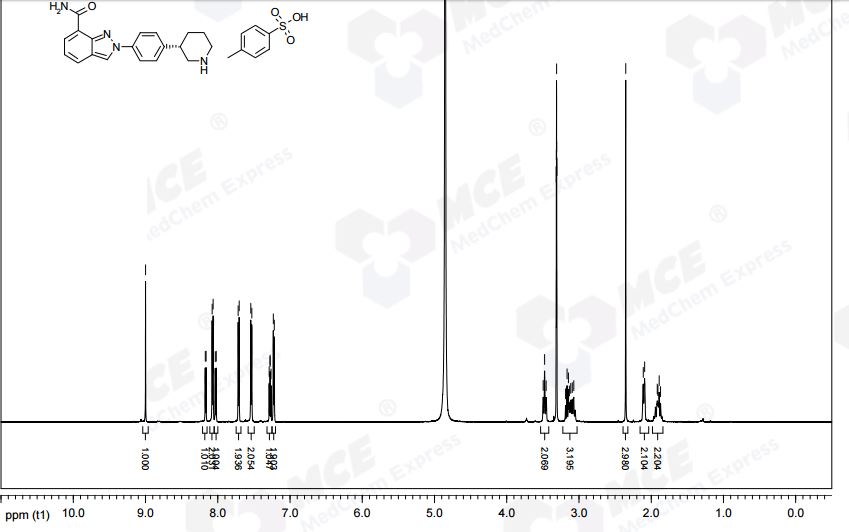
Efficient atom and step economic (EASE) synthesis of the “smart drug” Modafinil

Green Chem., 2017, Advance Article
DOI: 10.1039/C6GC02623K, Communication
Shivam Maurya, Dhiraj Yadav, Kemant Pratap, Atul Kumar
We developed a post-sulfoxidation protocol for the synthesis of Modafinil that exhibits improved sustainability credentials, utilizing the recyclable heterogeneous catalyst Nafion-H.

Efficient atom and step economic (EASE) synthesis of the “smart drug” Modafinil

 *Corresponding authors
aMedicinal & Process Chemistry Division, CSIR-Central Drug Research Institute, Sector 10, Jankipuram Extension, Sitapur Road, P.O. Box 173, Lucknow 226031, India
E-mail: dratulsax@gmail.com, atul_kumar@cdri.res.in
bAcademy of Scientific and Innovative Research, New Delhi 110001, India
Green Chem., 2017, Advance Article

DOI: 10.1039/C6GC02623K

Atul Kumar

Atul Kumar

Professor, Academy of Scientific and Innovative Research (AcSIR)/ Senior Principal Scientist at CSIR-CDRI

Central Drug Research Institute

View original post 206 more words

Follow New Drug Approvals on WordPress.com

Enter your email address to follow this blog and receive notifications of new posts by email.

Join 37.9K other subscribers

ORGANIC SPECTROSCOPY

Read all about Organic Spectroscopy on ORGANIC SPECTROSCOPY INTERNATIONAL 

DISCLAIMER

I , Dr A.M.Crasto is writing this blog to share the knowledge/views, after reading Scientific Journals/Articles/News Articles/Wikipedia. My views/comments are based on the results /conclusions by the authors(researchers). I do mention either the link or reference of the article(s) in my blog and hope those interested can read for details. I am briefly summarising the remarks or conclusions of the authors (researchers). If one believe that their intellectual property right /copyright is infringed by any content on this blog, please contact or leave message at below email address amcrasto@gmail.com. It will be removed ASAP