
Home » Uncategorized (Page 2)
Category Archives: Uncategorized
 DRUG APPROVALS BY DR ANTHONY MELVIN CRASTO
.....FOR BLOG HOME CLICK HERE
DRUG APPROVALS BY DR ANTHONY MELVIN CRASTO
.....FOR BLOG HOME CLICK HEREFlag and hits
ORGANIC SPECTROSCOPY

SUBSCRIBE

 Subscribe in a reader
Enter your email address:
Delivered by FeedBurner
Subscribe to New Drug Approvals by Email


Recent Comments
 | shivkr2 on SPSR Excellence Award 2025 – S… |
 | Bonkasaurus on Infigratinib phosphate |
 | PALOVAROTENE | ORGAN… on Palovarotene |
| Pfizer just purchase… on Temanogrel | |
| Pfizer To Cash In On… on Temanogrel |
Pebezertinib
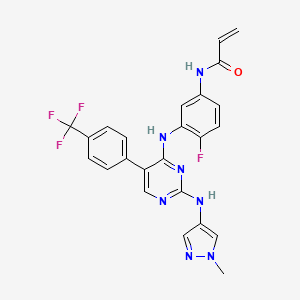
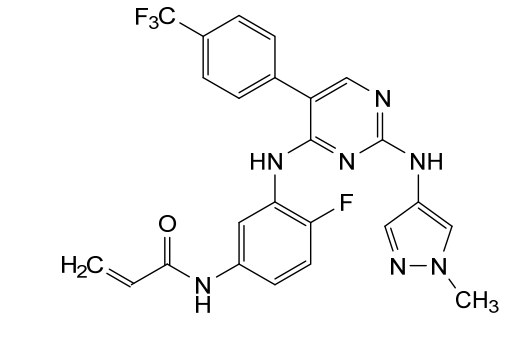
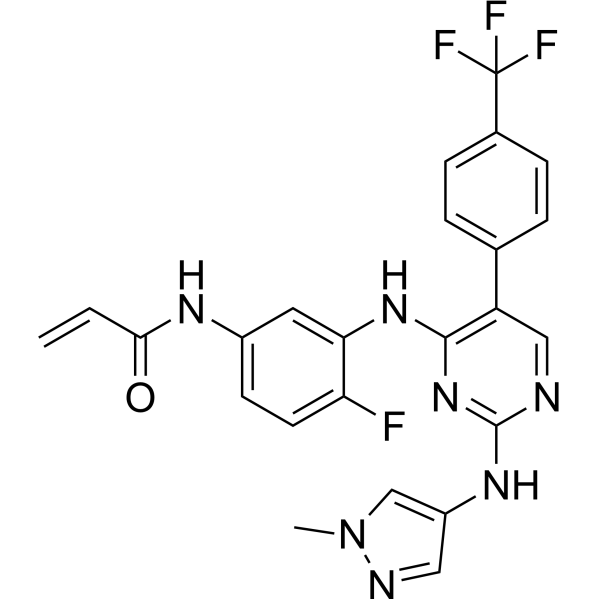
Pebezertinib
CAS 2769954-39-2
MF C24H19F4N7O MW 497.4 g/mol
N-[4-fluoro-3-[[2-[(1-methylpyrazol-4-yl)amino]-5-[4-(trifluoromethyl)phenyl]pyrimidin-4-yl]amino]phenyl]prop-2-enamide
N-[4-fluoro-3-({2-[(1-methyl-1H-pyrazol-4-yl)amino]-5-[4-(trifluoromethyl)phenyl]pyrimidin-4-yl}amino)phenyl]prop-2-enamide
epidermal growth factor receptor (EGFR) tyrosine kinase inhibitor, antineoplastic, BLU 451, BLU 203139, G8G5AU5GLJ, LNG 451
Pebezertinib is a small molecule drug. The usage of the INN stem ‘-ertinib’ in the name indicates that Pebezertinib is a epidermal growth factor receptor (EGFR) inhibitor. Pebezertinib is under investigation in clinical trial NCT05241873 ((Concerto) Study of BLU-451 in Advanced Cancers With EGFR Exon 20 Insertion Mutations). Pebezertinib has a monoisotopic molecular weight of 497.16 Da.
Pebezertinib is an orally bioavailable, central nervous system (CNS) penetrating, mutant-selective covalent inhibitor of epidermal growth factor receptor (EGFR) exon 20 insertion (Ex20ins) activating mutations, with potential antineoplastic activity. Upon oral administration, pebezertinib selectively targets, irreversibly binds to and inhibits the activity of EGFR Ex20ins and some other oncogenic point mutations. This prevents EGFR Ex20ins-mediated signaling. This may induce cell death and inhibit tumor growth in EGFR Ex20ins-overexpressing tumor cells. EGFR, a receptor tyrosine kinase mutated in many tumors, plays a key role in tumor cell proliferation and tumor vascularization. Pebezertinib is able to penetrate the blood-brain-barrier (BBB) and may therefore exert its activity against EGFR Ex20ins-driven CNS primary tumors and CNS metastases. Pebezertinib does not inhibit the activity of wild-type (WT) EGFR. EGFR Ex20ins are oncogenic driver mutations that constitutively upregulate kinase activity.
(Concerto) Study of BLU-451 in Advanced Cancers With EGFR Exon 20 Insertion Mutations
CTID: NCT05241873
Phase: Phase 1
Status: Terminated
Date: 2025-02-10
Conditions: Lung Neoplasm Malignant; Carcinoma, Non-Small-Cell Lung; Respiratory Tract Neoplasms; Neoplasms; Neoplasms by Site; Lung Diseases; Respiratory Tract Disease; Carcinoma, Bronchogenic; Bronchial Neoplasms; Adenocarcinoma; Carcinoma; Neoplasms by Histologic Type; EGFR Exon 20 Mutation; EGFR Exon 20 Insertion Mutation; EGFR Activating Mutation; Antineoplastic Agents; Metastatic Lung Cancer; Brain Metastases; EGFR-mutated NSCLC; EGFR Atypical Mutations, Including G719X and L861Q
Interventions: Pemetrexed
Linked Compound CID: 426756; 135410875; 10339178; 163280903
SYN
Scheme 21: Synthesis of N-(4-fluoro-3-((2-((1-methyl-1H-pyrazol-4-yl)amino)-5-(4-(trifluoromethyl)phenyl)pyrimidin-4-yl)amino)phenyl)acrylamide (Compound 37):
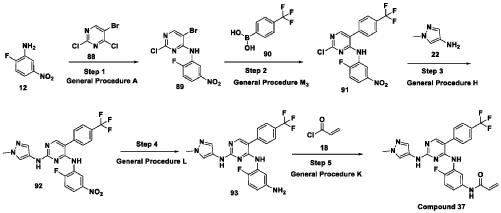
Step 1: Synthesis of 5-bromo-2-chloro-N-(2-fluoro-5-nitrophenyl)pyrimidin-4-amine (89):
[0286] Title compound was prepared in a manner substantially similar to procedure mentioned in General Procedure A. The crude was purified by combiflash eluted with 40% ethyl acetate in hexane to get (89) as pale yellow solid (1.3 g, Yield: 44.24 %). MS: [M+H]+ 346.97.
Step 2: Synthesis of 2-chloro-N-(2-fluoro-5-nitrophenyl)-5-(4-(trifluoromethyl)phenyl)pyrimidin-4-amine (91):
[0287] Title compound was prepared in a manner substantially similar to procedure mentioned in General Procedure M3. The crude was purified by combiflash eluted with 35% ethyl acetate in hexane to get desired product (91) as light yellow solid (700 mg; Yield: 50.12%). MS:
[M+H]+ 413.10
Step 3: Synthesis of N4-(2-fluoro-5-nitrophenyl)-N2-(1-methyl-1H-pyrazol-4-yl)-5-(4-(trifluoromethyl)phenyl)pyrimidine-2,4-diamine (92):
[0288] Title compound was prepared in a manner substantially similar to procedure mentioned in General Procedure H. The crude was purified by combiflash eluted with 1% methanol in dichloromethane to get desired product (92) as pale yellow solid (500 mg; Yield: 70.24%). MS:
[M+H]+ 474.09
Step 4: Synthesis of N4-(5-amino-2-fluorophenyl)-N2-(1-methyl-1H-pyrazol-4-yl)-5-(4-(trifluoromethyl)phenyl)pyrimidine-2,4-diamine (93):
[0289] Title compound was prepared in a manner substantially similar to procedure mentioned in General Procedure L to get (93) as semi solid (350 mg; Yield: 74.78%). MS: [M+H]+ 444.11
Step 5: Synthesis of N-(4-fluoro-3-((2-((1-methyl-1H-pyrazol-4-yl)amino)-5-(4-(trifluoromethyl)phenyl)pyrimidin-4-yl)amino)phenyl)acrylamide (Compound 37):
[0290] Title compound was prepared in a manner substantially similar to procedure mentioned in General Procedure K. The crude was purified by Prep HPLC to get Compound 37 as off white solid (30 mg, Yield: 13.33%).1H NMR (400 MHz, DMSO-d6): δ 10.21 (bs, 1H), 9.24 (bs, 1H), 8.53 (bs, 1H), 7.99 (s, 1H), 7.71-7.81 (m, 5H), 7.57 (s, 1H), 7.08-7.16 (m, 3H), 6.37-6.44 (m, 1H), 6.21-6.26 (m, 1H), 5.74 (d, J = 8.4 Hz, 1H), 3.54 (s, 3H). LCMS: [M+H]+ 498.35.
SYN
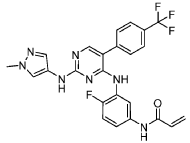
International Patent Application No. PCT/US2021/057472, the entire teachings of which are incorporated herein by reference, discloses selective inhibitors of EGFR, including exon 20 mutant proteins, which can be used to treat various cancers. The structure of one of the inhibitors disclosed in PCT Patent Application No. PCT/US2021/057472, referred to
herein as “Compound (I)” is shown below:
Example 1 : Preparation of Compound (I)
Synthesis of N-(4-fluoro-3-((2-((l-methyl-lH-pyrazol-4-yl)amino)-5-(4-(trifluoro methyl)phenyl)pyrimidin-4-yl)amino)phenyl)acrylamide (Compound I):
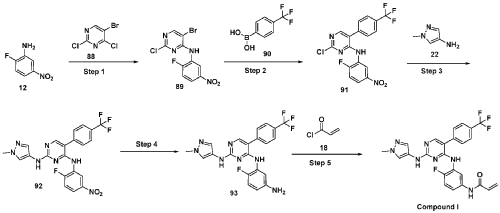
Step 1 : Synthesis of 5-bromo-2-chloro-N-(2-fluoro-5-nitrophenyl)pyrimidin-4-amine (89):
To an ice cold solution of 2-fluoro-5-nitroaniline (12) (1.0 eq) in tetrahydrofuran was added sodium hydride (60% dispersion in mineral oil, 3.0 eq) portion-wise. The resulting reaction mixture was stirred at room temperature for 30 minutes and followed by the addition of 2, 4-di chi oro-5 -bromopyrimidine (88) (1.0 eq). The resulting reaction mixture was heated at 60 °C for 16 hours. After completion (TLC monitoring), quenched with ice, extracted with ethyl acetate (3 times). The combined organic layers were washed with water, brine, dried over anhydrous sodium sulfate, filtered and concentrated under reduced pressure. The crude was purified by combiflash eluted with 40% ethyl acetate in hexane to get (89) as pale yellow solid (1.3 g, Yield: 44.24 %). MS: [M+H]+ 346.97.
Step 2: Synthesis of 2-chloro-N-(2-fluoro-5-nitrophenyl)-5-(4-(trifluoromethyl)phenyl) pyrimidin-4-amine (91):
To a solution of halo derivative (89) (1.0 eq) and respective boronate acid/ester derivative (90) (1.1 eq) in A A i methyl form am ide: water (4: 1) was added sodium carbonate or sodium bicarbonate (2.0 eq). The resulting reaction mixture was degassed under argon atmosphere for 15 minutes, followed by addition of tetrakis(triphenylphosphine)palladium(0) (0.1 eq). The resulting reaction mixture was heated at 90 °C for 16 hours. After completion of reaction (TLC monitoring), the reaction mixture was cooled to room temperature, water was added and extracted with ethyl acetate (3 times). The combined organic layers were washed with brine, dried over anhydrous sodium sulfate, filtered and concentrated under reduced pressure. The crude was purified by combiflash eluted with 35% ethyl acetate in hexane to get desired product (91) as light yellow solid (700 mg; Yield: 50.12%). MS: [M+H]+413.10.
Step 3 : Synthesis of N4-(2-fluoro-5-nitrophenyl)-N2-(l-methyl-lH-pyrazol-4-yl)-5-(4-(trifluoromethyl)phenyl)pyrimidine-2,4-diamine (92):
To an ice-cold solution of chloro compound (91) (1.0 eq) in isopropanol was added amine (22) (1.2 eq) and trifluoroacetic acid (2.0 eq). The reaction mixture was heated at 110 °C for 16 hours. After completion of the reaction (TLC monitoring), the reaction mixture was concentrated under reduced pressure, added saturated solution of sodium bicarbonate and extracted with dichloromethane (3 times). The combined organic layers were washed with brine solution, dried over anhydrous sodium sulfate and evaporated under reduced pressure. The crude was purified by combiflash eluted with 1% methanol in di chloromethane to get desired product (92) as pale yellow solid (500 mg; Yield: 70.24%). MS: [M+H]+ 474.09.
Step 4: Synthesis of N4-(5-amino-2-fluorophenyl)-N2-(l-methyl-lH-pyrazol-4-yl)-5-(4-(trifluoromethyl)phenyl)pyrimidine-2,4-diamine (93):
To an ice cold solution of nitro derivative (92) (1.0 eq) in methanol: tetrahydrofuran: water (2:2: 1) were added zinc-dust or iron powder (5 eq) and ammonium chloride (5 eq). The resultant reaction mixture was stirred at room temperature for 2 hours. After completion of reaction (TLC monitoring), reaction mixture passed through celite bed washed with 5% methanol in dichloromethane. The filtrate was washed with water, brine, dried over anhydrous sodium sulfate, filtered and concentrated to dryness to get the desired product (93) as semi solid (350 mg; Yield: 74.78%). MS: [M+H]+ 444.11.
Step 5 : Synthesis of N-(4-fluoro-3-((2-((l-methyl-lH-pyrazol-4-yl)amino)-5-(4-(trifluoromethyl)phenyl)pyrimidin-4-yl)amino)phenyl)acrylamide (Compound I):
To a solution of amino compound (93) (1.0 eq) in dichloromethane: tetrahydrofuran (1 :1) was cooled to -40 °C followed by triethylamine (3-5 eq) and acryloyl chloride (1.0 eq) were added. The mixture was stirred at the same temperature for 2 hours. After completion of reaction (monitored by TLC), added water and extracted with dichloromethane (3 times). The combined organic layers washed with brine, dried over anhydrous sodium sulfate, filtered and concentrated under reduced pressure. The crudes were purified by Prep-HPLC purification to to obtain Compound I as off white solid (30 mg, Yield: 13.33%). ‘H NMR (400 MHz, DMSO-de): 8 10.21 (bs, 1H), 9.24 (bs, 1H), 8.53 (bs, 1H), 7.99 (s, 1H), 7.71-7.81 (m, 5H), 7.57 (s, 1H), 7.08-7.16 (m, 3H), 6.37-6.44 (m, 1H), 6.21-6.26 (m, 1H), 5.74 (d, J= 8.4 Hz, 1H), 3.54 (s, 3H). LCMS: [M+H]+ 498.35.
PAT
- Pyrimidine compounds, compositions, and medicinal applications thereofPublication Number: WO-2022094354-A1Priority Date: 2020-10-30Linked Compounds: 1,056Linked Substances: 1,365
- Pyrimidine compounds, compositions and pharmaceutical uses thereofPublication Number: CN-116685583-APriority Date: 2020-10-30Linked Compounds: 921Linked Substances: 1,108
- Pyrimidine compounds, compositions, and medicinal applications thereofPublication Number: TW-202233603-APriority Date: 2020-10-30Linked Compounds: 531Linked Substances: 575
- Pyrimidine compounds, compositions, and their medicinal applicationsPublication Number: KR-20230116795-APriority Date: 2020-10-30Linked Compounds: 699Linked Substances: 744
- Egfr inhibitors for treatment of cancerPublication Number: WO-2024097270-A1Patent Family: TW-202432143-A; WO-2024097270-A1Priority Date: 2022-11-01Inventor(s): ANKROM WENDY; MAR BRENTON; PANDEY ANJALI; PEARSON PAUL; ZALUTSKAYA ALENAAssignee(s): BLUEPRINT MEDICINES CORPClassification: A61K31/506; A61K31/519; A61K31/555; A61P35/00; A61P35/04Abstract: The present disclosure provides improved methods of treating non-small cell lung cancer characterized by EGFR mutation using Compound (I): or a pharmaceutically acceptable salt thereof.Linked Compounds: 27Linked Substances: 28
- Salt and crystal forms of an epidermal growth factor receptor inhibitorPublication Number: US-2025282761-A1Patent Family: AU-2023265064-A1; CN-119923392-A; EP-4519254-A1; IL-316663-A; JP-2025517634-A; KR-20250012078-A; MX-2024013485-A; TW-202409016-A; US-2025282761-A1; WO-2023215431-A1Priority Date: 2022-05-04Inventor(s): GRUFF ERIC; Kuang Shanming; PANDEY ANJALI; SHAH HARSH; XIE TIANAssignee(s): BLUEPRINT MEDICINES CORPClassification: A61K31/506; C07D403/12Abstract: Various salt forms and free base solid forms of Compound (I) represented by the following formula are disclosed. Pharmaceutical compositions comprising the same, methods of treating a disease associated with an epidermal growth factor receptor (EGFR) family kinase using the same, and methods for making the salt forms of Compound (I) and crystalline forms thereof are also disclosed.Linked Compounds: 11Linked Substances: 13
- Salt and crystal forms of an epidermal growth factor receptor inhibitorPublication Number: WO-2023215431-A1Priority Date: 2022-05-04Linked Compounds: 18Linked Substances: 22
- Salt and crystal forms of an epidermal growth factor receptor inhibitorPublication Number: EP-4519254-A1Priority Date: 2022-05-04Linked Compounds: 14Linked Substances: 16
- Pyrimidine compounds, compositions, and medicinal applications thereofPublication Number: EP-4237418-A1Priority Date: 2020-10-30Linked Compounds: 821Linked Substances: 918


AS ON FEB2026 4.574 LAKHS VIEWS ON BLOG WORLDREACH AVAILABLEFOR YOUR ADVERTISEMENT
join me on Linkedin
Anthony Melvin Crasto Ph.D – India | LinkedIn
join me on Researchgate
RESEARCHGATE

join me on Facebook
Anthony Melvin Crasto Dr. | Facebook
join me on twitter
Anthony Melvin Crasto Dr. | twitter
+919321316780 call whatsaapp
EMAIL. amcrasto@gmail.com

[1].
Zhou Y, et al., Anti-PD-1/L1 antibody plus anti-VEGF antibody vs. more VEGFR-targeted TKI as first-line therapy for unresectable hepatocellular carcinoma: a network meta-analysis. Explor Target Antitumor Ther. 2024;5(3):568-580. [Content Brief]
//////////pebezertinib, antineoplastic, BLU 451, BLU 203139, G8G5AU5GLJ, LNG 451
Oveporexton

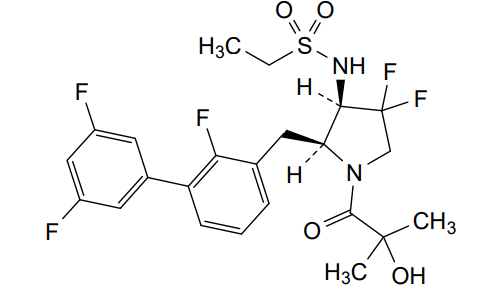
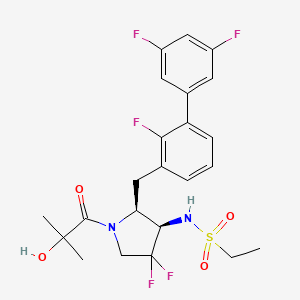
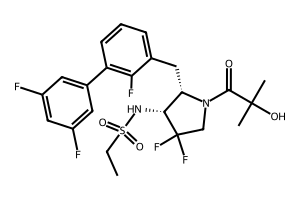
Oveporexton
CAS 2460722-04-5
MF C23H25F5N2O4S MW 520.5
N-[(2S,3R)-2-[[3-(3,5-difluorophenyl)-2-fluorophenyl]methyl]-4,4-difluoro-1-(2-hydroxy-2-methylpropanoyl)pyrrolidin-3-yl]ethanesulfonamide
N-[(2S,3R)-1-(2-ヒドロキシ-2-メチルプロピオニル)-2-(2,3′,5′-トリフルオロビフェニル-3-イルメチル)-4,4-ジフルオロピロリジン-3-イル]エタンスルホンアミド
N-[(2S,3R)-2-[[3-(3,5-difluorophenyl)-2-fluorophenyl]methyl]-4,4-difluoro-1-(2-hydroxy-2-methylpropanoyl)pyrrolidin-3-yl]ethanesulfonamide
N-{(2S,3R)-4,4-difluoro-1-(2-hydroxy-2-methylpropanoyl)-2-[(2,3′,5′-trifluoro-[1,1′-biphenyl]-3-yl)methyl]pyrrolidin-3-yl}ethane-1-sulfonamide
orexin type 2 receptor agonist, TAK-861, TAK 861, 59MF6P2ATF
Oveporexton is a small molecule drug. The usage of the INN stem ‘-orexton’ in the name indicates that Oveporexton is a orexin receptor agonist. Oveporexton has a monoisotopic molecular weight of 520.15 Da.
Oveporexton (INNTooltip International Nonproprietary Name; developmental code name TAK-861) is an orexin receptor agonist and wakefulness-promoting agent which is under development for the treatment of narcolepsy (types 1 and 2) and idiopathic hypersomnia.[1][2][3] It is taken by mouth.[1][2]
The drug acts as a selective agonist of the orexin OX2 receptor.[1][2] It has wakefulness-promoting effects in animals, including in rodents and monkeys.[2] In addition, oveporexton has been found to be effective in the treatment of narcolepsy and cataplexy in phase 3 clinical trials in humans.[4][5][6] The drug is a first-in-class medication and targets the root symptomatic cause of narcolepsy (type 1) by remediating the orexin (hypocretin) deficiency that is present in the condition.[7][8][9]
Oveporexton is being developed by Takeda.[1] As of July 2025, it has completed phase 3 clinical trials for treatment of narcolepsy, whereas no recent development has been reported for treatment of idiopathic hypersomnia.[1][5][10] Takeda plans to submit a New Drug Application (NDA) of oveporexton for the treatment of narcolepsy to the United States Food and Drug Administration (FDA) in 2025.[5] Oveporexton is a follow-on and replacement compound for Takeda’s earlier lead drug danavorexton (TAK-925), which is administered intravenously and stopped being developed due to unexpected liver toxicity findings.[10]
- A Trial of TAK-861 for the Treatment of Narcolepsy With CataplexyCTID: NCT07363720Phase: Phase 3Status: Not yet recruitingDate: 2026-01-23Conditions: Narcolepsy Type 1 (NT1); Narcolepsy With CataplexyInterventions: PlaceboLinked Compound CID: 154617563
- A Study of TAK-861 for the Treatment of Selected Central Hypersomnia ConditionsCTID: NCT05816382Phase: Phase 2/Phase 3Status: RecruitingDate: 2025-12-01Conditions: Narcolepsy Type 1Interventions: TAK-861Linked Compound CID: 154617563
- A Study of TAK-861 in People With Narcolepsy Type 1CTID: NCT06505031Phase: Phase 3Status: CompletedDate: 2025-09-15Conditions: Narcolepsy Type 1Interventions: PlaceboLinked Compound CID: 154617563
- A Study of TAK-861 for the Treatment of Narcolepsy Type 1CTID: NCT06470828Phase: Phase 3Status: CompletedDate: 2025-07-01Conditions: Narcolepsy Type 1Interventions: PlaceboLinked Compound CID: 154617563
- A Study of TAK-861 in Participants With Narcolepsy Type 1CTID: NCT05687903Phase: Phase 2Status: CompletedDate: 2025-01-09Conditions: Narcolepsy Type 1Interventions: PlaceboLinked Compound CID: 154617563
- A Randomized, Double-blind, Placebo-Controlled Study to Evaluate the Efficacy, Safety, and Tolerability of TAK-861 for the Treatment of Narcolepsy With Cataplexy (Narcolepsy Type 1)EudraCT: 2022-001654-38Phase: Phase 2Status: CompletedDate: 2023-05-26Linked Compound CID: 154617563
- A Long-term Extension Study to Evaluate the Safety and Tolerability of TAK-861 in Participants With Selected Central Hypersomnia ConditionsEudraCT: 2022-002965-13Phase: Phase 2, Phase 3Status: Trial now transitionedDate: 2023-04-11Linked Compound CID: 154617563
- A Randomized, Double-blind, Placebo-Controlled Study to Evaluate the Efficacy, Safety, and Tolerability of TAK-861 for the Treatment of Narcolepsy Without Cataplexy (Narcolepsy Type 2)EudraCT: 2022-002966-34Phase: Phase 2Status: CompletedDate: 2023-03-20Linked Compound CID: 154617563
SYN
https://patents.google.com/patent/US11028048B2/en
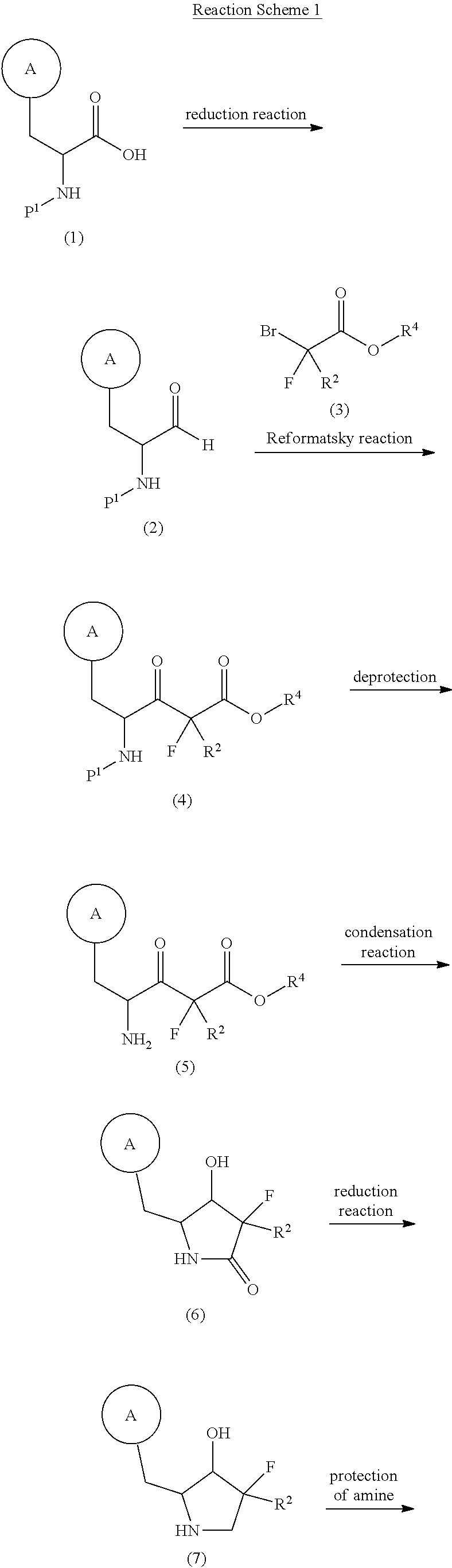
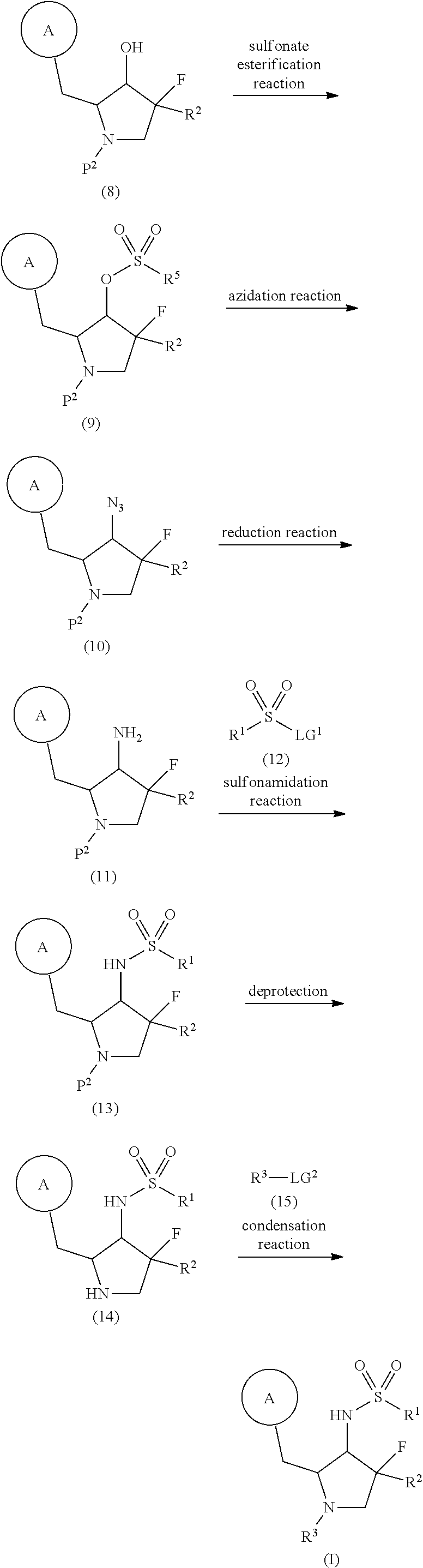
SYN
Example 3
N-{(2S,3R)-4,4-difluoro-1-(2-hydroxy-2-methylpropanoyl)-2-. [(2,3′,5′-trifluoro[1,1′-biphenyl]-3-yl)methyl]pyrrolidin-3-yl}ethanesulfonamide
A) tert-butyl (2S,3R)-3-(ethylsulfonamido)-4,4-difluoro-2-((2,3′,5′-trifluoro-[1,1′-biphenyl]-3-yl)methyl)pyrrolidine-1-carboxylate
B) N-((2S,3R)-4,4-difluoro-2-((2,3′,5′-trifluoro-[1,1′-biphenyl]-3-yl)methyl)pyrrolidin-3-yl)ethanesulfonamide hydrochloride
C) N-{(2S,3R)-4,4-difluoro-1-(2-hydroxy-2-methylpropanoyl)-2-[(2,3′,5′-trifluoro[1,1′-biphenyl]-3-yl)methyl]pyrrolidin-3-yl}ethanesulfonamide
PAT
N-{(2S,3R)-4,4-difluoro-l-(2-hydroxy-2-methylpropanoyl)-2-[(2,3′,5′-trifluoro[l,l’-biphenyl]-3-yl)methyl]pyrrolidin-3-yl}ethanesulfonamide, (hereafter referred as to “Compound A”) is described in U.S. Patent No. 11,028,048.
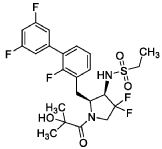
Compound A
PAT
- Heterocyclic compound and use thereofPublication Number: US-12415782-B2Priority Date: 2019-01-31Grant Date: 2025-09-16Linked Compounds: 1,196Linked Substances: 1,265
- Heterocyclic compound and use thereofPublication Number: US-2025243156-A1Priority Date: 2019-01-31Linked Compounds: 1,190Linked Substances: 1,259
- Heterocyclic compound and use thereofPublication Number: TW-202043196-APriority Date: 2019-01-31Linked Compounds: 572Linked Substances: 640
- Heterocyclic compound and use thereofPublication Number: US-12421188-B2Patent Family: AR-117916-A1; AU-2020215380-A1; AU-2020215380-A2; AU-2020215380-B2; BR-112021014180-A2; CA-3124536-A1; CL-2021001973-A1; CN-113395993-A; CN-113395993-B; CN-118271297-A; CN-118271298-A; CN-118290408-A; CN-118344346-A; CN-118420600-A; CO-2021011188-A2; DK-3917616-T3; EA-202192138-A1; EC-SP21056325-A; EP-3917616-A1; EP-3917616-B1; EP-4578853-A2; EP-4578853-A3; ES-3037650-T3; FI-3917616-T3; HR-P20250785-T1; HU-E071890-T2; IL-284073-A; IL-284073-B1; IL-284073-B2; JP-2022519331-A; JP-2023078426-A; JP-7253640-B2; JP-7502512-B2; KR-20210121080-A; LT-3917616-T; MX-2021008241-A; PE-20211700-A1; PH-12021551846-A1; PL-3917616-T3; PT-3917616-T; RS-67170-B1; SG-11202106791X-A; SI-3917616-T1; TW-202043196-A; TW-I832962-B; US-11028048-B2; US-12404237-B2; US-12415782-B2; US-12421188-B2; US-2020247747-A1; US-2021276949-A1; US-2023040770-A1; US-2024360080-A1; US-2025243156-A1; US-2025243157-A1; US-2025243158-A1; WO-2020158958-A1; ZA-202106304-BPriority Date: 2019-01-31Grant Date: 2025-09-23Inventor(s): HATTORI YASUSHI; MIYANOHANA YUHEI; KAJITA YUICHI; KOIKE TATSUKI; HOASHI YASUTAKA; …Assignee(s): TAKEDA PHARMACEUTICALS COClassification: C07D207/14; C07D403/06; C07D407/08; C07D417/06Abstract: The present invention provides a heterocyclic compound having an orexin type 2 receptor agonist activity.A compound represented by the formula (I):wherein each symbol is as described in the specification, or a salt thereof has an orexin type 2 receptor agonist activity, and is useful as an agent for the prophylaxis or treatment of narcolepsy.Linked Compounds: 1,190Linked Substances: 1,259
- Heterocyclic compounds and their usePublication Number: CN-113395993-BPriority Date: 2019-01-31Grant Date: 2024-02-20Linked Compounds: 1,092Linked Substances: 1,328
- Heterocyclic compound and use thereofPublication Number: US-2024360080-A1Priority Date: 2019-01-31Linked Compounds: 1,194Linked Substances: 1,262
- Heterocyclic compounds and use thereofPublication Number: EP-3917616-B1Priority Date: 2019-01-31Grant Date: 2025-06-11Linked Compounds: 1,184Linked Substances: 1,210
- Method of treating excessive sleepiness and/or cataplexy using n-{2-(([1,1′-biphenyl]-3-yl)methyl)pyrrolidin-3-yl}sulfonamide derivativesPublication Number: US-12404237-B2Priority Date: 2019-01-31Grant Date: 2025-09-02Linked Compounds: 1,196Linked Substances: 1,266
- Heterocyclic compound and use thereofPublication Number: EP-4578853-A2Priority Date: 2019-01-31Linked Compounds: 1,178Linked Substances: 1,202
- Heterocyclic compound and use thereofPublication Number: US-2023040770-A1Priority Date: 2019-01-31Linked Compounds: 1,815Linked Substances: 3,447
- Heterocyclic compound and use thereofPublication Number: US-2025243158-A1Priority Date: 2019-01-31Linked Compounds: 1,196Linked Substances: 1,264
- Heterocyclic compound and use thereofPublication Number: US-2021276949-A1Priority Date: 2019-01-31Linked Compounds: 1,762Linked Substances: 3,038
- COMPOUND, DRUG, METHOD FOR ACTIVATING AN OREXIN TYPE 2 RECEPTOR IN A MAMMAL, METHOD FOR PROPHYLAXIS OR TREATMENT OF NARCOLEPSY IN A MAMMALIAN, AND, USE OF A COMPOUNDPublication Number: BR-112021014180-A2Priority Date: 2019-01-31Linked Compounds: 649Linked Substances: 725
- Heterocyclic compound and use thereofPublication Number: US-2025243157-A1Priority Date: 2019-01-31Linked Compounds: 1,196Linked Substances: 1,266
- Heterocyclic compounds and their usePublication Number: CN-118271298-APriority Date: 2019-01-31Linked Compounds: 1,252Linked Substances: 2,011
- Heterocyclic compounds and uses thereofPublication Number: CN-118344346-APriority Date: 2019-01-31Linked Compounds: 1,247Linked Substances: 2,010
- Heterocyclic compounds and their usePublication Number: CN-118420600-APriority Date: 2019-01-31Linked Compounds: 897Linked Substances: 1,440
- Heterocyclic compounds and their usesPublication Number: JP-7502512-B2Priority Date: 2019-01-31Grant Date: 2024-06-18Linked Compounds: 672Linked Substances: 744
- Use of an orexin 2 receptor agonist for improving respiratory function during sleepPublication Number: TW-202502342-APriority Date: 2023-06-02Linked Compounds: 36Linked Substances: 51
- Heterocyclic compounds and uses thereofPublication Number: CN-118271297-APriority Date: 2019-01-31Linked Compounds: 1,220Linked Substances: 1,815
- Heterocyclic compounds and uses thereofPublication Number: CN-118290408-APriority Date: 2019-01-31Linked Compounds: 1,181Linked Substances: 1,726
- Heterocyclic compound and use thereofPublication Number: US-2020247747-A1Priority Date: 2019-01-31Linked Compounds: 1,790Linked Substances: 3,069
- Heterocyclic compound and use thereofPublication Number: US-11028048-B2Priority Date: 2019-01-31Grant Date: 2021-06-08Linked Compounds: 1,788Linked Substances: 3,059
ADVERTISEMENT
ANAX LABORATORIES
WEBSITE https://www.anaxlab.com/
Discovery Solutions, Supporting the chemistry needs of clients in the Medical, Analytical and Bio Sciences
Development Solutions, Developing from Lab scale to PR&D, Kilo Scale-ups and Commercial Scales
SEE MORE………Integrated Solutions, Manufacturing Solutions, Products,
Can’t Find? Let’s Connect

Phone : +91 897704 2010 / +91 9177075735, Email : info@anaxlab.com
#MedicinalChemistry, #DrugDiscovery, #OrganicSynthesis, #ChemicalLibrary, #BuildingBlocks, #SARStudies, #ChemistryInnovation, #medchem, #Drugdevelopment, #Biotech, #Biotechnology, #AnaxLaboratories, #Pharma
AS ON FEB2026 4.574 LAKHS VIEWS ON BLOG WORLDREACH AVAILABLEFOR YOUR ADVERTISEMENT
join me on Linkedin
Anthony Melvin Crasto Ph.D – India | LinkedIn
join me on Researchgate
RESEARCHGATE
join me on Facebook
Anthony Melvin Crasto Dr. | Facebook
join me on twitter
Anthony Melvin Crasto Dr. | twitter
+919321316780 call whatsaapp
EMAIL. amcrasto@gmail.com
References
- “Oveporexton”. AdisInsight. 16 December 2024. Retrieved 26 February 2025.
- Mitsukawa K, Terada M, Yamada R, Monjo T, Hiyoshi T, Nakakariya M, et al. (September 2024). “TAK-861, a potent, orally available orexin receptor 2-selective agonist, produces wakefulness in monkeys and improves narcolepsy-like phenotypes in mouse models”. Scientific Reports. 14 (1) 20838. Bibcode:2024NatSR..1420838M. doi:10.1038/s41598-024-70594-1. PMC 11379823. PMID 39242684.
- Kallweit MS, Kallweit NP, Kallweit U (29 November 2023). “Pharmacological Treatments of Sleep–Wake Disorders: Update 2023”. Clinical and Translational Neuroscience. 7 (4): 42. doi:10.3390/ctn7040042. ISSN 2514-183X.
- Walters J (7 October 2025). “Positive Data Presentation on Oveporexton for Narcolepsy”. Psychiatric Times. Retrieved 7 October 2025.
- Beaney A (14 July 2025). “Takeda’s oral narcolepsy drug shines in two Phase III trials”. Clinical Trials Arena. Retrieved 7 October 2025.
- Dauvilliers Y, Plazzi G, Mignot E, Lammers GJ, Del Río Villegas R, Khatami R, et al. (May 2025). “Oveporexton, an Oral Orexin Receptor 2-Selective Agonist, in Narcolepsy Type 1”. The New England Journal of Medicine. 392 (19): 1905–1916. doi:10.1056/NEJMoa2405847. PMID 40367374.
- Abad VC (2023). “Pharmacological options for narcolepsy: are they the way forward?”. Expert Rev Neurother. 23 (9): 819–834. doi:10.1080/14737175.2023.2249234. PMID 37585269.
- Matsuyama K (8 September 2025). “Takeda Nears First Therapy for Narcolepsy’s Root Cause”. Bloomberg.com. Archived from the original on 8 September 2025. Retrieved 7 October 2025.
- Vinluan F (9 September 2025). “Takeda Is Waking Up the Narcolepsy Market With First-in-Class Drug, But Alkermes Is on Its Heels”. MedCity News. Retrieved 7 October 2025.
- Mullard A (September 2025). “Leading orexin receptor agonist clears phase III for narcolepsy”. Nat Rev Drug Discov. 24 (9): 655. doi:10.1038/d41573-025-00137-4. PMID 40775090.
| Clinical data | |
|---|---|
| Other names | TAK-861; TAK861 |
| Routes of administration | Oral[1][2] |
| Drug class | Orexin OX2 receptor agonist; Wakefulness-promoting agent |
| Identifiers | |
| IUPAC name | |
| CAS Number | 2460722-04-5 |
| PubChem CID | 154617563 |
| ChemSpider | 130299567 |
| UNII | 59MF6P2ATF |
| KEGG | D13223 |
| Chemical and physical data | |
| Formula | C23H25F5N2O4S |
| Molar mass | 520.52 g·mol−1 |
| 3D model (JSmol) | Interactive image |
| SMILES | |
| InChI | |
ADVERTISEMENT
ANAX LABORATORIES
WEBSITE https://www.anaxlab.com/
Discovery Solutions, Supporting the chemistry needs of clients in the Medical, Analytical and Bio Sciences
Development Solutions, Developing from Lab scale to PR&D, Kilo Scale-ups and Commercial Scales
SEE MORE………Integrated Solutions, Manufacturing Solutions, Products,
Can’t Find? Let’s Connect

Phone : +91 897704 2010 / +91 9177075735, Email : info@anaxlab.com
#MedicinalChemistry, #DrugDiscovery, #OrganicSynthesis, #ChemicalLibrary, #BuildingBlocks, #SARStudies, #ChemistryInnovation, #medchem, #Drugdevelopment, #Biotech, #Biotechnology, #AnaxLaboratories, #Pharma
/////////oveporexton, orexin type 2 receptor agonist, TAK-861, TAK 861, 59MF6P2ATF
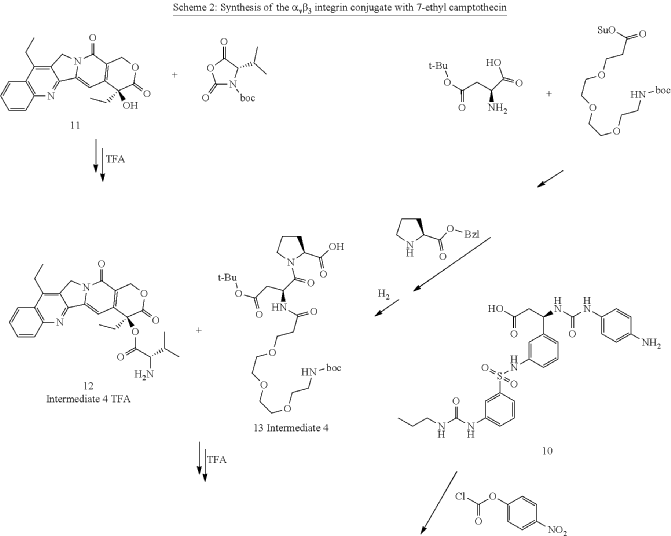
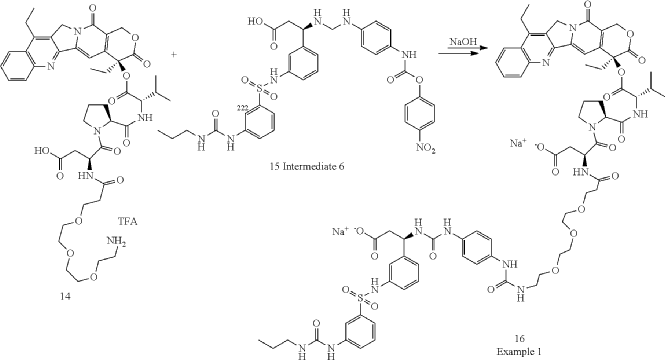
Orenasitecan
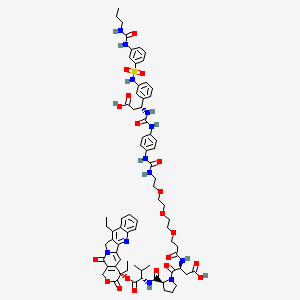
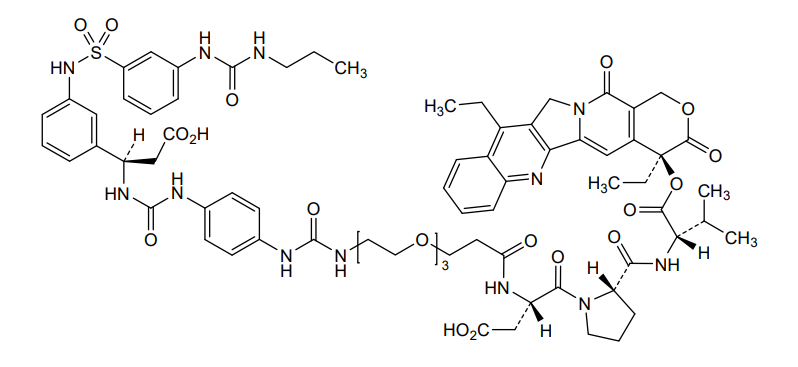
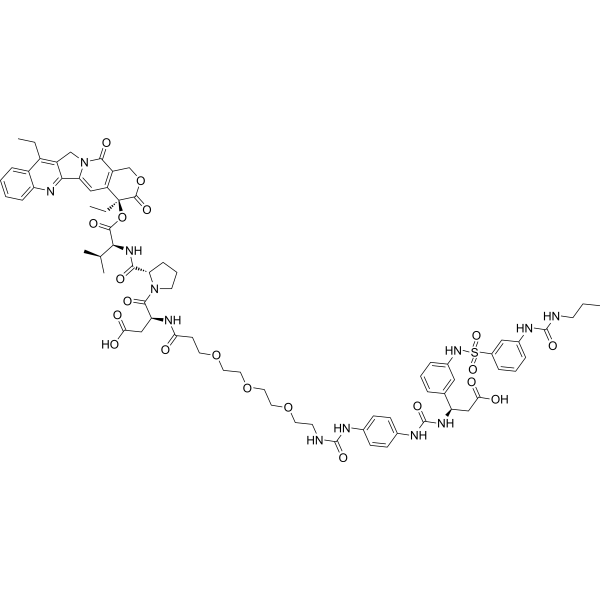
Orenasitecan
CAS 2418533-89-6
MF C72H86N12O20S MW1471.59
(3S)-3-[3-[2-[2-[2-[[4-[[(1R)-2-carboxy-1-[3-[[3-(propylcarbamoylamino)phenyl]sulfonylamino]phenyl]ethyl]carbamoylamino]phenyl]carbamoylamino]ethoxy]ethoxy]ethoxy]propanoylamino]-4-[(2S)-2-[[(2S)-1-[[(19S)-10,19-diethyl-14,18-dioxo-17-oxa-3,13-diazapentacyclo[11.8.0.02,11.04,9.015,20]henicosa-1(21),2,4,6,8,10,15(20)-heptaen-19-yl]oxy]-3-methyl-1-oxobutan-2-yl]carbamoyl]pyrrolidin-1-yl]-4-oxobutanoic acid
(4S)-4,11-diethyl-3,14-dioxo-3,4,12,14-tetrahydro-1Hpyrano[3′,4′:6,7]indolizino[1,2-b]quinolin-4-yl N-{1-[4-({[(1R)-2-
carboxy-1-(3-{3-[(propylcarbamoyl)amino]benzene-1-sulfonamido}phenyl)ethyl]carbamoyl}amino)anilino]-1-oxo-5,8,11-
trioxa-2-azatetradecan-14-oyl}-L-α-aspartyl-L-prolyl-L-valinate
antineoplastic, L3KV5NR5PG
Orenasitecan is a small molecule drug. The usage of the INN stem ‘-tecan’ in the name indicates that Orenasitecan is a antineoplastic, topoisomerase I inhibitor. Orenasitecan has a monoisotopic molecular weight of 1470.58 Da.
ORENASITECAN is a small molecule drug with a maximum clinical trial phase of II and has 1 investigational indication.
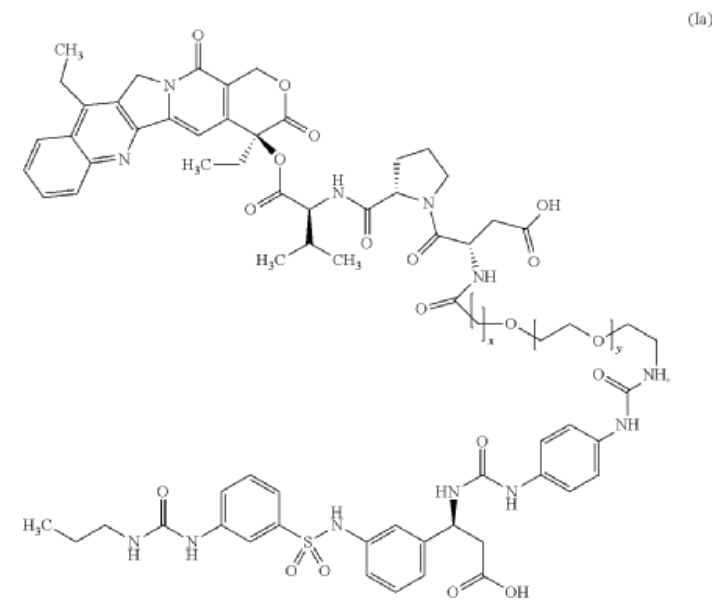
PAT
Cytostatic conjugates with integrin ligands
Publication Number: US-2021386864-A1
Priority Date: 2018-11-05
https://patents.google.com/patent/US20210386864A1
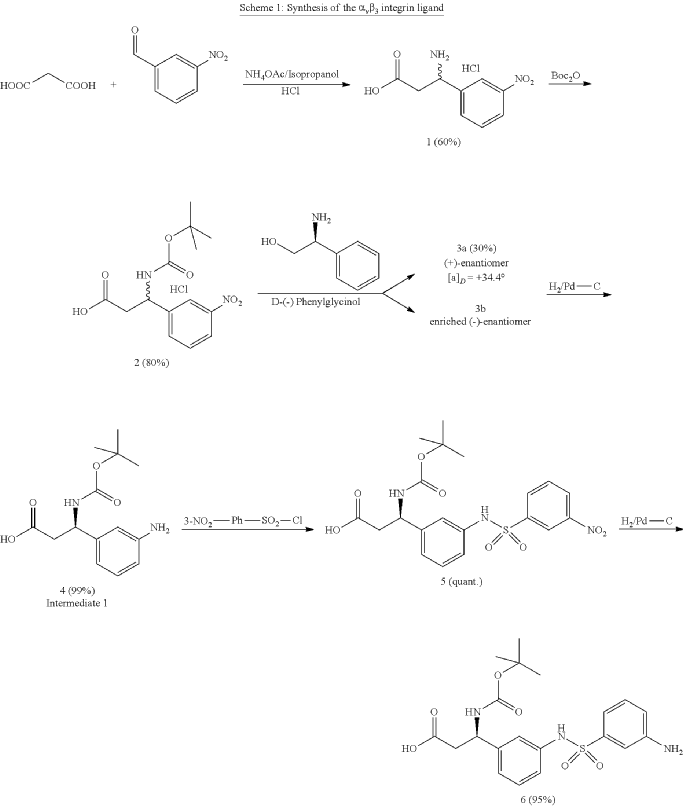
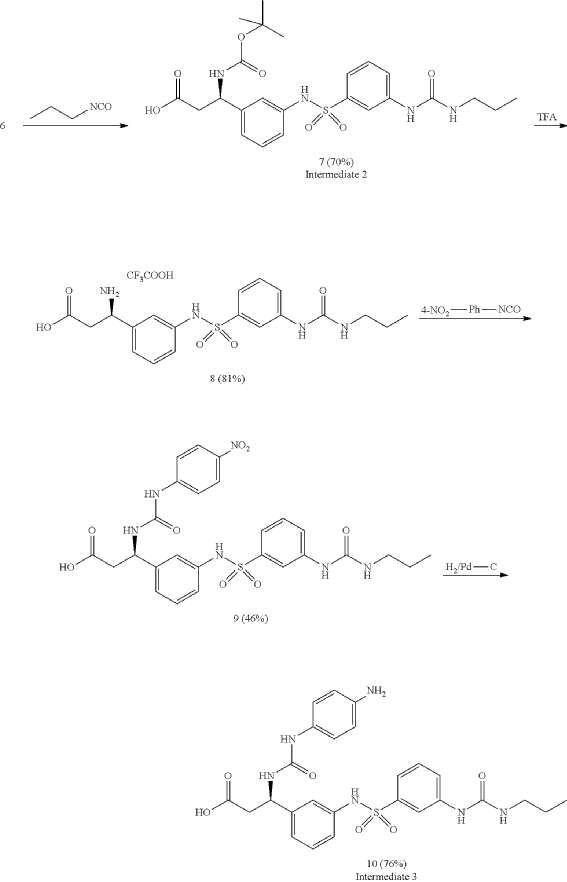
Separation of enantiomers can also be accomplished on different steps via chromatography using chiral columns
AS ON FEB2026 4.574 LAKHS VIEWS ON BLOG WORLDREACH AVAILABLEFOR YOUR ADVERTISEMENT
join me on Linkedin
Anthony Melvin Crasto Ph.D – India | LinkedIn
join me on Researchgate
RESEARCHGATE
join me on Facebook
Anthony Melvin Crasto Dr. | Facebook
join me on twitter
Anthony Melvin Crasto Dr. | twitter
+919321316780 call whatsaapp
EMAIL. amcrasto@gmail.com
/////////orenasitecan, antineoplastic, L3KV5NR5PG
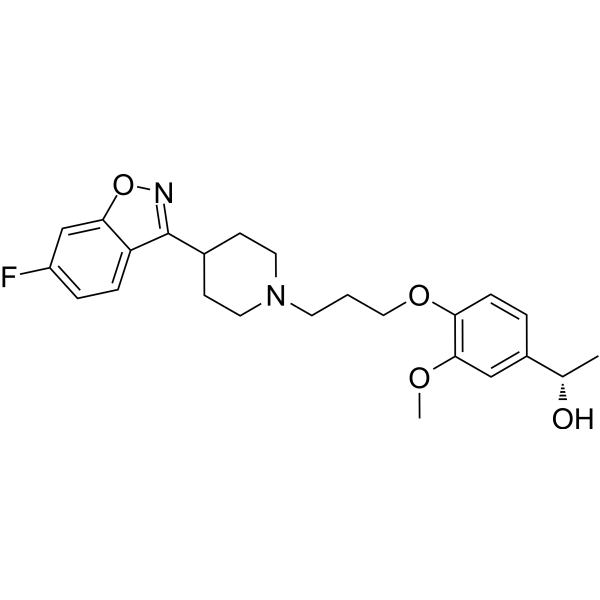
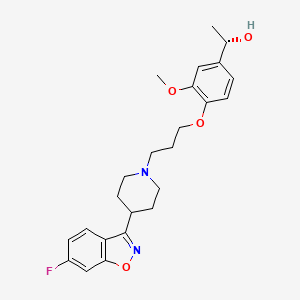
Milsaperidone

Milsaperidone
CAS 501373-88-2
C24H29FN2O4 MW 428.50
FDA APPROVED 2/20/2026, Bysanti, To treat schizophrenia and to treat manic or mixed episodes associated with bipolar I disorder
(1S)-1-[4-[3-[4-(6-fluoro-1,2-benzoxazol-3-yl)piperidin-1-yl]propoxy]-3-methoxyphenyl]ethanol
7SV1ZOG031, P-88-8991, (-)-, (S)-Hydroxy Iloperidone, P-88, VHX 869, VHX-896
Milsaperidone (INNTooltip International Nonproprietary Name, USANTooltip United States Adopted Name), also known by its developmental code name VHX-896 and its tentative brand name Bysanti, is an atypical antipsychotic which is pending approval for the treatment of schizophrenia and bipolar disorder and is in phase 3 clinical trials for treatment of major depressive disorder.[1][2][3] It is a prodrug of iloperidone (Fanapt) and acts as a dopamine D2 receptor and serotonin 5-HT2A receptor antagonist, among other actions.[1][4][5] The drug was developed by Vanda Pharmaceuticals.[1]
- OriginatorVanda Pharmaceuticals
- Class2 ring heterocyclic compounds; Alcohols; Anisoles; Antidepressants; Antipsychotics; Ethers; Fluorobenzenes; Isoxazoles; Methyl ethers; Mood stabilisers; Phenyl ethers; Piperidones; Small molecules
- Mechanism of ActionAlpha 1 adrenergic receptor antagonists; Dopamine D2 receptor antagonists; Serotonin 5-HT2 receptor antagonists
- RegisteredBipolar disorders; Schizophrenia
- 25 Feb 2026Chemical structure information added.
- 25 Feb 2026Vanda Pharmaceuticals has patent protection for an improved method of treatment with milsaperidone in USA
- 25 Feb 2026Vanda Pharmaceuticals has patents pending for an improved method of treatment with milsaperidone in China, Australia, Israel, Mexico and worldwide
PAT
Example 1
(S)-1-(4-(3-r4-(6-Fluoro-benzofd1isoxazol-3-vπ-piperidin-1-vπ-propoxy)-3-methoxy-phenvπ-ethanol
56.36 g of boran complex of (3aR, 7R)-1-methyl-3,3-diphenyl-tetrahydro-pyrrolo[1,2-c][1 ,3,2]oxazaborole (1 equivalent) is dissolved under nitrogen in methylenchloride, and the solution is cooled to 0°C. A 1M solution of 1-(4-{3-[4-(6-fluoro-benzo[d]isoxazol-3-yl)-piperidin-1-yl]-propoxy}-3-methoxy-phenyl)-ethanone (iloperidone; 1 equivalent) in methylenchloride is added via a dropping funnel over 90 minutes while the internal temperature is maintained at 0°C ± 2°C. After the addition is complete, the mixture is stirred at 0°C for 20 hours. The reaction mixture is then poured into precooled methanol (0-5°C) during 1 hour. The solution is warmed to room temperature and stirred until the H2 evolution ceases. The solution is concentrated by distillation and the residue dried in vacuum, treated with methanol and stirred for about 1 hour at 50°C and an additional hour at 0CC. The product is isolated by filtration and dried under reduced pressure for 3 hours at 50°C. The title compound is obtained (white crystals).
[α]D20– 19.3° (c=1 in chloroform)
Mp: 138.2 – 138.8°C
The boran complex used as starting material can be obtained as follows:
200 ml of a solution of (3aR, 7R)-1-methyl-3,3-diphenyl-tetrahydro-pyrrolo[1,2-c][1,3,2]oxazaborole (1M in toluene) is stirred at room temperature under nitrogen. 1.2 equivalent borane-dimethylsulfide complex is added with a syringe. The solution is stirred for 2 further hours at room temperature. The borane complex is then crystallised by addition of 4 vol dry hexane and cooling to -12°C for 1.5 hour. The product is isolated by filtration in a sintered glass funnel and dried in vacuum at 40°C. The boran complex is obtained /white crystals).
Example 2
(R)-1-(4-(3-r4-(6-Fluoro-benzord1isoxazol-3-vπ-piperidin-1-vn-propoxy)-3-methoxy-phenlvπ-ethanol
This compound is produced in analogy to Example 1, using boran complex of (3aS, 7R)-1-methyl-3,3-diphenyl-tetrahydro-pyrrolo[1,2-c][1,3,2]oxazaborole.
[α]D20 = + 18.4° (c=1 in chloroform)
Mp: 137.9 – 138.3°C
PAT
- OPTICAL ISOMERS OF AN ILOPERIDONE METABOLITE.Publication Number: ES-2370634-T3Priority Date: 2001-08-31Grant Date: 2011-12-21
- Optical isomers of an iloperidone metabolitePublication Number: US-2013296366-A1Priority Date: 2001-08-31
- Optical isomers of iloperidone metabolitesPublication Number: JP-2015214577-APriority Date: 2001-08-31
- Optical isomers of iloperidone metabolitesPublication Number: JP-2015227368-APriority Date: 2001-08-31
- Optical isomers of an Iloperidone metabolitePublication Number: US-7977356-B2Priority Date: 2001-08-31Grant Date: 2011-07-12
- Optical isomers of an iloperidone metabolitePublication Number: US-2011201646-A1Priority Date: 2001-08-31
- Optical isomers of an iloperidone metabolitePublication Number: EP-1425272-A1Priority Date: 2001-08-31
- Optical isomers of iloperidone metabolitesPublication Number: JP-2013116905-APriority Date: 2001-08-31
- Optical isomers of iloperidone metabolitesPublication Number: JP-2013227335-APriority Date: 2001-08-31
- Optical isomers of an iloperidone metabolitePublication Number: US-2009176739-A1Priority Date: 2001-08-31
- Optical isomers of an iloperidone metabolitePublication Number: US-2005020632-A1Priority Date: 2001-08-31
- Optical isomers of an iloperidone metabolitePublication Number: EP-2305656-B1Priority Date: 2001-08-31Grant Date: 2012-10-24
AS ON FEB2026 4.574 LAKHS VIEWS ON BLOG WORLDREACH AVAILABLEFOR YOUR ADVERTISEMENT
join me on Linkedin
Anthony Melvin Crasto Ph.D – India | LinkedIn
join me on Researchgate
RESEARCHGATE
join me on Facebook
Anthony Melvin Crasto Dr. | Facebook
join me on twitter
Anthony Melvin Crasto Dr. | twitter
+919321316780 call whatsaapp
EMAIL. amcrasto@gmail.com
References
- “Vanda Pharmaceuticals”. AdisInsight. 30 July 2025. Retrieved 11 October 2025.
- IsHak WW, Hirsch D, Renteria S, Totlani J, Murphy N, Chang T, et al. (October 2025). “Depressive disorders: systematic review of approved psychiatric medications (2009-April 2025) and pipeline phase 3 medications”. BMC Psychiatry. 25 (1) 939. doi:10.1186/s12888-025-07141-3. PMC 12506068. PMID 41057811.
- Richmond LM (1 June 2025). “Med Check: FDA Accepts Bysanti Application, Cobenfy Fails as Adjunct, and More”. Psychiatric News. 60 (6) appi.pn.2025.06.6.2. doi:10.1176/appi.pn.2025.06.6.2. ISSN 0033-2704. Retrieved 11 October 2025.
- Kang J (9 May 2025). “Milsaperidone Under Review for Bipolar I Disorder and Schizophrenia”. MPR. Retrieved 11 October 2025.
- “Vanda Announces Bysanti™ NDA Filing; FDA Decision Expected in Early 2026”. BioSpace. 5 May 2025. Retrieved 11 October 2025.
| Clinical data | |
|---|---|
| Trade names | Bysanti |
| Other names | VHX896 |
| Routes of administration | Oral |
| Drug class | Atypical antipsychotic |
| Identifiers | |
| IUPAC name | |
| CAS Number | 501373-88-2 |
| PubChem CID | 10365268 |
| ChemSpider | 8540717 |
| UNII | 7SV1ZOG031 |
| KEGG | D13099 |
| Chemical and physical data | |
| Formula | C24H29FN2O4 |
| Molar mass | 428.504 g·mol−1 |
| 3D model (JSmol) | Interactive image |
| SMILES | |
| InChI | |
////////////milsaperidone, FDA 2026, APPROVALS 2026, Bysanti, schizophrenia, 7SV1ZOG031, P-88-8991, (-)-, (S)-Hydroxy Iloperidone, P-88, VHX 869, VHX-896
Olomorasib
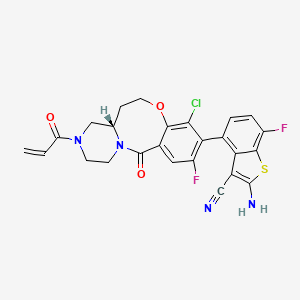
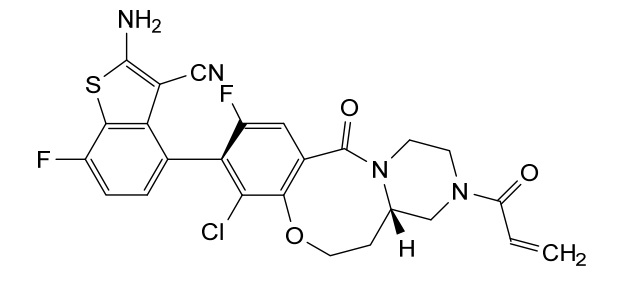

Olomorasib
CAS 2771246-13-8
MF C25H19ClF2N4O3S MW528.96
4-[(13aS)-10-chloro-8-fluoro-6-oxo-2-prop-2-enoyl-1,3,4,12,13,13a-hexahydropyrazino[2,1-d][1,5]benzoxazocin-9-yl]-2-amino-7-fluoro-1-benzothiophene-3-carbonitrile
(4M)-2-amino-4-[(4aS)-8-chloro-10-fluoro-12-oxo-3-(prop-2-enoyl)-2,3,4,4a,5,6-hexahydro-1H,12H-pyrazino[2,1-d][1,5]benzoxazocin-9-yl]-7-fluoro-1-benzothiophene-3-carbonitrile
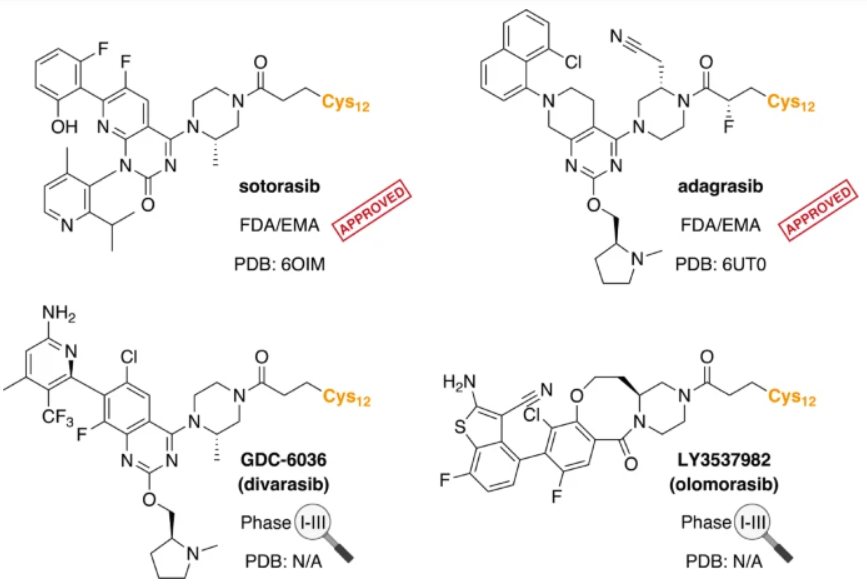
Kirsten rat sarcoma viral oncogene homolog (KRAS) inhibitor, antineoplastic, LY3537982, LY 3537982, KRAS-G12C-II, LY-3537982, C2VJ83PSN7,
Olomorasib (LY3537982) is an investigational, oral, second-generation KRAS G12C inhibitor designed to treat advanced solid tumors, particularly non-small cell lung cancer (NSCLC). Developed by Eli Lilly and Company, it shows promising antitumor activity and a manageable safety profile, often combined with pembrolizumab (Keytruda). 
Key details about olomorasib include:
- Mechanism & Target: It targets the KRAS G12C mutation, a common driver in lung and colorectal cancers.
- Clinical Status: It is undergoing Phase 1/2 (LOXO-RAS-20001) and Phase 3 (SUNRAY-01) clinical trials.
- Breakthrough Therapy: The FDA granted Breakthrough Therapy designation for first-line treatment of advanced NSCLC (PD-L1
50%) in September 2025.
- Combination Efficacy: When combined with pembrolizumab, it showed an objective response rate of 73.9% in first-line patients, with higher efficacy in those with high PD-L1 expression.
- Safety Profile: Common adverse events include diarrhea, elevated liver enzymes (ALT/AST), and rash, which were generally manageable.
Eli Lilly and Company +4
Olomorasib is designed to be more potent with potentially better tolerability than earlier KRAS G12C inhibitors, aiming to improve outcomes in first-line settings.
- OriginatorEli Lilly and Company
- ClassAntineoplastics; Small molecules
- Mechanism of ActionKRAS protein inhibitors
- Phase IIINon-small cell lung cancer
- Phase ISolid tumours
- 05 Jan 2026Eli Lilly and Company completes a phase-I trial (In volunteers) in Japan (PO, Capsule) (NCT07124013)
- 22 Dec 2025Phase-I/II clinical trials in Non-small cell lung cancer (Metastatic disease, Second-line therapy or greater, Combination therapy) in USA, Canada, China, South Korea (PO) (NCT07227025)
- 12 Nov 2025Janssen Research & Development plans a phase I/II (KaRAnaSa) trial for Non-small cell lung cancer (Combination Therapy, Metastatic disease, Second-line therapy or greater) in December 2025 (NCT07227025)
Olomorasib is an orally available inhibitor of the oncogenic KRAS substitution mutation, G12C, with potential antineoplastic activity. Upon oral administration, olomorasib selectively targets the KRAS G12C mutant and inhibits KRAS G12C mutant-dependent signaling. KRAS, a member of the RAS family of oncogenes, serves an important role in cell signaling, division and differentiation. Mutations of KRAS may induce constitutive signal transduction leading to tumor cell growth, proliferation, invasion, and metastasis.
Olomorasib (LY3537982) is an experimental anticancer drug which acts as an inhibitor of the G12C mutant form of Kirsten rat sarcoma virus (KRAS), an oncogene commonly present in several forms of cancer. It is in early stage clinical trials against lung and colorectal cancers and advanced solid tumors.[1][2][3][4][5]
PAPER
ACS Omega. 2025 Jul 4;10(27):29637-29646. [Abstract]
PATENT
•Patent. US20240307395A1.
PAPER
https://www.nature.com/articles/s41598-025-07532-2
SYN
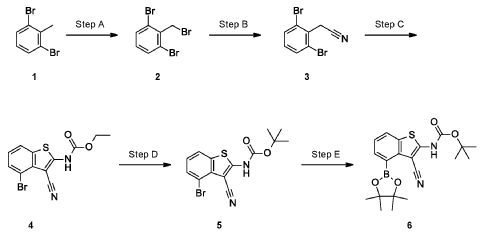
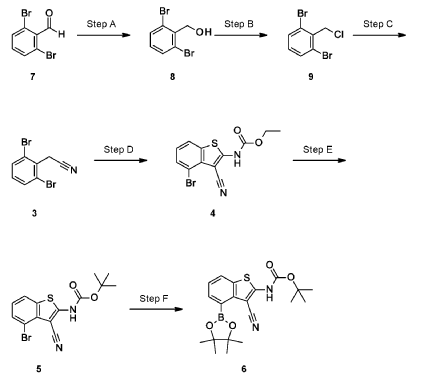
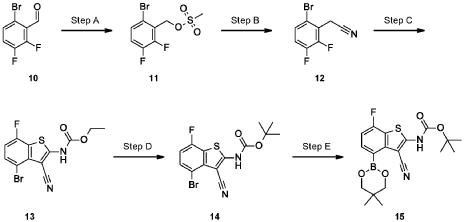

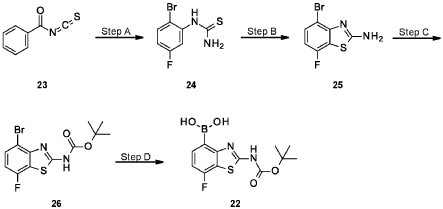
Example 34
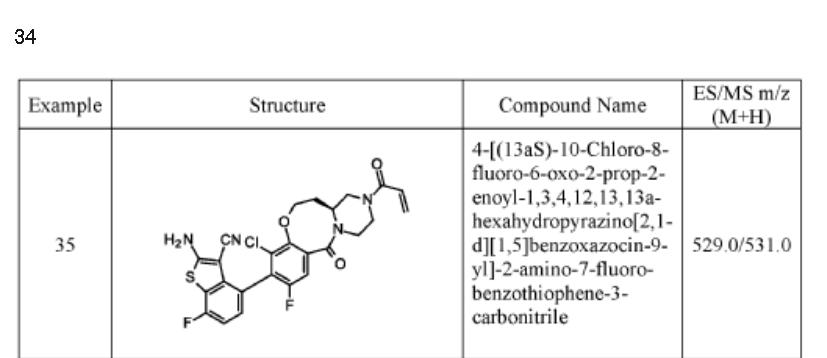
4-[( 13 aS)- 10-Chloro-8-fluoro-6-oxo-2-prop-2-enoyl- 1,3,4,12, 13,13 a- hexahydropyrazino[2,ld][1,5]benzoxazocin-9-yl]-2-amino-benzothiophene-3- carbonitrile
A suspension of 4-[(13aS)-10-chloro-8-fluoro-6-oxo-2,3,4,12,13,13a-hexahydro-lH-pyrazino[2,ld][l,5]benzoxazocin-9-yl]-2-amino-benzothiophene-3-carbonitrile (1.58 g, 3.46 mmol) in EtOAc (35 mL), THF (15 mL) and water (40 mL) is charged with potassium carbonate (1.90 g, 13.7 mmol). The mixture is stirred rapidly and cooled to 0 °C. Acryloyl chloride in DCM (13.0 mL, 3.25 mmol, 0.25M) is added dropwise through a dropping funnel. After 10 minutes of stirring in an ice bath, the mixture is diluted with EtOAc and poured into a separatory funnel. The layers are separated and the aqueous layer is again extracted with EtOAc. The combined organic extracts are washed with saturated aqueous sodium chloride solution, dried over magnesium sulfate, filtered, and concentrated in vacuo. The residue is purified by silica gel flash column chromatography, eluting first with 0-100% (10% MeOH in DCM) / DCM, and second with 0-100% [10% (7N NH 3 in MeOH) in DCM] / DCM to give the desired product as fluffy solid. The solid is sonicated in ether for 30 minutes, filtered, and dried in high vacuum to give the title compound (1.60 g, 91%). ES/MS m/z ( 35 C1/ 37 C1) 511.0/513.0 [M+H] + .
Table 22: Compounds synthesized in a manner essentially analogous to that of Example
PAT
- Methods of Delaying, Preventing, and Treating Acquired Resistance to RAS InhibitorsPublication Number: KR-20230042600-APriority Date: 2020-06-18
- Methods for delaying, preventing, and treating acquired resistance to ras inhibitorsPublication Number: EP-4168002-A1Priority Date: 2020-06-18
- KRAS Gl2C INHIBITORSPublication Number: US-2023339968-A1Priority Date: 2019-12-11
- Kras g12c inhibitorsPublication Number: US-2021179633-A1Priority Date: 2019-12-11
- KRas G12C inhibitorsPublication Number: US-11731984-B2Priority Date: 2019-12-11Grant Date: 2023-08-22
- Combination of antibody-drug conjugate and rasg12c inhibitorPublication Number: WO-2023126822-A1Priority Date: 2021-12-28
- Conjugates comprising covalent binders for targeting intracellular kras g12c proteinsPublication Number: US-2024252694-A1Priority Date: 2021-08-06
- Conjugates containing covalent binders to target intracellular KRAS G12C proteinPublication Number: KR-20240099134-APriority Date: 2021-08-06
- Checkpoint kinase 1 (chk1) inhibitors and uses thereofPublication Number: CA-3219348-A1Priority Date: 2021-05-27
- Methods for inhibiting rasPublication Number: AU-2022281343-A1Priority Date: 2021-05-25
AS ON FEB2026 4.574 LAKHS VIEWS ON BLOG WORLDREACH AVAILABLEFOR YOUR ADVERTISEMENT
join me on Linkedin
Anthony Melvin Crasto Ph.D – India | LinkedIn
join me on Researchgate
RESEARCHGATE
join me on Facebook
Anthony Melvin Crasto Dr. | Facebook
join me on twitter
Anthony Melvin Crasto Dr. | twitter
+919321316780 call whatsaapp
EMAIL. amcrasto@gmail.com
References
- Peng SB, Si C, Zhang Y, Van Horn RD, Lin X, Gong X, et al. (July 2021). “Preclinical characterization of LY3537982, a novel, highly selective and potent KRAS-G12C inhibitor”. Cancer Research. 81 (13_Supplement): 1259. doi:10.1158/1538-7445.AM2021-1259.
- Miyashita H, Hong DS (2024). “Combining EGFR and KRAS G12C Inhibitors for KRAS G12C Mutated Advanced Colorectal Cancer”. Journal of Cancer Immunology. 6 (2): 62–69. doi:10.33696/cancerimmunol.6.086. PMC 11340593. PMID 39175850.
- Hollebecque A, Kuboki Y, Murciano-Goroff YR, Yaeger R, Cassier PA, Heist RS, et al. (2024). “Efficacy and safety of LY3537982, a potent and highly selective KRAS G12C inhibitor in KRAS G12C-mutant GI cancers: Results from a phase 1 study”. Journal of Clinical Oncology. 42 (3_suppl): 94. doi:10.1200/JCO.2024.42.3_suppl.94.
- Burns TF, Dragnev KH, Fujiwara Y, Murciano-Goroff YR, Lee DH, Hollebecque A, et al. (2024). “Efficacy and safety of olomorasib (LY3537982), a second-generation KRAS G12C inhibitor (G12Ci), in combination with pembrolizumab in patients with KRAS G12C-mutant advanced NSCLC”. Journal of Clinical Oncology. 42 (16_suppl): 8510. doi:10.1200/JCO.2024.42.16_suppl.8510.
- Heist RS, Koyama T, Murciano-Goroff YR, Hollebecque A, Cassier PA, Han J, et al. (2024). “Pan-tumor activity of olomorasib (LY3537982), a second-generation KRAS G12C inhibitor (G12Ci), in patients with KRAS G12C-mutant advanced solid tumors”. Journal of Clinical Oncology. 42 (16_suppl): 3007. doi:10.1200/JCO.2024.42.16_suppl.3007.
| Clinical data | |
|---|---|
| Other names | LY3537982 |
| Identifiers | |
| IUPAC name | |
| CAS Number | 2649788-46-3 |
| PubChem CID | 156472638 |
| ChemSpider | 115009373 |
| UNII | C2VJ83PSN7 |
| KEGG | D12853 |
| Chemical and physical data | |
| Formula | C25H19ClF2N4O3S |
| Molar mass | 528.96 g·mol−1 |
| 3D model (JSmol) | Interactive image |
| SMILES | |
| InChI | |
///////olomorasib, Kirsten rat sarcoma viral oncogene homolog (KRAS) inhibitor, antineoplastic, LY3537982, LY 3537982, KRAS-G12C-II, LY-3537982, C2VJ83PSN7,
Ocadusertib
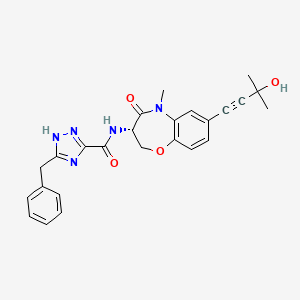
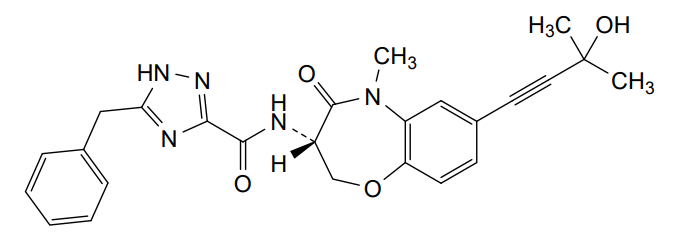
Ocadusertib
CAS 2382811-41-6
MF C25H25N5O4 MW 459.5 g/mol
5-benzyl-N-[(3S)-7-(3-hydroxy-3-methylbut-1-ynyl)-5-methyl-4-oxo-2,3-dihydro-1,5-benzoxazepin-3-yl]-1H-1,2,4-triazole-3-carboxamide
5-benzyl-N-[(3S)-7-(3-hydroxy-3-methylbut-1-yn-1-yl)-5-methyl-4-oxo-2,3,4,5-tetrahydro-1,5-benzoxazepin-3-yl]-1H-1,2,4-triazole-3-carboxamide
serine/threonine kinase inhibitor, LY3871801, R552, LY 3871801, R 552, S53J4A7ME4
- OriginatorRigel Pharmaceuticals
- DeveloperEli Lilly and Company; Rigel Pharmaceuticals
- ClassAnti-inflammatories; Antirheumatics; Small molecules
- Mechanism of ActionRIPK1 protein inhibitors
- Phase IIRheumatoid arthritis
- No development reportedUnspecified
- 28 Mar 2025No recent reports of development identified for phase-I development in Unspecified(In volunteers) in Singapore (PO, Suspension)
- 14 Nov 2024Pharmacodynamics data from preclinical trials in Rheumatoid arthritis presented at the ACR Convergence 2024 (ACR-2024)
- 14 Nov 2024Safety and pharmacokinetics data from a phase I trial in Rheumatoid arthritis presented at the ACR Convergence 2024 (ACR-2024)
Ocadusertib (LY3871801/R552) is an oral, potent, and selective small-molecule RIPK1 inhibitor developed by Rigel Pharmaceuticals and Eli Lilly for autoimmune and inflammatory diseases. It is currently in Phase 2 clinical trials for treating moderate-to-severe rheumatoid arthritis. 
Key Aspects of Ocadusertib:
- Mechanism of Action: It inhibits receptor-interacting serine/threonine-protein kinase 1 (RIPK1), which blocks necroptotic (cell death) responses and, consequently, reduces inflammation.
- Target Indications: Primarily focused on rheumatoid arthritis, it has also been investigated for psoriasis and general inflammatory joint conditions.
- Development Status: As of late 2025, it is in Phase 2 clinical trials (NCT05848258), with previous trials evaluating its safety, tolerability, and pharmacokinetics in healthy volunteers.
- Characteristics: It is designed to be a selective inhibitor, showing no significant inhibition in a broad panel of other kinases.
ACR Meeting Abstracts +3
Ocadusertib is a small molecule drug. The usage of the INN stem ‘-sertib’ in the name indicates that Ocadusertib is a serine/threonine kinase inhibitor. Ocadusertib is under investigation in clinical trial NCT05848258 (An Adaptive Phase 2a/2b Study of LY3871801 in Adult Participants With Rheumatoid Arthritis). Ocadusertib has a monoisotopic molecular weight of 459.19 Da.
- An Adaptive Phase 2a/2b Study of LY3871801 in Adult Participants With Rheumatoid ArthritisCTID: NCT05848258Phase: Phase 2Status: RecruitingDate: 2025-12-09
- A Study of LY3871801 in Healthy Asian and Non-Asian ParticipantsCTID: NCT05960851Phase: Phase 1Status: CompletedDate: 2024-01-10
- A Drug Interaction Study of LY3871801 in Healthy ParticipantsCTID: NCT05602675Phase: Phase 1Status: CompletedDate: 2023-04-18
- A Study of LY3871801 in Healthy ParticipantsCTID: NCT05222399Phase: Phase 1Status: CompletedDate: 2022-03-18
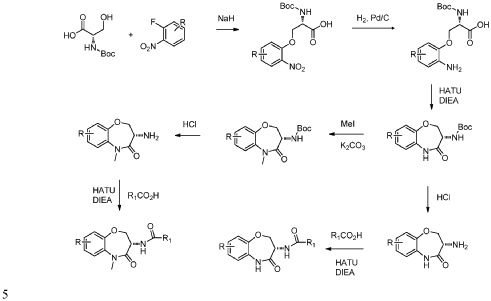
SYN
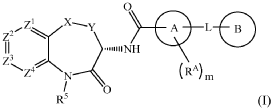
PAT
PAT
WO 2014/125444
PAT
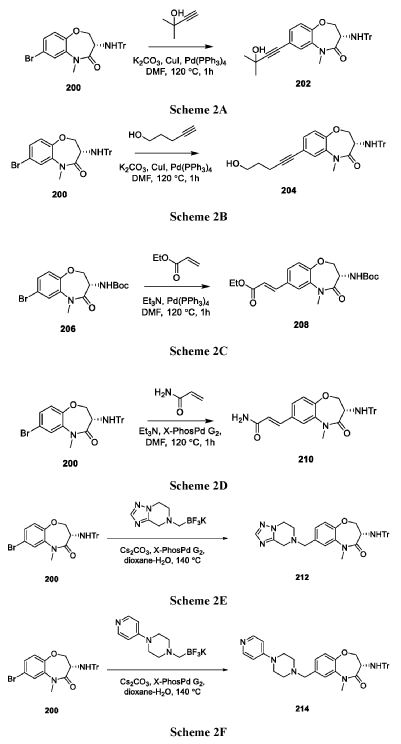
- [WO2021046407]
- https://patentscope.wipo.int/search/en/detail.jsf?docId=WO2021046407&_cid=P20-MM02H8-46041-1
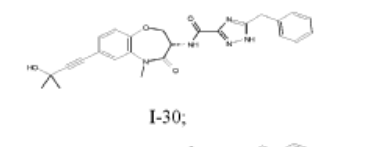
I-30: (S)-5-benzyl-N-(7-(3-hydroxy-3-methylbut-1-yn-1-yl)-5-methyl-4-oxo-2,3,4,5-tetrahydrobenzo[b][1,4]oxazepin-3-yl)-1H-1,2,4-triazole-3-carboxamide;
(S)-5-benzyl-N-(5-methyl-4-oxo-2,3,4,5-tetrahydrobenzo[b][1,4]oxazepin-3-yl)-4H-1,2,4-triazole-3-carboxamide (WO 2014/125444), having a structure as illustrated below, was used as a comparative compound and was examined using a similar protocol as described by WO 2014/125444. This comparison
compound exhibited 93% inhibition at a dose of 30 mg/kg according to WO 2014/125444; however, in the inventors hands, the compound inhibited only 70% at 30 mg/kg. In comparison, compound I-30 of the present disclosure achieved greater than 85% inhibition at a dose of just 5 mg/kg using the similar assay protocol described above.
PAT
- RIP1 inhibitory compounds and methods of making and using the samePublication Number: CN-112368278-BPriority Date: 2018-05-03Grant Date: 2025-06-17
- Rip1 inhibitory compounds and methods for making and using the samePublication Number: US-2021002237-A1Priority Date: 2018-05-03
- RIP1 inhibitory compounds and methods for making and using the samePublication Number: AU-2019262144-A1Priority Date: 2018-05-03
- Rip1 inhibitory compounds and methods for making and using the samePublication Number: US-2021002236-A1Priority Date: 2018-05-03
- Rip1 inhibitory compounds and methods for making and using the samePublication Number: US-2021040053-A1Priority Date: 2018-05-03
- RIP1-inhibiting compounds and methods of making and using the samePublication Number: CN-112368278-APriority Date: 2018-05-03
- Rip1 inhibitory compounds and methods for making and using the samePublication Number: US-2023113841-A1Priority Date: 2018-05-03
- RIP1 inhibitory compounds and methods for making and using the samePublication Number: US-11370765-B2Priority Date: 2018-05-03Grant Date: 2022-06-28
- RIP1 inhibitory compounds and methods for making and using the samePublication Number: US-11377428-B2Priority Date: 2018-05-03Grant Date: 2022-07-05
- Rip1 inhibitory compounds and methods for making and using the samePublication Number: US-2021238153-A2Priority Date: 2018-05-03
- Rip1 inhibitory compounds and methods for making and using the samePublication Number: EP-4248975-A2Priority Date: 2018-05-03
- RIP1 inhibitory compounds and methods for making and using the samePublication Number: US-12116354-B2Priority Date: 2018-05-03Grant Date: 2024-10-15
- RIP1 inhibitory compounds and methods for making and using the samePublication Number: US-11332451-B2Priority Date: 2018-05-03Grant Date: 2022-05-17
- RIP1 inhibitory compounds and methods for making and using the samePublication Number: US-11370764-B2Priority Date: 2018-05-03Grant Date: 2022-06-28
- RIP1 inhibitory compounds and methods of obtaining and using themPublication Number: MD-3788044-T2Priority Date: 2018-05-03
- Rip1 inhibitory compounds and methods for making and using the samePublication Number: US-2019337907-A1Priority Date: 2018-05-03
- RIP1 inhibitory compounds and methods for making and using the samePublication Number: US-10815206-B2Priority Date: 2018-05-03Grant Date: 2020-10-27
- Rip1 inhibitory compounds and methods for making and using the samePublication Number: US-2021009537-A1Priority Date: 2018-05-03
- Rip1 inhibitory compounds and methods for making and using the samePublication Number: US-2020407332-A1Priority Date: 2018-05-03
- Rip1 inhibitory compounds and methods for making and using the samePublication Number: EP-3788044-A1Priority Date: 2018-05-03
AS ON OCT2025 4.511 LAKHS VIEWS ON BLOG WORLDREACH AVAILABLEFOR YOUR ADVERTISEMENT
join me on Linkedin
Anthony Melvin Crasto Ph.D – India | LinkedIn
join me on Researchgate
RESEARCHGATE
join me on Facebook
Anthony Melvin Crasto Dr. | Facebook
join me on twitter
Anthony Melvin Crasto Dr. | twitter
+919321316780 call whatsaapp
EMAIL. amcrasto@gmail.com
///////ocadusertib, serine/threonine kinase inhibitor, LY3871801, R552, LY 3871801, R 552, S53J4A7ME4
Nivegacetor

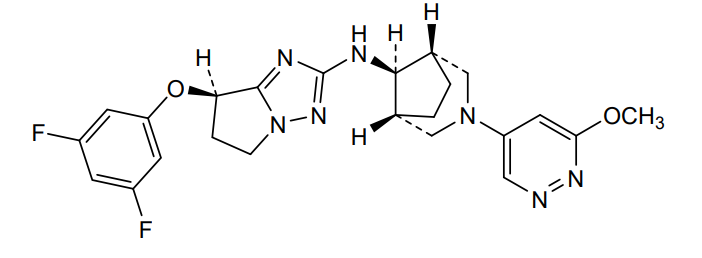
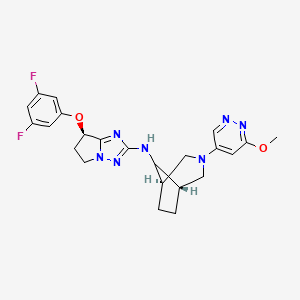
Nivegacetor
CAS 2443487-67-8
MF C23H25F2N7O2 MW 469.5 g/mol
(7R)-7-(3,5-difluorophenoxy)-N-[(1S,5R)-3-(6-methoxypyridazin-4-yl)-3-azabicyclo[3.2.1]octan-8-yl]-6,7-dihydro-5H-pyrrolo[1,2-b][1,2,4]triazol-2-amine
(7R)-7-(3,5-difluorophenoxy)-N-[(1R,5S,8s)-3-(6-methoxypyridazin-4-yl)-3-azabicyclo[3.2.1]octan-8-yl]-6,7-dihydro5H-pyrrolo[1,2-b][1,2,4]triazol-2-amine
gamma secretase modulator, SF4J7MVJ56, RG 6289, RG-6289, ROCHE, ALZHIEMER,
Nivegacetor is a potent γ-secretase modulator.
Nivegacetor is an investigational gamma-secretase modulator being developed by Roche for the treatment of Alzheimer’s disease.[1] The compound is also known by its development code name RG6289 and represents a second-generation gamma-secretase modulator designed to selectively alter amyloid beta peptide production while avoiding the toxicity issues associated with first-generation compounds.[2]
Mechanism of action
Nivegacetor is a gamma-secretase modulator (GSM) that targets the gamma-secretase enzyme complex, which plays a central role in the production of amyloid beta peptides implicated in the pathogenesis of Alzheimer’s disease.[1] It specifically modulates the catalytic subunit presenilin-1 (PSEN1), stabilizing the interaction between the complex and the amyloid precursor protein (APP) at the enzyme’s active site. This stabilization increases the processivity of APP cleavage—that is, the enzyme’s ability to carry out sequential cleavage steps before releasing the APP substrate.[3]
Unlike gamma-secretase inhibitors that completely block enzyme function and cause significant side effects, nivegacetor selectively reduces the production of amyloidogenic long amyloid beta peptides, particularly Aβ42 and Aβ40 that form insoluble amyloid fibrils, while simultaneously increasing the formation of shorter, non-amyloidogenic species such as Aβ38 and Aβ37. The compound demonstrates high potency with an IC50 below 10 nM for gamma-secretase modulation of APP cleavage, and importantly shows no effect on the processing of other gamma-secretase substrates, potentially avoiding the toxicity issues that plagued earlier compounds.[2]
A Study of Donanemab, RG6289, or the Combination of Donanemab and RG6289 in Presenilin 1 (PSEN1) E280A Mutation Carriers for the Treatment of Autosomal-Dominant Alzheimer’s Disease
CTID: NCT06996730
Phase: Phase 2/Phase 3
Status: Not yet recruiting
Date: 2025-08-03
- OriginatorRoche
- ClassAntidementias; Azabicyclo compounds; Bridged bicyclo compounds; Ethers; Fluorobenzenes; Methyl ethers; Pyridazines; Pyrrolidines; Triazoles
- Mechanism of ActionAmyloid precursor protein secretase modulator
- Phase IIAlzheimer’s disease
- 03 Dec 2025Efficacy data from a phase II trial in Alzheimer’s disease presented at the Alzheimer’s Association International Conference 2025 (AAIC-2025)
- 13 Aug 2025Chemical structure information added.
- 14 Nov 2024Banner Alzheimers Institute and Neurosciences Group at the University of Antioquia (GNA) in Medellin plans a clinical trial for Alzheimer’s-disease (Monotherapy, Prevention, In adults), in fall 2025 (IV) (NCT06996730)
SYN
xamples 1 and 2
(R)-7-(3,5-difluorophenoxy)-N-((1R,5S,8s)-3-(6-methoxypyridazin-4-yl)-3-azabicyclo[3.2.1]octan-8-yl)-6,7-dihydro-5H-pyrrolo[1,2-b][1,2,4]triazol-2-amine and (S)-7-(3,5-difluorophenoxy)-N-((1R,5S,8s)-3-(6-methoxypyridazin-4-yl)-3-azabicyclo[3.2.1]octan-8-yl)-6,7-dihydro-5H-pyrrolo[1,2-b][1,2,4]triazol-2-amine
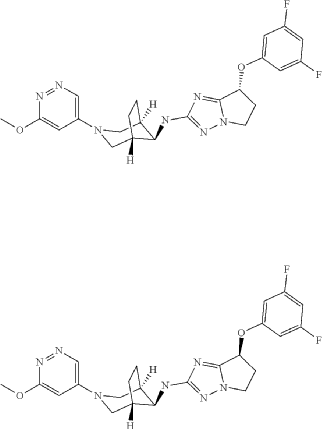
A Buchwald type coupling using the general procedure 1, between 2-bromo-7-(3,5-difluorophenoxy)-6,7-dihydro-5H-pyrrolo[1,2-b][1,2,4]triazole 7-1 and (1R,5S,8S)-3-(6-methoxypyridazin-4-yl)-3-azabicyclo[3.2.1]octan-8-amine 8-2, followed by a separation of the enantiomeres by preparative chiral HPLC afforded the title products as white solid (example 1): 27 mg, MS (ES+) m/z: 470.2 [(M+H) +] and (example 2): 28 mg, MS (ES+) m/z: 470.2 [(M+H) +].
PAT
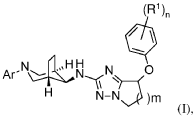
Examples 1 and 2
(R)-7-(3,5-difluorophenoxy)-N-((lR,5S,8s)-3-(6-methoxypyridazin-4-yl)-3- azabicyclo[3.2.1]octan-8-yl)-6,7-dihydro-5H-pyrrolo[l,2-b][l,2,4]triazol-2-amine
and
(S)-7-(3,5-difluorophenoxy)-N-((lR,5S,8s)-3-(6-methoxypyridazin-4-yl)-3- azabicyclo[3.2.1]octan-8-yl)-6,7-dihydro-5H-pyrrolo[l,2-b][l,2,4]triazol-2-amine
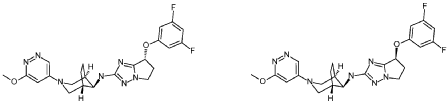
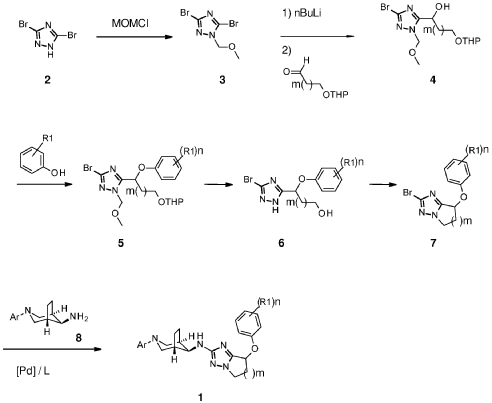
A Buchwald type coupling using the general procedure 1, between 2-bromo-7-(3,5-difluorophenoxy)-6,7-dihydro-5H-pyrrolo[l,2-b][l,2,4]triazole 7-1 and (lR,5S,8S)-3-(6-methoxypyridazin-4-yl)-3-azabicyclo[3.2.1]octan-8-amine 8-2, followed by a separation of the enantiomeres by preparative chiral HPLC afforded the title products as white solid (example 1): 27 mg, MS (ES+) m/z 470.2 [(M+H)+] and (example 2): 28 mg, MS (ES+) m/z 470.2 [(M+H)+]
PAT
- 6, 7-Dihydro-5H-pyrrolo [1,2-B ] [1,2,4] triazol-2-amine derivativesPublication Number: CN-117946116-APriority Date: 2018-12-13
- 7-phenoxy-n-(3-azabicyclo[3.2.1]octan-8-yl)-6,7-dihydro-5h-pyrrolo[1,2-b][1,2,4]triazol-2-amine derivatives and related compounds as gamma-secretase modulators for the treatment of alzheimer’s diseasePublication Number: US-2022056036-A1Priority Date: 2018-12-13
- 6,7-Dihydro-5H-pyrrolo[1,2-B][1,2,4]triazole-2-amine derivativesPublication Number: CN-113179641-BPriority Date: 2018-12-13Grant Date: 2024-01-02
- 7-phenoxy-n-(3-azabicyclo[3.2.1]octan-8-yl)-6,7-dihydro-5h-pyrrolo[1,2-b][1,2,4]triazol-2-amine derivatives and related compounds as gamma-secretase modulators for the treatment of alzheimer’s diseasePublication Number: WO-2020120521-A1Priority Date: 2018-12-13
- 7-phenoxy-N-(3-azabicyclo[3.2.1]octan-8-yl-6,7-dihydro-5H-pyrrolo[1,2-b][1,2,4]triazol-2-amine derivatives and related compounds as gamma- secretase modulators for the treatment of alzheimer’s diseasePublication Number: US-12195470-B2Priority Date: 2018-12-13Grant Date: 2025-01-14
AS ON OCT2025 4.511 LAKHS VIEWS ON BLOG WORLDREACH AVAILABLEFOR YOUR ADVERTISEMENT
join me on Linkedin
Anthony Melvin Crasto Ph.D – India | LinkedIn
join me on Researchgate
RESEARCHGATE
join me on Facebook
Anthony Melvin Crasto Dr. | Facebook
join me on twitter
Anthony Melvin Crasto Dr. | twitter
+919321316780 call whatsaapp
EMAIL. amcrasto@gmail.com
Clinical development
Phase I studies
Nivegacetor has completed Phase I clinical trials in healthy volunteers, where it demonstrated a favorable safety profile and dose-dependent pharmacodynamic effects.[3] The study showed that treatment with nivegacetor resulted in a dose-dependent shift in amyloid beta monomers in cerebrospinal fluid (CSF), with significant reductions in Aβ42 levels and corresponding increases in shorter amyloid beta species.[4]
The Phase I results were presented at the 2023 Clinical Trials on Alzheimer’s Disease (CTAD) conference, where researchers reported that nivegacetor appeared safe and effectively shifted amyloid beta production toward smaller, less aggregation-prone peptides.[3]
Phase II studies
Based on the positive Phase I results, nivegacetor has been selected for advancement to Phase II clinical trials for Alzheimer’s disease treatment.[3] The dose selection for the Phase II study was informed by population pharmacokinetic/pharmacodynamic modeling derived from the Phase I data.[5][6][7]
Historical context
Nivegacetor represents a significant advancement in gamma-secretase modulator development, addressing the limitations of first-generation compounds that failed due to toxicology problems.[2] Previous attempts at gamma-secretase modulation were hampered by safety concerns and off-target effects, leading to the discontinuation of several promising candidates in the 2000s and early 2010s.[2] The development of nivegacetor as a second-generation GSM reflects improved understanding of gamma-secretase biology and more selective targeting approaches.[8]
References
- “nivegacetor | Ligand page”. IUPHAR/BPS Guide to IMMUNOPHARMACOLOGY. International Union of Basic and Clinical Pharmacology (IUPHAR). Retrieved 22 July 2025.
- “RG6289”. ALZFORUM. Archived from the original on 9 October 2024. Retrieved 22 July 2025.
- “Second-Generation γ-Secretase Modulator Heads to Phase 2”. ALZFORUM. Retrieved 22 July 2025.
- “Y-Secretase Modulator RG6289 Produces Dose-Dependent Shift of Amyloid-ß Monomers in Phase 1 Study”. Neurology live. 30 July 2024. Retrieved 22 July 2025.
- “RG6289, a new γ-secretase modulator for the treatment of Alzheimer’s disease: Dose selection for a phase II trial based on population PK/PD modeling”. medically.gene.com. Retrieved 22 July 2025.
- Banner Health (21 May 2025). A Double-Blind, Placebo-Controlled, Double-Dummy Study of Donanemab and RG6289 in PSEN1 E280A Mutation Carriers, and in Non-Randomized, Placebo-Treated Non-Carriers From the Same Kindred, to Evaluate the Efficacy and Safety of Donanemab, RG6289, or the Combination of Donanemab and RG6289, in the Treatment of Autosomal-Dominant Alzheimer’s Disease (Report). clinicaltrials.gov. NCT06996730.
- azalzeditor (19 November 2024). “New Alzheimer’s prevention trial receives $74.5 million NIH grant”. Arizona Alzheimer’s Consortium. Retrieved 22 July 2025.
- Nordvall G, Lundkvist J, Sandin J (16 October 2023). “Gamma-secretase modulators: a promising route for the treatment of Alzheimer’s disease”. Frontiers in Molecular Neuroscience. 16 1279740. doi:10.3389/fnmol.2023.1279740. ISSN 1662-5099. PMC 10613654. PMID 37908487.
| Identifiers | |
|---|---|
| IUPAC name | |
| CAS Number | 2443487-67-8 |
| PubChem CID | 153606610 |
| IUPHAR/BPS | 13509 |
| UNII | SF4J7MVJ56 |
| KEGG | D13199 |
| Chemical and physical data | |
| Formula | C23H25F2N7O2 |
| Molar mass | 469.497 g·mol−1 |
| 3D model (JSmol) | Interactive image |
| SMILES | |
| InChI | |
/////////nivegacetor, gamma secretase modulator, SF4J7MVJ56, RG 6289, RG-6289, ROCHE, ALZHIEMER,
Nispomeben
Nispomeben
CAS 1443133-41-2
MF C21H27NO4 MW357.4 g/mol
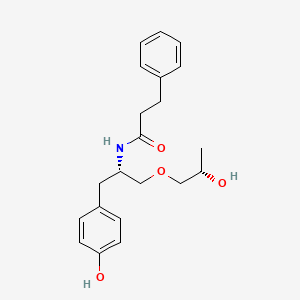
N-[(2S)-1-(4-hydroxyphenyl)-3-[(2S)-2-hydroxypropoxy]propan-2-yl]-3-phenylpropanamide
N-{(2S)-1-(4-hydroxyphenyl)-3-[(2S)-2-hydroxypropoxy]propan-2-yl}-3-phenylpropanamide
non-opioid analgesic, 470338M5XD, E1, NRD 135S E1, NRD E1, NRD.E1, NRD135S, NRD135S.E1, NRD135SE.1
Nispomeben is a small molecule drug. Nispomeben has a monoisotopic molecular weight of 357.19 Da.
- OriginatorNovaremed
- ClassAlcohols; Amides; Anti-inflammatories; Benzene derivatives; Non-opioid analgesics; Phenols; Small molecules
- Mechanism of ActionLyn protein-tyrosine kinase modulators
- Phase IINeuropathic pain
- 02 Sep 2025Updated adverse events data from a phase II trial in Neuropathic pain released by Novaremed
- 07 May 2025Novaremed completes enrolment in a phase-II clinical trial in Neuropathic pain in USA (PO) (NCT05480228)
- 16 Sep 2022Phase-II clinical trials in Neuropathic pain in USA (PO) (NCT05480228)
PAT
WO 2013/084238
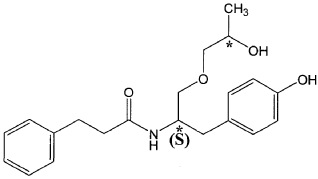
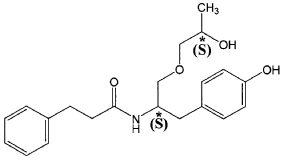
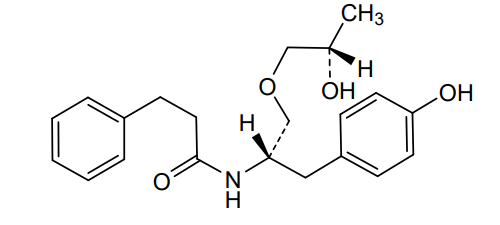
The present invention is based in part on the surprising discovery that the substantially pure enantiomers (S)2-N(3-0-((S)propan 2-ol)-l-propyl-4-hydroxybenzene)-3-phenylpropylamide (also known as the (S,S) enantiomer or El) and (S)2-N(3-0-((R)propan 2-ol)-l -propyl -4-hydroxybenzene)-3-phenylpropyl amide (also known as the (S,R) enantiomer or E2) modulate the activity of specific tyrosine kinases in an opposite manner. It was unexpectedly found that while the (S,S) enantiomer activated protein tyrosine kinases LynA and BLK, the (S,R) enantiomer inhibited their activity. It was further unexpectedly shown that the (S,S) enantiomer was effective as a pain analgesic in animal models of pain, while the (S,R) enantiomer was shown to be ineffective or less effective in these models. Furthermore, the analgesic effect of the (S,S) enantiomer was long acting as it was efficacious for more than 24 hours post administration, in comparison to the commonly used analgesic agent gabapentin which was effective for no longer than 5 hours post administration.
The isolated enantiomers according to some embodiments of the invention may be synthesized as a racemate by known in the art methods described for example in US 7,754,771, US 7,642,290, US 7,674,829 or US 2011/0086910. The racemate may be further separated by known in the art methods for the separation of chiral compounds. According to an exemplary embodiment, the enantiomers may be synthesized as a racemate (comprising (S)2-N(3-0-((S)propan 2-ol)-l-propyl-4-hydroxybenzene)-3-phenylpropylamide and (S)2-N(3-0-((R)propan 2-ol)-l-propyl-4-hydroxybenzene)-3-phenylpropylamide and be further separated by a supercritical fluid chromatography (SFC) in combination with chiral stationary phases. Specifically, the (S,S) and (S,R) compounds may be separated on RegisPack™ column a polysaccharide coated chiral column (with a tris-(3,5-dimethylphenyl) carbamoyl cellulose selector) generally used for enantiomeric separations of a wide range of racemate classes (Figure 7A-C).
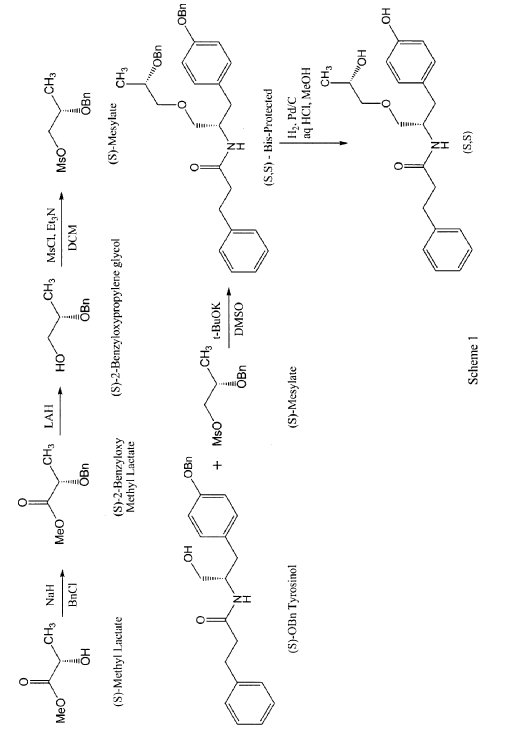
According to some embodiments, the enantiomers may be synthesized directly using for example, the process described in scheme 1 for the preparation of the (S,S) enantiomer.
PAT
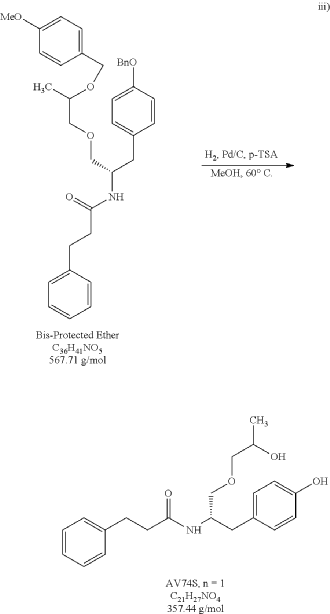
The bis-protected ether (15.7 g) was exposed to one-pot hydrogenation-debenzylation conditions (10% loading of 10% Pd/C and 0.25 eq of p-toluenesulfonic acid) in methanol. After 2 hours at 60° C. under a hydrogen atmosphere, HPLC analysis indicated that the hydrogenation of the benzyl and the debenzylation of PMB ring was complete. The reaction mixture was filtered over Celite and concentrated under reduced pressure. The residue was dissolve in ethyl acetate and a saturated aqueous sodium bicarbonate treatment was conducted to effectively remove p-toluenesulfonic acid, then DURP to provide 12.13 g of an oil (PR030-120-4). Desired product was isolated from an EA/Heptane recrystallization to provide 8.83 g of a white solid (PR030-120-6, 89.4% yield). The purity of PR030-120-6 was 99.3% via HPLC analysis. 1H NMR and Mass spec analysis supported the assigned structure for desired product.
PAT
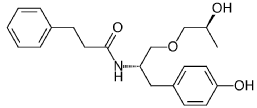
((S,S)-2-N(3-0-(propan-2-ol)-1 -propyl-4-hydroxybenzene)-3-phenylpropylamide), including its enantiomers and diastereomers may be prepared as described in WO 2013/084238,
Example 1 – Preparation of -2-N(3-Q-(propan-2-ol)-1-propyl-4-hvdroxybenzene)-3-
phenylpropylamide
(S,S)-2-N(3-0-(propan-2-ol)-1 -propyl-4-hydroxybenzene)-3-phenylpropylamide was prepared as described in WO 2013/084238 and US 201 1/0086910.
In a first step, 2 g of methyl lactate was reacted with excess of benzyl bromide to get 880 mg of (S)-benzyloxymethyl lactate. The reaction was performed by slurring sodium hydride in THF and cooling down to approximately -15°C. The reaction mixture was then allowed to warm slowly to room temperature and stirred for approximately 1 to 2 hours. The reaction was quenched with saturated ammonium chloride solution and extracted with MTBE twice followed by the removal of solvent on a rotary evaporator to obtain a crude oil. The crude product was purified by column chromatography to yield pure (S)-2-benzyloxymethyl lactate. The (R)-2-benzyloxymethyl lactate isomer was present at 0.93% only. The yield of this step may be increased by avoiding the presence of moisture in the reaction solution.
In a second step, 880 mg (S)-2-benzyloxymethyl lactate obtained in step 1 were reduced using lithium aluminum hydride to obtain (S)-2-benzyloxypropylene glycol in 83.8% yield with 98.7% purity. A solution of pure (S)-2-benzyloxymethyl lactate in methylene chloride was stirred and a solution of lithium aluminum hydride was slowly added thereto at approximately 5°C. The reaction was monitored by TLC and quenched by USP-PW water very carefully. No racemization occurred in this step.
In a third step, the (S)-2-benzyloxypropylene glycol was then reacted with methane sulfonyl chloride in methylene chloride in the presence of triethyl amine to yield the mesylate in 88% yield. A solution of step 2 was stirred in methylene chloride and methane sulfonyl chloride was added to it dropwise at <5°C. After the addition was complete, the progress of the reaction was monitored by TLC. The reaction was quenched with USP-PW water. After the layers were separated, the aqueous layer was back extracted with methylene chloride. The methylene chloride layers were then combined and washed with USP-PW water 3 times to remove most of the methane sulfonic acid. No racemization occurred in this step.
In a fourth step, the mesylate (of step 3) was coupled with S-O-benzyl tyrosinol to form the bis-protected product in 22.7% yield, with a purity of 97.4%. The reaction was carried out at room temperature using a combination of DMF as the solvent and sodium hydride as the base. The reaction went to completion after stirring for at least 12 hours at room temperature.
In a fifth step, 340 mg of the product of step 4 were reduced by hydrogenation in the presence of 10% palladium on carbon catalyst and hydrochloric acid using methylene chloride as a solvent at 50°C. The reaction went to completion in approximately 4 hours with no racemization to yield the desired product in 84.3% yield and 98.9% purity. More specifically, the catalyst was removed by filtration and the filtrate was then concentrated at 33°C. The resulting mixture of solid and oil was mixed with ethyl acetate. The resulting slurry was filtered and the solids washed with ethyl acetate and dried under vacuum at 40 to 45°C to obtain the desired product.
PAT
Example 1—Preparation of (S,S)-2-N(3-O-(propan-2-ol)-1-propyl-4-hydroxybenzene)-3-phenylpropylamide
| (S,S)-2-N(3-O-(propan-2-ol)-1-propyl-4-hydroxybenzene)-3-phenylpropylamide was prepared as described in WO 2013/084238 and US 2011/0086910. |
PAT
- Method of treating or preventing painPublication Number: US-2016317479-A1Priority Date: 2009-09-09
- Method of treating or preventing painPublication Number: US-8802734-B2Priority Date: 2009-09-09Grant Date: 2014-08-12
- Method of Treating or Preventing PainPublication Number: US-2014350099-A1Priority Date: 2009-09-09
- N-substituted benzenepropanamide or benzenepropenamide for use in the treatment of pain and inflammationPublication Number: WO-2011030205-A1Priority Date: 2009-09-09
- Method of treating or preventing painPublication Number: US-2011086910-A1Priority Date: 2009-09-09
- Isolated stereoisomeric forms of (S)2-N(3-O-(propan 2-Ol)-1-propyl-4-hydroxybenzene)-3-phenylpropylamidePublication Number: US-9381173-B2Priority Date: 2011-12-08Grant Date: 2016-07-05
- Isolated Stereoisomeric Forms Of (S)2-N(3-O-(Propan 2-Ol)-1-Propyl-4-Hydroxybenzene)-3-PhenylpropylamidePublication Number: US-2014275270-A1Priority Date: 2011-12-08
- N-substituted benzenepropanamide and benzenepropenamide for use in the prevention or the treatment of affective disordersPublication Number: US-9133103-B2Priority Date: 2011-09-21Grant Date: 2015-09-15
- N-Substituted Benzenepropanamide and Benzenepropenamide For Use in the Prevention or the Treatment of Affective DisordersPublication Number: US-2014275273-A1Priority Date: 2011-09-21
- N-substituted benzenepropanamide and benzenepropenamide for use in the prevention or the treatment of affective disordersPublication Number: EP-2758046-B1Priority Date: 2011-09-21Grant Date: 2015-10-21
- Compounds for treatment or prevention of an infection resulting from a coronavirus and/or a coronavirus-induced diseasePublication Number: EP-3939578-A1Priority Date: 2020-07-13
- Compounds for use in the treatment or prophylaxis of pain, inflammation and/or autoimmunityPublication Number: EP-3860582-B1Priority Date: 2019-01-23Grant Date: 2022-05-04
- Compounds for use in the treatment or prophylaxis of pain, inflammation and/or autoimmunityPublication Number: WO-2020152226-A1Priority Date: 2019-01-23
- Compounds for use in the treatment or prophylaxis of pain, inflammation and/or autoimmunityPublication Number: US-2022002228-A1Priority Date: 2019-01-23
- Pharmaceutical composition comprising stereoisomers of n-(1-(4-hydroxyphenyl)-3-(2-hydroxypropoxy)propan-2-yl)-3-phenylpropanamide for the prevention and treatment of type ii diabetesPublication Number: WO-2015173813-A1Priority Date: 2014-05-14
AS ON OCT2025 4.511 LAKHS VIEWS ON BLOG WORLDREACH AVAILABLEFOR YOUR ADVERTISEMENT
join me on Linkedin
Anthony Melvin Crasto Ph.D – India | LinkedIn
join me on Researchgate
RESEARCHGATE
join me on Facebook
Anthony Melvin Crasto Dr. | Facebook
join me on twitter
Anthony Melvin Crasto Dr. | twitter
+919321316780 call whatsaapp
EMAIL. amcrasto@gmail.com
////////nispomeben, non-opioid analgesic, 470338M5XD, E1, NRD 135S E1, NRD E1, NRD.E1, NRD135S, NRD135S.E1, NRD135SE.1, Neuropathic pain
Nedemelteon
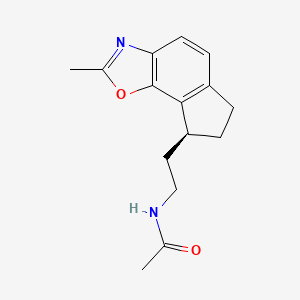
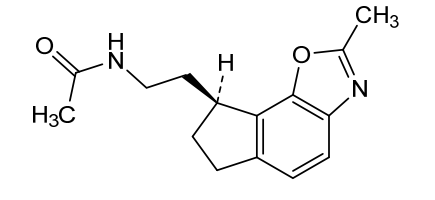
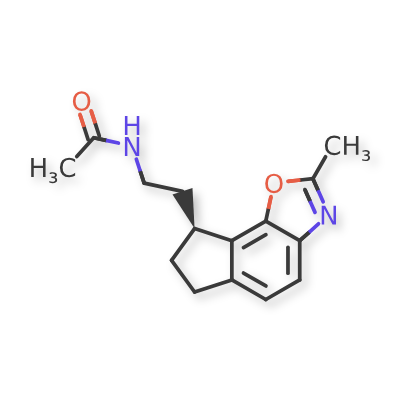
Nedemelteon
CAS 1000334-38-2
MF C15H18N2O2 MW258.32
N-[2-[(8S)-2-methyl-7,8-dihydro-6H-cyclopenta[g][1,3]benzoxazol-8-yl]ethyl]acetamide
N-{2-[(8S)-2-methyl-7,8-dihydro-6H-indeno[5,4-d][1,3]oxazol-8-yl]ethyl}acetamide
melatonin receptor agonist, CW62HV1TTF, MT1/2 Agonist (S)-3b
Nedemelteon is a melatonin receptor agonist.
Nedemelteon is a small molecule drug. The usage of the INN stem ‘-melteon’ in the name indicates that Nedemelteon is a melatonin receptor agonist. Nedemelteon has a monoisotopic molecular weight of 258.14 Da.
SYN
Discovery of a Potent and Orally Bioavailable Melatonin Receptor Agonist
Publication Name: Journal of Medicinal Chemistry
Publication Date: 2021-03-08
PMID: 33682410
DOI: 10.1021/acs.jmedchem.0c01836
SYN
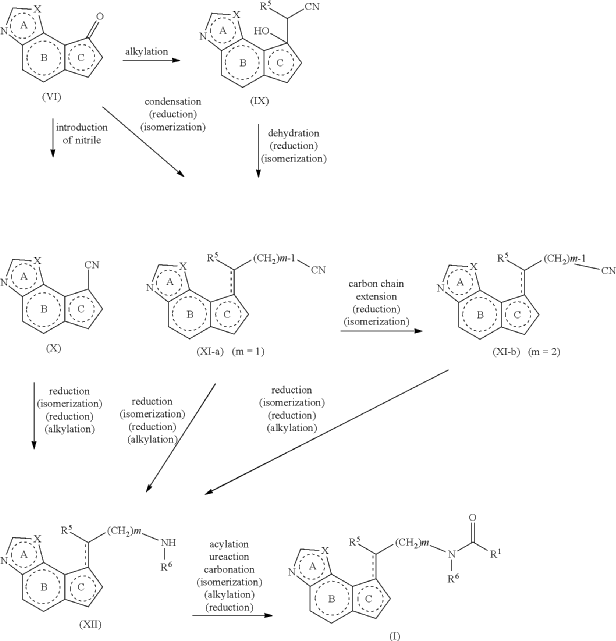
EXAMPLE 11
N-[2-(2-Methyl-7,8-dihydro-6H-indeno[5,4-d][1,3]oxazol-8-yl)ethyl]acetamide
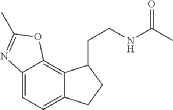
| N-[2-(2-Methyl-6,7-dihydro-8H-indeno[5,4-d][1,3]oxazol-8-ylidene)ethyl]acetamide (165 mg, 0.644 mmol) was dissolved in methanol (6.4 mL), a 10% palladium-carbon powder (82 mg) was added, and the mixture was stirred at room temperature for 12 hr under a hydrogen atmosphere. The catalyst was filtered off using celite, and the filtrate was concentrated under reduced pressure. The residue was purified by silica gel column chromatography (ethyl acetate/methanol=100/0→95/5) to give the title compound (148 mg, yield 89%). |
| 1H-NMR (CDCl 3) δ: 1.69-1.96 (2H, m), 1.99 (3H, s), 2.23-2.50 (2H, m), 2.63 (3H, s), 2.89-3.15 (2H, m), 3.28-3.56 (3H, m), 5.54 (1H, brs), 7.15 (1H, d, J=8.0 Hz), 7.44 (1H, d, J=8.0 Hz), |
EXAMPLE 12
(S)-N-[2-(2-Methyl-7,8-dihydro-6H-indeno[5,4-d][1,3]oxazol-8-yl)ethyl]acetamide
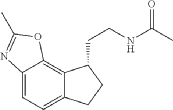
| Racemic N-[2-(2-methyl-7,8-dihydro-6H-indeno[5,4-d][1,3]oxazol-8-yl)ethyl]acetamide (768 mg, 3.00 mmol) was fractionated by high performance liquid chromatography (instrument: Prep LC 2000 (manufactured by Nihon Waters K.K.), column: CHIRALPAK AD (50 mmID×500 mL, manufactured by Daicel Chemical Industries, Ltd.), mobile phase: hexane/ethanol/diethylamine=90/10/0.1, flow rate: 60 mL/min, column temperature: 30° C., sample concentration: 1.02 mg/mL, injection weight: 31 mg). A fraction containing an optically active compound having a shorter retention time under the above-mentioned high performance liquid chromatography conditions was concentrated. The concentrate was re-dissolved in ethanol, and concentrated to dryness. Hexane was added again, and the mixture was concentrated to dryness to give the title compound (381 mg, 99.9% ee). Enantiomer excess (ee) was measured by high performance liquid chromatography (column: CHIRALPAK AD (4.6 mmID×250 mL, manufactured by Daicel Chemical Industries, Ltd.), mobile phase: hexane/ethanol/diethylamine=90/10/0.1, flow rate: 0.5 mL/min, column temperature: 30° C., sample concentration: 0.65 mg/mL (hexane/ethanol), injection volume: 10 μL). |
| 1H-NMR (CDCl 3) δ: 1.69-1.96 (2H, m), 1.99 (3H, s), 2.23-2.50 (2H, m), 2.63 (3H, s), 2.89-3.15 (2H, m), 3.28-3.56 (3H, m), 5.54 (1H, brs), 7.15 (1H, d, J=8.0 Hz), 7.44 (1H, d, J=8.0 Hz), |
SYN
Example 12
(S) -N- [2- (2-Methyl-7, 8-dihydro-6H-indeno [5, 4-d] [1, 3] oxazol-8-yl) ethyl] acetamide
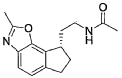
Racemic N- [2- (2-methyl-7, 8-dihydro-6H-indeno [5, 4-d] [1,3] oxazol-8-yl) ethyl] acetamide (768 mg, 3.00 mmol) was fractionated by high performance liquid chromatography
(instrument: Prep LC 2000 (manufactured by Nihon Waters K.K.), column: CHIRΔLPAK AD (50 mmID x 500 mmL, manufactured by Daicel Chemical Industries, Ltd.), mobile phase:
hexane/ethanol/diethylamine=90/10/0.1, flow rate: 60 mL/min, column temperature: 30°C, sample concentration: 1.02 mg/mL, injection weight: 31 mg) . A fraction containing an optically active compound having a shorter retention time under the above-mentioned high performance liquid chromatography conditions was concentrated. The concentrate was re-dissolved in ethanol, and concentrated to dryness. Hexane was added again, and the mixture was concentrated to dryness to give the title compound (381 mg, 99.9%ee). Enantiomer excess (ee) was measured by high performance liquid chromatography (column: CHIRALPAK AD (4.6 mmID x 250 mmL, manufactured by Daicel Chemical Industries, Ltd.), mobile phase: hexane/ethanol/diethylamine=90/10/0.1, flow rate: 0.5 mL/min, column temperature: 300C, sample concentration:
0.65 mg/mL (hexane/ethanol) , injection volume: 10 μL) .
1H-NMR (CDCl3) δ: 1.69 – 1.96 (2H, m) , 1.99 (3H, s) , 2.23 – 2.50 (2H, m) , 2.63 (3H, s) , 2.89 – 3.15 (2H, m) , 3.28 – 3.56 (3H, m) ,
5.54 (IH, brs), 7.15 (IH, d, J = 8.0 Hz), 7.44 (IH, d, J = 8.0Hz),
melting point: 111 – 113°C (recrystallized from hexane/ethyl acetate) ,
MS (ESI+) : 259 (M+H) ,
[α] D20: -53.4° (c 0.5035, methanol),
Elemental analysis: for Ci5Hi8N2O2
Calcd. (%) : C, 69.74; H, 7.02; N, 10.84
Found (%) : C, 69.53; H, 7.01; N, 10.96.
PAT
- Tricyclic compounds, pharmaceutical compositions comprising such and pharmaceutical uses thereof.Publication Number: NO-341739-B1Priority Date: 2006-06-19
- Tricyclic compounds and their pharmaceutical usePublication Number: CN-101506181-APriority Date: 2006-06-19
- Tricyclic compound and pharmaceutical use thereofPublication Number: US-8895591-B2Priority Date: 2006-06-19Grant Date: 2014-11-25
- Tricyclic compound and use thereof as a melatonin receptor agonistPublication Number: CA-2655753-A1Priority Date: 2006-06-19
- TRICYCLE COMPOUND AND PHARMACEUTICAL USE OF THE SAME.Publication Number: MX-2008015842-APriority Date: 2006-06-19
- Tricyclic compound and pharmaceutical use thereofPublication Number: US-8236837-B2Priority Date: 2006-06-19Grant Date: 2012-08-07
- Tricyclic compounds and their pharmaceutical usesPublication Number: JP-2009541202-APriority Date: 2006-06-19
- Tricyclic compound and pharmaceutical use thereofPublication Number: US-8030337-B2Priority Date: 2006-06-19Grant Date: 2011-10-04
- Tricyclic compound and pharmaceutical use thereofPublication Number: US-2014011849-A1Priority Date: 2006-06-19
- Tricyclic compound and pharmaceutical use thereofPublication Number: US-2011196003-A1Priority Date: 2006-06-19
- Tricyclic compound and pharmaceutical use thereofPublication Number: EP-2029561-B1Priority Date: 2006-06-19Grant Date: 2014-08-13
- TRICYCLIC COMPOUND AND ITS PHARMACEUTICAL APPLICATIONPublication Number: RU-2009101299-APriority Date: 2006-06-19
- Tricyclic compounds and their pharmaceutical usesPublication Number: JP-5222737-B2Priority Date: 2006-06-19Grant Date: 2013-06-26
- Indeno[1,3]oxazoles and indeno[1,3-thiazoles] and pharmaceutical use thereofPublication Number: NZ-574037-APriority Date: 2006-06-19
- Tricyclic compound and pharmaceutical use thereofPublication Number: US-2013079374-A1Priority Date: 2006-06-19
- Tricyclic compound and use thereof as a melatonin receptor agonistPublication Number: CA-2655753-CPriority Date: 2006-06-19Grant Date: 2015-08-04
- Tricyclic compound and pharmaceutical use thereofPublication Number: US-2009182023-A1Priority Date: 2006-06-19
- Tricyclic compound and pharmaceutical use thereofPublication Number: EP-2029561-A1Priority Date: 2006-06-19
- Tricyclic compounds and their pharmaceutical usePublication Number: CN-101506181-BPriority Date: 2006-06-19Grant Date: 2011-12-07
- Tricyclic compound and pharmaceutical use thereofPublication Number: US-8349879-B2Priority Date: 2006-06-19Grant Date: 2013-01-08
- Tricyclic compound and pharmaceutical use thereofPublication Number: US-2011190361-A1Priority Date: 2006-06-19
- Tricyclic compound and pharmaceutical use thereofPublication Number: WO-2007148808-A1Priority Date: 2006-06-19
AS ON OCT2025 4.511 LAKHS VIEWS ON BLOG WORLDREACH AVAILABLEFOR YOUR ADVERTISEMENT
join me on Linkedin
Anthony Melvin Crasto Ph.D – India | LinkedIn
join me on Researchgate
RESEARCHGATE
join me on Facebook
Anthony Melvin Crasto Dr. | Facebook
join me on twitter
Anthony Melvin Crasto Dr. | twitter
+919321316780 call whatsaapp
EMAIL. amcrasto@gmail.com
///////////nedemelteon, melatonin receptor agonist, CW62HV1TTF, MT1/2 Agonist (S)-3b
Naxtarubicin, Annamycin
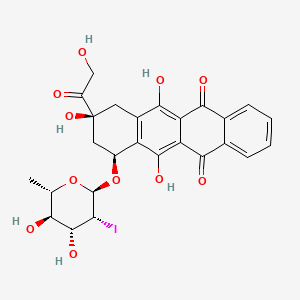
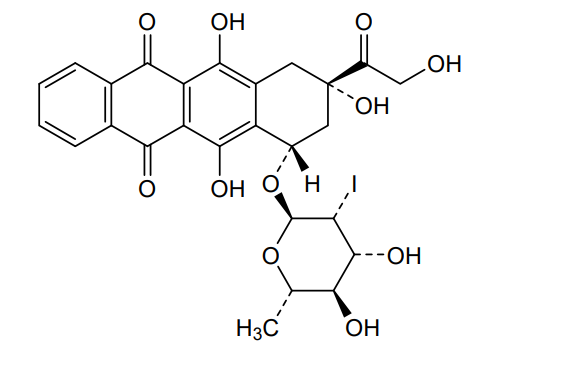

Naxtarubicin, Annamycin
CAS 92689-49-1
MF C26H25IO11 MW 640.4 g/mol
2′-Iodo-3′-hydroxy-4′-epi-4-demethoxydoxorubicin
(7S,9S)-7-[(2R,3R,4R,5R,6S)-4,5-dihydroxy-3-iodo-6-methyloxan-2-yl]oxy-6,9,11-trihydroxy-9-(2-hydroxyacetyl)-8,10-dihydro-7H-tetracene-5,12-dione
(7S,9S)-7-[(2,6-dideoxy-2-iodo-α-L-mannopyranosyl)oxy]-6,9,11-trihydroxy-9-(2-hydroxyacetyl)-7,8,9,10-
tetrahydrotetracene-5,12-dione
DNA topoisomerase II inhibitor, antineoplastic, Annamycin, Annamycin-LF, Annamycin-liposomal, L-ANNA, L-annamycin, Liposomal annamycin, S-ANNA, SNU299M83Q
- OriginatorUniversity of Texas M. D. Anderson Cancer Center
- DeveloperAronex Pharmaceuticals; Callisto Pharmaceuticals; Moleculin Biotech; University of Texas M. D. Anderson Cancer Center
- ClassAnthracyclines; Antineoplastics; Cytostatic antibiotics; Small molecules
- Mechanism of ActionType II DNA topoisomerase inhibitors
- Orphan Drug StatusYes – Soft tissue sarcoma; Precursor cell lymphoblastic leukaemia-lymphoma; Acute myeloid leukaemia
- Phase II/IIIAcute myeloid leukaemia
- Phase IIOvarian cancer
- Phase I/IISoft tissue sarcoma
- PreclinicalColorectal cancer; Liver cancer; Pancreatic cancer; Solid tumours
- DiscontinuedChronic myeloid leukaemia; Precursor cell lymphoblastic leukaemia-lymphoma; Triple negative breast cancer
- 30 Oct 2025Moleculin biotech plans future regulatory filings based on data from phase III MIRACLE trial
- 29 Oct 2025Moleculin Biotech has patent protection for Naxtarubicin in Australia
- 23 Oct 2025Moleculin Biotech plans to submit an IND application to the US FDA for Pancreatic cancer
Naxtarubicin is a lipophilic, anthracycline antineoplastic antibiotic.Naxtarubicin intercalates into DNA and inhibits topoisomerase II, thereby inhibiting DNA replication and repair as well as inhibiting RNA and protein synthesis. This agent appears to not be a substrate for the p-glycoprotein associated multidrug-resistance (MDR) transporter; therefore, overcoming the resistance pattern seen with other anthracycline compounds.
Annamycin is an anthracycline antibiotic being investigated for the treatment of cancer.
SYN
US 4537882
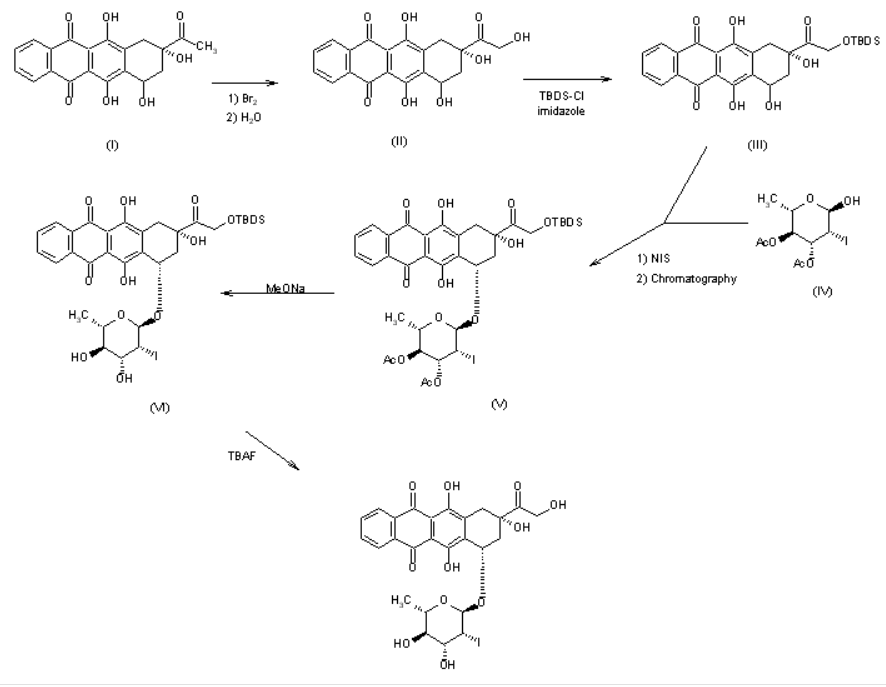
The reaction of racemic 4-demethoxydaunomycinone (I) with Br2 followed by hydrolysis in basic medium gives 4-demethoxyadriamycinone (II), which is treated with tert-butyldimethylsilyl chloride and imidazole in DMF to yield the monoprotected compound (III). The condensation of (III) with 3,4-di-O-acetyl-2,6-dideoxy-2-iodo-alpha-L-mannopyranose (IV) by means of N-iodosuccinimide (NIS), followed by chromatographic separation of the diastereomers affords (7S,9S)-14-O-(tert-butyldimethylsilyl)-4-demethoxy-7-O-(3,4-di-O-acetyl-2,6-dideoxy-2-iodo-alpha-L-mannopyranosyl)adriamycinone (V). The hydrolysis of (V) with sodium methoxide in methanol gives the silylated compound (VI), which is finally desilylated with tetrabutylammonium fluoride (TBAF) in dichloromethane/THF/pyridine.
SYN
https://patents.google.com/patent/US5977327A/en
EXAMPLE VIIIPURIFICATION OF ANNAMYCIN
Crude product was purified further by triple precipitation from THF. To accomplish this, approximately 87 mL of THF was used to redissolve each gram of Annamycin product and an equal volume of one of the following solvents was added to precipitate the Annamycin in each successive precipitation step. In the preferred method, the first precipitation was accomplished by adding an equal volume of a 7:3 mixture of hexane\diethylether, the second precipitation was accomplished by the addition of an equal volume of hexane, and the third precipitation was by addition of an equal volume of water and evaporation of half of the THF. Product obtained in this way (9.0146 g; 59%) was a complex containing 3 molecules of Annamycin per 2 molecules of THF and its purity by HPLC analysis was better than 98%. HPLC analysis was on an analytical C-18 reverse phase column with increasing concentrations of methanol/acetonitrile in water. The purity was determined by measuring the area of the absorbance peaks. 1 H NMR (DMSO-d6) d 1.20 (d, 3H, J6′, 5′ =6.2 Hz, H-6′), 1.75 (m, 2.7H, Ha from THF), 2.10 (dd, 1H, J8a,7 =5.6 Hz, J8a,8e =14.5 Hz, H-8a), 2.18 (dd, 1H, J8e,8a =14.8 Hz, J8e,7 =2.9 Hz, H-8e), 250 (DMSO peak), 2.75 (dd, 1H, J3′,2′ =3.9 Hz, J3′,4′ =8.8 Hz, H-3′), 2.95 (d, 1H, J10a,10e =18.4 Hz, H-10a), 3.00 (d, 1H, J10e,10a =18.4 Hz, H-10e), 3.20 (t, 1H, SJ=18.1 Hz, H-4′), 3.59 (m, 2.7H, Hb from THF), 3.95 (m, 1H, H-5′), 4.30 (d, 1H, J2′,3′ =4.0 Hz, H-2′), 4.55 (s, 2H, H-14), 4.89 (t, 1H, exchangeable, OH), 4.92 (m, 1H, H-7), 5.18 (d, 1H, exchangeable, OH), 5.38 (d, 1H, exchangeable, OH), 5.49 (s, 1H, H-1′), 5.50 (d, 1H, exchangeable, OH), 7.9, 8.4 (2m, 4H,H-1,2,3,4); 13 C NMR (DMSO-d6) d 17.0(s, 1C, C-6′), 24.5 (s, 1C, THFb), 31.7 (s, 1C, C-2′), 31.9 (s, 1C, C-10), 36.4 (s, 1C, C-8), 63.0 (s, 1C, C-3′), 66.4 (s, 1C, C-5′), 67.4 (s, 1C, THFa), 69.4, 13 C-NMR (DMSO-d6) δ 17.9 (s, 1C, C-6′), 25.1 (s, 1C, THFb), 40.6, 36.6, 32.1 (3s, 3C, C-2′,8,10), 63.6 (s, 1C, C-14), 67.0, 67.5, 70.4, 69.7 (4s, 4C, C-7, 5′, 3′, THFa), 74.2, 74.7 (2s, 2C, C-9, 4′), 104.5 (s, 1C, C-1′), 110.1, 110.8 (2s, 1C, C-11a, 5a), 126.6, 132.6, 132.8, 134.4, 135.1, 135.0, 136.0 (7s, 8C, C-2, 3, 1, 4, 4a, 12a, 10a), 136.0 (s, 1C, C-6a), 155.1, 156.4 (2s, 2C, C-6, 11), 186.2, 186.3 (2s, 2C, C-5, 12), 214 (s, 1C, C-13).
SYN
SYN
SYN
EXAMPLE I. SYNTHESIS OF (+)-4-DEMETHOXY-14-O-TERT-BUTYL
DIMETHYLSILYL-7-O-(2,6-DIDEOXY-2-IODO-α-L-MANNOPYRANOSYL)ADRIAMYCINONE (8)
To a solution consisting of a mixture of compounds (6) and (7), shown in Figure 1 , (1.8530g, 2.21mmol) in CH2CI2 (48 mL) and EtOH (16 mL), a IN MeONa solution in MeOH (1.6 mL) was added at room temperature with stirring. Next 1.6 mL of a IN MeONa solution in MeOH (1.6 mL) was added after 50 min. After 1.5 hr. the reaction was checked by TLC developed with CCl4/MeOH (96:4), and the reaction mixture was diluted with dichloromethane (300 mL) and 0.05N HCL (100 mL) was added. The resulting mixture was shaken in a separatory funnel and, after separation, the organic layer was washed with water (2 x 50 mL), dried over Na2SO4, filtered and evaporated. The residue left after evaporation was precipitated from 4 mL of CH2CI2 by addition of 35 mL of hexane. The precipitate was filtered, washed with hexane (40 mL) and then dried in vacuo (1 lmbar) at ambient temperature for 30 min. to give crude product (8) (1.3618g, 82%). The crude product was then filtered through silica with a solution of 95:5 toluene/acetone and precipitated from CH2CI2 by addition of hexane. Product was then dried in vacuo (1 lmbar) at ambient temperature for 30 minutes to give pure compound (8) (1.358g; 55%): ^H NMR d 0.15 (s, 6H, Me2Si), 0.95 (s, 9H, CMe3), 1.40 (d, 3H, J6′,5’=6.2Hz, H-6′), 2.18 (dd, 1H, J8a,7=4.4Hz, J8a,8e=l 5.0Hz, H-8a), 2.35 (d, 1H, J8e,8a=14.9Hz, H-8e), 2.85 (dd, 1H, J3′,2’*=4-0Hz, J3′54’=8.9Hz, H-3′), 3.02 (d, 1H, Jl0a,10e=19.0Hz, H-lOa), 3.24 (d, 1H, Jl0e,10a=l 9.0Hz, H-lOe), 3.58 (t, 1H, SJ=18.2Hz, H-4′), 3.94 (m, 1H, H-5′), 4.18 (s, 1H, 9OH), 4.54 (d, 1H, J2′,3’=3.9Hz, H-2′) 4.84, 4.90 (2d, 2H, H-14), 5.22 (bs, 1H, H-7), 5.75 (s, 1H, H-l’), 7.9, 8.4 (2m, 4H, H-1,2,3,4).
EXAMPLE II. DESILYLATION IN THF/HCl
To a solution of compound (8), (16.5928g, 21.99mmol) in THF (415 mL), IN HC1 (415 mL) was added. After 25 minutes the progress of the reaction was checked by TLC developed in toluene/acetone (6:4 or 5:1) and half of the THF was evaporated in vacuo at 20°C (35mbar). The precipitate was filtered off and washed with water until the pH reached neutral (14 x 40 mL), then washed with ether (Et2θ, 5 x 32 mL) and subsequently with water (3 x 40 mL). The crude product was pre-dried on a Buchner funnel and then dried in vacuo (0.08mbar) at room temperature for 38 hrs.
EXAMPLE III. DESILYLATION IN METHANOL/HC1
To a solution/suspension of compound (8) (1.0064 g, 1.33 mmol) in methanol (45 mL), IN HC1 (10 mL) was added. The progress of the reaction was monitored by TLC developed in toluene/acetone, 6:4 and chloroform methanol, 94:6. After 45 min. 5 mL of IN HC1 solution was added to the reaction mixture. After 1 hr. 15 min. the product of the reaction was precipitated by addition of 30 mL water and filtered off. Product was washed with water until neutral pH (4 x 10 mL), diethylether (3 x 10 mL) and again with water (2 x 10 mL). Crude product was pre-dried on Buchner funnel and then dried in vacuo (0.1 mbar) at room temperature for 24 hrs. to give 0.6722 g (79% yield) of deep red powder.
EXAMPLE IV. DESILYLATION IN METHANOL/H2SO4
To a solution suspension of compound (8) (1.0065 g, 1.33 mmol) in methanol (45 mL), 10 mL of IN H2SO4 was added. The progress of the reaction was monitored by TLC developed in toluene/acetone, 6:4 and chloroform/methanol, 94:6. After 15 min. the product of the reaction was precipitated by adding 35 mL of water and filtered off. Product was washed with water until neutral pH (4 x 10 mL), diethylethe (3 x 10 mL) and again with water (2 x 10 mL). Crude product was pre-dried on Buchner funnel and then dried in vacuo (0.1 mbar) at room temperature for 24 hrs. to give 0.6318 g (74% yield) of deep red powder. EXAMPLE V. DESILYLATION IN ACETONE/H2SO4
To a solution of compound (8) (0.7592 g, 1.01 mmol) in acetone (30 mL) 3.5 mL IN H2SO4 was added. The progress of the reaction was monitored by TLC developed in toluene/acetone, 6:4 and chloroform/methanol, 94:6. After 1 hr. the product of the reaction was precipitated by addition of 35 mL water and filtered off. The product was washed with water until neutral pH (4 x 10 mL), dicthyleher (3 x 10 mL) and again with water (2 x 10 mL). Crude product was pre-dried on Buchner funnel and then dried in vacuo (0.1 mbar) at room temperature for 48 hrs. to give 0.4994 g (77% yield) of deep red powder.
EXAMPLE VI. DESILYLATION IN DMSO/HC1
To a solution of compound (8) (0.7815 g, 1.04 mmol) in DMSO (30 mL) 7.5 mL of IN HC1 was added. Progress of the reaction was monitored by TLC developed in toluene/acetone, 6:4 and chloroform/methanol, 94:6. After 1 hr. 20 min. the product of the reaction was precipitated by addition of water (37 mL) and filtered off. The product was washed with water until neutral pH (4 x 10 mL), dietheylether (3 x 10 mL) and again with water (2 x 10 mL). Crude product was pre-dried on Buchner funnel and then dried in vacuo (0.1 mbar) at room temperature for 48 hrs. to give 0.5165 g (78% yield) of deep red powder. EXAMPLE VII. DESILYLATION IN DMSO/H2SO
To a solution of compound (8) (0.7613 g, 1.01 mmol) in DMSO (5 mL) and ethanol
(10 mL) 1 mL of IN H2SO4 was added. Progress of the reaction was monitored by TLC developed in toluene/acetone, 6:4 and chloroform/methanol, 94:6. After 1 hr. 10 min. product of the reaction was precipitated by addition of water (15 mL) and filtered off. Product was washed with water until neutral pH (4 x 10 mL), diethylether (3 x 10 mL) and again with water (2 x 10 mL). Crude product was pre-dried on Buchner funnel and then dried in vacuo (0.1 mbar) at room temperature for 48 hrs. to give 0.5338 g (83% yield) of deep red powder. EXAMPLE VIII. PURIFICATION OF ANNAMYCIN
Crude product was purified further by triple precipitation from THF. To accomplish this, approximately 87 mL of THF was used to redissolve each gram of Annamycin product and an equal volume of one of the following solvents was added to precipitate the .Annamycin in each successive precipitation step. In the preferred method, the first precipitation was accomplished by adding an equal volume of a 7:3 mixture of hexane\diethylether, the second precipitation was accomplished by the addition of an equal volume of hexane, and the third precipitation was by addition of an equal volume of water and evaporation of half of the THF. Product obtained in this way (9.0146g; 59%) was a complex containing 3 molecules of .Annamycin per 2 molecules of THF and its purity by HPLC analysis was better than 98%. HPLC analysis was on an analytical C-18 reverse phase column with increasing concentrations of methanol/acetonitrile in water. The purity was determined by measuring the area of the absorbance peaks. H NMR (DMSO-d6) d 1.20 (d, 3H, J6′,5′-=6.2Hz, H-6′), 1.75 (m, 2.7H, Ha from THF), 2.10 (dd, IH, J8a,7=5.6Hz, J8a,8e=14.5Hz, H-8a), 2.18 (dd, IH, J8e,8a=14.8Hz, J8e,7=2.9Hz, H-8e), 2.50 (DMSO peak), 2.75 (dd, IH, J3′,2’=3.9Hz, J3′,4’=8.8Hz, H-3′), 2.95 (d, IH, Jl0a,10e=18.4Hz, H-10a), 3.00 (d, IH, Jl0e,10a=18.4Hz, H-lOe), 3.20 (t, IH, SJ=18.1Hz, H-4′), 3.59 (m, 2.7H, Hb from THF), 3.95 (m, IH, H-5′), 4.30 (d, IH, J2′,3’=4.0Hz, H-2′), 4.55 (s, 2H, H-14), 4.89 (t, IH, exchangeable, OH), 4.92 (m, IH, H-7), 5.18 (d, IH, exchangeable, OH), 5.38 (d, IH, exchangeable, OH), 5.49 (s, IH, H-l’), 5.50 (d, IH, exchangeable, OH), 7.9, 8.4 (2m, 4H,H- 1,2,3,4); 13C NMR (DMSO-d6) d 17.0(s, IC, C-6′), 24.5 (s, IC, THFb), 31.7 (s, IC, C-2′), 31.9 (s, IC, C-10), 36.4 (s, IC, C-8), 63.0 (s, IC, C-3′), 66.4 (s, IC, C-5′), 67.4 (s, IC, THFa), 69.4, ,3C-NMR (DMSO-d6) δ 17.9 (s, IC, C-6′), 25.1 (s, IC, THFb), 40.6, 36.6, 32.1 (3s, 3C, C-2′, 8, 10), 63.6 (s, IC, C-14), 67.0, 67.5, 70.4, 69.7 (4s, 4C, C-7, 5′, 3′, THFa), 74.2, 74.7 (2s, 2C, C-9, 4′), 104.5 (s, IC, C-l’), 110.1, 110.8 (2s, IC, C-lla, 5a), 126.6, 132.6, 132.8, 134.4, 135.1, 135.0, 136.0 (7s, 8C, C-2, 3, 1, 4, 4a, 12a, 10a), 136.0 (s, IC, C-6a), 155.1, 156.4 (2s, 2C, C-6, 11), 186.2, 186.3 (2s, 2C, C-5, 12), 214 (s, IC, C-13).
PAT
- Co-solvent compositions and methods for improved delivery of dantrolene therapeutic agentsPublication Number: US-2011160261-A2
- HER2 mutation inhibitorsPublication Number: US-12447153-B2Grant Date: 2025-10-21
- Submicron liposome suspensions obtained from preliposome lyophilizatesPublication Number: US-7238366-B1Priority Date: 1995-06-06Grant Date: 2007-07-03
- Submicron liposome suspension obtained from freeze-dried preliposomePublication Number: JP-H11507369-APriority Date: 1995-06-06
- Submicron liposome suspensions obtained from preliposome lyophilizatesPublication Number: EP-1800665-A3Priority Date: 1995-06-06
- Submicron liposome suspensions obtained from preliposome lyophilizatesPublication Number: EP-0831781-A1Priority Date: 1995-06-06
- Process for preparing aminoglycsidic antibioticsPublication Number: CS-202570-B2Priority Date: 1976-04-14
- Methods and systems for assessing biological materials using optical and spectroscopic detection techniquesPublication Number: US-2004052730-A1Priority Date: 1995-10-04
- Submicron liposome suspensions obtained from preliposome lyophilizatesPublication Number: EP-1800665-A2Priority Date: 1995-06-06
- Submicron liposome suspensions obtained from preliposome lyophilizatesPublication Number: US-5902604-APriority Date: 1995-06-06Grant Date: 1999-05-11
- Submicron liposome suspensions obtained from preliposome lyophilizatesPublication Number: WO-9639121-A1Priority Date: 1995-06-06
- Submicron liposome suspensions obtained from preliposome lyophilizatesPublication Number: CA-2221341-A1Priority Date: 1995-06-06
- Compounds and methods for the selective treatment of cancer and bacterial infectionsPublication Number: WO-9739007-A1Priority Date: 1996-04-12
- Compounds and methods for the selective treatment of cancer and bacterial infectionsPublication Number: US-6218519-B1Priority Date: 1996-04-12Grant Date: 2001-04-17
- Methods and systems for assessing biological materials using optical and spectroscopic detection techniquesPublication Number: US-6573063-B2Priority Date: 1995-10-04Grant Date: 2003-06-03
- Methods and systems for assessing biological materials using optical and spectroscopic detection techniquesPublication Number: US-6319682-B1Priority Date: 1995-10-04Grant Date: 2001-11-20
- Methods and systems for assessing biological materials using optical and spectroscopic detection techniquesPublication Number: US-2002055092-A1Priority Date: 1995-10-04
AS ON OCT2025 4.511 LAKHS VIEWS ON BLOG WORLDREACH AVAILABLEFOR YOUR ADVERTISEMENT
join me on Linkedin
Anthony Melvin Crasto Ph.D – India | LinkedIn
join me on Researchgate
RESEARCHGATE
join me on Facebook
Anthony Melvin Crasto Dr. | Facebook
join me on twitter
Anthony Melvin Crasto Dr. | twitter
+919321316780 call whatsaapp
EMAIL. amcrasto@gmail.com
Further reading
- Priebe W (1995). “Mechanism of action-governed design of anthracycline antibiotics: a “turn-off/turn-on” approach”. Current Pharmaceutical Design. 1 (1): 51–68. doi:10.2174/1381612801666220524190711. S2CID 90406009.
- Trevino AV, Woynarowska BA, Herman TS, Priebe W, Woynarowski JM (November 2004). “Enhanced topoisomerase II targeting by annamycin and related 4-demethoxy anthracycline analogues”. Mol Cancer Ther. 3 (11): 1403–10. doi:10.1158/1535-7163.1403.3.11. PMID 15542779.
External links
| Clinical data | |
|---|---|
| ATC code | none |
| Identifiers | |
| IUPAC name | |
| CAS Number | 92689-49-1 |
| PubChem CID | 115212 |
| ChemSpider | 103088 |
| UNII | SNU299M83Q |
| KEGG | D12844 |
| CompTox Dashboard (EPA) | DTXSID901027238 |
| ECHA InfoCard | 100.235.298 |
| Chemical and physical data | |
| Formula | C26H25IO11 |
| Molar mass | 640.379 g·mol−1 |
| 3D model (JSmol) | Interactive image |
| SMILES | |
| InChI | |
//////////naxtarubicin, DNA topoisomerase II inhibitor, antineoplastic, Annamycin, Annamycin-LF, Annamycin-liposomal, L-ANNA, L-annamycin, Liposomal annamycin, S-ANNA, SNU299M83Q


 New Drug Approvals


