
Home » Uncategorized (Page 114)
Category Archives: Uncategorized
 DRUG APPROVALS BY DR ANTHONY MELVIN CRASTO
.....FOR BLOG HOME CLICK HERE
DRUG APPROVALS BY DR ANTHONY MELVIN CRASTO
.....FOR BLOG HOME CLICK HEREFlag and hits
ORGANIC SPECTROSCOPY

SUBSCRIBE

 Subscribe in a reader
Enter your email address:
Delivered by FeedBurner
Subscribe to New Drug Approvals by Email


Recent Comments
 | shivkr2 on SPSR Excellence Award 2025 – S… |
 | Bonkasaurus on Infigratinib phosphate |
 | PALOVAROTENE | ORGAN… on Palovarotene |
| Pfizer just purchase… on Temanogrel | |
| Pfizer To Cash In On… on Temanogrel |
WHO publishes New Version of the Draft on “Hold-Time” Studies

WHO publishes New Version of the Draft on “Hold-Time” Studies
The 2nd revision for comment was published already in February this year (we reported). Now, a 3rd version is available – also for comment. The document describes the design of hold-time studies for the determination of time limits which have to be determined according to the generally applicable intermediate and bulk products. This should avoid that the storage of intermediate or bulk products from having any negative influence on their quality or the quality of a finished before processing to the next stage.
Chapter 2 which defines what intermediate and bulk products are has been added. It is now explicitly pointed out that hold-time investigations are part of the process validation. In turn, the reference to retrospective observation has been removed from the current version as well as – fortunately – the incomprehensible paragraph on the ‚most probable /…
View original post 113 more words
How to identify Out-of-Trend Results in Stability Studies?

How to identify Out-of-Trend Results in Stability Studies?
http://www.gmp-compliance.org/enews_4522_How-to-identify-Out-of-Trend-Results-in-Stability-Studies_8360,8348,8430,Z-QCM_n.html
An article in PharmTech from June 2013 (by Trajkovic-Jolevska et. al) deals with the methods to identify Out-of-Trend (OOT) results in ongoing stability studies.
With regard to stability studies, it is important to make the difference between Out-of-Specification (OOS) and Out-of-Trend (OOT). Both the pharmaceutical industry and authorities often misuse these two terms.
The article defines OOT results as those results which don’t follow the expected trend, either in comparison with other stability batches or compared to previous results collected during a stability study. OOT results aren’t necessarily OOS, but they don’t look like a typical data point.
Although OOT results are a serious problem, neither the scientific literature nor regulatory guidelines fully address them.
The aim of the study described in this Pharmtech article by Trajkovic-Jolevska et. al was to perform a statistical evaluation of the statistical methods used in…
View original post 112 more words
Pirenperone, R 47465

ON THE LEFT OR ABOVE
IS
3-(2- {4-[(4-fluorophenyl)carbonyl]piperidin- 1 -yl} ethyl)-2-methyl-4H-pyrido[ 1 ,2- α]pyrimidin-4-one
3-(2-{4-[(4-fluorophenyl)carbonyl]piperidin-1-yl}ethyl)-2-methyl-4H-pyrido[1,2-α]pyrimidin-4-one
3-[2-[4-(4-fluorobenzoyl)-1-piperidinyl]ethyl]-2-methyl-4H-pyrido[1,2-a]pyri- midin-4-one
pirenperone CAS : 75444-65-4
- C23 H24 F N3 O2
- 4H-Pyrido[1,2-a]pyrimidin-4-one, 3-[2-[4-(4-fluorobenzoyl)-1-piperidinyl]ethyl]-2-methyl-
- R 47465
Cardiovascular disease; Inflammatory disease; Neoplasm; Pain
Calcium channel modulator T-type
……………………………..
http://www.google.co.in/patents/US4342870
http://www.google.co.in/patents/EP0037265A1
Example XXIV
-
A solution of 2 parts of 3-[2-[4-(4-fluorobenzoyl)-1 -piperidinyl]ethyl]-2 -methyl-4H -pyricio[1, 2 -a]pyrimidin-4-one in 64 parts of 2-propanol is warm acidified with 2-propanol saturated with hydrogen chloride. The formed hydrochloride salt is allowed to crystallize. It is filtered off and dried, yielding 2 parts (85. 5%) of 3-[2-[4-(4-fluorobenzoyl)-1-piperidinyl]ethyl]-2-methyl-4H-pyrido[1,2-a]pyri- midin-4-one dihydrochloride; mp. + 300°C.
-
In a similar manner there are also prepared:
- 3-[2 -[4-(4-fluorobenzoyl)-1-piperidiny]yethyl7-2 -methyl-4H-pyrido-[1, 2 -a]pyrimidin-4-one sulfate (1 : 2); mp. 254. 7°C; and
- 3-[2-[4-(4-fluorobenzoyl)-1 -piperidinyl]ethyl]-2-methyl-4H-pyrido-[1, 2-a]pyrimidin-4-one phosphate (1 : 2) ; mp. 243.8°C.
WO-2014143915
http://www.google.com/patents/WO2014143915A1?cl=en
Novelcrystalline polymorphic forms of pirenperone, useful for treating disorders associated with T-type calcium ion channels such as pain syndrome, neoplasm, cardiovascular disease or inflammation. VM Discovery, from which VM Therapeutics was spun out, was investigating the VMD-C300 series of compounds which act as T-type calcium channel modulators, including VMD-3816 and VMD-3222, for treating cancer, pain, neurological diseases and cardiovascular diseases; but as of September 2014, this program was assumed to be discontinued. See WO2009108798, (by the inventor, assigned to VM Discovery) claiming use of the same compound for treating same indications.
It was first disclosed in the now-expired US Patent No. 4,342,870 (Claim 5), and intended to be used as potential anti-anxiety drug. However, the early human clinical studies has shown that the compound did not show any dose-related anti-anxiety effects as hoped, but otherwise the compound was safe in human (ref. Ansseau M, Doumo t A, Thlry D, Gelders Y. “Pilot study of a specific serotonergic antagonist, pirenperone, in the treatment of anxiety disorders”, Acta Psychiatr Belg, 1983 Sep-Oct;83(5):517-24). in the US Patent No. 4,342,870, there is no crystalline polymorphic form disclosed, nor disclosure of potential uses for management of pain and treatment of other related diseases or disorders.
It was further disclosed in the PCT patent application WO/2009/108798 as “Compound 10 (pirenperone)‘” to be used for novel T-type calcium ion channel antagonist for management of pain and treatment of other diseases or disorders associated to the T-type calcium ion channels.
Surprisingly, we have found that there are many crystalline polymorphic forms of this compound which may affect the compound’s pharmaceutical safety and pharmacology properties.

MAKE IN INDIA
http://makeinindia.com/sector/pharmaceuticals/
A CASE OF ICHCHTHYOSIS ; A TYPICAL SKIN DISORDER ; E.T.G AYURVEDASCAN TEST EVALUATION ; “इक्थियासिस” जैसे लाइलाज चर्म रोग का ई०टी०जी० आयुर्वेदास्कैन आधारित आन्कलन

चर्म रोग ICHCHTHYOSIS या इख्तोयासिस एक तरह की ऐसी तकलीफ है जो त्वचा के टिश्यूज से जुड़ी हुयी बीमारी है / इस बीमारी मे त्वचा का रन्ग काला पड़ जाता है और त्वचा मोटी हो जाती है / इसके अलावा त्वचा का रन्ग काला और वर्ण cracks यानी फटी हुयी और आकार मछली की खाल जैसा हो जाता है /
जिस मरीज का नीचे दिया गया चित्र है उसे लगभग चार साल से यह तकलीफ रही है / अन्ग्रेजी और देशी और होम्योपैथी का इलाज कराने के बाद इसे आराम नही मिला / हमारे यहा से इलाज करा चुके एक मरीज द्वारा हमारे सन्स्थान मे इलाज कराने के लिये प्रोत्साहित किये जाने के बाद यह मरीज इलाज के लिये हमारे यहां आया है /
मरीज के दोनो पैरो और शरीर के लगभग सभी हिस्सो मे इसी तरह के scabs मौजूद है /.
नीचे दिये गये चित्र मे यह चर्म रोग…
View original post 339 more words
Leflunomide

Leflunomide
RS-34821, SU-101, HWA-486, Arava,75706-12-6,

- Arava
- HSDB 7289
- HWA 486
- HWA-486
- Leflunomida
- Leflunomida [INN-Spanish]
- Leflunomide
- Leflunomidum
- Leflunomidum [INN-Latin]
- SU 101 (pharmaceutical)
- SU101
- UNII-G162GK9U4W
Leflunomide (brand names: Arabloc, Arava, Lunava, Repso) is an immunosuppressive disease-modifying antirheumatic drug (DMARD),[2] used in active moderate to severe rheumatoid arthritis and psoriatic arthritis. It is a pyrimidine synthesis inhibitor.[3]

Bottle of Leflunomide (Arava) and tablet
Medical use
Rheumatoid arthritis and psoriatic arthritis are the only indications that have received regulatory approval.[1][4] Clinical studies regarding the following diseases have been conducted:[5]
- Polyoma BK Virus Nephropathy[6]
- Kimura’s disease[7]
- Systemic lupus erythematosus[8]
- Felty’s syndrome [9]
- Takayasu arteritis[10]
- Wegener’s granulomatosis[9]
- Ankylosing spondylitis[11]
- Crohn’s disease[12][13]
- Sarcoidosis[14]
- Uveitis[15]
- Still’s disease[16]
- Prostate cancer[17]
- Pemphigoid[18]
- Prevention of organ transplant rejection[19]
Side effects
Its principle dose-limiting side effects are liver damage, lung disease and immunosuppression.[19] The most common side effects (occurring in >1% of those treated with it) are, in approximately descending order of frequency:[1][4][20][21][22][23][24] diarrhoea, respiratory tract infections, hair loss, high blood pressure, rash, nausea, bronchitis, headache, abdominal pain, abnormal liver function tests, back pain, indigestion, urinary tract infection, dizziness, infection, joint disorder, itchiness, weight loss, loss of appetite, cough, gastroenteritis, pharyngitis, stomatitis, tenosynovitis, vomiting, weakness, allergic reaction, chest pain, dry skin, eczema,paraesthesia, pneumonia, rhinitis, synovitis, cholelithiasis and shortness of breath. Whereas uncommon side effects (occurring in 0.1-1% of those treated with the drug) include:[4] constipation, oral thrush, stomatitis, taste disturbance, thrombocytopenia and hives. Rarely (in 0.1% of those treated with it) it can cause:[4] anaphylaxis, angiooedema, anaemia, agranulocytosis, eosinophilia,leucopenia, pancytopenia, vasculitis, toxic epidermal necrolysis, Stevens-Johnson syndrome, cutaneous lupus erythematosus, severe infection, interstitial lung disease, cirrhosis and liver failure.
Contraindications
Contraindications include:[1]
- Pregnancy, women of childbearing potential (unless contraception used)
- Liver disease, hepatitis B/Cseropositive
- Active serious infections
- Hypersensitivity
Interactions
Other immunomodulatory treatments should be avoided due to the potential for additive immunosuppressant effects, or in the case of immunostimulants like echinacea or astragalus, reduced therapeutic effects.[1] Likewise live vaccines (like haemophilus influenzae type b vaccine and yellow fever vaccines) should be avoided due to the potential for severe infection due to the immunosuppressive nature of the treatment.[1]
The concomitant use of methotrexate, in particular, may lead to severe or even fatal liver- or hepatotoxicity. Seventy-five percent of all cases of severe liver damage reported until early 2001 were seen under combined drug therapy leflunomide plus methotrexate.[25]However, some studies have shown that the combination of methotrexate and leflunomide in patients with rheumatoid arthritis gave better results than either drug alone.[25]
Mechanism of action
Leflunomide is an immunomodulatory drug that achieves its effects by inhibiting the mitochondrial enzyme dihydroorotate dehydrogenase(an enzyme involved in de novo pyrimidine synthesis) (abbreviation DHODH), which plays a key role in the de novo (from scratch) synthesis of the uridine monophosphate (rUMP), which is required for the synthesis of DNA and RNA, hence leflunomide inhibits the reproduction of rapidly dividing cells, especially lymphocytes.[19] The inhibition of human DHODH by teriflunomide, the active metabolite of leflunomide, occurs at levels (approximately 600 nM) that are achieved during treatment of rheumatoid arthritis (RA).[26] Teriflunomide also inhibits several tyrosine kinases.[19] Teriflunomide prevents the expansion of activated and autoimmune lymphocytes by interfering with their cell cycle progression while nonlymphoid cells are able to use another pathway to make their ribonucleotides by use of salvage pyrimidine pathway, which makes them less dependent on de novo synthesis.[26] Teriflunomide also has antiviral effects against numerous viruses including CMV, HSV1 and the BK virus, which it achieves by inhibiting viral replication by interfering with nucleocapsid tegumentation and hence virion assembly.[19]
Pharmacokinetics
It has an oral bioavailability of 80%, protein binding of >99%, metabolism sites of the GI mucosa and liver, volume of distribution (Vd) of 0.13 L/kg, elimination half-life of 14-18 days and excretion routes of faeces (48%) and urine (43%).[19][1][20]
 |
|
| Systematic (IUPAC) name | |
|---|---|
| 5-methyl-N-[4-(trifluoromethyl) phenyl]-isoxazole-4-carboxamide | |
| Clinical data | |
| Trade names | Arabloc, Arava, Lunava, Repso |
| AHFS/Drugs.com | monograph |
| MedlinePlus | a600032 |
| Licence data | EMA:Link, US FDA:link |
| Pregnancy cat. | |
| Legal status | |
| Routes | Oral (tablets) |
| Pharmacokinetic data | |
| Bioavailability | 80%[1] |
| Protein binding | >99%[1] |
| Metabolism | GI mucosa and liver[1] |
| Half-life | 14-18 days[1] |
| Excretion | Faeces (48%), urine (43%)[1] |
| Identifiers | |
| CAS number | 75706-12-6  |
| ATC code | L04AA13 |
| PubChem | CID 3899 |
| DrugBank | DB01097 |
| ChemSpider | 3762 |
| UNII | G162GK9U4W |
| KEGG | D00749 |
| ChEBI | CHEBI:6402 |
| ChEMBL | CHEMBL960 |
| Chemical data | |
| Formula | C12H9F3N2O2 |
| Mol. mass | 270.207 g/mol |
……………………………

…………………………..
http://www.beilstein-journals.org/bjoc/single/articleFullText.htm?publicId=1860-5397-7-57#S86
Leflunomide is a pyrimidine synthase inhibitor of the DMARD-type (disease-modifying anti-rheumatic drug) marketed by Sanofi-Aventis. Unlike NSAIDs, which only deal with symptoms of rheumatoid arthritis, DMARDs target the cause of it. DMARDs are not necessarily structurally or mechanistically related. The effect of leflunomide is possibly due to its regulation of the immune system via affecting lymphocytes. Its synthesis [134] is relatively straightforward starting with a Knoevenagel condensation of ethyl acetoacetate (39) and triethyl orthoformate in the presence of acetic anhydride. The resulting ethyl ethoxymethylene acetoacetate (448) is next condensed with hydroxylamine hydrate in methanol to yield ethyl 5-methylisoxazole-4-carboxylate (449). The ethyl ester is hydrolysed under acidic conditions and the carboxylic acid activated with thionyl chloride in DMF for amide formation with 4-trifluoromethylaniline (450) (Scheme 86).
![[1860-5397-7-57-i86]](http://www.beilstein-journals.org/bjoc/content/inline/1860-5397-7-57-i86.png?scale=2.0&max-width=1024&background=FFFFFF)
US patent 5,494,911 discloses process for preparation of Teriflunomide in Example- 4 as shown in given below scheme-I.

References
- “Arava (leflunomide) dosing, indications, interactions, adverse effects, and more”. Medscape Reference. WebMD. Retrieved 11 March 2014.
- Dougados M, Emery P, Lemmel EM, Zerbini CA, Brin S, van Riel P (January 2005).“When a DMARD fails, should patients switch to sulfasalazine or add sulfasalazine to continuing leflunomide?”. Annals of the rheumatic diseases 64 (1): 44–51.doi:10.1136/ard.2003.016709. PMC 1755199. PMID 15271770.
- Pinto P, Dougados M (2006). “Leflunomide in clinical practice”. Acta reumatológica portuguesa 31 (3): 215–24. PMID 17094333.
- ^ Jump up to:a b c d Rossi, S, ed. (2013). Australian Medicines Handbook (2013 ed.). Adelaide: The Australian Medicines Handbook Unit Trust. ISBN 978-0-9805790-9-3.
- Jump up^ http://clinicaltrials.gov/ct2/results?term=Leflunomide
- Jump up^ Blanckaert, K; De Vriese, AS (23 September 2006). “Current recommendations for diagnosis and management of polyoma BK virus nephropathy in renal transplant recipients” (PDF). Nephrology Dialysis Transplantation 21 (12): 3364–3367.doi:10.1093/ndt/gfl404.
- Jump up^ Dai, L; Wei, XN; Zheng, DH; Mo, YQ; Pessler, F; Zhang, BY (June 2011). “Effective treatment of Kimura’s disease with leflunomide in combination with glucocorticoids.”.Clinical Rheumatology 30 (6): 859–65. doi:10.1007/s10067-011-1689-2.PMID 21286771.
- Jump up^ Wu, GC; Xu, XD; Huang, Q; Wu, H (February 2013). “Leflunomide: friend or foe for systemic lupus erythematosus?”. Rheumatology International 33 (2): 273–6.doi:10.1007/s00296-012-2508-z. PMID 22961090.
- ^ Jump up to:a b Sanders, S; Harisdangkul, V (2002). “Leflunomide for the treatment of rheumatoid arthritis and autoimmunity”. American Journal of Medical Sciences 323 (4): 190–3.doi:10.1097/00000441-200204000-00004. PMID 12003373.
- Jump up^ Unizony, S; Stone, JH; Stone, JR (January 2013). “New treatment strategies in large-vessel vasculitis.”. Current Opinion in Rheumatology 25 (1): 3–9.doi:10.1097/BOR.0b013e32835b133a. PMID 23114585.
- Jump up^ Haibel, H; Rudwaleit, M; Braun, J; Sieper, J (January 2005). “Six months open label trial of leflunomide in active ankylosing spondylitis.” (PDF). Annals of the Rheumatic Diseases 64 (1): 124–6. doi:10.1136/ard.2003.019174. PMC 1755172.PMID 15608310.
- Jump up^ Prajapati, DN; Knox, JF; Emmons, J; Saeian, K; Csuka, ME; Binion, DG (August 2003). “Leflunomide treatment of Crohn’s disease patients intolerant to standard immunomodulator therapy.”. Journal of Clinical Gastroenterology 37 (2): 125–8.doi:10.1097/00004836-200308000-00006. PMID 12869881.
- Jump up^ Holtmann, MH; Gerts, AL; Weinman, A; Galle, PR; Neurath, MF (April 2008). “Treatment of Crohn’s disease with leflunomide as second-line immunosuppression : a phase 1 open-label trial on efficacy, tolerability and safety.”. Digestive Diseases and Sciences 53 (4): 1025–32. doi:10.1007/s10620-007-9953-7. PMID 17934840.
- Jump up^ Panselinas, E; Judson, MA (October 2012). “Acute pulmonary exacerbations of sarcoidosis.” (PDF). Chest 142 (4): 827–36. doi:10.1378/chest.12-1060.PMID 23032450.
- Jump up^ Roy, M (August 2007). “Early clinical experience with leflunomide in uveitis.”. Canadian Journal of Ophthalmology 42 (4): 634. doi:10.3129/canjophthalmol.i07-085.PMID 17641721.
- Jump up^ Pirildar, T (May 2003). “Treatment of adult-onset Still’s disease with leflunomide and chloroquine combination in two patients.”. Clinical Rheumatology 22 (2): 157.doi:10.1007/s10067-002-0667-0. PMID 12740686.
- Jump up^ “Mitoxantrone and Prednisone With or Without Leflunomide in Treating Patients With Stage IV Prostate Cancer”. ClinicalTrials.gov. National Institute of Health. September 2012. Retrieved 11 March 2014.
- Jump up^ “Leflunomide Associated With Topical Corticosteroids for Bullous Pemphigoid (ARABUL)”. ClinicalTrials.gov. National Institute of Health. December 2008. Retrieved 11 March 2014.
- ^ Jump up to:a b c d e f Teschner, S; Burst, V (September 2010). “Leflunomide: a drug with a potential beyond rheumatology.”. Immunotherapy 2 (5): 637–50. doi:10.2217/imt.10.52.PMID 20874647.
- ^ Jump up to:a b “PRODUCT INFORMATION ARAVA®” (PDF). TGA eBusiness Services. sanofi-aventis australia pty ltd. 7 August 2012. Retrieved 11 March 2014.
- Jump up^ “Arava : EPAR – Product Information” (PDF). European Medicines Agency. Sanofi-Aventis Deutschland GmbH. 21 November 2013. Retrieved 11 March 2014.
- Jump up^ “Data Sheet Arava®” (PDF). Medsafe. sanofi-aventis new zealand limited. 29 June 2012. Retrieved 11 March 2014.
- Jump up^ “ARAVA (leflunomide) tablet, film coated [sanofi-aventis U.S. LLC]”. DailyMed. sanofi-aventis U.S. LLC. November 2012. Retrieved 11 March 2014.
- Jump up^ “Arava 100mg Tablets – Summary of Product Characteristic”. electronic Medicines Compendium. SANOFI. 21 February 2014. Retrieved 11 March 2014.
- ^ Jump up to:a b Lee, S.; Park, Y.; Park, J.; Kang, Y.; Nam, E.; Kim, S.; Lee, J.; Yoo, W.; Lee, S. (2009). “Combination treatment with leflunomide and methotrexate for patients with active rheumatoid arthritis”. Scandinavian journal of rheumatology 38 (1): 11–14.doi:10.1080/03009740802360632. PMID 19191187.
- ^ Jump up to:a b Fox, RI; Herrmann, ML; Frangou, CG; Wahl, GM; Morris, RE; Strand, V; Kirschbaum, BJ (December 1999). “Mechanism of action for leflunomide in rheumatoid arthritis.”. Clinical Immunology 93 (3): 198–208. doi:10.1006/clim.1999.4777.PMID 10600330.
External links
- National Rheumatoid Arthritis Society (NRAS) Information about Disease Modifying drugs such as Leflunomide
- http://www.arava.com/professional/home.do (full prescribing information)
- http://www.rheuma-online.de/medikamente/leflunomid-arava/studien-zu-leflunomid-arava/gibt-es-untersuchungen-zu-leflunomid-in-weiteren-einsatzgebieten.html (in German, regarding potential indications)
- http://www.arznei-telegramm.de/register/0204507.pdf (in German, regarding discontinuation of the drug)
- http://www.emea.europa.eu/pdfs/human/press/pus/561101en.pdf (warning as of 2001 regarding hepatotoxicity) (URL DEAD 16 Oct 2010)
- The safety of leflunomide Australian Prescriber
Dosages/Routes/Forms
by SANOFI AVENTIS US
| Strength | Form/Route | Marketing Status | RLD | TE Code |
|---|---|---|---|---|
| 10MG | TABLET;ORAL | 1 | 0 | AB |
| 20MG | TABLET;ORAL | 1 | 1 | AB |
| 100MG | TABLET;ORAL | 1 | 1 |
Approval History

Spectra
UV – spectrum
 |
||||
| Conditions : Concentration – 1 mg / 100 ml | ||||
| Solvent designation schedule | Methanol |
Water |
0.1 M HCl |
0.1M NaOH |
|---|---|---|---|---|
| The absorption maximum | 261 nm | 259 nm | 259 nm | Observed decay |
 |
732 | 610 | 610 | – |
| ε | 19800 | 16500 | 16500 | – |
IR – spectrum
| Wavelength (μm) |
|---|
 |
| Wavenumber (cm -1 ) |
Links
-
UV and IR Spectra. H.-W. Dibbern, RM Muller, E. Wirbitzki, 2002 ECV
-
NIST / EPA / NIH Mass Spectral Library 2008
-
Handbook of Organic Compounds. NIR, IR, Raman, and UV-Vis Spectra Featuring Polymers and Surfactants, Jr., Jerry Workman.Academic Press, 2000.
-
Handbook of ultraviolet and visible absorption spectra of organic compounds, K. Hirayama. Plenum Press Data Division, 1967.
LEFLUNOMIDE IMPURITY C [EP
5-Methyl-N-(3-(trifluoromethyl)phenyl)isoxazole-4-carboxamide
LEFLUNOMIDE IMPURITY D [EP]
5-Methylisoxazole-4-carboxylic acid
LEFLUNOMIDE IMPURITY E [EP]
3-Methyl-N-(4-(trifluoromethyl)phenyl)isoxazole-4-carboxamide
LEFLUNOMIDE IMPURITY F [EP]
5-Methyl-N-(2-(trifluoromethyl)phenyl)isoxazole-4-carboxamide
LEFLUNOMIDE IMPURITY G [EP]
5-Methyl-N-(4-methylphenyl)isoxazole-4-carboxamide
LEFLUNOMIDE IMPURITY H [EP]
2-Cyano-N-(4-(trifluoromethyl)phenyl)acetamide
Wild berry extract may strengthen effectiveness of pancreatic cancer drug

Public Release: 17-Sep-2014
The findings prompt the researchers to suggest that adding ‘nutraceuticals’ to chemotherapy cycles may improve the effectiveness of conventional drugs, particularly in hard to treat cancers, such as pancreatic cancer.
They base their findings on the effectiveness of extract of chokeberry (Aronia melanocarpa) in killing off cancer cells—a process known as apoptosis.
Chokeberry is a wild berry that grows on the eastern side of North America in wetlands and swamp areas. The berry is high in vitamins and antioxidants, including various polyphenols—compounds that are believed to mop up the harmful by-products of normal cell activity.
The researchers chose to study the impact of the extract on pancreatic cancer, because of its persistently dismal prognosis: less than 5% of patients are alive five years after their diagnosis.
View original post 373 more words
Coconut water is an excellent sports drink — for light exercise
PHILADELPHIA, Aug. 20, 2012 — Coconut water really does deserve its popular reputation as Mother Nature’s own sports drink, a new scientific analysis of the much-hyped natural beverage concluded here today at the 244th National Meeting & Exposition of the American Chemical Society (ACS).
However, people who engage in strenuous exercise that involves a lot of sweat might want to take it all with a grain of salt ― literally ― or stick with a more traditional sports drink like Gatorade, said Chhandashri Bhattacharya, Ph.D. She presented a report on an analysis of coconut water to the ACS, the world’s largest scientific society, which is meeting here this week.
“Coconut water is a natural drink that has everything your average sports drink has and more,” said Bhattacharya. “It has five times more potassium than Gatorade or Powerade. Whenever you get cramps in your muscles, potassium will help you to get…
View original post 370 more words
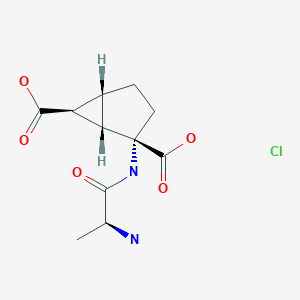
Talaglumetad hydrochloride
|
Talaglumetad hydrochloride
|
|
| Formula |
C11H16N2O5. HCl
|
|---|---|
| Exact mass |
292.0826
|
| Mol weight |
292.7161
|
(1S,2S,5R,6S)-2-[2(S)-Aminopropionamido]bicyclo[3.1.0]hexane-2,6-dicarboxylic acid hydrochloride
Treatment of anxiety and stress disorders [metabotropic glutamate [mGlu] agonist]
Talaglumetad hydrochloride, a prodrug of the type II metabotropic glutamate receptor agonist eglumetad, reached phase III clinical studies for the treatment of anxiety at Lilly.

-
In recent years, with the repeated cloning of glutamate receptor genes, it has become clear that there are surprisingly many subtypes of glutamate receptors. At present, glutamate receptors are broadly classified into two types: the “ionotropic type”, in which the receptor has an ion channel structure, and the “metabotropic type”, in which the receptor is coupled to G-proteins (Science, 258, 597-603, 1992). Ionotropic receptors are classified pharmacologically into three types: N-methyl-D-asparaginic acid (NMDA), α-amino-3-hydroxy-5-methyl isoxazole-4-propionate AMPA), and kynate (Science, 258, 597-603, 1992). Metabotropic receptors are classified into eight types, type 1 through type 8 (J. Neurosci., 13, 1372-1378, 1993; Neuropharmacol., 34, 1-26, 1995).
-
The metabotropic glutamate receptors are classified pharmacologically into three groups. Of these, group 2 (mGluR2/mGluR3) bind with adenylcyclase, and inhibit the accumulation of the Forskolin stimulation of cyclic adenosine monophosphate (cAMP) (Trends Pharmacol. Sci., 14, 13 (1993)), which suggests that compounds that act on group 2 metabotropic glutamate receptors should be useful for the treatment or prevention of acute and chronic psychiatric and neurological disorders. As a substance that acts on group 2 metabotropic glutamate receptors, (+)-(1S,2S,5R,6S)-2-aminobicyclo[3.1.0]hexane-2,6-dicarboxylic acid has been disclosed in Japanese Unexamined Patent Publication, No. Hei 8-188561 [1996].
-
Fluorine atoms tend to be strongly electron-attractive and to confer high fat solubility, and compounds into which fluorine atoms are introduced greatly change their physical properties. Thus introducing fluorine atoms might greatly affect the absorbability, metabolic stability, and pharmacological effects of a compound. But it is by no means easy to introduce fluorine atoms. In fact, Japanese Unexamined Patent Publication No. Hei 8-188561 [1996] does not even discuss the introduction of fluorine atoms into (+)-(1S,2S,5R,6S)-2-aminobicyclo[3.1.0]hexane-2,6-dicarboxylic acid.
………………………………………………………….
Process development of (1S,2S,5R,6S)-spiro[bicyclo[3.1.0]hexane-2′,5′-dioxo-2,4′-imidazolidine]-6-carboxylic acid, (R)-alpha-methylbenzenemethanamine salt (LSN344309)
Org Process Res Dev 2006, 10(1): 28
http://pubs.acs.org/doi/abs/10.1021/op049829e
LY544344 hydrochloride 6 is Talaglumetad

Process development and a pilot-plant process for the synthesis of 4 and its resolution to obtain (1S,2S,5R,6S)-spiro[bicyclo[3.1.0]hexane-2‘,5‘-dioxo-2,4‘-imidazolidine]-6-carboxylic acid, (R)-α-methylbenzenemethanamine salt (5) are described. Starting from the inexpensive raw 2-cyclopenten-1-one and sulfur ylide 1 the racemic bicyclo keto ester 2 was synthesized. Reaction of 2 with potassium cyanide and ammonium carbonate under Bücherer−Berg’s reaction conditions affords racemic 3 in 80% yield. Hydrolysis of 3 followed by the resolution with (R)-(+)-α-methylbenzylamine gave 4 in excellent yield and purity under optimized conditions. The improvement of the original discovery process to accommodate safety and environmental requirements for scale-up in manufacturing facilities is also discussed.
LY544344 hydrochloride 6 is a new chemical entity under investigation by Eli Lilly & Company as a potential treatment of neurological or psychiatric disorders related to the mammalian central nervous system (CNS)

Scheme 1. Original process for the synthesis of LSN344309 an intermediate of Talaglumetad
…………………………………………………….
Journal of Medicinal Chemistry (2005), 48(16), 5305-5320
http://pubs.acs.org/doi/full/10.1021/jm050235r

…………………………………………………….
WO 2002055485
OR;
http://www.google.im/patents/US20040138304?cl=un

………………………………………………………….
http://www.google.com/patents/EP1052246A1?cl=en

………………………………………………
REFERENCES
New approaches in the development of orally bioavailable selective group 2 metabotropic glutamate receptor agonists
Drugs Fut 2002, 27(Suppl. A): Abst C39
Utility of influx transporters to enhance oral bioavailability
241st ACS Natl Meet (March 27-30, Anaheim) 2011, Abst MEDI 163
The intestinal absorption of a prodrug of the mGlu2/3 receptor agonist LY354740 is mediated by PEPT1: In situ rat intestinal perfusion studies
J Pharm Sci 2010, 99(3): 1574
Dipeptides as effective prodrugs of the unnatural amino acid (+)-2-aminobicyclo[3.1.0]hexane-2,6-dicarboxylic acid (LY354740), a selective group II metabotropic glutamate receptor agonist
J Med Chem 2005, 48(16): 5305
An efficient synthesis of LY544344.HCl: A prodrug of mGluR2 agonist LY354740
Tetrahedron Lett 2005, 46(43): 7299
Pharmacodynamics of a novel anxiolytic (LY544344)
24th CINP Congr (June 20-24, Paris) 2004, Abst P02.269
| WO2000004010A1 * | Jul 14, 1999 | Jan 27, 2000 | Stephen Richard Baker | Bicyclohexane derivatives |
| EP0696577A1 * | Aug 11, 1995 | Feb 14, 1996 | Eli Lilly And Company | Synthetic excitatory amino acids |
| EP1052246A1 * | Jan 27, 1999 | Nov 15, 2000 | Taisho Pharmaceutical Co. Ltd | Fluorine-containing amino acid derivatives |
Complaints and Recalls: new EU-GMP Chapter 8 published

GMP News: Complaints and Recalls: new EU-GMP Chapter 8 published
|
View original post 450 more words
If a Facility stores Medicinal Products for more than 36 Hours GDP will apply
GMP News: If a Facility stores Medicinal Products for more than 36 Hours GDP will apply
Since the EU Good Distribution Practice (GDP) Guide has been revised, a number of questions regarding its interpretation have been raised. One of these questions relates to storage facilities and so called distribution hubs. In the past, many facilities which have been involved in the supply chain were not managed under GDP and didn’t posses a licence for their activities.
The British Medicines Authority MHRA published a press release on 18 August 2014 to explain what they consider to be a facility which must be licensed and which needs to implement the GDP requirements. According to the MHRA: “The GDP Inspectorate is raising awareness of the impact of the new regulations to those parties that are either directly or indirectly affected and any freight consolidator or freight forwarder either in the air, sea or road transport sector…
View original post 59 more words


 New Drug Approvals