New Drug Approvals

Home » APPROVALS 2021 (Page 8)

Category Archives: APPROVALS 2021

DRUG APPROVALS BY DR ANTHONY MELVIN CRASTO .....FOR BLOG HOME CLICK HERE

Blog Stats

  • 4,824,225 hits

Flag and hits

Flag Counter

Enter your email address to follow this blog and receive notifications of new posts by email.

Join 37.9K other subscribers
Follow New Drug Approvals on WordPress.com

Archives

Categories

Recent Posts

Flag Counter

ORGANIC SPECTROSCOPY

Read all about Organic Spectroscopy on ORGANIC SPECTROSCOPY INTERNATIONAL 

Enter your email address to follow this blog and receive notifications of new posts by email.

Join 37.9K other subscribers
DR ANTHONY MELVIN CRASTO Ph.D

DR ANTHONY MELVIN CRASTO Ph.D

DR ANTHONY MELVIN CRASTO, Born in Mumbai in 1964 and graduated from Mumbai University, Completed his Ph.D from ICT, 1991,Matunga, Mumbai, India, in Organic Chemistry, The thesis topic was Synthesis of Novel Pyrethroid Analogues, Currently he is working with AFRICURE PHARMA, ROW2TECH, NIPER-G, Department of Pharmaceuticals, Ministry of Chemicals and Fertilizers, Govt. of India as ADVISOR, earlier assignment was with GLENMARK LIFE SCIENCES LTD, as CONSUlTANT, Retired from GLENMARK in Jan2022 Research Centre as Principal Scientist, Process Research (bulk actives) at Mahape, Navi Mumbai, India. Total Industry exp 32 plus yrs, Prior to joining Glenmark, he has worked with major multinationals like Hoechst Marion Roussel, now Sanofi, Searle India Ltd, now RPG lifesciences, etc. He has worked with notable scientists like Dr K Nagarajan, Dr Ralph Stapel, Prof S Seshadri, etc, He did custom synthesis for major multinationals in his career like BASF, Novartis, Sanofi, etc., He has worked in Discovery, Natural products, Bulk drugs, Generics, Intermediates, Fine chemicals, Neutraceuticals, GMP, Scaleups, etc, he is now helping millions, has 9 million plus hits on Google on all Organic chemistry websites. His friends call him Open superstar worlddrugtracker. His New Drug Approvals, Green Chemistry International, All about drugs, Eurekamoments, Organic spectroscopy international, etc in organic chemistry are some most read blogs He has hands on experience in initiation and developing novel routes for drug molecules and implementation them on commercial scale over a 32 PLUS year tenure till date Feb 2023, Around 35 plus products in his career. He has good knowledge of IPM, GMP, Regulatory aspects, he has several International patents published worldwide . He has good proficiency in Technology transfer, Spectroscopy, Stereochemistry, Synthesis, Polymorphism etc., He suffered a paralytic stroke/ Acute Transverse mylitis in Dec 2007 and is 90 %Paralysed, He is bound to a wheelchair, this seems to have injected feul in him to help chemists all around the world, he is more active than before and is pushing boundaries, He has 100 million plus hits on Google, 2.5 lakh plus connections on all networking sites, 100 Lakh plus views on dozen plus blogs, 227 countries, 7 continents, He makes himself available to all, contact him on +91 9323115463, email amcrasto@gmail.com, Twitter, @amcrasto , He lives and will die for his family, 90% paralysis cannot kill his soul., Notably he has 38 lakh plus views on New Drug Approvals Blog in 227 countries......https://newdrugapprovals.wordpress.com/ , He appreciates the help he gets from one and all, Friends, Family, Glenmark, Readers, Wellwishers, Doctors, Drug authorities, His Contacts, Physiotherapist, etc He has total of 32 International and Indian awards

Verified Services

View Full Profile →

Archives

Categories

Flag Counter

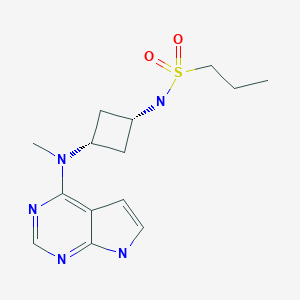
PF 04965842, Abrocitinib


PF-04965842, >=98% (HPLC).png

img

2D chemical structure of 1622902-68-4

Abrocitinib.svg

PF-04965842

PF 04965842, Abrocitinib

UNII: 73SM5SF3OR

CAS Number 1622902-68-4, Empirical Formula  C14H21N5O2S, Molecular Weight 323.41

N-[cis-3-(Methyl-7H-pyrrolo[2,3-d]pyrimidin-4-ylamino)cyclobutyl]-1-propanesulfonamide,

N-((1s,3s)-3-(methyl(7H-pyrrolo[2,3-d]pyrimidin-4-yl)amino)cyclobutyl)propane-1-sulfonamide

1-Propanesulfonamide, N-(cis-3-(methyl-7H-pyrrolo(2,3-d)pyrimidin-4-ylamino)cyclobutyl)-

N-{cis-3-[Methyl(7H-pyrrolo[2,3-d]pyrimidin-4-yl)amino]cyclobutyl}-propane-1-sulfonamide

PHASE 3, for the potential oral treatment of moderate-to-severe atopic dermatitis (AD)

Jak1 tyrosine kinase inhibitor

UPDATE…… JAPAN APPROVED, 2021, 2021/9/27, CIBINQO

ALSO

fda 2022, APPROVALS 2022, 1/14/2022

THE US

In February 2018, the FDA granted Breakthrough Therapy designation for the treatment of patients with moderate-to-severe AD

PHASEIII

In December 2017, a randomized, double-blind, placebo-controlled, parallel-group, phase III trial (NCT03349060; JADE Mono-1; JADE; B7451012; 2017-003651-29) of PF-04965842 began in patients aged 12 years and older (expected n = 375) with moderate-to-severe AD

PRODUCT PATENT

Pub. No.:   WO/2014/128591   International Application No.:   PCT/IB2014/058889
Publication Date: 28.08.2014 International Filing Date: 11.02.2014

EXPIRY  Roughly 2034

form powder
color white to beige
solubility DMSO: 10 mg/mL, clear
storage temp. room temp
    Biochem/physiol Actions
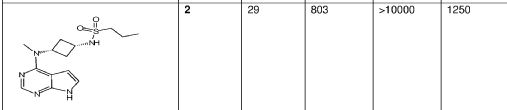
    • PF-04965842 is a Janus Kinase (JAK) inhibitor selective for JAK1 with an IC50value of 29 nM for JAK1 compared to 803 nM for JAK2, >10000 nM for JAK3 and 1250 nM for Tyk2. JAKs mediate cytokine signaling, and are involved in cell proliferation and differentiation. PF-04965842 has been investigated as a possible treatment for psoriasis.
  • Originator Pfizer
  • Class Skin disorder therapies; Small molecules
  • Mechanism of Action Janus kinase 1 inhibitors

Highest Development Phases

  • Phase IIIAtopic dermatitis
  • DiscontinuedLupus vulgaris; Plaque psoriasis

Most Recent Events

  • 08 Mar 2018Phase-III clinical trials in Atopic dermatitis (In children, In adults, In adolescents) in USA (PO) (NCT03422822)
  • 14 Feb 2018PF 4965842 receives Breakthrough Therapy status for Atopic dermatitis in USA
  • 06 Feb 2018Pfizer plans the phase III JADE EXTEND trial for Atopic Dermatitis (In children, In adults, In adolescents) in March 2018 (PO) (NCT03422822)

This compound was developed by Pfizer for Kinase Phosphatase Biology research. To learn more about Sigma′s partnership with Pfizer and view other authentic, high-quality Pfizer compounds,

Image result for PF-04965842

PF-04965842 is an oral Janus Kinase 1 inhibitor being investigated for treatment of plaque psoriasis.

Protein kinases are families of enzymes that catalyze the phosphorylation of specific residues in proteins, broadly classified into tyrosine and serine/threonine kinases. Inappropriate kinase activity, arising from mutation, over-expression, or inappropriate regulation, dys-regulation or de-regulation, as well as over- or under-production of growth factors or cytokines has been i mplicated in many diseases, including but not limited to cancer, cardiovascular diseases, allergies, asthma and other respiratory diseases, autoimmune d iseases, inflammatory diseases, bone diseases, metabolic disorders, and neurological and neurodegenerative disorders such as Alzheimer’s disease. Inappropriate kinase activity triggers a variety of biological cellular responses relating to cell growth, cell differentiation , survival, apoptosis, mitogenesis, cell cycle control, and cel l mobility implicated in the aforementioned and related diseases.

Thus, protein kinases have emerged as an important class of enzymes as targets for therapeutic intervention. In particular, the JAK family of cellular protein tyrosine kinases (JAK1, JAK2, JAK3, and Tyk2) play a central role in cytoki ne signaling (Kisseleva et al., Gene, 2002, 285 , 1; Yamaoka et al. Genome Biology 2004, 5, 253)). Upon binding to their receptors, cytokines activate JAK which then phosphorylate the cytokine receptor, thereby creating docking sites for signaling molecules, notably, members of the signal transducer and activator of transcription (STAT) family that ultimately lead to gene expression. Numerous cytokines are known to activate the JAK family. These cytokines include, the IFN family (IFN-alpha, IFN-beta, IFN-omega, Limitin, IFN-gamma, IL- 10, IL- 19, IL-20, IL-22), the gp 130 family (IL-6, IL- 11, OSM, LIF, CNTF, NNT- 1//SF-3, G-CSF, CT- 1, Leptin, IL- 12 , I L-23), gamma C family (IL-2 , I L-7, TSLP, IL-9, IL- 15 , IL-21, IL-4, I L- 13), IL-3 family (IL-3 , IL-5 , GM-CSF), single chain family (EPO, GH, PRL, TPO), receptor tyrosine kinases (EGF, PDGF, CSF- 1, HGF), and G-protein coupled receptors (ATI).

Abrocitinib, sold under the brand name Cibinqo, is a Janus kinase inhibitor medication used for the treatment of atopic dermatitis (eczema).[2] It was developed by Pfizer.[2]

Medical uses

Abrocitinib is indicated for the treatment of moderate-to-severe atopic dermatitis in adults who are candidates for systemic therapy.[2]

Side effects

The most common adverse effects in studies were upper respiratory tract infection, headache, nausea, and diarrhea.[3]

Pharmacology

Mechanism of action

It is a selective inhibitor of the enzyme janus kinase 1 (JAK1).[3]

Pharmacokinetics

Abrocitinib is quickly absorbed from the gut and generally reaches highest blood plasma concentrations within one hour. Only 1.0 to 4.4% of the dose are found unmetabolized in the urine.[4]

History

  • April 2016: initiation of Phase 2b trial
  • December 2017: initiation of JADE Mono-1 Phase 3 trial[5]
  • May 2018: Results of Phase 2b trial posted
  • October 2019: Results of Phase 3 trial presented[6]
  • June 2020: Results of second Phase 3 trial published[7]

Society and culture

Legal status

In October 2021, the Committee for Medicinal Products for Human Use (CHMP) of the European Medicines Agency (EMA) adopted a positive opinion, recommending the granting of a marketing authorization for the medicinal product Cibinqo, intended for the treatment of atopic dermatitis.[8] The applicant for this medicinal product is Pfizer Europe MA EEIG.[8] In December 2021, the European Commission approved abrocitinib for the treatment of atopic dermatitis.[2][9]

In January 2022, the United States Food and Drug Administration (FDA) approved abrocitinib for adults with moderate-to-severe atopic dermatitis.[10]

////////////////////////////////////////////////////////////

str1
Flag Counter

AS ON DEC2021 3,491,869 VIEWS ON BLOG WORLDREACH AVAILABLEFOR YOUR ADVERTISEMENT

wdt-16

join me on Linkedin

Anthony Melvin Crasto Ph.D – India | LinkedIn

join me on Researchgate

RESEARCHGATE

This image has an empty alt attribute; its file name is research.jpg

join me on Facebook

Anthony Melvin Crasto Dr. | Facebook

join me on twitter

Anthony Melvin Crasto Dr. | twitter

+919321316780 call whatsaapp

EMAIL. amcrasto@amcrasto

/////////////////////////////////////////////////////////////////////////////

EU

Click to access cibinqo-epar-public-assessment-report_en.pdf

Introduction
The finished product is presented as immediate release film-coated tablets containing 50 mg, 100 mg
or 200 mg of abrocitinib as active substance.
Other ingredients are:
Tablet core: microcrystalline cellulose (E460i), anhydrous dibasic calcium phosphate (E341ii), sodium
starch glycolate and magnesium stearate (E470b).
Film-coat: hypromellose (E464), titanium dioxide (E171), lactose monohydrate, macrogol (E1521),
triacetin (E1518) and red iron oxide (E172).
The product is available in high-density polyethylene (HDPE) bottles with polypropylene closure or
polyvinylidene chloride (PVDC) blisters with aluminium foil lidding film, as described in section 6.5 of
the SmPC.

The chemical name of abrocitinib is N-((1S,3S)-3-(methyl(7H-pyrrolo[2,3-d]pyrimidin-4-
yl)amino)cyclobutyl)propane-1-sulfonamide corresponding to the molecular formula C14H21N5O2S. It
has a relative molecular mass of 323.42 Daltons and the following structure depicted in Figure 1:

The chemical structure of abrocitinib was elucidated by a combination of UV/VIS and IR spectroscopy,
mass spectrometry, NMR spectroscopy and X-ray diffraction.
The active substance is a white to pale-purple or pale pink crystalline powder. It is non-hygroscopic
and its solubility is pH dependent. Abrocitinib is classified as BCS Class II. The impact of particle size
on finished product uniformity of dosage units and dissolution has been studied (see finished product
section). Based on the abrocitinib finished product biopharmaceutics performance, stability, and
manufacturing experience, the active substance particle size specification was established.
Abrocitinib is an achiral molecule, but with 2 stereocentres.
Only one crystalline anhydrous form (Form 1) of abrocitinib has been identified. This form has been the
only form used in all toxicology and clinical studies. Extensive polymorph and hydrate screening have
been conducted to investigate if additional solid forms of abrocitinib could be discovered. Abrocitinib,
Form 1 was the only anhydrous crystalline form identified from these studies. No new anhydrous
polymorphs, hydrates or amorphous solids of abrocitinib were isolated from these screens.
Experiments with 1,4 dioxane and dimethyl sulfoxide yielded solvated forms of abrocitinib. When these
solvated structures were subjected to high temperature, these materials desolvated and converted to
Form 1, free base anhydrous form of abrocitinib. However, these are not relevant since the commercial
crystallisation step does not utilise either of these solvent systems.
It has been confirmed that the manufacturing process consistently yields polymorphic form I. This form
is physically and chemically stable under normal manufacturing and storage conditions as well as
under accelerated conditions. Hence the absence of control of form I is justified.

FDA

U.S. FDA Approves Pfizer’s CIBINQO® (abrocitinib) for Adults with Moderate-to-Severe Atopic Dermatitis

https://www.pfizer.com/news/press-release/press-release-detail/us-fda-approves-pfizers-cibinqor-abrocitinib-adults

CIBINQO is a once-daily oral treatment with proven efficacy to manage symptoms for adults who have not yet found relief with current options

Pfizer Inc. (NYSE: PFE) announced today that the United States (U.S.) Food and Drug Administration (FDA) approved CIBINQO® (abrocitinib), an oral, once-daily, Janus kinase 1 (JAK1) inhibitor, for the treatment of adults living with refractory, moderate-to-severe atopic dermatitis (AD) whose disease is not adequately controlled with other systemic drug products, including biologics, or when use of those therapies is inadvisable.

CIBINQO is approved at the recommended doses of 100 mg and 200 mg, with the 200 mg dose being recommended for patients who are not responding to the 100 mg dose. Additionally, a 50 mg dose was approved to treat moderate-to-severe AD specifically in patients with moderate renal impairment (kidney failure), certain patients receiving treatment with inhibitors of cytochrome P450 (CYP) 2C19, or patients who are known or suspected to be poor metabolizers of CYP2C19. For patients with moderate renal impairment who are not responding to 50 mg once daily, 100 mg once daily may also be prescribed.

“The reality for patients living with chronic inflammatory skin disease such as moderate-to-severe atopic dermatitis is that many experience debilitating symptoms that are not managed by current treatment options. Today’s approval of CIBINQO will provide an important new oral option that could help those who have yet to find relief,” said Jonathan Silverberg, MD, PhD, MPH, Department of Dermatology, The George Washington University School of Medicine and Health Sciences. “In multiple large-scale clinical trials, CIBINQO demonstrated strong efficacy at clearing skin, improving itch, and managing the extent and severity of eczema, offering a benefit-risk profile that supports the use of this treatment in the FDA-approved patient population.”

The FDA approval was based on results of five clinical trials from a large-scale clinical trial program of more than 1,600 patients. The safety and efficacy of CIBINQO was evaluated in three randomized, placebo-controlled, Phase 3 trials. Additionally, safety was evaluated through a randomized, placebo-controlled, dose-ranging trial and an ongoing long-term open-label extension trial. Across the trials, CIBINQO demonstrated a consistent safety profile and profound improvements in skin clearance, extent of disease, and severity, as well as rapid improvement in itch after two weeks, for some people living with AD versus placebo. In addition, a higher proportion of subjects treated with CIBINQO in two monotherapy trials achieved improvement in itching at week 12 compared to placebo.

“The FDA’s approval offers hope to the millions of patients across the U.S. who are suffering daily with an immuno-inflammatory condition that can cause intense and persistent itching, pain, discomfort, and distress if left uncontrolled,” said Mike Gladstone, Global President of Pfizer Inflammation & Immunology. “CIBINQO, an efficacious once-daily pill, is a medical breakthrough made possible by Pfizer researchers and the people living with moderate-to-severe atopic dermatitis who participated in our clinical trials.”

“Atopic dermatitis is so much more than just a rash, and it goes beyond the surface of the skin. It’s a chronic condition that can both significantly disrupt patients’ daily lives and negatively impact their emotional well-being,” said Julie Block, President and CEO, National Eczema Association. “We appreciate Pfizer’s commitment to this resilient patient community and eagerly await the positive impact CIBINQO could have on the treatment landscape for moderate-to-severe atopic dermatitis.”

The most common adverse events reported in ≥5% of patients with CIBINQO included nasopharyngitis (12.4% with CIBINQO 100 mg, 8.7% with CIBINQO 200 mg, and 7.9%, with placebo), nausea (6%, 14.5%, and 2.1%, respectively), and headache (6%, 7.8%, and 3.5%, respectively).

The full prescribing information for CIBINQO can be found here. CIBINQO will be made available in the coming weeks.

Additional Details on the CIBINQO Clinical Trial Program

Five clinical trials in the CIBINQO JAK1 Atopic Dermatitis Efficacy and Safety (JADE) global development program were included in the New Drug Application (NDA) to support the FDA approval.

The safety and efficacy of CIBINQO was evaluated in three Phase 3, randomized, placebo-controlled clinical trials. The trials evaluated measures of improvements in skin clearance, itch, disease extent, and severity, including the Investigator Global Assessment (IGA), Eczema Area and Severity Index (EASI), and Peak Pruritus Numerical Ratings Scale (PP-NRS). In each of the trials, over 40% of patients had prior exposure to a systemic therapy:

  • JADE MONO-1 and JADE MONO-2: A pair of randomized, double-blind, placebo-controlled trials designed to evaluate the efficacy and safety of two doses (100 mg and 200 mg once daily) of CIBINQO monotherapy in 778 patients 12 years of age and older with moderate-to-severe AD. The trials assessed the co-primary endpoints of IGA and EASI-75 responses at Week 12.
  • JADE COMPARE: A randomized, double-blind, placebo-controlled trial designed to evaluate the efficacy and safety of two doses (100 mg and 200 mg once daily) of CIBINQO in 837 adult patients with moderate-to-severe AD on background topical medicated therapy. The trial also included an active control arm with dupilumab, a biologic treatment administered by subcutaneous injection, compared with placebo. The trial assessed the co-primary endpoints of IGA and EASI-75 responses at Week 12.

Select findings for CIBINQO 100 mg, 200 mg, and placebo follow (*p<0.01 or **p<0.001):

  • JADE MONO-1:
    • IGA Response Rate (Week 12): 24%*, 44%**, and 8%, respectively
    • EASI-75 Response Rate (Week 12): 40%**, 62%**, and 12%, respectively
  • JADE MONO-2
    • IGA Response Rate (Week 12): 28%**, 38%**, and 9%, respectively
    • EASI-75 Response Rate (Week 12): 44%**, 61%**, and 10%, respectively
  • JADE COMPARE
    • IGA Response Rate (Week 12): 36%**, 47%**, and 14%, respectively
    • EASI-75 Response Rate (Week 12): 58%**, 68%**, and 27%, respectively

Safety was additionally evaluated through a randomized dose-ranging trial and a long-term, open-label, extension trial (JADE EXTEND).

U.S. IMPORTANT SAFETY INFORMATION

WARNING: SERIOUS INFECTIONS, MORTALITY, MALIGNANCY, MAJOR ADVERSE CARDIOVASCULAR EVENTS, AND THROMBOSIS

Serious Infections

Patients treated with CIBINQO may be at increased risk for developing serious infections that may lead to hospitalization or death. The most frequent serious infections reported with CIBINQO were herpes simplex, herpes zoster, and pneumonia.

If a serious or opportunistic infection develops, discontinue CIBINQO and control the infection.

Reported infections from Janus kinase (JAK) inhibitors used to treat inflammatory conditions:

  • Active tuberculosis, which may present with pulmonary or extrapulmonary disease. Test for latent TB before and during therapy; treat latent TB prior to use. Monitor all patients for active TB during treatment, even patients with initial negative, latent TB test.
  • Invasive fungal infections, including cryptococcosis and pneumocystosis. Patients with invasive fungal infections may present with disseminated, rather than localized, disease.
  • Bacterial, viral (including herpes zoster), and other infections due to opportunistic pathogens.

Avoid use of CIBINQO in patients with an active, serious infection, including localized infections. The risks and benefits of treatment with CIBINQO should be carefully considered prior to initiating therapy in patients with chronic or recurrent infections or those who have resided or traveled in areas of endemic tuberculosis or endemic mycoses.

Patients should be closely monitored for the development of signs and symptoms of infection during and after treatment with CIBINQO, including the possible development of tuberculosis in patients who tested negative for latent tuberculosis infection prior to initiating therapy.

Consider yearly screening for patients in highly endemic areas for TB. CIBINQO is not recommended for use in patients with active TB. For patients with a new diagnosis of latent TB or prior untreated latent TB, or for patients with a negative test for latent TB but who are at high risk for TB infection, start preventive therapy for latent TB prior to initiation of CIBINQO.

Viral reactivation, including herpes virus reactivation (eg, herpes zoster, herpes simplex), was reported in clinical studies with CIBINQO. If a patient develops herpes zoster, consider interrupting CIBINQO until the episode resolves. Hepatitis B virus reactivation has been reported in patients receiving JAK inhibitors. Perform viral hepatitis screening and monitoring for reactivation in accordance with clinical guidelines before starting therapy and during therapy with CIBINQO. CIBINQO is not recommended for use in patients with active hepatitis B or hepatitis C.

Mortality

In a large, randomized postmarketing safety study in rheumatoid arthritis (RA) patients 50 years of age and older with at least one cardiovascular risk factor comparing another JAK inhibitor to TNF blocker treatment, a higher rate of all-cause mortality (including sudden cardiovascular death) was observed with the JAK inhibitor. CIBINQO is not approved for use in RA patients.

Malignancies

Malignancies, including non-melanoma skin cancer (NMSC), were reported in patients treated with CIBINQO. Lymphoma and other malignancies have been observed in patients receiving JAK inhibitors used to treat inflammatory conditions. Perform periodic skin examination for patients who are at increased risk for skin cancer. Exposure to sunlight and UV light should be limited by wearing protective clothing and using broad-spectrum sunscreen.

In a large, randomized postmarketing safety study of another JAK inhibitor in RA patients, a higher rate of malignancies (excluding non-melanoma skin cancer [NMSC]) was observed in patients treated with the JAK inhibitor compared to those treated with TNF blockers. CIBINQO is not approved for use in RA patients. A higher rate of lymphomas was observed in patients treated with the JAK inhibitor compared to those treated with TNF blockers. A higher rate of lung cancers was observed in current or past smokers treated with the JAK inhibitor compared to those treated with TNF blockers. Patients who are current or past smokers are at additional increased risk.

Consider the benefits and risks for the individual patient prior to initiating or continuing therapy with CIBINQO, particularly in patients with a known malignancy (other than a successfully treated NMSC), patients who develop a malignancy when on treatment, and patients who are current or past smokers.

Major Adverse Cardiovascular Events

Major adverse cardiovascular events were reported in patients treated with CIBINQO. In RA patients 50 years of age and older with at least one cardiovascular risk factor treated with another JAK inhibitor, a higher rate of major adverse cardiovascular events (MACE) (defined as cardiovascular death, myocardial infarction, and stroke), was observed when compared with TNF blockers. CIBINQO is not approved for use in RA patients. Patients who are current or past smokers are at additional increased risk. Discontinue CIBINQO in patients that have experienced a myocardial infarction or stroke.

Consider the benefits and risks for the individual patient prior to initiating or continuing therapy with CIBINQO, particularly in patients who are current or past smokers and patients with other cardiovascular risk factors. Patients should be informed about the symptoms of serious cardiovascular events and the steps to take if they occur.

Thrombosis

Deep vein thrombosis (DVT) and pulmonary embolism (PE) have been reported in patients treated with CIBINQO. Thrombosis, including PE, DVT, and arterial thrombosis have been reported in patients receiving JAK inhibitors used to treat inflammatory conditions. Many of these adverse reactions were serious and some resulted in death. In RA patients 50 years of age and older with at least one cardiovascular risk factor treated with another JAK inhibitor, a higher rate of overall thrombosis, DVT, and PE were observed when compared with TNF blockers. CIBINQO is not approved for use in RA patients.

Avoid CIBINQO in patients that may be at increased risk of thrombosis. If symptoms of thrombosis occur, discontinue CIBINQO and treat patients appropriately.

Contraindication

CIBINQO is contraindicated in patients taking antiplatelet therapies, except for low-dose aspirin (≤81 mg daily), during the first 3 months of treatment.

Laboratory Abnormalities

Hematologic Abnormalities: Treatment with CIBINQO was associated with an increased incidence of thrombocytopenia and lymphopenia. Prior to CIBINQO initiation, perform a complete blood count (CBC). CBC evaluations are recommended at 4 weeks after initiation and 4 weeks after dose increase of CIBINQO. Discontinuation of CIBINQO therapy is required for certain laboratory abnormalities.

Lipid Elevations: Dose-dependent increase in blood lipid parameters were reported in patients treated with CIBINQO. Lipid parameters should be assessed approximately 4 weeks following initiation of CIBINQO therapy, and thereafter patients should be managed according to clinical guidelines for hyperlipidemia. The effect of these lipid parameter elevations on cardiovascular morbidity and mortality has not been determined.

Immunizations

Prior to initiating CIBINQO, complete all age-appropriate vaccinations as recommended by current immunization guidelines, including prophylactic herpes zoster vaccinations. Avoid vaccination with live vaccines immediately prior to, during, and immediately after CIBINQO therapy.

Renal Impairment

Avoid use in patients with severe renal impairment or end stage renal disease, including those on renal replacement therapy.

Hepatic Impairment

Avoid use in patients with severe hepatic impairment.

Adverse Reactions

Most common adverse reactions (≥1%) in subjects receiving 100 mg and 200 mg include: nasopharyngitis, nausea, headache, herpes simplex, increased blood creatinine phosphokinase, dizziness, urinary tract infection, fatigue, acne, vomiting, oropharyngeal pain, influenza, gastroenteritis.

Most common adverse reactions (≥1%) in subjects receiving either 100 mg or 200 mg also include: impetigo, hypertension, contact dermatitis, upper abdominal pain, abdominal discomfort, herpes zoster, and thrombocytopenia.

Use in Pregnancy

Available data from pregnancies reported in clinical trials with CIBINQO are not sufficient to establish a drug-associated risk for major birth defects, miscarriage, or other adverse maternal or fetal outcomes. Advise females of reproductive potential that CIBINQO may impair fertility.

There will be a pregnancy exposure registry that monitors pregnancy outcomes in women exposed to CIBINQO during pregnancy. Pregnant women exposed to CIBINQO and health care providers are encouraged to call 1-877-311-3770.

Lactation

Advise women not to breastfeed during treatment with CIBINQO and for one day after the last dose.

Indication

CIBINQO is indicated for the treatment of adults with refractory, moderate to severe atopic dermatitis whose disease is not adequately controlled with other systemic drug products, including biologics, or when use of those therapies is inadvisable.

Limitations of Use: CIBINQO is not recommended for use in combination with other JAK inhibitors, biologic immunomodulators, or with other immunosuppressants.

About CIBINQO® (abrocitinib)

CIBINQO is an oral small molecule that selectively inhibits Janus kinase (JAK) 1. Inhibition of JAK1 is thought to modulate multiple cytokines involved in pathophysiology of AD, including interleukin IL-4, IL-13, IL-31, IL-22, and thymic stromal lymphopoietin (TSLP).

In addition to receiving regulatory approval in the U.S., CIBINQO has received marketing authorization in the European Union, Great Britain, Japan, Korea, the United Arab Emirates, Norway, Iceland, and Singapore.

About Atopic Dermatitis

AD is a chronic skin disease characterized by inflammation of the skin and skin barrier defects.i,ii Most people know AD is a skin condition. But many don’t realize it can be caused in part by an abnormal immune response beneath the skin. This dysregulated immune response is thought to contribute to inflammation within the skin and the signs of AD on the surface. Lesions of AD are characterized by erythema (red/pink or discolored skin patches, depending on normal skin color), itching, lichenification (thick/leathery skin), induration (hardening)/papulation (formulation of papules), and oozing/crusting.i,ii

AD is one of the most common inflammatory skin diseases, affecting approximately 5-10% of adults in the U.S.iii,iv Approximately 1 in 3 adults with AD have moderate-to-severe disease.v,vi

About Pfizer Inflammation & Immunology

At Pfizer Inflammation & Immunology, we strive to deliver breakthroughs that enable freedom from day-to-day suffering for people living with autoimmune and chronic inflammatory diseases, which can be debilitating, disfiguring and distressing, dramatically affecting what they can do. With a focus on immuno-inflammatory conditions in Rheumatology, Gastroenterology and Medical Dermatology, our current portfolio of approved medicines and investigational molecules spans multiple action and delivery mechanisms, from topicals to small molecules, biologics and biosimilars. The root cause of many immunological diseases is immuno-inflammation, which requires specifically designed agents. Our differentiated R&D approach resulted in one of the broadest pipelines in the industry, where we purposefully match molecules to diseases where we believe they can make the biggest difference. Building on our decades-long commitment and pioneering science, we continue to advance the standard of care for patients living with immuno-inflammatory diseases and are working hand-in-hand with patients, caregivers and the broader healthcare community on healthcare solutions for the many challenges of managing chronic inflammatory diseases, allowing patients to live their best lives.

Pfizer Inc.: Breakthroughs that Change Patients’ Lives

At Pfizer, we apply science and our global resources to bring therapies to people that extend and significantly improve their lives. We strive to set the standard for quality, safety, and value in the discovery, development, and manufacture of health care products, including innovative medicines and vaccines. Every day, Pfizer colleagues work across developed and emerging markets to advance wellness, prevention, treatments, and cures that challenge the most feared diseases of our time. Consistent with our responsibility as one of the world’s premier innovative biopharmaceutical companies, we collaborate with health care providers, governments, and local communities to support and expand access to reliable, affordable health care around the world. For more than 170 years, we have worked to make a difference for all who rely on us. We routinely post information that may be important to investors on our website at www.pfizer.com. In addition, to learn more, please visit us on www.pfizer.com and follow us on Twitter at @Pfizer and @Pfizer_NewsLinkedInYouTube and like us on Facebook at Facebook.com/Pfizer.

There remains a need for new compounds that effectively and selectively inhibit specific JAK enzymes, and JAK1 in particular, vs. JAK2. JAK1 is a member of the Janus family of protein kinases composed of JAK1, JAK2, JAK3 and TYK2. JAK1 is expressed to various levels in all tissues. Many cytokine receptors signal through pairs of JAK kinases in the following combinations: JAK1/JAK2, JAK1/JAK3, JAK1/TYK2 , JAK2/TYK2 or JAK2/JAK2. JAK1 is the most broadly

paired JAK kinase in this context and is required for signaling by γ-common (IL-2Rγ) cytokine receptors, IL—6 receptor family, Type I, II and III receptor families and IL- 10 receptor family. Animal studies have shown that JAK1 is required for the development, function and homeostasis of the immune system. Modulation of immune activity through inhibition of JAK1 kinase activity can prove useful in the treatment of various immune disorders (Murray, P.J.

J. Immunol., 178, 2623-2629 (2007); Kisseleva, T., et al., Gene, 285 , 1-24 (2002); O’Shea, J . J., et al., Ceil , 109, (suppl .) S121-S131 (2002)) while avoiding JAK2 dependent erythropoietin (EPO) and thrombopoietin (TPO) signaling (Neubauer H., et al., Cell, 93(3), 397-409 (1998);

Parganas E., et al., Cell, 93(3), 385-95 (1998)).

Figure

Tofacitinib (1), baricitinib (2), and ruxolitinib (3)

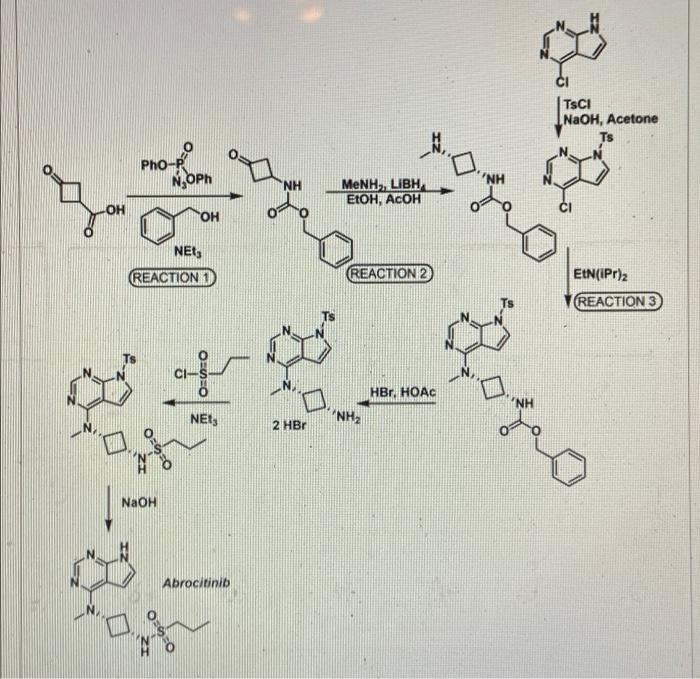
SYNTHESIS 5+1 =6 steps

Main synthesis

Journal of Medicinal Chemistry, 61(3), 1130-1152; 2018

INTERMEDIATE

CN 105732637

ONE STEP

CAS 479633-63-1,  7H-Pyrrolo[2,3-d]pyrimidine, 4-chloro-7-[(4- methylphenyl)sulfonyl]-

Image result for PF-04965842

Pfizer Receives Breakthrough Therapy Designation from FDA for PF-04965842, an oral JAK1 Inhibitor, for the Treatment of Patients with Moderate-to-Severe Atopic Dermatitis

Wednesday, February 14, 2018 8:30 am EST
 

Dateline:

NEW YORK

Public Company Information:

NYSE:
PFE
US7170811035
 
“We look forward to working closely with the FDA throughout our ongoing Phase 3 development program with the hope of ultimately bringing this important new treatment option to these patients.”
 

NEW YORK–(BUSINESS WIRE)–Pfizer Inc. (NYSE:PFE) today announced its once-daily oral Janus kinase 1 (JAK1) inhibitor PF-04965842 received Breakthrough Therapy designation from the U.S. Food and Drug Administration (FDA) for the treatment of patients with moderate-to-severe atopic dermatitis (AD). The Phase 3 program for PF-04965842 initiated in December and is the first trial in the J AK1 A topic D ermatitis E fficacy and Safety (JADE) global development program.

“Achieving Breakthrough Therapy Designation is an important milestone not only for Pfizer but also for patients living with the often devastating impact of moderate-to-severe atopic dermatitis, their providers and caregivers,” said Michael Corbo, Chief Development Officer, Inflammation & Immunology, Pfizer Global Product Development. “We look forward to working closely with the FDA throughout our ongoing Phase 3 development program with the hope of ultimately bringing this important new treatment option to these patients.”

Breakthrough Therapy Designation was initiated as part of the Food and Drug Administration Safety and Innovation Act (FDASIA) signed in 2012. As defined by the FDA, a breakthrough therapy is a drug intended to be used alone or in combination with one or more other drugs to treat a serious or life-threatening disease or condition and preliminary clinical evidence indicates that the drug may demonstrate substantial improvement over existing therapies on one or more clinically significant endpoints, such as substantial treatment effects observed early in clinical development. If a drug is designated as a breakthrough therapy, the FDA will expedite the development and review of such drug.1

About PF-04965842 and Pfizer’s Kinase Inhibitor Leadership

PF-04965842 is an oral small molecule that selectively inhibits Janus kinase (JAK) 1. Inhibition of JAK1 is thought to modulate multiple cytokines involved in pathophysiology of AD including interleukin (IL)-4, IL-13, IL-31 and interferon gamma.

Pfizer has established a leading kinase research capability with multiple unique kinase inhibitor therapies in development. As a pioneer in JAK science, the Company is advancing several investigational programs with novel selectivity profiles, which, if successful, could potentially deliver transformative therapies for patients. Pfizer has three additional kinase inhibitors in Phase 2 development across multiple indications:

  • PF-06651600: A JAK3 inhibitor under investigation for the treatment of rheumatoid arthritis, ulcerative colitis and alopecia areata
  • PF-06700841: A tyrosine kinase 2 (TYK2)/JAK1 inhibitor under investigation for the treatment of psoriasis, ulcerative colitis and alopecia areata
  • PF-06650833: An interleukin-1 receptor-associated kinase 4 (IRAK4) inhibitor under investigation for the treatment of rheumatoid arthritis

Working together for a healthier world®

At Pfizer, we apply science and our global resources to bring therapies to people that extend and significantly improve their lives. We strive to set the standard for quality, safety and value in the discovery, development and manufacture of health care products. Our global portfolio includes medicines and vaccines as well as many of the world’s best-known consumer health care products. Every day, Pfizer colleagues work across developed and emerging markets to advance wellness, prevention, treatments and cures that challenge the most feared diseases of our time. Consistent with our responsibility as one of the world’s premier innovative biopharmaceutical companies, we collaborate with health care providers, governments and local communities to support and expand access to reliable, affordable health care around the world. For more than 150 years, we have worked to make a difference for all who rely on us. We routinely post information that may be important to investors on our website at www.pfizer.com. In addition, to learn more, please visit us on www.pfizer.com and follow us on Twitter at @Pfizer and @Pfizer_NewsLinkedInYouTube and like us on Facebook at Facebook.com/Pfizer.

DISCLOSURE NOTICE: The information contained in this release is as of February 14, 2018. Pfizer assumes no obligation to update forward-looking statements contained in this release as the result of new information or future events or developments.

This release contains forward-looking information about PF-04965842 and Pfizer’s ongoing investigational programs in kinase inhibitor therapies, including their potential benefits, that involves substantial risks and uncertainties that could cause actual results to differ materially from those expressed or implied by such statements. Risks and uncertainties include, among other things, the uncertainties inherent in research and development, including the ability to meet anticipated clinical trial commencement and completion dates and regulatory submission dates, as well as the possibility of unfavorable clinical trial results, including unfavorable new clinical data and additional analyses of existing data; risks associated with preliminary data; the risk that clinical trial data are subject to differing interpretations, and, even when we view data as sufficient to support the safety and/or effectiveness of a product candidate, regulatory authorities may not share our views and may require additional data or may deny approval altogether; whether regulatory authorities will be satisfied with the design of and results from our clinical studies; whether and when drug applications may be filed in any jurisdictions for any potential indication for PF-04965842 or any other investigational kinase inhibitor therapies; whether and when any such applications may be approved by regulatory authorities, which will depend on the assessment by such regulatory authorities of the benefit-risk profile suggested by the totality of the efficacy and safety information submitted, and, if approved, whether PF-04965842 or any such other investigational kinase inhibitor therapies will be commercially successful; decisions by regulatory authorities regarding labeling, safety and other matters that could affect the availability or commercial potential of PF-04965842 or any other investigational kinase inhibitor therapies; and competitive developments.

A further description of risks and uncertainties can be found in Pfizer’s Annual Report on Form 10-K for the fiscal year ended December 31, 2016 and in its subsequent reports on Form 10-Q, including in the sections thereof captioned “Risk Factors” and “Forward-Looking Information and Factors That May Affect Future Results”, as well as in its subsequent reports on Form 8-K, all of which are filed with the U.S. Securities and Exchange Commission and available at www.sec.gov  and www.pfizer.com .

Image result for PF-04965842

# # # # #

1 Food and Drug Administration Fact Sheet Breakthrough Therapies at https://www.fda.gov/RegulatoryInformation/LawsEnforcedbyFDA/SignificantAmendmentstotheFDCAct/FDASIA/ucm329491.htmaccessed on January 25, 2018

PATENT

CA 2899888

PATENT

WO 2014128591

https://patentscope.wipo.int/search/en/detail.jsf;jsessionid=6767BBB5964A985E88C9251B6DF3182B.wapp2nB?docId=WO2014128591&recNum=233&maxRec=8235&office=&prevFilter=&sortOption=&queryString=EN_ALL%3Anmr+AND+PA%3Apfizer&tab=PCTDescription

PFIZER INC. [US/US]; 235 East 42nd Street New York, New York 10017 (US)

BROWN, Matthew Frank; (US).
FENWICK, Ashley Edward; (US).
FLANAGAN, Mark Edward; (US).
GONZALES, Andrea; (US).
JOHNSON, Timothy Allan; (US).
KAILA, Neelu; (US).
MITTON-FRY, Mark J.; (US).
STROHBACH, Joseph Walter; (US).
TENBRINK, Ruth E.; (US).
TRZUPEK, John David; (US).
UNWALLA, Rayomand Jal; (US).
VAZQUEZ, Michael L.; (US).
PARIKH, Mihir, D.; (US)

COMPD 2

str1

Example 2 : N-{cis-3-[Methyl(7H-pyrrolo[2,3-d]pyrimidin-4-yl)amino]cyclobutyl}-propane- l -sulƒonamide

This compound was prepared using 1-propanesulfonyl chloride. The crude compound was purified by chromatography on silica gel eluting with a mixture of dichloromethane and methanol (93 : 7) to afford the title compound as a tan sol id (78% yield). 1NMR (400 MHz, DMSO-d6): δ 11.60 (br s, 1 H), 8.08 (s, 1 H), 7.46 (d, 1 H), 7.12 (d, 1 H), 6.61 (d, 1 H), 4.81-4.94 (m, 1 H), 3.47-3.62 (m, 1 H), 3.23 (s, 3 H), 2.87-2.96 (m, 2 H), 2.52-2.63 (m, 2 H), 2.14-2.27 (m, 2 H) 1.60- 1.73 (m, 2 H) 0.96 (t, 3 H). LC/MS (exact mass) calculated for C14H21N5O2S;

323.142, found (M + H+); 324.1.

PAPER

 Journal of Medicinal Chemistry (2018), 61(3), 1130-1152.

Abstract Image

https://pubs.acs.org/doi/abs/10.1021/acs.jmedchem.7b01598

N-{cis-3-[Methyl(7H-pyrrolo[2,3-d]pyrimidin-4-yl)amino]cyclobutyl}propane-1-sulfonamide (25)

Compound 48a·2HBr …………..was collected by filtration, washed with 2:1 EtOH/H2O (100 mL), and again dried overnight in a vacuum oven at 40 °C.
 
1H NMR (400 MHz, DMSO-d6): 11.64 (br s, 1H), 8.12 (s, 1 H), 7.50 (d, J = 9.4 Hz, 1H), 7.10–7.22 (m, 1H), 6.65 (dd, J= 1.8, 3.3 Hz, 1H), 4.87–4.96 (m, 1H), 3.53–3.64 (m, 1H), 3.27 (s, 3H), 2.93–2.97 (m, 2H), 2.57–2.64 (m, 2H), 2.20–2.28 (m, 2H), 1.65–1.74 (m, 2H), 0.99 (t, J = 7.4 Hz, 3H).
 
LC/MS m/z (M + H+) calcd for C14H22N5O2S: 324. Found: 324. Anal. Calcd for C14H21N5O2S: C, 51.99; H, 6.54; N, 21.65; O, 9.89; S, 9.91. Found: C, 52.06; H, 6.60; N, 21.48; O, 10.08; S, 9.97.
 

SchmiederG.DraelosZ.PariserD.BanfieldC.CoxL.HodgeM.KierasE.Parsons-RichD.MenonS.SalganikM.PageK.PeevaE. Efficacy and safety of the Janus Kinase 1 inhibitor PF-04965842 in patients with moderate to severe psoriasis: phase 2, randomized, double-blind, placebo-controlled study Br. J. Dermatol. 2017DOI: 10.1111/bjd.16004

Compound 25N-{cis-3-[Methyl(7H-pyrrolo[2,3-d]pyrimidin-4-yl)amino]cyclobutyl}-propane-1-sulfonamide is available through MilliporeSigma (cat. no. PZ0304).

CLIP

TSCI
NaOH, Acetone
TS
Pho-P
N,OPR
NH
NH
MeNH, LIBH
EtOH, ACOH
OH
TOH
NET
REACTION 1)
REACTION 2
EtN(IP)2
REACTION 3
HBT, HOẶC

REFERENCES

1: Schmieder GJ, Draelos ZD, Pariser DM, Banfield C, Cox L, Hodge M, Kieras E, Parsons-Rich D, Menon S, Salganik M, Page K, Peeva E. Efficacy and safety of the Janus Kinase 1 inhibitor PF-04965842 in patients with moderate to severe psoriasis: phase 2, randomized, double-blind, placebo-controlled study. Br J Dermatol. 2017 Sep 26. doi: 10.1111/bjd.16004. [Epub ahead of print] PubMed PMID: 28949012

 2 Journal of Medicinal Chemistry (2018), 61(3), 1130-1152.

  • Originator Pfizer
  • Class Anti-inflammatories; Antipsoriatics; Pyrimidines; Pyrroles; Skin disorder therapies; Small molecules; Sulfonamides
  • Mechanism of Action Janus kinase 1 inhibitors
  • Phase III Atopic dermatitis
  • Discontinued Lupus vulgaris; Plaque psoriasis
  • 21 May 2019Pfizer initiates enrolment in a phase I trial in Healthy volunteers in USA (PO) (NCT03937258)
  • 09 May 2019 Pfizer plans a phase I pharmacokinetic and drug-drug interaction trial in healthy volunteers in May 2019 (NCT03937258)
  • 30 Apr 2019 Pfizer completes a phase I trial (In volunteers) in USA (PO) (NCT03626415)

References[

  1. ^ https://www.accessdata.fda.gov/drugsatfda_docs/label/2022/213871s000lbl.pdf
  2. Jump up to:a b c d e “Cibinqo EPAR”European Medicines Agency (EMA). 11 October 2021. Retrieved 17 December 2021. Text was copied from this source which is copyright European Medicines Agency. Reproduction is authorized provided the source is acknowledged.
  3. Jump up to:a b Gooderham MJ, Forman SB, Bissonnette R, Beebe JS, Zhang W, Banfield C, et al. (October 2019). “Efficacy and Safety of Oral Janus Kinase 1 Inhibitor Abrocitinib for Patients With Atopic Dermatitis: A Phase 2 Randomized Clinical Trial”JAMA Dermatology155 (12): 1371–1379. doi:10.1001/jamadermatol.2019.2855PMC 6777226PMID 31577341.
  4. ^ Peeva E, Hodge MR, Kieras E, Vazquez ML, Goteti K, Tarabar SG, et al. (August 2018). “Evaluation of a Janus kinase 1 inhibitor, PF-04965842, in healthy subjects: A phase 1, randomized, placebo-controlled, dose-escalation study”British Journal of Clinical Pharmacology84 (8): 1776–1788. doi:10.1111/bcp.13612PMC 6046510PMID 29672897.
  5. ^ Clinical trial number NCT03349060 for “Study to Evaluate Efficacy and Safety of PF-04965842 in Subjects Aged 12 Years And Older With Moderate to Severe Atopic Dermatitis (JADE Mono-1)” at ClinicalTrials.gov
  6. ^ “Pfizer Presents Positive Phase 3 Data at the 28th Congress of the European Academy of Dermatology and Venereology for Abrocitinib in Moderate to Severe Atopic Dermatitis”Drugs.com. 12 October 2019.
  7. ^ Silverberg, J. I.; Simpson, E. L.; Thyssen, J. P.; Gooderham, M.; Chan, G.; Feeney, C.; Biswas, P.; Valdez, H.; Dibonaventura, M.; Nduaka, C.; Rojo, R. (3 June 2020). “Efficacy and Safety of Abrocitinib in Patients With Moderate-to-Severe Atopic Dermatitis: A Randomized Clinical Trial”JAMA Dermatology156 (8): 863–873. doi:10.1001/jamadermatol.2020.1406PMC 7271424PMID 32492087.
  8. Jump up to:a b “Cibinqo: Pending EC decision”European Medicines Agency. 15 October 2021. Retrieved 15 October 2021. Text was copied from this source which is © European Medicines Agency. Reproduction is authorized provided the source is acknowledged.
  9. ^ “European Commission Approves Pfizer’s Cibinqo (abrocitinib) for the Treatment of Adults with Moderate-to-Severe Atopic Dermatitis”Pfizer Inc. (Press release). 10 December 2021. Retrieved 17 December 2021.
  10. ^ “U.S. FDA Approves Pfizer’s Cibinqo (abrocitinib) for Adults with Moderate-to-Severe Atopic Dermatitis”Pfizer Inc. (Press release). 14 January 2022. Retrieved 16 January 2022.

External links

  • “Abrocitinib”Drug Information Portal. U.S. National Library of Medicine.
  • Clinical trial number NCT03349060 for “Study to Evaluate Efficacy and Safety of PF-04965842 in Subjects Aged 12 Years And Older With Moderate to Severe Atopic Dermatitis (JADE Mono-1)” at ClinicalTrials.gov
  • Clinical trial number NCT03575871 for “Study Evaluating Efficacy and Safety of PF-04965842 in Subjects Aged 12 Years And Older With Moderate to Severe Atopic Dermatitis (JADE Mono-2)” at ClinicalTrials.gov
  • {{ClinicalTrialsGov|NCT03720470|Study Evaluating Efficacy and Safety of PF-04965842 and Dupilumab in Adult Subjects With Moderate to Severe Atopic Dermatitis on Background Topical Therapy (JADE Compare)}
Abrocitinib
Abrocitinib.svg
Clinical data
Trade names Cibinqo
Other names PF-04965842
License data
Routes of
administration
By mouth
ATC code
Legal status
Legal status
Pharmacokinetic data
Elimination half-life 2.8–5.2 h
Excretion 1.0–4.4% unchanged in urine
Identifiers
CAS Number
  • 1622902-68-4
PubChem CID
DrugBank
ChemSpider
UNII
KEGG
ChEMBL
ECHA InfoCard 100.251.498 Edit this at Wikidata
Chemical and physical data
Formula C14H21N5O2S
Molar mass 323.42 g·mol−1
3D model (JSmol)

/////////PF 04965842, Abrocitinib, Phase III,  Atopic dermatitis, pfizer, fda 2022, APPROVALS 2022

CCCS(=O)(N[C@H]1C[C@@H](N(C)C2=C3C(NC=C3)=NC=N2)C1)=O

CCCS(=O)(=O)N[C@@H]1C[C@@H](C1)N(C)c2ncnc3[nH]ccc23

wdt-16

join me on Linkedin

Anthony Melvin Crasto Ph.D – India | LinkedIn

  •  

join me on Researchgate

RESEARCHGATE

This image has an empty alt attribute; its file name is research.jpg

join me on Facebook

Anthony Melvin Crasto Dr. | Facebook

join me on twitter 

Anthony Melvin Crasto Dr. | twitter

+919321316780 call whatsaapp

EMAIL. amcrasto@gmail.com

wdt-3

NEW DRUG APPROVALS

ONE TIME

$10.00

Viloxazine, ヴィロキサジン;


Viloxazine structure.svg

ChemSpider 2D Image | Viloxazine | C13H19NO3

Viloxazine

  • Molecular FormulaC13H19NO3
  • Average mass237.295 Da

update FDA APPROVED 2021/4/2, Qelbree, Viloxazine hydrochloride

Formula
C13H19NO3. HCl
CAS
35604-67-2
Mol weight
273.7558
 
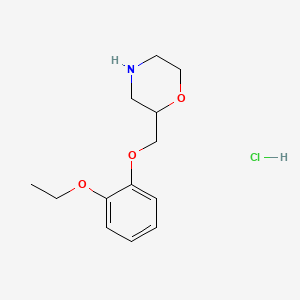
2-[(2-Ethoxyphenoxy)methyl]morpholine
 
256-281-7 [EINECS]
3489
46817-91-8 free [RN], Hcl 35604-67-2
5I5Y2789ZF
Emovit [Wiki]
Morpholine, 2-((2-ethoxyphenoxy)methyl)-
Morpholine, 2-[(2-ethoxyphenoxy)methyl]-
UNII:5I5Y2789ZF
Viloxazine hydrochloride.png
Viloxazine hydrochloride OQW30I1332 35604-67-2

Polymorph

FORM A , B US226136693US2011032013

NEW DRUG APPROVALS

ONE TIME

$10.00

Viloxazine (trade names VivalanEmovitVivarint and Vicilan) is a morpholine derivative and is a selective norepinephrine reuptake inhibitor (NRI). It was used as an antidepressant in some European countries, and produced a stimulant effect that is similar to the amphetamines, except without any signs of dependence. It was discovered and brought to market in 1976 by Imperial Chemical Industries and was withdrawn from the market in the early 2000s for business reasons.

Image result for viloxazine synthesis

Clip

https://www.sciencedirect.com/science/article/pii/S0040402015302659

Image result for viloxazine synthesis

Patent

US 20180265482

 Viloxazine ((R,S)-2-[(2-ethoxyphenoxy)methyl]morpholine]) is a bicyclic morpholine derivative, assigned CAS No. 46817-91-8 (CAS No. 35604-67-2 for the HCl salt). It is characterized by the formula C 1319NO 3, with a molecular mass of 237.295 g/mol. Viloxazine has two stereoisomers, (S)-(−)- and (R)-(+)-isomer, which have the following chemical structures:
 (MOL) (CDX)
      Viloxazine is known to have several desirable pharmacologic uses, including treatment of depression, nocturnal enuresis, narcolepsy, sleep disorders, and alcoholism, among others. In vivo, viloxazine acts as a selective norepinephrine reuptake inhibitor (“NRI”).
      Between the two stereoisomers, the (S)-(−)-isomer is known to be five times as pharmacologically active as the (R)-(+)-isomer. See, e.g., “Optical Isomers of 2-(2-ethoxyphenoxymethyl)tetrahydro-1,4 oxazine (viloxazine) and Related Compounds” (Journal of Medicinal Chemistry, Jan. 9, 1976, 19(8); 1074) in which it is disclosed that optical isomers of 2-(2-ethoxyphenoxymethyl)tetrahydro-1,4-oxazine (viloxazine) and 2-(3-methoxyphenoxymethyl)tetrahydro-1,4-oxazine were prepared and absolute configurations assigned. The synthesis of optical isomers of viloxazine analogs of known configuration was accomplished by resolution of the intermediate 4-benzyl-2-(p-toluenesulfonyloxymethyl)tetrahydro-1,4-oxazine isomers.
      Some unsatisfactory methods of synthesizing viloxazine are known in the art. For example, as disclosed in U.S. Pat. No. 3,714,161, viloxazine is prepared by reacting ethoxyphenol with epichlorohydrin to afford the epoxide intermediate 1-(2-ethoxyphenoxy)-2,3-epoxypropane. This epoxide intermediate is then treated with benzylamine followed with chloroacetyl chloride. The resulting morpholinone is then reduced by lithium aluminum hydride and then by Pd/C-catalyzed hydrogenation to yield viloxazine free base.
      Yet another unsatisfactory synthesis of viloxazine is disclosed in U.S. Pat. No. 3,712,890, which describes a process to prepare viloxazine HCl, wherein the epoxide intermediate, 1-(2-ethoxyphenoxy)-2,3-epoxypropane, is reacted with 2-aminoethyl hydrogen sulfate in ethanol in the presence of sodium hydroxide to form viloxazine free base. The product is extracted with diethyl ether from the aqueous solution obtained by evaporating the solvent in the reaction mixture then adding water to the residue. The ethereal extract is dried over a drying agent and the solvent is removed. Viloxazine HCl salt is finally obtained by dissolving the previous residue in isopropanol, concentrated aqueous HCl, and ethyl acetate followed by filtration.
      The foregoing methods of synthesizing viloxazine suffer from a number of deficiencies, such as low reaction yield and unacceptably large amount of impurities in the resulting product. Effective elimination or removal of impurities, especially those impurities possessing genotoxicity or other toxicities, is critical to render safe pharmaceutical products. For example, certain reagents traditionally utilized in viloxazine HCl preparation, such as epichlorohydrin and 2-aminoethyl hydrogen sulfate, present a special problem due to their toxicity. There is a need for effective methods to remove or limit harmful impurities down to a level that is appropriate and safe according to contemporary sound medical standards and judgment. Accordingly, a continuing and unmet need exists for new and improved methods of manufacturing viloxazine and its various salts to yield adequate quantities of pharmacologically desirable API with predictable and reliable control of impurities.
     Polymorph control is also an important aspect of producing APIs and their associated salts that are used in pharmaceutical products. However, no polymorphs of viloxazine HCl have previously been disclosed. A need therefore exists for new polymorphic forms of viloxazine that have improved pharmacological properties.

PATENT

WO 2011130194

US2011032013

For the sake of convenience and without putting any limitations thereof, the methods of manufacture of viloxazine have been separated into several steps, each step being disclosed herein in a multiplicity of non-limiting embodiments. These steps comprise Step 1, during which 2-ethoxyphenol and epichlorhydrin are reacted to produce l-(2-ethoxyphenoxy)-2,3-epoxypropane (Epoxide 1); Step 2, during which l-(2-ethoxyphenoxy)-2,3-epoxypropane (Epoxide 1) is converted into viloxazine base which is further converted into viloxazine salt, and Step 3, during which viloxazine salt is purified/recrystallized, and various polymorphic forms of viloxazine salt are prepared.

The above-mentioned steps will be considered below in more details.

[0031] The process of the Step 1 may be advantageously carried out in the presence of a phase-transfer catalyst to afford near quantitative yield of l-(2-ethoxyphenoxy)-2,3-epoxypropane. Alternatively, the process may make use of a Finkelstein catalyst described in more details below. Additionally, the reaction may take place without the use of the catalyst.

 FIG. 1, depicted below, schematically illustrates the preparation of l-(2-ethoxyphenoxy)-2,3-epoxypropane (“Epoxide 1”) in accordance with Step I of an exemplary synthesis of viloxazine:

STEP I:

Epoxide 1

In one embodiment of the Step 1, the preparation of l-(2-ethoxyphenoxy)-2,3-epoxypropane (epoxide 1) can be effected by the use of a phase transfer catalyst in the presence of a solid or liquid base with a solution of a corresponding phenol and epichlorohydrin in one or more solvents (Fig. 1). The phase transfer catalyst can be selected from ammonium salts, such as benzyltriethylammonium salts, benzyltrimethylammonium salts, and tetrabutylammonium salts, phosphonium salts, guanidinium salts, crown ether, polyethylene glycol, polyethylene glycol ether, or polyethylene glycol ester, or other phase transfer catalysts know in the art. The solid or liquid base can be a carbonate such as alkali carbonate, NaOH, KOH, LiOH, LiOH/LiCl, amines such as mono-, di- or tri-substituted amines (such as diethylamine, triethylamine, dibutylamine, tributylamine), DMAP, or other appropriate base. The solvents used in the solution of a corresponding phenol and epichlorohydrin include but are not limited to ethers such as methyl t-butyl ether, ketones, non-substituted or substituted aromatic solvents (xylene), halo-substituted hydrocarbons (e.g. CH2C12, CHC13), THF, DMF, dioxanes, non-substituted and substituted pyridines, acetonitrile, pyrrolidones, nitromethane , or other appropriate solvent. Additional catalyst, such as, for example, Finkelstein catalyst, can also be used in the process of this embodiment. This reaction preferably takes place at an elevated temperature. In one variation of the embodiment, the temperature is above 50°C. In another variation, epichlorohydrin, potassium carbonate, and a phase transfer catalyst are mixed with a solution of 2-ethoxyphenol in a solvent at an elevated temperature, such as 50 – 60°C. After the reaction is complete, the reaction mixture can be washed with water, followed by work-up procedures known in the art. Variations of this embodiment of the invention are further disclosed in Examples 1-8.

[0033] In one variation of the above embodiment of the Step 1 , Epoxide 1 is prepared by reacting 2-ethoxyphenol and epichlorohydrin in a solvent in the presence of two different catalysts, and a base in a solid state. The first catalyst is a phase transfer catalyst as described above; the second catalyst is a Finkelstein reaction catalyst. Without putting any limitation

hereon, metal iodide and metal bromide salts, such as potassium iodide, may be used as an example of a Finkelstein catalyst. The phase transfer catalyst and a solvent may be selected from any phase transfer catalysts and solvents known in the art. Potassium carbonate may be used as a non-limiting example of a solid base. Using the solid base in a powdered form may be highly beneficial due to the greatly enhanced interface and limiting the side reactions. This variation of the embodiment is further illustrated by Example 9. In another variation of the embodiment, liquid base such as triethylamine can be used to replace the solid base.

[0034] In a different embodiment of Step 1 , 2-ethoxyphenol and epichlorohydrin are reacted in a solvent-free system that comprises a solid or liquid base, a phase transfer catalyst as listed above and a Finkelstein catalyst.

[0035] FIG. 2, depicted below, schematically illustrates the preparation of l-(2-ethoxyphenoxy)-2,3-epoxypropane (“Epoxide 1”) in accordance with the Step I of another exemplary synthesis of viloxazine ( biphasic):

STEP I (alternative embodiment):

In this embodiment of Step 1, illustrated in Fig. 2, Epoxide 1 can be prepared by reacting epichlorohydrin with 2-ethoxyphenol in the presence of a catalytic amount of a phase transfer catalyst without the use of solvents at elevated temperatures in a two-stage process to afford near quantitative yield of l-(2-ethoxyphenoxy)-2,3-epoxypropane with very few side products. This embodiment of the invention is further illustrated by a non-limiting Example 12. The phase transfer catalyst for this embodiment can be selected from ammonium salts such as benzyltriethylammonium salts, benzyltrimethylammonium salts, tetrabutylammonium salts, etc; phosphonium salts, guanidinium salts, crown ether, polyethylene glycol, polyethylene glycol ether, or polyethylene glycol ester, or other phase transfer catalysts know in the art. The first stage of the process of this embodiment may take place without a solvent in a presence of a large excess of epichlorohydrin. This stage is followed by a de-chlorination stage, before or after

removal of excess epichlorohydrin, using a base and a solvent. The reaction produces l-(2-ethoxyphenoxy)-2,3-epoxypropane in high yield. Example of the bases used herein include but are not limited to NaOH, KOH, LiOH, LiOH/LiCl, K2C03, Na2C03, amines such as mono-, di-or tri-substituted amines (such as diethylamine, triethylamine, dibutylamine, tributylamine etc.), DMAP. In one variation of this embodiment of Step 1, the phase transfer catalyst may be used only at the de-chlorination stage of the process. The de-chlorination stage can be carried out in a biphasic system or in a single phase system. For a biphasic system, it can be an organic-aqueous liquid biphasic system, or a liquid-solid biphasic system. Solvents that are useful for the process include but are not limited to non-substituted and substituted aromatic solvents (e.g. toluene, benzene, chlorobenzene, dimethylbenzene, xylene), halo-substituted hydrocarbons (e.g. CH2C12, CHC13), THF, dioxanes, DMF, DMSO, non-substituted and substituted pyridines, ketones, pyrrolidones, ethers, acetonitrile, nitromethane. As mentioned above, this process takes place at the elevated temperature. In one variation of the embodiment, the temperature is above 60°C. In another variation, 2-ethoxyphenol and epichlorohydrin are heated to 60 – 90°C for a period of time in the presence of phase transfer catalyst. Excess of epichlorohydrin is removed and the residue is dissolved in a solvent such as toluene or benzene treated with an aqueous base solution, such as NaOH, KOH, LiOH, LiOH/LiCl. In yet another variation of the embodiment, the residue after epichlorohydrin removal can be dissolved in one or more of the said solvent and treated with a base (solid or liquid but not an aqueous solution) and optionally a second phase transfer catalyst, optionally at elevated temperatures.

[0036] In yet another embodiment of Step 1 , Epoxide 1 can also be prepared by using a catalyst for a so-called Finkelstein reaction in the presence of a Finkelstein catalyst but without the need to use a phase transfer catalyst. Finkelstein catalysts useful herein include metal iodide salts and metal bromide salts, among others. In one variation of this embodiment, 2-ethoxyphenol and epichlorohydrin are dissolved in a polar aprotic solvent such as DMF, and a catalytic amount of an iodide such as potassium iodide and a base, as solid or liquid, are used. Preferably, the base is used as a solid, such as potassium carbonate powder. This embodiment is further illustrated by the Example 11.

[0037] In the alternative embodiment of Step 1 , Epoxide 1 can also be prepared by a different method that comprises reacting epichlorohydrin and the corresponding phenol in the presence of a base at a temperature lower than the ambient temperature, especially when a base solution is used, and without the use of a phase transfer catalyst. This embodiment is illustrated by the Example 10.

[0038] A very high, almost quantitative, yield of 1 -(2-ethoxyphenoxy)-2,3-epoxypropane can be obtained through realizing the above-described embodiments of Step 1 , with less impurities generated in Epoxide 1.

[0039] Epoxide 1 , produced in Step 1 as described above, is used to prepare viloxazine base (viloxazine), which is further converted into viloxazine salt through the processes of Step 2.

[0040] FIG. 3, depicted below, schematically illustrates the preparation of viloxazine

(“Step Ila”) and the preparation of viloxazine hydrochloride (“Step lib”), as well as their purification (“Step III”) in accordance with another example embodiment hereof:

STEP Ila:

Hydrogen Sulfate

STEP lib:

Step III:

Conversion

Viloxazine free base ► Viloxazine salt

Wash/ raction

Recrystallization

Purified viloxazine salt

In the embodiment of Step 2, illustrated in Fig. 3, the preparation of viloxazine base is achieved by reacting the Epoxide 1 intermediate prepared in Step 1 and aminoethyl hydrogen sulfate in presence of a large excess of a base as illustrated by the Examples 5-7 and 14. The base may be present as a solid or in a solution. Preferably, the molar ratio of the base to Epoxide 1 is more than 10. More preferably the ratio is more than 12. Even more preferably, the ratio is between 15 and 40. It was unexpectedly discovered that the use of a higher ratio of a base results in a faster reaction, less impurities, and lower reaction temperature.

[0041] Further advantages may be offered by a specific variation of this embodiment, wherein the base is added to the reaction mixture in several separate steps. For example, a third of the base is added to the reaction mixture, and the mixture is stirred for a period of time. Then the rest of the base is added followed by additional stirring. Alternatively, half of the base is added initially followed by the second half after some period of time, or the base is added in three different parts separated by periods of time. The bases used herein include but are not limited to NaOH, KOH, LiOH, LiOH/LiCl, K2C03, Na2C03, amines such as mono-, di- or tri-substituted amines (such as diethylamine, triethylamine, dibutylamine, tributylamine), DMAP, and combinations thereof. . In one embodiment of the invention, the base is KOH. In another embodiment, the base is NaOH. In a further embodiment, the base is K2C03 powder. In yet further embodiment, the base is triethylamine. This embodiment is illustrated further by

Examples 13,15 and 16.

[0042] In another exemplary embodiment of Step 2, viloxazine is produced by cyclization of novel intermediate compound “Diol 1 ,” which is made from Epoxide 1 and N-benzyl-aminoethanol. This method allows one to drastically reduce the use of potentially toxic materials in the manufacturing process, completely eliminating some of them such as aminoethyl hydrogen sulfate. The first stage of the reaction results in the formation of an intermediate of Formula 3 (Diol 1), which is a new, previously unidentified compound.

[0043] Formula 3

Diol 1

FIG. 4, depicted below, schematically illustrates the preparation of viloxazine and its salts via “Diol 1” in accordance with another exemplary embodiment hereof (Bn = benzyl, Et = ethyl):

Viloxazine HCI

As illustrated in Fig. 4, Diol 1 is turned into N-benzyl viloxazine by cyclization. Removal of the benzyl protective group yields viloxazine base. Similarly, FIG. 5, depicted below, schematically illustrates the cyclization of Diol 1, as well as some side-reactions thereof.

Uses

Viloxazine hydrochloride was used in some European countries for the treatment of clinical depression.[4][5]

Side effects

Side effects included nausea, vomiting, insomnia, loss of appetite, increased erythrocyte sedimentation, EKG and EEG anomalies, epigastric pain, diarrhea, constipationvertigoorthostatic hypotensionedema of the lower extremities, dysarthriatremor, psychomotor agitation, mental confusion, inappropriate secretion of antidiuretic hormone, increased transaminasesseizure, (there were three cases worldwide, and most animal studies (and clinical trials that included epilepsy patients) indicated the presence of anticonvulsant properties, so was not completely contraindicated in epilepsy,[6]) and increased libido.[7]

Drug interactions

Viloxazine increased plasma levels of phenytoin by an average of 37%.[8] It also was known to significantly increase plasma levels of theophylline and decrease its clearance from the body,[9] sometimes resulting in accidental overdose of theophylline.[10]

Mechanism of action

Viloxazine, like imipramine, inhibited norepinephrine reuptake in the hearts of rats and mice; unlike imipramine, it did not block reuptake of norepinephrine in either the medullae or the hypothalami of rats. As for serotonin, while its reuptake inhibition was comparable to that of desipramine (i.e., very weak), viloxazine did potentiate serotonin-mediated brain functions in a manner similar to amitriptyline and imipramine, which are relatively potent inhibitors of serotonin reuptake.[11] Unlike any of the other drugs tested, it did not exhibit any anticholinergic effects.[11]

It was also found to up-regulate GABAB receptors in the frontal cortex of rats.[12]

Chemical properties

It is a racemic compound with two stereoisomers, the (S)-(–)-isomer being five times as pharmacologically active as the (R)-(+)-isomer.[13]

History

Viloxazine was discovered by scientists at Imperial Chemical Industries when they recognized that some beta blockers inhibited serotonin reuptake inhibitor activity in the brain at high doses. To improve the ability of their compounds to cross the blood brain barrier, they changed the ethanolamine side chain of beta blockers to a morpholine ring, leading to the synthesis of viloxazine.[14]:610[15]:9 The drug was first marketed in 1976.[16] It was never approved by the FDA,[5] but the FDA granted it an orphan designation (but not approval) for cataplexy and narcolepsy in 1984.[17] It was withdrawn from markets worldwide in 2002 for business reasons.[14][18]

As of 2015, Supernus Pharmaceuticals was developing formulations of viloxazine as a treatment for ADHD and major depressive disorder under the names SPN-809 and SPN-812.[19][20]

Research

Viloxazine has undergone two randomized controlled trials for nocturnal enuresis (bedwetting) in children, both of those times versus imipramine.[21][22] By 1990, it was seen as a less cardiotoxic alternative to imipramine, and to be especially effective in heavy sleepers.[23]

In narcolepsy, viloxazine has been shown to suppress auxiliary symptoms such as cataplexy and also abnormal sleep-onset REM[24] without really improving daytime somnolence.[25]

In a cross-over trial (56 participants) viloxazine significantly reduced EDS and cataplexy.[18]

Viloxazine has also been studied for the treatment of alcoholism, with some success.[26]

While viloxazine may have been effective in clinical depression, it did relatively poorly in a double-blind randomized controlled trial versus amisulpride in the treatment of dysthymia.[27]

It is also under investigation as a treatment for attention deficit hyperactivity disorder.[28]

REFERNCES

  1. ^ Bouchard JM, Strub N, Nil R (October 1997). “Citalopram and viloxazine in the treatment of depression by means of slow drop infusion. A double-blind comparative trial”. Journal of Affective Disorders46 (1): 51–8. doi:10.1016/S0165-0327(97)00078-5PMID 9387086.
  2. ^ Case DE, Reeves PR (February 1975). “The disposition and metabolism of I.C.I. 58,834 (viloxazine) in humans”. Xenobiotica5 (2): 113–29. doi:10.3109/00498257509056097PMID 1154799.
  3. ^ “SID 180462– PubChem Substance Summary”. Retrieved 5 November 2005.
  4. ^ Pinder, RM; Brogden, RN; Speight, ™; Avery, GS (June 1977). “Viloxazine: a review of its pharmacological properties and therapeutic efficacy in depressive illness”. Drugs13 (6): 401–21. doi:10.2165/00003495-197713060-00001PMID 324751.
  5. Jump up to:a b Dahmen, MM, Lincoln, J, and Preskorn, S. NARI Antidepressants, pp 816-822 in Encyclopedia of Psychopharmacology, Ed. Ian P. Stolerman. Springer-Verlag Berlin Heidelberg, 2010. ISBN 9783540687061
  6. ^ Edwards JG, Glen-Bott M (September 1984). “Does viloxazine have epileptogenic properties?”Journal of Neurology, Neurosurgery, and Psychiatry47 (9): 960–4. doi:10.1136/jnnp.47.9.960PMC 1027998PMID 6434699.
  7. ^ Chebili S, Abaoub A, Mezouane B, Le Goff JF (1998). “Antidepressants and sexual stimulation: the correlation” [Antidepressants and sexual stimulation: the correlation]. L’Encéphale (in French). 24 (3): 180–4. PMID 9696909.
  8. ^ Pisani F, Fazio A, Artesi C, et al. (February 1992). “Elevation of plasma phenytoin by viloxazine in epileptic patients: a clinically significant drug interaction”Journal of Neurology, Neurosurgery, and Psychiatry55 (2): 126–7. doi:10.1136/jnnp.55.2.126PMC 488975PMID 1538217.
  9. ^ Perault MC, Griesemann E, Bouquet S, Lavoisy J, Vandel B (September 1989). “A study of the interaction of viloxazine with theophylline”. Therapeutic Drug Monitoring11 (5): 520–2. doi:10.1097/00007691-198909000-00005PMID 2815226.
  10. ^ Laaban JP, Dupeyron JP, Lafay M, Sofeir M, Rochemaure J, Fabiani P (1986). “Theophylline intoxication following viloxazine induced decrease in clearance”. European Journal of Clinical Pharmacology30 (3): 351–3. doi:10.1007/BF00541543PMID 3732375.
  11. Jump up to:a b Lippman W, Pugsley TA (August 1976). “Effects of viloxazine, an antidepressant agent, on biogenic amine uptake mechanisms and related activities”. Canadian Journal of Physiology and Pharmacology54 (4): 494–509. doi:10.1139/y76-069PMID 974878.
  12. ^ Lloyd KG, Thuret F, Pilc A (October 1985). “Upregulation of gamma-aminobutyric acid (GABA) B binding sites in rat frontal cortex: a common action of repeated administration of different classes of antidepressants and electroshock”The Journal of Pharmacology and Experimental Therapeutics235 (1): 191–9. PMID 2995646.
  13. ^ Danchev ND, Rozhanets VV, Zhmurenko LA, Glozman OM, Zagorevskiĭ VA (May 1984). “Behavioral and radioreceptor analysis of viloxazine stereoisomers” [Behavioral and radioreceptor analysis of viloxazine stereoisomers]. Biulleten’ Eksperimental’noĭ Biologii i Meditsiny (in Russian). 97 (5): 576–8. PMID 6326891.
  14. Jump up to:a b Williams DA. Antidepressants. Chapter 18 in Foye’s Principles of Medicinal Chemistry, Eds. Lemke TL and Williams DA. Lippincott Williams & Wilkins, 2012. ISBN 9781609133450
  15. ^ Wermuth, CG. Analogs as a Means of Discovering New Drugs. Chapter 1 in Analogue-based Drug Discovery. Eds.IUPAC, Fischer, J., and Ganellin CR. John Wiley & Sons, 2006. ISBN 9783527607495
  16. ^ Olivier B, Soudijn W, van Wijngaarden I. Serotonin, dopamine and norepinephrine transporters in the central nervous system and their inhibitors. Prog Drug Res. 2000;54:59-119. PMID 10857386
  17. ^ FDA. Orphan Drug Designations and Approvals: Viloxazine Page accessed August 1, 2-15
  18. Jump up to:a b Vignatelli L, D’Alessandro R, Candelise L. Antidepressant drugs for narcolepsy. Cochrane Database Syst Rev. 2008 Jan 23;(1):CD003724. Review. PMID 18254030
  19. ^ Bloomberg Supernus profile Page accessed August 1, 2015
  20. ^ Supernus. Psychiatry portfolio Page accessed August 1, 2015
  21. ^ Attenburrow AA, Stanley TV, Holland RP (January 1984). “Nocturnal enuresis: a study”. The Practitioner228 (1387): 99–102. PMID 6364124.
  22. ^ ^ Yurdakök M, Kinik E, Güvenç H, Bedük Y (1987). “Viloxazine versus imipramine in the treatment of enuresis”. The Turkish Journal of Pediatrics29 (4): 227–30. PMID 3332732.
  23. ^ Libert MH (1990). “The use of viloxazine in the treatment of primary enuresis” [The use of viloxazine in the treatment of primary enuresis]. Acta Urologica Belgica (in French). 58 (1): 117–22. PMID 2371930.
  24. ^ Guilleminault C, Mancuso J, Salva MA, et al. (1986). “Viloxazine hydrochloride in narcolepsy: a preliminary report”. Sleep9 (1 Pt 2): 275–9. PMID 3704453.
  25. ^ Mitler MM, Hajdukovic R, Erman M, Koziol JA (January 1990). “Narcolepsy”Journal of Clinical Neurophysiology7 (1): 93–118. doi:10.1097/00004691-199001000-00008PMC 2254143PMID 1968069.
  26. ^ Altamura AC, Mauri MC, Girardi T, Panetta B (1990). “Alcoholism and depression: a placebo controlled study with viloxazine”. International Journal of Clinical Pharmacology Research10 (5): 293–8. PMID 2079386.
  27. ^ León CA, Vigoya J, Conde S, Campo G, Castrillón E, León A (March 1994). “Comparison of the effect of amisulpride and viloxazine in the treatment of dysthymia” [Comparison of the effect of amisulpride and viloxazine in the treatment of dysthymia]. Acta Psiquiátrica Y Psicológica de América Latina (in Spanish). 40 (1): 41–9. PMID 8053353.
  28. ^ Mattingly, GW; Anderson, RH (December 2016). “Optimizing outcomes in ADHD treatment: from clinical targets to novel delivery systems”. CNS Spectrums21 (S1): 45–59. doi:10.1017/S1092852916000808PMID 28044946.
Patent ID Title Submitted Date Granted Date 
US2004229942Analeptic and antidepressant combinations2004-05-122004-11-18
US2004242698Analeptic and antidepressant combinations2004-05-122004-12-02
US2002192302Transdermal and topical administration of antidepressant drugs using basic enhancers2002-06-192002-12-19
US2018105877GENETIC POLYMORPHISMS ASSOCIATED WITH DEPRESSION2017-05-19 
US2013244990GENETIC POLYMORPHISMS ASSOCIATED WITH DEPRESSION2012-11-302013-09-19
Patent ID Title Submitted Date Granted Date 
US2009197849TRANSDERMAL AND TOPICAL ADMINISTRATION OF DRUGS USING BASIC PERMEATION ENHANCERS2008-09-032009-08-06
US2006150989Method of diagnosing, treating and educating individuals with and/or about depression2005-01-122006-07-13
US8153159Modafinil modified release pharmaceutical compositions2004-09-172012-04-10
US2004229940Analeptic and antidepressant combinations2004-05-122004-11-18
US2004229941Analeptic and antidepressant combinations2004-05-122004-11-18
Patent ID Title Submitted Date Granted Date 
US9434703METHODS FOR PRODUCING VILOXAZINE SALTS AND NOVEL POLYMORPHS THEREOF2014-12-192015-05-07
US2012220962TRANSDERMAL AND TOPICAL ADMINISTRATION OF VITAMINS USING BASIC PERMEATION ENHANCERS2012-05-102012-08-30
US9358204FORMULATIONS OF VILOXAZINE2013-02-072013-08-08
US2012289515Combination therapy for cognitive distortions, resisting relapse of unipolar non-psychotic depression2011-05-252012-11-15
US2009317453TRANSDERMAL AND TOPICAL ADMINISTRATION OF DRUGS USING BASIC PERMEATION ENHANCERS2008-12-232009-12-24
Patent ID Title Submitted Date Granted Date 
US2006013834Room temperature stable aqueous liquid pharmaceutical composition2005-02-252006-01-19
US2004220262Transdermal and topical administration of drugs using basic permeation enhancers2004-06-032004-11-04
US2003124176Transdermal and topical administration of drugs using basic permeation enhancers2002-06-212003-07-03
US6713089Quick release pharmaceutical compositions of drug substances2001-07-102004-03-30
WO0015195QUICK RELEASE PHARMACEUTICAL COMPOSITIONS OF DRUG SUBSTANCES2000-03-23 
Patent ID Title Submitted Date Granted Date 
US2014315720POLYSACCHARIDE ESTER MICROSPHERES AND METHODS AND ARTICLES RELATING THERETO2014-04-042014-10-23
US2014113826POLYSACCHARIDE ESTER MICROSPHERES AND METHODS AND ARTICLES RELATING THERETO2013-10-232014-04-24
US2014052264Porous, Stabilized Craniomaxillofacial Implants and Methods and Kits Relating Thereto2013-08-122014-02-20
US2014348936GASTRORETENTIVE CONTROLLED RELEASE VEHICLES THAT INCLUDE ETHYLENE COPOLYMERS, ETHYL CELLULOSES, AND/OR THERMOPLASTIC POLYURETHANES2012-12-172014-11-27
US2016304475METHODS FOR PRODUCING VILOXAZINE SALTS AND NOVEL POLYMORPHS THEREOF2016-06-24 
Patent ID Title Submitted Date Granted Date 
US2017319698GASTRORETENTIVE GEL FORMULATIONS2015-10-26 
US8231899Quick release pharmaceutical compositions of drug substances2004-01-132012-07-31
US9662338FORMULATIONS OF VILOXAZINE2016-06-032016-09-29
US9603853FORMULATIONS OF VILOXAZINE2016-05-182016-09-08
US2015306230DRUG DELIVERY VEHICLES COMPRISING CELLULOSE DERIVATIVES, STARCH DERIVATIVES, AND COMBINATIONS THEREOF2014-06-122015-10-29
Patent ID Title Submitted Date Granted Date 
US3959273Morpholine derivatives1976-05-25 
US8802596Multi-functional ionic liquid compositions for overcoming polymorphism and imparting improved properties for active pharmaceutical, biological, nutritional, and energetic ingredients2012-06-072014-08-12
US6060516N1-propargylhydrazines, N2-propargylhydrazines and their analogs for the treatment of depression, anxiety and neurodegeneration2000-05-09 
US6479491Disubstituted morpholine, oxazepine or thiazepine derivatives, their preparation and their use as dopamine d4 receptor antagonists 2002-11-12
US2017258801FORMULATIONS OF VILOXAZINE2017-05-25 
Patent ID Title Submitted Date Granted Date 
US6034117Methods of treating and diagnosing sleep disordered breathing and means for carrying out the method2000-03-07 
EP0923370ACETYL CHOLINE ESTERASE INHIBITORS FOR TREATING AND DIAGNOSING SLEEP DISORDERED BREATHING1999-06-232005-11-16
US2014328884CONTROLLED RELEASE VEHICLES HAVING DESIRED VOID VOLUME ARCHITECTURES2012-12-172014-11-06
US9096743PROCESS FOR FORMING FILMS, FIBERS, AND BEADS FROM CHITINOUS BIOMASS2010-06-012012-05-10
US2003104041Transdermal and topical administration of drugs using basic permeation enhancers2002-06-202003-06-05
Patent ID Title Submitted Date Granted Date 
WO9807710DISUBSTITUTED MORPHOLINE, OXAZEPINE OR THIAZEPINE DERIVATIVES, THEIR PREPARATION AND THEIR USE AS DOPAMINE D4 RECEPTOR ANTAGONISTS1998-02-26 
US2014051771Biomedical Devices Comprising Molded Polyethylene Components2013-08-122014-02-20
US9278134DUAL FUNCTIONING IONIC LIQUIDS AND SALTS THEREOF2009-12-292012-02-23
US8232265Multi-functional ionic liquid compositions for overcoming polymorphism and imparting improved properties for active pharmaceutical, biological, nutritional, and energetic ingredients2007-04-262012-07-31
US2005074487Transdermal and topical administration of drugs using basic permeation enhancers2004-06-072005-04-07
Patent ID Title Submitted Date Granted Date 
US9199918SMALL MOLECULE INHIBITORS OF AGBL22012-02-142013-12-12
US9403783METHODS FOR PRODUCING VILOXAZINE SALTS AND NOVEL POLYMORPHS THEREOF2011-10-13 
US7973043Combination therapy for depression, prevention of suicide, and various medical and psychiatric conditions2003-07-252011-07-05
US6207662Disubstituted morpholine, oxazepine or thiazepine derivatives, their preparation and their use as dopamine D4 receptor antagonists 2001-03-27
EP0920423DISUBSTITUTED MORPHOLINE, OXAZEPINE OR THIAZEPINE DERIVATIVES, THEIR PREPARATION AND THEIR USE AS DOPAMINE D4 RECEPTOR ANTAGONISTS1999-06-092005-01-26
Clinical data
Routes of
administration
By mouthintravenous infusion[1]
ATC codeN06AX09 (WHO)
Legal status
Legal statusIn general: uncontrolled
Pharmacokinetic data
Elimination half-life2–5 hours
ExcretionRenal[2]
Identifiers
IUPAC name[show]
CAS Number46817-91-8  35604-67-2 (HCl salt)
PubChem CID5666
ChemSpider5464 
UNII5I5Y2789ZF
KEGGD08673 
ChEMBLChEMBL306700 
ECHA InfoCard100.051.148 
Chemical and physical data
FormulaC13H19NO3
Molar mass237.295 g/mol g·mol−1
3D model (JSmol)Interactive image
ChiralityRacemic mixture
SMILES[hide]O(c1ccccc1OCC)CC2OCCNC2
InChI[hide]InChI=1S/C13H19NO3/c1-2-15-12-5-3-4-6-13(12)17-10-11-9-14-7-8-16-11/h3-6,11,14H,2,7-10H2,1H3 Key:YWPHCCPCQOJSGZ-UHFFFAOYSA-N 

/////////////////Viloxazine, ヴィロキサジン , Emovit, Vivalan, Emovit, Vivarint, Vicilan

Iobenguane I 131


Iobenguane I-131.png

Iobenguane I 131

FDA approves first treatment for rare adrenal tumors

The U.S. Food and Drug Administration today approved Azedra (iobenguane I 131) injection for intravenous use for the treatment of adults and adolescents age 12 and older with rare tumors of the adrenal gland (pheochromocytoma or paraganglioma) that cannot be surgically removed (unresectable), have spread beyond the original tumor site and require systemic anticancer therapy. This is the first FDA-approved drug for this use.
 
 
update………APPROVED  JAPAN 2021, 2021/9/27, Raiatt MIBG-I 131

July 30, 2018

Release

The U.S. Food and Drug Administration today approved Azedra (iobenguane I 131) injection for intravenous use for the treatment of adults and adolescents age 12 and older with rare tumors of the adrenal gland (pheochromocytoma or paraganglioma) that cannot be surgically removed (unresectable), have spread beyond the original tumor site and require systemic anticancer therapy. This is the first FDA-approved drug for this use.

“Many patients with these ultra-rare cancers can be treated with surgery or local therapies, but there are no effective systemic treatments for patients who experience tumor-related symptoms such as high blood pressure,” said Richard Pazdur, M.D., director of the FDA’s Oncology Center of Excellence and acting director of the Office of Hematology and Oncology Products in the FDA’s Center for Drug Evaluation and Research. “Patients will now have an approved therapy that has been shown to decrease the need for blood pressure medication and reduce tumor size in some patients.”

Pheochromocytomas are rare tumors of the adrenal glands. These glands are located right above the kidneys and make hormones including stress hormones called epinephrines and norepinephrines. Pheochromocytomas increase the production of these hormones, leading to hypertension (high blood pressure) and symptoms such as headaches, irritability, sweating, rapid heart rate, nausea, vomiting, weight loss, weakness, chest pain or anxiety. When this type of tumor occurs outside the adrenal gland, it is called a paraganglioma.

The efficacy of Azedra was shown in a single-arm, open-label, clinical trial in 68 patients that measured the number of patients who experienced a 50 percent or greater reduction of all antihypertensive medications lasting for at least six months. This endpoint was supported by the secondary endpoint, overall tumor response measured by traditional imaging criteria. The study met the primary endpoint, with 17 (25 percent) of the 68 evaluable patients experiencing a 50 percent or greater reduction of all antihypertensive medication for at least six months. Overall tumor response was achieved in 15 (22 percent) of the patients studied.

The most common severe side effects reported by patients receiving Azedra in clinical trials included low levels of white blood cells (lymphopenia), abnormally low count of a type of white blood cells (neutropenia), low blood platelet count (thrombocytopenia), fatigue, anemia, increased international normalized ratio (a laboratory test which measures blood clotting), nausea, dizziness, hypertension and vomiting.

As it is a radioactive therapeutic agent, Azedra includes a warning about radiation exposure to patients and family members, which should be minimized while the patient is receiving Azedra. The risk of radiation exposure is greater in pediatric patients. Other warnings and precautions include a risk of lower levels of blood cells (myelosuppression), underactive thyroid, elevations in blood pressure, renal failure or kidney injury and inflammation of lung tissue (pneumonitis). Myelodysplastic syndrome and acute leukemias, which are cancers of the blood and bone marrow, were observed in patients who received Azedra, and the magnitude of this risk will continue to be studied. Azedra can cause harm to a developing fetus; women should be advised of the potential risk to the fetus and to use effective contraception after receiving Azedra. Radiation exposure associated with Azedra may cause infertility in males and females.

The FDA granted this application Fast TrackBreakthrough Therapy and Priority Review designations. Azedra also received Orphan Drug designation, which provides incentives to assist and encourage the development of drugs for rare diseases.

The FDA granted the approval of Azedra to Progenics Pharmaceuticals, Inc.

https://www.fda.gov/NewsEvents/Newsroom/PressAnnouncements/ucm615155.htm?utm_campaign=07302018_PR_treatment%20for%20rare%20adrenal%20tumors&utm_medium=email&utm_source=Eloqua

Iobenguane I-131.png

Iobenguane (131I); Iobenguane I 131; Iobeguane I 131; 3-Iodobenzylguanidine; 131I-MIBG; Azedra

77679-27-7 CAS NUMBER

PATENT US 4584187

Guanidine, [[3-(iodo-131I)phenyl]methyl]-

  • [[3-(Iodo-131I)phenyl]methyl]guanidine
  • 131I-MIBG
  • Azedra
  • Iobenguane (131I)
  • Iobenguane I 131
  • Ultratrace Iobenguane 131I
  • [131I]-m-Iodobenzylguanidine
  • [131I]-m-Iodobenzylguanidine
  • m-Iodobenzylguanidine-131I
  • m-[131I]Iodobenzylguanidine
Molecular Formula: C8H10IN3
Molecular Weight: 279.095 g/mol
 
Image result for Iobenguane I 131Image result for Iobenguane I 131
(I 131-meta-iodobenzylguanidine sulfate)
Iobenguane sulfate; M-Iodobenzylguanidine hemisulfate; MIBG; 87862-25-7; 3-Iodobenzylguanidine hemisulfate; 3-Iodobenzyl-guanidine hemisulfate
Molecular Formula: C16H22I2N6O4S
Molecular Weight: 648.259 g/mol

AdreView
(iobenguane I 123) Injection for Intravenous Use

wdt-16

join me on Linkedin

Anthony Melvin Crasto Ph.D – India | LinkedIn

  •  

join me on Researchgate

RESEARCHGATE

This image has an empty alt attribute; its file name is research.jpg

join me on Facebook

Anthony Melvin Crasto Dr. | Facebook

join me on twitter 

Anthony Melvin Crasto Dr. | twitter

+919321316780 call whatsaapp

EMAIL. amcrasto@gmail.com

SYN

CN 106187824

DESCRIPTION

AdreView (iobenguane I 123 Injection) is a sterile, pyrogen-free radiopharmaceutical for intravenous injection. Each mL contains 0.08 mg iobenguane sulfate, 74 MBq (2 mCi) of I 123 (as iobenguane sulfate I 123) at calibration date and time on the label, 23 mg sodium dihydrogen phosphate dihydrate, 2.8 mg disodium hydrogen phosphate dihydrate and 10.3 mg (1% v/v) benzyl alcohol with a pH of 5.0 – 6.5. Iobenguane sulfate I 123 is also known as I 123 meta-iodobenzlyguanidine sulfate and has the following structural formula:

AdreView (iobenguane I 123) Structural Formula Illustration

Physical Characteristics

Iodine 123 is a cyclotron-produced radionuclide that decays to Te 123 by electron capture and has a physical half-life of 13.2 hours.


Iobenguane I-131 is a guanidine analog with specific affinity for tissues of the sympathetic nervous system and related tumors. The radiolabeled forms are used as antineoplastic agents and radioactive imaging agents. (Merck Index, 12th ed) MIBG serves as a neuron-blocking agent which has a strong affinity for, and retention in, the adrenal medulla and also inhibits ADP-ribosyltransferase.

Iobenguane i-131 is a Radioactive Diagnostic Agent. The mechanism of action of iobenguane i-131 is as a Radiopharmaceutical Activity.

Iobenguane I-131 is an I 131 radioiodinated synthetic analogue of the neurotransmitter norepinephrineIobenguane localizes to adrenergic tissue and, in radioiodinated forms, may be used to image or eradicate tumor cells that take up and metabolize norepinephrine.

Iobenguane, also known as metaiodobenzylguanidine or mIBG, or MIBG (tradename Adreview) is a radiopharmaceutical,[1] used in a scintigraphy method called MIBG scan. Iobenguane is a radiolabeled molecule similar to noradrenaline.

The radioisotope of iodine used for the label can be iodine-123 (for imaging purposes only) or iodine-131 (which must be used when tissue destruction is desired, but is sometimes used for imaging also).


Pheochromocytoma seen as dark sphere in center of the body (it is in the left adrenal gland). Image is by MIBG scintigraphy, with radiation from radioiodine in the MIBG. Two images are seen of the same patient from front and back. Note dark image of the thyroid due to unwanted uptake of iodide radioiodine from breakdown of the pharmaceutical, by the thyroid gland in the neck. Uptake at the side of the head are from the salivary glands. Radioactivity is also seen in the bladder, from normal renal excretion of iodide.

It localizes to adrenergic tissue and thus can be used to identify the location of tumors[2] such as pheochromocytomas and neuroblastomas. With I-131 it can also be used to eradicate tumor cells that take up and metabolize norepinephrine.

Thyroid precautions

Thyroid blockade with (nonradioactive) potassium iodide is indicated for nuclear medicine scintigraphy with iobenguane/mIBG. This competitively inhibits radioiodine uptake, preventing excessive radioiodine levels in the thyroid and minimizing the risk of thyroid ablation ( in the case of I-131). The minimal risk of thyroid carcinogenesis is also reduced as a result.

The FDA-approved dosing of potassium iodide for this purpose are as follows: infants less than 1 month old, 16 mg; children 1 month to 3 years, 32 mg; children 3 years to 18 years, 65 mg; adults 130 mg.[3] However, some sources recommend alternative dosing regimens.[4]

Not all sources are in agreement on the necessary duration of thyroid blockade, although agreement appears to have been reached about the necessity of blockade for both scintigraphic and therapeutic applications of iobenguane. Commercially available iobenguane is labeled with iodine-123, and product labeling recommends administration of potassium iodide 1 hour prior to administration of the radiopharmaceutical for all age groups,[5] while the European Associated of Nuclear Medicine recommends (for iobenguane labeled with either I-131 or I-123,) that potassium iodide administration begin one day prior to radiopharmaceutical administration, and continue until the day following the injection, with the exception of newborns, who do not require potassium iodide doses following radiopharmaceutical injection.[4]

Product labeling for diagnostic iodine-131 iobenguane recommends potassium iodide administration one day before injection and continuing 5 to 7 days following.[6] Iodine-131 iobenguane used for therapeutic purposes requires a different pre-medication duration, beginning 24–48 hours prior to iobenguane injection and continuing 10–15 days following injection.[7]

Alternative imaging modality for pheochromocytoma

The FDOPA PET/CT scan has proven to be nearly 100% sensitive for detection of pheochromocytomas, vs. 90% for MIBG scans.[8][9][10] Centers which offer FDOPA PET/CT, however, are rare.

Clinical trials

Iobenguane I 131 for cancers

Iobenguane I 131 (as Azedra) has had a clinical trial as a treatment for malignant, recurrent or unresectable pheochromocytoma and paraganglioma, and the US FDA has granted it a Priority Review.[11]

 
PATENTS
Patent ID


Title


Submitted Date


Granted Date


US7658910 PREPARATION OF RADIOLABELLED HALOAROMATICS VIA POLYMER-BOUND INTERMEDIATES
2008-04-10
2010-02-09
US2008241063 Combination set of Meta-Iodobenzyl guanidine freezing crystal and making method thereof and method for making a radioactive iodine marker
2007-03-29
2008-10-02
US7273601 Preparation of radiolabelled haloaromatics via polymer-bound intermediates
2003-01-16
2007-09-25
US6461585 Preparation of radiolabelled haloaromatics via polymer-bound intermediates
2002-10-08
US2010274052 PREPARATION OF RADIOLABELLED HALOAROMATICS VIA POLYMER-BOUND INTERMEDIATES
2010-10-28
/////////////// Azedra, iobenguane I 131, fda 2018, Progenics Pharmaceuticals, Fast TrackBreakthrough Therapy,  Priority Review, orphan drug, Iobenguane (131I), Iobenguane I 131, Iobeguane I 131, 3-Iodobenzylguanidine, 131I-MIBG, Azedra
C1=CC(=CC(=C1)I)CN=C(N)N
wdt-4

NEW DRUG APPROVALS

ONE TIME

$10.00

ABL 001, Asciminib


img

Image result for ABL001 / Asciminib

ABL001 / Asciminib

Cas 1492952-76-7
Chemical Formula: C20H18ClF2N5O3
Molecular Weight: 449.8428
Elemental Analysis: C, 53.40; H, 4.03; Cl, 7.88; F, 8.45; N, 15.57; O, 10.67

N-[4-[Chloro(difluoro)methoxy]phenyl]-6-[(3R)-3-hydroxypyrrolidin-1-yl]-5-(1H-pyrazol-5-yl)pyridine-3-carboxamide

3-Pyridinecarboxamide, N-[4-(chlorodifluoromethoxy)phenyl]-6-[(3R)-3-hydroxy-1-pyrrolidinyl]-5-(1H-pyrazol-3-yl)-

PHASE 3, Chronic Myeloid Leukemia, NOVARTIS

UPDATE FDA APPROVED 10/29/2021,

Scemblix

To treat Philadelphia chromosome-positive chronic myeloid leukemia with disease that meets certain criteria

Asciminib, sold under the brand name Scemblix, is a medication used to treat Philadelphia chromosome-positive chronic myeloid leukemia (Ph+ CML).[1][2][3] Asciminib is a protein kinase inhibitor.[1]

The most common adverse reactions include upper respiratory tract infections, musculoskeletal pain, fatigue, nausea, rash, and diarrhea.[2]

Asciminib was approved for medical use in the United States in October 2021.[1][4][5]

The U.S. Food and Drug Administration (FDA) granted the application for asciminib priority reviewfast trackorphan drug, and breakthrough therapy designations.[2][6][7]

Asciminib is an orally bioavailable, allosteric Bcr-Abl tyrosine kinase inhibitor with potential antineoplastic activity. Designed to overcome resistance, ABL001 binds to the Abl portion of the Bcr-Abl fusion protein at a location that is distinct from the ATP-binding domain. This binding results in the inhibition of Bcr-Abl-mediated proliferation and enhanced apoptosis of Philadelphia chromosome-positive (Ph+) hematological malignancies. The Bcr-Abl fusion protein tyrosine kinase is an abnormal enzyme produced by leukemia cells that contain the Philadelphia chromosome.

ABL001 has been used in trials studying the health services research of Chronic Myelogenous Leukemia and Philadelphia Chromosome-positive Acute Lymphoblastic Leukemia.
  • Originator Novartis
  • Developer Novartis; Novartis Oncology
  • Class Antineoplastics; Pyrazoles; Pyrrolidines; Small molecules
  • Mechanism of Action Bcr-abl tyrosine kinase inhibitors

Highest Development Phases

  • Phase III Chronic myeloid leukaemia
  • No development reported Precursor cell lymphoblastic leukaemia-lymphoma

Most Recent Events

  • 04 Nov 2017 No recent reports of development identified for phase-I development in Acute-lymphoblastic-leukaemia(Second-line therapy or greater) in Australia (PO)
  • 04 Nov 2017 No recent reports of development identified for phase-I development in Acute-lymphoblastic-leukaemia(Second-line therapy or greater) in France (PO)
  • 04 Nov 2017 No recent reports of development identified for phase-I development in Acute-lymphoblastic-leukaemia(Second-line therapy or greater) in Germany (PO)
  • The tyrosine kinase activity of the ABLl protein is normally tightly regulated, with the N-terminal cap region of the SH3 domain playing an important role. One regulatory mechanism involves the N-terminal cap glycine-2 residue being myristoylated and then interacting with a myristate binding site within the SHI catalytic domain. A hallmark of chronic myeloid leukemia (CML) is the Philadelphia chromosome (Ph), formed by the t(9,22) reciprocal chromosome translocation in a haematopoietic stem cell. This chromosome carries the BCR-ABL1 oncogene which encodes the chimeric BCR-ABL1 protein, that lacks the N-terminal cap and has a constitutively active tyrosine kinase domain.Although drugs that inhibit the tyrosine kinase activity of BCR-ABL1 via an ATP-competitive mechanism, such as Gleevec® / Glivec® (imatinib), Tasigna® (nilotinib) and Sprycel® (dasatinib), are effective in the treatment of CML, some patients relapse due to the emergence of drug-resistant clones, in which mutations in the SHI domain compromise inhibitor binding. Although Tasigna® and Sprycel® maintain efficacy towards many Gleevec-resistant mutant forms of BCR-ABLl, the mutation in which the threonine-315 residue is replaced by an isoleucine (T315I) remains insensitive to all three drugs and can result in CML patients developing resistance to therapy. Therefore, inhibiting BCR-ABLl mutations, such as T315I, remains an unmet medical need. In addition to CML, BCR-ABLl fusion proteins are causative in a percentage of acute lymphocytic leukemias, and drugs targeting ABL kinase activity also have utility in this indication.Agents targeting the myristoyl binding site (so-called allosteric inhibitors) have potential for the treatment of BCR-ABLl disorders (J. Zhang, F. J. Adrian, W. Jahnke, S. W. Cowan- Jacob, A. G. Li, R. E. Iacob4, T. Sim, J. Powers, C. Dierks, F. Sun, G.-R. Guo, Q. Ding, B. Okram, Y. Choi, A. Wojciechowski, X. Deng, G. Liu, G. Fendrich, A. Strauss, N. Vajpai, S. Grzesiek, T. Tuntland, Y. Liu, B. Bursulaya, M. Azam, P. W. Manley, J. R. Engen, G. Q. Daley, M. Warmuth., N. S. Gray. Targeting BCR-ABL by combining allosteric with ATP -binding-site inhibitors. Nature 2010;463:501-6). To prevent the emergence of drug resistance from ATP inhibitor and/or allosteric inhibitor use, a combination treatment using both types of inhibitor can be developed for the treatment of BCR-ABLl related disorders. In particular, the need exists for small molecules, or combinations thereof, that inhibit the activity of BCR-ABLl and BCR-ABLl mutations via the ATP binding site, the myristoyl binding site or a combination of both sites.Further, inhibitors of ABL 1 kinase activity have the potential to be used as therapies for the treatment of metastatic invasive carcinomas and viral infections such as pox and Ebola viruses.The compounds from the present invention also have the potential to treat or prevent diseases or disorders associated with abnormally activated kinase activity of wild-type ABL1, including non-malignant diseases or disorders, such as CNS diseases in particular neurodegenerative diseases (for example Alzheimer’s, Parkinson’s diseases), motoneuroneuron diseases (amyotophic lateral sclerosis), muscular dystrophies, autoimmune and inflammatory diseases (diabetes and pulmonary fibrosis), viral infections, prion diseases.

Asciminib is an allosteric inhibitor of BCR-ABL kinase in phase III clinical development at Novartis for the treatment of patients with chronic myelogenous leukemia (CML) in chronic phase who have been previously treated with ATP-binding site tyrosine kinase inhibitors. Early clinical trials are also under way in patients with Philadelphia chromosome-positive acute lymphoblastic leukemia (Ph+ ALL) and as first-line threapy of CML.

PATENT

WO2013171639

https://patentscope.wipo.int/search/en/detail.jsf?docId=WO2013171639&recNum=141&docAn=IB2013053768&queryString=EN_ALL:nmr%20AND%20PA:novartis&maxRec=3644

To illustrate tautomerism with the following specific examples, (R)-N-(4- (chlorodifluoromethoxy)phenyl)-6-(3-hydroxypyrrolidin-l-yl)-5-(lH-pyrazol-5-yl)nicotinamide

(right structure, below) is a tautomer of (R)-N-(4-(chlorodifluoromethoxy)phenyl)-6-(3-hydroxypyrrolidin-l-yl)-5-(lH-pyrazol-3-yl)nicotinamide (left structure, below) and vice versa:

[0045] Where the plural form (e.g. compounds, salts) is used, this includes the singular

Example 9

(R)-N-(4-(Chlorodifluoromethoxy)phenyl)-6-(3-hvdroxypyrrolidin-l-yl)-5-(lH-pyrazol-5- vDnicotinamide

[00365] A mixture of (R)-5-Bromo-N-(4-(chlorodifluoromethoxy)phenyl)-6-(3-hydroxypyrrolidin-l-yl)nicotinamide (Stage 9.2, 100 mg, 0.216 mmol) and 5-(4 ,4,5,5-tetramethyl- 1 ,3 ,2-dioxaborolan-2-yl)- 1 -((2-(trimethylsilyl)ethoxy)methyl)- IH-pyrazole (215 mg, 0.663 mmol), Pd(PPh3)2Cl2 (17 mg, 0.024 mmol), Na2C03 (115 mg, 1.081 mmol), DME (917 μί), water (262 μΕ) and EtOH (131 μί) in a MW vial was sealed, evacuated / purged 3 times with argon and subjected to MW irradiation at 125°C for 20 min. The RM was diluted with 2 mL

of DME, stirred with Si-Thiol (Silicycle 1.44 mmol/g, 90 mg, 0.130 mmol) for 3 h. The mixture was centrifuged and the supernatant was filtered through a 0.45 μηι PTFE filter and the solvent was evaporated off under reduced pressure. The crude product was purified by flash

chromatography (RediSep® Silica gel column, 12 g, cyclohexane / EtOAc from 40% to 100% EtOAc) to afford the protected intermediate as a colorless oil. Ethylene diamine (96 μί, 1.428 mmol) and TBAF 1 M in THF (1.428 mL, 1.428 mmol) were then added and the RM was stirred at 80-85°C for 5 days. The solvent was evaporated off under reduced pressure and the residue was dissolved in EtOAc (40 mL), washed 3 times with sat. aq. NaHCC and brine, dried over Na2S04 and The solvent was evaporated off under reduced pressure to give a residue which was purified by preparative SFC (Column DEAP, from 25% to 30% in 6 min) to yield the title compound as a white solid.

[00366] Alternatively, Example 9 was prepared by adding TFA (168 mL, 2182 mmol) to a solution of N-(4-(chlorodifluoromethoxy)phenyl)-6-((R)-3-hydroxypyrrolidin-l-yl)-5-(l-(tetrahydro-2H-pyran-2-yl)-lH-pyrazol-5-yl)nicotinamide (Stage 9.1, 31.3 g, 54.6 mmol) in DCM (600 mL). The mixture was stirred at RT for 2.5 h. The solvent was evaporated off under reduced pressure and the residue was dissolved in EtOAc (1.5 L),washed with a sat. solution of NaHC03 (3 x 500 mL) and brine (500 mL), dried over Na2S04 and the solvent was evaporated off under reduced pressure to give a residue which was suspended in DCM (300 mL), stirred at RT for 15 min, filtered, washed with DCM (200 mL), dried and purified by chromatography (Silica gel, 1 kg, DCM / MeOH 95:5). The residue was dissolved in MeOH (500 mL) and treated with Si-Thiol (Biotage, 5.0 g , 6.5 mmol) for 16 h at 25°C. The resin was filtered off, the solvent was evaporated off under reduced pressure and the residue was crystallized from MeCN to afford the title compound as a white crystalline solid.

[00367] Alternatively, Example 9 was prepared by the dropwise addition of aqueous HC1

(7.7 mL of 6M) to a solution of N-(4-(chlorodifluoromethoxy)phenyl)-6-((R)-3-hydroxypyrrolidin- 1 -yl)-5-( 1 -(tetrahydro-2H-pyran-2-yl)- 1 H-pyrazol-5-yl)nicotinamide (Stage 9.1, 3.8 g, 7.12 mmol) in MeOH (20 mL) and THF (10 mL) with cooling (below 35°C). The mixture was stirred at 22°C for 2 h and then added to cooled (10°C) 1.2 M NaOH (22 mL).

Throughout the addition the temperature was kept below 30°C and pH was kept in the range of 9-10. The RM was then stirred for 30 min at 30°C. The solvent was evaporated off under reduced pressure, until the desired compound precipitated. The precipitate was filtered and dried to give the title compound as a yellow solid.

[00368] Analytical data for Example 9: HPLC (Condition 5) tR = 5.54 min, HPLC Chiral

(CHIRALCEL® OD-H, 250 x 4.6 mm, eluent : n-heptane/EtOH/MeOH (85: 10:5), 1 mL/min, UV 210 nm) tR = 10.17 min, UPLC-MS (condition 3) tR = 0.93 min, m/z = 450.3 [M+H]+, m/z = 494.1 [M+formic acid-H]XH-NMR (400 MHz, DMSO-d6) δ ppm 1.65 – 1.76 (m, 1 H) 1.76 – 1.87 (m, 1 H) 2.93 (d, J=l 1.73 Hz, 1 H) 3.19 – 3.29 (m, 2 H) 3.35 – 3.51 (m, 1 H) 4.10 – 4.25 (m, 1 H) 4.89 (br. s, 1 H) 6.41 (br. s, 1 H) 7.33 (d, J=8.50 Hz, 2 H) 7.57/7.83 (br. s, 1 H) 7.90 (d, J=8.50 Hz, 2 H) 8.07 (br. s, 1 H) 8.77 (br. s, 1 H) 10.23 (s, 1 H) 12.97/13.15 (br. s, 1 H).

[00369] Stage 9.1 : N-(4-(Chlorodifluoromethoxy)phenyl)-6-((R)-3-hydroxypyrrolidin- 1 -yl)-5-( 1 -(tetrahydro-2H-pyran-2- l)- 1 H-pyrazol-5-yl)nicotinamide

[00370] l-(Tetrahydro-2H-pyran-2-yl)-5-(4,4,5,5-tetramethyl-l,3,2-dioxaborolan-2-yl)-lH-pyrazole (29.6 g, 102 mmol), K3P04 (51.6 g, 236 mmol) and Pd(PPh3)4 (4.55 g, 3.93 mmol) were added to a suspension of (R)-5-bromo-N-(4-(chlorodifluoromethoxy)phenyl)-6-(3-hydroxypyrrolidin-l-yl)nicotinamide (Stage 9.2, 36.4 g, 79 mmol) in toluene (360 mL) under an argon atmosphere and the mixture was stirred at 110°C for 4 h. The RM was poured into brine (500 mL) and extracted with EtOAc (2 x 1 L). The combined extracts were washed with brine (500 mL), dried over Na2S04, and the solvent was evaporated off under reduced pressure to give a residue which was purified by chromatography (Silica gel column, 1.5 kg, DCM / MeOH 95:5) to afford a dark yellow foam, that was dissolved in MeOH / DCM (1 L of 3: l) and treated with Si-Thiol (Biotage, 35 g , 45.5 mmol) for 17 h at 30°C. The resin was filtered off, and solvent was evaporated off under reduced pressure, until the desired compound crystallized. The product was filtered washed with MeOH and dried to afford the title compound.

[00371] Alternatively, Stage 9.1 was prepared by adding 4-(chlorodifluoromethoxy)aniline

(16.6 g, 84.9 mmol), NMM (21.7 g, 212.1 mmol), hydroxybenzotriazole hydrate (HOBt H20, 11.9 g, 77.77 mmol) and l-ethyl-3-(3-dimethylaminopropyl)carbodiimide hydrochloride (EDCIHCl, 20.9 g, 109.0 mmol) to a solution of 6-((R)-3-hydroxypyrrolidin-l-yl)-5-(l-(tetrahydro-2H-pyran-2-yl)-lH-pyrazol-5-yl)nicotinic acid (Stage 9.4, 29.83 g, 70.7 mmol) in THF (271 mL). The mixture was stirred for 1.5 h at 25°C and then at 65°C for 16 h. After cooling the RM to 35 °C, further EDCIHCl (13.3 g, 69.4 mmol) was added and the RM was stirred for 1.5 h at 35°C then again at 65°C for 16 h. After cooling the RM to 35°C, water (150 mL) was added, the THF was removed under reduced pressure, EtOAc (180 mL) was added and the mixture was stirred for at 35 °C fori h. The two layers were separated and the aq. phase was then extracted with EtOAc (60 mL). The combined organic layers were washed with water (90 mL), brine (90 mL). The solvent was evaporated off under reduced pressure to give a brown solid which was purified by column chromatography (Silica gel, DCM / MeOH 40: 1 to 20: 1) to afford the title compound as a yellow solid.

[00372] Analytical data for Stage 9.1: HPLC (Condition 5) tR = 6.12 min, UPLC-MS

(Condition 3) tR = 1.06 min, m/z = 533.2 [M+H]+XH-NMR (400 MHz, DMSO-d6) δ ppm 1.36 -2.02 (m, 7 H) 2.23 – 2.38 (m, 1 H) 3.08 – 3.29 (m, 2 H) 3.32 – 3.52 (m, 2 H) 3.73 – 3.93 (m, 1 H) 4.13 – 4.25 (m, 1 H) 4.80 – 4.90 (m, 1 H) 4.95 – 5.17 (m, 1 H) 6.33 – 6.50 (m, 1 H) 7.33 (d, J=8.99 Hz, 2 H) 7.61 (d, J=1.56 Hz, 1 H) 7.86 (d, J=8.99 Hz, 2 H) 7.97 – 8.11 (m, 1 H) 8.82 (s, 1 H) 10.13 – 10.25 (m, 1 H).

[00373] Stage 9.2: (R)-5-Bromo-N-(4-(chlorodifluoromethoxy)phenyl)-6-(3-hydroxypyrrolidin- 1 -yl)nicotinamide

[00374] (R)-Pyrrolidin-3-ol (9.55 g, 109.6 mmol) and DIPEA (35.1 ml, 201.3 mmol) were added to a suspension of 5-bromo-6-chloro-N-(4-(chlorodifluoromethoxy)phenyl)nicotinamide (Stage 9.3, 37.7 g, 91.5 mmol) in iPrOH (65 mL) and stirred at 140°C for 1 h. EtOAc (700 mL) was added and the solution was washed IN HC1 (2 x 200 mL), sat. NaHCC (200 mL) and brine (2 x 200 mL), dried over Na2S04, and the solution was concentrated under reduced pressure until crystallization commenced. n-Heptane (1 L) were added and the mixture was stirred at RT for 30 min, filtered and washed with ΪΡΓ20 (500 mL) to afford the title compound as a white crystalline solid. HPLC (Condition 5) tR = 6.68 min, UPLC-MS (Condition 3) tR = 1.10 min, m/z =

462.2/464.2 [M+H]+XH-NMR (400 MHz, DMSO-d6) δ ppm 1.78 – 2.01 (m, 2 H) 3.55 (d, J=l 1.34 Hz, 1 H) 3.66 – 3.75 (m, 1 H) 3.79 – 3.93 (m, 2 H) 4.34 (br. s, 1 H) 4.98 (d, =3.13 Hz, 1 H) 7.32 (d, J=8.99 Hz, 2 H) 7.84 (d, J=8.99 Hz, 2 H) 8.33 (d, J=1.96 Hz, 1 H) 8.66 (d, J=1.96 Hz, 1 H) 10.21 (s, 1 H).

[00375] Stage 9.3: 5-Bromo-6-chloro-N- 4-(chlorodifluoromethoxy)phenyl)nicotinamide

[00376] DMF (2.55 mL, 33.0 mmol) and SOCl2 (24.08 ml, 330 mmol) were added to a suspension of 5-bromo-6-chloro-nicotinic acid (26 g, 110 mmol) in toluene (220 mL) and the RM was stirred at 80°C for 1 h. The solvent was evaporated off under reduced pressure and the residue was dissolved in THF (220 mL) and cooled to -16°C. DIPEA (38.4 mL, 220 mmol) was added, followed by dropwise addition of a solution of 4-(chlorodifluoromethoxy)aniline (22.35 g, 115 mmol) in THF (220 mL) over 15 min. The suspension was stirred for 1 h at RT. The solvent was evaporated off under reduced pressure and the residue was dissolved in TBME (700 mL), washed with IN HC1 (2 x 200 mL), sat. NaHC03 (200 mL) and brine (2 x 200 mL), dried over Na2S04, and the solvent was evaporated off under reduced pressure to give the product which was crystallized from EtOAc – n-heptane to afford the title compound as a white crystalline solid. HPLC (Condition 5) tR = 7.77 min, UPLC-MS (Condition 3) tR = 1.24 min, m/z =

409.1/411.1/413.1 [M+H]+XH-NMR (400 MHz, DMSO-d6) δ ppm 7.38 (d, =8.99 Hz, 2 H) 7.85 (d, =8.99 Hz, 2 H) 8.72 (br. s, 1 H) 8.92 (br. s, 1 H) 10.68 (s, 1 H).

[00377] Stage 9.4: 6-((R)-3-Hydroxypyrrolidin-l-yl)-5-(l-(tetrahydro-2H-pyran-2-yl)-lH-pyrazol-5-yl)nicotinic acid

[00378] Aq. NaOH (180 niL of 2.6 M) was added to a solution of methyl 6-((R)-3-hydroxypyrrolidin- 1 -yl)-5-(l -(tetrahydro-2H-pyran-2-yl)- 1 H-pyrazol-5-yl)nicotinate (Stage 9.5, 11 lg, 299 mmol) in MeOH (270 mL) and the RM was stirred at RT for 14 h. The MeOH was evaporated off under reduced pressure and the aq. residue was treated with brine (90 mL), extracted with MeTHF twice (540 mL + 360 mL) and the combined organic layers were washed with water (90 mL). MeTHF was added to the combined aq. layers, the biphasic mixture was cooled to 0 °C and acidified (pH = 4-4.5) with aq. HC1 solution (18%) and extracted with

MeTHF. The combined organic extracts were washed with brine and the solvent was evaporated off under reduced pressure to give a residue which was recrystallized from a EtOAc / TBME (1 : 1) to afford the title compound as a white solid. HPLC (Condition 7) tR = 4.74 min, LC-MS

(Condition 8) tR = 3.37 min, m/z = 359.0 [M+H]+XH-NMR (400 MHz, DMSO-d6) δ ppm 1.44 (br. s, 2 H), 1.51 (d, J=11.54 Hz, 2 H), 1.64 – 1.86 (m, 4 H), 1.90 (br. s, 1 H), 2.31 (d, J=9.29 Hz, 1 H), 2.77 (br. s, 1 H), 3.10 (br. s, 1 H), 3.21 (d, J=8.78 Hz, 2 H), 3.27 – 3.51 (m, 4 H), 3.87 (d, J=11.54 Hz, 1 H), 4.16 (br. s, 1 H), 4.75 – 4.93 (m, 1 H), 5.04 (br. s, 1 H), 6.35 (d, J=17.32 Hz, 1 H), 7.51 – 7.64 (m, 1 H), 7.64 – 7.82 (m, 1 H), 8.67 (d, J=2.26 Hz, 1 H), 12.58 (br. s, 1 H).

[00379] Stage 9.5: Methyl 6-((R)-3-hydroxypyrrolidin-l-yl)-5-(l-(tetrahydro-2H-pyran-2-yl)- 1 H-pyrazol-5-yl)nicotinate

[00380] A mixture of (R)-methyl 5-bromo-6-(3-hydroxypyrrolidin-l-yl)nicotinate (Stage

9.6, 90 g, 299 mmol), l-(tetrahydro-2H-pyran-2-yl)-lH-pyrazole-5-boronic acid pinacol ester (103.9 g, 373.6 mmol), K3P04 (126.9 g, 597.7 mmol), Pd(PPh3)2Cl2 (6.29 g, 8.97 mmol) in toluene (900 mL) was stirred at 92°C and for 16 h. After cooling the mixture to RT, the solution was washed with water (450 mL), 5% NaHCC solution (430 mL) and the solvent was evaporated off under reduced pressure to give a residue which was used without further purifications in the next step. HPLC (Condition 7) tR = 6.929 min, LC-MS (Condition 8) tR = 4.30 min, m/z = 373.0 [M+H ; XH-NMR (400 MHz, DMSO-d6) δ ppm 1.19 – 1.28 (m, 1 H), 1.35 – 1.63 (m, 4 H), 1.63 -1.86 (m, 3 H), 1.89 (br. s, 1 H), 2.12 – 2.39 (m, 1 H), 3.11 (br. s, 1 H), 3.18 – 3.48 (m, 4 H), 3.78 (s, 4 H), 3.88 (d, J=11.54 Hz, 1 H), 4.08 – 4.24 (m, 1 H), 4.86 (dd, J=18.20, 2.89 Hz, 1 H), 5.02 (d, J=8.28 Hz, 1 H), 6.39 (br. s, 1 H), 7.58 (d, J=1.25 Hz, 1 H), 7.78 (br. s, 1 H), 8.69 (t, J=2.01 Hz, 1 H).

[00381] Stage 9.6: (R)-methyl 5-bromo-6-(3-hydroxypyrrolidin-l-yl)nicotinate

[00382] DIPEA (105.3 g, 142.2 mL, 814.4 mmol) was added to a solution of methyl-5-bromo-6-chroronicotinate (85 g, 339.5 mmol) and (R)-pyrrolidin-3-ol (54.2 g, 441.2 mmol) in isopropyl acetate and the RM was stirred at 70°C for 14 h . The solvent was evaporated off under reduced pressure to give a the residue which was dissolved in toluene (850 mL), washed with water (127 mL) and brine (127 mL)and concentrated under reduced pressure until precipitation commenced. n-Heptane (340 mL) was slowly added to the stirred mixture at 22 °C, which was then cooled to 0 °C and the product was filtered, washed with a toluene / n-heptane mixture

(1 : 1.5) and dried to give the title compound as a yellow solid. HPLC (Condition 7) tR = 8.54 min, LC-MS (Condition 8) tR = 4.62 min, m/z = 300.9/302.9 [M+H]+XH-NMR (400 MHz, DMSO-d6) δ ρριη 1.77 – 1.99 (m, 2 H), 3.57 (d, J=11.54 Hz, 1 H), 3.72 (ddd, J=l 1.11, 7.97, 3.26 Hz, 1 H), 3.78 (s, 3 H), 3.81 -3.90 (m, 2 H), 4.26 – 4.39 (m, 1 H), 4.99 (br. s, 1 H), 8.11 (d, J=2.01 Hz, 1 H), 8.56 (d, J=1.76 Hz, 1 H).

PAPER

  • By Wylie, Andrew A.; Schoepfer, Joseph; Jahnke, Wolfgang; Cowan-Jacob, Sandra W.; Loo, Alice; Furet, Pascal; Marzinzik, Andreas L.; Pelle, Xavier; Donovan, Jerry; Zhu, Wenjing; et al
  • From Nature (London, United Kingdom) (2017), 543(7647), 733-737.

By Wylie, Andrew A. et alFrom Nature (London, United Kingdom), 543(7647), 733-737; 2017

PAPER

  • By Molica, Matteo; Massaro, Fulvio; Breccia, Massimo
  • From Expert Opinion on Pharmacotherapy (2017), 18(1), 57-65.

PATENT

US 20170216289

PAPER

  • By El Rashedy, Ahmed A.; Olotu, Fisayo A.; Soliman, Mahmoud E. S.
  • From Chemistry & Biodiversity (2018), 15(3), n/a.
wdt-16

join me on Linkedin

Anthony Melvin Crasto Ph.D – India | LinkedIn

join me on Researchgate

RESEARCHGATE

This image has an empty alt attribute; its file name is research.jpg

join me on Facebook

Anthony Melvin Crasto Dr. | Facebook

join me on twitter

Anthony Melvin Crasto Dr. | twitter

+919321316780 call whatsaapp

EMAIL. amcrasto@amcrasto

/////////////////////////////////////////////////////////////////////////////////////////////////////

 
Patent ID


Patent Title


Submitted Date


Granted Date


US2016108123 ANTIBODY MOLECULES TO PD-L1 AND USES THEREOF
2015-10-13
2016-04-21
US2014343086 COMPOUNDS AND COMPOSITIONS FOR INHIBITING THE ACTIVITY OF ABL1, ABL2 AND BCR-ABL1
2014-07-31
2014-11-20
US8829195 Compounds and compositions for inhibiting the activity of ABL1, ABL2 and BCR-ABL1
2013-05-13
2014-09-09
Asciminib
Asciminib.svg
Clinical data
Trade names Scemblix
Other names ABL001
Routes of
administration
By mouth
Drug class Tyrosine kinase inhibitor
ATC code
  • None
Legal status
Legal status
Identifiers
CAS Number
PubChem CID
IUPHAR/BPS
DrugBank
ChemSpider
UNII
KEGG
ChEMBL
PDB ligand
Chemical and physical data
Formula C20H18ClF2N5O3
Molar mass 449.84 g·mol−1
3D model (JSmol)

References

  1. Jump up to:a b c d “Scemblix- asciminib tablet, film coated”DailyMed. Retrieved 4 November 2021.
  2. Jump up to:a b c “FDA approves asciminib for Philadelphia chromosome-positive chronic myeloid leukemia”U.S. Food and Drug Administration (FDA) (Press release). 29 October 2021. Retrieved 4 November 2021. Public Domain This article incorporates text from this source, which is in the public domain.
  3. ^ Breccia M, Colafigli G, Scalzulli E, Martelli M (August 2021). “Asciminib: an investigational agent for the treatment of chronic myeloid leukemia”. Expert Opinion on Investigational Drugs30 (8): 803–811. doi:10.1080/13543784.2021.1941863PMID 34130563.
  4. ^ “Scemblix: FDA-Approved Drugs”U.S. Food and Drug Administration (FDA). Retrieved 29 October 2021.
  5. ^ “FDA approves Novartis Scemblix (asciminib), with novel mechanism of action for the treatment of chronic myeloid leukemia”Novartis (Press release). Retrieved 29 October 2021.
  6. ^ “Asciminib Orphan Drug Designations and Approvals”U.S. Food and Drug Administration (FDA). 27 February 2017. Retrieved 29 October 2021.
  7. ^ “Novartis receives FDA Breakthrough Therapy designations for investigational STAMP inhibitor asciminib (ABL001) in chronic myeloid leukemia”Novartis (Press release). 8 February 2020. Retrieved 29 October 2021.

External links

  • “Asciminib”Drug Information Portal. U.S. National Library of Medicine.
  • Clinical trial number NCT02081378 for “A Phase I Study of Oral ABL001 in Patients With CML or Ph+ ALL” at ClinicalTrials.gov
  • Clinical trial number NCT03106779 for “Study of Efficacy of CML-CP Patients Treated With ABL001 Versus Bosutinib, Previously Treated With 2 or More TKIs” at ClinicalTrials.gov


////////////////ABL001, Asciminib, ABL 001, ABL-001, PHASE 3, Chronic Myeloid Leukemia,  NOVARTIS

 O=C(NC1=CC=C(OC(F)(Cl)F)C=C1)C2=CN=C(N3C[C@H](O)CC3)C(C4=CC=NN4)=C2

wdt-7

NEW DRUG APPROVALS

one time

$10.00

Atogepant, атогепант , أتوجيبانت , 阿托吉泮 ,


imgChemSpider 2D Image | atogepant | C29H23F6N5O3Atogepant.pngImage result for AtogepantImage result for AtogepantFigure imgf000011_0002

Atogepant

  • Molecular FormulaC29H23F6N5O3
  • Average mass603.515 Da

AGN 241689; MK 8031

(3S)-N-[(3S,5S,6R)-6-methyl-2-oxo-1-(2,2,2-trifluoroethyl)-5-(2,3,6-trifluorophenyl)piperidin-3-yl]-2-oxospiro[1H-pyrrolo[2,3-b]pyridine-3,6′-5,7-dihydrocyclopenta[b]pyridine]-3′-carboxamide

Spiro[6H-cyclopenta[b]pyridine-6,3′-[3H]pyrrolo[2,3-b]pyridine]-3-carboxamide, 1′,2′,5,7-tetrahydro-N-[(3S,5S,6R)-6-methyl-2-oxo-1-(2,2,2-trifluoroethyl)-5-(2,3,6-trifluorophenyl)-3-piperidinyl]-2′-ox o-, (6S)-[ACD/Index Name]
атогепант [Russian] [INN]
أتوجيبانت [Arabic] [INN]
阿托吉泮 [Chinese] [INN]
(6S)-N-[(3S,5S,6R)-6-Methyl-2-oxo-1-(2,2,2-trifluoroethyl)-5-(2,3,6-trifluorophenyl)-3-piperidinyl]-2′-oxo-1′,2′,5,7-tetrahydrospiro[cyclopenta[b]pyridine-6,3′-pyrrolo[2,3-b]pyridine]-3-carboxamide [ACD/IUPAC Name]
10510
1374248-81-3 [RN]
7CRV8RR151
Atogepant; UNII-7CRV8RR151; 7CRV8RR151; AGN-241689; MK-8031; 1374248-81-3

 Spiro(6H-cyclopenta(b)pyridine-6,3′-(3H)pyrrolo(2,3-b)pyridine)-3-carboxamide, 1′,2′,5,7-tetrahydro-N-((3S,5S,6R)-6-methyl-2-oxo-1-(2,2,2-trifluoroethyl)-5-(2,3,6-trifluorophenyl)-3-piperidinyl)-2′-oxo-, (3’S)-

Oral prevention of episodic migraine in adult patients.
 
Innovator – Allergan Phase 3
Allergan announced positive results from Phase 2b/3 clinical trial in Jun 2018 evaluating the efficacy, safety, and tolerability of orally administered Atogepant,  
Being CGRP antagonist, is more efficacious than any other preventative treatment on the market
  • Originator Merck AG
  • Developer Allergan
  • Class Antimigraines; Monoclonal antibodies; Piperidines; Pyridines; Pyrroles; Small molecules; Spiro compounds
  • Mechanism of Action Calcitonin gene-related peptide antagonists

Highest Development Phases

  • Phase II/III Migraine

Most Recent Events

  • 11 Jun 2018 Efficacy and adverse events data from a phase IIb/III trial in Migraine released by Allergan
  • 23 Apr 2018 Allergan completes a phase II/III trial for Migraine (Prevention) in USA (PO) (NCT02848326)
  • 14 Sep 2017 Chemical structure information added

UPDATE………..

FDA APPROVED 2021, 28/9/21, Qulipta

The product was discovered by Merck and, in August 2015, it was licensed to Allergan for worldwide development and marketing.

wdt-16

join me on Linkedin

Anthony Melvin Crasto Ph.D – India | LinkedIn

  •  

join me on Researchgate

RESEARCHGATE

This image has an empty alt attribute; its file name is research.jpg

join me on Facebook

Anthony Melvin Crasto Dr. | Facebook

join me on twitter 

Anthony Melvin Crasto Dr. | twitter

+919321316780 call whatsaapp

EMAIL. amcrasto@gmail.com

Synthesis

US20160130273

Figure US20160130273A1-20160512-C00031

 Figure imgf000055_0002
Figure imgf000056_0001
Figure imgf000057_0001
Figure imgf000057_0002
Figure imgf000058_0001
Figure imgf000059_0001
Figure imgf000060_0001
Figure imgf000061_0001
Figure imgf000061_0002
 
PATENT
WO 2007133491
PATENT
PRODUCT PATENT
WO 2012064910

INTERMEDIATE 1

Figure imgf000041_0002
Figure imgf000042_0001

carboxylic acid

The title compound can be prepared by either Method I or Method II as described below.

Method I:

Step A: (6S)-3-Iodo-5 J-dihyc ospiro cyclopentar¾1pyrid e-6 ‘-py

one

A solution of sodium nitrite (36.1 g, 523 mmol) in water (20 mL) was added dropwise over 5 min to a solution of (6S -3-amino-5,7-dihydros iro[cyclopenta[ί)]pyridi e-6,3,– pyrrolo[2,3-0]pyridin]-2′(rH)-one (prepared according to the procedures described in

WO2008/020902, 66.0 g, 262 mmol) and -toluenesulfonic acid (149 g, 785 mmol) in acetonitrile (650 mL) at 23 °C. After stirring for 30 min, a solution of potassium iodide (109 g, 654 mmol) in water (20 mL) was added over 5 min. The resulting mixture was stirred at 23 °C for 40 min, then diluted with water (1 L) and basified by the addition of solid NaOH (33.0 g, 824 mmol) with stirring. Iodine by-product was reduced by the addition of 10% aqueous sodium thio sulfate solution and stirring for an additional 30 min. The solids were collected by filtration, washed with water, and dried under nitrogen atmosphere to give the title compound, which was used without further purification. MS: mlz = 363.9 (M + 1).

Step B: Methyl (65V2′-oxo-lΛ2 5J-tetrahydrospiroicvclopenta[6]p ridine-6.3′-pyrlΌlo[2. – 6]py ridine] – 3 -car boxy late

A solution of (65)-3-iodo~5 ,7-dihydrospiro[cyclopenta[&]pyridine-6,3′- pyrrolo[2,3-&]pyridin]-2′(rH)-one (51.0 g, 140 mmol), sodium acetate (23.0 g, 281 mmol) and dichloro l,l’~bis(diphenylphosphino)ferrocene palladium(II) dichloromethane adduct (2.9 g, 3.5 mmol) in MeOH (560 mL) was pressurized to 120 psi of CO at 23 °C and then heated at 80 °C for 12 h with stirring. The reaction mixture was diluted with water (1 L), and the precipitate collected by filtration, washed with water, and dried under nitrogen atmosphere to give the title compound, which was used without further purification. MS: mlz = 296.1 (M + 1).

Figure imgf000042_0002

3 -carboxylic acid

A mixture of methyl (6S)-2′-oxo-r,2′,5,7-tetrahydrospiro[cyclopenta[i)]pyridine- 6,3′-pyrrolo[2,3-&]pyridine]-3-carboxylate (30.0 g, 102 mmol) and aqueous 6 N sodium hydroxide solution (50.8 mL, 305 mmol) in MeOH (920 mL) was heated at reflux for 1 h. The mixture was allowed to cool to 23 °C before it was acidified to pH ~6 with aqueous 1 N hydrochloric acid solution, resulting in a black precipitate which was removed by filtration. The filtrate was concentrated under reduced pressure to a volume of ~100 mL and then partitioned between water (500 mL) and 2-methyltetrahydrofuran (2- eTHF, 250 mL). The aqueous layer was extracted with 2-MeTHF (5 χ 250 mL), and the combined organic layers were dried over sodium sulfate and concentrated to provide the title compound. MS: mlz ~ 282.0 (M + 1).

Method II:

Step A: Dimethyl 5-bromopyridine-2,3-dicarboxylate

Concentrated sulfuric acid (1 L, 18.7 mol) was added slowly over 10 min to a . suspension of pyridine-2,3-dicarboxylic acid (5.00 kg, 29.9 mol) in methanol (50 L), dissolving the suspension. The resulting mixture was heated at reflux for 48 h then cooled to 40 °C.

Bromine (8.0 kg, 50 mol) was added slowly over 2 h in 1-kg portions, keeping the temperature below 55 °C. The reaction mixture was then heated at 55 °C for 24 h, cooled to 50 °C and additional Br2 (4.0 kg, 25 mol) was added slowly over 1 h in 1-kg portions, keeping temperature below 55 °C. The reaction mixture was heated at 55 °C for 24 h, concentrated to a minimum volume (internal temp -30 °C, solution may occasionally foam), then diluted with isopropyl acetate (50 L) and washed with a saturated aqueous sodium sulfite solution (3 x 20 L) (final extract is ~pH 8) followed by water (20 L). The organic layer was concentrated to

approximately 15 L then diluted with heptane (40 L). The resulting slurry was stirred for 24 h at 23 °C. The solids were filtered, washed with heptane (10 L), and dried to give the title compound. Step B: (5-Bromopyridine-23-diyl)dimcthanol

Sodium borohydride (15.9g, 420 mmol) was added portionwise over 30 min to a solution of dimethyl 5-bromopyridine-2,3-dicarboxylate (20 g, 73 mmol) in ethanol (460 mL) precooled to 0 °C. A solution of calcium chloride (23.3 g, 209 mmol) in 150 mL was added slowly at 0 °C, and the reaction mixture was warmed to 23 °C and stirred overnight. Excess sodium borohydride was quenched by slow addition of aqueous 2 N HCl solution (230 mL, 460 mmol), followed by a stirring at 23 °C for 2 h. The mixture was concentrated to dryness.

Saturated aqueous sodium bicarbonate solution was added to the residue until a pH of approximately 7 was reached. The aqueous mixture was extracted with 2-methyltetrahydrofuran (4 x 200 mL). The combined organic layers were dried over sodium sulfate then treated with a solution of 4 N HC1 in dioxane (25 mL, 100 mmol). The resulting solid was filtered, washed with 2-methyltetrahydrofuran, and dried to give the title compound as a hydrochloride salt. MS: m!z = 218.1 (M + 1). Step C: (5-Bromopyridine-2,3-diyI)dimethanediyl dimethanesulfonate

A slurry of (5-bromopyridine-2,3-diyl)dimethanol hydrochloride (12.9g, 59.2 mmol) in tetrahydrofuran (400 mL) at 0 °C was treated with triethylamine (37.1 mL, 266 mmol). To the resulting mixture was added portionwise methanesulfonic anhydride (30.9 g, 177 mmol), keeping temperature below 5 °C. The reaction mixture was stirred at 0 °C for 1 h, then partitioned between saturated aqueous sodium bicarbonate solution (500 mL) and ethyl acetate (500 mL). The organic layer was washed saturated aqueous sodium bicarbonate solution, dried over magnesium sulfate, and concentrated to give the title compound. MS: m/z – 376.0 (M + 1).

Step D: 3-Bromo-r-{[2-(trimethylsilyl)ethoxy]methyl}-5,7- dihyjirpspiro [cyclop

(5-Bromopyridine-2,3-diyI)dimethanediyl dimethanesulfonate (17.0 g, 45.4 mmol) was added to a mixture of l-{[2-(trimetliylsilyl)ethoxy]methyl}-l}3-dihydro-2H- pyrrolo[2,3-&]pyridin-2-one (prepared according to the procedures described in

WO2008/020902, 14.0 g, 53.0 mmol) and cesium carbonate (49.0 g, 150 mmol) in ethanol (500 mL) 23 °C, and the resulting mixture was stirred for 20 h. The reaction mixture was

concentrated then partitioned between ethyl acetate (500 mL) and water (500 mL). The organic layer was dried over magnesium sulfate and concentrated. The residue was purified via silica gel chromatography (heptane initially, grading to 100% EtOAc) to give the title compound. MS: m/z = 448.1 (M + 1).

Step E: Methyl (6<Sf)-2′-oxo-r-{r2-(trimethylsilyl ethoxylmethyli-r,2′,5 J- tetrahydrospiro [cy clopenta[6] pyridine-6 ,3 ‘-pyrrolo [2, 3 -b]py ridinel -3 -carboxy late

A mixture of 3-bromo-r-{[2-(trimethylsilyl)ethoxy]methyl}-5,7- dihydrospiro[cyclopenta[¾]pyridine-6,3′-pyrrolo[2,3-¾pyridin]-2′(rH)-one (22.0 g, 49.3 mmol), PdCl2(dppf)»CH Cl2 (2.012g, 2.46 mmol), and sodium acetate (8.1g, 99 mmol) in in methanol (150 mL) was pressurized to 300 psi of carbon monoxide and then heated at 85 °C for 72 h. The reaction mixture was allowed to cool then concentrated. The residue was purified via silica gel chromatography (heptane initially, grading to 100% EtOAc) to give the title compound as a racemic mixture. MS: m/z – 426.1 (M +1). Resolution of the enantiomers by supercritical fluid chromatography (SFC) using a ChiralPak AD-H column and eluting with 40% ethanol in C02 (0.05% diethylamine as modifier) provided the title compound as the second enantiomer to elute.

Figure imgf000045_0001

A solution of methyl (65)-2′-oxo- -{[2-(trimethylsilyl)ethoxy]methyl}-r!2′f5,7- tetrahydrospiro[cyclopenta[&]pyridine-6,3′-pyrrolo[2,3-&]pyridine]-3-carboxylate (238 g, 559 mmol) in methanol (2 L) was saturated with HCI gas, allowing temperature to increase to 55 °C. The reaction mixture was cooled to 23 °C, stirred for 20 h, then concentrated. Aqueous 10 N sodium hydroxide (400 mL, 4 mol) was added to a solution of the residue in methanol (2 L), and the resulting mixture was heated at reflux for 2 h. The solution was cooled to 23 °C and the pH was adjusted to 3 with concentrated HCI. The resulting solid was filtered, washed with water then heptane, and dried to give the title compound. MS: m!z = 282.2 (M + 1).

INTERMEDIATE 15

Figure imgf000066_0001
Figure imgf000066_0002

hydrochloride

Step A: (5SSR & 5j?,6y)-6-Methvi-l-r2.2.2-trifluoroethvn-5-(2,3.6-trifluorophenvnpiperidin-2- one

Essentially following the procedures described in Intermediate 14, but using 2,3,6-trifluorophenylboronic acid in place of 2,3,5-trifluorophenylboronic acid, the title compound was obtained. MS: m/z = 326.0 (M + 1).

Step B: GS.5S.6R & 3i?,5J?.6 ‘ -3-Azido-6-methyl-i-r2.2.2 rifluoroethyl)-5-(2.3.6- trifluorophenyl)piperidin-2-one

To a stirred solution of lithium 6w(trimethylsilyl)amide (1.0 M in THF, 4.80 mL,

4.80 mmol) in THF (20 mL) at -78 °C was added a cold (-78 °C) solution of (5S,6R & 5i?,6,S)-6- methyl-l-(2,2,2-trifluoroethyl)-5-(2,3,6-trifluorophenyl)piperidin-2-one (1.30 g, 4,00 mmol) in THF (10 mL) dropwise, keeping the internal temperature of the reaction mixture below -65 °C. The resulting mixture was stirred at -78 °C for 30 min, then a cold (-78 °C) solution of 2,4,6- triisopropylbenzenesulfonyl azide (Harmon et l. (1973) J Org. Chem. 38, 11-16) (1.61 g, 5.20 mmol) in THF (10 mL) was added dropwise, keeping the internal temperature of the reaction mixture below -65 °C. The reaction mixture was stirred at -78 °C for 30 min, then AcOH (1.05 mL, 18.4 mmol) was added. The resulting mixture was allowed to warm slowly to ambient temperature and was poured into saturated aqueous sodium bicarbonate (50 mL) and the mixture was extracted with EtOAc (2 χ 75 mL). The combined organic layers were washed with brine, then dried over sodium sulfate, filtered, and concentrated to dryness in vacuo. The crude product was purified by silica gel chromatography, eluting with a gradient of hexanes:EtOAc – 100:0 to 20:80, to give the diastereomeric azide products (3R,5Sf6R & 3S, ;5i?,65)-3-azido-6- methyl-l-(2,2,2-trifluoroethyl)-5-(2f3,5-trifluorophenyl)piperidin-2-one, which eluted second, and the title compound, which eluted first. MS: mlz = 367.1 (M+ 1).

Step C: ferf-Butyl [(3&5^6^ν6^Φν1-2-οχο-1-(2.2,2-ΐπΑηοΓθ£υΐν1 -5-ί2.3,6- trifluorophenyl)piperidin-3-yl|carbamate

To a solution of ( S,5S,6R & 3JR,5if,6S)-3-azido-6-methyl-l-(2,2,2- trifiuoroethyl)-5-(2,3,5-trifluorophenyl)piperidin-2-one (280 mg, 0.764 mmol) and di-tert-butyl dicarbonate (217 mg, 0.994 mmol) in EtOH (5 mL) was added 10% palladium on carbon (25 mg, 0.024 mmol) and the resulting mixture was stirred vigorously under an atmosphere of hydrogen (ca. 1 atm) for 1 h. The reaction mixture was filtered through a pad of Celite® washing with EtOH, and the filtrate was concentrated in vacuo to give a crude solid. The crude product was purified by silica gel chromatography, eluting with a gradient of hexanes:EtOAc – 100:0 to 30:70, to give the racemic title compound. Separation of the enantiomers was achieved by SFC on a ChiralTech IC column, eluting with C02:MeOH:CH CN – 90:6.6:3.3, to give tert- butyl [(3i?,5i?,65)-6-methyl-2-oxo-l-(2J2,2-trifluoroemyl)-5-(2,3J6-tri¾orophenyl)piperidin-3- yl]carbamate as the first major peak, and fert-butyl [(3Sf5S,6R)-6-methyl-2-oxo-l -(2,2,2- trifluoroethyl)-5-(2,3,6-trifiuorophenyl)piperidin-3-yl]carbamate, the title compound, as the second major peak. MS: mlz = 463.2 (M + Na).

Step D: (3&5^6i?)-3-Amino-6-methyi-l-(2,2.2-trifluoroethyl)-5-(2,3,6- trifluorophenyl)piperidin-2-one hydrochloride

A solution of tert-butyl [(35′,55′,6ii)-6-methyl-2-oxo-l-(2J2,2-trifluoroethyl)-5-

(2s3,6-trifluorophenyl)piperidin-3-yl]carbamate (122 mg, 0.277 mmol) in EtOAc (10 mL) was saturated with HCl (g) and aged for 30 min. The resulting mixture was concentrated in vacuo to give the title compound. MS: mlz = 341.1 (M + 1); lH NM (500 MHz, CD3OD) δ 7.33 (qd, 1H, J- 9.3, 4.9 Hz), 7.05 (tdd, 1H, J= 9.8, 3.7, 2.2 Hz), 4.78 (dq, 1H, J= 15.4, 9.3 Hz), 4.22 (dd, 1H, J = 12.2, 6.6 Hz ), 4.06 (ddd, 1H, J- 13.3, 4.5, 2.7 Hz ), 3.97 (m, 1H), 3.73 (dq, 1H, J = 15.4, 8.8 Hz), 2.91 (qt, 1H, J- 12.7, 3.1 Hz), 2.36 (ddd, 1H, J= 12.7, 6.4, 2.0 Hz), 1.22 (d, 3H, J = 6.6 Hz).

EXAMPLE 4

Figure imgf000075_0001

f6SyN-[f3£5£6iO-6-Methyl-2-QXO-i-(2,2,,2-trifl^yl]-2′-oxo-l\2 5J~tetrahydrospiro[cyciopen^

carboxamide dihvdrochloride

To a stirred mixture of (6>$)-2′-οχο-Γ,2′,5,7- tetrahydrospirotcyclopenta[6]pyridine-6,3′-pyrroio[2,3-6]pyridine]-3-carboxylic acid (described in Intermediate 1) (264 mg, 0.939 mmol), (35′,5S’36J?)-3-amino-6-methyl-l-(2,2,2-trifluoroethyl)- 5-(2f3s6-trifluorophenyl)piperidin-2-one hydrochloride (described in Intermediate 15) (295 mg, 0.782 mmol), HOBT (144 mg, 0.939 mmol), and EDC (180 mg, 0.939 mmol) in DMF (8 mL) was added 7V,N-diisopropylethylamine (0.34 mL, 1.96 mmol), and the resulting mixture was stirred at ambient temperature for 3 h. The reaction mixture was then poured into saturated aqueous sodium bicarbonate (30 mL) and extracted with EtOAc (2 χ 40 mL). The combined organic layers were washed with brine, dried over sodium sulfate, and concentrated in vacuo. The residue was purified by silica gel chromatography, eluting with a gradient of

CH2Cl2:MeOH:NH40H – 100:0:0 to 90:10:0.1, to give the product, which was treated with HC1 in EtOAc at 0 °C to afford the title compound. HRMS: m/z = 604.1783 (M + 1), calculated m/z = 604.1778 for C29H24F6N5O3. iH NMR (500 MHz, CD3OD) δ 9.09 (s, 1H), 8.69 (s, 1H), 8.18 (dd, 1H, J = 5.9, 1.5 Hz), 7.89 (dd5 1H, J= 7.3, 1.5 Hz), 7.30 (m, 1H), 7.23 (dd, 1H, J= 7.3, 5.9 Hz), 7.03 (m, 1H), 4.78 (m, 1H), 4.61 (dd, 1H, J = 11.5, 6.6 Hz), 4.05 (dd, 1H, J= 13.8, 2.8 Hz), 3.96 (m, 1H), 3.84 (d, 1H, J= 18.6 Hz), 3.76 (d, 1H, J = 18.6 Hz), 3.73 (d, 1H, J= 17.3 Hz), (m, 1H), 3.61 (d, 1H, J = 17.3 Hz), 3.22 (m, 1H), 2.38 (m, 1H), 1.34 (d, 3H, J= 6.6 Hz).

 
POLYMORPHS
US 20160130273
Monohydrate, trihydrate, and carboxamide L-tartaric acid cocrystal;
 
  • Schemes 1 to 15 described below.
  • [0122]
    Scheme 1 illustrates a route to 3-aminopiperidinone intermediates of type 1.5 which may be used to prepare compounds of the present invention. Aryl acetone 1.1 can be alkylated using the iodoalanine derivative 1.2 under basic conditions to provide keto ester 1.3.
  • [0123]
    Reductive amination followed by cyclization and epimerization provides primarily cis-substituted lactam 1.4 as a racemic mixture. Chiral resolution using normal-phase liquid chromatography, for example, and removal of the Boc protecting group with HCl in EtOAc furnishes 3-aminopiperidinone 1.5 as a hydrochloride salt.
  • [0000]
    Figure US20160130273A1-20160512-C00020
  • [0124]
    An alternative sequence to 3-aminopiperidinone intermediates of type 1.5 is shown in Scheme 2. Reductive amination of keto ester 1.3 with ammonia followed by epimerization provides 2.1 as a mostly cis-substituted racemic mixture. Chiral resolution of the enantiomers provides 2.2. N-Alkylation with LiHMDS as base, for example, and an alkyl halide or epoxide affords 1.4. Removal of the Boc protecting group with HCl then affords 1.5 as a hydrochloride salt.
  • [0000]
    Figure US20160130273A1-20160512-C00021
  • [0125]
    A third method to 3-aminopiperidinone intermediates of type 1.5 is shown in Scheme 3. N-Alkylation of 5-bromo-6-methylpyridin-2(1H)-one (3.1) using cesium carbonate as base and an alkyl halide followed by nitration provides 3.2. Palladium-catalyzed cross-coupling with an aryl boronic acid then affords 3.3. Hydrogenation using platinum oxide under acidic conditions and chiral resolution of the mostly cis-substituted racemic product mixture provides 1.5 as a single enantiomer.
  • [0000]
    Figure US20160130273A1-20160512-C00022
  • [0126]
    A synthetic route to 3-aminopiperidinone intermediates of type 4.4 is shown in Scheme 4. Aryl acetonitrile 4.1 can be alkylated using the iodoalanine derivative 1.2 under basic conditions to provide cyano ester 4.2. Reductive cyclization using hydrogen and palladium hydroxide on carbon or Raney nickel, epimerization, and chiral resolution affords cis lactam 4.3 as a single enantiomer. N-Alkylation and removal of the Boc protecting group then provides 4.4 as a hydrochloride salt.
  • [0000]
    Figure US20160130273A1-20160512-C00023
  • [0127]
    Scheme 5 illustrates an alternative route to 3-aminopiperidinone intermediates of type 4.4. The arylacetonitrile 5.1 may be condensed with acrylate 5.2 at elevated temperature to give the 4-cyanobutanoate ester 5.3. Hydrogenation of nitrile 5.3 using Raney nickel catalyst and an ethanolic solution of ammonia affords the corresponding amine product, which typically cyclizes in situ to provide piperidinone 5.4. N-Alkylation of lactam 5.4 may be accomplished by a variety of methods known to those skilled in the art of organic synthesis, the exact choice of conditions being influenced by the nature of the alkylating agent, R1X. Electrophilic azidation of the resulting substituted lactam 5.5 can be accomplished using similar methodology to that described by Evans and coworkers (Evans et al. (1990) J. Am. Chem. Soc. 112, 4011-4030) to provide the azide 5.6 as a mixture of diastereoisomers, which can be separated by chromatography. The desired cis diastereomer of azide 5.6 may be reduced by catalytic hydrogenation in the presence of di-tert-butyl dicarbonate to give the corresponding Boc-protected amine 5.7, and separation of the enantiomers using chiral HPLC or SFC leads to the (3S,5S)-isomer 5.8. Finally, standard deprotection affords the desired 3-aminopiperidinone intermediate 4.4 as a hydrochloride salt.
  • [0000]
    Figure US20160130273A1-20160512-C00024
  • [0128]
    Another approach to 3-aminopiperidinone intermediates of interest, which is particularly useful for preparing 3-amino-6-methyl-5-arylpiperidin-2-ones such as 1.5, is outlined in Scheme 6. The pyridin-2(1H)-one 3.1 may be converted to the N-substituted pyridinone 6.1 by treatment with a suitable electrophile (R1X) under basic conditions. Pyridinone 6.1 can then be subjected to Suzuki-Miyaura coupling with the boronic acid 6.2, and the resulting 5-arylpyridinone 6.3 may be hydrogenated using, for example, platinum(IV) oxide catalyst to afford the corresponding 5-arylpiperidinone 6.4, which is usually obtained as predominantly the cis isomer. Further elaboration of piperidinone 6.4 may be achieved using analogous methodology to that described in Scheme 5. Specifically, electrophilic azidation followed by one-pot reduction and Boc protection leads to carbamate 6.6, and the desired enantiomer may be obtained using chiral chromatography. In some cases, the desired diastereomer of azide 6.5 may be isolated as a racemic mixture of the (3S,5S,6R)- and (3R,5R,6S)-isomers following silica gel chromatography of the crude product, and this mixture may be elaborated as outlined in Scheme 6. In other cases, it may be advantageous to take a mixture of diastereomers of azide 6.5 forward to the corresponding carbamate 6.6. The mixture of carbamate 6.6 diastereomers may be epimerized under basic conditions, such as potassium carbonate in EtOH, to afford a mixture that is significantly enriched in the desired (3S,5S,6R)- and (3R,5R,6S)-isomers, further purification may be employed to obtain the enantiomer of interest as outlined herein.
  • [0000]
    Figure US20160130273A1-20160512-C00025
    Figure US20160130273A1-20160512-C00026
  • [0129]
    A synthetic route to the azaoxindole pyridine acid intermediate 7.4 is shown in Scheme 7. Diazotization of aminopyridine 7.1, whose preparation is described in WO 2008/020902, followed by treatment with potassium iodide in the presence of NaNOprovides iodide 7.2. Palladium-catalyzed carbonylation in methanol then affords ester 7.3, which may be saponified with sodium hydroxide to furnish 7.4.
  • [0000]
    Figure US20160130273A1-20160512-C00027
  • [0130]
    An alternative synthesis of the azaoxindole pyridine acid intermediate 7.4 is shown in Scheme 8. Esterification of diacid 8.1 followed by bromination provides 8.2. Reduction with sodium borohydride then furnishes diol 8.3. Alkylation of the protected azaoxindole 8.4 with the bis-mesylate produced from 8.3 affords the spirocycle 8.5. Palladium-catalyzed carbonylation in methanol followed by chiral resolution gives ester 8.6 as a single enantiomer. Removal of the SEM protecting group under acidic conditions and hydrolysis of the ester using sodium hydroxide then provides 7.4.
  • [0000]
    Figure US20160130273A1-20160512-C00028
  • [0131]
    A synthetic route to diazaoxindole carboxylic acid intermediate 9.7 is shown in Scheme 9. Esterification of acid 9.1 is followed by vinylation under palladium catalysis to afford divinyl pyridine 9.2. Ozonolysis with a borohydride reductive workup then yields diol 9.3. After mesylation and treatment with sodium choride, the resulting dichloro intermediate 9.4 can be alkylated with oxindole 9.5 under basic conditions to give spirocycle 9.6, following chiral resolution of the enantiomers. Dechlorination under buffered hydrogenation conditions and acidic deprotection affords acid 9.7.
  • [0000]
    Figure US20160130273A1-20160512-C00029
  • [0132]
    Useful derivatives of the intermediates described herein may be prepared using well-precedented methodology. One such example is illustrated in Scheme 10, in which the azaoxindole intermediate 7.4 is converted to the corresponding nitrile derivative 10.2, which may be used to prepare compounds of the present invention. Bromination of 7.4 with N-bromosuccinimide in boron trifluoride dihydrate provides the bromo derivative 10.1, which may be converted to the desired nitrile 10.2 using zinc cyanide and a palladium catalyst as shown.
  • [0000]
    Figure US20160130273A1-20160512-C00030
  • [0133]
    A synthetic route to the azaoxindole indane acid intermediate 11.17 is shown in Scheme 11. Esterification of diacid 11.1 followed by hydrogenation using palladium on carbon as a catalyst provides aniline 11.2. Dibenzylation under basic conditions with heat affords 11.3, and reduction of the diester with LiAlHfurnishes diol 11.4. Chlorination with thionyl chloride provides benzyl chloride 11.5. Palladium-catalyzed amination of bromide 11.6 with tert-butylamine gives 11.7. Sequential treatment with n-hexyllithium and methyl chloroformate (2×) affords azaoxindole ester 11.8. Alkylation with the benzylchloride 11.5 under basic conditions in the presence of the cinchonidine-derived catalyst 11.12 (prepared via the alkylation of cinchonidine 11.10 with benzyl bromide 11.11) affords spirocycle 11.13. Deprotection of the azaoxindole using methanesulfonic acid with heat and debenzylation under standard hydrogenation conditions provides aniline 11.14. Diazotization followed by treatment with potassium iodide provides iodide 11.15. Palladium-catalyzed carbonylation in methanol then affords ester 11.16, which may be saponified with sodium hydroxide to furnish 11.17.
  • [0000]
    Figure US20160130273A1-20160512-C00031
  • [0134]
    An alternative synthesis of the azaoxindole pyridine acid intermediate 11.17 is shown in Scheme 12. Alkylation of the azaoxindole ester 11.8 with dibenzyl bromide 12.1 followed by chiral resolution of the enantiomers provides ester 12.2. Sequential deprotection of the azaoxindole using methanesulfonic acid with heat and hydrolysis of the ester provides 11.17.
  • [0000]
    Figure US20160130273A1-20160512-C00032
  • [0135]
    A synthetic route to the diazaoxindole carboxylic acid intermediate 13.4 is shown in Scheme 13. Alkylation of dibromide 12.1 with oxindole 9.5 under basic conditions and subsequent chiral resolution affords spirocycle 13.2. Dechlorination under buffered hydrogenation conditions and ester hydrolysis then affords acid 13.4.
  • [0000]
    Figure US20160130273A1-20160512-C00033
  • [0136]
    Useful derivatives of the intermediates described herein may be prepared using well-precedented methodology. One such example is illustrated in Scheme 14, in which the azaoxindole intermediate 11.17 is converted to the corresponding nitrile derivative 14.2, which may be used to prepare compounds of the present invention. Treatment of 11.17 with bromine in acetic acid provides the bromo derivative 14.1, which may be converted to the desired nitrile 14.2 using zinc cyanide and a palladium catalyst as shown.
  • [0000]
    Figure US20160130273A1-20160512-C00034
  • [0137]
    Scheme 15 illustrates conditions that can be used for the coupling of 3-aminopiperidinone intermediates, such as 15.1, and carboxylic acid intermediate 15.2, to produce, in this instance, amides 15.3. These standard coupling conditions are representative of the methods used to prepare the compounds of the present invention.
  • [0000]
    Figure US20160130273A1-20160512-C00035
  • [0138]
    The previous methods for synthesizing the lactam intermediate suffered from one or more drawbacks: racemic mixture was separated by chiral-HPLC, separation of diasteromixture by crystallization and/or use of costly PtO2. The process of the instant invention utilizes a transaminase induced dynamic kinetic resolution providing high diastereoselectivity at positions C5 and C6. N-mono-trifluoroethylation was discovered and developed. Cis and trans isomer at the alpha position of the amine was successfully controlled by crystallization in the presence of arylaldehyde derivatives. Overall, synthetic steps are shorter, practical and efficient and yield is dramatically improved.
      • Example 1 Isopropyl 2-(tert-butoxycarbonylamino)-3-(methylsulfonyloxy)propanoate (2)


    • [0139]
      Figure US20160130273A1-20160512-C00036
    • [0140]
      To a solution of N-tert-butyl-L-serine isopropyl ester 1 (12 g, 48.5 mmol)* and methanesulfonyl chloride (4.0 ml) in dichloromethane (100 mL), triethylamine (7.2 ml) was added slowly under an ice bath. The reaction mixture was stirred at room temperature for 1 h, then 1 N HCl (40 mL) was added with stirring. The organic layer was separated, washed with 1 N HCl (40 ml) and brine (40 ml), dried over MgSO4, and concentrated in vacuo to give 2 (14.5 g, 91.9%) as a solid. 1H NMR (CDCl3, 500 MHz): δ 5.45 (s, broad, 1H), 5.13 (m, 1H), 4.62-4.47 (m, 3H), 3.04 (s, 3H), 1.48 (s, 9H), 1.31 (d, J=6.4 Hz, 6H); 13C NMR (CDCl3, 100 MHz): δ 168.0, 135.1, 80.6, 70.5, 69.1, 53.3, 37.4, 28.3, 21.7, 21.6; HRMS m/z calcd. for C12H23NO7S 348.1087 (M+Na). found 348.1097
    • [0000]
      * preparation of 1 was reported in J. Med. Chem., 2010, 53, 6825-6837 6825

Isopropyl 2-(tert-butoxycarbonylamino)-3-iodopropanoate (3)

    • [0141]
      Figure US20160130273A1-20160512-C00037
    • [0142]
      To a solution of 2 (392 g) in acetone (3.14 L), sodium iodide (542 g) was added. The reaction temperature went up to 29° C. from 17° C. The reaction mixture was maintained at room temperature over weekend. The mixture was filtrated and washed with MTBE. The filtrate and washings were combined and concentrated. The residue was treated with MTBE and water with a small amount of sodium thiosulfate. The organic layer was washed with water and concentrated to an oil. The oil was charged slowly into a mixture of water (2 L) and DMF (300 ml) with a small amount of seed at 5° C. The crystals were filtered and dried to give 3 (400 g, 93% yield).

Isopropyl 4-(4-bromophenyl)-2-(tert-butoxycarbonylamino)-5-oxohexanoate (5) and isopropyl 4-phenyl-2-(tert-butoxycarbonylamino)-5-oxohexanoate (6)

    • [0143]
      Figure US20160130273A1-20160512-C00038
    • [0144]
      To a solution of 4 (51.7 g, 243 mmol) in DMF (850 ml) was added 3 (88 g, 246 mmol). The resulting solution was cooled to 5° C. and Cs2CO(240 g) was added in one portion. The suspension was warmed to 15° C. and stirred at this temperature for 2.5 h. Additional Cs2CO(25 g) was charged and the mixture was stirred for additional 8 h or until HPLC analysis indicated the conversion was greater than 95%. The batch was then slowly quenched into a mixture of 2N HCl (850 mL) and MTBE (900 mL) at 5-20° C. Organic layer was separated and aqueous layer extracted with MTBE (400 mL). Combined organic layers were washed with 5% NaHCO3solution (400 mL) twice. The resulting solution containing desired product 5 (90% LC purity) was concentrated under vacuum. The residue was dissolved in isopropanol (1 L). To the solution was added K2CO(25 g), potassium formate (34 g) and 10% Pd/C (20 g). The mixture was warmed up to 60° C. and stirred for 2 h. The mixture was filtered after cooling to room temperature. The HPLC analysis of the filtrate indicated that the solution contained 6 (54.7 g, 95 wt %, 62% yield). The crude product was used directly in the next step without further purification. The compound 6 is a mixture of two pair of diastereomers 6-1 and 6-2, partially separable by flash chromatography on silica gel with ethyl acetate and heptane as a eluant (1:10). 6-1: 1H NMR (CDCl3, 500 MHz): δ 7.35 (m, 2H), 7.30 (m, 1H), 7.20 (m, 2H), 5.17 (br, 1H), 4.95 (m, 1H), 4.76 (br, 1H), 3.73 (m, 1H), 2.70 (br, 1H), 2.07 (s, 1H), 1.45 (s, 9H), 1.29 (d, J=6.6 Hz, 3H), 1.28 (d, J=6.6 Hz, 3H); 6-2: 1H NMR (CDCl3, 500 MHz): δ 5.12 (m, 1H), 4.70 (m, 1H), 3.27 (m, 1H), 2.80 (m 1H), 2.34 (s, 3H), 1.50 (s, 9H), 1.26 (d, J=6.6 Hz, 3H), 1.25 (d, J=6.6 Hz, 3H); HRMS m/z: cacld. for 6-1: C20H29NO386.1938 (M+Na). found 386.1947.

Isopropyl 2-((tert-butoxycarbonyl)amino)acrylate (7)

    • [0145]
      Figure US20160130273A1-20160512-C00039
    • [0146]
      To a solution of 1 (10.05 g, 40.6 mmol) in DMF (100 mL) was added MsCl (4.12 mL, 52.8 mmol) under ice-cooling. Triethylamine (14.16 mL, 102.0 mmol) was then added dropwise via an addition funnel over 30 min, while maintaining the reaction temperature between 0-5° C. When the addition was complete, the cooling bath was removed and the yellow heterogeneous reaction mixture was aged at room temperature under N2for overnight. The reaction mixture was diluted with ice cold water (1 L) and MTBE (1 L). The layers were separated and the aqueous layer was back-extracted with MTBE (500 mL). The organic layers were combined and washed with 1M citric acid (750 mL), water (1 L) and then 10% aqueous NaCl (1 L). The organic solution contained 7 (8.652 g, 93% yield). Solvent was switched to DMSO at <40° C. and use solution directly in next step.

Isopropyl 4-phenyl-2-(tert-butoxycarbonylamino)-5-oxohexanoate (6)

    • [0147]
      Figure US20160130273A1-20160512-C00040
    • [0000]
      Compound 6 was prepared from 7 in DMSO in the presence of 0.5 equiv. Cs2COwith 1.05 equiv. of phenylacetone at room temperature in 79% yield.

tert-Butyl(5S,6R)-6-methyl-2-oxo-5-phenylpiperidin-3-ylcarbamate (8)

    • [0148]
      Figure US20160130273A1-20160512-C00041
    • [0149]
      To a 5 L RBF with overhead stirring, a temperature control, a pH probe and a base addition line, was added sodiumtetraborate decahydrate (26.7 g) and DI water (1.4 L). After all solids were dissolved, isopropylamine (82.8 g) was added. The pH of the buffer was adjusted to pH 10.5 using 6 N HCl. The buffer was cooled to room temperature. Then, pyridoxal-5-phosphate (2.8 g) and SEQ ID NO: 1 (70 g) were added and slowly dissolved at room temperature.
    • [0150]
      An oil (197.9 g, containing 70.7 wt % keto ester 6 (140 g, 0.385 mol) were dissolved in DMSO (1.4 L). The solution was added to the flask over 5-10 min and the reaction was heated to 55° C. The pH was adjusted to 10.5 according to a handheld pH meter and controlled overnight with an automated pH controller using 8 M aqueous isopropylamine. The reaction was aged for 24 h.
    • [0151]
      After confirmation of >95A % conversion by HPLC, the reaction was extracted by first adding a mixture of iPA:IPAc (3:4, 2.8 L) and stirring for 20 min. The phases were separated and the aqueous layer was back extracted with a mixture of iPA:IPAc (2:8, 2.8 L). The phases were separated, the organic layers were combined and washed with DI water (0.5 L). The HPLC based assay yield in the organic layer was 8 (114.6 g) with >60:1 dr at the positions C5 and C6. The ratio of stereoisomers at position C2 was ˜1:1. The extract was concentrated and dissolved in CH2Cl2. The organic solution was washed with water then saturated aqueous NaCl, concentrated and crystallized from MTBE/n-hexane (2:3). The crystal was filtered at room temperature and washed with MTBE/n-hexane (2:3) and dried to afford a cis and trans mixture (˜1:1.2) of the lactam 8 (99.6 g, 80.0%) as crystals.
    • [0000]
      cis: trans (˜1:1.2) mixture but NMR integration was reported as 1:1 (for proton number counts) Mp 87-90.9° C.; 1H NMR (CDCl3, 400 MHz): δ 7.40-7.20 (m, 8H, cis and trans), 7.16-7.12 (m, 2H, cis and trans); 6.56 (broad s, 1H, trans), 6.35 (broad s, 1H, cis), 5.57 (broad d, J=4.6 Hz, 1H, cis), 5.34 (broad d, J=5.7 Hz, 1H, trans), 4.33-4.15 (m, 2H, cis and trans), 3.93 (m, 1H, trans), 3.81 (m, 1H, cis), 3.41 (dt, J=11.8, 5.0 Hz, 1H, cis), 3.29 (dt, J=8.0, 4.4 Hz, 1H, trans), 2.74 (m, 1H, cis), 2.57 (m, 1H, trans), 2.23 (ddd, J=13.5, 8.0, 4.4 Hz, trans), 2.07 (q, J=11.8 Hz, 1H, cis), 1.46 (s, 9H, cis), 1.42 (s, 9H, trans), 1.05 (d, J=6.9 Hz, 3H, trans), 0.89 (d, J=6.9 Hz, 3H, cis); 13C NMR (CDCl3, 100 MHz): δ 171.5(cis), 171.4(trans), 156.0(cis or trans), 155.93 (cis or trans), 140.8 (cis), 139.9 (trans), 128.8 (trans), 128.7 (cis), 128.6 (trans), 128.1 (cis), 127.2(trans), 127.1(cis), 79.9(trans), 79.91(cis), 52.4 (trans), 51.8 (broad, cis), 51.7 (cis), 49.0 (broad, trans), 42.1 (cis), 41.9 (trans), 32.4 (broad, trans), 30.1 (cis), 28.5(cis or trans), 28.53(cis or trans), 18.3 (cis), 18.1 (broad, trans); HRMS m/z cacld. for C17H24N2O3327.1679 (M+Na). found 327.1696

tert-Butyl(5S,6R)-6-methyl-2-oxo-5-phenyl-1-(2,2,2-trifluoroethyl)piperidine-3-ylcarbamate (9) and tert-butyl(5S,6R)-6-methyl-2-oxo-5-phenyl-1-(2,2,2-trifluoroethyl)piperidine-3-yl(2,2,2-trifluoroethyl)carbamate (10)

    • [0152]
      Figure US20160130273A1-20160512-C00042
    • [0153]
      To the solution of 8 (480 g, 1.58 mol) in anhydrous THF (3.8 L) was added lithium tert-amoxide solution in heptane (512 mL, 3.1 M, 1.58 mol) over about 15 min while maintaining the reaction temperature between 15 and 20° C. The resulting solution was then cooled to a temperature between 0 and 2° C. 2,2,2-Trifluoroethyl trifluoromethanesulfonate (368 g, 1.58 mol) was added over 15 min while maintaining the reaction temperature between 0 and 3° C. The solution was agitated at 0° C. for 15 min. DMPU (300 ml) was charged to the mixture through an additional funnel over 30 min while maintaining the reaction temperature between 0 and 3° C. The resulting solution was agitated at 0° C. for 2.5 h. Another 2,2,2-trifluoroethyl trifluoromethanesulfonate (182 g, 0.79 mol) was added to the mixture over 10 min followed by another 3.1 M lithium tert-amoxide solution (104 mL) while maintaining the reaction temperature between 0 and 3° C. The batch was agitated for another 2.5 h at 0° C. The mixture was quenched into a mixture of heptane (4.8 L), water (3.4 L) and 2N HCl solution (280 mL) below 15° C. The phases were separated. The aqueous phase was extracted with heptane (4 L). The combined organic phase was washed with water (2 L). The solution was concentrated to a volume of about 1 L under vacuum between 25 and 50° C. The crude material was passed through a short silica gel plug with heptane/ethyl acetate. The resulting solution was concentrated under vacuum until distillation stopped at a temperature below 50° C., dissolved in IPAc (2 L) and used for the next processing step. The assay yield of 9 for both cis and trans isomers was 85% in the ratio of ˜8 to 1.
    • [0154]
      Analytically pure cis and trans isomers of 9 were isolated by chromatography on silica gel with ethyl acetate and heptane as eluant. 9 (cis): 1H NMR (CDCl3, 500 MHz): δ 7.30 (m, 5H), 5.75 (s, broad, 1H), 4.35 (m, 1H), 4.15 (m, 1H), 3.80 (m, 1H), 3.50 (m, 1H), 3.17 (m, 1H), 2.45 (m, 2H), 1.45 (s, 9H), 0.93 (d, J=6.7 Hz, 3H); 13C NMR (CDCl3, 100 MHz): δ 170.3, 155.9, 140.0, 128.6, 127.6, 127.1, 124.6 (q, J=279 Hz), 79.7, 58.7, 52.2, 45.3 (q, J=33.7 Hz), 41.9, 28.3, 27.4, 13.4; HRMS: m/z calcd for C19H25F3N2O387.1890 (M+H). found: 387.1899. 9 (trans): 1H NMR (CDCl3, 500 MHz): δ 7.40 (m, 2H), 7.30 (m, 3H), 5.55 (br, 1H), 4.53 (br, 1H), 4.45 (m, 1H), 3.78 (m 2H), 3.45 (m, 1H), 3.0 (m, 1H), 2.12 (m, 1H), 1.46 (s, 9H), 1.12 (d, J=7.0 Hz, 3H); 13C NMR (CDCl3, 100 MHz): δ 170.2, 155.9, 139.6, 128.7, 127.9, 127.4, 124.3 (q, J=279 Hz), 80.0, 59.6, 49.1, 46.9 (q, J=34.0 Hz), 42.1, 28.3, 25.3, 13.4; HRMS: m/z calcd for C19H25F3N2O3387.1890 (M+H). found 387.1901.

(3S,5S,6R)-6-Methyl-2-oxo-5-phenyl-1-(2,2,2-trifluoroethyl)piperidine-3-aminium 4-nitrobenzoate (11)

    • [0155]
      Figure US20160130273A1-20160512-C00043
    • [0156]
      To a solution of the crude 9 obtained from above experiment (10 g assay, 25.9 mmol) in iPAC (8 ml) was added p-toluenesulfonic acid monohydrate (6.7 g, 35.2 mmol) and the mixture was stirred at 50-60° C. for 3 hr until the reaction was completed (>99%). The solution was cooled to 15-20° C., and washed with 10% aqueous K2COfollowed by water. The aqueous layers were re-extracted with iPAc (5 ml). The organic layers were combined and heated to 55-60° C. 4-Nitrobenzoic acid (3.9 g, 23.2 mmol) was slowly added in 20 min. The mixture was slowly cooled to room temperature. 5-Nitro-2-hydroxylbenzaldehyde (50 mg) was added and the batch was agitated for at least 12 h. The mixture was filtrated and washed with MeCN to give 11 as crystals. Optionally, a slurry in MeCN was carried out for further purification of 11. The isolated yield was 90%. Mp 205-208° C.; 1H NMR (DMSO-d6, 400 MHz): δ 8.21 (dd, J=9.0, 2.1 Hz, 2H), 8.08 (dd, J=9.0, 2.1 Hz, 2H), 7.37 (t, J=7.4 Hz, 2H), 7.28 (t, J=7.4 Hz, 1H), 7.24 (d, J=7.4 Hz, 2H), 4.65 (ddd, J=15.1, 9.7, 7.7 Hz, 1H), 3.72-3.98 (m, 3H), 3.57 (m, 1H), 2.46 (q, J=12.6 Hz, 1H), 2.25 (m, 1H), 0.90 (d, J=6.4 Hz, 3H); 19F NMR (DMSO-d6, 376 MHz): δ −69 (s); 13C NMR (DMSO-d6, 100 MHz): δ 168.7, 167.3, 148.3, 143.8, 140.1, 130.1, 128.6, 127.4, 127.0, 124.9 (q, J=280.9 Hz), 122.8, 58.7, 49.8, 44.5 (q, J=32.7 Hz), 40.6, 25.3, 13.2.

(5S,6R)-3-Amino-6-methyl-5-phenyl-1-(2,2,2-trifluoroethyl)piperidin-2-one (12)

    • [0157]
      Figure US20160130273A1-20160512-C00044
    • [0158]
      To a mixture of 8 (20.0 g, 65.7 mmol) and Na2S2O(0.52 g, 3.3 mmol) in THF (200 mL) was added tert-BuOLi (6.8 g, 85 mmol) at 16° C. The mixture was stirred at 16° C. for 15 min followed by addition of trifluoroethyl trifluoromethansulfonate (20.6 g, 89 mmol) in one portion. The resulting mixture was stirred for 18 h at 16° C. The reaction mixture was then quenched by addition of toluene (70 mL) followed by 0.5N HCl solution (50 mL). The aqueous layer was separated and extracted with toluene (20 mL). The combined organic layer contained 87% of 9, 6% of 10 and 6% of 8 by HPLC and yield for the desired product 9 was 87%. The organic layer was then stirred with 3N HCl solution (80 ml) and tetrabutylammoniium bromide (0.8 g) for about 3 h until HPLC analysis indicated selective removal of the Boc group in the unreacted 8 was completed. The aqueous layer was removed. The organic layer containing 9 and 10 was then concentrated under vacuum at 60° C. to remove most of solvent. The residue was dissolved in MTBE (60 mL), and 5N HCl solution (65 mL) was added. The diphasic solution was agitated vigorously at 50° C. for about 5 h until the deprotection of 9 was completed while 10 was mainly intact. After addition of heptane (30 mL) to the mixture, the organic layer was separated at 45° C. The aqueous layer was diluted with water (60 mL) and resulting aqueous and washed with heptane (30 mL) at 45° C. The aqueous solution was then mixed with MTBE (100 mL) and basified with 10 N NaOH solution until the pH of the mixture was about 10. The organic layer was separated and the aqueous layer was back-extracted with MTBE (60 mL). The combined organic layers were washed with brine (60 mL). The resulting organic solution was suitable for next reaction. The solution was contained 12 (15.6 g, 83% from 8) with 97% LC purity as a mixture of two diastereomers (cis and trans) in 4 to 1 ratio.

(3S,5S,6R)-6-Methyl-2-oxo-5-phenyl-1-(2,2,2-trifluoroethyl)piperidin-3-aminium 4-methylbenzoate (13)

    • [0159]
      Figure US20160130273A1-20160512-C00045
    • [0160]
      To a suspension of 4-methylbenzoic acid (6.8 g, 49.9 mmol) and 3,5-dichlorosalicylaldehyde (93 mg, 0.49 mmol) in MTBE (40 mL) was added a solution of 12 (13.9 g, 48.5 mmol) in MTBE (about 150 mL) over 1 h at 50° C. The resulting suspension was agitated for about 3 h at 50° C. The solids were collected by filtration after cooling to −5° C. over 1 h. The cake was washed with MTBE (50 mL). The solids were dried in a vacuum oven to give 13 (17.6 g, 86%) as crystals with 99.5% LC purity and 99.6% de. 1H NMR (DMSO-d6, 400 MHz): δ 7.85 (d, J=8.1 Hz, 2H), 7.40 (m, 2H), 7.25 (m, 5H), 6.0 (br, 3H), 4.65 (m, 1H), 3.65-3.80 (m, 2H), 3.45-3.65 (m, 2H), 2.35 (s, 3H), 2.30 (m, 1H), 2.15 (m, 1H), 0.88 (d, J=6.5 Hz, 3H); 13C NMR (DMSO-d6, 100 MHz): δ 172.4, 168.5, 142.1, 141.1, 130.9, 129.7, 129.2, 129.0, 128.0, 125.5 (q, J=279 Hz), 59.1, 51.6, 45.1 (q, J=32 Hz), 41.6, 28.0, 21.5, 13.9.

(S)—N-((3S,5S,6R)-6-Methyl-2-oxo-5-phenyl-1-(2,2,2-trifluoroethyl)piperidine-3-yl)-2′-oxo-1′,2′,5,7-tetrahydrospiro[cyclopenta[b]pyridine-6,3′-pyrrolo[2,3-b]pyridine]-3-carboxamide trihydrate (15)

    • [0161]
      Figure US20160130273A1-20160512-C00046
    • [0162]
      To a suspension of 11 (465 g, 96% wt, 0.99 mol) in iPAc (4.6 L) was added 5% aqueous K3PO(4.6 L). The mixture was stirred for 5 min. The organic layer was separated and washed with 5% aqueous K3PO(4.6 L) twice and concentrated in vacuo and dissolved in acetonitrile (1.8 L).
    • [0163]
      To another flask was added 14 (303 g, 91.4 wt %), acetonitrile (1.8 L) and water (1.8 L) followed by 10 N NaOH (99 mL). The resulting solution was stirred for 5 min at room temperature and the chiral amine solution made above was charged to the mixture and the container was rinsed with acetonitrile (900 mL). HOBT hydrate (164 g) was charged followed by EDC hydrochloride (283 g). The mixture was agitated at room temperature for 2.5 h. To the mixture was added iPAc (4.6 L) and organic layer was separated, washed with 5% aqueous NaHCO(2.3 L) followed by a mixture of 15% aqueous citric acid (3.2 L) and saturated aqueous NaCl (1.2 L). The resulting organic layer was finally washed with 5% aqueous NaHCO(2.3 L). The organic solution was concentrated below 50° C. and dissolved in methanol (2.3 L). The solution was slowly added to a mixture of water (6 L) and methanol (600 mL) with ˜2 g of seed crystal. And the resulting suspension was stirred overnight at room temperature. Crystals were filtered, rinsed with water/methanol (4 L, 10:1), and dried under nitrogen flow at room temperature to provide 15 (576 g, 97% yield) as trihydrate.
    • [0164]
      1H NMR (500 MHz, CDCl3): δ 10.15 (br s, 1H), 8.91 (br s, 1H), 8.21 (d, J=6.0 Hz, 1H), 8.16 (dd, J=5.3, 1.5 Hz, 1H), 8.01 (br s, 1H), 7.39-7.33 (m, 2H), 7.31-7.25 (m, 1H), 7.22-7.20 (m, 2H), 7.17 (dd, J=7.4, 1.6 Hz, 1H), 6.88 (dd, J=7.4, 5.3 Hz, 1H), 4.94 (dq, J=9.3, 7.6 Hz, 1H), 4.45-4.37 (m, 1H), 3.94-3.87 (m, 1H), 3.72 (d, J=17.2 Hz, 1H), 3.63-3.56 (m, 2H), 3.38-3.26 (m, 1H), 3.24 (d, J=17.3 Hz, 1H), 3.13 (d, J=16.5 Hz, 1H), 2.78 (q, J=12.5 Hz, 1H), 2.62-2.56 (m, 1H), 1.11 (d, J=6.5 Hz, 3H); 13C NMR (126 MHz, CD3CN): δ 181.42, 170.63, 166.73, 166.63, 156.90, 148.55, 148.08, 141.74, 135.77, 132.08, 131.09, 130.08, 129.66, 129.56, 128.78, 128.07, 126.25 (q, J=280.1 Hz), 119.41, 60.14, 53.07, 52.00, 46.41 (q, J=33.3 Hz), 45.18, 42.80, 41.72, 27.79, 13.46; HRMS m/z: calcd for C29H26F3N5O550.2061 (M+H). found 550.2059.

Alternative Procedure for 15

    • [0165]
      Figure US20160130273A1-20160512-C00047
    • [0166]
      To a suspension of 13 (10 g, 98 wt %, 23.2 mmol) in MTBE (70 mL) was added 0.6 N HCl (42 mL). The organic layer was separated and extracted with another 0.6 N HCl (8 mL). The combined aqueous solution was washed with MTBE (10 mL×3). To the resulting aqueous solution was added acetonitrile (35 mL) and 14 (6.66 g, 99 wt %). To the resulting suspension was neutralized with 29% NaOH solution to pH 6. HOPO (0.26 g) was added followed by EDC hydrochloride (5.34 g). The mixture was stirred at room temperature for 6-12 h until the conversion was complete (>99%). Ethanol (30 ml) was added and the mixture was heated to 35° C. The resulting solution was added over 2 h to another three neck flask containing ethanol (10 mL), water (30 mL) and 15 seeds (0.4 g). Simultaneously, water (70 mL) was also added to the mixture. The suspension was then cooled to 5° C. over 30 min and filtered. The cake was washed with a mixture of ethanol/water (1:3, 40 mL). The cake was dried in a vacuum oven at 40° C. to give 15 trihydrate (13.7 g, 95%) as crystals.

Example 2 N-Methoxy-N-methyl-2-(2,3,6-trifluorophenyl)acetamide (17)

    • [0167]
      Figure US20160130273A1-20160512-C00048
    • [0168]
      To a solution of DMF (58.1 mL, 750 mmol) in iPAc (951 mL) was added POCl(55.9 mL, 600 mmol) under ice-cooling. After aged for 1 h under ice-bath, acid 16 (95 g, 500 mmol) was added under ice-cooling. The solution was stirred under ice-cooling for 30 min. The solution was added over 30 min into a solution of K2CO(254 g, 1.835 mol) and NHMe(OMe)HCl (73.2 g, 750 mmol) in water (951 mL) below 8° C. After aged for 30 min below 8° C., the organic layer was separated, washed with water (500 mL) twice and sat. NaCl aq (100 mL) once, and concentrated in vacuo to afford 17 as an oil (117.9 g, 97.7 wt %, 99% yield). 1H NMR (CDCl3, 400 MHz); δ 7.05 (m, 1H), 6.82 (m, 1H), 3.86 (s, 2H), 3.76 (s, 3H), 3.22 (s, 3H); 19F NMR (CDCl3, 376.6 MHz); δ −120.4 (dd, J=15.1, 2.7 Hz), −137.9 (dd, J=20.8, 2.7 Hz), −143.5 (dd, J=20.8, 15.1 Hz); 13C NMR (CDCl3, 100 MHz); δ 169.4, 156.9 (ddd, J=244, 6.2, 2.7 Hz), 149.3 (ddd, J=249, 14.4, 8.4 Hz), 147.1 (ddd, J=244, 13.1, 3.5 Hz), 115.5 (ddd, J=19.4, 9.9, 1.5 Hz), 133.4 (dd, J=22.3, 16.4 Hz), 110.2 (ddd, J=24.8, 6.7, 4.1 Hz), 32.4 (broad), 26.6 (m); HRMS m/z calcd for C10H10F3NO234.0736 (M+H). found 234.0746.

1-(2,3,6-Trifluorophenyl)propan-2-one (18)

    • [0169]
      Figure US20160130273A1-20160512-C00049
    • [0170]
      A mixture of CeCl(438 g, 1779 mmol) and THF (12 L) was heated at 40° C. for about 2 h then cooled to 5° C. Methylmagensium chloride in THF (3 M, 3.4 L) was charged at 5-9° C. and then it was warmed up to 16° C. and held for 1 h. The suspension was re-cooled to −10 to −15° C. A solution of 17 (1.19 kg) in THF (2.4 L) was charged into the suspension over 15 min. After confirmation of completion of the reaction, the reaction mixture was transferred to a cold solution of hydrochloric acid (2 N, 8.4 L) and MTBE (5 L) in 5-10° C. The aqueous phase was separated and the organic layer was washed with aqueous 5% K2CO(6 L) and then 10% aqueous NaCl (5 L). The organic layer was dried over Na2SO4, concentrated to give crude 18 (917 g, >99 wt %) in 95% yield. The crude 18 was used in the next step without further purification. Analytically pure 18 was obtained by silica gel column.
    • [0171]
      1H NMR (CDCl3, 400 MHz); δ 7.07 (m, 1H), 6.84 (m, 1H), 3.82 (s, 2H), 2.28 (s, 3H); 19F NMR (CDCl3, 376.6 MHz); δ −120.3 (dd, J=15.3, 2.5 Hz), −137.8 (dd, J=21.2, 2.5 Hz), −143.0 (dd, J=20.2, 15.3 Hz); 13C NMR (CDCl3, 100 MHz); δ 202.2, 156.5 (ddd, J=244, 6.3, 2.9 Hz), 148.9 (ddd, J=249, 14.4, 8.6 Hz), 147.0 (ddd, J=244, 13.1, 3.5 Hz), 115.7 (ddd, J=19.4, 10.5, 1.2 Hz), 112.8 (dd, J=22.7, 17.0 Hz), 110.3 (ddd, J=24.8, 6.7, 4.1 Hz), 37.2 (d, J=1.2 Hz), 29.3.

Isopropyl 2-((tert-butoxycarbonyl)amino)-5-oxo-4-(2,3,6-trifluorophenyl)hexanoate (19)

    • [0172]
      Figure US20160130273A1-20160512-C00050
    • [0173]
      To a solution of 18 (195 g, 1.03 mol) in MTBE (1.8 L) was added zinc bromide (67 g, 0.30 mol) followed by 2 (390 g, 1.2 mol). tert-BuOLi (290 g, 3.6 mol) was then added in several portions while maintaining the reaction temperature below 40° C. The resulting mixture was stirred at 35° C. for 24 h and quenched into a mixture of 2 N HCl (5.6 L) and heptane (5 L) at 0° C. The organic layer was separated and washed with 5% aqueous NaHCO(5 L) twice. The resulting organic solution was concentrated under vacuum. The residue was dissolved in heptane (2 L) and the solution was concentrated again under vacuum. The resulting oil was dissolved in DMSO (2.5 L) and the solution was used in the next step without further purification. HPLC analysis indicated that the solution contained the desired product 19 (290 g, 67% yield) as the major component along with 5% of starting material 18. The analytically pure product 19 as one pair of diastereomers was isolated by chromatography on silica gel with ethyl acetate and heptane mixture as an eluant. HRMS: m/z calcd for C20H26F3NO418.1836 (M+H). found 418.1849.

tert-Butyl((5S,6R)-6-methyl-2-oxo-5-(2,3,6-trifluorophenyl)piperidin-3-yl)carbamate (20)

    • [0174]
      Figure US20160130273A1-20160512-C00051
    • [0175]
      To a 0.5 L cylindrical Sixfors reactor with an overhead stirring, a temperature control, a pH probe and a base addition line, was added sodiumtetraborate decahydrate (3.12 g) and DI water (163 mL). After all solids were dissolved, isopropylamine (9.63 g) was added. The pH of the buffer was adjusted to pH 10.5 using 6 N HCl. The buffer was cooled to room temperature. Then, pyridoxal-5-phosphate (0.33 g) and SEQ ID NO: 1 (8.15 g) were added and slowly dissolved at room temperature.
    • [0176]
      Crude keto ester 19 (23.6 g, 69 wt %, 16.3 g assay, 39 mmol) was dissolved in DMSO (163 mL) and the solution was added to the reactor over 5-10 min. Then the reaction was heated to 55° C. The pH was adjusted to 10.5 according to a handheld pH meter and controlled overnight with an automated pH controller using 8 M aqueous isopropylamine. The reaction was aged for 27.5 hours.
    • [0177]
      After confirmation of >95A % conversion by HPLC, the reaction was extracted by first adding a mixture of iPA: iPAc (3:4, 350 mL) and stirring for 20 min. The phases were separated and the aqueous layer was back extracted with a mixture of iPA: iPAc (2:8, 350 mL). The phases were separated. The organic layers were combined and washed with DI water (90 mL). The HPLC based assay yield in the organic layer was 20 (9.86 g, 70.5% assay yield) with >60:1 dr at the positions C5 and C6.

tert-Butyl((3S,5S,6R)-6-methyl-2-oxo-5-(2,3,6-trifluorophenyl)piperidin-3-yl)carbamate (21)

    • [0178]
      Figure US20160130273A1-20160512-C00052
    • [0179]
      A solution of crude cis and trans mixture 20 in a mixture of iPAc and iPA (1.83 wt %, 9.9 kg; 181 g assay as a mixture) was concentrated in vacuo and dissolved in 2-Me-THF (3.6 L). To the solution was added tert-BuOK (66.6 g, 0.594 mol) at room temperature. The suspension was stirred at room temperature for 2 h. The mixture was poured into water (3.5 L) and the organic layer was separated, washed with 15 wt % of aqueous NaCl (3.5 L), dried over Na2SO4, and concentrated to dryness. The residue was suspended with iPAc (275 mL) and heptane (900 mL) at 60° C. The suspension was slowly cooled down to 1° C. The solid was filtered and rinsed with iPAc and heptane (1:3), dried to afford 21 (166 g, 93 wt %; 85%) as crystals. Mp 176-179° C.; 1H NMR (CDCl3, 500 MHz): δ 7.06 (m, 1H), 6.84 (m, 1H), 5.83 (broad s, 1H), 5.58 (broad s, 1H), 4.22 (m, 1H), 3.88-3.79 (m, 2H), 2.77 (m, 1H), 2.25 (m, 1H), 1.46 (s, 9H), 1.08 (d, J=6.4 Hz, 3H); 19F NMR (CDCl3, 376 MHz): δ −117 (d, J=14 Hz), −135 (d, J=20 Hz), −142 (dd, J=20, 14 Hz); 13C NMR (CDCl3, 100 MHz): δ 171.1, 156.6 (ddd, J=245, 6.4, 2.8 Hz), 155.8, 149.3 (ddd, J=248, 14.4, 8.8 Hz), 147.4 (ddd, J=245, 14.2, 3.8 Hz), 118.0 (dd, J=19.3, 14.5 Hz), 115.9 (dd, J=19.2, 10.4 Hz), 111.0 (ddd, J=26.4, 6.0, 4.3 Hz), 79.8, 51.4, 49.5, 34.1, 29.3, 28.3, 18.0; HRMS: m/z calcd for C17H21F3N2O381.1396 (M+Na). found 381.1410.

tert-Butyl((5S,6R)-6-methyl-2-oxo-1-(2,2,2-trifluoroethyl)-5-(2,3,6-trifluorophenyl)piperidin-3-yl)carbamate (22)

    • [0180]
      Figure US20160130273A1-20160512-C00053
    • [0181]
      To a solution of 21 (10 g, 87% purity, 24.3 mmol) in THF (70 ml) was added tert-BuOLi (2.5 g, 31.2 mmol) at 5° C. in one portion. The solution was cooled to between 0 and 5° C. and trifluoroethyl trifluoromethanesulfonate (10.0 g, 43 mmol) was added in one portion. DMPU (7 mL) was added slowly over 15 min while maintaining the the reaction temperature below 5° C. After the mixture was stirred at 0° C. for 3 h, additional tert-BuOLi (0.9 g, 11.2 mmol) was added. The mixture was aged for an additional 90 min. The mixture was quenched with 0.2 N HCl (70 ml), followed by addition of heptane (80 ml). The organic layer was separated and aqueous layer extracted with heptane (30 ml). The combined organic layers were washed with 15% aqueous citric acid (50 mL) and 5% aqueous NaHCO3(50 mL). The solution was concentrated under vacuum at 40° C. and the resulting oil was dissolved in iPAc (30 mL). The solution was used directly in the next step without further purification. The HPLC analysis indicated that the solution contained 22 (9.8 g, 92% as cis and trans mixture in a ratio of 6.5 to 1) along with 4% of starting material 21 and 8% of a N,N′-alkylated compound. Analytically pure 22 (cis isomer) was isolated by chromatography on silica gel with ethyl acetate and heptane as an eluant. 1H NMR (CDCl3, 500 MHz): δ 7.15 (m, 1H), 6.85 (m, 1H), 5.45 (broad, s, 1H), 4.90 (m, H), 4.20 (m, 1H), 3.92 (m, 2H), 3.28 (m, 1H), 2.70 (m, 2H), 1.48 (s, 9H), 1.20 (d, J=5.9 Hz, 3H); 13C NMR (CDCl3, 100 MHz): δ 170.2, 156.9 (ddd, J=245, 6.3, 2.7 Hz), 156.0, 149.6 (ddd, J=251, 14.8, 8.8 Hz), 147.6 (ddd, J=246, 13.9, 3.6 Hz), 124.5 (q, J=281 Hz), 117.6 (dd, J=19.2, 3.7 Hz), 116.4 (dd, J=19.1, 10.4 Hz), 111.4 (ddd, J=25.8, 6.4, 4.1 Hz), 56.6, 52.8, 45.3 (q, J=34.2 Hz), 35.2, 28.7, 28.3 (br t, J=4 Hz), 14.6; HRMS: m/z calcd for C19H22F6N2O(M+H): 441.1607. found 441.1617.

(3S,5S,6R)-6-Methyl-2-oxo-1-(2,2,2-trifluoroethyl)-5-(2,3,6-trifluorophenyl)piperidin-3-aminium (S)-2-acetamido-3-phenylpropanoate (23)

    • [0182]
      Figure US20160130273A1-20160512-C00054
    • [0183]
      iPAc solution of 22 (529 g assayed, 1.2 mol), obtained from previous step, was diluted to 6 L with iPAc, p-toluenesulfonic acid monohydride (343 g, 1.8 mol) was added and the solution was heated to 55° C. After 4 h, the reaction completed (>99% conversion). Aqueous K2CO(530 g in 3 L of water) was charged into the solution after cooled to 15-25° C. The aqueous layer was separated and was back-extracted with iPAc (2 L). The iPAc solutions were combined and the total volume was adjusted to 10 L by adding iPAc. The solution was heated to 50-60° C. About 20 g of N-acetyl L-phenylalanine was added and the solution was agitated for 15 min or until solids precipitated out. The remaining N-acetyl L-phenylalanine (total 250 g, 1.2 mol) was charged slowly and 2-hydroxy-5-nitrobenzaldehyde (2 g) was charged. The suspension was agitated for 12 h at 20° C. and then cooled to 0° C. for 3 h. The suspension was filtrated, washed with iPAc three times and dried to give 23 (583 g, 89% yield) as crystals. Mp 188-190° C.; 1H NMR (DMSO-d6, 400 MHz): δ 7.96 (d, J=8.0 Hz, 1H), 7.48 (m, 1H), 7.15-7.25 (m, 6H), 4.65 (ddd, J=19.4, 15.3, 9.6 Hz, 1H), 4.33 (ddd, J=8.7, 8.4, 4.9 Hz, 1H), 3.70-3.87 (m, 3H), 3.57 (dd, J=11.5, 6.6 Hz, 1H), 3.04 (dd, J=13.7, 4.9 Hz, 1H), 2.82 (dd, J=13.7, 8.9 Hz, 1H), 2.59 (m, 1H), 2.24 (m, 1H), 2.95 (s, 3H), 1.10 (d, J=6.4 Hz, 1H); 19F NMR (DMSO-d6, 376 MHz): δ −69 (s), −118 (d, J=15 Hz), −137 (d, J=21 Hz), −142 (dd, J=21, 15 Hz); 13C NMR (DMSO-d6, 100 MHz): δ 173.6, 171.1, 168.7, 156.3 (ddd, J=243.5, 7.0, 3.1 Hz), 148.7 (ddd, J=249, 14.4, 9.1 Hz), 146.8 (ddd, J=245, 13.7, 3.1 Hz), 138.5, 129.2, 128.0, 126.1, 124.9 (q, J=280.9 Hz), 117.4.0 (dd, J=19.3, 13.8 Hz), 116.7 (dd, J=19.3, 10.6 Hz), 111.8 (ddd, J=26.0, 6.7, 3.6 Hz), 56.6, 54.3, 51.2, 44.3 (q, J=32.5 Hz), 37.2, 34.8, 26.9 (br t, J=4 Hz), 22.5, 14.1.

(3S,5S,6R)-6-methyl-2-oxo-1-(2,2,2-trifluoroethyl)-5-(2,3,6-trifluorophenyl)piperidin-3-aminium 2,2-diphenylacetate (25)

    • [0184]
      Figure US20160130273A1-20160512-C00055
    • [0185]
      To a mixture of crude material containing (5S,6R)-3-amino-6-methyl-1-(2,2,2-trifluoroethyl)-5-(2,3,6-trifluorophenyl)piperidin-2-one (24, 2.00 g, 5.88 mmol), prepared according to the same method as the previous example, and 3,5-dichloro-2-hydroxybenzaldehyde (0.011 g, 0.059 mmol) in isopropyl acetate (15.0 ml) at 55-60° C. under nitrogen was slowly added a solution of diphenylacetic acid (1.26 g, 5.88 mmol) in THF (10.0 ml) over 2 h. Upon completion of acid addition, a thick salt suspension was agitated at 55-60° C. for another 18 h and then was allowed to cool to ambient temperature. The salt was filtered and washed with isopropyl acetate. After drying at 60° C. in a vacuum oven with nitrogen purge for 8 hours, 25 (2.97 g, 91.4%) was obtained as crystals. 1H NMR (500 MHz, DMSO-d6): δ 7.48 (qd, J=9.4, 4.9 Hz, 1H), 7.32 (d, J=7.7 Hz, 4H), 7.25-7.26 (m, 4H), 7.19-7.17 (m, 3H), 6.79 (br, 3H), 4.95 (s, 1H), 4.67 (dq, J=15.3, 9.7 Hz, 1H), 3.81-3.79 (m, 3H), 3.62 (dd, J=11.6, 6.5 Hz, 1H), 2.66-2.62 (m, 1H), 2.25 (dd, J=12.9, 6.4 Hz, 1H), 1.11 (d, J=6.5 Hz, 3H); 13C NMR (100 MHz, DMSO-d6): δ 174.4, 171.8, 156.9 (ddd, J=244, 7.0, 2.5 Hz), 149.1 (ddd, J=249, 14.4, 8.5 Hz), 147.2 (ddd, J=246, 13.9, 3.2 Hz), 141.4, 129.0, 128.5, 126.7, 125.5 (q, J=281 Hz), 118.0 (dd, J=19.8, 13.8 Hz), 117.1 (dd, J=19.2, 10.6 Hz), 112.3 (ddd, J=26.1, 6.7, 3.3 Hz), 58.5, 57.1, 51.7, 44.8 (q, J=32.7 Hz), 35.3, 27.5 (br t, J=4.6 Hz), 14.5.

(3S,5S,6R)-6-methyl-2-oxo-1-(2,2,2-trifluoroethyl)-5-(2,3,6-trifluorophenyl)piperidin-3-aminium 1H-indole-2-carboxylate (26)

    • [0186]
      Figure US20160130273A1-20160512-C00056
    • [0187]
      To a mixture of crude material containing 24 (2.00 g, 5.88 mmol) and 3,5-dichloro-2-hydroxybenzaldehyde (0.011 g, 0.059 mmol) in isopropyl acetate (15.0 ml) at 55-60° C. under nitrogen was slowly added a solution of 1H-indole-2-carboxylic acid (0.96 g, 5.88 mmol) in THF (10.0 ml) over 2 hours. Upon completion of acid addition, a thick salt suspension was agitated at 55-60° C. for another 18 h and then was allowed to cool to ambient temperature. The salt was filtered and washed with isopropyl acetate. After drying at 60° C. in a vacuum oven with nitrogen purge for 8 h, 26 (2.33 g, 79.0%) was isolated as crystals. 1H NMR (500 MHz, DMSO): δ 11.40 (s, 1H), 7.56 (d, J=8.0 Hz, 1H), 7.45 (br, 3H), 7.47 (ddd, J=14.8, 10.1, 8.3 Hz, 1H), 7.41-7.40 (m, 1H), 7.16-7.14 (m, 2H), 6.98-6.97 (m, 1H), 6.87 (s, 1H), 4.69 (dq, J=15.3, 9.6 Hz, 1H), 3.84-3.81 (m, 4H), 2.76-2.71 (m, 1H), 2.34 (dd, J=12.7, 6.3 Hz, 1H), 1.13 (d, J=6.5 Hz, 3H); 13C NMR (100 MHz, DMSO-d6): δ 170.9, 164.8, 156.8 (ddd, J=244, 7.0, 2.5 Hz), 149.1 (ddd, J=249, 14.4, 8.5 Hz), 147.2 (ddd, J=246, 13.9, 3.2 Hz), 137.0, 133.5, 127.8, 125.4 (q, J=282 Hz), 123.3, 121.8, 119.7, 117.8 (dd, J=19.8, 13.8 Hz), 117.2 (dd, J=19.2, 10.6 Hz), 112.7, 112.3 (ddd, J=26.1, 6.7, 3.3 Hz), 105.1, 57.1, 51.3, 44.8 (q, J=32.7 Hz), 35.2, 26.9, 14.5.

N-((3S,5S,6R)-6-Methyl-2-oxo-1-(2,2,2-trifluoroethyl)-5-(2,3,6-trifluorophenyl)piperidin-3-yl)-2′-oxo-1′,2′,5,7-tetrahydrospiro[cyclopenta[b]pyridine-6,3′-pyrrolo[2,3-b]pyridine]-3-carboxamide monohydrate (28)

    • [0188]
      Figure US20160130273A1-20160512-C00057
    • [0189]
      To a suspension of 23 (5.0 g, 9.1 mmol) in isopropyl acetate (50 mL) was added 5% aqueous K3PO(50 mL). The mixture was stirred for 5 min. The organic layer was separated and washed with aqueous K3PO(50 mL). Solvent removed under vacuum and resulting oil (27) was dissolved in acetonitrile (20 mL). To another flask was added 14 (2.57 g), acetonitrile (40 mL), water (20 mL) and NaOH solution (10N, 0.9 mL). The solution of 27 in acetonitrile was charged to the mixture followed by HOBT monohydrate (1.5 g) and EDC hydrochloride (2.6 g). The mixture was agitated at room temperature for 4 h and HPLC analysis indicated a complete conversion. The reaction mixture was stirred with isopropyl acetate (60 mL) and the aqueous layer was removed. The organic layer was washed with 5% aqueous NaHCO(40 mL) followed by a mixture of 15% aqueous citric acid (40 mL) and saturated aqueous NaCl (10 mL). The resulting organic layer was finally washed with 5% aqueous NaHCO(40 mL). The solvent was removed under vacuum and the residue was dissolved in methanol (20 mL). The methanol solution was slowly charged into a mixture of water (50 mL) and methanol (5 mL) over 30 min with good agitation, followed by addition of water (50 mL) over 30 min. The suspension was stirred over night at room temperature. The mixture was filtered and crystals were dried in a vacuum oven for 5 h at 50° C. to give 28 (5.4 g, 95%) as monohydrate. 1H NMR (500 MHz, CD3OD): δ 8.88 (t, J=1.2 Hz, 1H), 8.15 (t, J=1.2 Hz, 1H), 8.09 (dd, J=5.3, 1.5 Hz, 1H), 7.36 (dd, J=7.4, 1.5 Hz, 1H), 7.28 (qd, J=9.3, 4.7 Hz, 1H), 7.01 (tdd, J=9.7, 3.6, 1.9 Hz, 1H), 6.96 (dd, J=7.4, 5.3 Hz, 1H), 4.80 (dq, J=15.2, 9.2 Hz, 1H), 4.56 (dd, J=11.7, 6.8 Hz, 1H), 4.03 (ddd, J=13.6, 4.2, 2.6 Hz, 1H), 3.97-3.90 (m, 1H), 3.68 (dq, J=15.3, 8.8 Hz, 1H), 3.59 (t, J=16.2 Hz, 2H), 3.35 (d, J=4.4 Hz, 1H), 3.32 (d, J=3.5 Hz, 1H), 3.21 (qt, J=12.7, 3.1 Hz, 1H), 2.38-2.32 (m, 1H), 1.34 (d, J=6.5 Hz, 3H); 13C NMR (126 MHz, CD3OD): δ 182.79, 171.48, 168.03, 166.71, 159.37 (ddd, J=244.1, 6.5, 2.1 Hz), 157.43, 150.88 (ddd, J=249.4, 14.4, 8.7 Hz), 148.96 (ddd, J=243.8, 13.7, 3.1 Hz), 148.67, 148.15, 136.84, 133.43, 131.63, 130.83, 130.48, 126.41 (q, J=280.0 Hz), 119.85, 118.89 (dd, J=19.0, 13.5 Hz), 117.77 (dd, J=19.8, 10.8 Hz), 112.80 (ddd, J=26.5, 6.5, 4.2 Hz), 58.86, 53.67, 52.87, 46.56 (q, J=33.3 Hz), 45.18, 42.06, 36.95, 27.76 (t, J=4.8 Hz), 14.11.

Example 3 3-Hydroxy-3-(2,3,6-trifluorophenyl)butan-2-one (30)

    • [0190]
      Figure US20160130273A1-20160512-C00058
    • [0191]
      To a solution of 1,2,4-trifluorobenzene (29, 49.00 g, 371 mmol) and diisopropylamine (4.23 mL, 29.7 mmol) in THF (750 mL) at −70° C. was slowly added 2.5 M of n-BuLi (156.0 ml, 390 mmol) to maintain temperature between −45 to −40° C. The batch was agitated for 30 min. To another flask, a solution of 2,3-butadione (37.7 mL, 427 mmol) in THF (150 mL) was prepared and cooled to −70° C. The previously prepared lithium trifluorobenzene solution was transferred to the second flask between −70 to −45° C. The reaction was agitated for 1 hour at −55 to −45 and then quenched by adding AcOH (25.7 mL, 445 mmol) and then water (150 mL). After warmed to room temperature, the aqueous layer was separated. The aqueous solution was extracted with MTBE (200 mL×1) and the combined organic layers were washed with brine (100 mL×1). The organic layer was concentrated at 25-35° C. The residue was flashed with heptane (100 mL×1) and concentrated to dryness and give 30 (87.94 g, 90.2 wt %, 98% yield, and >99% HPLC purity) as an oil. 1H NMR (CDCl3, 400 MHz): δ 7.16 (m, 1H), 6.86 (m, 1H), 6.88 (s, 1H), 4.59 (s, 1H), 2.22 (s, 3H), 1.84 (dd, J=4.0, 2.8 Hz, 3H); 19F NMR (CDCl3, 376.6 MHz): δ −114.6 (dd, J=14.5, 1.4 Hz), −133.6 (d, J=19.9 Hz), −141.3 (dd, J=19.9, 14.5 Hz); 13C NMR (CDCl3, 100 MHz): δ 207.4, 156.4 (ddd, J=247, 6.2, 2.9 Hz), 149.4 (ddd, J=253, 15.0, 9.0 Hz), 147.5 (ddd, J=245, 14.4, 3.3 Hz), 119.4 (dd, J=17.3, 11.7 Hz), 117.0 (ddd, J=19.3, 11.1, 1.4 Hz), 116.6 (ddd, J=26.6, 6.5, 4.1 Hz), 77.9, 25.0 (dd, J=6.5, 4.9 Hz), 23.3.

3-(2,3,6-Trifluorophenyl)but-3-en-2-one (31)

    • [0192]
      Figure US20160130273A1-20160512-C00059
    • [0193]
      The hydroxy ketone 30 (7.69 g, 35.2 mmol) and 95% H2SO(26.2 mL, 492.8 mmol) were pumped at 2.3 and 9.2 mL/min respectively into the flow reactor. The temperature on mixing was controlled at 22-25° C. by placing the reactor in a water bath (21° C.). The effluent was quenched into a a mixture of cold water (106 g) and heptane/IPAc (1:1, 92 mL) in a jacketed reactor cooled at 0° C.; the internal temperature of the quench solution was ˜7° C. during the reaction. The layers in the quench reactor were separated and the organic layer was washed with 10% NaH2PO4/Na2HPO(1:1, 50 mL). The pH of the final wash was 5-6. Solka flock (3.85 g, 50 wt %) was added to the organic solution. The resulting slurry was concentrated and solvent-switched to heptanes at 25-30° C. The mixture was filtered, rinsed with heptanes (50 mL×1). The combined filtrates were concentrated under vacuum to give 31 as an light yellow oil (6.86 g, 90 wt %, 87% yield), which solidified in a freezer. 1H NMR (CDCl3, 400 MHz): δ 7.13 (m, 1H), 6.86 (m, 1H), 6.60 (s, 1H), 6.15 (s, 1H), 2.46 (s, 3H); 19F NMR (CDCl3, 376.6 MHz): δ −117.7 (dd, J=15.0, 1.4 Hz), −135.4 (dd, J=21.4, 1.4 Hz), −42.7 (dd, J=21.4, 15.0 Hz); 13C NMR (CDCl3, 100 MHz): δ 196.3, 155.3 (ddd, J=245, 5.1, 2.9 Hz), 147.9 (ddd, J=250, 14.5, 7.8 Hz), 147.0 (ddd, J=245, 13.4, 3.7 Hz), 137.5 (d, J=1.3 Hz), 131.7, 116.6 (ddd, J=19.9, 9.7, 1.2 Hz), 116.2 (dd, J=22.6, 16.5 Hz), 110.6 (ddd, J=24.8, 6.5, 4.1 Hz), 25.8.

Alternative Synthesis of 3-(2,3,6-trifluorophenyl)but-3-en-2-one (31)

    • [0194]
      Figure US20160130273A1-20160512-C00060
    • [0195]
      A solution of 18 (3.5 g, 18.6 mmol), acetic acid (0.34 ml, 5.58 mmol), piperidine (0.37 ml, 3.72 mmol), formaldehyde (6.0 g, 37% aqueous solution) in MeCN (20 mL) was heated over weekend. The conversion was about 60%. Reaction was heated to 70° C. overnight. The mixture was concentrated and extracted with MTBE and HCl (0.5N). The organic layer was washed with aqueous K2CO(0.5N) and water, in turns. The organic layer was concentrated. The product was isolated by chromatography column (hexane and EtOAc), yielding 31 (2.29 g, 61.5%).

Isopropyl 2-((diphenylmethylene)amino)-5-oxo-4-(2,3,6-trifluorophenyl)hexanoate (32)

    • [0196]
      Figure US20160130273A1-20160512-C00061
    • [0197]
      Diphenylidene isopropyl glycinate (2.0 g, 7.0 mmol) and 31 (1.4 g, 7.0 mmole) were dissolved in THF (10 ml). The solution was cooled to −10° C. tert-BuOLi (0.56 g, 7.0 mmole) was charged into the solution in several portions. The reaction was warmed up to room temperature slowly and stirred overnight. After quenched by addition of aqueous NH4Cl, the solvents were removed by distillation under vacuum. The residue was subjected to silica chromatography column eluted by hexane and EtOAc yielding 32 (3.0 g, 89%) as an oil, which was directly used in the next step.

Isopropyl 2-((tert-butoxycarbonyl)amino)-5-oxo-4-(2,3,6-trifluorophenyl)hexanoate (19)

    • [0198]
      Figure US20160130273A1-20160512-C00062
    • [0199]
      Compound 32 (100 mg, 0.21 mmol) was dissolved in THF (2 ml) and the solution was cooled to −10° C. Hydrochloric acid (2N, 1 ml) was added and stirred until all starting material disappeared by TLC. The pH of the reaction was adjusted (pH.>10) by addition of aqueous K2CO3. Boc2O (68 mg, 0.31 mmole) was added into the mixture and stirred overnight. The reaction was completed checked by TLC and the product was identical to the one prepared from the iodo coupling route.

Isopropyl 2-((tert-butoxycarbonyl)amino)-5-oxo-4-(2,3,6-trifluorophenyl)hexanoate (19)

    • [0200]
      Figure US20160130273A1-20160512-C00063
    • [0201]
      To a 100 mL round bottom was charged 2-methyl THF (43.7 mL) and diisopropyl amine (4.92 mL, 34.2 mmol) and the solution was cooled to −70° C. n-BuLi (13.08 mL, 32.7 mmol) was charged dropwise during which the temperature was controlled below −45° C. The mixture was stirred at −45° C. for 0.5 h. N-Boc-glycine ester (3.58 g) was added dropwise keeping temperature between −45 to −40° C. and aged at the same temperature for 1 h.
    • [0202]
      The solution of 31 (2.91 g, 14.5 mmol) in 2-methyl THF (2.9 mL) was then added dropwise in the same manner at −45 to −40° C. After a 0.5-1 h age, LC analysis showed nearly complete reaction. The reaction was quenched by addition of HOAc (3.83 mL) and the mixture was warmed to −10° C. and water (11.6 mL, 4 vol) was charged at <20° C. The phase was separated, and the organic layer was washed with 16% NaCl aqueous solution (11.6 mL). Assay desired product 19 as a mixture of diastereomers in the organic solution was 5.40 g (89% yield). The organic layer was concentrated to give crude product 19, which was directly used in the next step reaction. For characterization purposes, a small sample was purified by flash chromatography (silica gel, EtOAc/hexanes=1:10) to give two diastereomers 19A and 19B. 19A as a colorless oil, 1H NMR (CD3CN, 400 MHz) δ: 7.29 (m, 1H), 7.02 (m, 1H), 5.58 (d, J=6.1 Hz, 1H), 4.91 (m, 1H), 4.19-4.05 (m, 2H), 2.79 (m, 1H), 2.05 (s, 3H), 1.84 (m, 1H), 1.41 (s, 9H), 1.23 (d, J=6.7 Hz, 3H), 1.22 (d, J=6.7 Hz, 3H); 13C NMR (CD3CN, 100 MHz) δ: 204.7, 172.4, 158.6 (ddd, J=244, 6, 3 Hz), 156.3, 149.8 (ddd, J=248, 15, 9 Hz), 148.5 (ddd, J=242, 14, 3 Hz), 118.3 (dd, J=21, 16 Hz), 117.7 (ddd, J=19, 10, 2 Hz), 112.6 (ddd, J=26, 7, 4 Hz), 80.2, 70.0, 53.5, 46.0, 32.0, 28.5, 22.0, 21.9. 19B as colorless crystals, MP 91.5-92.0° C., 1H NMR (CD3CN, 400 MHz) δ: 7.31 (m, 1H), 7.03 (m, 1H), 5.61 (d, J=8.2 Hz, 1H), 4.95 (m, 1H), 4.19 (dd, J=10.2, 5.1 Hz, 1H), 3.72 (m, 1H), 2.45-2.29 (m, 2H), 2.09 (s, 3H), 1.41 (s, 9H), 1.21 (d, J=6.3 Hz, 3H), 1.20 (d, J=6.3 Hz, 3H); 13C NMR (CD3CN, 100 MHz) δ: 205.0, 172.8, 157.9 (ddd, J=244, 7, 3 Hz), 156.5, 150.3 (ddd, J=248, 149, 9 Hz), 148.5 (ddd, J=242, 13, 4 Hz), 117.9 (dd, J=19, 10 Hz), 115.9 (dd, J=21, 15 Hz), 111.5 (ddd, J=25, 8, 4 Hz), 80.1, 69.9, 52.9, 46.5, 31.1, 28.5, 22.0, 21.9.

Example 4 N-Methoxy-N-methyl-2-(o-tolyl)acetamide (34)

    • [0203]
      Figure US20160130273A1-20160512-C00064
    • [0204]
      To a solution of NHMe(OMe).HCl (203 g, 2.1 mol) in THF (1 L), H2O (400 mL) and TEA (263 g, 2.2 mol) was added 33 (200 g, 1.3 mol) and CDI (243 g, 1.5 mol) at 0-10° C. The reaction mixture was stirred at 0-10° C. for 5 h. After HPLC showed that the reaction was complete, the mixture was filtered through celite and the filtrate was partitioned with water and EtOAc. The organic solution was dried over Na2SOand concentrated. The crude residual was further purified by flash chromatography on silica gel (5-10% EtOAc/PE) to give 34 (200 g, 78% yield). 1H NMR (CDCl3, 400 MHz): δ 7.17-7.13 (m, 4H), 3.75 (m, 2H), 3.66 (d, 3H), 3.11 (s, 3H), 2.20 (s, 3H), 1.63-1.55 (m, 1H); MS (ESI) m/e [M+H]+: 194.1.

1-(o-Tolyl)propan-2-one (35)

    • [0205]
      Figure US20160130273A1-20160512-C00065
    • [0206]
      A solution of CeCl(114.4 g, 0.45 mol) in THF (4 L) was degassed for 1 h and heated to 45-50° C. for 5 h. When the solution was cooled to −10˜−5° C., MeMgCl (193.2 g, 2.6 mol) in THF was added and the mixture was stirred for 1 h at −10˜−5° C. After amide 34 (256 g, 1.3 mol) was charged into the reaction mixture at −10˜−5° C., the mixture was stirred for 5 h at 10-20° C. After the reaction was complete monitored by LCMS, the mixture was quenched by 1M HCl, and then partitioned with water and EtOAc. The organic phase was dried over Na2SOand concentrated. The crude residual was further purified by flash chromatography on silica gel (2-10% EtOAc/PE) to give 35 (157 g, 80% yield). 1H NMR (CDCl3, 400 MHz): δ 7.1-6.91 (d, 4H), 3.55 (s, 3H), 2.25 (s, 3H), 2.05 (s, 3H); MS (ESI) m/e [M+H]+: 149.05.

Isopropyl 2-((tert-butoxycarbonyl)amino)-5-oxo-4-(o-tolyl)hexanoate (36)

  • [0207]
    Figure US20160130273A1-20160512-C00066
  • [0208]
    To a solution of 2 (181.2 g, 0.557 mol) in THF (1 L) was added TEA (84.6 g, 0.836 mol) in portions at 15-20° C. The mixture was stirred for 30 h. After the reaction was complete, the solution was concentrated to give crude 7. To a solution of 35 (82.5 g, 0.557 mol) and Cs2CO(91 g, 0.279 mol) in DMSO (1 L) was added slowly crude 7 in DMSO (500 mL) over 30 min at 15-20° C. The mixture was stirred for 1 h. After the reaction was complete, the mixture was partitioned with water and MTBE (5 L), and extracted with MTBE twice. The combined organic layer was dried over Na2SOand concentrated. The crude residual was further purified by flash chromatography on silica gel (5-10% EtOAc/PE) to give 36 (138 g, 65% yield). 1H NMR (DMSO-d6, 400 MHz): δ 7.14-7.09 (m, 3H), 7.10-6.91 (d, 1H), 4.93-4.89 (m, 1H), 4.05-3.98 (s, 3H), 2.39-2.37 (d, 3H), 1.98-1.92 (d, 3H), 1.20-1.19 (m, 9H), 1.18-1.15 (m, 6H); MS (ESI) m/e [M+H]+: 364.2
      • (S)-1′-(tert-Butyl)-2′-oxo-1′,2′,5,7-tetrahydrospiro[cyclopenta[b]pyridine-6,3′-pyrrolo[2,3-b]pyridine]-3-carboxylic acid (59)


    • [0249]
      Figure US20160130273A1-20160512-C00088
    • [0250]
      A mixture of 58 (5.0 g, 14.5 mmol), K2CO(5.01 g, 36.2 mmol), Pd(OAc)2(33 mg, 0.145 mmol), 1,3-bis(dicyclohexylphosphino)propane (DCPP, 127 mg, 0.290 mmol) and water (0.522 mL, 29.0 mmol) in NMP (32 mL) was heated at 120° C. under 30 psi of CO for 24 h. After cooling to room temperature, the resulting slurry was diluted with water (100 mL). The pH was slowly adjusted to 3-4 with 2 N HCl. The slurry was aged at room temperature for 1 h, filtered, rinsed with water (40 to 50 mL), dried under oven at 60° C. to give 59 (4.64 g, 95%) as a solid. 1H NMR (DMSO-d6, 500 MHz): δ 8.90 (s, 1H), 8.19 (d, J=5.2 Hz, 1H), 7.54 (d, J=7.3 Hz, 1H,), 6.99 (dd, J=7.3, 5.2 Hz, 1H), 3.33 (m, 4H), 1.72 (s, 9H); 13C NMR (DMSO-d6, 125 MHz): δ 180.16, 167.44, 166.97, 158.07, 149.76, 146.61, 135.39, 133.09, 130.36, 128.81, 125.48, 118.44, 58.19, 51.12, 44.56, 41.24, 28.91.

(S)-2′-Oxo-1′,2′,5,7-tetrahydrospiro[cyclopenta[b]pyridine-6,3′-pyrrolo[2,3-b]pyridine]-3-carboxylic acid (14)

  • [0251]
    Figure US20160130273A1-20160512-C00089
  • [0252]
    To 59 (4 g, 97% wt) was charged 37% HCl (40 to 44 mL). The slurry was heated at 94° C. for up to 48 h, cooled down to room temperature. The solvent was partially removed by reducing pressure to about total 2 vol (˜4 mL water remained). The residue was diluted with water (20 mL) followed by adjusting pH to 2.6 with NaOH (3.5 N, 4.5 mL). The thick slurry was aged for 1 to 2 h, filtered, rinsed with water (2×8 mL), followed by water/acetone (1:1, 8 mL). The wet cake was dried to give compound 14 (3.1 g, 98% wt, 94%) as crystals. 1H NMR (DMSO-d6, 500 MHz): δ 13.31 (br, 1H), 11.14 (s, 1H), 8.91 (s, 1H), 8.11 (m, 2H), 7.49 (dd, J=7.3, 1.3 Hz, 1H), 6.93 (dd, J=7.3, 5.3 Hz, 1H), 3.36 (m, 4H); 13C NMR (DMSO-d6, 125 MHz): δ 181.06, 167.36, 166.95, 156.80, 149.79, 147.32, 135.37, 133.19, 130.73, 128.88, 125.50, 118.46, 51.78, 44.12, 40.70.
PATENT
 
WO 2013169348
 

2′-oxo-l\2 5,7-tetrahydrospiro[cyclopenta[¾]pyridine-6,3′-pyrrolo[2,3-¾]pyridine]-3-carboxamide monohydrate (28)

To a suspension of 23 (5.0 g, 9.1 mmol) in isopropyl acetate (50 mL) was added 5% aqueous K3PO4 (50 mL). The mixture was stirred for 5 min. The organic layer was separated and washed with aqueous K3PO4 (50 mL). Solvent removed under vacuum and resulting oil (27) was dissolved in acetonitrile (20 mL). To another flask was added 14 (2.57 g), acetonitrile (40 mL), water (20 mL) and NaOH solution (10N, 0.9 mL). The solution of 27 in acetonitrile was

charged to the mixture followed by HOBT monohydrate (1.5 g) and EDC hydrochloride (2.6 g). The mixture was agitated at room temperature for 4 h and HPLC analysis indicated a complete conversion. The reaction mixture was stirred with isopropyl acetate (60 mL) and the aqueous layer was removed. The organic layer was washed with 5% aquoues NaHC03 (40 mL) followed by a mixture of 15% aqueous citric acid (40 mL) and saturated aqueous NaCl (10 mL). The resulting organic layer was finally washed with 5% aquous NaHC03 (40 mL). The solvent was removed under vacuum and the residue was dissolved in methanol (20 mL). The methanol solution was slowly charged into a mixture of water (50 mL) and methanol (5 mL) over 30 min with good agitation, followed by addition of water (50 mL) over 30 min. The suspension was stirred over night at room temperature. The mixture was filtered and crystals were dried in a vacuum oven for 5 h at 50 °C to give 28 (5.4 g, 95%) as monohydrate. Ή NMR (500 MHz, CD3OD): δ 8.88 (t, J= 1.2 Hz, 1 H), 8.15 (t, J = 1.2 Hz, 1 H), 8.09 (dd, J= 5.3, 1.5 Hz, 1 H), 7.36 (dd, J= 7.4, 1.5 Hz, 1 H), 7.28 (qd, J= 9.3, 4.7 Hz, 1 H), 7.01 (tdd, J= 9.7, 3.6, 1.9 Hz, 1 H), 6.96 (dd, J= 7.4, 5.3 Hz, 1 H), 4.80 (dq, J= 15.2, 9.2 Hz, 1 H), 4.56 (dd, J= 11.7, 6.8 Hz, 1 H), 4.03 (ddd, J= 13.6, 4.2, 2.6 Hz, 1 H), 3.97-3.90 (m, 1 H), 3.68 (dq, J= 15.3, 8.8 Hz, 1 H), 3.59 (t, J= 16.2 Hz, 2 H), 3.35 (d, J= 4.4 Hz, 1 H), 3.32 (d, J= 3.5 Hz, 1 H), 3.21 (qt, J= 12.7, 3.1 Hz, 1 H), 2.38-2.32 (m, 1 H), 1.34 (d, J= 6.5 Hz, 3 H); 13C NMR (126 MHz, CD3OD): δ 182.79, 171.48, 168.03, 166.71, 159.37 (ddd, J= 244.1, 6.5, 2.1 Hz), 157.43, 150.88 (ddd, J = 249.4, 14.4, 8.7 Hz), 148.96 (ddd, J= 243.8, 13.7, 3.1 Hz), 148.67, 148.15, 136.84, 133.43, 131.63, 130.83, 130.48, 126.41 (q, J = 280.0 Hz), 119.85, 118.89 (dd, J= 19.0, 13.5 Hz), 117.77 (dd, J= 19.8, 10.8 Hz), 112.80 (ddd, J= 26.5, 6.5, 4.2 Hz), 58.86, 53.67, 52.87, 46.56 (q, J = 33.3 Hz), 45.18, 42.06, 36.95, 27.76 (t, J= 4.8 Hz), 14.11.

PATENT


This invention relates to a process for making piperidinone carboxamide indane and azainane derivatives, which are CGRP receptor antagonists useful for the treatment of migraine. This class of compounds is described in U.S. Patent Application Nos. 13/293,166 filed November 10, 2011, 13/293,177 filed November 10, 2011 and 13/293,186 filed November 10, 2011, and PCT International Application Nos. PCT/US11/60081 filed November 10, 2011 and PCT/US 11/60083 filed November 10, 2011.

CGRP (Calcitonin Gene -Related Peptide) is a naturally occurring 37-amino acid peptide that is generated by tissue-specific alternate processing of calcitonin messenger RNA and is widely distributed in the central and peripheral nervous system. CGRP is localized

predominantly in sensory afferent and central neurons and mediates several biological actions, including vasodilation. CGRP is expressed in alpha- and beta-forms that vary by one and three amino acids in the rat and human, respectively. CGRP-alpha and CGRP -beta display similar biological properties. When released from the cell, CGRP initiates its biological responses by binding to specific cell surface receptors that are predominantly coupled to the activation of adenylyl cyclase. CGRP receptors have been identified and pharmacologically evaluated in several tissues and cells, including those of brain, cardiovascular, endothelial, and smooth muscle origin.

Based on pharmacological properties, these receptors are divided into at least two subtypes, denoted CGRPi and CGRP2- Human a-CGRP-(8-37), a fragment of CGRP that lacks seven N-terminal amino acid residues, is a selective antagonist of CGRPi, whereas the linear analogue of CGRP, diacetoamido methyl cysteine CGRP ([Cys(ACM)2,7]CGRP), is a selective agonist of CGRP2- CGRP is a potent neuromodulator that has been implicated in the pathology of cerebrovascular disorders such as migraine and cluster headache. In clinical studies, elevated levels of CGRP in the jugular vein were found to occur during migraine attacks (Goadsby et al, Ann. Neurol, 1990, 28, 183-187), salivary levels of CGRP are elevated in migraine subjects between attacks (Bellamy et al., Headache, 2006, 46, 24-33), and CGRP itself has been shown to trigger migrainous headache (Lassen et al., Cephalalgia, 2002, 22, 54-61). In clinical trials, the CGRP antagonist BIBN4096BS has been shown to be effective in treating acute attacks of migraine (Olesen et al, New Engl. J. Med., 2004, 350, 1104-1110) and was able to prevent headache induced by CGRP infusion in a control group (Petersen et al., Clin. Pharmacol. Ther., 2005, 77, 202-213).

CGRP -mediated activation of the trigeminovascular system may play a key role in migraine pathogenesis. Additionally, CGRP activates receptors on the smooth muscle of intracranial vessels, leading to increased vasodilation, which is thought to contribute to headache pain during migraine attacks (Lance, Headache Pathogenesis: Monoamines, Neuropeptides, Purines and Nitric Oxide, Lippincott-Raven Publishers, 1997, 3-9). The middle meningeal artery, the principle artery in the dura mater, is innervated by sensory fibers from the trigeminal ganglion which contain several neuropeptides, including CGRP. Trigeminal ganglion stimulation in the cat resulted in increased levels of CGRP, and in humans, activation of the trigeminal system caused facial flushing and increased levels of CGRP in the external jugular vein (Goadsby et al., Ann. Neurol., 1988, 23, 193-196). Electrical stimulation of the dura mater in rats increased the diameter of the middle meningeal artery, an effect that was blocked by prior administration of CGRP(8-37), a peptide CGRP antagonist (Williamson et al., Cephalalgia, 1997, 17, 525-531). Trigeminal ganglion stimulation increased facial blood flow in the rat, which was inhibited by CGRP(8-37) (Escott et al, Brain Res. 1995, 669, 93-99). Electrical stimulation of the trigeminal ganglion in marmoset produced an increase in facial blood flow that could be blocked by the non-peptide CGRP antagonist BIBN4096BS (Doods et al, Br. J.

Pharmacol., 2000, 129, 420-423). Thus the vascular effects of CGRP may be attenuated, prevented or reversed by a CGRP antagonist.

CGRP -mediated vasodilation of rat middle meningeal artery was shown to sensitize neurons of the trigeminal nucleus caudalis (Williamson et al., The CGRP Family:

Calcitonin Gene -Related Peptide (CGRP), Amylin, and Adrenomedullin, Landes Bioscience, 2000, 245-247). Similarly, distention of dural blood vessels during migraine headache may sensitize trigeminal neurons. Some of the associated symptoms of migraine, including extracranial pain and facial allodynia, may be the result of sensitized trigeminal neurons (Burstein et al, Ann. Neurol. 2000, 47, 614-624). A CGRP antagonist may be beneficial in attenuating, preventing or reversing the effects of neuronal sensitization.

The ability of the compounds to act as CGRP antagonists makes them useful pharmacological agents for disorders that involve CGRP in humans and animals, but particularly in humans. Such disorders include migraine and cluster headache (Doods, Curr Opin Inves Drugs, 2001, 2 (9), 1261-1268; Edvinsson et al, Cephalalgia, 1994, 14, 320-327); chronic tension type headache (Ashina et al, Neurology, 2000, 14, 1335-1340); pain (Yu et al, Eur. J. Pharm., 1998, 347, 275-282); chronic pain (Hulsebosch et al, Pain, 2000, 86, 163-175);

neurogenic inflammation and inflammatory pain (Holzer, Neurosci., 1988, 24, 739-768; Delay- Goyet et al, Acta Physiol. Scanda. 1992, 146, 537-538; Salmon et al, Nature Neurosci., 2001, 4(4), 357-358); eye pain (May et al. Cephalalgia, 2002, 22, 195-196), tooth pain (Awawdeh et al, Int. Endocrin. J., 2002, 35, 30-36), non-insulin dependent diabetes mellitus (Molina et al, Diabetes, 1990, 39, 260-265); vascular disorders; inflammation (Zhang et al, Pain, 2001, 89, 265), arthritis, bronchial hyperreactivity, asthma, (Foster et al, Ann. NY Acad. Sci., 1992, 657, 397-404; Schini et al, Am. J. Physiol, 1994, 267, H2483-H2490; Zheng et al, J. Virol, 1993, 67, 5786-5791); shock, sepsis (Beer et al, Crit. Care Med., 2002, 30 (8), 1794-1798); opiate withdrawal syndrome (Salmon et al, Nature Neurosci., 2001, 4(4), 357-358); morphine tolerance (Menard et al, J. Neurosci., 1996, 16 (7), 2342-2351); hot flashes in men and women (Chen et al, Lancet, 1993, 342, 49; Spetz et al, J. Urology, 2001, 166, 1720-1723); allergic dermatitis (Wallengren, Contact Dermatitis, 2000, 43 (3), 137-143); psoriasis; encephalitis, brain trauma, ischaemia, stroke, epilepsy, and neurodegenerative diseases (Rohrenbeck et al, Neurobiol. of Disease 1999, 6, 15-34); skin diseases (Geppetti and Holzer, Eds., Neurogenic Inflammation, 1996, CRC Press, Boca Raton, FL), neurogenic cutaneous redness, skin rosaceousness and erythema; tinnitus (Herzog et al, J. Membrane Biology, 2002, 189(3), 225); inflammatory bowel disease, irritable bowel syndrome, (Hoffman et al. Scandinavian Journal of Gastroenterology, 2002, 37(4) 414-422) and cystitis. Of particular importance is the acute or prophylactic treatment of headache, including migraine and cluster headache.

The present invention describes a novel process for making piperidinone carboxamide indane and azainane derivatives, which are CGRP receptor antagonists, having less steps and improved yields as compared to previous synthetic methods for making these compounds.

Another embodiment of the invention encompasses crystalline monohydrate free base of the compound having the structure

Figure imgf000011_0002

and having the following chemical name: (S)-N-((3S,5S,6R)-6-mQthyl-2-oxo-l -(2,2,2- trifluoroethyl)-5-(2,3,6-trifluorophenyl)piperidin-3-yl)-2′-oxo- ,2′,5,7- tetrahydrospiro [cyclopenta[b]pyridine-6,3 ‘-pyrrolo [2,3 -b]pyridine] -3 -carboxamide monohydrate

EXAMPLE 2 acetamide (17)

K2C03, water

Figure imgf000055_0002

To a solution of DMF (58.1 mL, 750 mmol) in iPAc (951 mL) was added POCl3 (55.9 mL, 600 mmol) under ice-cooling. After aged for 1 h under ice-bath, acid 16 (95 g, 500 mmol) was added under ice-cooling. The solution was stirred under ice-cooling for 30 min. The solution was added over 30 min into a solution of K2CO3 (254 g, 1.835 mol) and

NHMe(OMe)HCl (73.2 g, 750 mmol) in water (951 mL) below 8 °C. After aged for 30 min below 8 °C, the organic layer was separated, washed with water (500 mL) twice and sat. NaCl aq (100 mL) once, and concentrated in vacuo to afford 17 as an oil (117.9 g, 97.7 wt%, 99% yield). ‘H NMR (CDCI3, 400 MHz); δ 7.05 (m, 1H), 6.82 (m, 1H), 3.86 (s, 2H), 3.76 (s, 3H), 3.22 (s,

3H); 19F NMR (CDCI3, 376.6 MHz); δ -120.4 (dd, J= 15.1, 2.7 Hz), -137.9 (dd, J= 20.8, 2.7 Hz), -143.5 (dd, J= 20.8, 15.1 Hz); 13C NMR (CDC13, 100 MHz); δ 169.4, 156.9 (ddd, J= 244, 6.2, 2.7 Hz), 149.3 (ddd, J= 249, 14.4, 8.4 Hz), 147.1 (ddd, J= 244, 13.1, 3.5 Hz), 115.5 (ddd, J = 19.4, 9.9, 1.5 Hz), 133.4 (dd, J= 22.3, 16.4 Hz), 110.2 (ddd, J= 24.8, 6.7, 4.1 Hz), 32.4 (broad), 26.6 (m); HRMS m/z calcd for C10H10F3NO2 234.0736 (M+H); found 234.0746 l-(2,3,6-Trifluorophenyl)propan-2-one (18)

Figure imgf000056_0001

A mixture of CeCl3 (438 g, 1779 mmol) and THF (12 L) was heated at 40 °C for about 2 h then cooled to 5 °C. Methylmagensium chloride in THF (3 M, 3.4 L) was charged at 5- 9 °C and then it was warmed up to 16 °C and held for 1 h. The suspension was re-cooled to -10 to -15 °C. A solution of 17 (1.19 kg) in THF (2.4 L) was charged into the suspension over 15 min. After confirmation of completion of the reaction, the reaction mixture was transferred to a cold solution of hydrochloric acid (2 N, 8.4 L) and MTBE (5 L) in 5-10°C. The aqueous phase was separated and the organic layer was washed with aqueous 5%> K2CO3 (6 L) and then 10%> aqueous NaCl (5 L). The organic layer was dried over Na2S04, concentrated to give crude 18 (917g, >99wt%>) in 95% yield. The crude 18 was used in the next step without further purification. Analytically pure 18 was obtained by silica gel column.

!H NMR (CDCI3, 400 MHz); δ 7.07 (m, 1H), 6.84 (m, 1H), 3.82 (s, 2H), 2.28 (s, 3H); 19F NMR (CDCI3, 376.6 MHz); δ -120.3 (dd, J= 15.3, 2.5 Hz), -137.8 (dd, J= 21.2, 2.5 Hz), -143.0 (dd, J = 20.2, 15.3 Hz); 13C NMR (CDCI3, 100 MHz); δ 202.2, 156.5 (ddd, J= 244, 6.3, 2.9 Hz), 148.9 (ddd, J= 249, 14.4, 8.6 Hz), 147.0 (ddd, J = 244, 13.1, 3.5 Hz), 115.7 (ddd, J = 19.4, 10.5, 1.2 Hz), 112.8 (dd, J= 22.7, 17.0 Hz), 110.3 (ddd, J = 24.8, 6.7, 4.1 Hz), 37.2 (d, J=1.2 Hz), 29.3. Isopropyl 2-((tert-butoxycarbonyl)amino)-5-oxo-4-(2,3,6-trifluorophenyl)hexanoate (19)

Figure imgf000057_0001

To a solution of 18 (195 g, 1.03 mol) in MTBE (1.8 L) was added zinc bromide (67 g, 0.30 mol) followed by 2 (390 g, 1.2 mol). tert-BuOLi (290 g, 3.6 mol) was then added in several portions while maintaining the reaction temperature below 40 °C. The resulting mixture was stirred at 35 °C for 24 h and quenched into a mixture of 2 N HC1 (5.6 L) and heptane (5 L) at 0 °C. The organic layer was separated and washed with 5% aqueous NaHC03 (5 L) twice. The resulting organic solution was concentrated under vacuum. The residue was dissolved in heptane (2 L) and the solution was concentrated again under vacuum. The resulting oil was dissolved in DMSO (2.5 L) and the solution was used in the next step without further purification. HPLC analysis indicated that the solution contained the desired product 19 (290 g, 67% yield) as the major component along with 5% of starting material 18. The analytically pure product 19 as one pair of diastereomers was isolated by chromatography on silica gel with ethyl acetate and heptane mixture as an eluant. HRMS: m/z calcd for C2oH26F3N05 418.1836 (M+H); found 418.1849. tert- Butyl ((55,,6i?)-6-methyl-2-oxo-5-(2,3,6-trifluorophenyl)piperidin-3-yl)carbamate (20)
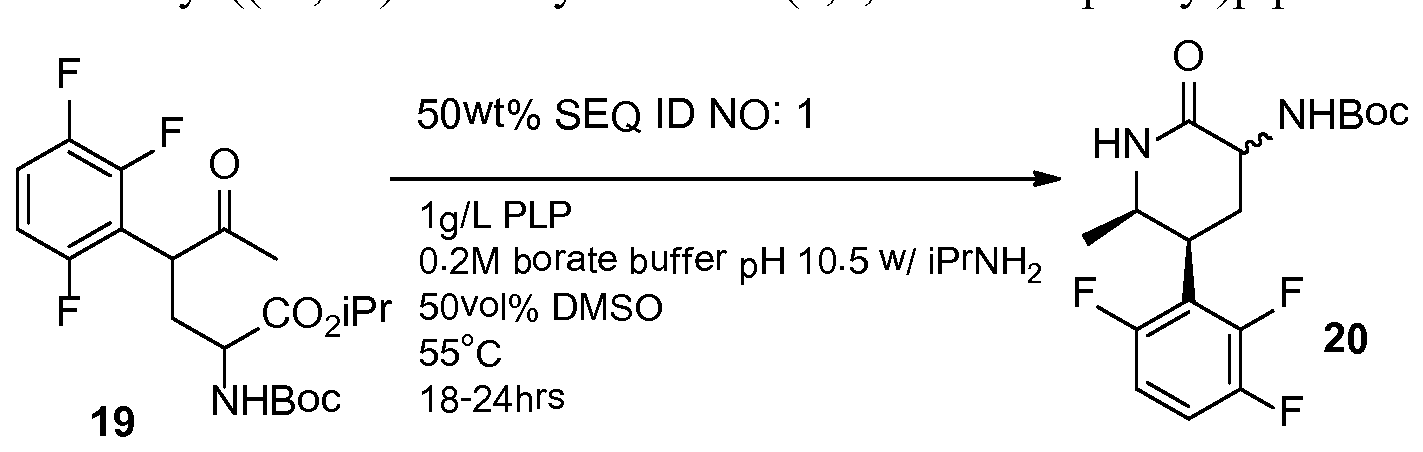
Figure imgf000057_0002

To a 0.5 L cylindrical Sixfors reactor with an overhead stirring, a temperature control, a pH probe and a base addition line, was added sodiumtetraborate decahydrate (3.12 g) and DI water (163 mL). After all solids were dissolved, isopropylamine (9.63 g) was added. The pH of the buffer was adjusted to pH 10.5 using 6 N HC1. The buffer was cooled to room temperature. Then, pyridoxal-5 -phosphate (0.33 g) and SEQ ID NO: 1 (8.15 g) were added and slowly dissolved at room temperature. Crude keto ester 19 (23.6 g, 69 wt%, 16.3 g assay, 39 mmol) was dissolved in DMSO (163 mL) and the solution was added to the reactor over 5-10 min. Then the reaction was heated to 55 °C. The pH was adjusted to 10.5 according to a handheld pH meter and controlled overnight with an automated pH controller using 8 M aqueous isopropylamine. The reaction was aged for 27.5 hours.

After confirmation of >95A% conversion by HPLC, the reaction was extracted by first adding a mixture of iPA: iPAc (3:4, 350 mL) and stirring for 20 min. The phases were separated and the aqueous layer was back extracted with a mixture of iPA: iPAc (2:8, 350 mL). The phases were separated. The organic layers were combined and washed with DI water (90 mL). The HPLC based assay yield in the organic layer was 20 (9.86 g, 70.5 % assay yield) with >60:1 dr at the positions C5 and C6. tert- utyl ((35′,55′,6i?)-6-methyl-2-oxo-5-(2,3,6-trifiuorophenyl)piperidin-3-yl)carbamate (21)

Figure imgf000058_0001

A solution of crude cis and trans mixture 20 in a mixture of iPAc and iPA (1.83 wt%, 9.9 kg; 181 g assay as a mixture) was concentrated in vacuo and dissolved in 2-Me-THF (3.6 L). To the solution was added tert-BuOK (66.6 g, 0.594 mol) at room temperature. The suspension was stirred at room temperature for 2 h. The mixture was poured into water (3.5 L) and the organic layer was separated, washed with 15 wt% of aqueous NaCl (3.5 L), dried over Na2S04, and concentrated to dryness. The residue was suspended with iPAc (275 mL) and heptane (900 mL) at 60 °C. The suspension was slowly cooled down to 1 °C. The solid was filtered and rinsed with iPAc and heptane (1 :3), dried to afford 21 (166 g, 93 wt%; 85 %) as crystals. Mp 176-179 °C; 1H NMR (CDC13, 500 MHz): δ 7.06 (m, 1H), 6.84 (m, 1H), 5.83 (broad s, 1H), 5.58 (broad s, 1H), 4.22 (m, 1H), 3.88-3.79 (m, 2H), 2.77 (m, 1H), 2.25 (m, 1H), 1.46 (s, 9H), 1.08 (d, J= 6.4 Hz, 3H); 19F NMR (CDCI3, 376 MHz): δ -117 (d, J= 14 Hz), -135 (d, J= 20 Hz), -142 (dd, J= 20, 14 Hz); 13C NMR (CDC13, 100 MHz): δ 171.1, 156.6 (ddd, J = 245, 6.4, 2.8 Hz), 155.8, 149.3 (ddd, J= 248, 14.4, 8.8 Hz), 147.4 (ddd, J= 245, 14.2, 3.8 Hz), 118.0 (dd, J= 19.3, 14.5 Hz), 115.9 (dd, J= 19.2, 10.4 Hz), 111.0 (ddd, J = 26.4, 6.0, 4.3 Hz), 79.8, 51.4, 49.5, 34.1, 29.3, 28.3, 18.0; HRMS: m/z calcd for Ci7H2iF3N203 381.1396 (M+ Na); found 381.1410. tert-Butyl ((55′,6i?)-6-methyl-2-oxo-l-(2,2,2-trifluoroethyl)-5-(2,3,6-trifluorophenyl)piperidin-3- yl)carbamate (22)

Figure imgf000059_0001

To a solution of 21 (10 g, 87% purity, 24.3 mmol) in THF (70 ml) was added tert- BuOLi (2.5 g, 31.2 mmol) at 5 °C in one portion. The solution was cooled to between 0 and 5 °C and trifluoroethyl trifluoromethanesulfonate (10.0 g, 43 mmol) was added in one portion. DMPU (7 mL) was added slowly over 15 min while maintaining the the reaction temperature below 5 °C. After the mixture was stirred at 0 °C for 3 h, additional tert-BuOLi (0.9 g, 11.2 mmol) was added. The mixture was aged for an additional 90 min. The mixture was quenched with 0.2 N HC1 (70 ml), followed by addition of heptane (80 ml). The organic layer was separated and aqueous layer extracted with heptane (30 ml). The combined organic layers were washed with 15%) aquoeus citric acid (50 mL) and 5% aqueous NaHC03 (50 mL). The solution was concentrated under vacuum at 40 °C and the resulting oil was dissolved in iPAc (30 mL). The solution was used directly in the next step without further purification. The HPLC analysis indicated that the solution contained 22 (9.8 g, 92% as cis and trans mixture in a ratio of 6.5 to 1) along with 4% of starting material 21 and 8% of a N,N’-alkylated compound. Analytically pure 22 (cis isomer) was isolated by chromatography on silica gel with ethyl acetate and heptane as an eluant. 1H NMR (CDC13, 500 MHz): δ 7.15 (m, 1H), 6.85 (m, 1H), 5.45 (broad, s, 1H), 4.90 (m, H), 4.20 (m, 1H), 3.92 (m, 2H), 3.28 (m, 1H), 2.70 (m, 2H), 1.48 (s, 9H), 1.20 (d, J= 5.9 Hz, 3H); 13C NMR (CDC13, 100 MHz): δ 170.2, 156.9 (ddd, J= 245, 6.3,2.7 Hz), 156.0, 149.6 (ddd, J= 251, 14.8, 8.8 Hz), 147.6 (ddd, J= 246, 13.9,3.6 Hz), 124.5 (q, J= 281 Hz), 117.6 (dd, J = 19.2, 3.7 Hz), 116.4 (dd, J= 19.1, 10.4 Hz), 111.4 (ddd, J= 25.8, 6.4,4.1Hz), 56.6, 52.8, 45.3 (q, J= 34.2 Hz), 35.2, 28.7, 28.3 (br t, J= 4 Hz), 14.6; HRMS: m/z calcd for Ci9H22F6N203 (M+H): 441.1607; found 441.1617. (35′,55′,6i?)-6-Methyl-2-oxo-l-(2,2,2-trifluoroethyl)-5-(2,3,6-trifluorophenyl)piperi (S)-2-acetamido-3 -phenylpropanoate (23)

Figure imgf000060_0001

iPAc solution of 22 (529 g assayed, 1.2 mol), obtained from previous step, was diluted to 6 L with iPAc, /?-toluenesulfonic acid monohydride (343 g, 1.8 mol) was added and the solution was heated to 55 °C. After 4 h, the reaction completed (>99% conversion). Aqueous K2CO3 (530 g in 3 L of water) was charged into the solution after cooled to 15-25 °C. The aqueous layer was separated and was back-extracted with iPAc (2 L). The iPAc solutions were combined and the total volume was adjudted to 10 L by adding iPAc. The solution was heated to 50-60 °C. About 20 g of N-acetyl L-phenylalanine was added and the solution was agitated for 15 min or until solids precipitated out. The remaining N-acetyl L-phenylalanine (total 250 g, 1.2 mol) was charged slowly and 2-hydroxy-5-nitrobenzaldehyde (2 g) was charged. The suspension was agitated for 12 h at 20 °C and then cooled to 0 °C for 3 h. The suspension was filtrated, washed with iPAc three times and dried to give 23 (583g, 89% yield) as crystals. Mp 188 – 190 °C; 1H NMR (DMSO-de, 400 MHz): δ 7.96 (d, J= 8.0 Hz, 1H) , 7.48 (m, 1H), 7.15-7.25 (m, 6H), 4.65 (ddd, J= 19.4, 15.3, 9.6 Hz, 1H), 4.33 (ddd, J= 8.7, 8.4, 4.9 Hz, 1H), 3.70-3.87 (m, 3H), 3.57 (dd, J= 11.5, 6.6 Hz, 1H), 3.04 (dd, J= 13.7, 4.9 Hz, 1H), 2.82 (dd, J= 13.7, 8.9 Hz,lH), 2.59 (m, 1H), 2.24 (m, 1H), 2.95 (s, 3H), 1.10 (d, J= 6.4 Hz, 1H); 19F NMR (DMSO-d6, 376 MHz): δ -69 (s) , -118 (d, J= 15 Hz), -137 (d, J = 21 Hz), -142 (dd, J= 21, 15 Hz); 13C NMR (DMSO-d6, 100 MHz): δ 173.6, 171,. l, 168.7, 156.3 (ddd, J= 243.5, 7.0, 3.1 Hz), 148.7 (ddd, J= 249, 14.4, 9.1 Hz), 146.8 (ddd, J = 245, 13.7, 3.1 Hz), 138.5, 129.2, 128.0, 126.1, 124.9 (q, J= 280.9 Hz), 117.4.0 (dd, J= 19.3, 13.8 Hz), 116.7 (dd, J= 19.3, 10.6 Hz), 111.8 (ddd, J= 26.0, 6.7, 3.6 Hz), 56.6, 54.3, 51,2, 44.3 (q, J= 32.5 Hz), 37.2, 34.8, 26.9 (br t, J= 4 Hz), 22.5, 14.1.

(35′,55′,6i?)-6-methyl-2-oxo-l-(2,2,2-trifluoroethyl)-5-(2,3,6-trifluorophenyl)piperidin-3- aminium 2,2-diphenylacetate (25)

Figure imgf000061_0001

To a mixture of crude material containing (55′,6i?)-3-amino-6-methyl-l -(2,2,2- trifluoroethyl)-5-(2,3,6-trifluorophenyl)piperidin-2-one (24, 2.00 g, 5.88 mmol), prepared according to the same method as the previous example, and 3,5-dichloro-2-hydroxybenzaldehyde (0.011 g, 0.059 mmol) in isopropyl acetate (15.0 ml) at 55-60 °C under nitrogen was slowly added a solution of diphenylacetic acid (1.26 g, 5.88 mmol) in THF (10.0 ml) over 2 h. Upon completion of acid addition, a thick salt suspension was agitated at 55-60 °C for another 18 h and then was allowed to cool to ambient temperature. The salt was filtered and washed with isopropyl acetate. After drying at 60 °C in a vacuum oven with nitrogen purge for 8 hours, 25 (2.97 g, 91.4%) was obtained as crystals. 1H NMR (500 MHz, DMSO-d6): δ 7.48 (qd, J= 9.4, 4.9 Hz, 1 H), 7.32 (d, J= 7.7 Hz, 4 H), 7.25-7.26 (m, 4 H), 7.19-7.17 (m, 3 H), 6.79 (br, 3H), 4.95 (s, 1 H), 4.67 (dq, J= 15.3, 9.7 Hz, 1 H), 3.81-3.79 (m, 3 H), 3.62 (dd, J= 11.6, 6.5 Hz, 1 H), 2.66-2.62 (m, 1 H), 2.25 (dd, J= 12.9, 6.4 Hz, 1 H), 1.11 (d, J= 6.5 Hz, 3 H); 13C NMR (100 MHz, DMSO-de): δ 174.4, 171.8, 156.9 (ddd, J= 244, 7.0, 2.5 Hz), 149.1 (ddd, J= 249, 14.4, 8.5 Hz), 147.2 (ddd, J= 246, 13.9, 3.2 Hz), 141.4, 129.0, 128.5, 126.7, 125.5 (q, J= 281 Hz), 118.0 (dd, J= 19.8, 13.8 Hz), 117.1 (dd, J= 19.2, 10.6 Hz), 112.3 (ddd, J= 26.1, 6.7, 3.3 Hz), 58.5, 57.1, 51.7, 44.8 (q, J= 32.7 Hz), 35.3, 27.5 (br t, J= 4.6 Hz), 14.5.

(35′,55′,6i?)-6-methyl-2-oxo-l-(2,2,2-trifluoroethyl)-5-(2,3,6-trifluorophenyl)piperidin-3-amM lH-indole-2-carboxylate (26)

Figure imgf000061_0002

To a mixture of crude material containing 24 (2.00 g, 5.88 mmol) and 3,5-dichloro-2- hydroxybenzaldehyde (0.011 g, 0.059 mmol) in isopropyl acetate (15.0 ml) at 55-60 °C under nitrogen was slowly added a solution of lH-indole-2-carboxylic acid (0.96 g, 5.88 mmol) in THF (10.0 ml) over 2 hours. Upon completion of acid addition, a thick salt suspension was agitated at 55-60 °C for another 18 h and then was allowed to cool to ambient temperature. The salt was filtered and washed with isopropyl acetate. After drying at 60 °C in a vacuum oven with nitrogen purge for 8 h, 26 (2.33 g, 79.0%) was isolated as crystals. 1H NMR (500 MHz, DMSO): δ 11.40 (s, 1 H), 7.56 (d, J= 8.0 Hz, 1 H), 7.45 (br, 3 H), 7.47 (ddd, J= 14.8, 10.1, 8.3 Hz, 1 H), 7.41- 7.40 (m, 1 H), 7.16-7.14 (m, 2 H), 6.98-6.97 (m, 1 H), 6.87 (s, 1 H), 4.69 (dq, J= 15.3, 9.6 Hz, 1 H), 3.84-3.81 (m, 4 H), 2.76-2.71 (m, 1 H), 2.34 (dd, J= 12.7, 6.3 Hz, 1 H), 1.13 (d, J= 6.5 Hz, 3 H); 13C NMR (100 MHz, DMSO-d6): δ 170.9, 164.8, 156.8 (ddd, J= 244, 7.0, 2.5 Hz), 149.1 (ddd, J= 249, 14.4, 8.5 Hz), 147.2 (ddd, J = 246, 13.9, 3.2 Hz), 137.0, 133.5, 127.8, 125.4 (q, J = 282 Hz), 123.3, 121.8, 119.7, 117.8 (dd, J= 19.8, 13.8 Hz), 117.2 (dd, J= 19.2, 10.6 Hz), 112.7, 112.3 (ddd, J= 26.1, 6.7, 3.3 Hz), 105.1, 57.1, 51.3, 44.8 (q, J= 32.7 Hz), 35.2, 26.9, 14.5.

Figure imgf000062_0001

2′-oxo-l\2 5,7-tetrahydrospiro[cyclopenta[¾]pyridine-6,3′-pyrrolo[2,3-¾]pyridine]-3- carboxamide monohydrate (28)
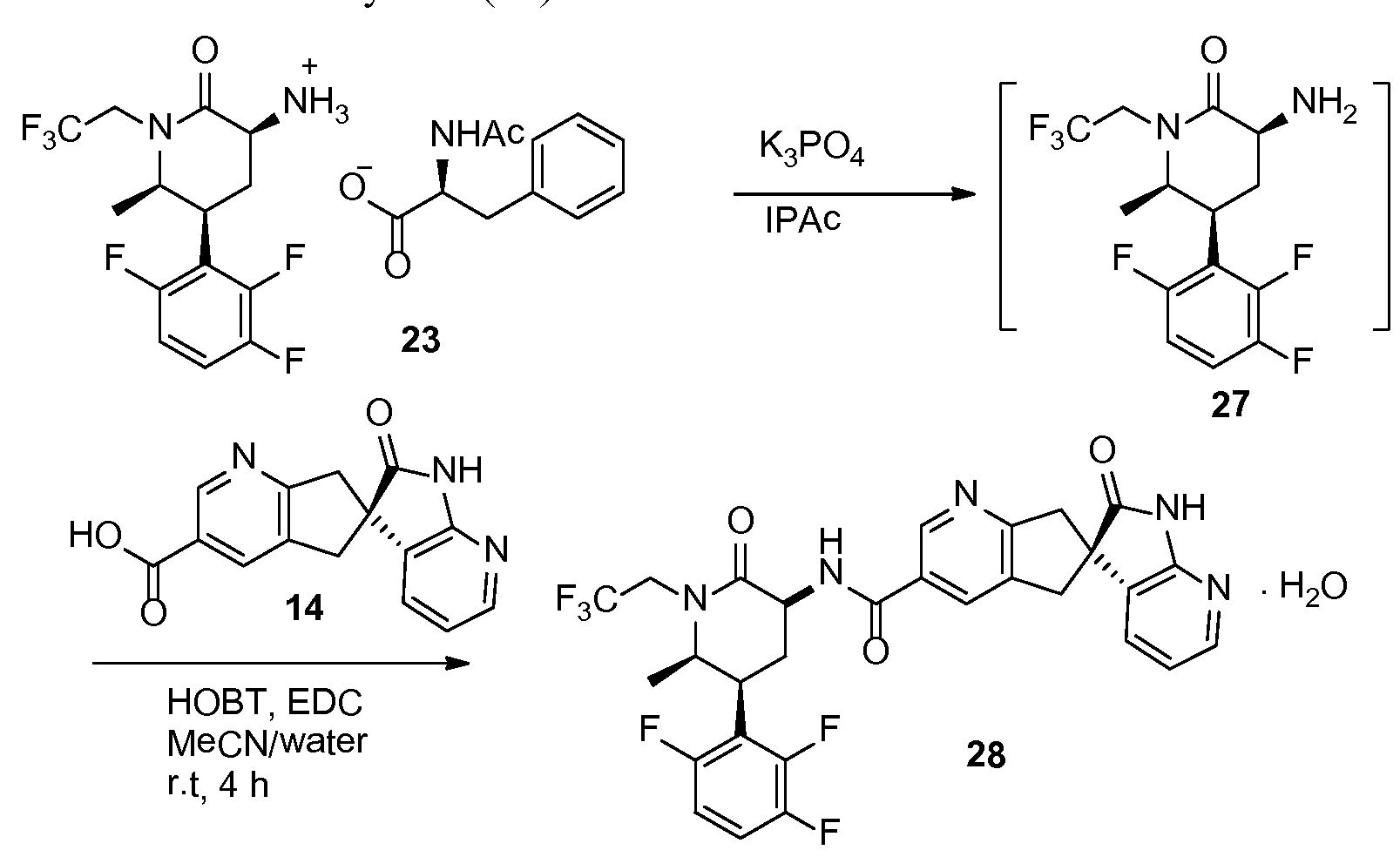
Figure imgf000062_0002

To a suspension of 23 (5.0 g, 9.1 mmol) in isopropyl acetate (50 mL) was added 5% aqueous K3PO4 (50 mL). The mixture was stirred for 5 min. The organic layer was separated and washed with aqueous K3PO4 (50 mL). Solvent removed under vacuum and resulting oil (27) was dissolved in acetonitrile (20 mL). To another flask was added 14 (2.57 g), acetonitrile (40 mL), water (20 mL) and NaOH solution (10N, 0.9 mL). The solution of 27 in acetonitrile was charged to the mixture followed by HOBT monohydrate (1.5 g) and EDC hydrochloride (2.6 g). The mixture was agitated at room temperature for 4 h and HPLC analysis indicated a complete conversion. The reaction mixture was stirred with isopropyl acetate (60 mL) and the aqueous layer was removed. The organic layer was washed with 5% aquoues NaHC03 (40 mL) followed by a mixture of 15% aqueous citric acid (40 mL) and saturated aqueous NaCl (10 mL). The resulting organic layer was finally washed with 5% aquous NaHC03 (40 mL). The solvent was removed under vacuum and the residue was dissolved in methanol (20 mL). The methanol solution was slowly charged into a mixture of water (50 mL) and methanol (5 mL) over 30 min with good agitation, followed by addition of water (50 mL) over 30 min. The suspension was stirred over night at room temperature. The mixture was filtered and crystals were dried in a vacuum oven for 5 h at 50 °C to give 28 (5.4 g, 95%) as monohydrate. Ή NMR (500 MHz, CD3OD): δ 8.88 (t, J= 1.2 Hz, 1 H), 8.15 (t, J = 1.2 Hz, 1 H), 8.09 (dd, J= 5.3, 1.5 Hz, 1 H), 7.36 (dd, J= 7.4, 1.5 Hz, 1 H), 7.28 (qd, J= 9.3, 4.7 Hz, 1 H), 7.01 (tdd, J= 9.7, 3.6, 1.9 Hz, 1 H), 6.96 (dd, J= 7.4, 5.3 Hz, 1 H), 4.80 (dq, J= 15.2, 9.2 Hz, 1 H), 4.56 (dd, J= 11.7, 6.8 Hz, 1 H), 4.03 (ddd, J= 13.6, 4.2, 2.6 Hz, 1 H), 3.97-3.90 (m, 1 H), 3.68 (dq, J= 15.3, 8.8 Hz, 1 H), 3.59 (t, J= 16.2 Hz, 2 H), 3.35 (d, J= 4.4 Hz, 1 H), 3.32 (d, J= 3.5 Hz, 1 H), 3.21 (qt, J= 12.7, 3.1 Hz, 1 H), 2.38-2.32 (m, 1 H), 1.34 (d, J= 6.5 Hz, 3 H); 13C NMR (126 MHz, CD3OD): δ 182.79, 171.48, 168.03, 166.71, 159.37 (ddd, J= 244.1, 6.5, 2.1 Hz), 157.43, 150.88 (ddd, J = 249.4, 14.4, 8.7 Hz), 148.96 (ddd, J= 243.8, 13.7, 3.1 Hz), 148.67, 148.15, 136.84, 133.43, 131.63, 130.83, 130.48, 126.41 (q, J = 280.0 Hz), 119.85, 118.89 (dd, J= 19.0, 13.5 Hz), 117.77 (dd, J= 19.8, 10.8 Hz), 112.80 (ddd, J= 26.5, 6.5, 4.2 Hz), 58.86, 53.67, 52.87, 46.56 (q, J = 33.3 Hz), 45.18, 42.06, 36.95, 27.76 (t, J= 4.8 Hz), 14.11.

EXAMPLE 3

3-Hydroxy-3-(2,3,6-trifluorophenyl)butan-2-one (30)

Figure imgf000063_0001

To a solution of 1,2,4-trifluorobenzene (29, 49.00 g, 371 mmol) and diisopropylamine (4.23 mL, 29.7 mmol) in THF (750 mL) at -70 °C was slowly added 2.5 M of ft-BuLi (156.0 ml, 390 mmol) to maintain temperature between -45 to -40 °C. The batch was agitated for 30 min. To another flask, a solution of 2,3-butadione (37.7 mL, 427 mmol) in THF (150 mL) was prepared and cooled to -70 °C. The previously prepared lithium trifluorobenzene solution was transferred to the second flask between -70 to -45 °C. The reaction was agitated for 1 hour at -55 to -45 and then quenched by adding AcOH (25.7 mL, 445 mmol) and then water (150 mL). After warmed to room temperature, the aqueous layer was seperated. The aqueous solution was extracted with MTBE (200 mL x 1) and the combined organic layers were washed with brine (100 mL x 1). The organic layer was concentrated at 25-35 °C. The residue was flashed with heptane (100 mL x 1) and concentrated to dryness and give 30 (87.94 g, 90.2 wt%, 98% yield, and >99% HPLC purity) as an oil. H NMR (CDCI3, 400 MHz): δ 7.16 (m, 1H), 6.86 (m, 1H), 6.88 (s, 1H), 4.59 (s, 1H), 2.22 (s, 3H), 1.84 (dd, J= 4.0, 2.8 Hz, 3H); 19F NMR (CDCI3, 376.6 MHz): δ -114.6 (dd, J= 14.5, 1.4 Hz), -133.6 (d, J= 19.9 Hz), -141.3 (dd, J =

19.9, 14.5 Hz); 13C NMR (CDCI3, 100 MHz): δ 207.4, 156.4 (ddd, J= 247, 6.2, 2.9 Hz), 149.4 (ddd, J= 253, 15.0, 9.0 Hz), 147.5 (ddd, J= 245, 14.4, 3.3 Hz), 119.4 (dd, J=17.3, 11.7 Hz), 117.0 (ddd, J=19.3, 11.1, 1.4 Hz), 116.6 (ddd, J= 26.6, 6.5, 4.1 Hz), 77.9, 25.0 (dd, J= 6.5, 4.9 Hz), 23.3. -(2,3,6-Trifluorophenyl)but-3-en-2-one (31)

Figure imgf000064_0001

The hydroxy ketone 30 (7.69 g, 35.2 mmol) and 95% H2S04 (26.2 mL, 492.8 mmol) were pumped at 2.3 and 9.2 mL/min respectively into the flow reactor. The temperature on mixing was controlled at 22-25 °C by placing the reactor in a water bath (21 °C). The effluent was quenched into a a mixture of cold water ( 106 g) and heptane/IP Ac ( 1 : 1 , 92 mL) in a j acketed reactor cooled at 0 °C; the internal temperature of the quench solution was ~ 7 °C during the reaction. The layers in the quench reactor were separated and the organic layer was washed with 10% NaH2P04/Na2HP04 (1 :1, 50 mL). The pH of the final wash was 5-6. Solka flock (3.85 g, 50 wt%>) was added to the organic solution. The resulting slurry was concentrated and solvent- switched to heptanes at 25-30 °C. The mixture was filtered, rinsed with heptanes (50 mL x 1). The combined filtrates were concentrated under vacuum to give 31 as an light yellow oil (6.86 g, 90 wt%, 87% yield), which solidified in a freezer. *H NMR (CDC13, 400 MHz): δ 7.13 (m, 1H), 6.86 (m, 1H), 6.60 (s, 1H), 6.15 (s, 1H), 2.46 (s, 3H); 19F NMR (CDC13, 376.6 MHz): δ -117.7 (dd, J= 15.0, 1.4 Hz), -135.4 (dd, J= 21.4, 1.4 Hz), -42.7 (dd, J= 21.4, 15.0 Hz); 13C NMR (CDCls, 100 MHz): δ 196.3, 155.3 (ddd, J= 245, 5.1, 2.9 Hz), 147.9 (ddd, J= 250, 14.5, 7.8 Hz), 147.0 (ddd, J = 245, 13.4, 3.7 Hz), 137.5 (d, J=1.3 Hz), 131.7, 116.6 (ddd, J= 19.9, 9.7, 1.2 Hz), 116.2 (dd, J= 22.6, 16.5 Hz), 110.6 (ddd, J= 24.8, 6.5, 4.1 Hz), 25.8.

Alternative synthesis of 3-(2,3,6-trifluorophenyl)but-3-en-2-one (31)

Figure imgf000065_0001

A solution of 18 (3.5 g, 18.6 mmol), acetic acid (0.34 ml, 5.58 mmol), piperidine (0.37 ml, 3.72 mmol), formaldehyde (6.0 g, 37%> aqueous solution) in MeCN (20 mL) was heated over weekend. The conversion was about 60%. Reaction was heated to 70 °C overnight. The mixtrure was concentrated and extracted with MTBE and HC1 (0.5N). The organic layer was washed with aqueous K2CO3 (0.5N) and water, in turns. The organic layer was concentrated. The product was isolated by chromatography column (hexane and EtOAc), yielding 31 (2.29 g, 61.5%).

Isopropyl 2-((diphenylmethylene)amino)-5-oxo-4-(2,3,6-trifluorophenyl)hexanoate (32)

Figure imgf000065_0002

Diphenylidene isopropyl glycinate (2.0 g, 7.0 mmol) and 31 (1.4 g, 7.0 mmole) were dissolved in THF (10 ml). The solution was cooled to -10 °C. tert- uOLi (0.56 g, 7.0 mmole) was charged into the solution in several portions. The reaction was warmed up to room temperature slowly and stirred overnight. After quenched by addition of aqueous NH4CI, the solvents were removed by distillation under vacuum. The residue was subjected to silica chromatography column eluted by hexane and EtOAc yielding 32 (3.0 g, 89 %) as an oil, which was directly used in the next step.

Isopropyl 2-((tert-butoxycarbonyl)amino)-5-oxo-4-(2,3,6-trifluorophenyl)hexanoate (19)

Figure imgf000066_0001

Compound 32 (100 mg, 0.21 mmol) was dissolved in THF (2 ml) and the solution was cooled to -10 °C. Hydrochloric acid (2N, 1 ml) was added and stirred until all starting material disappeared by TLC. The pH of the reaction was adjusted (pH.>10) by addition of aqueous K2CO3. Boc20 (68 mg, 0.31 mmole) was added into the mixture and stirred overnight. The reaction was completed checked by TLC and the product was identical to the one prepared from the iodo coupling route.

Isopropyl 2-((tert-butoxycarbonyl)amino)-5-oxo-4-(2,3,6-trifluorophenyl)hexanoate (19)

Figure imgf000066_0002

To a 100 mL round bottom was charged 2-methyl THF (43.7 mL) and diisopropyl amine (4.92 mL, 34.2 mmol) and the solution was cooled to -70 °C. n-BuLi (13.08 mL, 32.7 mmol) was charged dropwise during which the temperature was controlled below -45 °C. The mixture was stirred at -45 °C for 0.5 h. N-Boc-glycine ester (3.58 g) was added dropwise keeping temperature between -45 to -40 °C and aged at the same temperature for 1 h.

The solution of 31 (2.91 g, 14.5 mmol) in 2-methyl THF (2.9 mL) was then added dropwise in the same manner at -45 to -40 °C. After a 0.5-1 h age, LC analysis showed nearly complete reaction. The reaction was quenched by addition of HO Ac (3.83 mL) and the mixture was warmed to -10 °C and water (1 1.6 mL, 4 vol) was charged at < 20 °C. The phase was separated, and the organic layer was washed with 16% NaCl aqueous solution (11.6 mL). Assay desired product 19 as a mixture of diastereomers in the organic solution was 5.40 g (89% yield). The organic layer was concentrated to give crude product 19, which was directly used in the next step reaction. For characterization purposes, a small sample was purified by flash chromatography (silica gel, EtOAc/hexanes = 1 : 10) to give two diastereomers 19A and 19B. 19A as a colorless oil, 1H NMR (CD3CN, 400 MHz) δ: 7.29 (m, 1 H), 7.02 (m, 1 H), 5.58 (d, J = 6.1 Hz, 1 H), 4.91 (m, 1 H), 4.19-4.05 (m, 2 H), 2.79 (m, 1 H), 2.05 (s, 3 H), 1.84 (m, 1 H), 1.41 (s, 9 H), 1.23 (d, J = 6.7 Hz, 3 H), 1.22 (d, J = 6.7 Hz, 3 H); 13C NMR (CD3CN, 100 MHz) δ: 204.7, 172.4, 158.6 (ddd, J = 244, 6, 3 Hz), 156.3, 149.8 (ddd, J = 248, 15, 9 Hz), 148.5 (ddd, J = 242, 14, 3 Hz), 118.3 (dd, J = 21, 16 Hz), 117.7 (ddd, J = 19, 10, 2 Hz), 112.6 (ddd, J = 26, 7, 4 Hz), 80.2, 70.0, 53.5, 46.0, 32.0, 28.5, 22.0, 21.9. 19B as colorless crystals, MP 91.5-92.0 °C, 1H NMR (CD3CN, 400 MHz) δ: 7.31 (m, 1 H), 7.03 (m, 1 H), 5.61 (d, J = 8.2 Hz, 1 H), 4.95 (m, 1 H), 4.19 (dd, J = 10.2, 5.1 Hz, 1 H), 3.72 (m, 1 H), 2.45-2.29 (m, 2 H), 2.09 (s, 3 H), 1.41 (s, 9 H), 1.21 (d, J = 6.3 Hz, 3 H), 1.20 (d, J = 6.3 Hz, 3 H); 13C NMR (CD3CN, 100 MHz) δ: 205.0, 172.8, 157.9 (ddd, J= 244, 7, 3 Hz), 156.5, 150.3 (ddd, J= 248, 149, 9 Hz), 148.5 (ddd, J = 242, 13, 4 Hz), 117.9 (dd, J = 19, 10 Hz), 115.9 (dd, J = 21, 15 Hz), 111.5 (ddd, J = 25, 8, 4 Hz), 80.1, 69.9, 52.9, 46.5, 31.1, 28.5, 22.0, 21.9.


PATENT

https://encrypted.google.com/patents/US20120122911

[0000]

Figure US20120122911A1-20120517-C00039

(3S,5S,6R)-3-Amino-6-methyl-1-(2,2,2-trifluoroethyl)-5-(2,3,6-trifluorophenyl)piperidin-2-one hydrochlorideStep A: (5S,6R & 5R,6S)-6-Methyl-1-(2,2,2-trifluoroethyl)-5-(2,3,6-trifluorophenyl)piperidin-2-one

Essentially following the procedures described in Intermediate 14, but using 2,3,6-trifluorophenylboronic acid in place of 2,3,5-trifluorophenylboronic acid, the title compound was obtained. MS: m/z=326.0 (M+1).

Step B: (3S,5S,6R & 3R,5R,6S)-3-Azido-6-methyl-1-(2,2,2-trifluoroethyl)-5-(2,3,6-trifluorophenyl)piperidin-2-one

To a stirred solution of lithium bis(trimethylsilyl)amide (1.0 M in THF, 4.80 mL, 4.80 mmol) in THF (20 mL) at −78° C. was added a cold (−78° C.) solution of (5S,6R & 5R,6S)-6-methyl-1-(2,2,2-trifluoroethyl)-5-(2,3,6-trifluorophenyl)piperidin-2-one (1.30 g, 4.00 mmol) in THF (10 mL) dropwise, keeping the internal temperature of the reaction mixture below −65° C. The resulting mixture was stirred at −78° C. for 30 min, then a cold (−78° C.) solution of 2,4,6-triisopropylbenzenesulfonyl azide (Harmon et al. (1973) J. Org. Chem. 38, 11-16) (1.61 g, 5.20 mmol) in THF (10 mL) was added dropwise, keeping the internal temperature of the reaction mixture below −65° C. The reaction mixture was stirred at −78° C. for 30 min, then AcOH (1.05 mL, 18.4 mmol) was added. The resulting mixture was allowed to warm slowly to ambient temperature and was poured into saturated aqueous sodium bicarbonate (50 mL) and the mixture was extracted with EtOAc (2×75 mL). The combined organic layers were washed with brine, then dried over sodium sulfate, filtered, and concentrated to dryness in vacuo. The crude product was purified by silica gel chromatography, eluting with a gradient of hexanes:EtOAc—100:0 to 20:80, to give the diastereomeric azide products (3R,5S,6R & 3S,5R,6S)-3-azido-6-methyl-1-(2,2,2-trifluoroethyl)-5-(2,3,5-trifluorophenyl)piperidin-2-one, which eluted second, and the title compound, which eluted first. MS: m/z=367.1 (M+1).

Step C: tent-Butyl [(3S,5S,6R)-6-methyl-2-oxo-1-(2,2,2-trifluoroethyl)-5-(2,3,6-trifluorophenyl)piperidin-3-yl]carbamate

To a solution of (3S,5S,6R & 3R,5R,6S)-3-azido-6-methyl-1-(2,2,2-trifluoroethyl)-5-(2,3,5-trifluorophenyl)piperidin-2-one (280 mg, 0.764 mmol) and di-tert-butyl dicarbonate (217 mg, 0.994 mmol) in EtOH (5 mL) was added 10% palladium on carbon (25 mg, 0.024 mmol) and the resulting mixture was stirred vigorously under an atmosphere of hydrogen (ca. 1 atm) for 1 h. The reaction mixture was filtered through a pad of Celite®, washing with EtOH, and the filtrate was concentrated in vacuo to give a crude solid. The crude product was purified by silica gel chromatography, eluting with a gradient of hexanes:EtOAc—100:0 to 30:70, to give the racemic title compound. Separation of the enantiomers was achieved by SFC on a ChiralTech IC column, eluting with CO2:MeOH:CH3CN—90:6.6:3.3, to give tert-butyl [(3R,5R,6S)-6-methyl-2-oxo-1-(2,2,2-trifluoroethyl)-5-(2,3,6-trifluorophenyl)piperidin-3-yl]carbamate as the first major peak, and tert-butyl [(3S,5S,6R)-6-methyl-2-oxo-1-(2,2,2-trifluoroethyl)-5-(2,3,6-trifluorophenyl)piperidin-3-yl]carbamate, the title compound, as the second major peak. MS: m/z=463.2 (M+Na).

Step D: (3S,5S,6R)-3-Amino-6-methyl-1-(2,2,2-trifluoroethyl)-5-(2,3,6-trifluorophenyl)piperidin-2-one hydrochloride

A solution of tert-butyl [(3S,5S,6R)-6-methyl-2-oxo-1-(2,2,2-trifluoroethyl)-5-(2,3,6-trifluorophenyl)piperidin-3-yl]carbamate (122 mg, 0.277 mmol) in EtOAc (10 mL) was saturated with HCl (g) and aged for 30 min. The resulting mixture was concentrated in vacuo to give the title compound. MS: m/z=341.1 (M+1); 1H NMR (500 MHz, CD3OD) δ 7.33 (qd, 1H, J=9.3, 4.9 Hz), 7.05 (tdd, 1H, J=9.8, 3.7, 2.2 Hz), 4.78 (dq, 1H, J=15.4, 9.3 Hz), 4.22 (dd, 1H, J=12.2, 6.6 Hz), 4.06 (ddd, 1H, J=13.3, 4.5, 2.7 Hz), 3.97 (m, 1H), 3.73 (dq, 1H, J=15.4, 8.8 Hz), 2.91 (qt, 1H, J=12.7, 3.1 Hz), 2.36 (ddd, 1H, J=12.7, 6.4, 2.0 Hz), 1.22 (d, 3H, J=6.6 Hz).

Example 4

Figure US20120122911A1-20120517-C00047

(6S)—N-[(3S,5S,6R)-6-Methyl-2-oxo-1-(2,2,2-trifluoroethyl)-5-(2,3,6-trifluorophenyl)piperidin-3-yl]-2′-oxo-1′,2′,5,7-tetrahydrospiro[cyclopenta[b]pyridine-6,3′-pyrrolo[2,3-b]pyridine]-3-carboxamide dihydrochloride

To a stirred mixture of (6S)-2′-oxo-1′,2′,5,7-tetrahydrospiro[cyclopenta[b]pyridine-6,3′-pyrrolo[2,3-b]pyridine]-3-carboxylic acid (described in Intermediate 1) (264 mg, 0.939 mmol), (3S,5S,6R)-3-amino-6-methyl-1-(2,2,2-trifluoroethyl)-5-(2,3,6-trifluorophenyl)piperidin-2-one hydrochloride (described in Intermediate 15) (295 mg, 0.782 mmol), HOBT (144 mg, 0.939 mmol), and EDC (180 mg, 0.939 mmol) in DMF (8 mL) was added N,N-diisopropylethylamine (0.34 mL, 1.96 mmol), and the resulting mixture was stirred at ambient temperature for 3 h. The reaction mixture was then poured into saturated aqueous sodium bicarbonate (30 mL) and extracted with EtOAc (2×40 mL). The combined organic layers were washed with brine, dried over sodium sulfate, and concentrated in vacuo. The residue was purified by silica gel chromatography, eluting with a gradient of CH2Cl2:MeOH:NH4OH—100:0:0 to 90:10:0.1, to give the product, which was treated with HCl in EtOAc at 0° C. to afford the title compound. HRMS: m/z=604.1783 (M+1), calculated m/z=604.1778 for C29H24F6N5O31H NMR (500 MHz, CD3OD) δ 9.09 (s, 1H), 8.69 (s, 1H), 8.18 (dd, 1H, J=5.9, 1.5 Hz), 7.89 (dd, 1H, J=7.3, 1.5 Hz), 7.30 (m, 1H), 7.23 (dd, 1H, J=7.3, 5.9 Hz), 7.03 (m, 1H), 4.78 (m, 1H), 4.61 (dd, 1H, J=11.5, 6.6 Hz), 4.05 (dd, 1H, J=13.8, 2.8 Hz), 3.96 (m, 1H), 3.84 (d, 1H, J=18.6 Hz), 3.76 (d, 1H, J=18.6 Hz), 3.73 (d, 1H, J=17.3 Hz), 3.72 (m, 1H), 3.61 (d, 1H, J=17.3 Hz), 3.22 (m, 1H), 2.38 (m, 1H), 1.34 (d, 3H, J=6.6 Hz).


Publication numberPriority datePublication dateAssigneeTitle
US9487523B22012-03-142016-11-08Merck Sharp & Dohme Corp.Process for making CGRP receptor antagonists
Family To Family Citations
CA2865941A12012-03-142013-09-19Merck Sharp & Dohme Corp.Bis-quarternary cinchona alkaloid salts as asymmetric phase transfer catalysts
CN105037210A *2015-05-272015-11-11江苏大学Alpha,beta-dehydrogenated-alpha-amino acid synthesis method
GB201519194D02015-10-302015-12-16Heptares Therapeutics LtdCGRP receptor antagonists
GB201519195D02015-10-302015-12-16Heptares Therapeutics LtdCGRP Receptor Antagonists
GB201519196D02015-10-302015-12-16Heptares Therapeutics LtdCGRP Receptor Antagonists
PATENT 
Cited Patent Filing date Publication date Applicant Title
US7390798 * Feb 9, 2005 Jun 24, 2008 Merck & Co., Inc. Carboxamide spirolactam CGRP receptor antagonists
US20090054408 * Sep 6, 2005 Feb 26, 2009 Bell Ian M Monocyclic anilide spirolactam cgrp receptor antagonists
US20100160334 * Mar 5, 2010 Jun 24, 2010 Bell Ian M Tricyclic anilide spirolactam cgrp receptor antagonists
US20100179166 * Jun 2, 2008 Jul 15, 2010 Ian Bell Carboxamide heterocyclic cgrp receptor antagonists
US20120122899 * Nov 10, 2011 May 17, 2012 Merck Sharp & Dohme Corp. Piperidinone carboxamide azaindane cgrp receptor antagonists
US20120122900 * Nov 10, 2011 May 17, 2012 Merck Sharp & Dohme Corp. Piperidinone carboxamide azaindane cgrp receptor antagonists
US20120122911 * Nov 10, 2011 May 17, 2012 Merck Sharp & Dohme Corp. Piperidinone carboxamide azaindane cgrp receptor antagonists
Reference
1 * See also references of EP2849568A4
Citing Patent Filing date Publication date Applicant Title
CN105037210A * May 27, 2015 Nov 11, 2015 江苏大学 Alpha,beta-dehydrogenated-alpha-amino acid synthesis method
US9688660 Oct 28, 2016 Jun 27, 2017 Heptares Therapeutics Limited CGRP receptor antagonists
US9802935 Oct 28, 2016 Oct 31, 2017 Heptares Therapeutics Limited CGRP receptor antagonists
US9808457 Oct 28, 2016 Nov 7, 2017 Heptares Therapeutics Limited CGRP receptor antagonists
 
Patent ID


Patent Title


Submitted Date


Granted Date


US2016346214 TABLET FORMULATION FOR CGRP ACTIVE COMPOUNDS
2015-01-30
 
US9850246 Process for Making CGRP Receptor Antagonists
2015-09-15
2016-05-12
US9499545 PIPERIDINONE CARBOXAMIDE AZAINDANE CGRP RECEPTOR ANTAGONISTS
2014-09-12
2015-01-01
US9487523 PROCESS FOR MAKING CGRP RECEPTOR ANTAGONISTS
2013-09-19
2015-02-05
US9174989 Process for making CGRP receptor antagonists
2013-03-12
2015-11-03
 
Patent ID


Patent Title


Submitted Date


Granted Date


US8481556 Piperidinone carboxamide azaindane CGRP receptor antagonists
2011-11-10
2013-07-09
US8754096 Piperidinone carboxamide azaindane CGRP receptor antagonists
2011-11-10
2014-06-17
US8912210 Piperidinone carboxamide azaindane CGRP receptor antagonists
2011-11-10
2014-12-16
US2017027925 PIPERIDINONE CARBOXAMIDE AZAINDANE CGRP RECEPTOR ANTAGONISTS
2016-10-14
 
US2016346198 NOVEL DISINTEGRATION SYSTEMS FOR PHARMACEUTICAL DOSAGE FORMS
2015-02-04
 

////////////////Atogepant, атогепант أتوجيبانت 阿托吉泮 , PHASE 3, MERCK, ALLERGAN, 

CC1C(CC(C(=O)N1CC(F)(F)F)NC(=O)C2=CC3=C(CC4(C3)C5=C(NC4=O)N=CC=C5)N=C2)C6=C(C=CC(=C6F)F)F

wdt-2

NEW DRUG APPROVALS

ONE TIME

$10.00

Remimazolam


Remimazolam.svgChemSpider 2D Image | Remimazolam | C21H19BrN4O2GHUYIIGPWBMOGY-KRWDZBQOSA-N.png

Figure imgf000062_0002

Remimazolam

  • Molecular FormulaC21H19BrN4O2
  • Average mass439.305 Da
3-[(4S)-8-bromo-1-methyl-6-(2-pyridyl)-4H-imidazo[1,2-a][1,4]benzodiazepin-4-yl]propionic acid methyl ester
CNS-7056
methyl 3-[(4S)-8-bromo-1-methyl-6-(2-pyridyl)-4H-imidazo[1,2-a][1,4]benzodiazepin-4-yl]propanoate
methyl 3-[(4S)-8-bromo-1-methyl-6-pyridin-2-yl-4H-imidazo[1,2-a][1,4]benzodiazepin-4-yl]propanoate
methyl 3-[(7S)-12-bromo-3-methyl-9-(pyridin-2-yl)-2,5,8-triazatricyclo[8.4.0.02,6]tetradeca-1(14),3,5,8,10,12-hexaen-7-yl]propanoate
MFCD18633229
UNII:7V4A8U16MB

CAS 308242-62-8 [RN]

PHASE 3, PAION, Anesthesia

Approved 2021/3/26 eu Byfavo

4H-Imidazo[1,2-a][1,4]benzodiazepine-4-propanoic acid, 8-bromo-1-methyl-6-(2-pyridinyl)-, methyl ester, (4S)-

7V4A8U16MB
9232
Methyl 3-[(4S)-8-bromo-1-methyl-6-(2-pyridinyl)-4H-imidazo[1,2-a][1,4]benzodiazepin-4-yl]propanoate
Methyl 3-[(4S)-8-bromo-l-methyl-6-(2-pyridinyl)-4H-imidazo[l,2- a] [ 1 ,4]benzodiazepin-4-yl]propanoate
methyl 3-[(4S)-8-bromo-2-methyl-6-pyridin-2-yl-4H-imidazo[1,2-a][1,4]benzodiazepin-4-yl]propanoate
D0L5KU; GTPL8442; SCHEMBL13862667; Short-acting sedatives, Therasci; CNS-7056B; CNS-7056X
  1. CNS 7056
  2. methyl 3-(8-bromo-1-methyl-6-(2-pyridinyl)-4H-imidazo(1,2-a)(1,4)benzodiazepin-4-yl)propanoate
  3. ONO 2745
  4. ONO-2745
  5. ONO2745

Remimazolam[1] (CNS-7056) is a benzodiazepine derivative drug, developed by PAION, in collaboration with Japanese licensee Ono Pharmaceutical as an alternative to the short-acting imidazobenzodiazepine midazolam, for use in induction of anaesthesia and conscious sedation for minor invasive procedures. Remimazolam was found to be both faster acting and shorter lasting than midazolam, and human clinical trials showed a faster recovery time and predictable, consistent pharmacokinetics, suggesting some advantages over existing drugs for these applications.[2][3]

Remimazolam (CNS-7056) is a water-soluble, rapid and short-acting GABA (A) benzodiazepine (BZ) site receptor agonist in phase III trials at PAION as procedural sedation in patients undergoing colonoscopy or diagnostic endoscopy of the upper gastrointestinal tract, and also with patients undergoing bronchoscopy.

PAION AG and its subsidiary PAION Inc, following its acquisition of CeNeS Pharmaceuticals (following CeNeS’ acquisition of TheraSci ), and licensees Mundipharma , Yichang Humanwell Pharmaceutical , Pendopharm , Cosmo and R-Pharm are developing remimazolam, the lead from a series of short-acting GABA A receptor agonists, as an iv sedative and/or anesthetic for potential use in day case surgical and non-surgical procedures

Image result for remimazolam

(Salt/Parent)
1
Remimazolam [INN]
308242-62-8
2D chemical structure of 308242-62-8
MW: 439.3111
2
Remimazolam besilate
1001415-66-2
2D chemical structure of 1001415-66-2
MW: 597.4875
3
Remimazolam tosylate
1425904-79-5
2D chemical structure of 1425904-79-5
MW: 611.5143

Trials

Phase I[4] and Ib[5] dose-finding studies for procedural sedation with patients recovering faster from remimazolam than midazolam. Phase II trials comparing remimazolam to the standard anesthesia protocols for cardiac surgery and colonoscopy were presented at major conferences in October 2014.[6]

A phase IIa trial comparing remimazolam to midazolam for upper endoscopy was published in December 2014, finding a similar safety profile.[7] Remimazolam was originally discovered in the late 1990s at Glaxo Wellcome in their labs in Research Triangle Park, NC.

BY CHENGDU

WO-2018103119

Novel crystalline forms of hydrobromate salt of remimazolam , processes for their preparation and compositions comprising them are claimed.

Remazolam, whose structure is shown in formula (I), has the chemical name 3-[(4S)-8-bromo-1-methyl-6-(2-pyridyl)-4H-imidazole [1,2] -a] methyl [1,4]benzodiazepin- 4-yl]propanoate.
This compound is currently known as a CNS (Central Nervous System) inhibitor and has sedative, hypnotic, anxiolytic, muscle relaxing, and anticonvulsant effects. It is currently used intravenously in the following clinical treatment programs: preoperative sedation, anxiolysis and forgetfulness during surgery; awake sedation during short-term diagnosis, surgery, or endoscopic procedures; and administration of other anesthetics and analgesia Before and/or at the same time as a component for induction and maintenance of general anesthesia; ICU sedation and the like. It is reported in patent application CN101501019 that the free base stability of the compound is poor, and it is only suitable for storage at a low temperature of 5°C. Under conditions of 40°C/75% relative humidity (open), the sample is deliquescent and discolored, and the content is significantly reduced.
Due to the stability problem of the free base of the compound, researchers from various countries have studied the salts of the compound. For example, patent applications CN101501019B and WO2008/007081A1 respectively report the besylate and ethanesulfonate of the compound of formula (I). And shows that the above salts have good thermal stability, low hygroscopicity, and high water solubility, and that CN104968348A clearly states that the above benzenesulfonates and ethanesulfonates are the most preferred compounds of formula (I). Salts.
Immediately afterwards, CN 103221414B proposes a toxilate salt of a compound of formula (I) and indicates that the toxitic acid salt is less toxic than benzene sulphonate, and the thermal stability, water solubility and the like of certain crystal forms are even higher. For good.
To sort out the existing technology information, you can draw the following related content (Table 1):
Table 1
From the above table, it can be seen that regardless of whether it is a free base of remazolam or a known salt derivative of remazolam, the water solubility is not higher than 11 mg/ml, and only in the slightly soluble range, which will increase The safety risk of its use in clinical use requires resolving and dissolving for a long time during clinical reconstitution. It may also leave insoluble materials, resulting in inaccurate drug dosage and potential safety risks. In addition, it is used for general anesthesia. Indications with a large demand will increase the amount of diluent and cause extreme inconvenience for clinical use. Therefore, the solubility of the known salt derivatives of remazolam is a big disadvantage and needs to be further improved.
The raw material remazolam of the compound of the formula (I) used in the present invention can be obtained by purchasing a commercially available product or can be prepared according to a known method (for example, patent US200,700,934,75A, etc.).
Example 1 Preparation of Form III Hydrobromide Salt of Compound of Formula (I)
Accurately weigh 1.8 g of the compound of formula (I) into a 100 mL three-necked flask, add 8.2 mL of isopropanol and stir to dissolve it completely, then dissolve 0.83 g of 47% aqueous hydrobromic acid in 6.3 mL of isopropanol and drip To the solution of the compound of formula (I) in isopropanol, the crystals were stirred, filtered, and dried at 55°C under reduced pressure to give the hydrobromide salt of the compound of formula (I).
The X-ray diffraction pattern of this crystal is shown in FIG. 1, the DSC and TGA patterns are shown in FIG. 2, and the melting point is 163 DEG C. It is defined that the crystal form is the hydrobromide III crystal form of the compound of Formula (I).

PATENT

WO0069836

Family members of remimazolam’s product case WO0069836 , have production in most of the EU states until May 2020 and expire in the US in April 2020.

PRODUCT PATENT

WO 2000069836

https://encrypted.google.com/patents/WO2000069836A1?cl=en

Inventors Paul L. FeldmanDavid Kendall JungIstvan KaldorGregory J. PacofskyJeffrey A. StaffordJeffrey H. TidwellLess «
Applicant Glaxo Group Limited

Example Ic-8

Methyl 3-[(4S)-8-bromo-l-methyl-6-(2-pyridinyl)-4H-imidazo[l,2- a] [ 1 ,4]benzodiazepin-4-yl]propanoate

Figure imgf000062_0002

A solution of the C7-bromo-benzodiazepine Ex 1-10 (7.31 g, 18.2 mmol) in THF (21 mL) was added to a suspension of NaH (870 mg of 60% oil dispersion, 21.8 mmol) in THF (70 mL) at 0 °C. The reaction mixture was stirred at 0 °C for 30 min, warmed to room temperature and stirred for 30 min, then cooled to 0 °C. Bis- morpholinophosphorochloridate (6.48 g, 25.5 mmol) was added, the mixture was allowed to warm to room temperature over 4.5 h, and the mixture was filtered with additional THF (ca. 10 mL). A mixture of the filtrate and DL-l-amino-2-propanol (2.80 mL, 36.4 mmol) was stirred at room temperature for 18 h and concentrated under reduced pressure. The residue was diluted with EtOAc (ca. 250 mL), washed with saturated aqueous NaHCO3 (1 x 75 mL), H2O (2 x 75 mL), saturated aqueous NaCl (1 x 75 mL), dried (Na SO ), and concentrated under reduced pressure. Purification by flash chromatography, elution with 19:1 EtOAc-MeOH, gave 3.06 g

(37%) of the adduct as a foam; ESIMS 459 (M+H, base).

A mixture of DMSO (1.88 mL, 26.6 mmol) and oxalyl chloride (1.16 mL, 13.3 mmol) in CH2C12 (40 mL) was stirred at -78 °C for 30 min. A solution of the alcohol prepared above (3.05 g, 6.64 mmol) in CH2C1 (26 mL) was added. The reaction mixture was warmed to -15 °C and stirred 1 h, cooled to -78 °C, treated with

E-3N (5.55 mL, 39.9 mmol), and allowed to warm to room temperature over 3 h. The mixture was diluted with EtOAc (ca. 500 mL), washed with saturated aqueous NaHCO3 (1 x 100 mL), H2O (1 x 100 mL), saturated aqueous NaCl (1 x 100 mL), dried (Na SO ), and concentrated under reduced pressure to give a foam. A mixture of this foam and a catalytic amount ofp-toluenesulfonic acid was stirred at room temperature for 18h, neutralized by the addition of saturated aqueous NaHCO3 and diluted with EtOAc (ca. 500 mL). The layers were separated and the organic phase was washed with saturated aqueous NaHCO3 (1 x 100 mL), H2O (2 x 100 mL), saturated aqueous NaCl (1 x 100 mL), dried (Na SO ), and concentrated under reduced pressure. Purification by flash chromatography, elution with 19: 1 EtOAc-

MeOH, gave 2.56 g (88%) of Ic-8 as a foam; 1H NMR (400 MHz, CDC13) δ 8.57 (d, J = 4.6 Hz, lH), 8.17 (d J = 7.8 Hz, IH), 7.79 (dd, J = 7.7, 6.2 Hz, IH), 7.71 (dd, J = 8.6, 2.2 Hz, IH), 7.64 (d, J – 2.2 Hz, IH), 7.34 (dd, J = 7.5, 5.0 Hz, IH), 7.30 (d, J = 8.6 Hz, IH), 6.86 (s, IH), 4.05 (m, 1 H), 3.67 (s, 3H), 2.80 (comp, 4H), 2.34 (s, 3H); ESIMS 461 (M+Na, base), 439 (M+H); Anal, calcd. for C2]H19BrN4O2-0.25 H2O: C,

58.63; H, 4.43; N, 12.62. Found: C, 56.88; H, 4.43; N, 12.23.

Example lc-8 was formulated in an aqueous vehicle at a concentration of 10 mg/ml. Accordingly, 10 mg of compound (and 9 mg NaCl) was dissolved in 0.63 ml of 0.1 N HCl. Slowly and while stirring, 0.37 ml of 0.1 N NaOH was added. Adjustments are made to the dose volume depending on the dose being administered.

PATENT

CN 103232454

https://patents.google.com/patent/CN103232454A/en

The compounds of the following formula I:

[0003]

Figure CN103232454AD00051

Wherein R1 is bromine, R2 and R3 is methyl, [0004] because it contains the specific configuration, W000 / 69836 reported in the compound (60 specification Example Ic-8) is a short-acting central nervous system (CNS) to suppress agents, including having a sedative-hypnotic, anxiolytic, muscle relaxant and anticonvulsant effect.They can be used for intravenous administration in the clinical treatment: preoperative sedation, such as during surgery, and forgetting anxiolytic purposes; in short diagnostic, operative or endoscopic conscious sedation during the procedure; administration of other anesthetics and analgesics before and / or simultaneously, as a component for the induction and maintenance of general anesthesia in; the ICU sedation, according CN101501019A (PA10N, application No. CN200780028964.5) reports, free base of the compound is not very stable, only suitable stored at low temperatures 5 ° C, at 40 ° C / 75% relative humidity (open) condition, the sample storage deliquescence, to the orange color turned yellow, with respect to the initial content and significantly reduced the content of the display. Thus the synthesis of salts of compounds of formula It (the I), hoping to increase the chemical stability thereof, for use in the preparation of medicaments.

[0005] existing CN101501019A and US20100075955A1 (TILBR00K) reported the benzenesulfonate salt of a compound of formula I, ethanesulfonate.CN102964349A (Henry, Application No. 201110456864.0) reported for compounds of formula ITosylate.

[0006] have reported the presence of a compound of formula I or a salt thereof concerns stability, which is disadvantageous for these compounds used in the clinical treatment of related diseases.

HPLC method [A]:

[0022] According to Chinese Pharmacopoeia 2010 Appendix VD High Performance Liquid Chromatography;

[0023] using Daicel Chrialcel OJ-H (5 μ m) 4.6 X 250mm using chiral chromatographic columns (guard column, if necessary Daicel Chrialcel OJ-H column analysis protected 5 μ m4.0 X IOmm, which is Japan Series Cat (Daicel ) brand), hexane: ethanol = 93: 7 (v / v) as the mobile phase, a flow rate of 1.0ml / min, column temperature 40 ° C, detection wavelength 225nm;

Bulk drug preparation of the present invention: [0204] Example 1

[0205] Preparation Example 4 taking the resulting compound of formula I lg, were added to 8ml of ethanol at 50 ° C – lactic acid – water (volume ratio of the three 45: 2: 53) mixed solution was stirred to dissolve; filtration, the filtrate was 5 ° C was allowed to stand at a temperature of 10~12 hours recrystallized, crystals were filtered off, 40 ° C and dried in vacuo; the above operation was repeated once, to give a compound of formula I may be formulated bulk drug used as a pharmaceutical formulation, was recrystallized twice yield rate of 86.1%.Chromatographic purity of product by HPLC 99.22% [B]; R & lt isomer impurity content of 0.39% relative peak area ratio (I / Ix) = 255 HPLC [Method A].

PATENT

EP 2305647

PATENT

WO 2011032692,

See also

References

  1. Jump up^ EP Patent 1183243
  2. Jump up^ Rogers WK, McDowell TS (December 2010). “Remimazolam, a short-acting GABA(A) receptor agonist for intravenous sedation and/or anesthesia in day-case surgical and non-surgical procedures”. IDrugs : the Investigational Drugs Journal13 (12): 929–37. PMID 21154153.
  3. Jump up^ Saari TI, Uusi-Oukari M, Ahonen J, Olkkola KT (March 2011). “Enhancement of GABAergic activity: neuropharmacological effects of benzodiazepines and therapeutic use in anesthesiology”. Pharmacological Reviews63 (1): 243–67. doi:10.1124/pr.110.002717PMID 21245208.
  4. Jump up^ “A placebo- and midazolam-controlled phase I single ascending-dose study evaluating the safety, pharmacokinetics, and pharmacodynamics of remimazolam (CNS 7056): Part I. Safety, efficacy, and basic pharmacokinetics”. Anesth. Analg.accessdate =115: 274–83. Aug 2012. doi:10.1213/ANE.0b013e31823f0c28PMID 22190555.
  5. Jump up^ “A phase Ib, dose-finding study of multiple doses of remimazolam (CNS 7056) in volunteers undergoing colonoscopy”. Anesth. Analg117: 1093–100. Nov 2013. doi:10.1213/ANE.0b013e3182a705aePMID 24108261.
  6. Jump up^ “Two Scientific Remimazolam Presentations Are Accepted for ASA and ACG Meeting in October 2014”MarketWired. Oct 1, 2014. Retrieved 2014-10-24.
  7. Jump up^ “A Phase IIa, Randomized, Double-Blind Study of Remimazolam (CNS 7056) Versus Midazolam for Sedation in Upper Gastrointestinal Endoscopy”. Anesthesia120: 771–80. Dec 11, 2014. doi:10.1213/ANE.0000000000000548PMID 25502841

PATENTS

WO2016011943A1 *2014-07-232016-01-28李勤耕New benzodiazepine derivative and use thereof

WO2000069836A1 *1999-05-142000-11-23Glaxo Group LimitedShort-acting benzodiazepines
WO2008007081A1 *2006-07-102008-01-17Cenes LimitedShort-acting benzodiazepine salts and their polymorphic forms
CN101501019A *2006-07-102009-08-05Paion英国有限公司Short-acting benzodiazepine salts and their polymorphic forms
WO2012062439A1 *2010-11-082012-05-18Paion Uk Ltd.Dosing regimen for sedation with cns 7056 (remimazolam)
CN102753525A *2009-09-182012-10-24Paion英国有限公司Process for preparing 3-[(4s)-8-bromo-1-methyl-6-(2-pyridinyl)-4h-imidazol[1,2-a][1,4]benzodiazepine-4-yl]propionic acid methyl ester or the benzene sulfonate salt thereof, and compounds useful in that process
CN102964349A *2011-08-312013-03-13江苏恒瑞医药股份有限公司Tosilate of benzodiazepine derivative, its crystal forms, their preparation method and application
Patent ID

Patent Title

Submitted Date

Granted Date

US9737547 DOSING REGIMEN FOR SEDATION WITH CNS 7056 (REMIMAZOLAM)
2017-01-06
US2015224114 DOSING REGIMEN OF SEDATIVE
2013-08-30
2015-08-13
US2015148338 COMPOSITIONS COMPRISING SHORT-ACTING BENZODIAZEPINES
2013-05-22
2015-05-28
US9777007 SHORT-ACTING BENZODIAZEPINE SALTS AND THEIR POLYMORPHIC FORMS
2015-11-23
2016-06-23
US8642588 SHORT-ACTING BENZODIAZEPINE SALTS AND THEIR POLYMORPHIC FORMS
2010-03-25
Patent ID

Patent Title

Submitted Date

Granted Date

US2017217965 NEW BENZODIAZEPINE DERIVATIVE AND USE THEREOF
2015-07-22
US9656987 OXIDATION REACTION EXCELLENT IN CONVERSION RATE
2014-03-03
2016-01-14
US9156842 PROCESS FOR PREPARING 3-[(4S)-8-BROMO-1-METHYL-6-(2-PYRIDINYL)-4H-IMIDAZO[1, 2-A][1, 4]BENZODIAZEPINE-4-YL]PROPIONIC ACID METHYL ESTER OR THE BENZENE SULFONATE SALT THEREOF, AND COMPOUNDS USEFUL IN THAT PROCESS
2010-09-15
2012-12-27
US7435730 Short-acting benzodiazepines
2007-06-14
2008-10-14
US7528127 Short-acting benzodiazepines
2007-06-14
2009-05-05
Patent ID

Patent Title

Submitted Date

Granted Date

US7485635 Short-acting benzodiazepines
2007-04-26
2009-02-03
US2015313913 POSITIVE ALLOSTERIC MODULATORS OF THE GABA-A RECEPTOR IN THE TREATMENT OF AUTISM
2014-02-04
2015-11-05
US9561236 DOSING REGIMEN FOR SEDATION WITH CNS 7056 (REMIMAZOLAM)
2011-11-07
2014-03-20
US2017044135 PROCESS FOR PREPARING 3-[(4S)-8-BROMO-1-METHYL-6-(2-PYRIDINYL)-4H-IMIDAZO[1, 2-A][1, 4]BENZODIAZEPINE-4-YL]PROPIONIC ACID METHYL ESTER OR THE BENZENE SULFONATE SALT THEREOF, AND COMPOUNDS USEFUL IN THAT PROCESS
2016-10-27
US9512078 PROCESS FOR PREPARING 3-[(4S)-8-BROMO-1-METHYL-6-(2-PYRIDINYL)-4H-IMIDAZO[1, 2-A][1, 4]BENZODIAZEPINE-4-YL]PROPIONIC ACID METHYL ESTER OR THE BENZENE SULFONATE SALT THEREOF, AND COMPOUNDS USEFUL IN THAT PROCESS
2015-09-01
2015-12-24
Patent ID

Patent Title

Submitted Date

Granted Date

US2017217925 PROCESS FOR PREPARING 3-[(S)-7-BROMO-2-(2-OXOPROPYLAMINO)-5-PYRIDIN-2-YL-3H-1, 4-BENZODIAZEPIN-3-YL]PROPIONIC ACID METHYL ESTER
2017-04-14
US9193730 SHORT-ACTING BENZODIAZEPINE SALTS AND THEIR POLYMORPHIC FORMS
2010-04-01
US7473689 Short-acting benzodiazepines
2007-06-14
2009-01-06
US7160880 Short-acting benzodiazepines
2007-01-09
WO0069836 SHORT-ACTING BENZODIAZEPINES
2000-11-23
Remimazolam
Remimazolam.svg
Identifiers
CAS Number
PubChem CID
ChemSpider
UNII
Chemical and physical data
Formula C21H19BrN4O2
Molar mass 439.304 g/mol
3D model (JSmol)

//////////////CNS-7056 , CNS-7056X , ONO-2745  , CNS 7056 , CNS 7056X , ONO 2745, REMIMAZOLAM, PHASE 3, PHASE 3, PAION, Anesthesia, 308242-62-8

CC1=CN2C3=C(C=C(C=C3)Br)C(=NC(C2=N1)CCC(=O)OC)C4=CC=CC=N4

Abaloparatide, абалопаратид , أبالوباراتيد , 巴罗旁肽 ,


Chemical structure for Abaloparatide

Abaloparatide

BA058
BIM-44058
UNII-AVK0I6HY2U

BA058; BIM-44058; CAS  247062-33-5

MW 3960.5896, MF C174 H300 N56 O49

абалопаратид [Russian] [INN]
أبالوباراتيد [Arabic] [INN]
巴罗旁肽 [Chinese] [INN]
str1

NAME………C2.29-methyl(22-L-glutamic acid(F>E),23-L-leucine(F>L),25-L-glutamic acid(H>E),26-L-lysine(H>K),28-L-leucine(I>L),30-L-lysine(E>K),31-L-leucine(I>L))human parathyroid hormone-related protein-(1-34)-proteinamide
L-Alaninamide, L-alanyl-L-valyl-L-seryl-L-alpha-glutamyl-L-histidyl-L-glutaminyl-L-leucyl-L-leucyl-L-histidyl-L-alpha-aspartyl-L-lysylglycyl-L-lysyl-L-seryl-L-isoleucyl-L-glutaminyl-L-alpha-aspartyl-L-leucyl-L-arginyl-L-arginyl-L-arginyl-L-alpha-glutamyl-L-leucyl-L-leucyl-L-alpha-glutamyl-L-lysyl-L-leucyl-L-leucyl-2-methylalanyl-L-lysyl-L-leucyl-L-histidyl-L-threonyl-

L-Alaninamide, L-alanyl-L-valyl-L-seryl-L-α-glutamyl-L-histidyl-L-glutaminyl-L-leucyl-L-leucyl-L-histidyl-L-α-aspartyl-L-lysylglycyl-L-lysyl-L-seryl-L-isoleucyl-L-glutaminyl-L-α-aspartyl-L-leucyl-L-arginyl-L-arginyl-L-arginyl-L-α-glutamyl-L-leucyl-L-leucyl-L-α-glutamyl-L-lysyl-L-leucyl-L-leucyl-2-methylalanyl-L-lysyl-L-leucyl-L-histidyl-L-threonyl-

  1. C2.29-methyl(22-L-glutamic acid(F>E),23-L-leucine(F>L),25-L-glutamic acid(H>E),26-L-lysine(H>K),28-L-leucine(I>L),30-L-lysine(E>K),31-L-leucine(I>L))human parathyroid hormone-related protein-(1-34)-proteinamide

Biologic Depiction

Abaloparatide biologic depiction
IUPAC Condensed

H-Ala-Val-Ser-Glu-His-Gln-Leu-Leu-His-Asp-Lys-Gly-Lys-Ser-Ile-Gln-Asp-Leu-Arg-Arg-Arg-Glu-Leu-Leu-Glu-Lys-Leu-Leu-Aib-Lys-Leu-His-Thr-Ala-NH2

Sequence

AVSEHQLLHDKGKSIQDLRRRELLEKLLXKLHTA

HELM

PEPTIDE1{A.V.S.E.H.Q.L.L.H.D.K.G.K.S.I.Q.D.L.R.R.R.E.L.L.E.K.L.L.[Aib].K.L.H.T.A.[am]}$$$$

IUPAC

(N-(L-alanyl-L-valyl-L-seryl-L-alpha-glutamyl-L-histidyl-L-glutaminyl-L-leucyl-L-leucyl-L-histidyl-L-alpha-aspartyl-L-lysyl-glycyl-L-lysyl-L-seryl-L-isoleucyl-L-glutaminyl-L-alpha-aspartyl-L-leucyl-L-arginyl-L-arginyl-L-arginyl-L-alpha-glutamyl-L-leucyl-L-leucyl-L-alpha-glutamyl-L-lysyl-L-leucyl-L-leucyl)-2-aminoisobutyryl)-L-lysyl-L-leucyl-L-histidyl-L-threonyl-L-alaninamide

Tymlos

FDA 4/28/2017

To treat osteoporosis in postmenopausal women at high risk of fracture or those who have failed other therapies
Drug Trials Snapshot

2D chemical structure of 247062-33-5

Image result for AbaloparatideImage result for Abaloparatide

CLINICAL……….https://clinicaltrials.gov/search/intervention=Abaloparatide%20OR%20BA058%20OR%20BIM-44058

BIM-44058 is a 34 amino acid analog of native human PTHrP currently in phase III clinical trials at Radius Health for the treatment of postmenopausal osteoporosis. Radius is also developing a microneedle transdermal patch using a 3M drug delivery system in phase II clinical trials. The drug candidate was originally developed at Biomeasure (a subsidiary of Ipsen), and was subsequently licensed to Radius and Teijin Pharma.

Abaloparatide (brand name Tymlos; formerly BA058) is a parathyroid hormone-related protein (PTHrP) analog drug used to treat osteoporosis. Like the related drug teriparatide, and unlike bisphosphonates, it is an anabolic (i.e., bone growing) agent.[1] A subcutaneous injection formulation of the drug has completed a Phase III trial for osteoporosis.[2] This single study found a decrease in fractures.[3] In 28 April 2017, it was approved by Food and drug administration (FDA) to treat postmenopausal osteoporosis.

Image result for Abaloparatide

Therapeutics

Medical use

Abaloparatide is indicated to treat postmenopausal women with osteoporosis who are more susceptible to bone fractures.[2]

Dosage

The dose recommended is 80mcg subcutaneous injection once a day, administered in the periumbilical area using a prefilled pen device containing 30 doses.[4]

Warnings and Precautions

Preclinical studies revealed that abaloparatide systemic daily administration leads to a dose- and time-dependent increase in the incidence of osteosarcoma in rodents.[5] However, whether abaloparatide-SC will cause osteosarcoma in humans is unknown. Thus, the use of abaloparatide is not recommended for individuals at increased risk of osteosarcoma. Additionally, its use is not advised for more than 2 years during a patient’s lifetime.[4][6]

Image result for Abaloparatide

Side Effects

The most common side effects reported by more than 2% of clinical trials subjects are hypercalciuria, dizziness, nausea, headache, palpitations, fatigue, upper abdominal pain and vertigo.[4]

Pharmacology

Abaloparatide is 34 amino acid synthetic analog of PTHrP. It has 41% homology to parathyroid hormone (PTH) (1-34) and 76% homology to parathyroid hormone-related protein (PTHrP) (1-34).[7] It works as an anabolic agent for the bone, through selective activation of the parathyroid hormone 1 receptor (PTH1R), a G protein-coupled receptor (GPCR) expressed in the osteoblasts and osteocytes. Abaloparatide preferentially binds the RG conformational state of the PTH1R, which in turn elicits a transient downstream cyclic AMP signaling response towards to a more anabolic signaling pathway.[8][9]

History

Preclinical studies

Abaloropatide was previously known as BA058 and BIM-44058 while under development. The anabolic effects of abaloparatide on bone were demonstrated in two preclinical studies conducted in ovarectomized rats. Both studies showed increased cortical and trabecular bone volume and density, and trabecular microarchitecture improvement in vertebral and nonvertebral bones after short-term[10] and long-term[11] daily subcutaneous injection of abaloparatide compared to controls. Recent studies indicated a dose-dependent increased in bone mass and strength in long-term abalorapatide treatment.[12] However, it was also indicated that prolonged abalorapatide-SC treatment leads to increased incidence of osteosarcoma.[5] To date, there is no yet evidence for increased risk of bone tumors due to prolonged abalorapatide systemic administration in humans. Based on this preclinical data, the FDA does not advised the use of abaloparatide-SC for more than 2 years, or in patients with history of Paget disease and/or other conditions that exacerbates the risk of developing osteosarcoma.[4]

Clinical Trials

Phase II trials were initiated in 2008. A 24-week randomized trial was conducted in postmenopausal women with osteoporosis (n=222) assessing bone mass density (BMD) changes as the primary endpoint.[13] Significant BMD increase at doses of 40 and 80 mcg were found in the lumbar spine, femur and hips of abaloparatide-treated participants compared to placebo. Additionally, abaloparatide showed superior anabolic effects on the hips compared to teriparatide.[14]

In the phase III (2011-2014) Abaloparatide Comparator Trial in Vertebral Endpoints (ACTIVE) trial, a 18-months randomized, multicenter, double-blinded, placebo-controlled study evaluated the long-term efficacy of abaloparatide compared to placebo and teriparatide in 2,463 postmenopausal women (± 69 years old).[2] Women who received daily injections of abaloparatide experienced substantial reduction in the incidence of fractures compared to placebo. Additionally, greater BMD increase at 6, 12 and 18 months in spinal, hips and femoral bones was observed in abaloparatide compared to placebo and teriparatide-treated subjects.[3]

Participants who completed 18 months of abaloparatide or placebo in the ACTIVE study were invited to participate in an extended open-labeled study – ACTIVExtend study (2012-2016).[15] Subjects (n=1139) received additional 2 years of 70 mg of alendronate, Vitamin D (400 to 800 IU), and calcium (500–1000 mg) supplementation daily. Combined abaloparatide and alendronate therapy reduced significantly the incidence of vertebral and nonvertebral fractures.[16]

A clinical trial assessing the effectiveness of abaloparatide in altering spinal bone mineral density (BMD) in male subjects is expected to start in the first quarter of 2018. If successful, Radius Health aims to submit a sNDA to expand the use of abaloparatide-SC to treat men with osteoporosis.[17]

In addition to the injectable form of abaloparatide, a transdermal patch is also in development.[1]

Commercialization

As previously noted, abaloparatide-SC is manufactured by Radius Health, Inc. (Nasdaq: RDUS), a biomedical company based in Waltham, Massachusetts. This company is focused on the development of new therapeutics for osteoporosis, cancer and endocrine diseases. Abaloparatide is the only drug currently marketed by Radius Health. RDUS reported that sales for abaloparatide were $3.5million for the third quarter of 2017.[17] The company announced a net loss of $57.8 million, or $1.31 per share for the third quarter of 2017, compared to $19.2 million for the same quarter of 2016.[18] The net loss most likely reflects the substantial expenses associated with the preparation and launching of abaloparatide into the US market in May 2017.

In July 2017, Radius Health licensed rights to Teijin Limited for abaloparatide-SC manufacture and commercialization in Japan. Teijin is developing abaloparatide-SC under agreement with Ipsen Pharma S.A.S., and is conducting a phase III clinical trial in Japanese patients with osteoporosis.[19]

Regulatory Information

Radius Health filed a Marketing Authorization Application (MAA) in November 2015,[20] which was validated in December, 2015, and still under regulatory assessment by the Committee for Medicinal Products for Human Use (CHMP) of the European Medicines Agency (EMA). As in July 2017, the CHMP issued a second Day-180 List of Outstanding Issues, which Radius is addressing with the CHMP.[17]

In February 2016 a NDA was filed to the FDA, Radius NDA for abaloparatide-SC was accepted in May, 2016.[21] A Prescription Drug User Fee Act (PDUFA) date was initially granted in March 30, 2016, but then extended to June 30, 2017.[22] As previously stated, abaloparatide injection was approved for use in postmenopausal osteoporosis on April 28, 2017.[6]

Intellectual Property

Radius Health currently holds three patents on abaloparatide-SC, with expiration dates from 2027-2028.[23] The patents relate to the drug composition (US 8148333), and the drug delivery methods (US 7803770 B2 and US 8748382-B2).

As previously mentioned, Teijin Limited was granted use of Radius Health intellectual property in July 2017, for the development, manufacture and commercialization of abaloparatide-sc in Japan.

PATENT

http://www.google.com/patents/EP2206725A1?cl=en

  1. A peptide of the formula:

    [Glu22, 25, Leu23, 2831, Lys26, Aib29, Nle30]hPTHrP(1-34)NH2;
    [Glu22, 25, Leu23, 28, 3031, Lys26, Aib29]hPTHrP(1-34)NH2; [Glu22, 25,29, Leu23, 28, 30, 31, Lys26]hpTHrP(1-34)NH2; [Glu22, 25, 29, Leu23, 28, 31, Lys26, Nle30]hPTHrP(1-34)NH2; [Ser1, Ile5, Met8, Asn10, Leu11, 23, 28, 31, His14, Cha15, Glu22, 25, Lys26, 30, Aib29]hPTHrP (1-34)NH2; [Cha22, Leu23, 28, 31, Glu25, 29, Lys26, Nle30]hPTHrP(1-34)NH2; [Cha7, 1115]hPTHrP(1-34)NH2; [Cha7, 8, 15]hPTHrP(1-34)NH2; [Glu22, Leu23, 28, Aib25, 29, Lys26]hpTHrP(1-34)NH2; [Aib29]hPTHrP(1-34)NH2; [Glu22, 25, Leu23, 28, 31, Lys26, Aib29, 30]hPTHrP(1-34)NH2; [Glu22, 25, Leu23, 28, 31, Lys26, Aib29]hPTHrP(1-34)NH2; [Glu22, 25, Leu23, 28, 31, Aib26, 29, Lys30] hPTHrP(1-34)NH2; or [Leu27, Aib29]hPTH(1-34)NH2; or a pharmaceutically acceptable salt thereof.

PATENT

SEE……http://www.google.com.ar/patents/US8148333?cl=en

PATENT

SEE…………http://www.google.im/patents/US20090227498?cl=pt

EP5026436A Title not available
US3773919 Oct 8, 1970 Nov 20, 1973 Du Pont Polylactide-drug mixtures
US4767628 Jun 29, 1987 Aug 30, 1988 Imperial Chemical Industries Plc Polylactone and acid stable polypeptide
WO1994001460A1* Jul 13, 1993 Jan 20, 1994 Syntex Inc Analogs of pth and pthrp, their synthesis and use for the treatment of osteoporosis
WO1994015587A2 Jan 5, 1994 Jul 21, 1994 Steven A Jackson Ionic molecular conjugates of biodegradable polyesters and bioactive polypeptides
WO1997002834A1* Jul 3, 1996 Jan 30, 1997 Biomeasure Inc Analogs of parathyroid hormone
WO1997002834A1* 3 Jul 1996 30 Jan 1997 Biomeasure Inc Analogs of parathyroid hormone
WO2008063279A2* 3 Oct 2007 29 May 2008 Radius Health Inc A stable composition comprising a bone anabolic protein, namely a pthrp analogue, and uses thereof
US5695955 * 23 May 1995 9 Dec 1997 Syntex (U.S.A.) Inc. Gene expressing a nucleotide sequence encoding a polypeptide for treating bone disorder
US20030166836 * 6 Nov 2002 4 Sep 2003 Societe De Conseils De Recherches Et D’application Scientefiques, S.A.S., A France Corporation Analogs of parathyroid hormone
US20050282749 * 14 Jan 2005 22 Dec 2005 Henriksen Dennis B Glucagon-like peptide-1 (GLP-1); immunotherapy; for treatment of obesity
Tymlos abaloparatide 4/28/2017 To treat osteoporosis in postmenopausal women at high risk of fracture or those who have failed other therapies
Drug Trials Snapshot
Abaloparatide
Clinical data
Trade names Tymlos
Synonyms BA058, BIM-44058
Routes of
administration
Subcutaneous injection
ATC code
  • none
Legal status
Legal status
  • Investigational
Identifiers
CAS Number
PubChem CID
ChemSpider
UNII
Chemical and physical data
Formula C174H299N56O49
Molar mass 3,959.65 g·mol−1
3D model (JSmol)

/////////FDA 2017, Abaloparatide, TYMLOS, RADIUS HEALTH, PEPTIDE, BA058, BIM 44058; 247062-33-5, абалопаратид أبالوباراتيد 巴罗旁肽 , JAPAN 2021, APPROVALS 2021

update

Abaloparatide acetate

JAPAN 2021 APPROVED C174H300N56O49. (C2H4O2)x

2021/3/23

CCC(C)C(C(=O)NC(CCC(=O)N)C(=O)NC(CC(=O)O)C(=O)NC(CC(C)C)C(=O)NC(CCCNC(=N)N)C(=O)NC(CCCNC(=N)N)C(=O)NC(CCCNC(=N)N)C(=O)NC(CCC(=O)O)C(=O)NC(CC(C)C)C(=O)NC(CC(C)C)C(=O)NC(CCC(=O)O)C(=O)NC(CCCCN)C(=O)NC(CC(C)C)C(=O)NC(CC(C)C)C(=O)NC(C)(C)C(=O)NC(CCCCN)C(=O)NC(CC(C)C)C(=O)NC(CC1=CN=CN1)C(=O)NC(C(C)O)C(=O)NC(C)C(=O)N)NC(=O)C(CO)NC(=O)C(CCCCN)NC(=O)CNC(=O)C(CCCCN)NC(=O)C(CC(=O)O)NC(=O)C(CC2=CN=CN2)NC(=O)C(CC(C)C)NC(=O)C(CC(C)C)NC(=O)C(CCC(=O)N)NC(=O)C(CC3=CN=CN3)NC(=O)C(CCC(=O)O)NC(=O)C(CO)NC(=O)C(C(C)C)NC(=O)C(C)N

TRILACICLIB, G1T28


ChemSpider 2D Image | Trilaciclib | C24H30N8OTrilaciclib.png

Trilaciclib

update 2021/2/12 US FDA APPROVED COSELA

  • Molecular FormulaC24H30N8O
  • Average mass446.548 Da
  • G1T 28
CAS 1374743-00-6
2′-{[5-(4-Methyl-1-piperazinyl)-2-pyridinyl]amino}-7′,8′-dihydro-6’H-spiro[cyclohexane-1,9′-pyrazino[1′,2′:1,5]pyrrolo[2,3-d]pyrimidin]-6′-one
G1T28, SHR 6390
Spiro[cyclohexane-1,9′(6’H)-pyrazino[1′,2′:1,5]pyrrolo[2,3-d]pyrimidin]-6′-one, 7′,8′-dihydro-2′-[[5-(4-methyl-1-piperazinyl)-2-pyridinyl]amino]-
  • 7′,8′-Dihydro-2′-[[5-(4-methyl-1-piperazinyl)-2-pyridinyl]amino]spiro[cyclohexane-1,9′(6’H)-pyrazino[1′,2′:1,5]pyrrolo[2,3-d]pyrimidin]-6′-one
  • 2′-[[5-(4-Methylpiperazin-1-yl)pyridin-2-yl]amino}-7′,8′-dihydro-6’H-spiro[cyclohexane-1,9′-pyrazino[1′,2′:1,5]pyrrolo[2,3-d]pyrimidin]-6′-one
UNII:U6072DO9XG

Reduction of Chemotherapy-Induced Myelosuppression

Trilaciclib dihydrochloride
1977495-97-8

2D chemical structure of 1977495-97-8

In phase II clinical development as a chemoprotectant at G1 Therapeutics for first- or second-line treatment in patients with metastatic triple negative breast cancer, in combination with gemcitabine and carboplatin

logo

PATENT, WO 2014144326Compound 89 (also referred to as Compound T)

WO2014144847A3
Inventors Norman E. SharplessJay Copeland StrumJohn Emerson BisiPatrick Joseph RobertsFrancis Xavier Tavares
Applicant G1 Therapeutics, Inc.
Norman Sharpless
Norman Sharpless official photo.jpg
Born Norman Edward Sharpless
September 20, 1966 (age 51)
Greensboro, North Carolina
Nationality American
Other names Ned Sharpless
Occupation Director, Lineberger Comprehensive Cancer Center Founder, G1 Therapeutics ($GTHX)
Notable work Wellcome Distinguished Professor, American Society of Clinical Investigation Member, Association of American Cancer Institute board of directors,

NCI Director Dr. Norman E. SharplessPinterest

NCI Director Dr. Norman E. Sharpless, Credit: National Institutes of Health

Norman E. “Ned” Sharpless, M.D., was officially sworn in as the 15th director of the National Cancer Institute (NCI) on October 17, 2017. Prior to his appointment, Dr. Sharpless served as the director of the University of North Carolina (UNC) Lineberger Comprehensive Cancer Center, a position he held since January 2014.

Dr. Sharpless was a Morehead Scholar at UNC–Chapel Hill and received his undergraduate degree in mathematics. He went on to pursue his medical degree from the UNC School of Medicine, graduating with honors and distinction in 1993. He then completed his internal medicine residency at the Massachusetts General Hospital and a hematology/oncology fellowship at Dana-Farber/Partners Cancer Care, both of Harvard Medical School in Boston.

After 2 years on the faculty at Harvard Medical School, he joined the faculty of the UNC School of Medicine in the Departments of Medicine and Genetics in 2002. He became the Wellcome Professor of Cancer Research at UNC in 2012.

Dr. Sharpless is a member of the Association of American Physicians as well as the American Society for Clinical Investigation (ASCI), the nation’s oldest honor society for physician–scientists, and served on the ASCI council from 2011 to 2014. Dr. Sharpless was an associate editor of Aging Cell and deputy editor of the Journal of Clinical Investigation. He has authored more than 150 original scientific papers, reviews, and book chapters, and is an inventor on 10 patents. He cofounded two clinical-stage biotechnology companies: G1 Therapeutics and HealthSpan Diagnostics.

In addition to serving as director of NCI, Dr. Sharpless continues his research in understanding the biology of the aging process that promotes the conversion of normal self-renewing cells into dysfunctional cancer cells. Dr. Sharpless has made seminal contributions to the understanding of the relationship between aging and cancer, and in the preclinical development of novel therapeutics for melanoma, lung cancer, and breast cancer.

Record ID Title Status Phase
NCT03041311 CarboplatinEtoposide, and Atezolizumab With or Without Trilaciclib (G1T28), a CDK 4/6 Inhibitor, in Extensive Stage Small Cell Lung Cancer (SCLC) Recruiting 2
NCT02978716 Trilaciclib (G1T28), a CDK 4/6 Inhibitor, in Combination With Gemcitabineand Carboplatin in Metastatic Triple Negative Breast Cancer (mTNBC) Recruiting 2
NCT02514447 Trilaciclib (G1T28), a CDK 4/6 Inhibitor, in Patients With Previously Treated Extensive Stage SCLC Receiving Topotecan Chemotherapy Recruiting 2
NCT02499770 Trilaciclib (G1T28), a CDK 4/6 Inhibitor, in Combination With Etoposide and Carboplatin in Extensive Stage Small Cell Lung Cancer (SCLC) Active, not recruiting 2

Synthesis

WO  2016040858

Trilaciclib (G1T28)

Trilaciclib is a potential first-in-class short-acting CDK4/6 inhibitor in development to preserve hematopoietic stem cells and enhance immune system function during chemotherapy. Trilaciclib is administered intravenously prior to chemotherapy and has the potential to significantly improve treatment outcomes.

G1 is currently evaluating trilaciclib in four Phase 2 clinical trials: three studies in patients with small-cell lung cancer (SCLC), and one study in patients with triple-negative breast cancer (TNBC). Preliminary data from the SCLC trials were presented at the American Society of Clinical Oncology 2017 Annual Meeting and at the 2016 World Conference on Lung Cancer.

Data from a Phase 1 trial in healthy volunteers were presented at the American Society of Clinical Oncology 2015 Annual Meeting and published in Science Translational Medicine. Trilacicilib has been extensively studied in animals; these preclinical data have been presented at several scientific meetings and published in Molecular Cancer Therapeutics, Science Translational Medicine, and Cancer Discovery.

Trilaciclib is a small molecule, competitive inhibitor of cyclin dependent kinases 4 and 6 (CDK4/6), with potential antineoplastic and chemoprotective activities. Upon intravenous administration, trilaciclib binds to and inhibits the activity of CDK4/6, thereby blocking the phosphorylation of the retinoblastoma protein (Rb) in early G1. This prevents G1/S phase transition, causes cell cycle arrest in the G1 phase, induces apoptosis, and inhibits the proliferation of CDK4/6-overexpressing tumor cells. In patients with CDK4/6-independent tumor cells, G1T28 may protect against multi-lineage chemotherapy-induced myelosuppression (CIM) by transiently and reversibly inducing G1 cell cycle arrest in hematopoietic stem and progenitor cells (HSPCs) and preventing transition to the S phase. This protects all hematopoietic lineages, including red blood cells, platelets, neutrophils and lymphocytes, from the DNA-damaging effects of certain chemotherapeutics and preserves the function of the bone marrow and the immune system. CDKs are serine/threonine kinases involved in the regulation of the cell cycle and may be overexpressed in certain cancer cell types. HSPCs are dependent upon CDK4/6 for proliferation.

Trilaciclib (G1T28) is a CDK4/6 inhibitor in phase II clinical development as a chemoprotectant at G1 Therapeutics for first- or second-line treatment in patients with metastatic triple negative breast cancer, in combination with gemcitabine and carboplatin. Also, phase II trials are ongoing in newly diagnosed, treatment-naive small-cell lung cancer patients, in combination with carboplatin, etoposide, and atezolizumab and phase I trials in previously treated small-cell lung cancer patients, in combination with topotecan.

U.S. Patent Nos. 8,822,683; 8,598,197; 8,598,186, 8,691,830, 8,829,102, 8,822,683, 9, 102,682, 9,499,564, 9,481,591, and 9,260,442, filed by Tavares and Strum and assigned to Gl Therapeutics describe a class of N-(heteroaryl)-pyrrolo[3,2-d]pyrimidin-2-amine cyclin dependent kinase inhibitors including those of the formula with variables as defined therein):

U.S. Patent Nos. 9,464,092, 9,487,530, and 9,527,857 which are also assigned to Gl Therapeutics describe the use of the above pyrimidine-based agents in the treatment of cancer.

These patents provide a general synthesis of the compounds that is based on a coupling reaction of a fused chloropyrimidine with a heteroaryl amine to form the central disubstituted amine. Such coupling reactions are sometimes referred to as Buchwald coupling (see WO Ί56 paragraph 127; reference WO 2010/020675). The lactam of the fused chloropyrimidine, for example, a 2-chloro-spirocyclo-pyrrolo[2,3-d]pyrimidine-one such as Intermediate K as shown below can be prepared by dehydration of the corresponding carboxylic acid. The reported process to prepare intermediate IK requires seven steps.


(Intermediate IK; page 60, paragraph 215 of WO Ί56)

WO 2013/148748 (U.S. S.N. 61/617,657) entitled “Lactam Kinase Inhibitors” filed by Tavares, and also assigned to Gl Therapeutics likewise describes the synthesis of N-(heteroaryl)-pyrrolo[3,2-d]pyrimidin-2-amines via the coupling reaction of a fused chloropyrimidine with a heteroaryl amine to form the central disubstituted amine.

WO 2013/163239 (U.S. S.N. 61/638,491) “Synthesis of Lactams” describes a method for the synthesis of this class of compounds with the variation that in the lactam preparation step, a carboxylic acid can be cyclized with a protected amine in the presence of a strong acid and a dehydrating agent, which can be together in one moiety as a strong acid anhydride. The purported improvement is that cyclization can occur without losing the protecting group on the amine before cyclization. The typical leaving group is “tBOC” (t-butoxycarbonyl). The application teaches (page 2 of WO 2013/163239) that the strong acid is, for example, trifluoroacetic acid anhydride, tribromoacetic acid anhydride, trichloroacetic acid anhydride or mixed anhydrides. An additional step may be necessary to take off the N-protecting group. The dehydrating agent can be a carbodiimide-based compound such as DCC (Ν,Ν-dicyclohexylcarbodiimide), EDC (l-ethyl-3-(3-dimethylaminopropyl)carbodiimide, or DIC (Ν,Ν-diisopropylcarbodiimide). DCC and DIC are in the same class of reagents-carbodiimides. DIC is sometimes considered better because it is a liquid at room temperature, which facilitates reactions.

WO 2015/061407 filed by Tavares and licensed to Gl Therapeutics also describes the synthesis of these compounds via the coupling of a fused chloropyrimidine with a heteroaryl amine to form the central disubstituted amine. WO ‘407 focuses on the lactam production step and in particular describes that the fused lactams of these compounds can be prepared by treating the carboxylic acid with an acid and a dehydrating agent in a manner that a leaving group on the amine is not removed during the amide-forming ring closing step.

Other publications that describe compounds of this general class include the following. WO 2014/144326 filed by Strum et al. and assigned to Gl Therapeutics describes compounds and methods for protection of normal cells during chemotherapy using pyrimidine based CDK4/6 inhibitors. WO 2014/144596 filed by Strum et al. and assigned to Gl Therapeutics describes compounds and methods for protection of hematopoietic stem and progenitor cells against ionizing radiation using pyrimidine based CDK4/6 inhibitors. WO 2014/144847 filed by Strum et al. and assigned to Gl Therapeutics describes HSPC-sparing treatments of abnormal cellular proliferation using pyrimidine based CDK4/6 inhibitors. WO2014/144740 filed by Strum et al. and assigned to Gl Therapeutics describes highly active anti -neoplastic and anti-proliferative pyrimidine based CDK 4/6 inhibitors. WO 2015/161285 filed by Strum et al. and assigned to Gl Therapeutics describes tricyclic pyrimidine based CDK inhibitors for use in radioprotection. WO 2015/161287 filed by Strum et al. and assigned to Gl Therapeutics describes analogous tricyclic pyrimidine based CDK inhibitors for the protection of cells during chemotherapy. WO 2015/161283 filed by Strum et al. and assigned to Gl Therapeutics describes analogous tricyclic pyrimidine based CDK inhibitors for use in HSPC-sparing treatments of RB-positive abnormal cellular proliferation. WO 2015/161288 filed by Strum et al. and assigned to Gl Therapeutics describes analogous tricyclic pyrimidine based CDK inhibitors for use as anti -neoplastic and anti-proliferative agents. WO 2016/040858 filed by Strum et al. and assigned to Gl Therapeutics describes the use of combinations of pyrimidine based CDK4/6 inhibitors with other anti-neoplastic agents. WO 2016/040848 filed by Strum et al. and assigned to Gl Therapeutics describes compounds and methods for treating certain Rb-negative cancers with CDK4/6 inhibitors and topoisomerase inhibitors.

Other biologically active fused spirolactams and their syntheses are described, for example, in the following publications. Griffith, D. A., et al. (2013). “Spirolactam-Based Acetyl-CoA Carboxylase Inhibitors: Toward Improved Metabolic Stability of a Chromanone Lead Structure.” Journal of Medicinal Chemistry 56(17): 7110-7119, describes metabolically stable spirolactams wherein the lactam resides on the fused ring for the inhibition of acetyl-CoA carboxylase. WO 2013/169574 filed by Bell et al. describes aliphatic spirolactams as CGRP receptor antagonists wherein the lactam resides on the spiro ring. WO 2007/061677 filed by Bell et al. describes aryl spirolactams as CGRP receptor antagonists wherein the lactam resides on the spiro ring. WO 2008/073251 filed by Bell et al. describes constrained spirolactam compounds wherein the lactam resides on the spiro ring as CGRP receptor antagonists. WO 2006/031606 filed by Bell et al. describes carboxamide spirolactam compounds wherein the spirolactam resides on the spiro ring as CGRP receptor antagonists. WO 2006/031610, WO 2006/031491, and WO 2006/029153 filed by Bell et al. describe anilide spirolactam compounds wherein the spirolactam resides on the spiro ring; WO 2008/109464 filed by Bhunai et al. describes spirolactam compounds wherein the lactam resides on the spiro ring which is optionally further fused.

Given the therapeutic activity of selected N-(heteroaryl)-pyrrolo[3,2-d]pyrimidin-2-amines, it would be useful to have additional methods for their preparation. It would also be useful to have new intermediates that can be used to prepare this class of compounds.

PATENT

WO 2014144596

PATENT

WO 2014144326

Compound 89 (also referred to as Compound T)

WO2014144847A3
Inventors Norman E. SharplessJay Copeland StrumJohn Emerson BisiPatrick Joseph RobertsFrancis Xavier Tavares
Applicant G1 Therapeutics, Inc.

EXAMPLES

Intermediates B, E, K, L, 1A, IF and 1CA were synthesized according to US 8,598,186 entitled CDK Inhibitors to Tavares, F.X. and Strum, J.C..

The patents WO 2013/148748 entitled Lactam Kinase Inhibitors to Tavares, F.X., WO 2013/163239 entitled Synthesis of Lactams to Tavares, F.X., and US 8,598,186 entitled CDK Inhibitors to Tavares, F.X. and Strum, J.C. are incorporated by reference herein in their entirety. Example 1

Synthesis of tert-butyl N- [2- [(5-bromo-2-chloro-pyrimidin-4yl)amino] ethyl] carbamate, Compound 1

Figure imgf000106_0001

To a solution of 5-bromo-2,4-dichloropyrimidine (3.2 g, 0.0135 mol) in ethanol (80 mL) was added Hunig’s base (3.0 mL) followed by the addition of a solution of N-(tert- butoxycarbonyl)-l,2-diaminoethane (2.5 g, 0.0156 mole) in ethanol (20 mL). The contents were stirred overnight for 20 hrs. The solvent was evaporated under vacuum. Ethyl acetate (200 mL) and water (100 mL) were added and the layers separated. The organic layer was dried with magnesium sulfate and then concentrated under vacuum. Column chromatography on silica gel using hexane/ethyl acetate (0- 60%) afforded tert-butyl N-[2-[(5-bromo-2-chloro-pyrimidin-4- yl)amino]ethyl]carbamate. 1HNMR (d6-DMSO) δ ppm 8.21 (s, 1H), 7.62 (brs, 1H), 7.27 (brs, 1H), 3.39 (m, 2H), 3.12 (m, 2H), 1.34 (s, 9H). LCMS (ESI) 351 (M + H).

Example 2

Synthesis of tert-butyl N-[2-[[2-chloro-5-(3,3-diethoxyprop-l-ynyl)pyrimidin-4- yl] amino] ethyl] carbamate, Compound 2

Figure imgf000106_0002

To tert-butyl N-[2-[(5-bromo-2-chloro-pyrimidin-4-yl)amino]ethyl]carbamate (1.265 g, 6 mmol) in THF (10 mL) was added the acetal (0.778 mL, 5.43 mmol), Pd(dppf)CH2Cl2 (148 g), and triethylamine (0.757 mL, 5.43 mmol). The contents were degassed and then purged with nitrogen. To this was then added Cul (29 mg). The reaction mixture was heated at reflux for 48 hrs. After cooling, the contents were filtered over CELITE™ and concentrated. Column chromatography of the resulting residue using hexane/ethyl acetate (0- 30%) afforded tert-butyl N- [2- [ [2-chloro-5 -(3 ,3 -diethoxyprop- 1 -ynyl)pyrimidin-4-yl]amino] ethyl] carbamate. 1HNMR (d6-DMSO) δ ppm 8.18 (s, 1H), 7.63 (brs, 1H), 7.40 (brs, 1H), 5.55 (s, 1H), 3.70 (m, 2H), 3.60 (m, 2H), 3.42 (m, 2H), 3.15 (m, 2H), 1.19 – 1.16 (m, 15H). LCMS (ESI) 399 (M + H).

Example 3

Synthesis of tert-butyl N-[2-[2-chloro-6-(diethoxymethyl)pyrrolo[2,3-d]pyrimidin-7- yl] ethyl] carbamate, Compound 3

Figure imgf000107_0001

To a solution of the coupled product (2.1 g, 0.00526 mole) in THF (30 mL) was added TBAF solid (7.0 g). The contents were heated to and maintained at 65 degrees for 2 hrs. Concentration followed by column chromatography using ethyl acetate/hexane (0-50%) afforded tert-butyl N-[2-[2-chloro-6-(diethoxymethyl)pyrrolo[2,3-d]pyrimidin-7-yl]ethyl]carbamate as a pale brown liquid (1.1 g). 1FiNMR (d6-DMSO) δ ppm 8.88 (s, 1H), 6.95 (brs, 1H), 6.69 (s, 1H), 5.79 (s, 1H), 4.29 (m, 2H), 3.59 (m, 4H), 3.34 (m, 1H), 3.18 (m, 1H), 1.19 (m, 9H), 1.17 (m, 6H). LCMS (ESI) 399 (M + H).

Example 4

Synthesis of tert-buty\ N-[2-(2-chloro-6-formyl-pyrrolo [2,3-d] pyrimidin-7- yl)ethyl] carbamate, Compound 4

Figure imgf000108_0001

To the acetal (900 mg) from the preceeding step was added AcOH (8.0 mL) and water

(1.0 mL). The reaction was stirred at room temperature for 16 hrs. Cone, and column chromatography over silica gel using ethyl acetate/hexanes (0- 60%) afforded tert-butyl N-[2-(2- chloro-6-formyl-pyrrolo[2,3-d]pyrimidin-7-yl)ethyl]carbamate as a foam (0.510 g). 1HNMR (d6-DMSO) δ ppm 9.98 (s, 1H), 9.18 (s, 1H), 7.66 (s, 1H), 6.80 (brs, 1H), 4.52 (m, 2H), 4.36 (m, 2H), 1.14 (s, 9H). LCMS (ESI) 325 (M + H).

Example 5

Synthesis of 7- [2-(teri-butoxycarbonylamino)ethyl] -2-chloro-pyrrolo [2,3-d] pyrimidine-6- carboxylic acid, Compound 5

Figure imgf000108_0002

To the aldehyde (0.940 g) from the preceeding step in DMF (4 mL) was added oxone (1.95 g, 1.1 eq). The contents were stirred at room temp for 7 hrs. Silica gel column chromatography using hexane/ethyl acetate (0- 100%) afforded l-\2-(tert- butoxycarbonylamino)ethyl]-2-chloro-pyrrolo[2,3-d]pyrimidine-6-carboxylic acid (0.545 g). 1HNMR (d6-DMSO) δ ppm 9.11 (s, 1H), 7.39 (s, 1H), 4.38 (m, 2H), 4.15 (m, 2H), 1.48 (m, 9H). LCMS (ESI) 341(M + H).

Example 6

Synthesis of methyl 7-[2-(teri-butoxycarbonylamino)ethyl]-2-chloro-pyrrolo[2,3- d]pyrimidine-6-carboxylate, Compound 6

Figure imgf000109_0001

To a solution of 2-chloro-7-propyl-pyrrolo[2,3-d]pyrimidine-6-carboxylic acid (0.545 g, 0.00156 mole) from the preceeding step in toluene (3.5 mL) and MeOH (1 mL) was added TMS- diazomethane (1.2 mL). After stirring overnight at room temperature, the excess of TMS- diazomethane was quenched with acetic acid (3 mL) and the reaction was concentrated under vacuum. The residue was purified by silica gel column chromatography with hexane/ethyl acetate (0- 70%) to afford methyl 7-[2-(tert-butoxycarbonylamino)ethyl]-2-chloro-pyrrolo[2,3- d]pyrimidine-6-carboxylate as an off white solid (0.52 g). 1HNMR (d6-DMSO) δ ppm 9.10 (s, 1H), 7.45 (s, 1H), 6.81 (brs, 1H) 4.60 (m, 2H), 3.91 (s, 3H), 3.29 (m, 2H), 1.18 (m, 9H) LCMS (ESI) 355 (M + H).

Example 7

Synthesis of Chloro tricyclic amide, Compound 7

Figure imgf000109_0002

To methyl 7- [2-(tert-butoxycarbonylamino)ethyl] -2-chloro-pyrrolo [2,3 -d]pyrimidine-6- carboxylate (0.50 g, 0.0014 mole) from the preceeding step in dichloromethane (2.0 mL) was added TFA (0.830 mL). The contents were stirred at room temperature for 1 hr. Concentration under vacuum afforded the crude amino ester which was suspended in toluene (5 mL) and Hunig’s base (0.5 mL). The contents were heated at reflux for 2 hrs. Concentration followed by silica gel column chromatography using hexane/ethyl acetate (0- 50%) afforded the desired chloro tricyclic amide (0.260 g). 1HNMR (d6-DMSO) δ ppm 9.08 (s, 1H), 8.48 (brs, 1H), 7.21 (s, 1H) 4.33 (m, 2H), 3.64 (m, 2H). LCMS (ESI) 223 (M + H).

Example 8

Synthesis of chloro-N-methyltricyclic amide, Compound 8

Figure imgf000110_0001

To a solution of the chloro tricycliclactam, Compound 7, (185 mg, 0.00083 mole) in DMF (2.0 mL) was added sodium hydride (55% dispersion in oil, 52 mg). After stirring for 15 mins, methyl iodide (62 μί, 1.2 eq). The contents were stirred at room temperature for 30 mins. After the addition of methanol (5 mL), sat NaHCOs was added followed by the addition of ethyl acetate. Separation of the organic layer followed by drying with magnesium sulfate and concentration under vacuum afforded the N-methylated amide in quantitative yield. 1FiNMR (d6-DMSO) δ ppm 9.05 (s, 1H), 7.17 (s, 1H) 4.38 (m, 2H), 3.80 (m, 2H), 3.05 (s, 3H). LCMS (ESI) 237 (M + H). Example 9

Synthesis of l-methyl-4-(6-nitro-3-pyridyl)piperazine, Compound 9

Figure imgf000110_0002

To 5-bromo-2-nitropyridine (4.93 g, 24.3 mmole) in DMF (20 mL) was added N- methylpiperazine (2.96 g, 1.1 eq) followed by the addition of DIPEA (4.65 mL, 26.7 mmole). The contents were heated at 90 degrees for 24 hrs. After addition of ethyl acetate (200 mL), water (100 mL) was added and the layers separated. Drying followed by concentration afforded the crude product which was purified by silica gel column chromatography using (0-10%) DCM/Methanol. 1HNMR (d6-DMSO) δ ppm 8.26 (s, 1H), 8.15 (1H, d, J = 9.3 Hz), 7.49 (1H, d, J = 9.4 Hz), 3.50 (m, 4H), 2.49 (m, 4H), 2.22 (s, 3H).

Example 10

Synthesis of 5-(4-methylpiperazin-l-yl)pyridin-2-amine, Compound 10

Figure imgf000111_0001

To l-methyl-4-(6-nitro-3-pyridyl)piperazine (3.4 g) in ethyl acetate (100 mL) and ethanol (100 mL) was added 10%> Pd/C (400 mg) and then the reaction was stirred under hydrogen (10 psi) overnight. After filtration through CELITE™, the solvents were evaporated and the crude product was purified by silica gel column chromatography using DCM/ 7N ammonia in MeOH (0- 5%) to afford 5-(4-methylpiperazin-l-yl)pyridin-2-amine (2.2 g). 1HNMR (d6-DMSO) δ ppm 7.56 (1H, d, J = 3 Hz), 7.13 (1H, m), 6.36 (1H, d, J = 8.8 Hz), 5.33 (brs, 2H), 2.88 (m, 4H), 2.47 (m, 4H), 2.16 (s, 3H).

Example 11

Synthesis of tert-butyl 4-(6-amino-3-pyridyl)piperazine-l-carboxylate, Compound 11

Figure imgf000111_0002

This compound was prepared as described in WO 2010/020675 Al .

Synthesis of Compound 89 (also referred to as Compound T)

Figure imgf000169_0002

Compound 89 was synthesized in a similar manner to that described for compound 78 and was converted to an HCl salt. 1HNMR (600 MHz, DMSO-d6) δ ppm 1.47 (br. s., 6 H) 1.72 (br. s., 2 H) 1.92 (br. s., 2 H) 2.77 (br. s., 3 H) 3.18 (br. s., 2 H) 3.46 (br. s., 2 H) 3.63 (br. s., 2 H) 3.66 (d, J=6.15 Hz, 2 H) 3.80 (br. s., 2 H) 7.25 (s, 1 H) 7.63 (br. s., 2 H) 7.94 (br. s., 1 H) 8.10 (br. s., 1 H) 8.39 (br. s., 1 H) 9.08 (br. s., 1 H) 11.59 (br. s., 1 H). LCMS (ESI) 447 (M + H)

PATENT

WO 2014144740

PATENT

WO 2016040858

Preparation of Active Compounds

Syntheses

The disclosed compounds can be made by the following general schemes:

Scheme 1

In Scheme 1, Ref-1 is WO 2010/020675 Al; Ref-2 is White, J. D.; et al. J. Org. Chem. 1995, 60, 3600; and Ref-3 Presser, A. and Hufher, A. Monatshefte fir Chemie 2004, 135, 1015.

Scheme 2

In Scheme 2, Ref-1 is WO 2010/020675 Al; Ref-4 is WO 2005/040166 Al; and Ref-5 is Schoenauer, K and Zbiral, E. Tetrahedron Letters 1983, 24, 573.

92

93 

3) Pd/C/H2 

Scheme 6

Scheme 7

NHfOH

Scheme 8

In Scheme 8, Ref-1 is WO 2010/020675 Al; Ref-2 is WO 2005/040166 Al; and Ref-3 is Schoenauer, K and Zbiral, E. Tetrahedron Letters 1983, 24, 573.

Alternatively, the lactam can be generated by reacting the carboxylic acid with a protected amine in the presence of a strong acid and a dehydrating agent, which can be together in one moiety as a strong acid anhydride. Examples of strong acid anhydrides include, but are not limited to, trifluoroacetic acid anhydride, tribromoacetic acid anhydride, trichloroacetic acid anhydride, or mixed anhydrides. The dehydrating agent can be a carbodiimide based compound such as but not limited to DCC (Ν,Ν-dicyclohexylcarbodiimide), EDC (l-ethyl-3-(3-

dimethylaminopropyl)carbodiimide or DIC (Ν,Ν-diisopropylcarbodiimide). An additional step may be necessary to take off the N-protecting group and the methodologies are known to those skilled in the art.

Alternatively, the halogen moiety bonded to the pyrimidine ring can be substituted with any leaving group that can be displaced by a primary amine, for example to create an intermediate for a final product such as Br, I, F, SMe, SO2Me, SOalkyl, SO2alkyl. See, for Exmaple PCT /US2013/037878 to Tavares.

Other amine intermediates and final amine compounds can be synthesized by those skilled in the art. It will be appreciated that the chemistry can employ reagents that comprise reactive functionalities that can be protected and de-protected and will be known to those skilled in the art at the time of the invention. See for example, Greene, T.W. and Wuts, P.G.M., Greene’s Protective Groups in Organic Synthesis, 4th edition, John Wiley and Sons.

Scheme 9

CDK4/6 Inhibitors of the present invention can be synthesized according to the generalized Scheme 9. Specific synthesis and characterization of the Substituted 2-aminopyrmidines can be found in, for instance, WO2012/061156.

Compounds T, Q, GG, and U were prepared as above and were characterized by mass spectrometry and NMR as shown below:

Compound T

1H NMR (600 MHz, DMSO- d6) ppm 1.47 (br. s., 6 H) 1.72 (br. s., 2 H) 1.92 (br. s., 2 H) 2.77 (br. s., 3 H) 3.18 (br. s., 2 H) 3.46 (br. s., 2 H) 3.63 (br. s., 2 H) 3.66 (d, J=6.15 Hz, 2 H) 3.80 (br. s., 2 H) 7.25 (s, 1 H) 7.63 (br. s., 2 H) 7.94 (br. s., 1 H) 8.10 (br. s., 1 H) 8.39 (br. s., 1 H) 9.08 (br. s., 1 H) 11.59 (br. s., 1 H). LCMS ESI (M + H) 447.

PATENT

WO-2018005865

Synthesis of N-(heteroaryl)-pyrrolo[3,2-d]pyrimidin-2-amines. The application appears to be particularly focused on methods for the preparation of trilaciclib and an analog of it. Trilaciclib is the company’s lead CDK4/6 inhibitor presently in phase II trials against small-cell lung cancer and triple negative breast cancer. Interestingly, the company is working on a second CDK4/6 inhibitor, G1T38 , which is in a phase II trial against breast cancer.

GENERAL METHODS

The structure of starting materials, intermediates, and final products was confirmed by standard analytical techniques, including NMR spectroscopy and mass spectrometry. Unless otherwise noted, reagents and solvents were used as received from commercial suppliers. Proton nuclear magnetic resonance spectra were obtained on a Bruker AVANCE 500 at 500 MHz in DMSO-dis. HPLC analyses were performed on a Waters HPLC using the below HPLC method.

HPLC Method

Column: Atlantis T3 (150 χ 4.6, 3 μιη)

Column Temperature: 40°C

Flow Rate: 1 mL/min

Detection: UV @ 275 nm

Analysis Time: 36 min

Mobile Phase A: Water (with 0.1% Trifluoroacetic Acid)

Mobile Phase B : Acetonitrile (with 0.1% Trifluoroacetic Acid)

Sample preparation: dissolve PC sample, wet or dry solid (~1 mg of active compound) in acetonitrile/water (1/1) to achieve complete dissolution.

HPLC Method Gradient

Example 1. General Routes of Synthesis

Scheme 1-1 : Starting from an appropriately substituted halo pyrimidine, compounds of the present invention can be prepared. In Step 1 the appropriately substituted halo pyrimidine is subjected to l,4-diazaspiro[5.5]undecan-3-one in the presence of base and heat to afford a substituted spirolactam. In Step 2 the appropriately substituted spirolactam is protected with a group selected from R2. In Step 3 the protected spirolactam is cyclized in the presence of base to afford a fused spirolactam. The fused spirolactam can be optionally oxidized to a sulfoxide or sulfone after Step 3, Step 4, Step 5, or Step 6. Oxidation prior to Step 3 results in undesired byproducts. In Step 4 the hydroxyl group of the fused spirolactam is converted to a leaving group.

In Step 5 the leaving group is dehydrated to afford a compound of Formula IV. In Step 6 the compound of Formula IV is optionally deprotected.

Scheme 1-2: Starting from an appropriately substituted halo pyrimidine compounds of the present invention can be prepared. In Step 1 the appropriately substituted halo pyrimidine is subjected to l,4-diazaspiro[5.5]undecan-3-one in the presence of base and heat to afford a substituted spirolactam. In Step 2 the appropriately substituted spirolactam is protected with a group selected from R2. In Step 3 the protected spirolactam is cyclized in the presence of base to afford a fused spirolactam of Formula IV. The fused spirolactam can be optionally oxidized to a sulfoxide or sulfone after Step 3 or Step 4. Oxidation prior to Step 3 results in undesired byproducts. In Step 4 the compound of Formula IV is optionally deprotected.

Scheme 1-3 : Starting from an appropriately substituted alkyl glycinate, compounds of the present invention can be prepared. In Step 1 the appropriately substituted alkyl glycinate is subjected to cyclohexanone and TMSCN in the presence of base to afford a cyano species. In Step 2 the appropriately substituted cyanospecies is reduced and subsequently cyclized to afford a compound of Formula I.

Scheme 1-4

Scheme 1-4: Starting from an appropriately substituted l-(aminomethyl)cyclohexan-l-amine, compounds of the present invention can be prepared. In Step 1 the appropriately substituted l-(aminomethyl)cyclohexan-l -amine is reductively aminated with an aldehyde. In Step 2 the appropriately substituted cyclohexane amine is optionally deprotected (i.e.: the group selected from R2 if not H is optionally replaced by H). In Step 3 the cyclohexane amine is cyclized to afford a compound of Formula I. In Step 4 the compound of Formula I is optionally protected.

1-5

Conversion

Scheme 1-5: Starting from an appropriately substituted halo pyrimidine, compounds of the present invention can be prepared. In Step 1 the appropriately substituted halo pyrimidine is subjected to l,4-diazaspiro[5.5]undecan-3-one in the presence of base and heat to afford a

substituted spirolactam. In Step 2 the protected spirolactam is cyclized in the presence of base to afford a fused spirolactam. The fused spirolactam can be optionally oxidized to a sulfoxide or sulfone after Step 2, Step 3, Step 4, or Step 5. Oxidation prior to Step 2 results in undesired byproducts. In Step 3 the hydroxyl group of the fused spirolactam is converted to a leaving group. In Step 4 the leaving group is dehydrated to afford a compound of Formula IV. In Step 5 the compound of Formula IV is optionally deprotected.

S

Scheme 1-6: Starting from an appropriately substituted halo pyrimidine compounds of the present invention can be prepared. In Step 1 the appropriately substituted halo pyrimidine is subjected to l,4-diazaspiro[5.5]undecan-3-one in the presence of base and heat to afford a substituted spirolactam. In Step 2 the protected spirolactam is cyclized in the presence of base to afford a fused spirolactam of Formula IV. The fused spirolactam can be optionally oxidized to a sulfoxide or sulfone after Step 2 or Step 3. Oxidation prior to Step 2 results in undesired byproducts. In Step 3 the compound of Formula IV is optionally deprotected.

Scheme 1-7: Starting from compound of Formula IV a CDK4/6 inhibitor can be prepared. In Step 1 a heteroaryl amine is subjected to a base and a compound of Formula IV is added slowly under chilled conditions to afford a nucleophilic substitution reaction. The compound of Formula IV can previously be prepared as described in the schemes herein.

Example 2. Representative Routes of Synthesis

Scheme 2-1

quant, yield 2 steps

isolated

70% yield 2 steps 75% yield 95% yield

isolated isolated isolated

Scheme 2-1 : An ester route is one embodiment, of the present invention. Ideally, the best synthesis scheme would afford crystalline intermediates to provide material of consistent purity without column chromatography, and high yielding steps while using safe and cost effective reagents when possible.

The first step in the ester route is a SNAr nucleophilic substitution of CI group in commercially available ester 3 using spirolactam 4. Due to low reactivity of 4, a reaction temperature of 85-95 °C was required. Because of the temperature requirements, DIPEA and dimethylacetamide were selected as the base and solvent, respectively. The reaction follows second-order kinetics and usually stalls after -85% conversion. Therefore, the reaction was typically stopped after 60 hours by first cooling it to room temperature at which point solid formation was observed. The mixture was then partitioned between MTBE and water and product was filtered with excellent purity with -53% yield of the desired product 5. The obtained

compound 5 was protected with a Boc group using Boc anhydride and DMAP as the catalyst and dichloromethane as the solvent. The intermediate 6 was obtained in a quantitative yield. Due to the semi-solid nature of compound 6, the material was taken to the next step without further purification. The Dieckmann condensation was initially performed with strong bases such as LiHMDS and tBuOK. A similar result to the aldehyde route (Scheme 2-2) was obtained: a partial deprotection of Boc group was observed that required column chromatography. However, the best results were obtained when DBU was used as base and THF as solvent. The reaction outcome was complete, clean conversion of 6 to 7. Moreover, the product crystallized from the reaction mixture upon seeding, and a quantitative yield was obtained for the two steps.

The hydroxyl group of 7 was removed via a two-step procedure. First, compound 7 was converted completely into triflate 8 using triflic anhydride and triethylamine in dichloromethane. The reaction was found to proceed well at 0°C. Due to the potential instability of the triflate intermediate, it was not isolated. It was immediately taken to the next step and reduced with triethylsilane and palladium tetrakis to afford the product 9 after ethyl acetate crystallization in -70% yield. The Boc group of 9 was removed using trifluoroacetic acid in dichloromethane to afford 10. Intermediate 10 was converted into the final sulfone 11 using Oxone™ in acetonitrile/water solvent system.

The obtained sulfone 11 was use-tested in the coupling step and was found to perform well. In conclusion, the route to sulfone 11 was developed which eliminated the use of column chromatography with good to excellent yields on all steps.

Scheme 2-2


Molecular Weight: 421 

Scheme 2-2: The first step of Scheme 2-2 consistently afforded product 13 contaminated with one major impurity found in substantial amount. Thorough evaluation of the reaction impurity profile by LC-MS and 2D MR was performed, which showed the impurity was structurally the condensation of two aldehyde 12 molecules and one molecule of lactam 4. Therefore, column chromatography was required to purify compound 13, which consistently resulted in a modest 30% yield. A solvent screen revealed that sec-butanol, amyl alcohol, dioxane, and tert-butanol can all be used in the reaction but a similar conversion was observed in each case. However, tert-butanol provided the cleanest reaction profile, so it was selected as a solvent for the reaction. Assessing the impact of varying the stoichiometric ratio of 4 and 12 on the reaction outcome was also investigated. The reaction was performed with 4 equivalents of amine 4 in an attempt to disrupt the 2: 1 aldehyde/amine composition of the impurity. The result was only a marginal increase in product 13 formation. The temperature impact on the reaction outcome was evaluated next. The coupling of aldehyde 12 and 4 was investigated at two different temperatures: 50 °C and 40 °C with 1 : 1 ratio of aldehyde/amine. Reactions were checked at 2 and 4 hours and then every 12 hours. The reaction progress was slow at 50°C and was accompanied by growth of other impurities. The reaction at 40°C was much cleaner; however the conversion was lower in the same time period. The mode of addition of the reagents was investigated as well at 80°C with a slow addition (over 6 hours) of either aldehyde 12 or amine 4 to the reaction mixture. The product distribution did not change and an about 1 to 1 ratio was observed between product and impurity when amine 4 was added slowly to the reaction mixture containing aldehyde 12 and

DIPEA at reflux. The product distribution did change when aldehyde 12 was added slowly to the mixture of amine 4 and DIPEA. However, the major product of the reaction was the undesired impurity. Other organic bases were tried as well as different ratios of DIPEA. No product was observed when potassium carbonate was used as a base. The results of the experiments are presented in Table 1 below.

Table 1

Compound 13 was successfully formed in three cases: triethylamine, 2,6-lutidine and DIPEA, with the DIPEA result being the best. The use of Boc protected spirolactam 4 had no effect on the impurity formation as well. Its utilization was speculated to be beneficial in performing the coupling step together with the following step, preparation of compound 14.

The major impurity formed during Step 1 of Scheme 2-2 is:

Chemical Formula:€2)Η(¾ 62ί>2

Molecular Weight: 527.4903

The second step (Boc protection of the free lactam) proceeded well using DMAP as a catalyst in dichloromethane at room temperature. The product 14 is a thick oil, and, therefore, cannot be purified by crystallization. The Boc protected intermediate 14 was cyclized successfully into the desired pentacyclic structure 10 upon treatment with a strong base such as LiHMDS or tBuOK. Surprisingly, the Boc group was partially removed during the reaction. The level of deprotection was independent from the internal reaction temperature and was positively correlated with excess of base used. Therefore the mixture of the desired product 10 and 10-Boc compound was treated with acid to completely deprotect Boc group. The conversion of methyl sulfide into the final sulfone 11 was carried out with Oxone™. Initially a mixture of methanol and water was used for the reaction. As the result, a partial displacement of sulfone by methoxy group was detected. The methanol was replaced with acetonitrile and the sulfone displacement was eliminated.

In summary, the ester route (Scheme 2-1) is preferred because:

1. Formation of the impurity during the first step of Scheme 2-2 was unavoidable and resulted in yields of < 35%.

2. Column purification was required to isolate intermediate 14.

3. The aldehyde starting material was not commercially available and required two synthetic steps from the corresponding ester.

Scheme 2-3 : Starting with cyclohexanone, compounds of the present invention can be prepared. In Step 1 the methyl glycinate is subjected to cyclohexanone and TMSCN in the presence of tri ethyl amine in DCM to afford 15. In Step 2 15 hydrogenated with hydrogen gas in the presence of catalytic platinum oxide and subsequently undergoes an intramolecular cyclization to afford compound 16 which is used in the schemes above.

Scheme 2-4: Starting with compound 17, compounds of the present invention can be prepared. In Step 1 compound 17 is subjected to ethyl 2-oxoacetate in the presence platinum on carbon and hydrogen gas to afford compound 18. In Step 2 compound 18 is Boc-deprotected with hydrochloric acid. In Step 3 compound 18 is cyclized to afford compound 16 which is used in the schemes above.

Scheme 2-5

11 19

Scheme 2-5: Starting from compound 11 the CDK 4/6 inhibitor 19 can be prepared. In Step 1 5-(4-methylpiperazin-l-yl)pyridin-2-amine is subjected to LiHMDS and compound 11 is added slowly under chilled conditions to afford a nucleophilic substitution reaction and compound 19. Compound 11 can be prepared as described in the schemes herein.

Scheme 2-6: Starting from compound 11 the CDK 4/6 inhibitor 20 can be prepared. In Step 1 5-(4-isopropylpiperazin-l-yl)pyridin-2-amine is subjected to LiHMDS and compound 11 is added slowly under chilled conditions to afford a nucleophilic substitution reaction and compound 20. Compound 11 can be prepared as described in the schemes herein.

Preparation of Compound 5:

A 500 mL, three-neck flask equipped with a mechanical overhead stirrer, thermocouple, N2 inlet, and reflux condenser was charged with ethyl 4-chloro-2-(methylthio)pyrimidine-5-carboxylate 3 (49.2 g, 0.21 mol, 1.00 equiv.), spirolactam 4 (39.2 g, 0.23 mol, 1.10 equiv.), DIPEA (54.7 g, 0.42 mol, 2.00 equiv.), and DMAc (147.6 mL, 3 vol). The batch was heated to 90-95 °C, and after 60 h, IPC confirmed -14% (AUC) of ethyl 4-chloro-2-(methylthio)pyrimidine-5-carboxylate remained. The batch was cooled to RT, and precipitate formation was observed. The suspension was diluted with MTBE (100 mL, 2 vol) and water (442 mL, 9 vol) and stirred for 2 h at RT. The product was isolated by vacuum filtration and washed with MTBE (49 mL, 1 vol). The solid cake was conditioned for 1 h and dried under vacuum at 40 °C for 16 h to afford compound 5 [41.0 g, 53% yield] as an off-white solid with a purity of >99% AUC. ¾ MR (CDCh): δ 8.76 (d, J = 2.0 Hz, 1H), 6.51-6.29 (br, 1H), 4.33 (q, J = 7.0 Hz, 2H), 3.78 (s, 2H), 3.58 (s, 2H), 2.92 (s, 2H), 2.53 (s, 3H), 1.63-1.37 (m, 12H). LCMS (ESI, m/z = 365.3 [M+H]).

Preparation of Compound 6:

A 500 mL, three-neck flask equipped with a mechanical overhead stirrer, thermocouple, N2 inlet was charged with 5 [41.0 g, 0.11 mol, 1.00 equiv.], Boc-anhydride (36.8 g, 0.17 mol, 1.50 equiv.), DMAP (1.37 g, 0.01 mol, 0.10 equiv.), and dichloromethane (287 mL, 7 vol). The batch was stirred for 3 h at RT. IPC confirmed no starting material remained (AUC). The batch was concentrated into a residue under reduced pressure and taken to the next step (a quantitative yield is assumed for this step). An aliquot (200 mg) was purified by column chromatography (heptanes/ethyl acetate 0 to 100%) to afford compound 6. 1H MR (CDCh): δ 8.64 (s, 1H), 4.31 (q, J = 7.0 Hz, 2H), 4.07 (s, 2H), 3.83 (S, 2H), 3.15 (m, 2H), 2.56 (s, 3H), 172 (m, 3H), 1.59 (m, 15H), 1.42 (t, J= 7.0 Hz, 3H). LCMS (ESI, m/z = 465.2 [M+H]).

Preparation of Compound 7:

A 500 mL, three-neck flask equipped with a mechanical overhead stirrer, thermocouple, N2 inlet was charged with compound 6 [residue from a previous step, quantitative yield assumed, 52.2 g, 0.11 mol, 1.00 equiv.], and THF (261 mL, 5 vol). The batch was cooled to 0°C and 1,8-diazabicyclo[5.4.0]un-dec-7-ene (17.1 g, 0.11 mmol, 1.00 equiv.) was added keeping the internal temperature in 0-10°C range. After the addition was complete, the cooling bath was removed and the reaction mixture was allowed to warm up to RT and after 2 h, IPC confirmed no starting material remained. The batch was seeded with the product (1.0 g) and was cooled to 0°C. The slurry was stirred at 0°C for 2 h. The product was isolated by vacuum filtration and washed with cold (0°C) THF (50 mL, 1 vol). The solid cake was conditioned for 1 h and dried under vacuum at 40°C for 16 h to afford 7 [47 g, quantitative yield] as a light orange solid with a purity of >99% AUC. The color of the product changed into yellow once the batch was exposed to air for an extended period of time (~ 1 day). Material was isolated with substantial amount DBU, according to proton NMR. However, it did not interfere with the next step. 1H MR (CDCh): δ 8.71 (s, 1H), 4.03 (s, 2H), 2.57 (s, 3H), 1.85 (m, 10H), 1.51 (s, 9H). LCMS (ESI, m/z = 419.2 [M+H]).

Preparation of Compound 8:

A 500 mL, three-neck flask equipped with a mechanical overhead stirrer, thermocouple, N2 inlet was charged with 7 [40.8 g, 0.10 mol, 1.00 equiv.], triethylamine (31.5 g, 0.31 mol, 3.20 equiv.), and dichloromethane (408 mL, 10 vol). The batch was purged with N2 for 15 min and was cooled to 0°C. Triflic anhydride (44.0 g, 0.16 mol, 1.60 equiv.) was added keeping the

internal temperature in 0-10°C range. The batch was stirred at 0°C and after 3 h, IPC confirmed -7.0% (AUC) of 7 remained. [It was speculated that the product was hydrolyzing back into starting material during the analysis.] Once the reaction was deemed complete, the batch was transferred to a 1 L, separatory funnel and was washed with 50% saturated sodium bicarbonate (200 mL, 5 vol). [It was prepared by mixing saturated sodium bicarbonate (100 mL) with water (100 mL)).] The aqueous layer was separated and was extracted with DCM (2×40 mL, 1 vol). The organic layers were combined and concentrated into a residue under reduced pressure and taken to the next step. LCMS (ESI, m/z = 551.6 [M+H]).

Preparation of Compound 9:

A 500 mL, three-neck flask equipped with a mechanical overhead stirrer, thermocouple, N2 inlet was charged with compound 8 [residue from a previous step, quantitative yield assumed, 53.7 g, 0.10 mol, 1.00 equiv.], and THF (110 mL, 2 vol). The solvent was removed under vacuum distillation and the procedure was repeated two times. The flask was charged with triethylsilane (22.7 g, 0.20 mol, 2.00 equiv.), and DMF (268 mL, 5 vol). The batch was degassed by five cycles of evacuation, followed by backfilling with nitrogen. The flask was charged with tetrakis(triphenylphosphine)palladium(0) (11.3 g, 0.01 mol, 0.1 equiv.). The batch was heated to 45-50°C, and after 14 h, IPC confirmed no starting material remained. The batch was transferred to a 500 mL, separatory funnel while still warm. The reaction was partitioned between water (5 vol) and ethyl acetate (5 vol). The aqueous layer was extracted with ethyl acetate (3 x3 vol). The organic layers were combined and concentrated down to 2 volumes. The precipitate was filtered and washed with ethyl acetate (2x 1 vol). The solid cake was conditioned for 1 h and dried under vacuum at 40°C for 16 h to afford 9 [27.5 g, 70% yield] as a yellow solid with a purity of -98% AUC. Proton NMR showed some triphenylphosphine oxide present. ¾ NMR (DMSO-i¾):5 9.01 (s, 1H), 7.40 (s, 1H), 4.30 (s, 2H), 2.58 (m, 2H), 2.58 (s, 3H), 1.81 (m, 5H), 1.51 (s, 9H). LCMS (ESI, m/z = 403.4 [M+H]).

Preparation of Compound 10 from the Scheme 2-1 route:

A 500 mL, three-neck flask equipped with a mechanical overhead stirrer, thermocouple, N2 inlet was charged 9 (12.8 g, 31.8 mmol, 1.00 equiv.) and dichloromethane (64 mL, 5 vol). Trifluoroacetic acid (18.2 g, 159 mmol, 5.00 equiv.) was added over 20 min and the solution was stirred for 2 h at RT. IPC confirmed reaction was complete. The batch was transferred to a 500 mL, separatory funnel and washed with saturated sodium bicarbonate (200 mL). The aqueous layer was extracted with dichlorom ethane (3 x3 vol). The organic layers were combined and concentrated down to 1 volume. The precipitate was filtered and conditioned for 1 h and dried under vacuum at 40 °C for 16 h to afford 9 [6.72 g, 70% yield] as an off-white solid with a purity of 99.1% AUC. ¾ NMR (DMSO-dis): δ 8.95 (s, 1H), 8.32 (s, 1H), 7.15 (s, 1H), 3.68 (d, J = 1.0 Hz, 2H), 2.86 (m, 2H), 2.57 (s, 3H), 1.92 (m, 2H), 1.73 (m, 3H), 1.39 (m, 3H). LCMS, ESI, m/z = 303.2 [M+H]).

Preparation of Compound 10 from Scheme 2-2 route:

A 50 mL, three-neck flask equipped with a magnetic stirring bar, thermocouple, N2 inlet was charged 14 (680 mg, 1.62 mmol, 1.00 equiv.) and THF (6.8 mL, 10 vol). A I M solution of potassium tert-butoxide (3.2 mL, 3.24 mmol, 2.00 equiv.) in THF was added over 10 min and the solution was stirred for 2 h at RT. IPC confirmed reaction was complete. The batch was acidified with 4 N hydrogen chloride solution in dioxane (2.4 mL, 9.72 mmol, 6.00 equiv.) and stirred for additional 1 h. The batch was transferred to a 500 mL, separatory funnel and washed with saturated sodium bicarbonate (100 mL). The aqueous layer was extracted with ethyl acetate (3 x20 vol). The organic layers were combined and concentrated down to 3volumes and product precipitated. The precipitate was filtered and conditioned for 1 h and dried under vacuum at 40 °C for 16 h to afford 9 [489 mg, quantitative yield] as an off-white solid.

Preparation of Compound 11 :

A 500 mL, three-neck flask equipped with a mechanical overhead stirrer, thermocouple, N2 inlet was charged with 10 (9.00 g, 29.8 mmol, 1.00 equiv.), and acetonitrile (180 mL, 20 vol). A solution of Oxone™ (45.9 g, 0.15 mol, 5.00 equiv.) in water (180 mL, 20 vol) was added to the batch over 20 min. The batch was stirred for 2 h and IPC confirmed the reaction was complete. The batch was concentrated down to ½ of the original volume and was extracted with dichloromethane DCM (4x 10 vol). The organic layers were combined; polish filtered and concentrated down to -10 vol of DCM. The product was slowly crystallized out by addition of heptanes (-30 vol). The mixture was cooled to 0°C and the product was filtered and dried under vacuum at 40 °C for 16 h to afford 11 [9.45 g, 95% yield] as an off-white solid with a purity of >99% AUC. ¾ NMR (CDCb): 5 9.24 (s, 1H), 7.78 (s, 1H), 7.46 (s, 1H), 3.89 (d, J= 2.0 Hz, 2H), 3.43 (s, 3H), 2.98 (m, 2H), 2.10 (m, 2H), 1.86 (m, 3H), 1.50 (m, 3H). LCMS (ESI, m/z = 335.2 [M+H]).

Preparation of Compound 13:

A 250 mL, single-neck flask equipped with a mechanical overhead stirrer, thermocouple, N2 inlet, and reflux condenser was charged with 4-chloro-2-(methylthio)pyrimidine-5-carbaldehyde (2.00 g, 10.6 mmol, 1.00 equiv.), spirolactam 4 (1.96 g, 11.7 mmol, 1.10 equiv.), DIPEA (2.74 g, 21.2 mmol, 2.00 equiv.), and fert-butanol (20 mL, 10 vol). The batch was heated to 80-85 °C, and after 24 h, IPC confirmed no aldehyde 12 remained. The batch was cool to RT and concentrated into a residue, which was loaded on silica gel column. The product was eluted with ethyl acetate/heptanes (0% to 100%). The product containing fractions were pulled out and concentrated to afford 13 [0.98 g, 29% yield] as an off-white solid.

Preparation of Compound 14:

A 500 mL, three-neck flask equipped with a mechanical overhead stirrer, thermocouple, N2 inlet was charged with 13 [0.98 g, 3.00 mmol, 1.00 equiv.], Boc-anhydride (4.90 g, 21.5 mmol, 7.00 equiv.), DMAP (36 mg, 0.30 mmol, 0.10 equiv.), and dichloromethane (7 mL, 7 vol). The batch was stirred for 3 h at RT. IPC confirmed no starting material remained. The batch was cool to RT and concentrated into a residue, which was loaded on silica gel column. The product was eluted with ethyl acetate/heptanes (0% to 100%). The product containing fractions were pulled out and concentrated to afford 14 [0.98 g, 29% yield] as an off-white solid.

Preparation of Compound 15:

To a suspension of methyl glycinate (500 g, 3.98 mol, 1 eq) in DCM (10 L) was added

TEA dropwise at rt under nitrogen atmosphere, followed by the addition of cyclohexanone (781 g, 7.96 mol, 2 eq) dropwise over 15 min. To the resulting mixture was added TMSCN (591 g, 5.97 mol, 1.5 eq) dropwise over 1 hour while maintaining the internal reaction temperature below 35

°C. After stirred at rt for 2 hrs, the suspension became a clear solution. The progress of the reaction was monitored by H- MR.

When the methyl glycinate was consumed completely as indicated by H-NMR analysis, the reaction was quenched by water (5 L). The layers were separated. The aqueous layer was extracted with DCM (1 L). The combined organic phase was washed with water (5 L X 2) and

dried over Na2S04 (1.5 Kg). After filtration and concentration, 1.24 Kg of crude 15 was obtained as oil.

The crude 15 was dissolved in IPA (4 L). The solution was treated with HC1/IPA solution (4.4 mol/L, 1.1L) at RT. A large amount of solid was precipitated during the addition. The resulting suspension was stirred for 2 hrs. The solid product was collected by vacuum filtration and rinsed with MTBE (800 mL). 819 g of pure 15 was obtained as a white solid. The yield was 88.4%. ¾- MR (300 MHz, CD3OD) 4.20 (s, 2H), 3.88 (s, 3H), 2.30-2.40 (d, J = 12 Hz, 2H), 1.95-2.02 (d, J = 12 Hz, 2H), 1.55-1.85 (m, 5H), 1.20-1.40 (m, 1H).

Preparation of Compound 16:

To a solution of 15 (10 g, 43 mmol) in MeOH (100 mL) was added methanolic hydrochloride solution (2 .44 mol/L, 35.3 mL, 2 eq) and Pt02 (0.5 g, 5 wt %). The reaction suspension was stirred with hydrogen bubble at 40 °C for 6 hours. H- MR analysis showed consumption of 15. To the reaction mixture was added K2CO3 (15 g, 108 mmol, 2.5 eq) and the mixture was stirred for 3 hrs. The suspension was filtered and the filtrate was concentrated to dryness. The residual oil was diluted with DCM (100 mL) and resulting suspension was stirred for 3 hrs. After filtration, the filtrate was concentrated to provide crude 16 (6.6 g) as an oil. The crude 16 was diluted with EtOAc/hexane (1 : 1, 18 mL) at rt for 2 hrs. After filtration, 16 (4 g) was isolated. The obtained 16 was dissolved in DCM (16.7 mL) and hexane (100 mL) was added dropwise to precipitate the product. After further stirred for 1 h, 2.8 g of the pure 16 was isolated as a white solid. The yield was 39%. HPLC purity was 98.3%; MS (ESI): 169.2 (MH+); 1 H-NMR (300 MHz, D2O) 3.23 (s, 3H), 3.07 (s, 3H), 1.37-1.49 (m, 10H).

Preparation of compound 19:

5-(4-methylpiperazin-l-yl)pyridin-2-amine (803.1 g; 3.0 equivalents based on sulfone 11) was charged to a 22 L flask. The flask was blanketed with N2 and anhydrous THF added (12.4 kg). The resulting black-purple solution was cooled in an ice bath to < 5°C. 1M LiHMDS (4.7 L; 1.2 equivalents based on sulfone 11) was added via an addition funnel in three equal additions to keep the temperature below 10°C. Upon the completion of the addition, the reaction mixture was warmed to 16°C. The sulfone 11 (455.1 g; 1.00 equivalents) was added in five additions. Reaction proceeded until HPLC analysis of an IPC sample indicated less than 3% of sulfone 11 remained.

To quench the reaction, the contents of the 22L flask were transferred to a 100 L flask containing water. After stirring for 30 minutes at <30°C, the crude product was collected by filtration, washed with water and dried to afford 19 (387 g, 99.1% purity, 63.7% yield).

Preparation of compound 20:

5-(4-isopropylpiperazin-l-yl)pyridin-2-amine (1976.2 g; 3.0 equivalents based on sulfone 11) was charged to a 50 L flask. The flask was blanketed with N2 and anhydrous THF added (10.7 kg). The resulting black-purple solution was cooled in an ice bath to < 5°C. 1M LiHMDS (9.6 kg; 3.6 equivalents based on sulfone) was added via an addition funnel at a rate to keep the temperature below 10°C. Upon the completion of the addition, the reaction mixture was warmed to 16°C over 120 minutes by removing the ice bath. The sulfone (1000 g; 1.00 mol) was added in five additions. The reaction proceeded until HPLC analysis of an IPC sample indicated less than 1% of sulfone 11 remained. After completion of the reaction, ammonium chloride was added to the reaction mixture. The mixture stirred at < 32°C for at least 30 minutes and the solids collected by filtration to afford 20 (900 g, 99.1% purity, 64.2% yield).

Alternate Route to Spirolactam via cyclohexanone:

Scheme 2-7

26

In one embodiment the spirolactam is made via the synthetic scheme above. By reducing the nitrile group before addition of the glycinate group the reaction sequence proceeds in higher yield. The chemistry used in Step 1 is described in the literature (J. Org. Chem. 2005, 70,8027-8034), and was performed on a kilogram scale. The chemistry to convert Compound 24 into the

spirolactam was also demonstrated on kilogram scale. The Boc protection of Compound 23, is carried out at -70°C in order to limit formation of the di-Boc protected product. Experimental details of a 200 g pilot run are described below.

Step 1

200 g of cyclohexanone 21 was converted to 22 using Ti(Oi-Pr)4 /TMSCN/NH3. After work-up, 213 g of 22 was obtained. The H- MR was clean. The yield was 84%. The titanium salts were removed by vacuum filtration. In one embodiment, the titanium salts are removed by centrifugation or Celite filtration.

Step 2

190 g of 22 was mixed with LAH (2 eq) in MTBE for 30 minutes at 45°C. After work-up, 148 g of crude 23 was obtained.

Step 3

136 g of the crude 23 from step 2 was converted to 24 with 0.9 eq of B0C2O at -70°C. The reaction was completed and worked up. After concentration, 188 g of 24 was obtained. The yield was 86%. The H-NMR and C-NMR spectra confirmed that the compound was pure.

Step 4

188 g of 24 was subjected to methyl 2-bromoacetate and K2CO3 in acetonitrile to afford 25. 247 g of crude 25 was obtained.

Step 5

247 g of 25 was subjected to TFA in DCE heated to reflux to afford 26. After work-up, 112 g of 6 as TFA salt was obtained. H- MR was clean.

Step 6

26 27

Compound 26 was stirred in EtOH in the presence at room temperature overnight to afford 27. In one embodiment DCM is used as the solvent instead of EtOH.

Example 3. Purge of residual palladium from Step 5 Scheme 2-1:

Since palladium was used in Step 5 of Scheme 2-1, the levels of residual Pd present in the subsequent synthetic steps was determined. Table 2 below and Figure 3 show the palladium levels in the isolated solids.

Table 2

The material after Step 5 was isolated containing 1.47% (14700 ppm) of residual palladium. This data represents the highest level of palladium in the worst case scenario. The workup conditions of the latter steps purged nearly all of the palladium and the final product, 19 bis HC1 salt, contained 14 ppm of Pd, which is below the standard 20 ppm guidline. The Pd levels will likely be even lower once the catal st loading is optimized in Step 5.

19

The process developed in this route was a significant improvement over the one used for the first generation synthesis. Overall, the scheme consists of seven steps with five isolations, all by crystallization. No silica column chromatography is employed in the synthesis, which makes the process highly scalable. The process workup conditions can successfully purge the 1.47% of residual palladium after step 5 of Scheme 2-1.

Patent ID

Patent Title

Submitted Date

Granted Date

US8829012 CDK inhibitors
2014-01-23
2014-09-09
US8598197 CDK inhibitors
2013-04-24
2013-12-03
US8598186 CDK inhibitors
2013-04-24
2013-12-03
US8691830 CDK inhibitors
2013-04-24
2014-04-08
US2014274896 Transient Protection of Hematopoietic Stem and Progenitor Cells Against Ionizing Radiation
2014-03-14
2014-09-18
Patent ID

Patent Title

Submitted Date

Granted Date

US2015297607 Tricyclic Lactams for Use in the Protection of Normal Cells During Chemotherapy
2015-04-17
2015-10-22
US2015297608 Tricyclic Lactams for Use as Anti-Neoplastic and Anti-Proliferative Agents
2015-04-17
2015-10-22
US9487530 Transient Protection of Normal Cells During Chemotherapy
2014-03-14
2014-09-18
US2017057971 CDK Inhibitors
2016-11-10
US2017037051 TRANSIENT PROTECTION OF NORMAL CELLS DURING CHEMOTHERAPY
2016-10-07
Patent ID

Patent Title

Submitted Date

Granted Date

US2017100405 HSPC-Sparing Treatments for RB-Positive Abnormal Cellular Proliferation
2016-12-21
US2017065597 Transient Protection of Normal Cells During Chemotherapy
2016-11-03
US2016310499 Highly Active Anti-Neoplastic and Anti-Proliferative Agents
2016-07-01
US2016220569 CDK4/6 Inhibitor Dosage Formulations For The Protection Of Hematopoietic Stem And Progenitor Cells During Chemotherapy
2016-02-03
2016-08-04
US2015297606 Tricyclic Lactams for Use in the Protection of Hematopoietic Stem and Progenitor Cells Against Ionizing Radiation
2015-04-17
2015-10-22
Patent ID

Patent Title

Submitted Date

Granted Date

US9717735 Tricyclic Lactams for Use in HSPC-Sparing Treatments for RB-Positive Abnormal Cellular Proliferation
2015-04-17
2015-10-22
US9527857 HSPC-Sparing Treatments for RB-Positive Abnormal Cellular Proliferation
2014-03-14
2014-09-18
US2014271460 Highly Active Anti-Neoplastic and Anti-Proliferative Agents
2014-03-14
2014-09-18
US2017182043 Anti-Neoplastic Combinations and Dosing Regimens using CDK4/6 Inhibitor Compounds to Treat RB-Positive Tumors
2017-03-13
US2017246171 Treatment Of RB-Negative Tumors Using Topoisomerase Inhibitors In Combination With Cyclin Dependent Kinase 4/6 Inhibitors
2017-03-13

///////////////TRILACICLIB, G1T28, G1T 28, SHR 6390, PHASE 2, G1 Therapeutics, Inc.

CN1CCN(CC1)C2=CN=C(C=C2)NC3=NC=C4C=C5C(=O)NCC6(N5C4=N3)CCCCC6

TRIENTINE HYDROCHLORIDE, 塩酸トリエンチン , 曲恩汀


Skeletal formula of triethylenetetramine

TRIENTINE

  • Molecular Formula C6H18N4
  • Average mass 146.234 Da

112-24-3 CAS

曲恩汀, KD-034, MK-0681, MK-681, TECZA, TETA, TJA-250

1,2-Ethanediamine, N1,N2-bis(2-aminoethyl)-
1,8-diamino-3,6-diazaoctane
Image result for TRIENTINE

TRIENTINE HYDROCHLORIDE

  • Molecular Formula C6H19ClN4
  • Average mass 182.695 Da

38260-01-4 CAS

Launched – 1986 VALEANT, WILSONS DISEASE

Image result for MSD

Image result for VALEANT

塩酸トリエンチン
Trientine Hydrochloride

C6H18N4▪2HCl : 219.16
[38260-01-4]

UPDATE CDSCO INDIA Trientine 08.06.2021 APPROVED

Trientine Tetrahydrochloride bulk and
Trientine Tetrahydrochloride capsules 333 mg
(Each capsule contains Trientine
tetrahydrochloride 333mg equivalent to
Trientine 167mg base)

For the treatment of Wilson’s disease
(hepatolenticular degeneration) in patients
intolerant to Penicillamine. It should be
used when continued treatment with
Penicillamine is no longer possible because
of intolerable or life endangering side
effects.

Aton Pharma, a subsidiary of Valeant Pharmaceuticals, has developed and launched Syprine, a capsule formulation of trientine hydrochloride, for treating Wilson disease.

Image result for TRIENTINE

Triethylenetetramine, abbreviated TETA and trien and also called trientine (INN), is an organic compound with the formula [CH2NHCH2CH2NH2]2. This oily liquid is colorless but, like many amines, assumes a yellowish color due to impurities resulting from air-oxidation. It is soluble in polar solvents. The branched isomer tris(2-aminoethyl)amine and piperazine derivatives may also be present in commercial samples of TETA.[1]

Trientine hydrochloride is a metal antagonist that was first launched by Merck, Sharp & Dohme in the U.S. in 1986 under the brand name Syprine for the oral treatment of Wilson’s disease.

Orphan drug designation has also been assigned in the U.S. for the treatment of patients with Wilson’s disease who are intolerant or inadequately responsive to penicillamine and in the E.U. by Univar for the treatment of Wilson’s disease

 Trientine hydrochloride pk_prod_list.xml_prod_list_card_pr?p_tsearch=A&p_id=90373

By condensation of ethylenediamine (I) with 1,2-dichloroethane (II)

Trientine hydrochloride is N,N’-bis (2-aminoethyl)-1,2-ethanediamine dihydrochloride. It is a white to pale yellow crystalline hygroscopic powder. It is freely soluble in water, soluble in methanol, slightly soluble in ethanol, and insoluble in chloroform and ether.

The empirical formula is C6H18N4·2HCI with a molecular weight of 219.2. The structural formula is:

NH2(CH2)2NH(CH2)2NH(CH2)2NH2•2HCI

Trientine hydrochloride is a chelating compound for removal of excess copper from the body. SYPRINE (Trientine Hydrochloride) is available as 250 mg capsules for oral administration. Capsules SYPRINE contain gelatin, iron oxides, stearic acid, and titanium dioxide as inactive ingredients.

Image result for TRIENTINE

Production

TETA is prepared by heating ethylenediamine or ethanolamine/ammonia mixtures over an oxide catalyst. This process gives a variety of amines, which are separated by distillation and sublimation.[2]

Uses

The reactivity and uses of TETA are similar to those for the related polyamines ethylenediamine and diethylenetriamine. It was primarily used as a crosslinker (“hardener”) in epoxy curing.[2]

The hydrochloride salt of TETA, referred to as trientine hydrochloride, is a chelating agent that is used to bind and remove copper in the body to treat Wilson’s disease, particularly in those who are intolerant to penicillamine. Some recommend trientine as first-line treatment, but experience with penicillamine is more extensive.[3]

Coordination chemistry

TETA is a tetradentate ligand in coordination chemistry, where it is referred to as trien.[4] Octahedral complexes of the type M(trien)Cl3 can adopt several diastereomeric structures, most of which are chiral.[5]

Trientine, chemically known as triethylenetetramine or N,N’-bis(2-aminoethyl)-l,2-ethanediamine belongs to the class of polyethylene polyamines. Trientine dihydrochloride is a chelating agent which is used to bind and remove copper in the body in the treatment of Wilson’s disease.

Image result for TRIENTINE

Trientine dihydrochloride (1)

Trientine dihydrochloride formulation, developed by Aton with the proprietary name SYPRINE, was approved by USFDA on November 8, 1985 for the treatment of patients with Wilson’s disease, who are intolerant to penicillamine. Trientine dihydrochloride, due to its activity on copper homeostasis, is being studied for various potential applications in the treatment of internal organs damage in diabetics, Alzheimer’s disease and cancer.

Various synthetic methods for preparation of triethylenetetramine (TETA) and the corresponding dihydrochloride salt have been disclosed in the prior art.

U.S. 4,806,517 discloses the synthesis of triethylenetetramine from ethylenediamine and monoethanolamine using Titania supported phosphorous catalyst while U.S. 4,550,209 and U.S. 5,225,599 disclose catalytic condensation of ethylenediamine and ethylene glycol for the synthesis of linear triethylenetetramine using catalysts like zirconium trimethylene diphosphonate, or metatungstate composites of titanium dioxide and zirconium dioxide.

U.S. 4,503,253 discloses the preparation of triethylenetetramine by reaction of an alkanolamine compound with ammonia and an alkyleneamine having two primary amino groups in the presence of a catalyst, such as supported phosphoric acid wherein the support is comprised of silica, alumina or carbon.

The methods described above for preparation of triethylenetetramine require high temperatures and pressure. Further, due to the various possible side reactions and consequent associated impurities, it is difficult to control the purity of the desired amine.

CN 102924289 discloses a process for trientine dihydrochloride comprising reduction of Ν,Ν’-dibenzyl-,N,N’-bis[2-(l,3-dioxo-2H-isoindolyl)ethyl]ethanediamine using hydrazine hydrate to give N,N’-dibenzyl-,N,N’-bis(2-aminoethyl)ethanediamine, which, upon condensation with benzyl chloroformate gave N,N’-dibenzyl-,N,N’-bis[2-(Cbz-amino)ethyl]ethanediamine, and further reductive deprotection to give the desired compound.

CS 197,093 discloses a process comprising reaction of triethylenetetramine with concentrated hydrochloric acid to obtain the crystalline tetrahydrochlonde salt. Further reaction of the salt with sodium ethoxide in solvent ethanol, filtration of the solid sodium chloride which is generated in the process, followed by slow cooling and crystallization of the filtrate provided the dihydrochloride salt. Optionally, aqueous solution of the tetrahydrochloride salt was passed through a column of an anion exchanger and the eluate containing free base was treated with a calculated amount of the tetrahydrochloride, evaporated, and the residue was crystallized from aqueous ethanol to yield the dihydrochloride salt.

The process is quite circuitous and cumbersome, requiring use of strong bases, filtration of sodium chloride and results in yields as low as 60%.

US 8,394,992 discloses a method for preparation of triethylenetetramine dihydrochloride wherein tertiary butoxycarbonyl (boc) protected triethylenetetramine is first converted to its tetrahydrochloride salt using large excess of hydrochloric acid in solvent isopropanol, followed by treatment of the resulting tetrahydrochloride salt with a strong base like sodium alkoxide to produce the amine free base (TETA) and sodium chloride salt in anhydrous conditions. The free amine is extracted with tertiary butyl methyl ether (TBME), followed by removal of sodium chloride salt and finally the amine free base TETA is treated with hydrochloric acid in solvent ethanol to give trientine hydrochloride salt.

PATENT

WO-2017046695

str1

EXAMPLES

Example 1: Preparation of 2-([2-[cyanomethyl]-t-butyloxycarbonylamino]ethyl- 1-butyloxy carbonylamino)acetonitrile (5)

Potassium carbonate (481.9 g) was added to a stirred mixture of ethylenediamine (100.0 g) in acetonitrile (800 ml) and cooled to around 10°C. Chloroacetonitrile (263.8 g) was gradually added at same temperature and stirred at 25-30°C, till completion of the reaction, as monitored by HPLC. The mixture was cooled to 5-15°C and Boc-anhydride (762. lg) was added to it, followed by stirring at the same temperature. The temperature was raised to 25-30°C and the mass was stirred till completion of the reaction, as monitored by HPLC.

The reaction mass was filtered and the filtrate was concentrated. Toluene was added to the residue, and the mixture was heated to around 70°C followed by cooling and filtration to give 2-([2-[cyanomethyl)-t-butyloxycarbonylamino]ethyl-t-butyloxycarbonylamino) acetonitrile (5).

Yield: 506.8 g

% Yield: 89.9 %

Example 2: Preparation of t-butyl( N-2-aminoethyl)N-([2-[(2-aminoethyl)t-butyloxy)carbonylamino] ethyl) carbamate (6)

Raney nickel (120.0 g) in isopropanol (100 ml) was charged into an autoclave, followed by a mixture of Compound 5 (200 g) in isopropanol (400 ml). Cooled ammonia solution prepared by purging ammonia gas in 1400 ml isopropanol, equivalent to 125 g ammonia was gradually charged to the autoclave and the reaction was carried out around 15-25°C under hydrogen pressure of 2-5 Kg/cm2.

After completion of the reaction, as monitored by HPLC, the mass was filtered, concentrated, and methyl tertiary butyl ether was added to the residue. The mixture was heated to around 50°C, followed by cooling of the mass, stirring, optional seeding with compound 6 and filtration to give tertiary butyl-(N-2-aminoethyl)N-([2-[(2-aminoethyl)-(tert-butyloxy) carbonylamino] ethyl) carbamate.

Yield: 174 g

%Yield: 85 %

Example 3: Preparation of triethylenetetramine dihydrochloride (1)

Concentrated hydrochloric acid (121.5 g) was gradually added to a stirred mixture of tertiary-butyl-N-(2-aminoethyl)-N-2-[(2-aminoethyl)-(tert-butoxy) carbonyl] amino] ethyl} carbamate (Compound 6, 200.0 g) and water (1400 ml) at 20-30°C. The reaction mixture was heated in the temperature range of 100-105°C till completion of the reaction, as monitored by HPLC, with optionally distilling out water, if so required.

The reaction mass was concentrated and ethanol (600 ml) was added to the residue, followed by heating till a clear solution was obtained. The reaction mixture was gradually cooled with stirring, filtered and dried to provide triethylenetetramine dihydrochloride (1).

Yield: 88.9 g, (70 %)

Purity : > 99%

Patent

https://www.google.com/patents/US8394992

Trientine was said to be used in the synthesis of benzylidene-(2-{3-[2-(benzylidene-amino)-ethyl]-2-phenyl-imidazolidin-1-yl}-ethyl)-amine in French Patent No. FR2810035 to Guilard et al. Cetinkaya, E., et al., “Synthesis and characterization of unusual tetraminoalkenes,” J. Chem. Soc. 5:561-7 (1992), is said to be directed to synthesis of benzylidene-(2-{3-[2-(benzylidene-amino)-ethyl]-2-phenyl-imidazolidin-1-yl}-ethyl)-amine from trientine, as is Araki T., et al., “Site-selective derivatization of oligoethyleneimines using five-membered-ring protection method,” Macromol., 21:1995-2001 (1988). Triethylenetetramine may reportedly also be used in the synthesis of N-methylated triethylenetetramine, as reported in U.S. Pat. No. 2,390,766, to Zellhoefer et al.

Synthesis of polyethylenepolyamines, including triethylenetetramines, from ethylenediamine and monoethanolamine using pelleted group IVb metal oxide-phosphate type catalysts was reported by Vanderpool et al. in U.S. Pat. No. 4,806,517. Synthesis of triethylenetetramine from ethylenediamine and ethanolamine was also proposed in U.S. Pat. No. 4,550,209, to Unvert et al. U.S. Pat. No. 5,225,599, to King et al. is said to be directed to the synthesis of linear triethylene tetramine by condensation of ethylenediamine and ethylene glycol in the presence of a catalyst. Joint production of triethylenetetramine and 1-(2-aminoethyl)-aminoethyl-piperazine was proposed by Borisenko et al. in U.S.S.R. Patent No. SU1541204. U.S. Pat. No. 4,766,247 and European Patent No. EP262562, both to Ford et al., reported the preparation of triethylenetetramine by reaction of an alkanolamine compound, an alkaline amine and optionally either a primary or secondary amine in the presence of a phosphorous containing catalyst, for example phosphoric acid on silica-alumina or Group IIIB metal acid phosphate, at a temperature from about 175° C. to 400° C. under pressure. These patents indicate that the synthetic method used therein was as set forth in U.S. Pat. No. 4,463,193, to Johnson. The Ford et al. ‘247 patent is also said to be directed to color reduction of polyamines by reaction at elevated temperature and pressure in the presence of a hydrogenation catalyst and a hydrogen atmosphere. European Patent No. EP450709 to King et al. is said to be directed to a process for the preparation of triethylenetetramine and N-(2-aminoethyl)ethanolamine by condensation of an alkylenamine and an alkylene glycol in the presence of a condensation catalyst and a catalyst promoter at a temperature in excess of 260° C.

Russian Patent No. RU2186761, to Zagidullin, proposed synthesis of diethylenetriamine by reaction of dichloroethane with ethylenediamine. Ethylenediamine has previously been said to have been used in the synthesis of N-carboxylic acid esters as reported in U.S. Pat. No. 1,527,868, to Hartmann et al.

Japanese Patent No. 06065161 to Hara et al. is said to be directed to the synthesis of polyethylenepolyamines by reacting ethylenediamine with ethanolamine in the presence of silica-treated Nb205 supported on a carrier. Japanese Patent No. JP03047154 to Watanabe et al., is said to be directed to production of noncyclic polyethylenepolyamines by reaction of ammonia with monoethanolamine and ethylenediamine. Production of non-cyclic polyethylenepolyamines by reaction of ethylenediamine and monoethanolamine in the presence of hydrogen or a phosphorous-containing substance was said to be reported in Japanese Patent No. JP03048644. Regenerative preparation of linear polyethylenepolyamines using a phosphorous-bonded catalyst was proposed in European Patent No. EP115,138, to Larkin et al.

A process for preparation of alkyleneamines in the presence of a niobium catalyst was said to be provided in European Patent No. 256,516, to Tsutsumi et al. U.S. Pat. No. 4,584,405, to Vanderpool, reported the continuous synthesis of essentially noncyclic polyethylenepolyamines by reaction of monoethanolamine with ethylenediamine in the presence of an activated carbon catalyst under a pressure between about 500 to about 3000 psig., and at a temperature of between about 200° C. to about 400° C. Templeton, et al., reported on the preparation of linear polyethylenepolyamides asserted to result from reactions employing silica-alumina catalysts in European Patent No. EP150,558.

Production of triethylenetetramine dihydrochloride was said to have been reported in Kuhr et al., Czech Patent No. 197,093, via conversion of triethylenetetramine to crystalline tetrahydrochloride and subsequently to triethylenetetramine dihydrochloride. “A study of efficient preparation of triethylenetetramine dihydrochloride for the treatment of Wilson’s disease and hygroscopicity of its capsule,” Fujito, et al., Yakuzaigaku, 50:402-8 (1990), is also said to be directed to production of triethylenetetramine.

Preparation of triethylenetetramine salts used for the treatment of Wilson’s disease was said to be reported in “Treatment of Wilson’s Disease with Triethylene Tetramine Hydrochloride (Trientine),” Dubois, et al., J. Pediatric Gastro. & Nutrition, 10:77-81 (1990); “Preparation of Triethylenetetramine Dihydrochloride for the Treatment of Wilson’s Disease,” Dixon, et al., Lancet, 1(1775):853 (1972); “Determination of Triethylenetetramine in Plasma of Patients by High-Performance Liquid Chromatography,” Miyazaki, et al., Chem. Pharm. Bull., 38(4):1035-1038 (1990); “Preparation of and Clinical Experiences with Trien for the Treatment of Wilson’s Disease in Absolute Intolerance of D-penicillamine,” Harders, et al., Proc. Roy. Soc. Med., 70:10-12 (1977); “Tetramine cupruretic agents: A comparison in dogs,” Allen, et al., Am. J. Vet. Res., 48(1):28-30 (1987); and “Potentiometric and Spectroscopic Study of the Equilibria in the Aqueous Copper(II)-3,6-Diazaoctane-1,8-diamine System,” Laurie, et al., J.C.S. Dalton, 1882 (1976).

Preparation of Triethylenetetramine Salts by Reaction of Alcohol Solutions of Amines and acids was said to be reported in Polish Patent No. 105793, to Witek. Preparation of triethylenetetramine salts was also asserted in “Polycondensation of polyethylene polyamines with aliphatic dicarboxylic acids,” Witek, et al., Polimery, 20(3):118-119 (1975).

Baganz, H., and Peissker, H., Chem. Ber., 1957; 90:2944-2949; Haydock, D. B., and Mulholland, T. P. C., J. Chem. Soc., 1971; 2389-2395; and Rehse, K., et al., Arch. Pharm., 1994; 393-398, report on Strecker syntheses. Use of Boc and other protecting groups has been described. See, for example, Spicer, J. A. et al., Bioorganic & Medicinal Chemistry, 2002; 10: 19-29; Klenke, B. and Gilbert, I. H., J. Org. Chem., 2001; 66: 2480-2483.

FIG. 6 shows an 1H-NMR spectrum of a triethylenetetramine hydrochloride salt in D2O, as synthesized in Example 3. NMR values include a frequency of 400.13 Mhz, a 1H nucleus, number of transients is 16, points count of 32768, pulse sequence of zg30, and sweep width of 8278.15 H

Image result for TRIENTINE

CLIP

Click to access JP17e_1.pdf

Method of purification: Dissolve Trientine Hydrochloride in water while warming, and recrystallize by addition of ethanol (99.5). Or dissolve Trientine Hydrochloride in water while warming, allow to stand after addition of activated charcoal in a cool and dark place for one night, and filter. To the filtrate add ethanol (99.5), allow to stand in a cool and dark place, and recrystallize. Dry the crystals under reduced pressure not exceeding 0.67 kPa at 409C until ethanol odor disappears.

References

  1.  “Ethyleneamines” (PDF). Huntsman. 2007.
  2. ^ Jump up to:a b Eller, K.; Henkes, E.; Rossbacher, R.; Höke, H. (2005). “Amines, Aliphatic”. Ullmann’s Encyclopedia of Industrial Chemistry. Weinheim: Wiley-VCH. doi:10.1002/14356007.a02_001.
  3. Jump up^ Roberts, E. A.; Schilsky, M. L. (2003). “A practice guideline on Wilson disease” (pdf). Hepatology. 37 (6): 1475–1492. doi:10.1053/jhep.2003.50252. PMID 12774027.
  4. Jump up^ von Zelewsky, A. (1995). Stereochemistry of Coordination Compounds. Chichester: John Wiley. ISBN 047195599X.
  5.  Utsuno, S.; Sakai, Y.; Yoshikawa, Y.; Yamatera, H. (1985). “Three Isomers of the Trans-Diammine-[N,N′-bis(2-Aminoethyl)-1,2-Ethanediamine]-Cobalt(III) Complex Cation”. Inorganic Syntheses. 23: 79–82. doi:10.1002/9780470132548.ch16.
Triethylenetetramine
Skeletal formula of triethylenetetramine
Ball and stick model of triethylenetetramine
Spacefill model of triethylenetetramine
Names
Other names

N,N’-Bis(2-aminoethyl)ethane-1,2-diamine; TETA; Trien; Trientine (INN); Syprine (brand name)
Identifiers
3D model (Jmol)
605448
ChEBI
ChemSpider
ECHA InfoCard 100.003.591
EC Number 203-950-6
27008
KEGG
MeSH Trientine
RTECS number YE6650000
UNII
UN number 2259
Properties
C6H18N4
Molar mass 146.24 g·mol−1
Appearance Colorless liquid
Odor Fishy, ammoniacal
Density 982 mg mL−1
Melting point −34.6 °C; −30.4 °F; 238.5 K
Boiling point 266.6 °C; 511.8 °F; 539.7 K
Miscible
log P 1.985
Vapor pressure <1 Pa (at 20 °C)
1.496
Thermochemistry
376 J K−1 mol−1 (at 60 °C)
Pharmacology
A16AX12 (WHO)
Hazards
GHS pictograms The corrosion pictogram in the Globally Harmonized System of Classification and Labelling of Chemicals (GHS) The exclamation-mark pictogram in the Globally Harmonized System of Classification and Labelling of Chemicals (GHS)
GHS signal word DANGER
H312, H314, H317, H412
P273, P280, P305+351+338, P310
Corrosive C
R-phrases R21, R34, R43, R52/53
S-phrases (S1/2), S26, S36/37/39, S45
Flash point 129 °C (264 °F; 402 K)
Lethal dose or concentration (LD, LC):
  • 550 mg kg−1 (dermal, rabbit)
  • 2.5 g kg−1 (oral, rat)
Related compounds
Related amines
Related compounds
Except where otherwise noted, data are given for materials in their standard state (at 25 °C [77 °F], 100 kPa).

///////////////TRIENTINE, 112-24-3, 曲恩汀 , KD-034 , MK-0681, MK-681, TECZA, TETA, TJA-250, Orphan drug

NCCNCCNCCN

Cetilistat, セチリスタット


Cetilistat.svg

ChemSpider 2D Image | Cetilistat | C25H39NO3

Cetilistat, セチリスタット

  • Molecular FormulaC25H39NO3
  • Average mass401.582 Da
CAS 282526-98-1
2-(Hexadecyloxy)-6-methyl-4H-3,1-benzoxazin-4-one
282526-98-1 [RN]
2-Hexadecyloxy-6-methyl-4H-3,1-benzoxazin-4-one
2-hexadecyl-oxy-6-methyl-4H-3,1-benzoxazin-4-one
4H-3,1-Benzoxazin-4-one, 2-(hexadecyloxy)-6-methyl
[282526-98-1]
2-(Hexadecycloxy)-6-methyl-4H-3,1-benzoxazin-4-one
ATL-962; ATL962;ATL 962
Trade Name:Oblean®
MOA:Pancreatic lipase inhibitor
Indication:Obesity
Status:Approved, 2013-09-20 JAPAN,  Japan PMDA.
Company:Norgine (Originator) , Takeda
Image result for Cetilistat
UPDATE 09.07.2021 INDIA CDSCO For the treatment of Obseity (limited to
patients with both type 2 diabetes mellitus
and dyslipidaemia, and with a BMI ≥ 25
kg/m2 inspite of dietary treatment and /or
excersise therapy)…………Cetilistat bulk and Cetilistat 120 mg tablets 

Cetilistat was approved by Pharmaceuticals Medical Devices Agency of Japan (PMDA) on September 20, 2013. It was developed by Norgine and Takeda, then marketed as Oblean® by Takeda in Japan.

Cetilistat is a pancreatic lipase inhibitor, and it acts in the same way as the older drug orlistat (Xenical) by inhibiting pancreatic lipase, an enzyme that breaks down triglycerides in the intestine. Without this enzyme, triglycerides from the diet are prevented from being hydrolyzed into absorbable free fatty acids and are excreted undigested. It is usually used for the treatment of obesity (limited to patients with both type 2 diabetes mellitus and dyslipidemia, and with a BMI≥25 kg/m2 in spite of dietary treatment and/or exercise therapy).

Oblean® is available as tablet for oral use, containing 120 mg of free Cetilistat. The recommended dose is 120 mg three times a day immediately after each meal.

Cetilistat is a drug designed to treat obesity. It acts in the same way as the older drug orlistat (Xenical) by inhibitingpancreatic lipase, an enzyme that breaks down triglycerides in the intestine. Without this enzyme, triglycerides from the diet are prevented from being hydrolyzed into absorbable free fatty acids and are excreted undigested.[1]

In human trials, cetilistat was shown to produce similar weight loss to orlistat, but also produced similar side effects such as oily, loose stools, fecal incontinence, frequent bowel movements, and flatulence.[2][3] It is likely that the same precautions would apply in that absorption of fat-soluble vitamins and other fat-soluble nutrients may be inhibited, requiring vitamin supplements to be used to avoid deficiencies.

Central obesity have an important impact on the development of risk factors for coronary heart disease, including dislipidemia, glucose intolerance, insulin resistance and hypertension. These factors contribute to building cardiovascular (CV) disease as a major cause of death. The approach to obesity therapy should be designed to reduce CV risk and mortality. Diet and lifestyle changes remain the cornerstones of therapy for obesity, but the resultant weight loss is often small and long-term success is uncommon and disappointing. Drug therapy is considered for individuals with a body mass index greater than 30 kg/m2 or ranging from 25 to 30 kg/m2 if they have comorbid conditions. Antiobesity agents can be helpful to some patients in achieving and maintaining meaningful weight loss, but yet our pharmaceutical tools are of limited effectiveness considering the magnitude of the problem. At the present, only two drugs, orlistat and sibutramine, are approved for long-term treatment of obesity and promote no more than 5 to 10% of weight loss.

Rimonabant, a cannabinoid-1 receptor antagonist, was withdrawn from the market because of concerns about its safety, including risk of suicidal and seizures, although very effective in promoting clinically meaningful weight loss, reduction in waist circumference, and improvements in several metabolic risk factors, rimonabant, a cannabinoid-1 receptor antagonist was withdrawn from the market because it concerns about its safety, including risk of suicidal and seizures. Fortunately, recent fundamental insights into the neuroendocrine mechanisms regulating body weight provide an expanding list of molecular targets for novel, rationally designed antiobesity drugs. In this review, the therapeutic potential of some antiobesity molecules in the development will be analyzed based on an understanding of energy homeostasis.

Image result for CetilistatImage result for Cetilistat

Cetilistat has completed Phase 1 and 2 trials in the West and is currently in Phase 3 trials in Japan where it is partnered with Takeda.[4] Norgina BV has now acquired the full global rights to cetilistat from Alizyme after the latter went into administration.[5]

A published phase 2 trial found cetilistat significantly reduced weight with and was better tolerated than orlistat.[6

Image result for Cetilistat

Image result for Cetilistat

CLIP

Cetilistat (Oblean®)
Cetilistat is a selective pancreatic lipase inhibitor which was approved in Japan in September 2013
for the treatment of obesity. The drug was discovered by Alizyme PLC and later co-developed with
Takeda. Cetilistat demonstrated a lower incidence of adverse gastrointestinal events during a 12 week clinical trial, and the degree of weight loss associated with cetilistat is comparable to that of other approved antiobesity therapies.30 The most likely process-scale preparation of cetilistat is described below in Scheme. 4.31
Commercially available hexadecanol (21) was treated with phosgene in THF/toluene to give the
corresponding chloroformate (22), which was immediately subjected to commercial 2-amino-5-
methylbenzoic acid (23) in pyridine. Subsequent slow addition of methyl chloroformate at room
temperature resulted in the formation of cetilistat (IV), which was produced in 31% overall yield from
hexadecanol.31

REF FOR ABOVE ONLY

30  Kopelman, P.; Groot, G. d. H.; Rissanen, A.; Rossner, S.; Toubro, S.; Palmer, R.; Hallam, R.;
Bryson, A.; Hickling, R. I. Obesity 2010, 18, 108.
31. Hodson, H. F.; Downham, R.; Mitchell, T. J.; Carr, B. J.; Dunk, C. R.; Palmer, R. M. J. US
Patent 20030027821A1, 2003.

SYNTHESIS

Route 1

WO2000040569

AND

http://www.google.co.in/patents/US6624161

WO0040569A1 / US6656934B2.2. WO0040247A1 / US6624161B2.

Route 2

http://www.google.co.in/patents/US7396952

Carbamic ester derivatives of the general formula (1) and especially (2-carboxy-4-methylphenyl)carbamic esters of the general formula (1′)

Figure US07396952-20080708-C00004

are suitable intermediates for active pharmaceutical ingredients.

Thus, for example, hexadecyl (2-carboxy-4-methylphenyl)carbamate as compound of the formula (1′) with R═C16H33 is disclosed as an intermediate in the preparation of 2-hexadecyloxy-6-methyl-4H-3,1-benzoxazin-4-one of the formula (3)

Figure US07396952-20080708-C00005

from the originally published version of WO-A 00/40569.

2-Hexadecyloxy-6-methyl-4H-3,1-benzoxazin-4-one of the formula (3) is described therein as potential active ingredient for the treatment of obesity and type II diabetes.

In this originally published version of WO-A 00/40569, two synthetic routes 1 and 2 are described for preparing 2-hexadecyloxy-6-methyl-4H-3,1-benzoxazin-4-one (3), each of which starts from the 5-methyl-substituted anthranilic acid (4).

In the two-stage synthetic route 1, the 5-methyl-substituted anthranilic acid (4) is reacted with hexadecyl chloroformate (5) and subsequently with methyl chloroformate to give 2-hexadecyloxy-6-methyl-4H-3,1-benzoxazin-4-one (3), although the overall yield obtained is only 31%.

The one-stage synthetic route 2 with an excess of pyridine affords 2-hexadecyl-oxy-6-methyl-4H-3,1-benzoxazin-4-one (3) in an even lower yield of 15%.

Figure US07396952-20080708-C00006

The starting compound which is required for both the synthetic routes 1 and 2, the 5-methyl-substituted anthranilic acid (4), is not easily obtainable, however.

It is prepared by the method described in J. Org. Chem. 1952, 17, 141. This starts from p-toluidine, which is reacted with chloral hydrate and hydroxylamine hydrochloride. The resulting oxime is cyclized with acid catalysis, and subsequently the ring is cleaved again by oxidation under basic conditions.

Figure US07396952-20080708-C00007

The disadvantages of this synthesis are the low yields and the fact that only very low concentrations can be used. For this reason, this synthetic route is unattractive for an industrial reaction.

Further alternative routes known in principle for obtaining anthranilic acids are as follows:

J. Org. Chem. 1978, 43, 220 and Chem. Ber. 1909, 42, 430 disclose initial nitration of 3-cyanotoluene, then reduction of the nitro group and subsequent hydrolysis of the nitrile to the carboxylic acid.

Figure US07396952-20080708-C00008
A disadvantage of this synthesis is that the nitration of 3-cyanotoluene does not proceed selectively and therefore a further purification step is necessary. This requires additional effort and reduces the yield.
The synthesis which is described in J. Chem. Soc. Perkin I, 1973, 2940 and which starts from 3-toluic acid with subsequent nitration and reduction of the nitro group also has the same disadvantage.
The synthesis which is disclosed in Monatsh. Chem. 1920, 41, 155 and starts from 2,4-dimethyl-1-nitrobenzene is likewise unsuitable because oxidation of the methyl group next to the nitro group does not proceed selectively and therefore an elaborate separation of isomers is necessary.
Figure US07396952-20080708-C00009
EP-A 0 034 292 discloses a process for preparing optionally substituted anthranilic acids which includes a transition metal-catalysed carbonylation reaction with carbon monoxide to give an anthranilic acid derivative. This carbonylation reaction takes place in an aqueous reaction medium containing a trialkylamine and a catalyst formed from palladium and a tertiary phosphine. The anthranilic acid derivatives can be obtained by eliminating the protective group. The precursors employed for the carbonylation are obtained starting from optionally substituted anilines as shown in principle in the reaction scheme below:
Figure US07396952-20080708-C00010
EP-A 0 034 292 describes this reaction sequence of acetylation (a), halogenation (b), carbonylation (c) and subsequent elimination of the acetyl group (d) as affording the optionally substituted anthranilic acids in good yields (>80%). However, the introduction of the acetyl group is a disadvantage. This is necessary because the free anilines give only poor yields in transition metal-catalysed carbonylation reactions because of pronounced complexation [J. Org. Chem. 1981, 46, 4614-4617].
WO-A 97/28118 discloses a comparable process.

Because of the diverse difficulties, described above, associated with the known processes for preparing optionally substituted anthranilic acids and the yields, which are only unsatisfactory and thus limiting for the overall process, of the subsequent synthetic routes 1 and 2, the object of the present invention was to provide an improved process for preparing carbamic ester derivatives of the general formula (1).

US7396952B2.

EXAMPLES Example 1 Synthesis of hexadecyl 4-methylphenylcarbamate

Figure US07396952-20080708-C00027

91 g (375 mmol) of 1-hexadecanol were added to a solution of 50 g (375 mmol) of p-tolyl isocyanate in 50 ml of toluene, and the resulting solution was heated under reflux for 8 h. After cooling to room temperature and stirring at this temperature for 12 h, the precipitated solid was filtered off. The colourless solid was washed twice with 10 ml of toluene each time and then dried in vacuo. 80 g (213 mmol, 57%) of the desired carbamate were obtained in the form of a colourless solid with a melting point of 75° C. The melting point agreed with literature data (75-76° C., Microchem J. 1962, 6, 179).

1H-NMR (CDCl3, 400 MHz): δ=0.88 ppm (t, J=7.3 Hz, 3H), 1.25-1.40 (m, 26 H), 1.66 (sext, J=6.9 Hz, 2H), 2.30 (s, 3H), 4.14 (t, J=6.9 Hz, 2H), 6.53 (br, 1 H), 7.10 (d, J=7.8 Hz, 2H), 7.25 (d, J=8.3 Hz, 2H). Elemental Analysis Showed: Calculated: C 76.8%, H 11.0%, N 3.7% Found: C 76.9%, H 11.2%, N 3.7%.

Example 2 Synthesis of hexadecyl (2-bromo-4-methylphenyl)carbamate

Figure US07396952-20080708-C00028

19 g (119 mmol) of bromine were added dropwise to a solution of 45 g (119 mmol) of the carbamate in 225 ml (235 g) of glacial acetic acid at room temperature over the course of 1 h, and then the resulting solution was stirred at room temperature for 1 h. After addition of a further 25 ml (26 g, 437 mmol) of glacial acetic acid, the reaction mixture was stirred at 40° C. for 5 h and then cooled to room temperature. The precipitated solid was filtered off and washed with 20 ml of glacial acetic acid. Drying in vacuo resulted in 40 g (88 mmol, 74%) of the desired bromo compound in the form of a colourless solid with a melting point of 57° C.

1H-NMR (CDCl3, 400 MHz): δ=0.93 ppm (t, J=6.6 Hz, 3H), 1.25-1.43 (m, 26 H), 1.73 (sext, J=6.8 Hz, 2H), 2.33 (s, 3H), 4.21 (t, J=6.7 Hz, 2H), 7.04 (br, 1H), 7.14 (d, J=8.4 Hz, 1H), 7.37 (s, 1H), 8.02 (d, J=8.3 Hz, 1H). 13C-NMR (CDCl3, 100 MHz): δ=14.2 ppm, 20.4, 22.7. 25.9, 29.0, 29.3, 29.4, 29.6 (2C), 29.7 (2C), 29.8 (4C), 32.0, 65.7, 112.5, 120.3, 129.0, 132.5, 133.5, 134.1, 153.5. Elemental Analysis Showed: Calculated: C 63.4%, H 8.9%, N 3.1% Found: C 63.6%, H 8.9%, N 3.1%.

Example 3 Synthesis of 2-hexadecyloxycarbonylamino-5-methylbenzoic acid

Figure US07396952-20080708-C00029

217.5 g (478.5 mmol) of hexadecyl (2-bromo-4-methylphenyl)carbamate, 0.5 g (0.7 mmol) of bis(triphenylphosphine)palladium dichloride and 2.5 g (9.3 mmol) of triphenylphosphine were introduced into an autoclave. The autoclave was closed, flushed with nitrogen and an oxygen-free solution of 78.1 g (565.3 mmol) of potassium carbonate in 400 ml of water is added. The autoclave is evacuated and then 2 bar of carbon monoxide are injected and heated to 115° C. The pressure is subsequently adjusted to 8 bar. After CO uptake ceases, the mixture is cooled to RT and 200 ml of toluene are added. The pH is adjusted to 2 with 2M aqueous HCl solution, and the organic phase is separated off. The aqueous phase is extracted anew with 100 ml of toluene, the organic phase is separated off, and the two toluene extracts are combined. Removal of the solvent in vacuo results in 154.9 g (369.2 mmol, 77%) of 2-hexadecyloxycarbonylamino-5-methylbenzoic acid in the form of a pale yellow-coloured solid.

1H-NMR (CDCl3, 400 MHz): δ=0.88 ppm (t, J=6.7 Hz, 3H), 1.24-1.40 (m, 26 H), 1.70 (sext, J=6.8 Hz, 2H), 2.33 (s, 3H), 4.17 (t, J=6.8 Hz, 2H), 7.38 (d, J=8.7 Hz, 1H), 7.90 (s, 1H), 8.35 (d, J=8.6 Hz, 1H). Signal of the NH proton not identifiable.13C-NMR (CDCl3, 100 MHz): δ=14.1 ppm, 20.5, 22.7. 25.9, 29.0, 29.3, 29.4, 29.6 (2 C), 29.7 (6 C), 32.0, 65.5, 113.6, 119.0, 131.1, 131.8, 136.3, 140.1, 153.9, 172.5.

Example 4 Synthesis of 2-hexadecyloxy-6-methyl-4H-3,1-benzoxazin-4-one

Figure US07396952-20080708-C00030

4.0 g (10.0 mmol) of 2-hexadecyloxycarbonylamino-5-methylbenzoic acid are introduced into 20 ml of pyridine at 0° C. under a nitrogen atmosphere, and 4.93 g (45.4 mmol) of ethyl chloroformate are added dropwise to the resulting solution at 0° C. over the course of 20 min. After the reaction mixture has been stirred at 0° C. for 1 h and at room temperature for 2 h it is added to 30 ml of ice-water. The solid is filtered off and dried in vacuo. 3.3 g (8.2 mmol, 82%) of 2-hexadecyloxy-6-methyl-4H-3,1-benzoxazin-4-one are obtained in the form of a pale yellow coloured solid with a melting point of 67° C. (literature: 72-73° C., WO 00/40569).

1H-NMR (CDCl3, 400 MHz): δ=0.86 ppm (t, J=6.6 Hz, 3H), 1.24-1.42 (m, 26 H), 1.75-1.82 (m, 2H), 2.40 (s, 3H), 4.41 (t, J=6.8 Hz, 2H), 7.30 (d, J=8.3 Hz, 1H), 7.51 (dd, J=8.2, 1.9 Hz, 1H), 7.90 (d, J=0.9 Hz, 1H).

The 1H-NMR data agree with the literature data from WO-A 00/40569.

Patent

https://www.google.com/patents/CN104341370A?cl=en

cetirizine orlistat (2-methyl-6-firing sixteen -4H-3, 1- benzo ah winded -4- Korea, cetilistat) is a long-acting Alizyme developed and potent specific gastrointestinal lipase inhibitor, with the active serine site of the gastric and intestinal lumen gastric lipase and lipase membrane forms a covalent bond to inactivate the enzyme, and to reduce calorie intake, weight control therapeutic effect. The biggest advantage of the drug is not acting on the nervous system, does not affect other activity in the gastrointestinal tract, it is more secure than existing similar drugs orlistat. Its structural formula is as follows:

Figure CN104341370AD00061

West Division for the benefit of his synthesis and intermediates have been described in U.S. Patent US2007232825 and US2003027821, domestic literature orlistat no cetirizine synthesis of relevant reports.

U.S. Patent US2007232825 2-amino-5-methyl-benzoic acid starting material, direct and vilify chloroformate cetyl alcohol vinegar into the ring, get cetirizine orlistat. The reaction byproducts and more difficult W purification needs over baby gel column, resulting in a low yield, suitable for mass industrialization. Directions are as follows:

Figure CN104341370AD00062

Patent US2003027821 W toluene different acid vinegar as raw material to produce amino acid vinegar intermediate chloroformate, cetyl alcohol and vinegar reaction, after the desert generation essays glycosylation chloroformate caprolactone ring closure to give cetirizine orlistat. This method requires a great deal of glacial acetic acid, the presence of H waste discharge more harsh reaction conditions, equipment requirements, is not conducive to industrial production and other defects.

Figure CN104341370AD00063

The present invention is a W under the technical program realization:

Figure CN104341370AD00064
Figure CN104341370AD00065
Figure CN104341370AD00066
Figure CN104341370AD00071

Figure CN104341370AD00072

Figure CN104341370AD00091

Figure CN104341370AD00116

The following combination of embodiments of the present invention will be further described below.

(Sixteen essays firing oxygen-amino) -5- Preparation of 2-methyl benzoate desert vinegar; [0041] Example 1

Figure CN104341370AD00101

4. 9g H phosgene will be added to 50 blood dichloromethane firing, the temperature was lowered to OC, a solution of 2-amino-5 Desert benzoic acid methyl ester (5g) and H hexylamine (13.8 blood) dichloro A firing (20 blood) solution, the addition was complete OC to maintain 15min, warmed to room temperature the reaction mix of football.

Figure CN104341370AD00102

[0042] The 5. 26g cetyl alcohol was added to the reaction solution at room temperature the reaction of. After completion of the reaction, filtered and the filtrate was concentrated in vacuo spin dry, dry methanol residue fight starched coating, filtration, the filter cake is dried to constant weight. To give a white solid powder 9. Ig, namely 2- (sixteen essays firing oxygen-ylamino) -5-benzoic acid methyl ester desert; Yield; 85%.

2- (grilled oxygen sixteen essays) -5-methyl-benzoic acid methyl ester prepared; [0043] Example 2

Figure CN104341370AD00111

Under nitrogen blanket IOg 2- (sixteen grilled oxygen essays) -5- desert benzoic acid methyl ester was dissolved in 1,4-dioxane (50mL) and water Qiao blood), and Ilg anhydrous carbonate Bell, 1.44g methacrylic acid test, 0. 731g Pd (dppf) 2Cl2, the mixture at 105C for 3 hours. Completion of the reaction, cool down, filtered and the filtrate spin dry, the residue of anhydrous methanol wash coating, the filter cake dried to give a gray solid 6. 5g, is 2- (xvi grilled oxygen essays) -5-methyl benzoic acid methyl ester in 75% yield.

2- (grilled oxygen sixteen essays) -5-methyl-benzoic acid; [0044] Example 3

Figure CN104341370AD00112

The 7g 2- (sixteen grilled oxygen essays) -5-methyl-benzoic acid methyl ester was added to 35mL tetraammine clever furans and 7mL water mixture, adding ammonia oxidation in 20. Ig, 6 (TC reaction of the reaction is completed, the reaction mixture was concentrated, the residue was added 70mL of ice water, 6M hydrochloric suppression of 7, the filter cake was dried to constant weight to give a gray solid 6. 2g, namely 2- (sixteen firing oxygen-ylamino essays ) -5-methyl-benzoic acid, yield 92%.

Preparation of 2-methyl-6-firing sixteen -4H-3, 1- benzo Lai ah winded -4- (cetirizine Division him); 4 [0045] Example

Figure CN104341370AD00113

The 66g 2- (XVI essays firing oxo-ylamino) -5-methylbenzoic acid in 330mL of information coincidence floating in an ice bath, was slowly added dropwise 45mL chloroformate caprolactone, after the addition was complete, naturally rise to room temperature The reaction of. After completion of the reaction, the reaction solution was poured into 700mL ice water, filtered, and the filter cake was dried to constant weight to give a gray solid 56g, that is, sixteen firing-6-methyl-2- -4H-3, 1- benzo Lai ah winded -4- (cetirizine orlistat), a yield of 85%. Mass spectrum shown in Figure 2, ESI-MS〇b / z): 402 [M + Tin +; X- ray diffraction as shown in (3 consistent with the data reported in FIG patent US2012101090), analyzed as shown in Table 1, Figure 1 FIG. 2 W and W Table 1 confirm that the product was obtained as cetirizine orlistat.

[0046] Table 1

Figure CN104341370AD00114
Figure CN104341370AD00115
Figure CN104341370AD00116
Figure CN104341370AD00117
Figure CN104341370AD00118
Figure CN104341370AD00121
CLIP
CJPH  2015, Vol. 46 Issue (09): 946-947    DOI: 10.16522/j.cnki.cjph.2015.09.003
Synthesis of Cetilistat
1. Institute of Materia Medica, Chinese Academy of Medical Sciences & Peking Union Medical College, Beijing 100050; 2. Beijing Union Pharmaceutical Factory, Beijing 102600
Cetilistat was synthesized from 2-amino-5-methylbenzoic acid and cetyl chloroformate via acylation to give 2-[[(hexadecyloxy)carbonyl]amino]-5-methylbenzoic acid, which was subjected to intramolecular dehydrationcyclization in the presence of POCl3 with an overall yield of 90% and purity over 99%. This one-pot method was simple and suitable for large-scale application.

CLIP

http://amogsobgy.com/downloads/AkumentisChechwt/CurrOpinInvestigDrugs.pdf

str1 str2CLICK ON IMAGE

Cetilistat, a new lipase inhibitor for the treatment of obesity – AMOGS

amogsobgy.com/downloads/AkumentisChechwt/CurrOpinInvestigDrugs.pdf

by R Padwal – ‎Cited by 26 – ‎Related articles

clinical trials, and the above-mentioned lipase inhibitor cetilistat, which is the focus of this review.Synthesis and SAR. Cetilistat (2-hexadecyloxy-6-methyl-4H-3 …

PATENT

SEE

http://www.google.co.in/patents/WO1999016758A1?cl=en

CLIP

Taken from Ayurajan

str1

https://ayurajan.blogspot.in/2016_01_01_archive.html

Cetilistat | Inhibitor of Gastrointestinal Lipases | Inhibitor of Pancreatic Lipases | Anti-Obesity Drug

Cetilistat [2-(Hexadecyloxy)-6-methyl-4H-3,1-benzoxazin-4-one] is a novel highly lipophilic benzoxazinone that inhibits gastrointestinal (GI) and pancreatic lipases, and is chemically distinct from Orlistat [1].

 
Cetilistat: 2D and 3D Structure

Pancreatic lipase is the enzyme that breaks down triglycerides in the intestine. Inhibition of this enzyme ensures that triglycerides from the diet are prevented from being hydrolyzed into absorbable free fatty acids and are excreted undigested.

In Phase I clinical trials in healthy volunteers, Cetilistat increased faecal fat excretion and was well tolerated. Cetilistat produced a clinically and statistically significant weight loss in obese patients in this short-term 12-week study. This was accompanied by significant improvements in other obesity-related parameters. Cetilistat treatment was well tolerated. The risk-benefit demonstrated in this study in terms of weight loss vs intolerable GI adverse effects shows that Cetilistat merits further evaluation for the pharmacotherapy of obesity and related disorders.

The NDA submission is based on the results of three Phase 3 clinical trials in obese patients with type 2 diabetes and dyslipidemia: a 52-week placebo-controlled, double-blind study to evaluate the efficacy and safety, and two open-label studies to evaluate safety, 24-week and 52-week respectively. The results of the 52-week placebo-controlled, double-blind study demonstrate that Cetilistat 120mg three times daily is superior to placebo in the primary endpoint, with a mean reduction in body weight from baseline of -2.776% with Cetilistat versus -1.103% with placebo (p=0.0020). Greater reduction in HbA1c and low-density lipoprotein cholesterol were also observed in patients treated with Cetilistat, compared to placebo. In all these three studies, Cetilistat showed a good safety profile and was well tolerated.

Cetilistat was approved in Japan in September 2013 for the treatment of obesity. Cetilistat (Tradename: Oblean) is approved for a dosage of 120 mg three times a day for the treatment of obesity with complications.

The drug was discovered by UK based Alizyme PLC and in 2003 Takeda acquired the rights for development and commercialisation for Japan. Norgine acquired all rights to the product from Alizyme in October 2009 [3].

Cetilistat Synthesis

US20030027821A1: It appears to be the industrial process. The yields are in the range of 30-35%.

Identification:

 
1H NMR (Estimated) for Cetilistat

Experimental: 1H-NMR δH (400 MHz, CDCl3) 0.87 (3H, t, J 6.8, CH2CH3), 1.24-1.45 (26H, m, 13×CH2), 1.75-1.83 (2H, m, OCH2CH2), 2.41 (3H, s, ArCH3), 4.41 (2H, t, J 6.7, OCH2), 7.3 (1H, d, J 8.3, ArH), 7.51 (1H, dd, J 8.5, 2.0, ArH), 7.90 (1H, d, J 1.1, ArH); m/z (ES+) 402 (MH+); M Pt. 72-73° C.

Sideeffects: The most frequently experienced adverse events were those involving the gastrointestinal (GI) tract. The proportion of patients and the total number of GI adverse events reported in each of the active treatment groups were higher compared to the placebo group. However, GI adverse events were predominantly mild to moderate in intensity, with no evidence of a dose relationship.

The most frequently reported GI-related adverse events included increased defecation, soft stools, abdominal pain, flatulence and fatty/oily stool, which were all reported more frequently in the treatment arms compared to the placebo arm.

Faecal incontinence, flatus with discharge, oily evacuation and oily spotting occurred in only 1.8-2.8% of subjects in the active treatment arms and was not dose-related. Adverse events generally occurred on only one occasion and resolved rapidly.

Serum vitamin D, vitamin E and β-carotene levels were decreased significantly in the Cetilistat treatment arms. Generally, these reductions in vitamin levels did not take the levels outside the normal range and none required the use of vitamin supplements.

References FOR ABOVE ONLY

  1. Kopelman, P.; et. al. Cetilistat (ATL-962), a novel lipase inhibitor: a 12-week randomized, placebo-controlled study of weight reduction in obese patients. Int J Obes (Lond) 2007, 31(3), 494-499.
  2. Hodson, H.; et. al. 2-Oxy-benzoxazinone derivatives for the treatment of obesity.US20030027821A1
  3. Cetilistat Approval (here).

Image result for Cetilistat

CN1359378A * Jan 6, 2000 Jul 17, 2002 阿利茨默治疗学有限公司 2-oxy-benzoxazine derivatives for the treatment of obesity
CN1785967A * Dec 12, 2005 Jun 14, 2006 兰爱克谢斯德国有限责任公司 Process for the preparation of carbamic acid derivatives
CN103936687A * Mar 24, 2014 Jul 23, 2014 重庆东得医药科技有限公司 Method for preparing cetilistat
WO2013166037A1 * Apr 30, 2013 Nov 7, 2013 The Trustees Of Columbia University In The City Of New York Non-retinoid antagonists for treatment of eye disorders
PATENT 
Cited Patent Filing date Publication date Applicant Title
US20030013707 6 Jul 2001 16 Jan 2003 Hodson Harold Francis 2-amino-benzoxazinone derivatives for the treatment of obesity
EP0034292A2 31 Jan 1981 26 Aug 1981 F. HOFFMANN-LA ROCHE &amp; CO. Aktiengesellschaft Process for the preparation of anthranilic acid derivatives
WO1997028118A1 30 Jan 1997 7 Aug 1997 Hoechst Celanese Corporation Process for preparing anthranilic acids
Reference
1 Chem. Ber. 1909, 42, 430.
2 J. Chem. Soc. Perkin I, 1973, 2940; Peter H. Gore et al. Friedel-Crafts Reactions, Part XXV.<SUP>1 </SUP>Acetylation and Benzoylation of Iodobenzene and of o-, m-, and p- Iodotoluenes.
3 J. Org. Chem. 1952, 17, 141 B. R. Baker et al.; “An Antimalarial Alkaloid From Hydrangea, XIV, Synthesis of 5- ,6-,7-, and 8-Monosubstituted Derivatives“.
4 J. Org. Chem. 1978, vol. 43, No. 2, 220 T.H. Fisher et al.; “Kinetic Study of the N-Bromosuccin-imide Bromination of Some 4-Substituted 3-Cyanotoluenes“.
5 J. Org. Chem. 1981, 46, 4614-4617 Donald Valentine, Jr. et al; “Practical, Catalytic Synthesis of Anthranilic Acids“.
6 Monatsch. Chem. 1920, 41, 155.
7 Thomas G. Back et al.: “Conjugate Additions of o-Iodoanilines and Methyl Anthranilates to Acetylenic Sulfones. A New Route to Quinolones Including First Syntheses of Two Alkaloids from the Medical Herb Ruta chalepensis” Journal of Organic Chemistry., Bd. 68, 2003, Seiten 2223-2233, XP002371555 USAmerican Chemical Society, Easton. Seite 2227, Spalte 1, Reaktionsschema 4 und Spalte 2, Zeile 8-Zeile 9; Seite 2231, Spalte 2, Zeile 43-Zeile 54.
8 * Yadav et al., New Journal of Chemistry (2000), 24(8), 571-573.
Citing Patent Filing date Publication date Applicant Title
US8883780 22 Apr 2010 11 Nov 2014 Norgine B.V. Crystal of a benzoxazinone compound

References

  1.  Yamada Y, Kato T, Ogino H, Ashina S, Kato K (2008). “Cetilistat (ATL-962), a novel pancreatic lipase inhibitor, ameliorates body weight gain and improves lipid profiles in rats”. Hormone and Metabolic Research. 40 (8): 539–43. doi:10.1055/s-2008-1076699. PMID 18500680.
  2.  Kopelman, P; Bryson, A; Hickling, R; Rissanen, A; Rossner, S; Toubro, S; Valensi, P (2007). “Cetilistat (ATL-962), a novel lipase inhibitor: A 12-week randomized, placebo-controlled study of weight reduction in obese patients”. International journal of obesity (2005). 31 (3): 494–9. doi:10.1038/sj.ijo.0803446. PMID 16953261.
  3.  Padwal, R (2008). “Cetilistat, a new lipase inhibitor for the treatment of obesity”. Current opinion in investigational drugs (London, England : 2000). 9 (4): 414–21. PMID 18393108.
  4.  http://www.alizyme.com/alizyme/products/cetilistat/ Archived January 7, 2009, at the Wayback Machine.
  5.  Norgine acquires cetilistat
  6.  “Weight loss, HbA1c reduction, and tolerability of cetilistat in a randomized, placebo-controlled phase 2 trial in obese diabetics: comparison with orlistat (Xenical).”. Obesity. 18: 108–15. Jan 2010. doi:10.1038/oby.2009.155. PMID 19461584.
  7. Japan PMDA.

セチリスタット
Cetilistat

C25H39NO3 : 401.58
[282526-98-1]

Cetilistat
Cetilistat.svg
Systematic (IUPAC) name
2-(Hexadecyloxy)-6-methyl-4H-3,1-benzoxazin-4-one
Identifiers
CAS Number 282526-98-1 Yes
ATC code none
PubChem CID 9952916
ChemSpider 8128526 
UNII LC5G1JUA39 Yes
KEGG D09208 Yes
ChEMBL CHEMBL2103825 
Chemical data
Formula C25H39NO3
Molar mass 401.582 g/mol

///////////////Cetilistat, ATL-962, ATL962, ATL 962, 2013-09-20, JAPAN, APPROVED,  Japan PMDA, 282526-98-1, セチリスタット

str1 SEE

Annual Reports in Medicinal Chemistry

2014 – ‎Science

… versus vehicle-treated mice.34Noteworthy in the multistep synthesis of canagliflozin is …CETILISTAT (ANTIOBESITY)43–52 Class: Pancreatic lipase inhibitor …