
Home » 2015 (Page 39)
Yearly Archives: 2015
 DRUG APPROVALS BY DR ANTHONY MELVIN CRASTO
.....FOR BLOG HOME CLICK HERE
DRUG APPROVALS BY DR ANTHONY MELVIN CRASTO
.....FOR BLOG HOME CLICK HEREFlag and hits
ORGANIC SPECTROSCOPY

SUBSCRIBE

 Subscribe in a reader
Enter your email address:
Delivered by FeedBurner
Subscribe to New Drug Approvals by Email


Recent Comments
 | shivkr2 on SPSR Excellence Award 2025 – S… |
 | Bonkasaurus on Infigratinib phosphate |
 | PALOVAROTENE | ORGAN… on Palovarotene |
| Pfizer just purchase… on Temanogrel | |
| Pfizer To Cash In On… on Temanogrel |
Amgen/Onyx file multiple myeloma drug in US, EU…..a supplemental New Drug Application has now been filed to support the conversion of this to full approval and expand target population.

Carfilzomib
synthesis………https://newdrugapprovals.org/2014/08/05/amgens-multiple-myeloma-drug-shows-promise-in-phase-3-trial/
supplemental New Drug Application filed
Amgen and its subsidiary Onyx Pharmaceuticals have submitted filings for their multiple myeloma drug Kyprolis (carfilzomib) on both sides of the Atlantic.
The companies are seeking approval to market their drug for the treatment of patents with relapsed multiple myeloma who have received at least one prior therapy.
read all at…………http://www.pharmatimes.com/Article/15-01-28/Amgen_Onyx_file_multiple_myeloma_drug_in_US_EU.aspx
synthesis………https://newdrugapprovals.org/2014/08/05/amgens-multiple-myeloma-drug-shows-promise-in-phase-3-trial/
 |
|
| Systematic (IUPAC) name | |
|---|---|
| (S)-4-Methyl-N-((S)-1-(((S)-4-methyl-1-((R)-2-methyloxiran-2-yl)-1-oxopentan-2-yl)amino)-1-oxo-3-phenylpropan-2-yl)-2-((S)-2-(2-morpholinoacetamido)-4-phenylbutanamido)pentanamide | |
| Clinical data | |
| Trade names | Kyprolis |
| Licence data | US FDA:link |
|
|
| Legal status | |
| Routes | Intravenous |
| Identifiers | |
| CAS number | 868540-17-4 |
| ATC code | L01XX45 |
| PubChem | CID 11556711 |
| ChemSpider | 9731489 |
| KEGG | D08880 |
| ChEMBL | CHEMBL451887 |
| Synonyms | PX-171-007 |
| Chemical data | |
| Formula | C40H57N5O7 |
| Molecular mass | 719.91 g mol |
BioCryst’s BCX4161 receives FDA fast-track designation to treat HAE

BioCryst’s BCX4161 receives FDA fast-track designation to treat HAE
BioCryst Pharmaceuticals has received fast-track designation from the US Food and Drug Administration (FDA) for its BCX4161, an orally administered and selective inhibitor of plasma kallikrein in advanced clinical development to treat hereditary angioedema (HAE).
READ HERE……[LINK]
“BCX4161 and our second-generation molecules have the potential to significantly improve HAE patient treatment and their quality of life.”
………………………………………….
PREVIOUS ARTICLE CUT PASTE

(RTTNews.com) – BioCryst Pharmaceuticals Inc. ( BCRX ) will be reporting results from OPuS-1, a phase IIa trial of orally-administered BCX4161 in patients with hereditary angioedema, on Tuesday, May 27, 2014 at 8:30 a.m. Eastern Time.
The OPuS-1 clinical trial is testing 400 mg of BCX4161 administered three times daily for 28 days in up to 25 hereditary angioedema patients who have a high frequency of attacks (≥ 1 per week), in a randomized, placebo-controlled, two-period cross-over design.
Read more: http://www.nasdaq.com/article/bcrx-to-watch-out-for-gtiv-adopts-poison-pill-teva-qgen-drtx-get-fda-nod-20140527-00005#ixzz335Khl0sk
BCX-4161 is a novel, selective inhibitor of plasma kallikrein in development for prevention of attacks in patients with hereditary angioedema (HAE). By inhibiting plasma kallikrein, BCX-4161 suppresses bradykinin production. Bradykinin is the mediator of acute swelling attacks in HAE patients.
……………………………….
old article
BCRX – BioCryst – Entering The HAE Market
BioCryst announced on Monday July 22 the successful completion of a Phase I study on the safety and PK of BCX4161, a candidate for the treatment of Hereditary angioedema (HAE). HAE is a genetic disorder resulting from the loss or dysfunction of complement C1 Inhibitor (C1INH).
Among the functions performed by C1INH is regulation of the hormone bradykinin, which when activated, leads to the dilation of blood vessels. Left unchecked, excess bradykinin can cause painful attacks of swelling, or angioedemas, in any part of the body, including the face, abdomen, hands, and larynx. Death can occur from asphyxiation, particularly in children.
The mechanics involved in HAE are fairly well understood today. There are several approved drugs available today that work at three major points in the pathway. Ultimately, each prevents bradykinin from activating its receptor on endothelial cells.
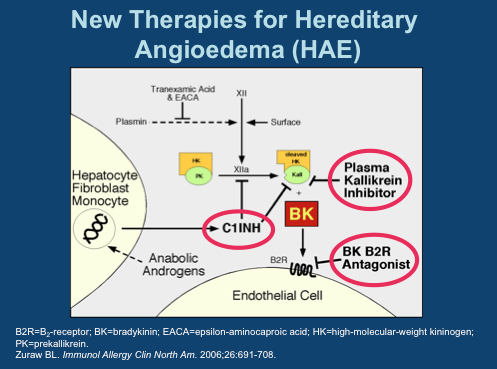
C1 Inhibitors, of which four have been approved, prevent Factor XIIa activation of Plasma Kallikrein and inhibit Kallikrein itself. The single specific Kallikrein inhibitor is Kalbitor from Dyax. C1INHs and kallikrein inhibitors prevent the formation of bradykinin (labeled “BK” in this diagram). Then there is Firazyr from Shire, a B2 bradykinin receptor antagonist; while not preventing overproduction of the hormone, activation of downstream activity is suppressed.
Interestingly, of all the available therapies, only C1INH Cinryze from Viropharma is approved for prophylactic use- all others are designated strictly for treatment of acute attacks. A key reason for this is Cinryze’s long half-life, allowing sustained activity over longer intervals. As each of these drugs are given by injection, frequent treatment is not practical. Consider, for instance, Kalbitor has a half life of just two hours.
This is where BioCryst comes in. The company is pursuing the less crowded prophylaxis indication. It has the only orally available (although just barely) plasma kallikrein inhibitor. And while PK is not great, requiring three-times daily dosing to ensure adequate drug levels, pills make this a feasible option. As you can see, 800 mg appears optimal, however, 400 mg was selected as the Phase IIa dose due to 3 cases of moderate AEs seen at 800. This study was in healthy volunteers and the drug was otherwise well tolerated [ref].
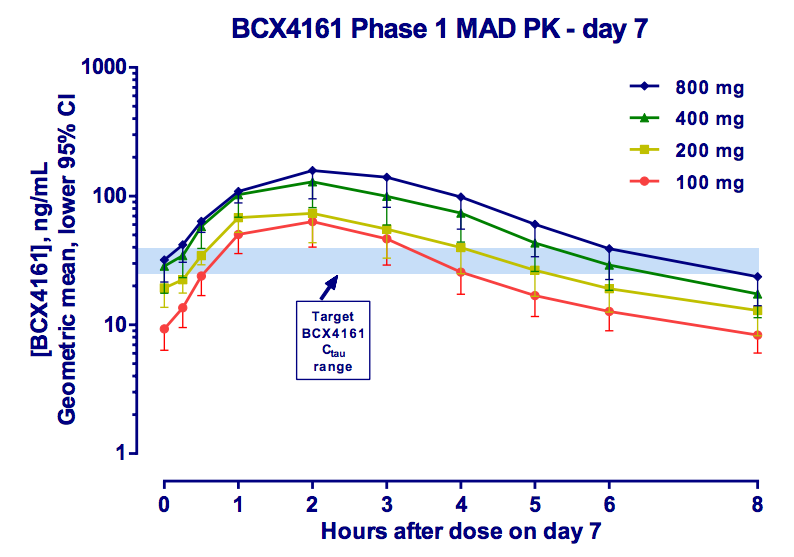
(From Company Presentation)
BCX4161 is an interesting compound. Based on patent literature, we believe the molecule has a similar structure to the one illustrated below:
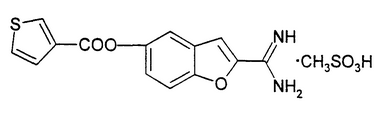
BCX4161 is not a specific inhibitor of kallikrein, and in fact has near equal potency against Factor XIIa. This dual-activity is also seen with C1INH, setting the compound apart from Kalbitor and Firazyr.
The different profile may improve efficacy, but that is unknown at this point. Along with Factor XIIa, BCX4161 inhibits additional factors involved in coagulation. Bleeding issues has been something the company has been testing and will be certain to monitor. As a drug designed for chronic use, safety will be a major concern.
A 25 patient Phase IIa study set for Q4 will be placebo-controlled double-blind crossover of the following design:
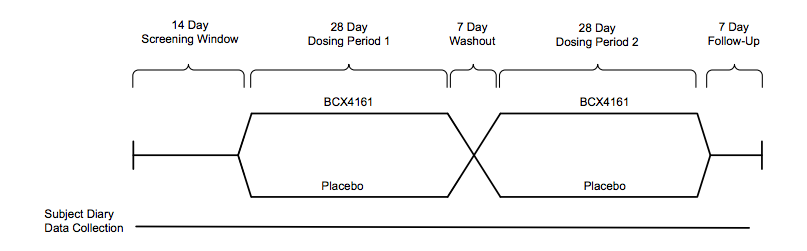
(From Company Presentation)
Individuals with a high frequency of attacks(~1/week) will be enrolled, the primary endpoint is attack frequency. Viropharma conducted a pivotal trial of similar design (but two twelve week dosing periods), reporting ~50% reduction in attacks vs. placebo. We imagine BioCryst would need to achieve results in this range for the drug to be competitive.
A major impedance toward these efficacy goals will likely be individual adherence to dosing every eight hours schedule. Missed doses will mean severe drops in drug levels, potentially putting the patient at risk for an attack. The company noted patients on Cinryze occasionally miss doses with no apparent adverse effect. We will see if this holds true for their own compound.
The Phase IIa is being run in Germany, ostensibly because of the country’s well organized HAE medical treatment system. The study is expected to initiate in 4Q 2013. BioCryst aims to market the drug in the U.S. on their own, likely partnering in the EU.
Handicapping this Phase II is rather difficult with the lack of any prior efficacy results. BioCryst has selected a well-validated target in a fairly well understood disease. The data suggests BCX4161 is an active drug. What we will soon find out is whether the compound is active enough and has a sufficiently clean profile. As attractive as oral dosing is- it has an achilles heel. Regardless of the medication, patients continue to have attacks, only of less frequency and severity. If a patient should suffer major laryngeal swelling, pills may not be an option as a rescue medicine. Cinryze on the hand can serve as both prophylaxis and acute treatment.
Commercially, we believe the compound will have a difficult time competing with Cinryze. True, Cinryze has its own issues, namely a requirement for infusions every 3 to 4 days, but it is difficult to see how a 3-times/day treatment is much of an improvement. In any case, by the time BCX4161 reaches the market, Viropharma should have a much simpler subcutaneous version of its C1INH available, allowing it to maintain a strong monopoly in prophylaxis HAE treatments. Additional competition may come in the form of a follow-up kallikrein inhibitor in development at Dyax; the long acting antibody is designed specifically for the prophylaxis market and is expected to enter the clinic 2H 2013.
EMA approves AstraZeneca’s lesinurad to treat gout patients

EMA approves AstraZeneca’s lesinurad to treat gout patients
British-Swedish drugmaker AstraZeneca has received approval from European Medicines Agency (EMA) for its lesinurad 200mg tablets to treat gout patients. READ AT…..[LINK]

“The company submitted a MAA based on data from the Clear1, Clear2 and Crystal pivotal Phase III combination therapy studies.”
AstraZeneca’s subsidiary Ardea Biosciences carried out Clear1, Clear2 and Crystal trials.


Sarpogrelate, 사르포그렐레이트염산염

Sarpogrelate
135159-51-2,HYROCHLORIDE
125926-17-2 (free base)
5-HT 2a receptor antagonist
Useful for treating arterial occlusive disease and ischemic heart disease.
Sarpogrelate (Anplag, MCI-9042, LS-187,118) is a drug which acts as an antagonist at the 5HT2A[1][2] and 5-HT2B[3] receptors. It blocks serotonin-induced platelet aggregation, and has applications in the treatment of many diseases including diabetes mellitus,[4][5] Buerger’s disease,[6] Raynaud’s disease,[7] coronary artery disease,[8] angina pectoris,[9] and atherosclerosis.[10]
| 사르포그렐레이트염산염 |
| Sarpogrelate Hydrochloride |
 |
| C24H31NO6& : 465.97 |
| 1-[2-(Dimethylamino)-1-[[2-[2-(3-methoxyphenyl)ethyl]phenoxy]methyl]ethyl hydrogen butanedioate hydrochloride [135159-51-2] |
第十六改正日本薬局方(JP16)名称データベース 検索結果
詳細については第十六改正日本薬局方でご確認ください。
検索キーワード:Sarpogrelate Hydrochloride
検索件数:1
| 第十六改正日本薬局方 化学薬品等サルポグレラート塩酸塩 Sarpogrelate Hydrochloride 塩酸サルポグレラート  C24H31NO6.HCl : 465.97 [135159-51-2] 本品は定量するとき,換算した脱水物に対し,サルポグレ ラート塩酸塩(C24H31NO6・HCl)98.5~101.0%を含む |
Sarpogrelate hydrochloride tablets in 1993 Japan’s first listed under the tradename Anplag, is a 5-HT2 receptor blocker, can inhibit platelet aggregation, inhibition of vascular contraction, has antithrombotic effect and microcirculation. Ulcer indications for the improvement of their chronic arterial occlusive disease caused by pain, and cold ischemic various flu symptoms. -1_ {[2- (3-methoxyphenyl) phenoxy] methyl} succinic acid ethyl ester hydrochloride, the structural formula of sarpogrelate hydrochloride chemical name 2- (dimethylamino)
As follows:

Journal of Medicinal Chemistry (J.Med.Chem, 1990,33: 1818-1823) published synthetic routes as follows:

Sarpogrelate hydrochloride drug substance used in the preparation Sarpogrelate hydrochloride tablets needed to achieve acceptable purity, single hetero content must meet the corresponding requirements. US4485258 discloses a synthesis method of the first sarpogrelate hydrochloride, and recrystallized from acetone to obtain, but the experiments show that sarpogrelate hydrochloride poor solubility in acetone, acetone, hydrochloric acid is not suitable as a recrystallization solvent sarpogrelate. CN101239920A disclosed as acetonitrile, propionitrile, 1,4_ dioxane, tetrahydrofuran, dimethyl formamide, dimethyl acetamide, sulfolane, dimethyl sulfoxide or a mixture of more than two kinds thereof with methanol, ethanol, , acetone, ethyl acetate, diethyl ether, diisopropyl ether or the like can be used as the recrystallization solvent sarpogrelate hydrochloride, the purity of the product can reach 98%. And C2-C10 alkanes, C3-C10 ketones, C2-C10 carboxylic acid esters, Cl-ClO halogenated alkanes, aromatic hydrocarbons or aromatic derivative at room temperature to the reflux temperature of the hydrochloric acid solubility is small should not alone sarpogrelate as a recrystallization solvent, sarpogrelate hydrochloride, and water as a recrystallization solvent or an organic solvent, an aqueous 5% or more can not be obtained a high purity product. Existing literature does not mention the issue of a single impurity content control.

The reaction of 2-hydroxy-3′-methoxybibenzyl (I) with epichlorohydrin (II) by means of NaH in DMF gives 2-(2,3-epoxypropoxy)-3′-methoxybibenzyl (III), which by reaction with dimethylamine in refluxing THF yields 2-[3-(dimethylamino)-2-hydroxypropoxy]-3′-methoxybibenzyl (IV). Finally, this compound is treated with succinic anhydride (V) in refluxing THF and with HCl in acetone.
……………………………..
http://www.google.com/patents/CN103242179A?cl=en

Specific embodiments
Example 1 Preparation of crude sarpogrelate hydrochloride [0019] Example
[0020] 1_ dimethylamino _3- [2- [2- (3_-methoxyphenyl) ethyl] phenoxy] -2-propanol hydrochloride A 250ml 13.7g plus a single-neck flask, then add water 25ml, and stirred to dissolve. With 20% aqueous sodium hydroxide to adjust PH value to 9_14, and extracted with 30ml of toluene, and the organic layer was concentrated to 50 ° C under reduced pressure until no liquid slipped 0 to give a brown oil. Of tetrahydrofuran was added 30g, and stirred to dissolve, butyryl anhydride 4.5g, was heated to reflux with stirring. After the reaction was refluxed for I~4 hours, the reaction was incubated at 40 ° C and concentrated to dryness under reduced pressure; the residue was added ethyl acetate 25g, After stirring to dissolve, the dropwise addition of saturated hydrogen chloride in ethyl acetate solution to adjust PH value to I below, was stirred 50~60min. Centrifugal filtration, was Sarpogrelate hydrochloride crude wet product. 45~55 ° C under reduced pressure (-0.08~-0.1MPa) the residue was dried to less than 0.5% of ethyl acetate to give the crude sarpogrelate hydrochloride 14.7g, yield 86%, HPLC purity 98.6%, largest single heteroatom content of 1.2 %.
Purification of the crude hydrochloride Sarpogrelate Example 2 [0021] Example
[0022] The crude product was sarpogrelate hydrochloride 5g, join butanone 20ml, heated with stirring until dissolved and refluxed 20~30min, cooling to 25~35 ° C, incubated with stirring 40~60min, filtered, and the filter cake was rinsed with a small amount of methyl ethyl ketone to give a white loose solid, 55~65 ° C and dried under reduced pressure to 24h, to give sarpogrelate hydrochloride 4.6g, yield 92%, HPLC purity of 99.9% and a maximum content of 0.04%, a single hybrid.
Example 3 Purification of the crude hydrochloride Sarpogrelate [0023] Example
[0024] The crude product was sarpogrelate hydrochloride 5g, join butanone 30ml, heated with stirring until dissolved and refluxed 20~30min, cooling to 25~35 ° C, incubated with stirring 40~60min, filtered, and the filter cake was rinsed with a small amount of methyl ethyl ketone to give a white loose solid, 55~65 ° C and dried under reduced pressure to 24h, to give 4.55 sarpogrelate hydrochloride, yield 91%, HPLC purity 99.7%, largest single matter content of 0.05%.
Example 4 Purification of the crude hydrochloride Sarpogrelate [0025] Example
[0026] The crude product was sarpogrelate hydrochloride 5g, join butanone 40ml, heated with stirring until dissolved and refluxed 20~30min, cooling to 25~35 ° C, incubated with stirring 40~60min, filtered, and the filter cake was rinsed with a small amount of methyl ethyl ketone to give a white loose solid, 55~65 ° C and dried under reduced pressure to 24h, to give sarpogrelate hydrochloride 4.5g, yield 90%, HPLC purity 99.8%, largest single matter content 0.05%.
Example 5 Purification of the crude hydrochloride Sarpogrelate [0027] Example
[0028] The crude product was sarpogrelate hydrochloride 5g, join butanone 20ml, heated with stirring until dissolved and refluxed 20~30min, cooled slowly with stirring to room temperature, at -10 ° c~o ° c stand for crystallization, filtration, The filter cake was rinsed with a small amount of methyl ethyl ketone to give a white fluffy solid, 55~65 ° C and dried under reduced pressure to 24h, to give the hydrochloride sarpogrelate 4.62g, yield 92.4%, HPLC purity 99.2%, largest single matter content of 0.09%.
………………………………..
Method for preparing crystalline form II of sarpogrelate hydrochloride is claimed. Represents first filing from Dae He Chemical on sarpogrelate, which was developed and launched by Mitsubishi Tanabe Pharma.
References
- Pertz H, Elz S. In-vitro pharmacology of sarpogrelate and the enantiomers of its major metabolite: 5-HT2A receptor specificity, stereoselectivity and modulation of ritanserin-induced depression of 5-HT contractions in rat tail artery. Journal of Pharmacy and Pharmacology. 1995 Apr;47(4):310-6. PMID 7791029
- Nishio H, Inoue A, Nakata Y. Binding affinity of sarpogrelate, a new antiplatelet agent, and its metabolite for serotonin receptor subtypes. Archives Internationales de Pharmacodynamie et de Therapie. 1996 Mar-Apr;331(2):189-202. PMID 8937629
- Muntasir HA, Hossain M, Bhuiyan MA, Komiyama T, Nakamura T, Ozaki M, Nagatomo T. Identification of a key amino acid of the human 5-HT(2B) serotonin receptor important for sarpogrelate binding. Journal of Pharmacological Sciences. 2007 Jul;104(3):274-7. PMID 17609583
- Pietraszek MH, Takada Y, Taminato A, Yoshimi T, Watanabe I, Takada A. The effect of MCI-9042 on serotonin-induced platelet aggregation in type 2 diabetes mellitus. Thrombosis Research. 1993 Apr 15;70(2):131-8. PMID 8322284
- Ogawa S, Takeuchi K, Sugimura K, Sato C, Fukuda M, Lee R, Ito S, Sato T. The 5-HT2 receptor antagonist sarpogrelate reduces urinary and plasma levels of thromboxane A2 and urinary albumin excretion in non-insulin-dependent diabetes mellitus patients. Clinical and Experimental Pharmacology and Physiology. 1999 May-Jun;26(5-6):461-4. PMID 10386239
- Rydzewski A, Urano T, Hachiya T, Kaneko H, Baba S, Takada Y, Takada A. The effect of a 5HT2 receptor antagonist sarpogrelate (MCI-9042) treatment on platelet function in Buerger’s disease. Thrombosis Research. 1996 Dec 15;84(6):445-52. PMID 8987165
- Igarashi M, Okuda T, Oh-i T, Koga M. Changes in plasma serotonin concentration and acceleration plethysmograms in patients with Raynaud’s phenomenon after long-term treatment with a 5-HT2 receptor antagonist. Journal of Dermatology. 2000 Oct;27(10):643-50. PMID 11092268
- Satomura K, Takase B, Hamabe A, Ashida K, Hosaka H, Ohsuzu F, Kurita A. Sarpogrelate, a specific 5HT2-receptor antagonist, improves the coronary microcirculation in coronary artery disease. Clinical Cardiology. 2002 Jan;25(1):28-32. PMID 11808836
- Kinugawa T, Fujita M, Lee JD, Nakajima H, Hanada H, Miyamoto S. Effectiveness of a novel serotonin blocker, sarpogrelate, for patients with angina pectoris. American Heart Journal. 2002 Aug;144(2):E1. PMID 12177659
- Hayashi T, Sumi D, Matsui-Hirai H, Fukatsu A, Arockia Rani P J, Kano H, Tsunekawa T, Iguchi A. Sarpogrelate HCl, a selective 5-HT2A antagonist, retards the progression of atherosclerosis through a novel mechanism. Atherosclerosis. 2003 May;168(1):23-31. PMID 12732383
|
|
||
 |
|
| Systematic (IUPAC) name | |
|---|---|
| 4-[2-(dimethylamino)-1-({2-[2-(3-methoxyphenyl)ethyl]phenoxy}methyl)ethoxy]-4-oxobutanoic acid | |
| Clinical data | |
| AHFS/Drugs.com | International Drug Names |
| Legal status |
?
|
| Identifiers | |
| CAS number | 125926-17-2  |
| ATC code | None |
| PubChem | CID 5160 |
| IUPHAR ligand | 210 |
| ChemSpider | 4976  |
| UNII | 19P708E787 |
| ChEMBL | CHEMBL52939 |
| Synonyms | Sarpogrelate, (-)-4-[1-dimethylamino-3-[2-[2-(3-methoxyphenyl)ethyl]phenoxy]propan-2-yl]oxy-4-oxobutanoic acid |
| Chemical data | |
| Formula | C24H31NO6 |
| Molecular mass | 429.506 g/mol |
Lesogaberan

Lesogaberan
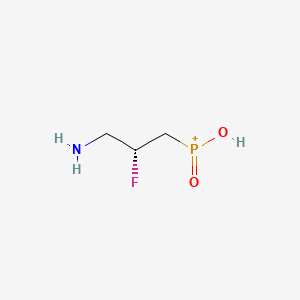
Lesogaberan (AZD-3355) was[1] an experimental drug candidate developed by AstraZeneca for the treatment of gastroesophageal reflux disease (GERD).[2] As a GABAB receptor agonist,[3] it has the same mechanism of action as baclofen, but is anticipated to have fewer of the central nervous system side effects that limit the clinical use of baclofen for the treatment of GERD.[4]
http://pubs.acs.org/doi/abs/10.1021/jm701425k

We have previously demonstrated that the prototypical GABAB receptor agonist baclofen inhibits transient lower esophageal sphincter relaxations (TLESRs), the most important mechanism for gastroesophageal reflux. Thus, GABAB agonists could be exploited for the treatment of gastroesophageal reflux disease. However, baclofen, which is used as an antispastic agent, and other previously known GABAB agonists can produce CNS side effects such as sedation, dizziness, nausea, and vomiting at higher doses. We now report the discovery of atypical GABAB agonists devoid of classical GABAB agonist related CNS side effects at therapeutic doses and the optimization of this type of compound for inhibition of TLESRs, which has resulted in a candidate drug (R)-7 (AZD3355) that is presently being evaluated in man.
(2R)-(3-Amino-2-fluoropropyl)phosphinic Acid ((R)-7)
References
- AstraZeneca. “AZD3355”. Retrieved 30 December 2011.
- Bredenoord, Albert J. (2009). “Lesogaberan, a GABAB agonist for the potential treatment of gastroesophageal reflux disease”. IDrugs 12 (9): 576–584. PMID 19697277.
- Alstermark, et al.; Amin, K; Dinn, SR; Elebring, T; Fjellström, O; Fitzpatrick, K; Geiss, WB; Gottfries, J et al. (2008). “Synthesis and Pharmacological Evaluation of Novel γ-Aminobutyric Acid Type B (GABAB) Receptor Agonists as Gastroesophageal Reflux Inhibitors”. Journal of Medicinal Chemistry 51 (14): 4315–4320. doi:10.1021/jm701425k. PMID 18578471.
- Brian E. Lacy, Robert Chehade, and Michael D. Crowell (2010). “Lesogaberan”. Drugs of the Future 35 (12): 987–992. doi:10.1358/dof.2010.035.012.1540661.
| Lesogaberan | |
|---|---|
 |
|
| Identifiers | |
| CAS number | 344413-67-8 = |
| PubChem | 9833984 |
| ChemSpider | 23254384 |
| UNII | 4D6Q6HGC7Z |
| ChEMBL | CHEMBL448343 |
| Jmol-3D images | Image 1 |
| Properties | |
| Molecular formula | C3H9FNO2P |
| Molar mass | 141.08 g mol−1 |
A Novel and Practical Synthesis of Ramelteon
 RAMELTEON
An efficient and practical process for the synthesis of ramelteon 1, a sedative-hypnotic, is described. Highlights in this synthesis are the usage of acetonitrile as nucleophilic reagent to add to 4,5-dibromo-1,2,6,7-tetrahydro-8H-indeno[5,4-b]furan-8-one 2 and the subsequent hydrogenation which successfully implement four processes (debromination, dehydration, olefin reduction, and cyano reduction) into one step to produce the ethylamine compound 13where dibenzoyl-l-tartaric acid is selected both as an acid to form the salt in the end of hydrogenation and as the resolution agent. Then, target compound 1 is easily obtained from13 via propionylation. The overall yield in this novel and concise process is almost twice as much as those in the known routes, calculated on compound 2.
A Novel and Practical Synthesis of Ramelteon
http://pubs.acs.org/doi/abs/10.1021/op500386g


Zibotentan

Zibotentan (INN) (earlier code name ZD4054) is an anti-cancer candidate.[1] It is an endothelin receptor antagonist.[2]
It failed a phase III clinical trial for prostate cancer[3] but other trials are planned.[4] Tolerability of zibotentan plus docetaxel has been evaluated.[5]
SYN

https://www.google.com/patents/WO1996040681A1?cl=en
Bromination of 2-amino-5-methylpyrazine (I) with Br2 in CHCl3 affords the bromopyrazine (II). Subsequent bromide displacement in (II) by means of sodium methoxide gives rise to the methoxypyrazine (III). The amino group of (III) is then protected by acylation with isobutyl chloroformate, to produce carbamate (IV). Diazotization of 3-amino-2-chloropyridine (V), followed by treatment with sulfur dioxide in the presence of CuCl furnishes sulfonyl chloride (VI). Carbamate (IV) is then acylated by means of NaH and sulfonyl chloride (VI) in DMF to furnish the N-sulfonyl carbamate (VII). Esterification of 4-carboxyphenylboronic acid (VIII) with H2SO4 in MeOH gives 4-(methoxycarbonyl)phenylboronic acid (IX). Mitsunobu coupling between boronic acid (IX) and chloropyridine (VII) furnishes adduct (X). Methyl ester (X) is converted into hydrazide (XI) by treatment with hydrazine hydrate in refluxing methanol. Then, cyclization of the acyl hydrazide (XI) with boiling triethyl orthoformate gives rise to the target oxadiazole derivative.
https://www.google.com/patents/WO1996040681A1?cl=en
Example 36
Hydrazine hydrate (1.2 ml) was added to a solution of N-(isobutoxycarbonyl)-2- (4-memoxycarbonylphenyl)-N-(3-metJ oxy-5-methylpyrazin-2-yl)pyridine-3-sulphonamide (1.54 g) in methanol (15 ml) and the mixture was heated and stiπed under reflux for 24 hours then cooled. The solid was collected and dried under reduced pressure to give the free sulphonamido-acylhydrazide (0.857 g); 1H NMR (cVDMSO): 2.2 (s, 3H), 3.7 (s, 3H), 6.7 (br s, 2H), 7.3 (s, IH), 7.5 (m, 3H), 7.8 (d, 2H), 8.4 (d, IH), 8.75 (dd, IH), 9.8 (br s, IH). A solution of this acylhydrazide (207 mg) in triethylorthoformate (5 ml) was heated under reflux for 17 hours then cooled. The resultant solid was collected and purified by chromatography on a silica gel Mega Bond Elut column, eluting with 0-10% methanol/dichloromethane to give N-(3-methoxy-5-mef ylpyrazin-2-yl)-2-(4-[l,3,4-oxadiazol-2-yl]phenyl)pyridine-3- sulphonamide (39 mg) as a solid; 1H NMR (DMSO-do): 2.2 (br s, 3H), 3.8 (s, 3H), 7.4 (br s, IH), 7.6-7.8 (m, 3H), 8.0 (m, 2H), 8.5 (dd, IH), 8.9 (dd, IH), 9.4 (s, IH); mass spectrum (+ve ESP): 425 (M+H)+.
………………………….
http://www.google.im/patents/EP1904490A1?cl=en
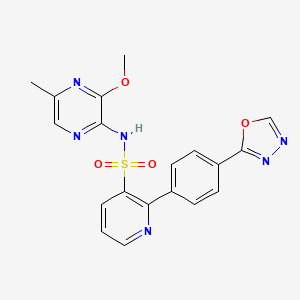
N-(3-methoxy-5-methylpyrazin-2-yl)-2- (4-[l,3,4-oxadiazol-2-yl]phenyl)pyridine-3-sulphonamide (hereafter “Compound (I)). More specifically the invention relates to the ethanolamine salt of Compound (I) (hereafter “Compound (I) ethanolamine salt), and to pharmaceutical compositions containing it. The invention further relates to the use of Compound (I) ethanolamine salt in the manufacture of medicament for use in treating cancer and to methods of treating cancer in a warm blooded animal such as man using this salt. The invention further relates to the use of Compound (I) ethanolamine salt in producing Compound (I) during manufacture.
Compound (I) is an endothelin antagonist. The endothelins are a family of endogenous 21 amino acid peptides comprising three isoforms, endothelin-1 (ET-I), endothelin-2 and endothelin-3. The endothelins are formed by cleavage of the Trp2I-Val22 bond of their corresponding proendothelins by an endothelin converting enzyme. The endothelins are among the most potent vasoconstrictors known and have a characteristic long duration of action. They exhibit a wide range of other activities including cell proliferation and mitogenesis, extravasation and chemotaxis, and also interact with a number of other vasoactive agents.
The endothelins are released from a range of tissue and cell sources including vascular endothelium, vascular smooth muscle, kidney, liver, uterus, airways, intestine and leukocytes. Release can be stimulated by hypoxia, shear stress, physical injury and a wide range of hormones and cytokines. Elevated endothelin levels have been found in a number of disease states in man including cancers.
Recently, endothelin A receptor antagonists have been identified as potentially of value in the treatment of cancer (Cancer Research, 56, 663-668, February 15th, 1996 and Nature Medicine, Volume 1, Number 9, September 1999, 944-949).
Cancer affects an estimated 10 million people worldwide. This figure includes incidence, prevalence and mortality. More than 4.4 million cancer cases are reported from Asia, including 2.5 million cases from Eastern Asia, which has the highest rate of incidence in the world. By comparison, Europe has 2.8 million cases, North America 1.4 million cases, and Africa 627,000 cases. In the UK and US, for example, more than one in three people will develop cancer at some point in their life, Cancer mortality in the U.S. is estimated to account for about 600,000 a year, about one in every four deaths, second only to heart disease in percent of all deaths, and second to accidents as a cause of death of children 1-14 years of age. The estimated cancer incidence in the U.S. is now about 1,380,000 new cases annually, exclusive of about 900,000 cases of non-melanotic (basal and squamous cell) skin cancer.
Cancer is also a major cause of morbidity in the UK with nearly 260,000 new cases (excluding non-melanoma skin cancer) registered in 1997. Cancer is a disease that affects mainly older people, with 65% of cases occurring in those over 65. Since the average life expectancy in the UK has almost doubled since the mid nineteenth century, the population at risk of cancer has grown. Death rates from other causes of death, such as heart disease, have fallen in recent years while deaths from cancer have remained relatively stable. The result is that 1 in 3 people will be diagnosed with cancer during their lifetime and 1 in 4 people will die from cancer. In people under the age of 75, deaths from cancer outnumber deaths from diseases of the circulatory system, including ischaemic heart disease and stroke. In 2000, there were 151,200 deaths from cancer. Over one fifth (22 per cent) of these were from lung cancer, and a quarter (26 per cent) from cancers of the large bowel, breast and prostate.
Worldwide, the incidence and mortality rates of certain types of cancer (of stomach, breast, prostate, skin, and so on) have wide geographical differences which are attributed to racial, cultural, and especially environmental influences. There are over 200 different types of cancer but the four major types, lung, breast, prostate and colorectal, account for over half of all cases diagnosed in the UK and US. Prostate cancer is the fourth most common malignancy among men worldwide, with an estimated 400,000 new cases diagnosed annually, accounting for 3.9 percent of all new cancer cases. Current options for treating cancers include surgical resection, external beam radiation therapy and / or systemic chemotherapy. These are partially successful in some forms of cancer, but are not successful in others. There is a clear need for new therapeutic treatments. Compound (I) is exemplified and described in WO96/40681 as Example 36. WO96/40681 claims the endothelin receptors described therein for the treatment of cardiovascular diseases. The use of Compound (I) in the treatment of cancers and pain is described in WO04/018044. Compound (I) has the following structure:

Compound (I)
In WO04/018044 an endothelin human receptor binding assay is described. The pICjo (negative log of the concentration of compound required to displace 50% of the ligand) for Compound (I) at the ETA receptor was 8.27 [8.23 – 8.32] (n=4). Compound (I) is thus an excellent endothelin antagonist.
WO96/40681 and WO04/018044 disclose, in general terms, certain pharmaceutically acceptable salts of the compounds disclosed therein. Specifically it is stated that suitable pharmaceutically-acceptable salts include, for example, salts with alkali metal (such as sodium, potassium or lithium), alkaline earth metals (such as calcium or magnesium), ammonium salts, and salts with organic bases affording physiologically acceptable cations, such as salts with methylamine, dimethylamine, trimethylamine, piperidine and morpholine. In addition, it was stated that suitable pharmaceutically-acceptable salts include, pharmaceutically-acceptable acid- addition salts with hydrogen halides, sulphuric acid, phosphoric acid and with organic acids such as citric acid, maleic acid, methanesulphonic acid and p-toluenesulphonic acid.
Example 2 Formation of Compound (I) using ethanolamine
The above organic layer from Example 1 was adjusted to 42°C and isopropyl alcohol (114 ml), water (170ml) and ethanolamine (28.2 ml) were added and stirred at 42°C for 90 mins. The reaction mixture was allowed to cool to 2O0C and the lower aqueous phase separated and filtered through a 1 μm filter. The aqueous phase was then charged over 40min to a stirred solution of acetic acid (141 g) and water (33.5 g) at 500C and then cooled to 2O0C over 60 mins. The product was isolated by filtration and washed with a mixture of isopropyl alcohol (48.5 ml) and water (48.5 ml) and then isopropyl alcohol (48.5 ml). The product was dried overnight in a vacuum oven at 55°C. Weight 43.08g, Strength = 100%, 86.7%yield. 1H NMR (400 MHz5 DMSOd6) 9.87 (IH, s), 9.14 (IH, s), 8.81 (lH,d), 8.52 (IH, d), 7.98 (2H, d), 7.65 (2H, d), 7.62 (IH, dd), 7.41 (IH, bs), 3.80 (3H, s), 2.23 (3H, s). Mass Spectra MH+ 425.1036 (Ci9Hi7N6O4S calculated 425.1032).
| Patent | Submitted | Granted |
|---|---|---|
| Substituted pyrazin-2-yl-sulphonamide-(3-pyridyl) compounds and uses thereof [US6060475] | 2000-05-09 | |
| COMPOSITION 064 [US8168221] | 2009-04-16 | 2012-05-01 |
| THERAPEUTIC TREATMENT-014 [US2009062246] | 2009-03-05 | |
| Ethanolamine Salt of N- (3-Methoxy-5-Methylpyrazin-2Yl) -2- (4-[1, 3, 4-Oxadiazole-2-Yl] Phenyl) Pyridine-3-Sulphonamide [US2008221124] | 2008-09-11 | |
| N-HETEROARYL-PYRIDINESULFONAMIDE DERIVATIVES AND THEIR USE AS ENDOTHELIN ANTAGONISTS [WO9640681] | 1996-12-19 |
| Zibotentan | |
|---|---|
 |
|
| Identifiers | |
| CAS number | 186497-07-4 |
| PubChem | 9910224 |
| ChemSpider | 8085875 |
| UNII | 8054MM4902 |
| Jmol-3D images | Image 1 |
| Properties | |
| Molecular formula | C19H16N6O4S |
| Molar mass | 424.43 g mol−1 |
References
- James and Growcott (2009). “Drugs of the Future”.
- Jump up^ Tomkinson H, Kemp J, Oliver S, Swaisland H, Taboada M, Morris T (2011). “Pharmacokinetics and tolerability of zibotentan (ZD4054) in subjects with hepatic or renal impairment: two open-label comparative studies”. BMC Clin Pharmacol 11: 3. doi:10.1186/1472-6904-11-3.PMC 3070638. PMID 21414193.
- http://www.fiercebiotech.com/story/azs-zibotentan-flunks-late-stage-prostate-cancer-trial/2010-09-27
- http://www.genengnews.com/gen-news-highlights/pfizer-astrazeneca-and-actelion-separately-report-phase-iii-trial-failures/81243985/
- Jump up^ Trump DL, Payne H, Miller K, et al. (September 2011). “Preliminary study of the specific endothelin a receptor antagonist zibotentan in combination with docetaxel in patients with metastatic castration-resistant prostate cancer”. Prostate 71 (12): 1264–75.doi:10.1002/pros.21342. PMID 21271613.
External links
Ayurveda………..Medicinal Benefits of Liquorice (Mulethi) (मुलेठी, 甘草, شیرین بیان)

Licorice or Mulethi is a medicinal herb which is used in various Ayurvedic medicines. Its underground stems and roots are used for medicinal purpose. It has antioxidant, antimicrobial, anti-inflammatory and hepatoprotective properties.
Mulethi is useful in cough, sore throat, bronchitis, sexual weakness, skin problems, jaundice, hoarseness, vata dosha, ulcers etc. It has demulcent and expectorant properties.
read…………MY OLD ARTICLE

Liquorice, or licorice, (/ˈlɪk(ə)rɪʃ/ lik-(ə-)rish or /ˈlɪk(ə)rɪs/ lik-(ə-)ris)[2] is the root of Glycyrrhiza glabra from which a sweet flavour can be extracted. The liquorice plant is a legume native to southern Europe, India, and parts of Asia. It is not botanically related to anise, star anise, or fennel, which are sources of similar flavouring compounds. The word liquorice / licorice is derived (via the Old French licoresse) from the Greek γλυκύρριζα (glukurrhiza), meaning “sweet root”,[3] from γλυκύς (glukus), “sweet”[4] + ῥίζα (rhiza), “root”,[5][6] the name provided by Dioscorides.[7] It has been traditionally known and used as medicine in Ayurveda for rejuvenation.[8] It is called asadhimadhuram (அதிமதுரம்) in Tamil, irattimadhuram in Malayalam, yastimadhu (यस्टिमधु) in Sanskrit, mulethi (मुलेठी) in Hindi, andjethimadh (જેઠીમધ) in Gujarati language.[9]
Licorice (Glycyrrhiza glabra), locally known as mulethi, has been revered for centuries as a medicinal herb in Ayurveda. Besides possessing numerous medicinal properties, it is also a popular flavoring herb as it is 50 times sweeter than sugar, due to the presence of a compound called glycyrrhizin.
Through research, the anti-oxidant, anti-inflammatory, anti-microbial, analgesic (pain-relieving) and expectorant properties of this is sweet, moist herb have been established worldwide. It is also diuretic, rejuvenating and mildly laxative in nature. These properties have helped Licorice find a place in both Eastern and Western medicine for treating an array of ailments, ranging from cold and cough to arthritis, respiratory, digestive and liver problems.

The Sanskrit name for licorice is Yashtimadhu, which literally means “sweet root”. It is sweet, cool and heavy to digest. The Rasa (taste) of this herb is madhura (sweet), which makes it beneficial for vata and pitta doshas, while it’s Virya (action) is sheetal (cooling), which generally increases kapha when consumed in large doses over long term.
The medicinal property of mulethi is mainly because of the presence of powerful phytochemicals namely flavonoids, chalcones, saponins and xenoestrogens. Glycyrrhizin (salts of glycyrrhizic acid) is a popular saponin found in roots of mulethi that is responsible for the characteristic sweet taste (50 times more sweet than sugar) flavor. Liquiritin, licoflavonol, liquiritigenin, etc are the common chalcones that provide the distinct yellowish color to mulethi; while, the aroma of its root is mainly because of anethole. Here are the ten health benefits of mulethi:

Information
Latin name: Glycyrrhiza glabra
Sanskrit: Madhuyashti
Hindi: Mulhatti, Jethimadh, Mithilakdi
English: Sweetwood, Liquorice, Licorice
Bengali: Jashtimadhu
Gujrati: Jethi Madh
Marathi: Jeshtamadhu
Kannada: Jeshthamadhu
Malayalam: Itarttimadhuram, Erattimadhuram
Tamil: Atimadhuram
Telugu: Atimadhuramu

Anti-microbial activity – Roots of mulethi are very effective in protecting against virus, bacteria and fungi due to the presence of Glycyrrhizin that blocks the microbial growth. The root extract possesses the power to control malaria (as per preliminary research), influenza and also helps in the treatment of herpes resulting in virus suppression and severity of sores.
Anti-inflammatory activity – Liquorice has powerful anti-inflammatory and anti-allergic activity and can be used to treat chronic inflammation like rheumatic problems & arthritis, skin diseases and autoimmune diseases. It is also used for preventing any inflammatory conditions related to eye and also to treat conjunctivitis with the help of glycyrrhizin activity that counteracts negative effects caused by cortisol.
Improves immunity – Root extracts of mulethi aids in increasing the production of lymphocytes and macrophage thereby improving your defense mechanism & preventing microbial attack. It also helps in minimizing immune related allergic reactions and autoimmune complications.

Memory improvement – Roots of licorice exert supportive effect on the adrenal gland and thus indirectly aid in stimulating the brain. It not only decreases the effects of amnesia & improves learning but its antioxidant property (mulethi contains flavonoids) renders a shielding effect on the brain cells.
Anti-ulcer activity – The potent antioxidant and anti-inflamatory properties of licorice makes it the best natural medicinal aid to treat ulcers of stomach, intestine and mouth. The compound carbenoxolone synthesized from glycyrrhizin plays key role in healing mouth and gastric ulcers along with reducing gastric secretions and promoting development of intestinal mucus lining.
Liver protection – Licorice is one of the most common traditional remedy used to treat jaundice. Its antioxidant property is the key for preventing your liver from the action of free radicals and toxic materials. This herb is also reported to exhibit protection against diclofenac induced toxicity and also, in inhibiting damage of liver.

Digestive aid – Roots of licorice are also used to deal with stomach and digestion problems with the help of glycyrrhizin and its compound, carbenoxolone. It is one of the ancient home remedies for relieving constipation, acidity, heartburn, stomach discomfort, inflammation of digestive system and gastro esophageal acid reflux. As a mild laxative, it plays an effective role in bowel movements and also for treatment of allergic cough in addition to maintaining normal pH levels.
Hormonal regulation – The phytoestrogenic compounds present in mulethi roots exert valuable action against women hormonal imbalance problems, menopause symptoms like hot flashes & exhaustion, mood swings, etc. It is also found to help in cortisol production and relieving premenstrual issues like nausea and menstrual cramps. Licorice powder acts as the traditional medicine for nursing mothers to regulate body hormones and aid in milk secretion.
Heart healthy effects – Research studies have proved that licorice roots help in controlling cholesterol levels by increasing the body’s flow of bile and also reducing high blood cholesterol levels. The anti-oxidant property of licorice acts in increasing the blood capillary health, reducing inflammation, prevents blood vessel damage and block development of arterial plaque.
Other effects – Licorice roots work wonders in treatment of depression, diabetes and respiratory tract infection like sore throat (hoarseness of voice), cold and cough, etc in addition to rendering effective skin benefits, oral hygiene and weight loss. It is found to act as a cancer cure remedy, a potent aphrodisiac and a powerful analgesic agent.
Description
It is a herbaceous perennial, growing to 1 m in height, with pinnate leaves about 7–15 cm (3–6 in) long, with 9–17 leaflets. The flowers are 0.8–1.2 cm (1/3 to 1/2 in) long, purple to pale whitish blue, produced in a loose inflorescence. The fruit is an oblong pod, 2–3 cm (1 in) long, containing several seeds.[10] The roots are stoloniferous.[11]
Chemistry
The scent of liquorice root comes from a complex and variable combination of compounds, of which anethole is up to 3% of total volatiles. Much of the sweetness in liquorice comes from glycyrrhizin, which has a sweet taste, 30–50 times the sweetness of sugar. The sweetness is very different from sugar, being less instant, tart, and lasting longer.
The isoflavene glabrene and the isoflavane glabridin, found in the roots of liquorice, are phytoestrogens.[12][13]
Cultivation and uses
Liquorice, which grows best in well-drained soils in deep valleys with full sun, is harvested in the autumn two to three years after planting.[10] Countries producing liquorice include Iran, Afghanistan, the People’s Republic of China, Pakistan, Iraq, Azerbaijan, Uzbekistan, Turkmenistan, and Turkey.[14]
The world’s leading manufacturer of liquorice products is M&F Worldwide, which manufactures more than 70% of the worldwide liquorice flavours sold to end users.[15]
Safe dosage
Licorice is available in various forms – root, powder and extracts. Licorice root can be chewed directly while licorice tea (prepared by boiling licorice root in water) is also extremely beneficial as a home remedy.
Daily intake of 5-6 grams of licorice powder is considered safe while 250-500 mg of concentrated extracts can be taken thrice a day. Unsupervised use in high doses is not recommended for long term. People with hypertension or heart disease, pregnant women and breastfeeding mothers should avoid using licorice without prior consulation with an Ayurveda doctor.
 plant
plant

Medicine
The compound glycyrrhizin (or glycyrrhizic acid), found in liquorice, has been proposed as being useful for liver protection in tuberculosis therapy, but evidence does not support this use, which may in fact be harmful.[24] Glycyrrhizin has also demonstrated antiviral, antimicrobial, anti-inflammatory, hepatoprotective, and blood pressure-increasing effects in vitro and in vivo, as is supported by the finding that intravenous glycyrrhizin (as if it is given orally very little of the original drug makes it into circulation) slows the progression of viral and autoimmune hepatitis.[25][26] Liquorice has also demonstrated promising activity in one clinical trial, when applied topically, against atopic dermatitis.[27] Additionally, liquorice has also proven itself effective in treating hyperlipidaemia (a high amount of fats in the blood).[28] Liquorice has also demonstrated efficacy in treating inflammation-induced skin hyperpigmentation.[29][30] Liquorice may also be useful in preventing neurodegenerative disorders and dental caries.[31][32][33]
The antiulcer, laxative, antidiabetic, anti-inflammatory, immunomodulatory, antitumour and expectorant properties of liquorice have been investigated.[34]
Folk medicine
In traditional Chinese medicine, liquorice (मुलेठी, 甘草, شیرین بیان) is believed to “harmonize” the ingredients in a formula and to carry the formula to the 12 “regular meridians”.[35]
References
- “Glycyrrhiza glabra information from NPGS/GRIN”. http://www.ars-grin.gov. Retrieved 6 March 2008.
- licorice. Merriam-Webster’s Medical Dictionary, © 2007 Merriam-Webster, Inc.
- γλυκύρριζα, Henry George Liddell, Robert Scott, A Greek-English Lexicon, on Perseus
- γλυκύς, Henry George Liddell, Robert Scott, A Greek-English Lexicon, on Perseus
- Jump up^ ῥίζα, Henry George Liddell, Robert Scott, A Greek-English Lexicon, on Perseus<
- Jump up^ liquorice, on Oxford Dictionaries
- Jump up^ google books Maud Grieve, Manya Marshall – A modern herbal: the medicinal, culinary, cosmetic and economic properties, cultivation and folk-lore of herbs, grasses, fungi, shrubs, & trees with all their modern scientific uses, Volume 2 Dover Publications, 1982 & Pharmacist’s Guide to Medicinal Herbs Arthur M. Presser Smart Publications, 1 Apr 2001 2012-05-19
- Jump up^ Balakrishna, Acharya (2006). Ayurveda: Its Principles & Philosophies. New Delhi, India: Divya prakashan. p. 206. ISBN 8189235567.
- Jump up^ “Top 10 health benefits of Mulethi or Liquorice”.
- ^ Jump up to:a b Huxley, A., ed. (1992). New RHS Dictionary of Gardening. ISBN 0-333-47494-5
- Jump up^ Brown, D., ed. (1995). “The RHS encyclopedia of herbs and their uses”. ISBN 1-4053-0059-0
- Jump up^ Somjen, D.; Katzburg, S.; Vaya, J.; Kaye, A. M.; Hendel, D.; Posner, G. H.; Tamir, S. (2004). “Estrogenic activity of glabridin and glabrene from licorice roots on human osteoblasts and prepubertal rat skeletal tissues”. The Journal of Steroid Biochemistry and Molecular Biology 91 (4–5): 241–246. doi:10.1016/j.jsbmb.2004.04.008. PMID 15336701.
- Jump up^ Tamir, S.; Eizenberg, M.; Somjen, D.; Izrael, S.; Vaya, J. (2001). “Estrogen-like activity of glabrene and other constituents isolated from licorice root”. The Journal of steroid biochemistry and molecular biology 78 (3): 291–298. doi:10.1016/S0960-0760(01)00093-0. PMID 11595510.
- ^ Jump up to:a b c M & F Worldwide Corp., Annual Report on Form 10-K for the Year Ended December 31, 2010.
- Jump up^ M & F Worldwide Corp., Annual Report on Form 10-K for the Year Ended December 31, 2001.
- Jump up^ Erik Assadourian, Cigarette Production Drops, Vital Signs 2005, at 70.
- Jump up^ M & F Worldwide Corp., Annual Report on Form 10-K for the Year Ended December 31, 2005.
- ^ Jump up to:a b c Marvin K. Cook, The Use of Licorice and Other Flavoring Material in Tobacco (Apr. 10, 1975).
- Jump up^ Boeken v. Phillip Morris Inc., 127 Cal. App. 4th 1640, 1673, 26 Cal. Rptr. 3d 638, 664 (2005).
- Jump up^ [1] the online Dutch food composition database]
- Jump up^ “Right good food from the Ridings”. AboutFood.com. 25 October 2007.
- Jump up^ “Where Liquorice Roots Go Deep”. Northern Echo. Retrieved 9 December 2008.
- Jump up^ http://science.howstuffworks.com/life/botany/licorice-info.htm
- Jump up^ Liu Q, Garner P, Wang Y, Huang B, Smith H (2008). “Drugs and herbs given to prevent hepatotoxicity of tuberculosis therapy: systematic review of ingredients and evaluation studies”.BMC Public Health (Systematic review) 8: 365. doi:10.1186/1471-2458-8-365. PMC 2576232. PMID 18939987.
- Jump up^ Chien, CF; Wu, YT; Tsai, TH (January 2011). “Biological analysis of herbal medicines used for the treatment of liver diseases.”. Biomedical Chromatography 25 (1-2): 21–38.doi:10.1002/bmc.1568. PMID 21204110.
- Jump up^ Yasui, S; Fujiwara, K; Tawada, A; Fukuda, Y; Nakano, M; Yokosuka, O (December 2011). “Efficacy of intravenous glycyrrhizin in the early stage of acute onset autoimmune hepatitis.”.Digestive Diseases and Sciences 56 (12): 3638–47. doi:10.1007/s10620-011-1789-5. PMID 21681505.
- Jump up^ Reuter, J; Merfort, I; Schempp, CM (2010). “Botanicals in dermatology: an evidence-based review.”. American Journal of Clinical Dermatology 11 (4): 247–67. doi:10.2165/11533220-000000000-00000. PMID 20509719.
- Jump up^ Hasani-Ranjbar, S; Nayebi, N; Moradi, L; Mehri, A; Larijani, B; Abdollahi, M (2010). “The efficacy and safety of herbal medicines used in the treatment of hyperlipidemia; a systematic review.”. Current pharmaceutical design 16 (26): 2935–47. doi:10.2174/138161210793176464. PMID 20858178.
- Jump up^ Callender, VD; St Surin-Lord, S; Davis, EC; Maclin, M (April 2011). “Postinflammatory hyperpigmentation: etiologic and therapeutic considerations.”. American Journal of Clinical Dermatology12 (2): 87–99. doi:10.2165/11536930-000000000-00000. PMID 21348540.
- Jump up^ Leyden, JJ; Shergill, B; Micali, G; Downie, J; Wallo, W (October 2011). “Natural options for the management of hyperpigmentation.”. Journal of the European Academy of Dermatology and Venereology 25 (10): 1140–5. doi:10.1111/j.1468-3083.2011.04130.x. PMID 21623927.
- Jump up^ Kannappan, R; Gupta, SC; Kim, JH; Reuter, S; Aggarwal, BB (October 2011). “Neuroprotection by spice-derived nutraceuticals: you are what you eat!” (PDF). Molecular Neurobiology 44(2): 142–59. doi:10.1007/s12035-011-8168-2. PMC 3183139. PMID 21360003.
- Jump up^ Gazzani, G; Daglia, M; Papetti, A (April 2012). “Food components with anticaries activity.”. Current Opinion in Biotechnology 23 (2): 153–9. doi:10.1016/j.copbio.2011.09.003.PMID 22030309.
- Jump up^ Messier, C; Epifano, F; Genovese, S; Grenier, D (January 2012). “Licorice and its potential beneficial effects in common oro-dental diseases.”. Oral Diseases 18 (1): 32–9.doi:10.1111/j.1601-0825.2011.01842.x. PMID 21851508.
- Jump up^ Shibata, S (October 2000). “A drug over the millennia: pharmacognosy, chemistry, and pharmacology of licorice.”. Yakugaku Zasshi 120 (10): 849–62. PMID 11082698.
- Jump up^ Bensky, Dan; et al. (2004). Chinese Herbal Medicine: Materia Medica, Third Edition. Eastland Press. ISBN 0-939616-42-4.
- Jump up^ Olukoga, A; Donaldson, D (June 2000). “Liquorice and its health implications.”. The Journal of the Royal Society for the Promotion of Health 120 (2): 83–9.doi:10.1177/146642400012000203. PMID 10944880.
- Jump up^ Armanini, D; Fiore, C; Mattarello, MJ; Bielenberg, J; Palermo, M (September 2002). “History of the endocrine effects of licorice.”. Experimental and Clinical Endocrinology & diabetes 110 (6): 257–61. doi:10.1055/s-2002-34587. PMID 12373628.
- Jump up^ Omar, Hesham R; Komarova,, Irina; El-Ghonemi,, Mohamed; Ahmed, Fathy; Rashad, Rania; Abdelmalak, Hany D; Yerramadha, Muralidhar Reddy; Ali, Yaseen; Camporesi, Enrico M. “How much is too much? in Licorice abuse: time to send a warning message from Therapeutic Advances in Endocrinology and Metabolism”. http://www.ncbi.nlm.nih.gov. SAGE Publications. Retrieved 13 January 2015.
38 Toxicology Center[2]
External links
 Glycyrrhiza glabra (licorice), Kew plant profile Glycyrrhiza glabra (licorice), Kew plant profile |
Labeling under flow conditions: Understanding added applications

Stepping outside traditional synthetic labs into specialty applications is not always something we are looking for in the literature, but it is an excellent way to see different techniques which might be utilized in your own labs. Neil Vasdev’s group at the Harvard Medical School specializes in labeling compounds for more advanced analysis – imaging techniques as tracers for the study of advanced disease states. His group has been using flow chemistry and flow hydrogenation for some time so I thought it be interesting for everyone to see the work.

Two recent publications illustrate their research. In the first publication Chem Commun 2013, 49, 8755 the group uses three examples where they incorporate a label for study into an advanced intermediate C11 or F18 through a microfluidic reaction, followed by a strategic deprotection of a benzyl group or CBz under flow hydrogenation. Without going into significant detail, the group absolutely needed an…
View original post 201 more words
Logistics of process R&D: transforming laboratory methods to manufacturing scale

The manufacture of a | omeprazole (racemic product; top), and esomeprazole (the (S)-enantiomer; bottom), including b | a flow chart of the process for the …
Nature Reviews Drug Discovery 2, 654-664 (August 2003) | doi:10.1038/nrd1154
Logistics of process R&D: transforming laboratory methods to manufacturing scale
Abstract
In the past, process R&D — which is responsible for producing candidate drugs in the required quantity and of the requisite quality — has had a low profile, and many people outside the field remain unaware of the challenges involved. However, in recent years, the increasing pressure to achieve shorter times to market, the demand for considerable quantities of candidate drugs early in development, and the higher structural complexity — and therefore greater cost — of the target compounds, have increased awareness of the importance of process R&D. Here, I discuss the role of process R&D, using a range of real-life examples, with the aim of facilitating integration with other parts of the drug discovery pipeline.


 New Drug Approvals