New Drug Approvals

Home » 2014 » October (Page 3)

Monthly Archives: October 2014

DRUG APPROVALS BY DR ANTHONY MELVIN CRASTO .....FOR BLOG HOME CLICK HERE

Blog Stats

  • 4,798,945 hits

Flag and hits

Flag Counter

Enter your email address to follow this blog and receive notifications of new posts by email.

Join 37.9K other subscribers
Follow New Drug Approvals on WordPress.com

Archives

Categories

Recent Posts

Flag Counter

ORGANIC SPECTROSCOPY

Read all about Organic Spectroscopy on ORGANIC SPECTROSCOPY INTERNATIONAL 

Enter your email address to follow this blog and receive notifications of new posts by email.

Join 37.9K other subscribers
DR ANTHONY MELVIN CRASTO Ph.D

DR ANTHONY MELVIN CRASTO Ph.D

DR ANTHONY MELVIN CRASTO, Born in Mumbai in 1964 and graduated from Mumbai University, Completed his Ph.D from ICT, 1991,Matunga, Mumbai, India, in Organic Chemistry, The thesis topic was Synthesis of Novel Pyrethroid Analogues, Currently he is working with AFRICURE PHARMA, ROW2TECH, NIPER-G, Department of Pharmaceuticals, Ministry of Chemicals and Fertilizers, Govt. of India as ADVISOR, earlier assignment was with GLENMARK LIFE SCIENCES LTD, as CONSUlTANT, Retired from GLENMARK in Jan2022 Research Centre as Principal Scientist, Process Research (bulk actives) at Mahape, Navi Mumbai, India. Total Industry exp 32 plus yrs, Prior to joining Glenmark, he has worked with major multinationals like Hoechst Marion Roussel, now Sanofi, Searle India Ltd, now RPG lifesciences, etc. He has worked with notable scientists like Dr K Nagarajan, Dr Ralph Stapel, Prof S Seshadri, etc, He did custom synthesis for major multinationals in his career like BASF, Novartis, Sanofi, etc., He has worked in Discovery, Natural products, Bulk drugs, Generics, Intermediates, Fine chemicals, Neutraceuticals, GMP, Scaleups, etc, he is now helping millions, has 9 million plus hits on Google on all Organic chemistry websites. His friends call him Open superstar worlddrugtracker. His New Drug Approvals, Green Chemistry International, All about drugs, Eurekamoments, Organic spectroscopy international, etc in organic chemistry are some most read blogs He has hands on experience in initiation and developing novel routes for drug molecules and implementation them on commercial scale over a 32 PLUS year tenure till date Feb 2023, Around 35 plus products in his career. He has good knowledge of IPM, GMP, Regulatory aspects, he has several International patents published worldwide . He has good proficiency in Technology transfer, Spectroscopy, Stereochemistry, Synthesis, Polymorphism etc., He suffered a paralytic stroke/ Acute Transverse mylitis in Dec 2007 and is 90 %Paralysed, He is bound to a wheelchair, this seems to have injected feul in him to help chemists all around the world, he is more active than before and is pushing boundaries, He has 100 million plus hits on Google, 2.5 lakh plus connections on all networking sites, 100 Lakh plus views on dozen plus blogs, 227 countries, 7 continents, He makes himself available to all, contact him on +91 9323115463, email amcrasto@gmail.com, Twitter, @amcrasto , He lives and will die for his family, 90% paralysis cannot kill his soul., Notably he has 38 lakh plus views on New Drug Approvals Blog in 227 countries......https://newdrugapprovals.wordpress.com/ , He appreciates the help he gets from one and all, Friends, Family, Glenmark, Readers, Wellwishers, Doctors, Drug authorities, His Contacts, Physiotherapist, etc He has total of 32 International and Indian awards

Verified Services

View Full Profile →

Archives

Categories

Flag Counter

US priority review for Eisai cancer drug lenvatinib


US priority review for Eisai cancer drug lenvatinib

Eisai has been boosted by news that regulators in the USA have agreed to a quicker review of its anticancer agent lenvatinib.

The US Food and Drug Administration has granted a priority review to Eisai’s New Drug Application for lenvatinib as a treatment for progressive radioiodine-refractory differentiated thyroid cancer. This means that the agency has assigned a Prescription Drug User Fee Act action date of April 14 next year, eight months after the NDA was submitted.

Read more at: http://www.pharmatimes.com/Article/14-10-15/US_priority_review_for_Eisai_cancer_drug_lenvatinib.aspx#ixzz3GH3iXiDU 

SEE SYNTHESIS

https://newdrugapprovals.org/2014/08/04/eisais-lenvatinib-%E5%85%B0%E4%BC%90%E6%9B%BF%E5%B0%BC-%E3%83%AC%E3%83%B3%E3%83%90%E3%83%81%E3%83%8B%E3%83%96-to-get-speedy-review-in-europe/


EPILEPSY AND SEIZURES ; 100% CURABLE BY AYURVEDA AND AYUSH TREATMENT


NEWDRUGAPPROVALS Touches 4 lakh views in 198 countries


Inline image 1
NEW DRUG APPROVALS BLOG ON A HIGH


NEW DRUG APPROVALS

ALL ABOUT DRUGS, LIVE, BY DR ANTHONY MELVIN CRASTO, WORLDDRUGTRACKER, HELPING MILLIONS, 7 MILLION HITS ON GOOGLE, PUSHING BOUNDARIES, ONE LAKH PLUS CONNECTIONS WORLDWIDE, 4 LAKHS PLUS VIEWS ON THIS BLOG IN 198 COUNTRIES


DR ANTHONY, WORLDDRUGTRACKER, HELPING MILLIONS
ANTHONY MELVIN CRASTO

THANKS AND REGARD’S
DR ANTHONY MELVIN CRASTO Ph.D

amcrasto@gmail.com

MOBILE-+91 9323115463
GLENMARK SCIENTIST ,  INDIA

Final Concept Paper ICH Q12: Technical and Regulatory Considerations for Pharmaceutical Product Lifecycle


DR ANTHONY MELVIN CRASTO Ph.D's avatarDRUG REGULATORY AFFAIRS INTERNATIONAL

Final Concept Paper ICH Q12: Technical and Regulatory Considerations for Pharmaceutical Product Lifecycle
Currently, there are no harmonised approaches to technical and regulatory considerations for the lifecycle management of pharmaceutical products. Therefore, ICH has just published a Final Concept Paper for a new ICH Q12 Guideline: Technical and Regulatory Considerations for Pharmaceutical Product Lifecycle. The proposed ICH Guideline is intended to fill this gap. read

http://www.gmp-compliance.org/enews_4533_Final-Concept-Paper-ICH-Q12-Technical-and-Regulatory-Considerations-for-Pharmaceutical-Product-Lifecycle_8348,8360,Z-PDM_n.html

ICH has just published a Final Concept Paper for a new ICH Q12 guideline: Technical and Regulatory Considerations for Pharmaceutical Product Lifecycle.

Currently, there is a lack of a harmonised approach to technical and regulatory considerations for the lifecycle management of pharmaceutical products. Although there are concepts in ICH Q8, Q9, Q10 and Q11 for a more science and risk-based approach for assessing changes across the lifecycle, several gaps exist which hinder a full realization of the benefits intended. The original aim of ‘operational flexibility’…

View original post 305 more words

Thyme Oil Beats Ibuprofen for Pain Management.


MALOTILATE, Malotilat


Malotilate.png

 Malotilate, Malotilat

(Kantec; Hepation; NKK 105)

Diisopropyl 1,3-dithiol-2-ylidenemalonate

Nihon Nohyaku Co., Ltd.  innovator

Malotilate (INN) is a drug used in the treatment of liver disease. It has been shown to facilitate liver regeneration in rats.[1]

DA-3857
NKK-105

CAS  59937-28-9
Name: 1,3-Dithiol-2-ylidenepropanedioic acid bis(1-methylethyl) ester
Additional Names: diisopropyl 1,3-dithiol-2-ylidenemalonate
Manufacturers’ Codes: NKK-105
Trademarks: Hepation (Nippon Chemiphar); Kantec (Daiichi)
Molecular Formula: C12H16O4S2
Molecular Weight: 288.38
Percent Composition: C 49.98%, H 5.59%, O 22.19%, S 22.24%
Properties: Pale yellow crystals, mp 60.5°. Sol in benzene, cyclohexane, n-hexane, ether.
Melting point: mp 60.5°
Therap-Cat: Hepatoprotectant.
Systematic (IUPAC) name
diisopropyl 1,3-dithiol-2-ylidenemalonate
Clinical data
AHFS/Drugs.com International Drug Names
Legal status
  • Prescription only
Routes Oral
Identifiers
CAS number 59937-28-9 
ATC code None
PubChem CID 4006
UNII RV59PND975 Yes
Chemical data
Formula C12H16O4S2 
Mol. mass 288.38 g/mol

Brief background information

Salt ATC Formula MM CAS
A02AD02 C 12 H 16 O 4 S 2 288.39 g / mol 59937-28-9

Application

  • hepatoprotector
  • in the treatment of liver diseases

Classes of substances

  • 1,2-dithiolane and 1,2-dithiols
    • Esters
      • Anilides and other derivatives of malonic acid


  • It is known that there are a large number of patients who suffer from liver damages caused by various factors such as alcohol, malnutrition, viruses, chemicals, toxicants, etc. The liver diseases may generally be classified by their types into acute hepatitis, chronic hepatitis, liver cirrhosis, and fulminant hepatitis. It is said to be very difficult to treat these liver diseases. Namely, currently available methods for the treatment such as treatments with pharmaceuticals e.g. liver protective agents such as various vitamins, saccharides, amino acids, glutathione, glycyrrhizin, liver hydrolyzates or adrenocortical hormones; cholagogues; immunomodulaters; or antiviral substances against viral hepatitis, are all nothing more than symptomatic treatments, and they are not adequately effective for the treatment of the existing liver damages.
  • It has recently been reported that 1,3-dithiol derivatives represented by Malotilate as identified below, are effective for the treatment of liver damages (see Japanese Examined Patent Publications No. 18,576/1981, No. 18,577/1981 and No. 18,578/1981).

    Figure imgb0001
  • Other 1,3-dithiol derivatives similar to Malotilate with respect to structure and pharmaceutical properties are described in US-A-4,118,506, EP-A-99 329 and US-A-4,022,907.
  • As a result of extensive researches, the present inventors have found that certain novel 1,3-dithiol derivatives represented by the after-mentioned formula I, exhibit excellent activities for the treatment of a wide spectrum of liver damages, which are comparable or superior to the above-mentioned conventional 1,3-dithiol derivatives. The present invention has been accomplished on the basis of this discovery.
  • Namely, the present invention provides a 1,3-dithiol-2-ylidene derivative of the formula:

    Figure imgb0002


Synthesis pathway

Synthesis a)


………………

US 4327223

http://www.google.co.in/patents/US4327223

EXAMPLE 1

Diisopropoxycarbonylketene disodium mercaptide crystals (8 g, 0.02 mol) was dissolved in 50 ml of dimethylsulfoxide, and 1,1,1-trichloroethane (2.7 g, 0.02 mol) and subsequently a 30% sodium hydroxide aqueous solution (2.7 g, 0.02 mol NaOH) were added thereto. Thus, reaction was carried out at 60° C. for 1 hour. The resulting mixture was poured into ice-water, and then extracted with benzene. Drying of the extract over anhydrous magnesium sulfate, distillation to remove benzene, and recrystallization from n-hexane gave 2.6 g of the object matter diisopropyl 1,3-dithiol-2-ylidene malonate; m.p. 60.5° C., yield 45%.

EXAMPLE 2

Diisopropyl malonate (18.8 g, 0.1 mol) and carbon disulfide (7.6 g, 0.1 mol) were dissolved in 200 ml of dimethylsulfoxide. Dropping thereto a 45% potassium hydroxide aqueous solution (31 g, 0.25 mol KOH) at 13°-17° C., gave a yellowish red solution containing diisopropoxycarbonylketene dipotassium mercaptide. At 20° C., 1,1,1-trichloroethane (26.6 g, 0.2 mol) was added, and 5 minutes after a 45% potassium hydroxide aqueous solution (18.6 g, 0.15 mol KOH) was dropped thereinto. The temperature was raised to 70° C. to carry out reaction for 30 minutes. The resulting mixture was poured into ice-water and then extracted with benzene. Drying of the extract over anhydrous magnesium sulfate, distillation to remove benzene, and recrystallization from n-hexane gave 23.6 g of the object matter diisopropyl 1,3-dithiol-2-ylidene malonate; m.p. 60.5° C., yield 82.1%.

EXAMPLE 3

Diisopropyl malonate (18.8 g, 0.1 mol) and carbon disulfide (7.6 g, 0.1 mol) were dissolved in 200 ml of dimethylsulfoxide. A 45% potassium hydroxide aqueous solution (49.6 g, 0.4 mol KOH) was dropped thereto at 15° C., then 1,1,1-trichloroethane (13.3 g, 0.1 mol) was added at 20° C., and reaction was carried out at 70° C. for 30 minutes. The resulting mixture was poured into ice-water and then extracted with benzene. Drying of the extract over anhydrous magnesium sulfate, distillation to remove benzene, and recrystallization from n-hexane gave 18.1 g of the object matter diisopropyl 1,3-diethiol-2-ylidene malonate; m.p. 60.5° C., yield 62.8%.


………………………………….

US 4035387

http://www.google.co.in/patents/US4035387

Example 1Synthesis of diisopropyl 1,3-dithiol-2-ylidene malonate (the compound 3)

1.1 Grams (0.03 mole) of 69% purity sodium hydride was suspended in 30 ml. of dry tetrahydrofuran. Into the resulting suspension, 5.6g (0.03 mole) of diisopropyl malonate was gradually dropped with ice-cooling. After completion of the generation of hydrogen gas, 8.2g (0.03 mole) of 2-methylthio-1,3-dithiolium iodide was added. The resulting mixture was heated under reflux for 1 hour, and then the reaction product was poured into a large amount of ice water to deposit crystals. The crystals were recovered by filtration, dried and then recrystallized from n-hexane to obtain 6.7g of white crystals, m.p. 59°-60° C., yield 77.5% .

The 2-methylthio-1,3-dithiolium iodide used as starting material was synthesized in the following manner;

44.4 Grams (0.2 mole) of 1,3-dithiol-2-thion-4,5-dicarboxylic acid was dissolved in 240 ml of nitromethane, and the resulting solution was heated to 80° C. Into this solution, 100 ml of iodomethyl was gradually dropped, and the resulting mixture was refluxed for 6 hours. After completion of the reaction, the formed crystals were recovered by filtration, washed with 100 ml of ether and then air-dried to obtain 48.4g of the desired compound, m.p. 114°-116° C. (decomp.), yield 87.0%.


………………………………………..

Fujinami, T.; et al.   The preparation of cyclic dithia and thiaza compounds by the reaction of potassium carbonate with heterocumulenes and alkylene dibromides or carbonate catalyzed by organostannyl compounds
Bull Chem Soc Jpn 1982, 55(4): 1174

 https://www.jstage.jst.go.jp/article/bcsj1926/55/4/55_4_1174/_pdf


…………………………………….

Trade Names

Country Trade name Manufacturer
Japan Kantek Daiichi
Ukraine No No

Formulations

  • 200 mg tablets

Links

  • DOS 2,545,569 (Nihon Nohyaku; appl. 10.10.1975; J-prior. 18.10.1974, 22.10.1974).
  • US 4,035,387 (Nihon Nohyaku; 12.7.1977; J-prior. 18.10.1974, 22.10.1974).

1H NMR PREDICTIONS

WATCH OUT


13C NMR PREDICTIONS


Literature References: Prepn from diisopropyl malonate: K. Taninaka et al., DE 2545569; eidem, US 4035387 (1976, 1977 both to Nihon Nohyaku); from the corresponding ketene mercaptide: H. Matsui et al., US 4327223 (1982 to Nihon Nohyaku). Effect on CCl4-induced liver injury in rats: Y. Imaizumi et al., Jpn. J. Pharmacol. 31, 15 (1981). Enhancement of rat liver protein synthesis:eidem, ibid. 32, 369 (1982). Pharmacokinetics and pharmacodynamics: M. Buhrer et al., Eur. J. Clin. Pharmacol. 30, 407 (1986). Clinical evaluation in liver cirrhosis: S. Takase et al., Gastroenterol. Jpn. 23, 639 (1988).

References

  • Bührer M, Le Cotonnec JY, Wermeille M, Bircher J (1986). “Treatment of liver disease with malotilate. A pharmacokinetic and pharmacodynamic phase II study in cirrhosis”. Eur. J. Clin. Pharmacol. 30 (4): 407–16. doi:10.1007/BF00607952.PMID 3743616.
  • Siegers CP, Pauli V, Korb G, Younes M (August 1986). “Hepatoprotection by malotilate against carbon tetrachloride-alcohol-induced liver fibrosis”. Agents Actions 18 (5–6): 600–3. doi:10.1007/BF01964970. PMID 3766314.
  • Younes M, Siegers CP (May 1985). “Effect of malotilate on paracetamol-induced hepatotoxicity”. Toxicol. Lett. 25 (2): 143–6.doi:10.1016/0378-4274(85)90074-8. PMID 4002245.
  • Mayer, R.; et al.Synthesis of 1,3-dithiol-2-thiones (‘ Isotrithione’)
    Angew Chem Int Ed 1964, 76(3): 143
  • O’Connor, B.R.; Jones, F.N.Reactions of ethylene di- and trithiocarbonates with acetylenes. Anomalous reaction with bromocyanoacetylene to give a thioacyl bromide
    J Org Chem 1970, 35(6): 2002
  • Fujinami, T.; et al.   The preparation of cyclic dithia and thiaza compounds by the reaction of potassium carbonate with heterocumulenes and alkylene dibromides or carbonate catalyzed by organostannyl compounds
    Bull Chem Soc Jpn 1982, 55(4): 1174


Biological Activity of  Malotilate

Malotilate is a Liver Protein Metabolism Improved Compound, Which Selectively INHIBIT the 5-lipoxygenase. IC50 Value : Target : 5-lipoxygenase in vitro : In an in vitro assay using RAT Invasion lung endothelial (RLE) cells, Invasion of tumor cells Which HAD BEEN treated with MT (10 ng / ml, 24 h) was not affected; however, when RLE cells had been treated with MT, invasion was significantly inhibited in three cell lines (SAS, Ca9-22 and HSC-4) and a tendency to inhibition WAS Also Observed in other Cell lines [1]. in Vivo : The Improvement Rates for choline esterase Were Significantly Greater Activity in the malotilate group than in the Control group Levels Significantly Increased Serum albumin in the malotilate group BUT not in the Control group. [2]. In the rats treated with MT for 19 days after iv inoculation of c-SST-2 cells, lung metastasis was also significantly suppressed [3]. Malotilate prevented increases in serum markers of type III and IV collagen synthesis as well as accumulation of the collagens, laminin and fibronectin in the Liver [4]. Toxicity : Malotilate cytotoxicity to PBMCs, Assessed by trypan blue dye Exclusion and lactate dehydrogenase (LDH) Release into the Culture Media, WAS found to be markedly Increased by the Addition of the NADPH generating system, indicating that metabolites play a significant role in toxicity [5].

[1] Shibata T, et al Inhibitory Effects of malotilate on in vitro Cell Invasion of lung endothelial monolayer by human oral squamous carcinoma cells Tumour Cell Biol 2000 Sep-Oct; 21 (5):….. 299-308 [2 …] Takase S, et al Effects of treatment on malotilate Alcoholic Liver disease Alcohol 1989 May-Jun; 6 (3):. 219-22. [3] Nagayasu H, et al Inhibitory Effects of malotilate on Invasion and.. Metastasis of RAT mammary carcinoma cells by modifying the Functions of Vascular endothelial cells Br J Cancer 1998 May; 77 (9):.. 1371-7. [4] Ryhanen L, et al The Effect of malotilate on type III and type.. . IV collagen, laminin and fibronectin Liver Metabolism in dimethylnitrosamine-induced fibrosis in the RAT J Hepatol 1996 Feb; 24 (2):. 238-45. [5] Nomura F, et al Detection of malotilate Toxicity in vitro with Peripheral.. . blood mononuclear cells as targets A preliminary report J Hepatol 1990 Jul; 11 (1):.. 65-9.

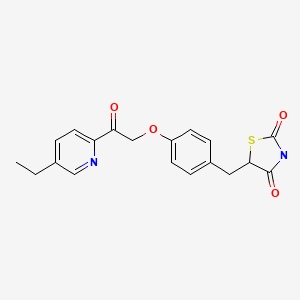
MITOGLITAZONE


Chemical structure for Mitoglitazone

MITOGLITAZONE

MSDC-0160; CAY 10415; 146062-49-9

5-[4-[2-(5-Ethylpyridin-2-yl)-2-oxoethoxy]benzyl]thiazolidine-2,4-dione

5-[[4-[2-(5-ethylpyridin-2-yl)-2-oxoethoxy]phenyl]methyl]-1,3-thiazolidine-2,4-dione

5-(4-(2-(5-cthylpyridin-2-yl)- 2-oxoethoxy)benzyl)-1,3 -thiazolidiiie-2,4-dione

Pfizer, INNOVATOR  phase 2

MSD-9
MSDC-0160
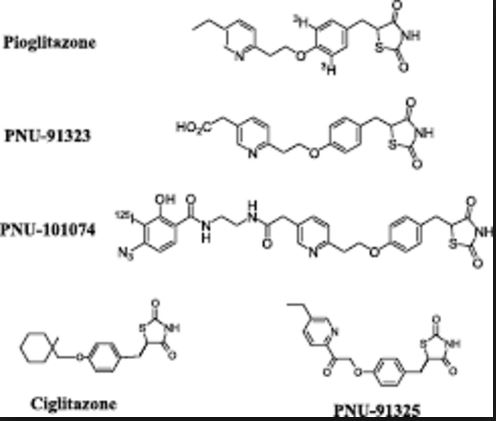
PNU-91325
U-91325

BACKGROUND

Thiazolidinedione analogs either prevent or ameliorate an insulin resistance state, which occurs genetically or is induced by dietary means. 5-(4-(2-(5-Ethylpyridin-2-yl)-2- oxoethoxy)benzyl)-l,3-thiazolidine-2,4-dione of Formula (I) (Mitoglitazonc) is an antidiabetic thiazolidinedione being evaluated for the treatment of non-insulin-dependent diabetes mellitus. Non-insulin-dependent diabetes mellitus (NIDDM) is a metabolic disease characterized by a reduction in the response of the peripheral target tissue to insulin and the inability of pancreatic insulin reserves to overcome the reduced response. Improvement of insulin sensitivity of the target tissue not only reduces the consequences of the disease but actually aids in the prevention of NIDDM.

The synthesis of Mitoglitazone has been reported (J. Med. Chem. , 1996, 39, 5053- 5063; Org. Pro. Res. & Dev. (OPRD), 2002, 6, 721-728 and U.S. PaL No. 5,441,971).

…………………………….

http://www.google.com/patents/WO1992018501A1?cl=en


……………………………………

Org. Proc. Res. Dev., 2002, 6 (5), pp 721–728
DOI: 10.1021/op025549s

http://pubs.acs.org/doi/abs/10.1021/op025549s

Abstract Image

An efficient six-step synthesis has been developed for the preparation of the thiazolidinedione analogue PNU-91325 (3) from the commercially available olefin 12. This process involves a novel epoxide ring opening with a deactivated phenol under phase-transfer conditions. Significant improvements were made in the oxidation of a secondary alcohol to the ketone and the 1,4-reduction of an enone from a previous process. Overall, this route allows for the preparation of PNU-91325 in 25% yield.


…………………………………….

US5,441,971

http://www.google.com/patents/US5441971


……………………………..

J. Med. Chem., 1996, 39 (26), pp 5053–5063
DOI: 10.1021/jm9605694

http://pubs.acs.org/doi/abs/10.1021/jm9605694

Pioglitazone (5-(4-(2-(5-ethyl-2-pyridyl)ethoxy)benzyl)-2,4-thiazolidinedione, 2) is a prototypical antidiabetic thiazolidinedione that had been evaluated for possible clinical development. Metabolites 69 have been identified after dosing of rats and dogs. Ketone 10has not yet been identified as a metabolite but has been added to the list as a putative metabolite by analogy to alcohol 6 and ketone 7. We have developed improved syntheses of pioglitazone (2) metabolites 69 and the putative metabolite ketone 10. These entities have been compared in the KKAy mouse model of human type-II diabetes to pioglitazone (2). Ketone 10 has proven to be the most potent of these thiazolidinediones in this in vivo assay. When 610 were compared in vitro in the 3T3-L1 cell line to 2, for their ability to augment insulin-stimulated lipogenesis, 10 was again the most potent compound with 6, 7, and 9roughly equivalent to 2. These data suggest that metabolites 6, 7, and 9 are likely to contribute to the pharmacological activity of pioglitazone (2), as had been previously reported for ciglitazone (1).

5-((4-(2-(5-Ethyl-2-pyridyl)-1-oxoethoxy)phenyl)methyl)-2,4-thiazolidinedione (10). MITOGLITAZONE

free flowing white powdery solid

(mp 146−147 °C):

TLC (Merck; MeOH−CH2Cl2, 5:95, UV(+)) Rf = 0.21;

1H-NMR (CDCl3) δ 8.95 (brs, 1), 8.52 (d, J = 2.0 Hz, 1), 8.02 (d, J = 8.0 Hz, 1),

7.70 (dd, J = 8.0, 2.0 Hz, 1), 7.16 (d, J = 8.7 Hz, 2), 6.94 (d, J = 8.7 Hz, 2),

5.62 (s, 2), 4.49 (dd, J = 9.7, 3.8 Hz, 1), 3.47 (dd, J = 14.2, 3.8 Hz, 1),

3.08 (dd, J = 14.2, 9.7 Hz, 1), 2.76 (q, J = 7.6 Hz, 2), 1.31 (t, J = 7.6 Hz, 3);


13C-NMR (CDCl3) δ 194.7, 174.1, 170.4, 157.7, 149.7, 148.9, 144.7, 136.3, 130.3, 128.4, 121.9, 115.2, 70.5, 53.7, 37.8, 26.4, 15.0;

EI/MS (70 eV) 370 (M+, 19.4), 341 (6.9), 254 (20.6), 148 (base).

Anal. (C19H18N2O4S) C, H, N, S.


……………………………….

1H NMR PREDICTION 

mitoglitazone


13C NMR PREDICTION

mitoglitazone

……………………………

WILL BE UPDATED…….keep watching this post

Pioglitazone


Pioglitazone.svg

Pioglitazone

5-[[4-[2-(5-ethyl-2-pyridinyl)-ethoxy]phenyl] methyl]- 2,4- thiazolidinedione

5-{4-[2-(5-Ethyl-pyridin-2-yl)-ethoxy]-benzyl}-2,4-thiazolidene dione

cas  111025-46-8
 5-[[4-[2-(5-Ethyl-2-pyridinyl)ethoxy]phenyl]methyl]-2,4-thiazolidinedione
Additional Names: (±)-5-[p-[2-(ethyl-2-pyridyl)ethoxy]benzyl]-2,4-thiazolidinedione
Manufacturers’ Codes: AD-4833
Molecular Formula: C19H20N2O3S
Molecular Weight: 356.44
Percent Composition: C 64.02%, H 5.66%, N 7.86%, O 13.47%, S 9.00%
Properties: Colorless needles from DMF + water, mp 183-184°.
Melting point: mp 183-184°
Therap-Cat: Antidiabetic.

Pioglitazone

Pioglitazone (Actos) is a prescription drug of the class thiazolidinedione (TZD) with hypoglycemic (antihyperglycemic, antidiabetic) action to treat diabetes. Actos was the tenth-best selling drug in the U.S. in 2008, with sales exceeding $2.4 billion. While pioglitazone does decrease blood sugar levels, studies on the main cardiovascular outcomes has not yielded statistically significant results. Its cardiovascular safety profile compares favorably with rosiglitazone (Avandia), which was withdrawn after concerns about an increased risk of cardiac events. Pioglitazone has been found to be associated with bladder tumors and has been withdrawn in some countries.

Medical uses

Pioglitazone is used for the treatment of diabetes mellitus type 2 either alone or in combination with a sulfonylurea, metformin, orinsulin. There was, however, no statistically significant difference in the main outcomes studied.

Pioglitazone has also been used to treat non-alcoholic steatohepatitis (fatty liver), but this use is presently considered experimental.

(RS)-5-(4-[2-(5-ethylpyridin-2-yl)ethoxy]benzyl)thiazolidine-2,4-dione
Clinical data
Trade names Actos
AHFS/Drugs.com monograph
MedlinePlus a699016
Licence data EMA:Link, US FDA:link
Pregnancy cat.
  • C
Legal status
Routes oral
Pharmacokinetic data
Protein binding >99%
Metabolism liver (CYP2C8)
Half-life 3–7 hours
Excretion in bile
Identifiers
CAS number 111025-46-8 Yes
ATC code A10BG03
PubChem CID 4829
IUPHAR ligand 2694
DrugBank DB01132
ChemSpider 4663 Yes
UNII X4OV71U42S Yes
KEGG D08378 Yes
ChEBI CHEBI:8228 Yes
ChEMBL CHEMBL595 Yes
Chemical data
Formula C19H20N2O3S 
Mol. mass 356.44 g/mol

Derivative Type: Hydrochloride
CAS Registry Number: 112529-15-4
Manufacturers’ Codes: U-72107A
Trademarks: Actos (Takeda)
Molecular Formula: C19H20N2O3S.HCl
Molecular Weight: 392.90
Percent Composition: C 58.08%, H 5.39%, N 7.13%, O 12.22%, S 8.16%, Cl 9.02%
Properties: Colorless prisms from ethanol, mp 193-194°. Sol in DMF; slightly sol in ethanol; very slightly sol in acetone, acetonitrile. Practically insol in water; insol in ether.
Melting point: mp 193-194°
nda 021073, actos, 15-7-99, tablet, takeda usa,

ACTOSView pdf

US Patent No Expiry Date patent use code
5965584 Jun 19, 2016 U-753
6150383 Jun 19, 2016 U-418
6150384 Jun 19, 2016 U-419
6166042 Jun 19, 2016 U-414
6166043 Jun 19, 2016 U-415
6172090 Jun 19, 2016 U-416
6211205 Jun 19, 2016 U-410
6271243 Jun 19, 2016 U-411
6303640 Aug 9, 2016 U-425
6329404 Jun 19, 2016 U-753

DMF

DMF16635 STATUSA TYPEII SUMISSION6/11/2003 BIOCON LTD PIOGLITAZONE HYDROCHLORIDE AS MANUFACTURED IN BALGALORE, INDIA.
16672 A II 6/30/2003 CIPLA LTD PIOGLITAZONE HYDROCHLORIDE USP (ESUB) AS MANUFACTURED IN PUNE, MAHARASHTRA, INDIA
16675 A II 7/2/2003 DR REDDYS LABORATORIES LTD PIOGLITAZONE HYDROCHLORIDE AS MANUFACTURED IN ANDHRA PRADESH, INDIA.
16682 A II 7/3/2003 RANBAXY LABORATORIES LTD PIOGLITAZONE HYDROCHLORIDE AS MANUFACTURED IN PUNJAB, INDIA.
16684 A II 7/8/2003 USV LIMITED PIOGLITAZONE HYDROCHLORIDE (ESUB) AS MANUFACTURED IN MUMBAI, INDIA.

more.clickhttp://www.usactives.com/z1/search.php?zoom_query=PIOGLITAZONE

Synthesis

PATENT

http://www.google.com/patents/WO2004101560A1?cl=en

Many thiazolidinedione derivatives or “glitazones” are known to exhibit hypoglycemic activity and/or blood lipid lowering activity and have been proposed for use in treating, inter alia, diabetes. Some of the more well known and/or studied glitazones include pioglitazone, troglitazone, and rosiglitazone. Pioglitazone, chemically 5-[[4-[2-(5-ethyl-2-pyridinyl)-ethoxy]phenyl] methyl]- 2,4- thiazolidinedione of formula

(1)

Figure imgf000002_0001

is a commercially approved antidiabetic agent. Pharmaceutical compositions comprising pioglitazone, as the hydrochloride salt, are marketed under the brand name ACTOS® (Takeda Chemical Ind.) for treatment of type II diabetes.

Pioglitazone and its hydrochloride have been disclosed in EP 193256 and corresponding U.S. Patent No. 4,687,777. In these patents, the glitazone, such as pioglitazone, can be formed by cyclizing an alpha-bromo acid ester (2) with thiourea. The resulting imino-thiazolidinone (3) is then hydrolyzed to make the corresponding glitazone. For pioglitazone, the reaction can be represented as follows:

Figure imgf000003_0001

The starting alpha-bromo acid ester (2) is taught to be prepared by Meerwein arylation. This process comprises preparing the corresponding aniline (4), diazotation thereof in the presence of hydrobromic acid, and coupling of the product of diazotation with an acrylic acid ester (5) under catalysis by cuprous oxide as shown below:

reduction

Figure imgf000003_0002
Figure imgf000003_0003

(4) (5)

However, forming the alpha-bromo acid ester by the Meerwein arylation reaction can be problematic. The sequence of reactions within this transformation must be controlled precisely. Otherwise the diazo-compound generated during the reaction would react with another nucleophile such as the bromide anion leading to a complicated outcome. Therefore, the reaction often gives a complicated result and lower chemical yield. Furthermore, the preparation of the starting aniline derivative (4) comprises a hydrogenation step that requires a special apparatus, which gives some difficulties when scaling-up.

EP 0 008 203, which is related to U.S. Patent Nos. 4,287,200 and 4,481,141, discloses additional glitazones, i.e., not pioglitazone, that can be formed by several possible methods. In addition to the general scheme described in EP 193256, two more synthetic routes are proposed. One technique comprises a cyclization reaction as shown below to form the intended glitazone:

Figure imgf000004_0001

However, the formation of the starting thiocyano compound is not described. The other technique mentioned in EP 0 008 203 involves coupling the thiazolidine-containing moiety and the substituted alkyl moiety via alkylation of a phenolic oxygen to form the glitazone. If applied to pioglitazone, the reaction would be represented as follows:

Figure imgf000004_0002

(9) (10)

Example 11

Pioglitazone (from 2-thiocyanato-3- {4-[2-(5-ethyl-pyridin-2-yl)-ethoxy]- phenyl} -propionic acid). 0.50 g of 2-thiocyanato-3-{4-[2-(5-ethyl-pyridin-2-yl)-ethoxy]-phenyl}- propionic acid was dissolved in 10 mL of methanesulfonic acid, and the resulting brown solution was stirred overnight. Then, the reaction mixture was poured onto crushed ice upon stirring and sodium hydrogencarbonate was added in portions to neutralize the mixture. Precipitated light brown crystals were filtered off and dried to give 0.70 g of raw product, which was further purified by mixing with 12 % ethanolic solution of hydrogen chloride. The undissolved portion was filtered off, and the filtrate was precipitated with sodium bicarbonate, which gave crystals of pioglitazone

with a m.ρ. of 180 – 184°C.

PATENT

EP 0193256; ES 8705886; JP 1986267580; US 4687777

The condensation of 2-(5-ethyl-2-pyridyl)ethanol (I) with 4-fluoronitrobenzene (II) by means of NaH in DMF gives 4-[2-(5-ethyl-2-pyridyl)ethoxy]nitrobenzene (III), which is reduced with H2 over Pd/C in methanol to yield the corresponding aniline (IV). The reaction of (IV) with NaNO2/HBr and methyl acrylate (V) in acetone/methanol affords the 2-bromopropionate derivative (VI), which is cyclized with thiourea (VII) by means of NaOAc in refluxing ethanol to provide the 2-imino-4-thiazolidinone (VIII). Finally, this compound is hydrolyzed with refluxing 2N HCl.

http://www.drugfuture.com/synth/syndata.aspx?ID=164965

PATENT

EP 0506273

This compound has been obtained by several different methods. The reaction of 2-(5-ethyl-2-pyridyl)ethanol (I) with Ts-Cl and NaOH in THF gives the corresponding tosylate (II), which is condensed with 4-hydroxybenzaldehyde (IV) by means of BnNBu3Cl and NaOH or K2CO3 to yield the aryl ether (V) (1-3). The condensation of (V) with thiazolidine-2,4-dione (VI) in refluxing ethanol affords the 5-benzylidenethiazolidinedione (VII), which is finally reduced with H2 over Pd/C in DMF or dioxane. The reaction of 2-(5-ethyl-2-pyridyl)ethanol (I) with Ms-Cl and TEA in dichloromethane THF gives the corresponding mesylate (III), which is condensed with 4-hydroxybenzaldehyde (IV) by means of K2CO3 to yield the already reported aryl ether (V). The condensation of 2-(5-ethyl-2-pyridyl)ethanol (I) with 4-fluorobenzonitrile (VIII) by means of NaH gives 4-[2-(5-ethyl-2-pyridyl)ethoxy]benzonitrile (IX), which is reduced with RaNi and HCOOH to yield the already reported 4-ethoxybenzaldehyde derivative (V).

http://www.drugfuture.com/synth/syndata.aspx?ID=164965

………………………….

11th Symp Med Chem (Dec 4-5, Tokushima) 1990,Abst P-11

Two new related syntheses of pioglitazone hydrochloride have been described: 1) The condensation of 2-(5-ethylpyridin-2-yl)ethanol (I) with 4-hydroxybenzaldehyde (II) by means of benzyltributylammonium chloride, NaOH and tosyl chloride gives 4-[2-(5-ethylpyridin-2-yl)ethoxy]benzaldehyde (III), which is condensed with thiazolidine-2,4-dione (IV) in basic medium to afford 5-[-4-[2-(5-ethylpyridin-2-yl)ethoxy]benzylidene]thiazolidine-2,4-dione (V). Finally, this compound is hydrogenated in the usual way. 2) The condensation of alcohol (I) with 4-fluorobenzonitrile (VI) by means of NaH gives 4-[2-(5-ethylpyridin-2-yl)ethoxy]benzonitrile (VII), which is reduced with Raney Nickel and formic acid to the aldehyde (III), already obtained.

http://www.drugfuture.com/synth/syndata.aspx?ID=164965

.CLIP

http://www.beilstein-journals.org/bjoc/single/articleFullText.htm?publicId=1860-5397-9-265

Beilstein J. Org. Chem. 2013, 9, 2265–2319.

Pioglitazone is clearly related to rosiglitazone (1.40) with its structure only differing in the substitution pattern of the parent pyridine ring. Its synthesis begins with the hydroxymethylation of 2-methyl-5-ethylpyridine (1.11), a commodity chemical obtained from the condensation of acetaldehyde with ammonium acetate (Scheme 12) [43].

At elevated temperatures and pressures 2-methyl-5-ethylpyridine undergoes a condensation reaction with formaldehyde allowing isolation of the chain extended hydroxyethylpyridine 1.70upon distillation although in poor yield [44].

Following subsequent SNAr reaction aryl ether 1.71 is obtained, which is used as crude material in the subsequent Knoevenagel condensation with thiazolidinedione 1.68. In order to reduce the intermediate benzylidene double bond in this example sodium borohydride is used in the presence of cobalt chloride efficiently delivering pioglitazone in high purity.

[1860-5397-9-265-i12]
Scheme 12: Synthesis of pioglitazone.

Other syntheses of pioglitazone use related pyridine building blocks and aim to generate late stage intermediates that deliver the target compound upon de novo synthesis of the thiazolidinedione ring system. For instance phenyl ether 1.73 can be obtained via Williamson ether synthesis between mesylate 1.74 and phenol 1.75 (Scheme 13).

Removal of the acetyl protecting group under acidic conditions renders aniline 1.76 which is subsequently subjected to a Meerwein arylation reaction which occurs via diazotisation and subsequent treatment with acrylonitrile in the presence of cuprous oxide [45-48].

[1860-5397-9-265-i13]
Scheme 13: Meerwein arylation reaction towards pioglitazone.

Alternatively, an equivalent acid functional material can be prepared starting from tyrosine (1.78) via a dual protection of the amino acid unit as the methyl ester and the amine as the benzaldehyde imine (Scheme 14). This is then followed by analogous ether formation with the previously generated mesylate 1.74.

Intermediate 1.80 is then hydrolysed to reveal once again the amino acid functionality, which upon diazotisation in the presence of hydrobromic acid selectively forms the α-bromo ester 1.82.

[1860-5397-9-265-i14]
Scheme 14: Route towards pioglitazone utilising tyrosine.

A more direct SNAr approach utilising 4-fluorobenzonitrile as the acceptor and the sodium alkoxide of hydroxyethylpyridine 1.84 as the nucleophile has been successfully conducted (Scheme 15) [49].

The nitrile unit is partially reduced and hydrolysed to the benzaldehyde 1.71 using Raney-Ni under transfer hydrogenation conditions in wet formic acid. A Darzens reaction between this aldehyde and ethyl chloroacetate in the presence of sodium ethoxide delivers epoxide 1.87.

The material is next subjected to hydrogenolysis using Pd/C in methanol with a 1 bar hydrogen pressure to reductively ring open the epoxide. Finally, the transformation of the alcohol to the mesylate 1.88 occurs under standard conditions.

[1860-5397-9-265-i15]
Scheme 15: Route towards pioglitazone via Darzens ester formation.

In order to complete the syntheses of pioglitazone as outlined in the previous schemes several procedures for the installation of the thiazolidinedione ring system have been reported [50]. For instance the α-bromoester of intermediate 1.82 will render the desired heterocycle upon treatment with sodium isothiocyanate (Scheme 16, A).

Alternatively, the α-amino acid portion of 1.81 can be diazotised under standard conditions and will subsequently deliver the same product when treated with lithium isothiocyanate (Scheme 16, B).

Finally, α-bromonitrile 1.77 can be condensed with thiourea to give pioglitazone after aqueous work-up (Scheme 16, C).

[1860-5397-9-265-i16]
Scheme 16: Syntheses of the thiazolidinedione moiety.

ref for above

43 Frank, R. L.; Pilgrim, F. J.; Riener, E. F. Org. Synth. 1950, 30. doi:10.1002/0471264180.os030.15

44 McGall, G. H.; Barone, A. D. Nucleic Acid Labeling Compounds. U.S. Patent 2001/0018514 A1, Aug 30, 2001.

45 Finch, H.; Fox, C.; Sajad, A. Respiratory Disease Treatment. W.O. Patent WO2010015818, Feb 11, 2010.

46 Adiyaman, M.; Guner, D.; Ridvanoglu, N.; Yurdakul, A. A. Process for the Production of substituted Phenyl Ethers. W.O. Patent WO2004000810, Dec 31, 2003.

47 Nersesian, D. L.; Black, L. A.; Miller, T. R.; Vortherms, T. A.; Esbenshade, T. A.; Hancock, A. A.; Cowart, M. D.Bioorg. Med. Chem. Lett. 2008, 18, 355–359. doi:10.1016/j.bmcl.2007.10.067
48 Halama, A.; Hejtmankova, L.; Lustig, P.; Richter, J.; Srsnova, L.; Jirman, J. Method for obtaining Pioglitazone as an antidiabetic agent. W.O. Patent WO02088120, Nov 7, 2002.

49 Thijs, L.; Zhu, J. Processes for making Pioglitazone and compounds of the processes. W.O. Patent WO2005080387, Sept 1, 2005.

50  Bhanja, C.; Jena, S. J. Chem. Pharm. Res. 2012, 4, 4323–4333.

PATENT

http://www.google.com/patents/WO2012153312A1?cl=en

Pioglitazone of Formula I, chemically (±)-5-[[4-[2-(5-ethyl-2- pyridinyl)ethoxy]phenyl]methyl]-2,4-thiazolidinedione, is used as an adjunct to diet and exercise to improve glycemic control in patients with type 2 diabetes (non-insulin- dependent diabetes mellitus or “NIDDM”).

The commercially available form of pioglitazone is its monohydrochloride salt.

Figure imgf000002_0001

Dehydropioglitazone (hereinafter referred to as “DHP” or “DHP of Formula II”) is known as an intermediate in the synthesis of pioglitazone or salts thereof.

Figure imgf000002_0002

In addition, DHP is also present as a process impurity or degradation product in pioglitazone or salts thereof. Several reasons are attributed for the generation of DHP in pioglitazone. Some factors linked to the generation of this impurity include the incomplete reduction of DHP and the oxidation of pioglitazone during isolation or while on stability.

Several processes are known in the literature for making pioglitazone or a salt thereof, for example, U.S. Patent Nos. 4,687,777; 5,585,495; 4,812,570; 5,554,758; 5,952,509; and 6,100,403; U.S. Publications 2002/0106762 and 2002/0050563; WO 03/53367; WO 03/80056; WO 2004/07490; WO 2004/024059; WO 2004/101560; WO 2004/101561 , WO 2005/049610; WO 2008/075380; WO 2006/1 17654; WO

2008/142706; WO 2005/058827; WO 2009/104200; and WO 2009/133576.

U.S. Publication 2006/0252803 provides a process for the preparation of pioglitazone which involves dissolving DHP of Formula II in formic acid and hydrogenating with hydrogen in the presence of 10% Palladium on Carbon under 2 atmospheric pressures and a temperature of 80°C. This process reportedly provides pioglitazone having less than about 0.14 % of the impurity at RRT 0.64 (HPLC).

It also provides a process for the preparation of pioglitazone which involves combining DHP of Formula II with dimethylformamide and hydrogenating with hydrogen in the presence of Palladium on Carbon under 3 atmospheric pressures and a temperature of 50°C. It is reported that -68.5% of DHP was converted to pioglitazone, containing about 3.5 % impurities (HPLC).

U.S. Publication 2009/118514 provides various purification methods for pioglitazone. It provides obtaining a solution of pioglitazone with a mixture of dimethylformamide (DMF) and 4% water, DMF and 5% methanol, DMF and 10% methanol, 1 ,4-dioxane or DMF and isopropyl alcohol at a temperature of about 90°C and precipitating pioglitazone from the solution by cooling to a temperature of about 25°C.

U.S. Publication 2007/0078170 provides a process for the preparation of pioglitazone which involves obtaining a clear solution of pioglitazone in

dimethylformamide at 85°C and adding methanol at a temperature of 60°C and further cooling to 10°C to precipitate pioglitazone.

Impurities in pioglitazone or its hydrochloride salt, or any active pharmaceutical ingredient (“API”), are undesirable and, in extreme cases, might even be harmful to a patient being treated with a dosage form containing the API. The purity of an API is critical for commercialization. The product of a chemical reaction is rarely just the target compound. Side products and by-products of the reaction and adjunct reagents used in the reaction will, in most cases, also be present in the product in varying amounts. Extra effort is often required to get pharmaceutically acceptable levels of purity of the target compound.

EXAMPLES

Example 1 : Purification of Pioglitazone

Dimethylformamide (10 mL) was heated to 80°C to 82°C and pioglitazone (2 g) was added to the hot solution and stirred at 80°C to get a clear solution. The solution was cooled to 75 °C and mixture of acetone (10 mL) and methanol (10 mL) was added to the solution in 30 to 45 minutes at 70°C to 75°C. After complete addition, the reaction mass was cooled to 30°C to 35°C slowly in about 2 hours and was filtered. The solid was washed with dimethylformamide/acetone/methanol mixture (6 mL).

DHP impurity content after purification: 0.05%

DHP impurity content before purification: 0.16%

Yield: 90% Example 2: Purification of Pioglitazone

Dimethylformamide (200 mL) was heated to 80°C to 85 °C and pioglitazone (40 g) was added to the hot solution and stirred at 80°C to get a clear solution. The solution was cooled to 75°C and mixture of acetone (200 mL) and methanol (200 mL) was added to this solution in 30 minutes to 45 minutes at 65°C to 75°C. After complete addition, the reaction mass was cooled to 30°C to 35°C slowly in about 2 hours and was filtered. The solid was washed with acetone/methanol mixture (100 mL).

DHP impurity content after purification: 0.04%

DHP impurity content before purification: 0.15%

Yield: 92%

Example 3: Purification of Pioglitazone (Control)

Dimethylformamide (25 mL) was heated to 80°C to 85 °C and pioglitazone (5 g) was added at 85°C. The solution was cooled to 55°C and a mixture of acetone (25 mL) and methanol (25 mL) was added to the solution in 30 minutes to 45 minutes at 55°C to 60°C. After complete addition, the reaction mass was cooled to 35°C to 37°C slowly in about 2 hours and was filtered. The solid was washed with acetone/methanol mixture (10+lOmL).

DHP impurity content after purification: 0.11%

DHP impurity content before purification: 0.12%

Yield: 92%

PATENT

http://www.google.com/patents/US20070078170

EXAMPLE 5

Conversion of Pioglitazone to Pioglitazone Hydrochloride

Pioglitazone hydrochloride was prepared in a similar manner as exemplified in Example 4. To de-ionized water (7 L) heated to 80° C. added the product obtained from Example 4 (1 Kg) under stirring at 80° C. It was further stirred for 10 min at 80 – 82° C. and conc. HCI (0.5 L) was added to it under stirring at 80° C. The resultant mass was further stirred for 10 min at 80-82° C. to obtain a clear solution. The solution was filtered through celite bed directly into RB flask and the bed was washed with IN HCI (1 L) at 80-82° C. It was cooled to 5° C. under stirring at 5-0° C. for 1 hr. The solids were filtered under N2 atmosphere and dried on the Büchner funnel for about 15 minutes. The product obtained was then dried under vacuum at 55-60° C. to afford the title compound.

Yield: 930.0 g (93%)

HPLC Purity: 99.61%

Samples of pioglitazone hydrochloride prepared in examples 4 and 5 were studied for their solubility, as set forth below:

PATENT

US 2014088127

http://www.google.com/patents/US20140088127

5-[4-[2-(5-ethylpyridyl)ethoxy]benzyl-2,4-thiazolidinedione (Pioglitazone hydrochloride, R in 1 is 5-ethyl).

EXAMPLE 55

5-{4-[2-(5-Ethyl-pyridin-2-yl)-ethoxy]-benzyl}-2,4-thiazolidene dione (1)

To 5 g (0.0121 mol) of 5-{4-[2-chloro-2-(5-ethyl-pyridin-2-yl)-ethoxy]-benzyl}-2,4-thiazolidene dione dissolved in 25 mL acetic acid was added 1.62 (0.0243 mol) g zinc in 5 min. Stirring continued for 15 hours at 25-30° C. Reaction mixture was poured in excess water, made alkaline using 10% Na2CO3 and extracted with ethyl acetate. After distilling off ethyl acetate in vacuo, methanol was added to precipitate out 1.13 g (25%) g of the crystalline solid product. The two impurities identified in this reaction were 5-ethyl-2-vinyl-pyridine 0.128 g (10%) and 5-(4-hydroxy benzyl)-thiazolidin-2,4-dione 0.342 g (12%).

The product obtained was characterized by IR, Mass, 13C NMR, and 1H NMR, which are as given below. pioglitazone base

IR spectrum (cm−1): 3417 (N—H str.), 1693, 1743 (C═O str.), 1037 (C—O—C str.)

Mass spectrum (m/z) 357.1 (M+H)+

13C-NMR (DMSO-d6): δ 176.5, 172.5, 157.8, 152.1, 145.9, 142.0, 141.1, 131.2, 129.9, 127.8, 115.2, 66.2, 53.8, 37.0, 33.2, 25.4, 15.5

1H-NMR (DMSO-d6): δ 12.0 (1H, s), 6.84-8.71 (7H, m), 4.86 (1H, dd), 4.38 (2H, t), 3.48 (2H, t), 3.25 (1H, dd), 3.04 (1H, dd), 2.75 (2H,q), 1.21 (3H, t)

Melting point 172-175° C.

The final product was dissolved into 12 mL methanol and 0.05 mL con. HCl was added into it at 25° C. Reaction mixture was refluxed for 30 min. and cooled to 10° C. Precipitated hydrochloride salt was filtered off and dried to yield 1.1 g (22%) of the salt, which was characterized by IR, Mass, 13C NMR and 1H NMR, which are as given below.

pioglitazone hydrochloride

IR spectrum (cm−1): 3257 (N—H str.), 1689, 1743 (C═O str.), 1155, 1244 (C—O—C str.)

Mass spectrum (m/z): 357.1 (M+H)+

13C-NMR (DMSO-d6): δ 175.7, 171.7, 157.0, 151.0, 141.1, 129.0, 145.4, 139.8, 127.2, 130.4, 114.4, 65.4, 53.0, 39.2, 36.2, 24.6, 14.6

1H-NMR (DMSO-d6): δ 12.09 (1H, s), 6.82-8.7 (7H, m), 4.8 (1H, dd), 4.38 (2H, t), 3.5 (2H, t), 3.0 (2H, m), 2.75 (2H,q), 1.21 (3H, t)

Melting point: 190-193° C.

EXAMPLE 565-{4-[2-(5-Ethyl-pyridin-2-yl)-ethoxy]-benzyl}-2,4-thiazolidene dione (1)

The procedure described in example 55 was repeated except that temperature was maintained 5-10° C., and substantially the same results were achieved. In this particular case, the final product 5-{4-[2-(5-ethyl-pyridin-2-yl)-ethoxy]-benzyl}-2,4-thiazolidene dione obtained was 0.911 g (20%), is identical in every respect with the product of example 55. m.p. 172° C.

EXAMPLE 575-{4-[2-(5-Ethyl-pyridin-2-yl)-ethoxy]-benzyl}-2,4-thiazolidene dione (1)

To a solution of 0.8 g (0.00184 mol) of 5-{4-[2-chloro-2-(5-ethyl-pyridin-2-yl)-ethoxy]-benzyl}-2,4-thiazolidene dione dissolved in 10 mL ethyl acetate was added 0.8 mL (0.014 mol) acetic acid and 0.119 g (0.00184 mol) zinc in 5 minutes at 25-30° C. Stirring continued for 9 hr. at 30-35° C. Solid material separated was filtered off and dried to get titled compound. Yield of the product was 0.3 g (41%). m.p. 173° C.

The product obtained was characterized by IR, Mass, 13C NMR, and 1H NMR, which was found to be identical with the product obtained in example 55. The impurity profile was also similar to the product obtained in example 55.

EXAMPLE 585-{4-[2-(5-Ethyl-pyridin-2-yl)-ethoxy]-benzyl}-2,4-thiazolidene dione (1)

The procedure described in example 57 was repeated except that acetic acid was replaced by 1.038 g (0.014 mol) propionic acid, and substantially the same results were achieved. In this particular case, the final product 5-{4-[2-(5-ethyl-pyridin-2-yl)-ethoxy]-benzyl}-2,4-thiazolidene dione obtained was 0.3 g (41%), is identical in every respect with the product of example 55. m.p. 172° C.

EXAMPLE 595-{4-[2-(5-Ethyl-pyridin-2-yl)-ethoxy]-benzyl}-2,4-thiazolidene dione (1)

The procedure described in example 57 was repeated except that tetrahydrofuran was used as solvent, and substantially the same results were achieved. In this particular case, the final product 5-{4-[2-(5-ethyl-pyridin-2-yl)-ethoxy]-benzyl}-2,4-thiazolidene dione obtained was 0.13 g (18%), is identical in every respect with the product of example 55. m.p. 173° C.

EXAMPLE 605-{4-[2-(5-Ethyl-pyridin-2-yl)-ethoxy]-benzyl}-2,4-thiazolidene dione (1)

To a mixture of 5 mL 35% Con. HCl and 5 mL water, 0.5 g (0.0012 mol) of 5-{4-[2-chloro-2-(5-ethyl-pyridin-2-yl)-ethoxy]-benzyl}-2,4-thiazolidene dione was added followed by the addition of 0.039 g (0.0006 mol) zinc (tlc). Reaction mixture was poured into 20 mL water, made alkaline by 10% K2CO3 solution and product was extracted with 25 mL ethyl acetate. Organic layer was separated, dried (magnesium sulfate) and concentrated under reduced pressure. Methanol was added to the residual mass to get 0.1 g (22%) crystalline titled product. m.p. 174° C.

The product obtained was characterized by IR, Mass, 13C NMR, and 1H NMR, which was found to be identical with the product obtained in example 55.

EXAMPLE 615-{4-[2-(5-Ethyl-pyridin-2-yl)-ethoxy]-benzyl}-2,4-thiazolidene dione (1)

To a mixture of 35 mL ethanol and 7 mL (0.122 mol) glacial acetic acid was dissolved 3.5 g (0.0084 mol) of 5-{4-[2-chloro-2-(5-ethyl-pyridin-2-yl)-ethoxy]-benzyl}-2,4-thiazolidene dione followed by addition of 0.819 g (0.0126 mol) zinc. Precipitated product was filtered and dried to yield 1.91 g (60%) product. m.p. 174° C.

The product obtained was characterized by IR, Mass, 13C NMR and 1H NMR, which was found to be identical with the product obtained in example 55.

EXAMPLE 625-{4-[2-(5-Ethyl-pyridin-2-yl)-ethoxy]-benzyl}-2,4-thiazolidene dione (1)

Into 10 mL (0.175 mol) glacial acetic acid, 1 g (0.0024 mol) of 5-{4-[2-chloro-2-(5-ethyl-pyridin-2-yl)-ethoxy]-benzyl}-2,4-thiazolidene dione and 100 mg (0.0018 mol) ammonium chloride were dissolved. Under stirring 0.078 g (0.0012 mol) zinc was added. Subsequent work-up in water yielded 0.6 g (66%) of the desired product. m.p. 175° C.

The product obtained was characterized by IR, Mass, 13C NMR, and 1H NMR, which was found to be identical with the product obtained in example 55.

EXAMPLE 635-{4-[2-(5-Ethyl-pyridin-2-yl)-ethoxy]-benzyl}-2,4-thiazolidene dione (1)

The procedure described in example 61 was repeated on 5 g scale except that isopropyl alcohol was used as solvent and reaction mixture was allowed to stir for 8 hours. Substantially the same results were achieved. In this particular case, the final product 5-{4-[2-(5-ethyl-pyridin-2-yl)-ethoxy]-benzyl}-2,4-thiazolidene dione obtained was 3 g (66%), is identical in every respect with the product of example 55. m.p. 174° C.

EXAMPLE 645-{4-[2-(5-Ethyl-pyridin-2-yl)-ethoxy]-benzyl}-2,4-thiazolidene dione (1)

0.63 g (0.0097 mol) Zinc dust and 8.93 mL (0.0582 mol) tetramethyl ethylenediamine were added into 80 mL ethanol under nitrogen atmosphere. To this a mixture of 1.18 mL acetic acid and 7.8 g (0.0194 mol)) of 5-{4-[2-chloro-2-(5-ethyl-pyridin-2-yl)-ethoxy]-benzyl}-2,4-thiazolidene dione dissolved in 16 mL ethanol was added in 15 min. at 5-10° C. Reaction mixture was allowed to achieve 27° C. and 4.74 mL acetic acid was added in 15 minutes. Reaction mixture was stirred for 15 hr. The product precipitated was filtered off and dried to obtain 3.98 g (56%) of the titled product. m.p. 173° C.

The product obtained was characterized by IR, Mass, 13C NMR, and 1H NMR, which was found to be identical with the product obtained in example 55.

EXAMPLE 655-{4-[2-(5-Ethyl-pyridin-2-yl)-ethoxy]-benzyl}-2,4-thiazolidene dione (1)

To a mixture of 40 mL ethanol and 10 mL propionic acid, 5 g (0.0117 mol) of 5-{4-[2-chloro-2-(5-ethyl-pyridin-2-yl)-ethoxy]-benzyl}-2,4-thiazolidene dione hydrochloride was dissolved. To this was added 1.5 g (0.0234 mol) of zinc and stirred. Reaction mixture was stirred for 12 hr. Product precipitated was filtered off and dried to yield 2 g (48%) of the titled product. m.p. 175° C.

The product obtained was characterized by IR, Mass, 13C NMR, and 1H NMR, which was found to be identical with the product obtained in example 55.

EXAMPLE 665-{4-[2-(5-Ethyl-pyridin-2-yl)-ethoxy]-benzyl}-2,4-thiazolidene dione (1)

70 g (0.150 mol) of 5-{4-[2-chloro-2-(5-ethyl-pyridin-2-yl)-ethoxyl]-benzyl}-2,4-thiazolidene dione dissolved in a mixture methanol and acetic acid. To this was added 21.85 g (0.3 mol) of and stirred. Product precipitated was filtered off and dried to get 51 g (80%) of the desired product. The impurity profile in this reaction was similar to the impurity profile described in example 55. m.p. 174° C.

The product obtained was characterized by IR, Mass, 13C NMR, and 1H NMR, which was found to be identical with the product obtained in example 55.

The final product obtained above was treated with cone. HCl in isopropanol. Precipitated hydrochloride salt was filtered off and dried to yield 50 g of the salt, which was characterized by IR, Mass, 13C NMR and 1H NMR, which was found identical with hydrochloride salt obtained in example 55. m.p. 194-197° C.

EXAMPLE 675-{4-[2-(5-Ethyl-pyridin-2-yl)-ethoxy]-benzyl}-2,4-thiazolidene dione (1)

A solution of 250 g (0.5854 mol) of 5-{4-[2-chloro-2-(5-ethylpyridin-2-yl)-ethoxy]-benzyl}-2,4-thiazolidene dione hydrochloride in methanol and 500 mL (8.75 mol) acetic acid was added into a flask fitted with an overhead stirrer and a thermometer. To this was added 76.54 g (1.17 mol) of and stirred. The product precipitated was filtered and dried. Yield of the product was 100 g (48%). The impurity profile in this reaction was similar to the impurity profile described in example 55. m.p. 175° C.

The product obtained was characterized by IR, Mass, 13C NMR, and 1H NMR, which was found to be identical with the product obtained in example 55.

The final product treated with conc. HCl in ethanol. Precipitated hydrochloride salt was filtered off and dried to yield 100 g of the salt, which was characterized by IR, Mass, 13C NMR and 1H NMR, which was found identical with hydrochloride salt obtained in example 55. m.p. 192° C.

EXAMPLE 685-{4-[2-(5-Ethyl-pyridin-2-yl)-ethoxy]-benzyl}-2,4-thiazolidene dione (1)

10 kg (23.42 mol) of 5-{4-[2-chloro-2-(5-ethyl-pyridin-2-yl)-ethoxy]-benzyl}-2,4-thiazolidene dione hydrochloride was dissolved in a mixture of 80 lit. methanol and 20 lit. acetic acid. To this was added 3.06 kg (46.8 mol) of zinc and stirred (tlc). Product precipitated was filtered off and dried to get 7.5 Kg of the desired product. m.p. 172° C.

The product obtained was converted into its hydrochloride salt as described in example 67 to obtain 7.72 Kg (84%) of the salt, which was found to be identical in all respect with the salt obtained in example 55. The impurity profile in this reaction was similar to the impurity profile described in example 55. m.p. 192° C.

PAPER

see

Org. Proc. Res. Dev., 2002, 6 (5), pp 721–728
DOI: 10.1021/op025549s
Abstract Image

An efficient six-step synthesis has been developed for the preparation of the thiazolidinedione analogue PNU-91325 (3) from the commercially available olefin 12. This process involves a novel epoxide ring opening with a deactivated phenol under phase-transfer conditions. Significant improvements were made in the oxidation of a secondary alcohol to the ketone and the 1,4-reduction of an enone from a previous process. Overall, this route allows for the preparation of PNU-91325 in 25% yield.

clip
str1
PAPER

Figure

Improved synthetic approach: route A (feasibility) and B (after optimization)


Rakeshwar Bandichhor Ph.D. FRSC, CChem, SSWB,BB,MB

Rakeshwar Bandichhor Ph.D. FRSC, CChem, SSWB,BB,MB

Director at Dr. Reddy’s Laboratories, Vice-Chair, ACS-India Chapter (South India)

Dr. Reddy's Laboratories Logo

They have developed an improved process for pioglitazone which appears to be more compatible with industrial scale and has some advantages over the existing synthesis.

Preparation of Pioglitazone Hydrochloride (1·HCl) salt

1H NMR (400 MHz, DMSO-d6) 12.08 (s, 1H), 8.73 (d, 1H, J = 1.6 Hz), 8.43 (dd, 1H, J = 2.0, 8.0 Hz), 8.01 (d, 1H, J = 8.0 Hz), 7.16 (d, 2H, J = 8.8 Hz), 6.89 (d, 2H, J = 8.8 Hz), 4.88 (dd, 1H, J = 4.4, 8.8 Hz), 4.34 (t, 2H, J = 6.2 Hz), 3.55 (t, 2H, J = 6.2 Hz), 3.30 (dd, 1H, J = 4.4, 14.0 Hz), 3.06 (dd, 1H, J = 8.8, 14.0 Hz), 2.80 (q, 2H, J = 7.6 Hz), 1.24 (t, 3H, J = 7.6 Hz); 13C NMR (400 MHz, DMSO-d6) 175.6, 171.5, 156.9, 151.0, 145.2, 141.3, 139.8, 130.3, 129.0, 127.1, 114.4, 65.4, 52.8, 40.1, 39.9, 39.7, 39.5, 39.2, 39.0, 38.8, 36.2, 32.1, 24.5, 14.5; IR (KBr) 2928, 2742, 1743, 1694, 1616, 1510, 1461, 1313, 1243, 1038, 850, 712 cm−1; HRMS (Cl) calcd For C19H20N3O3S (M+) 356.44; found (MH+) 357.5.

An Improved Process for Pioglitazone and Its Pharmaceutically Acceptable Salt

Innovation Plaza, IPD, R&D, Dr. Reddy’s Laboratories Ltd., Survey Nos. 42, 45,46, and 54, Bachupally, Qutubullapur, R.R. District – 500 073, Andhra Pradesh, India, and Institute of Science and Technology, Center for Environmental Science, JNT University, Kukatpally, Hyderabad – 500 072, Andhra Pradesh, India
Org. Process Res. Dev., 2009, 13 (6), pp 1190–1194
DOI: 10.1021/op900131m
†DRL-IPD Communication number: IPDO-IPM-00169.
, * Corresponding author. E-mail: rakeshwarb@drreddys.com. Telephone: +91 4044346000. Fax: +91 4044346285.,
‡Innovation Plaza, IPD, R&D, Dr. Reddy’s Laboratories Ltd.
, §Institute of Science and Technology, Center for Environmental Science, JNT University.

Abstract

Abstract Image

An improved process for pioglitazone (1) is described. The process features high-yielding transformations employing inexpensive reagents and recoverable solvents.

link is

http://pubs.acs.org/doi/full/10.1021/op900131m

The original paper in OPRD is interesting example of process improvement


Literature References:
Insulin sensitizer. Prepn: K. Meguro, T. Fujita, EP 193256; eidem, US 4687777 (1986, 1987 both to Takeda);
T. Sohda et al., Arzneim.-Forsch. 40, 37 (1990).
Pharmacology: H. Ikeda et al., ibid. 156. HPLC determn in serum: W. Z. Zhong, D. B. Lakings, J. Chromatogr. 490, 377 (1989).
Mechanism of action: C. Hofmann et al., Endocrinology 129, 1915 (1991); M. Kobayashi et al., Diabetes 41, 476 (1992).
Effect on adipocyte differentiation: T. Sandouk et al., Am. J. Physiol. 264, C1600 (1993).
Clinical evaluation in noninsulin-dependent diabetes: R. Kawamori et al., Diabetes Res. Clin. Pract. 41, 35 (1998).
US8067450 Sep 15, 2008 Nov 29, 2011 Metabolic Solutions Development Company Thiazolidinedione analogues for the treatment of metabolic diseases
US8304441 Nov 16, 2011 Nov 6, 2012 Metabolic Solutions Development Company, Llc Thiazolidinedione analogues for the treatment of metabolic diseases
WO2011017244A1 * Aug 2, 2010 Feb 10, 2011 Metabolic Solutions Development Company Polymorphs of 5-(4-(2-(5-ethylpyridin-2-yl)-2-oxoethoxy)benzyl)-1,3-thiazolidine-2,4-dione (mitoglitazone)
WO2012153312A1 May 11, 2012 Nov 15, 2012 Ranbaxy Laboratories Limited Process for the purification of pioglitazone
WO2003053367A2 Dec 20, 2002 Jul 3, 2003 Ben-Zion Dolitzky Hydrogenation of precursors to thiazolidinedione antihyperglycemics
WO2003080056A2 Mar 21, 2003 Oct 2, 2003 Ben-Zion Dolitzky Fine particle size pioglitazone
WO2004007490A2 Jul 15, 2003 Jan 22, 2004 Cadila Healthcare Ltd A process to prepare pioglitazone via several intermediates.
WO2004024059A2 Aug 29, 2003 Mar 25, 2004 Parag Narayan Gadkari Improved process for preparation of thiazolidinedione derivatives
WO2004101560A1 May 11, 2004 Nov 25, 2004 Frantisek Picha Processes for making thiazolidinedione derivatives and compounds thereof
WO2004101561A1 May 13, 2004 Nov 25, 2004 Frantisek Picha Pioglitazone salts, such as pioglitazone sulfate, and pharmaceutical compositions and processes using the same
WO2005049610A1 Oct 27, 2004 Jun 2, 2005 Sudhir Nambiar Process for preparing thiazolidinediones
WO2005058827A1 Dec 16, 2004 Jun 30, 2005 Janos Fischer Process for the synthesis of pioglitazone hydrogen chloride
WO2006117654A1 May 3, 2006 Nov 9, 2006 Ranbaxy Lab Ltd Processes for the preparation of pioglitazone or salts thereof
WO2008075380A2 Dec 20, 2007 Jun 26, 2008 Ind Swift Lab Ltd Process for the preparation of thiazolidine derivatives
WO2008142706A2 May 19, 2008 Nov 27, 2008 Yogendra Kumar Chauhan Novel process for the synthesis of pioglitazone and its salts thereof
WO2009104200A1 Apr 8, 2008 Aug 27, 2009 Biocon Limited A method for preparation of thiazolidinedione derivatives
WO2009133576A1 Apr 28, 2008 Nov 5, 2009 Erregierre S.P.A. A process for the preparation of 4-[2-(5-ethyl-2-pyridyl)ethoxy]nitrobenzene and pioglitazone
US4687777 Jan 17, 1986 Aug 18, 1987 Takeda Chemical Industries, Ltd. Thiazolidinedione derivatives, useful as antidiabetic agents
US4812570 Jul 14, 1987 Mar 14, 1989 Takeda Chemical Industries, Ltd. Method for producing thiazolidinedione derivatives
US5554758 Jun 7, 1995 Sep 10, 1996 Takeda Chemical Industries, Ltd. P-/2-/5-ethyl-2-pyridyl/ethoxy/benzaldehyde
US5585495 Dec 4, 1992 Dec 17, 1996 The Upjohn Company Using a cobalt compound, ligand and reducing agent
US5952509 Jun 23, 1997 Sep 14, 1999 Takeda Chemical Industries, Ltd. Reacting p-hydroxybenzaldehyde with a pyridyl-ethyl sulfonate derivative to form 4-(2-(substituted or nonsubstituted-2-pyridyl)ethoxy) benzaldehyde
US6100403 Apr 12, 1999 Aug 8, 2000 Takeda Chemical Industries, Ltd. Production of benzaldehyde compounds
US20020050563 Sep 14, 2001 May 2, 2002 Smithkline Beecham P.L.C. Process for the preparation of pharmaceutically active thiazolidine or oxazolidine compounds by a yeast reductase
US20020106762 Oct 9, 2001 Aug 8, 2002 Smith Kline Beecham Plc Generating preerential compound for use as prophylactic agent; obtain chemical intermediate, incubate with enzyme, recover prophylactic agent
US20060252803 Jan 26, 2006 Nov 9, 2006 Ben-Zion Dolitzky Hydrogenation of precursors to thiazolidinedione antihyperglycemics
US20070078170 Aug 30, 2004 Apr 5, 2007 Khanduri Chandra H Process for the preparation of pioglitazone
US20090118514 Nov 5, 2008 May 7, 2009 Raghupathi Reddy Anumula Processes for preparing pioglitazone and its pharmaceutically acceptable salts
WO2012153312A1 May 11, 2012 Nov 15, 2012 Ranbaxy Laboratories Limited Process for the purification of pioglitazone
EP1734036A1 * Jun 14, 2005 Dec 20, 2006 Well-being Biochemical Corp. Process for preparation of tamsulosin and its derivatives
WO1997031907A1 * Feb 26, 1997 Sep 4, 1997 Grady Evan Boswell Substituted 4-hydroxy-phenylalcanoic acid derivatives with agonist activity to ppar-gamma
WO2002088120A1 * Apr 25, 2002 Jul 11, 2002 Ales Halama Method for obtaining pioglitazone as an antidiabetic agent
EP0008203A1 * Aug 3, 1979 Feb 20, 1980 Takeda Chemical Industries, Ltd. Thiazolidine derivatives, preparing same and pharmaceutical compositions comprising same
EP0193256A1 * Jan 15, 1986 Sep 3, 1986 Takeda Chemical Industries, Ltd. Thiazolidinedione derivatives, their production and use
Keywords: Antidiabetic; Thiazolidinediones; Insulin Sensitizer.

Honeysuckle soup directly targets influenza A viruses (IAV) including H1N1, H5N1 and H7N9 and can prevent IAV infection and reduce H5N1-induced mice death


Ralph Turchiano's avatarCLINICALNEWS.ORG

‘Virological penicillin’: Plant MIR2911 directly targets influenza A viruses

PUBLIC RELEASE DATE:
6-Oct-2014

In a new study, Chen-Yu Zhang’s group at Nanjing University present an extremely novel finding that a plant microRNA, MIR2911, which is enriched in honeysuckle, directly targets influenza A viruses (IAV) including H1N1, H5N1 and H7N9. Drinking of honeysuckle soup can prevent IAV infection and reduce H5N1-induced mice death.

MicroRNAs (miRNAs) are a class of 19-24 nucleotide non-coding RNAs that do not encode for proteins. MiRNAs bind to target messenger RNAs to inhibit protein translation. In previous studies, the same group has demonstrated that stable miRNAs in mammalian serum and plasma are actively secreted from tissues and cells and can serve as a novel class of biomarkers for disease and act as signaling molecules in intercellular communication. They have also reported that plant miRNAs can enter into the host blood and tissues via the route of food-intake…

View original post 985 more words

Nabriva’s lefamulin, BC 3781 receives FDA fast-track status to treat CABP and ABSSSI


2D chemical structure of 1061872-97-6

Nabriva’s lefamulin receives FDA fast-track status to treat CABP and ABSSS
Austria-based Nabriva Therapeutics has received qualified infectious disease product (QIDP) and fast-track status designation from the US Food and Drug Administration for its lefamulin (BC 3781).

read

http://www.pharmaceutical-technology.com/news/newsnabrivas-lefamulin-receives-fda-fast-track-status-to-treat-cabp-and-absssi-4399182?WT.mc_id=DN_News


Antibiotics 02 00500 i025

BC-3781

Topical pleuromutilin antibiotic agent

Gram-positive, including MRSA, PHASE 2 COMPLETED,Infection, acute bacterial skin and skin structure (ABSSSI)

Nabriva (Austria), Nabriva Therapeutics AG

BC-3781

cas 1061872-97-6

UNII-61H04Z5F9K

(3aS,4R,5S,6S,8R,9R,9aR,10R)-5-Hydroxy-4,6,9,10-tetramethyl-1-oxo-6-vinyldecahydro-3a,9-propanocyclopenta[8]annulen-8-yl [[(1R,2R,4R)-4-amino-2-hydroxycyclohexyl]sulfanyl]acetate;

14-O-[2-[(1R,2R,4R)-4-Amino-2-hydroxycyclohexylsulfanyl]acetyl]mutilin


BC-3781 is a pleuromutilin antibiotic in early clinical development at Nabriva for the treatment of community acquired pneumonia and for the treatment of patients with acute bacterial skin and skin structure infections (ABSSSI). Pleuromutilin antibiotics interfere with bacterial protein synthesis via a specific interaction with the 23S rRNA of the 50S bacterial ribosome subunit. They have a distinct antibacterial profile and show no cross-resistance with any other class of antibiotics. In 2012, a codevelopment agreement was signed between Forest and Nabriva, but, in 2014, this agreement terminated and Nabriva retained all rights.
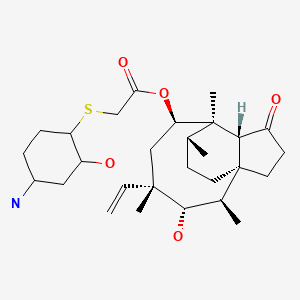
Chemical structure for UNII-61H04Z5F9K
The pleuromutilin BC-3781 belongs to the first generation of pleuromutilins to combine excellent oral
bioavailability with substantial activity against Gram-positive pathogens and atypicals as well as some
Gram-negative pathogens. In particular, BC-3781 is highly active against multi-drug resistant (MDR)
pathogens including methicillin resistant Staphylococcus aureus (MRSA), MDR Streptococcus pneumonia
(i.e. macrolide and quinolone resistance), and vancomycin resistant Enterococcus faecium. It is
characterized by excellent in vivo activities (e.g. pneumonia model), outstanding PK/PD parameters,
allowing once a day dosing, and a novel mode of action. BC-3781 is being developed for both oral and IV
administration and is intended for the treatment of serious multi-drug resistant skin & skin structure
infections (CSSI) and moderate to severe pneumonia (CAP, HAP etc).

Pleuromutilins have been known since 1951, but only entered the market in 2007 with the approval of retapamulin for topical use. Until today, there are no pleuromutilins for systemic use approved in human clinical practice.

Nabriva is currently working on the development of new compounds is this class. The lead compound, BC-3781, if approved, will be the first pleuromutilin for systemic use in humans.

The compound shows potent in vitro activity against a large collection of staphylococcistreptococci, andE. faecium. When compared to linezolid and vancomycin, the compound shows greater overall potency againstS. aureus [121]. BC-3781 shows improved activity against most bacteria commonly associated with community-acquired respiratory tract infections, the compound is especially potent against S. pneumoniaincluding penicillin resistant strains. It also shows improved activity against H. influenzaM. catarrhalisM. pneumoniae and C. pneumoniae.

BC-3781 is undergoing Phase I clinical trials for CAP and in March of 2011 has completed a Phase II clinical study comparing it to vancomycin for treatment of aBSSSI [119,120,121,122,123]. Nabriva Therapeutics AG announced that the cooperation with Forest Laboratories to develop the compound had elapsed, and that Nabriva retained all rights in BC-3781. The company informed that the product was Phase III ready and that it was seeking partners to continue further development [203].

Nabriva is also developing BC-7013 for topical use against Gram-positive infections and working on the discovery of new pleuromutilins [119,124].

Dr William Prince, CMO Nabriva Therapeutics commented:
“This is the first patient study with a systemic pleuromutilin. It will be an important proof of concept
for an exciting new class of antibiotics. The phase II study builds on our extensive preclinical and
phase I data which have demonstrated that BC-3781 can achieve therapeutically relevant blood and
tissue levels in man with excellent tolerability when administered by either oral or intravenous
routes.”

Dr. David Chiswell, CEO Nabriva Therapeutics commented:
“With a worldwide problem due to antibiotic resistant bacteria, there is a very significant need for
new classes of antibiotics with unique modes of action such as the pleuromutilins. The commercial
prospects for BC-3781 as the leading compound of an exciting new class are excellent, especially as it
has an ideal anti-bacterial spectrum for both skin and respiratory infections and is being developed
with both oral and intravenous formulations”

BC-3781 is highly active against key pathogens, including MRSA, associated with skin infections and
community and hospital acquired pneumonia and is more potent than Linezolid and vancomycin. The
compound’s novel mode of action ensures that it overcomes resistance mechanisms affecting all
approved classes of antibiotics. BC-378


About Nabriva Therapeutics
Nabriva Therapeutics is a biotechnology company focused on developing a new class of antibiotics for
the treatment of serious infections caused by resistant pathogens. Nabriva’s lead systemic product,
BC-3781, is being developed for the treatment of serious skin infections and bacterial pneumonia
caused by S. aureus, , S. pneumoniae, H. influenza, Mycoplasma, Legionella and other bacteria,
including drug resistant strains such as MRSA and vancomycin resistant E. faecium. In addition,
Nabriva Therapeutics’ topical pleuromutilin product candidate, BC-7013, is in clinical phase I. Nabriva
Therapeutics has a proven track record in world-class medicinal chemistry, clinical expertise, a
seasoned management team and solid IP. Nabriva Therapeutics is located in Vienna, Austria.

For more information on Nabriva please visit http://www.nabriva.comNabriva Therapeutics AG

…………………………………………

EP 2390245

 http://www.google.com/patents/EP2390245A1?cl=en


……………………………………………..

http://www.google.im/patents/US20090118366?cl=es

The trivial name mutilin refers to the IUPAC systematic name (1S, 2R, 3S, 4S, 6R, 7R, 8R, 14R)-3,6-dihydroxy-2,4,7,14-tetramethyl-4-vinyl-tricyclo[5.4.3.01,8]tetradecan-9-one. In the examples, pleuromutilin derivatives are numbered in analogy to the mutilin numbering system described by H. Berner (Berner, H.; Schulz, G.; Schneider H. Tetrahedron 1980, 36, 1807-1811.):


…………………………………………………….

http://www.google.com/patents/WO2008113089A1?cl=en

Pleuromutilin, a compound of formula A

is a naturally occurring antibiotic, e.g. produced by the basidomycetes Pleurotus mutilus and P. passeckerianus, see e.g. The Merck Index, 13th edition, item 7617. A number of further pleuromutilins having the principle ring structure of pleuromutilin and being substituted at the hydroxy group have been developed, e.g. as antimicrobials.

From WO 02/04414 Al pleuromutilin derivatives, e.g. 14-O-[(Aminocyclohexan-2-yl (and – 3-yl)-sulfanyl)-acetyl]-mutilins; from WO 07/014409 Al e.g. 14-O-[((Mono- or dialkylamino)-cycloalkylsulfanyl)-acetyl]-mutilins and from WO 07/000004 Al e.g. [((Acyl- hydroxy-amino)-cycloalkylsulfanyl)-acetyl]-mutilins, are known.

 14-O-{[(1R, 2R, 4R)-4-Amino-2-hydroxy-cyclohexylsulfanyl]-acetyl}- mutilin hydrochloride

Example 1 – 14-O-{[(1R, 2R, 4R)-4-Amino-2-hydroxy-cyclohexylsulfanyl]-acetyl}- mutilin hydrochloride + (IS, 2S, 4S) diastereomer hydrochloride

Step Al. 14-O-{[(1R, 2R, 4R)-4-tert-Butoxycarbonylamino-2-hydroxy- cyclohexylsulfanyl]-acetyl}-mutilin + (IS, 2S, 4S) diastereomer and 14-O-{[(lR, 2R, 5S)-5-i’eri’-Butoxycarbonylamino-2-hydroxy-cyclohexylsulfanyl]-acetyl}- mutilin + (IS, 2S, 5R) diastereomer and

14-0-{[(lR, 2R, 4S)-4-tert-Butoxycarbonylamino-2-hydroxy-cyclohexylsuIfanyl]-acetyl}- mutilin + (IS, 2S, 4R) diastereomer

To a solution of 3,4-epoxycyclohexyl-carbamic acid tert-butyl ester (Gomez-Sanchez, E.; Marco-Contelles J. Tetrahedron 2005, 61, 1207-1219.) (4.27g, 20mmol) and pleuromutilin thiol (Nagarajan, R. Eli Lilly and Company 1978, US4, 130,709) (7.10 g, 18 mmol) in 200 ml of tetrahydrofuran was added aluminum oxide (40 g, Brockmann activity I, neutral) and the resulting mixture was stirred for 40 hours at room temperature. The suspension was filtered and concentrated under reduced pressure. The residue was subjected to chromatography (silica, cyclohcxane / ethyl acetate = 1/1) to yield 14-O-{[(1R, 2R, 4R)-4-ler(- butoxycarbonylamino-2-hydroxy-cyclohcxylsulfanyl]-acctyl}-mutilin + (IS, 2S, 4S) diastereomer (a) (Rf = 0.38, 1.34g, 12%) as well as a mixture of 14-O-{[(1R, 2R, 5S)-5-tert- butoxycarbonylumino-2-hy(lroxy-cyclohcxylsulfnnyl]-ncctyl}-niυtilin + (I S, 2S, 5R) diastereomer and 14-O-{[(1R, 2R, 4S)-4-tert-butoxycarbonylamino-2-hydroxy- cyclυhexylsulfanyl]-acetyl}-mutilin + (IS, 2S, 4R) diastereomer (b) (Rf = 0.26, 2.81 g, 25%) as colorless amorphous foams. (a): 1H NMR (400MHz, DMSOd6, δ, ppm, inter alia): 6.74 (d, IH, NH, J = 7Hz), 6.13 (dd, IH, 19-H, J – I lHz and 18Hz), 5.54 (d, IH, 14-H, J = 8Hz), 5.05 (m, 2H, 20-H), 4.90 (d, IH, 2′-OH, J = 5Hz), 4.48 (d, IH, 11-OH, J = 6Hz), 3.55 – 3.20 (m, 6H, 1 ‘-H, 2-H, 4′-H, 11-H, 22-H), 2.40 (bs, IH, 4-H), 1.36 (s, 3H, 15-CH3), 1.35 (s, 9H, tert-butyl), 1.06 (s, 3H, 18-CH3), 0.81 (d, 3H, 17-CH3, J = 7Hz), 0.62 (d, 3H, 16-CH3, J = 7Hz). MS-ESI (m/z): 630 (MNa+), 1237 (2MNa+).

(b): 1H NMR (400MHz, DMSO-de, δ, ppm, inter alia): 6.70 (d, IH, NH, J = 7Hz), 6.12 (dd, IH, 19-H, J = HHz and 18Hz), 5.34 (d, IH, 14-H, J = 8Hz), 5.05 (m, 2H, 20-H), 4.82, 4.78 (d, IH, 2′-OH, J = 4Hz), 4.48 (d, IH, 11-OH, J = 6Hz), 3.55 – 3.20 (m, 5H, 2′-H, 475′-H, 11- H, 22-H), 2.97 (m, IH, 1 ‘-H), 2.40 (bs, IH, 4-H), 1.35 (s, 12H, 15-CH3, tert-butyl), 1.05 (s, 3H, 18-CH3), 0.82 (d, 3H, 17-CH3, J = 7Hz), 0.62 (d, 3H, 16-CH3, J = 7Hz). MS-ESI (m/z): 630 (MNa+), 1237 (2MNa+).

or Step A2. 14-O-{[(1R, 2R, 4R)-4-tert-Butoxycarbonylamino-2-liydroxy- cyclohexylsulfanyl]-acetyl}-mutilin + (IS, 2S, 4S) diastereomer and

14-O-{[(1R, 2R, 5S)-5-tert-Butoxycarbonylamino-2-hydroxy-cyclohexylsulfanyl]-acetyl}- mutilin + (IS, 2S, 5R) diastereomer and

14-O-{[(1R, 2R, 4S)-4-rerf-Butoxycarbonylamino-2-hydroxy-cyclohexylsulfanyl]-acetyl}- mutilin + (IS, 2S, 4R) diastereomer

To a solution of 3,4-epoxycyclohexyl-carbamic acid tert-butyl ester (10 g, 47 mmol) and pleuromutilin thiol (16.6 g, 42 mmol) in 200 ml of methanol and 20 ml of dioxane was added 2N NaOH (21 ml, 42 mmol) and the resulting mixture was stirred for 16 hours at room temperature. After completion of the reaction the pH was set to 7 with diluted HCl and the reaction mixture was concentrated under reduced pressure. The residue was diluted with water and brine and extracted three times with ethyl acetate. The organic layers were dried over sodium sulfate and filtered. The filtrate was concentrated under reduced pressure and after chromatography (silica, cyclohexane / ethyl acetate = 1/1) 14-O-{[(1R, 2R, 4R) A-tert- butoxycarbonylamino-2-hydroxy-cyclohexylsulfanyl] -acetyl }-mutilin + (IS, 2S, 4S) diastereomer (Rf = 0.40, 3.1g, 12% yield) as well as a mixture of 14-O-{[(1R, 2R, 5S)-5-tert- butoxycarbonylamino-2-hydroxy-cyclohexylsulfanyl]-acetyl}-mutilin + (IS, 2S, 5R) diastereomer and 14-O-{[(1R, 2R, 4S)-4-tert-butoxycarbonylamino-2-hydroxy- cyclohexylsulfanyl]-acetyl}-mutilin + (IS, 2S, 4R) diastereomer (Rf = 0.25, 6.35 g, 25%) were obtained as colorless amorphous foams. or Step A3. 14-O-{[(1R, 2R, 4R)-4-tert-Butoxycarbonylamino-2-hydroxy- cyclohexylsulfanyl]-acetyl}-mutilin + (IS, 2S, 4S) diastereomer and 14-O-{ [(1R, 2R, 5S)-5-tert-Butoxycarbonylamino-2-hydroxy-cyclohexylsulfanyl]-acetyl}- mutilin + (IS, 2S, 5R) diastereomer

To a solution of Pleuromutilin thiol (9.25 g, 23.5 mmol) in 100 ml of acetonitrile (dried over 4A molecular sieve) was added l,5-diazabicyclo[4.3.0]non-5-ene (DBN, 2.9 μl, 23.5 mmol) and after 1 hour of stirring at room temperature under argon atmosphere the mixture was ^ charged with syn-3,4-epoxycyclohexyl-carbamic acid tert-butyl ester (4.17 g, 19.5 mmol) and stirred for further 16 hours at room temperature. The reaction mixture was concentrated under reduced pressure. The residue was charged with water and brine and extracted three times with dichloromethane. The organic layers were dried over sodium sulphate and filtered. The filtrate was concentrated under reduced pressure and subjected to chromatography (silica, cyclohexane / ethyl acetate = 1/1) to yield 14-O-{[(1R, 2R, 4R)-4-teAY-butoxycarbonylamino- 2-hydroxy-cyclohexylsulfanyl]-acetyl}-mutilin + (IS, 2S, 4S) diastereomer (Rf = 0.38, 5.07g, 43%) as well as 14-O-{[(1R, 2R, 5S)-5-tert-butoxycarbonylamino-2-hydroxy- cyclohexylsulfanyl]-acetyl}-mutilin + (IS, 2S, 5R) diastereomer (Rf = 0.25, 2.95 g, 16.5%) as colorless amorphous foams.

Step B. 14-O-{[(1R, 2R, 4R)-4-Amino-2-hydroxy-cyclohexylsulfanyl]-acetyl}-mutilin + (IS, 2S, 4S) diastereomer

To a solution of 14-O-{[(1R, 2R, 4R)-4-teΛ-t-butoxycarbonylamino-2-hydroxy- cyclohexylsulfanyl]-acetyl}-mutilin + (IS, 2S, 4S) diastereomer (1.34 g, 2.20 mmol) in 75 ml of dichloromethane was added trifiuoroacetic acid (4 ml) at 4°C and stirred for 5 hours at room temperature. The reaction mixture was diluted with dichloromethane and cautiously poured into a saturated NaHCO3 solution. The phases were separated and the aqueous layer was washed two times with dichloromethane. The combined organic layers are dried over sodium sulfate and filtered. After chromatography (silica, ethyl acetate/methanol/35% ammonia solution = 50/50/1) 14-O-{[(1R, 2R, 4R)-4-amino-2-hydroxy-cyclohexylsulfanyl]- acetyl}-mutilin + (IS, 2S, 4S) diastereomer (745 mg, 67% yield) was obtained as colorless amorphous foam.

1H NMR (400MHz, DMSO-de, δ, ppm, inter alia): 6.14 (dd, IH, 19-H, J = 1 IHz and 18Hz), 5.54 (d, IH, 14-H, J = 8Hz), 5.05 (m, 2H, 20-H), 4.50 (d, IH, 11-OH, J = 6Hz), 3.50 – 3.20 (m, 5H, 2′-H, 4′-H, H-H, 22-H), 2.55 (m, IH, l ‘-H), 2.40 (bs, IH, 4-H), 1.35 (s, 3H, 15- CH3), 1.06 (s, 3H, 18-CH3), 0.82 (d, 3H, 17-CH3, J = 7Hz), 0.62 (d, 3H, 16-CH3, J = 7Hz). MS-ESI (m/z): 508 (MH+), 530 (MNa+), 1015 (2MH+), 1037 (2MNa+).

Step C. 14-O-{[(1R, 2R, 4R)-4-Amino-2-hydroxy-cyclohexylsulfanyI]-acetyl}- mutilin hydrochloride + (IS, 2S, 4S) diastereomer hydrochloride

A solution of 14-O-{[(1R, 2R, 4R)-4-amino-2-hydroxy-cyclphexylsulfanyl] -acetyl }-mutilin + (IS, 2S, 4S) diastereomer (325 mg, 0.64 mmol) in 20 ml of dioxane was treated with IN HCl (0.64ml, 0.64 mmol). After stirring at room temperature for 30 minutes the solution was lyophilized to obtain 14-O-{[(1R, 2R, 4R)-4-amino-2-hydroxy-cyclohexylsulfanyl] -acetyl }- mutilin hydrochloride + (IS, 2S, 4S) diastereomer hydrochloride (quantitative yield) as colorless amorphous solid.

1H NMR (500MHz, DMSO-Cl6, δ, ppm, inter alia): 7.6 (bs, 3H, NH3 +), 6.14 (dd, IH, 19-H, J = 1 IHz and 18Hz), 5.55 (d, IH, 14-H, J = 8Hz), 5.05 (m, 2H, 20-H), 4.52 (d, IH, H-OH, J = 6Hz), 3.50 – 3.20 (m, 4H, 2′-H, H-H, 22-H), 3.03 (m, IH, 4′-H), 2.53 (m, IH, 1 ‘-H), 2.40 (bs, IH, 4-H), 1.37 (s, 3H, 15-CH3), 1.06 (s, 3H, 18-CH3), 0.82 (d, 3H, 17-CH3, J = 7Hz), 0.62 (d, 3H, 16-CH3, J = 7Hz). MS-ESI (m/z): 508 (MH+), 530 (MNa+), 1015 (2MH+), 1037 (2MNa+), 542 (MCl).

Example IA – 14-O-{[(1S, 2S, 4S)-4-Amino-2-hydroxy-cyclohexylsulfanyl]-acetyl}- mutilin and 14-O-{[(1R, 2R, 4R)-4-Amino-2-hydroxy-cyclohexylsuIfanyl]-acetyl}-mutilin

The mixture of 14-O-{[(1R, 2R, 4R)-4-Amino-2-hydroxy-cyclohexylsulfanyl]-acetyl}-mutilin + (IS, 2S, 4S) diastereomer (12 g, 23.6 mmol) from Example 1 Step B was separated on a cbiral column (250 x 20 mm CHIRALCEL OD-H, n-heptane / ethanol / diethylamine = 80/20/0.1) to yield 14-O-{[(1S*, 2S*, 4S*)-4-amino-2-hydroxy-cyclohexylsulfanyl]-acetyl}- mutilin (a) (early eluting compound, 4.76 g, 37% yield, uncorrected) and 14-O-{[(1R*, 2R*, 4R*)-4-amino-2-hydroxy-cyclohexylsulfanyl]-acetyl}-mutilin (b) (late eluting compound, 3.63 g, 30% yield, uncorrected) as colorless amorphous foams.

(a): 1H NMR (400MHz, DMSO-(I6, δ, ppm, inter alia): 6.13 (dd, IH, 19-H, J = 1 IHz and 18Hz), 5.54 (d, IH, 14-H, J = 8Hz), 5.05 (m, 2H, 20-H), 4.50 (d, IH, H-OH, J = 6Hz), 3.50 – 3.20 (m, 5H, 2′-H, 4′-H, H-H, 22-H), 2.55 (m, IH, l ‘-H), 2.40 (bs, IH, 4-H), 1.35 (s, 3H, 15- CH3), 1.05 (s, 3H, 18-CH3), 0.82 (d, 3H, 17-CH3, J = 7Hz), 0.62 (d, 3H, 16-CH3, J = 7Hz). MS-ESI (m/z): 508 (MH+), 530 (MNa+), 1015 (2MH+), 1037 (2MNa+), 506 (M-H) , 542 (MCl).

(b): 1H NMR (400MHz, DMSO-d6> δ, ppm, inter alia): 6.13 (dd, IH, 19-H, J = 1 IHz and 18Hz), 5.54 (d, IH, 14-H, J = 8Hz), 5.05 (m, 2H, 20-H), 4.50 (d, IH, H-OH, J = 6Hz), 3.50 – 3.20 (m, 5H, 2′-H, 4′-H, 11-H, 22-H), 2.55 (m, IH, 1 ‘-H), 2.40 (bs, IH, 4-H), 1.35 (s, 3H, 15- CH3), 1.05 (s, 3H, 18-CH3), 0.82 (d, 3H, 17-CH3, J = 7Hz), 0.62 (d, 3H, 16-CH3, J = 7Hz). MS-ESI (m/z): 508 (MH+), 530 (MNa+), 1015 (2MH+), 1037 (2MNa+), 506 (M-H) , 542 (MCl).

…………………………………………………….

WO 2011146954

http://www.google.com/patents/WO2011146954A1?cl=en

The present invention relates to crystalline 14-0-{[(4-amino-2-hydroxy-cyclohexyl)- sulfanyl] -acetyl }-mutilin, new processes for its preparation and crystalline salts thereof.

Pleuromutilin, a compound of formula

Pleuromutilin

is a naturally occurring antibiotic, e.g. produced by the basidiomycetes Pleurotus mutilus and P. passeckerianus, see e.g. The Merck Index, 12th edition, item 7694.

A number of further pleuromutilins having the principle ring structure of pleuromutilin and being substituted at the primary hydroxy group have been developed, e.g. as antimicrobials. Due to their pronounced antimicrobial activity, a group of pleuromutilin derivatives, amino- hydroxy-substituted cyclohexylsulfanylacetylmutilins, as disclosed in WO 2008/113089, have been found to be of particular interest. As described in WO2008/11089 14-0-{[(4- Amino-2-hydroxy-cyclohexyl)-sulfanyl] -acetyl }-mutilins are particularly useful compounds because they demonstrate activity against Gram-positive and Gram-negative pathogens e.g. associated with respiratory tract and skin and skin structure infections. For the production of substantially pure isomers/diastereomers of this group of compounds, there is a need for a production process which is convenient for use on an industrial scale and which also avoids the use of costly starting materials, environmentally hazardous reagents and solvents or time consuming and laborious purification steps. The production process described in WO 2008/113089 involves chromatographic purification of the compounds prepared according to individual synthesis steps and the final diastereomers are separated by chiral HPLC chromatography which cannot be used on industrial scale. Surprisingly, crystalline intermediates have been found which on the one hand have unexpected chemical purification potential which is important for the production processes for pure amino-hydroxy-substituted cyclohexylsulfanylacetylmutilins avoiding

chromatographic purification and separation steps.

It has to be pointed out that 14-0-{[(4-amino-2-hydroxy-cyclohexyl)-sulfanyl]-acetyl}- mutilins are potential new drug substances for the human market with regulatory

requirements defined in the corresponding ICH guidelines (International Conference on Harmonization of Technical Requirements for Registration of Pharmaceuticals for Human Use). The ICH guideline on impurities in new drug substances (Q3 A(R2)) includes the following thresholds:

As can be seen from the ICH thresholds above it is desirable to have all individual unknown impurities below 0.10% area and the structure elucidated impurities below 0.15%, respectively. Processes provided according to the present invention enable to produce APIs (Active Pharmaceutical Ingredients) within the desired specifications and fulfilling ICH requirements.

On the other hand, even more surprisingly, the crystalline intermediates yields to significant chiral enrichment which has a huge benefit in the production of the pure stereoisomers starting from cheaper racemic materials or less chirally pure starting materials. The described processes do not involve any chromatographic purification neither normal nor chiral phase in contrast to the synthetic procedures described in WO2008/113089 wherein is disclosed e.g. in Example 1, Step B that 14-0-{[(4-amino-2-hydroxy-cyclohexyl)-sulfanyl]- acetyl}-mutilins was isolated in the form of diastereomeric mixtures as colorless amorphous foams after normal phase chromatography. The chiral pure diastereomers are described to have been received in WO2008/113089, e.g. in Example 1 A after subjecting the mixture to chiral chromatography whereafter the separated pure diastereomers were isolated in the form of colorless amorphous foams.

Chiral chromatography, however is not a technology which can be applied on industrial large scale, and moreover no crystalline salts of 14-0-{[(4-amino-2-hydroxy-cyclohexyl)- sulfanyl]-acetyl}-mutilins were obtained according to WO2008/113089. In contrast to that, according to the present invention crystalline pharmaceutical acceptable salts of 14-0-{[(4-amino-2-hydroxy-cyclohexyl)-sulfanyl]-acetyl}-mutilins having surprising and superior properties over the amorphic prior art salts disclosed in

WO2008/113089 have been found; e.g. surprisingly the chemical stability of the crystalline salts of the present invention is improved over the amorphic salt forms; and also and in addition the crystalline salts of the present invention show a surprising low hygroscopicity.

Processes for the preparation of such crystalline salts wherein the salts may be obtained in a single stereoisomeric form from 14-0-{[(4-amino-2-hydroxy-cyclohexyl)-sulfanyl]-acetyl}- mutilins and processes for the preparation of stereoisomerically pure 14-0-{[(4-amino-2- hydroxy-cyclohexyl)-sulfanyl]-acetyl}-mutilins in crystalline form as a basis for the crystalline salts have also been found.

In one aspect the present invention provides a process for the preparation of a compound of formula I

in the form of a single stereoisomer in crystalline form, comprising

deprotecting the amine group

either in a compound of formula Ila

in a mixture of a compound of formula Ila with a compound of formula lib

wherein R is an amine protecting group, and isolating a compound of formula I obtained in the form of a single diastereomer in crystalline form either directly from the reaction mixture or via recrystallization in organic solvent.

In another aspect the present invention provides a compound of formula I as defined above in the form of a single stereoisomer in crystalline form.

Compounds of formula Ila are new and also form part of the present invention.

In another aspect the present invention provides a compound of formula Ha.

In a compound of formula I, or Ha, respectively, the carbon atoms of the cyclohexyl ring to which the hydroxy group, the amine group and the sulfanyl-acetyl-mutilin group are attached are all in the R configuration and thus a compound of formula I, or Ila represents an optionally amine protected 14-0-{[(l ?,2i?,4 ?)-4-amino-2-hydroxy-cyclohexylsulfanyl]- acetyl}-mutilin. In contrast to that, in a compound of formula lb

or lib the carbon atoms of the cyclohexyl ring to which the hydroxy group, the amine group and the sulfanyl-acetyl-mutilin group are attached are all in the S configuration and thus a compound of formula lib represents an optionally amino protected 14-0-{[(lS,2S,4S)-4-Amino-2-hydroxy- cyclohexylsulfanyl] -acetyl } -mutilin. An amine protecting group includes protecting groups known to a skilled person and which are removable under acidic, basic, hydrogenating, oxidative or reductive methods, e.g. by hydrogenolysis, treatment with an acid, a base, a hydride, a sulfide. Appropriate amine protecting groups e.g. are described in T. W. Greene, P. G. M. Wuts, Protective Groups in Organic Synthesis, Wiley-Interscience, 4th edition, 2007, particularly p. 696-868.

Example 1

tert-Butyl [(lR3Ri4R)-3-hydroxy-4-mercapto-cyclohexyl]-carbamate

3.94 Kg of {(li?,2J?,4i?)-4-[(tert-Butoxycarbonyl)-amino]-2-hydroxy-cyclohexyl}-benzene- carbothioate and 37 L of CH2C12 were charged to a vessel and the mixture obtained was stirred at 15-25°C. 0.39 Kg of 1,4-dithio-DL-threitol (10% wt) was added to the mixture and rinsed through with 2 L of CH2C12. To the mixture obtained 0.84 Kg of hydrazine monohydrate was added. The mixture obtained was stirred at 18 to 22°C for 3 h and the reaction was followed by HPLC. Upon completion of the reaction, 39 L of 1 M phosphoric acid solution was added and the mixture obtained was stirred for a further 15-30 min. Two phases formed were separated and the organic phase obtained was washed with 39 L of of 1 M phosphoric acid solution followed by 39 L 1% aqueous NaCl solution. The organic layer obtained was concentrated in vacuo at <40°C, to the concentration residue 20 L of CH2C12 was added and the mixture obtained again was concentrated. To the concentration residue obtained a further 8 L of CH2C12 was added and the mixture obtained was concentrated to dryness.

2.89 Kg of tert-Butyl [(l ?,3/?,4i?)-3-hydroxy-4-mercapto-cyclohexyl]-carbamate in the form of a white solid was obtained.

1H NMR (200 MHz, DMSO-de, ppm) δ 6.79 (d, J=7.8Hz, 1H), 4.99 (d, J=5.8Hz, 1H), 3.34 – 3.24 (m, 1H), 3.14 – 3.04 (m, 1H), 2.37 (d, J=3.8 Hz, 1H), 2.00 -1.89 (m, 1H), 1.87 – 1.82 (m, 1H), 1.73 – 1.67 (m, 1H), 1.47 – 1.04 (m, 12H)

Example 2

22-0-TosylpIeuromutilin

22-O-Tosylpleuromutilin is a known compound from literature. However a preparation procedure is outlined below.

A solution of 13.0 kg of pleuromutilin and 6.57 kg of 4-toluenesulfonyl chloride in 42.1 L of CH2CI2 at 10 to 15 °C was treated with 9.1 L of 5.7 M aqueous NaOH over 20 min, maintaining a temperature < 25 °C. The resulting off-white suspension was heated to reflux for 20 h and the reaction was followed until completion determined by HPLC. Upon reaction completion the mixture obtained was cooled to 20 to 30 °C, diluted with 52 L of CH2C12, stirred at 15 to 25 °C for 10 min, and the layers obtained were separated. The organic phase obtained was washed several times with 52 L of water until a pH of the aqueous layer was adjusted to < 9. The organic layer obtained was concentrated to 4 volumes and

azeotropically dried twice with 52 L of CH2C12. To the solution obtained 52 L of heptane were added dropwise and the solution obtained was concentrated at < 40 °C to

approximately 4 volumes. To the concentrate obtained 52 L of heptane was added and the resulting suspension was stirred at 20 to 25 °C for 2 to 2.5 h, filtered, the filter cake obtained was washed with 39 L of heptane and pulled dry on the filter.

The solid was dried under vacuum at < 40 °C for at least 12 h.

16.9 kg of 22-O-tosylpleuromutilin in the form of a white solid was obtained.

1H NMR (200 MHz, DMSO-d6, ppm, inter alia) δ 7.81 (d, 2H), 7.47 (d, 2H), 6.14 – 6.0 (m, 1H), 5.54 (d, J=7.8Hz, 1H), 5.08 – 4.99 (m, 2H), 4.70 (AB, J=16.2Hz, 2H), 3.41 (d, J=5.2Hz, 1H), 2.41(s, 4H), 1.04(s, 3H), 0.81 (d, 3H), 0.51 (d, 3H)

Example 3

14-0-{[(l/?,2R,4R)-4-ter/-Butoxycarbonylamino-2-hydroxy-cyclohexyI-sulfanyl]-acetyl}- mutilin

4.75 Kg of Pleuromutilin tosylate (Tos-PLEU) and 44.4 L of MTBE were charged into a vessel and to the mixture obtained 0.31 Kg of benzyl-tri-«-butylammonium chloride was added and rinsed through with 2.4 L of MTBE. To the mixture obtained 20 L of IM aqueous NaOH solution and 2.84 Kg of tert-Butyl [(lif,3i?,4^)-3-hydroxy-4-mercapto-cyclohexyl]- carbamate were added and the mixture obtained was stirred at 17 to 23 °C for 3 h. Upon completion of the reaction (determined by HPLC) two layers formed were separated and the lower aqueous layer was removed. The organic phase obtained was washed with 19 L of IM aqueous NaOH solution, twice with 20 L of 0.1 M phosphoric acid, 20 L of 10% aqueous NaHC03 solution and twice with 20 L of water. The organic liquors obtained were concentrated, the concentrate obtained was taken up in 7.46 Kg of 2-propanol, the mixture obtained was concentrated again and dried in vacuo at <40°C. 6.66 Kg of 14-O- { [( 1 -¾,2i?,4i?)-4-/ert-Butoxycarbonylamino-2-hydroxy-cyclohexyl-sulfanyl]-acetyl } -mutilin in the form of a white foam was obtained.

Ή NMR (200 MHz, DMSO-d6, ppm, inter alia) δ 6.78 (d, J=7.8Hz, 1H), 6.22 – 6.08 (m,lH), 5.55 (d, J=7.8Hz, 1H), 5.13 – 5.02 (m, 2H), 4.95 (d, J=5Hz, 1H), 4.52 (d, J=6Hz, 1H), 3.36 (AB, J=15Hz, 2H), 2.40 (s, broad, 1H), 2.15 – 2.0 (m, 3H), 1.9 – 1.8 (m, 1H), 1.35 (s, 9H), 0.81 (d, J=7Hz, 3H), 0.62 (d, J=6.6Hz, 3H)

MS (ESI, g/mol): m/z 653 [M+2Na] +

Example 4

14-0-{[(lR,2R,4R)-4-Amino-2-hydroxy-cyclohexyIsulfanyI]-acetyl}-mutilin, crystalline Form 2

Step A: 14-O-{[(li?.2i?,4i?)-4-Amino-2Thvdroxy-cyclohexylsulfanvn-acetvU-mutilin in crystalline Form 1

6.6 Kg of 14-O-{[(li?,2if,4/?)-4-tert-Butoxycarbonylamino-2-hydroxy-cyclohexyl-sulfanyl]- acetyl}-mutilin and 13.2 L of isopropanol were charged into a vessel and stirred at 20 to 25°C. 11.20 kg of 85% phosphoric acid was added and the mixture obtained was heated to approximately 50°C for at least 16 h. The mixture obtained was analyzed for reaction completion by HPLC. Upon completion of the reaction the mixture was cooled to 20 to 25°C and 52 L of CH2C12 was added. The mixture obtained was cooled to 0 to 5°C and 51 L of 30% aqueous K2CO3 solution was added over 1 h at <25°C. The mixture obtained was warmed to rt, stirred for 30 min and the pH of the aqueous layer was determined. To the mixture obtained a further 15 L of 30% aqueous K2C03 solution was added at <25°C, the mixture obtained was stirred at 15°C to 25 °C for 30 min and the two phases obtained were separated. The aqueous phase obtained was extracted with 51 L of CH2CI2 and the combined organic phases were washed with 51 L of purified water. The mixture obtained was concentrated to a volume of 25 L, 33.6 Kg of CH2C12 was added and the mixture obtained was concentrated to 25 L. To the concentrate obtained 33.6 Kg of CH2C12 was added and the mixture obtained was concentrated to 10 L. The concentration residue obtained was cooled to 18 to 22°C and 50 L of di-wopropyl ether was added over a period of 1 h. The slurry obtained was stirred at 15 to 25°C for a minimum of 2 h, filtered and the solid obtained was washed with 10 L of di-wopropyl ether and was dried.

3.79 Kg of 14-0-{[(li?,2i?,4if)-4-Amino-2-hydroxy-cyclohexylsulfanyl]-acetyl}-mutilin in crystalline Form 1 was obtained.

Step B: 14-O-{r(l-R.2i?,4j?)-4-amino-2-hvdroxy-cvclohexylsulfanyl1-acetv -mutilin. in crystalline Form 2

For further purification 14-O-{[(l ?,2 ?,4i?)-4-Amino-2-hydroxy-cyclohexylsulfanyl]- acetyl}-mutilin from Step A and 18.75 L of n-butanol were heated to 88 to 92°C until complete dissolution and stirred for 30 to 60 min. The mixture obtained was allowed to cool to 40 to 45°C over at least 2 h and further stirred at this temperature for 2 h. The mixture obtained was filtered and the precipitate obtained was washed with 3.75 L of «-butanol followed by 3.75 L of MTBE. That purification procedure was repeated and the resultant product was dried in vacuo at <40°C.

3.27 Kg of crystalline 14-0-{[(li?,2if,4i?)-4-amino-2-hydroxy-cyclohexylsulfanyl]-acetyl}- mutilin in crystalline Form 2 was obtained in the form of a white solid.

lH NMR (400 MHz, CDC13, ppm, inter alia) δ 6.51 – 6.44 (m, 1H), 5.78 (d, J=8Hz, 1H), 5.38 – 5.20 (m, 2H), 3.48 – 3.40 (m, 1H), 3.36 (d, J=7Hz, 1H), 3.25 (AB, J=15Hz, 2H), 2.92 – 2.82 (m, 1H), 2.6 – 2.5 (m, 1H), 1.45 (s, 3H), 1.20 (s, 3H), 0.88 (d, J=7Hz, 3 H), 0.73 (d, J=8Hz, 3H)

MS (ESI, g/mol): m/z 508 [M+H] +

Example 5

14-0-{[(lR^/f,4R)-4-Amino-2-hydroxy-cyclohexylsulfanyl]-acetyl}-mutilin, crystalline

To a solution of 900 g of 14-0-{[(li?,2i?,4i?)-4-tert-butoxycarbonylamino-2-hydroxy- cyclohexyl-sulfanyl]-acetyl}-mutilin in 9 L of CH2C12 at 15 to 25°C was added 1.8 L of TFA at 15 to 25°C and the resulting solution was stirred for 2 h. Following reaction completion the reaction mixture was concentrated under vacuum and the concentration residue obtained was azeo-dried with a total of 9 L of CH2C12. The concentrate obtained was dissolved in 4.5 L of CH2C12, the solution obtained cooled to 0 to 5°C and the pH was adjusted to pH 11 with aqueous 3.6 L 2CO3 (2.5M) solution. The biphasic mixture obtained was warmed to 15 to 20°C and stirred for 5 to 10 minutes. The layers obtained were separated, the aqueous phase obtained was extracted with 1.8 L of CH2C12, the organic phases obtained were combined, washed with 2.3 L of H20, dried over Na2S04 and concentrated to dryness under vacuum at <40°C. Crude 14-0- { [( 1 R,2R,4R)-4- Amino-2-hydroxy-cyclohexyl-sulfanyl]-acetyl } -mutilin was obtained. Yield: 744 g

For further purification the following procedure was applied:

To 744 g of crude 14-O-{[(li?,2i?,4i-)-amino-2-hydroxy-cyclohexyl-sulfanyl]-acetyl}- mutilin was added 2.23 L of THF and the resulting suspension was stirred at 15 to 25°C for 60 min. To the mixture obtained 7.44 L of MTBE was added over 15 to 30 min, the suspension obtained was aged for 60 min and filtered under nitrogen. The collected solids were washed with a total of 3 L of MTBE and pulled dry on the filter under nitrogen for 1.5 h.

626 g of 14-0-{[(li?,2i?,4i?)-4-Amino-2-hydroxy-cyclohexyl-sulfanyl]-acetyl}-mutilin in crystalline Form 1 was obtained.

The Ή NMR pattern confirms the structure of 14-O-{[(li?,2i?,4i?)-4-amino-2-hydroxy- cyclohexylsulfanyl] -acetyl} -mutilin. The NMR pattern for 14-O-{[(l ?,2i?,4/?)-4-amino-2- hydroxy-cyclohexylsulfanyl]-acetyl}-mutilin is described in example 4.

…………………………………………………………

REF

http://www.phase4-partners.com/wp-content/uploads/2013/09/100412.pdf

http://www.glsv-vc.com/downloads/2010-06-02_First%20Patient_PressRelease.pdf

119

Nabriva. Pleuromutilins. Available online: http://www.nabriva.com/programs/pleuromutilins/ (accessed on 7 December 2012).
120

Forest Laboratories. Our pipeline: Solid, and set for further growth. Available online: http://www.frx.com/research/pipeline.aspx (accessed on 13 April 2013).
121

Sader, H.S.; Biedenbach, D.J.; Paukner, S.; Ivezic-Schoenfeld, Z.; Jones, R.N. Antimicrobial activity of the investigational pleuromutilin compound BC-3781 tested against Gram-positive organisms commonly associated with acute bacterial skin and skin structure infections. Antimicrob. Agents Chemother. 2012,56, 1619–1623, doi:10.1128/AAC.05789-11.

122
Sader, H.S.; Paukner, S.; Ivezic-Schoenfeld, Z.; Biedenbach, D.J.; Schmitz, F.J.; Jones, R.N. Antimicrobial activity of the novel pleuromutilin antibiotic BC-3781 against organisms responsible for community-acquired respiratory tract infections (CARTIs). J. Antimicrob. Chemother. 201267, 1170–1175, doi:10.1093/jac/dks001.

123
Nabriva Therapeutics AG. Study comparing the safety and efficacy of two doses of BC-3781 vs. vancomycin in patients with acute bacterial skin and skin structure infection (ABSSSI). Available online: http://www.clinicaltrials.gov/ct2/show/NCT01119105 (accessed on 13 April 2013).

124
Novak, R. Are pleuromutilin antibiotics finally fit for human use? Ann. NY Acad. Sci. 20111241, 71–81, doi:10.1111/j.1749-6632.2011.06219.x.


Valnemulin.svgvalnemulin


retapamulin


WO2002004414A1 * Jul 9, 2001 Jan 17, 2002 Gerd Ascher Pleuromutilin derivatives having antibacterial activity
WO2007000004A1 * Jun 26, 2006 Jan 4, 2007 Nabriva Therapeutics Forschung Pleuromutilin derivatives containing a hydroxyamino- or acyloxyaminocycloalkyl group
WO2007014409A1 * Jul 26, 2006 Feb 8, 2007 Nabriva Therapeutics Forschung Pleuromutilin derivatives useful as antibacterials


WO2008011089A2 Jul 19, 2007 Jan 24, 2008 Mark B Gagner Wagering game with special-event eligibility feature based on passive game play
WO2008113089A1 Mar 19, 2008 Sep 25, 2008 Nabriva Therapeutics Ag Pleuromutilin derivatives for the treatment of diseases mediated by microbes
US20060276503 * Aug 30, 2004 Dec 7, 2006 Glaxo Group Limited Novel process salts compositions and use