
Home » Posts tagged 'SYNTHESIS'
Tag Archives: SYNTHESIS
 DRUG APPROVALS BY DR ANTHONY MELVIN CRASTO
.....FOR BLOG HOME CLICK HERE
DRUG APPROVALS BY DR ANTHONY MELVIN CRASTO
.....FOR BLOG HOME CLICK HEREFlag and hits
ORGANIC SPECTROSCOPY

SUBSCRIBE

 Subscribe in a reader
Enter your email address:
Delivered by FeedBurner
Subscribe to New Drug Approvals by Email


Recent Comments
 | shivkr2 on SPSR Excellence Award 2025 – S… |
 | Bonkasaurus on Infigratinib phosphate |
 | PALOVAROTENE | ORGAN… on Palovarotene |
| Pfizer just purchase… on Temanogrel | |
| Pfizer To Cash In On… on Temanogrel |
The synthesis, biological evaluation and structure–activity relationship of 2-phenylaminomethylene-cyclohexane-1,3-diones as specific anti-tuberculosis agents
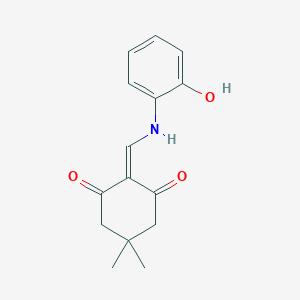
CAS 74102-02-6
| Molecular Formula: | C15H17NO3 |
|---|---|
| Molecular Weight: | 259.305 g/mol |


2-(((2-hydroxyphenyl)amino)methylene)-5,5-dimethylcyclohexane-1,3-dione (39): White solid; m.p. 249 o C; TLC Rf value, 0.48 (in EtOAc:Hexane,60:40);
IR (neat) 2980, 2950, 1678, 1040 cm-1;
1 H NMR (400 MHz, CD3OD) δ 9.86 (1H, bs), 8.66 (1H, d, J = 16.0 Hz), 7.46- 7.34 (1H, m), 7.07-6.84 (3H, m), 2.46 (2H, s), 2.41 (2H, s), 1.10 (3H, s), 1.09 (3H, s);
13C NMR (101 MHz, CDCl3) δ 199.8, 197.2, 149.6, 149.3, 147.8, 127.2, 126.6, 120.6, 120.3, 108.
The synthesis, biological evaluation and structure–activity relationship of 2-phenylaminomethylene-cyclohexane-1,3-diones as specific anti-tuberculosis agents
Abstract
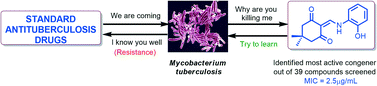
The present study utilised whole cell based phenotypic screening of thousands of diverse small molecules against Mycobacterium tuberculosis H37Rv (M. tuberculosis) and identified the cyclohexane-1,3-dione-based structures 5 and 6 as hits. The selected hit molecules were used for further synthesis and a library of 37 compounds under four families was synthesized for lead generation. Evaluation of the library against M. tuberculosis lead to the identification of three lead antituberculosis agents (37, 39 and 41). The most potential compound, 2-(((2-hydroxyphenyl)amino)methylene)-5,5-dimethylcyclohexane-1,3-dione (39) showed an MIC of 2.5 μg mL−1, which falls in the range of MICs values found for the known antituberculosis drugs ethambutol, streptomycin and levofloxacin. Additionally, this compound proved to be non-toxic (<20% inhibition at 50 μM concentration) against four human cell lines. Like first line antituberculosis drugs (isoniazid, rifampicin and pyrazinamide) this compound lacks activity against general Gram positive and Gram negative bacteria and even against M. smegmatis; thereby reflecting its highly specific antituberculosis activity.

Muzafar Ahmad Rather
CSIR-Indian Institute of Integrative Medicine (CSIR-IIIM), Srinagar
Clinical Microbiology and PK/PD Division, Clinical Microbiology PK/PD/Laboratory, CSIR-Indian Institute of Integrative Medicine, Sanatnagar, Srinagar, India-190005


CSIR-Indian Institute of Integrative Medicine
(Council of Scientific & Industrial Research)
|
Dr. Zahoor Ahmad Parry |
|
|||||||
| Clinical Microbiology Division CSIR – Indian Institute of Integrative Medicine,Canal Road, Jammu – 180001 Email: zahoorap@iiim.ac.in |
||||||||
| Positions Held | ||||||||
|
||||||||

|
Dr. Bilal Ahmad Bhat |
||||||||
| Medicinal Chemistry Division CSIR – Indian Institute of Integrative Medicine,Canal Road, Jammu – 180001 Email: bilal@iiim.ac.in |
||||||||
| Positions Held | ||||||||
|
||||||||

Medicinal Chemistry Division, CSIR-Indian Institute of Integrative Medicine, Sanatnagar, Srinagar,
A small Drug Research Laboratory working under the Government of Jammu & Kashmir was taken over by CSIR in 1957 and named as Regional Research Laboratory, Jammu. Col. Sir Ram Nath Chopra, who is acclaimed the father of modern Pharmacology in India, was the Director of Drug Research Laboratory, continued as the first Director of Regional Research Laboratory. Having significant expertise in the area of medicinal & aromatic plants, Col. Chopra started its related R&D activities such as collection of plants from north & north-west and study the chemistry & pharmacology of the plant extracts and the new molecules isolated from these plants. Thus the initial mandate of this laboratory was mainly focused on screening the flora of north India for new molecules and to study the biological activity of these molecules. Gradually the activities of the institute increased, many more disciplines were introduced, that were important for the exploitation of regional resources such as mineral technology division, paper & pulp, fur technology division, sericulture, food technology division and mycology division. The main stream department such as chemistry, botany and pharmacology were strengthened by the introduction of a small animal house, instrumentation and chemical engineering & design division. The activity of the institute gradually increased which showed up in its publications and technology developments.
 With the progress of time, the institute developed high quality expertise and infrastructure for working in the area of plant based products & drugs to explore new botanicals for new molecules and new activity. The institute specialized for working in the area of chemistry of natural products, synthesis of new & nature like molecules. These were studied for their use on various indication such as Oncology, hepatoprotection, anti-bacterial, bio-enhancers, anti-diabetes, anti-inflammation, aphrodisiac, hypertension, immunomodulation, anti-oxidants, oral care and beauty care. Some of the areas which did not progress to the satisfaction level gradually became redundant and were dropped.
Keeping in view the expertise developed in the area of natural products and revised mandate of the institute to explore and exploit natural, nature like and synthetic products with modern scientific tools to reduce the burden of disease, the institute became more focused towards integrative medicine hence was renamed as Indian Institute of Integrative Medicine in 2007 by the governing body of CSIR
////////////////// synthesis, biological evaluation, structure–activity relationship, 2-phenylaminomethylene-cyclohexane-1,3-diones, anti-tuberculosis agents
O=C2CC(C)(C)CC(=O)/C2=C\Nc1ccccc1O
DISCLAIMER
The greening of peptide synthesis


The greening of peptide synthesis
Abstract
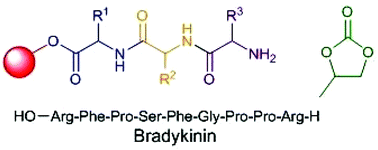
The synthesis of peptides by amide bond formation between suitably protected amino acids is a fundamental part of the drug discovery process. However, the required coupling and deprotection reactions are routinely carried out in dichloromethane and DMF, both of which have serious toxicity concerns and generate waste solvent which constitutes the vast majority of the waste generated during peptide synthesis. In this work, propylene carbonate has been shown to be a green polar aprotic solvent which can be used to replace dichloromethane and DMF in both solution- and solid-phase peptide synthesis. Solution-phase chemistry was carried out with Boc/benzyl protecting groups to the tetrapeptide stage, no epimerisation occurred during these syntheses and chemical yields for both coupling and deprotection reactions in propylene carbonate were at least comparable to those obtained in conventional solvents. Solid-phase peptide synthesis was carried out using Fmoc protected amino acids on a ChemMatrix resin and was used to prepare the biologically relevant nonapeptide bradykinin with comparable purity to a sample prepared in DMF.
 1666 and 1521 (s) cm-1;
Flow Chemistry: Recent Developments in the Synthesis of Pharmaceutical Products

Recently, application of the flow technologies for the preparation of fine chemicals, such as natural products or Active Pharmaceutical Ingredients (APIs), has become very popular, especially in academia. Although pharma industry still relies on multipurpose batch or semibatch reactors, it is evident that interest is arising toward continuous flow manufacturing of organic molecules, including highly functionalized and chiral compounds. Continuous flow synthetic methodologies can also be easily combined to other enabling technologies, such as microwave irradiation, supported reagents or catalysts, photochemistry, inductive heating, electrochemistry, new solvent systems, 3D printing, or microreactor technology. This combination could allow the development of fully automated process with an increased efficiency and, in many cases, improved sustainability. It has been also demonstrated that a safer manufacturing of organic intermediates and APIs could be obtained under continuous flow conditions, where some synthetic steps that were not permitted for safety reasons can be performed with minimum risk. In this review we focused our attention only on very recent advances in the continuous flow multistep synthesis of organic molecules which found application as APIs, especially highlighting the contributions described in the literature from 2013 to 2015, including very recent examples not reported in any published review. Without claiming to be complete, we will give a general overview of different approaches, technologies, and synthetic strategies used so far, thus hoping to contribute to minimize the gap between academic research and pharmaceutical manufacturing. A general outlook about a quite young and relatively unexplored field of research, like stereoselective organocatalysis under flow conditions, will be also presented, and most significant examples will be described; our purpose is to illustrate all of the potentialities of continuous flow organocatalysis and offer a starting point to develop new methodologies for the synthesis of chiral drugs. Finally, some considerations on the perspectives and the possible, expected developments in the field are briefly discussed.
Two examples out of several in the publication discussed below……………
1 Diphenhydramine Hydrochloride

2 Olanzapine

SEE MORE IN THE PUBLICATION…………..
Flow Chemistry: Recent Developments in the Synthesis of Pharmaceutical Products
ACS Editors’ Choice – This is an open access article published under an ACS AuthorChoice License, which permits copying and redistribution of the article or any adaptations for non-commercial purposes.

Riccardo Porta





//////////
New Route to Anticancer Agent Quinocarcin

Quinocarcin,
Antibiotic DC 52, DC 52, CHEBI:554143, CID158486, LS-80981, 3,6-Imino-1H-2-oxa-11c-azanaphth(1,2,3-cd)azulene-5-carboxylic acid, 2a,3,4,5,6,6a,7,11b-octahydro-11-methoxy-12-methyl-, (2a-alpha,3-alpha,5-alpha,6-alpha,6a-alpha,11b-alpha)-, (-)-, 84573-33-1
Synthesis of quinocarcin through a convergent strategy based on Sonogashira coupling and gold(I)-catalyzed hydroamination


 New Drug Approvals