
Home » Posts tagged 'organic chemistry' (Page 20)
Tag Archives: organic chemistry
 DRUG APPROVALS BY DR ANTHONY MELVIN CRASTO
.....FOR BLOG HOME CLICK HERE
DRUG APPROVALS BY DR ANTHONY MELVIN CRASTO
.....FOR BLOG HOME CLICK HEREFlag and hits
ORGANIC SPECTROSCOPY

SUBSCRIBE

 Subscribe in a reader
Enter your email address:
Delivered by FeedBurner
Subscribe to New Drug Approvals by Email


Recent Comments
 | shivkr2 on SPSR Excellence Award 2025 – S… |
 | Bonkasaurus on Infigratinib phosphate |
 | PALOVAROTENE | ORGAN… on Palovarotene |
| Pfizer just purchase… on Temanogrel | |
| Pfizer To Cash In On… on Temanogrel |
Access 4,000+ profiles of new drugs in development!

Sign up for a 5-day trial and learn why the Drugs in Clinical Trials Database is a cost-effective way to find detailed information on new drug therapies in hundreds of disease conditions worldwide, monitor drug performance, track competitors and find study opportunities.

FDA Accepts Endo’s Aveed Application
Endo Health Solutions said that regulators accepted for review new data for its long-acting testosterone injection Aveed and will make a ruling on the drug by Feb. 28. The Food and Drug Administration asked Endo for more information in May.
| FULL STORY |
Niche play, alliances hold promise for Biocon

DR KIRAN SHAW MAXUMDAR
MD BIOCON
Niche play, alliances hold promise for Biocon
While biosimilar opportunity in the regulated markets is likely to play out in the medium term, its existing biopharma and branded portfolio will ensure growth in the short term
Niche play, alliances hold promise for Biocon
Business Standard
Innovator sales for these two drugs are pegged at $10 billion which is slightly over half of the worldwide insulin market of $19 billion.On the monoclonal antibody front, the company is in phase III for the cancer drug Trastuzumab which has a market …
READ ALL THIS AT
HIV/AIDS vaccine passes Phase 1 clinical trial in humans

HIV/AIDS vaccine passes Phase 1 clinical trial in humans
DVICE
While other HIV/AIDS vaccines that haven’t used killed whole viruses (relying instead on targeting specific components of HIV) have failed in Phase 3 trials, Sumagen is optimistic about their drug because other successful vaccines (including polio …read all at
http://www.dvice.com/2013-9-4/hivaids-vaccine-passes-phase-1-clinical-trial-humans
European Approval for Glaxos Tafinlar
European Approval for Glaxos Tafinlar

Zacks.com
GlaxoSmithKline (GSK – Analyst Report) recently announced that its melanoma drug, Tafinlar, has been cleared by the European Commission (EC). Tafinlar is indicated as a monotherapy for treating adults suffering from unresectable or metastatic melanoma with a BRAF V600 mutation
The approval came on the basis of encouraging data from several multi-center global trials including the phase III BREAK-3 study. We remind investors that … Currently approved melanoma drugs include Zelboraf and Yervoy. Glaxo carries a Zacks Rank #3 …http://www.zacks.com/stock/news/108341/european-approval-for-glaxos-tafinlar
Cytokinetics: Clinical Investigators’ Opinions On ATOMIC-AHF Trial Results

omecamtiv mecarbil
Cytokinetics, Inc. (CYTK): Cytokinetics: Clinical Investigators’ Opinions On …
Seeking Alpha
Pending the results of the ongoing COSMIC-HF trial in 1H, 2014, I believe that the ATOMIC-AHF results support moving omecamtiv mecarbil into Phase III. With success in the Phase III, omecamtiv mecarbil would likely be a several billion drug. I regard …http://seekingalpha.com/article/1672892-cytokinetics-clinical-investigators-opinions-on-atomic-ahf-trial-results?source=google_news
Omecamtiv mecarbil (INN), previously codenamed CK-1827452, is a cardiac specific myosin activator. It is clinically tested for its role in the treatment of left ventricular systolic heart failure.[1] Systolic heart failure is characterised as a decreased cardiac output (<40% ejection fraction), due to decreased stroke volume, resulting in the inability to meet the metabolic demands of the body.[2] The loss of contraction is caused by a reduced number of effective actin-myosin cross bridges in the left ventricular myocytes. One possible underlying mechanism is altered signal transduction that interferes with excitation-contraction coupling.[3] A decreased cardiac output causes peripheral hypotension and activation of the sympathetic nervous system.[2] This in turn stimulates the cardiac myocytes excessively, eventually leading to left ventricular hypertrophy, characteristic of chronic heart failure. Some symptoms of systolic heart failure are fatigue, peripheral oedema, dyspnoea, exercise intolerance and breathlessness.[2] Current inotropic drug therapies such as dobutamine, are palliative and not a cure. They also cause many adverse effects including arrhythmias related to increased myocardical oxygen consumption, desensitization of adrenergic receptors and altering intracellular calcium levels.[4] Thus systolic heart failure is considered malignant, however the novel mechanism of Omecamtiv Mecarbil is a hopeful long-term resolution.
Mechanism of action
Cardiac myocytes contract through a cross-bridge cycle between the myofilaments, actin and myosin. Chemical energy in the form of ATP is converted into mechanical energy which allows myosin to strongly bind to actin and produce a power stroke resulting in sarcomere shortening/contraction.[3] Omecamtiv Mecarbil specifically targets and activates myocardial ATPase and improves energy utilization. This enhances effective myosin cross-bridge formation and duration, while the velocity of contraction remains the same.[5] It also increases the rate of phosphate release from myosin, thereby accelerating the rate-determining step of the cross-bridge cycle, which is the transition of the actin-myosin complex from the weakly bound to the strongly bound state.[1] The overall result of Omecamtiv Mecarbil is an increase in left ventricular systolic ejection time, sarcomere shortening and stroke volume, while the systolic pressure remains the same.[5] This causes a decrease in heart rate while myocardial oxygen consumption is unaffected. The increased cardiac output is independent of intracellular calcium and cAMP levels.[4][6] Thus Omecamtiv Mecarbil improves systolic function by increasing the systolic ejection duration/stroke volume, without consuming more ATP energy, oxygen or altering intracellular calcium levels causing an overall improvement in cardiac efficiency.[5]
Clinical trials
Experimental studies on rats and dogs, proved the efficacy and mechanism of action of Omecamtiv Mecarbil.[4] Current clinical studies on humans have shown there is a direct linear relationship between dose and systolic ejection time.[1][7][8] The dose-dependent effects persisted throughout the entire trial, suggesting that desensitization does not occur. The maximum tolerated dose was observed to be an infusion of 0.5 mg/kg/h. Adverse effects, such as ischemia, were only seen at doses beyond this level, due to extreme lengthening of systolic ejection time.[1] Thus due to the unique cardiac myosin activation mechanism, Omecamtiv Mecarbil could safely improve cardiac function within tolerated doses. Omecamtiv Mecarbil effectively relieves symptoms and enhances the quality of life of systolic heart failure patients. It drastically improves cardiac performance in the short term, however the hopeful long term effects of reduced mortality have yet to be studied.[2][1]
- ^ a b c d e Teerlink, JR (2009). “A novel approach to improve cardiac performance: cardiac myosin activators”. Heart Fail Rev 14 (4): 289–298. doi:10.1007/s10741-009-9135-0. ISSN 1382-4147.
- ^ a b c d Dyke D, Koelling T (2008). “Heart failure due to left ventricular systolic dysfunction”. In Eagle KA, Baliga RR. Practical Cardiology. Philadelphia: Lippincott Williams & Wilkins. pp. 246–285. ISBN 978-0-7817-7294-5.
- ^ a b Bers, DM (Jan 2002). “Cardiac excitation-contraction coupling”. Nature 415 (6868): 198–205. doi:10.1038/415198a. PMID 11805843.
- ^ a b c Shen YT, Malik FI, Zhao X, Depre C, Dhar SK, Abarzúa P, Morgans DJ, Vatner SF (Jul 2010). “Improvement of cardiac function by a cardiac myosin activator in conscious dogs with systolic heart failure”. Circ Heart Fail 3 (4): 522–7. doi:10.1161/CIRCHEARTFAILURE.109.930321. PMID 20498236.
- ^ a b c Malik F, Teerlink J, Escandon R, Clake C, Wolff A (2006). “The Selective Cardiac Myosin Activator, CK-1827452, a Calcium-Independent Inotrope, Increases Left Ventricular Systolic Function by Increasing Ejection Time Rather than the Velocity of Contraction”. Circulation 114 (18 Suppl): 441.
- ^ Teerlink JR, Metra M, Zacà V, Sabbah HN, Cotter G, Gheorghiade M, Cas LD (Dec 2009). “Agents with inotropic properties for the management of acute heart failure syndromes. Traditional agents and beyond”. Heart Fail Rev 14 (4): 243–53. doi:10.1007/s10741-009-9153-y. PMID 19876734.
- ^ Teerlink JR, Clarke CP, Saikali KG, Lee JH, Chen MM, Escandon RD, Elliott L, Bee R, Habibzadeh MR, Goldman JH, Schiller NB, Malik FI, Wolff AA (Aug 2011). “Dose-dependent augmentation of cardiac systolic function with the selective cardiac myosin activator, omecamtiv mecarbil: a first-in-man study.”. Lancet 378 (9792): 667–75. doi:10.1016/S0140-6736(11)61219-1. PMID 21856480.
- ^ Cleland JG, Teerlink JR, Senior R, Nifontov EM, Mc Murray JJ, Lang CC, Tsyrlin VA, Greenberg BH, Mayet J, Francis DP, Shaburishvili T, Monaghan M, Saltzberg M, Neyses L, Wasserman SM, Lee JH, Saikali KG, Clarke CP, Goldman JH, Wolff AA, Malik FI (Aug 2011). “The effects of the cardiac myosin activator, omecamtiv mecarbil, on cardiac function in systolic heart failure: a double-blind, placebo-controlled, crossover, dose-ranging phase 2 trial”. Lancet 378 (9792): 676–83. doi:10.1016/S0140-6736(11)61126-4. PMID 21856481.
Welcome to Bioinfomedical.com

http://www.bioinfomedical.com/index.php

Prof. Dr. Rafael Boritzer
P.O.Box 88355, Honolulu, Hawaii 96830 U.S.A.
http://www.bioinfomedical.com/index.php
we are marketers of non-branded recombinant proteins with a primary mission of high quality, low priced material for encouraging biopharma research and development outside of North America. We try to integrate our supply services with education of our clients’ with industry videos and information.
Welcome to Bioinfomedical.com
BioInfoMedical was established in 1989 by a team of experienced medical specialists, world-known scientists and marketing professionals. The company has two operating divisions:
InfoMedical Biotechnology and InfoMedical Consulting.
InfoMedical Biotechnology provides products and services used in gene, protein and cell research, drug discovery and development, as well as in biopharmaceutical manufacturing.
InfoMedical Consulting assists companies in strategic market expansion, industry research, environmental analysis, and developing successful market plans for worldwide business-winners.
We are proud to serve our customers around the globe. Our clients are: academic research institutions, biotechnology and pharmaceutical companies, medical research centers, hospitals, reference laboratories, agricultural and chemical companies, as well as leading private and governmental business organizations.
…………………………………………………………………………………………………….
see a video of DR RAFI
………………………………………………………………………………………………………….

Cytokines
- Adiponectin
- Angiopoietin
- Apoliprotein
- B-Cell Activating Factor
- Beta Defensin
- Bone Morphogenetic Protein
- B type Natriuretic Peptide
- Endoglin
- Flt3 Ligand
- Hedgehog Protein
- Interleukin
- Interferon
- Leukemia Inhibitory Factor
- Resistin
- Thrombopoietin
- Trefoil Factor
- Tumor Necrosis Factor
- Visfatin
- Other
- EBI3
- Serum Amyloid A
- Betacellulin
- Follistatin
Growth Factors
- Colony Stimulating Factor
- CTGF
- Epidermal Growth Factor
- Erythropoietin
- Fibroblast Growth Factor
- Galectin
- Growth Hormone
- Hepatocyte Growth Factor
- IGFBP
- Insulin-Like Growth Factor
- Insulin
- Keratinocyte Growth Factor
- Leptin
- Macrophage Migration Inhibitory Factor
- Melanoma Inhibitory Activity
- Myostatin
- Noggin
- Osteoprotegerin
- PDGF
- Placental Lactogen
- Prolactin
- RANK Ligand
- Stem Cell Factor
- Transforming Growth Factor
- VEGF
- Other
- Activin-A
- Retinol Binding Protein
- Omentin
- Oncostatin-M
Chemokines
- Eotaxin
- GRO
- Interleukin-8 (CXCL8)
- IP-10 (CXCL10)
- I-TAC (CXCL11)
- Lymphotactin (XCL1)
- MCP
- MDC (CCL22)
- MEC (CCL28)
- MIG (CXCL9)
- MIP
- Platelet Factor-4 (CXCL4)
- Rantes (CCL5)
- SDF (CXCL12)
- TARC (CCL17)
- Other
- ENA 78
- NAP-2 (CXCL7)
CD Antigens
Neurotrophins
- Beta-Nerve Growth Factor
- Ciliary-Neurotrophic Factor
- Glia Maturation Factor
- Pigment Epithelium-Derived Factor
- Other
Hormones
- Endothelin
- Exendin
- FSH
- GHRP
- GLP
- Glucagon
- HCG
- Inhibin A
- LHRH
- Peptide Hormones
- PTH
- Stanniocalcin
- Thymosin
- Thyrostimulin
- TSH
- Other
Enzymes
- 14-3-3
- Adenylate Kinase
- Carbonic Anhydrase
- Casein Kinase-2
- Creatin Kinases
- Cyclophilin
- Deaminase
- Dehydrogenase
- DNA Polymerase
- EGF Receptor
- Enteropeptidase/Enterokinase
- FGF Receptors
- FK506 Binding Protein
- Gluteradoxin
- Hexokinase
- Isomerase
- Kallikrein
- LYVE1
- Matrix Metalloproteinase
- Natural Enzymes
- Neuron Specific Enolase
- Oxidase
- Paraoxonase
- Peptidase
- Peroxiredoxin
- Phosphatase
- Phosphoinositide 3-kinase
- Phosphorylase
- Proteasome
- Protein Kinase-A
- Protein Kinase-C
- Protein Kinases
- Reductase
- Secreted Phospholipase A2
- Synthase
- Synthetase
- TIE1,TIE2
- Transferase
- Tyrosine Kinase
- Ubiquitin Conjugating Enzyme
- VEGF Receptors
- Other
- Mutase
- Mitogen-Activated Protein Kinase
- Hydroxylase
- Hydrolase
- Hydratase
- Glycosylase
- Lipase
- Esterase
- Epimerase
- Decarboxylase
- Nuclease
- Nudix Type Motif
- Oxygenase
- Activating Transcrition Factor
- Aldolase
- Aurora Kinase
- Calcium and Integrin Binding
- Cyclin
- Cyclin-Dependent Kinase
- Endonuclease
- Enolase
- Jun N-terminal Kinase
- Jun Proto-Oncogene
- Lyase
- Nucleotidase
- Peroxisome Proliferator Activated Receptor
- Polymerase
- Protein Kinase Akt1/PKB alpha
Viral Antigens
- Borrelia
- Chagas
- Chlamydia
- Cytomegalo
- Dengue
- EBV
- Encephalitis
- HBsAg
- Hepatitis A
- Hepatitis B
- Hepatitis C
- Hepatitis D
- Hepatitis E
- Herpes
- HIV
- HTLV
- Influenza
- Malaria
- Measles
- Rubella
- SARS
- Toxoplasma
- Treponema
- West Nile
- Varicella
- Papillomavirus
- Mycoplasma
- Hantavirus
- Parvovirus
Recombinant Proteins
- Albumin
- Allergy
- Annexin
- Beta 2 Microglobulin
- B Cell Lymphoma
- BID
- Calbindin
- Calmodulin
- Cardiac Troponin
- Cell Division Cycle
- Chromogranin
- Collagen
- Complement Component
- Cytokeratin
- Cystatin
- Eukaryotic Translation Initiation Factor
- FABP
- Ferritin
- Heat Shock Protein
- High-Mobility Group
- Killer Cell
- Member RAS Oncogene Family
- Myelin Oligodendrocyte Glycoprotein
- Myosin Light Chain
- p53
- PCNA
- Profilin
- Programmed Cell Death
- Protein-A, A/G & G
- Regenerating Islet-Derived
- Secretagogin
- Selectin
- Serpin
- SMAD
- Streptavidin
- Superoxide Dismutase
- Synaptobrevin
- Synaptosomal Associated Protein
- Synuclein
- SRY (Sex Determining Region Y)-Box
- Stathmin
- Thioredoxin
- TNF receptor-Associated Factor
- Trypsin
- Vimentin
- Other
- Visinin-Like Protein
- Ubiquitin
- Syndecan
- Sirtuin
- Regulator of G-Protein Signaling
- Ras-Related C3 Botulinum Toxin Substrate
- Outer Membrane Protein
- Non-Metastatic Cells
- Myoglobin
- Microtubule-Associated Protein
- Melanoma Antigen Family A
- Hypoxia-Inducible Factor
- DNA-Damage Protein
- Endoplasmic Reticulum Protein
- Chromosome Open Reading Frame
- Calcium Binding Protein
- ADP-Ribosylation Factor
- Small Nuclear Ribonucleoprotein Polypeptide
- Calcium Binding Protein
- Centromere Protein
- Chloride Intracellular Channel
- Chromatin Modifying Protein
- Chromobox
- Coagulation Factors
- C-Reactive Protein
- Crystallin
- Cytochrome
- Dynein Light Chain
- Ephrin
- Exosome Component
- NANOG
- Reticulocalbin
- Ribosomal Protein
- Septin
- Transgelin
- Tropomyosin
- U6 Small Nuclear RNA
- Vacuolar Protein Sorting
- Fibronectin
Natural Proteins
Monoclonal Antibodies
- Anti Human Cytokine
- Anti Human Lymphocyte
- Anti Mouse Cytokine
- Anti Human Chemokine
- Anti Human Enzyme
- Anti Human Heat Shock Protein
- Anti Mouse Lymphocyte
- Anti-GST
- Anti Viral
- Other
Polyclonal Antibodies
Test Category New
http://www.bioinfomedical.com/index.php

Diet Pill Dilemma: Why Is FDA Approving Drugs When Europe Isn’t?

We’ve all dreamt of popping a pill to help us safely lose weight, or at least eat that chocolate cake without guilt. But alas, even though the Food and Drug Administration has approved two new diet drugs in recent months, that dream probably isn’t any closer to reality.
In the current issue of the BMJ (formerly the British Medical Journal), Sidney Wolfe, founder of the advocacy group Public Citizen, slams the FDA for approving the drugs – lorcaserin (US brand name Belviq) and topiramate (called Qsymia). The FDA’s European counterpart rejected both of them because of heart risks that turned up during preliminary trials.
read all this at
http://commonhealth.wbur.org/2013/08/diet-pill-dilemma-why-is-fda-approving-drugs-when-europe-isnt
New Drug Shows Promise for Type 2 Diabetes
TUESDAY Sept. 3, 2013 — An injectable drug that mimics the action of a little-known hormone may hold promise for patients with type 2 diabetes.
The experimental drug, called LY, is a copy of a hormone called fibroblast growth factor 21 (FGF21), and researchers report that it seems to help protect against obesity and may boost the action of insulin.
READ ALL AT
http://www.drugs.com/news/new-shows-promise-type-2-diabetes-47140.html
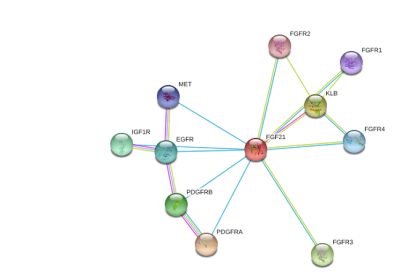
FGF21
http://alfin2600.blogspot.in/2012/10/fgf21-learning-to-live-longer-from.html
Fibroblast growth factor-21 (FGF21) is a hormone secreted by the liver during fasting that elicits diverse aspects of the adaptive starvation response. Among its effects, FGF21 induces hepatic fatty acid oxidation and ketogenesis, increases insulin sensitivity, blocks somatic growth and causes bone loss. Here we show that transgenic overexpression of FGF21 markedly extends lifespan in mice without reducing food intake or affecting markers of NAD+ metabolism or AMP kinase and mTOR signaling. Transcriptomic analysis suggests that FGF21 acts primarily by blunting the growth hormone/insulin-like growth factor-1 signaling pathway in liver. These findings raise the possibility that FGF21 can be used to extend lifespan in other species
Type II diabetes is the most prevalent form of diabetes. The disease is caused by insulin resistance and pancreatic β cell failure, which results in decreased glucose-stimulated insulin secretion. Fibroblast growth factor (FGF) 21, a member of the FGF family, has been identified as a metabolic regulator and is preferentially expressed in the liver and adipose tissue and exerts its biological activities through the cell surface receptor composed of FGFR1c and β-Klotho on target cells such as liver and adipose tissues (WO0136640, and WO0118172).
The receptor complex is thought to trigger cytoplasmic signaling and to up-regulate the GLUT1 expression through the Ras/MAP kinase pathway.
Its abilities to provide sustained glucose and lipid control, and improve insulin sensitivity and β-cell function, without causing any apparent adverse effects in preclinical settings, have made FGF21 an attractive therapeutic agent for type-2 diabetes and associated metabolic disorders.
There have been a number of efforts towards developing therapies based on FGF21. WO2006065582, WO2006028714, WO2006028595, and WO2005061712 relate to muteins of FGF21, comprising individual amino-acid substitutions. WO2006078463 is directed towards a method of treating cardiovascular disease using FGF21. WO2005072769 relates to methods of treating diabetes using combinations of FGF21 and thiazolidinedione. WO03059270 relates to methods of reducing the mortality of critically ill patients comprising administering FGF21. WO03011213 relates to a method of treating diabetes and obesity comprising administering FGF21.
However, many of these proposed therapies suffer from the problem that FGF21 has an in-vivo half-life of between 1.5 and 2 hrs in humans. Some attempts have been made to overcome this drawback. WO2005091944, WO2006050247 and WO2008121563 disclose FGF21 molecules linked to PEG via lysine or cysteine residues, glycosyl groups and non-natural amino acid residues, respectively. WO2005113606 describes FGF21 molecules recombinantly fused via their C-terminus to albumin and immunoglobulin molecules using polyglycine linkers.
However, developing protein conjugates into useful, cost-effective pharmaceuticals presents a number of significant and oftentimes competing challenges: a balance must be struck between in vivo efficacy, in vivo half-life, stability for in vitro storage, and ease and efficiency of manufacture, including conjugation efficiency and specificity. In general, it is an imperative that the conjugation process does not eliminate or significantly reduce the desired biological action of the protein in question.
The protein-protein interactions required for function may require multiple regions of the protein to act in concert, and perturbing any of these with the nearby presence of a conjugate may interfere with the active site(s), or cause sufficient alterations to the tertiary structure so as to reduce active-site function. Unless the conjugation is through the N′ or C′ terminus, internal mutations to facilitate the linkage may be required. These mutations can have unpredictable effects on protein structure and function. There therefore continues to be a need for alternative FGF21-based therapeutics.
The reference to any art in this specification is not, and should not be taken as, an acknowledgement of any form or suggestion that the referenced art forms part of the common general knowledge.
The Claimed Intermediate database by Tcipatent Ltd

Eddie Kehoe
Principal & Technical Director at Tcipatent Ltd
Hove, Brighton and Hove, United KingdomPharmaceuticalsThe Claimed Intermediate – a Structure Searchable Process Patent Database for Marketed Pharmaceutical Drugs (INNs).
Patent examining, searching, analysis and abstracting especially in the Chemical subject area.


The Claimed Intermediate is an online database
which covers Process Patents for Named Marketed Pharmaceutical Drugs – whether intermediates are claimed or not – for a low-cost subscription.
- Structure Searchable
- Includes INNs in at least one major Market
- Includes Drug Synthesis often buried in a Plethora of Patents
- Informs Pipeline decisions
- Provides targeted Patent data in a Visual form
- Informs Commercial Synthesis profitability


shared message from Eddie Kehoe
If anybody would like a trial of the database they could contact either myself eddie.kehoe@tcipatent.com, or my wife and fellow director, Pat Kehoe (pat.kehoe@tcipatent.com).
Here are temporary logons , please request trial
(deactivated automatically in five working days):
Link: Link: www.tcipatent.com/tcidb/
Structure Searchable Patent Database for Processes covering Named Marketed Pharmaceutical Drugs (INNs). The database is an ongoing Watching Service combined with a Backward Drug Service.
Eddie Kehoe
Principal & Technical Director
Tcipatent Ltd
www.tcipatent.com
info@tcipatent.om
tcipatent.com
Office: +44 (0)1273 736080
43 Farm Road, Hove, BN3 1FD, United Kingdom
Eddie Kehoe:
eddie.kehoe@tcipatent.com
Mobile – 07425629637
Skype – eddieskihoe
TWITTER-TCIPATENT
Pat Kehoe:
pat.kehoe@tcipatent.com
Mobile – 07585295531
Skype – patkehoe170348

Database Updates:
Recently Added Records
| Aliskiren | Ambrisentan |
| Asenapine | Atorvastatin |
| Bosentan | Cabazitaxel |
| Cefamandole | Dasatinib |
| Desogestrel | Dexmedetomidine |
| Docetaxel | Doripenem |
| Doxapram | Duloxetine |
| Etonogestrel | Etoricoxib |
| Etravirine | Fluvastatin |
| Gefitinib | Iodixanol |
| Iohexol | Iopamidol |
| Linagliptin | Mitiglinide |
| Montelukast | Moxonidine |
| Oseltamivir | Paclitaxel |
| Perampanel | Pitavastatin |
| Pravastatin | Praziquantel |
| Ritodrine | Rosuvastatin |
| Silodosin | Sitagliptin |
| Ticagrelor | Ulipristal |
| Zidovudine |
………..

photo
Coopers Cask – Pub in Hove BN3 1FB
Eddie is closeby


 New Drug Approvals