
Home » Posts tagged 'MRX-I'
Tag Archives: MRX-I
 DRUG APPROVALS BY DR ANTHONY MELVIN CRASTO
.....FOR BLOG HOME CLICK HERE
DRUG APPROVALS BY DR ANTHONY MELVIN CRASTO
.....FOR BLOG HOME CLICK HEREFlag and hits
ORGANIC SPECTROSCOPY

SUBSCRIBE

 Subscribe in a reader
Enter your email address:
Delivered by FeedBurner
Subscribe to New Drug Approvals by Email


Recent Comments
 | shivkr2 on SPSR Excellence Award 2025 – S… |
 | Bonkasaurus on Infigratinib phosphate |
 | PALOVAROTENE | ORGAN… on Palovarotene |
| Pfizer just purchase… on Temanogrel | |
| Pfizer To Cash In On… on Temanogrel |
Contezolid

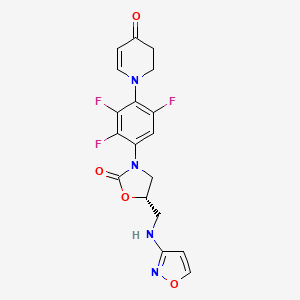

Contezolid
- MRX-I
- 1112968-42-9
- MRX-1
- B669M62ELP
- (5S)-5-[(1,2-oxazol-3-ylamino)methyl]-3-[2,3,5-trifluoro-4-(4-oxo-2,3-dihydropyridin-1-yl)phenyl]-1,3-oxazolidin-2-one
- 4(1H)-Pyridinone, 2,3-dihydro-1-(2,3,6-trifluoro-4-((5S)-5-((3-isoxazolylamino)methyl)-2-oxo-3-oxazolidinyl)phenyl)-
- (5S)-5-[(1,2-oxazol-3-ylamino)methyl]-3-[2,3,5-trifluoro-4-(4-oxo-2,3-dihydropyridin-1-yl)phenyl]-1,3-oxazolidin-2-one
- 4(1H)-Pyridinone, 2,3-dihydro-1-[2,3,6-trifluoro-4-[(5S)-5-[(3-isoxazolylamino)methyl]-2-oxo-3-oxazolidinyl]phenyl]-
- 1-{2,3,6-trifluoro-4-[(5S)-5-{[(1,2-oxazol-3-yl)amino]methyl}-2-oxo-1,3-oxazolidin-3-yl]phenyl}-1,2,3,4-tetrahydropyridin-4-one
- 5-((isoxazol-3-ylamino)methyl)-3-(2,3,5-trifluoro-4-(4-oxo-3,4-dihydropyridin-1(2H)-yl)phenyl)oxazolidin-2-one
- コンテゾリド;
WeightAverage: 408.337
Monoisotopic: 408.104539468
Chemical FormulaC18H15F3N4O4
Shanghai MicuRx Pharmaceutical Co. Ltd
Contezolid was approved for use by the National Medical Products Administration (NMPA) of China in 2021
- OriginatorMicuRx Pharmaceuticals
- ClassAntibacterials; Oxazolidinones; Skin disorder therapies
- Mechanism of ActionProtein synthesis inhibitors
- Phase IIIDiabetic foot; Skin and soft tissue infections
- No development reportedGram-positive infections
- 28 Jan 2025No recent reports of development identified for phase-I development in Gram-positive-infections(In volunteers) in China (IV)
- 28 Jan 2025No recent reports of development identified for phase-I development in Gram-positive-infections(In volunteers) in China (PO)
- 29 Nov 2024Phase-III clinical trials in Skin and soft tissue infections in China (IV), prior to November 2024
Contezolid (trade name Youxitai) is an antibiotic of the oxazolidinone class.[1][2] It is effective against Staphylococcus aureus, methicillin-resistant Staphylococcus aureus (MRSA), Streptococcus pyogenes, Streptococcus agalactiae, and other bacteria.[3]
In 2021, it was approved by the National Medical Products Administration of China for the treatment of complicated skin and soft tissue infections (cSSTI).[3][4]
A prodrug of contezolid, contezolid acefosamil, which is formulated for IV administration[5] is in Phase III clinical trials for diabetic foot infection.[6]

Chemical structure of contezolid acefosamil
SYN
https://pubs.acs.org/doi/abs/10.1021/acsmedchemlett.2c00191
Abstract

New oral antibiotic contezolid (CZD) is effective against Gram-positive infections but unsuitable for intravenous (IV) administration due to its modest solubility. To address the medical need for an IV form of CZD, its isoxazol-3-yl phosphoramidate derivatives have been explored, and contezolid acefosamil (CZA, 8), the first representative of a novel O-acyl phosphoramidate prodrug class, has been identified. CZA exhibits high aqueous solubility (>200 mg/mL) and good hydrolytic stability at media pH suitable for IV administration. CZA rapidly converts into the active drug CZD in vivo. In a pharmacokinetic (PK) rat model, the exposure of active drug CZD after IV administration of the prodrug CZA was similar to or higher than that from the IV administration of CZD. The prodrug CZA is bioequivalent to or better than CZD in several preclinical infection models. CZA is likewise active upon its oral administration. To date, CZA has been evaluated in Phase 1 and Phase 2 clinical trials in the USA. It is advancing into further clinical studies including step-down therapy with in-hospital intravenous CZA administration followed by outpatient oral CZD treatment.
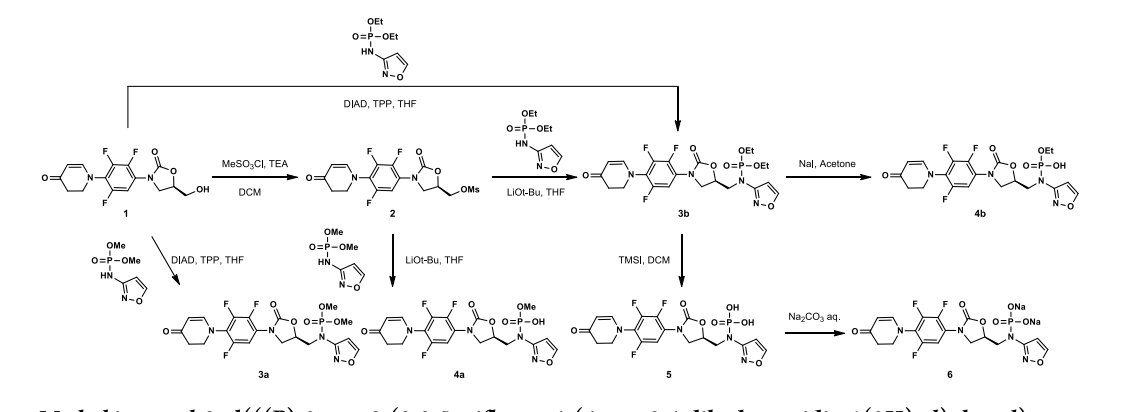
SYN
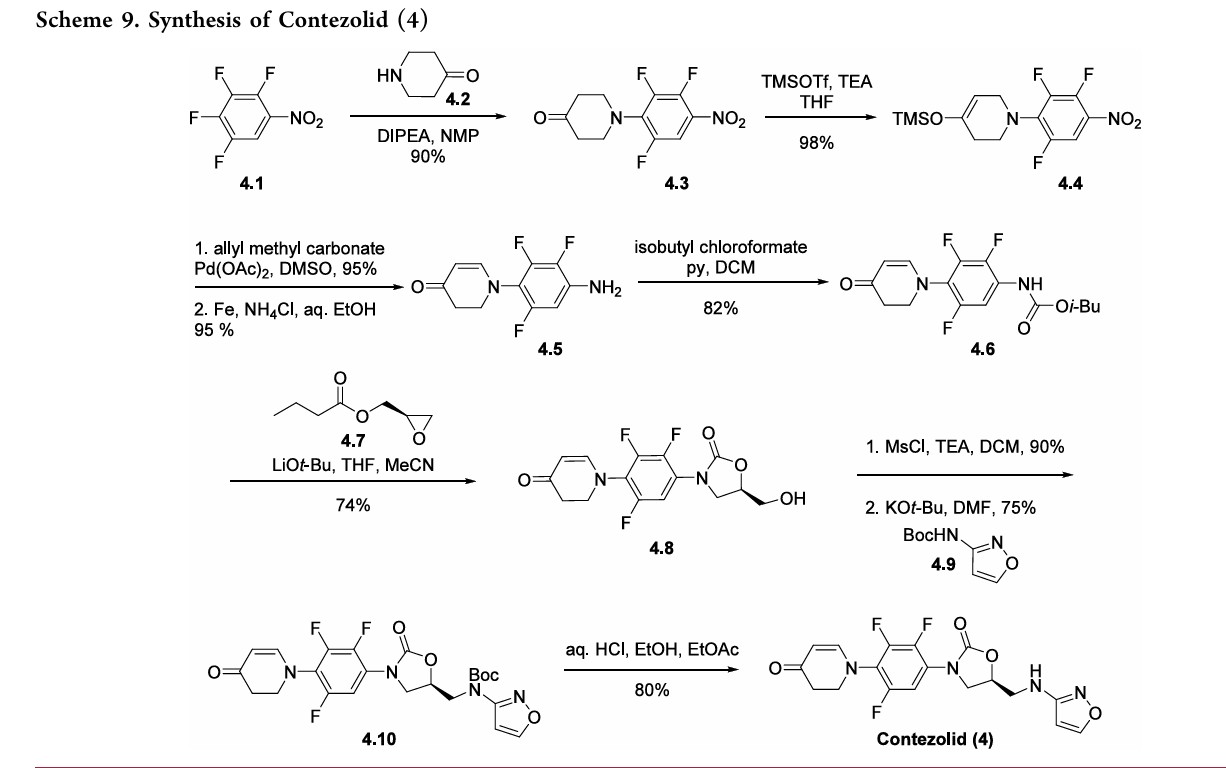
Contezolid (Youxitai). Contezolid (4), also referred to as MRX-I, is an orally administered oxazolidinone
antibacterial agent developed by Shanghai MicuRx Pharmaceutical Co. Ltd. Contezolid was developed to overcome the myelosuppression and monoamine oxidase (MAO) inhibition limitations of the structurally similar linezolid. 32 Contezolid is used to treat complicated skin and soft tissue infections arising
from multidrug-resistant Gram-positive bacterial infections including methicillin-susceptible Staphylococcus aureus (MSSA), methicillin-resistant Staphylococcus aureus (MRSA), Streptococcus pyogenes, Streptococcus agalactiae, and vancomycin-resistant enterococci.3334 Contezolid was approved for use by the National Medical Products Administration (NMPA) of China in 2021.
As with most antibacterial oral therapies, high 35 dosage is required; the drug is given twice daily for 7−14 days.36,37
The synthesis of contezolid builds on prior research from other groups.
A sequence developed by Pharmaciawith a facile SN38began Ar reaction between polyfluorinated nitro
benzene 4.1 and piperidine-4-one 4.2 to furnish 4.3 in good yield (Scheme 9). Silyl enol ether formation afforded 4.4, which was subjected to Tsuji’s 39 method to give the α,βunsaturated ketone in excellent yield. Subsequent reduction of the nitro group gave aryl amine 4.5. Treatment of 4.5 with isobutyl chloroformate gave carbamate 4.6, which was treated with optically pure epoxide 4.7 to give xazolidinone 4.8. 38Mesylation of the free alcohol and displacement with N-Bocaminoisoxazole 4.9 afforded the Boc-protected contezolid 4.10. Simple acidic removal of the Boc group provided contezolid 4.
(32) Wang, W.; Voss, K. M.; Liu, J.; Gordeev, M. F. Nonclinical
evaluation of antibacterial oxazolidinones contezolid and contezolid
acefosamil with low serotonergic neurotoxicity. Chem. Res. Toxicol.
2021, 34, 1348−1354.
(33) Hoy, S. M. Contezolid: First approval. Drugs 2021, 81, 1587−
1591.
(34) MicuRx Pharmaceuticals. China NMPA approves MicuRx’s
contezolid for treatment of drug-resistant bacterial infection. http://www.
micurx.com/703.html (accessed 2023-06).
(35) MSD Pharmaceuticals. Usual dosages of commonly prescribed
antibiotics. https://www.msdmanuals.com/en-jp/professional/
multimedia/table/usual-dosages-of-commonly-prescribed-antibioticsa
(accessed 2023-06).
(36) Barbachyn, M. R.; Hutchinson, D. K.; Brickner, S. J.; Cynamon,
M. H.; Kilburn, J. O.; Klemens, S. P.; Glickman, S. E.; Grega, K. C.;
Hendges, S. K.; Toops, D. S.; et al. Identification of a novel
oxazolidinone (U-100480) with potent antimycobacterial activity. J.
Med. Chem. 1996, 39, 680−685.
(37) Im, W. B.; Choi, S. H.; Park, J. Y.; Choi, S. H.; Finn, J.; Yoon, S.
H. Discovery of torezolid as a novel 5-hydroxymethyl-oxazolidinone
antibacterial agent. Eur. J. Med. Chem. 2011, 46, 1027−1039.
(38) Manninen, P. R.; Brickner, S. J. Preparation of N-aryl-5R
hydroxymethyl-2-oxazolidinones from N-aryl carbamates: N-phenyl
(5R)-hydroxymethyl-2-oxazolidinone. Organic Synth 2005, 81, 112.
(39) Tsuji, J.; Minami, I.; Shimizu, I. A novel palladium-catalyzed
preparative method of α,β-unsaturated ketones and aldehydes from
saturated ketones and aldehydes via their silyl enol ethers. Tetrahedron
Lett. 1983, 24, 5635−5638.


AS ON JUNE2025 4.45 LAKHS VIEWS ON BLOG WORLDREACH AVAILABLEFOR YOUR ADVERTISEMENT
join me on Linkedin
Anthony Melvin Crasto Ph.D – India | LinkedIn
join me on Researchgate
RESEARCHGATE

join me on Facebook
Anthony Melvin Crasto Dr. | Facebook
join me on twitter
Anthony Melvin Crasto Dr. | twitter
+919321316780 call whatsaapp
EMAIL. amcrasto@gmail.com

……
| Clinical data | |
|---|---|
| Trade names | Youxitai |
| Other names | MRX-I |
| Legal status | |
| Legal status | Rx in China |
| Identifiers | |
| IUPAC name | |
| CAS Number | 1112968-42-9 |
| PubChem CID | 25184541 |
| IUPHAR/BPS | 10795 |
| DrugBank | DB12796 |
| ChemSpider | 34217570 |
| UNII | B669M62ELP |
| KEGG | D11297 |
| ChEMBL | ChEMBL3287379 |
| CompTox Dashboard (EPA) | DTXSID901353186 |
| Chemical and physical data | |
| Formula | C18H15F3N4O4 |
| Molar mass | 408.337 g·mol−1 |
| 3D model (JSmol) | Interactive image |
| SMILES | |
| InChI | |
References
- Gordeev MF, Yuan ZY (June 2014). “New Potent Antibacterial Oxazolidinone (MRX-I) with an Improved Class Safety Profile”. Journal of Medicinal Chemistry. 57 (11): 4487–4497. doi:10.1021/jm401931e. PMID 24694071.
- Zhao X, Huang H, Yuan H, Yuan Z, Zhang Y (May 2022). “A Phase III multicentre, randomized, double-blind trial to evaluate the efficacy and safety of oral contezolid versus linezolid in adults with complicated skin and soft tissue infections”. The Journal of Antimicrobial Chemotherapy. 77 (6): 1762–1769. doi:10.1093/jac/dkac073. PMID 35265985.
- Hoy SM (September 2021). “Contezolid: First Approval”. Drugs. 81 (13): 1587–1591. doi:10.1007/s40265-021-01576-0. PMC 8536612. PMID 34365606.
- Mak E (3 June 2021). “Micurx wins China approval for antibacterial contezolid”. BioWorld.
- Liu J, Wang W, Wang C, Zhang L, Zhang X, Liu S, et al. (July 2022). “Discovery of Antibacterial Contezolid Acefosamil: Innovative O-Acyl Phosphoramidate Prodrug for IV and Oral Therapies”. ACS Medicinal Chemistry Letters. 13 (7): 1030–1035. doi:10.1021/acsmedchemlett.2c00191. PMC 9290071. PMID 35859881.
- “Contezolid acefosamil by MicuRx Pharmaceuticals for Diabetic Foot Infection (DFI): Likelihood of Approval”. GlobalData. 31 May 2023 – via Pharmaceutical Technology.
/////////Contezolid, CHINA 2021, APPROVALS 2021, MRX-I, 1112968-42-9, MRX 1, B669M62ELP, コンテゾリド ,
MicuRx Pharmaceuticals (USA) has MRX I IN PHASE 1 for resistant Gram-positive bacteria
 MRX I
MRX I
MRX-I
1112968-42-9 cas no
C18 H15 F3 N4 O4
- 4(1H)-Pyridinone, 2,3-dihydro-1-[2,3,6-trifluoro-4-[(5S)-5-[(3-isoxazolylamino)methyl]-2-oxo-3-oxazolidinyl]phenyl]-
IN phase 1 FOR GRAM POSITIVE BACTERIA
MicuRx Pharmaceuticals (USA)
MicuRx Pharmaceuticals is developing two oxazolidinone compounds MRX-I and MRX-II. MRX-I is an oral oxazolidinone antibiotic that targets infections due to resistant Gram-positive bacteria, including MRSA and vancomycin-resistant enterococci (VRE). The company announced the completion of a double-blinded, placebo-controlled Phase 1 clinical study, and that the compound has been shown to be safe and well-tolerated at all doses tested with no evidence of myelosuppression.
In October 2012, the company announced the establishment of Shanghai MengKe Pharmaceuticals, a joint venture with Shanghai Zhangjiang Biomedical Industry Venture Capital formed to fund the development and commercialization of MRX-I for the Chinese market. MRX-II is currently under pre-clinical development [1,2].

MRX-I: A Potent and Safe Oxazolidinone Antibiotic
MRX-I is a next-generation oral oxazolidinone antibiotic for treating Gram-positivebacterial infections, including methicillin-resistant Staphylococcus aureus (MRSA) and vancomycin-resistant enterococci (VRE). In April 2012, MicuRx announced positive Phase I clinical results demonstrating that MRX-I is safe and well tolerated in human subjects, with no signs of myelosuppression, a major toxicity concern for most oxazolidinone agents, including linezolid.In preclinical studies, MRX-I cures in vivoinfections due to Gram-positive bacteria including MRSA and VRE effectively. In addition, MRX-I exhibits 2-fold improved activity against MRSA strains as compared to linezolid.
WO 2009020616 OR
http://www.google.fm/patents/US20090048305?cl=ja
Example 1 Compound of Structure

Scheme for the Compound of Example 1

Intermediate 17. 2,3,4,5-Tetrafluoronitrobenzene (1.17 g, 6.0 mmol) in N-methylpiperidone (NMP; 25 mL) was added dropwise with stirring to 4-piperidone hydrochloride (0.84 g, 6.2 mmol) and N,N-diisopropyl-N-ethylamine (DIEA; 2.45 mL, 14.0 mmol) in NMP (20 mL) at ca.-10 to −5° C. under nitrogen. The mixture was allowed to warm up to r.t. and stirred o.n. The mixture was taken into EtOAc (ca. 100 mL), washed with 2% aq. citric acid (2×50 mL), water (10×50 mL), brine, and dried (Na2SO4). Solvent was removed under vacuum, and the crude product was washed with hexanes (4×20 mL) and dried. Yellow crystals.1H NMR (400 MHz): 7.74 (m, 1H); 3.73 (t, J=6.0 Hz, 4H); 2.66 (t, J=6.0 Hz, 4H). MS (m/z): 275 [M+H].
Intermediate 18. Triethylamine (TEA; 5.6 mL, 43.87 mmol) was added to the Intermediate 17 (8.1 g, 29.56 mmol) in THF (120 mL) at 0° C., followed by triisopropylsilyl triflate (TIPSOTf; 10.7 g, 34.97 mmol). The mixture was allowed to warm up to r.t. over ca. 40 min, and stirred for another 2 h. Solvent was removed on a rotary evaporator. EtOAc (180 mL) was added, and the solution washed with 10% aq. NaHCO3 (40 mL), brine (60 mL) and dried (Na2SO4). Solvent was removed under vacuum and to afford the product as a red-brownish oil. This was directly used at the next step without purification.
Intermediate 19. Ceric ammonium nitrate (CAN, 19.0 g, 34.65 mmol) was added portionwise with stirring to a solution of the Intermediate 18 (12.4 g, 28.80 mmol) in dry DMF (100 mL) at 0° C. The reaction mixture was allowed to warm up to r.t. and stirred for another 4 h. Most of solvent was removed under vacuum. Water (ca. 75 mL) was added and the mixture was extracted with EtOAc (2×100 mL). The combined organic layers were washed with brine and dried (Na2SO4). Solvent was removed and the residue purified by column chromatography (gradient 20% to 30% EtOAc in petroleum ether). The product was obtained as a yellow solid. 1H NMR (400 MHz): 7.84 (m, 1H); 7.14 (m, 1H); 5.43 (d, J=8.2 Hz, 1H); 4.06 (t, J=7.2 Hz, 2H); 2.74 (t, J=7.2 Hz, 2H). MS (m/z): 273 [M+H].
Intermediate 20. NH4Cl (0.33 g, 6.2 mmol) in water (5 mL) was added to a hot solution of the Intermediate 19 (0.170 g, 0.62 mmol) in EtOH (10 mL). Iron powder (0.173 g, 3.1 mmol) was added portionwise with stirring, and the mixture at ca. 100-105° C. for 50 min. The solution was filtered, and the precipitate washed with EtOH (5×10 mL). EtOH was removed under vacuum, and residue distributed between EtOAc (ca. 50 mL) and water (10 mL). Aq. layer was washed with EtOAc (3×20 mL), and combined organic layers were washed with water (3×7 mL), brine, and dried (MgSO4). Solvent was removed under vacuum to afford the product as yellow crystals. 1H NMR (400 MHz): 7.03 (m, 1H); 6.36 (m, 1H); 5.19 (d, J=8.0 Hz, 1H); 4.12 (d, J=7.2 Hz, 2H); 3.80 (t, J=7.2 Hz, 2H); 2.66 (t, J=7.2 Hz, 2H). MS (m/z): 243 [M+H].
Intermediate 21.60% NaH in mineral oil (1.4 g, 36.0 mmol) was added portionwise with stirring to the Intermediate 20 (2.9 g, 11.94 mmol) in THF (20 mL) at 0° C. under Ar, and the mixture was stirred at this temperature for 30 min. Benzyl chloroformate (4.1 g, 24.03 mmol) was added dropwise with stirring. The reaction mixture was allowed to warm up to r.t. and stirred o.n. The reaction was carefully quenched with water (10 mL), and THF was removed under vacuum. The residue was taken in DCM (80 mL). Organic layer was washed with brine (50 mL) and dried (Na2SO4). Solvent was removed under vacuum, and the residue dissolved with MeOH (40 mL). Aq. NH3 (25 mL) was added with stirring, and the mixture was stirred at r.t. for 2 h. Solvent was removed under vacuum, and EtOAc (100 mL) was added. The organic layer was washed with brine and dried (Na2SO4). Solvent was removed under vacuum, and the residue purified by column chromatography (gradient 25% to 100% DCM/petroleum ether). White solid. 1H NMR (400 MHz): 7.95 (m, 1H); 7.41 (m, 6H); 7.07 (m, 2H); 5.28 (s, 2H); 3.88 (t, J=7.6 Hz, 2H); 2.69 (t, J=7.6 Hz, 2H). MS (m/z): 377 [M+H].
Compound of Example 1. 1.06M Lithium hexamethyldisilylamide (LHMDS; 3.0 mL, 3.18 mmol) in THF was added dropwise with stirring to a solution of the Intermediate 21 (1.0 g, 2.66 mmol) in THF (8.0 mL) at −78° C., and the mixture was stirred at this temperature for 30 min. (R)-Glycidyl butyrate (0.8 mL, 5.55 mmol) was added dropwise, and the mixture was allowed to warm up to r.t. and stirred o.n. The reaction was quenched with 10% aq. NH4Cl (15 mL), and THF was removed under vacuum. The residue was extracted with EtOAc (2×30 mL). Combined organic layers were washed with brine and dried (Na2SO4). Solvent was removed under vacuum. MeOH (5 mL) and 20% aqueous Cs2CO3 (5 mL) were added, and the mixture was stirred at r.t. for 20 min. The mixture was taken into EtOAc (50 mL), washed with water (2×15 mL), brine, and dried (Na2SO4). Solvent was removed under vacuum and the crude product was purified by column chromatography (2% methanol/DCM). Off-white solid. 1H NMR (400 MHz): 7.44 (m, 1H); 7.10 (d, J=7.6 Hz, 1H); 5.33 (d, J=8.0 Hz, 1H); 4.84 (m, 1H); 4.19 (m, 1H); 4.08 (m, 2H); 3.92 (t, J=7.4 Hz, 2H); 3.81 (dd, J=12.4, 3.2 Hz, 1H); 2.71 (t, J=7.4 Hz, 2H); 2.14 (br, 1H). MS (m/z): 343 [M+H].
………………………………..
WO2010091272A1
http://www.google.com/patents/WO2010091272A1?cl=en
Scheme 4 below.

Scheme 4. Example for synthesis of (isoxazole-3-yl)amino compounds of formula I.
a) Piperidin-4-one hydrochloride, DIEA, NMP, -5 0C to r.t; b) TMSOTf,
TEA, THF, 0 0C to r.t.; c) O-allyl-0′ -methyl carbonate, Pd(OAc)2, DMSO, 2,3,4,5-tetrafluoronitrobenzene, 60 0C; d) Fe, NH4Cl, EtOH, 95 0C; e) isobutyl chloroformate, Py, DCM, 0 0C to r.t.; f) two steps: 1) (Λ)-glycidyl butyrate or chlorohydrine, Bu1OLi, THF, MeCN, 0-30 0C; 2) 10% aq. K2CO3; g) MsCl, TEA, THF, 0 0C; h) 3-[N-(/er/-butoxycarbonyl)amino]isoxazole, Bu1OK, DMF, 20-40 0C; i) aq. HCl, EtOH, EtOAc, 0 0C to r.t.
Select innovative steps pertaining to the particular utility of Scheme 4 for an efficient synthesis and production of the compounds of formula I (illustrated by structure 26 in the Scheme 4) are summarized in paragraphs (i-iv) below:
i) The novel efficient method for an installation of the dihydropyridone ring into an ortho-F compound of formula I provided herein involve the use of an alkoxide (e.g, methoxide) capture reagent (e.g., 2,3,4,5-tetrafluoronitrobenzene). The dihydropyri done-forming step for a transformation of the compounds 19 to compounds 20 performed in absence of the methoxide-capture reagent(s) is accompanied by formation of the hard-to-remove ort/zo-methoxy impurity (e.g., l-(2,6-difluoro-3-methoxy-4-nitrophenyl)-2,3-dihydropyridone) resulted from undesired substitution of ortho-F atom with MeOH, AIkOH, or anion thereof. This is a serious problem specific for the synthesis of ortho-F dihydropyridone compounds, arising from the unique reactivity of ortho-F substrates 19 and may not be encountered in synthesis of des-ortho-F compounds lacking the key ortho-F substitution. The methods disclosed herein involve the use of a methoxide-capture nitrobenzene additive to eliminate or minimize above methoxy-aryl by-product to allow for a high-yielding preparation and manufacture of precursors 19 and compounds of formula I, with a purity suitable for pharmaceutical applications (generally, better than 90-95%). Additional MeO-capture additives may include acylating, alkylating, or arylating agents (e.g., carboxylic acid anhydride or an active ester capable of methoxide acylation). Optionally, one or more alkoxide-capture reagent(s), or a combination thereof can be used.
ii) New practical method for the key oxazolidinone-forming step (from
22 to 23) provided herin involves the use of an alkali metal alkoxide (e.g., LiOBu- 1) instead of the conventionally used BuLi (as more generally described, e.g., in J. Med. Chem., 1988, vol. 41, pp. 3727-3735). The procedure provided herein thus eliminates the use of a highly flammable and unstable organometallic chemical. Moreover, the new processes provided herein also eliminates the need for costly cryogenic (-78 0C) conditions impractical for the industrial manufacture of the reagents 23 and of the compounds of formula I. [00111] iii) Novel process for the preparation of 5-[(isoxazole-3-yl)amino]methyl derivatives 25 that employs an alkali metal alkoxide ( e.g., KOBu-t) in place of previously used NaH (as more generally described, e.g., in International Patent Publication No. WO 00/21960, incorporated herein by reference in its entirety). This eliminates the use of an extremely flammable base and allows for an efficient preparation and manufacture of the precursors 25 and the compounds of formula I.
iv) New practical method for the synthesis of the compounds of formula I
(Ri = (isoxazole-3-yl)amino; structure 26 in Scheme 4) employing aq. HCl – organic solvent(s) system for deprotection of acid-cleavable protective groups (PG; e.g., PG = tert-butoxycarbonyl or Boc group). The method provided herein eliminates the use of highly toxic and expensive reagents conventionally employed for des-ortho-F 1-phenyldihydropyridone compounds (the method as described, for example, in International Patent Publication No. WO 2004/033449, advocating the use of trifluoroacetic acid and 1 ,2-dichloroethane Boc-deprotection system). The efficiency of the new deprotection method invented herein is particularly surprising in view of the fact that enamino ketones (such as dihydropyridones) are generally degradable by a strong aqueous acids, such as aq. HCl (as more generally described, e.g., by Katritzky et al. in J. Chem. Research, Miniprint, 1980, pp. 3337-3360).
……………………………….
US8178683
https://www.google.com/patents/US8178683
Example 5 Compound of Structure

Scheme for Compound of Example 5

Intermediate 25.
Method A. A solution of tert-butyl isoxazol-3-ylcarbamate (187 mg, 1.00 mmol) in DMF (1 mL) was added dropwise with stirring to a suspension of NaH (60% in mineral oil, 48 mg, 1.20 mmol) in DMF (2 mL). The mixture was stirred under N2 for 15 min. at 35° C. The Intermediate 22 (357 mg, 0.85 mmol) in DMF (1 mL) was added, and the mixture was stirred at 50° C. for 1.5 h. The reaction mixture was taken into EtOAc (30 mL), washed with 10% aq. NH4Cl (2×15 mL), brine, and dried (Na2SO4). Solvent was removed under vacuum and the crude material was purified by column chromatography (2% MeOH/DCM) to afford the product as a light yellow solid.
Method B. A solution of tert-butyl isoxazol-3-ylcarbamate (694 mg, 3.8 mmol) in DMF (3 mL) was added dropwise with stirring to ButOK (439 mg, 3.8 mmol) in DMF (3 mL) at 0° C. The mixture was warmed up to r.t. and stirred for 30 min. The Intermediate 22 (1.34 g, 3.2 mmol) in DMF (6 mL) mL) was added, and the mixture was stirred at 35° C. for 2 h. The reaction was quenched with saturated aq. NH4Cl solution (10 mL), and isolation performed just as described above for Method A to afford the product as a light yellow solid. 1H NMR (400 MHz): 8.28 (s, 1H), 7.44 (m, 1H), 7.09 (d, J=7.6 Hz, 1H), 7.00 (s, 1H, 5.32 (d, J=7.6 Hz, 1H), 5.15 (m, 1H), 4.44 (m, 1H), 4.20 (m, 2H, 3.94 (m, 3H), 2.70 (t, J=7.4 Hz, 2H), 1.45 (s, 9H). MS (m/z): 509 [M+H].
Compound of Example 5
Method A. TFA (2.0 mL) was added dropwise to the solution of the Intermediate 25 (310 mg, 0.61 mmol) in 1,2-dichloroethane (DCE; 2 mL) at 0° C., and the solution was stirred at 0° C. for 30 min. Volatiles were removed under vacuum, and the residue taken into EtOAc (30 mL). The solution was washed with saturated NaHCO3 solution (2×15 mL), brine, and dried (Na2SO4). Solvent was removed under vacuum and the crude product was purified by column chromatography (3% MeOH/DCM). Light-yellow solid.
Method B. 4M HCl in THF (56 mL) was added dropwise to the Intermediate 25 (3.0 g, 5.9 mmol) at 0° C. Water (0.59 mL) was added, and the solution was stirred at r.t. for 2 h. Most of volatiles were removed under vacuum, the residue taken into water (30 mL) and sat. aq. NaHCO3 (15 mL), and pH adjusted to ca. 8. After stirring for 15 min, the mixture was extracted with EtOAc (3×60 mL). Combined organic layers were washed with brine (2×30 mL), and dried (Na2SO4). Solvent was removed under vacuum. The residue was re-dissolved in 2% MeOH in DCM (3 mL), and passed through a short pad of silica, eluting the product with 2% MeOH in DCM. Light-yellow solid. 1H NMR (400 MHz, DMSO-d6): 8.41 (d, J=1.6 Hz, 1H); 7.57 (m, 1H), 7.50 (d, J=8.0 Hz, 1H), 6.58 (t, J=5.8 Hz, 1H), 6.02 (d, J=1.6 Hz, 1H), 5.08 (d, J=8.0 Hz, 1H), 4.90 (m, 1H), 4.17 (t, J=8.6 Hz, 1H), 3.86 (m, 3H), 3.48 (t, J=5.6 Hz, 2H), 2.49 (m, overlapped with DMSO-d6, 2H). MS (m/z): 409 [M+H].
pick up int 22
from below
Example 3 Compound of Structure

Scheme for Compound of Example 3

Intermediate 22. Methylsulfonyl chloride (MsCl; 79 uL, 1.00 mmol) was added dropwise with stirring to the compound of Example 1 (290 mg, 0.85 mmol) and TEA (177 uL, 1.27 mmol, 1.50 equiv.) in DCM (5 mL) at ca. 0° C. The mixture was stirred for 20 min and allowed to warm up to r.t. The reaction mixture distributed between water and the DCM. Aq. layer was extracted with DCM (2×10 mL), and the combined organic layers washed with brine and dried (Na2SO4). Solvent was removed under vacuum to afford the product that was used for the next step without purification.
Intermediate 23. A mixture of the Intermediate 22 (567 mg, 1.35 mmol) and NaN3 (438 mg, 6.75 mmol) in DMF (5 mL) was stirred at 55° C. o.n. After cooling to r.t., water (15 mL) was added, and the reaction mixture was extracted with DCM (3×30 mL). Combined organic layers were washed with brine (30 ml) and dried (Na2SO4). Solvent was removed under vacuum to afford the product as a light yellow solid. This was used directly for the next step without further purification.
Compound of Example 3. A mixture of the Intermediate 23 (785 mg, 2.14 mmol) and bicyclo[2.2.1]hepta-2,5-diene (2.2 mL, 21.4 mmol) in 1,4-dioxane (22 mL) under N2 was heated at 100° C. for 3 h. Most of volatiles were removed under vacuum, and the residue was purified by column chromatography (1% MeOH/DCM). Thus isolated product was recrystallized from MeOH. White solid. 1H NMR (400 MHz): 7.83 (s, 2H), 7.05 (m, 2H), 5.30 (d, J=8 Hz, 1H), 5.16 (m, 1H), 4.83 (d, J=3.6 Hz, 2H), 4.33 (m, 1H), 4.06 (m, 1H), 3.91 (t, J=14.8 Hz, 2H), 2.69 (t, J=14.8 Hz, 2H). MS (m/z): 394 [M+H].
- MicuRx Pharmaceuticalsresistant Gram-positive bacteria, Inc. MicuRx and Shanghai Zhangjiang biomedical industry venture capital partner to develop next-generation antibiotic MRX-I for Chinese market. Available online: http://www.micurx.com/doc/10-24-12%20JV-FINAL.doc (accessed on 11 April 2013).
- MicuRx Pharmaceuticals. Discovery and development. Available online: http://www.micurx.com/d1.htm(accessed on 12 December 2012).
- CN 102206213
- CN 102485224
- CN 102485225
| US5668286 * | Pharmacia & Upjohn Company | Oxazolidinone derivatives and pharmaceutical compositions containing them | ||
| US6919329 * | Feb 24, 2003 | Jul 19, 2005 | Pharmacia & Upjohn Company | N-Aryl-2-oxazolidinone-5-carboxamides and their derivatives |
| US7105547 * | Oct 3, 2003 | Sep 12, 2006 | Pharmacia And Upjohn Company | Antimicrobial 1-aryl dihydropyridone compounds |
| US7141588 * | Aug 22, 2003 | Nov 28, 2006 | Pfizer, Inc. | N-aryl-2-oxazolidinone-5-carboxamides and their derivatives |
| WO2003006440A2 | Jul 12, 2002 | Jan 23, 2003 | Jackson B Hester Jr | Amide-containing compound having improved solubility and method of improving the solubility of an amide-containing compound |
| WO2003072553A1 * | Feb 24, 2003 | Sep 4, 2003 | Upjohn Co | N-aryl-2-oxazolidinone-5-carboxamides and their derivates and their use as antibacterials |
| WO2004033449A1 * | Oct 3, 2003 | Apr 22, 2004 | Mikhail Fedor Gordeev | Antimicrobial 1-aryl dihydropyridone compounds |
| WO2004059120A1 | Dec 16, 2003 | Jul 15, 2004 | Baker Hughes Inc | Anchor device to relieve tension from the rope socket prior to perforating a well |
| WO2004087697A1 | Mar 22, 2004 | Oct 14, 2004 | Christina Renee Harris | N-aryl-2-oxazolidinone-5-carboxamides derivatives with antibacterial activity |
| WO2005019213A1 | Aug 9, 2004 | Mar 3, 2005 | Robert Charles Gadwood | N-aryl-2-cyanooxazolidinones and their derivatives |
| WO2005113520A1 | May 9, 2005 | Dec 1, 2005 | Michael Robert Barbachyn | Substituted 2,3,5-trifluorphenyl oxazolidinones for use as antibacterial agents |
| WO2006038100A1 | Oct 6, 2005 | Apr 13, 2006 | Ranbaxy Lab Ltd | Oxazolidinone derivatives as antimicrobials |
| WO2007000644A1 | Jun 20, 2006 | Jan 4, 2007 | Pharmacia & Upjohn Co Llc | Homomorpholine oxazolidinones as antibacterial agents |
| WO2007004049A1 | Jun 26, 2006 | Jan 11, 2007 | Pharmacia & Upjohn Co Llc | Oxazolidinones containing azetidine as antibacterial agents |


 New Drug Approvals
