New Drug Approvals
Follow New Drug Approvals on WordPress.com

FLAGS AND HITS

Flag Counter
DRUG APPROVALS BY DR ANTHONY MELVIN CRASTO

Archives

Categories

Join me on Linkedin

View Anthony Melvin Crasto Ph.D's profile on LinkedIn

Join me on Researchgate

Anthony Melvin Crasto Dr.

  Join me on Facebook FACEBOOK   ...................................................................Join me on twitter Follow amcrasto on Twitter     ..................................................................Join me on google plus Googleplus

MYSELF

DR ANTHONY MELVIN CRASTO Ph.D ( ICT, Mumbai) , INDIA 36Yrs Exp. in the feld of Organic Chemistry,Working for AFRICURE PHARMA as ADVISOR earlier with GLENMARK PHARMA at Navi Mumbai, INDIA. Serving chemists around the world. Helping them with websites on Chemistry.Million hits on google, NO ADVERTISEMENTS , ACADEMIC , NON COMMERCIAL SITE, world acclamation from industry, academia, drug authorities for websites, blogs and educational contribution, ........amcrasto@gmail.com..........+91 9323115463, Skype amcrasto64 View Anthony Melvin Crasto Ph.D's profile on LinkedIn Anthony Melvin Crasto Dr.

Enter your email address to follow this blog and receive notifications of new posts by email.

Join 37.9K other subscribers
DR ANTHONY MELVIN CRASTO Ph.D

DR ANTHONY MELVIN CRASTO Ph.D

DR ANTHONY MELVIN CRASTO, Born in Mumbai in 1964 and graduated from Mumbai University, Completed his Ph.D from ICT, 1991,Matunga, Mumbai, India, in Organic Chemistry, The thesis topic was Synthesis of Novel Pyrethroid Analogues, Currently he is working with AFRICURE PHARMA, ROW2TECH, NIPER-G, Department of Pharmaceuticals, Ministry of Chemicals and Fertilizers, Govt. of India as ADVISOR, earlier assignment was with GLENMARK LIFE SCIENCES LTD, as CONSUlTANT, Retired from GLENMARK in Jan2022 Research Centre as Principal Scientist, Process Research (bulk actives) at Mahape, Navi Mumbai, India. Total Industry exp 32 plus yrs, Prior to joining Glenmark, he has worked with major multinationals like Hoechst Marion Roussel, now Sanofi, Searle India Ltd, now RPG lifesciences, etc. He has worked with notable scientists like Dr K Nagarajan, Dr Ralph Stapel, Prof S Seshadri, etc, He did custom synthesis for major multinationals in his career like BASF, Novartis, Sanofi, etc., He has worked in Discovery, Natural products, Bulk drugs, Generics, Intermediates, Fine chemicals, Neutraceuticals, GMP, Scaleups, etc, he is now helping millions, has 9 million plus hits on Google on all Organic chemistry websites. His friends call him Open superstar worlddrugtracker. His New Drug Approvals, Green Chemistry International, All about drugs, Eurekamoments, Organic spectroscopy international, etc in organic chemistry are some most read blogs He has hands on experience in initiation and developing novel routes for drug molecules and implementation them on commercial scale over a 32 PLUS year tenure till date Feb 2023, Around 35 plus products in his career. He has good knowledge of IPM, GMP, Regulatory aspects, he has several International patents published worldwide . He has good proficiency in Technology transfer, Spectroscopy, Stereochemistry, Synthesis, Polymorphism etc., He suffered a paralytic stroke/ Acute Transverse mylitis in Dec 2007 and is 90 %Paralysed, He is bound to a wheelchair, this seems to have injected feul in him to help chemists all around the world, he is more active than before and is pushing boundaries, He has 100 million plus hits on Google, 2.5 lakh plus connections on all networking sites, 100 Lakh plus views on dozen plus blogs, 227 countries, 7 continents, He makes himself available to all, contact him on +91 9323115463, email amcrasto@gmail.com, Twitter, @amcrasto , He lives and will die for his family, 90% paralysis cannot kill his soul., Notably he has 38 lakh plus views on New Drug Approvals Blog in 227 countries......https://newdrugapprovals.wordpress.com/ , He appreciates the help he gets from one and all, Friends, Family, Glenmark, Readers, Wellwishers, Doctors, Drug authorities, His Contacts, Physiotherapist, etc He has total of 32 International and Indian awards

Verified Services

View Full Profile →

Recent Posts

AD 35


str1

AD 35

IND-120499

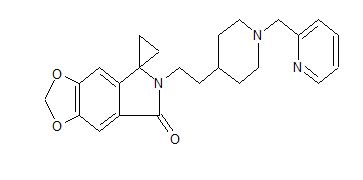
MF C24 H27 N3 O3
Molecular Weight, 405.49
Spiro[cyclopropane-1,5′-[5H-1,3]dioxolo[4,5-f]isoindol]-7′(6′H)-one, 6′-[2-[1-(2-pyridinylmethyl)-4-piperidinyl]ethyl]-

6′-[2-[1-(2-Pyridinylmethyl)-4-piperidinyl]ethyl]spiro[cyclopropane-1,5′-[5H-1,3]dioxolo[4,5-f]isoindol]-7′(6’H)-one

1531586-58-9 CAS FREE FORM

1531586-64-7  PHOSPHATE

1531586-62-5  HYDROCHLORIDE

Zhejiang Hisun Pharmaceutical Co Ltd

Image result for Zhejiang Hisun Pharmaceutical Co Ltd

AD-35 is known to be a neuroprotectant, useful for treating Alzheimer’s diseases.

Zhejiang Hisun Pharmaceutical is developing an oral tablet formulation of AD-35, for treating Alzheimers disease . By August 2017, the phase I multiple doses trial had been completed in the US and would be completed in China soon

CAS 1531586-64-7  PHOSPHATE

6′-[2-[1-(Pyridin-2-ylmethyl)piperidin-4-yl]ethyl]spiro[cyclopropane-1,5′-[1,3]dioxolo[4,5-f]isoindol]-7′(6’H)-one phosphate

 Molecular Formula C24 H27 N3 O3 . H3 O4 P
 Molecular Weight 503.4847

With the rapid growth of the elderly population, the number of people suffering from Alzheimer’s disease (Alzheimer’s disease) also will be increased dramatically.Alzheimer’s disease is also known as Alzheimer-type dementia (Alzheimer type dementia), or the Alzheimer type senile dementia (senile dementia of the Alzheimer type). At present, although the prevalence of this disease on a global scale is still unknown, but according to the latest report from the US Alzheimer’s Association (the Alzheimer’s Association), and in 2011 the United States there are about 540 million people suffer from Alcatel the number of Alzheimer’s disease, and in 2050, in the United States suffering from the disease will increase to about 13.5 million. Therefore, the development of better efficacy and fewer side effects of new drugs to treat the disease it is a priority.

Alzheimer’s disease is the most common form of senile dementia, it has become the sixth leading cause of death of Americans, and 65 years and the fifth leading cause of death in Americans over 65 years. Although scientists have this disease carried out extensive and in-depth research, but so far, the exact cause of the disease remains unclear. Alzheimer’s disease is a progressive disease that continues to kill nerve cells, destroying nerve connections in the brain, resulting in brain tissue is damaged, leading to patients gradually lose memory, consciousness and judgment, and cause mood disorders and behavioral disorders in patients.

Alzheimer’s is an irreversible disease, and now there is no any drug can prevent the disease, and no drugs can cure the disease or slow the disease process. Drugs currently used to treat the disease can only alleviate or ameliorate symptoms of the disease. These drugs are FDA approved for use in the United States a total of five, four of which are acetylcholinesterase (acetylcholinesterase) inhibitors. Acetylcholine (acetylcholine) is a neurotransmitter, a chemical released by nerves, if produced in the brain acetylcholine system, i.e. damaged cholinergic system, it can result in associated with Alzheimer’s disease memory disorders; and acetylcholinesterase function is to catalyze the hydrolysis of acetylcholine, acetylcholine is decomposed. Because Alzheimer’s disease is accompanied

Attenuation of acetylcholine activity, thus inhibiting acetylcholinesterase is one way to treat this disease. As described above, in the present 5 treatment of Alzheimer’s disease drugs in clinical use, there are four acetylcholinesterase inhibitors, including acetylcholinesterase inhibitors such as donepezil (donepezil), tacrine (tacrine ), rivastigmine (rivastigmine), and galantamine (galantamine), wherein donepezil (Sugimoto et al US4895841 and 5100901;.. Pathi et al WO 2007077443;. Parthasaradhi et al WO 2005003092;. Dubey et al WO 2005076749; Gutman . et al WO 200009483;… Sugimoto et al J. Med Chem 1995, 38, 481) is a first-line treatment of Alzheimer’s disease drugs. However, donepezil and the other four drugs can only improve the patient’s symptoms, and this is the only improvement of symptoms is short, only lasting about 6-12 months, and the patient response rates to these drugs only about 50% (Alzheimer’s Association, 201 1 Alzheimer ‘Disease Facts and Figures, Alzheimer’s & Dementia, 201 1, 7 (2), 208). The present invention provides a new class of inhibitors of acetylcholinesterase, which is dioxole between a new class of derivatives of benzo, is more effective than donepezil and fewer side effects in the treatment of Alzheimer’s disease drug.

PATENT

WO 2014005421

https://patentscope.wipo.int/search/en/detail.jsf?docId=WO2014005421&recNum=1&maxRec=&office=&prevFilter=&sortOption=&queryString=&tab=PCTDescription

Example 42: 6- [2- [l- (2-Pyridylmethyl) -4-piperidinyl] ethyl] spiro [[1,3] dioxolo [4,5-f ] Isoindole-7, Γ-cyclopropane-5-one (Compound No. 1-29)

To the reaction flask was added 24.3 g (0.069 mol) of compound 11-5, 36.5 g (0.26 mol) of potassium carbonate, 243 ml of ethanol, 6.1 ml (0.044 mole) of triethylamine, heated to about 50 ° C, 0.049 mol) of 2-chloromethylpyridine hydrochloride was maintained at about 50 ° C for 5 hours. The reaction was complete and 750 ml of water was added. The solid was precipitated, filtered and the cake was washed with water and dried to give 17.8 g of compound 1-29. Rate: 63.4%. ‘HNMR (CDC13 . 3 ): [delta] 1.26 (dd, 2H, J = 6.1, 7.6 Hz), 1.35 (brs,. 3 H), 1.49-1.57 (m, 4H), 1.72 (D, 2H, J = 8.6Hz) (T, 2H, J = 7.9 Hz), 3.64 (s, 2H), 6.03 (s, 2H), 2.09 (t, 2H, J = 10.4 Hz), 2.89 (d, 2H, J = 10.7 Hz) , 7.42 (s, 1 H), 7.15 (dd, 1 H, J = 5.2, 6.7 Hz), 7.24 (s, 1 H), 7.41 (d, 1 H, J = 7.7 Hz), 7.64 (td, H, J = 7.6, 1.8 Hz), 8.55 (D,. 1 H, J = 4.2 Hz); the MS (ESI): m / Z 406 [m + H] + .

Example 46: 6- [2- [l- (2-Pyridylmethyl) -4-piperidinyl] ethyl] spiro [[1,3] dioxolo [4,5-f ] Isoindole-7, Γ-cyclopropane] -5-one hydrochloride (Compound No. 1-33)

To the reaction flask was added 5 g (0.012 mol) of compound 1-29 and 25 ml of ethanol, heated at 50 ° C

(0.012 mol) of concentrated hydrochloric acid was added, and 1 g of activated charcoal was added to decolorize for 20 minutes. The filtrate was cooled to room temperature and 50 ml of isopropyl ether was added dropwise. The solid was precipitated, stirred for 1 hour, The ether cake was washed with ether and dried to give 5 g of compound 1-33 in a yield of 91.7%. Ethanol / isopropyl ether can be re-refined, the yield of about 90%. 1H-NMR is (D 2 0): 51.14 (T, 2 H, J-7.0 Hz), 1.38-1.70 (m,. 7 H), 1.96 (D, 2H, J = 13.3 Hz), 2.99-3.14 (m, H. 4 ), 3.50 (d, 2 H, J = 11.0 Hz), 4.37 (s, 2H), 5.93 (s, 2H), 6.28 (s, 1 H), 6.75 (s, 1 H), 7.47 (dd, J = 7.8, 1.7 Hz), 8.58 (d, 1 H, J = 4.4 Hz), 7.55 (d, 1 H, J = 7.8 Hz), 7.91 (td, ; MS (ESI): m / z 406 [M-Cl] & lt; + & gt ; .

Example 48: 6- [2- [l- (2-Pyridylmethyl) -4-piperidinyl] ethyl] spiro [[1,3] dioxolo [4,5-f ] Isoindole-7, Γ-cyclopropan-5-one phosphate (Compound I-3S)

To the reaction flask was added 2 g (0.0049 mole) of compound 1-29 and 40 ml of ethanol, stirred at 60 ° C until all dissolved, 0.57 g (0.0049 mole) of 85% phosphoric acid was added, stirred and solidified,

Liter of ethyl acetate, cooled to room temperature, stirred for 1 hour, filtered, and a small amount of ethyl acetate was used to wash the filter cake and dried to give 2.1 g of compound 1-35 in a yield of 84.7%. 1H-NMR (D 2 0): δ 1.10 (t, 2 H, J = 7.2 Hz), 1.33-1.64 (m, 7 H), 1.92 (d, 2 H, J = 13.4 Hz), 2.95-3.09 (m, (S, 1 H), 6.69 (s, 1 H), 7.45 (s, 2 H), 4.34 (s, (d, 1 H, J-7.8 Hz), 7.88 (td, 1 H, J = 7.7, 1.2 Hz), 8.54 (d, 1 H, J = 4.6 Hz).

PATENT

CN 103524515

https://encrypted.google.com/patents/CN103524515B?cl=en

PATENT

CN 105859732

https://www.google.com/patents/CN105859732A?cl=en

Example 14: 6- [2- [l_ (2- pyridylmethyl) -4-piperidinyl] ethyl] spiro [[1,3] dioxolo [4,5 -f] isoindole-7, prepared Γ- cyclopropane] phosphate 5-one (compound I) is

Figure CN105859732AD00182

[0146] Compound was added 2g (4.9 mmol) of formula XI to the reaction flask 50mL, 40mL of ethanol, 60 ~ 70 ° C dissolved by heating, added with stirring square. 57g 85% (4.9mmol) phosphoric acid, and the precipitated solid was added dropwise 40mL of acetic acid ethyl cooled to room temperature, stirred for 1 hour, filtered, the filter cake washed with a small amount of ethyl acetate, dried to give 2.3g white solid (compound I, HPLC purity: 99.8%). Yield: 92.7%, H bandit R (D2O): δ1 · l〇 (t, 2H, J = 7.2Hz), 1.33-1.64 (m, 7H), 1.92 (d, 2H, J = 13.4Hz), 2.95 -3.09 (m, 4H), 3.46 (d, 2H, J = 10.7Hz), 4.34 (s, 2H), 5.89 (s, 2H), 6.20 (s, 1H), 6.69 (s, 1H), 7.45 ( , 7.53 (d, lH, J 7.8Hz dd, lH, J = 5.2,7.4Hz) =), 7.88 (td, lH, J =

PATENT

WO 2017177816

https://patentscope.wipo.int/search/en/detail.jsf?docId=WO2017177816&recNum=1&maxRec=&office=&prevFilter=&sortOption=&queryString=&tab=FullText

Process for preparing AD-35 and its intermediates – comprising the reaction of a cyano ester with a Grignard reagent, followed by condensation and further manipulative steps.

A novel intermediate of AD-35 is claimed. Also claimed is a processes for preparing 6,7-dihydro-[1,3]dioxolo[4,5-f]isoindol-5-one comprising the reaction of a cyano ester compound in an isopropyl ester (Ti(i-Pr)4)) with a Grignard reagent in the presence of an ethyl magnesium halide. Further claimed are processes for preparing synthon of intermediates. A process for preparing a benzodioxole derivative, particularly AD-35 from intermediates is also claimed.

WO2014005421 reports a class of benzodioxole compounds, which have the activity to inhibit acetylcholinesterase and can be used to treat Alzheimer’s disease. Of these compounds, it is particularly noteworthy that 6- [2- [1- (2-pyridylmethyl) -4-piperidinyl] ethyl] spiro [[1,3] dioxole And [4,5-f] isoindole-7,1′-cyclopropane] -5-one phosphate, codon AD-35, whose chemical structure is as follows:
AD-35 is a weaker acetylcholinesterase inhibitor that inhibits acetylcholinesterase activity in vitro is about one tenth of the activity of donepezil, but the compound exhibits comparable efficacy with donepezil in the Morris water maze test , That is, the effect of improving memory and learning ability is comparable to donepezil. This suggests that the AD-35 is likely to also have the effect of improving memory and learning through other mechanisms in the body. A further study of the rat model of Alzheimer’s disease induced by Aβ 25-35 found that AD-35 significantly inhibited the production and release of proinflammatory cytokines TNF-α and IL-1β, Small Aβ 25-35 on the nerve cell toxicity, effectively protect the nerve cells.
In addition, AD-35 also exhibits a certain ability to chelate transition metal ions such as Cu 2+ in vitro , while Cu 2+ accelerates the formation of Aβ fibers and enhances the toxicity of Aβ to neuronal cells, thereby promoting neuronal cell death , So excessive Cu 2+ in the brain is also considered to be one of the risk factors for Alzheimer’s disease (Sarell et al. J. Biol. Chem. 2010, 285 (53), 41533). From the chemical structure point of view, AD-35 molecules in the piperidine ring and pyridine ring on the two nitrogen atoms constitute a structural unit similar to ethylenediamine, which should be able to explain why this compound to a certain extent Chelating transition metal ions. In terms of the safety of the compounds, the acute toxicity of mice showed that the toxicity of AD-35 was much less than that of donepezil. A newly completed clinical single-dose incremental tolerance test (SAD) showed that the subjects taking 90 mg of AD-35 did not have any adverse effects at once, indicating that the compound was safe.
In summary, the AD-35 is promising to be a small side-effect drug for the treatment of Alzheimer’s disease, and its multiple mechanisms of action are likely to make this compound not only alleviate the symptoms of Alzheimer’s patients , And can delay the process of the disease.
Since the synthesis route of AD-35 and its analogs reported in WO2014005421 is too long, the operation is complicated and the yield is low, and some steps are not suitable for industrial production. Therefore, it is necessary to develop a new process route to overcome the above- Preparation method.
The preferred reaction conditions of the present invention are listed in the following schemes:
Step (1) :
Step (2) :
Step (3) :
Step (4) :
Step (5) :
Step (6) :
Step (7) :
Step (8) :

Specific implementation plan

The following examples are provided for the purpose of further illustrating the invention, but this is not intended to be limiting of the invention.
Reference Example 1: Preparation of the starting material of tert-butyl 4- [2- (p-toluenesulfonyloxy) ethyl] piperidine-1-carboxylate (Formula VIa)

[0103]

[0104]
To a 10 L reaction flask was added 800 g (3.49 mol) of tert-butyl 4- (2-hydroxyethyl) piperidine-1-carboxylate, 5 L of dichloromethane, 974 ml of (6.75 mol) of triethylamine and 16 g of 4-dimethyl (3L × 3), the organic phase was collected, dried over anhydrous sodium sulfate, and the reaction mixture was washed with anhydrous sodium sulfate , Filtered and the filtrate was concentrated under reduced pressure to give 1360.3 g of compound VIa (HPLC purity: 85%). 1 H NMR (DMSO-d 6 ): δ 0.85-0.93 (m, 2H), 1.38 (s, 9H), 1.42-1.52 (m, 5H), 2.43 (s, 3H), 2.59 (br s, 2H (D, 2H, J = 11.3 Hz), 4.05 (t, 2H, J = 6.1 Hz), 7.50 (d, 2H, J = 8.1 Hz), 7.79 (d, 2H, J = 8.3 Hz) MS (ESI): m / z 383 [M + Na] & lt; + & gt ; .
Reference Example 2: Preparation of the starting material 4- (2-iodoethyl) piperidine-1-carboxylate (Formula VIb)
To a 50 mL reaction flask was added 5 g (13.0 mmol) of tert-butyl 4- [2- (p-toluenesulfonyloxy) ethyl] piperidine-1-carboxylate (Formula VIa), 35 mL of acetone and 2.9 g (19.3 mmol The organic phase was washed with 50 mL of water. The organic phase was collected and the aqueous phase was extracted again with 50 mL of ethyl acetate. The organic phase was washed with 50 mL of water and extracted with 50 mL of water and 50 mL of water. The organic phases were combined, dried over anhydrous sodium sulfate, filtered and the filtrate was concentrated to dryness to give 3.5 g of compound VIb in a yield of 79.5%. 1 H NMR (DMSO-d 6 ): δ 0.97-1.07 (m, 2H), 1.41 (s, 9H), 1.51-1.58 (m, 1H), 1.63-1.66 (m, 2H), 1.73-1.78 (m, 2H), 2.69 (br s, 2H), 3.31 (t, 2H, J = 7.3Hz), 3.96 (d, 2H, J = 10.3Hz); MS (ESI): m / + H] + .
Example 1: Preparation of 6-bromo-1,3-benzodioxole-5-carboxylic acid (Compound II)
To the 2L reaction flask, 100 g (0.60 mol) of piperine, 29 g (0.725 mol) of sodium hydroxide and 1 L of water were successively added, and 150 g (0.84 mol) of N-bromosuccinimide was added thereto, After the reaction was carried out for 45 min, the reaction was monitored by TLC. The reaction solution was concentrated dropwise with concentrated hydrochloric acid to adjust the pH of the reaction solution to 2 to 3, and the solid was precipitated. The ice was cooled, filtered and washed with water to obtain 117.4 g of compound II (HPLC purity: 82%), Yield 79.5%. 1 H NMR (DMSO-d 6 ): δ 6.15 (s, 2H), 7.30 (s, 1H), 7.32 (s, 1H), 13.17 (s, 1H).
Example 2: Preparation of 6-bromo-1,3-benzodioxole-5-carboxylic acid (Compound II)
To the 2L reaction flask, 100 g (0.60 mol) of piperine, 29 g (0.725 mol) of sodium hydroxide and 1 L of water were successively added, and 150 g (0.84 mol) of N-bromosuccinimide was added thereto, After the reaction was complete for 45 min, the reaction was monitored by TLC. After 1 L of ethyl acetate and 40 mL of concentrated hydrochloric acid were added, the mixture was stirred for 20 min. The organic phase was collected, concentrated to dryness, 200 mL of water and 600 mL of petroleum ether, stirred for 1 h, , And 116 g of compound II (HPLC purity: 92.0%) was dried to a yield of 78.9%. & Lt; 1 & gt ; H NMR data with Example 1.
Example 3: Preparation of ethyl 6-bromo-1,3-benzodioxole-5-carboxylate (Compound IIIa)
To a 2 L reaction flask was added 117.3 g (0.39 mol) of 6-bromo-1,3-benzodioxole-5-carboxylic acid (II), 585 mL of absolute ethanol, opened with a stirrer, (1.4mol) concentrated sulfuric acid, heating reflux reaction 6h, TLC monitoring reaction is completed. Water was added dropwise, and 1.2 L of water was added dropwise to remove the solid, filtered and washed with water, and dried at 35 to 45C to obtain 124.0 g of compound IIIa (HPLC purity: 85%) in a yield of 93.9%. . 1 H NMR (CDCl3 . 3 ): [delta] 1.39 (T, 3H, J = 7.1Hz), 4.34 (Q, 2H, J = 7.1Hz), 6.04 (S, 2H), 7.07 (S, IH), 7.31 ( s, 1H).
Example 4: Preparation of methyl 6-bromo-1,3-benzodioxole-5-carboxylate (Compound IIIb)
To a 1 L reaction flask was added 50 g (0.30 mol) of 6-bromo-1,3-benzodioxole-5-carboxylic acid (II), 500 mL of anhydrous methanol, opened with a stirrer, 33.3 mL (0.60 mol) of concentrated sulfuric acid was added dropwise and heated under reflux for 6 h. TLC test reaction is completed, ice water cooling, precipitation of solids, dropping 500mL of water, filtration, water washing filter cake, 45 ~ 55 ℃ drying 44.4 g compound IIIb, yield: 84.0%. 1 H NMR (DMSO-d 6 ): δ 3.83 (s, 3H), 6.19 (s, 2H), 7.35 (s, 1H), 7.36 (s, 1H).
Example 5: Preparation of 6-cyano-1,3-benzodioxole-5-carboxylate (Compound IVa)
To a 2 L reaction flask was charged 124 g (0.38 mol) of ethyl 6-bromo-1,3-benzodioxole-5-carboxylate (IIIa), 990 mL of N, N-dimethylformamide, After opening the stirrer, 33.1 g (0.09 mol) of potassium ferrocyanide and 103.3 g (0.54 mol) of cuprous iodide were added, heated to 120-140C for 5 h, and the TLC reaction was completed. Cooling, dropping water to precipitate a solid, filtering, and washing the filter cake. The filter cake was stirred in 1.9 L of dichloromethane for 30 min, filtered, the filtrate was added with 9 g of activated charcoal, decolorized for 30 min, filtered and the filtrate was concentrated to a small amount. The solid was precipitated, n-hexane was added dropwise, cooled with ice water, filtered and dried to give 82.8 g of compound IVa (HPLC purity: 99.5%), yield: 83.2%. . 1 H NMR (DMSO-D . 6 ): [delta] 1.34 (T, 3H, J = 7.1Hz), 4.33 (Q, 2H, J = 7.1Hz), 6.29 (S, 2H), 7.51 (S, IH), 7.57 (s, 1H).
Example 6: Preparation of 6-cyano-1,3-benzodioxole-5-carboxylate (Compound IVa)
To a 50 mL reaction flask was added 3.5 g (12.8 mmol) of ethyl 6-bromo-1,3-benzodioxole-5-carboxylate (IIIa), 35 mL of N, N-dimethylformamide , 2.3g (25.7mmol) cuprous cyanide, open stirring, 120 ~ 140 ℃ reaction 30 ~ 60min, TLC detection reaction is completed, cooling, dropping 30mL saturated ammonium chloride aqueous solution, precipitate solid, filter, water washing cake. The filter cake was dissolved in 200 mL of ethyl acetate and washed with saturated aqueous ammonium chloride (30 ml x 2 times). The organic phase was collected and the aqueous phase was extracted again with 100 ml of ethyl acetate. The combined organic phases were dried over anhydrous sodium sulfate and filtered , And concentrated to give 2.0 g of compound IVa in a yield of 62.5%. & Lt; 1 & gt ; H NMR data with Example 5.
Example 7: Preparation of 6-cyano-1,3-benzodioxole-5-carboxylate (Compound IVb)
To a 1 L reaction flask was added 40 g (0.15 mol) of methyl 6-bromo-1,3-benzodioxole-5-carboxylate (IIIb), 11.4 g (31.0 mmol) of potassium ferrocyanide , 35.2 g (0.18 mol) of cuprous iodide, 240 mL of N, N-dimethylacetamide, 120 to 140 ° C in an oil bath for 2 to 3 hours, and the TLC reaction was completed. After cooling, 480 mL of water was added dropwise, Ice water cooling, filtration, water washing filter cake. Filter cake was dissolved in 500mL ethyl acetate and 200mL tetrahydrofuran mixture, heated to 80 ℃, adding 2g activated carbon, filtered, the filtrate was concentrated to a small amount, precipitation of solid, dropping 200mL petroleum ether, ice water cooling, filtration, petroleum ether washing filter The cake was dried to give 27.7 g of compound IVb in a yield of 87.6%. 1 H NMR (DMSO-d 6 ): δ 3.87 (s, 3H), 6.28 (s, 2H), 7.49 (s, 1H), 7.55 (s, 1H).
Example 8: Preparation of Spiro [6H- [1,3] dioxolo [4,5-f] isoindole-7,1′-cyclopropane] -5-one (Compound V)
To a 2 L reaction flask was added 16 g (0.072 mol) of compound of formula IVa, 160 mL of dichloromethane, stirred and dissolved under nitrogen. 24 mL (0.080 mol) of isopropyl tetrafis (4) isopropyl ether was added and cooled to 0 to 20 ° C A solution of 73 mL (0.22 mol) of ethylmagnesium bromide in diethyl ether (3M) was added and the reaction was complete after TLC. Slowly drop the water / tetrahydrofuran solution (64 mL water / 240 mL tetrahydrofuran), heat to 50 ° C, decalcinate with 2 g of activated charcoal and stir for 20 min. Filtration, ethyl acetate washing filter residue, the filtrate 40 ~ 50 ° C concentrated under reduced pressure, add 96mL ethyl acetate and 96mL water, stirring solid precipitation, dropping 290mL n-hexane, ice water cooling, filtration, n-hexane washing cake, Dried to give 11.9 g of compound V (HPLC purity: 70%) in a yield of 80.2%. 1 H NMR (DMSO-d 6 ): δ 1.33-1.41 (m, 4H), 6.11 (s, 2H), 6.86 (s, 1H), 7.09 (s, 1H), 8.53 (s, 1H).
Example 9: Preparation of Spiro [6H- [1,3] dioxolo [4,5-f] isoindole-7,1′-cyclopropane] -5-one (Compound V)
To a 500 mL reaction flask was added 10 g (48.8 mmol) of 6-cyano-1,3-benzodioxole-5-carboxylate (IVb), 200 mL of methyl tert-butyl ether, (50.7 mmol) of (IV) isopropyl ester was cooled to 0 to 20 ° C, and 49 mL (0.15 mol) of ethyl magnesium bromide in diethyl ether (3M) was slowly added dropwise. After completion of the drop, the TLC reaction was completed. (10 mL x 2 times), the organic phase was collected and the aqueous phase was extracted again with 100 mL of ethyl acetate. The organic phases were combined, dried over anhydrous sodium sulfate, and the activated charcoal was dried over 100 mL of ethyl acetate and extracted with 250 mL of ethyl acetate. Decolorization, filtration, the filtrate was concentrated to a small amount, dropping petroleum ether, ice water cooling, filtration, petroleum ether washing cake, drying 2.3g compound V, yield: 23.2%. & Lt; 1 & gt ; H NMR data with Example 8.
Example 10: 4- [2- (5-oxospiro [[1,3] dioxolo [4,5-f] isoindole-7,1′-cyclopropane] -6 Yl) ethyl] piperidine-1-carboxylate (Compound VIIa)
To a 250 mL reaction flask was added 11.9 g (0.041 mol) of compound of formula V, 84 mL of dimethylsulfoxide, 4 g (0.071 mol) of potassium hydroxide, 27.3 g (0.06 mol) of 4- [2- (p-toluenesulfonyloxy ) Ethyl] piperidine-1-carboxylate (Formula VIa), heated to 55-65 ° C for 3 to 4 hours, and the TLC reaction was completed. (150 mL x 2 times), the aqueous phase was extracted again with 200 mL of ethyl acetate, the organic phase was combined, and 3 g of activated charcoal was added to decolorize, stirred for 30 min, filtered, and the mixture was washed with 300 mL of ethyl acetate. The filtrate was concentrated to dryness under reduced pressure to give compound VIIa. 1 H NMR (CDCl 3 ): δ 1.08-1.19 (m, 2H), 1.28 (dd, 2H, J = 6.2, 7.4 Hz), 1.45 (s, 9H), 1.48-1.57 (m, 5H) (d, 2H, J = 12.7 Hz), 2.69 (t, 2H, J = 11.6 Hz), 3.20 (t, 2H, J = 7.6 Hz), 4.07 (d, 2H, J = 13.1 Hz) , 2H), 6.43 (S, IH), 7.23 (S, IH); the MS (ESI): m / Z 437 [m + of Na] + .
Example 11: 4- [2- (5-oxospiro [[1,3] dioxolo [4,5-f] isoindole-7,1′-cyclopropane] -6 Yl) ethyl] piperidine-1-carboxylate (Compound VIIa)
To a 250 mL reaction flask, 6.7 g (33.0 mmol) of compound of formula V, 100 mL of N, N-dimethylformamide, 2.6 g (65.0 mmol) of sodium hydroxide, 14 g (41.3 mmol) of 4- (2-iodoethyl ) Piperidine-1-carboxylic acid tert-butyl ester (VIb), 25-30 ° C for 1.5 h, TLC detection reaction was completed, 100 mL of water and 100 mL of ethyl acetate were added and the organic phase was washed with water (50 mL x 2 times) The organic phase was collected and the aqueous phase was extracted again with 100 mL of ethyl acetate. The organic phases were combined, dried over anhydrous sodium sulfate, filtered and the filtrate was concentrated to dryness to give compound VIIa. & Lt; 1 & gt ; H NMR data with Example 10.
Example 12: 6- [2- (4-Piperidine) ethyl] spiro [[l, 3] dioxolo [4,5-f] isoindole- Propane] -5-one hydrochloride (Compound VIIIa)
To a 100 mL reaction flask was added the compound of formula VIIa obtained in Example 10, 30 mL of ethanol, 45 mL of ethyl acetate, 10.5 mL of concentrated hydrochloric acid. Open the stirrer, 50 ~ 60 ℃ reaction 3h, TLC detection reaction is completed, stop heating, ice water cooling, filtration, ethyl acetate detergent cake, drying, 8.5g off-white solid (compound VIIIa, HPLC purity: 97%) The Yield: 41.4% (calculated based on the amount of compound V in Example 10). 1 H NMR (D 2 O): δ 1.06 (t, 2H, J = 6.7Hz), 1.32-1.46 (m, 6H), 1.60 (m, 1H), 1.91 (d, 2H, J = 13.5Hz) (M, 4H), 3.39 (d, 2H, J = 12.8 Hz), 5.90 (s, 2H), 6.18 (s, 1H), 6.68 (s, 1H); MS (ESI): m / z 315 [M-Cl] + .
Example 13: 6- [2- [1- (2-Pyridylmethyl) -4-piperidinyl] ethyl] spiro [[1,3] dioxolo [4,5-f ] Isoindole-7,1′-cyclopropane] -5-one (Compound XI)
A solution of 128.6 g (0.35 mol) of the compound of formula VIIIa, 90 g (0.54 mol) of 2-chloromethylpyridine hydrochloride (formula IXa), 965 mL of water, 26 g of activated carbon and 60 to 65C for 30 minutes were charged into a 2 L reaction flask, , And the residue was washed with 643 ml of water and 215 mL of ethanol. The solution was slowly added with 161 g (1.16 mol) of potassium carbonate. The reaction was carried out at 55 to 65 ° C for 4 to 5 hours. After completion of the TLC reaction, the reaction was cooled, filtered and dried to obtain 137 g of crude The crude product was dissolved in 1.37L ethanol and dissolved at 60-65 ° C. After decontamination with activated charcoal (27.4 g / times x 2 times), 4.11 L of water was added dropwise with stirring, the solid was precipitated, the ice was cooled, filtered, And dried to give 118.9 g of compound XI in 80% yield. 1 H NMR (CDCl 3 ): δ 1.26 (dd, 2H, J = 6.1, 7.6 Hz), 1.35 (br s, 3H), 1.49-1.57 (m, 4H), 1.72 (d, 2H, J = 8.6 (T, 2H, J = 7.9 Hz), 3.64 (s, 2H), 6.03 (s, & lt; RTI ID = 0.0 & gt; 2H), 6.42 (s, 1H), 7.15 (dd, 1H, J = 5.2, 6.7 Hz), 7.24 (s, 1H), 7.41 (d, 1H, J = 7.7 Hz), 7.64 (td, 7.6, 1.8 Hz =), 8.55 (D, IH, J = 4.2Hz); the MS (ESI): m / Z 406 [m + H] + .
Example 14: 6- [2- [1- (2-Pyridylmethyl) -4-piperidinyl] ethyl] spiro [[1,3] dioxolo [4,5-f ] Isoindole-7,1′-cyclopropane] -5-one phosphate (Compound I)
To a 50 mL reaction flask was added 2 g (4.9 mmol) of the compound of formula XI, 40 mL of ethanol, dissolved at 60-70 ° C and 0.57 g of 85% (4.9 mmol) of phosphoric acid was added with stirring. The solid was precipitated, 40 mL of ethyl acetate was added dropwise, To room temperature, stirred for 1 hour, filtered, a small amount of ethyl acetate to wash the filter cake, and dried to obtain 2.3 g of a white solid (Compound I, HPLC purity: 99.8%). Yield: 92.7%. 1 H NMR (D 2 O): δ 1.10 (t, 2H, J = 7.2Hz), 1.33-1.64 (m, 7H), 1.92 (d, 2H, J = 13.4Hz), 2.95-3.09 (m, 4H), 3.46 (d, 2H, J = 10.7 Hz), 4.34 (s, 2H), 5.89 (s, 2H), 6.20 (s, 1H), 6.69 (s, 1H), 7.45 (dd, 1H, J = 7.5, 7.4 Hz), 7.53 (d, 1H, J = 7.8 Hz), 7.88 (td, 1H, J = 7.7, 1.2 Hz), 8.54 (d, 1H, J = 4.6 Hz)
Multifunctional compound AD-35 improves cognitive impairment and attenuates the production of TNF-alpha and IL-1beta in an alphabeta25-35-induced rat model of alzheimer’s disease
J Alzheimer’s Dis 2017, 56(4): 1403
CN101626688A * Dec 11, 2007 Jan 13, 2010 雷维瓦药品公司 Compositions, synthesis, and methods of using indanone based cholinesterase inhibitors
WO2014005421A1 * Jul 3, 2013 Jan 9, 2014 Zhejiang Hisun Pharmaceutical Co., Ltd. Benzodioxole derivative and preparation method and use thereof
////////////Alzheimers disease, Zhejiang Hisun Pharmaceutical, AD 35, PHASE1, IND-120499
O=C5N(CCC2CCN(Cc1ccccn1)CC2)C3(CC3)c4cc6OCOc6cc45

NNC 45-0781


Image result for NNC 45-0781

NNC 45-0781

Molecular Formula C27H29NO3
Molecular Weight 415.5241

CAS 207277-66-5

  • 2H-1-Benzopyran-7-ol, 3,4-dihydro-3-phenyl-4-[4-[2-(1-pyrrolidinyl)ethoxy]phenyl]-, cis-(-)-
  • (3S,4R)-3,4-Dihydro-3-phenyl-4-[4-[2-(1-pyrrolidinyl)ethoxy]phenyl]-2H-1-benzopyran-7-ol

2H-1-Benzopyran-7-ol, 3,4-dihydro-3-phenyl-4-(4-(2-(1-pyrrolidinyl)ethoxy)phenyl)-, (3S,4R)-

  • OriginatorNovo Nordisk
  • ClassOsteoporosis therapies; Pyrrolidines; Small molecules
  • Mechanism of ActionSelective estrogen receptor modulators

PATENT

WO 9818776

WO 9818771

WO 2003063859

A quantitative structure activity relationship study on cis-3,4-diaryl hydroxy chromones as high affinity partial agonists for the estrogen receptor
Chemistry: An Indian Journal (2003), 1, (3), 207-214

SYN 1

EP 0937057; WO 9818771, EP 0937060; WO 9818776

http://www.drugfuture.com/synth/syndata.aspx?ID=268276

Coumarin (III) was prepared by condensation of benzophenone (I) with phenylacetic acid (II) in the presence of Ac2O and Et3N. Reduction of the lactone function of (III) with LiAlH4, followed by acidic treatment furnished diaryl chromene (IV). Subsequent hydrogenation of (IV) over Pd/C gave rise to the racemic cis chromane (V), which was O-alkylated with 1-(2-chloroethyl) pyrrolidine (VI) producing the corresponding (pyrrolidinyl)ethoxy derivative. Resolution by means of active ditoluoyl tartaric acid yielded the desired (-)-enantiomer (VII). Finally, cleavage of the methoxy group using pyridine hydrochloride at 150 C provided the title compound.

PAPER

Bioorg Med Chem 2002,10(1),125

Abstract

The syntheses and in vitro pharmacological evaluation of a number of cis-3,4-diaryl-hydroxy-chromanes are reported, along with the results of a thorough in vivo profiling of the tissue-selective estrogen partial-agonist NNC 45-0781 [3, (−)-(3S,4R)-7-hydroxy-3-phenyl-4-(4-(2-pyrrolidinoethoxy)phenyl)chromane]. These studies showed that NNC 45-0781 is a very promising candidate for the prevention of post-menopausal osteoporosis, and the treatment of other health issues related to the loss of endogenous estrogen production.

The synthesis and pharmacological evaluation of a series of new tissue-selective estrogens, the cis-3,4-diaryl-hydroxy-chromanes, is described.

Unlabelled figure


(-)-(3S,4R)-7-Hydroxy-3-phenyl-4-(4-(2-pyrrolidinoethoxy)phenyl)chromane (3,=9a).

colorless powder 3, which contained 0.25 mol equiv of ethanol of crystallization; 0.90 g (27% yield),

mp 221–223 C.

1 H NMR (DMSOd6, 400 MHz) d: 1.60–1.73 (m, 4H), 2.40–2.50 (m, 4H), 2.69 (t, 2H), 3.47–3.57 (m, 1H), 3.92 (t, 2H), 4.14–4.25 (m, 2H), 4.32 (dd, 1H), 6.27 (dd, 1H), 6.30 (d, 1H), 6.44 (d, 2H), 6.60 (d, 2H), 6.65 (d, 1H), 6.70–6.80 (m, 2H), 7.09–7.20 (m, 3H), 9.25 (s, 1H).

MS (EI): 415 (M+), 84. HR-MS; calcd for C27H30NO3 (M+H+) 416.2225, found 416.2198. HR-MS; calcd for C28H32NO3 (M+H+) 430.2382, found 430.2376.

Chiral HPLC: Chiradex A, 5m, 2504 mm (Merck) column; eluent, 6:4 methanol/0.2% aqueous triethylammonium acetate buffer, pH=5.2; flow, 0.5 mL/min; UV 220 nm; Rt=19.2 min, >98%ee. Elemental analysis; calcd for C27H29NO3 0.25C2H5OH; C, 77.35; H, 7.20; N, 3.28%; found C, 77.39; H, 7.29; N, 3.12%. [a] 20 D=283 (c=1.004% in ethanol/3M HCl, 80:20). P.


PAPER

Abstract Image

A highly enantioselective method for quick access to dihydrocoumarins is reported. The reaction involves a cooperative catalytic process with carbene and in situ generated Brønsted acid as the catalysts. α-Chloro aldehyde and readily available and stable o-hydroxybenzhydryl amine substrates were used to generate reactive azolium ester enolate and ortho-quinone methide (o-QM) intermediates, respectively, to form dihydrocoumarins with exceptionally high diastereo- and enantioselectivities. The catalytic reaction products can be easily transformed to valuable pharmaceuticals and bioactive molecules.

Carbene and Acid Cooperative Catalytic Reactions of Aldehydes and o-Hydroxybenzhydryl Amines for Highly Enantioselective Access to Dihydrocoumarins

 Division of Chemistry and Biological Chemistry, School of Physical and Mathematical Sciences, Nanyang Technological University, 21 Nanyang Link, Singapore 637371
 Laboratory Breeding Base of Green Pesticide and Agricultural Bioengineering, Key Laboratory of Green Pesticide and Agricultural Bioengineering, Ministry of Education, Guizhou University, Huaxi District, Guiyang 550025, People’s Republic of China
Org. Lett., Article ASAP
DOI: 10.1021/acs.orglett.7b02883
Publication Date (Web): October 25, 2017
Copyright © 2017 American Chemical Society

/////////////NNC 45-0781

c1ccc(cc1)[C@H]2COc3cc(ccc3[C@H]2c4ccc(cc4)OCCN5CCCC5)O

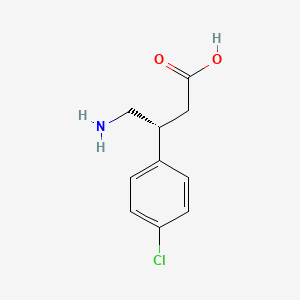
(R)-(–)-Baclofen, Arbaclofen, STX 209, AGI 006


(R)-Baclofen.pngChemSpider 2D Image | Arbaclofen | C10H12ClNO2

(R)-(–)-Baclofen, Arbaclofen, STX 209, AGI 006

Chemical Names: (R)-Baclofen; Arbaclofen; 69308-37-8; (R)-4-Amino-3-(4-chlorophenyl)butanoic acid; (-)-Baclofen; D-Baclofen
Molecular Formula: C10H12ClNO2
Molecular Weight: 213.661 g/mol

 A GAMMA-AMINOBUTYRIC ACID derivative that is a specific agonist of GABA-B RECEPTORS. It is used in the treatment of MUSCLE SPASTICITY, especially that due to SPINAL CORD INJURIES. Its therapeutic effects result from actions at spinal and supraspinal sites, generally the reduction of excitatory transmission.

(R)-4-Amino-3-(4-chlorophenyl)butanoic acid

Benzeneporopanoic acid, (beta-(aminomethyl)-4-chloro-, (betaR)-

Spasticity,  PREREGISTERD, OSMOTICA PHARMA

  • Benzenepropanoic acid, β-(aminomethyl)-4-chloro-, (R)-
  • (βR)-β-(Aminomethyl)-4-chlorobenzenepropanoic acid
  • (-)-Baclofen
  • (R)-(-)-Baclofen
  • (R)-4-Amino-3-(4-chlorophenyl)butanoic acid
  • (R)-4-Amino-3-(4-chlorophenyl)butyric acid
  • (R)-Baclofen
  • AGI 006
  • Arbaclofen
  • D-Baclofen
  • R-(-)-Baclofen
  • STX 209
  • l-Baclofen

Optical Rotatory Power, -1.76 °, Conc: 0.5 g/100mL; Solv: water (7732-18-5); Wavlen: 589.3 nm; Temp: 25 °C, REF …..Paraskar, Abhimanyu S.; Tetrahedron 2006, VOL62(20), PG4907-4916

Melting Point 196-197 °C Solv: isopropanol (67-63-0)

REF…..Paraskar, Abhimanyu S.; Tetrahedron 2006, VOL62(20), PG4907-4916


Image result for (R)-(–)-Baclofen

Arbaclofen, or STX209, is the R-enantiomer of baclofen. It is believed to be a selective gamma-amino butyric acid type B receptor agonist, and has been investigated as a treatment for autism spectrum disorder and fragile X syndrome in randomized, double blind, placebo controlled trials. It has also been investigated as a treatment for spasticity due to multiple sclerosis and spinal cord injury. Arbaclofen was investigated as a treatment for gastroesophageal reflux disease (GERD); however, with disappointing results.

AGI-006, a GABA(B) agonist, is currently in phase III clinical trials at Seaside Therapeutics for the treatment of social withdrawal in adolescents and adults with Fragile X Syndrome and for the treatment of autism spectrum disorders. AGI Therapeutics had been conducting clinical trials for the treatment of dyspepsia and for the treatment of delayed gastric emptying in diabetic patients; however, no recent development has been reported for this research. In 2015, Osmotica Pharmaceutical filed a NDA seeking approval of an extended-release formulation for the alleviation of spasticity due to multiple sclerosis.

AGI-006 is an oral formulation of arbaclofen, the R-isomer of baclofen. In 2012, a license option agreement was signed between Seaside and Roche by which the latter may commercialize the product upon completion of certain clinical development phases in fragile X syndrome and in autism spectrum disorders.

2D chemical structure of 1134-47-02D chemical structure of 1134-47-0Baclofen [USAN:USP:INN:BAN:JAN]
1134-47-0

2D chemical structure of 28311-31-1Baclofen hydrochloride
28311-31-1

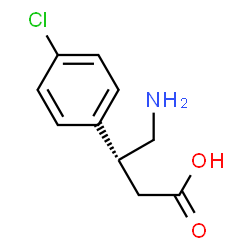
2D chemical structure of 63701-55-3Arbaclofen hydrochloride
63701-55-3

2D chemical structure of 63701-56-4(S)-Baclofen hydrochloride
63701-56-4

2D chemical structure of 66514-99-6(S)-Baclofen
66514-99-6

2D chemical structure of 1395997-58-6Acamprosate mixture with baclofen
1395997-58-6

CLIP1

Strategy for asymmetric synthesis of (R)-(-)-Baclofen is as represented in the Scheme 14. Herein, we made use of asymmetric Michael addition of nitromethane to 4- Chlorochalcone in the presence of Cu(acac)2 and (-)-Sparteine as a catalyst in DCM for 8 h to provide γ-nitro ketone as colorless solid, mp 105-109°C, in 87% yield with 82% ee. The Michael adduct 3d on Baeyer-Villiger reaction using m-CPBA to produce corresponding nitro ester 6a. The reduction of 6a containing nitro group can be reduced with sodium borohydride in presence of NiCl2. It resulted to generate 7 cyclic pyrrolidine moiety in 65% yield. Which upon hydrolysis with HCl will lead to (R)-(-)- Baclofen 8 as a neurotransmitter inhibitor drug molecule

(R)-4-amino-3-(4-chlorophenyl)butanoic acid hydrochloride (8) The solution of 7 (100 mg, 0.51 mmol) in 6N HCl (2.7 mL) was refluxed at 100 °C. After 24 h, the reaction mixture was concentrated in vacuo to afford (R)-(–)- Baclofen 8 as colorless solid 93 mg, in 73% yield. Yield : 73% State : Solid. M.P. : 188-189 °C [a]D 25 : –3.4o (c = 0.65, H2O), lit.7 –3.79o (c = 0.65, H2O, 99 % ee) 1 H-NMR (300MHz, D2O) : δ. 7.36-7.49 (m, 4H) 3.50-3.37 (m, 2H), 2.30-3.22 (m, 1H), 2.71-2.92 (dd, 2H,) J = 9.5, 16.5 Hz).ppm 13C-NMR (75MHz, D2O) : δ. 175.46, 138.28, 136.95, 133.32, 129.32, 128.25, 127.81, 43.75, 39.91, 38.18.

7. Corey, E. J; Zhang, F. Y. Org. Lett. 2000, 2, 4257-4259

16. a) Thakur, V. V.; Nikalje, M. D.; Sudalai, A. Tetrahedron Asymmetry 2003, 14, 581. b) Chenevert R.; Desjardins, M.; Tetrahedron Lett. 1991, 32, 4249. c) Herdeis, C.; Hubmann, H. P. Tetrahedron Asymmetry 1992, 3, 1213. d) Meyers, A. I.; Snyder, L. J. Org. Chem. 1993, 58, 36.

clip 2

Yoshiji Takemoto (2005)6 Yoshiji Takemoto et al. have developed chiral thiourea catalyst 15 which was found to be highly efficient for the asymmetric Michael addition of 1,3-dicarbonyl compound to nitroolefins. Furthermore, a new synthetic route for (R)-(-)-Baclofen 14 and the generation of a chiral quaternary carbon center with high enantioselectivity by Michael reaction were developed (Scheme 6)

6. Okino, T.; Hoashi, Y.; Xuenong Xu,; Takemoto, Y.. J. Am. Chem. Soc. 2005, 127, 119.

CLIP3

Enantio- and Diastereoselective Michael Reaction of 1,3-Dicarbonyl Compounds to Nitroolefins Catalyzed by a Bifunctional Thiourea

Contribution from the Graduate School of Pharmaceutical Sciences, Kyoto University, Yoshida, Sakyo-ku, Kyoto 606-8501, Japan
J. Am. Chem. Soc.2005127 (1), pp 119–125
DOI: 10.1021/ja044370p
Publication Date (Web): December 3, 2004
Copyright © 2005 American Chemical Society

Abstract

Abstract Image

We synthesized a new class of bifunctional catalysts bearing a thiourea moiety and an amino group on a chiral scaffold. Among them, thiourea 1e bearing 3,5-bis(trifluoromethyl)benzene and dimethylamino groups was revealed to be highly efficient for the asymmetric Michael reaction of 1,3-dicarbonyl compounds to nitroolefins. Furthermore, we have developed a new synthetic route for (R)-(−)-baclofen and a chiral quaternary carbon center with high enantioselectivity by Michael reaction. In these reactions, we assumed that a thiourea moiety and an amino group of the catalyst activates a nitroolefin and a 1,3-dicarbonyl compound, respectively, to afford the Michael adduct with high enantio- and diastereoselectivity.

http://pubs.acs.org/doi/full/10.1021/ja044370p

http://pubs.acs.org/doi/suppl/10.1021/ja044370p/suppl_file/ja044370psi20040916_090526.pdf

Synthesis of (R)()-Baclofen. γ-Amino butylic acid (GABA) plays an important role as an inhibitory neurotransmitter in the central nervous system (CNS) of mammalians,20,21 and the deficiency of GABA is associated with diseases that exhibit neuromuscular dysfunctions such as epilespy, Huntington’s and Parkinson’s diseases, etc.22 Baclofen is a lipophilic analogue of GABA, and it is widely used as an antispastic agent. Although baclofen is commercialized in its racemic form, it has been reported that its biological activity resides exlusively in the (R)-enantiomer.23 We next applied our enantioselective Michael reaction for the synthesis of (R)-(−)-baclofen (Scheme 1). The reaction of 4-chlorobenzaldehyde with nitromethane and subsequent dehydration of the resultant alcohol provided nitroolefin 9, which was reacted with diethyl malonate 3a in the presence of 10 mol % of 1e to afford the adduct 10 in 80% yield with 94% ee. Furthermore, enantiomerically pure 10 (>99% ee) was obtained after single recrystallization from Hexane/EtOAc. Reduction of the nitro group with nickel borite and in situ lactonization gave lactone 11 in 94%. The ester group of 11 was hydrolyzed and decarboxylated to afford 12. The specific rotation of 12 was compared with that of literature data24 ([α]30D −39.7° (c 1.00, EtOH), lit. [α]25D −39.0° (c 1, EtOH)), and, as expected, the absolute configuration of 12 was determined to be R. Lactam 12 was finally hydrolyzed with 6N HCl, affording enantiomerically pure (R)-(−)-baclofen as its hydrochloric salt with 38% overall yield in six steps from 4-chlorobenzaldehyde. Consequently, we succeeded in the synthesis of (R)-(−)-baclofen by the simple procedure with high enantioselctivity.

Figure

Scheme 1.  Total Synthesis of (R)-(−)-Baclofena

a Conditions:  (a) MeNO2, NaOMe, MeOH, room temperature, 15 h; (b) MsCl, TEA, THF, room temperature, 1 h; (c) diethyl malonate, 1e, toluene, room temperature, 24 h; (d) NiCl2·6H2O, NaBH4, MeOH, room temperature, 7.5 h; (e) NaOH, EtOH, room temperature, 45 h; (f) toluene, reflux, 6.5 h; (g) 6N HCl, reflux, 24 h.

Total synthesis of (R)-(–)-baclofen. 9: The mixture of 4-chlorobenzaldehyde (1.41 g, 10 mmol), nitromethane (10 equiv, 5.4 ml) and NaOMe (0.10 equiv, 54.0 mg) in MeOH (10 ml) was stirred overnight. Saturated ammonium chloride was added to the mixture and aqueous phase was extracted with AcOEt. The extract was washed with brine, dried over MgSO4, filtrated and concentrated in vacuo. The residue was purified by by column chromatography on silica gel (Hexane/AcOEt = 3/1 as eluent) to afford desired nitroalcohol 8 (1.82 g, 90%). To the stirred solution of the obtained nitroalcohol 8 and MsCl (1.2 equiv, 0.84 ml) in THF (9.0 ml) was added TEA (2.1 equiv, 2.7 ml) dropwise at 0 °C. After 1 h, saturated ammonium chloride was added to the reaction mixture and aqueous phase was extracted with AcOEt. The extract was washed with 1N HCl (two times), saturated NaHCO3 and brine, dried over MgSO4, filtrated and concentrated in vacuo. The residual solid was purified by recrystallization from AcOEt/Hexane to afford the desired nitroolefin 9 (1.20 g, 72%). yellow needle; m.p. 112 °C (AcOEt/Hexane); 1 H NMR (500 MHz, CDCl3) δ 7.97 (d, J = 13.7 Hz, 1H), 7.57 (d, J = 13.7 Hz, 1H), 7.50 (d, J = 8.6 Hz, 2H), 7.44 (d, J = 8.6 Hz, 2H) ppm; 13 C NMR (126 MHz, CDCl3) δ 138.4, 137.7, 137.5, 130.3, 129.8, 128.6 ppm; IR (CHCl3) ν 3113, 3029, 1637, 1594, 1525, 1494 cm-1 ; MS (EI + ) 183 (M+ , 51), 101 (100); Anal. Calcd. for C8H6ClNO2: C 52.34; H, 3.29; N, 7.63; Cl, 19.31. Found: C, 52.35; H, 3.40; N, 7.67; Cl, 19.24. 10: Under argon atmosphere, to the stirred solution of p-chloro-β-nitrostylene 9 (36.7 mg, 0.20 mmol) and thiourea (0.10 equiv, 8.3 mg) in toluene (0.40 ml) was added diethylmalonate (2 equiv, 0.060 ml) at rt. After 24 h, the reaction mixture was concentrated in vacuo. The residue was purified by column chromatography on silica gel (AcOEt/hexane = 1/5 as eluent) to afford desired product 10 (55.3 mg, 80%) as colorless solid. Enantiomerically pure 10 (>99% ee) was obtained after single recrystallization from Hexane/AcOEt. m.p. 56-57 °C (Hexane/AcOEt); [α]D 25 –8.56 (c 1.02, CHCl3, >99% ee); 1 H NMR (500 MHz, CDCl3) δ 7.30 (d, J = 8.2 Hz, 2H), 7.19 (d, J = 8.6 Hz, 2H), 4.91 (dd, J = 4.6, 13.1 Hz, 1H), 4.83 (dd, J = 9.5, 13.1 Hz, 1H), 4.23 (m, 3H), 4.04 (q, J = 7.22 Hz, 2H), 3.78 (d, J = 9.5 Hz, 1H), 1.27 (t, J = 7.2 Hz, 3H), 1.09 (t, J = 7.0 Hz, 3H); 13 C NMR (126 MHz, CDCl3) δ 167.4, 166.8, 134.9, 134.5, 129.6, 129.3, 77.5, 62.3, 62.1, 54.8, 42.4, 14.0, 13.8 ppm; IR (CHCl3) ν 3031, 2994, 1733, 1558, 1494, 1374 cm-1 ; MS (FAB+ ) 344 (MH+ , 100); Anal. Calcd for C15H18ClNO6: C, 52.42, H, 5.28, N, 4.07, Cl, 10.31; Found: C, 52.52, H, 5.21, N, 4.07, Cl, 10.25; HPLC [Chiralcel OD-H, hexane/2-propannol = 90/10, 0.5 mL/min, λ = 210 nm, retention times: (major) 28.3 min, (minor) 25.1 min]. 11: Under argon atmosphere, to the suspension of 10 (550 mg, 1.60 mmol, >99% ee) and NiCl2· 6H2O (1.0 equiv, 380 mg) in MeOH (8.0 ml) was added NaBH4 (12 equiv, 726 mg) at 0 °C. After the reaction mixture was stirred 7.5 h at rt, the reaction mixture was quenched with NH4Cl and diluted with CHCl3. The organic layer was separated and dried over MgSO4, filtrated and concentrated in vacuo. The residue was purified by column chromatography on silica gel (MeOH/CHCl3 = 1/20 as eluent) to afford desired product (402 mg, 94%) as colorless powder. m.p. 126-128 °C (Hexane/AcOEt); [α]D 26 –123.4 (c 0.96, CHCl3); 1 H NMR (500 MHz, CDCl3) δ 7.31 (m, 2H), 7.20 (d, J = 8.2 Hz, 2H), 7.12 (s, 1H), 4.24 (q, J = 7.0 Hz, 1H), 4.09 (m, 1H), 3.81 (m, 2H), 3.54 (m, 1H), 3.41 (m, 1H), 1.28 (t, J = 6.9 Hz, 3H); 13 C NMR (126 MHz, CDCl3) δ 172.5, 169.0, 138.3, 133.5, 129.2, 128.4, 61.9, 55.2, 47.5, 43.7, 14.1 ppm; IR (CHCl3) ν 3435, 3229, 3017, 2360, 1710, 1493 cm-1 ; MS (FAB+ ) 268 (MH+ , 100); Anal. Calcd for C13H14ClNO3: C, 58.32, H, 5.27, N, 5.23, Cl, 13.24; Found: C, 58.10, H, 5.15, N, 5.43, Cl, 13.13. 12 : To the solution of 11 (240mg, 0.90 mmol) in EtOH (3.6 ml) was added 1N NaOH (1.1 ml) at rt. After 30 min, the reaction mixture was concerned in vacuo. To the residue was added H2O and 5N HCl, and the aqueous phase was extracted with CHCl3. The extract was dried over MgSO4, filtrated andconcentrated in vacuo to afford corresponding carboxylic acid (194 mg, 90%). The solution of carboxylic acid (194 mg, 0.81 mmol) in toluene (11 ml) was refluxed at 140 °C. After 6 h, the mixture was concentrated in vacuo. The residue was purified by column chromatography on silica gel (MeOH/ CHCl3 = 1/7) to afford desired product 12 (148 mg, 93%) as colorless needle. m.p. 109-111 °C (Hexane/AcOEt); [α]D 30 –39.7 (c 1.00, CHCl3); 1 H NMR (500 MHz, CDCl3) δ 7.32 (d, J = 7.9 Hz, 2H), 7.19 (t, J = 8.2 Hz, 2H), 6.15 (s, 1H), 3.79 (t, J = 8.9 Hz, 1H), 3.68 (m, 1H), 3.38 (t, J = 8.4 Hz, 1H), 2.74 (dd, J = 9.0, 16.9 Hz, 1H), 2.45 (dd, J = 8.6, 16.8 Hz, 1H); 13 C NMR (126 MHz, CDCl3) δ 177.5, 140.7, 132.9, 129.0, 128.1, 49.3, 39.6, 37.8 ppm; IR (CHCl3) ν 3439, 3006, 2361, 1699, 1494 cm-1 ; MS (FAB+ ) 196 (MH+ , 100); Anal. Calcd for C10H10ClNO: C, 61.39, H, 5.15, N, 7.16, Cl, 18.12; Found: C, 61.50, H, 5.21, N, 7.25, Cl, 17.98. (R)-(–)-baclofen : The solution of 12 (107 mg, 0.55 mmol) in 6N HCl (2.7 ml) was refluxed at 100 °C. After 24 h, the reaction mixture was concentrated in vacuo to afford (R)-(–)-baclofen (129 mg, 94%) as colorless solid. m.p. 188-189 °C (exane/i-PrOH); [α]D 25 –3.79 (c 0.65, H2O); 1 H NMR (500 MHz, DMSO-d6) δ 12.26 (s, 1H), 8.13 (s, 3H), 7.35 (m, 4H), 3.09 (m, 1H), 2.94 (m, 1H), 2.85 (dd, J = 5.5, 16.2 Hz, 1H), 2.56 (dd, J = 9.5, 16.5 Hz, 1H); 13 C NMR (126 MHz, DMSO-d6) δ 172.5, 139.5, 131.9, 130.0, 128.7, 128.6, 128.0, 43.1, 39.1, 37.8 ppm; MS (FAB+ ) 214 (MH+ , 100); HRMS (FAB+ ) Calcd for [C10H13ClNO2] + : 214.0635; Found: 214.0637.

Image result for baclofen synthesis

http://www.sciencedirect.com/science/article/pii/S0957416604003672

Image result for baclofen synthesis

http://www.sciencedirect.com/science/article/pii/S0957416699002359

Image result for baclofen synthesisThe thiourea catalyst L7 bearing 3,5-bis(trifluoromethyl) benzene and dimethylamino groups has been revealed to be efficient for the asymmetric Michael reaction of 1,3-dicarbonyl compounds to nitroolefins (Scheme 8). This methodology has been applied for the total synthesis of (R)-(−)-baclofen. Reaction of 4-chloronitrostyrene and 1,3-dicarbonyl compound generates quaternary carbon center with 94% ee. Reduction of the nitro gruop to amine and subsequent cyclization, esterification and ring opening provides ( R )-(−)-baclofen in 38% yield.

Image result for baclofen synthesis

http://pubs.rsc.org/en/content/articlelanding/2010/np/b924964h/unauth#!divAbstract

Image result for baclofen synthesis

http://pubs.rsc.org/en/content/articlelanding/2010/np/b924964h/unauth#!divAbstract

Image result for baclofen synthesis

http://pubs.rsc.org/en/Content/ArticleHtml/2016/SC/c5sc02913a

Image result for baclofen synthesis

REF

Highly enantioselective biotransformations of 2-aryl-4-pentenenitriles, a novel chemoenzymatic approach to (R)-(-)-baclofen
Tetrahedron Lett 2002, 43(37): 6617

Enantioselective Michael addition of nitromethane to alpha,beta-enones catalyzed by chiral quaternary ammoniun salts. A simple synthesis of (R)-baclofen
Org Lett 2000, 2(26): 4257

Stereospecific synthesis of (R)- and (S)-baclofen and (R)- and (S)-PCPGABA [4-amino-2-(4chlorophenyl)butyric Acid] via (R)- and (S)-3-(4-Chlorophenyl)pyrrolidines
Chem Pharm Bull 1995, 43(8): 1302

Enantioselective syntheses of (-)-(R)-rolipram, (-)-(R)-baclofen and other GABA analogues via rhodium-catalyzed conjugate addition of arylboronic acids
Synthesis (Stuttgart) 2003, (18): 2805

Palladium-catalyzed, asymmetric Baeyer-Villiger oxidation of prochiral cyclobutanones with PHOX ligands
Tetrahedron 2011, 67(24): 4352

An efficient synthesis of (R)- and (S)-baclofen via desymmetrization
Tetrahedron Lett 2009, 50(45): 6166

Recoverable resin-supported pyridylamide ligand for microwave-accelerated molybdenum-catalyzed asymmetric allylic alkylations: Enantioselective synthesis of baclofen
Org Lett 2003, 5(13): 2275

Asymmetric synthesis of ß-substituted ?-lactams via rhodium/diene-catalyzed 1,4-additions: Application to the synthesis of (R)-baclofen and (R)-rolipram
Org Lett 2011, 13(4): 788

Multisite organic-inorganic hybrid catalysts for the direct sustainable synthesis of GABAergic drugs
Angew Chem Int Ed 2014, 53(33): 8687

///////////////

http://www.jocpr.com/articles/a-facile-synthesis-of-baclofean-via-feacac3-catalyzed-michael-addition-and-pinner-reaction.pdf

http://shodhganga.inflibnet.ac.in/bitstream/10603/93509/10/10_chapter1.pdf

Image result for baclofen synthesis

Image result for baclofen synthesis

Image result for baclofen synthesis

Image result for baclofen synthesis

Image result for baclofen synthesis

(±)-Baclofen, hydrochloride (2)

A mixture of 4-(4-Chlorophenyl) pyrrolidin-2-one 15 (0.070 g, 0.35 mmol) in HCl aqueous solution (6 mol L-1, 1.5 cm3) was heated at 100 °C for 6 h. The solvent was removed under reduced pressure and the residue was triturated in isopropanol yielding a crystalline (±)-baclofen hydrochloride 2 (0.071 g, 82%).; IR nmax/cm -1: 3415, 3006, 1713, 1562, 1492, 1407, 1251, 1186, 815 cm-1 (KBr, neat); 1H NMR (300 MHz, CDCl3d 2.55 (dd, J 16.5 and 8.7 Hz, 1 H); 2.82 (dd, J 16.5 and 5.7 Hz, 1 H); 2.93-3.50 (m, 3 H); 7.34 (d, J 8.7 Hz, 2 H), 7.40 (d, J 8.7 Hz, 2 H), 7.94 (bs, 3H, NH3+), 12.23 (bs, 1 H, COOH), 13C NMR (CDCl3, 75 MHz) d 37.94, 39.70, 43.28, 128.89, 130.27, 132.20, 139.56, 172.71.

http://www.scielo.br/scielo.php?script=sci_arttext&pid=S0103-50532001000500011

Title: Baclofen
CAS Registry Number: 1134-47-0
CAS Name: b-(Aminomethyl)-4-chlorobenzenepropanoic acid
Additional Names: b-(aminomethyl)-p-chlorohydrocinnamic acid; g-amino-b-(p-chlorophenyl)butyric acid; b-(4-chlorophenyl)GABA
Manufacturers’ Codes: Ba-34647
Trademarks: Baclon (Leiras); Clofen (Alphapharm); Lioresal (Novartis)
Molecular Formula: C10H12ClNO2
Molecular Weight: 213.66
Percent Composition: C 56.21%, H 5.66%, Cl 16.59%, N 6.56%, O 14.98%
Literature References: Specific GABA-B receptor agonist. Prepn: NL 6407755; H. Keberle et al., US 3471548 (1965, 1969 both to Ciba). Toxicity study: T. Tadokoro et al., Osaka Daigaku Igaku Zasshi 28, 265 (1976), C.A. 88, 183016u (1978). Comprehensive description: S. Ahuja, Anal. Profiles Drug Subs. 14, 527-548 (1985). Review of pharmacology and therapeutic efficacy in spasticity: R. N. Brogden et al., Drugs 8, 1-14 (1974); of intrathecal use in spinal cord injury: K. S. Lewis, W. M. Mueller, Ann. Pharmacother.27, 767-774 (1993). Clinical evaluation in reflex sympathetic dystrophy: B. J. van Hilten et al., N. Engl. J. Med. 343, 625 (2000).
Properties: Crystals from water, mp 206-208° (Keberle); 189-191°, (Uchimaru). LD50 in male mice, rats (mg/kg): 45, 78 i.v.; 103, 115 s.c.; 200, 145 orally (Tadokoro).
Melting point: mp 206-208° (Keberle); 189-191°, (Uchimaru)
Toxicity data: LD50 in male mice, rats (mg/kg): 45, 78 i.v.; 103, 115 s.c.; 200, 145 orally (Tadokoro)
Derivative Type: Hydrochloride
Molecular Formula: C10H13Cl2NO2
Molecular Weight: 250.12
Percent Composition: C 48.02%, H 5.24%, Cl 28.35%, N 5.60%, O 12.79%
Properties: mp 179-181°.
Melting point: mp 179-181°
Therap-Cat: Muscle relaxant (skeletal).
Keywords: Muscle Relaxant (Skeletal).

/////////////////(R)-(–)-Baclofen, Arbaclofen, STX 209, AGI 006, Spasticity,  PREREGISTERD, OSMOTICA PHARMA

c1cc(ccc1[C@@H](CC(=O)O)CN)Cl

FDA approves CAR-T cell therapy Yescarta (axicabtagene ciloleucel) to treat adults with certain types of large B-cell lymphoma


FDA approves CAR-T cell therapy to treat adults with certain types of large B-cell lymphoma

Yescarta is the second gene therapy product approval in the U.S.

The U.S. Food and Drug Administration today approved Yescarta (axicabtagene ciloleucel), a cell-based gene therapy, to treat adult patients with certain types of large B-cell lymphoma who have not responded to or who have relapsed after at least two other kinds of treatment. Yescarta, a chimeric antigen receptor (CAR) T cell therapy, is the second gene therapy approved by the FDA and the first for certain types of non-Hodgkin lymphoma (NHL). Continue reading.

Image result for axicabtagene ciloleucel

Axicabtagene ciloleucel is a chimeric antigen receptor (CAR) T cell therapy for the treatment of Diffuse large B-cell lymphoma (DLBCL), which is a type of a non-Hodgkin lymphoma (NHL). It is the second cell-based gene therapy that is FDA-approved but the first in the treatment of large B-cell lymphoma in adult patients. Uniquely, axicabtagene ciloleucel utilizes each patient’s own immune system where each dose of the drug consists of the patient’s genetically modified T-cells that were previously collected. The modified version of the T-cell expresses a new gene that targets and kills the lymphoma cells and is infused back into the patient.

Diffuse large B-cell lymphoma (DLBCL) is the most common type of NHL in adults that mostly originates from the lymph nodes but can initiate outside of the lymphatic system. Lymphoma cells appear to be much larger in size than normal lymphocytes. In a multicenter clinical trial, the patients who were treated with axicabtagene ciloleucel achieved the complete remission rate of 51%.

Developed by Kite Pharma, Inc., it was approved on October 18th, 2017 by the FDA as an intravenously infused anticancer therapy and is marketed under the brand name Yescarta

Axicabtagene ciloleucel (KTE-C19Axi-cel), marketed as Yescarta, is an adoptive cell transfer therapy for used for certain cases of large B-cell lymphoma. In this treatment T cells from a person with cancer are removed, genetically engineered to make a specific T-cell receptor (a chimeric T cell receptor, or “CAR-T“) that reacts to the cancer, and are given back to the person.[1] Axicabtagene carries a risk for cytokine release syndrome (CRS) and neurological toxicities.[1]

The person’s T-cells are engineered to target CD19.[1] The CD19 are found on the surface of certain cancerous cells.[1] The cost for treatment is 373,000 USD in the United States.[2]

Side effects

Because treatment with axicabtagene carries a risk of cytokine release syndrome and neurological toxicities, the FDA has mandated that hospitals be certified for its use.[1]

History

It was developed by California-based Kite Pharma.

Axi-cel was awarded US FDA breakthrough therapy designation on October 18, 2017 for diffuse large B-cell lymphomatransformed follicular lymphoma, and primary mediastinal B-cell lymphoma.[3] It also received priority review and Orphan drug designation.[1]

Based on the ZUMA-1 trial, Kite submitted a biologics license application for axicabtagene in March 2017 for the treatment of Non-Hodgkin lymphoma.[4]

The FDA granted approval on October 18 for the second-line treatment of diffuse large B-cell lymphoma.[5][1]

References

Axicabtagene ciloleucel
Clinical data
Trade names Yescarta
AHFS/Drugs.com yescarta
Routes of
administration
Intravenous injection
ATC code
  • None
Legal status
Legal status
Identifiers
DrugBank


/////////FDA, CAR-T cell therapy,  large B-cell lymphoma, fda 2017, Yescarta, axicabtagene ciloleucel,

Hyderabad. India to Host Industrial Organic Chemistry Workshops in February 2018


Dr Will Watson, an expert in Chemical Development and related fields, from Scientific Update will be visiting India in February to deliver two important workshops for Industrial Process Chemists:

Chemical Development and Scale Up in the Fine Chemical and Pharmaceutical Industries, February 5th – 7th 2018, Hyderabad, India

Practical Crystallisation & Polymorphism, February 8th & 9th 2018, Hyderabad, India

Discounts are available for groups – please contact sciup@scientificupdate.com for more information.

(+)-(S,S)-Reboxetine succinate, Esreboxetine succinate


Image result for (S,S)-Reboxetine succinateimg

Esreboxetine succinate

str1

(2S)-2-[(S)-(2-ethoxyphenoxy)(phenyl)methyl]morpholine butanedioate (1:1)
(2S)-2-[(S)-(2-Ethoxyphenoxy)(phenyl)methyl]morpholine succinate (1:1)
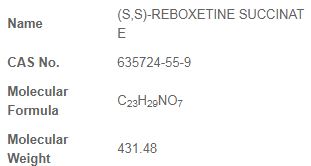
(S,S)-reboxetine succinate
635724-55-9 [RN]
Esreboxetine succinate [USAN]
Morpholine, 2-[(S)-(2-ethoxyphenoxy)phenylmethyl]-, (2S)-, butanedioate (1:1)
Succinic acid – (2S)-2-[(S)-(2-ethoxyphenoxy)(phenyl)methyl]morpholine (1:1)
UNII:XQO13W6OCH

Esreboxetine is a selective norepinephrine reuptake inhibitor which was under development by Pfizer for the treatment of neuropathic pain and fibromyalgia but failed to show significant benefit over currently available medications and was discontinued.[1][2][3][4] It is the (S,S)-(+)-enantiomer of reboxetine and is even more selective in comparison.[1][5]

However, recently it has been shown that esreboxetine could be effective in fibromyalgia patients.[6]

Figure

Reboxetine mesylate (1) and succinate (2).

Image result for (S,S)-Reboxetine succinate

Image result for (S,S)-Reboxetine succinate

CLIP

http://pubs.rsc.org/en/Content/ArticleHtml/2012/GC/c1gc15921f

The synthesis of (±)-reboxetine mesylate,4 the Active Pharmaceutical Ingredient (API) for Edronax™.

Scheme 1 The synthesis of (±)-reboxetine mesylate,4 the Active Pharmaceutical Ingredient (API) for Edronax™.


The conversion of (±)-reboxetine mesylate to (S,S)-reboxetine succinate.
Scheme 2 The conversion of (±)-reboxetine mesylate to (S,S)-reboxetine succinate.


The Pfizer early resolution route to (S,S)-reboxetine succinate.
Scheme 3 The Pfizer early resolution route to (S,S)-reboxetine succinate.

The Pfizer asymmetric synthesis for (S,S)-reboxetine intended for commercialisation.

Scheme 4 The Pfizer asymmetric synthesis for (S,S)-reboxetine intended for commercialisation.

CLIP

(S,S)-Reboxetine succinate (3) (Figure 1) has been under late-stage development at Pfizer for the medication of neuropathic and fibromyalgia pain.(16)

16.(a) HughesB.McKenzieI.StokerM. J. WO2006/000903, May 1, 2006.

(b) AllenA. J.Hemrick-LueckeS.SumnerC. R.WallaceO. B. WO2005/060949, July 7, 2005.

(c) KelseyD. K. WO2005/021095, Oct 3, 2005.

(d) AllenA. J.KelseyD. K. WO 2005/020976, Oct 3, 2005.

(e) SumnerC. R. WO2005/020975, Oct 3, 2005.

(f) HassanF. WO2004/016272, Feb 26, 2004.

(g) WongE. H. F. WO2004/002463, Jan 8, 2004.

PAPER

Process Development for (S,S)-Reboxetine Succinate via a Sharpless Asymmetric Epoxidation

http://pubs.acs.org/doi/abs/10.1021/op700007g?crel=US_AC_eAdv_Blog

Pfizer Global Research and Development, 2800 Plymouth Road, Ann Arbor, Michigan 48105, U.S.A.
Org. Process Res. Dev.200711 (3), pp 354–358
DOI: 10.1021/op700007g
Publication Date (Web): March 23, 2007
Copyright © 2007 American Chemical Society

Abstract

Abstract Image

Reboxetine mesylate is a selective norepinephrine uptake inhibitor (NRI) currently marketed as the racemate. The (S,S)-enantiomer of reboxetine is being evaluated for the treatment of neuropathic pain and a variety of other indications. (S,S)-Reboxetine has usually been prepared by resolution of the racemate as the (−)-mandelate salt, an inherently inefficient process. A chiral synthesis starting with a Sharpless asymmetric epoxidation of cinnamyl alcohol to yield (R,R)-phenylglycidol was developed. (R,R)-Phenylglycidol was reacted without isolation with 2-ethoxyphenol to give 4, which was isolated by direct crystallization. Key process variables for the asymmetric epoxidation were investigated. Conversion of (R,S)-4 to reboxetine parallels the racemic synthesis with streamlined and optimized processing conditions. (S,S)-Reboxetine free base was converted directly to the succinate salt without isolation as the mesylate salt.

(2S,3S)-Reboxetine Succinate (9).

mp 145.2−147.1 °C (lit. mp 148 °C).8 1H NMR (400.13 MHz, CDCl3) δ 1.41 (t, J = 7.0 Hz, 3H), 2.4 (s, 4H), 2.9−3.06 (m, 2H), 3.15−3.22 (m, 2H), 3.81−3.86 (m, 1H), 4.02−4.09 (m, 3H), 4.17−4.24 (m, 1H), 5.13 (d, J = 4.3 Hz), 6.66−6.90 (m, 4H), 7.26−7.39 (m, 5H). 13C NMR (100.62 MHz, CDCl3) δ 15.08, 31.89, 43.24, 44.84, 64.72, 76.91, 82.91, 113.94, 118.27, 121.1, 127.38, 128.66, 136.94, 149.8, 178.73. LRMS-APCI m/z calcd for C19H23NO3 (M + H)+:  314. Found:  m/z = 314 [M + 1]+. Anal. Calcd for C19H23NO3−C4H6O4:  C, 64.02; H, 6.77; N, 3.25. Found:  C, 63.99; H, 6.77; N, 3.16. [α]32.4D +17.24° (c 0.5, EtOH).

8)Zampieri, M.; Airoldi, A.; Martini, A. WO2003/106441, 12/24/03.

PAPER

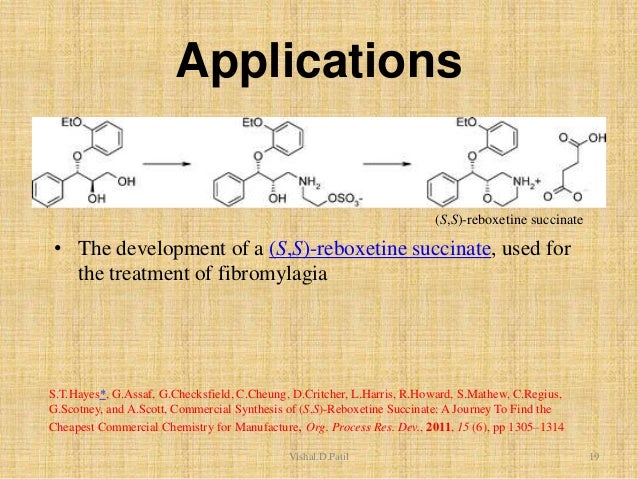
Commercial Synthesis of (S,S)-Reboxetine Succinate: A Journey To Find the Cheapest Commercial Chemistry for Manufacture

http://pubs.acs.org/doi/abs/10.1021/op200181f

Chemical Research and Development, Pfizer Inc., Sandwich Laboratories, Sandwich, Kent, CT13 9NJ, United Kingdom
Org. Process Res. Dev.201115 (6), pp 1305–1314
DOI: 10.1021/op200181f
Publication Date (Web): August 18, 2011
Copyright © 2011 American Chemical Society

Abstract

Abstract Image

The development of a synthetic process for (S,S)-reboxetine succinate, a candidate for the treatment of fibromylagia, is disclosed from initial scale-up to deliver material for registrational stability testing through to commercial route evaluation and subsequent nomination. This entailed evaluation of several alternative routes to result in what would have been a commercially attractive process for launch of the compound.

(2S,3S)-2-[α-(2-Ethoxyphenoxy)benzyl]morpholine Succinate Salt (S,S)-Reboxetine Succinate

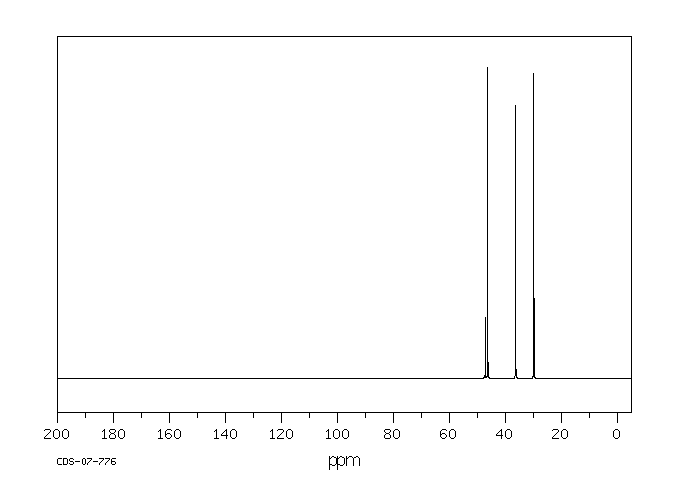
 (S,S)-reboxetine succinate (897 g, 82%) as a white solid. 1H NMR (400 MHz, d6-DMSO) δ 7.22–7.54 (m, 5H), 6.66–6.96 (m, 4H), 5.27 (d, J = 6.0 Hz, 1H), 4.01 (q, J = 7.1 Hz, 2H), 3.83 (m, 2H), 3.50 (m, 2H), 2.61–2.82 (m, 3H), 2.34 (br s, 4H), 1.33 (t, J = 7.1 Hz, 3H). 13C NMR (100 MHz, d6-DMSO) δ 174.4, 149.0, 147.3, 137.8, 128.2, 127.3, 120.7, 116.7, 114.4, 80.8, 77.5, 65.9, 64.1, 45.8, 44.1, 39.7, 39.

References[edit]

  1. Jump up to:a b Matilda Bingham; Napier, Susan Jolliffe (2009). Transporters as Targets for Drugs (Topics in Medicinal Chemistry). Berlin: Springer. ISBN 3-540-87911-0.
  2. Jump up^ Rao SG (October 2009). “Current progress in the pharmacological therapy of fibromyalgia”Expert Opinion on Investigational Drugs18 (10): 1479–93. PMID 19732029doi:10.1517/13543780903203771.
  3. Jump up^ “Search of: esreboxetine – List Results – ClinicalTrials.gov”.
  4. Jump up^ “Musculoskeletal Report: Pfizer Stops Work on Esreboxetine for FM”.
  5. Jump up^ Fish, P. V.; MacKenny, M.; Bish, G.; Buxton, T.; Cave, R.; Drouard, D.; Hoople, D.; Jessiman, A.; Miller, D.; Pasquinet, C.; Patel, B.; Reeves, K.; Ryckmans, T.; Skerten, M.; Wakenhut, F. (2009). “Enantioselective synthesis of (R)- and (S)-N-Boc-morpholine-2-carboxylic acids by enzyme-catalyzed kinetic resolution: application to the synthesis of reboxetine analogs”. Tetrahedron Letters50 (4): 389. doi:10.1016/j.tetlet.2008.11.025.
  6. Jump up^ Arnold, L. M., Hirsch, I., Sanders, P., Ellis, A. and Hughes, B. (2012), Safety and efficacy of esreboxetine in patients with fibromyalgia: A fourteen-week, randomized, 

REFERENCES

1: Fujimori I, Yukawa T, Kamei T, Nakada Y, Sakauchi N, Yamada M, Ohba Y, Takiguchi M, Kuno M, Kamo I, Nakagawa H, Hamada T, Igari T, Okuda T, Yamamoto S, Tsukamoto T, Ishichi Y, Ueno H. Design, synthesis and biological evaluation of a novel series of peripheral-selective noradrenaline reuptake inhibitor. Bioorg Med Chem. 2015 Aug 1;23(15):5000-14. doi: 10.1016/j.bmc.2015.05.017. Epub 2015 May 15. PubMed PMID: 26051602.

2: Shen F, Tsuruda PR, Smith JA, Obedencio GP, Martin WJ. Relative contributions of norepinephrine and serotonin transporters to antinociceptive synergy between monoamine reuptake inhibitors and morphine in the rat formalin model. PLoS One. 2013 Sep 30;8(9):e74891. doi: 10.1371/journal.pone.0074891. eCollection 2013. PubMed PMID: 24098676; PubMed Central PMCID: PMC3787017.

3: Arnold LM, Hirsch I, Sanders P, Ellis A, Hughes B. Safety and efficacy of esreboxetine in patients with fibromyalgia: a fourteen-week, randomized, double-blind, placebo-controlled, multicenter clinical trial. Arthritis Rheum. 2012 Jul;64(7):2387-97. doi: 10.1002/art.34390. PubMed PMID: 22275142.

4: Arnold LM, Chatamra K, Hirsch I, Stoker M. Safety and efficacy of esreboxetine in patients with fibromyalgia: An 8-week, multicenter, randomized, double-blind, placebo-controlled study. Clin Ther. 2010 Aug;32(9):1618-32. doi: 10.1016/j.clinthera.2010.08.003. PubMed PMID: 20974319.

5: Klarskov N, Scholfield D, Soma K, Darekar A, Mills I, Lose G. Measurement of urethral closure function in women with stress urinary incontinence. J Urol. 2009 Jun;181(6):2628-33; discussion 2633. doi: 10.1016/j.juro.2009.01.114. Epub 2009 Apr 16. PubMed PMID: 19375093.

Esreboxetine
Esreboxetine.svg
Clinical data
Routes of
administration
Oral
ATC code
  • None
Legal status
Legal status
  • In general: uncontrolled
Identifiers
CAS Number
PubChem CID
IUPHAR/BPS
ChemSpider
UNII
KEGG
Chemical and physical data
Formula C19H23NO3
Molar mass 313.391 g/mol
3D model (JSmol)

////////////(+)-(S,S)-Reboxetine, (S,S)-Reboxetine, Reboxetine, Esreboxetine succinate

CCOc1ccccc1O[C@H]([C@@H]2CNCCO2)c3ccccc3.OC(=O)CCC(=O)O

ESCITALOPRAM, S-(+)-Citalopram, эсциталопрам , إيسكيتالوبرام , 艾司西酞普兰 ,


ChemSpider 2D Image | Escitalopram | C20H21FN2OImage result for ESCITALOPRAM
Escitalopram
(+)-Citalopram
(1S)-1-[3-(Dimethylamino)propyl]-1-(4-fluorophenyl)-1,3-dihydro-2-benzofuran-5-carbonitrile [ACD/IUPAC Name]
(S)-citalopram
128196-01-0 [RN]
5-Isobenzofurancarbonitrile, 1-[3-(dimethylamino)propyl]-1-(4-fluorophenyl)-1,3-dihydro-, (1S)- [ACD/Index Name]
  • Molecular FormulaC20H21FN2O
  • Average mass324.392 Da
  • S-(+)-Citalopram
    эсциталопрам [Russian] [INN]
    إيسكيتالوبرام [Arabic] [INN]
    艾司西酞普兰 [Chinese] [INN]

Image result for ESCITALOPRAM

Lexapro® (escitalopram oxalate) is an orally administered selective serotonin reuptake inhibitor (SSRI). Escitalopram is the pure Senantiomer (single isomer) of the racemic bicyclic phthalane derivative citalopram. Escitalopram oxalate is designated S-(+)-1-[3(dimethyl-amino)propyl]-1-(p-fluorophenyl)-5-phthalancarbonitrile oxalate with the following structural formula:


Lexapro® (escitalopram oxalate) Structural Formual Illustration

The molecular formula is C20H21FN2O • C2H2O4 and the molecular weight is 414.40.

Escitalopram oxalate occurs as a fine, white to slightly-yellow powder and is freely soluble in methanol and dimethyl sulfoxide (DMSO), soluble in isotonic saline solution, sparingly soluble in water and ethanol, slightly soluble in ethyl acetate, and insoluble in heptane.

Lexapro (escitalopram oxalate) is available as tablets or as an oral solution.

Lexapro tablets are film-coated, round tablets containing escitalopram oxalate in strengths equivalent to 5 mg, 10 mg, and 20 mg escitalopram base. The 10 and 20 mg tablets are scored. The tablets also contain the following inactive ingredients: talc, croscarmellose sodium, microcrystalline cellulose/colloidal silicon dioxide, and magnesium stearate. The film coating contains hypromellose, titanium dioxide, and polyethylene glycol.

Lexapro oral solution contains escitalopram oxalate equivalent to 1 mg/mL escitalopram base. It also contains the following inactive ingredients: sorbitol, purified water, citric acid, sodium citrate, malic acid, glycerin, propylene glycol, methylparaben, propylparaben, and natural peppermint flavor.

Escitalopram, also known by the brand names Lexapro and Cipralex among others, is an antidepressant of the selective serotonin reuptake inhibitor (SSRI) class. It is approved by the U.S. Food and Drug Administration (FDA) for the treatment of adults and children over 12 years of age with major depressive disorder (MDD) or generalized anxiety disorder (GAD). Escitalopram is the (S)-stereoisomer(Left-enantiomer) of the earlier Lundbeck drug citalopram, hence the name escitalopram. Whether escitalopram exhibits superior therapeutic properties to citalopram or merely represents an example of “evergreening” is controversial.[2]

Medical uses

Escitalopram has FDA approval for the treatment of major depressive disorder in adolescents and adults, and generalized anxiety disorder in adults.[3] In European countries and Australia, it is approved for depression (MDD) and certain anxiety disorders: general anxiety disorder (GAD), social anxiety disorder (SAD), obsessive-compulsive disorder (OCD), and panic disorder with or without agoraphobia.

Depression

Escitalopram was approved by regulatory authorities for the treatment of major depressive disorder on the basis of four placebo controlled, double-blind trials, three of which demonstrated a statistical superiority over placebo.[4]

Controversy exists regarding the effectiveness of escitalopram compared to its predecessor citalopram. The importance of this issue follows from the greater cost of escitalopram relative to the generic mixture of isomers citalopram prior to the expiration of the escitalopram patent in 2012, which led to charges of evergreening. Accordingly, this issue has been examined in at least 10 different systematic reviews and meta analyses. The most recent of these have concluded (with caveats in some cases) that escitalopram is modestly superior to citalopram in efficacy and tolerability.[5][6][7][8]

In contrast to these findings, a 2011 review concluded that all second-generation antidepressants are equally effective,[9] and treatment guidelines issued by the National Institute of Health and Clinical Excellence and by the American Psychiatric Association generally reflect this viewpoint.[10][11]

Anxiety disorder

Escitalopram appears to be effective in treating general anxiety disorder, with relapse on escitalopram (20%) less than placebo (50%).[12]

Other

Escitalopram as well as other SSRIs are effective in reducing the symptoms of premenstrual syndrome, whether taken in the luteal phase only or continuously.[13] There is no good data available for escitalopram for seasonal affective disorder as of 2011.[14] SSRIs do not appear to be useful for preventing tension headaches or migraines.[15][16]

Adverse effects

Escitalopram, like other SSRIs, has been shown to affect sexual functions causing side effects such as decreased libidodelayed ejaculation, genital anesthesia,[17] and anorgasmia.[18][19]

An analysis conducted by the FDA found a statistically insignificant 1.5 to 2.4-fold (depending on the statistical technique used) increase of suicidality among the adults treated with escitalopram for psychiatric indications.[20][21][22] The authors of a related study note the general problem with statistical approaches: due to the rarity of suicidal events in clinical trials, it is hard to draw firm conclusions with a sample smaller than two million patients.[23]

Escitalopram is not associated with significant weight gain. For example, 0.6 kg mean weight change after 6 months of treatment with escitalopram for depression was insignificant and similar to that with placebo (0.2 kg).[24] 1.4–1.8 kg mean weight gain was reported in 8-month trials of escitalopram for depression,[25] and generalized anxiety disorder.[26] A 52-week trial of escitalopram for the long-term treatment of depression in elderly also found insignificant 0.6 kg mean weight gain.[27] Escitalopram may help reduce weight in those treated for binge eating associated obesity.[28]

Citalopram and escitalopram are associated with dose-dependent QT interval prolongation[29] and should not be used in those with congenital long QT syndrome or known pre-existing QT interval prolongation, or in combination with other medicines that prolong the QT interval. ECG measurements should be considered for patients with cardiac disease, and electrolyte disturbances should be corrected before starting treatment. In December 2011, the UK implemented new restrictions on the maximum daily doses.[30][31] The U.S. Food and Drug Administration and Health Canada did not similarly order restrictions on escitalopram dosage, only on its predecessor citalopram.[32]

Escitalopram should be taken with caution when using Saint John’s wort.[33] Exposure to escitalopram is increased moderately, by about 50%, when it is taken with omeprazole. The authors of this study suggested that this increase is unlikely to be of clinical concern.[34] Caution should be used when taking cough medicine containing dextromethorphan (DXM) as serotonin syndrome, liver damage, and other negative side effects have been reported.

Discontinuation symptoms

Escitalopram discontinuation, particularly abruptly, may cause certain withdrawal symptoms such as “electric shock” sensations[35] (also known as “brain shivers” or “brain zaps”), dizziness, acute depressions and irritability, as well as heightened senses of akathisia.[36]

Pregnancy

There is a tentative association of SSRI use during pregnancy with heart problems in the baby.[37] Their use during pregnancy should thus be balanced against that of depression.[37]

Overdose

Excessive doses of escitalopram usually cause relatively minor untoward effects such as agitation and tachycardia. However, dyskinesiahypertonia, and clonus may occur in some cases. Plasma escitalopram concentrations are usually in a range of 20–80 μg/L in therapeutic situations and may reach 80–200 μg/L in the elderly, patients with hepatic dysfunction, those who are poor CYP2C19 metabolizers or following acute overdose. Monitoring of the drug in plasma or serum is generally accomplished using chromatographic methods. Chiral techniques are available to distinguish escitalopram from its racemate, citalopram.[38][39][40] Escitalopram seems to be less dangerous than citalopram in overdose and comparable to other SSRIs.[41]

Pharmacology

Mechanism of action

Binding profile[42]
Receptor Ki (nM)
SERT 2.5
NET 6,514
5-HT2C 2,531
α1 3,870
M1 1,242
H1 1,973

Escitalopram increases intrasynaptic levels of the neurotransmitter serotonin by blocking the reuptake of the neurotransmitter into the presynaptic neuron. Of the SSRIs currently on the market, escitalopram has the highest selectivity for the serotonin transporter (SERT) compared to the norepinephrine transporter (NET), making the side-effect profile relatively mild in comparison to less-selective SSRIs.[43] The opposite enantiomer, (R)-citalopram, counteracts to a certain degree the serotonin-enhancing action of escitalopram.[citation needed] As a result, escitalopram has been claimed to be a more potent antidepressant than the racemic mixture, citalopram, of the two enantiomers. In order to explain this phenomenon, researchers from Lundbeck proposed that escitalopram enhances its own binding via an additional interaction with another allosteric site on the transporter.[44] Further research by the same group showed that (R)-citalopram also enhances binding of escitalopram,[45] and therefore the allosteric interaction cannot explain the observed counteracting effect. In the most recent paper, however, the same authors again reversed their findings and reported that (R)-citalopram decreases binding of escitalopram to the transporter.[46] Although allosteric binding of escitalopram to the serotonin transporter is of unquestionable research interest, its clinical relevance is unclear since the binding of escitalopram to the allosteric site is at least 1000 times weaker than to the primary binding site.

Escitalopram is a substrate of P-glycoprotein and hence P-glycoprotein inhibitors such as verapamil and quinidine may improve its blood-brain penetrability.[47] In a preclinical study in rats combining escitalopram with a P-glycoprotein inhibitor enhanced its antidepressant-like effects.[47]

Interactions

Escitalopram, similarly to other SSRIs (with the exception of fluvoxamine), inhibits CYP2D6 and hence may increase plasma levels of a number of CYP2D6 substrates such as aripiprazolerisperidonetramadolcodeine, etc. As much of the effect of codeine is attributable to its conversion (10%) to morphine its effectiveness will be reduced by this inhibition, not enhanced.[48] As escitalopram is only a weak inhibitor of CYP2D6, analgesia from tramadol may not be affected.[49] Escitalopram can also prolong the QT interval and hence it is not recommended in patients that are concurrently on other medications that have the ability to prolong the QT interval. Being a SSRI, escitalopram should not be given concurrently with MAOIs or other serotonergic medications.[43]

History

Cipralex brand escitalopram 10mg package and tablet sheet

Escitalopram was developed in close cooperation between Lundbeck and Forest Laboratories. Its development was initiated in the summer of 1997, and the resulting new drug application was submitted to the U.S. FDA in March 2001. The short time (3.5 years) it took to develop escitalopram can be attributed to the previous extensive experience of Lundbeck and Forest with citalopram, which has similar pharmacology.[50] The FDA issued the approval of escitalopram for major depression in August 2002 and for generalized anxiety disorder in December 2003. On May 23, 2006, the FDA approved a generic version of escitalopram by Teva.[51] On July 14 of that year, however, the U.S. District Court of Delaware decided in favor of Lundbeck regarding the patent infringement dispute and ruled the patent on escitalopram valid.[52]

In 2006 Forest Laboratories was granted an 828-day (2 years and 3 months) extension on its US patent for escitalopram.[53] This pushed the patent expiration date from December 7, 2009 to September 14, 2011. Together with the 6-month pediatric exclusivity, the final expiration date was March 14, 2012.

Society and culture

Allegations of illegal marketing

In 2004, two separate civil suits alleging illegal marketing of citalopram and escitalopram for use by children and teenagers by Forest were initiated by two whistleblowers, one by a practicing physician named Joseph Piacentile, and the other by a Forest salesman named Christopher Gobble.[54] In February 2009, these two suits received support from the US Attorney for Massachusetts and were combined into one. Eleven states and the District of Columbia have also filed notices of intention to intervene as plaintiffs in the action. The suits allege that Forest illegally engaged in off-label promoting of Lexapro for use in children, that the company hid the results of a study showing lack of effectiveness in children, and that the company paid kickbacks to doctors to induce them to prescribe Lexapro to children. It was also alleged that the company conducted so-called “seeding studies” that were, in reality, marketing efforts to promote the drug’s use by doctors.[55][56] Forest responded to these allegations that it “is committed to adhering to the highest ethical and legal standards, and off-label promotion and improper payments to medical providers have consistently been against Forest policy.”[57] In 2010 Forest Pharmaceuticals Inc., agreed to pay more than $313 million to settle the charges over Lexapro and two other drugs, Levothroid and Celexa.[58]

Brand names

Escitalopram is sold under many brand names worldwide such as Cipralex.[1]

Image result for ESCITALOPRAM SYNTHESISImage result for ESCITALOPRAM SYNTHESIS

The Grignard condensation of 5-cyanophthalide (I) with 4-fluorophenylmagnesium bromide (II) in THF gives 1-(4-fluorophenyl)-1-hydroxy-1,3-dihydroisobenzofuran-5-carbonitrile bromomagnesium salt (III), which slowly rearranges to the benzophenone (IV). A new Grignard condensation of (IV) with 3-(dimethylamino)propylmagnesium chloride (V) in THF affords the expected bis(magnesium) salt (VI), which is hydrolyzed with acetic acid to provide the diol (VII) as a racemic mixture. Selective esterification of the primary alcohol of (VII) with (+)-3,3,3-trifluoro-2-methoxy-2-phenylacetyl chloride (VIII) gives the monoester (IX) as a mixture of diastereomers. This mixture is separated by HPLC and the desired diastereomer (X) is treated with potassium tert-butoxide in toluene.

A new method for the preparation of citalopram has been developed: The chlorination of 1-oxo-1,3-dihydroisobenzofuran-5-carboxylic acid (I) with refluxing SOCl2 gives the acyl chloride (II), which is condensed with 2-amino-2-methyl-1-propanol (III) in THF yielding the corresponding amide (IV). The cyclization of (IV) by means of SOCl2 affords the oxazoline (V), which is treated with 4-fluorophenylmagnesium bromide (VI) in THF giving the benzophenone (VII). This compound (VII), without isolation, is treated with 3-(dimethylamino)propylmagnesium chloride (VIII) in the same solvent, providing the cabinol (IX), which is cyclized by means of methanesulfonyl chloride and Et3N in CH2Cl2 yielding the isobenzofuran (X). Finally, this compound is treated with POCl3 in refluxing pyridine to generate the 5-cyano substituent of citalopram.

The chlorination of 1-oxo-1,3-dihydroisobenzofuran-5-carboxylic acid (XII) with refluxing SOCl2 gives the acyl chloride (XIII), which is condensed with 2-amino-2-methyl-1-propanol (XIV) in THF to yield the corresponding amide (XV). The cyclization of (XV) by means of SOCl2 affords the oxazoline (XVI), which is treated with 4-fluorophenylmagnesium bromide (XVII) in THF to give the benzophenone (XVIII). This compound (XVIII), without isolation, is treated with 3-(dimethylamino)propylmagnesium chloride (XIX) in the same solvent to provide the carbinol (XX), which is submitted to optical resolution with (+)- or (-)-tartaric acid, or (+)- or (-)-camphor-10-sulfonic acid (CSA) to give the desired (S)-enantiomer (XXI). Cyclization of (XXI) by means of methanesulfonyl chloride and TEA in dichloromethane yields the chiral isobenzofuran (XXII), which is finally treated with POCl3 in refluxing pyridine.

The Grignard condensation of 5-cyanophthalide (I) with 4-fluorophenylmagnesium bromide (II) in THF gives 1-(4-fluorophenyl)-1-hydroxy-1,3-dihydroisobenzofuran-5-carbonitrile bromomagnesium salt (III), which slowly rearranges to the benzophenone (IV). A new Grignard condensation of (IV) with 3-(dimethylamino)propylmagnesium chloride (V) in THF affords the expected bis(magnesium) salt (VI), which is hydrolyzed with acetic acid to provide the diol (VII) as a racemic mixture. Selective esterification of the primary alcohol of (VII) with (+)-3,3,3-trifluoro-2-methoxy-2-phenylacetyl chloride (VIII) gives the monoester (IX) as a mixture of diastereomers. This mixture is separated by HPLC and the desired diastereomer (X) is treated with potassium tert-butoxide in toluene

The Grignard condensation of 5-cyanophthalide (I) with 4-fluorophenylmagnesium bromide (II) in THF gives 1-(4-fluorophenyl)-1-hydroxy-1,3-dihydroisobenzofuran-5-carbonitrile bromomagnesium salt (III), which slowly rearranges to the benzophenone (IV). A new Grignard condensation of (IV) with 3-(dimethylamino)propylmagnesium chloride (V) in THF affords the expected bis(magnesium) salt (VI), which is hydrolyzed with acetic acid to provide the diol (VII) as a racemic mixture. Selective esterification of the primary alcohol of (VII) with (+)-3,3,3-trifluoro-2-methoxy-2-phenylacetyl chloride (VIII) gives the monoester (IX) as a mixture of diastereomers. This mixture is separated by HPLC and the desired diastereomer (X) is treated with potassium tert-butoxide in toluene.

Racemic 5-bromo-1-[3-(dimethylamino)propyl]-1-(4-fluorophenyl)-1,3-dihydroisobenzofuran (I) is submitted to optical resolution by chiral chromatography to give the corresponding (S)-isomer (II), which is treated with Zn(CN)2 and Pd(PPh3)4 to afford the target Escitalopram.

The esterification of racemic 1-[4-bromo-2-(hydroxymethyl)phenyl]-4-(dimethylamino)-1-(4-fluorophenyl)-1-butanol (I) with (S)-2-(6-methoxynaphth-2-yl)propionyl chloride (II) by means of TEA and DMAP in THF gives the corresponding ester (III) as a diastereomeric mixture that is separated by chiral chromatography over Daicel AD, the desired diastereomer (IV) is easily isolated. Finally, this ester is hydrolyzed and simultaneously cyclized by means of NaH in DMF to provide the target intermediate (V). Other acyl chlorides such as (S)-2-(4-isobutylphenyl)propionyl chloride, (S)-O-acetylmandeloyl chloride, (S)-benzyloxycarbonylprolyl chloride, (S)-2-phenylbutyryl chloride, (S)-2-methoxy-2-phenylacetyl chloride or (S)-N-acetylalanine can also be used in the preceding sequence.

Citalopram
Title: Citalopram
CAS Registry Number: 59729-33-8
CAS Name: 1-[3-(Dimethylamino)propyl]-1-(4-fluorophenyl)-1,3-dihydro-5-isobenzofurancarbonitrile
Additional Names: 1-[3-(dimethylamino)propyl]-1-(4-fluorophenyl)-5-phthalancarbonitrile; nitalapram
Manufacturers’ Codes: Lu-10-171
Molecular Formula: C20H21FN2O
Molecular Weight: 324.39
Percent Composition: C 74.05%, H 6.53%, F 5.86%, N 8.64%, O 4.93%
Literature References: Selective serotonin reuptake inhibitor (SSRI). Prepn: K. P. Boegesoe, A. S. Toft, DE 2657013eidem, US4136193 (1977, 1979 both to Kefalas); A. J. Bigler et al., Eur. J. Med. Chem. – Chim. Ther. 12, 289 (1977). Prepn of enantiomers: K. P. Boegesoe, J. Perregaard, EP 347066eidemUS 4943590, reissued as US RE 34712 (1989, 1990, 1994 all to Lundbeck). Pharmacology: A. V. Christensen et al., Eur. J. Pharmacol. 41, 153 (1977). HPLC determn in plasma and urine: E. Oyehaug et al.,J. Chromatogr. 308, 199 (1984). Comparative biotransformation of enantiomers: L. L. Von Moltke et al., Drug Metab. Dispos. 29, 1102 (2001). Review of clinical pharmacokinetics: K. Brosen, C. A. Naranjo, Eur. Neuropsychopharmacol. 11, 275-283 (2001). Review of clinical experience in depression: M. B. Keller, J. Clin. Psychiatry 61, 896-908 (2000). Clinical trial of S-form in depression: W. J. Burke et al, ibid63, 331 (2002).
Properties: bp0.03 175-181°.
Boiling point: bp0.03 175-181°
Derivative Type: Hydrobromide
CAS Registry Number: 59729-32-7
Trademarks: Celexa (Forest); Cipramil (Lundbeck); Elopram (Recordati); Seropram (Lundbeck)
Molecular Formula: C20H21FN2O.HBr
Molecular Weight: 405.30
Percent Composition: C 59.27%, H 5.47%, F 4.69%, N 6.91%, O 3.95%, Br 19.71%
Properties: Crystals from isopropanol, mp 182-183°.
Melting point: mp 182-183°
Derivative Type: S-(+)-Form
CAS Registry Number: 128196-01-0
Additional Names: Escitalopram
Properties: [a]D +12.33° (c = 1 in methanol).
Optical Rotation: [a]D +12.33° (c = 1 in methanol)
Derivative Type: Escitalopram oxalate
CAS Registry Number: 219861-08-2
Manufacturers’ Codes: Lu-26-054-0
Trademarks: Cipralex (Lundbeck); Gaudium (Recordati); Lexapro (Forest)
Molecular Formula: C20H21FN2O.C2H2O4
Molecular Weight: 414.43
Percent Composition: C 63.76%, H 5.59%, F 4.58%, N 6.76%, O 19.30%
Properties: Fine white to slightly yellow powder. Crystals from acetone, mp 147-148°. [a]D +12.31° (c = 1 in methanol). Freely sol in methanol, DMSO; sol in isotonic saline; sparingly sol in water, ethanol; slightly sol in ethyl acetate. Insol in heptane.
Melting point: mp 147-148°
Optical Rotation: [a]D +12.31° (c = 1 in methanol)
Therap-Cat: Antidepressant.
Keywords: Antidepressant; Bicyclics; Serotonin Uptake Inhibitor.

References

  1. Jump up to:a b drugs.com Drugs.com international: Escitalopram Page accessed April 25, 2015
  2. Jump up^ NHS pays millions of pounds more than it needs to for drugsThe Independent. Retrieved 05/10/2011.
  3. Jump up^ “Escitalopram Oxalate”. The American Society of Health-System Pharmacists. Retrieved 3 April 2011.
  4. Jump up^ “www.accessdata.fda.gov” (PDF).
  5. Jump up^ Ramsberg J, Asseburg C, Henriksson M (2012). “Effectiveness and cost-effectiveness of antidepressants in primary care: a multiple treatment comparison meta-analysis and cost-effectiveness model”PLoS ONE7 (8): e42003. PMC 3410906Freely accessiblePMID 22876296doi:10.1371/journal.pone.0042003.
  6. Jump up^ Cipriani A, Purgato M, Furukawa TA, Trespidi C, Imperadore G, Signoretti A, Churchill R, Watanabe N, Barbui C (2012). “Citalopram versus other anti-depressive agents for depression”Cochrane Database Syst Rev7: CD006534. PMC 4204633Freely accessiblePMID 22786497doi:10.1002/14651858.CD006534.pub2.
  7. Jump up^ Favré P (February 2012). “[Clinical efficacy and achievement of a complete remission in depression: increasing interest in treatment with escitalopram]”. Encephale (in French). 38(1): 86–96. PMID 22381728doi:10.1016/j.encep.2011.11.003.
  8. Jump up^ Sicras-Mainar A, Navarro-Artieda R, Blanca-Tamayo M, Gimeno-de la Fuente V, Salvatella-Pasant J (December 2010). “Comparison of escitalopram vs. citalopram and venlafaxine in the treatment of major depression in Spain: clinical and economic consequences”. Curr Med Res Opin26 (12): 2757–64. PMID 21034375doi:10.1185/03007995.2010.529430.
  9. Jump up^ Gartlehner G, Hansen RA, Morgan LC, Thaler K, Lux L, Van Noord M, Mager U, Thieda P, Gaynes BN, Wilkins T, Strobelberger M, Lloyd S, Reichenpfader U, Lohr KN (Dec 6, 2011). “Comparative benefits and harms of second-generation antidepressants for treating major depressive disorder: an updated meta-analysis.”. Annals of Internal Medicine155 (11): 772–85. PMID 22147715doi:10.7326/0003-4819-155-11-201112060-00009.
  10. Jump up^ “CG90 Depression in adults: full guidance”.
  11. Jump up^ “PsychiatryOnline | APA Practice Guidelines | Practice Guideline for the Treatment of Patients With Major Depressive Disorder, Third Edition”.[permanent dead link]
  12. Jump up^ Bech P, Lönn SL, Overø KF (2010). “Relapse prevention and residual symptoms: a closer analysis of placebo-controlled continuation studies with escitalopram in major depressive disorder, generalized anxiety disorder, social anxiety disorder, and obsessive-compulsive disorder”. J Clin Psychiatry71 (2): 121–9. PMID 19961809doi:10.4088/JCP.08m04749blu.
  13. Jump up^ Marjoribanks J, Brown J, O’Brien PM, Wyatt K (Jun 7, 2013). “Selective serotonin reuptake inhibitors for premenstrual syndrome.”. The Cochrane database of systematic reviews6: CD001396. PMID 23744611doi:10.1002/14651858.CD001396.pub3.
  14. Jump up^ Thaler K, Delivuk M, Chapman A, Gaynes BN, Kaminski A, Gartlehner G (Dec 7, 2011). “Second-generation antidepressants for seasonal affective disorder.”. The Cochrane database of systematic reviews (12): CD008591. PMID 22161433doi:10.1002/14651858.CD008591.pub2.
  15. Jump up^ Banzi, R; Cusi, C; Randazzo, C; Sterzi, R; Tedesco, D; Moja, L (1 May 2015). “Selective serotonin reuptake inhibitors (SSRIs) and serotonin-norepinephrine reuptake inhibitors (SNRIs) for the prevention of tension-type headache in adults.”. The Cochrane database of systematic reviews5: CD011681. PMID 25931277doi:10.1002/14651858.CD011681.
  16. Jump up^ Moja, PL; Cusi, C; Sterzi, RR; Canepari, C (20 July 2005). “Selective serotonin re-uptake inhibitors (SSRIs) for preventing migraine and tension-type headaches.”. The Cochrane database of systematic reviews (3): CD002919. PMID 16034880doi:10.1002/14651858.CD002919.pub2.
  17. Jump up^ Bolton JM, Sareen J, Reiss JP (2006). “Genital anesthesia persisting six years after sertraline discontinuation”. J Sex Marital Ther32 (4): 327–30. PMID 16709553doi:10.1080/00926230600666410.
  18. Jump up^ Clayton A, Keller A, McGarvey EL (2006). “Burden of phase-specific sexual dysfunction with SSRIs”. Journal of Affective Disorders91 (1): 27–32. PMID 16430968doi:10.1016/j.jad.2005.12.007.
  19. Jump up^ “Lexapro prescribing information” (PDF).
  20. Jump up^ Levenson M, Holland C. “Antidepressants and Suicidality in Adults: Statistical Evaluation. (Presentation at Psychopharmacologic Drugs Advisory Committee; December 13, 2006)”. Retrieved 2007-05-13.
  21. Jump up^ Stone MB, Jones ML (2006-11-17). “Clinical Review: Relationship Between Antidepressant Drugs and Suicidality in Adults” (PDF). Overview for December 13 Meeting of Pharmacological Drugs Advisory Committee (PDAC). FDA. pp. 11–74. Retrieved 2007-09-22.
  22. Jump up^ Levenson M; Holland C (2006-11-17). “Statistical Evaluation of Suicidality in Adults Treated with Antidepressants” (PDF). Overview for December 13 Meeting of Pharmacological Drugs Advisory Committee (PDAC). FDA. pp. 75–140. Retrieved 2007-09-22.
  23. Jump up^ Khan A, Schwartz K (2007). “Suicide risk and symptom reduction in patients assigned to placebo in duloxetine and escitalopram clinical trials: analysis of the FDA summary basis of approval reports”. Ann Clin Psychiatry19 (1): 31–6. PMID 17453659doi:10.1080/10401230601163550.
  24. Jump up^ Baldwin DS, Reines EH, Guiton C, Weiller E (2007). “Escitalopram therapy for major depression and anxiety disorders”. Ann Pharmacother41 (10): 1583–92. PMID 17848424doi:10.1345/aph.1K089.
  25. Jump up^ Pigott TA, Prakash A, Arnold LM, Aaronson ST, Mallinckrodt CH, Wohlreich MM (2007). “Duloxetine versus escitalopram and placebo: an 8-month, double-blind trial in patients with major depressive disorder”. Curr Med Res Opin23 (6): 1303–18. PMID 17559729doi:10.1185/030079907X188107.
  26. Jump up^ Davidson JR, Bose A, Wang Q (2005). “Safety and efficacy of escitalopram in the long-term treatment of generalized anxiety disorder”. J Clin Psychiatry66 (11): 1441–6. PMID 16420082doi:10.4088/JCP.v66n1115.
  27. Jump up^ Kasper S, Lemming OM, de Swart H (2006). “Escitalopram in the long-term treatment of major depressive disorder in elderly patients”. Neuropsychobiology54 (3): 152–9. PMID 17230032doi:10.1159/000098650.
  28. Jump up^ Guerdjikova AI, McElroy SL, Kotwal R, Welge JA, Nelson E, Lake K, Alessio DD, Keck PE, Hudson JI (January 2008). “High-dose escitalopram in the treatment of binge-eating disorder with obesity: a placebo-controlled monotherapy trial”. Human Psychopharmacology: Clinical and Experimental23 (1): 1–11. PMID 18058852doi:10.1002/hup.899.
  29. Jump up^ Castro VM, Clements CC, Murphy SN, Gainer VS, Fava M, Weilburg JB, Erb JL, Churchill SE, Kohane IS, Iosifescu DV, Smoller JW, Perlis RH (2013). “QT interval and antidepressant use: a cross sectional study of electronic health records”BMJ346: f288. PMC 3558546Freely accessiblePMID 23360890doi:10.1136/bmj.f288.
  30. Jump up^ “Citalopram and escitalopram: QT interval prolongation—new maximum daily dose restrictions (including in elderly patients), contraindications, and warnings”Medicines and Healthcare products Regulatory Agency. December 2011. Retrieved March 5, 2013.
  31. Jump up^ van Gorp F, Whyte IM, Isbister GK (2009). “Clinical and ECG Effects of Escitalopram Overdose” (PDF). Annals of Emergency Medicine54 (3): 404–8. PMID 19556032doi:10.1016/j.annemergmed.2009.04.016.
  32. Jump up^ Hasnain M, Howland RH, Vieweg WV (2013). “Escitalopram and QTc prolongation”J Psychiatry Neurosci38 (4): E11. PMC 3692726Freely accessibledoi:10.1503/jpn.130055.
  33. Jump up^ Karch, Amy (2006). 2006 Lippincott’s Nursing Drug Guide. Philadelphia, Baltimore, New York, London, Buenos Aires, Hong Kong, Sydney, Tokyo: Lippincott Williams & Wilkins. ISBN 1-58255-436-6.
  34. Jump up^ Malling D, Poulsen MN, Søgaard B (2005). “The effect of cimetidine or omeprazole on the pharmacokinetics of escitalopram in healthy subjects”British Journal of Clinical Pharmacology60 (3): 287–290. PMC 1884771Freely accessiblePMID 16120067doi:10.1111/j.1365-2125.2005.02423.x.
  35. Jump up^ Prakash O, Dhar V (2008). “Emergence of electric shock-like sensations on escitalopram discontinuation”. J Clin Psychopharmacol28 (3): 359–60. PMID 18480703doi:10.1097/JCP.0b013e3181727534.
  36. Jump up^ “Lexapro (Escitalopram Oxalate) Drug Information: Warnings and Precautions – Prescribing Information at RxList”. Retrieved 2015-08-09.
  37. Jump up to:a b Gentile, S (1 July 2015). “Early pregnancy exposure to selective serotonin reuptake inhibitors, risks of major structural malformations, and hypothesized teratogenic mechanisms.”. Expert opinion on drug metabolism & toxicology11: 1–13. PMID 26135630doi:10.1517/17425255.2015.1063614.
  38. Jump up^ van Gorp F, Whyte IM, Isbister GK (2009). “Clinical and ECG effects of escitalopram overdose”. Ann Emerg Med54 (3): 404–8. PMID 19556032doi:10.1016/j.annemergmed.2009.04.016.
  39. Jump up^ Haupt D (1996). “Determination of citalopram enantiomers in human plasma by liquid chromatographic separation on a Chiral-AGP column”. J. Chromatogr. B, Biomed. Appl685(2): 299–305. PMID 8953171doi:10.1016/s0378-4347(96)00177-6.
  40. Jump up^ Baselt RC (2008). Disposition of toxic drugs and chemicals in man (8th ed.). Foster City, Ca: Biomedical Publications. pp. 552–553. ISBN 0962652377.
  41. Jump up^ White N, Litovitz T, Clancy C (December 2008). “Suicidal antidepressant overdoses: a comparative analysis by antidepressant type”Journal of Medical Toxicology4 (4): 238–250. PMC 3550116Freely accessiblePMID 19031375doi:10.1007/BF03161207.
  42. Jump up^ Owens, MJ; Knight, DL; Nemeroff, CB (1 September 2001). “Second-generation SSRIs: human monoamine transporter binding profile of escitalopram and R-fluoxetine.”. Biological Psychiatry50 (5): 345–50. PMID 11543737doi:10.1016/s0006-3223(01)01145-3.
  43. Jump up to:a b Brunton L, Chabner B, Knollman B. Goodman and Gilman’s The Pharmacological Basis of Therapeutics, Twelfth Edition. McGraw Hill Professional; 2010.
  44. Jump up^ For an overview of supporting data, see Sánchez C, Bøgesø KP, Ebert B, Reines EH, Braestrup C (2004). “Escitalopram versus citalopram: the surprising role of the R-enantiomer”. Psychopharmacology174 (2): 163–76. PMID 15160261doi:10.1007/s00213-004-1865-z.
  45. Jump up^ Chen F, Larsen MB, Sánchez C, Wiborg O (2005). “The (S)-enantiomer of (R,S)-citalopram, increases inhibitor binding to the human serotonin transporter by an allosteric mechanism. Comparison with other serotonin transporter inhibitors”. European Neuropsychopharmacology15 (2): 193–198. PMID 15695064doi:10.1016/j.euroneuro.2004.08.008.
  46. Jump up^ Mansari ME, Wiborg O, Mnie-Filali O, Benturquia N, Sánchez C, Haddjeri N (2007). “Allosteric modulation of the effect of escitalopram, paroxetine and fluoxetine: in-vitro and in-vivo studies”. The International Journal of Neuropsychopharmacology10 (1): 31–40. PMID 16448580doi:10.1017/S1461145705006462.
  47. Jump up to:a b O’Brien FE, O’Connor RM, Clarke G, Dinan TG, Griffin BT, Cryan JF (October 2013). “P-glycoprotein inhibition increases the brain distribution and antidepressant-like activity of escitalopram in rodents”Neuropsychopharmacology38 (11): 2209–2219. PMC 3773671Freely accessiblePMID 23670590doi:10.1038/npp.2013.120.
  48. Jump up^ Ali Torkamani. “Selective Serotonin Reuptake Inhibitors and CYP2D6”Medscape.com. Retrieved 14 May 2015.
  49. Jump up^ Noehr-Jensen, L; Zwisler, ST; Larsen, F; Sindrup, SH; Damkier, P; Brosen, K (December 2009). “Escitalopram is a weak inhibitor of the CYP2D6-catalyzed O-demethylation of (+)-tramadol but does not reduce the hypoalgesic effect in experimental pain.”. Clinical pharmacology and therapeutics86 (6): 626–33. PMID 19710642doi:10.1038/clpt.2009.154.
  50. Jump up^ “2000 Annual Report. p 28 and 33” (PDF). Lundbeck. 2000. Retrieved 2007-04-07.
  51. Jump up^ Miranda Hitti. “FDA OKs Generic Depression Drug – Generic Version of Lexapro Gets Green Light”. WebMD. Retrieved 2007-10-10.
  52. Jump up^ Marie-Eve Laforte (2006-07-14). “US court upholds Lexapro patent”. FirstWord. Retrieved 2007-10-10.
  53. Jump up^ “Forest Laboratories Receives Patent Term Extension for Lexapro” (Press release). PRNewswire-FirstCall. 2006-03-02. Retrieved 2009-01-19.
  54. Jump up^ “Forest Laboratories: A Tale of Two Whistleblowers” article by Alison Frankel in The American Lawyer February 27, 2009
  55. Jump up^ United States of America v. Forest Laboratories Full text of the federal complaint filed in the US District Court for the district of Massachusetts
  56. Jump up^ “Drug Maker Is Accused of Fraud” article by Barry Meier and Benedict Carey in The New York Times February 25, 2009
  57. Jump up^ “Forest Laboratories, Inc. Provides Statement in Response to Complaint Filed by U.S. Government” Forest press-release. February 26, 2009.
  58. Jump up^ “Drug Maker Forest Pleads Guilty; To Pay More Than $313 Million to Resolve Criminal Charges and False Claims Act Allegations”http://www.justice.gov.

Cited texts

Further reading

External links

Escitalopram
Escitalopram.svg
Escitalopram-from-xtal-3D-balls.png
Clinical data
Pronunciation About this sound pronunciation 
Trade names Cipralex, Lexapro and many others[1]
AHFS/Drugs.com Monograph
MedlinePlus a603005
License data
Pregnancy
category
  • AU: C
  • US: C (Risk not ruled out)
Routes of
administration
Oral
ATC code
Legal status
Legal status
  • AU: S4 (Prescription only)
  • CA℞-only
  • UK: POM (Prescription only)
  • US: ℞-only
  • In general: ℞ (Prescription only)
Pharmacokinetic data
Bioavailability 80%
Protein binding ~56%
Metabolism Liver, specifically the enzymes CYP3A4 and CYP2C19
Biological half-life 27–32 hours
Identifiers
CAS Number
PubChem CID
DrugBank
ChemSpider
UNII
ChEBI
ChEMBL
Chemical and physical data
Formula C20H21FN2O
Molar mass 324.392 g/mol
(414.43 as oxalate)
3D model (JSmol)

///////////////////S-(+)-Citalopram, эсциталопрам إيسكيتالوبرام 艾司西酞普兰 , CITALOPRAM

Click to access 15_chapter%206.pdf

Amantadine Hydrochloride, アダマンタン-1-アミン , تادين ,Амантадин , 金刚烷胺 , アマンタジン


Amantadine.svg

ChemSpider 2D Image | Amantadine | C10H17N

Amantadine

  • Molecular Formula C10H17N
  • Average mass 151.249 Da
[768-94-5]
1-ADAMANTAMINE
1-adamantanamine; 1-adamantylamine; 1-aminoadamantane; Amantidine; Aminoadamantane
1-Adamantylamine
1-Aminotricyclo(3.3.1.1(sup 3,7))decane
2204333 [Beilstein]
31377-23-8 [RN]
40933-03-7 [RN]
4-pyridinecarboxylic acid, compd. with tricyclo[3.3.1.13,7]decan-1-amine (1:1)
Journal of the American Chemical Society, 91, p. 6457, 1969 DOI: 10.1021/ja01051a047
Synthesis, p. 457, 1976
Amantadine Hydrochloride - API

AMANTADINE HYDROCHLORIDE

  • Molecular FormulaC10H18ClN
  • Average mass187.710 Da
CAS 665-66-7
SPECTROSCOPY BASE
13 C NMR
RAMAN
MASS
Image result for Amantadine NMR
1H NMR
IR

Amantadine (trade name Symmetrel, by Endo Pharmaceuticals) is a drug that has U.S. Food and Drug Administration approval for use both as an antiviral and an antiparkinsonian drug. It is the organic compound 1-adamantylamine or 1-aminoadamantane, meaning it consists of an adamantane backbone that has an amino group substituted at one of the four methyne positions. Rimantadineis a closely related derivative of adamantane with similar biological properties.

Apart from medical uses, this compound is useful as a building block in organic synthesis, allowing the insertion of an adamantyl group.

According to the U.S. Centers for Disease Control and Prevention (CDC) 100% of seasonal H3N2 and 2009 pandemic flu samples tested showed resistance to adamantanes, and amantadine is no longer recommended for treatment of influenza in the United States. Additionally, its effectiveness as an antiparkinsonian drug is undetermined, with a 2003 Cochrane Review concluding that there was insufficient evidence in support of or against its efficacy and safety.[2]

Medical uses

Parkinson’s disease

Amantadine is used to treat Parkinsons disease, as well as parkinsonism syndromes.[3] A 2003 Cochrane review concluded evidence was inadequate to support the use of amantadine for Parkinson’s disease.[2]

An extended release formulation is used to treat dyskinesia, a side effect of levodopa which is taken by people who have Parkinsons.[4]

Influenza

Amantadine is no longer recommended for treatment of influenza A infection. For the 2008/2009 flu season, the CDC found that 100% of seasonal H3N2 and 2009 pandemic flu samples tested have shown resistance to adamantanes.[5] The CDC issued an alert to doctors to prescribe the neuraminidase inhibitors oseltamivir and zanamivir instead of amantadine and rimantadine for treatment of flu.[6][7] A 2014 Cochrane review did not find benefit for the prevention or treatment of influenza A.[8]

Fatigue in multiple sclerosis

Amantadine also seems to have moderate effects on multiple sclerosis (MS) related fatigue.[9]

Adverse effects

Amantadine has been associated with several central nervous system (CNS) side effects, likely due to amantadine’s dopaminergic and adrenergic activity, and to a lesser extent, its activity as an anticholinergic. CNS side effects include nervousness, anxiety, agitation, insomnia, difficulty in concentrating, and exacerbations of pre-existing seizure disorders and psychiatric symptoms in patients with schizophrenia or Parkinson’s disease. The usefulness of amantadine as an anti-parkinsonian drug is somewhat limited by the need to screen patients for a history of seizures and psychiatric symptoms.

Rare cases of severe skin rashes, such as Stevens-Johnson syndrome,[10] and of suicidal ideation have also been reported in patients treated with amantadine.[11][12]

Livedo reticularis is a possible side effect of amantadine use for Parkinson’s disease.[13]

Influenza

The mechanisms for amantadine’s antiviral and antiparkinsonian effects are unrelated. The mechanism of amantadine’s antiviral activity involves interference with the viral protein, M2, a proton channel.[14][15] After entry of the virus into cells via endocytosis, it is localized in acidic vacuoles; the M2 channel functions in transporting protons with the gradient from the vacuolar space into the interior of the virion. Acidification of the interior results in disassociation of ribonucleoproteins, and the initiation of viral replication. Amantadine and rimantadine function in a mechanistically identical fashion in entering the barrel of the tetrameric M2 channel, and blocking pore function (i.e., proton translocation). Resistance to the drug class is a consequence of mutations to the pore-lining residues of the channel, leading to the inability of the sterically bulky adamantane ring that both amantadine and rimantadine share, in entering in their usual way, into the channel.[citation needed]

Influenza B strains possess a structurally distinct M2 channels with channel-facing side chains that fully obstruct the channel vis-a-vis binding of adamantine-class channel inhibitors, while still allowing proton flow and channel function to occur; this constriction in the channels is responsible for the ineffectiveness of this drug and rimantadine towards all circulating Influenza B strains.

Parkinson’s disease

Amantadine is a weak antagonist of the NMDA-type glutamate receptorincreases dopamine release, and blocks dopamine reuptake.[16] Amantadine probably does not inhibit MAO enzyme.[17] Moreover, the mechanism of its antiparkinsonian effect is poorly understood.[citation needed] The drug has many effects in the brain, including release of dopamine and norepinephrine from nerve endings. It appears to be a weak NMDA receptor antagonist[18][19] as well as an anticholinergic, specifically a nicotinic alpha-7 antagonist like the similar pharmaceutical memantine.

In 2004, it was discovered that amantadine and memantine bind to and act as agonists of the σ1 receptor (Ki = 7.44 µM and 2.60 µM, respectively), and that activation of the σ1receptor is involved in the dopaminergic effects of amantadine at therapeutically relevant concentrations.[20] These findings may also extend to the other adamantanes such as adapromine, rimantadine, and bromantane, and could explain the psychostimulant-like effects of this family of compounds.[20]

History

Amantadine was approved by the U.S. Food and Drug Administration in October 1966 as a prophylactic agent against Asian influenza, and eventually received approval for the treatment of influenzavirus A[21][22][23][24] in adults. In 1969, the drug was also discovered by accident upon trying to help reduce symptoms of Parkinson’s disease, drug-induced extrapyramidal syndromes, and akathisia.

In 2017, the U.S. Food and Drug Administration approved the use of amantadine in an extended release formulation developed by Adamas Pharma for the treatment of dyskinesia, an adverse effect of levodopa, that people with Parkinson’s experience.[25]

Veterinary misuse

In 2005, Chinese poultry farmers were reported to have used amantadine to protect birds against avian influenza.[26] In Western countries and according to international livestock regulations, amantadine is approved only for use in humans. Chickens in China have received an estimated 2.6 billion doses of amantadine.[26] Avian flu (H5N1) strains in China and southeast Asia are now resistant to amantadine, although strains circulating elsewhere still seem to be sensitive. If amantadine-resistant strains of the virus spread, the drugs of choice in an avian flu outbreak will probably be restricted to the scarcer and costlier oseltamivir and zanamivir, which work by a different mechanism and are less likely to trigger resistance.

On September 23, 2015, the US Food and Drug Administration announced the recall of Dingo Chip Twists “Chicken in the Middle” dog treats because the product has the potential to be contaminated with amantadine.[27]

Image result for Amantadine SYNTHESIS

Image result for Amantadine SYNTHESIS

Image result for Amantadine SYNTHESIS

PAPER

An Improved Synthesis of Amantadine Hydrochloride

http://pubs.acs.org/doi/10.1021/acs.oprd.7b00242

 Vietnam Military Medical University, No. 160, Phung Hung str., Phuc La ward, Ha Dong district, Hanoi, Vietnam
 School of Chemical Engineering, Hanoi University of Science and Technology, No.1, Dai Co Viet str., Bach Khoa ward, Hai Ba Trung district, Hanoi, Vietnam
Org. Process Res. Dev., Article ASAP
DOI: 10.1021/acs.oprd.7b00242
Abstract Image

Amantadine hydrochloride 1 is an antiviral drug used in the prevention and treatment of influenza A infections. It has also been used for alleviating early symptoms of Parkinson’s disease. Several methods for the preparation of 1 have been reported. These procedures started with adamantane 2 using as many as four reaction steps to produce amantadine hydrochloride with overall yields ranging from 45% to 58%. In this article, we describe a two-step procedure for the synthesis of 1from 2 via N-(1-adamantyl)acetamide 4 with an improved overall yield of 67%. The procedure was also optimized to reduce the use of toxic solvents and reagents, rendering it more environment-friendly. The procedure can be considered as suitable for large-scale production of amantadine hydrochloride. The structure of amantadine hydrochloride was confirmed by 1H NMR, 13C NMR, IR, and MS.

Amantadine Hydrochloride (1)

 1. Yield: 232 g (82%). Rf = 0.5 (CHCl3/MeOH/25% aqueous NH3 = 6:1:1).
Purity (GC): 99.22%, tR 10.10 min; mp 360 °C.
1H NMR (CDCl3, 500 MHz): δ 8.28 (br, s, 3H), 2.15 (s, 3H), 2.04 (s, 6H); 1.69 (s, 6H).
13C NMR (CDCl3, 125 MHz): δ 52.95, 40.56, 35.38, 28.97.
IR (KBr): cm–1 3331.73–3185.17 (N–H); 3054.60–2917.82 (C–H); 1363.50 (C–N).
MS: m/z = 151.9 [M + 1]+, 135.0 [M–NH2 – 1]+.
IR spectrum of amantadine hydrochloride (1)
MS spectrum of amantadine hydrochloride
1H-NMR spectrum of amantadine hydrochloride (1) in CDCl3
13C-NMR spectrum of amantadine hydrochloride (1) in CDCl3
Amantadine
Title: Amantadine
CAS Registry Number: 768-94-5
CAS Name: Tricyclo[3.3.1.13,7]decan-1-amine
Additional Names: 1-adamantanamine; 1-aminoadamantane; 1-aminodiamantane (obsolete); 1-aminotricyclo[3.3.1.13,7]decane
Molecular Formula: C10H17N
Molecular Weight: 151.25
Percent Composition: C 79.41%, H 11.33%, N 9.26%
Literature References: NMDA-receptor antagonist; also active vs influenza A virus. Prepn: H. Stetter et al., Ber. 93, 226 (1960); W. Haaf, ibid. 97, 3234 (1964); P. Kovacic, P. D. Roskos, Tetrahedron Lett. 1968, 5833. Antiviral activity: W. L. Davies et al.,Science 144, 862 (1964). GC determn in biological samples and pharmacodynamics: W. E. Bleidner et al., J. Pharmacol. Exp. Ther. 150, 484 (1965). Pharmacology and toxicology: V. G. Vernier et al., Toxicol. Appl. Pharmacol. 15, 642 (1969). Comprehensive description: J. Kirschbaum, Anal. Profiles Drug Subs. 12, 1-36 (1983). Review of use vs influenza A: R. L. Tominack, F. G. Hayden, Infect. Dis. Clin. North Am. 1, 459-478 (1987); of pharmacokinetics: F. Y. Aoki, D. S. Sitar, Clin. Pharmacokinet. 14, 35-51 (1988). Review of NMDA receptor binding and neuroprotective properties: J. Kornhuber et al., J. Neural Transm. 43, Suppl., 91-104 (1994). Series of articles on clinical experience in Parkinson’s disease: ibid. 46, Suppl., 399-421 (1995).
Properties: Crystals by sublimation, mp 160-190° (closed tube) (Stetter). Also reported as mp 180-192° (Haaf). pKa: 10.1. Sparingly sol in water.
Melting point: mp 160-190° (closed tube) (Stetter); mp 180-192° (Haaf)
pKa: pKa: 10.1

Derivative Type: Hydrochloride

CAS Registry Number: 665-66-7
Manufacturers’ Codes: EXP-105-1; NSC-83653
Trademarks: Adekin (Desitin); Lysovir (Alliance); Mantadan (Boehringer, Ing.); Mantadine (Endo); Mantadix (BMS); Symmetrel (Endo); Virofral (Novo)
Molecular Formula: C10H17N.HCl
Molecular Weight: 187.71
Percent Composition: C 63.99%, H 9.67%, N 7.46%, Cl 18.89%
Properties: Crystals from abs ethanol + anhydr ether, mp >360° (dec). Freely sol in water (at least 1:20); sol in alcohol, chloroform. Practically insol in ether. LD50 orally in mice, rats: 700, 1275 mg/kg (Vernier).
Melting point: mp >360° (dec)
Toxicity data: LD50 orally in mice, rats: 700, 1275 mg/kg (Vernier)
Derivative Type: Sulfate
CAS Registry Number: 31377-23-8
Trademarks: PK-Merz (Merz)
Molecular Formula: C10H17N.½H2SO4
Molecular Weight: 200.29
Percent Composition: C 59.97%, H 9.06%, N 6.99%, S 8.00%, O 15.98%
Therap-Cat: Antiviral; antiparkinsonian.
Keywords: Antidyskinetic; Antiparkinsonian; Antiviral.
Amantadine
Amantadine.svg
Amantadine ball-and-stick model.png
Clinical data
Trade names Symmetrel
Synonyms 1-Adamantylamine
AHFS/Drugs.com Monograph
MedlinePlus a682064
Pregnancy
category
  • AU: B3
  • US: C (Risk not ruled out)
Routes of
administration
Oral
ATC code
Legal status
Legal status
Pharmacokinetic data
Bioavailability 86–90%[1]
Protein binding 67%[1]
Metabolism Minimal (mostly to acetyl metabolites)[1]
Biological half-life 10–31 hours[1]
Excretion Urine[1]
Identifiers
CAS Number
PubChem CID
IUPHAR/BPS
DrugBank
ChemSpider
UNII
KEGG
ChEBI
ChEMBL
ECHA InfoCard 100.011.092
Chemical and physical data
Formula C10H17N
Molar mass 151.249 g/mol
3D model (JSmol)

References

  1. Jump up to:a b c d e “SYMMETREL® (amantadine hydrochloride)” (PDF). TGA eBusiness Services. NOVARTIS Pharmaceuticals Australia Pty Limited. 29 June 2011. Retrieved 24 February2014.
  2. Jump up to:a b Crosby, Niall J; Deane, Katherine; Clarke, Carl E (2003). Clarke, Carl E, ed. “Amantadine in Parkinson’s disease”. Cochrane Database of Systematic Reviewsdoi:10.1002/14651858.CD003468.
  3. Jump up^ “Amantadine – FDA prescribing information,”Drugs.com. Retrieved 2017-08-28.
  4. Jump up^ “Amantadine extended release capsules” (PDF). FDA. August 2017. For label updates, see FDA index page for NDA 208944
  5. Jump up^ CDC weekly influenza report – week 35, cdc.gov
  6. Jump up^ “CDC Recommends against the Use of Amantadine and Rimantadine for the Treatment or Prophylaxis of Influenza in the United States during the 2005–06 Influenza Season”CDC Health AlertCenters for Disease Control and Prevention. 2006-01-14. Archived from the original on 3 May 2008. Retrieved 2008-05-20.
  7. Jump up^ Deyde, Varough M.; Xu, Xiyan; Bright, Rick A.; Shaw, Michael; Smith, Catherine B.; Zhang, Ye; Shu, Yuelong; Gubareva, Larisa V.; Cox, Nancy J.; Klimov, Alexander I. (2007). “Surveillance of Resistance to Adamantanes among Influenza A(H3N2) and A(H1N1) Viruses Isolated Worldwide”. Journal of Infectious Diseases196 (2): 249–257. PMID 17570112doi:10.1086/518936.
  8. Jump up^ Alves Galvão, MG; Rocha Crispino Santos, MA; Alves da Cunha, AJ (21 November 2014). “Amantadine and rimantadine for influenza A in children and the elderly.”. The Cochrane database of systematic reviews11: CD002745. PMID 25415374doi:10.1002/14651858.CD002745.pub4.
  9. Jump up^ Braley, TJ; Chervin, RD (Aug 2010). “Fatigue in multiple sclerosis: mechanisms, evaluation, and treatment.”Sleep33 (8): 1061–7. PMC 2910465Freely accessiblePMID 20815187.
  10. Jump up^ Singhal, KC; Rahman, SZ (2002). “Stevens Johnson Syndrome Induced by Amantadine”. Rational Drug Bulletin12 (1): 6.
  11. Jump up^ “Symmetrel (Amantadine) Prescribing Information” (PDF). Endo Pharmaceuticals. May 2003. Retrieved 2007-08-02.
  12. Jump up^ Cook, PE; Dermer, SW; McGurk, T (1986). “Fatal overdose with amantadine”. Canadian Journal of Psychiatry31 (8): 757–8. PMID 3791133.
  13. Jump up^ Vollum, DI; Parkes, JD; Doyle, D (June 1971). “Livedo reticularis during amantadine treatment”Br Med J2 (5762): 627–8. PMC 1796527Freely accessiblePMID 5580722doi:10.1136/bmj.2.5762.627.
  14. Jump up^ Wang C, Takeuchi K, Pinto LH, Lamb RA (1993). “Ion channel activity of influenza A virus M2 protein: characterization of the amantadine block”Journal of Virology67 (9): 5585–94. PMC 237962Freely accessiblePMID 7688826.
  15. Jump up^ Jing X, Ma C, Ohigashi Y, et al. (2008). “Functional studies indicate amantadine binds to the pore of the influenza A virus M2 proton-selective ion channel”Proc. Natl. Acad. Sci. U.S.A105 (31): 10967–72. PMC 2492755Freely accessiblePMID 18669647doi:10.1073/pnas.0804958105.
  16. Jump up^ Jasek, W, ed. (2007). Austria-Codex (in German) (62nd ed.). Vienna: Österreichischer Apothekerverlag. p. 3962. ISBN 978-3-85200-181-4.
  17. Jump up^ Strömberg, U.; Svensson, T. H. (November 1971). “Further Studies on the Mode of Action of Amantadine”wiley.comActa Pharmacologica et Toxicologica, Nordic Pharmacological Society. 30 (3–4): 161–171. doi:10.1111/j.1600-0773.1971.tb00646.x.
  18. Jump up^ Kornhuber, J; Bormann, J; Hübers, M; Rusche, K; Riederer, P (1991). “Effects of the 1-amino-adamantanes at the MK-801-binding site of the NMDA-receptor-gated ion channel: a human postmortem brain study”. Eur. J. Pharmacol. Mol. Pharmacol. Sect206: 297–300. doi:10.1016/0922-4106(91)90113-v.
  19. Jump up^ Blanpied, TA; Clarke, RJ; Johnson, JW (2005). “Amantadine inhibits NMDA receptors by accelerating channel closure during channel block”. Journal of Neuroscience25 (13): 3312–22. PMID 15800186doi:10.1523/JNEUROSCI.4262-04.2005.
  20. Jump up to:a b Peeters, Magali; Romieu, Pascal; Maurice, Tangui; Su, Tsung-Ping; Maloteaux, Jean-Marie; Hermans, Emmanuel (2004). “Involvement of the sigma1 receptor in the modulation of dopaminergic transmission by amantadine”. European Journal of Neuroscience19 (8): 2212–2220. ISSN 0953-816XPMID 15090047doi:10.1111/j.0953-816X.2004.03297.x.
  21. Jump up^ Hounshell, David A.; Kenly Smith, John (1988). Science and Corporate Strategy: Du Pont R&D, 1902–1980. Cambridge University Press. p. 469.
  22. Jump up^ “Sales of flu drug by du Pont unit a ‘disappointment'”The New York Times. Wilmington, Delaware. October 5, 1982. Retrieved May 19, 2008.
  23. Jump up^ Maugh, T. (1979). “Panel urges wide use of antiviral drug”. Science206 (4422): 1058–60. PMID 386515doi:10.1126/science.386515.
  24. Jump up^ Maugh, T. H. (1976). “Amantadine: an Alternative for Prevention of Influenza”. Science192 (4235): 130–1. PMID 17792438doi:10.1126/science.192.4235.130.
  25. Jump up^ Bastings, Eric. “NDA 208944 Approval Letter” (PDF).
  26. Jump up to:a b Sipress, Alan (2005-06-18). “Bird Flu Drug Rendered Useless”Washington Post. pp. A01. Retrieved 2007-08-02.
  27. Jump up^ “Enforcement Report – Week of September 23, 2015”FDA.gov. US Food and Drug Administration, US Department of Health & Human Services.

/////////////

Synthesis of isosorbide: an overview of challenging reactions


Green Chem., 2017, Advance Article
DOI: 10.1039/C7GC01912B, Tutorial Review
C. Dussenne, T. Delaunay, V. Wiatz, H. Wyart, I. Suisse, M. Sauthier
This review gives an overview of the catalysts and technologies developed for the synthesis of isosorbide, a platform molecule derived from biomass (sorbitol and cellulose).

Synthesis of isosorbide: an overview of challenging reactions

 Author affiliations

Abstract

Isosorbide is a diol derived from sorbitol and obtained through dehydration reactions that has raised much interest in the literature over the past few decades. Thus, this platform chemical is a biobased alternative to a number of petrosourced molecules that can find applications in a large number of technical specialty fields, such as plasticizers, monomers, solvents or pharmaceuticals. The synthesis of isosorbide is still a technical challenge, as several competitive reactions must be simultaneously handled to promote a high molar yield and avoid side reactions, like degradation and polymerization. In this purpose, many studies have proposed innovative and varied methods with promising results. This review gives an overview of the synthesis strategies and catalysts developed to access this very attractive molecule, pointing out both the results obtained and the remaining issues connected to isosorbide synthesis.

STR1 STR2

Up to now, isosorbide has been used to access a large panel of molecules with relevant applicative properties and industrial reality (Scheme 2).12 Isosorbide dinitrate is used since several decades as vasodilator.13, 14 The dimethyl isosorbide is for example used as solvent in cosmetics15-17 and isosorbide diesters18-22 are actually industrially produced and commercialized as surfactants23-27 and PVC plasticizer28, 29 . The rigid scaffold associated to the bifunctionality of the molecule has attracted a strong interest in the field of polymers chemistry. Isosorbide and derivatives have thus been shown as suitable monomers for the industrial production of polycarbonates30, 31, polyesters32-41 or polyamides42-44, with attractive applicative properties. For example, isosorbide allows the increase of Tg, improves the scratch resistance and gives excellent optical properties to polymers. Polyesters and polycarbonates containing isosorbide have now commercial developments in food packaging, spray container, automotive, material for electronic devices … .

Conclusions

Isosorbide is a versatile platform molecule that shows key features to make it a credible alternative to petro-based products. The molecule is already available on large industrial scale (tens of thousands tons per years), which allows its development in commercial products such as active pharma ingredient, additive for cosmetic, speciality chemicals and polymers (ex: polycarbonates – polyesters). The development of more selective and higher yields syntheses of isosorbide are greatly needed to consolidate isosorbide production in view of a large expansion of its uses. Sorbitol conversion to isosorbide, relying on a starch route, is already a tough challenge. In a farther future, development of a credible path to isosorbide relying on cellulose source could even be thought of, provided that very versatile innovative catalysts will be developed in the next years. In all cases, a key issue is to develop catalysts that will avoid the massive production of “oligomeric/polymeric” by-products in order to access more sustainable processes by limiting the amounts of wastes produced during the synthesis. For this purpose, more selective homogeneous catalysts than the conventional Brønsted acids or alternative reaction conditions would be of strong interest. Selective and recyclable heterogeneous catalysts would be even more profitable as they would allow the continuous production of catalyst free isosorbide. This latter approach faces strong limitations due to the need of high reaction temperatures that often result in high amounts of side-products and the need of frequent and often tedious catalyst regeneration. Innovation concerning isosorbide synthesis is still an open field on which the design of efficient and robust catalysts, either homogeneous or heterogeneous, is a key issue. Such developments would pave the way to high scale effective processes considering altogether synthesis and purification of isosorbide.

////////////////

Image result for ISOSORBIDE SYNTHESIS

Image result for ISOSORBIDE SYNTHESIS

Isosorbide is a heterocyclic compound that is derived from glucose. Isosorbide and its two isomers, namely isoidide and isomannide, are 1,4:3,6-dianhydrohexitols. It is a white solid that is prepared from the double dehydration of sorbitol. Isosorbide is a non-toxic diolproduced from biobased feedstocks, that is biodegradable and thermally stable. It is used in medicine and has been touted as a potential biofeedstock.

Production

Hydrogenation of glucose gives sorbitol. Isosorbide is obtained by double dehydration of sorbitol:

(CHOH)4(CH2OH)2 → C6H10O2(OH)2 + 2 H2O

An intermediate in the dehydration is the monocycle sorbitan.[1]

Application

Isosorbide is used as a diuretic, mainly to treat hydrocephalus, and is also used to treat glaucoma.[2] Other medications are derived from isosorbide, including isosorbide dinitrate and isosorbide mononitrate, are used to treat angina pectoris. Other isosorbide-based medicines are used as osmotic diuretics and for treatment of esophageal varices. Like other nitric oxide donors (see biological functions of nitric oxide), these drugs lower portal pressure by vasodilation and decreasing cardiac output. Isosorbide dinitrate and hydralazineare the two components of the anti-hypertensive drug isosorbide dinitrate/hydralazine (Bidil).

Isosorbide is also used as a building block for bio based polymers such as polyesters.[3]

References

  1. Jump up^ M. Rose, R. Palkovits (2012). “Isosorbide as a Renewable Platform chemical for Versatile Applications—Quo Vadis?”. ChemSusChem5 (1): 167–176. PMID 22213713doi:10.1002/cssc.201100580.
  2. Jump up^ CID 12597 from PubChem
  3. Jump up^ Bersot J.C. (2011). “Efficiency Increase of Poly (ethylene terephthalate‐co‐isosorbide terephthalate) Synthesis using Bimetallic Catalytic Systems”. Macromol. Chem. Phys212 (19): 2114–2120. doi:10.1002/macp.201100146.
Isosorbide
Isosorbide.svg
Names
Other names

D-Isosorbide; 1,4:3,6-Dianhydro-D-sorbitol; 1,4-Dianhydrosorbitol
Identifiers
3D model (JSmol)
ChemSpider
ECHA InfoCard 100.010.449
KEGG
PubChem CID
UNII
Properties
C6H10O4
Molar mass 146.14 g·mol−1
Appearance Highly hygroscopic white flakes
Density 1.30 at 25 °C
Melting point 62.5 to 63 °C (144.5 to 145.4 °F; 335.6 to 336.1 K)
Boiling point 160 °C (320 °F; 433 K) at 10 mmHg
in water (>850 g/L), alcoholsand ketones
Except where otherwise noted, data are given for materials in their standard state (at 25 °C [77 °F], 100 kPa).

From the net

STR1

Image result for ISOSORBIDE SYNTHESIS


1H Nuclear magnetic resonance (NMR) spectra of PTMG, isosorbide, HDI, and polyurethane.HDI: hexamethylene diisocyanate; PTMG: poly(tetramethylene glycol).

1H Nuclear magnetic resonance (NMR) spectra of PTMG, isosorbide, HDI, and polyurethane.HDI: hexamethylene diisocyanate; PTMG: poly(tetramethylene glycol).


Image result for ISOSORBIDE SYNTHESIS

REF

http://www.rsc.org/suppdata/gc/c4/c4gc01822b/c4gc01822b1.pdf

Synthesis of five- and six-membered heterocycles by dimethyl carbonate with catalytic amount of nitrogen bicyclic bases

http://pubs.rsc.org/en/content/articlelanding/2015/gc/c4gc01822b#!divAbstract

F. Aricò, a,*S. Evaristoa and P. Tundoa,*

Catalytic amount of a nitrogen bicyclic base, i.e., DABCO, DBU and TBD is effective for the one-pot synthesis of heterocycles from 1,4-, 1,5-diols and 1,4-bifunctional compounds via dimethyl carbonate chemistry under neat conditions. Nitrogen bicyclic bases, that previously showed to enhance the reactivity of DMC in methoxycarbonylation reaction by BAc2 mechanism, are herein used for the first time as efficient catalysts for cyclization reaction encompassing both BAc2 and BAl2 pathways. This synthetic procedure was also applied to a large scale synthesis of cyclic sugars isosorbide and isomannide starting from D-sorbitol and D-mannitol, respectively. The resulting anhydro sugar alcohols were obtained as pure crystalline compounds that did not require any further purification or crystallization.

Image result for ISOSORBIDE SYNTHESIS

Larger scale synthesis of isosorbide: In a round bottom flask equipped with a reflux condenser, D-sorbitol (0.05 mol, 1.00 mol. eq.), DMC (0.44 mol, 8.00 mol. eq.), DBU (2.70 mmol, 0.05 mol. eq.) and MeOH (20.00 mL) were heated at reflux while stirring. The progress of the reaction was monitored by NMR. After 48 hours the reaction was stopped, cooled at room temperature and the mixture was filtered over Gooch n°4. Finally, DMC was evaporated under vacuum and the product was obtained as pure in 98% yield (7.90 g, 0.05 mol). Characterization data were consistent with those obtained for the commercially available compound.

STR1


Image result for ISOSORBIDE SYNTHESIS

File:Isosorbide dinitrate synthesis.png


STR1


Image result for ISOSORBIDE SYNTHESIS

FDA clears first 7T magnetic resonance imaging device


FDA clears first 7T magnetic resonance imaging device

Today, the U.S. Food and Drug Administration cleared the first seven tesla (7T) magnetic resonance imaging (MRI) device, more than doubling the static magnetic field strength available for use in the United States. The Magentom Terra is the first 7T MRI system cleared for clinical use in the United States. Continue reading.

Follow New Drug Approvals on WordPress.com

Enter your email address to follow this blog and receive notifications of new posts by email.

Join 37.9K other subscribers

ORGANIC SPECTROSCOPY

Read all about Organic Spectroscopy on ORGANIC SPECTROSCOPY INTERNATIONAL 

DISCLAIMER

I , Dr A.M.Crasto is writing this blog to share the knowledge/views, after reading Scientific Journals/Articles/News Articles/Wikipedia. My views/comments are based on the results /conclusions by the authors(researchers). I do mention either the link or reference of the article(s) in my blog and hope those interested can read for details. I am briefly summarising the remarks or conclusions of the authors (researchers). If one believe that their intellectual property right /copyright is infringed by any content on this blog, please contact or leave message at below email address amcrasto@gmail.com. It will be removed ASAP