New Drug Approvals

Home » Uncategorized (Page 93)

Category Archives: Uncategorized

DRUG APPROVALS BY DR ANTHONY MELVIN CRASTO .....FOR BLOG HOME CLICK HERE

Blog Stats

  • 4,896,951 hits

Flag and hits

Flag Counter

Enter your email address to follow this blog and receive notifications of new posts by email.

Join 37.8K other subscribers
Follow New Drug Approvals on WordPress.com

Archives

Categories

Recent Posts

Flag Counter

ORGANIC SPECTROSCOPY

Read all about Organic Spectroscopy on ORGANIC SPECTROSCOPY INTERNATIONAL 

Enter your email address to follow this blog and receive notifications of new posts by email.

Join 37.8K other subscribers
DR ANTHONY MELVIN CRASTO Ph.D

DR ANTHONY MELVIN CRASTO Ph.D

DR ANTHONY MELVIN CRASTO, Born in Mumbai in 1964 and graduated from Mumbai University, Completed his Ph.D from ICT, 1991,Matunga, Mumbai, India, in Organic Chemistry, The thesis topic was Synthesis of Novel Pyrethroid Analogues, Currently he is working with AFRICURE PHARMA, ROW2TECH, NIPER-G, Department of Pharmaceuticals, Ministry of Chemicals and Fertilizers, Govt. of India as ADVISOR, earlier assignment was with GLENMARK LIFE SCIENCES LTD, as CONSUlTANT, Retired from GLENMARK in Jan2022 Research Centre as Principal Scientist, Process Research (bulk actives) at Mahape, Navi Mumbai, India. Total Industry exp 32 plus yrs, Prior to joining Glenmark, he has worked with major multinationals like Hoechst Marion Roussel, now Sanofi, Searle India Ltd, now RPG lifesciences, etc. He has worked with notable scientists like Dr K Nagarajan, Dr Ralph Stapel, Prof S Seshadri, etc, He did custom synthesis for major multinationals in his career like BASF, Novartis, Sanofi, etc., He has worked in Discovery, Natural products, Bulk drugs, Generics, Intermediates, Fine chemicals, Neutraceuticals, GMP, Scaleups, etc, he is now helping millions, has 9 million plus hits on Google on all Organic chemistry websites. His friends call him Open superstar worlddrugtracker. His New Drug Approvals, Green Chemistry International, All about drugs, Eurekamoments, Organic spectroscopy international, etc in organic chemistry are some most read blogs He has hands on experience in initiation and developing novel routes for drug molecules and implementation them on commercial scale over a 32 PLUS year tenure till date Feb 2023, Around 35 plus products in his career. He has good knowledge of IPM, GMP, Regulatory aspects, he has several International patents published worldwide . He has good proficiency in Technology transfer, Spectroscopy, Stereochemistry, Synthesis, Polymorphism etc., He suffered a paralytic stroke/ Acute Transverse mylitis in Dec 2007 and is 90 %Paralysed, He is bound to a wheelchair, this seems to have injected feul in him to help chemists all around the world, he is more active than before and is pushing boundaries, He has 100 million plus hits on Google, 2.5 lakh plus connections on all networking sites, 100 Lakh plus views on dozen plus blogs, 227 countries, 7 continents, He makes himself available to all, contact him on +91 9323115463, email amcrasto@gmail.com, Twitter, @amcrasto , He lives and will die for his family, 90% paralysis cannot kill his soul., Notably he has 38 lakh plus views on New Drug Approvals Blog in 227 countries......https://newdrugapprovals.wordpress.com/ , He appreciates the help he gets from one and all, Friends, Family, Glenmark, Readers, Wellwishers, Doctors, Drug authorities, His Contacts, Physiotherapist, etc He has total of 32 International and Indian awards

Verified Services

View Full Profile →

Archives

Categories

Flag Counter

New EU GMP Annex 15 Revision published – Valid as of 1 October 2015


DR ANTHONY MELVIN CRASTO Ph.D's avatarDRUG REGULATORY AFFAIRS INTERNATIONAL

In February 2014 the draft for the revision of Annex 15 was published. Compared with the currently valid version the changes were partly significant. Now the draft was published as final document and will be valid as of 1 October 2015. Read more about the Changes in Annex 15.

http://www.gmp-compliance.org/enews_04792_New-EU-GMP-Annex-15-Revision-published—Valid-as-of-1-October-2015_9184,9266,9185,9322,Z-QAMPP_n.html

In February 2014 the draft for the revision of EU GMP Annex 15 was published (see the GMP-News from 11 February 2014 “Revision of the EU GMP Annex 15 for Qualification and Validation published“). Compared with the currently valid version the changes were significant in some parts (see also the GMP-News from 21 March 2014 “Detailed Analysis of Annex 15 Draft“. Now the draft was published as final document and will be valid as of 1 October 2015.

What will change? Following you will find an overview about the changes.

With 16 pages the document is much…

View original post 1,474 more words

Overview about API manufacturing for the European market


DR ANTHONY MELVIN CRASTO Ph.D's avatarDRUG REGULATORY AFFAIRS INTERNATIONAL

EudraGMDP provides some interesting information about the API manufacturing sites as well as about importers, distributors of APIs to be used as starting material in Medicinal Products for human use in Europe. Please read more about the API registrations in EudraGMDP.

http://www.gmp-compliance.org/enews_04767_Overview-about-API-manufacturing-for-the-European-market_9188,S-WKS_n.html

EudraGMDP provides some interesting information about the API manufacturing sites as well as about importers, distributors of APIs to be used as starting material in Medicinal Products for human use in Europe. Although the database is still not complete (not all competent authorities in Europe have established a system to make sure that all registration data will be entered into EudraGMDP in a timely manner) the current information is already very interesting.

Currently (as per 19 March 2015) the database counts 3.275 API manufacturing sites, importers or distributors located outside Europe. On the other side 936 API manufacturing sites, importers or distributors are located in EEA countries (EU Member states…

View original post 143 more words

A surprising source of serotonin could affect antidepressant activity


Lyranara.me's avatarLyra Nara Blog

This schematic drawing of a serotonergic neuron shows exocytotic release of serotonin from vesicles (red arrow) and the nonexocytotic release described by Mlinar and colleagues (blue arrow). Reuptake of serotonin (green arrow) is blocked by SSRI antidepressants, increasing the extracellular serotonin concentration. Credit: Adell 2015

Depression affects an estimated 350 million people worldwide and poses a major public health challenge, according to the World Health Organization. Researchers have discovered an unconventional way that serotonin is released from neurons that could play an important role in the mechanism through which antidepressant drugs work. The Journal of General Physiology study is highlighted in the April issue.

Serotonin is a chemical in the brain that plays a key role in regulating various emotions and behaviors. Like other neurotransmitters, which relay signals between neurons, serotonin is stored in small sacs called vesicles in the presynaptic terminal of one neuron and released into the synapse…

View original post 202 more words

LINEZOLID


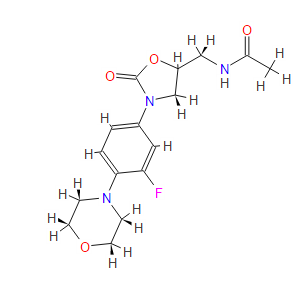
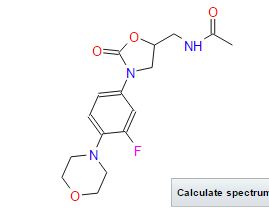
Skeletal formula of linezolidLINEZOLID

N- [[(5S) – 3 – [3 -Fluoro-4- (4-morpholinyl)phenyl] -2-oxo- 5 -oxazolidinyl] methyl] acetamide and marketed by Pfizer in US under brand name Zyvox. Linezolid is a synthetic antibacterial agent of the oxazolidinone class. It is used for the treatment of infections caused by multi-resistant bacteria including streptococci and methicillin-resistant Staphylococcus aureus.


(S)-N-[[3-(3-fluoro-4-morpholinylphenyl)-2-oxo-5-oxazolidinyl]methyl] acetamide.

N-[[(5s)-3-(3-fluoro-4-morpholin-4-ylphenyl)-2-oxo-1,3-oxazolidin-5-yl]methyl]acetamide
PRODUCT PATENTUS5688792 (1997 to Pharmacia & Upjohn)
CAS No.: 165800-03-3
Synonyms:
View More

Formula: C16H20FN3O4
Exact Mass: 337.14400

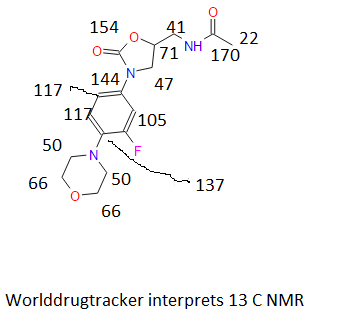
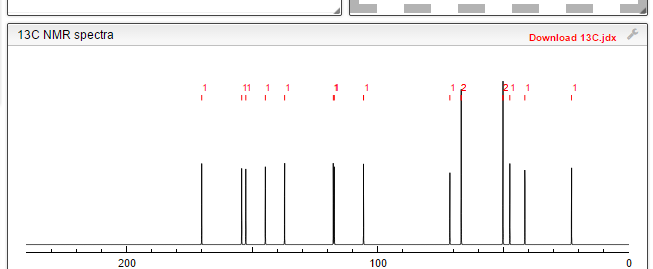
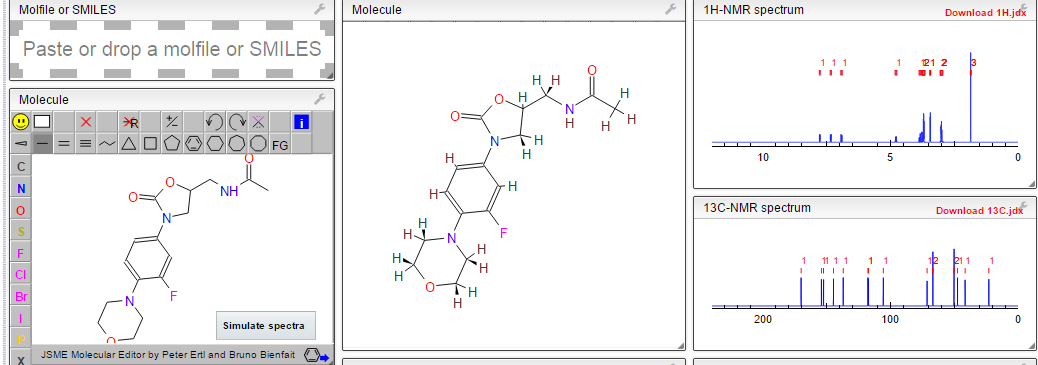
13C

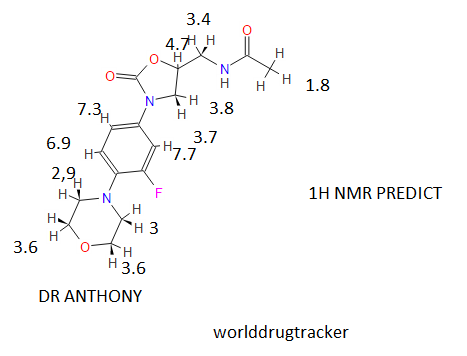
1H NMR AND 13C PREDICT

1H NMR PREDICT

N-[[(5S)-3-(3-fluoro-4-morpholin-4-ylphenyl)-2-oxo-1,3-oxazolidin-5-yl]methyl]acetamide NMR spectra analysis, Chemical CAS NO. 165800-03-3 NMR spectral analysis, N-[[(5S)-3-(3-fluoro-4-morpholin-4-ylphenyl)-2-oxo-1,3-oxazolidin-5-yl]methyl]acetamide H-NMR spectrum

13C NMR PREDICT

N-[[(5S)-3-(3-fluoro-4-morpholin-4-ylphenyl)-2-oxo-1,3-oxazolidin-5-yl]methyl]acetamide NMR spectra analysis, Chemical CAS NO. 165800-03-3 NMR spectral analysis, N-[[(5S)-3-(3-fluoro-4-morpholin-4-ylphenyl)-2-oxo-1,3-oxazolidin-5-yl]methyl]acetamide C-NMR spectrum

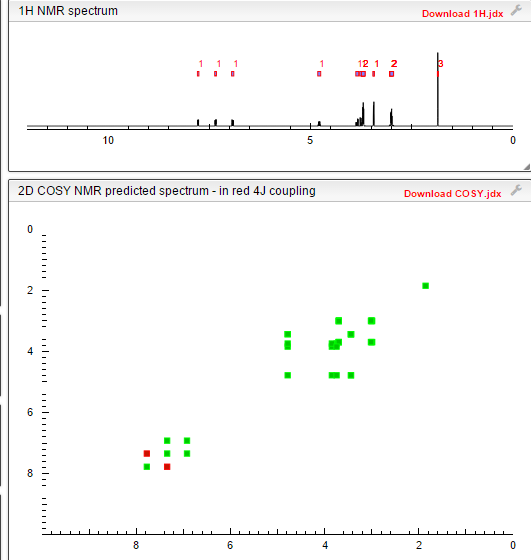
COSY
PREDICT

HMBC

ORIGINAL 1H NMR…………...http://www.selleckchem.com/products/Linezolid(Zyvox).html

INTERMEDIATES USED

Arkivoc, , vol. 2012, # 6 p. 45 – 56

WO2011/137222 A1, ;


Union Quimico Farmaceutica, S.A. (UQUIFA) Patent: EP2163547 A1, 2010 ; Location in patent: Page/Page column 11 ;

THE REGENTS OF THE UNIVERSITY OF CALIFORNIA; GARG, Neil K.; RAMGREN, Stephen D.; SILBERSTEIN, Amanda L.; QUASDORF, Kyle W. Patent: WO2012/94622 A2, 2012 ; Location in patent: Page/Page column 31-32 ;

Lianhe Chemical Technology Co., Ltd. Patent: EP2388251 A1, 2011 ; Location in patent: Page/Page column 11 ;

Tammana, Rajesh; Vemula, Kiran Kumar; Guruvindapalli, Ramadasu; Yanamandr, Ramesh; Gutta, Madhusudhan Arkivoc, 2012 , vol. 2012, # 6 p. 45 – 56

Union Quimico Farmaceutica, S.A. (UQUIFA) Patent: EP2163547 A1, 2010 ; Location in patent: Page/Page column 10 ;


Song, Lirong; Chen, Xiaobei; Zhang, Shilei; Zhang, Haoyi; Li, Ping; Luo, Guangshun; Liu, Wenjing; Duan, Wenhu; Wang, Wei Organic Letters, 2008 , vol. 10, # 23 p. 5489 – 5492

Union Quimico Farmaceutica, S.A. (UQUIFA) Patent: EP2163547 A1, 2010 ; Location in patent: Page/Page column 10 ;

JUBILANT LIFE SCIENCES LIMITED; BISWAS, Sujay; PANDA, Atulya, Kumar; GUPTA, Ashish, Kumar; SINGH, Shishupal; TIWARI, Praveen; VIR, Dharam; THOMAS, Saji Patent: WO2013/111048 A1, 2013 ; Location in patent: Page/Page column 24; 25 ;


Perrault, William R.; Pearlman, Bruce A.; Godrej, Delara B.; Jeganathan, Azhwarsamy; Yamagata, Koji; Chen, Jiong J.; Lu, Cuong V.; Herrinton, Paul M.; Gadwood, Robert C.; Chan, Lai; Lyster, Mark A.; Maloney, Mark T.; Moeslein, Jeffery A.; Greene, Meredith L.; Barbachyn, Michael R. Organic Process Research and Development, 2003 , vol. 7, # 4 p. 533 – 546


US6362334 B1, ; Example 13 ;

NMR OF INTERMEDTIATES

………….
…….
………
……………
……………
  • Linezolid is a pharmaceutically active compound useful as an antibacterial agent, e.g. for the treatment of diabetic food infections caused by Gram-positive bacteria. It is represented by the formula (I),

    Figure imgb0001
  • [0003]
    The marketed pharmaceutical compositions are a sterile isotonic solution for an i.v. infusion, a tablet for oral administration and an aqueous suspension for oral administration. They are marketed, i.e., under brand name ZYVOX by Pfizer.
  • [0004]
    The molecule of linezolid has one asymmetric carbon in the molecule allowing for 2 enantiomers; the marketed compound is the (S)-enantiomer. In the above-marketed compositions, linezolid is present as a free base.
  • [0005]
    Hereinunder, the name linezolid will be used as the generic name for N-(3-(3-fluoro-4-(morpholin-4-yl)phenyl)-2-oxooxazolidin-5(S)-ylmethyl)acetamide, unless indicated to the contrary.
  • [0006]
    Linezolid was first disclosed in WO 95/07271 ( EP 0717738 US 5,688,792 ) of the Upjohn Company.
  • [0007]
    Various processes for making linezolid are known in the art. In particular, the important ones are these, the final step of which comprises acetylation of an amine precursor of the formula (II) with an acetylhalide or acetic anhydride (see, e.g., WO 2005 099353 ),

    Figure imgb0002
  • [0008]
    This amine precursor (II) may be made from various starting materials, e.g.:

    1. a) By a reduction of an azide compound of formula (III) by a suitable reductant ( WO2006/091731 , WO 95/07271 , US 5837870 , WO2009/063505 US 7291614 ),
      Figure imgb0003

      The starting compound (III) may be made from the corresponding tosylate or chloride of general formula (VII) below ( WO 2005/099353 ).

    2. b) By a decomposition of a phthalimide compound of formula (IV), e.g. by methylamine ( WO95/07271 ) or by hydrazine ( US 5837870 ),
      Figure imgb0004

      The starting compound (IV) may be made from the same tosylate or chloride as sub a) ( WO2005/099353 ) or by a cyclization of the oxazolidine ring ( WO 99/24393 , WO2006/008754 ).

    3. c) From a sulfonate compound of formula (V),
      Figure imgb0005

      by treatment with ammonium hydroxide in isopropanol or THF ( WO 95/07271 ) or by treatment with ammonia under enhanced pressure ( WO 97/37980 ).

    4. d) By a reduction of an imine (VI),
      Figure imgb0006

      wherein R2 is a chlorophenyl, bromophenyl or 2,4,-dichlorophenyl moiety ( WO 2007/116284 ).

  • [0009]
    Except of the imine (VI), each of the preceded synthetic approaches is based on a step of converting a starting material of the general formula (VII),

    Figure imgb0007

    wherein L is a suitable leaving group, for instance a halogen or an alkyl-or aryl sulfonyloxy group,
    by a reaction with a nitrogen nucleophile (an azide salt, phthalimide salt, ammonia or ammonium hydroxide), followed, if necessary, by a next step of conversion of the formed reaction intermediate (e.g., compound (III) or compound (IV)) into the amino/compound (II). Apparently, making the starting amine-compound (II) in a good yield and purity is the key aspect of commercial success of any of the above synthetic routes yielding linezolid. However, the known approaches have various drawbacks, for instance serious toxicity and explosion hazard of the azide salts, long reaction times and hazardous agents (hydrazine, methyl amine) in using the phthalimide intermediate, low yields and many side products at the ammonium hydroxide approach, or harsh reaction conditions in reaction with ammonia.

Linezolid [(S)-N-[[3-(3-Fluoro-4-morpholinyl)phenyl]-2-oxo-5-oxazolidinyl]methyl]acetamide] is an antimicrobial agent. Linezolid is an oxazolidinone, having the empirical formula C16H20FN3Oand the following structure (1):
Figure US20060252932A1-20061109-C00001
Linezolid (1) is described in The Merck Index (13th edition, Monograph number: 05526, CAS Registry Number: 165800-03-3) as white crystals, with a melting point of 181.5-182.5°. Linezolid (1), as well as a process for its preparation, is disclosed in U.S. Pat. No. 5,688,792 (Example 5), European Patent No. 717738, Israeli Patent No. 110,802, Canadian Patent No. 2,168,560, and International Patent Publication WO 95/07271.

U.S. Pat. No. 5,688,792 discloses the antibacterial agent linezolid as well as a process for its preparation. EXAMPLE 5 reports the linezolid produced had a mp of 181.5-182.5°.
There are many other disclosures of processes to prepare linezolid. J. Med. Chem., 39(3), 673-9 (1996) reports the linezolid was, “recrystallized from ethyl acetate and hexanes . . . white crystals, m.p. 181.5-182.5C.” It also sets forth the IR spectrum as “3284, 3092, 1753, 1728, 1649, 1565, 1519, 1447, 1435”.
Tetrahedron Lett., 40(26), 4855 (1999) discloses linezolid and a process to prepare linezolid. However, this document does not set forth the melting point or IR spectrum of the linezolid prepared.
U.S. Pat. No. 5,837,870 (International Publication WO97/37980 of PCT/US97/03458) discloses a process to prepare linezolid. Linezolid is described in EXAMPLE 18, which does not set forth the melting point or IR spectrum of the linezolid prepared.
International Publication WO99/24393 of PCT/US98/20934 discloses a process to prepare linezolid. Linezolid is described in EXAMPLES 8, 9 and 12 which do no set forth the melting point or IR spectrum of the linezolid prepared.
The form of linezolid being used in the clinical trials to support the filing of the NDA is Form II.
Linezolid (1) is marketed in the United States by Pfizer, Inc. as an injection, tablets, and oral suspension under the name ZYVOX®. Its main indications are nosocomial pneumonia, skin and skin-structure infections, and vancomycin-resistant Enterococcus faecium infections.
U.S. Pat. No. 5,688,792 claims linezolid (1) and its use for the treatment of microbial infections. This patent also discloses, but does not claim, the following method of preparation:
Figure US20060252932A1-20061109-C00002
This method of preparation was also disclosed in Bricker, et al., J. Med. Chem., 39 673 -679 (1996), where it was stated that the above route avoids the use of phosgene to make the carbamate precursor of the oxazolidinone ring. The authors also disclose that the use of NaNcan be avoided by using potassium phthalimide, followed by deblocking of the phthalimide with aqueous methyl amine.
In the above-described synthesis, the intermediate amine, S-N-(4-morpholinyl-3-fluorophenyl)-2-oxo-5-oxazolidinyl-methyl amine (2)
Figure US20060252932A1-20061109-C00003

is reacted without isolation with acetic anhydride as an oily product, or in solution, to produce the acetamide, linezolid (1). This is followed by procedures for isolating the linezolid (1) such as those described in U.S. Pat. No. 5,688,792, at col. 15, 11. 22-28 (chromatography and separation of the desired fraction, followed by evaporation and trituration of the product to obtain pure linezolid (1)).

In the above-described syntheses, the intermediate azide R-N-(4-morpholinyl-3-fluorophenyl)-2-oxo-5-oxazolidinyl-methyl azide (3)
Figure US20060252932A1-20061109-C00004

is reduced to its corresponding amine, S-N-(4-morpholinyl-3-fluorophenyl)-2-oxo-5-oxazolidinyl-methyl amine (2) in the solvent ethyl acetate by hydrogenation using hydrogen gas and a palladium/carbon catalyst. These reaction conditions lead to the production of an undesirable level of reaction by-products, and, following the acetylation of the intermediate amine (2) to linezolid (1), to undesirably high levels of bis-linezolid (4)

Figure US20060252932A1-20061109-C00005

http://www.google.com/patents/US20060252932

FIG. 1 shows the 1H-NMR spectrum of bis-linezolid (4)
FIG. 2 shows the 13C-NMR spectrum of bis-linezolid (4)
FIG. 3 shows the IR spectrum of bis-linezolid (4)

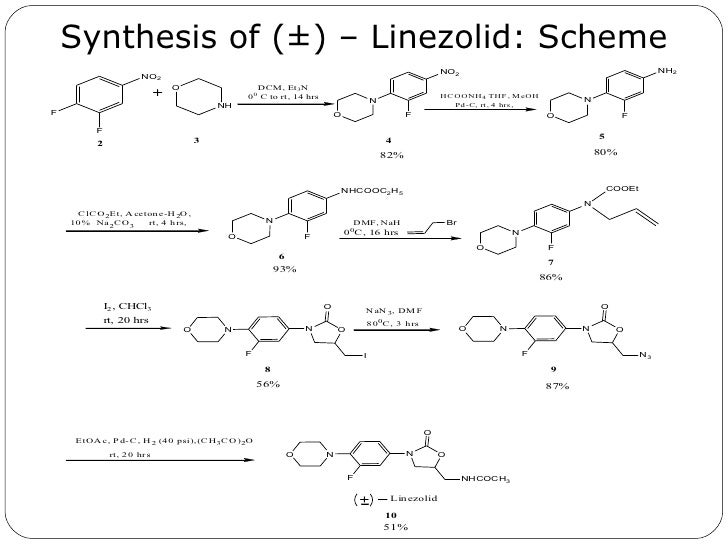
A Novel Synthesis of Oxazolidinone Derivatives (A Key Intermediate of Linezolid)

Pingili Krishna Reddy1,2, K. Mukkanti2 and Dodda Mohan Rao1*
1Symed Research Centre, Plot No. 89/A, Phase-I, Shapoornagar, IDA Jeedimetla, Hyderabad, Andhra Pradesh, India
2Center for Pharmaceutical sciences, Jawaharlal Nehru Technological University, Kukatpally, Hyderabad, India

http://www.orientjchem.org/vol29no3/a-novel-synthesis-of-oxazolidinone-derivatives-a-key-intermediate-of-linezolid/

Reddy P. K, Mukkanti K, Rao D. M. A Novel Synthesis of Oxazolidinone Derivatives (A Key Intermediate of Linezolid). Orient J Chem 2013;29(3). doi : http://dx.doi.org/10.13005/ojc/290322

N-[[(5S)-3-[3-fluoro-4-(4-morpholinyl)phenyl]-2-oxo-5-oxazolidinyl]methyl]acetamide (7a):

IR (KBr, cm-1): 3338 (N-H stretching), 3117, 3066 (aromatic C-H stretching), 2971, 2863, 2818 (aliphatic C-H stretching), 1738, 1662 (C=O stretching), 1545, 1516,1453 (aromatic C=C stretching), 1425 (C-N stretching), 1381 (aliphatic C-H bending), 1334 (C-F stretching), 1274 (C-O stretching), 1198, 1177 (C-N bending), 1117, 1081 (aromatic C-H bending).

1H NMR (CDCl3) δ ppm: 7.44 (m, 1H), 7.26 (m, 1H), 6.99 (m, 1H), 6.01 (t,1H), 4.76 (m, 1H), 4.02 (m, 2H), 3.80 (m, 4H), 3.61(m, 2H), 3.05 (m, 4H), 2.02 (t, 3H):

C13NMR(CDCl3) δppm: 171.33, 156.87, 154.44, 136.40, 132.84, 118.67, 113.81, 107.52, 71.96, 66.76, 50.79, 47.46, 41.68, 22.81. MS: 338 (M++H);

……………………………………………………………………….

ARKIVOC 2012 (vi) 45-56 Page 45 ©ARKAT-USA, Inc.

An expeditious construction of 3-aryl-5-(substituted methyl)-2- oxazolidinones: a short and efficient synthesis of Linezolid

Rajesh Tammana,a,b Kiran Kumar Vemula,a Ramadasu Guruvindapalli,a Ramesh Yanamandra,c and Madhusudhan Gutta* a
aDepartment of Research & Development, Inogent Laboratories Pvt. Ltd.,

A GVK BIO Company, 28A, IDA, Nacharam, Hyderabad 500 076, Andhra Pradesh, India

bCentre for Pharmaceutical Sciences, Institute of Science and Technology, Jawaharlal Nehru Technological University, Hyderabad 500 072, Andhra Pradesh, India

cDepartment of Analytical Research & Development, GVK Biosciences Pvt. Ltd., 28A, IDA, Nacharam, Hyderabad 500 076, Andhra Pradesh, India

E-mail: madhusudhan.gutta@inogent.com

http://www.arkat-usa.org/get-file/42622/
N-(((S)-3-(3-fluoro-4-morpholinophenyl)-2-oxooxazolidin-5-yl)methyl)acetamide 1 (Linezolid) 1 was prepared according to the method described in literature.12,15

Mp 182-183 °C, (lit.12a 181.5- 182.5 °C); enantiomeric purity 99.9% (by chiral HPLC);

IR (KBr): ν 3343 (NH), 3075 (Ar-H), 2967 (CH), 1741 (C═O), 1660 (C═O) cm-1 ;

1H NMR (CDCl3): δ 2.03 (s, 3H), 3.04-3.07 (t, 4H), 3.56-3.77 (m, 3H), 3.86-3.89 (t, 4H), 4.00-4.06 (t, 1H), 4.74-4.79 (m, 1H), 5.96 (s, 1H), 6.90- 6.96 (t, 1H), 7.06-7.10 (d, 1H), 7.43-7.48 (d, 1H).

13C NMR (DMSO-d6): δ 22.4, 41.4, 47.3, 50.6, 66.1, 71.5, 106.4, 114.0, 119.1, 133.3, 135.5, 154.0, 156.2, 170.0;

ESI-MS (C16H20FN3O4): m/z (%) 338.18 (100, M+ +1).

12. (a) Brickner, S. J.; Hutchinson, D. K.; Barbachyn, M. R.; Manninen, P. R.; Ulanowicz, D. A.;
Garmon, S. A.; Grega, K. C.; Hendges, S. K.; Toops, D. S.; Ford, C. W.; Zurenko, G. E. J.
Med. Chem. 1996, 39, 673. (b) Barbachyn, M. R.; Brickner, S. J.; Hutchinson, D. K. U.S.
patent 5688792; 1997; Chem. Abstr. 1995, 123, 256742. (c) Dhananjay, G. S.; Nandu, B. B.;
Avinash, V. N.; Kamlesh, D. S.; Anindya, S. B.; Tushar, A. N. PCT Int. Appl. 063505, 2009;
Chem. Abstr. 2009, 150, 515152.
13. (a) Imbordino, R. J.; Perrault, W. R.; Reeder, M. R. PCT Int. Appl. 116284, 2007; Chem.
Abstr. 2007, 147, 469356. (b) Pearlman, B. A.; Perrault, W. R.; Barbachyn, M. R.;
Manninen, P. R.; Toops, D. S.; Houser, D. J.; Fleck, T. J. U.S. Patent 5837870, 1998; Chem.
Abstr. 1998, 130, 25061. (c) Perrault, W. R.; Pearlman, B. A.; Godrej, D. B.; Jeganathan, A.;
Yamagata, K.; Chen, J. J.; Lu, C. V.; Herrinton, P. M.; Gadwood, R. C.; Chan, L.; Lyster, M.
A.; Maloney, M. T.; Moeslein, J. A.; Greene, M. L.; Barbachyn, M. R. Org. Proc. Res. Dev.
2003, 7, 533.
14. (a) Yu, D. S.; Huang, L.; Liang, H.; Gong, P. Chin. Chem. Lett. 2005, 16, 875. (b) Pearlman,
B. A. PCT Int. Appl. 9924393, 1999; Chem. Abstr. 1999, 130, 338099. (c) Weigert, F. J. J.
Org. Chem. 1973, 38, 1316.
15. (a) Wang, M.; Tong, H. CN patent 101220001, 2008. (b) Mohan Rao, D.; Krishna Reddy, P.
PCT Int. Appl. 099353, 2005; Chem. Abstr. 2005, 143, 440395. (c) Mohan Rao, D.; Krishna
Reddy, P. PCT Int. Appl. 008754, 2006; Chem. Abstr. 2006, 144, 170978.

……………………………………

Org. Proc. Res. Dev.20037 (4), pp 533–546
DOI: 10.1021/op034028h

Organic Process Research and Development, 2003 , vol. 7, # 4 p. 533 – 546

http://pubs.acs.org/doi/abs/10.1021/op034028h

Abstract Image
Since 1993, a significant process research and development effort directed towards the large-scale synthesis of oxazolidinone antibacterial agents has been ongoing in both Early Chemical Process Research and Development, and Chemical Process Research and Development at Pharmacia. This work has led to the successful development of the current commercial process to produce Zyvox (linezolid), recently approved by the FDA as an antibacterial. While this synthesis is appropriate for the preparation of linezolid in particular, a more convergent and versatile synthesis was developed for the rapid preparation of numerous other oxazolidinone analogues. Toward this end, economical methods for the large-scale preparation of N-[(2S)-2-(acetyloxy)-3-chloropropyl]acetamide and tert-butyl [(2S)-3-chloro-2-hydroxypropyl]carbamate 27 from commercially available (S)-epichlorohydrin via the common intermediate (2S)-1-amino-3-chloro-2-propanol hydrochloride 2a were developed. Also, general methods for coupling these reagents with N-aryl carbamates to giveN-aryl-5(S)-aminomethyl-2-oxazolidinone derivatives in one step were developed. These reagents and procedures have proven widely applicable in the preparation of a diverse array of oxazolidinone analogues such as 23 and 28 in both process and medicinal chemistry research.

(S)-N-[[3-[3-Fluoro-4-(4-morpholinyl)phenyl]-2-oxo- 5-oxazolidinyl]methyl]acetamide: Linezolid: Zyvox

HPLC analyses showed the first and second crops to be 98.9 and 94.6 wt % linezolid, respectively, with <0.2% enantiomer in each; also, an additional 9.7% yield of linezolid was detected in the filtrate by external standard HPLC (total ) 80.6%). Analysis data for 1st crop material: mp ) 73-76 °C;

1 H NMR (CDCl3, 400 MHz)
δ 7.43 (dd, J ) 14.4, 2.4 Hz, 1H), 7.07 (dd, J ) 8.8, 2.0 Hz, 1H), 6.91 (t, J ) 8.8 Hz, 1H), 6.43 (br t, 1H), 4.77 (m, 1H), 4.02 (t, J ) 9.2 Hz, 1H), 3.86 (t, J ) 4.4 Hz, 4H), 3.76 (dd, J ) 8.8, 6.8 Hz, 1H), 3.66 (m, 2H), 3.05 (t, J ) 4.8 Hz, 4H), 2.02 (s, 3H);

13C NMR (CDCl3, 100 MHz)
δ 23.07 (q), 41.93 (t), 47.66 (t), 51.00 (t), 66.95 (t), 71.99 (d), 107.56 (dd, JC-F ) 26.16 Hz), 113.97 (dd, JC-F ) 3.02 Hz), 118.85 (dd, JC-F ) 4.03 Hz), 132.90 (sd, JC-F ) 4.03 Hz), 136.58 (sd, JC-F ) 9.06 Hz), 154.42 (s), 155.50(sd, JC-F ) 246.53 Hz), 171.19 (s)

MS (EI) m/z (relative intensity) 337 (90), 293 (81), 209 (100);

[R]25D ) -16 (c ) 1.05, ethanol).

Anal. Calcd for C16H20FN3O4: C, 56.97; H, 5.97; N, 12.46; found: C, 56.86; H, 6.05; N, 12.44

HPLC (99.0 wt %, 98.9 area % linezolid, tR 1.60 min) conditions: InertsilODS-2 5.0 µm 150 mm × 4.6 mm, flow rate ) 2.0 mL/ min, gradient elution from 40:60 A:B to 80:20 A:B over 10 min; A ) acetonitrile; B ) water. External standard HPLC analysis of the filtrate showed
d 12.9% and 7.6% yield of linezolid and 8, respectively.
SEE HPLC AT   http://file.selleckchem.com/downloads/hplc/S140801-Linezolid-Zyvox-HPLC-Selleck.pdf
………………………….
http://www.google.com/patents/WO2007064818A1?cl=en

Linezolid [(S)-N-[[3-(3-Fluoro-4-morpholinyl)phenyl]-2-oxo-5- oxazolidinyljmethyl] acetamide} is an antimicrobial agent. Linezolid is an oxazolidinone, having the empirical formula C16H20FN3O4 and the following structure:
Figure imgf000002_0001

Linezolid

Linezolid is described in The Merck Index (13th edition, Monograph number: 05526, CAS Registry Number: 165800-03-3) as white crystals, with a melting point of 181.5-182.50C. Linezolid, as well as a process for its preparation, is described in U.S. Patent No. 5,688,792 (Example 5), European Patent No. 717738, Israeli Patent No. 110,802, Canadian Patent No. 2,168,560, and International Patent Publication WO 95/07271. Linezolid is marketed in the United States by Pfizer, Inc. as an injection, as tablets, and as an oral suspension under the name ZYVOX®. Its main indications are nosocomial pneumonia, skin and skin-structure infections, and vancomycin-resistant Enterococcus faecium infections.
U.S. Patent No. 5,688,792 describes linezolid and its use for the treatment of microbial infections. This patent also describes the following method for the preparation of linezolid:
Figure imgf000003_0001
This method of preparation was also described in Bricker, et al., J. Med. Chem., 39, 673 — 679 (1996), where it was stated that the above route avoids the use of phosgene to make the carbamate precursor of the oxazolidinone ring. The authors also disclose that the use OfNaN3 can be avoided by using potassium phthalimide, followed by deblocking of the phthalimide with aqueous methyl amine.
An analysis of the commercial tablet ZYVOX® shows the presence of desfluoro linezolid as an impurity of linezolid. An HPLC chromatogram of ZYVOX® is depicted in Figure 1. The desfluoro linezolid haviong a relative retention time (RRT) of 0.69 compared to the retention time of linezolid.
desfluoro linezolid of the following structure:
Figure imgf000008_0001
Desfluoro linezolid
As illustrated in Figure 1, this impurity is ideal for use as a reference standard since it is detectable by HPLC, and yet it is present in much less amounts than linezolid, having a RRT of 0.69 compared to the retention time of linezolid.
The isolated desfluoro linezolid is pure. Preferably it has about 95% purity by weight with respect to other compounds, including linezolid. Preferably, the desfluoro linezolid is isolated in about 99.3% purity by weight. Thus, the isolated desfluoro linezolid contains less than about 5%, preferably less than about 2%, and even more preferably less than about 1%, by weight, linezolid.
The isolated desfluoro linezolid of the present invention can be characterized by data selected from: 1H NMR (400MHz, DMSO-d6) δ (ppm): 1.8a (s), 3.04 (brt), 3.40 (t), 3.68 (m), 3.72 (brt), 4.04 (t), 4.67 (m), 6.95 (d), 6.95 (d), 737 (d), 7.37 (d) and 8.21 (t); 13C NMR (lOOMHz, DMSO-d6) δ (ppm): 22.8, 41.9, 48.0, 49.2, 66.5, 71.7, 115.9, 115.9, 119.9, 119.9, 130.9, 148.0, 154.7, 170.0; EI+m/z (MH+): 319; and IR spectra on KBr at 1523, 1555, 1656, 1731, 2830, 2926, 2968 and 3311 cm‘1.
The isolated desfluoro linezolid of the present invention may be characterized by a 1H NMR, substantially as depicted in figure 2. The isolated desfluoro linezolid of the present invention may be characterized by 13C NMR, substantially as depicted in figure 3. The isolated desfluoro linezolid of the present invention may be characterized by an IR spectrum substantially as depicted in figure 4. The isolated, desfluoro linezolid of the present invention may be characterized by an Mass spectrum substantially as depicted in figure 5. The isolated desfluoro linezolid of the present invention may be prepared by performing the process described in U.S. Patent No. 5,688,792, with l-fluoro-4- nitrobenzene instead of 3,4-difluoronitrobenzene, according to the following scheme:
Figure imgf000009_0001

Desfluoro Linezolid

The desfluoro linezolid of the present invention is isolated by a process comprising the following steps; a) combining (5R)-[[3-[4-(4-morpholinyl)phenyl]-2- oxo-5-oxazolidinyl]methyl]azide with an organic solvent, preferably a C1-C4 alkyl ester or a C6 to C12 aromatic hydrocarbon, more preferably toluene or ethylacetate, most preferably toluene, and hydrogen gas in the presence of a catalyst to obtain a reaction mixture containing (5S)-[[3-[4-(4-morpholinyl)phenyl]-2-oxo-5- oxazolidinyl]methyl] amine; b) filtering the reaction mixture to obtain a solution containing (5S)-[[3-[4-(4-morpholinyl)phenyl]-2-oxo-5-oxazolidinyl}methyl]amine; c) adding acetic anhydride to the solution to obtain a precipitate; and d) recovering and drying the precipitate to obtain isolated desfluoro linezolid. Preferably, recovering of the precipitate in step d) is carried out by filtering or decanting. Preferably, the catalyst in step a) is selected from the group consisting of Pd/C, Raney Nickel, and noble metal catalysts, more preferably the catalyst is Pd/C. The isolated desfluoro linezolid of the present invention is useful as a reference marker for linezolid. As such, it may be used in order to detect the desfluoro linezolid impurity in a linezolid sample.
Step 7. Preparation of N-rr(5S)-3-r4-(4-moφholinyl)phenyl1-2-oxo-5- oxazolidinyl]methyl1acetamide (des-fluoro-linezolid). In a IL reactor, 6 g (5R)-[[ 3-(4-morpholinyl)phenyl]-2-oxo-5- oxazolidinyl]methyl]azide were charged with 0.7L toluene followed by 0.6 g Pd/C (10% Pd/C containing 52% water). The system was bubbled with ammonia (gas) during 2 h, and then flushed three times with nitrogen and 3 times with hydrogen. The pressure of hydrogen was set to 1.5 arm. The reaction mixture was stirred at RT and the reaction followed up until completion. The reaction mixture was filtered and the solution was treated with 60 ml acetic anhydride at RT. The precipitate was filtered and dried to obtain 3.3 g of desfluoro linezolid (purity: 99.3%). Desfluorolϊnezolid 1H-NMR and 13C-NMR identification
Figure imgf000015_0001
Figure imgf000015_0002
……………….
 

HTTP://WWW.GOOGLE.COM/PATENTS/US6559305

 
Example 1 Preparation of Crystal Form II of Linezolid
Linezolid with better than 99.8% enantiomeric purity, less than 0.2% of the R enantiomer, (1.99 grams) is mixed with ethyl acetate (100 mL). The flask is stoppered and heated to 65° with constant stirring in a temperature controlled oil bath. The linezolid is completely dissolved and the mixture is stirred for an additional 10 minutes. The temperature is maintained at 55° in the flask and one neck of the flask is unstoppered to allow slow evaporation of the solvent. A gentle stream of nitrogen is blown across the open neck to aid in evaporation. Solids spontaneously precipitated from solution and the volume is reduced by about 25% of the initial volume. The flask is sealed and mixed for 90 minutes while maintaining the mixture at 55°. The mixture was then cooled to about 23° while being stirred. The solids are isolated by vacuum filtration using a sintered glass funnel to give linezolid in crystal form. Analysis by powder X-ray diffraction indicates that the solids are linezolid crystal Form II.


……………………


HTTP://WWW.GOOGLE.COM/PATENTS/US7989618

 
Example 1 Linezolid Dihydrochloride
20 g of linezolid are dissolved in 750 ml of acetone at about 30° C. The solution is kept at about 30° C. and 8 ml of concentrated hydrochloric acid (37% w/w aqueous solution) are added, thus immediately causing linezolid dihydrochloride to precipitate as a white solid. The mixture is kept under stirring at about 30° C. for approximately 30 minutes, then refluxed under stirring for about 2 hours. The mixture is left to cool to room temperature, then cooled on ice-water bath, under stirring, for about 2 hours. A white solid precipitates which is filtered with suction, washed with 30 ml of acetone and dried under vacuum at about 50° C.
A solid water-soluble crystalline product is obtained, characterized by an XRPD spectrum substantially as reported in FIG. 3, wherein the most intense diffraction peaks fall at 13.9; 18.2; 19.1; 19.7; 22.2; 22.9; 23.6; 25.3; 27.1; 28.4±0.2° in 2θ; and by a DSC thermogram substantially as reported in FIG. 4, characterized by an exothermic peak around 178±2° C. The acid-base potentiometric titre is double while the argentimetric one is 17.71% (theor. dihydrochloride 17.77%). Purity 99.8% as determined by HPLC.
1H NMR (300 MHz, DMSO-d6), ppm: 8.37 (bt, 1H), 7.50 (dd, 1H, J=15.3 Hz, J=2.7 Hz), 7.10 (m, 2H), 4.68 (m, 1H), 4.05 (t, 1H, J=9.0 Hz), 3.70 (m, 5H), 3.36 (t, 2H, J=5.1 Hz), 3.07 (t, 4H, J=4.5 Hz), 1.80 (s, 3H).

……………………………………….

http://www.google.com/patents/EP2690100A1?cl=en

Example 3

  • [0034]
    To a 25 ml, round-bottomed flask equipped with a magnetic stirring bar was charged “amine” (0.49 g) followed by water (8.30 ml). A heterogeneous mixture was stirred and hydrochloric acid (0.12 mL, 35 %) was added. A homogenous solution was obtained. The solution was cooled down in an ice-water bath to 0°C. Acetic anhydride (0.31 mL) was added followed by sodium bicarbonate (0.45 g). Carbon dioxide was immediately released and a formation of white precipitate was observed. The precipitate was filtered off and the filter cake was washed with water (10 ml). The filter cake was collected and dried (100 mbar) at 70°C overnight. An off-white solid linezolid (0.26 g) was isolated.

…………………………..
PATENT

http://www.google.com/patents/WO2007116284A1?cl=en

Example 3 Preparation of (S)~N-[3-(3-fiuoro~4~morpholin-4-yI-ρhenyI)~2-oxo- oxazolidin-5~ylmethyl]-acetarnide (Linezo!id)
Figure imgf000011_0001
Method A
To (S)-5-{[(4-chloro-benzylidene)-amino]-methyl}-3-(3-fluoro-4-morpholin-4-yl- phenyl)-oxazolidin-2-one (129.5g, 31 mmol, 1.0 eq.) is added ethyl acetate (935 mL) and water (935 mL). To the heterogeneous mixture is added 12M aq. HCl (51.58 mL, 620 mmol, 2.0 eq.). Within minutes, the solid went into solution and the reaction mixture is biphasic. After stirring the emulsion at ambient temperature for 2 hours, HPLC assay showed the hydrolysis reaction to be complete (HPLC conditions: YMC 5μ ODS-AM 150 nm X 4.6 nm column, eluting with CH3CN /water + 0.1% TFA from 20% CH3CN to 80% CH3CN in 8 min at 0.5 mL/min, detecting at 254nm, Retention time of (S)-N-[3-(3-fluoro-4-morpholin-4-yl- phenyl)-2-oxo-oxazolidin-5-ylmethyl]-amine is 3.2 min). The phases are separated, the organic layer is discarded, and the aqueous layer is washed with ethyl acetate (500 mL). CH2Cl2 (900 mL) is added and the pH is adjusted to 6.7 with ~ 25 mL aq. 50% aq. NaOH. With constant stirring, Ac2O (58.49 mL, 620 mmol, 2.0 eq.) is added in one portion and the pH dropped to 2. The pH is then readjusted to 6 using 50% aq. NaOH. The pH is adjusted to ca. 7.1 with 50% aq. NaOH and the phases separated. The aqueous phase is extracted with CHiCl2 (800 mL) and the organics are combined and concentrated to ~1L in volume. Ethyl acetate (IL) is added and the volume is reduced to 1.5 L under vacuum. Another IL of ethyl acetate is added and volume is reduced again to IL under vacuum. The resultant slurry is cooled to 00C and the precipitate collected by vacuum filtration. The resulting solid is washed with ethyl acetate (250 mL). The crude product is dried under vacuum at 500C for 2 hours to give the title compound as Hnezolid crystalline Form I.
Figure imgf000012_0001
Following the general procedure of method A and making non-critical variations, but substituting (S)-5- { [2,4-dichloro-benzylidene)-amino]-methyl } -3-(3-fluoro-4-morphoIin-4-yl- phenyl)-oxazolidin-2-one (example 11) for (S)-5-{[(4-chloro-benzylidene)-amino]- methyl}-3-(3-fluoro-4-morρholin-4-yl-phenyl)-oxazolidin-2-one, the title compound is obtained.
Figure imgf000012_0002
Following the general procedure of method B and making non-critical variations, but substituting (S)-5-{ [4-bromo-benzylidene)-amino] -methyl }-3-(3-fluoro-4-morpholin-4-yl~ phenyl)-oxazolidin-2-one (example 9) for (S)-5-{[(4-chloro-benzylidene)-amino]- methyl}-3-(3-fluoro-4-morph.olin-4-yl-phenyl)-oxazoIidin-2-one, the title compound is obtained.

Example 4 Trituration (convert linezolid crystalline Form I to linezolid crystalline Form E) The product from Example (89.18 g) is transferred to a 3L round bottom flask equipped with a mechanical stirrer, thermocouple and heating mantel. Ethyl acetate (2.23 L, 15 mL/g) is added and seeded with Linezolid form II crystals and the slurry is heated to ca. 500C. A slight exotherm of 30C is observed. After 30 minutes of heating the form change is observable as the solid is changing to long needles. Stirring is continued for 2 hours at 500C, at which time the contents are cooled to ambient temperature and stirred for an additional 30 minutes. The contents are then cooled to 30C for 1.5 hours, filtered and washed with cold ethyl acetate (300 mL total). The resultant solids are dried under vacuum at 50°C for 18 hours to give Linezolid (78.12 g) Form II by XRD, 99.8 wt%, 99.9% ee. HPLC conditions: YMC 5μ ODS-AM 150 nm X 4.6 nm column, etuting with CH3CN /water + 0.1% TFA from 20% CH3CN to 80% CH3CN in 8 min at 0.5 mL/min, detecting at 254nm. TR (Linezolid) = 4.4 min; HPLC conditions: Chiralcel OJ-H 250 nm X 4.6 nm column, eluting with 90% CO2/ 10%MeOH at 3.0 mL/min, detecting at 255 nm. TR [title compound] = 3.6 min; TR (enantiomer of title compound) = 4.1 rain
……………………………………..

http://www.google.com/patents/EP2516408A1?cl=en

The polymorphic form obtained by following process disclosed in U.S. Pat. No. 5,688,792 is designated as Form I. Figure- 1 depicts the PXRD graph of Form I obtained by following prior art process. [15] Disadvantage of the process disclosed in U.S. Pat. No. 5,688,792 is that it involves use of n-butyl lithium. Due to its explosive nature it is difficult to handle at plant scale. Also, the said reaction is carried out at temperature of -78°C, which is difficult to attain during commercial production. Further the intermediate obtained requires purification by column chromatography. Column chromatography is a cumbersome technique and difficult to practice during commercial scale production.
The process for the preparation of Linezolid is also disclosed in Journal of Medicinal Chemistry (1996), 39(3), 673-9, U.S. Pat. Nos. 6,492,555, 5,837,870, 6,887,995, 7,307,163, 7,429,661, etc.

Linezolid was first disclosed in U.S. Pat. No. 5,688,792. The process for synthesis is as disclosed in Scheme-I

The synthetic reaction scheme of the present invention is as shown below.
Figure imgf000013_0001
Scheme-ll
Example 6: Synthesis of Linezolid Crude.
[140] Ethyl acetate (3500ml) and 10% palladium on carbon catalyst (6.0g) are added in autoclave having (R)- [N- 3 – (3 -Fluoro-4-morpholinylphenyl) -2-oxo- 5 -oxazolidinyl] methyl azide (lOOg) at 20-30°C. Cool the reaction mass & maintain 2-3kg hydrogen pressure at 15-20°C for 6-7 hrs. Filter it & wash the hyflo bed by Ethyl acetate
(100mlx2). Then add the Triethyl amine (35. lg) & Acetic anhydride (29.9g) slowly at 25-30°C under stirring. Cool the mix, filter it and wash the solid with chilled (0-5°C) Ethyl acetate (100 ml) followed by water (100mlx2). Finally product is dried at 55-60° C. Yield: 0.85.: Percentage 81%w/w.
[141]
[142] Example 7: Synthesis of Linezolid Pure
[143] Reflux the Acetone (1020ml) and Linezolid crude (lOOg) at 55-60°C for the 30
minutes. Filter the hot turbid solution & wash it with hot (55-60°C) acetone (50ml). Cool the reaction mixture at -5 to 0°C for 1 hour, wash the solid with chilled (-5 to 0°C) acetone (50ml). After drying the Linezolid semi pure (77g) add n-Propanol (308ml) reflux it at 95-100°C for 30 min & filter it by hot solution through hyflo bed. Cool the mix to 0-5°C for 1 hour and wash the solid with chilled (0-5°C) n-Propanol (77ml). Dry the material at 55-60°C. Yield: 0.73.: Percentage 73%w/w.
[144]
[145] Example 8: Synthesis of Linezolid
[146] Ethyl acetate (3500ml) and 10% palladium on carbon catalyst (6.0g) are added in autoclave having (R)- [N- 3 – (3 -Fluoro-4-morpholinylphenyl) -2-oxo- 5 -oxazolidinyl] methyl azide (lOOg) at 20-30°C. Cool the reaction mass & maintain 2-3kg hydrogen pressure at 15-20°C for 6-7 hrs. Filter it & wash the hyflo bed by Ethyl acetate. Distill out ethyl acetate at 75-90°C and then cool the reaction mass to 0-5°C. Add acetone (1000ml) & acetic anhydride (29.9g) at 0-5°C. Further, add Triethyl amine (37.8g) slowly at 0-5°C under stirring. Maintain the reaction mass at 0-5°C for 1-2 hrs. Heat the reaction mass to reflux at 65-75°C for 1 hr. Again cool the reaction mass to 0-5°C fori hr. Filter the solid wash it with acetone and water and dry it at 55-60C. Yield: 0.80.: Percentage 80 w/w.
 Example 9: Synthesis of Linezolid Form I
[149] Reflux n-propanol (400ml) and Linezolid (lOOg) at 95-100°C till all solid gets
dissolved. Add activated charcoal (2.0g) and heat for 30 mins. Filter thro hyflo bed. Heat the filtrate and concentrate the solution by partially removing n-propanol. Cool to 0-5°C and filter the solid and dry it at 55-60°C under vacuum. Yield: 0.9. : Percentage 90 w/w.

………………………………………..
https://acs.confex.com/acs/green08/techprogram/P52019.HTM

Wednesday, June 25, 2008 – 2:00 PM
New York (Capital Hilton)
128

Convergent Green Synthesis of Linezolid (Zyvox)

William R. Perrault, James B. Keeler, William C. Snyder, Christian L. Clark, Michael R. Reeder, Richard J. Imbordino, Rebecca M. Anderson, Nabil Ghazal, Stephen L. Seacrest, and Bruce A. Pearlman. Pfizer, Kalamazoo, MI
Pfizer has developed a novel, convergent, green, second generation synthesis of Linezolid (the active ingredient in ZyvoxTM). The second generation process will replace the launch process after approval by appropriate regulatory agencies and has numerous green chemistry benefits: overall yield is increased by 8%; total waste is reduced by 56%; non-recycled w is eliminated. At current volumes, total waste will be reduced 1.9 million kilograms per year and 1.7 million kg per year non-recyclable waste will be eliminated. The improved process utilizes a highly efficient low dilution convergent synthesis to replace the more dilute linear synthesis utilized in the launch process. The key chlorohydrin imine reagent 1 contains both the chiral center and the key 5-S-aminomethyl moiety of linezolid. In the launch process, S-1-chloro-2,3-propanediol was utilized to install the oxazolidinone functionality. However, this yielded a 5-S-hydroxymethyl group which required activation as the 3-nitrobenzenesulfonate and displacement with excess ammonia to generate the corresponding aminomethyl group of linezolid. The second generation process affords the oxazolidinone imine 3 in the convergent step. The penultimate 5-S-aminomethyl oxazolidinone 4 is then easily formed via hydrolysis with stoichiometric hydrochloric acid. Acylation of this amine with acetic anhydride, utilizing an improved Schotten Baumann reaction, affords high purity linezolid.

………………………………….

……………………………………..

……………………………………….

http://www.google.com/patents/EP2072505A2?cl=en

    • WO 95/07271 , which specifically describes the synthesis of linezolid, namely [(S)-N-[[3-(3-fluoro-4-morpholinyl)phenyl]-2-oxo-5-oxazolidinyl]methyl]acetamide], according to the following scheme:

      Figure imgb0001
    • [0003]
      Other synthetic routes for the preparation of linezolid are reported for example in US 6107519 and in Tetrahedron Letters, Vol 37, N° 44, pages 7937-7940, wherein the chiral compound shown below is used instead of glycidyl butyrate as a synthon containing the molecule stereocenter.

      Figure imgb0002
    • [0004]
      It should be appreciated that all of the known approaches to the preparation of linezolid make use of chiral synthons for the construction of the stereocenter. These are small molecules characterized by a high cost, therefore they are not suitable for the production of the compound on an industrial scale.
    • [0005]
      There is therefore the need for an alternative synthesis which provides oxazolidinone derivatives, linezolid included, from inexpensive starting materials, and which does not require a chiral synthon for the construction of the molecule, so that it can be used for the industrial preparation of such derivatives.

………………………………….

http://pubs.rsc.org/en/content/articlelanding/2010/md/c0md00015a/unauth

………………………………….

…………………………………………

…………………………………

RSC Adv., 2013,3, 24946-24951

DOI: 10.1039/C3RA45186K


http://pubs.rsc.org/en/content/articlelanding/2013/ra/c3ra45186k#!divAbstract

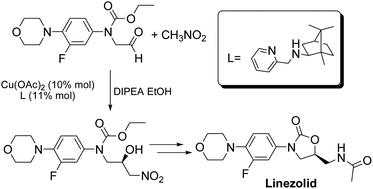
Graphical abstract: Concise asymmetric synthesis of Linezolid through catalyzed Henry reaction
A new asymmetric synthesis of the antibiotic Linezolid was performed through a copper-catalyzed Henry reaction as the key step. The use of camphor-derived aminopyridine ligands helped to improve the yields of the chiral precursor and to obtain Linezolid in good overall yield and enantiomeric excess.

Linezolid 1. Mp: 181–182 C [lit. 181.5–182.5 C];
1 H-NMR (300 MHz; CDCl3) d 2.02 (s, 3H), 3.06 (t, J ¼ 4.7 Hz, 4H), 3.61– 3.78 (m, 3H), 3.87 (t, J ¼ 4.7 Hz, 4H), 4.03 (t, J ¼ 9.0 Hz, 1H), 4.72–4.82 (m, 1H), 6.17 (bt, 1H, exch. with D2O), 6.93 (t, J ¼ 9.0 Hz, 1H), 7.08 (dd, J1 ¼ 9.0 Hz, J2 ¼ 2.5 Hz, 1H), 7.44 (dd, J1 ¼ 14.4 Hz, J2 ¼ 2.5 Hz, 1H); ee ¼ 71%;

HPLC (Daicel CHIRALPAK-IA, hexane/i-PrOH ¼ 70 : 30, ow rate 0.8 mL min 1 , l ¼ 254 nm); tR (major) ¼ 14.1 min; tR (minor) ¼ 16.4 min. A true sample of (S)-Linezolid (ee > 98%) under the same HPLC conditions gave a tR ¼ 14.1 min.

………………………………..
http://www.slideshare.net/vishwajeeta/introduction-new-ppt

………………………………


http://www.slideshare.net/pushechnikov/linezolid-case-study

…………………………………

http://pubs.rsc.org/en/content/articlelanding/2011/cc/c1cc15503b#!divAbstract

…………………………………

http://www.mdpi.com/1424-8247/3/7/1988/htm

Pharmaceuticals 03 01988 g001 1024

………………………………

Numbered structure of linezolid, showing the pharmacophore required for good activity (in blue) and desirable structural features (in orange).

Title: Linezolid
CAS Registry Number: 165800-03-3
CAS Name:N-[[(5S)-3-[3-Fluoro-4-(4-morpholinyl)phenyl]-2-oxo-5-oxazolidinyl]methyl]acetamide
Manufacturers’ Codes: PNU-100766; U-100766
Trademarks: Zyvox (Pharmacia & Upjohn); Zyvoxid (Pharmacia & Upjohn)
Molecular Formula: C16H20FN3O4
Molecular Weight: 337.35
Percent Composition: C 56.96%, H 5.98%, F 5.63%, N 12.46%, O 18.97%
Literature References: Prototype of the oxazolidinone antimicrobials; inhibits bacterial mRNA translation. Prepn: M. R. Barbachyn et al.,WO9507271 (1995 to Upjohn); eidem,US5688792 (1997 to Pharmacia & Upjohn); S. J. Brickner et al.,J. Med. Chem.39, 673 (1996).
Antibacterial spectrum: C. W. Ford et al.,Antimicrob. Agents Chemother.40, 1508 (1996). Mechanism of action study: D. L. Shinabarger et al.,ibid.41, 2132 (1997).
 HPLC determn in plasma: C. Buerger et al.,J. Chromatogr. B796, 155 (2003). Clinical comparison with vancomycin, q.v., for MRSA infections: D. L. Stevens et al., Clin. Infect. Dis.34, 1481 (2002).
Review of pharmacology: L. D. Dresser, M. J. Rybak, Pharmacotherapy18, 456-462 (1998); and clinical experience: R. Norrby, Expert Opin. Pharmacother.2, 293-302 (2001).
Properties: White crystals from ethyl acetate and hexanes, mp 181.5-182.5°. [a]D20 -9° (c = 0.919 in chloroform).
Melting point: mp 181.5-182.5°
Optical Rotation: [a]D20 -9° (c = 0.919 in chloroform)
Therap-Cat: Antibacterial.
Keywords: Antibacterial (Synthetic); Oxazolidinones.
Linezolid
Skeletal formula of linezolid
Linezolid-from-xtal-2008-3D-balls.png
Systematic (IUPAC) name
(S)-N-({3-[3-fluoro-4-(morpholin-4-yl)phenyl]-2-oxo-1,3-oxazolidin-5-yl}methyl)acetamide
Clinical data
Trade names Zyvox, Zyvoxam, Zyvoxid
AHFS/Drugs.com monograph
MedlinePlus a602004
Licence data US FDA:link
  • AU: C
  • US: C
Intravenous infusion, oral
Pharmacokinetic data
Bioavailability ~100% (oral)
Protein binding Low (31%)
Metabolism Hepatic (50–70%, CYPnot involved)
Half-life 4.2–5.4 hours (shorter in children)
Excretion Nonrenal, renal, and fecal
Identifiers
165800-03-3 Yes
J01XX08
PubChem CID 441401
DrugBank DB00601 
ChemSpider 390139 Yes
UNII ISQ9I6J12J Yes
KEGG D00947 Yes
ChEMBL CHEMBL126 Yes
NIAID ChemDB 070944
Chemical data
Formula C16H20FN3O4
337.346 g/mol
Cited Patent Filing date Publication date Applicant Title
WO1995007271A1 * Aug 16, 1994 Mar 16, 1995 Michael R Barbachyn Substituted oxazine and thiazine oxazolidinone antimicrobials
AU2001100437A4 * Title not available
EP0963980A2 * Mar 10, 1999 Dec 15, 1999 The Wellcome Foundation Limited 1,2,4-Triazine derivative, its preparation and its use as reference marker for testing purity and stability of “lamotrigine”
Reference
1 * [Online] August 2002 (2002-08), XP002388488 Retrieved from the Internet: URL:www.emea.eu.int/pdfs/human/ich/273799e n.pdf> [retrieved on 2006-07-03]
2 * [Online] June 1995 (1995-06), XP002388489 Retrieved from the Internet: URL:www.emea.eu.int/pdfs/human/ich/38195en .pdf> [retrieved on 2006-07-03]
3 * DATABASE CA [Online] CHEMICAL ABSTRACTS SERVICE, COLUMBUS, OHIO, US; LIU, JUN ET AL: “Preparation of oxazolidone derivatives as antibacterial agents” XP002429969 retrieved from STN Database accession no. 2003:576097 -& CN 1 355 165 A (INSTITUTE OF MEDICAL AND BIOLOGICAL TECHNOLOGY, CHINESE ACADEMY OF MED) 26 June 2002 (2002-06-26)
4 * GLEAVE D M ET AL: “Synthesis and antibacterial activity of [6,5,5] and [6,6,5] tricyclic fused oxazolidinones” BIOORGANIC & MEDICINAL CHEMISTRY LETTERS, OXFORD, GB, vol. 8, no. 10, 19 May 1998 (1998-05-19), pages 1231-1236, XP004137053 ISSN: 0960-894X
5 * REDDY K V S R K ET AL: “Isolation and characterization of process related impurities in linezolid” JOURNAL OF PHARMACEUTICAL AN BIOMEDICAL ANALYSIS, vol. 30, no. 3, 15 October 2003 (2003-10-15), pages 635-642, XP002388486
WO2001057035A1 * Jan 29, 2001 Aug 9, 2001 Upjohn Co Linezolid-crystal form ii
WO2002032857A1 * Oct 17, 2001 Apr 25, 2002 Robert C Gadwood Methods of producing oxazolidinone compounds
WO2002085849A2 * Apr 15, 2002 Oct 31, 2002 Delara B Godrej Process to prepare oxazolidinones
WO2005099353A2 * Apr 19, 2004 Oct 27, 2005 Reddy Pingili Krishna A novel process for the preparation of linezolid and related compounds
WO2006008754A1 Jul 20, 2004 Jan 26, 2006 Reddy Pingili Krishna Novel intermediates for linezolid and related compounds
WO2006031179A1 * Sep 12, 2005 Mar 23, 2006 Astrazeneca Ab Process for preparation of phtalimide
WO2007116284A1 * Mar 26, 2007 Oct 18, 2007 Pfizer Prod Inc Process for preparing linezolid
WO2010081404A1 Jan 8, 2010 Jul 22, 2010 Lianhe Chemical Technology Co., Ltd. Method for preparing linezolid and intermediates thereof
WO2012019632A1 Aug 11, 2010 Feb 16, 2012 Synthon B.V. Process for making linezolid
WO2012019862A1 Jul 14, 2011 Feb 16, 2012 Synthon B.V. Process for making linezolid
WO2012114354A1 Feb 21, 2012 Aug 30, 2012 Lee Pharma Limited Anhydrous linezolid crystalline form-ii
WO2013072923A1 Sep 18, 2012 May 23, 2013 Cadila Healthcare Limited Process for the preparation of crystalline linezolid
WO2013111048A1 Jan 22, 2013 Aug 1, 2013 Jubilant Life Sciences Limited Improved process for the preparation of stable crystalline form-i of linezolid, substantially free of residual solvent
WO2014071990A1 Nov 9, 2012 May 15, 2014 Synthon Bv Process for making linezolid
EP1403267A1 * Sep 25, 2003 Mar 31, 2004 Daiso Co., Ltd. Process for preparing glycidylphthalimide
EP1564215A1 * Sep 25, 2003 Aug 17, 2005 Daiso Co., Ltd. Process for preparing glycidylphthalimide
EP2100884A1 Oct 16, 2003 Sep 16, 2009 Symed Labs Limited Crystalline form of linezolid
EP2690100A1 Jul 14, 2011 Jan 29, 2014 Synhton B.V. Process for making linezolid
US6444813 Jan 29, 2001 Sep 3, 2002 Pharmacia & Upjohn Company Mixing linezolid of an >98% enantomeric purity in a solvent at >80 degrees; separating a crystal (ii) of >99% purity; analysis by the powder x-ray diffraction spectrum/infrared spectrum as a mineral oil mull; bactericides; stability
US6514529 Mar 15, 2001 Feb 4, 2003 Pharmacia & Upjohn Company A compressed tablet of antibacterial oxazolidinone selected from the group consisting of linezolid, eperezolid and (S)-N-((3-(3-fluoro-4-(tetrahydro-2H-thiopyran-4-yl)phenyl-2-o xo-5-oxazolidinylmethyl)acetamide S,S-dioxide
US6544991 Jun 21, 2001 Apr 8, 2003 Pharmacia & Upjohn Company Compositions and methods for treating bacterial infections
US6559305 May 23, 2002 May 6, 2003 Pharmacia & Upjohn Company Linezolid—crystal form II
US6617339 Jun 3, 1999 Sep 9, 2003 Syngenta Limited Oxazolidinone derivatives, process for their preparation and pharmaceutical compositions containing them
US6796975 Mar 15, 2001 Sep 28, 2004 Pharmacia & Upjohn Company Container for linezolid intravenous solution
US6833453 Oct 17, 2001 Dec 21, 2004 Pharmacia & Upjohn Company As an example, manufacturing a 5-(tert-butylcarbamoyl)-amino-methyl-oxazolidinone by condensing a carbamate with a tert-butylcarbamoyl protected derivative of glycidylamine or a 3-amino-1-halopropanol
US6875875 Sep 25, 2003 Apr 5, 2005 Daiso Co., Ltd. Process for preparing glycidylphthalimide
US6887995 Apr 15, 2002 May 3, 2005 Pharmacia & Upjohn Company Reacting N-aryl-O-alkylcarbamate with an amide derivative in the presence of a lithium cation, a base, and a nucleophile
US6989381 Aug 20, 2001 Jan 24, 2006 Pharmacia Corporation Containing s cyclodextrin compound in a concentration sufficient to maintain the drug in solution at such a drug concentration.
US7087784 Mar 25, 2004 Aug 8, 2006 Pharmacia & Upjohn Process to prepare oxazolidinones
US7128928 Feb 20, 2003 Oct 31, 2006 Pharmacia Corporation Ophthalmic formulation with novel gum composition
US7135576 Jan 7, 2005 Nov 14, 2006 Daiso Co., Ltd. Process for preparing glycidylphthalimide
US7307163 Apr 19, 2004 Dec 11, 2007 Symed Labs Limited Process for the preparation of linezolid and related compounds
US7351824 Oct 8, 2007 Apr 1, 2008 Symed Labs Limited Intermediates for oxazolidinone antibacterials; N-[3-Chloro-2-(R)-hydroxypropyl]-3-fluoro-4-morpholinyl aniline
US7429661 Jul 20, 2004 Sep 30, 2008 Symed Labs Limited Intermediates for linezolid and related compounds
US7524954 Oct 8, 2007 Apr 28, 2009 Symed Labs Limited Reacting 3-fluoro-4-morpholinyl aniline derivative with epichlorohydrin; converting chloromethyl oxazolidinone to aminomethyl oxazolidinone; carbonylation ; reacting with potassium phthalimide, hydrazine hydrate, and acetic anhydride; cyclization, carbamylation
US7714128 Oct 16, 2003 May 11, 2010 Symed Labs Limited crystalline linezolid form III (N-[[(5S)-3-[3-fluoro-4-(4-morpholinyl)phenyl]-2-oxo-5-oxazolidinyl]methyl]acetamide) an antibacterial agent; thermal stability
US7718799 Sep 26, 2007 May 18, 2010 Symed Labs Limited Crystalline form of linezolid
US7718800 Sep 26, 2007 May 18, 2010 Symed Labs Limited Prepared by mixing linezolid with solvent or mixture of solvents, cooling contents to below 15 degrees C., optionally seeding contents with linezolid form III, stirring, and collecting linezolid form III crystals by filtration or centrifugation; antibacterial agent; thermally stable
US7732597 Sep 26, 2007 Jun 8, 2010 Symed Labs Limited Prepared by acetylating (S)-N-[[3-[3-fluoro-4-[4-morpholinyl]phenyl]-2-oxo-5-oxazolidinyl]methyl]amine in a solvent, optionally in presence of an organic base to form linezolid, seeding reaction mixture, and isolating linezolid form III; antibacterial agent; thermally stable
US7741480 Oct 8, 2007 Jun 22, 2010 Symed Labs Limited Process for the preparation of linezolid and related compounds
US8658789 Jan 8, 2010 Feb 25, 2014 Lianhe Chemical Technology Co., Ltd. Method for preparing linezolid and intermediates thereof
US5837870 Mar 28, 1997 Nov 17, 1998 Pharmacia & Upjohn Company Process to prepare oxazolidinones
US6107519 Oct 13, 1998 Aug 22, 2000 Pharmacia & Upjohn Company Amido-substituted secondary alcohol intermediates and preparation thereof
US6444813 Jan 29, 2001 Sep 3, 2002 Pharmacia & Upjohn Company Mixing linezolid of an >98% enantomeric purity in a solvent at >80 degrees; separating a crystal (ii) of >99% purity; analysis by the powder x-ray diffraction spectrum/infrared spectrum as a mineral oil mull; bactericides; stability
US6492555 Jan 15, 2002 Dec 10, 2002 Pharmacia & Upjohn Company Reaction of a carbamate with either a (s)-secondary alcohol or (s)-epoxide or (s)-ester; bactericides
US6559305 May 23, 2002 May 6, 2003 Pharmacia & Upjohn Company Linezolid—crystal form II
US6716980 Jun 27, 2003 Apr 6, 2004 Pharmacia & Upjohn Company Cyclization and acylation of carbamate
US6740754 Apr 24, 2003 May 25, 2004 Pharmacia & Upjohn Company Process to produce oxazolidinones
US6833453 Oct 17, 2001 Dec 21, 2004 Pharmacia & Upjohn Company As an example, manufacturing a 5-(tert-butylcarbamoyl)-amino-methyl-oxazolidinone by condensing a carbamate with a tert-butylcarbamoyl protected derivative of glycidylamine or a 3-amino-1-halopropanol
US6887995 Apr 15, 2002 May 3, 2005 Pharmacia & Upjohn Company Reacting N-aryl-O-alkylcarbamate with an amide derivative in the presence of a lithium cation, a base, and a nucleophile
US7649096 * Jul 17, 2006 Jan 19, 2010 Glenmark Pharmaceuticals Limited crystallization of linezolid antibacterial agent in solvent and antisolvent
US20060111350 Jun 29, 2005 May 25, 2006 Judith Aronhime Solid forms of linezolid and processes for preparation thereof
US20060142283 Jun 29, 2005 Jun 29, 2006 Judith Aronhime Crystalline form IV of linezolid
US20090156806 Dec 11, 2008 Jun 18, 2009 Dipharma Francis S.R.I. Process for the Preparation of Oxazolidinone Derivatives
WO1995007271A1 Aug 16, 1994 Mar 16, 1995 Michael R Barbachyn Substituted oxazine and thiazine oxazolidinone antimicrobials
WO2005035530A1 Oct 16, 2003 Apr 21, 2005 Reddy Pingili Krishna A novel crystalline form of linezolid
WO2007026369A1 Aug 29, 2005 Mar 8, 2007 Reddy Pingili Krishna A novel amorphous form of linezolid
Citing Patent Filing date Publication date Applicant Title
WO2009032294A2 * Sep 5, 2008 Mar 12, 2009 Teva Pharma Processes for the preparation of a linezolid intermediate, linezolid hydroxide
WO2011076678A1 * Dec 17, 2010 Jun 30, 2011 F. Hoffmann-La Roche Ag Substituted benzamide derivatives

……………

P.S. : The views expressed are my personal and in no-way suggest the views of the professional body or the company that I represent.

P.S. : The views expressed are my personal and in no-way suggest the views of the professional body or the company that I represent.

P.S. : The views expressed are my personal and in no-way suggest the views of the professional body or the company that I represent.

S. : The views expressed are my personal and in no-way suggest the views of the professional body or the company that I represent.
P.S. : The views expressed are my personal and in no-way suggest the views of the professional body or the company that I represent.


COCK WILL TEACH YOU NMR
COCK SAYS MOM CAN TEACH YOU NMR

Join me on Linkedin

View Anthony Melvin Crasto Ph.D's profile on LinkedIn

Join me on Facebook FACEBOOK
Join me on twitterFollow amcrasto on Twitter
Join me on google plus Googleplus

 amcrasto@gmail.com

You might enjoy reading:

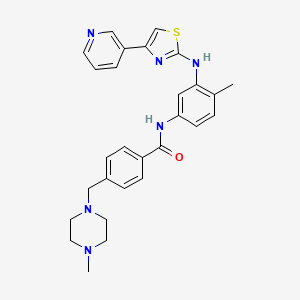
Masitinib


Masitinib

Masitinib; 790299-79-5; Masivet; AB1010; AB-1010;

CLASS:Immunomodulator
TARGET:KIT (a stem cell factor, also called c-KIT) receptor as well as select other tyrosine kinases
STATUS FOR MS:Phase III
COMMERCIAL:Under development by AB Science..Ab Science
4-((4-Methylpiperazin-1-yl)methyl)-N-(4-methyl-3-((4-(pyridin-3-yl)-1,3-thiazol-2-yl)amino)phenyl)benzamide
AB 1010
UNII-M59NC4E26P

4-((4-Methylpiperazin-1-yl)methyl)-N-(4-methyl-3-((4-(pyridin-3-yl)-1,3-thiazol-2-yl)amino)phenyl)benzamide

Regulatory and Commercial Status

STATUS FOR MS:Phase III
HIGHEST STATUS ACHIEVED (FOR ANY CONDITION):
Marketing Authorization Application for the treatment of pancreatic cancer has been filed with the European Medicines Agency (16 October 2012)
Marketing Authorization Application for the conditional approval in the treatment of pancreatic cancer has been accepted by the European Medicines Agency (30 October 2012)

Masitinib.png

Masitinib is a tyrosine-kinase inhibitor used in the treatment of mast cell tumors in animals, specifically dogs.[1][2] Since its introduction in November 2008 it has been distributed under the commercial name Masivet. It has been available in Europe since the second part of 2009. In the USA it is distributed under the name Kinavet and has been available for veterinaries since 2011.

Masitinib is being studied for several human conditions including cancers. It is used in Europe to fight orphan diseases.[3]

Mechanism of action

Masitinib inhibits the receptor tyrosine kinase c-Kit which is displayed by various types of tumour.[2] It also inhibits the platelet derived growth factor receptor (PDGFR) and fibroblast growth factor receptor (FGFR).


http://www.google.com/patents/WO2012136732A1?cl=en

In a preferred embodiment of the above-depicted treatment, the active ingredient masitinib is administered in the form of masitinib mesilate; which is the orally bioavailable mesylate salt of masitinib – CAS 1048007-93-7 (MsOH); C28H30N6OS.CH3SO3H; MW 594.76:

Figure imgf000031_0001


http://www.google.com/patents/WO2004014903A1?cl=en

Figure imgf000021_0001

003 : 4-(4-Methyl-piperazin-l-ylmethyl)-N-[3-(4-pyridin-3-yl-thiazol-2-ylamino)- phenyl] -benzamide

4-(4-Methyl-piperazin-l-yl)-N-[4-methyl-3-(4-pyridin-3-yl-thiazol-2-ylmethyl)- phenyl] -benzamide

Figure imgf000053_0001

beige brown powder mp : 128-130°C

1H RMN (DMSO-d6) δ = 2.15 (s, 3H) ; 2.18 (s, 3H) ; 2.35-2.41 (m, 4H) ; 3.18-3.3.24 (m, 4H) ; 6.94 (d, J = 8.9 Hz, 2H) ; 7.09 (d, J = 8.4 Hz, IH) ; 7.28-7.38 (m, 3H) ; 7.81 (d, J = 8.9 Hz, 2H) ; 8.20-8.25 (m, IH) ; 8.40 (dd, J = 1.6 Hz, J = 4.7 , IH) ; 8.48 (d, J = 1.9 Hz, IH) ; 9.07 (d, J = 1.5 Hz, IH) ; 9.35 (s, IH) ; 9.84 (s, IH)

……………

http://www.google.com/patents/WO2008098949A2?cl=en

EXAMPLE 4 N- [4-Methyl-3 -(4-pyridin-3 -yl-thiazol-2-ylamino)-phenyl] -benzamide derivatives

Method A In a reactor and under low nitrogen pressure, add 4-Methyl-N3-(4-pyridin-3-yl-thiazol- 2-yl)-benzene-l,3-diamine (95 g, 336.45 mmol), dichloromethane (2 L). To this suspension cooled to temperature of 5°C was added dropwise 2M/n-hexane solution of trimethylaluminium (588 mL). The reaction mixture was brought progressively to 15°C, and maintained for 2 h under stirring. 4-(4-Methyl-piperazin-l-ylmethyl)-benzoic acid methyl ester (100 g, 402.71 mmol) in dichloromethane (200 mL) was added for 10 minutes. After 1 h stirring at room temperature, the reaction mixture was heated to reflux for 20 h and cooled to room temperature. This solution was transferred dropwise via a cannula to a reactor containing 2N NaOH (2.1 L) cooled to 5°C. After stirring for 3 h at room temperature, the precipitate was filtered through Celite. The solution was extracted with dichloromethane and the organic layer was washed with water and saturated sodium chloride solution, dried over MgSO4 and concentrated under vacuum. The brown solid obtained was recrystallized from /-Pr2O to give 130.7 g (78%) of a beige powder.

Method B Preparation of the acid chloride

To a mixture of 4-(4-Methyl-piperazin-l-ylmethyl)-benzoic acid dihydrochloride (1.0 eq), dichloromethane (7 vol) and triethylamine (2.15 eq), thionyl chloride (1.2 eq) was added at 18-28°C . The reaction mixture was stirred at 28-32°C for 1 hour. Coupling of acid chloride with amino thiazole To a chilled (0-50C) suspension of 4-Methyl-N3-(4-pyridin-3-yl-thiazol-2-yl)-benzene- 1,3-diamine (0.8 eq) and thiethylamine (2.2 eq) in dichloromethane (3 vol), the acid chloride solution (prepared above) was maintaining the temperature below 5°C. The reaction mixture was warmed to 25-300C and stirred at the same temperature for 1O h. Methanol (2 vol) and water (5 vol) were added to the reaction mixture and stirred. After separating the layers, methanol (2 vol), dihloromethane (5 vol) and sodium hydroxide solution (aqueous, 10%, till pH was 9.5-10.0) were added to the aqueous layer and stirred for 10 minutes. The layers were separated. The organic layer was a washed with water and saturated sodium chloride solution. The organic layer was concentrated and ethanol (2 vol) was added and stirred. The mixture was concentrated. Ethanol was added to the residue and stirred. The product was filtered and dried at 50-550C in a vaccum tray drier. Yield = 65-75%.

Method C

To a solution of 4-methyl-N3-(4-pyridin-3-yl-thiazol-2-yl)-benzene-l,3-diamine (1.0 eq) in DMF (20 vol) were added successively triethylamine (5 eq), 2-chloro-l- methylpyridinium iodide (2 eq) and 4-(4-methyl-piperazin-l-ylmethyl)-benzoic acid (2 eq). The reaction mixture was stirred for 7 h at room temperature. Then, the mixture was diluted in diethyl ether and washed with water and saturated aqueous NaHCO3, dried over Na2SO4 and concentrated. The crude product was purified by column chromatography using an elution of 100% EtOAc to give a yellow solid.

Yield = 51%.

1H NMR (CDCl3) : δ = 9.09 (IH, s, NH); 8.52 (IH, br s); 8.27 (IH, s); 8.13 (IH, s);

8.03 (IH, s); 7.85 (2H, d, J= 8.3Hz); 7.45 (2H, m); 7.21-7.38 (4H, m); 6.89 (IH, s);

3.56 (2H, s); 2.50 (8H, br s); 2.31 (6H, br s).

MS (CI) m/z = 499 (M+H)+.

An additional aspect of the present invention relates to a particular polymorph of the methanesulfonic acid salt of N-[4-Methyl-3-(4-pyridin-3-yl-thiazol-2-ylamino)-phenyl]- benzamide of formula (IX).

Figure imgf000023_0001

(VI)

Hereinafter is described the polymorph form of (IX) which has the most advantageous properties concerning processability, storage and formulation. For example, this form remains, dry at 80% relative humidity and thermodynamically stable at temperatures below 2000C.

The polymorph of this form is characterized by an X-ray diffraction pattern illustrated in FIG.I, comprising characteristic peaks approximately 7.269, 9.120, 11.038, 13.704, 14.481, 15.483, 15.870, 16.718, 17.087, 17.473, 18.224, 19.248, 19.441, 19.940, 20.441, 21.469, 21.750, 22.111, 23.319, 23.763, 24.120, 24.681, 25.754, 26.777, 28.975, 29.609, 30.073 degrees θ, and is also characterized by differential scanning calorimetry (DSC) illustrated in FIG.II, which exhibit a single maximum value at approximately 237.49 ± 0.3 0C. X-ray diffraction pattern is measured using a Bruker AXS (D8 advance). Differential scanning calorimetry (DSC) is measured using a Perking Elmer Precisely (Diamond DSC).

This polymorph form can be obtained by treatement of 4-(4-Methyl-piperazin-l- ylmethyl)-N-[4-methyl-3-(4-pyridin-3-yl-thiazol-2-ylamino)-phenyl]-benzamide with 1.0 to 1.2 equivalent of methanesulfonic acid, at a suitable temperature, preferably between 20-800C.

The reaction is performed in a suitable solvent especially polar solvent such as methanol or ethanol, or ketone such as acetone, or ether such as diethylether or dioxane, or a mixture therof. This invention is explained in example given below which is provided by way of illustration only and therefore should not be construed to limit the scope of the invention. Preparation of the above-mentioned polymorph form of 4-(4-Methyl-piperazin-l- ylmethyl)-N- [4-methyl-3 -(4-pyridin-3 -yl-thiazol-2-ylamino)-phenyl] -benzamide methanesulfonate .

4-(4-Methyl-piperazin- 1 -ylmethyl)-N- [4-methyl-3 -(4-pyridin-3 -yl-thiazol-2-ylamino) phenyl] -benzamide (1.0 eq) was dissolved in ethanol (4.5 vol) at 65-700C. Methanesulfonic acid (1.0 eq) was added slowly at the same temperature. The mixture was cooled to 25-300C and maintained for 6 h. The product was filtered and dried in a vacuum tray drier at 55-600C. Yield = 85-90%. Starting melting point Smp = 236°C.

References

  1. Hahn, K.A.; Oglivie, G.; Rusk, T.; Devauchelle, P.; Leblanc, A.; Legendre, A.; Powers, B.; Leventhal, P.S.; Kinet, J.-P.; Palmerini, F.; Dubreuil, P.; Moussy, A.; Hermine, O. (2008). “Masitinib is Safe and Effective for the Treatment of Canine Mast Cell Tumors”. Journal of Veterinary Internal Medicine 22 (6): 1301–1309. doi:10.1111/j.1939-1676.2008.0190.x. ISSN 0891-6640.
  2.  Information about Masivet at the European pharmacy agency website
  3.  Orphan designation for Masitinib at the European pharmacy agency website
WO2004014903A1 Jul 31, 2003 Feb 19, 2004 Ab Science 2-(3-aminoaryl)amino-4-aryl-thiazoles and their use as c-kit inhibitors
WO2008098949A2 Feb 13, 2008 Aug 21, 2008 Ab Science Process for the synthesis of 2-aminothiazole compounds as kinase inhibitors
EP1525200B1 Jul 31, 2003 Oct 10, 2007 AB Science 2-(3-aminoaryl)amino-4-aryl-thiazoles and their use as c-kit inhibitors
US7423055 Aug 1, 2003 Sep 9, 2008 Ab Science 2-(3-Aminoaryl)amino-4-aryl-thiazoles for the treatment of diseases
US20080207572 * Jul 13, 2006 Aug 28, 2008 Ab Science Use of Dual C-Kit/Fgfr3 Inhibitors for Treating Multiple Myeloma
Masitinib.svg
Systematic (IUPAC) name
4-[(4-Methylpiperazin-1-yl)methyl]-N-(4-methyl-3-{[4-(pyridin-3-yl)-1,3-thiazol-2-yl]amino}phenyl)benzamide
Clinical data
Trade names Masivet, Kinavet
AHFS/Drugs.com International Drug Names
Identifiers
790299-79-5
L01XE22
PubChem CID 10074640
ChemSpider 8250179
ChEMBL CHEMBL1908391
Chemical data
Formula C28H30N6OS
498.64 g/mol
Patent Submitted Granted
2-(3-Aminoaryl)amino-4-aryl-thiazoles for the treatment of diseases [US7423055] 2004-06-10 2008-09-09
2-(3-aminoaryl)amino-4-aryl-thiazoles and their use as c-kit inhibitors [US2005239852] 2005-10-27
Use of C-Kit Inhibitors for Treating Fibrosis [US2007225293] 2007-09-27
Use of Mast Cells Inhibitors for Treating Patients Exposed to Chemical or Biological Weapons [US2007249628] 2007-10-25
Use of c-kit inhibitors for treating type II diabetes [US2007032521] 2007-02-08
Use of tyrosine kinase inhibitors for treating cerebral ischemia [US2007191267] 2007-08-16
Use of C-Kit Inhibitors for Treating Plasmodium Related Diseases [US2008004279] 2008-01-03
Tailored Treatment Suitable for Different Forms of Mastocytosis [US2008025916] 2008-01-31
2-(3-AMINOARYL) AMINO-4-ARYL-THIAZOLES AND THEIR USE AS C-KIT INHIBITORS [US2008255141] 2008-10-16
Use Of C-Kit Inhibitors For Treating Inflammatory Muscle Disorders Including Myositis And Muscular Dystrophy [US2008146585] 2008-06-19
Patent Submitted Granted
Aminothiazole compounds as kinase inhibitors and methods of using the same [US8940894] 2013-05-10 2015-01-27
Aminothiazole compounds as kinase inhibitors and methods of using the same [US8492545] 2012-03-08 2013-07-23
Patent Submitted Granted
Use of Dual C-Kit/Fgfr3 Inhibitors for Treating Multiple Myeloma [US2008207572] 2008-08-28
PROCESS FOR THE SYNTHESIS OF 2-AMINOTHIAZOLE COMPOUNDS AS KINASE INHIBITORS [US8153792] 2010-05-13 2012-04-10
COMBINATION TREATMENT OF SOLID CANCERS WITH ANTIMETABOLITES AND TYROSINE KINASE INHIBITORS [US8227470] 2010-04-15 2012-07-24
Anti-IGF antibodies [US8580254] 2008-06-19 2013-11-12
COMBINATIONS FOR THE TREATMENT OF B-CELL PROLIFERATIVE DISORDERS [US2009047243] 2008-07-17 2009-02-19
TREATMENTS OF B-CELL PROLIFERATIVE DISORDERS [US2009053168] 2008-07-17 2009-02-26
Anti-IGF antibodies [US8318159] 2009-12-11 2012-11-27
SURFACE TOPOGRAPHIES FOR NON-TOXIC BIOADHESION CONTROL [US2010226943] 2009-08-31 2010-09-09
EGFR/NEDD9/TGF-BETA INTERACTOME AND METHODS OF USE THEREOF FOR THE IDENTIFICATION OF AGENTS HAVING EFFICACY IN THE TREATMENT OF HYPERPROLIFERATIVE DISORDERS [US2010239656] 2010-05-10 2010-09-23
ANTI CD37 ANTIBODIES [US2010189722] 2008-08-08 2010-07-29
United States National Library of Medicine

Note: Compound name must be entered under “Substance Identification” and then “Names and Synonyms” selected to view synonyms.

Kocic I, Kowianski P, Rusiecka I, Lietzau G, Mansfield C, Moussy A, Hermine O, Dubreuil P
Naunyn Schmiedebergs Arch Pharmacol. 2014 Oct 26. Epub 2014 Oct 26. PMID: 25344204.Abstract
 AB SCIENCE HEADQUARTER
3, Avenue George V
75008 PARIS – FRANCE
Tel. : +33 (0)1 47 20 00 14
Fax. : +33 (0)1 47 20 24 11

P.S. : The views expressed are my personal and in no-way suggest the views of the professional body or the company that I represent.

P.S. : The views expressed are my personal and in no-way suggest the views of the professional body or the company that I represent.

P.S. : The views expressed are my personal and in no-way suggest the views of the professional body or the company that I represent.

K 912, NC 6300, Epirubicin nano


Epirubicin.png

PHASE 1 JAPAN SOLID TUMOURS

DNA/RNA Synthesis Inhibitor

WITH Nano Carrier Co.,Ltdhttp://pdf.irpocket.com/C4571/qnwX/eFou/vG1J.pdf

KOWA COMPANY LTD

CAS FREE FORM. 56420-45-2

Smiles

NC-6300, an epirubicin-incorporating micelle, extends the antitumor effect and reduces the cardiotoxicity of epirubicin.

Epirubicin is widely used to treat various human tumors. However, it is difficult to achieve a sufficient antitumor effect because of dosage limitation to prevent cardiotoxicity. We hypothesized that epirubicin-incorporating micelle would reduce cardiotoxicity and improve the antitumor effect. NC-6300 comprises epirubicin covalently bound to PEG polyaspartate block copolymer through an acid-labile hydrazone bond. The conjugate forms a micellar structure of 40-80 nm in diameter in an aqueous milieu. NC-6300 (10, 15 mg/kg) and epirubicin (10 mg/kg) were given i.v. three times to mice bearing s.c. or liver xenograft of human hepatocellular carcinoma Hep3B cells. Cardiotoxicity was evaluated by echocardiography in C57BL/6 mice that were given NC-6300 (10 mg/kg) or epirubicin (10 mg/kg) in nine doses over 12 weeks. NC-6300 showed a significantly potent antitumor effect against Hep3B s.c. tumors compared with epirubicin. Moreover, NC-6300 also produced a significantly longer survival rate than epirubicin against the liver orthotopic tumor of Hep3B. With respect to cardiotoxicity, epirubicin-treated mice showed significant deteriorations in fractional shortening and ejection fraction. In contrast, cardiac functions of NC-6300 treated mice were no less well maintained than in control mice. This study warrants a clinical evaluation of NC-6300 in patients with hepatocellular carcinoma or other cancers.

K-912(NC-6300)の概要 K-912(NC-6300)は、世界的に幅広く使用されているアントラサイクリン系の抗が ん剤の一つであるエピルビシンを内包したミセル化ナノ粒子製剤で、その特性により、 エピルビシンの有する心毒性の軽減が期待できます。さらに、pH 応答性システムを採 用することで、腫瘍細胞内でのエピルビシンの放出量を高め、既存のエピルビシンに比 べより強力な抗腫瘍効果が期待できます。

Epirubicin is an anthracycline drug used for chemotherapy. It can be used in combination with other medications to treat breast cancer in patients who have had surgery to remove the tumor. It is marketed by Pfizer under the trade name Ellence in the US andPharmorubicin or Epirubicin Ebewe elsewhere.

Similarly to other anthracyclines, epirubicin acts by intercalating DNA strands. Intercalation results in complex formation which inhibits DNA and RNA synthesis. It also triggers DNA cleavage by topoisomerase II, resulting in mechanisms that lead to cell death. Binding to cell membranes and plasma proteins may be involved in the compound’s cytotoxic effects. Epirubicin also generates free radicalsthat cause cell and DNA damage.

Epirubicin is favoured over doxorubicin, the most popular anthracycline, in some chemotherapy regimens as it appears to cause fewer side-effects. Epirubicin has a different spatial orientation of the hydroxyl group at the 4′ carbon of the sugar – it has the opposite chirality – which may account for its faster elimination and reduced toxicity. Epirubicin is primarily used against breast and ovarian cancer, gastric cancer, lung cancer and lymphomas.

Development history

The first trial of epirubicin in humans was published in 1980.[1] Upjohn applied for approval by the U.S. Food and Drug Administration(FDA) in node-positive breast cancer in 1984, but was turned down because of lack of data.[2] It appears to have been licensed for use in Europe from around this time however.[3] In 1999 Pharmacia (who had by then merged with Upjohn) received FDA approval for the use of epirubicin as a component of adjuvant therapy in node-positive patients.

Patent protection for epirubicin expired in August 2007.

References

  1.  Bonfante, V; Bonadonna, G; Villani, F; Martini, A (1980). “Preliminary clinical experience with 4-epidoxorubicin in advanced human neoplasia”. Recent results in cancer research 74: 192–9. PMID 6934564. PM6934564.
  2.  “On Target”.
  3.  According to the proprietary database iddb.com

External links

1H NMR PREDICT

Epirubicin NMR spectra analysis, Chemical CAS NO. 56420-45-2 NMR spectral analysis, Epirubicin H-NMR spectrum


13C NMR PREDICT

Epirubicin NMR spectra analysis, Chemical CAS NO. 56420-45-2 NMR spectral analysis, Epirubicin C-NMR spectrum


COSY


COSY NMR prediction EPI


1H NMR


1H  NMR prediction EPI


1H  NMR prediction EPI 2


Epirubicin
Epirubicin.png
Epirubicin ball-and-stick.png
Systematic (IUPAC) name
(8R,10S)-10-((2S,4S,5R,6S)-4-amino-5-hydroxy-6-methyltetrahydro-2H-pyran-2-yl)-6,8,11-trihydroxy-8-(2-hydroxyacetyl)-1-methoxy-7,8,9,10-tetrahydrotetracene-5,12-dione
Clinical data
Trade names Ellence
AHFS/Drugs.com monograph
MedlinePlus a603003
  • ℞-only (U.S.), POM (UK)
Intravenous
Pharmacokinetic data
Bioavailability NA
Protein binding 77%
Metabolism Hepatic glucuronidationand oxidation
Excretion Biliary and renal
Identifiers
56420-45-2 Yes
L01DB03
PubChem CID 41867
DrugBank DB00445 Yes
ChemSpider 38201 Yes
UNII 3Z8479ZZ5X Yes
KEGG D07901 Yes
ChEBI CHEBI:47898 Yes
ChEMBL CHEMBL417 Yes
Chemical data
Formula C27H29NO11
543.519 g/mol


KOWA COMPANY LTD

Nano Carrier Co

P.S. : The views expressed are my personal and in no-way suggest the views of the professional body or the company that I represent.

P.S. : The views expressed are my personal and in no-way suggest the views of the professional body or the company that I represent.

P.S. : The views expressed are my personal and in no-way suggest the views of the professional body or the company that I represent.

S-flurbiprofen (TT-063)


(S)-flurbiprofen.png

cas 51543-39-6, 244.26,

C15 H13 F O2
[1,​1′-​Biphenyl]​-​4-​acetic acid, 2-​fluoro-​α-​methyl-​, (αS)​-
  • [1,1′-Biphenyl]-4-acetic acid, 2-fluoro-α-methyl-, (S)-
  • (+)-(S)-Flurbiprofen
  • (+)-Flurbiprofen
  • (2S)-2-(2-Fluoro-1,1′-biphenyl-4-yl)propanoic acid
  • (2S)-2-(2-Fluoro-4-biphenyl)propanoic acid
  • (S)-Flurbiprofen
  • Dexflurbiprofen
  • Esflurbiprofen
  • S-(+)-Flurbiprofen
  • d-Flurbiprofen


On October 20, 2014, Taisho filed for manufacturing and marketing approval for TT-063 from the Ministry of Health, Labour and Welfare as a new drug candidate that will follow the Type 2 diabetes treatment Lusefi®, which was launched in May 2014. TT-063 is a patch formulation that has been co-developed by Taisho and TOKUHON Corporation with the aim of obtaining an indication for osteoarthritis. In Phase 3 clinical trials comparing TT-063 with therapeutic drugs already on the market, TT-063 has been found to be more effective than the control drugs in patients with osteoarthritis of the knee joint (January 16, 2014 announcement ).

Furthermore, Taisho is also preparing to file for approval from the Ministry of Health, Labour and Welfare for CT-064, an oral formulation of the osteoporosis treatment agent Bonviva launched in August 2013. Taisho has confirmed the effectiveness of CT-064 for osteoporosis patients through Phase 3 clinical trials (September 22, 2014 announcement).
In the central nervous system field, TS-091 transitioned from Phase 1 to Phase 2 in Japan in May 2014. Clinical trials of TS-091 have commenced to confirm the effectiveness of this drug in patients with central disorders of hypersomnolence. In addition, Phase 1 clinical trials of TS-091 have commenced overseas. TS-111 and TS-121 are undergoing Phase 1 clinical trials overseas with the aim of obtaining an indication for depression.
Faced with intensifying competition in new drug discovery, we will jointly implement R&D activities with research institutions outside the Taisho Group, and with companies in Japan and overseas, as we work to enhance our drug development pipeline (lineup of drugs in development). Our goal is to discover many more new drugs, primarily in our priority fields.

Company Taisho Pharmaceutical Holdings Co. Ltd.
Description Topical anti-inflammatory analgesic patch containing S-flurbiprofen
Molecular Target
Mechanism of Action
Therapeutic Modality Small molecule
Latest Stage of Development Phase III
Standard Indication Osteoarthritis
Indication Details Treat osteoarthritis (OA) and scapulohumeral periarthritis
Regulatory Designation
Partner


Full-size image (93 K)

Scheme 2.

Reagents and conditions: (a) THF, EDC, Et3N; (b) TFA; (c) 0.5 equiv 2,5-dimethoxybenzoquinone, EtOH, 50–80 °C for 3–5 h; (d) 1 equiv naphthoquinone, MeOH, rt, overnight.

http://www.sciencedirect.com/science/article/pii/S0960894X13011773

……………………………………………

 http://www.google.com/patents/CN104478703A?cl=en

Preparation of R – (+) _ flurbiprofen:

[0027] The racemic flurbiprofen as a starting material, to obtain an intermediate product of formula I as shown and then the ester prepared as shown in Formula II with 5-isosorbide monobenzyl ether, ester hydrolysis after obtained R – (+) – flurbiprofen;

[0028]

Figure CN104478703AD00061

[0029] wherein, in formula I, X is Cl or Br;

[0030] (2) by the R – (+) _ flurbiprofen obtained (RS) – flurbiprofen:

[0031] The R _ (+) _ flurbiprofen 200mg, potassium hydroxide 150mg, 0. 5mL water into IOmL reaction flask and heated to 120 ° C and held for 2h, then water was added 15mL, cooled to room temperature, the resulting stirring the mixed solution with 10% hydrochloric acid to pH = 0. 5, extracted with ethyl acetate, combined several layers, washed with water until neutral, the organic solvent is recovered, the resulting residue was added at 60~90 ° C under an appropriate amount of petroleum ether by recrystallization, obtained (RS) – flurbiprofen 100mg, 50% yield.

[0032] (3) Preparation of (S) -⑴- flurbiprofen:

[0033] In 25mL single-necked flask, followed by adding (RS) – flurbiprofen 123mg, Portugal TOA 29. 8mg, isopropanol lmL, the mixture was stirred at reflux until clear, half the amount of the solvent evaporated under reduced pressure except , set the refrigerator overnight. The precipitate was collected by suction filtration as white crystals, after washing a small amount of isopropanol, which was dissolved in water, washed with 10% aqueous sodium hydroxide (10% NaOH mean mass fraction) adjusted pH = 13, the sheet-like precipitate was filtered off Portuguese octylamine white crystals. The resulting filtrate was added dropwise with stirring 10% hydrochloric acid to pH = 1, extracted with ethyl acetate, the organic layer was washed with water to recover the solvent, the resulting residue was purified by an appropriate amount of petroleum ether and recrystallized at 60~90 ° C. The product was collected by filtration, and dried in vacuo to give a white (S) – (+) _ flurbiprofen needle crystal 45. 3mg, 65% yield, mp 102~103 ° C, [α] = + 44 ° (C = 1, methanol), ee value of 92.6% (ee value measurement method: (S) – (+) – flurbiprofen after chiral amine derivatization reagents, by HPLC analysis).

[0034] wherein in step (3) is a byproduct eleven R _ (+) _ flurbiprofen, its follow step (1) of racemic reused.

[0035] Step (1) of the specific operation is as follows:

[0036] (la) 1:. Synthesis of 2,6-sorbitol dehydration -D- -5- benzyl ether: 4: 3

[0037] 250ml volumetric flask isosorbide 18. 25g (125mmol), lithium hydroxide monohydrate 5. 25g (125mmol) and 60ml of dimethyl sulfoxide (DMSO), heated to 90 ° C, stirred for 30min, constant pressure equalizing dropping funnel was added dropwise benzyl chloride 14. 4ml (125mmol), 90 ° C the reaction 19-20h, reaction mixture was adjusted to pH 1 with 2M hydrochloric acid, extracted with ethyl acetate (50ml * 3), the organic layers combined, washed with water ( 30ml * 2), dried over anhydrous sodium sulfate overnight, filtered and concentrated residue Cheng baby gel column chromatography (petroleum ether: ethyl acetate = 5: 1) to give a cream solid, that is 1: 4: 3: 2,6 Dehydration -D- sorbitol -5- benzyl ether 24. 5g, m.p. 59 ~61 ° C.

[0038] (Ib) · 2- (2- fluoro-4-biphenylyl) propionyl chloride Synthesis

[0039] 50ml vial before racemic flurbiprofen was added 2. 44g (IOmmol), anhydrous toluene 20ml, freshly distilled thionyl chloride was added dropwise 0. 8ml (Ilmmol), N, N- dimethylformamide amide (DMF) 2 dropwise, stirred at room temperature 2h, the solvent was distilled off under reduced pressure to give a pale yellow gum, i.e., 2- (2-fluoro-4-biphenylyl) propionyl chloride, it was used directly in the reaction without isolation.

[0040] (lc). R-2- (2- fluoro-4-biphenylyl) propionic acid 5- isosorbide monobenzyl ether ester synthesis

[0041] The (Ib) resulting acid chloride was dissolved in 20ml of dry toluene was added dropwise at room temperature, dimethyl amine 3. 5ml, solid precipitation, stirred for about Ih, ice salt bath, a bath temperature of minus 10-15Ό, stirred at this temperature IOmin so, and then the constant pressure dropping funnel (Ia) 5 isosorbide monobenzyl ether (2. 83g, 12mmol) in toluene, keeping the reaction temperature, stirring 8h. The ice bath was removed and the reaction mixture under reduced pressure to remove the solvent, the residue was extracted with ethyl acetate. The extract was washed with water, dried over anhydrous sodium sulfate overnight, ethyl acetate was removed under reduced pressure, the residue was a white gel, recrystallized from petroleum ether to give a white solid that R-2- (2- fluoro-4-biphenylyl) propionic acid 5- isosorbide monobenzyl ether ester 3. 65g (7. 88mmol), in order to put the racemic flurbiprofen yield based on 78.8%.

[0042] (ld) R – Synthesis of flurbiprofen – (+)

[0043] Under ice bath (Ic) obtained R-2- (2- fluoro-4-biphenylyl) propionic acid monobenzyl ether isosorbide 5- ester 2. 3Ig (5mmol) was dissolved in 20ml of acetone / water (1/1) was added Iml hydrochloric acid to adjust pH to 3, stirred for 3-4h, the reaction solution was extracted with ethyl acetate (20ml * 2), sash organic layer was washed with ice (10ml * 2), dried over anhydrous sodium sulfate overnight , filtration, and the filtrate was concentrated, the residue was recrystallized from ether to give white crystals, i.e. L-flurbiprofen 1.02g (4 18mmol.), yield 83.5%, optical purity 93% (HPLC method); input-racemic flurbiprofen dollars, the total yield of 78.8% * 83.5% = 65.8%.

[0044] Step (1) reaction of the formula:

[0045]

Figure CN104478703AD00071


P.S. : The views expressed are my personal and in no-way suggest the views of the professional body or the company that I represent.

P.S. : The views expressed are my personal and in no-way suggest the views of the professional body or the company that I represent.

P.S. : The views expressed are my personal and in no-way suggest the views of the professional body or the company that I represent.

Roseroot herb shows promise as potential depression treatment option


Lyranara.me's avatarLyra Nara Blog

Rhodiola rosea (R. rosea), or roseroot, may be a beneficial treatment option for major depressive disorder (MDD), according to results of a study in the journal Phytomedicine led by Jun J. Mao, MD, MSCE, associate professor of Family Medicine, Community Health and Epidemiology and colleagues at the Perelman School of Medicine of University of Pennsylvania.

The proof of concept trial study is the first randomized, double-blind, placebo-controlled, comparison trial of oralR. rosea extract versus the conventional antidepressant therapy sertraline for mild to moderate major depressive disorder.

Depression is one of the most common and debilitating psychiatric conditions, afflicting more than 19 million Americans each year, 70 percent of whom do not fully respond to initial therapy. Costs of conventional antidepressants and their sometimes substantial side effects often result in a patient discontinuing use prematurely. Others opt to try natural products or supplements instead.

All of the study’s…

View original post 293 more words

Pleasures of Process Development


milkshake's avatarOrg Prep Daily

BreakingBad

A reflux in 12 molar HCl
Carefully watched for a frothing,
Painstakingly drained from the reactor,
To strip down and scrub off that gross thing.

My bosses, I tried please believe me,
I’m doing my best as you insist,
I’m ashamed of the material I burned through,
I’m ashamed of the deadlines I missed.

But if you could just see the beauty,
These things I could never describe,
These pleasures of process perfection,
This is my one lucky prize.

refrain: Product isolation…

My apologies to Joy Division

View original post

GSK 2126458, Omipalisib, PI3K/mTOR inhibitor


GSK 2126458

CAS 1086062-66-9

OMipalisib;GSK2126458;GSK-2126458;GSK2126458 (GSK458);GSK212;

2,4-Difluoro-N-[2-methoxy-5-[4-(4-pyridazinyl)-6-quinolinyl]-3-pyridinyl]benzenesulfonamide;

2,4-Difluoro-N-[2-Methoxy-5-[4-(pyridazin-4-yl)quinolin-6-yl]pyridin-3-yl]benzenesulfonaMide

2,4-Difluoro-N-[2-methoxy-5-[4-(4-pyridazinyl)quinolin-6-yl]pyridin-3-yl]benzenesulfonamide

phosphoinositide 3 kinase inhibitor

idiopathic pulmonary fibrosis

PHASE 1

MW 505.49598

MF C25H17F2N5O3S

GSK…….http://www.gsk.com/media/280387/product-pipeline-2014.pdf

Omipalisib (GSK2126458): Omipalisib, also known as GSK2126458, is a small-molecule pyridylsulfonamide inhibitor of phosphatidylinositol 3-kinase (PI3K) with potential antineoplastic activity. PI3K inhibitor GSK2126458 binds to and inhibits PI3K in the PI3K/mTOR signaling pathway, which may trigger the translocation of cytosolic Bax to the mitochondrial outer membrane, increasing mitochondrial membrane permeability and inducing apoptotic cell death. Bax is a member of the proapoptotic Bcl2 family of proteins. PI3K, often overexpressed in cancer cells, plays a crucial role in tumor cell regulation and survival.

GlaxoSmithKline (GSK) is developing omipalisib (GSK-2126458), a phosphoinositide 3-kinase/mammalian target of rapamycin (PI3K/mTOR) inhibitor as well as mTOR complex 1 and 2 inhibitor, for the potential oral treatment of cancer and idiopathic pulmonary fibrosis

MEDKOO

Certificate of Analysis:

View current batch of CoA

QC data:

View NMR, View HPLC, View MS

GSK2126458 is a highly potent PI3K and mTOR inhibitor. In vivo, GSK2126458 showed anti-tumor activity in both pharmacodynamic and tumor growth efficacy models. GSK2126458 reduced the phosphorylated AKT, p70S6K contents in a dose and time dependent way. The IC50 of GSK2126458 is 2 nM for pAKT in the HCC1954 breast carcinoma cell line. In various human tumor cells, GSK2126458 had a width of inhibitory activity for potent cell growth and induced cell death. Notably, GSK2126458 acted mainly by not induction of apoptosis but cell cycle arrest, particularly in G1-phase

GlaxoSmithKline (GSK) is developing omipalisib (GSK-2126458), a phosphoinositide 3-kinase/mammalian target of rapamycin (PI3K/mTOR) inhibitor as well as mTOR complex 1 and 2 inhibitor, for the potential oral treatment of cancer and idiopathic pulmonary fibrosis

GSK-2126458 is a phosphatidylinositol 3-Kinase (PI3K) inhibitor in early clinical development for the oral treatment of solid tumors and for the oral treatment of lymphoma. Early clinical studies are ongoing for the treatment of idiopathic pulmonary fibrosis. The compound is being developed b GlaxoSmithKline.

In August 2009, a phase I trial began for solid tumors and lymphoma . In April 2012, phase Ib co-clinical trials in advanced prostate cancer (PC) were underway . In March 2013, a phase I trial was initiated in the UK in patients with idiopathic pulmonary fibrosis

In April 2014, a phase I, open-label, multicenter, dose-escalation study (study number P3K113794) and safety data were presented at the 105th AACR meeting in San Diego, CA. Advanced solid tumor patients (n = 69) received oral continuous GSK-2126458 or intermittent GSK-2126458 bid  + trametinib. For GSK-2126458 and trametinib, the MTD in QD cohort was 2 and 1 mg, respectively, and also 1 and 1.5 mg, respectively

PAPER 

Discovery of GSK2126458, a highly potent inhibitor of PI3K and the mammalian target of rampamycin
ACS Med Chem Lett 2010, 1(1): 39


Abstract Image

Phosphoinositide 3-kinase α (PI3Kα) is a critical regulator of cell growth and transformation, and its signaling pathway is the most commonly mutated pathway in human cancers. The mammalian target of rapamycin (mTOR), a class IV PI3K protein kinase, is also a central regulator of cell growth, and mTOR inhibitors are believed to augment the antiproliferative efficacy of PI3K/AKT pathway inhibition. 2,4-Difluoro-N-{2-(methyloxy)-5-[4-(4-pyridazinyl)-6-quinolinyl]-3-pyridinyl}benzenesulfonamide (GSK2126458, 1) has been identified as a highly potent, orally bioavailable inhibitor of PI3Kα and mTOR with in vivo activity in both pharmacodynamic and tumor growth efficacy models. Compound 1 is currently being evaluated in human clinical trials for the treatment of cancer.

 ……………….. 

synthesis

omalipisib


Figure imgf000151_0002

Figure imgf000145_0002

………………..

PATENT

WO 2008144463

http://www.google.co.in/patents/WO2008144463A1?cl=en

Example 345

2,4-difluoro-N-{2-(methyloxy)-5-[4-(4-pyridazinyl)-6-quinolinyl]-3- pyridinyl } benzenesulf onamide

a) 6-bromo-4-(4-pyridazinyl)quinoline

Dissolved 6-bromo-4-iodoquinoline (17.43 g, 52.2 mmol), 4- (tributylstannanyl)pyridazine (19.27 g, 52.2 mmol), and PdC12(dppf)-CH2C12 (2.132 g, 2.61 mmol) in 1,4-dioxane (200 mL) and heated to 105 °C. After 3 h, added more palladium catalyst and heated for 6 h. Concentrated and dissolved in methylene chloride/methanol. Purified by column chromatography (combiflash) with 2% MeOH/EtOAc to 5% MeOH/EtOAc to give the crude title compound. Trituration with EtOAc furnished 6-bromo-4-(4-pyridazinyl)quinoline (5.8 g, 20.27 mmol, 38.8 % yield). MS(ES)+ m/e 285.9, 287.9 [M+H]+.

b) 2,4-difluoro-N-{2-(methyloxy)-5-[4-(4-pyridazinyl)-6-quinolinyl]-3- pyridinyl } benzenesulf onamide A slurry of 6-bromo-4-(4-pyridazinyl)quinoline (4.8 g, 16.78 mmol), bis(pinacolato)diboron (4.69 g, 18.45 mmol) , PdC12(dppf)-CH2C12 (530 mg, 0.649 mmol) and potassium acetate (3.29 g, 33.6 mmol) in anhydrous 1,4-dioxane (120 ml) was heated at 100 °C for 3 h. The complete disappearance of the starting bromide was observed by LCMS. The reaction was then treated with N-[5-bromo-2- (methyloxy)-3-pyridinyl]-2,4-difluorobenzenesulfonamide (6.68 g, 17.61 mmol) and another portion of PdC12(dppf)-CH2C12 (550 mg, 0.673 mmol), then heated at 110 °C for 16 h. The reaction was allowed to cool to room temperature, filtered, and concentrated. Purification of the residue by chromatography (Analogix; 5% MeOH / 5% CH2C12 / 90% EtOAC) gave 6.5 g (76%) desired product. MS(ES)+ m/e 505.9 [M+H]+.


INTERMEDIATES:

Intermediate 1  Similar but not same

Scheme A:

Conditions: a) Tributyl(vinyl)tin, Pd(PPh3)4, dioxane, reflux; b) OsO4, NaIO4, 2,6- lutidine, r-BuOH, dioxane, H2O, rt; c) (4-pyridyl)boronic acid, Pd(PPh3)4, 2 M K2CO35 DMF, 100 DC.

4-(4-pyridinyl)-6-quinolinecarbaldehydeSimilar but not same

a) 4-chloro-6-ethenylquinoline

A mixture of 6-bromo-4-chloroquinoline (6.52 g, 26.88 mmol; see J. Med. Chem., H 268 (1978) ), tributyl(vinyl)tin (8.95 g, 28.22 mmol), and tetrakistriphenylphospbine palladium (0) (0.62 g, 0.54 mmol) in 1,4-dioxane (150 mL) was refluxed for 2.0 h, cooled to room temperature, and concentrated in vacuo. The residue was purified by flash chromatography on silica gel (0-4% MeOH:CH2Cl2) to give the title compound (5.1 g) as a pale yellow solid. MS (ES)+ m/e 190 [M+H]+. This material was used directly in the next step.

b) 4-chloro-6-quinolinecarbaldehyde

A mixture of 4-chloro-6-ethenylquinoline (5.1 g, 26.88 mmol), 2,6-lutidine

(5.76 g, 53.75 mmol), sodium (meta) periodate (22.99 g, 107.51 mmol), and osmium tetroxide (5.48 g of a 2.5% solution in tert-butanol, 0.538 mmol) in l,4-dioxane:H2θ (350 mL of 3: 1 mixture) was stirred for 3.5 h at room temperature and concentrated in vacuo. The residue was purified by flash chromatography on silica gel (CH2Cb) to give the title compound (4.26 g, 83% for 2 steps) as a pale yellow solid. MS (ES)+ m/e 192 [M+H]+.

c) 4-(4-pyridmyl)-6-qumolinecarbaldehyde

A mixture of 4-chloro-6-quinolinecarbaldehyde (3.24 g, 16.92 mmol), A- pyridylboronic acid (3.12 g, 25.38 mmol), tetrakistriphenylphosphine palladium (0) (0.978 g, 0.846 mmol), and 2M aqueous K2CO3 (7.02 g, 50.76 mmol, 25.4 mis of 2M solution) in DMF (100 mL) was heated at 100 °C for 3.0 h and cooled to room temperature. The mixture was filtered through Celite and the Celite was washed with EtOAc. The filtrate was transferred to a separatory funnel, washed with water and saturated NaCl, dried (Na2SO4), filtered and concentrated in vacuo. The residue was purified by flash chromatography on silica gel (5% MeOH:CH2Cl2) to give the title compound (2.03 g, 51%) as a tan solid. MS (ES)+ m/e 235 [M+H]+.

Intermediate 2

Preparation of 2-amino-5 -bromo-N,N-dimethyl-3 -pyridinesulfonamideSimilar but not same

a) 2-ammo-5-bromo-3-pyridinesulfonyl chloride

To a cooled (0 °C) solution of chlorosulfonic acid (58 mL) under vigorous stirring was added 5-bromo-2-pyridinamine (86.7 mmol) portionwise. The reaction mixture was then heated at reflux for 3 hrs. Upon cooling to room temperature, the reaction mixture was poured over ice (-100 g) with vigorous stirring. The resulting yellow precipitate was collected by suction filtration, washing with cold water and petroleum ether to provide the title compound as an orange-yellow solid (18.1 g, 77% yield). MS(ES)+ m/e 272.8 [M+H]+.

* Other sulfonyl chlorides can be prepared using this procedure by varying the choice of substituted aryl or heteroaryl.

b) 2-amino-5-bromo-N,N-dimethyl-3-pyridinesulfonamide

To a cold (0 DC) suspension of 2-amino-5-bromo-3-pyridinesulfonyl chloride (92.1 mmol) in dry 1,4-dioxane (92 mL) was added pyridine (101.3 mmol) followed by a 2M solution of dimethylamine in THF (101.3 mmol). The reaction was allowed to warm to rt for 2 h, heated to 50 DC for 1 h, then cooled to rt. After standing for 2 h, the precipitate was collected by filtration and rinsed with a minimal amount of cold water. Drying the precipitate to constant weight under high vacuum provided 14.1 g (55%) of the title compound as a white solid. MS(ES)+ m/e 279.8, 282.0 [M+H]+.


Intermediate 3

Preparation of 2-amino-N,N-dimethyl-5-(4,4,5,5-tetramethyl-l,3.2-dioxaborolan-2- yl)-3 -pyridinesulfonamideSimilar but not same

c) To a solution of 2-amino-5-bromo-N,N-dimethyl-3 -pyridinesulfonamide (7.14 mmol) in 1,4-dioxane (35 mL) was added 4,4,4′,4′,5,5,5′,5′-octamethyl-2,2′-bi-l,3,2- dioxaborolane (7.86 mmol), potassium acetate (28.56 mmol) and [1,1 ‘- bis(diphenylphosphmo)-ferrocene] dichloropalladium(II) dichloromethane complex (1 :1) (0.571 mmol). The reaction mixture was stirred at 100 °C for 18 h. The reaction was concentrated in vacuo, re-dissolved in ethyl acetate (50 mL) and purified on silica using 60% ethyl acetate/hexanes to yield the title compound as a tan solid (86 %). IH ΝMR (400 MHz, DMSOd6) δ ppm 8.41 (d, 1 H, J =1.52), 7.92 (d, 1 H, J = 1.77), 2.68 (s, 6 H), 1.28 (s, 12 H).

* Other boronate or boronic acids can be prepared using this procedure by varying the choice of aryl or heteroaryl bromide. Scheme 17:

Conditions: a) NaO(Rl), (Rl)OH, O 0C to room temperature; b) SnCl2-2H2O, ethyl acetate, reflux; c) (R2)SO2C1, pyridine, O 0C to room temperature.

Intermediate 4

Preparation of N-r5-bromo-2-(methyloxy)-3-pyridinyll-2,4- difluorobenzenesulfonamide

Figure imgf000151_0002N-[5-bromo-2-(methyloxy)-3-pyridinyl]-2,4- difluorobenzenesulfonamide

a) 5-bromo-2-(methyloxy)-3-nitropyridine

To a cooled (0 °C) solution of 5-bromo-2-chloro-3-nitropyridine (50 g, 211 mmol) in methanol (200 mL) was added dropwise over 10 minutes 20% sodium methoxide (50 mL, 211 mmol) solution. The reaction, which quickly became heterogeneous, was allowed to warm to ambient temperature and stirred for 16 h. The reaction was filtered and the precipitate diluted with water (200 mL) and stirred for 1 h. The solids were filtered, washed with water (3 x 100 mL) and dried in a vac oven (40 °C) to give 5-bromo-2-(methyloxy)-3-nitropyridine (36 g, 154 mmol, 73.4 % yield) as a pale yellow powder. The original filtrate was concentrated in vacuo and diluted with water (150 mL). Saturated ammonium chloride (25 mL) was added and the mixture stirred for 1 h. The solids were filtered, washed with water, and dried in a vac oven (40 °C) to give a second crop of 5-bromo-2-(methyloxy)-3- nitropyridine (9 g, 38.6 mmol, 18.34 % yield). Total yield = 90%. MS(ES)+ m/e 232.8, 234.7 [M+H]+.

b) 5-bromo-2-(methyloxy)-3-pyridinamine

To a solution of 5-bromo-2-(methyloxy)-3-nitropyridine (45 g, 193 mmol) in ethyl acetate (1 L) was added tin(II) chloride dihydrate (174 g, 772 mmol). The reaction mixture was heated at reflux for 4 h. LC/MS indicated some starting material remained, so added 20 mol% tin (II) chloride dihydrate and continued to heat at reflux. After 2 h, the reaction was allowed to cool to ambient temperature and concentrated in vacuo. The residue was treated with 2 N sodium hydroxide and the mixture stirred for 1 h. The mixture was then with methylene chloride (1 L), filtered through Celite, and washed with methylene chloride (500 mL). The layers were separated and the organics dried over magnesium sulfate and concentrated to give 5-bromo-2-(methyloxy)-3-pyridinamine (23 g, 113 mmol, 58.7 % yield). The product was used crude in subsequent reactions. MS(ES)+ m/e 201.9, 203.9 [M+H]+.

c) N-[5-bromo-2-(methyloxy)-3-pyridinyl]-2,4-difluorobenzenesulfonamide

Figure imgf000151_0002

To a cooled (0 °C) solution of 5-bromo-2-(methyloxy)-3-pyridinamine (20.3 g, 100 mmol) in pyridine (200 mL) was added slowly 2,4-difluorobenzenesulfonyl chloride (21.3 g, 100 mmol) over 15 min (reaction became heterogeneous). The ice bath was removed and the reaction was stirred at ambient temperature for 16 h, at which time the reaction was diluted with water (500 mL) and the solids filtered off and washed with copious amounts of water. The precipitate was dried in a vacuum oven at 50 °C to give N-[5-bromo-2-(methyloxy)-3-pyridinyl]-2,4- difluorobenzenesulfonamide (12 g, 31.6 mmol, 31.7 % yield) MS(ES)+ m/e 379.0, 380.9 [M+H]+.


References

1. Knight et al., ACS Med. Chem. Lett. 2010, 1, 39-43.
2. Hardwick et al., Mol. Cancer Ther. 2009, 8(12), Supplement I, Abstract C63.
3. Greger et al., Combinations of BRAF, MEK, and PI3K/mTOR inhibitors overcome acquired resistance to the BRAF inhibitor GSK2118436 dabrafenib, mediated by NRAS or MEK mutations. Mol. Cancer Ther. 2012, 11(4), 909-920.

1: Zhang Y, Xue D, Wang X, Lu M, Gao B, Qiao X. Screening of kinase inhibitors targeting BRAF for regulating autophagy based on kinase pathways. Mol Med Rep. 2014 Jan;9(1):83-90. doi: 10.3892/mmr.2013.1781. Epub 2013 Nov 7. PubMed PMID: 24213221.

2: Villanueva J, Infante JR, Krepler C, Reyes-Uribe P, Samanta M, Chen HY, Li B, Swoboda RK, Wilson M, Vultur A, Fukunaba-Kalabis M, Wubbenhorst B, Chen TY, Liu Q, Sproesser K, DeMarini DJ, Gilmer TM, Martin AM, Marmorstein R, Schultz DC, Speicher DW, Karakousis GC, Xu W, Amaravadi RK, Xu X, Schuchter LM, Herlyn M, Nathanson KL. Concurrent MEK2 mutation and BRAF amplification confer resistance to BRAF and MEK inhibitors in melanoma. Cell Rep. 2013 Sep 26;4(6):1090-9. doi: 10.1016/j.celrep.2013.08.023. Epub 2013 Sep 19. PubMed PMID: 24055054; PubMed Central PMCID: PMC3956616.

3: Kim HG, Tan L, Weisberg EL, Liu F, Canning P, Choi HG, Ezell SA, Wu H, Zhao Z, Wang J, Mandinova A, Griffin JD, Bullock AN, Liu Q, Lee SW, Gray NS. Discovery of a potent and selective DDR1 receptor tyrosine kinase inhibitor. ACS Chem Biol. 2013 Oct 18;8(10):2145-50. doi: 10.1021/cb400430t. Epub 2013 Aug 13. PubMed PMID: 23899692; PubMed Central PMCID: PMC3800496.

4: Khalili JS, Yu X, Wang J, Hayes BC, Davies MA, Lizee G, Esmaeli B, Woodman SE. Combination small molecule MEK and PI3K inhibition enhances uveal melanoma cell death in a mutant GNAQ- and GNA11-dependent manner. Clin Cancer Res. 2012 Aug 15;18(16):4345-55. doi: 10.1158/1078-0432.CCR-11-3227. Epub 2012 Jun 25. PubMed PMID: 22733540; PubMed Central PMCID: PMC3935730.

5: Greger JG, Eastman SD, Zhang V, Bleam MR, Hughes AM, Smitheman KN, Dickerson SH, Laquerre SG, Liu L, Gilmer TM. Combinations of BRAF, MEK, and PI3K/mTOR inhibitors overcome acquired resistance to the BRAF inhibitor GSK2118436 dabrafenib, mediated by NRAS or MEK mutations. Mol Cancer Ther. 2012 Apr;11(4):909-20. doi: 10.1158/1535-7163.MCT-11-0989. Epub 2012 Mar 2. PubMed PMID: 22389471.

6: Wang M, Gao M, Miller KD, Sledge GW, Zheng QH. [11C]GSK2126458 and [18F]GSK2126458, the first radiosynthesis of new potential PET agents for imaging of PI3K and mTOR in cancers. Bioorg Med Chem Lett. 2012 Feb 15;22(4):1569-74. doi: 10.1016/j.bmcl.2011.12.136. Epub 2012 Jan 10. PubMed PMID: 22297110.

7: Schenone S, Brullo C, Musumeci F, Radi M, Botta M. ATP-competitive inhibitors of mTOR: an update. Curr Med Chem. 2011;18(20):2995-3014. Review. PubMed PMID: 21651476.

8: Leung E, Kim JE, Rewcastle GW, Finlay GJ, Baguley BC. Comparison of the effects of the PI3K/mTOR inhibitors NVP-BEZ235 and GSK2126458 on tamoxifen-resistant breast cancer cells. Cancer Biol Ther. 2011 Jun 1;11(11):938-46. Epub 2011 Jun 1. PubMed PMID: 21464613; PubMed Central PMCID: PMC3127046.