
Home » Uncategorized (Page 9)
Category Archives: Uncategorized
 DRUG APPROVALS BY DR ANTHONY MELVIN CRASTO
.....FOR BLOG HOME CLICK HERE
DRUG APPROVALS BY DR ANTHONY MELVIN CRASTO
.....FOR BLOG HOME CLICK HEREFlag and hits
ORGANIC SPECTROSCOPY

SUBSCRIBE

 Subscribe in a reader
Enter your email address:
Delivered by FeedBurner
Subscribe to New Drug Approvals by Email


Recent Comments
 | shivkr2 on SPSR Excellence Award 2025 – S… |
 | Bonkasaurus on Infigratinib phosphate |
 | PALOVAROTENE | ORGAN… on Palovarotene |
| Pfizer just purchase… on Temanogrel | |
| Pfizer To Cash In On… on Temanogrel |
Darlifarnib
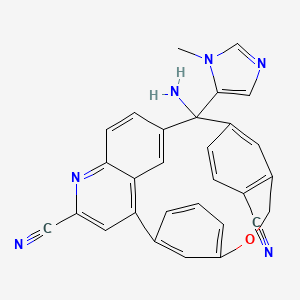
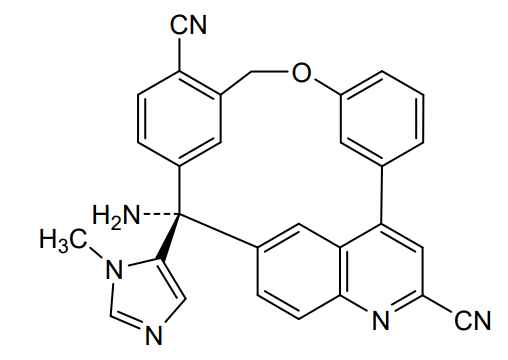
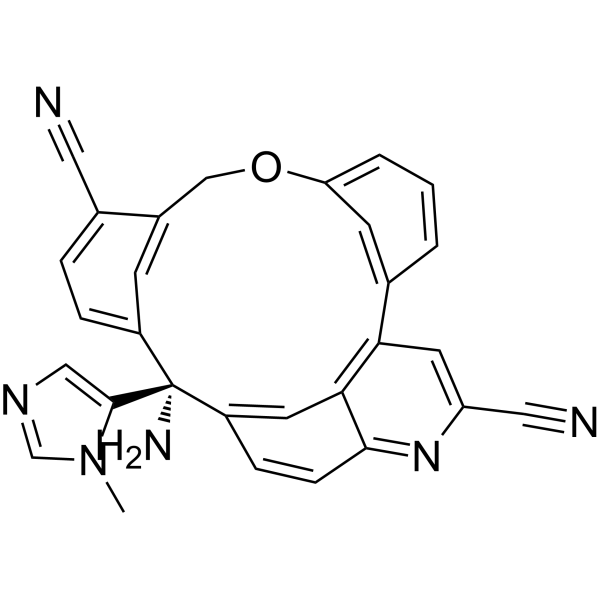
Darlifarnib
CAS 2939824-30-1
MF C29H20N6O MW 468.51
14-amino-14-(3-methylimidazol-4-yl)-7-oxa-19-azapentacyclo[13.6.2.12,6.19,13.018,22]pentacosa-1(22),2(25),3,5,9,11,13(24),15(23),16,18,20-undecaene-10,20-dicarbonitrile

farnesyl transferase inhibitor, antineoplastic, KO-2806, KO 2806, T206317
Darlifarnib (KO-2806) is an investigational, orally active next-generation farnesyl transferase inhibitor (FTI) being developed by Kura Oncology to treat solid tumors, such as clear cell renal cell carcinoma (ccRCC). It inhibits the enzyme farnesyl transferase, blocking KRAS and mTORC1 signaling to induce tumor regression. It is often combined with other agents to overcome resistance.
Key Details About Darlifarnib
- Mechanism of Action: As a FTI, darlifarnib binds to and inhibits farnesyl transferase, which prevents the activation of RAS oncogenes and inhibits downstream mTORC1 signaling, leading to tumor cell death.
- Target Indications: Preclinical and early clinical data show potential in treating KRAS-mutant cancers, including non-small cell lung cancer (NSCLC), colorectal cancer (CRC), and clear cell renal cell carcinoma (ccRCC).
- Combination Therapy: Data from the Phase 1 FIT-001 trial (presented in April 2026) showed that combining darlifarnib with the TKI cabozantinib demonstrated robust activity in patients with pretreated, advanced ccRCC.
- Overcoming Resistance: Darlifarnib is designed to re-sensitize tumors that have become resistant to prior therapies, such as RAS inhibitors and tyrosine kinase inhibitors (TKIs).
- Status: It is an investigational drug and not yet FDA-approved.
- OriginatorKura Oncology
- ClassAntineoplastics; Small molecules
- Mechanism of ActionFarnesyltranstransferase inhibitors
- Phase IAdenocarcinoma; Colorectal cancer; Non-small cell lung cancer; Renal cell carcinoma; Solid tumours
- 12 Jan 2026Kura Oncology plans the one or more expansion cohorts of KO 2806 and cabozantinib in patients with advanced renal cell carcinoma in the first half of 2026
- 22 Oct 2025Pharmacodynamics data from a preclinical trial in Cancer presented at the AACR-NCI-EORTC International Conference on Molecular Targets and Cancer Therapeutics 2025 (AACR-NCI-EORTC-2025)
- 18 Oct 2025Adverse events and efficacy data from a phase I trial in Non-small cell lung cancer, Renal cell carcinoma, Adenocarcinoma released by Kura Oncology
PAT
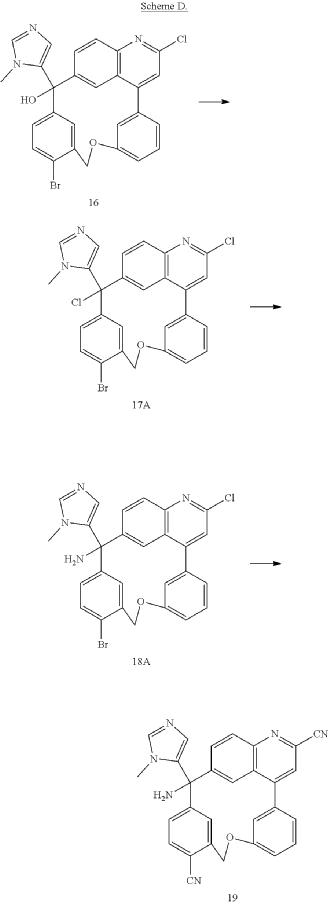
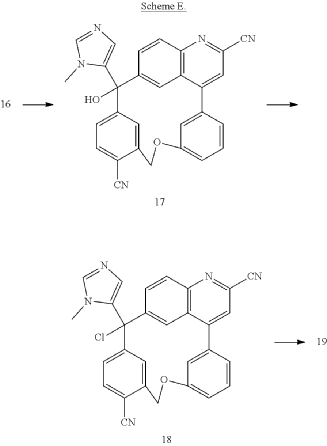
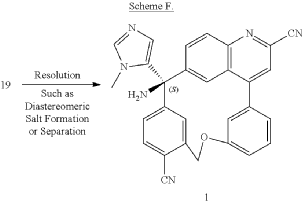
PAT
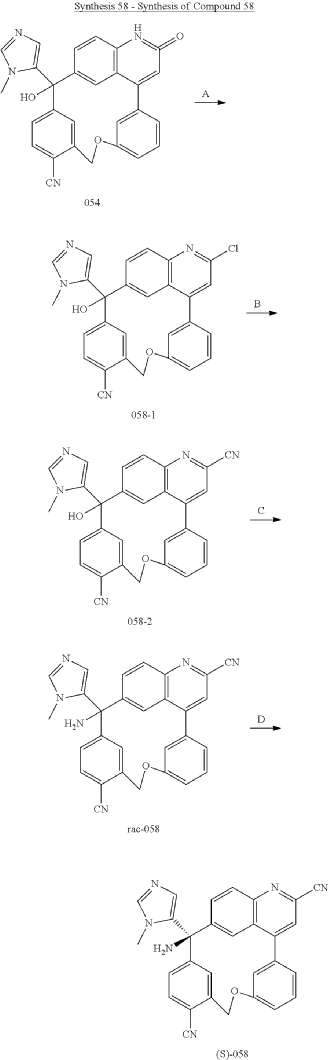
Step A: Preparation of (058-1)
Step B: Preparation of (058-2)
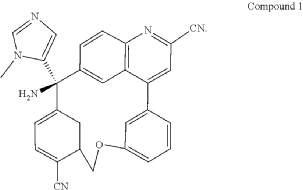
Step C: Preparation of (rac)-3-amino-3-(1-methyl-1H-imidazol-5-yl)-6-oxa-2(4,6)-quinolina-1,4(1,3)-dibenzenacyclohexaphane-22,44-dicarbonitrile (rac-058)
Step D: Preparation of (S)-3-amino-3-(1-methyl-1H-imidazol-5-yl)-6-oxa-2(4,6)-quinolina-1,4(1,3)-dibenzenacyclohexaphane-22,44-dicarbonitrile ((S)-058)
PAT
- Macrocyclic compounds and compositions, and methods of preparing and using the samePublication Number: US-2023322711-A1Priority Date: 2021-11-30
- Macrocyclic compounds and compositions, and methods of preparing and using the samePublication Number: US-12018011-B2Priority Date: 2021-11-30Grant Date: 2024-06-25



AS ON FEB2026 4.574 LAKHS VIEWS ON BLOG WORLDREACH AVAILABLEFOR YOUR ADVERTISEMENT
join me on Linkedin
Anthony Melvin Crasto Ph.D – India | LinkedIn
join me on Researchgate
RESEARCHGATE

join me on Facebook
Anthony Melvin Crasto Dr. | Facebook
join me on twitter
Anthony Melvin Crasto Dr. | twitter
+919321316780 call whatsaapp
EMAIL. amcrasto@gmail.com

References
/////////////darlifarnib, ANAX LAB, farnesyl transferase inhibitor, antineoplastic, KO-2806, KO 2806, T206317
Daraxonrasib

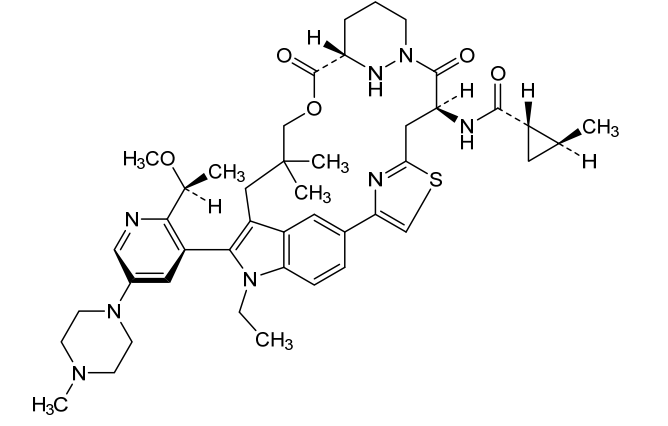
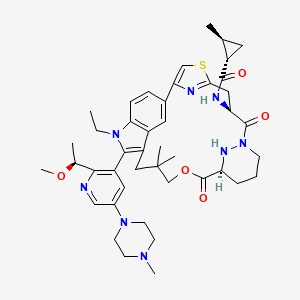
Daraxonrasib
CAS 2765081-21-6
8/26/2026, FDA APPROVED 2026, FDA 2026, Rasonque
MFC44H58N8O5S MW811.0 g/mol
trans-(1S,2S)-N-[(7S,13S)-21-ethyl-20-[2-[(1S)-1-methoxyethyl]-5-(4-methylpiperazin-1-yl)-3-pyridinyl]-17,17-dimethyl-8,14-dioxo-15-oxa-4-thia-9,21,27,28-tetrazapentacyclo[17.5.2.12,5.19,13.022,26]octacosa-1(25),2,5(28),19,22(26),23-hexaen-7-yl]-2-methylcyclopropane-1-carboxamide

Kirsten rat sarcoma viral oncogene homolog inhibitor, antineoplastic, RMC-6236, RMC 6236, B6T47Y2UAP, RAS-IN-2,
To treat metastatic pancreatic cancer
Daraxonrasib (formerly RMC-6236) is an investigational, orally administered “molecular glue” RAS inhibitor developed by Revolution Medicines for treating advanced solid tumors with RAS mutations, particularly metastatic pancreatic cancer. April 2026 Phase 3 trials showed it significantly improves survival, demonstrating high potential as a first-line treatment.
Key Clinical Findings and Updates (as of April 2026):
- Mechanism: It acts as a RAS(ON) inhibitor, targeting mutated and wild-type RAS proteins (
) to disrupt cancer signaling.
- Breakthrough Results: Data from the RASolute 302 trial showed a substantial survival benefit in patients with previously treated metastatic pancreatic ductal adenocarcinoma (PDAC).
- High Response Rates: In trials, daraxonrasib combined with chemotherapy showed a 58% confirmed objective response rate (ORR) and 84% progression-free survival (PFS) at 6 months in untreated RAS-mutant metastatic pancreatic cancer.
- Safety Profile: Generally well-tolerated, with side effects including rash, diarrhea, stomatitis, and nausea.
- Recognition: Named the “2025 Molecule of the Year” by Drug Hunter for its, novel mechanism and clinical potential.


Daraxonrasib is currently being studied in the Phase 3 RASolute 303 trial for first-line treatment of pancreatic cancer.
Daraxonrasib (RMC-6236) is a RAS inhibitor drug. It is undergoing testing by Revolution Medicines to treat advanced solid tumors with RAS mutations, especially metastatic pancreatic ductal adenocarcinoma (PDAC) containing KRAS G12X mutations.[1] It received a breakthrough therapy designation from the U.S. Food and Drug Administration.[2]
Daraxonrasib is orally active and multi-selective RAS inhibitor. It uses a tri-complex mechanism to target the active, GTP-bound form of RAS proteins, including mutant and wild-type forms. Unlike conventional RAS inhibitors, it first binds to the chaperone-like protein cyclophilin A to form a complex, which then attaches to active RAS. This interaction blocks downstream effector binding and inhibits oncogenic signaling.[3]
In 2026, Daraxonrasib clinical trial completed a phase 3 clinical trial (RASolute 302) to assess efficacy compared to standard-of-care chemotherapy.[4] The trial met all primary and key secondary endpoints, including progression-free survival (PFS). The company reported median survival of 13.2 months with daraxonrasib vs. 6.7 months with standard chemotherapy. The hazard ratio for death was 0.40 (a 60% reduction in risk of death; p < 0.0001). Daraxonrasib was generally well tolerated with a manageable safety profile and no new safety signals.[5]
PAT
PAT
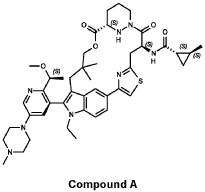
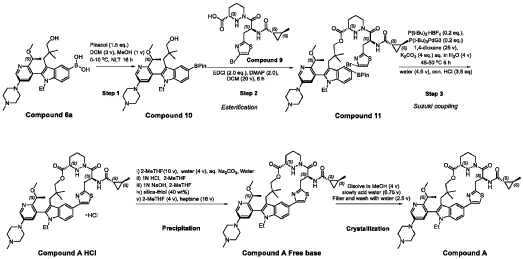
PATENT ATTORNEY DOCKET: 51432-038WO2 Part 4 – Purification of Compound A – (1S,2S)-N-[(7S,13S)-21-ethyl-20-{2-[(1S)-1- methoxyethyl]-5-(4-
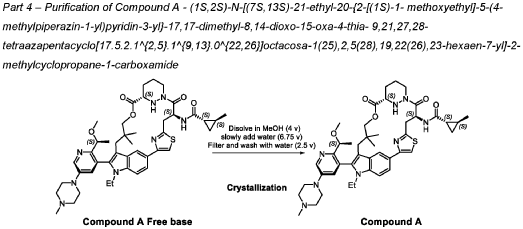
1.0equiv) at 25°C. The resulting suspension was stirred until solids were completely dissolved. The resulting methanol solution was filtered through microporous filter and transferred to another reactor. Then the reactor temperature was maintained at 25°C and slowly water (2.41kg, 1.0 V) water was added over a period of 30 minutes. The resulting cloudy solution was stirred for another 30 minutes at 25°C. Then a solution of methanol and water (3.42kg, 1:2, v/v) slowly over 1 hour. The resulting suspension was stirred for 2 hours at 25°C. Again, to the suspension additional water (2.48kg) slowly added over 1 hour. The final, suspension was stirred for additional 1 hour. Water (9.29kg, 3.75 V) was added to the suspension slowly over 2 hours and the mixture was stirred for at least for 16 hours at 25°C. The resulting suspension was filtered and washed with mixed solvent water: MeOH (3:2, v/v) twice (2x 2.2 kg), followed by water (4.91kg) washing. The wet cake was dried under reduced pressure and controlled humidity (temperature: 25 ± 5 ˚C, vacuum ≥ -0.085 MPa, humidity: 10%~20%) for 37 hours to afford Compound A as a white solid (2.68 kg, 99.4% a/a purity, 93.0% w/w assay, KF: 6.7%, 3.07 mol, 92% yield, Table 27).
PAT
- Synthesis of ras inhibitorsPublication Number: WO-2024216017-A2Priority Date: 2023-04-14
- Macrocycle compounds useful as kras inhibitorsPublication Number: WO-2024008834-A1Priority Date: 2022-07-08
- Ras inhibitorsPublication Number: US-11690915-B2Priority Date: 2020-09-15Grant Date: 2023-07-04
- Ras inhibitorsPublication Number: US-2023226186-A1Priority Date: 2020-09-15
AS ON FEB2026 4.574 LAKHS VIEWS ON BLOG WORLDREACH AVAILABLEFOR YOUR ADVERTISEMENT
join me on Linkedin
Anthony Melvin Crasto Ph.D – India | LinkedIn
join me on Researchgate
RESEARCHGATE
join me on Facebook
Anthony Melvin Crasto Dr. | Facebook
join me on twitter
Anthony Melvin Crasto Dr. | twitter
+919321316780 call whatsaapp
EMAIL. amcrasto@gmail.com
References
References
- Cregg J, Edwards AV, Chang S, Lee BJ, Knox JE, Tomlinson AC, et al. (March 2025). “Discovery of Daraxonrasib (RMC-6236), a Potent and Orally Bioavailable RAS(ON) Multi-selective, Noncovalent Tri-complex Inhibitor for the Treatment of Patients with Multiple RAS-Addicted Cancers”. Journal of Medicinal Chemistry. 68 (6): 6064–6083. doi:10.1021/acs.jmedchem.4c02314. PMID 40056080.
- Sava J (July 1, 2025). “Daraxonrasib Earns FDA Breakthrough Status in Pancreatic Cancer”. Targeted Oncology. Retrieved October 12, 2025.
- Jiang J, Jiang L, Maldonato BJ, Wang Y, Holderfield M, Aronchik I, et al. (June 2024). “Translational and Therapeutic Evaluation of RAS-GTP Inhibition by RMC-6236 in RAS-Driven Cancers”. Cancer Discovery. 14 (6): 994–1017. doi:10.1158/2159-8290.CD-24-0027. PMC 11149917. PMID 38593348.
- Clinical trial number NCT05379985 at ClinicalTrials.gov
- Mast J (2026-04-13). “Revolution Medicines touts ‘unprecedented’ data for pancreatic cancer pill”. STAT. Retrieved 2026-04-13.
| Clinical data | |
|---|---|
| Other names | RMC-6236 |
| Identifiers | |
| IUPAC name | |
| CAS Number | 2765081-21-6 |
| PubChem CID | 164726578 |
| IUPHAR/BPS | 13368 |
| ChemSpider | 115275938 |
| UNII | B6T47Y2UAP |
| KEGG | D13265 |
| ChEBI | CHEBI:746946 |
| Chemical and physical data | |
| Formula | C44H58N8O5S |
| Molar mass | 811.06 g·mol−1 |
| 3D model (JSmol) | Interactive image |
| SMILES | |
| InChI | |
//////////daraxonrasib, anax labs, Kirsten rat sarcoma viral oncogene homolog inhibitor, antineoplastic, RMC-6236, RMC 6236, B6T47Y2UAP, RAS-IN-2, FDA APPROVED 2026, FDA 2026, Rasonque
#daraxonrasib, #anax labs, #Kirsten rat sarcoma viral oncogene homolog inhibitor, #antineoplastic, #RMC-6236, #RMC 6236, B6T47Y2UAP, #RAS-IN-2, #APPROVALS 2026, #FDA 2026, #Rasonque
ANAX LABORATORIES
WEBSITE https://www.anaxlab.com/
Discovery Solutions, Supporting the chemistry needs of clients in the Medical, Analytical and Bio Sciences
Development Solutions, Developing from Lab scale to PR&D, Kilo Scale-ups and Commercial Scales
SEE MORE………Integrated Solutions, Manufacturing Solutions, Products,
Can’t Find? Let’s Connect

Phone : +91 897704 2010 / +91 9177075735, Email : info@anaxlab.com
#MedicinalChemistry, #DrugDiscovery, #OrganicSynthesis, #ChemicalLibrary, #BuildingBlocks, #SARStudies, #ChemistryInnovation, #medchem, #Drugdevelopment, #Biotech, #Biotechnology, #AnaxLaboratories, #Pharma
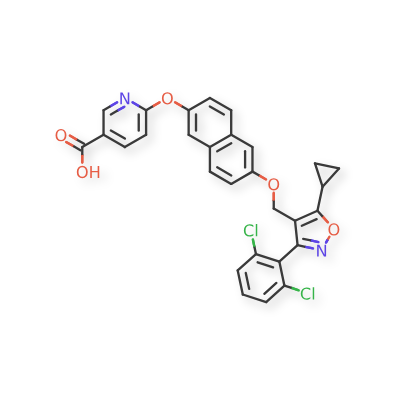
Danifexor
Danifexor
CAS 2648738-68-3
MF C29H20Cl2N2O5 MW547.386
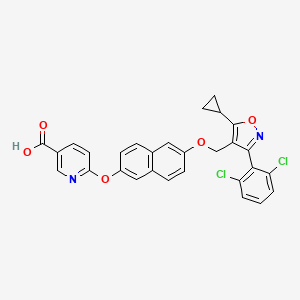
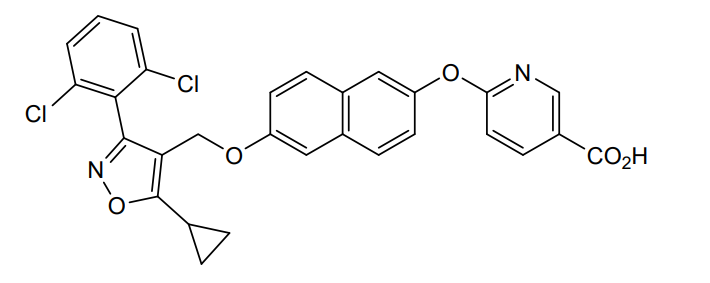
6-[6-[[5-cyclopropyl-3-(2,6-dichlorophenyl)-1,2-oxazol-4-yl]methoxy]naphthalen-2-yl]oxypyridine-3-carboxylic acid
| 3-Pyridinecarboxylic acid, 6-[[6-[[5-cyclopropyl-3-(2,6-dichlorophenyl)-4-isoxazolyl]methoxy]-2-naphthalenyl]oxy]- |

farnesoid X receptor agonist, TUU8G1CX9O, HEC 96719, ASC42
Danifexor is an investigational drug that acts as a potent and selective agonist for the farnesoid X receptor (FXR). It was primarily being developed for the treatment of liver diseases such as Primary Biliary Cholangitis (PBC). ProbeChem +1
However, recent reports from April 2024 indicate that development for Danifexor has been discontinued because it was deemed non-competitive against other emerging therapies for PBC.
Key Properties and Identifiers
Danifexor is a non-steroidal molecule with specific chemical markers used in laboratory research:
- Target: Farnesoid X receptor (FXR).
Therapeutic Context
The drug was designed to target the FXR pathway, which regulates bile acid, lipid, and glucose metabolism.
- Primary Goal: Treatment of Primary Biliary Cholangitis (PBC), a chronic liver disease.
- Mechanism: As an agonist, it binds to and activates FXR to help reduce the toxic buildup of bile acids in the liver.
SYN
Example 1
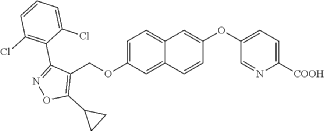
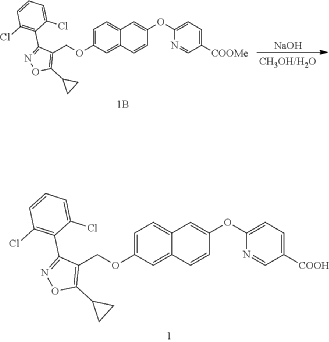
Preparation of 6-((6-((5-cyclopropyl-3-(2,6-dichlorophenyl)isoxazol-4-yl) methoxy)naphthalen-2-yl)oxy)nicotinic acid (Compound 1)
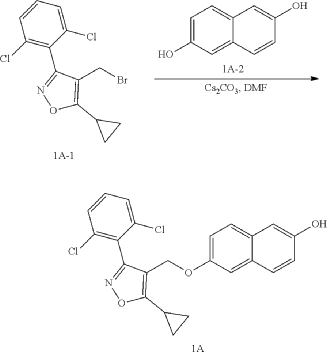
(a) Referring to the following reaction equation (Route A), Compound 1A-1 (1.0 g, 2.88 mmol, 1 eq.), Compound 1A-2 (0.46 g, 2.88 mmol, 1 eq.) and cesium carbonate (1.88 g, 5.76 mmol, 2 eq.) were dissolved in DMF (10 ml). The reaction was carried out at 65° C. for 2 h. After cooling, 10 ml water and 10 ml EA (ethyl acetate) were added for extraction, and the organic phase was washed with water and concentrated to dryness to give Compound 1A, 6-((5-cyclopropyl-3-(2,6-dichlorophenyl)isoxazol-4-yl)methoxy)naphthalen-2-ol, 0.8 g, yield: 65.0%. LCMS (ESI): calculated for C 23H 17C 12NO 3; [M+H] +: 426.1, found: 426.1.
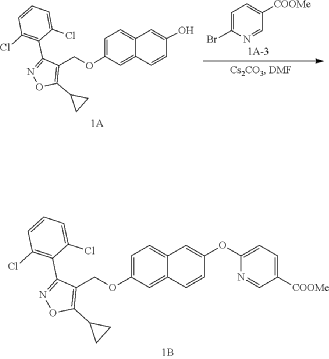
b) Referring to the following reaction equation, Compound 1A (0.2 g, 0.47 mmol, 1 eq.), 6-bromonicotinic acid methyl ester (0.1 g, 0.47 mmol, 1 eq.) and cesium carbonate (0.306 g, 0.94 mmol, 2 eq.) were dissolved in DMF (10 ml). The reaction was carried out at 65° C. for 2 h. After cooling, 10 ml water and 10 ml EA were added for extraction, and the organic phase was washed with water and concentrated to dryness to give Compound 1B, methyl 6((6((5-cyclopropyl-3-(2,6-dichlorophenyl)isoxazol-4-yl)methoxy)naphthalene-2-yl)oxy)nicotinate, 0.21 g, yield: 80.0%. LCMS (ESI): calculated for C 30H 22C 12N 2O 5; [M+H] +: 561.1, found: 561.1.
PAT
PAT
- Use and pharmaceutical composition of phenylisoxazolyl methylene-naphthalene-ether derivativesPublication Number: WO-2021109713-A1Priority Date: 2019-12-03
- Compounds for modulating activity of fxr and uses thereofPublication Number: WO-2021109712-A1Priority Date: 2019-12-03
- Uses and pharmaceutical compositions of phenylisoxazolylmethylene-naphthalene-ether derivativesPublication Number: CN-112891348-APriority Date: 2019-12-03
- Compounds that modulate FXR activity and their applicationsPublication Number: CN-112898289-APriority Date: 2019-12-03
- Compounds that modulate FXR activity and their applicationsPublication Number: CN-112898289-BPriority Date: 2019-12-03Grant Date: 2022-11-04
- Uses and pharmaceutical compositions of phenylisoxazolyl methylene-naphthalene-ether derivativesPublication Number: KR-20220101697-APriority Date: 2019-12-03
- Compounds for modulating activity of fxr and uses thereofPublication Number: EP-4073070-A1Priority Date: 2019-12-03
- Use and pharmaceutical composition of phenylisoxazolyl methylene-naphthalene-ether derivativesPublication Number: EP-4073071-A1Priority Date: 2019-12-03
- Compounds for modulating activity of fxr and uses thereofPublication Number: WO-2021108974-A1Priority Date: 2019-12-03
AS ON FEB2026 4.574 LAKHS VIEWS ON BLOG WORLDREACH AVAILABLEFOR YOUR ADVERTISEMENT
join me on Linkedin
Anthony Melvin Crasto Ph.D – India | LinkedIn
join me on Researchgate
RESEARCHGATE
join me on Facebook
Anthony Melvin Crasto Dr. | Facebook
join me on twitter
Anthony Melvin Crasto Dr. | twitter
+919321316780 call whatsaapp
EMAIL. amcrasto@gmail.com
References
////////danifexor, ANAX LAB, farnesoid X receptor agonist, TUU8G1CX9O, HEC 96719, ASC42
Dabogratinib
Dabogratinib
CAS 2800223-30-5
MF C25H24Cl2N6O3S, 559.5 g/mol
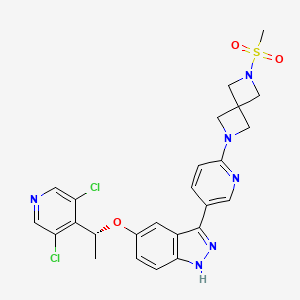
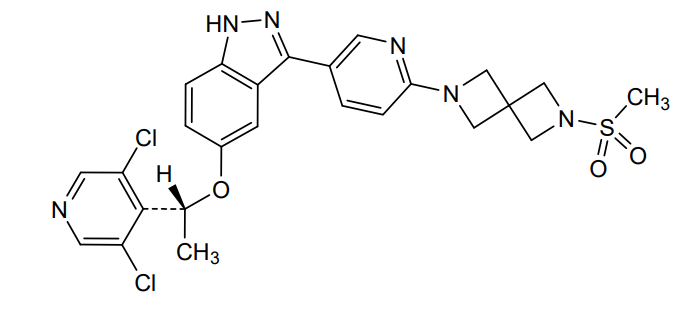
5-[(1R)-1-(3,5-dichloro-4-pyridinyl)ethoxy]-3-[6-(2-methylsulfonyl-2,6-diazaspiro[3.3]heptan-6-yl)-3-pyridinyl]-1H-indazole
(R)-5-(1-(3,5-Dichloropyridin-4-yl)ethoxy)-3-(6-(6-(methylsulfonyl)-2,6-diazaspiro[3.3]heptan-2-yl)pyridin-3-yl)-1H-indazole
[6-(5-{5-[(1R)-1-(3,5-dichloropyridin-4-yl)ethoxy]-1H-indazol-3-yl}pyridin-2-yl)-2,6-diazaspiro[3.3]heptan-2-yl](methyl)-λ6sulfanedioneTYRA-300
fibroblast growth factor receptor inhibitor, antineoplastic, TYRA-300, TYRA 300, A1AV2, FH245S2JZJ
Dabogratinib (TYRA-300) is an orally active, highly selective inhibitor of fibroblast growth factor receptor 3 (FGFR3), designed to treat cancers with FGFR3 alterations and genetic diseases like achondroplasia. It shows potent tumor growth inhibition in preclinical studies and early phase I/II (SURF301) clinical activity against advanced bladder cancer and metastatic urothelial carcinoma.
Key Aspects of Dabogratinib (TYRA-300)
- Mechanism: It acts as a selective inhibitor of FGFR3 with a high selectivity over other isoforms (FGFR1/2/4), which helps minimize toxicity.
- Target Indications: It is being developed for FGFR3-mutant cancers, including non-muscle invasive bladder cancer (NMIBC) and metastatic urothelial carcinoma, as well as pediatric achondroplasia.
- Preclinical Performance: Studies showed that it reduces tumor growth and drives tumor regression, especially in xenograft models with FGFR3-activating mutations (e.g., S249C).
- Clinical Trials:
- SURF301 (Phase I/II): Ongoing study, Tyra Biosciences reported early efficacy in patients with advanced metastatic urothelial carcinoma (mUC) harboring FGFR3 mutations/fusions.
- SURF302 (Phase II): Evaluating the drug in patients with FGFR3-altered, low-grade, intermediate-risk non–muscle invasive bladder cancer (NMIBC).
- BEACH301 (Phase II): Studying the drug in children with achondroplasia, as it is designed to increase long-bone growth.
- Properties: It is an orally bioavailable molecule with an IC50 of
for FGFR3.

Dabogratinib is an orally bioavailable, selective inhibitor of human fibroblast growth factor receptor 3 (FGFR3), with potential antineoplastic activity. Upon oral administration, dabogratinib specifically targets and binds to certain FGFR3 activating gene alterations, and specifically the gatekeeper mutants V555L/M. This blocks FGFR3-mediated signaling and leads to an inhibition of tumor cell proliferation in FGFR3-overexpressing cells. FGFR3, a receptor tyrosine kinase, is involved in angiogenesis and in the proliferation, differentiation, and survival of tumor cells. FGFR3 expression is associated with poor prognosis. It is overexpressed by certain tumor cell types.
- Efficacy and Safety of TYRA-300 in Participants With FGFR3 Altered Low Grade, Intermediate Risk Non-Muscle Invasive Bladder CancerCTID: NCT06995677Phase: Phase 2Status: RecruitingDate: 2026-04-09
- A Study of TYRA-300 in Children With Achondroplasia: BEACH301CTID: NCT06842355Phase: Phase 2Status: RecruitingDate: 2026-03-06
- Safety and Preliminary Anti-Tumor Activity of TYRA-300 in Advanced Urothelial Carcinoma and Other Solid Tumors With FGFR3 Gene AlterationsCTID: NCT05544552Phase: Phase 1/Phase 2Status: Active, not recruitingDate: 2026-01-12
PAT
Example 46. 5-[(1R)-1-(3,5-dichloro-4-pyridyl)ethoxy]-3-[6-(2-methylsulfonyl-2,6-diazaspiro[3.3]heptan-6-yl)-3-pyridyl]-1H-indazole
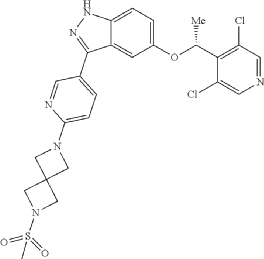
(5-[(1R)-1-(3,5-dichloro-4-pyridyl)ethoxy]-3-[6-(2-methylsulfonyl-2,6-diazaspiro[3.3]heptan-6-yl)-3-pyridyl]-1H-indazole. Triethylamine (20.5 uL, 0.148 mmol, 1.2 equiv) and methylsulfonyl chloride (9.5 uL, 0.123 mmol, 1.0 equiv) were sequentially added at room temperature to a solution of example 45 (59.0 mg, 0.123 mmol, 1 equiv) in anhydrous THE (3 mL). After stirring for 2 hours, the reaction mixture was concentrated under reduced pressure and diluted with saturated brine (30 mL) and dichloromethane (30 mL). The layers were separated. The organic layer was dried over sodium sulfate, filtered and concentrated under reduced pressure on to Celite (1 g). The product was purified on an Interchim automated chromatography system (RediSep Rf Gold HP C18, 15.5 g cartridge), eluting with a gradient of 0 to 100% acetonitrile in water. The fractions containing product were collected and lyophilized to give a white solid (45.0 mg, 65% yield). Analysis: LCMS: m/z=559.2 (M+H); 1H NMR (400 MHz, DMSO-d6) δ 13.02 (br s, 1H), 8.59 (s, 2H), 8.52 (dd, J=0.6, 2.2 Hz, 1H), 7.87 (dd, J=2.4, 8.6 Hz, 1H), 7.46 (d, J=8.9 Hz, 1H), 7.16 (d, J=2.1 Hz, 1H), 7.09 (dd, J=2.3, 9.0 Hz, 1H), 6.54 (dd, J=0.4, 8.6 Hz, 1H), 6.10 (q, J=6.6 Hz, 1H), 4.17 (s, 4H), 4.12 (s, 4H), 3.03 (s, 3H), 1.76 (d, J=6.6 Hz, 3H).
PAT
- Indazole compoundsPublication Number: TW-202241906-APriority Date: 2020-12-30
- Indazole compounds as kinase inhibitorsPublication Number: EP-4271673-A1Priority Date: 2020-12-30
- Indazole compounds as kinase inhibitorsPublication Number: WO-2022147246-A1Priority Date: 2020-12-30
- Indazole compounds as kinase inhibitorsPublication Number: US-12264149-B2Priority Date: 2020-12-30Grant Date: 2025-04-01
- Polymorphic compounds and uses thereofPublication Number: EP-4547670-A1Priority Date: 2022-06-29
- Indazole compounds as kinase inhibitorsPublication Number: US-12071428-B2Priority Date: 2020-12-30Grant Date: 2024-08-27
- Indazole Compounds as Kinase InhibitorsPublication Number: KR-20230152654-APriority Date: 2020-12-30
- Indazole compounds as kinase inhibitorsPublication Number: US-2024109865-A1Priority Date: 2020-12-30
- Indazole compounds as kinase inhibitorsPublication Number: US-2024208941-A1Priority Date: 2020-12-30
- Tyra-300 (5-[(1r)-1-(3,5-dichloro-4-pyridyl)ethoxy]-3-[6-(2-methylsulfonyl-2,6-diazaspiro[3.3]heptan-6-yl)-3-pyridyl]-1h-indazole ) in combination with a pd-1 or pd-l1 antagonist for use in the treatment of cancerPublication Number: WO-2025064744-A1Priority Date: 2023-09-22
- Fgfr inhibitors and methods of use thereofPublication Number: WO-2025061029-A1Priority Date: 2023-09-18
- Polymorphic compounds and uses thereofPublication Number: AU-2023300357-A1Priority Date: 2022-06-29
- Polymorphic compounds and uses thereofPublication Number: WO-2024006883-A1Priority Date: 2022-06-29
- Polymorphic compounds and uses thereofPublication Number: TW-202408493-APriority Date: 2022-06-29
ADVT
ANAX LABORATORIES
WEBSITE https://www.anaxlab.com/
Discovery Solutions, Supporting the chemistry needs of clients in the Medical, Analytical and Bio Sciences
Development Solutions, Developing from Lab scale to PR&D, Kilo Scale-ups and Commercial Scales
SEE MORE………Integrated Solutions, Manufacturing Solutions, Products,
Can’t Find? Let’s Connect

Phone : +91 897704 2010 / +91 9177075735, Email : info@anaxlab.com
#MedicinalChemistry, #DrugDiscovery, #OrganicSynthesis, #ChemicalLibrary, #BuildingBlocks, #SARStudies, #ChemistryInnovation, #medchem, #Drugdevelopment, #Biotech, #Biotechnology, #AnaxLaboratories, #Pharma
AS ON FEB2026 4.574 LAKHS VIEWS ON BLOG WORLDREACH AVAILABLEFOR YOUR ADVERTISEMENT
join me on Linkedin
Anthony Melvin Crasto Ph.D – India | LinkedIn
join me on Researchgate
RESEARCHGATE
join me on Facebook
Anthony Melvin Crasto Dr. | Facebook
join me on twitter
Anthony Melvin Crasto Dr. | twitter
+919321316780 call whatsaapp
EMAIL. amcrasto@gmail.com
References
Publication Name: Journal of Medicinal Chemistry
Publication Date: 2024-09-11
PMID: 39258897
DOI: 10.1021/acs.jmedchem.4c01531
////////dabogratinib, anax lab, fibroblast growth factor receptor inhibitor, antineoplastic, TYRA-300, TYRA 300, A1AV2, FH245S2JZJ
Colfosceril miristate

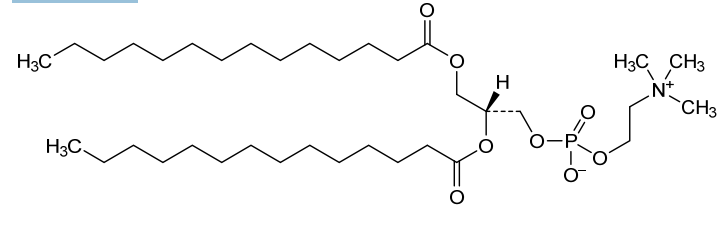
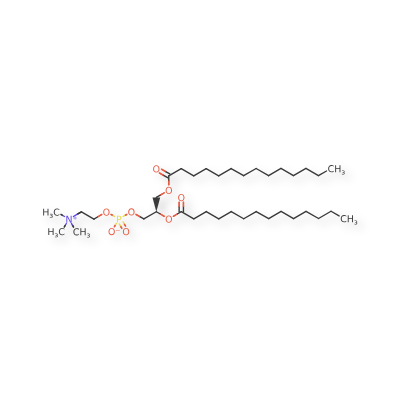
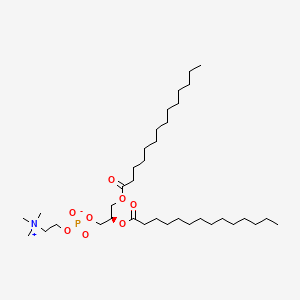
Colfosceril miristate
CAS 18194-24-6
MF C36H72NO8P MW677.9325
1,2 Dimyristoyl glycero 3 phosphorylcholine
(2R)-2,3-bis(tetradecanoyloxy)propyl 2-(trimethylazaniumyl)ethyl phosphate
surfactant replacement, DIMYRISTOYL LECITHIN, Dimyristoyllecithin, DMCP, DMPC
Colfosceril miristate (1,2-dimyristoyl-sn-glycero-3-phosphocholine or DMPC) is a synthetic phospholipid commonly used in research to study lipid bilayers, liposomes, and drug delivery systems. It serves as a model membrane system due to its phase transition properties and has shown potential in enhancing nanoparticle uptake and acting as a drug stabilizer.
Key Aspects of Colfosceril Miristate (DMPC):
- Scientific Application: Primarily used in laboratory research for studying lipid monolayers and bilayers.
- Drug Delivery: Employed in the creation of liposomes for drug delivery applications.
- Biological Activity: Exhibits antiproliferative effects on various tumor cell lines and can increase the cellular uptake of nanoparticles.
- Characteristics: It is a synthetic phospholipid, frequently studied for its phase transition temperature (approx.
).
- Storage: Should be stored at
or
to maintain stability.
Important Distinction:
It is crucial not to confuse Colfosceril miristate (DMPC) with Colfosceril palmitate (DPPC). Colfosceril palmitate is a different synthetic surfactant historically used in medicine to treat neonatal respiratory distress syndrome
1,2-DIMYRISTOYL-SN-GLYCERO-3-PHOSPHOCHOLINE (dimyristoyl phosphatidylcholine, DMPC) is a synthetic phospholipid used in liposomes and lipid bilayers for the study of biological membranes. DMPC is a frequently studied artificial lipid because it undergoes a phase transition at a convenient temperature. Upon cooling below 23.6°C it undergoes a transition from the liquid crystalline phase to the solid rippled phase, characterized by periodic corrugations of the bilayer.
Dimyristoylphosphatidylcholine is a phosphatidylcholine, a kind of phospholipid. Along with other lipids, it can be used to prepare liposomes.[1]
PAT
PAT
Compositions of Phosphorylated Tau Peptides and Uses Thereof
Publication Number: US-2025326806-A1
- Antigen Binding Polypeptides, Polypeptide Complexes and Methods of Use ThereofPublication Number: US-2025326823-A1
- Variant rna-guided cas12f4 nucleases and dna binding proteinsPublication Number: US-2025327095-A1
- Modulation of novel immune checkpoint targetsPublication Number: US-12447213-B2Grant Date: 2025-10-21
- Therapeutic peptidesPublication Number: US-12448425-B2Grant Date: 2025-10-21
- Cytokine conjugates for the treatment of proliferative and infectious diseasesPublication Number: US-2025325632-A1
AS ON FEB2026 4.574 LAKHS VIEWS ON BLOG WORLDREACH AVAILABLEFOR YOUR ADVERTISEMENT
join me on Linkedin
Anthony Melvin Crasto Ph.D – India | LinkedIn
join me on Researchgate
RESEARCHGATE
join me on Facebook
Anthony Melvin Crasto Dr. | Facebook
join me on twitter
Anthony Melvin Crasto Dr. | twitter
+919321316780 call whatsaapp
EMAIL. amcrasto@gmail.com
| Names | |
|---|---|
| Systematic IUPAC name(2R)-2,3-Bis(tetradecanoyloxy)propyl 2-(trimethylazaniumyl)ethyl phosphate | |
| Other names1,2-dimyristoylphosphatidylcholine, 1,2-dimyristoyl-sn-glycero-3-phosphocholine, 1,2-ditetradecanoyl-sn-glycero-3-phosphocholine, DMPC, 14:0 PC | |
| Identifiers | |
| CAS Number | 18194-24-6 |
| 3D model (JSmol) | Interactive image |
| ChEBI | CHEBI:45240 |
| ChEMBL | ChEMBL1235508 |
| ChemSpider | 4573168 |
| ECHA InfoCard | 100.038.245 |
| EC Number | 242-085-9 |
| PubChem CID | 5459377 |
| UNII | 52QK2NZ2T0 |
| CompTox Dashboard (EPA) | DTXSID00860227 |
| InChI | |
| SMILES | |
| Properties | |
| Chemical formula | C36H72NO8P |
| Molar mass | 677.945 g·mol−1 |
| Except where otherwise noted, data are given for materials in their standard state (at 25 °C [77 °F], 100 kPa).Infobox references | |
References
- Liposomal drug delivery system from laboratory to clinic, N. A. Kshirsagar, S. K. Pandya, G. B. Kirodian, S. Sanath, Journal of Postgraduate Medicine, 51 (#5) (2005), pp. 5-15, PMID 16519249.
//////////colfosceril miristate, ANAX LAB, surfactant replacement, DIMYRISTOYL LECITHIN, Dimyristoyllecithin, DMCP, DMPC
Claturafenib
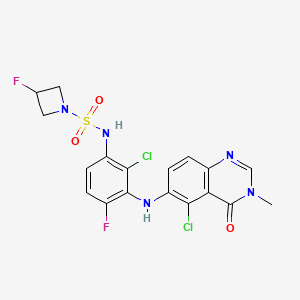
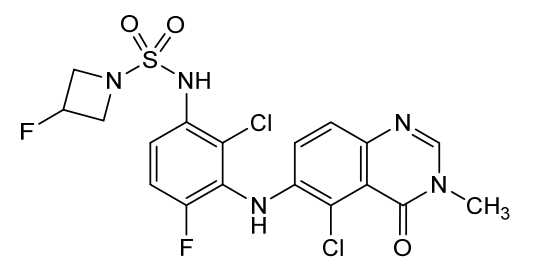
Claturafenib
CAS 2754408-94-9
MF C18H15Cl2F2N5O3S MW490.3 g/mol
N-[2-chloro-3-[(5-chloro-3-methyl-4-oxoquinazolin-6-yl)amino]-4-fluorophenyl]-3-fluoroazetidine-1-sulfonamide
N-{2-chloro-3-[(5-chloro-3-methyl-4-oxo-3,4-dihydroquinazolin-6-yl)amino]-4-fluorophenyl}-3-fluoroazetidine-1-sulfonamide
B-Raf (BRAF) inhibitor, antineoplastic, PF-07799933, PF 07799933, ARRY440, ARRY 440, PC35M52J8T
Claturafenib (development code PF-07799933) is an investigational cancer drug currently being developed by Pfizer. It is a selective, orally active pan-mutant BRAF inhibitor designed to treat advanced solid tumours with specific genetic alterations
Mechanism of Action
Claturafenib belongs to a class of drugs that target the MAPK/ERK signaling pathway, which is often hijacked by cancer cells to promote uncontrolled growth.
- Pan-Mutant Inhibition: Unlike first-generation BRAF inhibitors, claturafenib inhibits multiple classes of BRAF mutations, including Class 1 (V600), Class 2, and Class 3 alterations.
- Brain-Penetrant: It is designed to cross the blood-brain barrier, allowing it to potentially treat brain metastases or primary brain tumours.
- Dimer Disruption: It works by disrupting the formation of BRAF-containing dimers, which are responsible for signaling in many resistant or non-V600 mutant cancers.
- Selectivity: It is highly selective for mutant BRAF, significantly sparing normal (wild-type) cells to reduce off-target side effects.
🏥 Clinical Status
As of April 2026, claturafenib is in Phase 1 clinical trials.
- Target Indications: Advanced solid malignancies, including melanoma, colorectal cancer (CRC), and non-small cell lung cancer (NSCLC).
- Combination Therapy: It is being studied both as a single agent (monotherapy) and in combination with other drugs like binimetinib (a MEK inhibitor) or cetuximab (an EGFR inhibitor).
- Ongoing Study: Clinical trial NCT05355701 is currently evaluating its safety, dosage, and efficacy in patients whose disease has progressed on other treatments.
- A Study to Learn About the Study Medicine Called PF-07799933 in People With Advanced Solid Tumors With BRAF Alterations.CTID: NCT05355701Phase: Phase 1Status: RecruitingDate: 2026-03-27
- A Study to Learn About the Study Medicine Called PF-07799544 as Monotherapy or in Combination in People With Advanced Solid TumorsCTID: NCT05538130Phase: Phase 1Status: RecruitingDate: 2026-03-27
Claturafenib is an orally bioavailable class 1 and 2 inhibitor of the serine/threonine-protein kinase B-raf (BRAF) protein, with potential antineoplastic activity. Upon oral administration, claturafenib selectively binds to and inhibits the activity of class 1 and 2 BRAF alterations. This inhibits the proliferation of tumor cells which express these BRAF alterations. BRAF, a member of the raf family of serine/threonine protein kinases, plays a role in the regulation of mitogen-activated protein kinase (MAPK) and extracellular signal-regulated kinase (ERK) signaling pathways, which may be constitutively activated due to BRAF gene mutations. Mutated forms and fusions of BRAF are associated with a number of neoplastic diseases.
| Property | Value |
|---|---|
| Molecular Formula |        |
| Molecular Weight | 490.31 g/mol |
| CAS Number | 2754408-94-9 |
| Other Names | ARRY-440, PF07799933 |
📍 Note: Claturafenib is an investigational compound and has not yet been approved by the FDA or other regulatory agencies for general use
SYN
SYN
Example 126
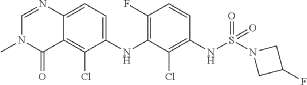
N-(2-chloro-3-((5-chloro-3-methyl-4-oxo-3,4-dihydroquinazolin-6-yl)amino)-4-fluorophenyl)-3-fluoroazetidine-1-sulfonamide
PAT
- 4-oxo-3,4-dihydroquinazolinon compounds for the treatment of braf-associated diseases and disordersPublication Number: CA-3186343-A1Priority Date: 2020-06-09
- Compounds for the treatment of BRAF-associated diseases and disordersPublication Number: US-12303509-B2Priority Date: 2020-06-09Grant Date: 2025-05-20
- 3,4-dihydro-2,7-naphthyridine-1,6(2H,7H)-dione compound as MEK inhibitorPublication Number: CN-117561255-APriority Date: 2021-03-31
- 4-oxo-3,4-dihydroquinazolinone compounds for the treatment of BRAF-related diseases and disordersPublication Number: KR-20230019944-APriority Date: 2020-06-09
- Compounds for the treatment of braf-associated diseases and disordersPublication Number: US-2022288074-A1Priority Date: 2020-06-09
- 4-oxo-3, 4-dihydroquinazolinone compounds for the treatment of BRAF related diseases and disordersPublication Number: CN-116096710-APriority Date: 2020-06-09
- 4-oxo-3,4-dihydroquinazolinon compounds for the treatment of braf-associated diseases and disordersPublication Number: EP-4161907-A1Priority Date: 2020-06-09
ADVERTISEMENT
ANAX LABORATORIES
WEBSITE https://www.anaxlab.com/
Discovery Solutions, Supporting the chemistry needs of clients in the Medical, Analytical and Bio Sciences
Development Solutions, Developing from Lab scale to PR&D, Kilo Scale-ups and Commercial Scales
SEE MORE………Integrated Solutions, Manufacturing Solutions, Products,
Can’t Find? Let’s Connect
Phone : +91 897704 2010 / +91 9177075735, Email : info@anaxlab.com
#MedicinalChemistry, #DrugDiscovery, #OrganicSynthesis, #ChemicalLibrary, #BuildingBlocks, #SARStudies, #ChemistryInnovation, #medchem, #Drugdevelopment, #Biotech, #Biotechnology, #AnaxLaboratories, #Pharma
AS ON FEB2026 4.574 LAKHS VIEWS ON BLOG WORLDREACH AVAILABLEFOR YOUR ADVERTISEMENT
join me on Linkedin
Anthony Melvin Crasto Ph.D – India | LinkedIn
join me on Researchgate
RESEARCHGATE
join me on Facebook
Anthony Melvin Crasto Dr. | Facebook
join me on twitter
Anthony Melvin Crasto Dr. | twitter
+919321316780 call whatsaapp
EMAIL. amcrasto@gmail.com
References
////////claturafenib, ANAX, B-Raf (BRAF) inhibitor, antineoplastic, PF-07799933, PF 07799933, ARRY440, ARRY 440, PC35M52J8T
Cirtociclib
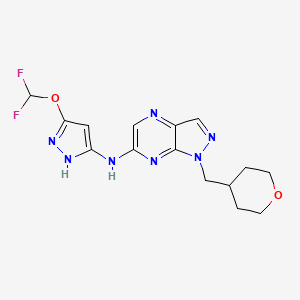
Cirtociclib
CAS 2888704-84-3
MF C15H17F2N7O2 MW365.34 g/mol
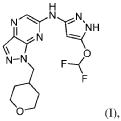
N-[3-(difluoromethoxy)-1H-pyrazol-5-yl]-1-(oxan-4-ylmethyl)pyrazolo[3,4-b]pyrazin-6-amine
N-[5-(difluoromethoxy)-1H-pyrazol-3-yl]-1-[(oxan-4-yl)methyl]-1H-pyrazolo[3,4-b]pyrazin-6-amine
cyclin-dependent kinase inhibitor, antineoplastic, BLU-222, BLU 222, BLU 170298, U93X72ED47, CDK2 Inhibitor BLU-222
Cirtociclib (also known as BLU-222) is an investigational drug that acts as a highly selective inhibitor of cyclin-dependent kinase 2 (CDK2). It is being developed by Blueprint Therapeutics for the treatment of advanced solid tumours, particularly those with genetic drivers like CCNE1 amplification, which are common in certain ovarian and breast cancers
Certociclib is a small molecule drug. Certociclib is under investigation in clinical trial NCT05252416 ((VELA) Study of BLU-222 in Advanced Solid Tumors). Certociclib has a monoisotopic molecular weight of 365.14 Da.
Certociclib is an orally bioavailable inhibitor of cyclin-dependent kinase 2 (CDK2), with potential antineoplastic activity. Upon administration, certociclib selectively targets, binds to and inhibits the activity of CDK2. This may lead to cell cycle arrest, the induction of apoptosis, and the inhibition of tumor cell proliferation. CDK2, a serine/threonine kinase that plays an important role in the regulation of cell cycle progression and cellular proliferation, is overexpressed in certain tumor cells.
How It Works
- Targeting CDK2: It binds to CDK2, a protein that regulates the cell cycle.
- Cell Cycle Arrest: By inhibiting CDK2, the drug causes G1 arrest, preventing cancer cells from replicating.
- Selectivity: It is designed to be “best-in-class” for its high selectivity for CDK2 over other kinases like CDK1, CDK4, or CDK6.
Therapeutic Potential
- Ovarian Cancer: Specifically targets high-grade serous ovarian cancer where CCNE1 is amplified.
- Breast Cancer: Shows promise in treating hormone receptor-positive/HER2-negative (HR+/HER2-) breast cancer, especially when the cancer has become resistant to existing CDK4/6 inhibitors.
- Combination Therapy: Researchers are testing it alongside other drugs, such as palbociclib, ribociclib, or chemotherapy agents like carboplatin, to enhance efficacy.
Current Status
- Clinical Trials: It is currently being evaluated in a Phase 1/2 clinical trial known as the VELA study (NCT05252416) for patients with advanced solid tumours.
- Research Status: It is not yet approved for general medical use and is primarily available for research and clinical trial participants.
(VELA) Study of BLU-222 in Advanced Solid Tumors
CTID: NCT05252416
Phase: Phase 1
Status: Terminated
Date: 2025-11-28
🌟 Key Point: Cirtociclib represents a new generation of precision medicine aimed at overcoming resistance to standard cancer therapies by specifically targeting the CDK2 pathway
PAT
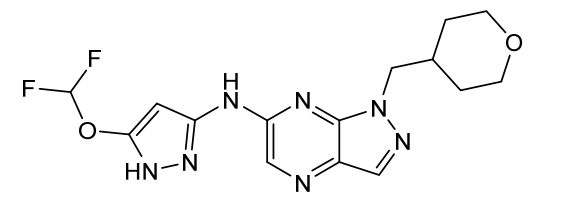
The structure of one CDK2 inhibitor, referred to herein as “a compound of formula (I)” or N-(5-(difluoromethoxy)-lH-pyrazol-3-yl)-l-((tetrahydro-2H-pyran-4-yl)methyl)-lH-pyrazolo[3,4-b]pyrazin-6-amine is shown below:
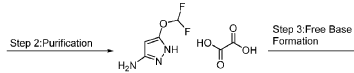
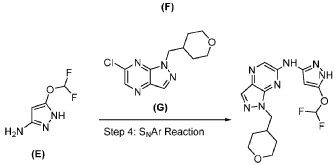
PAT
Example 2
N-(5-(difluoromethoxy)-1H-pyrazol-3-yl)-1-((tetrahydro-2H-pyran-4-yl)methyl)-1H-pyrazolo[3,4-b]pyrazin-6-amine
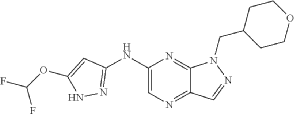
A mixture of 6-chloro-1-((tetrahydro-2H-pyran-4-yl)methyl)-1H-pyrazolo[3,4-b]pyrazine (Preparation 87, 780 mg, 3.09 mmol), 5-(difluoromethoxy)-1H-pyrazol-3-amine (554 mg, 3.72 mmol), tBuXphos Pd G3 (150 mg, 0.19 mmol) and KOAc (892 mg, 9.08 mmol) in dioxane (15 mL) was stirred at 90° C. for 6 h under N 2. The reaction mixture was evaporated to dryness in vacuo and the residue was purified by prep-HPLC-4 to afford the title compound as a white solid (361.4 mg, 32%). LCMS m/z=366 [M+H] +; 1H NMR (400 MHz, DMSO-d 6) δ: 12.21 (s, 1H), 10.82 (s, 1H), 8.19 (s, 1H), 8.17 (s, 1H), 7.32 (t, 1H), 5.98 (d, 1H), 4.40 (d, 2H), 3.87-3.75 (m, 2H), 3.29-3.16 (m, 2H), 2.24-2.11 (m, 1H), 1.46-1.29 (m, 4H).
PAT
- The cdk2 inhibitor blu-222 for treatment of cancerPublication Number: WO-2024168298-A1Priority Date: 2023-02-10
- Solid forms of a cdk2 inhibitorPublication Number: WO-2024148083-A1Priority Date: 2023-01-04
- Cdk2 inhibitorsPublication Number: US-2023322791-A1Priority Date: 2021-06-28
- Cdk2 inhibitorsPublication Number: US-2023159535-A1Priority Date: 2021-06-28
- CDK2 inhibitorsPublication Number: US-11970498-B2Priority Date: 2021-06-28Grant Date: 2024-04-30
- Cdk2 inhibitorsPublication Number: US-2024383902-A1Priority Date: 2021-06-28
- CDK2 inhibitorsPublication Number: US-11932648-B2Priority Date: 2021-06-28Grant Date: 2024-03-19
AS ON FEB2026 4.574 LAKHS VIEWS ON BLOG WORLDREACH AVAILABLEFOR YOUR ADVERTISEMENT
join me on Linkedin
Anthony Melvin Crasto Ph.D – India | LinkedIn
join me on Researchgate
RESEARCHGATE
join me on Facebook
Anthony Melvin Crasto Dr. | Facebook
join me on twitter
Anthony Melvin Crasto Dr. | twitter
+919321316780 call whatsaapp
EMAIL. amcrasto@gmail.com
References
/////////cirtociclib, cyclin-dependent kinase inhibitor, antineoplastic, BLU-222, BLU 222, BLU 170298, U93X72ED47, CDK2 Inhibitor BLU-222
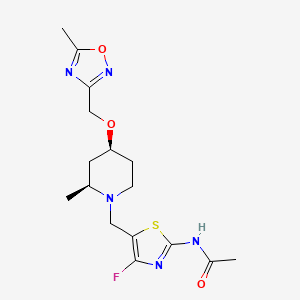
Ceperognastat

Ceperognastat
CAS 2241514-56-5
MF C16H22FN5O3S MW383.4 g/mol
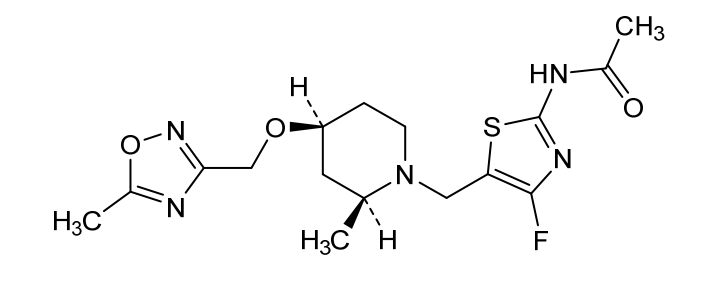
Acetamide, N-(4-fluoro-5-(((2S,4S)-2-methyl-4-((5-methyl-1,2,4-oxadiazol-3-yl)methoxy)-1-piperidinyl)methyl)-2-thiazolyl)-
N-[4-fluoro-5-({(2S,4S)-2-methyl-4-[(5-methyl-1,2,4-oxadiazol-3-yl)methoxy]piperidin-1-yl}methyl)-1,3-thiazol-2-yl]acetamide
O-GlcNAcase (OGA) enzyme inhibitor, LY3372689, LY3372689, U0SGP6ZX2V
Ceperognastat (LY3372689) is a drug candidate molecule under investigation to treat Alzheimer’s disease. It targets the enzyme O-GlcNAcase.[2][3] Its result is to reduce formation of tau protein tangles.
A molecule containing radioactive fluorine was used with a PET scan to show that ceperognastat binds in the human brain.[4]
Ceperognastat was discovered via a high-throughput screening campaign followed by further optimization.[5]
Eli Lilly and Company is recruiting subjects for a clinical trial.[6] Some hospitals in Australia: St Vincent’s Hospital, Sydney Hornsby Ku-Ring-Gai Hospital, The Prince Charles Hospital, The Queen Elizabeth Hospital, Adelaide, Box Hill Hospital, and Delmont Private Hospital are involved.[7] Results of the trial were expected by June 2024.[8] Primary completion of the study occurred on 9th July 2024, with full completion expected in August 2024. In an investor call, it was disclosed that ceperognastat missed the primary endpoint of improvement on the Integrated Alzheimer’s Disease Rating Scale. The detailed results of this study are expected to be disclosed at a conference in late 2024.[9]
Chemical
The molecule contains three rings: thiazole, piperidine and oxadiazole. Other functional groups included are an ether, acetamide, and a fluoride.[10]
- A Study of LY3372689 to Assess the Safety, Tolerability, and Efficacy in Participants With Alzheimer’s DiseaseCTID: NCT05063539Phase: Phase 2Status: CompletedDate: 2025-07-28
- A Study of the Effects of Multiple Doses of LY3372689 on the Brain in Healthy ParticipantsCTID: NCT04392271Phase: Phase 1Status: CompletedDate: 2020-11-04
- A Safety Study of LY3372689 in Healthy ParticipantsCTID: NCT04106206Phase: Phase 1Status: CompletedDate: 2020-04-24
- A Study of the Effects of LY3372689 on the Brain in Healthy ParticipantsCTID: NCT03944031Phase: Phase 1Status: CompletedDate: 2020-04-22
- A Safety Study of LY3372689 Given By Mouth to Healthy ParticipantsCTID: NCT03819270Phase: Phase 1Status: CompletedDate: 2019-07-05
REF
- Discovery and clinical translation of ceperognastat, an O‐GlcNAcase (OGA) inhibitor, for the treatment of Alzheimer’s diseasePublication Name: Alzheimer’s & Dementia: Translational Research & Clinical InterventionsPublication Date: 2024-10PMCID: PMC11694536PMID: 39748851DOI: 10.1002/trc2.70020
- Discovery of 4-(Arylethynyl)piperidine Derivatives as Potent Nonsaccharide O-GlcNAcase Inhibitors for the Treatment of Alzheimer’s DiseasePublication Name: Journal of Medicinal ChemistryPublication Date: 2024-08-07PMID: 39109492DOI: 10.1021/acs.jmedchem.4c01132
SYN
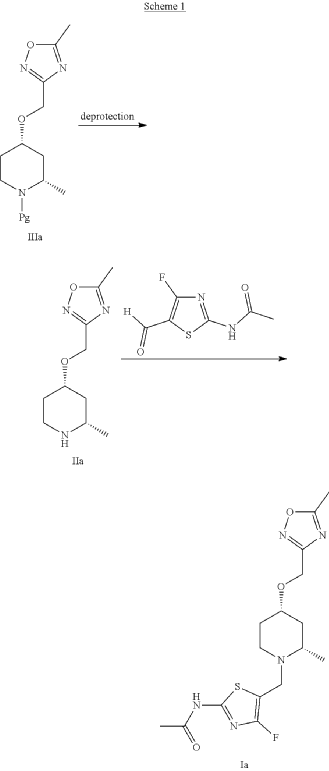
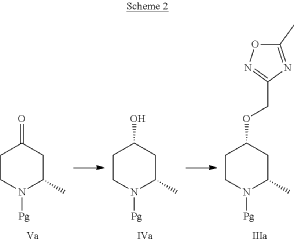
EXAMPLE 1
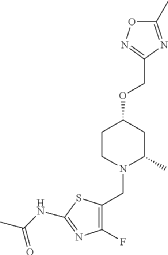
Synthesis of N-[4-fluoro-5-[[(2S,5S)-2-methyl-4-[(5-methyl-1,2,4-oxadiazol-3-yl)methoxy]-1-piperidyl]methyl]thiazol-2-yl]acetamide
PAT
- N-[4-fluoro-5-[[(2s,4s)-2-methyl-4-[(5-methyl-1,2,4-oxadiazol-3-yl)methoxy]-1-piperidyl]methyl]thiazol-2-yl]acetamide as oga inhibitorPublication Number: EP-3573983-B1Priority Date: 2017-01-27Grant Date: 2021-04-21
- N-[4-fluoro-5-[[(2s,4s)-2-methyl-4-[(5-methyl-1,2,4-oxadiazol-3-yl)methoxy]-1-piperidyl]methyl]thiazol-2-yl]acetamide as oga inhibitorPublication Number: NZ-754849-APriority Date: 2017-01-27
- N- [4-Fluoro-5-[[(2S, 4S) -2-methyl-4-[(5-methyl-1,2,4-oxadiazol-3-yl) methoxy] as OGA inhibitor -1-piperidyl] methyl] thiazol-2-yl] acetamidePublication Number: JP-2020504142-APriority Date: 2017-01-27
- N-[4-fluoro-5-[[(2S,4S)-2-methyl-4-[(5-methyl-1,2,4-oxadiazol-3-yl)methoxy]-1-piperidyl]methyl] Thiazol-2-yl]acetamide as an inhibitor of OGAPublication Number: IL-267693-APriority Date: 2017-01-27
- Acetamide N-[4-fluor-5-]](4S,2S)-2-methyl-4-](5-methyl-1,2,4-oxadiazole-3-yl)methoxy[-1-piperdyl[methyl] [Thiazole-2-yl] as an OGA inhibitorPublication Number: JO-P20190182-A1Priority Date: 2017-01-27
- N-[4-FLUORO-5-[[(2S,4S)-2-METHYL-4-[(5-METHYL-1,2,4-OXADIAZOLE-3-IL)METHOXI]-1-PIPERIDIL]METHYL]THIAZOLE-2-IL] ACETAMIDE AS AN OGA INHIBITOR.Publication Number: MX-387166-BPriority Date: 2017-01-27
- N-[4-fluoro-5-[[(2s,4s)-2-methyl-4-[(5-methyl-1,2,4-oxadiazol-3-yl)methoxy]-1-piperidyl]methyl]thiazol-2-yl]acetamide as oga inhibitorPublication Number: MY-197494-APriority Date: 2017-01-27
AS ON FEB2026 4.574 LAKHS VIEWS ON BLOG WORLDREACH AVAILABLEFOR YOUR ADVERTISEMENT
join me on Linkedin
Anthony Melvin Crasto Ph.D – India | LinkedIn
join me on Researchgate
RESEARCHGATE
join me on Facebook
Anthony Melvin Crasto Dr. | Facebook
join me on twitter
Anthony Melvin Crasto Dr. | twitter
+919321316780 call whatsaapp
EMAIL. amcrasto@gmail.com
References
References
- “Data Sheet LY3372689” (PDF). 26 December 2024. Retrieved 4 February 2025.
- “LY3372689”. http://www.alzforum.org.
- Cheng, Steven S.; Mody, Alison C.; Woo, Christina M. (2024-11-07). “Opportunities for Therapeutic Modulation of O-GlcNAc”. Chemical Reviews. 124 (22): 12918–13019. doi:10.1021/acs.chemrev.4c00417. ISSN 0009-2665. PMID 39509538.
- Shcherbinin, Sergey; Kielbasa, William; Dubois, Susan; Lowe, Stephen L; Phipps, Krista M; Tseng, James; Kevin, Donnelly B; Natanegara, Fanni; Warner, Susan; Dreyfus, Nicolas; Lindsay-Scott, Peter; Hawk, Mai Khanh; McDonald, Nicholas; Zhang, Xiaoyu; Gilmore, Julie A; Biglan, Kevin; Mergott, Dustin J; Russell, David; Gunn, Roger N; Constantinescu, Cristian; Nuthall, Hugh Norman; Collins, Emily C (December 2020). “Brain target occupancy of LY3372689, an inhibitor of the O-GlcNAcase (OGA) enzyme: Translation from rat to human: Neuroimaging / evaluating treatments”. Alzheimer’s & Dementia. 16 (S4). doi:10.1002/alz.040558. S2CID 227501893.
- Kielbasa, William; Goldsmith, Paul; Donnelly, Kevin B.; Nuthall, Hugh N.; Shcherbinin, Sergey; Fleisher, Adam S.; Hendle, Jörg; DuBois, Susan L.; Lowe, Stephen L.; Zhang, Feiyu Fred; Woerly, Eric M.; Dreyfus, Nicolas J.-F.; Evans, David; Gilmore, Jeremy; Mancini, Michele (October 2024). “Discovery and clinical translation of ceperognastat, an O-GlcNAcase (OGA) inhibitor, for the treatment of Alzheimer’s disease”. Alzheimer’s & Dementia: Translational Research & Clinical Interventions. 10 (4) e70020. doi:10.1002/trc2.70020. ISSN 2352-8737. PMC 11694536. PMID 39748851.
- “Assessment of Safety, Tolerability, and Efficacy of LY3372689 in Early Symptomatic Alzheimer’s Disease”. clinicaltrials.gov. 22 March 2022. Retrieved 31 March 2022.
- “A Study of LY3372689 to Assess the Safety, Tolerability, and Efficacy in Participants With Alzheimer’s Disease”. Retrieved 31 March 2022.
- Krietsch Boerner, Leigh (25 March 2022). “Hybrid meeting divulges structures of drug candidates”. Chemical & Engineering News. ISSN 0009-2347.
- edge.media-server.com https://edge.media-server.com/mmc/p/3kqnwjy6/. Retrieved 2024-10-06.
{{cite web}}: Missing or empty|title=(help) - Dreyfus, Nicolas Jacques Francois; Lindsay-Scott, Peter James (2 August 2018). “N-[4-Fluoro-5-[[(2S,4S)-2-Methyl-4-[(5-Methyl-1,2,4-Oxadiazol-3-Yl)methoxy]-1-Piperidyl]methyl]thiazol-2-Yl]acetamide as Oga Inhibitor”. Retrieved 31 March 2022.
| Names | |
|---|---|
| IUPAC nameN-[4-fluoro-5-[[2-methyl-4-[(5-methyl-1,2,4-oxadiazol-3-yl)methoxy]piperidin-1-yl]methyl]-1,3-thiazol-2-yl]acetamide | |
| Identifiers | |
| CAS Number | 2241514-56-5 [1] |
| 3D model (JSmol) | Interactive image |
| ChemSpider | 129432852 |
| PubChem CID | 135271363 |
| InChI | |
| SMILES | |
| Properties | |
| Chemical formula | C16H22FN5O3S |
| Molar mass | 383.44 g·mol−1 |
| Except where otherwise noted, data are given for materials in their standard state (at 25 °C [77 °F], 100 kPa).Infobox references | |
/////////ceperognastat, O-GlcNAcase (OGA) enzyme inhibitor, LY3372689, LY3372689, U0SGP6ZX2V
Cendifensine

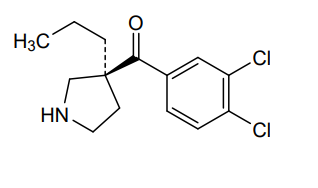
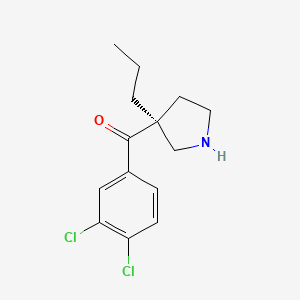
Cendifensine
CAS 1034048-49-1
MF C14H17Cl2NO MW286.2 g/mol
Methanone, (3,4-dichlorophenyl)[(3S)-3-propyl-3-pyrrolidinyl]-
(3,4-dichlorophenyl)[(3S)-3-propylpyrrolidin-3-yl]methanone
monoamine reuptake inhibitor, NOE-115, NOE 115, N4U2JR8GCX,
Cendifensine (INNTooltip International Nonproprietary Name) is a monoamine reuptake inhibitor (MRI)[1] related to the amphetamines and cathinones which has not been marketed at this time.[2][3][4] It was first described by 2013[4] and its INNTooltip International Nonproprietary Name was proposed in 2024.[2] The drug has been patented by Noema Pharma, which is developing a serotonin–norepinephrine–dopamine reuptake inhibitor (SNDRI) known as NOE-115 for the treatment of vasomotor symptoms associated with menopause[5] as well as for binge-eating disorder and depressive disorders.[6][7][8]
- OriginatorRoche
- DeveloperNoema Pharma
- ClassAlkanes; Antidepressants; Behavioural disorder therapies; Chlorobenzenes; Ketones; Pyrrolidines; Small molecules
- Mechanism of ActionAdrenergic uptake inhibitors; Dopamine uptake inhibitors; Serotonin uptake inhibitors
- Phase IIVasomotor symptoms
- No development reportedBinge-eating disorder; Depressive disorders
- 28 Jan 2026No recent reports of development identified for phase-I development in Binge-Eating-Disorder in Switzerland (Parenteral)
- 28 Jan 2026No recent reports of development identified for phase-I development in Depressive disorders in Switzerland (Parenteral)
- 17 Nov 2025Chemical structure information added.
SYN
WO2023161533
Example 1. Synthesis of (3,4-dichloro-phenyl)-((S)-3-propyl-pyrrolidin-3-yl)-methanone hydrochloride (15) quarterhydrate [See U.S. Patent No. 9,527,810]
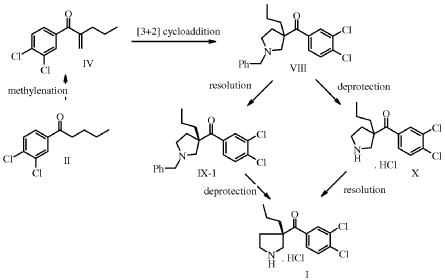
0123-(l-benzyl-3-propylpyrrolidin-3-yl)(3,4-dichlorophenyl)methanone (IX-1) (5 g, 13.3 mmol, Eq: 1.00, see U.S. Patent No. 9,527,810 for synthesis) was dissolved in dichloromethane (30 mL). The light yellow solution was cooled to 0-5 °C and N-ethyldiisopropylamine (172 mg, 226 pL, 1.33 mmol, Eq: 0.1) was added. 1-Chloroethyl chloroformate (2.28 g, 1.74 ml, 15.9 mmol, Eq: 1.2) was added dropwise while the temperature was maintained in between 0-5 °C. The reaction was warmed to room temperature over 30 min and was stirred 1 h at room temperature. Methanol (25 mL) was added and the light yellow solution was heated to 40 °C for 40 min. The reaction mixture was concentrated under reduced pressure (40 °C, 600-15 mbar) to give 5.48 g of crude product. Ethyl acetate (30.0 mL) was added and the suspension was heated to 50 °C. A solution of water (239 mg, 239 pL, 13.3 mmol, Eq: 1.0) in ethyl acetate (35 mL) was added over 10 min. The white suspension was stirred for 1 h at 50 °C and cooled to room temperature over 1.5 h. The suspension was filtered, and the filter cake was washed twice with ethyl acetate (10 mL) and dried under reduced pressure (40° C, 15 mbar) to give 4.02 g of (15) as quarterhydrate (93% yield).
SYN
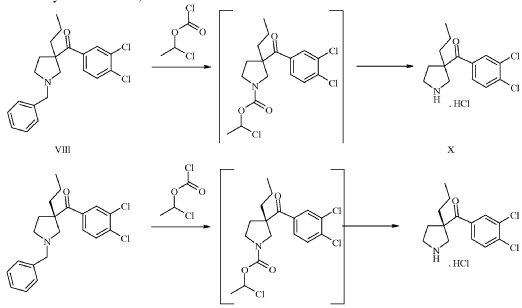
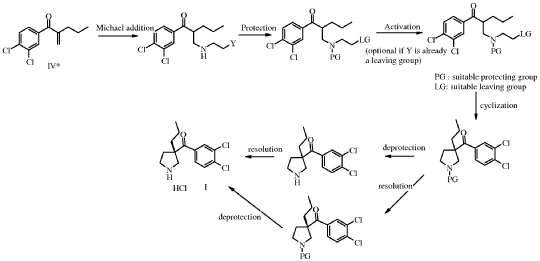
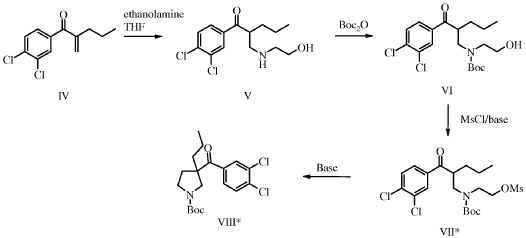
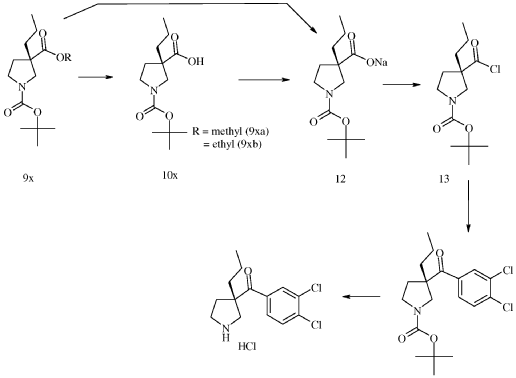
Synthesis of l-(3,4-Dichloro-phenyl)-pentan-l-one (II)

Aluminum chloride (12.4 g, 93.3 mmol, Eq: 1.5) was charged in the reactor followed by 1,2-dichlorobenzene (27.4 g, 21.0 ml, 187 mmol, Eq: 3). The suspension was heated to 80°C in 10 min and pentanoyl chloride (7.5 g, 7.58 ml, 62.2 mmol, Eq: 1.00) was added dropwise over 30 min. The reaction mixture went from a yellow suspension to an orange/brown viscous solution. After 5h reaction at 80°C the deep orange/brown reaction mixture was cooled to 25°C and stirred at 25 °C overnight. The reaction mixture was poured onto a mixture of n-heptane (68.4 g, 100 ml) and water/ice 50:50 (100 g, 100 ml). The organic phase was separated and washed with water (50.0 g, 50 ml) then with NaHC03aq 5% (50 ml) and finally with water (50.0 g, 50 ml) The organic phase was dried azeotropically (60°C/ca 150 mbar) with n-heptane (205 g, 300 ml) to give 28g of crude product as an orange oil (ca 96:4 Product/2,3-dichlorovalerophenone isomer). The crude oil was dissolved in n-heptane (27.4 g, 40 ml) and the solution was cooled to -20°C for 2 h. The suspension was filtered. The filter was washed with cold n-heptane (10.3 g, 15 ml) and dried at 35°C/10 mbar to give 8.8 g of the title product (>98a GC, isomer <1%).
Synthesis of l-(3,4-Dichloro-phenyl)-2-methylene-pentan-l-one (IV)

II ΠΙ-1 IV
Alternative A
l-(3,4-dichlorophenyl)pentan-l-one II (15 g, 63.0 mmol, equivalents: 1.00) and paraformaldehyde (3.58 g, 113 mmol, equivalents: 1.8) were charged in the reactor followed by heptane (30.0 ml). Temperature was set at 25°C. Diethylamine (8.84 g, 12.5 ml, 120 mmol, equivalents: 1.9) was added. Paraformaldehyde partially dissolved over time. Acetic acid (11.4 g, 10.9 ml, 189 mmol, equivalents: 3) was slowly added and the reaction mixture was heated to 60°C. After 17h reaction (< 2 % starting material), deionized water (30.0 ml) was added and the reaction mixture was heated to 80°C. After completion of the reaction (usually < 5h, < 1% intermediate by HPLC), the reaction mixture was cooled to room temperature. The organic phase was separated and washed twice with 20 mL deionized water. The organic phase was
concentrated under reduced pressure and dried azeotropically with heptane to give 15.32 g of the olefin IV as orange oil (96% yield corrected for 96a% purity by HPLC).
Alternative B
l-(3,4-dichlorophenyl)pentan-l-one II (15 g, 63.0 mmol, equivalents: 1.00) and paraformaldehyde (3.58 g, 113 mmol, equivalents 1.8) were charged in the reactor followed by heptane (20.5 g, 30.0 ml). Temperature was set to 25°C. Acetic acid (11.4 g, 10.9 ml, 189 mmol, equivalents: 3) was added followed by diethylamine (8.84 g, 12.5 ml, 120 mmol, equivalents: 1.9). The reaction mixture was heated to 60°C. After 17h30 reaction (< 2% starting material), deionized water (30.0 ml) was added and the reaction mixture was heated to 80°C. After completion of the reaction (usually < 5h; < 1% intermediate by HPLC), the reaction mixture was cooled to room temperature and polish filtered. The aqueous phase was separated and discarded. The organic phase was washed twice with 20 mL deionized water and once with 10 mL 25% aqueous sodium chloride. The organic phase was concentrated under reduced pressure and dried azeotropically with heptane to give 15.53 g of the desired product IV as orange oil (99% yield, corrected for 97.7 %).

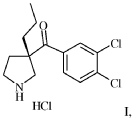
Synthesis of (3,4-Dichloro-phenyl)-(3-(S)-propyl-pyrrolidin-3-yl)-methanonehydrochloride I
Alternative A
(S)-(3,4-dichlorophenyl)(3-propylpyrrolidin-3-yl)methanone (2S,3S)-2,3-dihydroxysuccinate X-TAR (20 g, 45.7 mmol, Equivalents: 1.00) was suspended in methyl iert-butyl ether (150 ml)and treated with 2M aqueous sodium hydroxide (48.0 ml, 96.0 mmol, Equivalents: 2.1). The organic phase was separated and washed twice with water (50 ml). Ethanol (150 ml) was added to the organic extract followed by 37% hydrochloric acid (4.01 ml, 48.0 mmol, Equivalents: 1.05). The solution was concentrated under reduced pressure (300 mbar/60°C) to ca 100 mL and was polish filtered. Ethyl acetate (300 ml) was added and the solution was seeded. The resulting mixture was concentrated under reduced pressure (300 mbar/60°C) to a white suspension (ca 150 g). A solution of water (412 mg, 412 μΐ, 22.9 mmol, Equivalents: 0.5) in ethanol (15 ml) was added at room temperature. The suspension was stirred at room temperature overnight and cooled to 0°C for lh. The suspension was filtered and the filter cake was washed with cold (0°C) ethyl acetate (60 ml). The crystals were dried at 50°C under reduced pressure to give 14.3 g of product I as quarterhydrate (96% yield).
PAT
- HYPEREROYL PYROLIDINYL AND PIPERIDINYL KETONEPublication Number: BR-PI0720742-A2Priority Date: 2006-12-19
- Heteroaryl pyrrolidinyl and piperidinyl ketone derivativesPublication Number: JP-5394252-B2Priority Date: 2006-12-19Grant Date: 2014-01-22
- Heteroaryl pyrrolidinyl and piperidinyl ketone derivativesPublication Number: CA-2671378-CPriority Date: 2006-12-19Grant Date: 2015-10-20
- Heteroaryl pyrrolidinyl and piperidinyl ketone derivativesPublication Number: RU-2479575-C2Priority Date: 2006-12-19Grant Date: 2013-04-20
- Heteroaryl pyrrolidinyl and piperidinyl ketone derivatives and uses thereofPublication Number: US-8513425-B2Priority Date: 2006-12-19Grant Date: 2013-08-20
- HETEROARIL-PYRROLIDINYL AND PIPERIDINYL-CETONE DERIVATIVESPublication Number: PT-2354124-EPriority Date: 2006-12-19
- Heteroaryl pyrrolidinyl and piperidinyl ketone derivativesPublication Number: NZ-577114-APriority Date: 2006-12-19
- Heteroaryl pyrrolidinyl and piperidinyl ketone derivatives and uses thereofPublication Number: US-2012065225-A1Priority Date: 2006-12-19
- derivatives of heteroaryl pyrrolidinyl and piperidinyl ketone, their uses and pharmaceutical compositionPublication Number: BR-PI0720742-B1Priority Date: 2006-12-19
- Heteroaryl pyrrolidinyl and piperidinyl ketone derivativesPublication Number: EP-2354124-B1Priority Date: 2006-12-19Grant Date: 2013-02-13
- Heteroaryl pyrrolidinyl and piperidinyl ketone derivativesPublication Number: EP-2684871-A1Priority Date: 2006-12-19
- Heteroaryl pyrrolidinyl and piperidinyl ketone derivativesPublication Number: EP-2354124-A2Priority Date: 2006-12-19
- Pyrrolidinyl and piperidinyl ketone derivatives and uses thereofPublication Number: US-8084623-B2Priority Date: 2006-12-19Grant Date: 2011-12-27
- Heteroaryl-pyrrolidinyl- and -piperidinyl-ketone derivativesPublication Number: ES-2401129-T3Priority Date: 2006-12-19Grant Date: 2013-04-17
AS ON FEB2026 4.574 LAKHS VIEWS ON BLOG WORLDREACH AVAILABLEFOR YOUR ADVERTISEMENT
join me on Linkedin
Anthony Melvin Crasto Ph.D – India | LinkedIn
join me on Researchgate
RESEARCHGATE
join me on Facebook
Anthony Melvin Crasto Dr. | Facebook
join me on twitter
Anthony Melvin Crasto Dr. | twitter
+919321316780 call whatsaapp
EMAIL. amcrasto@gmail.com
References
References
- WO, Garibaldi G, “Triple uptake inhibitor for the treatment of atypical depression”, published 31 August 2023, assigned to Noema Pharma AG
- “Proposed INN: List 132 International Nonproprietary Names for Pharmaceutical Substances (INN)” (PDF). WHO Drug Information. 38 (4). 2024.
cendifensinum cendifensine (3,4-dichlorophenyl)[(3S)-3-propylpyrrolidin-3-yl]methanone monoamine reuptake inhibitor […] C14H17Cl2NO 1034048-49-1
- “(3,4-Dichlorophenyl)[(3S)-3-propyl-3-pyrrolidinyl]methanone”. Global Substance Registration System (GSRS). National Center for Advancing Translational Sciences (NCATS), U.S. National Institutes of Health. Retrieved 24 February 2025.
- CA, Adam JM, Dvorak CA, Fishlock D, Humphreys ER, Iding H, Pfleger C, Rege PD, Shi X, Vitale J, Wang S, Zajac M, “(3,4-dichloro-phenyl)-((s)-3-propyl-pyrrolidin-3-yl)-methanone hydrochloride and manufacturing processes”, published 23 April 2013, assigned to F Hoffmann La Roche AG
- Young Moss S, Lee A, Simon JA (November 2025). “Advances in Pharmacotherapy for Menopausal Vasomotor Symptoms”. Drugs. 85 (11): 1363–1379. doi:10.1007/s40265-025-02231-8. PMC 12572072. PMID 41028653.
- “NOE 115”. AdisInsight. 21 May 2024. Retrieved 24 February 2025.
- “Delving into the Latest Updates on Noema Pharma AG with Synapse”. Synapse. 23 January 2025. Retrieved 24 February 2025.
- “Noema Pharma”. Noema Pharma. 18 June 2021. Retrieved 24 February 2025.
| Clinical data | |
|---|---|
| Other names | NOE-115 |
| Drug class | Monoamine reuptake inhibitor |
| Identifiers | |
| IUPAC name | |
| CAS Number | 1034048-49-1 |
| PubChem CID | 59744668 |
| ChemSpider | 42806369 |
| UNII | N4U2JR8GCX |
| Chemical and physical data | |
| Formula | C14H17Cl2NO |
| Molar mass | 286.20 g·mol−1 |
| 3D model (JSmol) | Interactive image |
| SMILES | |
| InChI | |
///////////cendifensine, monoamine reuptake inhibitor, NOE-115, NOE 115, N4U2JR8GCX,
Catadegbrutinib
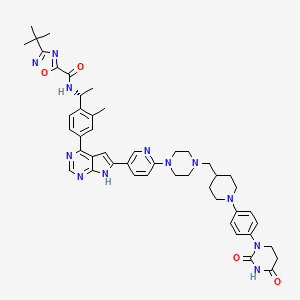
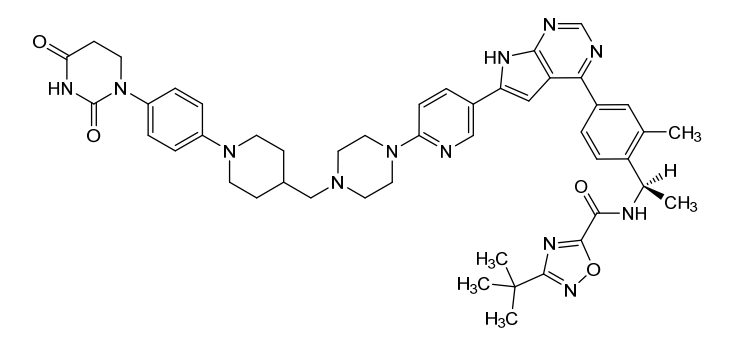
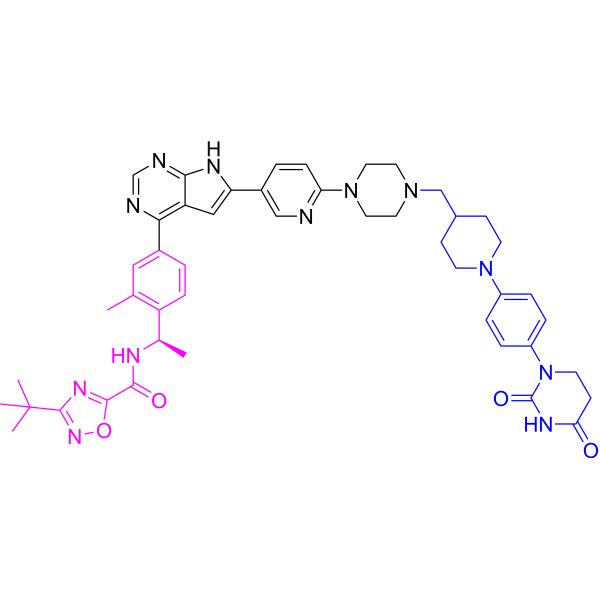
Catadegbrutinib
CAS 2736508-60-2
MF C47H54N12O4 MW851.0 g/mol
3-tert-butyl-N-[(1R)-1-[4-[6-[6-[4-[[1-[4-(2,4-dioxo-1,3-diazinan-1-yl)phenyl]piperidin-4-yl]methyl]piperazin-1-yl]-3-pyridinyl]-7H-pyrrolo[2,3-d]pyrimidin-4-yl]-2-methylphenyl]ethyl]-1,2,4-oxadiazole-5-carboxamide
3-tert-butyl-N-{(1R)-1-[13-methyl-82,84-dioxo-27H-2(4,6)-pyrrolo[2,3-d]pyrimidina-8(1)-[1,3]diazinana-4(1,4)-piperazina3(5,2)-pyridina-6(4,1)-piperidina-1(1),7(1,4)-dibenzenaoctaphan-14-yl]ethyl}-1,2,4-oxadiazole-5-carboxamide
Bruton tyrosine kinase degrader, antineoplastic, BGB-16673, BGB 16673, PF6GPZ4DYT, BTK-IN-29, Tacabrutideg
Catadegbrutinib (BGB-16673) is an orally active, potent Bruton’s tyrosine kinase (BTK) degrader, or chimeric degradation activator compound (CDAC). It works by targeting BTK for proteasomal degradation, showing high efficacy against wild-type and mutated forms (including C481S) in B-cell malignancies. It is under investigation for cancers such as CLL, SLL, and MCL.
Key Details About Catadegbrutinib
- Mechanism of Action: As a PROTAC-class molecule, it binds to BTK and recruits E3 ubiquitin ligase, causing polyubiquitination and degradation of the protein.
- Target Potency: It shows strong degradation activity, with a
of
(concentration required for 50% degradation) and a
binding
of
.
- Clinical Potential: Developed for B-cell malignancies (chronic lymphocytic leukemia, mantle cell lymphoma) that have developed resistance to covalent and non-covalent BTK inhibitors.
- Synonyms/Codes: BGB-16673, BGB-116673, BTK-IN-29, and recently listed in WHO proposed INN as tacabrutideg.
- Status: Used primarily in research for treating B-cell malignancies, lymphomas, and potentially autoimmune diseases.


Catadegbrutinib is designed to overcome resistance mechanism challenges seen with existing BTK inhibitors.
SYN
Example 14: (R) -3- (tert-butyl) -N- (1- (4- (6- (6- (4- ( (1- (4- (2, 4-dioxotetrahydropyrimidin-1 (2H) -yl) phenyl) piperidin-4-yl) methyl) piperazin-1-yl) pyridin-3-yl) -7H-pyrrolo [2, 3-d] pyrimidin-4-yl) -2-methylphenyl) ethyl) -1, 2, 4-oxadiazole-5-carboxamide
[0357]
Step 1: tert-butyl 4- (5- (4-chloro-7H-pyrrolo [2, 3-d] pyrimidin-6-yl) pyridin-2-yl) piperazine-1- carboxylate
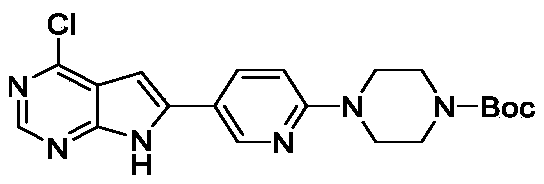
A mixture of 4-chloro-6-iodo-7H-pyrrolo [2, 3-d] pyrimidine (3 g, 10.73 mmol) , tert-butyl 4- (5- (4, 4, 5, 5-tetramethyl-1, 3, 2-dioxaborolan-2-yl) pyridin-2-yl) piperazine-1-carboxylate (4.18 g, 10.73 mmol) , Na 2CO 3(1.25 g, 11.80 mmol) and Pd (dppf) Cl 2(0.39 g, 0.537 mmol) in dioxane (120 mL) and H 2O (20 mL) was stirred in a sealed tube at 85 ℃ overnight. After cooling, the reaction mixture was filtered and the solid was washed with 20 mL of MeOH and dried under vacuum to afford the product (4.05 g, 91%) . [M+H] += 415.0.
[0360]
Step 2: tert-butyl (R) -4- (5- (4- (4- (1- (3- (tert-butyl) -1, 2, 4-oxadiazole-5-carboxamido) ethyl) -3- methylphenyl) -7H-pyrrolo [2, 3-d] pyrimidin-6-yl) pyridin-2-yl) piperazine-1-carboxylate
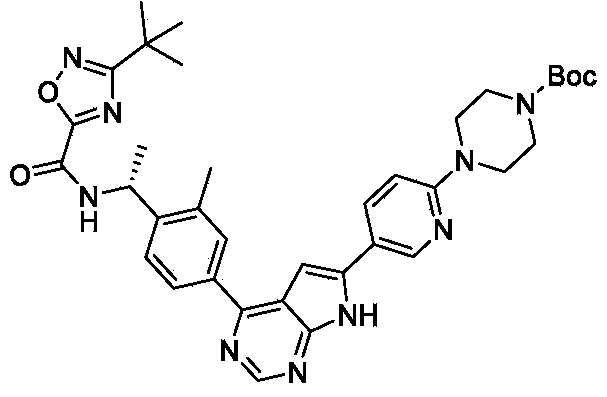
A mixture of tert-butyl 4- (5- (4-chloro-7H-pyrrolo [2, 3-d] pyrimidin-6-yl) pyridin-2-yl) piperazine-1-carboxylate (0.9 g, 2.17 mmol) , (R) -3- (tert-butyl) -N- (1- (2-methyl-4- (4, 4, 5, 5-tetramethyl-1, 3, 2-dioxaborolan-2-yl) phenyl) ethyl) -1, 2, 4-oxadiazole-5-carboxamide (0.94 g, 2.28 mmol) , Na 2CO 3(0.46 g, 4.34 mmol) and Pd (dppf) Cl 2(79.3 mg, 0.108mmol) in dioxane (60 mL) and H 2O (10 mL) was stirred in a sealed tube at 100 ℃ overnight. After cooling, the reaction mixture was filtered and the solid was washed with 5 mL of MeOH and dried under vacuum to afford the product (1.02 g, 70.6%) . [M+H] += 666.0.
[0363]
Step 3: (R) -3- (tert-butyl) -N- (1- (2-methyl-4- (6- (6- (piperazin-1-yl) pyridin-3-yl) -7H- pyrrolo [2, 3-d] pyrimidin-4-yl) phenyl) ethyl) -1, 2, 4-oxadiazole-5-carboxamide, hydrogen chloride salt
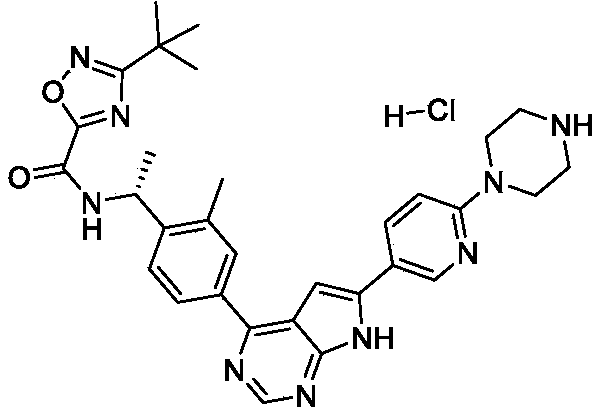
To a solution of tert-butyl (R) -4- (5- (4- (4- (1- (3- (tert-butyl) -1, 2, 4-oxadiazole-5-carboxamido) ethyl) -3-methylphenyl) -7H-pyrrolo [2, 3-d] pyrimidin-6-yl) pyridin-2-yl) piperazine-1-carboxylate (1.02 g, 1.53 mmol) in DCM (50 mL) in a round bottom flask was added HCl in dioxane (4 N, 35 mL) at 0 ℃. The mixture was stirred for 2 h at 20 ℃. The precipitate was collected with filtration and dried in vacuum to afford the product (0.92 g, 100%) . 1H NMR (400 MHz, DMSO) δ H13.53 (s, 1H) , 10.06 (d, J = 7.5 Hz, 1H) , 9.33 (s, 2H) , 9.00 (s, 1H) , 8.93 (s, 1H) , 8.35 (d, J = 8.7 Hz, 1H) , 8.05 (d, J = 8.1 Hz, 1H) , 7.99 (s, 1H) , 7.75 (d, J = 8.0 Hz, 1H) , 7.55 (s, 1H) , 7.12 (d, J = 8.9 Hz, 1H) , 5.50-5.28 (m, 1H) , 3.89 (s, 4H) , 3.20 (s, 4H) , 2.57 (s, 3H) , 1.56 (d, J = 6.9 Hz, 3H) , 1.38 (s, 9H) . [M+H] += 566.3.
[0366]
Step 4: (R) -3- (tert-butyl) -N- (1- (4- (6- (6- (4- ( (1- (4- (2, 4-dioxotetrahydropyrimidin-1 (2H) – yl) phenyl) piperidin-4-yl) methyl) piperazin-1-yl) pyridin-3-yl) -7H-pyrrolo [2, 3-d] pyrimidin-4-yl) -2- methylphenyl) ethyl) -1, 2, 4-oxadiazole-5-carboxamide
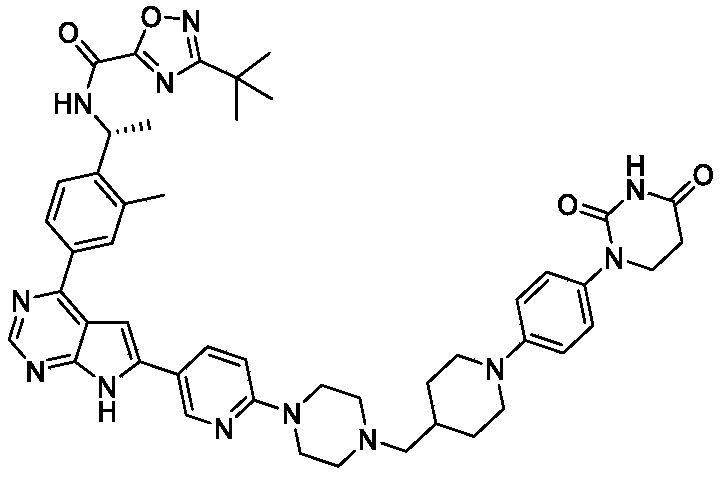
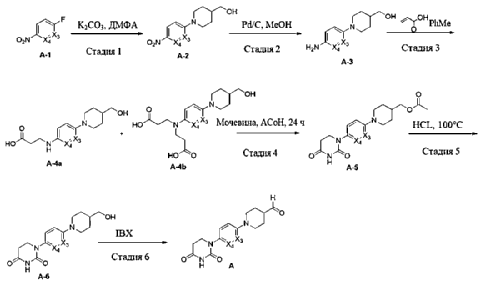
A mixture of (R) -3- (tert-butyl) -N- (1- (2-methyl-4- (6- (6- (piperazin-1-yl) pyridin-3-yl) -7H-pyrrolo [2, 3-d] pyrimidin-4-yl) phenyl) ethyl) -1, 2, 4-oxadiazole-5-carboxamide, hydrogen chloride salt (0.06 g, 0.1 mmol) , 1- (4- (2, 4-dioxotetrahydropyrimidin-1 (2H) -yl) phenyl) piperidine-4-carbaldehyde (0.033 g, 0.11 mmol) and NaOAc (8.2 mg, 0.1 mmol) in DCM/EtOH (30 mL/10 mL) was stirred in a round bottom flask for 1 h at 20 ℃. Then NaBH 3CN (12.6 mg, 0.2 mmol) was added. The mixture was stirred overnight at 20 ℃. The mixture was concentrated to dryness and purified with silica gel column chromatography (MeOH in DCM from 0%to 12%gradient elution) to give the product (0.049 g, 57.8%) . 1H NMR (400 MHz, DMSO) δ H12.60 (s, 1H) , 10.27 (s, 1H) , 9.97 (d, J =6.1 Hz, 1H) , 8.79 (d, J = 18.7 Hz, 2H) , 8.18 (d, J = 7.8 Hz, 1H) , 8.09 (d, J = 7.0 Hz, 1H) , 8.04 (s, 1H) , 7.67 (d, J = 7.7 Hz, 1H) , 7.30 (s, 1H) , 7.13 (d, J = 6.9 Hz, 2H) , 6.97-6.92 (m, 3H) , 5.41-5.34 (m, 1H) , 3.71-3.68 (m, 4H) , 3.64-3.56 (m, 4H) , 2.70-2.64 (m, 4H) , 2.53 (s, 3H) , 2.47-2.43 (m, 4H) , 2.25-2.19 (m, 2H) , 1.84-1.81 (m, 2H) , 1.75-1.70 (m, 1H) , 1.56 (t, J = 9.1 Hz, 3H) , 1.37 (s, 9H) , 1.28-1.18 (m, 2H) .
PAT
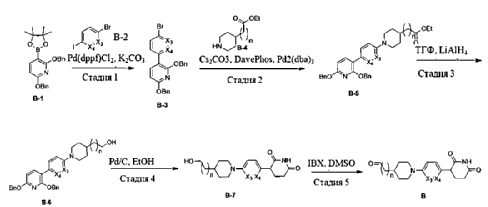
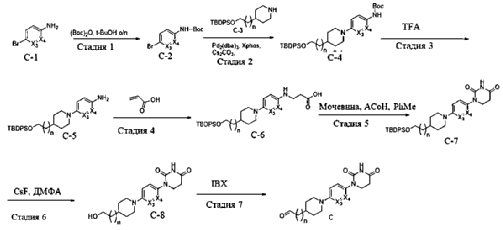
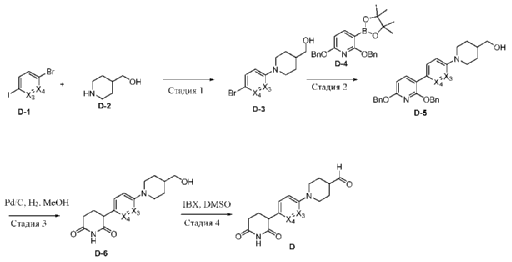
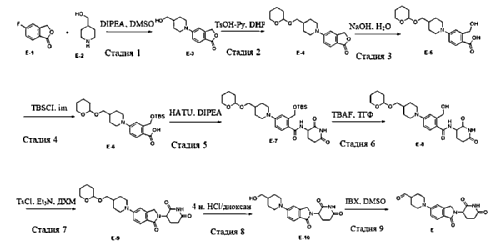
PAT
- Degradation of bruton’s tyrosine kinase (btk) by conjugation of btk inhibitors with e3 ligase ligand and methods of usePublication Number: WO-2021219070-A1Priority Date: 2020-04-30
- Degradation of Bruton’s tyrosine kinase (BTK) by conjugation of BTK inhibitors to E3 ligase ligands and methods of use thereofPublication Number: CN-115485278-APriority Date: 2020-04-30
- Degradation of bruton’s tyrosine kinase (btk) by conjugation of btk inidbitors with e3 ligase ligand and methods of usePublication Number: US-2023167118-A1Priority Date: 2020-04-30
AS ON FEB2026 4.574 LAKHS VIEWS ON BLOG WORLDREACH AVAILABLEFOR YOUR ADVERTISEMENT
join me on Linkedin
Anthony Melvin Crasto Ph.D – India | LinkedIn
join me on Researchgate
RESEARCHGATE
join me on Facebook
Anthony Melvin Crasto Dr. | Facebook
join me on twitter
Anthony Melvin Crasto Dr. | twitter
+919321316780 call whatsaapp
EMAIL. amcrasto@gmail.com
References
- [1]. Wang H, et al. BGB-16673, a selective BTK degrader, exhibits deeper inhibition of cancer cell signaling pathways and better efficacy in MCL models. Blood, 2024, 144: 5833.[2]. Wu Y, et al. Translational modeling to predict human pharmacokinetics and pharmacodynamics of a Bruton’s tyrosine kinase-targeted protein degrader BGB-16673. Br J Pharmacol. 2024 Dec;181(24):4973-4987. [Content Brief][3]. Hexiang Wang, et al. Degradation of bruton’s tyrosine kinase (btk) by conjugation of btk inhibitors with e3 ligase ligand and methods of use. WO2021219070A1. 2021-11-04.
/////////catadegbrutinib, Bruton tyrosine kinase degrader, antineoplastic, BGB-16673, BGB 16673, PF6GPZ4DYT, BTK-IN-29, Tacabrutideg


 New Drug Approvals


