
 DRUG APPROVALS BY DR ANTHONY MELVIN CRASTO
.....
DRUG APPROVALS BY DR ANTHONY MELVIN CRASTO
.....



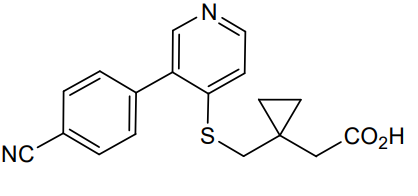
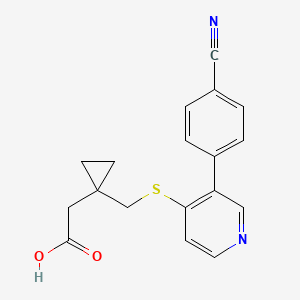
Darbinurad
CAS 1877347-38-0
MF C18H16N2O2S MW 324.4 g/mol
[1-({[3-(4-cyanophenyl)pyridin-4-yl]sulfanyl}methyl)cyclopropyl]acetic
acid
- 1-[[[3-(4-Cyanophenyl)-4-pyridinyl]thio]methyl]cyclopropaneacetic acid
- Cyclopropaneacetic acid, 1-[[[3-(4-cyanophenyl)-4-pyridinyl]thio]methyl]-
2-[1-[[3-(4-cyanophenyl)-4-pyridinyl]sulfanylmethyl]cyclopropyl]acetic acid
urate transporter inhibitor, AYFFM7L5F0
Darbinurad is a investigational new drug that is being evaluated for the treatment of gout. It is a selective urate transporter 1 (URAT1) inhibitor that blocks the reabsorption of uric acid within the renal proximal tubule, thereby reducing serum uric acid concentrations.[1][2]
| Uric acid is the final metabolite of diet and purine in human body. In vivo environment (pH 7.4, 37 degrees), uric acid is present in blood mainly in the form of sodium salt of uric acid, the serum uric acid value of normal people is generally lower than 6 mg/dL. When uric acid in serum exceeds 7 mg/dL (Shi, et al., Nature 2003, 425: 516-523), sodium salt of uric acid will crystallize out and precipitate on joints and other parts of the body, and result in disorders such as gout, urinary stones, kidney stones, etc. Patients with gout are often accompanied with other complications, including hypertension, diabetes, hyperlipidemia, dyslipidemia, atherosclerosis, obesity, metabolic disease, nephropathy, cardiovascular disease, and respiratory disease, etc. (Rock, Et al., Nature Reviews Rheumatology 2013, 9: 13-23). In 2002, Japanese scientists Endou group reported that anion transport channel protein URAT1 is a major protein responsible for reabsorption of uric acid in kidney, they also found that the blood uric acid in people with URAT1 gene mutation (causing the synthesis of such protein being interrupted, inducing nonfunctional proteins) is only one-tenth of that in normal people (Enomoto et. al., Nature 2002 417: 447-452). These findings in human genetics demonstrate that URAT1 anion transport protein in kidney plays very important role in concentration of uric acid in blood, and indicates that URAT1 is a very good and specific target of a drug for reducing blood uric acid. |
PAT
https://patentscope.wipo.int/search/en/detail.jsf?docId=US209029213&_cid=P21-MGDFSK-15618-1
Example 12: Synthesis of Compound 20
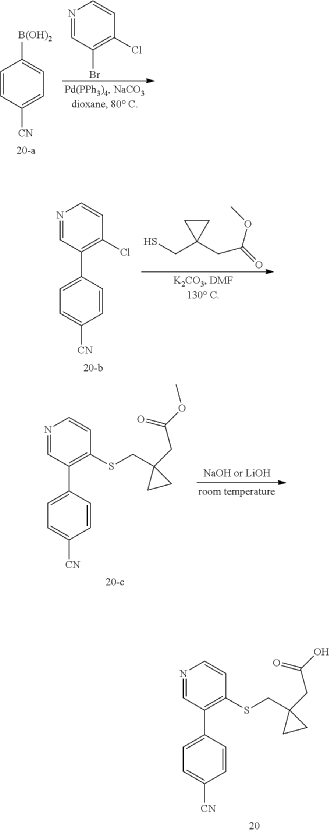
Step 1: Synthesis of 4-(4-chloropyridin-3-yl)benzonitrile (20-b)
Step 2: Synthesis of methyl 2-(1-(((3-(4-cyanophenyl)pyridin-4-yl)thio) methyl)cyclopropyl)acetate (20-c)
Step 3: Synthesis of 2-(1-(((3-(4-cyanophenyl)pyridin-4-yl)thio)methyl) cyclopropyl)acetic acid (20)
PAT
Carboxylic acid compound, method for preparation thereof, and use thereof
Publication Number: KR-102474640-B1, Priority Date: 2014-08-13, Grant Date: 2022-12-05
- Diaryl imidazole compound and pest control agentPublication Number: EP-3181552-B1Priority Date: 2014-08-13Grant Date: 2020-10-21
- Carboxylic acid compound and its preparation method and usePublication Number: CN-106573908-BPriority Date: 2014-08-13Grant Date: 2021-02-05
- Diarylimidazole compound and pest control agentPublication Number: EP-3766871-A1Priority Date: 2014-08-13
- Diarylimidazole compound and harmful organism control agentPublication Number: US-2022000112-A1Priority Date: 2014-08-13
- Carboxylic acid compound, method for preparation thereof, and use thereofPublication Number: EP-3181557-B1Priority Date: 2014-08-13Grant Date: 2023-03-01


AS ON JUNE2025 4.45 LAKHS VIEWS ON BLOG WORLDREACH AVAILABLEFOR YOUR ADVERTISEMENT
join me on Linkedin
Anthony Melvin Crasto Ph.D – India | LinkedIn
join me on Researchgate
RESEARCHGATE

join me on Facebook
Anthony Melvin Crasto Dr. | Facebook
join me on twitter
Anthony Melvin Crasto Dr. | twitter
+919321316780 call whatsaapp
EMAIL. amcrasto@gmail.com

……
| Clinical data | |
|---|---|
| Other names | D-0120 |
| Identifiers | |
| IUPAC name | |
| CAS Number | 1877347-38-0 |
| PubChem CID | 118902135 |
| ChemSpider | 128992995 |
| UNII | AYFFM7L5F0 |
| Chemical and physical data | |
| Formula | C18H16N2O2S |
| Molar mass | 324.40 g·mol−1 |
| 3D model (JSmol) | Interactive image |
| SMILES | |
| InChI | |
References
- Kaufmann D, Chaiyakunapruk N, Schlesinger N (November 2024). “Optimizing gout treatment: A comprehensive review of current and emerging uricosurics”. Joint Bone Spine. 92 (2) 105826. doi:10.1016/j.jbspin.2024.105826. PMID 39622367.
- “Darbinurad”. PatSnap.
/////////Darbinurad


 New Drug Approvals
