
Home » Uncategorized (Page 185)
Category Archives: Uncategorized
 DRUG APPROVALS BY DR ANTHONY MELVIN CRASTO
.....FOR BLOG HOME CLICK HERE
DRUG APPROVALS BY DR ANTHONY MELVIN CRASTO
.....FOR BLOG HOME CLICK HEREFlag and hits
ORGANIC SPECTROSCOPY

SUBSCRIBE

 Subscribe in a reader
Enter your email address:
Delivered by FeedBurner
Subscribe to New Drug Approvals by Email


Recent Comments
 | shivkr2 on SPSR Excellence Award 2025 – S… |
 | Bonkasaurus on Infigratinib phosphate |
 | PALOVAROTENE | ORGAN… on Palovarotene |
| Pfizer just purchase… on Temanogrel | |
| Pfizer To Cash In On… on Temanogrel |
Hope In A Pill- A crop of small-molecule drugs in development could double the treatment options for people with multiple sclerosis in coming years


 EMD Serono
Blueberries, not fruit juice, cut type-2 diabetes risk

http://www.bbc.co.uk/news/health-23880701
Eating more fruit, particularly blueberries, apples and grapes, is linked to a reduced risk of developing type-2 diabetes, suggests a study in the British Medical Journal.
Blueberries cut the risk by 26% compared with 2% for three servings of any whole fruit – but fruit juice did not appear to have the same effect.
The research looked at the diets of more than 187,000 people in the US.
But Diabetes UK said the results of the study should be treated with caution.
Researchers from the UK, US and Singapore used data from three large studies of nurses and health professionals in the US to examine the link between fruit consumption and the risk of contracting type-2 diabetes.
What is type-2 diabetes?
Diabetes is an incurable condition in which the body cannot control blood sugar levels, because of problems with the hormone insulin.
In type-2 diabetes, either the pancreas…
View original post 632 more words
GLIPTINS: BETTER APPROACH FOR TYPE 2 DIABETES
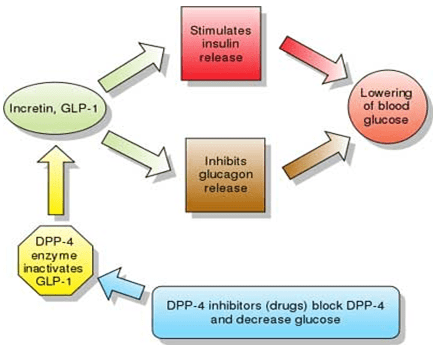
GLIPTINS: BETTER APPROACH FOR TYPE 2 DIABETES
Diabetes Mellitus is a metabolic disorder which results from defects in insulin secretion, insulin action, or both, further characterized by hyperglycemia, and causes long term damage and failure of various organs. It is estimated that 366 million people had Diabetes Mellitus in 2011; by 2030 this would have risen to 552 million. Many oral hypoglycaemic agents are…
read more: http://www.pharmatutor.org/articles/gliptins-better-approach-type-2-diabetes
Capecitabine Intermediate-cxpharma


Jiangsu Chengxin Pharmaceutical Co., Ltd with total area 60,000m2 and total invested amount of RMB 300 million, is a high-tech joint-stock enterprise established in 2012, located in Binjiang Pharm-Chem Industry Park, Qidong, the outstanding cultural city well known as the Rivers and Seas Pearl in Jiangsu Province, close to Chongming Island with merely one separated river. It takes around 1 hour by car from the manufacturing site to Shanghai, the Yangtze River Delta economic metropoli……More
http://www.cxpharma.com/en/about.asp?id=8
Dear sir,
We are just a manufacturer and very strong in the following intermediates:
Intermediates for Capecitabine:
2′,3′-Di-O-acetyl-5′-deoxy-5-fluorocytidine (CAS: 161599-46-8)
1,2,3-Triacetyl-5-deoxy-D-ribose (CAS: 62211-93-2)
Methyl-5-deoxy-2,3-O-isopropylidene-beta-D-ribofuranoside (CAS: 23202-81-5)
We have the dedicated workshop for Capecitabine intermediate. Our capacity is more than 20MT per month. Our company is complied with the requirement from EU GMP, US FDA and Chinese GMP. Just for your information.
If you are interested in any of above, please let me know.
Looking forward to your early reply.
Best regards,
Runya Wang(Ms) / Sales Department
Add: No.338 Shanghai Road, Binjiang Pharm-Chem
Industry Park, Qidong, Jiangsu, P.R.China 226221
Tel: 0086-513-86029596
Fax: 0086-513-86105399
Email: runya.wang@cxpharma.com
Web: www.cxpharma.com
http://www.cxpharma.com/en/home.asp in english
Roche reports positive Phase II results for experimental eye drug

Lampalizumab
Roche reports positive Phase II results for experimental eye drug
Lampalizumab, an experimental eye drug from Roche, has helped slow down the progression of an advanced form of age-related macular degeneration (AMD) in a Phase II study, the company announced this week.
READ ALL AT
SEE ALSO
Lampalizumab effective in Phase II clinical trial for macular degeneration
Roche’s new drug for age-related macular degeneration, lampalizumab, showed effective in slowing the progression of AMD in patients with advanced disease, shrinking the area of geographic atrophy by 20%. Read More >>

Lampalizumab (INN) is a humanized monoclonal antibody designed for the treatment of geographic atrophy secondary to age-related macular degeneration. It binds to CFD.[1][2]
This drug was developed by Genentech/Roche.
References
The U.S. Food and Drug Administration (FDA) has approved Mirvaso (brimonidine) topical gel for the topical treatment of the facial erythema (redness) of rosacea in adults 18 years of age or older

brimonidine
Mirvaso
Generic Name: brimonidine
Date of Approval: August 23, 2013
Company: Galderma Laboratories, L.P.
Treatment for: Facial Erythema (Redness) of Rosacea
READ ALL AT
http://www.drugs.com/mirvaso.html


Brimonidine (bri-MOE-ni-deen, brand names Alphagan and Alphagan-P) is a drug used to treat open-angle glaucoma or ocular hypertension.
It acts via decreasing synthesis of aqueous humor, and increasing the amount that drains from the eye through uveoscleral outflow. As a treatment for glaucoma, it is usually given in eyedrop form.
Mechanism of action
Brimonidine is an α2 adrenergic agonist.
Alpha 2 agonists, through the activation of a G protein-coupled receptor, inhibit the activity of adenylate cyclase. This reduces cAMP and hence aqueous humour production by the ciliary body.
Peripheral alpha 2 agonist activity results in vasoconstriction of blood vessels (as opposed to central alpha 2 agonist activity that decreases sympathetic tone, as can be seen by the medication clonidine). This vasoconstriction may explain the acute reduction in aqueous humor flow. The increased uveoscleral outflow from prolonged use may be explained by increased prostaglandin release due to alpha adrenergic stimulation. This may lead to relaxed ciliary muscle and increased uveoscleral outflow.[1]
Clinical uses
Brimonidine is indicated for the lowering of intraocular pressure in patients with open-angle glaucoma or ocular hypertension. It is also the active ingredient of Combigan along with timolol maleate.
In 2013, the FDA approved topical application of brimonidine 0.33% (Mirvaso) for facial erythema or rosacea.
References
- Mosby’s Drug Guide for Nurses (7th edition; Skidmore) 2007.
External links

Portuguese medicine expenditure in hospitals keeps increasing

August 29, 2013 | By Márcio Barra
The Portuguese Government spends almost as much money on the NHS hospitals’ expenses with medicines as with the reimbursement of all drugs sold in pharmacies, according to data revealed by the Portuguese Ministry of Health.
The numbers disclosed show that, in 2012, the state spent about $ 2,200 million with drugs, 1.200 million of which with the reimbursement of medicines sold in pharmacies and 1.000 million with medicines provided in hospitals.
While the expenses on drugs sold in pharmacies are in control, thanks to successive price cuts by the Government over the years – just in 2013, about 1.400 brand drugs had mandatory a 7% price discount – the expenses with medicines in hospitals and debts to the Pharmaceutical Industry grew again this year, both in value and in average payments. This upward trend is ongoing for six consecutive months.
In July, the value…
View original post 124 more words
Citrus And Statins

bergamottin
Citrus And Statins. —Citrus And Statins “” “How Foods and Drugs Collide” provided my first knowledge that 5-geranoxy psoralen (bergamottin) had been identified as the active agent in grapefruit juice implicated in interfering with the so-called statin drugs
( C&ENCitrus And Statins, Sept. 27, page 55 William L. Stanley Carmel, Calif. /articles/88/i49/Citrus-Statins.html 20101206 88 49 /magazine/88/8849.html /departments/letters.html Citrus And Statins Letters Citrus And Statins Chemical & Engineering News Citrus And Statins ACS 2009 IRS Form 990 Available The American Chemical Society’s 2009 Form 990 is now available on ACS’s website.
Chemical & Engineering News, 88(49), December 06, 2010 [Letters] you will have to pay a fee or subscribe
free info from net
Bergamottin is a natural furanocoumarin found principally in grapefruit juice. It is also found in the oil of bergamot orange, from which it was first isolated and from which its name is derived. To a lesser extent, bergamottin is also present in the essential oils of other citrus fruits. Along with the chemically related compound 6′,7′-dihydroxybergamottin, it is believed to be responsible for thegrapefruit juice effect in which the consumption of the juice affects the metabolism of a variety of pharmaceutical drugs.[1]
Chemistry
Chemically, bergamottin and dihydroxybergamottin are linear furanocoumarins functionalized with side chains derived fromgeraniol. They are inhibitors of some isoforms of the cytochrome P450 enzyme, particularly CYP3A4.[2] This prevents oxidative metabolism of certain drugs by the enzyme, resulting in an elevated concentration of drug in the bloodstream.
Normally, the grapefruit juice effect is considered to be a negative interaction, and patients are often warned not to consume grapefruit or its juice when taking medication. However, some current research is focused on the potential benefits of cytochrome P450 inhibition.[3] Bergamottin, dihydroxybergamottin, or synthetic analogs may be developed as drugs that are targeted to increase the oral bioavailability of other drugs. Drugs that may have limited use because they are metabolized by CYP3A4 may become viable medications when taken with a CYP3A4 inhibitor because the dose required to achieve a necessary concentration in the blood would be lowered.[4]
Biosynthesis of bergamottin
Bergamottin is derived from components originating in the shikimate pathway.[5] The biosynthesis of this compound starts with the formation of the demethylsuberosin (3) product which is formed via the alkylation of the umbelliferone (2) compound.[6] The alkylation of the umbelliferone is initiated with the use of dimethylallyl pyrophosphate, more commonly known as DMAPP. The cyclization of an alkyl group occurs to form marmesin (4), which is done in the presence of NADPH and oxygen along with a cytochrome P450 monooxygenase catalyst.[7] This process is then repeated twice more, first to remove the hydroxyisopropyl substituent from marmesin (4) to form psoralen (5), and then to add a hydroxyl group to form bergaptol (6).[8] Bergaptol (6) is next methylated with SAM, S-Adenosyl methionine, to form bergapten (7). The final step in this biosynthesis is the attachment of a GPP, or geranyl pyrophosphate, to the newly methylated bergapten (7) to form the target molecule bergamottin (8).

References
- ^ David G. Bailey, J. Malcolm, O. Arnold, J. David Spence (1998). “Grapefruit juice-drug interactions”. Br J Clin Pharmacol 46 (2): 101–110. doi:10.1046/j.1365-2125.1998.00764.x.PMC 1873672. PMID 9723817.
- ^ Basavaraj Girennavar, Shibu M. Poulose, Guddadarangavvanahally K. Jayaprakasha, Narayan G. Bhat and Bhimanagouda S. Patila (2006). “Furocoumarins from grapefruit juice and their effect on human CYP 3A4 and CYP 1B1 isoenzymes”. Bioorganic & Medicinal Chemistry 14 (8): 2606–2612. doi:10.1016/j.bmc.2005.11.039. PMID 16338240.
- ^ E. C. Row, S. A. Brown, A. V. Stachulski and M. S. Lennard (2006). “Design, synthesis and evaluation of furanocoumarin monomers as inhibitors of CYP3A4”. Org. Biomol. Chem. 4(8): 1604–1610. doi:10.1039/b601096b. PMID 16604230.
- ^ Christensen, Hege; Asberg, Anders; Holmboe, Aase-Britt; Berg, Knut Joachim (2002). “Coadministration of grapefruit juice increases systemic exposure of diltiazem in healthy volunteers”. European Journal of Clinical Pharmacology 58 (8): 515–520. doi:10.1007/s00228-002-0516-8. PMID 12451428.
- ^ Dewick, P. Medicinal Natural Products:A Biosynthetic Approach, 2nd ed., Wiley&Sons: West Sussex, England, 2001, p 145.
- ^ Bisagni, E. Synthesis of psoralens and analogues. J. Photochem. Photobiol. B. 1992, 14, 23-46.
- ^ Voznesensky, A. I.; Schenkman, J. B. The cytochrome P450 2B4-NADPH cytochrome P450 reductase electron transfer complex is not formed by charge-pairing. J. Biol. Chem. 1992, 267, 14669-14676.
- ^ Kent, U. M.; Lin, H. L.; Noon, K. R.; Harris, D. L.; Hollenberg, P. F. Metabolism of bergamottin by cytochromes P450 2B6 and 3A5. J. Pharmacol. Exp. Ther. 2006, 318, 992-1005
Ward off cancer with super-nutrient lycopene: Here’s the research


(NaturalNews) Men who like pizza, pasta with red sauce, and lasagna have a new excuse to eat more of those dishes upon discovering that lycopene in tomato sauce promotes prostate health. This news has been around for some time.
Learn more: http://www.naturalnews.com/041805_cancer_prevention_lycopene_super_nutrient.html#ixzz2dL4boXcH
INFARMED identifies cause of Azilect’s supply shortages
August 28, 2013 | By Márcio Barra

According to a statement issued by INFARMED, in the course of this operation a total of 133 inspections were conducted – 129 pharmacies and four distributors – alongside telephone surveys with 111 pharmacies to collect additional information.
View original post 259 more words


 New Drug Approvals