New Drug Approvals

Home » FDA 2015 (Page 3)

Category Archives: FDA 2015

DRUG APPROVALS BY DR ANTHONY MELVIN CRASTO .....FOR BLOG HOME CLICK HERE

Blog Stats

  • 4,822,027 hits

Flag and hits

Flag Counter

Enter your email address to follow this blog and receive notifications of new posts by email.

Join 37.9K other subscribers
Follow New Drug Approvals on WordPress.com

Archives

Categories

Recent Posts

Flag Counter

ORGANIC SPECTROSCOPY

Read all about Organic Spectroscopy on ORGANIC SPECTROSCOPY INTERNATIONAL 

Enter your email address to follow this blog and receive notifications of new posts by email.

Join 37.9K other subscribers
DR ANTHONY MELVIN CRASTO Ph.D

DR ANTHONY MELVIN CRASTO Ph.D

DR ANTHONY MELVIN CRASTO, Born in Mumbai in 1964 and graduated from Mumbai University, Completed his Ph.D from ICT, 1991,Matunga, Mumbai, India, in Organic Chemistry, The thesis topic was Synthesis of Novel Pyrethroid Analogues, Currently he is working with AFRICURE PHARMA, ROW2TECH, NIPER-G, Department of Pharmaceuticals, Ministry of Chemicals and Fertilizers, Govt. of India as ADVISOR, earlier assignment was with GLENMARK LIFE SCIENCES LTD, as CONSUlTANT, Retired from GLENMARK in Jan2022 Research Centre as Principal Scientist, Process Research (bulk actives) at Mahape, Navi Mumbai, India. Total Industry exp 32 plus yrs, Prior to joining Glenmark, he has worked with major multinationals like Hoechst Marion Roussel, now Sanofi, Searle India Ltd, now RPG lifesciences, etc. He has worked with notable scientists like Dr K Nagarajan, Dr Ralph Stapel, Prof S Seshadri, etc, He did custom synthesis for major multinationals in his career like BASF, Novartis, Sanofi, etc., He has worked in Discovery, Natural products, Bulk drugs, Generics, Intermediates, Fine chemicals, Neutraceuticals, GMP, Scaleups, etc, he is now helping millions, has 9 million plus hits on Google on all Organic chemistry websites. His friends call him Open superstar worlddrugtracker. His New Drug Approvals, Green Chemistry International, All about drugs, Eurekamoments, Organic spectroscopy international, etc in organic chemistry are some most read blogs He has hands on experience in initiation and developing novel routes for drug molecules and implementation them on commercial scale over a 32 PLUS year tenure till date Feb 2023, Around 35 plus products in his career. He has good knowledge of IPM, GMP, Regulatory aspects, he has several International patents published worldwide . He has good proficiency in Technology transfer, Spectroscopy, Stereochemistry, Synthesis, Polymorphism etc., He suffered a paralytic stroke/ Acute Transverse mylitis in Dec 2007 and is 90 %Paralysed, He is bound to a wheelchair, this seems to have injected feul in him to help chemists all around the world, he is more active than before and is pushing boundaries, He has 100 million plus hits on Google, 2.5 lakh plus connections on all networking sites, 100 Lakh plus views on dozen plus blogs, 227 countries, 7 continents, He makes himself available to all, contact him on +91 9323115463, email amcrasto@gmail.com, Twitter, @amcrasto , He lives and will die for his family, 90% paralysis cannot kill his soul., Notably he has 38 lakh plus views on New Drug Approvals Blog in 227 countries......https://newdrugapprovals.wordpress.com/ , He appreciates the help he gets from one and all, Friends, Family, Glenmark, Readers, Wellwishers, Doctors, Drug authorities, His Contacts, Physiotherapist, etc He has total of 32 International and Indian awards

Verified Services

View Full Profile →

Archives

Categories

Flag Counter

FDA approves flibanserin first treatment for sexual desire disorder


FDA approves first treatment for sexual desire disorder
Addyi approved to treat premenopausal women

SEE FULL SYNTHESIS …CLICK HERE

The U.S. Food and Drug Administration today approved  to treat acquired, generalized hypoactive sexual desire disorder (HSDD) in premenopausal women. Prior to Addyi’s approval, there were no FDA-approved treatments for sexual desire disorders in men or women.

http://www.fda.gov/NewsEvents/Newsroom/PressAnnouncements/ucm458734.htm?source=govdelivery&utm_medium=email&utm_source=govdelivery


August 18, 2015

Release

The U.S. Food and Drug Administration today approved Addyi (flibanserin) to treat acquired, generalized hypoactive sexual desire disorder (HSDD) in premenopausal women. Prior to Addyi’s approval, there were no FDA-approved treatments for sexual desire disorders in men or women.

“Today’s approval provides women distressed by their low sexual desire with an approved treatment option,” said Janet Woodcock, M.D., director of the FDA’s Center for Drug Evaluation and Research (CDER). “The FDA strives to protect and advance the health of women, and we are committed to supporting the development of safe and effective treatments for female sexual dysfunction.”

HSDD is characterized by low sexual desire that causes marked distress or interpersonal difficulty and is not due to a co-existing medical or psychiatric condition, problems within the relationship, or the effects of a medication or other drug substance. HSDD is acquired when it develops in a patient who previously had no problems with sexual desire. HSDD is generalized when it occurs regardless of the type of sexual activity, the situation or the sexual partner.

“Because of a potentially serious interaction with alcohol, treatment with Addyi will only be available through certified health care professionals and certified pharmacies,” continued Dr. Woodcock. “Patients and prescribers should fully understand the risks associated with the use of Addyi before considering treatment.”

Addyi can cause severely low blood pressure (hypotension) and loss of consciousness (syncope). These risks are increased and more severe when patients drink alcohol or take Addyi with certain medicines (known as moderate or strong CYP3A4 inhibitors) that interfere with the breakdown of Addyi in the body. Because of the alcohol interaction, the use of alcohol is contraindicated while taking Addyi. Health care professionals must assess the likelihood of the patient reliably abstaining from alcohol before prescribing Addyi.

Addyi is being approved with a risk evaluation and mitigation strategy (REMS), which includes elements to assure safe use (ETASU). The FDA is requiring this REMS because of the increased risk of severe hypotension and syncope due to the interaction between Addyi and alcohol. The REMS requires that prescribers be certified with the REMS program by enrolling and completing training. Certified prescribers must counsel patients using a Patient-Provider Agreement Form about the increased risk of severe hypotension and syncope and about the importance of not drinking alcohol during treatment with Addyi. Additionally, pharmacies must be certified with the REMS program by enrolling and completing training. Certified pharmacies must only dispense Addyi to patients with a prescription from a certified prescriber. Additionally, pharmacists must counsel patients prior to dispensing not to drink alcohol during treatment with Addyi.

Addyi is also being approved with a Boxed Warning to highlight the risks of severe hypotension and syncope in patients who drink alcohol during treatment with Addyi, in those who also use moderate or strong CYP3A4 inhibitors, and in those who have liver impairment. Addyi is contraindicated in these patients. In addition, the FDA is requiring the company that owns Addyi to conduct three well-designed studies in women to better understand the known serious risks of the interaction between Addyi and alcohol.

Addyi is a serotonin 1A receptor agonist and a serotonin 2A receptor antagonist, but the mechanism by which the drug improves sexual desire and related distress is not known. Addyi is taken once daily. It is dosed at bedtime to help decrease the risk of adverse events occurring due to possible hypotension, syncope and central nervous system depression (such as sleepiness and sedation). Patients should discontinue treatment after eight weeks if they do not report an improvement in sexual desire and associated distress.

The effectiveness of the 100 mg bedtime dose of Addyi was evaluated in three 24-week randomized, double-blind, placebo-controlled trials in about 2,400 premenopausal women with acquired, generalized HSDD. The average age of the trial participants was 36 years, with an average duration of HSDD of approximately five years. In these trials, women counted the number of satisfying sexual events, reported sexual desire over the preceding four weeks (scored on a range of 1.2 to 6.0) and reported distress related to low sexual desire (on a range of 0 to 4). On average, treatment with Addyi increased the number of satisfying sexual events by 0.5 to one additional event per month over placebo increased the sexual desire score by 0.3 to 0.4 over placebo, and decreased the distress score related to sexual desire by 0.3 to 0.4 over placebo. Additional analyses explored whether the improvements with Addyi were meaningful to patients, taking into account the effects of treatment seen among those patients who reported feeling much improved or very much improved overall. Across the three trials, about 10 percent more Addyi-treated patients than placebo-treated patients reported meaningful improvements in satisfying sexual events, sexual desire or distress. Addyi has not been shown to enhance sexual performance.

The 100 mg bedtime dose of Addyi has been administered to about 3,000 generally healthy premenopausal women with acquired, generalized HSDD in clinical trials, of whom about 1,700 received treatment for at least six months and 850 received treatment for at least one year.

The most common adverse reactions associated with the use of Addyi are dizziness, somnolence (sleepiness), nausea, fatigue, insomnia and dry mouth.

The FDA has recognized for some time the challenges involved in developing treatments for female sexual dysfunction. The FDA held a public Patient-Focused Drug Development meeting and scientific workshop on female sexual dysfunction on October 27 and October 28, 2014, to solicit perspectives directly from patients about their condition and its impact on daily life, and to discuss the scientific challenges related to developing drugs to treat these disorders. The FDA continues to encourage drug development in this area.

Consumers and health care professionals are encouraged to report adverse reactions from the use of Addyi to the FDA’s MedWatch Adverse Event Reporting program at www.fda.gov/MedWatch or by calling 1-800-FDA-1088.

Addyi is marketed by Sprout Pharmaceuticals, based in Raleigh, North Carolina.

////////

Addyi, flibanserin, fda 2015, sexual desire disorder

 सुकून उतना ही देना प्रभू, जितने से जिंदगी चल जाये। औकात बस इतनी देना, कि औरों का भला हो जाये।

DRUG APPROVALS BY DR ANTHONY MELVIN CRASTO …..FOR BLOG HOME CLICK HERE

Join me on Linkedin

View Anthony Melvin Crasto Ph.D's profile on LinkedIn

Join me on Facebook FACEBOOK

Join me on twitterFollow amcrasto on Twitter

Join me on google plus Googleplus

Join me on Researchgate

Anthony Melvin Crasto Dr.

 amcrasto@gmail.com

09b37-misc2b027LIONEL MY SON

He was only in first standard in school when I was hit by a deadly one in a million spine stroke called acute transverse mylitis, it made me 90% paralysed and bound to a wheel chair, Now I keep him as my source of inspiration and helping millions, thanks to millions of my readers who keep me going and help me to keep my son happy

सुकून उतना ही देना प्रभू, जितने से

जिंदगी चल जाये।

औकात बस इतनी देना,

कि औरों का भला हो जाये।

Read all about Organic Spectroscopy on ORGANIC SPECTROSCOPY INTERNATIONAL  

Eisai’s lenvatinib 兰伐替尼 レンバチニブ gets FDA approval


Lenvatinib Mesilate

Eisai’s lenvatinib 兰伐替尼 レンバチニブ


See synthesis at https://newdrugapprovals.org/2014/08/04/eisais-lenvatinib-%E5%85%B0%E4%BC%90%E6%9B%BF%E5%B0%BC-%E3%83%AC%E3%83%B3%E3%83%90%E3%83%81%E3%83%8B%E3%83%96-to-get-speedy-review-in-europe/

Above post contains SYNTHESIS, spectrocopy predicts, etc

February 13, 2015

Release

The U.S. Food and Drug Administration today granted approval to Lenvima (lenvatinib) to treat patients with progressive, differentiated thyroid cancer (DTC) whose disease progressed despite receiving radioactive iodine therapy (radioactive iodine refractory disease).

The most common type of thyroid cancer, DTC is a cancerous growth of the thyroid gland which is located in the neck and helps regulate the body’s metabolism. The National Cancer Institute estimates that 62,980 Americans were diagnosed with thyroid cancer and 1,890 died from the disease in 2014. Lenvima is a kinase inhibitor, which works by blocking certain proteins from helping cancer cells grow and divide.

“The development of new therapies to assist patients with refractory disease is of high importance to the FDA,” said Richard Pazdur, M.D., director of the Office of Hematology and Oncology Products in the FDA’s Center for Drug Evaluation and Research. “Today’s approval gives patients and healthcare professionals a new therapy to help slow the progression of DTC.”

Lenvima was reviewed under the FDA’s priority review program, which provides for an expedited review of drugs that, if approved, would provide significant improvement in safety or effectiveness in the treatment of a serious condition. The drug also received orphan product designation because it is intended to treat a rare disease. Lenvima is being approved approximately two months ahead of the prescription drug user fee goal date of April 14, 2015, the date when the agency was scheduled to complete its review of the application.

Lenvima’s efficacy was demonstrated in 392 participants with progressive, radioactive iodine-refractory DTC who were randomly assigned to receive either Lenvima or a placebo.  Study results showed Lenvima-treated participants lived a median of 18.3 months without their disease progressing (progression-free survival), compared to a median of 3.6 months for participants who received a placebo. Additionally, 65 percent of participants treated with Lenvima saw a reduction in tumor size, compared to the two percent of participants who received a placebo. A majority of participants randomly assigned to receive the placebo were treated with Lenvima upon disease progression.

The most common side effects of Lenvima were high blood pressure (hypertension), fatigue, diarrhea, joint and muscle pain (arthralgia/myalgia), decreased appetite, decreased weight, nausea, inflammation of the lining of the mouth (stomatitis), headache, vomiting, excess protein in the urine (proteinuria), swelling and pain in the palms, hands and/or the soles of the feet (palmar-plantar erythrodysesthesia syndrome), abdominal pain and changes in voice volume or quality (dysphonia).

Lenvima may cause serious side effects, including cardiac failure, blood clot formation (arterial thromboembolic events), liver damage (hepatotoxicity), kidney damage (renal failure and impairment), an opening in the wall of the stomach or intestines (gastrointestinal perforation) or an abnormal connection between two parts of the stomach or intestines (fistula formation), changes in the heart’s electrical activity (QT Interval Prolongation), low levels of calcium in the blood (hypocalcemia), the simultaneous occurrence of headache, confusion, seizures and visual changes (Reversible Posterior Leukoencephalopathy Syndrome), serious bleeding (hemorrhage), risks to an unborn child if a patient becomes pregnant during treatment, and impairing suppression of the production of thyroid-stimulating hormone.

Lenvima is marketed by Woodcliff Lake, New Jersey-based Eisai Inc.

सुकून उतना ही देना प्रभू, जितने से जिंदगी चल जाये।औकात बस इतनी देना,कि औरों का भला हो जाये।………..P.S. : The views expressed are my personal and in no-way suggest the views of the professional body or the company that I represent.


सुकून उतना ही देना प्रभू, जितने से जिंदगी चल जाये। औकात बस इतनी देना, कि औरों का भला हो जाये।
DRUG APPROVALS BY DR ANTHONY MELVIN CRASTO …..FOR BLOG HOME CLICK HERE

Join me on Linkedin

View Anthony Melvin Crasto Ph.D's profile on LinkedIn

Join me on Facebook FACEBOOK

Join me on twitterFollow amcrasto on Twitter
Join me on google plus Googleplus

 amcrasto@gmail.com

09b37-misc2b027LIONEL MY SON
He was only in first standard in school when I was hit by a deadly one in a million spine stroke called acute transverse mylitis, it made me 90% paralysed and bound to a wheel chair, Now I keep him as my source of inspiration and helping millions, thanks to millions of my readers who keep me going and help me to keep my son happy
सुकून उतना ही देना प्रभू, जितने से
जिंदगी चल जाये।
औकात बस इतनी देना,
कि औरों का भला हो जाये।


DACLATASVIR, 达拉他韦 , Даклатасвир , داكلاتاسفير ,


Daclatasvir.svg

Daclatasvir

BMS-790052, 
EBP 883; BMS 790052
THERAPEUTIC CLAIM Treatment of hepatitis C
 
CHEMICAL NAMES
1. Carbamic acid, N,N’-[[1,1′-biphenyl]-4,4′-diylbis[1H-imidazole-5,2-diyl-(2S)-2,1-
 pyrrolidinediyl[(1S)-1-(1-methylethyl)-2-oxo-2,1-ethanediyl]]]bis-, C,C’-dimethyl ester
2. dimethyl N,N’-(biphenyl-4,4′-diylbis{1H-imidazole-5,2-diyl-[(2S)-pyrrolidine-2,1-
 diyl][(1S)-1-(1-methylethyl)-2-oxoethane-2,1-diyl]})dicarbamate
MF C40H50N8O6
MW 738.9
SPONSOR Bristol-Myers Squibb
CODE  BMS-790052
CAS  1009119-64-5
SMILES:CC(C)C(C(=O)N1CCCC1C2=NC=C(N2)C3=CC=C(C=C3)C4=CC=C(C=C4)C5=CN=C(N5)C6CCCN6C(=O)C(C(C)C)NC(=O)OC)NC(=O)OC
 UNII-LI2427F9CI
Activity: Treatment of Hepatitis C; HCV Drug; Treatment of HCV; Inhibitor of NS5A
Status: Launched 2014 (EU, Japan)
Originator: Bristol-Myers Squibb
NMR
FDA APPROVAL……..July 24th, 2015
Daklinza (daclatasvir) is an NS5A inhibitor indicated for use in combination with sofosbuvir for the treatment of chronic hepatitis C virus (HCV) genotype 3 infection.
 
Daclatasvir dihydrochloride
1. Carbamic acid, N,N’-[[1,1′-biphenyl]-4,4′-diylbis[1H-imidazole-5,2-diyl-(2S)-2,1-
 pyrrolidinediyl[(1S)-1-(1-methylethyl)-2-oxo-2,1-ethanediyl]]]bis-, C,C’-dimethyl ester,
 hydrochloride (1:2)
2. dimethyl N,N’-(biphenyl-4,4′-diylbis{1H-imidazole-5,2-diyl-[(2S)-pyrrolidine-2,1-
 diyl][(1S)-1-(1-methylethyl)-2-oxoethane-2,1-diyl]})dicarbamate dihydrochloride
MF C40H50N8O6 . 2 HCl, MW 811.8
SPONSOR Bristol-Myers Squibb
CODE BMS-790052-05
CAS  1009119-65-6
 

Daclatasvir (USAN[1]) (formerly BMS-790052, trade name Daklinza) is a drug for the treatment of hepatitis C (HCV). It is was developed by Bristol-Myers Squibb and was approved in Europe on 22 August 2014.

Daclatasvir inhibits the HCV nonstructural protein NS5A.[2][3] Recent research suggests that it targets two steps of the viral replication process, enabling rapid decline of HCV RNA.[4]

Daclatasvir has been tested in combination regimens with pegylated interferon and ribavirin,[5] as well as with other direct-acting antiviral agents including asunaprevir[6][7][8][9] and sofosbuvir.[10][11]

It is on the World Health Organization’s List of Essential Medicines, a list of the most important medications needed in a basic health system.[12]

 ChemSpider 2D Image | Daclatasvir | C40H50N8O6
Hepatitis C virus (HCV) is a major global health problem, with an estimated 150-200 million people infected worldwide, including at least 5 million in Europe (Pawlotsky, Trends Microbiol, 2004, 12: 96-102). According to the World Health Organization, 3 to 4 million new infections occur each year. The infection is often asymptomatic; however, the majority of HCV-infected individuals develop chronic infection (Hoof agle, Hepatology, 2002, 36: S21-S29; Lauer et al, N. Engl. J. Med., 2001, 345: 41-52; Seeff, Semin. Gastrointest., 1995, 6: 20-27). Chronic infection frequently results in serious liver disease, including fibrosis and steatosis (Chisari, Nature, 2005, 435: 930-932).
About 20% of patients with chronic HCV infection develop liver cirrhosis, which progresses to hepatocellular carcinoma in 5% of the cases (Hoofnagle, Hepatology, 2002, 36: S21-S29; Blonski et al, Clin. Liver Dis., 2008, 12: 661-674; Jacobson et al, Clin. Gastroenterol. Hepatol, 2010, 8: 924-933; Castello et al., Clin. Immunol, 2010, 134: 237-250; McGivern et al., Oncogene, 2011, 30: 1969-1983).
Chronic HCV infection is the leading indication for liver transplantations (Seeff et al., Hepatology, 2002, 36: 1-2). Unfortunately, liver transplantation is not a cure for hepatitis C; viral recurrence being an invariable problem and the leading cause of graft loss (Brown, Nature, 2005, 436: 973-978; Watt et al, Am. J. Transplant, 2009, 9: 1707-1713). No vaccine protecting against HCV is yet available. Current therapies include administration of ribavirin and/or interferon-alpha (IFN-Cc), two non-specific anti-viral agents.
Using a combination treatment of pegylated IFN-CC and ribavirin, persistent clearance is achieved in about 50% of patients with genotype 1 chronic hepatitis C. However, a large number of patients have contraindications to one of the components of the combination; cannot tolerate the treatment; do not respond to interferon therapy at all; or experience a relapse when administration is stopped. In addition to limited efficacy and substantial side effects such as neutropenia, haemo lytic anemia and severe depression, current antiviral therapies are also characterized by high cost.
To improve efficacy of standard of care (SOC), a large number of direct acting antivirals (DAAs) targeting viral polyprotein processing and replication have been developed (Hofmann et al, Nat. Rev; Gastroenterol. Hepatol., 2011, 8: 257-264). These include small molecule compounds targeting HCV nonstructural proteins including the HCV protease, polymerase and NS5A protein.
Although a marked improvement of antiviral response was observed when protease inhibitors were combined with SOC (Hofmann et al, Nat. Rev; Gastroenterol. Hepatol, 2011, 8: 257-264; Bacon et al, New Engl. J. Med., 2011, 364: 1207-1217; McHutchison et al, New Engl. J. Med., 2010, 362: 1292-1303; Poordad et al, New Engl. J. Med., 201 1, 364: 1195-1206; Hezode et al, New Engl. J. Med., 2009, 360: 1839-1850; Kwo et al, Lancet, 2010, 376: 705-716), toxicity of the individual compounds and rapid development of viral resistance in a substantial fraction of patients remain major challenges (Pawlotsky, Hepatology, 2011, 53: 1742-1751; Pereira et al, Nat. Rev. Gastroenterol. Hepatol., 2009, 6: 403-411; Sarrazin et al, Gastroenterol., 2010, 138: 447-462).
New therapeutic approaches against HCV are therefore still needed. HCV entry into target cells is a promising target for antiviral preventive and therapeutic strategies since it is essential for initiation, spread, and maintenance of infection (Timpe et al, Gut, 2008, 57: 1728-1737; Zeisel et al, Hepatology, 2008, 48: 299-307). Indeed, HCV initiates infection by attaching to molecules or receptors on the surface of hepatocytes.
Current evidence suggests that HCV entry is a multistep process involving several host factors including heparan sulfate (Barth et al, J. Biol. Chem., 2003, 278: 41003-41012), the tetraspanin CD81 (Pileri et al, Science, 1998, 282: 938-941), the scavenger receptor class B type I (SR-BI) (Zeisel et al, Hepatology, 2007, 46: 1722-1731; Bartosch et al, J. Exp. Med., 2003, 197: 633-642; Grove et al, J. Virol, 2007, 81 : 3162-3169; Kapadia et al, J. Virol, 2007, 81 : 374- 383; Scarselli et al, EMBO J., 2002, 21 : 5017-5025), Occludin (Ploss et al, Nature, 2009, 457: 882-886) and Claudin-1 (CLDN1), an integral membrane protein and a component of tight-junction strands (Evans et al, Nature, 2007, 446: 801-805).
Furthermore, Niemann-Pick CI -like cholesterol absorption receptor has been identified as a new hepatitis C virus entry factor (Sainz et al, Nature Medicine, 2012, 18: 281-285).
Daclatasvir (BMS-790052; EBP 883) is a first-in-class, highly-selective oral HCV NS5A inhibitor. NS5A is an essential component for hepatitis C virus (HCV) replication complex.Daclatasvir (BMS-790052; EBP 883)has broad genotype coverage and exhibits picomolar in vitro potency against genotypes 1a (EC50 50pm) and 1b (EC50 9pm).Daclatasvir (BMS-790052; EBP 883) produces a robust decline in HCV RNA (-3.6 logs after 48 hours from a single 100 mg) dosefollowing a single dose in patients chronically infected with HCV genotype 1.
It may be many years before the symptoms of hepatitis C infection appear. However, once they do, the consequences are significant: patients may have developed fibrosis, cirrhosis or even liver cancer, with the end result being liver failure. Even if diagnosed early, there’s no guarantee of a cure.
Only around half of patients respond to the standard therapy of an interferon plus the antiviral drug ribavirin, and while two add-on antiviral therapies were approved in 2011, the treatment period is long with no guarantee of a cure, and for non-responders treatment options remain limited.
A new drug with a different mechanism is being developed by Bristol-Myers Squibb, in conjunction with Pharmasset. Daclatasvir targets non-structural protein 5A, which is an important component of the viral replication process, although its precise role in this remains unclear. The drug is active in single oral doses, and may have potential as part of a treatment regimen that avoids the use of interferon, and in patients who do not respond to standard therapy.
In an open label Phase IIa study, 10 patients with chronic hepatitis C genotype 1b infection who did not respond to standard therapy were given daclatasvir in once daily 60mg doses, plus another experimental drug, BMS-790052, which is an NSP 3 protease inhibitor, in initial twice-daily 600mg doses, later reduced to 200mg twice a day.2 Nine patients completed 24 weeks of treatment, with the 10th discontinuing after 10 weeks. In those who completed the course, HCV RNA was undetectable at week 8, and remained so until the end of the trial, with all achieving a sustained virologic response. It was also undetectable post-treatment in the patient who discontinued.
Daclatasvir has also been investigated as monotherapy in a double blind, placebo-controlled, sequential panel, multiple ascending dose study.3 Thirty patients with chronic geno-type 1 hepatitis C infection were randomised to receive a 14 day course of the drug, in once daily doses of 1, 10, 30, 60 or 100mg, 30mg twice a day, or placebo. There was no evidence of antiviral activity in the placebo group, but the mean maximum decline of 2.8 to 4.1 log IU/ml. Most experienced viral rebound on or before day 7 of treatment, which was associated with viral variants that had previously been implicated in resistance development. It was well tolerated in all dose groups.
 M. Gao et al. Nature 2010, 465, 96
22/11/2013

EUROPEAN MEDICINES AGENCY ADVISES ON COMPASSIONATE USE OF DACLATASVIR

Opinion concerns use in combination with sofosbuvir in patients with chronic hepatitis C in urgent need of therapy to prevent progression of liver disease
The European Medicines Agency’s Committee for Medicinal Products for Human Use(CHMP) has given an opinion on the use of daclatasvir in combination with sofosbuvir in the treatment of chronic (long-term) hepatitis C virus (HCV) infection, in a compassionate-use programme.
Compassionate-use programmes are set up at the level of individual Member States. They are intended to give patients with a life-threatening, long-lasting or seriously disabling disease with no available treatment options access to treatments that are still under development and that have not yet received amarketing authorisation. In this specific case, Sweden has requested an opinion from the CHMP on the conditions under which early access through compassionate use could be given to daclatasvir, for the use in combination with sofosbuvir, with or without ribavirin, for a specific patient population.
The recommended compassionate use is intended for adult patients at a high risk of their liver being no longer able to function normally (decompensation) or death within 12 months if left untreated, and who have a genotype 1 infection. Further, it is recognised that the potential benefit of such combination therapy may extend to patients infected with other HCV genotypes.
Daclatasvir and sofosbuvir are both first-in-class anti-viral medicines against HCV. These medicines have been studied in combination, with or without ribavirin, in aclinical trial which included treatment-naive (previously untreated) HCV genotype-1, -2 and -3 infected patients, as well as patients with genotype 1 infection who have previously failed telaprevir or boceprevir treatment. Results from the trial indicate high efficacy, also in those who have failed treatment with these protease inhibitors. Many such patients have very advanced liver disease and are in urgent need of effective therapy in order to cease the progression of liver injury.
This is the second opinion provided by the CHMP on compassionate use of medicines in development for the treatment of hepatitis C. Overall, it isthe fourth time compassionate use has been assessed by the CHMP.
The aim of the CHMP assessment and opinion on a compassionate-use programme for new medicinal products is to ensure a common approach, whenever possible, regarding the criteria and conditions of use under Member States’ legislation. The opinion provides recommendations to the EU Member States that are considering setting up such a programme, and its implementation is not mandatory. In addition to describing which patients may benefit from the medicine, it explains how to use it and gives information on safety.
The assessment report and conditions of use of daclatasvir in combination with sofosbuvir with or without ribavirin in this setting will be published shortly on the Agency’s website.
Notes
  • The first compassionate-use opinion for a hepatitis C treatment was adopted by the CHMP in October 2013.
  • Sofosbuvir, which is part of this compassionate-use opinion, received a positive opinion from the CHMP recommending granting of a marketing authorisation at its November 2013 meeting.
  • Daclatasvir is developed by Bristol-Myers Squibb and sofosbuvir is developed by Gilead.

1-6-2012
Anti-Viral Compounds
2-13-2009
CRYSTALLINE FORM OF METHYL ((1S)-1-(((2S)
-2-(5-(4′-(2-((2S)-1((2S)-2-((METHOXYCARBONYL)AMINO)-3-METHYLBUTANOYL)-2-PYRROLIDINYL)
-1H-IMIDAZOL-5-YL)-4-BIPHENYLYL)-1H-IMIDAZOL-2-YL)-1-PYRROLIDINYL)CARBONYL)
-2-METHYLPROPYL)CARBAMATE DIHYDROCHLORIDE SALT

Synthesis

Daclatasvir dihydrochloride (Daklinza)

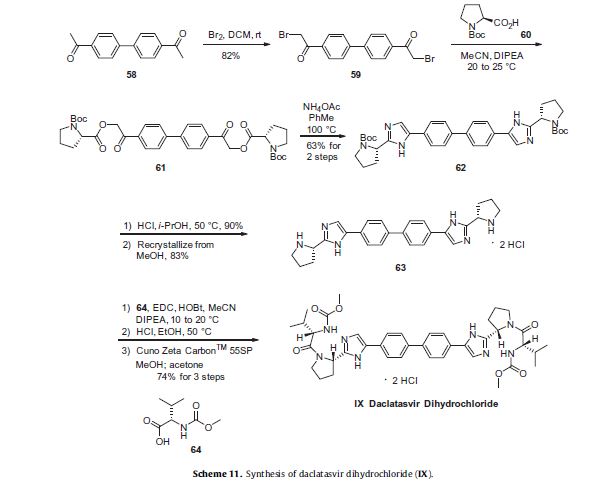
Daclatasvir dihydrochloride is a hepatitis C virus nonstructural 5A (NS5A) replication complex inhibitor which was first approved in Japan for the treatment of genotype 1 HCV patients who fail to respond to interferon plus ribavirin. The drug has also been approved for patients with untreated, chronic HCV who are eligible for interferon. Additionally, in Europe, daclatasvir was approved for use in combination with other products across genotype 1–4 HCV. Daclatasvir was discovered and developed by Bristol–Myers Squibb and a fascinating account describing the initiation of the program from a phenotypic screen and the medicinal chemistry strategy leading to the discovery of the compound has been recently reported.80 Daclatasvir has been prepared via two different routes81,82 and the process route is outlined in Scheme 11.83 Bromination of commercial 4,40-diacetylbiphenyl (58) gave 4,40-bis(bromoacetyl)biphenyl 59 in 82% yield. Alkylation of NBoc- L-proline (60) with 59 gave diester 61 which was treated with ammonium acetate to effect cyclization of the bis-ketoester to provide bis-imidazole 62 in 63% yield for the two steps. Acidic removal of the Boc protecting groups followed by recrystallization provided bis-pyrrolidine 63 in high yield. Acylation of 63 with N-(methoxycarbonyl)- L-valine (64) using N-(3-dimethylaminopropyl)-N0-ethylcarbodiimide(EDC) and 1-hydroxybenxotriazole hydrate (HOBT) provided declatasvir. The dihydrochloride salt was prepared and treated with Cuno Zet Carbon followed by crystallization from acetone

to give daclatasvir dihydrochloride (IX) in 74% yield.

80 Belema, M.; Meanwell, N. A. J. Med. Chem. 2014, 57, 5057.

81. Bachand, C.; Belema, M.; Deon, D. H.; Good, A. C.; Goodrich, J.; James, C. A.;

Lavoie, R.; Lopez, O. D.; Martel, A.; Meanwell, N. A.; Nguyen, V. N.; Romine, J.

L.; Ruediger, E. H.; Snyder, L. B.; St. Laurent, D. R.; Yang, F.; Langley, D. R.;

Wang, G.; Hamann, L. G. WO Patent 2008021927A2, 2008.

82. Belema, M.; Nguyen, V. N.; Bachand, C.; Deon, D. H.; Goodrich, J. T.; James, C.

A.; Lavoie, R.; Lopez, O. D.; Martel, A.; Romine, J. L.; Ruediger, E. H.; Snyder, L.

B.; St Laurent, D. R.; Yang, F.; Zhu, J.; Wong, H. S.; Langley, D. R.; Adams, S. P.;

Cantor, G. H.; Chimalakonda, A.; Fura, A.; Johnson, B. M.; Knipe, J. O.; Parker, D.

D.; Santone, K. S.; Fridell, R. A.; Lemm, J. A.; O’Boyle, D. R., 2nd; Colonno, R. J.;

Gao, M.; Meanwell, N. A.; Hamann, L. G. J. Med. Chem. 2014, 57, 2013.

83. Pack, S. K.; Geng, P.; Smith, M. J.; Hamm, J. WO Patent 2009020825A1, 2009.


PATENT

https://www.google.co.in/patents/US20090041716?pg=PA1&dq=us+2009041716&hl=en&sa=X&ei=3ki4Uo-jEsTirAfzwoHQBQ&ved=0CD4Q6AEwAQ

EXAMPLES

Figure US20090041716A1-20090212-C00015

A 1 L, 3-neck round bottom flask, fitted with a nitrogen line, overhead stirrer and thermocouple, was charged with 20 g (83.9 mmol, 1 equiv) 1,1′-(biphenyl-4,4′-diyl)diethanone, 200 mL CH2Cl2 and 8.7 mL (27.1 g, 169.3 mmol, 2.02 quiv) bromine. The mixture was allowed to stir under nitrogen for about 20 hours under ambient conditions. The resulting slurry was charged with 200 mL CH2Cl2 and concentrated down to about 150 mL via vacuum distillation. The slurry was then solvent exchanged into THF to a target volume of 200 mL via vacuum distillation. The slurry was cooled to 20-25° C. over 1 hour and allowed to stir at 20-25° C. for an additional hour. The off-white crystalline solids were filtered and washed with 150 mL CH2Cl2. The product was dried under vacuum at 60° C. to yield 27.4 g (69.2 mmol, 82%) of the desired product  : 1H NMR (400 MHz, CDCl3) δ 7.95-7.85 (m, 4H), 7.60-7.50 (m, 4H), 4.26 (s, 4H); 13C NMR (100 MHz, CDCl3) 6 191.0, 145.1, 133.8, 129.9, 127.9, 30.8; IR (KBr, cm−1) 3007, 2950, 1691, 1599, 1199; Anal calcd for C16H12Br2O2: C, 48.52; H, 3.05; Br, 40.34. Found: C, 48.53; H, 3.03; Br, 40.53 HRMS calcd for C16H13Br2O2 (M+H; DCI+): 394.9282. Found: 394.9292. mp 224-226° C.


Figure US20090041716A1-20090212-C00016

A 500 mL jacketed flask, fitted with a nitrogen line, thermocouple and overhead stirrer, was charged with 20 g (50.5 mmol, 1 equiv) of Compound 2, 22.8 g (105.9 moles, 2.10 equiv) 1-(tert-butoxycarbonyl)-L-proline and 200 mL acetonitrile. The slurry was cooled to 20° C. followed by the addition of 18.2 mL (13.5 g, 104.4 mmol, 2.07 equiv) DIPEA. The slurry was warmed to 25° C. and allowed to stir for 3 hours. The resulting clear, organic solution was washed with 3×100 mL 13 wt % aqueous NaCl. The rich acetonitrile solution was solvent exchanged into toluene (target volume=215 mL) by vacuum distillation until there was less than 0.5 vol % acetonitrile.


Figure US20090041716A1-20090212-C00017

The toluene solution of Compound 3 was charged with 78 g (1.011 moles, 20 equiv) ammonium acetate and heated to 95-100° C. The mixture was allowed to stir at 95-100° C. for 15 hours. After reaction completion, the mixture was cooled to 70-80° C. and charged with 7 mL acetic acid, 40 mL n-butanol, and 80 mL of 5 vol % aqueous acetic acid. The resulting biphasic solution was split while maintaining a temperature >50° C. The rich organic phase was charged with 80 mL of 5 vol % aqueous acetic acid, 30 mL acetic acid and 20 mL n-butanol while maintaining a temperature >50° C. The resulting biphasic solution was split while maintaining a temperature >50° C. and the rich organic phase was washed with an additional 80 mL of 5 vol % aqueous acetic acid. The rich organic phase was then solvent exchanged into toluene to a target volume of 215 mL by vacuum distillation. While maintaining a temperature >60° C., 64 mL methanol was charged. The resulting slurry was heated to 70-75° C. and aged for 1 hour. The slurry was cooled to 20-25° C. over 1 hour and aged at that temperature for an additional hour. The slurry was filtered and the cake was washed with 200 mL 10:3 toluene:methanol. The product was dried under vacuum at 70° C., resulting in 19.8 g (31.7 mmol, 63%) of the desired product: 1H NMR (400 MHz, DMSO-d6) δ 13.00-11.00 (s, 2H), 7.90-7.75 (m, 4H), 7.75-7.60 (m, 4H), 7.60-7.30 (s, 2H), 4.92-4.72 (m, 2H), 3.65-3.49 (m, 2H), 3.49-3.28 (m, 2H), 2.39-2.1 (m, 2H), 2.10-1.87 (m, 6H), 1.60-1.33 (s, 8H), 1.33-1.07 (s, 10H); 13C NMR (100 MHz, DMSO-d6) δ 154.1, 153.8, 137.5, 126.6, 125.0, 78.9, 78.5, 55.6, 55.0, 47.0, 46.7, 33.7, 32.2, 28.5, 28.2, 24.2, 23.5; IR (KBr, cm−1) 2975, 2876, 1663, 1407, 1156, 1125; HRMS calcd for C36H45N6O4 (M+H; ESI+): 625.3502. Found: 625.3502. mp 190-195° C. (decomposed).


Figure US20090041716A1-20090212-C00018

To a 250 mL reactor equipped with a nitrogen line and overhead stirrer, 25.0 g of Compound 4 (40.01 mmol, 1 equiv) was charged followed by 250 mL methanol and 32.85 mL (400.1 mmol, 10 equiv) 6M aqueous HCl. The temperature was increased to 50° C. and agitated at 50° C. for 5 hours. The resulting slurry was cooled to 20-25° C. and held with agitation for about 18 hours. Filtration of the slurry afforded a solid which was washed successively with 100 mL 90% methanol/water (V/V) and 2×100 mL of methanol. The wet cake was dried in a vacuum oven at 50° C. overnight to give 18.12 g (31.8 mmol, 79.4%) of the desired product.

Recrystallization of Compound 5

To a 250 mL reactor equipped with a nitrogen line and an overhead stirrer, 17.8 g of Compound 5 from above was charged followed by 72 mL methanol. The resulting slurry was agitated at 50° C. for 4 hours, cooled to 20-25° C. and held with agitation at 20-25° C. for 1 hour. Filtration of the slurry afforded a crystalline solid which was washed with 60 mL methanol. The resulting wet cake was dried in a vacuum oven at 50° C. for 4 days to yield 14.7 g (25.7 mmol, 82.6%) of the purified product: 1H NMR (400 MHz, DMSO-d6) δ 10.5-10.25 (br, 2H), 10.1-9.75 (br, 2H), 8.19 (s, 2H), 7.05 (d, J=8.4, 4H), 7.92 (d, J=8.5, 4H), 5.06 (m, 2H), 3.5-3.35 (m, 4H), 2.6-2.3 (m, 4H), 2.25-2.15 (m, 2H), 2.18-1.96 (m, 2H); 13C NMR (100 MHz, DMSO-d6) δ 156.6, 142.5, 139.3, 128.1, 127.5, 126.1, 116.9, 53.2, 45.8, 29.8, 24.3; IR (KBr, cm−1) 3429, 2627, 1636, 1567, 1493, 1428, 1028. Anal calcd for C26H32N6Cl4: C, 54.75; H, 5.65; Cl, 24.86; Adjusted for 1.9% water: C, 53.71; H, 5.76; N, 14.46; Cl, 24.39. Found: C, 53.74; H, 5.72; N, 14.50; Cl, 24.49; KF=1.9. mp 240° C. (decomposed).


Figure US20090041716A1-20090212-C00019

A 1 L jacketed flask equipped with a nitrogen line and an overhead stirrer was sequentially charged with 100 mL acetonitrile, 13.69 g (89.4 mmol, 2.5 equiv) hydroxybenzotriazole hydrate, 15.07 g (86 mmol, 2.4 equiv) N-(methoxycarbonyl)-L-valine, 16.46 g (85.9 mmol, 2.4 equiv) 1-(3-dimethyaminopropyl)-3-ethylcarbodiimide hydrochloride and an additional 100 mL acetonitrile. The resulting solution was agitated at 20° C. for 1 hour and charged with 20.4 g (35.8 mmol, 1 equiv) of purified Compound 5. The slurry was cooled to about 0° C. and 18.47 g (142.9 mmol, 4 equiv) diisopropylethylamine was added over 30 minutes while maintaining a temperature below 10° C. The solution was slowly heated to 15° C. over 3 hours and held at 15° C. for 12 hours. The resulting solution was charged with 120 mL 13 wt % aqueous NaCl and heated to 50° C. for 1 hour. After cooling to 20° C., 100 mL of isopropyl acetate was added. The biphasic solution was filtered through a 0.45 μm filter and the mixture split. The rich organic phase was washed with 2×240 mL of a 0.5 N NaOH solution containing 13 wt % NaCl followed by 120 mL 13 wt % aqueous NaCl. The mixture was then solvent exchanged into isopropyl acetate by vacuum distillation with a target volume of 400 mL. The resulting hazy solution was cooled to 20° C. and filtered through a 0.45 μm filter. The clear solution was then solvent exchanged into ethanol by vacuum distillation with a target volume of 140 mL. While maintaining a temperature of 50° C., 66.4 mL (82.3 mmol, 2.3 equiv) of 1.24M HCl in ethanol was added. The mixture was then charged with 33 mg (0.04 mmol, 0.001 equiv) of seed crystals of Compound (I) (see preparation below) and the resulting slurry was stirred at 50° C. for 3 hours. The mixture was cooled to 20° C. over 1 hour and aged at that temperature for an additional 22 hours. The slurry was filtered and the wet cake was washed with 100 mL of 2:1 acetone:ethanol. The solids were dried in a vacuum oven at 70° C. to give 22.15 g (27.3 mmol, 76.3%) of the desired product.


Figure US20090041716A1-20090212-C00020

A solution of Compound (I) was prepared by dissolving 3.17 g of Compound (I) from above in 22 mL methanol. The solution was passed through a 47 mm Cuno Zeta Carbon® 53SP filter at ˜5 psig at a flow rate of ˜58 mL/min. The carbon filter was rinsed with 32 mL of methanol. The solution was concentrated down to 16 mL by vacuum distillation. While maintaining a temperature of 40-50° C., 15.9 mL acetone and 5 mg of seed crystals of Compound (I) (see procedure below) were added. The resulting slurry was then charged with 32 mL acetone over 30 minutes. The slurry was held at 50° C. for 2 hours, cooled to 20° C. over about 1 hour and held at 20° C. for about 20 hours. The solids were filtered, washed with 16 mL 2:1 acetone:methanol and dried in a vacuum oven at 60° C. to give 2.14 g (67.5%) of purified Compound (I):

1H NMR (400 MHz, DMSO-d6, 80° C.): 8.02 (d, J=8.34 Hz, 4 H), 7.97 (s, 2 H), 7.86 (d, J=8.34 Hz, 4 H), 6.75 (s, 2 H), 5.27 (t, J=6.44 Hz, 2 H), 4.17 (t, J=6.95 Hz, 2 H), 3.97-4.11 (m, 2 H), 3.74-3.90 (m, 2 H), 3.57 (s, 6 H), 2.32-2.46 (m, 2 H), 2.09-2.31 (m, 6 H), 1.91-2.07 (m, 2 H), 0.88 (d, J=6.57 Hz, 6 H), 0.79 (d, J=6.32 Hz, 6 H);

13C NMR (75 MHz, DMSO-d6): δ 170.9, 156.9, 149.3, 139.1, 131.7, 127.1, 126.5, 125.9, 115.0, 57.9, 52.8, 51.5, 47.2, 31.1, 28.9, 24.9, 19.6, 17.7;

IR (neat, cm−1): 3385, 2971, 2873, 2669, 1731, 1650.

Anal. Calcd for C40H52N8O6Cl2: C, 59.18; H, 6.45; N, 13.80; Cl, 8.73. Found C, 59.98; H, 6.80; N, 13.68; Cl, 8.77. mp 267° C. (decomposed).

Preparation of Seed Crystals of Compound (I)

A 250 mL round-bottom flask was charged with 6.0 g (10.5 mmol, 1 equiv) Compound 5, 3.87 g (22.1 mmol, 2.1 equiv) N-(methoxycarbonyl)-L-valine, 4.45 g (23.2 mmol, 2.2 equiv) 1-(3-dimethyaminopropyl)-3-ethylcarbodiimide hydrochloride, 0.289 g (2.14 mmol, 0.2 equiv) 1-hydroxybenzotriazole, and 30 mL acetonitrile. The resulting slurry was then charged with 7.33 mL (42.03 mmol, 4 equiv) diisopropylethylamine and allowed to stir at 24-30° C. for about 18 hours. The mixture was charged with 6 mL of water and heated to 50° C. for about 5 hours. The mixture was cooled and charged with 32 mL ethyl acetate and 30 mL water. The layers were separated and the rich organic layer was washed with 30 mL of 10 wt % aqueous NaHCO3, 30 mL water, and 20 mL of 10 wt % aqueous NaCl. The rich organic layer was then dried over MgSO4, filtered, and concentrated down to a residue. The crude material was then purified via flash chromatography (silica gel, 0-10% methanol in dichloromethane) to provide the free base of Compound (I).

The free-base of Compound (I) (0.03 g) was dissolved in 1 mL isopropanol at 20° C. Anhydrous HCl (70 μL, dissolved in ethanol, approximately 1.25M concentration) was added and the reaction mixture was stirred. To the solution was added methyl tert-butyl ether (1 mL) and the resulting slurry was stirred vigorously at 40° C. to 50° C. for 12 hours. The crystal slurry was cooled to 20° C. and filtered. The wet cake was air-dried at 20° C. A white crystalline solid (Form N-2 of Compound (I)) was obtained.


Clip
Daclatasvir synthesis: WO2009020828A1

Procedure:

Step a: A 1 L, 3 -neck round bottom flask, fitted with a nitrogen line, overhead stirrer and thermocouple, was charged with 20 g (83.9 mmol, 1 equiv) 1,1′-(biphenyl-4,4′-diyl)diethanone, 200 mL Dichloromethane and 8.7 mL (27.1g, 169.3 mmol, 2.02 equiv) bromine. The mixture was allowed to stir under nitrogen for about 20 hours under ambient conditions. The resulting slurry was charged with 200 mL Dichloromethane and concentrated down to about 150 mL via vacuum distillation. The slurry was then solvent exchanged into THF to a target volume of 200 mL via vacuum distillation. The slurry was cooled to 20-25 0C over 1 hour and allowed to stir at 20-25 0C for an additional hour. The off-white crystalline solids were filtered and washed with 150 mL Dichloromethane. The product was dried under vacuum at 60 0C to yield 27.4 g (69.2 mmol, 82%) of the desired product: 1H NMR (400 MHz, CDCl3) d 7.95-7.85 (m, 4H), 7.60-7.50 (m, 4H), 4.26 (s, 4H); 13C NMR 100 MHz, CDCl3) d 191.0, 145.1, 133.8, 129.9, 127.9, 30.8; IR (KBr, cm-1) 3007, 2950, 1691, 1599, 1199; Anal calcd for C16H12Br2O2: C, 48.52; H, 3.05; Br, 40.34. Found: C, 48.53; H, 3.03; Br, 40.53. HRMS calcd for C16H12Br2O2 (M + H; DCI+): 394.9282. Found: 394.9292. mp 224-226 0C.

Step b: A 500 mL jacketed flask, fitted with a nitrogen line, thermocouple and overhead stirrer, was charged with 20 g (50.5 mmol, 1 equiv) of Compound 2, 22.8 g (105.9 moles, 2.10 equiv) 1-(tert-butoxycarbonyl)-L-proline and 200 mL acetonitrile. The slurry was cooled to 20 0C followed by the addition of 18.2 mL (13.5 g, 104.4 mmol, 2.07 equiv) DIPEA. The slurry was warmed to 25 0C and allowed to stir for 3 hours. The resulting clear, organic solution was washed with 3 x 100 mL 13 wt% aqueous NaCl. The rich acetonitrile solution was solvent exchanged into toluene (target volume = 215 mL) by vacuum distillation until there was less than 0.5 vol% acetonitrile.

Step c: The toluene solution of Compound 3 was charged with 78 g (1.011 moles, 20 equiv) ammonium acetate and heated to 95-100 0C. The mixture was allowed to stir at 95-100 0C for 15 hours. After reaction completion, the mixture was cooled to 70- 80 0C and charged with 7 mL acetic acid, 40 mL n-butanol, and 80 mL of 5 vol% aqueous acetic acid. The resulting biphasic solution was split while maintaining a temperature > 50 0C. The rich organic phase was charged with 80 mL of 5 vol% aqueous acetic acid, 30 mL acetic acid and 20 mL n-butanol while maintaining a temperature > 50 0C. The resulting biphasic solution was split while maintaining a temperature > 50 0C and the rich organic phase was washed with an additional 80 mL of 5 vol% aqueous acetic acid. The rich organic phase was then solvent exchanged into toluene to a target volume of 215 mL by vacuum distillation. While maintaining a temperature > 60 0C, 64 mL methanol was charged. The resulting slurry was heated to 70-75 0C and aged for 1 hour. The slurry was cooled to 20-25 0C over 1 hour and aged at that temperature for an additional hour. The slurry was filtered and the cake was washed with 200 mL 10:3 toluene:methanol. The product was dried under vacuum at 70 0C, resulting in 19.8 g (31.7 mmol, 63%) of the desired product: 1H NMR (400 MHz, DMSO-^) d 13.00-11.00 (s, 2H), 7.90-7.75 (m, 4H), 7.75-7.60 (m, 4H), 7.60-7.30 (s, 2H), 4.92-4.72 (m, 2H), 3.65-3.49 (m, 2H), 3.49-3.28 (m, 2H), 2.39-2.1 (m, 2H), 2.10-1.87 (m, 6H), 1.60-1.33 (s, 8H), 1.33-1.07 (s, 10H); 13C NMR (100 MHz, DMSO-?fe) d 154.1, 153.8, 137.5, 126.6, 125.0, 78.9, 78.5, 55.6, 55.0, 47.0, 46.7, 33.7, 32.2, 28.5, 28.2, 24.2, 23.5; IR (KBr, cm-1) 2975, 2876, 1663, 1407, 1156, 1125; HRMS calcd for C36H45N6O4 (M + H; ESI+): 625.3502. Found: 625.3502. mp 190-195 0C (decomposed).

Step d: To a 250 mL reactor equipped with a nitrogen line and overhead stirrer, 25.0 g of Compound 4 (40.01 mmol, 1 equiv) was charged followed by 250 mL methanol and 32.85 mL (400.1 mmol, 10 equiv) 6M aqueous HCl. The temperature was increased to 50 0C and agitated at 50 0C for 5 hours. The resulting slurry was cooled to 20-25 0C and held with agitation for about 18 hours. Filtration of the slurry afforded a solid which was washed successively with 100 mL 90% methanoI/water (WV) and 2 x 100 mL of methanol. The wet cake was dried in a vacuum oven at 50 0C overnight to give 18.12 g (31.8 mmol, 79.4%) of the desired product.

CUT PASTE…….WO2009020825

Figure imgf000022_0001

Preparation of Compound (I)

A 1 L jacketed flask equipped with a nitrogen line and an overhead stirrer was sequentially charged with 100 mL acetonitrile, 13.69 g (89.4 mmol, 2.5 equiv) hydroxybenzotriazole hydrate, 15.07 g (86 mmol, 2.4 equiv) N-(methoxycarbonyl)- L-valine, 16.46 g (85.9 mmol, 2.4 equiv) l-(3-dimethyaminopropyl)-3- ethylcarbodiimide hydrochloride and an additional 100 mL acetonitrile. The resulting solution was agitated at 20 0C for 1 hour and charged with 20.4 g (35.8 mmol, 1 equiv) of purified Compound 7. The slurry was cooled to about 0 0C and 18.47 g (142.9 mmol, 4 equiv) diisopropylethylamine was added over 30 minutes while maintaining a temperature below 10 0C. The solution was slowly heated to 15 0C over 3 hours and held at 15 0C for 12 hours. The resulting solution was charged with 120 mL 13 wt% aqueous NaCl and heated to 50 0C for 1 hour. After cooling to 20 0C, 100 mL of isopropyl acetate was added. The biphasic solution was filtered through a 0.45 μm filter and the mixture split. The rich organic phase was washed with 2 x 240 mL of a 0.5 Ν NaOH solution containing 13 wt% NaCl followed by 120 mL 13 wt% aqueous NaCl. The mixture was then solvent exchanged into isopropyl acetate by vacuum distillation with a target volume of 400 mL. The resulting hazy solution was cooled to 20 0C and filtered through a 0.45 μm filter. The clear solution was then solvent exchanged into ethanol by vacuum distillation with a target volume of 140 mL. While maintaining a temperature of 50 0C, 66.4 mL (82.3 mmol, 2.3 equiv) of 1.24M HCl in ethanol was added. The mixture was then charged with 33 mg (0.04 mmol, 0.001 equiv) of seed crystals of Compound (I) (see preparation below) and the resulting slurry was stirred at 50 0C for 3 hours. The mixture was cooled to 20 0C over 1 hour and aged at that temperature for an additional 22 hours. The slurry was filtered and the wet cake was washed with 100 mL of 2: 1 acetone:ethanol. The solids were dried in a vacuum oven at 70 0C to give 22.15 g (27.3 mmol, 76.3%) of the desired product.

Figure imgf000023_0001

Alternative Preparation of Compound (I)

A jacketed reactor equipped with a mechanical agitator, a thermocouple and a nitrogen inlet was sequentially charged with 10 L acetonitrile, 0.671 kg (4.38 moles, 2.50 equiv) 1-hydroxybenzotriazole, 0.737 kg (4.21 moles, 2.40 equiv) N- (methoxycarbonyl)-L-valine and 0.790 kg (4.12 moles, 2.35 equiv) l-(3- dimethyaminopropyl)-3-ethylcarbodiimide hydrochloride. The mixture was agitated at 200C for 1 hour, cooled to 5 0C and charged with 1 kg (1.75 moles, 1.00 equiv) Compound 7. While maintaining a temperature < 10 0C, 0.906 kg (7.01 moles, 4 equiv) diisopropylethylamine was added. The mixture was heated to 15-20 0C over 2 hours and agitated for an additional 15 hours. After the reaction was complete, the mixture was washed once with 6.0 L 13 wt% aqueous NaCl, twice with 6.1 L (6.12 moles, 3.5 equiv) 1.0 M aqueous NaOH containing 13 wt% NaCl and once with 6.0 L 13 wt% aqueous NaCl. Water was then removed from the rich organic solution via azeotropic distillation. The mixture was cooled to 20 0C, agitated for 1 hour and filtered. The rich organic solution was then solvent exchanged into EtOH via vacuum distillation to a target volume of 5 L. While maintaining a temperature of 50 0C, 3.2 L (4.0 moles, 2.3 equiv) 1.25M HCl in EtOH was charged. The mixture was seeded with 1.6 g Compound (I) (see preparation below) and agitated at 50 0C for 3 hours. The resulting slurry was cooled to 20 0C and agitated for at least 3 hours. The product was collected by filtration and washed with 5 L 2: 1 acetone:

EtOH to give 1.29 kg (ca. 90 wt% product) of wet crude product. A reactor equipped with an overhead agitator, nitrogen inlet and thermocouple was charged with 1.11 kg of the above crude product and 7 L methanol. The resulting solution was treated with Cuno Zeta Carbon (TM) 55SP. The carbon was washed with 15 L MeOH and the combined filtrate and wash was concentrated down to 4 L via vacuum distillation. The concentrated solution was charged with 5 L acetone and seeded with 1.6 g Compound (I) (see preparation below) while maintaining a temperature of 50 0C. An additional 10 L acetone was charged and the resulting slurry was stirred at 50 0C for 3 hours. The slurry was cooled to 20 0C and allowed to agitate at 200C for 3 hours. The product was collected by filtration, washed with 5 L 2: 1 acetone: EtOH and dried under vacuum at 50-60 0C to give 0.900 kg (1.11 moles, 74% adjusted) of Compound (I)-

Figure imgf000025_0001

Carbon Treatment and Recrystallization of Compound (I) A solution of Compound (I) was prepared by dissolving 3.17 g of Compound (I) from above in 22 mL methanol. The solution was passed through a 47mm Cuno Zeta Carbon 53SP filter at ~5 psig at a flow rate of~58mL/min. The carbon filter was rinsed with 32 mL of methanol. The solution was concentrated down to 16 mL by vacuum distillation. While maintaining a temperature of 40-50 0C, 15.9 mL acetone and 5 mg of seed crystals of Compound (I) (see procedure below) were added. The resulting slurry was then charged with 32 mL acetone over 30 minutes. The slurry was held at 50 0C for 2 hours, cooled to 20 0C over about 1 hour and held at 20 0C for about 20 hours. The solids were filtered, washed with 16 mL 2: 1 acetone:methanol and dried in a vacuum oven at 60 0C to give 2.14 g (67.5%) of purified Compound (I):

1H NMR (400 MHz, DMSO-έfc, 80 0C): 8.02 (d, J=8.34 Hz, 4 H), 7.97 (s, 2 H), 7.86 (d, J=8.34 Hz, 4 H), 6.75 (s, 2 H), 5.27 (t, J=6.44 Hz, 2 H), 4.17 (t, J=6.95 Hz, 2 H), 3.97 – 4.11 (m, 2 H), 3.74 – 3.90 (m, 2 H), 3.57 (s, 6 H), 2.32 – 2.46 (m, 2 H), 2.09 – 2.31 (m, 6 H), 1.91 – 2.07 (m, 2 H), 0.88 (d, J=6.57 Hz, 6 H), 0.79 (d, J=6.32 Hz, 6 H);

13C NMR (75 MHz, DMSO-έfc): δ 170.9, 156.9, 149.3, 139.1, 131.7, 127.1, 126.5, 125.9, 115.0, 57.9, 52.8, 51.5, 47.2, 31.1, 28.9, 24.9, 19.6, 17.7;

IR (neat, cm“1): 3385, 2971, 2873, 2669, 1731, 1650.

Anal. Calcd for C40H52N8O6Cl2: C, 59.18; H, 6.45; N, 13.80; Cl, 8.73. Found C, 59.98; H, 6.80; N, 13.68; Cl, 8.77. mp 267 0C (decomposed).

Characteristic diffraction peak positions (degrees 2Θ + 0.1) @ RT, based on a high quality pattern collected with a diffractometer (CuKa) with a spinning capillary with 2Θ calibrated with a NIST other suitable standard are as follows: 10.3, 12.4, 12.8, 13.3, 13.6, 15.5, 20.3, 21.2, 22.4, 22.7, 23.7

Daclatasvir faces problems in USA

The US-FDA in 2014 issued a complete response letter for NS5A inhibitor daclatasvir saying it was unable to approve the drug because the marketing application was for its use in tandem with asunaprevir, an NS3/NS4A protease inhibitor discontinued in the US by BMS for commercial reasons. Daclatasvir is already on the market in Europe-where it is sold as Daklinza-and also in Japan where it was approved alongside asunaprevir in July as the country’s first all-oral HCV therapy. However, a delay in the large US market is clearly a major setback for BMS’ ambitions in hepatitis therapy.

To make the matter worse, US FDA has rescinded breakthrough therapy designation status from Bristol-Myers Squibb for Daclatasvir for the treatment of hepatitis C virus infection in Feb 2015.


PAPER

Makonen, B.; et. al. Hepatitis C Virus NS5A Replication Complex Inhibitors: The Discovery of Daclatasvir. J Med Chem 2014, 57(5), 2013–2032.

http://pubs.acs.org/doi/abs/10.1021/jm401836p


PATENT

http://www.google.com/patents/WO2008021927A2?cl=en

Example 24-23

Figure imgf000157_0001

methyl ((lS)-l-(((2S)-2-(5-(4′-(2-((2S)-l-((2S)-2-((methoxycarbonyl)amino)-3- methylbutanoyl)-2-pyrrolidinyl)-lH-imidazol-5-yl)-4-biphenylyl)-lH-imidazol-2-yl)-

1 -pyrrolidinyl) carbonyl) -2-methylpropyl) carbamate

A 50 mL flask equipped with a stir bar was sequentially charged with 2.5 mL acetonitrile, 0.344 g (2.25 mmol, 2.5 equiv) hydroxy benzotriazole hydrate, 0.374 g (2.13 mmol, 2.4 equiv) N-(methoxycarbonyl)-L-valine, 0.400 g (2.09 mmol, 2.4 equiv) 1 -(3 -dimethyaminopropyl)-3-ethylcarbodiimide hydrochloride and an additional 2.5 mL acetonitrile. The resulting solution was agitated at 20 0C for 1 hour and charged with 0.501 g (0.88 mmol, 1 equiv) Example A-le-4. The slurry was cooled to about 0 0C and 0.45 g (3.48 mmol, 4 equiv) diisopropylethylamine was added over 30 minutes while maintaining a temperature below 10 0C. The solution was slowly heated to 15 0C over 3 hours and held at 15 0C for 16 hours. The temperature was increased to 20 0C and stirred for 3.25 hours. The resulting solution was charged with 3.3 g of 13 wt% aqueous NaCl and heated to 50 0C for 1 hour. After cooling to 20 0C, 2.5 mL of isopropyl acetate was added. The rich organic phase was washed with 2 x 6.9 g of a 0.5 N NaOH solution containing 13 wt% NaCl followed by 3.3 g of 13 wt% aqueous NaCl. The mixture was then solvent exchanged into isopropyl acetate by vacuum distillation to a target volume of 10 mL. The resulting hazy solution was cooled to 20 0C and filtered through a 0.45 μm filter. The clear solution was then solvent exchanged into ethanol by vacuum distillation with a target volume of 3 mL. 1.67 mL (2.02 mmol, 2.3 equiv) of 1.21 M HCl in ethanol was added. The mixture was then stirred at 25 0C for 15 hours. The resulting slurry was filtered and the wet cake was washed with 2.5 mL of 2: 1 acetone:ethanol. The solids were dried in a vacuum oven at 50 0C to give 0.550 g (0.68 mmol, 77 %) of the desired product.

RecrystalHzation of Example 24-23

A solution of Example 24-23 prepared above was prepared by dissolving 0.520 g of the above product in 3.65 mL methanol. The solution was then charged with 0.078 g of type 3 Cuno Zeta loose carbon and allowed to stir for 0.25 hours. The mixture was then filtered and washed with 6 ml of methanol. The product rich solution was concentrated down to 2.6 mL by vacuum distillation. 7.8 mL acetone was added and allowed to stir at 25 0C for 15 h. The solids were filtered, washed with 2.5 mL 2: 1 acetone:ethanol and dried in a vacuum oven at 70 0C to give 0.406 g (57.0%) of the desired product as white crystals: 1H NMR (400 MHz, OMSO-d6, 80 0C): 8.02 (d, J=8.34 Hz, 4 H), 7.97 (s, 2 H), 7.86 (d, J=8.34 Hz, 4 H), 6.75 (s, 2 H), 5.27 (t, J=6.44 Hz, 2 H), 4.17 (t, J=6.95 Hz, 2 H), 3.97 – 4.11 (m, 2 H), 3.74 – 3.90 (m, 2 H), 3.57 (s, 6 H), 2.32 – 2.46 (m, 2 H), 2.09 – 2.31 (m, 6 H), 1.91 – 2.07 (m, 2 H), 0.88 (d, J=6.57 Hz, 6 H), 0.79 (d, J=6.32 Hz, 6 H); 13C NMR (75 MHz, DMSO- d6): δ 170.9, 156.9, 149.3, 139.1, 131.7, 127.1, 126.5, 125.9, 115.0, 57.9, 52.8, 51.5, 47.2, 31.1, 28.9, 24.9, 19.6, 17.7; IR (neat, cm“1): 3385, 2971, 2873, 2669, 1731, 1650. Anal. Calcd for C40H52N8O6Cl2: C, 59.18; H, 6.45; N, 13.80; Cl, 8.73. Found C, 59.98; H, 6.80; N, 13.68; Cl, 8.77. mp 267 0C (decomposed). Characteristic diffraction peak positions (degrees 2Θ ± 0.1) @ RT, based on a high quality pattern collected with a diffractometer (CuKa) with a spinning capillary with 2Θ calibrated with a NIST other suitable standard are as follows: 10.3, 12.4, 12.8, 13.3, 13.6, 15.5, 20.3, 21.2, 22.4, 22.7, 23.7

PAPER

Bioorganic & Medicinal Chemistry Letters (2015), 25(16), 3147-3150

http://www.sciencedirect.com/science/article/pii/S0960894X15005995

Synthetic route for the preparation of the target compounds 8a–8y. Reagents and ...

Scheme 1.

Synthetic route for the preparation of the target compounds 8a8y. Reagents and conditions: (a) Br2, CH2Cl2, rt, overnight, 86%; (b) N-Boc-l-proline, MeCN, Et3N, rt, 2 h, 98%; (c) NH4OAc, toulene, 130 °C, 15 h, 85%; (d) 6 N HCl, MeOH, 50 °C, 4 h, 87%; (e) HATU, N-(methoxycarbonyl)-l-valine, DIPEA, rt, 14 h, 83%; (f) RCOCl, TEA, CH2Cl2, rt, 3 h, 64–87%.


Dimethyl((2S,2’S)-((2S,2’S)-2,2′-(5,5′-([1,1′-biphenyl]-4,4′-diyl)bis(1H-imidazole-

5,2-diyl))bis(pyrrolidine-2,1-diyl))bis(3-methyl-1-oxobutane-2,1-

diyl))dicarbamate 7……………FREE BASE

To a solution of 5 (90 mg, 0.181 mmol), N-me-thoxycarbonyl-l-valine 6 (92 mg,0.525 mmol) and DIPEA (0.18 mL, 1.03 mmol) in DMF (5 mL) was added HATU(165.5 mg, 0.434 mmol). The resulting reaction was allowed to stir at room temperature for 15 h, the reaction mixture was filtered and the residue was partitioned between EtOAc and H2O, The aqueous phase was extracted with EtOAc, and the combined organic phase was dried (MgSO4), filtered, and concentrated in vacuo. The residue was purified by flash chromatography (silica gel; 5% Methanol /CH2Cl2) to

afford 7 (0.11 g, 83 %)as white solid.

1H NMR (DMSO-d6, 500 MHz) δ: 11.56 (s, 2H), 7.69-7.48 (m, 8H), 7.26-7.03 (m, 4H), 5.24-5.05 (m, 2H), 4.09-4.04 (m, 2H), 3.85-3.75 (m, 4H), 3.58 (s, 6H), 2.24-1.98 (m, 10H), 0.87 (d, J = 3.6 Hz, 12H).

Anal. calcd. (%) for C40H50N8O6: C 65.02, H 6.82, N 15.17; found: C 65.20, H 6.79, N 15.31.

ESI-MS m/z: 739.5 (M+H)+.

NMR PREDICT


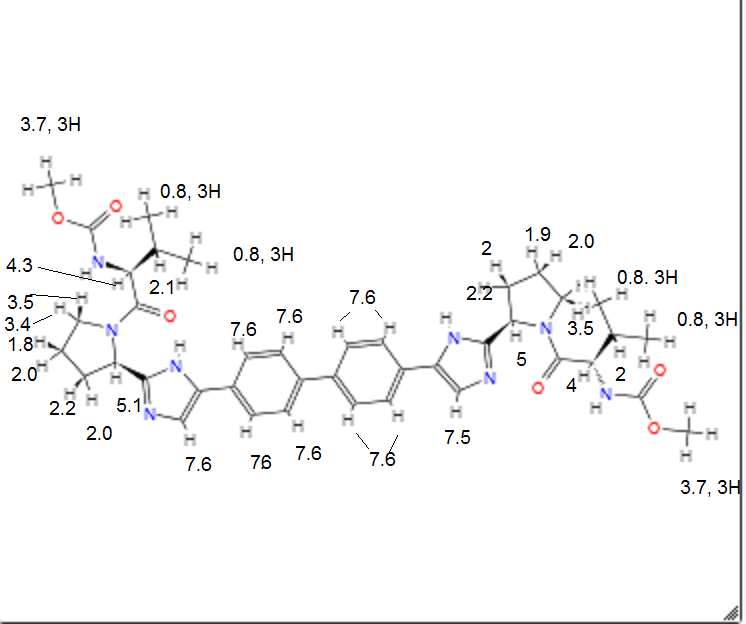
1H NMR PREDICT


dacla 1 dacla 2 dacla 3


13C NMR PREDICT


dacla 4 dacla 5

DACLA 6


COSY PREDICT


DACLA 7


Patents

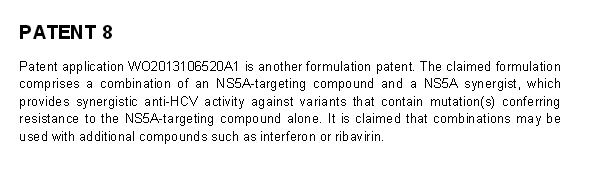
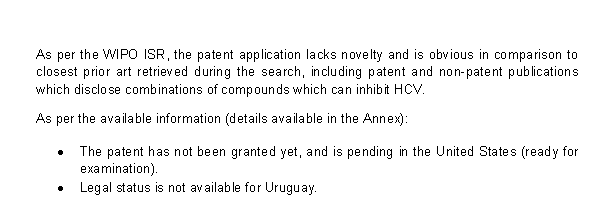
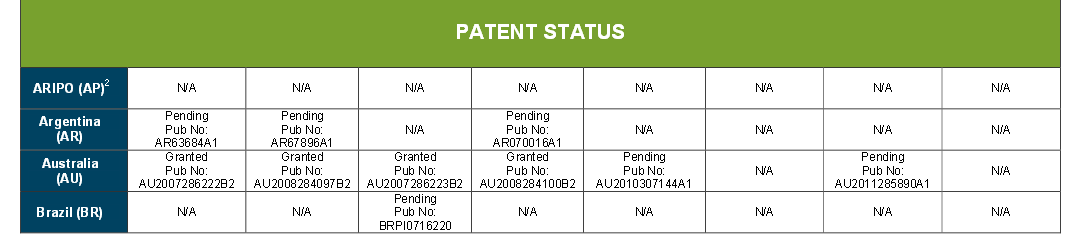
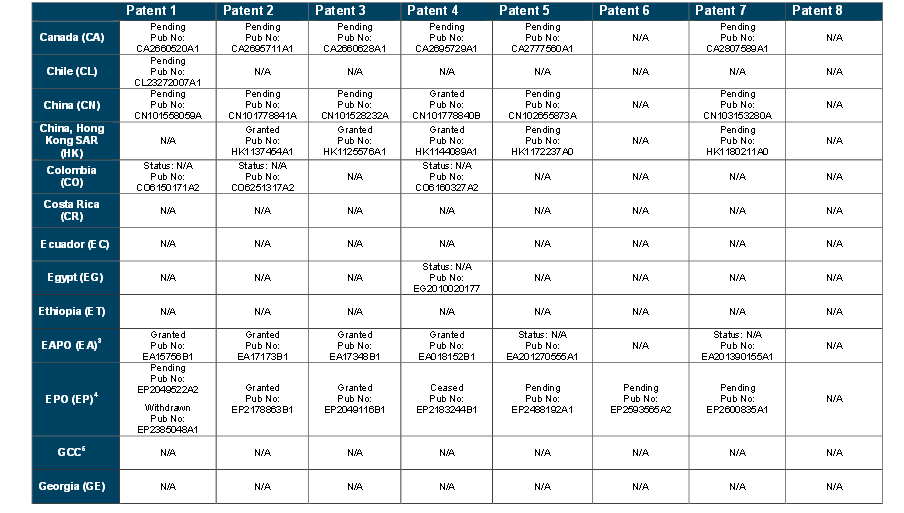
http://www.who.int/phi/implementation/ip_trade/daclatasvir_report_2014_09-02.pdf

Click on images to view

d70Click on images to view d71 d72 d73 d74 d75 d76 d77 d78 d79 d80 d81

Click on images to view

http://www.who.int/phi/implementation/ip_trade/daclatasvir_report_2014_09-02.pdf

d1

d2

Click on images to view

d3

d4

Click on images to view

d5

d6

Click on images to view

Daclatasvir
Daclatasvir.svg
Names
IUPAC name

Methyl [(2S)-1-{(2S)-2-[4-(4’-{2-[(2S)-1-{(2S)-2-[(methoxycarbonyl)amino]-3-methylbutanoyl}-2-pyrrolidinyl]-1H-imidazol-4-yl}-4-biphenylyl)-1H-imidazol-2-yl]-1-pyrrolidinyl}-3-methyl-1-oxo-2-butanyl]carbamate
Other names

BMS-790052
Identifiers
1009119-64-5 Yes
ATC code J05AX14
ChEBI CHEBI:82977 Yes
ChEMBL ChEMBL2023898
ChEMBL2303621
ChemSpider 24609522
Jmol-3D images Image
Properties
C40H50N8O6
Molar mass 738.89 g·mol−1

CLIP 1

Australian Government, National Measurement Institute

REFERENCE MATERIAL ANALYSIS REPORT

HPLC: Instrument: Shimadzu Binary pump LC-20AB, SIL-20 A HT autosampler
Column: X-Bridge C-18, 5.0 m (4.6 mm x 150 mm)
Column oven: 40 °C
Mobile Phase: A = Milli-Q water buffered at pH 10 with NH4
+ -OAc; B = MeCN
Gradient 0 min 35% B; 0-15 min 35% B; 15-18 min 35-75% B; 18-23 min 75% B.
Flow rate: 1.0 mL/min
Detector: Shimadzu SPD-M20A PDA operating at 310 nm
Relative peak area response of main component:
Initial analysis: Mean = 99.2%, s = 0.01%

Thermogravimetric analysis: Non volatile residue < 0.2% mass fraction . The volatile
content (e.g. organic solvents and/or water) could not be determined by
thermogravimetric analysis.

Karl Fischer analysis: Moisture content 0.6% mass fraction

QNMR: Instrument: Bruker Avance-III-500
Field strength: 500 MHz Solvent: DMSO-d6 (2.50 ppm)
Internal standard: Potassium hydrogen maleate (98.8% mass fraction)
Initial analysis: Mean (0.86 ppm) = 98.2%, s = 0.2%

LC-MS: Instrument: Thermo Scientific Dionex UltiMate 3000 Degasser,
Column: ZORBAX RRHD SB-C8, 2.1 x 50 mm, 1.8 μm (Agilent, 857700-906)
Column temp: 30.0 °C
Solvent system: Mobile phase A: 10 mM ammonium formate, 0.01% (v/v) formic acid in Milli-Q® water.
Mobile phase B: 0.01% (v/v) formic acid in acetonitrile.
Gradient from 90% A to 100% B
Flow rate: 0.25 mL/min
Sample prep: 2 mg/mL in MeOH with trace of formic acid
Injection volume: 10 L
Ionisation mode: Electrospray positive ion
Capillary voltage: 4.5 kV
Capillary temp: 360ºC Desolvation gas temperature: 300 ºC
Cone gas flow rate: 10 (arbitrary unit) Desolvation gas flow rate: 70 (arbitrary unit)
The retention time of daclatasvir is reported along with the major peak in the mass spectrum. The latter is reported as a mass/charge ratio.
9.98 min: 739.39545 (M+H+) m/z

HS-GC-MS: Instrument: Agilent 6890/5973/G1888
Column: DB-624, 30 m x 0.25 mm I.D. x 1.4 μm
Program: 50 C (5 min), 7 C/min to 120 C, 15 °C/min to 220 °C (8.3 min)
Injector: 150 C Transfer line temp: 280 C
Carrier: Helium, 1.2 mL/min Split ratio: 50/1
Solvents detected: Ethyl acetate

TLC: Conditions: Kieselgel 60F254. Ethyl acetate : methanol (95/5)
Single spot observed, Rf = 0.18. Visualisation with UV at 254 nm
The TLC was performed on the liberated free base.

IR: Instrument: Bruker Alpha FT-IR
Range: 4000-400 cm-1, neat
Peaks: 1723, 1697, 1643, 1523, 1439, 1235, 1099, 1024 cm-1

1H NMR: Instrument: Bruker Avance III 500
Field strength: 500 MHz Solvent: DMSO-d6 (2.50 ppm)
Spectral data:  0.77 (6H, d, J = 6.7 Hz), 0.83 (6H, d, J = 6.7 Hz), 2.01 (2H, m), 2.07 (2H, m), 2.12-2.27 (4H, m), 2.38 (2H, m), 3.54 (6H, s), 3.84 (2H, m), 3.97 (2H, m), 4.12 (2H, t, J = 7.7 Hz), 5.18 (2H, t, J = 7.0 Hz), 7.31 (2 N-H, d, J = 8.5 Hz), 7.94 (4H, d, J = 8.4 Hz), 7.99 (4H, d, J = 8.4 Hz), 8.16 (2H, s) ppm
Ethyl acetate estimated at 0.6% mass fraction was observed in the 1H NMR

13C NMR: Instrument: Bruker Avance III 500
Field strength: 126 MHz Solvent: DMSO-d6 (39.5 ppm)
Spectral data:  17.8, 19.6, 25.0, 29.0, 31.2, 47.3, 51.6, 52.9, 58.0, 115.1, 125.9, 126.6, 127.3, 131.8, 139.2, 149.4, 157.0, 171.1 ppm

Melting point: > 250 oC

Microanalysis: Found: C = 59.0%; H = 6.5%; N = 13.7% (August 2015)
Calc: C = 59.2%; H = 6.5%; N = 13.8% (Calculated for C40H50N8O6.2HCl)

REFERENCE

Australian NMI NATA Certification Daclatasvir – FixHepC

https://fixhepc.com/images/coa/NMI-NATA-Daclatasvir-Certification.pdf

Oct 7, 2015 – Compound Name: Daclatasvir dihydrochloride … Note: The assigned stereochemistry of this sample of daclatasvir has not …. Melting point:.

CLIP 2

Full Text Article – European Journal of Pharmaceutical and Medical …

Nov 28, 2016 – Daclatasvir dihydrochloride (DCLD) is a new drug …. DSC thermogram of daclatasvirdihydrochloriderealed drug melting point at 273.600C as …

CLIP 3

DCV dihydrochloride (anhydrous) is a white to yellow, non hygroscopic powder which is highly soluble in water (>700mg/mL). Solubility is higher at low pH. In aqueous buffers over the physiological pH range (pH 1.2-6.8) solubility is very low (4mg/mL to 0.004 mg/mL) due to the slow formation of the less soluble hydrated form. Water content in the drug substance is adequately controlled by in process tests. The desired anhydrous crystalline form of DCV dihydrochloride (N-2) is consistently produced and has been shown to not change on storage.

[DOC]AusPAR Daclatasvir dihydrochloride – Therapeutic Goods Administration

https://www.tga.gov.au/sites/default/…/auspar-daclatasvirdihydrochloride-151214.do…

Dec 14, 2015 – Australian Public Assessment Report for daclatasvir dihydrochloride …. Figure 1:Chemical structure of daclatasvir dihydrochloride. …… 24 weeks is based on a selected literaturereview mostly of studies in patients with GT-1.

CLIP 4

The structure of the active substance has been confirmed by UV, IR, Raman and 1 H and 13C NMR spectroscopy, MS spectrometry, and crystal X-Ray diffraction.

Daclatasvir is a white to yellow crystalline non-hygroscopic powder. It is freely soluble in water, dimethyl sulfoxide, methanol; soluble in ethanol (95%); practically insoluble in dichloromethane, tetrahydrofuran, acetonitrile, acetone and ethyl acetate.

Daclatasvir is a chiral molecule with four stereocenters (1,1’, 2, 2;) in the S configuration. The synthetic strategy and process design such as starting material and reagent selection, process parameters, and in-process controls ensure the desired configuration at each of the four chiral centers. In addition, the established control strategy minimizes epimerization and eliminates other diastereomeric impurity formation in each step.

Polymorphism has been observed for daclatasvir hydrochloride. Although two neat crystalline dihydrochloride salts, N1 and N-2 have been identified in screening studies, it has been confirmed that the form N-2 is the thermodynamically most stable polymorph and only this form produced by the proposed synthetic process.

Manufacture, characterisation and process controls

Daclatasvir dihydrochloride is synthesised in three main steps using three commercially available well defined starting materials with acceptable specifications. The synthesis involves an alkylation and formation of the imidazole ring, a coupling reaction and the formation of the hydrochloride salt.

As mentioned above, the synthetic process has been designed to ensure the correct configuration at each of the four chiral centres is achieved. In addition, it has been demonstrated that the stereogenic centres do not epimerize during normal or stressed processing conditions.

The manufacturing process has been developed using a combination of conventional univariate studies and elements of QbD such as risk assessment.

The characterisation of the active substance and its impurities are in accordance with the EU guideline on chemistry of new active substances. Potential and actual impurities were well discussed with regards to their origin and characterised. Adequate in-process controls are applied during the synthesis. The specifications and control methods for intermediate products, starting materials and reagents have been presented.

The active substance specification includes tests for: appearance, colour, identity (IR/Raman, HPLC), assay (HPLC), impurities (HPLC), residual solvents (GC), HCl content (titration), total inorganic impurities (ICP-MS), and particle size (laser light scattering). The absence of a test for chiral purity in the active substance specification has been adequately justified based on the stereochemical control during the synthetic process and demonstration that there is no epimerization during normal or stressed processing conditions. Similarly, since the N-2 form of daclatasvir hydrochloride is the thermodynamically most stable polymorph and, is consistently produced by the synthetic process and remained unchanged during storage under long-term or accelerated conditions, this parameter is not included in the specification

http://www.ema.europa.eu/docs/en_GB/document_library/EPAR_-_Public_assessment_report/human/003768/WC500172849.pdf

CLIP5

SEE

http://www.accessdata.fda.gov/drugsatfda_docs/nda/2015/206843Orig1s000ChemR.pdf

CLIP6

Daclatasvir dihydrochloride

References


WO2004005264A2 * 7 Jul 2003 15 Jan 2004 Axxima Pharmaceuticals Ag Imidazole compounds for the treatment of hepatitis c virus infections
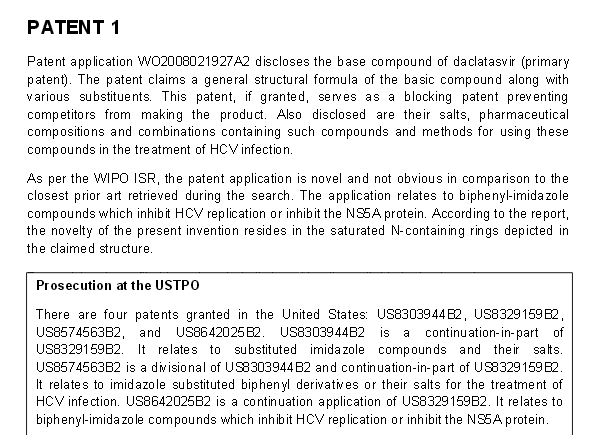
WO2008021927A2 * 9 Aug 2007 21 Feb 2008 Squibb Bristol Myers Co Hepatitis c virus inhibitors
WO2008021928A2 * 9 Aug 2007 21 Feb 2008 Squibb Bristol Myers Co Hepatitis c virus inhibitors
WO2008021936A2 * 9 Aug 2007 21 Feb 2008 Squibb Bristol Myers Co Hepatitis c virus inhibitors


सुकून उतना ही देना प्रभू, जितने से जिंदगी चल जाये।औकात बस इतनी देना,कि औरों का भला हो जाये।………..P.S. : The views expressed are my personal and in no-way suggest the views of the professional body or the company that I represent.


सुकून उतना ही देना प्रभू, जितने से जिंदगी चल जाये। औकात बस इतनी देना, कि औरों का भला हो जाये।
DRUG APPROVALS BY DR ANTHONY MELVIN CRASTO …..FOR BLOG HOME CLICK HERE

Join me on Linkedin

View Anthony Melvin Crasto Ph.D's profile on LinkedIn

Join me on Facebook FACEBOOK

Join me on twitterFollow amcrasto on Twitter
Join me on google plus Googleplus

 amcrasto@gmail.com

09b37-misc2b027LIONEL MY SON
He was only in first standard in school when I was hit by a deadly one in a million spine stroke called acute transverse mylitis, it made me 90% paralysed and bound to a wheel chair, Now I keep him as my source of inspiration and helping millions, thanks to millions of my readers who keep me going and help me to keep my son happy
सुकून उतना ही देना प्रभू, जितने से
जिंदगी चल जाये।
औकात बस इतनी देना,
कि औरों का भला हो जाये।

//////////

Amgen receives FDA approval for chronic heart failure medicine Corlanor


Amgen receives FDA approval for chronic heart failure medicine Corlanor
Amgen has received approval from the US Food and Drug Administration (FDA) for its Corlanor (ivabradine) to treat patients with chronic heart failure.

read at http://www.pharmaceutical-technology.com/news/newsamgen-receives-fda-approval-chronic-heart-failure-medicine-corlanor-4555383?WT.mc_id=DN_News

keep watching

will be updated………………..

FDA approves first generic Copaxone to treat multiple sclerosis


04/16/2015 01:10 PM EDT

April 16, 2015

The U.S. Food and Drug Administration today approved the first generic version of Copaxone (glatiramer acetate injection), used to treat patients with relapsing forms of multiple sclerosis (MS).

Sandoz has received FDA approval to market generic glatiramer acetate in a 20 mg/1 ml daily injection.

“Health care professionals and patients can be assured that FDA-approved generic drugs have met the same rigorous standards of quality as the brand-name drug,” said Janet Woodcock, M.D., director of the FDA’s Center for Drug Evaluation and Research. “Before approving this generic product, given its complexity, we reviewed additional information to make sure that the generic product is as safe and effective as the brand name product.”

The FDA applies the same rigorous and reliable standards to evaluate all generic drug products. As needed, the agency requires appropriate information to demonstrate sameness for complex active ingredients, such as glatiramer acetate. For this approval, FDA scientists established a thorough scientific approach for demonstrating active ingredient sameness that takes into consideration the complexity of glatiramer acetate.

MS is a chronic, inflammatory, autoimmune disease of the central nervous system that disrupts communication between the brain and other parts of the body. It is among the most common causes of neurological disability in young adults and occurs more frequently in women than men. For most people with MS, episodes of worsening function (relapses) are initially followed by recovery periods (remissions). Over time, recovery periods may be incomplete, leading to progressive decline in function and increased disability. MS patients often experience muscle weakness and difficulty with coordination and balance. Most people experience their first symptoms of MS between the ages of 20 and 40.

In the clinical trials for Copaxone, the most common adverse reactions reported by those taking Copaxone were skin problems at the injection site (redness, pain, swelling and itching), flushing (vasodilation), rash, shortness of breath and chest pain.

BLOG STATS OF NEW DRUG APPROVALS

Flag Counter
646453 VIEWS


MOSCOW


P.S. : The views expressed are my personal and in no-way suggest the views of the professional body or the company that I represent.

COCK WILL TEACH YOU NMR
COCK SAYS MOM CAN TEACH YOU NMR
DRUG APPROVALS BY DR ANTHONY MELVIN CRASTO …..FOR BLOG HOME CLICK HERE
Join me on Linkedin

View Anthony Melvin Crasto Ph.D's profile on LinkedIn

Join me on Facebook FACEBOOK
Join me on twitterFollow amcrasto on Twitter  @amcrasto
Join me on google plus Googleplus

 amcrasto@gmail.com

FDA approves new treatment for diabetic retinopathy in patients with diabetic macular edema


03/25/2015
The U.S. Food and Drug Administration today expanded the approved use for Eylea (aflibercept) injection to treat diabetic retinopathy in patients with diabetic macular edema.

March 25, 2015

Release

The U.S. Food and Drug Administration today expanded the approved use for Eylea (aflibercept) injection to treat diabetic retinopathy in patients with diabetic macular edema.

Diabetic retinopathy (DR) is the most common diabetic eye disease and is a leading cause of blindness in adults in the United States. According to the Centers for Disease Control and Prevention, diabetes (type 1 and type 2) affects more than 29 million people in the United States and is the leading cause of new blindness among people ages 20 to 74 years. In 2008, 33 percent of adults with diabetes aged 40 years or older had some form of DR. In some cases of DR with diabetic macular edema (DME), abnormal new blood vessels grow on the surface of the retina. Severe vision loss or blindness can occur if the new blood vessels break.

“Diabetes is a serious public health crisis, affecting more patients every year,” said Edward Cox, M.D., M.P.H, director of the Office of Antimicrobial Products in the FDA’s Center for Drug Evaluation and Research. “Today’s approval gives patients with diabetic retinopathy and diabetic macular edema another therapy to treat this vision-impairing complication.”

In February, the FDA approved Lucentis (ranibizumab injection) 0.3 mg to treat DR in patients with DME.

Eylea is administered by a physician as an injection into the eye once a month for the first five injections and then once every two months. It is intended to be used along with appropriate interventions to control blood sugar, blood pressure and cholesterol.

The safety and efficacy of Eylea to treat DR in patients with DME were evaluated in 679 participants in two clinical studies where participants were randomly assigned to receive Eylea or macular laser photocoagulation, a laser-based treatment used to burn small areas of the retina. At week 100, participants being treated with Eylea showed significant improvement in the severity of their DR, compared to patients who did not receive Eylea.

The most common side effects associated with Eylea include bleeding of the conjunctiva (the tissue that lines the inside of the eyelids and covers the white part of the eye); eye pain; cataracts; floaters; increased pressure inside the eye (increased intraocular pressure); and separation of the interior jelly of the eye from the retina (vitreous detachment). Serious adverse reactions include infection within the eye (endophthalmitis) and retinal detachments.

The FDA granted breakthrough therapy designation to Eylea for the treatment of DR with DME. The FDA can designate a drug a breakthrough therapy at the request of the sponsor if preliminary clinical evidence indicates the drug may demonstrate a substantial improvement over available therapies for patients with serious or life-threatening conditions. The FDA also reviewed the new use for Eylea under the agency’s priority review program, which provides for an expedited review of drugs that demonstrate the potential to be a significant improvement in safety or effectiveness in the treatment of a serious condition.

The FDA previously approved Eylea to treat wet (neovascular) age-related macular degeneration, a condition in which abnormal blood vessels grow and leak fluid into the macula. Eylea is also approved to treat DME and macular edema secondary to retinal vein occlusions, both of which cause fluid to leak into the macula resulting in blurred vision.

Eylea is marketed by Tarrytown, N.Y.-based Regeneron Pharmaceuticals Inc. Lucentis is marketed by South San Francisco, California-based Genentech, a subsidiary of Roche Pharmaceuticals.

Brexpiprazole ブレクスピプラゾール


Brexpiprazole structure.svg

Brexpiprazole

ブレクスピプラゾール

OPC-34712, UNII-2J3YBM1K8C, OPC34712,
CAS 913611-97-9,
Molecular Formula:C25H27N3O2S
Molecular Weight:433.56578 g/mol
7-[4-[4-(1-benzothiophen-4-yl)piperazin-1-yl]butoxy]-1H-quinolin-2-one
7-[4-[4-(1-Benzothiophen-4-yl)piperazin-1-yl]butoxy]quinolin-2(1H)-one
2(1H)​-​Quinolinone, 7-​[4-​(4-​benzo[b]​thien-​4-​yl-​1-​piperazinyl)​butoxy]​-
7- [ 4- ( 4-benzo[b]thiophen-4- yl-piperazin-l-yl)butoxy] -lH-quinolin-2-one
7-[4-(4-benzo[b]thiophen-4-yl-piperazin-1-yl)butoxy]-1H-quinolin-2-one
Otsuka Pharma Co Ltd,

OTSUKA ……………INNOVATOR

NDA is considered filed as of September 9, 2014 (60 days after submission). The PDUFA date is July 11, 2015.

 UPDATE JULY 2015 ON STATUS OF APPROVAL

Approval Status:

Approved July 2015

Specific Treatments:

depression and schizophrenia

Therapeutic Areas

Brexpiprazole (/brɛksˈpɪprəzl/ breks-pip-rə-zohl; also called OPC-34712) is a novel D2 dopamine partial agonist investigational product currently in clinical trials for the treatment of depression, schizophrenia, and attention deficit hyperactivity disorder(ADHD).[1]Although it failed Stage 2 trials for ADHD, it has been designed to provide improved efficacy and tolerability (e.g., lessakathisia, restlessness and/or insomnia) over established adjunctive treatments for major depressive disorder (MDD).[2]

OPC-34712 is an antidepressant and antipsychotic drug candidate awaiting approval in the U.S. for the treatment of schizophrenia and also as adjunctive treatment of major depressive disorder (MDD). The product is in phase III clinical trials for the treatment of agitation associated with Alzheimer’s disease. Phase III clinical trials are also underway for the treatment of post-traumatic stress disorder (PTSD).

brexpiprazole (pre-registration, as of April 2015), which is being developed by Otsuka and Lundbeck, useful for treating schizophrenia, agitation associated with Alzheimer’s disease, major depressive disorder and attention deficit hyperactivity disorder. Family members of the product case, WO2006112464, hold protection in EU states until 2026 and its US equivalent, US7888362, has US154 extension, expiring in 2027. Suzhou Vigonvita Life Sciences appears to be new to patenting and is the first collaborative filing from the three assignees.

Phase II clinical trials are also ongoing for use as adjunctive therapy in adults with attention deficit hyperactivity disorder (ADHD). The compound is being developed by Otsuka Pharmaceutical. In 2011, a codevelopment and commercialization agreement was signed by Lundbeck and Otsuka Pharmaceutical in Latin and North America, Australia and Europe for the treatment of psychiatric disorders.

The drug is being developed by Otsuka, and is considered to be a successor[3] of its top-selling antipsychotic agent aripiprazole(brand names: Abilify, Aripiprex). Otsuka’s US patent on aripiprazole expired on October 20, 2014;[4] however, due to a pediatric extension, a generic will not become available until at least April 20, 2015.[5]

Brexpiprazole (1) , a serotonin–dopamine activity modulator, is an investigational new drug currently in phase-III clinical trials for the treatment of depression, schizophrenia, and attention deficit hyperactivity disorder.(1A) Brexpiprazole is also considered to be a possible successor to the top-selling antipsychotic agent aripiprazole.(2A)

  1. 1A……….Phase II and Phase III Drugs in U.S. Development for Depression, Anxiety, Sleep Disorders, Psychosis & ADHD, 2011. http://www.neurotransmitter.net/newdrugs.html(accessed Jan 27, 2015).

  2. 2A…………FDA accepts new schizophrenia drug filing, 2014.http://www.pharmafile.com/news/194878/fda-accepts-new-schizophrenia-drug-filing(accessed Jan 27, 2015).
    BREXPIPRAZOLE.png
    Brexpiprazole

    In the clinical program, brexpiprazole demonstrated improvement in symptoms in both schizophrenia and as adjunctive therapy in major depressive disorder (MDD)

    July 2015 is the anticipated completion timing of the FDA’s review (based on PDUFA timeline)Otsuka Pharmaceutical Co., Ltd. (Otsuka) and H. Lundbeck A/S (Lundbeck) today announced that the U.S. Food and Drug Administration (FDA) has determined that the New Drug Application (NDA) for brexpiprazole for monotherapy in adult patients with schizophrenia and for adjunctive treatment of major depressive disorder (MDD) in adult patients is sufficiently complete to allow for a substantive review, and the NDA is considered filed as of September 9, 2014 (60 days after submission). The PDUFA date is July 11, 2015.The NDA is supported by seven completed placebo-controlled clinical phase II or III studies in the proposed indications – three studies in schizophrenia and four studies with brexpiprazole as adjunctive therapy in MDD. The dossier included data from more than 6,000 participants of whom more than 5,000 received brexpiprazole.

    Brexpiprazole in adult patients with schizophreniaOne clinical phase II and two clinical phase III placebo-controlled studies have been completed using brexpiprazole in adult patients suffering from schizophrenia. Across the three studies more than 1,700 patients have been randomized.In the first pivotal phase III study randomizing approximately 625 patients, brexpiprazole 2mg/day and 4 mg/day both demonstrated greater improvement of symptoms relative to placebo as measured by change from baseline in the Positive and Negative Syndrome Scale (PANSS) Total Score at week 6 (p<0.05). Results of the key secondary endpoint supported primary results.In the second pivotal phase III study randomizing approximately 650 patients, brexpiprazole 4 mg/day again demonstrated greater improvement of symptoms relative to placebo (p<0.05) in change from baseline in the PANSS Total Score at Week 6. Brexpiprazole 2 mg/day showed numerical improvement (p>0.05) over placebo at Week 6.The results from the clinical phase II studyi were presented at the 24th Annual US Psychiatric and Mental Health Congress in November 2011. The study showed a clinically meaningful improvement from baseline measured by PANSS total score at week 6, although it did not achieve statistical separation from placeboii.In the placebo-controlled phase II and III studies, the rates of discontinuation due to adverse events were 8.1% for patients receiving brexpiprazole compared to 12.7% of patients receiving placebo; the only adverse event that occurred in more than 5% of brexpiprazole patients and more frequently than placebo was akathisia (5.8% vs. 4.5%).
    Brexpiprazole as adjunctive therapy in major depressive disorder (MDD) Four studies have been included in the dossier using brexpiprazole as adjunctive therapy for adult patients suffering from MDD who had demonstrated a consistent, inadequate response to at least two regimens of prior antidepressant treatment. Patients with MDD and an inadequate response to one to three antidepressants were enrolled and received antidepressants for 8 weeks, single blinded, in the two phase III studies. Patients with an inadequate response during this prospective phase were provided antidepressant therapy and randomized adjunctive treatment with either brexpiprazole or placebo for 6 weeks. The primary efficacy endpoint was the change in MADRS (Montgomery–Åsberg Depression Rating Scale) Total Score from baseline at week 6. MADRS is a commonly used scale to assess the range of symptoms in patients with MDD. Across the four studies, more than 3,900 patients entered the prospective phase and more than 1,800 patients were included in the randomized phase of the studies.The first pivotal phase III results were presented in a poster session at the 22nd European Psychiatry Association Congress (EPA) in March 2014. This two-arm phase III study randomized approximately 380 patients and demonstrated an improvement of symptoms with an antidepressant plus 2 mg brexpiprazole that was greater than an antidepressant plus placebo (p<0.001)The second pivotal phase III study was a three-arm study in which approximately 675 patients were randomized to treatment with an antidepressant plus either placebo, 1 mg brexpiprazole or 3 mg brexpiprazole.v Patients in both brexpiprazole treatment groups showed greater improvement in symptoms as measured by the MADRS compared to placebo (1 mg p>0.05, 3 mg p<0.05). Results of the second pivotal phase III study in MDD have not yet been published.

    The first clinical phase IIvi study randomized approximately 425 patients in four arms and was presented at the 164th Annual Meeting of the American Psychiatric Association in May 2011. Patients exhibited greater improvements than adjunctive placebo in MADRS Total score with the 1.5 (±0.5) mg/day dose of brexpiprazole after six weeks of treatment (p

    About brexpiprazole (OPC-34712)Brexpiprazole is a novel investigational psychotropic compound discovered by Otsuka and under co-development with Lundbeck. Brexpiprazole is a serotonin-dopamine activity modulator (SDAM) that acts as a partial agonist at 5-HT1A and dopamine D2 receptors at similar potency, and an antagonist at 5-HT2A and noradrenaline alpha1B/2C receptors.

Partnership with Lundbeck

In November 2011, Otsuka and Lundbeck have announced a global alliance.[6] Lundbeck has given Otsuka an upfront payment of $200 million, and the deal includes development, regulatory and sales payments, for a potential total of $1.8 billion. Specifically for OPC-34712, Lundbeck will obtain 50% of net sales in Europe and Canada and 45% of net sales in the US from Otsuka.

The partnership has been presented by Otsuka to its investors as a good fit for several reasons:[7]

  • Geographic strategy: Otsuka in Japan, Asia, US; Lundbeck in Europe, South America and emerging markets
  • Research strategy: Otsuka has knowledge in antipsychotics, Lundbeck in anti-depressant and anxiolytic.
  • CNS strategy: Otsuka has a robust portfolio in next-generation CNS drugs, while Lundbeck covers a wide range of CNS conditions from Alzheimer’s to schizophrenia.
  • Similar corporate culture

Clinical trials

OPC-34712 is currently in clinical trials for adjunctive treatment of MDD, adjunctive treatment of adult ADHD and schizophrenia.[8]

Major depression

Phase II

The Phase 2 multicenter, double-blind, placebo-controlled study randomized 429 adult MDD patients who exhibited an inadequate response to one to three ADTs in the current episode. The study was designed to assess the efficacy and safety of OPC-34712 as an adjunctive treatment to standard ADT. The ADTs included in the study were desvenlafaxine, escitalopram, fluoxetine, paroxetine, sertraline, and venlafaxine.[9]

Phase III

A new Phase III study is currently in the recruiting stage: “Study of the Safety and Efficacy of Two Fixed Doses of OPC-34712 as Adjunctive Therapy in the Treatment of Adults With Major Depressive Disorder (the Polaris Trial)”.[10] Its goal is “to compare the effect of OPC-34712 to the effect of placebo (an inactive substance) as add on treatment to an assigned FDA approved antidepressant treatment (ADT) in patients with Major Depressive Disorder who demonstrate an incomplete response to a prospective trial of the same assigned FDA approved ADT”. Estimated enrollment is 1250 volunteers.

Brexpiprazole, code: OPC-34712) is Otsuka Pharmaceutical Co., Ltd. developed a new generation of anti-psychotic drug candidates, and its role in multiple receptors, dopamine D2 receptor partial agonist (improving positive and negative symptoms, cognitive impairment and depressive symptoms), 5-HT2A receptor antagonist (improving negative symptoms, cognitive dysfunction, symptoms of depression, insomnia), α1 adrenoceptor antagonists (improving positive symptoms of schizophrenia), 5 – serotonin uptake / reuptake inhibitors (improve depressive symptoms); at the same time, but also a 5-HT1A partial agonist (anxiolytic and antidepressant activity) and 5-HT7 antagonist (temperature, circadian rhythms, learning and memory, sleep) . Currently, in the United States and Europe as adjuvant treatment of severe depression (MDD) Phase III clinical trial; III clinical trial for the treatment of schizophrenia in the United States, Europe and Japan, meanwhile, is still the United States Phase II adult ADHD Clinical Trials.

Adult ADHD

Phase II

  • Study of the Safety and Efficacy of OPC-34712 as a Complementary Therapy in the Treatment of Adult Attention Deficit/Hyperactivity Disorder (STEP-A)[11] The company did not move the product to Phase III, and it is presumed this drug failed Phase II trials for the disorder.

Schizophrenia

Phase I

  • Trial to Evaluate the Effects of OPC-34712 on QT/QTc in Subjects With Schizophrenia or Schizoaffective Disorder[12]

Phase II

  • A Dose-finding Trial of OPC-34712 in Patients With Schizophrenia[13]

Phase III

  • Efficacy Study of OPC-34712 in Adults With Acute Schizophrenia (BEACON)[14]
  • Safety and Tolerability Study of Oral OPC-34712 as Maintenance Treatment in Adults With Schizophrenia (ZENITH)[15]
  • Study of the Effectiveness of Three Different Doses of OPC-34712 in the Treatment of Adults With Acute Schizophrenia (VECTOR)[16]
  • A Long-term Trial of OPC-34712 in Patients With Schizophrenia[17]

Conferences

  • Phase II results were presented at the American Psychiatric Association’s 2011 annual meeting in May 2011.[18]
  • The drug has been presented at the 2nd Congress of Asian College of Neuropsychopharmacology[19] in September 2011.
  • At the US Psychiatric and Mental Health Congress in November 2011 in Vegas, Robert McQuade presented the Phase II Trial results for Schizophrenia[20]

 Pharmacology

Brexpiprazole acts as a partial agonist of the 5-HT1A, D2, and D3 receptors, and as an antagonist of the 5-HT2A, 5-HT2B, 5-HT7, α1A, α1B, α1D, and α2C-adrenergic, and H1receptors.[22] It has negligible affinity for the mACh receptors.[22]

Patents

  • U.S. Patent 8,071,600
  • WIPO PCT/JP2006/317704
  • Canadian patent: 2620688[24]
  • WO 2013162046
  • WO 2013161830
  •  WO 2013162048
  • WO 2013015456
  • JP 2008115172
  • WO 2006112464
  • WO2015054976 NEW
Patent Submitted Granted
PIPERAZINE-SUBSTITUTED BENZOTHIOPHENES FOR TREATMENT OF MENTAL DISORDERS [US2011152286] 2011-06-23
Piperazine-substituted benzothiophenes for treatment of mental disorders [US7888362] 2010-07-15 2011-02-15
Otsuka Pharmaceutical Co., Ltd. are disclosed in PCT Application WO2006112464A1 in the preparation route see Scheme 1, the difficulty of the route is the first reaction generates byproducts easily separated by column chromatography is not easy to obtain high-purity intermediates, thus affecting the final product Bray prazosin purity and yield.Scheme 1:

Subsequently, Otsuka Pharmaceutical Co., Ltd. are disclosed in PCT Application WO2013015456A1 in the alternative method of preparing the reaction of this step, see Scheme 2, the route the reagents are more expensive, high-cost, environmentally unfriendly and not suitable for industrial production.

Reaction Scheme 2:

Due to the above production process there is a high cost, and difficult to separate impurities and other shortcomings, it is necessary to find an economical, practical, environmental protection, new routes to improve process stability, reduce costs, improve product quality.

Synthesis

WO 2013015456

IN THIS BELOW PIC WE SEE

click on pics below to view

Synthesis of A

1 BROMO 4 CHLORO BUTANE WAS REACTED WITH 7 HYDROXY 1H QUINOLINE -2-ONE TO GIVE A

7 ( 4 CHLORO BUTOXY)-1H -QUINOLINE-2-ONE, WHICH WILL BE USED FOR COUPLING AT LAST STAGE
1 BROMO 4 CHLORO BUTANE

WP_000310

IN THE BELOW PIC  2,6-Dichlorobenzaldehyde AND RHODANINE WERE REACTED TO GIVE 2,6-dichlorobenzylidenerhodanine.

2,6-Dichlorobenzaldehyde

RHODANINE

NEXT WAS
2,6-dichlorobenzylidenerhodanine, GAVE (Z)-3-(2,6-dichlorophenyl)-2-mercapto-2-propenoic acid.

1H-NMR (DMSO-d6) d
ppm; 7.23-7.67 (4H, m), 3.5-5.7 (1H, br.), 11.7-14.5 (1H, br.).

Next was prepration of K salt

(Z)-3-(2,6-dichlorophenyl-2-mercapto-2-propenoic acid and  potassium hydroxide gave ((Z)-3-(2,6-dichlorophenyl-2-mercapto-2-propenoic acid potassium salt).

Next stage

((Z)-3-(2,6-dichlorophenyl-2-mercapto-2-propenoic acid potassium
salt) GAVE  2-carboxy-4-chlorobenzo[b]thiophene.
Yield: 48.8 g. 1H-NMR (DMSO-d6) d ppm; 7.53 (1H, t, J = 7.7 Hz), 7.58 (1H, dd, J = 7.7, 1.3
Hz), 8.03 (1H, d, J = 0.5 Hz), 8.07 (1H, d, J = 7.6 Hz).

NEXT IS DECARBOXYLATION

A mixture of 2-carboxy-4-chlorobenzo[b]thiophene, 1,3-dimethyl-2-imidazolidinone, and 1,8-
diazabicyclo[5.4.0]-undec-7-ene GAVE  compound. 4-chlorobenzo[b]thiophene.  1H-NMR (DMSO-d6) d ppm; 7.38 (1H, t, J = 8.4
Hz), 7.51 (1H, dd, J = 5.5, 0.8 Hz), 7.48 (1H, dd, J = 7.7, 0.9 Hz), 7.94 (1H, dd, J = 5.5, 0.4
Hz), 8.02 (1H, dt, J = 8.0, 0.9 Hz).

WP_000309

BETTER REPRESENTATION OF ABOVE PIC

CLIPS FROM PATENT

Synthesis of 2,6-dichlorobenzylidenerhodanine

2,6-Dichlorobenzaldehyde (77.0 g) , rhodanine (58.6 g) , and acetic acid (539 ml) were suspended with stirring at room temperature. Anhydrous sodium acetate (116 g) was added to the suspension, and the resulting mixture was heated under reflux for 3 hours. The reaction mixture was cooled to 45°C, and ice water (700 ml) was added. After the mixture was stirred for 0.2 hours, the precipitated crystals were collected by filtration, washed with water, and then dried to obtain 2,6- dichlorobenzylidenerhodanine. Even in non-dried form, this product could be subjected to the subsequent step.

Yield: 125.4 g^- MR (CDC13) 6ppm;7.30-7.44 (3H, m) , 7.70 (1H. s), 9.6 (1H, br.).

Reference Example 3

• Synthesis of (Z)-3-(2,6-dichlorophenyl)-2-mercapto-2-propenoic acid

A suspension of 2,6- dichlorobenzylidenerhodanine (160.4 g) and water (800 ml) was stirred at room temperature, and sodium hydroxide (83.0 g) was added over a period of 1 hour. The resulting mixture was heated with stirring for another 0.5 hours. The reaction mixture was cooled with ice (10°C), and concentrated hydrochloric acid (192 ml) was added. After the mixture was stirred while cooling with ice for 0.5 hours, the precipitated crystals were collected by filtration. The crystals obtained by filtration were washed with water and then dried to obtain an equivalent amount of (Z)-3-(2,6-dichlorophenyl)-2-mercapto-2- propenoic acid.

Yield: 138.9 g l-NMR (DMSO-de) δρρπΐ;7.23-7.67 (4H, m) , 3.5-5.7 (1H, br.), 11.7-14.5 (1H, br.).

Reference Example 4

• Synthesis of 2-carboxy-4-chlorobenzo[b] thiophene

A suspension of (Z)-3-(2,6-dichlorophenyl-2-mercapto-2- propenoic acid (72.4 g) and water (362 ml) was stirred at room temperature. Further, potassium hydroxide (40.8 g) was added, and the mixture was heated under reflux for 4 hours . After the mixture was allowed to cool, the mixture was stirred for 1 hour while cooling with ice. The precipitated crystals ((Z)-3-(2,6- dichlorophenyl-2-mercapto-2-propenoic acid potassium salt) were collected by filtration and washed with cold water. After the crystals were suspended in water, 35% concentrated hydrochloric acid (32 ml) was added (pH = 1), and the mixture was stirred at room temperature for 1 hour. The precipitated crystals were collected by filtration and dried to obtain 2-carboxy-4- chlorobenzo[b] thiophene.

Yield of 48.8 g ^- MRiDMSO-de) 6ppm; 7.53 (1H, t, J = 7.7 Hz), 7.58 (1H, dd, J = 7.7, 1.3 Hz), 8.03 (1H, d, J = 0.5 Hz), 8.07 (1H, d, J = 7.6 Hz).

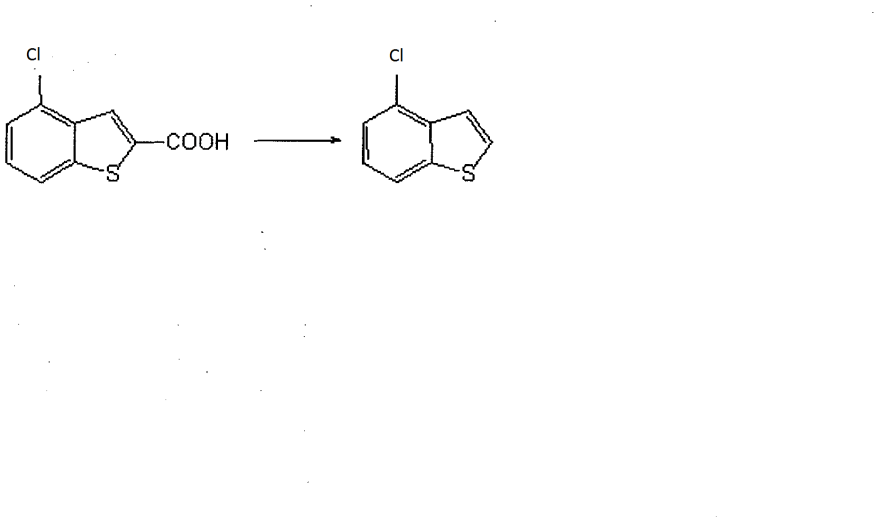
Reference Example 5

• Synthesis of K salt  4-chlorobenzo[b] thiophen-2-carboxylate

Reference Example 6

· Synthesis of 2-carboxy-4-chlorobenzo[b]thiophene

Sodium 4-chlorobenzo[b] thiophen-2-carboxylate (2.40 g) was dissolved in water (33 ml) at 60°C. Concentrated hydrochloric acid (1.3 ml) was added to the solution at the same temperature, and the resulting mixture was stirred. The precipitated crystals were collected by filtration, washed with water, and then dried to obtain 2-carboxy-4-chlorobenzo[b] thiophene.

Yield: 1.61 g ^- MR (DMS0-d6);7.53 (1H, t, J = 7.7 Hz), 7.58 (1H, dd, J = 7.7, 1.3 Hz), 8.03 (1H, d, J = 0.5 Hz), 8.07 (1H, d, J = 7.6 Hz).

e

d

Elaborate description

IN THIS BELOW PIC WE SEE

Synthesis of 4-(1-piperazinyl)benzo[b]thiophene

4-Chlorobenzo[b]thiophene and xylene , Subsequently, piperazine, sodium tert-butoxide, palladium acetate (II), and 2-dicyclohexylphosphino-2′,6′-di-iso-propoxy-1,1′-biphenyl (RuPhos) …… producing 4-(1-piperazinyl)benzo[b]thiophene.

NEXT IS PREPARATION OF HYDROCHLORIDE

4-(1-piperazinyl)benzo[b]thiophene hydrochloride. 1H-NMR (DMSO-d6) d ppm;
3.30 (4H, br.s), 3.61 (4H, br.s), 6.97 (1H, d, J = 7.8 Hz), 7.32 (1H, br. dd, J = 8.4, 7.8 Hz),
7.53 (1H, d, J = 5.6 Hz), 7.70 (1H, d, J = 8.4 Hz), 7.76 (1H, d, J = 5.6 Hz), 9.37 (1H, br.s).

NEXT  IS REACTION WITH A TO GIVE BREXPIPRAZOLE

1-benzo[b]thiophen-4-yl-piperazine hydrochloride, potassium carbonate
and DMF  and  7-(4-chlorobutoxy)-1H-quinolin-2-one A  FROM PIC 1 and potassium iodide  GAVE BREXPIPRAZOLE, ie 7-[4-(4-benzo[b]thiophen-4-yl-piperazin-1-yl)butoxy]-1H-quinolin-2-one.

1H-NMR (DMSO-d6) d ppm; 1.6-1.75 (2H, m), 1.75-1.9 (2H, m), 2.44
(2H, t, J = 7.0 Hz), 2.55-2.70 (4H, m), 3.00-3.15 (4H, m), 4.06 (2H, t, J = 6.3 Hz), 6.30 (1H,
d, J = 9.5 Hz), 6.75-6.85 (2H, m), 6.88 (1H, d, J = 7.5 Hz), 7.27 (1H, dd, J = 8 Hz, 8 Hz),
7.40 (1H, d, J = 5.5 Hz), 7.55 (1H, d, J = 9.5 Hz), 7.61 (1H, d, J = 8 Hz), 7.69 (1H, d, J = 5.5
Hz), 7.80 (1H, d, J = 9.5 Hz), 11.58 (1H, bs).

WP_000308

BETTER REPRESENTATION OF  PIC

Example 2

• Synthesis of 4- (l-piperazinyl)benzo[b]thiophene hydrochloride

4-Chlorobenzo[b] thiophene (5.00 g), piperazine (5.11 g) , palladium acetate (II) (2.7 mg), tri-tert-butylphosphonium

tetraphenylborate (6.2 mg), sodium tert-butoxide (8.548 g), and xylene (70 ml) were stirred at 120 to 130°C for 5 hours. After the reaction mixture was cooled to room temperature, water was added thereto, and the layers were separated. The xylene layer was washed with water, and then with saline. After addition of activated carbon, the mixture was stirred at room temperature for 30 minutes. After filtration of the mixture, concentrated

hydrochloric acid was added to the filtrate, and the resulting mixture was stirred at room temperature for 30 minutes. The precipitated crystals were collected by filtration and dried to obtain 4- ( l-piperazinyl)benzo[b] thiophene hydrochloride.

Yield: 6.94 g !H-NMRiDMSO-de) 6ppm; 3.30 (4H, br.s), 3.61 (4H, br.s), 6.97 (1H, d, J= 7.8 Hz), 7.32 (1H, br.dd, J= 8.4. 7.8 Hz), 7.53 (1H, d, J= 5.6 Hz), 7.70 (1H, d, J= 8.4 Hz), 7.76 (1H, d, J= 5.6 Hz), 9.37 (1H, br.s).

Example 3

• Synthesis of 4- ( 1-piperazinyl)benzo[b] thiophene hydrochloride

4-Chlorobenzo[b] thiophene (10.0 g) and xylene (100 ml) were placed in a reaction vessel. The reaction vessel was

evacuated and then purged with argon. Subsequently, piperazine (15.3 g) , sodium tert-butoxide (17.1 g) , palladium acetate (II) (13.0 mg) , and 2-dicyclohexylphosphino-2′,6′-di-iso-propoxy-1,1′- biphenyl (RuPhos) (69.0 mg) were added. After evacuation and purging with argon, the mixture was refluxed for 2 hours. After the reaction mixture was cooled to about 80°C, water (50 ml) and silica #600H (0.65 g) were added. The mixture was stirred at approximately 60°C for about 10 minutes, and then filtered. After the filtrate was separated into layers, the xylene layer was washed with water. Subsequently, the xylene layer was placed into the reaction vessel again. After addition of water (200 ml) and concentrated hydrochloric acid (8.0 ml) , the mixture was heated with stirring for dissolution. The layers were separated at 75°C or more. After the aqueous layer was collected, toluene (150 ml) and 25% aqueous sodium hydroxide solution (16 ml) were added, and the mixture was stirred. The layers were separated, and the organic layer was collected. The organic layer was washed with water and concentrated with an evaporator. Methanol (150 ml) was added to the concentrated oil to dissolve the oil, thus producing a methanol solution. 2-Propanol (150 ml) and concentrated

hydrochloric acid (7 ml) were placed into another reaction vessel, and the methanol solution was added dropwise over a period of 15 minutes or more. After completion of the dropwise addition, the mixture was cooled and stirred at 10°C or less for about 30 minutes, and then filtered (washed with a mixture of 5 ml of methanol and 5 ml of 2-propanol) . The crystals were collected, and then dried to obtain 4-(l-piperazinyl)benzo[b]thiophene hydrochloride.

Yield: 11.61 g

^-NMRfDMSO-de) oppm;

3.25-3.40 (8H, br.s), 6.96 (1H, d, J = 7.5 Hz), 7.32 (1H, dd, J = 8.0, 7.5 Hz), 7.52 (1H, d, J = 5.5 Hz ) . 7.70 (1H, d, J = 8.0 Hz), 7.75 (1H, d, J = 5.5 Hz), 9.35 (1H, br.s).

Reference Example 9

· Synthesis of 7- ( 4-chlorobutoxy) -lH-quinolin-2-one

After 7-hydroxy-lH-quinolin-2-one (10 g) and DMF (50 ml) were heated to approximately 30°C, an aqueous potassium carbonate solution (potassium carbonate: 8.6 g, water: 10 ml) was added. After the mixture was stirred at 30 to 40°C for about 15 minutes, l-bromo-4-chlorobutane (14.3 ml) was added and stirred at approximately 40°C for 5 hours. Water (100 ml) was added dropwise over a period of 30 minutes or more while the

temperature was maintained at 30°C or more. After the mixture was stirred at approximately 30°C for 30 minutes, stirring was continued at 10°C or less for 1 hour, after which the precipitated crystals were collected by filtration. After methanol (100 ml) was added to the precipitated crystals, the mixture was stirred under reflux to ensure dissolution. This solution was cooled and stirred at 30 to 40°C for 30 minutes and then at 5°C or less for about 1 hour, after which the precipitated crystals were

collected by filtration. The crystals were dried at 60°C to obtain 7- (4-chlorobutoxy) -lH-quinolin-2-one as white powder.

Yield: 12.3 g

^I-NMR (300 MHz; CDC13) oppm; 1.95-2.05 (4H, m) , 3.64 (2H, t, J = 6.0Hz), 4.10 (2H, t. J = 5.5 Hz), 6.56 (1H, d, J = 9.5 Hz), 6.80 (1H. dd, J = 9.0 Hz, 2.5 Hz), 6.84 (1H, d, J = 2.5 Hz), 7.45 (1H, d, J = 9.0 Hz), 7.73 (1H, d, J = 9.5 Hz), 12.45 (1H, brs).

Example 4

· Synthesis of 7- [4- (4-benzo[b]thiophen-4-yl-piperazin-l- yl)butoxy] -lH-quinolin-2-one

After 1-benzo[b] thiophen-4-yl-piperazine hydrochloride (10.6 g), potassium carbonate (5.8 g) , and DMF (50 ml) were stirred at 30 to 40°C for about 30 minutes, 7-(4-chlorobutoxy) -1H- quinolin-2-one (10.0 g) and potassium iodide (6.9 g) were added. The mixture was stirred at 90 to 100°C for 2 hours. While the temperature of the mixture was maintained at 60°C or more, water (150 ml) was added dropwise over a period of 10 minutes or more.

After the mixture was cooled to 10°C or less, the precipitated crystals were collected by filtration, and washed with water and then with ethanol.

After ethanol (325 ml) and acetic acid (25 ml) were added to the precipitated crystals, the mixture was stirred under reflux for dissolution. Concentrated hydrochloric acid (3.6 ml) was added at around 70°C, and the mixture was cooled. After confirming the precipitation of crystals, the mixture was heated again and stirred under reflux for 1 hour. After the mixture was cooled to 10°C or less, the precipitated crystals were collected by filtration and washed with ethanol.

After ethanol (191 ml) and water (127 ml) were added to the precipitated crystals, the mixture was stirred under reflux for dissolution. After activated carbon (0.89 g) was added, the mixture was stirred under reflux for 30 minutes and then hot filtered. After activated carbon was removed, the mixture was heated again for dissolution. After 25% aqueous sodium hydroxide solution (5.8 ml) was added at approximately 70°C, the mixture was stirred under reflux for 30 minutes, after which water (64 ml) was added at approximately 70°C. After the mixture was stirred at 40°C for 30 minutes, the precipitated crystals were collected by filtration at 40°C or less, then washed with water, and dried to obtain 7- [4-(4-benzo[b]thiophen-4-yl-piperazin-l-yl)butoxy] -1H- quinolin-2-one as white crystals.

Yield: 14.30 g ^-NMRfDMSO-de) 6ppm; 1.6-1.75 (2H, m) . 1.75-1.9 (2H, m) , 2.44 (2H, t, J = 7.0 Hz),2.55-2.70 (4H, m) , 3.00-3.15 (4H, m) , 4.06 (2H, t, J = 6.3 Hz), 6.30 (1H, d, J = 9.5 Hz), 6.75-6.85 (2H, m) , 6.88 (1H, d, J = 7.5 Hz), 7.27 (1H, dd, J = 8 Hz, 8 Hz), 7.40 (1H, d, J = 5.5 Hz), 7.55 (1H, d, J = 9.5 Hz), 7.61 (1H, d, J = 8 Hz), 7.69 (1H, d, J = 5.5 Hz), 7.80 (1H, d, J = 9.5 Hz), 11.58 (1H, bs) .

c

  logo

SEE  http://www.molbase.com/en/index.html

IH NMR PREDICT

7-[4-[4-(1-benzothiophen-4-yl)piperazin-1-yl]butoxy]-1H-quinolin-2-one NMR spectra analysis, Chemical CAS NO. 913611-97-9 NMR spectral analysis, 7-[4-[4-(1-benzothiophen-4-yl)piperazin-1-yl]butoxy]-1H-quinolin-2-one H-NMR spectrum

  logo

13 C NMR PREDICT

7-[4-[4-(1-benzothiophen-4-yl)piperazin-1-yl]butoxy]-1H-quinolin-2-one NMR spectra analysis, Chemical CAS NO. 913611-97-9 NMR spectral analysis, 7-[4-[4-(1-benzothiophen-4-yl)piperazin-1-yl]butoxy]-1H-quinolin-2-one C-NMR spectrum

Patent

Reaction Scheme 3:

https://patentscope.wipo.int/search/en/detail.jsf;jsessionid=D842B4D68D66F641E505E9690CF876D0.wapp2nB?docId=WO2015054976&recNum=1&maxRec=&office=&prevFilter=&sortOption=&queryString=&tab=FullText


Wherein, X is halogen, such as fluorine, chlorine, bromine, iodine; R and R 1 as defined above in the definition of the compounds of formula I the same;
Scheme 4:

Wherein, X is fluorine, chlorine, bromine or iodine; R 1 as defined above, with a compound of formula I as defined for the same;
Reaction Scheme 5:
Wherein, X is fluorine, chlorine, bromine or iodine; R 1 is the same as defined in the compounds shown above, and R are as defined for formula I. The present invention also provides processes for preparing key intermediates Bray prazosin/  Brexpiprazole or a salt thereof, the method as shown in Scheme 6:
Scheme 6:
Example 26
7- [4- (benzothiazol-4-yl-1-piperazinyl) butoxy] -3,4-dihydro -2 (1H) – quinolinone
Preparation of

The product (400mg, 0.83mmol) of Example 25 will be implemented, silver carbonate (46mg, 0.16mmol) was dissolved in DMSO (5mL) and the acetic acid was heated to 120 ℃ overnight. Cooling, water was added, extracted with ethyl acetate, ethyl acetate layer was washed with saturated sodium bicarbonate and brine each wash again, dried over anhydrous sodium sulfate, and silica gel column chromatography, to give a solid (80mg, yield 22%).
1 HNMR (400 MHz, DMSO-d 6 ): δ10.00 (s, 1H), 7.69 (d, 1H), 7.61 (d, 1H), 7.40 (d, 1H), 7.27 (t, 1H), 7.04 ( d, 1H), 6.89 (d, 1H), 6.50 (dd, 1H), 6.45 (d, 1H), 3.93 (t, 2H), 3.06 (br, 4H), 2.78 (t, 2H), 2.60 (br , 4H), 2.41 (t, 4H), 1.74 (t, 2H), 1.60 (t, 2H) ESI: [M + 1] + = 436.3.

Example 27
7- [4- (2-carboxy-benzothiophen-4-yl-1-piperazinyl) butoxy] -2 (1H) – quinolinone
Preparation of

A mixture of 2-chloro-6- (4- (4 – ((2-oxo-1,2-dihydro-quinolin-7-yl) oxy) butyl) piperazin-1-yl) benzaldehyde (80mg , 0.18mmol) was dissolved in DMF (5mL) was added sodium hydroxide (29mg, 0.73mmol) and thioglycolic acid (0.025mL, 0.36mmol), 120 ℃ stirred for 16 hours. Cooling, water was added, adjusted with 1N HCl aqueous solution is about pH = 5, extracted with ethyl acetate, the ethyl acetate layer was washed with saturated brine, dried over anhydrous sodium sulfate, and silica gel column chromatography, to give a solid (40mg, yield 46 %).
ESI: [M + 1] + = 478.0.

Piperazine hydrochloride – (2-carboxy-benzothiophen-4-yl)
Example 28 1-

The product of Example 17 (100mg, 0.25mmol) was dissolved in acetic acid (3mL) and concentrated hydrochloric acid (0.5 mL) in, 100 ℃ stirred for 10 hours. The reaction solution was poured into ice water, stirred for 10min after filtration, to obtain the target substance (38mg, 50% yield).

1 HNMR (400 MHz, DMSO-d 6 ): [delta] 9.46 (bs, 2H), 8.04 (s, 1H), 7.69 (d, 1H), 7.43 (t, 1H), 7.00 (d, 1H), 3.30 ( bs, 8H) ESI: [M + 1] + = 262.9.
Preparation of tert-butyl piperazine-1 – Example 224- (2-carboxy-benzothiophen-4-yl)

Under nitrogen, to N, at room temperature was added N- dimethylformamide (5mL) within the reference product (200g, 0.62mmol) of Example 1, thioglycolic acid (114mg, 1.23mmol), sodium methoxide (133mg, 2.45mmol ), and the mixture was stirred at 105 ℃ 18 hours. Cooling, water was added, extracted with ethyl acetate, separated and the aqueous phase was adjusted pH = 5 or so, the precipitated solid was filtered and dried to obtain the target substance (130mg, 58% yield).
1 HNMR (400 MHz, DMSO-d 6 ): [delta] 7.98 (s, 1H), 7.64 (d, 1H), 7.42 (t, 1H), 6.95 (d, 1H), 3.53 (bs, 4H), 3.035 ( bs, 4H) ESI: [M-1] = 361.1.
Preparation of piperazine-1-carboxylic acid tert-butyl ester – (2-carboxy-benzothiophen-4-yl) Example 234-

Under nitrogen, to N, at room temperature was added N- dimethylformamide (5mL) within the reference product (200g, 0.62mmol) of Example 1, thioglycolic acid (114mg, 1.23mmol), sodium hydroxide (99mg, 2.45 mmol), the mixture was stirred at 105 ℃ 18 hours. Cooling, water was added, extracted with ethyl acetate, separated and the aqueous phase was adjusted pH = 5 or so, the precipitated solid was filtered and dried to obtain the target substance (180mg, yield 81%).
1 HNMR (400 MHz, DMSO-d 6 ): [delta] 7.98 (s, 1H), 7.64 (d, 1H), 7.42 (t, 1H), 6.95 (d, 1H), 3.53 (bs, 4H), 3.035 ( bs, 4H) ESI: [M-1] = 361.1.

Example 24 7- [4- (2-ethoxycarbonyl-4-phenyl and thienyl-1-piperazinyl) butoxy] -2 (1H) – quinolinone Preparation of

A mixture of 2-chloro-6- (4- (4 – ((2-oxo-1,2-dihydro-quinolin-7-yl) oxy) butyl) piperazin-1-yl) benzaldehyde (80mg , 0.18mmol) was dissolved in DMF (5mL) was added DIPEA (94mg, 0.73mmol) and ethyl mercaptoacetate (0.024mL, 0.22mmol), 110 ℃ stirred for 16 hours. Cooling, water was added, extracted with ethyl acetate, the ethyl acetate layer was washed with saturated brine, dried over anhydrous sodium sulfate, and silica gel column chromatography, to give a solid (40mg, 46% yield).
Preparation of piperazine-1-carboxylic acid tert-butyl ester – Example 184- (2-ethoxycarbonyl phenyl and thien-4-yl)

Under nitrogen, was added at room temperature to DMF (5mL) within the reference product (200mg, 0.62mmol) of Example 1, ethyl mercaptoacetate (0.081ml, 0.74mmol), DIPEA (342mg, 2.48mmol), the mixture was at 105 ℃ stirred for 18 hours, 1N HCl aqueous solution was added adjust pH = 7, and extracted with methyl tert-butyl ether, the ether layer was washed three times with saturated brine, dried over anhydrous sodium sulfate, the drying agent was filtered off, and concentrated by column chromatography to obtain the target (170mg, yield 71%).
1 HNMR (400 MHz, CDCl 3 ): [delta] 8.40 (s, 1H), 7.58 (d, 1H), 7.37 (t, 1H), 6.95 (d, 1H), 4.44 (q, 2H), 3.64 (m, 4H), 3.15 (m, 4H) ESI: [M + 1] + = 391.1.

Preparation of piperazine-1-carboxylic acid tert-butyl ester – Example 194- (2-ethoxycarbonyl phenyl and thien-4-yl)

Under nitrogen at room temperature was added the product of Reference Example 1 to ethanol (5mL) inside (200mg, 0.62mmol), ethyl mercaptoacetate (0.081ml, 0.74mmol), sodium hydroxide (100mg, 2.48mmol), the mixture 85 ℃ stirred for 6 hours, and concentrated by column chromatography to obtain the target substance (70mg, 30% yield).
1 HNMR (400 MHz, CDCl 3 ): [delta] 8.40 (s, 1H), 7.58 (d, 1H), 7.37 (t, 1H), 6.95 (d, 1H), 4.44 (q, 2H), 3.64 (m, 4H), 3.15 (m, 4H) ESI: [M + 1] + = 391.1.

Piperazine hydrochloride – (2-carboxy-benzothiophen-4-yl) Example 201-

The product of Example 2 (200mg, 0.55mmol), was dissolved in THF (5mL) was added concentrated hydrochloric acid (0.5mL), 50 ℃ heated 6h.Cooling, methyl tert-butyl ether (5mL), filtered to give the target (130mg, yield 79%).
1 HNMR (400 MHz, DMSO-d 6 ): [delta] 9.46 (bs, 2H), 8.04 (s, 1H), 7.69 (d, 1H), 7.43 (t, 1H), 7.00 (d, 1H), 3.30 ( bs, 8H) ESI: [M + 1] + = 262.9.

Piperazine hydrochloride – (benzothiophen-4-yl) Example 211-

The product of Example 20 (130mg, 0.43mmol) was added to diphenyl ether (3mL) in, 260 ℃ heating 0.5h. Cooling, filtration object (60mg, 55% yield).
1 HNMR (400 MHz, DMSO-d 6 ): [delta] 9.46 (bs, 2H), 7.75 (d, 1H), 7.69 (d, 1H), 7.53 (t, 1H), 7.31 (t, 1H), 6.97 ( t, 1H), 3.30 (bs, 8H) ESI: [M + 1] + = 219.2.

PAPER

Org. Process Res. Dev., Article ASAP
DOI: 10.1021/acs.oprd.5b00027
Figure

Figure 1. Brexpiprazole (1) and intermediate 18.

Abstract Image

2-Chloro-6-fluorobenzaldehyde was converted to 4-(1-piperazinyl)benzo[b]thiophene dihydrochloride (18), an intermediate in the synthesis of brexpiprazole, via a five-step sequence in 54% overall yield. This procedure requires no expensive catalyst and avoids the side products produced in the coupling step in the reported process. Several kilograms of compound 18 were prepared using this economical and scalable process.

1-(Benzo[b]thiophen-4-yl)piperazine Dihydrochloride (18)

Compound 10 (1.5 kg, 4.71 mol) was dissolved in ………………..DELETED…………………, and then dried to give compound 18 (1.17 kg, 85% yield). HPLC for compound 18 (tR = 6.3 min, identical to authentic sample) 99.8% purity; HPLC method B.
18:
1H NMR (400 MHz, DMSO-d6) δ 11.86 (s, 1H), 9.65 (s, 2H), 7.75 (d, J = 5.5 Hz, 1H), 7.69 (d, J = 8.1 Hz, 1H), 7.53 (d, J = 5.5 Hz, 1H), 7.30 (t, J = 7.9 Hz, 1H), 6.96 (d, J = 7.6 Hz, 1H), 3.30 (s, 8H).
13C NMR (100 MHz, DMSO-d6): δ 146.92, 140.62, 133.40, 126.50, 125.06, 121.91, 117.73, 112.56, 48.52, 43.00.
MS (ESI, eV): m/z = 219.1 [M + H]+.

 ………..

PATENT

http://www.google.com/patents/US20140187782

A 4-(1-piperazinyl)benzo[b]thiophene compound represented by Formula (1):

Figure US20140187782A1-20140703-C00002

is useful for various medicines such as antipsychotic drugs. Moreover, a 4-(1-piperazinyl)benzo[b]thiophene compound represented by Formula (4):

Figure US20140187782A1-20140703-C00003

wherein R1 is a hydrogen atom or a protecting group, is useful as an intermediate for synthesizing the compound represented by Formula (1).

Reference Example 30 and Example 1 of PTL 1 specifically disclose a method for producing a benzo[b]thiophene compound (the reaction scheme shown below). In Reference Example 30, 4-(1-piperazinyl)benzo[b]thiophene is produced by heating under reflux a mixture comprising 14.4 g of 4-bromobenzo[b]thiophene, 29.8 g of anhydrous piperazine, 9.3 g of sodium tert-butoxide, 0.65 g of (R)-(+)-2,2′-bis(diphenylphosphino)-1,1′-binaphthyl (BINAP), 0.63 g of tris(dibenzylideneacetone)dipalladium (0), and 250 ml of toluene (step X).

Figure US20140187782A1-20140703-C00004

However, the reaction of the step X produces a relatively large amount of by-products that can hardly be separated, and the purity of the compound (4a) is thus inevitably reduced. Moreover, although column purification is performed to increase the purity of the compound (4a), it is very difficult to completely remove by-products, even by column chromatography purification. For this reason, there is a demand for the development of a novel method for producing the compound (4a) with high yield and high purity.

Furthermore, by-products contained in the compound (4a) inevitably reduce the purity of the compound (1) in the subsequent step Y. Since the method described in PTL 1 requires purification by column chromatography to obtain the target compound (1) with high purity, the method is not suitable for the industrial process of mass production. In addition, according to the method, incorporation of by-products that can hardly be separated is inevitable, and high-purity products usable as active pharmaceutical ingredients cannot be produced without purification by column chromatography.

CITATION LISTPatent Literature

  • PTL 1: Japanese Unexamined Patent Publication No. 2006-316052 Non Patent Literature
  • NPL 1: Tetrahedron Lett., 2004, 45, 9645

Figure US20140187782A1-20140703-C00020

Figure US20140187782A1-20140703-C00021

Figure US20140187782A1-20140703-C00022

Example 4

Synthesis of 7-[4-(4-benzo[b]thiophen-4-yl-piperazin-1-yl)butoxy]-1H-quinolin-2-one

After 1-benzo[b]thiophen-4-yl-piperazine hydrochloride (10.6 g), potassium carbonate (5.8 g), and DMF (50 ml) were stirred at 30 to 40° C. for about 30 minutes, 7-(4-chlorobutoxy)-1H-quinolin-2-one (10.0 g) and potassium iodide (6.9 g) were added. The mixture was stirred at 90 to 100° C. for 2 hours. While the temperature of the mixture was maintained at 60° C. or more, water (150 ml) was added dropwise over a period of 10 minutes or more. After the mixture was cooled to 10° C. or less, the precipitated crystals were collected by filtration, and washed with water and then with ethanol.

After ethanol (325 ml) and acetic acid (25 ml) were added to the precipitated crystals, the mixture was stirred under reflux for dissolution. Concentrated hydrochloric acid (3.6 ml) was added at around 70° C., and the mixture was cooled. After confirming the precipitation of crystals, the mixture was heated again and stirred under reflux for 1 hour. After the mixture was cooled to 10° C. or less, the precipitated crystals were collected by filtration and washed with ethanol.

After ethanol (191 ml) and water (127 ml) were added to the precipitated crystals, the mixture was stirred under reflux for dissolution. After activated carbon (0.89 g) was added, the mixture was stirred under reflux for 30 minutes and then hot filtered. After activated carbon was removed, the mixture was heated again for dissolution. After 25% aqueous sodium hydroxide solution (5.8 ml) was added at approximately 70° C., the mixture was stirred under reflux for 30 minutes, after which water (64 ml) was added at approximately 70° C. After the mixture was stirred at 40° C. for 30 minutes, the precipitated crystals were collected by filtration at 40° C. or less, then washed with water, and dried to obtain 7-[4-(4-benzo[b]thiophen-4-yl-piperazin-1-yl)butoxy]-1H-quinolin-2-one as white crystals.

Yield: 14.30 g

1H-NMR (DMSO-d6) δ ppm;

1.6-1.75 (2H, m), 1.75-1.9 (2H, m), 2.44 (2H, t, J=7.0 Hz), 2.55-2.70 (4H, m), 3.00-3.15 (4H, m), 4.06 (2H, t, J=6.3 Hz), 6.30 (1H, d, J=9.5 Hz), 6.75-6.85 (2H, m), 6.88 (1H, d, J=7.5 Hz), 7.27 (1H, dd, J=8 Hz, 8 Hz), 7.40 (1H, d, J=5.5 Hz), 7.55 (1H, d, J=9.5 Hz), 7.61 (1H, d, J=8 Hz), 7.69 (1H, d, J=5.5 Hz), 7.80 (1H, d, J=9.5 Hz), 11.58 (1H, bs).

………………………

PATENT

http://www.google.com/patents/WO2006112464A1?cl=en

Example 1

Preparation of 7- [4- (4-benzo [b] thiophen-4-yl- piperazin-1-yl) butoxy] -lH-quinolin-2-one

A mixture of 9.0 g of 7- ( 4-chlorobutoxy) -IH- quinolin-2-one, 10 g of 1-benzo [b] thiophene-4-yl- piperazine hydrochloride, 14 g of potassium carbonate, 6 g of sodium iodide and 90 ml of dimethylformamide was stirred for 2 hours at 😯0C. Water was added to the reaction solution and precipitated crystals were separated by filtration. The crystals were dissolved in a mixed solvent of dichloromethane and methanol, dried over magnesium sulfate, and the solvent was evaporated under reduced pressure. The residue was purified by silica gel column chromatography (dichloromethane .-methanol = 100:3). Recrystallized from ethanol, 13.6 g of 7- [4- (4-benzo [b] thiophen-4-yl- piperazin-1-yl) butoxy] -lH-quinolin-2-one in the form of a white powder was obtained.

Melting point 183.5-184.50C

1H-NMR ( DMSO-dg) δppm:

1.6-1.75 (2H, m) , 1.75-1.9(2H, m) , 2.44(2H, t, J=7Hz) , 2.5-2.8(4H, m) , 2.9-3.2(4H, m) , 4.06(2H, t, J=6.5Hz), 6.3O(1H, d, J=9.5Hz), 6.75-6.85 (2H, m) , 6.88(1H, d, J=7.5Hz), 7.27 (IH, dd, J=8Hz, 8Hz), 7.40 (IH, d, J=5.5Hz), 7.55 (IH, d, J=9.5Hz), 7.61(1H, d, J=8Hz) , 7.69(1H, d, J=5.5Hz), 7.8O(1H, d, J=9.5Hz), 11.59(1H, bs) .

……………….

PATENT

Figure imgf000006_0001 7- [ 4- ( 4-benzo[b]thiophen-4- yl-piperazin-l-yl)butoxy] -lH-quinolin-2-one

The dihydrate of the benzothiophene compound represented by Formula (I) or of a salt thereof according to the present invention can be produced from an anhydride of the benzothiophene compound or of a salt thereof.

The benzothiophene compound (in the form of an

anhydride) of Formula (I), from which the dihydrate of the present invention is produced, is a known compound, and can be obtained by the production method disclosed in Example 1 of

JP2006-316052A or according to Reference Examples 1 and 2

Fig. 1 shows the ^-NMR spectrum of the dihydrate of the benzothiophene compound represented by Formula (I) prepared in Example 1.

Fig. 2 shows the X-ray powder diffraction pattern of the dihydrate of the benzothiophene compound represented by

Formula (I) prepared in Example 1.

Fig. 3 shows the infrared absorption spectrum of the dihydrate of the benzothiophene compound represented by Formula (I) prepared in Example 1.

Fig. 4 shows the Raman spectrum of the dihydrate of the benzothiophene compound represented by Formula (I) prepared in Example 1.

Fig. 5 shows the XH- MR spectrum of the benzothiophene compound represented by Formula (I) prepared in Example 2.

Reference Example 1: Synthesis of 7-(4-chlorobutoxy)-lH-quinolin- 2-one Methanol (149 L) , 7-hydroxy-lH-quinolin-2-one (14.87 kg), and potassium hydroxide (6.21 kg) were mixed and stirred. After dissolution, l-bromo-4-chlorobutane (47.46 kg) was further added thereto and the resulting mixture was stirred under reflux for seven hours. Thereafter, the mixture was stirred at 10° C for one hour. The precipitated crystal was centrifuged and washed with methanol (15 L). The wet crystal was collected and placed in a tank. Water (149 L) was added thereto, followed by stirring at room temperature. After centrifugation, the resulting solid was washed with water (30 L). The wet crystal was collected and placed in a tank. After adding methanol (74 L), the mixture was stirred under reflux for one hour, cooled to 10° C, and then stirred. The precipitated crystal was centrifuged and washed with methanol (15 L). The separated crystal was dried at 60° C to obtain 7- (4-chlorobutoxy) -lH-quinolin-2-one (15.07 kg).

Reference Example 2: Synthesis of 7- [ 4- ( 4-benzo[b] thiophen-4-yl- piperazin-l-yl)butoxy] -lH-quinolin-2-one

Water (20 L), potassium carbonate (1.84 kg), 1- benzo[b] thiophen-4-yl-piperazine hydrochloride (3.12 kg), and ethanol (8 L) were mixed and stirred at 50° C. 7- ( 4-Chlorobutoxy) – lH-quinolin-2-one (2.80 kg) obtained in Reference Example 1 was added to the mixture and stirred under reflux for nine hours.

After concentrating the solvent (8 L) under ordinary pressure, the mixture was stirred at 90° C for one hour and then cooled to 9° C . The precipitated crystal was centrifuged and then

sequentially washed with water (8 L) and ethanol (6 L). The separated crystal was dried at 60° C to obtain a crude product. The crude product (4.82 kg) and ethanol (96 L) were mixed in a reaction vessel, and acetic acid (4.8 L) was introduced into the reaction vessel. The mixture was stirred under reflux for one hour to dissolve the crude product. After introducing

hydrochloric acid (1.29 kg), the mixture was cooled to 10° C. The mixture was heated again, refluxed for one hour, and cooled to 7° C. The precipitated crystal was centrifuged and washed with ethanol (4.8 L). The separated crystal was dried at 60° C to obtain 7- [4- (4-benzo[b] thiophen-4-yl-piperazin-l-yl)butoxy] -1H- quinolin-2-one hydrochloride (5.09 kg). The resulting 7- [4- (4- benzo[b]thiophen-4-yl-piperazin-1-yl)butoxy] -lH-quinolin-2-one hydrochloride (5.00 kg), ethanol (45 L), and water (30 L) were mixed in a reaction vessel. The mixture was stirred under reflux to dissolve the 7-[4-(4-benzo[b]thiophen-4-yl-piperazin-l- yl)butoxy] -lH-quinolin-2-one hydrochloride. Activated carbon (500 g) and water (5 L) were added thereto, and an activated carbon treatment was conducted under reflux for 30 minutes. After performing hot filtration, a solution containing sodium hydroxide (511 g) dissolved in water (1.5 L) was flowed into the reaction vessel while stirring the filtrate under reflux. After stirring under reflux for 30 minutes, water (10 L) was introduced thereto and the mixture was cooled to approximately 40° C. The

precipitated crystal was centrifuged and washed with water (125 L). The separated crystal was dried at 80° C to obtain 7- [4- (4- benzo[b]thiophen-4-yl-piperazin-1-yl)butoxy] – lH-quinolin-2-one (3.76 kg).

Example 1: Preparation of 7- [ 4- ( 4-benzo[b]thiophen-4-yl- piperazin-l-yl)butoxy] -lH-quinolin-2-one dihydrate

The 7- [4- (4-benzo[b] thiophen-4-yl-piperazin-1- yl)butoxy] -lH-quinolin-2-one (3.2 kg) obtained in Reference

Example 2, ethanol (64 L) , water (74 L) , and acetic acid (1.77 kg) were mixed in a reaction vessel to prepare an acidic liquid mixture. The mixture was stirred under reflux to dissolve the 7- [ 4- ( 4-benzo[b] thiophen-4-yl-piperazin-1-yl)butoxy] -1H-quinolin-2- one (reflux temperature: 84° C). After cooling to -5°C, the solution obtained above was introduced, over a period of 30 minutes, into a solution containing 25% sodium hydroxide (5.9 kg) and water (54 L) that was cooled to 0°C, to prepare a liquid mixture with pHlO. After being stirred at 5° C or below for one hour, the mixture was heated to 20 to 30° C and further stirred for-seven hours . The precipitated crystal was filtered and washing with water (320 L) was performed, until alkali in the solid component disappeared (i.e.. until the pH value of the filtrate became 7 ) . The solid component was then air-dried until its weight became constant to obtain a white solid 7-[4-(4- benzofb] thiophen-4-yl-piperazin-l-yl)butoxy] -lH-quinolin-2-one dihydrate (unground, 3.21 kg).

Fig. 1 shows the XH-NMR spectrum (D SO-d6, TMS) of the dihydrate prepared by the aforesaid method. As shown in Fig. 1, in the ^- MR spectrum (DMSO-d6, TMS) , peaks were observed at 1.64 ppm (tt, J = 7.4 Hz, J = 7.4 Hz, 2H) , 1.80 ppm (tt, J = 7.0 Hz, J = 7.0 Hz, 2H), 2.44 ppm (t, J = 7.5 Hz, 2H) , 2.62 ppm (br, 4H) , 3.06 ppm (br, 4H) , 3.32 ppm (s, 4H + H20) , 4.06 ppm (t, J = 6.5 Hz, 2H), 6.29 ppm (d, J = 9.5 Hz, 1H), 6.80 ppm (d, J = 2.5 Hz, 1H) , 6.80 ppm (dd, J = 2.5 Hz, J = 9.0 Hz, 1H) , 6.88 ppm (d, J = 7.5 Hz, 1H), 7.27 ppm (dd, J = 7.8 Hz, J = 7.8 Hz, 1H) , 7.40 ppm (dd, J = 0.5 Hz, J = 5.5 Hz, 1H), 7.55 ppm (d, J = 9.0 Hz, 1H) , 7.61 ppm (d, J = 8.0 Hz, 1H) , 7.69 ppm (d, J = 5.5 Hz, 1H) , 7.80 ppm (d, J = 9.5 Hz, 1H), and 11.57 ppm (s, 1H) .

The X-ray powder diffraction spectrum of the dihydrate prepared by the aforesaid method was measured using an X-ray diffractometer (D8 ADVANCE, available from Bruker AXS). Fig. 2 shows the X-ray powder diffraction spectrum. As shown in Fig. 2, in the X-ray powder diffraction spectrum, diffraction peaks were observed at 2Θ = 8.1° , 8.9° , 15.1° , 15.6° , and 24.4° . Other than those mentioned above, the diffraction peaks were also observed at 2Θ = 11.6°.. 12.2°, 14.0°, 16.3°, 18.1°, 18.4°, 18.9°, 19.5°, 20.5°, 21.5°, 22.6°, 23.3°, 25.0°, 26.1°, 26.4°, 27.1°. 28.1°, 28.5°, 28.9°, 29.8°, 30.4°, 30.7°, 31.6°, 32.9°, 33.9°, 34.4°, 35.2°, 36.0°, 36.7°, 37.4° , and 38.3°.

The IR (KBr) spectrum of the dihydrate prepared by the aforesaid method was measured. Fig. 3 shows the IR (KBr) spectrum. As shown in Fig. 3, in the IR (KBr) spectrum, absorption bands were observed in the vicinity of wavenumbers 3509 cm“1, 2934 cm“1, 2812 cm“1, 1651 cm“1, 1626 cm“1, 1447 cm“1, 1223 cm“1 and 839 cm“1.

The Raman spectrum of the dihydrate prepared by the aforesaid method was measured. Fig. 4 shows the Raman spectrum. As shown in Fig. 4, in the Raman spectrum, absorption bands were observed in the vicinity of wavenumbers 1497 cm“1, 1376 cm“1, 1323 cm“1, 1311 cm“1, 1287 cm“1, 1223 cm“1, and 781 cm“1.

Other than those mentioned above, absorption was also observed in the vicinity of wavenumbers 1656 cm“1, 1613 cm“1, 1563 cm“1, 1512 cm“1, 1468 cm“1, 1446 cm“1, 1241 cm“1, 1203 cm“1, 1145 cm“1, 1096 cm“1, 1070 cm“1, 971 cm“1, and 822 cm“1.

The water content of the dihydrate prepared by the aforesaid method was measured using a moisture meter (CA-100, available from Mitsubishi Chemical Analytech Co., Ltd.) by the Karl Fischer method. As a result, the dihydrate had a water content of 7.79% by weight.

Example 2; Preparation of finely ground dihydrate

Dihydrate crystal (2.73 kg) obtained in Example 1 was ground using a jet mill. Here, the air pressure was set at 5 kgf/cm2, and the rotational speed of the feeder was set at 20 rpm. As a result, finely ground 7-[4-(4-benzo[b]thiophen-4-yl- piperazin-1-yl)butoxy] -1H-quinoli -2-one dihydrate (2.61 kg,

95.6%) was obtained.

The dihydrate (finely ground product) thus obtained had a mean particle diameter of 5.5 um. The mean particle diameter was measured using a Microtrack HRA, manufactured by Nikkiso Co., Ltd.

Fig. 5 shows the ^-NMR spectrum (DMSO-d6, TMS) of the dihydrate prepared by the above method. As shown in Fig. 5, in the ^- MR spectrum (DMSO-d6, TMS), peaks were observed at 1.64 ppm (tt, J = 7.3 Hz, J = 7.3 Hz, 2H), 1.80 ppm (tt, J = 6.9 Hz, J = 6.9 Hz, 2H), 2.44 ppm (t, J = 7.3 Hz, 2H) , 2.62 ppm (br, 4H) , 3.06 ppm (br, 4H) , 3.32 ppm (s, 4H + H20) , 4.06 ppm (t, J = 6.5 Hz, 2H), 6.29 ppm (d, J = 9.5 Hz, 1H) , 6.80 ppm (d, J = 2.5 Hz , 1H) , 6.80 ppm (dd, J = 2.3 Hz, J = 9.3 Hz, 1H) , 6.88 ppm (d, J = 7.5 Hz, 1H), 7.27 ppm (dd, J = 8.0 Hz, J = 8.0 Hz, 1H) , 7.40 ppm (d, J = 5.5 Hz, 1H), 7.55 ppm (d, J = 9.5 Hz , 1H) , 7.61 ppm (d, J = 8.0 Hz, 1H), 7.69 ppm (d, J = 5.5 Hz, 1H) , 7.80 ppm (d, J = 9.5

Hz, 1H), and 11.57 ppm (s, 1H) .

The X-ray powder diffraction spectrum of the dihydrate prepared by the aforesaid method was measured in the same manner as in Example 1. Fig. 6 shows the X-ray powder diffraction spectrum. As shown in Fig. 6, in the X-ray powder diffraction spectrum, diffraction peaks were observed at 2Θ = 8.2° , 8.9° ,

15.2° , 15.7° and 24.4° .

Other than those mentioned above, the diffraction peaks were also observed at 2Θ = 6.8°, 12.2°, 14.0°, 14.5″, 17.4°,

18.1°, 18.5°, 19.0°, 19.2°, 19.6°, 20.3°, 20.6°, 21.5°, 22.7°,

23.4°, 25.0°, 26.1°, 27.1°, 28.6°, 29.0°, 30.4°, 34.0°, 34.5°,

35.3° , and 36.7° .

The IR (KBr) spectrum of the dihydrate prepared by the aforesaid method was measured in the same manner as in Example 1.

Fig. 7 shows the IR (KBr) spectrum. As shown in Fig. 7, in the IR

(KBr) spectrum, absorption bands were observed in the vicinity of wavenumbers 3507 cm“1, 2936 cm“1, 2812 cm“1, 1651 cm“1, 1626 cm“1,

1447 cm“1, 1223 cm“1 and 839 cm“1.

The Raman spectrum of the dihydrate prepared by the aforesaid method was measured. Fig. 8 shows the Raman spectrum.

As shown in Fig. 8, in the Raman spectrum, absorption bands were observed in the vicinity of wavenumbers 1496 cm‘1, 1376 cm“1, 1323 cm‘1, 1311 cm“1, 1286 cm“1, 1223 cm“1, and 781cm“1.

Other than those mentioned above, absorption was also observed in the vicinity of wavenumbers 1656 cm“1, 1614 cm“1, 1563 cm“1, 1512 cm“1, 1467 cm“1, 1446 cm“1, 1241 cm“1, 1203 cm“1, 1145 cm“1,

1095 cm“1, 1069 cm“1, 971 cm“1, and 822 cm“1.

The water content of the dihydrate prepared by the aforesaid method was measured using a moisture meter (CA-100, available from Mitsubishi Chemical Analytech Co., Ltd.) by the

Karl Fischer method. As a result, the dihydrate had a water content of 6.74% by weight . Example 3 : Preparation of 7- [ 4- ( 4-benzo[b] thiophen-4-yl- piperazin-l-yl)butoxy] -lH-quinolin-2-one dihydrate

7- [ 4- ( 4-Benzo[ ] thiophen-4-yl-piperazin-1-yl)butoxy] – lH-quinolin-2-one (5.0 kg), ethanol (100 L), water (115 L), and DL-lactic acid (2.29 kg) were mixed to prepare an acidic liquid mixture. The liquid mixture was stirred under reflux to dissolve the 7- [4- (4-benzo[b] thiophen-4-yl-piperazin-l-yl)butoxy] -1H- quinolin-2-one (reflux temperature: 82° C). After cooling to -5°C, the solution obtained above was introduced, over a period of about 15 minutes, into a solution containing sodium hydroxide (1.48 kg) and water (135 L) that was cooled to 1°C, to prepare a liquid mixture with pHll. After being stirred at approximately 2 to 5° C for three hours, the mixture was heated to 45° C and

further stirred at 45 to 50° C for two hours. The precipitated crystal was filtered and washing with water (200 L) was performed until alkali in the solid component disappeared (i.e., until the pH value of the filtrate became 7). The solid component was further washed with a liquid mixture of ethanol (15 L) and water (20 L). The solid component was then dried at room temperature until its weight became constant to obtain a white solid 7- [4- (4- benzo[b] thiophen-4-yl-piperazin-1-yl)butoxy] -1H-quinolin-2-one dihydrate (unground, 5.11 kg).

The dihydrate thus obtained was the same as that obtained in Example 1.

The Raman spectrum of the dihydrate prepared by the aforesaid method was measured. Fig. 9 shows the Raman spectrum. As shown in Fig. 9, in the Raman spectrum, absorption bands were observed in the vicinity of wavenumbers 1497 cm“1, 1376 cm“1, 1323 cm“1, 1311 cm“1, 1287 cm“1, 1223 cm“1, and 782 cm“1.

Other than those mentioned above, absorption was also observed in the vicinity of wavenumbers 1656 cm“1, 1614 cm“1, 1563 cm“1, 1512 cm“1, 1468 cm“1, 1446 cm“1, 1241 cm“1, 1203 cm“1, 1145 cm“1, 1126 cm“1, 1096 cm“1, 1070 cm“1, 972 cm“1, and 822 cm“1.

…………………….

PATENT

http://www.google.com/patents/WO2006112464A1?cl=en

…………………..

PATENT

http://www.google.com/patents/US20110152286

References

  1.  “Phase II and Phase III Drugs in U.S. Development for Depression, Anxiety, Sleep Disorders, Psychosis, & ADHD”. Retrieved 9 February 2012.
  2.  “Otsuka Pharmaceutical Development & Commercialization, Inc.”. Bloomberg Businessweek. Retrieved 10 February 2012.
  3.  “Otsuka HD places top priority on development of OPC-34712.”. Chemical Business Newsbase. January 3, 2011. Retrieved 10 February 2012.
  4. Patent 5006528, Oshiro, Yasuo; Seiji Sato & Nobuyuki Kurahashi, “Carbostyril derivatives”, published October 20, 1989
  5. “Patent and Exclusivity Search Results”. Electronic Orange Book. US Food and Drug Administration. Retrieved 8 December 2008.
  6.  “Lundbeck and Otsuka Pharmaceutical sign historic agreement to deliver innovative medicines targeting psychiatric disorders worldwide”. Lundbeck. Retrieved 10 February2012.
  7.  “Otsuka Holdings Financial Results Presentation Q2 FY2011”. Retrieved 10 February2012.
  8.  “OPC-34712 search results”. Retrieved 10 February 2012.
  9.  “Study of the Safety and Efficacy of OPC-34712 as Adjunctive Therapy in the Treatment of Patients With Major”. Retrieved 15 February 2012.
  10.  “Study of the Safety and Efficacy of Two Fixed Doses of OPC-34712 as Adjunctive Therapy in the Treatment of Adults With Major Depressive Disorder (the Polaris Trial)”. Retrieved 10 February 2012.
  11. ^ Jump up to:a b “Study of the Safety and Efficacy of OPC-34712 as a Complementary Therapy in the Treatment of Adult Attention Deficit/Hyperactivity Disorder (STEP-A)”. Retrieved10 February 2012.
  12.  “Trial to Evaluate the Effects of OPC-34712 on QT/QTc in Subjects With Schizophrenia or Schizoaffective Disorder”. Retrieved 10 February 2012.
  13.  “A Dose-finding Trial of OPC-34712 in Patients With Schizophrenia”. Retrieved10 February 2012.
  14.  “Efficacy Study of OPC-34712 in Adults With Acute Schizophrenia (BEACON)”. Retrieved 10 February 2012.
  15. Jump up^ “Safety and Tolerability Study of Oral OPC-34712 as Maintenance Treatment in Adults With Schizophrenia (ZENITH)”. Retrieved 10 February 2012.
  16.  “Study of the Effectiveness of Three Different Doses of OPC-34712 in the Treatment of Adults With Acute Schizophrenia (VECTOR)”. Retrieved 10 February 2012.
  17.  “A Long-term Trial of OPC-34712 in Patients With Schizophrenia”. Retrieved10 February 2012.
  18.  “Otsuka Pharmaceutical Co., Ltd. Announces Results from a Phase 2 Study of Investigational Product OPC-34712 as Adjunctive Therapy in Adults with Major Depressive Disorder”. Retrieved 16 February 2012.
  19.  “Preclinical Pharmacology of Brexpiprazole (Opc-34712): A Novel Compound with Dopamine D2 Receptor Partial Agonist Activity”. Retrieved 16 February 2012.
  20.  “2011 U.S. Psych Congress Poster Session Abstracts”. Retrieved 16 February 2012.
  21.  “Otsuka Pharmaceutical reports OPC-34712 Phase 2 trial results in major depressive disorder”. News-Medical.Net. Retrieved 10 February 2012.
  22.  Maeda K, Sugino H, Akazawa H et al. (September 2014). “Brexpiprazole I: in vitro and in vivo characterization of a novel serotonin-dopamine activity modulator”. J. Pharmacol. Exp. Ther. 350 (3): 589–604. doi:10.1124/jpet.114.213793.PMID 24947465.
  23. “Trial to Evaluate the Effects of OPC-34712 on QT/QTc in Subjects With Schizophrenia or Schizoaffective Disorder”. Retrieved 10 February 2012.
  24.  “Canadian Patents Database 2620688”. Retrieved 16 February 2012.
  25. http://zliming2004.blog.163.com/blog/static/6456372120149963644472/

 ………

JP2006316052A Title not available
US20110152286 * Dec 16, 2010 Jun 23, 2011 Otsuka Pharmaceutical Co., Ltd. Piperazine-substituted benzothiophenes for treatment of mental disorders
 UPDATED
SUZHOU VIGONVITA LIFE SCIENCES CO., LTD. [CN/CN]; 398, Ruoshui Road, Suzhou Industrial Park Suzhou, Jiangsu 215123 (CN).
TOPHARMAN SHANGHAI CO., LTD. [CN/CN]; 1088, Chuansha Road, Pudong Shanghai 201209 (CN).
SHANGHAI INSTITUTE OF MATERIA MEDICA, CHINESE ACADEMY OF SCIENCES [CN/CN]; 555, Zuchongzhi Road, Zhangjiang, Pudong Shanghai 201203 (CN)
(EN)The present invention relates to methods of preparing brexpiprazole, analogs thereof, key intermediates and salts thereof. Specifically, the present invention relates to new methods of preparing brexpiprazole, analogs thereof, key intermediates and salts thereof, and to the key intermediates and salts thereof used in the methods. The methods involve mild reaction conditions, stable intermediates, easy operations, and widely available reagents, thereby allowing for reduced synthesis costs, a shortened production cycle, high yield, and high product quality. The methods are suited for use in large-scale production.
Bray prazosin (Brexpiprazole, code: OPC-34712) is Otsuka Pharmaceutical Co., Ltd. developed a new generation of anti-psychotic drug candidates that act on more than one receptor, dopamine D2 receptor partial agonist (improving positive and negative symptoms, cognitive impairment and depressive symptoms), 5-HT2A receptor antagonist (improving negative symptoms, cognitive dysfunction, symptoms of depression, insomnia), α1 adrenoceptor antagonists (improving positive symptoms of schizophrenia), 5 – serotonin uptake / reuptake inhibitors (symptoms of depression); at the same time, but also a 5-HT1A partial agonist (anxiolytic and antidepressant activity) and 5-HT7 antagonist (temperature, circadian rhythms, learning and memory, sleep) . Currently, in the United States and Europe as an adjunctive treatment of severe depression (MDD) Phase III clinical trials; III clinical trials the treatment of schizophrenia in the United States, Europe and Japan, meanwhile, is still the United States II Adult ADHD clinical trials.
Otsuka Pharmaceutical Co., Ltd. are disclosed in PCT Application WO2006112464A1 in the preparation route Bray prazosin, see Scheme 1, the difficulty of the route is the first step in the reaction by-products easily separated by column chromatography is not easy to obtain high-purity intermediates, thus affecting the final product Bray prazosin purity and yield.
Scheme 1:
Subsequently, Otsuka Pharmaceutical Co., Ltd. are disclosed in PCT Application WO2013015456A1 in the alternative method of preparing the reaction of this step, see Scheme 2, along the route of the reagents are more expensive, high-cost, environmentally unfriendly and not suitable for industrial production.
Reaction Scheme 2:
Due to the above production process there is a high cost, and difficult to separate impurities and other shortcomings, it is necessary to find an economical, practical, environmental protection, new routes to improve process stability, reduce costs, improve product quality.
DISCLOSURE
In response to these deficiencies, an object of the present invention is to provide a new, simple operation, high yield, low cost, environmentally friendly and suitable for industrial mass production Bray prazosin and the like, key intermediates and preparing a salt thereof.
Another object of the present invention is to provide novel compounds and salts thereof of the manufacturing process.
To achieve the above objects, the present invention provides compounds of formula I, the structure is as follows:
Wherein, R is C1 ~ C6 straight or branched chain alkyl, benzyl; preferably, R is C1 ~ C4 straight or branched chain alkyl group; most preferably, R is methyl, ethyl, t-butyl group;
R 1 is acyl amino-protecting groups (e.g. formyl ( ), an acetyl group, a propionyl group, a benzoyl group, haloacetyl group, phthaloyl) or class alkoxycarbonyl amino-protecting group (e.g. t-butoxycarbonyl , benzyloxycarbonyl, 9-fluorenyl methoxy carbonyl); said haloacetyl group is a fluorinated acetyl, bromoacetyl, chloroacetyl or iodoacetyl group; preferably, R 1 is formyl, acetyl and tert-butoxycarbonyl groups;
The present invention also provides a method for preparing a compound of formula I, the compound of formula II with a thioglycolate as shown in the reaction, the compound, the method shown in Formula I as shown in Scheme 3,
Reaction Scheme 3:
Wherein, X is halogen, such as fluorine, chlorine, bromine, iodine; R and R 1 are as defined above, the compound of formula I as defined the same;
The above reaction in the presence of a base, in particular, is an inorganic base (e.g. sodium hydroxide, potassium hydroxide, strontium hydroxide, lithium hydroxide, barium hydroxide, calcium hydroxide, cesium hydroxide, sodium hydrogen carbonate, potassium bicarbonate, potassium carbonate, sodium carbonate, strontium carbonate, cesium carbonate, sodium sulfide, sodium hydroxide, etc.) or an organic base (e.g. sodium alkoxide, potassium alkoxide, butyl lithium, 1,8-diazabicyclo [5,4 0] undecene -7 (DBU), pyridine, quinoline, 4-dimethylaminopyridine (DMAP) or an organic amine, etc.) performed in the presence of, wherein the sodium alkoxide may be sodium methoxide, sodium ethoxide, propoxy sodium alkoxide, sodium isopropoxide, n-butoxide, sodium tert-butoxide and the like; may be the potassium alkoxide, potassium methoxide, potassium ethoxide, potassium-propanol, potassium isopropoxide, n-butoxide, potassium tert-butoxide , the organic amine may be triethylamine, diethylamine, n-butylamine, tripropylamine, diisopropylamine, diisopropylethylamine, etc., preferably, the base may be an inorganic alkali sodium hydroxide, potassium hydroxide, lithium hydroxide, sodium hydrogencarbonate, potassium hydrogencarbonate, potassium carbonate, sodium carbonate, strontium carbonate, sodium sulfide, sodium hydroxide, or organic bases as sodium methoxide, sodium ethoxide, tert-butoxide potassium, triethylamine, diethylamine, diisopropylamine or diisopropylethylamine;
The above reaction is carried out in a suitable solvent, the solvent is water, C 1 ~ C 5 lower alcohol (such as methanol, ethanol, n-propanol, isopropanol, n-butanol, isobutanol, tert-butanol, n-amyl alcohol, amyl alcohol, ethylene glycol, propylene glycol, glycerol), N, N- dimethylformamide (DMF), dimethyl sulfoxide (DMSO), tetrahydrofuran (THF), acetonitrile, dioxane, N- methylpyrrolidone, methylene chloride, chloroform, ethylene glycol dimethyl ether, diethylene glycol dimethyl ether or ethylene glycol monomethyl ether, and the like, one or more, preferably, the solvent is water , methanol, ethanol, N, N- dimethylformamide (DMF), dimethylsulfoxide (DMSO), tetrahydrofuran (THF), acetonitrile, dioxane or ethylene glycol dimethyl ether or a species; the reaction time from 1 hour to 24 hours, preferably 2 hours to 12 hours. The reaction temperature is 0 ℃ ~ 150 ℃, preferably room temperature ~ 100 ℃.
To achieve the above object, the present invention also provides a compound of formula III, is structured as follows:
Wherein, R 1 is acyl amino protecting groups (e.g. formyl, acetyl, propionyl, benzoyl, halo acetyl, phthaloyl) or class alkoxycarbonyl amino-protecting group (e.g. t-butoxycarbonyl , benzyloxycarbonyl, 9-fluorenyl methoxycarbonyl), said haloacetyl group is a fluorinated acetyl, bromoacetyl, chloroacetyl or iodoacetyl;
Preferably, R 1 is formyl, acetyl or t-butoxycarbonyl;
The present invention also provides a method of preparing compounds of Formula III are shown, thioglycolic acid compound and reacting compound of formula III as shown in the method shown by the formula II as shown in Scheme 4,
Scheme 4:
Wherein, X is fluorine, chlorine, bromine or iodine; R 1 as defined above, with a compound of formula I as defined the same;
Bray prazosin (Brexpiprazole, code: OPC-34712) is Otsuka Pharmaceutical Co., Ltd. developed a new generation of anti-psychotic drug candidates that act on more than one receptor, dopamine D2 receptor partial agonist (improving positive and negative symptoms, cognitive impairment and depressive symptoms), 5-HT2A receptor antagonist (improving negative symptoms, cognitive dysfunction, symptoms of depression, insomnia), α1 adrenoceptor antagonists (improving positive symptoms of schizophrenia), 5 – serotonin uptake / reuptake inhibitors (symptoms of depression); at the same time, but also a 5-HT1A partial agonist (anxiolytic and antidepressant activity) and 5-HT7 antagonist (temperature, circadian rhythms, learning and memory, sleep) . Currently, in the United States and Europe as an adjunctive treatment of severe depression (MDD) Phase III clinical trials; III clinical trials the treatment of schizophrenia in the United States, Europe and Japan, meanwhile, is still the United States II Adult ADHD clinical trials.
Scheme 5:


Wherein, X is fluorine, chlorine, bromine or iodine; R 1 are the same as defined in the compounds illustrated and R are as defined above for formula I. The present invention also provides processes for preparing key intermediates Bray prazosin or a salt thereof, the method as shown in Scheme 6:
Scheme 6:
14- (3-chloro-2-carboxaldehyde-phenyl-1 -) – Reference Example Synthesis of piperazine-1-carboxylic acid tert-butyl ester
A mixture of 2-chloro-6-fluorobenzaldehyde (500mg, 3.15mmol), piperazine-1-carboxylate (646mg, 3.47mmol) was dissolved in N, N- dimethylformamide (5mL), and nitrogen at, at room temperature was added potassium carbonate (2.18g, 15.77mmol), the mixture was stirred for 4 hours at 80 ℃, cooled and filtered, water (20mL), ethyl acetate (3 × 5mL) was extracted, dried over anhydrous sodium sulfate, filtered The desiccant was concentrated to give a solid, after with petroleum ether (50mL) beating 1h, filtered to give a pale yellow solid (750mg, 75% yield).
1 HNMR (400 MHz, CDCl 3 ): δ10.37 (s, 1H), 7.40 (t, 1H), 7.01 (d, 1H), 6.99 (d, 1H), 3.20 (m, 4H), 3.00 (s, 4H), 1.47 (s, 9H) ESI: [M + 1] + = 325.8.
Reference Example 21- carboxylic acid (3-chloro-2-carboxaldehyde-phenyl-1 -) – -4- piperazine


A mixture of 2-chloro-6-fluorobenzaldehyde (500mg, 3.15mmol), 1- formyl piperazine (396mg, 3.47mmol) was dissolved in DMF (5mL), and under nitrogen at room temperature was added potassium carbonate (2.18g, 15.77mmol). The mixture was stirred for 4 hours at 80 ℃, cooled water (20mL), ethyl acetate (3 × 5mL) was extracted, dried over anhydrous sodium sulfate, and concentrated to give a solid with petroleum ether (50mL) After beating 1h, filtered to give a pale yellow solid (588mg, yield 70%).
1 HNMR (400 MHz, CDCl 3 ): [delta] 10.45 (s, 1H), 8.13 (s, 1H), 7.44 (t, 1H), 7.18 (d, 1H), 7.02 (d, 1H), 3.80 (s, 2H), 36.4 (s, 2H), 3.10 (m, 4H) ESI: [M + 1] + = 253.1.
Acetyl-31- (3-chloro-2-carboxaldehyde-phenyl-1 -) – 4- Reference piperazine
A mixture of 2-chloro-6-fluorobenzaldehyde (500mg, 3.15mmol), 1- acetyl-piperazine (444mg, 3.47mmol) was dissolved in DMF (5mL), and under nitrogen at room temperature was added potassium carbonate (2.18g, 15.77 mmol), the mixture was stirred at 80 ℃ 4 hours, cooled and filtered, water (20mL), ethyl acetate (3 × 5mL) was extracted, dried over anhydrous sodium sulfate, and concentrated to give a solid, after with petroleum ether (50mL) beating 1h, filtered to give a pale yellow solid (588mg, yield 70%).
1 HNMR (400 MHz, CDCl 3 ): [delta] 10.44 (s, 1H), 7.44 (t, 1H), 7.17 (d, 1H), 7.03 (d, 1H), 3.79 (bs, 4H), 3.10 (m, 4H), 2.18 (s, 3H) ESI: [M + 1] + = 267.1.
Piperazine-1-carboxylic acid tert-butyl ester – 14- (2-ethoxycarbonyl phenyl and thien-4-yl) Example
Under nitrogen, to N, was added the product (1.0g, 3.08mmol) of Reference Example 1 N- dimethylformamide (5mL) at room temperature within, ethyl thioglycolate (388mg, 3.20mmol), potassium carbonate (1.38 g, 10mmol), the mixture was stirred for 4 hours at 80 ℃, cooled and filtered, water (20mL), ethyl acetate (3x5mL) was extracted, dried over anhydrous sodium sulfate, the drying agent filtered, and concentrated to give a solid with petroleum ether (50mL ) after beating 1h, filtered to give a pale yellow solid (900mg, 75% yield).
1 HNMR (400 MHz, CDCl 3 ): [delta] 8.40 (s, 1H), 7.58 (d, 1H), 7.37 (t, 1H), 6.95 (d, 1H), 4.44 (q, 2H), 3.64 (m, 4H), 3.15 (m, 4H) ESI: [M + 1] + = 391.1.
Example 24- (2-carboxy-benzothiophen-4-yl) – piperazine-1-carboxylate Synthesis of
Of the product (1.0g, 2.5mmol) in Example 1 was dissolved into 1,4-dioxane (5mL), was added 4N aqueous sodium hydroxide solution (1.8mL, 7.2mmol), the mixture was stirred for 3h at 80 ℃, cooled to room temperature, water (5mL) and ethyl acetate (10mL), separated and the aqueous phase with 1N HCl at 0 ℃ pH was adjusted to about 4.0, the resulting solid was filtered, dried to give a pale yellow solid.
1 HNMR (400 MHz, DMSO-d 6 ): [delta] 7.98 (s, 1H), 7.64 (d, 1H), 7.42 (t, 1H), 6.95 (d, 1H), 3.53 (bs, 4H), 3.035 ( bs, 4H) ESI: [M-1] = 361.1.
34- (benzothiophen-4-yl) Example – Synthesis of piperazine-1-carboxylic acid tert-butyl ester
The product of Example 2 (20g, 54mmol) will be implemented, cuprous oxide (1g, 7mmol) was dissolved in quinoline (50mL) inside, heated to 140 ℃ overnight. After cooling and filtration, the filtrate was added water, extracted with ethyl acetate, the organic phase was washed with 1N HCl to slightly acidic, saturated aqueous sodium bicarbonate solution, purified by silica gel column chromatography, the concentrated solid slurried with petroleum ether to give an off-white solid (13g, yield 70%).
1 HNMR (400 MHz, CDCl 3 ): [delta] 7.57 (d, 1H), 7.41 (s, 2H), 7.27 (t, 1H), 6.88 (d, 1H), 3.66 (m, 4H), 3.01 (m, 4H), 1.50 (s, 9H) ESI: [M + 1] + = 319.1.
44- (benzothiophene-4-yl) Example – Synthesis of piperazine-1-carboxylic acid tert-butyl ester
The product of Example 2 (500mg, 1.35mmol) will be implemented, silver carbonate (40mg, 0.135mmol) and acetic acid (8mg) was dissolved in dimethylsulfoxide (5mL) inside, heated to 120 ℃, the reaction overnight, cooled and filtered, and the filtrate Water was added, extracted with ethyl acetate, and concentrated by column chromatography to obtain the target substance.
1 HNMR (400 MHz, CDCl 3 ): [delta] 7.57 (d, 1H), 7.41 (s, 2H), 7.27 (t, 1H), 6.88 (d, 1H), 3.66 (m, 4H), 3.01 (m, 4H), 1.50 (s, 9H) ESI: [M + 1] + = 319.1.
Piperazine hydrochloride – 51- (benzothiophen-4-yl) Example
At room temperature, the product of Example 3 will be implemented (2g, 6.2mmol) was dissolved in dioxane (6mL) was added 4N HCl / dioxane (6mL), stirred 3h, concentrated to dryness, the residue was beating ethyl acetate, filtered to obtain the target substance (1.3g, 95% yield).
1 HNMR (400 MHz, DMSO-d 6 ): [delta] 9.46 (bs, 2H), 7.75 (d, 1H), 7.69 (d, 1H), 7.53 (t, 1H), 7.31 (t, 1H), 6.97 ( t, 1H), 3.30 (bs, 8H) ESI: [M + 1] + = 219.2.
Example 61- formyl-4- (2-ethoxycarbonyl phenyl and thien-4-yl) – piperazine Synthesis
In N 2 protected, at room temperature was added the product of Reference Example 2 to DMF (5mL) inside (1.0g, 3.7mmol), ethyl thioglycolate (410mg, 3.80mmol), potassium carbonate (1.38g, 10mmol), the mixture 80 ℃ stirred for 4 hours. Cooling water was added (20mL), ethyl acetate (3 × 5mL) was extracted, dried over anhydrous sodium sulfate, and concentrated to give a solid with petroleum ether (50mL) After beating 1h, filtered to give a pale yellow solid (1.0 g, yield 83%).
1 HNMR (400 MHz, CDCl3): [delta] 8.15 (d, 2H), 7.59 (d, 1H), 7.41 (t, 1H), 6.94 (d, 1H), 4.44 (q, 2H), 3.85 (t, 2H ), 3.68 (t, 2H), 3.21-3.15 (m, 4H), 1.44 (t, 3H) ESI: [M + 1] + = 319.1.

Example 71- formyl-4- (2-carboxy-benzothiophen-4-yl) – piperazine

The product (1.0g, 3.1mmol) of Example 6 was dissolved in methanol (5mL) and water (2mL) the addition of lithium hydroxide (420mg, 10mmol), the mixture was stirred at room temperature for 5h, was added water (5mL) and acetic acid ethyl ester (10mL), extracted, the aqueous phase was collected, the pH was adjusted to about 4.0 at 0 ℃ with 1N HCl solution, the precipitated solid was filtered and dried to give a pale yellow solid (510mg, 56% yield).
ESI: [M-1] = 289.1.
Example 81- formyl (benzothiophen-4-yl) -4 – piperazine
The product (1.0g, 3.4mmol) Example 7 will be implemented, cuprous oxide (50mg) was dissolved in quinoline (5mL) inside, heated to 140 ℃ overnight. After cooling and filtration, water was added, extracted with ethyl acetate, the organic phase was washed with aqueous 1N HCl to slightly acidic, then with saturated aqueous sodium bicarbonate solution, and concentrated by silica gel column chromatography, the resulting solid was slurried with petroleum ether to give white solid (520mg, 62% yield).
1 HNMR (400 MHz, CDCl 3 ): [delta] 8.15 (s, 1H), 7.62 (d, 1H), 7.42 (m, 2H), 7.31 (t, 1H), 6.04 (d, 1H), 3.82 (t, 2H), 3.63 (t, 2H), 3.19-3.12 (m, 4H) ESI: [M + 1] + = 247.1.
Example 91- (benzothiophen-4-yl) – piperazine hydrochloride
A mixture of the product of Example 8 (500mg) was dissolved in dioxane (2mL) was added 4N HCl / dioxane (3mL), stirred 3h, concentrated to dryness, slurried with ethyl acetate, filtered to give the target (470mg, yield 90%).
1 HNMR (400 MHz, DMSO-d 6 ): [delta] 9.46 (bs, 2H), 7.75 (d, 1H), 7.69 (d, 1H), 7.53 (t, 1H), 7.31 (t, 1H), 6.97 ( t, 1H), 3.30 (bs, 8H) ESI: [M + 1] + = 219.2.
Example 10 1-Acetyl-4- (2-ethoxycarbonyl phenyl and thien-4-yl) – piperazine Synthesis
Under the protection of N2, at room temperature was added the product of Reference Example 3 (1.0g, 3.74mmol) to DMF (5mL) inside, ethyl thioglycolate (388mg, 3.20mmol), potassium carbonate (1.38g, 10mmol), the mixture was 80 ℃ stirred for 4 hours, cooled water was added (20mL), ethyl acetate (3 × 5mL) was extracted, dried over anhydrous sodium sulfate, and concentrated to give a solid with petroleum ether (50mL) beating 1h, filtered to give a pale yellow solid (863mg, yield 70%).
1 HNMR (400 MHz, CDCl 3 ): [delta] 8.17 (s, 1H), 7.60 (d, 1H), 7.42 (t, 1H), 7.01 (d, 1H), 4.44 (q, 2H), 3.94 (br, 2H), 3.80 (br, 2H), 3.21 (br, 4H), 2.19 (s, 3H), 1.44 (t, 3H) ESI: [M + 1] + = 333.3.
Example 11 1-Acetyl-(2-carboxy-benzothiophen-4-yl) -4 – piperazine
The product (1.0g, 3.0mmol) from Example 10 was dissolved in methanol (5mL) and water (2mL) the addition of lithium hydroxide (300mg, 7.2mmol), the mixture was stirred at rt for 3h, water was added (5mL) and ethyl acetate ester (10mL), separated and the aqueous phase was collected, the pH adjusted with aqueous 1N HCl at 0 ℃ to about 4.0, and the precipitated solid was filtered, dried to give a pale yellow solid (820mg, yield 90%).
ESI: [M-1] = 303.1.
Example 12 1-Acetyl-4- (benzothiazol-4-yl) – piperazine
The product of Example 11 (1.0g, 3.2mmol), cuprous oxide (50mg) was dissolved in quinoline (5mL) inside, heated to 140 ℃ overnight. After cooling and filtration, water was added, extracted with ethyl acetate, washed with 1N HCl solution was added to a weak acid, a saturated aqueous solution of sodium bicarbonate, silica gel column chromatography, and concentrated to give a solid slurried with petroleum ether to give a white solid (600mg , yield 70%).
1 HNMR (400 MHz, DMSO-d 6 ): [delta] 7.95 (s, 1H), 7.65 (d, 1H), 7.41 (t, 1H) 6.95 (d, 1H), 3.69 (q, 4H), 3.10 (t , 2H), 3.02 (t, 2H), 2.06 (s, 3H) ESI: [M + 1] + = 261.1.
EXAMPLE 131- (benzothiophen-4-yl) – piperazine hydrochloride
A mixture of the product of Example 12 (1g, 3.8mmol) was dissolved in dioxane (6mL) was added 4N HCl / dioxane (6mL), stirred 3h, concentrated dry, with ethyl beating, filtered to give the product (870mg, yield 90%).
1 HNMR (400 MHz, DMSO-d 6 ): [delta] 9.46 (bs, 2H), 7.75 (d, 1H), 7.69 (d, 1H), 7.53 (t, 1H), 7.31 (t, 1H), 6.97 ( t, 1H), 3.30 (bs, 8H) ESI: [M + 1] + = 219.2.
141- (benzothiophen-4-yl) Example – piperazine

The product of (500mg, 1.38mmol) of Example 2 was dissolved in quinoline (3mL) the addition of cuprous oxide (20mg), the reaction temperature was raised to 140 ℃ After 2h, the reaction continues to heat up to 240 ℃ 3h, cooled to room temperature, filtered , water was added, extracted with ethyl acetate, washed with saturated aqueous sodium bicarbonate, silica gel column chromatography, and concentrated to give the desired product. 1 HNMR (300 MHz, DMSO-d 6 ): [delta] 8.74 (bs, 1H), 7.75 (d, 1H), 7.69 (d, 1H), 7.51 (d, 1H), 7.31 (t, 1H), 6.95 ( d, 1H), 3.24 (m, 8H) ESI: [M + 1] + = 219.2.

Example 15 7- [4- (2-carboxy-4-yl-benzothiophene-1-piperazinyl) butoxy] -3,4-dihydro -2 (1H) – quinolinone Preparation of

7- [4- (2-ethoxycarbonyl-4-phenyl and thienyl-1-piperazinyl) butoxy] -3,4-dihydro -2 (1H) – quinolinone (300mg, 0.59 mmol) was dissolved in methanol (3mL) and water (1mL) was added lithium hydroxide (76mg, 1.8mmol), stirred at rt for 3h, ethyl acetate was added, the aqueous phase was adjusted with 1N dilute hydrochloric acid to about pH 4.0, using bis dichloromethane: methanol (10: 1) extraction, concentration did a white solid (210mg, 46% yield).

1 HNMR (400 MHz, DMSO-d 6 ): [delta] 10.01 (s, 1H), 7.88 (s, 1H), 7.61 (d, 1H), 7.38 (t, 1H), 7.03 (q, 1H), 6.93 ( d, 1H), 6.48 (m, 2H), 3.92 (m, 4H), 3.35 (s, 4H), 2.84 (s, 4H), 2.77 (s, 2H), 2.62 (s, 2H), 1.72 (m , 4H), ESI: [M-1] = 478.3.

EXAMPLE 167- [4- (benzothiazol-4-yl-1-piperazinyl) butoxy] -3,4-dihydro -2 (1H) – quinolinone Preparation of

The product (500mg, 1.04mmol) of Example 15 will be implemented, cuprous oxide (50mg) was dissolved in quinoline (5mL) inside, heated to 140 ℃ overnight. After cooling and filtration, water was added, extracted with ethyl acetate, washed with 1N HCl solution was added until pH = 4.0, dichloromethane: methanol (10: 1) extracted, dried over anhydrous sodium sulfate, and silica gel column chromatography to give a solid (320mg , yield 70%).

1 HNMR (400 MHz, DMSO-d 6 ): δ10.00 (s, 1H), 7.69 (d, 1H), 7.61 (d, 1H), 7.40 (d, 1H), 7.27 (t, 1H), 7.04 ( d, 1H), 6.89 (d, 1H), 6.50 (dd, 1H), 6.45 (d, 1H), 3.93 (t, 2H), 3.06 (br, 4H), 2.78 (t, 2H), 2.60 (br , 4H), 2.41 (t, 4H), 1.74 (t, 2H), 1.60 (t, 2H) ESI: [M + 1]+ = 436.3.

Preparation of piperazine-1-carboxylic acid tert-butyl ester – Example 17 4- (2-ethoxycarbonyl phenyl and thien-4-yl)

Under nitrogen at room temperature was added to ethanol (5mL) within the reference product (200mg, 0.62mmol) of Example 1, ethyl mercaptoacetate (0.081ml, 0.74mmol), potassium carbonate (342mg, 2.48mmol), the mixture was 85 ℃ stirred for 18 hours, concentrated, and column chromatography to obtain the target substance (100mg, 42% yield).
1 HNMR (400 MHz, CDCl 3 ): [delta] 8.40 (s, 1H), 7.58 (d, 1H), 7.37 (t, 1H), 6.95 (d, 1H), 4.44 (q, 2H), 3.64 (m, 4H), 3.15 (m, 4H) ESI: [M + 1] + = 391.1.
Preparation of piperazine-1-carboxylic acid tert-butyl ester – Example 18 4- (2-ethoxycarbonyl phenyl and thien-4-yl)
Under nitrogen, was added at room temperature to DMF (5mL) within the reference product (200mg, 0.62mmol) of Example 1, ethyl mercaptoacetate (0.081ml, 0.74mmol), DIPEA (342mg, 2.48mmol), the mixture was at 105 ℃ stirred for 18 hours, 1N HCl solution was added adjust the pH = 7, and extracted with methyl tert-butyl ether, the ether layer was then washed three times with saturated brine, dried over anhydrous sodium sulfate, the drying agent filtered, and concentrated by column chromatography to obtain the target (170mg, yield 71%).
1 HNMR (400 MHz, CDCl 3 ): [delta] 8.40 (s, 1H), 7.58 (d, 1H), 7.37 (t, 1H), 6.95 (d, 1H), 4.44 (q, 2H), 3.64 (m, 4H), 3.15 (m, 4H) ESI: [M + 1] + = 391.1.
Preparation of piperazine-1-carboxylic acid tert-butyl ester – Example 19 4- (2-ethoxycarbonyl phenyl and thien-4-yl)

Under nitrogen at room temperature was added the product of Reference Example 1 to ethanol (5mL) inside (200mg, 0.62mmol), ethyl mercaptoacetate (0.081ml, 0.74mmol), sodium hydroxide (100mg, 2.48mmol), the mixture 85 ℃ stirred for 6 hours, concentrated to column chromatography to obtain the target substance (70mg, 30% yield).

1 HNMR (400 MHz, CDCl 3 ): [delta] 8.40 (s, 1H), 7.58 (d, 1H), 7.37 (t, 1H), 6.95 (d, 1H), 4.44 (q, 2H), 3.64 (m, 4H), 3.15 (m, 4H) ESI: [M + 1] + = 391.1.
Piperazine hydrochloride – (2-carboxy-benzothiophen-4-yl) Example 201-
The product of Example 2 (200mg, 0.55mmol), was dissolved in THF (5mL), concentrated hydrochloric acid (0.5mL), 50 ℃ heated 6h. Cooling, methyl tert-butyl ether (5mL), filtered to give the target (130mg, yield 79%).
1 HNMR (400 MHz, DMSO-d 6 ): [delta] 9.46 (bs, 2H), 8.04 (s, 1H), 7.69 (d, 1H), 7.43 (t, 1H), 7.00 (d, 1H), 3.30 ( bs, 8H) ESI: [M + 1] + = 262.9.
Piperazine hydrochloride – (benzothiophene-4-yl) Example 211-
The product of Example 20 (130mg, 0.43mmol) was added to diphenyl ether (3mL) in, 260 ℃ heating 0.5h. Cooled and filtered to give the object (60mg, 55% yield).
1 HNMR (400 MHz, DMSO-d 6 ): [delta] 9.46 (bs, 2H), 7.75 (d, 1H), 7.69 (d, 1H), 7.53 (t, 1H), 7.31 (t, 1H), 6.97 ( t, 1H), 3.30 (bs, 8H) ESI: [M + 1] + = 219.2.
Preparation of tert-butyl piperazine-1 – Example 224- (2-carboxy-benzothiophen-4-yl)
Under nitrogen, to N, at room temperature was added N- dimethylformamide (5mL) within the reference product (200g, 0.62mmol) of Example 1, thioglycolic acid (114mg, 1.23mmol), sodium methoxide (133mg, 2.45mmol ), and the mixture was stirred at 105 ℃ 18 hours. Cooling, water was added, extracted with ethyl acetate, separated and the aqueous phase was adjusted pH = 5 or so, the precipitated solid was filtered and dried to obtain the target substance (130mg, 58% yield).
1 HNMR (400 MHz, DMSO-d 6 ): [delta] 7.98 (s, 1H), 7.64 (d, 1H), 7.42 (t, 1H), 6.95 (d, 1H), 3.53 (bs, 4H), 3.035 ( bs, 4H) ESI: [M-1] = 361.1.
Preparation of piperazine-1-carboxylic acid tert-butyl ester – (2-carboxy-benzothiophen-4-yl) Example 234-
Under nitrogen, to N, at room temperature was added N- dimethylformamide (5mL) within the reference product (200g, 0.62mmol) of Example 1, thioglycolic acid (114mg, 1.23mmol), sodium hydroxide (99mg, 2.45 mmol), the mixture was stirred at 105 ℃ 18 hours. Cooling, water was added, extracted with ethyl acetate, separated and the aqueous phase was adjusted pH = 5 or so, the precipitated solid was filtered and dried to obtain the target substance (180mg, yield 81%).
1 HNMR (400 MHz, DMSO-d 6 ): [delta] 7.98 (s, 1H), 7.64 (d, 1H), 7.42 (t, 1H), 6.95 (d, 1H), 3.53 (bs, 4H), 3.035 ( bs, 4H) ESI: [M-1] = 361.1.
Example 24 7- [4- (2-ethoxycarbonyl-4-phenyl and thienyl-1-piperazinyl) butoxy] -2 (1H) – quinolinone Preparation of
2-chloro-6- (4- (4 – ((2-oxo-1,2-dihydro-quinolin-7-yl) oxy) butyl) piperazin-1-yl) benzaldehyde (80mg , 0.18mmol) was dissolved in DMF (5mL) was added DIPEA (94mg, 0.73mmol) and ethyl mercaptoacetate (0.024mL, 0.22mmol), 110 ℃ stirred for 16 hours.Cooling, water was added, extracted with ethyl acetate, the ethyl acetate layer was washed with saturated brine, dried over anhydrous sodium sulfate, and silica gel column chromatography to give a solid (40mg, 46% yield).
1 HNMR (400 MHz, DMSO-d 6 ): δ11.69 (s, 1H), 11.24 (s, 1H), 8.09 (s, 1H), 7.81 (d, 1H), 7.74 (d, 1H), 7.57 ( d, 1H), 7.48 (t, 1H), 7.04 (d, 1H), 6.82 (m, 2H), 6.30 (d, 1H), 4.32 (m, 4H), 4.06 (t, 2H), 3.67-3.16 (m, 8H), 1.96 (m, 2H), 1.84 (m, 2H), 1.32 (t, 3H) ESI: [M + 1] + = 506.4.
Example 25 7- [4- (2-carboxy-4-yl-benzothiophene-1-piperazinyl) butoxy] -3,4-dihydro -2 (1H) – quinolinone Preparation of
7- [4- (2-ethoxycarbonyl-4-phenyl and thienyl-1-piperazinyl) butoxy] -3,4-dihydro -2 (1H) – quinolinone (100mg, 0.19 mmol) was dissolved in acetic acid (3mL) and concentrated hydrochloric acid (0.5mL), 100 ℃ stirred for 10 hours. The reaction mixture was poured into ice water, stirred for 10min after filtration, to obtain the target substance (40mg, 43% yield).
1 HNMR (400 MHz, DMSO-d 6 ): [delta] 10.01 (s, 1H), 7.88 (s, 1H), 7.61 (d, 1H), 7.38 (t, 1H), 7.03 (q, 1H), 6.93 ( d, 1H), 6.48 (m, 2H), 3.92 (m, 4H), 3.35 (s, 4H), 2.84 (s, 4H), 2.77 (s, 2H), 2.62 (s, 2H), 1.72 (m , 4H), ESI: [M-1] = 478.3.
Example 26 7- [4- (benzothiazol-4-yl-1-piperazinyl) butoxy] -3,4-dihydro -2 (1H) – quinolinone Preparation of
The product (400mg, 0.83mmol) of Example 25 will be implemented, silver carbonate (46mg, 0.16mmol) was dissolved in DMSO (5mL) and the acetic acid was heated to 120 ℃ overnight. Cooling, water was added, extracted with ethyl acetate, the ethyl acetate layer was washed with saturated aqueous sodium bicarbonate and brine again each wash, dried over anhydrous sodium sulfate, and silica gel column chromatography to give a solid (80mg, yield 22%).
1 HNMR (400 MHz, DMSO-d 6 ): δ10.00 (s, 1H), 7.69 (d, 1H), 7.61 (d, 1H), 7.40 (d, 1H), 7.27 (t, 1H), 7.04 ( d, 1H), 6.89 (d, 1H), 6.50 (dd, 1H), 6.45 (d, 1H), 3.93 (t, 2H), 3.06 (br, 4H), 2.78 (t, 2H), 2.60 (br , 4H), 2.41 (t, 4H), 1.74 (t, 2H), 1.60 (t, 2H) ESI: [M + 1]+ = 436.3.
Example 27 7- [4- (2-carboxy-4-yl-benzothiophene-1-piperazinyl) butoxy] -2 (1H) – quinolinone Preparation of
2-chloro-6- (4- (4 – ((2-oxo-1,2-dihydro-quinolin-7-yl) oxy) butyl) piperazin-1-yl) benzaldehyde (80mg , 0.18mmol) was dissolved in DMF (5mL) was added sodium hydroxide (29mg, 0.73mmol) and thioglycolic acid (0.025mL, 0.36mmol), 120 ℃ stirred for 16 hours. Cooling, water was added, adjusted with 1N HCl aqueous solution is about pH = 5, extracted with ethyl acetate, the ethyl acetate layer was washed with saturated brine, dried over anhydrous sodium sulfate, and silica gel column chromatography to give a solid (40mg, yield 46 %).

ESI: [M + 1] + = 478.0.

Piperazine hydrochloride – (2-carboxy-benzothiophen-4-yl) Example 28 1-
The product of Example 17 (100mg, 0.25mmol) was dissolved in acetic acid (3mL) and concentrated hydrochloric acid (0.5 mL) in, 100 ℃ stirred for 10 hours. The reaction mixture was poured into ice water, stirred for 10min after suction filtration to give the object (38mg, 50% yield).
1 HNMR (400 MHz, DMSO-d 6 ): [delta] 9.46 (bs, 2H), 8.04 (s, 1H), 7.69 (d, 1H), 7.43 (t, 1H), 7.00 (d, 1H), 3.30 ( bs, 8H) ESI: [M + 1] + = 262.9.
uUpdate july 2015

On July 10, the U.S. Food and Drug Administration approved Rexulti (brexpiprazole) tablets to treat adults with schizophrenia and as an add-on treatment to an antidepressant medication to treat adults with major depressive disorder (MDD).

Schizophrenia is a chronic, severe, and disabling brain disorder affecting about one percent of Americans. Typically, symptoms are first seen in adults younger than 30 years of age and include hearing voices; believing other people are reading their minds or controlling their thoughts; and being suspicious or withdrawn.

MDD, commonly referred to as depression, is also a severe and disabling brain disorder characterized by mood changes and other symptoms that interfere with a person’s ability to work, sleep, study, eat, and enjoy once-pleasurable activities. Episodes of depression often recur throughout a person’s lifetime, although some may experience a single occurrence. Other signs and symptoms of MDD include loss of interest in usual activities; significant change in weight or appetite; insomnia or excessive sleeping (hypersomnia); restlessness/pacing (psychomotor agitation); increased fatigue; feelings of guilt or worthlessness; slowed thinking or impaired concentration; and suicide attempts or thoughts of suicide. Not all people with MDD experience the same symptoms.

“Schizophrenia and major depressive disorder can be disabling and can greatly disrupt day-to-day activities,” said Mitchell Mathis, M.D., director of the Division of Psychiatry Products in the FDA’s Center for Drug Evaluation and Research. “Medications affect everyone differently so it is important to have a variety of treatment options available for patients with mental illnesses.”

The effectiveness of Rexulti in treating schizophrenia was evaluated in 1,310 participants in two 6-week clinical trials. Rexulti was shown to reduce the occurrence of symptoms of schizophrenia compared to placebo (inactive tablet).

The effectiveness of Rexulti as an add-on treatment for MDD was evaluated in two 6-week trials that compared Rexulti plus an antidepressant to placebo plus an antidepressant in 1,046 participants for whom an antidepressant alone did not adequately treat their symptoms. The participants taking Rexulti reported fewer symptoms of depression than those taking the placebo.

Rexulti and other drugs used to treat schizophrenia have a Boxed Warning alerting health care professionals about an increased risk of death associated with the off-label use of these drugs to treat behavioral problems in older people with dementia-related psychosis. No drug in this class is approved to treat patients with dementia-related psychosis.

The Boxed Warning also alerts health care professionals and patients to an increased risk of suicidal thinking and behavior in children, adolescents, and young adults taking antidepressants. Patients should be monitored for worsening and emergence of suicidal thoughts and behaviors. Rexulti must be dispensed with a patient Medication Guide that describes important information about the drug’s uses and risks.

The most common side effects reported by participants taking Rexulti in clinical trials included weight gain and an inner sense of restlessness, such as feeling the need to move.

Rexulti is manufactured by Tokyo-based Otsuka Pharmaceutical Company Ltd.


update………….

4-Chlorobenzo[b]thiophene a key intermediate in brexpiprazole synthesis

Abstract Image
We established an improved synthetic route to 4-chlorobenzo[b]thiophene, a key intermediate in brexpiprazole synthesis, via a practical decarboxylation process in three steps. Thermal analysis demonstrated that the coexistence of the decarboxylated product with DBU should be avoided and that removal of the product outside the reactor was vital. Our process yields the target compound by distillation under reduced pressure and is safe, highly batch efficient, cost-effective, and high yielding. Furthermore, manufacturing on a pilot scale was also accomplished through our approach.

Figure

4-Chlorobenzo[b]thiophene-2-carboxylic Acid (4)

 4 as a white solid
mp 260 °C.
1H NMR (300 MHz, DMSO-d6) δ 7.54 (d, 1H, J = 11.6, 7.7 Hz), 7.56 (dd, 1H, J = 17.8, 7.7 Hz), 8.03 (d, 1H, J = 0.7 Hz), 8.07 (td, 1H, J = 7.6, 0.9 Hz), 13.19 (brs, 1H).

13C NMR (75 MHz, DMSO-d6) δ 122.21, 125.01, 126.84, 127.99, 128.96, 136.50, 136.57, 142.55, 163.10.

Elemental analysis calcd for C: 50.83%, H: 2.37%, found C: 50.84%, H: 2.21%.

2,3,4,6,7,8,9,10-Octahydropyrimido[1,2-a]azepin-1-ium 4-Chlorobenzo[b]thiophene-2-carboxylate 5

5 as a white solid
Mp 182.5 °C.
1H NMR (300 MHz, CDCl3) δ 1.66 (m, 6H), 1.80–1.75 (m, 2H), 2.98–2.94 (m, 2H), 3.45–3.39 (m, 4H), 3.55–3.51 (m, 2H), 7.31–7.20 (m, 2H), 7.69 (dd, 1H, J = 3.9, 0.6 Hz), 7.97 (s, 1H), 13.19 (brs, 1H).

13C NMR (75 MHz, CDCl3) δ 19.51, 24.03, 26.70, 28.88, 31.99, 38.01, 48.36, 53.94, 121.04, 123.00, 125.17, 126.61, 128.98, 138.21, 142.43, 146.85, 165.91, 167.20.

Elemental analysis calcd for C: 59.25%, H: 5.80%, N: 7.68%, found C: 59.10%, H: 5.44%, N: 7.53%.

4-Chlorobenzo[b]thiophene (2)

1H NMR (300 MHz, CDCl3) δ 7.26 (t, 1H, J = 7.8 Hz), 7.36 (dd, 1H, J = 7.8, 0.9 Hz), 7.50 (d, 1H, J = 5.7 Hz), 7.52 (d, 1H, J = 5.7 Hz), 7.76 (d, 1H, J = 7.8 Hz).

13C NMR (75 MHz, CDCl3) δ 121.12, 122.40, 125.02, 127.43, 128.93, 138.06, 141.07.

Elemental analysis calcd for C: 56.98%, H: 2.99%, found C: 56.76%, H: 2.94%.

SEE

http://pubs.acs.org/doi/abs/10.1021/acs.oprd.5b00340

http://pubs.acs.org/doi/suppl/10.1021/acs.oprd.5b00340/suppl_file/op5b00340_si_001.pdf

Safe and Efficient Decarboxylation Process: A Practical Synthetic Route to 4-Chlorobenzo[b]thiophene

Bulk Pharmaceutical Chemicals Department, Second Tokushima Factory, Production Headquarters, Otsuka Pharmaceutical Co., Ltd., 224-18, Hiraishi Ebisuno, Kawauchi-cho, Tokushima 771-0182, Japan
Org. Process Res. Dev., Article ASAP
DOI: 10.1021/acs.oprd.5b00340

 

FDA approves Cholbam to treat rare bile acid synthesis disorders


03/17/2015

http://www.fda.gov/NewsEvents/Newsroom/PressAnnouncements/ucm438572.htm?source=govdelivery&utm_medium=email&utm_source=govdelivery

Today the U.S. Food and Drug Administration approved Cholbam (cholic acid) capsules, the first FDA approved treatment for pediatric and adult patients with bile acid synthesis disorders due to single enzyme defects, and for patients with peroxisomal disorders (including Zellweger spectrum disorders). Patients with these rare, genetic, metabolic conditions exhibit manifestations of liver disease, steatorrhea (presence of fat in the stool) and complications from decreased fat-soluble vitamin absorption.

March 17, 2015

Release

Today the U.S. Food and Drug Administration approved Cholbam (cholic acid) capsules, the first FDA approved treatment for pediatric and adult patients with bile acid synthesis disorders due to single enzyme defects, and for patients with peroxisomal disorders (including Zellweger spectrum disorders). Patients with these rare, genetic, metabolic conditions exhibit manifestations of liver disease, steatorrhea (presence of fat in the stool) and complications from decreased fat-soluble vitamin absorption.

Individuals with these rare disorders lack the enzymes needed to synthesize cholic acid, a primary bile acid normally produced in the liver from cholesterol. The absence of cholic acid in these patients leads to reduced bile flow, accumulation of potentially toxic bile acid intermediates in the liver (cholestasis), and malabsorption of fats and fat-soluble vitamins in the diet. If untreated, patients fail to grow and can develop life-threatening liver injury.

Cholbam is approved as an oral treatment for children aged three weeks and older, and adults. The manufacturer of Cholbam was granted a rare pediatric disease priority review voucher–a provision that encourages development of new drugs and biologics for the prevention and treatment of rare pediatric diseases.

“This approval underscores the agency’s commitment to making treatments available to patients with rare diseases,” said Julie Beitz, M.D., director of the Office of Drug Evaluation III in the FDA’s Center for Drug Evaluation and Research (CDER). “Prior to today’s approval, patients with these rare bile acid synthesis disorders had no approved treatment options.”

The efficacy of Cholbam for the treatment of patients with bile acid synthesis disorders due to single enzyme defects was assessed in an uncontrolled trial involving 50 patients treated over an 18 year period. An extension trial followed 21 of these patients and enrolled an additional 12 patients with interim efficacy data available for an additional 21 months. On average, patients were 4 years of age at the start of cholic acid treatment (range 3 weeks to 36 years). Response to treatment was evaluated by improvements in baseline liver function tests and weight. Responses were noted in 64 percent of patients with evaluable data. Two-thirds of patients survived greater than three years. Literature reports also supported the efficacy of Cholbam in this population.

The efficacy of Cholbam for the treatment of peroxisomal disorders, including Zellweger spectrum disorders, was assessed in an uncontrolled, treatment trial involving 29 patients treated over an 18 year period. An extension trial followed 10 of these patients and enrolled an additional two patients with interim efficacy data available for 21 additional months. The majority of patients were less than 2 years of age at the start of cholic acid treatment (range 3 weeks to 10 years). Response to treatment was evaluated by improvements in baseline liver function tests and weight. Responses were noted in 46 percent of patients with evaluable data.  Forty-two percent of patients survived greater than 3 years.

Cholbam did not affect other manifestations of bile acid disorders due to single enzyme defects or peroxisomal disorders such as neurologic symptoms.

The most common side effect in patients treated with Cholbam was diarrhea. The use of Cholbam should be carefully monitored by an experienced hepatologist or pediatric gastroenterologist, and treatment discontinued in patients developing worsening liver function.

An observational study to assess the long-term safety of Cholbam will be required post-approval.

Cholbam is marketed by Baltimore, Maryland-based Asklepion Pharmaceuticals LLC.

FDA approves first biosimilar product Zarxio


03/06/2015 08:56 AM EST

The U.S. Food and Drug Administration today approved Zarxio (filgrastim-sndz), the first biosimilar product approved in the U.S.
read my old post

March 6, 2015

The U.S. Food and Drug Administration today approved Zarxio (filgrastim-sndz), the first biosimilar product approved in the United States.

Biological products are generally derived from a living organism. They can come from many sources, including humans, animals, microorganisms or yeast.

A biosimilar product is a biological product that is approved based on a showing that it is highly similar to an already-approved biological product, known as a reference product. The biosimilar also must show it has no clinically meaningful differences in terms of safety and effectiveness from the reference product. Only minor differences in clinically inactive components are allowable in biosimilar products.

Sandoz, Inc.’s Zarxio is biosimilar to Amgen Inc.’s Neupogen (filgrastim), which was originally licensed in 1991. Zarxio is approved for the same indications as Neupogen, and can be prescribed by a health care professional for:

  • patients with cancer receiving myelosuppressive chemotherapy;
  • patients with acute myeloid leukemia receiving induction or consolidation chemotherapy;
  • patients with cancer undergoing bone marrow transplantation;
  • patients undergoing autologous peripheral blood progenitor cell collection and therapy; and
  • patients with severe chronic neutropenia.

“Biosimilars will provide access to important therapies for patients who need them,” said FDA Commissioner Margaret A. Hamburg, M.D. “Patients and the health care community can be confident that biosimilar products approved by the FDA meet the agency’s rigorous safety, efficacy and quality standards.”

The Biologics Price Competition and Innovation Act of 2009 (BPCI Act) was passed as part of the Affordable Care Act that President Obama signed into law in March 2010. The BPCI Act created an abbreviated licensure pathway for biological products shown to be “biosimilar” to or “interchangeable” with an FDA-licensed biological product, called the “reference product.” This abbreviated licensure pathway under section 351(k) of the Public Health Service Act permits reliance on certain existing scientific knowledge about the safety and effectiveness of the reference product, and enables a biosimilar biological product to be licensed based on less than a full complement of product-specific preclinical and clinical data.

A biosimilar product can only be approved by the FDA if it has the same mechanism(s) of action, route(s) of administration, dosage form(s) and strength(s) as the reference product, and only for the indication(s) and condition(s) of use that have been approved for the reference product. The facilities where biosimilars are manufactured must also meet the FDA’s standards.

The FDA’s approval of Zarxio is based on review of evidence that included structural and functional characterization, animal study data, human pharmacokinetic and pharmacodynamics data, clinical immunogenicity data and other clinical safety and effectiveness data that demonstrates Zarxio is biosimilar to Neupogen. Zarxio has been approved as biosimilar, not as an interchangeable product. Under the BPCI Act, a biological product that that has been approved as an “interchangeable” may be substituted for the reference product without the intervention of the health care provider who prescribed the reference product.

The most common expected side effects of Zarxio are aching in the bones or muscles and redness, swelling or itching at injection site. Serious side effects may include spleen rupture; serious allergic reactions that may cause rash, shortness of breath, wheezing and/or swelling around the mouth and eyes; fast pulse and sweating; and acute respiratory distress syndrome, a lung disease that can cause shortness of breath, difficulty breathing or increase the rate of breathing.

For this approval, the FDA has designated a placeholder nonproprietary name for this product as “filgrastim-sndz.” The provision of a placeholder nonproprietary name for this product should not be viewed as reflective of the agency’s decision on a comprehensive naming policy for biosimilar and other biological products. While the FDA has not yet issued draft guidance on how current and future biological products marketed in the United States should be named, the agency intends to do so in the near future.

Sandoz, a Novartis company, is based in Princeton, New Jersey. Neupogen is marketed by Amgen, based in Thousand Oaks, California.

FDA approves new antifungal drug Cresemba, Θειικό ισαβουκοναζόνιο, Isavuconazonium Sulphate


Image result for isavuconazonium
Isavuconazonium sulfate
Изавуконазониев сулфат
Molecular Formula: C35H36F2N8O9S2
Molecular Weight: 814.837 g/mol
BAL-8557-002, BAL 8557
[2-[1-[1-[(2R,3R)-3-[4-(4-cyanophenyl)-1,3-thiazol-2-yl]-2-(2,5-difluorophenyl)-2-hydroxybutyl]-1,2,4-triazol-4-ium-4-yl]ethoxycarbonyl-methylamino]pyridin-3-yl]methyl 2-(methylamino)acetate;hydrogen sulfate
Image result for Isavuconazonium sulfate
1-{(2R,3R)-3-[4-(4-cyanophenyl)-1,3- thiazol-2-yl]-2-(2,5-difluoro-phenyl)-2-hydroxybutyl}-4-[(1RS)-1-({methyl[3-({[(methylamino)acetyl] oxy}methyl) pyridin-2-yl]carbamoyl}oxy)ethyl]-1H-1,2,4-triazol-4-ium monosulfate (IUPAC), corresponding to the molecular formula C35H35F2N8O5S·HSO4 and has a relative molecular mass of 814.84 g/mol. The relative molecular mass of isavuconazole is 437.47.
Isavuconazonium is a second-generation triazole antifungal approved on March 6, 2015 by the FDA for the treatment of invasive aspergillosis and invasive mucormycosis, marketed by Astellas under the brand Cresemba. It is the prodrug form of isavuconazole, the active moiety, and it is available in oral and parenteral formulations. Due to low solubility in waterof isavuconazole on its own, the isovuconazonium formulation is favorable as it has high solubility in water and allows for intravenous administration. This formulation also avoids the use of a cyclodextrin vehicle for solubilization required for intravenous administration of other antifungals such as voriconazole and posaconazole, eliminating concerns of nephrotoxicity associated with cyclodextrin. Isovuconazonium has excellent oral bioavailability, predictable pharmacokinetics, and a good safety profile, making it a reasonable alternative to its few other competitors on the market.
03/06/2015 02:10 PM EST
The U.S. Food and Drug Administration today approved Cresemba (isavuconazonium sulfate), a new antifungal drug product used to treat adults with invasive aspergillosis and invasive mucormycosis, rare but serious infections.

.syn……https://newdrugapprovals.org/2013/10/02/isavuconazole-basilea-reports-positive-results-from-study/

March 6, 2015

Release

The U.S. Food and Drug Administration today approved Cresemba (isavuconazonium sulfate), a new antifungal drug product used to treat adults with invasive aspergillosis and invasive mucormycosis, rare but serious infections.

Aspergillosis is a fungal infection caused by Aspergillus species, and mucormycosis is caused by the Mucorales fungi. These infections occur most often in people with weakened immune systems.

Cresemba belongs to a class of drugs called azole antifungal agents, which target the cell wall of a fungus. Cresemba is available in oral and intravenous formulations.

“Today’s approval provides a new treatment option for patients with serious fungal infections and underscores the importance of having available safe and effective antifungal drugs,” said Edward Cox, M.D., M.P.H, director of the Office of Antimicrobial Products in the FDA’s Center for Drug Evaluation and Research.

Cresemba is the sixth approved antibacterial or antifungal drug product designated as a Qualified Infectious Disease Product (QIDP). This designation is given to antibacterial or antifungal drug products that treat serious or life-threatening infections under the Generating Antibiotic Incentives Now (GAIN) title of the FDA Safety and Innovation Act.

As part of its QIDP designation, Cresemba was given priority review, which provides an expedited review of the drug’s application. The QIDP designation also qualifies Cresemba for an additional five years of marketing exclusivity to be added to certain exclusivity periods already provided by the Food, Drug, and Cosmetic Act. As these types of fungal infections are rare, the FDA also granted Cresemba orphan drug designations for invasive aspergillosis and invasive mucormycosis.

The approval of Cresemba to treat invasive aspergillosis was based on a clinical trial involving 516 participants randomly assigned to receive either Cresemba or voriconazole, another drug approved to treat invasive aspergillosis. Cresemba’s approval to treat invasive mucormycosis was based on a single-arm clinical trial involving 37 participants treated with Cresemba and compared with the natural disease progression associated with untreated mucormycosis. Both studies showed Cresemba was safe and effective in treating these serious fungal infections.

The most common side effects associated with Cresemba include nausea, vomiting, diarrhea, headache, abnormal liver blood tests, low potassium levels in the blood (hypokalemia), constipation, shortness of breath (dyspnea), coughing and tissue swelling (peripheral edema).  Cresemba may also cause serious side effects including liver problems, infusion reactions and severe allergic and skin reactions.

Cresemba is marketed by Astellas Pharma US, Inc., based in Northbrook, Illinois.

str0


The active substance is isavuconazonium sulfate, a highly water soluble pro-drug of the active triazole isavuconazole. The chemical name of the active substance isavuconazonium sulfate is 1-{(2R,3R)-3-[4-(4-cyanophenyl)-1,3- thiazol-2-yl]-2-(2,5-difluoro-phenyl)-2-hydroxybutyl}-4-[(1RS)-1-({methyl[3-({[(methylamino)acetyl] oxy}methyl) pyridin-2-yl]carbamoyl}oxy)ethyl]-1H-1,2,4-triazol-4-ium monosulfate (IUPAC), corresponding to the molecular formula C35H35F2N8O5S·HSO4 and has a relative molecular mass of 814.84 g/mol. The relative molecular mass of isavuconazole is 437.47. The active substance has the following structure:

STR1.JPG

The structure of the active substance has been confirmed by elemental analysis, mass spectrometry, UV, IR, 1H-, 13C- and 19F-NMR spectrometry, and single crystal X-ray analysis, all of which support the chemical structure. It appears as a white, amorphous, hygroscopic powder. It is very soluble in water and over the pH range 1-7. It is also very soluble in methanol and sparingly soluble in ethanol. Two pKa values have been found and calculated to be 2.0 and 7.3. Its logPoct/wat calculated by software is 1.31. Isavuconazonium sulfate has three chiral centres. The stereochemistry of the active substance is introduced by one of the starting materials which is controlled by appropriate specification. The two centres, C7 and C8 in the isavuconazole moiety and in an intermediate of the active substance, have R configuration. The third chiral centre, C29, is not located on isavuconazole moiety and has both the R and S configurations. The nondefined stereo centre at C29 has been found in all batches produced so far to be racemic. Erosion of stereochemical purity has not been observed in the current process. The active substance is a mixture of two epimers of C29. An enantiomer of drug substance was identified as C7 (S), C8 (S) and C29 (R/S) structure. The control of the stereochemistry of isavuconazonium sulfate is performed by chiral HPLC on the active substance and its two precursors. Subsequent intermediates are also controlled by relevant specification in the corresponding steps. Two crystal forms have been observed by recrystallisation studies. However the manufacturing process as described yields amorphous form only.
Two different salt forms of isavuconazonuium (chloride and sulfate) were identified during development. The sulfate salt was selected for further development. A polymorph screening study was also performed. None of the investigated salts could be obtained in crystalline Form………http://www.ema.europa.eu/docs/en_GB/document_library/EPAR_-_Public_assessment_report/human/002734/WC500196130.pdf


Image result for isavuconazonium

str1

str2

str3

clip

Isavuconazonium (Cresemba ) is a water-soluble prodrug of the triazole antifungal isavuconazole (BAL4815), a 14-a-demethylase inhibitor, under development byBasilea Pharmaceutica International Ltd and Astellas Pharma Inc. Isavuconazonium, in both its intravenous and oral formulations, was approved for the treatment of invasive aspergillosis and invasive mucormycosis (formerly termed zygomycosis) in the US in March 2015. Isavuconazonium is under regulatory review in the EU for invasive aspergillosis and mucormycosis. It is also under phase III development worldwide for the treatment of invasive candidiasis and candidaemia. This article summarizes the milestones in the development of isavuconazonium leading to the first approval for invasive spergillosis and mucormycosis.

Introduction

The availability of both an intravenous (IV) and an oral formulation of isavuconazonium (Cresemba ), as a result of its water solubility, rapid hydrolysis to the active entity isavuconazole and very high oral bioavailability, provides maximum flexibility to clinicians for treating seriously ill patients with invasive fungal infections [1]. Both the IV and oral formulations have been approved by the US Food and Drug Administration (FDA) to treat adults with invasive aspergillosis and invasive mucormycosis [2]. The recommended dosages of each formulation are identical, consisting of loading doses of 372 mg (equivalent to 200 mg of isavuconazole) every eight hours for six doses, followed by maintenance therapy with 372 mg administered once daily [3]. The Qualified Infectious Disease Product (QIDP) designation of the drug with priority review status by the FDA isavuconazonium in the US provided and a five year extension of market exclusivity from launch. Owing to the rarity of the approved infections,

isavuconazonium was also granted orphan drug designation by the FDA for these indications [2]. It has also been granted orphan drug and QIDP designation in the US for the treatment of invasive candidiasis [4]. In July 2014, Basilea Pharmaceutica International Ltd submitted a Marketing Authorization Application to the European Medicines Agency (EMA) for isavuconazonium in the treatment of invasive aspergillosis and invasive mucormycosis, indications for which the EMA has granted isavuconazonium orphan designation [5, 6]. Isavuconazonium is under phase III development in many countries worldwide for the treatment of invasive candidiasis and candidaemia.

1.1 Company agreements

In 2010, Basilea Pharmaceutica International Ltd (a spinoff from Roche, founded in 2000) entered into a licence agreement with Astellas Pharma Inc in which the latter would co-develop and co-promote isavuconazonium worldwide, including an option for Japan. In return for milestone payments, Astellas Pharma was granted an exclusive right to commercialize isavuconazonium, while Basilea Pharmaceutica retained an option to co-promote the drug in the US, Canada, major European countries and China [7]. The companies amended their agreement in 2014, making Astellas Pharma responsible for all regulatory filings, commercialization and manufacturing of isavuconazonium in the US and Canada. Basilea Pharmaceutica waived its right to co-promote the product in the US and Canada, in order to assume all rights in the rest of the world [8]. However, Astellas Pharma remains as sponsor of the multinational, phase III ACTIVE trial in patients with invasive candidiasis.

2 Scientific Summary

Isavuconazonium (as the sulphate; BAL 8557) is a prodrug that is rapidly hydrolyzed by esterases (mainly butylcholinesterase) in plasma into the active moiety isavuconazole

(BAL 4815) and an inactive cleavage product (BAL 8728).

References

1. Falci DR, Pasqualotto AC. Profile of isavuconazole and its potential in the treatment of severe invasive fungal infections. Infect Drug Resist. 2013;6:163–74.

2. US Food and Drug Administration. FDA approves new antifungal drug Cresemba. 2015. http://www.fda.gov/NewsEvents/Newsroom/PressAnnouncements/ucm437106.htm. Accessed 12 Mar 2015.

3. US Food and Drug Administration. Cresemba (isavuconazonium sulfate): US prescribing information. 2015. http://www.accessdata.fda.gov/drugsatfda_docs/label/2015/207500Orig1s000lbl.pdf. Accessed 18 Mar 2015.

4. Astellas Pharma US Inc. FDA grants Astellas Qualified Infectious Disease Product designation for isavuconazole for the treatment of invasive candidiasis (media release). 2014. http://newsroom astellas.us/2014-07-16-FDA-Grants-Astellas-Qualified-Infectious-Disease-Product-Designation-for-Isavuconazole-for-the-Treatmentof-Invasive-Candidiasis.

5. European Medicines Agency. Public summary of opinion on orphan designation: isavuconazonium sulfate for the treatment of invasive aspergillosis. 2014. http://www.ema.europa.eu/docs/en_GB/document_library/Orphan_designation/2014/07/WC500169890.pdf. Accessed 18 Mar 2015.

European Medicines Agency. Public summary of opinion on orphan designation: isavuconazonium sulfate for the treatment of mucormycosis. 2014. http://www.ema.europa.eu/docs/en_GB/document_library/Orphan_designation/2014/07/WC500169714.pdf. Accessed 18 Mar 2015.

7. Basilea Pharmaceutica. Basilea announces global partnership with Astellas for its antifungal isavuconazole (media release).2010. http://www.basilea.com/News-and-Media/Basilea-announcesglobal-partnership-with-Astellas-for-its-antifungal-isavuconazole/343.

8. Basilea Pharmaceutica. Basilea swaps its isavuconazole North American co-promote rights for full isavuconazole rights outside of North America (media release). 2014. http://www.basilea.com/News-and-Media/Basilea-swaps-its-isavuconazole-North-Americanco-promote-rights-for-full-isavuconazole-rights-outside-


CLIP

Image result for Isavuconazonium sulfate

str0

http://www.jpharmsci.org/article/S0022-3549(15)00035-0/pdf

A CLIP

http://www.accessdata.fda.gov/drugsatfda_docs/nda/2015/207500Orig1207501Orig1s000ChemR.pdf


FDA Orange Book Patents

US 6812238

US 7459561

FDA Orange Book Patents: 1 of 2
Patent 7459561
Expiration Oct 31, 2020
Applicant ASTELLAS
Drug Application N207500 (Prescription Drug: CRESEMBA. Ingredients: ISAVUCONAZONIUM SULFATE)
FDA Orange Book Patents: 2 of 2
Patent 6812238
Expiration Oct 31, 2020
Applicant ASTELLAS
Drug Application N207500 (Prescription Drug: CRESEMBA. Ingredients: ISAVUCONAZONIUM SULFATE)

FREE FORM

Isavuconazonium.png

Isavuconazonium; Isavuconazonium ion; Cresemba;  BAL-8557; 742049-41-8;

[2-[1-[1-[(2R,3R)-3-[4-(4-cyanophenyl)-1,3-thiazol-2-yl]-2-(2,5-difluorophenyl)-2-hydroxybutyl]-1,2,4-triazol-4-ium-4-yl]ethoxycarbonyl-methylamino]pyridin-3-yl]methyl 2-(methylamino)acetate

Molecular Formula: C35H35F2N8O5S+
Molecular Weight: 717.773 g/mol

Patent IDDatePatent TitleUS20102494262010-09-30STABILIZED PHARMACEUTICAL COMPOSITIONUS74595612008-12-02N-substituted carbamoyloxyalkyl-azolium derivativesUS71898582007-03-13N-phenyl substituted carbamoyloxyalkyl-azolium derivativesUS71511822006-12-19Intermediates for N-substituted carbamoyloxyalkyl-azolium derivativesUS68122382004-11-02N-substituted carbamoyloxyalkyl-azolium derivatives

REF

http://www.drugbank.ca/drugs/DB06636

//////////

CC(C1=NC(=CS1)C2=CC=C(C=C2)C#N)C(CN3C=[N+](C=N3)C(C)OC(=O)N(C)C4=C(C=CC=N4)COC(=O)CNC)(C5=C(C=CC(=C5)F)F)O

CC(C1=NC(=CS1)C2=CC=C(C=C2)C#N)C(CN3C=[N+](C=N3)C(C)OC(=O)N(C)C4=C(C=CC=N4)COC(=O)CNC)(C5=C(C=CC(=C5)F)F)O.OS(=O)(=O)[O-]