New Drug Approvals

Home » cancer (Page 16)

Category Archives: cancer

DRUG APPROVALS BY DR ANTHONY MELVIN CRASTO .....FOR BLOG HOME CLICK HERE

Blog Stats

  • 4,823,023 hits

Flag and hits

Flag Counter

Enter your email address to follow this blog and receive notifications of new posts by email.

Join 37.9K other subscribers
Follow New Drug Approvals on WordPress.com

Archives

Categories

Recent Posts

Flag Counter

ORGANIC SPECTROSCOPY

Read all about Organic Spectroscopy on ORGANIC SPECTROSCOPY INTERNATIONAL 

Enter your email address to follow this blog and receive notifications of new posts by email.

Join 37.9K other subscribers
DR ANTHONY MELVIN CRASTO Ph.D

DR ANTHONY MELVIN CRASTO Ph.D

DR ANTHONY MELVIN CRASTO, Born in Mumbai in 1964 and graduated from Mumbai University, Completed his Ph.D from ICT, 1991,Matunga, Mumbai, India, in Organic Chemistry, The thesis topic was Synthesis of Novel Pyrethroid Analogues, Currently he is working with AFRICURE PHARMA, ROW2TECH, NIPER-G, Department of Pharmaceuticals, Ministry of Chemicals and Fertilizers, Govt. of India as ADVISOR, earlier assignment was with GLENMARK LIFE SCIENCES LTD, as CONSUlTANT, Retired from GLENMARK in Jan2022 Research Centre as Principal Scientist, Process Research (bulk actives) at Mahape, Navi Mumbai, India. Total Industry exp 32 plus yrs, Prior to joining Glenmark, he has worked with major multinationals like Hoechst Marion Roussel, now Sanofi, Searle India Ltd, now RPG lifesciences, etc. He has worked with notable scientists like Dr K Nagarajan, Dr Ralph Stapel, Prof S Seshadri, etc, He did custom synthesis for major multinationals in his career like BASF, Novartis, Sanofi, etc., He has worked in Discovery, Natural products, Bulk drugs, Generics, Intermediates, Fine chemicals, Neutraceuticals, GMP, Scaleups, etc, he is now helping millions, has 9 million plus hits on Google on all Organic chemistry websites. His friends call him Open superstar worlddrugtracker. His New Drug Approvals, Green Chemistry International, All about drugs, Eurekamoments, Organic spectroscopy international, etc in organic chemistry are some most read blogs He has hands on experience in initiation and developing novel routes for drug molecules and implementation them on commercial scale over a 32 PLUS year tenure till date Feb 2023, Around 35 plus products in his career. He has good knowledge of IPM, GMP, Regulatory aspects, he has several International patents published worldwide . He has good proficiency in Technology transfer, Spectroscopy, Stereochemistry, Synthesis, Polymorphism etc., He suffered a paralytic stroke/ Acute Transverse mylitis in Dec 2007 and is 90 %Paralysed, He is bound to a wheelchair, this seems to have injected feul in him to help chemists all around the world, he is more active than before and is pushing boundaries, He has 100 million plus hits on Google, 2.5 lakh plus connections on all networking sites, 100 Lakh plus views on dozen plus blogs, 227 countries, 7 continents, He makes himself available to all, contact him on +91 9323115463, email amcrasto@gmail.com, Twitter, @amcrasto , He lives and will die for his family, 90% paralysis cannot kill his soul., Notably he has 38 lakh plus views on New Drug Approvals Blog in 227 countries......https://newdrugapprovals.wordpress.com/ , He appreciates the help he gets from one and all, Friends, Family, Glenmark, Readers, Wellwishers, Doctors, Drug authorities, His Contacts, Physiotherapist, etc He has total of 32 International and Indian awards

Verified Services

View Full Profile →

Archives

Categories

Flag Counter

Eisai Co. Ltd. announced that Halaven (eribulin mesylate), an anti-cancer agent, has now been launched in Russia


Eribulin

Eribulin mesylate

Eisai R&D Management Co., Ltd.

13/9/2013

Halaven is a novel anticancer agent discovered and developed in-house by Eisai and is currently approved in more than 50 countries, including Japan, the United States and in Europe. In Russia, Halaven was approved in July 2012 for the treatment of locally advanced or metastatic breast cancer previously treated with at least two chemotherapy regimens including an anthracycline and a taxane. Approximately 50,000 women in Russia are newly diagnosed with breast cancer each year, with this type of cancer being the leading cause of death in women aged 45 to 55 years. read all at…………………….

http://www.dddmag.com/news/2013/09/eisai-launches-halaven-cancer-drug-russia
Eribulin mesylate (Halaven; Eisai) — a synthetic analogue of the marine natural product halichondrin B that interferes with microtubule dynamics — was approved in November 2010 by the US Food and Drug Administration for the treatment of metastatic breast cancer.

Family members of the product patent, WO9965894, have SPC protection in the EU until 2024 and one of its Orange Book listed filings, US8097648, has US154 extension till January 2021.

The drug also has NCE exclusivity till November 2015.

Halichondrin B, a large polyether macrolide, was isolated 25 years ago from the marine sponge Halichondria okadai

Eribulin is an anticancer drug marketed by Eisai Co. under the trade name Halaven. Eribulin mesylate was approved by the U.S. Food and Drug Administration on November 15, 2010, to treat patients with metastatic breast cancer who have received at least two prior chemotherapy regimens for late-stage disease, including both anthracycline– and taxane-based chemotherapies.[1] It was approved by Health Canada on December 14, 2011 for treatment of patients with metastatic breast cancer who have previously received at least two chemotherapeutic regimens for the treatment of metastatic disease. [2]

Eribulin is also being investigated by Eisai Co. for use in a variety of other solid tumors, including non-small cell lung cancer, prostate cancer and sarcoma.[3]

Eribulin has been previously known as E7389 and ER-086526, and also carries the US NCI designation NSC-707389.

Eribulin mesylate is an analogue of halichondrin B, which in 1986 was isolated from the marine sponge Halichondria okadai toxic Pacific.Halichondrin B has a significant anti-tumor activity. The Eribulin synthetically obtained has a simpler but still complex molecular structure.Taxanes such as to inhibit the spindle apparatus of the cell, but it is engaged in other ways.


Patent Data

Appl No Prod No Patent No Patent
Expiration
Drug Substance
Claim
Drug Product
Claim
Patent Use
Code
Delist
Requested
N201532 001 6214865 Jul 20, 2023 Y
N201532 001 6469182 Jun 16, 2019 U – 1096
N201532 001 7470720 Jun 16, 2019 Y
N201532 001 8097648 Jan 22, 2021 U – 1096

Exclusivity Data

Appl No Prod No Exclusivity Code Exclusivity Expiration
N201532 001 NCE Nov 15, 2015


The substance inhibits the polymerization of tubulin into microtubules and encapsulates tubulin molecules in non-productive aggregates from. The lack of training of the spindle apparatus blocks the mitosis and ultimately induces apoptosis of the cell. Eribulin differs from known microtubule inhibitors such as taxanes and vinca alkaloids by the binding site on microtubules, also it does not affect the shortening. This explains the effectiveness of the new cytostatic agent in taxane-resistant tumor cell lines with specific tubulin mutations.


Structure and mechanism

Structurally, eribulin is a fully synthetic macrocyclic ketone analogue of the marine sponge natural product halichondrin B,[4][5] the latter being a potent naturally-occurring mitotic inhibitor with a unique mechanism of action found in the Halichondria genus of sponges.[6][7] Eribulin is a mechanistically-unique inhibitor of microtubule dynamics,[8][9] binding predominantly to a small number of high affinity sites at the plus ends of existing microtubules.[10] Eribulin exerts its anticancer effects by triggering apoptosis of cancer cells following prolonged and irreversible mitotic blockade.[11][12]

A new synthetic route to E7389 was published in 2009.[13]

References

  1. ^“FDA approves new treatment option for late-stage breast cancer” (Press release). USFDA. 2010-11-15. Retrieved November 15, 2010.
  2. ^Notice of Decision for HALAVEN
  3. ^http://www.clinicaltrials.gov/ct2/results?term=eribulin+OR+E7389
  4. ^ Towle MJ, Salvato KA, Budrow J, Wels BF, Kuznetsov G, Aalfs KK, Welsh S, Zheng W, Seletsky BM, Palme MH, Habgood GJ, Singer LA, Dipietro LV, Wang Y, Chen JJ, Quincy DA, Davis A, Yoshimatsu K, Kishi Y, Yu MJ, Littlefield BA (February 2001). “In vitro and in vivo anticancer activities of synthetic macrocyclic ketone analogues of halichondrin B”. Cancer Res.61 (3): 1013–21. PMID11221827.
  5. ^ Yu MJ, Kishi Y, Littlefield BA (2005). “Discovery of E7389, a fully synthetic macrocyclic ketone analogue of halichondrin B”. In Newman DJ, Kingston DGI, Cragg, GM. Anticancer agents from natural products. Washington, DC: Taylor & Francis. ISBN0-8493-1863-7.
  6. ^ Hirata Y, Uemura D (1986). “Halichondrins – antitumor polyether macrolides from a marine sponge”. Pure Appl. Chem.58 (5): 701–710. doi:10.1351/pac198658050701.
  7. ^ Bai RL, Paull KD, Herald CL, Malspeis L, Pettit GR, Hamel E (August 1991). “Halichondrin B and homohalichondrin B, marine natural products binding in the vinca domain of tubulin. Discovery of tubulin-based mechanism of action by analysis of differential cytotoxicity data”. J. Biol. Chem.266 (24): 15882–9. PMID1874739.
  8.  Jordan MA, Kamath K, Manna T, Okouneva T, Miller HP, Davis C, Littlefield BA, Wilson L (July 2005). “The primary antimitotic mechanism of action of the synthetic halichondrin E7389 is suppression of microtubule growth”. Mol. Cancer Ther.4 (7): 1086–95. doi:10.1158/1535-7163.MCT-04-0345. PMID16020666.
  9.  Okouneva T, Azarenko O, Wilson L, Littlefield BA, Jordan MA (July 2008). “Inhibition of Centromere Dynamics by Eribulin (E7389) during Mitotic Metaphase”. Mol. Cancer Ther.7 (7): 2003–11. doi:10.1158/1535-7163.MCT-08-0095. PMC2562299. PMID18645010.
  10.  Smith JA, Wilson L, Azarenko O, Zhu X, Lewis BM, Littlefield BA, Jordan MA (February 2010). “Eribulin Binds at Microtubule Ends to a Single Site on Tubulin to Suppress Dynamic Instability”. Biochemistry49 (6): 1331–7. doi:10.1021/bi901810u. PMC2846717. PMID20030375.
  11. Kuznetsov G, Towle MJ, Cheng H, Kawamura T, TenDyke K, Liu D, Kishi Y, Yu MJ, Littlefield BA (August 2004). “Induction of morphological and biochemical apoptosis following prolonged mitotic blockage by halichondrin B macrocyclic ketone analog E7389”. Cancer Res.64 (16): 5760–6. doi:10.1158/0008-5472.CAN-04-1169. PMID15313917.
  12. ^ Towle MJ, Salvato KA, Wels BF, Aalfs KK, Zheng W, Seletsky BM, Zhu X, Lewis BM, Kishi Y, Yu MJ, Littlefield BA (January 2011). “Eribulin induces irreversible mitotic blockade: implications of cell-based pharmacodynamics for in vivo efficacy under intermittent dosing conditions”. Cancer Res.71 (2): 496–505. doi:10.1158/0008-5472.CAN-10-1874. PMID21127197.
  13. ^ Kim DS, Dong CG, Kim JT, Guo H, Huang J, Tiseni PS, Kishi Y (November 2009). “New syntheses of E7389 C14-C35 and halichondrin C14-C38 building blocks: double-inversion approach”. J. Am. Chem. Soc.131 (43): 15636–41. doi:10.1021/ja9058475. PMID19807076.

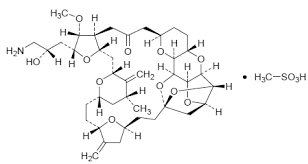
HALAVEN (eribulin mesylate) Injection is a non-taxane microtubule dynamics inhibitor. Eribulin mesylate is a synthetic analogue of halichondrin B, a product isolated from the marine sponge Halichondria okadai. The chemical name for eribulin mesylate is 11,15:18,21:24,28-Triepoxy-7,9-ethano12,15-methano-9H,15H-furo[3,2-i]furo[2′,3′:5,6]pyrano[4,3-b][1,4]dioxacyclopentacosin-5(4H)-one, 2[(2S)-3-amino-2-hydroxypropyl]hexacosahydro-3-methoxy-26-methyl-20,27-bis(methylene)-, (2R,3R,3aS,7R,8aS,9S,10aR,11S,12R,13aR,13bS,15S,18S,21S,24S,26R,28R,29aS)-, methanesulfonate (salt).

It has a molecular weight of 826.0 (729.9 for free base). The empirical formula is C40H59NO11 •CH4O3S. Eribulin mesylate has the following structural formula:

HALAVEN® (eribulin mesylate) Structural Formula Illustration

HALAVEN is a clear, colorless, sterile solution for intravenous administration. Each vial contains 1 mg of eribulin mesylate as a 0.5 mg/mL solution in ethanol: water (5:95).

Full-size image (23 K)

Full-size image (15 K)

complete syn is available here

http://www.sciencedirect.com/science/article/pii/S0968089611010674

http://www.drugdevelopment-technology.com/projects/halaven-cancer/halaven-cancer1.html

Nitrogen: dark blue, oxygen: red, hydrogen: light blue
graphics: Wurglics, Frankfurt am Main

……………….

Macrocyclization process for preparing a macrocyclic intermediate of halichondrin B analogs, in particular eribulin, from a non-macrocyclic compound, using a carbon-carbon bond-forming reaction.


http://www.pnas.org/content/108/17/6699/F1.expansion.html

http://www.nature.com/nrd/journal/v8/n1/fig_tab/nrd2487_F6.html

UPDATED

WO 2015066729

Eisai has developed and launched eribulin mesylate for treating breast cancer.  Follows on from WO2014208774, claiming use of a combination comprising eribulin mesylate and lenvatinib mesylate, for treating cancer.

Macrocyclization reactions and intermediates useful in the synthesis of analogs of halichondrin B

By: Fang, Francis G.; Kim, Dae-Shik; Choi, Hyeong-Wook; Chase, Charles E.; Lee, Jaemoon

Assignee: Eisai R&D Management Co., Ltd., Japan

The invention provides methods for the synthesis of eribulin or a pharmaceutically acceptable salt thereof (e.g., eribulin mesylate) through a macrocyclization strategy.  The macrocyclization strategy of the present invention involves subjecting a non-​macrocyclic intermediate to a carbon-​carbon bond-​forming reaction (e.g., an olefination reaction (e.g., Horner-​Wadsworth-​Emmons olefination)​, Dieckmann reaction, catalytic Ring-​Closing Olefin Metathesis, or Nozaki-​Hiyama-​Kishi reaction) to afford a macrocyclic intermediate.  The invention also provides compds. useful as intermediates in the synthesis of eribulin or a pharmaceutically acceptable salt thereof and methods for prepg. the same.

WO2012129100A1 * Mar 16, 2012 Sep 27, 2012 Eisai R&D Management Co., Ltd. Methods and compositions for predicting response to eribulin
WO2012166899A2 * May 31, 2012 Dec 6, 2012 Eisai R&D Management Co., Ltd. Biomarkers for predicting and assessing responsiveness of thyroid and kidney cancer subjects to lenvatinib compounds
CA2828946A1 * Apr 16, 2012 Oct 26, 2012 Eisai R&D Management Co., Ltd. Therapeutic agent for tumor
US7982060 * Jun 3, 2005 Jul 19, 2011 Eisai R&D Management Co., Ltd. Intermediates for the preparation of analogs of Halichondrin B

P.S. : The views expressed are my personal and in no-way suggest the views of the professional body or the company that I represent.


COCK WILL TEACH YOU NMR
COCK SAYS MOM CAN TEACH YOU NMR

DRUG APPROVALS BY DR ANTHONY MELVIN CRASTO …..FOR BLOG HOME CLICK HERE
Join me on Linkedin

View Anthony Melvin Crasto Ph.D's profile on LinkedIn

Join me on Facebook FACEBOOK
Join me on twitterFollow amcrasto on Twitter
Join me on google plus Googleplus

 amcrasto@gmail.com

  JALGAON, MAHARASHTRA, INDIA

.


 Image result for jalgaon railway station


.

http://www.aai.aero/allAirports/jalgaon_airport.jpg

.

MANUDEVI

Bayer’s Stivarga® (regorafenib) Tablets Approved in Europe


WHIPPANY, N.J. and SOUTH SAN FRANCISCO, Calif., Aug. 30, 2013 /PRNewswire/ — Bayer HealthCare and Onyx Pharmaceuticals, Inc. (NASDAQ: ONXX) announced today that the European Commission has approved Stivarga® (regorafenib) tablets for the treatment of adult patients with metastatic colorectal cancer (mCRC).

In September 2012, Stivarga was approved by the U.S. Food and Drug Administration (FDA) for the treatment of patients with mCRC who have been previously treated with fluoropyrimidine-, oxaliplatin- and irinotecan-based chemotherapy, an anti-VEGF therapy, and, if KRAS wild type, an anti-EGFR therapy.

READ ALL AT http://www.pharmalive.com/ec-approves-bayer-s-stivarga

OLD ARTICLE PASTED

File:Regorafenib.svg

Regorafenib

cas 755037-03-7

4-[4-({[4-Chloro-3-(trifluoromethyl)phenyl]carbamoyl}amino)-3-fluorophenoxy]-N-methylpyridine-2-carboxamide hydrate

February 25, 2013 — The U.S. Food and Drug Administration today expanded the approved use of Stivarga (regorafenib) to treat patients with advanced gastrointestinal stromal tumors (GIST) that cannot be surgically removed and no longer respond to other FDA-approved treatments for this disease.

GIST is a tumor in which cancerous cells form in the tissues of the gastrointestinal tract, part of the body’s digestive system. According to the National Cancer Institute, an estimated 3,300 to 6,000 new cases of GIST occur yearly in the United States, most often in older adults.

Stivarga, a multi-kinase inhibitor, blocks several enzymes that promote cancer growth. With this new approval, Stivarga is intended to be used in patients whose GIST cancer cannot be removed by surgery or has spread to other parts of the body (metastatic) and is no longer responding to Gleevec (imatinib) and Sutent (sunitinib), two other FDA-approved drugs to treat GIST.

“Stivarga is the third drug approved by the FDA to treat gastrointestinal stromal tumors,” said Richard Pazdur, M.D., director of the Office of Hematology and Oncology Products in the FDA’s Center for Drug Evaluation and Research. “It provides an important new treatment option for patients with GIST in which other approved drugs are no longer effective.”

Stivarga was approved in September 2012 to treat colorectal cancer. It is marketed by Bayer HealthCare Pharmaceuticals, based in Wayne, N.J. Gleevec is marketed by East Hanover, N.J.-based Novartis, and Sutent is marketed by New York City-based Pfizer.

Regorafenib (BAY 73-4506, commercial name Stivarga) is an oral multi-kinase inhibitor developed by Bayer which targets angiogenic, stromal and oncogenic receptor tyrosine kinase (RTK). Regorafenib shows anti-angiogenic activity due to its dual targetedVEGFR2-TIE2 tyrosine kinase inhibition. It is currently being studied as a potential treatment option in multiple tumor types.[1]

Metastatic colorectal cancer

Regorafenib demonstrated to increase the overall survival of patients with metastaticcolorectal cancer[2] and has been approved by the US FDA on September 27, 2012.[3]Stivarga is being approved with a Boxed Warning alerting patients and health care professionals that severe and fatal liver toxicity occurred in patients treated with Stivarga during clinical studies. The most common side effects reported in patients treated with Stivarga include weakness or fatigue, loss of appetite, hand-foot syndrome (also called palmar-plantar erythrodysesthesia), diarrhea, mouth sores (mucositis), weight loss, infection, high blood pressure, and changes in voice volume or quality (dysphonia).[4]

  1.  “Bayer Announces New Data on Oncology Portfolio To Be Presented at the ECCO-ESMO Congress 2009″. Retrieved 2009-09-19.
  2. “Phase III Trial of Regorafenib in Metastatic Colorectal Cancer Meets Primary Endpoint of Improving Overall Survival”. Retrieved 2011-10-26.
  3. “FDA approves new treatment for advanced colorectal cancer”. 27 Sep 2012.
  4. “FDA Prescribing Information”. 27 Sept 2012.

Regorafenib from the structure consists of three simple aromatic ring structure, which fragments can be connected from urea by the corresponding two aniline with phosgene or triphosgene prepared by oxygen fragments can be connected SNAr from the corresponding phenol by reaction of. Carboxylic acid 1 by esterification of Thionyl Chloride 2 , methyl amine solution to 2 the ester group is converted to an amide to obtain 3 , 3 , and 4 in alkaline conditions by SNAr reaction of 5 , 5 , and then the isocyanate 6 ( from the corresponding aniline with phosgene or triphosgene was obtained) to obtain the Regorafenib.

Drug firms and cancer………… Lucrative lifesavers


http://www.economist.com/news/business/21584333-hopes-and-perils-betting-cancer-treatments-lucrative-lifesavers


The hopes and perils of betting on cancer treatments

NEW weapons are emerging in the war on cancer. That is good news not just for patients but also for drug companies. The biggest ones, faced with falling sales as their existing medicines go off-patent, are investing in smaller firms with promising cancer treatments under development, hoping to secure the next blockbuster.

http://www.economist.com/news/business/21584333-hopes-and-perils-betting-cancer-treatments-lucrative-lifesavers


A BRIEF REVIEW ON TREATMENT & PREVENTION OF CANCER


ABSTRACT


The rate of cancer rise is dramatic, doubling in the last 30 years. Furthermore, of the estimated 560,000 cancer victims who would die in 1997, most of them could have prevented their illness had they paid attention to some simple lifestyle factors.

Although the number of cancer deaths continues to rise each year in the U.S., the per capita cancer mortality rate has just recently started to decline. This celebrated small decline was first announced by the National Cancer Institute in late 1996, but a careful retrospective review of the data indicated that the per capita cancer death rate peaked in 1991 and has ever so slowly declined thereafter.

What was the reason for this decline? Not improved cancer treatments, but cancer prevention itself emerges as the cause for this good news. A national commitment to the prevention of cancer, largely replacing reliance on hopes for universal cures.

read all at

http://www.pharmatutor.org/articles/brief-review-on-treatment-prevention-of-cancer

Flow synthesis for Novartis anticancer drug, Gleevec, Imatinib


flow synthesis

The flow-based route required minimal manual intervention and was achieved despite poor solubility of many reaction components

21 January 2013Michael Parkin

UK chemists have used a combination of flow chemistry methods with solid-supported scavengers and reagents to synthesise the active pharmaceutical ingredient, imatinib, of the anticancer drug Gleevec. The method avoids the need for any manual handling of intermediates and allows the drug to be synthesised in high purity in less than a day.

Gleevec, developed by Novartis, is a tyrosine kinase inhibitor used for the treatment of chronic myeloid leukaemia and gastrointestinal stromal tumours.

READ ALL AT

http://www.rsc.org/chemistryworld/2013/01/flow-synthesis-anticancer-drug

IMATINIB

CREDIT

http://www.veomed.com/va041542042010

‘Wrapping’ Gleevec Fights Drug-Resistant Cancer, Study Shows

 http://www.sciencedaily.com/releases/2007/05/070501115127.htm

The anti-cancer drug Gleevec® is far more effective against a drug-resistant strain of cancer when the drug wraps the target with a molecular bandage that seals out water from a critical area. This image shows the bandage (black box) on the modified version of the drug, WBZ-7. (Credit: Image courtesy of Rice University)

A new study in Cancer Research finds that the anti-cancer drug Gleevec® is far more effective against a drug-resistant strain of cancer when the drug wraps the target with a molecular bandage that seals out water from a critical area.

Gene Therapy for Melanoma: Progress and Perspectives


media/image1.jpeg

FIGURE 1.

http://www.intechopen.com/books/recent-advances-in-the-biology-therapy-and-management-of-melanoma/gene-therapy-for-melanoma-progress-and-perspectives

Schematic representation of the wild type counterpart of the typically used recombinant viral vectors. (A) Gammaretroviruses and (B) lentiviruses share similar structures, but differ greatly in their genomes and their impact on cellular function. Gag, pro, pol and env genes encode structural proteins of the capsid, protease, reverse transcriptase and envelope proteins, respectively. The additional lentiviral genes perform regulatory functions as well as alter cellular function. (C) The serotype 5 adenovirus has a protein capsid (non-enveloped) and a large, complex genome that encodes critical genes for viral replication (E1a, E1b) as well as structural and functional genes that regulate both viral and cellular activities.

 Introduction

Gene therapy, the therapeutic transfer of genetic information to a target cell, continues to be a promising alternative in the fight against cancer. In the case of melanoma, the use of an experimental treatment is justified since this disease is incurable in its advanced stages. Is gene therapy a viable option for the treatment of melanoma patients? In this chapter, we will attempt to answer this question by exploring the intersection between the technology of gene therapy and the biology of melanoma, a point at which opportunities for intervention are revealed.

Gene Therapy for Melanoma: Progress and Perspectives

Bryan E. Strauss1 and Eugenia Costanzi-Strauss2

[1] Cancer Institute of Sao Paulo, University of Sao Paulo School of Medicine, Brazil

[2] University of Sao Paulo, Biomedical Sciences Institute, Brazil

http://www.intechopen.com/books/recent-advances-in-the-biology-therapy-and-management-of-melanoma/gene-therapy-for-melanoma-progress-and-perspectives


……………….

Kyowa Hakko Kirin Korea begins patient recruitment in phase I/II study of BIW-8962 in lung cancer


Kyowa Hakko Kirin Korea begins patient recruitment in phase I/II study of BIW-8962 in lung cancer

http://www.kyowa-kirin.com/news_releases/2011/pdf/e20110802_04.pdf

http://clinicaltrials.gov/ct2/show/NCT01898156

Kyowa Hakko Kirin Korea Co., Ltd

This Phase 1/2 study is designed to assess the following: safety and tolerability of BIW-8962, Dose Limiting Toxicities (DLTs), Maximum Tolerated Dose (MTD), Recommended Phase 2 Dose (RP2D) in Phase 1 and preliminary efficacy in Phase 2 in subjects with advanced/recurrent lung cancer or mesothelioma.

http://www.myeloma.org.uk/patient-information/drug-development/hcp-drug-scanner/biw-8962/

Compound Suffocates Tumors


Scientists have discovered a new molecule that prevents cancer cells from responding and surviving when starved of oxygen and which could be developed into new treatments for the disease, according to new research published in the Journal of the American Chemical Society.

Cancer Research UK scientists at the University of Southampton found that this molecule targets the master switch—HIF-1—that cancer cells use to adapt to low oxygen levels, a common feature in the disease.

read all at

http://www.dddmag.com/news/2013/07/compound-suffocates-tumors?et_cid=3389792&et_rid=523035093&type=cta

http://www.pharmaceutical-technology.com/news/newsnew-molecule-that-can-suffocate-cancer-cells-discovered?WT.mc_id=DN_News

Find out more:

Curis phase 1 Cancer Trial for CUDC-427 Begins


CUDC-427, GDC-0917; RG-7459

Genentech Inc (Roche Holding AG)

Curis licenses GDC-0917 from Genentech

Curis Cancer Trial Begins
Curis Inc. has initiated patient dosing in a second Phase 1 dose-escalation study of CUDC-427 that is being conducted using a continuous, twice-daily oral dosing regimen in patients with advanced and refractory solid tumors or lymphoma.

FULL STORY

http://www.dddmag.com/news/2013/07/curis-cancer-trial-begins?et_cid=3387991&et_rid=523035093&type=headline

About CUDC-427 (GDC-0917)

CUDC-427 is an orally bioavailable small molecule that is designed to promote cancer cell death by antagonizing IAP proteins.  IAP proteins are a family of functionally and structurally related proteins that promote cancer cell survival by inhibiting programmed cell death, also known as apoptosis, which is a normal process inherent in every cell.  Using IAP proteins and other anti-apoptotic factors, cancer cells evade apoptosis in response to a variety of signals, including those provided by anti-cancer agents such as chemotherapy, or naturally occurring inflammatory and immune signals transmitted through members of the tumor necrosis factor, or TNF, family of factors.  Evasion from apoptosis is a fundamental mechanism whereby human cancers develop resistance to standard anti-cancer treatments.  IAP inhibitors such as CUDC-427 are designed to counteract the effects of IAP proteins, thus shifting the balance away from cancer cell survival and allowing apoptosis to proceed.

CUDC-427 was designed to mimic the endogenous IAP antagonist mitochondrial protein second mitochondria-derived activator of caspases/direct IAP-binding protein (Smac/DIABLO) that is released into the cytoplasm in response to pro-apoptotic stimuli.  CUDC-427 has demonstrated single-agent and combination anti-tumor activity in mouse xenograft tumor models when administered orally on a daily schedule, and IND-enabling safety studies have shown it to be well tolerated when dosed daily by oral administration, potentially enabling sustained target inhibition.

In October 2010, an open-labeled, uncontrolled, dose-escalation, Phase I clinical trial of CUDC-427 (NCT01226277; IAM4914g) began in patients with refractory solid tumors or lymphoma. Genentech recently completed this Phase I clinical trial in which 42 people received daily oral doses of CUDC-427 for two weeks, followed by a one week rest period.  This 21-day cycle is repeated until disease progression or study discontinuation for any other reason.  The primary endpoints of the study include evaluating the safety and tolerability and the pharmacokinetics of CUDC-427 in people with solid tumors or lymphoma and determining the maximum-tolerated-dose and a potential recommended dose for further clinical studies.  Secondary endpoints include a preliminary assessment of anti-tumor activity of CUDC-427 and evaluating pharmacodynamic markers.  Genentech plans to present full study results at a medical conference in mid-2013.  Please refer to http://www.clinicaltrials.gov for additional study details.

About Inhibitor of Apoptosis Proteins

Impairment of programmed cell death or apoptosis often contributes to the formation and progression of cancer, and evasion of apoptosis is one of the primary strategies by which cancer cells develop resistance to anticancer therapies.  Inhibitor of apoptosis (IAP) proteins are a family of functionally and structurally related proteins which include X-linked IAP (XIAP), cellular IAPs (cIAP1 and cIAP2), and melanoma IAP (ML-IAP). They confer protection from death-inducing stimuli by exerting a range of biological activities that promote cancer cell survival and proliferation.  Some even directly inhibit caspases, critical players in the execution of apoptosis.

Mutations, amplifications and chromosomal translocations of IAP genes are associated with various solid and hematologic cancer types, and increased IAP expression has been associated with an unfavorable prognosis and poor outcome for patients.  As a consequence, IAP proteins are considered promising molecular targets for anticancer therapy.


Breast Cancer Drugs in Late-Stage Development/Recently Approved


The article is 2012-2013 based and reader discretion is sought to ascertian the stage of approval

Afinitor® (everolimus)

https://newdrugapprovals.wordpress.com/2013/04/27/drug-spotlight-afinitor-everolimus-novartis/

Sponsor: Novartis

Method of Action: Mammalian target of rapamycin (mTOR) inhibitor

Indications/Phase of Trial: Hepatocellular carcinoma; human epidermal growth factor receptor 2-positive (HER2+) breast cancer first-line and second-line; lymphoma; nonfunctional carcinoid tumor (Phase III; all new indications)

Approved in July in U.S., EU for advanced hormone-receptor-positive (HR+) and human epidermal growth factor Receptor 2-negative (HER2-) metastatic breast cancer with exemestane in postmenopausal women who have already received certain other medicines for their cancer

Approved earlier for adults with pancreatic neuroendocrine tumors (PNET) that cannot be treated with surgery; adults with advanced renal cell carcinoma (RCC) when certain other medicines have not worked; adults with angiomyolipoma, seen with tuberous sclerosis complex (TSC), when surgery is not required immediately; and adults and children with TSC who have a brain tumor called subependymal giant cell astrocytoma (SEGA) that cannot be removed completely by surgery


Avastin (Bevacizumab; RG435)

https://newdrugapprovals.wordpress.com/2013/02/23/fda-has-approved-a-new-use-of-avastin-bevacizumab-in-combination-with-fluoropyrimidine-based-irinotecan-or-oxaliplatin-chemotherapy-for-people-with-metastatic-colorectal-cancer-mcrc/

Sponsor: Roche/Genentech

Method of Action: Monoclonal antibody; Vascular endothelial growth factor (VEGF) inhibitor

Indications/Phase of Trial: U.S.: Relapsed ovarian cancer, platinum-sensitive (Registration); first-line metastatic breast cancer and first-line metastatic ovarian cancer (both Phase III).

EU: Relapsed platinum-resistance ovarian cancer (Phase III)

Metastatic colorectal cancer, treatment beyond progression (Registration); adjuvant breast cancer, HER2- and HER2+; adjuvant NSCLC; first-line glioblastoma (GBM) multiforme; high-risk carcinoid (all Phase III)

Approved for metastatic colorectal cancer (mCRC) when started with the first or second intravenous 5-FU–based chemotherapy for metastatic cancer; advanced nonsquamous non-small-cell lung cancer (NSCLC) with carboplatin and paclitaxel in people who have not received chemotherapy for their advanced disease; metastatic RCC (mRCC) with interferon alfa; and GBM in adult patients whose cancer has progressed after prior treatment. Effectiveness based on tumor response, as no data have shown whether Avastin improves disease-related symptoms or survival in people previously treated for GBM

Approval conditionally granted in 2008 and withdrawn November 2011 for HER2- metastatic breast cancer (mBC) with Paclitaxel


Buparlisib (BKM120)

Sponsor: Novartis

Method of Action: Pan-PI3K inhibitor

Indications/Phase of Trial: mBC (Phase III and confirmatory Phase I/II); with Fulvestrant, in postmenopausal women with hormone receptor-positive HER2- locally advanced or mBC which progressed on or after aromatase inhibitor (AI) treatment (Phase III; BELLE-2 study recruiting as of November 2012); with Fulvestrant, in postmenopausal women with hormone receptor-positive HER2- AI-treated, locally-advanced or mBC who progressed on or after mTOR inhibitor-based treatment (Phase III; BELLE-3 study, recruiting as of October 2012); with Paclitaxel in patients with HER2- inoperable locally advanced or mBC, with or without PI3K pathway activation (Phase III; BELLE-4 study, recruiting as of November); metastatic castration-resistant prostate cancer (CRPC; Phase II; recruiting as of October); recurrent glioblastoma (Phase II; recruiting as of November); recurrent/metastatic head and neck squamous cell carcinoma (Phase II; recruiting as of October); endometrial cancer (Phase I/II); NSCLC (Phase I/II); prostate cancer (Phase I/II); GBM multiforme (Phase I/II); with Fulvestrant in postmenopausal women with estrogen receptor-positive metastatic breast cancer (Phase I); previously treated advanced colorectal cancer (Phase I)

 File:Fulvestrant.svg

Faslodex (Fulvestrant Injection)

Sponsor: AstraZeneca

Method of Action: Estrogen receptor antagonist

Indications/Phase of Trial: First line HR+ mBC (Phase III; FALCON study commenced Oct. 29)

Approved for HR+ mBC in women who have experienced menopause and whose breast cancer has worsened after they were treated with antiestrogen medications


Herceptin (Trastuzumab; RG597)

https://newdrugapprovals.wordpress.com/2013/02/23/fda-approves-kadcyla-ado-trastuzumab-emtansine-a-new-therapy-for-patients-with-her2-positive-late-stage-metastatic-breast-cancer/

Sponsor: Roche, in partnership with Halozyme

Method of Action: Humanized monoclonal antibody designed to target and block the function of HER2+

Indications/Phase of Trial: EU: Early HER2+ breast cancer, subcutaneous formulation (Registration)

Approved for early-stage HER2+ breast cancer that has spread into the lymph nodes, and HER2+ breast cancer that has not spread into the lymph nodes and is estrogen receptor/progesterone receptor-negative (ER-/PR-) or have one high-risk feature. High-risk is defined as estrogen receptor/progesterone receptor-positive (ER+/PR+) with one of the following features: tumor size >2 cm, age <35 years, or tumor grade 2 or 3. Can be used with Adriamycin® (doxorubicin), Cytoxan® (cyclophosphamide), and either Taxol® (paclitaxel) or Taxotere® (docetaxel); or with Taxotere and Paraplatin® (carboplatin); or alone after treatment with multiple other therapies, including an anthracycline (Adriamycin)-based chemotherapy

Also approved alone for the treatment of HER2+ breast cancer in patients who have received one or more chemotherapy courses for metastatic disease; and with paclitaxel for first-line treatment of HER2+ mBC


Iniparib (Tivolza; BSI-201; SAR240550)

Sponsor: Sanofi, through acquisition of original developer BiPar Sciences

Method of Action: Poly (ADP-ribose) polymerase 1 (PARP1) inhibitor

Indications/Phase of Trial: Stage IV squamous NSCLC (Phase III; NME); solid tumors such as sarcoma and breast, uterine, lung, and ovarian cancers (Phase I/II)

Phase III trial in breast cancer failed January 2011 by failing to improve survival and progression-free survival (PFS) in breast cancer patients


Nexavar® (Sorafenib)

https://newdrugapprovals.wordpress.com/2013/07/16/nexavar-sorafenib/

Sponsor: Onyx Pharmaceuticals

Method of Action: Dual-action inhibitor that targets RAF/MEK/ERK pathway in tumor cells and tyrosine kinases

Indications/Phase of Trial: Liver cancer adjuvant (Phase III; STORM study); kidney cancer adjuvant (Phase III; SORCE/ASSURE study); thyroid cancer monotherapy (Phase III; DECISION study); breast cancer with capecitabine (Phase III; RESILIENCE study)

Approved for hepatocellular carcinoma (HCC) and RCC


Perjeta (Pertuzumab; RG1273)

https://newdrugapprovals.wordpress.com/2013/03/05/the-european-medicines-agency-ema-has-approved-roches-perjetatm-pertuzumab-for-patients-with-previously-untreated-her2-positive-metastatic-breast-cancer-mbc/

Sponsor: Roche/Genentech

Method of Action: HER2/neu receptor antagonist

Indications/Phase of Trial: EU: With Herceptin and docetaxel chemotherapy for previously-untreated HER2+ mBC or locally recurrent, inoperable breast cancer in patients who have not received previous treatment or whose disease has returned after treatment in the early-stage setting (Registration)

U.S.: Approved June 2012 for HER2+ mBC with Herceptin (trastuzumab) and docetaxel, in patients who have not received prior anti-HER2 therapy or chemotherapy for metastatic disease

Switzerland: Approved August 2012 for HER2+ breast cancer with Herceptin (trastuzumab) and docetaxel in patients with advanced or locally recurring breast cancer that has not previously been treated with chemotherapy


Ridaforolimus (MK-8669; AP23573; formerly Deforolimus)

https://newdrugapprovals.wordpress.com/2013/03/05/phase-3-breast-cancer-ridaforolimus-mk-8669-ap23573-formerly-deforolimus-merck-licenseariad-pharmaceuticals/

Sponsor: Merck, under exclusive worldwide license agreement with Ariad Pharmaceuticals

Method of Action: Oral inhibitor of mammalian target of rapamycin inhibitor (mTOR)

Indications/Phase of Trial: Maintenance therapy for metastatic soft-tissue sarcoma and bone sarcomas after at least four chemotherapy cycles (under review after receiving Complete Response letter from FDA in June; NME); breast cancer with exemestane, compared to breast cancer with dalotuzumab and exemestane (Phase II; recruiting as of November); advanced head and neck cancer, NSCLC and colon cancer, with cetuximab (Phase II); pediatric patients with advanced solid tumors (Phase I; recruiting as of September); with dalotuzumab in pediatric patients with advanced solid tumors (Phase I; recruiting as of August); advanced RCC, with vorinostat (Phase I; recruiting as of October 2012); breast cancer, with dalotuzumab (Phase I: recruiting as of September); endometrial and ovarian cancers, with paclitaxel and carboplatin (Phase I; recruiting as of September 2012); advanced cancer, with MK-2206 and MK-0752 (Phase I: recruiting as of September 2012); advanced cancer, with dalotuzumab, MK-2206 and MK-0752 (Phase I: recruiting as of August 2012)


Tivozanib (ASP4130; AV-951)

Sponsor: Aveo Oncology and Astellas

Method of Action: Tyrosine kinase inhibitor; inhibits VEGF receptor 1, 2, and 3

Indications/Phase of Trial: U.S.: Advanced RCC (Registration; NDA filed September 2012); tivozanib biomarkers in solid tumors (Phase II; BATON study); stage IV metastatic colorectal cancer (mCRC), with mFOLFOX6, and compared with bevacizumab and mFOLFOX6 (Phase II; recruiting as of November); additional data as first-line therapy for advanced RCC, followed by sunitinib (Phase II; TAURUS study, enrollment initiated in October 2012); advanced solid tumors, with capecitabine (Xeloda®; Phase I; recruiting as of October)

EU: Advanced RCC (Phase III)


Trastuzumab-DM1 (T-DM1; Trastuzumab emtansine; RG3502)

https://newdrugapprovals.wordpress.com/2013/02/23/fda-approves-kadcyla-ado-trastuzumab-emtansine-a-new-therapy-for-patients-with-her2-positive-late-stage-metastatic-breast-cancer/

Sponsor: Roche, with linker technology developed by ImmunoGen

Method of Action: Antibody-drug conjugate, consisting of the antibody trastuzumab and the chemotherapy DM1 attached via a stable linker

Indications/Phase of Trial: U.S.: HER2+, unresectable locally-advanced or mBC who have received prior treatment with Herceptin (trastuzumab) and a taxane chemotherapy (Registration; Priority review approved Nov. 7; action date Feb. 26, 2013)

EU: Marketing Authorization Application for HER2+ mBC accepted for review by European Medicines Agency

 File:Lapatinib.svg

Tyverb/Tykerb (lapatinib)

https://newdrugapprovals.wordpress.com/2013/06/17/patent-of-fresenius-kabi-oncology-ltd-novel-intermediates-and-process-for-the-preparation-of-lapatinib-and/

Sponsor: GlaxoSmithKline

Method of Action: Human epidermal growth factor receptor-2 (Her2) and epidermal growth factor receptor (EGFR) dual kinase inhibitor

Indications/Phase of Trial: mBC with trastuzumab (Registration); breast cancer, adjuvant therapy (Phase III); Gastric cancer (Phase III); head & neck squamous cell carcinoma, resectable disease (Phase III)


Xgeva (denosumab)

https://newdrugapprovals.wordpress.com/2013/06/14/fda-approves-xgevadenosumab-to-treat-giant-cell-tumor-of-the-bone/

Sponsor: Amgen, with commercialization by GlaxoSmithKline in countries where Amgen has no presence

Method of Action: Fully human monoclonal antibody that specifically targets a ligand known as RANKL that binds to a receptor known as RANK

Indications/Phase of Trial: Delay or prevention of bone metastases in breast cancer (Phase III); delay or prevention of bone metastases in prostate cancer (Phase III)

Approved for prevention of fractures in men with advanced prostate cancer

Rejected in April for supplemental Biologics License Application to treat men with CRPC at high risk of developing bone metastases


Yondelis® (trabectedin)

Sponsor: Johnson & Johnson; developed in collaboration with PharmaMar

Method of Action: Binds to minor groove of DNA, interfering with the cell division and gene transcription processes, as well as DNA’s repair machinery

Indications/Phase of Trial: U.S.: Locally advanced or metastatic soft tissue sarcoma excluding leiomyosarcoma and liposarcoma who have relapsed or are refractory to standard-of-care treatment (Phase III; recruiting as of November); soft tissue sarcoma, excluding liposarcoma and leiomyosarcoma (L-type sarcoma), in previously-treated patients who cannot be expected to benefit from currently available therapeutic options (Phase III; recruiting as of November); locally advanced or metastatic L-sarcoma (liposarcoma or leiomyosarcoma) who were previously treated with at least an anthracycline and ifosfamide-containing regimen, or an anthracycline-containing regimen and one additional cytotoxic chemotherapy regimen, compared with dacarbazine group (Phase III; recruiting as of November); breast cancer and pediatric tumors (Phase II); Advanced malignancies and liver dysfunction (Phase I; recruiting as of November)

EU: Approved for advanced or metastatic soft tissue sarcoma, and for relapsed platinum-sensitive ovarian cancer, with DOXIL®/Caelyx®


Xtandi® Capsules (Enzalutamide; formerly MDV3100)

https://newdrugapprovals.wordpress.com/2013/05/28/astellas-pharma-and-medivation-have-announced-the-submission-of-application-for-marketing-approval-of-enzalutamide-in-japan-for-the-treatment-of-prostate-cancer/

Sponsor: Medivation in collaboration with Astellas

Method of Action: Androgen receptor inhibitor

Indications/Phase of Trial: Prechemotherapy CRPC in patients who have failed luteinizing hormone-releasing hormone (LHRH) analog treatment only, as well as patients who have failed both LHRH analog and anti-androgen treatment. (Phase III; PREVAIL study); prostate cancer neoadjuvant therapy (Phase II); prechemo metastatic prostate cancer in Europe (Phase II; TERRAIN); prechemo metastatic and nonmetastatic prostate cancer patients in U.S. (Phase II; STRIVE); prostate cancer Hormone-naïve (Phase II; ASPIRE); prostate cancer with docetaxel (Phase I); breast cancer (Phase I)

EU: Marketing Authorization Application submitted June 2012 to European Medicines Agency, for patients with metastatic CRPC who have received docetaxel-based chemotherapy

Japan: Metastatic CRPC who have received docetaxel-based chemotherapy (Phase II)

Approved Aug. 31 for patients with metastatic CRPC who have previously received docetaxel. As a post-marketing requirement, Medivation and Astellas agreed to conduct an open-label safety study of Xtandi (160 mg/day) in patients at high risk for seizure, with data to be submitted to FDA in 2019