New Drug Approvals

Home » 0rphan drug status (Page 20)

Category Archives: 0rphan drug status

DRUG APPROVALS BY DR ANTHONY MELVIN CRASTO .....FOR BLOG HOME CLICK HERE

Blog Stats

  • 4,896,852 hits

Flag and hits

Flag Counter

Enter your email address to follow this blog and receive notifications of new posts by email.

Join 37.8K other subscribers
Follow New Drug Approvals on WordPress.com

Archives

Categories

Recent Posts

Flag Counter

ORGANIC SPECTROSCOPY

Read all about Organic Spectroscopy on ORGANIC SPECTROSCOPY INTERNATIONAL 

Enter your email address to follow this blog and receive notifications of new posts by email.

Join 37.8K other subscribers
DR ANTHONY MELVIN CRASTO Ph.D

DR ANTHONY MELVIN CRASTO Ph.D

DR ANTHONY MELVIN CRASTO, Born in Mumbai in 1964 and graduated from Mumbai University, Completed his Ph.D from ICT, 1991,Matunga, Mumbai, India, in Organic Chemistry, The thesis topic was Synthesis of Novel Pyrethroid Analogues, Currently he is working with AFRICURE PHARMA, ROW2TECH, NIPER-G, Department of Pharmaceuticals, Ministry of Chemicals and Fertilizers, Govt. of India as ADVISOR, earlier assignment was with GLENMARK LIFE SCIENCES LTD, as CONSUlTANT, Retired from GLENMARK in Jan2022 Research Centre as Principal Scientist, Process Research (bulk actives) at Mahape, Navi Mumbai, India. Total Industry exp 32 plus yrs, Prior to joining Glenmark, he has worked with major multinationals like Hoechst Marion Roussel, now Sanofi, Searle India Ltd, now RPG lifesciences, etc. He has worked with notable scientists like Dr K Nagarajan, Dr Ralph Stapel, Prof S Seshadri, etc, He did custom synthesis for major multinationals in his career like BASF, Novartis, Sanofi, etc., He has worked in Discovery, Natural products, Bulk drugs, Generics, Intermediates, Fine chemicals, Neutraceuticals, GMP, Scaleups, etc, he is now helping millions, has 9 million plus hits on Google on all Organic chemistry websites. His friends call him Open superstar worlddrugtracker. His New Drug Approvals, Green Chemistry International, All about drugs, Eurekamoments, Organic spectroscopy international, etc in organic chemistry are some most read blogs He has hands on experience in initiation and developing novel routes for drug molecules and implementation them on commercial scale over a 32 PLUS year tenure till date Feb 2023, Around 35 plus products in his career. He has good knowledge of IPM, GMP, Regulatory aspects, he has several International patents published worldwide . He has good proficiency in Technology transfer, Spectroscopy, Stereochemistry, Synthesis, Polymorphism etc., He suffered a paralytic stroke/ Acute Transverse mylitis in Dec 2007 and is 90 %Paralysed, He is bound to a wheelchair, this seems to have injected feul in him to help chemists all around the world, he is more active than before and is pushing boundaries, He has 100 million plus hits on Google, 2.5 lakh plus connections on all networking sites, 100 Lakh plus views on dozen plus blogs, 227 countries, 7 continents, He makes himself available to all, contact him on +91 9323115463, email amcrasto@gmail.com, Twitter, @amcrasto , He lives and will die for his family, 90% paralysis cannot kill his soul., Notably he has 38 lakh plus views on New Drug Approvals Blog in 227 countries......https://newdrugapprovals.wordpress.com/ , He appreciates the help he gets from one and all, Friends, Family, Glenmark, Readers, Wellwishers, Doctors, Drug authorities, His Contacts, Physiotherapist, etc He has total of 32 International and Indian awards

Verified Services

View Full Profile →

Archives

Categories

Flag Counter

Provectus Phase III Melanoma Trial Results Earlier Than Planned?


Rosebengalskeletal.png

Rose Bengal disodium

4 ,5,6,7-Tetrachloro-2′,4′,5′,7′-tetraiodo-3-oxo-3H-spiro[2-benzofuran-1,9′-xanthene]-3′,6′-diolate disodium salt

 cas 632-69-9

C20 H2 Cl4 I4 O5 . 2 Na,  mw 1017.36, PH 10

innovator Provectus

http://www.talkmarkets.com/content/stocks–equities/provectus-phase-iii-melanoma-trial-results-earlier-than-planned?post=44803

The FDA has granted PV-10 Orphan Drug Status for the treatment of highly lethal metastatic melanoma and metastatic liver cancer. It has a successful and expanding Compassionate Use Program in operation and successfully completed trials on metastatic cancer of the breast, liver and melanoma, with positive results in all three. Positive effects in this context is that, if you inject PV-10 into a solid tumor, it kills cancer cells, usually within a week and doesn’t harm normal tissue. Many injected tumors actually disappear while others shrink and stop growing. The dual action of the drug is that the destruction of the cancer by direct injection of PV-10 serves to sensitize the patient’s immune system to seek out and kill similar cancer throughout the body. There is convincing evidence that untreated cancer distant from the treated cancer is attacked by the patient’s immune system after treatment.

PROVECTUS COMPANY OVERVIEW

Provectus (PVCT) is a clinical stage bio-pharmaceutical drug development company. There are 3 key scientific managers running the business along with the CFO, who is also the Chief Operating Officer. They preside over a stable of expert and specialized consultants. The company has two lead drug candidates: PH-10 for significant, often severe, and common skin disorders and PV-10, a dual action, local ablation and immunological anti-cancer drug. PH-10 is currently the subject of post-Phase II trial research into mode of action. PV-10 has successfully completed Phase II trials for malignant melanoma, is currently the subject of independent research on mode of actioRose Bengal disodium is in early clinical trials at Provectus for the topical treatment of psoriasis and atopic dermatitis. An intralesional injectable formulation is also in early clinical development as breast cancer, liver cancer and melanoma therapy. Development for the treatment of actinic keratosis had been ongoing; however, no recent development for this indication has been reported. The company is seeking approval in the U.S. to begin clinical evaluation of this formulation for the treatment of liver and prostate cancer. A compassionate use program is under way for Rose Bengal disodium for the treatment of non-visceral cancers.

The drug’s mechanism of action is believed to be characterized by the creation of free radicals upon activation, which eliminate diseased cells. The compound concentrates in tumors at cytotoxic levels while quickly dissipating from healthy tissue. Simultaneously, the drug triggers an immune response that can eliminate metastatic tumor tissue.

In 2007, orphan drug designation was assigned to Rose Bengal disodium by the FDA for the treatment of metastatic melanoma. This designation was also assigned to the compound in the U.S. in 2011 for the treatment of hepatocellular carcinoma.n and efficacy in conjunction with radiation, and it will have a Phase III pivotal trial starting shortly.


SUMMARY

1. If PV-10 and the Chemotherapies act as the prior data indicate, an NDA for melanoma may be submitted by Provectus in the first half of 2015.

2. If this occurs, the FDA denial of the Breakthrough Therapy designation will not have slowed PV-10’s progress to commercialization.

3. Given the relative safety and efficacy of the different drugs, if the trial is not stopped very early for humanitarian reasons, the planned Interim Analysis is likely to result in the cancellation of the trial, prior to the end of 2015.

4. Given PV-10’s superior safety and lack of significant side effects, if it is only as good as Chemotherapy, it will deserve FDA approval.

The Phase III pivotal trial will demonstrate the safety and efficacy of PV-10 to the market and to prospective acquirers a lot earlier than many have presumed.

Rose bengal (4,5,6,7-tetrachloro-2′,4′,5′,7′-tetraiodofluorescein) is a stain. Its sodium salt is commonly used in eye drops to stain damaged conjunctival and corneal cells and thereby identify damage to the eye. The stain is also used in the preparation of Foraminifera for microscopic analysis, allowing the distinction between forms that were alive or dead at the time of collection.

A form of Rose Bengal is also being studied as a treatment for certain cancers and skin conditions. The cancer formulation of the drug, known as PV-10, is currently undergoing clinical trials for melanoma and breast cancer. The company also has formulated a drug based on Rose Bengal for the treatment of eczema and psoriasis; this drug, PH-10, is currently in clinical trials as well.


Rose bengal
Rosebengalskeletal.png
Identifiers
CAS number 11121-48-5 Yes
ATC code S01JA02
Jmol-3D images Image 1
Properties
Molecular formula C20H4Cl4I4O5
Molar mass 973.67 g mol−1

Chemical applications

Light microscopy image of the undescribed species of Spinoloricus from Loricifera stained with Rose Bengal.

Rose Bengal is also used in synthetic chemistry to generate singlet oxygen from triplet oxygen. The singlet oxygen can then undergo a variety of useful reactions, particularly [2 + 2] cycloadditions with alkenes and similar systems.

Rose Bengal can be used to form many derivatives that have important medical functions. One such derivative was created so to be sonosensative but photoinsensative, so that with a high intensity focused ultrasound, it could be used in the treatment of cancer. The derivative was formed by amidation of Rose Bengal, which turned off the fluorescent and photosensitive properties of Rose Bengal, leading to a usable compound, named in the study as RB2.[1]

Salts of Rose Bengal can also be formed, with the molecular formula C20 H4 Cl4 I4 O5 . 2 Na, molecular weight of 1017.64 g/mol and CAS # 632-69-9. Known as Rose Bengal Sodium Salt, this compound has its own unique uses and properties, but also functions as a dye.[2]

Biological applications

PV-10 was found to cause an observable response in 60 percent of tumors treated, according to researchers in a phase II melanoma study. Locoregional disease control was observed in 75 percent of patients. Also confirmed was a “bystander effect”, previously observed in the phase I trial, whereby untreated lesions responded to treatment as well, potentially due to immune system response. These data were based on the interim results of the first 40 patients treated in an 80 patient study.[3] Rose Bengal has been shown to not just prevent the growth and spread of ovarian cancer, but also to cause apoptotic cell death of the cancer cells. This has been proven in vitro, in order to prove that Rose Bengal is still a possible option in the treatment of cancer, and further research should be done.[4]

Rose Bengal is also used in animal models of ischemic stroke (photothrombotic stroke models) in biomedical research. A bolus of the compound is injected into the venous system. Then the region of interest (e.g., the cerebral cortex) is exposed and illuminated by LASER light of 561 nm. A thrombus is formed in the illuminated blood vessels, causing a stroke in the dependent brain tissue.[5][6]

Rose bengal has been used for 50 years to diagnose liver and eye cancer. It has also been used as an insecticide.[7][8]

Rose Bengal is able to stain cells whenever the surface epithelium is not being properly protected by the preocular tear film, because Rose Bengal has been proven to not be able to stain cells because of the protective functioning of these preocular tear films.[9] This is why Rose Bengal is often useful as a stain in diagnosing certain medical issues, such as conjunctival and lid disorders.[10]

Rose Bengal has been used for ocular surface staining to study the efficacy of punctal plugs in the treatment of keratoconjunctivitis sicca. [11]

Rose Bengal is being researched as an agent in creating nano sutures.[12] Wounds are painted on both sides with it and then illuminated with an intense light. This links the tiny collagen fibers together sealing the wound.[13][14][15] Healing is faster and the seal reduces chances of infection.[16][17]

Rose Bengal is used in several microbiological media, including Cooke’s Rose Bengal agar, to suppress bacterial growth.

Rose Bengal has been used as a protoplasm stain to discriminate between living and dead micro-organisms, particularly Foraminifera, since the 1950s when Bill Walton developed the technique.[18]

Electronic applications

Rose Bengal demonstrates at least six distinct electronic properties[19] which are otherwise hidden in the molecule. Rose Bengal is a double planar molecule and relative rotation of the planes generate unique electronics. Therefore, Rose Bengal is a suitable candidate for molecular electronics.

History

Rose Bengal was originally prepared in 1884 by Gnehm, as an analogue of fluorescein.[20] The name is due to its similarity to alta, a dye that women in Bengal have used for centuries to colour their feet red during weddings and festivals.

References

  1. Kim, Y; Valentina Rubio, Jianjun Qi, Rongmin Xia, Zheng-Zheng Shi, Leif Peterson, Ching-Hsuan Tung, and Brian E. O’Neill (2012). “Cancer treatment using an optically inert Rose Bengal derivative combined with pulsed focused ultrasound”. AIP Conference Proceedings 1481: 175.
  2. “Rose Bengal Sodium Salt”. Sigma-Aldrich. Sigma Aldrich Co. Retrieved 12 November 2013.
  3. Metastatic Melanoma PV-10 Trial Results Encouraging Says Drug Company, Medical News Today, 09 Jun 2009
  4. Koevary, S (2012). “Selective toxicity of rose bengal to ovarian cancer cells in vitro”. International Journal of Physiology, Pathophysiology and Pharmacology 4: 99–107.
  5. Salber D, et al. (2006). “Differential uptake of [18F]FET and [3H]l-methionine in focal cortical ischemia”. Nuclear Medicine and Biology 33 (8): 1029–1035. doi:10.1016/j.nucmedbio.2006.09.004. PMID 17127177.
  6. Watson BD, Dietrich WD, Busto R, Wachtel MS, Ginsberg MD (1985). “Induction of reproducible brain infarction by photochemically initiated thrombosis”. Ann Neurol 17 (5): 497–504. doi:10.1002/ana.410170513. PMID 4004172.
  7. Capinera, John L.; Squitier, Jason M. (2000). “Insecticidal Activity of Photoactive Dyes to American and Migratory Grasshoppers (Orthoptera: Acrididae)”. Journal of Economic Entomology 93 (3): 662–666. doi:10.1603/0022-0493-93.3.662. PMID 10902313.
  8. Martin, Phyllis; Mischke, Sue; Schroder, Robert (1998). “Compatibility of Photoactive Dyes with Insect Biocontrol Agents”. Biocontrol Science and Technology 8 (4): 501–508. doi:10.1080/09583159830018.
  9. Feenstra, R; Tseng, S (July 1992). “What is actually stained by rose bengal?”. Arch Ophthalmol 110: 984–993. doi:10.1001/archopht.1992.01080190090035.
  10. Yokoi, Norihiko (2012). “Vital staining for disorders of conjunctiva and lids”. Atarashii Ganka 29: 1599–1605.
  11. Ervin AM, Wojciechowski R, Schein O (2010). “Punctal occlusion for dry eye syndrome”. Cochrane Database Syst Rev 9: CD006775. doi:10.1002/14651858.CD006775.pub2. PMID 20824852.
  12. Chan, B; Chan, O; So, K (2008). “Effects of photochemical crosslinking on the microstructure of collagen and a feasibility study on controlled protein release”. Acta Biomaterialia 4 (6): 1627–1636. doi:10.1016/j.actbio.2008.06.007. PMID 18640085.
  13. O’Neill A.C., Winograd J.M, Zeballos J.M., Johnson T.S., Randolph M.A., Bujold K.E., Kochevar I.E., Redmond R.W. (2007). “Microvascular anastomosis using a photochemical tissue bonding technique”. Lasers in Surgery and Medicine 39 (9): 716–722. doi:10.1002/lsm.20548. PMID 17960755.
  14. Mulroy L., Kim J., Wu I., Scharper P., Melki S.A., Azar D.A., Redmond R.W., Kochevar I.E. (2000). “Photochemical keratodesmos for repair of lamellar corneal incisions”. Invest Ophthalmol Vis Sci 41 (11): 3335–3340. PMID 11006222.
  15. Proano C.E., Mulroy L., Erika Jones E., Azar D.A., Redmond R.W., Kochevar I.E. (2004). Invest Ophthalmol Vis Sci: 2177–2181.
  16. Laser Show in the Surgical Suite, Technology Review, March/April 2009
  17. Laser Show in the Surgical Suite, Technology Review, 02.11.2009
  18. Walton, W. (1952), Techniques for recognition of living foraminifera, Contrib. Cushman Found. Foraminiferal Res., 3, 56 – 60
  19. A new approach to extract multiple distinct conformers and co-existing distinct electronic properties of a single molecule by point-contact method Anirban Bandyopadhyay, Satyajit Sahu, Daisuke Fujita and Yutaka Wakayama, Phys. Chem. Chem. Phys., 2010 view highlights in Royal Society of Chemistry,
  20. Alexander, Walter (2010). “American Society of Clinical Oncology, 2010 Annual Meeting and Rose Bengal: From a Wool Dye to a Cancer Therapy”. Pharmacy and Therapeutics 35 (8): 469–474. PMC 2935646. Retrieved 5 November 2013.
  21. US 2010021566
  22. WO 2011050164
  23. US 2011250296

External links


Momenta Pharma receives FDA orphan drug designation for pancreatic cancer drug Necuparanib


heparan sulfate mimetic derived from unfractionated heparin with a molecular weight between 5500 and 6200 Da


Necuparanib

M-402
M-ONC-402
MONC 402


Momenta Pharmaceuticals Inc

http://www.pharmaceutical-technology.com/news/newsmomenta-pharma-receives-fda-orphan-drug-designation-pancreatic-cancer-drug-4287892

Momenta Pharmaceuticals has received orphan drug designation from the US Food and Drug Administration (FDA) for its necuparanib, a heparan sulfate mimetic indicated for treatment of pancreatic cancer.

Momenta Pharmaceuticals chief medical officer Jim Roach said there is a great need for new medications for patients suffering from pancreatic cancer.

“We are encouraged by the progress of the programme to date, and in the next several months, we anticipate completing Part A of our ongoing Phase I/II study of necuparanib in combination with Abraxane and gemcitabine,” Roach said.

“In the next several months, we anticipate completing Part A of our ongoing Phase I/II study of necuparanib in combination with Abraxane and gemcitabine.”

“We look forward to sharing the results from Part A and advancing the product into the Phase II part of the study in the second half of 2014.”

Necuparanib has recently been adopted as the unique non-proprietary name for M402 by The United States Adopted Names.

The drug is derived from unfractionated heparin. It has been engineered to have significantly reduced anticoagulant activity while preserving the relevant antitumor properties of heparin.

Part A dose escalation component of the Phase I/II trial, which is evaluating necuparanib in combination with Abraxane (nab-paclitaxel) and gemcitabine in advanced metastatic pancreatic cancer patients, is expected to be completed in the next several months.

The company is expected to report the clinical data from Part A in the second half this year. The company also plans to begin Part B of the study by the year-end.

Part B will be a randomised, controlled, proof-of-concept study to assess the antitumor activity of necuparanib in combination with Abraxane plus gemcitabine, versus Abraxane plus gemcitabine alone.


Heparin, a highly sulfated heparin-like glycosaniinoglycan (HLGAG) produced by mast cells and isolated from natural sources, is a widely used clinical anticoagulant. However, the effects of natural, or unfractionated, heparin can be difficult to predict and patients must be monitored closely to prevent over- or under-anticoagulation. Low molecular weight heparins (LMWHs) obtained by various methods of fractionation or depolymerization of polymeric heparin have more predictable pharmacological action as anticoagulants, reduced side effects, sustained antithrombotic activity, and better bioavailability than unfractionated heparin (UFH). Several LMWHs are approved for outpatient treatment of thrombotic conditions.

There is increasing interest in the potential role of antithrombotic agents in the management of cancer patients. Results from several recent clinical trials have suggested a survival advantage for certain types of cancer patients treated with LMWHs (reviewed in Lemoine, 2005, Journal of Clinical Oncology, 23: 2119-20).


http://www.google.fm/patents/EP2207811A1?cl=en

The invention is based, in part, on the development of polysaccharide preparations, e.g., preparations of polysaccharides derived from heparin, that lack substantial anticoagulant activity (e.g., preparations of polysaccharides that have substantially no anticoagulant activity) but retain activity in other non-coagulation mediated biological processes, and methods to produce them. These compounds can have one or more of the following features: 1) an anti-Xa activity and an anti-IIa activity each less than 50 IU/mg, and 2) anti-metastatic, anti-angiogenic, anti-fibrotic and/or anti-inflammatory activity. The polysaccharides disclosed herein can also have structural characteristics that distinguish them from other polysaccharides, (e.g., from commercially available heparins). For example, a polysaccharide preparation provided herein can have one or more of the following characteristics: the preparation has less than 50% glycol split uronic acid residues; the preparation has no more than 3 glycol split uronic acid residues (UG) per polysaccharide chain; the preparation has greater than 40% U2SHNS>6S disaccharide residues; degree of desulfation of the preparation is less than 40%; one or more polysaccharide chains in the preparation have a 4,5-unsaturation of a non-reducing end uronic acid residue; one or more polysaccharide chains in the preparation have a 2,5-anhydromannitol residue at the reducing end; and the weight average molecular weight of the preparation is between 3,500 and 7,000 Da. This disclosure includes preparations having one or more of these properties and characteristics as well as methods of making and using such preparations. The disclosure also features methods of using such preparations.

Accordingly, in a first aspect, the invention features a polysaccharide preparation (e.g., a heparin-derived preparation) having the following characteristics: (a) a weight average chain molecular weight between 3,500 and 7,000 Da; (b) an anti-Xa activity and an anti-IIa activity each less than 50 IU/mg (e.g., an anti-Xa activity less than about 40 IU/mg, 30 IU/mg, 20 IU/mg, 15 IU/mg, or 10 IU/mg and an anti-IIa activity less than about 40 IU/mg, 30 IU/mg, 20 IU/mg, 10 IU/mg, 5 IU/mg, 4 IU/mg, or 3 IU/mg); and (c) less than 50% glycol split uronic acid residues (e.g., less than 40%, 30%, 25%, or 20% glycol split uronic acid residues) in the preparation. In some embodiments, the preparation contains between 5% and 50% glycol split uronic acid residues (e.g., between 5% and 40%, 5% and 30%, 10% and 50%, 10% and 40%, or 10% and 30% glycol split uronic acid residues).

In a second aspect, the invention features a polysaccharide preparation (e.g., a heparin- derived preparation) having the following characteristics: (a) a weight average chain molecular weight between 3,500 and 7,000 Da; (b) an anti-Xa activity and an anti-IIa activity each less than 50 IU/mg (e.g., an anti-Xa activity less than about 40 IU/mg, 30 IU/mg, 20 IU/mg, 15 IU/mg, or 10 IU/mg and an anti-IIa activity less than about 40 IU/mg, 30 IU/mg, 20 IU/mg, 10 IU/mg, 5 IU/mg, 4 IU/mg, or 3 IU/mg); and (c) the polysaccharide chains of the preparation have no more than 3 glycol split uronic acid residues (UQ) per polysaccharide chain (e.g., each polysaccharide chain has no more than 2 or no more than 1 glycol split uronic acid residue (UQ) per polysaccharide chain).

In a third aspect, the invention features a polysaccharide preparation (e.g., a heparin- derived preparation) having the following characteristics: (a) a weight average chain molecular weight between 3,500 and 7,000 Da; (b) an anti-Xa activity and an anti-IIa activity each less than 50 IU/mg (e.g., an anti-Xa activity less than about 40 IU/mg, 30 IU/mg, 20 IU/mg, 15 IU/mg, or 10 IU/mg and an anti-IIa activity less than about 40 IU/mg, 30 IU/mg, 20 IU/mg, 10 IU/mg, 5 IU/mg, 4 IU/mg, or 3 IU/mg); and (c) polysaccharide chains of the preparation have on average no more than 3 glycol split uronic acid residues (Uo) per polysaccharide chain (e.g., on average no more than 2.5, no more than 2, no more than 1.5, or no more than 1 glycol split uronic acid residues (UG) per polysaccharide chain.

In a fourth aspect, the invention features a polysaccharide preparation (e.g., a heparin- derived preparation) having the following characteristics: (a) a weight average chain molecular weight between 3,500 and 7,000 Da; (b) an anti-Xa activity and an anti-IIa activity each less than 50 IU/mg (e.g., an anti-Xa activity less than about 40 IU/mg, 30 IU/mg, 20 IU/mg, 15 IU/mg, or 10 IU/mg and an anti-IIa activity less than about 40 IU/mg, 30 IU/mg, 20 IU/mg, 10 IU/mg, 5 IU/mg, 4 IU/mg, or 3 IU/mg); and (c) the preparation has greater than 40% U2SHNS,6S disaccharide residues (e.g., greater than 50%, 60%, 70%, or 80% U2SHNS,6S disaccharide residues). In some embodiments, the preparation has a degree of desulfation less than 40% (e.g., less than 30%, 20%, or 10%).

In a fifth aspect, the invention features a polysaccharide preparation (e.g., a heparin- derived preparation) lacking substantial anticoagulant activity (e.g., having substantially no anticoagulant activity), wherein the preparatiorrmdudes-polv^accharides that include Formula I:

[Uw-HXjy)Z]m~[UG-HX5y5Z]n

wherein U indicates a uronic acid residue and H indicates a hexosamine residue; m and n are integers such that m = 4-16 (e.g., 4-8, 4-9, 4-10, 4-11, 4-12, 4-13, 4-14, or 4-15), and n = 1-4 (e.g., 1-2 or 1-3);

w = -2OS or -2OH; x = -NS or -NAc; y = -3OS or -3OH; z = -60S or -6OH;

wherein the symbol ~ indicates that the units marked m and n are distributed along the polysaccharide chain and are not necessarily in sequence, wherein w, x, y, and z are each the same or different on each unit marked m, and wherein x, y, and z are each the same or different on each unit marked n.

In a sixth aspect, the invention features a polysaccharide preparation (e.g., a heparin- derived preparation) lacking substantial anticoagulant activity (e.g., having substantially noanticoagulant activity) and having antimetastatic activity, wherein the preparation includes polysaccharides that include Formula II:

[Uw-HXjy;Z] m– [UG-HX)y;Z] n– [Uw-HX;y)Z] 0– [UG-HX^2] p– [Uw-HX;yjZ] q

wherein U indicates a uronic acid residue and H indicates a hexosamine residue; wherein m-r are integers such that: m = 0-10; n= 0- 3;

O = O-IO;

P = 0-3; q = 0-10;

w = -2OS or -2OH; x = -NS or -NAc; y = -3OS or -3OH; z = -60S or -6OH;

wherein w, x, y, and z are each the same or different on each unit marked m, n, o, p, or q. In some embodiments, the sum of n + p is less than or equal to 4 (e.g., less than or equal to 3, 2, 1, or 0). In some embodiments, the preparation has a weight average chain molecular weight between 3,500 and 7,000 Da.


Examples of such polysaccharide preparations include chains that include the following:

[Uw-HX;yjZ]m~[UG-Hx y z]n

wherein U indicates a uronic acid residue and H indicates a hexosamine residue, wherein m and n are integers such that m = 6-18, and n = 1 -4, w = -2OS or -2OH, x = -NS or -NAc, y = -3OS or -3OH, z = -60S or -6OH,


wherein the symbol ~ indicates that the units marked m and n are distributed along the polysaccharide chain and are not necessarily in sequence, wherein w, x, y, and z are each the same or different on each unit marked m, and wherein x, y, and z are each the same or different on each unit marked n; and

[Uw-HX)y)Z]m-[UG-HXiy)Z]n-[Uw-HXjyjZ]o-[UG-HX5y)Z]p-[Uw-HX!yiZ]q

wherein U indicates a uronic acid residue and H indicates a hexosamine residue, wherein m-r are integers such that: m = 0-10, n= 0- 3, o = 0-10, p = 0-3, q = 0-10, w = -2OS or -2OH, x = -NS or -NAc, y = -3OS or -3OH, z = -60S or -6OH,

wherein w, x, y, and z are each the same or different on each unit marked m, n, o, p, or q.

Anti-IIa Activity

Polysaccharide preparations are disclosed herein that provide substantially reduced anti- Ha activity, e.g., anti-IIa activity of about 0 to 50 IU/mg, about 0 to 40 IU/mg, about 0 to 30 IU/mg, about 0 to 25 IU/mg, about 0 to 20 IU/mg, about 0 to 10 IU/mg, about 0 to 5 IU/mg, about 5 to 10 IU/mg, about 5 to 15 IU/mg, about 5 to 20 IU/mg. Anti-IIa activity is calculated in International Units of anti- Ha activity per milligram using statistical methods for parallel line assays. The anti-IIa activity levels described herein are measured using the following principle.

Polysaccharide (PS) + ATIII→ [PS • ATIII]

Ha

PS • ATIII→[PS • ATIII • Ha] + Ha (Excess)

Ha (Excess) + Substrate -» Peptide + pNA (measured spectrophotometrically) Anti-factor Ha activity is determined by the sample potentiating effect on antithrombin (ATIII) in the inhibition of thrombin. Thrombin excess can be indirectly spectrophotometrically measured. The anti-factor Ha activity can be measured, e.g., on a Diagnostica Stago analyzer or on an ACL Futura3 Coagulation system, with reagents from Chromogenix (S-2238 substrate, Thrombin (53 nkat/vial), and Antithrombin), or on any equivalent system. Analyzer response is calibrated using the 2nd International Standard for Low Molecular Weight Heparin.

EffRx Pharmaceuticals receives FDA orphan drug designation for EX404


EffRx Pharmaceuticals has received US Food and Drug Administration (FDA) orphan-drug designation for its proprietary metformin-based product, EX404, for treatment of paediatric polycystic ovary syndrome (PCOS).

Also known as Stein-Leventhal syndrome, PCOS is a heterogeneous disorder of chronic anovulation and hyperandrogenism.

The syndrome is believed to occur due to hormonal imbalance caused by increased levels of androgens and insulin in the body.

EffRx Pharmaceuticals chairman and CEO Christer Rosén said the FDA’s orphan drug designation of EX404 is a significant step forward in the clinical development programme.

http://www.pharmaceutical-technology.com/news/newseffrx-pharmaceuticals-receives-fda-orphan-drug-designation-for-ex404-4290237?WT.mc_id=DN_News

Immunomedics’ IMMU-132 Gets Orphan Drug Status For Small Cell Lung Cancer


(RTTNews) – Immunomedics, Inc. (IMMU), a biopharmaceutical company focusing mainly on the development of monoclonal antibody-based products for the targeted treatment of cancer, autoimmune and other serious diseases, said its antibody-drug conjugate for solid cancer therapy, IMMU-132, has received orphan drug status from the Office of Orphan Products Development of the U.S. Food and Drug Administration or FDA for small cell lung cancer or SCLC treatment.

http://www.quotenet.com/news/stocks/Immunomedics-IMMU-132-Gets-Orphan-Drug-Status-For-Small-Cell-Lung-Cancer-782707

Immunomedics has received orphan drug designation from the US Food and Drug Administration’s (FDA) Office of Orphan Products Development for its IMMU-132 for pancreatic cancer therapy.

IMMU-132 is Immunomedics’ antibody-drug conjugate in clinical development for treatment of patients with solid cancer.

Immunomedics president and CEO Cynthia Sullivan said that this is the second orphan designation from FDA for IMMU-132, which has demonstrated activity in patients with advanced pancreatic cancer, as well as partial responses in five other types of solid cancer.

“The humanised antibody internalises into cancer cells following binding to TROP-2, making it a suitable candidate for the delivery of cytotoxic drugs.”

The FDA previously granted orphan drug designation to IMMU-132 for treatment of small-cell lung cancer patients.

In an ongoing Phase I/II clinical study, IMMU-132 has resulted in partial responses in patients with colorectal cancer, esophageal cancer, triple negative breast cancer, and small-cell and non-small-cell lung cancers.

IMMU-132 is composed of a humanised antibody, hRS7, that binds to the trophoblast cell-surface antigen (TROP-2), also known as the epithelial glycoprotein-1 antigen (EGP-1).

The humanised antibody internalises into cancer cells following binding to TROP-2, making it a suitable candidate for the delivery of cytotoxic drugs.

In preclinical studies, IMMU-132 has demonstrated that it delivers 120-times the amount of SN-38, the active metabolite of irinotecan, to a human pancreatic tumor xenograft than when irinotecan is given.

IMMU-132 significantly improves survival and tumour regression in various animal models of human cancers.

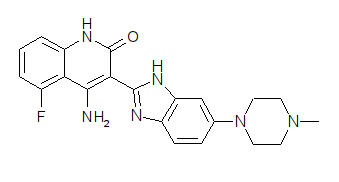
Dovitinib in phase 3 for Cancer, bladder (urothelial carcinoma)


Dovitinib
(3E)-4-amino-5-fluoro-3-[5-(4-methylpiperazin-1-yl)-1,3-dihydrobenzimidazol-2-ylidene]quinolin-2-one, is one kind of white crystalline powder, odorless, little bitter taste.

4-Amino-5-fluoro-3-[6-(4-methyl-1-piperazinyl)-1H-benzimidazol-2-yl]-2(1H)-quinolinone 2-hydroxypropanoate

4-Amino-5-fluoro-3-[6-(4-methyl-1-piperazinyl)-1H-benzimidazol-2-yl]-2(1H)-quinolinone 2-hydroxypropanoate hydrate (1:1:1);

CAS No. 405169-16-6 (free base), 915769-50-5,  804551-71-1 of lactate
 TKI-258; CHIR-258.
Formula C21H21FN6O.C3H6O3.H2O
Molecular Weight 500.53

for treatment of cancer

Novartis Ag, innovator

Dovitinib lactate is the orally bioavailable lactate salt of a benzimidazole-quinolinone compound with potential antineoplastic activity. Dovitinib strongly binds to fibroblast growth factor receptor 3 (FGFR3) and inhibits its phosphorylation, which may result in the inhibition of tumor cell proliferation and the induction of tumor cell death. In addition, this agent may inhibit other members of the RTK superfamily, including the vascular endothelial growth factor receptor; fibroblast growth factor receptor 1; platelet-derived growth factor receptor type 3; FMS-like tyrosine kinase 3; stem cell factor receptor (c-KIT); and colony-stimulating factor receptor 1; this may result in an additional reduction in cellular proliferation and angiogenesis, and the induction of tumor cell apoptosis. The activation of FGFR3 is associated with cell proliferation and survival in certain cancer cell types

Dovitinib (TKI258) is a highly potent, novel multitargeted growth factor receptor kinase inhibitor with IC50 of 1, 2, 10, 8, 27, 36 nM for FLT3, c-KIT, VEGFR1/2/3, PDGFRß and CSF-1R, respectively. It shows both antitumor and antiangiogenic activities in vivo. [1] It potently inhibits FGFR3 with an inhibitory concentration of 50% (IC50) of 5 nM in in vitro kinase assays and selectively inhibited the growth of B9 cells and human myeloma cell lines expressing wild-type (WT) or activated mutant FGFR3. Antiproliferative activity of Dovitinib (TKI258) against MV4;11 was ~24-fold greater compared with RS4;11, indicating more potent inhibition against cells with constitutively activated FLT3 ITD. [2][3]

References on Dovitinib (TKI258)
  • [1] Clin Cancer Res 2005;11:3633-3641
  • [2] Blood 2005;105: 2941-2948
  • [3] Clin Cancer Res 2005;11:5281-5291

Dovitinib lactate is an angiogenesis inhibitor in phase III clinical trials at Novartis for the treatment of refractory advanced/metastatic renal cell cancer. Early clinical trials are also under way at the company for the oral treatment of several types of solid tumors, multiple myeloma and glioblastoma multiforme. Phase II trials are ongoing for the treatment of castration-resistant prostate cancer and for the treatment of Von-Hippel Lindau disease, for the treatment of non-small cell lung cancer (NSCLC) and for the treatment of colorectal cancer. Novartis and Seoul National University Hospital are conducting phase II clinical studies for the treatment of adenoid cystic carcinoma. Additional phase II clinical trials are ongoing at Asan Medical Center for the treatment of metastatic or advanced gastrointestinal stromal tumors (GIST). The University of Pennsylvania is conducting phase II clinical trials for the treatment of advanced malignant pheochromocytoma or paraganglioma. Phase II clinical studies are ongoing by Novartis for the treatment of advanced malignant pleural mesothelioma which has progressed following prior platinum-antifolate chemotherapy (DOVE-M) and for the oral treatment of hepatocellular carcinoma.

In 2009, Novartis discontinued development of dovitinib lactate for the treatment of acute myeloid leukemia (AML) based on the observation of time dependent drug accumulation. A phase I trial was also stopped for the same reason.

The drug candidate has been shown to inhibit multiple growth factor tyrosine kinases, including vascular endothelial growth factor receptor (VEGFR) tyrosine kinases VEGFR1 and VEGFR2, fibroblast growth factor receptor (FGFR) and platelet-derived growth factor receptor (PDGFR) tyrosine kinases. In previous studies, the benzimidazole-quinoline inhibited VEGF-mediated human microvascular endothelial cell (HMVEC) proliferation and demonstrated concentration-dependent antiangiogenic activity in in vitro assays, as well as potent antiproliferative activity against a subset of cancer cell lines.

In 2013, an orphan drug designation was assigned in the U.S. for the treatment of adenoid cystic carcinoma.

“Molecularly Targeted Agents for Renal Cell Carcinoma: The Next Generation”, C. Lance Cowey and Thomas E. Hutson -Clinical Advances in Hematology & Oncology, 2010, 8, 357.


Lee S. H.; Lopes de Menezes, D. Vora, J. Harris, A.; Ye, H. Nordahl, L.; Garrett, E.; Samara, E.; Aukerman, S. L.; Gelb, A. B. Heise, C. In Vivo Target Modulation and Biological Activity of CHIR-258, a Multitargeted Growth Factor Receptor Kinase Inhibitor, in Colon Cancer Models. Clin. Cancer Res. 2005, 11 (10), 3633–3641.
Lopes de Menezes, D. E.; Peng, J.; Garrett, E. N.; Louie, S. G.; Lee, S. H.; Wiesmann, M.; Tang, Y.; Shephard, L.; Goldbeck, C.; Oei, Y.; Ye, H.; Aukerman, S. L.; Heise, C. CHIR-258: A Potent Inhibitor of FLT3 Kinase in Experimental Tumor Xenograft Models of Human Acute Myelogenous Leukemia. Clin. Cancer Res. 2005, 11 (14), 5281–5291.
Trudel, S.; Li, Z. H.; Wei, E.; Wiesmann, M.; Chang, H.; Chen, C.; Reece, D.; Heise, C.; Stewart, A. K. CHIR-258, a novel, multitargeted tyrosine kinase inhibitor for the potential treatment of t(4;14) multiple myeloma. Blood 2005, 105 (7), 2941–2948.

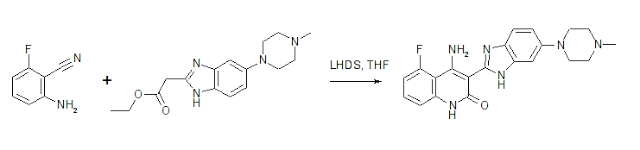
Synthesis of Dovitinib

Tetrahedron Letters 47 (2006) 657–660
LHMDS mediated tandem acylation–cyclization of 2-aminobenzenecarbonitriles with 2-benzymidazol-2-yl acetates: a short and efficient route to the synthesis of 4-amino-3-benzimidazol-2-ylhydroquinolin-2-ones
William R. Antonios-McCrea, Kelly A. Frazier, Elisa M. Jazan, Timothy D. Machajewski, Christopher M. McBride, Sabina Pecchi, Paul A. Renhowe, Cynthia M. Shafer and Clarke Taylor


cas 852433-84-2


…………………………..


852433-84-2


…………………………..

WO 2002022598 or https://www.google.com/patents/EP1317442A1?cl=en

Figure imgf000090_0001

Figure imgf000090_0002

………………………………

WO 2003087095 or http://www.google.fm/patents/US20030028018?cl=un

…………………..

WO 2005046589 or http://www.google.com/patents/EP1692085A2?cl=en

lactate salt of the compound of

Structure I or the tautomer thereof is administered to the subject and/or is used to prepare the medicament. [0062] In some embodiments, the compound of Structure I has the following formula

Figure imgf000032_0001

……………………

WO 2006125130

http://www.google.com/patents/WO2006125130A1?cl=en

formula IHB

Figure imgf000013_0001

HIB

Scheme 1


Figure imgf000056_0001


Figure imgf000056_0002


Figure imgf000056_0003

Example 4

Synthesis of 4-Amino-5-fluoro-3-[6-(4-rnethyl-piperazin-1 -yl)-1 H-benzimidazol- 2-yl]-1 H-quinolin-2-one Procedure A

Figure imgf000068_0001

[0149] [6-(4-Methyl-piperazin-1-yl)-1 H-benzimidazol-2-yl]-acetic acid ethyl ester (250 g, 820 mmol) (dried with ethanol as described above) was dissolved in THF (3800 ml_) in a 5000 ml_ flask fitted with a condenser, mechanical stirrer, temperature probe, and purged with argon. 2-Amino-6-fluoro-benzonitrile (95.3 g, 700 mmol) was added to the solution, and the internal temperature was raised to 40°C. When all the solids had dissolved and the solution temperature had reached 4O0C, solid KHMDS (376.2 g, 1890 mmol) was added over a period of 5 minutes. When addition of the potassium base was complete, a heterogeneous yellow solution was obtained, and the internal temperature had risen to 62°C. After a period of 60 minutes, the internal temperature decreased back to 40°C, and the reaction was determined to be complete by HPLC (no starting material or uncyclized intermediate was present). The thick reaction mixture was then quenched by pouring it into H2O (6000 ml_) and stirring the resulting mixture until it had reached room temperature. The mixture was then filtered, and the filter pad was washed with water (1000 ml_ 2X). The bright yellow solid was placed in a drying tray and dried in a vacuum oven at 50°C overnight providing 155.3 g (47.9%) of the desired 4-amino-5-fluoro-3-[6-(4-methyl-piperazin-1-yl)-1 H-benzimidazol-2- yl]-1 H-quinolin-2-one.

Procedure B

[0150] A 5000 mL 4-neck jacketed flask was equipped with a distillation apparatus, a temperature probe, a N2 gas inlet, an addition funnel, and a mechanical stirrer. [6-(4-Methyl-piperazin-1-yl)-1 H-benzimidazol-2-yl]-acetic acid ethyl ester (173.0 g, 570 mmol) was charged into the reactor, and the reactor was purged with N2 for 15 minutes. Dry THF (2600 mL) was then charged into the flask with stirring. After all the solid had dissolved, solvent was removed by distillation (vacuum or atmospheric (the higher temperature helps to remove the water) using heat as necessary. After 1000 mL of solvent had been removed, distillation was stopped and the reaction was purged with N2. 1000 mL of dry THF was then added to the reaction vessel, and when all solid was dissolved, distillation (vacuum or atmospheric) was again conducted until another 1000 mL of solvent had been removed. This process of adding dry THF and solvent removal was repeated at least 4 times (on the 4thdistillation, 60% of the solvent is removed instead of just 40% as in the first 3 distillations) after which a 1 mL sample was removed for Karl Fischer analysis to determine water content. If the analysis showed that the sample contained less than 0.20% water, then reaction was continued as described in the next paragraph. However, if the analysis showed more than 0.20% water, then the drying process described above was continued until a water content of less than 0.20% was achieved.

[0151] After a water content of less than or about 0.20% was achieved using the procedure described in the previous paragraph, the distillation apparatus was replaced with a reflux condenser, and the reaction was charged with 2-amino-6- fluoro-benzonitrile (66.2 g, 470 mmol)( in some procedures 0.95 equivalents is used). The reaction was then heated to an internal temperature of 38-420C. When the internal temperature had reached 38-420C, KHMDS solution (1313 g, 1.32 mol, 20% KHMDS in THF) was added to the reaction via the addition funnel over a period of 5 minutes maintaining the internal temperature at about 38-50°C during the addition. When addition of the potassium base was complete, the reaction was stirred for 3.5 to 4.5 hours (in some examples it was stirred for 30 to 60 minutes and the reaction may be complete within that time) while maintaining the internal temperature at from 38-420C. A sample of the reaction was then removed and analyzed by HPLC. If the reaction was not complete, additional KHMDS solution was added to the flask over a period of 5 minutes and the reaction was stirred at 38-420C for 45-60 minutes (the amount of KHMDS solution added was determined by the following: If the IPC ratio is < 3.50, then 125 ml_ was added; if 10.0 >IPC ratio >3.50, then 56 mL was added; if 20.0 ≥IPC ratio >10, then 30 mL was added. The IPC ratio is equal to the area corresponding to 4-amino-5-fluoro-3-[6- (4-methyl-piperazin-1 -yl)-1 H-benzimidazol-2-yl]-1 H-quinolin-2-one) divided by the area corresponding to the uncyclized intermediate). Once the reaction was complete (IPC ratio > 20), the reactor was cooled to an internal temperature of 25- 300C, and water (350 mL) was charged into the reactor over a period of 15 minutes while maintaining the internal temperature at 25-35°C (in one alternative, the reaction is conducted at 400C and water is added within 5 minutes. The quicker quench reduces the amount of impurity that forms over time). The reflux condenser was then replaced with a distillation apparatus and solvent was removed by distillation (vacuum or atmospheric) using heat as required. After 1500 mL of solvent had been removed, distillation was discontinued and the reaction was purged with N2. Water (1660 mL) was then added to the reaction flask while maintaining the internal temperature at 20-300C. The reaction mixture was then stirred at 20-300C for 30 minutes before cooling it to an internal temperature of 5- 100C and then stirring for 1 hour. The resulting suspension was filtered, and the flask and filter cake were washed with water (3 x 650 mL). The solid thus obtained was dried to a constant weight under vacuum at 5O0C in a vacuum oven to provide 103.9 g (42.6% yield) of 4-amino-5-fluoro-3-[6-(4-methyl-piperazin-1-yl)-1H- benzimidazol-2-yl]-1H-quinolin-2-one as a yellow powder.

Procedure C

Figure imgf000071_0001

[0152] [6-(4-Methyl-piperazin-1-yl)-1 H-benzimidazol-2-yl]-acetic acid ethyl ester (608 g, 2.01 mol) (dried) and 2-amino-6-fluoro-benzonitrile (274 g, 2.01 mol) were charged into a 4-neck 12 L flask seated on a heating mantle and fitted with a condenser, mechanical stirrer, gas inlet, and temperature probe. The reaction vessel was purged with N2, and toluene (7.7 L) was charged into the reaction mixture while it was stirred. The reaction vessel was again purged with N2 and maintained under N2. The internal temperature of the mixture was raised until a temperature of 630C (+/- 3°C) was achieved. The internal temperature of the mixture was maintained at 63°C (+/- 30C) while approximately 2.6 L of toluene was distilled from the flask under reduced pressure (380 +/- 10 torr, distilling head t = 40°C (+/- 1O0C) (Karl Fischer analysis was used to check the water content in the mixture. If the water content was greater than 0.03%, then another 2.6 L of toluene was added and distillation was repeated. This process was repeated until a water content of less than 0.03% was achieved). After a water content of less than 0.03% was reached, heating was discontinued, and the reaction was cooled under N2 to an internal temperature of 17-19°C. Potassium t-butoxide in THF (20% in THF; 3.39 kg, 6.04 moles potassium t-butoxide) was then added to the reaction under N2 at a rate such that the internal temperature of the reaction was kept below 20°C. After addition of the potassium t-butoxide was complete, the reaction was stirred at an internal temperature of less than 2O0C for 30 minutes. The temperature was then raised to 25°C, and the reaction was stirred for at least 1 hour. The temperature was then raised to 30°C, and the reaction was stirred for at least 30 minutes. The reaction was then monitored for completion using HPLC to check for consumption of the starting materials (typically in 2-3 hours, both starting materials were consumed (less than 0.5% by area % HPLC)). If the reaction was not complete after 2 hours, another 0.05 equivalents of potassium t-butoxide was added at a time, and the process was completed until HPLC showed that the reaction was complete. After the reaction was complete, 650 mL of water was added to the stirred reaction mixture. The reaction was then warmed to an internal temperature of 50°C and the THF was distilled away (about 3 L by volume) under reduced pressure from the reaction mixture. Water (2.6 L) was then added drop wise to the reaction mixture using an addition funnel. The mixture was then cooled to room temperature and stirred for at least 1 hour. The mixture was then filtered, and the filter cake was washed with water (1.2 L), with 70% ethanol (1.2 L), and with 95% ethanol (1.2 L). The bright yellow solid was placed in a drying tray and dried in a vacuum oven at 50°C until a constant weight was obtained providing 674 g (85.4%) of the desired 4-amino-5-fluoro-3-[6-(4-methyl-piperazin-1-yl)-1 H- benzimidazol-2-yl]-1 H-quinolin-2-one.

Preparation of Lactic Acid salt of 4-Amino-5-fluoro-3-[6-(4-methyl-piperazin-1- yl)-1 H-benzimidazol-2-yl]-1 H-quinolin-2-one

Figure imgf000073_0001

D,L-Lactic Acid

Figure imgf000073_0002

[0154] A 3000 ml_ 4-necked jacketed flask was fitted with a condenser, a temperature probe, a N2 gas inlet, and a mechanical stirrer. The reaction vessel was purged with N2 for at least 15 minutes and then charged with 4-amino-5-fluoro- 3-[6-(4-methyl-piperazin-1-yl)-1 H-benzimidazol-2-yl]-1 H-quinoiin-2-one (484 g, 1.23 mol). A solution of D,L-Lactic acid (243.3 g, 1.72 mol of monomer-see the following paragraph), water (339 mL), and ethanol (1211 mL) was prepared and then charged to the reaction flask. Stirring was initiated at a medium rate, and the reaction was heated to an internal temperature of 68-720C. The internal temperature of the reaction was maintained at 68-72°C for 15-45 minutes and then heating was discontinued. The resulting mixture was filtered through a 10-20 micron frit collecting the filtrate in a 12 L flask. The 12 L flask was equipped with an internal temperature probe, a reflux condenser, an addition funnel, a gas inlet an outlet, and an overhead stirrer. The filtrate was then stirred at a medium rate and heated to reflux (internal temperature of about 780C). While maintaining a gentle reflux, ethanol (3,596 mL) was charged to the flask over a period of about 20 minutes. The reaction flask was then cooled to an internal temperature ranging from about 64-700C within 15-25 minutes and this temperature was maintained for a period of about 30 minutes. The reactor was inspected for crystals. If no crystals were present, then crystals of the lactic acid salt of 4-amino-5-fluoro-3-[6-(4-methyl- piperazin-1-yl)-1 H-benzimidazol-2-yl]-1 H-quinolin-2-one (484 mg, 0.1 mole %) were added to the flask, and the reaction was stirred at 64-7O0C for 30 minutes before again inspecting the flask for crystals.

[0155] Once crystals were present, stirring was reduced to a low rate and the reaction was stirred at 64-700C for an additional 90 minutes. The reaction was then cooled to about 00C over a period of about 2 hours, and the resulting mixture was filtered through a 25-50 micron fritted filter. The reactor was washed with ethanol (484 ml_) and stirred until the internal temperature was about 00C. The cold ethanol was used to wash the filter cake, and this procedure was repeated 2 more times. The collected solid was dried to a constant weight at 500C under vacuum in a vacuum oven yielding 510.7 g (85.7%) of the crystalline yellow lactic acid salt of 4-amino-5-fluoro-3-[6-(4-methyl-piperazin-1 -yl)-1 H-benzimidazol-2-yl]-1 H-quinolin- 2-one. A rubber dam or inert conditions were typically used during the filtration process. While the dry solid did not appear to be very hygroscopic, the wet filter cake tends to pick up water and become sticky. Precautions were taken to avoid prolonged exposure of the wet filter cake to the atmosphere.

[0156] Commercial lactic acid generally contains about 8-12% w/w water, and contains dimers and trimers in addition to the monomeric lactic acid. The mole ratio of lactic acid dimer to monomer is generally about 1.0:4.7. Commercial grade lactic acid may be used in the process described in the preceding paragraph as the monolactate salt preferentially precipitates from the reaction mixture.

[0157] It should be understood that the organic compounds according to the invention may exhibit the phenomenon of tautomerism. As the chemical structures within this specification can only represent one of the possible tautomeric forms at a time, it should be understood that the invention encompasses any tautomeric form of the drawn structure. For example, the compound having the formula NIB is shown below with one tautomer, Tautomer INBa:

Figure imgf000075_0001

HIB

Figure imgf000075_0002

Tautomer HIBa

Other tautomers of the compound having the formula NIB, Tautomer INlBb and Tautomer IHBc, are shown below:

Figure imgf000075_0003

Tautomer IIIBb

Figure imgf000075_0004

Tautomer IIIBc

……………………….

WO 2006127926

……………………..

Design, structure-activity relationships and in vivo characterization of 4-amino-3-benzimidazol-2-ylhydroquinolin-2-ones: A novel class of receptor tyrosine kinase inhibitors
J Med Chem 2009, 52(2): 278

………………………………

WO 2003087095

…………………..

WO 2005046589

……………………

WO 2006125130


……………………….

WO 2006127926

……………………..

Design, structure-activity relationships and in vivo characterization of 4-amino-3-benzimidazol-2-ylhydroquinolin-2-ones: A novel class of receptor tyrosine kinase inhibitors
J Med Chem 2009, 52(2): 278

Rucaparib, PF-01367338 for the treatment of patients with advanced ovarian cancer and in patients with locally advanced or metastatic breast cancer.


Figure
Rucaparib, PF-01367338
283173-50-2  cas 
6H-​Pyrrolo[4,​3,​2-​ef]​[2]​benzazepin-​6-​one, 8-​fluoro-​1,​3,​4,​5-​tetrahydro-​2-​[4-​[(methylamino)​methyl]​phenyl]​-
6H- ​Azepino[5,​4,​3-​cd]​indol-​6-​one, 8-​fluoro-​1,​3,​4,​5-​tetrahydro-​2-​[4-​[(methylamino)​methyl]​phenyl] ​-
8-​Fluoro-​2-​[4-​[(methylamino)​methyl]​phenyl]​-​1,​3,​4,​5-​ tetrahydro-​6H-​azepino[5,​4,​3-​cd]​indol-​6-​one;
8-Fluoro-2-(4-methylaminomethyl-phenyl)-1,3,4,5-tetrahydro-azepino[5,4,3-cd]indol-6-one
8-Fluoro-2-(4-methylaminomethyl-phenyI)-l,3,4,5-tetrahydro-azepino[5,4,3- cd]indol-6-one
MW..C19 H18 F N3 O
cas of csa salt—–1327258-57-0
773059-19-1 (hydrochloride)
773059-22-6 (L-tartrate)
773059-23-7 (acetate)
459868-92-9  PHOSPHATE
AG-014699
AG-14699
CO-338
PF-01367338
AG-014447 (free base)
AG-14447 (free base) 
Agouron (Originator)
Pfizer (Originator)
WO 2014052550, WO 2014037313, WO 2000042040WO 2004087713WO 2005012305
Inhibition of poly(ADP ribose) polymerase, or PARP, is an exciting new mechanism for the treatment of cancer.(1) The PARP enzyme is responsible for repair of damaged DNA in both normal and tumor cells, and inhibition of this repair mechanism is expected to make the cell more likely to undergo apoptosis. Preclinical work has shown that PARP inhibitors coadministered with a standard chemotherapuetic agent are more effective than the standard treatment alone
Rucaparib is a NAD+ ADP-ribosyltransferase inhibitor in phase II clinical development at Cancer Research UK for the treatment of patients with advanced ovarian cancer and in patients with locally advanced or metastatic breast cancer. Clovis Oncology is conducting early clinical evaluation of rucaparib for the treatment of triple negative breast cancer or ER/PR +, HER2 negative with known BRCA1/2 mutations p2 and for the treatment of gBRCA mutation breast cancer.. Pfizer discontinued development of rucaparibin 2011.In 2011, the compound was licensed to Clovis Oncology by Pfizer for the treatment of cancer. In 2012, orphan drug designation was assigned in the U.S. and the E.U. for the treatment of ovarian cancer.The compound 8-fluoro-2-{4-[(methylamino)methyl]phenyl}-1 ,3,4,5-tetrahydro-6H-azepino[5,4,3- cd]indol-6-one represented by formula


is a small molecule inhibitor of poly(ADP-ribose) polymerase (PARP). 8-Fluoro-2-{4- [(methylamino)methyl]phenyl}-1,3,4,5-tetrahydro-6H-azepino[5,4,3-cd]indol-6-one and salts thereof, is disclosed in U.S. Patent No. 6,495,541 and PCT Application No. PCT/IB2004/000915, International Publication No. WO 2004/087713, the disclosures of which are incorporated herein by reference in their entireties. U.S. Provisional Patent Applications No. 60/612,459 and 60/679,296, entitled “Polymorphic Forms of the Phosphate Salt of 8-Fluoro-2-{4-[(methylamino)methyl]phenyl}-1 ,3,4,5-tetrahydro-6H- azepino[5,4,3-cd]indol-6-one,” the disclosures of which are incorporated herein by reference in their entireties, describe novel polymorphic forms of the phosphate salt of 8-fluoro-2-{4- [(methylamino)methyl]phenyl}-1 ,3,4,5-tetrahydro-6H-azepino[5,4,3-cd]indol-6-one, and methods for their preparation. U.S. Provisional Patent Applications No. 60/612,458; and 60/683,006, entitled “Therapeutic Combinations Comprising Poly(ADP-Ribose) Polymerases Inhibitor,” the disclosures of which are incorporated herein by reference in its entirety, describe pharmaceutical combinations of 8-fluoro-2-{4- [(methylamino)methyl]phenyl}-1 ,3,4,5-tetrahydro-6H-azepino[5,4,3-cd]indol-6-one.


………………………………………
http://www.google.com/patents/WO2000042040A1?cl=en
Example IIII:8-Fluoro-2-(4-methylaminomethyl-phenyI)-l,3,4,5-tetrahydro-azepino[5,4,3- cd]indol-6-one

4-(8-fluoro-6-oxo-3,4,5,6-tetrahydro-lH-azepino[5,4,3-cd]indol-2-yl)- benzaldehyde (100 mg, 0.32 mmol; prepared in a manner similar to that described for compound 12 for 2-bromo-8-fluoro-l,3,4,5-tetrahydro-azepino[5,4,3-cd]indol-6-one and 4-formylphenylboronic acid) was reacted with methylamine (1.62 mmol) as described for Compound PPP to yield 8-fluoro-2-(4-methylaminomethyl-phenyl)- l,3,4,5-tetrahydro-azepino[5,4,3-cd]indol-6-one, 32 mg (31%) as a yellow solid: m.p. 1543-155 °C; Η NMR (300 MHz, d6-DMSO) 2.28 (s, 3H), 3.04 (m, 2H), 3.40 (m, 2H), 3.69 (s, 2H), 7.32 (dd, 7= 9.0, 2.4 Hz, IH), 7.44 (m, 3H), 7.57 (d, 7= 8.1 Hz, 2H), 8.25 (br t, IH), 11.67 (br s, IH). HRMS (MALDI MH+) Calcd for C19H18N3OF: 324,1512. Found: 325.1524. Anal. (C19H18N3OF03 H2O) C, H, N.

……………………………..
Org. Process Res. Dev., 2012, 16 (12), pp 1897–1904
DOI: 10.1021/op200238p
http://pubs.acs.org/doi/full/10.1021/op200238p
Abstract Image
Novel PARP inhibitor 1 is a promising new candidate for treatment of breast and ovarian cancer. A modified synthetic route to 1 has been developed and demonstrated on 7 kg scale. In order to scale up the synthesis to multikilogram scale, several synthetic challenges needed to be overcome. The key issues included significant thermal hazards present in a Leimgruber–Batcho indole synthesis, a low-yielding side-chain installation, a nonrobust Suzuki coupling and hydrogen cyanide generation during a reductive amination. In addition to these issues, changing from intravenous to oral delivery required a new salt form and therefore a new crystallization procedure. This contribution describes development work to solve these issues and scaling up of the new process in the pilot plant.
8-Fluoro-2-(4-methylaminomethyl-phenyl)-1,3,4,5-tetrahydro-azepino[5,4,3-cd]indol-6-one (1)
To a solution of aqueous sodium hydroxide (40% w/w, 3.6 kg, 2.0 equiv) in water (88 L, 14 L/kg) and methanol (35 L, 5.5 L/kg) was added 12 ……………………………………………………deleted……………………..and dried at 45 °C under vacuum to give 1 as a 1:1 THF solvate (5.57 kg, 14.08 mol, 84% yield);
mp (THF) dec at 220 °C;
δH: (400 MHz, DMSO-d6) 2.25 (s, 3H), 2.99–3.01 (m 2H), 3.65 (s, 2H), 7.27 (dd, 1H, J = 2.4, 9.3 Hz), 7.39 (dd, 1H, J = 2.4, 9.3 Hz), 7.42 (d, 2H, J = 8.5 Hz), 7.53 (d, 2H, J = 8.3 Hz), 8.18 (t, br, 1H, J = 5.7 Hz), 11.60 (s, 1H);
δC: (100 MHz, DMSO-d6) 28.74, 35.58, 41.84, 54.74, 100.47 (d, J = 25.8 Hz), 109.44 (d, J = 25.8 Hz), 111.47, 123.19, 125.72 (d, J = 8.8 Hz), 127.55, 128.20, 129.86, 135.38 (d, J = 3.7 Hz), 136.67 (d, J = 12.4 Hz), 140.52, 158.31 (d, J = 233), 168.39.
8-Fluoro-2-(4-methylaminomethyl-phenyl)-1,3,4,5-tetrahydro-azepino[5,4,3-cd]indol-6-one (S)-camphorsulfonate Salt (21)
To a slurry of 1 (5.32 kg, 13.48 mol) in isopropanol (30 L, 5.5 L/kg) and water (39 L, 7.3 L/kg) was added a solution of (S)-camphorsulfonic acid (3.75 kg, 16.18 mol, 1.2 equiv) in water (10.6 L, 2 L/kg). The resultant slurry was then heated to 70 °C and held for 1 h to ensure dissolution. …………………………..deleted…………………..C to give 21 as a white crystalline solid (7.09 kg, 12.76 mol, 95% yield); mp (IPA/water) 303 °C;
δH: (400 MHz, DMSO-d6) 0.74 (s, 3H), 1.05 (s, 3H), 1.28 (m, 1H), 1.80 (d, 1H, J = 18.0 Hz), 1.81–1.88 (m, 1H), 1.93 (app t, 1H, J = 4.5 Hz), 2.24 (m, 1H), 2.41 (d, 1H, J = 14.6 Hz), 2.62 (s, 3H), 2.66–2.72 (m, 1H), 2.91 (d, 1H, J = 14.7 Hz), 3.04–3.07 (m, br, 2H), 3.36–3.45 (m, br, 2H), 4.20 (s, 2H), 7.37 (dd, 1H, J = 2.4, 9.3 Hz), 7.44 (dd, 1H, J = 2.4, 11.0 Hz), 7.63 (d, 2H, J = 8.3 Hz), 7.71 (d, 2H, J = 8.3 Hz), 8.26 (t, br, 1H, J = 5.5 Hz), 11.76 (s, 1H);
δC: (100 MHz, DMSO-d6) 19.51, 20.02, 24.14, 26.37, 28.74, 32.28, 41.77, 42.13, 42.22, 46.71, 47.00, 51.06, 58.21, 100.65 (d, J = 25.8 Hz), 109.72 (d, J = 25.8 Hz), 112.41, 123.03, 126.04 (d, J = 8.7 Hz), 127.98, 130.19, 131.22, 132.22, 134.50, 136.83 (d, J = 12.0 Hz), 158.52 (d, J = 235 Hz), 168.27, 216.24.
………………….
WO 2006033003

The compound 8-fluoro-2-{4-[(methylamino)methyl]phenyl}-1 ,3,4,5-tetrahydro-6H-azepino[5,4,3- cd]indol-6-one represented by formula


is a small molecule inhibitor of poly(ADP-ribose) polymerase (PARP). 8-Fluoro-2-{4- [(methylamino)methyl]phenyl}-1,3,4,5-tetrahydro-6H-azepino[5,4,3-cd]indol-6-one and salts thereof, is disclosed in U.S. Patent No. 6,495,541 and PCT Application No. PCT/IB2004/000915, International Publication No. WO 2004/087713, the disclosures of which are incorporated herein by reference in their entireties.


U.S. Provisional Patent Applications No. 60/612,459 and 60/679,296, entitled “Polymorphic Forms of the Phosphate Salt of 8-Fluoro-2-{4-[(methylamino)methyl]phenyl}-1 ,3,4,5-tetrahydro-6H- azepino[5,4,3-cd]indol-6-one,” the disclosures of which are incorporated herein by reference in their entireties, describe novel polymorphic forms of the phosphate salt of 8-fluoro-2-{4- [(methylamino)methyl]phenyl}-1 ,3,4,5-tetrahydro-6H-azepino[5,4,3-cd]indol-6-one, and methods for their preparation. U.S. Provisional Patent Applications No. 60/612,458; and 60/683,006, entitled “Therapeutic Combinations Comprising Poly(ADP-Ribose) Polymerases Inhibitor,” the disclosures of which are incorporated herein by reference in its entirety, describe pharmaceutical combinations of 8-fluoro-2-{4- [(methylamino)methyl]phenyl}-1 ,3,4,5-tetrahydro-6H-azepino[5,4,3-cd]indol-6-one.

Figure imgf000011_0003

Figure imgf000011_0004


Example 13. Synthesis of 8-Fluoro-2-(4-methylaminomethyl-phenyl)-1,3.4.5-tetrahvdro-azepinor5.4.3- ccflindol-6-one (15) i


Lactam 14 (14.42 g, 0.038 mol) was dissolved in hydrobromic acid in acetic acid (30%-32%, 140 ml). The reaction solution was stirred for 46 hours at room temperature in a 500ml flask that was connected to an ethanolamine scrubber system. HPLC analysis indicated the completion of the reaction. Ice (30 g) was added to the reaction solution followed by addition of aqueous NaOH (327 ml, 10 M, 3.27 mol) while the temperature was maintained between 25 0C and 35 0C. When addition of NaOH was complete, the pH was 10. The resulting solid was collected by filtration, washed with water (2 x 50 ml). The filter cake was then suspended in water (125 ml) and stirred for 2 hours. The solid was collected by filtration, washed with water (2 x 25 ml) and dried to afford 10.76 g of product (88% yield). 1H NMR (300 MHz, DMSO-d6) δ 2.577(s, 3H), 3.053(m, 2H), 3.406(m, 2H), 4.159(s, 2H), 7.36(dd, 1 H, J= 2.4 Hz and J= 9.3 Hz), 7.44(dd, 1 H, J= 2.4 Hz and J= 11.1 Hz), 7.63(d, 2H, J=8.1 Hz), 7.70(d, 2H, J= 8.1 Hz), 8.265(t, 1H, J= 5.7 Hz), 11.77(s, 1 H). Exact mass calculated for C19H19FN3O: 324.1512. Found: 324.1497.


Sanfilippo Syndrome: FDA Orphan Designations For Gene Therapy


Orphan Druganaut Blog's avatarOrphan Druganaut Blog

Abeona Therapeutics , a Cleveland-based biotechnology start-up, is created in March 2013 as a spinoff of Nationwide Children’s Hospital , with the goal of developing therapies for patients with the rare Lysosomal Storage Disorder (LSD), Sanfilippo (SF) Syndrome or Mucopolysaccharidosis III (MPS III). Abeona in Roman Mythology is the Goddess of Departures. She protects children as they step away from home for the first time, keeping them safe as they venture into the world. Her name comes from the Latin verb abeo, “to depart, go away, or go forth”.

SF is a genetic metabolism disorder that prohibits the proper breakdown of the body’s sugar molecules. There are 4 types of MPS III (MPS III A, MPS III B, MPS III C, and MPS III D), each with a deficiency in one of four lysosomal enzymes. The disease first affects the central nervous system, causing severe brain damage, and typically results in hearing loss, vision loss…

View original post 226 more words

GKT-137831 a NOX1 and NOX4 inhibitor from GenKyoTex being developed for diabetic nephropathy


2D chemical structure of 1218942-37-0


GTK 137831

1218942-37-0

Genkyotex Sa INNOVATOR

1H-​Pyrazolo[4,​3-​c]​pyridine-​3,​6(2H,​5H)​-​dione, 2-​(2-​chlorophenyl)​-​4-​[3-​(dimethylamino)​phenyl]​-​5-​methyl-


C21 H19 Cl N4 O2

  • 2-(2-Chlorophenyl)-4-(3-(dimethylamino)phenyl)-5-methyl-1H-pyrazolo(4,3-c)pyridine-3,6(2H,5H)-dione
  • 394.8601 mw
  • in phase 2
  • UNII-45II35329V

drug recently advancing to phase II trials is GKT-137831, a NOX1 and NOX4 inhibitor from GenKyoTex being developed for diabetic nephropathy, the leading cause of chronic kidney disease in the US and Europe.


GKT137831 is a selective NOX1/4 inhibitor in Phase II clinical development for the treatment of diabetic nephropathy, one of the complications of diabetes. It is a potent, NOX specific, small molecule with good oral availability.

Data from the Phase 1 programme to assess safety and exposure to single and multiple oral doses of GKT137831 was presented at the ASN Kidney week in San Diego in 2012. More than 100 subjects have been exposed to GKT137831 and the drug was well tolerated with no serious adverse events. In summer 2013, the FDA approved the IND to allow commencement of the Ph2 PoC trial of GKT137831 in diabetic nephropathy. Subsequently, approvals have been received from the competent authorities in Australia, Canada, Germany, Czech Republic and Poland. Enrollment to this study is ongoing and data is expected in H1 2015.

GKT137831 has been found to be effective in a range of preclinical disease models. This work has been conducted by leading academic collaborators in disease models of diabetic nephropathy, atherosclerosis, idiopathic pulmonary fibrosis, liver fibrosis and angiogenesis. GKT137831 has therefore, the potential to treat a wide range of important and poorly managed diseases

PATENT

WO 2010035221

http://www.google.com/patents/WO2010035221A1?cl=en

Scheme 1

Figure imgf000055_0001

R18 = Me Pr, iPr, Bu

G /NH Toluen

Il

Figure imgf000055_0002

G1 as described above G1 = H (Ib) (Ia) VIII


Scheme 2

Figure imgf000057_0001

R18 = Me, Et, Pr, iPr, Bu

Toluene

G^

Figure imgf000057_0002

G1 as described above G1 = H (Ib) (Ia) VIII

Scheme 3


Figure imgf000059_0001

IV R19 = Me, Et, XII

R18 = Me, Et, Pr, iPr, Bu


Figure imgf000059_0003
Figure imgf000059_0002

G1 = H, G3 = CH2NR20R21 (Ia) XIV XIII


Figure imgf000059_0004

G1, G3 as described above (Ib)

Figure imgf000105_0001

Genkyotex’s GKT137831 Found to Reverse Fibrosis and Improve Survival in a Model of Persistent Lung Fibrosis

Genkyotex, the leading developer of selective NOX enzyme inhibitors, announced today the publication of data showing that GKT137831, a first in class NOX1 and 4 inhibitor, was able to reverse lung fibrosis associated with aging in a new model of idiopathic pulmonary fibrosis. Collaborators led by Professor Victor Thannickal at the University of Alabama at Birmingham published the results in the April 9, 2014 issue of Science Translational Medecine. Genkyotex is investigating GKT137831 in a Phase II trial in patients with diabetic nephropathy, another progressive fibrotic disease.

23 MARCH 2014

Keystone Symposia Conference 2014

March 26th, 2014. Today, Dr. Philippe Wiesel, CMO at Genkoytex presented preclinical data showing the beneficial effect of NOX1/4 inhibitor for the treatment of NASH (Non-Alcoholic Steatohepatitis)

Genkyotex held a breakfast meeting on the 28th on the role of NADPH oxidases in fibrosis

The presentations can be downloaded here

11 NOVEMBER 2013

Genkyotex NOX Inhibitor GKT137831 Successfully Shown to Halt Diabetic Kidney Disease

Genkyotex, the leading developer of selective NOX enzyme inhibitors, announced today that data from a group of academic collaborators demonstrated that NOX4 is an important driver of kidney injury in diabetes and that its novel, first in class NOX 1 and 4 inhibitor, GKT137831, has the potential to prevent or delay the development of diabetic nephropathy. Data were presented at the American Society of Nephrology’s Kidney Week 2013 in Atlanta and have been accepted for publication in the Journal of the American Society of Nephrology (JASN).

08 NOVEMBER 2013

Genkyotex attended the American Society of Nephrology Annual Meeting during Kidney week in Atlanta GA.

November 7th to 10th, 2013. Genkyotex attended the American Society of Nephrology Annual Meeting during Kidney week in Atlanta, GA. Ursula Ney, CEO, Philippe Wiesel, CMO, and the clinical team attended. Presentations from the Ancillary meeting held on 8th November can be found here.

05 NOVEMBER 2013

Genkyotex Initiates Multinational Phase II Study with First in Class NOX Inhibitor GKT137831 in Diabetic Nephropathy Patients

Genkyotex, the leading developer of selective NOX enzyme inhibitors, announced today the initiation of a multinational Phase II clinical study of GKT137831 in patients with diabetic nephropathy. GKT137831 is a first in class inhibitor targeting NOX1 and NOX4 enzymes, both of which play a key role in the development of diabetic complications and chronic kidney disease in particular. In phase I studies in more than 100 subjects, GKT137831 was found to be safe and well tolerated when administered orally once and twice daily.

21 OCTOBER 2013

Genkyotex Collaborators Elucidate Role of NOX4 in Osteoporosis

Genkyotex, the leading developer of NOX enzyme inhibitors, announced today that a group of collaborators have discovered a link between the enzyme NOX4 and development of osteoporosis. These results, published online in the Journal of Clinical Investigationdoi:10.1172/JCI67603), indicate that inhibitors of NOX4, such as GKT137831 developed by Genkyotex could lead to a novel way of treating patients with osteoporosis. GKT137831, the first in class NOX1 and 4 inhibitor, has shown favorable safety and pharmacokinetic profiles in Phase I studies, and following a recently FDA approved IND will enter a Phase II trial in patients with diabetic nephropathy.

08 SEPTEMBER 2013

Genkyotex Receives FDA IND Approval for Phase II Clinical Study with First in Class NOX Inhibitor GKT137831

Genkyotex, the leading developer of NOX enzyme inhibitors, announced today that the U.S. Food and Drug Administration has approved the company’s Investigational New Drug (IND) application to begin a Phase II clinical study of GKT137831 in patients with diabetic nephropathy. GKT137831 is a first in class inhibitor targeting NOX1 and NOX4 enzymes. Enrollment of patients into the multinational Phase II study is expected to begin during Q4, 2013.

07 MAY 2013

Genkyotex Collaborators Discover Role of NOX in Development of Atherosclerosis in Diabetic Mice

Genkyotex, the leading developer of NOX inhibitors to treat oxygen-radical mediated diseases, announced today that its collaborators at the Baker IDI Heart & Diabetes Research Institute, Melbourne (Australia) and Maastricht University (The Netherlands) have elucidated the role of NOX1 in causing atherosclerosis in diabetic mice. The researchers found that NOX1 produces toxic amounts of oxygen radicals in the wall of blood vessels, which along with other inflammatory chemicals led to atherosclerotic plaque development. The researchers also demonstrated that Genkyotex’s selective NOX1 and 4 inhibitor, GKT137831, was able to dramatically reduce development of atherosclerosis. The research and accompanying editorial from Dr. David G. Harrison from Vanderbilt University was published in May 7th issue ofCirculation.

17 DECEMBER 2012

Genkyotex Issued U.S. Patent Covering Parent NOX Inhibitor Chemical Series

Genkyotex, the leading developer of NOX inhibitors to treat oxygen-radical mediated diseases, today announced that the United States Patent and Trademark Office (USPTO) has issued a Notice of Allowance for U.S. Patent Application No. 12/532,336, titled “pyrazolo pyridine derivatives as NADPH oxidase inhibitors”.

02 NOVEMBER 2012

Genkyotex’s NOX Inhibitor GKT137831 Phase I Data Presented at Kidney Week 2012

Genkyotex, the leading developer of NOX inhibitors to treat oxygen-radical mediated diseases, announced today that Phase I studies have demonstrated excellent safety and tolerability following single and multiple oral doses of GKT137831, the first in class NOX 1 and 4 inhibitor. In addition, GKT137831 demonstrated a favourable pharmacokinetic profile in these subjects.

15 OCTOBER 2012

Genkyotex’s First in Class NOX Inhibitor GKT137831 to be Presented at Kidney Week

Genkyotex will present data from single and multiple dose Phase I studies with the NOX 1 and 4 inhibitor, GKT137831, at Kidney Week 2012 (San Diego, October 30 – November 4). The Phase I data will be presented on Friday, November 2, 2012, 10.00 AM -12.00 PM (PosterBoard# FR-PO831; Abstract# 2279).

08 AUGUST 2012

Genkyotex’s Lead NOX Inhibitor GKT137831 Demonstrates Activity in Models of Liver Fibrosis

Genkyotex, with collaborator Professor David Brenner, M.D., Dean, School of Medicine, University of California San Diego, has published data online in Hepatology regarding its lead (NOX) inhibitor, GKT137831, in models of liver fibrosis, a scarring process associated with chronic liver disease that can lead to loss of liver function. The data demonstrates the specificity of GKT137831 and its ability to attenuate development of fibrosis in the liver and production of reactive oxygen species (ROS) in two models of disease, as well as inhibiting messenger RNA expression of fibrotic and NOX genes.

09 JULY 2012

Genkyotex closes CHF25 million (USD26 million) extension to its Series C financing.

Investors in the Series C round, including Eclosion, Edmond de Rothschild Investment Partners, Vesalius Biocapital Partners, MP Healthcare Venture, all participated in the financing extension. The proceeds will be used to advance clinical development of Genkyotex’s lead compound, the NOX1/4 inhibitor GKT137831, through Phase II development for the treatment of diabetic nephropathy.

22 JUNE 2012

Genkyotex Announces Successful Phase Ia Data with First in Class NOX Inhibitor GKT137831

Diabetic Nephropathy First Target Indication for NOX1/4 Inhibitor

31 OCTOBER 2011

GenKyoTex Starts Phase I Trial with First in Class NOX inhibitor GKT137831

GenKyoTex, the leading developer of NOX inhibitors to treat oxygen-radical mediated diseases, announced today that a Phase I study has been initiated with GKT137831, a first in class dual inhibitor of NOX1 and NOX4 enzymes.

GenKyoTex raises CHF 18 million in a Series C Venture Financing to develop NOX enzyme inhibitors.

Appoints New Management Team & Board

02 DECEMBER 2010

GKT137831 granted Orphan Drug status for Idiopathic Pulmonary Fibrosis by the EC (EMEA)

Genkyotex announced today that its lead clinical candidate GKT137831 has been granted the orphan drug status by the European Commission for the treatment of idiopathic pulmonoary fibrosis.

27 SEPTEMBER 2010

FDA granting Genkyotex Orphan Drug Designation of GKT137831 for IPF

Genkyotex announced today having received a letter from FDA dated of 21st September 2010, granting Genkyotex Orphan Drug Designation of GKT137831 for the treatment of Idiopathic Pulmonary Fibrosis (IPF).

Vertex Pharmaceuticals: Another FDA Orphan Drug Designation For Cystic Fibrosis


Orphan Druganaut Blog's avatarOrphan Druganaut Blog

On April 24th , Vertex Pharmaceuticals’ investigational drug VX-661 ((R)-1-(2,2-difluorobenzo [d][1,3] dioxol-5-yl)-N-(1-(2,3-dihydroxypropyl)-6-fluoro-2-(1-hydroxy-2-methylpropan-2-yl)-1H-indol-5-yl) cyclopropanecarboxamide) receives FDA Orphan Drug Designation (ODD) for the treatment of Cystic Fibrosis (CF) :
FDA Orphan Drug Designation Database Record
Generic Name:(R)-1-(2,2-difluorobenzo [d][1,3] dioxol-5-yl)-N-(1-(2,3-dihydroxypropyl)-6-fluoro-2-(1-hydroxy-2-methylpropan-2-yl)-1H-indol-5-yl) cyclopropanecarboxamide
Trade Name:n/a
Date Designated:04-24-2014
Orphan Designation:Treatment of cystic fibrosis
Orphan Designation Status:Designated
FDA Orphan Approval Status:Not FDA Approved for Orphan Indication
Sponsor: Vertex Pharmaceuticals Inc. 50 Northern Avenue Boston, MA 02210-1862 The sponsor address listed is the last reported by the sponsor to OOPD.

.

VX-661 is a Cystic Fibrosis Transmembrane Conductance Regulator (CFTR) corrector. VX-661 is being studied in combination with Kalydeco (Ivacaftor) for patients who have the F508del mutation. VX-661 is currently recruiting participants for a Phase II clinical trial to evaluate the safety and efficacy of VX-661 in combination with Kalydeco in subjects with CF who are homozygous (have 2 copies) for the F508del CFTR…

View original post 173 more words

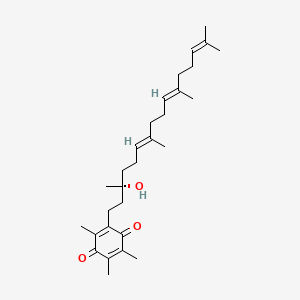
Vatiquinone, バチキノン


Vatiquinone.pngimg

ChemSpider 2D Image | Vatiquinone | C29H44O3

Vatiquinone

バチキノン

Vatiquinone; Alpha-Tocotrienol quinone; EPI-743; UNII-6O85FK9I0X; 1213269-98-7; Vincerenone

Molecular Formula: C29H44O3
Molecular Weight: 440.668 g/mol

2-[(3R,6E,10E)-3-hydroxy-3,7,11,15-tetramethylhexadeca-6,10,14-trienyl]-3,5,6-trimethylcyclohexa-2,5-diene-1,4-dione

2-((R,6E,10E)-3-hydroxy-3,7,11,15-tetramethylhexadeca-6,10,14-trien-1-yl)-3,5,6-trimethylcyclohexa-2,5-diene-1,4-dione

2-[(3R,6E,10E)-3-hydroxy-3,7,11,15-tetramethylhexadeca-6,10,14-trien-1-yl]-3,5,6-trimethylcyclohexa-2,5-diene-1,4-dione
6O85FK9I0X
9604
Research Code:EPI-743; ATQ-3, BioE-743
MOA:Mitochondria
  • Originator Edison Pharmaceuticals
  • Developer Edison Pharmaceuticals; Sumitomo Dainippon Pharma; University of Florida; Yale University
  • Class Alkadienes; Benzoquinones; Cyclohexenes; Small molecules
  • Mechanism of Action Antioxidants; NQO1 modulators
  • Orphan Drug Status Yes – Mitochondrial disorders; Leigh disease; Friedreich’s ataxia
  • New Molecular Entity Yes

Highest Development Phases

  • Phase III Leigh disease
  • Phase II Friedreich’s ataxia; Methylmalonic acidaemia; Mitochondrial disorders; Noise-induced hearing loss; Parkinson’s disease; Rett syndrome
  • No development reported Gilles de la Tourette’s syndrome

Most Recent Events

  • 04 Nov 2017 No recent reports of development identified for phase-I development in Gilles-de-la-Tourette’s-syndrome in USA (PO)
  • 01 Apr 2017 Efficacy data from a phase II trial in Friedreich’s ataxia presented at the 69th Annual Meeting of the American Academy of Neurology (AAN- 2017)
  • 16 Apr 2016 Initial efficacy and safety data from a phase IIa trial in Parkinson’s disease presented at the 68th Annual Meeting of the American Academy of Neurology (AAN – 2016)

Vatiquinone is in phase II/III clinical trials for the treatment of leigh syndrome in JP. Phase II clinical trials is also ongoing for Friedreich’s ataxia, Parkinson’s disease, Pearson syndrome, cobalamin C deficiency syndrome, hearing loss and Rett’s syndrome.

Vatiquinone was originally developed by Edison Pharmaceuticals, then licensed to Sumitomo Dainippon Pharma in Japan in 2013.

Orphan drug designations for the treatment of Friedreich’s, Leigh syndrome and Rett’s syndrome were granted to the compound by FDA in 2014.
In 2013, the compound was licensed to Sumitomo Dainippon Pharma by Edison Pharmaceuticals in Japan for development and commercialization for the treatment of pediatric orphan inherited mitochondrial and adult central nervous system diseases.

EU

On 17 January 2018, orphan designation (EU/3/17/1971) was granted by the European Commission to Edison Orphan Pharma BV, The Netherlands, for vatiquinone (also known as alpha-tocotrienol quinone) for the treatment of RARS2 syndrome.

http://www.ema.europa.eu/ema/index.jsp?curl=pages/medicines/human/orphans/2018/03/human_orphan_002075.jsp&mid=WC0b01ac058001d12b

Vatiquinone, also known as EPI 743, is an orally bioavailable para-benzoquinone being developed for inherited mitochondrial diseases. The mechanism of action of EPI-743 involves augmenting the synthesis of glutathione, optimizing metabolic control, enhancing the expression of genetic elements critical for cellular management of oxidative stress, and acting at the mitochondria to regulate electron transport.

Vatiquinone has been investigated for the treatment and prevention of Retinopathy, Rett Syndrome, Genetic Disease, Noise-induced Hearing Loss, and Methylmalonic Aciduria and Homocystinuria,Cblc Type.

EPI-743 (vatiquinone) is a compound being developed by BioElectron  (previously known as Edison Pharmaceuticals) to treat Friedreich’s ataxia (FA), a rare, autosomal recessive genetic disorder. The disorder is caused by mutations in the FXN gene, which encodes for a protein called frataxin. Frataxin is required for the normal functioning of mitochondria, or the energy factories of the cells. Decreased levels of frataxin, as observed in patients with FA, disrupts the normal function of mitochondria and leads to the gradual development of symptoms associated with the disease: impairment of muscle coordination, loss of muscle strength and sensation, and impaired speech, vision, and hearing.

Currently, there are no drugs available that could cure or help to effectively manage the condition, although a large number of potential treatments are in the pipeline.

How EPI-743 works

EPI-743 is a drug belonging to the class of para-benzoquinones, a group of potent antioxidants. The regulation of oxidative stress is disturbed in people with FA. EPI-743 targets an enzyme called NADPH quinone oxidoreductase 1 (NQO1), helping to increase the biosynthesis of glutathione, a compound essential for the control of oxidative stress. The drug does not target any FA-specific biochemical pathways directly, but helps to improve the regulation of cellular energy metabolism in general. Due to its non-specific mechanism, the drug can be used in a variety of disorders where mitochondrial function is affected.

EPI-743 in clinical trials

In December 2012, Edison Pharmaceuticals started a placebo-controlled Phase 2 study (NCT01728064) to examine the safety and efficacy of EPI-743 on visual and neurological function in FA patients. The study was completed in February 2016. The results indicated no significant differences in visual function at six months between patients treated with EPI-743 and those who received a placebo. However, researchers reported a trend toward improvement in neurological function.

In October 2013, the University of South Florida started a small Phase 2 study (NCT01962363) to evaluate the effects of EPI-743 in patients with rare point mutations leading to FA. The study investigated whether treatment with EPI-743 has a discernible impact on neurological function. The results announced in April 2016 demonstrated significant improvements in neurological functions over 18 months. However, the trial only included three participants.

Currently, no further trials testing EPI-743 in FA patients is taking place. However, the drug is in clinical trials for several other disorders that affect the functions of mitochondria, including Leigh syndrome, mitochondrial respiratory chain disease, Pearson syndrome, and others.

Other information

In February 2014, the U.S. Food and Drug Administration (FDA) granted orphan drug status to EPI-743, which allows a more expedited drug approval process. The FDA also granted fast track status to EPI-743 for the treatment of FA in March 2014.

ADDITIONAL INFORMATION

Edison Pharmaceuticals is developing vatiquinone, which was awarded Fast Track status for Friedreich’s ataxia in March 2014.

Reference

Bioorg. Med. Chem. Lett. 201121, 3693-3698.

https://www.sciencedirect.com/science/article/pii/S0960894X11005440

Reference

WO2013041676A1 / US9045402B2.

It is known that a-tocotrienol quinones are pharmaceutically active.

US 201 1 /0172312 A1 discloses that tocotrienol quinones are used in treating Leight Syndrome. WO 2010/126909 A1 and US 2006/0281809 A1 disclose that tocotrienol quinones can be used for treating ophthalmic diseases and mitochondrial diseases. US 5,318,993 discloses the activity of tocotrienol quinones as cholesterol suppression. W.D. Shrader et al., Bioorganic & Medical Chemistry Letters 21 (201 1 ), 3693-3698 disclose that the R-isomer of a-tocotrienol quinone is a metabolite of α-tocotrienol and is a potent cellular protectant against oxidative stress and ageing. The R-isomer of α-tocotrienol used for this study has been extracted from Elaeis guineensis. All these documents either use tocotrienol from natural sources or do not disclose the source of tocotrienol respectively tocotrienol quinones or disclose very specific complex synthesis thereof. These methods are very expensive and limited in producing industrial amounts of the desired products.

It is well known that from vitamin E the tocopherols and tocotrienols having the R-configuration have a significantly higher bioactivity (biopotency) than the corresponding S-isomer. This is also the case for the corresponding R-isomers of tocotrienol quinones.

Synthetic pathways to produce the R-isomer of tocotrienol quinones in a stereospecific way are very expensive and therefore only of limited interest.

The synthesis of a-tocotrienol is known from Kabbe and Heitzer, Synthesis 1978, 888-889, however, no indication of chirality whatsoever is indicated.

The synthesis of tocotrienol from the corresponding 4-oxo-chromanol-derivative is known from US 6,096,907, however, no indication of chirality is indicated.

J. Org. Chem. 1981 , 46, 2445-2450 and CH 356754 disclose the chemical transformation of a-tocopherol to a-tocopheryl quinone and to a-tocopherylhydro-quinone, however, neither tocotrienols nor tocotrienol quinones are mentioned.

Separation of chiral compounds by chromatography is principally known. However, it is also known that the quantitative separation is very often very difficult to achieve.

Due to the importance of these substances, there exists a high interest in a process which would produce R-tocotrienol quinones in a large scale in an easy and economic way.

Examples

The present invention is further illustrated by the following experiments.

1 . Chromatographic separation

Starting materials:

Solvents and reagents used as received were heptane (Fluka, 51750), ethanol (Merck, 1 .00983), isopropanol (Sigma-Aldrich, 59300) and acetic acid (Fluka, 45730).

Chromatography:

Preparative separations were performed on an Agilent 1 100 series hplc system consisting of an Agilent 1 100 degasser, Agilent 1 100 preparative pump, Agilent 1 100 diode array detector, Agilent 1 100 MPS G2250A autosampler/fraction collector controlled by chemstation/CC-mode software package.

HPLC conditions for preparative separation:

Column: Daicel Chiracel® OD-H, 250 mm x 20 mm; eluent 0.5% isopropanol, 0.2 % acetic acid in n-heptane; flow 13 ml/min; detection 220 nm, 400 μΙ injection.

Separation of (R)-6-hydroxy-2,5,7,8-tetramethyl-2-((3E,7E)-4,8, 12-trimethyl-trideca-3,7, 11-trienyl) chroman-4-one and (S)-6-hydroxy-2,5,7,8-tetramethyl-2-((3E, 7E)-4,8, 12-trimethyltrideca-3, 7, 11-trienyl) chroman-4-one

Example 1 :

6-Hydroxy-2,5,7,8-tetramethyl-2-((3E,7E)-4,8,12-trimethyltrideca-3,7,1 1 -trienyl) chroman-4-one was prepared according to the example 6a in Kabbe and Heitzer, Synthesis 1978, 888-889.

The product was analyzed by HPLC (Column: Daicel Chiracel® OD-H, 250 mm x 4.6 mm; eluent 1 % ethanol in n-hexane; flow 1 ml/min; detection 220 nm, 2 μΙ injection). Figure 9 b) shows this chromatogram. It shows that the product is a 49.5 : 50.5 mixture (Retention time 13.2 and 14.2 min.)

87.5 mg of this product in heptane was injected and the two peaks with retention time at maximum 35.4 min. (1 ) (50.9%) resp. 43.5 min. (2) (49.1 %) were se-parated by the preparative HPLC separation. Figure 9 a) shows the chromatogram of the preparative HPLC separation.

After evaporation to dryness and dissolution the two collected fractions have been reanalysis on an analytical column (Daicel Chiracel® OD-H, 250 mm x 4.6 mm; eluent 1 % ethanol in n-hexane; flow 1 ml/min; detection 220 nm, 2 μΙ injection). Figure 9 c), respectively Figure 9 d), show the chromatogram of the first fraction, respectively the second fraction. The separation of the two isomers (Retention time 13.2 min, resp. 14.2 min) in the two fraction shows to be 94.9 : 5.1 (Figure 9 c)) resp. 7.1 : 92.9 (Figure 9 d)). Hence, the two isomers have been separation by preparative chromatography almost completely.

Patent

WO2010126909

The active component of the formulation of the present invention is selected from alpha- tocotrienol quinone, beta-tocotrienol quinone, gamma-tocotrienol quinone, delta-tocotrienol quinone, and mixtures thereof. In one embodiment, the formulation of the present invention comprises alpha-tocotrienol quinone as the active component. In other embodiments, the formulations of the present invention comprise one or more tocotrienol quinones of Formula I or mixtures thereof, in a pharmaceutically acceptable vehicle, and in other embodiments, the formulations of the present invention comprise alpha-tocotrienol quinone in a pharmaceutically acceptable vehicle. In other particular embodiments, the formulations are administered orally. In other embodiments, the formulations of the present invention comprise one or more tocotrienol quinones of Formula I or mixtures thereof, in an ophthalmically acceptable vehicle for topical, periocular, or intraocular administration, and in other embodiments, the formulations of the present invention comprise alpha-tocotrienol quinone in an ophthalmically acceptable vehicle.

[0120] The formulations of the present invention comprise tocotrienol quinones which can be produced synthetically from the respective tocotrienol by oxidation with suitable oxidizing agents, as for example eerie ammonium nitrate (CAN). Particularly, the formulations of the present invention comprise alpha-tocotrienol quinone (CAS Reg. No. 1401-66-7) produced by oxidation of alpha-tocotrienol. A preferred process for the production of alpha-tocotrienol has been described in co-owned US provisional application USAN 61/197,585 titled “Process for Enrichment and Isolation of alpha-Tocotrienol from Natural Extracts”.

[0121] Syntheses of various members of the tocotrienol family in the d,l- or (RS)-form have been published, see for example Schudel et al, HeIv. Chim. Acta (1963) 46, 2517-2526; H. Mayer et al, HeIv. Chim. Acta (1967) 50, 1376-11393; H.-J. Kabbe et al, Synthesis (1978), 888-889; M. Kajiwara et al, Heterocycles (1980) 14, 1995-1998; S. Urano et al, Chem. Pharm. Bull. (1983) 31, 4341-4345, Pearce et al, J. Med Chem. (1992), 35, 3595-3606 and Pearce et al, J. Med. Chem. (1994). 37, 526-541. None of these reported processes lead to the natural form of the tocotrienols, but rather produces racemic mixtures. Syntheses of natural form d-tocotrienols have been published. See for example. J. Scott et al, HeIv. CMm. Acta (1976) 59, 290-306, Sato et al. (Japanese Patent 63063674); Sato et al. (Japanese Patent NoJP 01233278) and Couladouros et al. (US Patent No. 7,038,067).

[0122] While synthetic and natural tocopherols are readily available in the market, the natural tocotrienol supply is limited, and generally comprises a mixture of tocotrienols. Crude palm oil which is rich in tocotrienols (800-1500 ppm) offers a potential source of natural tocotrienols. Carotech, Malaysia is able to extract and concentrate tocotrienols from crude palm oil, by a process patented in U.S. Pat. No. 5,157,132. Tocomin®-50 typically comprises about 25.32% mixed tocotrienols (7.00% alpha-tocotrienol, 14.42% gamma-tocotrienol, 3.30% delta-tocotrienol and 0.6% beta-tocotrienol ), 6.90% alpha-tocopherol and other phytonutrients such as plant squalene, phytosterols, co-enzyme QlO and mixed carotenoids.

[0123] Other methods for isolation or enrichment of tocotrienol from certain plant oils and plant oil by-products have been described in the literature. For some examples of such isolation and purification processes, see for instance Top A. G. et al, U.S. Pat. No. 5,190,618; Lane R et al, U.S. Pat No. 6,239,171; Bellafiore, L. et al. U.S. Pat. No.6,395,915; May, CY et al, U.S. Pat. No.6,656,358; Jacobs, L et al, U.S. Pat. No. 6,838,104; Sumner, C et al. Int. Pat. Pub. WO 99/38860, or Jacobs, L, Int. Pat. Pub. WO 02/500054. The compounds for use in the present invention and the other therapeutically active agents can be administered at the recommended maximum clinical dosage or at lower doses. Dosage levels of the active compounds in the compositions for use in the present invention may be varied so as to obtain a desired therapeutic response depending on the route of administration, severity of the disease and the response of the patient. When administered in combination with other therapeutic agents, the therapeutic agents can be formulated as separate compositions that are given at the same time or different times, or the therapeutic agents can be given as a single composition.

REFERENCES

1: Peragallo JH, Newman NJ. Is there treatment for Leber hereditary optic neuropathy? Curr Opin Ophthalmol. 2015 Nov;26(6):450-7. doi: 10.1097/ICU.0000000000000212. PubMed PMID: 26448041; PubMed Central PMCID: PMC4618295.

2: Miller DK, Menezes MJ, Simons C, Riley LG, Cooper ST, Grimmond SM, Thorburn DR, Christodoulou J, Taft RJ. Rapid identification of a novel complex I MT-ND3 m.10134C>A mutation in a Leigh syndrome patient. PLoS One. 2014 Aug 12;9(8):e104879. doi: 10.1371/journal.pone.0104879. eCollection 2014. PubMed PMID: 25118196; PubMed Central PMCID: PMC4130626.

3: Strawser CJ, Schadt KA, Lynch DR. Therapeutic approaches for the treatment of Friedreich’s ataxia. Expert Rev Neurother. 2014 Aug;14(8):949-57. doi: 10.1586/14737175.2014.939173. Epub 2014 Jul 18. PubMed PMID: 25034024.

4: Enns GM. Treatment of mitochondrial disorders: antioxidants and beyond. J Child Neurol. 2014 Sep;29(9):1235-40. doi: 10.1177/0883073814538509. Epub 2014 Jun 30. PubMed PMID: 24985754.

5: Avula S, Parikh S, Demarest S, Kurz J, Gropman A. Treatment of mitochondrial disorders. Curr Treat Options Neurol. 2014 Jun;16(6):292. doi: 10.1007/s11940-014-0292-7. PubMed PMID: 24700433; PubMed Central PMCID: PMC4067597.

6: Hargreaves IP. Coenzyme Q10 as a therapy for mitochondrial disease. Int J Biochem Cell Biol. 2014 Apr;49:105-11. doi: 10.1016/j.biocel.2014.01.020. Epub 2014 Feb 2. Review. PubMed PMID: 24495877.

7: Chicani CF, Chu ER, Miller G, Kelman SE, Sadun AA. Comparing EPI-743 treatment in siblings with Leber’s hereditary optic neuropathy mt14484 mutation. Can J Ophthalmol. 2013 Oct;48(5):e130-3. doi: 10.1016/j.jcjo.2013.05.011. PubMed PMID: 24093206.

8: Pastore A, Petrillo S, Tozzi G, Carrozzo R, Martinelli D, Dionisi-Vici C, Di Giovamberardino G, Ceravolo F, Klein MB, Miller G, Enns GM, Bertini E, Piemonte F. Glutathione: a redox signature in monitoring EPI-743 therapy in children with mitochondrial encephalomyopathies. Mol Genet Metab. 2013 Jun;109(2):208-14. doi: 10.1016/j.ymgme.2013.03.011. Epub 2013 Mar 24. PubMed PMID: 23583222.

9: Sadun AA, La Morgia C, Carelli V. Mitochondrial optic neuropathies: our travels from bench to bedside and back again. Clin Experiment Ophthalmol. 2013 Sep-Oct;41(7):702-12. doi: 10.1111/ceo.12086. Epub 2013 Apr 11. Review. PubMed PMID: 23433229.

10: Kerr DS. Review of clinical trials for mitochondrial disorders: 1997-2012. Neurotherapeutics. 2013 Apr;10(2):307-19. doi: 10.1007/s13311-013-0176-7. Review. PubMed PMID: 23361264; PubMed Central PMCID: PMC3625388.

11: Blankenberg FG, Kinsman SL, Cohen BH, Goris ML, Spicer KM, Perlman SL, Krane EJ, Kheifets V, Thoolen M, Miller G, Enns GM. Brain uptake of Tc99m-HMPAO correlates with clinical response to the novel redox modulating agent EPI-743 in patients with mitochondrial disease. Mol Genet Metab. 2012 Dec;107(4):690-9. doi: 10.1016/j.ymgme.2012.09.023. Epub 2012 Sep 28. PubMed PMID: 23084792.

12: Martinelli D, Catteruccia M, Piemonte F, Pastore A, Tozzi G, Dionisi-Vici C, Pontrelli G, Corsetti T, Livadiotti S, Kheifets V, Hinman A, Shrader WD, Thoolen M, Klein MB, Bertini E, Miller G. EPI-743 reverses the progression of the pediatric mitochondrial disease–genetically defined Leigh Syndrome. Mol Genet Metab. 2012 Nov;107(3):383-8. doi: 10.1016/j.ymgme.2012.09.007. Epub 2012 Sep 10. PubMed PMID: 23010433.

13: Büsing A, Drotleff AM, Ternes W. Identification of α-tocotrienolquinone epoxides and development of an efficient molecular distillation procedure for quantitation of α-tocotrienol oxidation products in food matrices by high-performance liquid chromatography with diode array and fluorescence detection. J Agric Food Chem. 2012 Aug 29;60(34):8302-13. doi: 10.1021/jf301137b. Epub 2012 Aug 16. PubMed PMID: 22747466.

14: Sadun AA, Chicani CF, Ross-Cisneros FN, Barboni P, Thoolen M, Shrader WD, Kubis K, Carelli V, Miller G. Effect of EPI-743 on the clinical course of the mitochondrial disease Leber hereditary optic neuropathy. Arch Neurol. 2012 Mar;69(3):331-8. doi: 10.1001/archneurol.2011.2972. PubMed PMID: 22410442.

15: Enns GM, Kinsman SL, Perlman SL, Spicer KM, Abdenur JE, Cohen BH, Amagata A, Barnes A, Kheifets V, Shrader WD, Thoolen M, Blankenberg F, Miller G. Initial experience in the treatment of inherited mitochondrial disease with EPI-743. Mol Genet Metab. 2012 Jan;105(1):91-102. doi: 10.1016/j.ymgme.2011.10.009. Epub 2011 Oct 21. PubMed PMID: 22115768.

16: Shrader WD, Amagata A, Barnes A, Enns GM, Hinman A, Jankowski O, Kheifets V, Komatsuzaki R, Lee E, Mollard P, Murase K, Sadun AA, Thoolen M, Wesson K, Miller G. α-Tocotrienol quinone modulates oxidative stress response and the biochemistry of aging. Bioorg Med Chem Lett. 2011 Jun 15;21(12):3693-8. doi: 10.1016/j.bmcl.2011.04.085. Epub 2011 Apr 24. PubMed PMID: 21600768.

17: Gagnon KT. HD Therapeutics – CHDI Fifth Annual Conference. IDrugs. 2010 Apr;13(4):219-23. PubMed PMID: 20373247.

18: Bidichandani SI, Delatycki MB. Friedreich Ataxia. 1998 Dec 18 [updated 2014 Jul 24]. In: Pagon RA, Adam MP, Ardinger HH, Wallace SE, Amemiya A, Bean LJH, Bird TD, Fong CT, Mefford HC, Smith RJH, Stephens K, editors. GeneReviews® [Internet]. Seattle (WA): University of Washington, Seattle; 1993-2016. Available from http://www.ncbi.nlm.nih.gov/books/NBK1281/ PubMed PMID: 20301458.

19: Yu-Wai-Man P, Chinnery PF. Leber Hereditary Optic Neuropathy. 2000 Oct 26 [updated 2013 Sep 19]. In: Pagon RA, Adam MP, Ardinger HH, Wallace SE, Amemiya A, Bean LJH, Bird TD, Fong CT, Mefford HC, Smith RJH, Stephens K, editors. GeneReviews® [Internet]. Seattle (WA): University of Washington, Seattle; 1993-2016. Available from http://www.ncbi.nlm.nih.gov/books/NBK1174/ PubMed PMID: 20301353.

 バチキノン
Vatiquinone

C29H44O3 : 440.66
[1213269-98-7]
Patent ID

Title

Submitted Date

Granted Date

US9162957 METHODS FOR SELECTIVE OXIDATION OF ALPHA TOCOTRIENOL IN THE PRESENCE OF NON-ALPHA TOCOTRIENOLS
2012-07-19
2014-09-04
US9670545 METHODS AND KITS FOR TREATING AND CLASSIFYING INDIVIDUALS AT RISK OF OR SUFFERING FROM TRAP1 CHANGE-OF-FUNCTION
2014-06-11
2016-06-30
US2017297991 METHODS FOR SELECTIVE OXIDATION OF ALPHA TOCOTRIENOL IN THE PRESENCE OF NON-ALPHA TOCOTRIENOLS
2017-01-20
US2014221674 PROCESS FOR THE PRODUCTION OF ALPHA-TOCOTRIENOL AND DERIVATIVES
2013-09-26
2014-08-07
US8575369 Process for the production of alpha-tocotrienol and derivatives
2012-01-25
2013-11-05
Patent ID

Title

Submitted Date

Granted Date

US2017037023 PROCESS FOR THE PRODUCTION OF ALPHA-TOCOTRIENOL AND DERIVATIVES
2016-03-11
US9670170 RESORUFIN DERIVATIVES FOR TREATMENT OF OXIDATIVE STRESS DISORDERS
2014-03-14
2016-02-11
US9296712 RESORUFIN DERIVATIVES FOR TREATMENT OF OXIDATIVE STRESS DISORDERS
2013-03-15
2014-09-18
US8106223 PROCESS FOR THE PRODUCTION OF ALPHA-TOCOTRIENOL AND DERIVATIVES
2010-04-29
2012-01-31
US9567279 METHODS FOR SELECTIVE OXIDATION OF ALPHA TOCOTRIENOL IN THE PRESENCE OF NON-ALPHA TOCOTRIENOLS
2015-09-10
2016-01-07

////////////orphan drug status,  EPI-743, fast track, EPI743, EPI-743, EPI 743, Vatiquinone; alpha-Tocotrienol quinone, Vincerenone, バチキノン , BioE-743

CC1=C(C(=O)C(=C(C1=O)C)CCC(C)(CCC=C(C)CCC=C(C)CCC=C(C)C)O)C

Biogen Idec, Atlas Venture Pump $17M into Ataxion

  • Biogen Idec and Atlas Venture have agreed to invest a combined $17 million of Series A financing in a nearly-year-old drug developer focused on hereditary ataxias. Biogen Idec is separately providing R&D and other funding to the company, called Ataxion. The biotech giant has the option to acquire Ataxion to continue development of the program upon completion of a Phase I multiple ascending dose (MAD) study at pre-negotiated terms, including undisclosed upfront and milestone payments. Earlier this month, Edison Pharmaceuticals won FDA “fast-track” designation for its own Fredrich’s ataxia drug, the company’s lead drug candidate EPI-743, now in Phase II trials. And on February 12, the developer of a preclinical gene therapy for Friedrich’s ataxia, Voyager Therapeutics, was launched by Third Rock Ventures with $45 million in Series A financing. read at http://www.genengnews.com/gen-news-highlights/biogen-idec-atlas-venture-pump-17m-into-ataxion/81249632/
  • EPI-743 is being developed at Edison Pharmaceuticals in phase II clinical trials for several indications; Leigh syndrome, Friedreich’s ataxia, Parkinson’s disease, Pearson syndrome, cobalamin C deficiency syndrome and Rett’s syndrome. The licensee, Dainippon Sumitomo is developing the product in phase II/III study for the treatment of Leigh syndrome in children. Preclinical studies are also underway for the treatment of Huntington’s disease. In 2011, an orphan drug designation was assigned by the FDA for the treatment of inherited mitochondrial respiratory chain diseases and by the EMA for the treatment of Leigh syndrome, and in 2014, the FDA assigned another orphan drug for the treatment of Friedreich’s ataxia. In 2014, the product was granted fast track designation for this indication. In 2013, the compound was licensed to Dainippon Sumitomo Pharma by Edison Pharmaceuticals in Japan for development and commercialization for the treatment of pediatric orphan inherited mitochondrial and adult central nervous system diseases.
  • OLD ARTICLE

Edison Pharma

19 February 2013 EPI-743 Vatiquinone  is a new drug that is based on vitamin E. Tests have shown that it can help improve the function of cells with mitochondrial problems. It may be able to treat people with genetic disorders that affect metabolism and mitochondria Edison Pharmaceuticals and Bambino Gesu Children’s Hospital have announced the commencement of EPI-743 Phase 2 cobalamin C deficiency syndrome trial. EPI-743 is an orally bioavailable small molecule and a member of the para-benzoquinone class of drugs. The trial’s principal investigator, Bambino Gesu Children’s Hospital, division of metabolism Professor Carlo Dionisi-Vici said, “Given the central role of glutathione in cellular redox balance and antioxidant defense systems, we are eager to explore whether a therapeutic that increases glutathione such as EPI-743 will provide clinical benefit.” Improvement in visual function is the primary endpoint of the placebo-controlled study while secondary outcome measurements assess neurologic and neuromuscular function, glutathione biomarkers, quality of life, in addition to safety parameters. The investigation is aimed at assessing the efficacy of EPI-743 in disorders of intermediary metabolism that also result in redox disturbances. EPI-743 is an orally absorbed small molecule that readily crosses into the central nervous system. It works by targeting the enzyme NADPH quinone oxidoreductase 1 (NQO1). Its mode of action is to synchronize energy generation in mitochondria with the need to counter cellular redox stress Friedreich’s ataxia (FRDA) is an autosomal recessive neurodegenerative and cardiodegenerative disorder caused by decreased levels of the protein frataxin. The disease causes the progressive loss of voluntary motor coordination (ataxia) and cardiac complications. Symptoms typically begin in childhood, and the disease progressively worsens as the patient grows older; patients eventually become wheelchair-bound due to motor disabilities. Patients with Friedreich’s ataxia develop loss of visual acuity or changes in color vision. Most have jerky eye movements (nystagmus), but these movements by themselves do not necessarily interfere with vision. ……………… Bioorg Med Chem Lett 2011, 21(12): 3693 http://www.sciencedirect.com/science/article/pii/S0960894X11005440We report that α-tocotrienol quinone (ATQ3) is a metabolite of α-tocotrienol, and that ATQ3 is a potent cellular protectant against oxidative stress and aging. ATQ3 is orally bioavailable, crosses the blood–brain barrier, and has demonstrated clinical response in inherited mitochondrial disease in open label studies. ATQ3 activity is dependent upon reversible 2e-redox-cycling. ATQ3 may represent a broader class of unappreciated dietary-derived phytomolecular redox motifs that digitally encode biochemical data using redox state as a means to sense and transfer information essential for cellular function. Full-size image (38 K)

Figure 1.

The conversion of α-tocotrienol to α-tocotrienol quinone.


Full-size image (38 K)

Figure 1.

The conversion of α-tocotrienol to α-tocotrienol quinone.