

Graphical abstract
Plus the 14 other new drugs marketed in 2010.

WORLD RECORD VIEWS holder on THIS BLOG, ………live, by DR ANTHONY MELVIN CRASTO, Worldpeaceambassador, Worlddrugtracker, Helping millions, 100 million hits on google, pushing boundaries,2.5 lakh plus connections worldwide, 45 lakh plus VIEWS on this blog in 227 countries, 7 CONTINENTS ……A 90 % paralysed man in action for you, I am suffering from transverse mylitis and bound to a wheel chair, [THIS BLOG HOLDS WORLD RECORD VIEWS ]
Home » Articles posted by DR ANTHONY MELVIN CRASTO Ph.D (Page 387)
 DRUG APPROVALS BY DR ANTHONY MELVIN CRASTO
.....FOR BLOG HOME CLICK HERE
DRUG APPROVALS BY DR ANTHONY MELVIN CRASTO
.....FOR BLOG HOME CLICK HERE

 Subscribe in a reader
Enter your email address:
Delivered by FeedBurner
Subscribe to New Drug Approvals by Email


 | shivkr2 on SPSR Excellence Award 2025 – S… |
 | Bonkasaurus on Infigratinib phosphate |
 | PALOVAROTENE | ORGAN… on Palovarotene |
| Pfizer just purchase… on Temanogrel | |
| Pfizer To Cash In On… on Temanogrel |

Omecamtiv mecarbil
 A new drug which helps the heart pump more easily could improve the lives of thousands of people afflicted by debilitating heart failure, research suggests. Omecamtiv mecarbil is the first of a new class of drugs, called myosin activators, targeting proteins that make the heart contract. Rather than forcing the heart to beat more often, the drug causes heart muscles to contract for longer, increasing the volume of blood pumped out with each stroke. A British trial reported in The Lancet medical journal showed that omecamtiv mecarbil significantly improved the heart function of 45 heart failure patients.
Amgen, Cytokinetics expand collaboration
Amgen and Cytokinetics, a clinical-stage biopharmaceutical company, have expanded their strategic collaboration to include Japan. In 2006, Cytokinetics and Amgen entered into a collaboration to discover, develop and commercialize novel small-molecule therapeutics that activate cardiac muscle contractility for potential applications in the treatment of heart failure. Omecamtiv mecarbil is the most advanced drug candidate in this collaboration.
– See more at:
http://www.centerwatch.com//news-online/article/4852/amgen-cytokinetics-expand-collaboration

Omecamtiv mecarbil , previously codenamed CK-1827452, is a cardiac specific myosin activator. It is clinically tested for its role in the treatment of left ventricular systolic heart failure. Systolic heart failure is characterised as a decreased cardiac output (<40% ejection fraction), due to decreased stroke volume, resulting in the inability to meet the metabolic demands of the body. The loss of contraction is caused by a reduced number of effective actin-myosin cross bridges in the left ventricular myocytes.

One possible underlying mechanism is altered signal transduction that interferes with excitation-contraction coupling. A decreased cardiac output causes peripheral hypotension and activation of the sympathetic nervous system. This in turn stimulates the cardiac myocytes excessively, eventually leading to left ventricular hypertrophy, characteristic of chronic heart failure. Some symptoms of systolic heart failure are fatigue, peripheral oedema, dyspnoea, exercise intolerance and breathlessness. Current inotropic drug therapies such as dobutamine, are palliative and not a cure. They also cause many adverse effects including arrhythmias related to increased myocardical oxygen consumption, desensitization of adrenergic receptors and altering intracellular calcium levels. Thus systolic heart failure is considered malignant, however the novel mechanism of Omecamtiv Mecarbil is a hopeful long-term resolution.


Heart failure is often caused after the heart has suffered significant damage, this is something that can occur during a heart attack. A failing heart cannot provide sufficient blood flow to the body. Natasha Steward works for the British Heart Foundation (BHF) as a senior cardiac nurse. She has stated that, “it does seem that using certain doses of Omecamtiv Mercabil can offer some improvement to a damaged heart.”
Stewart also commented that, “This is a very early stage for the drug, the study we have seen here only took place for a very short time and with a small number of patients. Before we can say this drug is safe for use and will be effective, clinical trials of a much greater scale will need to be conducted.”
The BHF runs the Mending Broken Hearts campaign which raises money in the hope of finding a cure for heart failure. The campaign hopes to raise over £50m to spend on research to help the quarter of a million people who suffer from heart failure in the UK.


Synacthen (tetracosactide)
Questcor’s stock leapt nearly 40% during trading yesterday as investors welcomed its $135m-plus purchase of Novartis’ rival immune drug Synacthen.
The US speciality pharma said it has bought rights to develop Synacthen (tetracosactide) and Synacthen Depot in its domestic market, and potentially some other regions (subject to closing conditions).
read all at
http://www.pharmatimes.com/Article/13-06-11/Questcor_stock_swells_on_Novartis_drug_buy.aspx
Tetracosactide (marketed under the brand name Synacthen) is a synthetic analogue consisting of the first 24 amino acids of the naturally occurring adrenocorticotrophic hormone (ACTH). It is known to be used as a doping agent to increase the secretion of glucocorticoids by adrenal glands.

Ledipasvir (formerly GS-5885), Treatment of chronic Hepatitis C infection
Ledipasvir nonproprietary drug name
http://www.ama-assn.org/resources/doc/usan/ledipasvir.pdf
November 28, 2012. N12/139. STATEMENT ON A NONPROPRIETARY NAME ADOPTED BY THE USAN COUNCIL. USAN ZZ-132. LEDIPASVIR.
MOLECULAR FORMULA C49H54F2N8O6
MOLECULAR WEIGHT 889
Gilead Sciences
CODE DESIGNATION GS-5885
CAS REGISTRY NUMBER 1256388-51-8
Ledipasvir (formerly GS-5885) is an experimental drug for the treatment of hepatitis C being developed by Gilead Sciences.[1] It is currently in Phase III clinical trials.[2] It is being studied in combination with other direct-acting antiviral agents that interfere with HCV replication.
Ledipasvir is an inhibitor of the hepatitis C virus HCV NS5A protein.
Ledipasvir is being tested in interferon-free regimens with other direct-acting antiviral agents for hepatitis C.
Data presented at the 20th Conference on Retroviruses and Opportunistic Infections in March 2013 showed that a triple regimen of the HCV protease inhibitor sofosbuvir, ledipasvir, and ribavirin produced a 12-week post-treatment sustained virological response (SVR12) rate of 100% for both treatment-naive patients and prior non-responders with HCV genotype 1.[3][4] Gilead is developing a sofosbuvir + ledipasvir coformulation that is being tested with and without ribavirin.

solithromycin
(3aS,4R,7S,9R,10R,11R,13R,15R,15aR)-1-[4-[4-(3-aminophenyl)-1H-1,2,3-triazol-1-yl]butyl]-4-ethyl-7-fluorooctahydro-11-methoxy-3a,7,9,11,13,15-hexamethyl-10-{[3,4,6-trideoxy-3-(dimethylamino)-β-D–xylo-hexopyranosyl]oxy}-2H-Oxacyclotetradecino[4,3-d]oxazole-2,6,8,14(1H,7H,9H)-tetrone
| Legal status | Phase III clinical trials, North America, South America, Europe |
|---|---|
| Routes | oral, intravenous |
| Identifiers | |
| CAS number | 760981-83-7 |
Cempra Provides Guidance on the Clinical Program Required for Regulatory …
The Herald | HeraldOnline.com
The Phase 3 solithromycin clinical program in CABP will be planned to consist of an oral trial and an intravenous (IV)-to-oral clinical trial. Cempra followed the CABP guidance that the FDA proposed in a November, 2011, meeting of the Anti-Infective …
READ ALL AT
http://www.heraldonline.com/2013/06/13/4944834/cempra-provides-guidance-on-the.html
Solithromycin (formerly known as CEM-101 and OP-1068) is a novel ketolide antibiotic undergoing clinical development for the treatment of community-acquired pneumonia (CAP) and other infections.It is expected to be the first macrolide antibiotic available in intravenous, oral, and pediatric suspension formulations in over 20 years.
Solithromycin exhibits excellent in vitro activity against a broad spectrum of Gram-positive respiratory tract pathogens, including macrolide-resistant strains. Solithromycin has activity against a wide variety of pathogens, and further research is being conducted for other infections.
June 13, 2013 — The U.S. Food and Drug Administration today expanded the approved use of Xgeva (denosumab) to treat adults and some adolescents with giant cell tumor of the bone (GCTB), a rare and usually non-cancerous tumor.
GCTB generally occurs in adults between the ages of 20 and 40 years. In most cases, GCTB does not spread to other parts of the body but destroys normal bone as it grows, causing pain, limited range of motion and bone fractures. Rarely, GCTB can transform into a cancerous tumor and spread to the lungs.
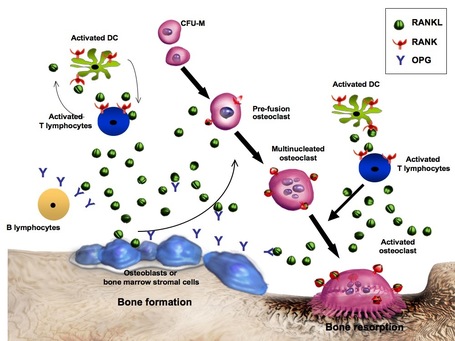
Xgeva is a monoclonal antibody that binds to RANKL, a protein essential for maintenance of healthy bone. RANKL is also present in GCTB. Xgeva is intended for patients whose GCTB cannot be surgically removed (unresectable) or when surgery is likely to result in severe morbidity, such as loss of limbs or joint removal. It should only be used in adolescents whose bones have matured
http://www.drugs.com/newdrugs/fda-approves-xgeva-giant-cell-tumor-bone-3815.html

Denosumab is a fully human monoclonal antibody for the treatment of osteoporosis, treatment-induced bone loss, bone metastases, rheumatoid arthritis, multiple myeloma, and giant cell tumor of bone. It was developed by the biotechnology companyAmgen.
Denosumab is designed to inhibit RANKL (RANK ligand), a protein that acts as the primary signal for bone removal. In many bone loss conditions, RANKL overwhelms the body’s natural defenses against bone destruction.
In June 2010, denosumab was approved by the U.S. Food and Drug Administration (FDA) for use in postmenopausal women with risk of osteoporosis under the trade nameProlia, and in November 2010, as Xgeva, for the prevention of skeleton-related events in patients with bone metastases from solid tumors.Denosumab is the first RANKL inhibitor to be approved by the FDA. In the summer of 2011 clinical trials were investigating denosumab in giant cell tumors, multiple myeloma with bone metastases, and hypercalcemia of malignancy, and further investigating its dosing and safety.
Volume 21, Issue 11, 1 June 2013, Pages 2795–2825
New drugs are introduced to the market every year and each represents a privileged structure for its biological target. These new chemical entities (NCEs) provide insights into molecular recognition and also serve as leads for designing future new drugs. This review covers the synthesis of 26 NCEs that were launched in the world in 2011.
| Synthetic approaches to the 2010 new drugsReview Article Bioorganic & Medicinal Chemistry, Volume 20, Issue 3, 1 February 2012, Pages 1155-1174 Kevin K.-C. Liu, Subas M. Sakya, Christopher J. O’Donnell, Andrew C. Flick, Hong X. Ding |
||
Plus the 14 other new drugs marketed in 2010.
STRUCTURAL FORMULA ,Trebananib, AMG-386
Monomer
MDKTHTCPPC PAPELLGGPS VFLFPPKPKD TLMISRTPEV TCVVVDVSHE 50
DPEVKFNWYV DGVEVHNAKT KPREEQYNST YRVVSVLTVL HQDWLNGKEY 100
KCKVSNKALP APIEKTISKA KGQPREPQVY TLPPSRDELT KNQVSLTCLV 150
KGFYPSDIAV EWESNGQPEN NYKTTPPVLD SDGSFFLYSK LTVDKSRWQQ 200
GNVFSCSVMH EALHNHYTQK SLSLSPGKGG GGGAQQEECE WDPWTCEHMG 250
SGSATGGSGS TASSGSGSAT HQEECEWDPW TCEHMLE 287
Disulfide bridges location
7-7′ 10-10′ 42-102 42′-102′ 148-206
148′-206′ 239-246 239′-246′ 275-282 275′-282′
CAS REGISTRY NUMBER 894356-79-7
MOLECULAR FORMULA C2794H4248N752O886S30
Trebananib
Immunoglobulin G1 (synthetic human Fc domain fragment) fusion protein with
angiopoietin 1/angiopoietin 2-binding peptide (synthetic)
http://www.ama-assn.org/resources/doc/usan/trebananib.pdf
http://www.genome.jp/dbget-bin/www_bget?dr:D10177
Amgen’s Experimental Ovarian Cancer Drug, Trebananib, Shows Positive …
Medical Daily
Amgen, a large biotechnology company out of Thousand Oaks, Calif. has announced that its drug for reoccurring ovarian cancer has shown positive results in Phase III clinical trials. The trials sought to stop the progression of ovarian cancer and extend …
read all at


 New Drug Approvals