New Drug Approvals

Home » Articles posted by DR ANTHONY MELVIN CRASTO Ph.D (Page 141)

Author Archives: DR ANTHONY MELVIN CRASTO Ph.D

DRUG APPROVALS BY DR ANTHONY MELVIN CRASTO .....FOR BLOG HOME CLICK HERE

Blog Stats

  • 4,805,600 hits

Flag and hits

Flag Counter

Enter your email address to follow this blog and receive notifications of new posts by email.

Join 37.9K other subscribers
Follow New Drug Approvals on WordPress.com

Archives

Categories

Recent Posts

Flag Counter

ORGANIC SPECTROSCOPY

Read all about Organic Spectroscopy on ORGANIC SPECTROSCOPY INTERNATIONAL 

Enter your email address to follow this blog and receive notifications of new posts by email.

Join 37.9K other subscribers
DR ANTHONY MELVIN CRASTO Ph.D

DR ANTHONY MELVIN CRASTO Ph.D

DR ANTHONY MELVIN CRASTO, Born in Mumbai in 1964 and graduated from Mumbai University, Completed his Ph.D from ICT, 1991,Matunga, Mumbai, India, in Organic Chemistry, The thesis topic was Synthesis of Novel Pyrethroid Analogues, Currently he is working with AFRICURE PHARMA, ROW2TECH, NIPER-G, Department of Pharmaceuticals, Ministry of Chemicals and Fertilizers, Govt. of India as ADVISOR, earlier assignment was with GLENMARK LIFE SCIENCES LTD, as CONSUlTANT, Retired from GLENMARK in Jan2022 Research Centre as Principal Scientist, Process Research (bulk actives) at Mahape, Navi Mumbai, India. Total Industry exp 32 plus yrs, Prior to joining Glenmark, he has worked with major multinationals like Hoechst Marion Roussel, now Sanofi, Searle India Ltd, now RPG lifesciences, etc. He has worked with notable scientists like Dr K Nagarajan, Dr Ralph Stapel, Prof S Seshadri, etc, He did custom synthesis for major multinationals in his career like BASF, Novartis, Sanofi, etc., He has worked in Discovery, Natural products, Bulk drugs, Generics, Intermediates, Fine chemicals, Neutraceuticals, GMP, Scaleups, etc, he is now helping millions, has 9 million plus hits on Google on all Organic chemistry websites. His friends call him Open superstar worlddrugtracker. His New Drug Approvals, Green Chemistry International, All about drugs, Eurekamoments, Organic spectroscopy international, etc in organic chemistry are some most read blogs He has hands on experience in initiation and developing novel routes for drug molecules and implementation them on commercial scale over a 32 PLUS year tenure till date Feb 2023, Around 35 plus products in his career. He has good knowledge of IPM, GMP, Regulatory aspects, he has several International patents published worldwide . He has good proficiency in Technology transfer, Spectroscopy, Stereochemistry, Synthesis, Polymorphism etc., He suffered a paralytic stroke/ Acute Transverse mylitis in Dec 2007 and is 90 %Paralysed, He is bound to a wheelchair, this seems to have injected feul in him to help chemists all around the world, he is more active than before and is pushing boundaries, He has 100 million plus hits on Google, 2.5 lakh plus connections on all networking sites, 100 Lakh plus views on dozen plus blogs, 227 countries, 7 continents, He makes himself available to all, contact him on +91 9323115463, email amcrasto@gmail.com, Twitter, @amcrasto , He lives and will die for his family, 90% paralysis cannot kill his soul., Notably he has 38 lakh plus views on New Drug Approvals Blog in 227 countries......https://newdrugapprovals.wordpress.com/ , He appreciates the help he gets from one and all, Friends, Family, Glenmark, Readers, Wellwishers, Doctors, Drug authorities, His Contacts, Physiotherapist, etc He has total of 32 International and Indian awards

Verified Services

View Full Profile →

Archives

Categories

Flag Counter

APIC is working on an enhanced ICH Q7 How to do Guide


Acting on the publication of the ICH Q7 Q&A Document in June last year APIC has decided to elaborate another revision of its “ICH Q7 How to do Document” taking into account these Q&As. Here you will get to know why this upcoming How to do Document is a valuable support for API and API intermediate manufacturers regarding the practical implementation of the ICH Q7 What to do principles.

see

http://www.gmp-compliance.org/enews_05493_APIC-is-working-on-an-enhanced-ICH-Q7-How-to-do-Guide_15332,S-WKS_n.html

The first edition of the “How to do Document – Interpretation of the ICH Q7 Guide” was published by APIC shortly after the ICH Q7 Guideline appeared as Step 4 document in November 2000. In the meantime it has undergone a numer of revisions and the current version of the How to do Document to be found on the publications section of APIC’s website is an update from August 2015 (version 8). This document was written by experts from the European Industry (CEFIC APIC) and is essentially an interpretation of “how to” implement the requirements of the ICH Q7 Guide based on practical experience.

On the occasion of the publication of the ICH Q7 Questions & Answers Document in June 2015 another revision of APIC’s How to do Document was necessary. APIC is currently working on this new revision (version 9) taking into account the new ICH Q7 Q&A Document which will be incorporated into the How to do Document as a new chapter 21. In this chapter each Question/Answer of the Q&A document is examined and commented with respect to its practical implementation. The following example illustrates what these practical comments look like:

ICH Q7 Q&A – Question
For dedicated equipment, is ‘visually clean’ acceptable for verification of cleaning effectiveness, (i.e., no expectation for specific analytical determination)?

ICH Q7 Q&A – Answer
‘Visually clean’ may be acceptable for dedicated equipment based on the ability to visually inspect and sufficient supporting data from cleaning studies (e.g., analytical determination to demonstrate cleaning effectiveness) [ICH Q7, Section 12.76]. Equipment should be cleaned at appropriate intervals (e.g., time or number of batches) to prevent build-up and carryover of contaminants (e.g., degradants or objectionable levels of microorganisms) so that they do not adversely alter the quality of the API [ICH Q7, Sections 5.23, 12.7].

Comment in APIC’s How to do Document
“dedicated equipment” can be defined in various ways such as:
– a reactor that is used solely for 1 API process
– a reactor used for different intermediate steps of the same API.
– a reactor used for different steps in the same intermediate or API
– a reactor solely used for 1 stage in 1 process
Whatever definition is used it should be documented and justified.
When visual inspection is applied following points should be considered:
– adequate lighting
– fully dried
– difficult to clean spots visually inspectable
– use of cameras, endoscopy
– limit of detection of visual cleanliness
– dirty hold time / clean hold time
– Campaign length

While the purpose of the ICH Q7 Q&A Document is to clarify some equivocal issues of the ICH Q7 Guideline the comments of APIC’s ICH Q7 Q&A How to do Document intend to give support on an even more practical level. So after its finalisation and publication later this year the API industry will have another very useful document available which facilitates the implementation of the ICH Q7 principles.

At the pre-Conference Session to the 19th APIC/CEFIC European Conference on Active Pharmaceutical Ingredients on 22 November 2016 in Barcelona APIC will launch the ICH Q7 Q&A How to do Document as a stand alone document. All participants will receive a copy.
///////////////

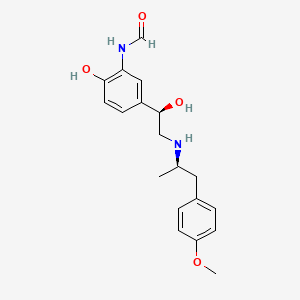
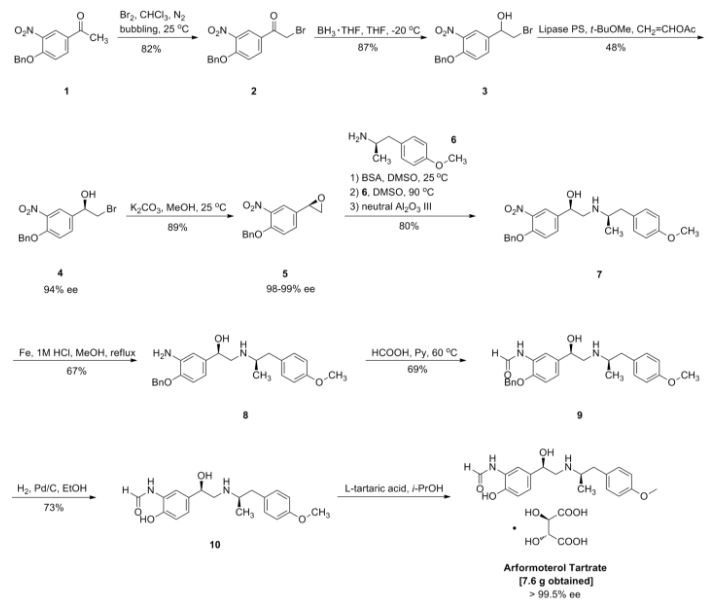
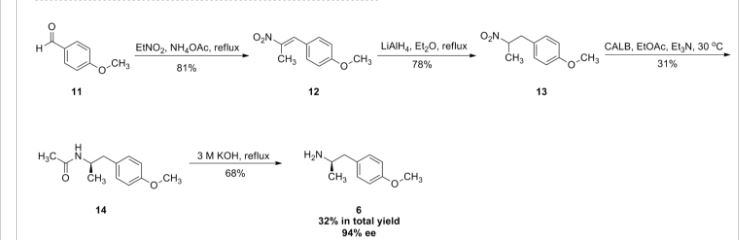
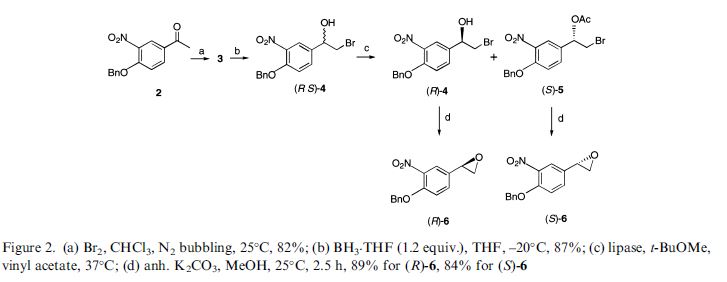
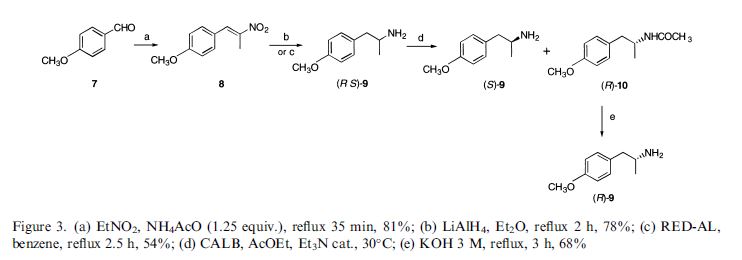
Arformoterol, (R,R)-Formoterol For Chronic obstructive pulmonary disease (COPD)


Arformoterol.svg

Arformoterol

  • MF C19H24N2O4
  • MW 344.405
(R,R)-Formoterol
Cas 67346-49-0
Chronic obstructive pulmonary disease (COPD)
  • Sunovion/Sepracor (Originator)
  • Asthma Therapy, Bronchodilators, Chronic Obstructive Pulmonary Diseases (COPD), Treatment of, RESPIRATORY DRUGS, beta2-Adrenoceptor Agonists
  • LAUNCHED 2007 , Phase III ASTHMA
Formamide, N-[2-hydroxy-5-[(1R)-1-hydroxy-2-[[(1R)-2-(4-methoxyphenyl)-1-methylethyl]amino]ethyl]phenyl]-

Arformoterol is a long-acting β2 adrenoreceptor agonist (LABA) indicated for the treatment of chronic obstructive pulmonary disease(COPD). It is sold by Sunovion, under the trade name Brovana, as a solution of arformoterol tartrate to be administered twice daily (morning and evening) by nebulization.[1]

Arformoterol inhalation solution, a long-acting beta2-adrenoceptor agonist, was launched in the U.S. in 2007 for the long-term twice-daily (morning and evening) treatment of bronchospasm in patients with chronic obstructive pulmonary disease (COPD), including chronic bronchitis and emphysema. The product, known as Brovana(TM), for use by nebulization only, is the first long-acting beta2-agonist to be approved as an inhalation solution for use with a nebulizer. The product was developed and is being commercialized by Sunovion Pharmaceuticals (formerly Sepracor)

Arformoterol.png

It is the active (R,R)-(−)-enantiomer of formoterol and was approved by the United States Food and Drug Administration (FDA) on October 6, 2006 for the treatment of COPD.

Arformoterol is a bronchodilator. It works by relaxing muscles in the airways to improve breathing. Arformoterol inhalation is used to prevent bronchoconstriction in people with chronic obstructive pulmonary disease, including chronic bronchitis and emphysema. The use of arformoterol is pending revision due to safety concerns in regards to an increased risk of severe exacerbation of asthma symptoms, leading to hospitalization as well as death in some patients using long acting beta agonists for the treatment of asthma.

Arformoterol is an ADRENERGIC BETA-2 RECEPTOR AGONIST with a prolonged duration of action. It is used to manage ASTHMA and in the treatment of CHRONIC OBSTRUCTIVE PULMONARY DISEASE.

 
Arformoterol is a beta2-Adrenergic Agonist. The mechanism of action of arformoterol is as an Adrenergic beta2-Agonist.
Arformoterol is a long-acting beta-2 adrenergic agonist and isomer of formoterol with bronchodilator activity. Arformoterol selectively binds to and activates beta-2 adrenergic receptors in bronchiolar smooth muscle, thereby causing stimulation of adenyl cyclase, the enzyme that catalyzes the conversion of adenosine triphosphate (ATP) to cyclic-3′,5′-adenosine monophosphate (cAMP). Increased intracellular cAMP levels cause relaxation of bronchial smooth muscle and lead to a reduced release of inflammatory mediators from mast cells. This may eventually lead to an improvement of airway function.

Arformoterol tartrate

  • Molecular FormulaC23H30N2O10
  • Average mass494.492
  •  cas 200815-49-2
  • 183-185°C
Butanedioic acid, 2,3-dihydroxy-, (2R,3R)-, compd. with formamide, N-[2-hydroxy-5-[(1R)-1-hydroxy-2-[[(1R)-2-(4-methoxyphenyl)-1-methylethyl]amino]ethyl]phenyl]- (1:1) [ACD/Index Name]
N-{2-hydroxy-5-[(1R)-1-hydroxy-2-{[(1R)-2-(4-methoxyphenyl)-1-methylethyl]amino}ethyl]phenyl}formamide 2,3-dihydroxybutanedioate (salt)
N-[2-Hydroxy-5-[(1R)-1-hydroxy-2-[[(1R)-2-(4-methoxyphenyl)-1-methylethyl]amino]ethyl]phenyl]formamide (+)-(2R,3R)-Tartaric Acid; (-)-Formoterol 1,2-Dihydroxyethane-1,2-dicarboxylic Acid; (R,R)-Formoterol Threaric Acid; Arformoterol d-Tartaric Acid; Arformoterol d-α,β-Dihydroxysuccinic Acid
(R,R)-Formoterol-L-(+)-tartrate
200815-49-2 CAS
Arformoterol tartrate (USAN)
Brovana
UNII:5P8VJ2I235
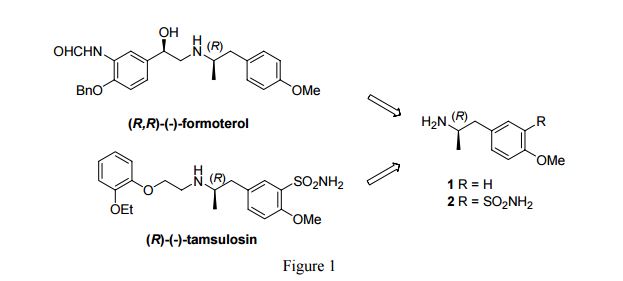
Arformoterol Tartrate, can be used in the synthesis of Omeprazole (O635000), which is a proton pump inhibitor, that inhibits gasteric secretion, also used in the treatment of dyspepsia, peptic ulcer disease, etc. Itis also the impurity of Esomeprazole Magnesium (E668300), which is the S-form of Omeprazole, and is a gastric proton-pump inhibitor. Also, It can be used for the preparation of olodaterol, a novel inhaled β2-adrenoceptor agonist with a 24h bronchodilatory efficacy.
 

SYNTHESIS

PATENT

us-9309186

Example 1

Synthesis of (R,R)-Formoterol-L-tartrate Form D

A solution containing 3.9 g (26 mmol) of L-tartaric acid and 36 mL of methanol was added to a solution of 9 g (26 mmol) of arformoterol base and 144 mL methanol at 23.degree. C. Afterwards, the resulting mixture was seeded with form D and stirred at 23.degree. C. for 1 hour. It was then further cooled to 0-5.degree. C. for 1 hour and the product collected by filtration and dried under inlet air (atmospheric pressure) for 16 hours to provide 11.1 g (86% yield) (99.7% chemical purity, containing 0.14% of the degradation impurity (R)-1-(3-amino-4-hydroxyphenyl)-2-[[(1R)-2-(4-methoxyphenyl)-1-methylethy- l]amino]ethanol) of (R,R)-formoterol L-tartrate form D, as an off white powder. .sup.1H-NMR (200 MHz, d.sub.6-DMSO) .delta.: 1.03 (d, 3H); 2.50-2.67 (m, 5H); 3.72 (s, 3H); 3.99 (s, 2H); 4.65-4.85 (m, 1H); 6.82-7.15 (m, 5H); 8.02 (s, 1H); 8.28 (s, 1H); 9.60 (s, NH). No residual solvent was detected (.sup.1H-NMR).

PSD: d.sub.50=2.3 .mu.m.

 PAPER
Tetrahedron Letters, Vol. 38, No. 7, pp. 1125-1128, 1997
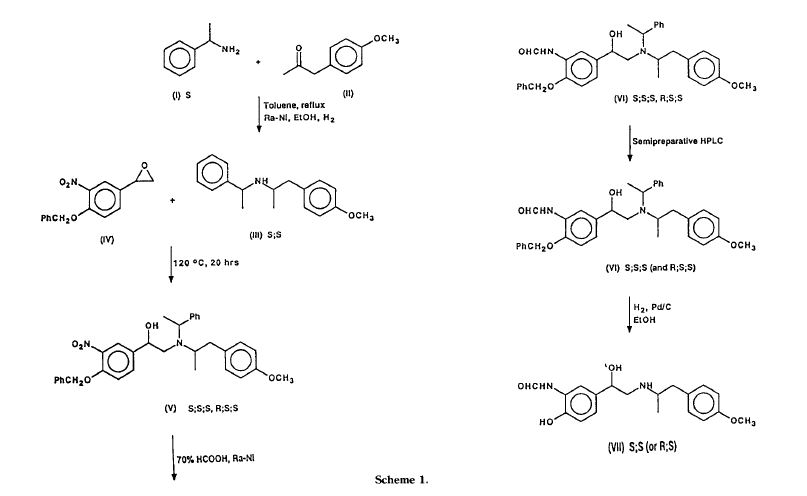
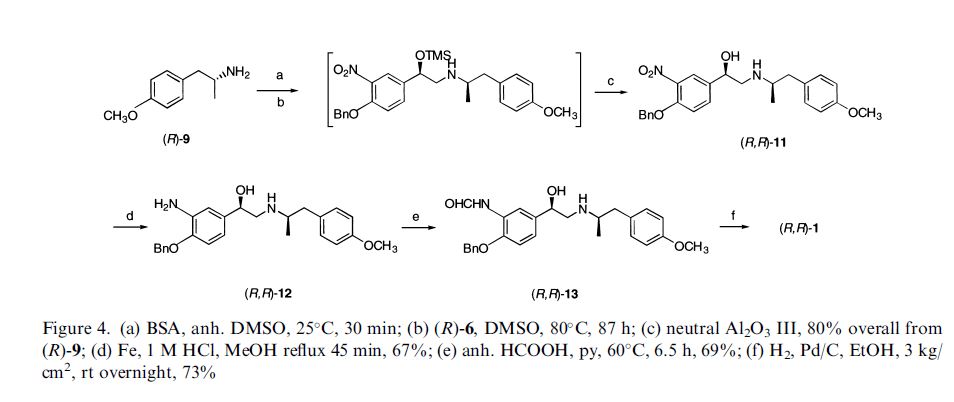
Enantio- and Diastereoselective Synthesis of all Four Stereoisomers of Formoterol
 STR1
STR1
PAPER

Taking Advantage of Polymorphism To Effect an Impurity Removal:  Development of a Thermodynamic Crystal Form of (R,R)-FormoterolTartrate

Chemical Research and Development, Sepracor Inc., 111 Locke Drive, Marlborough, Massachusetts 01752, U.S.A.
Org. Proc. Res. Dev., 2002, 6 (6), pp 855–862
DOI: 10.1021/op025531h

Abstract

Abstract Image

The development and large-scale implementation of a novel technology utilizing polymorphic interconversion and crystalline intermediate formation of (R,R)-formoterol l-tartrate ((R,R)-FmTA, 1) as a tool for the removal of impurities from the final product and generation of the most thermodynamically stable crystal form is reported. The crude product was generated by precipitation of the free base as the l-tartrate salt in a unique polymorphic form, form B. Warming the resultant slurry effected the formation of a partially hydrated stable crystalline intermediate, form C, with a concomitant decrease in the impurity levels in the solid. Isolation and recrystallization of form C provided 1 in the thermodynamically most stable polymorph, form A.

SYN1
SYN 2
SYN 3
 SYN 4
SYN 5

PATENT

Formoterol, (+/-)N-[2-hydroxy-5-[1-hydroxy-2-[[2-(p-methoxyphenyl)-2-propylamino]ethyl]phenyl]-formamide, is a highly potent and β2-selective adrenoceptor agonist having a long lasting bronchodilating effect when inhaled. Its chemical structure is depicted below:
Figure imgb0001
Formoterol has two chiral centres, each of which can exist into two different configurations. This results into four different combinations, (R,R), (S,S), (S,R) and (R,S). Formoterol is commercially available as a racemic mixture of 2 diasteromers (R,R) and (S,S) in a 1:1 ratio. The generic name Formoterol always refers to its racemic mixture. Trofast et al. (Chirality, 1, 443, 1991) reported on the potency of these isomers, showing a decrease in the order of (R,R)>(R,S)≥(S,R)>(S,S). The (R,R) isomer, also known as Arformoterol, being 1000 fold more potent than the (S,S) isomer. Arformoterol is commercialised by Sepracor as Brovana
Formoterol was first disclosed in Japanese patent application (Application N° 13121 ) whereby Formoterol is synthesised by N-alkylation using a phenacyl bromide as described in the scheme below:
Figure imgb0002
Afterwards, a small number of methods have been reported so far, regarding the synthesis of the (R,R) isomer, also referred as (R,R)-Formoterol and Arformoterol.
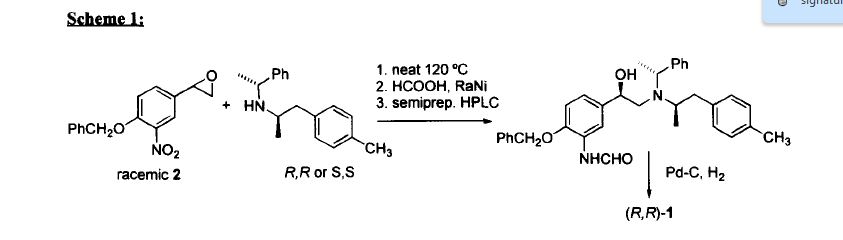
Murase et al. [Chem. Pharm. Bull. 26(4) 1123-1129(1978)] reported the preparation of (R,R)-Formoterol from a racemic mixture of the (R,R) and (S,S) isomers by optical resolution using optically active tartaric acid. Trofast et al. described a method in which 4-benzyloxy-3-nitrostyrene oxide was coupled with a optically pure (R,R)- or (S,S)-N-phenylethyl-N-(1-p-methoxyphenyl)-2-(propyl)amine to give a diastereomeric mixture of Formoterol precursors. These precursors were further separated by HPLC in order to obtain pure Formoterol isomers. Both synthetic processes undergo long synthetic procedures and low yields.
Patent publication EP0938467 describes a method in which Arformoterol is prepared via the reaction of the optically pure (R) N-benzyl-2-(4-methoxyphenyl)-1-(methylethylamine) with an optically pure (R)-4-benzyloxy-3-nitrostyrene oxide or (R)-4-benzyloxy-3-formamidostyrene oxide followed by formylation of the amino group. This method requires relatively severe reaction conditions, 24 h at a temperature of from 110 up to 130 °C as well as a further purification step using tartaric acid in order to eliminate diastereomer impurities formed during the process.
WO2009/147383 discloses a process for the preparation of intermediates of Formoterol and Arformoterol which comprises a reduction of a ketone intermediate of formula:
Figure imgb0003
Using chiral reductive agent with an enantiomeric excess of about 98% which requires further purification steps to obtain a product of desired optical purity.
 R,R)-Formoterol (Arformoterol) or a salt thereof from optically pure and stable intermediate (R)-2-(4-Benzyloxy-3-nitro-phenyl)-oxirane (compound II), suitable for industrial use, in combination with optically pure amine in higher yields, as depicted in the scheme below:
Figure imgb0011

Compound (R, R)-1-(4-Benzyloxy-3-nitro-phenyl)-2-[[2-(4-methoxy-phenyl)-1-methylethyl]-(1-phenyl-ethyl)-amino]-ethanol (compound VI), having the configuration represented by the following formula:

Figure imgb0018

Examples(R)-2-(4-Benzyloxy-3-nitro-phenyl)-oxirane (II)

A solution of 90 g (0.25 mol) of (R)-1-(4-Benzyloxy-3-nitro-phenyl)-2-bromo-ethanol (compound I) in 320 mL of toluene and 50 mL of MeOH was added to a stirred suspension of 46 g (0.33 mol) of K2CO3 in 130 mL of toluene and 130 mL of MeOH. The mixture was stirred at 40°C for 20 h and washed with water (400 mL). The organic phase was concentrated under reduced pressure to a volume of 100 mL and stirred at 25 °C for 30 min. It was then further cooled to 0-5°C for 30 min. and the product collected by filtration and dried at 40 °C to provide 67.1 g (97% yield) (98% chemical purity, 100% e.e.) of compound II as an off-white solid. 1 H-NMR (200 MHz, CDCl3) δ: 2.80-2.90 (m, 2H); 3.11-3.20 (m, 2H), 3.80-3.90 (m, 1H); 5.23 (s, 2H); 7.11 (d, 2H); 7.41 (m, 5H), 7.76 (d, 2H).

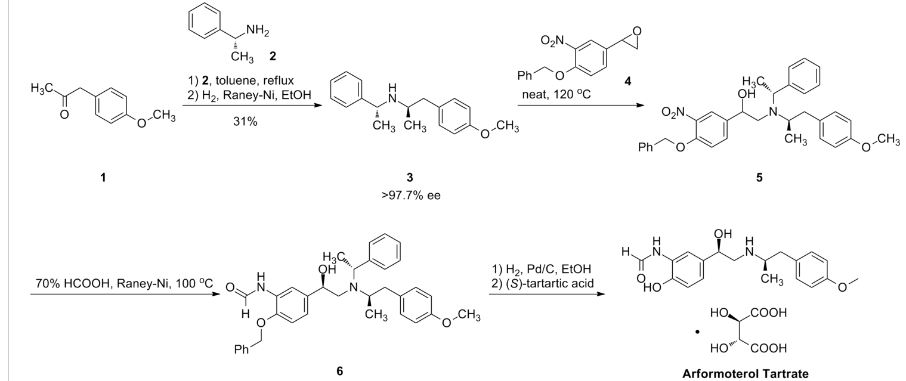
Preparation of (R,R)-[2-(4-Methoxy-phenyl)-1-methyl-ethyl]-(1-phenyl-ethyl)-amine (III)

A solution of 13 g (78.6 mmol) of 1-(4-Methoxy-phenyl)-propan-2-one and 8.3 g (78.6 mmol) of (R)-1-Phenylethylamine in 60 mL MeOH was hydrogenated in the presence of 1.7 g of Pt/C 5% at 10 atm. and 30 °C for 20 h. The mixture was filtered though a pad of diatomaceous earth and concentrated under reduced pressure to give compound III as an oil. The obtained oil was dissolved in 175 mL of acetone, followed by addition of 6.7 mL (80.9 mmol) of a 12M HCl solution. The mixture was stirred at 23 °C for 30 min and at 0-5 °C for 30 min. The product collected by filtration and dried at 40 °C to provide 13.8 g of the hydrochloride derivate as a white solid. The obtained solid was stirred in 100 mL of acetone at 23 °C for 1h and at 0-5 °C for 30 min, collected by filtration and dried at 40 °C to provide 13.2 g of the hydrochloride derivate as a white solid. This compound was dissolved in 100 mL of water and 100 mL of toluene followed by addition of 54 mL (54 mmol) of 1N NaOH solution. The organic phase was concentrated to give 11.7 g (55% yield) (99% chemical purity and 100% e.e) of compound III as an oil.1H-NMR (200 MHz, CDCl3) δ: 0.88 (d, 3H); 1.31 (d, 3H), 2.40-2.50 (m, 1H); 2.60-2.80 (m, 2H); 3.74 (s, 3H); 3.90-4.10 (m, 1H); 6.77- 6.98 (m, 4H), 7.31 (s, 5H).

Synthesis of (R,R)-1-(4-Benzyloxy-3-nitro-phenyl)-2-[[2-(4-methoxy-phenyl)-1-methyl-ethyl]-(1-phenyl-ethyl)-amino]-ethanol (IV)

A 1-liter flask was charged with 50g (0.18 mol) of II and 50g (0.18 mol) of III and stirred under nitrogen atmosphere at 140 °C for 20 h. To the hot mixture was added 200 mL of toluene to obtain a solution, which was washed with 200 mL of 1N HCl and 200 mL of water. The organic phase was concentrated under reduced pressure to give 99 g (99% yield) (88% chemical purity) of compound IV as an oil. Enantiomeric purity 100%. 1H-NMR (200 MHz, CDCl3) δ: 0.98 (d, 3H); 1.41 (d, 3H), 2.60-2.90 (m, 4H); 3.20-3.30 (m, 1H); 3.74 (s, 3H); 4.10-4.20 (m, 1H); 4.30-4.40 (m, 1H), 5.19 (s, 2H); 6.69-7.42 (m, 16H); 7.77 (s, 1H).

Synthesis of (R, R)-1-(3-Amino-4-benzyloxy-phenyl)-2-[[2-(4-methoxy-phenyl)-1-methyl-ethyl]-(1-phenyl-ethyl)-amino]-ethanol (V)

A solution of 99 g (0.18 mol) of IV in 270 mL IPA and 270 mL toluene was hydrogenated in the presence of 10 g of Ni-Raney at 18 atm and 40 °C for 20 h. The mixture was filtered though a pad of diatomaceous earth and the filtrate was concentrated under reduced pressure to give 87 g (92% yield) (83% chemical purity, 100 % e.e.) of compound V as an oil. 1H-NMR (200 MHz, CDCl3) δ: 0.97 (d, 3H); 1.44 (d, 3H), 2.60-2.90 (m, 4H); 3.20-3.30 (m, 1H); 3.74 (s, 3H); 4.10-4.20 (m, 1H); 4.30-4.40 (m, 1H), 5.07 (s, 2H); 6.67-6.84 (m, 7H); 7.25-7.42 (m, 10H).

Synthesis of (R,R)-N-(2-Benzyloxy-5-{1-hydroxy-2-[[2-(4-methoxy-phenyl)-1-methyl-ethyl]-(1-phenyl-ethyl)-amino]-ethyl)-phenyl)-formamide (VI)

24 mL (0.63 mol) of formic acid was added to 27 mL (0.28 mol) of acetic anhydride and stirred at 50 °C for 2 h under nitrogen atmosphere. The resulting mixture was diluted with 100 mL of CH2Cl2 and cooled to 0 °C. A solution of 78 g (0.15 mol) of V in 300 mL de CH2Cl2 was slowly added and stirred for 1h at 0 °C. Then, 150 mL of 10% K2CO3 aqueous solution were added and stirred at 0 °C for 15 min. The organic phase was washed twice with 400 mL of 10% K2CO3 aqueous solution and concentrated under reduced pressure to give 80 g (97% yield, 100% e.e.) (75% chemical purity) of compound VI as an oil. 1H-NMR (200 MHz, CDCl3) δ: 0.98 (d, 3H); 1.42 (d, 3H), 2.60-2.90 (m, 4H); 3.20-3.30 (m, 1H); 3.75 (s, 3H); 4.10-4.20 (m, 1H); 4.30-4.40 (m, 1H), 5.09 (s, 2H); 6.67-7.41 (m, 17H); 8.4 (d, 1H).

Synthesis (R,R)-N-(2-Hydroxy-5-{1-hydroxy-2-[2-(4-methoxy-phenyl)-1-methyl-ethylamino]-ethyl}-phenyl)-formamide (VII)

A solution of 8.5 g (16 mmol) of VI, previous purified by column chromatography on silica gel (AcOEt/heptane, 2:3), in 60 mL ethanol was hydrogenated in the presence of 0.14 g of Pd/C 5% at 10 atm. and 40 °C for 20 h. The mixture was filtered though a pad of diatomaceous earth and concentrated under reduced pressure to give 5 g (93% yield) (91% chemical purity, 100% e.e.) of compound VII as foam. m. p.= 58-60 °C. 1H-NMR (200 MHz, d6-DMSO) δ: 0.98 (d, 3H); 2.42-2.65 (m, 5H); 3.20-3.40 (m, 1H); 3.71 (s, 3H); 4.43-4.45 (m, 1H); 6.77-7.05 (m, 5H); 8.02 (s, 1H), 8.26 (s, 1H).

Synthesis (R,R)-N-(2-Hydroxy-5-{1-hydroxy-2-[2-(4-methoxy-phenyl)-1-methyl-ethylamino]-ethyl}-phenyl)-formamide (VII)

A solution of 46 g (0.08 mol) of VI, crude product, was dissolved in 460 mL ethanol and hydrogenated in the presence of 0.74 g of Pd/C 5% at 10 atm. and 40 ° C for 28 h. The mixture was filtered though a pad of diatomaceous earth and the filtrate was concentrated under reduced pressure to give 24 g (83% yield) (77% chemical purity, 100% e.e.) of compound VII as a foam. m. p. = 58-60 °C. 1H-NMR (200 MHz, d6-DMSO) δ: 0.98 (d, 3H); 2.42-2.65 (m, 5H); 3.20-3.40 (m, 1H); 3.71 (s, 3H); 4.43-4.45 (m, 1H); 6.77-7.05 (m, 5H); 8.02 (s, 1H), 8.26 (s, 1H).

The HPLC conditions used for the determination of the Chemical purity % are described in the table below:

  • HPLC Column Kromasil 100 C-18
    Dimensions 0.15 m x 4.6 mm x 5 µm
    Buffer 2.8 ml TEA (triethylamine) pH=3.00 H3PO4 (85%) in 1 L of H2O
    Phase B Acetonitrile
    Flow rate 1.5 ml miN-1
    Temperature 40 °C
    Wavelength 230 nm

    The HPLC conditions used for the determination of the enantiomeric purity % are described in the table below:

    HPLC Column Chiralpak AD-H
    Dimensions 0.25 m x 4.6 mm
    Buffer n-hexane : IPA : DEA (diethyl amine) : H2O 85:15:0.1:0.1
    Flow rate 0.8 ml min-1
    Temperature 25 °C
    Wavelength 228 nm

PATENT

Example 1

(R) -2- (4- benzyloxy-3-nitrophenyl) oxirane (I) (9. 86g, 36mmol) and (R) -I- (4- methoxy- phenyl) -N – [(R) -I- phenyl-ethyl] -2-amino-propane (II) (10. 8g, 40mmol) cast in the reaction flask, the reaction 20 hours at 140 ° C, the chiral Intermediate (III) (17. 3g, yield 88%). HPLC: de values of> 90%; MS (ESI) m / z: 541 3 (M ++ 1); 1H-NMR (CDCl3):.. Δ 0. 96 (d, 3H), 1 49 (d, 3H ), 2 · 15 (q, 1Η), 2 · 67 (dq, 2H), 2. 99 (dq, 2H), 3. 74 (s, 3H), 4. 09 (d, 1H), 4. 56 (q, 1H), 5. 24 (s, 2H), 6. 77 (dd, 4H), 7. 10 (d, 1H), 7. 25-7. 5 (m, 11H), 7. 84 ( s, 1H).

 Example 2

 (R) -2- (4- benzyloxy-3-nitrophenyl) oxirane (I) (9. 86g, 36mmol) and (R) -I- (4- methoxybenzene yl) -N – [(R) -I- phenyl-ethyl] -2-amino-propane (II) (10. 8g, 40mmol) and toluene 100ml, 110 ° C0-flow reactor 36 hours, the solvent was distilled off succeeded intermediates (III) (16. 8g, yield 85%).

Example 3

(R) -2- (4- benzyloxy-3-nitrophenyl) oxirane (I) (9. 86g, 36mmol) and (R) -I- (4- methoxybenzene After [(R) -I- phenyl-ethyl] -2-amino-propane (II) (10. 8g, 40mmol) and dichloromethane 100ml, 30 ° C for 48 hours, and the solvent was distilled off – yl) -N succeeded intermediates (III) (15. Sg, yield 80%).

Example 4

 (R) -2- (4- benzyloxy-3-nitrophenyl) oxirane (I) (9. 86g, 36mmol) and (R) -I- (4- methoxybenzene yl) -N – [(R) -I- phenyl-ethyl] -2-amino-propane (II) (8. 75g, 32mmol) cast in the reaction flask, the reaction 20 hours at 140 ° C, the chiral intermediate form (III) (16. 3g, 83% yield).

Example 5

 (R) -2- (4- benzyloxy-3-nitrophenyl) oxirane (I) (9. 86g, 36mmol) and (R) -I- (4- methoxybenzene yl) -N – [(R) -I- phenyl-ethyl] -2-amino-propane (II) (14. 6g, 54mmol) cast in the reaction flask, the reaction 20 hours at 140 ° C, the chiral intermediate form (III) (17. 5g, 89% yield).

STR1

Scheme

chirality 1991, 3, 443-50
Fumaric acid (0.138 mmol, 16 mg) was added to the residue dissolved in methanol. Evaporation of the solvent gave the
product (SS) W semifumarate (109 mg) characterized by ‘HNMR (4-D MSO) 6 (ppm) 1.00 (d, 3H, CHCH,), 4.624.70 (m, lH,
CHOH), 3.73 (s, 3H, OCH,), 6.M.9 (m, 3H, aromatic), 7.00 (dd,4H, aromatic), 6.49 (s, 1@ CH = CH fumarate). MS of disilylated
(SS) W: 473 (M +<H3,7%); 367 (M ‘<8H90, 45%); 310 61%). The (RSS) fraction was treated in the same manner
giving the product (R;S) W semifumarate, which was characterized by ‘H-NMR (4-DMSO) 6 (ppm) 1.01 (d, 3H, CHCH,),
3.76 (s, 3H, OC&), 6.49 (s, lH, CH=CH, fumarate) 6.M.9 (m, 3H, aromatic), 7.0 (dd, 4H, aromatic). MS of disilylated (R;S)
(M’X~~HIGNO1,7 %); 178 ( C I ~H~ ~N95O%,) ; 121 (CsH90, W. 473 (M’4H3, 5%); 367 (M’4gH90, 48%); 310
(M +–CI~HIGNO18, %); 178 (CIIHIGNO, 95%); 121 (CsH90, 52%). The structural data for the (RR) and (S;R) enantiomers
were in accordance with the proposed structures. The enantiomeric purity obtained for the enantiomers in each batch is
shown in Table 1.
STR1
Scheme
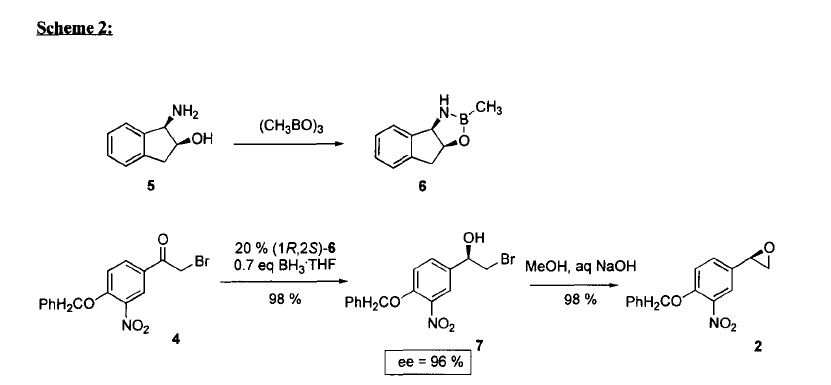
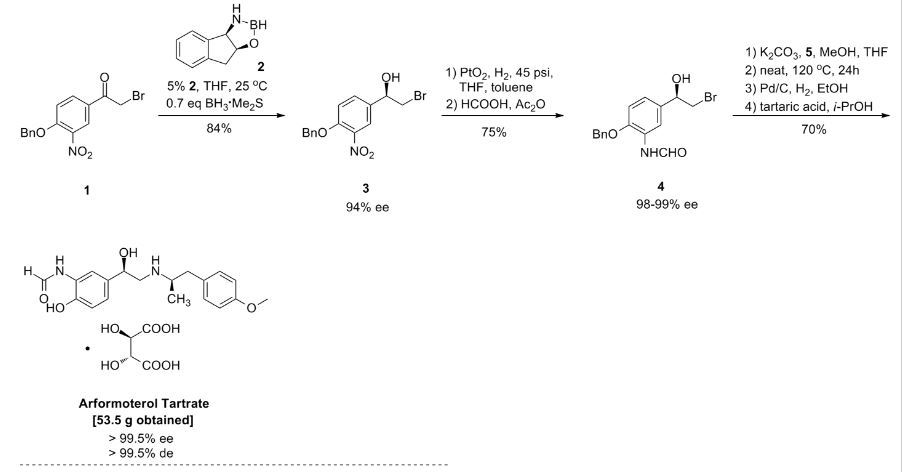
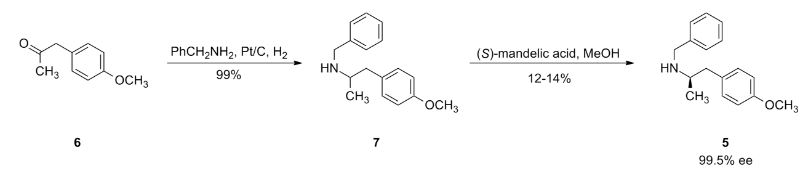
The enantioselective reduction of phenacyl bromide (I) with BH3.S(CH3)2 in THF catalyzed by the chiral borolidine (II) (obtained by reaction of (1R,2S)-1-amino-2-indanol (III) with BH3.S(CH3)2 in THF) gives the (R)-2-bromo-1-(4-benzyloxy-3-nitrophenyl)ethanol (IV), which is reduced with H2 over PtO2 in THF/toluene yielding the corresponding amino derivative (V). The reaction of (V) with formic acid and Ac2O affords the formamide (VI), which is condensed with the chiral (R)-N-benzyl-N-[2-(4-methoxyphenyl)-1-methylethyl]amine (VII) in THF/methanol providing the protected target compound (VIII). Finally, this compound is debenzylated by hydrogenation with H2 over Pd/C in ethanol. The intermediate the chiral (R)-N-benzyl-N-[2-(4-methoxyphenyl)-1-methylethyl]amine (VII) has been obtained by reductocondensation of 1-(4-methoxyphenyl)-2-propanone (IX) and benzylamine by hydrogenation with H2 over Pd/C in methanol yielding racemic N-benzyl-N-[2-(4-methoxyphenyl)-1-methylethyl]amine (X), which is submitted to optical resolution with (S)-mandelic acid to obtain the desired (R)-enantiomer (VII).
Org Process Res Dev1998,2,(2):96

Large-Scale Synthesis of Enantio- and Diastereomerically Pure (R,R)-Formoterol

Process Research and Development, Sepracor Inc., 111 Locke Drive, Marlborough, Massachusetts 01752
Org. Proc. Res. Dev., 1998, 2 (2), pp 96–99
DOI: 10.1021/op970116o

Abstract

(R,R)-Formoterol (1) is a long-acting, very potent β2-agonist, which is used as a bronchodilator in the therapy of asthma and chronic bronchitis. Highly convergent synthesis of enantio- and diastereomerically pure (R,R)-formoterol fumarate is achieved by a chromatography-free process with an overall yield of 44%. Asymmetric catalytic reduction of bromoketone 4 using as catalyst oxazaborolidine derived from (1R, 2S)-1-amino-2-indanol and resolution of chiral amine 3 are the origins of chirality in this process. Further enrichment of enantio- and diastereomeric purity is accomplished by crystallizations of the isolated intermediates throughout the process to give (R,R)-formoterol (1) as the pure stereoisomer (ee, de >99.5%).

STR1
STR1

Scheme

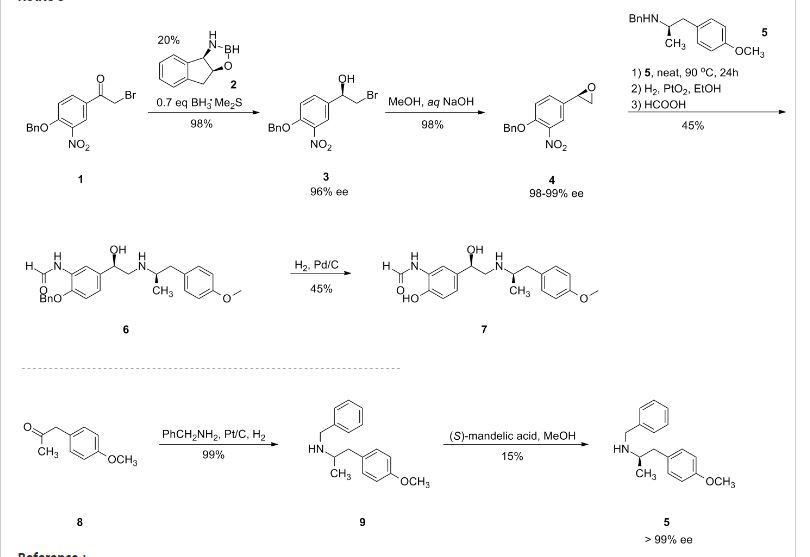
The intermediate N-benzyl-N-[1(R)-methyl-2-(4-methoxyphenyl)ethyl]amine (IV) has been obtained as follows: The reductocondensation of 1-(4-methoxyphenyl)-2-propanone (I) with benzylamine (II) by H2 over Pd/C gives the N-benzyl-N-[1-methyl-2-(4-methoxyphenyl)ethyl]amine (III) as a racemic mixture, which is submitted to optical resolution with L-mandelic acid in methanol to obtain the desired (R)-enantiomer (IV). The reaction of cis-(1R,2S)-1-aminoindan-2-ol (V) with trimethylboroxine in toluene gives the (1R,2S)-oxazaborolidine (VI), which is used as chiral catalyst in the enantioselective reduction of 4-benzyloxy-3-nitrophenacyl bromide (VII) by means of BH3/THF, yielding the chiral bromoethanol derivative (VIII). The reaction of (VIII) with NaOH in aqueous methanol affords the epoxide (IX), which is condensed with the intermediate amine (IV) by heating the mixture at 90 C to provide the adduct (X). The reduction of the nitro group of (X) with H2 over PtO2 gives the corresponding amino derivative (XI), which is acylated with formic acid to afford the formamide compound (XII). Finally, this compound is debenzylated by hydrogenation with H2 over Pd/C in ethanol, providing the target compound.
The synthesis of the chiral borolidine catalyst (II) starting from indoline (I), as well as the enantioselective reduction of 4′-(benzyloxy)-3′-nitrophenacyl bromide (III), catalyzed by borolidine (II), and using various borane complexes (borane/dimethylsulfide, borane/THF and borane/diethylaniline), has been studied in order to solve the problems presented in large-scale synthesis. The conclusions of the study are that the complex borane/diethylaniline (DEANB) is the most suitable reagent for large-scale reduction of phenacyl bromide (III) since the chemical hazards and inconsistent reagent quality of the borane/THF and borane/dimethylsulfide complexes disqualified their use in large-scale processes. The best reaction conditions of the reduction with this complex are presented.
PATENT

Formoterol is a long-acting β2-adrenoceptor agonist and has a long duration of action of up to 12 hours. Chemically it is termed as Λ/-[2-hydroxy-5-[1-hydroxy-2-[[2-(4- methoxyphenyl)propan-2-yl]amino]ethyl]phenyl]-formamide. The structure of formoterol is as shown below.

Figure imgf000003_0001

The asterisks indicate that formoterol has two chiral centers in the molecule, each of which can exist in two possible configurations. This gives rise to four diastereomers which have the following configurations: (R,R), (S1S), (S1R) and (R1S).

(R1R) and (S1S) are mirror images of each other and are therefore enantiomers. Similarly (S1R) and (R1S) form other enatiomeric pair.

The commercially-available formoterol is a 50:50 mixture of the (R1R)- and (S1S)- enantiomers. (R,R)-formoterol is an extremely potent full agonist at the β2-adrenoceptor and is responsible for bronchodilation and has anti-inflammatory properties. On the other hand (S,S)-enantiomer, has no bronchodilatory activity and is proinflammatory.

Murase et al. [Chem.Pharm.Bull., .26(4)1123-1129(1978)] synthesized all four isomers of formoterol and examined for β-stimulant activity. In the process, racemic formoterol was subjected to optical resolution with tartaric acid.

In another attempt by Trofast et al. [Chirality, 3:443-450(1991 )], racemic 4-benzyloxy-3- nitrostryrene oxide was coupled with optically pure N-[(R)-1-phenylethyl]-2-(4- methoxyphenyl)-(R)1-methylethylamine to give diastereomeric mixtures of intermediates, which were separated by column chromatography and converted to the optically pure formoterol.

In yet another attempt, racemic formoterol was subjected to separation by using a chiral compound [International publication WO 1995/018094].

WO 98/21175 discloses a process for preparing optically pure formoterol using optically pure intermediates (R)-N-benzyl-2-(4-methoxyphenyl)-1-methylethyl amine and (R)-4- benzyloxy-3-formamidostyrene oxide.

Preparation of optically pure formoterol is also disclosed in IE 000138 and GB2380996.

Example 7

Preparation of Arformoterol

4-benzyloxy-3-formylamino-α-[N-benzyl-N-(1-methyl-2-p- methoxyphenylethyl)aminomethyl]benzyl alcohol (120gms, 0.23M), 10% Pd/C (12 gms) and denatured spirit (0.6 lit) were introduced in an autoclave. The reaction mass was hydrogenated by applying 4 kg hydrogen pressure at 25-300C for 3 hrs. The catalyst was removed by filtration and the, clear filtrate concentrated under reduced pressure below 400C to yield the title compound. (63 gms, 80%).

Example 8

Preparation of Arformoterol Tartrate

Arformoterol base (60 gms, 0.17M), 480 ml IPA , 120 ml toluene and a solution of l_(+)- tartaric acid (25.6 gms, 0.17M) in 60 ml distilled water were stirred at 25-300C for 2 hrs and further at 40°- 45°C for 3 hrs. The reaction mass was cooled to 25-300C and further chilled to 200C for 30 mins. The solid obtained was isolated by filtration to yield the title compound. (60 gms, 70%),

The tartrate salt was dissolved in hot 50% IPA-water (0.3 lit), cooled as before and filtered to provide arformoterol tartrate. (30 gms, 50 % w/w). having enantiomeric purity greater than 99%.

 PAPER
Organic Process Research & Development 2000, 4, 567-570
 Modulation of Catalyst Reactivity for the Chemoselective Hydrogenation of a Functionalized Nitroarene: Preparation of a Key Intermediate in the Synthesis of (R,R)-Formoterol Tartrate………..http://pubs.acs.org/doi/abs/10.1021/op000287k

Modulation of Catalyst Reactivity for the Chemoselective Hydrogenation of a Functionalized Nitroarene:  Preparation of a Key Intermediate in the Synthesis of (R,R)-Formoterol Tartrate

Chemical Research and Development, Sepracor Inc., 111 Locke Drive, Marlborough, Massachusetts 01752, U.S.A.
Org. Proc. Res. Dev., 2000, 4 (6), pp 567–570
DOI: 10.1021/op000287k
In the synthesis of the β2-adrenoceptor agonist (R,R)-formterol, a key step in the synthesis was the development of a highly chemoselective reduction of (1R)-2-bromo-1-[3-nitro-4-(phenylmethoxy)phenyl]ethan-1-ol to give (1R)-1-[3-amino-4-(phenylmethoxy)phenyl]-2-bromoethan-1-ol. The aniline product was isolated as the corresponding formamide. The reaction required reduction of the nitro moiety in the presence of a phenyl benzyl ether, a secondary benzylic hydroxyl group, and a primary bromide, and with no racemization at the stereogenic carbinol carbon atom. The development of a synthetic methodology using heterogeneous catalytic hydrogenation to perform the required reduction was successful when a sulfur-based poison was added. The chemistry of sulfur-based poisons to temper the reacitivty of catalyst was studied in depth. The data show that the type of hydrogenation catalyst, the oxidation state of the poison, and the substituents on the sulfur atom had a dramatic effect on the chemoselectivity of the reaction. Dimethyl sulfide was the poison of choice, possessing all of the required characteristics for providing a highly chemoselective and high yielding reaction. The practicality and robustness of the process was demonstrated by preparing the final formamide product with high chemoselectivity, chemical yield, and product purity on a multi-kilogram scale.
 STR1

 PAPER

Tetrahedron: Asymmetry 11 (2000) 2705±2717
An ecient enantioselective synthesis of (R,R)-formoterol, a potent bronchodilator, using lipases
Francisco Campos, M. Pilar Bosch and Angel Guerrero*
STR1
STR1
STR1
STR1
STR1
 formoterol (R,R)-1 as amorphous solid. Rf: 0.27 (SiO2, AcOEt:MeOH, 1:1).‰Š20D=-41.5 (CHCl3, c 0.53).
IR, : 3383, 2967, 2923, 1674, 1668, 1610, 1514, 1442, 1247, 1033,815 cm^1.
1H NMR (300 MHz, CDCl3), : 8.11 (b, 1H), 7.46 (b, 1H), 6.99 (d, J=8.4 Hz, 2H), 6.9±6.7 (c, 4H), 4.46 (m, 1H), 4.34 (b, 3H interchangeable), 3.74 (s, 3H), 2.90±2.45 (c, 5H), 1.02 (d,J=5.7 Hz, 3H) ppm.
13C NMR (75 MHz, CDCl3), : 160.2, 158.3, 147.7, 133.4, 130.6, 130.2 (2C),125.7, 123.7, 119.5, 117.8, 114.0 (2C), 71.3, 55.3, 54.7, 53.6, 42.0, 19.4 ppm.
CI (positive, LC-MS)(m/z, %) 435 (M+1, 100).
The tartrate salt was prepared by dissolving 13.8 mg (0.04 mmol) of(R,R)-1 and 6.0 mg (0.04 mmol) of (l)-(+)-tartaric acid in 150 mL of 85% aqueous isopropanol.
The solution was left standing overnight and the resulting crystalline solid (7.6 mg) puri®ed on areverse-phase column (1 g, Isolute SPE C18) using mixtures of MeOH±H2O as eluent. The solventwas removed under vacuum and the aqueous solution lyophilized (^35C, 0.6 bar) overnight. The(l)-(+)-tartrate salt of (R,R)-1 showed an ‰Š20D=-29.4 (H2O, c 0.61) (>99% ee based on the
reported value 34). 34=Hett, R.; Senanayake, C. H.; Wald, S. A. Tetrahedron Lett. 1998, 39, 1705.
PAPER

Diethylanilineborane:  A Practical, Safe, and Consistent-Quality Borane Source for the Large-Scale Enantioselective Reduction of a Ketone Intermediate in the Synthesis of (R,R)-Formoterol

Chemical Research and Development, Sepracor Incorporated, 111 Locke Drive, Marlborough, Massachusetts 01752, U.S.A.
Org. Proc. Res. Dev., 2002, 6 (2), pp 146–148
DOI: 10.1021/op015504b

Abstract

Abstract Image

The development of a process for the use of N,N-diethylaniline−borane (DEANB) as a borane source for the enantioselective preparation of a key intermediate in the synthesis of (R,R)-formoterol l-tartrate, bromohydrin 2, from ketone 3 on kilogram scale is described. DEANB was found to be a more practical, safer, and higher-quality reagent when compared to other more conventional borane sources:  borane−THF and borane−DMS.

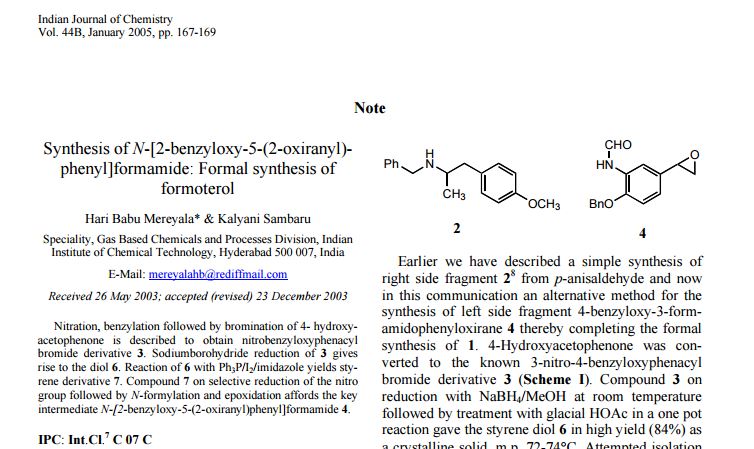
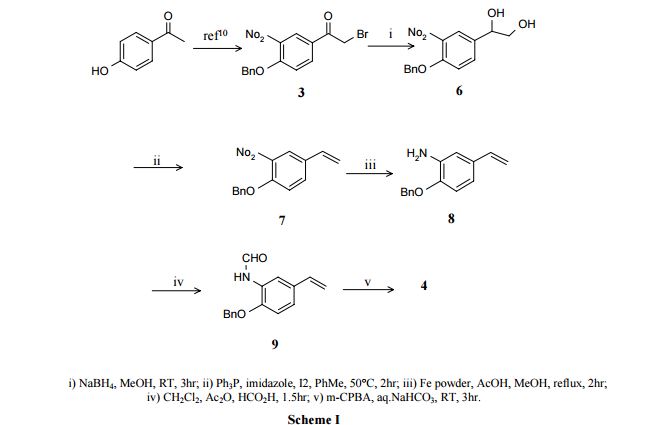
PAPER

http://nopr.niscair.res.in/bitstream/123456789/8917/1/IJCB%2044B(1)%20167-169.pdf

str1

str1

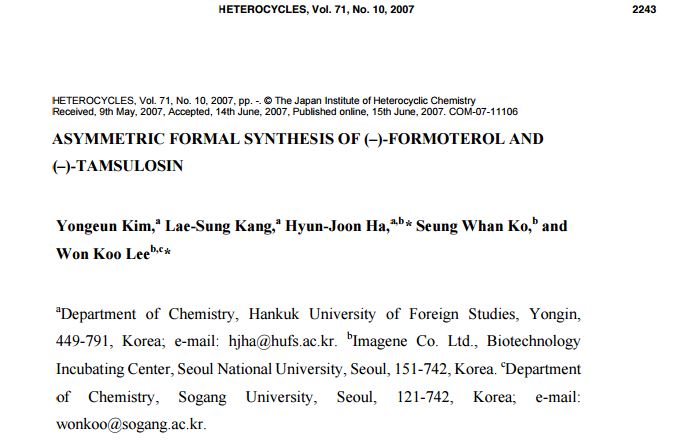
PAPER

http://www.bioorg.org/down/Hetetorcycles_07_2243.pdf?ckattempt=1

str1

str1

str1

PAPER

Drugs R D. 2004;5(1):25-7.

Arformoterol: (R,R)-eformoterol, (R,R)-formoterol, arformoterol tartrate, eformoterol-sepracor, formoterol-sepracor, R,R-eformoterol, R,R-formoterol.

Abstract

Sepracor in the US is developing arformoterol [R,R-formoterol], a single isomer form of the beta(2)-adrenoceptor agonist formoterol [eformoterol]. This isomer contains two chiral centres and is being developed as an inhaled preparation for the treatment of respiratory disorders. Sepracor believes that arformoterol has the potential to be a once-daily therapy with a rapid onset of action and a duration of effect exceeding 12 hours. In 1995, Sepracor acquired New England Pharmaceuticals, a manufacturer of metered-dose and dry powder inhalers, for the purpose of preparing formulations of levosalbutamol and arformoterol. Phase II dose-ranging clinical studies of arformoterol as a longer-acting, complementary bronchodilator were completed successfully in the fourth quarter of 2000. Phase III trials of arformoterol began in September 2001. The indications for the drug appeared to be asthma and chronic obstructive pulmonary disease (COPD). However, an update of the pharmaceutical product information on the Sepracor website in September 2003 listed COPD maintenance therapy as the only indication for arformoterol. In October 2002, Sepracor stated that two pivotal phase III studies were ongoing in 1600 patients. Sepracor estimates that its NDA submission for arformoterol, which is projected for the first half of 2004, will include approximately 3000 adult subjects. Sepracor stated in July 2003 that it had completed more than 100 preclinical studies and initiated or completed 15 clinical studies for arformoterol inhalation solution for the treatment of bronchospasm in patients with COPD. In addition, Sepracor stated that the two pivotal phase III studies in 1600 patients were still progressing. In 1995, European patents were granted to Sepracor for the use of arformoterol in the treatment of asthma, and the US patent application was pending.

CLIP

str1

str1

str1

PAPER

doi:10.1016/j.cclet.2008.01.012

http://www.sciencedirect.com/science/article/pii/S1001841708000132

Volume 19, Issue 3, March 2008, Pages 279–280

New method in synthesizing an optical active intermediate for (R,R)-formoterol

  • Key Laboratory of Drug Targeting Education Ministry, West China School of Pharmacy, Sichuan University, Chengdu 610041, China\

Abstract

(R)-1-(4-Methoxyphenyl)propan-2-amine 2a, an optical active intermediate for (R,R)-formoterol, was synthesized from d-alanine in 65% overall yield by using a simple route, which contained protecting amino group, cyclization, coupling with Grignard reagent, reduction and deprotection.

References

Muller, P., et al.: Arzneimittel-Forsch., 33, 1685 (1983); Wallmark, B., et al.: Biochim. Biophys. Acta., 778, 549 (1984); Morii, M., et al.: J. Biol. chem., 268, 21553 (1993); Ritter, M., et al.: Br. J. Pharmacol., 124, 627 (1998); Stenhoff, H., et al.: J. Chromatogr., 734, 191 (1999), Johnson, D.A., et al.: Expert Opin. Pharmacother., 4, 253 (2003); Bouyssou, T., et al.: Bio. Med. Chem. Lett. 20, 1410, (2010);

External links

EP0390762A1 * 23 Mar 1990 3 Oct 1990 Aktiebolaget Draco New bronchospasmolytic compounds and process for their preparation
EP0938467A1 7 Nov 1997 1 Sep 1999 Sepracor, Inc. Process for the preparation of optically pure isomers of formoterol
EP1082293A2 20 May 1999 14 Mar 2001 Sepracor Inc. Formoterol polymorphs
WO2009147383A1 2 Jun 2009 10 Dec 2009 Cipla Limited Process for the synthesis of arformoterol
Reference
1 * HETT R ET AL: “Enantio- and Diastereoselective Synthesis of all Four Stereoisomers of Formoterol” TETRAHEDRON LETTERS, ELSEVIER, AMSTERDAM, NL LNKD- DOI:10.1016/S0040-4039(97)00088-9, vol. 38, no. 7, 17 February 1997 (1997-02-17), pages 1125-1128, XP004034214 ISSN: 0040-4039
2 * LING HUANG ET AL.: “The Asymmetric Synthesis of (R,R)-Formoterol via Transfer Hydrogenation with Polyethylene Glycol Bound Rh Catalyst in PEG2000 and Water” CHIRALITY, vol. 22, 30 April 2009 (2009-04-30), pages 206-211, XP002592699
3 MURASE ET AL. CHEM. PHARM. BULL. vol. 26, no. 4, 1978, pages 1123 – 1129
4 TROFAST ET AL. CHIRALITY vol. 1, 1991, page 443
5 * TROFAST J ET AL: “STERIC ASPECTS OF AGONISM AND ANTAGONISM AT BETA-ADRENICEPTORS: SYNTHESIS OF AND PHARMACOLOGICAL EXPERIMENTS WITH THE ENANTIOMERS OF FORMOTEROL AND THEIR DIASTEREOMERS” CHIRALITY, WILEY-LISS, NEW YORK, US LNKD- DOI:10.1002/CHIR.530030606, vol. 3, no. 6, 1 January 1991 (1991-01-01) , pages 443-450, XP002057060 ISSN: 0899-0042
6 WILKINSON, H.S ET AL. ORGANIC PROCESS RESEARCH AND DEVELOPMENT vol. 6, 2002, pages 146 – 148

Durham E-Theses A Solid-state NMR Study of Formoterol Fumarate

Arformoterol
Arformoterol.svg
Arformoterol ball-and-stick model.png
Systematic (IUPAC) name
N-[2-hydroxy-5-[(1R)-1-hydroxy-2-[[(2R)-1-(4-methoxyphenyl) propan-2-yl]amino]ethyl] phenyl]formamide
Clinical data
Trade names Brovana
AHFS/Drugs.com Monograph
MedlinePlus a602023
License data
Pregnancy
category
  • US: C (Risk not ruled out)
Routes of
administration
Inhalation solution fornebuliser
Legal status
Legal status
Pharmacokinetic data
Protein binding 52–65%
Biological half-life 26 hours
Identifiers
CAS Number 67346-49-0 Yes
ATC code none
PubChem CID 3083544
IUPHAR/BPS 7479
DrugBank DB01274 Yes
ChemSpider 2340731 Yes
UNII F91H02EBWT Yes
ChEBI CHEBI:408174 Yes
ChEMBL CHEMBL1201137 
Chemical data
Formula C19H24N2O4
Molar mass 344.405 g/mol


Formoterol

Formoterol

CAS Registry Number: 73573-87-2
CAS Name: relN-[2-Hydroxy-5-[(1R)-1-hydroxy-2-[[(1R)-2-(4-methoxyphenyl)-1-methylethyl]amino]ethyl]phenyl]formamide
Additional Names: 3-formylamino-4-hydroxy-a-[N-[1-methyl-2-(p-methoxyphenyl)ethyl]aminomethyl]benzyl alcohol; (±)-2¢-hydroxy-5¢-[(RS)-1-hydroxy-2-[[(RS)-p-methoxy-a-methylphenethyl]amino]ethyl]formanilide
Molecular Formula: C19H24N2O4
Molecular Weight: 344.40
Percent Composition: C 66.26%, H 7.02%, N 8.13%, O 18.58%
Literature References: Selective b2-adrenergic receptor agonist. Mixture of R,R (-) and S,S (+) enantiomers. Prepn: M. Murakamiet al., DE 2305092; eidem, US 3994974 (1973, 1976 both to Yamanouchi); K. Murase et al., Chem. Pharm. Bull. 25, 1368 (1977). Absolute configuration and activity of isomers: eidem, ibid. 26, 1123 (1978). Toxicity studies: T. Yoshida et al., Pharmacometrics26, 811 (1983). HPLC determn in plasma: J. Campestrini et al., J. Chromatogr. B 704, 221 (1997). Review of pharmacology: G. P. Anderson, Life Sci. 52, 2145-2160 (1993); and clinical efficacy: R. A. Bartow, R. N. Brogden, Drugs 55, 303-322 (1998).
Derivative Type: Fumarate dihydrate
CAS Registry Number: 43229-80-7
Manufacturers’ Codes: BD-40A
Trademarks: Atock (Yamanouchi); Foradil (Novartis); Oxeze (AstraZeneca)
Molecular Formula: (C19H24N2O4)2.C4H4O4.2H2O
Molecular Weight: 840.91
Percent Composition: C 59.99%, H 6.71%, N 6.66%, O 26.64%
Properties: Crystals from 95% isopropyl alcohol, mp 138-140°. pKa1 7.9; pKa2 9.2. Log P (octanol/water): 0.4 (pH 7.4). Freely sol in glacial acetic acid; sol in methanol; sparingly sol in ethanol, isopropanol; slightly sol in water. Practically insol in acetone, ethyl acetate, diethyl ether. LD50 in male, female, rats, mice (mg/kg): 3130, 5580, 6700, 8310 orally; 98, 100, 72, 71 i.v.; 1000, 1100, 640, 670 s.c.; 170, 210, 240, 210 i.p. (Yoshida).
Melting point: mp 138-140°
pKa: pKa1 7.9; pKa2 9.2
Log P: Log P (octanol/water): 0.4 (pH 7.4)
Toxicity data: LD50 in male, female, rats, mice (mg/kg): 3130, 5580, 6700, 8310 orally; 98, 100, 72, 71 i.v.; 1000, 1100, 640, 670 s.c.; 170, 210, 240, 210 i.p. (Yoshida)
Derivative Type: R,R-Form
CAS Registry Number: 67346-49-0
Additional Names: Arformoterol
Derivative Type: R,R-Form L-tartrate
CAS Registry Number: 200815-49-2
Additional Names: Arformoterol tartrate
Molecular Formula: C19H24N2O4.C4H6O6
Molecular Weight: 494.49
Percent Composition: C 55.86%, H 6.12%, N 5.67%, O 32.36%
Literature References: Prepn: Y. Gao et al., WO 9821175; eidem, US 6040344 (1998, 2000 both to Sepracor). Pharmacology: D. A. Handley et al., Pulm. Pharmacol. Ther. 15, 135 (2002).
Properties: Off-white powder, mp 184°.
Melting point: mp 184°
Therap-Cat: Antiasthmatic.
Keywords: ?Adrenergic Agonist; Bronchodilator; Ephedrine Derivatives.

//////Arformoterol, (R,R)-Formoterol, (R,R)-Formoterol-L-(+)-tartrate, 200815-49-2, Arformoterol tartrate , Brovana, UNII:5P8VJ2I235, Sepracor, Asthma Therapy, Bronchodilators, Chronic Obstructive Pulmonary Diseases, COPD ,  RESPIRATORY DRUGS, beta2-Adrenoceptor Agonists, Phase III, 2007, Sunovion

COC1=CC=C(C[C@@H](C)NC[C@H](O)C2=CC(NC=O)=C(O)C=C2)C=C1

FDA published generic user fee for 2017: for ANDA, DMF, and for Facility (API, FDF)


DR ANTHONY MELVIN CRASTO Ph.D's avatarDRUG REGULATORY AFFAIRS INTERNATIONAL

.

placeholder+image

http://www.raps.org/Regulatory-Focus/News/2016/07/26/25394/FDA-Lowers-ANDA-Fee-Rates-for-2017/

Generic drugmakers submitting abbreviated new drug applications (ANDAs) and prior approval supplements (PAS) will see their US Food and Drug Administration (FDA) fee rates drop in 2017, though all other rates, including those for drug master files (DMF) and facility fees will increase when compared to 2016.

For FY 2017, the generic drug fee rates are: ANDA ($70,480, down from $76,030 in 2016), PAS ($35,240, down from $38,020 in 2016), DMF ($51,140, up from $42,170 in 2016), domestic active pharmaceutical ingredient (API) facility ($44,234, up from $40,867 in 2016), foreign API facility ($59,234, up from $55,867 in 2016), domestic finished dose formulation (FDF) facility ($258,646, up from $243,905), and foreign FDF facility ($273,646, up from $258,905 in 2016).

The new fees are effective 1 October 2016 and will remain in effect through 30 September 2017.

FDA explained the increases and decreases in fees, noting that for ANDA…

View original post 413 more words

Scaling up from mg to Kgs – Making your First GMP Batch


STR1

Scaling up from mg to Kgs – Making your First GMP Batch 

6th – 7th October 2016, Clearwater, USA

the course was very informative and it allowed me to see the big picture from discovery stage to pilot plant” 
Genentech

Course Outline:

  • Introduction
  • Making the first 100g non-GMP Batch
  • Non-GMP vs GMP preparation
  • Physical version and form
  • Process safety and raw materials supply
  • Scaling into fixed vessels
  • Technology transfer
  • Genotoxic impurities
  • Case studies and Review

Who should attend:

  • Project managers
  • Project leaders
  • Bench chemists
  • New starters
  • MedChem Support teams

This course aims to provide attendees with a good understanding of the issues involved taking development candidates to the first in human trials.

Click here to Download the Course Brochure

Presented by Dr John Knight, JKonsult Ltd

John Knight

Managing Director at JKONSULT Ltd

STR1
Click here to Download the Course Brochure

“Brilliant Course, learn lots of tips and tricks”
Vertex

First incursion into Chemical Development has been very, very educational. John’s way of explaining the material has been wonderful.”
Almirall

Very clear and interesting sessions with a lot of relevant examples and not only theory.” 
Oribase Pharma
LINK
LITERATURE FROM INTERNET ON HIS TOPIC
//////////Scaling up,  mg to Kgs, Making,  First GMP Batch, SCIENTIFIC UPDATE,  JOHN KNIGHT, Clearwater, USA

USFDA approves Indoco’s Allopurinol ANDA


usfda-approval-Allopurinol-forprint.jpg

Indoco Remedies Limited (India) | Facebook

https://www.facebook.com/Indoco-Remedies-Limited-India-317944458228011/

USFDA approves Indoco’s Allopurinol ANDA… Indoco Remedies Limited (India)’s … Indoco Remedies Limited (India) added a new photo

Allopurinol 3d structure.png

Allopurinol, sold under the brand name Zyloprim and generics, is a medication used primarily to treat excess uric acid in the bloodand its complications, including chronic gout. It is a xanthine oxidase inhibitor and is administered orally.

It is on the World Health Organization’s List of Essential Medicines, a list of the most important medication needed in a basic health system.

Allopurinol has been marketed in the United States since August 19, 1966, when it was first approved by FDA under the trade name Zyloprim. Allopurinol was marketed at the time by Burroughs-Wellcome. Allopurinol is now a generic drug sold under a variety of brand names, including Allohexal, Allosig, Milurit, Alloril, Progout, Ürikoliz, Zyloprim, Zyloric, Zyrik, and Aluron

Aditi Kare Panandikar, Managing Director, Indoco Remedies

click above

Aditi Kare Panandikar gets award

///////////Indoco Remedies LtdUSFDA,  approves,  Indoco’s,  Allopurinol,  ANDA, Aditi Kare Panandikar, Managing Director,

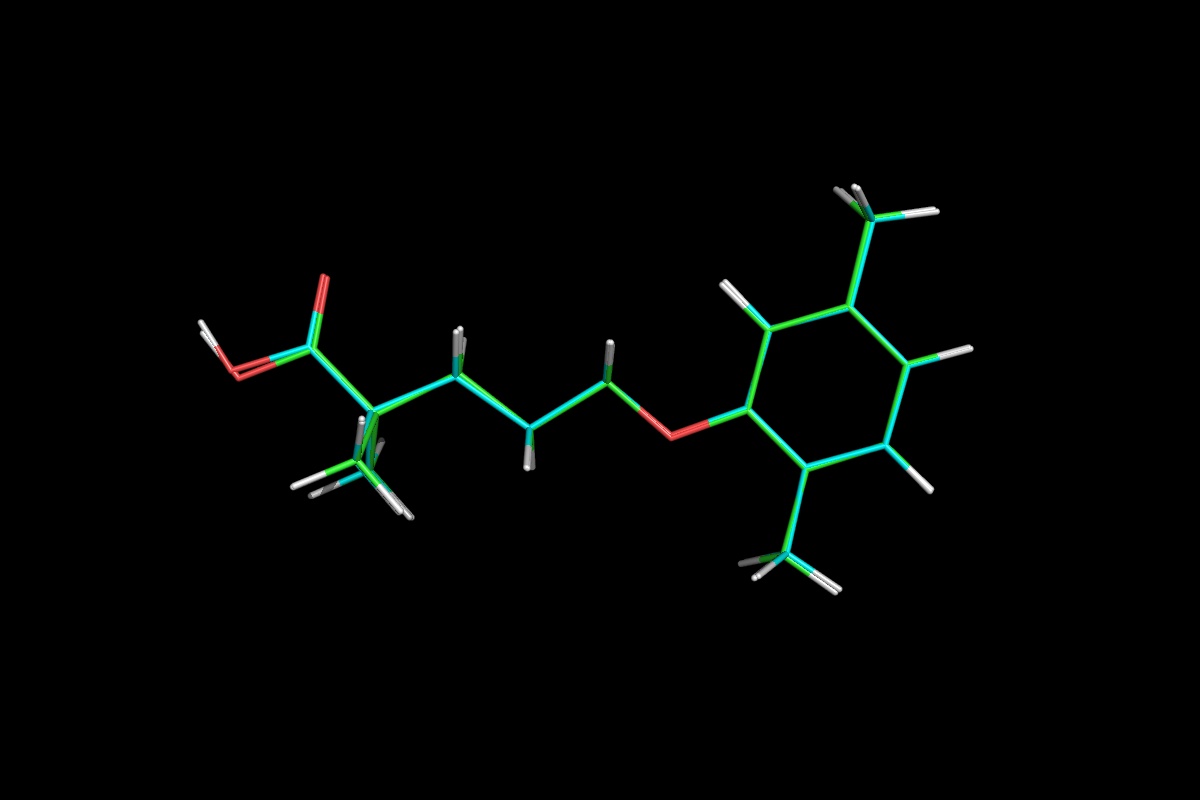
Gemfibrozil


Gemfibrozil.svg

Gemfibrozil
CAS: 25812-30-0
 5-(2,5-Dimethylphenoxy)-2,2-dimethylpentanoic acid
2,2-dimethyl-5-(2,5-xylyloxy)valeric acid
Manufacturers’ Codes: CI-719
Trademarks: Decrelip (Ferrer); Genlip (Teofarma); Gevilon (Pfizer); Lipozid (Pfizer); Lipur (Pfizer); Lopid (Pfizer)
MF: C15H22O3
MW: 250.33
Percent Composition: C 71.97%, H 8.86%, O 19.17%
Properties: Crystals from hexane, mp 61-63°. bp0.02 158-159°. LD50 in mice, rats (mg/kg): 3162, 4786 orally (Kurtz).
Melting point: mp 61-63°
Boiling point: bp0.02 158-159°
Toxicity data: LD50 in mice, rats (mg/kg): 3162, 4786 orally (Kurtz)
Therap-Cat: Antilipemic.
 

Gemfibrozil

5-(2,5-Dimethylphenoxy)-2,2-dimethylpentanoic Acid

Gemfibrozil is classified as a fibric acid derivative and is used in the treatment of hyperlipidaemias. It has effects on plasma-lipid concentrations similar to those described under bezafibrate. The major effects of gemfibrozil have been a reduction in plasma-triglyceride concentrations and an increase in high-density lipoprotein (HDL) cholesterol concentrations. A reduction in very-low-density lipoprotein (VLDL)-triglyceride appears to be largely responsible for the fall in plasma triglyceride although reductions in HDL and low-density lipoprotein (LDL)-triglycerides have also been reported.
The effects of gemfibrozil on total cholesterol have been more variable: in general, LDL-cholesterol may be decreased in patients with pre-existing high concentrations and raised in those with low concentrations. The increase in HDL-cholesterol concentrations has resulted in complementary changes to the ratios of HDL-cholesterol to LDL-cholesterol and to total cholesterol. Gemfibrozil has successfully raised HDL-cholesterol concentrations in patients with isolated low levels of HDL-cholesterol but otherwise normal cholesterol concentrations.The Helsinki heart study assessed gemfibrozil for the primary prevention of ischaemic heart disease in middle-aged men with hyperlipidaemia. The usual dose, by mouth, is 1.2 g daily in two divided doses given 30 min before the morning and evening meals. Gemfibrozil is available as tablets for oral administration (Lopid: USP).

IR (KBr, cm–1): 2959.03, 2919.78, 2877.65, 1709.42, 1613.44, 1586.60, 1511.07, 1473.81, 1414.01, 1387.89, 1317.61, 1286.34, 1271.91, 1214.39, 1159.26, 1048.83, 996.57, 803.75;

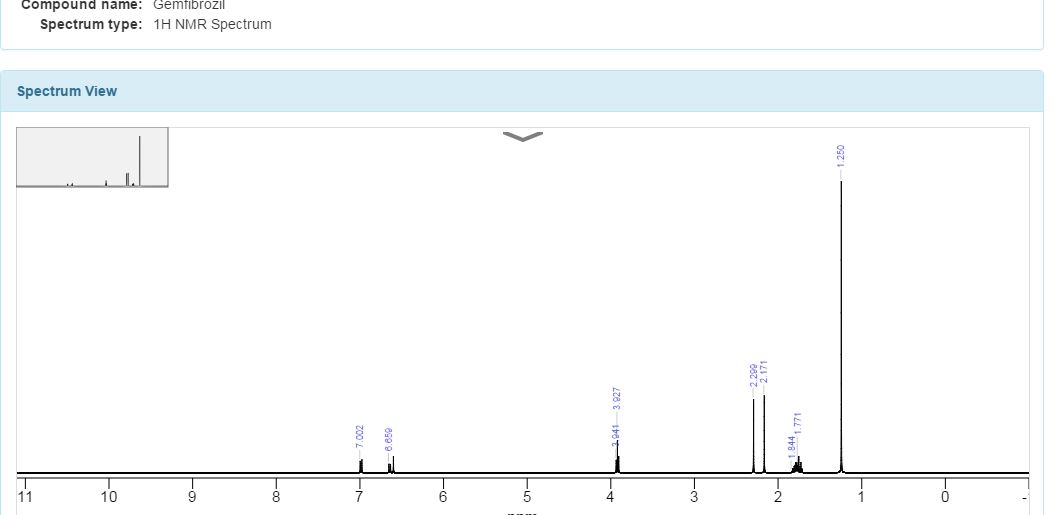
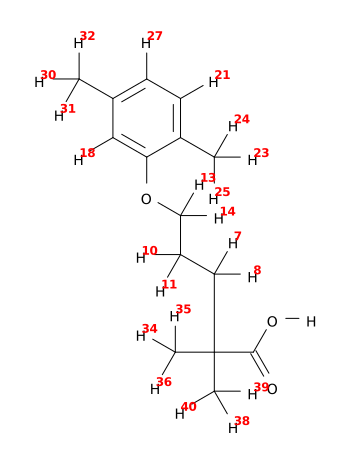
1H NMR (DMSO, 500 MHz, δ ppm): 1.12 (s, 6H), 1.60 and 1.67 (m, 4H), 2.08 (s, 3H), 2.24 (s, 3H), 3.90 (t, 2H), 6.62 (d, 1H), 6.70 (s, 1H), 6.97 (d, 1H);

13C NMR and DEPT (DMSO, 500 MHz, δ ppm): 15.39 (CH3), 20.94 (CH3), 24.67 (CH2), 24.87 (CH3, CH3), 36.43 (CH2), 40.91 (C), 67.57 (CH2), 112.07 (CH), 120.45 (CH), 122.44 (C), 129.96 (CH), 135.93 (C), 156.43 (C), 178.56 (C);

MS M/Z (ESI): 251.16 [(MH)+].

STR1

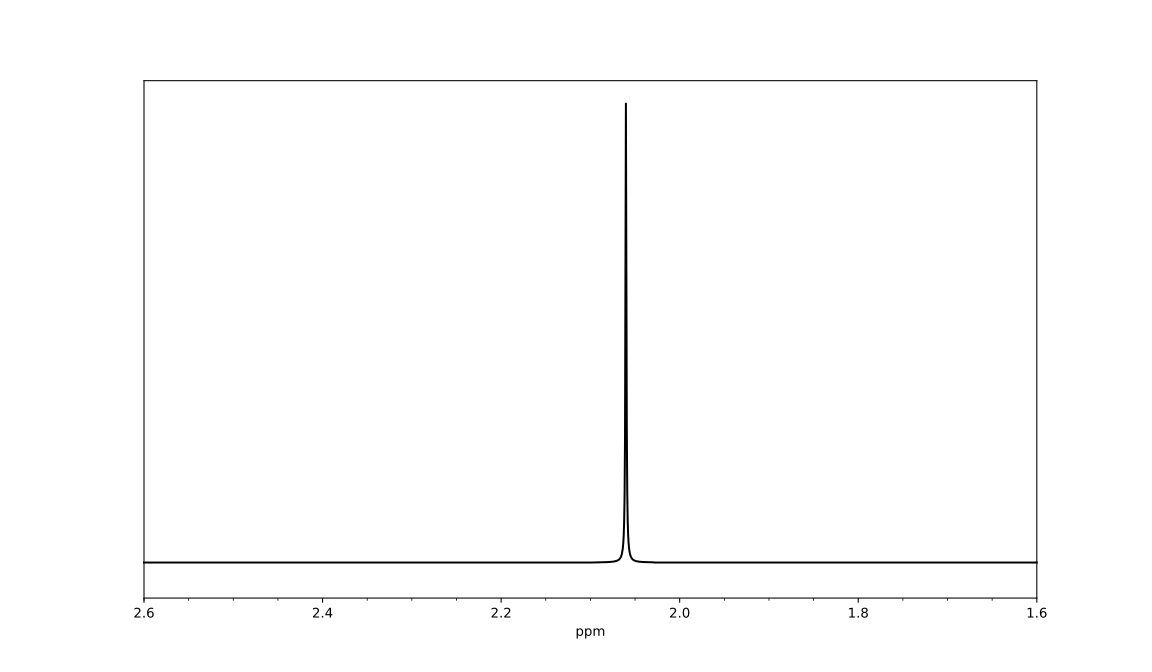
Solvent:CDCl3Instrument Type:JEOLNucleus:1HFrequency:400 MHzChemical Shift Reference:TMS


1H NMR spectrum of C15H22O3 in CDCL3 at 400 MHz

Gemfibrozil is the generic name for an oral drug used to lower lipid levels. It belongs to a group of drugs known as fibrates. It is most commonly sold as the brand name, Lopid. Other brand names include Jezil and Gen-Fibro.

history

Gemfibrozil was selected from a series of related compounds synthesized in the laboratories of the American company Parke Davisin the late 1970s. It came from research for compounds that lower plasma lipid levels in humans and in animals.[1]

Actions

Therapeutic effects

Nontherapeutic effects and toxicities

Indications

Contraindications and precautions

  • Gemfibrozil should not be given to these patients:
    • Hepatic dysfunction
  • Gemfibrozil should be used with caution in these higher risk categories:
    • Biliary tract disease
    • Renal dysfunction
    • Pregnant women
    • Obese patients

Drug interactions

Environmental data

Gemfibrozil has been detected in biosolids (the solids remaining after wastewater treatment) at concentrations up to 2650 ng/g wet weight.[3] This indicates that it survives the wastewater treatment process.

SYNTHESIS

STR1

The sodium isobutyrate (I) is metallated with lithium diisopropylamide, and the resulting compound is alkylated with 3- (2,5-dimethylphenoxy) propyl bromide.

PATENT

Paul, L. C. 2,2-Dimethyl-ω-aryloxy alkanoic acids and salts and ester thereof. U.S. 3,674,836, 1972.

http://www.google.co.in/patents/US3674836

CLIP

Production of Gemfibrozil
(1)2,5-Dimethylphenol and 1-Bromo-3-chloropropane reaction of 1-(2,5-dimethylphenoxy)-3-chloropropane. The reaction is carried out in toluene, adding new clean off reflux 5h. Just as follows:

Production of Gemfibrozil

(2)N/A can be used to manufacture Gemfibrozil.

Production of Gemfibrozil

PAPER

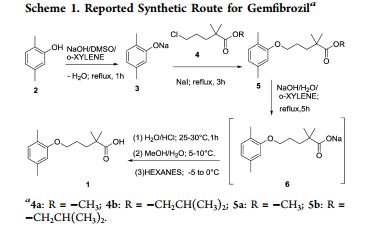
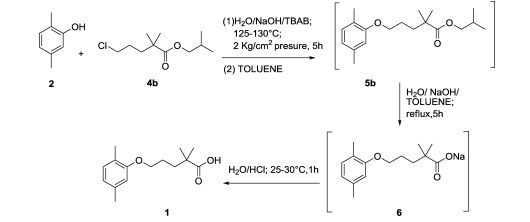
Improved Process for Preparation of Gemfibrozil, an Antihypolipidemic

Chemical Research and Development, Aurobindo Pharma Ltd., Survey No. 71 and 72, Indrakaran (V), Sangareddy (M), Medak District-502329, Andhra Pradesh, India
Engineering Chemistry Department, AU College of Engineering, Andhra University, Visakhapatnam-530003, Andhra Pradesh, India
Org. Process Res. Dev., 2013, 17 (7), pp 963–966

An improved process for the preparation of gemfibrozil, an antihypolipodimic drug substance, with an overall yield of 80% and ∼99.9% purity (including three chemical reactions) is reported. Formation and control of possible impurities are also described. Finally, gemfibrozil is isolated from water without any additional solvent purification.

STR1

Literature References:

Serum lipid regulating agent. Prepn: P. L. Creger, DE 1925423; eidem, US 3674836 (1969, 1972, both to Parke, Davis).

Production: O. P. Goel, US 4126637 (1978 to Warner-Lambert).

Pharmacology: A. H. Kissebach et al.,Atherosclerosis 24, 199 (1976); M. T. Kahonen et al., ibid. 32, 47 (1979).

Series of articles on metabolism, clinical pharmacology, kinetics and toxicology: Proc. R. Soc. Med. 69, Suppl 2, 1-120 (1976).

Toxicity data: S. M. Kurtz et al., ibid. 15.

Clinical trial in hyperlipidemia: J. E. Lewis et al., Pract. Cardiol. 9, 99 (1983).

Clinical reduction of cardiovascular risk in patients with low HDL levels: H. B. Rubins et al., N. Engl. J. Med. 341, 410 (1999).

References

External links

Gemfibrozil
Gemfibrozil.svg
Systematic (IUPAC) name
5-(2,5-dimethylphenoxy)-2,2-dimethyl-pentanoic acid
Clinical data
Trade names Lopid
AHFS/Drugs.com Monograph
MedlinePlus a686002
Pregnancy
category
  • Category C
Routes of
administration
Oral
Legal status
Legal status
  • By Prescription
Pharmacokinetic data
Bioavailability Close to 100%
Protein binding 95%
Metabolism Hepatic (CYP3A4)
Biological half-life 1.5 hours
Excretion Renal 94%
Feces 6%
Identifiers
CAS Number 25812-30-0 Yes
ATC code C10AB04 (WHO)
PubChem CID 3463
IUPHAR/BPS 3439
DrugBank DB01241 Yes
ChemSpider 3345 Yes
UNII Q8X02027X3 Yes
KEGG D00334 Yes
ChEBI CHEBI:5296 Yes
ChEMBL CHEMBL457 Yes
Chemical data
Formula C15H22O3
Molar mass 250.333 g/mol

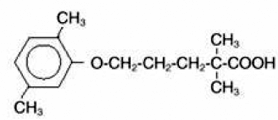
LOPID® (gemfibrozil tablets, USP) is a lipid regulating agent. It is available as tablets for oral administration. Each tablet contains 600 mg gemfibrozil. Each tablet also contains calcium stearate, NF; candelilla wax, FCC; microcrystalline cellulose, NF; hydroxypropyl cellulose, NF; hypromellose, USP; methylparaben, NF; Opaspray white; polyethylene glycol, NF; polysorbate 80, NF; propylparaben, NF; colloidal silicon dioxide, NF; pregelatinized starch, NF. The chemical name is 5-(2,5-dimethylphenoxy)2,2-dimethylpentanoic acid, with the following structural formula:


LOPID® (gemfibrozil) Structural Formula Illustration

The empirical formula is C15H22O3 and the molecular weight is 250.35; the solubility in water and acid is 0.0019% and in dilute base it is greater than 1%. The melting point is 58° –61°C. Gemfibrozil is a white solid which is stable under ordinary conditions.

/////////Gemfibrozil,  Antilipemic,  Fibrates, 25812-30-0,

CC1=CC(OCCCC(C)(C)C(O)=O)=C(C)C=C1

ацетазоламид , أسيتازولاميد [, 乙酰唑胺 , ACETAZOLAMIDE


ChemSpider 2D Image | acetazolamide | C4H6N4O3S2

ACETAZOLAMIDE
ацетазоламид ,  أسيتازولاميد [,  乙酰唑胺 ,
CAS 59-66-5
Acetamide, N-(5-(aminosulfonyl)-1,3,4-thiadiazol-2-yl)-
MW 222.245,MF  C4H6N4O3S2
Title: Acetazolamide
CAS Registry Number: 59-66-5
CAS Name: N-[5-(Aminosulfonyl)-1,3,4-thiadiazol-2-yl]acetamide
Additional Names: 5-acetamido-1,3,4-thiadiazole-2-sulfonamide; 2-acetylamino-1,3,4-thiadiazole-5-sulfonamide
Manufacturers’ Codes: 6063
Trademarks: Acetamox (Tobishi-Santen); Atenezol (Tsuruhara); Défiltran (Gallier); Diamox (Barr); Didoc (Sawai); Diuriwas (IFI); Donmox (Horita); Edemox (Wassermann); Fonurit (Chinoin); Glaupax (Erco)
Molecular Formula: C4H6N4O3S2
Molecular Weight: 222.25
Percent Composition: C 21.62%, H 2.72%, N 25.21%, O 21.60%, S 28.85%
Literature References: Carbonic anhydrase inhibitor. Prepn: R. O. Roblin, J. W. Clapp, J. Am. Chem. Soc. 72, 4890 (1950); J. W. Clapp, R. O. Roblin, US 2554816 (1951 to Am. Cyanamid). HPLC determn in pharmaceuticals: Z. S. Gomaa, Biomed. Chromatogr. 7, 134 (1993). Effect on retinal circulation: S. M. B. Rassam et al., Eye 7, 697 (1993). Clinical trial in postoperative elevation of intraocular pressure: I. D. Ladas et al., Br. J. Ophthalmol. 77, 136 (1993). Comprehensive description: J. Parasrampuria, Anal. Profiles Drug Subs. Excip. 22, 1-32 (1993). Review of efficacy in acute mountain sickness: L. D. Ried et al.,J. Wilderness Med. 5, 34-48 (1994).
Properties: Crystals from water, mp 258-259° (effervescence). Weak acid. pKa 7.2. Sparingly sol in cold water. Slightly sol in alcohol, acetone. Practically insol in carbon tetrachloride, chloroform, ether. Soly (mg/ml): polyethylene glycol-400 87.81; propylene glycol 7.44; ethanol 3.93; glycerin 3.65; water 0.72.
Melting point: mp 258-259° (effervescence)
pKa: pKa 7.2
Derivative Type: Sodium salt
CAS Registry Number: 1424-27-7
Trademarks: Vetamox (Am. Cyanamid)
Therap-Cat: Antiglaucoma; diuretic; in treatment of acute mountain sickness.
Therap-Cat-Vet: Diuretic.
Keywords: Antiglaucoma; Carbonic Anhydrase Inhibitor; Diuretic; Sulfonamide Derivatives.
Starting reaction occurs in-between hydrazine hydrate and ammonium thiocyanate that produces 1, 2-bis (thiocarbamoyl) hydrazine which on further treatment with phosgene undergoesrearrangements, particularly  molecular rearrangement through loss of ammonia to form 5-amino-2-mercapto-1, 3, 4-thiadiazole. Upon acylation of 5-amino-2-mercapto-1, 3, 4-thiadiazole gives a corresponding amide which on oxidation with aqueous chlorine affords the 2-sulphonyl chloride. The final step essentially consists of amidation by treatment with ammonia.

STR1 STR2

STR1 STR2 STR3

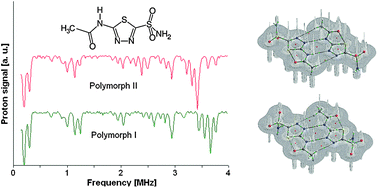
1H NMR

Paper

14N NQR, 1H NMR and DFT/QTAIM study of hydrogen bonding and polymorphism in selected solid 1,3,4-thiadiazole derivatives

*
Corresponding authors
a»Jozef Stefan« Institute, Jamova 39, 1000 Ljubljana, Slovenia
E-mail: janez.seliger@fmf.uni-lj.si
Fax: +386 1 2517281
Tel: +386 1 4766576
bFaculty of Mathematics and Physics, University of Ljubljana, Jadranska 19, 1000 Ljubljana, Slovenia
cFaculty of Physics, Adam Mickiewicz University, Umultowska 85, 61-614 Poznań, Poland
Phys. Chem. Chem. Phys., 2010,12, 13007-13019

DOI: 10.1039/C0CP00195C, http://pubs.rsc.org/en/content/articlelanding/2010/cp/c0cp00195c#!divAbstract

Graphical abstract: 14N NQR, 1H NMR and DFT/QTAIM study of hydrogen bonding and polymorphism in selected solid 1,3,4-thiadiazole derivatives

The 1,3,4-thiadiazole derivatives (2-amino-1,3,4-thiadiazole, acetazolamide, sulfamethizole) have been studied experimentally in the solid state by 1H–14N NQDR spectroscopy and theoretically by Density Functional Theory (DFT). The specific pattern of the intra and intermolecular interactions in 1,3,4-thiadiazole derivatives is described within the QTAIM (Quantum Theory of Atoms in Molecules)/DFT formalism. The results obtained in this work suggest that considerable differences in the NQR parameters permit differentiation even between specific pure association polymorphic forms and indicate that the stronger hydrogen bonds are accompanied by the larger η and smaller ν and e2Qq/h values. The degree of π-electron delocalization within the 1,3,4-thiadiazole ring and hydrogen bonds is a result of the interplay between the substituents and can be easily observed as a change in NQR parameters at N atoms. In the absence of X-ray data NQR parameters can clarify the details of crystallographic structure revealing information on intermolecular interactions.

////////////ацетазоламид ,  أسيتازولاميد [,  乙酰唑胺 , ACETAZOLAMIDE

CC(=O)NC1=NN=C(S1)S(N)(=O)=O

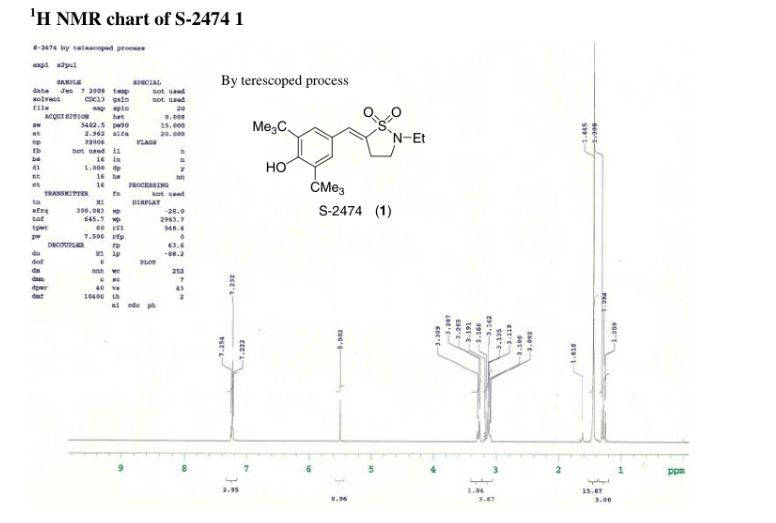
New Antiarthritic Drug Candidate S-2474


STR1

S-2474

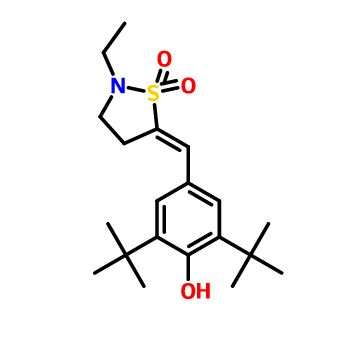
(E)-(5)-(3,5-Di-tert-butyl-4-hydroxybenzylidene)-2-ethyl-1,2-isothiazolidine-1,1-dioxide

Shionogi Research Laboratories

cyclooxygenase-2 (COX-2) and 5-lipoxygenase (5-LO)

mp 135−137 °C.

S-2474,158089-95-3, 158089-96-4 ((Z)-isomer),C20-H31-N-O3-S,

E)-5-(3,5-Di-tert-butyl-4-hydroxybenzylidene)-2-ethylisothiazolidine 1,1-dioxide

  • Phenol, 2,6-bis(1,1-dimethylethyl)-4-[(2-ethyl-5-isothiazolidinylidene)methyl]-, S,S-dioxide, (E)-
  • 2,6-Bis(1,1-dimethylethyl)-4-[(E)-(2-ethyl-1,1-dioxido-5-isothiazolidinylidene)methyl]phenol
  • Phenol, 2,6-bis(1,1-dimethylethyl)-4-[(2-ethyl-1,1-dioxido-5-isothiazolidinylidene)methyl]-, (E)-

(E)-(5)-(3,5-Di-tert-butyl-4-hydroxybenzylidene)-2-ethyl-1,2-isothiazolidine-1,1-dioxide (S-2474, ), which was discovered at Shionogi Research Laboratories, shows potent inhibitory effects on both cyclooxygenase-2 (COX-2) and 5-lipoxygenase (5-LO) and is anticipated to be promising as an antiarthritic drug

synthesis of novel γ-sultam derivatives containing the di-tert-butylphenol antioxidant moiety. Several compounds with lower alkyl groups at the 2-position of the γ-sultam skeleton showed potent inhibitory activities against PGE2 production via the COX pathway and LTB4 production via the 5-LO pathway, as well as production of IL-1 in in vitro assays. Extensive pharmacological characterizations revealed that 2-ethyl-γ-sultam derivative 10b displays multiple inhibition of COX, 5-LO, and IL-1 production similar to tenidap and also good selective COX-2 inhibition like NS-398 and celecoxib. It exerted excellent antiinflammatory activity without any ulcerogenic effects and was designated as S-2474 an agent having both NSAID and cytokine modulating properties. S-2474 is now being developed as a promising alternative antiarthritic drug candidate

SYNTHESIS

17th Symp Med Chem (Nov 19 1997 , Tsukuba), EP 0595546; JP 1994211819; US 5418230

The intermediate gamma-sultam (III) was prepared by condensation of 3-chloropropylsulfonyl chloride (I) with ethylamine, followed by cyclization of the resulting chloro sulfonamide (II) under basic conditions. Condensation of 3,5-di- tert-butyl-4- (methoxymethoxy) benzaldehyde (IV) with sultam (III) in the presence of LDA produced the aldol addition compound (V). Then, acid-promoted dehydration and simultaneous methoxymethyl group deprotection gave rise to a mixture of the desired E-benzylidene sultam and the corresponding Z-isomer (VII), which were separated by column chromatography.

PAPER

Novel Antiarthritic Agents with 1,2-Isothiazolidine-1,1-dioxide (γ-Sultam) Skeleton: Cytokine Suppressive Dual Inhibitors of Cyclooxygenase-2 and 5-Lipoxygenase

Shionogi Research Laboratories, Shionogi & Co., Ltd., Fukushima-ku, Osaka 553-0002, Japan, and Institute of Medical Science, St. Marianna University School of Medicine, Miyamae-ku, Kawasaki 216-8512, Japan
J. Med. Chem., 2000, 43 (10), pp 2040–2048
DOI: 10.1021/jm9906015
Abstract Image

Various 1,2-isothiazolidine-1,1-dioxide (γ-sultam) derivatives containing an antioxidant moiety, 2,6-di-tert-butylphenol substituent, were prepared. Some compounds, which have a lower alkyl group at the 2-position of the γ-sultam skeleton, showed potent inhibitory effects on both cyclooxygenase (COX)-2 and 5-lipoxygenase (5-LO), as well as production of interleukin (IL)-1 in in vitro assays. They also proved to be effective in several animal arthritic models without any ulcerogenic activities. Among these compounds, (E)-(5)-(3,5-di-tert-butyl-4-hydroxybenzylidene)-2-ethyl-1,2-isothiazolidine-1,1-dioxide (S-2474) was selected as an antiarthritic drug candidate and is now under clinical trials. The structure−activity relationships (SAR) examined and some pharmacological evaluations are described.

http://pubs.acs.org/doi/abs/10.1021/jm9906015

PAPER

Highly E-Selective and Effective Synthesis of Antiarthritic Drug Candidate S-2474 Using Quinone Methide Derivatives

Shionogi Research Laboratories, Shionogi & Company, Ltd., Fukushima-ku, Osaka 553-0002, Japan
J. Org. Chem., 2002, 67 (1), pp 125–128
DOI: 10.1021/jo0106795
 Abstract Image
We have developed an efficient and E-selective synthesis of an antiarthritic drug candidate (E)-(5)-(3,5-di-tert-butyl-4-hydroxybenzylidene)-2-ethyl-1,2-isothiazolidine-1,1-dioxide (S-2474), in which α-methoxy-p-quinone methide is used as a key intermediate. α-Methoxy-p-quinone methide was revealed to be an equiv. to a p-hydroxy protected benzaldehyde. It reacts smoothly with α-sulfonyl carbanion to give 1,6-addn. intermediates, which can be further processed to provide S-2474 directly in the presence of a base. This procedure gives S-2474 as an almost single isomer on the benzylidene double bond in excellent yield and thus is a very practical method adaptable to large-scale synthesis. The detailed mechanistic aspects are studied and discussed.
An improved synthesis has been reported. Acid -catalyzed ketalization of aldehyde (VIII) with trimethyl orthoformate provided the dimethyl acetal (IX) which, upon thermal decomposition in refluxing xylene, gave rise to the alpha-methoxy methylenequinone derivative (X ). This was then condensed with the lithio derivative of sultam (III) to form selectively the desired E-adduct. in an analogous procedure, aldehyde (VIII) was converted to the chloromethylene compound (XI) with methanesulfonyl chloride and triethylamine in refluxing CH2Cl2 . Condensation of (XI) with the lithiated sultam (III) furnished the desired E-benzylidene sultam.

PAPER

Development of One-Pot Synthesis of New Antiarthritic Drug Candidate S-2474 with High E-Selectivity

Chemical Development Department, CMC Development Laboratories, Shionogi & Co., Ltd., 1-3, Kuise Terajima 2-chome, Amagasaki, Hyogo 660-0813, Japan, and Shionogi Research Laboratories, Shionogi & Co., Ltd., 12-4, Sagisu 5-chome, Fukushima-ku, Osaka 553-0002, Japan
Org. Process Res. Dev., 2008, 12 (3), pp 442–446
DOI: 10.1021/op800008w

* To whom correspondence should be addressed. Telephone: +81-6-6401-8198 . Fax: +81-6-6401-1371. E-mail:takemasa.hida@shionogi.co.jp., †

Chemical Development Department, CMC Development Laboratories.

, ‡Shionogi Research Laboratories.

Abstract Image

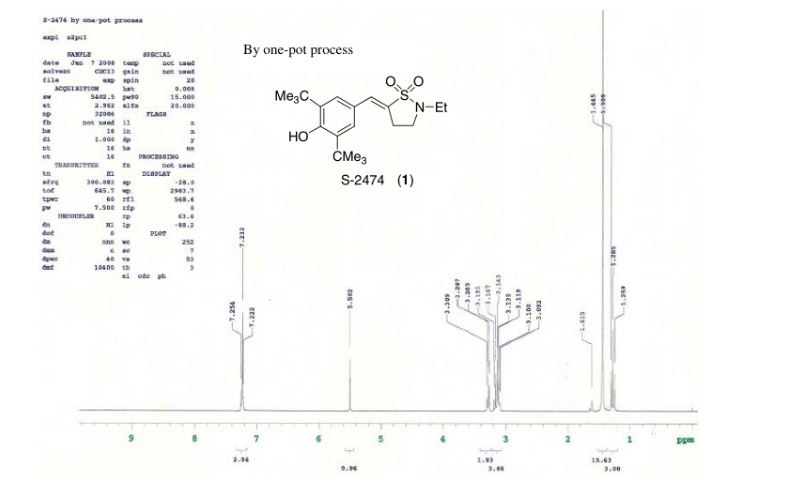
A one-pot synthesis of S-2474 was developed to overcome the problems of a large number of steps, low stereoselectivity, low yield, a large amount of waste, and severe reaction conditions. Aldol-type condensation of 3,5-di-tert-butyl-4-hydroxybenzaldehyde and N-ethyl-γ-sultam was carried out with LDA and then quenched with water. Dehydration proceeded under basic conditions, providing S-2474 directly as a single isomer on the benzylidene double bond. The reaction mechanism appears to involve a quinone methide intermediate. Environmental assessment of the development of this compound is also discussed in this paper.

STR1

STR1

///////New,  Antiarthritic , Drug Candidate,  S-2474, Shionogi Research Laboratories, cyclooxygenase-2,  (COX-2),  5-lipoxygenase , (5-LO), PHASE 2, 158089-95-3, 158089-96-4, S2474, S 2474

CCN2CC\C(=C/c1cc(c(O)c(c1)C(C)(C)C)C(C)(C)C)S2(=O)=O

GSK-2041706A, Potent GPR119 Receptor Agonists


str1

STR1

SCHEMBL387520.png

str1

GSK-2041706A

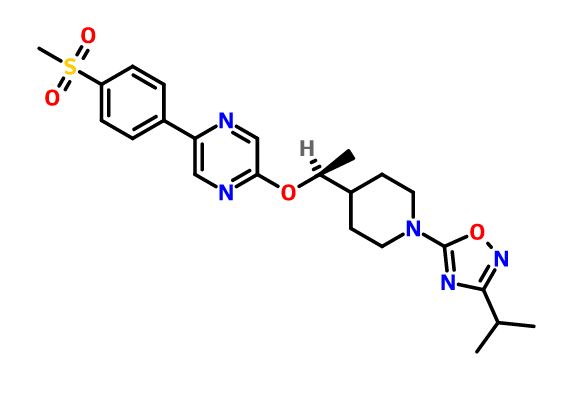
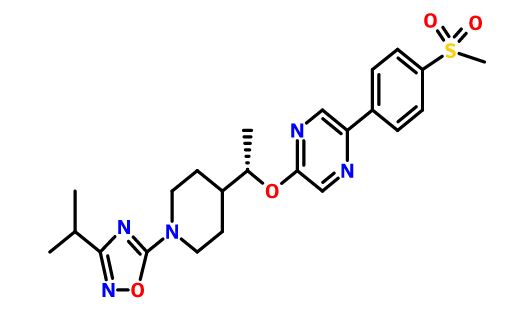
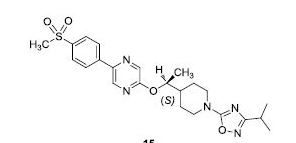
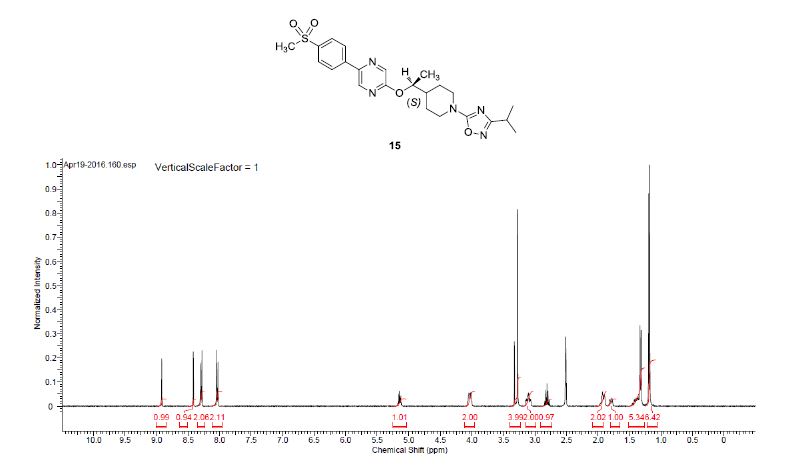
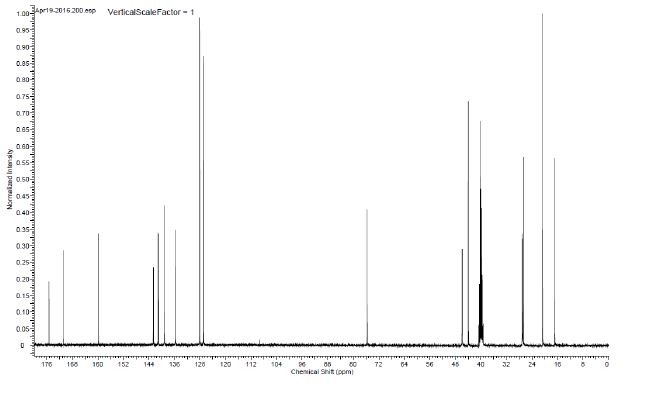
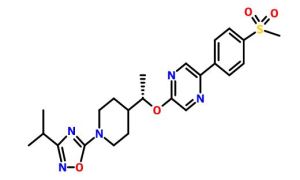
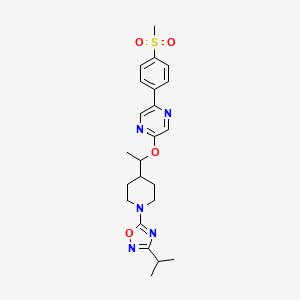
[2-([(1S)-1-(1-[3-(1-methylethyl)-1,2,4-oxadiazol-5-yl]-4-piperidinyl)ethyl]oxy)-5-[4-(methylsulfonyl)phenyl]pyrazine]

2-[((1S)-1-{1-[3-(1-Methylethyl)-1,2,4-oxadiazol-5-yl]-4-piperidinyl}ethyl)oxy]-5-[4-(methylsulfonyl)phenyl]pyrazine

Potent GPR119 Receptor Agonists

CAS 1032824-43-3

Molecular Formula: C23H29N5O4S
Molecular Weight: 471.57246 g/mol

G protein-coupled receptor 119 (GPR119) is a G protein-coupled receptor expressed predominantly in pancreatic β-cells and gastrointestinal enteroendocrine cells. Metformin is a first-line treatment of type 2 diabetes, with minimal weight loss in humans. In this study, we investigated the effects of GSK2041706 [2-([(1S)-1-(1-[3-(1-methylethyl)-1,2,4-oxadiazol-5-yl]-4-piperidinyl)ethyl]oxy)-5-[4-(methylsulfonyl)phenyl]pyrazine], a GPR119 agonist, and metformin as monotherapy or in combination on body weight in a diet-induced obese (DIO) mouse model. Relative to vehicle controls, 14-day treatment with GSK2041706 (30 mg/kg b.i.d.) or metformin at 30 and 100 mg/kg b.i.d. alone caused a 7.4%, 3.5%, and 4.4% (all P < 0.05) weight loss, respectively. The combination of GSK2041706 with metformin at 30 or 100 mg/kg resulted in a 9.5% and 16.7% weight loss, respectively. The combination of GSK2041706 and metformin at 100 mg/kg caused a significantly greater weight loss than the projected additive weight loss of 11.8%. This body weight effect was predominantly due to a loss of fat. Cumulative food intake was reduced by 17.1% with GSK2041706 alone and 6.6% and 8.7% with metformin at 30 and 100 mg/kg, respectively. The combination of GSK2041706 with metformin caused greater reductions in cumulative food intake (22.2% at 30 mg/kg and 37.5% at 100 mg/kg) and higher fed plasma glucagon-like peptide 1 and peptide tyrosine tyrosine levels and decreased plasma insulin and glucose-dependent insulinotropic polypeptide levels compared with their monotherapy groups. In addition, we characterized the effect of GSK2041706 and metformin as monotherapy or in combination on neuronal activation in the appetite regulating centers in fasted DIO mice. In conclusion, our data demonstrate the beneficial effects of combining a GPR119 agonist with metformin in the regulation of body weight in DIO mice.

Diabetes mellitus is an ever-increasing threat to human health. For example, in the United States current estimates maintain that about 16 million people suffer from diabetes mellitus.

Type I diabetes, also known as insulin-dependent diabetes mellitus (IDDM), is caused by the autoimmune destruction of the insulin producing pancreatic β-cells, and necessitates regular administration of exogenous insulin. Without insulin, cells cannot absorb sugar (glucose), which they need to produce energy. Symptoms of Type I diabetes usually start in childhood or young adulthood. People often seek medical help because they are seriously ill from sudden symptoms of high blood sugar (hyperglycemia).

Type II diabetes, also known as non-insulin-dependent diabetes mellitus (NIDDM), manifests with an inability to adequately regulate blood-glucose levels. Type II diabetes may be characterized by a defect in insulin secretion or by insulin resistance, namely those that suffer from Type II diabetes have too little insulin or cannot use insulin effectively. Insulin resistance refers to the inability of body tissues to respond properly to endogenous insulin. Insulin resistance develops because of multiple factors, including genetics, obesity, increasing age, and having high blood sugar over long periods of time. Type II diabetes, sometimes called mature or adult onset diabetes, can develop at any age, but most commonly becomes apparent during adulthood. The incidence of Type II diabetes in children, however, is rising

In diabetics, glucose levels build up in the blood and urine causing excessive urination, thirst, hunger, and problems with fat and protein metabolism. If left untreated, diabetes mellitus may cause life-threatening complications, including blindness, kidney failure, and heart disease.

Type II diabetes accounts for approximately 90-95% of diabetes cases, killing about 193,000 U.S. residents each year. Type II diabetes is the seventh leading cause of all deaths. In Western societies, Type II diabetes currently affects 6% of the adult population with world-wide frequency expected to grow by 6% per annum.

Although there are certain inheritable traits that may predispose particular individuals to developing Type II diabetes, the driving force behind the current increase in incidence of the disease is the increased sedentary lifestyle, diet, and obesity now prevalent in developed countries. About 80% of diabetics with Type II diabetes are significantly overweight. As noted above, an increasing number of young people are developing the disease. Type II diabetes is now internationally recognized as one of the major threats to human health in the 21stcentury.

Type II diabetes currently is treated at several levels. A first level of therapy is through the use of diet and/or exercise, either alone or in combination with therapeutic agents. Such agents may include insulin or pharmaceuticals that lower blood glucose levels. About 49% of individuals with Type II diabetes require oral medication(s), about 40% of individuals require insulin injections or a combination of insulin injections and oral medication(s), and about 10% of individuals may use diet and exercise alone.

Current therapies for diabetes mellitus include: insulin; insulin secretagogues, such as sulphonylureas, which increase insulin production from pancreatic-cells; glucose-lowering effectors, such as metformin which reduce glucose production from the liver; activators of the peroxisome proliferator-activated receptor—(PPAR-), such as the thiazolidinediones, which enhances insulin action; and α-glucosidase inhibitors which interfere with gut glucose production. There are, however, deficiencies associated with currently available treatments, including hypoglycemic episodes, weight gain, loss in responsiveness to therapy over time, gastrointestinal problems, and edema.

There are several areas at which research is being targeted in order to bring new, more effective, therapies to the marketplace. For example, on-going research includes exploring a reduction in excessive hepatic glucose production, enhancing the pathway by which insulin transmits its signal to the cells such that they take up glucose, enhancing glucose-stimulated insulin secretion from the pancreatic-cells, and targeting obesity and associated problems with fat metabolism and accumulation.

One particular target is GPR119. GPR119 is a member of the rhodopsin family of G-protein-coupled receptors. In addition to the “GPR119” identifier, several other identifiers exist, including but not limited to RUP 3, Snorf 25, 19 AJ, GPR 116 (believed to be erroneous), AXOR 20, and PS1. GPR119 is expressed in human gastrointestinal regions and in human islets. Activation of GPR119 has been demonstrated to stimulate intracellular cAMP and lead to glucose-dependent GLP-1 and insulin secretion. See, T. Soga et al., Biochemical and Biophysical Research Communications 326 (2005) 744-751, herein incorporated by reference with regard to a background understanding of GPR119.

In type 2 diabetes the action of GLP-1 on the β-cell is maintained, although GLP-1 secretion, itself, is reduced. More recently, therefore, much research has been focused on GLP-1. Studies show glucose-lowering effects in addition to GLP-1’s ability to stimulate glucose-dependent insulin secretion including, but not limited to, an inhibition of the release of the hormone glucagon following meals, a reduction in the rate at which nutrients are absorbed into the bloodstream, and a reduction of food intake. Studies demonstrate that treatments to increase GLP-1, therefore, may be used for a variety of conditions and disorders including but not limited to metabolic disorders, gastrointestinal disorders, inflammatory diseases, psychosomatic, depressive, and neuropsychiatric disease including but not limited to diabetes mellitus (Type 1 and Type 2), metabolic syndrome, obesity, appetite control and satiety, weight loss, stress, inflammation, myocardial ischemia/reperfusion injury, Alzheimer’s Disease, and other diseases of the central nervous system.

The use of exogenous GLP-1 in clinical treatment is severely limited, however, due to its rapid degradation by the protease DPP-IV. There are multiple GLP-1 mimetics in development for type 2 diabetes that are reported in the literature, all are modified peptides, which display longer half-lives than endogenous GLP-1. For example, the product sold under the tradename BYETTA® is the first FDA-approved agent of this new class of medications. These mimetics, however, require injection. An oral medication that is able to elevate GLP-1 secretion is desirable. Orally available inhibitors of DPP-IV, which result in elevation in intact GLP-1, are now available, such as sitagliptin, marketed under the brand name JANUVIA®. Nevertheless, a molecule which may stimulate GLP-1 secretion would provide a therapeutic benefit. A molecule which could stimulate both GLP-1 secretion and insulin secretion through effects on the L-cell and direct effects on the β-cell would hold much promise for type 2 diabetes therapy.

The present invention identifies agonists of GPR119 which increase glucose-disposal in part through elevation of GIP, GLP-1, and insulin. Moreover, studies demonstrate that GPR119 agonists such as the compounds of the present invention can stimulate incretins independently of glucose. GIP and GLP-1 are peptides, known as incretins, secreted from enteroendocrine K and L cells, respectively, in response to ingestion of nutrients, and have a wide variety of physiological effects that have been described in numerous publications over the past two decades. See, for example, Bojanowska, E. et al.,Med. Sci. Monit., 2005, August 11(8): RA271-8; Perry, T. et al., Curr. Alzheimer Res., 2005, July 2(3): 377-85; and Meier, J. J. et al.,Diabetes Metab. Res. Rev., 2005, March-April; 21(2); 91-117 (each herein incorporated by reference with regard to a background understanding of incretins). Moreover, although the mechanisms regulating GLP-1 secretion remain unclear, the initial rapid rise in GLP-1 following a meal may be a result of hormonal stimulation of neuronal afferents involving GIP. See, for example, J. N. Roberge and P. L. Brubaker, Endocrinology 133 (1993), pp. 233-240 (herein incorporated by reference with regard to such teaching). Furthermore, later increases in GLP-1 may involve direct activation of L-cells by nutrients in the distal small-intestine and the colon. GIP and GLP-1 are potent stimulators of the body’s ability to produce insulin in response to elevated levels of blood sugar. In Type 2 diabetes, patients display a decreased responsiveness to GIP but not GLP-1, with respect to its ability to stimulate insulin secretion. The mechanism behind the decreased responsiveness to GIP remains unclear since type 2 diabetics retain sensitivity to a bolus administration of GIP but not to a continuous infusion (Meier et al. 2004 Diabetes 53 S220-S224). Moreover recent studies with a long-acting fatty-acid derivative of GIP showed beneficial effects on glucose homeostasis in ob/ob mice following 14 days of treatment (Irwin N. et al. (2006) J. Med. Chem. 49, 1047-1054.)

Agonists to GPR119 may be of therapeutic value for diabetes and associated conditions, particularly type II diabetes, obesity, glucose intolerance, insulin resistance, metabolic syndrome X, hyperlipidemia, hypercholesterolemia, and atherosclerosis.

NMR

1H NMR (400 MHz, DMSO-d6) δ 8.91 (bs, 1H), 8.40 (bs, 1 H), 8.28 (d, J = 8.5 Hz, 2H), 8.02 (d, J = 8.5 Hz, 2H), 5.17–5.09 (m, 1H), 4.09–3.95 (m, 2H), 3.27 (s, 3H), 3.16–2.99 (m, 2H), 2.80 (q, J = 6.9 Hz, 1H), 1.98–1.85 (m, 2H), 1.83–1.70 (m, 1H), 1.47–1.33 (m, 2H), 1.31 (d, J = 6.3 Hz, 3H), 1.17 (d, J = 6.8 Hz, 6H).

13C NMR (100.6 MHz, DMSO-d6) 175.3, 170.9, 159.8, 142.6, 141.2, 141.0, 139.1, 135.7, 128.1, 126.9, 75.7, 46.0, 45.9, 44.0, 40.2, 27.1, 27.0, 26.7, 20.7, 16.9.

HRMS calcd for C23H30N5O4S (M + H)+ 472.2013, found, 472.2009.

str1

str1

PATENT

Jing Fang, Jun Tang, Andrew J. Carpenter,Gregory Peckham, Christopher R. Conlee,Kien S. Du, Subba Reddy Katamreddy,

http://www.google.co.ug/patents/US20120077812

Example 156(±)-2-[(1-{1-[3-(1-Methylethyl)-1,2,4-oxadiazol-5-yl]-4-piperidinyl}ethyl)oxy]-5-[4-(methylsulfonyl)phenyl]pyrazineFigure US20120077812A1-20120329-C00180

Step 1: A solution of 3-(1-methylethyl)-5-(trichloromethyl)-1,2,4-oxadiazole (prepared as in Example 158, Alternative synthesis, Step 3, 179 g, 0.78 mol) in MeOH (300 mL) was treated with 4-piperidinemethanol (108 g, 0.94 mol) and stirred and heated at 50° C. overnight. The solvent was removed and the residue was purified by flash chromatography on a silica gel column to give {1-[3-(1-methylethyl)-1,2,4-oxadiazol-5-yl]-4-piperidinyl}methanol (60 g, 34%) as a pale yellow oil.

Step 2: A solution of {1-[3-(1-methylethyl)-1,2,4-oxadiazol-5-yl]-4-piperidinyl}methanol (1.50 g, 6.66 mmol) in CH2Cl2 (50 mL) at 0° C. was treated with Dess-Martin periodinane (2.91 g, 6.66 mmol). The reaction mixture was warmed to ambient temperature and stirred overnight. The reaction was quenched with aqueous 20% Na2S2O3(100 mL) and aqueous saturated NaHCO3 (100 mL) and then stirred for 10 minutes. The CH2Cl2 layer was separated and washed with brine, dried over Na2SO4, filtered, and the filtrate was concentrated to give the crude product as a cloudy colorless oil. The crude product was dissolved in 100 mL of 1:1 EtOAc/hexanes, filtered through a pad of silica gel, washed with 200 mL of 1:1 EtOAc/hexanes. The filtrate was concentrated to give 1.07 g (72%) of 1-[3-(1-methylethyl)-1,2,4-oxadiazol-5-yl]-4-piperidinecarbaldehyde as a clear colorless oil, which was used without further purification. 1H NMR (400 MHz, CDCl3): δ 9.68 (s, 1H), 4.15-4.00 (m, 2H), 3.30-3.20 (m, 2H), 2.86 (septet, 1H, J=7.0 Hz), 2.55-2.45 (m, 1H), 2.10-1.95 (m, 2H), 1.80-1.65 (m, 2H), 1.26 (d, 6H, J=6.8 Hz).

Step 3: (±)-1-{1-[3-(1-Methylethyl)-1,2,4-oxadiazol-5-yl]-4-piperidinyl}ethyl methanesulfonate (0.74 g, 49%) was prepared as a light brown oil from 1-[3-(1-methylethyl)-1,2,4-oxadiazol-5-yl]-4-piperidinecarbaldehyde (1.07 g, 4.79 mmol) and methylmagnesium bromide (3M in Et2O, 3.51 mL, 10.54 mmol) then methanesulfonyl chloride (0.22 mL, 2.81 mmol) and Et3N (0.66 mL, 4.68 mmol) in a manner similar to Example 139, Steps 1-2. The crude product was used without further purification. 1H NMR (400 MHz, CDCl3): δ 4.70-4.60 (m, 1H), 4.30-4.15 (m, 2H), 3.10-2.95 (m, 5H), 2.87 (septet, 1H, J=7.0 Hz), 1.95-1.70 (m, 3H), 1.55-1.35 (m, 5H), 1.26 (d, 6H, J=6.8 Hz).

Step 4: The title compound (0.212 g, 26%) was prepared as a white foam from 5-[4-(methylsulfonyl)phenyl]-2-pyrazinol (and tautomers thereof) (prepared as in Example 145, Steps 1-2, 0.43 g, 1.72 mmol), (±)-1-{1-[3-(1-methylethyl)-1,2,4-oxadiazol-5-yl]-4-piperidinyl}ethyl methanesulfonate (0.74 g, 2.32 mmol) and K2CO3 (0.48 g, 3.44 mmol) in DMF (15 mL) in a manner similar to Example 152, Steps 3. The crude product was purified by chromatography on an ISCO silica gel column using 0 to 25% EtOAc/CH2Cl2, followed by chromatography on a silica gel column eluted with 50% EtOAc/hexanes to give (±)-2-[(1-{1-[3-(1-methylethyl)-1,2,4-oxadiazol-5-yl]-4-piperidinyl}ethypoxy]-5-[4-(methylsulfonyl)phenyl]pyrazine as a white solid. 1H NMR (400 MHz, CDCl3): δ 8.53 (s, 1H), 8.25 (s, 1H), 8.10 (d, 2H, J=8.5 Hz), 8.02 (d, 2H, J=8.5 Hz), 5.20-5.10 (m, 1H), 4.35-4.20 (m, 2H), 3.15-3.00 (m, 5H), 2.91 (septet, 1H, J=7.0 Hz), 2.00-1.80 (m, 3H), 1.60-1.40 (m, 2H), 1.34 (d, 3H, J=6.1 Hz), 1.28 (d, 6H, J=7.1 Hz); LRMS (ESI), m/z 472 (M+H).

Example 1572-[((1R)-1-{1-[3-(1-Methylethyl)-1,2,4-oxadiazol-5-yl]-4-piperidinyl}ethyl)oxy]-5-[4-(methylsulfonyl)phenyl]pyrazinFigure US20120077812A1-20120329-C00181

The racemic 2-[(1-{1-[3-(1-methylethyl)-1,2,4-oxadiazol-5-yl]-4-piperidinyl}ethyl)oxy]-5-[4-(methylsulfonyl)phenyl]pyrazine (prepared as in Example 156) was subjected to Chiral HPLC [column: AS-H, column mobile phase: 70% CO2: 30% MeOH (2 mL/min), pressure 140 bar, temperature 40° C., 215 nm] analysis and then separated to give two (R and S) enantiomers. The title compound was isolated as an off-white solid with Tr of 23.42 min (first eluting peak). The (R) absolute stereochemistry was assigned by Ab initio VCD analysis.

Example 158

2-[((1S)-1-{1-[3-(1-Methylethyl)-1,2,4-oxadiazol-5-yl]-4-piperidinyl}ethyl)oxy]-5-[4-(methylsulfonyl)phenyl]pyrazineFigure US20120077812A1-20120329-C00182

The racemic 2-[(1-{1-[3-(1-methylethyl)-1,2,4-oxadiazol-5-yl]-4-piperidinyl}ethyl)oxy]-5-[4-(methylsulfonyl)phenyl]pyrazine (prepared as in Example 156) was subjected to Chiral HPLC [column: AS-H, column mobile phase: 70% CO2: 30% MeOH (2 mL/min), pressure 140 bar, temperature 40° C., 215 nm] analysis and then separated to give two (R and S) enantiomers. The title compound was isolated as an off-white solid with Tr of 25.83 min (second eluting peak). The (S) absolute stereochemistry was assigned by Ab initio VCD analysis. Alternative preparation from enantiomerically enriched material:

Step 1: Triethylamine (315 mL, 2.26 mol) was added dropwise to formic acid (150 mL, 3.91 mol) with overhead stirring while maintaining the internal temperature below 60° C. with ice-bath cooling. Neat 4-acetylpyridine (100 mL, 0.904 mol) was then added rapidly while maintaining the temperature below 50° C. Following this addition, the reaction was allowed to cool to 28° C. and the chiral ruthenium catalyst [N-[(1R,2R)-2-(amino-N)-1,2-diphenylethyl]-2,4,6-trimethylbenzenesulfonamidato-N]chloro[(1,2,3,4,5,6-n)-1-methyl-4-(1-methylethyl)benzene]ruthenium (CAS#177552-91-9; for catalyst preparation, see: Uematsu, N.; Fujii, A.; Hashiguchi, S.; Ikariya, T.; Noyori, R.; J. Am. Chem. Soc. 1996, 118, 4916-4917) (3 g, 4.46 mmol) was added. The mixture was stirred under house vacuum for 4 h and then overnight under an atmosphere of nitrogen. The reaction mixture was added dropwise to a stirred solution of 10% Na2CO3 (4 L) and then extracted with EtOAc (3×1 L). The combined EtOAc layers were washed once with brine (1 L), treated with MgSO4 and Darco G-60 decolorizing charcoal and filtered through a 100 g plug of silica gel washing with 10% MeOH/EtOAc (1 L). The filtrate was concentrated to provide a dark oil that crystallized upon standing. The solid was dissolved in warm t-butyl methyl ether (250 mL) and the warm solution was filtered to remove a small amount of insoluble material. The filtrate was allowed to stir with cooling to room temperature and then to −15° C. The solids were collected by filtration, washing with cold t-butyl methyl ether and heptane, and then dried under high vacuum to yield (1R)-1-(4-pyridinyl)ethanol as a dark beige solid (62 g, 52.9% yield). This solid material was 96% ee based on chiral HPLC(HPLC conditions: AS-H column, 5% MeOH/CO2, 40° C., 140 bar, 2 mL/min). The filtrate was combined with the insoluble solid from the crystallization and concentrated in vacuo to yield additional (1R)-1-(4-pyridinyl)ethanol as a dark oil (37.5 g, 32% yield). This oily material was 78% ee based on chiral HPLC (see HPLC conditions above). 1H NMR (400 MHz, DMSO-d6): δ 8.47-8.43 (m, 2H), 7.32-7.28 (m, 2H), 5.37 (d, 1H, J=4.4 Hz), 4.72-4.64 (m, 1H), 1.44 (d, 3H, J=6.6 Hz).

Step 2: A solution of (1R)-1-(4-pyridinyl)ethanol (37 g, 0.3 mol, 78% ee) in MeOH (2 L) was charged with PtO2 (5 g) under nitrogen atmosphere followed by acetic acid (19 mL). The mixture was evacuated and purged with hydrogen several times and then stirred under an atmosphere of hydrogen for 2 d at room temperature. The mixture was filtered to remove catalyst and the filtrate was concentrated in vacuo and triturated with EtOAc to yield a cream-colored solid which was collected by filtration. The filter cake was dissolved in MeOH (500 mL) and 50% NaOH (15.8 g) was added. The resulting solution was stirred at 25° C. for 30 min and concentrated. The resulting solid was triturated with Et2O (700 mL) and stirred at 25° C. for 30 min, the solids were removed by filtration and the filtrate was dried over MgSO4 and filtered again. The final filtrate was concentrated to yield (1R)-1-(4-piperidinyl)ethanol (22 g, 57% yield) as a light beige solid. 1H NMR (400 MHz, CDCl3): δ 3.50 (quint, 1H, J=6.3 Hz), 3.13-3.01 (m, 2H), 2.61-2.47 (m, 2H), 1.88 (br, 2H), 1.84-1.73 (m, 1H), 1.63-1.52 (m, 1H), 1.41-1.27 (m, 1H), 1.23-1.05 (m, 2H), 1.13 (d, 3H, J=6.2 Hz).

Step 3: A stirred solution of N-hydroxy-2-methylpropanimidamide (16.33 g, 160 mmol) in pyridine (16.81 mL, 208 mmol) and dichloromethane (165 mL) at −15° C. was treated with trichloroacetyl chloride (19.63 mL, 176 mmol) over 40 min. The reaction was allowed to warm to ambient temperature and stirred for 42 h. Water (100 mL) was added and the reaction was stirred for 30 min. The dichloromethane was removed and the residue was diluted with water (50 mL) and extracted with ether (300 mL). The ether layer was washed with water, dried over MgSO4 and concentrated to afford 3-(1-methylethyl)-5-(trichloromethyl)-1,2,4-oxadiazole (28.0 g, 76% yield) as an orange liquid.1H NMR (400 MHz, CDCl3): δ 3.13 (septet, 1H, J=7.0 Hz), 1.36 (d, 6H, J=7.0 Hz).

Step 4: A solution of 3-(1-methylethyl)-5-(trichloromethyl)-1,2,4-oxadiazole (25.8 g, 112 mmol) and (1R)-1-(4-piperidinyl)ethanol (13.4 g, 104 mmol) in MeOH (15 mL) was stirred at ambient temperature under a stream of nitrogen for 7 days. The reaction was diluted with MeOH (40 mL), cooled in an ice bath and 1N NaOH (25 mL) was added. The mixture was allowed to warm to ambient temperature and stir for 1 h. The reaction was partitioned in EtOAc (300 mL)/1N NaOH (75 mL) and the layers were separated. The aqueous layer was saturated with NaCl and extracted with EtOAc (200 mL). The combined EtOAc layers were dried over MgSO4, concentrated and placed under high vacuum for 18 h to afford (1R)-1-{1-[3-(1-methylethyl)-1,2,4-oxadiazol-5-yl]-4-piperidinyl}ethanol (16.75 g, 68%) as an orange oil. 1H NMR (400 MHz, CDCl3): δ 4.14 (m, 2H), 3.57 (quint, 1H, J=6.3 Hz), 2.98 (m, 2H), 2.83 (septet, 1H, J=7.0 Hz), 1.90 (m, 1H), 1.86 (br, 1H), 1.67 (m, 1H), 1.45 (m, 1H), 1.33 (m, 2H), 1.23 (d, 6H, J=7.0 Hz), 1.16 (d, 3H, J=6.3 Hz); LRMS (ESI), m/z 240 (M+H).

Step 5: A solution of (1R)-1-{1-[3-(1-methylethyl)-1,2,4-oxadiazol-5-yl]-4-piperidinyl}ethanol (1.68 g, 7.0 mmol) in dichloromethane (100 mL) at 0° C. was treated with Et3N (1.98 mL, 14.0 mmol) followed by methanesulfonyl chloride (0.66 mL, 8.4 mmol). The mixture was stirred at 0° C. for 1 h, then at room temperature for 2 h. The mixture was diluted with dichloromethane (50 mL), washed with 1M NaH2PO4 (75 mL×2) and brine, and dried over Na2SO4 and concentrated to give (1R)-1-{1-[3-(1-methylethyl)-1,2,4-oxadiazol-5-yl]-4-piperidinyl}ethyl methanesulfonate (2.23 g, 7.0 mmol, 100% yield) as a brown oil, which was used without further purification.

Step 6: A mixture of 5-[4-(methylsulfonyl)phenyl]-2-pyrazinol (and tautomers thereof) (prepared as in Example 145, Step 2, 1.3 g, 5.19 mmol), (1R)-1-{1-[3-(1-methylethyl)-1,2,4-oxadiazol-5-yl]-4-piperidinyl}ethyl methanesulfonate (2.23 g, 7.0 mmol, 70% ee) and K2CO3 (1.45 g, 10.4 mmol) in DMF (35 mL) was stirred at 100° C. in a preheated oil bath overnight. The mixture was cooled to ambient temperature, treated with water, and the mixture was extracted with EtOAc (75 mL×2). The combined organic extracts were washed with water, brine and dried over Na2SO4, filtered, and the filtrate was concentrated to a brown oil, which was by chromatography on a silica gel column eluted with 50% EtOAc/hexanes followed by chromatography on an ISCO silica gel column using 0 to 60% EtOAc/hexanes to give 2-[((1S)-1-{1-[3-(1-methylethyl)-1,2,4-oxadiazol-5-yl]-4-piperidinyl}ethyl)oxy]-5-[4-(methylsulfonyl)phenyl]pyrazine (0.73 g, 70% ee, 30%) as a white solid. The solid was subjected to chiral separation (similar to conditions used above for Example 158) to yield 0.30 g of the title compound as a white solid. 1H NMR (400 MHz, CDCl3): δ 8.53 (d, 1H, J=1.3 Hz), 8.25 (d, 1H, J=1.3 Hz), 8.10 (d, 2H, J=8.3 Hz), 8.02 (d, 2H, J=8.5 Hz), 5.20-5.10 (m, 1H), 4.35-4.20 (m, 2H), 3.15-3.00 (m, 5H), 2.90 (septet, 1H, J=7.0 Hz), 2.00-1.80 (m, 3H), 1.60-1.40 (m, 2H), 1.34 (d, 3H, J=6.3 Hz), 1.28 (d, 6H, J=6.9 Hz); LRMS (ESI), m/z 472 (M+H).

Paper

Development of Large-Scale Routes to Potent GPR119 Receptor Agonists

Richard T. Matsuoka*, Eric E. Boros#, Andrew D. Brown, Kae M. Bullock, Will L. Canoy, Andrew J. Carpenter#, Jeremy D. Cobb, Shannon E. Condon, Nicole M. Deschamps, Vassil I. Elitzin, Greg Erickson,Jing M. Fang#, David H. Igo§, Biren K. Joshi, Istvan W. Kaldor#, Mark B. Mitchell, Gregory E. Peckham#, Daniel W. Reynolds, Matthew C. Salmon, Matthew J. Sharp, Elie A. Tabet#, Jennifer F. Toczko, Lianming Michael Wu, and Xiao-ming M. Zhou

API Chemistry Department, Analytical Science & Development Department, #Medicinal Chemistry Department, and§Particle Sciences and Engineering Department, GlaxoSmithKline, 709 Swedeland Road, King of Prussia, Pennsylvania 19406, United States
Org. Process Res. Dev., Article ASAP
Publication Date (Web): July 13, 2016
Copyright © 2016 American Chemical Society

Abstract

Abstract Image

Practical and scalable syntheses were developed that were used to prepare multikilogram batches of GSK1292263A (1) and GSK2041706A (15), two potent G protein-coupled receptor 119 (GPR119) agonists. Both syntheses employed relatively cheap and readily available starting materials, and both took advantage of an SNAr synthetic strategy.

Patent ID Date Patent Title
US2012077812 2012-03-29 BICYCLIC COMPOUNDS AND USE AS ANTIDIABETICS
US8101634 2012-01-24 BICYCLIC COMPOUNDS AND USE AS ANTIDIABETICS

/////////////GSK2041706A, GSK 2041706A, GSK-2041706A, GSK2041706, GSK 2041706, GSK-2041706

O=S(c4ccc(c3cnc(OC(C2CCN(c1nc(C(C)C)no1)CC2)C)cn3)cc4)(C)=O

ANIDULAFUNGIN


Anidulafungin Molecular Structure 2.png

OR

Anidulafungin

V-Echinocandin

CAS Number 166663-25-8

N-[(3S,6S,9S,11R,15S,18S,20R,21R,24S,25S,26S)-6-[(1S,2R)-1,2-dihydroxy-2-(4-hydroxyphenyl)ethyl]-11,20,21,25-tetrahydroxy-3,15-bis[(1R)-1-hydroxyethyl]-26-methyl-2,5,8,14,17,23-hexaoxo-1,4,7,13,16,22-hexaazatricyclo[22.3.0.09,13]heptacosan-18-yl]- 4-{4-[4-(pentyloxy)phenyl]phenyl}benzamide

  • LY-307853
  • LY-329960
  • LY-333006
  • LY303366
  • VEC
  • VER-002

1H NMR (700 MHz, d6-DMSO) δ 0.91 (t, 3H), 1.12 (d, 3H), 1.36 (m, 2H), 1.41 (m, 2H), 1.74 (p, 2H), 1.88 and 1.97 (overlapped, 2H), 3.85 (overlapped, 1H), 4.01 (t, 2H), 4.35 (overlapped, 1H), 4.44 (m, 1H), 4.76 (m, 1H), 4.80 (m, 1H), 5.02 (m, 1H), 5.07 (d, 1H), 5.52 (d, 1H), 7.04 (d, 1H), 7.66 (d, 1H), 7.74 (d, 1H), 7.80 (d, 1H), 7.82 (d, 1H), 7.97 (d, 1H), 8.01 (d, 1H), 8.14 (broad s, 1H), 8.60 (d, 1H). IR (cm−1)

KBr νmax; 3450 (O−H), 2932 (C−H), 2871 (C−H), 1632 (C═O), 1517 (Ar), 1488 (Ar), 1248 (C−O), 821 (C−H out-of-plane bending Ar 2 adj H’s).

Anidulafungin (brand names: Eraxis (in U.S. and Russia), Ecalta (in Europe)) is a semisynthetic echinocandin used as anantifungal drug. Anidulafungin was originally manufactured and submitted for FDA approval by Vicuron Pharmaceuticals.[1] Pfizeracquired the drug upon its acquisition of Vicuron in the fall of 2005.[2] Pfizer gained approval by the Food and Drug Administration(FDA) on February 21, 2006;[3] it was previously known as LY303366. Preliminary evidence indicates it has a similar safety profile tocaspofungin. Anidulafungin has proven efficacy against esophageal candidiasis, but its main use will probably be in invasive Candidainfection;[4][5][6] it may also have application in treating invasive Aspergillus infection. It is a member of the class of antifungal drugs known as the echinocandins; its mechanism of action is by inhibition of (1→3)-β-D-glucan synthase, an enzyme important to the synthesis of the fungal cell wall.

Pharmacodynamics and pharmacokinetics

Anidulafungin significantly differs from other antifungals in that it undergoes chemical degradation to inactive forms at body pH and temperature. Because it does not rely on enzymatic degradation or hepatic or renal excretion, the drug is safe to use in patients with any degree of hepatic or renal impairment.[7]

Distribution: 30–50 L. Protein binding: 84%.

Anidulafungin is not evidently metabolized by the liver. This specific drug undergoes slow chemical hydrolysis to an open-ring peptide which lacks antifungal activity. The half-life of the drug is 27 hours. Thirty percent is excreted in the feces (10% as unchanged drug). Less than 1% is excreted in the urine.[8][9][10]

Mechanism of action

Anidulafungin inhibits glucan synthase, an enzyme important in the formation of (1→3)-β-D-glucan, a major fungal cell wall component. Glucan synthase is not present in mammalian cells, so it is an attractive target for antifungal activity.[11]

Semisynthesis

Anidulafungin is manufactured via semisynthesis. The starting material is echinocandin B (a lipopeptide fermentation product ofAspergillus nidulans or the closely related species, A. rugulosus), which undergoes deacylation (cleavage of the linoleoyl side chain) by the action of a deacylase enzyme from the bacterium Actinoplanes utahensis;[12] in three subsequent synthetic steps, including a chemical reacylation, the antifungal drug anidulafungin[11][13] is synthesized.

Aspergillus nidulans. Anidulafungin is an echinocandin, a class of antifungal drugs that inhibits the synthesis of 1,3-β-D-glucan, an essential component of fungal cell walls.

ERAXIS (anidulafungin) is 1-[(4R,5R)-4,5-dihydroxy-N -[[4“-(pentyloxy)[1,1′:4′,1”-terphenyl]-4-yl]carbonyl]-L-ornithine]echinocandin B. Anidulafungin is a white to off-white powder that is practically insoluble in water and slightly soluble in ethanol. In addition to the active ingredient, anidulafungin, ERAXIS for Injection contains the following inactive ingredients:

50 mg/vialfructose (50 mg), mannitol (250 mg), polysorbate 80 (125 mg), tartaric acid (5.6 mg), and sodium hydroxide and/or hydrochloric acid for pH adjustment.

100 mg/vial – fructose (100 mg), mannitol (500 mg), polysorbate 80 (250 mg), tartaric acid (11.2 mg), and sodium hydroxide and/or hydrochloric acid for pH adjustment.

The empirical formula of anidulafungin is C58H73N7O17 and the formula weight is 1140.3. The structural formula is

ERAXIS™ (anidulafung in) Structural Formula Illustration

Prior to administration, ERAXIS for Injection requires reconstitution with sterile Water for Injection and subsequent dilution with either 5% DextroseInjection, USP or 0.9% Sodium Chloride Injection, USP (normal saline).

SYNTHESIS

J MED CHEM 1995, 38 3271-3281

Semisynthetic Chemical Modification of the Antifungal Lipopeptide …

pubs.acs.org/doi/abs/10.1021/jm00017a012

by M Debono – ‎1995 – ‎Cited by 113 – ‎Related articles

Aug 1, 1995 – J. Med. Chem. , 1995, 38 (17), pp 3271–3281. DOI: 10.1021/jm00017a012 … Journal ofMedicinal Chemistry 2001 44 (16), 2671-2674

Echinocandin B (ECB) is a lipopeptide composed of a complex cyclic peptide acylated at the N-terminus by linoleic acid. Enzymatic deacylation of ECB provided the peptide “nucleus” as a biologically inactive substrate from which novel ECB analogs were generated by chemical reacylation at the N-terminus. Varying the acyl group revealed that the structure and physical properties of the side chain, particularly its geometry and lipophilicity, played a pivotal role in determining the antifungal potency properties of the analog. Using CLOGP values to describe and compare the lipophilicities of the side chain fragments, it was shown that values of > 3.5 were required for expression of antifungal activity. Secondly, a linearly rigid geometry of the side chain was the most effective shape in enhancing the antifungal potency. Using these parameters as a guide, a variety of novel ECB analogs were synthesized which included arylacyl groups that incorporated biphenyl, terphenyl, tetraphenyl, and arylethynyl groups. Generally the glucan synthase inhibition by these analogs correlated well with in vitro and in vivo activities and was likewise influenced by the structure of the side chain. These structural variations resulted in enhancement of antifungal activity in both in vitro and in vivo assays. Some of these analogs, including LY303366 (14a), were effective by the oral route of administration.

str1

PATENT

US 5965525

http://www.google.co.in/patents/US5965525

PATENT

US 4293482

http://www.google.co.in/patents/US4293482

Paper

Commercialization and Late-Stage Development of a Semisynthetic Antifungal API: Anidulafungin/d-Fructose (Eraxis)

Chemical Research and Development, Pfizer Inc. Global Research and Development Laboratories, Eastern Point Road, Groton, Connecticut 06340, U.S.A.
Org. Process Res. Dev., 2008, 12 (3), pp 447–455
DOI: 10.1021/op800055h

http://pubs.acs.org/doi/abs/10.1021/op800055h

* Corresponding author. E-mail: timothy.norris@pfizer.com. Telephone: +860 441 4406 . Fax: +860 686 5340.
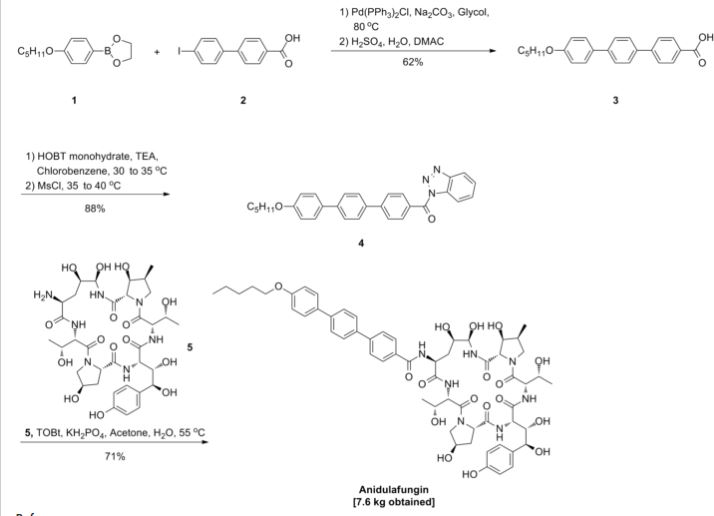
Abstract Image

Many years ago anidulafungin 1 was identified as a potentially useful medicine for the treatment of fungal infections. Its chemical and physical properties as a relatively high molecular weight semisynthetic derived from echinocandin B proved to be a significant hurdle to its final presentation as a useful medicine. It has recently been approved as an intravenous treatment for invasive candidaisis, an increasingly common health hazard that is potentially life-threatening. The development and commercialization of this API, which is presented as a molecular mixture of anidulafungin and d-fructose is described. This includes, single crystal X-ray structures of the starting materials, the echinocandin B cyclic-peptide nucleus (ECBN·HCl) and the active ester 1-({[4′′-(pentyloxy)-1,1′:4′,1′′-terphenyl-4-yl]carbonyl}oxy)-1H-1,2,3-benzotriazole (TOBt). Details of the structure and properties of starting materials, scale-up chemistry and unusual crystallization phenomena associated with the API formation are discussed.

str1

References

  1.  PRNewswire. Vicuron Pharmaceuticals Files New Drug Application (NDA) for Anidulafungin for Treatment of Invasive Candidiasis/Candidemia 08-18-2005.
  2. Jump up^ PRNewswire. Vicuron Pharmaceuticals Stockholders Approve Merger With Pfizer 08-15-2005
  3.  “FDA Approves New Treatment for Fungal Infections”. FDA News Release. Food and Drug Administration. 2006-02-21. Archived from the original on 10 July 2009. Retrieved 2009-08-01.
  4.  Krause DS, Reinhardt J, Vazquez JA, Reboli A, Goldstein BP, Wible M, Henkel T (2004). “Phase 2, randomized, dose-ranging study evaluating the safety and efficacy of anidulafungin in invasive candidiasis and candidemia”. Antimicrob Agents Chemother 48 (6): 2021–4.doi:10.1128/AAC.48.6.2021-2024.2004. PMC 415613. PMID 15155194.
  5. Jump up^ Pfaller MA, Boyken L, Hollis RJ, Messer SA, Tendolkar S, Diekema DJ (2005). “In Vitro Activities of Anidulafungin against More than 2,500 Clinical Isolates of Candida spp., Including 315 Isolates Resistant to Fluconazole”. J Clin Microbiol 43 (11): 5425–7.doi:10.1128/JCM.43.11.5425-5427.2005. PMC 1287823. PMID 16272464.
  6. J Pfaller MA, Diekema DJ, Boyken L, Messer SA, Tendolkar S, Hollis RJ, Goldstein BP (2005). “Effectiveness of anidulafungin in eradicating Candida species in invasive candidiasis”. Antimicrob Agents Chemother 49 (11): 4795–7. doi:10.1128/AAC.49.11.4795-4797.2005.PMC 1280139. PMID 16251335.
  7. Jump up^ “Eraxis at RxList”. 2009-06-24. Retrieved 2009-08-01.
  8.  Trissel LA and Ogundele AB, “Compatibility of Anidulafungin With Other Drugs During Simulated Y-Site Administration,”Am J Health-Sys Pharm, 2005, 62:834-7.
  9.  Vazquez JA, “Anidulafungin: A New Echinocandin With a Novel Profile,” Clin Ther, 2005, 27(6):657-73.
  10. Jump up^ Walsh TJ, Anaissie EJ, Denning DW, et al., “Treatment of Aspergillosis: Clinical Practice Guidelines of the Infectious Diseases Society of America,” Clin Infect Dis, 2008, 46(3):327-60
  11. Denning DW (1997). “Echinocandins and pneumocandins – a new antifungal class with a novel mode of action”. J Antimicrob Chemother 40 (5): 611–614. doi:10.1093/jac/dkf045.PMID 9421307.
  12.  Lei Shao; Jian Li; Aijuan Liu; Qing Chang; Huimin Lin; Daijie Chen (2013). “Efficient Bioconversion of Echinocandin B to Its Nucleus by Overexpression of Deacylase Genes in Different Host Strains”. Applied and Environmental Microbiology 79 (4): 1126–1133. doi:10.1128/AEM.02792-12. PMC 3568618. PMID 23220968.
  13.  “Anidulafungin EMA Europa” (PDF).
Anidulafungin
Anidulafungin Molecular Structure 2.png
Systematic (IUPAC) name
N-[(3S,6S,9S,11R,15S,18S,20R,21R,24S,25S,26S)-6-[(1S,2R)-1,2-dihydroxy-2-(4-hydroxyphenyl)ethyl]-11,20,21,25-tetrahydroxy-3,15-bis[(1R)-1-hydroxyethyl]-26-methyl-2,5,8,14,17,23-hexaoxo-1,4,7,13,16,22-hexaazatricyclo[22.3.0.09,13]heptacosan-18-yl]- 4-{4-[4-(pentyloxy)phenyl]phenyl}benzamide
Clinical data
Trade names Eraxis
AHFS/Drugs.com Monograph
Pharmacokinetic data
Protein binding 84 %
Biological half-life 40–50 hours
Identifiers
CAS Number 166663-25-8 Yes
ATC code J02AX06 (WHO)
PubChem CID 166548
DrugBank DB00362 Yes
ChemSpider 21106258 Yes
UNII 9HLM53094I Yes
KEGG D03211 
ChEBI CHEBI:55346
ChEMBL CHEMBL1630215 
Chemical data
Formula C58H73N7O17
Molar mass 1140.24 g/mol

//////////FUNGIN, ANIDULAFUNGIN, Eraxis , Ecalta,  semisynthetic echinocandin, anantifungal drug, FDA 2006, PFIZER, LY-307853, LY-329960, LY-333006, LY303366, VEC, VER-002, 166663-25-8, Eli Lilly and Company Inc.

STR1

CCCCCOc1ccc(cc1)c2ccc(cc2)c3ccc(cc3)C(=O)N[C@H]6C[C@@H](O)[C@@H](O)NC(=O)C4[C@@H](O)[C@@H](C)CN4C(=O)C(NC(=O)C(NC(=O)C5C[C@@H](O)CN5C(=O)C(NC6=O)[C@@H](C)O)[C@@H](O)[C@H](O)c7ccc(O)cc7)[C@@H](C)O

Supporting Info