New Drug Approvals

Home » Articles posted by DR ANTHONY MELVIN CRASTO Ph.D (Page 103)

Author Archives: DR ANTHONY MELVIN CRASTO Ph.D

DRUG APPROVALS BY DR ANTHONY MELVIN CRASTO .....FOR BLOG HOME CLICK HERE

Blog Stats

  • 4,804,549 hits

Flag and hits

Flag Counter

Enter your email address to follow this blog and receive notifications of new posts by email.

Join 37.9K other subscribers
Follow New Drug Approvals on WordPress.com

Archives

Categories

Recent Posts

Flag Counter

ORGANIC SPECTROSCOPY

Read all about Organic Spectroscopy on ORGANIC SPECTROSCOPY INTERNATIONAL 

Enter your email address to follow this blog and receive notifications of new posts by email.

Join 37.9K other subscribers
DR ANTHONY MELVIN CRASTO Ph.D

DR ANTHONY MELVIN CRASTO Ph.D

DR ANTHONY MELVIN CRASTO, Born in Mumbai in 1964 and graduated from Mumbai University, Completed his Ph.D from ICT, 1991,Matunga, Mumbai, India, in Organic Chemistry, The thesis topic was Synthesis of Novel Pyrethroid Analogues, Currently he is working with AFRICURE PHARMA, ROW2TECH, NIPER-G, Department of Pharmaceuticals, Ministry of Chemicals and Fertilizers, Govt. of India as ADVISOR, earlier assignment was with GLENMARK LIFE SCIENCES LTD, as CONSUlTANT, Retired from GLENMARK in Jan2022 Research Centre as Principal Scientist, Process Research (bulk actives) at Mahape, Navi Mumbai, India. Total Industry exp 32 plus yrs, Prior to joining Glenmark, he has worked with major multinationals like Hoechst Marion Roussel, now Sanofi, Searle India Ltd, now RPG lifesciences, etc. He has worked with notable scientists like Dr K Nagarajan, Dr Ralph Stapel, Prof S Seshadri, etc, He did custom synthesis for major multinationals in his career like BASF, Novartis, Sanofi, etc., He has worked in Discovery, Natural products, Bulk drugs, Generics, Intermediates, Fine chemicals, Neutraceuticals, GMP, Scaleups, etc, he is now helping millions, has 9 million plus hits on Google on all Organic chemistry websites. His friends call him Open superstar worlddrugtracker. His New Drug Approvals, Green Chemistry International, All about drugs, Eurekamoments, Organic spectroscopy international, etc in organic chemistry are some most read blogs He has hands on experience in initiation and developing novel routes for drug molecules and implementation them on commercial scale over a 32 PLUS year tenure till date Feb 2023, Around 35 plus products in his career. He has good knowledge of IPM, GMP, Regulatory aspects, he has several International patents published worldwide . He has good proficiency in Technology transfer, Spectroscopy, Stereochemistry, Synthesis, Polymorphism etc., He suffered a paralytic stroke/ Acute Transverse mylitis in Dec 2007 and is 90 %Paralysed, He is bound to a wheelchair, this seems to have injected feul in him to help chemists all around the world, he is more active than before and is pushing boundaries, He has 100 million plus hits on Google, 2.5 lakh plus connections on all networking sites, 100 Lakh plus views on dozen plus blogs, 227 countries, 7 continents, He makes himself available to all, contact him on +91 9323115463, email amcrasto@gmail.com, Twitter, @amcrasto , He lives and will die for his family, 90% paralysis cannot kill his soul., Notably he has 38 lakh plus views on New Drug Approvals Blog in 227 countries......https://newdrugapprovals.wordpress.com/ , He appreciates the help he gets from one and all, Friends, Family, Glenmark, Readers, Wellwishers, Doctors, Drug authorities, His Contacts, Physiotherapist, etc He has total of 32 International and Indian awards

Verified Services

View Full Profile →

Archives

Categories

Flag Counter

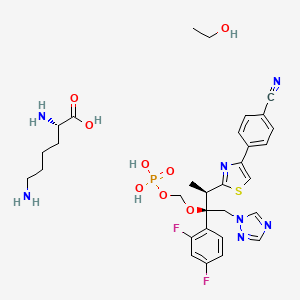
Fosravuconazole L-lysine ethanolate, ホスラブコナゾール L-リシンエタノール付加物


Image result for Fosravuconazole L-lysine ethanolate

Image result for Fosravuconazole L-lysine ethanolate

C23H20F2N5O5PS▪C6H14N2O2▪C2H6O : 739.73
[914361-45-8]

[(2R,3R)-3-[4-(4-cyanophenyl)-1,3-thiazol-2-yl]-2-(2,4-difluorophenyl)-1-(1,2,4-triazol-1-yl)butan-2-yl]oxymethyl dihydrogen phosphate;(2S)-2,6-diaminohexanoic acid;ethanol

L-Lysine [[(2R,3R)-3-[4-(4-cyanophenyl)-1,3-thiazol-2-yl]-2-(2,4-difluorophenyl)-1-(1H-1,2,4-triazol-1-yl)butan-2-yl]oxy]methyl dihydrogen phosphate ethanol

BFE-1224
BMS-379224
E-1224

ravuconazole prodrugs, ravuconazole methyl phosphate

fosravuconazole bis(L-lysine)

ホスラブコナゾール L-リシンエタノール付加物

Formula
C23H20F2N5O5PS. C6H14N2O2. C2H6O
CAS
914361-45-8
Mol weight
739.727

Antifungal, Ergosterol biosynthesis inhibitor

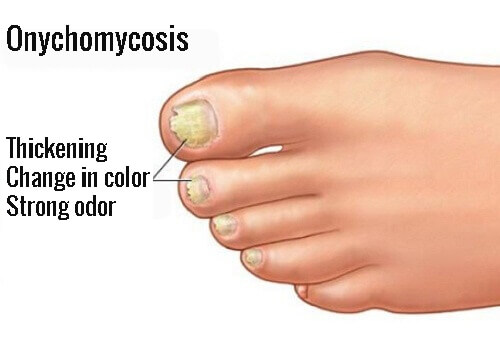
Fungal infection; Onychomycosis; Trypanosoma cruzi infection

PMDA JAPAN APPROVED

2018/1/19 PMDA APPROVED Fosravuconazole L-lysine ethanolate Nailin Sato Pharmaceutical

FOR

Tinea, nail (onychomycosis)

NOTE THIS STR

Image result for fosravuconazole

  • 4-[2-[(1R,2R)-2-(2,4-Difluorophenyl)-1-methyl-2-[(phosphonooxy)methoxy]-3-(1H-1,2,4-triazol-1-yl)propyl]-4-thiazolyl]benzonitrile
  • E 1224
  • Fosravuconazole
  • CAS  351227-64-0

Drugs for Neglected Diseases initiative (DNDi), under license from Eisai, is developing fosravuconazole for CD  and eumycetoma 

In February 2013, the drug was in phase II/III development by Seren Pharmaceuticals for onychomycosis in North America, Europe and Asia, including Japan,

In 2010, the product was licensed exclusively to Brain Factory (now Seren Pharma) for development, commercialization and sublicense in Japan for the treatment of fungal infections. In 2014, Seren Pharma signed an agreement with Sato Pharma, granting them the development and commercialization rights of the product in Japan

Sato Pharmaceutical Co., Ltd. has obtained marketing and manufacturing approval for the oral antifungal agent, Nailin capsules 100mg containing the active ingredient fosravuconazole L-lysine ethanolate (fosravuconazole) for the treatment of onychomycosis in Japan.

Sato Pharma conducted a phase III clinical study of the agent in patients with onychomycosis in Japan, and after confirming efficacy and safety of the agent in the study, the company applied for marketing and manufacturing authorization in January 2017.

Fosravuconazole, the active ingredient of Nailin capsules 100mg, is a new triazole class oral antifungal component discovered by Eisai.

Fosravuconazole, the active ingredient of Nailin capsules 100mg, is a new triazole class oral antifungal component discovered by Eisai. By providing Nailin capsules 100mg as a new option for the treatment of onychomycosis, Sato Pharma and Eisai will strive to fulfil the needs of onychomycosis patients and healthcare professionals.

Onychomycosis is a fungal infection of the toenails or fingernails that may involve any component of the nail unit, including the matrix, bed, or plate. With Sato Pharma now having obtained marketing and manufacturing approval for Nailin capsules 100mg, as an oral treatment for onychomycosis, this is the first new treatment for the disease in approximately 20 years.

Fosravuconazole is a prodrug of ravuconazole originated by Eisai. In 2018, the product was approved in Japan for the treatment of onychomycosis. Fosravuconazole is being tested in phase II clinical studies at Eisai and Drugs for Neglected Diseases Initiative (DNDi) for the treatment of american trypanosomiasis (Chagas disease)

Image result for Fosravuconazole L-lysine ethanolate WIKI

Onychomycosis due to Trichophyton rubrum, right and left great toe. Tinea unguium.
Image/CDC

Sato Pharmaceutical Co., Ltd. obtained marketing and manufacturing approval for the oral antifungal agent NAILIN Capsules 100mg containing the active ingredient fosravuconazole L-lysine ethanolate (fosravuconazole) for the treatment of onychomycosis in Japan on January 19, 2018.
Fosravuconazole, the active ingredient of NAILIN Capsules 100mg, is a new triazole class oral antifungal component discovered by Eisai. Sato Pharma conducted a Phase III clinical study of the agent in patients with onychomycosis in Japan, and after confirming efficacy and safety of the agent in the study, Sato Pharma applied for marketing and manufacturing authorization in January 2017.Sato Pharma and Eisai Co., Ltd. are jointly providing information on its proper use.

Onychomycosis is a fungal infection of the toenails or fingernails that may involve any component of the nail unit, including the matrix, bed, or plate.

Onychomycosis affects 1 in every 10 Japanese people, and there are an estimated approximately 11 million sufferers in Japan. With Sato Pharma now having obtained marketing and manufacturing approval for NAILIN Capsules 100mg, as an oral treatment for onychomycosis, this is the first new treatment for the disease in approximately 20 years.

Image result for Onychomycosis

Sato Pharmaceutical Co. Ltd., Eisai Co. Ltd., and Seren Pharmaceuticals Inc. announced that Sato Pharma and Eisai will co-promote a new triazole class oral antifungal agent (development code: BFE1224) containing the active ingredient fosravuconazole L-lysine ethanolate (fosravuconazole) in Japan, based on an agreement between the three companies. The agent is currently under regulatory review for the treatment of onychomycosis.

After receiving regulatory approval, Sato Pharma will begin distributing the agent, and Sato Pharma and Eisai will jointly provide information on its proper use.

Fosravuconazole is a new oral antifungal component developed by Eisai. In 2010, Eisai concluded a license agreement with Seren Pharma (formerly known as Brain Factory Co., Ltd.), granting them exclusive rights to develop, commercialize, and sublicense the agent in Japan.

In 2014, Seren Pharma concluded an agreement with Sato Pharma, granting them the development and commercialization rights, and both companies continued to develop the agent for treating onychomycosis. In January 2017, Sato Pharma applied for marketing authorization for the agent.

Sato Pharma, Eisai, and Serena Pharma will cooperate to maximize the value of fosravuconazole in order to fulfil the unmet medical needs of patients with fungal diseases.

Courtesy- techno.bigmir

PATENT

WO 2006118351

Journal of the American Chemical Society, 139(31), 10733-10741; 2017

PAPER

BMS-379224, a water-soluble prodrug of ravuconazole
42nd Intersci Conf Antimicrob Agents Chemother (ICAAC) (September 27-30, San Diego) 2002, Abst F-817

PATENT

WO 2006118351

WO 2007072851

WO 2001052852

WO 2006026274

WO 2013082102

WO 2013157584

////////////ホスラブコナゾール L-リシンエタノール付加物, Fosravuconazole L-lysine ethanolate, Nailin, SATO, BFE-1224, BMS-379224, E-1224, JAPAN 2018, ravuconazole prodrugs, ravuconazole methyl phosphate, fosravuconazole bis(L-lysine), Drugs for Neglected Diseases initiative, DNDi

CCO.CC(C1=NC(=CS1)C2=CC=C(C=C2)C#N)C(CN3C=NC=N3)(C4=C(C=C(C=C4)F)F)OCOP(=O)(O)O.C(CCN)CC(C(=O)O)N

ELECLAZINE, элеклазин , إيليكلازين , 依来克秦 , REVISITED


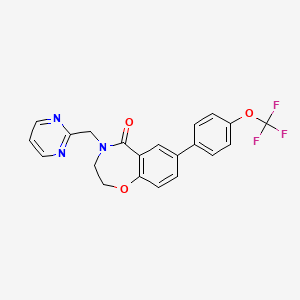
Eleclazine.pngChemSpider 2D Image | eleclazine | C21H16F3N3O3

ELECLAZINE

GS-6615

Molecular Formula: C21H16F3N3O3
Molecular Weight: 415.372 g/mol

1443211-72-0

4-(pyrimidin-2-ylmethyl)-7-[4-(trifluoromethoxy)phenyl]-2,3-dihydro-1,4-benzoxazepin-5-one

4-(pyrimidin-2-ylmethyl)-7-[4-(trifluoromethoxy)phenyl]-2,3,4,5- tetrahydro-1,4- benzoxazepin-5-one

7-(4-(Trifluoromethoxy)phenyl)-3,4-dihydrobenzo[f][1,4]oxazepin-5(2H)-one

1,4-Benzoxazepin-5(2H)-one, 3,4-dihydro-4-(2-pyrimidinylmethyl)-7-[4-(trifluoromethoxy)phenyl]-

Eleclazine; UNII-PUY08529FK; 1443211-72-0; GS-6615; PUY08529FK; 4-(pyrimidin-2-ylmethyl)-7-(4-(trifluoromethoxy)phenyl)-3,4-dihydrobenzo[f][1,4]oxazepin-5(2H)-on

элеклазин [Russian] [INN]
إيليكلازين [Arabic] [INN]
依来克秦 [Chinese] [INN]
  • Phase III Long QT syndrome
INGREDIENT UNII CAS
Eleclazine Hydrochloride 4R1JP3Q4HI 1448754-43-5

Eleclazine has been used in trials studying the treatment of LQT2 Syndrome, Long QT Syndrome, Ischemic Heart Disease, Ventricular Arrhythmia, and Long QT Syndrome Type 3, among others.

In 2015, orphan drug designation was assigned to the product by the FDA for the treatment of congenital long QT syndrome.

  • Originator Gilead Sciences
  • Class Antiarrhythmics; Ischaemic heart disorder therapies; Pyrimidines; Small molecules; Vasodilators
  • Mechanism of Action Sodium channel antagonists

Highest Development Phases

  • Phase III  Long QT syndrome
  • Phase II/III Hypertrophic cardiomyopathy
  • Phase II Ventricular arrhythmias
  • No development reported Ischaemic heart disorders

Most Recent Events

  • 15 Nov 2017 Gilead Sciences presents safety and adverse events data from a phase III trial in Long QT syndrome type 3 at the 90th Annual Scientific Sessions of the American Heart Association (AHA-2017)
  • 11 Nov 2017 Efficacy data from the phase II TEMPO trial in Ventricular arrthymmia presented at the 90th Annual Scientific Sessions of the American Heart Association
  • 17 Feb 2017 Gilead Sciences terminates a phase II/III trial in Hypertrophic cardiomyopathy in Australia, France, Germany, Israel, Italy, Netherlands, USA and United Kingdom (NCT02291237)
  • Gilead Sciences was developing eleclazine (GS-6615), a late sodium current inhibitor, for the potential oral (tablet) treatment of hypertrophic cardiomyopathy and arrhythmias including long QT-3 (LQT3) syndrome.

Image result

Image result for Long QT syndrome

Image result for Long QT syndrome

Image result for Long QT syndrome

Image result for Long QT syndrome

Image result for Long QT syndrome

Long QT syndrome

The late sodium current (INaL) is a component of the fast Na+ current of cardiac myocytes and neurons. Late sodium current in cardiac cells is small compared with the fast component, but it may make a large contribution to sodium loading during each cardiac cycle. Impaired sodium channel function contributes to pathologic increase of the late sodium current, sodium overload, and sodium-induced calcium overload by way of the sodium-calcium exchanger. Calcium overload causes impaired diastolic relaxation, which increases diastolic wall tension, increases myocardial oxygen demand, reduces myocardial blood flow and oxygen supply, microvascular perfusion, and worsens ischemia and angina. Many common neurological and cardiac conditions are associated with abnormal (INaL) augmentation, which contributes to the pathogenesis of both electrical and contractile dysfunction in mammals. Inhibiting the late sodium current can lead to reductions in elevated intracellular calcium levels, which, in turn, may lead to reduced tension in the heart wall and reduced oxygen requirements for the heart muscle. Inhibition of cardiac late sodium current is a strategy used to suppress arrhythmias and sodium -dependent calcium overload associated with myocardial i schemia and heart failures. Thus, compounds that selectively inhibit the iate sodium current (INaL) in mammals may be useful in treating such disease states.

Eleclazine (4-(pyrimidin-2-ylmethyl)-7-(4-(trifluoromethoxy)pheny l)-3,4-dihydrobenzo[b]oxepin-5(2H)-one]; CAS # 144321 1-72-0) is an inhibitor of the late sodium current, Eleclazine is being investigated for the treatment of cardiomyopathy, specifically hypertrophic cardiomyopathy, as well as additional cardiovascular indications, including angina, heart failure, atrial fibrillation (AF), ischemic heart disorders, atrial premature beats (APBs), myocardial isch mia, and arrhythmias.

Eleclazine

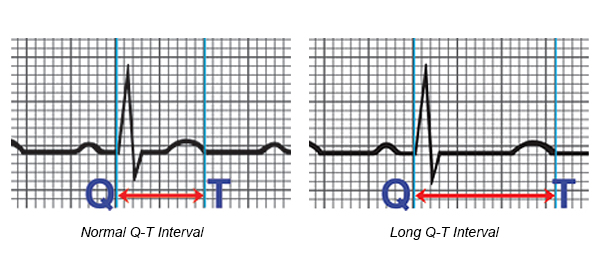
Eleclazine shows a shortening of the QTc interval (the time interval between the start of the Q-wave and the end of T-wave in the electrical cycle of the heart) in patients with QT-3 (LQT3) sydrome. LQTS is a genetic disorder that prolongs the heart’s QTc interval and can cause life-threatening cardiac arrhythmias. Therefore, eleclazine is also being investigated for treatment of long QT syndrome.

Eleclazine may be metabolized in the liver and may be subject to extensive cytochrome P450-mediated oxidative metabolism. Eleclazine is metabolized predominantly by N-dealkylation, and elimination is principally in the bile and gastrointestinal tract. The primary metabolite of eleclazine is GS-623134

Adverse effects associated with eleclazine may include dizziness, dry mouth, nausea, weakness, ringing in ears, tremors, and the like. Additionally, some metabolites of eleclazine, particularly the metabolite GS 623134, may have undesirable side effects.

PATENT

PRODUCT, WO 2013112932, WO 2013006485

WO 2013006463

https://patentscope.wipo.int/search/en/detail.jsf?docId=WO2013006463&recNum=1&maxRec=&office=&prevFilter=&sortOption=&queryString=&tab=PCTDescription

WO 2013006463 , ( US8962610 ) hold protection in the EU states until 2032 and in US until 2033 with US154 extension.

PATENT

WO 2015017661

https://patentscope.wipo.int/search/en/detail.jsf?docId=WO2015017661

Provided herein is a method for reducing the prolongation of the QT interval in a human patient, said method comprising administering to the patient an effective amount of Compound 1:

Example 1: 4-(pyrimidin-2-ylmethyl)-7-(4-(trifluoromethoxy)phenyl)-3,4- dihydrobenzo[f][1,4]oxazepin-5(2H)-one (Compound 1)

To a solution of Compound 1-A (20 g, 0.083 mol, 1 eq.) and Compound 1-B (25 g, 0.15 mol, 1.8 eq.) in DMF (150 mL), NaOH solution (20 mL, 10 M, 5 eq.) was slowly added at room temperature (slightly exothermic) and stirred at r.t. for 10 min, followed by heating at 95 °C for 2 h. After cooling the reaction mixture, ethyl acetate (200 mL) was added and the organic layer was separated. The organics was washed with water (20 mL), brine, dried over sodium sulphate and concentrated.

The residue was dissolved in 1,4-dioxane (50 mL) and to this 4 N HCl in dioxane (50 mL) and cone. HCl ( 2 mL) was added and stirred at room temperature for 4 h, filtered the precipitate, washed with ethyl acetate and dried. Compound 1-C was obtained (30 g) as a light yellow solid.

To the bromide (15 g, 0.04 mol, 1 eq), boronic acid (12.5 g, 0.06 mol, 1.5 eq) and potassium carbonate (22 g, 0.16 mol, 4 eq) in a round bottom flask, solvent (150 mL, toluene/isopropanol/water : 2/1/1) was added and stirred under nitrogen for 10 min. To the above solution the palladium catalyst (1 g, 0.012 mol, 0.02 eq) was added and heated at 85 °C for 2h. The reaction mixture was diluted with ethyl acetate, separated the organic layer and filtered the organic layer through a plug of celite and silica gel and concentrated. Column purification on silica gel using ethyl acetate/hexane as eluent provided Compound 1 (13 g).

To a solution of Compound 1 (26 g) in 1,4-dioxane (25 mL), 4N HCl/dioxane (25 mL) was added followed by cone. HCl (2 mL) and stirred at room temperature for 4h. Solvent was distilled off, dichlorom ethane was added and distilled off and to the residue, ethyl acetate (150 mL) was added and stirred at room temperature overnight and filtered the precipitate, washed with ethyl acetate, hexane and dried under vacuum. Compound 1-HCl obtained (24.8 g) was a white solid.

1H-NMR (CDCl3) 5 8.72 (d, 2H, J= 5.2 Hz), 8.17 (d, 1H, J= 2.4 Hz), 7.59-7.63 (m, 3H), 7.26 (d, 2H, J= 3.2 Hz), 7.22 (t, 1H, J= 4.8 Hz), 7.10 (d, 1H, J= 8.4 Hz), 5.10 (s, 2H), 4.56 (t, 2H, J = 5.0 Hz), 3.77 (t, 2H, J= 5.0 Hz); MS m/z 416.1 (M+H).

PATENT

WO-2018048977

https://patentscope.wipo.int/search/en/detail.jsf?docId=WO2018048977&redirectedID=true

Novel deuterated analogs of a substituted oxazepin compounds, particularly eleclazine and their salts, esters, prodrugs and solvates and compositions and combinations comprising them are claimed. Also claim is their use for treating a late sodium current-mediated disorder, such as acute coronary syndrome, angina, congestive heart disease, myocardial infraction, diabetes, ischemic heart disorders, inflammatory diseases and cancers.

EXAMPLE 1- COMPARATIVE

[00297] 4-(pyrimidin-2-ylmethyl)-7-[4-(trifluorome4hoxy)phenyl]-2,3,4,5-tetrahydro-l,4- benzoxazepin-5-one [Eleclazine]

[00299] To a solution of 5-bromo-2-hydroxybenzoate (10 g, 43.28 mmol, 1.00 equiv) in DMA (100 ml.) was added potassium carbonate (9 g, 65, 12 mmol, 1.50 equiv) and 2-chloroacetonitrile (3.4 mL, 1.25 equiv). The resulting suspension was stirred overnight. The solids were filtered out. The filtrate was washed with water. The resulting solution was extracted with ethyl acetate (3 x 50 mL). The organic layers were dried over anhydrous sodium sulfate and concentrated under vacuum to afford 1 1 g (94%) of methyl 5-bromo-2-(cyanomethoxy)benzoate as a white solid, LC-MS: m/z = 270 [M+H]+.

[00300] Step 2: 7-bromo-2,3,4,5-tetrahydro-l,4-benzoxazepin-5-one

[00301] To a solution of 5-bromo-2-(cyanomethoxy)benzoate [Example 1 , Step 1 ] (4 g, 14.81 mmol, 1.00 equiv) in methanol (50 mL) was added saturated aq. NIL (4 mL) and Raney-Ni (2 mL) under a H2 atmosphere. The resulting solution was stirred overnight at room temperature. The catalyst was filtered out. The filtrate was concentrated under vacuum. The residue was purifsed by SiCte chromatography eluted with ethyl acetate/petroleum ether (1 : 1 ) to afford 530 mg (15%) of 7-bromo-2,3,4,5-tetrahydro-l,4-benzoxazepin-5-one as a yellow solid. LC-MS: m/z = 242 [M+H]+.

[00302] Step 3 : 7-bromo-4-(pyrimidin-2-ylmethyl)-2,3,4,5-tetrahydro-l,4-benzoxazepin-5- one

[00303] To a solution of 7-bromo-2,3,4,5-tetrahydro- l ,4-benzoxazepin-5-one [Example 1, Step 2] (530 mg, 2.19 mmol, 1.00 equiv) and 2-(chloromethyl)pyrimidine hydrochloride (650 mg, 3.96 mmol, 1.80 equiv) in DMF (10 mL), was slowly added a NaOH solution (0.55 mL, 10 M, 2.50 equiv), which was stirred at room temperature for 10 min. Then the mixture was stirred at 95°C for 2 h. After cooling the reaction mixture, ethyl acetate (30 mL) was added and the organic layer was separated. The organic layers were washed with water, brine, dried over anhydrous sodium sulfate, and concentrated under vacuum to afford 600 mg (82%) of 7-bromo- 4-(pyrimidin-2-ylmethyl)-2,3,4,5-tetrahydro-l,4-benzoxazepin-5-one as light yellow oil . LC-MS: m/z = 334 [M+H]+.

[00304] Step 4: 4-(pyrimidin-2-ylmethyl)-7-[4-(trifluoromethoxy)phenyl]-2,3,4,5-tetrahydro- 1 ,4-benzoxazepin-5-one

[00305] To a solution of 7-bromo-4-(pyriraidin-2-ylmethyl)-2,3,4,5-tetrahydro-l,4- benzoxaze- pin-5-one [Example 1, Step 3] (277 mg, 0.83 mmol, 1.00 equiv) in Toluene/iPrOH/thO (2: 1 : 1, 4 mL) was added potassium carbonate (459 mg, 3.32 mmol, 4.00 equiv) and [4-(trifluoromethoxy)phenyl]boronic acid (257 mg, 1.25 mmol, 1.50 equiv). The mixture was stirred for 10 min at room temperature. Then Pd(dppf)Ch (12 mg, 0.02 equiv) was added to the solution. The mixture was stirred at 85°C for 2 h. After cooling the reaction mixture, ethyl acetate (30 mL) was added, and the organic layer was separated. The organic layer was washed with water, brine, dried over anhydrous sodium sulfate, and concentrated under vacuum. The crude product was purified by Prep-HPLC with the following conditions: Column, XBridge Prep C18 OBD Column, Sum, 19*150mm; mobile phase, Water (10 mmol/L NH4HCO3) and CH3CN (50,0% CH3CN up to 52.0% in 7 min); Detector, UV 254, 220nra to afford 190 mg (55%) of 4-(pyrimidin-2-ylmethyl)-7-[4-(trifluoromethoxy)phenyl]-2,3,4,5- tetrahydro-1,4- benzoxazepin-5-one as a white solid. LC-MS: m/z = 416 [M+H]+

[00306] 1H NMR (400 MHz, Chloroform-t/) δ 8.75-8.74 (m, 2H), 8.20-8. 19 (m, IH), 7.66- 7,61 (m, 3H), 7,29-7,28 (m, IH), 7.27-7.26 (m, IH), 7.24-7.23 (m, I H), 7.13-7.1 1 (m, IH), 5.12 (s, 2H), 4.60-4.57 (m, 2H), 3.81 -3.78 (m, 2H).

PAPER

Journal of Medicinal Chemistry (2016), 59(19), 9005-9017

Abstract Image

Late sodium current (late INa) is enhanced during ischemia by reactive oxygen species (ROS) modifying the Nav 1.5 channel, resulting in incomplete inactivation. Compound 4 (GS-6615, eleclazine) a novel, potent, and selective inhibitor of late INa, is currently in clinical development for treatment of long QT-3 syndrome (LQT-3), hypertrophic cardiomyopathy (HCM), and ventricular tachycardia–ventricular fibrillation (VT–VF). We will describe structure–activity relationship (SAR) leading to the discovery of 4 that is vastly improved from the first generation late INa inhibitor 1(ranolazine). Compound 4 was 42 times more potent than 1 in reducing ischemic burden in vivo (S–T segment elevation, 15 min left anteriorior descending, LAD, occlusion in rabbits) with EC50values of 190 and 8000 nM, respectively. Compound 4 represents a new class of potent late INainhibitors that will be useful in delineating the role of inhibitors of this current in the treatment of patients.

Discovery of Dihydrobenzoxazepinone (GS-6615) Late Sodium Current Inhibitor (Late INai), a Phase II Agent with Demonstrated Preclinical Anti-Ischemic and Antiarrhythmic Properties

Medicinal Chemistry, Drug Metabolism, §Drug Safety Evaluation, Formulation and Process Development, and Structural Chemistry, Gilead Sciences Inc., 333 Lakeside Drive, Foster City, California 94404, United States
# Biology, Gilead Sciences Inc., 7601 Dumbarton Circle, Fremont, California 94555, United States
J. Med. Chem.201659 (19), pp 9005
7-(4-(Trifluoromethoxy)phenyl)-3,4-dihydrobenzo[f][1,4]oxazepin-5(2H)-one 4
Compound 4 HCl obtained (24.8 g) was obtained as a white solid. Anal. HPLC 100% (6.78 min).
 
 1H NMR (CDCl3) δ 8.72 (d, 2H, J = 5.2 Hz), 8.17 (d, 1H, J = 2.4 Hz), 7.59–7.63 (m, 3H), 7.26 (d, 2H, J = 3.2 Hz), 7.22 (t, 1H, J = 4.8 Hz), 7.10 (d, 1H, J = 8.4 Hz), 5.10 (s, 2H), 4.56 (t, 2H, J = 5.0 Hz), 3.77 (t, 2H, J = 5.0 Hz). LCMS m/z 416.1 (M + H).
HRMS-ESI+: [M + H]+ calcd for C21H16F3N3O3, 416.1217; found, 416.1215.
PAPER
Inhibition of late sodium current suppresses calcium-related ventricular arrhythmias by reducing the phosphorylation of CaMK-II and sodium channel expressions
Scientific Reports (2017), 7, (1), 1-11.
PATENT
US 20180064726
PATENTS
Patent ID

Patent Title

Submitted Date

Granted Date

US9126989 COMPOUND AND METHODS FOR TREATING LONG QT SYNDROME
2014-07-31
2015-02-05
US9193694 FUSED HETEROCYCLIC COMPOUNDS AS ION CHANNEL MODULATORS
2013-09-26
2014-05-15
US9125916 METHODS OF TREATING HYPERTROPHIC CARDIOMYOPATHY
2014-07-28
2015-02-05
US2016332976 PROCESSES FOR PREPARING FUSED HETEROCYCLIC ION CHANNEL MODULATORS
2016-05-02
US2015283149 METHODS OF TREATING PATIENTS HAVING IMPLANTABLE CARDIAC DEVICES
2015-03-20
2015-10-08
Patent ID

Patent Title

Submitted Date

Granted Date

US2015045305 COMBINATION THERAPIES USING LATE SODIUM ION CHANNEL BLOCKERS AND POTASSIUM ION CHANNEL BLOCKERS
2013-01-25
2015-02-12
US2016332977 PROCESSES FOR PREPARING FUSED HETEROCYCLIC ION CHANNEL MODULATORS
2016-05-02
US9598435 FUSED HETEROCYCLIC COMPOUNDS AS ION CHANNEL MODULATORS
2015-10-01
2016-04-07
US2015225384 PROCESSES FOR PREPARING FUSED HETEROCYCLIC ION CHANNEL MODULATORS
2015-02-13
2015-08-13
US9273038 SOLID FORMS OF AN ION CHANNEL MODULATOR
2015-02-12
2015-08-13
Patent ID

Patent Title

Submitted Date

Granted Date

US9676760 FUSED HETEROCYCLIC COMPOUNDS AS ION CHANNEL MODULATORS
2016-05-11
US8697863 Fused heterocyclic compounds as ion channel modulators
2013-03-07
2014-04-15
US8586732 Fused heterocyclic compounds as ion channel modulators
2012-06-29
2013-11-19
US2017007617 INTRAVENOUS FORMULATIONS OF A LATE SODIUM CURRENT INHIBITOR
2016-07-06
US2014329755 COMBINATION THERAPY FOR THE TREATMENT OF ARRHYTHMIAS OR HEART FAILURE
2014-04-30
2014-11-06

/////////////////ELECLAZINE, GS-6615, GS 6615, элеклазин إيليكلازين 依来克秦 Phase III,  Long QT syndrome, orphan drug designation, Long QT syndrome

C1COC2=C(C=C(C=C2)C3=CC=C(C=C3)OC(F)(F)F)C(=O)N1CC4=NC=CC=N4

Baloxavir marboxil, バロキサビルマルボキシル , балоксавир марбоксил , بالوكسافير ماربوكسيل , 玛巴洛沙韦 ,


Image result for japan animated flag

str1

1985606-14-1.pngBaloxavir marboxil.png

Image result for XofluzaChemSpider 2D Image | baloxavir marboxil | C27H23F2N3O7S

Baloxavir marboxil

バロキサビルマルボキシル

балоксавир марбоксил [Russian] [INN]

بالوكسافير ماربوكسيل [Arabic] [INN]
玛巴洛沙韦 [Chinese] [INN]

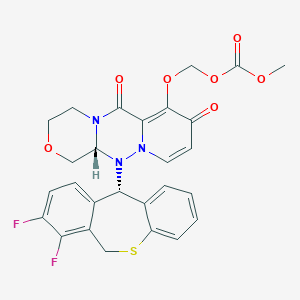
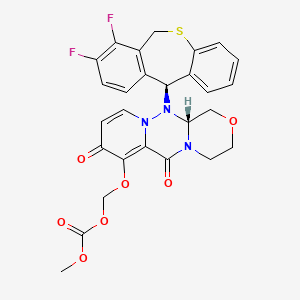
Carbonic acid, [[(12aR)-12-[(11S)-7,8-difluoro-6,11-dihydrodibenzo[b,e]thiepin-11-yl]-3,4,6,8,12,12a-hexahydro-6,8-dioxo-1H-[1,4]oxazino[3,4-c]pyrido[2,1-f][1,2,4]triazin-7-yl]oxy]methyl methyl ester

({(12aR)-12-[(11S)-7,8-Difluoro-6,11-dihydrodibenzo[b,e]thiepin-11-yl]-6,8-dioxo-3,4,6,8,12,12a-hexahydro-1H-[1,4]oxazino[3,4-c]pyrido[2,1-f][1,2,4]triazin-7-yl}oxy)methyl methyl carbonate

  1. (((12aR)-12-((11S)-7,8-Difluoro-6,11-dihydrodibenzo(b,E)thiepin-11-yl)-6,8-dioxo-3,4,6,8,12,12ahexahydro-1H-(1,4)oxazino(3,4-C)pyrido(2,1-F)(1,2,4)triazin-7-yl)oxy)methyl methyl carbonate
  2. Carbonic acid, (((12aR)-12-((11S)-7,8-difluoro-6,11-dihydrodibenzo(b,E)thiepin-11-yl)-3,4,6,8,12,12a-hexahydro-6,8-dioxo-1H-(1,4)oxazino(3,4-C)pyrido(2,1-F)(1,2,4)triazin-7-yl)oxy)methyl methyl ester

Antiviral

In Japan the product is indicated for treatment influenza types A and B in adults and children

RG-6152

UNII-505CXM6OHG

  • Originator Shionogi
  • Developer Roche; Shionogi
  • Class Antivirals; Dibenzothiepins; Esters; Pyridines; Small molecules; Triazines
  • Mechanism of Action Endonuclease inhibitors

Highest Development Phases

  • Marketed Influenza A virus infections; Influenza B virus infections
  • Phase III Influenza virus infections
  • Preclinical Influenza A virus H5N1 subtype
Xofluza (TN)
Antiviral
Formula
C27H23F2N3O7S
Cas
1985606-14-1
Mol weight
571.5492
2018/2/23 PMDA JAPAN APPROVED Baloxavir marboxil Xofluza Shionogi

Image result for japan animated flag

バロキサビル マルボキシル
Baloxavir Marboxil

C27H23F2N3O7S : 571.55
[1985606-14-1]

Image result for ShionogiImage result for Xofluza

2D chemical structure of 1985606-14-1

https://chem.nlm.nih.gov/chemidplus/sid/1985606141

Baloxavir marboxil (trade name Xofluza, compound code S-033188/S-033447) is a medication being developed by Shionogi Co., a Japanese pharmaceutical company, for treatment of influenza A and influenza B. The drug was in late-stage trials in Japan and the United States as of early 2018, with collaboration from Roche AG.[1].

It was approved for sale in Japan on February 23, 2018.[2]

Baloxavir marboxil is a medication developed by Shionogi Co., a Japanese pharmaceutical company, for treatment of influenza A and influenza B. The drug was approved for use in Japan in February 2018 and is in late phase trials in the United States as of early 2018. Roche, which makes Tamiflu, has acquired the license to sell Xofluza internationally, but it may not be until 2019 that it could be available in the United States [7]. Interestingly, a study has determined that administering Baloxavir marboxil with neuraminidase inhibitors leads to a synergistic effect in influenza treatment

Image result for Xofluza

It is an influenza therapeutic agent (cap-dependent endonuclease inhibitor), characterized by only taking one dose. Unlike neuraminidase inhibitors such as oseltamivir (Tamiflu) and zanamivir (Relenza) that inhibit the action of neuraminidase, which liberates viruses from the infected cells surface, baloxavir marboxil may prevent replication by inhibiting the cap-dependent endonuclease activity of the viral polymerase.[3]

In October 2015, the Japanese Ministry of Health, Labour and Welfare granted Sakigake status to Shionogi’s baloxavir marboxil for A type or B -type influenza virus infection . In October 2015, the drug was designated for Priority Review by the Ministry of Health, Labour and Welfare, presumably for the treatment of A type or B -type influenza virus infection .

This drug is a CAP endonuclease inhibitor [1]. The influenza endonuclease is an essential subdomain of the viral RNA polymerase enzyme. CAP endonuclease processes host pre-mRNAs to serve as primers for viral mRNA and therefore has been a common target for studies of anti-influenza drugs.

Viral gene transcription is primed by short-capped oligonucleotides that are cleaved from host cell pre mRNA by endonuclease activity. Translation of viral mRNAs by the host ribosome requires that they are capped at the 5′ end, and this is achieved in cells infected with influenza virus by a “cap-snatching” mechanism, whereby the endonuclease cleaves 5′ caps from host mRNA which then act as primers for transcription.The N-terminal domain of PA subunit (PAN) has been confirmed to accommodate the endonuclease activity residues, which is highly preserved among subtypes of influenza A virus and is able to fold functionally [4]. Translation of viral mRNAs by the host ribosome requires that they are capped at the 5′ end, and this is achieved in cells infected with influenza virus by a “cap-snatching” mechanism, whereby the endonuclease cleaves 5′ caps from host mRNA which then act as primers for transcription. The endonuclease domain binds the N-terminal half of PA (PAN) and contains a two-metal (Mn2+) active site that selectively cleaves the pre-mRNA substrate at the 3′ end of a guanine [3].

The administration of a CAP endonuclease inhibitor, such as Baloxavir marboxil, prevents the above process from occurring, exhibiting its action at the beginning of the pathway before CAP endonuclease may exert its action

Image result for Xofluza

It achieves this by inhibiting the process known as cap snatching[4], which is a mechanism exploited by viruses to hijack the host mRNA transcription system to allow synthesis of viral RNAs.

Image result for Xofluza

Shionogi, in collaboration with licensee Roche (worldwide except Japan and Taiwan), have developed and launched baloxavir marboxil

In March 2018, Shionogi launched baloxavir marboxil for the treatment of influenza types A and B in Japan . In September 2017, Shionogi was planning to file an NDA in the US; in February 2018, the submission remained in preparation

By September 2016, baloxavir marboxil had been awarded Qualified Infectious Disease Product (QIDP) designation in the US

In March 2017, a multicenter, randomized, double-blind, parallel-group, phase III study (NCT02954354; 1601T0831; CAPSTONE-1) was initiated in the US, Canada and Japan to compare a single dose of baloxavir marboxil versus placebo or oseltamivir bid for 5 days in influenza patients aged from 12 to 64 years of age (n = 1494). The primary endpoint was the time to alleviation of symptoms (TTAS).

PATENTS

JP 5971830

Kawai, Makoto; Tomita, Kenji; Akiyama, Toshiyuki; Okano, Azusa; Miyagawa, Masayoshi

PATENTS

WO 2017104691

Shishido, Takao; Noshi, Takeshi; Yamamoto, Atsuko; Kitano, Mitsutaka

In Japanese Patent Application No. 2015-090909 (Patent No. 5971830, issued on Aug. 17, 2016, Registered Publication), a compound having a CEN inhibitory action and represented by the formula:
[Chemical Formula 2]

is described. Anti-influenza agents of six mechanisms are enumerated as drugs that can be used together with the above compounds. However, no specific combinations are described, nor is it disclosed nor suggested about the combined effect.

Synthesis Example 2
[formula 39]

Compound III-1 (1.00g, 2.07mmol) to a suspension of DMA (5 ml) of chloromethyl methyl carbonate (0.483 g, 3.10 mmol) and potassium carbonate (0 .572 g, 4.14 mmol) and potassium iodide (0.343 g, 2.07 mmol) were added, the temperature was raised to 50 ° C. and the mixture was stirred for 6 hours. Further, DMA (1 ml) was added to the reaction solution, and the mixture was stirred for 6 hours. The reaction solution was cooled to room temperature, DMA (6 ml) was added, and the mixture was stirred at 50 ° C. for 5 minutes and then filtered. 1 mol / L hydrochloric acid water (10 ml) and water (4 ml) were added dropwise to the obtained filtrate under ice cooling, and the mixture was stirred for 1 hour. The precipitated solid was collected by filtration and dried under reduced pressure at 60 ° C. for 3 hours to obtain compound II-4 (1.10 g, 1.93 mmol, yield 93%).
1 H-NMR (DMSO-D 6) δ: 2.91-2.98 (1 H, m), 3.24-3.31 (1 H, m), 3.44 (1 H, t, J = 10.4 Hz) J = 10.8, 2.9 Hz), 4.06 (1 H, d, J = 14.3 Hz), 4.40 (1 H, dd, J = 11.5, 2.8 Hz), 3.73 (3 H, s), 4.00 , 5.67 (1 H, d, J = 6.5 Hz), 5.72 (1 H, d, J = 11.8 Hz), 4.45 (1H, dd, J = 9.9, 2.9 Hz), 5.42 J = 8.0, 1.1 Hz), 7.14 – 7.18 (1 H, m ), 7.23 (1 H, d, J = 7.8 Hz), 7.37 – 7.44 (2 H, m)

PATENTS

JP 6212678

PATENTS

JP 6249434

JP 5971830

SYNTHESIS OF KEY INTERMEDIATE

SYNTHESIS OF KEY INTERMEDIATE

SYNTHESIS OF FINAL PRODUCT

Japan’s New Drug: One Pill May Stop The Flu in Just One Day

 Opinions expressed by Forbes Contributors are their own.

Isao Teshirogi, president and chief executive officer of Shionogi & Co., speaks during an interview in Tokyo, Japan. Photographer: Kiyoshi Ota/Bloomberg

One day, you may be able to stop flu viruses in your body in just one day with just one pill. Based on an announcement yesterday, that day may be someday very soon in May in Japan.

On Friday, Japanese pharmaceutical company Shionogi announced that the flu medication that they have developed, Xofluza, otherwise known as baloxavir marboxil (which sounds a bit like a Klingon General), has been approved to be manufactured and sold in Japan. Beginning in October 2015, the medication underwent priority review by Japan’s Ministry of Health, Labor, and Welfare. Shionogi filed for approval in the autumn of 2017. Compared to Tamiflu, which requires two doses each day for five days, apparently only a single dose of Xofluza will be needed to treat the flu. Even though Xofluza has received approval, people will have to wait until the Japanese national insurance sets a price for the medication, which according to Preetika Rana writing for the Wall Street Journal, may not occur until May.

Xofluza works via a different mechanism from neuroaminidase inhibitors like Tamiflu (oseltamivir) and Relenza (zanamivir). Flu viruses are like squatters in your home that then use the furniture and equipment in your home to reproduce. Yes, I know, that makes for a lovely picture. A flu infection begins when flu viruses reach your lungs. Each flu virus will enter a cell in your lungs and then use your cell’s genetic material and protein production machinery to make many, many copies of itself. In order to do this, the flu virus uses “cap-snatching”, which has nothing to do with bottle caps or Snapchat. The virus employs an endonuclease enzyme to clip off and steal the caps or ends of your messenger RNA and then re-purposes these caps to reproduce its own genetic material. After the virus has made multiple copies of itself, the resulting viruses implement another enzyme called a neuroaminidase to separate themselves from parts of the host cell and subsequently spread throughout the rest of your body to cause havoc. While Tamiflu, Relenza, and other neuroaminidase inhibitors try to prevent the neuroaminidase enzyme from working, Xofluza acts at an earlier step, stopping the “cap-snatching” by blocking the endonuclease enzyme.

In a clinical trial, Xofluza stopped an infected person from shedding flu virus sooner than Tamiflu. (Photo Illustration by Ute Grabowsky/Photothek via Getty Images)

By acting at an earlier step before the virus has managed to replicate, Xofluza could stop a flu virus infection sooner than neuroaminidase inhibitors. The results from Shionogi’s Phase III CAPSTONE-1 clinical trial compared Xofluza (then called Cap-dependent Endonuclease Inhibitor S-033188, which doesn’t quite roll off the tongue) with oseltamivir and placebo, with results being published in Open Forum Infectious Diseases. The study found that baloxavir marboxil (or Xofluza) stopped an infected person from shedding flu virus earlier (median 24 hours) than oseltamivir (median 72 hours). Those taking baloxavir marboxil also had lower measured amounts of viruses than those taking oseltamivir throughout the first 3 days of the infection. Baloxavir marboxil also seemed to shorten the duration of flu symptoms (median 53.7 hours compared to a median of 80.2 hours for those taking placebo). Since symptoms are largely your body’s reaction to the flu virus, you can begin shedding virus before you develop symptoms, and symptoms can persist even when you are no longer shedding the virus.

The key with any of these flu medications is early treatment, especially within the first 24 to 48 hours of infection, which may be before you notice any symptoms. Once the virus has replicated and is all over your body, your options are limited. The vaccine still remains the best way to prevent an infection.

In the words of Alphaville, this new drug could be big in Japan. While Xofluza won’t be available in time to help with the current flu season, this year’s particularly harsh flu season has highlighted the need for better ways to treat the flu. But will the United States see Xofluza anytime soon? Similar to Pokemon, Xofluza may need a year or two to reach the U.S. market. But one day, one pill and one day may be a reality in the U.S.

http://www.shionogi.co.jp/en/company/news/2018/pmrltj0000003nx1-att/e180223.pdf

XOFLUZA TM (Baloxavir Marboxil) Tablets 10mg/20mg Approved for the Treatment of Influenza Types A and B in Japan Osaka, Japan, February 23, 2018 – Shionogi & Co., Ltd. (Head Office: Osaka; President & CEO: Isao Teshirogi, Ph.D.; hereafter “Shionogi”) announced that XOFLUZATM (generic name: baloxavir marboxil) tablets 10mg/20mg was approved today by the Ministry of Health, Labour and Welfare for the treatment of Influenza Types A and B. As the cap-dependent endonuclease inhibitor XOFLUZATM suppresses the replication of influenza viruses by a mechanism different from existing anti-flu drugs, XOFLUZATM was designated for Sakigake procedure with priority review by the Ministry of Health, Labour, and Welfare of Japan in October 2015. Shionogi filed for approval to manufacture and sell XOFLUZATM in October 25, 2017. As the treatment with XOFLUZATM requires only a single oral dose regardless of age, it is very convenient, and is expected to improve adherence. XOFLUZATM is expected to be a new treatment option that can improve the quality of life in influenza patients. Shionogi will launch the product immediately after the National Health Insurance (NHI) price listing. Shionogi’s research and development targets infectious disease as one of its priority areas, and Shionogi have positioned “protecting people from the threat of infectious diseases” as one of its social mission targets. Shionogi strives constantly to bring forth innovative drugs for the treatment of infectious diseases, to protect the health of patients we serve.

References

  1. Jump up^ Rana, Preetika (10 February 2018). “Experimental Drug Promises to Kill the Flu Virus in a Day”. Wall Street Journal.
  2. Jump up^ “XOFLUZA (Baloxavir Marboxil) Tablets 10mg/20mg Approved For The Treatment Of Influenza Types A And B In Japan”. 23 February 2018 – via http://www.publicnow.com.
  3. Jump up^ Dias, Alexandre; Bouvier, Denis; Crépin, Thibaut; McCarthy, Andrew A.; Hart, Darren J.; Baudin, Florence; Cusack, Stephen; Ruigrok, Rob W. H. (2009). “The cap-snatching endonuclease of influenza virus polymerase resides in the PA subunit”. Nature458(7240): 914–918. doi:10.1038/nature07745ISSN 0028-0836.
  4. Jump up^ “Cap snatching”.
Baloxavir marboxil
Baloxavir marboxil.svg
Identifiers
CAS Number
PubChem CID
UNII
KEGG
Chemical and physical data
Formula C27H23F2N3O7S
Molar mass 571.55 g·mol−1
3D model (JSmol)

Shionogi & Company, Limited(塩野義製薬株式会社 Shionogi Seiyaku Kabushiki Kaisha) is a Japanesepharmaceutical company best known for developing Crestor. Medical supply and brand name also uses Shionogi (“シオノギ”).

Shionogi has business roots that date back to 1878, and was incorporated in 1919. Among the medicines produced are for hyperlipidaemiaantibiotics, and cancer medicines.

In Japan it is particularly known as a producer of antimicrobial and antibiotics. Because of antibiotic resistance and slow growth of the antibiotic market, it has teamed up with US based Schering-Plough to become a sole marketing agent for its products in Japan.

Shionogi had supported the initial formation of Ranbaxy Pharmaceuticals, a generic manufacturer based in India. In 2012 the company became a partial owner of ViiV Healthcare, a pharmaceutical company specialising in the development of therapies for HIV.[3]

The company is listed on the Tokyo Stock Exchange and Osaka Securities Exchange and is constituent of the Nikkei 225 stock index.[4]

Medicines
Media
  • Shionogi has a close relationship with Fuji Television Network, Inc., because Shionogi is the sponsor of “Music Fair” (as of 2018, aired on 17 TV stations including TV Oita System Co.) started in 1964.
  • Shionogi was a main sponsor of Team Lotus during the age 1991/1994.[5]
References
  1. “Shionogi Company Profile”. Retrieved March 18, 2014.
  2. “Shionogi Annual Report 2013” (PDF). Retrieved March 18, 2014.
  3. “Shionogi and ViiV Healthcare announce new agreement to commercialise and develop integrase inhibitor portfolio”. viivhealthcare.com. Retrieved 18 March 2014.
  4. “Components:Nikkei Stock Average”Nikkei Inc. Retrieved March 11,2014.
  5. Perry, Alan. “Sponsor Company Profiles”. Retrieved 25 April 2012.
External links

/////////Baloxavir marboxil, バロキサビルマルボキシル, JAPAN 2018,  Xofluza,  S-033188, S-033447, RG-6152, Qualified Infectious Disease Product, Priority Review, SAKIGAKE, балоксавир марбоксил بالوكسافير ماربوكسيل 玛巴洛沙韦 Shionogi, roche

COC(=O)OCOC1=C2C(=O)N3CCOCC3N(N2C=CC1=O)C4C5=C(CSC6=CC=CC=C46)C(=C(C=C5)F)F

Eating Nuts may dramatically improve Colon Cancer outcomes — ClinicalNews


https://youtube.com/watch?v=08NUdyciskA%3Fversion%3D3%26rel%3D1%26fs%3D1%26autohide%3D2%26showsearch%3D0%26showinfo%3D1%26iv_load_policy%3D1%26hd%3D1%26wmode%3Dtransparent

Eating Nuts may dramatically improve Colon Cancer outcomes Those who regularly consumed at least two, one-ounce servings of nuts each week demonstrated a 42% improvement in disease-free survival and a 57% improvement in overall survival. Nut Consumption and Survival in Patients With Stage III Colon Cancer: Results From CALGB 89803 (Alliance). Journal of Clinical […]

via Eating Nuts may dramatically improve Colon Cancer outcomes — ClinicalNews

Pralatrexate プララトレキサート


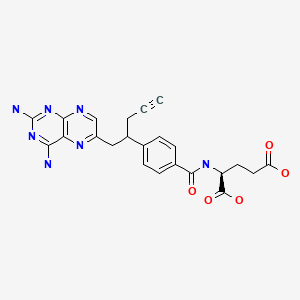
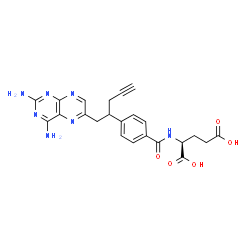
10-Propargyl-10-deazaaminopterin.pngPralatrexate.pngChemSpider 2D Image | Pralatrexate | C23H23N7O5

Pralatrexate (JAN/USAN/INN);
10-Propargyl-10-deazaaminopterin;
Folotyn (TN)

Antineoplastic

Product

CAS:
FOLOTYN (Allos Therapeutics)
146464-95-1
Formula
C23H23N7O5
Exact mass
477.1761

Image result for Difolta

  • (2S)-2-((4-((1RS)-1-((2,4-diaminopteridin-6-yl)methyl)but-3-ynyl)benzoyl)amino)pentanedioic acid
  • (2S)-2-({4-[1-(2,4-diaminopteridin-6-yl)pent-4-yn-2-yl]benzoyl}amino)pentanedioic acid
  • 10-Propargyl-10-deazaaminopterin
  • N-(4-(1-((2,4-Diamino-6-pteridinyl)methyl)-3-butynyl)benzoyl)-L-glutamic acid
  • PDX
  • UNII:A8Q8I19Q20

Japan approved 2017

2017/7/3 PMDA JAPAN Pralatrexate Difolta Mundipharma NME

Image result for DifoltaImage result for Difolta

EMA 2012

http://www.ema.europa.eu/docs/en_GB/document_library/EPAR_-_Public_assessment_report/human/002096/WC500129886.pdf

The molecule contains two asymmetric carbon centres (C10) and (C19). The C10 position exists in the RS-configuration (approx. 50:50 ratio) on the link between the two aryl groups. The C19 position is contained in the glutamic acid moiety and predominantly exists in the S-configuration. Pralatrexate is an off-white to yellow crystalline material, soluble in aqueous solutions at pH 6.5 or higher and practically insoluble in chloroform, and ethanol. It predominantly exists as a single polymorph (form A).

Pralatrexate, chemically known as “(2S)-2-[[4-[(1RS)-1-[(2,4-diaminopteridin-6-yl)methyl]but-3-ynyl]benzoyl- ]-amino]pentanedioic acid”, also known as “10-Propargyl-10-deazaminopterin” or “PDX”, is a compound which has been tested and found useful in the treatment of cancer. In its racemic form, 2S)-2-[[4-[(1RS)-1-[(2,4-diaminopteridin-6-yl)methyl]but-3-ynyl]benzoyl]a- mino]-pentanedioic acid has been approved by the U.S. Food and Drug Administration (FDA) as a treatment for relapsed and refractory peripheral T-cell lymphoma.

Pralatrexate,  was first disclosed in Journal of Medicinal Chemistry. 36: 2228-2231 (1993) by DeGraw et al., and subsequently in U.S. Pat. No. 5,374,726 and U.S. Pat. No. 5,354,741.

Pralatrexate is an antimetabolite for the treatment of relapsed or refractory peripheral T-cell lymphoma. It is more efficiently retained in cancer cells than methotrexate. FDA approved on September 24, 2009.

Pralatrexate (brand name Folotyn) is an anti-cancer therapy.[1] It is the first drug approved as a treatment for patients with relapsed or refractory peripheral T-cell lymphoma, or PTCL[2] — a biologically diverse group of aggressive blood cancers that have a poor prognosis.[2]

Image result for Pralatrexate

Approval

Folotyn was approved by the U.S. Food and Drug Administration (FDA) in September 2009 under the FDA’s accelerated approval,[2] which allows for earlier approval of drugs that meet unmet medical needs.[3] Pralatrexate injection is marketed in the U.S. under the name Folotyn by Spectrum Pharmaceuticals.[2] Clinical trials are currently underway to explore the potential of Folotyn in other blood related cancers and solid tumors.[4]

Image result for Pralatrexate

Mechanism

Pralatrexate is an antifolate (a folate analogue metabolic inhibitor) designed to accumulate preferentially in cancer cells.[1] Based on preclinical studies, researchers believe that pralatrexate selectively enters cells expressing reduced folate carrier type 1 (RFC-1), a protein that is overexpressed on certain cancer cells compared to normal cells.[1]

Antifolates, such as pralatrexate, are part of a group of compounds known as antimetabolites with structural similarity to naturally occurring molecules involved in DNA synthesis.[5] Cancer cells mistake antimetabolites for normal metabolites[5] allowing the compound to stop or slow critical enzymes involved in DNA synthesis which then triggers cell death.[1] Because of their primary effect on DNA synthesis, the antimetabolites are most effective against actively dividing cells and are largely cell-cycle phase specific.[5]

The selectivity of pralatrexate for cancer cells is based upon the observation that cancer cells generally have an overexpression of reduced folate carrier protein-1 (RTC-1) compared to normal somatic cells. This carrier protein allows the entrance of pralatrexate into the cell. Upon entering the cell, folypolyglutamate synthase FPGS catalyzes the polyglutamination of pralatrexate so that it is retained inside the cell.
Once inside, pralatrexate competitively inhibits dihydrofolate reductase (DHFR) and thymidylate synthase. Subsequent depletion of thymidine monophosphate (TMP) occurs so that the cancer cell is unable to synthesize DNA and RNA. As a result, the cancer cell cannot proliferate and is forced to undergo apoptosis. Pralatrexate is more effective against cells that are actively dividing.

Biological Activity

Pralatrexate (Folotyn) is an antifolate, and structurally a folate analog. It acts as an inhibitor of dihydrofolate reductase. It is selective for the reduced folate carrier type 1. Its IC50 is < 300 nM in some cell lines.

Conversion of different model animals based on BSA (Value based on data from FDA Draft Guidelines)
Species Mouse Rat Rabbit Guinea pig Hamster Dog
Weight (kg) 0.02 0.15 1.8 0.4 0.08 10
Body Surface Area (m2) 0.007 0.025 0.15 0.05 0.02 0.5
Km factor 3 6 12 8 5 20
Animal A (mg/kg) = Animal B (mg/kg) multiplied by Animal B Km
Animal A Km

For example, to modify the dose of resveratrol used for a mouse (22.4 mg/kg) to a dose based on the BSA for a rat, multiply 22.4 mg/kg by the Km factor for a mouse and then divide by the Km factor for a rat. This calculation results in a rat equivalent dose for resveratrol of 11.2 mg/kg.

Discovery

Research on this class of drugs began in the 1950s at SRI International, where scientists were focused on developing new chemotherapies and antifolates that would be effective against tumor cells.[1]

In the late 1970s, researchers at Memorial Sloan Kettering Cancer Center discovered that cancerous cells take in natural folate through a protein identified as plasma membrane transporter (now referred to as “reduced folate carrier type 1” or “RFC-1”). Further research showed that when normal cells evolve into cancerous cells they often overproduce RFC-1 to ensure they get enough folate.[6]

A subsequent scientific collaboration was ultimately formed among SRI International, Memorial Sloan Kettering Cancer Center, and the Southern Research Institute with the intention of developing an antifolate with greater therapeutic selectivity – an agent that could be more effectively internalized into tumors (transported into the cells through RFC-1) and would be more toxic to cancer cells than normal cells.[6]

This collaboration, supported by the National Cancer Institute,[7] led to the identification of pralatrexate in the mid-1990s. Pralatrexate was later licensed to Allos Therapeutics in 2002 for further development.[8] Allos Therapeutics, Inc. was acquired by Spectrum Pharmaceuticals, Inc. on September 5, 2012. Allos is now a wholly owned subsidiary of Spectrum.[9]

Pralatrexate, is a 10-deazaaminopterin derivative which has been developed for the potential treatment of malignancies. Pralatrexate is an antifolate, structurally a folate analog inhibitor of dihydrofolate reductase (DHF ) exhibiting high affinity for reduced folate carrier- 1 (RFC- 1) and iolylpolyglutamate synthetase (FPGS). with antineoplastic and immunosuppressive activities, resulting in extensive internalization and accumulation in tumour cells. Pralatrexate selectively enters cells expressing RFC- 1. Intracellularly, this agent is highly polyglutamylated and competes for the folate binding site of DHFR, blocking tetrahydrofolate synthesis, which may result in depletion of nucleotide precursors; inhibition of DNA. RNA and protein synthesis; and apoptotic tumor cell death. Efficient intracellular polyglutamylation of pralatrexate results in higher intracellular concentrations compared to non-polyglutamylated pralatrexate, which is more readily effuxed by the MRP (multidrug resistance protein) drug efflux pump. RFC- 1, an oncofetal protein expressed at highest levels during embryonic development, may be over expressed on the cell surfaces of various cancer cell types. Pralatrexate is the first and only drug approved by the Food and Drug Administration as a treatment for relapsed or refractory peripheral T-cell lymphoma, demonstrating the ability to reduce tumor size, but not to prolong life.

Pralatrexate is a folate analog metabolic inhibitor that competitively inhibits dihydrofolate reductase. It is also a competitive inhibitor for polyglutamylation by the enzyme folylpolyglutamyl synthetase. This inhibition results in the depletion of thymidine and other biological molecules the synthesis of which depends on single carbon transfer.

US 200510267117 discloses that T cell lymphoma is treated by administering to a patient suffering from T cell lymphoma a therapeutically effective amount of IO-propargyl-10- deazaaminopterin. Remission is observed in human patients, even with drug resistant T cell lymphoma at weekly dosages levels as low as 30 mg/m2. In general, the 10-propargyl-lO- deazaaminopterin is administered in an amount of from 30 to 275 mg/m2 per dose.

US 2011/0190305 discloses diastereomers of 10-propargyl-l 0-deazaminopterin, compositions comprising optically pure diastereomers of 10-propargyl-l 0-deazaminopterin, in particular the two (R,S) diastereomers about the C 10 position, method of preparation of the diastereomers and method of treatment of conditions related to inflammatory disorders and cancer.

US005354751 discloses heteroaroyl-10-deazaaminopterins and 10-alkenyl or 10-alkynyl-lO- deazaaminopterins having pronounced anti-inflammatory activity, anti-leukemic and anti- tumorigenic activity, as well as a method for treatment of inflammatory diseases, leukemia and tumors. Pharmaceutical compositions containing these heteroaroyl-lO-deazaaminopterin compounds are also disclosed. The invention further concerns a process for preparation of these compounds. A method for preparation of I0-propargyl-10-deazaaminopterin compound is also disclosed in this document.

Journal publication Bioorganic and Medicinal Chemistry (19) 2011, page 1151, synthetic approaches to the 2009 new drugs, also discloses a method for synthesis of Pralatrexate. The method comprises alkylating dimethyl homotrephthalate with propargyl bromide in the presence of KH in THF and then with 2,4-diamino-6-(bromomethyl)pteridine hydrobromide in the presence of KH in D F to afford crude product. Subsequent hydrolysis of the diester with aqueous NaOH, followed by acidification with acetic acid to give crude carboxylic acid, followed by thermally induced decarboxylation in D SO to give 10-deazapteroic acid derivative. Activation of carboxylic acid as a mixed anhydride using t-butyl chioroformate prior to coupling with diethyl L-glutamate hydrochloride in the presence of Et3 in DMF to give lO-propargyl-IO-deaza-aminopterin diethyl ester. Finally, saponification of diethyl ester with aqueous NaOH in 2-methoxyethanol, followed by acidifying with AcOH giving Pralatrexate.

Methods of preparing Pralatrexate known in the prior art are not only complicated but preparation of Pralatrexate using the methods disclosed in the prior art also result in very high manufacturing cost. Therefore, there is a need for an improved, simple and cost effective method for preparation of Pralatrexate which can be used for industrial scale preparation of this compound.

PATENT

 scheme- 1 .

Figure imgf000006_0001

Scheme-1

Figure imgf000008_0001

Scheme 2

Figure imgf000009_0001

Scheme 3

scheme 4.

Figure imgf000010_0001

https://patents.google.com/patent/WO2013164856A1/en

PATENT

https://patents.google.com/patent/WO2014016740A2/en

Pralatrexate, chemically known as “(25)-2-[[4-[(lR5)-l-[(2,4-diaminopteridin-6- yl)methyl]but-3-ynyl]benzoyl]- amino] pentanedioic acid”, also known as “10-Propargyl- 10-deazaminopterin” or “PDX”, is a compound which has been tested and found useful in the treatment of cancer. In its racemic form, 2S)-2-[[4-[(lRS)-l-[(2,4-diaminopteridin-6- yl)methyl]but-3-ynyl]benzoyl]amino]- pentanedioic acid has been approved by the U.S. Food and Drug Administration (FDA) as a treatment for relapsed and refractory peripheral T-cell lymphoma.

Pralatrexate, represented by Formula (I), was first disclosed in Journal of Medicinal Chemistry. 36: 2228-2231 (1993) by DeGraw et al., and subsequently in US 5374726 and US 5354741.

Figure imgf000003_0001

DeGraw et al, publication, US 5374726 and US 5354741 disclose method for the synthesis of Pralatrexate of Formula (I), comprising alkylation of homoterephthalic acid dimethyl ester with propargyl bromide using Potassium Hydride, which is further coupled with 2,4-diamino-6-bromomethylpteridine in presence of Potassium Hydride followed by hydrolysis in presence of NaOH in 2-methoxyethanol-water mixture and decarboxylation at high temperature in DMSO and subsequent coupling with L-glutamic acid diethyl ester using t-butyl chloroformate and a base, and finally hydrolysis of the product with NaOH in 2-methoxyethanol-water mixture to give Pralatrexate of Formula (I). The process is outlined below as synthetic Scheme- 1.

Figure imgf000004_0001
Figure imgf000004_0002

Scheme- 1

The methods disclosed in DeGraw et al., publication, US 5374726 and US 5354741 suffer from the following disadvantages, which are outlined below:

(i) Use of pyrophoric Potassium hydride in the initial alkylation step and the subsequent coupling step.

(ii) Amide formation in the penultimate step by use of a hazardous chloroformate reagent.

(iii) The final product has a purity of -95% and is contaminated with the 10- deazaminopterin impurity to the level of 4%, which affects the final quality of Active Pharmaceutical ingredient (API) and does not meet the Pharmacopeial specifications. Use of 2-methoxyethanol in the last step which is classified under guideline of International Conference on Harmonisation of Pharmaceutical for Human USE (ICH) as a Class-2 solvent, with a maximum daily exposure limit of 50 ppm. Extensive use of column chromatography during the method adding to the cost of manufacture.

(vi) Low yield of the final Pralatrexate (-5.5 %).

US 6028071 discloses a process for the preparation of Pralatrexate of Formula (I) comprising coupling of homoterephthalic acid dimethyl ester with propargyl bromide using NaH in THF, further coupling of the product with 2,4-diamino-6- bromomethylpteridine using NaH in DMF, followed by hydrolysis with a base in 2- methoxyethanol-water mixture, and decarboxylation at elevated temperatures at 115- 120°C in DMSO, and finally coupling of the product with L-glutamic acid dimethyl ester using benzotriazole-l-yloxytris(dimethylamino) phosphonium hexafluorophosphate (BOP) and triethylamine in DMF, and finally hydrolysis with NaOH in methanol-water mixture to yield Pralatrexate. The process is outlined below as synthetic Scheme-2.

Figure imgf000005_0001

3, R = CH3

4 ■■ H

Figure imgf000005_0002

Scheme-2 The process disclosed in US 6028071 suffer from the following disadvantages outlined below

(i) Use of sodium hydride in the initial alkylation step and the subsequent coupling step.

(ii) Using benzotriazole-l-yloxytris(dimethylamino) phosphonium hexafluoro phosphate (BOP) in coupling reaction that liberates Hexamethylphosphoramide (HMPA), which is carcinogenic

(iii) Extensive column chromatography during the process adding to the cost of manufacture

(iv) Quality of the API obtained by this process is only -98%.

(v) Low yield of Pralatrexate is obtained (2.06%).

(vi) In the propargylation step the ratio of oc-monopropargyl homoterephthalic acid dimethyl ester to oc-monopropargyl homoterephthalic acid dimethyl ester is not less than 75:25.

US 20110190305 relates to optically pure diastereomers of 10-propargyl-lO- deazaminopterin, in particular the two ( ,S) diastereomers about the CIO position. None of the prior art discloses a process for preparing substantially pure Pralatrexate. When the present inventors practiced the invention disclosed in US 6028071 to ascertain the purity of Pralatrexate, they found the content of individual diastereomers at the CIO position to be 50+3.66%.

Example- 11

10-Propar gyl- 10-deazaminopterin (Pralatrexate)

To aqueous NaOH (11.6 g NaOH in 472 mL DM water) and Methanol (944 mL), 10- Propargyl-10-deazaminopterin Dimethyl Ester (59.0 g) was added at 20-25°C and stirred the reaction mass for 8 hours. After completion of reaction which was monitored by HPLC, pH of the reaction mass was adjusted to 6.6 with acetic acid. Excess methanol was evaporated under reduced pressure below 40° C and DM water (1298mL) was added to the residual solution. The pH of the residual solution was adjusted to 4.5 with dilute acetic acid. The reaction mass was stirred for 30 minutes at 20-25° C and filtered the solid precipitated. The solid was furthered purified with DM water (590 mL) by stirring at 20- 25°C for 30-35 minutes. The solid was filtered and dried under vacuum at 35-40° C to give 39 g (70 %) of the title compound.

Purity: 99.56 %

Water content = 4.8 % (w/w)

*H NMR (DMSO-d6; 400MHz): δ 1.91 (m, 1H), 2.05 (m, 1H), 2.33 (t, J=7.2 Hz, 2H), 2.59 (bm, 2H), 2.78 (s, 1H), 3.14-3.20 (bm, 1H), 3.28 (dd, J=14.4 Hz & 6.4 Hz, 1H), 3.64 (quintet, J=7.2 Hz), 4.35 (bm, 1H), 6.30 (bs, 2H, NH2), 7.39 (d, J=8.0 Hz, 2H), 7.61 & 7.63 (2xbs, 2H, NH2), 7.73 (d, J=8.0Hz, 2H), 8.39 (bs, 1H), 8.50 (d, J=7.6 Hz, 1H, NH), 12.20 (bs, 2H, 2xC02H).

13C NMR (DMSO-d6; 100MHz): δ 24.84 (CH2), 25.94 (CH2), 30.46 (CH2), 39.08 (CH2), 43.05 (CH), 51.93 (CH), 72.90 (CH), 82.57 (C), 121.51 (C), 127.35 (2xCH), 127.35 (2xCH), 132.22 (C), 146.69 (C), 147.20 (C), 150.56 (CH), 154.17 (C), 162.41 (C), 162.77 (C), 166.42 & 166.46 (CONH), 173.54 (C02H), 173.94 (C02H).

MS (ES+) m/z: 478 [M+H]+.

IR (KBr, cm-1): 1540, 1557, 1639, 1704, 3300, 3420.

XRD (°2Theta; Cu): 8.47, 10.85, 12.28, 14.34, 15.00, 15.78, 18.90, 21.79, 24.20, 27.5, 28.92, 34.28.

Example- 12 discloses the preparation of Pralatrexate according to US 6028071.

Example-12

To 10-Propargyl-lO-deazaminopterin dimethyl ester (3.0 g) in methanol (181.8 mL), aqueous sodium hydroxide (0.52 g of sodium hydroxide in 13.1 mL demineralized water) was added at 20-25°C accompanied by stirring. The reaction mixture was stirred for 2h at 20-25°C, kept for further 8 hours at the same temperature and diluted with demineralized water (181.8 mL). methanol was recovered under vacuum below 40°C and the residue was left at 20-25°C for 24 hrs. The reaction was monitored by HPLC and acidified with acetic acid (7.5 mL). The solid obtained was filtered, washed with demineralized water (15 mL) and suck-dried for 2-3 hrs. The product was dried under vacuum at 50-55°C for 12 hours.

Weight : 2.5

Yield (%) : 89.2

Purity by HPLC (%) : 99.61

PATENT

https://patentscope.wipo.int/search/en/detail.jsf?docId=WO2013096800&recNum=1&maxRec=&office=&prevFilter=&sortOption=&queryString=&tab=PCTDescription

Pralatrexate, (2S)-2-[[4-[(1 RS)-1-[(2,4-diaminopteridin-6-yl)methyl]but-3-ynyl]benzoyl]amino]pentandioic acid, also referred to as 10-propargyl-10-deaza-aminopterin, is an anti-cancer drug having the following formula:

Pralatrexate is approved for a treatment for patients with relapsed or refractory peripheral T-cell lymphoma. It is an antifolate and acts as an inhibitor of

dihydrofolate reductase.

[0004] Pralatrexate is disclosed in several documents such as DeGraw et al., (J. Med. Chem, 1993, 36, 2228), US 6,028,071, US 5,354,751, EP 0944389, EP 1891957 and WO 98/02163. US 6,028,071 discloses Pralatrexate and a preparation thereof, as described in the following reaction scheme:

EXAMPLES

Reference examples:

[0099] Pt-MADES (compound 5) and Pt-MADAC (compound 6) may be prepared according to procedures disclosed in US 6,028,071, example 1.

Example 1 : Decarboxylation of Pt-MADAC (compound 6)

[00100] Pt-MADAC (compound 6) (17 g, 43.3 mmol, containing 1.4% of impurity hydro-Pt-MADAC (compound 6a) according to HPLC analysis) was added to N-methyl-2-pyrrolidone (170 mL, 10 Vol.) pre-heated at 120°C. Upon dissolution of the solid, N, N-diisopropylethyl amine (5.6 mL, 32.1 mmol) was added. The reaction mixture was stirred at 120 °C for 0.5 h, then cooled down to room temperature and poured into water (1700 mL, 100 Vol.). The pH was adjusted to 4.5 by addition of aq. HCl (16% w/w). A precipitate formed and was isolated by filtration. The collected solid was dried in a drying oven at 45 °C for 18 h to provide Pt-MADEC (compound 7) as a yellow solid (14.6 g, 97% yield, purity 87.1%), containing 7.5% of Pt-lactone (compound 7b) and 1.4% of hydro-Pt-MADEC (compound 7a) according to HPLC analysis.

Example 2: Decarboxylation of Pt-MADAC (Compound 6) without use of a base

[00101] Pt-MADAC (compound 6) (2 g, 5.10 mmol, containing 1.4% of impurity hydro-Pt-MADAC (compound 6a) according to HPLC analysis) was added to N-methyl-2-pyrrolidone (20 mL, 10 Vol.) pre-heated at 120 °C. The reaction mixture was stirred at 120 °C for 1 h, then cooled down to room temperature and poured into water (200 mL, 100 Vol.). The pH was adjusted to 4.5 by addition of aq. HCl (16% w/w) and the precipitate that formed was isolated by filtration. Drying in a drying oven at 45 °C for 18 h furnished Pt-MADEC (compound 7) as a yellow solid (1.65 g, 93% yield, purity 85.8%), containing 6.9% of Pt-lactone (compound 7b) and 1.4% of hydro-Pt-MADEC (compound 7a) according to HPLC analysis.

Example 3: Purification of Pt-MADEC 7 by precipitation of the corresponding potassium salt

[00102] Pt-MADEC (compound 7) (4 g, corresponding to 9.9 mmol of product considering the residual solvent content, prepared according to example 1) was added to aqueous KOH (12.9 mmol of KOH in 40 mL of water, 10 Vol.). The solid dissolved rapidly, and after 0.5 h, the formation of a precipitate started. After 0.5 h at room temperature the reaction mixture was cooled to 0 °C. After 1 h at 0 °C, the precipitate that had formed was isolated by filtration. Drying in a drying oven at 45 °C for 18 h furnished K-Pt-MADEC (compound 11) as a pale yellow solid (2.5 g, 65% yield, purity 99.5%), containing 0.3% of K-Pt-lactone-open (compound 11b) and 0.1% of hydro-K-Pt-MADEC (compound 11a) according to HPLC analysis.

Example 4: Purification of Pt-MADEC 7 derived from Pt-MADAC containing Pt-NADAC (5%) and Pt-lactone as impurities

[00103] Pt-MADAC (compound 6) (10 g) containing 5% of impurity Pt-NADAC (compound 6c) (according to HPLC analysis) was subjected to the decarboxylation conditions described in Example 1. The isolated Pt-MADEC (compound 7) (8.7 g, 87% yield, purity 83.4%) contained 6.2% of Pt-lactone (compound 7b), 1.6% of Pt- NADEC (compound 7c) and 3.4% of unreacted Pt-NADAC (compound 6c) according to HPLC analysis.

[00104] The compound was subjected to the purification conditions described in Example 3, furnishing K-Pt-MADEC (compound 11) (5.3 g, 55% yield, purity 98.5%), containing 0.3% of K-Pt-lactone-open (compound lib), 0.88% of K-Pt-NADEC (compound 11c) and 0.18% of K-Pt-NADAC (compound 1 Id) according to HPLC analysis.

Example 5: Purification of Pt-MADEC 7 by precipitation of the corresponding sodium salt

[00105] Pt-MADEC (compound 7) (2 g, corresponding to 4.95 mmol of product considering the residual solvent content) was added to aqueous NaOH (6.44 mmol of NaOH in 20 mL of water, 10 Vol.). The solid dissolved rapidly, then after 5 minutes the formation of a precipitate started. After 0.5 h at room temperature, the reaction mixture was cooled to 0 °C. After 1 h at 0 °C the precipitate that had formed was isolated by filtration. The collected solid was then dried in a drying oven at 45 °C for 18 h to provide the Na-Pt-MADEC (compound 12) as a pale yellow solid (1.6 g, 75% yield, purity 96.6%), containing 1.8% of Na-Pt-lactone-open (compound 12b) and 0.3% of hydro-Na-Pt-MADEC (compound 12a) according to HPLC analysis.

Example 6: Purification of Pt-MADEC 7 by precipitation of the corresponding lithium salt

[00106] Pt-MADEC (compound 7) (2 g, corresponding to 4.27 mmol of product, considering the residual solvent content), was added to aqueous LiOH (5.55 mmol of LiOH, in 20 mL of water, 10 Vol.). The solid dissolved rapidly, and after 15 minutes the formation of a precipitate started. After 0.5 h at room temperature the reaction mixture was cooled to 0 °C. After 1 h at 0 °C the precipitate that had formed was isolated by filtration. The collected solid was then dried in a drying oven at 45 °C for 18 h to provide Li-Pt-MADEC (compound 13) as a pale yellow solid (1.1 g, 73% yield, purity 97.7%), containing 0.6% of Li-Pt-lactone-open (compound 13b) and 0.9% of hydro-Li-Pt-MADEC (compound 13a) according to HPLC analysis.

Example 7: Synthesis of Pt-lactone

[00107] To a suspension of Pt-MAD AC (compound 6) (12.2 g, 31.2 mmol) in acetonitrile (122 mL, 10 Vol.), copper (I) iodide (595 mg, 3.12 mmol) and N,N-diisopropylethyl amine (10.9 mL, 62.2 mmol) were added. The reaction mixture was heated to reflux and stirred at reflux for 48 h., and then cooled to room temperature. The resulting precipitate was filtered and washed with acetonitrile (24 mL, 2 Vol.). The collected solid was then dried in a drying oven at 45 °C for 18 h to provide Pt-lactone (compound 7b) as a brown solid (12.3 g, >100% yield, purity 94.1%).

Example 8: Purification of Pt-MADES by formation of the corresponding DMF solvate

[00108] Pt-MADES (compound 5) (40 g, purity 94.7%) was added to DMF (400 mL, 10 Vol.), pre-heated at 120 °C. After dissolution of the product, the reaction mixture was kept at 120°C for 0.5 h, and then cooled to room temperature. The

resulting precipitate was filtered and washed with acetone (2 x 200 mL, 2 x 5 Vol.). Drying in a drying oven at 45 °C for 18 h furnished Pt-MADES (compound 5) as a pale yellow solid (36.4 g, 91% yield, purity 97.5%).

Example 9: purification of Pt-MADES

[00109] Pt-MADES (compound 5) (30 g, purity 94.7%) was suspended in a mixture of MeOH (300 mL, 10 Vol.) and formamide (150 mL, 5 Vol.). The suspension was heated at 60-65 °C for 2 h, then cooled to room temperature. Upon stirring at room temperature for 15 h, the resulting precipitate was filtered and washed with methanol (2 x 30 mL, 2 x 1 Vol.). Drying in a drying oven at 50 °C for 18 h furnished Pt-MADES (compound 5) as a pale yellow solid (22.5 g, 75% yield, purity 98.0%).

Example 10: purification of Pt-MADAC

[00110] Pt-MADAC (compound 6) (50 g, purity 94.0%) was suspended in a mixture of MeOH (150 mL, 3 Vol.) and formamide (50 mL, 1 Vol.). The suspension was heated at 60-65 °C for 2 h, and then cooled to room temperature. Upon stirring at room temperature for 15 h, a precipitate formed and was filtered and washed with methanol (2 x 50 mL, 2 x 1 Vol.). The collected precipitate was then dried in a drying oven at 50°C for 18 h. The thus-produced Pt-MADES was then suspended in MeOH (500 mL, 10 Vol.). This suspension was heated at reflux for 1 h, and then cooled to 0°C. The resulting precipitate was filtered and washed with methanol (2 x 50 mL, 2 x 1 Vol.). Drying in a drying oven at 50 °C for 18 h furnished Pt-MADAC (compound 6) as a pale yellow solid (41 g, 82% yield, purity 96.3%).

Example 11: Preparation of Pralatrexate, sodium salt (PLT-Na) (Compound 10a) by hydrolysis of Pralatrexate ethyl ester (PLT-ES) (Compound 9B)

[00111] A reactor was charged with EtOH (195 mL) and aqueous NaOH (3.75 M, 19.5 mL, 73 mmol). The mixture was then cooled down to 10 °C. 10-Propargyl-10-

deazaaminopterin ethyl ester (PLT-ES, Compound 9B, 13 g, 24.4 mmol) was added, and the temperature was increased to 25 °C over 0.5 h. The resulting suspension was then stirred at 25 °C for 17 h. The solid in the suspension was then isolated by filtration and washed with EtOH (65 mL). The collected solid was then dried in a drying oven at 45 °C for 18 h to provide (2S)-2-[[4-[(1 RS)-1-[(2,4-diaminopteridin-6-yl)methyl]but-3-ynyl]benzoyl]amino]pentanedioic acid disodium salt (Na-PLT; compound 10a) as a pale yellow solid (10.9 g, 86% yield, purity 99.6%).

Example 12: Preparation of Pralatrexate (Compound 10)

[00112] (2S)-2-[[4-[(1 RS)-1-[(2,4-Diaminopteridin-6-yl)methyl]but-3-ynyl]benzo-yl]amino]pentanedioic acid disodium salt (Na-PLT, Compound 10a, 10.9 g, 20.9 mmol) was dissolved in water (109 mL). The pH of the solution was adjusted to 4.5 by addition of aqueous HCl 1N. A precipitate formed and was isolated by filtration and washed with water (54 mL). The collected solid was then dried in a drying oven at 45 °C for 17 h to provide Pralatrexate (Compound 10) as a white solid (9.4 g, 81% yield, and purity 99.7%).

Example 13: Preparation of Pralatrexate ethyl ester (PLT-ES) (compound 9B)

[00113] A reactor was charged with potassium 10-propargyl-4-deoxy-4-amino-10-deazapteroate (K-Pt-MADEC, compound 11, 11.1 g, 28.7 mmol). DCM (82 ml) and 1-methyl-2-pyrrolidinone (16.7 ml) were added to obtain a suspension. 1-Hydroxy-benzotriazole hydrate (HOBt, 0.77 g, 5.74 mmol), N-(3-dimethylaminopropyl)-N’-ethylcarbodiimide hydrochloride (EDC, 6.60 g, 34.4 mmol) and (L)-glutamic acid

diethyl ester hydrochloride (7.98 g, 34.4 mmol) were sequentially added. The resulting mixture was stirred at room temperature until HPLC analysis showed reaction completion. DCM was removed under reduced pressure and MeOH (22.2 mL) was added. The reaction mixture was poured into water pre-acidified with aqueous HCl 16% (w/w, 16.9 mL). The pH was adjusted to 4.5 by addition of aqueous NaOH, resulting in the precipitation of the PLT-ES. The solid precipitate was isolated by filtration and dried in oven at 55 °C for 18 h to provide PLT-ES as a pale yellow solid (13 g, 85% yield, and purity 99.0%).

Example 14: Preparation of crystalline Pralatrexate ethyl ester (compound 9B)

[00114] PLT-ES (Compound 9B, lg) was dissolved in EtOH (15 ml). After a few minutes a precipitate started to form, and the precipitate was isolated by filtration after 45 minutes (0.5g, yellow solid, amorphous form). The mother liquor was left at room temperature overnight, resulting in the precipitation of a yellow solid which was isolated by filtration (0.3g, crystalline form, PXRD is shown on Figure 7).

Example 15: Hydrolysis of Pralatrexate ethyl ester (compound 9B)

[00115] A reactor was charged with MeOH (48 mL), aqueous NaOH (3.75 M, 18.0 mL, 67.5 mmol), and water (6 mL), and the mixture was cooled down to 10 °C. PLT-ES 9B (12 g, 22.5 mmol) was added and the temperature was increased to 25 °C over 1 h. The resulting suspension was stirred at 25 °C for 1 h, and then EtOH (168 mL) was added, resulting in the formation of a precipitate. After stirring for an additional 24 h the solid precipitate was isolated by filtration and washed with EtOH (120 mL).

The collected solid was then dried in a drying oven at 60 °C for 18 h to provide Na-PLT 10a (10.5 g, 90% yield, purity 99.8%) as a pale yellow solid.

PATENT

https://patentscope.wipo.int/search/en/detail.jsf?docId=WO2014068599

Pralatrexate is chemically, N-(4-{ 1-[(2,4-diaminopteridin-6-yl)methyl]but-3-yn-1 -yl}benzoyl)-L-glutamic acid and has the structural formula:

Pralatrexate is an anti-cancer therapy. It is the first drug approved as a treatment for patients with relapsed or refractory peripheral T-cell lymphoma, or PTCL – a biologically diverse group of aggressive blood cancers. Pralatrexate is currently marketed under the trade name FOLOTYN® by Alios.

Pralatrexate was disclosed in U.S. patent nos. 5,354,751 and 6,028,071.

According to the ‘071 patent, alpha-propargylhomoterephthalic acid dimethyl ester substantially free of homoterephthalic acid dimethyl ester was obtained by chromatographing alpha-propargylhomoterephthalic acid dimethyl ester residue obtained as part of the reaction between homoterephthalic acid dimethyl ester and propargyl bromide in the presence of

tetrahydrofuran and sodium hydride on silica gel using cyclohexane and ethyl acetate (8:1) for the elution.

Pralatrexate was also reported in J. Med. Chem, 1993, 36, 2228-2231. According to the paper, pralatrexate is prepared by crystallizing pralatrexate diethyl ester in a mixture of 2-methoxyethanol and water in the presence of sodium hydroxide.

International patent application publication no. WO 2012/061469 (‘469 patent) disclosed crystalline Form A, Form B and Form C of pralatrexate. According to the ‘469 patent, crystalline pralatrexate Form A can be prepared by crystallizing amorphous pralatrexate in formamide.

According to the ‘469 patent, crystalline pralatrexate Form B can be prepared by crystallizing amorphous pralatrexate in methanol or water.

According to the ‘469 patent, crystalline pralatrexate Form C can be prepared by crystallizing amorphous pralatrexate in a mixture of methanol and water.

Alpha-propargylhomoterephthalic acid dimethyl ester is a key staring material for the preparation of pralatrexate.

Example 1 :

Preparation of Alpha-propargylhomoterephthalic acid dimethyl ester

Sodium hydride (60 gm; 60%) was added to tetrahydrofuran (1500 ml) at room temperature and then cooled to 10 to 15°C. To the solution was added a solution of homoterephthalic acid dimethyl ester (250 gm) in tetrahydrofuran (250 ml) slowly for 15 minutes. The reaction mass was then cooled to 0 to -5°C and then added propargyl bromide (130 gm) in tetrahydrofuran (125 ml) slowly for 15 minutes at 0 to -5°C. The reaction mass was maintained for 2 hours at 0 to -5°C and then added methanol (50 ml). The temperature of the reaction mass was raised to room temperature and then added water (1500 ml) and diisopropyl ether (2500 ml), and then the layers were separated. The organic layer were dried with sodium sulfate and then concentrated to obtain 275 gm of alpha-propargylhomoterephthalic acid dimethyl ester.

Chromatographic purity of alpha-propargylhomoterephthalic acid dimethyl ester: 62.0%; Content of homoterephthalic acid dimethyl ester: 12.0%.

Example 2:

Purification of Alpha-propargylhomoterephthalic acid dimethyl ester

Alpha-propargylhomoterephthalic acid dimethyl ester (275 gm; HPLC Purity: 62.0%) as obtained in example 1 was dissolved in a mixture of hexane (1200 ml) and diisopropyl ether (65 ml) at room temperature. The solution was stirred for 15 hours at room temperature and filtered. The solid obtained was dried to obtain 175 gm of alpha-propargylhomoterephthalic acid dimethyl ester.

Chromatographic purity of alpha-propargylhomoterephthalic acid dimethyl ester: 74.6%; Content of homoterephthalic acid dimethyl ester: 0.4%.

Example 3:

Preparation of 10-propargyl-10-deazaminopterin diethyl ester

Step-I: Preparation oƒ 10-proparsyl-10-carbomethoxy-4-deoxy-4-amino-10-deazapteroic acid methyl ester

Sodium hydride (120 gm; 60%) was added to dimethylformamide (750 ml) at room temperature and then cooled to 0 to -5°C. To the solution was added a solution of alpha-propargylhomoterephthalic acid dimethyl ester (250 gm) in dimethylformamide (750 ml)

slowly for 15 minutes. The reaction mixture was maintained for 30 minutes at 0 to -5 C and then cooled to -20 to -25°C. To the reaction mixture was added 6-bromomethyl-pteridine-2,4-diamine (300 gm) in dimethylformamide (1500 ml) slowly for 30 minutes. The reaction mass was maintained for 2 hours at -20 to -25°C and then added methanol (300 ml). The temperature of the reaction mass was raised to room temperature and then added water (15000 ml) and diisopropyl ether (1500 ml). The contents were stirred for 2 hours at room temperature and filtered. The solid obtained was dried to obtain 198 gm of 10-propargyl-10-carbomethoxy-4-deoxy-4-amino-10-deazapteroic acid methyl ester.

Step-II: Preparation oƒ 10-proparsyl-10-carboxy-4-deoxy-4-amino-10-deazapteroic acid

2-Methoxyethanol (775 gm) was added to 10-propargyI-10-carbomethoxy-4-deoxy-4-amino-10-deazapteroic acid methyl ester (155 gm) at room temperature and then cooled to 15 to 20°C. To the reaction mixture was added a solution of sodium hydroxide (120 gm) in water (930 ml) and maintained for 4 hours at room temperature. The pH of the reaction mass was adjusted to 4.5 to 4.6 with acetic acid (50%) and then added water (3100 ml). The reaction mass was stirred for 2 hours, filtered and then dried to obtain 125 gm of 10-propargyl-10-carboxy-4-deoxy-4-amino-10-deazapteroic acid.

Step-III: Preparation oƒ 10-proparsyl-4-deoxy-4-amino-10-deazapteroic acid

10-Propargyl-10-carboxy-4-deoxy-4-amino-10-deazapteroic acid (135 gm) was added to dimethyl sulfoxide (1350 ml) at 120 to 125°C and maintained for 45 minutes at 120 to 125°C. The reaction mass was poured into water (3000 ml), maintained for 24 hours at room temperature and filtered to obtain a wet solid. To the wet solid was basified and then acetified, and maintained for 2 hours at room temperature. The separated solid was filtered and then dried to obtain 56 gm of 10-propargyl-4-deoxy-4-amino-10-deazapteroic acid.

Step-IV: Preparation oƒ 10-propargyl-10-deazaminopterin diethyl ester

Dimethylformamide (1 12 ml) was added to 10-propargyl-4-deoxy-4-amino-10-deazapteroic acid (14 gm) and stirred for 15 minutes. To the reaction mixture was added triethylamine (14 ml) and then cooled to 0 to -5°C. A solution of (benzotriazol-1-yloxy)tris(dimethylamino)phosphonium hexafluorophosphate (21 gm) in dimethylformamide (28 ml) was added to the reaction mixture and maintained for 1 hour at 0 to -5°C. To the

reaction mixture was added L-glutamic acid diethyl ester (10 gm) in dimethylformamide (28 ml) slowly, maintained for 2 hours at -10 to -15°C and filtered. The pH of the filtrate obtained was adjusted with sodium hydroxide solution and then added water (700 ml) slowly for 45 minutes. The reaction mass was maintained for 2 hours at room temperature, filtered and then dried to obtain 14 gm of 10-propargyl-10-deazaminopterin diethyl ester.

Example 4:

Preparation of pralatrexate

10-Propargyl-10-deazaminopterin diethyl ester (40 gm) was dissolved in tetrahydrofuran (320 ml) at room temperature. The solution was then cooled to 15 to 20°C and added a solution of sodium hydroxide (24 gm) in water (400 ml) slowly for 15 minutes. The reaction mass was maintained for 45 minutes at 15 to 20°C and then added a mixture of tetrahydrofuran (200 ml) and ethyl acetate (200 ml). The layers were separated and to the aqueous layer was added water (80 ml). The separated aqueous layer was then concentrated and pH was adjusted to 4.7 to 4.8 with acetic acid (10%). The contents were stirred for 1 hour at room temperature and filtered. The solid obtained was then dried to obtain 28 gm of pralatrexate.

Chromatographic purity of pralatrexate: 98.5%;

Content of 10-propargyl-4-deoxy-4-amino-10-dezapteroic acid: 0.3%;

Content of 10-deazaaminopterin: 0.5%;

Example 5:

Purification of pralatrexate

The pralatrexate (28 gm: HPLC Purity: 98.5%) as obtained in example 4 was dissolved in tetrahydrofuran (400 ml) and then heated to 60°C. To the contents were added water (200 ml) at 60°C and then cooled to 5 to 10°C. The contents were stirred for 2 hours 30 minutes at 5 to 10°C, filtered and then dried to obtain a solid. The solid was dissolved in dimethyl sulfoxide (138 ml) and then stirred to obtain a clear solution. The solution was filtered through celite bed and then added ethanol (690 ml) slowly for 1 hour. The contents were stirred for 1 hour at room temperature, filtered and then dried to obtain 20 gm of pure pralatrexate.

Chromatographic purity of pralatrexate: 99.5%;

Content of 10-propargyl-4-deoxy-4-amino-10-dezapteroic acid: 0.06%; Content of 10-deazaaminopterin: 0.08%.

PAPER

Nonpolyglutamatable Antifolate N-alpha-(4 amino-4-deoxypteroyl)-Ndelta-hemiphthaloyl-L-ornithine”, JOURNAL OF MEDICINAL CHEMISTRY, AMERICAN CHEMICAL SOCIETY, US, vol. 45, no. 8, 1 January 2002 (2002-01-01), pages 1690 – 1696, XP002291409, ISSN: 0022-2623, DOI: 10.1021/JM010518T *

Abstract Image

Details are disclosed for the synthesis of Nα-[4-[2-(2,4-diaminoquinazolin-6-yl)ethyl]benzoyl]-Nδ-hemiphthaloyl-l-ornithine (2) and Nα-[4-[5-(2,4-diaminoteridin-6-yl)pent-1-yn-4-yl]benzoyl]-Nδ-hemiphthaloyl-l-ornithine (6) as analogues of Nα-(4-amino-4-deoxypteroyl)-Nδ-hemiphthaloyl-l-ornithine (1, PT523), a nonpolyglutamatable antifolate currently in advanced preclinical development. In a 72 h growth inhibition assay against cultures of CCRF-CEM human leukemic lymphoblasts, the IC50 of 2 and 6 was 0.69 ± 0.044 nM and 1.3 ± 0.35 nM, respectively, as compared with previously reported values 4.4 ± 0.10 nM for aminopterin (AMT) and 1.5 ± 0.39 nM for PT523. In a spectrophotometric assay of dihydrofolate reductase (DHFR) inhibition using dihydrofolate and NADPH as the cosubstrates, the previously unreported compounds and the mixed 10R and 10S diastereomers of 6 had Ki values of 0.21 ± 0.05 pM and 0.60 ± 0.02 pM, respectively, as compared with previously reported values of 3.70 ± 0.35 pM for AMT and 0.33 ± 0.04 pM for PT523. Thus, while they were comparable to 1 and several of its previously studied analogues in their ability to bind to DHFR and inhibit the growth of CCRF-CEM cells, 2 and the mixed diastereomers of 6 were several times more active than AMT despite the fact that they cannot form γ-polyglutamylated metabolites of the type formed in cells from AMT and other classical antifolates with a glutamate side chain.

Synthesis and In Vitro Antitumor Activity of New Deaza Analogues of the Nonpolyglutamatable Antifolate Nα-(4-Amino-4-deoxypteroyl)-Nδ-hemiphthaloyl-l-ornithine (PT523)

Dana-Farber Cancer Institute and the Department of Biological Chemistry and Molecular Pharmacology, Harvard Medical School, Boston, Massachusetts 02115
J. Med. Chem.200245 (8), pp 1690–1696
DOI: 10.1021/jm010518t
PAPER
Journal of Medicinal Chemistry (1993), 36(15), 2228-31
lO-Propargyl-10-deazaaminopte~n Diethyl Ester (6). A solution of the acid (6) (100 mg, 0.29 mmol) in dry DMF (5 mL) wastreatedwithtriethylamine(O.28mL,2.Ommol). Afterstirring at room temperature for 20 min, the solution was treated with isobutyl chloroformate (0.075 mL, 0.57 mmol). The mixture was stirred at room temperature for 1 h and then treated with L-glutamic acid diethyl ester hydrochloride (0.14 g, 0.57 mmol) and stirred for 2 h. The additions of isobutyl chloroformate and glutamate ester were repeated twice with one-quarter quantities of these reagents, and the final mixture was stirred for 15 h. The reaction was concentrated under high vacuum, and the residue was diesolved in CHCb (10 mL) and washed with dilute NgOH and then water. The organic layer was dried over N&O, and concentrated in vacuo. The residue was chromatographed on 10 g of flash silica gel (2% MeOH in CHCh). Following chromatography, an aliquot was saponified; HPLC analysis indicated 93 % purity. The product was obtained as a yellow foam 85 mg (55%): mass spectrum mle 534 (M + H); lH NMR (CDCh) 8.5 (8, lH, 7-H), 7.75 (d, 2H, C&), 7.28 (d, 2H), 7.0 (br s, lH, NH), 5.35 (br 8, lH, NH), 4.77 (m, lH, NHCH), 4.10 and 4.25 (q,4H, OCHd, 3.46 (m, 2H, C-SCHz), 3.23 (m, lH, C-lOH), 2.62 (m, 2H, WCHd, 2.46 (m, 2H,CH&OOEt), 2.15and2.32(m,2H,glu-3CH~),2.04(brs,lH,C=CH),1.22and 1.29 (t, 6H, CHaCHa).
10-Propargyl-10-deazaaminopterin (7). The diethyl ester (6) (83 mg, 0.16 -01) was dissolved in 2-methoxyethanol (2 mL), and the solution was treated with water (1 mL) and then 10% NaOH (1 mL). The solution was stirred for 2 h at room temperature. The reaction mixture was diluted with 10 mL of H20, neutralized to pH 5 with HOAc to give a precipitate which was collected, and dried to leave 45 mg (61%) of a pale yellow solid; HPLC analysis indicated 95 % purity; mass spectrum mle 765 (as the (TMS)a) derivative); W (0.1 N NaOH) A mas 256 nm (c 29 800), 372 (7000). Anal. Calcd for CmHaN,Oa.2.5HzO: C, H, N

PATENT

https://patents.google.com/patent/CN107488112A/zh

PATENT

US 20150183789

https://patents.google.com/patent/US9440979B2/en

PATENT

Publication numberPriority datePublication dateAssigneeTitle
WO2014020553A1 *2012-08-032014-02-06Fresenius Kabi Oncology Ltd.Salts of pralatrexate
CN103588775A *2013-11-122014-02-19连云港恒运医药科技有限公司普拉曲沙降解杂质及其制备方法
WO2014016740A3 *2012-07-232014-03-20Fresenius Kabi Oncology Ltd.Improved process for the preparation of pralatrexate
CN104418859A *2013-09-092015-03-18上海医药工业研究院普拉曲沙的晶型、含其的药物组合物及其制备方法和应用
WO2014068599A3 *2012-11-022015-03-19Hetero Research FoundationProcess for pralatrexate
CN104628727A *2013-11-072015-05-20正大天晴药业集团股份有限公司一种普拉曲沙的晶型及其制备方法
CN105272983A *2014-06-122016-01-27连云港润众制药有限公司一种高纯度普拉曲沙固体及其制备方法
US5354741A1993-05-071994-10-11American Cyanamid CompanyDiaryl (pyridinio and isoquinolinio) boron insecticidal and acaricidal agents
US5374726A1992-03-031994-12-20Degraw; Joseph I.Process for preparing 10-deazaaminopterins and 5,10-and 8,10-dideazaaminopterins from pteroic dicarboxylic acid diesters
US6028071A1996-07-172000-02-22Sloan-Kettering Institute For Cancer ResearchPurified compositions of 10-propargyl-10-deazaaminopterin and methods of using same in the treatment of tumors
US20110190305A12010-02-022011-08-04Allos Therapeutics, Inc.Optically Pure Diastereomers of 10-Propargyl-10-Deazaaminopterin and Methods of Using Same
Family To Family Citations
EP2794610B1 *2011-12-212016-03-09Plus Chemicals SAProcesses and intermediates for preparing pralatrexate
DEGRAW JOURNAL OF MEDICINAL CHEMISTRY vol. 36, 1993, pages 2228 – 2231

Publication numberPriority datePublication dateAssigneeTitle

WO2014068599A3 *2012-11-022015-03-19Hetero Research FoundationProcess for pralatrexate
US5354751A1992-03-031994-10-11Sri InternationalHeteroaroyl 10-deazaamino-pterine compounds and use for rheumatoid arthritis
WO1998002163A1 *1996-07-171998-01-22Sloan-Kettering Institute For Cancer ResearchPurified compositions of 10-propargyl-10-deazaaminopterin and methods of using same in the treatment of tumors
US20050267117A12004-05-302005-12-01O’connor Owen ATreatment of T-cell lymphoma using 10-propargyl-10-deazaaminopterin
US20110190305A12010-02-022011-08-04Allos Therapeutics, Inc.Optically Pure Diastereomers of 10-Propargyl-10-Deazaaminopterin and Methods of Using Same
BIOORGANIC AND MEDICINAL CHEMISTRY, no. 19, 2009, pages 1151
CHITRA M VAIDYA ET AL: “synthesis and in vitro Antitumor Activity of New Deaza Analogues of the Nonpolyglutamatable Antifolate N-alpha-(4 amino-4-deoxypteroyl)-Ndelta-hemiphthaloyl-L-ornithine”, JOURNAL OF MEDICINAL CHEMISTRY, AMERICAN CHEMICAL SOCIETY, US, vol. 45, no. 8, 1 January 2002 (2002-01-01), pages 1690 – 1696, XP002291409, ISSN: 0022-2623, DOI: 10.1021/JM010518T *
DEGRAW J I ET AL: “SYNTHESIS AND ANTITUMOR ACTIVITY OF 10-ALKYL-10-DEAZAMINOPTERINS. A CONVENIENT SYNTHESIS OF 10-DEAZAMINOPTERIN”, JOURNAL OF MEDICINAL CHEMISTRY, AMERICAN CHEMICAL SOCIETY, US, vol. 25, 1 January 1982 (1982-01-01), pages 1227 – 1230, XP001135116, ISSN: 0022-2623, DOI: 10.1021/JM00352A026 *
KEVIN K-C LIU ET AL: “Synthetic approaches to the 2009 new drugs”, BIOORGANIC & MEDICINAL CHEMISTRY, PERGAMON, GB, vol. 19, no. 3, 16 December 2010 (2010-12-16), pages 1136 – 1154, XP028133979, ISSN: 0968-0896, [retrieved on 20101224], DOI: 10.1016/J.BMC.2010.12.038 *
TAGHAVI-MOGHADAM ET AL: “A new, general and regioselective method for the synthesis of 2,6-disubstituted 4-aminopteridines”, TETRAHEDRON LETTERS, PERGAMON, vol. 38, no. 39, 29 September 1997 (1997-09-29), pages 6835 – 6836, XP005258825, ISSN: 0040-4039, DOI: 10.1016/S0040-4039(97)01619-5 *

References

  1. Jump up to:a b c d e [1], Allos Therapeutics Press Release, “Allos Therapeutics’ Pralatrexate Demonstrates Anticancer Activity in Multiple Cancer Cell Lines”.
  2. Jump up to:a b c d [2], Allos Therapeutics Press Release, “Allos Therapeutics’ FOLOTYN(TM) First and Only FDA-Approved Therapy for Relapsed or Refractory Peripheral T-cell Lymphoma”.
  3. Jump up^ [3], FDA, “Fast Track, Accelerated Approval and Priority Review”.
  4. Jump up^ [4], Allos Therapeutics, “Allos Therapeutics, Inc. Q1 2010 Earnings Call Transcript”.
  5. Jump up to:a b c [5], Psychiatric Times, “Principles of Oncologic Pharmacotherapy”.
  6. Jump up to:a b [6], Memorial Sloan Kettering Cancer Center Press Release, “FDA Approves Lymphoma Drug Developed at Memorial Sloan Kettering”.
  7. Jump up^ [7], National Cancer Institute “NCI Cancer Bulletin: The Next Steps in Drug Development at NCI”.
  8. Jump up^ “FDA Approves Pralatrexate for Treatment of Peripheral T-Cell Lymphoma” (Press release). SRI International. 2009-09-25. Retrieved 2013-07-10.
  9. Jump up^ Avery, Greg (2012-09-07). “Purchase of Allos Therapeutics is completed”Denver Business Journal. Retrieved 2013-07-10.

External links

Pralatrexate
Pralatrexate.png
Pralatrexate ball-and-stick.png
Clinical data
Trade names Folotyn
AHFS/Drugs.com Monograph
License data
Pregnancy
category
  • D
Routes of
administration
Intravenous
ATC code
Legal status
Legal status
Identifiers
CAS Number
PubChem CID
IUPHAR/BPS
ChemSpider
UNII
ChEBI
ChEMBL
ECHA InfoCard 100.205.791
Chemical and physical data
Formula C23H23N7O5
Molar mass 477.47 g/mol
3D model (JSmol)

////////////プララトレキサート , japan 2017, Pralatrexate

NC1=NC2=NC=C(CC(CC#C)C3=CC=C(C=C3)C(=O)N[C@@H](CCC(O)=O)C(O)=O)N=C2C(N)=N1

Nusinersen sodium, ヌシネルセンナトリウム


ヌシネルセンナトリウム
Nusinersen Sodium

C234H323N61Na17O128P17S17 : 7500.89
[1258984-36-9 , ヌシネルセン]

Nusinersen sodium

C234H323N61O128P17S17.17Na, 7500.8854

UNII 4CHB7QQU1Q

ISIS 396443

Nusinersen sodium was approved by the US Food and Drug Administration (FDA) on Dec 23, 2016, and approved by the European Medicines Agency’s (EMA) on May 30, 2017, and approved by Pharmaceuticals and Medical Devices Agency of Japan (PMDA) on July 3, 2017.

JAPAN APPROVAL

2017/7/3 Nusinersen sodium Spinraza Biogen Japan

An antisense oligonucleotide that induces survival motor neuron (SMN) protein expression, it was approved by the U.S. FDA in December, 2016 as Spinraza for the treatment of children and adults with spinal muscular atrophy (SMA). It is adminstrated as direct intrathecal injection.Nusinersen sodium colored.svg

FREE FORM CAS: 1258984-36-9

Image result for nusinersen

CAS1258984-36-9

MFC234H340N61O128P17S17

ISIS-396443, ISIS-SMNRx, IONIS-SMNRx

RNA, (2′-0-(2-methoxyethyi))(p-thio)(m5u-c-a-c-m5u-m5u-m5u-c-a-m5ua- a-m5 u-g-c-m5u-g-g)

RNA, (2′-0-(2-METHOXYETHYI))(P-THIO)(M5U-C-A-C-M5U-M5U-M5U-C-A-M5UA- A-M5 U-G-C-M5U-G-G)

All-P-ambo-2′-O-(2-methoxyethyl)-5-methyl-P-thiouridylyl-(3’¨5′)-2′-O-(2-methoxyethyl)-5-methyl-P-thiocytidylyl-(3’¨5′)-2′-O-(2-methoxyethyl)-P-thioadenylyl-(3’¨5′)-2′-O-(2-methoxyethyl)-5-methyl-P-thiocytidylyl-(3’¨5′)-2′-O-(2-methoxyethyl)-5-methyl-P-thiouridylyl-(3’¨5′)-2′-O-(2-methoxyethyl)-5-methyl-P-thiouridylyl-(3’¨5′)-2′-O-(2-methoxyethyl)-5-methyl-P-thiouridylyl-(3’¨5′)-2′-O-(2-methoxyethyl)-5-methyl-P-thiocytidylyl-(3’¨5′)-2′-O-(2-methoxyethyl)-P-thioadenylyl-(3’¨5′)-2′-O-(2-methoxyethyl)-5-methyl-P-thiouridylyl-(3’¨5′)-2′-O-(2-methoxyethyl)-P-thioadenylyl-(3’¨5′)-2′-O-(2-methoxyethyl)-P-thioadenylyl-(3’¨5′)-2′-O-(2-methoxyethyl)-5-methyl-P-thiouridylyl-(3’¨5′)-2′-O-(2-methoxyethyl)-P-thioguanylyl-(3’¨5′)-2′-O-(2-methoxyethyl)-5-methyl-P-thiocytidylyl-(3’¨5′)-2′-O-(2-methoxyethyl)-5-methyl-P-thiouridylyl-(3’¨5′)-2′-O-(2-methoxyethyl)-P-thioguanylyl-(3’¨5′)-2′-O-(2-methoxyethyl)guanosine

ISIS-SMNRx is a drug that is designed to modulate the splicing of the SMN2 gene to significantly increase the production of functional SMN protein. The US regulatory agency has granted Orphan Drug Designation with Fast Track Status to nusinersen for the treatment of patients with SMA. The European regulatory agency has granted Orphan Drug Designation to nusinersen for the treatment of patients with SMA.

Nusinersen,[1] marketed as Spinraza,[3] is a medication used in treating spinal muscular atrophy (SMA),[4] a rare neuromuscular disorder. In December 2016, it became the first approved drug used in treating this disorder. Nusinersen has orphan drugdesignation in the United States and the European Union.[5]

Image result for nusinersen

FDA

FDA approves first drug for spinal muscular atrophy

New therapy addresses unmet medical need for rare disease

The U.S. Food and Drug Administration today approved Spinraza (nusinersen), the first drug approved to treat children and adults with spinal muscular atrophy (SMA), a rare and often fatal genetic disease affecting muscle strength and movement. Spinraza is an injection administered into the fluid surrounding the spinal cord.

Read more.

For Immediate Release

December 23, 2016

The U.S. Food and Drug Administration today approved Spinraza (nusinersen), the first drug approved to treat children and adults with spinal muscular atrophy (SMA), a rare and often fatal genetic disease affecting muscle strength and movement. Spinraza is an injection administered into the fluid surrounding the spinal cord.

“There has been a long-standing need for a treatment for spinal muscular atrophy, the most common genetic cause of death in infants, and a disease that can affect people at any stage of life,” said Billy Dunn, M.D., director of the Division of Neurology Products in the FDA’s Center for Drug Evaluation and Research. “As shown by our suggestion to the sponsor to analyze the results of the study earlier than planned, the FDA is committed to assisting with the development and approval of safe and effective drugs for rare diseases and we worked hard to review this application quickly; we could not be more pleased to have the first approved treatment for this debilitating disease.”

SMA is a hereditary disease that causes weakness and muscle wasting because of the loss of lower motor neurons controlling movement. There is wide variability in age of onset, symptoms and rate of progression. Spinraza is approved for use across the range of spinal muscular atrophy patients.

The FDA worked closely with the sponsor during development to help design and implement the analysis upon which this approval was based. The efficacy of Spinraza was demonstrated in a clinical trial in 121 patients with infantile-onset SMA who were diagnosed before 6 months of age and who were less than 7 months old at the time of their first dose. Patients were randomized to receive an injection of Spinraza, into the fluid surrounding the spinal cord, or undergo a mock procedure without drug injection (a skin prick). Twice the number of patients received Spinraza compared to those who underwent the mock procedure. The trial assessed the percentage of patients with improvement in motor milestones, such as head control, sitting, ability to kick in supine position, rolling, crawling, standing and walking.

The FDA asked the sponsor to conduct an interim analysis as a way to evaluate the study results as early as possible; 82 of 121 patients were eligible for this analysis. Forty percent of patients treated with Spinraza achieved improvement in motor milestones as defined in the study, whereas none of the control patients did.

Additional open-label uncontrolled clinical studies were conducted in symptomatic patients who ranged in age from 30 days to 15 years at the time of the first dose, and in presymptomatic patients who ranged in age from 8 days to 42 days at the time of first dose. These studies lacked control groups and therefore were more difficult to interpret than the controlled study, but the findings appeared generally supportive of the clinical efficacy demonstrated in the controlled clinical trial in infantile-onset patients.

The most common side effects found in participants in the clinical trials on Spinraza were upper respiratory infection, lower respiratory infection and constipation. Warnings and precautions include low blood platelet count and toxicity to the kidneys (renal toxicity). Toxicity in the nervous system (neurotoxicity) was observed in animal studies.

The FDA granted this application fast track designation and priority review. The drug also received orphan drug designation, which provides incentives to assist and encourage the development of drugs for rare diseases.

The sponsor is receiving a rare pediatric disease priority review voucher under a program intended to encourage development of new drugs and biologics for the prevention and treatment of rare pediatric diseases. A voucher can be redeemed by a sponsor at a later date to receive priority review of a subsequent marketing application for a different product. This is the eighth rare pediatric disease priority review voucher issued by the FDA since the program began.

Spinraza is marketed by Biogen of Cambridge, Massachusetts and was developed by Ionis Pharmaceuticals of Carlsbad, California.

Medical use

The drug is used to treat spinal muscular atrophy associated with a mutation in the SMN1 gene. It is administered directly to the central nervous system (CNS) using intrathecal injection.[2]

In clinical trials, the drug halted the disease progression. In around 60% of infants affected by type 1 spinal muscular atrophy, the drug also significantly improved motor function.[2]

Image result for Nusinersen sodium

Side effects

Like other antisense drugs, there is a risk of abnormalities in blood clotting and a reduction in platelets as well as a risk of kidney damage.[2]

In clinical trials, people treated with nusinersen had an increased risk of upper and lower respiratory infections and congestion, ear infections, constipation, pulmonary aspiration, teething, and scoliosis. One infant in a clinical trial had severe lowering of salt levels and several had rashes. There is a risk that growth of infants and children might be stunted. In older clinical trial subjects, the most common adverse events were headache, back pain, and adverse effects from the spinal injection.[2]

Some people may develop antibodies against the drug; as of December 2016 it was unclear what effect this might have on efficacy or safety.[2]

Pharmacology

Spinal muscular atrophy is caused by loss-of-function mutations in the SMN1 gene which codes for survival motor neuron (SMN) protein. Patients survive owing to low amounts of the SMN protein produced from the SMN2 gene. Nusinersen modulates alternate splicing of the SMN2 gene, functionally converting it into SMN1 gene, thus increasing the level of SMN protein in the CNS.[6]

The drug distributes to CNS and to peripheral tissues.[2]

The half-life is estimated to be 135 to 177 days in CSF and 63 to 87 days in blood plasma. The drug is metabolized via exonuclease (3’- and 5’)-mediated hydrolysis and does not interact with CYP450 enzymes.[2] The primary route of elimination is likely by urinary excretion for nusinersen and its metabolites.[2]

Chemistry

Nusinersen is an antisense oligonucleotide in which the 2’-hydroxy groups of the ribofuranosyl rings are replaced with 2’-O-2-methoxyethyl groups and the phosphate linkages are replaced with phosphorothioate linkages.[2][6]

History

Nusinersen was discovered in a collaboration between Adrian Krainer at Cold Spring Harbor Laboratory and Ionis Pharmaceuticals (formerly called Isis Pharmaceuticals).[7][8][9][10] Partial work was done at the University of Massachusetts Medical School funded by Cure SMA.[11]

Starting in 2012, Ionis partnered with Biogen on development and in 2015 Biogen acquired an exclusive license to the drug for a US$75 million license fee, milestone payments up to US$150 million, and tiered royalties thereafter; Biogen also paid the costs of development subsequent to taking the license.[12] The license to Biogen included licenses to intellectual property that Ionis had acquired from Cold Spring Harbor Laboratory and University of Massachusetts.[13]

In November 2016, the new drug application was accepted under the FDA’s priority review process on the strength of the Phase III trial and the unmet need, and was also accepted for review at the European Medicines Agency (EMA) at that time.[14][15] It was approved by the FDA in December 2016 and by EMA in May 2017 as the first drug to treat spinal muscular atrophy.[16][17] Subsequently, nusinersen was approved to treat SMA in Canada (July 2017),[18] Japan (July 2017),[19] Brasil (August 2017)[20] and Switzerland (September 2017).[21]

Controversy

Spinraza list price is US$125,000 per injection which puts the treatment cost at US$750,000 in the first year and US$375,000 annually after that. According to the New York Times, this places Spinraza “among the most expensive drugs in the world”.[15]

As of October 2017, Spinraza is reimbursed by health insurance providers in the United States and by the public healthcare systems in France (SMA type 1 and 2 patients only), Germany (all patients), Iceland (all patients), Italy (all patients) and Japan (SMA type 1 only).[3]

In October 2017, the authorities in Denmark recommended Spinraza for use only in a small subset of patients with SMA type 1 (young babies) and refused to offer it as a standard treatment in all other SMA patients quoting an “unreasonably high price” compared to the clinical effect.[22] Norwegian authorities rejected the funding in October 2017 because the price of the medicine was “unethically high”.[23] In February 2018 the funding was approved for patients under 18 years old.[23]

In January 2018 public funding of Spinraza was approved in Israel.

Nusinersen (formerly, IONIS-SMNRx, ISIS-SMNRx), intended to be marketed as Spinraza,[1] is an investigational drug for spinal muscular atrophy developed by Ionis Pharmaceuticals and Biogen with financial support from SMA Foundation and Cure SMA. It is a proprietary antisense oligonucleotide that modulates alternate splicing of the SMN2 gene, functionally converting it into SMN1 gene.

The drug is administered directly to the central nervous system using intrathecal injection once every 3–4 months.

Nusinersen has orphan drug designation in the United States and the European Union.[2]

In August 2016, a phase III trial in type 1 SMA patients was ended early due to positive efficacy data, with Biogen deciding to file for regulatory approval for the drug.[3]Consequently, the company submitted a New Drug Application to the FDA in September 2016[4] and a marketing authorisation application to the European Medicines Agency, under the centralised procedure,[5] in the following month. The company also announced an expanded access programme of nusinersen in type 1 SMA in selected countries.

In November 2016, a phase III clinical trial in type 2 SMA patients was halted after an interim analysis indicated the drug’s efficacy also in this SMA type.[6]

Image result for nusinersen

Image result for nusinersen

Image result for nusinersen

P.S. : The views expressed are my personal and in no-way suggest the views of the professional body or the company that I represent.

References

  1. Jump up to:a b “International Nonproprietary Names for Pharmaceutical Substances (INN). Recommended International Nonproprietary Names: List 74” (PDF). World Health Organization. pp. 413–14. Retrieved 13 March 2017.
  2. Jump up to:a b c d e f g h i j k “Nusinersen US Label” (PDF). FDA. December 2016. For updates see FDA index page for NDA 209531
  3. Jump up to:a b “Nusinersen”. AdisInsight. Retrieved 1 January 2017.
  4. Jump up^ Ottesen, Eric W. (2017-01-01). “ISS-N1 makes the first FDA-approved drug for spinal muscular atrophy”Translational Neuroscience8 (1): 1–6. doi:10.1515/tnsci-2017-0001ISSN 2081-6936PMC 5382937Freely accessiblePMID 28400976.
  5. Jump up^ “Nusinersen”. UK Specialist Pharmacy Service. Retrieved 31 December 2016.
  6. Jump up to:a b Zanetta, C; Nizzardo, M; Simone, C; Monguzzi, E; Bresolin, N; Comi, GP; Corti, S (1 January 2014). “Molecular Therapeutic Strategies for Spinal Muscular Atrophies: Current and Future Clinical Trials”. Clinical Therapeutics36 (1): 128–40. doi:10.1016/j.clinthera.2013.11.006PMID 24360800.
  7. Jump up^ Garber, K (11 October 2016). “Big win possible for Ionis/Biogen antisense drug in muscular atrophy”. Nature Biotechnology34 (10): 1002–1003. doi:10.1038/nbt1016-1002PMID 27727217.
  8. Jump up^ Wadman, Meredith (23 December 2016). “Updated: FDA approves drug that rescues babies with fatal neurodegenerative disease”Science.
  9. Jump up^ Offord, Catherine (December 1, 2016). “Oligonucleotide Therapeutics Near Approval”The Scientist.
  10. Jump up^ Tarr, Peter (24 December 2016). “CSHL FDA approval of life-saving SMA drug is hailed by its researcher-inventor at CSHL”Cold Spring Harbor Laboratory.
  11. Jump up^ “Therapeutic Approaches”http://www.curesma.org. Cure SMA. Retrieved 1 January 2017.
  12. Jump up^ “Biogen Shells Out $75M to Develop Ionis’ Nusinersen after Positive Phase III Results”Genetic Engineering News, August 1, 2016
  13. Jump up^ “Press release: Biogen and Ionis Pharmaceuticals Report Nusinersen Meets Primary Endpoint at Interim Analysis of Phase 3 ENDEAR Study in Infantile-Onset Spinal Muscular Atrophy | Biogen Media”Biogen. August 1, 2016.
  14. Jump up^ “Regulatory Applications for SMA Therapy Nusinersen Accepted in US, EU”. BioNews Services, LLC. Retrieved 2016-11-15.
  15. Jump up to:a b Katie Thomas (December 30, 2016). “Costly Drug for Fatal Muscular Disease Wins F.D.A. Approval”New York Times.
  16. Jump up^ Grant, Charley (2016-12-27). “Surprise Drug Approval Is Holiday Gift for Biogen”Wall Street JournalISSN 0099-9660. Retrieved 2016-12-27.
  17. Jump up^ “Spinraza (nusinersen)”European Medicines Agency. Retrieved 2017-10-27.
  18. Jump up^ “Biogen’s SPINRAZA™ (nusinersen) Receives Notice of Compliance from Health Canada for the Treatment of 5q Spinal Muscular Atrophy (SMA)”Cision. 2017-07-04.
  19. Jump up^ “Biogen to launch Spinraza in Japan soon”. 2017-07-10.
  20. Jump up^ “Remédio inédito para atrofia muscular espinhal é liberado” (in Portuguese). 2017-08-25.
  21. Jump up^ “Spinraza – Zulassung nun auch in der Schweiz” (in German). SMA Schweiz. 2017-09-30.
  22. Jump up^ Medicinrådet siger nej til lægemiddel til børn med muskelsvind: ‘Urimeligt’ dyrt Retrieved October 13 2017.
  23. Jump up to:a b Dette er uforståelig og utrolig urettferdig

Further reading

  • Finkel, Richard S; Chiriboga, Claudia A; Vajsar, Jiri; Day, John W; Montes, Jacqueline; De Vivo, Darryl C; Yamashita, Mason; Rigo, Frank; Hung, Gene; Schneider, Eugene; Norris, Daniel A; Xia, Shuting; Bennett, C Frank; Bishop, Kathie M (2016). “Treatment of infantile-onset spinal muscular atrophy with nusinersen: A phase 2, open-label, dose-escalation study”. The Lancet388 (10063): 3017. doi:10.1016/S0140-6736(16)31408-8.
Nusinersen
Nusinersen sodium colored.svg
Clinical data
Trade names Spinraza
Synonyms IONIS-SMNRx, ISIS-SMNRx
AHFS/Drugs.com Multum Consumer Information
License data
Routes of
administration
Injection into cerebrospinal fluid
ATC code
Legal status
Legal status
Pharmacokinetic data
Metabolism Exonuclease (3’- and 5’)-mediated hydrolysis
Biological half-life 135–177 days (in CSF), 63–87 days (in plasma)
Identifiers
CAS Number
PubChem CID
DrugBank
ChemSpider
UNII
KEGG
Chemical and physical data
Formula C234H323N61Na17O128P17S17[2]
Molar mass 7501 Da[2]
3D model (JSmol)

////////////////Nusinersen sodium, Spinraza, ヌシネルセンナトリウム, FDA 2016, EU 2017, JAPAN 2017

CC1=CN(C(=O)NC1=O)C2C(C(C(O2)CO)OP(=S)(O)OCC3C(C(C(O3)N4C=C(C(=NC4=O)N)C)OCCOC)OP(=S)(O)OCC5C(C(C(O5)N6C=NC7=C6N=CN=C7N)OCCOC)OP(=S)(O)OCC8C(C(C(O8)N9C=C(C(=NC9=O)N)C)OCCOC)OP(=S)(O)OCC1C(C(C(O1)N1C=C(C(=O)NC1=O)C)OCCOC)OP(=S)(O)OCC1C(C(C(O1)N1C=C(C(=O)NC1=O)C)OCCOC)OP(=S)(O)OCC1C(C(C(O1)N1C=C(C(=O)NC1=O)C)OCCOC)OP(=S)(O)OCC1C(C(C(O1)N1C=C(C(=NC1=O)N)C)OCCOC)OP(=S)(O)OCC1C(C(C(O1)N1C=NC2=C1N=CN=C2N)OCCOC)OP(=S)(O)OCC1C(C(C(O1)N1C=C(C(=O)NC1=O)C)OCCOC)OP(=S)(O)OCC1C(C(C(O1)N1C=NC2=C1N=CN=C2N)OCCOC)OP(=S)(O)OCC1C(C(C(O1)N1C=NC2=C1N=CN=C2N)OCCOC)OP(=S)(O)OCC1C(C(C(O1)N1C=C(C(=O)NC1=O)C)OCCOC)OP(=S)(O)OCC1C(C(C(O1)N1C=NC2=C1N=C(NC2=O)N)OCCOC)OP(=S)(O)OCC1C(C(C(O1)N1C=C(C(=NC1=O)N)C)OCCOC)OP(=S)(O)OCC1C(C(C(O1)N1C=C(C(=O)NC1=O)C)OCCOC)OP(=O)(OCC1C(C(C(O1)N1C=NC2=C1N=C(NC2=O)N)OCCOC)OP(=S)(O)OCC1C(C(C(O1)N1C=NC2=C1N=C(NC2=O)N)OCCOC)O)S)OCCOC

GDC 0575


str1

BAZRWWGASYWYGB-SNVBAGLBSA-N.png

GDC 0575

GDC-0575
CAS:  1196541-47-5

C16 H20 Br N5 O, 378.27

(R)-N-(4-(3-aminopiperidin-1-yl)-5-bromo-1H-indol-3-yl)cyclopropanecarboxamide

N-[4-[(3R)-3-Amino-1-piperidinyl]-5-bromo-1H-pyrrolo[2,3-b]pyridin-3-yl]cyclopropanecarboxamide

Cyclopropanecarboxamide, N-[4-[(3R)-3-amino-1-piperidinyl]-5-bromo-1H-pyrrolo[2,3-b]pyridin-3-yl]-

ARRY-575; GDC-0575; RG 7741; RO 6845979,
  • AK 687476
  • ARRY 575
  • GDC 0575
  • RG 7741

Image result for gdc 0575

GDC-0575, also known as ARRY-575 and RG7741, is a potent and selective CHK1 inhibitor.

GDC-0575 is a highly selective small-molecule Chk-1 inhibitor invented by Array and licensed to Genentech.  Genentech is responsible for all clinical development and commercialization activities. Array received an upfront payment of $28 million and is eligible to receive clinical and commercial milestone payments up to $380 million and up to double-digit royalties on sales.

Chk-1 is a protein kinase that regulates the tumor cell’s response to DNA damage often caused by treatment with chemotherapy. In response to DNA damage, Chk-1 blocks cell cycle progression in order to allow for repair of damaged DNA, thereby limiting the efficacy of chemotherapeutic agents. Inhibiting Chk-1 in combination with chemotherapy can enhance tumor cell death by preventing these cells from recovering from DNA damage. GDC‑0575 is designed to enhance the efficacy of some chemotherapeutic agents.  GDC-0575 is currently advancing in a Phase 1 trial in patients with lymphoma or solid tumors.

  • Originator Array BioPharma
  • Developer Genentech
  • Class Antineoplastics; Small molecules
  • Mechanism of Action Checkpoint kinase 1 inhibitors

Highest Development Phases

  • Phase I Lymphoma; Solid tumours

Most Recent Events

  • 11 Jan 2018 Genentech completes a phase I trial in Lymphoma (Late-stage disease, Metastatic disease, Second-line therapy or greater, Combination therapy, Monotherapy) in France and USA (PO) (NCT01564251)
  • 05 Dec 2017 GDC 0575 is still in phase I trials for Solid tumours and lymphoma in USA and France (Genentech pipeline, December 2017) (NCT01564251)
  • 04 Nov 2017 No recent reports of development identified for phase-I development in Lymphoma in France (PO)

 Array BioPharma

PATENTS

U.S. Patent, 8,841,304

U.S. Patent 8,178,131,

PAPER

Org. Process Res. Dev. 201721664– 668 

Highly Regioselective and Practical Synthesis of 5-Bromo-4-chloro-3-nitro-7-azaindole

 Department of Small Molecule Process Chemistry, Genentech, Inc., 1 DNA Way, South San Francisco, California 94080, United States
 Department of Pharma Technical Development, F. Hoffmann-La Roche AG, Grenzacherstrasse 124, CH-4070 Basel, Switzerland
Org. Process Res. Dev.201721 (4), pp 664–668
DOI: 10.1021/acs.oprd.7b00060
Abstract Image

We report an efficient and highly regiocontrolled route to prepare a functionalized 7-azaindole derivative—5-bromo-4-chloro-3-nitro-7-azaindole—from readily available parent 7-azaindole featuring a highly regioselective bromination of the 4-chloro-3-nitro-7-azaindole intermediate. In addition to the high efficiency and excellent control of regioisomeric impurities, the process is operationally simple by isolating each product via direct crystallization from the reaction mixture with no liquid–liquid extractions or distillation steps needed. We demonstrated the route on >50 kg scale and 46% overall yield to provide the target product in 97% purity by HPLC, which can serve as a useful building block for the preparation of a series of 3,4,5-substituted-7-azaindole derivatives.

https://pubs.acs.org/doi/suppl/10.1021/acs.oprd.7b00060/suppl_file/op7b00060_si_001.pdf

-Bromo-4-chloro-3-nitro-1H-pyrrolo[2,3-b]pyridine (1)(10)

Into ………….. afford 5-bromo-4-chloro-3-nitro-1H-pyrrolo[2,3-b]pyridine 1 as a tan solid (66.4 kg, 96.2 wt %, 90% yield, 96.9 A % HPLC; unreacted starting material 5: 0.99 A% HPLC; impurity 8: 0.95 A% HPLC): mp 269 °C dec; 1H NMR (300 MHz, DMSO-d6) δ 13.68 (s, 1H), 8.93 (s, 1H), 8.66 (s, 1H); 13C NMR (75 MHz, DMSO-d6) δ 146.9, 146.4, 133.9, 133.2, 12

PATENT

WO 2010118390

https://patents.google.com/patent/WO2010118390A1/und

PATENT

WO 2015027090

https://patentscope.wipo.int/search/en/detail.jsf?docId=WO2015027090

PATENT

WO 2015027092

https://patentscope.wipo.int/search/en/detail.jsf?docId=WO2015027092&recNum=1&maxRec=&office=&prevFilter=&sortOption=&queryString=&tab=PCTDescription

Example 1: Preparation of (i?)-5-bromo-4-(3-amino)piperidin-l-yl)-3- (cyclopropanecarboxamido)-lH-pyrrolo[2,3-&]pyridine:

[0096] Step 1 : Preparation of (i?)-5-bromo-4-(3-(/ert-butoxycarbonylamino)piperidin-l-yl)-3-nitro-lH-pyrrolo[2,3-6]pyridine:

[0097] To an inerted 10 L jacket reactor, equipped with a mechanic stirrer, a nitrogen/vacuum manifold, a thermocouple, and a condenser, were charged 2-methyl-2-butanol (3.30 L), 5-bromo-4-chloro-3-nitro-lH-pyrrolo[2,3-6]pyridine (330 g, 1.00 equiv), (R)-tert-butyl piperidin-3-ylcarbamate (456 g, 2.00 equiv), and N-methylmorpholine (115 g, 1.00 equiv). The reaction mixture was stirred at 85 °C for 48 h and cooled to 20 °C. The mixture was then washed with 15 wt % citric acid aqueous solution (3.30 kg) and water (3.30 kg). The majority of 2-methyl-2-butanol was distilled off under vacuum at 50 °C. Acetonitrile was added to bring the mixture back to its original volume. Continuous distillation was conducted until a total of 10.3 kg of acetonitrile was added. Water (3.20 kg) was slowly charged to the suspension over approximately 1 h at 55 °C. The slurry was slowly cooled to 20 °C over 4 h. The resulting solid was collected by filtration and washed with a 1 : 1 (v/v) mixture of acetonitrile and water (1.60 L). The product was dried in a vacuum oven under nitrogen at 70 °C to provide 358 g (69% yield) of (i?)-5-bromo-4-(3-(ter/-butoxycarbonylamino)piperidin-l-yl)-3-nitro-lH-pyrrolo[2,3-6]pyridine as a yellow solid. !H NMR (600 MHz, DMSO-i/6): δ 13.12 (s, 1H), 8.60 (s, 1H), 8.39 (s, 1H), 6.80 (d, J= 6.8 Hz, 1H), 3.49 (m, 1H), 3.34 (m, 2H), 3.22 (t, J = 11.2 Hz, 1H), 3.00 (t, J = 10.2 Hz, 1H), 1.88 (dd, J = 12.3, 2.8 Hz, 1H), 1.74 (m, 2H), 1.38 (m, 1H), 1.34 (s, 9H). 13C NMR (150 MHz, DMSO-<¾): δ 154.8, 148.9, 148.2, 147.9, 130.6, 128.5, 113.8, 109.6, 77.6, 54.7, 48.9, 47.3, 30.0, 28.1 (3C), 24.2. HRMS-ESI (m/z): [M + H]+ calcd for C17H23BrN504, 440.0928; found, 440.0912.

[0098] Steps 2 and 3: Preparation of (i?)-5-bromo-4-(3-(tert-butoxycarbonylamino)piperidin- 1 -yl)-3 -(cyclopropanecarboxamido)- 1 H-pyrrolo[2,3 -&]pyridine:

[0099] To an inerted 1 L pressure reactor were charged (i?)-5-bromo-4-(3-(tert-

butoxycarbonylamino)piperidin-l-yl)-3-nitro-lH-pyrrolo[2,3-6]pyridine (75.0 g, 1.00 equiv), 1% Pt + 2% V/C (11.3 g, 15 wt %), N-methylmorpholine (29.3 g, 1.70 equiv), and 2-MeTHF (750 mL). The reaction mixture was stirred at 50 °C at 5 bar of hydrogen for a minimum of 2 h. Cyclopropanecarbonyl chloride (26.7 g, 1.50 equiv) was charged into the reactor over 10 min at 15 °C. The reaction mixture was stirred at 25 °C for 1 h and filtered through Celite. The cake was washed with 2-MeTHF (150 mL). The filtrate was washed with 15 wt % aqueous ammonium chloride solution (450 mL) and water (450 mL) and then distilled in vacuo to 1/3 of it’s original volume. Toluene was added to bring the solution back to its original volume. Continuous vacuum distillation was conducted at 55 °C while adding toluene until the 2-MeTHF was below 2 wt %. The resulting solid was isolated by filtration, washed with toluene and dried in a vacuum oven at 40 °C overnight to give 69.8 g (69% corrected yield) of (i?)-5-bromo-4-(3-(tert-butoxycarbonylamino)piperidin-l-yl)-3-(cyclopropanecarboxamido)-lH-pyrrolo[2,3-6]pyridine (1 :1 toluene solvate) as an off-white solid. 1H NMR (600 MHz, THF-i 8, 4 °C): δ 10.76 (s, 1H), 9.72 (s, 1H), 8.15 (s, 1H), 7.90 (d, J = 2.4 Hz, 1H), 7.18-7.08 (m, 5H), 6.41 (d, J = 7.8 Hz, 1H), 3.82 (m, 1H), 3.60 (m, 1H), 3.44 (t, J = 10.6 Hz, 1H), 3.30 (dd, J= 10.6, 3.9 Hz, 1H), 3.03 (d, J = 10.9 Hz, 1H), 2.29 (s, 3H), 2.08 (m, 1H), 1.89 (m, 2H), 1.66 (m, 1H), 1.37 (s, 9H), 1.36 (m, 1H), 0.95-0.80 (m, 4H). 13C NMR (150 MHz, THF-ci8, 4 °C): δ 170.0, 155.8, 149.0, 147.8, 147.6, 138.4, 129.6 (2C), 128.9 (2C), 126.0, 116.6, 115.6, 111.9, 108.8, 78.5, 55.8, 50.2, 49.1, 31.8, 28.6 (3C), 26.3, 21.5, 15.8, 7.70, 7.56. HRMS-ESI (m/z): [M + H]+ calcd for C21H29BrN503, 478.1448; found, 478.1431.

[00100] Step 4: Preparation of (i?)-5-bromo-4-(3-amino)piperidin-l-yl)-3-(cyclopropanecarboxamido)- 1 H-pyrrolo [2,3 -6]pyridine :

[00101] To an inerted 1 L jacket reactor, equipped with a mechanic stirrer, a nitrogen/vacuum manifold, a thermocouple, and a condenser, were charged (i?)-5-bromo-4-(3-(tert-butoxycarbonylamino)piperidin-l-yl)-3-nitro-lH-pyrrolo[2,3-0]pyridine (1 : 1 toluene solvate) (30.0 g, 1.00 equiv), tetrahydrofuran (180 mL, 6.00 mL/g), followed by 4.5 M sulfuric acid (36.1 mL, 3.00 equiv). The reaction mixture was stirred at 50 ± 5 °C for 2 h and then cooled to 20 °C. An aqueous piperazine solution (42.4 g dissolved in 190 mL of water) was added slowly at 25 °C followed by addition of 15.0 mL of sat’d brine. The aqueous bottom layer was removed. The resulting solution was stirred at 20 °C for 5 min. Water (22.0 mL) was added. Continuous distillation was conducted at 50 °C by adjusting the feed rate of ethanol to match the distillation rate until a total of 260 mL of ethanol was added. Water (340 mL) was added at 50 °C over 1 h. The resulting solid was isolated by filtration, washed with 20% ethanol in water (2 x 60 mL) and dried in a vacuum oven at 50 °C overnight to give 16.4 g (78% corrected yield) of (i?)-5-bromo-4-(3-amino)piperidin-l-yl)-3-(cyclopropanecarboxamido)-l H-pyrrolo [2,3 -b]pyridine as a light yellow solid. (Note: The proton ( H) and carbon- 13 ( C) spectra of freebase product are very broad. Therefore, the spectra shown below are of freebase converted to a bis-HCl salt.) 1H NMR (300 MHz, DMSC ): δ 11.98 (br, 1H), 9.78 (s, 1H), 8.44 (br, 3H), 8.25 (s, 1H), 7.45 (d, J = 2.4 Hz, 1H), 3.57 (m, 1H), 3.43 (m, 1H), 3.41 (m, 1H), 3.28 (m, 1H), 3.14 (m, 1H), 2.15 (m, 1H), 1.90 (penta, J = 6.5 Hz, 1H), 1.81 (m, 1H), 1.72 (m, 1H), 1.52 (m, 1H), 0.83 (m, 4H). 13C NMR (75 MHz, DMSO- 6): 5 172.9, 149.5, 145.9, 145.1, 121.9, 114.2, 113.1, 107.8, 53.8, 51.1, 47.5, 28.6, 24.37, 14.7, 7.55, 7.45. HRMS-ESI (m/z): [M + H]+ calcd for C16H21BrN50, 378.0924; found, 378.0912.

[00102] Example 2:

[00103] Alternatively, the compound (i?)-5-bromo-4-(3-(fer/-butoxycarbonylamino)piperidin- 1 -yl)-3 -(cyclopropanecarboxamido)- 1 H-pyrrolo [2,3 -£]pyridine can be prepared from 5-bromo-4-chloro-3-nitro-lH-pyrrolo[2,3-b]pyridine and (^)-tert-butyl piperidin-3-ylcarbamate via a through process without isolating (i?)-5-bromo-4-(3-(tert-butoxycarbonylamino)piperidin-l-yl)-3-nitro-lH-pyrrolo[2,3-6]pyridine. The changes to existing procedure are shown as below: The solution of (i?)-5-bromo-4-(3-(tert-butoxycarbonylamino)piperidin- 1 -yl)-3 -nitro- 1 H-pyrrolo [2,3 -6]pyridine was hydrogenated directly in 2-methyl-2-butanol after aqueous washes with 15 wt % citric acid aqueous solution (10.0 g/g) and water (10.0 g/g). The solution concentration in 2-methyl-2-butanol was determined by HPLC weight assay.

PATENT

WO 2016138458

CHK1 is a serine/threonine kinase that regulates cell-cycle progression and is a main factor in DNA-damage response within a cell. CHK1 inhibitors have been shown to sensitize tumor cells to a variety of genotoxic agents, such as chemotherapy and radiation. U.S. Pat. No. 8,178,131 discusses a number of inhibitors of CHK1, including the compound (i?)-N-(4-(3-aminopiperidin-l-yl)-5-bromo-lH-pyrrolo[2,3-b]pyridin-3-yl)cyclopropanecarboxamide (Compound 1), which is being investigated in clinical trials for the treatment of various cancers.

Compound 1

PATENT

U.S. Patent Application, 20160200723

Example 1 Preparation of (R)-5-bromo-4-(3-amino)piperidin-1-yl)-3-(cyclopropanecarboxamido)-1H-pyrrolo[2,3-b]pyridine

Step 1: Preparation of (R)-5-bromo-4-(3-(tert-butoxycarbonylamino)piperidin-1-yl)-3-nitro-1H-pyrrolo[2,3-b]pyridine

To an inserted 10 L jacket reactor, equipped with a mechanic stirrer, a nitrogen/vacuum manifold, a thermocouple, and a condenser, were charged 2-methyl-2-butanol (3.30 L), 5-bromo-4-chloro-3-nitro-1H-pyrrolo[2,3-b]pyridine (330 g, 1.00 equiv), (R)-tert-butyl piperidin-3-ylcarbamate (456 g, 2.00 equiv), and N-methylmorpholine (115 g, 1.00 equiv). The reaction mixture was stirred at 85° C. for 48 h and cooled to 20° C. The mixture was then washed with 15 wt % citric acid aqueous solution (3.30 kg) and water (3.30 kg). The majority of 2-methyl-2-butanol was distilled off under vacuum at 50° C. Acetonitrile was added to bring the mixture back to its original volume. Continuous distillation was conducted until a total of 10.3 kg of acetonitrile was added. Water (3.20 kg) was slowly charged to the suspension over approximately 1 h at 55° C. The slurry was slowly cooled to 20° C. over 4 h. The resulting solid was collected by filtration and washed with a 1:1 (v/v) mixture of acetonitrile and water (1.60 L). The product was dried in a vacuum oven under nitrogen at 70° C. to provide 358 g (69% yield) of (R)-5-bromo-4-(3-(tert-butoxycarbonylamino)piperidin-1-yl)-3-nitro-1H-pyrrolo[2,3-b]pyridine as a yellow solid. 1H NMR (600 MHz, DMSO-d6): δ 13.12 (s, 1H), 8.60 (s, 1H), 8.39 (s, 1H), 6.80 (d, J=6.8 Hz, 1H), 3.49 (m, 1H), 3.34 (m, 2H), 3.22 (t, J=11.2 Hz, 1H), 3.00 (t, J=10.2 Hz, 1H), 1.88 (dd, J=12.3, 2.8 Hz, 1H), 1.74 (m, 2H), 1.38 (m, 1H), 1.34 (s, 9H). 13C NMR (150 MHz, DMSO-d6): δ 154.8, 148.9, 148.2, 147.9, 130.6, 128.5, 113.8, 109.6, 77.6, 54.7, 48.9, 47.3, 30.0, 28.1 (3C), 24.2. HRMS-ESI (m/z): [M+H]+ calcd for C17H23BrN5O4, 440.0928. found, 440.091

Steps 2 and 3: Preparation of (R)-5-bromo-4-(3-(tert-butoxycarbonylamino)piperidin-1-yl)-3-(cyclopropanecarboxamido)-1H-pyrrolo[2,3-b]pyridine

To an inserted 1 L pressure reactor were charged (R)-5-bromo-4-(3-(tert-butoxycarbonylamino)piperidin-1-yl)-3-nitro-1H-pyrrolo[2,3-b]pyridine (75.0 g, 1.00 equiv), 1% Pt+2% V/C (11.3 g, 15 wt %), N-methylmorpholine (29.3 g, 1.70 equiv), and 2-MeTHF (750 mL). The reaction mixture was stirred at 50° C. at 5 bar of hydrogen for a minimum of 2 h. Cyclopropanecarbonyl chloride (26.7 g, 1.50 equiv) was charged into the reactor over 10 min at 15° C. The reaction mixture was stirred at 25° C. for 1 h and filtered through Celite. The cake was washed with 2-MeTHF (150 mL). The filtrate was washed with 15 wt % aqueous ammonium chloride solution (450 mL) and water (450 mL) and then distilled in vacuo to ⅓ of it’s original volume. Toluene was added to bring the solution back to its original volume. Continuous vacuum distillation was conducted at 55° C. while adding toluene until the 2-MeTHF was below 2 wt %. The resulting solid was isolated by filtration, washed with toluene and dried in a vacuum oven at 40° C. overnight to give 69.8 g (69% corrected yield) of (R)-5-bromo-4-(3-(tert-butoxycarbonylamino)piperidin-1-yl)-3-(cyclopropanecarboxamido)-1H-pyrrolo[2,3-b]pyridine (1:1 toluene solvate) as an off-white solid. 1H NMR (600 MHz, THF-d8, 4° C.): δ 10.76 (s, 1H), 9.72 (s, 1H), 8.15 (s, 1H), 7.90 (d, J=2.4 Hz, 1H), 7.18-7.08 (m, 5H), 6.41 (d, J=7.8 Hz, 1H), 3.82 (m, 1H), 3.60 (m, 1H), 3.44 (t, J=10.6 Hz, 1H), 3.30 (dd, J=10.6, 3.9 Hz, 1H), 3.03 (d, J=10.9 Hz, 1H), 2.29 (s, 3H), 2.08 (m, 1H), 1.89 (m, 2H), 1.66 (m, 1H), 1.37 (s, 9H), 1.36 (m, 1H), 0.95-0.80 (m, 4H). 13C NMR (150 MHz, THF-d8, 4° C.): δ 170.0, 155.8, 149.0, 147.8, 147.6, 138.4, 129.6 (2C), 128.9 (2C), 126.0, 116.6, 115.6, 111.9, 108.8, 78.5, 55.8, 50.2, 49.1, 31.8, 28.6 (3C), 26.3, 21.5, 15.8, 7.70, 7.56. HRMS-ESI (m/z): [M+H]+ calcd for C21H29BrN5O3, 478.1448. found, 478.1431.

Step 4: Preparation of (R)-5-bromo-4-(3-amino)piperidin-1-yl)-3-(cyclopropanecarboxamido)-1H-pyrrolo[2,3-b]pyridine

To an inserted 1 L jacket reactor, equipped with a mechanic stirrer, a nitrogen/vacuum manifold, a thermocouple, and a condenser, were charged (R)-5-bromo-4-(3-(tert-butoxycarbonylamino)piperidin-1-yl)-3-nitro-1H-pyrrolo[2,3-b]pyridine (1:1 toluene solvate) (30.0 g, 1.00 equiv), tetrahydrofuran (180 mL, 6.00 mL/g), followed by 4.5 M sulfuric acid (36.1 mL, 3.00 equiv). The reaction mixture was stirred at 50±5° C. for 2 h and then cooled to 20° C. An aqueous piperazine solution (42.4 g dissolved in 190 mL of water) was added slowly at 25° C. followed by addition of 15.0 mL of sat′d brine. The aqueous bottom layer was removed. The resulting solution was stirred at 20° C. for 5 min. Water (22.0 mL) was added. Continuous distillation was conducted at 50° C. by adjusting the feed rate of ethanol to match the distillation rate until a total of 260 mL of ethanol was added. Water (340 mL) was added at 50° C. over 1 h. The resulting solid was isolated by filtration, washed with 20% ethanol in water (2×60 mL) and dried in a vacuum oven at 50° C. overnight to give 16.4 g (78% corrected yield) of (R)-5-bromo-4-(3-amino)piperidin-1-yl)-3-(cyclopropanecarboxamido)-1H-pyrrolo[2,3-b]pyridine as a light yellow solid. (Note: The proton (1H) and carbon-13 (13C) spectra of freebase product are very broad. Therefore, the spectra shown below are of freebase converted to a bis-HCl salt.)1H NMR (300 MHz, DMSO-d6): δ 11.98 (br, 1H), 9.78 (s, 1H), 8.44 (br, 3H), 8.25 (s, 1H), 7.45 (d, J=2.4 Hz, 1H), 3.57 (m, 1H), 3.43 (m, 1H), 3.41 (m, 1H), 3.28 (m, 1H), 3.14 (m, 1H), 2.15 (m, 1H), 1.90 (penta, J=6.5 Hz, 1H), 1.81 (m, 1H), 1.72 (m, 1H), 1.52 (m, 1H), 0.83 (m, 4H). 13C NMR (75 MHz, DMSO-d6): δ 172.9, 149.5, 145.9, 145.1, 121.9, 114.2, 113.1, 107.8, 53.8, 51.1, 47.5, 28.6, 24.37, 14.7, 7.55, 7.45. HRMS-ESI (m/z): [M+H]+ calcd for C16H21BrN5O, 378.0924. found, 378.0912.

Example 2

Alternatively, the compound (R)-5-bromo-4-(3-(tert-butoxycarbonylamino)piperidin-1-yl)-3-(cyclopropanecarboxamido)-1H-pyrrolo[2,3-b]pyridine can be prepared from 5-bromo-4-chloro-3-nitro-1H-pyrrolo[2,3-b]pyridine and (R)-tert-butyl piperidin-3-ylcarbamate via a through process without isolating (R)-5-bromo-4-(3-(tert-butoxycarbonylamino)piperidin-1-yl)-3-nitro-1H-pyrrolo[2,3-b]pyridine. The changes to existing procedure are shown as below: The solution of (R)-5-bromo-4-(3-(tert-butoxycarbonylamino)piperidin-1-yl)-3-nitro-1H-pyrrolo[2,3-b]pyridine was hydrogenated directly in 2-methyl-2-butanol after aqueous washes with 15 wt % citric acid aqueous solution (10.0 g/g) and water (10.0 g/g). The solution concentration in 2-methyl-2-butanol was determined by HPLC weight assay.

PAPER

An Efficient Through-Process for Chk1 Kinase Inhibitor GDC-0575

 Department of Small Molecule Process Chemistry, Genentech, Inc., 1 DNA Way, South San Francisco, California 94080, United States
 Department of Pharma Technical Development, F. Hoffmann-La Roche AG, Grenzacherstrasse 124, CH-4070 Basel, Switzerland
Org. Process Res. Dev., Article ASAP
DOI: 10.1021/acs.oprd.7b00388

Abstract

Abstract Image

We report an efficient route to prepare Chk1 kinase inhibitor GDC-0575 from 5-bromo-4-chloro-3-nitro-7-azaindole featuring a sequence of nucleophilic aromatic substitution, hydrogenative nitro-reduction, and a robust, high-yielding end-game involving deprotection–crystallization steps. The developed route was demonstrated on 10 kg scale in 30% overall yield to provide the target API in >99.8 A % HPLC purity.

(R)-5-Bromo-4-(3-amino)piperidin-1-yl)-3-(cyclopropanecarboxamido)-1H-pyrrolo[2,3-b]pyridine (GDC-0575)

To ………….. to give (R)-5-bromo-4-(3-amino)piperidin-1-yl)-3-(cyclopropanecarboxamido)-1H-pyrrolo[2,3-b]pyridine as a light yellow solid (5.1 kg, 76% yield, 99.9 A % by HPLC analysis).
Both 1H and 13C spectra of GDC-0575 freebase are very broad.
Therefore, the spectra shown below are of freebase converted to a bis-HCl salt: mp = 267 °C;
1H NMR (300 MHz, DMSO-d6): δ 11.98 (br, 1H), 9.78 (s, 1H), 8.44 (br, 3H), 8.25 (s, 1H), 7.45 (d, J = 2.4 Hz, 1H), 3.57 (m, 1H), 3.43 (m, 1H), 3.41 (m, 1H), 3.28 (m, 1H), 3.14 (m, 1H), 2.15 (m, 1H), 1.90 (penta, J = 6.5 Hz, 1H), 1.81 (m, 1H), 1.72 (m, 1H), 1.52 (m, 1H), 0.83 (m, 4H);
13C NMR (75 MHz, DMSO-d6): δ 172.9, 149.5, 145.9, 145.1, 121.9, 114.2, 113.1, 107.8, 53.8, 51.1, 47.5, 28.6, 24.37, 14.7, 7.55, 7.45;
HRMS–ESI (m/z): [M + H]+ calcd for C16H21BrN5O, 378.0924; found, 378.0912.

REFERENCES

1: Duan W, Gao L, Aguila B, Kalvala A, Otterson GA, Villalona-Calero MA. Fanconi
anemia repair pathway dysfunction, a potential therapeutic target in lung cancer.
Front Oncol. 2014 Dec 19;4:368. doi: 10.3389/fonc.2014.00368. eCollection 2014.
PubMed PMID: 25566506; PubMed Central PMCID: PMC4271581.

Publications

GDC-0575 / Cancer

07/01/2011

Oncology Research Featuring Preclinical and Clinical Cancer Therapeutics

Single-Agent Inhibition of Chk1 Is Antiproliferative in Human Cancer Cell Lines In Vitro and Inhibits Tumor Xenograft Growth In Vivo

K. D. Davies, et al.

GDC-0575 / Cancer

04/05/2011

American Association for Cancer Research Annual Meeting

Chk1 inhibition and Wee1 inhibition combine synergistically to inhibit cellular proliferation

K. D. Davies, et al.

GDC-0575 / Cancer

03/11/2011

International Symposium on Targeted Anticancer Therapies

Preclinical characterization of ARRY-575: A potent, selective, and orally bio-available small molecule inhibitor of Chk1

M. J. Humphries, et al.

///////// GDC0575,  GDC 0575, ARRY-575, GDC-0575, RG 7741, RO 6845979, AK 687476, ARRY 575, GDC 0575, RG 7741, PHASE 1

O=C(Nc1cnc2ncc(Br)c(c12)N3CCC[C@@H](N)C3)C4CC4

AVOID CONFUSING

GLXC-11762   WRONG  COMPD 2097938-64-0

N ATOM MISSING IN RING

Taladegib (LY-2940680),


Taladegib.png

Taladegib

LY2940680; 1258861-20-9; Taladegib; LY-2940680; UNII-QY8BWX1LJ5; QY8BWX1LJ5

CAS 1258861-20-9 FREE , CAS HCL 1258861-21-0
4-Fluoro-N-methyl-N-{1-[4-(1-methyl-1H-pyrazol-5-yl)-1-phthalazinyl]-4-piperidinyl}-2-(trifluoromethyl)benzamide
Benzamide, 4-fluoro-N-methyl-N-[1-[4-(1-methyl-1H-pyrazol-5-yl)-1-phthalazinyl]-4-piperidinyl]-2-(trifluoromethyl)-
LY 2940680

4-fluoro-N-methyl-N-[1-[4-(2-methylpyrazol-3-yl)phthalazin-1-yl]piperidin-4-yl]-2-(trifluoromethyl)benzamide

Molecular Formula: C26H24F4N6O
Molecular Weight: 512.513 g/mol

Taladegib is an orally bioavailable small molecule antagonist of the Hedgehog (Hh)-ligand cell surface receptor smoothened (Smo) with potential antineoplastic activity. Taladegib inhibits signaling that is mediated by the Hh pathway protein Smo, which may result in a suppression of the Hh signaling pathway and may lead to the inhibition of the proliferation of tumor cells in which this pathway is abnormally activated. The Hh signaling pathway plays an important role in cellular growth, differentiation and repair; constitutive activation of this pathway is associated with uncontrolled cellular proliferation and has been observed in a variety of cancers.

Taladegib has been used in trials studying the treatment of Solid Tumor, COLON CANCER, BREAST CANCER, Advanced Cancer, and Rhabdomyosarcoma, among others.

Image result for Taladegib

  • Originator Eli Lilly
  • Developer Eli Lilly; Ignyta
  • Class Antineoplastics; Benzamides; Fluorobenzenes; Phthalazines; Piperidines; Pyrazoles; Small molecules
  • Mechanism of Action Hedgehog cell-signalling pathway inhibitors; SMO protein inhibitors

Highest Development Phases

  • Phase I/II Oesophageal cancer; Small cell lung cancer
  • Phase I Ovarian cancer; Solid tumours
  • Preclinical Basal cell cancer
  • No development reported Cancer

Most Recent Events

  • 04 Nov 2017 No recent reports of development identified for phase-I development in Solid-tumours(Late-stage disease, Second-line therapy or greater) in Japan (PO, Tablet)
  • 02 Jun 2017 Adverse events data from a phase I/II trial in Ovarian cancer (Solid tumours) presented at the 53rd Annual Meeting of the American Society of Clinical Oncology (ASCO-2017)
  • 23 Mar 2017 Ignyta amends its license, development and commercialisation agreement with Eli Lilly for taladegib

SYN

PATENT

WO 2010147917

Preparation 1 ter?-Butyl 1 -(4-chlorophthalazin- 1 -yl)piperidin-4-yl(methyl)carbamate

Heat a mixture of potassium carbonate (21.23 g, 153.6 mmol), 1,4-dichlorophthalazine (26 g, 128 mmol) and methyl-piperidin-4-yl carbamic acid ter?-butyl ester (30.01 g, 134.4 mmol) in N-methylpyrrolidine (200 mL) at 80 0C overnight. Pour the reaction mixture into water, extract with dichloromethane, dry over Na2SC”4, and concentrate under reduced pressure. Add diethylether and filter off the resulting solid (4-chlorophethalazin-1-ol from starting material impurity). Concentrate the filtrate. Purify the resulting residue by flash silica gel chromatography (hexane : ethyl acetate = 2 : 1) to X-18698

-9- provide the title compound as a white solid (17.66 g, 37%). ES/MS m/z (37Cl) 377.0 (M+ 1).

Preparation 2 fer?-Butyl 1 -(4-chlorophthalazin- 1 -yl)piperidin-4-ylcarbamate

Prepare the title compound by essentially following the procedure described in Preparation 1 , using piperidin-4-yl-carbamic acid tert-butyl ester. Cool the reaction mixture and pour into water (500 mL). Extract with ethyl acetate, wash with water, dry over Na2SC”4, and remove the solvents under reduced pressure to provide the title compound as a yellow solid (36 g, 97%). ES/MS m/z 363.0 (M+l).

Preparation 3 ter?-Butyl methyl( 1 -(4-( 1 -methyl- lH-pyrazol-5 -yl)phthalazin- 1 -yl)piperidin-4- yl)carbamate

Place sodium carbonate (3.82 g, 36.09 mmol), tert-butyl 1 -(4-chlorophthalazin- 1-yl) piperidin-4-yl(methyl)carbamate (6.8 g, 18.04 mmol) and 1 -methyl- lH-pyrazole-5-boronic acid pinacol ester (5.63 g, 27.1 mmol) in a flask with a mixture of toluene (50 mL), ethanol (17 mL), and water (17 mL). Degas the mixture for 10 min with nitrogen gas. Add tetrakis(triphenylphosphine)palladium (0.4 g, 0.35 mmol) and heat the mixture at 74 0C overnight. Cool the mixture to ambient temperature and dilute with dichloromethane. Wash the organic portion with brine, dry over Na2SC”4, and concentrate under reduced pressure. Purify the resulting residue by flash silica gel chromatography X-18698

-10-

(hexane : ethyl acetate : 2 M NH3 in MeOH = 20 : 5 : 1) to provide the title compound as a yellow foam (5.33 g, 70%). ES/MS m/z 423.2 (M+ 1).

Alternate procedure to prepare tert-butyl methyl(l-(4-(l-methyl-lH-pyrazol-5-yl)phthalazin-l-yl)piperidin-4-yl)carbamate: Preparations 4 – 6

Preparation 4

1 ,4-Dibromophthalazine


Charge a pressure tube with phosphorus pentabromide (24.5 g, 54.1 mmol) and

2,3-dihydro-phthalazine-l,4-dione (5.00 g, 30.8 mmol). Seal the tube and heat at 140 0C for 6-7 h. Allow to cool overnight. Carefully open the tube due to pressure. Chisel out the solid and pour into ice water. Allow to stir in ice water and collect the resulting solid by vacuum filtration. Dry in a vacuum oven to obtain the final product (8.31 g, 93%). ES/MS (79Br, 81Br) m/z 288.8 (M+). Ref: Can. J. Chem. 1965, 43, 2708.

Preparation 5 ter?-Butyl 1 -(4-bromophthalazin- 1 -yl)piperidin-4-yl(methyl)carbamate


Combine 1 ,4-dibromophthalazine (0.70 g, 2.38 mmol), N-methylpyrrolidone (7.0 mL), potassium carbonate (395 mg, 2.86 mmol), and methyl-piperidin-4-yl-carbamic acid ter?-butyl ester (532 mg, 2.38 mmol). Heat at 80 0C overnight. Cool and pour into water. Collect the solid and dry in a vacuum oven at ambient temperature overnight to obtain the final product (0.96 g, 95%). ES/MS m/z (81Br) 421.0 (M+ 1).

X-18698

-11-

Preparation 6 fer?-Butyl methyl (l-(4-(l -methyl- lH-pyrazol-5-yl)phthalazin-l-yl)piperidin-4- yl)carbamate


Charge a reaction tube with fer?-butyl l-(4-bromophthalazin-l-yl)piperidin-4-yl(methyl)carbamate (500 mg, 1.2 mmol), 1 -methyl- lH-pyrazole-5-boronic acid pinacol ester (370 mg, 1.8 mmol), sodium carbonate (252 mg, 2.4 mmol), toluene (3.75 mL), ethanol (1.25 mL), and water (1.25 mL). Degas the reaction mixture with nitrogen for 10 min. Add tetrakis (triphenylphosphine) palladium (137.1 mg, 118.7 μmol). Bubble nitrogen through the reaction mixture for another 10 min. Cap the reaction vial and heat at 90 0C overnight. Cool the reaction and filter through a silica gel pad eluting with 5% MeOH : CΗ2CI2. Concentrate the fractions under reduced pressure. Purify the resulting residue using silica gel chromatography (2% 2 N NH3 in MeOHiCH2Cl2) to obtain the final product (345.6 mg, 69%). ES/MS m/z 423.2 (M+ 1).

Preparation 7 ter?-Butyl 1 -(4-( 1 H-pyrazol-5 -yl)phthalazin- 1 -yl)piperidin-4-yl(methyl)carbamate

Prepare the title compound by essentially following the procedure described in Preparation 3, using tert-buty\ l-(4-chlorophthalazin-l-yl)piperidin-4-yl(methyl)carbamate and lH-pyrazole-3-boronic acid pinacol ester to provide 580 mg,

(67%). ES/MS m/z 409.2 (M+ 1).

Preparation 8 X-18698

-12- tert- Butyl 1 -(4-(I -methyl- lH-pyrazol-5-yl)phthalazin- 1 -yl)piperidin-4-ylcarbamate

Prepare the title compound by essentially following the procedure described in Preparation 3, using tert-bυXy\ 1 -(4-chlorophthalazin- 1 -yl)piperidin-4-ylcarbamate to provide 5.92 g (94%). ES/MS m/z 308.8 (M+).

Preparation 9 iV-methyl- 1 -(4-( 1 -methyl- lH-pyrazol-5-yl)phthalazin- 1 -yl)piperidin-4-amine


Dissolve tert-bvAyl methyl(l-(4-(l-methyl-lH-pyrazol-5-yl)phthalazin-l-yl)piperidin-4-yl)carbamate (7.77 g, 18.39 mmol) in dichloromethane (100 mL). Add an excess of 1 M hydrogen chloride in diethyl ether (20 mL, 80 mmol) to the solution and stir at ambient temperature for 2 h. Concentrate under reduced pressure. Purify the resulting residue by flash silica gel chromatography (dichloromethane : 2 M NΗ3 in MeOH = 10 : 1) to provide the title compound as a yellow foam (5.83 g, 98%). ES/MS m/z 323.2 (M+ 1).

Example 1

4-Fluoro-N-methyl-N-(l-(4-(l-methyl-lH-pyrazol-5-yl)phthalazin-l-yl)piperidin-4-yl)-2- (trifluoromethyl)benzamide

Treat a solution of N-methyl-1 -(4-(I -methyl- lH-pyrazol-5-yl)phthalazin-l-yl)piperidin-4-amine (2.8 g, 8.68 mmol) and triethylamine (3.36 mL, 26.1 mmol) in CH2Cl2(30 mL) with 4-fluoro-2-(trifluoromethyl)benzoyl chloride (2.14 mL, 10.42 mmol). Stir for 3 h at ambient temperature. Concentrate the reaction mixture under reduced pressure. Purify the resulting residue by flash silica gel chromatography (hexane : ethyl acetate : 2 M ΝH3 in MeOH = 20 : 5 : 1) to provide the free base as a yellow foam (3.83 g, 86%). ES/MS m/z 513.0 (M+ 1).

Example Ia

4-Fluoro-N-methyl-N-(l-(4-(l-methyl-lH-pyrazol-5-yl)phthalazin-l-yl)piperidin-4-yl)-2- (trifluoromethyl)benzamide hydrochloride X-18698

-14-

Dissolve 4-fluoro-N-methyl-N-(l -(4-(I -methyl- lH-pyrazol-5-yl)phthalazin-l- yl)piperidin-4-yl)-2-(trifluoromethyl)benzamide (7.13 g, 13.91 mmol) in dichloromethane (100 mL) and add excess 1 N HCl in diethyl ether (30 mL, 30 mmol). Remove the solvents under reduced pressure to provide the title compound (7.05 g, 92%). ES/MS m/z 513.0 (M+ 1). NMR showed a 2:l mixture of amide rotamers. Major rotamer; 1H NMR (400 MHz, DMSOd6): δ 8.34 (m, IH), 8.26 (m, 2H), 7.95 (m, IH), 7.75 (m, IH), 7.64 (m, 2H), 7.55 (m, IH), 6.72 (d, IH, J=2Hz), 5.15 (br, IH), 4.71 (m, IH), 4.22 (m, 2H), 3.84 (s, 3H), 3.48 (m, 2H), 2.65 (s, 3H), 2.19 (m, 2H), 1.89 ( m, 2H). Minor rotamer; 1H NMR (400 MHz, DMSOd6): δ 8.27 (m, IH), 8.24 (m, 2H), 7.94 (m, IH), 7.73 (m, IH), 7.63 (m, 3H), 6.70 (d, IH, J=2Hz), 5.15 (br, IH), 4.71 (m, IH), 4.07 ( m, 2H), 3.81 (s, 3H), 3.16 (m, 2H), 2.92 (s, 3H), 1.90 (m, 2H), 1.62 ( m 2H).

PATENT

CN 106279114

Example 5 Preparation of title compound LY-2940680 [0061] Embodiment

[0062] Compound 10 (0.2g, 0.429mmo 1,1 eq.) Was dissolved in a mixed solution of 18mL of toluene, 6 mL of ethanol, 6 mL of water was added to a solution of 0.091g (0.858mmol, 2eq.) Sodium carbonate which ester (CAS No. 847818-74-0) and 0.098g (0.472mmol, 1 · leq.) in 1-methyl -1H- pyrazole-5-boronic acid, degassed with nitrogen for 20min after addition of 60mg of four (triphenylphosphine) palladium, degassed with nitrogen for lOmin, homogeneous reaction was stirred at reflux for 12h at 74 ° C; after completion the reaction was cooled to room temperature, diluted with methylene chloride, the organic phase washed three times with brine, dried no over anhydrous sodium sulfate, and concentrated under reduced pressure to give a crude product, purified by column chromatography (eluent dichloromethane / methanol, a volume ratio of 30: 1) to give the desired product as a pale yellow foam LY-2940680 (0 · 202g, 92% yield).

[0063] The title compound of detection data LY-2940680:

[0064] 1 ^: 951 ^ 4 ^^ (3001 ^, 0) (: 13) 38.09 ((1 (1,1 = 7.7 ^ 11 (17.74 ^, 210,7.85 (111,210, 7.65 (d, J = 1.80 hz, 1H), 7.47-7.28 (m, 3H), 6.59 (d, J = 1.77Hz, 1H), 4.93 (m, lH), 4.21-4.08 (m, 2H), 4.05 (s, 3H), 3.44 -3.35 (m, 2H), 2.76 (s, 3H), 2.35-2.11 (m, 2H), 2.04-1,88 (m, 2H) ppm; 13C NMR (300Mz, CDC13) S168.0,163.8,159.9,147.4 , 138.2,136.7,132.0,131.9, 131.5,129.4,129.0,128.0,126.3,124.6,121.4,119.5,114.5,109.1,56.9,51.4,38.3, 31.8,29.7,28.4ppm; MS (ESI) m / z: [M + H] + = 513.20181.

PATENT

CN 201610630493

PATENT

CN 106831718

str1

Paper

A novel and efficient route for synthesis of Taladegib

Taladegib (LY-2940680), a small molecule Hedgehog signalling pathway inhibitor, was obtained from N-benzyl-4-piperidone via Borch reductive amination, acylation with 4-fluoro-2-(trifluoromethyl)benzoyl chloride, debenzylation, substitution with 1,4-dichlorophthalazine and Suzuki cross-coupling reaction with 1-methyl-1H-pyrazole-5-boronic acid. The advantages of this synthesis route were the elimination of Boc protection and deprotection and the inexpensive starting materials. Furthermore, the debenzylation reaction was achieved with simplified operational procedure using ammonium formate as hydrogen source that provided high reaction yield. This synthetic procedure was suitable for large-scale production of the compound for biological evaluation and further study.

Synthesis of Taladegib (LY-2940680)

purified by flash silica gel chromatography (dichloromethane/MeOH, 30:1) to provide Taladegib as a yellow foam. Yield 0.20 g, 92%; m.p. 95 °C;

1 H NMR (300 MHz, CDCl3 ) δ 8.09 (dd, J = 7.6, 7.7 Hz, 2H), 7.90–7.80 (m, 2H), 7.65 (d, J = 1.8 Hz, 1H), 7.47–7.28 (m, 3H), 6.59 (d, J = 1.8 Hz, 1H), 4.97–4.89 (m, 1H), 4.21–4.08 (m, 2H), 4.05 (s, 3H), 3.44–3.35 (m, 2H), 2.76 (s, 3H), 2.35–2.11(m, 2H), 2.04–1.88 (m, 2H);

13C NMR (75 MHz, CDCl3 ) δ 168.0, 163.8, 159.9, 147.4, 138.2, 136.7, 132.0, 131.9, 131.5, 129.4, 129.0, 128.0, 126.3, 124.6, 121.4, 119.5, 114.5, 109.1, 56.9, 51.4, 38.3, 31.8, 29.7, 28.4; MS calcd for C26H24F4 N6 O [M + H]+: 513.2026; found: 513.2018.

Patent ID

Patent Title

Submitted Date

Granted Date

US2017209574 COMBINATION THERAPIES
2015-10-02
US8273742 DISUBSTITUTED PHTHALAZINE HEDGEHOG PATHWAY ANTAGONISTS
2010-12-23
US2016375142 TARGETED THERAPEUTICS
2016-04-26
US9000023 DISUBSTITUTED PHTHALAZINE HEDGEHOG PATHWAY ANTAGONISTS
2012-08-21
2012-12-13

////////////PHASE 2, Taladegib, LY-2940680,

CN1C(=CC=N1)C2=NN=C(C3=CC=CC=C32)N4CCC(CC4)N(C)C(=O)C5=C(C=C(C=C5)F)C(F)(F)F

DIOSMIN, диосмин , ديوسمين , 地奥司明 ,


Diosmin.svg

ChemSpider 2D Image | Diosmin | C28H32O15

Diosmin.png

DIOSMIN

  • Molecular FormulaC28H32O15
  • Average mass608.545 Da

5-hydroxy-2-(3-hydroxy-4-methoxyphenyl)-7-{[(2S,3R,4S,5S,6R)-3,4,5-trihydroxy-6-({[(2R,3R,4R,5R,6S)-3,4,5-trihydroxy-6-methyloxan-2-yl]oxy}methyl)oxan-2-yl]oxy}-4H-chromen-4-one

3′,5,7-Trihydroxy-4′-methoxyflavone-7-rutinoside
4H-1-Benzopyran-4-one, 7-((6-O-(6-deoxy-α-L-mannopyranosyl)-β- D-glucopyranosyl)oxy)-5-hydroxy-2-(3-hydroxy-4-methoxyphenyl)-
4H-1-Benzopyran-4-one, 7-((6-O-(6-deoxy-α-L-mannopyranosyl)-β-D-glucopyranosyl)oxy)-5-hydroxy-2-(3-hydroxy-4-methoxyphenyl)-
4H-1-Benzopyran-4-one, 7-[[6-O-(6-deoxy-α-L-mannopyranosyl)-β-D-glucopyranosyl]oxy]-5-hydroxy-2-(3-hydroxy-4-methoxyphenyl)-
520-27-4 [RN]
5-Hydroxy-2-(3-hydroxy-4-methoxyphenyl)-4-oxo-4H-chromen-7-yl 6-O-(6-deoxy-α-L-mannopyranosyl)-β-D-glucopyranoside
диосмин [Russian] [INN]
ديوسمين [Arabic] [INN]
地奥司明 [Chinese] [INN]
Barosmin / Dalfon (Servier) / Detralex / Diosven / Dioven / Diovenor / Flebosmil / Flebosten / Hemerven / Insuven / Litosmil / Varinon / Ven-detrex / Venosmine, Barosmin,  Diosmine, Venosmine, Diosmil,
Diosmin is a bioflavonoid that strengthens vascular walls.
Diosmin is a semisynthetic drug indicated for the treatment of venous disease. Diosmin is a flavone that can be found in the plant Teucrium gnaphalodes. Diosmin is available as a prescription medicine in several European countries, and is available as a nutritional supplement in the United States and the rest of Europe. It should be noted that clinical studies have been inconclusive and no articles have been published pertaining to its use in the treatment of vascular disease. When used in rats, diosmin has been effective at mitigating hyperglycaemia, and may also have antineurodegenerative properties.

Diosmin is a flavone, a member of the flavonoid family. Diosmin aglycone is diosmetin. It can be found in Teucrium gnaphalodes, a plant endemic to the Iberian Peninsula.[1]

IR KBR

 SYNTHESIS

Drug

Diosmin is a semisynthetic flavonoid molecule derived from citrus d (modified hesperidin). It is an oral phlebotropic drug used in the treatment of venous disease, i.e., chronic venous insufficiency (CVI) including spider and varicose veins, leg swelling (edema), stasis dermatitis and venous ulcers. It is also used as a stand-alone or surgical adjunctive therapy in hemorrhoidal disease (HD).

There are extensive clinical trials that show diosmin improves all stages of venous disease including venous ulcers and improves quality of life.[2] There are no prospective studies in arterial disease.

Diosmin is currently a prescription medication in some European countries (under the Dio-PP, Venotec, Daflon etc. tradenames), and is sold as a nutritional supplement in the United States.

Diosmin has been found to be effective in mitigating hyperglycemia in diabetic rats.[3] It is also speculated that diosmin might have potential in the treatment of neurodegenerative diseases,[4] such as Alzheimer’s disease.

Mechanisms

Diosmin improves lymphatic drainage by increasing the frequency and intensity of lymphatic contractions, and by increasing the total number of functional lymphatic capillaries. Furthermore, diosmin with hesperidine decreases the diameter of lymphatic capillaries and the intralymphatic pressure.Diosmin prolongs the vasoconstrictor effect of norepinephrine on the vein wall, increasing venous tone, and therefore reducing venous capacitance, distensibility, and stasis. This increases the venous return and reduces venous hyperpressure present in patients suffering from CVI.

At the microcirculation level, diosmin reduces capillary hyperpermeability and increases capillary resistance by protecting the microcirculation from damaging processes.

Diosmin reduces the expression of endothelial adhesion molecules (ICAM1VCAM1), and inhibits the adhesion, migration, and activation of leukocytes at the capillary level. This leads to a reduction in the release of inflammatory mediators, principally oxygen free radicals and prostaglandins (PGE2, PGF2a).

Society and culture

Diosmin is distributed in the U.S. as a dietary supplement.[5][6]

Diosmin was first reported by O. A. Osterle and G. Wander in HeIv. Chim. Acta. 8, 519 – 536, 1925 and is a naturally occurring flavonoid glycoside that can be isolated from various plant sources, i.e from the peel of the citrus fruit or hesperidin. Diosmin is a protecting agent and is used for the treatment of chronic venous insufficiency, lymphedema, hemorrhoids and varicose veins. It has been also used for other therapeutic purposes such as cancer, premenstrual syndrome, colitis, and diabetes.

The several references are reported in the prior art for conversion of hesperidin to diosmin.

Zemplen and Bogner, in Ber. 76, 452, 1943 reported monobromination of acetylated flavanones by liquid bromine in chloroform solution in presence of ultraviolet radiation to obtain flavone derivative by following loss of hydrogen bromide and deacetylation with alcoholic alkali. The conversion of hesperidin to diosmin reported is 37%.

In the journal reference, J. Org. Chem., 16, 930 – 933, 1951, by N. B. Lorette et. al. N-bromosuccinimide was used for the bromination of acetylated hesperidin in chloroform and benzoyl peroxide was used as a catalyst. Diosmin yield was 44%.

Studies in Organic Chemistry (Amsterdam) (1982), Volume Date 1981, 11, 115-119 describes conversion of Hesperidin, neohesperidin and naringin to diosmin, neodiosmin, and rhoifolin respectively by dehydrogenation with iodine in pyridine. Tianran Chanwu Yabjiu Yu Kaif (2006), 18(6), 896-899 describes separation and purification of diosmin by macroporous resins, and reported 95% pure diosmin.

ES459076 describes the preparation of diosmin by bromination and debromination of hesperidin acetate in tetrahydrofuran with 2-carboxy ethyl triphenyl phosphonium bromide followed by saponification with potassium tertiary butoxide.

ES465156 describes diosmin preparation by reaction of hesperidin with aqueous sodium hydroxide, iodine and pyridine with 66% yield.

DE2740950 describes iodination-dehydroiodination of hesperidin in the presence of pyridine and iodine resulting 89% of diosmin.

EP52086 claims a process for the preparation of diosmin comprising of total acetylation of hesperidin or related flavone by heating it in acetic anhydride and pyridine followed by selective dehydrogenation or oxidation by means of SeO2 in isoamyl alcohol and then deprotection by means of alkaline hydrolysis with inorganic bases under hot condition. The isolated diosmin is purified by base acid treatment with overall reported yield is of 60%.

US4078137 describes a process for diosmin comprising of acetylation of hesperidin, thereby brominating it and the brominated product is hydrolysed to isolate diosmin with bromine content less then 0.1% with over all 65% yield.

In BE 904614, diosmin was prepared by iodination of hesperidin followed by elimination of HI. In the process, iodine in dimethylformamide and pyridine were successively added to hesperidin and the resulting mixture was heated at 100°C to give 96% pure diosmin.

EP 860443 describes the process that involves reaction of hesperidin with iodine in presence of pyridine at reflux temperature for 5 hours. The reaction mixture is cooled to 5°C and the isolated diosmin is purified using base acid treatment to get the quality of diosmin above 90% with 75 % yield.

FR2760015 provides industrial dehydrogenation of hesperidin with potassium iodide in DMSO in presence of cone. H2SO4 resulted in diosmin with 73% yield and pharmacopoeial quality.

WO2000011009 describes reaction of hesperidin with iodine in presence of pyridine and anhydrous alkaline earth metal base. The process involves purifying the reaction mass using morpholine followed by base acid treatment which resulted in diosmin with 80% yield and purity of diosmin meets with pharmacopoeial norms.

EP 1086953 discloses the process for purification of diosmin by reacting with pulverized zinc in aqueous solution followed by filtration and acidification.

Diosmin which is produced by many of the prior art processes is often found to contain impurities and is contaminated with various byproducts, for instance hesperidin, Isorhoifin, acetyl lisovanilone, 6-Iododiosmin, linarin, diosmetin and other organic volatile impurities. Some of the major impurities are resulted from hesperidin during extraction. The impurities of hesperidin have a major effect on the final assay of diosmin. The impurities vary depending upon the source of hesperidin. It is worthy to note that direct crystallization of crude diosmin with aqueous base acid solution does not necessarily improve the assay / purity of diosmin.

The process described in Studies in Organic Chemistry (Amsterdam) (1982), Volume Date 1981, 11, 115-119 is different from the present inventors process.

Although ES459076 teaches the preparation of diosmin by bromination and debromination of hesperidin acetate in tetrahydrofuran with 2-carboxy ethyl triphenyl phosphonium bromide, it does not teach about the final purity of diosmin with pharmaceutical quality as required.

ES465156 and DE2740950 although disclose method of preparation, does not teach a process that gives yields as are taught by present invention.

EP52086 and US4078137 uses acetic anhydride for acetylation of hesperidine with yields around 60%, which are phenomenally less as compared with yields of process described by present invention.

Sequence of addition of reactants in the process as taught by BE 904614 is different than the teachings of the present invention.

FR2760015 teaches use of different reactants under conditions that are different from the teachings of the present invention.

Invention disclosed in present application does not use morpholine as disclosed in WO2000011009.

Though there are reported several processes for preparation of diosmin in the prior art, present invention describes a novel systematic process for the preparation of diosmin by converting hesperidin to diosmin at optimum level i.e. % conversion, and keeping the impurities at minimum level which results in consistently pure diosmin with good yield and the desired quality. The process allows recovery and recycle of major contributing chemicals and solvents such as methanol, pyridine and iodine, without impact on quality, purity or yield of the process making the process more economical and ecofriendly. It is surprisingly found that quality diosmin output obtained is independent of hesperidin quality used

Diosmin

Title: Diosmin
CAS Registry Number: 520-27-4
CAS Name: 7-[[6-O-(6-Deoxy-a-L-mannopyranosyl)-b-D-glucopyranosyl]oxy]-5-hydroxy-2-(3-hydroxy-4-methoxyphenyl)-4H-1-benzopyran-4-one
Additional Names: 3¢,5,7-trihydroxy-4¢-methoxyflavone-7-rutinoside; 5-hydroxy-2-(3-hydroxy-4-methoxyphenyl)-7-(O6-a-L-rhamnopyranosyl-b-D-glucopyranosyloxy)chromen-4-one; 5-hydroxy-2-(3-hydroxy-4-methoxyphenyl)-7-b-rutinosyloxy-4H-chromen-4-one; diosmetin 7-b-rutinoside; barosmin; buchu resin
Trademarks: Diosmil (Bellon); Diosven (CT); Diovenor (Innothža); Flebosmil (Bouchara); Flebosten (Bonomelli); Hemerven (Interdelta); Insuven (Berenguer); Litosmil (Evans); Tovene (Kali-Chemie); Varinon (Exa); Ven-Detrex (Zyma); Venosmine (Geymonat)
Molecular Formula: C28H32O15
Molecular Weight: 608.54
Percent Composition: C 55.26%, H 5.30%, O 39.44%
Literature References: Naturally occurring flavonic glycoside; rhamnoglycoside of diosmetin, q.v. Isolation from various plant sources: O. A. Oesterle, G. Wander, Helv. Chim. Acta 8, 519 (1925). Elucidation of structure: G. Zemplén, R. Bognár, Ber. 76, 452 (1943). Prepn from hesperidin, q.v.: eidem, ibid.; N. B. Lorette et al., J. Org. Chem. 16, 930 (1951). Isoln from lemon peel (Citrus limon Linn. Rutaceae): R. M. Horowitz, J. Org. Chem. 21, 1184 (1956); from Zanthoxylum avicennae, Rutaceae: H. R. Arthur et al.,J. Chem. Soc. 1956, 632; H. R. Arthur et al., ibid. 1959, 4007; from flowers of Sophora microphylla Ait. Leguminosae: L. H. Briggs et al., ibid. 1960, 1955. Toxicology studies: H. Heusser, W. Osswald, Arch. Farmacol. Toxicol. 3, 33 (1977). NMR spectrum: J. L. Nieto, A. M. Gutierrez, Spectrosc. Lett. 19, 427 (1986). Mechanism of action: C. Boudet, L. Peyrin, Arch. Int. Pharmacodyn. 283,312 (1986). Pharmacology: J. R. Caseley-Smith, J. R. Caseley-Smith, Agents Actions 17, 1 (1985); M. Damon et al., Arzneim.-Forsch. 37, 1149 (1987). HPLC determn in biological fluids: D. Baylocq et al., Ann. Pharm. Fr. 41, 115 (1983). Clinical study in post-phlebitic ulcers: M. C. Nguyen, K. Morere, Gaz. Med. 92, 71 (1985); in acute hemorrhoids: A. Tajana et al., Minerva Med. 79,387 (1988). Clinical trial in chronic venous insufficiency: R. Laurent et al., Int. Angiol. 7, Suppl. 2, 39 (1988).
Derivative Type: Monohydrate
Molecular Formula: C28H32O15.H2O
Molecular Weight: 626.56
Percent Composition: C 53.67%, H 5.47%, O 40.86%
Properties: mp 275-277° (dec) (Zemplén). Also reported as fine needles from aq pyridine or aq DMF, mp 283° (dec) (Briggs). uv max (ethanol): 255, 268, 345 nm (log e 4.28, 4.25, 4.30). Practically insol in water, alcohol.
Melting point: mp 275-277° (dec) (Zemplén); mp 283° (dec) (Briggs)
Absorption maximum: uv max (ethanol): 255, 268, 345 nm (log e 4.28, 4.25, 4.30)
Derivative Type: Flavonoid extract
Trademarks: Daflon (Servier); Flebopex (Profarma); Flebotropin (Bago)
Therap-Cat: Capillary protectant.
Keywords: Vasoprotectant.

PAPER

Lee, Sanghyun; Natural Product Sciences 2002, VOL 8(4), P127-128

Siciliano, Tiziana; Journal of Agricultural and Food Chemistry 2004, VOL 52(21), P6510-6515 

 Yin, Feng; Zhongguo Tianran Yaowu 2004, VOL 2(3), P149-151 

Markovic, D.; Farm. Glasnik 1949, VOL 5(No. 7;No. 8), P135-48;153-62 

Nakaoki, Tahitiro; Yakugaku Zasshi 1938, VOL 58, P639-47(in German 197-201)

Wander, G.; Pharmaceutical Journal 1925, VOL 115, P520 

Morita, Naokata; Yakugaku Zasshi 1967, VOL 87(3), P319-20 

“PhysProp” data were obtained from Syracuse Research Corporation of Syracuse, New York (US)

Narasimhachari, N.; Proceedings – Indian Academy of Sciences, Section A 1949, VOL 30A, P151-62 

Horowitz, Robert M.; Journal of Organic Chemistry 1956, VOL 21, P1184-5 

paper

Spectroscopy Letters , An International Journal for Rapid Communication , Volume 19, 1986 – Issue 51H NMR Spectra at 360 MHz of Diosmin and Hesperidin in DMSO Solution

Pages 427-434 | Received 03 Jan 1986, Accepted 03 Jan 1986, Published online: 06 Dec 2006

PAPER

Journal of Natural Products, 2013, vol. 76, 1, pg. 8 – 12

https://pubs.acs.org/doi/suppl/10.1021/np300460a/suppl_file/np300460a_si_001.pdf

1 H NMR, 13C NMR, HMQC and HMBC spectra of diosmin (5) ……………….S2

str1

PAPER

 Journal of Molecular Liquids, 2014, vol. 199, pg. 35 – 41

PATENT

https://patents.google.com/patent/CN102653549A/en

BRIEF DESCRIPTION

[0012] BRIEF I: iodine purification process Figure 2: Synthesis of diosmin roadmap

detailed description

[0013] Main reaction: The 80Kg Hesperidin, 40Kg soda ash, 400kg90% ethanol, 80L pyridine, 24kg iodine successively into reactor closed good pot opening, with stirring and heated to 110 ° c with a microwave, heat stirring, until the orange leather glycosides completely dissolved, about ten minutes. Hesperidin is completely dissolved, the solvent was slowly added to 80L of pyridine, combined with sodium iodide 8Kg, heated to 110 ° C, the reaction was stirred for 3-4 hr incubation, the sample is then detected by HPLC detection method, when a peak area less than hesperidin the reaction was terminated when 5% diosmin peak area, heat recovery of the solvent pyridine.

[0014] The filter press: End recovered 25Kg pyridine was added a paste of methanol, was press iodine recycling of waste, the recovery is completed, washed with purified water of 62 ° C, colorless and transparent until the washing water to the water 3 t, remove the filter cake to afford crude diosmin, 125. 4Kg.

[0015] Purification: 16Kg sodium hydroxide into dissolving tank, add purified water 500Kg, dissolved under stirring, and after dissolution the crude into the tank, and the water plus t I stir crystals were filtered into a stainless steel frame filter kettle, adding 42Kg hydrochloric acid, adjusted to PH 6.7, 25Kg of methanol was added, after stirring for 30min, the precipitate was allowed to stand, the I h.

[0016] Washing: The crystalline material tank into the filter press, ere washed with purified water, the washing water to colorless far, four tons of water, remove the filter cake to afford fine diosmin, 118. 5Kg. [0017] The dried, pulverized, mixed: semi-finished products into the oven dried 11.2 hours, 82 ° C temperature conditions, the dried material was crushed with a grinder, then put double cone blender and mixed overall speed 15r / min, each of the positive and negative inversion 20min, diosmin have finished 72Kg, a yield of 90.0%.

[0018] Packaging: for medical packaging with double polyethylene bags, into the drum after passing inspection, into finished products.

[0019] The recovery of iodine: iodine-containing filtrate generated pressure filtration step was slowly added sulfuric acid to adjust the PH 4, left for 5 hours, vacuum distillation, collecting high-boiling fraction, 20Kg hydrogen peroxide was slowly added, stand for 2 hours, filtered, the recovered iodine cloth, can be re-purified to obtain purified iodine! .

[0020] Processing pyridine in water: pyridine pyridine recovered after 400Kg containing moisture added to the kettle, 35Kg of potassium hydroxide was added, heated to 105 ± 5 ° C, collecting it pyridine (105 ° C before the liquid front , is defective, back again into the reaction vessel, then 105 ° C out is a good product), Hugh moisture meter by Karl Fischer detected, less than 2%.

PATENT

https://patents.google.com/patent/CN102875621A/en

diosmin chemical name is 3 ‘, 5,7-trihydroxy-4’ – methoxy flavone, i.e. (7 – {[6-0- (6-deoxy-mannose -a -L- sugar) _β -D- glucopyranosyl] oxy} -5_ hydroxy-2- (3-hydroxy-_4_ methoxyphenoxy) -4H-L–benzopyran-4-one), the following structure Figure:

[0003]

Figure CN102875621AD00031

[0004] Diosmin has a comprehensive effect on vascular transfusion system to the venous system, micro-circulatory system and the lymphatic system has a powerful effect. Diosmin can be significantly reduced in addition to the adhesion of leukocytes to vascular endothelial cells, migration, inhibition of leukocyte disintegration and release of inflammatory mediators such as histamine, bradykinin, complement, leukotrienes, prostaglandins, free radical scavenging and the like, It may also reduce blood viscosity, to enhance flow of red blood cells, thus reducing the microcirculation stasis, mainly used in clinical treatment of chronic venous insufficiency.

[0005] diosmin content in natural plant is very low, direct extraction of high cost, so it is through the oxygen

Hesperidin is prepared by chemical synthesis; hesperidin formula below:

[0006]

Figure CN102875621AD00032

[0007] diosmin synthesis process generally as follows:

[0008] hesperidin and an oxidant, and a solvent after mixing an alkaline reagent can be synthesized by heating the reaction Diosmin; wherein said oxidizing agent is iodine, mainly basic agent mainly inorganic bases, typically hydrogen sodium hydroxide, potassium hydroxide, sodium carbonate or potassium carbonate, an alkaline substance, etc., the solvent is pyridine or dimethylformamide.

[0009] Preparation of diosmin conventional synthesis method will inevitably pyridine or dimethylformamide as the reaction solvent, in particular in the main pyridine; as pyridine, dimethylformamide as a reaction solvent after the treatment process is not easy divisible, thus resulting in higher residual solvent in the product; the same time, since the two types of the organic solvent is pyridine, a large irritating odor on the human body have a greater toxic effects, and therefore in the production process and on the environment endanger personnel more apparent.

Example 8

[0081] In addition hesperidin 1000L reaction vessel 100 g, 47 g of sodium hydroxide and 12 g of iodine, and finally adding morpholine: water (60: 40) mixed solvent O. 8 liters, stir until completely dissolved. after heating to 85-90 ° C. was stirred incubated for 9 hours. the reaction liquid becomes viscous liquid was added 3 g of sodium thiosulfate, recovered at 85-90 ° C under vacuum conditions to a 70-80% morpholinyl, after complete recovery morpholine, O. 8 liters of water was added, stirred uniformly filtered to collect the waste. washed with water to give diosmin crude product. the crude product diosmin O. 8-liter and water was added 30 g of sodium hydroxide. stirred to dissolve completely after high-speed centrifuge filtration. into the crystallizer, water was added to the filtrate I. 5 liters of sulfuric acid was added slowly acidified to PH 2-3. standing, filtered and washed with water. diosmin give crude crystals. The crude crystals add water O. 8-liter and 30 g of sodium hydroxide and stirred to dissolve completely, placed in a crystallizer tank, to force saliva I. 5 liters of sulfuric acid was added slowly acidified to PH 2-3. Standing, was filtered, washed with water the drying, grinding to give the finished Diosmin 80. I g. Product purity by HPLC 95.26%, the yield was 80.1%, iodine residual, residual solvent, associated impurities, the content of all standards

PATENT

https://patents.google.com/patent/WO2010092592A2/en

Example – 1

100 gm of hesperidin , 700 ml of pyridine, 9.8 gm of sodium hydroxide and 45.6 gm of iodine were charged in 2 liter clean glass assembly, The resulting solution was heated to 95-1050C for 9 – 10 hours. Reaction was monitored by HPLC to get hesperidin less than 1 %. The pyridine was recovered completely by distillation. Charged methanol to the resulting solid, the reaction mass was heated to reflux and filtered at room temperature. Iodine was recovered from mother liquor, solid obtained was treated with sodium thiosulfate solution and 900 ml, 5% aqueous NaOH solution. pH 2-4 was adjusted with cone, sulfuric acid. Reaction mass was filtered to obtain crude diosmin. Yield : 80 – 86 gm. Recovery of iodine from above methanol mother liquor: Distilled methanol and pyridine mixture. The obtained residue was acidified with sulfuric acid. The resulting pH was less than 1. The brown precipitate formed was filtered. The resulting filtrate was oxidized with hydrogen peroxide at 0-10°C and filtered to obtain crude iodine having assay 50 – 60 %, which was steam distilled to obtain pure iodine with assay 95 %.

Example – 2

100 gm of crude diosmin as prepared in example 1 and 1800 ml of dimethylformamide was charged in 3 liter clean glass assembly. The resulting mass was heated to 90-950C to obtain clear solution. 200 ml of water was added at 90- 950C and maintained for 30 min. The reaction mass was cooled and filtered. The wet solid was collected.

Charged wet solid obtained in 3 liter clean glass assembly and charged 900 ml of water, 900 ml of 5% aqueous NaOH solution. Distilled out approximately 900 ml of water under vacuum below 5O0C. Charged 1000 ml of water and the resulting reaction mass was treated with charcoal and filtered through hyflow. pH 1.8-2.2 was adjusted using sulfuric acid. Stirred the mass for 30 min, filtered and washed it with water, hot water. Solid was dried. Yield : 80 – 85 gm. Assay : 99.9 %.

Example – 3

100 gm of crude diosmin as prepared in example 1, 1800 ml of dimethylformamide and 1800 ml of water was charged in 5 liter clean glass assembly. The resulting solution was heated to 90-950C to obtain slurry and maintained for 30 min. Cooled the reaction mass and filtered, washed with water and hot water. The obtained solid was dried. Yield: 90 – 95 gm. Assay : 97 %. Example – 4

100 gm of crude diosmin as prepared in example 1 and 1800 ml of dimethylformamide was charged in 3 liter clean glass assembly. The resulting solution was heated to 90-950C to obtain clear solution.charged 360 ml of water at 90-950C and maintained for 30 min. The reaction mass was filtered, washed with water and with hot water. Solid obtained was dried. Yield: 90 – 95 gm. Assay : 99.5 %.

Example – 5

100 gm of crude diosmin as prepared in example 1 and 1800 ml of dimethylformamide was charged in 3 liter clean glass assembly. The resulting solution was heated to 90-950C to obtain clear solution, charged 900 ml of water at 90-950C and maintained for 30 min. The reaction mass was filtered, washed with water and with hot water. Solid obtained was dried. Solid obtained was 90 — 95 gm. Assay obtained was 98.8 %.

Example – 6

100 gm of hesperidin , 700 ml of recovered pyridine, 9.8 gm of sodium hydroxide and 45.6 gm of iodine were charged in 2 liter clean glass assembly . The resulting solution was heated to 95-1050C for 9 – 10 hrs. Reaction was monitored by HPLC. Pyridine was recovered completely by distillation. Charged methanol to the resulting solid, the reaction mass was heated to reflux and filtered at room temperature. The solid obtained was treated with sodium thiosulfate solution and 900 ml, 5% aqueous NaOH solution. pH 2-4 was adjusted with cone, sulfuric acid. Reaction mass was filtered to obtain crude diosmin. Crude diosmin obtained was 80 – 86 gm. Purity was 98.6 %.

Example – 7

100 gm of hesperidin , 700 ml of recovered Pyridine, 9.8 gm of sodium hydroxide and 48 gm (assay 95 %) of recovered iodine were charged in 2 liter clean glass assembly.. The resulting solution was heated to 95-1050C for 9 – 10 hours. Reaction was monitored by HPLC to get hesperidin less than 1 %. The pyridine was recovered by distillation. Charged methanol to the resulting solid, the reaction mass was heated to reflux and filtered at room temperature. The solid obtained was treated with sodium thiosulfate solution and 900 ml, 5% aqueous NaOH solution. pH 2-4 was adjusted with cone, sulfuric acid. Reaction mass was filtered to obtain crude diosmin. Yield:80 – 86 gm. Purity : 95.3 %.

PATENT

WO-2018039923

Method for preparing diosminum comprising the steps of mixing amide solvent, hesperidin, alkaline reagent and iodine, and heating the reaction to obtain diosmin . Diosmin is a naturally occurring flavonoid glycoside that can be obtained from various plant sources. It is used in therapy due to its pharmacological activity as phlebotonic and vascular protecting agent, and useful for treating chronic venous insufficiency.

0047]
Example 1
1.1 Oxidation reaction: Open the vacuum pump, vacuum inhale 1500L of dimethylformamide into the reaction tank, and add sodium hydroxide to adjust the pH of the solvent between 6 and 7. Add 250.00kg of hesperidin and stir it while feeding. The material and the solvent are in full contact; 125 kg of iodine is added into the reaction tank at a constant rate for reaction; the temperature of the reaction tank is controlled between 70° C. and 100° C. for 14 hours.
1.2 Solvent recovery: After the reaction is complete, open the valve of the turnover tank and dehydration tank and close the return valve. Control the temperature of the material to start depressurizing the solvent at 90°C to 110°C. During the recovery process, attention should be paid to observe the recovery temperature and recovery conditions. When the material is dilute, stop the solvent recovery and enter the next process.
1.3 Crude product crystallization, filtration, washing: open the reaction tank vacuum valve, pump 1500L of purified water from the upper part of the reaction tank, start the mixer, stir for 10-20min, then add 1500L of purified water and stir for 1h; after the mixing is accepted, when the temperature of the crystallization liquid drops After 35°C, the crystallization liquid is pumped into the plate and frame filter press for filtration, and the filtrate is temporarily stored in the storage tank; after the filtered plate nozzle no liquid flows out, the 18000L purified water pump is pumped into the frame filter press for washing; The water wash is discharged into a waterless collection tank for sewage treatment, and the water is washed until the pH of the effluent is measured with a pH test paper of 6 to 7. The beaker sample is observed to be colorless and transparent; after the washing is completed, the water inlet valve is closed and the air pressure is turned on. The valve is air-pressed, the air pressure is controlled at 0.07~0.09 MPa, and the time is maintained for 3 hours. The filter cake is collected and put into the turnover barrel for marking.

[0051]
1.4 Secondary Dissolution and Filtration: Open the dissolving tank and stir. In the dissolving tank, add 75 kg of alkali A to 1300 L of purified water. After the solution is completely dissolved, add the filter cake in the circulating drum to the tank; after the filter cake is added and stirring is continued for 1 h, Add 1300L of purified water into the tank, stir for 30 minutes, and stand for 3 hours. Filter the filtrate with a frame filter press. The filtered solution is finely filtered by a fine filter and then pumped into a clean area crystallizer.

[0052]
1.5 secondary crystallization: open the stirrer, slowly put 160 ~ 230kg 36% hydrochloric acid into the clean area crystallization tank, the measured pH of the solution is between 5.0 ~ 6.0, after stirring 20min measured the pH of the solution should be stable and qualified , Stir 1h, make the original record of the process.
1.6 Fine filtration and washing: The crystallization liquid is vacuum-inhaled into the box type filter press for filtration; after the filtration is completed, the washed water is washed with 18,000 to 20,000 L of purified water. After the washing is completed, it is checked that the washing liquid should be colorless and transparent, and the filtrate should be filtrated. Discharge into the sewage treatment system.
1.7 Fine Drying: Open the hot air circulation oven, control the temperature at 100 °C ~ 130 °C, drying time is maintained at 10 ~ 16h; when dried 10h, timely sampling, with a quick moisture meter to determine the moisture, when the sample moisture is less than 5%, Stop drying; after passing the drying, close the oven and transport the material to the next process.
1.8 Fine-grinding: The dried product is crushed with a crusher. The crushing sieve is 80 mesh to obtain Diosmin.
The quality standards of all raw materials in Example 1 are shown in Table 1.
Table 1 Raw material quality standards

[Table 0001]

Original accessories name specification Quality Standard
Hesperidin EC In line with “Hesperidin Quality Standard”
New solvent Industrial grade Meet the “new solvent quality standards”
Alkali A Industrial grade In accordance with the “Alkaline A Quality Standard”
iodine Pharmaceutical grade In line with “Iodine Quality Standards”
hydrochloric acid Analytical purity In line with the “Hydrochloric Acid Quality Standard”
Diosmin Yield Calculation Method:
Diosmin product yield = (Diosmin Fine Quality) / (Hesperidin weight) × 100%

References

  1. Jump up^ Flavonoid Aglycones and Glycosides from Teucrium gnaphalodes. F. A. T. Barberán, M. I. Gil, F. Tomás, F. Ferreres and A. Arques, J. Nat. Prod., 1985, 48 (5), pages 859–860, doi:10.1021/np50041a040
  2. Jump up^ Jantet, G. (2002-06-01). “Chronic venous insufficiency: worldwide results of the RELIEF study. Reflux assEssment and quaLity of lIfe improvEment with micronized Flavonoids”. Angiology53(3): 245–256. ISSN 0003-3197PMID 12025911.
  3. Jump up^ Leelavinothan Pari, Subramani Srinivasan, Antihyperglycemic effect of diosmin on hepatic key enzymes of carbohydrate metabolism in streptozotocin-nicotinamide-induced diabetic rats, Biomedicine & Pharmacotherapy, Volume 64, Issue 7, September 2010, Pages 477-481.
  4. Jump up^ Sirlak, Mustafa; Akar, A. Ruchan; Eryilmaz, Sadik; Cetinkanat, Elif Kuzgun; Ozcinar, Evren; Kaya, Bulent; Elhan, Atilla Halil; Ozyurda, Umit (2010-01-01). “Micronized purified flavonoid fraction in pretreating CABG patients”Texas Heart Institute Journal37 (2): 172–177. ISSN 1526-6702PMC 2851420Freely accessiblePMID 20401289.
  5. Jump up^ “Nutratech dietary supplement notification” (PDF). FDA. November 3, 2000. Archived from the original (PDF) on December 9, 2006.
  6. Jump up^ “Stragen Pharma dietary supplement notification” (PDF). FDA. September 6, 2005.

Patent

Publication numberPriority datePublication dateAssigneeTitle
DE2740950A1 *1977-09-101979-03-22Merck Patent GmbhA process for the production of flavones
EP0860443A1 *1997-02-211998-08-26Innokem, SARLIndustrial process for the production of diosmine starting from hesperidine
WO2000011009A2 *1998-08-192000-03-02Innokem, S.A.R.L.Method for industrial production of diosmin from hesperidin by reaction with iodine and pyridine

Publication numberPriority datePublication dateAssigneeTitle

CN102070689A *2011-01-252011-05-25湖南圆通药业有限公司Method for producing diosmin
CN102653549A *2011-12-282012-09-05长沙富能生物技术有限公司Synthesis method of diosmin raw medicine meeting EP7 version quality standards
CN102875621A *2012-10-262013-01-16成都澜绮制药有限公司Synthesis method of diosmin
RU2481353C1 *2011-12-222013-05-10Закрытое акционерное общество “Активный Компонент”Commercial method for preparing officinal diosmin and crystalline form thereof (versions)
CN103772336A *2014-02-232014-05-07闻永举Semi-synthesis method of phenolic hydroxyl flavonoid compounds and iodine recycling method
CN103435666A *2013-07-302013-12-11李玉山Novel production technology of diosmin
CN105732744A *2016-04-292016-07-06南京正大天晴制药有限公司Method for preparing green and economic diosmin
Publication numberPriority datePublication dateAssigneeTitle
DE2740950A1 *1977-09-101979-03-22Merck Patent GmbhA process for the production of flavones
EP1086953A1 *1999-09-242001-03-28IsochemProcess for the purification of diosmine
WO2010092592A2 *2009-02-112010-08-19Elder Pharmaceuticals Ltd.Process for the preparation of diosmin
CN102653549A *2011-12-282012-09-05长沙富能生物技术有限公司Synthesis method of diosmin raw medicine meeting EP7 version quality standards
Diosmin
Diosmin.svg
Clinical data
AHFS/Drugs.com International Drug Names
Routes of
administration
oral
ATC code
Identifiers
CAS Number
PubChem CID
DrugBank
ChemSpider
UNII
KEGG
ChEBI
ChEMBL
ECHA InfoCard 100.007.537
Chemical and physical data
Formula C28H32O15
Molar mass 608.545 g/mol
3D model (JSmol)

//////////DIOSMIN, диосмин ديوسمين 地奥司明 , Barosmin,  Diosmine, Venosmine, Diosmil,  

COC1=C(O)C=C(C=C1)C1=CC(=O)C2=C(O)C=C(O[C@@H]3O[C@H](CO[C@@H]4O[C@@H](C)[C@H](O)[C@@H](O)[C@H]4O)[C@@H](O)[C@H](O)[C@H]3O)C=C2O1

Amenamevir アメナメビル


Image result for Amenamevir

841301-32-4.png

Amenamevir  アメナメビル

M-5220

CAS 841301-32-4
Chemical Formula: C24H26N4O5S
Molecular Weight: 482.555

N-(2,6-dimethylphenyl)-N-[2-[[4-(1,2,4-oxadiazol-3-yl)phenyl]amino]-2-oxo-ethyl]-1,1-dioxo-thiane-4-carboxamide
UNII:94X46KW4AE
2H-Thiopyran-4-carboxamide, N-(2,6-dimethylphenyl)tetrahydro-N-[2-[[4-(1,2,4-oxadiazol-3-yl)phenyl]amino]-2-oxoethyl]-, 1,1-dioxide

N-(2-((4-(1,2,4-oxadiazol-3-yl)phenyl)amino)-2-oxoethyl)-N-(2,6-dimethylphenyl)tetrahydro-2H-thiopyran-4-carboxamide 1,1-dioxide

PMDA 

Image result for Amenalief

2017/7/3 PMDA APPROVED JAPAN Amenamevir Amenalief

BRAND

Maruho

COMPANY

str1

Image result for Amenalief

Amenamevir, also known as ASP2151, is a herpes virus helicase-primase inhibitor. ASP2151 had significantly better anti-HSV activity against herpes simplex keratitis than valacyclovir and acyclovir after systemic or topical use.

アメナメビル
Amenamevir

C24H26N4O5S : 482.55
[841301-32-4]

Amenamevir is an oral helicase-primase inhibitor launched in 2017 in Japan for the treatment of herpes zoster (shingles). The product is being marketed by Maruho.

Amenamevir had been in phase III clinical trials for herpes simplex virus;

In August 2012, Astellas Pharma granted Maruho development and commercialization rights in Japan.

US 20050032855

WO 2006082822

WO 2006082820

WO 2006082821

WO 2009123169

WO 2010047295

JP 2006241144

Patent

JP 2010180169

The publicly known crystal (following and alpha type crystal) of the compound A of disclosure to the aforementioned Patent document 2 is obtained by re-crystallizing from an ethanol water mixed solvent, and has the melting point of about 220 to 222 degree C. The present invention relates to multi-form crystals other than the alpha form crystal concerned, and relates to beta, gamma, delta, and epsilon type crystal specifically. In a surprising thing, each of these multi-form crystals is crystals stable to a degree usable as a medicinal manufacture field object, and has a preferable property in the surface of solubility, absorbency, stability, and/or a handling property

PATENT

US20050032855, EP1844776A1.

REFERENCES

1: Ohtsu Y, Otsuka S, Nakamura T, Noguchi K. Regulated bioanalysis of conformers – A case study with ASP2151 in dog plasma and urine. J Chromatogr B Analyt Technol Biomed Life Sci. 2015 Aug 1;997:56-63. doi: 10.1016/j.jchromb.2015.05.028. Epub 2015 May 28. PubMed PMID: 26093120.

2: James SH, Larson KB, Acosta EP, Prichard MN. Helicase-primase as a target of new therapies for herpes simplex virus infections. Clin Pharmacol Ther. 2015 Jan;97(1):66-78. doi: 10.1002/cpt.3. Epub 2014 Nov 18. Review. PubMed PMID: 25670384.

3: Muylaert I, Zhao Z, Elias P. UL52 primase interactions in the herpes simplex virus 1 helicase-primase are affected by antiviral compounds and mutations causing drug resistance. J Biol Chem. 2014 Nov 21;289(47):32583-92. doi: 10.1074/jbc.M114.609453. Epub 2014 Oct 2. PubMed PMID: 25278021; PubMed Central PMCID: PMC4239612.

4: Biswas S, Sukla S, Field HJ. Helicase-primase inhibitors for herpes simplex virus: looking to the future of non-nucleoside inhibitors for treating herpes virus infections. Future Med Chem. 2014 Jan;6(1):45-55. doi: 10.4155/fmc.13.192. Review. PubMed PMID: 24358947.

5: Andrei G, Snoeck R. Advances in the treatment of varicella-zoster virus infections. Adv Pharmacol. 2013;67:107-68. doi: 10.1016/B978-0-12-405880-4.00004-4. Review. PubMed PMID: 23886000.

6: Sasaki S, Miyazaki D, Haruki T, Yamamoto Y, Kandori M, Yakura K, Suzuki H, Inoue Y. Efficacy of herpes virus helicase-primase inhibitor, ASP2151, for treating herpes simplex keratitis in mouse model. Br J Ophthalmol. 2013 Apr;97(4):498-503. doi: 10.1136/bjophthalmol-2012-302062. Epub 2013 Jan 29. PubMed PMID: 23361434.

7: Katsumata K, Chono K, Kato K, Ohtsu Y, Takakura S, Kontani T, Suzuki H. Pharmacokinetics and pharmacodynamics of ASP2151, a helicase-primase inhibitor, in a murine model of herpes simplex virus infection. Antimicrob Agents Chemother. 2013 Mar;57(3):1339-46. doi: 10.1128/AAC.01803-12. Epub 2012 Dec 28. PubMed PMID: 23274658; PubMed Central PMCID: PMC3591930.

8: Chono K, Katsumata K, Suzuki H, Shiraki K. Synergistic activity of amenamevir (ASP2151) with nucleoside analogs against herpes simplex virus types 1 and 2 and varicella-zoster virus. Antiviral Res. 2013 Feb;97(2):154-60. doi: 10.1016/j.antiviral.2012.12.006. Epub 2012 Dec 20. PubMed PMID: 23261844.

9: Chono K, Katsumata K, Kontani T, Shiraki K, Suzuki H. Characterization of virus strains resistant to the herpes virus helicase-primase inhibitor ASP2151 (Amenamevir). Biochem Pharmacol. 2012 Aug 15;84(4):459-67. doi: 10.1016/j.bcp.2012.05.020. Epub 2012 Jun 9. PubMed PMID: 22687623.

10: Katsumata K, Weinberg A, Chono K, Takakura S, Kontani T, Suzuki H. Susceptibility of herpes simplex virus isolated from genital herpes lesions to ASP2151, a novel helicase-primase inhibitor. Antimicrob Agents Chemother. 2012 Jul;56(7):3587-91. doi: 10.1128/AAC.00133-12. Epub 2012 Apr 23. PubMed PMID: 22526302; PubMed Central PMCID: PMC3393391.

11: Tyring S, Wald A, Zadeikis N, Dhadda S, Takenouchi K, Rorig R. ASP2151 for the treatment of genital herpes: a randomized, double-blind, placebo- and valacyclovir-controlled, dose-finding study. J Infect Dis. 2012 Apr 1;205(7):1100-10. doi: 10.1093/infdis/jis019. Epub 2012 Feb 20. PubMed PMID: 22351940.

12: Himaki T, Masui Y, Chono K, Daikoku T, Takemoto M, Haixia B, Okuda T, Suzuki H, Shiraki K. Efficacy of ASP2151, a helicase-primase inhibitor, against thymidine kinase-deficient herpes simplex virus type 2 infection in vitro and in vivo. Antiviral Res. 2012 Feb;93(2):301-4. doi: 10.1016/j.antiviral.2011.11.015. Epub 2011 Dec 4. PubMed PMID: 22155691.

13: Katsumata K, Chono K, Sudo K, Shimizu Y, Kontani T, Suzuki H. Effect of ASP2151, a herpesvirus helicase-primase inhibitor, in a guinea pig model of genital herpes. Molecules. 2011 Aug 25;16(9):7210-23. doi: 10.3390/molecules16097210. PubMed PMID: 21869749.

14: Andrei G, Snoeck R. Emerging drugs for varicella-zoster virus infections. Expert Opin Emerg Drugs. 2011 Sep;16(3):507-35. doi: 10.1517/14728214.2011.591786. Epub 2011 Jun 24. Review. PubMed PMID: 21699441.

15: Chono K, Katsumata K, Kontani T, Kobayashi M, Sudo K, Yokota T, Konno K, Shimizu Y, Suzuki H. ASP2151, a novel helicase-primase inhibitor, possesses antiviral activity against varicella-zoster virus and herpes simplex virus types 1 and 2. J Antimicrob Chemother. 2010 Aug;65(8):1733-41. doi: 10.1093/jac/dkq198. Epub 2010 Jun 9. PubMed PMID: 20534624

///////////Amenamevir, アメナメビル, japan 2017, ASP2151, ASP 2151, M-5220, MARUHO, Amenalief
O=C(C(CC1)CCS1(=O)=O)N(C2=C(C)C=CC=C2C)CC(NC3=CC=C(C4=NOC=N4)C=C3)=O