
 DRUG APPROVALS BY DR ANTHONY MELVIN CRASTO
.....FOR BLOG HOME CLICK HERE
DRUG APPROVALS BY DR ANTHONY MELVIN CRASTO
.....FOR BLOG HOME CLICK HEREFlag and hits
ORGANIC SPECTROSCOPY

SUBSCRIBE

 Subscribe in a reader
Enter your email address:
Delivered by FeedBurner
Subscribe to New Drug Approvals by Email


Recent Comments
 | shivkr2 on SPSR Excellence Award 2025 – S… |
 | Bonkasaurus on Infigratinib phosphate |
 | PALOVAROTENE | ORGAN… on Palovarotene |
| Pfizer just purchase… on Temanogrel | |
| Pfizer To Cash In On… on Temanogrel |
Drug from Mediterranean weed kills tumor cells in mice – Thapsia garganica

Just a three-day course reduced the size of human prostate tumors grown in mice by an average of 50 percent within 30 days
‘Molecular grenade’ now in clinical trials for advanced cancer
12 JUL 2012
Scientists at the Johns Hopkins Kimmel Cancer Center, working with Danish researchers, have developed a novel anticancer drug designed to travel — undetected by normal cells — through the bloodstream until activated by specific cancer proteins. The drug, made from a weedlike plant, has been shown to destroy cancers and their direct blood supplies, acting like a “molecular grenade,” and sparing healthy blood vessels and tissues.
In laboratory studies, researchers said they found that a three-day course of the drug, called G202, reduced the size of human prostate tumors grown in mice by an average of 50 percent within 30 days. In a direct comparison, G202 outperformed the chemotherapy drug docetaxel, reducing seven of nine human prostate…
View original post 572 more words
FDA approves new drug Cerdelga (eliglustat) to treat a form of Gaucher disease

Release
read synthesis at
https://newdrugapprovals.org/2013/12/14/the-us-food-and-drug-administration-fda-has-granted-a-six-month-priority-review-designation-to-genzymes-new-drug-application-nda-for-cerdelga-eliglustat/ – See more at: http://worlddrugtracker.blogspot.in/#sthash.tJzVgHVT.dpuf
Wednesday, 20 August 2014 Glenmark enters Oncology with the Discovery and the Initiation of IND enabling Studies of an innovative bispecific Antibody

August 20, 2014: Glenmark Pharmaceuticals S.A. (GPSA), a wholly owned subsidiary of Glenmark Pharmaceuticals Limited India (GPL), announces the discovery and initiation of IND enabling studies of a novel clinical development candidate, GBR 1302, a HER2xCD3 bispecific antibody. GBR 1302 was discovered and developed by the Glenmark Biologics Research Centre located in La Chaux-de-Fonds, Switzerland. GBR 1302 is based on Glenmark’s innovative BEAT antibody technology platform which facilitates the efficient development and manufacture of antibodies with dual specificities, so-called bispecific antibodies. GBR 1302 is the first clinical development candidate based on the BEAT technology. Glenmark expects to obtain approval for the initiation of clinical studies during this financial year.
·GBR 1302 is the first bispecific antibody based on Glenmark’s proprietary BEAT platform
- GBR 1302 is Glenmark’s first clinical candidate targeting oncology indications
Glenmark Pharmaceuticals announced the discovery and initiation of IND enabling studies of a novel clinical development candidate, GBR 1302, a HER2xCD3 bispecific antibody. GBR 1302 was discovered and developed by the Glenmark Biologics Research Centre located in La Chaux-de-Fonds, Switzerland. GBR 1302 is based on Glenmark’s innovative BEAT antibody technology platform which facilitates the efficiend development and manufacture of antibodies with dual specificities, so-called bispecific antibodies. GBR 1302 is the first clinical development candidate based on the BEAT technology.Glenmark expect to obtain approval for the initiation of clinical studies during this financial year.
read at
– See more at: http://worlddrugtracker.blogspot.in/#sthash.tJzVgHVT.dpuf
Antimicrobial resistance

Antimicrobials are medicines that kill or inactivate microbes, small disease-causing organisms. They include antibiotics, which are used against bacteria. After being exposed to an antimicrobial repeatedly, microbes can undergo changes that stop them being killed or inactivated by the treatments. This is known as antimicrobial resistance.
The European Medicines Agency is concerned about the development of antimicrobial resistance, particularly resistance to antibiotics. A well-known example of a bacterium that is resistant to a number of antibiotics is meticillin-resistant Staphylococcus aureus(MRSA), which has caused infections that are difficult to treat across the European Union (EU).

This problem is being made worse by the fact that few new antimicrobials have been authorised over the past few years. This may lead to infections becoming more difficult to treat in the future.
Antimicrobial resistance is a growing problem in humans and in animals. Resistance can also spread from animals to humans through the food chain or direct contact.
The role of the Agency
The Agency works in collaboration with its EU and international partners in a number of initiatives aiming to limit the development of resistance. It is also monitoring and evaluating the risks to human and animal health.
A major such initiative is the Transatlantic Task Force on Antimicrobial Resistance (TATFAR), which was established following the EU-United States summit in November 2009. The Task Force aims to increase levels of communication, coordination and co-operation between the EU and the United States on human and veterinary antimicrobials.

Human health
In human medicine, the availability of medicines to treat infections with resistant organisms has become a major problem in recent years.
In September 2009, the Agency published a joint report together with the European Centre for Disease Prevention and Control (ECDC) and the international network ReAct – Action on Antibiotic Resistance. This report highlights the gap between infections due to resistant bacteria and the development of new antibiotics.

The report states that at least 25,000 patients in the EU die each year from infections due to bacteria that are resistant to many medicines, and that infections due to these bacteria in the EU result in extra healthcare costs and productivity losses of at least €1.5 billion each year. Although it identified 15 antibiotics under development, most of these were early in development and were targeted against bacteria for which treatment options were already available.
Authorisation of new antibiotics
The Agency plays a key role in the authorisation of new antibiotics, because medicines with a significant therapeutic innovation or that are in the interest of public or animal health are authorised centrally in the EU, on the recommendation of the Agency.
In January 2012, the Agency updated its guidance to companies developing antibiotics, covering how they should carry out studies to test these medicines’ benefits and risks:
This is accompanied by an addendum giving information on how to study medicines for specific indications. The final addendum was published in November 2013 following a public consultation:

Animal health
The Agency is focused on promoting the prudent use of antimicrobials in animals, to limit the development of resistance. This goal is addressed in this document:
In line with this strategy, the Agency published a revised version of its guideline onefficacy for public consultation in May 2013. This draft guideline provides detailed recommendations for the design and conduct of pre-clinical and clinical studies to support clinical efficacy for antimicrobial veterinary products:
Since early 2010, the Agency has been leading a project collecting information on the sale of veterinary antimicrobials across the EU:

The CVMP has also published a large number of documents on microbial resistance in animals and its risks for humans.
Reports published by the Agency together with other European bodies, including ECDC, EFSA and the European Commission’s Scientific Committee on Emerging and Newly Identified Health Risks (SCENIHR) have emphasised the need for the prudent use of antibiotics in animals and the role of basic hygiene, and called for strengthened surveillance of resistance, the development of new antimicrobials and new strategies to combat the spread of resistance:
- Joint scientific report of ECDC, EFSA and the European Medicines Agency on MRSA in livestock, companion animals and food
- Joint opinion on antimicrobial resistance focused on zoonotic infections
In 2013 and 2014, the Agency carried out a large body of work to provide advice to the European Commission on the use of antibiotics in animals and the impact on public health and animal health.
Turkish man pleads guilty to importing illegal cancer drugs


August 15, 2014
Release
Sabahaddin Akman, owner of the Istanbul, Turkey, firm Ozay Pharmaceuticals, has pleaded guilty to charges of smuggling misbranded and adulterated cancer treatment drugs into the United States.
Akman pleaded guilty in the U.S. District Court for the Eastern District of Missouri, in St. Louis, Missouri, where he initially shipped his illegal drugs. The drugs did not meet the FDA’s standards and had not been approved for distribution in the United States.
The FDA’s Office of Criminal Investigations coordinated a complex, multi-layered international investigation that led to Akman’s arrest in Puerto Rico in January 2014. The investigation identified Akman and his company as a source of Altuzan, the Turkish version of the cancer treatment drug Avastin.
“These criminals exploited our most vulnerable patients when they arranged for their illicit drugs to be brought into the United States and used to treat cancer patients. We will continue to…
View original post 178 more words
Road map to 2015, The European Medicines Agency’s contribution to science, medicines and health

One of the European Medicines Agency’s long-term strategic goals is to foster researchand the uptake of innovative methods in the development of medicines.

READ………….Road map to 2015
The European Medicines Agency’s
contribution to science, medicines and health……………..http://www.ema.europa.eu/docs/en_GB/document_library/Report/2011/01/WC500101373.pdf
This helps the Agency to meet its objective of making safe and effective medicines available to patients in a timely manner, following evaluation using state-of-the-art methods.
The Agency also supports the development of new therapies and technologies by working with interested parties in the European Union (EU).
Activities at the Agency
In 2004, the Agency set up the European Medicines Agency/Committee for Medicinal Products for Human Use (CHMP) Think-Tank Group on Innovative Drug Development.
This group included Agency staff and members of the CHMP and its working parties. Its work focused on identifying scientific bottlenecks and emerging science in the development of medicines, both in industry research and development…
View original post 182 more words
Lupin launches insulin glargine in India

Lupin launches insulin glargine in India:
Indian pharma company, Lupin Limited announced a strategic distribution agreement with LG Life Sciences of South Korea to launch Insulin Glargine, a novel insulin analogue under the brand name Basugine™.
According to the agreement, Lupin would be responsible for marketing and sales of Basugine™ in India.


Celltrion files Remsima in the United States

Celltrion files Remsima in the United States:
Celltrion announced that the company, on August 8, 2014, completed the filing procedure to obtain US FDA approval for its infliximab biosimilar. This marks the first 351(k) biosimilar mAb application to be filed in the U.S.A. and the second application for a biosimilar to be filed through the US BPCIA.


Zopolrestat
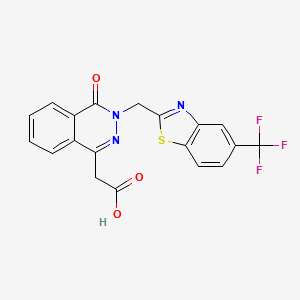


-
[0051]In accordance with Example 6, the following compounds are prepared:


http://pubs.acs.org/doi/abs/10.1021/jm00105a018
……………………………………
Mylari, Banavara L.; Zembrowski, William J.; Beyer, Thomas A.; Aldinger, Charles E.; Siegel, Todd W.
Journal of Medicinal Chemistry, 1992 , vol. 35, 12 p. 2155 – 2162
………………………………..
Mylari; Beyer; Scott; Aldinger; Dee; Siegel; Zembrowski
Journal of Medicinal Chemistry, 1992 , vol. 35, 3 p. 457 – 465
…………………………….
Drugs Fut 1995, 20(1): 33
J Label Compd Radiopharm 1991, 29(2): 143
|
3-19-1992
|
HETEROCYCLIC OXOPHTHALAZINYL ACETIC ACIDS
|
|
|
3-6-1992
|
3-(5-TRIFLUOROMETHYLBENZOTHIAZOL-2-YLMETHYL)-4-OXO-3H-PHYTHALAZIN-1-YLACETIC ACID MONOHYDRATE
|
|
|
7-4-1990
|
Heterocyclic oxophthalazinyl acetic acids
|
|
3-24-2006
|
Medical devices to treat or inhibit restenosis
|
|
|
12-30-2004
|
N-[(SUBSTITUTED FIVE-MEMBERED DI- OR TRIAZA DIUNSATURATED RING)CARBONYL]GUANIDINE DERIVATIVES FOR THE TREATMENT OF ISCHEMIA
|
|
|
10-7-2004
|
COMBINATION OF AN ALDOSE REDUCTASE INHIBITOR AND A GLYCOGEN PHOSPHORYLASE INHIBITOR COMBINATION OF AN ALDOSE REDUCTASE INHIBITOR AND A GLYCOGEN PHOSPHORYLASE INHIBITOR
|
|
|
9-30-2004
|
Aldose reductase inhibition in preventing or reversing diabetic cardiomyopathy
|
|
|
5-27-2004
|
SUBSTITUTED FUSED HETEROCYCLIC COMPOUNDS
|
|
|
4-15-2004
|
Compounds for treating and preventing diabetic complications
|
|
|
3-32-2004
|
IMPROVED MUTANTS OF (2,5-DKG) REDUCTASE A
|
|
|
12-18-2003
|
Pharmaceutical composition for use in treatment of diabetes
|
|
|
11-14-2003
|
Salts of zopolrestat
|
|
|
4-18-2002
|
Use of an aldose reductase inhibitor for reducing non-cardiac tissue damage
|
Кальцитонин, Calcitonin

Molecular formula of calcitonin is C145H241N43O49S2
• Molecular weight is 3434.8 g/mol
| Calcitonin-related polypeptide alpha | |||
|---|---|---|---|
 NMR solution structure of salmon calcitonin in SDS micelles.[1] |
The structural formula

Calcitonin (also known as thyrocalcitonin) is a 32-amino acid linear polypeptide hormone that is produced in humansprimarily by the parafollicular cells (also known as C-cells) of the thyroid, and in many other animals in the ultimobranchial body.[2] It acts to reduce blood calcium (Ca2+), opposing the effects of parathyroid hormone (PTH).[3]
Calcitonin has been found in fish, reptiles, birds, and mammals. Its importance in humans has not been as well established as its importance in other animals, as its function is usually not significant in the regulation of normal calcium homeostasis.[4] It belongs to the calcitonin-like protein family.
UV – range
 |
||||
| Conditions : Concentration – 53 mg / 100 ml | ||||
| Solvent designation schedule | Methanol |
Water |
0.1М HCl |
0.1M NaOH |
|---|---|---|---|---|
| The absorption maximum | 278 nm | – | 275 nm | – |
 |
4.9 | – | 4.4 | – |
| with | 1670 | – | 1500 | – |
IR – spectrum
| Wavelength (μm) |
|---|
 |
| Wavenumber (cm -1 ) |
Links
-
UV and IR Spectra. H.-W. Dibbern, R.M. Muller, E. Wirbitzki, 2002 ECV
-
NIST/EPA/NIH Mass Spectral Library 2008
-
Handbook of Organic Compounds. NIR, IR, Raman, and UV-Vis Spectra Featuring Polymers and Surfactants, Jr., Jerry Workman. Academic Press, 2000.
-
Handbook of ultraviolet and visible absorption spectra of organic compounds, K. Hirayama. Plenum Press Data Division, 1967.
| Calcitonin-related polypeptide alpha | |||||||||||
|---|---|---|---|---|---|---|---|---|---|---|---|
NMR solution structure of salmon calcitonin in SDS micelles.[1] |
|||||||||||
|
|||||||||||
| Identifiers | |||||||||||
| Symbols | CALCA ; CALC1; CGRP; CGRP-I; CGRP1; CT; KC | ||||||||||
| External IDs | OMIM: 114130 MGI: 2151253HomoloGene: 88401 ChEMBL: 5293GeneCards: CALCA Gene | ||||||||||
|
|||||||||||
| RNA expression pattern | |||||||||||
 |
|||||||||||
 |
|||||||||||
 |
|||||||||||
| More reference expression data | |||||||||||
| Orthologs | |||||||||||
| Species | Human | Mouse | |||||||||
| Entrez | 796 | 12310 | |||||||||
| Ensembl | ENSG00000110680 | ENSMUSG00000030669 | |||||||||
| UniProt | P01258 | P70160 | |||||||||
| RefSeq (mRNA) | NM_001033952 | NM_001033954 | |||||||||
| RefSeq (protein) | NP_001029124 | NP_001029126 | |||||||||
| Location (UCSC) | Chr 11: 14.99 – 14.99 Mb |
Chr 7: 114.63 – 114.64 Mb |
|||||||||
| PubMedsearch | [1] | [2] | |||||||||
Biosynthesis and regulation
Calcitonin is formed by the proteolytic cleavage of a larger prepropeptide, which is the product of the CALC1 gene (CALCA). The CALC1 gene belongs to a superfamily of related protein hormone precursors including islet amyloid precursor protein, calcitonin gene-related peptide, and the precursor of adrenomedullin.
Secretion of calcitonin is stimulated by:
-
- an increase in serum [Ca2+][5]
- gastrin and pentagastrin.[6]
Effects
The hormone participates in calcium (Ca2+) and phosphorus metabolism. In many ways, calcitonin counteracts parathyroid hormone (PTH).
More specifically, calcitonin lowers blood Ca2+ levels in three ways:
-
- Inhibits Ca2+ absorption by the intestines[7]
- Inhibits osteoclast activity in bones[8]
- Stimulates osteoblastic activity in bones. [8]
- Inhibits renal tubular cell reabsorption of Ca2+ allowing it to be excreted in the urine[9][10]
However, effects of calcitonin that mirror those of PTH include the following:
In its skeleton-preserving actions, calcitonin protects against calcium loss from skeleton during periods of calcium mobilization, such as pregnancy and, especially, lactation.
Other effects are in preventing postprandial hypercalcemia resulting from absorption of Ca2+. Also, calcitonin inhibits food intake in rats and monkeys, and may have CNS action involving the regulation of feeding and appetite.
Receptor
The calcitonin receptor, found on osteoclasts,[12] and in kidney and regions of the brain, is a G protein-coupled receptor, which is coupled by Gs to adenylate cyclase and thereby to the generation of cAMP in target cells. It may also affect the ovaries in women and the testes in men.
Discovery
Calcitonin was purified in 1962 by Copp and Cheney.[13] While it was initially considered a secretion of the parathyroid glands, it was later identified as the secretion of the C-cellsof the thyroid gland.[14]
Pharmacology
Salmon calcitonin is used for the treatment of:
It has been investigated as a possible non-operative treatment for spinal stenosis.[16]
The following information is from the UK Electronic Medicines Compendium[17]
General characteristics of the active substance
Salmon calcitonin is rapidly absorbed and eliminated. Peak plasma concentrations are attained within the first hour of administration.
Animal studies have shown that calcitonin is primarily metabolised via proteolysis in the kidney following parenteral administration. The metabolites lack the specific biological activity of calcitonin. Bioavailability following subcutaneous and intramuscular injection in humans is high and similar for the two routes of administration (71% and 66%, respectively).
Calcitonin has short absorption and elimination half-lives of 10–15 minutes and 50–80 minutes, respectively. Salmon calcitonin is primarily and almost exclusively degraded in the kidneys, forming pharmacologically inactive fragments of the molecule. Therefore, the metabolic clearance is much lower in patients with end-stage renal failure than in healthy subjects. However, the clinical relevance of this finding is not known. Plasma protein binding is 30% to 40%.
Characteristics in patients
There is a relationship between the subcutaneous dose of calcitonin and peak plasma concentrations. Following parenteral administration of 100 IU calcitonin, peak plasma concentration lies between about 200 and 400 pg/ml. Higher blood levels may be associated with increased incidence of nausea, vomiting, and secretory diarrhea.
Preclinical safety data
Conventional long-term toxicity, reproduction, mutagenicity, and carcinogenicity studies have been performed in laboratory animals. Salmon calcitonin is devoid of embryotoxic, teratogenic, and mutagenic potential.
An increased incidence of pituitary adenomas has been reported in rats given synthetic salmon calcitonin for 1 year. This is considered a species-specific effect and of no clinical relevance. Salmon calcitonin does not cross the placental barrier.
In lactating animals given calcitonin, suppression of milk production has been observed. Calcitonin is secreted into the milk.
Pharmaceutical manufacture
Calcitonin was extracted from the ultimobranchial glands (thyroid-like glands) of fish, particularly salmon. Salmon calcitonin resembles human calcitonin, but is more active. At present, it is produced either by recombinant DNA technology or by chemical peptide synthesis. The pharmacological properties of the synthetic and recombinant peptides have been demonstrated to be qualitatively and quantitatively equivalent.[17]
Uses of calcitonin
Treatments
Calcitonin can be used therapeutically for the treatment of hypercalcemia or osteoporosis.
Oral calcitonin may have a chondroprotective role in osteoarthritis (OA), according to data in rats presented in December, 2005, at the 10th World Congress of the Osteoarthritis Research Society International (OARSI) in Boston, Massachusetts. Although calcitonin is a known antiresorptive agent, its disease-modifying effects on chondrocytes and cartilage metabolisms have not been well established until now.
This new study, however, may help to explain how calcitonin affects osteoarthritis. “Calcitonin acts both directly on osteoclasts, resulting in inhibition of bone resorption and following attenuation of subchondral bone turnover, and directly on chondrocytes, attenuating cartilage degradation and stimulating cartilage formation,” says researcher Morten Karsdal, MSC, PhD, of the department of pharmacology at Nordic Bioscience in Herlev, Denmark. “Therefore, calcitonin may be a future efficacious drug for OA.”[18]
Subcutaneous injections of calcitonin in patients suffering from mania resulted in significant decreases in irritability, euphoria and hyperactivity and hence calcitonin holds promise for treating bipolar disorder.[19] However no further work on this potential application of calcitonin has been reported.
Diagnostics
It may be used diagnostically as a tumor marker for medullary thyroid cancer, in which high calcitonin levels may be present and elevated levels after surgery may indicate recurrence. It may even be used on biopsy samples from suspicious lesions (e.g., lymph nodes that are swollen) to establish whether they are metastasis of the original cancer.
Cutoffs for calcitonin to distinguish cases with medullary thyroid cancer have been suggested to be as follows, with a higher value increasing the suspicion of medullary thyroid cancer:[20]
- females: 5 ng/L or pg/mL
- males: 12 ng/L or pg/mL
- children under 6 months of age: 40 ng/L or pg/mL
- children between 6 months and 3 years of age: 15 ng/L or pg/mL
When over 3 years of age, adult cutoffs may be used
Increased levels of calcitonin have also been reported for various other conditions. They include: C-cell hyperplasia, Nonthyroidal oat cell carcinoma, Nonthyroidal small cell carcinoma and other nonthyroidal malignancies, acute and chronic renal failure, hypercalcemia, hypergastrinemia and other gastrointestinal disorders, and pulmonary disease.[21]
Structure
Calcitonin is a polypeptide hormone of 32 amino acids, with a molecular weight of 3454.93 daltons. Its structure comprises a single alpha helix.[1] Alternative splicing of the gene coding for calcitonin produces a distantly related peptide of 37 amino acids, called calcitonin gene-related peptide (CGRP), beta type.[22]
The following are the amino acid sequences of salmon and human calcitonin:[23]
- salmon:
Cys-Ser-Asn-Leu-Ser-Thr-Cys-Val-Leu-Gly-Lys-Leu-Ser-Gln-Glu-Leu-His-Lys-Leu-Gln-Thr-Tyr-Pro-Arg-Thr-Asn-Thr-Gly-Ser-Gly-Thr-Pro
- human:
Cys-Gly-Asn-Leu-Ser-Thr-Cys-Met-Leu-Gly-Thr-Tyr-Thr-Gln-Asp-Phe-Asn-Lys-Phe-His-Thr-Phe-Pro-Gln-Thr-Ala-Ile-Gly-Val-Gly-Ala-Pro
Compared to salmon calcitonin, human calcitonin differs at 16 residues.

Description: Cellular and molecular coordination of tissues which secrete chemical compounds to regulate growth, reproduction, metabolism, and ion homeostasis.
References
- ^ Jump up to:a b PDB 2glhAndreotti G, Méndez BL, Amodeo P, Morelli MA, Nakamuta H, Motta A (August 2006). “Structural determinants of salmon calcitonin bioactivity: the role of the Leu-based amphipathic alpha-helix”. J. Biol. Chem. 281 (34): 24193–203.doi:10.1074/jbc.M603528200. PMID 16766525.
- Jump up^ Costoff A. “Sect. 5, Ch. 6: Anatomy, Structure, and Synthesis of Calcitonin (CT)”.Endocrinology: hormonal control of calcium and phosphate. Medical College of Georgia. Retrieved 2008-08-07.
- Boron WF, Boulpaep EL (2004). “Endocrine system chapter”. Medical Physiology: A Cellular And Molecular Approach. Elsevier/Saunders. ISBN 1-4160-2328-3.
- Jump up^ Costoff A. “Sect. 5, Ch. 6: Biological Actions of CT”. Medical College of Georgia. Retrieved 2008-08-07.
- Costanzo, Linda S. (2007). BRS Physiology. Lippincott, Williams, & Wilkins. p. 263.ISBN 978-0-7817-7311-9.
- Jump up^ Erdogan MF, Gursoy A, Kulaksizoglu M (October 2006). “Long-term effects of elevated gastrin levels on calcitonin secretion”. J Endocrinol Invest. 29 (9): 771–775.PMID 17114906.
- Costoff A. “Sect. 5, Ch. 6: Effects of CT on the Small Intestine”. Medical College of Georgia. Retrieved 2008-08-07.
- Costoff A. “Sect. 5, Ch. 6: Effects of CT on Bone”. Medical College of Georgia. Retrieved 2008-08-07.
- Jump up^ Potts, John; Jüppner, Harald (2008). “Chapter 353. Disorders of the Parathyroid Gland and Calcium Homeostasis”. In Dan L. Longo, Dennis L. Kasper, J. Larry Jameson, Anthony S. Fauci, Stephen L. Hauser, and Joseph Loscalzo. Harrison’s Principles of Internal Medicine (18 ed.). McGraw-Hill.
- Rhoades, Rodney (2009). Medical Physiology: Principles for Clinical Medicine. Philadelphia: Lippincott Williams & Wilkins. ISBN 978-0-7817-6852-8.
- Jump up^ Carney SL (1997). “Calcitonin and human renal calcium and electrolyte transport”.Miner Electrolyte Metab 23 (1): 43–7. PMID 9058369.
- Jump up^ Nicholson GC, Moseley JM, Sexton PM, et al (1986). “Abundant calcitonin receptors in isolated rat osteoclasts. Biochemical and autoradiographic characterization”. J Clin Invest 78 (2): 355–60. doi:10.1172/JCI112584. PMC 423551. PMID 3016026.
- Jump up^ Copp DH, Cheney B (January 1962). “Calcitonin-a hormone from the parathyroid which lowers the calcium-level of the blood”. Nature 193 (4813): 381–2.doi:10.1038/193381a0. PMID 13881213.
- Jump up^ Hirsch PF, Gauthier GF, Munson PL (August 1963). “Thyroid hypocalcemic principle and recurrent laryngeal nerve injury as factors affecting the response to parathyroidectomy in rats”. Endocrinology 73 (2): 244–252. doi:10.1210/endo-73-2-244.PMID 14076205.
- Jump up^ Wall GC, Heyneman CA (April 1999). “Calcitonin in phantom limb pain”. Ann Pharmacother 33 (4): 499–501. doi:10.1345/aph.18204. PMID 10332543.
- Jump up^ Tran de QH, Duong S, Finlayson RJ (July 2010). “Lumbar spinal stenosis: a brief review of the nonsurgical management”. Can J Anaesth 57 (7): 694–703. doi:10.1007/s12630-010-9315-3. PMID 20428988.
- ^ Jump up to:a b “Electronic Medicines Compendium”. Retrieved 2008-08-07.
- Jump up^ Kleinman DM (2006-01-04). “Oral Calcitonin May Delay Onset of Joint Disease and Relieve Pain of OA”. Musculoskeletal Report. Musculoskeletal Report, LLC. Retrieved 2008-08-07.
- Jump up^ Vik A, Yatham LN (March 1998). “Calcitonin and bipolar disorder: a hypothesis revisited”. J Psychiatry Neurosci 23 (2): 109–17. PMC 1188909. PMID 9549251.
- Jump up^ Basuyau, J. -P.; Mallet, E.; Leroy, M.; Brunelle, P. (2004). “Reference Intervals for Serum Calcitonin in Men, Women, and Children”. Clinical Chemistry 50 (10): 1828–1830.doi:10.1373/clinchem.2003.026963. PMID 15388660. edit
- Jump up^ Burtis CA, Ashwood ER, Bruns DE. Tietz Textbook of Clinical Chemistry and Molecular Diagnostics, 5th edition. Elsevier Saunders. p. 1774. ISBN 978-1-4160-6164-9.
- Jump up^ “calcitonin domain annotation”. SMART (a Simple Modular Architecture Research Tool). embl-heidelberg.de. Retrieved 2009-02-22.
- Jump up^ http://www.newworldencyclopedia.org/entry/Calcitonin
Further reading
- MacIntyre I, Alevizaki M, Bevis PJ, Zaidi M (1987). “Calcitonin and the peptides from the calcitonin gene”. Clin. Orthop. Relat. Res. &na; (217): 45–55. doi:10.1097/00003086-198704000-00007. PMID 3549095.
- Di Angelantonio S, Giniatullin R, Costa V, et al. (2004). “Modulation of neuronal nicotinic receptor function by the neuropeptides CGRP and substance P on autonomic nerve cells”.Br. J. Pharmacol. 139 (6): 1061–73. doi:10.1038/sj.bjp.0705337. PMC 1573932.PMID 12871824.
- Findlay DM, Sexton PM (2005). “Calcitonin”. Growth Factors 22 (4): 217–24.doi:10.1080/08977190410001728033. PMID 15621724.
- Sponholz C, Sakr Y, Reinhart K, Brunkhorst F (2007). “Diagnostic value and prognostic implications of serum procalcitonin after cardiac surgery: a systematic review of the literature”. Critical care (London, England) 10 (5): R145. doi:10.1186/cc5067.PMC 1751067. PMID 17038199.
- Schneider HG, Lam QT (2007). “Procalcitonin for the clinical laboratory: a review”. Pathology39 (4): 383–90. doi:10.1080/00313020701444564. PMID 17676478.
- Grani, G; Nesca, A; Del Sordo, M; Calvanese, A; Carbotta, G; Bianchini, M; Fumarola, A (Jun 2012). “Interpretation of serum calcitonin in patients with chronic autoimmune thyroiditis.”. Endocrine-related cancer 19 (3): 345–9. doi:10.1530/ERC-12-0013.PMID 22399011.
External links
- The Calcitonin Protein
- Calcitonin at the US National Library of Medicine Medical Subject Headings (MeSH)

 cas 57014-02-5


 New Drug Approvals