New Drug Approvals

Home » Posts tagged 'PHASE 1' (Page 4)

Tag Archives: PHASE 1

DRUG APPROVALS BY DR ANTHONY MELVIN CRASTO .....FOR BLOG HOME CLICK HERE

Blog Stats

  • 4,802,207 hits

Flag and hits

Flag Counter

Enter your email address to follow this blog and receive notifications of new posts by email.

Join 37.9K other subscribers
Follow New Drug Approvals on WordPress.com

Archives

Categories

Recent Posts

Flag Counter

ORGANIC SPECTROSCOPY

Read all about Organic Spectroscopy on ORGANIC SPECTROSCOPY INTERNATIONAL 

Enter your email address to follow this blog and receive notifications of new posts by email.

Join 37.9K other subscribers
DR ANTHONY MELVIN CRASTO Ph.D

DR ANTHONY MELVIN CRASTO Ph.D

DR ANTHONY MELVIN CRASTO, Born in Mumbai in 1964 and graduated from Mumbai University, Completed his Ph.D from ICT, 1991,Matunga, Mumbai, India, in Organic Chemistry, The thesis topic was Synthesis of Novel Pyrethroid Analogues, Currently he is working with AFRICURE PHARMA, ROW2TECH, NIPER-G, Department of Pharmaceuticals, Ministry of Chemicals and Fertilizers, Govt. of India as ADVISOR, earlier assignment was with GLENMARK LIFE SCIENCES LTD, as CONSUlTANT, Retired from GLENMARK in Jan2022 Research Centre as Principal Scientist, Process Research (bulk actives) at Mahape, Navi Mumbai, India. Total Industry exp 32 plus yrs, Prior to joining Glenmark, he has worked with major multinationals like Hoechst Marion Roussel, now Sanofi, Searle India Ltd, now RPG lifesciences, etc. He has worked with notable scientists like Dr K Nagarajan, Dr Ralph Stapel, Prof S Seshadri, etc, He did custom synthesis for major multinationals in his career like BASF, Novartis, Sanofi, etc., He has worked in Discovery, Natural products, Bulk drugs, Generics, Intermediates, Fine chemicals, Neutraceuticals, GMP, Scaleups, etc, he is now helping millions, has 9 million plus hits on Google on all Organic chemistry websites. His friends call him Open superstar worlddrugtracker. His New Drug Approvals, Green Chemistry International, All about drugs, Eurekamoments, Organic spectroscopy international, etc in organic chemistry are some most read blogs He has hands on experience in initiation and developing novel routes for drug molecules and implementation them on commercial scale over a 32 PLUS year tenure till date Feb 2023, Around 35 plus products in his career. He has good knowledge of IPM, GMP, Regulatory aspects, he has several International patents published worldwide . He has good proficiency in Technology transfer, Spectroscopy, Stereochemistry, Synthesis, Polymorphism etc., He suffered a paralytic stroke/ Acute Transverse mylitis in Dec 2007 and is 90 %Paralysed, He is bound to a wheelchair, this seems to have injected feul in him to help chemists all around the world, he is more active than before and is pushing boundaries, He has 100 million plus hits on Google, 2.5 lakh plus connections on all networking sites, 100 Lakh plus views on dozen plus blogs, 227 countries, 7 continents, He makes himself available to all, contact him on +91 9323115463, email amcrasto@gmail.com, Twitter, @amcrasto , He lives and will die for his family, 90% paralysis cannot kill his soul., Notably he has 38 lakh plus views on New Drug Approvals Blog in 227 countries......https://newdrugapprovals.wordpress.com/ , He appreciates the help he gets from one and all, Friends, Family, Glenmark, Readers, Wellwishers, Doctors, Drug authorities, His Contacts, Physiotherapist, etc He has total of 32 International and Indian awards

Verified Services

View Full Profile →

Archives

Categories

Flag Counter

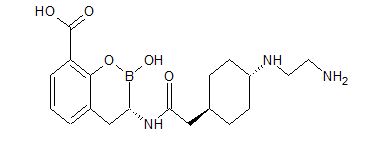
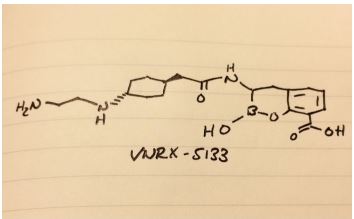
VNRX-5133 from VENATORX PHARMACEUTICALS


 img
str1
VNRX-5133
CAS: 1613268-23-7
Chemical Formula: C19H28BN3O5
Molecular Weight: 389.26
3-(2-((1r,4r)-4-((2-aminoethyl)amino)cyclohexyl)acetamido)-2-hydroxy-3,4-dihydro-2H-benzo[e][1,2]oxaborinine-8-carboxylic acid
 ( R)-3-( 2-( trans-4-( 2-aminoethylamino)cvclohexyl)acetamido)-2-hvdroxy-3-,4-dihydro-2H-benzo[el [l,21oxaborinine-8-carboxylic acid
Image result for VNRX-5133
  • Originator VenatoRx Pharmaceuticals
  • Developer  National Institute of Allergy and Infectious Diseases; VenatoRx Pharmaceuticals
  • Class Antibacterials; Cephalosporins; Small molecules
  • Mechanism of Action Beta lactamase inhibitors; Cell wall inhibitors

Highest Development Phases

  • Phase I Bacterial infections

Most Recent Events

  • 19 Mar 2018 VenatoRx Pharmaceuticals plans phase III pivotal trials in mid-2018
  • 03 Jan 2018 VNRX 5133 receives Fast Track designation for Bacterial infections (complicated urinary tract infections and complicated intra-abdominal infections) [IV-infusion] in USA
  • 03 Jan 2018 VNRX 5133 receives Qualified Infectious Disease Product status for Intra-abdominal infections in USA
  • clip
  • https://cen.acs.org/articles/96/web/2018/03/Drug-structures-made-public-New-Orleans.html

str4Credit: Tien Nguyen/C&EN

Presented by: Christopher J. Burns, president and chief executive officer of VenatoRx Pharmaceuticals

Target: β-lactamase enzymes, enzymes that inactivate β-lactam-based antibiotics enabling bacteria to resist their attacks

Disease: Gram-negative bacterial infections

Reporter’s notes: Another story with humble beginnings, this time with Burns and two colleagues sitting in a Panera Bread, with an idea. They wanted to offer a new compound in the class of β-lactam antibiotics, drugs which are “well-liked” by doctors, Burns said, and make up 60% of all antibiotic prescriptions. However, bacteria have developed defenses against these compounds in the form of β-lactamases, or as Burns dubbed them, “PAC-men.” These enzymes can chew up 1000 β-lactams per second, he said. VNRX-5133 was active against both serine-β-lactamases and metallo-β-lactamases in enzyme assays. It is being developed in combination with the antibiotic cefepime. VNRX-5133 fends off the PAC-men’s attacks, allowing cefepime to combat infection. The compound has gone through Phase I clinical trials and will be skipping ahead to Phase III later this year.

PATENT

WO 2014089365

Applicants: VENATORX PHARMACEUTICALS, INC [US/US]; 30 Spring Mill Drive Malvern, PA 19355 (US)
Inventors: BURNS, Christopher, J.; (US).
DAIGLE, Denis; (US).
LIU, Bin; (US).
MCGARRY, Daniel; (US).
PEVEAR, Daniel C.; (US).
TROUT, Robert E. Lee; (US)

https://patents.google.com/patent/WO2014089365A1/en

Christopher J. Burns, Ph.D.
President and Chief Executive Officer

Dr. Burns is Co-Founder, President and Chief Executive Officer of VenatoRx. He brings over 25 years of corporate and R&D experience within both major (RPR/Aventis) and specialty (ViroPharma, Protez…https://www.venatorx.com/leadership/

Antibiotics are the most effective drugs for curing bacteria-infectious diseases clinically. They have a wide market due to their advantages of good antibacterial effect with limited side effects. Among them, the beta-lactam class of antibiotics (for example, penicillins,

cephalosporins, and carbapenems) are widely used because they have a strong bactericidal effect and low toxicity.

[0004] To counter the efficacy of the various beta-lactams, bacteria have evolved to produce variants of beta-lactam deactivating enzymes called beta-lactamases, and in the ability to share this tool inter- and intra-species. These beta-lactamases are categorized as “serine” or “metallo” based, respectively, on presence of a key serine or zinc in the enzyme active site. The rapid spread of this mechanism of bacterial resistance can severely limit beta-lactam treatment options in the hospital and in the community.

EXAMPLE 15 : ( R)-3-( 2-( trans-4-( 2-aminoethylamino)cvclohexyl)acetamido)-2-hvdroxy-3-,4-dihydro-2H-benzo[el [l,21oxaborinine-8-carboxylic acid

Step 1 : Synthesis of (R)-3-(2-(trans-4-(2-(tert-butoxycarbonylamino)ethylamino)cyclohexyl)acetamido)-2-hydroxy-3,4-dihydro-2H-benzo[e] [ 1 ,2]oxaborinine-8-carboxylic acid.

[00240] To (R)-3-(2-(trans-4-aminocyclohexyl)acetamido)-2-hydroxy-3,4-dihydro-2H-benzo[e][l,2]oxaborinine-8-carboxylic acid (Example 6, 15 mg) in MeOH (2 mL) was added tert-butyl 2-oxoethylcarbamate (20 mg). Pd/C (10% by weight, 10 mg) was added and the reaction mixture was stirred under ¾ balloon overnight. The reaction mixture was filtrated and the solvent was then removed under reduced pressure and the residue was carried on to the next step without further purification. ESI-MS m/z 490.1 (MH)+.

Step 2: Synthesis of (R)-3-(2-(trans-4-(2-aminoethylamino)cyclohexyl)acetamido)-2-hydroxy-3,4-dihydro-2H-benzo[e][l,2]oxaborinine-8-carboxylic acid.

[00241] To (R)-3-(2-(trans-4-(2-(tert-butoxycarbonylamino)ethylamino)cyclohexyl)acetamido)-2-hydroxy-3,4-dihydro-2H-benzo[e][l,2]oxaborinine-8-carboxylic acid (20 mg) in a flask was added 1 mL 4N HC1 in dioxane. The resulting reaction mixture was stirred at RT for 2hr. The solvent was removed in vacuo and the residue was purified by reverse phase preparative HPLC and dried using lyophilization. ESI-MS m/z 390 (MH)+.

Step 2: (R)-3-(2-(trans-4-((2-aminoethylamino)methyl)cyclohexyl)acetamido)-2-hydroxy-3,4-dihydro-2H-benzo[e] [ 1 ,2]oxaborinine-8-carboxylic acid

[00229] Prepared from 3-[2-(2-{4-[(2-tert-Butoxycarbonylamino-ethylamino)-methyl]-cyclohexyl}-acetylamino)-2-(2,9,9-trimethyl-3,5-dioxa-4-bora-tricyclo[6.1.1.02,6]dec-4-yl)-ethyl]-2-methoxy-benzoic acid tert-butyl ester and BC13 following the procedure described in Step 2 of Example 1. The crude product was purified by reverse phase preparative HPLC and dried using lyophilization. ESI-MS m/z 404 (MH)+.

/////////////////////////////VNRX-5133; VNRX5133; VNRX 5133, phase 1, VenatoRx Pharmaceuticals, BACTERIAL INFECTIONS, Christopher J. Burns

 NCCN[C@@H]1CC[C@@H](CC(NC2B(O)OC(C(C(O)=O)=CC=C3)=C3C2)=O)CC1

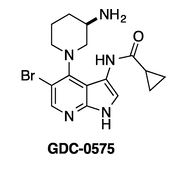
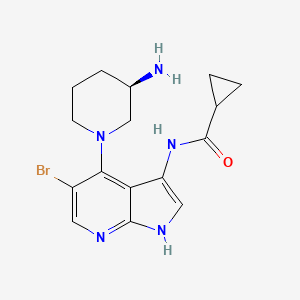
GDC 0575


str1

BAZRWWGASYWYGB-SNVBAGLBSA-N.png

GDC 0575

GDC-0575
CAS:  1196541-47-5

C16 H20 Br N5 O, 378.27

(R)-N-(4-(3-aminopiperidin-1-yl)-5-bromo-1H-indol-3-yl)cyclopropanecarboxamide

N-[4-[(3R)-3-Amino-1-piperidinyl]-5-bromo-1H-pyrrolo[2,3-b]pyridin-3-yl]cyclopropanecarboxamide

Cyclopropanecarboxamide, N-[4-[(3R)-3-amino-1-piperidinyl]-5-bromo-1H-pyrrolo[2,3-b]pyridin-3-yl]-

ARRY-575; GDC-0575; RG 7741; RO 6845979,
  • AK 687476
  • ARRY 575
  • GDC 0575
  • RG 7741

Image result for gdc 0575

GDC-0575, also known as ARRY-575 and RG7741, is a potent and selective CHK1 inhibitor.

GDC-0575 is a highly selective small-molecule Chk-1 inhibitor invented by Array and licensed to Genentech.  Genentech is responsible for all clinical development and commercialization activities. Array received an upfront payment of $28 million and is eligible to receive clinical and commercial milestone payments up to $380 million and up to double-digit royalties on sales.

Chk-1 is a protein kinase that regulates the tumor cell’s response to DNA damage often caused by treatment with chemotherapy. In response to DNA damage, Chk-1 blocks cell cycle progression in order to allow for repair of damaged DNA, thereby limiting the efficacy of chemotherapeutic agents. Inhibiting Chk-1 in combination with chemotherapy can enhance tumor cell death by preventing these cells from recovering from DNA damage. GDC‑0575 is designed to enhance the efficacy of some chemotherapeutic agents.  GDC-0575 is currently advancing in a Phase 1 trial in patients with lymphoma or solid tumors.

  • Originator Array BioPharma
  • Developer Genentech
  • Class Antineoplastics; Small molecules
  • Mechanism of Action Checkpoint kinase 1 inhibitors

Highest Development Phases

  • Phase I Lymphoma; Solid tumours

Most Recent Events

  • 11 Jan 2018 Genentech completes a phase I trial in Lymphoma (Late-stage disease, Metastatic disease, Second-line therapy or greater, Combination therapy, Monotherapy) in France and USA (PO) (NCT01564251)
  • 05 Dec 2017 GDC 0575 is still in phase I trials for Solid tumours and lymphoma in USA and France (Genentech pipeline, December 2017) (NCT01564251)
  • 04 Nov 2017 No recent reports of development identified for phase-I development in Lymphoma in France (PO)

 Array BioPharma

PATENTS

U.S. Patent, 8,841,304

U.S. Patent 8,178,131,

PAPER

Org. Process Res. Dev. 201721664– 668 

Highly Regioselective and Practical Synthesis of 5-Bromo-4-chloro-3-nitro-7-azaindole

 Department of Small Molecule Process Chemistry, Genentech, Inc., 1 DNA Way, South San Francisco, California 94080, United States
 Department of Pharma Technical Development, F. Hoffmann-La Roche AG, Grenzacherstrasse 124, CH-4070 Basel, Switzerland
Org. Process Res. Dev.201721 (4), pp 664–668
DOI: 10.1021/acs.oprd.7b00060
Abstract Image

We report an efficient and highly regiocontrolled route to prepare a functionalized 7-azaindole derivative—5-bromo-4-chloro-3-nitro-7-azaindole—from readily available parent 7-azaindole featuring a highly regioselective bromination of the 4-chloro-3-nitro-7-azaindole intermediate. In addition to the high efficiency and excellent control of regioisomeric impurities, the process is operationally simple by isolating each product via direct crystallization from the reaction mixture with no liquid–liquid extractions or distillation steps needed. We demonstrated the route on >50 kg scale and 46% overall yield to provide the target product in 97% purity by HPLC, which can serve as a useful building block for the preparation of a series of 3,4,5-substituted-7-azaindole derivatives.

https://pubs.acs.org/doi/suppl/10.1021/acs.oprd.7b00060/suppl_file/op7b00060_si_001.pdf

-Bromo-4-chloro-3-nitro-1H-pyrrolo[2,3-b]pyridine (1)(10)

Into ………….. afford 5-bromo-4-chloro-3-nitro-1H-pyrrolo[2,3-b]pyridine 1 as a tan solid (66.4 kg, 96.2 wt %, 90% yield, 96.9 A % HPLC; unreacted starting material 5: 0.99 A% HPLC; impurity 8: 0.95 A% HPLC): mp 269 °C dec; 1H NMR (300 MHz, DMSO-d6) δ 13.68 (s, 1H), 8.93 (s, 1H), 8.66 (s, 1H); 13C NMR (75 MHz, DMSO-d6) δ 146.9, 146.4, 133.9, 133.2, 12

PATENT

WO 2010118390

https://patents.google.com/patent/WO2010118390A1/und

PATENT

WO 2015027090

https://patentscope.wipo.int/search/en/detail.jsf?docId=WO2015027090

PATENT

WO 2015027092

https://patentscope.wipo.int/search/en/detail.jsf?docId=WO2015027092&recNum=1&maxRec=&office=&prevFilter=&sortOption=&queryString=&tab=PCTDescription

Example 1: Preparation of (i?)-5-bromo-4-(3-amino)piperidin-l-yl)-3- (cyclopropanecarboxamido)-lH-pyrrolo[2,3-&]pyridine:

[0096] Step 1 : Preparation of (i?)-5-bromo-4-(3-(/ert-butoxycarbonylamino)piperidin-l-yl)-3-nitro-lH-pyrrolo[2,3-6]pyridine:

[0097] To an inerted 10 L jacket reactor, equipped with a mechanic stirrer, a nitrogen/vacuum manifold, a thermocouple, and a condenser, were charged 2-methyl-2-butanol (3.30 L), 5-bromo-4-chloro-3-nitro-lH-pyrrolo[2,3-6]pyridine (330 g, 1.00 equiv), (R)-tert-butyl piperidin-3-ylcarbamate (456 g, 2.00 equiv), and N-methylmorpholine (115 g, 1.00 equiv). The reaction mixture was stirred at 85 °C for 48 h and cooled to 20 °C. The mixture was then washed with 15 wt % citric acid aqueous solution (3.30 kg) and water (3.30 kg). The majority of 2-methyl-2-butanol was distilled off under vacuum at 50 °C. Acetonitrile was added to bring the mixture back to its original volume. Continuous distillation was conducted until a total of 10.3 kg of acetonitrile was added. Water (3.20 kg) was slowly charged to the suspension over approximately 1 h at 55 °C. The slurry was slowly cooled to 20 °C over 4 h. The resulting solid was collected by filtration and washed with a 1 : 1 (v/v) mixture of acetonitrile and water (1.60 L). The product was dried in a vacuum oven under nitrogen at 70 °C to provide 358 g (69% yield) of (i?)-5-bromo-4-(3-(ter/-butoxycarbonylamino)piperidin-l-yl)-3-nitro-lH-pyrrolo[2,3-6]pyridine as a yellow solid. !H NMR (600 MHz, DMSO-i/6): δ 13.12 (s, 1H), 8.60 (s, 1H), 8.39 (s, 1H), 6.80 (d, J= 6.8 Hz, 1H), 3.49 (m, 1H), 3.34 (m, 2H), 3.22 (t, J = 11.2 Hz, 1H), 3.00 (t, J = 10.2 Hz, 1H), 1.88 (dd, J = 12.3, 2.8 Hz, 1H), 1.74 (m, 2H), 1.38 (m, 1H), 1.34 (s, 9H). 13C NMR (150 MHz, DMSO-<¾): δ 154.8, 148.9, 148.2, 147.9, 130.6, 128.5, 113.8, 109.6, 77.6, 54.7, 48.9, 47.3, 30.0, 28.1 (3C), 24.2. HRMS-ESI (m/z): [M + H]+ calcd for C17H23BrN504, 440.0928; found, 440.0912.

[0098] Steps 2 and 3: Preparation of (i?)-5-bromo-4-(3-(tert-butoxycarbonylamino)piperidin- 1 -yl)-3 -(cyclopropanecarboxamido)- 1 H-pyrrolo[2,3 -&]pyridine:

[0099] To an inerted 1 L pressure reactor were charged (i?)-5-bromo-4-(3-(tert-

butoxycarbonylamino)piperidin-l-yl)-3-nitro-lH-pyrrolo[2,3-6]pyridine (75.0 g, 1.00 equiv), 1% Pt + 2% V/C (11.3 g, 15 wt %), N-methylmorpholine (29.3 g, 1.70 equiv), and 2-MeTHF (750 mL). The reaction mixture was stirred at 50 °C at 5 bar of hydrogen for a minimum of 2 h. Cyclopropanecarbonyl chloride (26.7 g, 1.50 equiv) was charged into the reactor over 10 min at 15 °C. The reaction mixture was stirred at 25 °C for 1 h and filtered through Celite. The cake was washed with 2-MeTHF (150 mL). The filtrate was washed with 15 wt % aqueous ammonium chloride solution (450 mL) and water (450 mL) and then distilled in vacuo to 1/3 of it’s original volume. Toluene was added to bring the solution back to its original volume. Continuous vacuum distillation was conducted at 55 °C while adding toluene until the 2-MeTHF was below 2 wt %. The resulting solid was isolated by filtration, washed with toluene and dried in a vacuum oven at 40 °C overnight to give 69.8 g (69% corrected yield) of (i?)-5-bromo-4-(3-(tert-butoxycarbonylamino)piperidin-l-yl)-3-(cyclopropanecarboxamido)-lH-pyrrolo[2,3-6]pyridine (1 :1 toluene solvate) as an off-white solid. 1H NMR (600 MHz, THF-i 8, 4 °C): δ 10.76 (s, 1H), 9.72 (s, 1H), 8.15 (s, 1H), 7.90 (d, J = 2.4 Hz, 1H), 7.18-7.08 (m, 5H), 6.41 (d, J = 7.8 Hz, 1H), 3.82 (m, 1H), 3.60 (m, 1H), 3.44 (t, J = 10.6 Hz, 1H), 3.30 (dd, J= 10.6, 3.9 Hz, 1H), 3.03 (d, J = 10.9 Hz, 1H), 2.29 (s, 3H), 2.08 (m, 1H), 1.89 (m, 2H), 1.66 (m, 1H), 1.37 (s, 9H), 1.36 (m, 1H), 0.95-0.80 (m, 4H). 13C NMR (150 MHz, THF-ci8, 4 °C): δ 170.0, 155.8, 149.0, 147.8, 147.6, 138.4, 129.6 (2C), 128.9 (2C), 126.0, 116.6, 115.6, 111.9, 108.8, 78.5, 55.8, 50.2, 49.1, 31.8, 28.6 (3C), 26.3, 21.5, 15.8, 7.70, 7.56. HRMS-ESI (m/z): [M + H]+ calcd for C21H29BrN503, 478.1448; found, 478.1431.

[00100] Step 4: Preparation of (i?)-5-bromo-4-(3-amino)piperidin-l-yl)-3-(cyclopropanecarboxamido)- 1 H-pyrrolo [2,3 -6]pyridine :

[00101] To an inerted 1 L jacket reactor, equipped with a mechanic stirrer, a nitrogen/vacuum manifold, a thermocouple, and a condenser, were charged (i?)-5-bromo-4-(3-(tert-butoxycarbonylamino)piperidin-l-yl)-3-nitro-lH-pyrrolo[2,3-0]pyridine (1 : 1 toluene solvate) (30.0 g, 1.00 equiv), tetrahydrofuran (180 mL, 6.00 mL/g), followed by 4.5 M sulfuric acid (36.1 mL, 3.00 equiv). The reaction mixture was stirred at 50 ± 5 °C for 2 h and then cooled to 20 °C. An aqueous piperazine solution (42.4 g dissolved in 190 mL of water) was added slowly at 25 °C followed by addition of 15.0 mL of sat’d brine. The aqueous bottom layer was removed. The resulting solution was stirred at 20 °C for 5 min. Water (22.0 mL) was added. Continuous distillation was conducted at 50 °C by adjusting the feed rate of ethanol to match the distillation rate until a total of 260 mL of ethanol was added. Water (340 mL) was added at 50 °C over 1 h. The resulting solid was isolated by filtration, washed with 20% ethanol in water (2 x 60 mL) and dried in a vacuum oven at 50 °C overnight to give 16.4 g (78% corrected yield) of (i?)-5-bromo-4-(3-amino)piperidin-l-yl)-3-(cyclopropanecarboxamido)-l H-pyrrolo [2,3 -b]pyridine as a light yellow solid. (Note: The proton ( H) and carbon- 13 ( C) spectra of freebase product are very broad. Therefore, the spectra shown below are of freebase converted to a bis-HCl salt.) 1H NMR (300 MHz, DMSC ): δ 11.98 (br, 1H), 9.78 (s, 1H), 8.44 (br, 3H), 8.25 (s, 1H), 7.45 (d, J = 2.4 Hz, 1H), 3.57 (m, 1H), 3.43 (m, 1H), 3.41 (m, 1H), 3.28 (m, 1H), 3.14 (m, 1H), 2.15 (m, 1H), 1.90 (penta, J = 6.5 Hz, 1H), 1.81 (m, 1H), 1.72 (m, 1H), 1.52 (m, 1H), 0.83 (m, 4H). 13C NMR (75 MHz, DMSO- 6): 5 172.9, 149.5, 145.9, 145.1, 121.9, 114.2, 113.1, 107.8, 53.8, 51.1, 47.5, 28.6, 24.37, 14.7, 7.55, 7.45. HRMS-ESI (m/z): [M + H]+ calcd for C16H21BrN50, 378.0924; found, 378.0912.

[00102] Example 2:

[00103] Alternatively, the compound (i?)-5-bromo-4-(3-(fer/-butoxycarbonylamino)piperidin- 1 -yl)-3 -(cyclopropanecarboxamido)- 1 H-pyrrolo [2,3 -£]pyridine can be prepared from 5-bromo-4-chloro-3-nitro-lH-pyrrolo[2,3-b]pyridine and (^)-tert-butyl piperidin-3-ylcarbamate via a through process without isolating (i?)-5-bromo-4-(3-(tert-butoxycarbonylamino)piperidin-l-yl)-3-nitro-lH-pyrrolo[2,3-6]pyridine. The changes to existing procedure are shown as below: The solution of (i?)-5-bromo-4-(3-(tert-butoxycarbonylamino)piperidin- 1 -yl)-3 -nitro- 1 H-pyrrolo [2,3 -6]pyridine was hydrogenated directly in 2-methyl-2-butanol after aqueous washes with 15 wt % citric acid aqueous solution (10.0 g/g) and water (10.0 g/g). The solution concentration in 2-methyl-2-butanol was determined by HPLC weight assay.

PATENT

WO 2016138458

CHK1 is a serine/threonine kinase that regulates cell-cycle progression and is a main factor in DNA-damage response within a cell. CHK1 inhibitors have been shown to sensitize tumor cells to a variety of genotoxic agents, such as chemotherapy and radiation. U.S. Pat. No. 8,178,131 discusses a number of inhibitors of CHK1, including the compound (i?)-N-(4-(3-aminopiperidin-l-yl)-5-bromo-lH-pyrrolo[2,3-b]pyridin-3-yl)cyclopropanecarboxamide (Compound 1), which is being investigated in clinical trials for the treatment of various cancers.

Compound 1

PATENT

U.S. Patent Application, 20160200723

Example 1 Preparation of (R)-5-bromo-4-(3-amino)piperidin-1-yl)-3-(cyclopropanecarboxamido)-1H-pyrrolo[2,3-b]pyridine

Step 1: Preparation of (R)-5-bromo-4-(3-(tert-butoxycarbonylamino)piperidin-1-yl)-3-nitro-1H-pyrrolo[2,3-b]pyridine

To an inserted 10 L jacket reactor, equipped with a mechanic stirrer, a nitrogen/vacuum manifold, a thermocouple, and a condenser, were charged 2-methyl-2-butanol (3.30 L), 5-bromo-4-chloro-3-nitro-1H-pyrrolo[2,3-b]pyridine (330 g, 1.00 equiv), (R)-tert-butyl piperidin-3-ylcarbamate (456 g, 2.00 equiv), and N-methylmorpholine (115 g, 1.00 equiv). The reaction mixture was stirred at 85° C. for 48 h and cooled to 20° C. The mixture was then washed with 15 wt % citric acid aqueous solution (3.30 kg) and water (3.30 kg). The majority of 2-methyl-2-butanol was distilled off under vacuum at 50° C. Acetonitrile was added to bring the mixture back to its original volume. Continuous distillation was conducted until a total of 10.3 kg of acetonitrile was added. Water (3.20 kg) was slowly charged to the suspension over approximately 1 h at 55° C. The slurry was slowly cooled to 20° C. over 4 h. The resulting solid was collected by filtration and washed with a 1:1 (v/v) mixture of acetonitrile and water (1.60 L). The product was dried in a vacuum oven under nitrogen at 70° C. to provide 358 g (69% yield) of (R)-5-bromo-4-(3-(tert-butoxycarbonylamino)piperidin-1-yl)-3-nitro-1H-pyrrolo[2,3-b]pyridine as a yellow solid. 1H NMR (600 MHz, DMSO-d6): δ 13.12 (s, 1H), 8.60 (s, 1H), 8.39 (s, 1H), 6.80 (d, J=6.8 Hz, 1H), 3.49 (m, 1H), 3.34 (m, 2H), 3.22 (t, J=11.2 Hz, 1H), 3.00 (t, J=10.2 Hz, 1H), 1.88 (dd, J=12.3, 2.8 Hz, 1H), 1.74 (m, 2H), 1.38 (m, 1H), 1.34 (s, 9H). 13C NMR (150 MHz, DMSO-d6): δ 154.8, 148.9, 148.2, 147.9, 130.6, 128.5, 113.8, 109.6, 77.6, 54.7, 48.9, 47.3, 30.0, 28.1 (3C), 24.2. HRMS-ESI (m/z): [M+H]+ calcd for C17H23BrN5O4, 440.0928. found, 440.091

Steps 2 and 3: Preparation of (R)-5-bromo-4-(3-(tert-butoxycarbonylamino)piperidin-1-yl)-3-(cyclopropanecarboxamido)-1H-pyrrolo[2,3-b]pyridine

To an inserted 1 L pressure reactor were charged (R)-5-bromo-4-(3-(tert-butoxycarbonylamino)piperidin-1-yl)-3-nitro-1H-pyrrolo[2,3-b]pyridine (75.0 g, 1.00 equiv), 1% Pt+2% V/C (11.3 g, 15 wt %), N-methylmorpholine (29.3 g, 1.70 equiv), and 2-MeTHF (750 mL). The reaction mixture was stirred at 50° C. at 5 bar of hydrogen for a minimum of 2 h. Cyclopropanecarbonyl chloride (26.7 g, 1.50 equiv) was charged into the reactor over 10 min at 15° C. The reaction mixture was stirred at 25° C. for 1 h and filtered through Celite. The cake was washed with 2-MeTHF (150 mL). The filtrate was washed with 15 wt % aqueous ammonium chloride solution (450 mL) and water (450 mL) and then distilled in vacuo to ⅓ of it’s original volume. Toluene was added to bring the solution back to its original volume. Continuous vacuum distillation was conducted at 55° C. while adding toluene until the 2-MeTHF was below 2 wt %. The resulting solid was isolated by filtration, washed with toluene and dried in a vacuum oven at 40° C. overnight to give 69.8 g (69% corrected yield) of (R)-5-bromo-4-(3-(tert-butoxycarbonylamino)piperidin-1-yl)-3-(cyclopropanecarboxamido)-1H-pyrrolo[2,3-b]pyridine (1:1 toluene solvate) as an off-white solid. 1H NMR (600 MHz, THF-d8, 4° C.): δ 10.76 (s, 1H), 9.72 (s, 1H), 8.15 (s, 1H), 7.90 (d, J=2.4 Hz, 1H), 7.18-7.08 (m, 5H), 6.41 (d, J=7.8 Hz, 1H), 3.82 (m, 1H), 3.60 (m, 1H), 3.44 (t, J=10.6 Hz, 1H), 3.30 (dd, J=10.6, 3.9 Hz, 1H), 3.03 (d, J=10.9 Hz, 1H), 2.29 (s, 3H), 2.08 (m, 1H), 1.89 (m, 2H), 1.66 (m, 1H), 1.37 (s, 9H), 1.36 (m, 1H), 0.95-0.80 (m, 4H). 13C NMR (150 MHz, THF-d8, 4° C.): δ 170.0, 155.8, 149.0, 147.8, 147.6, 138.4, 129.6 (2C), 128.9 (2C), 126.0, 116.6, 115.6, 111.9, 108.8, 78.5, 55.8, 50.2, 49.1, 31.8, 28.6 (3C), 26.3, 21.5, 15.8, 7.70, 7.56. HRMS-ESI (m/z): [M+H]+ calcd for C21H29BrN5O3, 478.1448. found, 478.1431.

Step 4: Preparation of (R)-5-bromo-4-(3-amino)piperidin-1-yl)-3-(cyclopropanecarboxamido)-1H-pyrrolo[2,3-b]pyridine

To an inserted 1 L jacket reactor, equipped with a mechanic stirrer, a nitrogen/vacuum manifold, a thermocouple, and a condenser, were charged (R)-5-bromo-4-(3-(tert-butoxycarbonylamino)piperidin-1-yl)-3-nitro-1H-pyrrolo[2,3-b]pyridine (1:1 toluene solvate) (30.0 g, 1.00 equiv), tetrahydrofuran (180 mL, 6.00 mL/g), followed by 4.5 M sulfuric acid (36.1 mL, 3.00 equiv). The reaction mixture was stirred at 50±5° C. for 2 h and then cooled to 20° C. An aqueous piperazine solution (42.4 g dissolved in 190 mL of water) was added slowly at 25° C. followed by addition of 15.0 mL of sat′d brine. The aqueous bottom layer was removed. The resulting solution was stirred at 20° C. for 5 min. Water (22.0 mL) was added. Continuous distillation was conducted at 50° C. by adjusting the feed rate of ethanol to match the distillation rate until a total of 260 mL of ethanol was added. Water (340 mL) was added at 50° C. over 1 h. The resulting solid was isolated by filtration, washed with 20% ethanol in water (2×60 mL) and dried in a vacuum oven at 50° C. overnight to give 16.4 g (78% corrected yield) of (R)-5-bromo-4-(3-amino)piperidin-1-yl)-3-(cyclopropanecarboxamido)-1H-pyrrolo[2,3-b]pyridine as a light yellow solid. (Note: The proton (1H) and carbon-13 (13C) spectra of freebase product are very broad. Therefore, the spectra shown below are of freebase converted to a bis-HCl salt.)1H NMR (300 MHz, DMSO-d6): δ 11.98 (br, 1H), 9.78 (s, 1H), 8.44 (br, 3H), 8.25 (s, 1H), 7.45 (d, J=2.4 Hz, 1H), 3.57 (m, 1H), 3.43 (m, 1H), 3.41 (m, 1H), 3.28 (m, 1H), 3.14 (m, 1H), 2.15 (m, 1H), 1.90 (penta, J=6.5 Hz, 1H), 1.81 (m, 1H), 1.72 (m, 1H), 1.52 (m, 1H), 0.83 (m, 4H). 13C NMR (75 MHz, DMSO-d6): δ 172.9, 149.5, 145.9, 145.1, 121.9, 114.2, 113.1, 107.8, 53.8, 51.1, 47.5, 28.6, 24.37, 14.7, 7.55, 7.45. HRMS-ESI (m/z): [M+H]+ calcd for C16H21BrN5O, 378.0924. found, 378.0912.

Example 2

Alternatively, the compound (R)-5-bromo-4-(3-(tert-butoxycarbonylamino)piperidin-1-yl)-3-(cyclopropanecarboxamido)-1H-pyrrolo[2,3-b]pyridine can be prepared from 5-bromo-4-chloro-3-nitro-1H-pyrrolo[2,3-b]pyridine and (R)-tert-butyl piperidin-3-ylcarbamate via a through process without isolating (R)-5-bromo-4-(3-(tert-butoxycarbonylamino)piperidin-1-yl)-3-nitro-1H-pyrrolo[2,3-b]pyridine. The changes to existing procedure are shown as below: The solution of (R)-5-bromo-4-(3-(tert-butoxycarbonylamino)piperidin-1-yl)-3-nitro-1H-pyrrolo[2,3-b]pyridine was hydrogenated directly in 2-methyl-2-butanol after aqueous washes with 15 wt % citric acid aqueous solution (10.0 g/g) and water (10.0 g/g). The solution concentration in 2-methyl-2-butanol was determined by HPLC weight assay.

PAPER

An Efficient Through-Process for Chk1 Kinase Inhibitor GDC-0575

 Department of Small Molecule Process Chemistry, Genentech, Inc., 1 DNA Way, South San Francisco, California 94080, United States
 Department of Pharma Technical Development, F. Hoffmann-La Roche AG, Grenzacherstrasse 124, CH-4070 Basel, Switzerland
Org. Process Res. Dev., Article ASAP
DOI: 10.1021/acs.oprd.7b00388

Abstract

Abstract Image

We report an efficient route to prepare Chk1 kinase inhibitor GDC-0575 from 5-bromo-4-chloro-3-nitro-7-azaindole featuring a sequence of nucleophilic aromatic substitution, hydrogenative nitro-reduction, and a robust, high-yielding end-game involving deprotection–crystallization steps. The developed route was demonstrated on 10 kg scale in 30% overall yield to provide the target API in >99.8 A % HPLC purity.

(R)-5-Bromo-4-(3-amino)piperidin-1-yl)-3-(cyclopropanecarboxamido)-1H-pyrrolo[2,3-b]pyridine (GDC-0575)

To ………….. to give (R)-5-bromo-4-(3-amino)piperidin-1-yl)-3-(cyclopropanecarboxamido)-1H-pyrrolo[2,3-b]pyridine as a light yellow solid (5.1 kg, 76% yield, 99.9 A % by HPLC analysis).
Both 1H and 13C spectra of GDC-0575 freebase are very broad.
Therefore, the spectra shown below are of freebase converted to a bis-HCl salt: mp = 267 °C;
1H NMR (300 MHz, DMSO-d6): δ 11.98 (br, 1H), 9.78 (s, 1H), 8.44 (br, 3H), 8.25 (s, 1H), 7.45 (d, J = 2.4 Hz, 1H), 3.57 (m, 1H), 3.43 (m, 1H), 3.41 (m, 1H), 3.28 (m, 1H), 3.14 (m, 1H), 2.15 (m, 1H), 1.90 (penta, J = 6.5 Hz, 1H), 1.81 (m, 1H), 1.72 (m, 1H), 1.52 (m, 1H), 0.83 (m, 4H);
13C NMR (75 MHz, DMSO-d6): δ 172.9, 149.5, 145.9, 145.1, 121.9, 114.2, 113.1, 107.8, 53.8, 51.1, 47.5, 28.6, 24.37, 14.7, 7.55, 7.45;
HRMS–ESI (m/z): [M + H]+ calcd for C16H21BrN5O, 378.0924; found, 378.0912.

REFERENCES

1: Duan W, Gao L, Aguila B, Kalvala A, Otterson GA, Villalona-Calero MA. Fanconi
anemia repair pathway dysfunction, a potential therapeutic target in lung cancer.
Front Oncol. 2014 Dec 19;4:368. doi: 10.3389/fonc.2014.00368. eCollection 2014.
PubMed PMID: 25566506; PubMed Central PMCID: PMC4271581.

Publications

GDC-0575 / Cancer

07/01/2011

Oncology Research Featuring Preclinical and Clinical Cancer Therapeutics

Single-Agent Inhibition of Chk1 Is Antiproliferative in Human Cancer Cell Lines In Vitro and Inhibits Tumor Xenograft Growth In Vivo

K. D. Davies, et al.

GDC-0575 / Cancer

04/05/2011

American Association for Cancer Research Annual Meeting

Chk1 inhibition and Wee1 inhibition combine synergistically to inhibit cellular proliferation

K. D. Davies, et al.

GDC-0575 / Cancer

03/11/2011

International Symposium on Targeted Anticancer Therapies

Preclinical characterization of ARRY-575: A potent, selective, and orally bio-available small molecule inhibitor of Chk1

M. J. Humphries, et al.

///////// GDC0575,  GDC 0575, ARRY-575, GDC-0575, RG 7741, RO 6845979, AK 687476, ARRY 575, GDC 0575, RG 7741, PHASE 1

O=C(Nc1cnc2ncc(Br)c(c12)N3CCC[C@@H](N)C3)C4CC4

AVOID CONFUSING

GLXC-11762   WRONG  COMPD 2097938-64-0

N ATOM MISSING IN RING

Empesertib , BAY 1161909


img

2D chemical structure of 1443763-60-7

Empesertib , BAY 1161909, Mps1-IN-5,  (-)-BAY-1161909

CAS 1443763-60-7
Chemical Formula: C29H26FN5O4S
Molecular Weight: 559.6164

[a]D20 : -78.9° (in DMSO). WO 2014198647

UNII-02Y3Z2756M
(αR)-4-Fluoro-N-[4-[2-[[2-methoxy-4-(methylsulfonyl)phenyl]amino][1,2,4]triazolo[1,5-a]pyridin-6-yl]phenyl]-α-methylbenzeneacetamide

(R)-2-(4-fluorophenyl)-N-(4-(2-((2-methoxy-4-(methylsulfonyl)phenyl)amino)-[1,2,4]triazolo[1,5-a]pyridin-6-yl)phenyl)propanamide

(2R)-2-(4-Fluorophenyl)-N-(4-(2-((4-(methanesulfonyl)-2-methoxyphenyl)amino)(1,2,4)triazolo(1,5-a)pyridin-6-yl)phenyl)propanamide

Benzeneacetamide, 4-fluoro-N-(4-(2-((2-methoxy-4-(methylsulfonyl)phenyl)amino)(1,2,4)triazolo(1,5-a)pyridin-6-yl)phenyl)-alpha-methyl-, (alphaR)-

PHASE 1, BAYER, CANCER

PRODUCT PATENT, WO2013087579, https://www.google.com/patents/WO2013087579A1

Image result

SYNTHESIS, 

WO 2014198647

Analytical UPLC-MS was performed as follows:

Method A: System: UPLC Acquity (Waters) with PDA Detector und Waters ZQ mass spectrometer; Column: Acquity BEH C18 1 .7μηη 2.1 x50mm; Temperature: 60° C; Solvent A: Water + 0.1 % formic acid; Solvent B: acetonitrile; Gradient: 99 % A – 1 % A (1 .6 min) -> 1 % A (0.4 min) ; Flow: 0.8 mL/min; Injection Volume: 1 .0 μΐ (0.1 mg-1 mg/ml_ sample concentration); Detection: PDA scan range 210-400 nm – Fixed and ESI (+), scan range 170-800 m/z

LC-MS methods:

Method 1 :

Instrument: Waters ACQUITY SQD UPLC System; Column: Waters Acquity UPLC HSS T3 1 .8 μ 50 x 1 mm; Eluent A: 1 I Wasser + 0.25 ml 99%ige Formic acid, Eluent B: 1 I Acetonitril + 0.25 ml 99%ige Formic acid; Gradient: 0.0 min 90% A → 1 .2 min 5% A→ 2.0 min 5% A Ofen: 50° C; Flow: 0.40 ml/min; UV-Detection: 208 – 400 nm.

1H-NMR (300 MHz, DMSO-d6), δ [ppm] = 1 .39 (3H), 3.16 (3H), 3.83 (1 H), 3.95 (3H), 7.08-7.20 (2H), 7.34-7.45 (3H), 7.51 (1 H), 7.63-7.77 (5H), 7.92 (1 H), 8.48 (1 H), 8.64 (1 H), 9.1 1 (1 H), 10.19 (1 H).

[a]D20 : -78.9° (in DMSO).

Determination of enantiomeric purity by analytical chiral HPLC:

Column: Chiralcel OD-RH 150×4.6; Flow: 1 .00 mL/min; Solvent: A: Water with 0.1 % formic acid, B: Acetonitrile; Solvent mixture: 40% A + 60% B. Run Time: 30 min. Retention Time: 12.83 min; UV 254 nm; Enantiomeric Ratio: <1 % : > 99%.

Empesertib, also known as BAY1161909, is an orally bioavailable, selective inhibitor of the serine/threonine monopolar spindle 1 (Mps1) kinase, with potential antineoplastic activity. Upon administration, the Mps1 kinase inhibitor BAY1161909 binds to and inhibits the activity of Mps1. This causes inactivation of the spindle assembly checkpoint (SAC), accelerated mitosis, chromosomal misalignment, chromosomal missegregation, mitotic checkpoint complex destabilization, and increased aneuploidy. This leads to the induction of cell death in cancer cells overexpressing Mps1.

BAY-1161909 is an oral dual specificity protein kinase TTK inhibitor in early clinical trials at Bayer for the treatment of advanced malignancies in combination with paclitaxel.

Bayer and INSERM are developing BAY-1161909 , presumed to be the lead from monopolar spindle-1 inhibitors, including Mps-BAY-2b and Mps-BAY-2c, for the oral treatment of cancer; in July 2016, BAY-1161909 was reported to be in phase I clinical trial.

Mps-1 (Monopolar Spindle 1 ) kinase (also known as Tyrosine Threonine Kinase, TTK). Mps-1 is a dual specificity Ser/Thr kinase which plays a key role in the activation of the mitotic checkpoint (also known as spindle checkpoint, spindle assembly checkpoint) thereby ensuring proper chromosome segregation during mitosis [Abrieu A et al., Cell, 2001 , 106, 83-93]. Every dividing cell has to ensure equal separation of the replicated chromosomes into the two daughter cells. Upon entry into mitosis, chromosomes are attached at their kinetochores to the microtubules of the spindle apparatus. The mitotic checkpoint is a surveillance mechanism that is active as long as unattached kinetochores are present and prevents mitotic cells from entering anaphase and thereby completing cell division with unattached chromosomes [Suijkerbuijk SJ and Kops GJ, Biochemica et Biophysica Acta, 2008, 1786, 24- 31 ; Musacchio A and Salmon ED, Nat Rev Mol Cell Biol., 2007, 8, 379-93]. Once all kinetochores are attached in a correct amphitelic, i.e. bipolar, fashion with the mitotic spindle, the checkpoint is satisfied and the cell enters anaphase and proceeds through mitosis. The mitotic checkpoint consists of a complex network of a number of essential proteins, including members of the MAD (mitotic arrest deficient, MAD 1 -3) and Bub (Budding uninhibited by benzimidazole, Bub 1 -3) families, the motor protein CENP-E, Mps-1 kinase as well as other components, many of these being over-expressed in proliferating cells (e.g. cancer cells) and tissues [Yuan B et al., Clinical Cancer Research, 2006, 12, 405-10]. The essential role of Mps-1 kinase activity in mitotic checkpoint signalling has been shown by shRNA-silencing, chemical genetics as well as chemical inhibitors of Mps-1 kinase [Jelluma N et al., PLos ONE, 2008, 3, e2415; Jones MH et al., Current Biology, 2005, 15, 160-65; Dorer RK et al., Current Biology, 2005, 15, 1070-76; Schmidt M et al., EMBO Reports, 2005, 6, 866-72].

There is ample evidence linking reduced but incomplete mitotic checkpoint function with aneuploidy and tumorigenesis [Weaver BA and Cleveland DW, Cancer Research, 2007, 67, 10103-5; King RW, Biochimica et Biophysica Acta, 2008, 1786, 4-14]. In contrast, complete inhibition of the mitotic checkpoint has been recognised to result in severe chromosome missegregation and induction of apoptosis in tumour cells [Kops GJ et al., Nature Reviews Cancer, 2005, 5, 773-85; Schmidt M and Medema RH, Cell Cycle, 2006, 5, 159-63; Schmidt M and Bastians H, Drug Resistance Updates, 2007, 10, 162-81]. Therefore, mitotic checkpoint abrogation through pharmacological inhibition of Mps-1 kinase or other components of the mitotic checkpoint represents a new approach for the treatment of proliferative disorders including solid tumours such as carcinomas and sarcomas and leukaemias and lymphoid malignancies or other disorders associated with uncontrolled cellular proliferation.

Different compounds have been disclosed in prior art which show an inhibitory effect on Mps-1 kinase:

WO 2009/024824 A1 discloses 2-Anilinopurin-8-ones as inhibitors of Mps-1 for the treatment of proliferate disorders. WO 2010/124826 A1 discloses substituted imidazoquinoxaline compounds as inhibitors of Mps-1 kinase. WO 2011 /026579 A1 discloses substituted aminoquinoxalines as Mps-1 inhibitors.

Substituted triazolopyndine compounds have been disclosed for the treatment or prophylaxis of different diseases:

WO 2008/025821 A1 (Cellzome (UK) Ltd) relates to triazole derivatives as kinase inhibitors, especially inhibitors of ITK or PI3K, for the treatment or prophylaxis of immunological, inflammatory or allergic disorders. Said triazole derivatives are exemplified as possessing an amide, urea or aliphatic amine substituent in position 2.

WO 2009/047514 A1 (Cancer Research Technology Limited) relates to [1 ,2,4]- triazolo-[1 ,5-a]-pyridine and [1 ,2,4]-triazolo-[1 ,5-c]-pyrimidine compounds which inhibit AXL receptor tyrosine kinase function, and to the treatment of diseases and conditions that are mediated by AXL receptor tyrosine kinase, that are ameliorated by the inhibition of AXL receptor tyrosine kinase function etc., including proliferative conditions such as cancer, etc.. Said compounds are exemplified as possessing a substituent in the 5-position and a substituent in the 2-position.

WO 2009/010530 A1 discloses bicyclic heterorayl compounds and their use as phosphatidyli nositol (PI) 3-kinase. Among other compounds also substituted triazolopyridines are mentioned.

WO 2009/027283 A1 discloses triazolopyridine compounds and their use as ASK (apoptosis signal-regulating kinase) inhibitors for the treatment of autoimmune diseases and neurodegenerative diseases. WO 2010/092041 A1 (Fovea Pharmaceuticals SA) relates to [1 ,2,4]-triazolo- [1 ,5-a] -pyridines, which are said to be useful as selective kinase inhibitors, to methods for producing such compounds and methods for treating or ameliorating kinase-mediated disorder. Said triazole derivatives are exemplified as possessing a 2-chloro-5-hydroxyphenyl substituent in the 6- position of the [1 ,2,4]-triazolo-[1 ,5-a]-pyridine.

WO 2011 /064328 A1 , WO 2011 /063907 A1 , and WO 2011 /063908 A1 (Bayer Pharma AG) relate to [1 ,2,4]-triazolo-[1 ,5-a]-pyridines and their use for inhibition of Mps-1 kinase.

WO 2011 /064328 A1 discloses com ounds of fomula S2:

Figure imgf000005_0001

S2

in which

R1 is an aryl- or heteroaryl- group; wherein the aryl- or heteroaryl- group can be substituted inter alia with -N(H)C(=0)R6 or -C(=0)N(H)R6 ; in which R6represents a hydrogen or a Ci-C6-alkyl- group; the Ci-C6-alkyl- group optionally being substituted with halo-, hydroxyl-, d-C3-alkyl, R70-. WO 2011 /064328 A1 does not disclose compounds of the present invention as defined below.

WO 2011 /063907 A1 discloses compounds of fomula S1 :

Figure imgf000005_0002

S1

in which

R1 is an aryl group which is substituted at least one time; whereas the at least one substituent inter alia can be -N(H)C(=0)R6 or -C(=0)N(H)R6 ; in which R6represents a group selected from C3-C6-cycloalkyl, 3- to 10-membered heterocyclyl-, aryl-, heteroaryl-, -(CH2)q-(C3-C6-cycloalkyl), -(CH2)q-(3- to 10- membered heterocyclyl), -(CH2)q-aryl, or -(CH2)q-heteroaryl, wherein R6 is optionally substituted, and q is 0, 1 , 2 or 3;

R2 represents a substituted or unsubstituted aryl- or heteroaryl- group;

R3 and R4 inter alia can be hydrogen; and

R5 represents a substituted or unsubstituted Ci-C6-alkyl group.

WO 2011 /063908 A1 discloses com ounds of fomula S3:

Figure imgf000006_0001

S3

in which

R1 is an aryl group which is substituted at least one time; whereas the at least one substituent inter alia can be -N(H)C(=0)R6 or -C(=0)N(H)R6 ; in which R6inter alia represents a group selected from C3-C6-cycloalkyl, 3- to 10- membered heterocyclyl-, aryl-, heteroaryl-, -(CH2)q-(C3-C6-cycloalkyl), -(CH2)q– (3- to 10-membered heterocyclyl), -(CH2)q-aryl, and -(CH2)q-heteroaryl, wherein R6 is optionally substituted, and q is 0, 1 , 2 or 3;

R2 represents a substituted or unsubstituted aryl- or heteroaryl- group;

R3 and R4 inter alia can be hydrogen; and

R5 is hydrogen.

There are patent applications which are related to [1 ,2,4]-triazolo-[1 ,5-a]- pyridines and their use for inhibition of Mps-1 kinase, but which have not been published at the time of filing of this patent application: Subject matter of the EP patent applications No. 11167872.8, and No. 11167139.2 as well as of the patent application PCT/EP2011 /059806 are com ounds of fomula S4:

Figure imgf000007_0001

S4

in which

R1 represents inter alia a phenyl- group which is substituted at least one time; whereas the at least one substituent inter alia can be -N(H)C(=0)R6; in which R6inter alia can be -(CH2)q-aryl, wherein R6 is optionally substituted, and q is 0, 1 , 2 or 3;

R2 represents a substituted or unsubstituted aryl- or heteroaryl- group;

R3 and R4 inter alia can be hydrogen; and

R5 is hydrogen. However, the state of the art described above does not specifically disclose the substituted triazolopyridine compounds of general formula (I) of the present invention, or a tautomer, an N-oxide, a hydrate, a solvate, or a salt thereof, or a mixture of same, as described and defined herein, and as hereinafter referred to as “compounds of the present invention”, or their pharmacological activity.

The above mentioned patent applications which are related to [1 ,2,4]-triazolo- [1 ,5-a] -pyridines mainly focus on the effectiveness of the compounds in inhibiting Mps-1 kinase, expressed by the half maximal inhibitory concentration (IC50) of the compounds. For example, in WO 2011 /063908 A1 the effectiveness in inhibiting Mps-1 kinase was measured in an Mps-1 kinase assay with a concentration of 10 μΜ adenosine triphosphate (ATP).

The cellular concentration of ATP in mammals is in the millimolar range. Therefore it is important that a drug substance is also effective in inhibiting Mps-1 kinase in a kinase assay with a concentration of ATP in the millimolar range, e.g. 2 mM ATP, in order to potentially achieve an antiproliferative effect in a cellular assay. In addition, as one of ordinary skill in the art knows, there a many more factors determining the druglikeness of a compound. The objective of a preclinical development is to assess e.g. safety, toxicity, pharmacokinetics and metabolism parameters prior to human clinical trials. One important factor for assessing the druglikeness of a compound is the metabolic stability. The metabolic stability of a compound can be determined e.g. by incubating the compound with a suspension of liver microsomes from e.g. a rat, a dog and/or a human (for details see experimental section). Another important factor for assessing the druglikeness of a compound for the treatment of cancer is the inhibition of cell proliferation which can be determined e.g. in a HeLa cell proliferation assay (for details see experimental section). Surprisingly it was found, that the compounds of the present invention are characterized by :

– an IC50 lower than or equal to 1 nM (more potent than 1 nM) in an Mps-1 kinase assay with a concentration of 10 μΜ ATP, and

– an IC50 lower than 10 nM (more potent than 10 nM) in an Mps-1 kinase assay with a concentration of 2 mM ATP, and – a maximum oral bioavailability (Fmax) in rat that is higher than 50 % determined by means of rat liver microsomes as described below, and

– a maximum oral bioavailability (Fmax) in dog that is higher than 45 % determined by means of dog liver microsomes as described below, and

– a maximum oral bioavailability (Fmax) in human that is higher than 45 %, determined by means of human liver microsomes as described below, and

– an IC50 lower than 600 nM in a HeLa cell proliferation assay as described below. Hence, the compounds of the present invention have surprising and advantageous properties. These unexpected findings give rise to the present selection invention. The compounds of the present invention are purposively selected from the above mentioned prior art due to their superior properties. In particular, said compounds of the present invention may therefore be used for the treatment or prophylaxis of diseases of uncontrolled cell growth, proliferation and/or survival, inappropriate cellular immune responses, or inappropriate cellular inflammatory responses or diseases which are accompanied with uncontrolled cell growth, proliferation and/or survival, inappropriate cellular immune responses, or inappropriate cellular inflammatory responses, particularly in which the uncontrolled cell growth, proliferation and/or survival, inappropriate cellular immune responses, or inappropriate cellular inflammatory responses is mediated by Mps-1 kinase, such as, for example, haemotological tumours, solid tumours, and/or metastases thereof, e.g. leukaemias and myelodysplastic syndrome, malignant lymphomas, head and neck tumours including brain tumours and brain metastases, tumours of the thorax including non-small cell and small cell lung tumours, gastrointestinal tumours, endocrine tumours, mammary and other gynaecological tumours, urological tumours including renal, bladder and prostate tumours, skin tumours, and sarcomas, and/or metastases thereof.

PATENT

WO2013087579

https://www.google.com/patents/WO2013087579A1

 
Inventors Volker SchulzeDirk KosemundAntje Margret WengnerGerhard SiemeisterDetlef STÖCKIGTMichael Bruening
Applicant Bayer Intellectual Property GmbhBayer Pharma Aktiengesellschaft

Synthesis of Examples

Compounds of the present invention

Example01.01

(2 ?)-2-(4-fluorophenyl)-N-[4-(2-{[2-methoxy-4-(methylsulfonyl)phenyl]- amino}[1,2,4]triazolo[1,5-a]pyridin-6-yl)phenyl]propanamide

Figure imgf000139_0001

To a stirred suspension of Int08.011 (6.0 g) in DMF (48 mL) and dichloromethane (96 mL) was added sodium bicarbonate (3.69 g), (2/?)-2-(4- fluorophenyl)propanoic acid (2.71 g) and HATU (8.36 g). The mixture was stirred at room temperature for 4 h. Water was added, and the mixture was stirred for 30 minutes. A half-saturated solution of sodium bicarbonate was added and the mixture was extracted with ethyl acetate. The organic phase was washed with saturated sodium chloride solution, dried (sodium sulfate) and the solvent was removed in vacuum. Silicagel chromatography gave a solid that was triturated with ethyl acetate to give 7,44 g of the title compound. 1H-NMR (400MHz, DMSO-d6): δ [ppm]= 1.40 (d, 3H), 3.16 (s, 3H), 3.84 (q, 1H), 3.96 (s, 3H), 7.09 – 7.18 (m, 2H), 7.36 – 7.44 (m, 3H), 7.51 (dd, 1H), 7.63 – 7.76 (m, 5H), 7.92 (dd, 1H), 8.48 (d, 1H), 8.60 (s, 1H), 9.10 (d, 1 H), 10.16 (s, 1H).

[a]D20 : -77.0° (in DMSO).

Column: Chiralcel OD-RH 150×4.6; Flow: 1.00 mL/min; Solvent: A: Water with 0.1 % formic acid, B: Acetonitrile; Solvent mixture: 40% A + 60% B. Run Time: 30 min. Retention Time: 12.83 min; UV 254 nm; Enantiomeric Ratio: <1% : > 99%. Racemate01.01.r

Figure imgf000140_0001

Starting with Int01.05 and Int03.02, Racemate01.01.r was prepared analogously to the procedure for the preparation of Int08.020.

Racemate01.02.r

PATENT

WO2014009219

https://patentscope.wipo.int/search/en/detail.jsf?docId=WO2014198647&recNum=63

Analytical UPLC-MS was performed as follows:

Method A: System: UPLC Acquity (Waters) with PDA Detector und Waters ZQ mass spectrometer; Column: Acquity BEH C18 1 .7μηη 2.1 x50mm; Temperature: 60° C; Solvent A: Water + 0.1 % formic acid; Solvent B: acetonitrile; Gradient: 99 % A – 1 % A (1 .6 min) -> 1 % A (0.4 min) ; Flow: 0.8 mL/min; Injection Volume: 1 .0 μΐ (0.1 mg-1 mg/ml_ sample concentration); Detection: PDA scan range 210-400 nm – Fixed and ESI (+), scan range 170-800 m/z

LC-MS methods:

Method 1 :

Instrument: Waters ACQUITY SQD UPLC System; Column: Waters Acquity UPLC HSS T3 1 .8 μ 50 x 1 mm; Eluent A: 1 I Wasser + 0.25 ml 99%ige Formic acid, Eluent B: 1 I Acetonitril + 0.25 ml 99%ige Formic acid; Gradient: 0.0 min 90% A → 1 .2 min 5% A→ 2.0 min 5% A Ofen: 50° C; Flow: 0.40 ml/min; UV-Detection: 208 – 400 nm.

Preparation of compound A1

Route I

(2/?)-2-(4-fluorophenyl)-N-[4-(2-{[2-methoxy-4-(methylsulfonyl)phenyl]-amino}[1 ,2,4]triazolo[1 ,5-a]pyridin-6-yl)phenyl]propanamide

To a stirred suspension of Int08.011 (6.0 g) in DMF (48 mL) and dichloromethane (96 mL) was added sodium bicarbonate (3.69 g), (2/?)-2-(4-fluorophenyl)propanoic acid (2.71 g) and HATU (8.36 g). The mixture was stirred at room temperature for 4 h. Water was added, and the mixture was stirred for 30 minutes. A half-saturated solution of sodium bicarbonate was added and the mixture was extracted with ethyl acetate. The organic phase was washed with saturated sodium chloride solution, dried (sodium sulfate) and the solvent was removed in vacuum. Silicagel chromatography gave a solid that was triturated with ethyl acetate to give 7.44 g of the title compound.

1H-NMR (400MHz, DMSO-d6): δ [ppm] = 1.40 (d, 3H), 3.16 (s, 3H), 3.84 (q, 1 H), 3.96 (s, 3H), 7.09 – 7.18 (m, 2H), 7.36 – 7.44 (m, 3H), 7.51 (dd, 1 H), 7.63 – 7.76 (m, 5H), 7.92 (dd, 1 H), 8.48 (d, 1 H), 8.60 (s, 1 H), 9.10 (d, 1 H), 10.16 (s, 1 H).

[a]D20 : -77.0° (in DMSO).

Determination of enantiomeric purity by analytical chiral HPLC:

Column: Chiralcel OD-RH 150×4.6; Flow: 1.00 mL/min; Solvent: A: Water with 0.1 % formic acid, B: Acetonitrile; Solvent mixture: 40% A + 60% B. Run Time: 30 min. Retention Time: 12.83 min; UV 254 nm; Enantiomeric Ratio: <1% : > 99%.

Intermediate Int08.01 1

6-(4-aminophenyl)-N-[2-methoxy-4-(methylsulfonyl)phenyl][ 1 ,2,4]-triazolo[1 ,5-a]pyridin-2-amine

To a stirred suspension of Int08.010 (12.3 g) in dichloromethane (40 mL) was added TFA (46 mL). The mixture was stirred at room temperature for 16 h. Further TFA was added (1 mL) and the mixture was stirred at room temperature for 5 h. A saturated solution of potassium carbonate was added until pH 9 was reached. The mixture was extracted with dichloromethane and methanol (10:1 mixture). The solution was dried (sodium sulfate) and the solvent was removed in vacuum. The residue was triturated with ethanol to give 9.2 g of the title compound.

1H-NMR (300MHz, DMSO-d6): δ [ppm]= 3.16 (s, 3H), 3.95 (s, 3H), 5.30 (s, 2H), 6.63 (d, 2H), 7.38 – 7.46 (m, 3H), 7.51 (dd, 1 H), 7.61 (d, 1 H), 7.84 (dd, 1 H), 8.48 (d, 1 H), 8.55 (s, 1 H), 8.93 (d, 1 H).

Intermediate Int08.010

ieri-butyl [4-(2-{[2-methoxy-4-(methylsulfonyl)phenyl]amino}[ 1 ,2,4]-triazolo[1 ,5-a]pyridin-6-yl)phenyl]carbamate

To a stirred suspension of Int01.03 (4.0 g) in toluene (250 mL) and NMP (25 mL) was added Int03.02 (8.31 g), chloro(2-dicyclohexylphosphino-2′,4′,6′-tri-isopropyl-1 ,1′-biphenyl)[2-(2-aminoethyl)phenyl] palladium(ll) methyl-tert-butylether adduct (1.08 g), X-Phos (0.64 g) and powdered potassium phosphate (16.6 g). The flask was degassed twice and backfilled with argon. The mixture was heated to reflux for 16 h.

The reaction mixture was filtered through a microfilter and the solvent was removed in vacuum. The residue was triturated with dichloromethane to give 12.3 g of the title compound.

1H-NMR (400MHz, DMSO-d6): δ [ppm] = 1.46 (s, 9H), 3.16 (s, 3H), 3.96 (s, 3H), 7.43 (d, 1 H), 7.48 – 7.59 (m, 3H), 7.63 – 7.72 (m, 3H), 7.92 (dd, 1 H), 8.48 (d, 1 H), 8.58 (s, 1 H), 9.06 – 9.12 (m, 1 H), 9.46 (s, 1 H).

Intermediate Int01.03.

ieri-butyl [4-(2-amino[1 ,2,4]triazolo[1 ,5-a]pyridin-6-yl)phenyl]carbamate

To a stirred solution of Int01.02 (5.82 g) in 1 -propanol (400 mL) was added 2M potassium carbonate solution (41 mL), {4-[(tert-butoxycarbonyl) amino] phenyl} boronic acid (8.6 g), triphenylphosphine (150 mg) and PdCl2(PPh3)2 (1.9 g). The mixture was heated to reflux for 4 h, the solvent was removed in vacuum, water (150 mL) was added and the mixture was extracted with ethyl

acetate (500 mL). The organic phase was dried (sodium sulfate), filtered through Celite and the solvent was removed in vacuum. The residue was triturated with DCM to give the title compound as a white solid. Yield: 7.2 g. 1H-NMR (400MHz, DMSO-d6): δ [ppm] = 1.37 – 1.55 (m, 9H), 5.99 (s, 2H), 7.36 (dd, 1 H), 7.48 – 7.55 (m, 2H), 7.55 – 7.62 (m, 2H), 7.69 (dd, 1 H), 8.78 (dd, 1 H), 9.44 (s, 1 H).

Intermediate Int01.02

6-Bromo[1 ,2,4]triazolo[1 ,5-a]pyridin-2-amine

Hydroxylammonium chloride (39.8 g) was suspended in methanol (200 mL) and ethanol (190 mL) and Hiinig Base (59 mL) was added at r.t. The mixture was heated to 60°C, Int01.01 (30 g) was added portionwise, and the mixture was stirred at 60 °C for 2h. The solvent was removed in vacuum and water (150 mL) was added. A solid was collected by filtration and was washed with water and dried in vacuum.

Yield: 19.3 g of the title compound.

1H-NMR (300MHz, DMSO-d6): δ [ppm] = 6.10 (s, 2H), 7.28 (dd, 1 H), 7.51 (dd, 1 H), 8.88 (dd, 1 H).

Intermediate Int01.01

Eth l [(5-bromopyridin-2-yl)carbamothioyl]carbamate

Ethoxycarbonylisothiocyanate (16.7 g) was added to a stirred solution of 2-amino-5-brompyridine (20 g) in dioxane (200 mL). The mixture was stirred for 2h at r.t. A white solid precipitated. Hexane (20 mL) was added and the white solid was collected by filtration.

Yield: 30.4 g of the title compound.

1H-NMR (300MHz, DMSO-d6): δ [ppm] = 1 .22 (t, 3H), 4.19 (q, 2H), 8.08 (dd, 1 H), 8.49 (d, 1 H), 8.57 (br. d, 1 H), 1 1 .37 – 12.35 (m, 2H).

Intermediate Int03.02

1 -bromo-2-methoxy-4-(methylsulfonyl)benzene

To a stirred solution of Int03.01 (265 mg) in chloroform (10 mL) was added 3-chlorobenzenecarboperoxoic acid (mCPBA) (890 mg). The mixture was stirred at room temperature for 1 h. A half-saturated solution of sodium bicarbonate was added and the mixture was extracted with dichloromethane. The organic phase was washed with saturated sodium chloride solution, dried (sodium sulfate) and the solvent was removed in vacuum. Silica gel chromatography gave 252 mg of the title compound.

1H-NMR (300MHz, DMSO-d6): δ [ppm] = 3.22 (s, 3H), 3.93 (s, 3H), 7.39 (dd, 1 H), 7.50 (d, 1 H), 7.84 (d, 1 H).

Intermediate Int03.01

1 -bromo-2-methoxy-4-(methylsulfanyl)benzene

To a stirred solution of 1 -bromo-4-fluoro-2-methoxybenzene (4.0 g) in DMF (40 mL) was added sodium methanethiolate (2.76 g). The mixture was stirred at room temperature for 30 minutes and at 85 °C for 2 h. Water was added and the mixture was extracted with ethyl acetate. The organic phase was washed with saturated sodium chloride solution, dried (sodium sulfate) and the solvent was removed in vacuum. Silica gel chromatography gave 280 mg of the title compound.

1H-NMR (400MHz, DMSO-d6): δ [ppm] = 2.46 (s, 3H), 3.82 (s, 3H), 6.74 (dd, 1 H), 6.91 (d, 1 H), 7.44 (d, 1 H).

Intermediate Int03.00

1 -bromo-2-methoxy-4-(methylsulfanyl)benzene (alternative procedure)

To a stirred solution of 1 -bromo-4-fluoro-2-methoxybenzene (10.0 g) in DMF (100 mL) was added sodium methanethiolate (4.44 g). The mixture was stirred at 65°C for 2 h. The mixture was cooled to 0°C and methyl iodide (4.55 mL) was added. The mixture was stirred at room temperature for 1 h and further sodium methanethiolate (4.44 g) was added. The mixture was stirred at 65 °C for 1 h. The mixture was cooled to 0°C and methyl iodide (4.55 mL) was added. The mixture was stirred at room temperature for 1 h. Water was added and the mixture was extracted with ethyl acetate. The organic phase was washed with saturated sodium chloride solution, dried (sodium sulfate) and the solvent was removed in vacuum. Silica gel chromatography gave 6.2 g of the title compound as a 2:1 mixture with the starting material. The mixture was used for the next step without purification.

Route II

(2/?)-2-(4-fluorophenyl)-N-[4-(2-{[2-methoxy-4-(methylsulfonyl)ph

amino}[1 ,2,4]triazolo[1 ,5-a]pyridin-6-yl)phenyl]propanamide

To a stirred suspension of Int21.06 (550 mg) in toluene (18 mL) was added potassium fluoride (260 mg) and powdered potassium phosphate (842 mg) and the flask was degassed twice and backfilled with argon. The mixture was stirred for 15 minutes at r.t.. Int21.03 (350 mg), dicyclohexyl(2′,6′-dimethoxybiphenyl-2-yl)phosphine (81 mg) and palladium acetate (22 mg) were added and the flask was degassed twice and backfilled with argon. The mixture was heated to 85 °C for 3 h. Water was added and the reaction mixture was extracted with ethyl acetate. The organic phase was washed with saturated sodium chloride solution, dried (sodium sulfate) and the solvent was removed in vacuum. Aminophase-silica-gel chromatography gave a solid that was triturated with a mixture of dichloromethane and hexane to give 452 mg of the title compound.

1H-NMR (300 MHz, DMSO-d6), δ [ppm] = 1 .39 (3H), 3.16 (3H), 3.83 (1 H), 3.95 (3H), 7.08-7.20 (2H), 7.34-7.45 (3H), 7.51 (1 H), 7.63-7.77 (5H), 7.92 (1 H), 8.48 (1 H), 8.64 (1 H), 9.1 1 (1 H), 10.19 (1 H).

[a]D20 : -78.9° (in DMSO).

Determination of enantiomeric purity by analytical chiral HPLC:

Column: Chiralcel OD-RH 150×4.6; Flow: 1 .00 mL/min; Solvent: A: Water with 0.1 % formic acid, B: Acetonitrile; Solvent mixture: 40% A + 60% B. Run Time: 30 min. Retention Time: 12.83 min; UV 254 nm; Enantiomeric Ratio: <1 % : > 99%.

Intermediate Int21.06

(2R)-2-(4-fluorophenyl)-N-[4-(4,4,5,5-tetramethyl-1 ,3,2-dioxaborolan-2-yl)phenyl]propanamide

To a stirred solution of 4-(4,4,5,5-tetramethyl-1 ,3,2-dioxaborolan-2-yl)aniline (1.0 g) in DMF (45 mL) and dichloromethane (90 mL) was added sodium bicarbonate (766 mg), Int09.03 (844 mg) and HATU (2.6 g). The mixture was stirred at room temperature for 4 h. Water was added, and the mixture was stirred for 30 minutes. A half-saturated solution of sodium bicarbonate was added and the mixture was extracted with ethyl acetate. The organic phase was washed with saturated sodium chloride solution, dried (sodium sulfate) and the solvent was removed in vacuum. Silica-gel chromatography gave 1.53 g of the title compound.

1H-NMR (400 MHz, DMSO-d6), δ [ppm] = 1.23 (12H), 1.37 (3H), 3.74-3.87 (1 H), 7.06-7.16 (2H), 7.31 -7.42 (2H), 7.51 -7.61 (4H), 10.12 (1 H).

Intermediate Example Int21.05

(4-{[(2R)-2-(4-fluorophenyl)propanoyl]amino}phenyl)boronic acid

To a stirred solution of (4-aminophenyl)boronic acid hydrochloride (2.00 g) in DMF (42 mL) was added sodium bicarbonate (2.9 g), (2R)-2-(4-

fluorophenyl)propanoic acid (2.04 g) and HATU (6.58 g). The mixture was stirred at room temperature for 72 h. Water (140 mL) was added, and the mixture was stirred for 2 h. The white precipitate was collected by filtration and was washed with water and was dried in vacuum to give 2.86 g of the title compound.

1H-NMR (300 MHz, DMSO-d6), δ [ppm] = 1.39 (3H), 3.84 (1 H), 7.08-7.21 (2H), 7.35-7.44 (2H), 7.52 (2H), 7.69 (2H), 7.88 (2H), 10.07 (1 H).

Intermediate Int09.03

2/?)-2-(4-fluorophenyl)propanoic acid

To a stirred solution of Int09.02 (23.6 g) in refluxing ethyl acetate (250ml_) was added a solution of (1S)-1 -phenylethanamine (17.35 g) in ethyl acetate. The mixture was allowed to cool down to room temperature within 1 h. A white solid was collected by filtration, was washed with ethyl acetate and dried in vacuum to give 27.5 g of a solid. The solid was recrystallized from 400 mL refluxing ethyl acetate. The mixture was allowed to cool down to room temperature. A white solid was collected by filtration, was washed with ethyl acetate and dried in vacuum to give 18.3 g of a solid. The solid was twice recrystallized from refluxing ethyl acetate (350 mL; 300 mL). A white solid was collected by filtration, was washed with ethyl acetate and dried in vacuum to give 10.51 g of a solid. The solid was dissolved in water, hydrochloric acid (c=2.0 M) was added until pH 5 was reached and the reaction mixture was extracted with dichloromethane. The organic phase was dried (sodium sulfate) and the solvent was removed in vacuum to give 5.6 g of the title product. The crude product was used without further purification.

1H-NMR (300MHz, DMSO-d6): δ [ppm] = 1.31 (d, 3H), 3.66 (q, 1 H), 7.05 – 7.16 (m, 2H), 7.24 – 7.33 (m, 2H), 12.28 (br. s., 1 H).

[a]D20 : -79.3° (in DMSO)

Determination of enantiomeric purity by analytical chiral HPLC:

Column: Chiralcel OJ-H 150×4.6; Flow: 1.00 mL/min; Solvent: A: Hexane, B: 2-propanol with 0.1 % formic acid; Solvent mixture: 80% A + 20% B. Run Time: 30 min. Retention Time: 3.41 min; UV 254 nm; Enantiomeric Ratio: 99.8% : 0.2%.

Intermediate Int09.02

Rac-2- 4-fluorophenyl)propanoic acid

To a stirred solution of Int09.01 (18.9 g) in ethanol (200 mL) was added a solution of potassium hydroxide (35 g), dissolved in water (200 mL). The mixture was stirred at 0 °C for 4 h. Hydrochloric acid (c=4.0 M) was added until pH 5 was reached and the reaction mixture was extracted with ethyl acetate. The organic phase was separated and the solvent was removed in vacuum to give 15.64 g of the title product. The crude product was used without further purification.

1H-NMR (300MHz, DMSO-d6): δ [ppm] = 1.31 (d, 3H), 3.66 (q, 1 H), 7.05 – 7.15 (m, 2H), 7.24 – 7.33 (m, 2H), 12.30 (s, 1 H).

Intermediate Int09.01

Rac-meth l 2-(4-fluorophenyl)propanoate

To a stirred solution of diisopropylamine (13.0 g) in tetrahydrofurane (160 mL) was added a solution of n-butyllithium in hexane (51.4 mL; c= 2.5 M) at -78 °C. The solution was stirred at 0 °C for 15 minutes. The solution was cooled to -78 °C and a solution of methyl (4-fluorophenyl)acetate (18.0 g), dissolved in tetrahydrofurane (40 mL) was added. The solution was stirred at -78 °C for 30 minutes. Methyl iodide (10.0 mL) was added at -78 °C, and the solution was allowed to warm up to 0 °C within 1 h. Water was added and the reaction mixture was extracted with ethyl acetate. The organic phase was dried (sodium sulfate) and the solvent was removed in vacuum. Silicagel chromatography gave 18.9 g of the title compound.

1H-NMR (400MHz, DMSO-d6): δ [ppm] = 1.34 (d, 3H), 3.55 (s, 3H), 3.79 (q, 1 H), 7.08 – 7.15 (m, 2H), 7.25 – 7.32 (m, 2H).

Intermediate Int21.03

6-chloro-N-[2-methoxy-4-(methylsulfonyl)phenyl][1 ,2,4]triazolo[1 ,5-a]pyridin-2-amine

To a stirred suspension of Int21.02 (0.7 g) in toluene (28 mL) was added Int03.02 (1.27 g), chloro(2-dicyclohexylphosphino-2′,4′,6′-tri-isopropyl-1 ,1′-biphenyl)[2-(2-aminoethyl)phenyl] palladium(ll) methyl-tert-butylether adduct (343 mg), X-Phos (202 mg) and powdered potassium phosphate (3.09 g). The flask was degassed twice and backfilled with argon. The mixture was heated to reflux for 3 h. Further chloro(2-dicyclohexylphosphino-2′,4′,6′-tri-isopropyl-1 ,1′-biphenyl)[2-(2-aminoethyl)phenyl] palladium(ll) methyl-tert-butylether adduct (30 mg) and X-Phos (19 mg) were added and the mixture was heated to reflux

for 15 h. The solvent was removed in vacuum. Silicagel chromatography gave a solid that was triturated ethyl acetate to give 1.0 g of the title compound. 1H-NMR (400 MHz, DMSO-d6): δ [ppm] = 3.16 (3H), 3.95 (3H), 7.42 (1 H), 7.50 (1 H), 7.62-7.69 (2H), 8.41 (1 H), 8.70 (1 H), 9.17 (1 H).

Intermediate Int21.02

6-chloro[1 ,2,4]triazolo[1 ,5-a]pyridin-2-amine

Hydroxylammonium chloride (4.4 g) was suspended in methanol (35 mL) and ethanol (35 mL) and Hiinig Base (10.2 mL) was added at r.t. The mixture was heated to 60° C, Int21.01 (4.4 g) was added portionwise, and the mixture was stirred at 60 °C for 2h. The solvent was removed in vacuum and water (150 mL) was added. A solid was collected by filtration and was washed with water and dried in vacuum.

Yield: 2.0 g of the title compound.

1H-NMR (300 MHz, DMSO-d6): δ [ppm] = 6.09 (2H), 7.28-7.37 (1 H), 7.39-7.49

(1 H), 8.84 (1 H).

Intermediate Int21.01

Eth l [(5-chloropyridin-2-yl)carbamothioyl]carbamate

Ethoxycarbonylisothiocyanate (3.37 g) was added to a stirred solution of 2-amino-5-cloropyridine (3.0 g) in dioxane (100 mL). The mixture was stirred at r.t. for 14 h. The solvent was removed in vacuum. The solid was dissolved in dichloromethane and methanol (100 : 1 ), filtered and the solvent was removed in vacuum to give a solid that was recystallized from ethyl acetate to give 4.4 g of the title compound.

1H-NMR (400 MHz, CHLOROFORM-d): δ [ppm] = 1.35 (3H), 4.31 (2H), 7.71 (1 H), 8.03 (1 H), 8.34 (1 H), 8.83 (1 H), 12.09 (1 H).

PATENT

WO-2017216025

Novel crystalline polymorphic forms of (2R)-2-(4-fluorophenyl)-N-[4-(2-{[2- methoxy-4-(methylsulfonyl)phenyl]amino}[1,2,4]triazolo[1,5-a]pyridin-6-yl)phenyl]propan-amide 4-toluenesulfonate (empesertib), and crystalline (2R)-2-(4-fluorophenyl)-N-[4-(2-{[2-methoxy-4- (methylsulfonyl)phenyl]amino}[1,2,4]triazolo[1,5-a]pyridin-6-yl)phenyl]propanamide 4- toluenesulfonate monohydrate, composition comprising them and their preparation methods are claimed. Also claims their use for treating various cancers. It is disclosed that empesertib is a potent Mps-1 kinase inhibitor.

MPS-1 INHIBITORS

The present invention covers crystalline, anhydrous (2/?)-2-(4-fluorophenyl)-/V-[4-(2-{[2-methoxy^-imethylsulfonyljphenyllaminojll^^ltriazololl^-olpyridin-e-yljphenyllpropan-amide 4-toluenesulfonate, and crystalline (2/?)-2-(4-fluorophenyl)-/V-[4-(2-{[2-methoxy-4-(methylsulfonyl)phenyl]amino}[l,2,4]triazolo[l,5-a]pyridin-6-yl)phenyl]propanamide 4-toluenesulfonate monohydrate, as compounds per se, a method of preparing said crystalline, anhydrous compound, pharmaceutical compsitions and pharmaceutical combinations comprising said crystalline, anhydrous compound, and uses of said crystalline, anhydrous compound in the treatment or prophylaxis of cancer, in particular pancreatic cancer, glioblastoma, ovarian cancer, non-small cell lung carcinoma, breast cancer, and/or gastric cancer.

BACKGROUND OF THE INVENTION

(2R)-2-(4-fluorophenyl)-/V-[4-(2-{[2-methoxy-4-(methylsulfonyl)phenyl]-amino}[l,2,4]triazolo[l,5-a]pyridin-6-yl)phenyl]propanamide is known to be a very potent inhibitor of Mps-1 kinase.

WO 2013/087579 Al discloses the compound, data showing its pharmaceutical activity, and a method for the preparation of (2/?)-2-(4-fluorophenyl)-/V-[4-(2-{[2-methoxy-4-(methylsulfonyl)phenyl]amino}[l,2,4]triazolo[l,5-a]pyridin-6-yl)phenyl]propanamide.

WO 2014/009219 Al discloses an improved method for the preparation of (2/?)-2-(4-fluorophenyl)-/V-[4-(2-{[2-methoxy-4-(methylsulfonyl)phenyl]amino}[l,2,4]triazolo[l,5-a]pyridin-6-yl)phenyl]propan-amide.

WO 2014/195408 Al discloses pharmaceutical compositions comprising (2 ?)-2-(4-fluorophenyl)-/V-[4-(2-{[2-methoxy-4-(methylsulfonyl)phenyl]amino}[l,2,4]triazolo[l,5-a]pyridin-6-yl)phenyl]propan-amide mainly in amorphous form.

Surprisingly and unexpectedly, it was observed that a crystalline form of the anhydrous 4-toluenesulfonate salt of (2/?)-2-(4-fluorophenyl)-/V-[4-(2-{[2-methoxy-4-(methylsulfonyl)-phenyl]amino}[l,2,4]triazolo[l,5-o]pyridin-6-yl)phenyl]propanamide shows superior properties in terms of its pharmacological usability compared to the free base (2/?)-2-(4-fluorophenyl)-/V-[4-(2-{[2-methoxy-4-(methylsulfonyl)phenyl]amino}[l,2,4]triazolo[l,5-a]pyridin-6-yl)phenyl]propanamide or other salts thereof.

In accordance with a first aspect, the present invention thus covers crystalline, anhydrous (2/?)-2-(4-fluorophenyl)-/V-[4-(2-{[2-methoxy-4-(methylsulfonyl)phenyl]-amino}[l,2,4]triazolo[l,5-a]pyridin-6-yl)phenyl]propanamide 4-toluenesulfonate, of formula (I) :

(I),

hereinafter also referred to as the “anhydrous tosylate salt” or “anhydrous 4-toluenesulfonate salt”,

Example 1 : Preparation of crystalline, anhydrous (2/?)-2-(4-fluorophenyl)-/V-[4-(2-{[2-methoxy-4-(methylsulfonyl)phenvnamino}fl,2,41triazolofl,5-a1pyridin-6-vDphenyllpropanamide 4-toluene-sulfonate : method 1 (without seeding)

Without seeding:

10 g (17.9 mmol) of (2/?)-2-(4-fluorophenyl)-/V-[4-(2-{[2-methoxy-4-(methylsulfonyl)phenyl]-amino}[l,2,4]triazolo[l,5-a]pyridin-6-yl)phenyl]propanamide were suspended in 2-butanone (100 ml) and heated to 65°C 4.08 g (21.4 mmol) 4-toluenesulfonic acid monohydrate in 2-butanone (20 ml) were added at 65°C. The suspension dissolved and the product precipitated from solution. The mixture was stirred for 21h at 65°C. The mixture was cooled to 20°C over 2h. After 2h stirring at 20°C the precipitate was isolated by suction filtration and washed two times with 100 ml 2-butanone (each). The product was dried in vacuum (approximately 60 mbar) at 50°C for 7h. 12.4 g (95 % of theory) were isolated.

Example 3 : Preparation of crystalline (2/?)-2-(4-fluorophenyl)-/V-[4-(2-{[2-methoxy-4- (methylsulfonyl)phenyllannino}[l,2,41triazolo[l,5-alpyriclin-6-yl)phenyllpropanamide 4; toluene-sulfonate monohydrate: method 1 : without seeding

10 g (17.9 mmol) of (2/?)-2-(4-fluorophenyl)-W-[4-(2-{[2-methoxy-4-(methylsulfonyl)phenyl]-amino}[l,2,4]triazolo[l,5-a]pyridin-6-yl)phenyl]propanamide were suspended in 2-butanone (100 ml) and water (2.4 ml) and heated to 65°C. 4.08 g (21.4 mmol) 4-toluenesulfonic acid monohydrate in 2-butanone (20 ml) were added at 65°C. The suspension dissolved and the product precipitated from solution. The mixture was stirred for 21h at 65°C and then cooled to 20°C within 2h. After 2h stirring at 20°C the precipitate was isolated by suction filtration and washed two times with 100 ml 2-butanone (each). The product was dried in vacuum (approximately 60 mbar) at 50°C for 7h. 11.4 g (85 % of theory) were isolated.

Thermogravimetry showed a wheight loss of 2.2 weight-% while heating from 32.6°C to 100°C.

lH-N MR(DMSO-d6): δ = 1.43 (3H), 2.29 (3H), 3.20 (3H), 3.87 (1H), 4.00 (3H), 4.40-4.95 (broad signal, water) 7.09-7.21 (4H), 7.41-7.50 (5H), 7.55 (1H), 7.69-7.78 (5H), 7.97 (1H), 8.51 (1H), 8.67 (1H), 9.15 (1H), 10.21 (1H) ppm.

REFERENCES

1. Combinations for the treatment of cancer comprising a Mps-1 kinase inhibitor and a mitotic inhibitor
By Wengner, Antje Margret; Siemeister, Gerhard
From PCT Int. Appl. (2014), WO 2014198645 A1 20141218.

2. Preparation of prodrug derivatives of substituted triazolopyridine monopolar spindle 1 kinase inhibitors and their use for the treatment of cancer
By Schulze, Volker; Lerchen, Hans-Georg; Bierer, Donald; Wengner, Antje Margret; Siemeister, Gerhard; Lienau, Philip; Krenz, Ursula; Kosemund, Dirk; Stoeckigt, Detlef; Bruening, Michael; et al
From PCT Int. Appl. (2014), WO 2014198647 A2 20141218.

3. Pharmaceutical compositions comprising substituted triazolopyridine compds.
By Schulze, Volker; Bruening, Michael; Stoeckigt, Detlef
From PCT Int. Appl. (2014), WO 2014195408 A1 20141211.

4. Combinations comprising inhibitors of Mps-1 kinase and anti-apoptotic protein of the Bcl-2 family for the treatment of cancer
By Siemeister, Gerhard; Bader, Benjamin; Wengner, Antje; Mumberg, Dominik; Schulze, Volker; Kroemer, Guido; Vitale, Ilio; Jemaa, Mohamed
From PCT Int. Appl. (2014), WO 2014020043 A1 20140206.

5. Method for preparing substituted triazolopyridines as Mps-1 kinase inhibitors
By Schulze, Volker; Mais, Franz-Josef
From PCT Int. Appl. (2014), WO 2014009219 A1 20140116.

6. Preparation of triazolopyridine derivatives for use as TTK inhibitors
By Schulze, Volker; Kosemund, Dirk; Wengner, Antje Margret; Siemeister, Gerhard; Stoeckigt, Detlef; Bruening, Michael
From PCT Int. Appl. (2013), WO 2013087579 A1 20130620.

///////////BAY1161909, BAY-1161909, BAY 1161909, Empesertib, Mps1-IN-5,  (-)-BAY-1161909, PHASE 1

 O=C(NC1=CC=C(C2=CN3C(C=C2)=NC(NC4=CC=C(S(=O)(C)=O)C=C4OC)=N3)C=C1)[C@H](C)C5=CC=C(F)C=C5

PH 46A


str1str1SCHEMBL14669646.png

PH 46A

cas  1421332-97-9

C27 H24 O3, 396.48

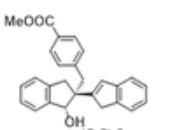
Benzoic acid, 4-[[(1S,2S)-2,3-dihydro-1-hydroxy[2,2′-bi-1H-inden]-2-yl]methyl]-, methyl ester
Methyl 4-(((1S,2S)-1-hydroxy-2,3-dihydro-1H,1’H-[2,2′-biinden]-2-yl)methyl)benzoate
str1
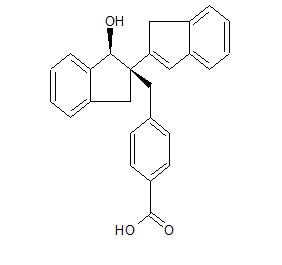
FREE ACID CAS  1380445-03-3, Benzoic acid, 4-[[(1S,2S)-2,3-dihydro-1-hydroxy[2,2′-bi-1H-inden]-2-yl]methyl]-
str1
N-Methyl-(D)-Glucamine salt (NMDG)
1380445-04-4
C26 H22 O3 . C7 H17 N O5
D-Glucitol, 1-deoxy-1-(methylamino)-, 4-[[(1S,2S)-2,3-dihydro-1-hydroxy[2,2′-bi-1H-inden]-2-yl]methyl]benzoate (1:1)
PH46A, belonging to a class of 1,2-Indane dimers, has been developed by  Trino Therapeutics Ltd research group as a potential therapeutic agent for the treatment of inflammatory and autoimmune diseases
The new chiral chemical entity PH46A, 6-(methylamino)hexane-1,2,3,4,5-pentanol 4-(((1S,2S)-1-hydroxy-2,3-dihydro-1H,1′H-[2,2-biinden]-2-yl)methyl)benzoate, was previously synthesized research group(1X) and shown to have potential therapeutic activity in the areas of inflammation and autoimmune diseases, including inflammatory bowel disease.(2X) PH46A recently completed a first-in-man Phase I clinical trial study.(3X)
  1. 1X  FramptonC.-S.ZhangT.ScalabrinoG.FrankishN.SheridanH. Acta Crystallogr., Sect. C: Cryst. Struct. Commun. 201268o323 DOI: 10.1107/S0108270112031265

  2. 2X FrankishN.SheridanH. J. Med. Chem. 2012555497 DOI: 10.1021/jm300390f

  3. 2X TherapeuticsT. A study to assess the safety and tolerability of PH46A in healthy volunteers, to measure drug levels in these subjects and to determine the effect of food on the drug’s absorption. BioMed Central: ISRCTN Registry, EudraCT: 2013-003717-17, 2014.
PH 46A
  • Originator Trino Therapeutics
  • Class Anti-inflammatories; Benzoates; Indans; Muscle relaxants; Small molecules
  • Mechanism of Action Mast cell stabilisers
  • Orphan Drug Status No
  • New Molecular Entity Yes

Highest Development Phases

  • Phase I Ulcerative colitis

Most Recent Events

  • 31 Aug 2014 Trino Therapeutics completes a phase I trial in Ulcerative colitis (In volunteers) in United Kingdom (ISRCTN90725219)
  • 07 Feb 2014 Phase-I clinical trials in Ulcerative colitis (in volunteers) in United Kingdom (PO)
  • 04 Jun 2012 Pharmacodynamics data from a preclinical trial in Ulcerative colitis released by Trino Therapeutics

Cytokines can be produced by various cell populations and have been shown to augment or limit immune responses to pathogens and influence the autoimmune response. One family of cytokines, which uses the common receptor gamma chain (cc), a component of receptors for interleukin (IL)-2, IL-4, IL-7, IL-9, IL-15 and IL-21, has been classically defined as growth and survival factors.

IL-2 production can induce an immune response by promoting the proliferation and generation of CD4+ Thl, CD4+ Th2 and CD8+ CTL effector cells. Many of the immunosuppressive drugs used in the treatment of autoimmune diseases and organ transplant rejection, such as corticosteroids and immune suppressive drugs (ciclosporin, tacrolimus) work by inhibiting the production of IL-2 by antigen -activated T cells. Others (sirolimus) block IL-2R signalling, thereby preventing the clonal expansion and function of antigen-selected T cells [ref: Opposing functions of IL-2 and IL-7 in the regulation of immune responses Shoshana D. Katzman, Katrina . Hoyer, Hans Dooms, Iris K. Gratz, Michael D. Rosenblum, Jonathan S. Paw, Sara H. Isakson, Abul K. Abbas. Cytokine 56 (201 1) 1 16-121]

In contrast IL-2 can inhibit the immune response by promoting the survival and functionality of natural (thymic) regulatory T-cells (Tregs), promoting the generation of induced (peripheral) Tregs and inhibiting the generation of CD4+ Thl 7 effector cells [ref: IL-2 and autoimmune disease. Anneliese Schimpl , A., Berberich, I, Kneitz, B., Kramer, S., Santner-Nanan, B., Wagner, S., Wolf, M., Hunig, T. Cytokine & Growth Factor Reviews 13 (2002) 369-378]. Interleukin-2/IL-2R deficiency with time leads to multiorgan inflammation and the formation of autoantibodies of various specificities. Depending on the genetic background, death occurs within a few weeks to a few months, mostly from autoimmune hemolytic anemia or inflammatory bowel disease (IBD) [ref. Sadlack B, Merz H, Schorle H, Schimpl A, Feller AC, Horak I. Ulcerative colitis-like disease in mice with a disrupted interleukin-2 gene. Cell 1993;75:253-61]. IL-2 signalling has been shown to be important in both the initiation and regulation of immune responses. In these dual and opposing roles, IL-2 acts to balance immune response, both driving immune cell activation and subsequent reduction. The potential clinical applicability of either augmenting or inhibiting signals mediated by IL-2 is significant and includes cancer, autoimmune inflammatory diseases, organ transplantation and HIV.

Inflammatory bowel disease (IBD) is an autoimmune inflammatory disease that consists of two idiopathic inflammatory diseases, ulcerative colitis (UC) and Crohn’s disease (CD). The greatest distinction between UC and CD is the range of inflamed bowel tissue. Inflammation in CD is discontinuously segmented, known as regional enteritis, while UC is superficial inflammation extending proximally and continuously from the rectum. At present, the exact cause of IBD is unknown. The disease seems to be related to an exaggerated mucosal immune response to infection of the intestinal epithelium because of an imbalance of pro- inflammatory and immune- regulatory molecules. The inheritance patterns of IBD suggest a complex genetic component of pathogenesis that may consist of several combined genetic mutations. Currently no specific diagnostic test exists for IBD, but as an understanding of pathogenesis is improved so will the corresponding testing methods. Treatment of IBD consists of inducing and maintaining remission. IBD patients may be maintained on remission by use of a 5-aminosalycilate. However, while the use of aminosalycilates in UC provides considerable benefit, both in inducing remission in mild to moderate disease and in preventing relapse, the usefulness of these drugs to maintain remission in CD is questionable and is no longer recommended. The mainstay of treatment of active disease is a corticosteroid, commonly used for limited periods to return both UC and CD patients to remission, though budesonide, designed for topical administration with limited systemic absorption, has no benefit in maintaining remission. Alternatives, such as the immunosuppressive drugs azathioprine and mercaptopurine, together with methotrexate and cyclosporine have limited efficacy and the capability of inducing grave adverse effects. Anti- TNFa antibodies, such as infliximab and adalimubab, may be used in those patients unresponsive to standard immunosuppressive therapy. However, many patients fail to respond to anti-TNFa therapy, either due to their particular phenotype or by the production of autoantibodies.

Inventors Helen SheridanNeil Frankish
Applicant Venantius Limited

PATENTS

WO 2013014660

https://encrypted.google.com/patents/WO2013014660A1?cl=en

Compound 6: The N-Methyl-(D)-Glucamine salt (NMDG) of compound 2.

Figure imgf000035_0001

Compound 6 physiochemical properties:

Appearance: Off-white solid

Molecular Weight: 577 (free acid: 382)

Molecular Formula: C33H39O8N (free acid: C26H2203)

Melting Point: 165-167 °C

Compound 6: [a]D:-76.5 (sample concentration: 200 mg/10 ml in Water)

Mass (Da): ES+ only [NMDG+Na] was visible

Elemental analysis: Calc: C (68.61), H (6.80), N (2.42), O (22.16). Found: C (68.44), H

(6.80), N (2.50), 0 (21.98) δΗ(400 MHz, DMSO-d6): 2.48 (3H, apparent s, NCH3), 2.65 (1H, d, J=13.56 Hz, HCH), 2.84-

3.02 (4H, m), 3.16 (1H, d, J= 13.60 Hz, HCH), 3.40-3.70 (7H, m), 3.85-3.92 (l H, m), 5.06 (1H, s, CH-OH), 5.93 (1H, broad s, CH- OH), 6.41 (1H, f, .CH=C), 6.80 (2H, d, J=7.92 Hz, Ar-H), 7.06-7.41 (8H, m, Ar-H), 7.64 (2H, d, J=7.80 Hz, Ar-H).

6c(100 MHz, DMSO): 33.8 (CH3), 37.9 (CH2), 38.2 (CH2), 39.5 (CH2), 51.6 (CH2-N), 55.8

(quat. C), 63.5 (CH2-0), 69.0 (CH-O), 70.3 (CH-O), 70.6 (CH-O), 71.3 (CH-O), 81.1 (CH-OH), 120.1 (tert. C), 123.4 (tert. C), 123.7 (tert. C), 124.3 (tert. C), 124.4 (tert. C), 126.1 (tert. C), 126.3 (tert. C), 127.0 (tert. C), 127.5 (tert. C), 2 x 128.5 (2 x tert. C), 2 x 129.1 (2 x tert. C), 140,4 (quat. C), 141.1 (quat. C), 142.9 (quat. C), 144.5 (quat. C), 145.2 (quat. C), 154.3 (quat. C), 170.4 (C=0).

Synthesis of methyl 4- (lS,2S)-l-hvdroxy-2,3-dihvdro-lHJ’H-f2,2′-biinden1-2-yl)methyl) benzoate (17):

Figure imgf000042_0002

To a solution of 4-(((15,25)-l-hydroxy-2,3-dihydro-lH, l’H-[2,2′-biinden]-2-yl)methyl)benzoic acid (100 mg, 0.26 mmol) and K2C03 (72 mg, 0.52 mmol) in DMF (2.5 mL), was added Mel (148 mg, 1.04 mmol) and then stirred at room temperature for 4 h. The reaction mixture was diluted with 1.5 N HCI (50 mL) and extracted with ethyl acetate (3 x 25 mL). The organic layer was washed with 10 % aq. NaHC03 (25 mL), brine (25 mL), dried over anhydrous Na2S04 and evaporated under reduced pressure. The residue was purified by CombiFlash using 20 % ethyl acetate in chloroform as an eluent to yield 62 mg (59 %) of the title compound as an off white solid.

LCMS (-OH): observed 379.2, calculated 396.17, molecular formula C27H2403

Purity (HPLC): 97 %.

Ή NMR (400 MHz, CDC13): 6 2.84 (1H, d, J = 13.28 Hz, ¾), 3.00 (1H, d, J = 15.64 Hz, CH2), 3.05 (1H, d, J = 15.56 Hz, CPb), 3.27 (lH, d, J = 13.32 Hz, CH ), 3.45 (1H, d, J = 22.52 Hz, CH2), 3.57 (1H, d, J = 22.60 Hz, CH2), 3.89 (3H, s, OCH3), 5.25 (1H, s, CHQH), 6.47 (1H, s, CH=C), 6.96 (2H, d, J = 8.24 Hz, Ar-H), 7.17 (1H, dt, J = 2.04, 9.88 Hz, Ar-H), 7.24-7.33 (5H, m, Ar-H), 7.43 (2H, d, J = 7.60 Hz, Ar-H), 7.83 (2H, dd, J = 1.76, 6.60 Hz, Ar-H).

PATENT

WO 2013174916

PATENT

US 9260376

US 20150141506

PH 46A (S,S & R,R) racemic

Melting point 141–143 °C. 1H NMR (400 MHz, CDCl3) δH (ppm) 6.99 (d, J = 7.72 Hz, 2H), 7.46 (d, J = 7.04 Hz, 2H), 7.20–7.31 (m, 6H), 6.97 (d, J = 7.80 Hz, 2H), 6.50 (s, 1H), 5.29 (d, J = 24.16 Hz, 1H), 3.91 (s, 3H), 3.60 (d, J = 22.68 Hz, 1H), 3.48 (d, J = 22.88 Hz, 1H), 3.28 (d, J = 13.24 Hz, 1H), 3.06 (d, J = 15.64 Hz, 1H), 3.51 (d, J = 16.00 Hz, 1H), 2.86 (d, J = 13.28 Hz, 1H). 13C NMR (100 MHz, CDCl3) δC (ppm) 166.9, 152.3, 144.1, 143.9, 143.4, 142.4, 140.0, 2 × 129.8, 2 × 128.6, 128.1, 128.0, 127.5, 126.6, 126.0, 124.4, 123.9, 123.6, 123.2, 120.2, 82.4, 55.5, 51.6, 39.6, 38.2, 38.0. HRMS (ESI) m/z calculated for C27H24O3 (M + Na)+ , 419.1606; found, 419.1618. Achiral HPLC: Zorbax C18 XDB (150 x 4.6 mm), 20:80:0.1 (v:v:v) water:MeOH:TFA, 1.0 mL/min, 254 nm, RT: 4.31 min. Chiral HPLC: Chiralpak IC, 90:10:0.1 (v:v:v) heptane:IPA:TFA, 1.0 mL/min, 210 nm, RT: 7.98 min & 9.38 min.

PH 46A

1H NMR (400 MHz, dmso-d6) δH (ppm): 7.70 (d, J = 8.4 Hz, 2H, Ar–H), 7.34–7.40 (m, 2H, Ar–H), 7.14–7.25 (m, 5H, Ar–H), 7.07 (t, J = 14.4 Hz, 1H, Ar–H), 6.97 (d, J = 8.4 Hz, 2H, Ar–H), 6.39 (s, 1H, CH = C), 5.85 (d, J = 7.2 Hz, 1H, CHOH), 5.06 (d, J = 6.8 Hz, 1H, CHOH), 3.77 (s, 3H, CH3), 3.56 (d, J = 23.2 Hz, 1H, CH2), 3.42 (d, J = 23.2 Hz, 1H, CH2), 3.20 (d, J = 13.6 Hz, 1H, CH2), 2.96 (s, 2H, CH2), 2.73 (d, J = 13.6 Hz, 1H, CH2).

Figure

clip

Image result for PH46A

https://www.sciencedirect.com/science/article/pii/S0040403916301332

Investigation of the Stereoselective Synthesis of the Indane Dimer PH46A, a New Potential Anti-inflammatory Agent

Celtic Catalysts Ltd, NovaUCD, Belfield, Dublin 4, Ireland
Trino Therapeutics Ltd, The Tower, Trinity Technology & Enterprise Campus, Dublin 2, Ireland
§ Drug Discovery Group, School of Pharmacy and Pharmaceutical Sciences & Trinity Biomedical Sciences Institute (TBSI), Trinity College, Dublin 2, Ireland
Org. Process Res. Dev., Article ASAP
DOI: 10.1021/acs.oprd.7b00258
Publication Date (Web): November 27, 2017
Copyright © 2017 American Chemical Society
*E-mail: hsheridn@tcd.ie.
Abstract Image

PH46A, belonging to a class of 1,2-Indane dimers, has been developed by our research group as a potential therapeutic agent for the treatment of inflammatory and autoimmune diseases. The initial synthetic route to PH46A gave a low overall yield, due in large part to the generation of undesired diastereoisomer 5 and the unwanted enantiomer (R,R)-8 during the synthesis. The aim of this work was to carry out a comprehensive investigation into the stereoselective synthesis of PH46A. Significant progress was made on the ketone reduction step, where the use of triisobutylaluminum [TiBA, Al(iBu)3] afforded high selectivity for the target diastereoisomer (rac)-6, compared to the unfavorable ratio obtained using a previous process. This enabled a multikilo scale synthesis of PH46A in a GMP environment. Further, a brief proof-of-principle investigation was carried out using an achiral phase transfer catalyst (PTC) for alkylation at the methine carbon of the parent indanone.

Patent ID

Patent Title

Submitted Date

Granted Date

US2015141506 INDANE DIMERS FOR USE IN THE TREATMENT OF AUTOIMMUNE INFLAMMATORY DISEASE
2013-05-23
2015-05-21
US9260376 COMPOUNDS FOR USE IN THE TREATMENT OF IMMUNE RELATED INFLAMMATORY DISEASE
2012-07-20
2014-04-17

///////////////////////PH46A, PH 46A, phase 1, trino

O=C(OC)c1ccc(cc1)C[C@]3(Cc2ccccc2[C@H]3O)C4=Cc5ccccc5C4

BMS 986205


ChemSpider 2D Image | BMS 986205 | C24H24ClFN2Oimg

BMS 986205

(2R)-N-(4-Chlorophenyl)-2-[cis-4-(6-fluoro-4-quinolinyl)cyclohexyl]propanamide
Cyclohexaneacetamide, N-(4-chlorophenyl)-4-(6-fluoro-4-quinolinyl)-α-methyl-, cis-
Cyclohexaneacetamide, N-(4-chlorophenyl)-4-(6-fluoro-4-quinolinyl)-α-methyl-, cis-(αR)-
(i?)-N-(4-chlorophenyl)-2- c 5-4-(6-fluoroquinolin-4-yl)cyclohexyl)propanamide

CAS: 1923833-60-6

Phase 1 cancer

BMS-986205, ONO-7701,  F- 001287

  • Molecular Formula C24H24ClFN2O
  • Average mass 410.912 Da
  • Originator Bristol-Myers Squibb
  • Class Antineoplastics
  • 01 Feb 2016 Phase-I/II clinical trials in Cancer (Combination therapy, Late-stage disease, Second-line therapy or greater) in Canada (PO) (NCT02658890)
  • 31 Jan 2016 Preclinical trials in Cancer in USA (PO) before January 2016
  • 01 Jan 2016 Bristol-Myers Squibb plans a phase I/IIa trial for Cancer (Late-stage disease, Combination therapy, Second-line therapy or greater) in USA, Australia and Canada (PO) (NCT02658890)
Inventors Hilary Plake Beck, Juan Carlos Jaen, Maksim OSIPOV, Jay Patrick POWERS, Maureen Kay REILLY, Hunter Paul SHUNATONA, James Ross WALKER, Mikhail ZIBINSKY, James Aaron Balog, David K Williams, Jay A MARKWALDER, Emily Charlotte CHERNEY, Weifang Shan, Audris Huang
Applicant Flexus Biosciences, Inc.

Hilary Beck

Hilary Beck

FLX Bio, Inc.EX Principal Investigator, Company NameFLX Bio, Inc., 

CURRENTLY Director, Medicinal Chemistry at IDEAYA Biosciences, IDEAYA Biosciences, The University of Texas at Austin

Image result for Flexus Biosciences, Inc.

Brian Wong

Brian Wong

Chief Executive Officer at FLX Bio, Inc.

Bristol-Myers Squibb, following its acquisition of Flexus Biosciences, is developing BMS-986205 (previously F- 001287), the lead from an immunotherapy program of indoleamine 2,3-dioxygenase 1 (IDO1) inhibitors for the potential treatment of cancer. In February 2016, a phase I/IIa trial was initiated .

BMS-986205 (ONO-7701) is being evaluated at Bristol-Myers Squibb in phase I/II clinical trials for the oral treatment of adult patients with advanced cancers in combination with nivolumab. Early clinical development is also ongoing at Ono in Japan for the treatment of hematologic cancer and for the treatment of solid tumors.

In April 2017, data from the trial were presented at the 108th AACR Annual Meeting in Washington DC. As of February 2017, the MTD had not been reached, but BMS-986205 plus nivolumab treatment was well tolerated, with only two patients discontinuing treatment due to DLTs. The most commonly reported treatment-related adverse events (TRAEs) were decreased appetite, fatigue, nausea, diarrhea, and vomiting. Grade 3 TRAEs were reported in three patients during the combination therapy; however, no grade 3 events were reported during BMS-986205 monotherapy lead-in. No grade 4 or 5 TRAEs were reported with BMS-986205 alone or in combination with nivolumab

Indoleamine 2,3-dioxygenase (IDO; also known as IDOl) is an IFN-γ target gene that plays a role in immunomodulation. IDO is an oxidoreductase and one of two enzymes that catalyze the first and rate-limiting step in the conversion of tryptophan to N-formyl-kynurenine. It exists as a 41kD monomer that is found in several cell populations, including immune cells, endothelial cells, and fibroblasts. IDO is relatively well-conserved between species, with mouse and human sharing 63% sequence identity at the amino acid level. Data derived from its crystal structure and site-directed mutagenesis show that both substrate binding and the relationship between the substrate and iron-bound dioxygenase are necessary for activity. A homolog to IDO (ID02) has been identified that shares 44% amino acid sequence homology with IDO, but its function is largely distinct from that of IDO. (See, e.g., Serafini P, et al, Semin. Cancer Biol, 16(l):53-65 (Feb. 2006) and Ball, H.J. et al, Gene, 396(1):203-213 (Jul. 2007)).

IDO plays a major role in immune regulation, and its immunosuppressive function manifests in several manners. Importantly, IDO regulates immunity at the T cell level, and a nexus exists between IDO and cytokine production. In addition, tumors frequently manipulate immune function by upregulation of IDO. Thus, modulation of IDO can have a therapeutic impact on a number of diseases, disorders and conditions.

A pathophysiological link exists between IDO and cancer. Disruption of immune homeostasis is intimately involved with tumor growth and progression, and the production of IDO in the tumor microenvironment appears to aid in tumor growth and metastasis. Moreover, increased levels of IDO activity are associated with a variety of different tumors (Brandacher, G. et al, Clin. Cancer Res., 12(4): 1144-1151 (Feb. 15, 2006)).

Treatment of cancer commonly entails surgical resection followed by chemotherapy and radiotherapy. The standard treatment regimens show highly variable degrees of long-term success because of the ability of tumor cells to essentially escape by regenerating primary tumor growth and, often more importantly, seeding distant metastasis. Recent advances in the treatment of cancer and cancer-related diseases, disorders and conditions comprise the use of combination therapy incorporating immunotherapy with more traditional chemotherapy and radiotherapy. Under most scenarios, immunotherapy is associated with less toxicity than traditional chemotherapy because it utilizes the patient’s own immune system to identify and eliminate tumor cells.

In addition to cancer, IDO has been implicated in, among other conditions, immunosuppression, chronic infections, and autoimmune diseases or disorders (e.g. , rheumatoid arthritis). Thus, suppression of tryptophan degradation by inhibition of IDO activity has tremendous therapeutic value. Moreover, inhibitors of IDO can be used to enhance T cell activation when the T cells are suppressed by pregnancy, malignancy, or a virus (e.g., HIV). Although their roles are not as well defined, IDO inhibitors may also find use in the treatment of patients with neurological or neuropsychiatric diseases or disorders (e.g., depression).

Small molecule inhibitors of IDO have been developed to treat or prevent IDO-related diseases. For example, the IDO inhibitors 1-methyl-DL-tryptophan; p-(3-benzofuranyl)-DL-alanine; p-[3-benzo(b)thienyl]-DL-alanine; and 6-nitro-L-tryptophan have been used to modulate T cell-mediated immunity by altering local extracellular concentrations of tryptophan and tryptophan metabolites (WO 99/29310). Compounds having IDO inhibitory activity are further reported in WO 2004/094409.

In view of the role played by indoleamine 2,3-dioxygenase in a diverse array of diseases, disorders and conditions, and the limitations (e.g., efficacy) of current IDO inhibitors, new IDO modulators, and compositions and methods associated therewith, are needed.

In April 2017, preclinical data were presented at the 108th AACR Annual Meeting in Washington DC. BMS-986205 inhibited kynurenine production with IC50 values of 1.7, 1.1 and > 2000 and 4.6, 6.3 and > 2000 nM in human (HeLa, HEK293 expressing human IDO-1 and tryptophan-2, 3-dioxygenase cell-based assays) and rat (M109, HEK293 expressing mouse ID0-1 and -2 cell-based assays) respectively. In human SKOV-3 xenografts (serum and tumor) AUC (0 to 24h; pharmacokinetic and pharmacodynamic [PK and PD])) was 0.8, 4.2 and 23 and 3.5, 11 and 40 microM h, respectively; area under the effect curve (PK and PD) was 39, 32 and 41 and 60, 63 and 76% kyn, at BMS-986205 (5, 25 and 125 mg/kg, qd×5), respectively

In April 2017, preclinical data were presented at the 253rd ACS National Meeting and Exhibition in San Francisco, CA. BMS-986205 showed potent and selective inhibition of IDO-1 enzyme (IC50 = 1.7nM) and potent growth inhibition in cellular assays (IC50 = 3.4 nM) in SKOV3 cells. A good pharmacokinetic profile was seen at oral and iv doses in rats, dogs and monkeys. The compound showed good oral exposure and efficacy in in vivo assays

Preclinical studies were performed to evaluate the activity of BMS-986205, a potent and selective optimized indoleamine 2, 3-dioxygenase (IDO)- 1inhibitor, for the treatment of cancer. BMS-986205 inhibited kynurenine production with IC50 values of 1.7, 1.1 and > 2000 and 4.6, 6.3 and > 2000 nM in human (HeLa, HEK293 expressing human IDO-1 and tryptophan-2, 3-dioxygenase cell-based assays) and rat (M109, HEK293 expressing mouse ID0-1 and -2 cell-based assays) respectively. BMS-986205 was also found to be potent when compared with IDO-1from other species (human < dog equivalent monkey equivalent mouse > rat). In cell-free systems, incubation of inhibitor lead to loss of heme absorbance of IDO-1 which was observed in the presence of BMS-986205 (10 microM), while did not observed with epacadostat (10 microM). The check inhibitory activity and check reversibility (24 h after compound removal) of BMS-986205 was found to be < 1 and 18% in M109 (mouse) and < 1 and 12% SKOV3 (human) cells, respectively. In human whole blood IDO-1, human DC mixed lymphocyte reaction and human T cells cocultured with SKOV3 cells- cell based assays, BMS-986205 showed potent cellular effects (inhibition of kynurenine and T-cell proliferation 3H-thymidine) with IC50 values of 2 to 42 (median 9.4 months), 1 to 7 and 15 nM, respectively. In human SKOV-3 xenografts (serum and tumor) AUC (0 to 24h; pharmacokinetic and pharmacodynamic [PK and PD])) was 0.8, 4.2 and 23 and 3.5, 11 and 40 microM h, respectively; area under the effect curve (PK and PD) was 39, 32 and 41 and 60, 63 and 76% kyn, at BMS-986205 (5, 25 and 125 mg/kg, qd×5), respectively. In vivo human-SKOV3 and hWB-xenografts, IC50 values of BMS-986205 were 3.4 and 9.4 NM, respectively. The ADME of BMS-986205 at parameters iv/po dose was 0.5/2, 0.5/1.5 and 0.5/1.2 mg/kg, respectively; iv/clearance was 27, 25 and 19 ml, min/kg, respectively; iv Vss was 3.8, 5.7 and 4.1 l/kg, respectively; t1/2 (iv) was 3.9, 4.7 and 6.6 h, respectively; fraction (po) was 64, 39 and 10%, respectively. At the time of presentation, BMS-986205 was being evaluated in combination with nivolumab.

The chemical structure and preclinical profile was presented for BMS-986205 ((2R)-N-(4-Chlorophenyl)-2-[cis-4-(6-fluoroquinolin-4-yl)cyclohexyl]propanamide), a potent IDO-1 inhibitor in phase I for the treatment of cancer. This compound showed potent and selective inhibition of IDO-1 enzyme (IC50 = 1.7nM) and potent growth inhibition in cellular assays (IC50 = 3.4 nM) in SKOV3 cells. The pharmacokinetic profile in rats dosed at 0.5 mg/kg iv and 2 mg/kg po, with clearance, Vss, half-life and bioavailability of 27 ml/min/kg, 3.8 l/kg, 3.9 h and 4%, respectively; in dogs at 0.5 iv and 1.5 po mg/kg dosing results were 25 ml/min/kg, 5.7 l/kg, 4.7 h and 39%; and, in cynomolgus monkeys with the same doses as dogs results were 19 ml/min/kg, 4.1 l/kg, 6.6 h and 10%, respectively. The compound showed good oral exposure and efficacy in in vivo assays.

BMS-986158: a BET inhibitor for cancerAshvinikumar Gavai of Bristol Myers Squibb (BMS) gave an overview of his company’s research into Bromodomian and extra-terminal domain (BET) as oncology target for transcriptional suppression of key oncogenes, such as MYC and BCL2. BET inhibition has been defined as strong rational strategy for the treatment of hematologic malignancies and solid tumors. From crystal-structure guided SAR studies, BMS-986158, 2-{3-(1,4-Dimethyl-1H-1,2,3-triazol-5-yl)-5-[(S)-(oxan-4-yl)(phenyl)methyl]-5H-pyrido[3,2-b]indol-7-yl}propan-2-ol, was chosen as a potent BET inhibitor, showing IC50 values for BRD2, BRD3 and BRD4 activity of 1 nM; it also inhibited Myc oncogene (IC50 = 0.5 nM) and induced chlorogenic cancer cell death. In vitro the compound also displayed significant cytotoxicity against cancer cells.  When administered at 0.25, 0.5 and 1 mg/kg po, qd to mice bearing human lung H187 SCLC cancer xenograft, BMS-986158 was robust and showed efficacy as a anticancer agent at low doses. In metabolic studies, it showed t1/2 of 36, 40 and 24 min in human, rat and mice, respectively, and it gave an efflux ratio of 3 in Caco-2 permeability assay. In phase 1/II studies, BMS-986158 was well tolerated at efficacious doses and regimens, and drug tolerable toxicity at efficacy doses and regimens. Selective Itk inhibitors for inflammatory disordersThe development of highly selective Itk inhibitors for the treatment of diseases related to T-cell function, such as inflammatory disorders, was described by Shigeyuki Takai (Ono Pharmaceutical). Inhibitory properties of a hit compound, ONO-8810443, were modified via X-ray structure and Molecular Dynamics stimulation to get ONO-212049 with significant kinase selectivity (140-fold) against Lck, a tyrosine kinase operating upstream of Itk in the TCR cascade. Further modifications identified final lead compound ONO-7790500 (N-[6-[3-amino-6-[2-(3-methoxyazetidin-1-yl)pyridin-4-yl]pyrazin-2-yl]pyridin-3-yl]-1-(3-methoxyphenyl)-2,3-dimethyl-5-oxopyrazole-4-carboxamide), which selectively inhibited Itk (IC50 = < 0.004 microM) over Lck (IC50 = 9.1 microM; SI 2000-fold) and suppressed Jurkat T-cell proliferation (IC50 = 0.014 microM). This compound suppressed alphaCD3/CDP28 CD4+T-cell stimulation (IC50 = 0.074 microM) with selectivity over PMA/Ionomycin (IC50 = > 10 microM). ONO-7790500 also exhibited in vivo IL-2 inhibitory properties (62% inhibition at 30 mg/kg po) in mice. In pharmacokinetic studies in balb/c mice, the compound administered orally (10 mg/kg) showed a Cmax of 1420 ng/ml, AUClast of 11,700 ng*h/ml, t1/2 of 5.3 h and oral bioavailability of 68%. Administration iv at 0.3 mg/kg gave an AUC last of 610 ng*h/ml, t1/2 of 3.8 h, Vss of 1260 ml/kg and Cl of 5.1 ml/min/kg. ADMET data showed ONO-7790500 did not have relevant activity in cytochromes and hERG channels (IC50 > 10 microM) in toxicological studies, and gave a PAMPA value of 5.0 x 10(-6) cm/s. Fused imidazole and pyrazole derivatives as TGF-beta inhibitorsDual growth and differentiation factor-8 (GDF-8; also known as myostatin) and TGF-beta inhibitors were described. Both targets belong to TGF-beta superfamily consisting of a large group of structurally related cell regulatory proteins involved in fundamental biological and pathological processes, such as cell proliferation or immunomodulation. Myostatin (GDF8) is a negative regulator negative regulator of skeletal muscle growth and has also been related to bone metabolism. Investigators at Rigel Pharmaceuticals found that compounds designed to be GDF-8 inhibitors were able to inhibit TGF-beta as well, this could be an advantage for the treatment of diseases associated with muscle and adipose tissue disorders, as well as potentially immunosuppressive disorders. Jiaxin Yu from the company described  new fused imidazole derivatives, of which the best compound was 6-[2-(2,4,5-Trifluorophenyl)-6,7-dihydro-5H-pyrrolo[1,2-a]imidazol-3-yl]quinoxaline. This compound was very potent at TGF-beta Receptor Type-1 (ALK5) inhibition with an IC50 value of 1nM. In an in vivo mouse assay this compound showed good activity at 59.7 mg/kg, po, and good plasma exposure; inhibition of GDF-8 and TGFbeta growth factors was 90 and 81.6 %, respectively.Rigel’s Ihab Darwish described a series of fused pyrazole derivatives, with the best compound being 6-[2-(2,4-Difluorophenyl)-5,6-dihydro-4H-pyrrolo[1,2-b]pyrazol-3-yl][1,2,4]triazolo[1,5-a]pyridine. This compound showed an IC50 of 0.06 and 0.23 microM for GDF-8 and TGFbeta, respectively, in the pSMAD (MPC-11) signaling inhibition test. The compound had a good pharmacokinetic profile, with 40% of bioavailability in mice after a 5-mg/kg po dose. An iv dose of 1 mg/kg showed t1/2 of 0.7 h and Vss of 1.0 l/h/kgDiscovery of selective inhibitor of IDO BMS-986205 for cancerIndoleamine-2,3-dioxygenase (IDO)-1 enzyme initiates and regulates the first step of the kynurenine pathway (KP) of tryptophan metabolism, and evidence has shown that overexpression of IDO-1 in cancer tumors is a crucial mechanism facilitating tumor immune evasion and persistence. The chemical structure and preclinical profile of BMS-986205 was presented by Aaron Balog from BMS. BMS-986205 ((2R)-N-(4-Chlorophenyl)-2-[cis-4-(6-fluoroquinolin-4-yl)cyclohexyl]propanamide),  is a potent IDO-1 inhibitor in phase I for the treatment of cancer. This compound showed potent and selective inhibition of IDO-1 enzyme (IC50 = 1.7nM) and potent growth inhibition in cellular assays (IC50 = 3.4 nM) in SKOV3 cells. The pharmacokinetic profile in rats dosed at 0.5 mg/kg iv and 2 mg/kg po, with clearance, Vss, half-life and bioavailability of 27 ml/min/kg, 3.8 l/kg, 3.9 h and 4%, respectively; in dogs at 0.5 iv and 1.5 po mg/kg dosing results were 25 ml/min/kg, 5.7 l/kg, 4.7 h and 39%; and, in cynomolgus monkeys with the same doses as dogs results were 19 ml/min/kg, 4.1 l/kg, 6.6 h and 10%, respectively. The compound showed good oral exposure and efficacy in in vivo assays.Three further reports have been published from this meeting .The website for this meeting can be found at https://www.acs.org/content/acs/en/meetings/spring-2017.html.

SYNTHESIS

1 Wittig  NaH

2 REDUCTION H2, Pd, AcOEt, 4 h, rt, 50 psi

3 Hydrolysis HCl, H2O, Me2CO, 2 h, reflux

4  4-Me-2,6-(t-Bu)2-Py, CH2Cl2, overnight, rt

5 SUZUKI AcOK, 72287-26-4, Dioxane, 16 h, 80°C

6  Heck Reaction,  Suzuki Coupling, Hydrogenolysis of Carboxylic Esters, Reduction of Bonds, HYDROGEN

7 Et3N, THF, rt – -78°C , Pivaloyl chloride, 15 min, -78°C; 1 h, 0°C ,THF, 0°C – -78°C, BuLi, Me(CH2)4Me, 15 min, -78°C, R:(Me3Si)2NH •Na, THF, 10 min, -50°C , HYDROLYSIS,  (PrP(=O)O)3, C5H5N, AcOEt, 5 min, rt

Patent

WO2016073770

https://patentscope.wipo.int/search/en/detail.jsf;jsessionid=289DBE79BEFC6ADC558C89E7A74B19DB.wapp2nB?docId=WO2016073770&recNum=1&maxRec=&office=&prevFilter=&sortOption=&queryString=&tab=PCTDescription

Example 19

(i?)-N-(4-chlorophenyl)-2- c 5-4-(6-fluoroquinolin-4-yl)cyclohexyl)propanamide

Example 19 : (i?)-N-(4-chlorophenyl)-2-(cz5-4-(6-fluoroquinolin-4- yl)cyclohexyl)propanamide

[0277] Prepared using General Procedures K, B, E, L, M, N, and O. General Procedure L employed 2-(4-(6-fluoroquinolin-4-yl)-cyclohexyl)acetic acid (mixture of

diastereomers), and ( ?)-2-phenyl-oxazolidinone. General Procedure M employed the cis product and iodomethane. The auxiliary was removed following General Procedure N and the desired product formed employing General Procedure O with 4-chloroaniline.

Purified using silica gel chromatography (0% to 100% ethyl acetate in hexanes) to afford Example 19. 1H NMR of czs-isomer (400 MHz; CDC13): δ 9.14 (s, 1H), 8.70 (d, J= 4.6 Hz, 1H), 8.06 (dd, J= 9.2 Hz, J= 5.6 Hz, 1H), 7.58-7.64 (m, 3H), 7.45 (ddd, J= 9.3 Hz, J= 7.8 Hz, J= 2.7 Hz, 1H), 7.19-7.24 (m, 2H), 7.15 (d, J= 4.6Hz, 1H), 3.16-3.26 (m, 1H), 2.59-2.69 (m, 1H), 2.08-2.16 (m, 1H), 1.66-1.86 (m, 7H), 1.31-1.42 (m, 1H), 1.21 (d, J= 6.8Hz, 3H) ppm. m/z 411.2 (M+H)+.

REFERENCES

23-Feb-2015
Bristol-Myers Squibb To Expand Its Immuno-Oncology Pipeline with Agreement to Acquire Flexus Biosciences, Inc
Bristol-Myers Squibb Co; Flexus Biosciences Inc

17-Dec-2014
Flexus Biosciences, a Cancer Immunotherapy Company Focused on Agents for the Reversal of Tumor Immunosuppression (ARTIS), Announces $38M Financing
Flexus Biosciences Inc

2015106thApril 21Abs 4290
Potent and selective next generation inhibitors of indoleamine-2,3-dioxygenase (IDO1) for the treatment of cancer
American Association for Cancer Research Annual Meeting
Jay P. Powers, Matthew J. Walters, Rajkumar Noubade, Stephen W. Young, Lisa Marshall, Jan Melom, Adam Park, Nick Shah, Pia Bjork, Jordan S. Fridman, Hilary P. Beck, David Chian, Jenny V. McKinnell, Maksim Osipov, Maureen K. Reilly, Hunter P. Shunatona, James R. Walker, Mikhail Zibinsky, Juan C. Jaen

2017108thApril 04Abs 4964
Structure, in vitro biology and in vivo pharmacodynamic characterization of a novel clinical IDO1 inhibitor
American Association for Cancer Research Annual Meeting
John T Hunt, Aaron Balog, Christine Huang, Tai-An Lin, Tai-An Lin, Derrick Maley, Johnni Gullo-Brown, Jesse Swanson, Jennifer Brown

2017253rdApril 05Abs MEDI 368
Discovery of a selective inhibitor of indoleamine-2,3-dioxygenase for use in the therapy of cancer
American Chemical Society National Meeting and Exposition
Aaron Balog

April 2-62017
American Chemical Society – 253rd National Meeting and Exhibition (Part IV) – OVERNIGHT REPORT, San Francisco, CA, USA
Casellas J, Carceller V

Juan Jaen

Juan Jaen

Jordan Fridman

Jordan Fridman

Chief Scientific Officer at FLX Bio, Inc.

Rekha Hemrajani

Rekha Hemrajani

Chief Operating Officer at FLX Bio, Inc

Max Osipov

Max Osipov

////////////////PHASE 1, BMS 986205, 1923833-60-6, BMS-986205, ONO-7701,Bristol-Myers Squibb,  Antineoplastics,  F- 001287

 C[C@H]([C@H]1CC[C@@H](C2=CC=NC3=CC=C(F)C=C23)CC1)C(NC4=CC=C(Cl)C=C4)=O

Wrapping up ‘s 1st time disclosures is Aaron Balog of @bmsnews talking about an IOD-1 inhibitor to treat cancer

str0

BLU 285


BLU-285

CAS 1703793-34-3

  • Molecular FormulaC26H27FN10
  • Average mass498.558 Da
(1S)-1-(4-Fluorophenyl)-1-(2-{4-[6-(1-methyl-1H-pyrazol-4-yl)pyrrolo[2,1-f][1,2,4]triazin-4-yl]-1-piperazinyl}-5-pyrimidinyl)ethanamine
5-Pyrimidinemethanamine, α-(4-fluorophenyl)-α-methyl-2-[4-[6-(1-methyl-1H-pyrazol-4-yl)pyrrolo[2,1-f][1,2,4]triazin-4-yl]-1-piperazinyl]-, (αS)-
  • 5-Pyrimidinemethanamine, α-(4-fluorophenyl)-α-methyl-2-[4-[6-(1-methyl-1H-pyrazol-4-yl)pyrrolo[2,1-f][1,2,4]triazin-4-yl]-1-piperazinyl]-, (αS)-
  • Originator Blueprint Medicines
  • Class Antineoplastics; Skin disorder therapies; Small molecules
  • Mechanism of Action Platelet-derived growth factor alpha receptor modulators; Proto oncogene protein c-kit inhibitors
  • Orphan Drug Status Yes – Systemic mastocytosis; Gastrointestinal stromal tumours
  • Phase I Gastrointestinal stromal tumours; Solid tumours; Systemic mastocytosis
  • 04 Dec 2016 Proof-of-concept data from phase I trial in Systemic mastocytosis presented at the 58thAnnual Meeting and Exposition of the American Society of Hematology (ASH Hem-2016)
  • 03 Dec 2016 Pharmacodynamics data from preclinical studies in Systemic mastocytosis presented at the 58th Annual Meeting and Exposition of the American Society of Hematology (ASH-Hem-2016)
  • 03 Dec 2016 Preliminary pharmacokinetic data from a phase I trial in Systemic mastocytosis presented at the 58th Annual Meeting and Exposition of the American Society of Hematology (ASH Hem-2016)

Image result for BLU 285

BLU 285

(S)- 1 – (4- fluorophenyl)- l-(2-(4-(6-(l-methyl-lH-pyrazol-4-yl)pyrrolo[2, l-/] [l,2,4]triazin-4-yl)piperazin-l-yl)pyrimidin-5-yl)ethanamine (Compounds 44) WO2015057873

Inventors Yulian Zhang, Brian L. Hodous, Joseph L. Kim, Kevin J. Wilson, Douglas Wilson
Applicant Blueprint Medicines Corporation

Image result for BLU 285

Yulian Zhang,

Yulian Zhang,

Blueprint Medicines Corporation

ΚΓΓ and PDGFR.

The enzyme KIT (also called CD117) is a receptor tyrosine kinase expressed on a wide variety of cell types. The KIT molecule contains a long extracellular domain, a transmembrane segment, and an intracellular portion. The ligand for KIT is stem cell factor (SCF), whose binding to the extracellular domain of KIT induces receptor dimerization and activation of downstream signaling pathways. KIT mutations generally occur in the DNA encoding the juxtumembrane domain (exon 11). They also occur, with less frequency, in exons 7, 8, 9, 13, 14, 17, and 18. Mutations make KIT function independent of activation by SCF, leading to a high cell division rate and possibly genomic instability. Mutant KIT has been implicated in the pathogenesis of several disorders and conditions including systemic mastocytosis, GIST (gastrointestinal stromal tumors), AML (acute myeloid leukemia), melanoma, and seminoma. As such, there is a need for therapeutic agents that inhibit ΚΓΓ, and especially agents that inhibit mutant ΚΓΓ.Platelet-derived growth factor receptors (PDGF-R) are cell surface tyrosine kinase receptors for members of the platelet-derived growth factor (PDGF) family. PDGF subunits -A and -B are important factors regulating cell proliferation, cellular differentiation, cell growth, development and many diseases including cancer. A PDGFRA D842V mutation has been found in a distinct subset of GIST, typically from the stomach. The D842V mutation is known to be associated with tyrosine kinase inhibitor resistance. As such, there is a need for agents that target this mutation.

CONTD………..

PATENT

WO 2015057873

Example 7: Synthesis of (R)-l-(4-fluorophenyl)- l-(2-(4-(6-(l-methyl-lH-pyrazol-4-yl)pyrrolo[2, 1 -f\ [ 1 ,2,4] triazin-4-yl)piperazin- 1 -yl)pyrimidin-5-yl)ethanamine and (S)- 1 – (4- fluorophenyl)- l-(2-(4-(6-(l-methyl-lH-pyrazol-4-yl)pyrrolo[2, l-/] [l,2,4]triazin-4-yl)piperazin-l-yl)pyrimidin-5-yl)ethanamine (Compounds 43 and 44)

Step 1 : Synthesis of (4-fluorophenyl)(2-(4-(6-(l-methyl- lH-pyrazol-4-yl)pyrrolo[2,l-f] [ 1 ,2,4] triazin-4-yl)piperazin- 1 -yl)pyrimidin-5-yl)methanone:

4-Chloro-6-(l-methyl- lH-pyrazol-4-yl)pyrrolo[2,l-/] [l,2,4]triazine (180 mg, 0.770 mmol), (4-fluorophenyl)(2-(piperazin-l-yl)pyrimidin-5-yl)methanone, HC1 (265 mg, 0.821 mmol) and DIPEA (0.40 mL, 2.290 mmol) were stirred in 1,4-dioxane (4 mL) at room temperature for 18 hours. Saturated ammonium chloride was added and the products extracted into DCM (x2). The combined organic extracts were dried over Na2S04, filtered through Celite eluting with DCM, and the filtrate concentrated in vacuo. Purification of the residue by MPLC (25- 100% EtOAc-DCM) gave (4-fluorophenyl)(2-(4-(6-(l-methyl-lH-pyrazol-4-yl)pyrrolo[2,l- ] [l,2,4]triazin-4-yl)piperazin- l-yl)pyrimidin-5-yl)methanone (160 mg, 0.331 mmol, 43 % yield) as an off-white solid. MS (ES+) C25H22FN90 requires: 483, found: 484 [M + H]+.

Step 2: Synthesis of (5,Z)-N-((4-fluorophenyl)(2-(4-(6-(l-methyl- lH-p razol-4-yl)p rrolo[2, l- ] [l,2,4]triazin-4- l)piperazin- l-yl)pyrimidin-5-yl)methylene)-2-methylpropane-2-sulfinamide:

(S)-2-Methylpropane-2-sulfinamide (110 mg, 0.908 mmol), (4-fluorophenyl)(2-(4-(6-(l-methyl- lH-pyrazol-4-yl)pyrrolo[2,l-/][l,2,4]triazin-4-yl)piperazin- l-yl)pyrimidin-5-yl)methanone (158 mg, 0.327 mmol) and ethyl orthotitanate (0.15 mL, 0.715 mmol) were stirred in THF (3.2 mL) at 70 °C for 18 hours. Room temperature was attained, water was added, and the products extracted into EtOAc (x2). The combined organic extracts were washed with brine, dried over Na2S04, filtered, and concentrated in vacuo while loading onto Celite. Purification of the residue by MPLC (0- 10% MeOH-EtOAc) gave (5,Z)-N-((4-fluorophenyl)(2-(4-(6-(l-methyl- lH-pyrazol-4-yl)pyrrolo[2, l-/] [l,2,4]triazin-4-yl)piperazin-l-yl)pyrimidin-5-yl)methylene)-2- methylpropane-2-sulfinamide (192 mg, 0.327 mmol, 100 % yield) as an orange solid. MS (ES+) C29H3iFN10OS requires: 586, found: 587 [M + H]+.

Step 3: Synthesis of (lS’)-N-(l-(4-fluorophenyl)- l-(2-(4-(6-(l-methyl- lH-pyrazol-4- l)pyrrolo[2, l-/] [l,2,4]triazin-4-yl)piperazin-l-yl)pyrimidin-5-yl)ethyl)-2-methylpropane-2-

(lS’,Z)-N-((4-Fluorophenyl)(2-(4-(6-(l-methyl-lH-pyrazol-4-yl)pyrrolo[2,l- ] [l,2,4]triazin-4-yl)piperazin- l-yl)pyrimidin-5-yl)methylene)-2-methylpropane-2-sulfinamide (190 mg, 0.324 mmol) was taken up in THF (3 mL) and cooled to 0 °C. Methylmagnesium bromide (3 M solution in diethyl ether, 0.50 mL, 1.500 mmol) was added and the resulting mixture stirred at 0 °C for 45 minutes. Additional methylmagnesium bromide (3 M solution in diethyl ether, 0.10 mL, 0.300 mmol) was added and stirring at 0 °C continued for 20 minutes. Saturated ammonium chloride was added and the products extracted into EtOAc (x2). The combined organic extracts were washed with brine, dried over Na2S04, filtered, and concentrated in vacuo while loading onto Celite. Purification of the residue by MPLC (0-10% MeOH-EtOAc) gave (lS’)-N-(l-(4-fluorophenyl)-l-(2-(4-(6-(l-methyl- lH-pyrazol-4-yl)pyrrolo[2, l- ] [l,2,4]triazin-4-yl)piperazin- l-yl)pyrimidin-5-yl)ethyl)-2-methylpropane-2-sulfinamide (120 mg, 0.199 mmol, 61.5 % yield) as a yellow solid (mixture of diastereoisomers). MS (ES+) C3oH35FN10OS requires: 602, found: 603 [M + H]+.

Step 4: Synthesis of l-(4-fluorophenyl)- l-(2-(4-(6-(l-methyl- lH-pyrazol-4-yl)pyrrolo[2,l-f\ [ 1 ,2,4] triazin-4- l)piperazin- 1 -yl)pyrimidin-5-yl)ethanamine:

(S)-N- ( 1 – (4-Fluorophenyl)- 1 -(2- (4- (6-( 1 -methyl- 1 H-pyrazol-4-yl)pyrrolo [2,1-/] [l,2,4]triazin-4-yl)piperazin- l-yl)pyrimidin-5-yl)ethyl)-2-methylpropane-2-sulfinamide (120 mg, 0.199 mmol) was stirred in 4 M HCl in 1,4-dioxane (1.5 mL)/MeOH (1.5 mL) at room temperature for 1 hour. The solvent was removed in vacuo and the residue triturated in EtOAc to give l-(4-fluorophenyl)- l-(2-(4-(6-(l -methyl- lH-pyrazol-4-yl)pyrrolo[2, l-/][l,2,4]triazin-4-yl)piperazin- l-yl)pyrimidin-5-yl)ethanamine, HCl (110 mg, 0.206 mmol, 103 % yield) as a pale yellow solid. MS (ES+) C26H27FN10 requires: 498, found: 482 [M- 17 + H]+, 499 [M + H]+.

Step 5: Chiral separation of (R)-l-(4-fluorophenyl)- l-(2-(4-(6-(l-methyl- lH-pyrazol-4-yl)pyrrolo[2, l-/] [l,2,4]triazin-4-yl)piperazin-l-yl)pyrimidin-5-yl)ethanamine and (5)-1-(4-fluorophenyl)- l-(2-(4-(6-(l-methyl-lH-pyrazol-4-yl)pyrrolo[2, l-/] [l,2,4]triazin-4-yl)piperazin-1 -yl)pyrimidin- -yl)ethanamine:

The enantiomers of racemic l-(4-fluorophenyl)- l-(2-(4-(6-(l-methyl- lH-pyrazol-4-yl)pyrrolo[2, l-/] [l,2,4]triazin-4-yl)piperazin-l-yl)pyrimidin-5-yl)ethanamine (94 mg, 0.189 mmol) were separated by chiral SFC to give (R)-l-(4-fluorophenyl)- l-(2-(4-(6-(l-methyl-lH-

pyrazol-4-yl)pyrrolo[2, l-/][l,2,4]triazin-4-yl)piperazin- l-yl)pyrimidin-5-yl)ethanamine (34.4 mg, 0.069 mmol, 73.2 % yield) and (lS,)-l-(4-fluorophenyl)- l-(2-(4-(6-(l-methyl-lH-pyrazol-4-yl)pyrrolo[2, l-/] [l,2,4]triazin-4-yl)piperazin-l-yl)pyrimidin-5-yl)ethanamine (32.1 mg, 0.064 mmol, 68.3 % yield). The absolute stereochemistry was assigned randomly. MS (ES+)

C26H27FN10 requires: 498, found: 499 [M + H]+.

str1

/////////BLU-285,  1703793-34-3, PHASE 1,  Brian Hodous, BlueprintMeds,  KIT & PDGFRalpha inhibitors, Orphan Drug Status

Fc1ccc(cc1)[C@](C)(N)c2cnc(nc2)N3CCN(CC3)c4ncnn5cc(cc45)c6cn(C)nc6

Next in 1st time disclosures Brian Hodous of @BlueprintMeds will talk about KIT & PDGFRalpha inhibitors

str0

GSK 3008348


Graphical abstract: Synthesis and determination of absolute configuration of a non-peptidic αvβ6 integrin antagonist for the treatment of idiopathic pulmonary fibrosis

str1

Figure imgf000043_0003

GSK 3008348

(3S)-3-[3-(3,5-Dimethyl-1H-pyrazol-1-yl)phenyl]-4-{(3S)-3-[2-(5,6,7,8-tetrahydro-1,8-naphthyridin-2-yl)ethyl]-1-pyrrolidinyl}butanoic acid

cas 1629249-33-7

1-Pyrrolidinebutanoic acid, β-[3-(3,5-dimethyl-1H-pyrazol-1-yl)phenyl]-3-[2-(5,6,7,8-tetrahydro-1,8-naphthyridin-2-yl)ethyl]-, (βS,3R)-

(S)-3-(3-(3,5-Dimethyl-1H-pyrazol-1-yl)phenyl)-4-((R)-3-(2-(5,6,7,8-tetrahydro-1,8- naphthyridin-2-yl)ethyl)pyrrolidin-1-yl)butanoic acid

  • (βS,3R)-β-[3-(3,5-Dimethyl-1H-pyrazol-1-yl)phenyl]-3-[2-(5,6,7,8-tetrahydro-1,8-naphthyridin-2-yl)ethyl]-1-pyrrolidinebutanoic acid
  • Molecular Formula C29H37N5O2
  • Average mass 487.636 Da

str1

CAS Number: 1629249-40-6
Molecular Weight: 524.1
Molecular Formula: C29H38ClN5O2
  • Originator GlaxoSmithKline
  • Mechanism of Action Integrin alphaV antagonists
  • Phase I Idiopathic pulmonary fibrosis
  • 06 Mar 2017 GlaxoSmithKline plans a phase I trial for Idiopathic pulmonary fibrosis (NCT03069989)
  • 01 Jun 2016 GlaxoSmithKline completes a first-in-human phase I trial for Idiopathic pulmonary fibrosis in United Kingdom (Inhalation) (NCT02612051)
  • 01 Dec 2015 Phase-I clinical trials in Idiopathic pulmonary fibrosis in United Kingdom (Inhalation) (NCT02612051)

Inventors Niall Andrew ANDERSON, Brendan John FALLON, John Martin Pritchard

Applicant Glaxosmithkline Intellectual Property Development Limited

Image result for Niall Andrew ANDERSON GSK

Niall Anderson

Image result

GSK-3008348, an integrin alpha(v)beta6 antagonist, is being developed at GlaxoSmithKline in early clinical studies for the treatment of idiopathic pulmonary fibrosis (IPF).

Idiopathic pulmonary fibrosis (IPF) is a chronic disease characterised by a progressive decline in lung function, due to excessive deposition of extracellular matrix (collagen) within the pulmonary interstitium. It affects approximately 500,000 people in the USA and Europe and is poorly treated. IPF inexorably leads to respiratory failure due to obliteration of functional alveolar units. Patients’ mean life-expectancy is less than 3 years following diagnosis.

IPF therefore represents a major unmet medical need for which novel therapeutic approaches are urgently required.1 Pirfenidone (EsbrietTM from Roche), a non-selective kinase inhibitor, is approved for mild and moderate IPF patients in Japan, Europe, Canada and China and for all IPF patients in USA . Furthermore, nintedanib (OfevTM formerly BIBF-1120 from Boehringer-Ingelheim), a multiple tyrosine-kinase inhibitor targeting vascular endothelial factor receptor, fibroblast growth factor and platelet derived growth factor receptor is approved for all patients with IPF in USA and Europe.  Both compounds are administered orally twice or three times per day at high total doses (pirfenidone at 2.4 g/day and nintedanib at 300 mg/day).

Patient compliance is limited by tolerability due to gastro-intenstinal and phototoxicity issues, which require dose titration. (S)-3-(3-(3,5-Dimethyl-1H-pyrazol-1-yl)phenyl)-4-((R)-3-(2-(5,6,7,8-tetrahydro-1,8- naphthyridin-2-yl)ethyl)pyrrolidin-1-yl)butanoic acid hydrochloride  is a first in class compound (descovered by GlaxoSmithKline) undergoing currently Phase I clinical trials for the treatment of IPF.  It is a non-peptidic αvβ6 integrin inhibitor and in cell adhesion assays has high affinity for the human receptor with a pIC50 of 8.4, and lower affinity for other integrins, such as αvβ3 6.0, αvβ5 5.9 and αvβ8 7.7. Inhibition of integrin αvβ6 is thought to prevent pulmonary fibrosis without exacerbating inflammation.

Integrin superfamily proteins are heterodimeric cell surface receptors, composed of an alpha and beta subunit. 18 alpha and 8 beta subunits have been reported, which have been demonstrated to form 24 distinct alpha/beta heterodimers. Each chain comprises a large extracellular domain (>640 amino acids for the beta subunit, >940 amino acids for the alpha subunit), with a transmembrane spanning region of around 20 amino acids per chain, and generally a short cytoplasmic tail of 30-50 amino acids per chain. Different integrins have been shown to participate in a plethora of cellular biologies, including cell adhesion to the extracellular matrix, cell-cell interactions, and effects on cell migration, proliferation, differentiation and survival (Barczyk et al, Cell and Tissue Research, 2010, 339, 269).

Integrin receptors interact with binding proteins via short protein-protein binding interfaces with ligands and the integrin family can be grouped into sub-families that share similar binding recognition motifs in such ligands. A major subfamily is the RGD-integrins, which recognise ligands that contain an RGD (Arginine-glycine-aspartic acid) motif within their protein sequence. There are 8 integrins in this sub-family, namely ανβι, ανβ3, νβ5ι νβ ανβδ, αι¾β3, α5βι, α8βι, where nomenclature demonstrates that ανβι, ανβ3, νβ5ι νβ & ανβδ share a common V subunit with a divergent β subunit, and ανβι, α5βι & α8βι share a common β!subunit with a divergent a subunit. The βι subunit has been shown to pair with 11 different a subunits, of which only the 3 listed above commonly recognise the RGD peptide motif. (Humphries et al, Journal of Cell Science, 2006, 119, 3901).

Within the 8 RGD-binding integrins are different binding affinities and specificities for different RGD-containing ligands. Ligands include proteins such as fibronectin, vitronectin, osteopontin, and the latency associated peptides (LAPs) of Transforming growth factor βι and β3 (ΤΰΡβι and ΤΰΡβ3). The binding to the LAPs of ΤΰΡβι and ΤΰΡβ3 has been shown in several systems to enable activation of the ΤΰΡβι and ΤΰΡβ3 biological activities, and subsequent ΤΰΡβ- driven biologies (Worthington et al, Trends in Biochemical Sciences, 2011, 36, 47). The specific binding of RGD integrins to such ligands depends on a number of factors, depending on the cell phenotype. The diversity of such ligands, coupled with expression patterns of RGD-binding integrins, generates multiple opportunities for disease intervention. Such diseases include fibrotic diseases (Margadant et al, EMBO reports, 2010, 11, 97), inflammatory disorders, cancer (Desgrosellier et al, Nature Reviews Cancer, 2010, 10, 9), restenosis, and other diseases with an angiogenic component (Weis et al, Cold Spring. Harb. Perspect Med.2011, 1, a006478).

A significant number of av integrin antagonists (Goodman et al, Trends in Pharmacological Sciences, 2012, 33, 405) have been disclosed in the literature including antagonist antibodies, small peptides and compounds. For antibodies these include the pan-av antagonist Intetumumab, the selective ανβ3 antagonist Etaracizumab, and the selective a 6 antagonist STX-100. Cilengitide is a cyclic peptide antagonist that inhibits both ανβ3 and ανβ5, and SB-267268 is an example of a compound (Wilkinson-Berka et al, Invest. Ophthalmol. Vis. Sci, 2006, 47, 1600), which inhibits both ανβ3 and ανβ5. Invention of compounds to act as antagonists of differing combinations of av integrins enables novel agents to be generated and tailored for specific disease indications.

Pulmonary fibrosis represents the end stage of several interstitial lung diseases, including the idiopathic interstitial pneumonias, and is characterised by the excessive deposition of extracellular matrix within the pulmonary interstitium. Among the idiopathic interstitial pneumonias, idiopathic pulmonary fibrosis (IPF) represents the commonest and most fatal condition with a median survival of 3 to 5 years following diagnosis. Fibrosis in IPF is generally progressive, refractory to current pharmacological intervention and inexorably leads to respiratory failure due to obliteration of functional alveolar units. IPF affects approximately 500,000 people in the USA and Europe. This condition therefore represents a major unmet medical need for which novel therapeutic approaches are urgently required (Datta A et al, Novel therapeutic approaches for pulmonary fibrosis, British Journal of Pharmacology’2011163: 141-172).

There are strong in vitro, experimental animal and IPF patient immunohistochemistry data to support a key role for the epithelial-restricted integrin, α in the activation of TGF-βΙ. Expression of this integrin is low in normal epithelial tissues and is significantly up-regulated in injured and inflamed epithelia including the activated epithelium in IPF. Targeting this integrin therefore reduces the theoretical possibility of interfering with wider TGF-β homeostatic roles. Partial inhibition of the a 6 integrin by antibody blockade has been shown to prevent pulmonary fibrosis without exacerbating inflammation (Horan GS etal Partial inhibition of integrin a 6 prevents pulmonary fibrosis without exacerbating inflammation. Am J Respir Crit Care Med2008177: 56-65)

The ανβ3 integrin is expressed on a number of cell types including vascular endothelium where it has been characterised as a regulator of barrier resistance. Data in animal models of acute lung injury and sepsis have demonstrated a significant role for this integrin in vascular leak since knockout mice show markedly enhanced vessel leak leading to pulmonary oedema or death. Furthermore antibodies capable of inhibiting ανβ3 function caused dramatic increases in monolayer permeability in human pulmonary artery and umbilical vein endothelial cells in response to multiple growth factors. These data suggest a protective role for ανβ3 in the maintenance of vascular endothelial integrity following vessel stimulation and that inhibition of this function could drive pathogenic responses in a chronic disease setting (Su et al Absence of integrin ανβ3 enhances vascular leak in mice by inhibiting endothelial cortical actin formation Am J Respir Crit Care Med 2012 185: 58-66). Thus, selectivity for cl over α 3 may provide a safety advantage.

It is an object of the invention to provide ανβ6 antagonists.

PATENT

WO 2014154725

Inventors Niall Andrew ANDERSON, Brendan John FALLON, John Martin Pritchard
Applicant Glaxosmithkline Intellectual Property Development Limited

Scheme 1

Figure imgf000012_0001

Reagents and conditions: (a) iodine, imidazole, triphenylphosphine, DCM, 0°C; (b) 2- methyl-[l,8]-naphthyridine, LiN(TMS)2, THF, 0°C; (c) 4M HQ in dioxane.

Scheme 2

Figure imgf000012_0002

Reagents and conditions: (a) isobutylene, cone. H2S04, diethyl ether, 24 h; (b) potassium acetate, acetonitrile, 60 °C, 4 h.

Figure imgf000015_0001
Figure imgf000015_0002

Scheme 3. Reagents and Conditions: (a) LiAIH4, THF; (b) H2, 5% Rh/C, EtOH

Figure imgf000016_0001

Figure imgf000017_0001

Intermediate 42

iate 39

Figure imgf000017_0002
Figure imgf000018_0001

Scheme 6. Reagents and Conditions: (a) EDC, HOBT, NMM, DCM; (b) H2, 5% Rh/C, EtOH; (c) TFA, DCM; (d) BH3.THF; (e) UAIH4, THF, 60°C

Example 1: 3-f3-f3,5-Dimethyl-l pyrazol-l-vnphenvn-4-ff/?)-3-f2-f5,6,7,8- tetrahvdro-l,8-naphthyridin- -vnethvnpyrrolidin-l-vnbutanoic acid

Figure imgf000043_0002

A solution of te/f-butyl 3-(3-(3,5-dimethyl-l pyrazol-l-yl)phenyl)-4-((>?)-3-(2-(5,6,7,8- tetrahydro-l,8-naphthyridin-2-yl)ethyl)pyrrolidin-l-yl)butanoate (Intermediate 14) (100 mg, 0.184 mmol) in 2-methylTHF (0.5 mL) was treated with cone. HCI (12M, 0.077 mL, 0.92 mmol) and stirred at 40 °C for 2 h. The solvent was evaporated in vacuo and the residual oil was dissolved in ethanol (2 mL) and applied to a SCX-2 ion-exchange cartridge (5 g), eluting with ethanol (2 CV) and then 2M ammonia in MeOH (2 CV). The ammoniacal fractions were combined and evaporated in vacuo to give the title compound (79 mg, 88%) as an off-white solid: LCMS (System A) RT= 0.86 min, 100%, ES+ve /77/Z488 (M+H)+; H NMR δ (CDCI3; 600 MHz): 7.42 – 7.37 (m, 1H), 7.31 (d, 7=1.5 Hz, 1H), 7.29 (d, 7=0.9 Hz, 1H), 7.23 (d, 7=7.7 Hz, 1H), 7.21 (d, 7=7.3 Hz, 1H), 6.31 (d, 7=7.3 Hz, 1H), 5.99 (s, 1H), 3.55 (br. s., 1H), 3.60 – 3.52 (m, 1H), 3.45 (t, 7=5.4 Hz, 2H), 3.27 (t, 7=10.6 Hz, 1H), 3.09 (br. S.,1H), 2.93 – 2.86 (m, 1H), 2.82 (d, 7=10.1 Hz, 1H), 2.86 – 2.75 (m, 2H), 2.72 (t, 7=6.2 Hz, 1H), 2.74 – 2.67 (m, 2H), 2.75 (d, 7=9.0 Hz, 1H), 2.61 – 2.50 (m, 1H), 2.31 (s, 3H), 2.29 (s, 3H), 2.33 – 2.26 (m, 1H), 2.24 – 2.11 (m, 1H), 1.94 – 1.86 (m, 2H), 1.94 – 1.84 (m, 1H), 1.78 – 1.66 (m, 1H), 1.65 – 1.51 (m, 1H).

Example 1 was identified by a method described hereinafter as (^-S-iS-iS^-dimethyl-l pyrazol-l-yl)phenyl)-4-((>?)-3-(2-(5,6,7,8-tetrahydro-l,8-naphthyridin-2-yl)ethyl)pyrrolidin-l- yl)butanoic acid.

Figure imgf000043_0003

PAPER

Organic & Biomolecular Chemistry (2016), 14(25), 5992-6009

http://pubs.rsc.org/en/content/articlelanding/2016/ob/c6ob00496b#!divAbstract

Synthesis and determination of absolute configuration of a non-peptidic αvβ6 integrin antagonist for the treatment of idiopathic pulmonary fibrosis

Abstract

A diastereoselective synthesis of (S)-3-(3-(3,5-dimethyl-1H-pyrazol-1-yl)phenyl)-4-((R)-3-(2-(5,6,7,8-tetrahydro-1,8-naphthyridin-2-yl)ethyl)pyrrolidin-1-yl)butanoic acid (1), a potential therapeutic agent for the treatment of Idiopathic Pulmonary Fibrosis, which is currently undergoing Phase I clinical trials is reported. The key steps in the synthesis involved alkylation of 2-methylnaphthyridine with (R)-N-Boc-3-(iodomethyl)-pyrrolidine, and an asymmetric Rh-catalysed addition of an arylboronic acid to a 4-(N-pyrrolidinyl)crotonate ester. The overall yield of the seven linear step synthesis was 8% and the product was obtained in >99.5% ee proceeding with 80% de. The absolute configuration of 1 was established by an alternative asymmetric synthesis involving alkylation of an arylacetic acid using Evans oxazolidinone chemistry, acylation using the resulting 2-arylsuccinic acid, and reduction. The absolute configuration of the benzylic asymmetric centre was established as (S).

Graphical abstract: Synthesis and determination of absolute configuration of a non-peptidic αvβ6 integrin antagonist for the treatment of idiopathic pulmonary fibrosis
3-(3-(3,5-Dimethyl-1H-pyrazol-1-yl)phenyl)-4-((R)-3-(2-(5,6,7,8-tetrahydro-1,8-
naphthyridin-2-yl)ethyl)pyrrolidin-1-yl)butanoic acid (1a) FREE FORM
off-white solid: LCMS (System A) RT= 0.86 min,100%,
ES+ve m/z 488 (M+H)+;
[]D20 = + 46 (c 1.00 in EtOH);
Analytical HPLC onChiralpak AD column (250 mm  4.6 mm) eluting with 30% EtOH-heptane (containing 0.1%
isopropylamine), flow-rate = 1 mL/min, detecting at 235 nm, RT=12.5 min, 100% (other
diastereoisomer not present RT=9.6 min);
1H NMR δ (CDCl3; 600 MHz) 7.42 – 7.37 (m,1H), 7.31 (d, J=1.5 Hz, 1H), 7.29 (d, J=0.9 Hz, 1H), 7.23 (d, J=7.7 Hz, 1H), 7.21 (d, J=7.3Hz, 1H), 6.31 (d, J=7.3 Hz, 1H), 5.99 (s, 1H), 3.55 (br. s., 1H), 3.60 – 3.52 (m, 1H), 3.45 (t,
J=5.4 Hz, 2H), 3.27 (t, J=10.6 Hz, 1H), 3.09 (br. s.,1H), 2.93 – 2.86 (m, 1H), 2.82 (d, J=10.1Hz, 1H), 2.86 – 2.75 (m, 2H), 2.72 (t, J=6.2 Hz, 1H), 2.74 – 2.67 (m, 2H), 2.75 (d, J=9.0 Hz,1H), 2.61 – 2.50 (m, 1H), 2.31 (s, 3H), 2.29 (s, 3H), 2.33 – 2.26 (m, 1H), 2.24 – 2.11 (m, 1H),1.94 – 1.86 (m, 2H), 1.94 – 1.84 (m, 1H), 1.78 – 1.66 (m, 1H), 1.65 – 1.51 (m, 1H);
13CNMR δ (CDCl3, 151 MHz) 177.7, 153.6, 150.6, 149.0, 144.4, 140.3, 139.6, 139.3, 129.4,
126.2, 123.7, 123.2, 117.4, 109.7, 107.0, 63.3, 56.7 , 54.5, 44.1, 40.9, 40.0, 36.9, 35.5, 32.8,
30.3, 25.8, 19.9, 13.5, 12.5;
νmax (neat) 3380, 1670, 1588, 1384, 797, 704 cm–1;
HRMS (ESI)calcd for C29H38N5O2 (M+H)+ 488.3020, found 488.3030.
3-(3-(3,5-Dimethyl-1H-pyrazol-1-yl)phenyl)-4-((R)-3-(2-(5,6,7,8-tetrahydro-1,8- naphthyridin-2-yl)ethyl)pyrrolidin-1-yl)butanoic acid, hydrochloride salt (1a.HCl).
1a.HCl  as a white solid: mp 197–202°C; LCMS Acquity UPLC BEH C18 column (100 mm × 2.1 mm i.d. 1.7 μm packing diameter) at 50ºC eluting with 0.1% v/v solution of TFA in water (solvent A), and 0.1% v/v solution of TFA in  acetonitrile (solvent B), using the following elution gradient 0.0 – 8.5 min 3 – 100% B, 8.5 – 9.0 min 100% B, 9.0 – 9.5 min 5%B, 9.5 – 10 min 3% B, at a flow-rate 0.8 mL/min, detecting between 210 nm to 350 nm: RT=2.79 min, 98.9%,
ES+ve m/z 488 (M+H)+ ;
[]D 20 = –22 (c 1.23 in EtOH);
1H NMR (600 MHz, DMSO-d6) δ 12.01 (br s, 1H), 7.48–7 .43 (m, 2H), 7.39–7.34 (m, 2H), 7.15 (d, J=7.3 Hz, 1H), 6.90 (br s, 1H), 6.32 (d, J=7.3 Hz, 1H), 6.07 (s, 1H), 3.57 (quin, J=7.15 Hz, 1H), 3.44 (dd, J=7.4, 12.75 Hz, 1H), 3.30–3.23 (m, 4H), 3.18– 3.10 (m, 1H), 3.09–3.03 (m, 1H), 2.99 (dd, J=5.7, 16.3 Hz, 1H), 2.82 (t, J=9.35 Hz, 1H), 2.62 (t, J=6.05 Hz, 2H), 2.62–2.57 (m, 1H), 2.52–2.39 (m, 2H), 2.30 (s, 3H), 2.18 (s, 3H), 2.24– 2.16 (m, 1H), 2.08–1.99 (m, 1H), 1.75 (quin, J=6.0 Hz, 2H), 1.72–1.61 (m, 2H), 1.54 (qd, J=8.2, 12.7 Hz, 1H);
13C NMR (DMSO-d6 ,151MHz) 172.7, 154.7, 154.3, 147.7, 142.3, 139.7, 139.2, 137.2, 129.2, 126.4, 123.5, 122.8, 114.0, 109.9, 107.1, 59.5, 58.2, 53.7, 40.5, 39.3, 38.6, 36.0, 34.1, 32.8, 29.2, 25.6, 20.5, 13.2, 12.1;
νmax (neat) 3369, 1650, 1366, 801 cm–1 ;
HRMS (ESI) calcd for C29H38N5O2 (M+H)+ 488.3020, found 488.3012.

REFERENCES

MacDonald, S.; Pritchard, J.; Anderson, N.
Discovery of a small molecule alphavbeta6 inhibitor for idiopathic pulmonary fibrosis
253rd Am Chem Soc (ACS) Natl Meet (April 2-6, San Francisco) 2017, Abst MEDI 362

///////////////GSK 3008348, phase 1, idiopathic pulmonary fibrosis, GSK, Niall Andrew ANDERSON, Brendan John FALLON, John Martin Pritchard, Integrin alphaV antagonists

Next talk in 1st time disclosures is Simon MacDonald of @GSK on a treatment for idiopathic pulmonary fibrosis

str2

AZD 9567


SCHEMBL17643955.png

str1

AZD 9567

CAS 1893415-00-3

1893415-64-9  as MONOHYDRATE

2,2-Difluoro-N-[(1R,2S)-3-methyl-1-[[1-(1-methyl-6-oxo-1,6-dihydropyridin-3-yl)-1H-indazol-5-yl]oxy]-1-phenylbutan-2-yl]propanamide

Propanamide, N-[(1S)-1-[(R)-[[1-(1,6-dihydro-1-methyl-6-oxo-3-pyridinyl)-1H-indazol-5-yl]oxy]phenylmethyl]-2-methylpropyl]-2,2-difluoro-

2,2-difluoro-N-[(1R,2S)-3-methyl-1-[1-(1-methyl-6-oxopyridin-3-yl)indazol-5-yl]oxy-1-phenylbutan-2-yl]propanamide

2,2-difluoro- V-[(lR,25)-3-methyl-l-{[l-(l-methyl-6-oxo-l,6-dihydropyridin-3-yl)-lH-indazol-5-yl]oxy}-l-phenylbutan-2-yl]propanamide

MF C27 H28 F2 N4 O3, MF 494.533

AstraZeneca INNOVATOR

AZD-9567, a glucocorticoid receptor modulator, is in early clinical development at AstraZeneca in healthy male volunteers.

Phase I Rheumatoid arthritis

  • Originator AstraZeneca
  • Class Antirheumatics
  • Mechanism of Action Glucocorticoid receptor modulators
    • 01 Sep 2016 AstraZeneca completes a phase I trial (In volunteers) in Germany (NCT02512575)
    • 24 May 2016 Phase-I clinical trials in Rheumatoid arthritis (In volunteers) in United Kingdom (PO) (NCT02760316)
    • 24 May 2016 AstraZeneca initiates a phase I trial in Rheumatoid arthritis (In volunteers) in Germany (PO) (NCT02760316)
     
Inventors Lena Elisabeth RIPA, Karolina Lawitz, Matti Juhani Lepistö, Martin Hemmerling, Karl Edman, Antonio Llinas
Applicant Astrazeneca

Warning: Chancellor George Osborne told Scotland it could be forced to give up the pound if it became independent of the rest of the UK. He is pictured yesterday with Jan Milton-Edwards during a visit to the Macclesfield AstraZeneca site in Cheshire

Macclesfield AstraZeneca site in Cheshire

Image result

Glucocorticoids (GCs) have been used for decades to treat acute and chronic inflammatory and immune conditions, including rheumatoid arthritis, asthma, chronic obstructive pulmonary disease (“COPD”), osteoarthritis, rheumatic fever, allergic rhinitis, systemic lupus erythematosus, Crohn’s disease, inflammatory bowel disease, and ulcerative colitis. Examples of GCs include dexamethasone, prednisone, and

prednisolone. Unfortunately, GCs are often associated with severe and sometimes irreversible side effects, such as osteoporosis, hyperglycemia, effects on glucose metabolism (diabetes mellitus). skin thinning, hypertension, glaucoma, muscle atrophy. Cushing’s syndrome, fluid homeostasis, and psychosis (depression ). These side effects can particularly limit the use of GCs in a chronic setting. Thus, a need continues to exist for alternative therapies that possess the beneficial effects of GCs, but with a reduced likel ihood of side effects.

GCs form a complex with the GC receptor ( GR ) to regulate gene transcription. The GC-GR complex translocates to the cell nucleus, and then binds to GC response elements (GREs) in the promoter regions of various genes. The resulting GC-GR- GRE complex, in turn, activates or inhibits transcription of proximally located genes. The GC-GR complex also (or alternatively) may negatively regulate gene transcription by a process that does not involve DNA binding. In this process, termed transrepression, the GC-GR complex enters the nucleus and directly interacts (via protein-protein interaction) with other transcription factors, repressing their ability to induce gene transcription and thus protein expression.

Some of the side effects of GCs are believed to be the result of cross-reactivity with other steroid receptors (e.g., progesterone, androgen, mineralocorticoid, and estrogen receptors), which have somewhat homologous ligand binding domains; and/or the inability to selectively modulate gene expression and downstream signaling. Consequently, it is believed that an efficacious selective GR modulator (SGRM), which binds to GR with greater affinity relative to other steroid hormone receptors, would provide an alternative therapy to address the unmet need for a therapy that possesses the beneficial, effects of GCs, while, at the same time, having fewer side effects.

A range of compounds have been reported to have SGRM activity. See, e.g., WO2007/0467747, WO2007/114763, WO2008/006627, WO2008/055709, WO2008/055710, WO2008/052808, WO2008/063116, WO2008/076048,

WO2008/079073, WO2008/098798, WO2009/065503, WO2009/142569,

WO2009/142571, WO2010/009814, WO2013/001294, and EP2072509. Still, there continues to be a need for new SGRMs that exhibit, for example, an improved potency, efficacy, effectiveness in steroid-insensitive patients, selectivity, solubility allowing for oral administration, pharmacokinetic profile allowing for a desirable dosing regimen, stability on the shelf {e.g., hydro lytic, thermal, chemical, or photochemical stability), crystallinity, tolerability for a range of patients, side effect profile and/or safety profile.

PATENT

WO 2016046260

Scheme 1 below illustrates a general protocol for making compounds described in this specification, using either an Ullman route or an aziridine route.

Scheme 1

In Scheme 1, Ar is

[182] The amino alcohol reagent used in Scheme 1 may be made using the below Scheme 2.

Scheme 2

The Grignard reagent (ArMgBr) used in Scheme 2 can be obtained commercially, or, if not, can generally be prepared from the corresponding aryl bromide and Mg and/or iPrMgCl using published methods.

[183] The iodo and hydroxy pyridone indazole reagents used in Scheme 1 may be made using the below Scheme 3A or 3B, respectively.

Scheme 3A

[184] Scheme 4 below provides an alternative protocol for making compounds described in this specification.

Scheme 4

Example 1. Preparation of 2,2-difluoro- V-[(lR,2S)-3-methyl-l-{[l-(l-methyl-6-oxo-l,6-dihydropyridin-3-yl)-lH-indazol-5-yl]oxy}-l-phenylbutan-2-yl]propanamide.

[199] Step A. Preparation of 5-[5-[(te^butyldimethylsilyl)oxy]-lH-indazol-l-yl]-l-methyl-l,2-dihydropyridin-2-one.

Into a 2 L 4-necked, round-bottom flask, purged and maintained with an inert atmosphere of N2, was placed a solution of 5-[(tert-butyldimethylsilyl)oxy]-lH-indazole (805 g, 3.2 mol) in toluene (8 L), 5 -iodo-1 -methyl- 1 ,2-dihydropyridin-2-one (800 g, 3.4 mol) and

K3PO4 (1.2 kg, 5.8 mol). Cyclohexane-l,2-diamine (63 g, 0.5 mol) was added followed by the addition of Cul (1.3 g, 6.8 mmol) in several batches. The resulting solution was stirred overnight at 102°C. The resulting mixture was concentrated under vacuum to yield 3.0 kg of the title compound as a crude black solid. LC/MS: m/z 356 [M+H]+.

[200] Step B. Preparation of 5-(5-hydroxy-lH-indazol-l-yl)-l-methylpyridin-2(lH)-one.

Into a 2 L 4-necked, round-bottom flask was placed 5-[5-[(fert-butyldimethylsilyl)oxy]-lH-indazol-l-yl]-l-methyl-l,2-dihydropyridin-2-one (3.0 kg, crude) and a solution of HCl (2 L, 24 mol, 36%) in water (2 L) and MeOH (5 L). The resulting solution was stirred for 1 hr at 40°C and then evaporated to dryness. The resulting solid was washed with water (4 x 5 L) and ethyl acetate (2 x 0.5 L) to afford 480 g (61%, two steps) of the title product as a brown solid. LC/MS: m/z 242 [M+H]+. 1HNMR (300 MHz, DMSO-d6): δ 3.52 (3H, s),6.61 (lH,m),7.06 (2H,m),7.54 (lH,m), 7.77 (lH,m), 8.19 (2H, m) 9.35 (lH,s).

[201] Ste C. Preparation of tert-butyl((lR,25)-l-hydroxy-3-methyl-l-phenylbutan-2-yl)carbamate.

(S)-tert-butyl 3 -methyl- l-oxo-l-phenylbutan-2-ylcarbamate (1.0 kg, 3.5 mol) was dissolved in toluene (4 L). Afterward, 2-propanol (2 L) was added, followed by triisopropoxyaluminum (0.145 L, 0.73 mol). The reaction mixture was heated at 54-58°C for 1 hr under reduced pressure (300-350 mbar) to start azeothropic distillation. After the collection of 0.75 L condensate, 2-propanol (2 L) was added, and the reaction mixture was stirred overnight at reduced pressure to afford 4 L condensate in total. Toluene (3 L) was added at 20°C, followed by 2M HC1 (2 L) over 15 min to keep the temperature below 28°C. The layers were separated (pH of aqueous phase 0-1) and the organic layer was washed successively with water (3 L), 4% NaHCCte (2 L) and water (250 mL). The volume of the organic layer was reduced from 6 L at 50°C and 70 mbar to 2.5 L. The resulting mixture was heated to 50°C and heptane (6.5 L) was added at 47-53°C to maintain the material in solution. The temperature of the mixture was slowly decreased to 20°C, seeded with the crystals of the title compound at 37°C (seed crystals were prepared in an earlier batch made by the same method and then evaporating the reaction mixture to dryness, slurring the residue in heptane, and isolating the crystals by filtration), and allowed to stand overnight. The product was filtered off, washed with heptane (2 x 1 L) and dried under vacuum to afford 806 g (81%) of the title compound as a white solid. 1HNMR (500 MHz, DMSO-d6): δ 0.81 (dd, 6H), 1.16 (s, 8H), 2.19 (m, 1H), 3.51 (m, 1H), 4.32 (d, 1H), 5.26 (s, 1H), 6.30 (d, 1H), 7.13 – 7.2 (m, 1H), 7.24 (t, 2H), 7.3 – 7.36 (m, 3H).

[202] Step D. Preparation of (lR,2S)-2-amino-3-methyl-l-phenylbutan-l-ol hydrochloride salt.

To a solution of HC1 in propan-2-ol (5-6 N, 3.1 L, 16 mol) at 20°C was added tert-butyl((li?,25)-l-hydroxy-3-methyl-l-phenylbutan-2-yl)carbamate (605 g, 2.2 mol) in portions over 70 min followed by the addition of MTBE (2 L) over 30 min. The reaction mixture was cooled to 5°C and stirred for 18 hr. The product was isolated by filtration and dried to afford 286 g of the title compound as an HC1 salt (61% yield). The mother liquor was concentrated to 300 mL. MTBE (300 mL) was then added, and the resulting precipitation was isolated by filtration to afford additional 84 g of the title compound as a HC1 salt (18% yield). Total 370 g (79%). 1HNMR (400 MHz, DMSO-d6): δ 0.91 (dd, 6H), 1.61 – 1.81 (m, 1H), 3.11 (s, 1H), 4.99 (s, 1H), 6.08 (d, 1H), 7.30 (t, 1H), 7.40 (dt, 4H), 7.97 (s, 2H).

[203] Step E. Preparation of (2S,35)-2-isopropyl-l-(4-nitrophenylsulfonyl)-3-phenylaziridine.

(li?,25)-2-Amino-3-methyl-l-phenylbutan-l-ol hydrochloride (430 g, 2.0 mol) was mixed with DCM (5 L) at 20°C. 4-Nitrobenzenesulfonyl chloride (460 g, 2.0 mol) was then added over 5 min. Afterward, the mixture was cooled to -27°C. Triethylamine (1.0 kg, 10 mol) was slowly added while maintaining the temperature at -18°C. The reaction mixture was cooled to -30°C, and methanesulfonyl chloride (460 g, 4.0 mol) was added slowly while maintaining the temperature at -25 °C. The reaction mixture was then stirred at 0°C for 16 hr before adding triethylamine (40 mL, 0.3 mol; 20 mL ,0.14 mol and 10 mL, 0.074 mol) w at 0°C in portions over 4 hr. Water (5 L) was subsequently added at 20°C, and the resulting layers were separated. The organic layer was washed with water (5 L) and the volume reduced to 1 L under vacuum. MTBE (1.5 L) was added, and the mixture was stirred on a rotavap at 20°C over night and filtered to afford 500 g (70%) of the title product as a solid. 1HNMR (400 MHz, CDCls): δ 1.12 (d, 3H), 1.25 (d, 3H), 2.23 (ddt, 1H), 2.89 (dd, 1H), 3.84 (d, 1H), 7.08 – 7.2 (m, 1H), 7.22 – 7.35 (m, 4H), 8.01 – 8.13 (m, 2H), 8.22 – 8.35 (m, 2H)

[204] Step F. Preparation of V-((lR,2S)-3-methyl-l-(l-(l-methyl-6-oxo-l,6-dihydropyridin-3-yl)-lH-indazol-5-yloxy)-l-phenylbutan-2-yl)-4-nitrobenzenesulfonamide.

[205] (25′,35)-2-Isopropyl-l-(4-nitrophenylsulfonyl)-3-phenylaziridine (490 g, 1.3 mol) was mixed with 5-(5-hydroxy-lH-indazol-l-yl)-l-methylpyridin-2(lH)-one (360 g, 1.4 mol) in acetonitrile (5 L) at 20°C. Cesium carbonate (850 g, 2.6 mol) was added in portions over 5 min. The reaction mixture was then stirred at 50°C overnight. Water (5 L) was added at 20°C, and the resulting mixture was extracted with 2-methyltetrahydrofuran (5L and 2.5 L). The combined organic layer was washed successively with 0.5 M HC1 (5 L), water (3 x 5L) and brine (5L). The remaining organic layer was concentrated to a thick oil, and then MTBE (2 L) was added. The resulting precipitate was filtered to afford 780 g (purity 71% w/w) of the crude title product as a yellow solid, which was used in the next step without further purification. 1HNMR (400 MHz, DMSO-d6): δ 0.93 (dd, 6H), 2.01 -2.19 (m, 1H), 3.50 (s, 3H), 3.74 (s, 1H), 5.00 (d, 1H), 6.54 (d, 1H), 6.78 (d, 1H), 6.95 -7.15 (m, 4H), 7.23 (d, 2H), 7.49 (d, 1H), 7.69 (dd, 1H), 7.74 (d, 2H), 8.00 (s, 1H), 8.08 (d, 2H), 8.13 (d, 2H).

[206] Step G. Preparation of 2,2-difluoro- V-[(lR,25)-3-methyl-l-{[l-(l-methyl-6-oxo-l,6-dihydropyridin-3-yl)-lH-indazol-5-yl]oxy}-l-phenylbutan-2-yl]propanamide.

[207] N-((lR,2S)-3-Methyl- 1 -(1 -(1 -methyl-6-oxo- 1 ,6-dihydropyridin-3-yl)- \H-indazol-5-yloxy)-l-phenylbutan-2-yl)-4-nitrobenzenesulfonamide (780 g, 71%w/w) was mixed with DMF (4 L). DBU (860 g, 5.6 mol) was then added at 20°C over 10 min. 2-Mercaptoacetic acid (170 g, 1.9 mol) was added slowly over 30 min, keeping the temperature at 20°C. After 1 hr, ethyl 2,2-difluoropropanoate (635 g, 4.60 mol) was added over 10 min at 20°C. The reaction mixture was stirred for 18 hr. Subsequently, additional ethyl 2,2-difluoropropanoate (254 g, 1.8 mol) was added, and the reaction mixture was stirred for an additional 4 hr at 20°C. Water (5 L) was then slowly added over 40 min, maintaining the temperature at 20°C. The water layer was extracted with isopropyl acetate (4 L and 2 x 2 L). The combined organic layer was washed with 0.5M HC1 (4 L) and brine (2 L). The organic layer was then combined with the organic layer from a parallel reaction starting from 96 g of N-((li?,25)-3-methyl-l-((l-(l-methyl-6-oxo-l,6-dihydropyridin-3-yl)- lH-indazol-5-yl)oxy)- 1 -phenylbutan-2-yl)-4-nitrobenzenesulfonamide, and concentrated to approximate 1.5 L. The resulting brown solution was filtered. The filter was washed twice with isopropyl acetate (2 x 0.5 L). The filtrate was evaporated until a solid formed. The solid was then co evaporated with 99.5% ethanol (1 L), affording 493 g (77%, two steps) of an amorphous solid.

[208] The solid (464 g, 0.94 mol) was dissolved in ethanol/water 2: 1 (3.7 L) at 50°C. The reaction mixture was then seeded with crystals () of the title compound (0.5 g) at 47°C, and a slight opaque mixture was formed. The mixture was held at that temperature for 1 hr. Afterward, the temperature was decreased to 20°C over 7 hr, and kept at 20°C for 40 hr. The solid was filtrated off, washed with cold (5°C) ethanol/water 1 :2 (0.8 L), and dried in vacuum at 37°C overnight to afford 356 g (0.70 mol, 74%, 99.9 % ee) of the title compound as a monohydrate. LC/MS: m/z 495 [M+H]+. ‘HNMR (600 MHz, DMSO-d6) δ 0.91 (dd, 6H), 1.38 (t, 3H), 2.42 (m, 1H), 3.50 (s, 3H), 4.21 (m, 1H), 5.29 (d, 1H), 6.53 (d, 1H), 7.09 (d, 1H), 7.13 (dd, 1H), 7.22 (t, 1H), 7.29 (t, 2H), 7.47 (d, 2H), 7.56 (d, 1H), 7.70 (dd, 1H), 8.13 (d, 1H), 8.16 (d, 1H), 8.27 (d, 1H).

[209] The seed crystals may be prepared from amorphous compound prepared according to Example 2 using 2,2-difluoropropanoic acid, followed by purification on HPLC. The compound (401 mg) was weighed into a glass vial. Ethanol (0.4 mL) was added, and the vial was shaken and heated to 40°C to afford a clear, slightly yellow solution. Ethanol/Water (0.4 mL, 50/50% vol/vol) was added. Crystallization started to

occur within 5 min, and, after 10 min, a white thick suspension formed. The crystals were collected by filtration

/////////////AZD 9567, AstraZeneca, lucocorticoid receptor modulator, Rheumatoid arthritis, phase 1, Lena Elisabeth RIPA, Karolina Lawitz, Matti Juhani Lepistö, Martin Hemmerling, Karl Edman, Antonio Llinas

3rd speaker this afternoon in 1st time disclosures is Lena Ripa of @AstraZeneca on a glucocorticoid receptor modulator

str2

CC(F)(F)C(=O)N[C@@H](C(C)C)[C@H](Oc1cc2cnn(c2cc1)C=3C=CC(=O)N(C)C=3)c4ccccc4

PF 06648671


PF-06648671, PF 06648671,  PF-6648671

CAS 1587727-31-8
C25 H23 Cl F4 N4 O3
538.92
2H-Pyrido[1,2-a]pyrazine-1,6-dione, 2-[(1S)-1-[(2S,5R)-5-[4-chloro-5-fluoro-2-(trifluoromethyl)phenyl]tetrahydro-2-furanyl]ethyl]-3,4-dihydro-7-(4-methyl-1H-imidazol-1-yl)-

Phase I Alzheimer’s disease

Originator Pfizer

  • 01 Nov 2016 Pfizer completes a phase I pharmacokinetics trial in Healthy volunteers in USA (PO) (NCT02883114)
  • 01 Oct 2016 Pfizer completes a phase I trial in Healthy volunteers in Belgium (NCT02440100)
  • 01 Sep 2016 Pfizer initiates a phase I pharmacokinetics trial in Healthy volunteers in USA (PO) (NCT02883114)
 
Inventors Ende Christopher William Am, Michael Eric GREEN, Douglas Scott Johnson, Gregory Wayne KAUFFMAN, Christopher John O’donnell, Nandini Chaturbhai Patel, Martin Youngjin Pettersson, Antonia Friederike STEPAN, Cory Michael Stiff, Chakrapani Subramanyam, Tuan Phong Tran, Patrick Robert Verhoest
Applicant Pfizer Inc.

Image result

SYNTHESIS 

FIRST KEY INTERMEDIATE

CONTD………….

SECOND KEY INTERMEDIATE

contd……………..

Dementia results from a wide variety of distinctive pathological processes. The most common pathological processes causing dementia are Alzheimer’s disease (AD), cerebral amyloid angiopathy (CM) and prion-mediated diseases (see, e.g., Haan et al., Clin. Neurol. Neurosurg. 1990, 92(4):305-310; Glenner et al., J. Neurol. Sci. 1989, 94:1 -28). AD affects nearly half of all people past the age of 85, the most rapidly growing portion of the United States population. As such, the number of AD patients in the United States is expected to increase from about 4 million to about 14 million by 2050.

The present invention relates to a group of γ-secretase modulators, useful for the treatment of neurodegenerative and/or neurological disorders such as Alzheimer’s disease and Down’s Syndrome, (see Ann. Rep. Med. Chem. 2007, Olsen et al., 42: 27-47).

PATENT

WO 2014045156

Preparations

Preparation P1 : 5-(4-Methyl-1 H-imidazol-1 -yl)-6-oxo-1 ,6-dihvdropyridine-2-carboxylic

Figure imgf000048_0001

Step 1 . Synthesis of methyl 6-methoxy-5-(4-methyl-1 /-/-imidazol-1 -yl)pyridine-2- carboxylate (C2).

To a solution of the known 6-bromo-2-methoxy-3-(4-methyl-1 /-/-imidazol-1 – yl)pyridine (C1 , T. Kimura et al., U.S. Pat. Appl. Publ. 2009, US 20090062529 A1 ) (44.2 g, 165 mmol) in methanol (165 ml_) was added triethylamine (46 ml_, 330 mmol) and [1 ,1 ‘-bis(diphenylphosphino)ferrocene]dichloropalladium(ll), dichloromethane complex (6.7 g, 8.2 mmol). The mixture was degassed several times with nitrogen. The reaction was heated to 70 °C under CO atmosphere (3 bar) in a Parr apparatus. After 30 minutes, the pressure dropped to 0.5 bar; additional CO was added until the pressure stayed constant for a period of 30 minutes. The mixture was allowed to cool to room temperature and filtered through a pad of Celite. The Celite pad was washed twice with methanol and the combined filtrates were concentrated under reduced pressure. The residue (88 g) was dissolved in ethyl acetate (1 L) and water (700 mL); the organic layer was washed with water (200 mL), and the aqueous layer was extracted with ethyl acetate (500 mL). The combined organic layers were dried over magnesium sulfate, filtered and concentrated to provide the title compound. Yield: 42.6 g, quantitative.

Step 2. Synthesis of 5-(4-methyl-1 H-imidazol-1 -yl)-6-oxo-1 ,6-dihydropyridine-2- carboxylic acid, hydrobromide salt (P1 ).

A solution of C2 (3.82 g, 15.9 mmol) in acetic acid (30 mL) and aqueous hydrobromic acid (48%, 30 mL) was heated at reflux for 4 hours. The reaction was allowed to cool to room temperature, and then chilled in an ice bath; the resulting precipitate was collected via filtration and washed with ice water (30 mL).

Recrystallization from ethanol (20 mL) provided the title compound as a light yellow solid. Yield: 3.79 g, 12.6 mmol, 79%. LCMS m/z 220.1 (M+1 ). 1H N MR (400 MHz, DMSO-c/6) δ 12.6 (v br s, 1 H), 9.58-9.60 (m, 1 H), 8.07 (d, J=7.6 Hz, 1 H), 7.88-7.91 (m, 1 H), 7.09 (d, J=7.4 Hz, 1 H), 2.34 (br s, 3H). Preparation P2: 5-(4-Methyl-1 H-imidazol-1 -yl)-6-oxo-1 ,6-dihvdropyridine-2-carboxylic acid, hydrochloride salt (P2)

Figure imgf000049_0001

A mixture of C2 (12.8 g, 51 .8 mmol) and 37% hydrochloric acid (25 mL) was heated at reflux for 18 hours. After the reaction mixture had cooled to room

temperature, the solid was collected via filtration; it was stirred with 1 ,4-dioxane (2 x 20 mL) and filtered again, to afford the product as a yellow solid. Yield: 13 g, 51 mmol, 98%. 1H NMR (400 MHz, CD3OD) δ 9.52 (br s, 1 H), 8.07 (d, J=7.5 Hz, 1 H), 7.78 (br s, 1 H), 7.21 (d, J=7.5 Hz, 1 H), 2.44 (s, 3H). Preparation P3: 7-(4-Methyl-1 H-imidazol-1 -yl)-3,4-dihvdropyridor2,1 -ciri ,41oxazine-1 ,6- dione (P3)

Figure imgf000050_0001

Compound P2 (65 g, 250 mmol), 1 ,2-dibromoethane (52.5 g, 280 mmol) and cesium carbonate (124 g, 381 mmol) were combined in A/,/V-dimethylformamide (850 mL) and heated at 90 °C for 6 hours. The reaction mixture was then cooled and filtered through Celite. After concentration of the filtrate in vacuo, the residue was dissolved in dichloromethane (500 mL), washed with saturated aqueous sodium chloride solution (100 mL), washed with water (50 mL), dried over magnesium sulfate, filtered, and concentrated under reduced pressure. The resulting solid was washed with acetonitrile to provide the product. Yield: 46.5 g, 190 mmol, 76%. 1H NMR (400 MHz, CDCI3) δ 8.33 (d, J=1 .4 Hz, 1 H), 7.43 (AB quartet, JAB=7.7 Hz, ΔνΑΒ=33.4 Hz, 2H), 7.15-7.17 (m, 1 H), 4.66-4.70 (m, 2H), 4.38-4.42 (m, 2H), 2.30 (d, J=0.8 Hz, 3H).

//////////PF-06648671, PF 06648671,  PF-6648671, PHASE 1

FC(F)(F)c5cc(Cl)c(F)cc5[C@H]1CCC[C@H](O1)[C@H](C)N4CCN3C(=CC=C(n2cc(C)nc2)C3=O)C4=O

First speaker of the PM session is Martin Pettersson from @pfizer talking about a gamma secretase modulator for Alzheimer’s str2

AMG 176


str1 

AMG 176

C33 H41 Cl N2 O5 S, 613.21
str2
14E/8’E
Spiro[5,7-etheno-1H,11H-cyclobut[i][1,4]oxazepino[3,4-f][1,2,7]thiadiazacyclohexadecine-2(3H),1′(2′H)-naphthalen]-8(9H)-one, 6′-chloro-3′,4′,12,13,16,16a,17,18,18a,19-decahydro-16-methoxy-11,12-dimethyl-, 10,10-dioxide, (1′S,11R,12S,14E,16S,16aR,18aR)-
(1S,3’R,6’R,7’S,8’E,1 l’R,12’R)-6-CHLORO-7′-METHOXY-l 1′-METHYL- 12′-( 1 -METHYL)-3 ,4-DIHYDRO-2H, 15 Ή-SPIRO [NAPHTHALENE- 1 ,22′- [20]OXA[13]THIA[1,14]DIAZATETRACYCLO[14.7.2.036.01924]PENTACOS A[8,16,18,24]TETRAEN]-15′-ONE 13 ‘,13 ‘-DIOXIDE
E FORM 1883727-34-1
.
.
.
14Z/8’Z
Spiro[5,7-etheno-1H,11H-cyclobut[i][1,4]oxazepino[3,4-f][1,2,7]thiadiazacyclohexadecine-2(3H),1′(2′H)-naphthalen]-8(9H)-one, 6′-chloro-3′,4′,12,13,16,16a,17,18,18a,19-decahydro-16-methoxy-11,12-dimethyl-, 10,10-dioxide, (1′S,11R,12S,14Z,16S,16aR,18aR)-
(1S,3’R,6’R,7’S,8’Z,1 l’R,12’R)-6-CHLORO-7′-METHOXY-l 1′-METHYL- 12′-( 1 -METHYL)-3 ,4-DIHYDRO-2H, 15 Ή-SPIRO [NAPHTHALENE- 1 ,22′- [20]OXA[13]THIA[1,14]DIAZATETRACYCLO[14.7.2.036.01924]PENTACOS A[8,16,18,24]TETRAEN]-15′-ONE 13 ‘,13 ‘-DIOXIDE
Z FORM 1883727-35-2
 str3

PHASE 1,  Amgen, Mcl-1 inhibitor,  tumors

  • Class Antineoplastics; Small molecules
  • Mechanism of Action MCL1 protein inhibitors
  • Phase I Multiple myeloma
  • 01 Jun 2016 Phase-I clinical trials in Multiple myeloma (Second-line therapy or greater) in USA, Australia (IV) (NCT02675452)
  • 12 Feb 2016 Amgen plans a first-in-human phase I trial for Multiple myeloma (Second-line therapy or greater) in USA, Germany and Australia (IV) (NCT02675452)
  • 22 Dec 2015 Preclinical trials in Multiple myeloma in USA (IV) before December 2015

Inventors Sean P. Brown, Yunxiao Li, Mike Elias Lizarzaburu, Brian S. Lucas, Nick A. Paras, Joshua TAYGERLY, Marc Vimolratana, Xianghong Wang, Ming Yu, Manuel Zancanella, Liusheng Zhu, Buenrostro Ana Gonzalez, Zhihong Li
Applicant Amgen Inc.

Synthesis

1 Kang catalyst used, ie Pyridine, 2,6-bis[(4R)-5,5-dibutyl-4,5-dihydro-4-phenyl-2-oxazolyl]-

2 Martin’s reagent to get CHO group

3 Hydrolysis or Hydrogenolysis of Carboxylic Esters :p-MeC6H4SO3H

4 R:(Me3Si)2NH •Li,

5 Hydrolysis of Acetals CF3SO3H

6 Fe, AcOH CYCLIZATION

7 l-Camphor-SO3H, Na+ •(AcO)3BH-,

8 SOCl2, MeOH ESTERIFICATION

9 OXIDATION

CONTD………..

10 GRIGNARD BuLi, Me(CH2)4Me,

11 Hydrogenolysis of Carboxylic Esters

12 Acylation INVOLVING NITROGEN ATOM

13 CYCLIZATION , Ruthenium, [1,3-bis(2,4,6-trimethylphenyl)-2-imidazolidinylidene]dichloro(phenylmethylene)(tricyclohexylphosphine)-, (SP-5-41)-

14 METHYL IODIDE, Alkylation TO GET AMD 176

AMG 176

str1 str2

One common characteristic of human cancer is overexpression of Mcl-1. Mcl-loverexpression prevents cancer cells from undergoing programmed cell death (apoptosis), allowing the cells to survive despite widespread genetic damage.

Mcl-1 is a member of the Bcl-2 family of proteins. The Bcl-2 family includes pro-apoptotic members (such as BAX and BAK) which, upon activation, form a homo-oligomer in the outer mitochondrial membrane that leads to pore formation and the escape of mitochondrial contents, a step in triggering apoptosis. Antiapoptotic members of the Bcl-2 family (such as Bcl-2, Bcl-XL, and Mcl-1) block the activity of BAX and BAK. Other proteins (such as BID, BIM, BIK, and BAD) exhibit additional regulatory functions.

Research has shown that Mcl- 1 inhibitors can be useful for the treatment of cancers. MCl-1 is overexpressed in numerous cancers. See Beroukhim et al. (2010) Nature 463, 899-90. Cancer cells containing amplifications surrounding the Mcl-1 and Bcl-2-1-1 anti-apoptotic genes depend on the expression of these genes for survival. Beroukhim et al. Mcl- 1 is a relevant target for the re-iniation of apoptosis in numerous cancer cells. See G. Lessene, P. Czabotar and P.

Colman, Nat. Rev. Drug. Discov., 2008, 7, 989-1000; C. Akgul Cell. Mol. Life

Sci. Vol. 66, 2009; and Arthur M. Mandelin II, Richard M. Pope, Expert Opin. Ther. Targets (2007) l l(3):363-373.

New compositions and methods for preparing and formulating Mcl-1 inhibitors would be useful.

PATENT

WO 2016033486

https://www.google.com/patents/WO2016033486A1?cl=ru

GENERAL SYNTHETIC SCHEMES

General Procedure 1

Intermediates III can be prepared using standard chemistry techniques. For example, cyclobutane carbaldehyde II was combined with oxazepine I in an appropriate solvent at a temperature below RT, preferably about 0°C. Sodium cyanoborohydride was added, and the mixture was added to NaOH solution, to provide compound III.

General Procedure 2

Intermediate AA Intermediate EE IV

Intermediates IV can be prepared using standard peptide like chemistry. For example, DMAP was added to carboxylic acid Intermediate AA and Intermediate EE in an appropriate solvent at a temperature below RT, preferably about 0°C, followed by the addition of EDC hydrochloride. The mixture was warmed to ambient temperature, to provide carboxamide IV.

General Procedure 3

EXAMPLE A

Example A intermediates can be prepared using standard chemistry techniques. For example, carboxamide IV was combined with DCM followed by the addition of Hoveyda-Grubbs II. The mixture was cooled to ambient temperature to provide Example A.

General Procedure 4

Intermediate AA Intermediate EE

Intermediates V can be prepared using standard chemistry techniques. For example, Intermediate AA was combined with Intermediate EE in an appropriate solvent followed by the addition of Hoveyda-Grubbs II to provide compound V.

General Procedure 5

Example A intermediates can be prepared using standard chemistry techniques. For example, N,N-dimethylpyridin-4-amine was combined with compound VI in an appropriate solvent at a temperature below RT, preferably about 0°C, followed by the addition of N-(3-dimethylaminopropyl)-N’-ethylcarbodiimide hydrochloride. The resulting mixture warmed to ambient temperature to provide Example A.

General Procedure 6

Example B intermediates can be prepared using standard chemistry techniques. For example, sodium hydride was added to a solution of Example A at a temperature below RT, preferably about 0°C, followed by the addition of Mel. The resulting mixture warmed to ambient temperature to provide Example B.

General Pr

Intermediates such as Example C can be prepared using standard chemistry techniques. For example, Example A and/or B and/or VII and platinum (IV) oxide were combined in an appropriate solvent at ambient temperature to provide Example C.

Compounds of the present invention generally can be prepared combining and further elaborating synthetic intermediates generated from commercially available starting materials. The syntheses of these intermediates are outlined below and further exemplification is found in the specific examples provided.

EXAMPLE 4. (1S,3’R,6’R,7’S,8’E,1 l’S,12’R)-6-CHLORO-7′-METHOXY-11′, 12 ‘-DIMETHYL-3 ,4-DIHYDRO-2H, 15 ‘H-SPIRO [NAPHTHALENE- 1 ,22’-[20]OXA[13]THIA[1,14]DIAZATETRACYCLO[14.7.2.036.01924]PENTACOS A[8, 16, 18,24]TETRAEN]-15′-ONE- 13 ‘, 13 ‘-DIOXIDE

To a slurry of (1 S,3’R,6’R,7’S,8’E, 1 l’S, 12’R)-6-chloro-7′-hydroxy-l l’,12′-dimethyl-3,4-dihydro-2h, 15’h-spiro[naphthalene-l,22′- [20]oxa[13]thia[l, 14]diazatetracyclo[14.7.2.036.01924]pentacosa[8,16, 18,24]tetra en]-15′-one 13 ‘, 13 ‘-dioxide (Example 2; 32.6 g, 49.1 mmol) (containing 9.8% toluene, starting material was not completely soluble in Me-THF) and Mel (15.2 mL, 245 mmol) in Me-THF (820 mL) was added KHMDS (1.0 M in THF, 167 mL, 167 mmol) dropwise for 30 min while maintaining reaction temperature between – 44°C and – 38°C under N2. After the mixture was stirred at – 44°C for 30 min, the reaction was allowed to warm to rt and stirred for 1.5 h (LC/MS confirmed the reaction was complete). The reaction mixture was cooled to 5°C, quenched (170 mL of sat. aqueous NH4C1 and 170 mL of FLO) while maintaining temperature between 5°C and 14°C, and acidified (340 mL of 10% aqueous citric acid). The organic layer was separated and the aqueous layer was back-extracted with EtOAc (500 mL). The combined organic layers were washed with brine (3 x 500 mL), dried (MgS04), and concentrated under reduced pressure to provide a crude target compound (30.1 g, 49.1 mmol, quantitatively) (purity >98% with no over 1% major impurity from HPLC) as a bright yellow solid. After the same scale reaction was repeated four times, all the crude products (4 x 49.1 mmol = 196 mmol) were dissolved in EtOAc, combined, and concentrated under reduced pressure. Then the combined crude product was recrystallized as follows:

ethanol (800 mL) was added to the crude product and the resulting slurry solution was shaken while heating the solution for 20 min. H20 (250 mL) was added dropwise for 30 min at rt and the slurry was cooled down to 0°C. After the slurry was kept in an ice bath for 4 h, the solid product was filtered through filter paper. The filter cake was rinsed with ice-cold 30% FLO in EtOH (300 mL) and air-dried for 2 days. The product was further dried under high vacuum at 40°C for 4 days to provide the pure target compound (1 15 g, 188 mmol, 96 % yield) as a

white solid. XH NMR (600 MHz, DMSO-i¾) δ 11.91 (s, 1 H), 7.65 (d, J= 8.6 Hz, 1 H), 7.27 (dd, J= 8.5, 2.3 Hz, 1 H), 7.17 (d, J= 2.4 Hz, 1 H), 7.04 (dd, J= 8.2, 2.0 Hz, 1 H), 6.90 (d, J= 8.2 Hz, 1 H), 6.76 (d, J= 1.8 Hz, 1 H), 5.71 (ddd, J= 15.1, 9.7, 3.5 Hz, 1 H), 5.50 (ddd, J= 15.2, 9.2, 1.1 Hz, 1 H), 4.08 (qd, J= 7.2, 7.2, 7.2, 1.5 Hz, 1 H), 4.04 (d, J= 12.3 Hz, 1 H), 3.99 (d, J= 12.3 Hz, 1 H), 3.73 (d, J= 14.9 Hz, 1 H), 3.56 (d, J= 14.1 Hz, 1 H), 3.53 (dd, J= 9.1, 3.3 Hz, 1 H), 3.19 (d, J= 14.1 Hz, 1 H), 3.09 (s, 3 H), 3.03 (dd, J= 15.4, 10.4 Hz, 1 H), 2.79 (dt, J= 17.0, 3.5, 3.5 Hz, 1 H), 2.69 (ddd, J= 17.0, 10.7, 6.3 Hz, 1 H), 2.44-2.36 (m, 1 H), 2.24-2.12 (m, 2 H), 2.09 (ddd, J= 15.5, 9.6, 2.3 Hz, 1 H), 1.97 (dt, J = 13.6, 3.6, 3.6 Hz, 1 H), 1.91-1.80 (m, 4 H), 1.80-1.66 (m, 3 H), 1.38 (td, J= 12.3, 12.3, 3.5 Hz, 1 H), 1.33 (d, J= 7.2 Hz, 3 H), 0.95 (d, J= 6.8 Hz, 3 H); [cc]D (24°C, c = 0.0103 g/mL, DCM) = – 86.07 °; m.p. 222.6 – 226.0°C; FT-IR (KBr): 3230 (b), 2931 (b), 1688 (s), 1598 (s), 1570 (s), 1505 (s), 1435 (s), 1384 (s), 1335 (s), 1307 (s), 1259 (s), 1155 (s), 1113 (s), 877 (s), 736 (s) cm“1; Anal. Calcd. for C33H41CIN2O5S: C, 64.64; H, 6.74; N, 4.57; CI, 5.78; S, 5.23. Found: C, 64.71; H, 6.81; N, 4.65; CI, 5.81; S, 5.11; HRMS (ESI) m/z 613.2493 [M + H]+ (C33H41CIN2O5S requires 613.2503).

The mother liquor was concentrated under reduced pressure and further purification of the residue by flash column chromatography (200 g S1O2, 10% and 10% to 45% and 45% EtO A/Hex w/ 0.3% AcOH, gradient elution) provided additional pure product (3.1 g, 5.1 mmol, 2.6%) as an off-white solid.

EXAMPLE 5. (1S,3’R,6’R,7’S,8’Z,1 l’S,12’R)-6-CHLORO-7′-METHOXY-11 ‘, 12 ‘-DIMETHYL-3 ,4-DIHYDRO-2H, 15 Ή-SPIRO [NAPHTHALENE- 1 ,22’-[20]OXA[13]THIA[1,14]DIAZATETRACYCLO[14.7.2.036.01924]PENTACOS A[8, 16, 18,24]TETRAEN]- 15′-ONE 13 ‘, 13’-DIOXIDE

To a solution of (1S,3’R,6’R,7’S,8’Z,1 l’S,12’R)-6-chloro-7′-hydroxy-i r,12′-dimethyl-3,4-dihydro-2h,15’h-spiro[naphthalene-l,22′-[20]oxa[13]thia[l,14]diazatetracyclo[14.7.2.036.01924]pentacosa[8,16,18,24]tetra en]-15′-one 13 ‘,13 ‘-dioxide (Example 3; 34 mg; 0.057 mmol) in THF cooled to 0°C was added sodium hydride (60% dispersion in mineral oil; 22.70 mg, 0.567 mmol). The reaction mixture was stirred at 0 °C for 20 min, and then Mel (0.018 mL, 0.284 mmol) was added. The reaction mixture was stirred at ambient temperature for 1 h, then quenched with aqueous NH4CI, and diluted with

EtOAc. The organic layer was dried over MgS04 and concentrated. Purification of the crude material via column chromatography eluting with 10-40 % EtOAc (containing 0.3% AcOH)/heptanes provided (lS,3’R,6’R,7’S,8’Z,l l’S,12’R)-6-chloro-7′-methoxy-l l’,12′-dimethyl-3,4-dihydro-2h,15’h-spiro[naphthalene-l,22′-[20]oxa[13]thia[l,14]diazatetracyclo[14.7.2.036.01924]pentacosa[8,16,18,24]tetra en]-15′-one 13 ‘,13 ‘-dioxide (34 mg, 0.054 mmol, 95% yield). ¾ NMR (400MHz, CD2C12) δ 8.29 (s, 1H), 7.71 (d, J=8.4 Hz, 1H), 7.17 (dd, J=2.2, 8.5 Hz, 1H), 7.09 (d, J=2.3 Hz, 1H), 7.01 (dd, J=1.6, 7.8 Hz, 1H), 6.92 (d, J=8.2 Hz, 1H), 6.88 (s, 1H), 5.90 – 5.80 (m, 1H), 5.54 (t, J=10.2 Hz, 1H), 4.14 – 4.04 (m, 3H), 3.87 – 3.79 (m, 2H), 3.73 (d, J=14.7 Hz, 1H), 3.32 (d, J=14.5 Hz, 1H), 3.23 (s, 3H), 3.28 -3.19 (m, 1H), 2.82 – 2.73 (m, 2H), 2.62 (t, J=10.6 Hz, 1H), 2.55 – 2.44 (m, 1H), 2.29 – 2.21 (m, 1H), 2.10 – 1.97 (m, 4H), 1.97 – 1.80 (m, 4H), 1.75 (dd, J=8.9, 18.7 Hz, 1H), 1.48 (d, J=7.4 Hz, 3H), 1.43 (br. s., 1H), 1.08 (d, J=6.5 Hz, 3H). MS (ESI, +ve ion) m/z 613.3 (M+H)+.

//////////////AMG 176, PHASE 1,  Amgen, Mcl-1 inhibitor,  tumors

Last talk in AM 1st time disclosures is from Sean Brown of @Amgen on an Mcl-1 inhibitor to treat tumors

str1

Clc5cc6CCC[C@@]4(CN2C[C@H]1CC[C@H]1[C@H](OC)C=CC[C@@H](C)[C@H](C)S(=O)(=O)NC(=O)c3cc2c(cc3)OC4)c6cc5