
Home » Posts tagged 'NEW DRUGS' (Page 7)
Tag Archives: NEW DRUGS
 DRUG APPROVALS BY DR ANTHONY MELVIN CRASTO
.....FOR BLOG HOME CLICK HERE
DRUG APPROVALS BY DR ANTHONY MELVIN CRASTO
.....FOR BLOG HOME CLICK HEREFlag and hits
ORGANIC SPECTROSCOPY

SUBSCRIBE

 Subscribe in a reader
Enter your email address:
Delivered by FeedBurner
Subscribe to New Drug Approvals by Email


Recent Comments
 | shivkr2 on SPSR Excellence Award 2025 – S… |
 | Bonkasaurus on Infigratinib phosphate |
 | PALOVAROTENE | ORGAN… on Palovarotene |
| Pfizer just purchase… on Temanogrel | |
| Pfizer To Cash In On… on Temanogrel |
Comparing China’s And India’s Pharmaceutical Manufacturing
 By Jim Zhang, Ph.D., JZMed, Inc.
The pharmaceutical markets of China and India have been experiencing such rapid growth in the past decade that they are widely recognized as two of the world’s most dynamic emerging markets. Consequently, they have attracted many drug companies around the world…………FULL ARTICLE
READ ALL AT
Jim Zhang, Ph.D., is president and managing director of JZMed, Inc., a market research company specializing in research on the Chinese pharmaceutical outsourcing industry. The company also provides consulting services for pharmaceutical outsourcing in China.

http://www.allfordrugs.com/2013/09/11/comparing-chinas-and-indias-pharmaceutical-manufacturing/
Novel Drug Shows Promise for Early Stage Breast Cancer

pertuzumab
TUESDAY Sept. 10, 2013 — A drug already used to treat advanced breast cancer also appears to shrink early stage breast tumors, potentially offering women a first-of-its-kind treatment option, U.S. health regulators say.
read all at
http://www.drugs.com/news/novel-shows-promise-early-stage-breast-cancer-47311.html
FDA Advisory Committee Recommends Approval in U.S. of Umeclidinium/Vilanterol for the Treatment of COPD
umeclidinium

vilanterol
09/10/13 — GlaxoSmithKline plc (LSE: GSK) and Theravance, Inc. (NASDAQ: THRX) today announced that the Pulmonary-Allergy Drugs Advisory Committee (PADAC) to the US Food and Drug Administration (FDA) voted 11 yes to 2 no that the efficacy and safety data provide substantial evidence to support approval of umeclidinium/vilanterolumeclidinium (UMEC/VI, 62.5/25mcg dose) for the long-term, once-daily, maintenance bronchodilator treatment of airflow obstruction in patients with chronic obstructive pulmonary disease (COPD), including chronic bronchitis and emphysema.
Anoro Ellipta is the proposed proprietary name for UMEC/VI, a combination of two investigational bronchodilator molecules — GSK573719 or umeclidinium bromide (UMEC), a long-acting muscarinic antagonist (LAMA) and vilanterol (VI), a long-acting beta2 agonist (LABA), administered using the Ellipta inhaler.
The FDA Advisory Committee also voted that the safety of the investigational medicine has been adequately demonstrated at the 62.5/25mcg dose for the proposed indication (10 yes, 3 no), and the efficacy data provided substantial evidence of a clinically meaningful benefit for UMEC/VI 62.5/25mcg once daily for the long-term, maintenance treatment of airflow obstruction in COPD (13 yes, 0 no).
Patrick Vallance, GSK’s President of Pharmaceuticals R&D, said: “Today’s recommendation is good news and a reflection of our commitment to giving an alternative treatment option for patients living with COPD — a disease that affects millions of Americans. If approved, Anoro Ellipta will be the first, once-daily dual bronchodilator available in the US, marking another significant milestone for GSK’s portfolio of medicines to treat respiratory disease. We will continue to work with the FDA as they complete their review.”
“We are pleased with the Advisory Committee’s support of UMEC/VI,” said Rick E Winningham, Chief Executive Officer of Theravance. “This is a transformative year for Theravance and today’s positive recommendation brings the second major respiratory medicine in our GSK collaboration closer to approval and becoming an important therapeutic option for COPD patients.”
In December 2012, a New Drug Application (NDA) was submitted to the FDA for the use of UMEC/VI administered by the Ellipta™ inhaler for the long-term once-daily maintenance bronchodilator treatment of airflow obstruction in patients with COPD, including chronic bronchitis and/or emphysema. UMEC/VI is not proposed for the relief of acute bronchospasm or for the treatment of asthma in any of the regulatory applications.
The FDA Advisory Committee provides non-binding recommendations for consideration by the FDA, with the final decision on approval made by the FDA. The Prescription Drug User Fee Act (PDUFA) goal date for UMEC/VI is 18 December 2013.
UMEC/VI is an investigational medicine and is not currently approved anywhere in the world.
Safety Information
Across the four pivotal COPD studies for UMEC/VI, the most frequently reported adverse events across all treatment arms, including placebo, were headache, nasopharyngitis, cough, upper respiratory tract infection, and back pain. COPD exacerbation was the most common serious adverse event reported. In addition, in the four pivotal COPD studies, a small imbalance was observed in cardiac ischemia which was not observed in the long term safety study.
The UMEC/VI clinical development programme involved over 6,000 COPD patients.
About COPD
Chronic obstructive pulmonary disease (COPD) is a term referring to two lung diseases, chronic bronchitis and emphysema, that are characterized by obstruction to airflow that interferes with normal breathing. COPD is the third most common cause of death in the US and The National Heart, Lung and Blood Institute (NHLBI) estimates that nearly 15 million US adults have COPD and another 12 million are undiagnosed or developing COPD(1).
According to the NHLI, long-term exposure to lung irritants that damage the lungs and the airways are usually the cause of COPD and in the United States, the most common irritant that causes COPD is cigarette smoke. Breathing in second hand smoke, air pollution, or chemical fumes or dust from the environment or workplace also can contribute to COPD. Most people who have COPD are at least 40 years old when symptoms begin.
Innovative Regulatory Review Practices for Better Efficiencies- The Singapore Experience
| Republic of Singapore | ||||||
|---|---|---|---|---|---|---|
|
||||||
| Motto: “Majulah Singapura” (Malay) “Onward, Singapore” |
||||||

.svg)
Innovative Regulatory Review Practices for Better Efficiencies- The Singapore Experience
by
Dr Daniel Tan
Director
Health Products Regulation Group
Health Sciences Authority
read all this at
http://www.who.int/medicines/areas/quality_safety/regulation_legislation/icdra/WH-1_2Dec.pdf
overview
Mission
Background
Regulatory Principles
Evaluation Routes
Data Requirements
Regulatory Process
Application Statistics
Pre-market Evaluation
Depth of evaluation varies following a risk-
& confidence-based approach
Three evaluation routes allowing flexibility
yet ensuring robustness in the registration
system
In-house capabilities complemented by
external experts and advisory committee
Conclusion
Resources are always limited in most regulatory agencies
Adopting a risk based approach to triage drug applications
Titrate the evaluation workload by levaraging on reference agencies
assessment reports
Managing Access to important medicines without prolonging
timelines
For small markets like Singapore, this unique system of drug evaluation,
ensures that market entry of drug products is vetted in an efficient manner
without compromising on stringent standards for safety and efficacy.
HIV/AIDS vaccine passes Phase 1 clinical trial in humans

HIV/AIDS vaccine passes Phase 1 clinical trial in humans
DVICE
While other HIV/AIDS vaccines that haven’t used killed whole viruses (relying instead on targeting specific components of HIV) have failed in Phase 3 trials, Sumagen is optimistic about their drug because other successful vaccines (including polio …read all at
http://www.dvice.com/2013-9-4/hivaids-vaccine-passes-phase-1-clinical-trial-humans
Cytokinetics: Clinical Investigators’ Opinions On ATOMIC-AHF Trial Results

omecamtiv mecarbil
Cytokinetics, Inc. (CYTK): Cytokinetics: Clinical Investigators’ Opinions On …
Seeking Alpha
Pending the results of the ongoing COSMIC-HF trial in 1H, 2014, I believe that the ATOMIC-AHF results support moving omecamtiv mecarbil into Phase III. With success in the Phase III, omecamtiv mecarbil would likely be a several billion drug. I regard …http://seekingalpha.com/article/1672892-cytokinetics-clinical-investigators-opinions-on-atomic-ahf-trial-results?source=google_news
Omecamtiv mecarbil (INN), previously codenamed CK-1827452, is a cardiac specific myosin activator. It is clinically tested for its role in the treatment of left ventricular systolic heart failure.[1] Systolic heart failure is characterised as a decreased cardiac output (<40% ejection fraction), due to decreased stroke volume, resulting in the inability to meet the metabolic demands of the body.[2] The loss of contraction is caused by a reduced number of effective actin-myosin cross bridges in the left ventricular myocytes. One possible underlying mechanism is altered signal transduction that interferes with excitation-contraction coupling.[3] A decreased cardiac output causes peripheral hypotension and activation of the sympathetic nervous system.[2] This in turn stimulates the cardiac myocytes excessively, eventually leading to left ventricular hypertrophy, characteristic of chronic heart failure. Some symptoms of systolic heart failure are fatigue, peripheral oedema, dyspnoea, exercise intolerance and breathlessness.[2] Current inotropic drug therapies such as dobutamine, are palliative and not a cure. They also cause many adverse effects including arrhythmias related to increased myocardical oxygen consumption, desensitization of adrenergic receptors and altering intracellular calcium levels.[4] Thus systolic heart failure is considered malignant, however the novel mechanism of Omecamtiv Mecarbil is a hopeful long-term resolution.
Mechanism of action
Cardiac myocytes contract through a cross-bridge cycle between the myofilaments, actin and myosin. Chemical energy in the form of ATP is converted into mechanical energy which allows myosin to strongly bind to actin and produce a power stroke resulting in sarcomere shortening/contraction.[3] Omecamtiv Mecarbil specifically targets and activates myocardial ATPase and improves energy utilization. This enhances effective myosin cross-bridge formation and duration, while the velocity of contraction remains the same.[5] It also increases the rate of phosphate release from myosin, thereby accelerating the rate-determining step of the cross-bridge cycle, which is the transition of the actin-myosin complex from the weakly bound to the strongly bound state.[1] The overall result of Omecamtiv Mecarbil is an increase in left ventricular systolic ejection time, sarcomere shortening and stroke volume, while the systolic pressure remains the same.[5] This causes a decrease in heart rate while myocardial oxygen consumption is unaffected. The increased cardiac output is independent of intracellular calcium and cAMP levels.[4][6] Thus Omecamtiv Mecarbil improves systolic function by increasing the systolic ejection duration/stroke volume, without consuming more ATP energy, oxygen or altering intracellular calcium levels causing an overall improvement in cardiac efficiency.[5]
Clinical trials
Experimental studies on rats and dogs, proved the efficacy and mechanism of action of Omecamtiv Mecarbil.[4] Current clinical studies on humans have shown there is a direct linear relationship between dose and systolic ejection time.[1][7][8] The dose-dependent effects persisted throughout the entire trial, suggesting that desensitization does not occur. The maximum tolerated dose was observed to be an infusion of 0.5 mg/kg/h. Adverse effects, such as ischemia, were only seen at doses beyond this level, due to extreme lengthening of systolic ejection time.[1] Thus due to the unique cardiac myosin activation mechanism, Omecamtiv Mecarbil could safely improve cardiac function within tolerated doses. Omecamtiv Mecarbil effectively relieves symptoms and enhances the quality of life of systolic heart failure patients. It drastically improves cardiac performance in the short term, however the hopeful long term effects of reduced mortality have yet to be studied.[2][1]
- ^ a b c d e Teerlink, JR (2009). “A novel approach to improve cardiac performance: cardiac myosin activators”. Heart Fail Rev 14 (4): 289–298. doi:10.1007/s10741-009-9135-0. ISSN 1382-4147.
- ^ a b c d Dyke D, Koelling T (2008). “Heart failure due to left ventricular systolic dysfunction”. In Eagle KA, Baliga RR. Practical Cardiology. Philadelphia: Lippincott Williams & Wilkins. pp. 246–285. ISBN 978-0-7817-7294-5.
- ^ a b Bers, DM (Jan 2002). “Cardiac excitation-contraction coupling”. Nature 415 (6868): 198–205. doi:10.1038/415198a. PMID 11805843.
- ^ a b c Shen YT, Malik FI, Zhao X, Depre C, Dhar SK, Abarzúa P, Morgans DJ, Vatner SF (Jul 2010). “Improvement of cardiac function by a cardiac myosin activator in conscious dogs with systolic heart failure”. Circ Heart Fail 3 (4): 522–7. doi:10.1161/CIRCHEARTFAILURE.109.930321. PMID 20498236.
- ^ a b c Malik F, Teerlink J, Escandon R, Clake C, Wolff A (2006). “The Selective Cardiac Myosin Activator, CK-1827452, a Calcium-Independent Inotrope, Increases Left Ventricular Systolic Function by Increasing Ejection Time Rather than the Velocity of Contraction”. Circulation 114 (18 Suppl): 441.
- ^ Teerlink JR, Metra M, Zacà V, Sabbah HN, Cotter G, Gheorghiade M, Cas LD (Dec 2009). “Agents with inotropic properties for the management of acute heart failure syndromes. Traditional agents and beyond”. Heart Fail Rev 14 (4): 243–53. doi:10.1007/s10741-009-9153-y. PMID 19876734.
- ^ Teerlink JR, Clarke CP, Saikali KG, Lee JH, Chen MM, Escandon RD, Elliott L, Bee R, Habibzadeh MR, Goldman JH, Schiller NB, Malik FI, Wolff AA (Aug 2011). “Dose-dependent augmentation of cardiac systolic function with the selective cardiac myosin activator, omecamtiv mecarbil: a first-in-man study.”. Lancet 378 (9792): 667–75. doi:10.1016/S0140-6736(11)61219-1. PMID 21856480.
- ^ Cleland JG, Teerlink JR, Senior R, Nifontov EM, Mc Murray JJ, Lang CC, Tsyrlin VA, Greenberg BH, Mayet J, Francis DP, Shaburishvili T, Monaghan M, Saltzberg M, Neyses L, Wasserman SM, Lee JH, Saikali KG, Clarke CP, Goldman JH, Wolff AA, Malik FI (Aug 2011). “The effects of the cardiac myosin activator, omecamtiv mecarbil, on cardiac function in systolic heart failure: a double-blind, placebo-controlled, crossover, dose-ranging phase 2 trial”. Lancet 378 (9792): 676–83. doi:10.1016/S0140-6736(11)61126-4. PMID 21856481.
New Drug Shows Promise for Type 2 Diabetes
TUESDAY Sept. 3, 2013 — An injectable drug that mimics the action of a little-known hormone may hold promise for patients with type 2 diabetes.
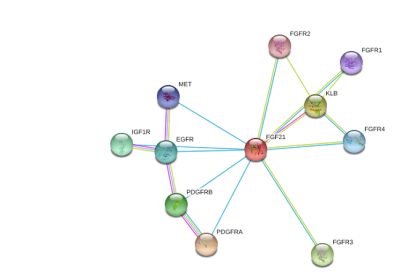
The experimental drug, called LY, is a copy of a hormone called fibroblast growth factor 21 (FGF21), and researchers report that it seems to help protect against obesity and may boost the action of insulin.
READ ALL AT
http://www.drugs.com/news/new-shows-promise-type-2-diabetes-47140.html
FGF21
http://alfin2600.blogspot.in/2012/10/fgf21-learning-to-live-longer-from.html
Fibroblast growth factor-21 (FGF21) is a hormone secreted by the liver during fasting that elicits diverse aspects of the adaptive starvation response. Among its effects, FGF21 induces hepatic fatty acid oxidation and ketogenesis, increases insulin sensitivity, blocks somatic growth and causes bone loss. Here we show that transgenic overexpression of FGF21 markedly extends lifespan in mice without reducing food intake or affecting markers of NAD+ metabolism or AMP kinase and mTOR signaling. Transcriptomic analysis suggests that FGF21 acts primarily by blunting the growth hormone/insulin-like growth factor-1 signaling pathway in liver. These findings raise the possibility that FGF21 can be used to extend lifespan in other species
Type II diabetes is the most prevalent form of diabetes. The disease is caused by insulin resistance and pancreatic β cell failure, which results in decreased glucose-stimulated insulin secretion. Fibroblast growth factor (FGF) 21, a member of the FGF family, has been identified as a metabolic regulator and is preferentially expressed in the liver and adipose tissue and exerts its biological activities through the cell surface receptor composed of FGFR1c and β-Klotho on target cells such as liver and adipose tissues (WO0136640, and WO0118172).
The receptor complex is thought to trigger cytoplasmic signaling and to up-regulate the GLUT1 expression through the Ras/MAP kinase pathway.
Its abilities to provide sustained glucose and lipid control, and improve insulin sensitivity and β-cell function, without causing any apparent adverse effects in preclinical settings, have made FGF21 an attractive therapeutic agent for type-2 diabetes and associated metabolic disorders.
There have been a number of efforts towards developing therapies based on FGF21. WO2006065582, WO2006028714, WO2006028595, and WO2005061712 relate to muteins of FGF21, comprising individual amino-acid substitutions. WO2006078463 is directed towards a method of treating cardiovascular disease using FGF21. WO2005072769 relates to methods of treating diabetes using combinations of FGF21 and thiazolidinedione. WO03059270 relates to methods of reducing the mortality of critically ill patients comprising administering FGF21. WO03011213 relates to a method of treating diabetes and obesity comprising administering FGF21.
However, many of these proposed therapies suffer from the problem that FGF21 has an in-vivo half-life of between 1.5 and 2 hrs in humans. Some attempts have been made to overcome this drawback. WO2005091944, WO2006050247 and WO2008121563 disclose FGF21 molecules linked to PEG via lysine or cysteine residues, glycosyl groups and non-natural amino acid residues, respectively. WO2005113606 describes FGF21 molecules recombinantly fused via their C-terminus to albumin and immunoglobulin molecules using polyglycine linkers.
However, developing protein conjugates into useful, cost-effective pharmaceuticals presents a number of significant and oftentimes competing challenges: a balance must be struck between in vivo efficacy, in vivo half-life, stability for in vitro storage, and ease and efficiency of manufacture, including conjugation efficiency and specificity. In general, it is an imperative that the conjugation process does not eliminate or significantly reduce the desired biological action of the protein in question.
The protein-protein interactions required for function may require multiple regions of the protein to act in concert, and perturbing any of these with the nearby presence of a conjugate may interfere with the active site(s), or cause sufficient alterations to the tertiary structure so as to reduce active-site function. Unless the conjugation is through the N′ or C′ terminus, internal mutations to facilitate the linkage may be required. These mutations can have unpredictable effects on protein structure and function. There therefore continues to be a need for alternative FGF21-based therapeutics.
The reference to any art in this specification is not, and should not be taken as, an acknowledgement of any form or suggestion that the referenced art forms part of the common general knowledge.
HOME REMEDIES FOR CHOLESTEROL

Home Remedies for Cholesterol: Onions contain high levels of quercetin, an important flavonoid that reduces cholesterol. high concentrations of the compound quercetin hinderS the oxidation process of LDL, or “bad,” cholesterol, which help prevent the negative effects of this type of cholesterol.
===> http://www.askveda.in/ – Ayurveda health-tips, home remedies & expert advice
Antibody lipid treatments enter final furlong
A tiny pain-free jab every two weeks could be the future of cholesterol-lowering for high-risk patients, according to clinical researchers gathered in Amsterdam for the European Society of Cardiology congress.
Eli Roth at the University of Cincinnati said that two companies are currently neck and neck in the race to bring the first PCSK9 antibody to market. Partners Sanofi and Regeneron may have the edge, with Phase III data on their fully human monoclonal antibody alirocumab slated to be presented before the end of the year, while the chief competition comes from Amgen with its antibody AMG 145, said Dr Roth. Both antibodies can be delivered via subcutaneous auto-injectors, which many patients say they prefer to taking daily pills, he added.
http://www.pharmatimes.com/Article/13-09-02/Antibody_lipid_treatments_enter_final_furlong.aspx
Alirocumab is a human monoclonal antibody designed for the treatment ofhypercholesterolemia.[1]
This drug was discovered by Regeneron Pharmaceuticals and is being co-developed by Regeron and Sanofi.
THERAPEUTIC CLAIM Treatment of hypercholesterolemia
CHEMICAL NAMES
1. Immunoglobulin G1, anti-(human neural apoptosis-regulated proteinase 1) (human
REGN727 heavy chain), disulfide with human REGN727 κ-chain, dimer
2. Immunoglobulin G1, anti-(human proprotein convertase subtilisin/kexin type 9
(EC=3.4.21.-, neural apoptosis-regulated convertase 1, proprotein convertase 9,
subtilisin/kexin-like protease PC9)); human monoclonal REGN727 des-448-
lysine(CH3-K107)-1 heavy chain (221-220′)-disulfide with human monoclonal
REGN727 light chain dimer (227-227”:230-230”)-bisdisulfide
MOLECULAR FORMULA C6472H9996N1736O2032S42
MOLECULAR WEIGHT 146.0 kDa
SPONSOR Regeneron Pharmaceuticals
CODE DESIGNATION REGN727, SAR236553
CAS REGISTRY NUMBER 1245916-14-6
The Cost Of Creating A New Drug Now $5 Billion, Pushing Big Pharma To Change

Susan Desmond-Hellmann
There’s one factor that, as much as anything else, determines how many medicines are invented, what diseases they treat, and, to an extent, what price patients must pay for them: the cost of inventing and developing a new drug, a cost driven by the uncomfortable fact than 95% of the experimental medicines that are studied in humans fail to be both effective and safe.
A new analysis conducted at Forbes puts grim numbers on these costs. A company hoping to get a single drug to market can expect to have spent $350 million before the medicine is available for sale. In part because so many drugs fail, large pharmaceutical companies that are working on dozens of drug projects at once spend $5 billion per new medicine.
read all at
How Much They Cost: R&D Spending Per New Drug
| Company | Number of new drugs | 10 year R&D spending ($MIL) | R&D per drug ($MIL) | |
| 1 | Abbott | 1 | 13183 | 13183 |
| 2 | Sanofi | 6 | 60768 | 10128 |
| 3 | AstraZeneca | 4 | 38245 | 9561 |
| 4 | Hoffmann-La Roche | 8 | 70928 | 8866 |
| 5 | Pfizer | 10 | 77786 | 7779 |
| 6 | Wyeth | 3 | 22702 | 7567 |
| 7 | Eli Lilly | 4 | 26710 | 6678 |
| 8 | Bayer | 5 | 33118 | 6624 |
| 9 | Schering-Plough | 3 | 18845 | 6282 |
| 10 | Novartis | 10 | 60727 | 6073 |
| 11 | Takeda | 4 | 24132 | 6033 |
| 12 | Merck&Co | 9 | 49133 | 5459 |
| 13 | GlaxoSmithKline | 11 | 57595 | 5236 |
| 14 | J&J | 13 | 67624 | 5202 |
| 15 | Novo Nordisk | 2 | 9251 | 4625 |
| 16 | UCB | 1 | 4325 | 4325 |
| 17 | Yamanouchi | 1 | 4321 | 4321 |
| 18 | Fujisawa | 1 | 4286 | 4286 |
| 19 | Amgen | 5 | 21350 | 4270 |
| 20 | Astellas | 3 | 12582 | 4194 |
| 21 | Shionogi | 1 | 3854 | 3854 |
| 22 | Celgene | 2 | 7193 | 3596 |
| 23 | Bristol-Myers Squibb | 9 | 30352 | 3372 |
| 24 | Eisai | 4 | 11534 | 2883 |
| 25 | Teva | 2 | 5763 | 2881 |
| 26 | Biogen Idec | 4 | 9470 | 2368 |
| 27 | Vertex | 2 | 4140 | 2070 |
| 28 | Sunovion | 1 | 1967 | 1967 |
| 29 | Human Genome Sciences | 1 | 1954 | 1954 |
| 30 | Elan | 1 | 1903 | 1903 |
| 31 | Gilead | 3 | 5527 | 1842 |
| 32 | Exelixis | 1 | 1789 | 1789 |
| 33 | Lundbeck | 2 | 3527 | 1763 |
| 34 | Millennium | 1 | 1593 | 1593 |
| 35 | Genentech | 4 | 6277 | 1569 |
| 36 | Allergan | 1 | 1559 | 1559 |
| 37 | Baxter | 3 | 4627 | 1542 |
| 38 | Ipsen | 1 | 1459 | 1459 |
| 39 | Forest | 4 | 5184 | 1296 |
| 40 | Cephalon | 1 | 1221 | 1221 |
| 41 | Onyx | 1 | 1219 | 1219 |
| 42 | Sepracor | 1 | 1170 | 1170 |
| 43 | Alcon | 1 | 1133 | 1133 |
| 44 | Theravance | 1 | 1010 | 1010 |
| 45 | Genzyme | 5 | 4814 | 963 |
| 46 | Shire | 4 | 3827 | 957 |
| 47 | Arena | 1 | 934 | 934 |
| 48 | Watson | 1 | 930 | 930 |
| 49 | Adolor | 1 | 877 | 877 |
| 50 | Valeant | 1 | 844 | 844 |
| 51 | Schwarz | 2 | 1545 | 772 |
| 52 | NPS | 1 | 756 | 756 |
| 53 | Regeneron | 3 | 2149 | 716 |
| 54 | Affymax | 1 | 660 | 660 |
| 55 | Seattle Genetics | 1 | 610 | 610 |
| 56 | CV Therapeutics | 1 | 599 | 599 |
| 57 | ImClone | 1 | 517 | 517 |
| 58 | Dendreon | 1 | 509 | 509 |
| 59 | Alexion | 1 | 490 | 490 |
| 60 | The Medicines Company | 1 | 455 | 455 |
| 61 | Ariad | 1 | 444 | 444 |
| 62 | OSI | 1 | 402 | 402 |
| 63 | Talecris | 1 | 396 | 396 |
| 64 | Progenics | 1 | 356 | 356 |
| 65 | Actelion | 1 | 346 | 346 |
| 66 | Savient | 1 | 339 | 339 |
| 67 | Praecis | 1 | 311 | 311 |
| 68 | Vivus | 1 | 309 | 309 |
| 69 | MGI | 1 | 294 | 294 |
| 70 | Vicuron | 1 | 286 | 286 |
| 71 | Salix | 2 | 560 | 280 |
| 72 | Idenix | 1 | 280 | 280 |
| 73 | Mylan | 3 | 762 | 254 |
| 74 | Discovery Laboratories | 1 | 228 | 228 |
| 75 | Indevus | 1 | 222 | 222 |
| 76 | Cubist | 1 | 220 | 220 |
| 77 | Acorda | 1 | 185 | 185 |
| 78 | Ista | 1 | 171 | 171 |
| 79 | Optimer | 1 | 171 | 171 |
| 80 | Theratechnologies | 1 | 164 | 164 |
| 81 | MediGene | 1 | 155 | 155 |
| 82 | Vanda | 1 | 150 | 150 |
| 83 | Eyetech | 1 | 144 | 144 |
| 84 | ThromboGenics | 1 | 137 | 137 |
| 85 | BioMarin | 3 | 403 | 134 |
| 86 | Protalix | 1 | 125 | 125 |
| 87 | Amarin | 1 | 122 | 122 |
| 88 | Insmed | 1 | 118 | 118 |
| 89 | NeurogesX | 1 | 89 | 89 |
| 90 | Hyperion | 1 | 87 | 87 |
| 91 | Cypress Bioscience | 1 | 82 | 82 |
| 92 | New River | 1 | 79 | 79 |
| 93 | Aegerion | 1 | 74 | 74 |
| 94 | Sucampo | 1 | 62 | 62 |
| 95 | Fibrocell | 1 | 62 | 62 |
| 96 | Tercica | 1 | 49 | 49 |
| 97 | Pharmion | 1 | 47 | 47 |
| 98 | Kamada | 1 | 37 | 37 |
| 99 | Lev | 1 | 26 | 26 |
| 100 | OMRIX | 1 | 15 | 15 |


 New Drug Approvals