
Home » Posts tagged 'AYURVEDA' (Page 16)
Tag Archives: AYURVEDA
 DRUG APPROVALS BY DR ANTHONY MELVIN CRASTO
.....FOR BLOG HOME CLICK HERE
DRUG APPROVALS BY DR ANTHONY MELVIN CRASTO
.....FOR BLOG HOME CLICK HEREFlag and hits
ORGANIC SPECTROSCOPY

SUBSCRIBE

 Subscribe in a reader
Enter your email address:
Delivered by FeedBurner
Subscribe to New Drug Approvals by Email


Recent Comments
 | shivkr2 on SPSR Excellence Award 2025 – S… |
 | Bonkasaurus on Infigratinib phosphate |
 | PALOVAROTENE | ORGAN… on Palovarotene |
| Pfizer just purchase… on Temanogrel | |
| Pfizer To Cash In On… on Temanogrel |
The antibiotic Vibativ (telavancin) has been approved by the U.S. Food and Drug Administration to treat pneumonia caused by Staphylococcus aureus bacteria
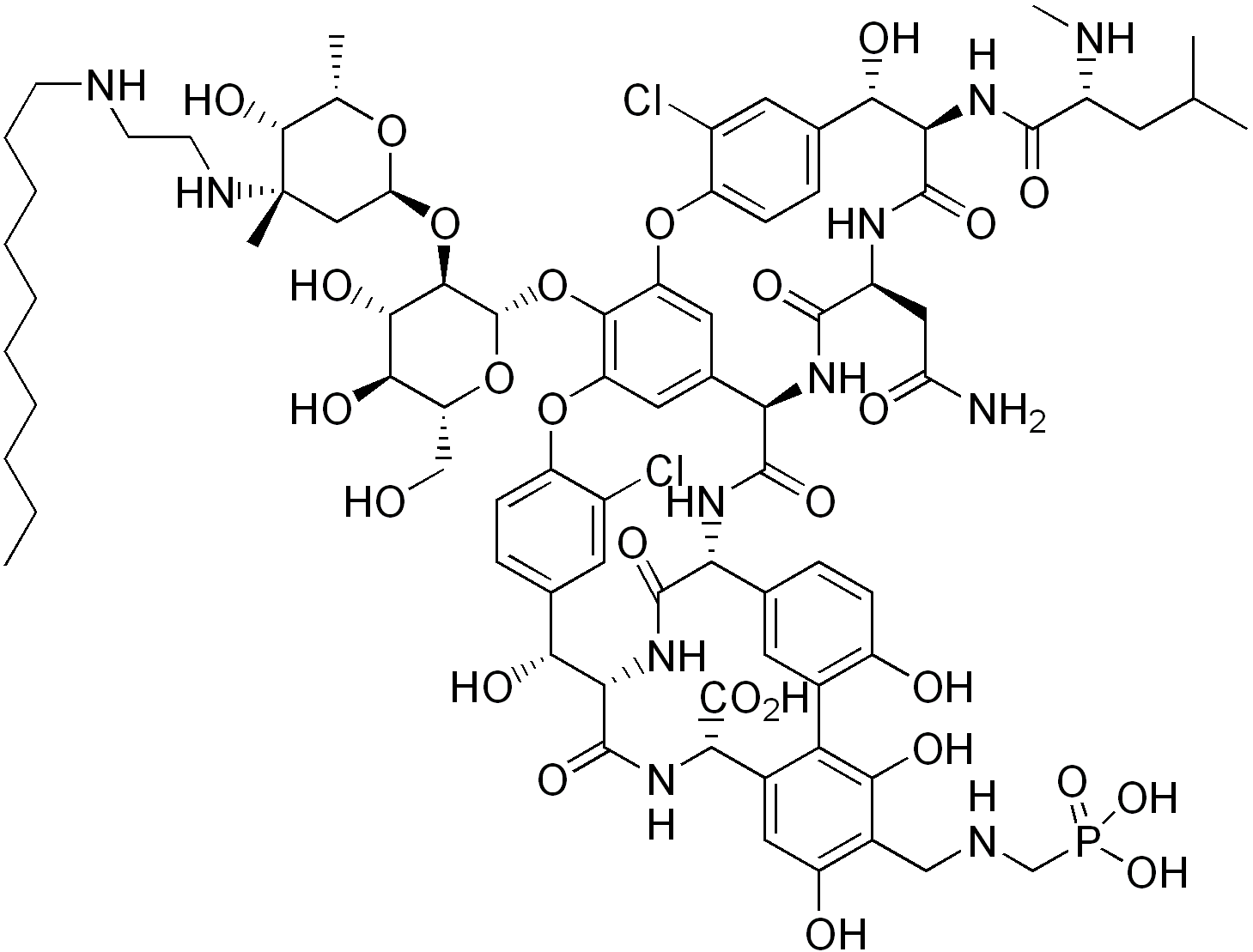
telavancin
The antibiotic Vibativ (telavancin) has been approved by the U.S. Food and Drug Administration to treat pneumonia caused by Staphylococcus aureus bacteria when other treatments aren’t suitable.
Pneumonia, a lung infection, can be caused by different bacteria and viruses. S. aureus infection often affects people in hospitals, notably those on ventilators. Such infections can be serious, since people on a ventilator often have a weakened immune system and are unable to fight an infection, the FDA said in a news release.http://www.drugs.com/news/vibativ-approved-certain-bacterial-pneumonia-45418.html

Telavancin (trade name Vibativ) is a bactericidal lipoglycopeptide for use in MRSA or other Gram-positive infections. Telavancin is a semi-synthetic derivative of vancomycin.
The FDA approved the drug in September 2009 for complicated skin and skin structure infections (cSSSI)
On 19 October 2007, the US Food and Drug Administration (FDA) issued an approvable letter for telavancin. Its developer, Theravance, submitted a complete response to the letter, and the FDA has assigned a Prescription Drug User Fee Act (PDUFA) target date of 21 July 2008.
On 19 November 2008, an FDA antiinfective drug advisory committee concluded that they would recommend telavancin be approved by the FDA.
The FDA approved the drug on 11 September 2009 for complicated skin and skin structure infections (cSSSI).
Theravance has also submitted telavancin to the FDA in a second indication, nosocomial pneumonia, sometimes referred to as hospital-acquired pneumonia, or HAP. On 30 November 2012, an FDA advisory panel endorsed approval of a once-daily formulation of telavancin for nosocomial pneumonia when other alternatives are not suitable. However, telavancin did not win the advisory committee’s recommendation as first-line therapy for this indication. The committe indicated that the trial data did not prove “substantial evidence” of telavancin’s safety and efficacy in hospital-acquired pneumonia, including ventilator-associated pneumonia caused by Gram-positive organisms Staphylococcus aureus and Streptococcus pneumoniae. On 21 June 2013 FDA gave approval for telavancin to treat patients with hospital-acquired pneumonia, but indicated it should be used only when alternative treatments are not suitable. FDA staff had indicated telavancin has a “substantially higher risk for death” for patients with kidney problems or diabetes compared to vancomycin.


FDA Approves Pediatric Indication for Astellas’ Mycamine (micafungin sodium) for Injection

micafungin sodium
-
C56-H70-N9-O23-S.Na1292.265Fujisawa (Originator), Merck & Co. (Codevelopment)
 Antifungal Agents, ANTIINFECTIVE THERAPY, 1,3-beta-Glucan Synthase Inhibitors, EchinocandinsLaunched-2002
{5-[(1S,2S)-2-[(3S,6S,9S,11R,15S,18S,20R,21R,24S,25S,26S)-3-[(1R)-2-carbamoyl-1-hydroxyethyl]-11,20,21,25-tetrahydroxy-15-[(1R)-1-hydroxyethyl]-26-methyl-2,5,8,14,17,23-hexaoxo-18-[(4-{5-[4-(pentyloxy)phenyl]-1,2-oxazol-3-yl}benzene)amido]-1,4,7,13,16,22-hexaazatricyclo[22.3.0.09,13]heptacosan-6-yl]-1,2-dihydroxyethyl]-2-hydroxyphenyl}oxidanesulfonic acid

June 24, 2013 , Astellas Pharma US, Inc. (“Astellas”), a U.S. subsidiary of Tokyo-based Astellas Pharma Inc. (Tokyo: 4503), announced that the U.S. Food and Drug Administration (FDA) has approved its Supplemental New Drug Application (sNDA) for the use of MYCAMINE® (micafungin sodium) for injection by intravenous infusion for the treatment of pediatric patients four months and older with candidemia, acute disseminated candidiasis, Candida peritonitis and abscesses, esophageal candidiasis, and prophylaxis of Candida infections in patients undergoing hematopoietic stem cell transplants (HSCT).
Micafungin (trade name Mycamine) is an echinocandin antifungal drug developed by Astellas Pharma. It inhibits the production of beta-1,3-glucan, an essential component of fungal cell walls. Micafungin is administered intravenously. It received final approval from the U.S. Food and Drug Administration on March 16, 2005, and gained approval in the European Union on April 25, 2008.
Micafungin is indicated for the treatment of candidemia, acute disseminated candidiasis, Candida peritonitis, abscesses and esophageal candidiasis. Since January 23, 2008, micafungin has been approved for the prophylaxis of Candida infections in patients undergoing hematopoietic stem cell transplantation (HSCT).
Micafungin works by way of concentration-dependent inhibition of 1,3-beta-D-glucan synthase resulting in reduced formation of 1,3-beta-D-glucan, which is an essential polysaccharide comprising one-third of the majority of Candida spp. cell walls. This decreased glucan production leads to osmotic instability and thus cellular lysis
- Micafungin sodium, FK-463, Mycamine, Funguard,208538-73-2

-
The synthesis of FK-463 can be performed as follows: The enzymatic deacylation of FR-901379 with Streptomyces anulatas No. 4811, S. anulatas No. 8703, Streptomyces strain No. 6907 or A. utahensis IFO13244 gives the deacylated lipopeptide FR-179642 (1), which is then reacylated with 1-[4-[5-(4-pentyloxyphenyl)isoxazol-3-yl]benzoyl]benzotriazole 3-oxide (VI) by means of dimethylaminopyridine (DMAP) in DMF. The acylating compound (VI) can be obtained as follows: The cyclization of 4-pentyloxyphenylacetylene (I) with 4-(hydroxyiminomethyl)benzoic acid methyl ester (II) by means of triethylamine in hot THF gives 4-[5-(4-pentyloxyphenyl)isoxazol-3-yl]benzoic acid methyl ester (III), which is hydrolyzed with NaOH in hot THF/water yielding the corresponding free acid (IV). Finally, this compound is condensed with 1-hydroxybenzotriazole (V) by means of 1-ethyl-3-[3-(dimethylamino)propyl]carbodiimide (EDMCA) in dichloromethane.Fromtling, R.A.; Castr, Drugs Fut 1998, 23, 12, 1273The synthesis of FK-463 can be performed as follows: The enzymatic deacylation of FR-901379 with Streptomyces anulatas No. 4811, S. anulatas No. 8703, Streptomyces strain No. 6907 or A. utahensis IFO13244 gives the deacylated lipopeptide FR-179642 (1), which is then reacylated with 1-[4-[5-(4-pentyloxyphenyl)isoxazol-3-yl]benzoyl]benzotriazole 3-oxide (VI) by means of dimethylaminopyridine (DMAP) in DMF. The acylating compound (VI) can be obtained as follows: The cyclization of 4-pentyloxyphenylacetylene (I) with 4-(hydroxyiminomethyl)benzoic acid methyl ester (II) by means of triethylamine in hot THF gives 4-[5-(4-pentyloxyphenyl)isoxazol-3-yl]benzoic acid methyl ester (III), which is hydrolyzed with NaOH in hot THF/water yielding the corresponding free acid (IV). Finally, this compound is condensed with 1-hydroxybenzotriazole (V) by means of 1-ethyl-3-[3-(dimethylamino)propyl]carbodiimide (EDMCD) in dichloromethane.
- 38th Intersci Conf Antimicrob Agents Chemother (Sept 24 1998, San Diego)1998,:Abst F-145
QUINAPRIL

QUINAPRIL HYDROCHLORIDE
Quinapril (marketed under the brand name Accupril by Pfizer) is an angiotensin-converting enzyme inhibitor (ACE inhibitor) used in the treatment of hypertension andcongestive heart failure.
Quinapril inhibits angiotensin converting enzyme, an enzyme which catalyses the formation of angiotensin II from its precursor, angiotensin I. Angiotensin II is a powerfulvasoconstrictor and increases blood pressure through a variety of mechanisms. Due to reduced angiotensin production, plasma concentrations of aldosterone are also reduced, resulting in increased excretion of sodium in the urine and increased concentrations ofpotassium in the blood.
-
 The condensation of alanine tert-butyl ester (I) with ethyl 2-bromo-4-phenylbutanoate (II) by means of triethylamine in hot DMF gives ethyl 2-[[1-(tert-butoxycarbonyl)ethyl]amino]-4-phenylbutanoate (III), which is partially hydrolyzed with trifluoroacetic acid yielding ethyl 2-[[1-carboxyethyl]amino]-4-phenylbutanoate (IV). The condensation of (IV) with tert-butyl-1,2,3,4-tetrahydroisoquinoline-3-carboxylate (VIII) [prepared from the corresponding acid (VI) and isobutylene (B) by means of H2SO4] as before gives tert-butyl-2-[2-[[1-(ethoxycarbonyl)-3-phenylpropyl]amino]-1-oxopropyl]-1,2,3,4-tetrahydroisoquinoline-3-carboxylate (IX), which is finally hydrolyzed partially by treatment with trifluoroacetic acid.Hoefle, M.L.; Klutchko, S. (Pfizer Inc.); Substituted acyl derivatives of 1,2,3,4-tetrahydroisoquinoline-3-carboxylic acids. DD 201787; EP 0049605; EP 0096157; US 4344949


Novartis First-Generation Lung Cancer Drug Tweaked To Reduce Potential Side Effects

Sponge molecules isolated and synthesized for drug trials

By scouring the oceans for disease-fighting molecules, researchers have identified two new anticancer compounds. Isolated from a sea sponge, the compounds represent a new class of the natural products called polyketides, many of which have biological activity. Because it’s not possible to extract sufficient amounts of the molecules from the sponges, the researchers also devised chemical syntheses that allowed them to make enough material to initiate clinical trials on one of the substances,
Cancer Fighters From The Sea
Natural Products: Sponge molecules isolated and synthesized for drug trials.
read all at
Supervision of Chinese-Made Drug Substances by Philippe André
Why source drug substances from China?
Large markets, economies of scale and cheaper labor;An industrial ecosystem supplying raw materials and equipment;Developed infrastructure and industry friendly policies;About 5,000 manufacturers;
Thousands of chemists and students across China looking for novel synthesis routes for generic drug substances and intermediates.
read all at
http://www.allfordrugs.com/2013/06/21/supervision-of-chinese-made-drug-substances-by-philippe-andre/
Pharmaceutical Industry In Global Market: Issues To Be Handled For Better Growth
In the global market, the position of the pharmaceutical industry is not parallel as compared to other information and technology based industries.
Among the Leading industries, the pharmaceutical industry lacks behind in the growth rate as far as innovative research, capital investment and
government regulations are concern. Most of the countries simply depends on bulk production of the generic drugs and not focused on core research. In
comparison with the growth rate of the electronic and IT industry stands first where as the pharmaceutical comes at the 9th position.
read all at
HPV Vaccine Halves Infection Rate in Teen Girls
A vaccine against a cervical cancer virus has cut infections in teen girls by half, according to a study released.
read all at
A vaccine against a cervical cancer virus has cut infections in teen girls by half, according to a study released. The study confirms research done before the HPV vaccine came on the market in 2006. But this is the first evidence of how well it works now that it is in general use.

ALMIRALL-Product development pipeline

| Preclin. | Phase I | Phase II | Phase III | Registr. | Registration application | |||
|---|---|---|---|---|---|---|---|---|
    |
||||||||
| LAS190792 |  |
MABA |  |
>2014 | ||||
| Aclidinium bromide | |
Antimuscarinic |  |
Approved by the FDA & EMA | ||||
| AB + Formoterol (LAS40464) | |
Antimuscarinic + LABA |  |
Undisclosed | ||||
| Abediterol (LAS100977) + ICS | |
OD LABA + ICS |  |
>2014 | ||||
| LAS186323 | |
DHODH inhibitor |  |
Undisclosed | ||||
| Sativex® | |
CB agonist |  |
Undisclosed | ||||
| LAS189913 | |
S1P1 |  |
Undisclosed | ||||
| LAS41002 | |
Topical anti-inflamatory |  |
Registration application in EU | ||||
| LAS41004 | |
Combination |  |
2014 | ||||
| LAS41008 | |
Psoriaris |  |
Undisclosed | ||||
| Linaclotide | |
Guanylate cyclase type-C agonist |  |
Approved by the EMA | ||||
AB: Aclidinium Bromide | ICS: Inhaled Corticoesteroid | RA: Reumatoid Artritis | MS: Multiple Sclerosis
IBS-C: Irritable Bowel Syndrome with associated Constipation
http://www.almirall.com/webcorp2/cda/ImD_03_02.jsp?langSuscripcion=3
Let’s Set a Global Drug Quality Benchmark by Kiran M Shaw, Biocon

With Indian-made generics accounting for a US market share of over 25 per cent, it is not surprising that it is gaining significant mindshare of the Food and Drug Administration ( FDA). The spate of quality issues with leading Indian pharmaceutical companies in the past couple of years however should not be viewed in isolation. Big Pharma in the West, too, has been facing increasing flak from the FDA and other regulators over good manufacturing practice ( GMP) violations. High profile names like J& J, Genzyme (Sanofi), GSK, Sandoz, Watson, Teva and many others have encountered their share of quality problems and have been served with ‘warning letters’ from FDA
http://kiranmazumdarshaw.blogspot.in/2013/06/lets-set-global-drug-quality-benchmark.html
READ ALL AT THE LINK ABOVE


 New Drug Approvals