
FLAGS AND HITS
 DRUG APPROVALS BY DR ANTHONY MELVIN CRASTO
 FACEBOOK
...................................................................Join me on twitter
FACEBOOK
...................................................................Join me on twitter
 ..................................................................Join me on google plus
 Googleplus
MYSELF



Tecadenoson…………Atrial Fibrillation


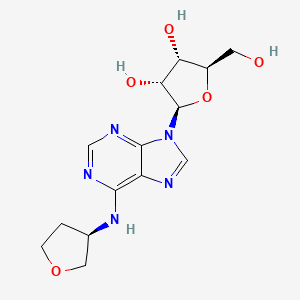
CVT-510 (tecadenoson) has chemical structure (8 :


EXAMPLE 1
The compounds of this invention may be prepared by conventional methods of organic chemistry. The reaction sequence outlined below, is a general method, useful for the preparation of compounds of this invention.


According to this method, oxacycloalkyl carboxylic acid is heated in a mixture of dioxane, diphenylphosphoryazide and triethylamine for 1 hour. To this mixture is added benzyl alcohol and the reaction is further heated over night to give intermediate compound 1. Compound 1 is dissolved in methanol. Next, concentrated HC1, Pd/C is added and the mixture is placed under hydrogen at 1 atm. The mixture is stirred overnight at room temperature and filtered. The residue is recrystallized to give intermediate compound 2. 6-chloropurine riboside is combined and the mixture is compound 2 dissolved in methanol and treated with triethylamine. The reaction is heated to 80° C for 30 hours. Isolation and purification leads to Compound 3.
EXAMPLE 2
Compounds of this invention prepared according to the method of Example 1 were tested in two functional models specific for adenosine A, receptor agonist function. The first was the A , receptor mediated inhibition of isoproterenol stimulated cAMP accumulation in DDT cells. The EC50 of each derivative is shown in Table I. Also shown in Table I is the ability of each derivative to stimulate cAMP production in PC 12 cells, a function of agonist stimulation of adenosine A2 receptors. The ratio of the relative potency of each compound in stimulating either an A, receptor or an A2 receptor effect is termed the selectivity of each compound for the A, receptor. As can be seen in Table I, each derivative is relatively selective as an A, receptor agonist. The use of measuring cAMP metabolism as an assay for adenosine A , receptor function has been previously described (Scammells, P., Baker, S., Belardinelli, L., and Olsson, R. , 1994, Substituted 1 ,3-dipropylxanthines as irreversible antagonists of A, adenosine receptors. J. Med. Chem 37: 2794-2712, 1994).
Table I
Compound R EC50 (nM) ECS, (nM) A,/A2 A-/A, DDT cells PC 12 cells
I 4-arninopyran 12 970 0.012 80.0
II (±)-3-aminotetrahydrofuran 13 1400 0.0093 107.6
III (R)-3-aminotetrahydrofuran 1.08 448 0.0024 414
IV ( 1 )-caprolactam 161 181 0.889 1.12
V (S)-3-aminotetrahydrofuran 3.40 7680 0.00044 2258
Compounds were also tested in a whole organ model of A, receptor activation with respect to atrial and AV nodal function. In this model, guinea pig hearts are isolated and perfused with saline containing compound while atrial rate and AV nodal conduction time are assessed by electrographic measurement of atrial cycle length and AV intervals, as detailed in Belardinelli, L, Lu, J. Dennis, D. Martens, J, and Shryock J. (1994); The cardiac effects of a novel A,-adenosine receptor agonist in guinea pig isolated heart. J. Pharm. Exp. Therap. 271:1371-1382 (1994). As shown in Figure 1, each derivative was effective in slowing the atrial rate and prolonging the AV nodal conduction time of spontaneously beating hearts in a concentration-dependent manner, demonstrating efficacy as adenosine A, receptor agonists in the intact heart.
EXAMPLE 3
Preparation ofN-benzyloxycarbonyl-4-aminopyran.
A mixture of 4-pyranylcarboxylic acid (2.28 gm, 20 mmol), diphenylphosphorylazide (4.31 ml, 20 mmol), triethylamine (2.78 ml, 20 mmol) in dioxane (40 ml) was heated in a 100° C oil bath under dry nitrogen for 1 hour. Benzyl alcohol (2.7 ml, 26 mmol) was added, and heating was continued at 100° C for 22 hours. The mixture was cooled, filtered from a white precipitate and concentrated. The residue was dissolved in 2N HC1 and extracted twice with EtOAc. The extracts were washed with water, sodium bicarbonate, brine and then dried over MgSO4, and concentrated to an oil which solidified upon standing. The oil was chromatographed (30% to 60% EtO Ac/Hex) to give 1.85 g of a white solid (40%).
Preparation of 4-aminopyran.
N-benzyloxycarbonyl-4-aminopyran (1.85 gm, 7.87 mmol) was dissolved in MeOH (50 ml) along with cone. HC1 and Pd-C ( 10%, 300 mg). The vessel was charged with hydrogen at 1 atm and the mixture was allowed to stir for 18 hours at room temperature. The mixture was filtered through a pad of eelite and concentrated. The residue was co-evaporated twice with MeOH/EtOAc and recrystallized from MeOH/EtOAc to afford 980 mg (91 %) of white needles (mp 228-230° C).
Preparation of 6-(4-aminopyran)-purine riboside. A mixture of 6-chloropurine riboside (0.318 gm, 1. 1 mmol), 4-aminopyran-HCl
(0.220 mg,
1.6 mmol) and triethylamine (0.385 ml, 2.5 mmol) in methanol (10 ml) was heated to 80° C for 30 hours. The mixture was cooled, concentrated and the residue chromatographed (90: 10: 1, CH2 Cl2/MeOH/PrNH2). The appropriate fractions were collected and recliromatographed using a chromatotron
(2 mm plate, 90: 10: 1, CH2 Cl2/MeOH/PrNH2) to give an off white foam (0.37 gm, 95%).
EXAMPLE 4
Preparation of N-benzyloxycarbonyl-3-aminotetrahydrofuran. A mixture of 3-tetrahydrofuroic acid (3.5 gm, 30 mmol), diphenylphosphorylazide (6.82 ml, 32 mmol), triethylamine (5 ml, 36 mmol) in dioxane (35 ml) was stirred at RT for 20 min then heated in a 100° C oil bath under dry nitrogen for 2 hours. Benzyl alcohol (4.7 ml, 45 mmol) was added, and continued heating at 100° C for 22 hours. The mixture was cooled, filtered from a white precipitate and concentrated. The residue was dissolved in 2N HC1 and extracted twice using EtOAc. The extracts were washed with water, sodium bicarbonate, brine dried over MgSO4, and then concentrated to an oil which solidifies upon standing. The oil was chromatographed (30% to 60% EtO Ac/Hex) to give 3.4 g of an oil (51
%).
Preparation of 3-aminotetrahydrofuran.
N-benzyloxycarbonyl-3-aminotetrahydrofuran (3.4 gm, 15 mmol) was dissolved in MeOH (50 ml) along with cone. HC1 and Pd-C (10%, 300 mg). The vessel was charged with hydrogen at 1 atm and the mixture was allowed to stir for 18 hours at room temperature. The mixture was filtered through a pad of celite and concentrated. The residue was co-evaporated two times with MeOH/EtOAc and recrystallized from MeOH/EtOAc to give 1.9 g of a yellow solid.
Preparation of 6-(3-aminotetrahydrofuranyl)purine riboside. A mixture of 6-chloropurine riboside (0.5 gm, 1.74 mmol), 3-aminotetrahydrofuran
(0.325 gm, 2.6 mmol) and triethylamine (0.73 ml, 5.22 mmol) in methanol (10 ml) was heated to 80° C for 40 hours. The mixture was cooled, and concentrated. The residue was filtered through a short column of silica gel eluting with 90/10/1 (CH2Cl2/MeOH/PrNH2), the fractions containing the product were combined and concentrated. The residue was chromatorgraphed on the chromatotron (2 mm plate, 92.5/7.5/1 , CH2CL2/MeOH/P.NH2). The resulting white solid was recrystallized from MeOH/EtOAc to give 0.27 gm of white crystals (mp 128-130° C).
EXAMPLE 5
Resolution of 3-arninotetrahydrofuran hydrochloride
A mixture of 3-aminotetrahydrofuran hydrochloride (0.5 gm, 4 mmol) and
(S)-(+)-10-camphorsulfonyl chloride (1.1 gm, 4.4 mmol) in pyridine (10 ml) was stirred for 4 hours at room temperature and then concentrated. The residue was dissolved in EtOAc and washed with 0.5N HC1, sodium bicarbonate and brine. The organic layer was dried over MgSO4, filtered and concentrated to give 1. 17 g of a brown oil (97%) which was chromatographed on silica gel (25% to 70% EtOAc/Hex). The white solid obtained was repeatedly recrystallized from acetone and the crystals and supernatant pooled until an enhancement of greater than 90% by 1H NMR was acheived.
Preparation of 3-(S)-aminotetrahydrofuran hydrochloride.
The sulfonamide (170 mg, 0.56 mmol) was dissolved in cone. HCl/AcOH (2 mL each), stirred for 20 hours at room temperature, washed three times with CH2C12 (10 ml) and concentrated to dryness to give 75 mg (qaunt ) of a white solid
Preparation of 6-(3-(S)-aminotetrahydrofuranyl)puπne riboside.
A mixture of 6-chloropurιne riboside (30 mg, 0.10 mmol),
3-(S)-amιnotetrahydrofuran hydrochloride (19 mg, 0.15 mmol) and triethylamine (45 ml, 0.32 mmol) in methanol
(0.5 ml) was heated to 80° C for 18 hours. The mixture was cooled, concentrated and chromatographed with 95/5 (CH2Cl /MeOH) to give 8 mg (24%) of a white solid.
| US7144871 * | 19 Feb 2003 | 5 Dec 2006 | Cv Therapeutics, Inc. | Partial and full agonists of A1 adenosine receptors |
| US7696181 * | 24 Aug 2006 | 13 Apr 2010 | Cv Therapeutics, Inc. | Partial and full agonists of A1 adenosine receptors |
Tioconazole UK-20349 an antifungal agent

Tioconazole;UK-20349;Trosyd;Trosyl;Vagistat-1
l-[2-(2-chloro-3-thienyl)methoxy]-2-(2,4- dichlorophenyl)ethyl]-lH-imidazole,
1-[2-(2-Chloro-3-thienylmethoxy)-2-(2,4-dichlorophenyl)ethyl]-1H-imidazole
65899-73-2
Launched – 1983, Bristol-Myers Squibb
Tioconazole is an antifungal medication of the imidazole class used to treat infections caused by a fungus or yeast. It is marketed under the brand names Trosyd and Gyno-Trosyd (Pfizer). Tioconazole ointments serve to treat women’s vaginal yeast infections.[1]They are available in one day doses, as opposed to the 7-day treatments more common in use in the past.
Tioconazole topical (skin) preparations are also available for ringworm, jock itch, athlete’s foot, and tinea versicolor or “sun fungus”.

Side effects
Side effects (for the women’s formulas) may include temporary burning/irritation of the vaginal area, moderate drowsiness, headachesimilar to a sinus headache, hives, and upper respiratory infection. These side effects may be only temporary, and do not normally interfere with the patient’s comfort enough to outweigh the end result.
|
|
| Systematic (IUPAC) name | |
|---|---|
| (RS)-1-[2-[(2-Chloro-3-thienyl)methoxy]-2-(2,4-dichlorophenyl)ethyl]-1H-imidazole | |
| Clinical data | |
| Trade names | Vagistat-1 |
| AHFS/Drugs.com | monograph |
| Legal status | |
| Routes | Topical |
| Identifiers | |
| CAS number | 65899-73-2  |
| ATC code | D01AC07 G01AF08 |
| PubChem | CID 5482 |
| DrugBank | DB01007 |
| KEGG | D00890 |
| Synonyms | Thioconazole |
| Chemical data | |
| Formula | C16H13Cl3N2OS |
| Mol. mass | 387.711 g/mol |
http://www.google.com/patents/EP0934279A1?cl=en
Imidazole derivatives, in particular, l-[2-(2-chloro-3-thienyl)methoxy]-2-(2,4- dichlorophenyl)ethyl]-lH-imidazole, commonly referred to as tioconazole, are known for their antifungal therapeutic properties. US 4,062,966 discloses a process for the preparation of l-aryl-2-(l -imidazolyl) alkyl ethers and thioethers which employs arylation of an appropriate 1 -aryl-2-(l -imidazolyl)alkanol or alkane thiol having the formula

wherein Rl to R4 are each H or C,^ alkyl, Ar is phenyl, or substituted phenyl wherein said substitutents are halogen, C,^ alkyl, C,_6 alkoxy, thienyl, or halothienyl, and, Z is oxygen or sulfur. In accordance with US’966, the reaction comprises converting the alcohol or thiol in a suitable solvent to its alkali metal derivative by treatment with a strong base, such as an alkali metal amide or hydride, and reacting with the appropriate aralkyl halide ofthe formula
X-(CH2)η-Y
where n is 1 or 2, Y is an aromatic heterocyclic group or substituted heterocyclic group, wherein substitutents are halogen, C,.6 alkyl, or C,.6 alkoxy atoms, thienyl or halothienyl group, and X is a halogen, preferably chlorine. Tetrahydrofuran (THF) is the preferred solvent taught in US ‘966. Reaction temperatures may range from about 0 °C to reflux temperature ofthe solvent and reaction times range from about 1 hour to about 24 hours. The product is isolated with water, extracted with ether, and may be purified as the free base or converted to a salt, e.g. the hydrochloride, and purified by recrystallization. A disadvantage ofthe process disclosed in US ‘966 is that THF is a peroxide generator which presents the potential for an explosion. From a commercial viewpoint, peroxide generators are not preferred due to the dangers associated therewith.
GB 1 522 848 discloses a process for the preparation of imidazoles useful as antifungal agents involving a labor intensive, multi-sequence reaction of an imidazole ether with a reactive ester. Like US ‘966, THF is employed presenting similar concerns in the synthesis ofthe desired imidazole product.
According to the Pharmaceutical Manufacturing Encyclopedia, tioconazole is prepared by dissolving l-(2,4-dichlorophenyl)-2-(l- imidazolyl)ethanol in THF and sodium hydride and heating to about 70 βC. The resulting mixture is then contacted with 2-chloro-3- chloromethylthiophene and heated to reflux (about 67 CC). The resulting product is filtered, saturated with hydrogen chloride, triturated and recrystallized to obtain the purified tioconazole hydrochloride product having a melting point of about 170 βC. This salt must then be freebased to form the product used in pharmaceutical formulations. This route, like those discussed above, also presents the dangers of a potential explosion. There is thus a continuing need for a commercially viable, synthetic route for the production of imidazoles, in particular tioconazole.
…………………….
see US 4062966
http://www.google.com/patents/US4062966
………………………….
References
- Tioconazole, Mayo Clinic
-
References1:
Gymer, G.E.; DE 2619381 .
References2:Hillier, K.; Blancafort, P.; Castaner, J.; Serradell, M.N.; Tioconazole. Drugs Fut 1980, 5, 10, 509.
- Growth quantification and rapid drug susceptibility testing of uropathogenic Candida albicans by isothermal microcalorimetry
28th Congr Eur Assoc Urol (March 15-19, Milan) 2013, Abst 618 - Difference in percutaneous absorption and intracutaneous distribution in guinea pigs among topical antifungal drugs (tioconazole solution, tioconazole cream, miconazole nitrate solution and bifonazole solution)
Biol Pharm Bull 2004, 27(9): 1428 - A randomized comparison of the nail surface remainder of three nail lacquers containing amorolfine 5%, ciclopirox 8%, or tioconazole 28% in healthy volunteers
63rd Annu Meet Am Acad Dermatol (AAD) (February 18-22, New Orleans) 2005, Abst P1805
Literature References:
Antimycotic imidazole derivative. Prepn: G. E. Gymer, BE 841309; idem, (1976, 1977 both to Pfizer).
Antifungal spectrum: S. Jevons, Antimicrob. Agents Chemother. 15, 597 (1979); F. C. Odds, J. Antimicrob. Chemother. 6,749 (1980).
Pharmacology: M. S. Marriott et al., Dermatologica 166, Suppl. 1, 1 (l983).
Clinical trial in dermatomycosis: Y. M. Clayton et al., Clin. Exp. Dermatol. 7, 543 (1982). Series of articles on pharmacology and clinical efficacy in gynecological use:Gynak. Rundsch. 23, Suppl. 1, 1-60 (l983).
Fosravuconazole in phase 1 for the treatment of fungal infections.

Fosravuconazole
Phosphoric acid 2(R)-[4-(4-cyanophenyl)thiazol-2-yl]-1(R)-(2,4-difluorophenyl)-1-(1H-1,2,4-triazol-1-ylmethyl)propyoxymethyl monoester
(2R,3R)-3-r4-(4-cyanophenyl)thiazol-2-yll-2-(2,4-difluorophenyl)- 1 -(1 H- 1 ,2,4- triazol-l-yl)-2-[(dihydrogen phosphonoxy)methoxylbutane
BEF-1224
BMS-379224
E-1224
Phosphoric acid 2(R)-[4-(4-cyanophenyl)thiazol-2-yl]-1(R)-(2,4-difluorophenyl)-1-(1H-1,2,4-triazol-1-ylmethyl)propyoxymethyl monoester bis(L-lysine) salt is used as drug
The azole antifungal agent E-1224 is a prodrug of ravuconazole. In 2009, originator Eisai licensed E-1224 to Drugs for Neglected Diseases Initiative for the treatment of American trypanosomiasis (Chagas disease) in Latin America and the Caribbean. DNDi was conducting phase II clinical trials with the prodrug for this indication, however, development of the compound has been discontinued due to lack of sustained efficacy. Ravuconazole was originally licensed by Eisai to Bristol-Myers Squibb (BMS). BMS developed the drug’s prodrug, referred to by BMS as BMS-379224. For strategic reasons, BMS did not pursue development of the compound. In 2010, E-1224 was licensed exclusively to Brain Factory for development, commercialization and sublicense in Japan for the treatment of fungal infections.
About Ravuconazole and Ravuconazole Prodrug
The compound on the left is ravuconazole; the compound on the right is the dihydrogen phosphonoxy methoxy derived ravuconazole prodrug which has improved solubility and bioavailability.

……………………………………………………………
WO 2001052852
http://www.google.com/patents/WO2001052852A1?cl=en
Triazole antifungal compounds are well known in the prior art. Of the several classes known, one particularly potent class contains a tertiary hydroxyl group. For example, U. S. Patent 5,648,372 discloses that (2R,3R)-3-[4-(4- cyanophenyl)thiazol-2-yl]-2-(2,4-difluorophenyl)- 1 -( 1 H- 1 ,2,4-triazol- 1 -yl)- butan-2-ol has anti-fungal activity.

The utility of this class of compounds is limited by their low water solubility. For example, the solubility of the above triazole compound in water at pH 6.8 is 0.0006 mg/mL. This greatly impedes developing suitable parenteral dosage forms.
One method of addressing this problem was disclosed in European Patent Application 829478, where the water solubility of an azole antifungal agent was increased by attaching a linked amino-acid to the azole portion of the molecule

Alternatively, WO 97/28169 discloses that a phosphate moiety can be attached directly to the tertiary hydroxyl portion of the anti-fungal compound, e.g. the compound having the formula

U.S. Patent 5,707,977 and WO 95/19983 disclose water soluble prodrugs having the general formula

wherein X is OP(O)(OH)2 or an easily hydrolyzable ester OC(O)RNR l’rR>2.
WO 95/17407 discloses water-soluble azole prodrugs of the general formula

wherein X is P(O)(OH)2, C(O)-(CHR’)n-OP(O)(OH)2 or C(O)-(CHR’)π
-(OCHR,CHR1)mOR2.
WO 96/38443 discloses water-soluble azole prodrugs of the general formula

U.S. Patent 5,883,097 discloses water-soluble amino acid azole prodrugs such as the glycine ester

The introduction of the phosphonooxymethyl moiety into hydroxyl containing drugs has been disclosed as a method to prepare water-soluble prodrugs of hydroxyl containing drugs.
European Patent Application 604910 discloses phosphonooxymethyl taxane derivatives of the general formula

wherein at least one of R1 ‘, R2″, R3′, R6′ or R7′ is OCH2OP(O)(OH)2.
European Patent Application 639577 discloses phosphonooxymethyl taxane derivatives of the formula T-[OCH2(OCH2)mOP(O)(OH)2]n wherein T is a taxane moiety bearing on the C13 carbon atom a substituted 3-amino-2- hydroxypropanoyloxy group; n is 1, 2 or 3; m is 0 or an integer from 1 to 6 inclusive, and pharmaceutically acceptable salts thereof. WO 99/38873 discloses O-phosphonooxymethyl ether prodrugs of a diaryl 1,3,4-oxadiazolone potassium channel opener.
Golik, J. et al, Bioorganic & Medicinal Chemistry Letters, 1996, 6:1837- 1842 discloses novel water soluble prodrugs of paclitaxel such as


EXAMPLE 1
(2R,3R)-3-r4-(4-cyanophenyl)thiazol-2-yll-2-(2,4-difluorophenyl)- 1 -(1 H- 1 ,2,4- triazol-l-yl)-2-[(dihydrogen phosphonoxy)methoxylbutane, sodium salt

(2R,3R)-3-r4-(4-cyanophenyl)thiazol-2-yll-2-(2,4-difluorophenyl)-l-(lH- 1 ,2,4-triazol- 1 -yl)-2-[(di-tert-butyl phosphonoxy)methoxy1butane

To a solution of (2R,3R)-3-[4-(4-cyanophenyl)thiazol-2-yl]-2-(2,4- difluorophenyl)-l-(lH-l,2,4-triazol-l-yl)butan-2-ol, II, (8.74 g, 20 mmol) in THF (40 mL) under a nitrogen atmosphere was added sodium hydride (0.80 g, 60% in oil, 20 mmol) at rt. The resulting mixture was stirred at rt for 0.25 h and then di- tert-butyl chloromethyl phosphate, III (10.3 g, 40 mmol) was added. The reaction mixture was heated at 50 °C for 16 h. The reaction mixture was then allowed to cool to rt and was concentrated under reduced pressure. The residue was dissolved in Et2O and was washed with H2O and brine. The organic layer was dried over MgSO4 and was concentrated under reduced pressure to obtain 17.0 g of crude subtitled compound. IV, as a gum. A small portion of this crude compound was purified by reverse phase chromatography on C- 18. The column was eluted with 30% CH3CN/H2O, 38% CH3CN/H2O, 45% CH3CN/H2O and then 50% CH3CN/Η2O. The product containing fractions were concentrated under reduced pressure in order to remove CH3CN. The resulting aqueous layer was then extracted with Et2O. The Et O layers were washed with brine, dried and concentrated under reduced pressure to afford purified subtitled compound, IV, as a white solid. 1H NMR (300 MHz, CDC13): δ 8.35 (s, 1H), 7.98 (d, 2H, J=9), 7.76 (s, 1H), 7.71 (d, 2H, J=9), 7.63 (s, 1H), 7.36-7.27 (m, 1H), 6.86-6.78 (m, 2H), 5.53 (dd, 1H, J=28,6), 5.53 (dd, 1H, J=9,6), 5.17 (d, 1H, J=15), 5.03 (d, 1H, J=15), 4.01 (q, 1H, J=7), 1.47 (s, 9H), 1.45 (s, 9H), 1.37 (d, 3H, J=7). MS [ESI+ (M+H)+] 660.2 obs. B. (2R,3R)-3-r4-(4-cyanoρhenyl)thiazol-2-yll-2-(2,4-difluorophenyl)-l-(lH- 1 ,2,4-triazol-l-yl)-2-[(dihydrogen phosphonoxy)methoxy]butane, sodium saltdeprotection


The crude (2R,3R)-3-[4-(4-cyanophenyl)thiazol-2-yl]-2-(2,4- difluoropheny 1)- 1 -( 1 H- 1 ,2 ,4-triazol- 1 -y l)-2- [(di-tert-buty 1 phosphonoxy)methoxy]butane, IV, (17 g) was dissolved in CH C1 (100 mL). To this solution was added TFA (50 mL) and the reaction mixture was stirred at rt for 0.25 h. The reaction mixture was then concentrated under reduced pressure. To the residue was added H2O (200 mL), Et2O (100 mL) and EtOAc (100 mL). The pH of the aqueous layer was adjusted to 7.6 by addition of solid Na2CO3 and then the organic and aqueous layers were separated. The aqueous layer was then subjected to reverse phase chromatography on 400 g of C-18 eluted with H2O to 5% CH3CN/Η2O. The product containing fractions were concentrated under reduced pressure, frozen and lyophilized to afford 1.5 g of the subtitled compound, I, as a white solid. (1.5 g, 12% over two steps). Η NMR (500 MHz, D2O) δ 8.91 (s, IH), 7.92 (s, IH), 7.81 (d, 2H, J=8), 7.80 (s, IH), 7.77 (d, 2H, J=8), 7.21 (dd, IH, J=15,9), 6.99 (ddd, IH, J=9,9,2), 6.91 (ddd, IH, J=9,9,2), 5.35 (dd, IH, J=6,6), 5.29 (d, IH, J=15), 5.21 (dd, IH, J=6,6), 5.19 (d, IH, J=15), 3.86 (q, IH, J=7), and 1.35 (d, 3H, J=7); MS [(ESI“ (M-HV 546.1]; Anal. Calcd for C23Hi8F2N5θ5SιPι Na2/3.5 H2O: C, 42.21 : H, 3.85: N, 10.70: Na, 7.03. Found: C, 42.32: H, 3.83: N, 10.60: Na, 7.04.
Di-tert-butyl chloromethyl phosphate, III:
Di-tert-butyl chloromethyl phosphate, III, may be made by any of the following methods.
Method 1
Silver di-t-butyl phosphate (6.34 g, 20 mmol), which was prepared by mixing di- t-butyl phosphate (obtained from di-t-butyl phosphite by the method of Zwierzak and Kluba, Tetrahedron, 1971 , 27, 3163) with one equivalent of silver carbonate in 50% aqueous acetonitrile and by lyophilizing to dryness, was placed together with chloroiodomethane (35 g, 200 mmol) in benzene and stirred at room temperature for 18 hrs. The reaction mixture was filtered and the filtrate concentrated under reduced pressure. The residue was chromatographed on silica and eluted with 2:1 hexanes-ethyl acetate. Appropriate fractions were concentrated to dryness to obtain the subtitled compound III (3.7 g, 71% yield): H NMR (CDCI3) δ 5.63 (d, 2H, J=17), 1.51 (s, 18H); MS (MH+ = 259).
Method 2
Tetrabutylammonium di-t-butyl phosphate was prepared by dissolving di-t-butyl phosphate [ 20g, 94 mmol (obtained from di-t-butyl phosphite by the method of Zwierzak and Kluba, Tetrahedron, 1971, 27, 3163)] in methanolic tetrabutylammonium hydroxide (47 mL of 1M solution, 47 mmol). The reaction mixture had a temperature of 23 °C and pH of 4.33. The pH of the reaction mixture was adjusted to 6.5-7.0 by addition of methanolic tetrabutylammonium hydroxide (48 mL of 1M solution, 48 mmol) over 0.2 h. The reaction mixture was stirred for 0.5 h at approximately 26 °C and then was concentrated under reduced pressure at a bath temperature below 40 °C. The crude residue was azeotroped three times by adding toluene (3×100 mL) and then the mixture was concentrated under reduced pressure. The crude residue was then triturated in cold hexanes (0°C) for 1 h and then the solid was collected by filtration, washed with a minimum amount of cold hexanes and dried to give a first crop of tetrabutylammonium di-t-butyl phosphate as a white solid. (24. Og). The mother liquor was concentrated under reduced pressure and then triturated in cold hexanes (20 mL) for 1 h. The solid was collected by filtration, washed with a minimum amount of cold hexanes and dried to give a second crop of tetrabutylammonium di-t-butyl phosphate as a white solid. [(8.5g), 32.5g total (77%)]. A solution of tetrabutylammonium di-t-butyl phosphate (218 g, 480 mmol) in benzene (200 mL) was added dropwise to stirred chloroiodomethane (800g, 4535 mmol) over 1.5 h at rt. The reaction mixture was stirred an additional 1.5 h at rt and then was concentrated under reduced pressure. The oily residue was dissolved in Et2O and filtered to remove white solids which had precipitated. The organic layer was washed with saturated NaHCO3 and H O/brine (1/1). The organic layer was then dried over magnesium sulfate, filtered and concentrated under reduced pressure to yield a red brown oil (320 g). The red brown oil was subjected to chromatography on silica gel (800g) eluted with 20% EtOAc/Hexanes, 25% EtOAc/Hexanes then 30% EtOAc/Hexanes. The product containing fractions were concentrated under reduced pressure to yield a golden oil. The oil was diluted with CH2C12 (30 mL) , concentrated under reduced pressure and then dried under vacuum to yield the subtitled compound III (61.3g, 49% yield). 1H NMR (Benzene-d6) δ 5.20 (2H, d, J=15), 1.22 (18H, s).
Method 3
Iodochloromethane (974 g, 402 mL, 5.53 mol) at 25°C was treated with tetrabutylammonium di-t-butylphosphate (250 g, 0.553 mol). The phosphate was added portion wise over 10 minutes. The heterogeneous mixture became a clear pink solution after approximately 15 minutes. The mixture was stirred for three hours, and the iodochloromethane was then removed by rotary evaporation with a bath temperature of <30°C. The residue was taken up in 1 L t-butyl methyl ether and stirred for 15 minutes to precipitate tetrabutylammonium iodide by-product. Tetrabutylammonium iodide was removed by vacuum filtration through a sintered glass funnel. The filtrate was concentrated by rotary evaporation to an oil which contained a 5:1 mixture of III and undesired dimer impurity

III”
The mixture can be purified by a silica gel chromatography to obtain III as pure compound in ~60% yield as an oil.
EXAMPLE 2
(2R,3R)-3-[4-(4-cyanophenyl)thiazol-2-yl]-2-(2,4-difluorophenyl)-l-(lH-l,2,4- triazol- 1 -yl)-2- (dihydrogen phosphonoxy)methoxy]butane
A. An oven dried, 1L round-bottom flask equipped with a mechanical stirrer, nitrogen inlet adapter, pressure-equalizing addition funnel fitted with a rubber septum and temperature probe was charged with sodium hydride (2.89 g, 0.069 mol, 60%) and THF (50 mL). To this stirred suspension, (2R,3R)-3-[4-(4- cyanophenyl)thiazol-2-yl]-2-(2,4-difluorophenyl)- 1 -( 1 H- 1 ,2,4-triazol- 1 -yl)butan- 2-ol, II, (10 g, 0.023 mol) in 30 mL of THF was added dropwise over 20 minutes at room temperature. After stirring for 45 minutes, a solution of iodine (2.99 g, 0.0115 mol) in THF (30 mL)) was added dropwise over 10 minutes followed by dropwise addition of compound di tert butylchloromethyl phosphate, III (13.29 g, 0.035 mol, -68% purity) over 15 minutes. The reaction mixture was stirred for 4 hours at about 41 °C to complete the reaction. The completion of the reaction was judged by in-process HPLC. The reaction mixture was poured into ice cold water (100 mL). The aqueous phase was separated and extracted with ethyl acetate (3 x 50 mL) and the combined organic extract was washed with 10% sodium thiosulfite (50 mL), water (50 mL), brine (50 mL), dried over magnesium sulfate and concentrated under reduced pressure to give pale yellow oil (22.8 g, In-process HPLC: ~ 97% pure). The crude product was used “as is” in step B.
B. To a round-bottom flask equipped with magnetic stirrer, cooling bath, pH probe and N2 inlet-outlet was charged the product of Step A above (7.5 g) in CH2C12 (23 mL) and cooled to 0 °C. To this stirred solution, trifluoroacetic acid (8.8 mL) was added slowly and stirred for 3 h to complete the reaction. The completion of the reaction was judged by in-process HPLC. The reaction mixture was poured into a cold solution of 2N NaOH (64 mL). The reaction mixture was extracted with t-butyl acetate (2 x 65 mL) to remove all the organic impurities. The aqueous layer containing the title product as bis sodium salt was treated with activated charcoal (10 g) and filtered through a bed of Celite. The clear filtrate was acidified with IN HC1 to pH 2.5. The free acid, the title product, was extracted into ethyl acetate (2 x 50 mL). The combined organic layer was washed with water, dried over MgSO4) filtered, and the filtrate concentrated under reduced pressure to afford 3.39 g of crude title product.
EXAMPLE 3
Bis lysine salt of (2R,3R)-3-r4-(4-cyanophenyl)thiazol-2-yl]-2-(2,4- difluorophenyl)- 1 -( 1 H- 1 ,2,4-triazol- 1 -yl)-2-[(dihydrogen phosphonoxy)methoxy]butane
The above obtained title product from Example 2 was dissolved in methanol (75 mL) and to this L-lysine (1.8 g) was added and heated at 60 °C for 4.5 h. The hot reaction mixture was filtered through a bed of Celite. The filtrate was concentrated to about 5 mL, mixed with ethanol (100 mL) and heated to 65 °C to crystallize the bis lysine salt. The salt was collected on a Buchner funnel and dried under vacuum to afford 3.71 g of the title compound as an off white crystalline solid.
About Eisai Co., Ltd.
Eisai Co., Ltd. is a research-based human health care (hhc) company that discovers, develops, and markets products throughout the world. Eisai focuses its efforts in three therapeutic areas: integrative neuroscience, including neurology and psychiatric medicines; integrative oncology, which encompasses oncotherapy and supportive-care treatments; and vascular and immunological reactions. Eisai contributes to the well-being of people around the world through a global network of research facilities, manufacturing sites and marketing subsidiaries. For more information about Eisai Co., Ltd., please visit http://www.eisai.co.jp/index-e.html.
ref
BMS-379224, a water-soluble prodrug of ravuconazole
42nd Intersci Conf Antimicrob Agents Chemother (ICAAC) (September 27-30, San Diego) 2002, Abst F-817
| WO2000030655A1 * | Nov 17, 1999 | Jun 2, 2000 | Squibb Bristol Myers Co | Water soluble prodrugs of azole compounds |
| WO2006118351A1 | May 1, 2006 | Nov 9, 2006 | Eisai Co Ltd | Mono-lysine salts of azole compounds |
| WO2012060448A1 | Nov 4, 2011 | May 10, 2012 | Eisai R&D Management Co., Ltd. | Combined pharmaceutical composition as antifungal agent |
| CN101341160B | Dec 20, 2006 | Jan 25, 2012 | 卫材R&D管理有限公司 | Process for production of water-soluble azole prodrug |
| EP1345915A1 * | Oct 18, 2001 | Sep 24, 2003 | Bristol-Myers Squibb Company | Improved process for water soluble azole compounds |
| EP2291084A1 * | May 20, 2009 | Mar 9, 2011 | Neurogesx, Inc. | Carbonate prodrugs and methods of using the same |
| US7230023 | Aug 20, 2003 | Jun 12, 2007 | Sankyo Company, Limited | Triazole compound containing a phosphonate group |
| US8735376 | May 20, 2009 | May 27, 2014 | Acorda Therapeutics, Inc. | Carbonate prodrugs and methods of using the same |
some animations



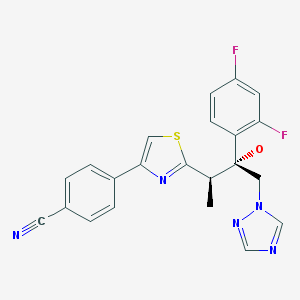
RAVUCONAZOLE

- BMS 207147
- ER 30346
- Ravuconazole
- UNII-95YH599JWV
4-[2-[(1R,2R)-2-(2,4-Difluorophenyl)-2-hydroxy-1-methyl-3-(1H-1,2,4-triazol-1-yl)propyl]-4-thiazolyl]benzonitrile


 |
|
| Systematic (IUPAC) name | |
|---|---|
| 4-[2-[(2R,3R)-3-(2,4-Difluorophenyl)-3-hydroxy-4-(1,2,4-triazol-1-yl)butan-2-yl]-1,3-thiazol-4-yl]benzonitrile | |
| Clinical data | |
| Legal status |
PHASE 2 AS ON SEPT 2014
|
| Identifiers | |
| CAS number | 182760-06-1 |
| ATC code | None |
| PubChem | CID 467825 |
| NIAID ChemDB | 057176 |
| Chemical data | |
| Formula | C22H17F2N5OS |
| Mol. mass | 437.465086 g/mol |

DRUG PROCESS…do not miss this

http://www.drugprocess.com/pdf/Isavuconazole_DPLA_ProcessSummary.pdf =++++++++++++++++++++++
…………………………………………………
Thiazole antifungals. III. Stereocontrolled synthesis of an optically active triazolymethyloxirane precursor to antifungal oxazolidine derivatives
Chem Pharm Bull 1991, 39(9): 2241
https://www.jstage.jst.go.jp/article/cpb1958/39/9/39_9_2241/_pdf
……………………………………………………
Optically active antifungal azoles. I. Synthesis and antifungal activity of (2R,3R)-2-(2,4-difluorophenyl)-3-mercapto-1-(1H-1,2,4-triazol-1-yl)-2-butanol and its stereoisomers
Chem Pharm Bull 1993, 41(6): 1035
https://www.jstage.jst.go.jp/article/cpb1958/41/6/41_6_1035/_pdf
………………………………………………………….
A novel route for chiral synthesis of the triazole antifungal ER-30346
Chem Pharm Bull 1998, 46(7): 1125
https://www.jstage.jst.go.jp/article/cpb1958/46/7/46_7_1125/_pdf
……………………………………………………….

ER-30346 is synthesized by thiazole ring formation of (2R, 3R) -3- (2,4-difluorophenyl) -3-hydroxy-2-methyl-4- (1H-1,2,4-triazol-1-yl ) thiobutanamide (I) and 4-bromoacetylbenzonitrile (II) by means of reflux in methanol. The thioamide (I) is obtained with excellent yield from a chiral nitrile (III) by heating with diethyl dithiophosphate in aqueous medium.


The nitrile (III), a chiral key intermediate of this synthesis, can be obtained by two different synthetic routes as follows: Route-b: The starting material of this route is methyl (S) -3-hydroxy-2-methylpropionate (VIII ), which contains one additional carbon between the hydroxyl group and the 2-position carbon of (R) -lactate, the starting material of route-a. The hydroxyl group of (VIII) is protected by triphenylmethyl group. Then, 2,4 -difluorophenyl moiety is introduced to give the ketone (X). Direct conversion of the ketone (X) to the oxirane (XIV) by dimethylsulfoxonium methylide, the same condition for compound (IV) in route-a, does not proceed. The oxirane (XIV) having desired stereochemistry is obtained via oxidation reaction. The ketone (X) is converted to the exomethylene (XI) by Wittig reaction. The stereoselective oxidation of (XI) is achieved by means of osmium tetroxide in the presence of 4-methylmorpholine N-oxide to give the diol (XII) in 58% yield after separation of its epimer by column chromatography. After methanesulfonylation of the primary alcohol of (XII), a triazole moiety is introduced and the triphenylmethyl group is deprotected. Then, the primary hydroxyl group of (XVI) is oxidized under Swern oxidation condition to give the aldehyde (XVII), which is converted to the chiral nitrile intermediate (III) by means of heating with hydroxylamine-O-sulfonic acid.

The synthesis of (2S, 3S) -3- (2,4-difluorophenyl) -3-hydroxy-2-methyl-4- (1,2,4-triazol-1-yl) butyronitrile (XV), a key intermediate the synthesis of ER-30346 has been described: The tritylation of 3-hydroxy-2 (S) -methylpropionic acid methyl ester (I) with trityl chloride in hot pyridine gives the trityl ether (II), which is hydrolyzed with LiOH in H2O / THF / methanol yielding the free acid (III). The esterification of (III) with 2-mercaptopyridine (IV) by means of dicyclohexylcarbodiimide (DCC) in dichloromethane gives the thioester (V), which is treated with 2,4-difluorophenylmagnesium bromide (VI) in THF yielding the propiophenone (VII), which by treatment with methyltriphenylphosphonium bromide / NaH in THF is converted into the methylene derivative (VIII). The oxidation of (VIII) with OsO4 and N-methylmorpholine oxide in acetone affords, after column chromatography, the chiral diol (IX), which is monomesylated with mesyl chloride / triethylamine in dichlormethane giving the monoester (X). The reaction of (X) with 1,2,4-triazol (XI) and NaH in DMF yields (2R, 3S) -2- (2,4-difluorophenyl) -3-methyl-1- (1,2,4-triazol-1-yl) -4- (triphenylmethoxy) -2-butanol (XII), which is detritylated with p-toluenesulfonic acid in methanol affording the diol (XIII). The oxidation of (XIII) with oxalyl chloride / DMSO in dichloromethane gives the aldehyde (XIV), which is finally treated with hydroxylamine-O-sulfonic acid in water yielding the desired bytyronitrile intermediate (XV) already referenced.

http://www.google.com/patents/WO2011042827A1?cl=en
Example 1
(2R,3R)-3-i4-(4-cvanophenyl)thiazol-2-yl1-1 -(1 H-1 ,2,4-triazol-1 -yl)-2-(2,4-difluorophenyl)- butan-2-ol
To a solution of racemic 3-[4-(4-cyanophenyl)thiazol-2-yl]-1 -(1 H-1 ,2,4-triazol-1 -yl)-2-(2,4- difluorophenyl)-butan-2-ol (43.7 g) in acetone (800 ml) a solution of (1 R)-10- camphorsulfonic acid (23 g) in methanol (300 ml) was added and the mixture was heated under reflux until a clear solution was obtained. The solution was slowly cooled to rt, seeded with crystals of the title enantiomeric salt and let overnight. The solid was collected by filtration, washed with acetone and dried to provide (2R,3R)-3-[4-(4- cyanophenyl)thiazol-2-yl]-1 -(1 H-1 ,2,4-triazol-1 -yl)-2-(2,4-difluorophenyl)-butan-2-ol (1 R)- 10-camphorsulfonate as white solid. This crude salt was then taken up in methylenechloride (100 ml) and water (ca. 100 ml) and the mixture was basified with aqueous sodium hydroxide solution. The organic layer was separated and the aqueous phase washed twice with methylenechloride (50 ml) and combined. The organic phases were then washed twice with water (2×50 ml), dried with sodium sulfate, filtrated and the solvent removed under reduced pressure. The crude product was then mixed with isopropanol (ca. 150 ml), heated for 10 min, cooled to 0° C and stirred for ca. 2 hrs. The product was collected, washed with isopropanol and dried under reduced pressure to provide the enantiomerically pure title compound (17.5 g, 41 % yield, 99.1 % ee); m.p. 164-166° C; [a]=-30° (c=1 , methanol, 25° C); NMR (CDCI3): 1 .23(3H, d, J=8 Hz), 4.09(1 H, q, J=8Hz), 4.26(1 H, d, J=14Hz), 4.92(1 H, d, J=14Hz), 5.75(1 H, s), 6.75- 6.85(2H, m), 7.45-7.54(2H, m), 7.62(1 H, s), 7.69(1 H, s), 7.75(1 H, d, J=8Hz), 7.86(1 H, s), 8.03(1 H,d,J=8Hz). The analytical data were identical with published (US5648372 and Chem. Pharm. Bull. 1998, 46, 623-630).
…………………………
http://www.google.com/patents/WO1999045008A1?cl=en
Example 1
a) Preparation of (2R)-2′,5′-Difluoro-2-(3,4,5,6-tetrahydro-
2H-pyran-2-yloxy)-propiophenone A mixture of magnesium ( 7.25 g, 0.298 mol ) and iodine ( catalytic amount ) and l-bromo-2,5-difluorobenzene ( 20.0 g, 0.178 mol ) in THF ( 250ml ) was vigously stirred. The color of iodine was disappeared and the inner temperature rose up to 65°C. To this mixture was added additional l-bromo-2,5-difluorobenzene ( 30.0 g, 0.267 mol ) dropwise to maintain the inner temperature from 50 to 55°C over 45min. The resulting mixture was stirred at 55°C for 30min. then at r.t. for lhr. The – 21 –
mixture was cooled down to -5°C. To this mixture was added a solution of.4-[(2R)-2-(3,4,5,6-Tetrahydro-2H-pyran-2-yloxy)propionyl] morpholine ( 52.5 g, 0.216 mol ) in THF ( 150ml ) dropwise over 40min. And the resulting mixture was stirred at r.t. for 4hrs. The reaction mixture was cooled down to 5°C and saturated NH4C1 aq. ( 100ml ) was added carefully. The whole was diluted with H20 ( 600ml ) and extracted with EtOAc ( 400ml + 200ml x 2 ). The combined organic layer was dried over Na2S04 and concentrated in vacuo. The residue was chromatographed on silica gel ( n-hexane : EtOAc = 10 :1 ~ 5 : 1 ) to give (2R)-2′,5′- Difluoro-2-(3,4,5,6-tetrahydro-2H-pyran-2-yloxy)-propiophenone (47.3 g,
81 % ) as pale yellow syrup.
Physical form : colorless oil; FAB-MS: m/z 271(M+H)+; Η-NMR(CDCl;j): 1.42~1.90(9H,m),3.32~3.40(lHxl/2,m),3.69~3.77(lHxl/2,m),3.86~3.94 (lHxl/2,m),4.66(lHxl/2,t,J=3.6Hz),4.75(lHxl/2,t,J=3.6Hz),4.87(lHxl/2, q,J=6.6Hz),5.11(lHxl/2,q,J=6.9Hz),7.08~7.25(2H,m),7.49~7.55(lH,m).
b) Preparation of 2-(2,5-Difluorophenyl)-2-[(lR)-l-(3,4,5,6,- tetr ahy dro-2H-pyran-2-yloxy ) ethyl] oxir ane To a stirred mixture of NaH ( 60% in oil, 9.1g, 0.228mol ) in DMSO
(300ml ) was added portionwise trimethylsulfoxonium iodide ( 53.9g, 0.245 mol ) at the inner teperature with the range from 15°C to 18°C. over 20min. The ice bath was removed and the mixtuer was stirred at r.t. for 3hrs. The mixture was cooled down to 10°C. To this mixture was added a solution of (2R)-2′,5′-Difluoro-2-(3,4,5,6-tetrahydro-2H-pyran-2- yloxy)-propiophenone ( 47.3 g , 0.175 mol ) in DMSO (150ml ) dropwise over 20min. The resulting mixture was stirred at r.t. for 4hrs. The reaction mixture was poured into ice-water ( 800ml ). The whole was extracted with EtOAc ( 400ml + 200ml x 2 ). The combined organic layer was washed with brine, dried over Na2S04 and concentrated in vacuo.
The residue was chromatograkkphed on silicagel ( n-hexane : EtOAc = – 22 –
8 : 1 ~ 5 : 1 ) to give 2-(2,5-Difluorophenyl)-2-[(lR)-l-(3,4,5,6,- tetrahydro-2H-pyran-2-yloxy)ethyl]oxirane (48.3 g, 97 % ). Physical form : pale yellow syrup, EI-MS: m/z 284 (M)+ ; 1H-NMR(CDC13): 1.15(3Hxl/2,dd,J=6.6,1.3Hz), 1.24(3Hxl/2,dd, J=6.6,1.3Hz), 1.52-1.87 (6H,m),2.83~2,90(lH,m),3.07
(lHxl/2,d,J=5.3Hz),3.36(lHxl/2,d,J=5.6Hz), 3.48~3.56(lH,m),3.82~3.92 (lH,m),4.00~4.16(lH,m),4.73~4.92(lH,m), 6.96~7.02(lH,m),7.09~7.15 (lH,m).
c) Preparation of (3R)-2-(2,5-difluorophenyl)-3-(3,4,5,6- tetrahydro-2H-pyran-2-yloxy)-l-(lH-l,2,4-triazol-l-yl)-2-butanol
To a stirred suspension of NaH ( 60 % in oil, 21.0 g, 0.525 mol ) in DMF (300ml ) was added portionwise 1,2,4-triazole ( 43.3 g, 0.627 mol ) at the inner temperature from 2°C to 11°C over 30min. The resulting mixture was stirred at r.t. for l.δhrs. To this mixture was added a solution of 2-(2,5-Difluorophenyl)-2-[(lR)-l-(3,4,5,6-tetrahydro-2H- pyran-2-yloxy)ethyl]oxirane ( 48.3 g, 0.170 mol ) in DMF ( 50 ml ). The mixture was stirred at 60°C for lhr. and then at 65°C for 14hrs. The reaction mixture was cooled down to 10°C and then poured into ice- water (800 mL ). The resulting mixture was extracted with EtOAc
(400ml + 200ml x 2 ). The combined organic layer was dried over Na2S04 and concentrated in vacuo. The residue was chromatographed on silicagel ( n-hexane : EtOAc = 4 : 1 ~ 1 : 5 ) to give (3R)-2-(2,5- difluorophenyl)-3-(3,4,5,6-tetrahydro-2H-pyran-2-yloxy)-l-(lH-l,2,4- triazol-l-yl)-2-butanol ( 43.9 g, 73 % ) and recovered starting material
(13.2 g, 27 % ).
Physical form : colorless syrup ; FAB-MS: m/z 354 (M+H)+ ; Η- NMR(CDCl3): 1.00(3Hxl/2,d,J=6.6Hz),1.13(3Hxl/2,d,J=6.6Hz), 1.42~1.88(6H,m),3.38~3.60 (lH,m),3.80~4.00(lH,m),4.32~5.02(5H,m),6.83~6.99 (2H,m),7.14-7.21
(lH,m),7.73(lHxl/2,s),7.74(lHxl/2,s),7.92(lHxl/2,s),7.95(lHxl/2,s). – 23 –
d) Preparation of (2R,3R)-2-(2,5-difluorophenyl)-l-(lH-l,2,4- triazol-l-yl)-2,3-butanediol
A mixture of (3R)-2-(2,5-difluorophenyl)-3-(3,4,5,6-tetrahydro-2H- pyran-2-yloxy)-l-(lH-l,2,4-triazol-l-yl)-2-butanol ( 43.9 g, 0.124 mol ) and PPTS ( 15.6 g, 62.1 mmol ) in EtOH ( 400ml ) was stirred at 55°C for 5hrs. The mixture was was evaporated to remove solvent down to 100ml. The residue was poured into ice-aqueous NaHC03 ( 500ml ). The whole was extracted with EtOAc ( 400ml + 200ml x 2 ). The combined organic layer was dried over Na2S04 and concentrated in vacuo. The residue was chromatographed on silicagel (CH2C12 : MeOH = 20 : 1) to give (2R,3R)-2-(2,5-difluorophenyl)-l-(lH-l,2,4-triazol-l-yl)-2,3- butanediol (18.0 g, 54 % ). Physical form : colorless syrup ; FAB-MS: m/z 270 (M+H)’ ; ‘H- NMR(CDC13): 0.99(3H,d,J=6.6Hz),2.61(lH,d,J=10.6Hz), 4.31-4.36
(lH,m),4.79,4.88
(2H,ABq,J=14.5Hz),4.84(lH,s),6.84~6.99(2H,m),7.13~7.19(lH,m),7.84(l H,s),7.85(lH,s).
e) Preparation of (2R,3S)-2-(2,5-Difluorophenyl)-3-methyl-2-
[ ( 1H- 1 ,2,4-triazol-l -yl) -methyl] -oxir ane
To a cold ( 0°C ) and stirred solution of (2R,3R)-2-(2,5-difluorophenyl)- l-(lH-l,2,4-triazol-l-yl)-2,3-butanediol ( 35.0 g, 0.130 mol ) and triethylamine ( 54.8 ml, 0.393 mol ) in CH2C12 ( 500ml ) was added a mesylchloride ( 12.1 ml, 0.156 mol ) dropwise over 5min. The resulting mixture was stirred at r.t. for l.δhrs. The reaction mixture was poured into ice-water ( 300ml ). The resulting mixture was shaken well and the organic layer was separated. The aqueous layer was further extracted with CH2C12 ( 150ml x 2 ). All the organic layers were combined, dried over Na2SO4 and concentrated in vacuo to give mesylate ( 46.7 g ) as crude syrup. The obtained mesylate was dissolved in MeOH ( 500ml ) – 24 –
and the solution was cooled down to 0°C. To this solution was added 28% NaOMe methanol solution (29.0 ml ). The mixture was stirred at 0°C for 50min. The reaction mixture was evaporated to reduce the volume of the solvent down to 150 ml. The residue was poured into ice- water ( 300ml ). The resulting mixture was extracted with ethylacetate (300ml + 200ml x 2 ). The combined organic layer was dried over Na.,S0 and concentrated in vacuo. The residue was cromatographed on silicagel (hexane : EtOAc = 1 : 3 ) to give (2R,3S)-2-(2,5-Difluorophenyl)- 3-methyl-2-[(lH-l,2,4-triazol-l-yl)-methyl]-oxirane (30.3 g, 93 %).
Physical form : white solid ; FAB-MS : m z 252 (M+H)+ ; ]H- NMR(CDC13): 1.64(3H,d,J=5.6Hz),3.19(lH,q,J=5.6Hz),4.42,4.97 (2H,ABq,J=14.8Hz), 6.75~6.81(lH,m),6.89~7.01(2H,m),7.83(lH,s),7.98 UH,s).
f) Preparation of (2S,3R)-3-(2,5-Difluoro-phenyl)-3-hydroxy-
2-methyl-4-[l,2,4]triazol-l-yl-butyronitrile
A mixture of (2R,3S)-2-(2,5-Difluorophenyl)-3-methyl-2-[(lH-l,2,4- triazol-l-yl)-methyl]-oxirane ( 30.3 g, 0.121 mol ), trimethylsilylcyanide ( 65.0 ml ) and MgO ( 24.5 g ) in o-xylene ( 400 ml ) was stirred at 130°C for lOhrs. To this mixture was added additional trimethylsilylcyanide (20.0 ml ) and MgO ( 8.5 g ) and the resulting mixture was stirred at 130°C further for 6hrs. The reaction mixture was cooled down to r.t. The precipitate was filtered off and washed with CH2C12. The filtrate was concentrated in vacuo to give crude brown syrup.
This crude syrup was dissolved in THF ( 600ml ) and the solution was cooled down to 0°C. To this mixture was added 1.0 M tetra n- butylammoniumfluoride THF solution ( 133ml, 0.133 mol ) dropwise over 5min. The mixture was stirred at r.t. for 50min. The solvent was removed under reduced pressure down to 150ml. The residue was poured into ice-water ( 400ml ). The resulting mixture was extracted – 25 –
with EtOAc ( 300ml + 200ml x 2 ). The combined organic layer was dried over Na2SO4 and concentrated in vacuo. The residue was chromatographed on silicagel ( n-hexane : EtOAc = 1 : 3 ) to give (2S,3R)-3-(2,5-Difluoro-phenyl)-3-hydroxy-2-methyl-4-[l,2;4]triazol-l-yl- butyronitrile ( 30.5 g, 91 % ).
Physical form : colorless syrup ; FAB-MS : m/z 279 (M+H)+ ; Η- NMR(CDCl3): 1.19(3H,d,J=7.3Hz),3.33(lH,q,J=7.3Hz),4.82,5.00 (2H,ABq,J=13.9Hz), 5.56(lH,brs),6.89~7.04(2H,m),7.12~7.19(lH,m),7.85(lH,s),7.86(lH,s).
g) Preparation of (2R,3R)-3-(2,5-Difluoro-phenyl)-3-hydroxy-
2-methyl-4- [ 1 ,2,4] triazol-1 -ylthiob tyramide
A mixture of (2S,3R)-3-(2,5-Difluoro-phenyl)-3-hydroxy-2-methyl-4- [l,2,4]triazol-l-yl-butyronitrile ( 30–5 S> O.llOmol ), diethyldithio- phospate ( 235 ml ) and H2O ( 110 ml ) was stirre at 80°C for 2hrs. The reaction mixture was cooled down to r.t. n-Hexane ( 400ml ) and water (200 ml ) was added. The whole was shaken well and the aqueous layer was separated. The remaining organic layer was further extracted with H20 ( 100ml x 3 ). All the aqueous layer was combined. Cooled down to
0°C and neutralized and basified ( PH8 ) with NaHC03. This basic(PH8) aqueous layer was extracted with EtOAc ( 300ml + 100ml x 3 ). The combined organic layer was dried over Na2S04 and concentrated in vacuo to give dark brown syrup. By addition of CH2C12 ( 100ml ) to this crude syrup, precipitate was formed. The precipitate was filtered and washed with CH2C12-hexane ( 5 : 1 mixture ) to give (2R,3R)-3-(2,5-Difluoro-phenyl)-3-hydroxy-2-methyl-4-[l,2,4]triazol-l- ylthiobutyramide ( 19.2 g, 56 % ) as white powder. On the oter hand, the filtrate was concentrated in vacuo and the residue was chromatographed on silica gel ( Wako-gel C-300, CH2C12 : MeOH = 20 :
1 ) to give additional (2R,3R)-3-(2,5-Difluoro-phenyl)-3-hydroxy-2- – 26 –
methyl-4-[l,2,4]triazol-l-ylthiobutyramide ( 7.46 g, 22 % ) as pale brown amorphous powder.
Physical form : White solid ; FAB-MS : m/z 313 (M+H)+ ; ‘H-NMR (CDC13): 1.12(3H,d,J=7.3Hz),3.74(lH,q,J=7.3Hz), 4.55,5.12 (2H,ABq,J=14.5Hz), 5.84(lH,s),6.85~7.02(2H,m),7.15-7.22(lH,m),7.80
(1H,S),7.89(1H,S), 7.89(lH,brs),8.43(lH,brs).
h) Preparation of 4-{2-[(lR,2R)-2-(2,5-Difluoro-phenyl)-2- hydroxy-l-methyl-3-[l,2,4]triazol-l-yl-propyl]-thiazol-4-yl}- benzonitrile
A mixture of (2R,3R)-3-(2,5-Difluoro-phenyl)-3-hydroxy-2-methyl-4- [l,2,4]triazol-l-ylthiobutyramide ( 26.7 g, 85.4 mmol ) and a-bromo-4′- cyano-acetophenone ( 24.0 g, 0.107 mol ) in EtOH ( 500ml ) was refluxed for lhr. The reaction mixture was cooled down to r.t. And the solvent was removed under reduced pressure down to 150ml. The residue was poured into in to cold ( 0°C ) saturated NaHC03 aq. ( 400ml ). The resulting mixture was extracted with EtOAc ( 300ml + 150 ml x 2 ). The combined organic layer was washed with brine (200ml ), dried over Na2S04 and concentrated in vacuo. The residue was chromatographed on silica gel ( Wako-gel C-300, Hexane : EtOAc = 1 : 2 ) to give 4-{2-
[(lR,2R)-2-(2,5-Difluoro-phenyl)-2-hydroxy-l-methyl-3-[l,2,4]triazol-l- yl-propyl]-thiazol-4-yl}-benzonitrile ( 32.0 g, 86 % ).
Physical form : colorless heavy syrup ; ESI-MS : m/z 437 (M)+ ; ‘H-
NMR(CDCl3): 1.25(3H,d,J=7.3Hz),4.12(lH,q,J=7.3Hz),4.26,4.96 (2H,Abq,J=14.5Hz), 5.75(lH,s),6.89~7.07(2H,m),7.23~7.29(lH,m),7.65
(lH,s),7.71(lH,s),7.75,8.02 (4H,Abq,J=8.6Hz),7.85(lH,s). – 27 –
i) Preparation of 4-{4-[(tert-Butoxycarbonyl-methyl-amino)- acetoxy]-3,5-dimethyl-benzyl}-l-[(2R,3R)-3-[4-(4-cyano-phenyl)- thiazol-2-yl]-2-(2,5-difluoro-phenyl)-2-hydroxy-butyl]-lH- [l,2,4]triazol-4-ium bromide A mixture of 22.7mg of 4-{2-[(lR,2R)-2-(2,5-Difluoro-phenyl)-2-hydroxy- l-methyl-3-[l,2,4]triazol-l-yl-propyl]-thiazol-4-yl}-benzonitrile and 25.0mg of 4-tert-butoxycarbonyl-methyl-aminoacetoxy-3,5-dimethyl- benzyl bromide in CH3CN(1.5mL) was refluxed over 15hrs. The solvent was evaporated in vacuo and the residue was chromatographed on silica gel (Wakogel C-200, solvent:CH2Cl MeOH=10/l) to give 4-{4-[(tert-
Butoxycarbonyl-methyl-amino)-acetoxy]-3,5-dimethyl-benzyl}-l- [(2R,3R)-3-[4-(4-cyano-phenyl)-thiazol-2-yl]-2-(2,5-difluoro-phenyl)-2- hydroxy-butyl]-lH-[l,2,4]triazol-4-ium bromide (36.0mg, 84% as colorless heavy syrup) ; FAB-MS : m/z 743 (M-Br)’ ; Η-NMR(CDC1S): 1.23(3H,d,J=7.3Hz),
1.47(9H,s),2.14(6H,s),3.03(3H,s),4.15(lH,q,J=7.3Hz),4.25(2H,s), 4.98,5.16(2H,ABq,J=13.9Hz),5.39~5.54(2H,m),6.27(lH,s),6.89-7.07(4H, m),7.24~7.27(lH,m),7.58(lH,s),7.73,8.06(4H,ABq,J=8.58),8.07(lH,s),ll. 26 (lH,s).
j) Preparation of l-{(2R,3R)-3-[4-(4-cyano-phenyl)-thiazol-2-yl]- 2-(2,5-difluoro-phenyl)-2-hydroxy-butyl}-4-(3,5-dimethyl-4- methylaminoacetoxy-benzyl)-lH-[l,2,4]triazol-4-ium bromide To a solution of 36mg of 4-{4-[(tert-Butoxycarbonyl-methyl-amino)- acetoxy]-3,5-dimethyl-benzyl}-l-[(2R,3R)-3-[4-(4-cyano-phenyl)-thiazol-
2-yl]-2-(2,5-difluoro-phenyl)-2-hydroxy-butyl]-lH-[l,2,4]triazol-4-ium bromide in ethylacetate(2ml) was added dropwise 4N HC1 ethylacetate solution(lmL) and the mixture was stirred at r.t. for 4hrs.The precipitate was “filtered and washed with diethylether to give 1- {(2R,3R)-3-[4-(4-cyano-phenyl)-thiazol-2-yl]-2-(2,5-difluoro-phenyl)-2- hydroxy-butyl}-4-(3,5-dimethyl-4-methylaminoacetoxy-benzyl)-lH- – 28 –
[l,2,4]triazol-4-ium bromide (24.5mg, 74% as HC1 salt and as white solid) ;
FAB-MS : m/z 643 (M-Br)+ ; Η-NMR(DMSO-d): 1.19(3H,d,J=7.3Hz), 2.11(6H,s),2.64(3H,s),4.15(lH,q,J=7.3Hz),4.41(2H,s),4.74,5.04(2H,ABq,J =14.5Hz),5.40(2H,s),6.76(lH,brs),7.10(2H,s),7.20~7.38(2H,m), 7.94,8.21
(4H,ABq,J=8.25),8.45(lH,s),9.07(lH,s),9.50(lH,brs),10.17(lH,s).
………………………
http://www.google.co.in/patents/US5648372
OR
http://www.google.co.in/patents/EP1394142A1
COMPD 21

- Example 88:Preparation of a compound of the structural formula:
-

-
2-(2,4-Difluorophenyl)-3-thioamide-1-(1H-1,2,4-triazol-1-yl)-2-butanol (the raw material 2) (156 mg) was dissolved in EtOH (2 ml), and 2-bromo-4′-cyanoacetophenone (the raw material 3) (224 mg) was added to the solution, followed by heating and refluxing for 1 hour. The liquid reaction mixture was neutralized with a saturated aqueous solution of NaHCO3 and subjected to extraction with AcOEt. After the extract was washed with H2O and then a saturated aqueous solution of NaCl and dried over MgSO4, AcOEt was distilled out. The resultant residue was purified by chromatography on silica gel (SiO2: 20 g, eluted with CH2Cl2 and then with 1% solution of MeOH in CH2Cl2), and then crystallized from IPE, thereby obtaining the intended compound (109 mg). Physical properties of this compound are described below.
- mp:
- 196-197°C.
- NMR:
- δ solvent (CDCl3)
1.23(3H,d,J=8.0Hz), 4.09(1H,q,J=8.0Hz), 4.26(1H,d,J=14.3Hz), 4.92(1H,d,J=14.3Hz), 5.74(1H,s), 6.78-6.85(2H,m), 7.48-7.54(1H,m), 7.64(1H,s), 7.69(1H,s), 7.75(1H,d,J=8.1Hz), 7.85(1H,s), 8.03(1H,d,J=8.1Hz). - MS:
- MH+ = 438.

References
- National Cancer Institute. Ravuconazole in Preventing Fungal Infections in Patients Undergoing Allogeneic Stem Cell Transplantation. In: ClinicalTrials.gov [Internet]. Bethesda (MD): National Library of Medicine (US). 2000- [cited 2010 Feb 18]. Available from:http://clinicaltrials.gov/ct2/show/NCT00064311?term=ravuconazole&spons_ex=Y&rank=1 NLM Identifier: NCT00064311.
- The Aspergillus Website, Pasqualotto AC, Denning DW. Ravuconazole. Date accessed: 2010 Feb 18.
- Pasqualotto AC, Thiele KO, Goldani LZ (2010). “Novel triazole antifungal drugs: focus on isavuconazole, ravuconazole and albaconazole”. Curr Opin Investig Drugs 11 (2): 165–74. PMID 20112166.
- Pfaller, M. A.; Messer, S. A.; Hollis, R. J.; Jones, R. N.; Sentry Participants, Group (2002). “Antifungal Activities of Posaconazole, Ravuconazole, and Voriconazole Compared to Those of Itraconazole and Amphotericin B against 239 Clinical Isolates of Aspergillus spp. and Other Filamentous Fungi: Report from SENTRY Antimicrobial Surveillance Program, 2000”. Antimicrobial Agents and Chemotherapy46 (4): 1032. doi:10.1128/AAC.46.4.1032-1037.2002. PMC 127116. PMID 11897586.

Literature References:
Ergosterol biosynthesis inhibitor. Prepn (stereochemistry unspecified): T. Naito et al, EP 667346; eidem,US 5648372 (1995, 1997 both to Eisai); of optically acitve form: A. Tsuruoka et al., Chem. Pharm. Bull. 46, 623 (1998). Chiral synthesis: Y. Kaku et al., ibid. 1125.
In vitro comparative antifungal spectrum: J. C. Fung-Tomc et al., Antimicrob. Agents Chemother. 42, 313 1998. Antifungal activity in candidosis: K. V. Clemons, D. A. Stevens, ibid. 45, 3433 (2001); in aspergillosis: W. R. Kirkpatrick et al., J. Antimicrob. Chemother. 49, 353 (2002).
Clinical evaluation in onychomycosis: A. K. Gupta et al., J. Eur. Acad. Dermatol. Venereol. 19, 437 (2005).
Review of development and therapeutic potential: S. Arikan, J. H. Rex, Curr. Opin. Invest. Drugs 3, 555-561 (2002).
Extras you may need

http://www.google.com/patents/WO2011042827A1?cl=en
Scheme 1 :

The manufacturing process for Isavuconazole is similar: Since Isavuconazole differentiates from Ravuconazole by only another fluorine substitution on the aromatic ring (2,5- instead of 2,4-difluorophenyl), the identical synthesis has been used (US 6300353 from October 9, 2001 and Bioorg. & Med. Chem. Lett. 13, 191 (2003)). Consequently, also this manufacturing process, based on (R)-lactic acid, faces the same problems: to many steps, extremely low overall yield and in addition to US patent 6300353 claims even already known step as novel (claim 36).
Recent attempts to improve this concept as reported in WO 2007/062542 (Dec.1 , 2005), using less expensive, natural configured (S)-lactic acid, also failed: As already reported in US 6133485 and in US 2003/0236419, the second chiral center was formed from an optically active allyl alcohol prepared in a few steps from (S)-lactic acid. This allyl alcohol was subjected to Sharpless diastereoselective epoxidation providing first an opposite configured, epimeric epoxy alcohol which had to be then epimerized in an additional inversion step yielding finally the desired epoxy alcohol as the known precursor for Isavuconazole (US 6300353). It is obvious that this process using less expensive (S)- lactic acid makes the entire process with an inversion step even more complex than the original approach.
Elegant and more efficient process has been claimed in US 2004/0176432 from June 26, 2001 ) in which both chiral centers have been formed simultaneously, diastereo- and enantio-selectively pure in one single reaction step using chiral (R)-2-butynol as a chiral precursor in the presence of Pd(ll)-catalyst and diethyl zinc (Scheme 2).
Scheme 2:

Since water soluble, (R)-2-butynol is expensive, recently identical process has been published, in which instead of (R)-2-butynol less water soluble and therefore, less expensive (R)-4-phenyl-3-butyn-2-ol was used (Synthetic Commun. 39, 161 1 (2009)). Nevertheless, as incorrectly stated there, this process does not provide better diastereoselectivity than the original process using (R)-2-butynol: On the contrary disadvantage of this process is a very bad atom economy because huge phenyl group of (R)-4-phenyl-3-butyn-2-ol has to be “disposed” in oxidation step by the conversion of triple bond into carboxylic acid function.
……………………………
http://www.google.com/patents/WO2014023623A1?cl=en
The invention relates to a process for the manufacture of a
diastereomerically and enantiomerically enriched ester intermediate for isavuconazole or ravuconazole.
Isavuconazole and ravuconazole are triazole antifungal compounds. Processes for the manufacture of isavuconazole and ravuconazole were disclosed in patents WO99/45008, WO2007/062542 and WO03/002498 to Basilea. In WO2011/042827 a process for the manufacture of enantiomerically pure antifungal azoles such as ravuconazole and isavuconazole is disclosed, wherein a classical resolution of a racemic mixture is performed by the addition of an enantiopure chiral acid, then collection of the desired diastereomer followed by conversion of the salt into the enantiomerically pure form of the desired compound by treatment with a base or an ion-exchange resin. The disadvantages of using such classical resolution are that the chiral auxiliary needs to be applied in near stoichiometric amounts, and that additional process steps are required for recovery of these relatively high amounts of chiral reagent as well as for converting the salt into the free enantiopure product.
http://www.google.com/patents/US8076494
Reaction Scheme 1:

MHRA’s Guidance for Software as a Medical Device (including Apps)


The British MHRA (Medicines and Healthcare Products Regulatory Agency) has published a guidance for developers of “software as a medical device” = “stand-alone software”. The text also expressly addresses “apps”. Get the details here.
Whereas in the pharmaceutical business software plays a role in the manufacture of products, it can also act as two parts in the medical device business – one in the manufacture of a device and one as a medical device as such – i.e. software as a medical device. The British Health Authority – MHRA – has published a current guidance on software as a medical device, also called stand-alone software, intended for developers of such software. This guidance also addresses the increasingly encountered topic “apps”. The text doesn’t cover software that is part of a medical device, e.g. software that controls a CT scanner.
The guidance itself is very short and divided into 6 main chapters:
- Introduction
- Key points and existing…
View original post 306 more words
Questions and Answers on the Topic “Pharmaceutical Water”

In the following News, you will find questions on pharmaceutical water preparation and distribution frequently asked during our courses, as well as their respective answers. Read more here.
During our courses and conferences participants quite frequently raise questions on pharmaceutical water preparation and distribution. Therefore following you will find some of these questions and their respective answers.
Question 1: Which concentrations of ozone are required in water systems?
The technical literature delivers different information about the ozone concentrations in water systems: e.g. ISPE Baseline Water and Steam: 0.02 ppm – 0.2 ppm; Collentro, Pharmaceutical Water: 0.2 ppm – 0.5 ppm and W.Setz, Ciba-Geigy 1990: max 0.04 ppm, for sanitisation 0.05 ppm.
The indications provided by the ISPE Baseline refer to the concentration required to prevent microbial growth. One can thus assume that a concentration of 20 ppb ozone can prevent any growth.
If systemic protection is desired i.e. the…
View original post 894 more words
EU Commission publishes long-awaited EU GMP Guide Chapters 3 and 5
The EU Commission has published the long-awaited, revised chapters 3 and 5 of the EU GMP Guide. The change focuses on the prevention of cross-contamination as well as on the statement concerning the need for dedicated facilities. Continue reading.
The EU Commission had published its first draft of the chapter 3 “Premises and Equipment” and 5 “Production” for comments in early 2013 (see news from 04/12/2013). The content concerns the measures for avoiding cross-contamination and the regulation relative to which products have to be produced in dedicated facilities.
The mention of specific products for which a dedication is required – as provided in the currently valid version of chapter 3 – is missing in the now published version. The quality risk management approach is maintained. Also remaining are the exceptions where dedication is required – which are:
- The risk cannot be adequately controlled by operational and/ or technical measures…
View original post 214 more words
AMRI Introduces Protein Expression & Purification Solutions

|
|||||||||||||||||||||||||||||||||||||||||||||||||||||||||||||||||||||||||||


| Albany Molecular Research Inc. (AMRI) 26 Corporate Circle Albany, NY 12203 |


21′α-Cyanoanhydrovinblastine

Some derivatives ) are known as being intermediates in the preparation of anti-tumor medicaments such as vinblastine, vincristine and vinorelbine.

R=CH3, vinblastine
R=CHO, vincristine
n=2, anhydrovinblastine
n=1, vinorelbine
The remarkable anti-tumor properties of these complex natural molecules, extracted from the Madagascar periwinkle, Carantheus roseus, are known and they are already used in anti-cancer treatment. Vinblastine and vincristine are “spindle poisons” which oppose the formation of the mitotic spindle during cellular division, thus preventing cellular proliferation.
Vincristine and vinblastine are active agents in the treatment of leukemia, lymphosarcoma and solid tumors. Vinblastine is also used in the treatment of Hodgkin’s disease.
Vinorelbine is currently used in the treatment of the most widespread form of cancer of the lungs, that is lung cancer of non-small cells. It is also used in the treatment of metastasic cancers of the breast.
The methods currently used for preparing vinblastine and vincristine involve extraction of these molecules from plants. The plants have to be crushed and dried before these substances can be extracted. The extraction process is long and costly, given that the extract obtained is very complex, containing at least 200 different alkaloids. The yields are also very low; 5 to 10 g of vinoblastine are obtained per ton of dried plant material, and 0.5 to 1 g of vincristine per ton of dried plant material.
Many research groups have thus tried to achieve synthesis of these molecules by using more efficient procedures which enable better yields and which make use of derivatives with interesting anti-tumor properties but which are endowed with lower levels of toxicity.
 just an animation
The patent FI 882 755, filed by the HUATAN-MAKI Oy Company, relates to the formation of vinblastine and vincristine by irradiation of catharanthine and of vindoline with UV radiation in an acidic aqueous solution, under an atmosphere of oxygen or an inert gas. The yields obtained in these reactions are extremely low.
Furthermore, other processes are known which make use of anhydrovinblastine which is an intermediate in the synthesis of vinblastine, vincristine and also of vinorelbine.
Anhydrovinblastine is thus a key chemical intermediate which enables access to all alkaloids of the vinblastine type. This intermediate is synthesised by coupling catharanthine and vindoline.

The latter two alkaloids are also extracted from the Madagascar periwinkle but, in contrast to vincristine and vinblastine, they represent the main constituents of the extract obtained. In fact, 400 g of catharanthine per ton of dried plant material and 800 g of vindoline per ton of dried plant material are obtained.
The preparation of anhydrovinblastine by coupling catharanthine and vindoline is therefore a favoured route for synthesising this intermediate product.
There are several methods for preparing anhydrovinblastine from catharanthine and vindoline.
The patent FR 2 296 418 filed by ANVAR describes a process during the course of which the N-oxide of catharanthine is coupled to vindoline in the presence of trifluoroacetic anhydride.
When this process is performed at ambient temperature only the inactive 16′-R epimer of anhydrovinblastine is obtained. The naturally occurring active 16′-S epimer is obtained as the major product when this reaction is performed at a temperature which is at least 50° C. lower and under an inert gas. Nevertheless, even at low temperature, 10% of the 16′-R epimer of anhydrovinblastine is still produced.

This process has several disadvantages. The operating conditions are extremely restrictive due to the use of anhydrous solvents, the low temperature and the atmosphere of inert gas. The product obtained has to be subjected to a purification procedure due to the presence of 10% of the 16′-R epimer of anhydrovinblastine. The yield of isolated anhydrovinblastine is low, of the order of 35%.
A second process, suggested by VUKOVIC et al. in the review “Tetrahedron” (1998, volume 44, pages 325-331) describes a coupling reaction between catharanthine and vindoline initiated by ferric ions. Catharanthine is also oxidised in this reaction. The yield of anhydrovinblastine is of the order of 69% when the reaction is performed under an atmosphere of inert gas. However, this process has the major disadvantage that it leads to many secondary products. These are impurities resulting from further oxidation of the dimeric alkaloids formed, whatever the chosen operating conditions. This makes the purification stage difficult and delicate.
An improved process was suggested in the patent U.S. Pat. No. 5,037,977 and this increases the yield of anhydrovinblastine to 89%. However, this improvement is described only for very small amounts of reagents and its extension to the industrial scale seems to be difficult. In any case, these processes based on ferric ions lead in all cases to many secondary products due to the fact that these ions are responsible for parasitic reactions.
A third process described by GUNIC et al. in “Journal of the Chemical Society Chemical Communications” (1993), volume 19, pages 1496-1497, and by Tabakovic et al. in “Journal of Organic Chemistry” (1997), volume 62, pages 947-953, describes a coupling reaction between catharanthine and vindoline as a result of anodic oxidation of catharanthine. However, this process also suffers from disadvantages which, on the one hand, are due to the requirement for an inert atmosphere and, on the other hand, are connected with the nature of the electrochemical process itself, involving wear of the electrodes, difficulty in controlling the reproducibility and the cost of electrolytes. And, as in all the preceding methods, the anhydrovinblastine is contaminated with about 10% of the 16′-R epimer of anhydrovinblastine.
http://www.google.com/patents/US6365735
EXAMPLE 11 Preparation of 21′α-Cyanoanhydrovinblastine
0.537 mmol of catharanthine hydrochloride (200 mg), 0.537 mmol of vindoline (245 mg) and 0.054 mmol of dimethyl viologen (14 mg) and 0.028 mmol of triphenylpyrilium hydrogen sulfate (11 mg) are added to 50 ml of 0.1 N sulfuric acid. The entire mixture is irradiated with light of wavelength λ>400 nm in a Pyrex irradiation flask, under an atmosphere of oxygen. The reaction is terminated after 2 h 30 min of irradiation.
The aqueous phase is then saturated with lithium tetrafluoroborate and then extracted with dichloromethane. A solution of 15 ml of dichloromethane containing 100 μl (1.34 mmol, 2 eq.) of trimethylsilyl cyanide, TMSCN, is then added to the reaction medium. The organic phase is washed with a solution of 0.1 M sodium carbonate, dried and evaporated under reduced pressure at 20° C.

The only product in the residue (403 mg, 0.509 mmol, 95%) is recrystallised from absolute isopropanol. 340 mg of white crystals of 21′α-cyanoanhydrovinblastine (0.430 mmol; yield: 80%) are recovered.

C47H55N5O8
M.pt. 212° C. (iPrOH) IR film 3450, 2950, 2220, 1740, 1610 cm−1; MS M/z (relative intensity) 818 (MH+, 3), 122 (100), 108 (21);
NMR 1H (500 MHz, CDCl3) 9.78 (s, 1H, OH), 8.04 (s, 1H, Na′H), 7.51 (1H, H-9′), 7.16 (1H, H-11′), 7.13 (1H, H-12′), 7.12 (1H, H-10′), 6.63 (s, 1H, H-9), 6.13 (s, 1H, H-12), 5.85 (m, 1H, H-14), 5.47 (s, 1H, Hα-17), 5.54 (m, 1H, H-15′), 5.30 (m 1H, H-15), 4.18 (1H, H62-2), 3.60 (s, 3H, C16′—COOCH3), 3.38 (1H, H62-3), 3.35 (1H, Hβ-3′), 3.31 (1H, Hβ-5), 3.25 (1H, Hβ-6′), 3.24 (m, 1H, Hβ-5′), 3.15 (1H, Hβ-17′), 3.14 (m, 1H, Hα-5′), 3.12 (1H, Hα-6′), 2.82 (1H, Hα-3), 2.72 (s, 3H, NaCH3), 2.66 (s, 1H, Hα-21), 2.62 (1H, Hα-3′), 2.46 (1H, Hα-5), 2.40 (1H, Hα-17′), 2.20 (1H, Hβ-5), 2.11 (s, 3H, CH3—COO), 2.11 (1H, H-19′), 2.03 (1H, H-19′), 1.80 (1H, Hα-6), 1.80 (1H, H-19), 1.35 (1H, H-19), 1.21 (m, 1H, H-14′), 1.04 (3H, H-18′), 0.81 (3H, H-18).
NMR 13C (125 MHz, CDCl3) 174.69 (C16′—COOCH3), 171.74 (C16—COOCH3), 171.03130.01 (C15), 129.34 (C8′), 129.16 (C15′), 124.63 (C14), 123.48 (C9), 123.24 (C8), 122.49 (C11′), 121.00 (C10), 119.21 (C10′), 119.21 (CN), 118.35 (C9′), 115.65 (C7′), 110.64 (C11—OCH3), 55.40 (C16′), 53.30 (C7), 52.46 (C16′—COOCH3), 52.30 (C16—COOCH3), 52.26 (C5′), 50.50 (C5), 50.41 (C5), 44.86 (C6), 44.48 (C3′), 42.76 (C20), 38.32 (Na—CH3), 34.00 (C17′), 33.28 (C14′), 30.92 (C19), 28.63 (C8′), 25.92 (C19′), 21.19 (CH3—COO), 11.86 (C18′), 8.50 (C18).

| Cited Patent | Filing date | Publication date | Applicant | Title |
|---|---|---|---|---|
| US4737586 | Apr 29, 1986 | Apr 12, 1988 | Agence Nationale De Valorisation De La Recherche | Process for the preparation of bis-indolic compounds |
| US5037977 | Aug 8, 1989 | Aug 6, 1991 | Mitsui Petrochemical Industries Ltd. | Reacting catharanthine with vindoline in presence of ferric ions, inactivating iron with ligand, reducing |
| DE3801450A1 | Jan 20, 1988 | Aug 18, 1988 | Univ British Columbia | Verfahren fuer die synthese von vinblastin und vincristin |
| DE3826412A1 | Aug 3, 1988 | Feb 16, 1989 | Univ British Columbia | Verfahren fuer die synthese von vinblastin und vincristin |
| WO1989012056A1 | Jun 9, 1989 | Dec 14, 1989 | Huhtamaeki Oy | Process for the preparation of dimeric catharanthus alkaloids |
| Reference | ||
|---|---|---|
| 1 | E. Gunic et al., “Electrochemical Synthesis of Anhydrovinblastine“, J. Chem. Soc., Chem. Commun., 1993, pp. 1496-1497. | |
| 2 | I. Tabakovic et al., “Anodic Fragmentation of Catharanthine and Coupling with Vindoline. Formation of Anhydrovinblastine“, J. Org. Chem., 1997, vol. 62, pp 947-953. | |
| 3 | J. Vucovik et al., “Production of 3′,4′-anhydrovinblastine: a Unique Chemical Synthesis“, Pergamon Journals Ltd., 1988, vol. 44, pp. 325-331. | |
| 4 | Richard J. Sundberg et al.; “Mechanistic aspects of the formation of anhydrovinblastine by Potier-Polonovski oxidative coupling of catharanthine and vindoline. Spectroscopic observation and chemical reactions of intermediates” Tetrahedron., vol. 48, No. 2,-Jan. 10, 1992; pp. 277-296, XP002083507 Oxford GB-the whole document. | |
| 5 | Richard J. Sundberg et al.; “Oxidative fragmentation of catharanthine by dichlorodicyanoquinone“; Journal of Organic Chemistry,-Mar. 1, 1991; pp. 1689-1692, XP002083508 Easton US -the whole document. | |
| 6 | Richard J. Sundberg et al.; “Photoactivated C16-C21 fragmentation of catharanthine” Tetrahedron Letters, vol. 32, No. 26, Jun. 24, 1992, pp. 3035-3038 XP002083509 Oxford GB-the whole document. | |
| 7 | Richard J. Sundberg et al.; “Mechanistic aspects of the formation of anhydrovinblastine by Potier-Polonovski oxidative coupling of catharanthine and vindoline. Spectroscopic observation and chemical reactions of intermediates” Tetrahedron., vol. 48, No. 2,—Jan. 10, 1992; pp. 277-296, XP002083507 Oxford GB—the whole document. | |
| 8 | Richard J. Sundberg et al.; “Oxidative fragmentation of catharanthine by dichlorodicyanoquinone“; Journal of Organic Chemistry,—Mar. 1, 1991; pp. 1689-1692, XP002083508 Easton US —the whole document. | |
| 9 | Richard J. Sundberg et al.; “Photoactivated C16-C21 fragmentation of catharanthine” Tetrahedron Letters, vol. 32, No. 26, Jun. 24, 1992, pp. 3035-3038 XP002083509 Oxford GB—the whole document. | |
| Citing Patent | Filing date | Publication date | Applicant | Title |
|---|---|---|---|---|
| US7235564 * | Dec 3, 2004 | Jun 26, 2007 | Amr Technology, Inc. | 11′-substituted; potent inhibitors of cellular mitosis and proliferation |
| US7238704 * | Dec 3, 2004 | Jul 3, 2007 | Amr Technology, Inc. | For use as inhibitors of cellular mitosis and proliferation |
| US7745619 | Oct 31, 2007 | Jun 29, 2010 | Albany Molecular Research, Inc. | alkaloids; anticarcinogenic, antiproliferative agent; inhibitor of cellular mitosis and cell proliferation; binding to tubulin leads to cell cycle arrest in M phase and subsequently to apoptosis; antiallergen, antiinflammatory, antidiabetic, autoimmune diseases; asthma, arthritis, Alzheimer’ disease |
| US7842802 | Dec 10, 2008 | Nov 30, 2010 | Albany Molecular Research, Inc. | Vinorelbine derivatives |
| US8048872 | Apr 29, 2008 | Nov 1, 2011 | Stat of Oregon Acting by and Through The Oregon State Board of Higher Education on Behalf of the University of Oregon | Treatment of hyperproliferative diseases with vinca alkaloid N-oxide and analogs |
| US8053428 | Apr 6, 2007 | Nov 8, 2011 | Albany Molecular Research, Inc. | Vinorelbine derivatives |
| WO2005055939A2* | Dec 3, 2004 | Jun 23, 2005 | Amr Technology Inc | Vinca derivatives |


Acebutolol……..For the management of hypertension and ventricular premature beats in adults.

Brief background information
| Salt | ATC | Formula | MM | CAS |
|---|---|---|---|---|
| – | C07AB04 C07BB04 |
C 18 H 28 N 2 O 4 | 336.43 g / mol | 37517-30-9 |
| (R) be the bases | C07AB04 C07BB04 |
C 18 H 28 N 2 O 4 | 336.43 g / mol | 68107-81-3 |
| (S) be the bases | C07AB04 C07BB04 |
C 18 H 28 N 2 O 4 | 336.43 g / mol | 68107-82-4 |
| (RS) -monogidrohlorid | C07AB04 C07BB04 |
C 18 H 28 N 2 O 4 · HCl | 372.89 g / mol | 34381-68-5 |
 |
|
 |
|
| Systematic (IUPAC) name | |
|---|---|
| (RS)-N-{3-acetyl-4-[2-hydroxy-3-(propan-2-ylamino)propoxy]phenyl}butanamide | |
| Clinical data | |
| Trade names | Sectral |
| AHFS/Drugs.com | monograph |
| MedlinePlus | a687003 |
| Licence data | US FDA:link |
| Pregnancy cat. | C (AU) B (US) |
| Legal status | ℞ Prescription only |
| Routes | oral, iv |
| Pharmacokinetic data | |
| Bioavailability | 40% (range 35 to 50%) |
| Metabolism | Hepatic |
| Half-life | 3-4 hours (parent drug) 8-13 hours (active metabolite) |
| Excretion | Renal: 30% Biliary: 60% |
| Identifiers | |
| CAS number | 37517-30-9 |
| ATC code | C07AB04 |
| PubChem | CID 1978 |
| DrugBank | DB01193 |
| ChemSpider | 1901 |
| UNII | 67P356D8GH |
| KEGG | D02338 |
| ChEBI | CHEBI:2379 |
| ChEMBL | CHEMBL642 |
| Chemical data | |
| Formula | C18H28N2O4 |
| Mol. mass | 336.426 g/mol |
| Physical data | |
| Melt. point | 121 °C (250 °F) |
Application
-
antagonist of β-adrenergic
-
β-blocker
Classes of substances
-
Acetophenones
-
1-aryloxy-3-amino-2-propanol
-
Butyric acid anilides
-

-
Synthesis pathway
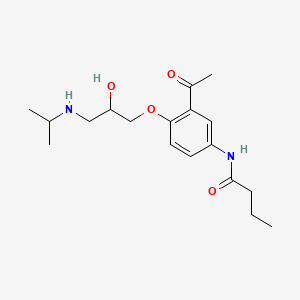

| Synthesis a) |
|---|
   |
Trade Names
| Country | Trade name | Manufacturer |
|---|---|---|
| Germany | Printemps | Bayer |
| Sali-Printemps | – “- | |
| Tredalat | – “- | |
| France | Sektral | Sanofi-Aventis |
| United Kingdom | Sekadreks | Aventis |
| Sektral | Aventis | |
| Italy | Atsekor | SPA |
| AlOl | SIT | |
| Printemps | Bayropharm | |
| Sektral | Rhône-Poulenc Rorer | |
| Japan | Atsetanol | Sanofi-Aventis Chugai |
| Sektral | Organon | |
| USA | – “- | Wyeth-Ayerst |
| Ukraine | No | No |
Formulations
-
ampoule 25 mg;
-
Capsules 100 mg, 200 mg;
-
Tablets of 200 mg, 400 mg, 500 mg (as hydrochloride)
Pharmacology
Acebutolol is a cardioselective beta blocker with ISA (intrinsic sympathomimetic activity; see article on pindolol). It is therefore more suitable than non cardioselective beta blockers, if a patient with asthma or chronic obstructive pulmonary disease (COPD) needs treatment with a beta blocker. (For these reasons, it may be a beta-blocker of choice in inclusion in Polypill strategies). In doses lower than 800mg daily its constricting effects on the bronchial system and smooth muscle vessels are only 10% to 30% of those observed under propranolol treatment, but there is experimental evidence that the cardioselective properties diminish at doses of 800mg/day or more.
The drug has lipophilic properties, and therefore crosses the blood–brain barrier. Acebutolol has no negative impact on serum lipids (cholesterol and triglycerides). No HDL decrease has been observed. In this regard, it is unlike many other beta blockers which have this unfavourable property.
The drug works in hypertensive patients with high, normal, or low renin plasma concentrations, although acebutolol may be more efficient in patients with high or normal renin plasma concentrations. In clinically relevant concentrations, a membrane-stabilizing effect does not appear to play an important role.
Pharmacokinetics
Acebutolol is well absorbed from the GI tract, but undergoes substantial first-pass-metabolization, leading to a bioavailability of only 35% to 50%. Peak plasma levels of acebutolol are reached within 2 to 2.5 hours after oral dosing. Peak levels of the main active metabolite, diacetolol, are reached after 4 hours. Acebutolol has a half-life of 3 to 4 hours, and diacetolol a half-life of 8 to 13 hours.
Acebutolol undergoes extensive hepatic metabolization resulting in the desbutyl amine acetolol which is readily converted into diacetolol. Diacetolol is as active as acebutolol (equipotency) and appears to have the same pharmacologic profile. Geriatric patients tend to have higher peak plasma levels of both acebutolol and diacetolol and a slightly prolonged excretion. Excretion is substantially prolonged in patients with renal impairment, and so a dose reduction may be needed. Liver cirrhosis does not seem to alter the pharmacokinetic profile of the parent drug and metabolite.
Indications
- hypertension
- ventricular and atrial cardiac arrhythmia
- acute myocardial infarction in high-risk patients
- Smith-Magenis syndrome
Contraindications
- Stable or Unstable Angina (due to its partial agonist or ISA activity)
Contraindications and Precautions
Acebutolol may not be suitable in patients with Asthma bronchiale or COPD due to its bronchoconstricting (β2 antagonistic) effects.
Side effects
The development of anti-nuclear antibodies (ANA) has been found in 10 to 30% of patients under treatment with acebutolol. A systemic disease with arthralgic pain and myalgias has been observed in 1%. A lupus erythematosus-like syndrome with skin rash and multiforme organ involvement is even less frequent. The incidence of both ANA and symptomatic disease under acebutolol is higher than under Propranolol. Female patients are more likely to develop these symptoms than male patients. Some few cases of hepatotoxicity with increased liver enzymes (ALT, AST) have been seen. Altogether, 5 to 6% of all patients treated have to discontinue acebutolol due to intolerable side effects. When possible, the treatment should be discontinued gradually in order to avoid a withdrawal syndrome with increased frequency of angina and even precipitation of myocardial infarction.
Dosage
The daily dose is 200mg – 1,200mg in a single dose or in 2 divided doses as dictated by the severity of the condition to be treated. Treatment should be initiated with low doses, and the dose should be increased cautiously according to the response of the patient. Acebutolol is particularly suitable for antihypertensive combination treatment with diuretics, if acebutolol alone proves insufficient. In some countries injectable forms for i.v.-injection with 25mg acebutolol exist, but these are only for cases of emergency under strict clinical monitoring. The initial dose is 12.5 to 25mg, but additional doses may be increased to 75 to 100mg, if needed. If further treatment is required, it should be oral.

Sectral (acebutolol HCl) is a selective, hydrophilic beta-adrenoreceptor blocking agent with mild intrinsic sympathomimetic activity for use in treating patients with hypertension and ventricular arrhythmias. It is marketed incapsule form for oral administration. Sectral (acebutolol) capsules are provided in two dosage strengths which contain 200 or 400 mg of acebutolol as the hydrochloride salt. The inactive ingredients present are D&C Red 22, FD&C Blue 1, FD&C Yellow 6, gelatin, povidone, starch, stearic acid, and titanium dioxide. The 200 mg dosage strength also contains D&C Red 28 and the 400 mg dosage strength also contains FD&C Red 40. Acebutolol HCl has the following structural formula:
 Acebutolol HCl is a white or slightly off-white powder freely soluble in water, and less soluble in alcohol. Chemically it is defined as the hydrochloride salt of (±)N-[3-Acetyl-4-[2- hydroxy-3-[(1-methylethyl)amino]propoxy]phenyl] butanamide.
External links
EXAMPLE 4 Crude 5-butyramido-2′-(2,3-epoxypropoxy)acetophenone (16 g), isopropylamine (20 g.) and ethanol (100 ml.) were heated together under reflux for 4 hours. The reaction mixture was concentrated under reduced pressure and theresidual oil was dissolved in N hydrochloric acid. The acid solution was extracted with ethyl acetate, theethyl acetate layers being discarded. The acidic solution was brought to pH 11 with 2N aqueous sodium hydroxide solution and then extracted with chloroform. The dried chloroform extracts were concentrated under reduced pressure to give an oil which was crystallised from a mixture of ethanol and diethyl ether to give 5′-butyramido-2- (2-hydroxy-3-isopropylaminopropoxy)acetophenone (3 g.), m.p. 119l23C.
Similarly prepared was cyclohexylamino-2-hydroxypropoxy)acetophenone, m.p. 112113C.
Crude 5-butyramido-2-(2,3-epoxypropoxy)acetophenone used as startingmaterial was prepared as follows:
p-Butyramidophenol (58 g.; prepared according to Fierz-David and Kuster, loc.cit.), acetyl chloride (25.4 g.) and benzene (500 ml.) were heated together under reflux until a solution formed (12 hours). This solution was cooled and treated with water. The benzene layer was separated and the aqueous layer was again extracted with benzene.
The combined benzene extracts were dried and evaporated to dryness under reduced pressure to give pbutyramidophenyl acetate (38 g.) as an off-white solid, mp. 102-l03C. A mixture of p-butyramidophenyl acetate (38 g.), aluminium chloride (80 g.) and 1,l,2,2-tetrachloroethane (250 ml.) was heated at 140C. for 3 hours. The reaction mixture was cooled and treated with iced water. The tetrachloroethane layer was separated and the aqueous layer was extracted with chloroform. The combined organic layers were extracted with 2N aqueous sodium hydroxide and the alkaline solution was acidified to pH 5 with concentrated hydrochloric acid. The acidified solution was extracted with chloroform and the chloroform extract was dried and concentrated under reduced pressure to give 5′-butyramido-2-hydroxyacetophenone 15.6 g.), m.p. 114l17C. A solution of 5-butyramido-2′- hydroxyacetophenone (15.6 g.) in ethanol (100 ml.) was added to an ethanolic solution of sodium ethoxide which was prepared from sodium (1.62 g.) and ethanol (100 ml.). The resulting solution’was evaporated to dryness under reduced pressure and dimethylformamide (100 ml.) was added to the solid’residue. Ap-
proximately ml. of dimethylformamide was removed by distillation under reduced pressure. Epichlorohydrin ml.) was added and the solution was heated at 100C. for 4 hours. The solution was concentrated under reduced pressure to give a residual oil which was treated with water to’give a solid. The solid was dissolved in ethanol and the resulting solution was treated with charcoal, filtered and concentrated under reduced pressure to give crude 5-butyramido- 2-(2,3-epoxypropoxy)acetophenone (16 g.), m.p. 1101 16C.
The crude compound may be purified by recrystallisation from ethyl acetate, after, treatment with decolourizing charcoal, to give pure 5′-butyramido-2′-(2,3- epoxypropoxy)acetophenone, m.p. 136138C.
Links
-
GB 1247384 (May & Baker; appl. 22.12.1967).
-
DAS 1,815,808 (May & Baker; appl. 19.12.1968; GB -prior. 22.12.1967, 5/14/1968, 2.8.1968).
-
US 3,726,919 (May & Baker; 10/4/1973; GB -prior. 22.12.1967, 05.14.1968, 2.8.1968).
-
US 3,857,952 (May & Baker; 31.12.1974; GB -prior. 22.12.1967, 14.05.1968, 2.8.1968).


 |
DR ANTHONY MELVIN CRASTO

ORGANIC SPECTROSCOPY


 New Drug Approvals