
Home » Uncategorized
Category Archives: Uncategorized
 DRUG APPROVALS BY DR ANTHONY MELVIN CRASTO
.....FOR BLOG HOME CLICK HERE
DRUG APPROVALS BY DR ANTHONY MELVIN CRASTO
.....FOR BLOG HOME CLICK HEREFlag and hits
ORGANIC SPECTROSCOPY

SUBSCRIBE

 Subscribe in a reader
Enter your email address:
Delivered by FeedBurner
Subscribe to New Drug Approvals by Email


Recent Comments
 | shivkr2 on SPSR Excellence Award 2025 – S… |
 | Bonkasaurus on Infigratinib phosphate |
 | PALOVAROTENE | ORGAN… on Palovarotene |
| Pfizer just purchase… on Temanogrel | |
| Pfizer To Cash In On… on Temanogrel |
Setomagpran
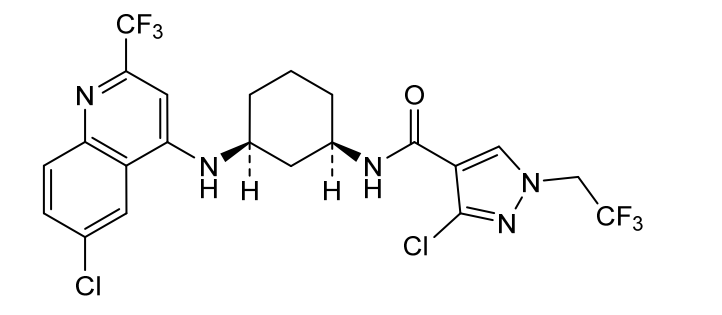
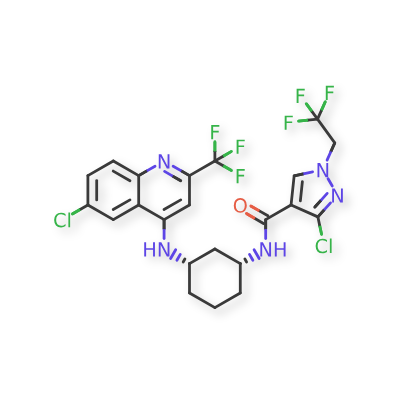
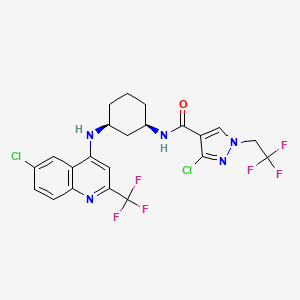
Setomagpran
CAS 2991434-57-0
MF C22H19Cl2F6N5O MW 554.316
3-chloro-N-[(1R,3S)-3-{[6-chloro-2-(trifluoromethyl)quinolin-4-yl]amino}cyclohexyl]-1-(2,2,2-trifluoroethyl)-1H-pyrazole-4-carboxamide
1H-Pyrazole-4-carboxamide, 3-chloro-N-[(1R,3S)-3-[[6-chloro-2-(trifluoromethyl)-4-quinolinyl]amino]cyclohexyl]-1-(2,2,2-trifluoroethyl)-
3-chloro-N-[(1R,3S)-3-{[6-chloro-2-(trifluoromethyl)quinolin-4-yl]amino}cyclohexyl]-1-(2,2,2-trifluoroethyl)-1H-pyrazole-4-carboxamide
Mas-related G protein-coupled receptor antagonist, anti-inflammatory, MYX4KT647F
Setomagpran is a synthetic, small-molecule antagonist of the Mas-related G protein-coupled receptor X2 (MRGPRX2).
Because it blocks this specific receptor, it exhibits notable anti-inflammatory activity. The compound is primarily utilized as a reference standard and biochemical reagent in laboratory research settings
Setomagpran is the antagonist for mas-related G protein-coupled receptor (MRGPR), and exhibits anti-inflammatory activity.
Pat
Example 30
Synthesis of Example 30
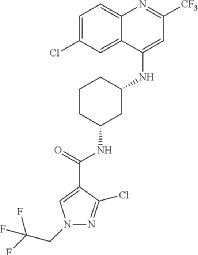
Synthesis of 3-chloro-N-((1R,3S)-3-((6-chloro-2-(trifluoromethyl)quinolin-4-yl)amino) cyclohexyl)-1-(2,2,2-trifluoroethyl)-1H-pyrazole-4-carboxamide
Pat
WO 2022/067094 A1 (US20220098155)
https://patentscope.wipo.int/search/en/detail.jsf?docId=WO2022067094&_cid=P10-MTZI7E-88068-1
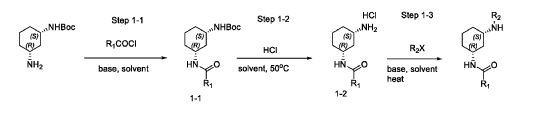
PAT
WO 2023/192901 A1
https://patentscope.wipo.int/search/en/detail.jsf?docId=WO2023192901&_cid=P10-MTZIR9-08517-1
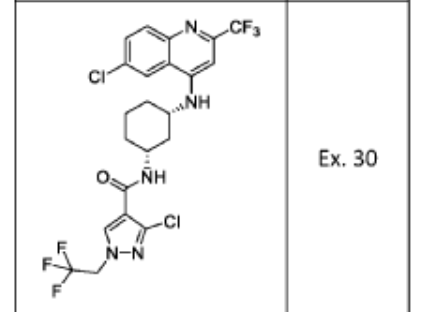
EXAMPLE 30
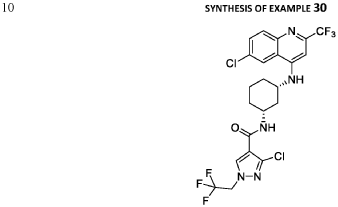
Synthesis of 3-chloro-N-((1R,3S)-3-((6-chloro-2-(trifluoromethyl)quinolin-4-yl)amino) cyclohexyl)-1-(2,2,2-trifluoroethyl)-1H-pyrazole-4-carboxamide
To a stirring solution of ethyl 3-chloro-1H-pyrazole-4-carboxylate (200 mg, 1 Eq, 1.15 mmol) in DMF (5 mL) at room temperature was added cesium carbonate (1.12 g, 3 Eq, 3.44 mmol) portionwise over 2 minutes. After stirring for 30 minutes, 2,2,2- Trifluoroethyl trifluoromethanesulfonate (798 mg, 3 Eq, 3.44 mmol) was added dropwise over 2 minutes. The reaction mixture was stirred for 14 h. Water (5 mL) was added and the mixture wasextracted with EtOAc (3 x 5 mL), dried over sodium sulfate, filtered through Celite, and concentrated in vacuo to afford an 87:13 mixture of ethyl 3-chloro-1-(2,2,2-trifluoroethyl)-1H-pyrazole-4-carboxylate and ethyl 5-chloro-1-(2,2,2-trifluoroethyl)-1H-pyrazole-4-carboxylate that was used without further purification.
To a stirring solution of the crude ethyl 3-chloro-1-(2,2,2-trifluoroethyl)-1H-pyrazole-4-carboxylate and 5-chloro-1-(2,2,2-trifluoroethyl)-1H-pyrazole-4-carboxylate mixture (294 mg, 1 Eq, 1.15 mmol) in THF (6 mL) was added an aqueous solution of 1M sodium hydroxide (5.7 mL, 5 Eq, 5.73 mmol). The reaction mixture was heated at 50 °C for 14 h. 10 mL of 3 M HCl was added. The aqueous layer was extracted with EtOAc (3 x 10 mL), dried over sodium sulfate, filtered through Celite, and concentrated in vacuo to afford a mixture of 3-chloro-1-(2,2,2-trifluoroethyl)-1H-pyrazole-4-carboxylic acid and 5-chloro-1-(2,2,2-trifluoroethyl)-1H-pyrazole-4-carboxylic acid (276 mg, 1.21 mmol, 105 %) that was used without further purification.
To a stirring solution of (1S,3R)-N1-(6-chloro-2-(trifluoromethyl)quinolin-4-yl)cyclohexane-1,3-diamine hydrochloride (100 mg, 1 Eq, 0.264 mmol) in DMF (1.5 mL) were added a crude mixture of 3-chloro-1-(2,2,2-trifluoroethyl)-1H-pyrazole-4-carboxylic acid and 5-chloro-1-(2,2,2-trifluoroethyl)-1H-pyrazole-4-carboxylic acid (60 mg, 1 Eq, 0.264 mmol), N-ethyl-N-isopropylpropan-2-amine (DIPEA) (0.138 mL, 3 Eq, 0.793 mmol) and HATU (111 mg, 1.1 Eq, 0.291 mmol). The reaction mixture was stirred at room temperature for 2 h. Purification by reversed phase HPLC (35 55% 0.1% formic acid in MeCN and 0.1% formic acid in H2O) afforded 3-chloro-N-((1R,3S)-3-((6-chloro-2-(trifluoromethyl)quinolin-4-yl)amino)cyclohexyl)-1-(2,2,2-trifluoroethyl)-1H-pyrazole-4-carboxamide (69 mg, 47% yield).
LCMS-ESI (m/z) calculated: 553.09 found 553.8 [M+H]+, RT = 10.114 min (Method 1)
1H NMR (400 MHz, DMSO-d6) δ 8.60 (d, J = 10.9 Hz, 1H), 8.35 (s, 1H), 8.06 (d, J = 7.9 Hz, 1H), 7.90 (d, J = 9.0 Hz, 1H), 7.74 (dd, J = 9.0, 2.3 Hz, 1H), 7.48 (d, J = 7.9 Hz, 1H), 5.21 (q, J = 9.0 Hz, 1H), 4.01-3.83 (m, 2H), 2.17 (d, J = 12.0 Hz, 1H), 2.00-1.78 (m, 3H), 1.61-1.21 (m, 4H).
PAT
WO 2021/092240 A1
PAT
WO 2025/222040 A1
ADVERTISEMENT
ANAX LABORATORIES
WEBSITE https://www.anaxlab.com/
Discovery Solutions, Supporting the chemistry needs of clients in the Medical, Analytical and Bio Sciences
Development Solutions, Developing from Lab scale to PR&D, Kilo Scale-ups and Commercial Scales
SEE MORE………Integrated Solutions, Manufacturing Solutions, Products,
Can’t Find? Let’s Connect

Phone : +91 897704 2010 / +91 9177075735, Email : info@anaxlab.com
#MedicinalChemistry, #DrugDiscovery, #OrganicSynthesis, #ChemicalLibrary, #BuildingBlocks, #SARStudies, #ChemistryInnovation, #medchem, #Drugdevelopment, #Biotech, #Biotechnology, #AnaxLaboratories, #Pharma


AS ON FEB2026 4.574 LAKHS VIEWS ON BLOG WORLDREACH AVAILABLEFOR YOUR ADVERTISEMENT
join me on Linkedin
Anthony Melvin Crasto Ph.D – India | LinkedIn
join me on Researchgate
RESEARCHGATE

join me on Facebook
Anthony Melvin Crasto Dr. | Facebook
join me on twitter
Anthony Melvin Crasto Dr. | twitter
+919321316780 call whatsaapp
EMAIL. amcrasto@gmail.com

References
- Modulators of mas-related g-protein receptor x2 and related products and methodsPublication Number:US-2024124416-A1Priority Date:2022-03-30
- Modulators of mas-related g-protein receptor x2 and related products and methodsPublication Number:US-2024059667-A1Priority Date:2022-03-30
- Modulators of mas-related g-protein receptor x2 and related products and methodsPublication Number:US-2024124414-A1Priority Date:2022-03-30
- Quinoline derivatives as modulators of mas-related g-protein receptor x2 and related productsPublication Number:WO-2023192901-A1Priority Date:2022-03-30
- Modulators of mas-related g-protein receptor x2 and related products and methodsPublication Number:US-2024124415-A1Priority Date:2022-03-30
- Modulators of Mas-related G-protein receptor X2 and related products and methodsPublication Number:US-12129243-B2Priority Date:2022-03-30Grant Date:2024-10-29
- Quinoline derivatives as modulators of mas-related g-protein receptor x2 and related productsPublication Number:WO-2023192901-A9Priority Date:2022-03-30
- Modulators of Mas-related G-protein receptor X2 and related products and methodsPublication Number:US-12129244-B2Priority Date:2022-03-30Grant Date:2024-10-29
- Modulators of mas-related g-protein receptor x2 and related products and methodsPublication Number:US-2025026735-A1Priority Date:2022-03-30
- Quinoline derivatives as modulators of mas-related g-protein receptor x2 and related productsPublication Number:EP-4499632-A1Priority Date:2022-03-30
//////////setomagpran, anax labs, Mas-related G protein-coupled receptor antagonist, anti-inflammatory, MYX4KT647F
#setomagpran, #anax labs, #Mas-related G protein-coupled receptor antagonist, #anti-inflammatory, #MYX4KT647F
Rocavorexant

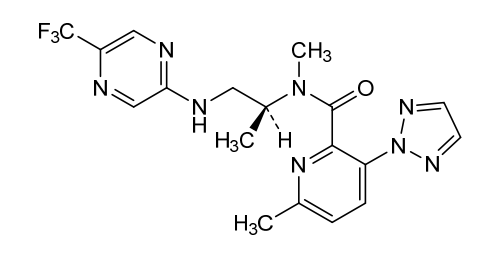
Rocavorexant
CAS 2115665-09-1
MFC18H19F3N8O MW420.39
N,6-dimethyl-3-(2H-1,2,3-triazol-2-yl)-N-[(2S)-1-{[5-(trifluoromethyl)pyrazin-2-yl]amino}propan-2-yl]pyridine-2-
carboxamide
orexin-1 receptor antagonist, INDV-2000, C4X-3256, INDV 2000, C4X 3256,
Rocavorexant (developmental codes INDV-2000 and C4X-3256) is a potent, selective, oral orexin-1 receptor (OX₁R) antagonist originally developed to treat opioid use disorder and other substance-related disorders.
Clinical development of the drug has been suspended. In April 2026, Indivior announced that it would not advance the drug internally for opioid use disorder because the Phase 2 proof-of-concept trial failed to meet its primary endpoint of “no treatment failure”.
Key Drug Profile
- Mechanism of Action: Highly selective antagonist for the human orexin-1 receptor (pIC50 of 9.1) compared to the orexin-2 receptor (pIC50 of 6.0).
- Target Pathway: Aims at relapse-related neural circuitry, anxiety modulation, and stress-induced addictive behaviors.
- Chemical Formula: C₁₈H₁₉F₃N₈O.
- Current Status: Suspended internally by Indivior, which is actively seeking external business development and out-licensing opportunities due to positive secondary data regarding abstinence and safet
Rocavorexant (INNTooltip International Nonproprietary Name; developmental code names C4X-3256 and INDV-2000) is an orexin OX1 receptor antagonist which is under development for the treatment of opioid-related disorders and other substance-related disorders.[1][2][3][4] It is taken orally.[1] The drug is under development by C4X Discovery and/or Indivior.[1][2] As of May 2026, development for all indications has been suspended.[1] The drug has reached phase 2 clinical trials for opioid-related disorders and phase 1 trials for substance-related disorders.[1][2][4]
Rocavorexant is the antagonist for orexin-1 receptor with pIC50 of 9.1 for human OX1 (while pIC50 for human OX2 is 6.0).
1. Primary patent — most important reference
WO2017129829A1 — “Therapeutic compounds”
Inventor: Barrie P. Martin
Priority: 29 January 2016
Publication: 3 August 2017
WO2017129829A1 – Google Patents
https://patentscope.wipo.int/search/en/detail.jsf?docId=WO2017129829&_cid=P12-MTJHA5-23107-1
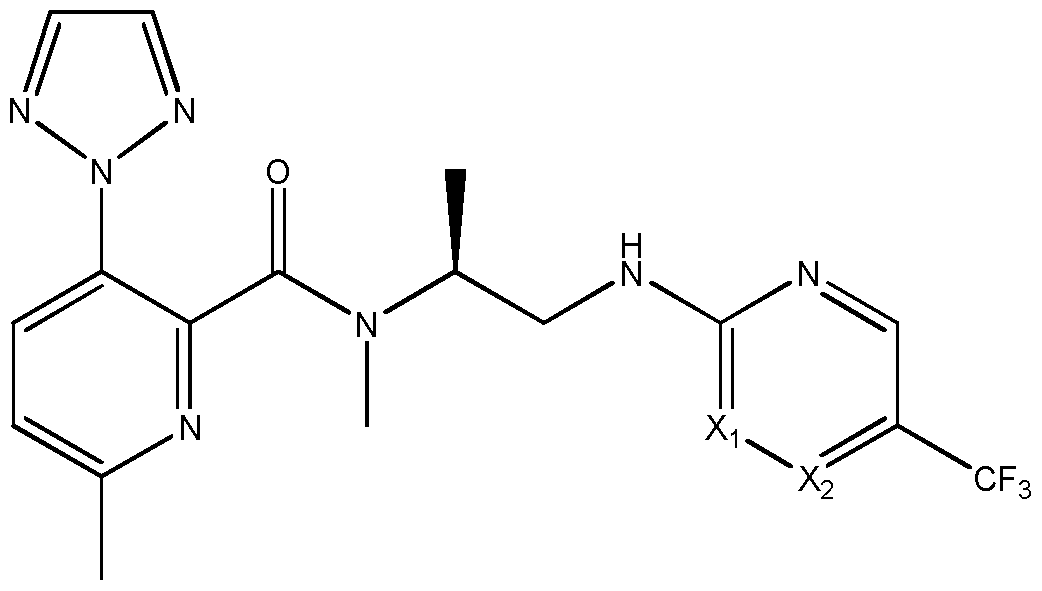
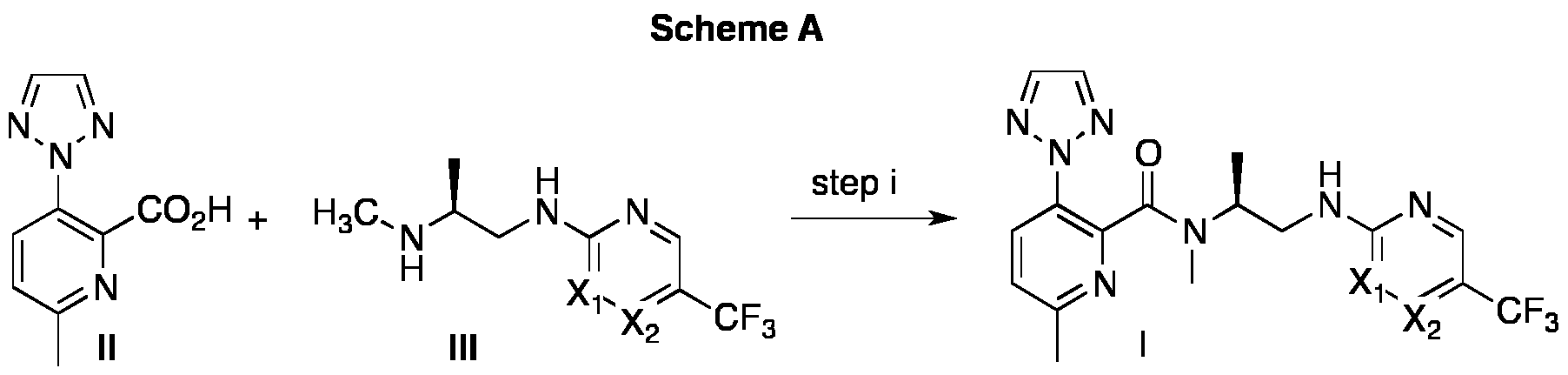
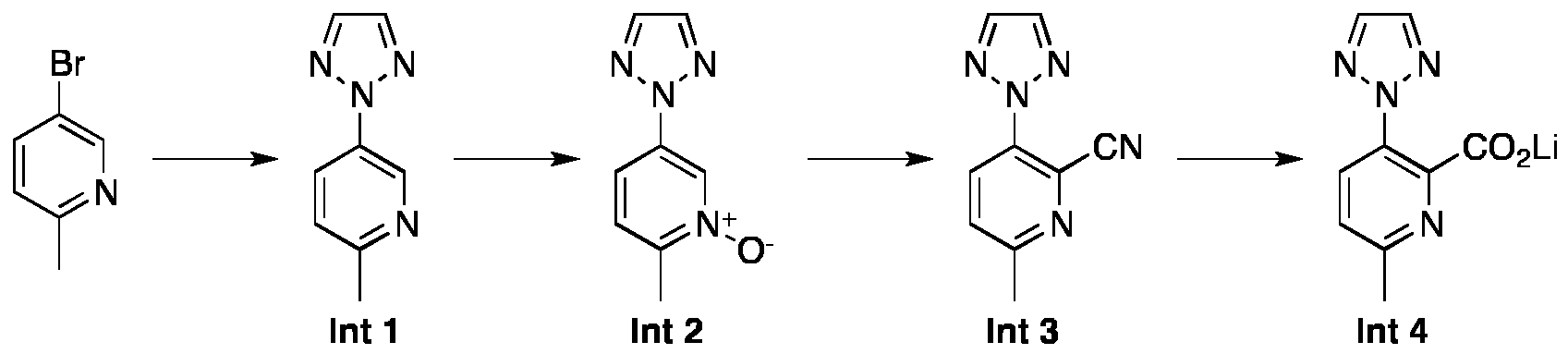
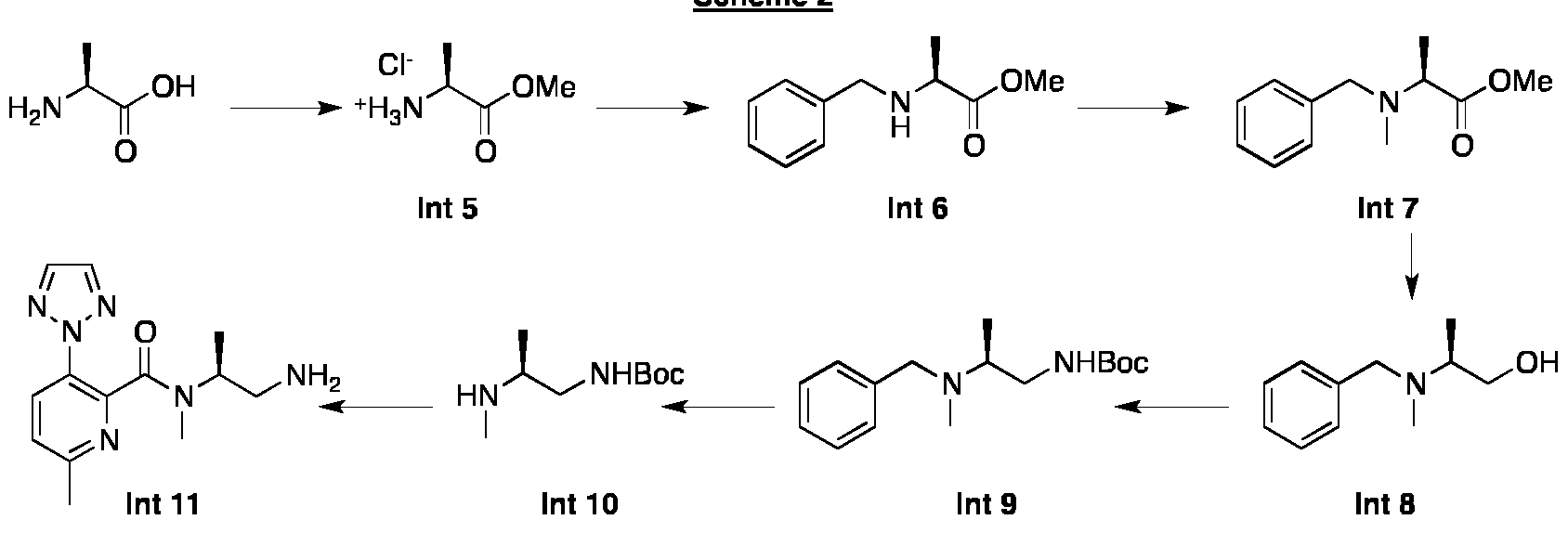
This patent explicitly identifies Rocavorexant as:
N,6-dimethyl-3-(2H-1,2,3-triazol-2-yl)-N-[(2S)-1-{[5-(trifluoromethyl)pyrazin-2-yl]amino}propan-2-yl]pyridine-2-carboxamide, and provides its preparation as Example 1.
The patent is particularly useful because it contains large-scale examples, not merely milligram medicinal-chemistry experiments.
Preparation of A/,6-dimethyl-3-(2H-1 ,2,3-triazol-2-yl)-A/-r(2S)-1 -f r5-(trifluoro methyl)pyrazin-2-yllamino)propan-2-yllpyridine-2-carboxamide (Example 1 , Scheme 3)
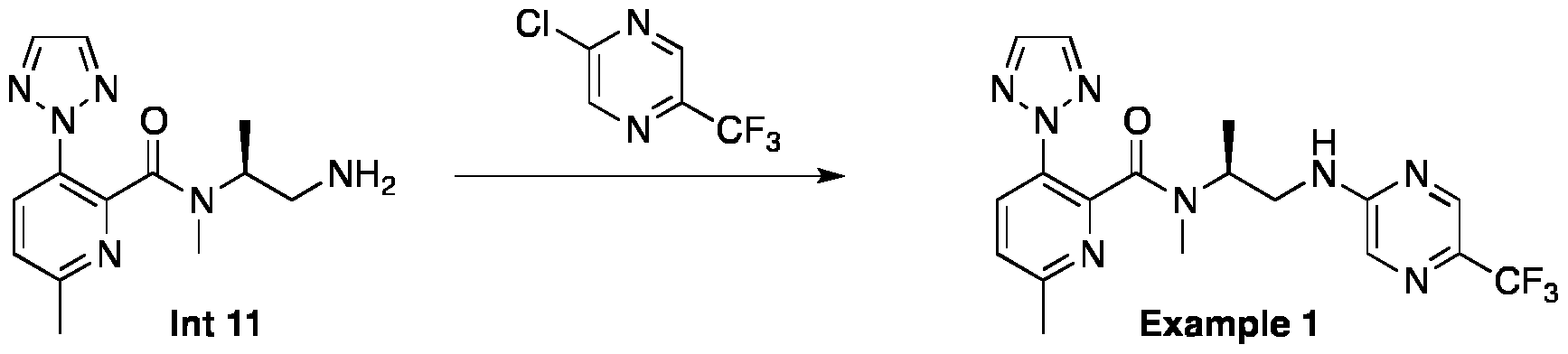
To a stirred solution of Int 11 (0.58 g, 2.1 mmol) in THF (2 mL) was added DIPEA (1 .0 mL, 5.8 mmol) followed by 2-chloro-5-(trifluoromethyl)pyrazine (0.39 g, 2.1 mmol) and the mixture was heated at 70 °C for 4 hrs. The reaction mixture was allowed to cool to ambient temperature and allowed to stand over the weekend. The reaction mixture was heated at 70 °C for a further 4 hrs with stirring and allowed to cool to ambient temperature. The reaction mixture was evaporated in vacuo. The residue was purified by preparative HPLC (Column: Waters Xbridge C18 (10 μιτι, 30 x 100 mm). Conditions: Water + 0.2% ammonium hydroxide [Eluent A]; MeCN + 0.2% ammonium hydroxide [Eluent B]. Gradient: 10 to 95% B) and then lyophilised to give title compound as a white solid (0.32 g)
LCMS (Method C): Two peaks at 4.20 and 4.39 min, 421 [M+H]+
1 H NMR (500 MHz, d4-MeOH) δ 8.38 (d, 0.15 H), 8.34 (bs, 0.15 H), 8.24 (d, 0.85 H), 8.03 (bs, 0.85 H), 7.99 (s, 0.30 H), 7.97 (s, 1 .70 H), 7.85 (bs, 1 .00 H), 7.57 (d, 0.15 H),
7.41 (d, 0.85 H), 4.98 (m, 0.15 H), 4.06 (bm, 0.85 H), 3.50 (d, 0.15 H), 3.47 (d, 0.85 H),
3.42 (d, 0.85 H), 3.39 (d, 0.15 H), 3.05 (s, 2.55 H), 2.83 (s, 0.45 H), 2.65 (s, 0.45 H), 2.45 (bs, 2.55 H), 1 .38 (d, 0.45 H), 1 .07 (bs, 2.55 H). Preparation of A/,6-dimethyl-3-(2H-1 ,2,3-triazol-2-yl)-A/-r(2S)-1 -U5-(trifluoro methyl)pyrimidin-2-yllamino)propan-2-yllpyridine-2-carboxamide
US patent
US 11,130,746 B2 — Therapeutic compounds
This is especially relevant because its claims specifically cover processes for preparing the compounds, including:
Route A: reaction of the pyridine acid/lithium salt with an amide-coupling reagent and the chiral amine.
Route B: reaction of
N-[(2S)-1-aminopropan-2-yl]-N,6-dimethyl-3-(2H-1,2,3-triazol-2-yl)pyridine-2-carboxamide
with an appropriate heteroaryl leaving-group compound in the presence of a base.
The patent specifically lists thionyl chloride among the coupling reagents and DIPEA as an appropriate base for the heteroaryl substitution route.
Other patent-family references
- US 10,696,654 B2
- US 11,130,746 B2
- US 11,753,398
- US 12,441,709 B2
The later US family documents retain the Rocavorexant compound/process disclosure. For example, US10696654B2 reproduces the Example 1 synthesis and the Int 14 preparation.
ADVERTISEMENT
ANAX LABORATORIES
WEBSITE https://www.anaxlab.com/
Discovery Solutions, Supporting the chemistry needs of clients in the Medical, Analytical and Bio Sciences
Development Solutions, Developing from Lab scale to PR&D, Kilo Scale-ups and Commercial Scales
SEE MORE………Integrated Solutions, Manufacturing Solutions, Products,
Can’t Find? Let’s Connect
Phone : +91 897704 2010 / +91 9177075735, Email : info@anaxlab.com
#MedicinalChemistry, #DrugDiscovery, #OrganicSynthesis, #ChemicalLibrary, #BuildingBlocks, #SARStudies, #ChemistryInnovation, #medchem, #Drugdevelopment, #Biotech, #Biotechnology, #AnaxLaboratories, #Pharma
AS ON FEB2026 4.574 LAKHS VIEWS ON BLOG WORLDREACH AVAILABLEFOR YOUR ADVERTISEMENT
join me on Linkedin
Anthony Melvin Crasto Ph.D – India | LinkedIn
join me on Researchgate
RESEARCHGATE
join me on Facebook
Anthony Melvin Crasto Dr. | Facebook
join me on twitter
Anthony Melvin Crasto Dr. | twitter
+919321316780 call whatsaapp
EMAIL. amcrasto@gmail.com
References
- “Rocavorexant”. AdisInsight. 12 May 2026. Retrieved 5 June 2026.
- “Delving into the Latest Updates on Rocavorexant with Synapse”. Synapse. 9 May 2026. Retrieved 5 June 2026.
- Raymond JS, Vareed RD, Peters J, James MH (October 2025). “Found in translation: orexin receptor antagonism for the treatment of opioid use disorder”. Translational Psychiatry. 15 (1) 432. doi:10.1038/s41398-025-03571-5. PMC 12552597. PMID 41136352.
- Lorente JS, Sokolov AV, Ferguson G, Schiöth HB, Hauser AS, Gloriam DE (June 2025). “GPCR drug discovery: new agents, targets and indications”. Nature Reviews. Drug Discovery. 24 (6): 458–479. doi:10.1038/s41573-025-01139-y. PMID 40033110.
 | |
| Clinical data | |
|---|---|
| Other names | C4X-3256; C4X3256; INDV-2000; INDV2000 |
| Routes of administration | Oral[1] |
| Drug class | Orexin OX1 receptor antagonist |
| Identifiers | |
| IUPAC name | |
| CAS Number | 2115665-09-1 |
| PubChem CID | 130295635 |
| ChemSpider | 133325612 |
| UNII | 8RJN30TJM6 |
| KEGG | D13324 |
| Chemical and physical data | |
| Formula | C18H19F3N8O |
| Molar mass | 420.400 g·mol−1 |
| 3D model (JSmol) | Interactive image |
| SMILES | |
| InChI | |
////rocavorexant, anax labs, orexin-1 receptor antagonist, INDV-2000, C4X-3256, INDV 2000, C4X 3256,
#rocavorexant, #anax labs, #orexin-1 receptor antagonist, #INDV-2000, #C4X-3256, #INDV 2000, #C4X 3256,
Rizavasertib

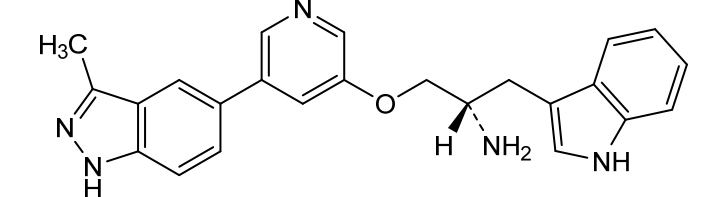
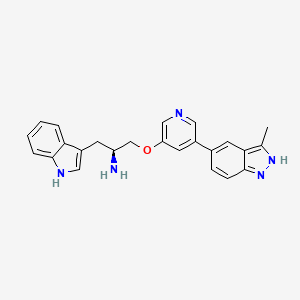
Rizavasertib
CAS 552325-16-3
MF C24H23N5O MW397.5 g/mol
(2S)-1-(1H-indol-3-yl)-3-[[5-(3-methyl-2H-indazol-5-yl)-3-pyridinyl]oxy]propan-2-amine
(2S)-1-(1H-indol-3-yl)-3-{[5-(3-methyl-1H-indazol-5-yl)pyridin-3-yl]oxy}propan-2-amine
serine/threonine kinase inhibitor, A-443654, A 443654, A443654, Q4UG565ZYH
Rizavasertib was a drug candidate originally developed by Abbott (now AbbVie).[1][2][3][4] It is a pan akt Inhibitor.[5] It is now used as an akt inhibitor tool compound.[6]
Rizavasertib (also known by its developmental code A-443654) is a potent, small-molecule pan-Akt (protein kinase B) inhibitor originally developed by Abbott Laboratories (now AbbVie). It acts as a highly effective research tool compound used to investigate cellular signaling pathways, particularly in oncology and tumor cell biology
- Mechanism of Action: It is an ATP-competitive inhibitor that targets all three Akt isoforms (Akt1, Akt2, and Akt3) with equal intracellular potency, showing an inhibition constant (\(\text{K}_{i}\)) of 160 pM.
Key Biological & Research Effects
- Pathway Modulation: It induces a rapid, paradoxical phosphorylation of Akt at the Ser-473 residue, occurring independently of mTORC1 inhibition.
- Mitotic Regulation: The compound interferes with normal cell division (mitotic progression) by regulating the expression of Aurora A kinase.
- Oncology Models: In preclinical testing, it has demonstrated an ability to prolong survival in animal models of intracranial glioma and shows potential therapeutic relevance against both primary and drug-resistant T-cell acute lymphoblastic leukemia (T-ALL).
Current Status
Rizavasertib’s highest global development status remains Preclinical. It is not approved for human use or clinical medical treatment and is sold exclusively by chemical suppliers like MedChemExpress as an analytical reference standard or reagent for qualitative, quantitative, and methodological research (such as HPLC, GC, and mass spectrometry).
PAT
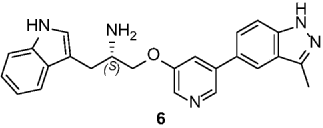
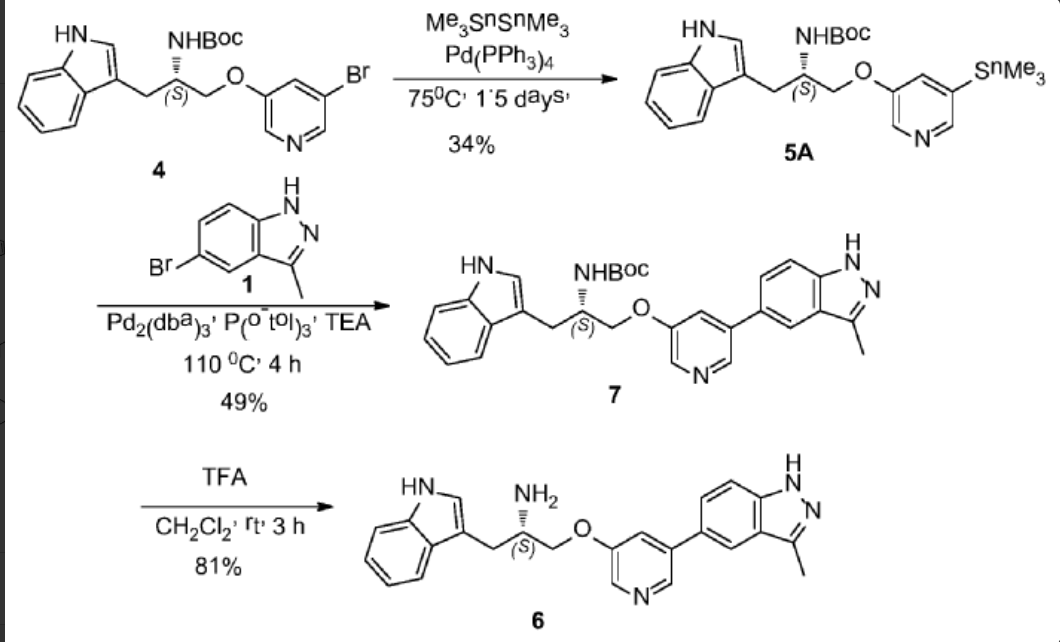
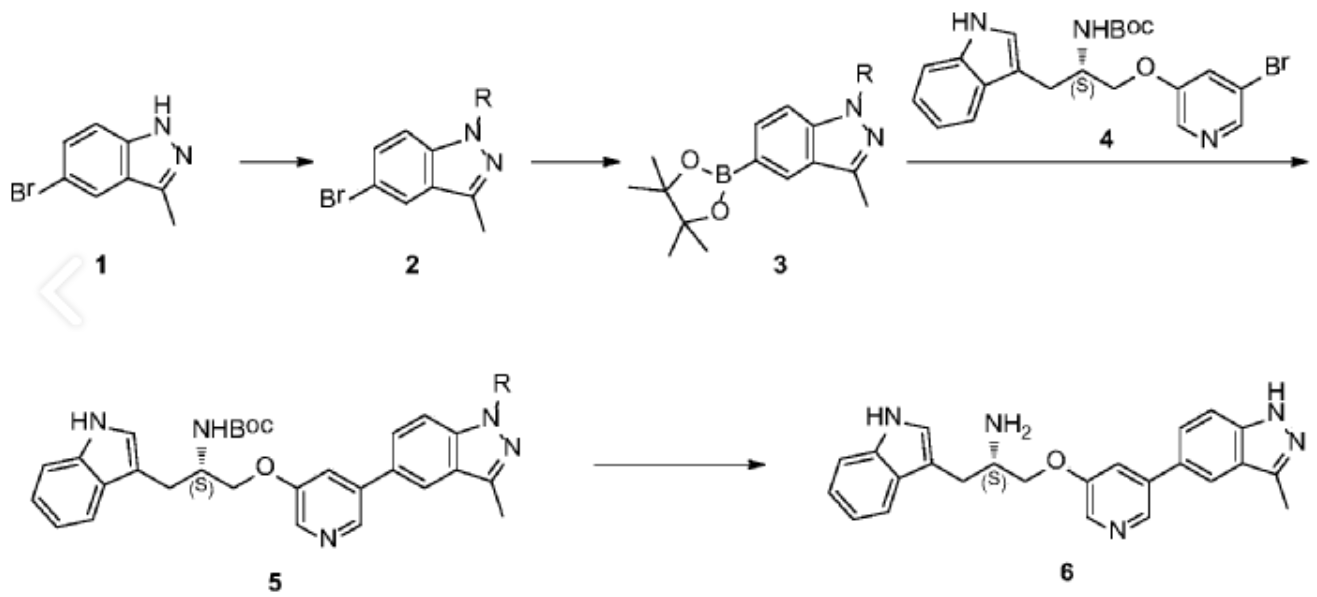
US20030199511 and literature Bioorganic & Medicinal Chemistry 2006, 14, 6832–6846, a method for preparing A-443654 is disclosed,
PAT
https://patentscope.wipo.int/search/en/detail.jsf?docId=WO2003051366&_cid=P11-MTGMSN-41566-1
PAT
https://patentscope.wipo.int/search/en/detail.jsf?docId=US40155124&_cid=P11-MTGN0W-48129-1
SIMILAR
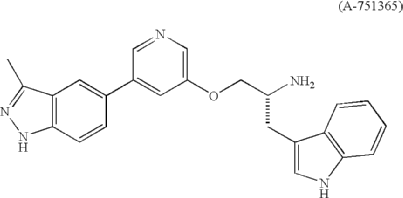
EXAMPLE 191
(1R)-1-(1H-Indol-3-ylmethyl)-2-[5-(3-methyl-1H-indazol-5-yl)-pyridin-3-yloxy]-ethylamine
PAT
CN104610229
https://patentscope.wipo.int/search/en/detail.jsf?docId=CN133679262&_cid=P11-MTGNFX-58461-1

Example 4: Preparation of Compound 6

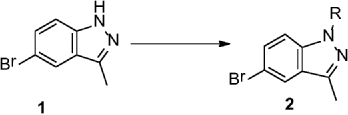
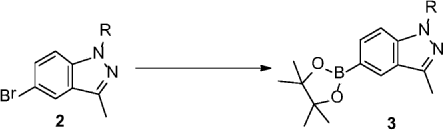
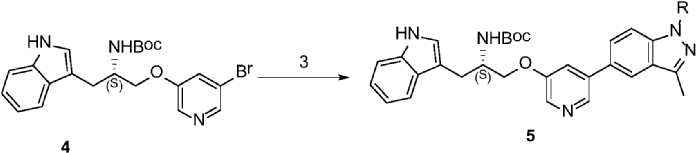
| Compound 5 (104 g, 178.9 mmol) and methanol (620 ml, 6V) were added to a 1 L three-necked flask. A 4M HCl/ethyl acetate (130 ml) solution was added dropwise at a temperature below 25 °C. The reaction was allowed to proceed overnight. The reaction was monitored by TLC until the starting material was completely reacted. The mixture was concentrated and drained to dryness using an oil pump to obtain 104 g of crude product. Water (900 ml) and ethyl acetate (1350 ml) were added, and the mixture was stirred until the system was clear. The mixture was allowed to stand, and the organic layer was separated. The aqueous phase was extracted once again with ethyl acetate (500 ml). The organic phases were combined, and water (180 ml) was added. Most of the ethyl acetate was concentrated until solid began to precipitate. The mixture was cooled in an ice bath, stirred, and allowed to crystallize for 30 min. The mixture was filtered, and the filter cake was dried to obtain a white solid (57.9 g, yield 86%, purity 98.3%). |
| 1H NMR(CD 3 OD,500MHz):δppm 8.45(s,1H),8.25(brs,1H),7.98(s,1H),7.61(m,4H),7.37(s,1H),7.16(s,1H),7.10(m,1H),7.00(m,1H),4.18(m,1H),4.03(m,1H),3.56(m,1H),3.10(m,1H),3.00(m,1H),2.62(s,3H);ESI/MS:m/z=398(M+H)+. |
Pat
- Kinase inhibitorsPublication Number:US-6831175-B2Priority Date:2001-12-13Grant Date:2004-12-14
- 3- (Phenyl-alkoxy) -5- (phenyl) -pyridine derivatives and related compounds as kinase inhibitors for cancer treatmentPublication Number:JP-2005516927-APriority Date:2001-12-13
- Methods of treating muscular wasting diseases using NF-KB activation inhibitorsPublication Number:US-9173920-B2Priority Date:2006-03-15Grant Date:2015-11-03
- Kinase inhibitorsPublication Number:US-2003187026-A1Priority Date:2001-12-13
- 3-(phenyl-alkoxy)-5-(phenyl)-pyridine derivatives and related compounds as kinase inhibitors for the treatment of cancerPublication Number:CA-2470214-A1Priority Date:2001-12-13
- Kinase inhibitorsPublication Number:US-2003199511-A1Priority Date:2001-12-13
- 3-(phenyl-alkoxy)-5-(phenyl)-pyridine derivatives and related compounds as kinase inhibitors for the treatment of cancerPublication Number:WO-03051366-A2Priority Date:2001-12-13
ADVERTISEMENT
ANAX LABORATORIES
WEBSITE https://www.anaxlab.com/
Discovery Solutions, Supporting the chemistry needs of clients in the Medical, Analytical and Bio Sciences
Development Solutions, Developing from Lab scale to PR&D, Kilo Scale-ups and Commercial Scales
SEE MORE………Integrated Solutions, Manufacturing Solutions, Products,
Can’t Find? Let’s Connect
Phone : +91 897704 2010 / +91 9177075735, Email : info@anaxlab.com
#MedicinalChemistry, #DrugDiscovery, #OrganicSynthesis, #ChemicalLibrary, #BuildingBlocks, #SARStudies, #ChemistryInnovation, #medchem, #Drugdevelopment, #Biotech, #Biotechnology, #AnaxLaboratories, #Pharma
AS ON FEB2026 4.574 LAKHS VIEWS ON BLOG WORLDREACH AVAILABLEFOR YOUR ADVERTISEMENT
join me on Linkedin
Anthony Melvin Crasto Ph.D – India | LinkedIn
join me on Researchgate
RESEARCHGATE
join me on Facebook
Anthony Melvin Crasto Dr. | Facebook
join me on twitter
Anthony Melvin Crasto Dr. | twitter
+919321316780 call whatsaapp
EMAIL. amcrasto@gmail.com
References
- “Research programme: protein kinase inhibitors – AbbVie”. AdisInsight. Springer Nature Switzerland AG.
- Luo Y, Shoemaker AR, Liu X, Woods KW, Thomas SA, de Jong R, et al. (June 2005). “Potent and selective inhibitors of Akt kinases slow the progress of tumors in vivo”. Molecular Cancer Therapeutics. 4 (6): 977–986. doi:10.1158/1535-7163.MCT-05-0005. PMID 15956255.
- Gandelman M, Dansithong W, Kales SC, Paul S, Maag G, Aoyama E, et al. (October 2021). “The AKT modulator A-443654 reduces α-synuclein expression and normalizes ER stress and autophagy”. The Journal of Biological Chemistry. 297 (4) 101191. doi:10.1016/j.jbc.2021.101191. PMC 8482485. PMID 34520759.
- Ming J, Jin S, Liu Z, Yang K, Shi M, Niu Y (October 2025). “Imidacloprid contributes to bladder cancer progression: preliminary evidence based on network toxicology, machine learning and molecular docking”. BMC Pharmacology & Toxicology. 26 (1) 180. doi:10.1186/s40360-025-01016-9. PMC 12577002. PMID 41168844.
- Crowell JA, Steele VE, Fay JR (August 2007). “Targeting the AKT protein kinase for cancer chemoprevention”. Molecular Cancer Therapeutics. 6 (8): 2139–2148. doi:10.1158/1535-7163.MCT-07-0120. PMID 17699713.
- Garcia-Echeverria C, Sellers WR (September 2008). “Drug discovery approaches targeting the PI3K/Akt pathway in cancer”. Oncogene. 27 (41): 5511–5526. doi:10.1038/onc.2008.246. PMID 18794885.
 | |
| Clinical data | |
|---|---|
| Other names | A-443654 |
| Identifiers | |
| IUPAC name | |
| CAS Number | 552325-16-3 |
| PubChem CID | 10172943 |
| IUPHAR/BPS | 8204 |
| DrugBank | DB08073 |
| ChemSpider | 8348448 |
| UNII | Q4UG565ZYH |
| ChEBI | CHEBI:91351 |
| ChEMBL | ChEMBL379300 |
| PDB ligand | L20 (PDBe, RCSB PDB) |
| CompTox Dashboard (EPA) | DTXSID20436347  |
| Chemical and physical data | |
| Formula | C24H23N5O |
| Molar mass | 397.482 g·mol−1 |
| 3D model (JSmol) | Interactive image |
| SMILES | |
| InChI | |
/////////rizavasertib, anax labs, serine/threonine kinase inhibitor, A-443654, A 443654, A443654, Q4UG565ZYH
#rizavasertib, #anax labs, #serine/threonine kinase inhibitor, #A-443654, #A 443654, #A443654, #Q4UG565ZYH
Rusfertide
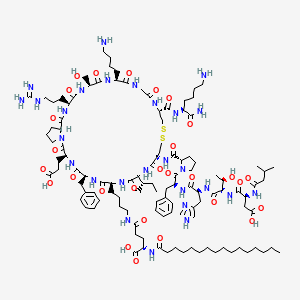
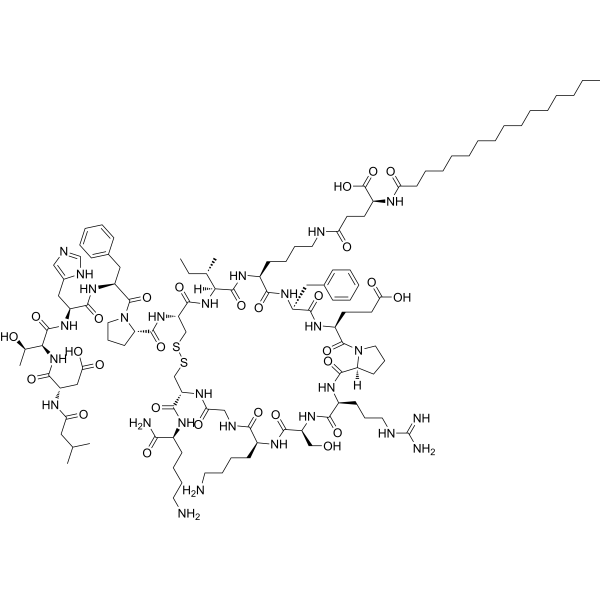
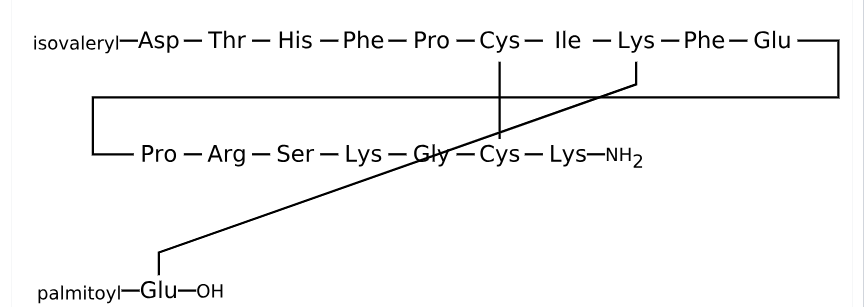

Rusfertide
MF
C114H181N27O28S2 MW 2442.0 g/mol
isovaleryl-Asp-Thr-His-Phe-Pro-Cys(1)-Ile-Lys(2)-Phe-Glu-Pro-Arg-Ser-Lys-Gly-Cys(1)-Lys-NH2.palmitoyl-Glu(2)-OH
(2S)-5-[4-[(3S,6S,9S,12S,15R,20R,26S,29S,32S,35S)-26-(4-aminobutyl)-6-benzyl-12-[(2S)-butan-2-yl]-32-(3-carbamimidamidopropyl)-3-(2-carboxyethyl)-15-[[(2S)-1-[(2S)-2-[[(2S)-2-[[(2S,3R)-2-[[(2S)-3-carboxy-2-(3-methylbutanoylamino)propanoyl]amino]-3-hydroxybutanoyl]amino]-3-(1H-imidazol-4-yl)propanoyl]amino]-3-phenylpropanoyl]pyrrolidine-2-carbonyl]amino]-20-[[(2S)-1,6-diamino-1-oxohexan-2-yl]carbamoyl]-29-(hydroxymethyl)-2,5,8,11,14,22,25,28,31,34-decaoxo-17,18-dithia-1,4,7,10,13,21,24,27,30,33-decazabicyclo[33.3.0]octatriacontan-9-yl]butylamino]-2-(hexadecanoylamino)-5-oxopentanoic acid
{Asp(N-(3-methyl-1-oxobutyl))}-Thr-His-Phe-Pro-Cys-Ile-{Lys(γGlu-C16 acid)}-Phe-Glu-Pro-Arg-Ser-Lys-Gly-Cys-Lys-NH2 (disulfide bridge: Cys6-Cys16)
Mimrylo, APPROVALS 2026, FDA 2026, XM71MYX0IQ, PTG-300FB, PTG-300, TAK 121,
To treat erythrocytosis in adults with polycythemia vera
Rusfertide is a peptide mimetic of natural hepcidin, which targets and degrades ferroportin, reduces serum iron and transferrin-saturation, and thus regulates the production of red blood cells. Rusfertide ameliorates the polycythemia vera, β-thalassemia and hereditary hemochromatosis.
Rusfertide is an injectable peptide mimetic of hepcidin (hepcidin antimicrobial peptide; HAMP; putative liver tumor regressor; PLTR; liver-expressed antimicrobial peptide 1; LEAP-1) with potential use in the treatment of iron deficiency anemia and iron overload secondary to hematologic disorders. Upon administration, rusfertide mimics endogenous hepcidin, a protein primarily produced in hepatocytes, and increases hepcidin levels. As hepcidin plays a key role in the homeostasis of systemic iron, rusfertide may serve to normalize iron levels. Low levels of endogenous hepcidin are associated with iron overload secondary to excessive absorption of iron as seen in beta thalassemia and paradoxically with iron deficiency anemia.
Rusfertide, sold under the brand name Mimrylo, is a medication developed by Protagonist Therapeutics in partnership with Takeda for the treatment of polycythemia vera (PV).[1][2][3]
ADVERTISEMENT
ANAX LABORATORIES
WEBSITE https://www.anaxlab.com/
Discovery Solutions, Supporting the chemistry needs of clients in the Medical, Analytical and Bio Sciences
Development Solutions, Developing from Lab scale to PR&D, Kilo Scale-ups and Commercial Scales
SEE MORE………Integrated Solutions, Manufacturing Solutions, Products,
Can’t Find? Let’s Connect
Phone : +91 897704 2010 / +91 9177075735, Email : info@anaxlab.com
#MedicinalChemistry, #DrugDiscovery, #OrganicSynthesis, #ChemicalLibrary, #BuildingBlocks, #SARStudies, #ChemistryInnovation, #medchem, #Drugdevelopment, #Biotech, #Biotechnology, #AnaxLaboratories, #Pharma
AS ON FEB2026 4.574 LAKHS VIEWS ON BLOG WORLDREACH AVAILABLEFOR YOUR ADVERTISEMENT
join me on Linkedin
Anthony Melvin Crasto Ph.D – India | LinkedIn
join me on Researchgate
RESEARCHGATE
join me on Facebook
Anthony Melvin Crasto Dr. | Facebook
join me on twitter
Anthony Melvin Crasto Dr. | twitter
+919321316780 call whatsaapp
EMAIL. amcrasto@gmail.com
References
 | |
| Clinical data | |
|---|---|
| Trade names | Mimrylo |
| Other names | PTG-300; TAK-121 |
| Identifiers | |
| CAS Number | 1628323-80-7 |
| PubChem CID | 155884410 |
| DrugBank | DB17724 |
| ChemSpider | 129955617 |
| UNII | XM71MYX0IQ |
| KEGG | D12064 |
| ChEMBL | ChEMBL4650507 |
| Chemical and physical data | |
| Formula | C114H181N27O28S2 |
| Molar mass | 2441.98 g·mol−1 |
| 3D model (JSmol) | Interactive image |
| SMILES | |
| InChI | |
References
- “Rusfertide – Protagonist Therapeutics”. AdisInsight. Springer Nature Switzerland AG.
- Kremyanskaya M, Ginzburg YZ, Hoffman R (March 2026). “Modulators of the hepcidin pathway in polycythemia vera and myelofibrosis”. Blood. 147 (12): 1278–1288. doi:10.1182/blood.2025028643. PMID 41100735.
- “Protagonist and Takeda Announce ASCO Plenary Presentation Highlighting Full 32-Week Results from Phase 3 VERIFY Study of Rusfertide, Showing Reductions in Phlebotomy, Improved Hematocrit Control in Polycythemia Vera”. Takeda.
//////rusfertide, anax labs, Mimrylo, APPROVALS 2026, FDA 2026, XM71MYX0IQ, PTG-300FB, PTG 300, TAK 121,
#rusfertide, #anax labs, #Mimrylo, #APPROVALS 2026, #FDA 2026, #XM71MYX0IQ, #PTG-300FB, #PTG-300, #TAK 121,
Brepocitinib

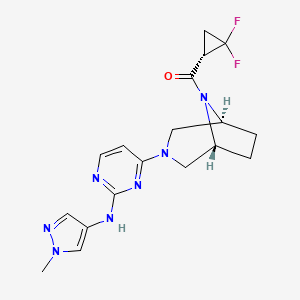
Brepocitinib
CAS 1883299-62-4
MF C18H21F2N7O MW389.4 g/mol
8/27/2026, APPROVALS 2026, FDA 2026, Lisraya, PF 06700841, 3X8387Q25N, PF-06700841
[(1S)-2,2-difluorocyclopropyl]-[(1R,5S)-3-[2-[(1-methylpyrazol-4-yl)amino]pyrimidin-4-yl]-3,8-diazabicyclo[3.2.1]octan-8-yl]methanone
- [(1S)-2,2-difluorocyclopropyl]-[(1S,5R)-3-[2-[(1-methylpyrazol-4-yl)amino]pyrimidin-4-yl]-3,8-diazabicyclo[3.2.1]octan-8-yl]methanone
- Methanone, ((1S)-2,2-difluorocyclopropyl)(3-(2-((1-methyl-1H-pyrazol-4-yl)amino)-4-pyrimidinyl)-3,8-diazabicyclo(3.2.1)oct-8-yl)-
- ((1S)-2,2-difluorocyclopropyl)-((1S,5R)-3-(2-((1-methylpyrazol-4-yl)amino)pyrimidin-4-yl)-3,8-diazabicyclo(3.2.1)octan-8-yl)methanone
To treat dermatomyositis in adults
Brepocitinib (brand name Lisraya) is an oral, once-daily dual TYK2/JAK1 inhibitor approved by the FDA for treating dermatomyositis in adults.
Developed by Roivant (via its subsidiary Priovant), it is the first oral targeted therapy indicated to manage this rare, debilitating autoimmune condition. Brepocitinib, sold under the brand name Lisraya, is a drug which acts as a dual inhibitor of JAK1 and TYK2, and was developed for the treatment of plaque psoriasis.[1][2][3][4] It is used for the treatment of dermatomyositis.
Brepocitinib is an orally available, selective inhibitor of non-receptor tyrosine-protein kinase TYK2 (tyrosine kinase 2) and tyrosine-protein kinase JAK1 (Janus kinase 1; JAK1) with potential immunomodulatory and anti-inflammatory activities. Upon oral administration, brepocitinib selectively binds to and inhibits the activation of TYK2 and JAK1, thereby disrupting TYK2 and JAK-1-dependent cytokine signaling. This may reduce inflammatory responses and prevent inflammation-induced damage caused by certain immunological diseases. TYK2 and JAK-1 are members of the Janus kinase family of non-receptor tyrosine kinases and are involved in signaling pathways affecting hematopoiesis, immunity and inflammation.
SYN
Dual Inhibition of TYK2 and JAK1 for the Treatment of Autoimmune Diseases: Discovery of ((S)-2,2-Difluorocyclopropyl)((1R,5S)-3-(2-((1-methyl-1H-pyrazol-4-yl)amino)pyrimidin-4-yl)-3,8-diazabicyclo[3.2.1]octan-8-yl)methanone (PF-06700841)
By: Fensome, Andrew ; et al
Journal of Medicinal Chemistry (2018), 61(19), 8597-8612
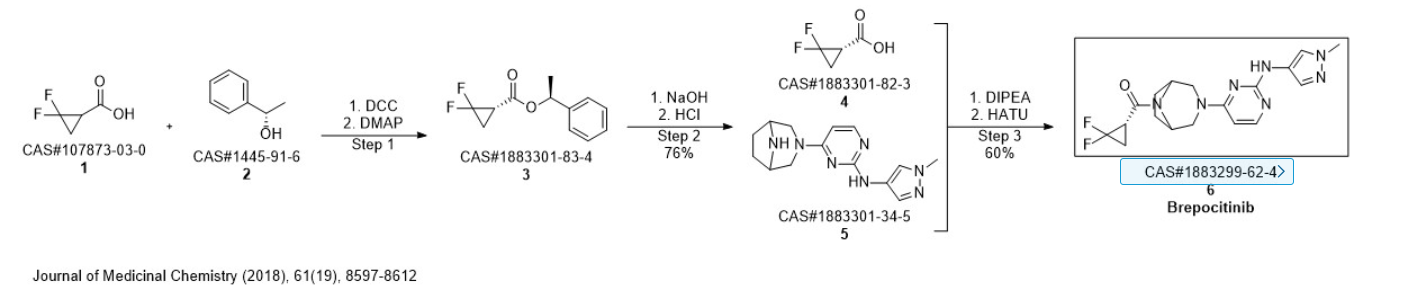
SYN
Preparation of aminopyrimidinyl derivatives as inhibitors of JAK kinases useful in therapy of diseases
Assignee: Pfizer Inc.
Inventors: Fensome, Andrew; et al
World Intellectual Property Organization
Patent#WO2016027195 A1
https://patentscope.wipo.int/search/en/detail.jsf?docId=WO2016027195&_cid=P11-MTCC5U-40903-1
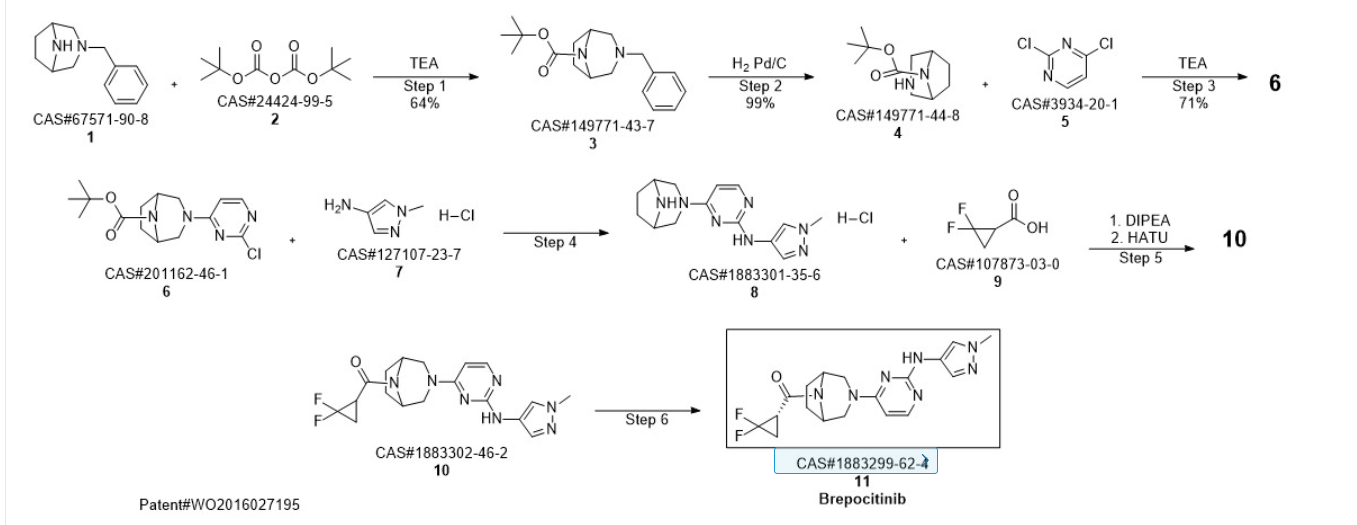
SYN
https://www.sciencedirect.com/science/article/abs/pii/S0223523423008152
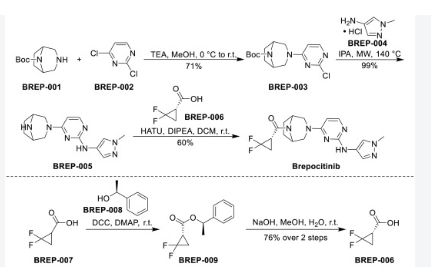
SYN
PAT
https://patentscope.wipo.int/search/en/detail.jsf?docId=US159751917&_cid=P11-MTCCDC-53135-1
Examples 7 and 8
[(1S)-2,2-difluorocyclopropyl][(1R,5S)-3-{2-[(1-methyl-1H-pyrazol-4-yl)amino]pyrimidin-4-yl}-3,8-diazabicyclo[3.2.1]oct-8-yl]methanone and [(1R)-2,2-difluorocyclopropyl][(1R,5S)-3-{2-[(1-methyl-1H-pyrazol-4-yl)amino]pyrimidin-4-yl}-3,8-diazabicyclo[3.2.1]oct-8-yl]methanone
Peak 1: Example 7
[(1S)-2,2-difluorocyclopropyl][(1R,5S)-3-{2-[(1-methyl-1H-pyrazol-4-yl)amino]pyrimidin-4-yl}-3,8-diazabicyclo[3.2.1]oct-8-yl]methanone
PAT
- New compounds for the inhibition of angiogenesis and use of thereofPublication Number:AU-2005223356-A1Priority Date:2004-03-24
- Compositions and methods of use for modified release minoxidilPublication Number:US-2025325546-A1
- Aminopyrimidinyl compoundsPublication Number:US-10980815-B2Priority Date:2014-08-21Grant Date:2021-04-20
- Aminopyrimidinyl compounds as JAK inhibitorsPublication Number:MD-4800-C1Priority Date:2014-08-21
- Aminopyrimidinyl compoundsPublication Number:US-2020330477-A1Priority Date:2014-08-21
- Aminopyrimidinyl compoundsPublication Number:US-11197867-B2Priority Date:2014-08-21Grant Date:2021-12-14
- Aminopyrimidinyl compoundsPublication Number:TW-201609706-APriority Date:2014-08-21
ADVERTISEMENT
ANAX LABORATORIES
WEBSITE https://www.anaxlab.com/
Discovery Solutions, Supporting the chemistry needs of clients in the Medical, Analytical and Bio Sciences
Development Solutions, Developing from Lab scale to PR&D, Kilo Scale-ups and Commercial Scales
SEE MORE………Integrated Solutions, Manufacturing Solutions, Products,
Can’t Find? Let’s Connect
Phone : +91 897704 2010 / +91 9177075735, Email : info@anaxlab.com
#MedicinalChemistry, #DrugDiscovery, #OrganicSynthesis, #ChemicalLibrary, #BuildingBlocks, #SARStudies, #ChemistryInnovation, #medchem, #Drugdevelopment, #Biotech, #Biotechnology, #AnaxLaboratories, #Pharma
AS ON FEB2026 4.574 LAKHS VIEWS ON BLOG WORLDREACH AVAILABLEFOR YOUR ADVERTISEMENT
join me on Linkedin
Anthony Melvin Crasto Ph.D – India | LinkedIn
join me on Researchgate
RESEARCHGATE
join me on Facebook
Anthony Melvin Crasto Dr. | Facebook
join me on twitter
Anthony Melvin Crasto Dr. | twitter
+919321316780 call whatsaapp
EMAIL. amcrasto@gmail.com
References
References
- Fensome A, Ambler CM, Arnold E, Banker ME, Brown MF, Chrencik J, et al. (October 2018). “Dual Inhibition of TYK2 and JAK1 for the Treatment of Autoimmune Diseases: Discovery of (( S)-2,2-Difluorocyclopropyl)((1 R,5 S)-3-(2-((1-methyl-1 H-pyrazol-4-yl)amino)pyrimidin-4-yl)-3,8-diazabicyclo[3.2.1]octan-8-yl)methanone (PF-06700841)”. Journal of Medicinal Chemistry. 61 (19): 8597–8612. doi:10.1021/acs.jmedchem.8b00917. PMID 30113844.
- Forman SB, Pariser DM, Poulin Y, Vincent MS, Gilbert SA, Kieras EM, et al. (December 2020). “TYK2/JAK1 Inhibitor PF-06700841 in Patients with Plaque Psoriasis: Phase IIa, Randomized, Double-Blind, Placebo-Controlled Trial”. The Journal of Investigative Dermatology. 140 (12): 2359–2370.e5. doi:10.1016/j.jid.2020.03.962. PMID 32311398.
- Martin G (February 2023). “Novel Therapies in Plaque Psoriasis: A Review of Tyrosine Kinase 2 Inhibitors”. Dermatology and Therapy. 13 (2): 417–435. doi:10.1007/s13555-022-00878-9. PMC 9884727. PMID 36592300.
- Caso F, Costa L, Triggianese P, Maione F, Bertolini N, Vastarella M, et al. (May 2023). “Recent developments for new investigational JAK inhibitors in psoriatic arthritis”. Expert Opinion on Investigational Drugs. 32 (5): 361–371. doi:10.1080/13543784.2023.2207737. PMID 37096862.
 | |
| Clinical data | |
|---|---|
| Trade names | Lisraya |
| Other names | PF-06700841 |
| Identifiers | |
| IUPAC name | |
| CAS Number | 1883299-62-4 |
| PubChem CID | 118878093 |
| DrugBank | DB15003 |
| ChemSpider | 72380129 |
| UNII | 3X8387Q25N |
| ChEMBL | ChEMBL4297477 |
| Chemical and physical data | |
| Formula | C18H21F2N7O |
| Molar mass | 389.411 g·mol−1 |
| 3D model (JSmol) | Interactive image |
| SMILES | |
| InChI | |
///////////brepocitinib, anax labs, APPROVALS 2026, FDA 2026, Lisraya, PF 06700841, 3X8387Q25N, PF-06700841, dermatomyositis
#brepocitinib, #anax labs, #APPROVALS 2026, #FDA 2026, #Lisraya, #PF 06700841, #3X8387Q25N, #PF-06700841, #dermatomyositis
Rezuforimod
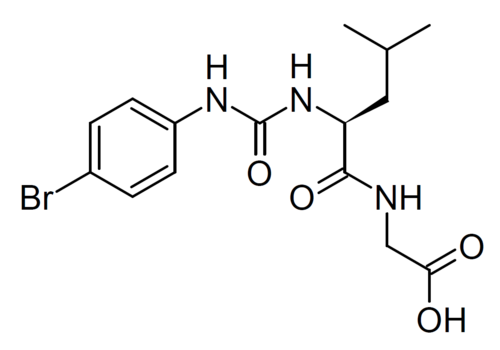
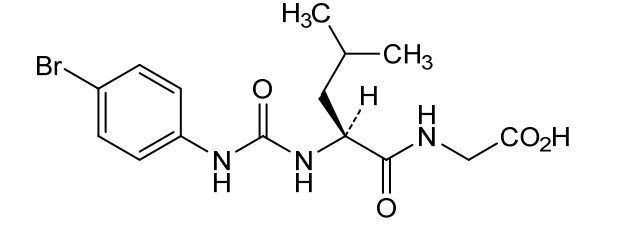
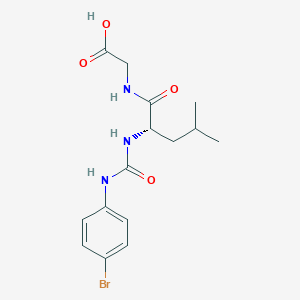
Rezuforimod
CAS 1431754-15-2
MF C15H20BrN3O4, MW386.24 g/mol
((4-Bromophenyl)carbamoyl)-L-leucylglycine
2-[[(2S)-2-[(4-bromophenyl)carbamoylamino]-4-methylpentanoyl]amino]acetic acid
N-[(4-bromophenyl)carbamoyl]-L-leucylglycine
N-formyl peptide receptor 1 and 2 agonist, antiinflammatory, AGN-232411, AG-80308, AGN 232411, AG 80308, 54P16AUY6D
Rezuforimod is an experimental drug that acts as a potent and selective agonist of formyl peptide receptor 2 with an EC50 of 0.88 nM, which inhibits neutrophil adhesion and has antiinflammatory effects.[1][2]
Rezuforimod (also known by development codes AGN-232411 and AG-80308) is an experimental, first-in-class small molecule drug primarily being developed as a topical ophthalmic solution to treat dry eye disease (DED). It targets inflammation, which is a major underlying driver of dry eye symptoms and ocular surface damage.
👁️ Mechanism of Action
Rezuforimod operates through a targeted anti-inflammatory pathway:
- FPR2 Agonism: It acts as a highly potent and selective agonist of Formyl Peptide Receptor 2 (FPR2/ALX), binding with an EC₅₀ of 0.88 nM.
- Neutrophil Inhibition: Activating this receptor successfully inhibits neutrophil adhesion and migration to the ocular surface.
- Inflammation Resolution: By mimicking natural pro-resolving leagues, it shuts down chronic inflammatory cascades on the corneal surface rather than just suppressing the immune system globally.
🔬 Clinical Trial Findings & Efficacy
In clinical assessments, Rezuforimod has shown excellent potential as a localized therapy:
- Dosing: It is formulated as an eye drop administered twice daily (BID).
- Objective Improvement: Over a 3-month trial period, it significantly reduced corneal and conjunctival staining scores (an objective measure of tissue damage on the surface of the eye). The most pronounced improvements were recorded at Day 43 and Day 84.
- Subjective Relief: Patients reported a notable reduction in daily ocular discomfort and an improved Ocular Surface Disease Index (OSDI) score.
- Safety Profile: The drug has demonstrated a favorable safety profile with no serious drug-related adverse events, and no abnormal shifts in vital signs or systemic blood chemistry.
A Study of AG-80308 in Dry Eye PatientsCTID:NCT05372107, Phase: Phase 1
Status:Completed, Date:2022-11-29
SYN
- The formyl peptide receptors FPR1 and FPR2 as targets for inflammatory disorders: recent advances in the development of small-molecule agonistsPublication Name:European Journal of Medicinal ChemistryPublication Date:2024-02-05PMID:38199163DOI:10.1016/j.ejmech.2023.115989
- Synthesis and evaluation of novel cyclopentane urea FPR2 agonists and their potential application in the treatment of cardiovascular inflammationPublication Name:European Journal of Medicinal ChemistryPublication Date:2021-03-15PMID:33548634DOI:10.1016/j.ejmech.2021.113194
- Recent advances in the design and development of formyl peptide receptor 2 (FPR2/ALX) agonists as pro-resolving agents with diverse therapeutic potentialPublication Name:European Journal of Medicinal ChemistryPublication Date:2021-03-05PMID:33486199DOI:10.1016/j.ejmech.2021.113167
PAT
https://patentscope.wipo.int/search/en/detail.jsf?docId=US205825234&_cid=P10-MT81MF-62360-1
PAT
WO2013062947
https://patentscope.wipo.int/search/en/detail.jsf?docId=WO2013062947&_cid=P10-MT81PJ-63770-1
PAT
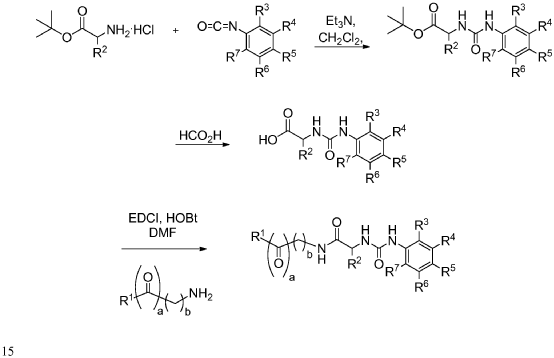
- Amide derivatives of N-urea substituted amino acids as formyl peptide receptor like-1 (FPRL-1) receptor modulatorsPublication Number:US-10993931-B2Priority Date:2011-10-26Grant Date:2021-05-04
- Amide derivatives of n-urea substituted amino acids as formyl peptide receptor like-1 (fprl-1) receptor modulatorsPublication Number:WO-2013062947-A1Priority Date:2011-10-26
- Substituted N-urea amino acid amide derivatives as modulators of formylated peptide receptor 1 (FPRL-1) receptorPublication Number:ES-2820714-T3Priority Date:2011-10-26Grant Date:2021-04-22
- Amide derivatives of N-urea-substituted amino acids as formyl peptide receptor-like-1 (FPRL-1) receptor modulatorsPublication Number:CN-106518742-APriority Date:2011-10-26
ADVERTISEMENT
ANAX LABORATORIES
WEBSITE https://www.anaxlab.com/
Discovery Solutions, Supporting the chemistry needs of clients in the Medical, Analytical and Bio Sciences
Development Solutions, Developing from Lab scale to PR&D, Kilo Scale-ups and Commercial Scales
SEE MORE………Integrated Solutions, Manufacturing Solutions, Products,
Can’t Find? Let’s Connect
Phone : +91 897704 2010 / +91 9177075735, Email : info@anaxlab.com
#MedicinalChemistry, #DrugDiscovery, #OrganicSynthesis, #ChemicalLibrary, #BuildingBlocks, #SARStudies, #ChemistryInnovation, #medchem, #Drugdevelopment, #Biotech, #Biotechnology, #AnaxLaboratories, #Pharma
AS ON FEB2026 4.574 LAKHS VIEWS ON BLOG WORLDREACH AVAILABLEFOR YOUR ADVERTISEMENT
join me on Linkedin
Anthony Melvin Crasto Ph.D – India | LinkedIn
join me on Researchgate
RESEARCHGATE
join me on Facebook
Anthony Melvin Crasto Dr. | Facebook
join me on twitter
Anthony Melvin Crasto Dr. | twitter
+919321316780 call whatsaapp
EMAIL. amcrasto@gmail.com
References
References
- Maciuszek M, Cacace A, Brennan E, Godson C, Chapman TM (March 2021). “Recent advances in the design and development of formyl peptide receptor 2 (FPR2/ALX) agonists as pro-resolving agents with diverse therapeutic potential”. European Journal of Medicinal Chemistry. 213 113167. doi:10.1016/j.ejmech.2021.113167. PMID 33486199.
- Maciuszek M, Ortega-Gomez A, Maas SL, Perretti M, Merritt A, Soehnlein O, et al. (March 2021). “Synthesis and evaluation of novel cyclopentane urea FPR2 agonists and their potential application in the treatment of cardiovascular inflammation”. European Journal of Medicinal Chemistry. 214 113194. doi:10.1016/j.ejmech.2021.113194. PMID 33548634.
 | |
| Identifiers | |
|---|---|
| IUPAC name | |
| CAS Number | 1431754-15-2 |
| PubChem CID | 71526099 |
| UNII | 54P16AUY6D |
| ChEMBL | ChEMBL4785302 |
| Chemical and physical data | |
| Formula | C15H20BrN3O4 |
| Molar mass | 386.246 g·mol−1 |
| 3D model (JSmol) | Interactive image |
| SMILES | |
| InChI | |
////////rezuforimod, anax labs, N-formyl peptide receptor 1 and 2 agonist, antiinflammatory, AGN-232411, AG-80308, AGN 232411, AG 80308, 54P16AUY6D
#rezuforimod, #anax labs, #N-formyl peptide receptor 1 and 2 agonist, #antiinflammatory, #AGN-232411, #AG-80308, #AGN 232411, #AG 80308, #54P16AUY6D
Rezosicone


Rezosicone
CAS 1414777-24-4
MF C29H40O2 MW420.63
3β-(benzyloxy)-17-methylpregn-5-en-20-one
cannabinoid CB1 receptor signalling inhibitor, S79V5L677D
1-[(3S,8R,9S,10R,13S,14S,17S)-10,13,17-trimethyl-3-phenylmethoxy-1,2,3,4,7,8,9,11,12,14,15,16-dodecahydrocyclopenta[a]phenanthren-17-yl]ethanone
1-((3S,8R,9S,10R,13S,14S,17S)-3-(benzyloxy)-10,13,17-trimethyl-2,3,4,7,8,9,10,11,12,13,14,15,16,17-tetradecahydro-1H-cyclopenta[a]phenanthren-17-yl)ethan-1-one
Pregn-5-en-20-one, 17-methyl-3-(phenylmethoxy)-, (3β)-
3β-(benzyloxy)-17-methylpregn-5-en-20-one
Rezosicone is a potent and selective cannabinoid CB1 receptor signaling inhibitor (or antagonist) primarily used in biochemical and pharmacology research
Biological Mechanism
Rezosicone selectively binds to and inhibits the CB1 receptor. CB1 receptors are heavily concentrated in the central nervous system and play a key role in regulating appetite, pain sensation, mood, and memory. Compounds in this class are frequently studied in research related to metabolic disorders, obesity, and addiction
Pat
https://patentscope.wipo.int/search/en/detail.jsf?docId=EP339768848&_cid=P12-MT571S-81533-1


Synthesis of the 3β-(benzyloxy)-17α-methyl-pregn-5-en-20-one

[0104] MgO (100 mg; 2.42 mmol; 2 eq.) and 2-benzyloxy-1-methylpyridinium Inflate (850 mg; 2.42 mmol; 2.0 eq.) were added to a solution of 17a-methyl-pregnenolone (400 mg; 1.21 mmol; 1 eq.) in trifluorotoluene (10 ml). The reaction medium was stirred for one night at 85°C, then filtered on celite and evaporated under reduced pressure. The residue was purified by chromatography on silica gel (eluent: cyclohexane/AcOEt 95/5) then by crystallisation in acetone to give the 3β-(benzyloxy)-17α-methyl-pregn-5-en-20-one (0.28 g; 36%) as a white solid.
ADVERTISEMENT
ANAX LABORATORIES
WEBSITE https://www.anaxlab.com/
Discovery Solutions, Supporting the chemistry needs of clients in the Medical, Analytical and Bio Sciences
Development Solutions, Developing from Lab scale to PR&D, Kilo Scale-ups and Commercial Scales
SEE MORE………Integrated Solutions, Manufacturing Solutions, Products,
Can’t Find? Let’s Connect
Phone : +91 897704 2010 / +91 9177075735, Email : info@anaxlab.com
#MedicinalChemistry, #DrugDiscovery, #OrganicSynthesis, #ChemicalLibrary, #BuildingBlocks, #SARStudies, #ChemistryInnovation, #medchem, #Drugdevelopment, #Biotech, #Biotechnology, #AnaxLaboratories, #Pharma
AS ON FEB2026 4.574 LAKHS VIEWS ON BLOG WORLDREACH AVAILABLEFOR YOUR ADVERTISEMENT
join me on Linkedin
Anthony Melvin Crasto Ph.D – India | LinkedIn
join me on Researchgate
RESEARCHGATE
join me on Facebook
Anthony Melvin Crasto Dr. | Facebook
join me on twitter
Anthony Melvin Crasto Dr. | twitter
+919321316780 call whatsaapp
EMAIL. amcrasto@gmail.com
References
- 3beta-(benzyloxy)-17alpha-methyl-pregn-5-en-20-one for use in the treatment of cognitive disordersPublication Number:US-2022017562-A1Priority Date:2018-12-18
- 3beta-(BENZYLOXY)-17alpha-METHYL-PREGN-5-EN-20-ONE FOR USE IN THE TREATMENT OF COGNITIVE DISORDERSPublication Number:HR-P20241376-T1Priority Date:2018-12-18
- 3-beta-(benzyloxy)-17-alpha-methyl-pregn-5-en-20-one for use in the treatment of cognitive disordersPublication Number:HU-E068626-T2Priority Date:2018-12-18
- 3-(BENZYLIOX)-17-METHYLPREGN-5-EN-20-ONE FOR USE IN THE TREATMENT OF COGNITIVE DISORDERSPublication Number:FI-3897655-T3Priority Date:2018-12-18Grant Date:2024-09-17
- 3BETA-(BENZYLOXY)-17ALPHA-METHYL-PREGN-5-EN-20-ONE FOR USE IN THE TREATMENT OF COGNITIVE DISORDERSPublication Number:MA-54518-B1Priority Date:2018-12-18
- 3BETA-(BENZYLOXY)-17ALPHA-METHYLPREGN-5-EN-20-ONE FOR USE IN THE TREATMENT OF COGNITIVE DISORDERSPublication Number:SM-T202400425-T1Priority Date:2018-12-18
- 3beta-(benzyloxy)-17alpha-methyl-pregn-5-en-20-one for use in the treatment of cognitive disordersPublication Number:ZA-202103284-BPriority Date:2018-12-18
- 3Beta-(benzyloxy)-17alpha-methyl-pregn-5-en-20-one for use in the treatment of cognitive disordersPublication Number:ES-2987823-T3Priority Date:2018-12-18Grant Date:2024-11-18
- 3beta-(benzyloxy)-17alpha-methyl-pregn-5-en-20-one for use in the treatment of cognitive disordersPublication Number:DK-3897655-T3Priority Date:2018-12-18Grant Date:2024-09-23
- 3beta-(BENZYLOXY)-17alpha-METHYL-PREGN-5-EN-20-ONE FOR USE IN THE TREATMENT OF COGNITIVE DISORDERSPublication Number:EP-3897655-A1Priority Date:2018-12-18
- 3BETA-(BENZYLOXY)-17ALFA-METHYL-PREGN-5-EN-20-ONE FOR USE IN TREATMENT OF COGNITIVE DISORDERSPublication Number:PL-3897655-T3Priority Date:2018-12-18
- 3beta-(Benzyloxy)-17α-methyl-pregn-5-en-20-one for use in the treatment of cognitive disordersPublication Number:MD-3897655-T2Priority Date:2018-12-18
- 3BETA-(BENZYLOXY)-17ALPHA-METHYL-PREGN-5-EN-20-ONE FOR USE IN THE TREATMENT OF COGNITIVE DISORDERSPublication Number:PT-3897655-TPriority Date:2018-12-18
- 3BETA-(BENZYLOXY)-17ALPHA-METHYL-PREGN-5-EN-20-ONE FOR USE IN THE TREATMENT OF COGNITIVE DISORDERSPublication Number:RS-66013-B1Priority Date:2018-12-18
- 3beta-(benzyloxy)-17alpha-methyl-pregn-5-en-20-one for use in the treatment of cognitive disordersPublication Number:EP-3897655-B1Priority Date:2018-12-18Grant Date:2024-07-17
- 3β-(BENZYLOXY)-17α-METHYL-PREGN-5-EN-20-ONE FOR USE IN THE TREATMENT OF COGNITIVE DISORDERSPublication Number:WO-2020127468-A1Priority Date:2018-12-18
- 3β-(Benzyloxy)-17α-methyl-pregnant-5-en-20-one for the treatment of cognitive impairmentPublication Number:CN-113260366-BPriority Date:2018-12-18Grant Date:2024-03-08
- 3BETA-(BENZYLOXY)-17ALPHA-METHYL-PREGN-5-EN-20-ONE FOR USE IN THE TREATMENT OF COGNITIVE DISORDERSPublication Number:LT-3897655-TPriority Date:2018-12-18
- 3béta-(benzyloxy)-17alpha-methyl-pregn-5-en-20-one for use in the treatment of cognitive disordersPublication Number:EP-3669876-A1Priority Date:2018-12-18
///////rezosicone, anax labs, cannabinoid CB1 receptor signalling inhibitor, S79V5L677D
#rezosicone, #anax labs, #cannabinoid CB1 receptor signalling inhibitor, #S79V5L677D
Refisolone



Refisolone
CAS202718-04-5
MFC18H24O3 MW288.4 g/mol
(1S,2S,4R,6S,7S,10S,11S)-11-hydroxy-7-methyl-5-oxapentacyclo[8.8.0.02,7.04,6.011,16]octadec-15-en-14-one
- (16alpha,17alpha)-16,17-Epoxy-10-hydroxyestr-4-en-3-one
- Estr-4-en-3-one, 16,17-epoxy-10-hydroxy-, (16alpha,17alpha)-
10-hydroxy-16α,17α-epoxyestr-4-en-3-one
GABAA receptor antagonist, migraine. PH 80, 2QA794326X
Refisolone (INNTooltip International Nonproprietary Name, USANTooltip United States Adopted Name; developmental code names PH-80, Salubrin, and ORG-39479), also known as 10-hydroxy-16α,17α-epoxyestr-4-en-3-one, is a vomeropherine (pherine) which is under development for the treatment of hot flashes, migraine, and premenstrual dysphoric disorder (PMDD).[1][2][4][3] It is taken intranasally as a nasal spray.[1][2][3] The pharmacology of refisolone has been studied and reported.[5][6] The drug is under development by Pherin Pharmaceuticals and VistaGen Therapeutics, with the former having been acquired by the latter in 2023.[1][2][4][3] As of December 2025, refisolone is in phase 2 clinical trials for all indications.[1][4] However, a phase 3 trial of refisolone for PMDD is also reported to have been registered in 2015, though its status is listed as unknown.[3][7]
Refisolone (developmental code name PH-80) is an investigational, non-hormonal pherine (vomeropherine) nasal spray currently in Phase 2 clinical trials for the treatment of menopausal hot flashes (vasomotor symptoms), migraines, and premenstrual dysphoric disorder (PMDD).
Mechanism of Action
Unlike conventional menopausal treatments, Refisolone does not rely on systemic hormone replacement. It is administered intranasally at microgram-level doses to achieve a rapid, on-demand effect. The spray works by activating chemosensory neurons in the nasal cavity, which send signals to the olfactory-limbic and olfactory-hypothalamic pathways in the brain to regulate anxiety and correct body temperature neural circuits.
Current Clinical Status
- FDA Status: The US FDA cleared the Investigational New Drug (IND) application for Refisolone, issuing a “Study May Proceed” letter to allow advanced Phase 2 trials to move forward.
- Development History: The compound was originally created by Pherin Pharmaceuticals, which was fully acquired by Vistagen Therapeutics.
- Clinical Trial Progress: A successful Phase 2a exploratory trial for menopausal hot flashes was completed in Mexico, showing that the compound was well-tolerated with no serious drug-related adverse events.
Intranasal PH80 Spray for Acute Management of the Symptoms of Premenstrual Dysphoric DisorderCTID:
NCT01217775, Phase:Phase 3Status:Unknown status, Date:2015-12-03
PAT
WO2009126825
https://patentscope.wipo.int/search/en/detail.jsf?docId=WO2009126825&_cid=P21-MT2BVX-74335-1
The preparation of the estrene compound 16α,17α-epoxy-10β-hydroxyestr-4-en-3-one is described in commonly assigned US Pat. No. 6,057,439, which is incorporated herein by reference. The steroid compound 16α,17α-epoxy-10β-hydroxyestr-4-en-3-one has the chemical structure of:

PAT
WO2025217068
https://patentscope.wipo.int/search/en/detail.jsf?docId=WO2025217068&_cid=P21-MT2BVX-74335-2
16a, 17a epoxyestr-4 en-iop ol-3 one will not be associated with or cause endometrial effects such as endometrial hyperplasia or endometrial cancer as are associated with conventional estrogen therapies.
[0054] US Patent No. 6,057,439 (“US 6,057,439) describes the use of a number of steroidal pherines for the treatment of premenstrual dysphoric disorder and anxiety by administration to the vomeronasal organ of an individual suffering from those symptoms. Among the pherines described in U.S. Pat. 6,057,439 is 16a,17a-Epoxyestr-4-en-10|3-ol-3-one, which is also known in the art as PH80, has the following chemical structure:
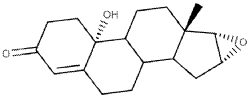
.S. Pat. 6,057,439 also describes the synthesis of 16a,17a-Epoxyestr-4-en-10p-ol-3-one and pharmaceutical compositions containing it for alleviating symptoms of PMDD. U.S. Pat. 6,331,534 describes the same steroids for alleviating pain by vomeronasal administration. U.S. Pat. 8,431,559, “Treatment of hot flashes”, describes a synthesis of 16a,17a-epoxyestr-4-en-10p-ol-3-one, which it refers to as 16a,17a-epoxy-10p-hydroxyestr-4-en-3-one, and a method of using 16a,17a-epoxyestr-4-en-10p-ol-3-one to alleviating hot flashes by administering 16a,17a-epoxyestr-4-en-10p-ol-3-one via intranasal administration. U.S.
Pat. 11,419,881, “Treatment of migraine”, similarly describes a synthesis of 16a,17a-epoxyestr-4-en-10P-ol-3-one and also refers to the drug as 16a,17a-epoxy-10p-hydroxyestr-4-en-3-one. U.S. Pat. 11,419,881 also describes a method for alleviating migraines by nasally administering 16a,17a-epoxyestr-4-en-10p-ol-3-one .
PAT
- Treatment of migrainePublication Number:US-2020323884-A1Priority Date:2019-04-15
- Treatment of migrainePublication Number:EP-3955933-A1Priority Date:2019-04-15
- Treatment of migrainePublication Number:EP-3955933-B1Priority Date:2019-04-15Grant Date:2023-11-29
- Treatment of migrainePublication Number:WO-2020214452-A1Priority Date:2019-04-15
- Steroid treatment for hot flashesPublication Number:US-2009258040-A1Priority Date:2008-04-09
- Treatment of Hot FlashesPublication Number:US-2012108558-A1Priority Date:2008-04-09
- Steroid treatment for hot flashesPublication Number:WO-2009126825-A1Priority Date:2008-04-09
- Steroid treatment for hot flashesPublication Number:EP-2278880-A1Priority Date:2008-04-09
- Treatment of hot flashesPublication Number:US-8431559-B2Priority Date:2008-04-09Grant Date:2013-04-30
- Steroid treatment for hot flashesPublication Number:EP-2278880-B1Priority Date:2008-04-09Grant Date:2012-10-10
- Steroids as neurochemical stimulators of the vno to alleviate symptoms of pmsPublication Number:EP-0914165-B1Priority Date:1996-07-23Grant Date:2006-10-18
- Steroids as neurochemical stimulators of the VNO to alleviate symptoms of PMS and anxietyPublication Number:US-6057439-APriority Date:1994-08-04Grant Date:2000-05-02
- Steroids as neurochemical stimulators of the VNO to treat paroxistic tachycardiaPublication Number:US-6117860-APriority Date:1994-08-04Grant Date:2000-09-12
- Steroids as neurochemical stimulators of the VNO to alleviate painPublication Number:US-6331534-B1Priority Date:1994-08-04Grant Date:2001-12-18
ADVERISEMENT
ANAX LABORATORIES
WEBSITE https://www.anaxlab.com/
Discovery Solutions, Supporting the chemistry needs of clients in the Medical, Analytical and Bio Sciences
Development Solutions, Developing from Lab scale to PR&D, Kilo Scale-ups and Commercial Scales
SEE MORE………Integrated Solutions, Manufacturing Solutions, Products,
Can’t Find? Let’s Connect
Phone : +91 897704 2010 / +91 9177075735, Email : info@anaxlab.com
#MedicinalChemistry, #DrugDiscovery, #OrganicSynthesis, #ChemicalLibrary, #BuildingBlocks, #SARStudies, #ChemistryInnovation, #medchem, #Drugdevelopment, #Biotech, #Biotechnology, #AnaxLaboratories, #Pharma
AS ON FEB2026 4.574 LAKHS VIEWS ON BLOG WORLDREACH AVAILABLEFOR YOUR ADVERTISEMENT
join me on Linkedin
Anthony Melvin Crasto Ph.D – India | LinkedIn
join me on Researchgate
RESEARCHGATE
join me on Facebook
Anthony Melvin Crasto Dr. | Facebook
join me on twitter
Anthony Melvin Crasto Dr. | twitter
+919321316780 call whatsaapp
EMAIL. amcrasto@gmail.com
References
References
- “VistaGen Therapeutics”. AdisInsight. Springer Nature Switzerland AG. 2 December 2025. Retrieved 9 March 2026.
- “Pherin Pharmaceuticals”. AdisInsight. Springer Nature Switzerland AG. 28 July 2024. Retrieved 9 March 2026.
- “PH-80 Drug Profile”. Ozmosi. Retrieved 9 March 2026.
- “Delving into the Latest Updates on Refisolone”. Synapse. PatSnap. 28 February 2026. Retrieved 9 March 2026.
- Monti L, Baker RA, Hanover R (25 November 2025). Refisolone PH80 Nasal Spray Effects on In Vitro Receptor Binding, Reproductive Organs in Mice, and Pharmacokinetic Profile in Humans. The Menopause Society 2025 Annual Meeting.
- Monti L, Baker RA, Hanover R (25 November 2025). Refisolone PH80 Nasal Spray Effects on Brain and Autonomic Activity: A Novel, Investigational, Rapid-Onset Non-Hormonal Treatment for Vasomotor Symptoms Due to Menopause. The Menopause Society 2025 Annual Meeting.
- Clinical trial number NCT01217775 for “Intranasal PH80 Spray for Acute Management of the Symptoms of Premenstrual Dysphoric Disorder (PH80-PMD)” at ClinicalTrials.gov
External links
 | |
| Clinical data | |
|---|---|
| Other names | PH-80; PH80; PH-80-M; PH80-M; PH80M; PH80-PMD NS; PH80-HF; PH80-HF NS; Salubrin; Salubrin HF; ORG-39479; ORG39479; 10-Hydroxy-16α,17α-epoxyestr-4-en-3-one; 16α,17α-Epoxyestr-4-en-10-ol-3-one |
| Routes of administration | Intranasal (nasal spray)[1][2][3] |
| Drug class | Vomeropherine |
| Identifiers | |
| IUPAC name | |
| CAS Number | 202718-04-5 |
| PubChem CID | 21968346 |
| UNII | 2QA794326X |
| Chemical and physical data | |
| Formula | C18H24O3 |
| Molar mass | 288.387 g·mol−1 |
| 3D model (JSmol) | Interactive image |
| SMILES | |
| InChI | |
//////////refisolone, anax labs, GABAA receptor antagonist, migraine, PH 80, 2QA794326X
#refisolone, #anax labs, #GABAA receptor antagonist, #migraine, #PH 80, #2QA794326X
Iberdomide

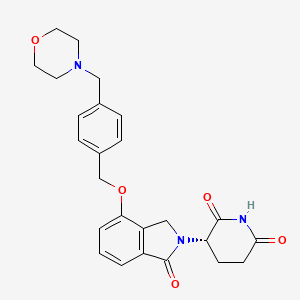
Iberdomide
CAS 1323403-33-3
as HCl: 1560678-63-8
MW 449.5 g/mol, C25H27N3O5
(S)-3-(4-((4-(Morpholinomethyl)benzyl)oxy)-1-oxoisoindolin-2-yl)piperidine-2,6-dione
(3S)-3-[7-[[4-(morpholin-4-ylmethyl)phenyl]methoxy]-3-oxo-1H-isoindol-2-yl]piperidine-2,6-dione
8/13/2026, APPROVAL 2026, FDA 2026, Zenbexus, cc-220, cc 220, 8V66F27X44, 79L3645KFI
To be used in combination with daratumumab and hyaluronidase-fihj and dexamethasone for adults with multiple myeloma who have received at least one prior line of therapy, including a proteasome inhibitor and an immunomodulatory agent
Iberdomide is a modulator of the E3 ubiquitin ligase complex containing cereblon (CRL4-CRBN E3 ubiquitin ligase), with immunomodulating and pro-apoptotic activities. Upon administration, iberdomide specifically binds to the cereblon (CRBN) part of the ligase complex, thereby affecting the ubiquitin E3 ligase activity, and targeting certain substrate proteins for ubiquitination. This induces the proteasome-mediated degradation of certain transcription factors, including Ikaros (IKZF1) and Aiolos (IKZF3) which are transcriptional repressors in T-cells. This leads to a reduction of their protein levels, and the modulation of the immune system, including activation of T-lymphocytes. In addition, this leads to a downregulation of other proteins, including interferon regulatory factor 4 (IRF4), which plays a key role in the proliferation of certain cancer cell types. CRBN, the substrate recognition component of the E3 ubiquitin ligase complex, plays a key role in the ubiquitination of certain proteins.
Iberdomide, sold under the brand name Zenbexus, is an anti-cancer medication used for the treatment of multiple myeloma.[1] It is a cereblon-modulating protein degrader[1] and a thalidomide analog.[2]. It is taken By mouth.[1]
Iberdomide was approved for medical use in the United States in August 2026.[3]
Medical uses
Iberdomide is indicated in combination with daratumumab, hyaluronidase, and dexamethasone for the treatment of adults with multiple myeloma who have received at least one prior line of therapy including a proteasome inhibitor and an immunomodulatory agent.[3]
Society and culture
Legal status
Iberdomide was approved for medical use in the United States in August 2026.[12] The U.S. Food and Drug Administration (FDA) granted the application for iberdomide priority review, breakthrough therapy, and orphan drug designations.[3]
Names
Iberdomide is the international nonproprietary name.[13]
Iberdomide is sold under the brand name Zenbexus.[14]
SYN
SYN

PAT
https://patentscope.wipo.int/search/en/detail.jsf?docId=WO2011100380&_cid=P12-MSZHNS-67589-1
5.2 3-[4-(4-MORPHOLIN-4-YLMETHYL-BENZYLOXY)-1-OXO- 1,3-DIHYDRO-ISOINDOL-2-YL]-PIPERIDINE-2,6-DIONE

Step 3 : To the THF solution of methyl 5-amino-4-(4-(4- (morpholinomethyl)benzyloxy)-1-oxoisoindolin-2-yl)-5-oxopentanoate (40 g, 83 mmol), was added potassium 2-methylpropan-2-olate (9.80 g, 87 mmol) portion wise at 0°C. The mixture was stirred at this temperature for 30 minutes. To the reaction mixture, was added 45 mL of 1N HCl solution, followed by 200 mL of saturated NaHCO3 solution. The mixture was diluted with 500 mL of EtOAc at 0°C, stirred for 5 minutes and separated. The organic layer was washed with water (50 mL × 3) and brine (100 mL), and concentrated on rota-vap to give a white solid, which was stirred in diethyl ether (300 mL) to give a suspension. The suspension was filtered to give 3-[4-(4-morpholin-4-ylmethyl-benzyloxy)-1-oxo-1,3-dihydro-isoindol-2-yl]-piperidine-2,6-dione as white solid (28.5g, 72% yield): HPLC: Waters Symmetry C18, 5μm, 3.9 × 150 mm, 1 mL/min, 240 nm, gradient to 95/5 acetonitrile/0.1% H3PO4 in 5 min,: tR = 4.78 min (98.5%); mp: 209-21 1 °C; 1H NMR (DMSO-d6) δ 1.86 – 2.09 (m, 1H, CHH), 2.29 – 2.38 (m, 4H, CH2,CH2), 2.44 (dd, J = 4.3, 13.0 Hz, 1H, CHH), 2.53 – 2.64 (m, 1H, CHH), 2.82 – 2.99 (m, 1H, CHH), 3.46 (s, 2H, CH2), 3.52 – 3.61 (m, 4H, CH2,CH2), 4.18 – 4.51 (m, 2H, CH2), 5.11 (dd, J = 5.0, 13.3 Hz, 1H, NCH), 5.22 (s, 2H, CH2), 7.27 – 7.38 (m, 5H, Ar), 7.40 – 7.53 (m, 3H, Ar), 10.98 (s, 1H, NH); 13C NMR (DMSO-d6) δ 22.36, 31.21, 45.09, 51.58, 53.14, 62.10, 66.17, 69.41,
114.97, 115.23, 127.64, 128.99, 129.81, 129.95, 133.31, 135.29, 137.68, 153.50, 168.01,
170.98, 172.83; LCMS: 465; Anal Calcd for C25H27N3O5 + 0.86 H2O: C, 64.63; H, 6.22; N,
9.04; Found: C, 64.39; H, 6.11; N, 8.89; H2O, 3.24.
5.61 (S)-3-[4-(4-MORPHOLIN-4-YLMETHYL-BENZYLOXY)-1-OXO-1,3- DIHYDRO-ISOINDOL-2-YL]-PIPERIDINE-2,6-DIONE

[386] Step 1 : Preparation of (S)-4-[4-(4-Bromomethyl-benzyloxy)-1-oxo-1,3-dihydro-isoindol-2-yl]-4-carbamoyl-butyric acid methyl ester
To a 2-L round bottom flask was charged methyl 5-amino-4-(4-hydroxy-1-oxoisoindolin-2-yl)-5-oxopentanoate (30 g, 103 mmol), 1,4-bis(bromomethyl)benzene (81 g, 308 mmol) and potassium carbonate (14.19 g, 103 mmol) and acetonitrile (1.2 L). The mixture was stirred at room temperature for 10 min and heated to 50°C for 12 hours. The reaction mixture was allowed to cool to room temperature. The mixture was filtered and the filtrate was concentrated on rota-vap. The resulted solid was dissolved in CH2Cl2 and loaded on 2 silica gel columns (330 g each) eluted using CH2Cl2/MeOH to give 4-[4-(4-bromomethyl-benzyloxy)-1-oxo-1,3-dihydro-isoindol-2-yl]-4-carbamoyl-butyric acid methyl ester as white solid (40g, 82%). 1H NMR (DMSO-d6) δ 1.98 – 2.13 (m, 1H, CHH), 2.14 – 2.23 (m, 1H, CHH), 2.23 – 2.32 (m, 2H, CHH, CHH), 3.50 (s, 3H, CH3), 4.34 – 4.63 (m, 2H, CH2), 4.67 – 4.80 (m, 3H, CH2, NCH), 5.25 (s, 4H, CH2), 7.19 (s, 1H, NHH), 7.24 – 7.34 (m, 2H, Ar), 7.41 – 7.54 (m, 5H, Ar), 7.58 (br. s., 1H, NHH)
[387] Step 2: Preparation of (S)-4-Carbamoyl-4-[4-(4-morpholin-4-ylmethyl-benzyloxy)-1-oxo-1,3-dihydro-isoindol-2-yl]-butyric acid methyl ester
To the CH2Cl2 solution of methyl 5-amino-4-(4-(4-(bromomethyl)benzyloxy)-1-oxoisoindolin-2-yl)-5-oxopentanoate (36.5 g, 77 mmol) was added morpholine (14.72 ml, 169 mmol) at 0 °C. The mixture was stirred at 0 °C for 1 hr. The mixture was added 200 mL of CH2Cl2, washed with water (100mL × 2) and brine (100 ml), dried in Na2SO4 and concentrated to give (S)-4-Carbamoyl-4-[4-(4-morpholin-4-ylmethyl-benzyloxy)-1-oxo-1,3-dihydro-isoindol-2-yl]-butyric acid methyl ester as white foam (39 g, 100%). M.p. 66-68 °C; Waters Symmetry C-18, 3.9 X 150 mm, 5 micro, 1 mL/min, 240 nm, isocratic 15/85 CH3CN/ 0.1% H3PO4 in H2O: 7.92 min (99%). 1H NMR (DMSO-d6) δ 2.00 – 2.12 (m, 1HH CHH), 2.14 – 2.22 (m, 1H, CHH), 2.22 – 2.29 (m, 2H, CHH,CHH), 2.30 – 2.39 (m, 4H, CH2,CH2), 3.46 (s, 2H, CH2), 3.50 (s, 3H, CH3), 3.53 – 3.63 (m, 4H, CH2,CH2), 4.28 – 4.59 (m, 2H, CH2), 4.73 (dd, J= 4.7, 10.2 Hz, 1H, NCH), 5.22 (s, 2H, CH2), 7.14 – 7.23 (m, 1H, NHH), 7.26 – 7.39 (m, 4H, Ar), 7.41 – 7.51 (m, 3H, Ar), 7.58 (s, 1H, NHH). 13C NMR (DMSO-d6) δ 24.82, 30.33, 44.78, 51.24, 53.12, 53.38, 62.09, 66.14, 69.35, 114.66, 115.12, 127.60, 129.00, 129.55, 130.18, 133.43, 135.31, 137.66, 153.42, 167.84, 171.73, 172.46; Anal Calcd for C26H31N3O6+ 0.3 H2O: C% 64.13; H% 6.54; N% 8.63; Found: C% 63.89; H% 6.39; N% 8.56.
[388] Step 3: Preparation of (S)-3-[4-(4-morpholin-4-ylmethyl-benzyloxy)-1-oxo- 1 , 3-dihydro-isoindol-2-yl]-piperidine-2,6-dione
To the THF solution of (S)-methyl 5-amino-4-(4-(4-(morpholinomethyl)benzyloxy)-1-oxoisoindolin-2-yl)-5-oxopentanoate (45 g, 93 mmol) was added potassium 2-methylpropan-2-olate (10.49 g, 93 mmol) portion wise (2g X5) at -78 °C. The mixture was stirred at this temperature for 30 min then was added 250 mL of 1N HCl solution followed by 200 mL of saturated NaHCO3 solution. The mixture was extracted with CH2Cl2 (150 mLx2). The organic layer was washed with water (50 mL × 3) and brine (100 mL), concentrated on rota-vap to give a white solid, which was then recrystallized from CH3CN
(100 mL) to give (S)-3-[4-(4-morpholin-4-ylmethyl-benzyloxy)-1-oxo-1,3-dihydro-isoindol-2-yl]-piperidine-2,6-dione as white solid (32g, 76%). mp: 140-142 °C. LC-MS m/e= 450. HPLC: Waters Symmetry C18, 5μm, 3.9 x 150 mm, 1 mL/min, 240 nm, isocratic
15/85 CH3CN/0.1% H3PO4 in 5 min,: tR = 5.61 min (99.5%); Chiral AGP C 18 4.0 × 150 mm, 5 μm 10/90 i-propanol/ 10 mM NH4Ac in 20 min,: tR = 10.07 min (99.5%); 1H NMR
(DMSO-d6) δ 2.28 – 2.38 (m, 4H, CH2,CH2), 2.44 (dd, J= 4.2, 13.1 Hz, 1H, CHH), 2.53- 2.63 (m, 1H, CHH), 2.79 – 3 02 (m, 1H, CHH), 3.49 – 3.69 (m, 4H, CH2,CH2), 4.11 – 4.52
(m, 2H, CH2), 5.11 (dd, J= 5.1, 13.2 Hz, 1H, NCH), 5.22 (s, 2H, CH2), 7.33 (d, J= 7.7 Hz,
4H, Ar), 7.40 – 7.52 (m, 3H, Ar), 10.97 (s, ΙΗ, ΝΗ). 13C NMR (DMSO-d6) δ 22.33, 31.18,
45.06, 51.55, 53.11, 62.07, 66.14, 69.38, 114.96, 115.20, 127.61, 128.97, 129.78, 129.93,
133.28, 135.27, 137.67, 153.48, 167.97, 170.95, 172.80. LC-MS: 465; Anal Calcd for
C25H27N3O5 C: 66.80%; H: 6.05%; N: 9.35%. Found: C:66.59%; H:5.79%; N:9.26%.
PAT
- PRMT5 inhibitors and uses thereofPublication Number:US-12448388-B2Grant Date:2025-10-21
- KRAS G12D modulating compoundsPublication Number:US-12448400-B2Grant Date:2025-10-21
- Arylmethoxy isoindoline derivatives and compositions comprising them and methods of use thereofPublication Number:ES-2956743-T3Priority Date:2010-02-11Grant Date:2023-12-27
- Arylmethoxy isoindoline derivatives and compositions comprising and methods of using the samePublication Number:AU-2013245487-A1Priority Date:2010-02-11
- Arylmethoxy isoindoline derivatives and compositions comprising and methods of using the samePublication Number:AU-2013245487-B2Priority Date:2010-02-11Grant Date:2016-03-10
- Arylmethoxy isoindoline derivatives and compositions comprising and methods of using the samePublication Number:EP-3599236-B1Priority Date:2010-02-11Grant Date:2023-08-23
- Treating cancerPublication Number:US-2025325586-A1
- Arylmethoxy isoindoline derivatives and compositions comprising and methods of using the samePublication Number:US-9822094-B2Priority Date:2010-02-11Grant Date:2017-11-21
- Arylmethoxy isoindoline derivatives and compositions comprising and methods of using the samePublication Number:EP-4289838-A2Priority Date:2010-02-11
- Arylmethoxy isoindoline derivatives and compositions comprising and methods of using the samePublication Number:US-2018037567-A1Priority Date:2010-02-11
- Arylmethoxy isoindoline derivatives and compositions comprising them and methods of using themPublication Number:ES-2713482-T3Priority Date:2010-02-11Grant Date:2019-05-22
- Arylmethoxy Isoindoline Derivatives and Compositions Comprising and Methods of Using the SamePublication Number:US-2011196150-A1Priority Date:2010-02-11
ADVERISEMENT
ANAX LABORATORIES
WEBSITE https://www.anaxlab.com/
Discovery Solutions, Supporting the chemistry needs of clients in the Medical, Analytical and Bio Sciences
Development Solutions, Developing from Lab scale to PR&D, Kilo Scale-ups and Commercial Scales
SEE MORE………Integrated Solutions, Manufacturing Solutions, Products,
Can’t Find? Let’s Connect
Phone : +91 897704 2010 / +91 9177075735, Email : info@anaxlab.com
#MedicinalChemistry, #DrugDiscovery, #OrganicSynthesis, #ChemicalLibrary, #BuildingBlocks, #SARStudies, #ChemistryInnovation, #medchem, #Drugdevelopment, #Biotech, #Biotechnology, #AnaxLaboratories, #Pharma
AS ON FEB2026 4.574 LAKHS VIEWS ON BLOG WORLDREACH AVAILABLEFOR YOUR ADVERTISEMENT
join me on Linkedin
Anthony Melvin Crasto Ph.D – India | LinkedIn
join me on Researchgate
RESEARCHGATE
join me on Facebook
Anthony Melvin Crasto Dr. | Facebook
join me on twitter
Anthony Melvin Crasto Dr. | twitter
+919321316780 call whatsaapp
EMAIL. amcrasto@gmail.com
References
References
- “U.S. Prescribing Information” (PDF). Packageinserts.bms.com. Retrieved 18 August 2026.
- Gao, Shaobing; Wang, Shichao; Song, Yongping (December 2020). “Novel immunomodulatory drugs and neo-substrates”. Biomarker Research. 8 (1): 2. doi:10.1186/s40364-020-0182-y. PMC 6953231. PMID 31938543.
- “FDA grants accelerated approval to iberdomide with daratumumab and hyaluronidase-fihj and dexamethasone for multiple myeloma”. U.S. Food and Drug Administration (FDA). 13 August 2026. Retrieved 16 August 2026.
 This article incorporates text from this source, which is in the public domain.
 - Ye, Ying; Gaudy, Allison; Schafer, Peter; Thomas, Michael; Weiss, Daniel; Chen, Nianhang; et al. (May 2021). “First-in-Human, Single- and Multiple-Ascending-Dose Studies in Healthy Subjects to Assess Pharmacokinetics, Pharmacodynamics, and Safety/Tolerability of Iberdomide, a Novel Cereblon E3 Ligase Modulator”. Clinical Pharmacology in Drug Development. 10 (5): 471–485. doi:10.1002/cpdd.869. PMC 8246954. PMID 32969202.
- Bjorklund, Chad C.; Kang, Jian; Amatangelo, Michael; Polonskaia, Ann; Katz, Mark; Chiu, Hsiling; et al. (April 2020). “Iberdomide (CC-220) is a potent cereblon E3 ligase modulator with antitumor and immunostimulatory activities in lenalidomide- and pomalidomide-resistant multiple myeloma cells with dysregulated CRBN”. Leukemia. 34 (4): 1197–1201. doi:10.1038/s41375-019-0620-8. ISSN 1476-5551. PMC 7214241. PMID 31719682.
- van de Donk, Niels W.C.J.; Popat, Rakesh; Larsen, Jeremy; Minnema, Monique C.; Jagannath, Sundar; Oriol, Albert; et al. (5 November 2020). “First Results of Iberdomide (IBER; CC-220) in Combination with Dexamethasone (DEX) and Daratumumab (DARA) or Bortezomib (BORT) in Patients with Relapsed/Refractory Multiple Myeloma (RRMM)”. Blood. 136 (Supplement 1): 16–17. doi:10.1182/blood-2020-137743. S2CID 228828103.
- Thieblemont, Catherine; Munoz, Javier; Tucci, Alessandra; Visco, Carlo; Cartron, Guillaume; Corradini, Paolo; et al. (15 November 2022). “Iberdomide (CC-220) Monotherapy or in Combination with an Anti-CD20 Monoclonal Antibody As Effective Therapy in Patients with Relapsed/Refractory Lymphoma: Early Results from a Phase 1/2 Study”. Blood. 140 (Supplement 1): 569–572. doi:10.1182/blood-2022-162559. S2CID 256795199.
- Lonial, Sagar; Amatangelo, Michael; Popat, Rakesh; Minnema, Monique C.; Zonder, Jeffrey A.; Larsen, Jeremy; et al. (13 November 2019). “Translational and Clinical Evidence of a Differentiated Profile for the Novel CELMoD, Iberdomide (CC-220)”. Blood. 134 (Supplement_1): 3119. doi:10.1182/blood-2019-124298. S2CID 209233746.
- Amatangelo, Michael; Bjorklund, Chad C.; Kang, Jian; Polonskaia, Ann; Viswanatha, Sridevi; Thakurta, Anjan (29 November 2018). “Iberdomide (CC-220) Has Synergistic Anti-Tumor and Immunostimulatory Activity Against Multiple Myeloma in Combination with Both Bortezomib and Dexamethasone, or in Combination with Daratumumab in Vitro”. Blood. 132 (Supplement 1): 1935. doi:10.1182/blood-2018-99-113383. S2CID 91382999.
- Lonial, Sagar; Popat, Rakesh; Hulin, Cyrille; Jagannath, Sundar; Oriol, Albert; Richardson, Paul G; et al. (November 2022). “Iberdomide plus dexamethasone in heavily pretreated late-line relapsed or refractory multiple myeloma (CC-220-MM-001): a multicentre, multicohort, open-label, phase 1/2 trial”. The Lancet Haematology. 9 (11): e822–e832. doi:10.1016/S2352-3026(22)00290-3. PMID 36209764. S2CID 252779185.
- Merrill, Joan T.; Werth, Victoria P.; Furie, Richard; van Vollenhoven, Ronald; Dörner, Thomas; Petronijevic, Milan; et al. (17 March 2022). “Phase 2 Trial of Iberdomide in Systemic Lupus Erythematosus”. New England Journal of Medicine. 386 (11): 1034–1045. doi:10.1056/NEJMoa2106535. PMID 35294813. S2CID 247499089.
- Feuerstein, Adam (14 August 2026). “FDA clears Bristol multiple myeloma therapy, marking debut of new drug class”. STAT. Retrieved 14 August 2026.
- World Health Organization (2018). “International nonproprietary names for pharmaceutical substances (INN): recommended INN: list 79”. WHO Drug Information. 32 (1). hdl:10665/330941.
- “U.S. FDA Grants Accelerated Approval to Bristol Myers Squibb’s First CELMoD Therapy Zenbexus, in Combination with Daratumumab and Hyaluronidase-fihj and Dexamethasone (ZDd) for Patients with Multiple Myeloma, as Early as First Relapse”. Bristol Myers Squibb (Press release). 13 August 2026. Retrieved 16 August 2026.
External links
- “Iberdomide ( Code – C129048 )”. EVS Explore.
- “Iberdomide Hydrochloride ( Code – C141516 )”. EVS Explore.
- Clinical trial number NCT04975997 for “Open-label Study Comparing Iberdomide, Daratumumab and Dexamethasone (IberDd) Versus Daratumumab, Bortezomib, and Dexamethasone (DVd) in Participants With Relapsed or Refractory Multiple Myeloma (RRMM) (EXCALIBER-RRMM)” at ClinicalTrials.gov
 | |
| Clinical data | |
|---|---|
| Trade names | Zenbexus |
| Other names | CC-220 |
| AHFS/Drugs.com | zenbexus |
| License data | US DailyMed: Iberdomide |
| Routes of administration | By mouth |
| Drug class | Cereblon-modulating protein degrader |
| ATC code | None |
| Legal status | |
| Legal status | US: ℞-only[1] |
| Identifiers | |
| IUPAC name | |
| CAS Number | 1323403-33-3as HCl: 1560678-63-8 |
| PubChem CID | 67335295as HCl: 72793904 |
| IUPHAR/BPS | 9618 |
| DrugBank | DB12101 |
| ChemSpider | 52085251 |
| UNII | 8V66F27X44as HCl: 79L3645KFI |
| KEGG | D11134as HCl: D11135 |
| ChEMBL | ChEMBL3989927 |
| Chemical and physical data | |
| Formula | C25H27N3O5 |
| Molar mass | 449.507 g·mol−1 |
| 3D model (JSmol) | Interactive imageas HCl: Interactive image |
| SMILES | |
| InChI | |
////////iberdomide, ANAX LABS, APPROVAL 2026, FDA 2026, Zenbexus, APPROVAL 2026, FDA 2026, Zenbexus, cc-220, cc 220, 8V66F27X44, 79L3645KFI
#iberdomide, #ANAX LABS, #APPROVAL 2026, #FDA 2026, #Zenbexus, #APPROVAL 2026, #FDA 2026, #Zenbexus, #cc-220, #cc 220, #8V66F27X44, #79L3645KFI
Ratutrelvir

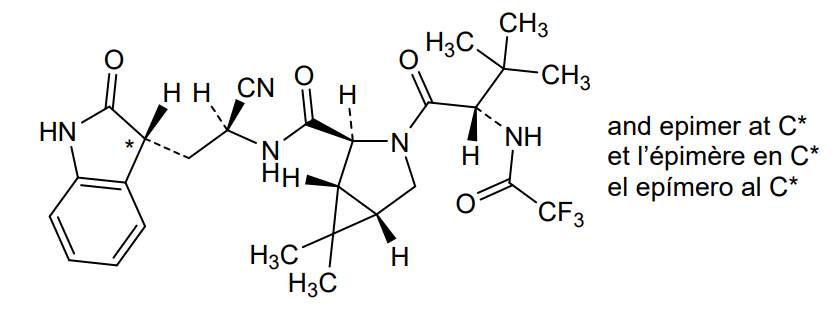
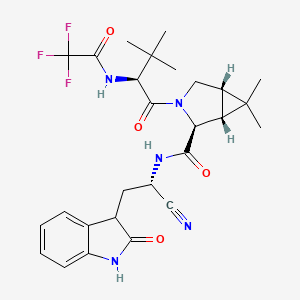
Ratutrelvir
CAS 2929236-94-0
MF C27H32F3N5O4 MW547.6 g/mol
(1R,2S,5S)-N-[(1S)-1-cyano-2-(2-oxo-1,3-dihydroindol-3-yl)ethyl]-3-[(2S)-3,3-dimethyl-2-[(2,2,2-trifluoroacetyl)amino]butanoyl]-6,6-dimethyl-3-azabicyclo[3.1.0]hexane-2-carboxamide
(1R,2S,5S)-N-{(1S)-1-cyano-2-[(3RS)-2-oxo-2,3-dihydro-1H-indol-3-yl]ethyl}-3-[(2S)-3,3-dimethyl-2-(2,2,2-trifluoroacetamido)butanoyl]-6,6-dimethyl-3-azabicyclo[3.1.0]hexane-2-carboxamide
protease inhibitor, antiviral, TRX01, 83-0060, TRX 01, VR2S5588W2,
Ratutrelvir is an investigational new drug that is being evaluated by Traws Pharma[1] for the treatment of COVID-19 infections.[2][3] It is a 3C-like protease inhibitor.[3][4]
Clinical trials
Ratutrelvir is currently in a phase 2 clinical trial to test the effectiveness and safety of the drug in patients with COVID-19[5] and a preliminary analysis of the results has been released.[6]
Ratutrelvir (also known as TRX01 or 83-0060) is an investigational, oral antiviral medication being developed by Traws Pharma for the treatment of mild-to-moderate COVID-19.
Key Characteristics
- Mechanism: It functions as a covalent inhibitor of the SARS-CoV-2 main protease (\(M^{pro}\) / 3CL protease), preventing the virus from replicating.
- Ritonavir-Free: Unlike Paxlovid, ratutrelvir does not require a metabolic booster like ritonavir. This prevents severe drug-drug interactions and broadens its usability.
- Dosing: It is designed as a once-daily oral regimen taken over 10 days.
Clinical Development & Trial Results
According to Phase 2 data released by Traws Pharma in early 2026:
- Efficacy: Shows a comparable or faster time to sustained symptom resolution compared to Paxlovid.
- No Viral Rebound: Patients treated with ratutrelvir experienced no viral rebound events.
- Paxlovid-Ineligible Benefit: The drug successfully treated patients who could not take Paxlovid due to medical contraindications.
- Fewer Side Effects: It reported fewer treatment-related adverse events (10% vs 23.3% for Paxlovid) and avoids taste disturbances (dysgeusia).
PAT
https://patentscope.wipo.int/search/en/detail.jsf?docId=WO2023093834&_cid=P11-MSWMDL-65476-1
Example 1: Preparation of (1R,2S,5S)-N-((2S)-1-amino-1-carbonyl-3-(2-carbonyldihydroindole-3-yl)propane-2-yl)-3-((S)-3,3-dimethyl-2-(2,2,2-trifluoroacetamido)butyryl)-6,6-dimethyl-3-azabicyclo[3.1.0]hexane-2-carboxamide (compound 1)
[0138]The synthesis route is as follows:
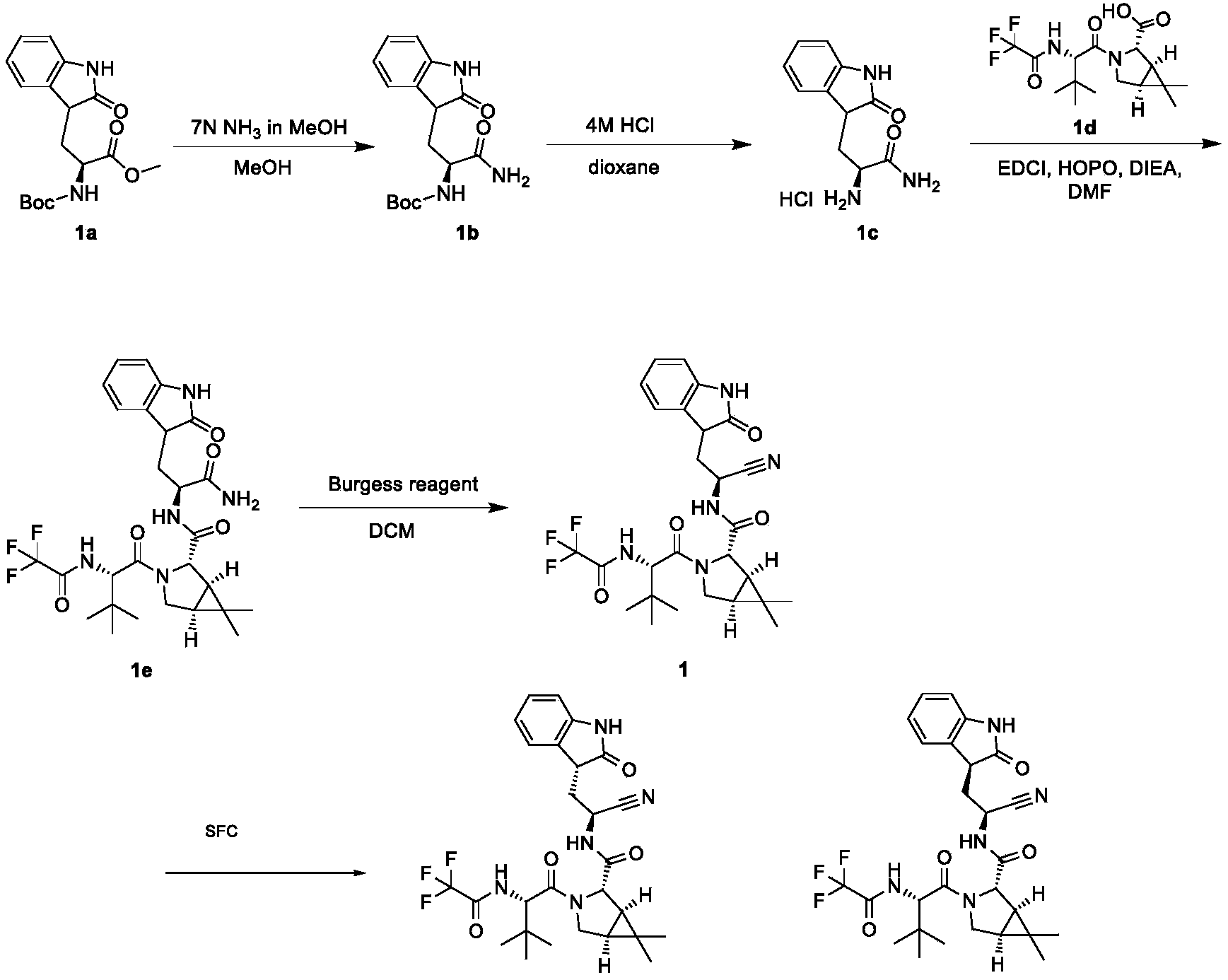
The structural characterization data of compound 1-P2 are as follows:
[0153]m/z(ESI):548[M+H] 。
[0154]
1H NMR:(400MHz,DMSO-d6)δ10.58-10.41(m,1H),9.42-9.00(m,2H),7.39-7.26(m,1H),7.21-7.13(m,1H),7.03-6.78(m,2H),5.30-5.16(m,1H),4.44-4.30(m,1H),4.22(s,1H),4.00-3.86(m,1H),3.75-3.64(m,1H),3.58-3.47(m,1H),2.19-2.05(m,1H),1.63-1.54(m,1H),1.35(d,J=7.7Hz,1H),1.04(s,3H),1.01-0.96(m,2H),0.94(s,2H),0.90-0.79(m,9H)。
PAT
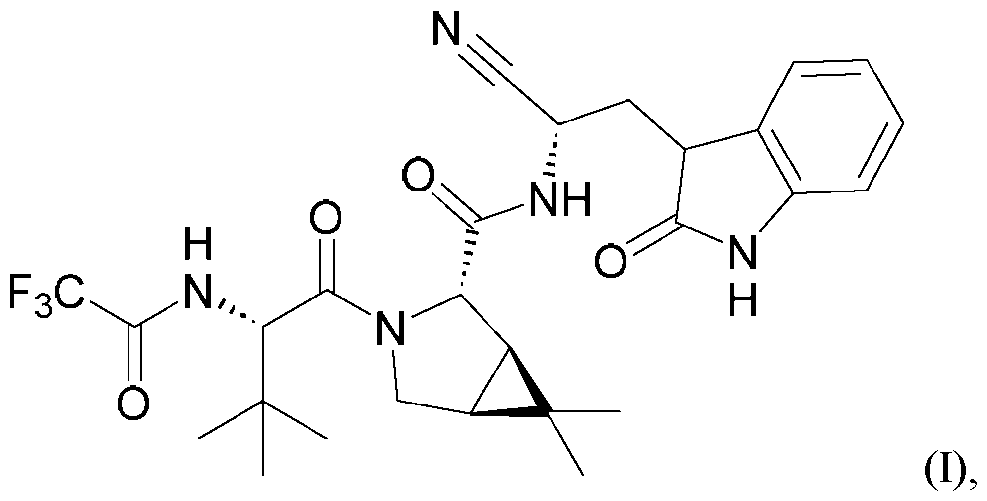
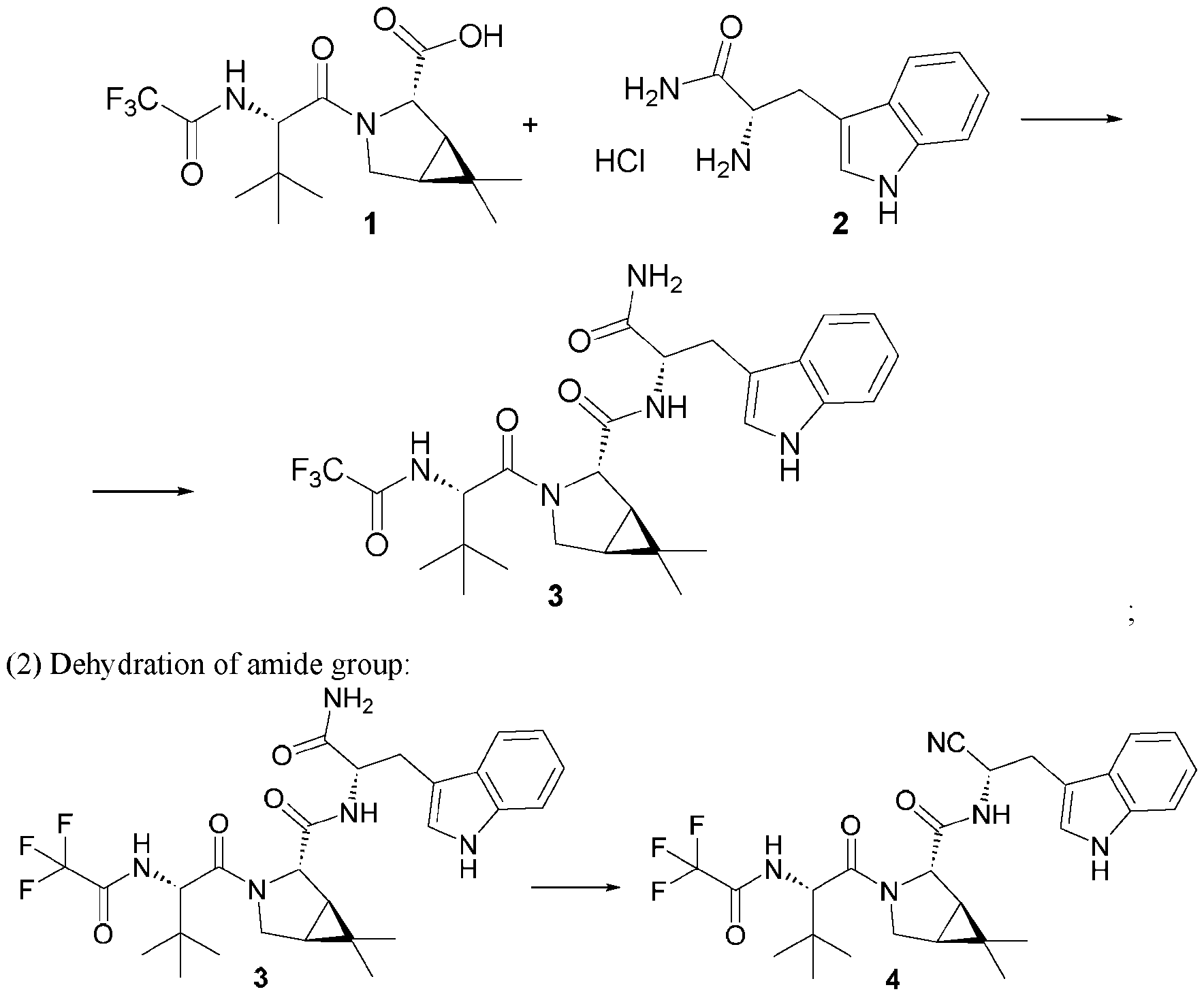
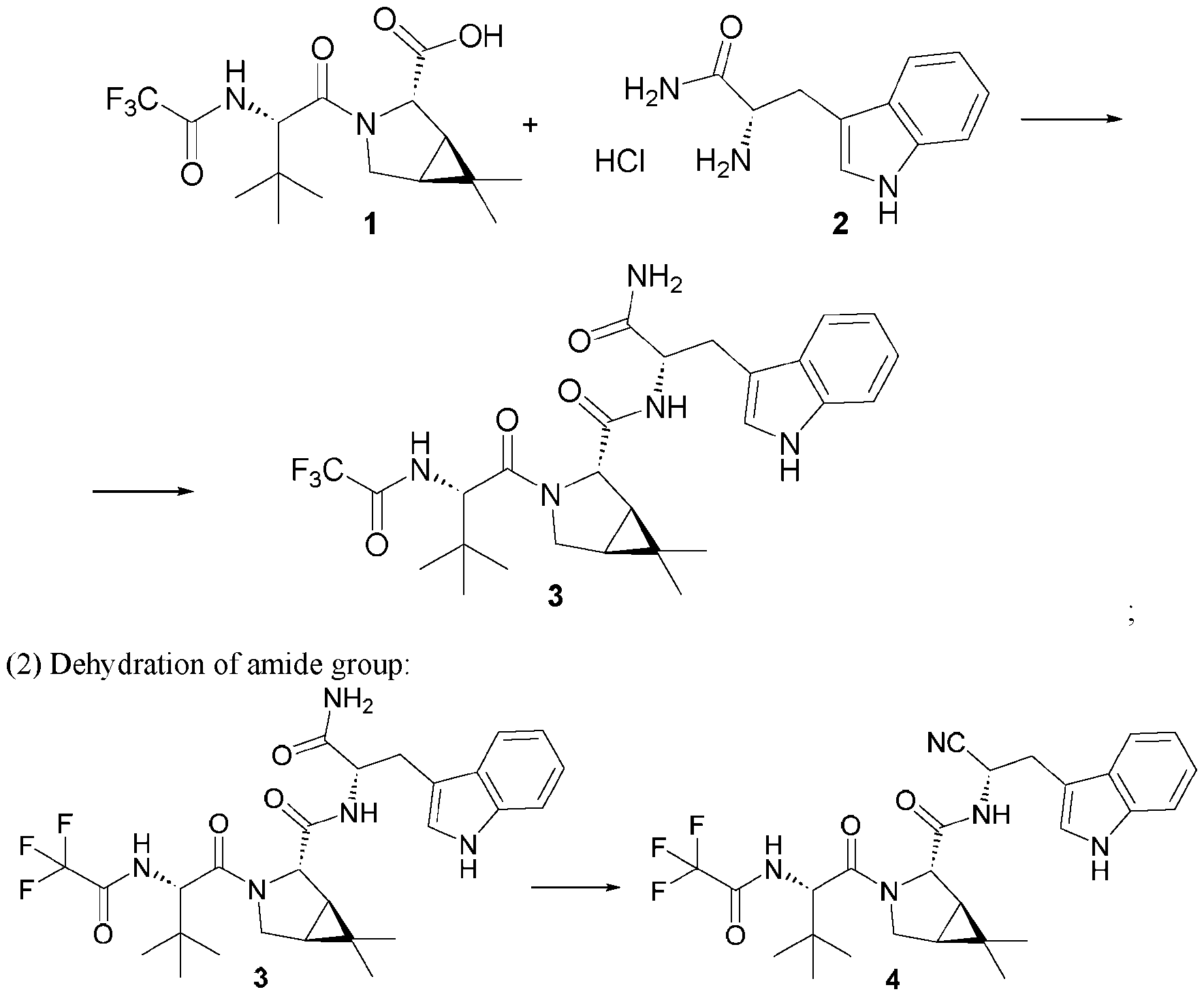

Synthesis of compound (I)
31.
ASB
Synthesis of compound (I)
31.
ASB
PAT
- Compounds for treatment a coronavirus infectionPublication Number:WO-2023245162-A2Priority Date:2022-06-17
- Compounds for treatment a coronavirus infectionPublication Number:EP-4540227-A2Priority Date:2022-06-17
- Pyrrolidine antiviral compoundPublication Number:WO-2023093834-A1Priority Date:2021-11-26
ADVERTISEMENT
ANAX LABORATORIES
WEBSITE https://www.anaxlab.com/
Discovery Solutions, Supporting the chemistry needs of clients in the Medical, Analytical and Bio Sciences
Development Solutions, Developing from Lab scale to PR&D, Kilo Scale-ups and Commercial Scales
SEE MORE………Integrated Solutions, Manufacturing Solutions, Products,
Can’t Find? Let’s Connect
Phone : +91 897704 2010 / +91 9177075735, Email : info@anaxlab.com
#MedicinalChemistry, #DrugDiscovery, #OrganicSynthesis, #ChemicalLibrary, #BuildingBlocks, #SARStudies, #ChemistryInnovation, #medchem, #Drugdevelopment, #Biotech, #Biotechnology, #AnaxLaboratories, #Pharma
AS ON FEB2026 4.574 LAKHS VIEWS ON BLOG WORLDREACH AVAILABLEFOR YOUR ADVERTISEMENT
join me on Linkedin
Anthony Melvin Crasto Ph.D – India | LinkedIn
join me on Researchgate
RESEARCHGATE
join me on Facebook
Anthony Melvin Crasto Dr. | Facebook
join me on twitter
Anthony Melvin Crasto Dr. | twitter
+919321316780 call whatsaapp
EMAIL. amcrasto@gmail.com
References
References
- WO 2023245162, Rogovoy B, Kysil V, Berishvili V, Pauza CD, Zapata JC, Moreno SM, Li H, Orry A, Lam PC, Abagyan R, Savchuk N, “Compounds for treatment a coronavirus infection”, published 2023-12-21, assigned to Trawsfynydd Therapeutics Inc.
- “International Nonproprietary Names for Pharmaceutical Substances (INN) Recommended INN: List 94” (PDF). WHO Drug Information. 39 (3). World Health Organization: 809–1060 (976). 2025.
- “Travatrelvir – Traws Pharma”. AdisInsight. Springer Nature Switzerland AG. Retrieved 5 July 2026.
- “Ratutrelvir | Ligand page”. IUPHAR/BPS Guide to PHARMACOLOGY.
- “Early-stage Trial to Determine a Safe and Effective Dose for Ratutrelvir in Patients With Mild to Moderate COVID-19”. ClinicalTrials.gov. U.S. National Library of Medicine. 17 January 2026. Clinical trial record for NCT07157007. Retrieved 5 July 2026.
- Contagion Editorial Team (8 July 2026). “Traws Pharma Reports Differentiated COVID-19 and Influenza Antiviral Progress”. Contagion Live.
 | |
| Clinical data | |
|---|---|
| Other names | 83-0060, TRX01 |
| Identifiers | |
| IUPAC name | |
| CAS Number | 2929236-94-0 |
| PubChem CID | 169861725 |
| IUPHAR/BPS | 13737 |
| UNII | VR2S5588W2 |
| Chemical and physical data | |
| Formula | C27H32F3N5O4 |
| Molar mass | 547.579 g·mol−1 |
| 3D model (JSmol) | Interactive image |
| SMILES | |
| InChI | |
///////////ratutrelvir, anax labs, protease inhibitor, antiviral, TRX01, 83-0060, TRX 01, VR2S5588W2,
#ratutrelvir, #anax labs, #protease inhibitor, #antiviral, #TRX01, #83-0060, #TRX 01, #VR2S5588W2,


 New Drug Approvals