
Home » Phase3 drugs (Page 27)
Category Archives: Phase3 drugs
 DRUG APPROVALS BY DR ANTHONY MELVIN CRASTO
.....FOR BLOG HOME CLICK HERE
DRUG APPROVALS BY DR ANTHONY MELVIN CRASTO
.....FOR BLOG HOME CLICK HEREFlag and hits
ORGANIC SPECTROSCOPY

SUBSCRIBE

 Subscribe in a reader
Enter your email address:
Delivered by FeedBurner
Subscribe to New Drug Approvals by Email


Recent Comments
 | shivkr2 on SPSR Excellence Award 2025 – S… |
 | Bonkasaurus on Infigratinib phosphate |
 | PALOVAROTENE | ORGAN… on Palovarotene |
| Pfizer just purchase… on Temanogrel | |
| Pfizer To Cash In On… on Temanogrel |
Ferring Pharmaceuticals begins phase III trials of elobixibat, a new investigational compound for chronic idiopathic constipation

ELOBIXIBAT
Ferring Pharmaceuticals begins phase III trials of elobixibat, a new investigational compound for chronic idiopathic constipation
Ferring Pharmaceuticals today MAY 2, 2013, announced it has initiated enrolment of patients in two phase III clinical trials of the investigational compound elobixibat for the treatment of chronic idiopathic constipation (CIC), a common gastrointestinal disorder affecting approximately 14% of the general population1. The two studies, Echo 1 and Echo 2, will be conducted at close to 200 sites worldwide and will enroll nearly 1700 patients. The studies aim to demonstrate the efficacy and safety of repeated daily doses of elobixibat against placebo over a period of up to 26 weeks.
Elobixibat is a first-in-class compound with a novel physiological mechanism of action. It acts locally in the gut with minimal systemic exposure to enhance the amount of luminal bile acids in the colon by a partial inhibition of the Ileal Bile Acid Transporter (IBAT). This potentially increases colonic fluid secretion and motility. Ferring acquired the global marketing rights for elobixibat, excluding Japan and a small number of Asian markets, from Albireo AB in 2012.
“We are pleased to begin Phase III studies on elobixibat for the treatment of chronic idiopathic constipation,” said Pascal Danglas, Executive Vice President, Clinical and Product Development at Ferring. “CIC causes significant discomfort to sufferers and seriously impacts their quality of life. Studies have shown that patients are not satisfied with current treatments.”
About chronic idiopathic constipation
Chronic idiopathic constipation (CIC) is among the most common diseases throughout the world, affecting approximately 14% of the general population particularly women and the elderly1. Patients with CIC often experience hard and lumpy stools, straining during defecation and a sensation of incomplete evacuation, as well as discomfort and bloating. CIC adversely affects a person’s quality of life and is associated with significant health care expenditure2. Studies show that nearly 50% of CIC sufferers are not satisfied with available treatments3 underscoring the unmet medical need in this area.
About Ferring Pharmaceuticals:
Headquartered in Switzerland, Ferring Pharmaceuticals is a research-driven, specialty biopharmaceutical group active in global markets. The company identifies, develops and markets innovative products in the areas of gastroenterology, reproductive health, urology and endocrinology. Ferring has its own operating subsidiaries in 50 countries and markets its products in more than 90 countries. To learn more about Ferring or its products please visit www.ferring.com.
Elobixibat is an IBAT inhibitor,[1] in clinical testing as of December 2012 for the treatment of chronic constipation and irritable bowel syndrome with constipation (IBS-C). It works by blocking the enterohepatic circulation of bile acids, increasing the bile acid concentration in the gut, which accelerates intestinal passage and softens the stool.
The drug was developed by Albireo AB, who licensed it to Ferring Pharmaceuticals for further development and marketing.[2][3]
Albireo has partnered with Ajinomoto Pharmaceuticals, giving the Japan-based company the rights to further develop the drug and market it throughout Asia.[4]
- “INN for A3309 is ELOBIXIBAT”. AlbireoPharma. Retrieved 5 December 2012.
- H. Spreitzer (27 August 2012). “Neue Wirkstoffe – Elobixibat”. Österreichische Apothekerzeitung (in German) (18/2012): 24.
- “Ferring Pharmaceuticals Acquires Licensing Rights for Elobixibat from Albireo AB”(Press release). Ferring Pharmaceuticals. 3 July 2012.
- “Ajinomoto Pharmaceuticals and Albireo Announce Japan and Asia License Agreement for Elobixibat”. Albireo. Retrieved 5 December 2012.
Ceregene announces top-line data from CERE-120 Phase 2b clinical study for Parkinson’s disease

Ceregene, Inc. today announced the top-line data from its double-blind, randomized, controlled Phase 2b clinical study of CERE-120 (AAV-neurturin), a gene therapy product designed to deliver the neurotrophic factor neurturin, for Parkinson’s disease……………read more at

Lilly’s diabetes drug dulaglutide shines again in Phase III
STRUCTURAL FORMULA OF DULAGLUTIDE
Monomer
HGEGTFTSDV SSYLEEQAAK EFIAWLVKGG GGGGGSGGGG SGGGGSAESK 50
YGPPCPPCPA PEAAGGPSVF LFPPKPKDTL MISRTPEVTC VVVDVSQEDP 100
EVQFNWYVDG VEVHNAKTKP REEQFNSTYR VVSVLTVLHQ DWLNGKEYKC 150
KVSNKGLPSS IEKTISKAKG QPREPQVYTL PPSQEEMTKN QVSLTCLVKG 200
FYPSDIAVEW ESNGQPENNY KTTPPVLDSD GSFFLYSRLT VDKSRWQEGN 250
VFSCSVMHEA LHNHYTQKSL SLSLG 275
Disulfide bridges location
55-55′ 58-58′ 90-150 90′-150′ 196-254 196′-254′
MOLECULAR FORMULA C2646H4044N704O836S18
MOLECULAR WEIGHT 59.67 kDa
MANUFACTURER Eli Lilly and Company
CODE DESIGNATION LY2189265
CAS REGISTRY NUMBER 923950-08-7
http://www.ama-assn.org/resources/doc/usan/dulaglutide.pdf FOR ALL DATA
Dulaglutide
APRIL 17, 2013
Eli Lilly has presented more promising late-stage data on its investigational long-acting diabetes drug dulaglutide.
The US major has presented top-line results from two Phase III studies from the five-trial AWARD programme. The first showed that dulaglutide demonstrated statistically superior reduction in HbA1c (blood sugar) levels compared to Sanofi’s Lantus (insulin glargine) at 52 weeks in patients with type 2 diabetes who were on metformin and glimeperide (AWARD-2). The second trial demonstrated that the drug, a once-weekly glucagon-like peptide 1 (GLP-1) receptor agonist, in combination with Lilly’s own Humalog (insulin lispro) was more effective than a Lantus/Humalog combo.
In October, Lilly posted impressive data from three other AWARD trials which showed that dulaglutide controlled HbA1c levels better than Byetta (exenatide), a drug Lilly helped develop before ending a collaboration with Amylin (since bought by Bristol-Myers Squibb and AstraZeneca), metformin and Merck & Co’s Januvia (sitagliptin).
Lilly stated that it expects to submit dulaglutide to regulatory authorities this year and present detailed data from the AWARD studies at scientific meetings in 2013 and 2014.
Links
FDA Advisory Committee Recommends Approval of BREO(TM) ELLIPTA(TM) for the Treatment of COPD
04/17/13
GlaxoSmithKline plc and Theravance, Inc. today announced that the Pulmonary-Allergy Drugs Advisory Committee (PADAC) to the US Food and Drug Administration (FDA) voted that the efficacy and safety data provide substantial evidence to support approval of BREO™ ELLIPTA™ as a once-daily inhaled treatment for the long-term, maintenance treatment of airflow obstruction in patients with chronic obstructive pulmonary disease (COPD) (9 for, 4 against) and also for the reduction of COPD exacerbations in patients with a history of exacerbations (9 for, 4 against)*.
BREO™ ELLIPTA™, is the proposed proprietary name for FF/VI 100/25 mcg, a combination of the inhaled corticosteroid (ICS) fluticasone furoate “FF”and the long acting bronchodilator (LABA) vilanterol “VI” (FF/VI)……………….read more at pharmalive
http://www.pharmalive.com/fda-panel-backs-glaxos-breo-ellipta
fluticasone furoate

vilanterol
Almirall and Forest Laboratories Announce Positive Phase III Study Results for Aclidinium and Formoterol Combination in COPD
APRIL 2013
Almirall, S.A. and Forest Laboratories, Inc. today announced positive topline results from a six month pivotal phase III clinical trial evaluating the efficacy and safety of fixed dose combinations of
aclidinium bromide, (LAMA)

and
formoterol fumarate (LABA)

delivered by Almirall’s inhaler Genuair® (Pressair™ in the USA).
Both combinations of aclidinium/formoterol (400/6mcg and 400/12mcg given twice a day) demonstrated statistically significant improvements in the co-primary endpoints of change from baseline in morning predose trough FEV1 versus formoterol 12mcg and in FEV1 at 1 hour post-dose versus aclidinium 400mcg at week 24 (p<0.01 and p≤0.0001, respectively). In addition, both combinations of aclidinium/formoterol (400/6mcg and 400/12mcg) provided statistically significant improvements versus placebo in the above two variables (both p<0.0001).
Both fixed-dose combination treatment arms were well tolerated in this study. The most common adverse events (greater than or equal to 3% and reported more frequently with aclidinium/formoterol than placebo) were nasopharyngitis (7.9% for 400/6mcg and 7.8% for 400/12mcg fixed-dose combinations and 7.2% for placebo) and back pain (3.4% for 400/6mcg and 4.7% for 400/12mcg fixed-dose combinations and 4.6% for the placebo group).
Results from a second pivotal Phase III clinical study are expected in the coming weeks. If the second clinical trial is successful those results, combined with the positive results of this study, will support our intention to file an NDA with the FDA and an MAA to the EMA.
“We expect this novel combination of aclidinium/formoterol to offer patients a new option in COPD treatment. In addition to the improved efficacy shown in this study, the safety profile was comparable to placebo”, commented Bertil Lindmark, Chief Scientific Officer at Almirall. “Indeed, these positive results confirm Almirall’s potential to build an innovative worldwide respiratory franchise around our Genuair® device and aclidinium bromide (Eklira®/Bretaris®)”.
“By successfully achieving the primary endpoints in this pivotal trial, we have demonstrated the superior improvement in lung function that can be achieved by combining two proven bronchodilators with complementary modes of action,” said Dr. Marco Taglietti, President of Forest Research Institute. “Aclidinium/formoterol has the potential to further expand the success of the Forest respiratory franchise which includes TudorzaTM PressairTM (aclidinium bromide 400mcg), as a treatment option for COPD patients who could benefit from additional bronchodilation”.
About the Phase III Study
ACLIFORM/COPD (ACLIdinium/FORMoterol fumarate combination for Investigative use in the treatment of moderate to severe COPD) was a 24-week randomized double-blind trial evaluating the 400/6mcg and 400/12mcg fixed dose combinations of aclidinium bromide/formoterol fumarate compared with aclidinium bromide 400mcg, formoterol fumarate 12mcg and placebo administered BID through the Genuair®/Pressair™ inhalers in 1729 patients with moderate to severe COPD, in 22 countries including Europe, Korea and South Africa.
For the co-primary efficacy endpoint of change from baseline in morning pre-dose trough FEV1 at week 24, aclidinium/formoterol 400/6mcg and 400/12 mcg demonstrated statistically significant improvements versus formoterol 12mcg (53mL and 85mL, respectively) and placebo (111mL and 143mL, respectively). For the second co-primary endpoint of change from baseline in FEV1 at 1 hour post-dose versus aclidinium 400mcg, aclidinium/formoterol 400/6mcg and 400/12 mcg demonstrated statistically significant improvements versus aclidinium 400mcg (69mL and 125mL, respectively) and placebo (244mL and 299mL, respectively).
The full results of this study will be presented at future scientific meetings.
About Aclidinium/Formoterol
Aclidinium bromide/formoterol fumarate (400/6mcg and 400/12mcg) are investigational fixed dose combinations of two approved long-acting bronchodilators with different mechanisms of action and similar pharmocodynamic profiles. Aclidinium bromide is an anticholinergic or long-acting muscarinic antagonist (LAMA) that produces bronchodilation by inhibiting the muscarinic M3 receptor in the airway smooth muscle. Formoterol fumarate is a long-acting beta-agonist (LABA) that stimulates the B2-receptors in the bronchial smooth muscle resulting in bronchodilation. Both aclidinium bromide (TudorzaTM/Eklira®) and formoterol fumarate are approved for the maintenance treatment of COPD in the United States and Europe.
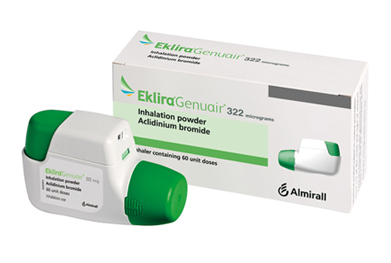
Aclidinium/formoterol was administered using a multiple-dose dry powder inhaler, Pressair™ (outside of the United States the inhaler is marketed as Genuair®), which delivers 60 doses of aclidinium bromide/formoterol fumarate powder for inhalation. The Pressair inhaler has a colored control window which confirms successful inhalation of the full dose and a dose indicator to let patients know approximately how many doses remain in the inhaler. The PressairTM / Genuair® inhaler is approved in the United States and Europe for the administration of TudorzaTM/ Eklira®.
Aclidinium/formoterol combines two effective bronchodilators with complementary mechanisms of action and is being evaluated as a potential treatment for COPD patients who could benefit from two bronchodilators administered in a single multi-dose inhaler.
About COPD
COPD, or chronic obstructive pulmonary disease, is a common, progressive, and debilitating lung disease characterized by persistent airflow limitation that makes it hard to breathe. The World Health Organization (WHO) has described COPD as a global epidemic; an estimated 64 million people have COPD worldwide. More than 3 million people died of the condition in 2005, which is equal to 5% of all deaths globally that year. Total deaths from COPD are projected to increase by more than 30% in the next 10 years without interventions to cut risks, particularly exposure to tobacco smoke. WHO predicts that COPD will become the third leading cause of death worldwide by 20301. COPD is already the third leading cause of death in the U.S.
In patients with COPD the airways in the lungs typically lose their elasticity, produce excess mucus and become thick and inflamed, limiting the passage of air. The most common symptoms of COPD are breathlessness (or a “need for air”), abnormal sputum (a mix of saliva and mucus in the airway), and chronic cough. As the condition worsens and breathlessness increases, daily activities, such as walking up a short flight of stairs or carrying a suitcase, can become very difficult. New therapies to treat this debilitating disease may be of value.
About Almirall
Almirall is a pharmaceutical company committed to provide valuable medicines from our own R&D, external partnerships, licenses and collaborations. In 2012, Almirall invested over 23% of its sales in R&D. Through seeking innovative medicines we aim to become a relevant player in respiratory and dermatology diseases with also a strong interest in gastroenterology and pain. With more than 3,000 employees in 22 countries, Almirall generated total revenues of 900 million in 2012.
The company was founded in 1943 and is headquartered in Barcelona, Spain. The stock is traded in the Spanish stock exchange (ticker: ALM).
For more information please visit www.almirall.com
Tudorza™, Eklira®, Genuair® and Pressair™ are registered trademarks of Almirall S.A.
About Forest Laboratories
Forest Laboratories’ (NYSE: FRX) longstanding global partnerships and track record developing and marketing pharmaceutical products in the United States have yielded its well-established central nervous system and cardiovascular franchises and innovations in anti-infective, respiratory, gastrointestinal and pain management medicine. Forest’s pipeline, the most robust in its history, includes product candidates in all stages of development across a wide range of therapeutic areas. The Company is headquartered in New York, NY. To learn more, visitwww.FRX.com.
Bayer Initiates Phase III Trial of Investigational Inhaled Amikacin Solution (BAY41-6551T) in Mechanically Ventilated Patients with Gram-negative Pneumonia

Amikacin
April 16, 2013
Bayer HealthCare Pharmaceuticals Inc. announced today that patient enrollment is underway in its global Phase III trial program to evaluate the efficacy and safety of adjunctive aerosolized BAY41-6551 versus aerosolized placebo in the treatment of intubated and mechanically ventilated patients with Gram-negative pneumonia receiving standard of care intravenous antibiotics. BAY41-6551 consists of amikacin inhalation solution delivered by a Pulmonary Drug Delivery System (PDDS) developed by Nektar Therapeutics (NASDAQ: NKTR).
Amikacin is an aminoglycoside antibiotic used to treat different types of bacterialinfections. Amikacin works by binding to the bacterial 30S ribosomal subunit, causing misreading of mRNA and leaving the bacterium unable to synthesize proteins vital to its growth.
“Bayer continues to invest in research for potential treatment options for many difficult to treat diseases,” said Pamela A. Cyrus, MD, Vice President and Head of U.S. Medical Affairs, Bayer HealthCare Pharmaceuticals. “This study is designed to evaluate the effectiveness of a solution of amikacin formulated for inhalation, delivered through a proprietary drug delivery system, as an adjunctive therapy for Gram-negative pneumonia in intubated and mechanically ventilated patients.”
About the Phase III INHALE Study Program
The global INHALE study program is comprised of two prospective, randomized, double-blind, placebo-controlled, multicenter studies to evaluate the safety and efficacy of BAY41-6551 as adjunctive therapy in intubated and mechanically-ventilated patients with Gram-negative pneumonia receiving standard of care intravenous antibiotics. The study will enroll patients age 18 or above that have microbiologically-confirmed pneumonia caused by Gram-negative organisms. INHALE will be a large multi-center global program involving centers in North America, South America, Europe, Japan, Australia and Asia. For more information about the trial, please visit www.clinicaltrials.gov
About Bayer HealthCare Pharmaceuticals Inc.
Bayer HealthCare Pharmaceuticals Inc. is the U.S.-based pharmaceuticals business of Bayer HealthCare LLC, a subsidiary of Bayer AG. Bayer HealthCare is one of the world’s leading, innovative companies in the healthcare and medical products industry, and combines the activities of the Animal Health, Consumer Care, Diabetes Care, and Pharmaceuticals divisions. As a specialty pharmaceutical company, Bayer HealthCare Pharmaceuticals provides products for Diagnostic Imaging, General Medicine, Hematology, Neurology, Oncology and Women’s Healthcare. The company’s aim is to discover and manufacture products that will improve human health worldwide by diagnosing, preventing and treating diseases.
About Nektar Therapeutics
BAY41-6551 is being developed through a collaboration with Nektar Therapeutics (NASDAQ:NKTR). Nektar Therapeutics is a biopharmaceutical company developing therapeutics based on its proprietary technology platforms. Nektar has a robust R&D pipeline of therapeutic candidate in pain, oncology and other therapeutic areas. Nektar is headquartered in San Francisco, California, with additional operations in Huntsville, Alabama and Hyderabad, India. Further information about the company and its drug development programs and capabilities may be found online at www.nektar.com.
BAYER® and the Bayer Cross® are registered trademarks of Bayer.
Acorda pursues stroke indication for MS drug Ampyra

4-Aminopyridine (INN fampridine, USAN dalfampridine) is an organic compound with the chemical formula C5H4N–NH2. The molecule is one of the three isomeric amines of pyridine. It is used primarily as a research tool, in characterizing subtypes of potassium channel, and has also been used to manage some of the symptoms of multiple sclerosis, and is indicated for symptomatic improvement of walking in adults with several variations of the disease. It was undergoing Phase III clinical trials as of 2008, and the U.S. Food and Drug Administration (FDA) approved the compound on January 22, 2010. Fampridine is also marketed as Ampyra (pronounced “am-PEER-ah,” according to the maker’s website) in the United States by Acorda Therapeutics and as Fampyra in Europe and in Canada, where the medication has been approved for use in that country by Health Canada on February 10, 2012
April 16,2013
Acorda Therapeutics will press ahead with development of its multiple sclerosis (MS) therapy Ampyra in patients with stroke-related disability following encouraging data from mid-stage trials.
Ampyra (dalfampridine) is a potassium channel blocker approved in the US in 2010 as a treatment for improving walking in patients with MS.
Laboratory studies have previously shown the drug can improve impulse conduction in nerve fibers in which the insulating layer, or myelin, has been damaged, leading to its approval in MS.
Now, a Phase II trial involving 83 patients – who had experienced an ischaemic stroke at least six months prior to enrollment and had chronic motor deficits – indicate that Ampyra may also be of benefit in treating stroke-related disabilities.
Ampyra is being developed and commercialised by Biogen Idec under the trade name Fampyra in markets outside of the US.
ACADIA Pharmaceuticals announced , it no longer needs to conduct additional Phase III trials for its pimavanserin drug for the treatment of Parkinson’s disease psychosis

| cas no 706779-91-1 706782-28-7 (tartrate) |
11, april 2013
ACADIA Pharmaceuticals announced following its FDA meeting, it no longer needs to conduct additional Phase III trials for its pimavanserin drug for the treatment of Parkinson’s disease psychosis. The company plans to seek early approval for the drug.
ACADIA Pharmaceuticals Inc. announced that the FDA has agreed that the data from the pivotal Phase III -020 study, together with supportive data from other studies with pimavanserin, are sufficient to support the filing of a New Drug Application, or NDA, for the treatment of Parkinson’s disease psychosis, or PDP. ACADIA will no longer conduct the Phase III -021 study that was planned as a confirmatory trial. ACADIA believes FDA decision will reduce substantially both the time and cost of the company’s PDP development program.
ACADIA is currently focused on completing the remaining elements of its pimavanserin PDP development program that are needed for submission of an NDA. ACADIA is currently targeting an NDA submission near the end of 2014.
Pimavanserin (ACP-103) is a drug developed by Acadia Pharmaceuticals which acts as an inverse agonist on the serotonin receptor subtype 5-HT2A, with 10x selectivity over 5-HT2C, and no significant affinity or activity at 5-HT2B or dopamine receptors.[1] As of September 3 2009, pimavanserin has not met expectations for Phase III clinical trials for the treatment of Parkinson’s disease psychosis,[2] and is in Phase II trials for adjunctive treatment of schizophrenia alongside an antipsychotic medication.[3] It is expected to improve the effectiveness and side effect profile of antipsychotics.[4][5][6]
- Vanover KE, Weiner DM, Makhay M, Veinbergs I, Gardell LR, Lameh J, Del Tredici AL, Piu F, Schiffer HH, Ott TR, Burstein ES, Uldam AK, Thygesen MB, Schlienger N, Andersson CM, Son TY, Harvey SC, Powell SB, Geyer MA, Tolf BR, Brann MR, Davis RE (May 2006). “Pharmacological and behavioral profile of N-(4-fluorophenylmethyl)-N-(1-methylpiperidin-4-yl)-N’-(4-(2-methylpropyloxy)phenylmethyl) carbamide (2R,3R)-dihydroxybutanedioate (2:1) (ACP-103), a novel 5-hydroxytryptamine2A receptor inverse agonist”. J Pharmacol Exp Ther 317 (2): 910–8. doi:10.1124/jpet.105.097006. PMID 16469866.
- ACADIA Pharmaceuticals. “Treating Parkinson’s Disease – Clinical Trial Pimavanserin – ACADIA”. Retrieved 2009-04-11.[dead link]
- “ACADIA Announces Positive Results From ACP-103 Phase II Schizophrenia Co-Therapy Trial” (Press release). ACADIA Pharmaceuticals. 2007-03-19. Retrieved 2009-04-11.
- Gardell LR, Vanover KE, Pounds L, Johnson RW, Barido R, Anderson GT, Veinbergs I, Dyssegaard A, Brunmark P, Tabatabaei A, Davis RE, Brann MR, Hacksell U, Bonhaus DW (August 2007). “ACP-103, a 5-hydroxytryptamine 2A receptor inverse agonist, improves the antipsychotic efficacy and side-effect profile of haloperidol and risperidone in experimental models”. J Pharmacol Exp Ther 322 (2): 862–70. doi:10.1124/jpet.107.121715. PMID 17519387.
- Vanover KE, Betz AJ, Weber SM, Bibbiani F, Kielaite A, Weiner DM, Davis RE, Chase TN, Salamone JD (October 2008). “A 5-HT2A receptor inverse agonist, ACP-103, reduces tremor in a rat model and levodopa-induced dyskinesias in a monkey model”. Pharmacol Biochem Behav 90 (4): 540–4. doi:10.1016/j.pbb.2008.04.010. PMC 2806670. PMID 18534670.
- Abbas A, Roth BL (December 2008). “Pimavanserin tartrate: a 5-HT2A inverse agonist with potential for treating various neuropsychiatric disorders”. Expert Opin Pharmacother 9 (18): 3251–9. doi:10.1517/14656560802532707. PMID 19040345.
Phase 3-AMG 145 for hyperlipidaemia and mixed dyslipidaemia
AMG 145
Amgen Limited.
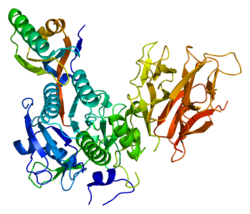
AMG 145 is a fully-human monoclonal antibody which targets proprotein convertase subtilisin/kexin type 9 (PCSK9).
It is intended for use in the reduction of elevated total cholesterol (TC), low-density lipoprotein cholesterol (LDL-C), apolipoprotein B (apo-B), non-high density lipoprotein cholesterol (non-HDL-C) and lipoprotein A (Lp(a)) in patients with primary hyperlipidaemia and mixed dyslipidaemia.
It is also intended for use as an adjunct to other lipid lowering therapies in patients with primary Ho-FH.
Dyslipidaemias include a wide range of lipid abnormalities and disturbances in lipid metabolism that lead to changes in plasma lipoprotein function and/or levels. Along with other cardiovascular risk factors, this may lead to the development of atherosclerosis. TC and LDL-C levels constitute the primary targets of therapy as evidence showing that reducing TC and LDL-C can prevent cardiovascular disease (CVD) is strong and compelling(1). However, other dyslipidaemias also predispose to premature CVD. The atherogenic lipid triad consisting of increased very low density lipoprotein (VLDL) remnants manifested as mildly elevated triglycerides (TG), increased small dense low-density lipoprotein (LDL) particles, and reduced high-density lipoprotein-cholesterol (HDL-C) levels is a common pattern found in premature CVD.
Hypercholesterolaemia is defined as the presence of high concentrations of cholesterol in the blood(2). Blood cholesterol has a log-linear relationship to the risk of CVD and is a key modifiable risk factor. In high-income countries, blood cholesterol levels >3.8mmol/L(b) are estimated to be responsible for more than 50% of CVD associated events(3). Primary hypercholesterolaemia is associated with an underlying genetic cause. This may be a specific genetic defect, as in familial hypercholesterolaemia (FH), or the interaction of multiple genes with dietary and other risk factors (non-familial hypercholesterolaemia).
FH is often transmitted as a codominant trait, with two principle forms described: homozygous-FH (Ho-FH) and heterozygous-FH (He-FH) in which either both or one of the pair of LDL-C receptor genes is defective or mutated with reduced activity. FH results in markedly elevated LDL-C levels, with other forms of cholesterol remaining normal. He-FH is often clinically silent and may be diagnosed at any age following a complete lipid analysis. Untreated, He-FH typically leads to symptomatic CVD by the fourth or fifth decade of life(2,4). The more severe homozygous form may be manifest from an early age, and is characterised by extravascular cholesterol deposits, cutaneous or tendon xanthomas, LDL-C levels >3.3 g/L(b) and arteriopathy.


 New Drug Approvals