New Drug Approvals

Home » GENERIC DRUG (Page 6)

Category Archives: GENERIC DRUG

DRUG APPROVALS BY DR ANTHONY MELVIN CRASTO .....FOR BLOG HOME CLICK HERE

Blog Stats

  • 4,816,506 hits

Flag and hits

Flag Counter

Enter your email address to follow this blog and receive notifications of new posts by email.

Join 37.9K other subscribers
Follow New Drug Approvals on WordPress.com

Archives

Categories

Recent Posts

Flag Counter

ORGANIC SPECTROSCOPY

Read all about Organic Spectroscopy on ORGANIC SPECTROSCOPY INTERNATIONAL 

Enter your email address to follow this blog and receive notifications of new posts by email.

Join 37.9K other subscribers
DR ANTHONY MELVIN CRASTO Ph.D

DR ANTHONY MELVIN CRASTO Ph.D

DR ANTHONY MELVIN CRASTO, Born in Mumbai in 1964 and graduated from Mumbai University, Completed his Ph.D from ICT, 1991,Matunga, Mumbai, India, in Organic Chemistry, The thesis topic was Synthesis of Novel Pyrethroid Analogues, Currently he is working with AFRICURE PHARMA, ROW2TECH, NIPER-G, Department of Pharmaceuticals, Ministry of Chemicals and Fertilizers, Govt. of India as ADVISOR, earlier assignment was with GLENMARK LIFE SCIENCES LTD, as CONSUlTANT, Retired from GLENMARK in Jan2022 Research Centre as Principal Scientist, Process Research (bulk actives) at Mahape, Navi Mumbai, India. Total Industry exp 32 plus yrs, Prior to joining Glenmark, he has worked with major multinationals like Hoechst Marion Roussel, now Sanofi, Searle India Ltd, now RPG lifesciences, etc. He has worked with notable scientists like Dr K Nagarajan, Dr Ralph Stapel, Prof S Seshadri, etc, He did custom synthesis for major multinationals in his career like BASF, Novartis, Sanofi, etc., He has worked in Discovery, Natural products, Bulk drugs, Generics, Intermediates, Fine chemicals, Neutraceuticals, GMP, Scaleups, etc, he is now helping millions, has 9 million plus hits on Google on all Organic chemistry websites. His friends call him Open superstar worlddrugtracker. His New Drug Approvals, Green Chemistry International, All about drugs, Eurekamoments, Organic spectroscopy international, etc in organic chemistry are some most read blogs He has hands on experience in initiation and developing novel routes for drug molecules and implementation them on commercial scale over a 32 PLUS year tenure till date Feb 2023, Around 35 plus products in his career. He has good knowledge of IPM, GMP, Regulatory aspects, he has several International patents published worldwide . He has good proficiency in Technology transfer, Spectroscopy, Stereochemistry, Synthesis, Polymorphism etc., He suffered a paralytic stroke/ Acute Transverse mylitis in Dec 2007 and is 90 %Paralysed, He is bound to a wheelchair, this seems to have injected feul in him to help chemists all around the world, he is more active than before and is pushing boundaries, He has 100 million plus hits on Google, 2.5 lakh plus connections on all networking sites, 100 Lakh plus views on dozen plus blogs, 227 countries, 7 continents, He makes himself available to all, contact him on +91 9323115463, email amcrasto@gmail.com, Twitter, @amcrasto , He lives and will die for his family, 90% paralysis cannot kill his soul., Notably he has 38 lakh plus views on New Drug Approvals Blog in 227 countries......https://newdrugapprovals.wordpress.com/ , He appreciates the help he gets from one and all, Friends, Family, Glenmark, Readers, Wellwishers, Doctors, Drug authorities, His Contacts, Physiotherapist, etc He has total of 32 International and Indian awards

Verified Services

View Full Profile →

Archives

Categories

Flag Counter

ELETRIPTAN

ELETRIPTAN

Eletriptan, UK-116044-04(HBr salt), UK-116044, Relpax

143322-58-1  CAS OF FREE BASE

143577-61-1 (hemisuccinate), 179041-30-6 (monofumarate), 177834-92-3 (monoHBr salt), 180637-87-0 (monosuccinate)

(R)-3-[(-1-methylpyrrolidin-2-yl)methyl]-5-(2-phenylsulfonylethyl)- 1H-indole

Eletriptan hydrobromide is a selective serotonin (5-HT1) agonist, used for the acute treatment of the headache phase of migraine attacks.

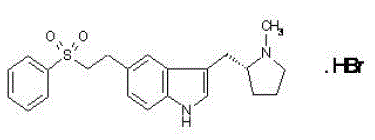
RELPAX (eletriptan hydrobromide) tablets contain eletriptan hydrobromide, which is a selective 5-hydroxytryptamine 1B/1D (5-HT1B/1D) receptor agonist. Eletriptan hydrobromide is chemically designated as (R)-3-[(1-Methyl-2-pyrrolidinyl)methyl]-5-[2-(phenylsulfonyl)ethyl]-1H-indole monohydrobromide, and it has the following chemical structure:

RELPAX® (eletriptan hydrobromide) Structural Formula Illustration

The empirical formula is C22H26N2O2S . HBr, representing a molecular weight of 462.43. Eletriptan hydrobromide is a white to light pale colored powder that is readily soluble in water.

Each RELPAX Tablet for oral administration contains 24.2 or 48.5 mg of eletriptan hydrobromide equivalent to 20 mg or 40 mg of eletriptan, respectively. Each tablet also contains the inactive ingredients microcrystalline cellulose NF, lactose monohydrate NF, croscarmellose sodium NF, magnesium stearate NF, titanium dioxide USP, hypromellose, triacetin USP and FD&C Yellow No. 6 aluminum lake.

Patents
Country
Patent Number
Approved
Expires (estimated)
United States 6110940 1997-08-29 2017-08-29
United States 5545644 1996-12-26 2016-12-26
Canada 2352392 2006-01-24 2019-11-01
Canada 2198599 2000-06-06 2015-05-17

EP 0592438; JP 1993507288; JP 1997003063; US 5545644; WO 9206973, EP 0776323; JP 1997512283; US 6110940; WO 9606842, EP 1088817

U.S. Pat. No. 5,545,644A1 describes a synthetic process for Eletriptan. 5-Bromoindole was acylated at the 3-position by reacting the magnesium salt of 5-bromoindole. This process results in a dimer formation in the final Pd/C reduction stage which poses problems in purification which further leads to decrease in yields.

U.S. Pat. No. 7,288,662B2 discloses methods to circumvent the problems associated with dimer formation described in U.S. Pat. No. 5,545,644A1. The indole-nitrogen was acetylated prior to hydrogenation and later deacetylated to give pure Eletriptan. However, this process introduced two additional steps into the synthesis which is time consuming and subsequently costly.

WO2005/103035A1 discloses Eletriptan synthesis by a Fischer Indole process. However, enantiomeric purity of the finished product depends on the purity of an acetal intermediate which might require asymmetric synthesis or optical resolution. Eletriptan obtained in the reported procedure had about 94% enantiomeric excess.

Eletriptan (trade name Relpax, used in the form of eletriptan hydrobromide) is a second generation triptandrug intended for treatment of migraineheadaches. It is used as an abortive medication, blocking a migraine attack which is already in progress. Eletriptan is marketed and manufactured by Pfizer Inc. It is sold in the US and Canada under the brand name Relpax, and in several other countries under the brand name Relert.

Eletriptan was approved by the U.S. Food and Drug Administration (FDA) on December 26, 2002, for the acute treatment of migraine with or without aura in adults.[1] It is available only by prescription in the United States and Canada. It is not intended for the prophylactic therapy of migraine or for use in the management of hemiplegic or basilar migraine. It is available in 20 mg, 40 mg and 80 mg strengths.

Eletriptan is covered by U.S. Patent no. 5545644[1][2] and U.S. Patent no. 6110940;[1][3] the FDA lists the patents as scheduled for expiration on December 26, 2016, and August 29, 2017, respectively.[1]

Eletriptan is believed to reduce swelling of the blood vessels surrounding the brain. This swelling is associated with the head pain of a migraine attack. Eletriptan blocks the release of substances from nerve endings that cause more pain and other symptoms like nausea, and sensitivity to light and sound. It is thought that these actions contribute to relief of symptoms by eletriptan.

Eletriptan is a serotonin agonist. Specifically, it is a selective 5-hydroxytryptamine 1B/1D (5-HT1B) receptor agonist.

Eletriptan binds with high affinity to the 5-HT1B, 1D, 1F] receptors.

It has a modest affinity to the 5-HT[1A, 1E, 2B, 7] receptors.

And little to no affinity at the 5-HT[2A, 2C, 3, 4, 5A, 6] receptors.

Eletriptan has no significant affinity or pharmacological activity at adrenergic alpha1, alpha2, or beta; dopaminergic D1 or D2; muscarinic; or opioid receptors. Eletriptan could be efficiently co-administrated with nitric oxide synthase (NOS’s) inhibitors for the treatment of NOS-dependent diseases (US patent US 2007/0254940)

Two theories have been proposed to explain the efficacy of 5-HT receptor agonists in migraine. One theory suggests that activation of 5-HT1 receptors located on intracranial blood vessels, including those on the arteriovenous anastomoses, leads to vasoconstriction, which is correlated with the relief of migraine headache. The other hypothesis suggests that activation of 5-HT1 receptors on sensory nerve endings in the trigeminal system results in the inhibition of pro-inflammatory neuropeptide release.

Common side effects include hypertension, tachycardia, headache, dizzyness, and symptoms similar to angina pectoris. Severe allergic reactions are rare.[4]

Eletriptan is contraindicated in patients with various diseases of the heart and circulatory system, such as angina pectoris, severe hypertension, and heart failure, as well as in patients that have had a stroke or heart attack. It is also contraindicated in severe renal or hepatic impairment.[4]

The drug has a relatively low potential for interactions. Notably, it is unlikely to interact to a relevant extent with beta blockers, tricyclic antidepressants and SSRI type antidepressants. Strong inhibitors of the liver enzyme CYP3A4, such as erythromycin and ketoconazole, significantly increase blood plasma concentrations and half life of eletriptan. Ergot alkaloids add to the drug’s hypertensive effect.[4]

  • Merck Index: 3-[[(2R)-1-Methyl-2-pyrrolidinyl]methyl]-5-[2-(phenylsulfonyl)ethyl]-1H-indole
  • 5-[2-(benzenesulfonyl)ethyl]-3-(1-methylpyrrolidin-2(R)-ylmethyl)-1H-indole
  • (R)-5-[2-(phenylsulfonyl)ethyl]-3-[(1-methyl-2-pyrrolidinyl)methyl]-1H-indole

  1.  FDA AccessData entry for Eletriptan Hydrobromide, accessed March 10, 2010.
  2.  U.S. Patent no. 5545644, John E. Macor & Martin J. Wythes, Indole Derivatives, August 13, 1996.
  3.  U.S. Patent no. 6110940, Valerie Denise Harding, et al., Salts of an anti-migraine indole derivative, August 29, 2000.
  4. Jasek, W, ed. (2007). Austria-Codex (in German) (62nd ed.). Vienna: Österreichischer Apothekerverlag. pp. 6984–8. ISBN 978-3-85200-181-4.

3-{[(2R)-1-methylpyrrolidin-2-yl]methyl}-5-[2-(phenylsulfonyl)ethyl]-1H-indole or Eletriptan, currently available in the market as a hydrobromide salt, is an agonist of the 5-hydroxytryptamine (5-HT1B/1D) receptor and it is used for treating migraine.

Various processes of synthesis of such molecule are known, but the one generally used is the synthesis shown in the diagram of FIG. 1, which provides for a Heck reaction (step 4 or 4b) between 5-bromo-3-{[(2R)-1-methylpyrrolidin-2-yl]methyl}-1H-indole and phenyl vinyl sulfone to obtain the 1-(3-{[(2R)-1-methylpyrrolidin-2-yl]methyl}-5-[(E)-2-(phenylsulfonyl)ethenyl]-1H-indole-1-yl)ethanone intermediate.

This reaction uses a palladium-based catalyst which is very sensitive to the impurities present in the reaction environment. It is thus essential that the 5-bromo-3{[(2R)-1-methylpyrrolidin-2-yl]methyl}-1H-indole intermediate be thoroughly purified before being reacted with phenyl vinyl sulfone.

In prior art documents (EP 0 592 438, U.S. Pat. No. 5,545,644 and U.S. Pat. No. 6,100,291) purification of the 5-bromo-3-{[(2R)-1-methylpyrrolidin-2-yl]methyl}-1H-indole intermediate is performed by means of chromatographic column, a process almost exclusively implementable in a laboratory or at a high cost in any case with long processing times alongside being ecologically unadvisable due to the large amount of solvents used.

Furthermore, it is known that the crystallisation of 5-bromo-3-{[(2R)-1-methylpyrrolidin-2-yl]methyl}-1H-indole intermediate (WO 2008/150500 and U.S. Pat. No. 5,545,644) provides a purified intermediate with assay not exceeding 98% (established through the HPLC analysis).

US5545644A1 describes a synthetic process for Eletriptan. 5-Bromoindole was acylated at the 3-position by reacting the magnesium salt of 5-bromoindole. This process results in a dimer formation in the final Pd/C reduction stage which poses problems in purification which further leads to decrease in yields.

US7288662B2 discloses methods to circumvent the problems associated with dimer formation described in US5545644A1. The indole-nitrogen was acetylated prior to hydrogenation and later deacetylated to give pure Eletriptan. However, this process introduced two additional steps into the synthesis which is time consuming and subsequently costly. WO2005/103035A1 discloses Eletriptan synthesis by a Fischer Indole process. However, enantiomeric purity of the finished product depends on the purity of an acetal intermediate which might require asymmetric synthesis or optical resolution. Eletriptan obtained in the reported procedure had about 94% enantiomeric excess.

Eletriptan and intermediates thereof, including 5-bromo-3-[(i?)-l-methyl- pyrrolidin-2-ylmethyl]-lH-indole (“BIP”) are described in US 5,545,644. Also disclosed is the synthesis of ELT, which is illustrated by the following scheme:

In the described process, intermediate I, BIP, is obtained by reacting intermediate II with lithium aluminium hydride (“LAH”). LAH spontaneously reacts with water, including atmospheric humidity, and the pure material is pyrophoric. The LAH is known as very unstable, and air-exposed samples are almost always contaminated with aluminium metal and or a mixture of lithium hydroxide and aluminium hydroxide, thus affecting the reactivity of the LAH powder. This leads to the use of a large excess of reagent in order to obtain moderate conversion. Furthermore, the described process requires heating to reflux for a long period of time (39 hours in total, according to example 29 in patent US 5,545,644) followed by a time consuming recovery process. The recovery process consists of diluting of the reaction mixture with ethyl acetate, filtering through cellulose filtration bar, as described in patent US 5,545,644 example 27, and purifying the obtained oily like residue by silica gel chromatography, wherein, dichloromethane, ethanol and concentrated aqueous ammonia are used as a mobile phase. This process provides BIP, which is then converted to ELT.

Anhydrous alpha-and beta-hydrobromide salt forms of eietriptan are disclosed in WO-A-96/06842.

………………..

WO2010049952A2

Figure imgf000003_0001

5-Bromoindole under Heck reaction conditions is coupled with phenyl vinyl sulfone followed by acylation with Cbz-Proline acid chloride to obtain a compound of Formula IV which on reduction in presence of a hydride agent provide Eletriptan.

1H NMR CDCI3 δ= 8.10 (bs, NH), 7.92-7.99 5 (m, 2H), 7.62-7.69 (m, 1H), 7.53-7.61 (m, 2H), 7.30 (s, 1H), 7.22 (d, 1H), 7.03 (s, 1H), 6.93 (dd, 1 H), 3.38-3.45 (m, 2H), 3.09-3.21 (m, 4H), 2.45-2.55 (m, 2H), 2.45 (s, 3H), 2.20-2.30 (m, 1H), 1.50-1.90 (m, 4H).

ESI Mass (M+H) 383.69

………..

An overview of the key routes to the best selling 5-membered ring heterocyclic pharmaceuticals

Marcus Baumann,  Ian R. Baxendale, Steven V. Ley and Nikzad Nikbin
Innovative Technology Centre, Department of Chemistry, University of Cambridge, Lensfield Road, CB2 1EW Cambridge, UK
Editor-in-Chief: J. Clayden
Beilstein J. Org. Chem. 2011, 7, 442–495.

http://beilstein-journals.org/bjoc/single/printArticle.htm?publicId=1860-5397-7-57

Eletriptan (87, Relpax) is yet another indole-containing antimigraine drug. A process route for the synthesis of eletriptan published by Pfizer starts from a preformed bromo-indole 88 [28] (Scheme 20). In order to perform the acylation of the indole ring on larger scale, ethylmagnesium bromide and the corresponding acid chloride 89 are added concurrently from two different sides of the reactor to stop these reagents reacting with each other. This method of adding the reagents circumvents the necessity to isolate the magnesium salt of the indole and increases the yield from 50 to 82%. The carbonyl group of the proline side chain is then reduced simultaneously with the complete reduction of the Cbz-group to a methyl group with lithium aluminium hydride. Finally, the sulfonate side chain is introduced via a Heck-type coupling similar to that of naratriptan (Scheme 15), followed by hydrogenation of the double bond to afford eletriptan (Scheme 20).

[1860-5397-7-57-i20]

A rather ingenious Mitsunobu coupling reaction has been used to create a highly functionalised substrate 96 for an intramolecular Heck reaction resulting in a very short and succinct synthesis of eletriptan and related analogues 97 [29] (Scheme 21).

[1860-5397-7-57-i21]
Scheme 21: Heck coupling for the indole system in eletriptan.

Interestingly, it was found that the most obvious approach, the direct Fischer indole synthesis, to prepare the core of eletriptan as shown in Scheme 22 is not successful [30]. This is believed to be due to the instability of the phenyl hydrazine species 98 under the relatively harsh reaction conditions required to promote the cyclisation.

[1860-5397-7-57-i22]
Scheme 22: Attempted Fischer indole synthesis of elatriptan.

However, this problem could be avoided by using an acid-labile oxalate protected hydrazine 104 as depicted in Scheme 23. The yield of this step can be further improved up to 84% if the corresponding calcium oxalate is used.

[1860-5397-7-57-i23]
Scheme 23: Successful Fischer indole synthesis for eletriptan.
  • Macor, J. E.; Wythes, M. J. Indole Derivatives. U.S. Patent 5,545,644, Aug 13, 1996.
  • Perkins, J. F. Process for the Preparation of 3-Acylindoles. Eur. Patent 1088817A2, April 4, 2001.
  • Ashcroft, C. P. Modified Fischer Indole Synthesis for Eletriptan. WO Patent 2005/103035, Nov 3, 2005.
  • Bischler, A. Chem. Ber. 1892, 25, 2860–2879. doi:10.1002/cber.189202502123

…………

……………..

Synthesis of compounds related to the anti-migraine drug eletriptan hydrobromide

Suri Babu Madasu1,2, Nagaji Ambabhai Vekariya1, M. N. V. D. Hari Kiran1, Badarinadh Gupta1, Aminul Islam1, Paul S. Douglas2 and Korupolu Raghu Babu2
1Chemical Research and Development, Aurobindo Pharma Ltd., Survey No. 71 & 72, Indrakaran (V), Sangareddy (M), Medak Dist-502329, Andhra Pradesh, India
2Engineering Chemistry Department, AU College of Engineering, Andhra University, Visakhapatnam-530003, Andhra Pradesh, India
Associate Editor: J. Aube

Synthetic route of eletriptan hydrobromide. Reagents and conditions: (i) Acetic anhydride, TEA, DMF, 90–100 °C; (ii) palladium acetate, tri-(o-tolyl)phosphine, TEA, DMF, 90–100 °C; (iii) methanol, K2CO3, acetonitrile, H2O, 5–10 °C; (iv) palladium on carbon, acetone, H2O, aqueous hydrobromic acid, IPA, 25–30 °C.

………….

Org. Process Res. Dev., 2011, 15 (1), pp 98–103
DOI: 10.1021/op100251q

http://pubs.acs.org/doi/full/10.1021/op100251q
Figure

aReagents and conditions: (a) EtMgBr, Et2O. (b) 3, DCM, 50% from 1. (c) LiAlH4, THF, 72%. (d) Ac2O, TEA, DMF. (e) Phenyl vinyl sulfone (PVS), Pd(OAc)2, P(°Tol)3, TEA, DMF, 80% from 5. (f) H2, Pd/C, MeSO3H, acetone, 95%. (g) K2CO3, MeOH, 92%. (h) HBr, acetone 73%.

1H NMR (CDCl3): δ = 1.51−1.85 (m, 4H), 2.22−2.28 (m, 1H), 2.43−2.49 (m, 4H), 2.56−2.62 (m, 1H), 3.11−3.18 (m, 4H), 3.42−3.46 (m, 2H), 6.91−6.93 (s, 1H), 7.01 (s, 1H), 7.23−7.27 (d, 1H), 7.31 (s, 1H), 7.56−7.60 (m, 2H), 7.65−7.68 (m, 1H), 7.96−7.98 (d, 2H), 8.14 (s, 1H); LC/MS: Rt = 2.30 min; m/z 383 [MH]+

…………………………

ELETRIPTAN HYDROBROMIDE MONOHYDRATE

http://www.sumobrain.com/patents/wipo/Eletriptan-hydrobromide-monohydrate/WO2000032589.html

‘H-NMR (400MHz, ds-DMSO): delta = 10.90 (1H, d, J=2.2Hz), 9.35 (1 H, br s), 7.95 (2H, d, J=7.5Hz), 7.76 (1 H, t, J=7.5Hz), 7.66 (2H, t, J=7.5Hz), 7.38 (1 H, s), 7.24 (1 H, d, J=8.3Hz), 7.23 (1 H, d, J=2.2Hz), 6.92 (1 H, dd, J=8.3,1.4Hz), 3.63 (2H, m), 3.58 (2H, br m), 3.24 (1 H, m), 3.06 (1 H, m), 2.95 (2H, m), 2.86 (1 H, m), 2.83 (3H, s), 2.00 (1 H, m), 1.90 (2H, m), 1.70 (1 H, m).

Found: C, 54.85; H, 6.03; N, 5.76. C22H29N203SBr requires C, 54.87; H, 6.08; N, 5.82%.

UPDATED 29 MAR 2015

ELETRIPTAN
Eletriptan, UK-116044-04(HBr salt), UK-116044, Relpax
143322-58-1  CAS OF FREE BASE
143577-61-1 (hemisuccinate), 179041-30-6 (monofumarate), 177834-92-3 (monoHBr salt), 180637-87-0 (monosuccinate)
(R)-3-[(-1-methylpyrrolidin-2-yl)methyl]-5-(2-phenylsulfonylethyl)- 1H-indole
Eletriptan hydrobromide was first disclosed in U.S. patent 5,545,644 (1996), assigned to Pfizer, New York, claiming the product “eletriptan” and its pharmaceutically acceptable salts thereof. ].
However, a detailed study on the profile of the impurities present and their synthesis has not yet been cited anywhere, except for in the case of some metabolites . Eletriptan hydrobromide  is a second-generation drug serotonin (5-HT1) agonist  used in the management of sensations of tightness, pain, pressure and heaviness in the precordium, throat and jaws.
Eletriptan is more lipophilic than other triptans and absorbed more quickly than sumatriptan in the intestinal absorption. Eletriptan is more effective than sumatriptan in reducing the blood vessels surrounding the brain, which cause the swelling that is associated with the headache pain of a migraine attack, by blocking the release of substances from the nerve endings that causes more pain.
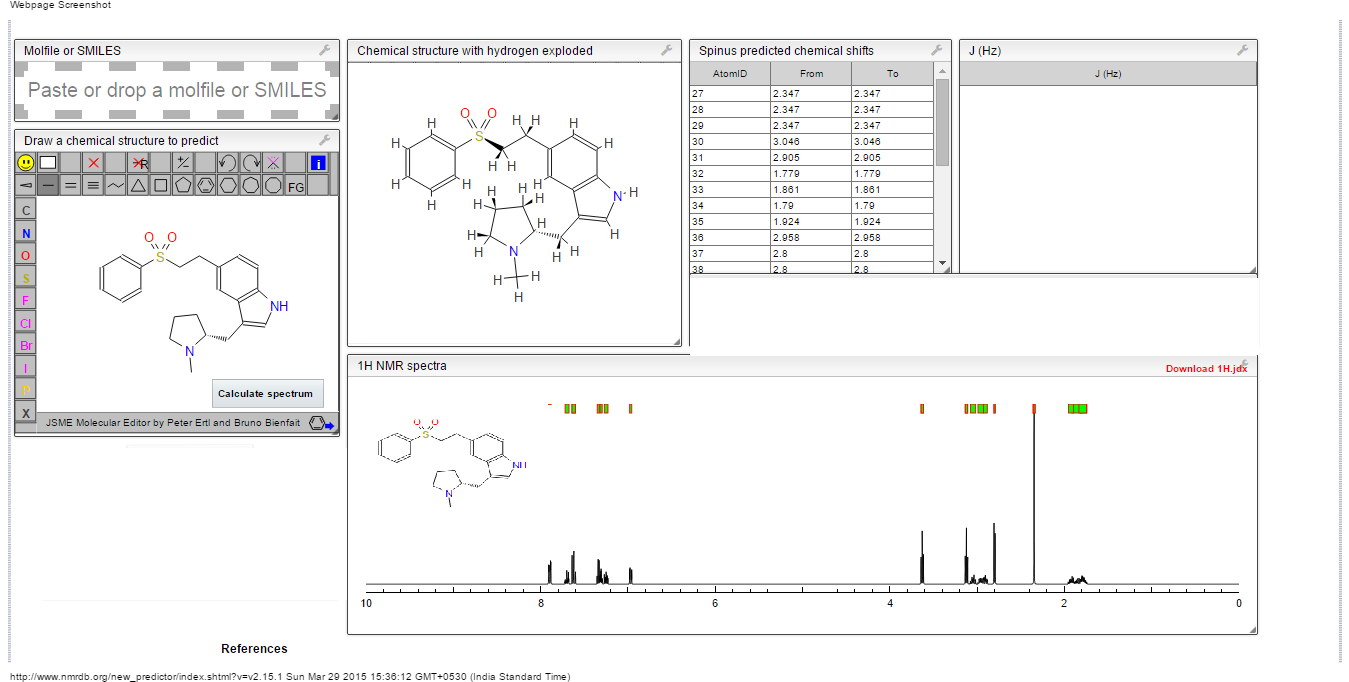
1H NMR PREDICT

(S)-3-((1-Methylpyrrolidin-2-yl)methyl)-5-(2-(phenylsulfonyl)ethyl)-1H-indole NMR spectra analysis, Chemical CAS NO. 177834-92-3 NMR spectral analysis, (S)-3-((1-Methylpyrrolidin-2-yl)methyl)-5-(2-(phenylsulfonyl)ethyl)-1H-indole H-NMR spectrum
………………..
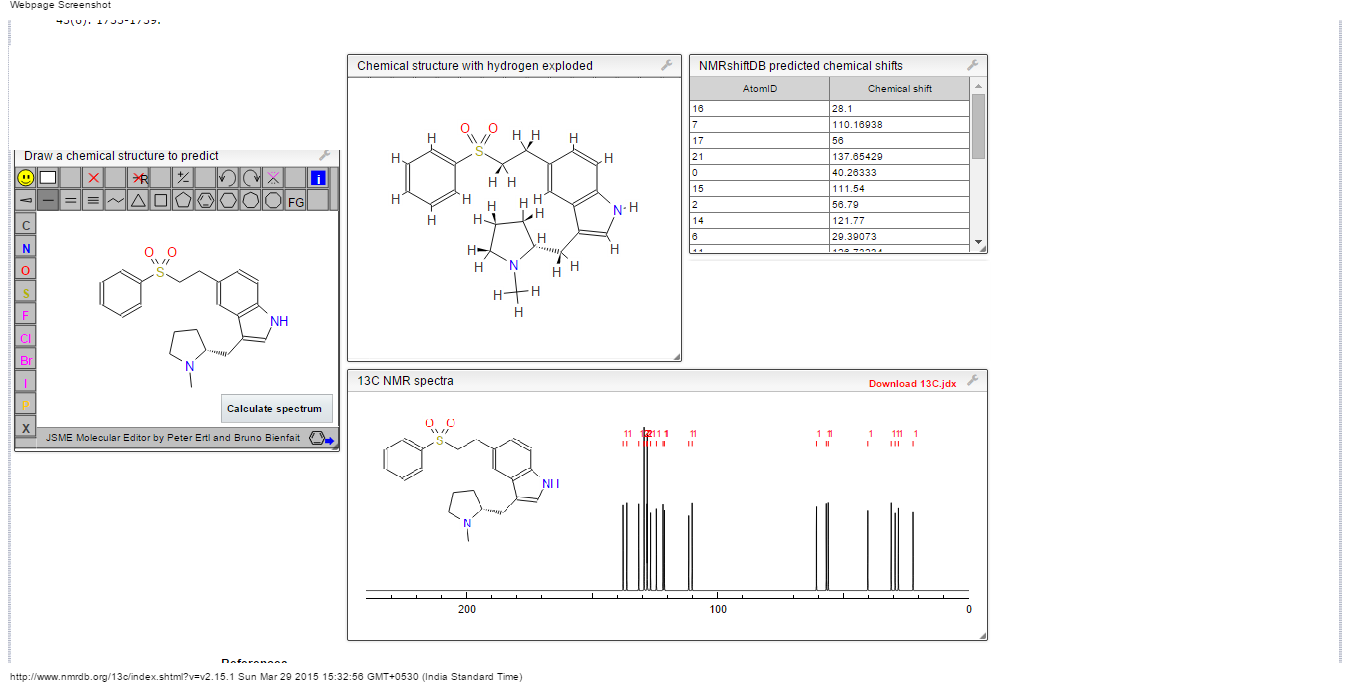
13C NMR

(S)-3-((1-Methylpyrrolidin-2-yl)methyl)-5-(2-(phenylsulfonyl)ethyl)-1H-indole NMR spectra analysis, Chemical CAS NO. 177834-92-3 NMR spectral analysis, (S)-3-((1-Methylpyrrolidin-2-yl)methyl)-5-(2-(phenylsulfonyl)ethyl)-1H-indole C-NMR spectrum

………….

Figure imgf000003_0001
5-Bromoindole under Heck reaction conditions is coupled with phenyl vinyl sulfone followed by acylation with Cbz-Proline acid chloride to obtain a compound of Formula IV which on reduction in presence of a hydride agent provide Eletriptan.
1H NMR CDCI3 δ= 8.10 (bs, NH), 7.92-7.99 5 (m, 2H), 7.62-7.69 (m, 1H), 7.53-7.61 (m, 2H), 7.30 (s, 1H), 7.22 (d, 1H), 7.03 (s, 1H), 6.93 (dd, 1 H), 3.38-3.45 (m, 2H), 3.09-3.21 (m, 4H), 2.45-2.55 (m, 2H), 2.45 (s, 3H), 2.20-2.30 (m, 1H), 1.50-1.90 (m, 4H).
ESI Mass (M+H) 383.69
………..

An overview of the key routes to the best selling 5-membered ring heterocyclic pharmaceuticals

Marcus Baumann,  Ian R. Baxendale, Steven V. Ley and Nikzad Nikbin
Innovative Technology Centre, Department of Chemistry, University of Cambridge, Lensfield Road, CB2 1EW Cambridge, UK
Editor-in-Chief: J. Clayden
Beilstein J. Org. Chem. 2011, 7, 442–495.
Eletriptan (87, Relpax) is yet another indole-containing antimigraine drug. A process route for the synthesis of eletriptan published by Pfizer starts from a preformed bromo-indole 88 [28] (Scheme 20). In order to perform the acylation of the indole ring on larger scale, ethylmagnesium bromide and the corresponding acid chloride 89 are added concurrently from two different sides of the reactor to stop these reagents reacting with each other. This method of adding the reagents circumvents the necessity to isolate the magnesium salt of the indole and increases the yield from 50 to 82%. The carbonyl group of the proline side chain is then reduced simultaneously with the complete reduction of the Cbz-group to a methyl group with lithium aluminium hydride. Finally, the sulfonate side chain is introduced via a Heck-type coupling similar to that of naratriptan (Scheme 15), followed by hydrogenation of the double bond to afford eletriptan (Scheme 20).
[1860-5397-7-57-i20]
A rather ingenious Mitsunobu coupling reaction has been used to create a highly functionalised substrate 96 for an intramolecular Heck reaction resulting in a very short and succinct synthesis of eletriptan and related analogues 97 [29] (Scheme 21).
[1860-5397-7-57-i21]
Scheme 21: Heck coupling for the indole system in eletriptan.
Interestingly, it was found that the most obvious approach, the direct Fischer indole synthesis, to prepare the core of eletriptan as shown in Scheme 22 is not successful [30]. This is believed to be due to the instability of the phenyl hydrazine species 98 under the relatively harsh reaction conditions required to promote the cyclisation.
[1860-5397-7-57-i22]
Scheme 22: Attempted Fischer indole synthesis of elatriptan.
However, this problem could be avoided by using an acid-labile oxalate protected hydrazine 104 as depicted in Scheme 23. The yield of this step can be further improved up to 84% if the corresponding calcium oxalate is used.
[1860-5397-7-57-i23]
Scheme 23: Successful Fischer indole synthesis for eletriptan.
  • Macor, J. E.; Wythes, M. J. Indole Derivatives. U.S. Patent 5,545,644, Aug 13, 1996.
  • Perkins, J. F. Process for the Preparation of 3-Acylindoles. Eur. Patent 1088817A2, April 4, 2001.
  • Ashcroft, C. P. Modified Fischer Indole Synthesis for Eletriptan. WO Patent 2005/103035, Nov 3, 2005.
  • Bischler, A. Chem. Ber. 1892, 25, 2860–2879. doi:10.1002/cber.189202502123
…………
……………..

Synthesis of compounds related to the anti-migraine drug eletriptan hydrobromide

Suri Babu Madasu1,2, Nagaji Ambabhai Vekariya1, M. N. V. D. Hari Kiran1, Badarinadh Gupta1, Aminul Islam1, Paul S. Douglas2 and Korupolu Raghu Babu2
1Chemical Research and Development, Aurobindo Pharma Ltd., Survey No. 71 & 72, Indrakaran (V), Sangareddy (M), Medak Dist-502329, Andhra Pradesh, India
2Engineering Chemistry Department, AU College of Engineering, Andhra University, Visakhapatnam-530003, Andhra Pradesh, India
Associate Editor: J. Aube
Synthetic route of eletriptan hydrobromide. Reagents and conditions: (i) Acetic anhydride, TEA, DMF, 90–100 °C; (ii) palladium acetate, tri-(o-tolyl)phosphine, TEA, DMF, 90–100 °C; (iii) methanol, K2CO3, acetonitrile, H2O, 5–10 °C; (iv) palladium on carbon, acetone, H2O, aqueous hydrobromic acid, IPA, 25–30 °C.
………….
Org. Process Res. Dev., 2011, 15 (1), pp 98–103
DOI: 10.1021/op100251q
aReagents and conditions: (a) EtMgBr, Et2O. (b) 3, DCM, 50% from 1. (c) LiAlH4, THF, 72%. (d) Ac2O, TEA, DMF. (e) Phenyl vinyl sulfone (PVS), Pd(OAc)2, P(°Tol)3, TEA, DMF, 80% from 5. (f) H2, Pd/C, MeSO3H, acetone, 95%. (g) K2CO3, MeOH, 92%. (h) HBr, acetone 73%.
1H NMR (CDCl3): δ = 1.51−1.85 (m, 4H), 2.22−2.28 (m, 1H), 2.43−2.49 (m, 4H), 2.56−2.62 (m, 1H), 3.11−3.18 (m, 4H), 3.42−3.46 (m, 2H), 6.91−6.93 (s, 1H), 7.01 (s, 1H), 7.23−7.27 (d, 1H), 7.31 (s, 1H), 7.56−7.60 (m, 2H), 7.65−7.68 (m, 1H), 7.96−7.98 (d, 2H), 8.14 (s, 1H); LC/MS: Rt = 2.30 min; m/z 383 [MH]+
…………………………
ELETRIPTAN HYDROBROMIDE MONOHYDRATE
‘H-NMR (400MHz, ds-DMSO): delta = 10.90 (1H, d, J=2.2Hz), 9.35 (1 H, br s), 7.95 (2H, d, J=7.5Hz), 7.76 (1 H, t, J=7.5Hz), 7.66 (2H, t, J=7.5Hz), 7.38 (1 H, s), 7.24 (1 H, d, J=8.3Hz), 7.23 (1 H, d, J=2.2Hz), 6.92 (1 H, dd, J=8.3,1.4Hz), 3.63 (2H, m), 3.58 (2H, br m), 3.24 (1 H, m), 3.06 (1 H, m), 2.95 (2H, m), 2.86 (1 H, m), 2.83 (3H, s), 2.00 (1 H, m), 1.90 (2H, m), 1.70 (1 H, m).
Found: C, 54.85; H, 6.03; N, 5.76. C22H29N203SBr requires C, 54.87; H, 6.08; N, 5.82%.
1H NMR

13C PREDICT

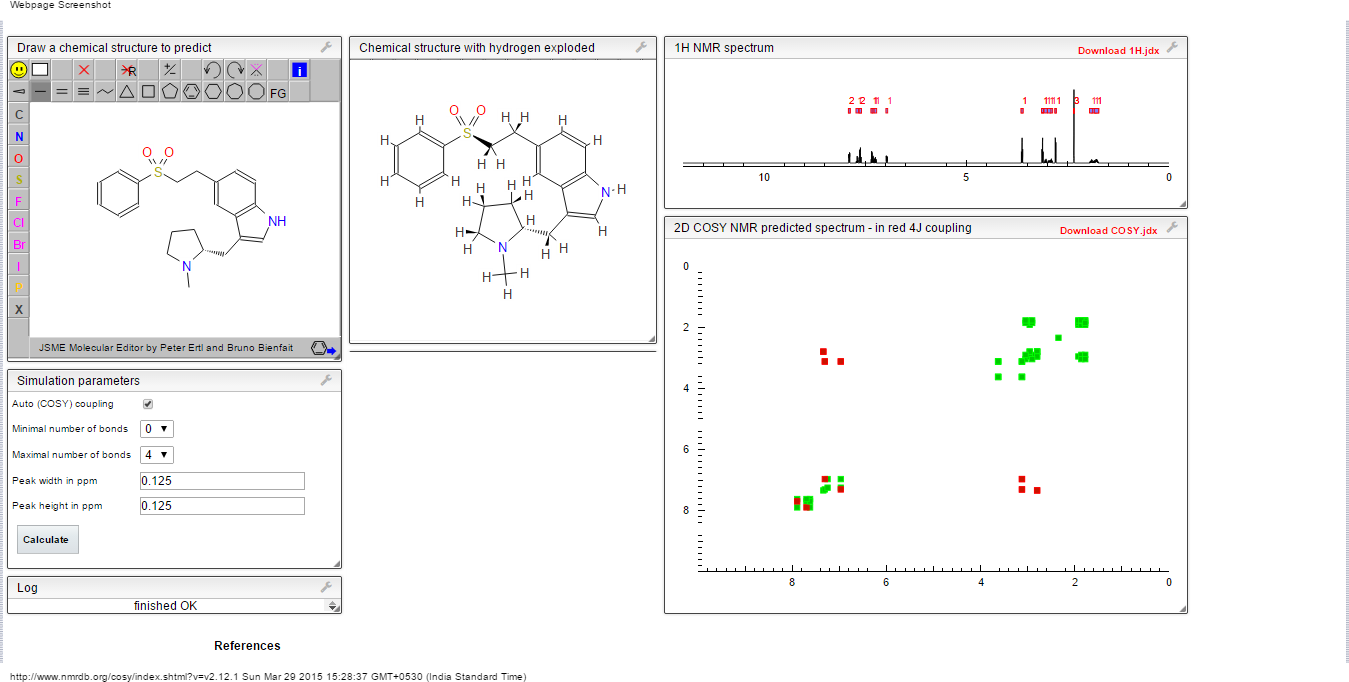
COSYPREDICT

SYNTHESIS

Reference:

KANSAL, Vinod Kumar; MISTRY, Dhirenkumar N.; PATEL, Rakesh Ravjibhai; PANDEY, Saurabh Patent: US2009/299077 A1, 2009 ; Location in patent: Page/Page column 8 ;
USV Limited B.S.D. Mar Patent: US2012/71669 A1, 2012 ; Location in patent: Page/Page column 11 ;

US2012/71669 A1, ;

US2011/166364 A1, ;
WO2011/4391 A2, ;
WO2012/4811 A1, ;

US2008/287519 A1, ; Page/Page column 10 ;

WO2011/4391 A2, ; Page/Page column 19 ;
US2008/287519 A1, ; Page/Page column 8 ;

RALTEGRAVIR

CAS No…….518048-05-0 (free acid)
871038-72-1 (monopotassium salt)IUPAC Name:- N-(2-(4-(4-fluorobenzylcarbamoyl)-5-hydroxy-1-methyl-6-oxo-1,6-dihydropyrimidin-2-yl)propan-2-yl)

Organic Process Research and Development, 2011 ,  vol. 15,  1  pg. 73 – 83,

143 – 144.1 °C(free acid)

MW: 444.42

………………………………………………….

K SALT

C20H20FN6O5*K, 482.513

MP..275 – 277 °C

European Journal of Medicinal Chemistry, 2012 ,  vol. 50, pG. 361 – 369

Drug information:- Raltegravir is an Anti-microbial drug further classified as anti-viral agent of the class integrase inhibitor. It is used either signally or in combination with other drugs for the treatment of human immunodeficiency virus (HIV) and further clinical trials are in process.

Raltegravir (RAL, Isentress, formerly MK-0518) is an antiretroviral drug produced by Merck & Co., used to treat HIV infection.[1] It received approval by the U.S. Food and Drug Administration (FDA) on 12 October 2007, the first of a new class of HIV drugs, the integrase inhibitors, to receive such approval.[2][3]

In December 2011, it received FDA approval for pediatric use in patients ages 2–18, taken in pill form orally twice a day by prescription with two other antiretroviral medications to form the cocktail (most anti-HIV drugs regimens for adults and children use these cocktails). Raltegravir is available in chewable form but- because the two tablet formulations are not interchangeable- the chewable pills are only approved for use in children two to 11. Older adolescents will use the adult formulation.[4]

Raltegravir targets integrase, an HIV enzyme that integrates the viral genetic material into human chromosomes, a critical step in the pathogenesis of HIV. The drug is metabolized away via glucuronidation.[5]

Isentress tablets

Raltegravir is taken orally twice daily.[3] Doses of 200, 400, and 600 mg have been studied.

At the 2007 Conference on Retroviruses and Opportunistic Infections, researchers presented Phase III data showing that 77% of patients taking the 400 mg dose of raltegravir plus other antiretroviral drugs reached HIV viral loads below 400 copies, nearly twice as many compared with a control group.

Raltegravir was initially approved only for use in individuals whose infection has proven resistant to otherHAART drugs.[3] However, in July 2009, the FDA granted expanded approval for Raltegravir for use in all patients.[6] As with any HAART medication, raltegravir is unlikely to show durability if used as monotherapy.

In a study of the drug as part of combination therapy, raltegravir exhibited potent and durable antiretroviral activity similar to that of efavirenz at 24 and 48 weeks but achieved HIV-1 RNA levels below detection at a more rapid rate. After 24 and 48 weeks of treatment, raltegravir did not result in increased serum levels of total cholesterollow-density lipoprotein cholesterol, or triglycerides.[7][8]

Raltegravir significantly alters HIV viral dynamics and decay and further research in this area is ongoing. In clinical trials patients taking raltegravir achieved viral loads less than 50 copies per millitre sooner than those taking similarly potent Non-nucleoside Reverse Transcriptase Inhibitors orProtease Inhibitors. This statistically significant difference in viral load reduction has caused some HIV researchers to begin questioning long held paradigms about HIV viral dynamics and decay.[9] Research into raltegravir’s ability to affect latent viral reservoirs and possibly aid in the eradication of HIV is currently ongoing.[10]

Research results were published in the New England Journal of Medicine on July 24, 2008. The authors concluded that “raltegravir plus optimized background therapy provided better viral suppression than optimized background therapy alone for at least 48 weeks.” [11]

Research on human cytomegalovirus (HCMV) terminase proteins demonstrated that Raltegravir may block viral replication of the herpesviruses.[12]

In January 2013, a Phase II trial was initiated to evaluate the therapeutic benefit of raltegravir in treating multiple sclerosis (MS).[13] The drug is active against Human Endogenous Retroviruses(HERVs) and possibly Epstein-Barr Virus, which have been suggested in the pathogenesis of relapsing-remitting MS.

Raltegravir was generally well tolerated when used in combination with optimized background therapy regimens in treatment-experienced patients with HIV-1 infection in trials of up to 48 weeks’ duration.[14]

Synthesis

Raltegravir part 1.png Raltegravir synthesis.png[15]

WO 2006060730

…………………………………………………

  1.  Savarino A (December 2006). “A historical sketch of the discovery and development of HIV-1 integrase inhibitors”. Expert Opin Investig Drugs 15 (12): 1507–22. doi:10.1517/13543784.15.12.1507.PMID 17107277.
  2.  “FDA approval of Isentress (raltegravir)”U.S. Food and Drug Administration (FDA). June 25, 2009. Retrieved 2009-11-15.
  3.  “Isentress Drug Approval Package”U.S. Food and Drug Administration (FDA). February 22, 2008. Retrieved 2009-11-15.
  4.  http://www.everydayhealth.com/hiv-aids/1222/fda-okays-raltegravir-for-kids-teens-with-hiv.aspx?xid=aol_eh-hiv_6_20111219_&aolcat=HLT&icid=maing-grid7%7Cmain5%7Cdl10%7Csec3_lnk2%26pLid%3D122480
  5.  HIV Antiretroviral Agents in Development
  6.  “UPDATE 2-FDA OKs widened use of Merck’s Isentress HIV drug”Reuters. 2009-07-10.
  7.  Markowitz M, Nguyen BY, Gotuzzo E, et al. (2007). “Rapid and durable antiretroviral effect of the HIV-1 Integrase inhibitor raltegravir as part of combination therapy in treatment-naive patients with HIV-1 infection: results of a 48-week controlled study”J. Acquir. Immune Defic. Syndr. 46 (2): 125–33. doi:10.1097/QAI.0b013e318157131cPMID 17721395.
  8.  Stephenson J (2007). “Researchers buoyed by novel HIV drugs: will expand drug arsenal against resistant virus”JAMA 297 (14): 1535–6. doi:10.1001/jama.297.14.1535PMID 17426263.
  9.  Faster Viral Decay With Raltegravir
  10.  ClinicalTrials.gov NCT00554398 Impact of MK-0518 (Raltegravir) Intensification on HIV-1 Viral Latency in Patients With Previous Complete Viral Suppression
  11.  Steigbigel RT, Cooper DA, Kumar PN, et al. (July 2008). “Raltegravir with optimized background therapy for resistant HIV-1 infection”N. Engl. J. Med. 359 (4): 339–54.doi:10.1056/NEJMoa0708975PMID 18650512.
  12.  Drug against AIDS could be effective against herpesvirus
  13.  Raltegravir (Isentress) Pilot Study in Relapsing Multiple Sclerosis (INSPIRE)
  14.  Croxtall JD, Keam SJ. (2009). “Raltegravir”Drugs 69 (8): 1059–75. doi:10.2165/00003495-200969080-00007PMID 19496631.
  15.  Belyk, K. M.; Morrison, H. G.; Jones, P.; Summa, V.; 2007, WO 2006060730

……………………………………………………………………………………………………………………………………………….

Raltegravir, also referred to as Raltegravir free-hydroxy, N-(2-(4-(4-fluorobenzyl- carbamoyl)-5-hydroxy-l-methyl-6-oxo-l ,6-dihydropyrimidin-2-yl)propan-2-yl)-5-methyl- l ,3,4-oxadiazole-2-carboxamide, having the following structure;

Figure imgf000002_0001

is an antiretroviral drug used to treat HIV infection. Raltegravir targets integrase, an HIV enzyme that integrates the viral genetic material into human chromosomes, a critical step in the pathogenesis of HIV. Raltegravir potassium salt is marketed under the trade name ISENTRESS™ by Merck & Co.

The processes for preparing Raltegravir that are known in the art either require a protection step for the 5-hydroxy group prior to the methylation step, or lead to an impurity resulting from the methylation of the 5-hydroxy group.

U.S. Patent No. 7, 169,780 discloses Raltegravir and preparation thereof, as described in the following reaction scheme:

Figure imgf000003_0001

Scheme 1

J. Med. Chem. 2008, 51 , 5843-5855 discloses another process for preparing Raltegravir as described in the following reaction scheme:

Figure imgf000003_0002

RLT K-salt

Scheme 2 U.S. Publication No. US 2006/0122205 describes an alternative process for preparing Raltegravir, in which the alkylation step does not include a step for protecting the 5-hydroxy group. The process is described in the following reaction scheme:

Figure imgf000004_0001

Scheme 3

Provided herein is an industrially applicable process for preparing RLT-7′, RLT-8, RLT-9 and RLT-9-OP, intermediates in the synthesis of Raltegravir, as well as processes for preparing Raltegravir and crystalline forms thereof.

US Publication No. US 2006/0122205, WO 2010/1401 56 and WO 201 1 /

024192 describe the potassium salt of Raltegravir, including amorphous and crystalline forms I, II, III and H I , as well as amorphous and crystalline forms of Raltegravir free- hydroxy. PCT publication No. WO 201 1/123754 describes certain Raltegravir salts and polymorphs, including form V of Raltegravir potassium.

Conditions:-

i. Benzylchloroformate, N,N-diisopropylethylamine, Methyl tert-butyl ether, 20 – 25 °C, 16 h, ii. Hydroxyl amine, Water, 60 °C, 3 h, iii. Dimethyl acetylenedicarboxylate, methanol, Room temperature 2 h then Xylene 90 °C, 2 h, iv. Magnesium methoxide, dimethyl sulfoxide, Methyl iodide, 20 – 25 °C, 2 h, v. 4-fluorobenzyl amine, ethanol, 72 °C, 2 h, vi. 5% Pd/C, methanol, Molybdate sulfuric acid, Hydrogen gas, 50 °C, 3 h, vii. 5-methyl-1,3,4-oxadiazole-2-carbonylchloride, N-methylmorpholine, Tetrahydrofuran, 0 – 5 °C, 2 h

preparation of Raltegravir is described in US patent 2006122205A1 and also in WO2006060730. Accordingly, 2-amino-2-methyl-propanenitrile 1 was reacted with benzylchloroformate in presence of N,N-diisopropylethylamine using methyl tert-butyl ether as solvent at ambient temperature to give benzyl N-(1-cyano-1-methyl-ethyl)carbamate 2. Treatment of 2 with hydroxyl amine using water as solvent at elevated temperature give benzyl N-[(2Z)-2-amino-2-hydroxyimino-1,1-dimethyl-ethyl]carbamate 3. The compound 3 was further cyclized with dimethyl acetylenedicarboxylate using methanol as solvent at higher temperature to give methyl 2-(1-benzyloxycarbonylamino-1-methyl-ethyl)-5-hydroxy-6-oxo-1H-pyrimidine-4-carboxylate 4. Compound 4 was then methylated with methyl iodide in presence of magnesium methoxide as base and dimethyl sulfoxide as solvent at ambient temperature to give methyl 2-(1-benzyloxycarbonylamino-1-methyl-ethyl)-5-hydroxy-1-methyl-6-oxo-pyrimidine-4-carboxylate 5. Compound 5 on condensing with 4-fluorobenzyl amine using ethanol as solvent result in to benzyl N-[1-[4-[(4-fluorophenyl)methylcarbamoyl]-5-hydroxy-1-methyl-6-oxo-pyrimidin-2-yl]-1-methyl-ethyl]carbamate 6, which underwent benzyloxy-decarboxylation on hydrogenating with hydrogen gas in presence of 5% Palladium on carbon catalyst and molybdate sulfuric acid using methanol as solvent to give 2-(1-amino-1-methyl-ethyl)-N-[(4-fluorophenyl)methyl]-5-hydroxy-1-methyl-6-oxo-pyrimidine-4-carboxamide 7. The final step involves condensation of 7 with 5-methyl-1,3,4-oxadiazole-2-carbonylchloride in presence of N-methylmorpholine as base using tetrahydrofuran as solvent at slightly lower temperature to afford N-[1-[4-[(4-fluorophenyl)methylcarbamoyl]-5-hydroxy-1-methyl-6-oxo-pyrimidin-2-yl]-1-methyl-ethyl]-5-methyl-1,3,4-oxadiazole-2-carboxamide also called Raltegravir 8.

The formation of the hydroxypyrimidone core (3.22) of raltegravir deserves further discussion as its unexpected mechanism was only recently fully elucidated in a joint effort between Merck process chemists and the Houk group at UCLA [91]. These studies combined B3LYP density functional theory with labelling studies and revealed that the most likely pathway involves the formation of a tightly bound polar radical pair 3.31 resulting from thermal homolysis of the N–O bond (Scheme 35). This species subsequently recombines under formation of a C–N bond and a C=O double bond (3.32) allowing for the final cyclocondensation to occur with liberation of methanol. Furthermore these studies were able to disprove a potential alternative [3,3]-sigmatropic rearrangement step by incorporating 15N enriched precursors leading to the formation of pyrimidone 3.22, which is only consistent with a formal [1,3]-sigmatropic rearrangement. Subsequent calculations demonstrated the high energy barrier for such a concerted [1,3]-shift, ultimately leading to the finding of the before-mentioned polar radical pair pathway which is about 8 kcal/mol lower in energy. This is consistent with the experimentally observed rate acceleration in case of the Z-isomer of 3.33 over the E-isomer which was also confirmed by calculations showing an energy gap of 3 kcal/mol.

An overview of the synthetic routes to the best selling drugs containing 6-membered heterocycles

Marcus BaumannEmail of corresponding author and Ian R. BaxendaleEmail of corresponding author
Department of Chemistry, University of Durham, South Road, Durham, DH1 3LE, UK
Email of corresponding author Corresponding author email
Associate Editor: P. R. Hanson
Beilstein J. Org. Chem. 2013, 9, 2265–2319.

http://www.beilstein-journals.org/bjoc/single/articleFullText.htm?publicId=1860-5397-9-265

check beilstein journals as per link above ……………

this publication allows free usage of data if given proper ref…………………..

any objections email me  amcrasto@gmail.com or cal +91 9323115463

………………..

nmr

Imp roved synthesis of raltegravir

GUO D i2liang et al

Department ofM edicinal Chem istry, China PharmaceuticalUniversity, N anjing 210009;

Journal of China Pharmaceutical University 2009, 40 (4) : 297 – 301

http://star.sgst.cn/upload/attach/attach20091230100028d4masjzgcv.pdf

1H NMR (CD3OD) δ: 7.40 (m, 2H) , 7.04 (m , 2H) ,

4.56 (s, 2H ) , 3.46 ( s, 3H ) , 2.65 (s, 3H ) , 1.83 (s,

6H);

13C NMR (CD3OD ) δ: 168.4, 164.8, 163.2,

162.0, 161.9, 160.1, 155.3, 145.8, 136.0, 134.9,

131.0, 116.7, 116.6, 60.2, 43.8, 41.3, 34.8, 27.6,

11.4;

ESI2MS m /z 443 (M )-; LR2MS (EI) m /z 444(M )+; HR2MS ( E I) m /z C20 H21 FN6O5(M )+

calcd444, 155,  7, found 444, 154,  2

second set

WO2009088729 US20100280244

lH NMR (399.87 MHz5 CDCI3) δ 12.04 (s, IH), 8.45 (s, IH), 7.94 (t, J = 6.2 Hz, IH), 7.41-736 (m, 2H), 7.08-7.02 (m, 2H)5 4.61 (d, J – 6.2 Hz, 2H), 3.68 (s, 3H), 2.63 (s, 3H), 1.87 (s, 6H).

13C NMR (100.55 MHz, CDCI3) δ 168.3, 166.7, 162.6 (d, JCF=245.7 Hz), 159.6, 159.1, 152.O5 150.4, 147.2, 133.4 (d, JCP=3.2 Hz)5 129.9 (d, JcF=8.0 Hz), 124.1, 115.9 (d, JcF=21.7 Hz), 58.0, 42.7, 33.5, 26.7, 11.4.

…………………….

IR

WO2011024192WO2011024192A3

absorption bandsKBR (cm“1) at 832, 1017, 1248, 1350, 1510, 1682, 2995, and 3374

……………….

K SALT

Org. Process Res. Dev., 2011, 15 (1), pp 73–83
DOI: 10.1021/op100257r

http://pubs.acs.org/doi/full/10.1021/op100257r

mp 274.2−275.2 °C. 1H NMR (500 MHz, DMSO-d6) δ: 11.65 (t, J = 6.0 Hz, 1 H), 9.75 (s, 1 H), 7.36 (dd, J = 8.6, 5.7 Hz, 2 H), 7.14 (app. t, J = 8.6 Hz, 2 H), 4.48 (d, J = 6.0 Hz, 2 H), 3.43 (s, 3 H), 2.58 (s, 3 H), 1.73 (s, 6 H);

13C NMR (125 MHz, DMSO-d6) δ: 168.7, 167.0, 166.6, 162.1 (d, JCF = 243 Hz), 159.7, 158.3, 153.1, 139.6, 138.0 (d, JCF = 3 Hz), 130.2 (d, JCF = 8 Hz), 123.7, 116.0 (d, JCF = 22), 58.4, 42.1, 33.3, 28.1 (2 C), 11.7.

……………………………

impurities

Org. Process Res. Dev., 2012, 16 (8), pp 1422–1429

DOI: 10.1021/op300077m

Abstract Image

…………………

intermediates

http://www.google.com/patents/WO2013098854A2

Figure imgf000016_0001

N-[(1Z)-1 -amino-1 -(hydroxyimino)-2-memylpropan-2-yl]-5-methyl-l ,3 ,4- oxadiazole-2-carboxamide (IVa) (198 gms) was suspended in methanol (1188 ml) and cooled to 15 to 25°C. Dimethyl acetyl enedicarboxylate (DMAD; 152.8 gms) was added and the reaction mass was stirred for 2 to 3 hours at 25°C. The reaction mass was concentrated under reduced pressure and xylene was added and stirred between 135°C and 125°C for 6 hour. After completion of reaction, the mixture was cooled to 60°C and methanol (170 ml) & methyl tert-butyl ether (MTBE) were added to the reaction mass and stirred for 1 hour. The resultant slurry was filtered and washed with a 9:1 mixture of methanol & methyl tert-butyl ether (MTBE) and dried to give methyl 2-(2-(5-methyl-l ,3,4-oxadiazole-2-carboxamido)propan-2-yl)-l ,6-dihydro-5- hydroxy-6-oxopyrimidine-4-carboxylate (V a).

Yield: 198 gms (66 %).

1H NMR (400 MHz, DMSO d6): δ 12.74 (s, 1H), 10.35 (s, 1H), 9.12 (s, 1 H), 3.81 (s, 3H), 2.58 (s, 3H), 1.59 (s, 6 H);

13C NMR (100 MHz, DMSO d6): δ 166.60, 166.15, 160.19, 159.23, 153.26, 152.87, 145.65, 128.30, 56.60, 52.91 , 26.26, 11.34;

retroviral drugs

elvitegravir

Å for chemical synthesis from carboxylic acids elvitegravir 1 starts, the NIS transformed into acid chloride iodide, 2 , and with 3 condensation 4 . 4 and amino alcohols 5 addition-elimination reaction occurs 6 , 6 in alkaline conditions Shimonoseki ring hydroxyl group protected with TBS after seven , seven and zinc reagent 8 occurred Negishi coupling get nine , the last ninehydrolysis and methoxylated get angstrom for elvitegravir.

Egypt for Raltegravir (Elvitegravir) -2012 August anti-AIDS drugs approved by the FDA

RIVASTIGMINE

RIVASTIGMINE
123441-03-2 cas no
129101-54-8 CAS NO

Rivastigmine,   (sold under the trade name Exelon) is a parasympathomimetic orcholinergic agent for the treatment of mild to moderate dementia of the Alzheimer’s typeand dementia due to Parkinson’s disease. The drug can be administered orally or via atransdermal patch; the latter form reduces the prevalence of side effects, which typically include nausea and vomiting.The drug is eliminated through the urine, and appears to have relatively few drug-drug interactions.

Rivastigmine was developed by Marta Weinstock-Rosin of the Department of Pharmacology, at the Hebrew University of Jerusalem and sold to Novartis by Yissum for commercial development.(It is a semi-synthetic derivative of physostigmine) It has been available in capsule and liquid formulations since 1997. In 2006, it became the first product approved globally for the treatment of mild to moderate dementia associated withParkinson’s disease; and in 2007 the rivastigmine transdermal patch became the first patch treatment for dementia

PATENT

US 4,948,807


Patent 5,602,176
Issued: February 11, 1997
Inventor(s): Enz; Albert
Assignee(s): Sandoz Ltd.Patent expiration dates:

  • February 11, 2014


R. Amstutz, A. Enz, M. Marzi, M. Boelsterli, M. Walsinshaw
Amstutz, R.; Enz, A.; Marzi, M.; Boelsterli, J.; Walkinshaw, M. (1990). “Cyclische Phenyl-carbamate des Miotin-Typs und ihre Wirkung auf die Acetylcholinesterase”. Helvetica Chimica Acta(in German) 73 (3): 739. doi:10.1002/hlca.19900730323.
  • Rivastigmine hydrogen tartrate is chemically known as (S)-N-Ethyl-N-methyl-3- [1-(dimethylamino) ethyl]-phenyl carbamate hydrogen- (2R, 3R)-tartrate (hereinafter referred to as “rivastigmine tartrate”) and has structural Formula I.

    Figure imgb0001
  • Rivastigmine hydrogen tartrate is administered for the inhibition of reversible cholinesterase and is marketed under the brand name EXELON as capsules containing 0.5, 3, 4.5 and 6 mg rivastigmine base equivalent.
  • U.S. Patent No. 4,948,807 describes the compound N-ethyl, N-methyl-3-[1-(dimethylamino)ethyl]phenyl carbamate and its pharmacologically acceptable salts along with a pharmaceutical composition useful for treating anticholinesterase activity in humans.
  • U.S. Patent No. 5,602,176 describes (S)-N-ethyl-3-[(1-dimethylamino)ethyl]-N-methyl-phenyl carbamate in free base or acid addition salt form as useful for its anticholinesterase activity.
  • International Application Publication No. WO 2004/037771 A1 and European Patent 193926 describe a process for the preparation of (S)-3-[1-(dimethylamino)-ethyl]-phenyl-N-ethyl-N-methyl carbamate by the reaction of optically active m-hydroxyphenylethyl dimethylamine with a carbamoylhalide
  • International application No. WO 2005/058804A1 describes a process for the preparation of rivastigmine by streoselective reduction.

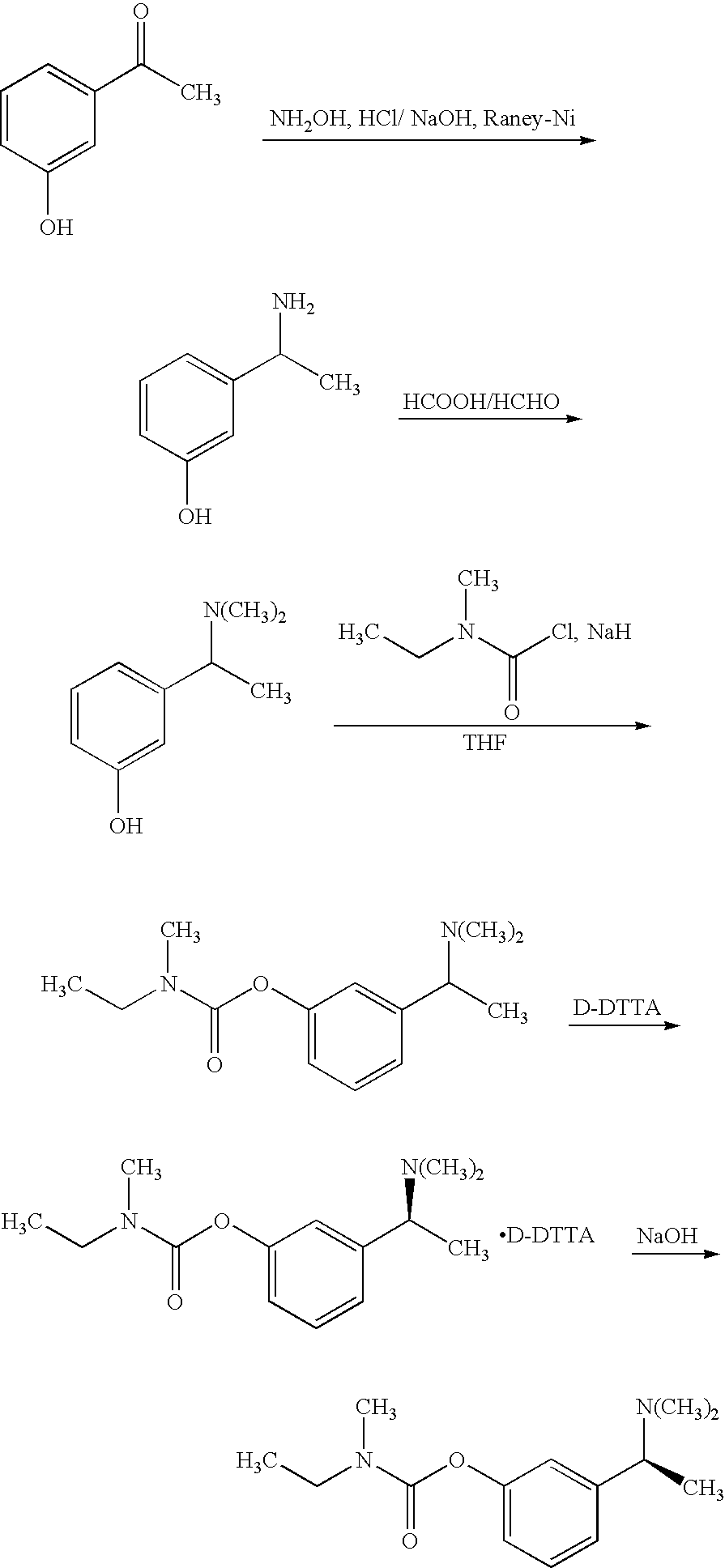
The synthesis of rivastigmine was reported in U.S. Pat. No. 5,602,176, GB2409453, and Yonwen, Jiang et. al. [Journal of East China Normal University (Natural Science), 2001, 1, 61-65], in which the method is disclosed as: preparing racemic rivastigmine by a series of reactions, then salifying the result with D-(+)-O, o′-bis-p-tolyl formacyl tartaric acid monohydrate (D-DTTA) to separate the racemic mixture, and recrystallizing at least three time to obtain (S)-rivastigmine with an optical purity of above 99%. The final yield is only 5.14%.

Figure US08324429-20121204-C00002

A method for resolution of a intermediate of rivastigmine is disclosed in WO200403771, in which S-(+)-camphor sulfonic acid is used to separate racemic intermediates of 3-(1-(S)—(N,N-dimethylamino) ethyl)phenol, and optically pure 3-(1-(S)—(N,N-dimethylamino) ethyl)phenol is obtained after three times recrystallization and then condensates with N-methyl-N-ethyl-amino formacyl chloride to obtain (S)-rivastigmine. The specific synthesis route is shown below:

Figure US08324429-20121204-C00003

A method for resolution of a intermediate of rivastigmine is also disclosed in WO2007014973, in which S-(+)-camphor sulfonic acid is used to separate racemic intermediates of 3-(1-(methylamino) ethyl)phenol, and the result condensates with N-methyl-N-ethyl-amino formacyl chloride to obtain N-methylethylcarbamino-3-[(S)-1-(methylamino)-ethyl]phenyl ester, and a methylation is then performed on the nitrogen atom followed by salifying with L-(+)-tartaric acid so that rivastigmine is obtained. The methylation needs a reduction system of sodium cyanoborohydride/formaldehyde, in which sodium cyanoborohydride is highly toxic, so that the method is not suitable for industrial production. The specific synthesis route is shown below:

Figure US08324429-20121204-C00004

The resolution methods mentioned above are time consuming with low yields, so that final yields are reduced and costs are increased, which are not beneficial for industrial production and the optical purity of rivastigmine cannot be guaranteed.

K. Han, C. Kim, J. Park*, M.-J. Kim*
Pohang University of Science and Technology, Korea
Chemoenzymatic Synthesis of Rivastigmine via Dynamic Kinetic Resolution as a Key Step
J. Org. Chem.  2010,  75:  3105-3108

Rivastigmine (Exelon®) is an acetylcholinesterase inhibitor that is prescribed for the treatment of mild to moderate dementia in patients with Alzheimer’s disease and Parkinson’s disease. The key step in the synthesis depicted is a dynamic kinetic resolution of the benzylic secondary alcohol B involving a lipase (Novozyme 435) coupled with a polymer-bound racemization catalyst (C).

The polymer-bound racemization catalyst C was prepared by heating a polymer-bound benzoyl chloride with [Ph4(η4-C4CO]Ru(CO)3 in toluene for one day. The catalyst can be recycled several times. The enzymatic resolution was performed on a 1 mmol scale. For an alternative chemoenzymatic synthesis of rivastigmine, see: J. Mangas-Sánchez et al. J. Org. Chem. 2009, 74, 5304.

………………………….

http://www.google.com/patents/EP1980552A2

EXAMPLES

EXAMPLE 1:

       PREPARATION OF1-(3-METHOXY PHENYL) ETHYL AMINE (FORMULA VI).

    • To a solution of 200 g of 3-hydroxyacetophenone of Formula IX in 400 ml of acetone, 244 g of potassium carbonate were charged and stirred for about 10 minutes. To the above reaction mixture 204 g of dimethyl sulphate was added for about 60 minutes followed by heating to about 45 °C and stirred for about 1 hour. After completion of the reaction, the reaction mixture was quenched by charging of 800 ml of water. Organic and aqueous layers were separated and 370 g of ammonium formate was added to the organic layer. The contents were then heated to about 180 °C and stirred for about 2 hours. The reaction mixture was then cooled to about 30° C and 600 ml of water was charged. The mixture was extracted with ethyl acetate (1×400 ml, 2×150 ml). The organic layers were combined and charged 600 ml of hydrogen chloride in isopropanol (18% w/w) followed by heating to about 75 °C and stirred for about 3 hours. The mixtures was distilled completely at about 65 °C under vacuum and again charge 100 ml ethyl acetate and distilled completely at about 65°C to afford residue.
    • 600 ml of ethyl acetate was charged to the residue and stirred for 30 minutes. Filtered the solid and was washed with 200 ml of ethyl acetate. The wet solid was then charged into 600 ml of water and pH was adjusted to about 11 by addition of 68.8 ml of 40% aqueous sodium hydroxide. The reaction mixture was extracted with ethyl acetate (1×200 ml, 2×100 ml). Organic and aqueous layers were separated and the organic layer was distilled off completely at about 65 °C under vacuum to afford 128 g of the title compound.
      HPLC purity: 99.1%

EXAMPLE 2:

       PREPARATION OF S-(-)-1-(3-METHOXY PHENYL) ETHYL AMINE MANDALATE (FORMULA V).

    • To a solution of 40 g of 1- (3-methoxyphenyl) ethyl amine of Formula VI in 1400 ml of isopropyl alcohol, 41.2 g of L-(+)-mandelic acid was added and stirred for about 15 minutes. The mixture was heated to about 75°C and stirred for about 45 minutes followed by cooling to about 37°C and stirred for about 10 minutes. The separated solid was filtered and the solid was washed 80 ml of isopropyl alcohol. The solid obtained was suck dried for 3 hours to obtain the wet compound of the diasteromeric salt of Formula V.
    • The obtained diasteromeric salt of Formula V was charged into a clean and dry round bottom flask containing 480 ml of isopropyl alcohol followed by heating to reflux. The resultant solution was stirred at reflux for about 45 minutes followed by cooling to about 37° C and stirred for about 10 minutes. Solid was separated by filtration and the solid was washed with 20 ml of isopropyl alcohol. The solid obtained was dried at about 55 °C for about 2 hours to yield 29 g of the title compound.
      Purity by chiral HPLC: 99.9%.

EXAMPLE 3:

       PREPARATION OF S-(-)-[1-(3-METHOXYPHENYL) ETHYL] DIMETHYL AMINE (FORMULA IV)

    • To a solution of 200 g of S-(-)-1-(3-methoxyphenyl)ethyl amine L (+)-Mandalate (diasteromeric salt) of Formula V in 800 ml of water, charged 148 g of formaldehyde (40%), 182.1 g of formic acid (98%) and the contents were heated to about 100 °C. The resultant mixture was stirred at about 100 °C for about 5 hours. After the completion of the reaction, the mixture was cooled to about 30° C and washed with toluene (3x1000ml). Aqueous layer pH was adjusted to 10.5 using 160 ml of 40% aqueous sodium hydroxide solution and extracted with ethyl acetate (2×500 ml). The organic layers were combined and washed with water (2×400 ml). The organic layer was distilled completely at about 60 °C under vacuum to yield 108 g of the title compound.
      Purity by HPLC: 98.15%.

EXAMPLE 4:

       PREPARATION OF S-(-)-[1-(3-HYDROXYPHENYL) ETHYL] DIMETHYL AMINE (FORMULA III)

    • 50 g of S-(-)-[1-(3-methoxyphenyl) ethyl] dimethyl amine of Formula IV and 283 g of 48% aqueous HBr solution were charged into a clean and round bottom flask followed by heating to about 110° C and stirred for about 6 hours. After completion of the reaction, the mixture was cooled to about 30°C and charged 250 ml of water and pH was adjusted to about 10.5 using 162 ml caustic lye and the reaction mixture was extracted with ethyl acetate ((1×150 ml, 2×50 ml)). The organic layer thus obtained was washed with water (2×50 ml) and treated with activated charcoal. The organic layer is filtered through celite and washed with 100 ml of ethyl acetate. The filtrate was distilled completely at below 60° C under vacuum. To the residue charged 200 ml of n-heptane at about 50°C and stirred for about 90 minutes at about 25°C. The separated solid was filtered and washed the solid with n-heptane 50 ml and suck dried. The solid obtained was dried at about 50°C for about 5 hours to yield 41.5 g of the title compound.
      Purity by HPLC: 99.07%.

EXAMPLE 5:

       PREPARATION OF (S)-N-ETHYL-N-METHYL-3-[1-DIMETHYL-AMINO)-ETHYL]-PHENYL CARBAMATE (FORMULA II).

    • 6 kg of S-(-)-[1-(3-hydroxyphenyl) ethyl] dimethyl amine of Formula III and 12 L of Methyl Isobutyl Ketone(MIBK) were charged and stirred for about 10 minutes. To this reaction solution 3.44 kg of pyridine, 1.18 kg of tetrabutylammonium bromide were charged and stirred for about 15 minutes to form clear solution. 3.97 kg of N-ethyl, N-methyl carbomyl chloride was added to the reaction mixture for about 30 minutes. Heated the contents to about 30°C and stirred for about 15 hours. After completion of the reaction 48 lit of water was charged and pH was adjusted to about 1.5 using 3.72 lit of 36% aqueous hydrochloric acid. Stirred the contents for about 30 minutes at about 25°C and aqueous layer was separated. The aqueous layers were then washed with MIBK (2×12 lit) and separate the aqueous layer. Aqueous layer pH was adjusted to 12.5 using 6 lit of 40% aqueous sodium hydroxide solution and stirred for about 15 minutes. The aqueous layer was then extracted with MIBK (2×12 lit) and separated the organic layer. Washed the organic layer with water (2×12 lit) and separated the organic layer. The obtained organic layer was distilled off completely at about 60°C to afford residue.
    • To the obtained residue 48 lit of ethyl acetate was added and pH of the reaction solution was adjusted to about 2 by adding about 6 lit of f 18% hydrochloride in isopropyl alcohol at about 5°C and stirred for about 90 minutes for solid separation. The separated solid was filtered and washed with 6 lit of ethyl acetate. The obtained wet solid was again charged into a reaction containing 30 lit of water and adjusted the pH to about 12.5 using 1.8 lit of 40% aqueous sodium hydroxide solution(caustic lye). The reaction mass was extracted with MIBK (2×12 lit) and the combined organic layer was washed with water (2×12 lit). The organic layer was distilled completely at about 60°C to afford residue.
    • To the obtained residue 48 lit of ethyl acetate was added and pH of the reaction solution was adjusted to about 2 by adding about 6 lit of f 18% hydrochloride in isopropyl alcohol at about 5°C and stirred for about 90 minutes for solid separation. The separated solid was filtered and washed with 6 lit of ethyl acetate. The obtained wet solid was again charged into a reaction containing 30 lit of water and adjusted the pH to about 12.5 using 1.8 lit of 40% aqueous sodium hydroxide solution. The reaction mass was extracted with MIBK (2×12 lit) and the combined organic layer was washed with water (2x121it). The organic layer was distilled completely at about 60°C to afford the title compound
      Purity by HPLC. 99.33%

EXAMPLE 6

    : PREPARATION OF RIVASTIGMINE TARTRATE (FORMULA I)

  • 3 kg of rivastigmine freebase of Formula II in 105 lit of acetone, 1.8 kg of L-(+)-Tartaric acid was charged and heated to about 60° C followed by stirring for about 30 minutes for complete dissolution. The resulting reaction solutions was passed through celite and wash the bed with 13.5 lit acetone to made particle free. The obtained clear solution was distilled off up to 50% of the initial volume and cooled to 30°C. 12 g of rivastigmine hydrogen tartrate was added and stirred for about 60 minutes. The reaction mixture was heated to reflux and stirred for about 60 minutes and cooled to about 30°C and stirred for about 60 minutes for solid separation. The separated solid was filtered and washed the solid with 3 lit of acetone. Solid obtained was dried at about 60° C for about 9 hours to afford 4.10 kg of the title compound.
    Purity by HPLC: 97.37%.

………………………

Achiral bis-imine in combination with CoCl2: A remarkable effect on enantioselectivity of lipase-mediated acetylation of racemic secondary alcohol
K. Arunkumar1,2, M. Appi Reddy1, T. Sravan Kumar1, B. Vijaya Kumar1, K. B. Chandrasekhar2,P. Rajender Kumar1 and Manojit Pal3
1Custom Pharmaceutical Services, Dr. Reddy’s Laboratories Limited, Bollaram Road Miyapur, Hyderabad 500 049, India
2Department of Chemistry, Jawaharlal Nehru Technological University of Anantapur, Anantapur 515002, Andhra Pradesh, India,
3Institute of Life Sciences, University of Hyderabad Campus, Gachibowli, Hyderabad 500 046, Andhra Pradesh, India
Email of corresponding author Corresponding author email
Associate Editor: S. Flitsch
Beilstein J. Org. Chem. 2010, 6, 1174–1179.
SPECTRAL DATA FOR FREE BASE DEPICTED AS (S)-8

1H NMR (CDCl3, 300 MHz) δ 1.17-1.27 (m, 3H), 1.37 (d, 3H, J = 6.4 Hz, CH3), 2.21 (s, 6H), 3.04 (s, 3H, CH3), 3.25 (q, J1 = 7.2 Hz, J2 = 6.4 Hz), 3.43 (q, 1H, J1 = 7.2 Hz, J2 = 6.8 Hz), 3.48 (q, 1H, J1 = 6.8 Hz, J2 = 7.2 Hz), 7.01 (d, 1H, J = 8.0 Hz), 7 . 1 8 ( d , 1 H , J = 8 . 0 H z ) ,7.26 (s, 1H,), 7.33 (t, 1H, J = 8.0 Hz);

13C NMR (CDCl3, 100 MHz) δ 154.4 (1C, C=O), 151.4 (CH), 129.3
(CH), 124.7 (CH), 121.2 (CH), 120.8 (2C, CH), 77.1 (1C), 66.0 (1C, CH2), 43.9 (2C, N-Me),34.6 (1C, Mecarbamoyl), 20.3 (1C, CH3), 12.4 (1C, Mecarbamoyl); M/z 251.20 (M+ H) +;

IR (cm -1, KBr) 2975, 1723 (C=O); HRMS (ESI): calcd for C14H22N2O2 (M+ H)+251.1760, found 251.1767;

[α]20D = -33.90 (C=1, CHCl3).

……………………………

http://www.google.com/patents/US8324429

US8324429

SPECTRAL DATA FOR TARTRATE

Figure US08324429-20121204-C00001

Optical rotation [α]20 D=+6.0°, C=5, ethanol; mp 122.3-124.1

1H NMR (CDCl3) δ ppm: 1.24, 1.16 (2×t, 3H), 1.67 (d, 3H), 2.65 (s, 6H), 2.96, 3.05 (2×s, 3H), 3.37, 3.45 (2×q, 2H), 4.34 (q, 1H), 4.47 (s, 2H), 7.14 (t, 1H), 7.20 (s, 1H), 7.28 (d, 1H), 7.39 (t, 1H); MS (ESI) m/z: 251.2.

…………………………….

US8324429

FREE BASE

Optical rotation [α]20 D=−32.1°, C=5, ethanol.

1H NMR (CDCl3) δ ppm: 1.22 (m, 3H), 1.35 (q, 3H), 2.20 (s, 6H), 3.02 (d, 3H), 3.25 (m, 1H), 3.44 (s, 2H), 7.05 (m, 3H), 7.27 (m, 1H); MS (ESI) m/z: 251.2 (M++1).

Figure US08324429-20121204-C00011

ANTHONY MELVIN CRASTODR ANTHONY MELVIN CRASTO Ph.D

amcrasto@gmail.com

MOBILE-+91 9323115463
GLENMARK SCIENTIST , NAVIMUMBAI, INDIA

IRBESARTAN

IRBESARTAN, SR 47436, BMS-186295

Avapro® (Bristol-Myers Squibb) and Karvea®
(Sanofi-Winthrop)

2-butyl-3-({4-[2-(2H-1,2,3,4-tetrazol-5-yl)phenyl]phenyl}methyl)-1,3-diazaspiro[4.4]non-1-en-4-one

138402-11-6  CAS NO

U.S. Patents 5,270,317 and 5,352,788, 6,162,922

The compound prepared according to US 5270317 is polymorph A

  • Irbesartan is known by following chemical names:

    1. (a) 2-Butyl-3-[[2′-(1H-tetrazol-5-yl)[1,1′-biphenyl]-4-yl]methyl]-1,3-diazaspiro[4,4]non-1-en-4-one
    2. (b) 2-Butyl-3-[p-(o-1H-tetrazol-5-ylphenyl)benzyl]-1,3-diazaspiro[4,4]non-1-en-4-one
    3. (c) 2-n-butyl-4-spirocyclopentane-1-[(2′-(tetrazol-5-yl)biphenyl-4-yl) methyl]-2-imidazolin-5-one.
  •  
    The structural formula of Irbesartan is represented below.

    Figure imgb0001

    Irbesartan

  •  
    The synthesis of irbesartan is first disclosed in US5270317 (equivalentEP0454511 ) and subsequently, several other patents disclose the synthesis of irbesartan by different methods. Basically the synthesis of this molecule involves two common intermediates namely spiroimidazole and substituted 4′-bromomethylbiphenyl.
  •  
    US 5270317 describes preparation of irbesartan wherein 1-[(2′-cyanobiphenyl-4-yl)methyl]-2-n-butyl-4-spirocyclopentane-2-imidazolin -5-one which is reacted with tributyltin azide in xylene at reflux temperature for 66 hours to give a product which is isolated from the reaction mass as trityl irbesartan and then deprotected in methanol/THF mixture using 4N hydrochloric acid to get irbesartan.
  •  
    US5629331 describes a process for the preparation of irbesartan from 1-[(2′-cyanobiphenyl)4-yl)methyl]-2-n-butyl-4-spirocyclopentane-2-imidazolin-5-one using sodium azide, TEA.HCl in N-methylpyrrolidone. The product is isolated from the alkaline reaction mass after acidification to pH 4.7 to 5.8 and the crude product is recrystallised from IPA/water to get Form A and ethanol/water to get Form B.

Irbesartan (INN/ɜrbəˈsɑrtən/ is an angiotensin II receptor antagonist used mainly for the treatment of hypertension. Irbesartan was developed by Sanofi Research (now part ofsanofi-aventis). It is jointly marketed by sanofi-aventis and Bristol-Myers Squibb under thetrade names AprovelKarvea, and Avapro.

It is marketed in Brazil by Sanofi-Aventis under the trade name Aprovel .

As with all angiotensin II receptor antagonists, irbesartan is indicated for the treatment ofhypertension. Irbesartan may also delay progression of diabetic nephropathy and is also indicated for the reduction of renal disease progression in patients with type 2 diabetes,[1]hypertension and microalbuminuria (>30 mg/24 hours) or proteinuria (>900 mg/24 hours).[2]

Irbesartan is also available in a combination formulation with a low dose thiazide diuretic, invariably hydrochlorothiazide, to achieve an additive antihypertensive effect. Irbesartan/hydrochlorothiazide combination preparations are marketed under similar trade names to irbesartan preparations, including IrdaCoIrdaCoAprovelKarvezide,Avalide and Avapro HCT.

A large randomized trial following 4100+ men and women with heart failure and normal ejection fraction (>=45%) over 4+ years found no improvement in study outcomes or survival with irbesartan as compared to placebo.[3]

BMS annual sales approx $1.3bn. Sanofi-aventis annual sales approx $2.1bn. In the United States, a generic version is available. Patent expired March 2012.

  1. Lewis EJ, Hunsicker LG, Clarke WR, Berl T, Pohl MA, Lewis JB, Ritz E, Atkins RC, Rohde R, Raz I; Collaborative Study Group. (2001). “Renoprotective effect of the angiotensin-receptor antagonist irbesartan in patients with nephropathy due to type 2 diabetes”. N Engl J Med 345 (12): 851–60. doi:10.1056/NEJMoa011303.PMID 11565517.
  2.  Rossi S, editor. Australian Medicines Handbook 2006. Adelaide: Australian Medicines Handbook; 2006. ISBN 0-9757919-2-3
  3.  Massie BM, Carson PE, McMurray JJ, Komajda M, McKelvie R, Zile MR, Anderson S, Donovan M, Iverson E, Staiger C, Ptaszynska A (December 2008). “Irbesartan in patients with heart failure and preserved ejection fraction”. N. Engl. J. Med. 359 (23): 2456–67.doi:10.1056/NEJMoa0805450PMID 19001508.

4……….C. A. Bernhart, P. M. Perreaut, B. P. Ferrari, Y. A. Muneaux,
J.-L. A. Assens, J. Clement, F. Haudricourt, C. F. Muneaux,
J. E. Taillades, M.-A. Vignal, J. Gougat, P. R. Guiraudou, C.
A. Lacour, A. Roccon, C. F. Cazaubon, J.-C. Brelihre, G. Le
Fur, D. Nisato, J. Med. Chem. 1993, 36, 3371–3380.
5…. K. F. Croom, M. P. Curran, K. L. Goa, Drugs 2004 64,
999–1028.
6… C. Bernhard, J.-C. Breliere, J. Clement, D. Nisato, P. M. Perreaut, C. F. Muneaux, (Elf Sanofi) US 5 270 317; Chem. Abstr. 1993, 119, 95560.
7. S. Chava, M. Bandari, K. S. Mathuresh, (Matrix Laboratories) WO 2005/122699; Chem. Abstr. 2005, 144, 88292.
5. S. Zupan~i~, A. Pe~avar, R. Zupet, (Krka) WO 2006/073376;
Chem. Abstr. 2006, 145, 124576.
8. C. V. Kavitha, S. L. Gaonkar, J. N. Chandra, S. Narendra, C.
T. Sadashiva, K. S. Rangappa, Bioorg. Med. Chem. 2007, 15,
7391–7398.
9. S. Rádl, J. Stach, O. Klecán, (Zentiva) WO 2005/021535;
Chem. Abstr. 2005, 142, 298118.
10. B. Satyanarayana, Y. Anjaneyulu, P. Veerasomaiah, P. P.
Reddy, Heterocycl. Commun. 2007, 13, 223–228.
11. V. V. Korrapati, P. Rao, R. Dandala, V. K. Handa, I. V. S. Rao,
A. Rani, A. Naidu, Synth. Commun. 2007, 37, 2897–2905.
12. J. Havlí~ek, Z. Mandelová, R. Weisemann, I. Strˇelec, S.
Rádl, Collect. Czech. Chem. Commun. 2009, 77, 347.

Irbesartan of formula (I).

Figure imgf000002_0001

The chemical name of Irbesartan is 2-Butyl-3-[[2′-(lH-tetrazol-5-yl)[l,l’-biphenyl]-4- yl]methyl]-l,3-diazaspiro[4,4]non-l-en-4-one and formula is C2SH2SN6O and molecular weight is 428.53. The current pharmaceutical product containing this drug is being sold by Sanofi Synthelabo using the tradename AVAPRO, in the form of tablets. Irbesartan is useful in the treatment of diabetic neuropathy, heart failure therapy and hypertension. Irbesartan is angiotension II type I (AΙIi)-receptor antagonist. Angiotension II is the principal pressor agent of the rennin-angiotension system and also stimulates aldosterone synthesis and secretion by adrenal cortex, cardiac contraction, renal resorption of sodium, activity of the sympathetic nervous system and smooth muscle cell growth. Irbesartan blocks the vasoconstrictor and aldosterone- secreting effects of angiotension II by selectively binding to the ATi angiotension II receptor. U.S. Pat. Nos. 5,270,317 and 5,559,233 describes a process for the preparation of N- substituted heterocyclic derivatives which involves reacting a heterocyclic compound of the formula

Figure imgf000002_0002

with a (biphenyl-4-yl)methyl derivative of the formula

Figure imgf000003_0001

wherein R1, R2, R3, R4, R5, and t, z and Hal have the meanings given in said U.S. Pat. No.

5,270,317, in the presence of an inert solvent such as DMF, DMSO or THF, with a basic reagent, for example KOH, a metal alcoholate, a metal hydride, calcium carbonate or triethylamine. The products of the reaction were purified by chromatography.

U.S. Pat. Nos. 5,352,788, and 5,559,233, and WO 91/14679 also describe identical alkylation of the nitrogen atom of the heterocyclic compound with the halo-biphenyl compound using the same inert solvent and the same basic reagents.

  • US5629331 describes a process for the preparation of irbesartan from 1-[(2′-cyanobiphenyl)4-yl)methyl]-2-n-butyl-4-spirocyclopentane-2-imidazolin-5-one using sodium azide, TEA.HCl in N-methylpyrrolidone. The product is isolated from the alkaline reaction mass after acidification to pH 4.7 to 5.8 and the crude product is recrystallised from IPA/water to get Form A and ethanol/water to get Form B.
  •  
    WO 2005/051943 A1 describes a process for the preparing irbesartan wherein 1-[(2′-cyanobiphenyl-4-yl)methyl]-2-n-butyl-4-spirocyclopentane-2-imidazolin-5-one is reacted with tributyltin chloride, sodium azide and TBAB in toluene at reflux temperature for 20 hours. Product is isolated from the reaction mass as trityl irbesartan and then deprotected in methanol and formic acid to get irbesartan.
  •  
    WO 2006/023889 describes a method for preparing irbesartan, wherein 1-(2′-cyanobiphenyl-4-yl)methyl)-2-n-butyl-4-spirocyclopentane-2-imidazolin-5-one is reacted with sodium azide and triethylamine hydrochloride in N-methyl-2-pyrrolidone to give irbesartan.
  •  
    WO 2005/113518 describes a process for preparing irbesartan wherein cyano irbesartan in xylene, is reacted with tributyltin chloride and sodium azide at reflux temperature till reaction is completed followed by aqueous work-up and recrystallization to give irbesartaN
  • The process involving use of zinc salt for the transformation of nitrile to tetrazole is a safe and efficient process as reported in JOC (2001) 66, 7945-50. The use of zinc salt for transforming nitrile to tetrazole has also been published in WO9637481 and US5502191 

Also Canadian Patent No. 2050769 describes the alkylation of the nitrogen atom of the heterocycle of the formula

Figure imgf000003_0002

with a compound of the formula

Figure imgf000003_0003

wherein X, R1, Z1 and Z6 have the meanings given therein, in the presence of N,N- dimethylformamide and a basic reagent, such as alkali metal hydrides for example sodium or potassium hydride.

All of the above identified patents describe alkylation in solvents, such as N5N- dimethylformamide or DMSO, etc. in the presence of a basic reagent, for example, a metal hydride or a metal alcoholate etc. The strong bases, such as metal hydride or a metal alcoholate require anhydrous reaction conditions. Since N,N-dimethylformamide is used as a solvent, its removal requires high temperature concentration by distillation, which can result in degradation of the final product. The product intermediate is also purified by chromatography which is commercially not feasible and cumbersome on large scale. Another process given in Canadian Patent No. 2050769 provides synthetic scheme as herein given below.

Figure imgf000004_0001

This process comprises the steps of protecting carboxylic group present on cyclopentane ring which is deprotected in consecutive step by vigourous hydrogenation condition in autoclave which is operationally difficult at a large scale.

US Patent No. 2004242894 also discloses the process of preparation of lrbesartan from 4- bromomethyl biphenyl 2′-(lH-tetrazol (2-triphenylmethyl) 5-yl) and Ethyl ester of 1- Valeramido cyclopentanecarboxylic acid in toluene in presence of base and PTC, and then hydrolyzing the protecting group. However this requires chromatographic purification.

This patent also discloses the process of preparation of tetrazolyl protected lrbesartan using 2,6 lutidine and oxalylchloride in toluene. However in this process the yield is as low as 30%.

US Patent No. 2004192713 discloses the process of preparation of lrbesartan by condensing the two intermediates via Suzuki coupling reaction. The reaction scheme is as given herein below.

Figure imgf000005_0001

However, this process has several disadvantages such as use of the reagents like butyl lithium and triisobutyl borate at low temp such as -20 to -30°C under Argon atmosphere condition which is difficult to maintain at commercial scale.

WO2005113518 discloses the process of preparation of Irbesartan by condensing n- pentanoyl cycloleucine (V) with 2-(4-aminomethyl phenyl) benzonitrile (VI) using dicyclocarbodiimide (DCC) and 1 -hydroxy benzotriazole as catalyst to give an open chain intermediate of formula (VIII) which is then cyclized in the presence of an acid, preferably trifluoro acetic acid to give cyano derivative of formula (VII) and which in turn is converted to Irbesartan by treating it with tributyl tin chloride and sodium azide.

Figure imgf000006_0001

In this application further describes another process comprising the steps of reacting 2- butyl-l,3-diazasρiro[4,4]non-l-en-4-one monohydrochloride (A) with 4-bromobenzyl bromide (B) in presence of base and solvent to give 3-[4-bromobenzyl]-2-butyl-l,3- diazaspiro[4,4]non-l-en-4-one (C) which is condensed with 2-[2′-(triphenylmethyl-2’H- tetrazol-5′-yl)phenyl boronic acid in the presence of tetrakis triphenyl phosphine palladium and base to give lrbesartan (I). However these processes suffer with several disadvantages such as it uses trifluoroacetic acid for the cyclization step which is highly corrosive material. The process requires an additional step of activation by DCC. This step not only increases number of steps but also create problem in handling DCC at an industrial scale as it is highly prone to hazard which makes the process least preferred on a large scale production of lrbesartan. Further it uses phenyl boronic acid derivative and triphenyl phosphine complex which are harmful for the skin and eye tissue and also harmful for respiratory system. Tetrakis triphenyl phosphine palladium is also a costly material which increases overall cost for the production of lrbesartan. Moreover the yield is as low as 22%. All the above patents/applications are incorporated herein as reference. In summary, prior art relating to the process for the preparation of lrbesartan suffers with several drawbacks such as i) It requires chromatographic purification of intermediates at various stages. ii) It requires specific autoclave conditions for a deprotection of protecting group. iii) It requires maintaining low temperature conditions such as -300C and requires special handling care and air and moisture tight condition with the reagents such as butyl lithium and triisobutyl borate. iv) It uses hazardous and highly corrosive reagents, v) It suffers low yield problem. vi) All the process is having more number of reaction steps.

  • Irbesartan is described in Bernhart et al., U.S. Patent No. 5,270,317 
  • Irbesartan, is a potent, long-acting angiotensin II receptor antagonist which is particularly useful in the treatment of cardiovascular ailments such as hypertension and heart failure. Its chemical name is2-n-butyl-4-spirocyclopentane-1-[(2′-(tetrazol-5-yl)biphenyl-4-yl)methyl]-2-imidazolin-5-one.

Irbesartan is an antihypertensive agent known from EP 454511. From EP 708103, which discloses their X-ray spectra, two polymorphs are known where form A can be produced form a solvent system containing less than 10% of water, while Form B from a system with more than 10% of water. The specific morphological variant of form A can be prepared having properties as disclosed in EP 1089994. Additional form has been disclosed in WO 04089938. Amorphous irbesartan is known from WO 03050110. It is said that Irbesartan produced as taught in EP 454511 is a fluffy material with relatively low bulk and tap densities and undesirable flow characteristics, which consequently has unadvantageous electrostatic properties, among them a high chargeability as measured by tribugeneration between -30 and -40 nanocoulomb/g (10‘9As/g). Alternativelyirbesartan could be prepared by complex process using sonifications and/or temperature oscillations according to EP 1089994 to exhibit a chargeability as measured by tribugeneration between -0 and -10 nanocoulomb/g.

According to EP 454511 a solid composition in form of tablets is prepared by mixing the active ingredient with a vehicle such as gelatine, starch, lactose, magnesium stearate, talc, gum Arabic or the like and can be optionally coated. The compositions containing from 20% to 70% by weight of irbesartan are known from EP 747050.

WO 04/007482 teaches the acidification to pH 2 – 3,5 of trityl irbesartan, which is sufficient to remove the protecting group, but not to convert into an acid addition salt; WO 04/065383 is likewise silent on hydrohalide acid addition salts. WO
06/011859 relates to the preparation of a hydrochloride salt of irbesartan in order to incorporate it into a pharmaceutical formulation. W099/38847 mentions optional conversion of irbesartan into hydrochloride, hydrobromide or hydrogen sulfate salts

……………………………………………

…………………

Figure imgb0006

WO2006023889A2

Example 1Preparation of Compounds of formula IVa and IVb:

    •  
      Figure imgb0007
    •  
      A jacketed 1,000 mL 3-neck flask was charged with 4′-methylbiphenyl-2-carbonitrile (Compound 1, 100.0 g) and CH2CI2 (500 mL) under nitrogen. To a 500 mL Erlenmeyer flask with magnetic stirrer, sodium bromate (NaBrO3; 31.2 g) was dissolved in water (170 mL). The NaBrO3 solution was transferred to the 1,000 mL flask and the reaction mixture was cooled to about 5 °C or less. Aqueous HBr solution (48 %, 105.0 g) was added to the 1,000 mL flask and the resulting reaction mixture was recycled though a UV lamp reactor. The reaction mixture was kept at 0-20 °C and the recycling was continued until the reaction was deemed complete by HPLC. Optionally, additional sodium bromate and hydrogen bromide may be added. The relative amounts of Compound 2 and Compound 3 were about 80-90% and about 10-20% respectively. Aqueous sodium metabisulfite solution (2.0 g of in 10 mL water) was added to the reaction mixture. Allow the phases to settle and the methylene chloride phase was washed with water and used in the next step without further purification.

Example 2Preparation of Compound II:

    •  
      Figure imgb0008
    •  
      A 1L 3-neck flask was charged with Compound V (134.0 g), MTBAC (5.0 g) and CH2Cl2 (170 mL) and cool to -5 to 5 °C. An aqueous solution of KOH (182.6 g in 212 mL water) was added slowly to the 1L flask and the reaction temperature was kept at ≤ 5 °C. The methylene chloride solution of Compound IVa and Compound IVb from Example 1 was added to the reaction mixture slowly, while maintaining the temperature at 0-10 °C. Diethyl phosphite (39.66g) was added drop wise at 0-10 °C. Check the reaction mixture for completion of the reduction reaction, and additional diethyl phosphite may be added.
    •  
      The reaction mixture was allowed to warm to ambient (20-30 °C) and agitated until the reaction was deemed complete by HPLC. Water (150 mL) was added and the phases were separated. The organic layer was extracted with water (230 mL) and polish filtered.
    •  
      The methylene chloride (which contained the crude Compound II) was distilled off and exchanged with about 400 mL of methyl tert-butyl ether (MTBE) (optionally, the MTBE recycled from washing below can be used here). Upon cooling, crystallization occurred (optionally seeds were added) and after further cooling to below 25°C, crystals of Compound II were isolated, washed with MTBE and dried in vacuum at a temperature of less than 60°C. HPLC retention time: 18.126 min. Typically, the yield was about 85 to about 88%. Alternatively, IPA could be used as the crystallization and washing solvent
    •  
      Optionally, the solvent (i.e., MTBE or IPA) used to wash the crystals of Compound II above can be recycled and used to crystallize the crude Compound II in the next batch. Since the washed solvent contains Compound II as well as impurities, it was surprisingly found that the washed solvent can be recovered and used again in crystallizing the crude compound of formula II in the next batch without sacrificing its purity while increasing its yield.

Example 3Preparation of Compound I:

  •  
    Figure imgb0009
  •  
    A reactor was charged with Compound II (1 kg), triethylamine chlorhydrate (0.713 kg), sodium azide (0.337 kg) and N-methyl pyrrolidinone (2.07 kg), and the reaction mixture was heated to about 122°C under stirring. After completion of the reaction as determined by HPLC, the reaction mixture was cooled to about 45°C, and an aqueous solution of sodium hydroxide (35%, 5.99 kg) and water (3.0 kg) were added, the resulting mixture was stirred at a temperature between about 20 and about 40°C for about 0.5 hours. The aqueous phase was discarded and the organic phase was treated with toluene (1.73 kg) and water (5.0 kg), and stirred for about 0.5 hours at about 20 – about 30°C. The toluene phase was discarded and the aqueous phase was washed with ethyl acetate (1.8 kg) and treated with aqueous HCl until pH was adjusted to about 4.8 – about 5.2. Precipitation occurred and the resulting suspension was stirred for about 1 hour at about 20 – about 25°C. The precipitation was collected and washed with water three times (1.0 kg x 3). The crude wet product was recrystallized using a mixture of iso-propanol (0.393 kg) and water (4.5 kg). HPLC retention time: 11.725 min. The yield for Compound I was about 87%.

…………………………………………….

SPECTRAL DATA

The ESI mass spectrum of irbesartan showed a protonated molecular ion peak at m/z 429.3 confirming the molecular weight 428. The fragmentation pattern of parent ion 429.3 showed the fragment ions at m/z 385.9, 235.1, 207, 195.4, 192.1, 180.2 and 84

Inline image 1

The FT-IR spectrum exhibited a characteristic stretching absorption band at 1732 cm-1 for the carbonyl group of amide functionality. The presence of this band at higher frequency was due to the ring stretching due to five member ring system. Another band at 1614cm-1 was due to C=N stretching vibrations

Inline image 2

1H and 13C- NMR were recorded using DMSO-d6 as a solvent. In 1H-NMR the signal due to tetrazole NH proton was not detected may probably due to the tautomerism.

SEE

http://orgspectroscopyint.blogspot.in/2013/12/irbesartan-spectral-data.html

Inline image 2

Inline image 1

Inline image 3

Inline image 4

DP 1 IS IMPURITY

Inline image 5

………………………………………….

NMR

WO2007049293A1

1H-NMR (DMSO d6): δppm 0.78 (t, 3H); 1.17-1.30 (sex, 2H); 1.40-1.50 (quent, 2H); 1.64-1.66 (m, 2H); 1.80-1.82 (m, 6H); 2.22-2.29 (t, 2H); 4.67 (s, 2H); 7.07 (s, 4H); 7.50- 7.68 (m, 4H) M+: 429.6

,…………………..

m.p:181-182oC,

IR (KBr, cm-1) 1732 (C=O), 1616 (C=N); 1H NMR (DMSO-d6): δ 7.95–7.32 (m, 8 H), 4.80 –4.60 (s, 2 H), 3.60– 3.00 (br s, 1 H), 2.40– 2.20 (t, 2 H , J = 6.04 Hz), 2.00– 1.60 (m, 8 H),1.60–1.45 (quint, 2 H), 1.40– 1.20 (sext, 2 H), 0.91–0.70 (t, 3H, J = 7.41 Hz);

13C-NMR (DMSOd6): δ 186.5, 162.0,155.9, 141.9, 139.2, 137.2. 131.9, 131.4, 130.1, 128.7, 127.1, 124.3, 76.7, 43.1,
37.7, 28.3, 27.4, 26.3, 22.4, 14.5;

MS: m/z= 429 [M+1];

Anal. Calcd for C25H28N6O : C, 70.07; H,
6.59; N, 19.61. Found: C, 70.04; H, 6.57; N, 19.58.

http://www.acgpubs.org/OC/2011/Volume%204/Issue%201/13-OC-1106-199.pdf


………………………………………………..


1H NMR in DMSO-D6 : 7.68 (d. 2H, Ar-H), 7.52 (d, 2 H, Ar-H), 7.08 (s, 4 H, Ar-H), 4.68(s, 2H, -CH2), 2.69(t,2H,-CH2),2.18(m,2H,-CH2),1.83(m,2H,-CH2),1.81 (t, 2H, -CH2), 1.65 (t, 2H, -CH2), 1.45 (m, 2 H, -CH2), 1.24(m , 2H, -CH2), 0.77 (t, 3H, -CH3),


IR (KBR): 3061 (Aromatic C-H stretching), 2960 (Aliphatic C-H stretching), 3443 (N-H stretching), 1733 (C=0 stretching), 1617(CN stretching), 1337.99(CN stretching), 1407(N=N stretching) cm“1.


WO2013171643


……………………….

HPLC condition:

Column: Alltima C18 (Alltech 88050) 15.0cm in length x 4.6mm in internal diameter and 5 micron particle size;
Column temperature: 40 C;
Solvent A: Buffer solution A 1.1 g of heptanesulfonic acid in 1 liter of water and adjust the pH to 2.5;
Solvent B: Methanol Flow rate: 1.2mL/min;
Gradient Elution Condition:
Time% A % %B
0 min 50 50
35 min 15 85
Detector: 240 nm;
Injection volume: 10 uL.

The chromatographic purity of
the compounds was analyzed using Agilent 1200 series HPLC instrument under the following conditions:
Column : Symmetry C18, 4.6 × 75 mm, 3.5 µm
Mobile phase : Eluent A: Deionized water, Eluent B: HPLC grade Methanol
Chromatographic Conditions
a. Column temperature : Ambient
b. Sample compartment : Ambient
c. Detector : 225 nm
d. Injection volume : 10 µL
e. Run time : 45 minutes
f. Flow rate :1.0 mL/min
g. Injector :Auto sampler with variable volume injector
h. Diluent : HPLC grade Acetonitrile

DRUG SPOTLIGHT …… DOXOFYLLINE

DOXOFYLLINE

LAUNCHED 1987, Istituto Biologico Chemioterapico ABC

69975-86-6  CAS NO

7-(1,3-dioxolan-2-ylmethyl)-1,3-dimethylpurine-2,6-dione

1H-Purine-2,6-dione, 3,7-dihydro-7-(1,3-dioxolan-2-ylmethyl)-1,3-dimethyl- (9CI)

7-(1,3-Dioxolan-2-ylmethyl)-3,7-dihydro-1,3-dimethyl-1H-purine-2,6-dione; 7-[1,3-(Dioxolan-d4)-2-ylmethyl)]theophylline; 2-(7�-Theophyllinemethyl)-1,3- dioxolane; ABC 12/3; ABC 1213; Ansimar; Dioxyfilline; Doxophylline; Maxivent; Ventax;

Synonyms

  • 2-(7′-Teofillinmetil)-1,3-diossolano
  • 2-(7′-Teofillinmetil)-1,3-diossolano [Italian]
  • 2-(7′-Theophyllinemethyl)-1,3-dioxolane
  • 5-26-14-00120 (Beilstein Handbook Reference)
  • 7-(1,3-Dioxolan-2-ylmethyl)theophylline
Formula C11H14N4O4 
Mol. mass 266.25 g/mol
  • ABC 12/3
  • Ansimar
  • BRN 0561195
  • Dioxyfilline
  • Doxofilina
  • Doxofilina [INN-Spanish]
  • Doxofylline
  • Doxofyllinum
  • Doxofyllinum [INN-Latin]
  • Doxophylline
  • EINECS 274-239-6
  • Maxivent
  • UNII-MPM23GMO7Z
  • Ventax

Doxofylline (INN), (also known as doxophylline) is a xanthine derivative drug used in the treatment of asthma.[1]

Doxofylline is a xanthine molecule that appears to be both bronchodilator and anti-inflammatory with an improved therapeutic window over conventional xanthines such as Theophylline and the evidence supporting the effects of Doxofylline in the treatment of lung diseases

It has antitussive and bronchodilator[2] effects, and acts as aphosphodiesterase inhibitor.[3]

In animal and human studies, it has shown similar efficacy to theophylline but with significantly fewer side effects.[4]

Unlike other xanthines, doxofylline lacks any significant affinity for adenosine receptorsand does not produce stimulant effects. This suggests that its antiasthmatic effects are mediated by another mechanism, perhaps its actions on phosphodiesterase.[1]

Doxofylline, [7-(1, 3-dioxolan-2-ylmethyl)-3, 7-dihydro-1, 3-dimethyl-1H-purine-2, 6-dione] is a new bronchodilator xanthine based drug which differs from theophylline by the presence of dioxalane group at position 7. It is used in the treatment of bronchial asthma, chronic obstructive pulmonary disease (COPD), and chronic bronchitis . The mechanism of action is similar to that of theophylline in that it inhibits phosphodiesterase (PDE-IV), thereby preventing breakdown of cyclic adenosine monophosphate (cAMP). Increase in cAMP inhibits activation of inflammatory cells resulting in bronchodilating effect [52]. In contrast to theophylline, doxofylline has very low affinity towards adenosine A1 and A2 receptors which explain its better safety profile

Doxofylline (7-(l,3-dioxalan-2-ylmethyl)-theophylline) is a drug derived from theophylline which is used in therapy as a bronchodilator, with anti-inflammatory action, in reversible airway obstruction. It is commonly administered in doses ranging from 800 to 1200 mg per day, orally, according to a dosage which provides for the intake of two to three dosage units per day in order to maintain therapeutically effective haematic levels. The doxofylline tablets commercially available generally contain 400 mg of active ingredient and release almost all the drug within one hour from intake. The half- life of the drug is around 6-7 hours and for this reason several administrations are required during the 24-hour period.

Obviously a drop in haematic concentration of the drug in an asthmatic patient or patient suffering from COPD (chronic obstructive pulmonary disease) can result in serious consequences, in which case the patient must have recourse to rescue medication, such as salbutamol inhalers.

Pharmaceutical techniques for obtaining the modified release of drugs have been known for some time, but no modified release formulation of doxofylline is known. In fact the present inventors have observed that there are significant difficulties in the production of a doxofylline formula that can be administered only once a day and in particular have encountered problems correlated with bioequivalence.

Various attempts to formulate doxofylline in modified release systems, with different known polymers, have not provided the desired results, i.e. a composition that can be administered once a day, bio equivalent to the plasmatic concentration obtained with the traditional compositions currently on sale. In fact currently, dosage units containing 400 mg of active ingredient are currently administered two/three times a day for a daily average of approximately 1000 mg of active ingredient, a dosage considered necessary to maintain the therapeutic haematic levels of doxofylline.

Such a dosage unit is currently marketed by Dr. Reddy’s Laboratories Ltd as DOXOBID and has the following quali-quantitative composition: doxofylline (400 mg), colloidal silicon dioxide (13 mg), corn starch (63 mg), mannitol (40 mg), povidone (7 mg), microcrystalline cellulose (64 mg), talc (30 mg), magnesium stearate (3 mg) and water (0.08 ml).

Xanthine is a dioxypurine that is structurally related to uric acid. Xanthine can be represented by the following structure:

Figure US06423719-20020723-C00002

Caffeine, theophylline and theobromine are methylated xanthines. Methylated xanthines such as caffeine and theophylline are typically used for their bronchodilating action in the management of obstructive airways diseases such as asthma. The bronchodilator effects of methylxanthines are thought to be mediated by relaxation of airway smooth muscle. Generally, methylxanthines function by inhibiting cyclic nucleotide phosphodiesterases and antagonizing receptor-mediated actions of adenosine.

Theophylline can be represented by the following structure:

Figure US06423719-20020723-C00003

However, when administered intravenously or orally, theophylline has numerous undesired or adverse effects that are generally systemic in nature. It has a number of adverse side effects, particularly gastrointestinal disturbances and CNS stimulation. Nausea and vomiting are the most common symptoms of theophylline toxicity. Moderate toxicity is due to relative epinephrine excess, and includes tachycardia, arrhythmias, tremors, and agitation. Severe toxicity results in hallucinations, seizures, dysrhythmias and hypotension. The spectrum of theophylline toxicity can also include death.

Furthermore, theophylline has a narrow therapeutic range of serum concentrations above which serious side effects can occur. The pharmacokinetic profile of theophylline is dependent on liver metabolism, which can be affected by various factors including smoking, age, disease, diet, and drug interactions.

Generally, the solubility of methylxanthines is low and is enhanced by the formation of complexes, such as that between theophylline and ethylenediamine (to form aminophylline). The formation of complex double salts (such as caffeine and sodium benzoate) or true salts (such as choline theophyllinate) also enhances aqueous solubility. These salts or complexes dissociate to yield the parent methylxanthine when dissolved in aqueous solution. Although salts such as aminophylline have improved solubility over theophylline, they dissociate in solution to form theophylline and hence have similar toxicities.

Dyphylline is a covalently modified derivative of xanthine (1,3, -dimethyl-7-(2,3-dihydroxypropl)xanthine. Because it is covalently modified, dyphylline is not converted to free theophylline in vivo. Instead, it is absorbed rapidly in therapeutically active form. Dyphylline has a lower toxicity than theophylline. Dyphylline can be represented by the following structure:

Figure US06423719-20020723-C00004

Dyphylline is an effective bronchodilator that is available in oral and intramuscular preparations. Generally, dyphylline possesses less of the toxic side effects associated with theophylline.

U.S. Pat. No. 4,031,218 (E1-Antably) discloses the use of 7-(2,3-dihydroxypropyl)-1,3-di-n-propylxanthine, a derivative of theophylline, as a bronchodilator. U.S. Pat. No. 4,341,783 (Scheindlin) discloses the use of dyphylline in the treatment of psoriasis and other diseases of the skin by topical administration of dyphylline. U.S. Pat. No. 4,581,359 (Ayres) discloses methods for the management of bronchopulmonary insufficiency by administering an N-7-substituted derivative of theophylline, including dyphylline, etophylline, and proxyphylline.

At present, domestic synthetic Doxofylline composed of two main methods: one is by the condensation of theophylline prepared from acetaldehyde and ethylene glycol, but this method is more complex synthesis of acetaldehyde theophylline, require high periodate oxidation operation. Another is a halogenated acetaldehyde theophylline and ethylene glycol is prepared by reaction of an organic solvent, the method were carried out in an organic solvent, whereby the product Theophylline caused some pollution, conducive to patients taking.

current domestic Doxofylline synthetic methods reported in the literature are: 1, CN Application No. 94113971.9, the name “synthetic drugs Doxofyllinemethod” patents, the patent is determined by theophylline with a 2 – (halomethyl) -1,3 – dimethoxy-dioxolane in a polar solvent, with a base made acid absorbent,Doxofylline reaction step. 2,  CN Application No. 97100911.2, entitled “Synthesis of Theophylline,” the patent, the patent is obtained from 7 – (2,2 – dialkoxy-ethyl) theophylline with ethylene glycol in N, N-dimethylformamide solvent with an alkali metal carbonate to make the condensing agent, p-toluenesulfonic acid catalyst in the condensation Doxofylline.

Doxofylline of xanthine asthma drugs, and its scientific name is 7 – (1,3 – dioxolan – ethyl methyl) -3,7 – dihydro-1,3 – dimethyl-1H – purine-2 ,6 – dione. The drug developed by the Italian Roberts & Co. in 1988, listed its tablet tradename Ansimar. This product is compared with similar asthma drugs, high efficacy, low toxicity, oral LD50 in mice is 1.5 times aminophylline, non-addictive. Adenosine and its non-blocking agents, it does not produce bronchial pulmonary side effects, no aminophylline like central and cardiovascular system. U.S. patent (US4187308) reported the synthesis of doxofylline, theophylline and acetaldehyde from ethylene glycol p-toluenesulfonic acid catalyst in the reaction of benzene as a solvent Doxofylline. Theophylline acetaldehyde by the method dyphylline derived reaction with a peroxy periodate or 7 – (2,2 – dialkoxy-ethyl) ammonium chloride aqueous solution in the decomposition of theophylline converted to acetaldehyde theophylline . Former method is relatively complex, and the high cost of using periodic acid peroxide, low yield after France. And theophylline acetaldehyde and ethylene glycol solvent used in the reaction of benzene toxicity, harm to health, and the yield is low, with an average around 70%, not suitable for industrial production.

SYN 1

Theophylline-7-acetaldehyde (I) could react with ethylene glycol (II) in the presence of p-toluenesulfonic acid in refluxing benzene to produce Doxofylline.

SYN 2

Figure CN102936248AD00041

Doxofylline can be prepared by N-alkylation of theophylline (I) with bromoacetaldehyde ethylene glycol acetal (II) using Na2CO3 in refluxing H2O (1).

.…………………………………….

Synthesis

US4187308

EXAMPLE

A mixture of 15 g of theophyllineacetic aldehyde, 30 ml of ethylene glycol and 1.5 g of p-toluenesulphonic acid in 600 ml of benzene is heated under reflux in a flask provided with a Marcusson apparatus.

After two hours the separation of the water is complete.

The reaction mixture is washed with 200 ml of a 3.5% aqueous solution of sodium bicarbonate.

The organic phase is dried and concentrated to dryness under reduced pressure, to leave a product residue which is taken up in ethyl ether, separated by filtration and purified by ethanol.

2-(7′-theophyllinemethyl)-1,3-dioxolane is obtained.

M.P. 144

Average yield 70%

Analysis: C.sub.11 H.sub.14 N.sub.4 O.sub.4 : M.W. 266.26: Calculated: C%, 49.62; H%, 5.30; N%, 21.04. Found: C%, 49.68; H%, 5.29; N%, 21.16.

………………………………..

CN102936248A

the reaction is:

Figure CN102936248AD00041

a, anhydrous theophylline and bromoacetaldehyde ethylene glycol as the basic raw material, purified water as a solvent with anhydrous sodium carbonate as acid-binding agent;

NMR

Doxofylline

UV (95% C2H5OH, nm) λmax273 (ε9230); λmin244 (ε2190)

IR (KBr, cm-1) 1134 (CO); 1233 (CN) ; 1547 (C = N); 1656 (C = C); 1700 (C = O); 2993 (CH)

1H-NMR [CDCl3, δ (ppm)] 3.399 (s, 3H, N-CH3); 3.586 (S, 3H, N-CH3); 3.815-3.885 (m, 4H, OCH2 × 2); 4.581 (d, 2H, CH2); 5.211 (t, 1H, CH ); 7.652 (S, 1H, CH = N)

13C-NMR [CDCL3, δ (ppm)] 27.88 (CH3); 29.69 (CH3); 47.87 (CH2); 65.37 ( OCH2); 100.76 (CH); 107.26 (C = C); 142.16 (CH = N); 148.22 (C = C); 151.59 (C = O); 155.25 ( C

……………………………

HPLC

http://www.scipharm.at/download.asp?id=1401

…………………..

  1. Cirillo R, Barone D, Franzone JS (1988). “Doxofylline, an antiasthmatic drug lacking affinity for adenosine receptors”. Arch Int Pharmacodyn Ther 295: 221–37.PMID 3245738.
  2. Poggi R, Brandolese R, Bernasconi M, Manzin E, Rossi A (October 1989). “Doxofylline and respiratory mechanics. Short-term effects in mechanically ventilated patients with airflow obstruction and respiratory failure”Chest 96 (4): 772–8.doi:10.1378/chest.96.4.772PMID 2791671.
  3.  Dini FL, Cogo R (2001). “Doxofylline: a new generation xanthine bronchodilator devoid of major cardiovascular adverse effects”. Curr Med Res Opin 16 (4): 258–68.doi:10.1185/030079901750120196PMID 11268710.
  4. Sankar J, Lodha R, Kabra SK (March 2008). “Doxofylline: The next generation methylxanthine”. Indian J Pediatr 75 (3): 251–4. doi:10.1007/s12098-008-0054-1.PMID 18376093.
  5. Dali Shukla, Subhashis Chakraborty, Sanjay Singh & Brahmeshwar Mishra. Doxofylline: a promising methylxanthine derivative for the treatment of asthma and chronic obstructive pulmonary disease. Expert Opinion on Pharmacotherapy. 2009; 10(14): 2343-2356, DOI 10.1517/14656560903200667, PMID 19678793
  6. Farmaco, Edizione Scientifica, 1981 ,  vol. 36,   3  pg. 201 – 219, mp  144 – 144.5 °C
  7. Drugs Fut 1982, 7(5): 301
US6313131 16 feb 2000 6 nov 2001 Upsher-Smith Laboratories, Inc. Method of kidney treatment
US6348470 * 20 maart 1998 19 feb 2002 Korbonits Dezsoe Antitussive compositions
US6423719 16 feb 2000 23 juli 2002 Upsher-Smith Laboratories, Inc. Method for treating benign prostate hyperplasia
CN101647776B 2 sept 2009 20 april 2011 吴光彦 Doxofylline venous injection with small volume as well as preparation method and quality control method thereof
DE3114130A1 * 8 april 1981 28 jan 1982 Abc Ist Biolog Chem Spa Neue theophyllinylmethyldioxolan-derivate, verfahren zu ihrer herstellung und sie enthaltende pharmazeutische ansaetze
EP0272596A2 * 16 dec 1987 29 juni 1988 ISTITUTO BIOLOGICO CHEMIOTERAPICO “ABC” S.p.A. Theophyllinemethyldithiolan and theophyllinemethyldithianyl derivates, a method for their preparation and pharmaceutical compositions in which they are included
WO2011146031A1 16 mei 2011 24 nov 2011 Bilgic Mahmut Pharmaceutical composition comprising n- acetylcysteine and a xanthine
WO2013055302A1 14 mei 2012 18 april 2013 Mahmut Bilgic Effervescent composition comprising n- acetylcysteine and doxophylline or theophylline

………………………………………………………………………………………..

I n case Images are blocked on your computer, VIEW AT

14-chapter 4.pdf – Shodhganga

shodhganga.inflibnet.ac.in/bitstream/10603/9713/…/14-chapter%204.pdf


Although various bioanalytical methods for estimation of doxofylline in …. 1H and 13C-NMR spectra of doxofylline and its degradation products were recorded by….. CLICK ABOVE

SPECTRAL DATA

DOXOFYLLINE
The ESI mass spectrum exhibited a protonated molecular ion peak at m/z 267 in positive ion mode indicating the molecular weight of 266. The tandem mass spectrum showed the fragment ions m/z 223, 181.2, 166.2, 138.1, 124.1 and 87.1.

Inline image 2

Inline image 5

Inline image 6

The FT-IR spectrum, two strong peaks at 1697cm-1 and 1658cm-1 indicated presence of two carbonyl groups. A strong peak at frequency 1546cm-1 indicated presence of C=N stretch. A medium peak at 1232cm-1 was due to C-O stretch

Inline image 3

FT IR

1H and 13C-NMR spectra of doxofylline and its degradation products were recorded by using Bruker NMR 300MHz instrument with a dual broad band probe and z-axis gradients. Spectra were recorded using DMSO-d6 as a solvent and tetramethylsilane as an internal standard.
4.2.6 Validation

Inline image 1

1H NMR

Inline image 4

13 C NMR

COMPARISONS

Inline image 9

Inline image 8

Inline image 7

DRUG SPOTLIGHT…LEVETIRACETAM

LEVETIRACETAM, etiracetam

(-)-(S)-α-ethyl-2-oxo-1-pyrrolidine acetamide

(−)-(S)-alpha-ethyl-2-oxo-1-pyrrolidineacetamide

CAS…102767-28-2

(aS)-a-Ethyl-2-oxo-1-pyrrolidineacetamide
Names: 2(S)-(2-oxopyrrolidin-1-yl)butyramide
Manufacturers’ Codes: UCB-L059; SIB-S1
Trademarks: Keppra (UCB)
FDA UNII: 44YRR34555
MF: C8H14N2O2
MW 170.21
Percent Composition: C 56.45%, H 8.29%, N 16.46%, O 18.80%

Crystals from ethyl acetate, mp 117°. [a]25D -90.0° (c = 1 in acetone). Soly (g/100 ml): water 104.0; chloroform 65.3; methanol 53.6; ethanol 16.5; acetonitrile 5.7. Practically insol in n-hexane. LD50 in male mice, male rats (mg/kg): 1081, 1038 i.v. (Gobert, 1990).

Mp: mp 117°C

O’Neil, M.J. (ed.). The Merck Index – An Encyclopedia of Chemicals, Drugs, and Biologicals. 13th Edition, Whitehouse Station, NJ: Merck and Co., Inc., 2001., p. 978
Optical Rotation: [a]25D -90.0° (c = 1 in acetone)
Specific optical rotation: -90 deg at 25 deg C/D (c = 1 in acetone)
Toxicity data: LD50 in male mice, male rats (mg/kg): 1081, 1038 i.v. (Gobert, 1990)
Therap-Cat: Anticonvulsant.
Very soluble in water (104.0 g/100 mL). It is freely soluble in chloroform (65.3 g/100 mL) and in methanol (53.6 g/mL), soluble in ethanol (16.5 g/mL), sparingly soluble in acetonitrile (5.7 g/100 mL) and practically insoluble in n-hexane. (Solubility limits are expressed as g/100 mL solvent)
The chemical name of levetiracetam, a single enantiomer, is (-)-(S)-acetamide,
PATENTS  EP163036 & US4943639.
NDA 021035, 1999-11-30, UCB INC, 250 MG TAB, KEPPRA
INJECTION
Active Ingredient: LEVETIRACETAM
Dosage Form;Route: INJECTABLE;IV (INFUSION)
Proprietary Name: KEPPRA
Applicant: UCB INC
Strength: 500MG/5ML (100MG/ML)
Application Number: N021872
Product Number: 001
Approval Date: Jul 31, 2006
Reference Listed Drug Yes
RX/OTC/DISCN: RX

FOR 250 MG TAB

Exclusivity Code Exclusivity_Date
NPP Dec 16, 2014
PED Jun 16, 2015

Levetiracetam is an anticonvulsant medication used to treat epilepsy. Levetiracetam may selectively prevent hypersynchronization of epileptiform burst firing and propagation of seizure activity. Levetiracetam binds to the synaptic vesicle protein SV2A, which is thought to be involved in the regulation of vesicle exocytosis. Although the molecular significance of levetiracetam binding to synaptic vesicle protein SV2A is not understood, levetiracetam and related analogs showed a rank order of affinity for SV2A which correlated with the potency of their antiseizure activity in audiogenic seizure-prone mice.

Levetiracetam.pngLevetiracetam

Epilepsy is a chronic neurological disorder that consists of repeated occurrences of spontaneous seizures. Levetiracetam, [(S)-a-ethyl-2-oxopyrrolidine acetamide],  has recently been approved as an add-on therapy for the treatment of refractory epilepsy . The (S)-enantiomer of etiracetam (levetiracetam) has shown remarkable pharmacokinetic and pharmacological activity which has led to the quick approval of this antiepileptic drug by the FDA.

Levetiracetam offers several advantages over traditional therapy, including twice-daily dosing, a wide margin of safety with no requirements for serum drug concentration monitoring and no interactions with other anticonvulsants, and less adverse effects than traditional treatments

Levetiracetam (INN/lɛvɨtɪˈræsɨtæm/ is an anticonvulsant medication used to treatepilepsy. It is the S-enantiomer of etiracetam, structurally similar to the prototypicalnootropic drug piracetam.

Levetiracetam is marketed under the trade name Keppra. Keppra is manufactured by UCB Pharmaceuticals Inc. Since November 2008 the drug has been available as a genericbrand in the United States.

Levetiracetam has been approved in the European Union as a monotherapy treatment for epilepsy in the case of partial seizures, or as an adjunctive therapy for partialmyoclonicand tonic-clonic seizures. It is also used in veterinary medicine for similar purposes.

Levetiracetam has potential benefits for other psychiatric and neurologic conditions such as Tourette syndromeautismbipolar disorder and anxiety disorder, as well asAlzheimer’s disease. However, its most serious adverse effects are behavioral, and its benefit-risk ratio in these conditions is not well understood.

Along with other anticonvulsants like gabapentin, it is also sometimes used to treatneuropathic pain. It has not been found to be useful for essential tremors.

Levetiracetam (LEV) is a novel antiepileptic drug (AED) which was discovered in early 1980s and soon, in 1999 FDA approved LEV for the management of partial onset seizure. In India, LEV tablet was approved in April 2005. It acts by binding to the synaptic vesicle protein SV2A, which is present on synaptic vesicles and some neuroendocrine cells. Pharmacokinetics of LEV such as, less protein binding and lack of hepatic metabolism makes LEV less susceptible to drug interactions with other anticonvulsants. Evidence also suggests that LEV is much better than other AEDs in the way of broad therapeutic window, convenient dosing and less adverse effect. Besides the pharmacological effects, pharmacoeconomically also, LEV is a beneficial drug. All these valuable pharmacological and pharmacoeconomic aspect makes LEV an important option in management of various types of epilepsy.

KEPPRA injection is an antiepileptic drug available as a clear, colorless, sterile solution (100 mg/mL) for intravenous administration.

The chemical name of levetiracetam, a single enantiomer, is (-)-(S)-α-ethyl-2-oxo-1-pyrrolidine acetamide, its molecular formula is C8H14N2O2 and its molecular weight is 170.21. Levetiracetam is chemically unrelated to existing antiepileptic drugs (AEDs). It has the following structural formula:

KEPPRA® (levetiracetam) Structural Formula Illustration

Levetiracetam is a white to off-white crystalline powder with a faint odor and a bitter taste. It is very soluble in water (104.0 g/100 mL). It is freely soluble inchloroform (65.3g/100 mL) and in methanol (53.6 g/100 mL), soluble in ethanol (16.5 g/100 mL), sparingly soluble in acetonitrile (5.7 g/100 mL) and practically insoluble in n-hexane. (Solubility limits are expressed as g/100 mL solvent.)

KEPPRA injection contains 100 mg of levetiracetam per mL. It is supplied in single-use 5 mL vials containing 500 mg levetiracetam, water for injection, 45 mg sodium chloride, and buffered at approximately pH 5.5 with glacial acetic acid and 8.2 mg sodium acetate trihydrate. KEPPRA injection must be diluted prior to intravenous infusion

(S)-(−)-α-ethyl-2-oxo-1-pyrrolidine acetamide, which is referred under the International Nonproprietary Name of Levetiracetam, its dextrorotatory enantiomer and related compounds. Levetiracetam is shown as having the following structure:

Figure US06969770-20051129-C00001

Levetiracetam, a laevorotary compound is disclosed as a protective agent for the treatment and the prevention of hypoxic and ischemic type aggressions of the central nervous system in the European patent No. 162036. This compound is also effective in the treatment of epilepsy, a therapeutic indication for which it has been demonstrated that its dextrorotatory enantiomer (R)-(+)-α-ethyl-2-oxo-1-pyrrolidine acetamide completely lacks activity (A. J. GOWER et al., Eur. J. Pharmacol., 222, (1992), 193-203). Finally, in the European patent application No. 0 645 139 this compound has been disclosed for its anxiolytic activity.

The asymmetric carbon atom carries a hydrogen atom (not shown) positioned above the plane of the paper. The preparation of Levetiracetam has been described in the European patent No. 0162 036 and in the British patent No. 2 225 322, both of which are assigned to the assignee of the present invention. The preparation of the dextrorotatory enantiomer (R)-(+)-α-ethyl-2-oxo-1-pyrrolidine acetamide has been described in the European patent No. 0165 919.

  •  Levetiracetam was first disclosed in EP 162036 indicating particular therapeutic properties distinguishing it from the racemic form.

    Figure imgb0001
  • Several processes for obtaining levetiracetam have been disclosed. One promising approach is the reaction of (S)-2-aminobutyramide (5) with an alkyl 4-halobutyrate or with a 4-halobutyryl halide followed by cyclization as outlined in EP 162036 . Clearly, said (S)-2-aminobutyramide (5) is a key intermediate in the preparation of levetiracetam and given the importance of the correct stereochemistry of levetiracetam also the correct stereochemistry in the key intermediates is of importance.
  • The separation of stereoisomers is considered to be one of the difficult tasks in chemistry since chiral compounds exhibit identical physical properties in non-chiral environments. Although several approaches for the preparation of optically pure (S)-2-aminobutyramide (5) have been reported, many of these are related to resolution of racemic (R,S)-2-aminobutyramide (e.g. WO 2006/103696 ), optionally using catalytic amounts of an aldehyde such as described in JP 2007/191470 . However, an approach directly starting from the Schiff base of racemic (R,S)-2-aminobutyramide (i.e. compound (1)) is unavailable whereas there is a need for this as said Schiff bases are highly suitable from a preparative point of view as these compounds may be conveniently isolated from the aqueous media that they are usually prepared in. This is in contrast with the parent 2-aminobutyramide which is highly soluble in water and consequently difficult to obtain in sufficient purity.

British Pat. No. 1,309,692 describes the compound α-ethyl-2-oxo-l- pyrrolidineactamide (melting point 122 degrees C.) and states that compounds of this type can be used for therapeutic purposes, for example for the treatment of motion sickness, hyperkinesia, hypertonia and epilepsy.

  • Several processes for obtaining levetiracetam have been disclosed in the art. Patent application EP 162,036-A1 discloses obtaining levetiracetam by reacting (S)-α-ethyl-2-oxo-1-pyrrolidineacetic acid with an alkyl haloformate and subsequently with ammonia, as summarized in the following scheme:

    Figure imgb0003
  • The same document discloses obtaining levetiracetam by reacting (S)-2-aminobutanamide with an alkyl 4-halobutyrate or with a 4-halobutyryl halide, and subsequent cyclization of alkyl (S)-4-[[1-(aminocarbonyl)propyl]amino]butyrate or of (S)-N-[1-(aminocarbonyl)propyl]-4-halobutanamide thus obtained, as summarized in the attached scheme:

    Figure imgb0004
  • The two previous processes have the drawback of operating at temperatures between -10°C and -60°C and the drawback of using intermediates for cyclization that are not readily obtained.
  • Patent application GB 2,225,322-A1 discloses a process for obtaining levetiracetam by hydrogenolysis of (S)-α-[2-(methylthio)ethyl]-(2-oxo-1-pyrrolidine)acetamide by means of a desulfurizing reagent such as Raney nickel or NaBH4.NiCl2.6H2O, according to the following scheme:

    Figure imgb0005
  • A drawback of this industrial-scale process is that it requires special equipment and special precautions for handling the products.
  • Other processes are known (for example US patents No 6,107,492 and6,124,473 ) in which levetiracetam is obtained by means of optical resolution of racemic etiracetam of formula (I). InUS patent No 6,107,492 resolution is performed by means of preparative high performance liquid chromatography or by means of a continuous simulated fluid bed chromatographic system with a chiral stationary phase. US patent No 6,124,473 discloses a continuous simulated fluid bed chromatographic system consisting of at least three chiral stationary phase columns. These industrial-scale resolution processes are affected by drawbacks related to using chromatography.
  • Patent applications WO 01/64,637-A1 and WO 02/26,705-A2 disclose processes for preparing levetiracetam by asymmetric hydrogenation of intermediates with a double bond, the hydrogenation of which gives the levetiracetam ethyl group, according to the following scheme:

    Figure imgb0006
  • The industrial-scale difficulties and hazard of hydrogenation can be mentioned in relation to these processes.
  • Finally, patent application ES 447,346 describes a process for the preparation of a pyrrolidone derivative, in particular the 2-oxo-1-pyrrolidinylacetamide, which comprises first reacting pyrrolidone with formaldehyde and a secondary amine, then reacting the compound obtained with an alkylating agent such as dimethyl sulfate, followed by treating the compound obtained with sodium or potassium cyanide, and finally reacting the compound obtained with hydrogen peroxide in basic medium.

Moreover, it also mentions that these compounds can be applied in the field of memory disorders in normal or pathological conditions.

It is also known that α-ethyl-2-oxo-l-pyrrolidineacetamide possesses a protective activity against aggressions of the central nervous system caused by hypoxias, cerebral ischemia, etc. (Pharmazie, 37/11, (1982), 753-765).

U.S. patent 4,969,943 discloses the levorotatory isomer of α-ethyl-2-oxo-l- pyrrolidineacetamide, which has the absolute S configuration, a method for making the isomer and pharmaceutical compositions containing the same. U.S. patent 4,696,943 discloses that the levorotatory isomer has a 10 times higher protective activity against hypoxia and a 4 times higher protective activity against ischemia compared to the known racemic form.


 http://oasys2.confex.com/acs/229nm/techprogram/P831117.HTM

Parallel synthesis of Levetiracetam (Keppra®) and its analogs via an Ugi-RCM strategy

ORGN 61

Guobin Miao, gmiao@arqule.com, Ying Kan, Chi Le, Vivek Joshi, Ruhui Qiu, Libing Yu, and Carmen Baldino. Chemistry Department, ArQule, Inc, 19 Presidential Way, Woburn, MA 01801
As part of our continued efforts to develop protocols for parallel synthesis of bioactive small molecules for drug discovery, we have recently developed a synthetic strategy using the tandem Ugi/Ring closing metathesis (RCM) sequence to construct the pyrrolidone scaffold, which has been known as an attractive pharmacophoric motif in medicinal chemistry.  This method allows the use of readily available acrylic acid, and diversity elements of ketones, aldehydes and isocynides.  To demonstrate its utility, parallel synthesis of Levetiractam (Keppra®, alpha-ethyl-2-oxopyrrolidine acetamide, 1), a drug on the market developed by UCB for add-on treatment of refractory partial seizures, and its diverse analogs, have been achieved.

…………………………

US7939676

http://www.google.com/patents/US7939676

Levetiracetam, (−)-(S)-alpha-ethyl-2-oxo-1-pyrrolidineacetamide, is a drug useful as a protective agent for treating and preventing hypoxic and ischemic type aggressions of the central nervous system. It is the active ingredient of KEPPRA®, tablets and flavored liquid, indicated as adjunctive therapy in the treatment of partial onset seizures in adults and children four years of age and older with epilepsy.

Levetiracetam was first described in U.S. Pat. No. 4,837,223 (UCB Societe Anonyme) where it is stated that it has particular therapeutic properties compared to the known racemic form (non proprietary name etiracetam). The S-enantiomer, for example, has a ten times higher protective activity against hypoxia and a four times higher protective activity against cerebral ischemia than the racemic mixture.

The U.S. Pat. No. 4,837,223 describes a method for the preparation of levetiracetam which comprises reacting (−)-(S)-alpha-ethyl-2-oxo-1-pyrrolidineacetic acid successively with alkylhaloformate and with ammonia. Said acid intermediate is, in turn, obtained from racemic (±)-alpha-ethyl-2-oxo-1-pyrrolidine acetic acid by a classic optical resolution according to known methods. In example 1, ethyl (±)-alpha-ethyl-2-oxo-1-pyrrolidine acetate is hydrolyzed to give the corresponding racemic acid in the presence of sodium hydroxide; said acid is subjected to chemical resolution by reaction with an optically active base, (+)-(R)-(1-phenyl ethyl)-amine, selective crystallization of diastereoisomeric salts thereof and isolation of the desired enantiomeric form; finally, the resultant (−)-(S)-alpha-ethyl-2-oxo-1-pyrrolidineacetic acid is converted into the corresponding amide via activation of the carboxyl residue with ethyl chloroformate.

Several alternative processes for the preparation of levetiracetam have been disclosed in the art.

GB 1,309,692 (UCB S.A.) describes the preparation of several N-substituted lactams, including, inter alia, 2-(2-oxo-pyrrolidino)-butyramide, i.e. the racemic form of levetiracetam, by converting the corresponding ester, obtained by reacting the appropriate pyrrolidin-2-one with an appropriate alkyl haloalkylcarboxylate, with gaseous ammonia in methanol (example 2) or by converting the corresponding acid chloride, obtained by reacting the corresponding acid with thionyl chloride, with gaseous ammonia (example 3).

WO 01/64637 (UCB Farchim) describes the preparation of levetiracetam by asymmetric hydrogenation in the presence of a chiral catalyst of (Z) or (E)-2-(2-oxotetrahydro-1H-1-pyrrolyl)-2-butenamide, which in turn is obtained by reacting the corresponding acid with PCl5 to give the corresponding acid chloride, and then with gaseous ammonia.

WO 03/014080 (UCB S.A.) describes a process for the preparation of levetiracetam and analogues thereof comprising the synthesis of the corresponding ester derivative, methyl-(S)-alpha-ethyl-2-oxo-1-pyrrolidine-acetate, and the subsequent ammonolysis reaction in the presence of water.

EP 1,566,376 (REDDYS LAB LTD DR) discloses a process for the preparation of levetiracetam by reacting 4-chlorobutyl chloride with (S)-2-Aminobutyramide hydrochloride, this latter being obtained by first reacting (5)-2-aminobutyric acid hydrochloride with thionyl chloride in methanol to give the corresponding ester hydrochloride, and then reacting the corresponding ester with ammonia in isopropanol.

Several other patents and patent applications describe other approaches to the synthesis of levetiracetam, such as, for example, U.S. Pat. Nos. 6,107,492 and 6,124,473 which describe the preparation of levetiracetam by optical resolution of etiracetam by means of preparative high performance liquid chromatography or continuous simulated moving bed chromatographic system, GB 2,225,322, which describes a process for the preparation of levetiracetam by hydrogenolysis of (S)-alpha-[2-(methylthio)-ethyl]-(2-oxo-1-pyrrolidine)-acetamide in the presence of a desulfurizing agent, and WO 2004/069796, which describes a process for preparing levetiracetam which comprises reacting (S)-2-aminobutyrramide hydrochloride and 4-chlorobutyl chloride in a solvent selected from acetonitrile and methyl tertbutyl ether in the presence of a strong base and recovering the crude product.

EXAMPLE 1Invention

Step 1

(−)-(S)-alpha-ethyl-2-oxo-1-pyrrolidine acetic acid (150 g, 0.87 mol) was dissolved in methanol (235 g, 300 ml) at 45° C. and thionyl chloride (56 g, 0.47 mol) was added dropwise over 30 min.

The reaction mixture was stirred at 45° C. for additional 15-30 min until complete conversion of (−)-(S)-alpha-ethyl-2-oxo-1-pyrrolidine acetic acid was observed via HPLC (unreacted (−)-(S)-alpha-ethyl-2-oxo-1-pyrrolidine acetic acid ≦2%, by HPLC % area).

At reaction completed, the volatiles were distilled off at moderate temperature and reduced pressure (35°-40° C., 150-200 mbar) until 10% of the whole volume was eliminated, then the mixture was reintegrated with fresh methanol up to initial volume.

After that, the reaction mixture was neutralized by bubbling ammonia gas at 20° C. up to a pH value equal to about 5, and stirred at 20° C. for 1 h. A limited amount of salts (about 44 g) precipitated and was filtered off. The resulting methanol solution was directly transferred to the autoclave.

Step 2

The reaction mixture was pressurized up to about 3 bar with ammonia gas at 20° C., and stirred until complete conversion to (−)-(S)-alpha-ethyl-2-oxo-1-pyrrolidineacetamide was observed via HPLC.

Then, once the reaction mixture was taken out of the autoclave, the residual salts formed (about 20 grams) were filtered off and the methanol solution was distilled up to a minimum volume at moderate temperature and reduced pressure (35°-40° C., 150-200 mbar).

Acetone (115 ml) was added and the mixture was distilled again at moderate temperature and reduced pressure (35°-40° C., 150-200 mbar) to minimum volume. After that acetone (300 ml) was charged over the residue and the mixture was heated and refluxed for 30 minutes. Finally, the solution was cooled down slowly to 0° C. and crude levetiracetam was isolated by filtration.

Crude levetiracetam (molar yield 73.1%, (R)-enantiomer: 1.171%) was then submitted to a final purification process in one step to give pure levetiracetam.

Acetone (750 ml) was charged over crude levetiracetam and the mixture was again stirred and heated to reflux. Once refluxed for about 30 minutes the hot mixture was filtered to remove residual salts and cooled slowly to 0° C.

Pure levetiracetam ((R)-enantiomer: 0.01%) was obtained by filtration and drying under vacuum at 40° C. Overall molar yield was 60.0% by mole of the starting amount of (−)-(S)-alpha-ethyl-2-oxo-1-pyrrolidine acetic acid (ponderal yield 78.4% by weight).

EXAMPLE 2

Example 1 was repeated, but the neutralization step with ammonia at the end of step 1 was omitted. At the end of step 2, crude levetiracetam was isolated (molar yield 73.1%, (R)-enantiomer: 2.21%). After purification step, pure levetiracetam (molar yield 64.4%, (R)-enantiomer: 0.58%) was obtained.

EXAMPLE 3Comparison

Step 1 of Example 1 was repeated using an excess of thionyl chloride (114 g, 0.96 mol) with respect to (−)-(S)-alpha-ethyl-2-oxo-1-pyrrolidine acetic acid. Further, when the complete conversion of (−)-(S)-alpha-ethyl-2-oxo-1-pyrrolidine acetic acid was observed, the reaction mixture was distilled off at moderate temperature and reduced pressure (35°-40° C., 150-200 mbar) until dryness. Decomposition of about 13% by weight of the intermediate product to starting product (−)-(S)-alpha-ethyl-2-oxo-1-pyrrolidine acetic acid was observed.

EXAMPLE 4Effect of Activating Agent Amount

Example 1 was repeated using different amount of thionyl chloride as reported in the following Table 1. The amount of thionyl chloride is expressed in terms of equivalent with respect to (−)-(S)-alpha-ethyl-2-oxo-1-pyrrolidine acetic acid.

TABLE 1
Conversion Unreacted (% Converted (%
Sample SOCl2 Time (hours) w/w) w/w)
1 1.10 1 0.1 99.9
2 0.78 0.5 0.4 99.7
3 0.60 1 1.1 99.3
4 0.54 0.5 1.1 99.3
5 0.29 2 2.2 98.4
6 0.09 5 4.9 96.7
7 0.05 24 1.7 99.0

The data of Table 1 clearly show that the use of a substoichiometric amount of thionyl chloride (samples 2 to 5) does not substantially affect the conversion time and conversion yield of (−)-(S)-alpha-ethyl-2-oxo-1-pyrrolidine acetic acid. On the contrary, the use of catalytic amount of thionyl chloride (samples 6 and 7) substantially increases the conversion time and/or the conversion yield.

………………………..

Compound (I) can also be condensed with 4-chlorobutyryl chloride (IV) either directly in the presence of tetrabutylammonium bromide (TBAB) in dichloromethane, followed by in situ treatment with potassium hydroxide, or via the isolation of intermediate (S)-N-[1-(carbamol)propyl]-4-chlorobutyramide (V).

……………..

Production of Levetiracetam

An alternative procedure involves hydrolysis of racemic ethyl 2-(2-oxopyrrolidin-1-yl)burytate (VI) with sodium hydroxide to produce racemic 2-(2-oxopyrrolidin-1-yl)butyric acid (VII), which is resolved by fractional crystallization with (R)-(+)-alpha-methylbenzylamine in benzene, followed by acid-base treatment to give (S)-2-(2-oxopyrrolidin-1-yl)butyric acid (VIII). Compound (VIII) is finally treated with ethyl chloroformiate and ammonia in dichloromethane

………………………….

US Patent 8,338,621

J. Surtees and co-inventors disclose alternative processes for making active pharmaceutical ingredients (APIs) that are used to treat epilepsy and seizures. One compound that can be prepared by their processes is the established drug levetiracetam (1, Figure 1), marketed under the trade name Keppra. Because 1 is now off-patent, there is obvious interest in new drugs.

The inventors also claim that seletracetam (2) and brivaracetam (3) (Figure 2) can be prepared by their processes. These drugs are apparently much more active than 1.

All of the drugs are used as single isomers, so a stereoselective synthesis is desirable. The inventors describe two routes for preparing the molecules; the first, shown in Figure 1, is the synthesis of 1 by the reaction between pyrrolidone (4) and chiral bromo amide 5 in the presence of a base. GC analysis showed that the conversion is 40.3% and that the product contains 51% of the (S)-enantiomer and 49% of the (R)-isomer. No details of their separation are given, although the use of chiral HPLC is discussed.

The same reaction is used to prepare derivative 6 of 1. Compound 7 is prepared from the corresponding hydroxy ester and then condensed with 4 to give 6. Chiral HPLC showed that the product is a mixture of 89.3% (S)-enantiomer 6and 10.7% of its (R)-isomer.

The inventors do not describe the detailed preparation of 2, but they report that acid 8 is prepared in 41% yield from pyrrolidone 9 and acid 10 in the presence of NaH (Figure 2). Ammonolysis of 8 produces 2; no reaction details are provided.


In a reaction similar to the preparation of 8, acid 11 is prepared from 10 and pyrrolidone 12. The product is isolated in 77% yield and can be converted to 3by ammonolysis. Again, no details are provided for this reaction.

The second route for preparing the substituted pyrrolidones does not start with simple pyrrolidones and is the subject of additional claims. The route involves a cyclization reaction, shown in Figure 3. The preparation of enantiomer 13 begins with the reaction of racemic salt 14 and optically pure bromo ester 15. This step produces intermediate 16, isolated as a yellow oil. The crude material is treated with 2-hydroxypyridine (2-HP) to cyclize it to 17. This ester is hydrolyzed to give acid 18. Conversion to 13 is carried out by adding ClCO2Et, followed by reaction with liquid NH3 in the presence of K2CO3. The overall yield of 13 is 32%.

This route is also used to prepare levetiracetam (1) by treating 5 with the HCl salt of amino ester 19 to give 20, recovered as its HCl salt in 49% yield. The salt is basified with Et3N and treated with 2-HP to cyclize it to 1, initially isolated as an oil. GC analysis showed 100% conversion, and chiral HPLC showed that the product contains 98.6% (S)-isomer and 1.4% (R)-isomer.

The inventors also prepared 1 and its (R)-enantiomer 21 by using a similar reaction scheme with alternative substrates to 5. Figure 4 outlines the route, which starts from protected hydroxy amide 22 and amino ester 23. When the reaction is carried out in the presence of Cs2CO3, the product is (R)-enantiomer24, which is used without purification to prepare 21 by treating it with 2-HP. Chiral HPLC showed that the product is 94% (R) and 6% (S).


When the reaction between 22 and 23 is run with K2CO3, the product is (S)-enantiomer 25. This is used to prepare 1, but the product contains only 79% (S)-isomer.

The inventors do not comment on the apparent stereoselectivity of the carbonate salts in the reaction of 22 with 23. This is an intriguing finding and worthy of investigation. (UCB S.A. [Brussels]. US Patent 8,338,621,

…………………

Production of Levetiracetam
(1)H-MET-NH2 can be used to manufacture Levetiracetam. The detail is as follows:

Production of Levetiracetam

(2)A reaction flask was added 500ml of methanol and deionized water 33ml, cooled to 0 ° C. Then add with stirring 50.0g (0.27mol), pass ammonia and dissolve to saturation, and seale reaction flask 0 to 5 º C reaction was stirred 96h TLC tracking,eluent, ethyl acetate / acetone (3:1) product Rf = 0.28, raw material Rf = 0.6]. feedstock point disappears, and the end of the reaction. Finanly, it was distilled under reduced pressure to obtain a yellow solid levetiracetam crude product 41.5g and the yield is 90.2%.

Production of Levetiracetam

SYNTHESIS

SYN 1

UCB PHARMA, S.A. Patent: WO2007/65634 A1, 2007 ; Location in patent: Page/Page column 16-17 ;

941289-97-0

LEVETIRACETAM

SYN 2

TEVA PHARMACEUTICAL INDUSTRIES LTD.; TEVA PHARMACEUTICALS USA, INC. Patent: WO2004/69796 A2, 2004 ; Location in patent: Page 9 ;

AND  GIVES PDT

SYN 3

GIVES PDT

ZACH SYSTEM S.P.A. Patent: US2011/65932 A1, 2011 ; Location in patent: Page/Page column 3 ;

SYN 4

ZaCh System S.p.A. Patent: EP2147911 A1, 2010 ; Location in patent: Page/Page column 5 ;

SYN 5

AND  GIVES PDT

U C B Societe Anonyme Patent: US4696943 A1, 1987 ;

SYN 6

AND

UCB, S.A. Patent: WO2005/28435 A1, 2005 ; Location in patent: Page/Page column 10 ;

SYN 7

Tetrahedron Letters, , vol. 47, # 38 p. 6813 – 6815

SYN 8

WO2004/69796 A2, ; Page 11 ;

SEE ALSO

Tetrahedron Asymmetry, , vol. 16, # 22 p. 3739 – 3745

WO2008/77035 A2, ; Page/Page column 15 ;

EP1806339 A1, ; Page/Page column 22 ;

……………

Green Chemistry Letters and Reviews Vol. 3, No. 3, September 2010, 225230

http://www.tandfonline.com/doi/pdf/10.1080/17518251003716568

The desired compound 1 was re-crystallized in hot ethyl acetate (2106 ml) at 60degC, subsequently cooled to 25-30degC, filtered and dried at 35-40degC to obtain product in 65% yield (13 g) and 99.9% purity (by chiral HPLC) as a white solid: mp 116degC (lit3c 117degC); Rf: 0.34 [3:7 (EtOAc: Hexane)]; IR (KBr) nmax 3362, 3200, 2991, 2911, 1676, 1491, 1457, and 1383 cm1 ; 1 H NMR (400 MHz, CDCl3) d 0.91 (t, 3H, J7.5 Hz), 1.601.75 (m, 1H), 1.902.09 (m, 3H), 2.382.47 (m, 2H), 3.343.55 (m, 2H), 4.44 (dd, 1H, J6.7, 8.6 Hz) 5.74 (br, 1H s), 6.45 (br, 1H, s).

3   ) Kotkar, S.P.; Sudalai, A. Tetrahed. Lett. 2006, 47, 68136815.

……..

http://www.google.com/patents/WO2008012268A1?cl=en

Levetiracetam, (-)-(S)-alpha-ethyl-2-oxo- 1 -pyrrolidineacetamide, is a drug useful as a protective agent for treating and preventing hypoxic and ischemic type aggressions of the central nervous system. It is the active ingredient of KEPPRA®, tablets and flavored liquid, indicated as adjunctive therapy in the treatment of partial onset seizures in adults and children four years of age and older with epilepsy. Levetiracetam was first described in US 4,837,223 (UCB Societe Anonyme) where it is stated that it has particular therapeutic properties compared to the known racemic form (non proprietary name etiracetam). The S-enantiomer, for example, has a ten times higher protective activity against hypoxia and a four times higher protective activity against cerebral ischemia than the racemic mixture US ‘223 describes a method for the preparation of levetiracetam which comprises reacting (-)-(S)-alpha-ethyl-2-oxo-l-pyrrolidineacetic acid successively with alkylhaloformate and with ammonia. Said acid intermediate is, in turn, obtained from racemic (±)-alpha-ethyl-2-oxo-l -pyrrolidine acetic acid by a classic optical resolution according to known methods. In example 1 of the above US patent, ethyl (±)-alpha-ethyl-2-oxo-l -pyrrolidine acetate is hydrolyzed to give the corresponding racemic acid in the presence of sodium hydroxide; said acid is subjected to chemical resolution by reaction with an optically active base, (+)-(R)-(l -phenyl ethyl)-amine, selective crystallization of diastereoisomeric salts thereof and isolation of the desired enantiomeric form; finally, the resultant (-)-(S)-alpha-ethyl-2-oxo-l-pyrrolidineacetic acid is converted into the corresponding amide via activation of the carboxyl residue with ethyl chloroformate, in accordance with the following reaction scheme:

Figure imgf000003_0001

Several alternative processes for the preparation of levetiracetam have been disclosed in the art. WO 03/014080 (UCB S.A.) describes an improved process for the preparation of levetiracetam and analogues thereof comprising the ammonolysis reaction of the corresponding ester derivatives in the presence of water.

US 6,107,492 (Daicel Chem; UCB) and US 6,124,473 (UCB) describe the preparation of levetiracetam by optical resolution of etiracetam by means of preparative high performance liquid chromatography or continuous simulated moving bed chromatographic system.

GB 2,225,322 (UCB) describes a process for the preparation of levetiracetam by hydrogenolysis of (S)-alpha-[2-(methylthio)-ethyl]-(2-oxo-l-pyrrolidine)-acetamide in the presence of a desulfurizing agent such as NaBH4/NiC12 6 H2O, nickel Raney W-2 or nickel Raney T- 1.

WO 01/64637 (UCB Farchim) describes the preparation of levetiracetam by asymmetric hydrogenation of (Z) or (E)-2-(2-oxotetrahydro-lH-l-pyrrolyl)-2- butenamide by using a chiral catalyst. EP 162,036 (UCB) describes the preparation of levetiracetam by reacting (S)-2- aminobutanamide with an alkyl 4-halobutyrate or with a 4-halobutyryl halide, and subsequent cyclization of alkyl (S)-4-[[l-(aminocarbonyl)-propyl]-amino-butyrate or of (S)-N-[l-(aminocarbonyl)-propyl]-4-halobutanamide thus obtained. WO 2004/069796 (Teva Pharmaceutical Industries) describes a process for preparing levetiracetam which comprises reacting (S)-2-aminobutyrramide hydrochloride and 4-chlorobutyl chloride in a solvent selected from acetonitrile and methyl tertbutyl ether in the presence of a strong base and recovering the crude product. US 2005/0182262 (Dr. Reddy’s Laboratories) describes the preparation of (S)-2- aminobutyrramide hydrochloride, intermediate useful for the manufacture of levetiracetam via reaction with 4-chlorobutyl chloride.

WO 2004/076416 (Farma Lepori S.A.) describes a process to levetiracetam by means of deaminomethylation of a sufficiently pure enantiomer S-intermediate of formula

Figure imgf000004_0001

or a salt thereof.

In accordance with US ‘223, (-)-(S)-alpha-ethyl-2-oxo-l-pyrrolidineacetamide can not be obtained directly from the racemic mixture by separating the desired enantiomer.

Thus, as underlined above, in US ‘223 the resolution step is carried out on the intermediate (±)-alpha-ethyl-2-oxo-l-pyrrolidineacetic acid.

Said procedure has an intrinsic drawback due to separation of the S-enantiomer from the corresponding racemic mixture by classic optical resolution which, necessarily, leads to a loss of 50% of the acid substrate used.

Example 6 (-)-(S)-alpha-ethyl-2-oxo-l-pyrrolidineacetamide (levetiracetam).

In a 25 ml flask equipped with thermometer, mechanical stirring and bubble condenser, 3.344 g of (-)-(S)-alpha-ethyl-2-oxo-l-pyrrolidineacetic acid (19.58 mmol, e.e.= 95.0%), 0.11 ml of concentrated sulfuric acid (95.6% m/m, 1.97 mmol) and 17 ml of methanol were charged under nitrogen atmosphere at room temperature. Reaction mixture was heated up to 65°C temperature by oil bath and maintained at reflux temperature up to complete disappearing of starting material (about 2.5 h; checked by TLC, Rf = 0.58 CH2Cl2:Me0H:Ac0H 80:20: 1/silica gel). Reaction mixture was concentrated under vacuum up to a residue was formed then water (2.0 ml) was added. In a 25 ml flask equipped with magnetic stirring and condenser, 7.5 ml of 30% aqueous ammonia solution was charged and cooled to 00C temperature and, keeping under stirring, the aqueous solution of crude (-)-(S)-alpha-ethyl-2-oxo- 1-pyrrolidineacetic acid methyl ester was charged dropwise. When addition was completed, reaction mixture was thermostabilized at 200C and said conditions were maintained overnight.

At complete conversion (about 10 h) excess of ammonia was eliminated by vacuum evaporator. Reaction mixture was extracted with dichloromethane (2 x 3.5 ml), transferred into a continuous liquid-liquid extractor and then refluxed with 7 ml of dichloromethane for 6 hours. Collected organic phases were concentrated under vacuum up to a residue was formed. 2.666 g of a yellow solid was obtained which was suspended in 15.0 ml of acetone. Reaction mixture was heated up to 600C temperature so that complete dissolution of the solid was reached. Then, mixture was slowly cooled. White solid was isolated by filtration, washed with mother liquors and then with 3 ml of cold acetone and, finally, dried in oven under vacuum at 400C temperature for 4 hours to give 2.259 g of levetiracetam (13.274 mmol, 67.8% yield, e.e. 99.9%).

Example 7

(-)-(S)-alpha-ethyl-2-oxo-l-pyrrolidineacetic acid methyl ester. In a 250 ml reactor equipped with mechanical stirring, thermometer and condenser, 2.5 g of (-)-(S)-alpha-ethyl-2-oxo-l-pyrrolidineacet-N-(+)-(R)-(l-phenylethyl)-amide (9.112 mmol, d.e.= 99.3%), 24.85 g (6 eq.) of p-toluensulfonic acid supported by polymeric matrix (30.00-60.00 mesh, 2.2 mmol/g) and 75 ml of toluene were charged. To the reaction mixture was added 0.660 ml (36.64 mmol) of water under stirring and mixture was heated up to reflux temperature. Reaction was monitored by HPLC and at complete conversion of starting material (about 6 h), mixture was cooled to 600C temperature and 75 ml of methanol added. Reaction mixture was maintained at that temperature for 3 h up to complete formation of (-)-(S)-alpha- ethyl-2-oxo-l-pyrrolidineacetic acid methyl ester. Reaction mixture was permitted to cool and then it was filtered on gootch in order to separate the product from the resin. Resin was washed with methanol (2 x 75 ml) and organic phases were collected to give 365.1 g of a 0.462% organic solution of (-)-(S)-alpha-ethyl-2-oxo-l- pyrrolidineacetic acid methyl ester (1.69 g, 9.110 mmol, 100.0% yield) which was used in the following synthetic step. In order to recover (+)-(R)-(l-phenylethyl)-amine, resin was treated with 100 ml of 30% aqueous ammonia solution, 100 ml of methanol, 100 ml of 30% aqueous soda and again with 100 ml of methanol. Resin was then regenerated by washing with HCl 6 M (100 ml) and water up to neuter pH of the eluted phase. Finally, resin was washed with 100 ml of methanol and dried in oven at 500C temperature under vacuum overnight.

Example 8

(-)-(S)-alpha-ethyl-2-oxo-l-pyrrolidineacetamide (levetiracetam) (alternative 1). 365.1 g of the solution of (-)-(S)-alpha-ethyl-2-oxo-l-pyrrolidineacetic acid methyl ester (0.462%, 1.69 g, 9.110 mmol) obtained in Example 7 was charged in a flask and concentrated up to a residue was formed. 2.482 g of a brown oil was obtained. Residue was charged in a 10 ml flask equipped with magnetic stirring and condenser. Reaction mixture was cooled to 00C temperature and, keeping under stirring, 0.8 ml of water and 3.2 ml of 30% aqueous ammonia solution were charged dropwise in about 10 minutes. When addition was completed, reaction mixture was thermostabilized at 200C and said conditions were maintained overnight.

At complete conversion (about 14 h) excess of ammonia was eliminated by vacuum evaporator. Reaction mixture was then extracted with dichloromethane (10 x 5 ml). Collected organic phases were dried on Na2SO4, and concentrated under vacuum up to a residue was formed. 1.999 g of a yellow solid was obtained which was suspended in 5 ml of acetone. Reaction mixture was heated up to 600C temperature so that complete dissolution of the solid was reached. Then, mixture was slowly cooled. White solid was isolated by filtration, washed with mother liquors and then with 1 ml of cold acetone and, finally, dried in oven under vacuum at 25°C temperature for 1 night to give 0.965 g of levetiracetam (5.669 mmol, 62.2% yield, e.e. 94.2%). Example 9

(-)-(S)-alpha-ethyl-2-oxo-l-pyrrolidineacetamide (levetiracetam) (alternative 2). In a 50 ml reactor equipped with mechanical stirring, thermometer and condenser, 0.275 g of (-)-(S)-alpha-ethyl-2-oxo-l-pyrrolidineacet-N-(+)-(R)-(l-phenylethyl)- amide (1.0 mmol, d.e.= 99.3%), 10.0 g of ethyl-thiophenyl-sulfonic acid supported on silica (0.6 mmol/g, supplied by Phosphonics ®) and 15 ml of toluene were charged. To the reaction mixture was added 0.075 ml (4.0 mmol) of water under stirring and mixture was heated up to reflux temperature. Reaction is monitored by HPLC and at complete conversion of starting material (about 5 h), reaction mixture was cooled to 600C temperature and 10 ml of methanol added. Reaction mixture was maintained at that temperature for 3 h up to complete formation of (-)-(S)-alpha-ethyl-2-oxo-l- pyrrolidineacetic acid methyl ester. Reaction mixture was permitted to cool and then worked up according to the procedure described in example 7. 57.9 g of a 0.280% organic solution of (-)-(S)-alpha-ethyl-2-oxo-l-pyrrolidineacetic acid methyl ester (0.162 g, 0.875 mmol, 87.5% yield) was thus obtained. Such solution was charged in a flask and concentrated up to a residue was formed. 0.486 g of a brown oil was obtained. Residue was charged in a 5 ml flask equipped with magnetic stirring and condenser. Reaction mixture was cooled to 00C temperature and, keeping under stirring, 1.5 ml of 30% aqueous ammonia solution were charged dropwise. When addition was completed, reaction mixture was thermostabilized at 200C and said conditions were maintained overnight.

At complete conversion (about 15 h) excess of ammonia was eliminated by vacuum evaporator. Reaction mixture was then extracted with dichloromethane as described in example 8. Recrystallization of the crude product from refluxing acetone afforded 0.076 g of levetiracetam (0.447 mmol, 44.6% yield compared to the starting amide, e.e. 99.9%).

……………

PAPER FROM HINDAWI

Journal of Chemistry
Volume 2013 (2013), Article ID 176512, 5 pages
http://dx.doi.org/10.1155/2013/176512
Research Article

Enantioselective Synthesis of Antiepileptic Agent, (−)-Levetiracetam, through Evans Asymmetric Strategy

1Department of Research and Development, Inogent Laboratories Private Limited, 28A, IDA Nacharam, Hyderabad 500 076, India
2Centre for Pharmaceutical Sciences, Institute of Science and Technology, Jawaharlal Nehru Technological University, Kukatpally, Hyderabad 500 072, India
3R&D Centre, Orchid Chemicals and Pharmaceuticals Ltd., 476/14, Sholinganallur, Chennai 600 119,

http://www.hindawi.com/journals/jchem/2013/176512/

A practical and efficient enantioselective synthesis of antiepileptic drug, (−)-Levetiracetam, has been described in five steps (33.0% overall yield) and high optical purity (99.0% ee), using Evans asymmetric strategy for -alkylation of carbonyl functionality as the key step. The simplicity of the experimental procedures and high stereochemical outcome make this method synthetically attractive for preparing the target compound on multigram scales.

white solid. Mp: 113–114°C.

S ROT= −95.0 [c = l.0, acetone].

1H NMR 400 MHz)

δ 6.50 (br s, 1H),

5.70 (br s, 1H),

4.50 (t, = 8.7, 6.8 Hz, 1H),

3.48 (m, 2H), 2.50 (m, 2H),

1.98–2.20 (m, 3H),

1.70 (m, 1H),

0.98 (t, J = 7.7 Hz, 3H) ppm; CH2CH3

13C NMR 75 MHz)δ175.9, 172.7, 55.9, 43.7, 31.0, 21.2, 18.0, 10.4 ppm;

IR : 3200, 1731, 1620 cm−1;

ESI-MS: m/z 171.0 [M++1].

Anal. calcd. for C8H14N2O2: C, 56.45; H, 8.29; N, 16.46; O, 18.80. Found: C, 56.76; H, 8.52; N, 16.87; O, 19.26.

Chiral HPLC purity 99% ee. The enantiomeric excess was determined by HPLC analysis in comparison with authentic racemic material and HPLC conditions: Chiral OD-H column; hexane: i-PrOH (90 : 10 v/v); flow rate 1.0 mL/min; UV −210 nm; column temperature 25°C; CHIRAL HPLC purity:  = 14.4 min (S)-isomer (major enantiomer) and 9.3 min (R)-isomer (minor enantiomer).

…………………

Indian Journal of Chemistry -Section B (IJC-B) >
IJC-B Vol.53B [2014] >
IJC-B Vol.53B(09) [September 2014] >

http://nopr.niscair.res.in/handle/123456789/29370

logo

1H nmr predict

Levetiracetam NMR spectra analysis, Chemical CAS NO. 102767-28-2 NMR spectral analysis, Levetiracetam H-NMR spectrum

logo13 C NMR PREDICTLevetiracetam NMR spectra analysis, Chemical CAS NO. 102767-28-2 NMR spectral analysis, Levetiracetam C-NMR spectrum

References:
(S)-Enantiomer of the ethyl analog of piracetam, q.v. Prepn: J. Gobert et al., EP 162036; eidem, US4943639 (1985, 1990 both to UCB).
HPLC-UV determn in plasma: J. Martens-Lobenhoffer, S. M. Bode-Böger, J. Chromatogr. B819, 197 (2005).
Clinical evaluation in refractory partial seizures: S. D. Shorvon et al., Epilepsia 41, 1179 (2000); E. Ben-Menachem, U. Falter, ibid. 1276.
Review of pharmacokinetics: P. N. Patsalos, Pharmacol. Ther. 85, 77-85 (2000); of clinical efficacy: E. Ben-Menachem, Expert Opin. Pharmacother. 4, 2079-2088 (2003); of safety and tolerability: D. E. Briggs, J. A. French, Expert Opin. Drug Saf. 3, 415-424 (2004).
US4837223 Mar 12, 1987 Jun 6, 1989 Ucb Societe Anonyme (S)-alpha-ethyl-2-oxo-1-pyrrolidineacetamide compositions
US6107492 May 7, 1999 Aug 22, 2000 Ucb, S.A. By optical resolution of a racemic mixture of alpha-ethyl-2-oxo-1-pyrrolidine acetamide by chromatography using silica gel supporting amylose tris(3,5-dimethylphenylcarbamate) as a packing material
US6124473 May 7, 1999 Sep 26, 2000 Ucb, S.A. Process for preparing (s)- and (R)-α-ethyl-2-oxo-1-pyrrolidineacetamide
US7531673 * Feb 16, 2005 May 12, 2009 Dr. Reddy’s Laboratories Limited Preparation of amino acid amides
US20050182262 * Feb 16, 2005 Aug 18, 2005 Acharyulu Palle V.R. Reacting an amino acid or acid salt with a halogenating agent (thionyl chloride, phosphorous pentachloride or oxalyl chloride) , to form an intermediate, reacting the intermediate with ammonia; amidation; chemical intermediate to form Levetiracetam
EP1566376A1 Feb 17, 2005 Aug 24, 2005 Dr. Reddy’s Laboratories Limited Preparation of amino acid amides
GB1309692A Title not available
GB2225322A Title not available
WO2001064637A1 Feb 21, 2001 Sep 7, 2001 Edmond Differding 2-oxo-1-pyrrolidine derivatives, process for preparing them and their uses
WO2003014080A2 Aug 5, 2002 Feb 20, 2003 Celal Ates Oxopyrrolidine compounds, preparation of said compounds and their use in the manufacturing of levetiracetam and analogues
WO2004069796A2 Feb 3, 2004 Aug 19, 2004 Ben-Zion Dolitzky Process for producing levetiracetam
WO2006095362A1 * Jan 20, 2006 Sep 14, 2006 Rubamin Ltd Process for preparing levetiracetam
WO2008012268A1 Jul 20, 2007 Jan 31, 2008 Zach System Spa Process for the preparation of levetiracetam

……

http://orgspectroscopyint.blogspot.in/2015/03/rs-alpha-ethyl-2-oxo-l-pyrrolidineacet.html

PREPARATION OF KEY INETERMEDIATE

(±)-(R,S)-alpha-ethyl-2- oxo-l-pyrrolidineacet-N-(+)-(R)-(l-phenylethyl)-amide
methyl (±)-(R,S)-alpha-ethyl-2-oxo-l -pyrrolidine acetate with (+)-(R)-(l-phenylethyl)- amine in toluene in the presence of a base such as sodium hydride or methoxide; crystallization- induced dynamic resolution of the resultant (±)-(R,S)-alpha-ethyl-2- oxo-l-pyrrolidineacet-N-(+)-(R)-(l-phenylethyl)-amide

(R)-(+)-1-Phenylethylamine

33978-83-5

1-​Pyrrolidineacetic acid, α-​ethyl-​2-​oxo-​, methyl ester

Ebd414139

1004767-60-5

1-​Pyrrolidineacetamide​, α-​ethyl-​2-​oxo-​N-​[(1R)​-​1-​phenylethyl]​-

(±)-(R.S)-alpha-ethyl-2-oxo-l-pyrrolidineacet-N-(+)-(R)-(l-phenylethyl)-amide

Example 1

(±)-(R,S)-alpha-ethyl-2-oxo-l-pyrrolidineacet-N-(+)-(R)-(l-phenylethyl)-amide. 

In a 100 ml reactor equipped with mechanical stirring, thermometer and bubble condenser, 13.4 g of (±)-(R,S)-alpha-ethyl-2-oxo-l-pyrrolidineacetic acid methyl ester (71.6 mmol), 8.8 g of (+)-(R)-(l-phenylethyl)-amine (72.5 mmol) and 45 ml of tetrahydrofuran were charged. 3.4 g of NaH (60% dispersion in mineral oil, 85.6 mmol) was added in small portions under nitrogen atmosphere. Reaction mixture was maintained at room temperature for about 2 h. Then, it was heated up to 350C and kept under stirring overnight. Reaction was controlled by TLC (Rf = 0.5, AcOEt/silica gel).

At reaction completed, one night at 35°C temperature, reaction mixture was cooled to room temperature and 30 ml of water was slowly charged. It was transferred into a separatory funnel and was diluted with 30 ml of water and 80 ml of dichloromethane. Phases were separated and the aqueous one was washed with 50 ml of dichloromethane. Collected organic phases were washed with an aqueous acid solution, dried on Na2SO4, filtered and concentrated under vacuum. 19.5 g of an oil residue was obtained which slowly solidified. Solid was suspended in 20 ml of a hexane/dichloromethane 9/1 v/v mixture. It was then filtered, washed with 10 ml of the same solvent mixture and dried at 400C to give 12.1 g of the title compound (44.1 mmol, 61.6% yield) as dry solid.

1H NMR (400.13 MHz, CDCl3, 25 0C): δ (ppm, TMS)

7.35-7.19 (1OH, m),

6.49 (2H, br s),

5.09-5.00 (2H, m),

4.41 (IH, dd, J = 8.3, 7.4 Hz),

4.36 (IH, dd, J = 8.6, 7.1 Hz),

3.49 (IH, ddd, J = 9.8, 7.7, 6.6 Hz),

3.41 (IH, ddd, J = 9.8, 7.7, 6.2 Hz),

3.30 (IH, ddd, J = 9.6, 8.3, 5.5 Hz),

3.13 (IH, ddd, 9.7, 8.5, 6.1 Hz), 2.47-2.38 (2H, m), 2.41 (IH, ddd, J = 17.0, 9.6, 6.3 Hz), 2.26 (IH, ddd, 17.0, 9.5, 6.6 Hz), 2.10-1.98 (2H, m), 2.01-1.89 (IH, m), 1.99-1.88 (IH, m), 1.98-1.85 (IH, m), 1.88-1.78 (IH, m), 1.75- 1.62 (IH, m), 1.72-1.59 (IH, m), 1.45 (3H, d, J = 7.1 Hz), 1.44 (3H, d, J = 7.1 Hz), 0.90 (3H, t, J = 7.4 Hz), 0.86 (3H, t, J = 7.4 Hz).  

13C NMR (100.62 MHz, CDCl3, 25 0C): δ (ppm, TMS)

176.05 (CO), 176.00 (CO), 169.08 (CO),

168.81 (CO), 143.59 (Cquat),

143.02 (Cquat), 128.66 (2 x CH), 128.55 (2 x CH),

127.33 (CH), 127.19 (CH), 126.05 (2 x CH),

125.80 (2 x CH), 56.98 (CH), 56.61 (CH),

48.90 (CH), 48.84 (CH), 44.08 (CH2),

43.71 (CH2), 31.19 (CH2), 31.07 (CH2), 22.08 (CH3),

22.04 (CH3), 21.21 (CH2), 20.68 (CH2),

18.28 (CH2), 18.08 (CH2), 10.50 (CH3), 10.45 (CH3).

Example 2 (±)-(R.S)-alpha-ethyl-2-oxo-l-pyrrolidineacet-N-(+)-(R)-(l-phenylethyl)-amide (alternative 1).

In a 500 ml reactor equipped with mechanical stirring, thermometer and condenser, 24.2 g of (+)-(R)-(l-phenylethyl)-amine (199.51 mmol) and 40 ml of toluene were charged. By keeping the reaction mixture at 00C temperature under nitrogen atmosphere, 9.5 g of NaH (60% mineral oil suspension, 237.50 mmol) was added in small portions. At the same temperature, 190.0 g of a toluene solution of (±)-(R,S)- alpha-ethyl-2-oxo-l-pyrrolidineacetic acid methyl ester (19.28% equal to 36.63 g, 197.77 mmol) was charged. Reaction mixture was then heated up to 35°C and maintained in that condition till complete disappearing of methyl ester reagent (about 14 h; checked by HPLC).

At reaction completed, reaction mixture was cooled and when room temperature was reached, 100 ml of water was slowly charged. Aqueous phases were separated and extracted with toluene (2 x 75 ml). Collected organic phases were treated with acid water till neuter pH. Solvent was evaporated and residue was suspended in about 100 ml of heptane for about 30 minutes. Product was isolated by filtration and dried in oven at 400C temperature under vacuum overnight to give 45.2 g of the title compound (164.54 mmol, 83.2% yield, d.e. 0.0%) as white dusty solid.

Example 3

(±)-(R,S)-alpha-ethyl-2-oxo-l-pyrrolidineacet-N-(+)-(R)-(l-phenylethyl)-amide (alternative 2).

In a 500 ml reactor equipped with mechanical stirring, thermometer and Dean-Stark distiller, 24.2 g of (+)-(R)-(l-phenylethyl)-amine (199.51 mmol) and 40 ml of toluene were charged. By keeping the reaction mixture at 00C temperature, 42.7 g of sodium methoxide (30% solution in methanol, 237.14 mmol) was added under nitrogen atmosphere. At the same temperature, 190.0 g of a toluene solution of (±)- (R,S)-alpha-ethyl-2-oxo-l-pyrrolidineacetic acid methyl ester (19.28% equal to 36.63 g, 197.77 mmol) was charged. Reaction mixture was then heated up to 65- 700C and maintained in that condition till complete disappearing of methyl ester reagent (about 4 h; checked by HPLC). After a work-up carried out according to the procedure described in example 2, 40.2 g of the title compound (146.53 mmol, 74.1% yield, d.e. 0.0%) as white dusty solid was obtained.

 see

…….

Temsirolimus

TEMSIROLIMUS

Proline CCI-779

Torisel, NCGC00167518-01

LAUNCHED 2007

PFIZER

  • CCI 779
  • CCI-779
  • HSDB 7931
  • Temsirolimus
  • Torisel
  • UNII-624KN6GM2T
  • WAY-CCI 779

Inhibits mTOR protein

For the treatment of renal cell carcinoma (RCC). Also investigated for use/treatment in breast cancer, lymphoma (unspecified), rheumatoid arthritis, and multiple myeloma.

An ester analog of rapamycin. Temsirolimus binds to and inhibits the mammalian target of rapamycin (mTOR), resulting in decreased expression of mRNAs necessary for cell cycle progression and arresting cells in the G1 phase of the cell cycle. mTOR is a serine/threonine kinase which plays a role in the PI3K/AKT pathway that is upregulated in some tumors

(1R,2R,4S)-4-{(2R)-2-[(3S,6R,7E,9R,10R,12R,14S,15E,17E,19E,21S,23S,26R,27R,34aS)-9,27-dihydroxy-10,21-dimethoxy-6,8,12,14,20,26-hexamethyl-1,5,11,28,29-pentaoxo-1,4,5,6,9,10,11,12,13,14,21,22,23,24,25,26,27,28,29,31,32,33,34,34a-tetracosahydro-3H-23,27-epoxypyrido[2,1-c][1,4]oxazacyclohentriacontin-3-yl]propyl}-2-methoxycyclohexyl 3-hydroxy-2-(hydroxymethyl)-2-methylpropanoate

cas 162635-04-3 

Temsirolimus is an intravenous drug for the treatment of renal cell carcinoma (RCC), developed by Wyeth Pharmaceuticals and approved by the FDA in late May 2007, and was also approved by the European Medicines Agency (EMEA) on November 2007. It is a derivative of sirolimus and is sold as Torisel.
Molecular Formula: C56H87NO16

Molecular Weight: 1030.28708

Temsirolimus (CCI-779) is an intravenous drug for the treatment of renal cell carcinoma (RCC), developed by WyethPharmaceuticals and approved by the U.S. Food and Drug Administration (FDA) in late May 2007, and was also approved by the European Medicines Agency (EMEA) on November 2007. It is a derivative of sirolimus and is sold as Torisel.

TEMSIROLIMUS

Temsirolimus is a specific inhibitor of mTOR and interferes with the synthesis of proteins that regulate proliferation, growth, and survival of tumor cells. Treatment with temsirolimus leads to cell cycle arrest in the G1 phase, and also inhibits tumor angiogenesis by reducing synthesis of VEGF.

The product had been under development by Wyeth Pharmaceutical for the treatment of pancreas cancer and metastatic breast cancer, multiple sclerosis (MS) and rheumatoid arthritis (RA); however, no recent development for these indications has been reported. Pfizer had been developing the compound for the treatment of sarcoma.

Temsirolimus holds orphan drug designation in both the U.S. and the E.U. for the treatment of renal cell carcinoma. Orphan drug designation was received in the U.S. in 2006 for the treatment of mantle-cell lymphoma.

mTOR (mammalian target of rapamycin) is a kinase enzyme inside the cell that collects and interprets the numerous and varied growth and survival signals received by tumor cells. When the kinase activity of mTOR is activated, its downstream effectors, the synthesis of cell cycle proteins such as cyclin D and hypoxia-inducible factor-1a (HIF-1a) are increased. HIF-1a then stimulates VEGF. Whether or not mTOR kinase is activated, determines whether the tumor cell produces key proteins needed for proliferation, growth, survival, and angiogenesis.

mTOR is activated in tumor cells by various mechanisms including growth factor surface receptor tyrosine kinases, oncogenes, and loss of tumor suppressor genes. These activating factors are known to be important for malignant transformation and progression.mTOR is particularly important in the biology of renal cancer (RCC) owing to its function in regulating HIF-1a levels. Mutation or loss of the von Hippel Lindau tumor-suppressor gene is common in RCC and is manifested by reduced degradation of HIF-1a. In RCC tumors, activated mTOR further exacerbates accumulation of HIF-1a by increasing synthesis of this transcription factor and its angiogenic target gene products.

Rapamycin 42-ester with 3-hydroxy-2-(hydroxymethyl)-2-methylpropionic acid (CCl-779) is an ester of rapamycin which has demonstrated significant inhibitory effects on tumor growth in both in vitro and in vivo models.

CCl-779 may delay the time to progression of tumors or time to tumor recurrence which is more typical of cytostatic rather than cytotoxic agents. CCl-779 is considered to have a mechanism of action that is similar to that of sirolimus. CCl-779 binds to and forms a complex with the cytoplasmic protein FKBP, which inhibits an enzyme, mTOR (mammalian target of rapamycin, also known as FKBP12-rapamycin associated protein [FRAP]). Inhibition of mTOR’s kinase activity inhibits a variety of signal transduction pathways, including cytokine-stimulated cell proliferation, translation of mRNAs for several key proteins that regulate the G1 phase of the cell cycle, and IL-2-induced transcription, leading to inhibition of progression of the cell cycle from G1 to S. The mechanism of action of CCl-779 that results in the G1-S phase block is novel for an anticancer drug.

The preparation and use of hydroxyesters of rapamycin, including CCl-779, are disclosed in U.S. Pat. No. 5,362,718. A regiospecific synthesis of CCl-779 is described in U.S. Pat. No. 6,277,983.

CCl-779 can be synthesized by the non-regioselective acylation of rapamycin, as described in U.S. Pat. No. 5,362,718. The synthesis, however, is complicated by mixtures of the desired 42-ester, with 31-esterified rapamycin, as well as 31, 42-diesterified rapamycin and unreacted rapamycin.

CCl-779 can also be prepared by the acylation of the 31-silyl ether of rapamycin with a ketal of bis-(hydroxymethyl)propionic acid, followed by removal of the 31-silyl ether and ketal protecting group from the bis-(hydroxymethyl) propionic acid, as described in U.S. Pat. No. 6,277,983. However, the crude 42-monoester produced from this regioselective synthesis requires further purification by column chromatography to remove residual amounts of diester by-products and unreacted rapamycin starting material.

Temsirolimus (CCI-779), an mTOR kinase Inhibitor of formula (I) is an antineoplastic agent indicated for the treatment of advanced renal cell carcinoma.Temsirolimus is a Rapamycin 42 ester with [3-hydroxy-2-(hydroxymethyl)-2-methylpropanoic acid and was first disclosed by Skotnicki et al in US Patent No. 5,362,718.

Figure imgf000003_0001

Several processes for the preparation of Temsirolimus have been reported in the literature such as those described in US 5,362,718; US 6,277,983 and US 7, 153,957.

US Patent No 5,362,718 discloses a process for the preparation of different rapamycin 42 esters including Temsirolimus as per the scheme given below (Scheme-I).

Figure imgf000004_0001

Scheme-I: Synthesis of Temsirolimus as disclosed in US Patent No. 5,362,718

The process is non-regioselective and hence results in 31-estehfied rapamycin, 31 , 42 diesterified rapamycin and unreacted rapamycin along with the desired rapamycin-42 ester.

US Patent No. 6,277,983 reports a process for the preparation of Temsirolimus by using 31 , 42 bis silyl intermediates as per the scheme shown below (Scheme-ll).

Figure imgf000005_0001

Scheme-ll: Synthesis of Temsirolimus as disclosed in US Patent No. 6,277,983 US Patent No. 7, 153,957 reports a process for the preparation of Temsirolimusby using boronate intermediate as per the scheme shown below (Scheme-Ill).

Figure imgf000006_0001

Scheme-Ill: Synthesis of Temsirolimus as disclosed in US Patent No. 7, 153,957

Temsirolimus synthesis by Sirolimus (sirolimus, also known as rapamycin Rapamycin) esterification from. Sirolimus is from the soil bacterium Streptomyces hygroscopicus isolated metabolites.Sirolimus 31 and 42 have two alcohol, but 42 slightly smaller steric hindrance. Protected with trimethylsilyl 31 and 42 of the secondary alcohol to give intermediate 1 , 42 for selective removal of sulfuric acid trimethylsilyl obtain 2 , 2 with an acid chloride 3 and a carboxylic acid4 formed by esterification of acid anhydride reaction of 5 under acidic conditions after removal of the 31-bit trimethylsilyl get 6 , 6 with an alcohol 7 boronate protection is removed Temsirolimus. This synthetic route as 31 and 42 to protect the hydroxyl group appear more cumbersome. Later, the development of an enzyme-catalyzed synthesis route (OL2005, 3945). Lipase PS “Amano” (Burkholderia cepacia) of the catalyst, sirolimus and ester 8 reaction of compound 9 .Good selectivity for the enzyme, so that the esterification reaction occurs only in 42, and slightly larger steric hindrance is no response 31. 9 with sulfuric acid for removal of protection is acetonide Temsirolimus.

Temsirolimus-natural product-derived anticancer drugs

Temsirolimus-natural product-derived anticancer drugs

………………………………………………..

SYNTHESIS

https://www.google.co.in/patents/EP0763039A1

Example 11

Rapamycin 42-ester with 2.2-bis-(hydroxymethyl)propionic acid

A solution of the product of Example 10 (2.8 g, 2.65 mmol) in 50 mL THF and

25 mL IN HCl was stirred at room temperature for 4 h. The mixture was diluted with water and extracted three times with EtOAc. The combined organic phases were washed with saturated NaHCO3 solution, saturated NaCl solution, dried over MgSO4, filtered and evaporated to a yellow oily solid. Purification by flash chromatography (3X with EtOAc) afforded the title compound (1.6 g, 59 %).

(-)FAB-MS mlz 1029.6 (M-), 590.4 (southern fragment), 437.3 (northern fragment). !H NMR (400 MHz, d-6 DMSO) δ 4.5 (m, 1 H, C(42)H), 3.45 (s, 4 H), 1.04 (s, 3 H).

*3C NMR (100.6 MHz, d-6 DMSO) δ 174.2, 63.7, 63.6, 49.9, 16.8.

Example 10 Rapamycin 42-ester with 2.2.5-trimethyl.1.3_dioxane-5-carboxyric acid

To a solution of the 2,2-bis(hydroxymethyl)propionic acid isopropylidene ketal (1.041 g, 5.98 mmol) (prepared according to the procedure of Bruice, J. Am. Chem. Soc. 89: 3568 (1967)) and triethylamine (0.83 mL, 5.98 mmol) in 20 mL anhydrous THF at 0 °C under nitrogen was added 2, 4, 6-trichlorobenzoyl chloride (0.93 mL, 5.98 mmol) and the resultant white suspension was stirred 5 h at room temperature. The precipitate was removed by vacuum filtration, rinsing the flask and filter cake with an additional 10 mL dry THF. The filtrate was concentrated by rotary evaporation to a white solid. The residue was dissolved in 20 mL dry benzene, then rapamycin (5.47 g, 5.98 mmol) and DMAP (0.731 g, 5.98 mmol) were added. After stirring overnight at room temperature, the mixture was diluted with EtOAc, washed with H2O and saturated NaCl (aq), dried over MgSO4, filtered and evaporated to a yellow oil. Flash chromatography (5X with 60% EtOAc-hexane) afforded the title compound (2.2 g, 34 %) as a white solid.

(-)FAB-MS mlz 1069.5 (M-), 590.3 (southern fragment), 477.2 (northern fragment). –H NMR (400 MHz, d-6 DMSO) δ 4.57 (m, 1 H, C(42)H), 4.02 (d, 2 H), 3.60 (d, 2 H), 1.34 (s, 3 H), 1.24 (s, 3 H), 1.06 (s, 3 H). 1 C NMR (100.6 MHz, d-6 DMSO) δ 173.2, 99.0, 65.0, 22.2, 18.1.

…………………………………………..

SYNTHESIS

https://www.google.co.in/patents/US7153957

This scheme

Figure US07153957-20061226-C00004
Figure US07153957-20061226-C00005
Figure US07153957-20061226-C00006

Preparation of 5-Methyl-2-phenyl-1,3,2-dioxaborinane-5-carboxylic acid, [A]

To a suspension of 2,2-bis(hydroxymethyl)propionic acid (131 g, 0.98 mole) in tetrahydrofuran (500 ml) was added a solution of phenylboronic acid (122 g, 1.0 mole) in tetrahydrofuran (500 ml). The mixture was stirred for 3 h and toluene (1.0 L) was added. Water was removed by azeotropic distillation with toluene. Heptanes (500 ml) was added to the precipitated product, heated to reflux and cooled. The mixture was filtered and washed with heptanes (2×300 ml). The solids were dried under vacuum at 70–75° C. until constant weight to give 94% yield. 1H NMR: δ (DMSO-d6) 7.65 (d, 2H, Ar), 7.40 (m, 3H, Ar), 4.35 (d, 2H, CH2), 3.92 (d, 2H, CH2), 1.17 (s, 3H, CH3)

Preparation of Rapamycin 42-ester with 5-methyl-2-phenyl-1,3,2-dioxaborinane-5-carboxylic acid, [B]

As described in U.S. Pat. No. 6,277,983 (2001) a 3 L flask was charged with rapamycin (100 g, 0.104 mole) and dissolved in ethyl acetate (1.50 L). The solution was cooled to 5–10° C. Imidazole (30 g, 0.44 moles, 4.23 eq.) was added and dissolved. Under nitrogen protection, trimethylsilyl chloride (44 g, 0.405 mole, 4.0 eq.) was added over 30–40 min while maintaining the temperature at 0–5° C. during the addition. The mixture was held for a minimum of 0.5 h. The reaction was monitored by TLC (30:70 acetone:heptane eluent). The reaction was complete when all of the rapamycin was consumed.

Two to three drops of the reaction mixture were removed and retained as a 31,42-bis(trimethylsilyl) rapamycin reference standard. 0.5 N Sulfuric acid (300 mL) was added to the 3 L flask over 0.5 h maintaining the temperature 0–5° C. The mixture was stirred vigorously and held for 5 h. The reaction was monitored by thin layer chromatography (TLC) (30:70 acetone:heptane eluent). The reaction was complete when essentially no 31,42-bis-(trimethylsilyl) rapamycin was present. The layers were separated and the lower aqueous layer was back extracted with ethyl acetate (500 mL). The combined organic layers were washed with saturated brine (500 mL) and saturated sodium bicarbonate (2×200 mL) until pH 8 was obtained. The organic layer was washed with water (2×500 mL) and brine (500 ml) until pH 6 to 7 was obtained. The solution was dried over magnesium sulfate (100 g) for 30 min, filtered into a 2 L flask and concentrated to a volume of 135 ml. Ethyl acetate (500 ml) was added and concentrated to a volume of 135 ml. The water chase was repeated once more with ethyl acetate (500 ml). Methylene chloride (300 ml) was added and the solution held until needed in the next step.

A 3 L flask equipped with mechanical stirrer was charged with compound [A] (75 g, 0.341 mole) in methylene chloride (400 mL). Diisopropylethylamine (66.1 g, 0.51 mole) was added dropwise over 20 mins and rinsed with methylene chloride (25 mL). 2,4,6-Trichlorobenzoyl chloride (80 g, 0.328 mole) was added and rinsed with methylene chloride (25 mL). The mixture was held at 0–5° C. for 4 h, and cooled to −10±5° C.

The solution of 31-trimethylsilyl rapamycin was added to the 3 L flask containing the mixed anhydride, and rinsed with methylene chloride (25 mL). A solution of dimethylamino pyridine (48.5 g, 0.397 mole) in methylene chloride (150 mL) was prepared, added over 1.5 h, maintaining the temperature <−8° C., and rinsed with methylene chloride (25 mL). The mixture was held for 12 h at −11 to −5° C. The reaction mixture was quenched with 1 N sulfuric acid (600 ml) keeping the temperature <10° C. The mixture was stirred and held for 30 mins. The pH of the upper aqueous layer was ≦2. The layers were separated, and the lower organic layers washed with brine (450 ml), saturated sodium bicarbonate (500 mL) until pH ≧8. The organic layer was washed with water (450 ml) until pH 6–7 was obtained. The solution was concentrated, acetone (250 ml) added and concentrated. This was repeated with another portion of acetone (250 ml) and concentrated.

The solution was diluted with acetone. 0.5 N Sulfuric acid (500 ml) was added dropwise over 30 mins keeping the pot temperature 0–5° C. The mixture was held for a minimum of 5 h, during which time, the product precipitated out of solution. Aqueous sodium bicarbonate (30 g in 375 ml water) was added dropwise over 30 minutes keeping the pot temperature 0 to 5° C.; the mixture was held for a minimum of 30 minutes. Acetic acid (25 ml) was added until pH was 5–6 keeping the pot temperature <10° C. The mixture was warmed to room temperature and held for 16 h. The solid product was filtered and washed with water (2×100 ml) followed by 1:1 acetone:water (2×100 ml). The cake was purified in acetone (375 ml) to give 65 g (58% overall from rapamycin) of product [B]. LC/MS: using an electrospray interface in the positive ion mode afforded the molecular ion [M+Na]=1138.5 atomic mass units (amu).

Preparation of Rapamycin 42-ester with 2,2-bis(hydroxymethyl)-propionic acid, [C]

Compound [B] (200 g, 0.179 mole), was dissolved in tetrahydrofuran (600 ml), 2-methyl-2,4-pentanediol (42.3 g, 0.358 mole, 2.0 eq.) was added and the mixture stirred for a minimum of 3 h. The reaction mixture was concentrated to a foam. Diethyl ether (1.0 L) was added and the mixture stirred for 2 h. Heptanes (1.0 L) was added dropwise over 1 h and the mixture stirred for 2 h. The mixture was filtered and the solid product washed with heptanes (500 ml). The solids were re-dissolved in acetone (400 ml), re-treated with 2-methyl-2,4-pentanediol (21.1 g, 0.179 mole, 1 eq.) in acetone (200 ml), clarified through a 0.2 micron cartridge filter, and rinsed with acetone (200 ml). The solution was concentrated to a foam, diethyl ether (1.0 L), pre-filtered through a 0.2 micron cartridge filter, was added and the mixture stirred for 2 h. The mixture was co-precipitated by adding pre-filtered heptanes (1.0 L). The precipitated solids were filtered and washed with ether:heptane (2×500 ml). The solids were dried (55 to 60° C., 10 mm Hg, minimum 24 h) to give 159 g (86%) of product [C]. LC/MS: using APCl in the positive ion mode afforded the molecular ion [M+NH4]=1047.0 amu. The 1H NMR of the product (CCl-779) was identical to the product described in example 11 of U.S. Pat. No. 5,362,718 (1994).

…………………………………

Synthesis

http://www.google.com/patents/WO2005100366A1

Example 1 – Synthesis of Proline CCI-779

Figure imgf000019_0001

This example describes a method for the synthesis of the proline analog of CCI- 779, which is illustrated in the scheme provided above.

A.

Preparation of 31, 42-Bis (trimethylsilyl) proline rapamycin (Compound B)

A 3 -neck 50 mL flask was charged with proline rapamycin (compound A in the scheme) (1.47 g, 1.63 mmol), imidazole (0.45 g, 6.6 mmol, 4 eq.) and ethyl acetate (22.5 mL). The magnetically stirred mixture became cloudy. The mixture was cooled to 0-5°C. Under nitrogen protection, trimethylsilyl chloride (0.62 g, 5.7 mmol, 3.5 eq.) was added over 0.5 h via syringe while maintaining the temperature at 0-5°C during the addition. The syringe was rinsed with 2.5 ml ethyl acetate and the mixture held for 0.75 hours (0.75 h), whereupon a white precipitate was formed. The reaction was monitored by thin layer chromatography (TLC) (30:70 acetone :heptane eluent). The TLC sample was prepared by quenching 3-4 drops of reaction mixture into 0.25 mL saturated sodium bicarbonate and 10 drops ethyl acetate. The mixture was shaken and allowed to settle. The upper organic layer was spotted against the starting material (proline rapamycin). The reaction was complete when no more starting material was present.

B.

Preparation of 31 -trimethylsilyl proline rapamycin, Compound E

When the above reaction was complete, 2-3 drops of the reaction mixture was removed and retained for the following step as the 31,42-bis(trimethylsilyl) proline rapamycin reference standard. To the 50 ml flask was added 0.5 N sulfuric acid (4.5 mL) over 0.5 h maintaining the temperature at 0-5 °C. The mixture became less cloudy. The mixture was held for 2.5 h and was monitored by thin layer chromatography (TLC, 30:70 acetone:heptane eluent). The TLC sample was prepared by quenching 3-4 drops of reaction mixture into 0.25 mL saturated sodium bicarbonate and 10 drops ethyl acetate. The reaction aliquot was shaken and allowed to settle. The upper organic layer was spotted against the 31 ,42-bis(trimethylsilyl) proline rapamycin reference. The reaction was complete when essentially no 31,42-bis(trimethylsilyl) proline rapamycin was present. Ethyl acetate (5 mL) was added and the layers separated. The lower aqueous layer is extracted with ethyl acetate (7.5 mL). The combined organic layers were washed with brine (7.5 mL), by washing with saturated sodium bicarbonate (6 mL) followed by washing water (3 x 7.5 mL), in that order. The pH of the last water wash was 6-7. The organic layer was washed again with brine (7.5 mL) and dried over sodium sulfate (4 g) for 20 min. The mixture was filtered into a 250 mL flask and concentrated to dryness.

The solid was dried at room temperature under high vacuum (10 mmHg or less) for 20 h.

Weight = 1.51 g of an off-white foam.

C.

Preparation of Intermediate, Compound F:

A 3 -neck 100 mL flask equipped with mechanical stirrer was charged with

2,2,5-trimethyl[l,3-dioxane]-5-carboxylic acid, Compound C (0.63 g, 3.6 mmol) in methylene chloride (7.5 mL). Dusopropylethylamine (0.77 g, 5.9 mmol) was added, followed by a rinse with methylene chloride (1 mL). 2,4,6-Trichlorobenzoyl chloride (0.85 g, 3.5 mmol) was added, followed by a rinse with methylene chloride (1.5 mL).

The mixture was held at room temperature for 4.5 h. The solution was cooled to -12 ±

2°C. 31 -Trimethylsilyl proline rapamycin, compound E, (1.51 g) in methylene chloride (8 mL) was dissolved and added to the 100 mL flask. Methylene chloride (2 mL) was added as a rinse. A solution of dimethylamino pyridine (DMAP) (0.77 g, 6.8 mmol) in methylene chloride (3 mL) was prepared and added to the 100 mL flask over

2.5 h maintaining the temperature -12 ± 2 °C. Methylene chloride (1 mL) was added as a rinse. The mixture was held for 16 h and was monitored by HPLC by quenching 3-4 drops of reaction mixture into 0.25 mL water and 0.2 mL ethyl acetate. The HPLC sample was prepared by withdrawing 2 drops of the upper organic layer, blowdrying the sample under nitrogen in an HPLC vial and redissolving using the mobile phase.

HPLC column : CSC Hypersil ODS / BDS 5 μm.

Mobile phase : 68.5 % dioxane:water + 0.01M KH2P04

Wavelength : λ = 280 nm Flow rate : 1 mL / min

Time : 60 min

Retention times : Compound E ~14.0-14.5 min Compound F -33.4-33.8 min

The reaction was complete when < 0.5% of starting material was present. The reaction mixture was quenched with water (6 mL). Methylene chloride (10 mL) was added and the layers separated. The aqueous layer was extracted with methylene chloride (10 mL). The combined organic layers were washed with 0.5 N sulfuric acid (12 mL), brine (10 mL), saturated sodium bicarbonate (6 mL), and water (3 x 10 mL) in that order. The pH of the last water wash was 6-7. The clear yellow solution was concentrated to a foam. The solid was dried at room temperature under high vacuum (10 mmHg or less) for 24 h. Weight = 1.88 g of a yellow foam.

D.

Preparation of crude proline CCI-779

A 1-neck 50 mL flask equipped with mechanical stirrer was charged with Compound F in THF (18.8 mL, 10 vols) and then cooled to 0 – 5 °C (or about -2.5°C). 2 N sulfuric acid (9.4 mL, 5 vols) was added over 2.5 h. After complete addition, the mixture was warmed to 2.5 °C and then held for 45 h. The reaction was monitored by HPLC by quenching 3-4 drops of reaction mixture into 0.25 mL saturated sodium bicarbonate and 0.25 mL ethyl acetate. The HPLC sample was prepared by withdrawing 5 drops of the upper organic layer, blow drying the sample under nitrogen in an HPLC vial and redissolving using the mobile phase.

HPLC column : CSC Hypersil ODS / BDS 5 μm.

Mobile phase : 68.5 % dioxane:water + 0.01M KH2P04 Wavelength : λ= 280 nm Flow rate : 1 mL / min Time : 60 min Retention times Compound F ~33.4-33.8 min Desilylated Compound F ~10.5-11.5 min (intermediate) Proline CCI-779 -5.0-5.5 min The desilylated intermediate of compound F was formed first. The reaction was complete when < 0.5% of the silylated analog remained. Ethyl acetate (27 mL) and brine (7.5 mL) was added and the layers separated. The aqueous layer was extracted with ethyl acetate (10 mL). The combined organic layers were washed with brine (10 mL), saturated sodium bicarbonate (7.5 mL), and water (3 x 7.5 mL) in that order. The pH of the last water wash was 6-7. The mixture was dried over sodium sulfate (5 g) for 30 min, filtered into a 250 L flask and concentrated to dryness. Weight = 1.58 g of a yellow foam.

E.

Chromatographic purification of crude proline CCI-779

A silica gel column (31.6 g, 60 A, 200-400 mesh) (22 cm length x 2.5 cm diameter) was prepared and conditioned with 15:85 acetone:HPLC grade hexane (1 L). The yellow crude proline CCI-779 (1.58 g) in acetone (1.58 mL) was prepared and chromatographed. The column was eluted with the remaining 15:85 acetone :hexane mixture followed by 25:75 acetone:hexane (4 L). The positive fractions were combined and concentrated to dryness. The resulting foam was dried at 35 °C, high vacuum (i.e., 10 mmHg or less) for 24 h. Weight = 1.12 g of a light yellow foam.

F.

Ether treatment of proline CCI-779

A 1 -neck 50 mL flask was charged with proline CCI-779 ( 1.12 g) and dissolved in ether (1.5 mL). The mixture was held for 2 h. The ether was stripped to give a foam. The foam was dried at 35 °C, under high vacuum (10 mmHg or less) for 12 h then at room temperature overnight (12 h). Weight = 1.09 g.

*H NMR (500 and 600 MHz, DMSO-d6) δ 5.45 (H-l), 6.12 (H-2), 6.27 (H-3), 6.41 (H-4), 6.20 (H-5), 3.66 (H-7), 1.14 and 1.86 (H-8), 4.02 (H-9), 1.19 and 1.81 (H-10), 1.52 (H-11), 2.03 (H-12), 3.23 and 3.54 (H-18), 1.76 (H-19), 2.20 and 1.89 (H-21), 4.22 (H-22), 4.87 (H-25), 2.28 and 2.70 (H-26), 3.22 (H-28), 5.11 (H-29), 4.04 (H-31), 4.17 (H-32), 2.25 (H-34), 0.985 and 1.38 (H-35), 2.22 (H-36), 1.76 (H-37), 0.961 and 1.11 (H-38), 1.31 (H-39), 0.726 and 1.90 (H- 40), 3.14 (H-41), 4.46 (H-42), 1.22 and 1.81 (H-43), 0.888 and 1.60 (H-44), 1.60 (H-45), 3.05 (H-46, OCH3), 0.697 (H-47), 6.48 (H-48), 0.821 (H-49), 1.76 (H-50), approx. 5.1- 5.3 (H-51), 3.17 (H-52, OCH3), 0.755 (H-53), 0.966 (H-54), 0.805 (H-55), 3.29 (H-56, OCH3), 3.46 (H-59), 1.01 (H-60), approx. 4.3-4.7 (0-61)

13C NMR (75 MHz, DMSO- d6) δ 139.12 (C-1), 130.53 (C-2), 132.49 (C-3), 127.08 (C-4), 127.21 (C-5), 137.12 (C-6), 81.93 (C-7), 40.40 (C-8), 65.83 (C-9), 29.45 (C-10), 25.87 (C-l l), 34.21 (C-12), 99.25 (C-13), 198.17 (C-15), 165.55 (C-16), 47.01 (C-18), 24.04 (C-19), 28.93 (C-21), 58.50 (C-22), 170.44 (C-23), 73.24 (C-25), 39.96 (C-26), 207.67 (C-27), 44.51 (C-28), 123.92 (C-29), 136.56 (C-30), 75.84 (C-31), 84.86 (C-32), 209.49 (C-33), 40.76 (C-34), 39.20 (C-35), 35.05 (C-36), 32.73 (C-37), 38.42 (C-38), 32.06 (C-39), 36.01 (C-40), 80.12 (C- 41), 75.92 (C-42), 29.25 (C-43), 30.24 (C-44), 10.27 (C-45), 55.48 (C-46, OCH3), 15.46 (C-47), 15.59 (C-49), 14.41 (C-50), 56.56 (C-52, OCH3), 12.67 (C-53), 21.50 (C-54), 14.89 (C-55), 57.27 (C-56, OCH3), 174.22 (C-57), 49.90 (C-58), 63.59 and 63.98 (C-59), 16.82 (C-60). MS [M+NH ] 1033.5, [ESI(+), M+Na+] 1038.7.

Example 3 – Synthesis of CCI-779:

Figure imgf000025_0001

A. Synthesis of CCI-779 via intermediate A Method 1 : A mixture of rapamycin (6 g), vinyl ester I (2 g), lipase PS-C “Amano” II (6 g) in anhydrous TBME (36 mL) was heated at 45 °C under Ar2 for 2 days. The mixture was cooled to room temperature and enzyme was removed by filtration, the filtrate was concentrated, the oily residue was added to heptane while stirring. The batch was then cooled to -15 °C for 2 h, collect the solid on the Buchner funnel and washed with cold heptane, A was obtained as off-white solid, crude yield : 98%.MS (El): 1070 Above crude A (6g), dissolved in n-PrOH (24 mL) cooled to 0 °C with an ice-water bath, to this solution was added aqueous H2S04 (12 mL, 1.2N). The mixture was stirred for 24 h at 0°C and was then added to cold phosphate buffer (300 ml, pH=7.8), collect the solid on a Buchner funnel and washed with DI water and dry under vacuum, silica gel column purification eluting with hexane-acetone furnished CCI-779 as a white solid (5.2 g, 90%). MS (El): 1030 Method 2: A mixture of rapamycin (30.0 g, 32.8 mmol), vinyl ester I (10.0 g, 50 mmol), lipase PS-C “Amano” II (30 g) and molecular sieves (5 A) (10.0 g) in anhydrous TBME (150 mL) was heated at 42-43 °C under Ar2 for 48 hours. THF (100 mL) was added to dissolve the precipitation and the mixture was cooled to room temperature. Enzyme was removed by filtration and washed with THF (200 mL), the filtrate was concentrated to about 60 mL and diluted with THF (320 mL). The solution was then cooled to 0-5 °C, H2S04 (180 mL, 2N) was added dropwise over lh. The mixture was stirred for 48 h at 0-5 °C or until the disappearance of A as monitored by TLC. The mixture was diluted with brine (300 mL) and extracted with EtOAc (three times). The combined organic layer was washed with H20, 5% NaHC03, then brine and dried

(MgS04). Evaporation of solvent gave a light yellowish semi solid which was purified by flash chromatography (hexane/acetone, 2:1) to give CCI-779 as a white solid (30.77 g, 91% for two steps). B. Synthesis of CCI-779 via intermediate B: A mixture of rapamycin (3 g), vinyl ester II (1.2 g), lipase PS-C “Amano” II (5 g) in anhydrous TBME (45 mL) was heated at 45 °C under Ar2 for 60 h. The mixture was cooled to room temperature and enzyme was removed by filtration, the filtrate was concentrated, MeOH (20 mL) was added to the residue and concentrated to dryness. Silica gel column purification of crude eluting with hexane-acetone furnished CCI-779 as a white solid (2.3 g), and recovered rapamycin (0.81 g). The yield is 93% based on the recovered rapamycin.

proline analog of CCI-779 (proline-rapamycin42-ester with 2,2-bis(hydroxymethyl)propionic acid or proline-CCI-779) and methods of synthesizing same. Proline-CCI-779 is an active drug substance useful in oncology and other associated indications (immunosuppression, anti-inflammatory, anti-proliferation and anti-tumor). In one aspect, the synthesis of proline-CCI-779 is accomplished through bis- silylation of proline rapamycin, mono-de-protecting 31 ,42-bis-trimethylsilyl proline rapamycin, and acylating the mono-silyl proline rapamycin followed by hydrolysis. In another aspect, the invention provides a two-step enzymatic process involving a regiospecific acylation of rapamycin, using a microbial lipase and an activated ester derivative of 2,2-bis(hydroxymethyl)propionic acid in an organic solvent, followed by deprotection to give CCI-779.

Example 4 – Synthesis of Proline-CCI-779 The enzymatic procedure of the invention can also be applied to the synthesis of proline CCI-779 from proline-rapamycin under essentially the same conditions as described in Example 2, procedure A for the synthesis of CCI-779 from rapamycin.

Figure imgf000027_0001

proline-rapamycin proline-CCI-779

………………….

more info added for readers

synthesis of CCI-779 or Proline CCI-779 (Temsirolimus) which is useful as an antineoplastic agent having the structure

Figure US08258299-20120904-C00001

It is stated to be effective in multiple applications, including inhibition of tumor growth, the treatment for multiple sclerosis and rheumatoid arthritis.

2. The Prior Arts

U.S. Pat. No. 7,202,256 disclosed methods for the synthesis of CCI-779 (Temsirolimus), providing two-step enzymatic process involving regiospecific acylation of rapamycin, using a microbial lipase and an activated ester derivative of 2,2-bis(hydroxymethyl)propionic acid in an organic solvent, followed by deprotection to obtain the CCI-779 (as shown in scheme 1). A number of drawbacks of the synthesis route depicted in scheme 1 are high-priced PdCland poisonous trimethylboroxine.

Figure US08258299-20120904-C00002
Figure US08258299-20120904-C00003

A selective synthesis of 42-monoacylated product was previously conducted by reacting rapamycin 31,42-bis-silyl ether, and then the 42-sily ether protection group is selectively removed to provide rapamycin-OH-31-sily ether (U.S. Pat. No. 5,563,145). In addition, a regioselective process for the preparation of CCI-779 is also described in U.S. Pat. No. 6,277,983 (Scheme2). First, rapamycin (compound 4b) is treated with excess chlorotrimethylsilane to form rapamycin31,42-bis-trimethylsilyl ether (compound 5), and then 42-trimethylsilyl ether protection group is selectively removed in mild acid to provide rapamycin 42-OH-31-trimethylsilyl ether (compound 6). This free 42-OH was then acylated with 2,4,6-trichlorobenzyl mixed anhydride of 2,2,5-trimethyl[1,3-dioxane]-5-carboxylic acid (compound 7) at −15° C. for 16 h to give rapamycin 31-trimethylsilyl ether 42-ester (compound 8). Following treatment with mild acid for a certain period, CCI-779 can be isolated. 2,4,6-trichlorobenzyl chloride is irritant, moisture sensitive and costly.

Figure US08258299-20120904-C00004

Further, as below-depicted in Scheme 3, U.S. Pat. No. 7,153,957 disclose another method for the CCI-779. It can be prepared by the acylation of 31-silyl ether of rapamycin with the anhydride derived from the 2-phenylboronate acid to give rapamycin 31-silyl ether, 42-boronate. Thereafter, it is hydrolyzed under mild acid condition to form rapamycin 42-ester boronate. After being treated with a suitable diol, CCI-779 was obtained (Scheme 3). Mixed anhydride is not satisfactory for commercial scale synthesis because it can be kept stable only for 48 hr at −5˜0° C., not durable for longer time.

synthesis ofTemsirolimus in a more economic way.

Figure US08258299-20120904-C00005
…………..
TEMSIROLIMUS
PAPERS
CCI-779
Drugs Fut 2002, 27(1): 7
Organic Letters, 2005 ,  vol. 7,  18  pg. 3945 – 3948   seenmr
PATENTS
United States 5362718 APPROVED 1994-04-18 EXPIRY 2014-04-18
Canada 2429020                  2009-05-26             2021-11-13
Canada 2187024                  2004-08-10             2015-04-14
6-13-2012
N-HYDROXYAMIDE DERIVATIVES AND USE THEREOF
11-18-2011
N-HYDROXYAMIDE DERIVATIVES AND USE THEREOF
8-17-2011
N-Hydroxyamide Derivatives and Use Thereof
7-6-2011
Sulfonyl Amino Cyclic Derivatives and Use Thereof
11-24-2010
Benzothiazole Formulations and Use Thereof
11-19-2010
Indazole Compounds for Treating Inflammatory Disorders, Demyelinating Disorders and Cancers
9-31-2010
Process for preparation of temsirolimus
4-23-2010
COMBINATION OF BENZIMIDAZOLE ANTI-CANCER AGENT AND A SECOND ANTI-CANCER AGENT
10-21-2009
Processes for preparing water-soluble polyethylene glycol conjugates of macrolide immunosuppressants
6-12-2009
Administration of an Inhibitor of HDAC and an mTOR Inhibitor
6-8-2007
Methods for preparing crystalline rapamycin and for measuring crystallinity of rapamycin compounds using differential scanning calorimetry
4-11-2007
Proline CCI-779, production of and uses therefor, and two-step enzymatic synthesis of proline CCI-779 and CCI-779
1-5-2007
Methods for treating neurofibromatosis 1
7-12-2006
CCI-779 Isomer C
US5362718 18 Apr 1994 8 Nov 1994 American Home Products Corporation Rapamycin hydroxyesters
US6197967 13 Dec 1999 6 Mar 2001 Clariant Gmbh Process for the preparation of paraoxadiazolyphenylboronic acids
US6277983 27 Sep 2000 21 Aug 2001 American Home Products Corporation Regioselective synthesis of rapamycin derivatives
WO1995028406A1 14 Apr 1995 26 Oct 1995 American Home Prod Rapamycin hydroxyesters, process for their preparation and pharmaceutical compositions containing them
US7553843 6 Dec 2006 30 Jun 2009 Wyeth Process for the preparation of purified crystalline CCI-779
US7605258 16 Oct 2007 20 Oct 2009 Wyeth Processes for the synthesis of individual isomers of mono-peg CCI-779
US7622578 6 Dec 2006 24 Nov 2009 Wyeth Scalable process for the preparation of a rapamycin 42-ester from a rapamycin 42-ester boronate
US7625726 29 Sep 2008 1 Dec 2009 Wyeth Process for preparing rapamycin 42-esters and FK-506 32-esters with dicarboxylic acid, precursors for rapamycin conjugates and antibodies
US7875612 24 Apr 2002 25 Jan 2011 Purdue Research Foundation Folate mimetics and folate-receptor binding conjugates thereof
US7910594 13 May 2003 22 Mar 2011 Endocyte, Inc. Vitamin-mitomycin conjugates
US8026276 25 Jul 2003 27 Sep 2011 Wyeth Llc Parenteral CCI-779 formulations containing cosolvents, an antioxidant, and a surfactant
US8044200 14 Mar 2006 25 Oct 2011 Endocyte, Inc. Synthesis and purification of pteroic acid and conjugates thereof
US8105568 10 Jul 2009 31 Jan 2012 Endocyte, Inc. Vitamin receptor binding drug delivery conjugates
US8288557 22 Jul 2005 16 Oct 2012 Endocyte, Inc. Bivalent linkers and conjugates thereof
US8299116 10 Aug 2011 30 Oct 2012 Wyeth Llc CCI-779 concentrate formulations
US8455539 15 Oct 2012 4 Jun 2013 Wyeth Llc CCI-779 concentrate formulations
US8465724 18 Aug 2006 18 Jun 2013 Endocyte, Inc. Multi-drug ligand conjugates
US8470822 7 May 2010 25 Jun 2013 Purdue Research Foundation Folate mimetics and folate-receptor binding conjugates thereof
US8524893 28 Jan 2011 3 Sep 2013 Fresenius Kabi Oncology Limited Process for the preparation of temsirolimus and its intermediates
WO2011092564A2 20 Jan 2011 4 Aug 2011 Fresenius Kabi Oncology Ltd Process for the preparation of temsirolimus and its intermediates

EPROSARTAN MESYLATE

TEVETEN® (eprosartan mesylate) is a non-biphenyl non-tetrazole angiotensin II receptor (AT1) antagonist. A selective non-peptide molecule, TEVETEN® is chemically described as the monomethanesulfonate of (E)-2-butyl-1 -(p-carboxybenzyl)-α-2-thienylmethylimid-azole-5 -acrylic acid.

Its empirical formula is C23H24N2O4S•CH4O3S and molecular weight is 520.625. Its structural formula is:

Teveten (Eprosartan Mesylate) Structural Formula Illustration

EPROSARTAN MESYLATE

tevetenEprosartan mesilate, SK&F-108566-J(?, SK&F-108566, Teveten SB, Navixen, Regulaten, Tevetenz, Teveten

US 5656650 exp Aug 12, 2014

CAS EPROSARTAN

144143-96-4 

133040-01-4 

Chemical Name: Eprosartan mesylate
Synonyms: EPROSARTAN MESYLATE;Eprosartan Methanesulfonate;4-[[2-butyl-5-(2-carboxy-3-thiophen-2-yl-prop-1-enyl)-imidazol-1-yl]methyl]benzoic acid mesylate;4-({2-butyl-5-[(1E)-2-carboxy-2-(thiophen-2-ylMethyl)eth-1-en-1-yl]-1H-iMidazol-1-yl}Methyl)benzoic acid;(E)-α-[[2-Butyl-1-[(4-carboxyphenyl)Methyl]-1H-iMidazol-5-yl]Methylene]-2-thiophenepropanoic Acid Methanesulfonate;(αE)-α-[[2-Butyl-1-[(4-carboxyphenyl)Methyl]-1H-iMidazol-5-yl]Methylene]-2-thiophenepropanoic Acid MonoMethanesulfonate
CBNumber: CB4842192
Molecular Formula: C24H28N2O7S2
Formula Weight: 520.61832

Eprosartan is an angiotensin II receptor antagonist used for the treatment of high blood pressure. It is marketed as Teveten byAbbott Laboratories in the United States.It is marketed as Eprozar by INTAS Pharmaceuticals in India and by Abbott Laboratorieselsewhere. It is sometimes paired with hydrochlorothiazide, marketed in the US as Teveten HCT and elsewhere as TevetenPlus.

The drug acts on the renin-angiotensin system in two ways to decrease total peripheral resistance. First, it blocks the binding ofangiotensin II to AT1 receptors in vascular smooth muscle, causing vascular dilatation. Second, it inhibits sympatheticnorepinephrine production, further reducing blood pressure.

As with other angiotensin II receptor antagonists, eprosartan is generally better tolerated than enalapril (an ACE inhibitor), especially among the elderly.[1]

Eprosartan is an angiotensin II receptor antagonist used for the treatment of high blood pressure. It acts on the renin-angiotensin system in two ways to decrease total peripheral resistance. First, it blocks the binding of angiotensin II to AT1 receptors in vascular smooth muscle, causing vascular dilatation. Second, it inhibits sympathetic norepinephrine production, further reducing blood pressure.

  1.  Ruilope L, Jäger B, Prichard B (2001). “Eprosartan versus enalapril in elderly patients with hypertension: a double-blind, randomized trial”. Blood Press. 10 (4): 223–9. doi:10.1080/08037050152669747PMID 11800061.

PAT            APR                EXP

Canada 2250395 2005-09-06 2017-03-26
Canada 2115170 2004-05-25 2012-08-12
United States 5656650 1994-08-12 2014-08-12
United States 5185351 1993-02-09 2010-02-09
Canada 2115170 2004-05-25 2012-08-12
United States 5656650 1994-08-12 2014-08-12
Canada 2250395 2005-09-06 2017-03-26

J Med Chem1991,34,(4):1514-7

J Med Chem1993,36,(13):1880-92

Synth Commun1993,23,(22):3231-48

AU 9056901, EP 403159, JP 91115278, US 5185351.

Drugs Fut1997,22,(10):1079

Eprosartan mesylate was developed successfully by SmithKline Beecham Corporation in 1997, and marketed in Germany in 1998 under the trade-name Teveten and in the United States later in 1999. Eprosartan mesylate, as an angiotensin II receptor blocker, is an antihypertensive drug of the latest generation. Eprosartan mesylate is potent to lower systolic and diastolic pressures in mild, moderate and severe hypertensive patients, and is safe and tolerable. Eprosartan mesylate is rapidly absorbed when administrated orally, with a bioavailability of 13% and a protein binding rate of 98%. The blood peak concentration and AUC (Area Under Curve) can be elevated by about 50% in patients with liver and kidney dysfunction, or fullness after administration, and can be elevated by 2 to 3 folds in elderly patients. Eprosartan mesylate has a structure shown as follows:

Figure US20110046391A1-20110224-C00001

U.S. Pat. No. 5,185,351 discloses a method for preparing eprosartan mesylate using Eprosartan and methanesulfonic acid in isopropanol (U.S. Pat. No. 5,185,351, Example 41 (ii)). However, it is found when following this method for preparing eprosartan mesylate in industry, an esterification reaction can occur between eprosartan and isopropanol and the following two impurities can be generated:

Figure US20110046391A1-20110224-C00002

In addition to the above two esterification impurities, the salifying method provided by the above patent is prone to produce isopropyl mesylate. Considering currently known potential risk of gene toxicity of methylsulfonic acid ester on human as well as the stringent requirements of methylsulfonic acid ester from the Europe and the America authorities, it is important to produce eprosartan mesylate in a non-alcohol solvent during the process of producing eprosartan mesylate, since it avoids the formation of methylsulfonic acid ester and the residue thereof in the final product. Since the dosage of eprosartan mesylate is high, it is particularly important to strictly control methylsulfonic acid ester in eprosartan mesylate.

In addition, for the above salifying method, solid eprosartan is suspended in propanol at a low temperature, then methanesulfonic acid is added, about ten seconds later a great deal of eprosartan mesylate precipitate is obtained. Therefore, solid eprosartan may be embedded by the precipitated eprosartan mesylate. Since isopropyl alcohol has a high viscosity at low temperature, a heavy filtering operation burden is needed to obtain solid from isopropanol, and the obtained solid contains quite an amount of isopropanol.

Eprosartan has been obtained by several different ways: 1) The iodination of 2-butylimidazole (I) with I2 and Na2CO3 in dioxane/water gives 2-butyl-4,5-diiodoimidazole (II), which is treated with benzyl chloromethyl ether (III) and K2CO3 in DMF yielding the imidazole derivative (IV). The condensation of (IV) with N-methyl-N-(2-pyridyl)formamide (V) by means of butyllithium in THF affords 1-(benzyloxymethyl)-2-butyl-4-iodoimidazole-5-carbaldehyde (VI), which is deprotected with concentrated HCl ethanol to give 2-butyl-4-iodoimidazole-5-carbaldehyde (VII). The acylation of (VII) with methyl 4-(bromomethyl)benzoate (VIII) by means of K2CO3 in hot DMF yields 4-(2-butyl-5-formyl-4-iodoimidazol-1 ylmethyl)benzoic acid methyl ester (IX), which is deiodinated by hydrogenation with H2 over Pd/C in methanol affording compound (X). The condensation of (X) with methyl 3-(2-thienyl)propionate (XI) by means of lithium diisopropylamide (LDA) in THF gives (XII), which is acylated with acetic anhydride and dimethylaminopyridine (DMAP) in dichloromethane yielding the corresponding acetate (XIII). Elimination of acetic acid from (XIII) with 1,8-diazabicyclo[5.4.0]undec-7-ene (DBU) in hot toluene affords the expected propenoic ester (XIV), which is finally saponified with NaOH or KOH in ethanol/water.

…………………………………………………………………………………………………….

WO 1998035962 A1

…………………………………………………………………………………………..

Eprosartan mesylate.png

Aptiom (eslicarbazepine acetate) has been approved by the U.S. Food and Drug Administration as an add-on drug to help treat adults with partial epileptic seizures.

Eslicarbazepine acetate, 236395-14-5 cas no

(S)-10-Acetoxy- 10,11-dihydro- 5H-dibenz[b,f]azepine- 5-carboxamide
Sunovion Pharmaceuticals Inc. A US-based subsidiary of Japanese drugmaker Dainippon Sumitomo Pharma Announces FDA Approval of Aptiom® (eslicarbazepine acetate) as Once-Daily Adjunctive Treatment of Partial-Onset Seizures
MONDAY Nov. 11, 2013 — Aptiom (eslicarbazepine acetate) has been approved by the U.S. Food and Drug Administration as an add-on drug to help treat adults with partial epileptic seizures.

Epilepsy, caused by abnormal activity in the brain’s nerve cells, is diagnosed in some 200,000 people annually in the United States, the agency said in a news release. So-called “partial” seizures are the most common type of seizure among people with epilepsy, triggering possible symptoms including repetitive movement of limbs, unusual behavior and convulsions.http://www.drugs.com/news/aptiom-approved-seizures-48845.html

The FDA has determined that APTIOM will not be classified as a controlled substance. Sunovion expects APTIOM to be available in U.S. pharmacies in the second quarter (April – June) of 2014

APTIOM, a voltage-gated sodium channel inhibitor, is a prescription medicine approved for use as adjunctive treatment of partial-onset seizures. Treatment with APTIOM should be initiated at 400 mg once daily. After one week, dosage may be increased to the recommended maintenance dosage of 800 mg once daily. Some patients may benefit from the maximum recommended maintenance dosage of 1,200 mg once daily, although this dosage is associated with an increase in adverse reactions. The maximum dose of 1,200 mg daily should only be initiated after the patient has tolerated 800 mg daily for at least a week. For some patients, treatment may be initiated at 800 mg once daily if the need for additional seizure reduction outweighs an increased risk of adverse reactions during initiation.

The initial research and development of eslicarbazepine acetate was performed by BIAL, a privately held Portuguese research-based pharmaceutical company. Subsequently, Sunovion acquired the rights under an exclusive license to further develop and commercialize eslicarbazepine acetate in the U.S. and Canadian markets from BIAL. In February 2009, Eisai Europe Limited, a European subsidiary of Eisai Co., Ltd. (Eisai), entered into a license and co-promotion agreement with BIAL, which gave the rights to Eisai to sell eslicarbazepine acetate under the trade name Zebinix® in Europe. Zebinix was approved by the European Commission on April 21, 2009 as adjunctive therapy in adult patients with partial-onset seizures with or without secondary generalization and is currently marketed in Europe under the agreement.

Eslicarbazepine acetate (BIA 2-093) is an antiepileptic drug. It is a prodrug which is activated to eslicarbazepine (Slicarbazepine), an active metabolite of oxcarbazepine.[1]

It is being developed by Bial[2] and will be marketed as Zebinix or Exalief by Eisai Co. in Europe and as Stedesa by Sepracor[3] in America.

The European Medicines Agency (EMA) has recommended granting marketing authorization in 2009 for adjunctive therapy for partial-onset seizures, with or without secondary generalisation, in adults with epilepsy.[1] The U.S. Food and Drug Administration (FDA) announced on 2 June 2009 that the drug has been accepted for filing.[3]

Eslicarbazepine acetate is a prodrug for S(+)-licarbazepine, the major active metabolite of oxcarbazepine.[4] Its mechanism of action is therefore identical to that of oxcarbazepine. [5] There may, however, be pharmacokinetic differences. Eslicarbazepine acetate may not produce as high peak levels of (S)-(+)-licarbazepine immediately after dosing as does oxcarbazepine which could theoretically improve tolerability.

Like oxcarbazepine, eslicarbazepine may be used to treat bipolar disorder and trigeminal neuralgia.

The first European patent to protect this drug is EP 0751129 . The priority of this European patent is the Portuguese patent application PT 101732 .

  1.  Dulsat, C., Mealy, N., Castaner, R., Bolos, J. (2009). “Eslicarbazepine acetate”. Drugs of the Future 34 (3): 189. doi:10.1358/dof.2009.034.03.1352675.
  2.  Community register of medicinal products for human use: Exalief
  3. Medical News Today: Sepracor’s STEDESA (Eslicarbazepine Acetate) New Drug Application Formally Accepted For Review By The FDA
  4.  Rogawski, MA (Jun 2006). “Diverse Mechanisms of Antiepileptic Drugs in the Development Pipeline”. Epilepsy Res 69 (3): 273–294. doi:10.1016/j.eplepsyres.2006.02.004. PMC 1562526. PMID 16621450.
  5.  Rogawski MA, Löscher W (July 2004). “The neurobiology of antiepileptic drugs”. Nature Reviews Neuroscience 5 (7): 553–64. doi:10.1038/nrn1430. PMID 15208697.
  6. https://newdrugapprovals.wordpress.com/2013/03/11/sunovion-announces-fda-acceptance-for-review-of-new-drug-application-resubmission-for-stedesa-eslicarbazepine-acetate/

Eslicarbazepine acetate of Formula A, chemically known as (10S)-5-carbamoyl- 10,1 l-dihydro-5H-dibenzo[Z?,/]azepin- 10-yl acetate is indicated as adjunctive therapy in adults with partial-onset seizures with or without secondary generalisation.

Formula A

lO-oxo-10,1 l-dihydro-5H-dibenzo[Z?/]azepine-5-carboxamide of Formula 1, commonly known as oxcarbazepine, is an antiepileptic drug marketed under the trade name Trileptal®and is indicated for use as monotherapy or adjunctive therapy in the treatment of partial seizures in adults and as monotherapy in the treatment of partial seizures in children aged 4 years and above with epilepsy, and as adjunctive therapy in children aged 2 years and above with epilepsy. Oxcarbazepine is an intermediate for the preparation of eslicarbazepine.

Formula 1

Several processes are known in the literature for making and purifying eslicarbazepine acetate, for example, U.S. Patent No 5,753,646; and PCT Publications WO 2006/005951 ; WO 2007/1 17166; and WO 2010/1 13179.

U.S. Patent No. 5,753,646 provides a process for the preparation of eslicarbazepine acetate which involves adding dropwise a solution of acetyl chloride in dichloromethane to a suspension of (-)- 10-hydroxy-10,l l-dihydro-5H-dibenz/b,f/azepine-5-carboxamide in dichloromethane and pyridine at a temperature of less than 10°C under stirring. The residue obtained after workup was crystallized from a mixture of dichloromethane and ethyl acetate to give the eslicarbazepine acetate as white crystals.

U.S Publication No. 2009/0203902 provides preparation of eslicarbazepine acetate which involves the acylation of (S)-(+)-10,l l-dihydro-10-hydroxy-5H-dibenz/b,f/azepine- 5-carboxamide with acetic anhydride in presence of 4-(N,N-dimethylamino)pyridine and pyridine in dichloromethane at reflux temperature. The resulting solid obtained after work-up was slurried with isopropanol at reflux to obtain a solution. The solution was cooled to 1°C to 5°C and eslicarbazepine acetate was isolated from the reaction mass by filtration followed by washing with isopropanol.

PCT Publication No. WO 2010/1 13179 provides various purification methods of eslicarbazepine acetate which involve the use of acetonitrile/methyl tertiary butyl ether, tetrahydrofuran/n-hexane, tetrahydrofuran/methyl tertiary butyl methyl ether;

tetrahydrofuran, methyl ethyl ketone/n-hexane.

Several processes are known in the literature for making oxcarbazepine, for example, U.S. Patent Nos. 4,452,738 and 7,459,553; PCT Publication Nos. WO

2010/000196; WO 2008/012837; WO 2007/141798; WO 2006/075925; WO 2005/122671 ; WO 2005/1 18550; WO 2005/096709; WO 2005/092862; WO

2005/066133; WO 02/096881 ; WO 00/55138; and WO 96/21649.

PCT Publication No. WO 02/096881 provides a process for the preparation of oxcarbazepine which involves oxidation of 10,1 1 -dihydro- 10-hydroxy-5H- dibenz/b,f/azepine-5-carboxamide with peroxyacetic acid in presence of potassium dichromate adsorbed on silica gel at room temperature.

Japanese Patent Publication No. JP 2004- 175761 provides a process for the preparation of oxcarbazepine which involves oxidation of 10, 1 1 -dihydro- 10-hydroxy-5H- dibenzo[b,f]azepine-5-carboxamide with dimethyl sulfoxide and an activator such as sulfur trioxide-pyridine complex.

Chinese Publication No. CN 101302198 provides a process for the preparation of oxcarbazepine which involves oxidation of 10-hydroxy- 10, l 1 -dihydro-5H- dibenzo[Z?/]azepine-5-carbonitrile with TEMPO and sodium hypochlorite to provide 10- oxo- 10,1 l-dihydro-5H-dibenzo[Z?/]azepine-5-carbonitrile which was further hydrolysed with sulfuric acid to obtain oxcarbazepine.

  • Eslicarbazepine acetate, (S)-(-)-10-acetoxy-10,11-dihydro-5H-dibenz/b,f/azepine-5-carboxamide (“BIA 2-093”), is a new drug currently being developed which is useful for the treatment of various conditions, such as, for example, epilepsy and affective brain disorders, as well as pain conditions and nervous function alterations in degenerative and post-ischemic diseases. Although chemically related to carbamazepine and oxcarbazepine, eslicarbazepine acetate is believed to avoid the production of certain toxic metabolites (such as, for example, epoxides) and to avoid the unnecessary production of enantiomers or diastereoisomers of metabolites and conjugates, without losing pharmacological activity. See Benes et al., “Anticonvulsant and Sodium Channel-Blocking Properties of Novel 10,11-Dihydro-5H-dibenz[b,f]azepine-5-carboxamide Derivatives,” J. Med. Chem., 42, 2582-2587 (1999).
  • Like carbamazepine and oxcarbazepine, eslicarbazepine acetate is believed to be a voltage-gated sodium channel (VGSC) blocker that competitively interacts with site 2 of the inactivated state of the sodium channel. The affinity for this state of the channel is similar to that of carbamazepine, while the affinity for the resting state of the channel is about 3-fold lower than that of carbamazepine. This profile may suggest an enhanced inhibitory selectivity of eslicarbazepine acetate for rapidly firing neurons over those displaying normal activity. See Bonifacio et al., “Interaction of the Novel Anticonvulsant, BIA 2-093, with Voltage-Gated Sodium Channels: Comparison with Carbamazepine,” Epilepsia, 42, 600-608(2001).
  • Evaluation of the metabolic profile of eslicarbazepine acetate, following chiral analysis, in liver microsomes from rats, dogs, monkeys and humans was found to give the S(+) enantiomer of licarbazepine, (S)-(+)-10,11-dihydro-10-hydroxy-5H dibenz/b,f/azepine-5-carboxamide (also known as “eslicarbazepine”), and not the R(-) form of licarbazepine, (R)-(-)-10,11-dihydro-10-hydroxy-5H dibenz/b,f/azepine-5-carboxamide (also known as “R-licarbazepine”).
  • Studies in humans have shown that, after oral administration, eslicarbazepine acetate appears to be rapidly and extensively metabolized to the active metabolite eslicarbazepine and, in a minor extent, to R-licarbazepine. See Silveira et al., “BIA 2-093 Pharmacokinetics in Healthy Elderly Subjects,” Epilepsia, 45 (suppl. 3), 157 (2004). For example, the plasma concentrations of the parent drug (eslicarbazepine acetate) have been systematically found below the limit of quantification (LOQ) of the assay (10 ng/mL). See Almeida I; Almeida, L. & Soares-da-Silva, P., “Safety, Tolerability and Pharmacokinetic Profile of BIA 2-093, a Novel Putative Antiepileptic Agent, during First Administration to Humans,” Drugs R&D, 4, 269-284 (2003) (herein referred to as “Almeida II“). When a non-chiral method is used, the assay does not distinguish between eslicarbazepine and the R-enantiomer, and the mixture was reported as “BIA 2-005” or “racemic licarbazepine.”
  • The inventors performed entry-into-man studies in healthy subjects, the results of which they described in the Almeida I and Almeida II articles, both of which are hereby incorporated by reference. In these studies, the healthy subjects received a single oral dose of eslicarbazepine acetate wherein the dose ranged from 20 mg to 1200 mg (see Almeida II), and multiple daily-doses of eslicarbazepine acetate ranging from 200 mg twice-daily to 1200 mg once-daily (see Almeida I). Further studies (not yet published) by the inventors have investigated higher doses of eslicarbazepine acetate, including, for example, doses ranging up to 2400 mg once-daily. The studies showed that BIA 2-005 maximum observed plasma concentration (Cmax) was attained at about 1 hour to about 4 hours post-dose (tmax), the extent of systemic exposure to BIA 2-005 was approximately dose-proportional, and steady-state of BIA 2-005 plasma concentrations was attained at about 4 to 5 days. The mean renal clearance of BIA 2-005 from plasma was about 20-30 mL/min, and the total amount of BIA 2-005 recovered in the urine was approximately 20% and 40% within 12 hours and 24 hours post-dose, respectively.
  • The studies also showed that the apparent terminal half-life of BIA 2-005 ranged from about 8 hours to about 17 hours. See, e.g., Almeida II.
  • U.S. Patent No. 6,296,873 discloses a sustained release delivery system for carbamazepine, which has a half-life ranging from 25 hours to 85 hours. To avoid adverse effects, U.S. Patent No. 6,296,873 teaches that the carbamazepine should be administered in tablet form up to two or more times daily to slowly release the compound to maintain concentration levels between 4-12 µg/mL. Such a delivery system requires a form that is capable of delivering the compound over an extended period of time, such as a tablet form.


Eslicarbazepine <wbr> acetate (acetic acid Escobar Likasi level) November 2013 FDA-approved drugs to treat epilepsy


http://www.sciencedirect.com/science/article/pii/S0040403913005030

ESLICARBAZEPINE ACETATE

Physiochemical Pr operties:

Molecular weight : 296.32
Category : Anti-epileptic
Molecular formula : C17H16N2O5
Chemical Name : (S)-(-)-10-acetoxy-10,11-dihydro-5H-dibenz [b, f]
azepine-5-carboxamide.
Description : White to off-White, odourless, non-hygroscopic,
crystalline powder.
Solubility : Freely soluble in dichloromethane, sparingly soluble
in acetone, acetonitrile, methanol, tetrahydrofuran and
slightly soluble in ethanol and 2-propanol, insoluble in
water
Melting Point : 184-187°C
Storage : Can be easily stored at temperatures up to 30°C

HPLC, NMR

NMR NUMBERING

http://www.sciencedirect.com/science/article/pii/S0731708511006753

Pfizer Receives FDA Approval for a Prior Approval Supplement for EMBEDA® (morphine sulfate and naltrexone hydrochloride) Extended Release Capsules CII

NEW YORK, November 04, 2013–(BUSINESS WIRE)–Pfizer Inc. (NYSE: PFE) announced today that the U.S. Food and Drug Administration (FDA) has approved a Prior Approval Supplement for EMBEDA® (morphine sulfate and naltrexone hydrochloride) Extended Release Capsules CII.

The Prior Approval Supplement included an update to the EMBEDA manufacturing process that addressed the pre-specified stability requirement that led to the voluntary recall of EMBEDA from the market in March 2011. Pfizer anticipates product availability in the second quarter of 2014.

http://www.pharmalive.com/fda-oks-prior-approval-supplement-for-embeda


home business

back to home for more updates