New Drug Approvals

Home » Breakthrough Therapy Designation (Page 6)

Category Archives: Breakthrough Therapy Designation

DRUG APPROVALS BY DR ANTHONY MELVIN CRASTO .....FOR BLOG HOME CLICK HERE

Blog Stats

  • 4,825,824 hits

Flag and hits

Flag Counter

Enter your email address to follow this blog and receive notifications of new posts by email.

Join 37.9K other subscribers
Follow New Drug Approvals on WordPress.com

Archives

Categories

Recent Posts

Flag Counter

ORGANIC SPECTROSCOPY

Read all about Organic Spectroscopy on ORGANIC SPECTROSCOPY INTERNATIONAL 

Enter your email address to follow this blog and receive notifications of new posts by email.

Join 37.9K other subscribers
DR ANTHONY MELVIN CRASTO Ph.D

DR ANTHONY MELVIN CRASTO Ph.D

DR ANTHONY MELVIN CRASTO, Born in Mumbai in 1964 and graduated from Mumbai University, Completed his Ph.D from ICT, 1991,Matunga, Mumbai, India, in Organic Chemistry, The thesis topic was Synthesis of Novel Pyrethroid Analogues, Currently he is working with AFRICURE PHARMA, ROW2TECH, NIPER-G, Department of Pharmaceuticals, Ministry of Chemicals and Fertilizers, Govt. of India as ADVISOR, earlier assignment was with GLENMARK LIFE SCIENCES LTD, as CONSUlTANT, Retired from GLENMARK in Jan2022 Research Centre as Principal Scientist, Process Research (bulk actives) at Mahape, Navi Mumbai, India. Total Industry exp 32 plus yrs, Prior to joining Glenmark, he has worked with major multinationals like Hoechst Marion Roussel, now Sanofi, Searle India Ltd, now RPG lifesciences, etc. He has worked with notable scientists like Dr K Nagarajan, Dr Ralph Stapel, Prof S Seshadri, etc, He did custom synthesis for major multinationals in his career like BASF, Novartis, Sanofi, etc., He has worked in Discovery, Natural products, Bulk drugs, Generics, Intermediates, Fine chemicals, Neutraceuticals, GMP, Scaleups, etc, he is now helping millions, has 9 million plus hits on Google on all Organic chemistry websites. His friends call him Open superstar worlddrugtracker. His New Drug Approvals, Green Chemistry International, All about drugs, Eurekamoments, Organic spectroscopy international, etc in organic chemistry are some most read blogs He has hands on experience in initiation and developing novel routes for drug molecules and implementation them on commercial scale over a 32 PLUS year tenure till date Feb 2023, Around 35 plus products in his career. He has good knowledge of IPM, GMP, Regulatory aspects, he has several International patents published worldwide . He has good proficiency in Technology transfer, Spectroscopy, Stereochemistry, Synthesis, Polymorphism etc., He suffered a paralytic stroke/ Acute Transverse mylitis in Dec 2007 and is 90 %Paralysed, He is bound to a wheelchair, this seems to have injected feul in him to help chemists all around the world, he is more active than before and is pushing boundaries, He has 100 million plus hits on Google, 2.5 lakh plus connections on all networking sites, 100 Lakh plus views on dozen plus blogs, 227 countries, 7 continents, He makes himself available to all, contact him on +91 9323115463, email amcrasto@gmail.com, Twitter, @amcrasto , He lives and will die for his family, 90% paralysis cannot kill his soul., Notably he has 38 lakh plus views on New Drug Approvals Blog in 227 countries......https://newdrugapprovals.wordpress.com/ , He appreciates the help he gets from one and all, Friends, Family, Glenmark, Readers, Wellwishers, Doctors, Drug authorities, His Contacts, Physiotherapist, etc He has total of 32 International and Indian awards

Verified Services

View Full Profile →

Archives

Categories

Flag Counter

FDA Grants breakthough therapy designation for InterMune’s pirfenidone 吡非尼酮 ピルフェニドン 吡非尼酮


Pirfenidone2DACS.svgMolecule of the Week: Pirfenidone
Pirfenidone
5-Methyl-1-phenylpyridin-2-one

ピルフェニドン,  吡非尼酮

Esbriet (EU, US),  Pirespa (ピレスパ, Japan), Pirfenex (India), Etuary(China)

F647, S-7701,  AMR-69, Deskar

CAS Number:53179-13-8

FOR….  Idiopathic pulmonary fibrosis (IPF)

APPROVED

PMDA, OCT 16 2008 Pirespa®

EMA , FEB28 2011 Esbriet®)

FDA OCT 15 2014 Esbriet®)

Idiopathic pulmonary fibrosis (IPF) is a fatal lung disease of unknown origin. Drug companies have sought a treatment for IPF for many years. Several concentrated on developing pirfenidone, including InterMune of Brisbane, CA; Shionogi of Osaka, Japan; and GNI Group of Tokyo. The drug was first approved for treatment in China in 2008, followed by approvals in India in 2010, Europe in 2011, Canada in 2012, and the United States and Mexico in 2014.

In August 2014, before pirfenidone was approved by the US Food and Drug Administration, Roche (Basel, Switzerland) paid US$8.3 billion to acquire InterMune. The product is expected to add US$1.6 billion to Roche’s annual sales by 2020.

More about this molecule from CAS, the most authoritative and comprehensive source for chemical information.

REGULATORY….        US (NDA), EU (approved), China (approved), Japan (approved)
Originator:  Marnac, Inc.
Developer:  InterMune, Shionogi
Sales:$70.3 million (2013),$130−$140 million (expected 2014)

InterMune has received breakthrough therapy designation from the US Food and Drug Administration (FDA) for its pirfenidone, an investigational treatment for adult patients with idiopathic pulmonary fibrosis (IPF).

The company had submitted a new drug application to the FDA in May for pirfenidone and noted a target FDA review of six months under the Prescription Drug User Fee Act.

http://www.pharmaceutical-technology.com/news/newsfda-grants-breakthough-therapy-designation-for-intermunes-pirfenidone-4321293

InterMune’s Esbriet (Pirfenidone), an orally active, anti-fibrotic agent that inhibits the synthesis of TGF-beta, is currently seeking approval from the U.S. Food and Drug Administration (FDA) for the treatment of adult patients with idiopathic pulmonary fibrosis (IPF), a progressive and eventually fatal lung disease. On May 27, 2014 Brisbane, California-based InterMune resubmitted its pirfenidone New Drug Application (NDA) to the U.S. Food and Drug Administration (FDA) in response to a Complete Response Letter (CRL) received in May 2010.

On July 17, 2014, Pirfenidone was awardedbreakthrough therapy designation by the FDA. If the FDA approves it within six months, Pirfenidonecould be sold in the United States in the first quarter of 2015.

InterMune licensed pirfenidone from Marnac, Inc. and its co-licensor, KDL GmbH, in 2002 and in 2007 purchased from Marnac and KDL the rights to sell the compound in the United States, Europe and other territories except in Japan, Taiwan and South Korea where rights to the molecule were licensed by Marnac and KDL to Shionogi & Co. Ltd. of Japan.

Pirfenidone is the only commercially approved drug for the treatment of mild to moderate idiopathic pulmonary fibrosis(IPF) in the world and is now approved in the EU, Norway, Iceland, Canada, Japan, China, India, South Korea, Argentina and Mexico.

In Japan it is marketed as Pirespa (ピレスパ) by Shionogi & Co since 2008.

In 2011 it was approved for use in Europe for IPF under the trade nameEsbriet, where the drug is priced in the range of $33,000 to $47,000 per year, depending on the country.

In October 2010, the Indian Company Cipla launched it as Pirfenex.

In September 2011, the China Food and Drug Administration  (CFDA) granted Shanghai genomics (上海睿星基因技术有限公司), the wholly owned subsidiary of Japan-based GNI Group Ltd,  with approval of pirfenidone (F647) under the trade name Etuary (艾思瑞) in China. Etuary (pirfenidone, F647) was manufactured by GNI’s affiliate Beijing Continent Pharmaceuticals (北京康蒂尼药业有限公司).

The U.S. Food and Drug Administration (FDA) declined to approve pirfenidone in 2010 because InterMune’s two previous Phase III studies ( known as CAPACITY) of Esbriet brought mixed results, insisting on another Phase III trial after an advisory committee recommended approval of the drug, but by a 9–3 margin.

In February 2014, InterMune said its latest Esbriet the phase III “Ascend” study of 555 IPF patients showed strong and positive results. Pirfenidone improved lung function and slowed the progression of IPF — meeting its primary endpoint of reducing the risk of a meaningful decline in forced vital capacity compared to the placebo group from baseline at week 52.

Pirfenidone is still under investigation for the treatment of IPF in the United States and has not been approved by the FDA.

Esbriet (Pirfenidone) is the only product marketed by InterMune.  Revenue from the drug was about $70.3 million in 2013. The company recorded Esbriet sales of $30.3 million in the first quarter of 2014. Esbriet sales in 2014 are expected in the range of $130−$140 million.

Pirfenidone (INNBAN) is a drug developed by several companies worldwide, including InterMune Inc., Shionogi Ltd., and GNI Group Ltd., for the treatment of idiopathic pulmonary fibrosis (IPF). In 2008, it was first approved in Japan for the treatment of IPF after clinical trials, under the trade name of Pirespa by Shionogi & Co. In October 2010, the Indian Company Cipla launched it as Pirfenex. In 2011, it was approved for use in Europe for IPF under the trade name Esbriet.[2] The proposed trade name in the US is also Esbriet. In September 2011, the Chinese State Food and Drug Administration provided GNI Group Ltd with new drug approval of pirfenidone in China,[3] and later manufacture approval in 2013 under the trade name of Etuary.[4]

In 2014 it was approved in México under the name KitosCell LP, indicated for pulmonary fibrosis and liver fibrosis.[5] There is also a topical form created for the treatment of abnormal wound healing processes.[6]

Mechanism of action

Pirfenidone has well-established antifibrotic and anti-inflammatory properties in various in vitro systems and animal models offibrosis.[7] A number of cell-based studies have shown that pirfenidone reduces fibroblast proliferation,[8][9][10][11] inhibits TGF-βstimulated collagen production[8][9][12][13][14] and reduces the production of fibrogenic mediators such as TGF-β.[10][13] Pirfenidone has also been shown to reduce production of inflammatory mediators such as TNF-α and IL-1β in both cultured cells and isolatedhuman peripheral blood mononuclear cells.[15][16] These activities are consistent with the broader antifibrotic and anti-inflammatoryactivities observed in animal models of fibrosis.

Preclinical studies

Studies in models of fibrosis

In animal models, pirfenidone displays a systemic antifibrotic activity and has been shown to reduce biochemical and histopathological indices of fibrosis of the lung, liver, heart and kidney.[7]

Pirfenidone demonstrates a consistent antifibrotic effect in several animal models of pulmonary fibrosis.[17][18][19][20][21] Of these, the bleomycin model is the most widely used model of pulmonary fibrosis. In this model, bleomycin administration results in oxidative stress and acute inflammation, with the subsequent onset of pulmonary fibrosis in a number of animal species including the mouse and hamster.[7][19] Numerous studies have demonstrated that pirfenidone attenuates bleomycin-induced pulmonary fibrosis.[17][18][21][22][23][24] One study investigated the effect of pirfenidone over a 42-day period after repeated bleomycin administration.[18] Administration of pirfenidone minimised early lung oedema and pulmonary fibrosis when treatment was initiated concurrently with lung damage. This study evaluated pulmonary protein expression and found pirfenidone treatment normalised expression of pro-inflammatory and fibrogenic proteins. Similar reductions in pulmonary fibrosis were observed when pirfenidone treatment was delayed until pulmonary fibrosis was established and progressing,[17] i.e. when administered in a therapeutic as opposed to a prophylactic treatment regimen.

The antifibrotic effect of pirfenidone has been further established in animal models of cardiac,[25][26][27] renal,[28][29] and hepatic[8][30][31] fibrosis. In these models, pirfenidone demonstrated a consistent ability to reduce fibrosis and the expression of fibrogenic mediators.

Pharmacokinetics

Pirfenidone is administered orally. Though the presence of food significantly reduces the extent of absorption, the drug is to be taken after food, to reduce the nausea and dizziness associated with the drug. The drug is around 60% bound to plasma proteins, especially to albumin.[32] Up to 50% of the drug is metabolized by hepatic CYP1A2 enzyme system to yield 5-carboxypirfenidone, the inactive metabolite. Almost 80% of the administered dose is excreted in the urine within 24 hours of intake.[32]

Clinical trials in Idiopathic Pulmonary Fibrosis (IPF)

The clinical efficacy of pirfenidone has been studied in three Phase IIIrandomizeddouble-blindplacebo-controlled studies in patients with IPF.[33][34]

The first Phase III clinical trial to evaluate the efficacy and safety of pirfenidone for the treatment of patients with IPF was conducted in Japan. This was a multicentre, randomised, double-blind, trial, in which 275 patients with IPF were randomly assigned to receive pirfenidone 1800 mg/day (110 patients), pirfenidone 1200 mg/day (56 patients), or placebo(109 patients), for 52 weeks. Pirfenidone 1800 or 1200 mg/day reduced the mean decline in vital capacity from baseline to week 52 compared with placebo. Progression-free survival was also improved with pirfenidone compared with placebo.[33]

The CAPACITY (004 & 006) studies were randomizeddouble-blindplacebo-controlledPhase III trials in eleven countries across Europe, North America, and Australia.[34] Patients with IPF were randomly assigned to treatment with oral pirfenidone or placebo for a minimum of 72 weeks.[34] In study 004, pirfenidone reduced decline in forced vital capacity(FVC) (p=0.001). Mean change in FVC at week 72 was –8.0% (SD 16.5) in the pirfenidone 2403 mg/day group and –12.4% (SD 18.5) in the placebo group, a difference of 4.4% (95% CI 0.7 to 9.1). Thirty-five (20%) of 174 versus 60 (35%) of 174 patients, respectively, had an FVC decline of at least 10%. In study 006, the difference between groups in FVC change at week 72 was not significant (p=0.501). Mean change in FVC at week 72 was –9.0% (SD 19.6) in the pirfenidone group and –9.6% (19.1) in the placebo group. The difference between groups in change in predicted FVC at week 72 was not significant (0.6%, 95% CI –3.5 to 4.7).[34]

In May, 2014, the results of ASCEND studies (Phase III) were published. ASCEND is a randomized, double-blind, placebo-controlled trial that enrolled 555 patients. The results confirmed observations from previous clinical studies that pirfenidone significantly reduced IPF disease progression as measured by change in percent predicted forced vital capacity (FVC) from Baseline to Week 52 (rank ANCOVA p<0.000001). In addition, significant treatment effects were shown on both of the key secondary endpoints of six-minute walk test distance change (p=0.0360) and progression-free survival (p=0.0001). A pre-specified analysis of the pooled population (N=1,247) from the combined ASCEND and CAPACITY studies (taking CAPACITY mortality data through Week 52) showed that the risk of all-cause mortality was reduced by 48% in the pirfenidone group compared to the placebo group (HR=0.52, log rank p=0.0107)[35] .

A review by the Cochrane Collaboration concluded that pirfenidone appears to improve progression-free survival and, to a lesser effect, pulmonary function in patients with IPF.[36]Randomised studies comparing non-steroid drugs with placebo or steroids in adult patients with IPF were included. Four placebo-controlled trials of pirfenidone treatment were reviewed, involving a total of 1155 patients. The result of the meta-analysis showed that pirfenidone significantly reduces the risk of disease progression by 30%. In addition, meta-analysis of the two Japanese studies confirmed the beneficial effect of pirfenidone on the change in VC from baseline compared with placebo.[36]

Indication

In Europe, pirfenidone is indicated for the treatment of mild-to-moderate idiopathic pulmonary fibrosis. It was approved by the European Medicines Agency (EMA) in 2011.[2] In October 2008, it was approved for use in Japan, in India in 2010, and in China in 2011 (commercial launch in 2014).

In Mexico it has been approved on a gel[37] form for the treatment of scars and fibrotic tissue [38] and has proven to be effective in the treatment of skin ulcers, such as diabetic foot.

Other research done shows that Pirfenidone can be an effective anti-fibrotic treatment [39] for chronic liver fibrosis.[40]

Regulatory progress

In May 2010, the U.S. Food and Drug Administration declined to approve the use of pirfenidone for the treatment of idiopathic pulmonary fibrosis, requesting additional clinical trials.[41] In December 2010 an advisory panel to the European Medicines Agency recommended approval of the drug.[2] In February 2011, the European Commission (EC) has granted marketing authorisation in all 27 EU member states and China FDA granted approval in September, 2011. Afterwards, a randomised, Phase III trial (the ASCEND study) has been completed in the U.S. in 2014.[42] Application for the U.S. regulatory approval is expected in 2014.

In Mexico it has been approved in gel for the treatment of chronic wounds and skin injuries and the oral form it is approved for the treatment of Pulmonary Fibrosis and Liver fibrosis.

Pirfenidone is a non-peptide synthetic molecule with a molecular weight of 185.23 daltons. Its chemical elements are expressed as CI2HHNO, and its structure is known. The synthesis of pirfenidone has been worked out. Pirfenidone is manufactured and being evaluated clinically as a broad- spectrum anti-fibrotic drug. Pirfenidone has anti-fibrotic properties via: decreased TNF-α expression, decreased PDGF expression, and decreased collagen expression. Several pirfenidone Investigational New Drug Applications (INDs) are currently on file with the U.S. Food and Drug Administration. Phase II human investigations have been initiated or completed for pulmonary fibrosis, renal glomerulosclerosis, and liver cirrhosis. There have been other Phase II studies that used pirfenidone to treat benign prostate hypertrophy, hypertrophic scarring (keloids), and rheumatoid arthritis.

One important use of pirfenidone is known to be providing therapeutic benefits to patients suffering from fibrosis conditions such as Hermansky-Pudlak Syndrome (HPS) associated pulmonary fibrosis and idiopathic pulmonary fibrosis (IPF). Pirfenidone demonstrates a pharmacologic ability to prevent or remove excessive scar tissue found in fibrosis associated with injured tissues including that of lungs, skin, joints, kidneys, prostate glands, and livers. Published and unpublished basic and clinical research suggests that pirfenidone may safely slow or inhibit the progressive enlargement of fibrotic lesions, remove pre-existing fibrotic lesions, and prevent formation of new fibrotic lesions following tissue injuries.

It is understood that one mechanism by which pirfenidone exerts its therapeutic effects is by modulating cytokine actions. Pirfenidone is a potent inhibitor of fibrogenic Attorney Docket: 30481/30033 A cytokines and TNF-α. It is well documented that pirfenidone inhibits excessive biosynthesis or release of various fibrogenic cytokines such as TGF-βl, bFGF, PDGF, and EGF. Zhang S et ah, Australian New Eng. J. OphthaL, 26:S74-S76 (1998). Experimental reports also show that pirfenidone blocks the synthesis and release of excessive amounts of TNF-α from macrophages and other cells. Cain et al., Int. J. Immunopharm. , 20:685-695 (1998).

Pirfenidone has been studied in clinical trials for use in treatment of IPF. Thus, there is a need for a synthetic scheme that provides pirfenidone having sufficient purity as an active pharmaceutical ingredient (API) and involves efficient and economical processes. Prior batches of pirfenidone were shown to have residual solvent traces of ethyl acetate (e.g., about 2 ppm) and butanol.

http://www.google.com/patents/EP2440543A2?cl=en

improved process for preparing pirfenidone. The process involves using a cuprous oxide catalyst to couple 5-methyl-2-pyridone and bromobenzene in an organic solvent. Without intending to be limited by any particular theory, it is believed that the purity of the bromobenzene is important, as amounts of a dibromobenzene impurity in the bromobenzene can lead to dimer-type byproducts, which can complicate the Attorney Docket: 30481/30033 A purification of the resulting pirfenidone.

These dimer-type byproducts cannot be in a product intended as to be marketed as an active pharmaceutical ingredient (API), and they are difficult to remove from the intended pirfenidone product. Thus, the bromobenzene used in the disclosed processes preferably have an amount of dibromobenzene of less than about 0.15% by weight or molar ratio, and more preferably less than about 0.1% by weight or molar ratio or less than 0.05% by weight or molar ratio.

http://www.google.com/patents/US8519140

EXAMPLES

Coupling of Bromobenzene and 5-Methyl-2-pyridone

5-Methyl-2-pyridone (1.0 equivalents), potassium carbonate (1.2 equivalents), copper(I) oxide (0.05 equivalents), bromobenzene (1.8 equivalents, with a purity of at least 98%, preferably at least 99%, or at least 99.8%), and dimethyl formamide (2.0 volume equivalents) were charged into an inert reactor. This mixture was heated to 125° C. for about 18 hours. A sample was collected and analyzed for reaction completion. If reaction completion was not satisfactory, the reaction was maintained at 125° C. for an additional 2 hours. The reaction mixture was then cooled to 25° C. to form a slurry.

The resulting slurry was filtered in a Nutsche filter in order to remove salts. The filter cake was rinsed twice with toluene. The mother liquor and process liquor were collected in Vessel (A). A sodium chloride solution (15%) was charged into the product solution. The pH was adjusted to greater than or equal to 11.5 using a 32% sodium hydroxide solution. The mixture was then agitated. After agitation was stopped, the mixture was allowed to settle for at least 30 minutes to allow the two phases to separate. The organic layer was separated and the aqueous layer was extracted with toluene. The toluene extraction was added to the organic layer. The combined organics were then washed with a 15% sodium chloride solution and agitated for at least 15 minutes. The agitation was stopped and the layers were allowed to settle for at least 30 minutes. The organic layer was separated from the aqueous layer, and then carbon treated by flowing it through Zeta Carbon filters for 2 hours at 20-25° C. The carbon treated solution was then concentrated under vacuum to remove all water and much of the toluene.

Heptanes were then added to the concentrated solution, and it was heated to about 80° C. The solution was slowly cooled to about 0° C. over at least 7 hours. The pirfenidone precipitated out of the solution, was collected by filtration and dried, using a Nutsche filter/drier. The pirfenidone cake was washed twice with a mixture of toluene and heptanes (at 0° C.), then vacuum dried at a temperature of about 42° C. The crude pirfenidone was formed in about 85% yield.

Crystallization of Pirfenidone

Pirfenidone, a 32% hydrochloride solution, and deionized water were charged in an inert reactor. The mixture was heated to about 45° C., then a 32% sodium hydroxide solution was titrated into the mixture until the pH was at least 11. The temperature of the mixture was maintained at about 45° C. during the titration. Upon reaching the pH of at least 11, the mixture was then cooled slowly to 5° C., over the course of at least 2 hours. The pirfenidone crystallized from this cooled solution and was isolated in a Nutsche filter/drier. The pirfenidone cake was washed twice with deionized water (at 5° C.). The pirfenidone was then vacuum dried in the filter/drier at a temperature of about 45° C. The pirfenidone was also milled through a loop mill in order to reduce the particle size to less than 150 μm.

The resulting pirfenidone was then analyzed and the only residual solvents observed were toluene and heptanes at about 10 to 13 ppm. No ethyl acetate or butanol was detected in the pirfenidone. The amount of bis-conjugate in the purified pirfenidone was 0.03% or less. All impurities of the purified pirfenidone were less than about 0.05%.

INFO FROM EMA

Idiopathic pulmonary fibrosis (IPF) is a rare disease of unknown etiology that is characterised by progressive fibrosis of the interstitium of the lung, leading to decreasing lung volume and progressive pulmonary insufficiency. IPF is a well-recognised and distinct interstitial lung disease with unique histopathologic, clinical and prognostic characteristics (American Thoracic Society/European CHMP assessment report EMA/CHMP/115147/2011 Page 6/84 Respiratory Society (ATS/ERS), 2000; ATS/ERS, 2002). IPF is most prevalent in middle aged and elderly patients, and usually presents between the ages of 40 and 70 years (ATS/ERS 2000). Many patients experience long periods of relative stability but acute episodes of rapid respiratory deterioration may result in death. Most patients die of respiratory failure. Median survival, as described across a range of studies, is only 2 to 5 years after diagnosis. Despite continued improvement in the understanding of the pathogenesis of IPF, there remain no approved therapies or medications in the European Union, nor has the prognosis been substantially altered over the last two decades.

Pirfenidone (5-methyl-1-phenyl-2-[1H]-pyridone) is an immunosuppressant (ATC code L04AX05). The mechanism of action has not been fully established. However, existing data suggest that pirfenidone exerts both antifibrotic and anti-inflammatory properties.

Esbriet is presented as hard gelatin capsules containing 267 mg of pirfenidone as the active substance. The capsules have a blue opaque body and gold opaque cap imprinted with “InterMune 267 mg” in brown ink and contain a white to pale yellow powder.

Pirfenidone is chemically designated as 5-Methyl-1-phenyl-2-1(H)-pyridone and has the following structure: Pirfenidone is white to pale yellow powder. It is freely soluble in methanol, ethyl alcohol, acetone, and chloroform, sparingly soluble in 1.0 N HCl, water and 1.0 N NaOH. Dissolution in water is pH independent. Pirfenidone does not possess any chiral centres and therefore is not subject to stereoisomerism. The acid dissociation constant, pKa, was calculated to be (-0.2 ± 0.6) and is consistent with the observation that pirfenidone behaves as a neutral compound in aqueous environment. The substance is not hygroscopic. Melting range is between 106o C and 112o C. Pirfenidone primarily exists in a single stable crystalline form designated as Form A. Sufficient evidence was provided to prove that the form A is obtained by the utilised manufacturing process. Particle size distribution of the active substance is controlled

The drug substance specification includes tests for physical appearance, identification (IR and UV), water content (Karl Fisher), residue on ignition, sulphated ash, heavy metals, related substances (HPLC), assay (HPLC), loss on drying, particle size distribution and microbiological purity (total aerobic microbiological count, total combined yeast and mould count, specified microorganisms: Escherichia coli, Pseudomonas aeruginosa, Staphylococcus aureus, Salmonella spp.). ……….http://www.ema.europa.eu/docs/en_GB/document_library/EPAR_-_Public_assessment_report/human/002154/WC500103073.pdf


PATENT

http://www.google.com/patents/CN1218942C?cl=en

 fibrotic diseases such as renal fibrosis and cirrhosis, myocardial fibrosis is a class of serious harm to human life and health of important diseases, as well as people living with global industrialization, changes in diet, the incidence of fibrotic diseases is gradually increased correspondingly, many domestic and foreign scholars fibrosis links from chemical compounds, natural compounds, biologics, gene therapy and other different areas of a large number of anti-fibrotic compounds studied. So far, the pyridone compound has been found that a class of effective antifibrotic compound.

U.S. Patent US3839346, US4052509A discloses a pyridone compound of structural formula are available (O) of the general formula 1 – mono-substituted phenyl-5 – methyl -2 (1H)-pyridone.

Image not available. View PDF Wherein the number of the substituent R is 0 or 1, R represents a nitro substituent species, a chlorine atom, an alkyl group, a methoxy group; such pyridones have anti-inflammatory, antipyretic, lower serum uric acid levels, pain and so on.

In addition, U.S. Patent (US3839346) discloses a process approach is to formula (IV), 5 – methyl -2 (1H)-pyridone as raw materials, and formula (V) monosubstituted phenyl iodide, the reaction and generating (O) type 1 – benzene substituted-5 – methyl -2 (1H) pyridone compound, the reaction process is as follows: Image not available. View PDF Chinese Patent (1086514A) discloses a process for preparing formula (IV) method is based on formula (IV) 1 – nitrile-1 – butene and (VII) formula 1,1 – bis dimethyl ether as amine starting material, the reaction of (VIII) Formula 1 – dimethylamine -2 – methyl-4 – cyano-1 ,3 – butadiene intermediates in acid conditions and then cyclized to generate ( IV ‘) formula and formula (IV) of the desired compound, the reaction process is as follows:Image not available. View PDF Although these methods to some of the previous methods were further improved, but there are still formula (VI) compound is unstable, prone to aggregation, (VII) is not easy to obtain the compound of formula shortcomings.

On the other hand, ORGANIC SYNTHESES Vol.78, 51 discloses the compound (II) Preparation of Compound (IV) method Image not available. View PDF

SUMMARY OF THE INVENTION For the above-mentioned disadvantages of the prior art, the present invention is one of the technical solution is to provide a class of anti-fibrosis effect, and organ and has a wide applicability antifibrotic pyridinone compound; technical solution of the present invention The second program is to provide an easy to use on the market too, and the starting material for production of stable molecules antifibrotic pyridone compound process method.

PATENT

A Simple Synthesis of Pirfenidone (Esbriet,Pirespa,ピレスパ,Pirfenex, Etuary), InterMune's idiopathic pulmonary fibrosis Drug 特发性肺纤维化药物吡非尼酮(艾思瑞)的简单制备方法

INTERNET

Pirfenidone
By condensation of 5-methyl-2- (1H) -pyridone (I) with iodobenzene (II) by means of K2CO3 and Copper powder at reflux temperature.
Casta Lv r, J .; Blancafort, P .; Pirfenidone. Drugs Fut 1977, 2, 6,
 US 3839346; ZA 7309472

CA 1049411;. DE 2555411; US ​​3974281

WO2002085858A1 * Apr 19, 2002 Oct 31, 2002 Asahi Glass Co Ltd Process for producing purified piperidine derivative
WO2003014087A1 * Aug 6, 2002 Feb 20, 2003 Asahi Glass Co Ltd Process for preparation of 5-methyl-1-phenyl-2(1h) -pyridinone
WO2008147170A1 * May 29, 2008 Dec 4, 2008 Armendariz Borunda Juan Socorr New process of synthesis for obtaining 5-methyl-1-phenyl-2 (ih) -pyridone, composition and use of the same
Reference
1 * See also references of WO2010141600A2
2 * WU ET AL.: “Tissue distribution and plasma binding of a novel antifibrotics drug pirfenidone in rats“, ASIAN JOURNAL OF PHARMADYNAMIS AND PHARMACOKINETICS, vol. 6, no. 4, 2006, pages 351-356, XP002684997,
Hegde et al., “17. Pirfenidone (Idiopathic Pulmonary Fibrosis), Chapter 28 To Market, To Market-2008,” Ann Rep Med Chem, vol. 44 (2009).
2 Hegde et al., “17. Pirfenidone (Idiopathic Pulmonary Fibrosis), Chapter 28 To Market, To Market—2008,” Ann Rep Med Chem, vol. 44 (2009).
3 International Search Report from corresponding International Application No. PCT/US2010/037090, dated Mar. 1, 2011.
4 Ma et al., “Synthesis of pirfenidone,” Zhongguo Yiyao Gongye Zazhi, 37(6):372-373 as summarized in Liu et al., “Synthetic Approaches to the 2008 New Drugs,” Mini-Reviews in Medicinal Chemistry, 9:1655-75 (2009).
5 * Vogel, A., Practical Organic Chemistry, 3d ed., London, Longman Group, 1974, pp. 44-45 and 122-127.
6 Wu et al., Tissue distribution and plasma binding of a novel antifibrotics drug pifenidone in rats, Asian J. Pharmadynamics and Pharmacokinetics, 6(4):351-6 (2006).
7 Zhang et al., Pirfenidone reduces fibronectin synthesis by cultured human retinal pigment epithelial cells, Aust. N Z J Ophthalmol., 26 Suppl 1:S74-6 (1998).
WO2002085858A1 * Apr 19, 2002 Oct 31, 2002 Asahi Glass Co Ltd Process for producing purified piperidine derivative
WO2003014087A1 * Aug 6, 2002 Feb 20, 2003 Asahi Glass Co Ltd Process for preparation of 5-methyl-1-phenyl-2(1h) -pyridinone
WO2008147170A1 * May 29, 2008 Dec 4, 2008 Armendariz Borunda Juan Socorr New process of synthesis for obtaining 5-methyl-1-phenyl-2 (ih) -pyridone, composition and use of the same
Reference
1 * See also references of WO2010141600A2
2 * WU ET AL.: “Tissue distribution and plasma binding of a novel antifibrotics drug pirfenidone in rats“, ASIAN JOURNAL OF PHARMADYNAMIS AND PHARMACOKINETICS, vol. 6, no. 4, 2006, pages 351-356, XP002684997,

References

  1. “Esbriet 267 mg hard capsules”electronic Medicines Compendium. Intermune UK & I Ltd. 3 January 2014. Retrieved 6 March 2014.
  2. “InterMune: Pirfenidone”. InterMune.
  3. “China SFDA Approves F647/pirfenidone for the Treatment of Idiopathic Pulmonary Fibrosis”Press Release. EvaluatePharma. 2011-09-22.
  4. “GNI Group receives manufacture approval for F647 from China FDA for first idiopathic pulmonary fibrosis drug in China”Press Release. 2014-01-06.
  5. kitoscelllp.com
  6.  Coadjuvant treatment with surgery and pirfenidone in sever facial trauma due to dog bite. The journal of Craniofacial Surgery, volume 24, Number 2, March 2013
  7.  Schaefer CJ, Ruhrmund DW, Pan L, Seiwert SD, Kossen K (June 2011). “Antifibrotic activities of pirfenidone in animal models”. Eur Respir Rev 20 (120): 85–97.doi:10.1183/09059180.00001111PMID 21632796.
  8.  Di Sario A, Bendia E, Svegliati Baroni G, Ridolfi F, Casini A, Ceni E, Saccomanno S, Marzioni M, Trozzi L, Sterpetti P, Taffetani S, Benedetti A (November 2002). “Effect of pirfenidone on rat hepatic stellate cell proliferation and collagen production”. J. Hepatol.37 (5): 584–91. doi:10.1016/S0168-8278(02)00245-3PMID 12399223.
  9.  Hewitson TD, Kelynack KJ, Tait MG, Martic M, Jones CL, Margolin SB, Becker GJ (2001). “Pirfenidone reduces in vitro rat renal fibroblast activation and mitogenesis”. J. Nephrol. 14 (6): 453–60. PMID 11783601.
  10.  Lin X, Yu M, Wu K, Yuan H, Zhong H (August 2009). “Effects of pirfenidone on proliferation, migration, and collagen contraction of human Tenon’s fibroblasts in vitro”.Invest. Ophthalmol. Vis. Sci. 50 (8): 3763–70. doi:10.1167/iovs.08-2815.PMID 19264889.
  11. Lee BS, Margolin SB, Nowak RA (January 1998). “Pirfenidone: a novel pharmacological agent that inhibits leiomyoma cell proliferation and collagen production”. J. Clin. Endocrinol. Metab. 83 (1): 219–23. doi:10.1210/jc.83.1.219PMID 9435445.
  12. Ozes ON, Blatt LM (2006). “Development of a high throughput collagen assay using a cellular model of idiopathic pulmonary fibrosis”Chest 130: 230S.doi:10.1378/chest.130.4_meetingabstracts.230s-a.
  13. Sulfab M (2007). “The effects of pirfenidone and IFN-inducible T-cell alpha chemoattractant (ITAC) on transforming-growth factor-beta 1-mediated synthesis of extracellular matrix proteins in endothelial cells”. Am J Respir Crit Care Med 175: A730.
  14. Nakayama S, Mukae H, Sakamoto N, Kakugawa T, Yoshioka S, Soda H, Oku H, Urata Y, Kondo T, Kubota H, Nagata K, Kohno S (January 2008). “Pirfenidone inhibits the expression of HSP47 in TGF-beta1-stimulated human lung fibroblasts”. Life Sci. 82 (3–4): 210–7. doi:10.1016/j.lfs.2007.11.003PMID 18093617.
  15. Phillips R, Wang T, Blatt LM, Seiwert S (2005). “Pirfenidone mediates differential effects on lipopolysaccharide-induced cytokine expression in human peripheral mononuclear cells”Chest 128doi:10.1378/chest.128.4_meetingabstracts.169s-a.
  16. Grattendick KJ, Nakashima JM, Feng L, Giri SN, Margolin SB (May 2008). “Effects of three anti-TNF-alpha drugs: etanercept, infliximab and pirfenidone on release of TNF-alpha in medium and TNF-alpha associated with the cell in vitro”. Int. Immunopharmacol.8 (5): 679–87. doi:10.1016/j.intimp.2008.01.013PMID 18387510.
  17.  Kakugawa T, Mukae H, Hayashi T, Ishii H, Abe K, Fujii T, Oku H, Miyazaki M, Kadota J, Kohno S (July 2004). “Pirfenidone attenuates expression of HSP47 in murine bleomycin-induced pulmonary fibrosis”. Eur. Respir. J. 24 (1): 57–65.doi:10.1183/09031936.04.00120803PMID 15293605.
  18. Oku H, Shimizu T, Kawabata T, Nagira M, Hikita I, Ueyama A, Matsushima S, Torii M, Arimura A (August 2008). “Antifibrotic action of pirfenidone and prednisolone: different effects on pulmonary cytokines and growth factors in bleomycin-induced murine pulmonary fibrosis”. Eur. J. Pharmacol. 590 (1–3): 400–8.doi:10.1016/j.ejphar.2008.06.046PMID 18598692.
  19. Card JW, Racz WJ, Brien JF, Margolin SB, Massey TE (September 2003). “Differential effects of pirfenidone on acute pulmonary injury and ensuing fibrosis in the hamster model of amiodarone-induced pulmonary toxicity”. Toxicol. Sci. 75 (1): 169–80.doi:10.1093/toxsci/kfg167PMID 12832656.
  20. Liu H, Drew P, Gaugler AC, Cheng Y, Visner GA (June 2005). “Pirfenidone inhibits lung allograft fibrosis through L-arginine-arginase pathway”. Am. J. Transplant. 5 (6): 1256–63.doi:10.1111/j.1600-6143.2005.00876.xPMID 15888029.
  21. Hirano A, Kanehiro A, Ono K, Ito W, Yoshida A, Okada C, Nakashima H, Tanimoto Y, Kataoka M, Gelfand EW, Tanimoto M (September 2006). “Pirfenidone modulates airway responsiveness, inflammation, and remodeling after repeated challenge”Am. J. Respir. Cell Mol. Biol. 35 (3): 366–77. doi:10.1165/rcmb.2005-0452OC.PMC 2643289PMID 16675785.
  22. Iyer SN, Wild JS, Schiedt MJ, Hyde DM, Margolin SB, Giri SN (June 1995). “Dietary intake of pirfenidone ameliorates bleomycin-induced lung fibrosis in hamsters”. J. Lab. Clin. Med. 125 (6): 779–85. PMID 7539478.
  23. Iyer SN, Margolin SB, Hyde DM, Giri SN (1998). “Lung fibrosis is ameliorated by pirfenidone fed in diet after the second dose in a three-dose bleomycin-hamster model”.Exp. Lung Res. 24 (1): 119–32. doi:10.3109/01902149809046058PMID 9457473.
  24. Iyer SN, Gurujeyalakshmi G, Giri SN (April 1999). “Effects of pirfenidone on procollagen gene expression at the transcriptional level in bleomycin hamster model of lung fibrosis”.J. Pharmacol. Exp. Ther. 289 (1): 211–8. PMID 10087006.
  25.  Lee KW, Everett TH, Rahmutula D, Guerra JM, Wilson E, Ding C, Olgin JE (October 2006). “Pirfenidone prevents the development of a vulnerable substrate for atrial fibrillation in a canine model of heart failure”Circulation 114 (16): 1703–12.doi:10.1161/CIRCULATIONAHA.106.624320PMC 2129103PMID 17030685.
  26. Nguyen DT, Ding C, Wilson E, Marcus GM, Olgin JE (October 2010). “Pirfenidone mitigates left ventricular fibrosis and dysfunction after myocardial infarction and reduces arrhythmias”. Heart Rhythm 7 (10): 1438–45. doi:10.1016/j.hrthm.2010.04.030.PMID 20433946.
  27. Mirkovic S, Seymour AM, Fenning A, Strachan A, Margolin SB, Taylor SM, Brown L (February 2002). “Attenuation of cardiac fibrosis by pirfenidone and amiloride in DOCA-salt hypertensive rats”Br. J. Pharmacol. 135 (4): 961–8.doi:10.1038/sj.bjp.0704539PMC 1573203PMID 11861324.
  28.  Shimizu T, Kuroda T, Hata S, Fukagawa M, Margolin SB, Kurokawa K (July 1998). “Pirfenidone improves renal function and fibrosis in the post-obstructed kidney”. Kidney Int. 54 (1): 99–109. doi:10.1046/j.1523-1755.1998.00XXX.xPMID 9648068.
  29.  Takakuta K, Fujimori A, Chikanishi T, Tanokura A, Iwatsuki Y, Yamamoto M, Nakajima H, Okada M, Itoh H (March 2010). “Renoprotective properties of pirfenidone in subtotally nephrectomized rats”. Eur. J. Pharmacol. 629 (1–3): 118–24.doi:10.1016/j.ejphar.2009.12.011PMID 20006961.
  30.  Salazar-Montes A, Ruiz-Corro L, López-Reyes A, Castrejón-Gómez E, Armendáriz-Borunda J (October 2008). “Potent antioxidant role of pirfenidone in experimental cirrhosis”. Eur. J. Pharmacol. 595 (1–3): 69–77. doi:10.1016/j.ejphar.2008.06.110.PMID 18652820.
  31.  García L, Hernández I, Sandoval A, Salazar A, Garcia J, Vera J, Grijalva G, Muriel P, Margolin S, Armendariz-Borunda J (December 2002). “Pirfenidone effectively reverses experimental liver fibrosis”. J. Hepatol. 37 (6): 797–805. doi:10.1016/S0168-8278(02)00272-6PMID 12445421.
  32.  “Esbriet 267 mg hard capsules”Summary of product characteristics. European Medicines Agency.
  33.  Taniguchi H, Ebina M, Kondoh Y, et al. (April 2010). “Pirfenidone in idiopathic pulmonary fibrosis”. Eur. Respir. J. 35 (4): 821–9. doi:10.1183/09031936.00005209.PMID 19996196.
  34.  Noble PW, Albera C, Bradford WZ, Costabel U, Glassberg MK, Kardatzke D, King TE, Lancaster L, Sahn SA, Szwarcberg J, Valeyre D, du Bois RM (May 2011). “Pirfenidone in patients with idiopathic pulmonary fibrosis (CAPACITY): two randomised trials”. Lancet 377 (9779): 1760–9. doi:10.1016/S0140-6736(11)60405-4.PMID 21571362.
  35.  http://www.intermune.com/pirfenidone. Missing or empty |title= (help)
  36.  Spagnolo P, Del Giovane C, Luppi F, Cerri S, Balduzzi S, Walters EH, D’Amico R, Richeldi L (2010). “Non-steroid agents for idiopathic pulmonary fibrosis”. Cochrane Database Syst Rev (9): CD003134. doi:10.1002/14651858.CD003134.pub2.PMID 20824834.
  37.  http://www.kitoscell.com
  38.  A controlled clinical trial with pirfenidone in the treatment of pathological skin scarring caused by burns in pediatric patients, annals of plastic surgery, volume 68, number 1, january 2012
  39.  The multifaceted role of pirfenidone and its novel target. Macias-Barragan et al. Fibrogenesis 6 Tissue Repair 2010, 3:16
  40. Pirfenidone effectively reverses experimental liver fibrosis. Journal of Hepatology, 37 (2002) 797-805
  41. Frieden J (2010-05-10). “FDA Nixes Pirfenidone for Now, Wants New Trial”. MedPage Today.
  42. “Efficacy and Safety of Pirfenidone in Patients With Idiopathic Pulmonary Fibrosis (IPF)”NCT01366209. U.S. National Institutes of Health: ClinicalTrials.gov.

MORE MORE…………..

Cottin, Vincent; Wijsenbeek, M.; Bonella, F.; Vancheri, C.Slowing progression of idiopathic pulmonary fibrosis with pirfenidone: from clinical trials to real-​life experience.Clinical Investigation (London, United Kingdom) (2014), 4(4), 313-326.

Zhang, Kang.Application of pirfenidone in manuf. of anti-​angiogenic drugs.Faming Zhuanli Shenqing (2014), CN 103800325 A 20140521.

Ma, Zhen; Pan, Youlu; Huang, Wenhai; Yang, Yewei; Wang, Zunyuan; Li, Qin; Zhao, Yin; Zhang, Xinyue; Shen, Zhengrong.Synthesis and biological evaluation of the pirfenidone derivatives as antifibrotic agents.Bioorganic & Medicinal Chemistry Letters (2014), 24(1), 220-223.

Ramachandran Radhakrishnan, Michael Cyr, Sabine M. Pyles.Method for synthesizing pirfenidone.US Patent Number: US8519140 B2 , Also published as:CA2764043A1, CN102482255A, EP2440543A2, EP2440543A4, US20110003863, US20120016133, US20130345430, WO2010141600A2, WO2010141600A3,Publication date: Aug 27, 2013.Priority date:Jun 3, 2009.Original Assignee: Intermune, Inc.

Li, Fa and Wang, Ping,A new method for preparation of pirfenidone, Anhui Huagong, 38(4), 27, 31; 2012

Du, Zhenxin et al,Preparation of pirfenidone, Faming Zhuanli Shenqing, CN102558040, 11 Jul 2012
一种吡非尼酮的制备方法,申请号:CN 201110447487,公开(公告)号:CN102558040 A,

Zhang, Chengzhi and Sommers, Andreas, Substituted n-aryl pyridinones, PCT Int. Appl., WO2012122165, 13 Sep 2012

Hu, Gaoyun et al,1-(Substituted aryl)-5-((substituted arylamino)methyl)pyridin-2(1H)-one useful in the treatment of cancer and its preparation, Faming Zhuanli Shenqing, CN102241625, 16 Nov 2011

Qiang, Jianhua and Shi, Wei,A process for preparing pirfenidone,Faming Zhuanli Shenqing, CN101891676, 24 Nov 2010

Radhakrishnan, Ramachadran et al,Process for preparation of pirfenidone from bromobenzene and 5-methyl-2-pyridone in the presence of cuprous oxide and an organic solvent. PCT Int. Appl., WO2010141600, 09 Dec 2010

Gant, Thomas G. and Sarshar, Sepehr.Preparation of substituted N-aryl pyridinones as fibrotic inhibitors, PCT Int. Appl., WO2008157786, 24 Dec 2008

Magana Castro, Jose Agustin Rogelio et al,New process of synthesis for obtaining 5-methyl-1-phenyl-2-(H)-pyridone, pharmaceutical compositions and use thereof as cytoprotective and dermatological agent in topical applications,PCT Int. Appl., WO2008147170, 04 Dec 2008

Ma, Zhen et al,Synthesis of pirfenidone,Zhongguo Yiyao Gongye Zazhi, 37(6), 372-373; 2006

Ma, Zhen and Wang, Zunyuan,Process for preparation of pirfenidone as antifibrotic agent, Faming Zhuanli Shenqing Gongkai Shuomingshu, CN1817862, 16 Aug 2006

一种抗纤维化药物吡非尼酮的制备方法,申请号:200610049852.5,申请日:2006.03.15,公开(公告)号:CN1817862,

Tao, Lijian et al,Preparation of pyridone derivatives for treatment of fibrosis, Faming Zhuanli Shenqing, CN1386737, 25 Dec 2002

Taniguchi, Tomoko et al, Process for preparation of 5-methyl-1-phenyl-2(1H)-pyridinone by phenylation of 5-methyl-2(1H)-pyridinone with bromobenzene, PCT Int. Appl., WO2003014087, 20 Feb 2003

Talmadge King et al. A Phase 3 Trial of Pirfenidone in Patients with Idiopathic Pulmonary Fibrosis. NEJM May 18, 2014. DOI: 10.1056/NEJMoa1402582.

Raghu G, et al “Treatment of idiopathic pulmonary fibrosis with ambrisentan: A parallel, randomized trial” Ann Intern Med 2013; DOI: 10.7326/0003-4819-158-9-201305070-00003.

Luca Richeldi et al. Efficacy and Safety of Nintedanib in Idiopathic Pulmonary Fibrosis,N Engl J Med 2014; 370:2071-2082 , May 29, 2014DOI: 10.1056/NEJMoa1402584 (INPULSIS-1 and INPULSIS-2  ClinicalTrials.gov numbers, NCT01335464 and NCT01335477.)


Pirfenidone
Pirfenidone2DACS.svg
Systematic (IUPAC) name
5-Methyl-1-phenylpyridin-2-one
Clinical data
Trade names Esbriet; Pirespa; Etuary
AHFS/Drugs.com International Drug Names
Licence data EMA:Link
Legal status POM (UK)
Routes Oral
Pharmacokinetic data
Protein binding 50–58%[1]
Metabolism Hepatic (70–80% CYP1A2-mediated; minor contributions from CYP2C9,CYP2C19CYP2D6 andCYP2E1)[1]
Half-life 2.4 hours[1]
Excretion Urine (80%)[1]
Identifiers
ATC code L04AX05
PubChem CID 40632
ChemSpider 37115
UNII D7NLD2JX7U 
KEGG D01583 Yes
ChEMBL CHEMBL1256391 
Chemical data
Formula C12H11NO 
Mol. mass 185.22 g/mol


////////////

FDA grants breakthrough therapy designation to Boehringer’s Idarucizumab, BI 655075


  • 1-​225-​Immunoglobulin G1, anti-​(dabigatran) (human-​Mus musculus γ1-​chain) (225→219′)​-​disulfide with immunoglobulin G1, anti-​(dabigatran) (human-​Mus musculus κ-​chain)Protein SequenceSequence Length: 444, 225, 219

BI 655075, Idarucizumab

  • Idarucizumab [INN]
  • UNII-97RWB5S1U6

 CAS 1362509-93-0

Treatment of dabigatran associated haemorrhage


The US Food and Drug Administration (FDA) has granted breakthrough therapy designation for Boehringer Ingelheim Pharmaceuticals’ idarucizumab, an investigational fully humanised antibody fragment being studied as a specific antidote for Pradaxa.
Boehringer Ingelheim Pharmaceuticals Medicine & Regulatory Affairs senior vice-president Sabine Luik said: “We are committed to innovative research and to advancing care in patients taking Pradaxa.

http://www.pharmaceutical-technology.com/news/newsfda-grants-breakthrough-therapy-designation-boehringers-idarucizumab-4304367

http://apps.who.int/trialsearch/Trial.aspx?TrialID=EUCTR2013-004813-41-EE

http://www.ema.europa.eu/ema/index.jsp?curl=pages/medicines/pips/EMEA-001438-PIP01-13/pip_001159.jsp&mid=WC0b01ac058001d129

  1. IDARUCIZUMAB (BI 655075)
    • What is it?  It is a humanized antibody fragment directed against dabigatran; generated from mouse monoclonal antibody against dabigatran; humanized and reduced to a FAb fragment.
    • What anticoagulant drugs might it reverse?  Dabigatran.
    • Clinical trial status:  (a) A phase 3 study of patients on dabigatran with major bleeding or needing emergency surgery is in the planning stages and will likely start in 2014. (b) A phase 1 study to determine the effect of idarucizumab on coagulation tests in dabigatran-treated healthy volunteers has been completed (NCT01688830), another two are ongoing (NCT01955720; NCT02028780).

Pradaxa Antidote, Idarucizumab Designated Breakthrough Therapy

Boehringer Ingelheim announced that the FDA has granted Breakthrough Therapy designation to idarucizumab, an investigational fully humanized antibody fragment (Fab), being evaluated as a specific antidote for Pradaxa (dabigatran etexilate mesylate).

Data from a Phase 1 trial demonstrated that idarucizumab was able to achieve immediate, complete, and sustained reversal of dabigatran-induced anticoagulation in healthy humans. The on-set of action of the antidote was detected immediately following a 5-minute infusion while thrombin time was reversed with idarucizumab. Reversal of the anticoagulation effect was complete and sustained in 7 of 9 subjects who received the 2g dose and in 8 out of 8 subjects who received the 4g dose. The 1g dose resulted in complete reversal of anticoagulation effect; however, after approximately 30 minutes there was some return of the anticoagulation effects of dabigatran.

RELATED: Anticoagulant Dosing Conversions

A global Phase 3 study, RE-VERSE AD, is underway in patients taking Pradaxa who have uncontrolled bleeding or require emergency surgery or procedures. Currently there are no specific antidotes for newer oral anticoagulants.

Pradaxa is approved to reduce the risk of stroke and systemic embolism in non-valvular atrial fibrillation (AF). Treatment of deep vein thrombosis (DVT) and pulmonary embolism (PE) in patients who have been treated with parenteral anticoagulant for 5–10 days. To reduce risk of recurrent DVT/PE in patients who have been previously treated.

For more information call (800) 542-6257 or visit Boehringer-Ingelheim.com.

P/0069/2014: European Medicines Agency decision of 17 March 2014 on the agreement of apaediatric investigation plan and on the granting of a deferral for idarucizumab (EMEA-001438-PIP01-13)


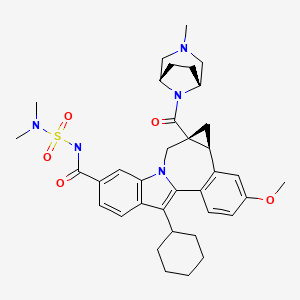
BMS-791325, Beclabuvir In Phase 2 for Hepatitis C (HCV)


BMS-791325, Beclabuvir

IN PHASE 2 for Hepatitis C (HCV)

An NS5B inhibitor.

BMS-791325 preferably is

CAS

958002-33-0
958002-36-3 (as hydrochloride)

C36 H45 N5 O5 S, 659.838

Cycloprop(d)indolo(2,1-a)(2)benzazepine-9-carboxamide, 12-cyclohexyl-N-((dimethylamino)sulfonyl)-4b,5,5a,6-tetrahydro-3-methoxy-5a-((3-methyl-3,8-diazabicyclo(3.2.1)oct-8-yl)carbonyl)-, (4bS,5aR)-

(4bS,5aR)-12-Cyclohexyl-N-(dimethylsulfamoyl)-3-methoxy-5a-((3-methyl-3,8-diazabicyclo(3.2.1)oct-8-yl)carbonyl)-4b,5,5a,6-tetrahydrocyclopropa(d)indolo(2,1-a)(2)benzazepine-9-carboxamide

(4bS,5aR)-12-Cyclohexyl-N-(dimethylsulfamoyl)-3-methoxy-5a-((3-methyl-3,8-diazabicyclo(3.2.1)oct-8-yl)carbonyl)-4b,5,5a,6-tetrahydrocyclopropa(d)indolo(2,1-a)(2)benzazepine-9-carboxamide

(1aR,12bS)-8-Cyclohexyl-N-(dimethylsulfamoyl)-11-methoxy-1a-[(3-methyl-3,8-diazabicyclo[3.2.1]oct-8-yl)carbonyl]-1,1a,2,12b-tetrahydrocyclopropa[d]indolo[2,1-a][2]benzazepine-5-carboxamide

Cycloprop [d] indolo [2, 1 -a] [2]benzazepine-5-carboxamide, 8-cyclohexyl-N- [(dimethylamino)sulfonyl]-l,la,2,12b-tetrahydro-ll-methoxy-la-[(3-methyl-3,8- diazabicyclo[3.2.1]oct-8-yl)carbonyl]-, (laR,12bS)-

Bristol-Myers Squibb (Originator)

RNA-Directed RNA Polymerase (NS5B) Inhibitors

UNII-MYW1X5CO9S

BMS-791325 is in phase II clinical studies at Bristol-Myers Squibb for the treatment of chronic hepatitis C. In 2013, the company received breakthrough therapy designation in the U.S. for the treatment of chronic hepatitis C in combination with daclatasvir and asunaprevir.

Squibb Bristol Myers Co,

Patent WO 2007136982

Want to know everything on vir series

click

http://drugsynthesisint.blogspot.in/p/vir-series-hep-c-virus-22.html

AND

http://medcheminternational.blogspot.in/p/vir-series-hep-c-virus.html

http://www.google.com/patents/WO2007136982A1?cl=en

Scheme 1.

N-protected piperazines can also be coupled to the intermediate indolobenzazepine acids and the resultant piperazine carboxamides can be deprotected using methods known in the art and derivatized using a variety of synthetic protocols, some illustrative examples of which are shown below (See Scheme 2).

Scheme 2.

An intermediate useful for the synthesis of some compounds of the invention involves the preparation of the tert-butyl ester indolobenzazepine shown in Scheme 3. Scheme 3.

t-Butylation either:

This methodology involves base catalyzed hydrolysis of the indole methyl ester shown, followed by its reaction with either thionyl chloride and potassium tertiary butoxide, or alkylation with silver carbonate and tertiary butyl bromides. The resultant compound can be transformed using chemistry analogous to that outlined previously to provide the mixed ester indolobenzazepines shown above.

Scheme 4.

Some examples exist as stereoisomeric mixtures. The invention encompasses all stereoisomers of the compounds. Methods of fractionating stereoisomeric mixtures are well known in the art, and include but are not limited to; preparative chiral supercritical fluid chromatography (SFC) and chiral high performance liquid chromatography (HPLC). An example using this approach is shown in scheme 5. Scheme 5.

An additional method to achieve such separations involves the preparation of mixtures of diastereomers which can be separated using a variety of methods known in the art. One example of this approach is shown below (Scheme 6).

Scheme 6.

Diastereomers separated by reverse phase HPLC

Some diastereomeric amides can be separated using reverse phase HPLC. After hydroysis, the resultant optically active acids can be coupled with bridged piperazine derivatives (Scheme 6). For example, O-(lH-benzotriazol-l-yl)-N,N, N’,N’-tetramethyluronium tetrafluoroborate and diisopropyl ethyl amine in DMSO can be used to give the alkyl bridged piperazine carboxamides. Other standard acid amine coupling methods can also be used to give optically active carboxamides.

Schemes 7-9 illustrate other methods of making intermediates and compounds.

Scheme 8.

Scheme 9.

Biological Methods

The compounds demonstrated activity against HCV NS5B as determined in the following HCV RdRp assays.

DESCRIPTION OF SPECIFIC EMBODIMENTS

Unless otherwise specified, analytical LCMS data on the following intermediates and examples were acquired using the following columns and conditions. Stop time: Gradient time + 1 minute; Starting cone: 0% B unless otherwise noted; Eluent A: 5% CH3CN / 95% H2O with 10 mM NH4OAc (for columns A, D and E); 10 % MeOH / 90 % H2O with 0.1% TFA (for columns B and C); Eluent B: 95% CH3CN / 5% H2O with 10 mM NH4OAc (for columns A, D and E); 90 % MeOH / 10 % H2O with 0.1% TFA (for columns B and C); Column A:

Phenomenex lOμ 4.6 x 50 mm C18; Column B: Phenomenex C18 lOμ 3.0 x 50 mm; Column C: Phenomenex 4.6 x 50 mm C18 lOμ; Column D: Phenomenex Lina C18 5μ 3.0 x 50 mm; Column E: Phenomenex 5μ 4.6 x 50 mm Cl 8.

Intermediate 1

lH-Indole-6-carboxylic acid, 2-bromo-3-cyclohexyl-, methyl ester. Freshly recrystallized pyridinium tribromide (recrystallization from hot AcOH (5 mL per 1 g), rinsed with cold AcOH and dried under high vacuum over KOH) was added in portions (over 10 min.) to a stirring solution of methyl 3-cyclohexyl-lH-indole-6- carboxylate (60 g, 233 mmol) (prepared using procedures describe in WO2004/065367) in CHC1/THF (1: 1, 1.25 L) at 2o C. The reaction solution was stirred at 0-5 °C for 2.5h, and washed with sat. aq. NaHSO3 (1 L), 1 N HCl (1 L) and brine (1 L). The organic layer was dried (MgSO4) and concentrated. The resulting red oil was diluted with Et2θ and concentrated. The resulting pink solid was dissolved into Et2θ (200 mL) treated with hexanes (300 mL) and partially concentrated. The solids were collected by filtration and rinsed with hexanes. The mother liquor was concentrated to dryness and the procedure repeated. The solids were combined to yield lH-indole-6-carboxylic acid, 2-bromo-3-cyclohexyl-, methyl ester (64 g, 190 mmol, 82%) as a fluffy pink solid, which was used without further purification. IHNMR (300 MHz, CDCl3) δ 8.47 (br s, IH), 8.03 (d, J = 1.4 Hz, IH), 7.74 (dd, J = 1.4, 8.8 Hz, IH), 7.69 (d, J = 8.8 Hz, IH), 3.92 (s, 3H), 2.82 (tt, J = 3.7, 11.7 Hz, IH), 1.98 – 1.72 (m, 7H), 1.50 – 1.27 (m, 3H). 13CNMR (75 MHz, CDC13) δ 168.2, 135.6, 130.2, 123.1, 120.8, 120.3, 118.7, 112.8, 110.7, 52.1, 37.0, 32.2(2), 27.0(2), 26.1. LCMS: m/e 334 (M-H), ret time 3.34 min, column A, 4 minute gradient.

Intermediate 2

lH-Indole-6-carboxylic acid, 2-bromo-3-cyclohexyl-. A solution of methyl 2- bromo-S-cyclohexyl-lH-indole-ό-carboxylate (20 g, 60 mmol) and LiOH (3.8 g, 160 mmol) in MeOΗ/TΗF/Η2O ( 1 : 1 : 1 , 300 mL) was heated at 90 °C for 2h. The reaction mixture was cooled in an ice/H2O bath, neutralized with IM HCl (-160 mL) diluted with H2O (250 mL) and stirred for Ih at rt. The precipitates were collected by filtration rinse with H2O and dried to yield lH-indole-6-carboxylic acid, 2-bromo-3- cyclohexyl- (quant.) which was used without further purification.

An alternative procedure that can by used to provide lH-indole-6-carboxylic acid, 2-bromo-3-cyclohexyl- is described below: A solution of methyl 2-bromo-3-cyclohexyl-lH-indole-6-carboxylate (117 g, 349 mmol) and LiOKH2O (26.4 g, 629 mmol) in MeOH/THF/H2O (1: 1: 1, 1.8 L) was heated at reflux for 3h. The reaction mixture was cooled in an ice/H2O bath to ~2 °C, neutralized with IM HCl (-650 mL) (added at such a rate that temperature did not exceed 5 °C), diluted with H2O (1 L) and stirred while warming to ambient temperature. The precipitates were collected by filtration rinsed with H2O and dried to yield the mono THF solvate of lH-indole-6-carboxylic acid, 2-bromo-3- cyclohexyl- (135.5 g, 345 mmol, 99%) as a yellow solid, which was used without further purification. IHNMR (300 MHz, CDCl3) δ 11.01 (br s, IH), 8.77 (s, IH), 8.07 (d, J = 1.5 Hz, IH), 7.82 (dd, J = 1.5, 8.8 Hz, IH), 7.72 (d, J = 8.8 Hz, IH), 3.84 – 3.74 (m, 4H), 2.89 (m, IH), 1.98 – 1.72 (m, HH), 1.50 – 1.24 (m, 3H). 13CNMR (75 MHz, CDC13) δ 172.7, 135.5, 130.7, 122.3, 120.9(2), 118.8, 113.3, 111.1, 67.9(2), 37.0, 32.2(2), 27.0(2), 26.1, 25.5(2). LCMS: m/e 320 (M-H), ret time 2.21 min, column A, 4 minute gradient.

Intermediate 3

lH-Indole-6-carboxamide, 2-bromo-3-cyclohexyl-N-

[(dimethylamino)sulfonyl]-. l,l’-Carbonyldiimidazole (1.17 g, 7.2 mmol) was added to a stirred solution of 2-bromo-3-cyclohexyl-lH-indole-6-carboxylic acid (2.03 g, 6.3 mmol) in THF (6 mL) at 22 °C. The evolution of CO2 was instantaneous and when it slowed the solution was heated at 50°C for 1 hr and then cooled to 220C. N,N-Dimethylsulfamide (0.94 g, 7.56 mmol) was added followed by the dropwise addition of a solution of DBU (1.34 g ,8.8 mmol) in THF (4 mL). Stirring was continued for 24 hr. The mixture was partitioned between ethyl acetate and dilute HCl. The ethyl acetate layer was washed with water followed by brine and dried over Na2SO4. The extract was concentrated to dryness to leave the title product as a pale yellow friable foam, (2.0 g, 74 %, >90 % purity , estimated from NMR). 1H NMR (300 MHz, DMSO-D6) δ ppm 1.28 – 1.49 (m, 3 H) 1.59 – 2.04 (m, 7 H) 2.74 – 2.82 (m, 1 H) 2.88 (s, 6 H) 7.57 (dd, J=8.42, 1.46 Hz, 1 H) 7.74 (d, J=8.78 Hz, 1 H) 7.91 (s, 1 H) 11.71 (s, 1 H) 12.08 (s, 1 H).

An alternative method for the preparation of lH-indole-6-carboxamide, 2- bromo-3-cyclohexyl-N-[(dimethylamino)sulfonyl]- is described below.

To a 1 L four necked round bottom flask equipped with a mechanical stirrer, a temperature controller, a N2 inlet , and a condenser, under N2, was added 2-bromo-3- cyclohexyl-lH-indole-6-carboxylic acid (102.0 g, 0.259 mol) and dry TΗF (300 mL). After stirring for 10 min, CDI (50.3 g, 0.31 mol) was added portion wise. The reaction mixture was then heated to 50 oC for 2 h. After cooling to 30 oC, N,N- dimethylaminosulfonamide (41.7 g, 0.336 mol) was added in one portion followed by addition of DBU (54.1 mL, 0.362 mol) drop wise over a period of 1 h. The reaction mixture was then stirred at rt for 20 h. The solvent was removed in vacuo and the residue was partitioned between EtOAc and 1 Ν HCl (1 : 1, 2 L). The organic layer was separated and the aqueous layer was extracted with EtOAc (500 mL). The combined organic layers were washed with brine (1.5 L) and dried over MgSO4. The solution was filtered and concentrated in vacuo to give the crude product (111.0 g). The crude product was suspended in EtOAc (400 mL) at 60 oC. To the suspension was added heptane (2 L) slowly. The resulting suspension was stirred and cooled to 0 oC. It was then filtered. The filter cake was rinsed with small amount of heptane and house vacuum air dried for 2 days. The product was collected as a white solid (92.0 g, 83%). 1H ΝMR (MeOD, 300 MHz) δ 7.89 (s, H), 7.77 (d, J= 8.4 Hz, IH), 7.55 (dd, J= 8.4 and 1.8 Hz, IH), 3.01 (s, 6H), 2.73-2.95 (m, IH), 1.81-2.05 (m, 8H), 1.39-1.50 (m, 2H); m/z 429 (M +H)+. Intermediate 4

lH-Indole-6-carboxamide, 3-cyclohexyl-N-[(dimethylamino)sulfonyl]-2-(2- formyl-4-methoxyphenyl)-. A mixture of the 2-Bromo-3-cyclohexyl- N- [(dimethylamino)sulfonyl]-lH-indole-6-carboxamide (4.28g, 0.01 mol), 4-methoxy- 2-formylphenyl boronic acid (2.1%, 0.015 mol), 2-dicyclohexylphosphino-2′,6′- dimethoxy-biphenyl (41 mg, 0.0001 mol), palladium acetate (11.2 mg), and finely ground potassium carbonate (4.24g, 0.02 mol) in toluene (30 mL) was stirred under reflux and under nitrogen for 30 min, at which time LC/MS analysis showed the reaction to be complete. The reaction mixture was then diluted with ethyl acetate and water, and then acidified with an excess of dilute HCl. The ethyl acetate layer was then collected and washed with dilute HCl, water and brine. The organic solution was then dried (magnesium sulfate), filtered and concentrated to give a gum. The gum was diluted with hexanes (250 ml) and ethyl acetate (25 mL), and the mixture was stirred for 20 hr at 22° C during which time the product was transformed into a bright yellow granular solid (4.8 g) which was used directly without further purification.

An alternative procedure for the preparation of lH-indole-6-carboxamide, 3- cyclohexyl-N-[(dimethylamino)sulfonyl]-2-(2-formyl-4-methoxyphenyl)- is provided below:

To a slurried solution of 2-bromo-3-cyclohexyl-N-[(dimethylamino)sulfonyl]- indole-6-carboxamide (54.0 g, 126 mmol), 4-methoxy-2-formylphenylboronic acid (29.5 g, 164 mmol) and LiCl (13.3 g, 315 mmol) in EtOH/toluene (1 : 1, 1 L) was added a solution of Na2CO3 (40.1 g, 379 mmol) in water (380 mL). The reaction mixture was stirred 10 min. and then Pd(PPh3)4 (11.3 g, 10.0 mmol) was added. The reaction solution was flushed with nitrogen and heated at 70 °C (internal monitoring) overnight and then cooled to rt. The reaction was diluted with EtOAc (1 L) and EtOH (100 mL), washed carefully with IN aqueous HCl (1 L) and brine (500 mL), dried (MgSO4), filtered and concentrated. The residual solids were stirred with Et20 (600 mL) for Ih and collected by filtration to yield lH-indole-6-carboxamide, 3- cyclohexyl-N-[(dimethylamino)sulfonyl]-2-(2-formyl-4-methoxyphenyl)- (52.8g, 109 mmol, 87%) as a yellow powder which was used without further purification. IHNMR (300 MHz, d6-DMSO) δ 11.66 (s, IH), 8.17 (s, IH), 7.75 (d, J = 8.4 Hz, IH), 7.74 (d, J = 8.4 Hz, IH), 7.59 (dd, J = 1.4, 8.4 Hz, IH), 7.23 – 7.16 (m, 2H), 7.08 (dd, J = 2.6, 8.4 Hz, IH), 6.54 (d, J = 8.8 Hz, IH), 3.86 (s, 3H), 3.22 – 3.08 (m, IH), 2.91 (s, 6H), 2.00 – 1.74 (m, 7H), 1.60 – 1.38 (m, 3H). 13CNMR (75 MHz, CDC13) δ 165.7, 158.8, 147.2, 139.1, 134.3, 132.0, 123.4, 122.0, 119.2, 118.2, 114.8, 112.3, 110.4, 109.8, 79.6, 45.9, 37.2(2), 34.7, 32.0(2), 25.9(2), 24.9. LCMS: m/e 482 (M- H), ret time 2.56 min, column A, 4 minute gradient.

Intermediate 5

6H-Isoindolo[2,l-a]indole-3-carboxamide, 11-cyclohexyl-N-

[(dimethylamino)sulfonyl]-6-ethoxy-8-methoxy-. To a 5 L four necked round bottom flask equipped with a temperature controller, a condenser, a N2 inlet and a mechanical stirrer, was charged toluene (900 mL), EtOH (900 mL), 2-bromo-3- cyclohexyl-N^NjN-dimethylsulfamoyiyiH-indole-ό-carboxamide (90 g, 0.21 mol), 2-formyl-4-methoxyphenylboronic acid (49.2 g, 0.273 mol) and LiCl (22.1 g, 0.525 mol). The resulting solution was bubbled with Ν2 for 15 mins. A solution of Na2CO3 (66.8 g, 0.63 mol) in Η2O (675 mL) was added and the reaction mixture was bubbled with N2 for another (10 mins). Pd(PPh3)4 (7.0 g, 6.3 mmol) was added and the reaction mixture was heated to 70 °C for 20 h. After cooling to 35 °C, a solution of 1 N HCl (1.5 L) was added slowly. The resulting mixture was transferred to a 6 L separatory funnel and extracted with EtOAc (2 X 1.5 L). The combined organic extracts were washed with brine (2 L), dried over MgSO4, filtered and concentrated in vacuo to give a yellow solid, which was triturated with 20% EtOAc in hexane (450 mL, 50 °C to 0 °C) to give 3-cyclohexyl-N-(N,N-dimethylsulfamoyl)-2-(2-formyl-4- methoxyphenyl)-lH-indole-6-carboxamide(65.9 g) as a yellow solid. HPLC purity, 98%.

The mother liquid from the trituration was concentrated in vacuo. The residue was refluxed with EtOH (50 mL) for 3 h. The solution was then cooled to 0 °C. The precipitates were filtered and washed with cooled TBME (5 °C) (20 mL). The filter cake was house vacuum air dried to give a further quantity of the title compound as a white solid (16.0 g). HPLC purity, 99%. 1H NMR (CDC13, 300 MHz) δ 8.75 (s, IH), 7.96 (s, IH), 7.73 (d, J= 8.4 Hz, IH), 7.67 (d, J= 8.4 Hz, IH), 7.45 (dd, J= 8.4 and 1.4 Hz, IH), 7.09 (d, J= 2.2 Hz, IH), 6.98 (dd, J= 8.4 and 2.2 Hz, IH), 6.50 (s, IH), 3.86 (s, 3H), 3.05 (s, 6H), 2.92-3.13 (m, 3H), 1.85-1.93 (m, 7 H), 1.40-1.42 (m, 3H), 1.05 (t, J= 7.1 Hz, 3H). m/z 512 (M + H)+.

Intermediate 6

lH-indole-6-carboxamide, 3-cyclohexyl-N-[(dimethylamino)sulfonyl]-2-(2- formyl-4-methoxyphenyl)-. 1 l-cyclohexyl-N-(N,N-dimethylsulfamoyl)-6-ethoxy-8- methoxy-6H-isoindolo[2,l-a]indole-3-carboxamide was dissolved in THF (75 mL). To the solution was added a solution of 2 N HCl (300 mL). The mixture was vigorously stirred under N2 at rt for 16 h. The resulting suspension was filtered and washed with cooled TBME (2 X 30 mL). the filer cake was vacuum air dried overnight to give the title compound as a yellow solid. HPLC purity, 99% 1H NMR (DMSO-d6, 300 MHz) δ 11.65 (s, IH), 8.16 (s, IH), 7.76 (d, J= 5.9 Hz, IH), 7.73 (d, J= 5.9 Hz, IH), 7.58 (dd, J= 8.5 and 1.5 Hz, IH), 7.17-7.20 (m, 2H), 7.08 (dd, J = 8.5 and 1.4 Hz, IH), 6.55 (d, J= 8.6 Hz, IH), 3.86 (s, 3H), 3.14-3.18 (m, IH), 2.91 (s, 6H), 1.75-1.99 (m, 7H), 1.48-1.60 (m, 3H); m/z 484 (M + H)+.

Intermediate 7

7H-Indolo[2, 1-a] ‘ [2] benzazepine-6-carboxylic acid, 13-cyclohexyl-10- [[[(dimethylamino)sulfonyl] amino] carbonyl]-3-methoxy-, methyl ester. A mixture of the 3-cyclohexyl-N-(N,N-dimethylsulfamoyl)-2-(2-formyl-4-methoxyphenyl)-lH- indole-6-carboxamide (4.8g, 0.01 mol), methyl 2-(dimethoxyphosphoryl)acrylate (9.7 g, 0.02 mol) and cesium carbonate (7.1g, 0.02 mol) in DMF (28mL) was stirred for 20 hr at an oil bath temperature of 55 ° C. The mixture was poured into ice-water and acidified with dilute HCl to precipitate the crude product. The solid was collected, dried and flash chromatographed on Siθ2 (11Og) using an ethyl acetate and methylene chloride (1: 10) solution containing 2% acetic acid. Homogeneous fractions were combined and evaporated to afford the title compound as a pale yellow solid (3.9g, 71 % yield). MS: 552 (M=H+).

An alternate procedure for the preparation of 7H-indolo[2,l- a] [2]benzazepine-6-carboxylic acid, 13-cyclohexyl-10- [[[(dimethylamino)sulfonyl]amino]carbonyl]-3-methoxy-, methyl ester is provided below. A solution of l l-cyclohexyl-N-[(dimethylamino)sulfonyl]-6-hydroxy-8- methoxy-6H-isoindolo[2,l-a]indole-3-carboxamide (cyclic hemiaminal) (63.0 g, 130 mmol), methyl 2-(dimethoxyphosphoryl)acrylate (60 g, 261 mmol), cesium carbonate (106 g, 326 mmol) in DMF (400 mL) was heated at 60 °C (bath temp) for 4.5h. Additional methyl 2-(dimethoxyphosphoryl)acrylate (15 g, 65 mmol) and cesium carbonate (21.2 g, 65 mmol) were added and the reaction was heated at 60 °C overnight then and cooled to rt. The stirring reaction mixture was diluted with H2O (1 L), slowly neutralized with IN aqueous HCl (800 mL), stirred 3h, and then the precipitates were collected by filtration. The solids were triturated with Et20 (800 mL) and dried to yield methyl 7H-indolo[2,l-a][2]benzazepine-6-carboxylic acid, 13- cyclohexyl-10-[[[(dimethylamino)sulfonyl]amino]carbonyl]-3-methoxy-, methyl ester (70.2 g, 127 mmol, 98%) as a yellow solid which was used without further purification. IHNMR (300 MHz, CDC13) δ 8.67 (s, IH), 8.09 (s, IH), 7.86 (d, J = 8.4 Hz, IH), 7.80 (s, IH), 7.50 (d, J = 8.4 Hz, IH), 7.42 (d, J = 8.8 Hz, IH), 7.08 (dd, J = 2.6, 8.8 Hz, IH), 6.98 (d, J = 2.6 Hz, IH), 5.75 – 5.51 (m, IH), 4.29 – 4.01 (m, IH), 3.89 (s, 3H), 3.82 (s, 3H), 3.05 (s, 6H), 2.87 – 2.73 (m, IH), 2.11 – 1.12 (m, 10H). LCMS: m/e 550 (M-H)-, ret time 3.21 min, column A, 4 minute gradient.

Example 1

Cycloprop[d]indolo[2,l-a] [2]benzazepine-5-carboxamide, 8-cyclohexyl-N- [(dimethylamino)sulfonyl]-l,la,2,12b-tetrahydro-ll-methoxy-la-[(3-methyl-3,8- diazabicyclo[3.2.1]oct-8-yl)carbonyl]-, (+/-)-. TBTU (43.7 mg, 0.136mmol) and DIPEA (0.095 mL, 0.544 mmol) were added to a solution of (+/-) cycloprop[d]indolo[2,l-a][2]benzazepine-la(2H)-carboxylic acid, 8-cyclohexyl-5- [[[(dimethylamino)sulfonyl]amino]carbonyl]-l,12b-dihydro-l 1-methoxy- (50 mg, 0.0906 mmol) in DMSO (2.0 mL). The reaction mixture was stirred at rt for 15 min. 3-Methyl-3,8-diaza-bicyclo[3.2. l]octane dihydrochloride {J & W PharmLab, LLC Morrisville, PA 19067-3620}. (27.1 mg, 0. 136 mmol) was then added and the reaction mixture was stirred at rt for 3 hr. It was then concentrated and the residue was purified by preparative reverse phase HPLC to give the final product as a yellow solid, (32 mg, 46% yield). MS m/z 660(MH+), Retention time: 2.445 min IH NMR (300 MHz, MeOD) δ ppm 0.20 (m, 0.23 H) 1.11 – 2.25 (m, 15.77 H) 2.58 (m, 0.23 H) 2.69 (m, 0.77 H) 2.75 – 3.11 (m, 10 H) 3.28 – 3.75 (m, 5 H) 3.91 (s, 2.31 H) 3.92 (s, 0.69 H) 4.15 – 4.37 (m, 1 H) 4.68 (m ,br, 1 H) 4.94 – 5.00 (m, 0.23 H) 5.16 (d, J=15.00 Hz, 0.77 H) 7.00 – 7.09 (m, 1 H) 7.18 (d, J=2.56 Hz, 0.23 H) 7.21 (d, J=2.56 Hz, 0.77 H) 7.33 (d, J=8.41 Hz, 0.77 H) 7.35 (d, J=8.42 Hz, 0.23 H) 7.57 (dd, J=8.42, 1.46 Hz, 0.77 H) 7.62 (dd, J=8.78, 1.46 Hz, 0.23 H) 7.91 (d, J=8.42 Hz, 0.77 H) 7.93 (d, J=8.42 Hz, 0.23 H) 8.00 (s, 0.77 H) 8.07 (s, 0.23 H).

Example 4

Cycloprop[d]indolo[2,l-a] [2]benzazepine-5-carboxamide, 8-cyclohexyl-N- [(dimethylamino)sulfonylj ‘- 1 , Ia, 2, 12b-tetrahydro-ll-methoxy-la-[(8-methyl-3, 8- diazabicyclo[3.2.1]oct-3-yl)carbonyl]-, (+/-)-. To a solution of (+/-) cycloprop[d]indolo[2,l-a][2]benzazepine-5-carboxamide, 8-cyclohexyl-la-(3,8- diazabicyclo[3.2.1]oct-3-ylcarbonyl)-N-[(dimethylamino)sulfonyl]-l,la,2,12b- tetrahydro-11-methoxy- (54 mg, 0.071 mmol) in methanol (3 mL), paraformaldehyde (6.4 mg, 0.213 mmol), ZnCl2 (29 mg, 0.213 mmol) and

Na(CN)BH3 (13.4 mg, 0.213 mmol) were added. The resultant mixture was heated at 60°C for 2hr, and then cooled to rt. The solid present was removed by filtration, and the filtrate was concentrated under vacuum and the residue purified by preparative reverse phase HPLC to give the title compound as a light yellow colored solid, (37 mg, 67% yield). MS ml 660(MH+), Retention time: 2.495 min. IH NMR (500 MHz, MeOD) δ ppm 0.21 (m, 0.3 H) 1.13 (m, 0.3 H) 1.18 – 2.22 (m, 15.4 H) 2.58 (m, 0.3 H) 2.68 (m, 0.7 H) 2.76 – 3.11 (m, 11 H) 3.32 – 3.37 (m, 1 H) 3.63 (d, J=15.56 Hz, 0.7 H) 3.82 – 4.32 (m, 7.3 H) 4.88 – 4.92 (m, 0.3 H) 5.08 (d, J=15.56 Hz, 0.7 H) 7.00 – 7.08 (m, 1 H) 7.18 (d, J=2.14 Hz, 0.3 H) 7.21 (d, J=2.14 Hz, 0.7 H) 7.32 (d, J=8.55 Hz, 0.7 H) 7.35 (d, J=8.55 Hz, 0.3H) 7.57 (d, J=7.93 Hz, 0.7 H) 7.62 (dd, J=8.39, 1.37 Hz, 0.3 H) 7.91 (d, J=8.55 Hz, 0.7 H) 7.93 – 7.99 (m, 1 H) 8.09 (s, 0.3 H).

Example 6

Cycloprop [d] indolo [2, 1 -a] [2]benzazepine-5-carboxamide, 8-cyclohexyl-N- [(dimethylamino)sulfonyl]-l,la,2,12b-tetrahydro-ll-methoxy-la-[(3-methyl-3,8- diazabicyclo[3.2.1]oct-8-yl)carbonyl]-, (laR,12bS)-. To a solution of (-) cycloprop[d]indolo[2,l-a][2]benzazepine-la(2H)-carboxylic acid, 8-cyclohexyl-5- [[[(dimethylamino)sulfonyl]amino]carbonyl]-l,12b-dihydro-l 1-methoxy- (204 mg, 0.37 mmol) in DMSO (8.0 mL), TBTU (178 mg, 0.555 mmol) and DIPEA (0.39 mL, 2.22 mmol) were added. The reaction mixture was stirred at rt for 15 min. Then 3- methyl-3,8-diaza-bicyclo[3.2.1]octane dihydrochloride (111 mg, 0. 555 mmol) was added and the reaction mixture was stirred at rt for 2 hr. It was then concentrated and the residue was purified by preparative reverse phase HPLC to give a yellow solid as final TFA salt. (265 mg, 92% yield). Average Specific Rotation: -53.56° Solvent, MeOH.; Wavelength 589 nm; 50 cm cell. MS m/z 660(MH+), Retention time: 3.035 min. 1H NMR (300 MHz, MeOD) δ ppm 0.20 (m, 0.23 H) 1.11 – 2.25 (m, 15.77 H) 2.58 (m, 0.23 H) 2.69 (m, 0.77 H) 2.75 – 3.11 (m, 10 H) 3.28 – 3.75 (m, 5 H) 3.91 (s, 2.31 H) 3.92 (s, 0.69 H) 4.15 – 4.37 (m, 1 H) 4.68 (m ,br, 1 H) 4.94 – 5.00 (m, 0.23 H) 5.16 (d, J=15.00 Hz, 0.77 H) 7.00 – 7.09 (m, 1 H) 7.18 (d, J=2.56 Hz, 0.23 H) 7.21 (d, J=2.56 Hz, 0.77 H) 7.33 (d, J=8.41 Hz, 0.77 H) 7.35 (d, J=8.42 Hz, 0.23 H) 7.57 (dd, J=8.42, 1.46 Hz, 0.77 H) 7.62 (dd, J=8.78, 1.46 Hz, 0.23 H) 7.91 (d, J=8.42 Hz, 0.77 H) 7.93 (d, J=8.42 Hz, 0.23 H) 8.00 (s, 0.77 H) 8.07 (s, 0.23 H). An alternate procedure for the synthesis of cycloprop[d]indolo[2,l- a][2]benzazepine-5-carboxamide, 8-cyclohexyl-N-[(dimethylamino)sulfonyl]- l,la,2,12b-tetrahydro-l l-methoxy-la-[(3-methyl-3,8-diazabicyclo[3.2.1]oct-8- yl)carbonyl]-, (laR,12bS)-rel-(-)-is provided below. To a mixture of (-) cycloprop[<i]indolo[2,l-α][2]benzazepine-la(2H)-carboxylic acid, 8-cyclohexyl-5- [[[(dimethylamino)sulfonyl]amino]carbonyl]-l,12b-dihydro-l 1-methoxy- (25.2 g, 45.68 mmol) and 3-methyl-3,8-diazabicyclo-[3.2.1]octane dihydrochloride (10.0 g, 50.22 mmol) in anhydrous MeCN (300 mL) was added DIPEA (23.62 g, 182.72 mmol) under N2. After 15 min, TBTU (16.12 g, 50.22 mmol) was added. The reaction solution was stirred for 30 min under N2. The ΗPLC indicated the disappearance of starting material. The solvent in the solution was evaporated to give a foam. This was dissolved in EtOAc (2.5 L), washed with H2O (1.5 L), H2O/brine (8:2) (1.5 L), brine (1.5 L), dried over Na2SO4 and evaporated to give 28.8 g of crude product. This solid was pooled with 45.4 g of material obtained from five separated reactions to afford a total of 74.2 g of crude product. This was passed through a pad of silica gel (E. Merck 230-400 mesh, 1 kg), eluting with MeOH/CH2Cl2 (2.5:97.5). After evaporation, it gave a foam, which was treated with EtOAc and hexane to turn into a solid. After drying at 50 °C under vacuum for 7 h, the GC analysis indicated it has 1.4% each of EtOAc and hexane. After further drying at 61-64 °C, the GC analysis indicated it still has 1.0% of hexane and 1.4% of EtOAc. The product was dissolved in Et2O and slowly evaporated in vacuum three times, dried at 60 °C under vacuum for 3 h to give 68.3 g. This was washed with H2O (900 mL) and redried at 68 °C under vacuum for 7 h to give 67.1 g (77% yield) of the compound of example 6. The GC analysis indicated it has 0.97% Of Et2O. HPLC conditions column: Cadenza CD-C18 3 x 250 mm; UV: 257 and 220 nm; 25 °C; flow rate: 0.5 mL/min; gradient time: 38 min, 0 – 80% B (0 – 35 min) and 80% B (35 – 38 min); solvent A: 25 nM CH3COONH4 at pH 4.7 in water, solvent B: MeCN. HPLC purity 99.7% (Rt 26.54 min); Chiral HPLC conditions column: Regis (S5S) Whelk-Ol 250 x 4.6 mm; UV 258nm; 35 °C; flow rate 2.0 mL/min; mobile phase C02/Me0H; gradient time 20 min, 30% MeOH (0 – 1 min), 30 – 48% MeOH (1 – 19 min), 48% MeOH (19 – 20 min). Chiral HPLC purity > 99.8% (Rt 16.60 min); LC/MS (ES+) 660.36 (M+H, 100); HRMS: calcd. 660.3220, found 660.3197; [α]D 25 C – 79.66 ° (c 1.06, MeOH); Anal. Calcd for C36H45N5O5S-O-O H2O»0.09 Et2O: C, 64.53; H, 7.00; N, 10.35; S, 4.74; H2O, 1.51; Et2O, 0.97. Found: C, 64.50; H, 7.12; N, 10.41; S, 5.14; H2O, 1.52; Et2O, 0.97. The absolute stereochemistry of cycloprop[d]indolo[2,l- a][2]benzazepine-5-carboxamide, 8-cyclohexyl-N-[(dimethylamino)sulfonyl]- l,la,2,12b-tetrahydro-l l-methoxy-la-[(3-methyl-3,8-diazabicyclo[3.2.1]oct-8- yl)carbonyl]-, (laR,12bS)-rel-(-)- is as drawn above, and was determined from an x- ray crystal structure obtained on the (R)-camphorsulfonic acid salt.

Additionally, the following salts were prepared: hydrochloride, phosphate, acetate, sulfate, camsylate, sodium, calcium, and magnesium. The hydrochloride salt had the following characteristics. DSC: small, broad endotherm from 25°C to 75°C, and potential melt/degradation endotherm with peak at temperatures ranging between 253 °C and 258 °C; TGA: Early weight loss from 25°C to 75°C ranging between 0.003% and 1.5%, and degradation weight loss starting at approximately 200°C.

Want to know everything on vir series

click

http://drugsynthesisint.blogspot.in/p/vir-series-hep-c-virus-22.html

AND

http://medcheminternational.blogspot.in/p/vir-series-hep-c-virus.html

WO2006020082A1 * Jul 15, 2005 Feb 23, 2006 Squibb Bristol Myers Co Inhibitors of hcv replication
WO2006046030A2 * Oct 25, 2005 May 4, 2006 Angeletti P Ist Richerche Bio Tetracyclic indole derivatives as antiviral agents
WO2008111978A1 Mar 13, 2007 Sep 18, 2008 Squibb Bristol Myers Co Cyclopropyl fused indolobenzazepine hcv ns5b inhibitors
WO2008112473A1 * Mar 5, 2008 Sep 18, 2008 Squibb Bristol Myers Co Compounds for the treatment of hepatitis c
WO2008112841A1 * Mar 13, 2008 Sep 18, 2008 Squibb Bristol Myers Co Compounds for the treatment of hepatitis c
WO2008112848A1 * Mar 13, 2008 Sep 18, 2008 Squibb Bristol Myers Co Compounds for the treatment of hepatitis c
WO2008112851A1 * Mar 13, 2008 Sep 18, 2008 Squibb Bristol Myers Co Cyclopropyl fused indolobenzazepine hcv inhibitors
WO2008112863A1 * Mar 13, 2008 Sep 18, 2008 Squibb Bristol Myers Co Compounds for the treatment of hepatitis c
WO2009067108A1 * Nov 20, 2007 May 28, 2009 Squibb Bristol Myers Co Cyclopropyl fused indolobenzazepine hcv ns5b inhibitors
WO2009067392A1 * Nov 17, 2008 May 28, 2009 Squibb Bristol Myers Co Cyclopropyl fused indolobenzazepine derivatives for the treatment of hepatitis c
WO2009067481A1 * Nov 19, 2008 May 28, 2009 Squibb Bristol Myers Co Compounds for the treatment of hepatitis c
WO2010080874A1 Jan 7, 2010 Jul 15, 2010 Scynexis, Inc. Cyclosporine derivative for use in the treatment of hcv and hiv infection
WO2013059265A1 * Oct 17, 2012 Apr 25, 2013 Bristol-Myers Squibb Company A compound for the treatment of hepatitis c
WO2014014885A1 * Jul 16, 2013 Jan 23, 2014 Bristol-Myers Squibb Company Novel methods and intermediates for the preparation of (4bs,5ar)-12-cyclohexyl-n-(n,n-dimethylsulfamoyl)-3-methoxy-5a-((1 r,5s) -3-methyl-3,8-diazabicyclo[3.2.1]octane-8-carbonyl)-4b,5,5a,6-tetrahydrobenzo [3,4]cyclopropa[5,6]azepino[1,2-a]indole-9-carboxamide
CN101679442B Mar 13, 2008 Feb 20, 2013 百时美施贵宝公司 Compounds for the treatment of hepatitis c
EP2518073A1 * Nov 19, 2008 Oct 31, 2012 Bristol-Myers Squibb Company Compounds for the treatment of Hepatitis C

The First Kilogram Synthesis of Beclabuvir, an HCV NS5B Polymerase Inhibitor

Chemical and Synthetic DevelopmentBristol-Myers Squibb CompanyOne Squibb Drive, P.O. Box 191, New Brunswick, New Jersey 08903, United States
Org. Process Res. Dev., Article ASAP
DOI: 10.1021/acs.oprd.8b00214
Abstract Image

The process development and kilogram-scale synthesis of beclabuvir (BMS-791325, 1) is described. The convergent synthesis features the use of asymmetric catalysis to generate a chiral cyclopropane fragment and coupling with an indole fragment via an alkylation. Subsequent palladium-catalyzed intramolecular direct arylation efficiently builds the central seven-membered ring. The target was prepared in 12 linear steps with five isolations in an overall yield of 8%.

Preparation of (4bS,5aR)-12-Cyclohexyl-N-(N,N-dimethylsulfamoyl)-3-methoxy-5a-((1R,5S)-3-methyl-3,8-diazabicyclo[3.2.1]octane-8-carbonyl)-4b,5,5a,6-tetrahydrobenzo[3,4]cyclopropa[5,6]azepino[1,2-a]indole-9-carboxamide Hydrochloride (1·HCl)

BMS-791325·HCl (1·HCl) was isolated in 89.5% yield.

1H NMR (600 MHz, 10:1 v/v CD3CN/D2O): major rotamer: 7.91 (br s, 1H), 7.90 (d, J = 8.5 Hz, 1H), 7.55 (br d, J = 8.5 Hz, 1H), 7.29 (d, J = 8.5 Hz, 1H), 7.20 (d, J = 2.5 Hz, 1H), 7.00 (dd, J = 8.5 Hz, 2.7 Hz, 1H), 5.03 (br d, J = 12.7 Hz, 1H), 4.58 (br d, J = 4.9 Hz, 2H), 3.87 (s, 3H), 3.56 (d, J = 15.5 Hz, 1H), 3.40 (br s, 3H), 3.32–3.28 (m, 4H), 2.96 (s, 6H), 2.92 (tt, J= 12.2, 3.6 Hz, 1H), 2.59 (br t, J = 7.0 Hz, 1H), 2.05–1.90 (m, 2H), 1.79–1.71 (m, 4H), 1.55 (br d, J= 12.2 Hz, 2H), 1.46–1.36 (m, 4H), 1.26 (t, J = 5.3 Hz, 2H), 1.23–1.15 (m, 2H);

minor rotamer: 8.05 (br s, 1H), 7.92 (d, J = 8.5 Hz, 1H), 7.58 (dd, J = 8.5, 1.4 Hz, 1H), 7.34 (d, J = 8.5 Hz, 1H), 7.15 (d, J = 2.6 Hz, 1H), 6.98 (d, 1H, overlap with major rotamer), 4.91 (d, J = 15.0 Hz, 1H), 4.58 (br d, J = 4.9 Hz, 2H), 4.11 (d, J = 15.0 Hz, 1H), 3.89 (s, 3H), 3.46 (br d, J = 12.5 Hz, 2H), 3.17 (br d, J = 12.5 Hz, 2H), 2.97 (s, 6H), 2.85 (br s, 3H), 2.76 (tt, J = 12.1, 3.5 Hz, 1H), 2.49 (br s, 1H), 2.05–1.90 (m, 2H), 1.79–1.71 (m, 4H), 1.46–1.36 (m, 6H), 1.23–1.15 (m, 2H), 1.10 (m, 1H), 0.03 (t, J = 6.1 Hz, 1H).

 13C NMR (125 MHz, 10:1 v/v CD3CN/D2O): major rotamer: 170.1, 167.7, 161.0, 140.4, 139.3, 135.9, 133.6, 131.1, 124.9, 123.0, 121.7, 120.8, 119.0, 118.6, 114.3, 110.7, 59.2, 56.2, 53.1, 48.3, 44.5, 38.9, 37.6, 34.8, 33.77, 33.72, 27.92, 27.77, 26.82, 26.5, 23.6, 18.5;

minor rotamer: 168.3, 168.0, 161.3, 138.4, 137.5, 135.8, 134.2, 130.0, 125.4, 121.9, 120.0, 119.64, 119.58, 117.9, 113.3, 111.3, 59.6, 56.3, 53.1, 44.6, 42.2, 38.9, 38.3, 37.4, 33.8, 33.6, 28.3, 27.74, 26.79, 26.5, 24.84, 11.9.

HRMS (ESI) calcd for C36H45N5O5S (free base) [M + H]+660.3214, found m/z 660.3220.

////////BMS-791325, Beclabuvir, Phase 2, Hepatitis C, HCV,

Elbasvir, MK 8742 ……….Anti-Hepatitis C Virus Drug in phase 2


Elbasvir, MK 8742
1370468-36-2  cas

 methyl N-[(2S)-1-[(2S)-2-[4-[(6S)-3-[2-[(2S)-1-[(2S)-2-(methoxycarbonylamino)-3-methylbutanoyl]pyrrolidin-2-yl]-4H-imidazol-4-yl]-6-phenyl-6H-indolo[1,2-c][1,3]benzoxazin-10-yl]-2H-imidazol-2-yl]pyrrolidin-1-yl]-3-methyl-1-oxobutan-2-yl]carbamate
Methyl [(2S)-1-[(2S)-2-[4-[(6S)-3-[2-[(2S)-1-[(2S)-2-[(methoxycarbonyl)amino]-3-methylbutanoyl]pyrrolidin-2-yl]-1H-imidazol-4-yl]-6-phenylindolo[1,2-c][1,3]benzoxazin-10-yl]-1H-imidazol-2-yl]pyrrolidin-1-yl]-3-methyl-1-oxobutan-2-yl]carbamate

Carbamic acid, N,​N‘-​[[(6S)​-​6-​phenyl-​6H-​indolo[1,​2-​c]​[1,​3]​benzoxazine-​3,​10-​diyl]​bis[1H-​imidazole-​5,​2-​diyl-​(2S)​-​2,​1-​pyrrolidinediyl[(1S)​-​1-​(1-​methylethyl)​-​2-​oxo-​2,​1-​ethanediyl]​]​]​bis-​, C,​C‘-​dimethyl ester

Carbamic acid, N,N’-(((6S)-6-phenyl-6H-indolo(1,2-c)(1,3)benzoxazine-3,10-diyl)bis(1H-imidazole-5,2-diyl-(2S)-2,1-pyrrolidinediyl((1S)-1-(1-methylethyl)-2-oxo-2,1-ethanediyl)))bis-, C,C’-dimethyl ester
Dimethyl N,N’-(((6S)-6-phenylindolo(1,2-c)(1,3)benzoxazine-3,10-diyl)bis(1H-imidazole-5,2-diyl-(2S)-pyrrolidine-2,1-diyl((2S)-3-methyl-1-oxobutane-1,2-diyl)))dicarbamate
Methyl ((1S)-1-(((2S)-2-(4-((6S)-10-(2-((2S)-1-((2S)-2-((methoxycarbonyl)amino)-3-methylbutanoyl)pyrrolidin-2-yl)-1H-imidazol-4-yl)-6-phenyl-6H-indolo(1,2-c)(1,3)benzoxazin-3-yl)-1H-imidazol-2-yl)pyrrolidin-1-yl)carbonyl)-2-methylpropyl)carbamate

MW 882.0171, C49 H55 N9 O7, 

UNII-632L571YDK

MERCK-PHASE 2

HCV NS5A Inhibitors 

patent….http://www.google.com/patents/WO2012040923A1?cl=en

MK-8742 is in phase II clinical development at Merck & Co. for the oral treatment of chronic hepatitis C infection in combination with MK-5172 and ribavirin. Phase I clinical trials are uongoing for the treatment of hepatitis C infected males. In 2013, breakthrough therapy designation was assigned to the compound.

MK-8742 is an inhibitor of Hepatitis C Virus (HCV) non-structural protein 5A (NS5A) that is being developed for the treatment of HCV infection. MK-8742 has broad, potent HCV genotypic activity in vitro against viral variants that are resistant to other NS5A inhibitors. MK-8742 exhibits potent antiviral activity during 5 days of monotherapy in patients with GT1 and GT3 chronic HCV infection. MK-8742 is currently in Phase IIB development.

ELBASVIR

MK-8742 is an inhibitor of Hepatitis C Virus (HCV) non-structural protein 5A (NS5A) that is being developed for the treatment of HCV infection. MK-8742 has broad, potent HCV genotypic activity in vitro against viral variants that are resistant to other NS5A inhibitors. MK-8742 exhibits potent antiviral activity during 5 days of monotherapy in patients with GT1 and GT3 chronic HCV infection. MK-8742 is currently in Phase IIB development.

http://www.natap.org/2012/EASL/EASL_46.htm

EASL1.gif

………………

http://www.google.com/patents/WO2012040923A1?cl=en

EXAMPLE 23

Preparation of Compound A

Figure imgf000117_0001

A mixture of Compound Int-19b (1.1 g, 3 mmol), (dibromomethyl)benzene (2.25 g, 9 mmol) and K2C03 (1.2 g, 9 mmol) in 15 mL of DMF was heated to 100 °C and allowed to stir at this temperature for 3 hours. The reaction mixture was cooled to room temperature, concentrated in vacuo and the residue obtained was dissolved with

dichloromethane and water. The aqueous phase was extracted with dichloromethane. The combined organic extracts were washed with brine, dried over Na2S04, filtered and concentrated in vacuo. The resulting residue was purified using flash column

chromatography on silica gel to provide Compound Int-23a (380 mg, 28 %) as a white solid. 1H MR (CDCI3): δ 7.72 (bs, 1 H), 7.44 – 7.46 (d, J= 8.4 Hz, 1 H), 7.21 – 7.28 (m, 3 H), 7.09 – 7.12 (m, 3 H), 7.04 (s, 1 H), 6.99 – 7.01 (bs, J= 6.8 Hz, 2 H), 6.78 (s, 1 H), 6.63 – 6.65 (d, J = 8.4 Hz, 1 H). MS (ESI)

m/e (M+H+): 456. Step B – Pre aration of Compound Int-23b

Figure imgf000118_0001

lnt-23a lnt-23b

To a solution of Int-23a (456 mg, 1.0 mmol) in 1,4-dioxane was added bis pinacol borate (2.2 mmol) , Pd(dppf)Cl2 (0.04 mmol) and KOAc (4 mmol). The reaction mixture was put under N¾ heated to 110°C and allowed to stir at this temperature for 3 hours. The reaction mixture was cooled to room temperature, concentrated in vacuo, and the residue obtained was purified using column chromatography on silica gel to provide Compound Int- 23b (590 mg, 87 % yield). 1H MR (CDC13): δ 8.13 (s, 1 H), 7.60 (d, J= 7.6 Hz, 1 H), 7.52 (d, J= 8.0 Hz, 1H), 7.36 – 7.39 (m, 1 H), 7.14 -7.19 (m, 4 H), 6.93 – 6.95 (m, 3 H), 6.90 (s, 1 H), 1.26 – 1.29 (s, 24 H). MS (ESI) m / e (M+H+): 550.

– Pre aration of Compound Int-23c

Figure imgf000118_0002

lnt-23b lnt-23c

A suspension of Int-23b (550 mg, 1.0 mmol), tert-butyl 2-(2-bromo-lH- imidazol-5-yl) pyrrolidine- 1-carboxylate (2.4 mmol), Pd(dppf) Cl2 (200 mg), Na2C03 (3 mmol) and in THF/H20 (10: 1, 33 mL) was allowed to stir at reflux for about 15 hours under N2. The reaction mixture was cooled to room temperature and filtered, and the filtrate was washed with water (50 mL) and extracted with EtOAc (100 mL). The organic extract was washed with brine, dried over anhydrous sodium sulfate, filtered and concentrated in vacuo. The resulting residue was purified using column chromatography on silica gel to provide Compound Int-23c (160 mg). MS (ESI) m / e (M+H+): 768.

Preparation of Compound Int-23d

Figure imgf000119_0001

Int-23c (0.10 g, 0.13 mmol) was added to HCl/CH3OH (5 mL, 3M) and the resulting reaction was allowed to stir at room temperature for about 3 hours. The reaction mixture was then concentrated in vacuo to provide Compound Int-23d, which was used without further purification. MS (ESI) m / e (M+H+): 568.

– Preparation of Compound A

Figure imgf000119_0002

To a solution of Int-23d (56.8 mg, 0.10 mmol), (S)-2- (methoxycarbonylamino)-3-methylbutanoic acid (35.0 mg, 0.20 mmol) and DIPEA (0.8 mmol) in CH3CN (1 mL) was added BOP (98 mg, 0.22 mmol). The resulting reaction was allowed to stir at room temperature and monitored using LCMS. After LCMS showed the starting material to be consumed, the reactionmixture was filtered, and the filtrate was purified using HPLC to provide Compound A as a white solid. 1H MR (MeOD): δ 7.94 (s,

1 H), 7.85 (d, J= 8.0 Hz, 1 H), 7.74 (s, 1 H), 7.63 (s, 1 H), 7.48 (s, 1 H), 7.35 – 7.37 (m, 2 H), 7.31 (s, 1 H), 7.17 – 7.18 (m, 4 H), 7.11 (s, 1 H), 6.96 – 6.98 (d, J = 7.6 Hz, 2 H), 5.09 – 5.17

(m, 2 H), 4.13 (t, J= 8.0 Hz, 2 H), 3.99 (bs, 2 H), 3.78 (bs, 2 H), 3.56 (s, 6 H), 2.44 – 2.47 (m,

2 H), 1.92 – 2.19 (m, 8 H), 0.77 – 0.85 (m, 12 H). MS (ESI) m / e (M+H+): 882.

The diastereomers were separated on a chiral SFC column: Isomer A: 1H NMR (MeOD): δ 8.08 (s, 1H), 7.91 – 7.93 (m, 1 H), 7.72 (s, 1 H), 7.56 (s, 1 H), 7.24 – 7.43 (m, 7 H), 7.19 (s, 1 H), 7.03 – 7.05 (m, 2 H), 5.16 – 5.24 (m, 2 H), 3.81 – 4.21 (m, 6 H), 3.62 (s, 6 H), 2.52 – 2.54 (m, 2 H), 2.00 – 2.25 (m, 8 H), 0.84 – 0.91 (m, 12 H). MS (ESI) m/z (M+H)+: 882.

Isomer B: 1H NMR (MeOD): δ 7.90 (s, 1 H), 7.81 – 7.83 (m, 1 H), 7.72 (s, 1 H), 7.62 (s, 1 H), 7.45 (s, 1 H), 7.14 – 7.33 (m, 6 H), 7.09 (s, 1 H), 6.93 – 6.95 (m, 2 H), 5.06 – 5.14 (m, 2 H), 3.71 – 4.11 (m, 6 H), 3.52 (s, 6 H), 2.41 – 2.44 (m, 2 H), 1.90 – 2.15 (m, 8 H), 0.74 – 0.86 (m, 12 H). MS (ESI) m/z (M+H)+: 882.

……………………..

 Discovery of MK-8742: An HCV NS5A inhibitor with broad genotype activity
ChemMedChem 2013, 8(12): 1930

http://onlinelibrary.wiley.com/doi/10.1002/cmdc.201300343/abstract

The NS5A protein plays a critical role in the replication of HCV and has been the focus of numerous research efforts over the past few years. NS5A inhibitors have shown impressive in vitro potency profiles in HCV replicon assays, making them attractive components for inclusion in all oral combination regimens. Early work in the NS5A arena led to the discovery of our first clinical candidate, MK-4882 [2-((S)-pyrrolidin-2-yl)-5-(2-(4-(5-((S)-pyrrolidin-2-yl)-1H-imidazol-2-yl)phenyl)benzofuran-5-yl)-1H-imidazole]. While preclinical proof-of-concept studies in HCV-infected chimpanzees harboring chronic genotype 1 infections resulted in significant decreases in viral load after both single- and multiple-dose treatments, viral breakthrough proved to be a concern, thus necessitating the development of compounds with increased potency against a number of genotypes and NS5A resistance mutations. Modification of the MK-4882 core scaffold by introduction of a cyclic constraint afforded a series of tetracyclic inhibitors, which showed improved virologic profiles. Herein we describe the research efforts that led to the discovery of MK-8742, a tetracyclic indole-based NS5A inhibitor, which is currently in phase 2b clinical trials as part of an all-oral, interferon-free regimen for the treatment of HCV infection.

see

Journal of Medicinal Chemistry (2014), 57(5), 1643-1672.

Want to know everything on vir series

click

http://drugsynthesisint.blogspot.in/p/vir-series-hep-c-virus-22.html

AND

http://medcheminternational.blogspot.in/p/vir-series-hep-c-virus.html

WO2010111483A1 * Mar 25, 2010 Sep 30, 2010 Merck Sharp & Dohme Corp. Inhibitors of hepatitis c virus replication
US20070049593 * Feb 23, 2005 Mar 1, 2007 Japan Tobacco Inc. Tetracyclic fused heterocyclic compound and use thereof as HCV polymerase inhibitor

FDA grants breakthrough therapy designation to Promacta (EU trade name: Revolade)


Earlier this week, Ligand Pharmaceuticals Inc. ( LGND ) announced that the U.S. Food and Drug Administration (FDA) granted breakthrough therapy designation to Promacta (EU trade name: Revolade). Ligand and its partner GlaxoSmithKline ( GSK ) are looking to get Promacta approved for the treatment of cytopenias in patients suffering from severe aplastic anemia (SAA), who are unresponsive to immunosuppressive therapy.

The FDA granted breakthrough therapy designation to Promacta based on data from an open-label phase II National Institute of Health (NIH) study (n = 43) evaluating Promacta in treatment experienced SAA patients,  who showed insufficient response to immunosuppressive therapy.

The designation, which was enacted as part of the 2012 Food and Drug Administration Safety and Innovation Act, is granted to potential new treatments for serious or life-threatening diseases or conditions where the initial clinical data shows that the treatment has the potential to demonstrate substantial improvement on one or more clinically significant endpoints compared to existing treatments. The designation should help fasten the development and review process for the candidate.

We note that Promacta is already approved for the treatment of thrombocytopenia (reduced platelet count) in patients with chronic hepatitis C virus (HCV) infection to enable the initiation and maintenance of interferon-based therapy. Promacta is also approved for thrombocytopenia in patients with chronic idiopathic thrombocytopenia (ITP).

PROMACTA (eltrombopag) Tablets contain eltrombopag olamine, a small molecule thrombopoietin (TPO) receptor agonist for oral administration. Eltrombopag interacts with the transmembrane domain of the TPO receptor (also known as cMpl) leading to increased platelet production. Each tablet contains eltrombopag olamine in the amount equivalent to 12.5 mg, 25 mg, 50 mg, 75 mg, or 100 mg of eltrombopag free acid.

Eltrombopag olamine is a biphenyl hydrazone. The chemical name for eltrombopag olamine is 3′-{ (2Z)-2-[1 -(3,4-dimethylphenyl)-3-methyl-5-oxo- 1,5-dihydro-4H-pyrazol-4- ylidene]hydrazino}-2′-hydroxy-3-biphenylcarboxylic acid – 2-aminoethanol (1:2). It has the molecular formula C25H22N4O4•2(C2H7NO). The molecular weight is 564.65 for eltrombopag olamine and 442.5 for eltrombopag free acid. Eltrombopag olamine has the following structural formula:


PROMACTA (eltrombopag) Structural Formula Illustration


Eltrombopag olamine is practically insoluble in aqueous buffer across a pH range of 1 to 7.4, and is sparingly soluble in water.

The inactive ingredients of PROMACTA are: Tablet Core: magnesium stearate, mannitol, microcrystalline cellulose, povidone, and sodium starch glycolate. Coating: hypromellose, polyethylene glycol 400, titanium dioxide, polysorbate 80 (12.5 mg tablet), FD&C Yellow No. 6 aluminum lake (25 mg tablet), FD&C Blue No. 2 aluminum lake (50 mg tablet), Iron Oxide Red and Iron Oxide Black (75 mg tablet), or Iron Oxide Yellow and Iron Oxide Black (100 mg tablet).

U.S. Food and Drug Administration Approves IMBRUVICA™ (ibrutinib) as a Single Agent for Patients with Mantle Cell Lymphoma


FDA OKs ‘Breakthrough’ Drug Imbruvica

 U.S. Food and Drug Administration Approves IMBRUVICA™ (ibrutinib) as a Single Agent for Patients with Mantle Cell LymphomaWho Have Received at Least One Prior Therapy, a rare and aggressive type of blood cancer
Corporate Conference Call Scheduled Today at 10:00 AM PT, November 13, 2013http://www.pharmalive.com/fda-oks-breakthrough-drug-imbruvica

SUNNYVALE, Calif., Nov. 13, 2013 /PRNewswire/ — Pharmacyclics, Inc. (NASDAQ: PCYC) today announced that the U.S. Food and Drug Administration (FDA) has approved IMBRUVICA™ (ibrutinib) as a single agent for the treatment of patients with mantle cell lymphoma (MCL) who have received at least one prior therapy.1 This indication is based on overall response rate (ORR). An improvement in survival or disease-related symptoms has not been established. IMBRUVICA is a new agent that inhibits the function of Bruton’s tyrosine kinase (BTK).1 BTK is a key signaling molecule of the B-cell receptor signaling complex that plays an important role in the survival of malignant B cells.2,3,4 IMBRUVICA blocks signals that stimulate malignant B cells to grow and divide uncontrollably.1,5http://www.pharmalive.com/fda-oks-breakthrough-drug-imbruvica

Ibrutinib (USAN,[1] also known as PCI-32765 and marketed in the U.S. under the name Imbruvica) is a drug approved by the US FDA on November 13, 2013 for the treatment of mantle cell lymphoma.[2] It is an orally-administered, selective and covalent inhibitor of the enzyme Bruton’s tyrosine kinase (BTK).[3][4][5] Ibrutinib is currently under development by Pharmacyclics, Inc andJohnson & Johnson‘s Janssen Pharmaceutical division for B-cell malignancies including chronic lymphocytic leukemiamantle cell lymphomadiffuse large B-cell lymphoma, and multiple myeloma.[6][7][8] Ibrutinib was first designed and synthesized at Celera Genomics which reported in 2007 a structure-based approach for creating a series of small molecules that inactivate BTK through covalent binding to cysteine-481 near the ATP binding domain of BTK.[3] These small molecules irreversibly inhibited BTK by using a Michael acceptor for binding to the target cysteine. In April 2006, Pharmacyclics acquired Celera’s small molecule BTK inhibitor discovery program, which included a compound, PCI-32765 that was subsequently chosen for further preclinical development based on the discovery of anti-lymphoma properties in vivo.[9] Since 2006, Pharmacyclics’ scientists have advanced the molecule into clinical trials and identified specific clinical indications for the drug. It also has potential effects against autoimmune arthritis.[10]

  1. Statement on a Nonproprietary Name Adopted by the USAN Council
  2.  FDA Press Release
  3.  Pan, Z; Scheerens, H; Li, SJ; Schultz, BE; Sprengeler, PA; Burrill, LC; Mendonca, RV; Sweeney, MD; Scott, KC; Grothaus, Paul G.; Jeffery, Douglas A.; Spoerke, Jill M.; Honigberg, Lee A.; Young, Peter R.; Dalrymple, Stacie A.; Palmer, James T. (2007). “Discovery of selective irreversible inhibitors for Bruton’s tyrosine kinase”. ChemMedChem 2 (1): 58–61.doi:10.1002/cmdc.200600221PMID 17154430.
  4.  Celera Genomics Announces Sale of Therapeutic Programs to Pharmacyclics
  5.  United States patent 7514444
  6.  Janssen Biotech, Inc. Announces Collaborative Development and Worldwide License Agreement for Investigational Anti-Cancer Drug, PCI-32765
  7.  Clinical trials involve PCI-32765
  8.  Clinical trials involve ibrutinib
  9.  Honigberg, LA; Smith, AM; Sirisawad, M; Verner, E; Loury, D; Chang, B; Li, S; Pan, Z; Thamm, DH; Miller, RA; Buggy, JJ (2010). “The Bruton tyrosine kinase inhibitor PCI-32765 blocks B-cell activation and is efficacious in models of autoimmune disease and B-cell malignancy”. Proceedings of the National Academy of Sciences of the United States of America 107 (29): 13075–80. doi:10.1073/pnas.1004594107PMC 2919935.PMID 20615965.
  10.  Chang, BY; Huang, MM; Francesco, M; Chen, J; Sokolove, J; Magadala, P; Robinson, WH; Buggy, JJ (2011). “The Bruton tyrosine kinase inhibitor PCI-32765 ameliorates autoimmune arthritis by inhibition of multiple effector cells”. Arthritis Research & Therapy 13 (4): R115. doi:10.1186/ar3400.PMC 3239353PMID 21752263.

Alexion obtains FDA breakthrough therapy status for cPMP to treat MoCD type A disorder


cyclic pyranopterin monophosphate (cPMP, ALXN1101)

Alexion Pharma International Sàrl has received a breakthrough therapy designation from the US Food and Drug Administration (FDA) for its cyclic pyranopterin monophosphate (cPMP, ALXN1101), an enzyme co-factor replacement therapy to treat patients with molybdenum cofactor deficiency (MoCD) type A.

Alexion obtains FDA breakthrough therapy status for cPMP to treat MoCD type A disorder

read all at

http://www.pharmaceutical-technology.com/news/newsalexion-obtains-fda-breakthrough-therapy-status-for-cpmp-to-treat-mocd-type-a-disorder?WT.mc_id=DN_News

Cyclic pyranopterin monophosphate (cPMP) is an experimental treatment formolybdenum cofactor deficiency type A, which was developed by José Santamaría-Araujo and Schwarz at the German universities TU Braunschweig and the University of Cologne.[1][2]

cPMP is a precursor to molybdenum cofactor, which is required for the enyzme activity ofsulfite oxidasexanthine dehydrogenase/oxidase and aldehyde oxidase.[3]

  1. Günter Schwarz, José Angel Santamaria-Araujo, Stefan Wolf, Heon-Jin Lee, Ibrahim M. Adham, Hermann-Josef Gröne, Herbert Schwegler, Jörn Oliver Sass, Tanja Otte, Petra Hänzelmann, Ralf R. Mendel, Wolfgang Engel and Jochen Reiss (2004). “Rescue of lethal molybdenum cofactor deficiency by a biosynthetic precursor from Escherichia coliHuman Molecular Genetics 13 (12): 1249–1255. doi:10.1093/hmg/ddh136.PMID 15115759.
  2. Doctors risk untried drug to stop baby’s brain dissolving, TimesOnline, November 5, 2009
  3. José Angel Santamaria-Araujo, Berthold Fischer, Tanja Otte, Manfred Nimtz, Ralf R. Mendel, Victor Wray and Günter Schwarz (2004). “The Tetrahydropyranopterin Structure of the Sulfur-free and Metal-free Molybdenum Cofactor Precursor”The Journal of Biological Chemistry 279 (16): 15994–15999.doi:10.1074/jbc.M311815200PMID 14761975.

Molybdenum cofactor (Moco) deficiency is a pleiotropic genetic disorder. Moco consists of molybdenum covalently bound to one or two dithiolates attached to a unique tricyclic pterin moiety commonly referred to as molybdopterin (MPT). Moco is synthesized by a biosynthetic pathway that can be divided into four steps, according to the biosynthetic intermediates precursor Z (cyclicpyranopterin monophosphate; cPMP), MPT, and adenylated MPT. Mutations in the Moco biosynthetase genes result in the loss of production of the molybdenum dependent enzymes sulfite-oxidase, xanthine oxidoreductase, and aldehyde oxidase. Whereas the activities of all three of these cofactor-containing enzymes are impaired by cofactor deficiency, the devastating consequences of the disease can be traced to the loss of sulfite oxidase activity. Human Moco deficiency is a rare but severe disorder accompanied by serious neurological symptoms including attenuated growth of the brain, unbeatable seizures, dislocated ocular lenses, and mental retardation. Until recently, no effective therapy was available and afflicted patients suffering from Moco deficiency died in early infancy.

It has been found that administration of the molybdopterin derivative precursor Z, a relatively stable intermediate in the Moco biosynthetic pathway, is an effective means of therapy for human Moco deficiency and associated diseases related to altered Moco synthesis {see U.S. Patent No. 7,504,095). As with most replacement therapies for illnesses, however, the treatment is limited by the availability of the therapeutic active agent.

WO 2012112922 A1

In this synthesis, the deprotection may involve, for example, either sequential or one-pot deprotection of certain amino and hydroxyl protecting groups on a compound of formula (VII) to furnish the compound of formula (I). Suitable reagents and conditions for the deprotection of a compound of formula (VII) can be readily determined by those of ordinary skill in the art. For example, compound (I) may be formed upon treatment of a compound of formula (VII) under conditions so that hydroxyl protecting groups, such as acetate, isopropylidine, and benzylidine protecting groups, are removed from the formula (VII) structure. The acetate group can be cleaved, for example, under Zemplen conditions using catalytic NaOMe as a base in methanol. The benzylidene and isopropylidene groups can be cleaved by hydrogenation or using acidic hydrolysis as reported by R.M. Harm et ah, J. Am. Chem. Soc, 72, 561 (1950). In yet another example, the deprotection can be performed so that amino protecting groups, such as 9- fluorenylmethyl carbamate (Fmoc), t-butyl carbamate (Boc), and carboxybenzyl carbamate (cbz) protecting groups are cleaved from the compound of formula (VII). 9-fluorenylmethyl carbamate (Fmoc) can be removed under mild conditions with an amine base (e.g. , piperidine) to afford the free amine and dibenzofulvene, as described by E. Atherton et al, “The

Fluorenylmethoxycarbonyl Amino Protecting Group,” in The Peptides, S. Udenfriend and J. Meienhofer, Academic Press, New York, 1987, p. 1. t-butyl carbamate (Boc) can be removed, as reported by G.L. Stahl et al., J. Org. Chem., 43, 2285 (1978), under acidic conditions (e.g., 3 M HC1 in EtOAc). Hydrogenation can be used to cleave the carboxybenzyl carbamate (cbz) protecting group as described by J. Meienhofer et al., Tetrahedron Lett., 29, 2983 (1988).

To prevent oxidation of formula (I) during the reaction, the deprotection may be performed under anaerobic conditions. The deprotection may also be performed at ambient temperature or at temperatures of from about 20 – 60 °C (e.g. , 25, 30, 35, 40, 45, 50, or 55 °C).

The compound of formula (I) may be isolated in the form of a pharmaceutically acceptable salt. For example, the compound of formula (I) may be crystallized in the presence of HC1 to form the HC1 salt form of the compound. In some embodiments, the compound of formula (I) may be crystallized as the HBr salt form of the compound. The compound of formula (I) may also be isolated, e.g., by precipitation as a sodium salt by treating with NaOH. The compound of formula (I) is labile under certain reaction and storage conditions. In some embodiments, the final solution comprising the compound of formula (I) may be acidified by methods known in the art. For example, the compound of formula (I), if stored in solution, can be stored in an acidic solution.

In some embodiments, the compound of formula (I) may be prepared, for example, by: reacting a compound of formula (II- A):


Figure imgf000073_0001

with a compound of formula (III- A):

Figure imgf000074_0001

in the presence of a hydrazine to produce a compound of formula (IV- A):


Figure imgf000074_0002

selectively protecting the compound of formula (IV-A) to prepare a compound of formula (V-A):


Figure imgf000074_0003

wherein:

Rj is a protecting group, as defined above;

phosphorylating the compound of formula (V-A) to prepare a compound of formula (VI- A):


Figure imgf000074_0004

oxidizing the compound of formula (VI-A) to prepare a compound of formula (VII- A):

Figure imgf000075_0001

; and deprotecting the compound of formula (VII-A) to prepare the compound of formula (I). For example, a compound of formula (I) can be prepared as shown in Scheme 3.

Scheme 3.


Figure imgf000075_0002

5 R = Fraoc


Figure imgf000075_0003

In another embodiment, the compound of formula (I) is prepared by:

reacting a compound of formula (II- A):

Figure imgf000076_0001

with a compound of formula (III- A):


Figure imgf000076_0002

in the presence of a hydrazine to produce a compound of formula (IV-A):


Figure imgf000076_0003

selectively protecting the compound of formula (IV-A) to prepare a compound of formula (V-B):


Figure imgf000076_0004

wherein:

each Ri is independently a protecting group, as defined above;

phosphorylating the compound of formula (V-B) to prepare a compound of formula (VI-B):

Figure imgf000077_0001

oxidizing the compound of formula (VI-B) to prepare a compound of formula (VII-B):


Figure imgf000077_0002

; and deprotecting the compound of formula (VII-B) to prepare the compound of formula (I), example, a compound of formula (I) can be prepared as shown in Scheme 4.

Scheme 4.


Figure imgf000078_0001

Alternatively, a compound of formula (I) can be formed as shown in Scheme 5. A diaminopyrimidinone compound of formula (II) can be coupled with a phosphorylated hexose sugar of formula (VIII), to give a compound of formula (IX). The piperizine ring nitrogen atoms can be protected to give a compound of formula (X) which can be oxidized to give a diol of formula (XI). The diol of formula (XI) can then be deprotected using appropriate conditions and converted to the compound of formula (I).

Scheme 5


Figure imgf000079_0001

In this embodiment, the phosphate may be introduced at the beginning of the synthesis to avoid undesirable equilibrium between the pyrano and furano isomers during subsequent steps of the synthesis. For example, a compound of formula (I) can be prepared as shown in Scheme 6.

Scheme 6.

ridine

Figure imgf000079_0002

A compound of formula (I) can also be formed as shown in Scheme 7. A diaminopyrimidinone compound of formula (II) can be coupled to a compound of formula (III) to afford the piperizine derivative of formula (IV). The piperizine ring nitrogen atoms of the compound of formula (IV) can be protected under standard conditions to give a derivative of formula (V). The formula (V) structure can be oxidized to afford compounds of formula (XII). Phosphorylation of a compound of formula (XII) gives a compound of formula (VII). Global deprotection of the compound of formula (VII) can afford the compound of formula (I).

Scheme 7

Piperizine ring protection

sphorylation


Figure imgf000080_0001

(VII)

For example, a compound of formula (I) can be prepared as shown in Scheme 8.

Scheme 8.


Figure imgf000081_0001


US FDA grants breakthrough therapy designation to Boehringer Ingelheim’s volasertib to treat patients with AML


Volasertib

755038-65-4

CHEMICAL NAMES
1. Benzamide, N-[trans-4-[4-(cyclopropylmethyl)-1-piperazinyl]cyclohexyl]-4-[[(7R)-7-
ethyl-5,6,7,8-tetrahydro-5-methyl-8-(1-methylethyl)-6-oxo-2-pteridinyl]amino]-3-
methoxy-
2. N-{trans-4-[4-(cyclopropylmethyl)piperazin-1-yl]cyclohexyl}-4-{[(7R)-7-ethyl-5-methyl-8-
(1-methylethyl)-6-oxo-5,6,7,8-tetrahydropteridin-2-yl]amino}-3-methoxybenzamide

CODE DESIGNATION BI 6727

Ingelheim, Germany
Thursday, September 19, 2013, 16:00 Hrs  [IST]

The US Food and Drug Administration (FDA) has granted breakthrough therapy designation to Boehringer Ingelheim’s  volasertib, a selective and potent polo-like kinase (Plk) inhibitor, for the treatment of patients with acute myeloid leukaemia (AML), a type of blood cancer.

http://www.pharmabiz.com/NewsDetails.aspx?aid=77733&sid=2

Volasertib (also known as BI 6727) is a small molecule inhibitor of the PLK1 (polo-like kinase 1) protein being developed byBoehringer Ingelheim for use as an anti-cancer agent. Volasertib is the second in a novel class of drugs called dihydropteridinone derivatives.[1]

Mechanism of action

Volasertib is a novel small-molecule targeted therapy that blocks cell division by competitively binding to the ATP-binding pocket of the PLK1 protein. PLK1 proteins are found in the nuclei of all dividing cells and control multiple stages of the cell cycle and cell division.[2] [3] [4] The levels of the PLK1 protein are tightly controlled and are raised in normal cells that are dividing. Raised levels of the PLK1 protein are also found in many cancers including; breast, non-small cell lung, colorectal, prostate, pancreatic, papillary thyroid, ovarian, head and neck and Non-Hodgkin’s Lymphoma.[5] [3] [6] [4] [7] [8] Raised levels of PLK1 increase the probability of improper segregation of chromosomes which is a critical stage in the development of many cancers. Raised levels of PLK1 have been associated with a poorer prognosis and overall survival in some cancers[4][9] [10] In addition to its role in cell division, there is evidence that PLK1 also interacts with components of other pathways involved in cancer development including the K-Ras oncogene and the retinoblastoma and p53 tumour suppressors[11] These observations have led to PLK1 being recognised as an important target in the treatment of cancer.

Volasertib can be taken either orally or via intravenous infusion, once circulating in the blood stream it is distributed throughout the body, crosses the cell membrane and enters the nucleus of cells where it binds to its target; PLK1. Volasertib inhibits PLK1 preventing its roles in the cell-cycle and cell division which leads to cell arrest and programmed cell death.[2] Volasertib binds to and inhibits PLK1 at nanomolar doses however, it has also been shown to inhibit other PLK family members; PLK2 and PLK3 at higher; micromolar doses. The roles of PLK2 and PLK3 are less well understood; however they are known to be active during the cell cycle and cell division.[12]

Volasertib inhibits PLK1 in both cancer and normal cells; however it only causes irreversible inhibition and cell death in cancer cells, because inhibition of PLK1 in cancer cells arrests the cell cycle at a different point to normal, non-cancer cells. In cancer cells PLK1 inhibition results in G2/M cell cycle arrest followed by programmed cell death, however, in normal cells inhibition of PLK1 only causes temporary, reversible G1 and G2 arrest without programmed cell death.[13] This specificity for cancer cells improves the efficacy of the drug and minimizes the drug related toxicity.

Clinical uses

Volasertib is currently undergoing investigation in phase 1 and 2 trials and has yet to be licensed by the FDA. Volasertib may be effective in several malignancies evidenced by the fact that its target PLK1 is overexpressed in up to 80% of malignancies, where it has been associated with a poorer treatment outcome and reduced overall survival.[1][4][9]Further phase 1 and 2 trials are active, investigating the effects of Volasertib both as a single agent and in combination with other agents in solid tumours and haematological malignancies including; ovarian cancer, urothelial cancer and acute myeloid leukaemia.[14]

Studies

Preclinical studies on volasertib have demonstrated that it is highly effective at binding to and blocking PLK1 function and causing programmed cell death in colon and non-small cell lung cancer cells both in vitro and in vivo. Volasertib can also cause cell death in cancer cells that have are no longer sensitive to existing anti-mitotic drugs such as vinca alkaloids and taxanes.[13] This suggests that volasertib may be effective when used as a second line treatment in patients who have developed resistance to vinca alkaloid and taxane chemotherapeutics.

A first in man trial of volasertib in 65 patients with solid cancers reported that the drug is safe to administer to patients and is stable in the bloodstream. This study also reported favourable anti-cancer activity of the drug; three patients achieved a partial response, 48% of patients achieved stable disease and 6 patients achieved progression free survival of greater than 6 months.[15] A further phase 1 trial of volasertib in combination with cytarabine in patients with relapsed / refractory acute myeloid leukaemiareported that 5 of 28 patients underwent a complete response, 2 achieved a partial response and a further 6 patients no worsening of their disease.[16]

  1.  Schoffski, P. (2009). “Polo-like kinase (PLK) inhibitors in preclinical and early clinical development in oncology”. Oncologist 14 (6): 559–70. ISSN (Electronic) 1083-7159 (Linking) 1549-490X (Electronic) 1083-7159 (Linking).
  2.  Barr, F. A.; H. H. Sillje, E. A. Nigg (2004). “Polo-like kinases and the orchestration of cell division”. Nat Rev Mol Cell Biol 5 (6): 429–40. ISSN (Print) 1471-0072 (Linking) 1471-0072 (Print) 1471-0072 (Linking).
  3.  Garland, L. L.; C. Taylor, D. L. Pilkington, J. L. Cohen, D. D. Von Hoff (2006). “A phase I pharmacokinetic study of HMN-214, a novel oral stilbene derivative with polo-like kinase-1-interacting properties, in patients with advanced solid tumors”. Clin Cancer Res 12 (17): 5182–9. ISSN (Print) 1078-0432 (Linking) 1078-0432 (Print) 1078-0432 (Linking).
  4.  Santamaria, A.; R. Neef, U. Eberspacher, K. Eis, M. Husemann, D. Mumberg, S. Prechtl, V. Schulze, G. Siemeister, L. Wortmann, F. A. Barr, E. A. Nigg (2007). “Use of the novel Plk1 inhibitor ZK-thiazolidinone to elucidate functions of Plk1 in early and late stages of mitosis”. Mol Biol Cell 18 (10): 4024–36. ISSN (Print) 1059-1524 (Linking) 1059-1524 (Print) 1059-1524 (Linking).
  5. Fisher, R.A.H.; D.K. Ferris (2002). “The functions of Polo-like kinases and their relevance to human disease.”. Curr Med Chem 2: 125–134.
  6.  Holtrich, U.; G. Wolf, A. Brauninger, T. Karn, B. Bohme, H. Rubsamen-Waigmann, K. Strebhardt (1994). “Induction and down-regulation of PLK, a human serine/threonine kinase expressed in proliferating cells and tumors”Proc Natl Acad Sci U S A 91 (5): 1736–40. doi:10.1073/pnas.91.5.1736ISSN (Print) 0027-8424 (Linking) 0027-8424 (Print) 0027-8424 (Linking)PMC 43238PMID 8127874.
  7.  Steegmaier, M.; M. Hoffmann, A. Baum, P. Lenart, M. Petronczki, M. Krssak, U. Gurtler, P. Garin-Chesa, S. Lieb, J. Quant, M. Grauert, G. R. Adolf, N. Kraut, J. M. Peters, W. J. Rettig (2007). “BI 2536, a potent and selective inhibitor of polo-like kinase 1, inhibits tumor growth in vivo”. Curr Biol 17 (4): 316–22. doi:10.1016/j.cub.2006.12.037ISSN (Print) 0960-9822 (Linking) 0960-9822 (Print) 0960-9822 (Linking)PMID 17291758.
  8.  Winkles, J. A.; G. F. Alberts (2005). “Differential regulation of polo-like kinase 1, 2, 3, and 4 gene expression in mammalian cells and tissues”. Oncogene 24 (2): 260–6.doi:10.1038/sj.onc.1208219ISSN (Print) 0950-9232 (Linking) 0950-9232 (Print) 0950-9232 (Linking)PMID 15640841.
  9.  Eckerdt, F.; J. Yuan, K. Strebhardt (2005). “Polo-like kinases and oncogenesis”. Oncogene 24 (2): 267–76. doi:10.1038/sj.onc.1208273ISSN (Print) 0950-9232 (Linking) 0950-9232 (Print) 0950-9232 (Linking)PMID 15640842.
  10.  Weichert, W.; A. Ullrich, M. Schmidt, V. Gekeler, A. Noske, S. Niesporek, A. C. Buckendahl, M. Dietel, C. Denkert (2006). “Expression patterns of polo-like kinase 1 in human gastric cancer”. Cancer Sci 97 (4): 271–6. ISSN (Print) 1347-9032 (Linking) 1347-9032 (Print) 1347-9032 (Linking).
  11.  Liu, X.; R. L. Erikson (2003). “Polo-like kinase (Plk)1 depletion induces apoptosis in cancer cells”Proc Natl Acad Sci U S A 100 (10): 5789–94. doi:10.1073/pnas.1031523100.ISSN (Print) 0027-8424 (Linking) 0027-8424 (Print) 0027-8424 (Linking)PMC 156279PMID 12732729.
  12.  Schmit, T. L.; N. Ahmad (2007). “Regulation of mitosis via mitotic kinases: new opportunities for cancer management”. Mol Cancer Ther 6 (7): 1920–31. ISSN (Print) 1535-7163 (Linking) 1535-7163 (Print) 1535-7163 (Linking).
  13.  Rudolph, D.; M. Steegmaier, M. Hoffmann, M. Grauert, A. Baum, J. Quant, C. Haslinger, P. Garin-Chesa, G. R. Adolf (2009). “BI 6727, a Polo-like kinase inhibitor with improved pharmacokinetic profile and broad antitumor activity”. Clin Cancer Res 15 (9): 3094–102. ISSN (Print) 1078-0432 (Linking) 1078-0432 (Print) 1078-0432 (Linking).
  14.  ClinicalTrials.gov (2011). “Clinical Trials.gov Search of: Volasertib”. Missing or empty |url= (help)
  15.  Gil, T.; P. Schöffski, A. Awada, H. Dumez, S. Bartholomeus, J. Selleslach, M. Taton, H. Fritsch, P. Glomb, Munzert G.M. (2010). “Final analysis of a phase I single dose-escalation study of the novel polo-like kinase 1 inhibitor BI 6727 in patients with advanced solid tumors”J Clin Oncol 28.
  16. Bug, G.; R. F. Schlenk, C. Müller-Tidow, M. Lübbert, A. Krämer, F. Fleischer, T. Taube, O. G. Ottmann, H. Doehner (2010). “Phase I/II Study of BI 6727 (volasertib), An Intravenous Polo-Like Kinase-1 (Plk1) Inhibitor, In Patients with Acute Myeloid Leukemia (AML): Results of the Dose Finding for BI 6727 In Combination with Low-Dose Cytarabine”. 52nd ASH Annual Meeting and Exposition. Orange County Convention Centre, Florida: American Society of Haematology.

VOLASERTIB TRIHYDROCHLORIDE

CHEMICAL NAMES
1. Benzamide, N-[trans-4-[4-(cyclopropylmethyl)-1-piperazinyl]cyclohexyl]-4-[[(7R)-7-
ethyl-5,6,7,8-tetrahydro-5-methyl-8-(1-methylethyl)-6-oxo-2-pteridinyl]amino]-3-
methoxy-, hydrochloride (1:3)
2. N-{trans-4-[4-(cyclopropylmethyl)piperazin-1-yl]cyclohexyl}-4-{[(7R)-7-ethyl-5-methyl-8-
(1-methylethyl)-6-oxo-5,6,7,8-tetrahydropteridin-2-yl]amino}-3-methoxybenzamide
trihydrochloride

MOLECULAR FORMULA C34H50N8O3 . 3 HCl
MOLECULAR WEIGHT 728.2

SPONSOR Boehringer Ingelheim Pharmaceuticals, Inc.
CODE DESIGNATION BI 6727 CL3
CAS REGISTRY NUMBER 946161-17-7

Volasertib is a highly potent and selective inhibitor of the serine-threonine Polo like kinase 1 (Plk1), a key regulator of cell-cycle progression. Volasertib is a dihydropteridinone derivative with distinct pharmacokinetic (PK) properties. The problem underlying this invention was to develop improved dosage schedules for combination therapy of advanced and/or metastatic solid tumours.

Volasertib (I) is known as the compound N-[trans-4-[4-(cyclopropylmethyl)-1-piperazinyl]cyclohexyl]-4-[[(7R)-7-ethyl-5,6,7,8-tetrahydro-5-methyl-8-(1-methylethyl)-6-oxo-2-pteridinyl]amino]-3-methoxy-benzamide,

Figure US20130122111A1-20130516-C00001

This compound is disclosed in WO 04/076454. Furthermore, trihydrochloride salt forms and hydrates thereof are known from WO 07/090844. They possess properties which make those forms especially suitable for pharmaceutical use. The above mentioned patent applications further disclose the use of this compound or its monoethanesulfonate salt for the preparation of pharmaceutical compositions intended especially for the treatment of diseases characterized by excessive or abnormal cell proliferation.

U.S. 8,188,086

Several dihydropteridione derivatives effectively prevent cell proliferation. G. Linz and co-inventors report a comprehensive method for preparing pharmacologically active crystalline and anhydrous forms of compound 1 (Figure 1) that are suitable for drug formulations.

The inventors list several criteria for the properties of 1 and its manufacturing procedure:

  • favorable bulk characteristics such as drying times, filterability, solubility in biologically acceptable solvents, and thermal stability;
  • purity of the pharmaceutical composition;
  • low hygroscopicity;
  • no or low tendency toward polymorphism; and
  • scalability to a convenient commercial process.

They describe their finding that the tri-HCl salt of 1 satisfies these criteria as “surprising”.

Free base 1 is prepared by condensing cyclopropylmethylpiperazine derivative 2 with pteridinone 3 in the presence of p-toluenesulfonic acid (TsOH), as shown in Figure 1. After the reaction is complete, the crude free base 1 is recovered as a viscous oil. It is then treated with HCl in an organic solvent to form 3HCl, isolated in 91% yield. Alternatively, the free base is not isolated; instead, concd HCl is added to the reaction mixture, followed by acetone. The crude salt is recovered in 92% yield.

The salt is purified by crystallization from refluxing EtOH, adding water, and cooling to precipitate the crystals. The inventors do not report the purity of this or any other reaction product.

The inventors obtained a hydrated form of the tri-HCl salt by dissolving the free base in EtOH at room temperature, followed by adding concd HCl and cooling to 2 °C. An anhydrous form can be recovered by drying the hydrate at 130 °C. The solubility of the hydrated salt in aqueous and organic media is reported, as are X-ray diffraction data for the hydrated form. The hydrated salt has good solid-state stability.

The patent also contains the syntheses of reactants 2 and 3 (Figures 2 and 3). The preparation of 2 begins with the formation of amide 7. Acid 4 is treated with SOCl2–DMF to form acid chloride 5; the crude product is added to a suspension of chiral difunctionalized cyclohexane 6 in THF and aq K2CO3 to produce 7. The crude product is recovered in 98% yield and oxidized to 8 with RuCl3 and N-methylmorpholine N-oxide (NMMO) in 91% yield.

Amide 8 reacts with cyclopropylmethylpiperazine 9 in the presence of methanesulfonic acid (MsOH). The solvent is evaporated, and the reaction mixture is treated with NaBH4. After further workup, product 10 is isolated in 46% yield. The nitro group is then hydrogenated over Raney Ni to give 2 in 90% yield. An alternative method for preparing10 is also described.

To prepare 3, readily available amino acid 11 is esterified and alkylated to form 12. In a multistep, one-pot procedure, 11 is first treated with HC(OMe)3 and SOCl2. Further reaction with NaBH(OAc)3, acetone, and NH4OH produces 12 as its HCl salt in 90% yield. The salt is treated with aq NaOH to form the free base, which reacts with pyrimidine 13 in the presence of NaHCO3 to form 14 in 79% isolated yield.

The pteridinone system is formed by hydrogenating 14 over a Pt/C catalyst in the presence of V(acac)3. Precursor 15 is recovered in 90% yield and methylated with (MeO)2CO and K2CO3 to give 3 in 82% isolated yield.

The inventors succeeded in developing a route for making a crystalline salt that is suitable for preparing pharmaceutical formulations. The many synthetic steps, however, use a large number of solvents that are frequently evaporated to dryness. [This observation implies that the processes have a significant environmental burden. —Ed.] (Boehringer Ingelheim International [Ingelheim am Rhein, Germany]. US Patent U.S. 8,188,086,

Catalyst’s Firdapse Gets FDA ‘Breakthrough’ Designation


File:Diaminopyridine.png

amifampridine

used as phosphate salt

Catalyst Pharmaceutical Partners Receives Breakthrough Therapy Designation From FDA for Firdapse(TM) for the Treatment of LEMS

CORAL GABLES, Fla., Aug. 27, 2013 (GLOBE NEWSWIRE) — Catalyst Pharmaceutical Partners, Inc. (Nasdaq:CPRX), a specialty pharmaceutical company focused on the development and commercialization of novel prescription drugs targeting rare (orphan) neuromuscular and neurological diseases, today announced that its investigational product
Firdapse(TM) (amifampridine phosphate) has received “Breakthrough Therapy Designation” by the U.S. Food and Drug Administration (FDA) for the symptomatic treatment of patients with Lambert-Eaton Myasthenic Syndrome (LEMS). Firdapse(TM) is Catalyst’s investigational therapy that is being evaluated for the treatment of the debilitating symptoms associated with LEMS, including muscle weakness.

read all ar

http://www.pharmalive.com/catalysts-firdapse-gets-fda-breakthrough-designation

3,4-Diaminopyridine (or 3,4-DAP) is an organic compound with the formula C5H3N(NH2)2. It is formally derived from pyridine by substitution of the 3 and 4 positions with an amino group.

With the International Nonproprietary Name amifampridine, it is used as a drug, predominantly in the treatment of a number of rare muscle diseases. In Europe, the phosphate salt of amifampridine has been licenced as Firdapse (BioMarin Pharmaceutical) in 2010 as an orphan drug

Novartis Muscle Drug Bimagrumab Gets Breakthrough Status


immunoglobulin G1-lambda2, anti-[Homo sapiens ACVR2B (activin
A receptor type IIB, ActR-IIB)], Homo sapiens monoclonal antibody;
gamma1 heavy chain (1-445) [Homo sapiens VH (IGHV1-2*02
(91.80%) -(IGHD)-IGHJ5*01 [8.8.8] (1-115) -IGHG1*03 (CH1 (116-
213), hinge (214-228), CH2 L1.3>A (232), L1.2>A (233) (229-338),
CH3 (339-443), CHS (444-445)) (116-445)], (218-216′)-disulfide with
lambda light chain (1′-217′) [Homo sapiens V-LAMBDA (IGLV2-
23*02 (90.90%) -IGLJ2*01) [9.3.11] (1′-111′) -IGLC2*01 (112′-217′)];
dimer (224-224”:227-227”)-bisdisulfide
myostatin inhibitor
bimagrumab immunoglobuline G1-lambda2, anti-[Homo sapiens ACVR2B
(récepteur type IIB de l’activine A, ActR-IIB)], Homo sapiens
anticorps monoclonal;
chaîne lourde gamma1 (1-445) [Homo sapiens VH (IGHV1-2*02
(91.80%) -(IGHD)-IGHJ5*01 [8.8.8] (1-115) -IGHG1*03 (CH1 (116-
213), charnière (214-228), CH2 L1.3>A (232), L1.2>A (233) (229-
338), CH3 (339-443), CHS (444-445)) (116-445)], (218-216′)-
disulfure avec la chaîne légère lambda (1′-217′) [Homo sapiens
V-LAMBDA (IGLV2-23*02 (90.90%) -IGLJ2*01) [9.3.11] (1′-111′) –
IGLC2*01 (112′-217′)]; dimère (224-224”:227-227”)-bisdisulfure
inhibiteur de la myostatine

inmunoglobulina G1-lambda2, anti-[Homo sapiens ACVR2B
(receptor tipo IIB de la activina A, ActR-IIB)], anticuerpo monoclonal
de Homo sapiens;
cadena pesada gamma1 (1-445) [Homo sapiens VH (IGHV1-2*02
(91.80%) -(IGHD)-IGHJ5*01 [8.8.8] (1-115) -IGHG1*03 (CH1 (116-
213), bisagra (214-228), CH2 L1.3>A (232), L1.2>A (233) (229-338),
CH3 (339-443), CHS (444-445)) (116-445)], (218-216′)-disulfuro con
la cadena ligera lambda (1′-217′) [Homo sapiens V-LAMBDA
(IGLV2-23*02 (90.90%) -IGLJ2*01) [9.3.11] (1′-111′) -IGLC2*01
(112′-217′)]; dímero (224-224”:227-227”)-bisdisulfuro
inhibidor de la miostatina
1356922-05-8

Heavy chain / Chaîne lourde / Cadena pesada
QVQLVQSGAE VKKPGASVKV SCKASGYTFT SSYINWVRQA PGQGLEWMGT 50
INPVSGSTSY AQKFQGRVTM TRDTSISTAY MELSRLRSDD TAVYYCARGG 100
WFDYWGQGTL VTVSSASTKG PSVFPLAPSS KSTSGGTAAL GCLVKDYFPE 150
PVTVSWNSGA LTSGVHTFPA VLQSSGLYSL SSVVTVPSSS LGTQTYICNV 200
NHKPSNTKVD KRVEPKSCDK THTCPPCPAP EAAGGPSVFL FPPKPKDTLM 250
ISRTPEVTCV VVDVSHEDPE VKFNWYVDGV EVHNAKTKPR EEQYNSTYRV 300
VSVLTVLHQD WLNGKEYKCK VSNKALPAPI EKTISKAKGQ PREPQVYTLP 350
PSREEMTKNQ VSLTCLVKGF YPSDIAVEWE SNGQPENNYK TTPPVLDSDG 400
SFFLYSKLTV DKSRWQQGNV FSCSVMHEAL HNHYTQKSLS LSPGK 445
Light chain / Chaîne légère / Cadena ligera
QSALTQPASV SGSPGQSITI SCTGTSSDVG SYNYVNWYQQ HPGKAPKLMI 50
YGVSKRPSGV SNRFSGSKSG NTASLTISGL QAEDEADYYC GTFAGGSYYG 100
VFGGGTKLTV LGQPKAAPSV TLFPPSSEEL QANKATLVCL ISDFYPGAVT 150
VAWKADSSPV KAGVETTTPS KQSNNKYAAS SYLSLTPEQW KSHRSYSCQV 200
THEGSTVEKT VAPTECS 217
Disulfide bridges location / Position des ponts disulfure / Posiciones de los puentes disulfuro
Intra-H 22-96 142-198 259-319 365-423
22”-96” 142”-198” 259”-319” 365”-423”
Intra-L 22′-90′ 139′-198′
22”’-90”’ 139”’-198”’
Inter-H-L 218-216′ 218”-216”’
Inter-H-H 224-224” 227-227”
N-glycosylation sites / Sites de N-glycosylation / Posiciones de N-glicosilación
H CH2 N84.4

Bimagrumab

http://www.who.int/medicines/publications/druginformation/innlists/PL108_Final.pdf

Novartis announced that the US Food and Drug Administration (FDA) has granted breakthrough therapy designation to BYM338 for sporadic inclusion body myositis (sIBM). This designation is based on the results of a phase 2 proof-of-concept study that showed BYM338 substantially benefited patients with sIBM compared to placebo.

read all at

http://www.dddmag.com/news/2013/08/novartis-muscle-drug-gets-breakthrough-status?et_cid=3433957&et_rid=523035093&type=headline

Novartis receives FDA breakthrough therapy designation for BYM338 (bimagrumab) for sporadic inclusion body myositis (sIBM)

•    Designation highlights potential of BYM338 to address an unmet medical need in a serious disease
•    If approved, BYM338 has the potential to be the first treatment for sIBM patients
•    BYM338 is the third Novartis investigational treatment this year to receive a breakthrough therapy designation by the FDA, highlighting Novartis’ leadership in the industry in breakthrough therapy designations

Bimagrumab (BYM338) is a human monoclonal antibody developed by Novartis to treat pathological muscle loss and weakness. On August 20, 2013 it was announced that bimagrumab was granted breakthrough therapy designation for sporadic inclusion body myositis(sIBM) by US Food and Drug Administration.[1]


..

..

..