New Drug Approvals

Home » Articles posted by DR ANTHONY MELVIN CRASTO Ph.D (Page 334)

Author Archives: DR ANTHONY MELVIN CRASTO Ph.D

DRUG APPROVALS BY DR ANTHONY MELVIN CRASTO .....FOR BLOG HOME CLICK HERE

Blog Stats

  • 4,816,547 hits

Flag and hits

Flag Counter

Enter your email address to follow this blog and receive notifications of new posts by email.

Join 37.9K other subscribers
Follow New Drug Approvals on WordPress.com

Archives

Categories

Recent Posts

Flag Counter

ORGANIC SPECTROSCOPY

Read all about Organic Spectroscopy on ORGANIC SPECTROSCOPY INTERNATIONAL 

Enter your email address to follow this blog and receive notifications of new posts by email.

Join 37.9K other subscribers
DR ANTHONY MELVIN CRASTO Ph.D

DR ANTHONY MELVIN CRASTO Ph.D

DR ANTHONY MELVIN CRASTO, Born in Mumbai in 1964 and graduated from Mumbai University, Completed his Ph.D from ICT, 1991,Matunga, Mumbai, India, in Organic Chemistry, The thesis topic was Synthesis of Novel Pyrethroid Analogues, Currently he is working with AFRICURE PHARMA, ROW2TECH, NIPER-G, Department of Pharmaceuticals, Ministry of Chemicals and Fertilizers, Govt. of India as ADVISOR, earlier assignment was with GLENMARK LIFE SCIENCES LTD, as CONSUlTANT, Retired from GLENMARK in Jan2022 Research Centre as Principal Scientist, Process Research (bulk actives) at Mahape, Navi Mumbai, India. Total Industry exp 32 plus yrs, Prior to joining Glenmark, he has worked with major multinationals like Hoechst Marion Roussel, now Sanofi, Searle India Ltd, now RPG lifesciences, etc. He has worked with notable scientists like Dr K Nagarajan, Dr Ralph Stapel, Prof S Seshadri, etc, He did custom synthesis for major multinationals in his career like BASF, Novartis, Sanofi, etc., He has worked in Discovery, Natural products, Bulk drugs, Generics, Intermediates, Fine chemicals, Neutraceuticals, GMP, Scaleups, etc, he is now helping millions, has 9 million plus hits on Google on all Organic chemistry websites. His friends call him Open superstar worlddrugtracker. His New Drug Approvals, Green Chemistry International, All about drugs, Eurekamoments, Organic spectroscopy international, etc in organic chemistry are some most read blogs He has hands on experience in initiation and developing novel routes for drug molecules and implementation them on commercial scale over a 32 PLUS year tenure till date Feb 2023, Around 35 plus products in his career. He has good knowledge of IPM, GMP, Regulatory aspects, he has several International patents published worldwide . He has good proficiency in Technology transfer, Spectroscopy, Stereochemistry, Synthesis, Polymorphism etc., He suffered a paralytic stroke/ Acute Transverse mylitis in Dec 2007 and is 90 %Paralysed, He is bound to a wheelchair, this seems to have injected feul in him to help chemists all around the world, he is more active than before and is pushing boundaries, He has 100 million plus hits on Google, 2.5 lakh plus connections on all networking sites, 100 Lakh plus views on dozen plus blogs, 227 countries, 7 continents, He makes himself available to all, contact him on +91 9323115463, email amcrasto@gmail.com, Twitter, @amcrasto , He lives and will die for his family, 90% paralysis cannot kill his soul., Notably he has 38 lakh plus views on New Drug Approvals Blog in 227 countries......https://newdrugapprovals.wordpress.com/ , He appreciates the help he gets from one and all, Friends, Family, Glenmark, Readers, Wellwishers, Doctors, Drug authorities, His Contacts, Physiotherapist, etc He has total of 32 International and Indian awards

Verified Services

View Full Profile →

Archives

Categories

Flag Counter

Lorcaserin…Eisai Expands Marketing and Supply Agreement for Anti-obesity Agent Lorcaserin to Include Most Countries Worldwide


(1R)-8-chloro-1-methyl-2,3,4,5-tetrahydro-1H-3-benzazepine

Eisai Expands Marketing and Supply Agreement for Anti-obesity Agent Lorcaserin to Include Most Countries Worldwide

HATFIELD, England, November 8, 2013 /PRNewswire/ —

Eisai announces today that it has expanded the marketing and supply agreement between its U.S. subsidiary Eisai Inc. and U.S-based Arena Pharmaceuticals Inc.’s Swiss subsidiary, Arena Pharmaceuticals GmbH, for the anti-obesity agent lorcaserin hydrochloride (lorcaserin) (U.S. brand name: BELVIQ®). Whilst the existing agreement granted Eisai Inc. exclusive rights to market and distribute lorcaserin in 21 countries throughout the Americas, the expanded agreement now includes most countries and territories worldwide, most notably, the member states of the European Union, Japan and China (but excludes South Korea, Taiwan, Australia, New Zealand and Israel).http://www.pharmalive.com/eisai-expands-lorcaserin-marketing-and-supply-agreement

Lorcaserin (previously APD-356), a highly selective 5HT2C receptor agonist, is used for the treatment of obesity. It has been shown to reduce body weight and food intake in animal models of obesity, and it is thought that targeting the 5HT2C receptor may alter body weight by regulating satiety. Lorcaserin is marketed as a salt form called Belviq, which is lorcaserin hydrochloride.

Lorcaserin (APD-356, trade name upon approval Belviq, expected trade name during development, Lorqess) is aweight-loss drug developed by Arena Pharmaceuticals. It has serotonergic properties and acts as an anorectic. On 22 December 2009 a New Drug Application (NDA) was submitted to the Food and Drug Administration (FDA) in the United States. On 16 September 2010, an FDA advisory panel voted to recommend against approval of the drug based on concerns over both safety and efficacy. In October 2010, the FDA stated that it could not approve the application for lorcaserin in its present form.anti-obesity drug that Arena Pharmaceuticals is creation, Eisai Co., Ltd. has the right to sell “BELVIQ ®” (generic name lorcaserin hydrochloride) was to get the FDA approval on June 27, 2012 

On 10 May 2012, after a new round of studies submitted by Arena, an FDA panel voted to recommend lorcaserin with certain restrictions and patient monitoring. The restrictions include patients with a BMI of over 30, or with a BMI over 27 and a comorbidity like high blood pressure or type 2 diabetes.

On 27 June 2012, the FDA officially approved lorcaserin for use in the treatment of obesity for adults with a BMI equal to or greater than 30 or adults with a BMI of 27 or greater who “have at least one weight-related health condition, such as high blood pressure, type 2 diabetes, or high cholesterol”.

On 7 May 2013, the US Drug Enforcement Administration has classified lorcaserin as a Schedule IV drug under the Controlled Substances Act.

Obesity is a life-threatening disorder in which there is an increased risk of morbidity and mortality arising from concomitant diseases such as type II diabetes, hypertension, stroke, cancer and gallbladder disease.

Obesity is now a major healthcare issue in the Western World and increasingly in some third world countries. The increase in numbers of obese people is due largely to the increasing preference for high fat content foods but also the decrease in activity in most people’s lives. Currently about 30% of the population of the USA is now considered obese.

Whether someone is classified as overweight or obese is generally determined on the basis of their body mass index (BMI) which is calculated by dividing body weight (kg) by height squared (m2). Thus, the units of BMI are kg/m2 and it is possible to calculate the BMI range associated with minimum mortality in each decade of life. Overweight is defined as a BMI in the range 25-30 kg/m2, and obesity as a BMI greater than 30 kg/m2 (see table below).

Classification Of Weight By Body Mass Index (BMI)

Figure imgf000002_0001

As the BMI increases there is an increased risk of death from a variety of causes that are independent of other risk factors. The most common diseases associated with obesity are cardiovascular disease (particularly hypertension), diabetes (obesity aggravates the development of diabetes), gall bladder disease (particularly cancer) and diseases of reproduction. The strength of the link between obesity and specific conditions varies. One of the strongest is the link with type 2 diabetes. Excess body fat underlies 64% of cases of diabetes in men and 77% of cases in women (Seidell, Semin Vase Med, 5:3-14 (2005)). Research has shown that even a modest reduction in body weight can correspond to a significant reduction in the risk of developing coronary heart disease.
This compound is useful in the treatment of 5-HT2c receptor associated disorders, such as, obesity, and is disclosed in PCT patent publication, WO2003/086303.

Various synthetic routes to (R)-8-chloro-l -methyl-2,3,4,5-tetrahydro-lH-3-benzazepine, its related salts, enantiomers, crystalline forms, and intermediates, have been reported in WO 2005/019179 WO2003/086303, WO 2006/069363, WO 2007/120517, WO 2008/07011 1 , WO 2009/111004, and WO 2010/148207 each of which is incorporated herein by reference in its entirety. Combinations of (R)-8-Chloro-l -methyl-2,3,4,5-tetrahydro-lH-3-benzazepine with other agents, including without limitation, phentermine, and uses of such combinations in therapy are described in WO 2006/071740, which is incorporated herein by reference in its entirety.

Lorcaserin is a selective 5-HT2C receptor agonist, and in vitro testing of the drug showed reasonable selectivity for 5-HT2Cover other related targets.[14][15][16] 5-HT2C receptors are located almost exclusively in the brain, and can be found in the choroid plexuscortexhippocampuscerebellumamygdalathalamus, and hypothalamus. The activation of 5-HT2C receptors in the hypothalamus is supposed to activate proopiomelanocortin (POMC) production and consequently promote weight loss throughsatiety.[17] This hypothesis is supported by clinical trials and other studies. While it is generally thought that 5-HT2C receptors help to regulate appetite as well as mood, and endocrine secretion, the exact mechanism of appetite regulation is not yet known. Lorcaserin has shown 100x selectivity for 5-HT2C versus the closely related 5-HT2B receptor, and 17x selectivity over the 5-HT2A receptor.

Lorcaserin Top.jpg

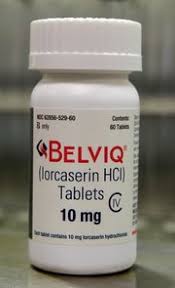
BELVIQ (lorcaserin hydrochloride) is a serotonin 2C receptor agonist for oral administration used for chronic weight management. Its chemical name is (R)-8-chloro-1-methyl-2,3,4,5-tetrahydro-1H-3-benzazepine hydrochloride hemihydrate. The empirical formula is C11H15Cl2N•0.5H2O, and the molecular weight of the hemihydrate form is 241.16 g/mol.

The structural formula is:

BELVIQ (lorcaserin hydrochloride) Structural Formula Illustration

Lorcaserin hydrochloride hemihydrate is a white to off-white powder with solubility in water greater than 400 mg/mL. Each BELVIQ tablet contains 10.4 mg of crystalline lorcaserin hydrochloride hemihydrate, equivalent to 10.0 mg anhydrous lorcaserin hydrochloride, and the following inactive ingredients: silicified microcrystalline cellulose; hydroxypropyl cellulose NF; croscarmellose sodium NF; colloidal silicon dioxide NF, polyvinyl alcohol USP, polyethylene glycol NF, titanium dioxide USP, talc USP, FD&C Blue #2 aluminum lake, and magnesium stearate NF. NDA 022529 APPR2012-06-27 TO EISAI FOR BELVIQ 10 MG ORAL TAB

METHOD FOR CHRONIC WEIGHT MANAGEMENT BY DECREASING FOOD INTAKE U1252

Patent No  US PatentExpiry Date patent use code
7514422 Apr 10, 2023 U-1252
7977329 Apr 10, 2023 U-1252
8168624 Apr 18, 2029
8207158 Apr 10, 2023 U-1252
8273734 Apr 10, 2023 U-1254
Exclusivity Code Exclusivity_Date
NCE Jun 27, 2017

Compound 1 is disclosed in PCT patent publication WO2003/086303, which is incorporated herein by reference in its entirety.

Figure imgf000005_0001

1

Various synthetic routes to (R)-8-chloro-l-methyl-2,3,4,5-tetrahydro-lH-3-benzazepine, its related salts, enantiomers, crystalline forms, and intermediates, have been reported in PCT publications, WO 2005/019179, WO 2006/069363, WO 2007/120517, WO 2008/070111 , WO 2009/111004, and in United States provisional application 61/396,752 each of which is incorporated herein by reference in its entirety.

Combinations of (R)-8-Chloro-l -methyl-2,3,4,5-tetrahydro-lH-3-benzazepine with other agents, including without limitation, phentermine, and uses of such combinations in therapy are described in WO 2006/071740, which is incorporated herein by reference in its entirety

The following United States provisional applications are related to (R)-8-chloro-l- methyl-2,3,4,5-tetrahydro-lH-3-benzazepine: 61/402,578; 61/403,143; 61/402,580; 61/402,628; 61/403,149; 61/402,589; 61/402,611 ; 61/402,565; 61/403, 185; each of which is incorporated herein by reference in its entirety.

Approval History
Date Supplement No. Action Documents
2012-06-27 000 Approval
2013-01-04 001 Manufacturing Change or Addition
2013-11-01 002 Manufacturing Change or Addition

This compound is useful in the treatment of 5-HT2c receptor associated disorders, such as, obesity, and is disclosed in PCT patent publication, WO2003/086303.

Various synthetic routes to (R)-8-chloro-l -methyl-2,3,4,5-tetrahydro-lH-3-benzazepine, its related salts, enantiomers, crystalline forms, and intermediates, have been reported in WO 2005/019179, WO 2006/069363, WO 2007/120517, WO 2008/07011 1 , WO 2009/111004, and WO 2010/148207 each of which is incorporated herein by reference in its entirety. Combinations of (R)-8-Chloro-l -methyl-2,3,4,5-tetrahydro-lH-3-benzazepine with other agents, including without limitation, phentermine, and uses of such combinations in therapy are described in WO 2006/071740, which is incorporated herein by reference in its entirety.

3-Benzazepines have been found to be agonists of the 5HT2C receptor and show effectiveness at reducing obesity in animal models (see, e.g., U.S. Ser. No. 60/479,280 and U.S. Ser. No. 10/410,991, each of which is incorporated herein by reference in its entirety). Numerous synthetic routes to 3-benzazepines have been reported and typically involve a phenyl-containing starting material upon which is built an amine- or amide-containing chain that is capable of cyclizing to form the fused 7-member ring of the benzazepine core. Syntheses of 3-benzazepines and intermediates thereof are reported in U.S. Ser. No. 60/479,280 and U.S. Ser. No. 10/410,991 as well as Nair et al., Indian J. Chem., 1967, 5, 169; Orito et al., Tetrahedron, 1980, 36, 1017; Wu et al., Organic Process Research and Development,1997, 1, 359; Draper et al., Organic Process Research and Development, 1998, 2, 175; Draper et al., Organic Process Research and Development, 1998, 2, 186; Kuenburg et al., Organic Process Research and Development, 1999, 3, 425; Baindur et al., J. Med. Chem.,1992, 35(1), 67; Neumeyer et al., J. Med. Chem., 1990, 33, 521; Clark et al., J. Med. Chem.,1990, 33, 633; Pfeiffer et al., J. Med. Chem., 1982, 25, 352; Weinstock et al., J. Med. Chem., 1980, 23(9), 973; Weinstock et al., J. Med. Chem., 1980, 23(9), 975; Chumpradit et al., J. Med. Chem., 1989, 32, 1431; Heys et al., J. Org. Chem., 1989, 54, 4702; Bremner et al., Progress in Heterocyclic Chemistry, 2001, 13, 340; Hasan et al., Indian J. Chem., 1971, 9(9), 1022; Nagle et al., Tetrahedron Letters, 2000, 41, 3011; Robert, et al., J. Org. Chem., 1987, 52, 5594); and Deady et al., J. Chem. Soc., Perkin Trans. I, 1973, 782.

Other routes to 3-benzazepines and related compounds are reported in Ladd et al., J. Med. Chem., 1986, 29, 1904; EP 204349; EP 285 919; CH 500194; Tetrahedron Letters, 1986, 27, 2023; Ger. Offen., 3418270, 21 Nov. 1985; J. Org. Chem.,1985, 50, 743; U.S. Pat. Nos. 4,957,914 and 5,015,639; Synthetic Commun., 1988, 18, 671; Tetrahedron, 1985, 41, 2557;Hokkaido Daigaku Kogakubu Kenhyu Hokoku, 1979, 96, 414; Chemical & Pharmaceutical Bulletin, 1975, 23, 2584; J. Am. Chem. Soc., 1970, 92, 5686; J. Am. Chem. Soc., 1968, 90, 6522; J Am. Chem. Soc., 1968, 90, 776; J. Am. Chem. Soc.,1967, 89, 1039; and Chang et al., Bioorg. Med. Chem. Letters, 1992, 2, 399

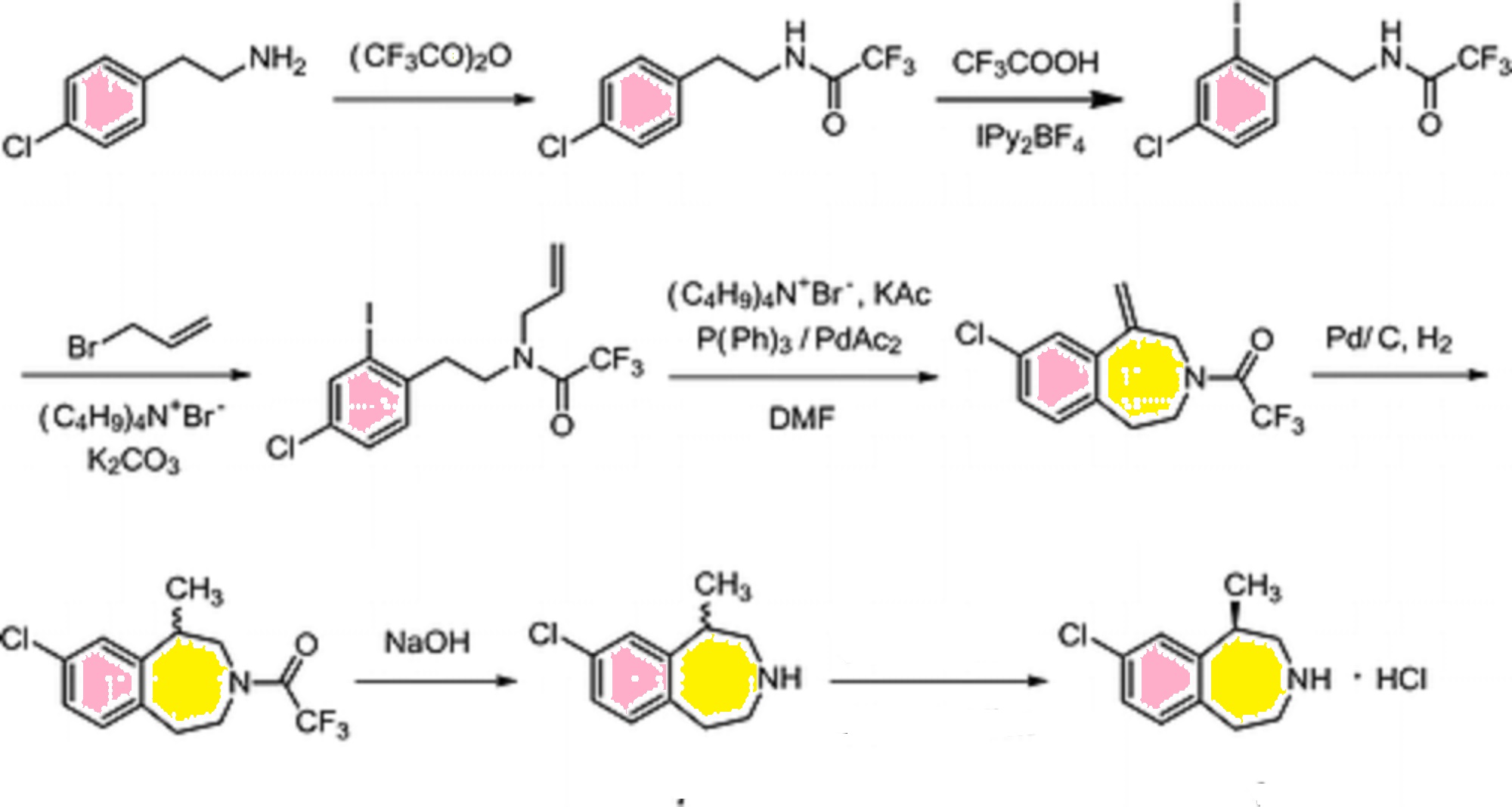
Its synthesis starting from compound 1 and, via SN2 coupling to form 3, thionyl chloride, to form 4, aluminum chloride catalyzed Friedel-Crafts alkylation ring closure to give the racemic product 5, through L- tartaric acid separation, obtained chiral




SYNTHESIS
SYN1 JPEG

Smith, J.; Smith, B. 5HT2C receptor modulators. U.S. Patent 2003225057, 2003.

Smith, B.; Smith, J. 5HT2C receptor modulators. U.S. Patent 6953787, 2005

PATENT

http://www.google.com/patents/US8367657

Example 6 Preparation of 2-(4-Chlorophenyl)-N-ethyl-N-2-propylchloride


Figure US08367657-20130205-C00052


To a dry 100-milliliter, round bottom flask under nitrogen with stirring was added 2-(4-chlorophenyl)ethyl-N-2-chloropropionylamide (8.8 g, 35.8 mmol) followed by borane in THF (1.8 M, 70 mL, 140 mmol) over 10 minutes (gas evolution and solid becomes solubilized). After the addition was complete, boron trifluoride in tert-butyl methyl ether (8 mL, 70.8 mmol) was added over 10 minutes with more gas evolution. After 4 hours, LC/MS showed complete reaction. The reaction mixture was quenched with 20 mL of conc. HCL (37%) with additional of gas evolution. The reaction mixture was stirred at 40° C. for 2 hours, cooled to room temperature and evaporated. Then, the white slurry was taken up in 40 mL ethyl acetate and 20 mL of 2.5 M NaOH to make a yellow solution over a white slurry. The yellow organic layer was washed with brine, dried over magnesium sulfate, filtered and evaporated to give 12.2 grams of white to yellow solid. This solid was recrystallized from ethyl acetate/hexane in two crops to give 6.7 grams of white solid product (80% yield).

1H NMR (DMSO-d6): 9.0 (br s, 2 H, NH, HCl), 7.2 (d, 2H, J=8 Hz), 7.05 (d, 2H, J=8 Hz), 4.5 (m, 1H), 3.2 (m, 2H), 3.1 (m, 2H), 3.0 (m, 2H), 1.5 (d, 3H, J=7 Hz).

LC/MS: 1.71 minute, 232.1 M+H+ and 139 major fragment. Minor impurity observed at 2.46 min with 321 and 139 peaks.


Example 1 Preparation of 2-(4-chlorophenyl)ethyl-N-2-chloropropionamide


Figure US08367657-20130205-C00048


To a 1-liter, 3-necked round bottom flask under argon balloon equipped with reflux condenser and addition funnel, were added sequentially 2-(4-chlorophenyl) ethylamine (30 g, 193 mmol), 400 mL acetonitrile, triethylamine (19.5 g, 193 mmol) and 80 mL acetonitrile. The clear colorless solution was stirred and cooled to 0° C. 2-Chloropropionyl chloride (24.5 g, 193 mmol, distilled) in 5 mL acetonitrile was slowly added over 20 minutes to evolution of white gas, formation of white precipitate, and color change of reaction mixture to slight yellow. An additional 10 mL of acetonitrile was used to rinse the addition funnel. The mixture was stirred at 0° C. for 30 minutes and then warmed to room temperature and stirred vigorously for an additional one hour. The yellow reaction mixture was concentrated on the rotary evaporator to a solid containing triethylamine hydrochloride (76.36 grams). This material was taken up in 100 mL ethylacetate and 200 mL water, and stirred vigorously. The layers were separated and the aqueous layer was extracted with an additional 100 mL ethylacetate. The combined organic layers were washed twice with 25 mL of saturated brine, dried over magnesium sulfate, filtered, and concentrated to a light tan solid (41.6 grams, 88%). TLC in ethylacetate-hexane, 8:2 showed a major spot two-thirds of the way up the plate and a small spot at the baseline. Baseline spot was removed as follows: This material was taken up in 40 mL of ethylacetate and hexane was added until the solution became cloudy. Cooling to 0° C. produced a white crystalline solid (40.2 grams, 85% yield). The product is a known compound (Hasan et al., Indian J. Chem., 1971, 9(9), 1022) with CAS Registry No. 34164-14-2.

LC/MS gave product 2.45 minute; 246.1 M++H+.

1H NMR (CDCl3): δ 7.2 (dd, 4H, Ar), 6.7 (br S, 1H, NM, 4.38 (q, 1H, CHCH3), 3.5 (q, 2H, ArCH2CH2NH), 2.8 (t, 2H, ArCH2), 1.7 (d, 3H, CH3).

13C NMR (CDCl3): 169 (1C, C═O), 136 (1C, Ar—Cl), 132 (1C, Ar), 130 (2C, Ar), 128 (2C, Ar), 56 (1C, CHCl), 40 (1C, CHN), 34 (1C, CHAr), 22 (1C, CH3).

Example 2 Preparation of 8-chloro-1-methyl-2,3,4,5-tetrahydro-1H-3-benzazepin-2-one


Figure US08367657-20130205-C00049


2-(4-Chlorophenyl)ethyl-N-2-chloropropionamide (10 g, 40.6 mmol) of Example 1 and aluminum chloride (16 g, 119.9 mmol) were added to a clean dry 100 mL round bottom flask equipped with an argon balloon, stirring apparatus, and heating apparatus. The white solid melted to a tan oil with bubbling at 91° C. (Note: if impure starting materials are used, a black tar can result but clean product can still be isolated). The mixture was heated and stirred at 150° C. for 12 hours. (Note: The time is dependent on the reaction scale and can easily be followed by LC/MS; higher temperatures can be used for shorter time periods. E.g., a 1 gram sample was complete in 5 hours.) The reaction can be followed by LC/MS with the starting material at 2.45 minutes (246.1 M++H+), the product at 2.24 minutes (209.6 M++H+) on a 5 minute reaction time from 5-95% w/0.01% TFA in water/MeCN (50:50).

After cooling to room temperature, the reaction mixture was quenched with slow addition of 10 mL of MeOH followed by 5 mL of 5% HCl in water and 5 mL of ethyl acetate. After separation of the resulting layers, the aqueous layer was extracted a second time with 10 mL of ethyl acetate. The combined organic layers were dried over magnesium sulfate, filtered, and concentrated to a tan solid (6.78 grams, 80% yield). LC/MS showed one peak, at 2.2 min and 209.6 MI. This material was taken up in ethyl acetate, filtered through celite and Kieselgel 60 (0.5 inch plug on a 60 mL Buchner funnel) and the filtrate was recrystallized from hexane/ethyl acetate to give final product (4.61 grams, 54% yield).

1H NMR (CDCl3): 7.3-7.1 (m, 3H, Ar), 5.6 (br S, 1H, NH), 4.23 (q, 1H, CHCH3), 3.8 (m, 1H, ArCH2CH 2NH), 3.49 (m, 1H, ArCH2CH 2NH), 3.48 (m, 1H, ArCH 2CH2NH), 3.05 (m, 1H, ArCH 2CH2NH), 1.6 (d, 3H, CH2).

13C NMR (CDCl3): 178 (1C, C═O), 139 (1C, Ar), 135 (1C, Ar), 130, 129 (2C, Ar), 126 (2C, Ar), 42 (1C, C), 40 (1C, CHN), 33 (1C, CHAr), 14 (1C, CH3).

Example 3 Preparation of 8-chloro-1-methyl-2,3,4,5-tetrahydro-1H-3-benzazepine


Figure US08367657-20130205-C00050

Procedure A


HPLC purified 8-chloro-1-methyl-2,3,4,5-tetrahydro-1H-3-benzazapin-2-one (150 mg, 0.716 mmol) of Example 2 was added to a 50 mL round bottom flask with 2M borane-tetrahydrofuran solution (2 mL, 2.15 mmol). The mixture was stirred 10 hours at room temperature under an argon balloon. LC/MS showed the desired product as the major peak with approximately 5% of starting material still present. The reaction mixture was quenched with 5 mL methanol and the solvents were removed on the rotary evaporator. This procedure was repeated with methanol addition and evaporation. The mixture was evaporated on the rotary evaporator followed by 2 hours in vacuo to give the product as a white solid (117 mg, 70% yield).

NMR, LC/MS and other analytical data are provided below.

Procedure B

Recrystallized 8-chloro-1-methyl-2,3,4,5-tetrahydro-1H-3-benzazapin-2-one (137 mg, 0.653 mmol) was added to a 50 mL round bottom flask with stirring under nitrogen gas. To the flask was slowly added borane-tetrahydrofuran solution (1M, 10 mL) followed by boron trifluoride TBME solution (1 mL, 8.85 mmol) with vigorous gas evolution. The mixture was stirred 6 hours at room temperature under nitrogen gas. LC/MS showed the desired product. The reaction mixture was quenched with 5 mL methanol and 3 mL conc. HCl and the solvents were removed on the rotary evaporator. This procedure was repeated with methanol and HCl addition and evaporation. The mixture was evaporated on the rotary evaporator followed by 2 hours on the pump to dryness to give 8-chloro-1-methyl-2,3,4,5-tetrahydro-1H-3-benzazapine hydrochloride (106 mg, 70% yield).

1H NMR (CDCl3): 10.2 (br s, 1H), 9.8 (br s, 1H), 7.14 (dd, 1H, J=2, 8 Hz), 7.11 (d, 1H, J=2 Hz), 7.03 (d, 1H, J=8 Hz), 3.6 (m, 2H), 3.5 (m, 2H), 2.8-3.0 (m, 3 H), 1.5 (d, 3H, J=7 Hz).

LC/MS: 1.41 minute, 196.1 M+H+and 139 major fragment. No impurities were observed.

Example 4 Preparation of L-(+)-tartaric acid salt of (R)-8-chloro-1-methyl-2,3,4,5-tetrahydro-1H-3-benzazepine


Figure US08367657-20130205-C00051


To a clean, dry 50 mL round bottom flask were added 11.5 g (0.06 mol) of 8-chloro-1-methyl-2,3,4,5-tetrahydro-1H-3-benzazepine from Example 3 to 2.23 g (0.015 mol) of L-(+)-tartaric acid. The suspension was diluted with 56 g of tert-butanol and 6.5 mL of H2O. The mixture was heated to reflux (75-78° C.) and stirred for 10 min to obtain a colorless solution. The solution was slowly cooled down to room temperature (during 1 h) and stirred for 3 h at room temperature. The suspension was filtered and the residue was washed twice with acetone (10 mL). The product was dried under reduced pressure (50 mbar) at 60° C. to yield 6.3 g of the tartrate salt (ee=80). This tartrate salt was added to 56 g of tert-butanol and 6.5 mL of H2O. The resulting suspension was heated to reflux and 1 to 2 g of H2O was added to obtain a colorless solution. The solution was slowly cooled down to room temperature (over the course of 1 h) and stirred for 3 h at room temperature. The suspension was filtered and the residue was washed twice with acetone (10 mL). The product was dried under reduced pressure (50 mbar) at 60° C. to produce 4.9 g (48% yield) of product (ee>98.9).

If the ee value of the product obtained is not satisfactory, an additional recrystallization can be carried out as described. Either enantiomer can be synthesized in high ee utilizing this method.

Example 5 Conversion of Salt Form to Free Amine

The L-tartaric acid salt of 8-chloro-1-methyl-2,3,4,5-tetrahydro-1H-3-benzazepine (300 mg, 0.87 mmol) from Example 4 was added to a 25 mL round bottom flask with 50% sodium hydroxide solution (114 μL, 2.17 mmol) with an added 2 mL of water. The mixture was stirred 3 minutes at room temperature. The solution was extracted with methylene chloride (5 mL) twice. The combined organic extracts were washed with water (5 mL) and evaporated to dryness on the pump to get free amine (220 mg crude weight). LC/MS 196 (M+H).

Example 14 Preparation of Hydrochloric Acid Salt of (R)-8-chloro-1-methyl-2,3,4,5-tetrahydro-1H-3-benzazepine

To a clean, dry 25 mL round bottom flask were added (R)-8-chloro-1-methyl-2,3,4,5-tetrahydro-1H-3-benzazepine free amine (220 mg), 3 ML methylene chloride, and 1.74 mL of 1M HCl in ether. The mixture was stirred for 5 minutes at room temperature. The solvent was removed under reduced pressure to give a white solid, the HCl salt. The salt was re-dissolved in methylene chloride (3 mL) and an additional 1.74 mL of 1 M HCl was added and the solution was again stirred at room temperature for 5 minutes. The solvent was removed under reduced pressure to give the desired HCl salt of 8-chloro-1-methyl-2,3,4,5-tetrahydro-1H-3-benzazapine (190 mg crude weight, 95% yield). NMR data was consistent with the desired product.

1H NMR (CDCl3): 10.2 (br s, 1H), 9.8 (br s, 1H), 7.14 (dd, 1H, J=2, 8 Hz), 7.11 (d, 1H, J=2 Hz), 7.03 (d, 1H, J=8 Hz), 3.6 (m, 2H), 3.5 (m, 2H, 2.8-3.0 (m, 3 H), 1.5 (d, 3H, J=7 Hz).

Paper

Abstract Image

A novel synthesis of antiobesity drug lorcaserin hydrochloride was accomplished in six steps.N-protection of 2-(4-chlorophenyl)ethanamine with di-tert-butyl dicarbonate, N-alkylation with allyl bromide, deprotection, intramolecular Friedel–Crafts alkylation, chiral resolution with l-(+)-tartaric acid, and the final salification led to the target molecule lorcaserin hydrochloride in 23.1% overall yield with 99.9% purity and excellent enantioselectivity (>99.8% ee). This convenient and economical procedure is remarkably applicable for scale-up production.

Org. Process Res. Dev., 2015, 19 (9), pp 1263–1267
DOI: 10.1021/acs.oprd.5b00144

Lorcaserin hydrochloride

(R)-8-Chloro-1-methyl-2,3,4,5-tetrahydro-1H-benzo[d]azepinehydrochloride (1)

To a solution of 16 (0.66 kg, 2.44 mol) in water (3 L) was added 20% K2CO3 aqueous solution. The pH was adjusted to 8–9 and extracted with cyclohexane (5 L × 2). The combined organic layer was washed with brine (5 L × 2), dried with anhydrous Na2SO4, filtered, and concentrated to afford lorcaserin as yellow oil. To a stirred solution of lorcaserin free base in anhydrous ethanol (500 mL) was added HCl-saturated EtOAc solution slowly until pH = 2 and stirred for another 5 h at room temperature. The reaction solution was concentrated and then stirred for 1 h in methyl tert-butyl ether (2 L) at room temperature. The precipitate was filtered, washed with methyl tert-butyl ether (200 mL), and dried under vacuum to give lorcaserin hydrochloride (1) (0.52 kg, 91.2%). HPLC purity: 99.9%, chiral purity: 99.9%. Mp: 198–199 °C.
1H NMR (300 MHz, DMSO-d6): δ = 9.61 (bs, 2H), 7.28–7.21 (m, 3H), 3.54–3.44 (m, 1H), 3.33–3.18 (m, 3H), 3.01 (dd, J = 15.7, 7.1 Hz, 1H), 2.91–2.83 (m, 2H), 1.34 (d, J = 7.2 Hz, 3H).
13C NMR (75 MHz, DMSO-d6): δ = 145.4, 138.1, 131.5, 126.4, 126.0, 114.5, 50.1, 44.5, 34.1, 30.8, 17.5.
MS (ESI, 70 eV): m/z = 196.1 [M + H]+.
HPLC for 1 (tR = 9.0 min) purity 99.9%: Intersil ODS-3 5 μm C-18 250 mm × 4.6 mm, flow rate = 1 mL/min, 35 °C, gradient elution from 20:88 A/B for 30 min to 75:25 A/B over 30 min; A = acetonitrile; B = phosphoric acid in water (pH = 6.0); UV λ = 220 nm.
Chiral HPLC for 1 (tR = 21.6 min) purity 99.9%: Daicel AD-RH 5 μm 250 mm × 4.6 mm, flow rate = 1 mL/min, 35 °C, isocratic A/B/C = 92:8:0.1; A = n-hexane; B = isopropanol; C = diethylamine; UV λ = 220 nm.


WO2010148207A2 17 Jun 2010 23 Dec 2010 Arena Pharmaceuticals, Inc. Processes for the preparation of 5-ht2c receptor agonists
WO2011153206A1 1 Jun 2011 8 Dec 2011 Arena Pharmaceuticals, Inc. Processes for the preparation of 5-ht2c receptor agonists
WO2012030927A2 31 Aug 2011 8 Mar 2012 Arena Pharmaceuticals, Inc. Modified-release dosage forms of 5-ht2c agonists useful for weight management
WO2012030938A1 31 Aug 2011 8 Mar 2012 Arena Pharmaceuticals, Inc. Salts of lorcaserin with optically active acids
WO2012030939A1 31 Aug 2011 8 Mar 2012 Arena Pharmaceuticals, Inc. Administration of lorcaserin to individuals with renal impairment
WO2012030951A1 31 Aug 2011 8 Mar 2012 Arena Pharmaceuticals, Inc. Fast-dissolve dosage forms of 5-ht2c agonists
WO2012030953A1 31 Aug 2011 8 Mar 2012 Arena Pharmaceuticals, Inc. 5-ht2c receptor agonists in the treatment of disorders ameliorated by reduction of norepinephrine level
WO2012030957A2 31 Aug 2011 8 Mar 2012 Arena Pharmaceuticals, Inc. Non-hygroscopic salts of 5-ht2c agonists
EP2443080A2 * 17 Jun 2010 25 Apr 2012 Arena Pharmaceuticals, Inc. Process for the preparation of 5-ht2c receptor agonists
WO2007120517A2 * 2 Apr 2007 25 Oct 2007 Arena Pharm Inc Processes for the preparation of 8-chloro-1-methyl-2,3,4,5-tetrahydro-1h-3-benzazepine and intermediates related thereto


home business

back to home for more updates

ANTHONY MELVIN CRASTO

DR ANTHONY MELVIN CRASTO Ph.D

amcrasto@gmail.com

MOBILE-+91 9323115463
GLENMARK SCIENTIST , NAVIMUMBAI, INDIA

Don’t Mess with Texas (Biotech)!


Rolapitant hydrochloride, NDA IN 2014


ROLAPITANT HYDROCHLORIDE

  • Rolapitant HCl
  • Rolapitant hydrochloride
  • Sch 619734
  • SCH619734
  • UNII-57O5S1QSAQ

(5S ,8S)-8-[[(1R)-1-[3 ,5-
Bis(trifluoromethyl)phenyl] ethoxy] methyl]-8-phenyl-1,7-
diazaspiro[4.5]decan-2-one hydrochloride monohydrate. 
  

CAS 914462-92-3

Empirical Formula: C25H26F6N2O2 · HCl · H2O 

Molecular Weight:  555 

USAN Name: Rolapitant hydrochloride 

INN Name:  rolapitantum or rolapitant 

phase 3

CAS Number: 552292-08-7 (rolapitant free base); 914462-92-3 (rolapitant HCl monohydrdate).

It is in late-stage trials of its drug rolapitant, which showed promising mid-stage results in reducing nausea and vomiting in patients undergoing chemotherapy

Rolapitant hydrochloride is a tachykinin neurokinin 1 (NK1) antagonist in phase III clinical trials at Tesaro for the prevention of chemotherapy-induced nausea and vomiting (CINV). Phase II clinical trials are also under way at OPKO for this indication. At Merck & Co., phase II clinical studies were also under way for the treatment of chronic idiopathic cough and for the prevention of chemotherapy-induced nausea; however, no recent developments have been reported for these indications.

NK1 is a G-protein coupled receptor found in the central and peripheral nervous systems. Substance P is the endogenous ligand for this receptor, whose activation leads to the production of inositol triphosphate. NK1 is believed to be involved in the emetic response.

The drug candidate was originally developed by Schering-Plough (now Merck & Co.), and in 2009 it was licensed to OPKO for the prevention of nausea and vomiting related to cancer chemotherapy and surgery. In 2010, rolapitant was licensed by OPKO to Tesaro on a worldwide basis for the prevention of chemotherapy-induced nausea and vomiting.

Rolapitant is a selective, bioavailable, CNS penetrant neurokinin NK1 receptor antagonist that shows behavioral effects in animals models of emesis. In vitro studies indicate that rolapitant has a high affinity for the human NK1 receptor of 0.66 nM and high selectivity over the human NK2 and NK3 subtypes of >1000-fold. Rolapitant is a functionally competitive antagonist, as measured by calcium efflux, with a calculated Kb of 0.17 nM.  (source: Pharmacol Biochem Behav.2012 Mar 31.

Rolapitant is a potent, selective NK1 receptor antagonist that is rapidly absorbed, has a remarkably long half-life (up to180 hours), and appears to have a low potential for drug-drug interactions.  A randomized, multicenter, double-blind, dose-ranging study of rolapitant was conducted with placebo and active control groups. Six hundred nineteen adult women undergoing open abdominal surgery were randomly assigned in equal ratios to 1 of 6 study arms: oral rolapitant in 5-mg, 20-mg, 70-mg, or 200-mg doses; IV ondansetron 4 mg; or placebo, stratified by history of PONV or motion sickness. The primary study endpoint was absence of emetic episodes, regardless of use of rescue medication, at 24 hours after extubation.RESULTS: Groups assigned to rolapitant 20-mg, 70-mg, and 200-mg had a higher incidence of no emesis in comparison with placebo at 24 hours after surgery. A linear relationship between rolapitant dose and primary outcome was seen. The probability of an emetic episode was significantly lower in the rolapitant 70-mg and 200-mg groups in comparison with placebo (P ≤ 0.001 based on the log-rank test). No significant differences were noted between rolapitant and the active control (ondansetron) at 24 hours after surgery, but there was a higher incidence of no emesis (regardless of rescue medication use) in the rolapitant 200- and 70-mg groups at 72 and 120 hours, respectively. CONCLUSION: Rolapitant is superior to placebo in reducing emetic episodes after surgery and reduces the incidence of vomiting in a dose-dependent manner. No differences in side effect profile were observed between rolapitant and placebo.

References

1: Gan TJ, Gu J, Singla N, Chung F, Pearman MH, Bergese SD, Habib AS, Candiotti KA, Mo Y, Huyck S, Creed MR, Cantillon M; Rolapitant Investigation Group. Rolapitant for the prevention of postoperative nausea and vomiting: a prospective, double-blinded, placebo-controlled randomized trial. Anesth Analg.
2011 Apr;112(4):804-12. Epub 2011 Mar 8. PubMed PMID: 21385988.

2.  Reddy GK, Gralla RJ, Hesketh PJ. Novel neurokinin-1 antagonists as antiemetics for the treatment of chemotherapy-induced emesis. Support Cancer Ther. 2006 Apr 1;3(3):140-2. PubMed PMID: 18632487.

3. Drug Data Rep 2003, 25(8): 703

4. A multicenter, randomized, double blind, active-controlled study of the safety and efficacy of rolapitant for the prevention of chemotherapy-induced nausea and vomiting (CINV) in subjects receiving moderately emetogenic chemotherapy (NCT01500226)
ClinicalTrials.gov Web Site 2012, February 06

5. Efficacy and safety of rolapitant, a novel NK-1 receptor antagonist, for the prevention of chemotherapy-induced nausea and vomiting in subjects receiving highly emetogenic chemotherapy
48th Annu Meet Am Soc Clin Oncol (ASCO) (June 1-5, Chicago) 2012, Abst 9077

6. Proposed international nonproprietary names (Prop. INN): List 97
WHO Drug Inf 2007, 21(2): 160

………………………………

patents

WO 2003051840

WO 2008118328

………………………….

The preparation of diazaspirodecan-2-ones for example, 8-[{1-(3,5-Bis-(trifluoromethyl)phenyl)-ethoxy}-methyl]-8-phenyl-1,7-diaza-spiro[4.5]decan-2-one, for example, (5S,8S)-8-[{(1R)-1-(3,5-Bis-(trifluoromethyl)phenyl)-ethoxy}-methyl]-8-phenyl-1,7-diazaspiro[4.5]decan-2-one (the compound of Formula I) has been described in U.S. Pat. No. 7,049,320 (the ‘320 patent), issued May 23, 2006, the disclosure of which is incorporated herein in its entirety by reference.

Figure US08552191-20131008-C00001

The compounds described in the ‘320 patent are classified as tachykinin compounds, and are antagonists of neuropeptide neurokinin-1 receptors (herein, “NK-1” receptor antagonists). Other NKreceptor antagonists and their synthesis have been described, for example, those described in Wu et al, Tetrahedron 56, 3043-3051 (2000); Rombouts et al, Tetrahedron Letters 42, 7397-7399 (2001); and Rogiers et al, Tetrahedron 57, 8971-8981 (2001) and in published international application no. WO05/100358, each of which are incorporated herein in their entirety by reference.

“NK-1” receptor antagonists have been shown to be useful therapeutic agents, for example, in the treatment of pain, inflammation, migraine, emesis (vomiting), and nociception. Among many compounds disclosed in the above-mentioned ‘320 patent are several novel diazaspirodecan-2-ones, including the compound of Formula I, which are useful in the treatment of nausea and emesis associated with chemotherapy treatments (Chemotherapy-induced nausea and emesis, CINE).

The synthesis method for preparing the compound of Formula I described in the ‘320 patent generally follows Scheme I in the provision of 8-[{1-(3,5-Bis-(trifluoromethyl)phenyl)-ethoxyl}-methyl]-8-phenyl-1,7-diaza-spiro[4.5]decan-2-one compounds.

Figure US08552191-20131008-C00002
Figure US08552191-20131008-C00003
Figure US08552191-20131008-C00004

The process for the preparation of the compound of Formula I described in the ‘320 patent is carried out in 18 individual steps from commercially available starting materials (see the ‘320 patent at col. 43, line 55 to col. 45, line 20; col. 75. line 55 to col. 80, line 21; col. 90 lines 35 to 63; and col. 98, line 1 to col. 99. line 24). In many steps of the process described in the ‘320 patent, intermediate compounds must be isolated or isolated and purified before use in a subsequent step, often utilizing column chromatography for this purpose.

……………………………

US7049320

Examples 72a and 72b

Figure US07049320-20060523-C00153

Step 1:

Figure US07049320-20060523-C00154

To a solution of crude Compound 53 (19 g) in CH2Cl(300 ml) at RT, DIEA (15 ml, 0.087 mol) was added, followed by triphosgene (4.34 g, 0.015 mol). The mixture was stirred at RT for 18 h and was filtered through a pad of silica. Solvents were removed in vacuum to give crude Compound 60 as yellow oil which was used in the next reaction without further purifications.

Step 2:

Figure US07049320-20060523-C00155

To the crude Compound 60 in THF (200 ml) at 0° C., LiBH(1.26 g, 0.058 mol) was added in small portions. The mixture was stirred at RT for 18 h before quenching with saturated NH4Cl solution. Water and EtOAc were added to the mixture. Layers were separated and the aqueous layer was extracted with EtOAc (100×2). The combined organic layers were dried (MgSO4) and filtered. Solvents were removed in vacuum and purification by column chromatography [hexane-EtOAc, 4:1 (v/v)] gave Compound 61 (12.9 g, 62% overall) as white foam.

Step 3:

Oxalyl chloride (4.2 ml, 0.048 mol) was added to a solution of DMSO (6.8 m[, 0.096) in CH2Cl(300 ml) at −78° C. under N2. The mixture was stirred at −78° C. for 15 min before a solution of Compound 61 (8.5 g, 0.012 mol) in CH2Cl(100 ml) was added. The mixture was stirred at −78° C. for a further 1 h and Et3N (23.5 ml) was added. The cooling bath was removed and the mixture was warmed to RT before it was quenched with saturated NaHCOsolution. Layers were separated and the aqueous was extracted with CH2Cl(150 ml×2). The combined organic layers were dried (MgSO4) and filtered. Removal of solvents in vacuum gave an aldehyde as yellow oil. To a mixture of NaH (1.44 g, 0.036 mol) in THF at 0° C., methyl diethylphosphonoacetate (6.6 ml, 0.036 mol) was added. The mixture was stirred at 0° C. for 15 min and a solution of aldehyde in THF (100 ml) was added. The cooling bath was removed and the mixture was stirred at RT for 1 h. The reaction was quenched with saturated NH4Cl solution. Water and EtOAc were added to the mixture. Layers were separated and the aqueous layer was extracted with EtOAc (200 ml×2). The combined organic layers were dried (MgSO4) and filtered. Solvents were removed in vacuum and purification by column chromatography [hexane-EtOAc, 4:1 (v/v)] gave an ester as white foam. The ester was dissolved in EtOH (100 ml) and a catalytic amount of palladium (1.28 g, 10% on carbon) was added. The mixture was shaken under H(50 psi) for 2 days. Catalytic amount of Pd(OH)(20% on carbon) was then added to the mixture and the mixture was again shaken under H(50 psi) for 5 h. The mixture was filtered through a pad of Celite and solvents were removed in vacuum to give a white foam. The foam was then dissolved in CH2Cl(200 ml) and TFA (8.9 ml, 0.12 mol) was added. The mixture was stirred at RT for 18 h and was cooled at 0° C. before it was neutralized with saturated NaHCOsolution. Water and EtOAc were added to the mixture. Layers were separated and the aqueous layer was extracted with EtOAc (200 ml×2). The combined organic layers were dried (MgSO4) and filtered. Solvents were removed in vacuum to give a yellow oil. The oil was dissolved in CH3OH (50 ml) and a catalytic amount of K2CO(166 mg, 0.0012 mol) was added. The mixture was heated at 60° C. for 2 h. After being cooled to RT, the mixture was filtered through a pad of silica and solvents were removed in vacuum. Purification by column chromatography (EtOAc) gave the mixture of two isomers Example 72a and 72b (2.3 g, 38% overall) as white foam. Separation by HPLC using Chiralcel OD [hexane-isopropanol, 95:5 (v/v)] gave the less polar major isomer Example 72a as white foam. Electrospray MS [M+1]+=501.1. Continuous elution with the same solvent system gave the more polar minor isomer Example 72b as colorless oil.

Electrospray MS [M+1]+=501.1.

………………………..

US8552191

Figure US08552191-20131008-C00028

Figure US08552191-20131008-C00029

Figure US08552191-20131008-C00030

Figure US08552191-20131008-C00031

Figure US08552191-20131008-C00032

Example 6 Preparation of Formula I Compound Salt: (5S,8S)-8-({(1R)-1-[3,5-Bis(trifluoromethyl)phenyl]ethoxy}methyl)-8-phenyl-1,7-diazaspiro[4.5]decan-2-one hydrochloride monohydrate

Figure US08552191-20131008-C00033

…………………

Figure US08552191-20131008-C00016

Figure US08552191-20131008-C00017

https://www.google.it/patents/US8552191?hl=it&dq=WO+2008118328&ei=alDCUs-_KYiIrQeg3oCwDw&cl=en

……………

update added

By RTT News,  May 12, 2014, 

(RTTNews.com) – TESARO Inc. ( TSRO ) announced positive top-line results from the third and final Phase 3 trial of rolapitant, an investigational neurokinin-1 or NK-1 receptor antagonist in development for the prevention of chemotherapy-induced nausea and vomiting (CINV).

The rolapitant arm in this trial, which enrolled patients receiving cisplatin-based, highly emetogenic chemotherapy or HEC, successfully achieved statistical significance over the standard therapy arm for the primary and all secondary endpoints. The adverse event profile for rolapitant remains consistent with that seen in previous clinical studies.

The third Phase 3 study of rolapitant was an international, multicenter, randomized, double-blind, active-controlled study that enrolled 532 cancer patients receiving cisplatin-based chemotherapy regimens at a dose equal to or greater than 60 mg/m2. Patients were randomized to receive either control, which consisted of a 5-HT3 receptor antagonist plus dexamethasone, or 200 milligrams of oral rolapitant plus control. The rolapitant arm in this study successfully achieved statistical significance over the control arm for the primary endpoint of complete response (CR) in the delayed phase of CINV.

In addition, the rolapitant arm also successfully achieved statistical significance over the control arm for the key secondary endpoints of CR in the acute (0 to 24 hour) and overall (0 to 120 hour) phases of CINV, for the secondary endpoint of no significant nausea, and for all other secondary endpoints.

Safety and tolerability data for patients who received rolapitant were similar to the results for those who received control, and were consistent with earlier clinical studies. The most frequently observed adverse events were balanced across treatment arms and included fatigue, constipation and loss of appetite.

The company noted that preparations continue in support of a submission of a New Drug Application (NDA) to the U.S. Food and Drug Administration (FDA) in mid-2014.

The oral rolapitant NDA will include data from one Phase 3 study in patients receiving moderately emetogenic chemotherapy (MEC), in addition to one Phase 2 and two Phase 3 trials in patients receiving cisplatin-based, highly emetogenic chemotherapy (HEC), including the trial announced today.

The top-line results of the Phase 3 trial in MEC and the prior Phase 3 trial in HEC were previously announced by TESARO in December 2013.

Rolapitant is an investigational agent and, as such, has not been approved by the U.S. FDA or any regulatory agencies.


……………

Aprepitant (MK-0869L-754,030), lUPAC name 5-([(2R,3S)-2-((R)-1 -[3,5- bis(trifluoromethyl)phenyl]ethoxy)-3-(4-fluorophenyl)morpholino]methyl)-1 /-/-1 ,2,4- triazol-3(2H)-one,

Figure imgf000009_0001

as described and claimed in the following US patents: US5,719,147, US 5,538,982, US 6,048,859, US 6,096,742 and US 6,235,735, the contents of which are incorporated herein by reference in their entirety. Also described in: Hale JJ et al, J Med Chem 1998; 41 (23) 4607-14; as well as pro-drugs thereof, such as:

Fosaprepitant (L-758,298, Emend) lUPAC name [3-{[(2R,3S)-2-[(1 R)-1 -[3,5- bis(trifluoromethyl)phenyl] ethoxy]-3-(4-fluorophenyl)morpholin-4-yl]methyl}-5-oxo- 2H- 1 ,2,4-triazol-1 -yl]phosphonic acid

Figure imgf000010_0001

e.g. in the form of a salt such as the dimeglumine salt as described and claimed at least in US 5,691 ,336, the contents of which are incorporated herein by reference in its entirety; b. ZD4974 as described in WO02026724 and WO01077089, the contents of which are incorporated herein by reference in its entirety:

Figure imgf000010_0002

The following compound, described in WO01077069 and WO00059873, the contents of which are incorporated herein by reference in entirety:

Figure imgf000011_0001

d. The following compound described in DE19519245, the contents of which are incorporated herein by reference in its entirety:

Figure imgf000011_0002

e. The following compound described in WO9732865, the contents of which are incorporated herein by reference in its entirety:

Figure imgf000011_0003

f. The following compound described in EP1295599, the contents of which are incorporated herein by reference in its entirety:

Figure imgf000012_0001

g. CGP49823 described in WO9626183 and WO9610562, the contents of which are incorporated herein by reference in their entirety:

Figure imgf000012_0002

h. The following compound as described in WO9514017, the contents of which are incorporated herein by reference in its entirety:

Figure imgf000012_0003

LY303870, Lanepitant, described in WO9907681 , the contents of which incorporated herein by reference in its entirety:

Figure imgf000013_0001

j. LI 686017, described in WO03091226, the contents of which are incorporated

herein by reference in its entirety:

Figure imgf000013_0002

k. FK888, as described in Hagiwara D et al, J Med Chem 1994; 37: 2090-9 and

WO9222569, WO93141 13, WO9321215, EP655442 and WO9637488, the contents of which are incorporated herein by reference in their entirety:

Figure imgf000013_0003

I. The following compound, described in WO9222569, WO93141 13, WO9321215, EP655442 and WO9637488, the contents of which are incorporated herein by reference in their entirety:

Figure imgf000014_0001

m. The following compound, described in WO9222569, WO93141 13, WO9321215, EP655442 and WO9637488, the contents of which are incorporated herein by reference in their entirety:

Figure imgf000014_0002

n. The following compound, described in WO00053572, the contents of which are incorporated herein by reference in its entirety:

Figure imgf000015_0001

o. Netupitant, described in WO020008232, the contents of which are incorporated herein by reference in its entirety:

Figure imgf000015_0002

p. Befetupitant, described in WO020008232, the contents of which are incorporated herein by reference in its entirety:

Figure imgf000015_0003

q. The following compound, described in WO202062784 and WO020008232, the

contents of which are incorporated herein by reference in their entirety:

Figure imgf000016_0001

r. R1 16031 , described in WO9724356 and WO0716440, the contents of which are incorporated herein by reference in their entirety:

Figure imgf000016_0002

s. The following compound, described in EP522808, the contents of which are incorporated herein by reference in its entirety:

Figure imgf000016_0003

t. The following compound:

Figure imgf000017_0001

KA731 , described in WO9831704, the contents of which are incorporated herein by reference in its entirety:

Figure imgf000018_0001

x. NKP608, described in WO04024714, the contents of which are incorporated herein by reference in its entirety:

Figure imgf000018_0002

y. CP96,345 described in Lowe JA et al. 1992; 35:2591 -600, and in WO92021677, the contents of which are incorporated herein by reference in their entirety;

Figure imgf000018_0003

z. The following compound, described in Lowe JA et al. J Med Chem 1994; 37:2831 – 40, and in WO92021677, the contents of which are incorporated herein by reference in their entirety;

Figure imgf000019_0001

aa.CP99,994, described in Desai MC et al. J Med Chem 1992; 35:491 1 -3, the contents of which are incorporated herein by reference in its entirety;

Figure imgf000019_0002

bb.CP-122,721 described in Rosen TJ et al. Bioorg Med Chem Lett 1998; 8:281 -4, the contents of which are incorporated herein by reference in its entirety:

Figure imgf000019_0003

cc. CJ-17,493, described in WO9925714, the contents of which are incorporated herein by reference in its entirety:

Figure imgf000020_0001

dd.Ezlopitant, CJ-1 1 ,974 described in WO1992021677 the contents of which are

incorporated herein by reference in its entirety:

Figure imgf000020_0002

ee.Maropitant, CJ-1 1 ,972, described in WO1992021677, US 6,222,038 and US

6,255,230, the contents of which are incorporated herein by reference in their entirety:

Figure imgf000021_0001

ff. RP77580 described in EP429366, the contents of which are incorporated herein reference in its entirety:

Figure imgf000021_0002

gg.Dapitant, RPR100893, described in WO9321 154, the contents of which are incorporated herein by reference in its entirety:

Figure imgf000021_0003

hh.The following compound, described in EP512901 , the contents of which are incorporated herein by reference in its entirety:

Figure imgf000022_0001

ii. Nolpitantium, SR140333 described in EP512901 , the contents of which are incorporated herein by reference in its entirety:

Figure imgf000022_0002

jj. The following compound, described in WO9526338, the contents of which are incorporated herein by reference in its entirety:

Figure imgf000022_0003

kk. SSR240600, described in WO00068292, the contents of which are incorporated herein by reference in its entirety:

Figure imgf000023_0001

II. SCH388714 described in WO06065654, the contents of which are incorporated herein by reference in its entirety:

Figure imgf000023_0002

mm. The following compound described in Paliwal S et al, Bioorg Med Chem Lett 2008; 18:4168-71 , the contents of which are incorporated herein by reference in its entirety:

Figure imgf000023_0003

nn.Rolapitant, described in WO03051840, the contents of which are incorporated

herein by reference in its entirety:

Figure imgf000024_0001

oo. The following compound, dexcribed in EP566069, the contents of which are

incorporated herein by reference in its entirety:

Figure imgf000024_0002

pp.TAK-637, described in JP10259184, the contents of which are incorporated herein by reference in its entirety:

Figure imgf000024_0003

qq.The following compound described in JP2004002334, the contents of which are incorporated herein by reference in its entirety:

Figure imgf000025_0001

rr. The following compound described in JP2007277231 and JP2008239618, the contents of which are incorporated herein by reference in their entirety:

Figure imgf000025_0002

. The following compound described in JP2007277231 and JP2008239618, the contents of which are incorporated herein by reference in their entirety:

Figure imgf000025_0003

tt. The following compound described in WO9317032 and WO951 1686, the contents of which are incorporated herein by reference in their entirety:

Figure imgf000026_0001

The following compound described in WO9630367 and WO01025233, the contents of which are incorporated herein by reference in their entirety:

Figure imgf000026_0002

vv. HSP1 17 described in WO9630367 and WO01025233, the contents of which are incorporated herein by reference in their entirety:

Figure imgf000026_0003

ww. The following compound, described in Set S, et al. Bioorg Med Chem ILKett 2005; 15:1479-84 and WO03062245, the contents of which are incorporated herein by reference in their entirety:

Figure imgf000027_0001

xx. The following compound, described in Seto S, et al. Bioorg Med Chem Lett 2005;

15:1479-84 and WO03062245, the contents of which are incorporated herein by reference in their entirety:

Figure imgf000027_0002

yy. The following compound, KRP-103, described in WO03062245 and WO05019225, the contents of which are incorporated herein by reference in their entirety:

Figure imgf000027_0003

zz. The following compound described in WO06106727, the contents of which are incorporated herein by reference in its entirety:

Figure imgf000028_0001

aaa. The following compound, described in WO07074491 , the contents of which are incorporated herein by reference in its entirety:

Figure imgf000028_0002

bbb. SLV317, described in US20020065276, the contents of which are

incorporated herein by reference in its entirety:

Figure imgf000028_0003
ROLAPITANT IS

YERVOY®(ipilimumab) Receives Marketing Authorisation for First-Line Treatment of Adult Patients with Advanced Melanoma in Europe


PARIS, France, November 8, 2013 /PRNewswire/ —

Yervoy, an innovative immuno-oncology therapy that has demonstrated durable long-term survival in some patients, [1] , [2]    is now approved for use in previously-untreated patients

Bristol-Myers Squibb today announced that the European Commission (EC) has approved YERVOY® (ipilimumab) for the first-line treatment of adult patients with advanced (unresectable or metastatic) melanoma.[3] When initially approved in Europe in July 2011 for the treatment of adult patients with previously-treated advanced melanoma, ipilimumab represented the first major treatment advance in this disease in more than 30 years, providing the first overall survival benefit ever seen in the treatment of metastatic melanoma in a phase III study.[ 1 ]

 http://www.pharmalive.com/ec-approves-yervoy

Ipilimumab

by Todd Campbell, The Motley Fool Sep 28th 2013 1:00PM
Updated Sep 28th 2013 1:02PM

In early 2011, the Food and Drug Administration approved Bristol-Myers Squibb‘s  drug Yervoy as a treatment for skin cancer melanoma. The drug marked the first approved treatment proven to extend the life of a person diagnosed with the disease. It marked a big leap forward in medicine as an early leader in immunotherapy, or the unleashing of the body’s immune system on cancer.

read all at

http://www.dailyfinance.com/2013/09/28/yervoy-battles-melanoma-but-can-it-become-a-blockb/

Ipilimumab’s molecular target is CTLA-4 (Uniprot: P16410canSAR ; PFAM: P16410), a negative regulator of T-cell activation. Ipilimumab augments T-cell activation and proliferation by binding to CTLA-4 and preventing its interaction with its ligands (CD80 and CD86). CTLA-4 is a membrane-bound, 223 amino acid long, T-cell protein. It contains an immunoglobulin V-type domain (PFAM:PF07686). The structure of CTLA-4 is determined (see e.g. PDBe:3osk)

Ipilimumab (i pi lim′ ue mab; also known as MDX-010 and MDX-101), marketed asYervoy, is a drug used for the treatment of melanoma, a type of skin cancer. It is a U.S. Food and Drug Administration (FDA) approved human monoclonal antibody developed byBristol-Myers Squibb, and works by activating the immune system by targeting CTLA-4.

Cytotoxic T lymphocytes (CTLs) can recognize and destroy cancer cells. However, there is also an inhibitory mechanism that interrupts this destruction. Ipilimumab turns off this inhibitory mechanism and allows CTLs to continue to destroy cancer cells.

In addition to melanoma, ipilimumab is undergoing clinical trials for the treatment of non-small cell lung carcinoma (NSCLC), small cell lung cancer (SCLC) and metastatic hormone-refractory prostate cancer.

Yervoy is a monoclonal antibody drug indicated for treating metastatic melanoma. The drug was developed by Bristol-Myers Squibb.

In March 2011, The US Food and Drug Administration (FDA) approved Yervoy to treat patients with newly diagnosed or previously-treated unresectable or metastatic melanoma. Yervoy is the first drug approved vor the treatment of metastatic melanoma in the US.

Bristol-Myers Squibb submitted a marketing authorisation application to the European Medicines Agency in May 2010. The drug received approval from the European Commission in July 2011.

Approval from Australia’s Therapeutic Goods Association was received in July 2011. The drug is currently being reviewed by Health Canada.

Metastatic melanoma

Melanoma responsible for majority of skin cancer deaths in the US. In metastatic melanoma the cancer spreads to other parts of the body from its starting point. It becomes difficult to treat the disease once it spreads beyond the skin to other parts of the body. The disease is also known as stage IV melanoma.

If the melanoma spreads to the lungs then the patient faces breathing problems. The patients with metastatic melanoma may feel symptoms of fatigue, loss of weight, and appetite and bowel problems.

The incidence of the disease has increased steadily in the US after 1970s. The American Cancer Society (ACS) estimated that more than 68,000 new cases of melanoma were registered in the US in 2009. The ACS estimated that the number of deaths occurred due to melanoma in 2010 was more than 8,700.

Yervoy mechanism

“Yervoy is the first drug approved vor the treatment of metastatic melanoma in the US.”

Yervoy treats metastatic melanoma by activating the immune system. The drug works by binding or inhibiting cytotoxic T lymphocyte-associated antigen 4 (CTLA-4), a molecule that plays vital role in relating natural immune responses. The presence or absence of CTLA-4 can curb or increase the immune system’s T-cell response in fighting disease.

The drug also works by blocking a complex set of interactions in the immune system. It is designed to inhibit the activity of CTLA-4, thereby sustaining an active immune response in its attack on cancer cells.

Approvals and indications

Ipilimumab was approved by the FDA in March 2011 to treat patients with late-stage melanoma that has spread or cannot be removed by surgery. On February 1, 2012, Health Canada approved ipilimumab for “treatment of unresectable or metastatic melanoma in patients who have failed or do not tolerate other systemic therapy for advanced disease.” Additionally Ipilimumab was approved in the European Union (EU), for second line treatment of metastatic melanoma, November 2012

Emerging Peptide Drugs: Challenges and Opportunities


ReShape Medical becomes the first to meet important endpoints in weight loss device pivotal trials


marciocbarra's avatar

November 8, 2013 | By Anabela Farrica

Yesterday, November 7th, ReShape Medical announced it met the primary efficacy endpoints in its REDUCE trial for the ReShape Duo Intragastric Balloon, a non-surgical approach for weight loss.

With this achievement, ReShape Medical becomes the first company in the U.S. to meet its primary efficacy endpoints in a randomized, sham-controlled, pivotal trial for obesity. The assessed endpoints included weight loss and responder rates. The trial had met with great interest from patients and investigators, having reached full enrollment in less than six months. It involved 326 patients distributed over eight trial sites all over the U.S.

View original post 196 more words

DRUG SPOTLIGHT-Afinitor (everolimus) , Novartis:


DR ANTHONY MELVIN CRASTO Ph.D's avatarNew Drug Approvals

Afinitor (everolimus)

40-O-(2-hydroxyethyl)-rapamycin

42-O-(2-Hydroxyethyl)rapamycin
Additional Names: 40-O-(2-hydroxyethyl)rapamycin

Company: Novartis

Approval Status: Approved July 2012

Treatment Area: hormone receptor-positive, HER2-negative breast cancer

Everolimus is a derivative of Rapamycin (sirolimus), and works similarly to Rapamycin as an mTOR (mammalian target of rapamycin) inhibitor. It is currently used as an immunosuppressant to prevent rejection of organ transplants. In a similar fashion to other mTOR inhibitors Everolimus’ effect is solely on the mTORC1 protein and not on the mTORC2 protein.

Also known as: Afinitor, Certican, Zortress, SDZ-RAD, RAD001, Everolimus [USAN], 42-O-(2-Hydroxyethyl)rapamycin, RAD 001
RAD-001; SDZ RAD
Molecular Formula: C53H83NO14   Molecular Weight: 958.22442

159351-69-6  CAS NO

BRANDS

AfinitorNovartis
CerticanNovartis
VOTUBIANovartis
ZortressNovartis

Afinitor (everolimus), an inhibitor of mTOR (mammalian target of rapamycin), is an antineoplastic agent.

Afinitor is specifically approved for the treatment of postmenopausal women with advanced hormone receptor-positive, HER2-negative…

View original post 2,507 more words

A good summary of anti-microbial drugs


downhousesoftware's avatarDownHouseSoftware

ImageIt’s a shame that many (perhaps all?) of the links seem to be missing, because this page would otherwise be a great overview of anti-microbial drugs and their various mechanisms of action. Another benefit is that it uses the same book (Cowan) that we are using in our class.

Regardless, I suggest my micro students check it out. 


View original post

INFARMED releases list of drugs subject to limited exportation rules


marciocbarra's avatar

November 7 ,2013 | By Márcio Barra

INFARMED, the Portuguese National Competent Authority, has adopted a list of drugs whose export or outside distribution will depend on prior notification, in an effort to prevent Portuguese patients of being deprived of adequate therapy. Drugs in the list include Teva’s Parkinson’s disease drug Azilect, Pfizer’s painkiller Celebrex and Astrazeneca statin Crestor (full list after the break).

View original post 458 more words

Drug Repositioning: A Faster Path to Drug Discovery and Development