
Home » Articles posted by DR ANTHONY MELVIN CRASTO Ph.D (Page 273)
Author Archives: DR ANTHONY MELVIN CRASTO Ph.D
 DRUG APPROVALS BY DR ANTHONY MELVIN CRASTO
.....FOR BLOG HOME CLICK HERE
DRUG APPROVALS BY DR ANTHONY MELVIN CRASTO
.....FOR BLOG HOME CLICK HEREFlag and hits
ORGANIC SPECTROSCOPY
Read all about Organic Spectroscopy on
ORGANIC SPECTROSCOPY INTERNATIONAL

SUBSCRIBE

 Subscribe in a reader
Enter your email address:
Delivered by FeedBurner
Subscribe to New Drug Approvals by Email


Recent Comments
 | shivkr2 on SPSR Excellence Award 2025 – S… |
 | Bonkasaurus on Infigratinib phosphate |
 | PALOVAROTENE | ORGAN… on Palovarotene |
| Pfizer just purchase… on Temanogrel | |
| Pfizer To Cash In On… on Temanogrel |
Hey, did you consider the impact of waste disposal as part of the cost of your API synthesis ?

Hi Everyone, I want to thank Chemjobber for the renewed interest in an article I posted a while back. The posting was about selecting solvents, my post was “Which solvent should I choose ?”, referring to an article that was published by some colleagues at GSK, Green Chem., 2011,13, 854-862, DOI: 10.1039/c0gc00918k. I have an article that is somewhat related to picking solvents in my current grab-bag of chemical literature.
I have to admit that it never crossed my mind to figure out how I was going to dispose of the chemical waste my reactions were generating. Health & Safety comes by and disposed of my chemical waste. I think that there is a movement to introduce some self-consciousness in the chemistry we are using and part of this responsibility is to consider what impact we have on the environment (did I dare say that ?) …
View original post 272 more words
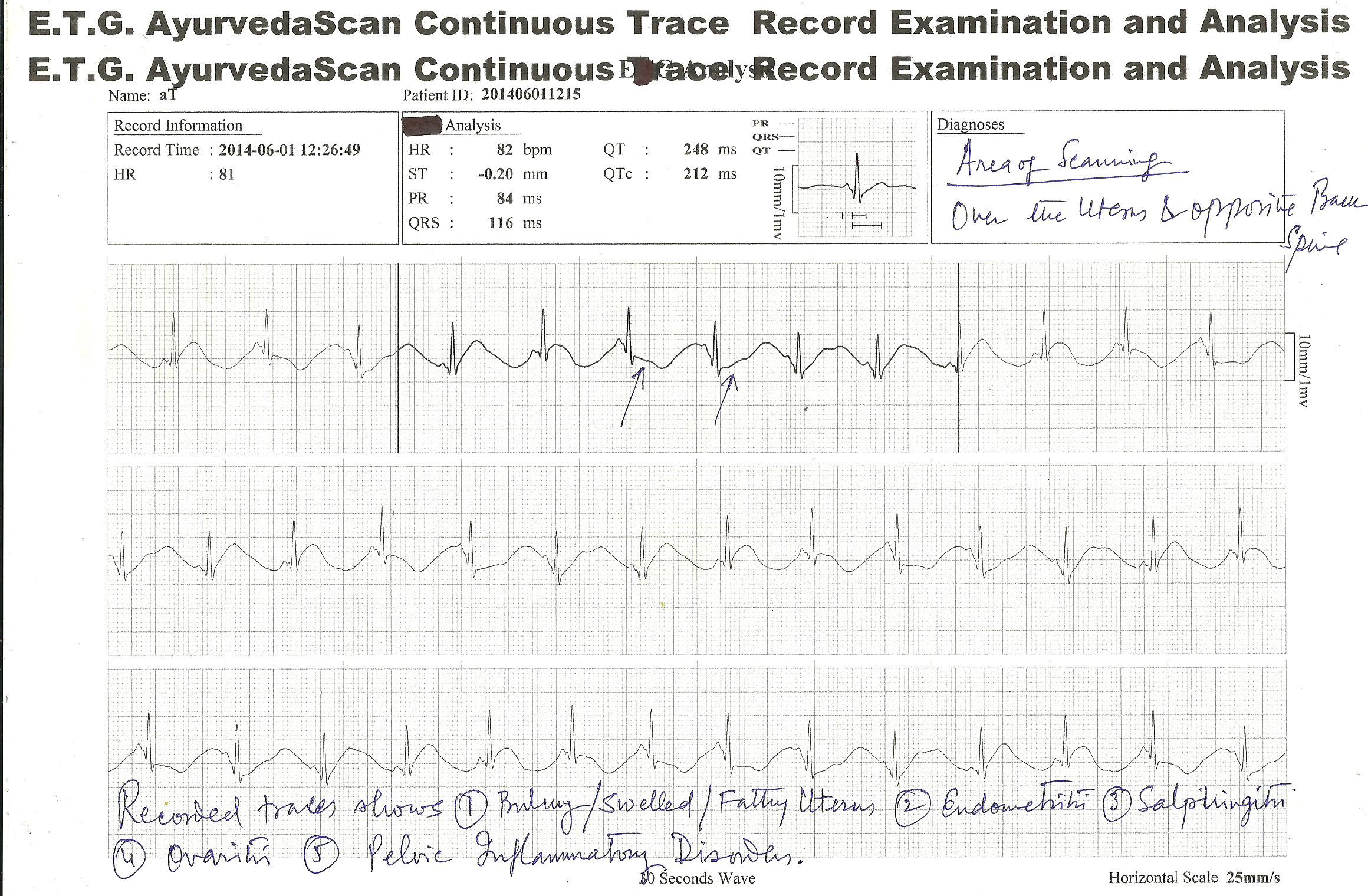
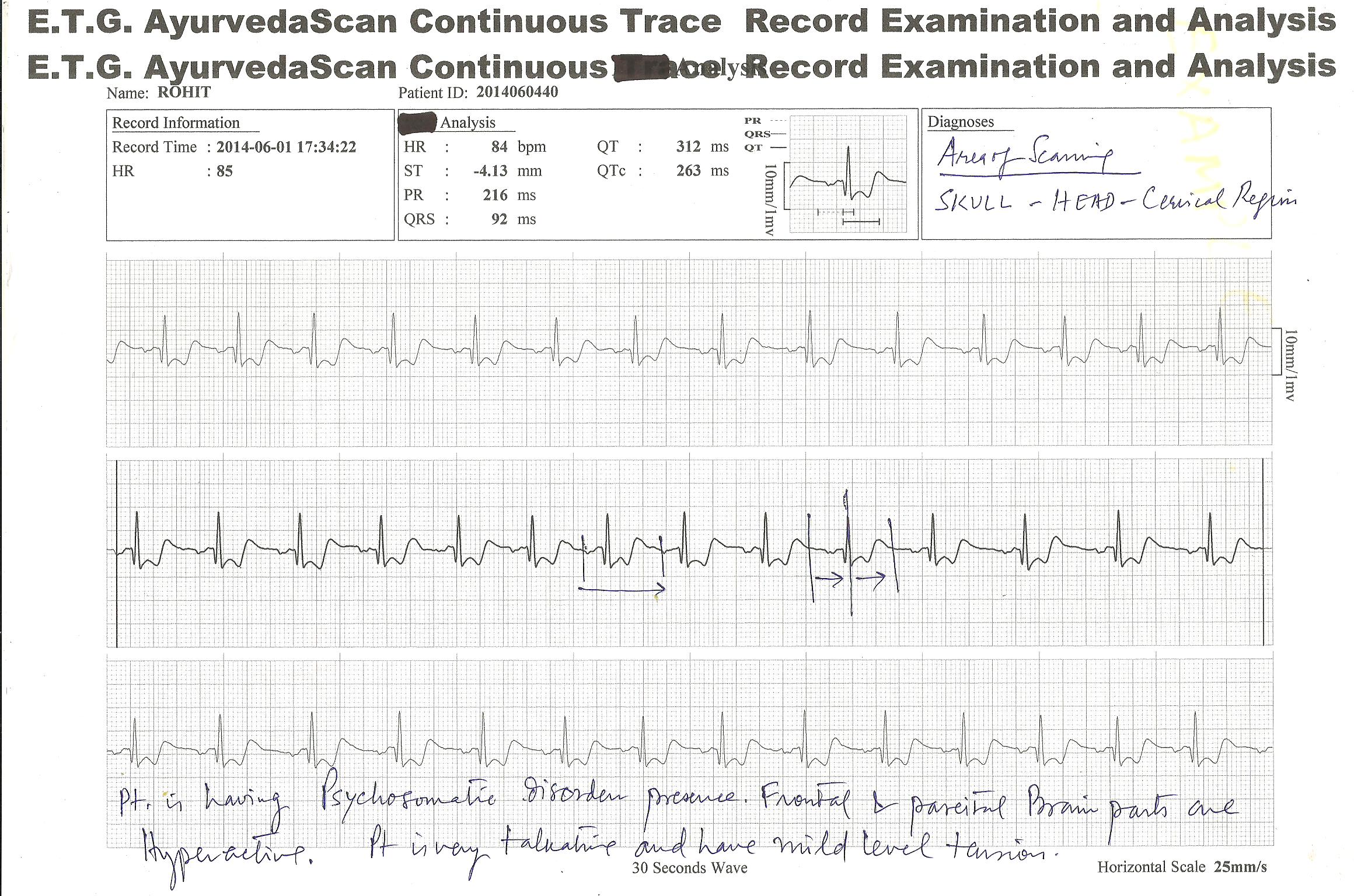
E.T.G. AyurvedaScan CONTINUOUS TRACE RECORD TEST RESULTS ; FEW ILLUSTRATION OF CASES

NEW INVENTION of ETG AyurvedaScan system have now introduced “continuous test” of the organs or viscera affected for their minute patho-physiological and pathological studies for diagnosis and other purposes.
Below is given three patient’s traces , which was recorded at least 04 hours continuously for best diagnosis and pin-point problem solutions.
………………………..
……………………………
,,,,,,,,,,,,,,,,,,,,,,,,,,,,,,,,,,,,,,,,,,
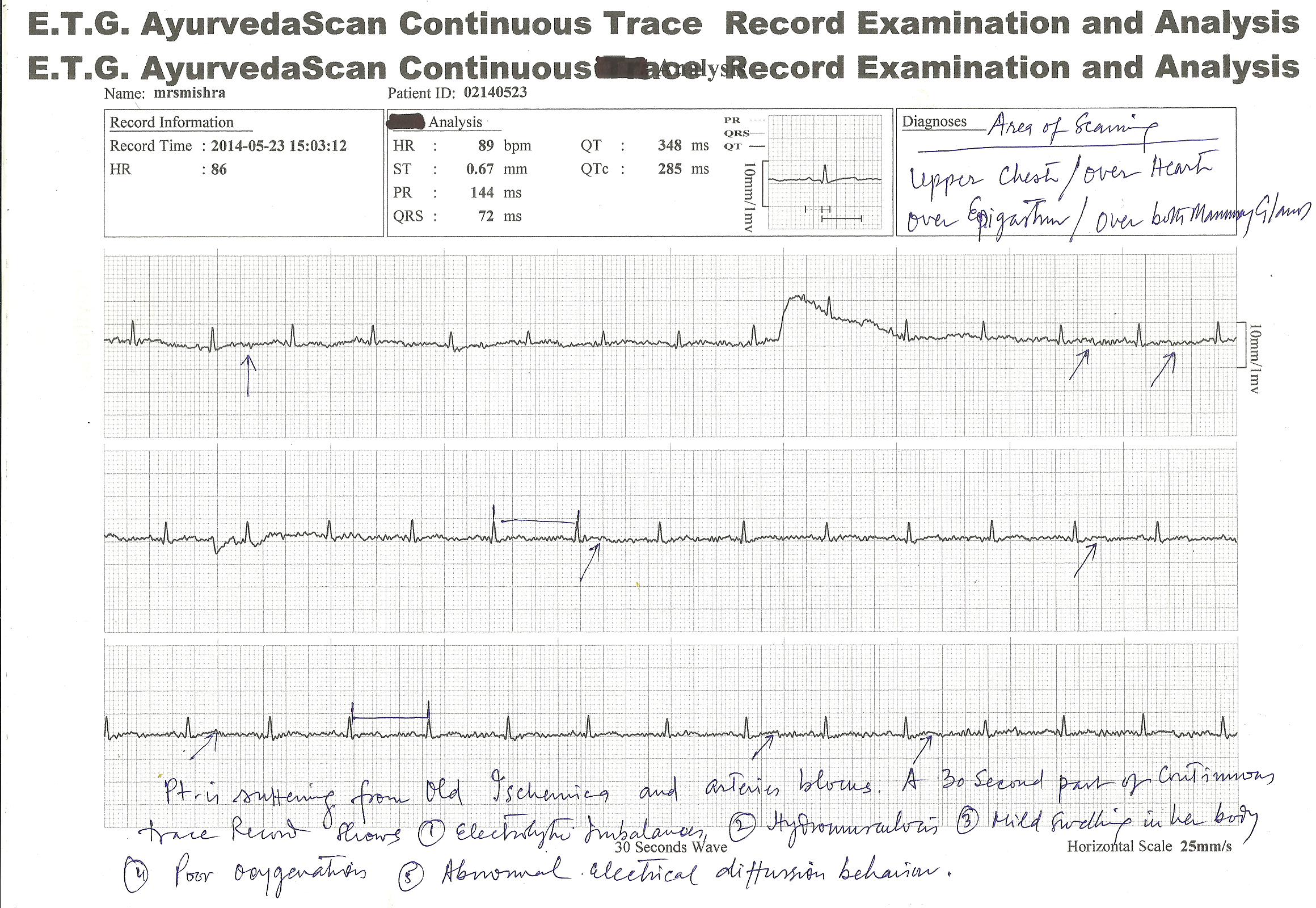
E.T.G. AyurvedaScan CONTINUOUS TRACE RECORDING SYSTEM provides regular monitoring of the affected area or patient problems diagnosis and to know , what is happening with the patient within 24 hours or within 48 hours oe more , may be monitorised by this system.
Many patient complaints that they feel problems at any hours of the day or night , for them this process is beneficial to trace the problems they have.
Few hours like 3 to 4 hours continuous monitoring is also beneficial for short term observations. These observations are beneficial for treatment and management of…
View original post 139 more words
Autism linked to ‘male hormones’

http://www.bbc.com/news/health-27662080
Exposure to high levels of “male” hormones in the womb increases the chance of a baby boy developing autism, according to researchers.
The University of Cambridge researchers say their findings from more than 300 boys help unravel the causes of autism – a condition that affects both sexes but is far more common in males.
But they say it does not mean a prenatal test for autism is near.
Nor will it necessarily be possible to stop autism by blocking the hormones.
“Because some of these hormones are produced in much higher quantities in males than in females, this may help us explain why autism is more common in males” – Prof Baron-Cohen Study author
The hormones in question – testosterone and three other steroid hormones – were important for foetal development, which meant it could be too risky to block them, they told the journal Molecular Psychiatry.
Autism…
View original post 435 more words
A New Approach for Heart Disease: G Strophantin

Coronary artery disease is currently the leading cause of death in the United States. Despite the increasing sophistication of surgical techniques, the introduction of new techniques such as balloon angioplasty, and a number of new drugs (e.g. beta blockers, calcium antagonists), it is estimated that over 1 million heart attacks will occur this year, resulting in 500,000 deaths. In short, we do not have an adequate therapeutic solution to the problem of myocardial infarction (heart attack).
The cornerstone of therapy for treatment and prevention of myocardial infarction is to remove blockages in coronary arteries that are thought to be the cause of the infarction. This adheres to the widely accepted coronary artery thrombosis theory of infarction; that is, arteries become clogged with plaque, damaged from such things as smoking or high cholesterol. A clot forms a fissure in the plaque. The clot may shut off the blood flow of the…
View original post 1,784 more words
Billions and billions…of molecules?
Billions and billions…of molecules?

READ
How to document a Product Transfer? Example templates!

| How to document a Product Transfer? Example templates! |
| All participants of the GMP training course “GMP-compliant Product Transfer” will receive a special version of the Guideline Manager CD including documents immediately useable for planning and documenting a site change. Read more. |
http://www.gmp-compliance.org/eca_mitt_4328_8427,8526_n.html
|
How to document a Product Transfer? Example templates! |
|
After the changes in chapter 4 of the EU GMP Guide have become effective, written procedures and documentation of the transfer activities are required. For example, a Transfer SOP, transfer plan and report have become mandatory this way. As a participant of the GMP education course “GMP-compliant Product Transfer” in Prague, from 7-9 October 2014 you will receive a special version of the Guideline Manager CD with a special section concerning product transfers. This section contains, amongst others, a Transfer SOP and a template for a Transfer Plan. Both documents are in Word format and can immediately be used after adoption to your own situation.
|

ISPE GAMP R and D and Clinical Systems SIG publish first Concept Paper

| ISPE GAMP R&D and Clinical Systems SIG publish first Concept Paper |
| When changing from paper-based to computerized systems and processes in the field of Good Clinical Practice (GCP), validating these systems is of critical importance, as inspectors are increasingly focussing on this facet of clinical trials. The ISPE GAMP R&D and Clinical Systems SIG has published a Concept Paper on the application of GAMP 5 validation principles to the GCP field. Read more here about the Concept Paper |
|
India under Pressure: GMP Conformity Not Guaranteed in many APIs Facilities

|
India under Pressure: GMP Conformity Not Guaranteed in many APIs Facilities |
| The pressure on India is getting bigger because of GMP deficiencies found during inspections. An article of the news agency Reuters summarised impressive information on the topic. Read more here about the Reuters article. |
read here
|
India under Pressure: GMP Conformity Not Guaranteed in many APIs Facilities |
|
The pressure on India is getting bigger because of GMP deficiencies found during inspections. A wide range of FDA Warning Letters and FDA Import Alerts are given special attention. The GMP deviations observed are extreme and partly alarming with regard to the potential risks for the patients. Even elementary GMP requirements have been neglected. Production areas were often found in an uncontrolled status (risk of cross contamination) that medicinal products had to be recalled. The Warning Letter for Wockhardt is one of the most prominent examples. According to an article published in RAPS Online, FDA inspectors wrote in this letter about the location: “a wide range of disturbing allegations, including bathrooms that allowed for the collection of standing urine on floors, products contaminated with glass and unknown “black particles,” staff that repeatedly lied to FDA on multiple occasions, and manufacturing lines that were kept hidden from investigators.” At the same time, this shows that effective and extensive GMP monitoring in India is inexistent. An article of the news agency Reuters summarised impressive information on the topic. According to it, 1,500 inspectors are responsible for 10,000 factories. In one out of every 22 samples, lack of quality has been observed. These data come from a study already performed two years ago. Reuters refers to industry analysts who say that companies which cannot deliver into the USA because of an Import Alert might continue their production and sell their products to other countries which are not aware of those GMP deficiencies. This is a terrifying scenario which is – according to experts’ statements – current practice in India. Such serious problems can only be explained because of totally insufficient monitoring of medicinal products in India. A GMP inspector in India told Reuters: “I took salaries for 30 years without doing anything. I visited some of the plants … not with the intention of taking any action, but just out of curiosity.” Reuters quotes an employee of India’s health ministry who says that only the US FDA complains about Indian factories. “(…) other countries have no problems with our drugs. They have never raised any objections or have found fault,” This statement can be easily refuted. The EudraGMDP database currently lists 38 facilities in India which have been classified as “GMP non-compliant” because of negative GMP inspections. The lack of adequate GMP supervision (GMP Inspections) by Indian Authorities also raises questions on the EU procedure to require Written (GMP) Confirmations from agencies around the world. In order to import an API from a manufacturer located outside the EU the legal provisions require that a Written Confirmation has to be issued by the exporting countries (only some countries like e.g. Switzerland, USA have been found to have equivalent GMP Inspection systems and do not need to issue Written Confirmations). India has published many Written Confirmations for API manufacturers in India. However, some of the companies who own a Written Confirmation received FDA Warning Letters or EU GMP non-compliance statements only some months after the Written Confirmations were issued. This questions the value of the Written Confirmations also for all other facilities in India not inspected recently by EU or FDA inspectors. The information published by Reuters, RAPS Online and other well recognized media sources may require to initiate additional actions by industry and regulators in the EU in order to safeguard APIs imported from India. |
Variations: How to submit Results of Confirmatory Stability Studies

|
Variations: How to submit Results of Confirmatory Stability Studies |
| The Co-ordination Group for Mutual Recognition and Decentralised Procedures has revised the Q/A-List for the Submission of Variations adding a question and answer regarding the submission of the results of confirmatory stability studies on production-scale batches. Read more. |
read at
|
Variations: How to submit Results of Confirmatory Stability Studies |
|
As a part of the Heads of Medicines Agencies, the CMD(h) (Co-ordination Group for Mutual Recognition and Decentralised Procedures – Human) is publishing a number of interesting documents. Best Practice Guides questions-and-answer documents give valuable information regarding the point of view of the European registration and supervisory authorities. Now, the Q/A-List for the Submission of Variations has been updated. Question 2.13 is dealing with the submission of the results of confirmatory stability studies on production-scale batches where stability data for pilot-scale batches have already been accepted during application for a MA. The answer is: Here you can find the document with tracked changes. The Co-ordination Group for Mutual Recognition and Decentralised Procedures – Human, CMD(h), has been set up in the revised Pharmaceutical Legislation (Directive 2004/27/EC amending Directive 2001/83/EC) for the examination of any question relating to marketing authorisation of a medicinal product in two or more Member States in accordance with the mutual recognition procedure or the decentralised procedure. The CMD(h) has started its activities in November 2005 and replaced the informal Mutual Recognition Facilitation Group, which was in operation over 10 years, to coordinate and facilitate the operation of the mutual recognition procedure. |
Publication of HMPC Documents on Essential Oils

Publication of HMPC Documents on Essential Oils |
| Essential oils used as API in herbal products lead to – from a regulatory view – a wide range of questions. At the moment, there is no EMA/HMPC Guideline. Now, the final “Reflection Paper” has been published. Moreover, current questions and answers about essential oils have been added to a Q&A document. Read more in the News. |
read at
|
Publication of HMPC Documents on Essential Oils |
|
At the beginning of May 2014, the EMA’s HMPC (Committee on Herbal Medicinal Products) published the final “Reflection Paper” on quality of essential oils used for the manufacture of herbal medicinal products/traditional herbal medicinal products. The document was adopted on 25 March by the HMPC. This “Reflection Paper” should help consider aspects related to the nature and the specific production processes of essential oils. Moreover, the current HMPC quality guidelines don’t take into consideration the definitions of essential oils as laid down in the European Pharmacopoeia (Ph. Eur.). Essential oils used as API in herbal products lead to – from a regulatory view – a wide range of questions, especially as the current guidelines incompletely depict the specific aspects of essentials oils. In addition, a Q&A document containing questions and answers on herbal medicinal products/traditional herbal medicinal products was published on 30 April 2014. Four new questions and answers about essential oils have been added to this Q&A document. For more detailed information please see the complete “Reflection paper on quality of essential oils as active substances in herbal medicinal products/taditional herbal medicinal products” as well as the extended Q&A document “Questions & answers on quality of herbal medicinal products/traditional herbal medicinal products |


 New Drug Approvals