
Home » Articles posted by DR ANTHONY MELVIN CRASTO Ph.D (Page 11)
Author Archives: DR ANTHONY MELVIN CRASTO Ph.D
 DRUG APPROVALS BY DR ANTHONY MELVIN CRASTO
.....FOR BLOG HOME CLICK HERE
DRUG APPROVALS BY DR ANTHONY MELVIN CRASTO
.....FOR BLOG HOME CLICK HEREFlag and hits
ORGANIC SPECTROSCOPY

SUBSCRIBE

 Subscribe in a reader
Enter your email address:
Delivered by FeedBurner
Subscribe to New Drug Approvals by Email


Recent Comments
 | shivkr2 on SPSR Excellence Award 2025 – S… |
 | Bonkasaurus on Infigratinib phosphate |
 | PALOVAROTENE | ORGAN… on Palovarotene |
| Pfizer just purchase… on Temanogrel | |
| Pfizer To Cash In On… on Temanogrel |
Ibrilatazar


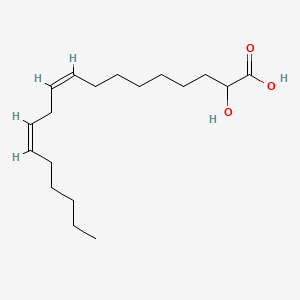
Ibrilatazar
CAS 57818-44-7
MF C18H32O3 MW 296.4 g/mol
rac-(2R)-(9Z,12Z)-2-hydroxyoctadeca-9,12-dienoic acid
(9Z,12Z)-2-hydroxyoctadeca-9,12-dienoic acid
peroxisome proliferator activated receptor (PPAR) alpha and gamma agonist, antineoplastic, ABILITY PHARMA, ABTL 0812, alpha-Hydroxylinoleic acid, ABTL0812
- alpha-Hydroxylinoleic acid
- ABTL0812
- 2-hydroxylinoleic acid
| Ingredient | UNII | CAS | InChI Key |
|---|---|---|---|
| ABTL-0812 Sodium | X1840C8161 | Not Available | VFXKYDDSDQXKLC-NBTZWHCOSA-M |
Ibrilatazar also known as α-hydroxylinoleic acid is a small-molecule, experimental cancer drug being developed by Ability Pharmaceuticals.[1]
Ibrilatazar is an orally bioavailable, lipid analogue and inhibitor of raptor-mammalian target of rapamycin (mTOR) (mTOR complex 1; mTORC1), rictor-mTOR (mTOR complex 2; mTORC2) and dihydrofolate reductase (DHFR) with potential antineoplastic activity. Upon oral administration, ibrilatazar binds to and inhibits both mTORC1 and mTORC2, which may result in apoptosis and a decrease in proliferation in mTORC1/2-expressing tumor cells. mTOR is a serine/threonine kinase that is upregulated in some tumors; it plays an important role in the PI3K/Akt/mTOR signaling pathway which is often deregulated in cancer cells. In addition, ibrilatazar inhibits DHFR, an enzyme that reduces dihydrofolic acid to tetrahydrofolic acid, thereby blocking tetrahydrofolate synthesis, and resulting in both the depletion of nucleotide precursors and the inhibition of DNA, RNA and protein synthesis. This induces autophagy-induced cell death and further inhibition of cell proliferation.
- A Study of ABTL0812 in Pancreatic CancerCTID: NCT03417921Phase: Phase 1/Phase 2Status: SuspendedDate: 2024-07-31
- ABTL0812 in Combination With FOLFIRINOX for First-line Treatment of Metastatic Pancreatic StudyCTID: NCT04431258Phase: Phase 1/Phase 2Status: CompletedDate: 2024-03-18
- Phase I/Ib Clinical Trial of ABTL0812 in Advanced Cancer PatientsCTID: NCT02201823Phase: Phase 1Status: CompletedDate: 2015-07-02
- Microbiological production method of γ- and δ-lactonesPublication Number: JP-H03187387-APriority Date: 1989-08-04
- Process for the microbiological production of gamma- and delta-lactonesPublication Number: US-5168054-APriority Date: 1989-08-04Grant Date: 1992-12-01
- Degradation control of environmentally degradable disposable materialsPublication Number: US-2002123546-A1Priority Date: 1988-08-08
- Degradation control of environmentally degradable disposable materialsPublication Number: US-6323307-B1Priority Date: 1988-08-08Grant Date: 2001-11-27
- Degradation control of environmentally degradable disposable materialsPublication Number: US-6740731-B2Priority Date: 1988-08-08Grant Date: 2004-05-25
PAT
https://patentscope.wipo.int/search/en/detail.jsf?docId=US38087288&_cid=P12-MH8IQK-97634-1


AS ON JUNE2025 4.45 LAKHS VIEWS ON BLOG WORLDREACH AVAILABLEFOR YOUR ADVERTISEMENT
join me on Linkedin
Anthony Melvin Crasto Ph.D – India | LinkedIn
join me on Researchgate
RESEARCHGATE

join me on Facebook
Anthony Melvin Crasto Dr. | Facebook
join me on twitter
Anthony Melvin Crasto Dr. | twitter
+919321316780 call whatsaapp
EMAIL. amcrasto@gmail.com

……
History
In 2015, Ability announced that it had received orphan drug designation (ODD) for pediatric cancer neuroblastoma from the European Medical Agency (EMA) and the US Food and Drug Administration (FDA).[1] Also in 2016 a preclinical study confirmed that ABTL0812 was well tolerated.[2] In December 2016 the company announced Ibrilatazar has received an Orphan Drug Designation for the treatment of pancreatic cancer.[1]
Mechanism of action
One mechanism of action is the activation of the PPAR-alpha and PPAR-gamma receptors which in turn up-regulate the expression of the TRIB3 gene, leading to inhibition of the PI3K/AKT/mTOR pathway. This pathway is excessively activated in most human cancers, supporting tumor growth. It is a principal target of various new anti-tumour drugs. Tumor cells are killed via autophagic cell death, rather than apoptosis.[3][4]
ABTL0812 activates the PPAR receptors, inducing TRIB3 over-expression. TRIB3 binds to the Akt oncogene and inhibits the Akt/mTOR axis.[3]
Clinical trials
ABTL0812 showed efficacy in Phase I clinical trials in patients with advanced cancer, with low toxicity and high tolerability.[3]
References
- “Ability Pharmaceuticals Announces Orphan Drug Designation in the US for ABTL0812 in Pancreatic Cancer”. Ability Pharmaceuticals SL.
- “Ability Pharmaceuticals Announces Positive Phase 1 1b Study Results Of ABTL0812 In Cancer Patients With Advanced Solid Tumors”. http://www.biospace.com.
- “New mechanism of antitumor action identified”. Medical Xpress. 25 January 2016.
- Erazo T, Lorente M, López-Plana A, Muñoz-Guardiola P, Fernández-Nogueira P, García-Martínez JA, et al. (May 2016). “The New Antitumor Drug ABTL0812 Inhibits the Akt/mTORC1 Axis by Upregulating Tribbles-3 Pseudokinase”. Clinical Cancer Research. 22 (10): 2508–19. doi:10.1158/1078-0432.ccr-15-1808. hdl:2445/207600. PMID 26671995.
| Clinical data | |
|---|---|
| Other names | α-Hydroxylinoleic acid; 2-Hydroxylinoleic acid; ABTL-0812 |
| Legal status | |
| Legal status | Investigational |
| Identifiers | |
| IUPAC name | |
| CAS Number | 57818-44-7 |
| PubChem CID | 21158511 |
| ChemSpider | 20118100 |
| UNII | 0DE74TJ7EZ |
| ChEBI | CHEBI:136927 |
| CompTox Dashboard (EPA) | DTXSID301258077 |
| Chemical and physical data | |
| Formula | C18H32O3 |
| Molar mass | 296.451 g·mol−1 |
| 3D model (JSmol) | Interactive image |
| SMILES | |
| InChI | |
/////////Ibrilatazar, peroxisome proliferator activated receptor (PPAR) alpha and gamma agonist, antineoplastic, ABILITY PHARMA, ABTL 0812, alpha-Hydroxylinoleic acid, ABTL0812
Glovadalen


Glovadalen
CAS 2576359-31-2
MF C24H27Cl2N3O3 MW 476.4 g/mol
2-(3,5-dichloro-1-methyl-1H-indazol-4-yl)-1-[(1S,3R)-3-(hydroxymethyl)-5-(2-hydroxypropan-2-yl)-1-methyl-3,4-dihydroisoquinolin-2(1H)-yl]ethan-1-one,
2-(3,5-dichloro-1-methylindazol-4-yl)-1-[(1S,3R)-3-(hydroxymethyl)-5-(2-hydroxypropan-2-yl)-1-methyl-3,4-dihydro-1H-isoquinolin-2-yl]ethanone
dopamine D1 receptor positive allosteric modulator, Phase 2, Parkinson’s disease, UCB-0022, UCB 0022, H8T5VKH4CZ
- OriginatorUCB Biopharma
- ClassAlcohols; Antiparkinsonians; Benzene derivatives; Chlorinated hydrocarbons; Isoquinolines; Ketones; Neuroprotectants; Propanols; Pyrazoles; Small molecules
- Mechanism of ActionDopamine D1 receptor modulators
- Phase IIParkinson’s disease
- 27 Aug 2025Chemical structure information added.
- 21 May 2025UCB Biopharma SRL initiate a phase I trial in healthy volunteers (PO) (NCT06970301)
- 11 Apr 2025UCB Pharma completes a phase-II ATLANTIS trial in Parkinson’s disease (In adults, In the elderly, Adjunctive treatment) in USA (PO) (NCT06055985)
Glovadalen (developmental code name UCB-0022) is a dopamine D1 receptor positive allosteric modulator which is under development for the treatment of Parkinson’s disease.[1][2][3][4][5][6] It has been found to potentiate the capacity of dopamine to activate the D1 receptor by 10-fold in vitro with no actions on other dopamine receptors.[5][6] As of May 2024, glovadalen is in phase 2 clinical trials for this indication.[1][2][5] The drug is under development by UCB Biopharma.[1][4][5] It is described as an orally active, centrally penetrant small molecule.[1][5][6]
SYN
https://patentscope.wipo.int/search/en/detail.jsf?docId=WO2021001288&_cid=P21-MH738G-96748-1

1. Preparation of intermediate of formula (ID- 2-(3,5-dichloro-1-methyl-indazol-4- vDacetic acid

1.1. Preparation of intermediate (Xlb) -1-methyl-5-nitro-indazole
5-Nitro-1H-indazole (Xla) (3.00 kg, 18.4 mol) and DMF (30.0 L) are charged into a 50 L three-neck round-bottom flask at 15-30°C. KOH (2.06 Kg, 36.7 mol) is added in one portion into the reactor at 0-5°C. The mixture is stirred at 0-50°C for 1h. Methyl iodide (2.87 kg, 20.2 mol) is then added at 0-5°C and the mixture is stirred for 3h at 15-30°C. The reaction mixture is added into water (30 L) at 0-10°C and the mixture is stirred for 10 min then filtered. The filter cake is washed with water (5 L) and dried. This overall procedure is carried out on 4 batches of the same size in parallel. The solids obtained from the four batches are combined to give 1-methyl-5-nitro-indazole (Xlb) as a brown solid (10.0 kg, 42.3 mol, 75% purity (LC/MS), 57.5% yield) which is used in the next step without further purification.
1H NMR (400 MHz, CDCIs) d 8.65 (s, 1H), 8.21 (d, J = 9.17 Hz, 1 H), 8.13 (s, 1 H), 7.39 (d, J = 9.17 Hz, 1 H), 4.08 (s, 3 H).
1.2. Preparation of intermediate (Xa)- tert-butyl 2-(1-methyl-5-nitro-indazol-4- yl)acetate
t-BuOK (4.43 kg, 39.5 mol) and THF (30 L) are charged into a 50 L three-neck round-bottom flask and the mixture is cooled to -45 / -35°C under nitrogen and stirring. 1-Methyl-5-nitro-indazole (Xlb) (3.50 kg, 19.7 mol) is then added in portions at -45 / -35°C. Tert-butyl 2-chloroacetate (3.57 kg, 23.7 mol) is added dropwise at the same temperature and the mixture is stirred at 1h. The mixture is warmed up to 15-30°C and stirred for 5h. The reaction is quenched by the addition of a saturated ammonium chloride solution (9 L) and water (2 L) is added. The organic layer is separated and the aqueous layer is extracted with ethyl acetate (2 x 5 L). The organic phases are combined, washed with brine (2 L), dried over Na2SC>4, filtered and concentrated under vacuum. The crude product is purified by recrystallization with ethyl acetate (5 L). This overall procedure is carried out on 2 batches of the same size in parallel. The solids obtained from the two batches are combined and dried together to give tert-butyl 2-(1-methyl-5-nitro-indazol-4-yl)acetate as a yellow solid (Xa) (5.30 kg, 17.7 mol, 97.6% purity (LC/MS), 44.9% yield).
1H NMR (400 MHz, CDCIs) d 8.18-8.20 (m, 2H), 7.37 (d, J = 9.21 Hz, 1 H), 4.27 (s, 2 H), 4.14 (s, 3 H), 1.44 (s, 9 H).
1.3. Preparation of intermediate (Xb) – tert-butyl 2-(5-amino-1-methyl-indazol-4- yl)acetate
Tert-butyl 2-(1-methyl-5-nitro-indazol-4-yl)acetate (Xa) (7.30 kg, 25.0 mol) and MeOH (76 L) are charged into a reactor. Argon is purged and Pd/C (50%, 760 g) is added. Hydrogen is added three times and the mixture is stirred at 50°C under hydrogen atmosphere (50 psi) for 3h. The reaction mixture is filtered and the solid is washed with MeOH (5 L). The mixture is concentrated to give tert-butyl 2-(5-amino-1-methyl-indazol-4-yl)acetate (Xb) as a brown oil (6.50 kg, 23.9 mol, 96.2% purity (LC/MS), 95.4% yield) which is used in the next step without further purification.
1H NMR (400 MHz, CDCI3) d 7.72 (s, 1H), 7.27 (d, J = 8.80 Hz, 1 H), 6.91 (d, J = 8.80 Hz, 1 H), 4.60 (s, 2 H), 3.93 (s, 3 H), 3.68 (s, 2H), 1.38 (s, 9 H).
1.4. Preparation of intermediate (Xc)- 2-(5-chloro-1-methyl-indazol-4-yl)acetic acid
Tert-butyl 2-(5-amino-1-methyl-indazol-4-yl)acetate (Xb) (2.00 kg, 7.65 mol) and concentrated HCI (10.0 L, 12M) are charged into a 50 L three-neck round bottom flask and the mixture is cooled to -10/-5°C and stirred. A water solution (5 L) of sodium nitrite (686 g, 9.95 mol) is added dropwise at -10/-5°C and stirred for 30 min. CuCI (833 g, 8.42 mol) and concentrated HCI (10.0 L, 12M) are charged into a 20 L three-neck round bottom flask and the mixture is stirred for 30 min. at -10/-5°C, then added into the other reactor. The mixture is stirred at -10/-5°C for 1 h, then at 10-30°C for 16h. The reaction mixture is filtered and the solid washed with water. This overall procedure is carried out on 3 batches of the same size in parallel. The solids obtained from the three batches are combined and dried together to give 2-(5-chloro-1-methyl-indazol-4-yl)acetic acid (Xc) as a yellow solid (4.00 kg, 16.3 mol, 92% purity (LC/MS), 71.3% yield) which is used in the next step without further purification.
1.5. Preparation of 2-(3,5-dichloro-1-methyl-indazol-4-yl)acetic acid (II)
2-(5-Chloro-1-methyl-indazol-4-yl)acetic acid (Xc) (1.30 kg, 5.79 mol) and DMF (6.5 L) are charged into a 50 L three-neck round bottom flask at 20°C. N-Chlorosuccinimide (772 g, 5.79 mol) is added portionwise at 20°C and the mixture is stirred at 20°C for 2h. The reaction mixture is poured into water (25 L) and filtered. The crude product is triturated with isopropyl etherethyl acetate (3:1) (7.0 L) at 20°C for 2h then filtered and dried. This overall procedure is carried out on 3 batches of the same size in parallel. The solids obtained from the three batches are combined to give 2-(3,5-dichloro-1-methyl-indazol-4-yl)acetic acid (II) (2.1 kg, 7.9 mol, 97.5% purity (LC/MS), 46% yield).
1H NMR (400 MHz, CDCI3) d 12.67 (s, 1 H), 7.68 (d, J = 9.05 Hz, 1 H), 7.53 (d, J = 9.05 Hz, 1 H), 4.20 (s, 2 H), 4.02 (s, 3 H).
2. Preparation of compound of formula (I)
2-(3,5-dichloro-1-methyl-indazol-4-yl)-1-[(1S,3R)-3-(hydroxymethyl)-5-(1-hydroxy-1- methyl-ethyl)-1-methyl-3,4-dihydro-1H-isoquinolin-2-yl]ethanone

2.1. Preparation of intermediate (IX).
(2R)-2-amino-3-(2-bromophenyl)propan-1-ol – a6
(2R)-2-amino-3-(2-bromophenyl)propanoic acid a5 (34.0 kg, 139 mol) and THF (238 L) are charged into a reactor. Sodium borohydride (15.6 kg, 413 mol) is added slowly at 20-30°C. A solution of iodine (35.3 kg, 139 mol) in dry THF (20.0 L) is added slowly at 0-10°C and the reaction mixture is stirred at 70°C for 12h. The reaction was quenched with methanol (70.0 L) at 0°C and heated to 80°C for 30 min. The mixture was cooled down, concentrated under vacuum and the residue was suspended in NaOH (30.0 L, 2N), then filtered. The filter cake was dried under vacuum to give (2R)-2-amino-3-(2-bromophenyl)propan-1-ol a6 as a white solid (31.0 kg, 135 mol, 96.7% yield) which is used in the next step without further purification. 1H NMR (400 MHz, CDCIs) d 7.57 (d, J = 7.7 Hz, 1H), 7.21 – 7.29 (m, 2H), 7.07 – 7.15 (m, 1H), 3.66 (dd, J = 10.5, 3.6 Hz, 1 H), 3.41 (dd, J = 10.5, 7.2 Hz, 1 H), 3.18 – 3.29 (m, 1 H), 2.95 (dd, J = 13.5, 5.5 Hz, 1 H), 2.70 (dd, J = 13.5, 8.2 Hz, 1H), 1.51 – 1.91 (m, 3H).
2.2. Preparation of intermediate of formula (VIII).
(4R)-4-[(2-bromophenyl)methyl]oxazolidin-2-one – a7
(2R)-2-amino-3-(2-bromophenyl)propan-1-ol a6 (31.0 kg, 135 mol) and dichloromethane (220 L) are charged into a reactor. Triphosgene (13.9 kg, 47.1 mol) is added at room temperature then N,N-diisopropylethylamine (39.1 kg, 303 mol) is slowly added at 0-10°C. The reaction mixture is stirred at 0-10°C for 1h then washed with water (50.0 L) twice, dried with anhydrous sodium sulfate and filtered to give (4R)-4-[(2-bromophenyl)methyl]oxazolidin-2-one a7 as a solution in dichloromethane which is used directly in the next step.
2.3. Preparation of intermediate (VII).
(10aR)-9-bromo-1 ,5, 10, 10a-tetrahydrooxazolo[3,4-b]isoquinolin-3-one a8
A solution of (4R)-4-[(2-bromophenyl)methyl]oxazolidin-2-one a7 (135 mol) in dichloromethane (220 L) is charged into a reactor and cooled down to 0-5°C. Trimethylsilyl triflate (35.9 kg, 162 mol) and paraformaldehyde (13.3 kg, 148 mol) are added at 0-5°C, then stirred for 2h at 15-20°C. Water (170 L) is added into the mixture which is then extracted twice with dichloromethane (50.0 L). the organic layer is dried with anhydrous sodium sulfate, filtered and concentrated under vacuum. A mixture of petroleum etherethyl acetate (1 :1, 45.0 L) is added and the mixture is stirred at room temperature for 6h and filtered. The solid was dried to get (10aR)-9-bromo-1,5,10,10a-tetrahydrooxazolo[3,4-b]isoquinolin-3-one a8 as an off-white solid (29.0 kg, 80.2% yield).
1H NMR (400 MHz, CDCI3) d 7.45 – 7.52 (m, 1H), 7.08 – 7.14 (m, 2H), 4.83 (d, J = 17.0 Hz, 1H), 4.62 (t, J = 8.4 Hz, 1H), 4.36 (d, J = 17.0 Hz, 1H), 4.21 (dd, J = 8.6, 4.9 Hz, 1 H), 3.91 -3.99 (m, 1H), 3.25 (dd, J= 16.3, 4.2 Hz, 1 H), 2.67 (dd, J = 16.1 , 11.0 Hz, 1H).
2.4. Preparation of intermediates (VI)
2.4.1. [(3R)-5-bromo-1,2,3,4-tetrahydroisoquinolin-3-yl]methanol a9
Ethanol (120 L) and water (60.0 L) are mixed into a reactor. (10aR)-9-bromo-1,5,10,10a-tetrahydrooxazolo[3,4-b]isoquinolin-3-one a8 (29.7 kg, 111 mol) is added then sodium hydroxide (13.3 kg, 332 mol) is slowly added at 15-20°C. The reaction mixture is stirred at 90°C for 2h then cooled down to room temperature. Water (300 L) is added into the mixture which is centrifugated. The centrifugal cake is dried in circulation oven to give [(3R)-5-bromo- 1,2,3,4-tetrahydroisoquinolin-3-yl]methanol a9 as a white solid (23.7 kg, 88.3% yield) which is used in the next step without further purification.
1H NMR (400 MHz, CDCIs) d 7.37 – 7.47 (m, 1H), 6.95 – 7.08 (m, 2H), 4.00 – 4.10 (m, 2H), 3.85 (dd, J = 10.9, 3.7 Hz, 1 H), 3.57 (dd, J = 10.9, 7.9 Hz, 1 H), 3.06 (ddt, J = 11.3, 7.6, 4.1 , 4.1 Hz, 1H), 2.79 (dd, J= 17.1, 4.4 Hz, 1H), 2.40 (dd, J= 17.1, 10.9 Hz, 1H), 1.93 (br s, 2H).
2.4.2. [(3R)-5-bromo-1 ,2,3,4-tetrahydroisoquinolin-3-yl]methoxy-tert-butyl-dimethyl- silane a10
[(3R)-5-bromo-1,2,3,4-tetrahydroisoquinolin-3-yl]methanol a9 (23.7 kg, 97.8 mol) and dichloromethane (240 L) are charged into a reactor. DMAP (120 g, 0.98 mol) and imidazole (13.3 kg, 196 mol) are added. Tert-butyldimethylsilyl chloride (TBSCI) (17.7 kg, 117 mol) is slowly added at 15-20°C and the mixture is stirred for 12h. Ammonium chloride (100 L) is added into the mixture. The organic phase was separated, washed with water (50.0 L), dried with anhydrous sodium sulfate, filtered and concentrated under vacuum to give [(3R)-5-bromo-1 ,2,3,4-tetrahydroisoquinolin-3-yl]methoxy-tert-butyl-dimethyl-silane a10 as a yellow oil (37.6 kg, 86% purity, 93% yield) which is used in the next step without further purification.
1H NMR (400 MHz, CDCI3) d 7.36 – 7.45 (m, 1H), 7.01 (d, J = 4.6 Hz, 1H), 4.01 – 4.13 (m, 2H), 3.84 (dd, J = 9.9, 3.7 Hz, 1 H), 3.64 (dd, J = 9.8, 7.2 Hz, 1 H), 2.96 – 3.08 (m, 1 H), 2.75 (dd, J = 17.0, 4.2 Hz, 1 H), 2.44 (dd, J = 17.0, 10.8 Hz, 1H), 1.76 – 2.20 (m, 2H), 0.89 – 0.97 (m, 9H), 0.08 – 0.14 (m, 6H).
2.5. Preparation of intermediate (V).
[(3R)-5-bromo-3,4-dihydroisoquinolin-3-yl]methoxy-tert-butyl-dimethyl-silane a11
[(3R)-5-bromo-1 ,2,3,4-tetrahydroisoquinolin-3-yl]methoxy-tert-butyl-dimethyl-silane a10 (3.42 kg, 8.31 mol) and THF (30.0 L) are charged into a reactor. N-Chlorosuccinimide (NCS) (1.17 kg, 8.73 mol) is slowly added at room temperature and the mixture is stirred at 25°C for 30 min. A solution of KOH (1.52 kg, 27.1 mol) in dry methanol (7.00 L) is slowly added at room temperature and the reaction is stirred at 25°C for 1h. The reaction is quenched with water (10.0 L) and extracted with petroleum etherethyl acetate (1:2, 5.00 L). The organic layer is separated, washed with brine (10.0 L), dried with anhydrous sodium sulfate and filtered. This overall procedure is carried out on 10 batches of the same size in parallel and the 10 reaction filtrates are combined and concentrated under vacuum to give [(3R)-5-bromo-3,4-dihydroisoquinolin-3-yl]methoxy-tert-butyl-dimethyl-silane a11 as a brown oil (28.0 kg, crude) which is used in the next step without further purification.
1H NMR (400 MHz, CDC ) d 8.24 (d, J = 2.6 Hz, 1H), 7.58 (dd, J = 7.8, 1.2 Hz, 1 H), 7.12 -7.25 (m, 2H), 4.03 (dd, J = 9.5, 4.0 Hz, 1 H), 3.67 – 3.77 (m, 2H), 3.07 (dd, J = 17.0, 6.2 Hz, 1H), 2.68 (dd, J = 17.1, 10.9 Hz, 1 H), 0.88 – 0.91 (m, 9H), 0.07 (d, J= 1.5 Hz, 6H).
2.6. Preparation of intermediates of formula (IV)
2.6.1. [(1S,3R)-5-bromo-1-methyl-1,2,3,4-tetrahydroisoquinolin-3-yl]methoxy-tert-butyl- dimethyl-silane (IVa)
[(3R)-5-bromo-3,4-dihydroisoquinolin-3-yl]methoxy-tert-butyl-dimethyl-silane a11 (3.10 kg, 8.75 mol) and THF (20.0 L) are charged into a reactor. The mixture is cooled down to 0°C and methylmagnesium chloride (3M, 11.6 L) is added. The mixture is stirred at 20°C for 12h. The reaction is quenched with a saturated solution of ammonium chloride. The phases are separated and the aqueous layer is extracted twice with petroleum ether: ethyl acetate (3:1, 5.00 L). The combined organic phases are washed with brine (10.0 L), dried over anhydrous sodium sulfate and filtered. This overall procedure is carried out on 9 batches of the same size in parallel and the nine reaction filtrates are combined and concentrated under vacuum. The crude mixture is purified by silica gel chromatography with petroleum ether : ethyl acetate (10:1) to give [(1S,3R)-5-bromo-1 -methyl-1, 2, 3, 4-tetrahydroisoquinolin-3-yl]methoxy-tert-butyl-dimethyl-silane (IVa) as a brown oil (4.60 kg, 99.7% purity, 15.7% yield).
1H NMR (400 MHz, DMSO-de) d 7.41 (dd, J=7.7, 0.9 Hz, 1H), 7.12 – 7.18 (m, 1H), 7.03 – 7.11 (m, 1H), 4.12 (q, J= 6.8 Hz, 1H), 3.62 (d, J= 5.7 Hz, 2H), 3.07 – 3.17 (m, 1H), 2.67 – 2.76 (m, 1H), 2.26 (dd, J=16.9, 10.0 Hz, 1H), 2.12 (br s, 1 H), 1.32 (d, J= 6.8 Hz, 3H), 0.84 – 0.93 (m, 9H), 0.07 (d, J=0.9 Hz, 6H).
2.6.2. tert-butyl (1S,3R)-5-bromo-3-[[tert-butyl(dimethyl)silyl]oxymethyl]-1-methyl-3,4- dihydro-1 H-isoquinoline-2-carboxylate (IVb)
[(1S,3R)-5-bromo-1-methyl-1,2,3,4-tetrahydroisoquinolin-3-yl]methoxy-tert-butyl-dimethyl-silane (IVa) (1.85 kg, 4.99 mol) and dichloromethane (13.0 L) are charged in a reactor. N,N-diisopropylethylamine (1.94 kg, 14.9 mol) and di-tert-butyl dicarbonate (1.14 kg, 5.24 mol) are added at room temperature and the mixture is stirred for 12h. The reaction mixture is washed twice with a saturated ammonium chloride solution (10.0 L), the organic layer is dried with anhydrous sodium sulfate and filtered. This overall procedure is carried out on 2 batches of the same size in parallel and the two reaction filtrates are combined and concentrated under vacuum. The crude mixture is purified by silica gel chromatography with petroleum ether ethyl acetate (30:1) to give tert-butyl (1S,3R)-5-bromo-3-[[tert-butyl(dimethyl)silyl]oxymethyl]-1 -methyl-3, 4-dihydro-1 H-isoquinoline-2-carboxylate (IVb) as a yellow oil (4.00 kg, 99.5% purity, 85.2% yield).
1H NMR (400 MHz, DMSO-de) d 7.50 (d, J = 7.9 Hz, 1 H), 7.22 (br d, J = 6.7 Hz, 1 H), 7.06 -7.18 (m, 1 H), 4.84 (br s, 1 H), 4.12 (br s, 1H), 3.46 (br d, J = 15.4 Hz, 2H), 2.94 (br dd, J = 15.8, 5.2 Hz, 1H), 2.71 (br t, J = 9.5 Hz, 1 H), 1.45 (s, 9 H), 1.28 (br s, 3H), 0.81 (s, 9H), -0.08 (s, 6H).
2.6.3. tert-butyl (1S,3R)-3-[[tert-butyl(dimethyl)silyl]oxymethyl]-5-(1-hydroxy-1 -methyl- ethyl)-1 -methyl-3, 4-dihydro-1H-isoquinoline-2-carboxylate (IVc)
A solution of tert-butyl (1S,3R)-5-bromo-3-[[tert-butyl(dimethyl)silyl]oxymethyl]-1-methyl-3,4-dihydro-1 H-isoquinoline-2-carboxylate (IVb) (42.5 g, 90.3 mmol) in dry THF (0.5 M solution) and a commercial solution of n-Buthylithium in Hexanes (1.6 M solution) were pumped at respectively 6.0 ml/min (1.0 equiv) and 2.46 mL/min (1.3 equiv.) and were mixed in a glass microchip cooled at -40°C. The mixed flow stream was pumped through the reaction zone 1 of the microchip (0.3 ml_) and was then combined with a solution of dry acetone (13.5 M) pumped at 6.0 mL/min (27 equiv.). The resulting stream was then passed through the reaction zone 2 of the microchip (0.7 ml_) at -40 °C. Finally, the global flow stream exiting the reactor was collected and quenched at room temperature in a saturated solution of aqueous ammonium chloride. When all the feed solutions were consumed, a bilayer reaction mixture was obtained. The aqueous layer was separated from the organic layer, and then extracted twice with ethyl acetate. The combined organic layers were washed with brine, dried over anhydrous sodium sulfate and concentrated under vacuum. A yellow oil was obtained (46.5 g) and was purified by SFC chromatography on a GreenSep Nitro column (10m, 5×22.3 using CO298 %/EtOH 2% eluent). The solvent was removed under vacuum to yield to a white solid, tert-butyl (1S,3R)-3-[[tert-butyl(dimethyl)silyl]oxymethyl]-5-(1-hydroxy-1-methyl-ethyl)-1-methyl-3, 4-dihydro-1H-isoquinoline-2-carboxylate (IVc) (25 g, 56 mmol, 62 % yield).
UPLC_MS basic 1 pic @ 3.83 min (ES+): 350 (M-Boc+H)+, 332 (M-Boc-H20+H)+, 100 % purity.
1H NMR (400 MHz, DMSO-de) d 7.44 (d, J = 7.9 Hz, 1H), 7.19 (dt, J = 8.1 , 5.2 Hz, 1 H), 7.09 (t, J = 9.0 Hz, 1H), 4.99 (s, 1 H), 4.87 (dq, J = 13.4, 6.4 Hz, 1 H), 4.11 (s, 1H), 3.96 (t, J = 14.9 Hz, 1 H), 3.48 (dd, J = 9.4, 4.1 Hz, 1H), 2.98 (dd, J = 16.5, 5.0 Hz, 1H), 2.89 (t, J = 9.6 Hz, 1H), 1.65 (s, 3H), 1.58 (s, 3H), 1.55 (d, J = 2.5 Hz, 9H), 1.34 (dd, J = 20.5, 6.6 Hz, 3H), 0.90 (s, 9H), 0.08 (d, J = 7.2 Hz, 3H), -0.00 (s, 3H).
2.7. Preparation of intermediate (III) 2-[(1S,3R)-3-(hydroxymethyl)-1-methyl- 1.2.3.4-tetrahydroisoquinolin-2-ium-5-yl]propan-2-ol chloride
2.7.1. tert-butyl-dimethyl-[[(1S,3R)-1-methyl-5-(1-methyl-1-trimethylsilyloxy-ethyl)- 1.2.3.4-tetrahydroisoquinolin-3-yl]methoxy]silane- a15
Tert-butyl (1S,3R)-3-[[tert-butyl(dimethyl)silyl]oxymethyl]-5-(1-hydroxy-1-methyl-ethyl)-1-methyl-3, 4-dihydro-1H-isoquinoline-2-carboxylate (IVc) (148 g, 87% purity, 287 mmol) is dissolved in 1000 ml_ dichloromethane and transferred to a 2 liter double walled reactor. 2,6-Lutidine (100 ml_, 860 mmol) is added and the jacket temperature is set at-2°C. Trimethylsilyl trifluoromethanesulfonate (154 g, 129 ml_, 692 mmol) is added over 40 min via an addition funnel. Two hours after the start of addition, the reaction is quenched by adding 650 ml_ of an aqueous citric acid solution (1M) and the temperature of the mixture is brought back to 20°C. One hour after the start of the quench, the layers are separated. The organic layer is washed twice with 350 ml_ of an aqueous solution of citric acid (1M). The organic layer is stirred with 750 ml_ of aqueous sodium carbonate (10% w/w) for 10 min before separation of the layers. The organic layer is dried over anhydrous sodium sulfate. The organic layer is then filtered and the filtrate is concentrated under vacuum at 40°C providing a yellow oil (128 g) of tert-butyl-dimethyl-[[(1S,3R)-1-methyl-5-(1-methyl-1-trimethylsilyloxy-ethyl)-1 ,2,3,4-tetrahydroisoquinolin-3-yl]methoxy]silane a15 which is used in the next step without further purification.
1H NMR (400 MHz, CDC ) d 7.19 (d, J = 7.7 Hz, 1 H), 7.07 (t, J = 7.7 Hz, 1 H), 7.00 (d, J = 7.6 Hz, 1 H), 4.24 (q, J = 6.8 Hz, 1 H), 3.75 (dd, J = 9.7, 4.4 Hz, 1H), 3.60 (dd, J = 9.7, 7.0 Hz, 1H), 3.54 (dd, J = 16.3, 3.5 Hz, 1H), 3.15 (ddt, J = 10.9, 7.4, 4.0 Hz, 1 H), 2.52 (dd, J = 16.3, 10.9 Hz, 1H), 1.66 (d, J = 14.6 Hz, 6H), 1.52 – 1.43 (m, 3H), 0.92 (q, J = 1.2 Hz, 9H), 0.14 (q, J = 1.2 Hz, 2H), 0.09 (d, J = 1.1 Hz, 6H), 0.00 (q, J = 1.2, 0.8 Hz, 9H).
2.7.2. 2-[(1S,3R)-3-(hydroxymethyl)-1-methyl-1,2,3,4-tetrahydroisoquinolin-2-ium-5- yl]propan-2-ol chloride Intermediate (III)
In a three-neck round bottom flask equipped with a mechanical stirrer, tert-butyl-dimethyl-[[(1S,3R)-1-methyl-5-(1-methyl-1-trimethylsilyloxy-ethyl)-1,2,3,4-tetrahydroisoquinolin-3-yljmethoxyjsilane a15 (20.0 g, 47.4 mmol) is dissolved in 220 ml_ of isopropanol. To this solution, 42.3 ml_ of hydrochloric acid in iso-propanol (5-6 M, around 5 eq.) are added. 45 min after addition of hydrochloric acid, a 100 mg of seeds of the desired product are introduced. After 7 hours at room temperature, the reaction mixture is filtered over a sintered glass filter. The filtercake is washed with 40 ml_ isopropanol and dried under vacuum at room temperature overnight. 11.1 g of 2-[(1S,3R)-3-(hydroxymethyl)-1 -methyl-1 , 2,3,4-tetrahydroisoquinolin-2-ium-5-yl]propan-2-ol chloride (III) are obtained as a pinkish solid. The yield over the two deprotection steps is 91%.
1H NMR (400 MHz, CD3OD) d 7.46 (dd, J = 7.8, 1.3 Hz, 1H), 7.28 (t, J = 7.8 Hz, 1H), 7.21 (dd, J = 7.8, 1.3 Hz, 1H), 4.63 (q, J = 6.9 Hz, 1H), 3.97 (dd, J = 11.7, 3.8 Hz, 1 H), 3.88 (dd, J = 17.2, 4.3 Hz, 1H), 3.78 (dd, J = 11.8, 6.1 Hz, 1H), 3.66 – 3.56 (m, 1 H), 3.14 (dd, J = 17.2, 11 .4 Hz, 1 H), 1 .73 (d, J = 6.8 Hz, 3H), 1 .64 (d, J = 4.8 Hz, 6H). OH and NH protons are not observed.
2.8. Preparation of compound of formula (I).
2-(3,5-dichloro-1 -methyl-indazol-4-yl)-1 -[(1 S,3R)-3-(hydroxymethyl)-5-(1 – hydroxy-1 -methyl-ethyl)-1 -methyl-3, 4-dihydro-1 H-isoquinolin-2-yl]ethanone
In a 100 ml. Easymax reactor equipped with a mechanical stirrer, 2-(3,5-dichloro-1 -methyl-indazol-4-yl)acetic acid (II) (4.00 g, 15.4 mmol), 2-[(1S,3R)-3-(hydroxymethyl)-1-methyl-1 ,2,3,4-tetrahydroisoquinolin-2-ium-5-yl]propan-2-ol chloride (III) (4.46 g, 16.4 mmol) and 48 mL of DMF are charged. The suspension is stirred at 20°C and then cooled by setting the jacket temperature to -2°C. Once the temperature of the mixture is below 3°C, N,N-diisopropylethylamine (9.5 mL, 54 mmol) is added. (2-(1 H-benzotriazol-1 -yl)-1 , 1 ,3,3-tetramethyluronium hexafluorophosphate (6.4 g, 17 mmol) is added in four portions over 1 hour. The mixture is stirred for 1 h 45 before setting the jacket temperature at 15°C. 16 mL of water are then added over the course of a few minutes. 15 min later, 30 mg of solid product are added as seeds to initiate the crystallization. The jacket temperature is set at 20°C. Half an hour later, 16 mL of water are added over 17 min. Stirring of the suspension is pursued for 2 h 15 at 20°C before being filtered on sintered glass. The filtercake is washed with two portions of 20 mL of water and then dried at 50°C overnight under vacuum yielding 6.03 g of 2-(3,5-dichloro-1-methyl-indazol-4-yl)-1-[(1 S,3R)-3-(hydroxymethyl)-5-(1 -hydroxy-1 -methyl-ethyl)-1 -methyl-3, 4-dihydro-1 H-isoquinolin-2-yl]ethanone (I) (crude material).
A recristallization is carried out on 5.00 g of the crude material obtained by first suspending in 50 mL acetonitrile. The jacket temperature is set to 70°C. Once the solid has dissolved and the mass temperature has reached 66°C, 720 mI of water are added. The mass temperature is then cooled to 59°C and 125 mg of solid product is added as seeding material. The mass temperature is then decreased to 55°C over 25 min at which stage crystallization is occurring. The jacket temperature is then decreased over two hours from 58°C down to 20°C. After 50 min, the suspension is filtered and the filtercake is washed with 7.5 mL acetonitrile. The filtercake is then dried under vacuum at 45°C overnight and 2 hours at 50°C providing 4.04 g of 2-(3,5-dichloro-1 -methyl-indazol-4-yl)-1-[(1S,3R)-3-(hydroxymethyl)-5-(1-hydroxy-1-methyl-ethyl)-1 -methyl-3, 4-dihydro-1 H-isoquinolin-2-yl]ethanone (I) as an off-white powder (hydrate form) Yield = 64%.
1H NMR (400 MHz, DMSO-cfe) d 7.65 (dd, J = 9.0, 2.2 Hz, 1H), 7.52 (dd, J = 9.0, 2.1 Hz, 1 H), 7.37 (ddd, J = 19.6, 7.6, 1 .7 Hz, 1 H), 7.25 – 7.03 (m, 2H), 5.30 (q, J = 6.5 Hz, 0.3H), 5.16 -4.99 (m, 1 .7H), 4.99 – 4.84 (m, 0.7H), 4.63 – 4.30 (m, 3.3H), 4.17 – 3.93 (m, 4H), 3.28 (dt, J = 10.5, 5.1 Hz, 1.3H), 3.10 – 2.85 (m, 1.7H), 1.56 (dd, J = 13.2, 6.9 Hz, 6.7H), 1.24 (d, J = 6.5 Hz, 2.3H).
PAT
- A Substituted Tetrahydroisoquinoiline Derivative as a D1 Positive Allosteric ModulatorPublication Number: US-2022259179-A1Priority Date: 2019-07-01
- Substituted tetrahydroisoquinoline derivatives as D1 positive allosteric modulatorsPublication Number: CN-113993857-BPriority Date: 2019-07-01Grant Date: 2024-01-02
- Substituted tetrahydroisoquinoline derivatives as D1 positive allosteric modulatorsPublication Number: CN-117700395-APriority Date: 2019-07-01
- Substituted tetrahydroisoquinoline derivatives as D1 positive allosteric modulatorsPublication Number: JP-7510444-B2Priority Date: 2019-07-01Grant Date: 2024-07-03
- Substituted Tetrahydroisoquinoline Derivatives as Positive Allosteric Modulators of D1Publication Number: CN-113993857-APriority Date: 2019-07-01
- A substituted tetrahydroisoquinoline derivative as a d1 positive allosteric modulatorPublication Number: EP-3993794-A1Priority Date: 2019-07-01
- D1 Substituted tetrahydroisoquinoline derivatives as positive allosteric modulatorsPublication Number: KR-20220029686-APriority Date: 2019-07-01
- A SUBSTITUTED TETRAHYDROISOQUINOLINE DERIVATIVE AS A POSITIVE ALOSTERIC MODULATOR OF D1Publication Number: PE-20221020-A1Priority Date: 2019-07-01
- Substituted Tetrahydroisoquinoline Derivatives as D1 Positive Allosteric ModulatorsPublication Number: JP-2022539152-APriority Date: 2019-07-01
- A substituted tetrahydroisoquinoline derivative as a d1 positive allosteric modulatorPublication Number: WO-2021001288-A1Priority Date: 2019-07-01
- A substituted tetrahydroisoquinoline derivative as a d1 positive allosteric modulatorPublication Number: TW-202115010-APriority Date: 2019-07-01
- A substituted tetrahydroisoquinoline derivative as a d1 positive allosteric modulatorPublication Number: WO-2021001288-A9Priority Date: 2019-07-01
- A substituted tetrahydroisoquinoline derivative as a D1 positive allosteric modulatorPublication Number: AU-2020299953-A1Priority Date: 2019-07-01
- A substituted tetrahydroisoquinoline derivative as a d1 positive allosteric modulatorPublication Number: CA-3139571-A1Priority Date: 2019-07-01
- A Substituted Tetrahydroisoquinoline Derivative As A D1 Positive Allosteric ModulatorPublication Number: US-2024059665-A1Priority Date: 2020-12-18
- Prodrugs of 2-(3,5-Dichloro-1-methyl-indazol-4-yl)-1-[(1S,3R)-3-(hydroxymethyl)-5-(1-hydroxy-1-methyl-ethyl)-1-methyl-3,4-dihydro-1H-isoquinolin-2-yl]ethanonePublication Number: US-2024083925-A1Priority Date: 2020-12-18
- A substituted tetrahydroisoquinoline derivative as a d1 positive allosteric modulatorPublication Number: AU-2021403603-A9Priority Date: 2020-12-18
- A substituted tetrahydroisoquinoline derivative as a d1 positive allosteric modulatorPublication Number: EP-4263517-B1Priority Date: 2020-12-18Grant Date: 2024-10-02
- Prodrugs of 2-(3,5-dichloro-1-methyl-indazol-4-yl)-1-[(1s,3r)-3-(hydroxymethyl)-5-(1-hydroxy-1-methyl-ethyl)-1-methyl-3,4-dihydro-1h-isoquinolin-2-yl]ethanonePublication Number: EP-4263519-B1Priority Date: 2020-12-18Grant Date: 2024-10-02
- Prodrugs of 2-(3,5-dichloro-1-methyl-indazol-4-yl)-1-[(1s,3r)-3-(hydroxymethyl)-5-(1-hydroxy-1-methyl-ethyl)-1-methyl-3,4-dihydro-1h-isoquinolin-2-yl]ethanonePublication Number: EP-4263519-A1Priority Date: 2020-12-18
- amorphous solid dispersionPublication Number: JP-2023553457-APriority Date: 2020-12-18
- Substituted tetrahydroisoquinoline derivatives as D1-positive allosteric modulatorsPublication Number: JP-2023553671-APriority Date: 2020-12-18
- 2-(3,5-dichloro-1-methyl-indazol-4-yl)-1-[(1S,3R)-3-(hydroxymethyl)-5-(1-hydroxy-1-methyl-ethyl)- Prodrug of 1-methyl-3,4-dihydro-1H-isoquinolin-2-yl]ethanonePublication Number: JP-2024500391-APriority Date: 2020-12-18
- Amorphous solid dispersionsPublication Number: US-2024000769-A1Priority Date: 2020-12-18
- A substituted tetrahydroisoquinoline derivative as a d1 positive allosteric modulatorPublication Number: IL-303693-APriority Date: 2020-12-18
- Substituted tetrahydroisoquinoline derivatives as D1 positive allosteric modulatorsPublication Number: KR-20230121849-APriority Date: 2020-12-18
- amorphous solid dispersionPublication Number: KR-20230121867-APriority Date: 2020-12-18
- Amorphous solid dispersionsPublication Number: EP-4262756-A1Priority Date: 2020-12-18
- A substituted tetrahydroisoquinoline derivative as a d1 positive allosteric modulatorPublication Number: EP-4263517-A1Priority Date: 2020-12-18
- Prodrugs of 2-(3,5-dichloro-1-methyl-indazol-4-yl)-1-[(1s,3r)-3-(hydroxymethyl)-5-(1-hydroxy-1-methyl-ethyl)-1-methyl-3,4-dihydro-1h-isoquinolin-2-yl]ethanonePublication Number: CA-3203281-A1Priority Date: 2020-12-18
- Substituted tetrahydroisoquinoline derivatives useful as D1 positive allosteric modulatorsPublication Number: CN-116583280-APriority Date: 2020-12-18
- 2-(3,5-Dichloro-1-methyl-indazol-4-yl)-1-[(1S,3R)-3-(hydroxymethyl)-5-(1-hydroxy-1-methyl Prodrug of -ethyl)-1-methyl-3,4-dihydro-1H-isoquinolin-2-yl]ethanonePublication Number: CN-116601161-APriority Date: 2020-12-18
- Amorphous Solid DispersionPublication Number: CN-116685308-APriority Date: 2020-12-18
- Amorphous solid dispersionsPublication Number: IL-303688-APriority Date: 2020-12-18
- Amorphous solid dispersionsPublication Number: WO-2022129267-A1Priority Date: 2020-12-18
- A substituted tetrahydroisoquinoline derivative as a d1 positive allosteric modulatorPublication Number: WO-2022129268-A1Priority Date: 2020-12-18
- Prodrugs of 2-(3,5-dichloro-1-methyl-indazol-4-yl)-1-[(1s,3r)-3-(hydroxymethyl)-5-(1-hydroxy-1-methyl-ethyl)-1-methyl-3,4-dihydro-1h-isoquinolin-2-yl]ethanonePublication Number: WO-2022129356-A1Priority Date: 2020-12-18
- Amorphous solid dispersionsPublication Number: AU-2021401128-A1Priority Date: 2020-12-18
- A substituted tetrahydroisoquinoline derivative as a d1 positive allosteric modulatorPublication Number: AU-2021403603-A1Priority Date: 2020-12-18
AS ON JUNE2025 4.45 LAKHS VIEWS ON BLOG WORLDREACH AVAILABLEFOR YOUR ADVERTISEMENT
join me on Linkedin
Anthony Melvin Crasto Ph.D – India | LinkedIn
join me on Researchgate
RESEARCHGATE
join me on Facebook
Anthony Melvin Crasto Dr. | Facebook
join me on twitter
Anthony Melvin Crasto Dr. | twitter
+919321316780 call whatsaapp
EMAIL. amcrasto@gmail.com
……
| Clinical data | |
|---|---|
| Other names | UCB-0022; UCB0022 |
| Identifiers | |
| IUPAC name | |
| CAS Number | 2576359-31-2 |
| PubChem CID | 155460962 |
| IUPHAR/BPS | 13232 |
| UNII | H8T5VKH4CZ |
| Chemical and physical data | |
| Formula | C24H27Cl2N3O3 |
| Molar mass | 476.40 g·mol−1 |
| 3D model (JSmol) | Interactive image |
| SMILES | |
| InChI | |
References
- “UCB 0022”. AdisInsight. Springer Nature Switzerland AG. 28 May 2024. Retrieved 10 August 2024.
- “Delving into the Latest Updates on Glovadalen with Synapse”. Synapse. 8 August 2024. Retrieved 10 August 2024.
- McFarthing K, Buff S, Rafaloff G, Fiske B, Mursaleen L, Fuest R, et al. (2023). “Parkinson’s Disease Drug Therapies in the Clinical Trial Pipeline: 2023 Update”. Journal of Parkinson’s Disease. 13 (4): 427–439. doi:10.3233/JPD-239901. PMC 10357160. PMID 37302040.
Our analysis of dopaminergic therapies shows a continued emphasis on DA agonists and levodopa reformulation. These include Cerevel’s tavapadon, a D1/D5 receptor partial agonist and UCB0022, a positive allosteric modulator of the D1 receptor, as well as approaches to sub-cutaneously deliver levodopa/carbidopa such as Abbvie’s ABBV-951 and Neuroderm’s ND0612.
- “Glovadalen”. IUPHAR/BPS Guide to PHARMACOLOGY. Retrieved 10 August 2024.
- “UCB0022”. ALZFORUM. 3 May 2024. Retrieved 10 August 2024.
- Vermeiren C, Ates A, Bouzom F, Delaunois A, Gillard M, Kenda B, et al. (7 September 2022). “Preclinical characterization of UCB0022, an oral, brain penetrant, selective, clinical-stage positive allosteric modulator of the dopamine 1 receptor (D1 PAM)”. Movement Disorders. 37 (Suppl 2 [2022 International Congress September 15-18, 2022. Madrid, Spain]). Retrieved 10 August 2024.
////////Glovadalen, dopamine D1 receptor positive allosteric modulator, Phase 2, Parkinson’s disease, UCB-0022, UCB 0022, H8T5VKH4CZ
Girocitinib
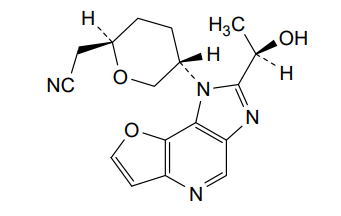
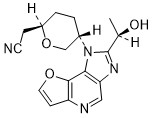
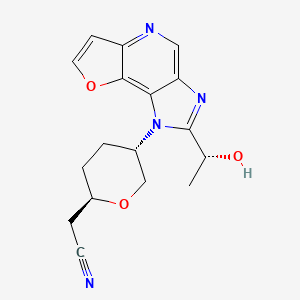
Girocitinib
CAS 2222137-79-1
MFC17H18N4O3 MW 326.36
2-[(2R,5S)-5-[4-[(1R)-1-hydroxyethyl]-12-oxa-3,5,8-triazatricyclo[7.3.0.02,6]dodeca-1,4,6,8,10-pentaen-3-yl]oxan-2-yl]acetonitrile
[(2R,5S)-5-{2-[(1R)-1-hydroxyethyl]-1H-furo[3,2-b]imidazo[4,5-d]pyridin-1-yl}oxan-2-yl]acetonitrile
2-((2R,5S)-5-(2-((R)-1-hydroxyethyl)-1H-furo[3,2-b]imidazo[4,5-d]pyridin-1-yl)tetrahydro-2H-pyran-2-yl)acetonitrile
Janus kinase inhibitor, anti-inflammatory, A0IES9T8GO
In an era where targeted therapies are redefining the landscape of medical treatment, Girocitinib emerges as a beacon of hope for many. This innovative drug, developed by leading pharmaceutical research institutions, primarily targets specific proteins involved in disease progression. Classified as a tyrosine kinase inhibitor (TKI), Girocitinib has shown significant promise in the treatment of various cancers, particularly non-small cell lung cancer (NSCLC). The drug is currently in the advanced stages of clinical trials, with researchers optimistic about its potential to provide a more effective and less toxic treatment option compared to conventional therapies.
Girocitinib is designed to interfere with the signaling pathways that promote cancer cell growth and survival. It does this by inhibiting the activity of tyrosine kinases, enzymes that play a key role in the activation of many proteins by signaling pathways within the cell. Tyrosine kinases are often overactive in cancer cells, leading to unchecked proliferation and survival. By targeting these enzymes, Girocitinib effectively disrupts these malign processes, thereby slowing down or even halting the progression of the disease.
The primary indication for Girocitinib is non-small cell lung cancer (NSCLC), which accounts for approximately 85% of all lung cancer cases. NSCLC is notoriously difficult to treat, especially in its advanced stages, and current treatments often come with significant side effects. Clinical trials have shown that Girocitinib can significantly improve progression-free survival in patients with specific genetic mutations that make them more responsive to TKI therapy. These mutations can be identified through genetic testing, allowing for a more personalized treatment approach that increases the likelihood of success.
In addition to NSCLC, researchers are exploring the potential of Girocitinib to treat other types of cancer, including colorectal cancer and certain forms of leukemia. Early-stage trials have shown encouraging results, suggesting that Girocitinib could become a versatile tool in the oncology arsenal. Its ability to target specific molecular pathways makes it a promising candidate for combination therapies, which aim to enhance treatment efficacy while minimizing resistance and adverse effects.
The development of Girocitinib is a testament to the power of modern science and technology in addressing some of the most challenging health issues of our time. The drug’s journey from the laboratory to clinical trials has been marked by rigorous research and collaboration among scientists, healthcare professionals, and patients. As we await the results of ongoing studies, there is a palpable sense of anticipation in the medical community, as Girocitinib holds the promise of transforming cancer treatment for many patients.
In conclusion, Girocitinib represents a significant advancement in the field of targeted cancer therapy. Its mechanism of action, which involves the inhibition of tyrosine kinases, offers a more precise and potentially less harmful treatment option for patients with NSCLC and possibly other cancers. As research progresses, Girocitinib may well become a cornerstone in the fight against cancer, providing hope and improved outcomes for countless individuals around the world.
PDT PAT
WO2018067422
SYN
https://patents.google.com/patent/US10738060B2/en?oq=US10738060
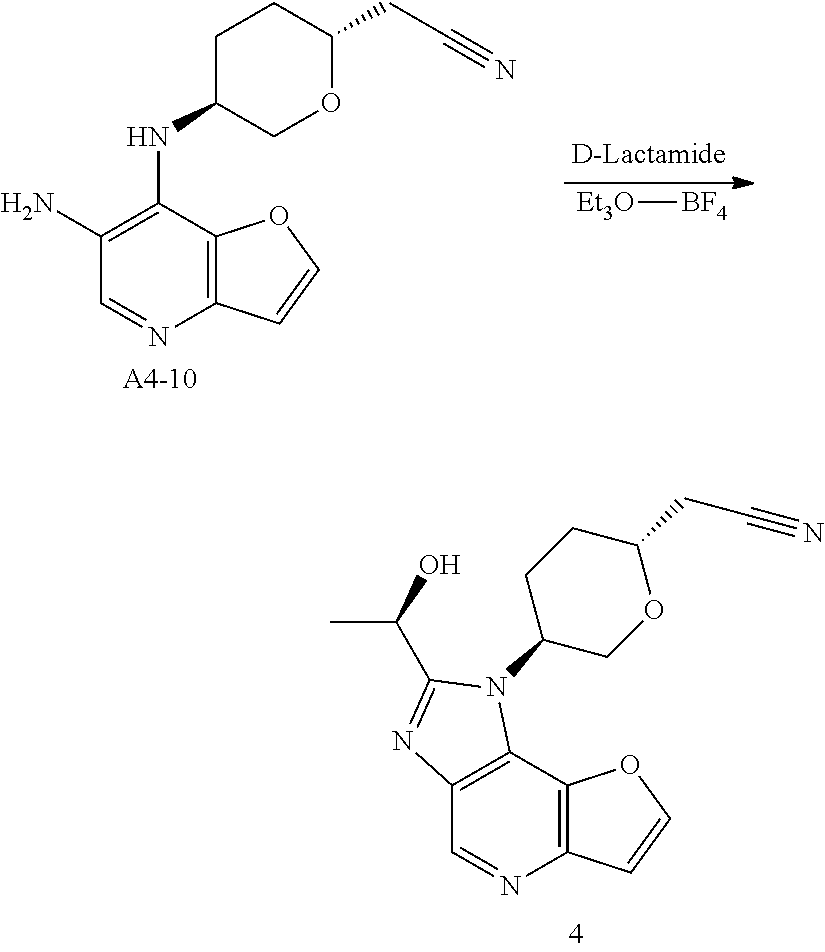
Example 4: Synthesis of 2-[(2R,5S)-5-[2-[(R)-1-Hydroxyethyl]furo[3,2-b]imidazo[4,5-d]pyridin-1-yl]tetrahydropyran-2-yl] acetonitrile (4)
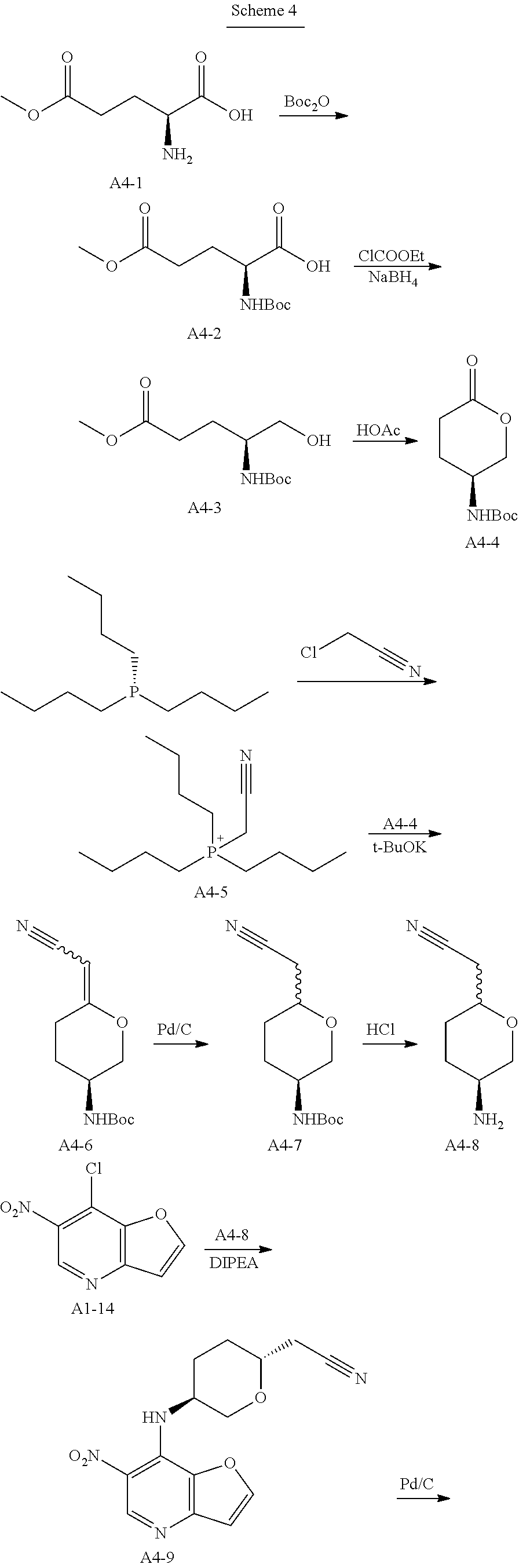
Step 1. In a round bottom flask, triethylamine (188 g, 1.86 mol, 1.0 eq) was added dropwise to a stirred solution of di-tert-butyl dicarbonate (162 g, 0.744 mol, 1.2 eq) and compound A4-1 (100 g, 0.62 mol, 1.0 eq) in water (500 mL) and 1,4-dioxane (500 mL). After stirring for 18 hrs at room temperature, the solution was extracted with MTBE (500 mL*2) and the aqueous phase was cooled on ice and carefully acidified to pH 3 by slow addition of 10% citric acid solution. The urethane was then extracted twice with ethyl acetate, and the combined extracts was washed with brine, dried over anhydrous sodium sulfate, and concentrated to give compound A4-2 as clear viscous oil (180 g, yield 100%). MS-ESI:[M+1]+: 262.1
Step 2. A solution of compound A4-2 (40 g, 0.153 mmol, 1.0 eq) in THF (600 mL) was treated with 4-methylmorpholine (17 g, 0.168, 1.1 eq) at room temperature. The resulting mixture was cooled to 0° C. before being treated with isobutyl chloroformate (22.7 g, 0.166 mmol, 1.08 eq) dropwise. The resulting reaction mixture was stirred at 0° C. for an addition 20 mins before being filtered and washed with THF. Then the clear filtrate solution was cooed to 0° C., and treated with a solution of NaBH4 (11.2 g, 0.295 mol, 1.93 eq) in water (100 mL). The resulting mixture was stirred overnight at room temperature, and then quenched with an aqueous HCl solution (1.0 mol/L,200 mL) dropwise, The mixture was extracted with ethyl acetate, and the combined extracts was washed with brine, dried over anhydrous sodium sulfate, concentrated to give compound A4-3 as a yellow oil (25 g, yield 66%). MS-ESI:[M+1]+: 248.1
Step 3. A solution of compound of A4-3 (25 g, 0.1 mol, 1.0 eq) in toluene (300 mL) and acetic acid (150 mL) was heated to reflux for 5 hrs and then cooled, concentrated under vacuum. The residual was added saturated sodium bicarbonate solution to pH 7-8 in ice-bath. Then the mixture was extracted three times with ethyl acetate, and the combined extracts was washed with brine, dried over anhydrous sodium sulfate, concentrated and recrystallized by ethyl acetate and PE to give compound A4-4 as a white powder (8.0 g, yield 37.2%). GC-MS: 215
Step 4. A solution of tributyl phosphine (72.9 g, 0.36 mol, 1.0 eq) in nitromethane (500 mL), was added dropwise chloroacetonitrile (27.2 g, 0.36 mol, 1.0 eq) in nitrogen atmosphere. The resulting reaction mixture was stirred for 16 hrs at room temperature, then concentrated. The residual oil solidified when a small amount of ethyl acetate was added. The solid was recrystallized by ethyl acetate and DCM to afford compound A4-5 as a white powder (95 g, yield 95%).
Step 5. To a solution of dry compound A4-5 (8.3 g, 30 mmol, 3.0 eq) in N,N-dimethylacetamide (30 mL) in nitrogen atmosphere, was added solid Potassium tert-butoxide (3.1 g, 28 mmol, 2.8 eq) in portions at 0° C. The resulting mixture was gradually warmed to 30° C. and stirred for 2 hrs. The resulting ylide solution was then treated with compound A4-4 (2.15 g, 10 mmol, 1.0 eq), and stirred overnight at 70° C. After cooled to room temperature, the resulting slurry was poured into the mixture of ice-water (100 mL) and saturated sodium bicarbonate solution (100 mL). The mixture was extracted twice with ethyl acetate, and the combined extracts was washed three times with brine, dried over anhydrous sodium sulfate, concentrated to give compound A4-6 as yellow oil without purification (7.5 g, yield 100%). MS-ESI:[M+1]+: 239.1
Step 6. To a solution of compound A4-6 (7.5 g, 10 mmol, 1.0 eq) in methanol (200 mL), was added 10% Pd/C (0.5 g,50% wet). Hydrogenation was carried out under atmospheric pressure at room temperature until hydrogen uptake ceased. The catalyst was filtered and washed by methanol. The filtrates was concentrated under vacuum, and purified by silica gel column chromatography to give compound A4-7 as off-white powder (1.6 g, yield 66.7%). MS-ESI:[M+1]+: 241.1
Step 7. To a solution of compound A4-7 (1.6 g, 6.67 mmol, 1.0 eq) in DCM (20 mL), was added TFA (10 g, 88.5 mmol, 13.2 eq). The reaction mixture was stirred for 2 hrs at room temperature until TLC showed the reaction was complete, then concentrated under vacuum. Water (20 mL) was added and the solution was treated with aqueous sodium hydroxide solution (4 mol/L) to pH 10. Then the aqueous phase was extracted six times with DCM/methanol (10/1). The combined extracts was dried over anhydrous sodium sulfate, concentrated to give compound A4-8 as light-brown oil (950 mg, yield 100%). MS-ESI:[M+1]+: 141.1
Step 8. To a solution of compound A1-14 (prepared as step 4 to 12 in example 1) (600 mg, 3.0 mmol, 1.0 eq) in n-butanol (15 mL), was added compound A4-8 (950 mg, 6.7 mmol, 2.26 eq) and DIPEA (1.36 g, 10.5 mmol, 3.5 eq). The reaction mixture was stirred for 1 hr at 135° C., concentrated and purified by silica gel column chromatography to give compound A4-9 (2R,5S) as light-yellow powder (254 mg, yield 28.0%).MS-ESI: [M+1]+: 303.1.
1H NMR (300 MHz, d6-DMSO): 9.063 (s, 1H), 8.503 (d, 1H), 9.326 (d, 1H), 7.176 (d, 1H), 4.431-4.513 (m, 1H), 4.128-4.156 (m, 1H), 3.633-3.659 (m, 1H), 3.448-3.518 (m, 1H), 2.775-2.841 (m, 2H), 2.205-2.312 (m, 1H), 1.829-1.859 (m, 2H), 1.501-1.521 (m, 1H).
Step 9. To a solution of compound A4-9 (254 g, 0.84 mmol, 1.0 eq) in methanol (20 mL), was added 10% Pd/C (0.15 g,50% wet). Hydrogenation was carried out under atmospheric pressure at room temperature until hydrogen uptake ceased. The catalyst was filtered and washed by methanol. The filtrates was concentrated under vacuum, and compound A4-10 was obtained as yellow oil (230 mg, yield 100%). MS-ESI:[M+1]+: 273.1
Step 10. A solution of D-Lactamide (388 mg, 4.2 mmol, 5.0 eq) and Et3O—BF4 (1.3 g, 6.72 mmol, 8.0 eq) in THF (10 mL) was stirred for 30 mins at room temperature in nitrogen atmosphere. Then the above solution was added to the mixture of compound A4-10 (230 mg, 0.84 mmol, 1.0 eq) in ethanol (10 mL). After stirring for 3 hrs at 85° C. until HPLC showed the reaction was complete, the mixture was concentrated, added water and extracted four times with ethyl acetate. The organic phases was discarded and the aqueous phase was treated with saturated sodium bicarbonate solution to pH 8, extracted twice with ethyl acetate. The second organic phases was dried over anhydrous sodium sulfate, concentrated and purified by silica gel column chromatography to give the title compound as light-yellow powder (120 mg, yield 43.8%). MS-ESI: [M+1]+: 327.6,
1H NMR (300 MHz, CDCl3): 9.039 (s, 1H), 7.939 (d, 1H), 7.196 (d, 1H), 5.235-5.336 (m, 1H), 4.806-4.973 (m, 1H), 4.403-4.483 (t, 1H), 4.096-6.116 (m, 2H), 2.700-2.807 (m, 4H), 2.105-2.312 (m, 2H), 1.830-1.852 (d, 3H).
SYN
US2022227777
https://patents.google.com/patent/US20220227777A1
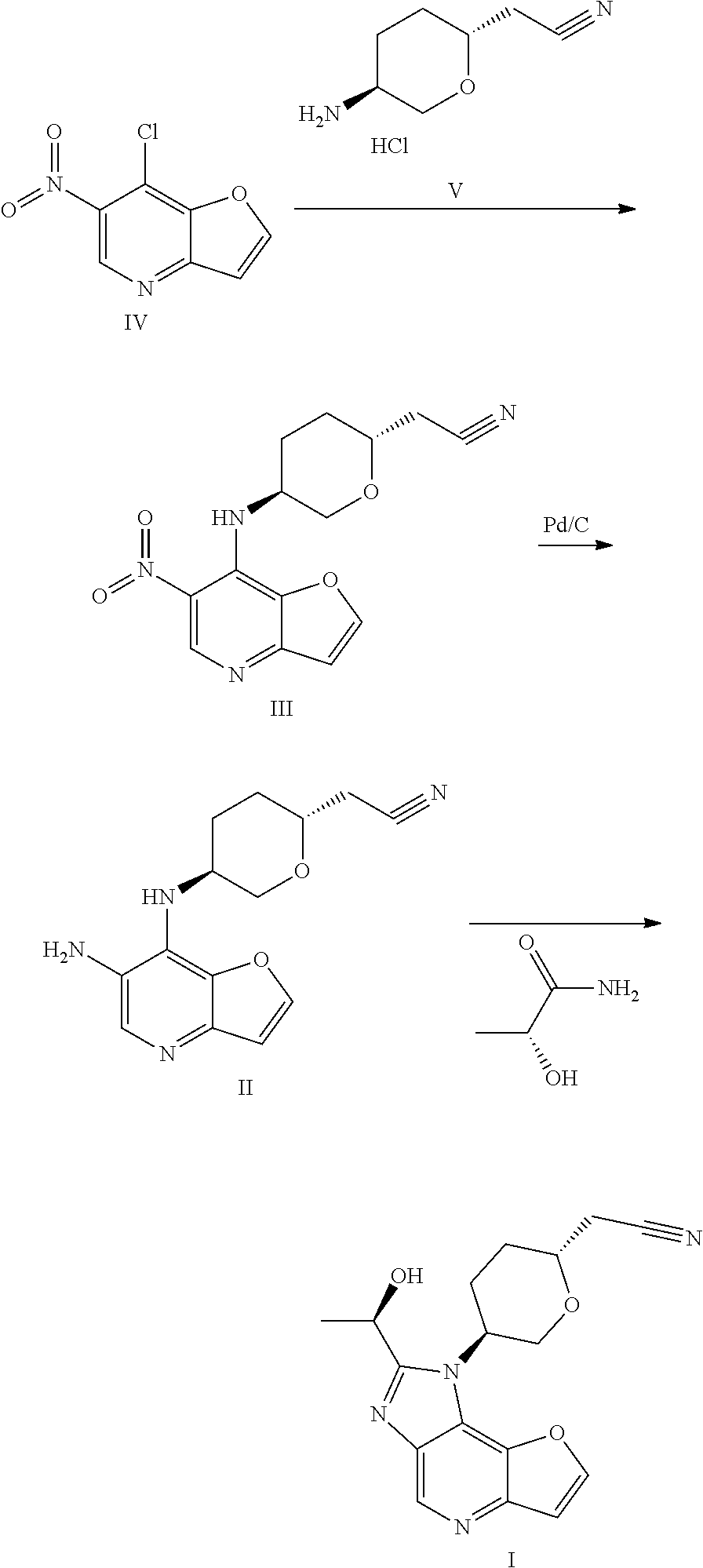
International patent application WO2018067422A1 discloses 1H-furo[3,2-b]imidazo[4,5-d]pyridine derivatives as selective JAK1 kinase inhibitors and preparation methods thereof, wherein compound I and its preparation method is disclosed.
Preparation of a Compound of Formula I
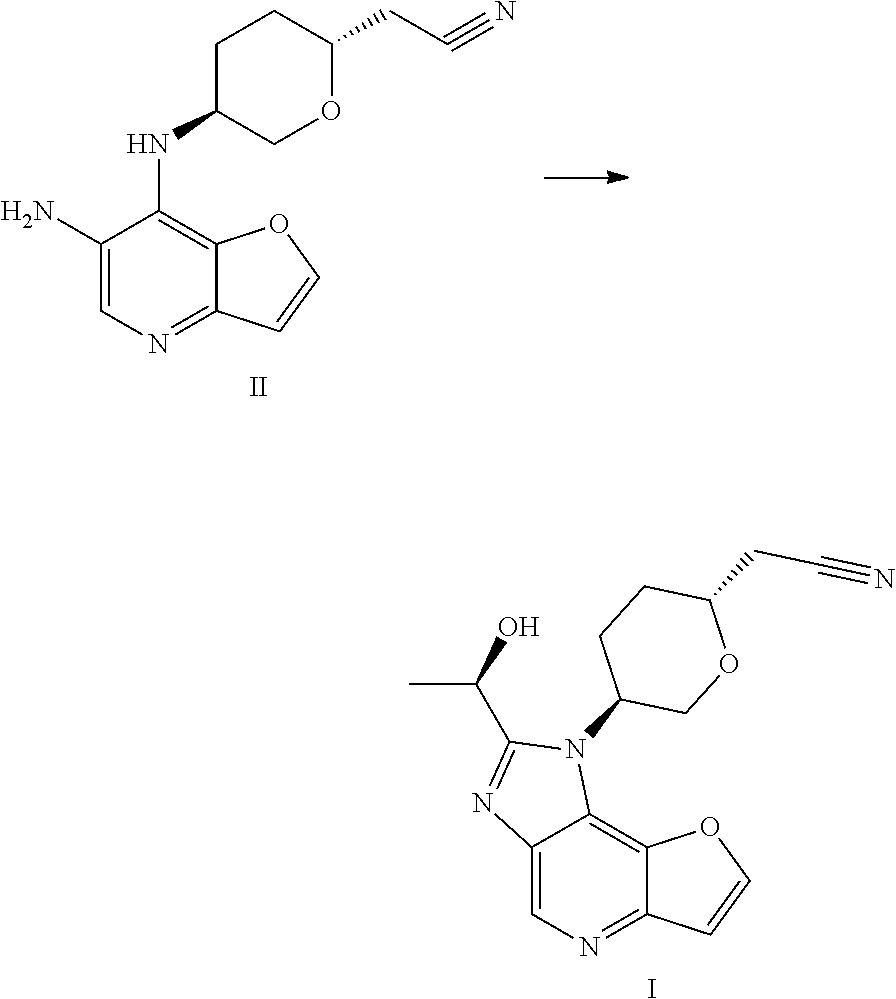
- [0204]THF (60 mL, 12 V), (R)-lactamide (6.6 g, 4.0 eq) and Et3O—BF4 (13.9 g, 4.0 eq) were added to a 250 mL three-necked flask #1, the system was stirred; the materials in three-necked flask #1 were stirred under nitrogen protection for later use; a compound of formula II (5.0 g, 1.0 eq) and ethanol (80 mL, 16 V) were added to another 250 mL three-necked flask #2; the system was heated to 70±5° C. under nitrogen protection; the materials in three-necked flask #1 were added to three-necked flask #2 with a syringe dropwise within 10-20 minutes; the system was heated to 85±5° C. (internal temperature was in the range of 72-75° C.) under nitrogen protection for reacting for 2 hours; the system was cooled to room temperature; the reaction liquid was concentrated with a rotary evaporator until there was basically no fraction flowing out; 1M HCl (80 mL) was added to the residual concentrated liquid, the pH was about 1 (determined with a pH test paper); the system was extracted four times with DCM (50 mL×4); the pH of the aqueous phase was adjusted to 7-8 with saturated sodium bicarbonate solution; the system was stirred at room temperature for 0.5 hour, then was filtered, the filter cake was washed with water (60 mL) and EA (10 mL), respectively; the filter cake was dried under vacuum at 50° C. for 16 hours; 4.3 g of faint yellow solid was obtained, with a purity of 95.0%; the solid was dissolved with methanol (30 mL); 4.1 g of silicon based metal eliminator and 1.0 g of activated carbon were added, the system was heated to 50° C. and stirred for 1 hour, then was cooled, filtered, washed with methanol (30 mL); the filtrate was concentrated with rotary evaporator until there was basically no fraction flowing out; methanol (10 mL) and MTBE (25 mL) were added to the residue, the system was heated to 50° C., and was stirred for 0.5 hour, then was cooled, the system was cooled to 10±5° C. and stirred for 0.5 hour; filtered, the filter cake was washed with MTBE (25 mL); the filter cake was dried under vacuum at 50° C. for 16 hours, 3.2 g of faint yellow solid was obtained, with a purity of 97.9%.
- [0205]MS-ESI: [M+1]+: 327.6
- [0206]1H NMR (400 MHz, CDCl3): 8.988 (s, 1H), 7.922 (d, 1H), 7.175 (d, 1H), 5.200-5.265 (m, 1H), 4.859-4.942 (m, 1H), 4.350-4.406 (t, 1H), 4.020-4.108 (m, 2H), 3.067 (d, 1H), 2.619-2.779 (m, 3H), 2.108-2.269 (m, 2H), 1.790-1.895 (m, 3H).
- [0207]THF (650 mL, 12 V), (R)-lactamide (70.6 g, 4.0 eq) and Et3O—BF4 (150.6 g, 4.0 eq) were added to a 1000 mL three-necked flask #1, the system was stirred; the materials in three-necked flask #1 were stirred under nitrogen protection for later use; a compound of formula II (54 g, 1.0 eq) and ethanol (860 mL, 16 V) were added to another 2000 mL three-necked flask #2; the system was heated to 70±5° C. under nitrogen protection; the materials in three-necked flask #1 were slowly added to three-necked flask #2 dropwise within 1 hour; the system was heated to 85±5° C. (internal temperature was in the range of 72-75° C.) under nitrogen protection for reacting for 2 hours; the system was cooled to room temperature; the reaction liquid was concentrated with a rotary evaporator until there was basically no fraction flowing out; 1M HCl (450 mL) was added to the residual concentrated liquid, the pH was about 1 (determined with a pH test paper); the system was extracted four times with DCM (270 mL×4); the pH of the aqueous phase was adjusted to 7-8 with saturated sodium bicarbonate solution; the system was stirred at room temperature for 0.5 hour, then was filtered, the filter cake was washed with water (540 mL); MTBE (270 mL) was added to the filter cake, the system was stirred at room temperature for 0.5 hour, filtered, the filter cake was washed with MTBE (108 mL); the filter cake was dried under vacuum at 50° C. for 16 hours; 49.2 g of light yellow solid was obtained, with an HPLC purity of 94.2%; the solid was dissolved with methanol (380 mL); silicon based metal eliminator (44 g) and activated carbon (5.4 g) were added, the system was heated to 50° C. and stirred for 1 hour, then was cooled, filtered, washed with methanol (430 mL); the filtrate was concentrated with a rotary evaporator to (80-110 mL, 1.5 V-2 V); MTBE (540 mL) was added to the residue, the system was heated to 50° C., and was stirred for 1 hour, then was cooled to 10±5° C. and stirred for 0.5 hour; filtered, the filter cake was washed with MTBE (270 mL); 42.4 g of filter cake was obtained, with an HPLC purity of 96.9%; the filter cake was dried under vacuum at 50° C. for 16 hours, 41.0 g of light yellow solid was obtained, with an HPLC purity of 96.7%, a yield of 63.3%.
- [0208]Purification of a Compound of Formula I:
- [0209]A compound of formula I (41 g) was dissolved with methanol; silica gel (50 g) was added to the solution, the system was concentrated to dryness for later use; silica gel (200 g) was added to the chromatographic column, the column was compacted with an air pump; a compound of formula I mixed with silica gel was added to the chromatographic column, the column was compacted with an air pump; the chromatographic column was eluted with an eluent (VMeOH:VDCM=1:100-1:30); qualified components were collected, concentrated to dryness; the product was dried under vacuum at 50° C. for 16 hours; 36 g of off-white solid was obtained, with an HPLC purity of 98.5%.
- [0210]The MS-ESI and 1H NMR data are consistent with example 21.
- [0211]THF (60 mL, 6 V), (R)-lactamide (13.2 g, 4.0 eq) and Et3O—BF4 (27.9 g, 4.0 eq) were added to a 100 mL three-necked flask #1, the system was stirred; the materials in #1 were stirred under nitrogen protection for later use; a compound of formula II (10 g, 1.0 eq) and ethanol (100 mL, 10 V) were added to another 250 mL three-necked flask #2; the system was heated to 70±5° C. under nitrogen protection; the materials in three-necked flask #1 were slowly added to three-necked flask #2 dropwise within 20 minutes; the system was heated to 80±5° C. (internal temperature was in the range of 72-75° C.) under nitrogen protection for reacting for 0.5 hour; the system was cooled to room temperature 20-30° C.; the reaction liquid was concentrated to about 50-80 mL with a rotary evaporator between 30-40° C.; water (100 mL, 10 V) was added to the system, then the system was concentrated with a rotary evaporator between 30-40° C. until there was basically no fraction flowing out; the system was cooled to 20-30° C.; the temperature of the system was controlled at 20-30° C., 12M HCl (5.5 g) was used to adjust the pH of the system to 2-3, the system was extracted with ethyl acetate (50 mL×2, 5V×2); the organic phase was discarded, and the aqueous phase was transferred to a flask; the temperature of the system was controlled at 20-30° C., the pH of the system was adjusted to 8-9 with saturated potassium carbonate solution (23 g); the temperature of the system was controlled at 20-25° C., the system was stirred for 2 hours, then was filtered, the filter cake was washed with water (50 mL) and MTBE (50 mL); the filter cake was dried with an air blower at 50° C. for 24 hours, 18 g of earth yellow solid was obtained, with an HPLC purity of 93.5%.
- [0212]The MS-ESI and 1H NMR data are consistent with example 21.
- [0213]THF (120 mL, 12 V), (R)-lactamide (13.2 g, 4.0 eq) and Et3O—BF4 (27.8 g, 4.0 eq) were added to a 250 mL three-necked flask #1, the system was stirred; the materials in #1 were stirred under nitrogen protection for later use; a compound of formula II (10 g, 1.0 eq) and ethanol (140 mL, 14 V) were added to another 500 mL three-necked flask #2; the system was heated to 40-45° C. (internal temperature) under nitrogen protection; the materials in three-necked flask #1 were added to three-necked flask #2 dropwise within 1 hour; the system was maintained at 40-45° C. (internal temperature) under nitrogen protection for reacting for 4.5 hours; the system was cooled to room temperature, and water (20 mL, 2V) was added; the system was concentrated with a rotary evaporator at 30-40° C. until there was basically no fraction flowing out; the system was cooled to 20-30° C.; the temperature of the system was controlled at 20-30° C., 12M HCl (3 mL) was used to adjust the pH of the system to 2-3, the system was extracted with ethyl acetate (50 mL×2, 5V×2); the organic phase was discarded, and the aqueous phase was transferred to a flask; the temperature of the system was controlled at 20-30° C., the pH of the system was adjusted to 8-9 with 50% potassium carbonate solution (15 mL); the temperature of the system was controlled at 20-25° C., the system was stirred for 2 hours, then was filtered, the filter cake was washed with water (50 mL) and acetone (50 mL); the crude product was triturated and stirred with water (50 mL) at 20-25° C. for 1 hour; the system was filtered, the filter cake was washed with water (50 mL) and acetone (50 mL); the filter cake was dried with an air blower at 50° C. for 24 hours, 17.8 g of khaki solid was obtained, with an HPLC purity of 95.3%.
- [0214]The MS-ESI and 1H NMR data are consistent with example 21.
- [0215]THF (60 mL, 12 V), (R)-lactamide (6.6 g, 4.0 eq) and Et3O—BF4 (13.9 g, 4.0 eq) were added to a 250 mL three-necked flask #1, the system was stirred; the materials in three-necked flask #1 were stirred under nitrogen protection for later use; a compound of formula II (5 g, 1.0 eq) and ethanol (70 mL, 14 V) were added to another 250 mL three-necked flask #2; the system was heated to 40-45° C. (internal temperature) under nitrogen protection; the materials in three-necked flask #1 were added to three-necked flask #2 dropwise within 20 minutes; the system was maintained at 40-45° C. (internal temperature) under nitrogen protection for reacting for 3 hours; the system was cooled to room temperature and was filtered, the filter cake was washed with THF (10 mL); water (10 mL, 2V) was added to the filtrate; the filtrate was concentrated with a rotary evaporator to 10-20 mL (2V-4V), the concentrated residue was exchanged with ethyl acetate (25 mL×2) and concentrated to 10-20 mL (2V-4V); water (50 mL, 10V) was added to the concentrated residue; the internal temperature was controlled at 20-25° C., 12M HCl (4.1 g) was used to adjust the pH of the system to 1-2; activated carbon (0.5 g) was added to the system, and the system was stirred at room temperature for 2 hours, and was filtered, the filter cake was washed with water (10 mL) and 1M HCl (10 mL); the combined filtrate was extracted with ethyl acetate (25 mL×2), the organic phase was discarded; the internal temperature was controlled at 20-25° C., the pH of the system was adjusted to 9-10 with saturated potassium carbonate solution (15 g); the internal temperature was controlled at 15-20° C., the system was stirred for 1 hour, and was filtered, the filter cake was washed with water (10 mL); the filter cake was triturated with acetone aqueous solution (50 mL, V/V=1:1) for 1 hour; the system was filtered, the filter cake was washed with acetone aqueous solution (10 mL, V/V=1:1); the filter cake was dried with an air blower at 50° C. for 24 hours; 5.0 g of pale gray solid was obtained, with an HPLC purity of 95.6%, and a yield of 83.5%;
- [0216]Purification of a Compound of Formula I:
- [0217]5.0 g of the obtained solid and methanol (40 mL) were added to a flask, and were stirred for 10 minutes at room temperature, the materials were basically dissolved and the solution was clear; activated carbon (0.5 g) and silica gel (4.0 g) were added to the system; the system was heated to 50-55° C., the temperature was maintained and the system was stirred for 2 hours, then was filtered with silica gel (5 g), the filter cake was washed with methanol (50 mL); the filtrate was concentrated with a rotary evaporator to 5-10 mL; MTBE (50 mL) was added to the concentrated residue; the system was heated to reflux, and was allowed for reflux for 1 hour; the system was cooled to 5-10° C., the temperature was maintained and the system was stirred for 1 hour and was filtered, the filter cake was washed with MTBE; the filter cake was dried with a drying oven under vacuum at 50° C. for 16 hours; 3.0 g of off-white solid was obtained, with a yield of 60% and a purity of 97.9%; the filtrate was concentrated to dryness to obtain 1.4 g of yellow solid.
- [0218]The MS-ESI and 1H NMR data are consistent with example 21.
PAT
- NEW SELECTIVE JAK1 INHIBITORS AND THEIR USEPublication Number: HR-P20211965-T1Priority Date: 2016-10-03
- Novel JAK1 selective inhibitors and uses thereofPublication Number: KR-102399848-B1Priority Date: 2016-10-03Grant Date: 2022-05-19
- Novel Jak1-selective inhibitors and their usesPublication Number: CN-113214278-BPriority Date: 2016-10-03Grant Date: 2022-10-28
- Jak1 selective inhibitors and uses thereofPublication Number: US-RE49834-EPriority Date: 2016-10-03Grant Date: 2024-02-13
- Novel jak1 selective inhibitors and uses thereofPublication Number: US-2019256523-A1Priority Date: 2016-10-03
- JAK1 selective inhibitors and uses thereofPublication Number: US-10738060-B2Priority Date: 2016-10-03Grant Date: 2020-08-11
- Novel Jak1-selective inhibitors and their usesPublication Number: CN-108366994-BPriority Date: 2016-10-03Grant Date: 2021-10-01
- Novel Jak1-selective inhibitors and their usesPublication Number: CN-113214278-APriority Date: 2016-10-03
- Novel jak1 selective inhibitors and uses thereofPublication Number: EP-3509591-B1Priority Date: 2016-10-03Grant Date: 2021-11-17
- Synthesis method of furoimidazopyridine compound, crystal form of furoimidazopyridine compound, and crystal form of salt thereof.Publication Number: MX-2024006688-APriority Date: 2019-06-06
- Synthesis method of furoimidazopyridine compound, crystal form of furoimidazopyridine compound, and crystal form of salt thereofPublication Number: US-12195476-B2Priority Date: 2019-06-06Grant Date: 2025-01-14
- Novel jak1 selective inhibitors and uses thereofPublication Number: CA-3039178-A1Priority Date: 2016-10-03
- Novel jak1 selective inhibitors and uses thereofPublication Number: EP-3509591-A1Priority Date: 2016-10-03
- Novel JAK1 selective inhibitors and uses thereofPublication Number: JP-2019537559-APriority Date: 2016-10-03
- Synthesis method of furoimidazopyridine compound, crystal form of furoimidazopyridine compound, and crystal form of salt thereofPublication Number: EP-4248967-A3Priority Date: 2019-06-06
- Synthesis method of furoimidazopyridine compound, crystal form of furoimidazopyridine compound, and crystal form of salt thereofPublication Number: JP-2023089169-APriority Date: 2019-06-06
- Synthesis method of furoimidazopyridine compounds, crystal forms of furoimidazopyridine compounds and crystal forms of their saltsPublication Number: CN-113906035-BPriority Date: 2019-06-06Grant Date: 2023-11-10
- Synthesis method of furoimidazopyridine compounds, crystal forms of furoimidazopyridine compounds and crystal forms of their saltsPublication Number: CN-117327083-APriority Date: 2019-06-06
- METHOD OF SYNTHESIS OF FUROIMIDAZOPYRIDINE COMPOUND, CRYSTAL FORM OF FUROIMIDAZOPYRIDINE COMPOUND, AND CRYSTAL FORM OF ITS SALT.Publication Number: MX-2024004146-APriority Date: 2019-06-06
- Synthesis method of furoimidazopyridine compound, crystal form of furoimidazopyridine compound, and crystal form of salt thereofPublication Number: US-2022227777-A1Priority Date: 2019-06-06
- Synthesis method of furoimidazopyridine compound, crystal form of furoimidazopyridine compound, and crystal form of salt thereofPublication Number: AU-2020289149-B2Priority Date: 2019-06-06Grant Date: 2023-05-11
- Synthesis method of furoimidazopyridine compound, crystal form of furoimidazopyridine compound, and crystal form of salt thereofPublication Number: EP-4248966-A2Priority Date: 2019-06-06
- Synthesis method of furoimidazopyridine compound, crystal form of furoimidazopyridine compound, and crystal form of salt thereofPublication Number: EP-4248966-A3Priority Date: 2019-06-06
- Synthesis method of furoimidazopyridine compound, crystal form of furoimidazopyridine compound, and crystal form of salt thereofPublication Number: EP-4248967-A2Priority Date: 2019-06-06
- Synthesis method of furoimidazopyridine compound, crystal form of furoimidazopyridine compound, and crystal form of salt thereofPublication Number: WO-2020244348-A1Priority Date: 2019-06-06
- Synthesis method of furoimidazopyridine compound, crystal form of furoimidazopyridine compound, and crystal form of salt thereofPublication Number: AU-2020289149-A1Priority Date: 2019-06-06
- Synthesis method of furoimidazopyridine compound, crystal form of furoimidazopyridine compound and crystal form of salt thereofPublication Number: CN-113906035-APriority Date: 2019-06-06
- Synthesis method of furoimidazopyridine compound, crystal form of furoimidazopyridine compound, and crystal form of salt thereofPublication Number: EP-3981771-A1Priority Date: 2019-06-06
AS ON JUNE2025 4.45 LAKHS VIEWS ON BLOG WORLDREACH AVAILABLEFOR YOUR ADVERTISEMENT
join me on Linkedin
Anthony Melvin Crasto Ph.D – India | LinkedIn
join me on Researchgate
RESEARCHGATE
join me on Facebook
Anthony Melvin Crasto Dr. | Facebook
join me on twitter
Anthony Melvin Crasto Dr. | twitter
+919321316780 call whatsaapp
EMAIL. amcrasto@gmail.com
……
///////////Girocitinib, Janus kinase inhibitor, anti-inflammatory, A0IES9T8GO
Gildeuretinol

Gildeuretinol
CAS118139-35-8
MF C20H272H3O, MW 289.5 g/mol
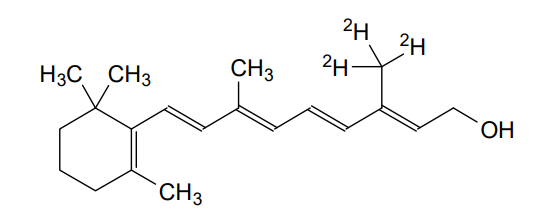
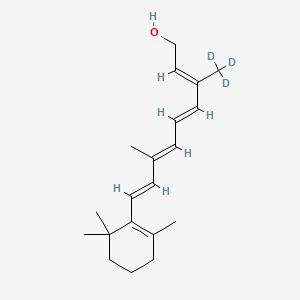
(2E,4E,6E,8E)-3-(2H3)methyl-7-methyl-9-(2,6,6-trimethylcyclohex-1-en-1-yl)nona-2,4,6,8-tetraen-1-ol; (20,20,20-2H3)retinol
(2E,4E,6E,8E)-7-methyl-3-(trideuteriomethyl)-9-(2,6,6-trimethylcyclohexen-1-yl)nona-2,4,6,8-tetraen-1-ol
vitamin A analogue, Orphan Drug, Stargardt disease, breakthrough therapy, Pediatric Rare Disease designations, ALK-001, KL-49, ALK 001, KL 49
- OriginatorColumbia University
- DeveloperAlkeus Pharmaceuticals
- ClassEye disorder therapies; Retinoids; Vitamins
- Mechanism of ActionDimerisation inhibitors; Vitamin A replacements
- Orphan Drug StatusYes – Stargardt disease
- Phase II/IIIDry age-related macular degeneration
- Phase IIStargardt disease
- No development reportedRetinal dystrophies
- 08 Sep 2025Gildeuretinol – Alkeus Pharmaceuticals receives Orphan Drug status for Stargardt disease in European Union
- 09 Jan 2025Alkeus Pharmaceuticals announces intention to submit an NDA to US FDA for Stargardt disease in 2025
- 09 Jan 2025Efficacy and adverse event data from phase II trial for Stargardt disease released by Alkeus Pharmaceuticals
Gildeuretinol is an investigational new drug being developed by Alkeus Pharmaceuticals, Inc. for the treatment of retinal diseases, particularly Stargardt disease and geographic atrophy secondary to age-related macular degeneration (AMD). Stargardt disease is caused by a defect in the ABCA4 gene that clears toxic byproducts resulting from the dimerization of vitamin A. Gildeuretinol is new molecular entity designed to reduce the dimerization of vitamin A in the eye without affecting the visual cycle.[1]
Gildeuretinol has received breakthrough therapy, orphan drug and Pediatric Rare Disease designations from the U.S. Food and Drug Administration.[2]
AS ON JUNE2025 4.45 LAKHS VIEWS ON BLOG WORLDREACH AVAILABLEFOR YOUR ADVERTISEMENT
join me on Linkedin
Anthony Melvin Crasto Ph.D – India | LinkedIn
join me on Researchgate
RESEARCHGATE
join me on Facebook
Anthony Melvin Crasto Dr. | Facebook
join me on twitter
Anthony Melvin Crasto Dr. | twitter
+919321316780 call whatsaapp
EMAIL. amcrasto@gmail.com
……
References
- Zaydon YA, Tsang SH (July 2024). “The ABCs of Stargardt disease: the latest advances in precision medicine”. Cell & Bioscience. 14 (1) 98. doi:10.1186/s13578-024-01272-y. PMC 11282698. PMID 39060921.
- Fitch J (22 November 2024). “Gildeuretinol for Stargardt disease receives Rare Pediatric Disease, Fast Track Designations”. Contemporary Pediatrics.
| Clinical data | |
|---|---|
| Other names | ALK-001, KL-49 |
| Identifiers | |
| IUPAC name | |
| CAS Number | 118139-35-8 |
| PubChem CID | 169490774 |
| UNII | PSZ7W5NR24 |
| KEGG | D12713 |
| ChEMBL | ChEMBL5314606 |
| Chemical and physical data | |
| Formula | C20H30D3O |
| Molar mass | 292.500 g·mol−1 |
| 3D model (JSmol) | Interactive image |
| SMILES | |
| InChI | |
/////////Gildeuretinol, vitamin A analogue, Orphan Drug, Stargardt disease, breakthrough therapy, Pediatric Rare Disease designations, ALK-001, KL-49, ALK 001, KL 49, PSZ7W5NR24
Frevecitinib
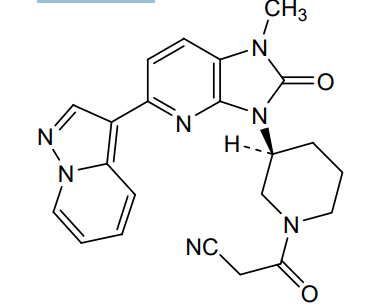
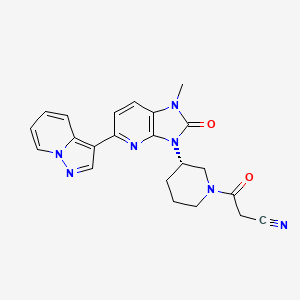
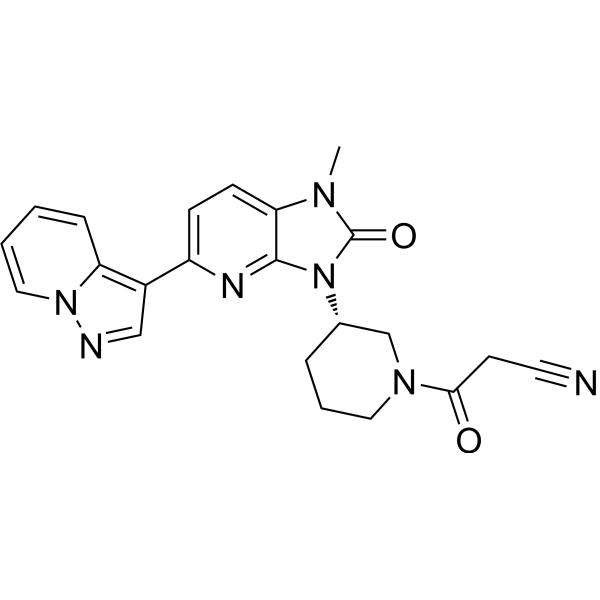
Frevecitinib
CAS 1299417-07-4
MF C22H21N7O2 MW 415.4 g/mol
3-[(3S)-3-(1-methyl-2-oxo-5-pyrazolo[1,5-a]pyridin-3-ylimidazo[4,5-b]pyridin-3-yl)piperidin-1-yl]-3-oxopropanenitrile
3-{(3S)-3-[1-methyl-2-oxo-5-(pyrazolo[1,5-a]pyridin-3-
yl)-1,2-dihydro-3H-imidazo[4,5-b]pyridin-3-yl]piperidin1-yl}-3-oxopropanenitrile
Janus kinase inhibitor, anti-inflammatory, 5N5L287M8T, KN 002, KN-002
Single and Multiple Ascending Dose Study of KN-002
CTID: NCT05006521
Phase: Phase 1
Status: Completed
Date: 2024-08-07
SYN
https://patentscope.wipo.int/search/en/detail.jsf?docId=WO2011157397&_cid=P11-MH2TVG-48083-1
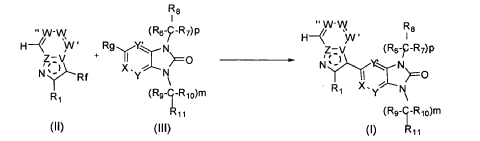
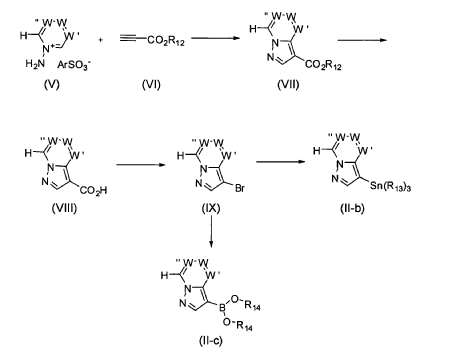
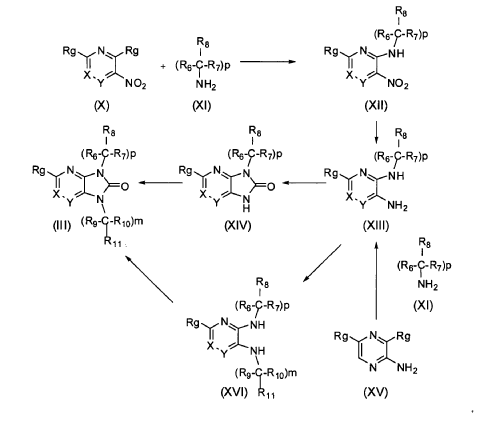
SYN
It has now been found that a drug substance disclosed in WO2011/051452, namely the compound (S)-3-(3-(1-methyl-2-oxo-5-(pyrazolo[1,5-a]pyridine-3-yl)-1H-imidazo[4,5-b]pyridine-3(2H)-yl)piperidin-1-yl)-3-oxopropanenitrile having the structure shown below and known herein as compound (I) can be prepared in different polymorphic forms. Surprisingly one form exists as a polymorph with particularly advantageous stability properties. Compound (I) as prepared following the process in WO2011/051452 is known as Form I herein.
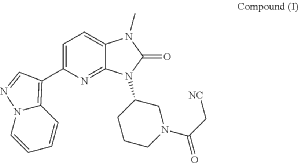
SYN
https://patentscope.wipo.int/search/en/detail.jsf?docId=US76222175&_cid=P11-MH2U0A-51623-1

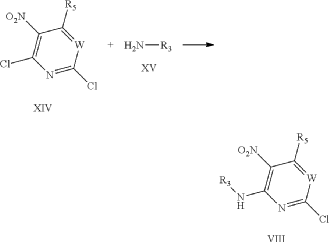
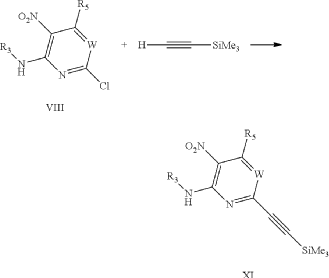
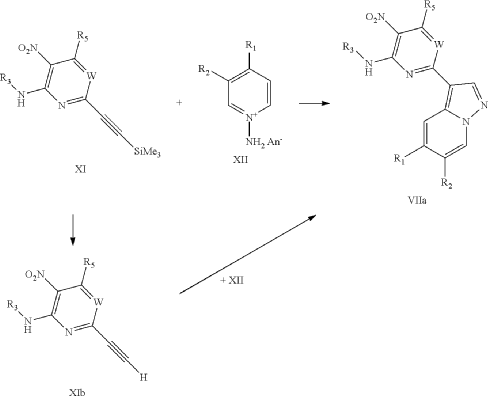
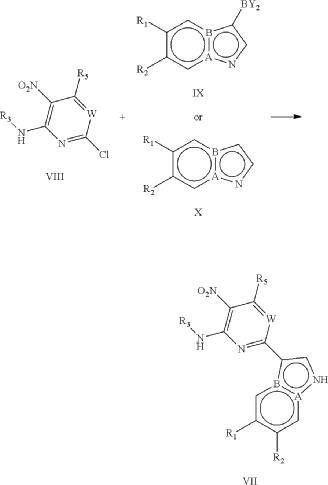
PAT
- N-containing heteroaryl derivatives as jak3 kinase inhibitorsPublication Number: KR-101675614-B1Priority Date: 2009-10-29Grant Date: 2016-11-11
- N-containing heteroaryl derivatives as jak3 kinase inhibitorsPublication Number: US-2012245140-A1Priority Date: 2009-10-29
- N-containing heteroaryl derivatives as jak3 kinase inhibitorsPublication Number: US-2013131038-A9Priority Date: 2009-10-29
- N-containing heteroaryl derivatives as JAK3 kinase inhibitorsPublication Number: US-8501735-B2Priority Date: 2009-10-29Grant Date: 2013-08-06
- N-containing heteroaryl derivatives as JAK3 kinase inhibitorsPublication Number: US-8946257-B2Priority Date: 2009-10-29Grant Date: 2015-02-03
- Heteroaryl imidazolone derivatives as jak inhibitorsPublication Number: EP-2582703-A1Priority Date: 2010-06-15
- Heteroaryl Imidazolone Derivatives as Jap InhibitorsPublication Number: KR-20130113331-APriority Date: 2010-06-15
- Heteroaryl imidazolone derivatives as jak inhibitorsPublication Number: US-2013089512-A1Priority Date: 2010-06-15
- Heteroaryl imidazolone derivatives as jak inhibitorsPublication Number: WO-2011157397-A1Priority Date: 2010-06-15
- N-containing heteroaryl derivatives as jak3 kinase inhibitorsPublication Number: EP-2493895-B1Priority Date: 2009-10-29Grant Date: 2017-04-26
- Novel polymorphsPublication Number: US-2018016284-A1Priority Date: 2015-02-05
- Novel polymorphsPublication Number: US-2019031687-A1Priority Date: 2015-02-05
- Novel polymorphsPublication Number: WO-2016124464-A1Priority Date: 2015-02-05
- Heteroaryl imidazolone derivatives as jak inhibitorsPublication Number: CA-2802588-A1Priority Date: 2010-06-15
- Heteroaryl imidazolone derivatives as JAK inhibitorsPublication Number: CN-102933583-APriority Date: 2010-06-15
- Novel polymorphsPublication Number: EP-3053927-A1Priority Date: 2015-02-05
- Novel polymorphsPublication Number: EP-3253769-B1Priority Date: 2015-02-05Grant Date: 2019-03-13
- New polymorphPublication Number: JP-2018502929-APriority Date: 2015-02-05
- New polymorphPublication Number: JP-6685326-B2Priority Date: 2015-02-05Grant Date: 2020-04-22
- PolymorphsPublication Number: US-10087196-B2Priority Date: 2015-02-05Grant Date: 2018-10-02
- Crystalline form of a JAK3 kinase inhibitorPublication Number: US-10155757-B2Priority Date: 2015-03-10Grant Date: 2018-12-18
- Crystalline form of a jak3 kinase inhibitorPublication Number: US-2018044336-A1Priority Date: 2015-03-10
- Crystalline form of a jak3 kinase inhibitorPublication Number: WO-2016142201-A1Priority Date: 2015-03-10
- Polymorphic forms of (s)-3-(3(1-methyl-2-oxo-5-(pyrazolo[1,5-a]pyridine-3(2h)-yl)piperidin-1-yl)-3-oxopropanenitrilePublication Number: CA-2972977-CPriority Date: 2015-02-05Grant Date: 2019-04-09
- polymorphPublication Number: CN-107207533-BPriority Date: 2015-02-05Grant Date: 2019-04-16
- Formulation of a pan-jak inhibitorPublication Number: TW-202440105-APriority Date: 2022-12-02
- Formulation of a pan-jak inhibitorPublication Number: US-2024261224-A1Priority Date: 2022-12-02
- Formulation of a pan-jak inhibitorPublication Number: WO-2024119058-A2Priority Date: 2022-12-02
- Formulation of a pan-jak inhibitorPublication Number: WO-2024119058-A3Priority Date: 2022-12-02
- Crystalline form of a jak3 kinase inhibitorPublication Number: EP-3268364-A1Priority Date: 2015-03-10
AS ON JUNE2025 4.45 LAKHS VIEWS ON BLOG WORLDREACH AVAILABLEFOR YOUR ADVERTISEMENT
join me on Linkedin
Anthony Melvin Crasto Ph.D – India | LinkedIn
join me on Researchgate
RESEARCHGATE
join me on Facebook
Anthony Melvin Crasto Dr. | Facebook
join me on twitter
Anthony Melvin Crasto Dr. | twitter
+919321316780 call whatsaapp
EMAIL. amcrasto@gmail.com
……
///////////Frevecitinib, Janus kinase inhibitor, anti-inflammatory, 5N5L287M8T, KN 002, KN-002
Remibrutinib

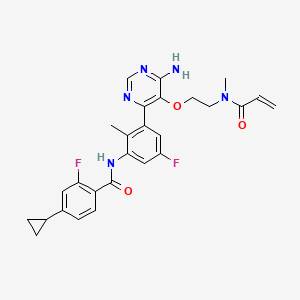
Remibrutinib
CAS 1787294-07-8
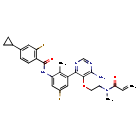
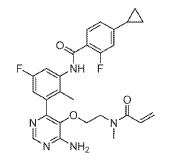
N-[3-[6-amino-5-[2-[methyl(prop-2-enoyl)amino]ethoxy]pyrimidin-4-yl]-5-fluoro-2-methylphenyl]-4-cyclopropyl-2-fluorobenzamide
MW 507.5 g/mol, MF C27H27F2N5O3
- LOU064
- NVP-LOU064-NXA
- LOU064-NXA
- I7MVZ8HDNU
- WHO 11062
APPROVALS 2025, FDA 2025, 9/30/2025, To treat chronic spontaneous urticaria in adults who remain symptomatic despite H1 antihistamine treatment
Remibrutinib, sold under the brand name Rhapsido, is a medication used for the treatment of chronic spontaneous urticaria.[1] Remibrutinib is an oral, small molecule kinase inhibitor that inhibits Bruton’s tyrosine kinase (BTK).[1] It is taken by mouth.[1]
SYN
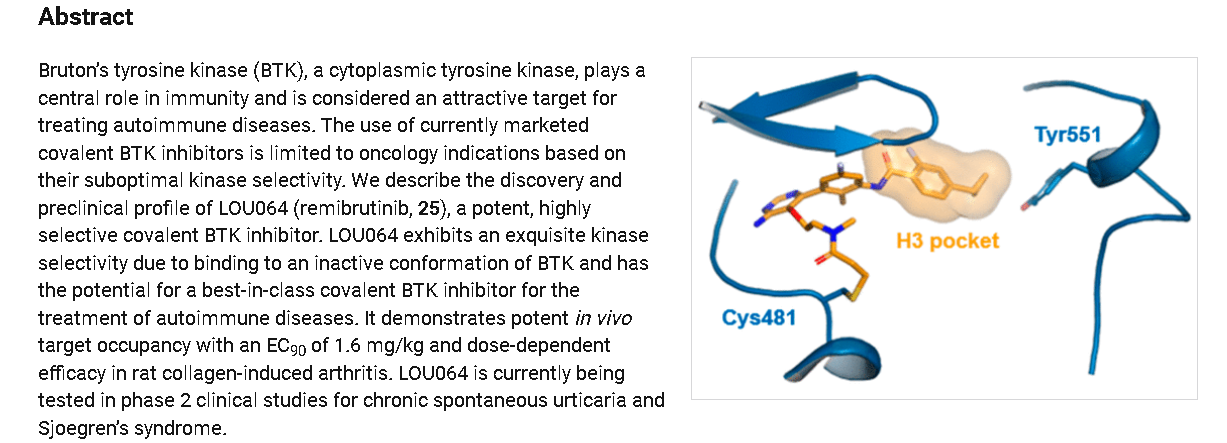
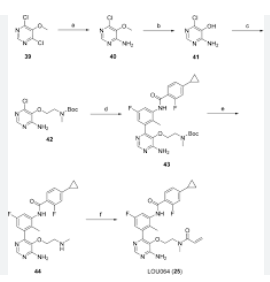
Discovery of LOU064 (Remibrutinib), a Potent and Highly Selective Covalent Inhibitor of Bruton’s Tyrosine Kinase
https://pubs.acs.org/doi/10.1021/acs.jmedchem.9b01916
SYN
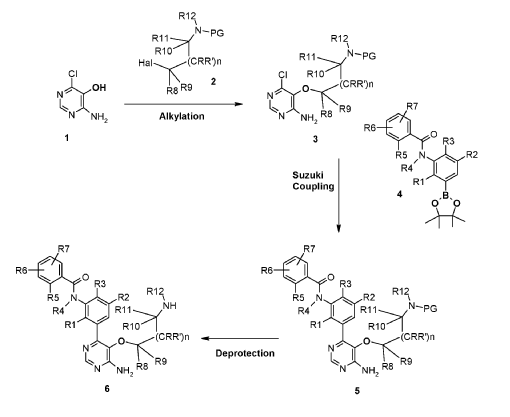
- WO2015079417
- https://patentscope.wipo.int/search/en/detail.jsf?docId=WO2015079417&_cid=P12-MH1R14-25744-1
Example 6
N-(3-(6-Amino-5-(2-(N-methylacrylamido)ethoxy)pyrimidin-4-yl)-5-fluoro-2- methylphenyl)-4-cyclopropyl-2-fluorobenzamide
(1) tert-Butyl (2-((4-amino-6-chloropyrimidin-5-yl)oxy)ethyl)(methyl)carbamate, INT 8
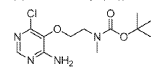
To a solution of 4-amino-6-chloropyrimidin-5-ol (content 90%, 2.00 g, 12.37 mmol) in THF (120 mL) was added N-Boc-N-methyl-2-hydroxyethylamine (6.07 g, 34.64 mmol) followed by SMOPEX-301 (1 mmol/g, 30.90 g, 30.90 mmol). Then, a solution of DIAD (6.01 mL, 30.52 mmol) in THF (20 mL) was added slowly. The reaction mixture was stirred at 60 °C for 3 hr. The mixture was filtered through a pad of Celite. The filtrate was concentrated to afford an oil which was triturated with EtOAc and a white precipitate was formed. The solid was filtered off to afford INT 8. The mother liquor was concentrated and the residue was purified by flash chromatography (silica; DCM/EtOAc gradient, 0- 100%) to afford more INT 8 as a beige solid.
UPLC-MS: MS (ESI): [M+H]+ 303.1, rt = 0.86 min. 1H NMR (DMSO-d6): δ (ppm) 7.97 (s, 1H), 7.26 (s, br, 2H), 4.02-3.93 (m, 2H), 3.54 (t, 2H), 2.89 (s, br, 3H), 1.39 (s, 9H).
(2) tert-Butyl (2-((4-amino-6-(3-(4-cyclopropyl-2-fluorobenzamido)-5-fluoro-2- methylphenyl)pyrimidin-5-yl)oxy)ethyl)(methyl)carbamate, INT 9
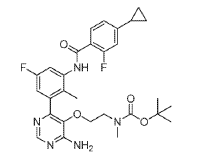
To a solution of INT 8 (447 mg, 1.48 mmol) in DME (7.0 mL) and water (1.0 mL) was added INT 5 (638 mg, 1.54 mmol) followed by aqueous sodium carbonate solution (1 M, 4.21 mL, 4.21 mmol). The mixture was degassed with argon for 10 min and bis(triphenylphosphine)palladium(II) dichloride (49.2 mg, 0.070 mmol) was added. The reaction mixture was stirred at 110 °C for 10 min in a microwave reactor. More INT 5 (232 mg, 0.56 mmol) was added and the reaction mixture was stirred at 110 °C for an additional 15 min in a microwave reactor. The mixture was partitioned between saturated aqueous sodium hydrogen carbonate solution and EtOAc. The organic layer was washed with water and brine, dried over magnesium sulfate, filtered and concentrated. The residue was purified by flash chromatography (silica; DCM/EtOAc gradient, 0-100%) to afford INT 9 as an off-white solid.
UPLC-MS: MS (ESI): [M+H]+ 554.3, rt = 1.21 min. 1H NMR (DMSO-d6): δ (ppm) rotamers 9.76 (s, 1H), 8.19 (s, 1H), 7.74-7.53 (m, 2H) 7.20-6.85 (m, 5H), 3.57-3.48 (m, 2H), 3.29- 3.15 (m, 2H), 2.58 (s, 3H), 2.08-1.99 (overlapping s, 3H and m, 1H), 1.34 and 1.28 (s, 9H), 1.10-1.02 (m, 2H), 0.84-0.77 (m, 2H).
(3) N-(3-(6-Amino-5-(2-(methylamino)ethoxy)pyrimidin-4-yl)-5-fluoro-2- methylphenyl)-4-cyclopropyl-2-fluorobenzamide, INT 10
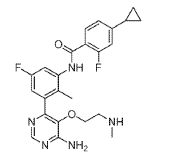
To a solution of INT 9 (335 mg, 0.61 mmol) in DCM (5.0 mL) was added TFA (0.47 mL, 6.05 mmol). The reaction mixture was stirred at RT for 15 hr. The mixture was concentrated under reduced pressure. The residue was dried in vacuum to afford INT 10 as theTFA salt as a brown oil.
UPLC-MS: MS (ESI): [M+H]+ 454.3, rt = 0.73 min. 1H NMR (DMSO-d6): δ (ppm) 10.02 (s, 1H), 9.07-8.13 (s, v br, number of H cannot be assigned), 8.58 (s, 1H), 8.51 (s, br, 2H), 7.71-7.61 (m, 2H), 7.29-7.22 (m, 1H), 7.14-7.05 (m, 2H), 3.75-3.65 (m, 2H), 3.16-3.07 (m, 2H), 2.48 (s, 3H, overlapping with solvent peak), 2.12 (s, 3H), 2.10-1.99 (m, 1H), 1.11-1.03 (m, 2H), 0.83-0.76 (m, 2H).
(4) N-(3-(6-Amino-5-(2-(N-methylacrylamido)ethoxy)pyrimidin-4-yl)-5-fluoro-2-methylphenyl)-4-cyclopropyl-2-fluorobenzamide
To a solution of acrylic acid (62 mg, 0.87 mmol) in DMF (4.0 mL) was added DIPEA (0.302 mL, 1.73 mmol) followed by T3P solution (50% in DMF) (0.438 mL, 0.750 mmol). The mixture was stirred at RT for 30 min. To a solution of INT 10 (containing 3.0 eq TFA, content 90%, 510 mg, 0.577 mmol) and DIPEA (0.302 mL, 1.731 mmol) in DMF (2.0 mL) at 0 °C was added dropwise the above solution. The reaction mixture was stirred at 0 °C for 30 min. The mixture was diluted with water and extracted with EtOAc. The organic layer was washed with water (2x) and brine (2x), dried over magnesium sulfate, filtered and concentrated. The residue was purified by flash chromatography (silica;
DCM/(MeOH with 2% aqueous ammonium hydroxide) gradient, 0-9%) to afford the title compound Example 6 as a white solid.
UPLC-MS: MS (ESI): [M+H]+ 508.3, rt = 0.95 min. 1H NMR (DMSO-d6): δ (ppm) rotamers 9.77 and 9.56 (s, total 1H), 8.25-8.14 (m, 1H), 7.79-7.50 (m, 2H), 7.17-6.93 (m, 5H), 6.70-6.55 (m, 1H), 6.06 (t, 1H), 5.59 (d, 1H), 3.63-3.40 (m, 4H), 2.80 and 2.49 (s, total 3H, peak at 2.49 overlapping with solvent peak), 2.09-1.93 (m, 4H), 1.11-1.00 (m, 2H), 0.85-0.76 (m, 2H).
PAT
- US9512084,
- https://patentscope.wipo.int/search/en/detail.jsf?docId=US133778840&_cid=P12-MH1R60-30520-1
SYN
Publication Date: 2020
Publication Name: Synfacts
PAT
- Amino Pyrimidine DerivativesPublication Number: US-2023312483-A1Priority Date: 2013-11-29
- A complex of bisphenol and a phosphorus compound and heat-developable image-recording material containing the samePublication Number: DE-60121375-T2Priority Date: 2000-01-11Grant Date: 2007-07-05
- Photothermographic materialPublication Number: DE-60011207-T2Priority Date: 1999-10-26Grant Date: 2005-06-23
- CD19 binding molecules and uses thereofPublication Number: US-12221481-B2Grant Date: 2025-02-11
AS ON JUNE2025 4.45 LAKHS VIEWS ON BLOG WORLDREACH AVAILABLEFOR YOUR ADVERTISEMENT
join me on Linkedin
Anthony Melvin Crasto Ph.D – India | LinkedIn
join me on Researchgate
RESEARCHGATE
join me on Facebook
Anthony Melvin Crasto Dr. | Facebook
join me on twitter
Anthony Melvin Crasto Dr. | twitter
+919321316780 call whatsaapp
EMAIL. amcrasto@gmail.com
……
Medical uses
Remibrutinib is indicated for the treatment of chronic spontaneous urticaria in adults who remain symptomatic despite H1 antihistamine treatment[1]
Society and culture
Legal status
Remibrutinib was approved for medical use in the United States in September 2025.[2]
Names
Remibrutinib is the international nonproprietary name.[3]
Remibrutinib is sold under the brand name Rhapsido.[2]
References
- https://www.novartis.com/us-en/sites/novartis_us/files/rhapsido.pdf
- “Novartis receives FDA approval for Rhapsido (remibrutinib), the only oral, targeted BTKi treatment for chronic spontaneous urticaria (CSU)” (Press release). Novartis Pharmaceuticals. 30 September 2025. Retrieved 1 October 2025 – via PR Newswire.
- World Health Organization (2020). “International nonproprietary names for pharmaceutical substances (INN): recommended INN: list 83”. WHO Drug Information. 34 (1). hdl:10665/339768.
Further reading
- Maurer, Marcus; Berger, William; Giménez-Arnau, Ana; Hayama, Koremasa; Jain, Vipul; Reich, Adam; et al. (December 2022). “Remibrutinib, a novel BTK inhibitor, demonstrates promising efficacy and safety in chronic spontaneous urticaria”. The Journal of Allergy and Clinical Immunology. 150 (6): 1498–1506.e2. doi:10.1016/j.jaci.2022.08.027. hdl:10230/55511. ISSN 1097-6825. PMID 36096203.
- Maurer, Marcus; Giménez-Arnau, Ana; Jain, Vipul; Tillinghast, Jeffrey; Tolcachier, Alberto; Nigen, Simon; et al. (February 2022). “Remibrutinib Treatment Improves Quality of Life in Patients with Chronic Spontaneous Urticaria”. Journal of Allergy and Clinical Immunology. 149 (2): AB179. doi:10.1016/j.jaci.2021.12.589. S2CID 246522006.
External links
- Clinical trial number NCT05030311 for “A Phase 3 Study of Efficacy and Safety of Remibrutinib in the Treatment of CSU in Adults Inadequately Controlled by H1 Antihistamines (REMIX-1)” at ClinicalTrials.gov
- Clinical trial number NCT05032157 for “A Phase 3 Study of Efficacy and Safety of Remibrutinib in the Treatment of CSU in Adults Inadequately Controlled by H1-antihistamines (REMIX-2)” at ClinicalTrials.gov
| Clinical data | |
|---|---|
| Trade names | Rhapsido |
| License data | US DailyMed: Remibrutinib |
| Routes of administration | By mouth |
| ATC code | L04AA60 (WHO) |
| Legal status | |
| Legal status | US: ℞-only[1] |
| Identifiers | |
| IUPAC name | |
| CAS Number | 1787294-07-8 |
| PubChem CID | 118107483 |
| IUPHAR/BPS | 10457 |
| DrugBank | DB16852 |
| ChemSpider | 78317000 |
| UNII | I7MVZ8HDNU |
| KEGG | D12285 |
| ChEMBL | ChEMBL4483575 |
| PDB ligand | N6Z (PDBe, RCSB PDB) |
| Chemical and physical data | |
| Formula | C27H27F2N5O3 |
| Molar mass | 507.542 g·mol−1 |
| 3D model (JSmol) | Interactive image |
| SMILES | |
| InChI | |
- Maurer M, Berger W, Gimenez-Arnau A, Hayama K, Jain V, Reich A, Haemmerle S, Lheritier K, Walsh P, Xia S, Storim J: Remibrutinib, a novel BTK inhibitor, demonstrates promising efficacy and safety in chronic spontaneous urticaria. J Allergy Clin Immunol. 2022 Dec;150(6):1498-1506.e2. doi: 10.1016/j.jaci.2022.08.027. Epub 2022 Sep 9. [Article]
- Nuesslein-Hildesheim B, Ferrero E, Schmid C, Huck C, Smith P, Tisserand S, Rubert J, Bornancin F, Eichlisberger D, Cenni B: Remibrutinib (LOU064) inhibits neuroinflammation driven by B cells and myeloid cells in preclinical models of multiple sclerosis. J Neuroinflammation. 2023 Aug 26;20(1):194. doi: 10.1186/s12974-023-02877-9. [Article]
- Bozek A, Reich A: Evaluating remibrutinib in the treatment of chronic spontaneous urticaria. Immunotherapy. 2025 May;17(7):479-484. doi: 10.1080/1750743X.2025.2510892. Epub 2025 Jun 2. [Article]
- Kaul M, End P, Cabanski M, Schuhler C, Jakab A, Kistowska M, Kinhikar A, Maiolica A, Sinn A, Fuhr R, Cenni B: Remibrutinib (LOU064): A selective potent oral BTK inhibitor with promising clinical safety and pharmacodynamics in a randomized phase I trial. Clin Transl Sci. 2021 Sep;14(5):1756-1768. doi: 10.1111/cts.13005. Epub 2021 Apr 9. [Article]
- Gimeno R, Ribas-Llaurado C, Pesque D, Andrades E, Cenni B, Ambros B, Pujol R, Gimenez-Arnau AM: Remibrutinib inhibits hives effector cells stimulated by serum from chronic urticaria patients independently of FcepsilonR1 expression level and omalizumab clinical response. Clin Transl Allergy. 2023 Mar;13(3):e12227. doi: 10.1002/clt2.12227. [Article]
- Dorner T, Kaul M, Szanto A, Tseng JC, Papas AS, Pylvaenaeinen I, Hanser M, Abdallah N, Grioni A, Santos Da Costa A, Ferrero E, Gergely P, Hillenbrand R, Avrameas A, Cenni B, Siegel RM: Efficacy and safety of remibrutinib, a selective potent oral BTK inhibitor, in Sjogren’s syndrome: results from a randomised, double-blind, placebo-controlled phase 2 trial. Ann Rheum Dis. 2024 Feb 15;83(3):360-371. doi: 10.1136/ard-2023-224691. [Article]
- FDA Approved Drug Products: RHAPSIDO (remibrutinib) tablets, for oral use [Link]
- Novartis: Novartis receives FDA approval for Rhapsido® (remibrutinib), the only oral, targeted BTKi treatment for chronic spontaneous urticaria (CSU) [Link]
//////////Remibrutinib, APPROVALS 2025, FDA 2025, Rhapsido, LOU064, NVP-LOU064-NXA, LOU064-NXA, I7MVZ8HDNU, WHO 11062
Fovinaciclib
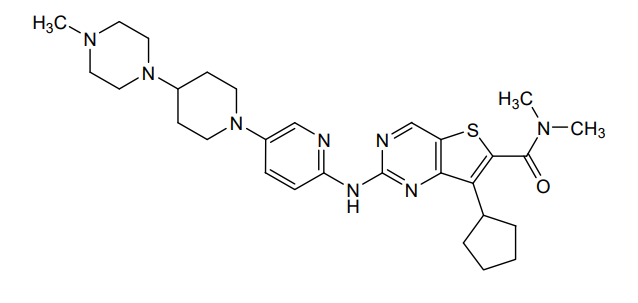
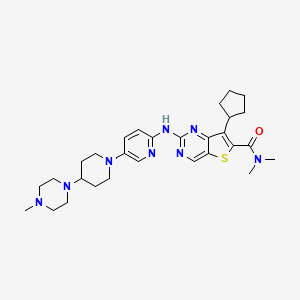
Fovinaciclib
CAS 2146171-49-3
MF C29H40N8OS
Exact Mass: 548.3046
Molecular Weight: 548.75
7-cyclopentyl-N,N-dimethyl-2-({5-[4-(4-methylpiperazin-1-yl)piperidin-1-yl]pyridin-2-yl}amino) thieno[3,2-d]pyrimidine-6-carboxamide
7-cyclopentyl-N,N-dimethyl-2-((5-(4-(4-methylpiperazin-1-yl)piperidin-1-yl)pyridin-2-yl)amino)thieno[3,2-d]pyrimidine-6-carboxamide
7-cyclopentyl-N, N-dimethyl-2- ( (5- (4- (4-methylpiperazin-1-yl) piperidin-1-yl) pyridin-2-yl) amino) thieno [3, 2-d] pyrimidine-6-carboxamide
7-Cyclopentyl-N,N-dimethyl-2-((5-(4-(1-methylpiperidin-4-yl)piperazin-1-yl)pyridin-2-yl)amino Thieno[3,2-d]pyrimidine-6-carboxamide
cyclin dependent kinase inhibitor, antineoplastic, Fovinaciclibum, LPW3H579X8, inzhou Aohong Pharmaceutical Co
- OriginatorChongqing Fochon Pharmaceutical
- DeveloperAhon Pharmaceutical; Chongqing Fochon Pharmaceutical; Shanghai Fosun Pharmaceutical
- Class2 ring heterocyclic compounds; Amides; Amines; Antineoplastics; Cyclopentanes; Piperazines; Piperidines; Pyridines; Pyrimidines; Small molecules; Thiophenes
- Mechanism of ActionCyclin-dependent kinase 4 inhibitors; Cyclin-dependent kinase 6 inhibitors
- MarketedHER2 negative breast cancer
- No development reportedSolid tumours
- 04 Sep 2025Chemical structure information added.
- 02 Sep 2025Launched for HER2-negative-breast-cancer (Late-stage disease, Second-line therapy or greater) in China (PO) (Shanghai Henlius Biotech pipeline, September 2025)
- 26 Aug 2025Registered for HER2-negative-breast-cancer (Late-stage disease, Second-line therapy or greater) in China (PO) prior to August 2025
Fovinaciclib is an orally bioavailable inhibitor of cyclin-dependent kinase (CDK) types 4 (CDK4) and 6 (CDK6), with potential antineoplastic activity. Upon administration, fovinaciclib selectively inhibits CDK4 and CDK6, which inhibits the phosphorylation of retinoblastoma protein (Rb) early in the G1 phase, prevents CDK-mediated G1/S transition and leads to cell cycle arrest. This suppresses DNA replication and decreases tumor cell proliferation. CDK4 and 6 are serine/threonine kinases that are upregulated in many tumor cell types and play key roles in the regulation of both cell cycle progression from the G1-phase into the S-phase and cell proliferation.
On May 29, 2025, China’s National Medical Products Administration (NMPA) approved the Class 1 innovative drug Fovinaciclib (CDK4&6 inhibitor), developed by Jinzhou Aohong Pharmaceutical Co., Ltd. This medication, in combination with fulvestrant, is indicated for the treatment of adult patients with hormone receptor (HR)-positive, human epidermal growth factor receptor 2 (HER2)-negative recurrent or metastatic breast cancer, who have experienced disease progression following prior endocrine therapy.
Notably, Fovinaciclib represents an excellent example of scaffold hopping—its design replaces the pyrrolo-pyrimidine core of Ribociclib (first approved on March 13, 2017) with a thieno-pyrimidine ring.
PAT
https://patentscope.wipo.int/search/en/detail.jsf?docId=CN236278427&_cid=P21-MGRD95-18783-1
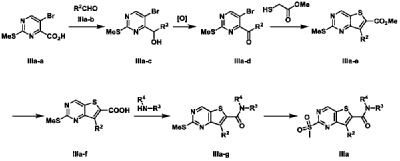
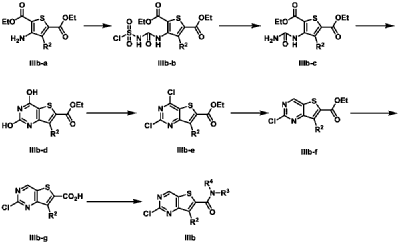
| Example 3 |
| 7-Cyclopentyl-N,N-dimethyl-2-((5-(4-(1-methylpiperidin-4-yl)piperazin-1-yl)pyridin-2-yl)amino Thieno[3,2-d]pyrimidine-6-carboxamide (3) |
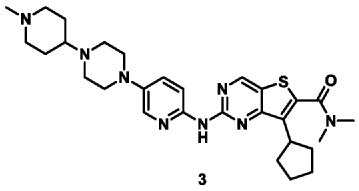
According to the synthesis method of Example 2, CH
3 CHO replaced by CH
2 O, to prepare the title compound 7-cyclopentyl-N,N-dimethyl-2-((5-(4-(1-methylpiperidin-4-yl)piperazin-1-yl)pyridin-2-yl)amino)thieno[3,2-d]pyrimidine-6-carboxamide (3). MS-ESI (m/z): 549 [M+1] + .
PAT
https://patentscope.wipo.int/search/en/detail.jsf?docId=WO2017193872&_cid=P21-MGRDEF-24321-1
[0266]
7-cyclopentyl-N, N-dimethyl-2- ( (5- (4- (4-methylpiperazin-1-yl) piperidin-1-yl) pyridi n-2-yl) amino) thieno [3, 2-d] pyrimidine-6-carboxamide (5)
[0267]
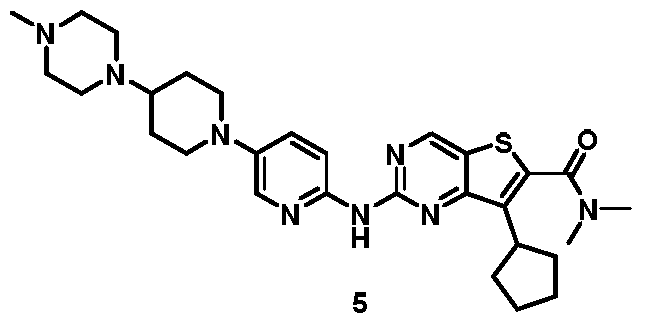
To a solution of 7-cyclopentyl-N, N-dimethyl-2- ( (5- (4- (piperazin-1-yl) piperidin-1-yl) pyridin-2-yl) amino) thieno [3, 2-d] pyrimidine-6-carboxamide (4) (1.5 g, 2.8 mmol) in DCM (45 mL) was added NaBH (OAc) 3(3.56 mg, 16.8 mmol) followed by CH 2O (40%in water, 252 mg, 3.4 mmol) . The mixture was stirred at r.t. for 30 min. The mixture was diluted with saturated aqueous NaHCO 3(100 mL) and extracted with DCM (2 × 30 mL) . The extracts were dried over Na 2SO 4. Solvents were evaporated under reduced pressure. The residue was purified by column chromatography on silica gel eluting with 96: 3: 1 DCM/methanol/ammonia to give 7-cyclopentyl-N, N-dimethyl-2- ( (5- (4- (4-methylpiperazin-1-yl) piperidin-1-yl) pyridin-2-yl) amino) thieno [3, 2-d] pyrimidine-6-carboxamide (5) . MS-ESI (m/z) : 549 [M + 1] +.
PAT
- Certain protein kinase inhibitorsPublication Number: JP-2019516790-APriority Date: 2016-05-07
- Certain protein kinase inhibitorsPublication Number: US-2019209566-A1Priority Date: 2016-05-07
- Certain protein kinase inhibitorsPublication Number: WO-2017193872-A1Priority Date: 2016-05-07
- Certain protein kinase inhibitorsPublication Number: US-10835535-B2Priority Date: 2016-05-07Grant Date: 2020-11-17
- A class of protein kinase inhibitorsPublication Number: CN-109153686-BPriority Date: 2016-05-07Grant Date: 2021-04-30
- specific protein kinase inhibitorsPublication Number: KR-102374033-B1Priority Date: 2016-05-07Grant Date: 2022-03-14
- Certain protein kinase inhibitorsPublication Number: EP-3452484-B1Priority Date: 2016-05-07Grant Date: 2023-07-05
- Certain protein kinase inhibitorsPublication Number: ES-2954148-T3Priority Date: 2016-05-07Grant Date: 2023-11-20
AS ON JUNE2025 4.45 LAKHS VIEWS ON BLOG WORLDREACH AVAILABLEFOR YOUR ADVERTISEMENT
join me on Linkedin
Anthony Melvin Crasto Ph.D – India | LinkedIn
join me on Researchgate
RESEARCHGATE
join me on Facebook
Anthony Melvin Crasto Dr. | Facebook
join me on twitter
Anthony Melvin Crasto Dr. | twitter
+919321316780 call whatsaapp
EMAIL. amcrasto@gmail.com
……
//////////Fovinaciclib, CHINA 2025, APPROVALS 2025, cyclin dependent kinase inhibitor, antineoplastic, Fovinaciclibum, LPW3H579X8, inzhou Aohong Pharmaceutical Co
Foselutoclax
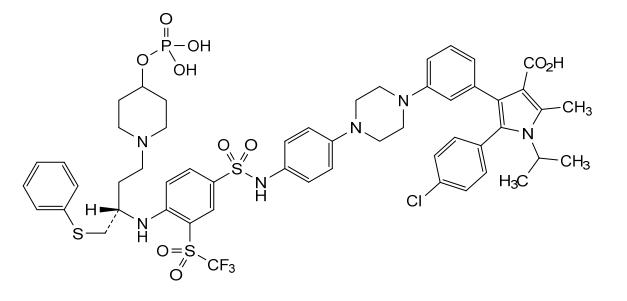

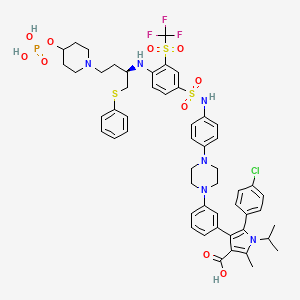
Foselutoclax
CAS 2271269-01-1
MF C53H59ClF3N6O10PS3 MW 1159.7 g/mol
(10R)-14-chloro-25-methyl-7,7-dioxo-10-[(phenylsulfanyl)methyl]-134-(phosphonooxy)-21-(propan-2-yl)-83-(trifluoromethanesulfonyl)-21H-7λ6-thia-6,9-diaza-4(1,4)-piperazina-13(1)-piperidina-2(2,3)-pyrrola-1(1),3(1,3),5,8(1,4)-tetrabenzenatridecaphane-24-carboxylic acid
5-(4-chlorophenyl)-2-methyl-4-[3-[4-[4-[[4-[[(2R)-1-phenylsulfanyl-4-(4-phosphonooxypiperidin-1-yl)butan-2-yl]amino]-3-(trifluoromethylsulfonyl)phenyl]sulfonylamino]phenyl]piperazin-1-yl]phenyl]-1-propan-2-ylpyrrole-3-carboxylic acid
B-cell lymphoma 2 (Bcl-2) inhibitor, antineoplastic, VT53CL5GES, UBX 1325
Foselutoclax is an investigational new drug that is being evaluated for the treatment of age-related eye diseases, particularly diabetic macular edema (DME) and wet age-related macular degeneration (AMD). Developed by Unity Biotechnology, this senolytic compound acts as a potent inhibitor of Bcl-xL, a protein that senescent cells rely on for survival.[1] Foselutoclax is designed to selectively eliminate senescent cells in the retina, potentially addressing the underlying causes of vision loss in these conditions.[2]
- Assess the Efficacy and Safety of Repeat Intravitreal Injections of Foselutoclax (UBX1325) in Patients With DME (ASPIRE)CTID: NCT06011798Phase: Phase 2Status: CompletedDate: 2025-08-05
- Safety, Tolerability and Evidence of Activity Study of UBX1325 in Patients With Diabetic Macular Edema (BEHOLD)CTID: NCT04857996Phase: Phase 2Status: CompletedDate: 2024-05-16
- Safety and Tolerability Study of UBX1325 in Patients With Diabetic Macular Edema or Neovascular Age-Related Macular DegenerationCTID: NCT04537884Phase: Phase 1Status: CompletedDate: 2022-03-10
REF
- Therapeutic targeting of cellular senescence in diabetic macular edema: preclinical and phase 1 trial resultsPublication Name: Nature MedicinePublication Date: 2024-02PMID: 38321220DOI: 10.1038/s41591-024-02802-4
- Senolytics in the treatment of diabetic retinopathyPublication Name: Frontiers in PharmacologyPublication Date: 2022-08-26PMCID: PMC9462063PMID: 36091769DOI: 10.3389/fphar.2022.896907
- Senolytic drugs: from discovery to translationPublication Name: Journal of Internal MedicinePublication Date: 2020-08-04PMCID: PMC7405395PMID: 32686219DOI: 10.1111/joim.13141
- bcl-x, a bcl-2-related gene that functions as a dominant regulator of apoptotic cell deathPublication Name: CellPublication Date: 1993-08-27PMID: 8358789DOI: 10.1016/0092-8674(93)90508-n
PAT
Treatment of Lung Diseases Using Pharmaceutical Agents that Eliminate Senescent Cells
Publication Number: US-2020354336-A9
Priority Date: 2017-08-11
- Senescent Cells and for Treating CancerPublication Number: US-2022017485-A1Priority Date: 2018-06-13
- Acyl sulfonamides that are bcl family antagonists for use in clinical management of conditions caused or mediated by senescent cells and for treating cancerPublication Number: EP-4335516-A2Priority Date: 2018-06-13
- Methods of Inhibiting Pathological AngiogenesisPublication Number: US-2020253991-A1Priority Date: 2017-10-31
- Methods of inhibiting pathological angiogenesisPublication Number: US-11129838-B2Priority Date: 2017-10-31Grant Date: 2021-09-28
- Treatment of Lung Diseases Using Pharmaceutical Agents that Eliminate Senescent CellsPublication Number: US-2020199103-A1Priority Date: 2017-08-11
SYN
https://patentscope.wipo.int/search/en/detail.jsf?docId=US279621490&_cid=P21-MGPXU3-15237-1
SYN
https://patentscope.wipo.int/search/en/detail.jsf?docId=US421382898&_cid=P21-MGPXWE-19244-1
A crystalline solid meglumine salt of of (R)-5-(4-chlorophenyl)-1-isopropyl-2-methyl-4-(3-(4-(4-((4-((1-(phenylthio)-4-(4-((phosphonooxy)methyl)piperidin-1-yl)butan-2-yl)amino)-3-((trifluoromethyl)sulfonyl)phenyl)sulfonamido)phenyl)piperazin-1-yl)phenyl)-1H-pyrrole-3-carboxylic acid, the compound of Formula I:
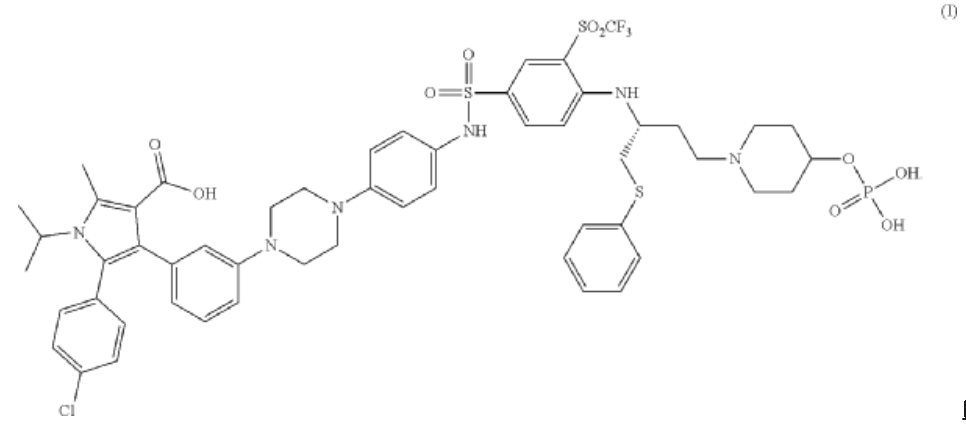
SYN
https://patentscope.wipo.int/search/en/detail.jsf?docId=US348024244&_cid=P21-MGPXWE-19244-1
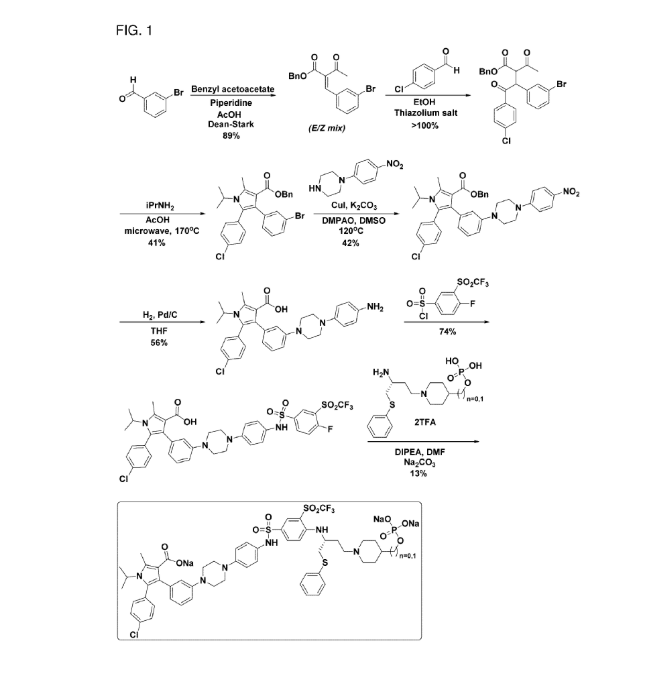
AS ON JUNE2025 4.45 LAKHS VIEWS ON BLOG WORLDREACH AVAILABLEFOR YOUR ADVERTISEMENT
join me on Linkedin
Anthony Melvin Crasto Ph.D – India | LinkedIn
join me on Researchgate
RESEARCHGATE
join me on Facebook
Anthony Melvin Crasto Dr. | Facebook
join me on twitter
Anthony Melvin Crasto Dr. | twitter
+919321316780 call whatsaapp
EMAIL. amcrasto@gmail.com
……
| Clinical data | |
|---|---|
| Other names | UBX1325 |
| Identifiers | |
| IUPAC name | |
| CAS Number | 2271269-01-1 |
| PubChem CID | 147562879 |
| IUPHAR/BPS | 13366 |
| ChemSpider | 115277082 |
| UNII | VT53CL5GES |
| Chemical and physical data | |
| Formula | C53H59ClF3N6O10PS3 |
| Molar mass | 1159.69 g·mol−1 |
| 3D model (JSmol) | Interactive image |
| SMILES | |
| InChI | |
References
- Crago SM (22 June 2023). “Design for Phase 2B ASPIRE Study of UBX1325 for DME announced by UNITY”. Modern Retina. Archived from the original on 13 August 2024.
- Macha N, Yu M, Sapieha P, Klier S, Ghosh A, White L, et al. (September 2024). “Multifocal Electroretinography Changes after UBX1325 (Foselutoclax) Treatment in Neovascular Age-Related Macular Degeneration”. Journal of Clinical Medicine. 13 (18): 5540. doi:10.3390/jcm13185540. PMC 11433175. PMID 39337030.
//////////foselutoclax, antineoplastic, VT53CL5GES, UBX 1325
Fosdesdenosine sipalabenamide
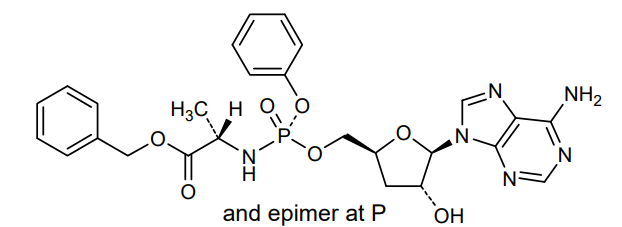

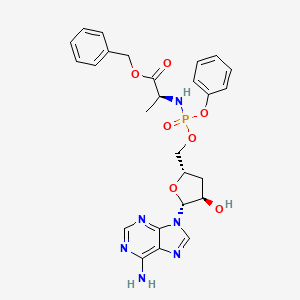
Fosdesdenosine sipalabenamide
CAS 2348493-39-8
MF C26H29N6O7P, MW=568.5 g/mol
benzyl N-(P-ambo-3′-deoxy-OP-phenyl-5′-adenylyl)-Lalaninate
benzyl (2S)-2-[[[(2S,4R,5R)-5-(6-aminopurin-9-yl)-4-hydroxyoxolan-2-yl]methoxy-phenoxyphosphoryl]amino]propanoate
3′-Deoxyadenosine 5′-O-phenyl-(benzoxy-L-alaninyl)-phosphatenucleoside analogue, antineoplastic, NUC 7738, Y7BFN2M72F
Fosdesdenosine sipalabenamide is an investigational new drug that is being evaluated for the treatment of advanced solid tumors and lymphoma.[1] This compound is a phosphoramidate derivative of cordycepin (3′-deoxyadenosine), an adenosine analog originally isolated from the fungus Cordyceps.[2][3] As a nucleoside analog with potential antineoplastic properties, Fosdesdenosine sipalabenamide is designed to inhibit RNA synthesis and act as an RNA inhibitor.[1] The drug is being developed by NuCana Plc.[1]
Fosdesdenosine Sipalabenamide is a phosphoramidate derivative of the monophosphate form of cordycepin (3′-deoxyadenosine; 3′-dA), an adenosine derivative first isolated from Cordyceps sinensis, with potential antineoplastic, antioxidant, and anti-inflammatory activities. Upon administration and cellular uptake of fosdesdenosine sipalabenamide by passive diffusion, cordycepin monophosphate (3′-dAMP) is converted into its active anti-cancer metabolite 3′-deoxyadenosine triphosphate (3′-dATP). 3′-dATP functions as a ribonucleoside analogue and competes with ATP during transcription. Therefore, this agent causes RNA synthesis inhibition, inhibits cellular proliferation, and induces apoptosis. Also, 3′-dAMP activates AMP-activated protein kinase (AMPK) and reduces mammalian target of rapamycin (mTOR) signaling. This prevents the hyperphosphorylation of the translation repressor protein 4E-BP1. This results in the induction of tumor cell apoptosis and a decrease in tumor cell proliferation. mTOR, a serine/threonine kinase belonging to the phosphatidylinositol 3-kinase (PI3K)-related kinase (PIKK) family, plays an important role in the PI3K/AKT/mTOR signaling pathway that regulates cell growth and proliferation, and its expression or activity is frequently dysregulated in human cancers. Compared to cordycepin alone, the addition of the phosphoramidate moiety may overcome cancer resistance and allow for greater cytotoxicity as fosdesdenosine sipalabenamide does not require a nucleoside transporter for cellular uptake, is independent of enzymatic activation by adenosine kinase (AK) and is not susceptible to enzymatic degradation by adenosine deaminase (ADA). Altogether, this may help overcome cancer resistance to cordycepin.
SYN
Publication Name: Journal of Medicinal Chemistry
Publication Date: 2022-11-23
PMCID: PMC9743095
PMID: 36417756
DOI: 10.1021/acs.jmedchem.2c01348
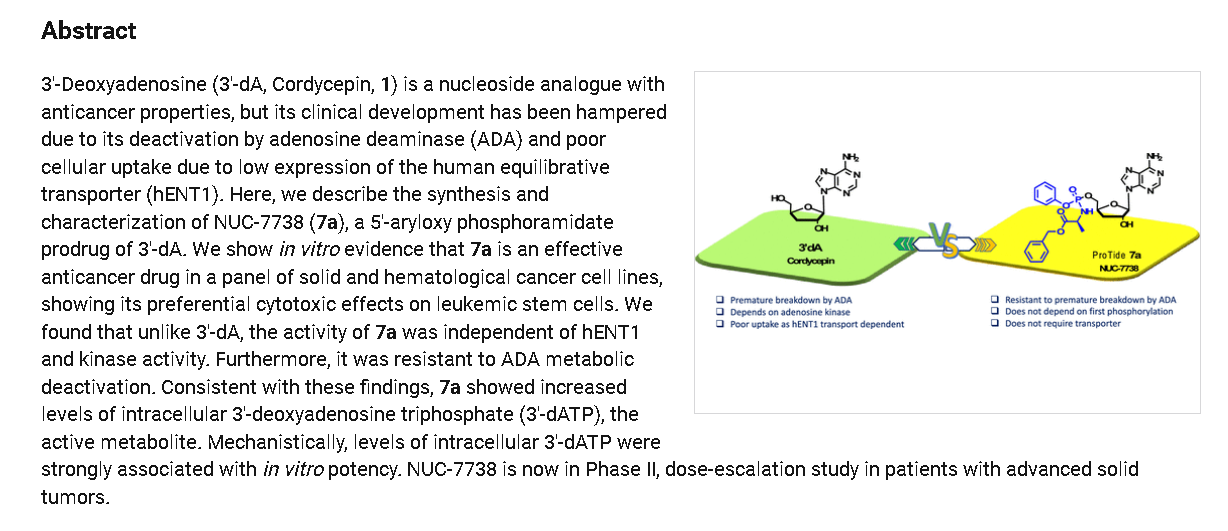
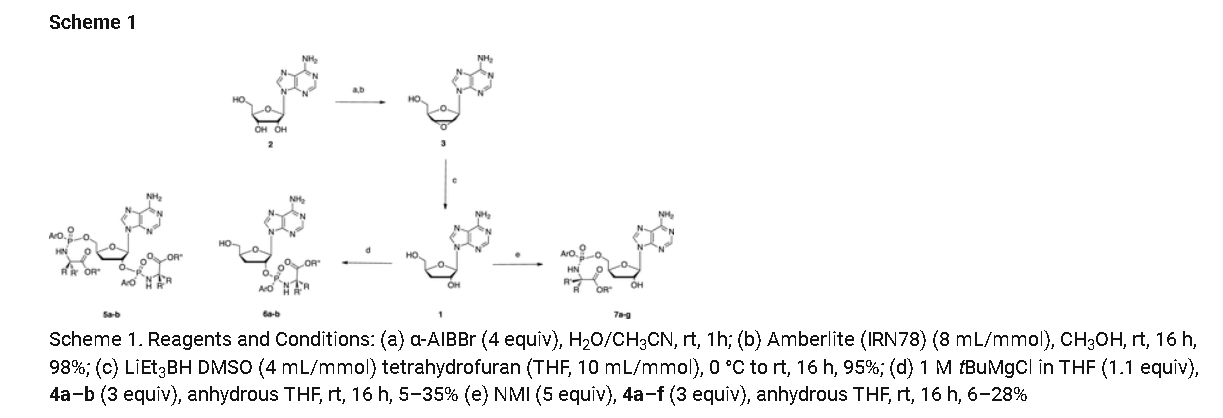
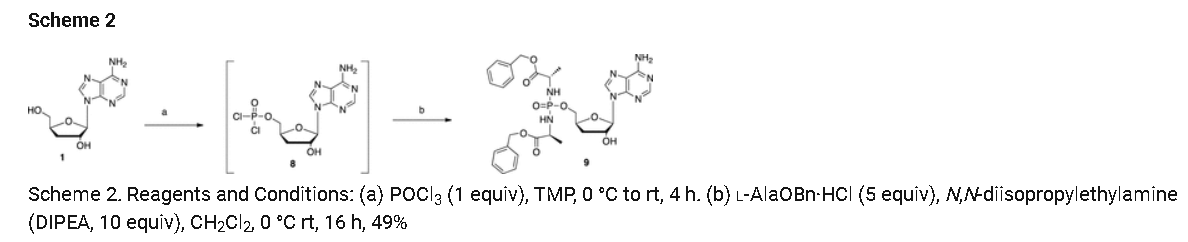
Rp)- and (Sp)-3′-Deoxyadenosine 5′-O-phenyl-(benzoxy-l-alaninyl)-phosphate (7a)
Prepared according to general procedure C using 3′-deoxyadenosine (1) (0.05 g, 0.20 mmol) in anhydrous THF (4 mL), N-methyl imidazole (0.080 μL, 1.0 mmol), and phenyl(benzyloxy-l-alaninyl) phosphorochloridate (4a) (0.021 g, 0.6 mmol) in THF (2.4 mL) Purification by Biotage Isolera One (cartridge SNAP 25 g, 25 mL/min, CH3OH/CH2Cl2 1–8% 10 CV, 8% 5 CV) and preparative TLC (1000 μM, eluent system CH3OH/CH2Cl2 5/95) afforded the title compound 7a as a white solid (0.032 g, 28%). 31P NMR (202 MHz, CD3OD) δP 3.91, 3.73. 1H NMR (500 MHz, CDCl3) δH 8.26 (s, 0.5H, H-8), 8.24 (s, 0.5H, H-8), 8.22 (s, 0.5H, H-2), 8.21 (s, 0.5H, H-2), 7.34–7.25 (m, 7H, Ar), 7.21–7.13 (m, 3H, Ar), 6.01 (d, J = 1.5 Hz, 0.5H, H-1′), 6.00 (d, J = 1.5 Hz, 0.5H, H-1′), 5.15–5.04 (m, 2H, CH2Ph), 4.73–4.63 (m, 2H, H-2′, H-4′), 4.43–4.35 (m, 1H, H-5′), 4.27–4.20 (m, 1H, H-5′), 4.03–3.91 (m, 1H, CHCH3), 2.35–2.28 (m, 1H, H-3′), 2.09–2.02 (m, 1H, H-3′), 1.32 (d, J = 7.4 Hz, 1.5 H, CHCH3), 1.28 (d, J = 7.4 Hz, 1.5 H, CHCH3). 13C NMR (125 MHz, CD3OD) δC 174.84 (d, 3JC-P = 4.5 Hz, C=O), 174.63 (d, 3JC-P = 4.5 Hz, C═O), 157.32 (C-6), 157.31 (C-6), 153.86 (C-2), 153.84 (C-2), 152.13 (C-4), 152.07 (C-4), 150.20 (C-Ar), 150.18 (C-Ar), 140.47 (C-8), 137.26 (C-Ar), 137.19 (C-Ar), 130.76 (CH-Ar), 130.74 (CH-Ar), 129.57 (CH-Ar), 129.32 (CH-Ar), 129.31 (CH-Ar), 129.29 (CH-Ar), 129.26 (CH-Ar), 126.16 (CH-Ar), 126.14 (CH-Ar), 121.46 (d, 3JC-P = 4.7 Hz, CH-Ar), 121.38 (d, 3JC-P = 4.7 Hz, CH-Ar) 120.54 (C-5), 120.53 (C-5), 93.24 (C-1′), 93.18 (C-1′), 80.43 (d, 3JC-P = 3.6 Hz, C-4′), 80.36 (d, 3JC-P = 3.6 Hz, C-4′), 76.62 (C-2′), 68.62 (d, 2JC-P = 5.3 Hz, C-5′), 68.30 (d, 2JC-P = 5.3 Hz, C-5′), 67.95 (CH2Ph), 67.92 (CH2Ph), 51.74 (CHCH3), 51.60 (CHCH3), 34.91 (C-3′), 34.70 (C-3′), 20.45 (d, 3JC-P = 7.0 Hz, CHCH3), 20.28 (d, 3JC-P = 7.0 Hz, CHCH3). Reversed-phase HPLC eluting with H2O/CH3CN from 100/10 to 0/100 in 30 min, F = 1 mL/min, λ = 254 nm, tR 13.56 and 13.75 min. C26H29N6O7P required m/z 568.2 [M]. MS (ES+) found m/z 569.2 [M + H]+, 591.2 [M + Na]+, 1159.4 [2M+Na]+.
The two diastereoisomers 7a-Rp and 7a-Sp were separated via Biotage Isolera One (cartridge SNAP-Ultra C18 12 g, F: 12 mL/min, isocratic eluent system: H2O/CH3OH 45/55 in 30 min, 150 mg sample) to obtain:
7a-Rp as Fast Eluting Isomer (76 mg)
31P NMR (202 MHz, CD3OD) δP 3.91. 1H NMR (500 MHz, CDCl3) δH 8.26 (s, 1H, H-8), 8.22 (s, 1H, H-2), 7.37–7.25 (m, 7H, Ar), 7.22–7.12 (m, 3H, Ar), 6.01 (d, J = 1.5 Hz, 1H, H-1′), 5.12 (AB q, JAB = 12.0 Hz, 2H, CH2Ph), 4.74–4.70 (m, 1H, H-2′), 4.69–4.62 (m, 1H, H-4′), 4.44–4.38 (m, 1H, H-5′), 4.28–4.21 (m, 1H, H-5′), 3.99–3.90 (m, 1H, CHCH3), 2.35–2.27 (m, 1H, H-3′), 2.09–2.02 (m, 1H, H-3′), 1.29 (d, J = 7.0 Hz, 3H, CHCH3). HPLC reversed-phase HPLC eluting with H2O/CH3CN from 90/10 to 0/100 in 30 min, F = 1 mL/min, λ = 254 nm, showed one peak with tR 13.56 min.
7a-Sp as Slow-Eluting Isomer (61 mg)
31P NMR (202 MHz, CD3OD) δP 3.73. 1H NMR (500 MHz, CDCl3) δH 8.24 (s, 1H, H-8), 8.22 (s, 1H, H-2), 7.36–7.26 (m, 7H, Ar), 7.22–7.13 (m, 3H, Ar), 6.01 (d, J = 1.5 Hz, 1H, H-1′), 5.08 (AB q, JAB = 12.0 Hz, 2H, CH2Ph), 4.70–4.67 (m, 1H, H-2′), 4.66–4.60 (m, 1H, H-4′), 4.41–4.35 (m, 1H, H-5′), 4.26–4.19 (m, 1H, H-5′), 4.02–3.94 (m, 1H, CHCH3), 2.36–2.27 (m, 1H, H-3′), 2.08–2.01 (m, 1H, H-3′), 1.34–1.30 (m, 3H, CHCH3). HPLC reversed-phase HPLC eluting with H2O/CH3CN from 90/10 to 0/100 in 30 min, F = 1 mL/min, λ = 254 nm, tR 13.75 min.
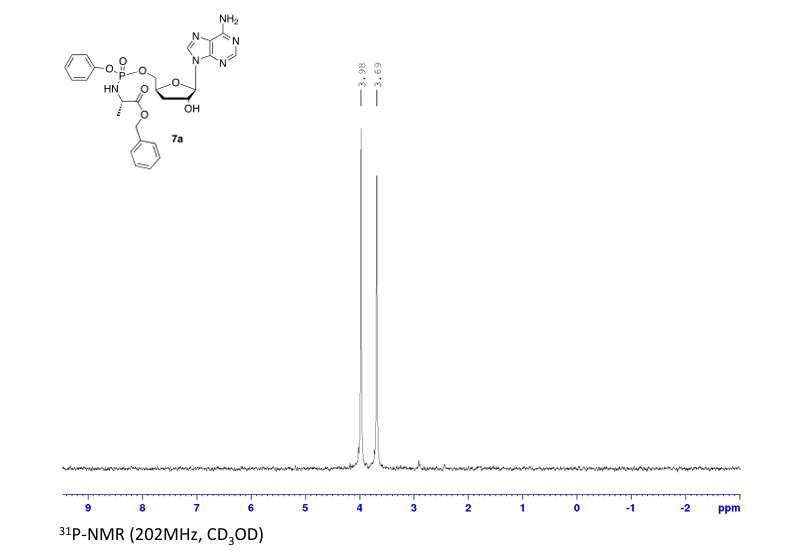
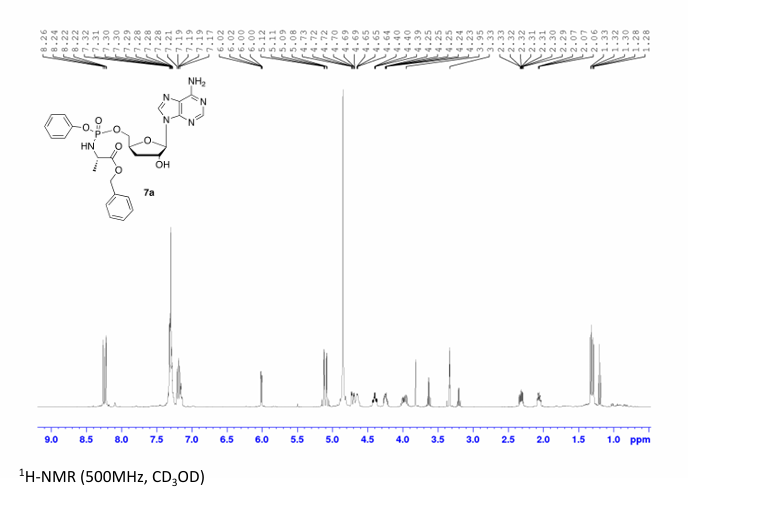
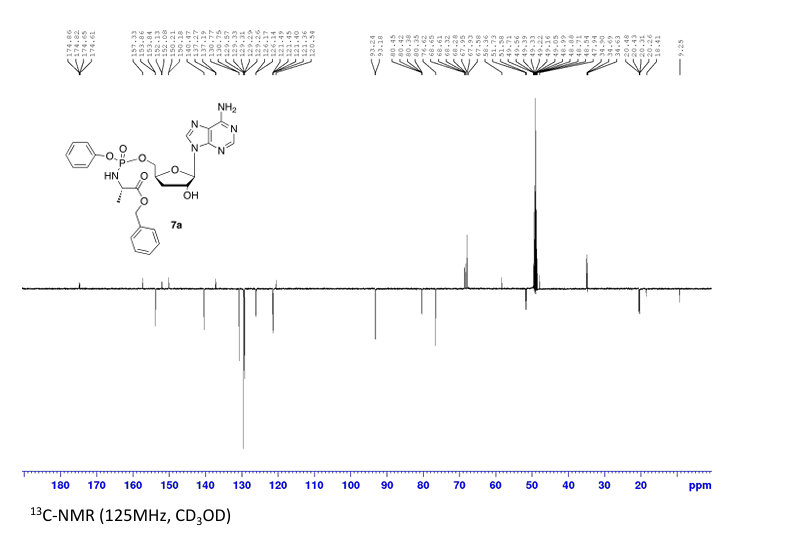
AS ON JUNE2025 4.45 LAKHS VIEWS ON BLOG WORLDREACH AVAILABLEFOR YOUR ADVERTISEMENT
join me on Linkedin
Anthony Melvin Crasto Ph.D – India | LinkedIn
join me on Researchgate
RESEARCHGATE
join me on Facebook
Anthony Melvin Crasto Dr. | Facebook
join me on twitter
Anthony Melvin Crasto Dr. | twitter
+919321316780 call whatsaapp
EMAIL. amcrasto@gmail.com
……
……
| Clinical data | |
|---|---|
| Other names | NUC-7738 |
| Identifiers | |
| IUPAC name | |
| CAS Number | 2348493-39-8 |
| PubChem CID | 166177279 |
| DrugBank | DB19148 |
| UNII | Y7BFN2M72F |
| ChEMBL | ChEMBL5277528 |
| Chemical and physical data | |
| Formula | C26H29N6O7P |
| Molar mass | 568.527 g·mol−1 |
| 3D model (JSmol) | Interactive image |
| SMILES | |
| InChI | |
References
- “Fosdesdenosine sipalabenamide”. PatSnap.
- “Fosdesdenosine Sipalabenamide”. PubChem. U.S. National Library of Medicine.
- Serpi M, Ferrari V, McGuigan C, Ghazaly E, Pepper C (December 2022). “Synthesis and Characterization of NUC-7738, an Aryloxy Phosphoramidate of 3′-Deoxyadenosine, as a Potential Anticancer Agent”. Journal of Medicinal Chemistry. 65 (23): 15789–15804. doi:10.1021/acs.jmedchem.2c01348. PMC 9743095. PMID 36417756.
….///////Fosdesdenosine sipalabenamide, antineoplastic, NUC 7738, Y7BFN2M72F
Flezurafenib

Flezurafenib
CAS 2760321-00-2
MF C26H21FN4O3 MW456.5 g/mol, P26TTM6U27
5-({(3S)-3-[4-(4-fluorophenyl)-1H-imidazol-2-yl]-3,4-dihydro-2H-1-benzopyran-6-yl}oxy)-3,4-dihydro-1,8-naphthyridin-2(1H)-one
5-[[(3S)-3-[5-(4-fluorophenyl)-1H-imidazol-2-yl]-3,4-dihydro-2H-chromen-6-yl]oxy]-3,4-dihydro-1H-1,8-naphthyridin-2-one
rapidly accelerated fibrosarcoma (Raf) kinase inhibitor,
antineoplastic
Flezurafenib is an investigational new drug designed as a rapidly accelerated fibrosarcoma (RAF) kinase inhibitor which is being evaluated for the treatment of cancer. Developed by Jazz Pharmaceuticals, this novel therapeutic agent is currently being explored for its efficacy against solid tumors and hematological malignancies harboring oncogenic mutations that activate the RAS-RAF-MAPK signaling pathway.[1][2] As of January 2025, flezurafenib has reached Phase 1 clinical trials, where it is being evaluated for the treatment of advanced cancers and advanced malignant solid neoplasms.[1]
PAT
https://patentscope.wipo.int/search/en/detail.jsf?docId=WO2022023450&_cid=P11-MGN3DV-58095-1
[0402] Example 3. Chiral Synthesis of Compounds A-l and A-2
[0403] A. Synthesis of P2
[0404] Step 1: To a solution of 2,5-dihydroxybenzaldehyde (200 g, 1448 mmol) and pyridinium p-toluenesulfonate (18.2 g, 72.4 mmol) in DCM (3.75 L) was added 3,4-dihydro-2H-pyran (165 mL, 1810 mmol) dropwise over 10 minutes and the reaction temperature warmed to 30 °C. The reaction was stirred for 2 hours and checked by UPLC-MS which indicated the reaction was 92% complete (~5% starting material and ~3% later running unknown). The reaction was stopped. The reaction was washed with water (1.5 L) and the DCM solution was passed through a 750g silica pad and followed through by DCM (2.5 L). The DCM solution was reduced in-vacuo and the crude product was then slowly diluted with Pet. Ether to ~1L total volume, stirred and cooled to -10° C to afford a thick yellow slurry. The product was filtered and washed with Pet. Ether (2 x 150 mL) and pulled dry for 3 hours to afford 2-hydroxy-5-tetrahydropyran-2-yloxy-benzaldehyde (265g, 1192 mmol, 82% yield) as a bright yellow solid. ¾ NMR (400 MHz, DMSO-d6) d/ppm: 10.35 (s, 1H), 10.23 (s, 1H), 7.32 – 7.19 (m, 2H), 6.94 (d, J = 8.9 Hz, 1H), 5.36 (t, J = 3.3 Hz, 1H), 3.77 (ddd, J = 11.2, 8.8, 3.6 Hz, 1H), 3.59 – 3.49 (m, 1H), 1.94 – 1.45 (m, 6H). UPLC-MS (ES+, Short acidic): 1.64 min, m/z 223.0 [M+H]+ (100%).
[0405] Step 2: 2-hydroxy-5-tetrahydropyran-2-yloxy-benzaldehyde (107 g, 481 mmol) was dissolved in diglyme (750 mL) and K2CO3 (133 g, 963 mmol) was added on one portion with stirring to afford a bright yellow suspension. The reaction was then heated to 140°C and tert-butyl acrylate (155 mL, 1059 mmol) in DMF (75 mL) was added over 10 minutes starting at ~110°C and up to 130°C. Maintained this temperature for a further 1 hour. UPLC-MS indicated that the
reaction had progressed 75%. After a further hour this showed clean conversion to 85% product and little or no side-products. After another 3 hours UPLC-MS showed 88% product (previous reactions had showed that further heating did not afford more conversion). The dark brown reaction was cooled to room temperature overnight and filtered to remove inorganics. The reaction was suspended in EtOAc (2.5 L) and water (2.5 L) and the phases separated. The aqueous was re-extracted with EtOAc (2.5 L) and the combined organics were washed with brine (2 x 1.5 L) and the organics were reduced in-vacuo. The crude product was then purified on silica (2Kg) loading in a minimum volume of DCM. A gradient of EtOAc in Pet. Ether (10 – 25%) was run and clean product fractions combined and reduced in-vacuo to afford tert-butyl 6-tetrahydropyran-2-yloxy-2H-chromene-3-carboxylate (93.5 g, 281 mmol, 58% yield) as a yellow solid. ¾ NMR (400 MHz, DMSO-d6) d/ppm: 7.37 (q, J = 1.2 Hz, 1H), 7.05 (d, J = 2.9 Hz, 1H), 6.94 (dd, J = 8.8, 2.9 Hz, 1H), 6.79 (dd, J = 8.7, 0.7 Hz, 1H), 5.35 (t, J = 3.3 Hz, 1H), 4.82 (d, J = 1.4 Hz, 2H), 3.77 (ddt, J = 13.3, 8.3, 4.2 Hz, 1H), 3.59 – 3.48 (m, 1H), 1.93 – 1.49 (m, 6H), 1.49 (s, 9H). UPLC-MS (ES+, Short acidic): 2.18 min, m/z ([M+H]+) not detected (100%).
[0406] Step 3: tert-butyl 6-tetrahydropyran-2-yloxy-2H-chromene-3-carboxylate (215 g, 647 mmol) was suspended in MeOH (1.6 L) at room temperature (did not dissolve immediately) and pyridinium p-toluenesulfonate (16.3 g, 64.7 mmol) added. The reaction was warmed to 40°C with a hot water bath and checked by UPLC-MS for progress after 1 hour which indicated the reaction was complete and was a clear orange solution. The reaction was reduced in-vacuo and the crude product dissolved in DCM (2 L) and washed with water (1 L). The organic layer was dried (MgSC>4), filtered and reduced in-vacuo to afford the crude product as a yellow solid. This was suspended in Pet. Ether and stirred in an ice bath before filtering, to afford a bright yellow solid. This was dried under high vac at 50°C for 2 hours to afford tert-butyl 6-hydroxy-2H-chromene-3-carboxylate (144.4 g, 582 mmol, 90% yield). ¾ NMR (400 MHz, DMSO-d6) d/ppm: 9.17 (s, 1H), 7.33 (s, 1H), 6.76 – 6.64 (m, 3H), 4.77 (d, J = 1.4 Hz, 2H), 1.49 (s, 9H). UPLC-MS (ES+, Short acidic): 1.71 min, m/z 247.2 [M-H]- (100%).
[0407] Step 4: tert-Butyl 6-hydroxy-2H-chromene-3-carboxylate (84. g, 338.34mmol) was dissolved in DCM (500mL) and trifluoroacetic acid (177.72mL, 2320.9mmol) added at room temperature and the reaction stirred to give a brown solution. Initially gas evolution was noted and the reaction was stirred over several days at room temperature. DCM and TFA were removed in-vacuo and finally azeotroped with 200ml of toluene before slurrying with diethyl ether and filtering to give the crude product 6-hydroxy-2H-chromene-3-carboxylic acid (53.15g, 276.58mmol, 81.745% yield) as a cream solid. ¾ NMR (400 MHz, DMSO-d6) d/ppm: 12.77 (s, 1H), 9.14 (s, 1H), 7.37 (t, J = 1.4 Hz, 1H), 6.72 (dd, J = 2.4, 0.9 Hz, 1H), 6.70 – 6.64 (m, 2H), 4.78 (d, J = 1.4 Hz, 2H).
[0408] Step 5: (R)-Phanephos and [RuCl2(p-cym)]2 (1.2: 1 eq., 6.6 mg, 3.0 mg respectively) were weighed into a 50 mL glass lined Parr vessel followed by the substrate (1.845 g, 9.6 mmol). Methanol (16 mL, 0.6 M substrate concentration) was added to the vessel followed by triethylamine (135 μL, 0.96 mmol, 0.1 eq.). A PTFE stirrer bar was added and the thermocouple was covered with PTFE tape. The vessel was sealed and purged with nitrogen 5 times (at ~2 bar) and 5 times with stirring (~500 rpm). The vessel was then purged with hydrogen 5 times (at -10 bar) and 5 times with stirring (~500 rpm). The vessel was then pressurised to 5 bar hydrogen pressure and heated to 40 °C (with 1500 rpm stirring speed). The pressure was kept constant but with venting and refilling to 5 bar after sampling. After 21.5 hours, the vessel was allowed to cool. After 22.5 hours, the vessel was vented and purged with nitrogen. Each -0.1 mL sample was diluted to -1 mL with MeOH for SFC analysis. Work-up procedure: MeOH removed by concentrating under vacuum, followed by addition of EtOAc (10 mL) and 1 M HC1 (10 mL). The layers were mixed before separating. The EtOAc layer was washed with a further portion of 1 M HC1 (4 mL) before removing the aqueous layer to leave the EtOAc organic phase. The aqueous layer was then washed with a further portion of EtOAc (4 mL) and the organic layers were combined. EtOAc was then removed under vacuum to leave behind the product as a greyish solid (See Table 29). P2 is the first eluting product with a retention time of 5.8 min and PI is the second eluting product with a retention time of 6.1 min using the SFC method as described in Example 1.
[0409] B. Synthesis of 5-fluoro-3,4-dihydro-l,8-naphthyridin-2(lH)-one
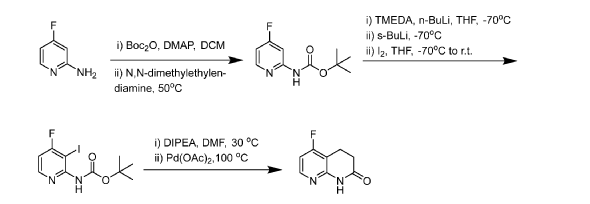
0410] Step 1: 2-Amino-4-fluoropyridine (400 g, 3568 mmol) was charged into a 10 L fixed reactor vessel and then taken up in DCM (4 L) as a slurry under nitrogen atmosphere. To this was added DMAP (43.6 g, 357 mmol) and cooled to 10°C. Di-tert-butyldicarbonate (934 g, 4282 mmol) was added, as a solution in DCM (1 L), over the space of 1.5 hours. The reaction was stirred at room temperature for 2 hours after which time the complete consumption of the starting material was evident by NMR. To the reaction was added N,N-dimethylethylenediamine (390 mL, 3568 mmol) and the reaction warmed to 40°C overnight (converting any di-BOC material back to the mono-BOC desired product). Allowed to cool to room temperature and then diluted with further DCM (2 L) and washed with water (2 L). Extracted with further DCM (2 L), washed with water
(1 L), brine (1.2 L) and dried (MgSO4) before filtering. The solvents were removed in-vacuo and the resultant product was slurried in DCM/Pet. Ether (1:1) (500 mL). Filtered, washed with further Pet. Ether and pulled dry to afford tert- butyl N-(4-fluoro-2-pyridyl)carbamate (505 g, 2380 mmol, 67% yield) as a cream solid product. A second crop of material was isolated from the mother liquors after passing through a short pad of silica followed by trituration with DCM/Pet. Ether (1:1) (-200 mL) to afford tert-butyl N-(4-fluoro-2-pyridyl)carbamate (46.7 g, 220 mmol, 6% yield). ¾ NMR (400 MHz, DMSO-d6) d/ppm: 10.13 (d, J = 1.7 Hz, 1H), 8.26 (dd, J = 9.4, 5.7 Hz, 1H), 7.60 (dd, J = 12.3, 2.4 Hz, 1H), 6.94 (ddd, J = 8.2, 5.7, 2.4 Hz, 1H), 1.47 (s, 9H). UPLC-MS (ES+, Short acidic): 1.64 min, m/z 213.1 [M+H]+ (98%).
[0411] Step 2: tert-butyl-N-(4-fluoro-2-pyridyl)carbamate (126 g, 594 mmol) and TMEDA (223 mL, 1484 mmol) were taken up in dry THF (1.7 L) and then cooled to -78°C under nitrogen atmosphere. To this solution was added n-butyllithium solution (2.5M solution in hexanes) (285 mL, 713 mmol) and then allowed to stir for a further 10 minutes. sec-Butyllithium solution (1.2M in cyclohexane) (509 mL, 713 mmol) was added keeping the reaction temperature below -70°C whilst stirred for 1 hour. After this time, Iodine (226 g, 891 mmol) in THF (300 mL) was added slowly and dropwise over 30 minutes to keep the temp below -65°C. Stirred at -70°C for another 10 minutes and then quenched by the addition of sat. aq. NH4CI solution (400 mL) and then a solution of sodium thiosulphate (134 g, 848 mmol) dissolved in water (600 mL). This addition raised the temperature to — 25°C. The reaction was warmed to room temperature then transferred to the 5L separator and extracted with EtOAc (2 x 1.5 L) and then washed with brine (500 mL), dried (MgSCL) and then evaporated in vacuo to afford crude material (~200g). This was taken up in hot DCM (500 mL) (slurry added to the silica pad) and then passed through a 2Kg silica pad. Washed through with DCM (10 x 1 L fractions) and then the product was eluted from the column with EtOAc in Pet. Ether (10% to 100%), (1 L at each 10% increase, with 1 L fractions). This gave 2 mixed fractions and clean product containing fractions, which were combined and evaporated in vacuo to afford tert-butyl N-(4-fluoro-3-iodo-2-pyridyl)carbamate (113.4 g, 335.4 mmol, 57% yield) as a white solid. Clean by UPLC-MS and NMR. The mixed fractions were combined with previous crude material to afford 190g in total of a cream solid that was composed of -50% of the desired product. This was re-columned as above to afford a combined second crop from all 4 batches as a cream solid tert-butyl N-(4-fluoro-3-iodo-2-pyridyl) carbamate (107.5 g, 318 mmol, 54% yield). ¾ NMR (400 MHz, DMSO-d6) d/ppm: 9.47 (s, 1H), 8.33 (dd, J = 8.7, 5.5 Hz, 1H), 7.19 (dd, J = 7.3, 5.5 Hz, 1H), 1.46 (s, 9H). UPLC-MS (ES+, Short acidic): 1.60 mm, m/z 339.1 [M+H]+ (100%).
[0412] Step 3: tert-butyl N-(4-fluoro-3-iodo-2-pyridyl)carbamate (300 g, 887 mmol), 3,3-dimethoxyprop- 1 -ene (137 mL, 1153 mmol) and DIPEA (325 mL, 1863 mmol) were suspended in DMF (2 L) and water (440 mL) to give a yellow slurry. This was degassed for 20 minutes at 30°C. To this mixture was then added Palladium (II) acetate (19.92 g, 89 mmol) in one portion and degassed again for a further 15mins. The reaction was slowly and carefully heated to 100°C. Gas evolution at around 85°C (large volumes of off gassing, presumably due to the loss of Boc group as CO2 and isobutylene). The reaction became darker once off gassing finished and full solubility achieved. The reaction was then heated at 100°C for 3 hours and checked by UPLC-MS (70% desired product, 18% un-cyclised intermediate and 7% des-iodo BOC). The reaction was heated for a further 2 hours and this showed 81% desired product, 12% un-cyclised intermediate and 8% des-iodo BOC. After 7 hours the reaction showed 89% desired product, 4% un-cyclised
intermediate and 7% des-iodo BOC. The reaction was heated overnight. The reaction solution was cooled and filtered through celite and evaporated in-vacuo to a thick dark orange slurry which was then suspended in water (1 L) and acidified to pH~l-2 with aq. HC1 (4N) solution. This was then basified to pH~9 with sat. aq. Na2CO3 solution. Extracted with DCM (2 x 2L) and washed with brine and dried (MgS04). EtOAc (2 L) was added to the solution and then the organics were passed through a 500g silica plug. This was then followed by DCM/EtOAc (1 : 1) (2 L) and finally EtOAc (2 L) (the final wash through contained only baseline). The product containing fractions were combined and reduced in-vacuo to give an orange slurry and then suspended in hot diethyl ether (300 mL), cooled back to ~10°C in an ice bath with stirring before being filtered and washed with 150 mL of ice cold diethyl ether. Pulled dry to afford 5-fluoro-3,4-dihydro-lH-l,8-naphthyridin- 2-one (58.4 g, 351.5 mmol, 39.6 % yield) as a cream fluffy solid. ¾ NMR (400 MHz, DMSO-d6) d/ppm: 10.69 (s, 1H), 8.29 – 7.90 (m, 1H), 6.92 (dd, J = 8.8, 5.7 Hz, 1H), 2.88 (dd, J= 8.3, 7.1 Hz, 2H), 2.57 – 2.47 (m, 2H). UPLC-MS (ES+, Short acidic): 1.04 mm, m/z 167.0 [M+H]+ (100%).
[0413] C. Synthesis of Compounds A-l and A-2
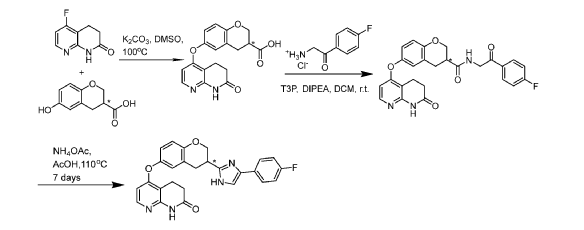
[0414] Step 1: Potassium carbonate (832mg, 6.02mmol) was added to a stirred solution of 5- fluoro-3,4-dihydro-lH-l,8-naphthyridin-2-one (250mg, 1.5mmol), P2 (see step A, 292mg, 1.5mmol; 85% ee) and DMSO (2mL) at room temperature. The reaction was degassed and flushed with nitrogen 3 times before being stirred under a nitrogen atmosphere for 18 hours at 100°C. The reaction mixture was cooled to room temperature and diluted with water (20mL) and the resulting mixture extracted with EtOAc (20mL). A solution of citric acid (1156.3mg, 6.02mmol) in water (lOmL) was then added to the aqueous layer resulting in a solid precipitate which was filtered and dried in vacuo to give (S)- or (R)-6-[(7-oxo-6, 8-dihydro- 5H-1 ,8-naphthyridin-4-yl)oxy]chromane-3 -carboxylic acid (345mg, 1.01 mmol, 67% yield) as a white solid. UPLC-MS (ES+, Short acidic): 1.29 mm, m/z 341.1 [M+H]+. ¾ NMR (400 MHz, DMSO-d6) d/ppm: 12.71 (lH, br s), 10.47 (1H, s), 7.95 (1H, d, J = 6.0Hz), 6.97 (1H, d, J = 2.4Hz), 6.89 (1H, dd, J = 8.4Hz, 2.4Hz), 6.83 (1H, d, J = 8.4Hz), 6.24 (1H, d, J = 6.0Hz), 4.33 (1H, dd, J = 11.2Hz, 3.2Hz), 4.15 (1H, dd, J = 11.2Hz, 7.2Hz), 3.05-2.89 (5H, m), 2.53 (2H, t, J = 7.6Hz).
[0415] Step 2: Propylphosphonic anhydride (0.91mL, 1.52mmol) was added to a stirred solution of (S)-6-[(7-oxo-6,8-dihydro-5H-l,8-naphthyridin-4-yl)oxy]chromane-3-carboxylic acid (345mg, 1.01 mmol), 2-amino- l-(4-fluorophenyl)ethanone hydrochloride (288mg, 1.52mmol), N,N-diisopropylethylamine (0.88mL, 5.07mmol) andDCM (lOmL) at room temperature. After stirring for 2 hours the reaction was complete by LCMS. Water (50mL) and DCM (50mL) were added and the organic layer separated and washed with sat. aq. Na2CO3 (50mL). The organic layer was dried over sodium sulfate and solvent removed in vacuo. The residue was purified by column chromatography using an eluent of 0-5% MeOH in DCM to give (S)- or (R)-N-[2-(4-fluorophenyl)-2-oxo-ethyl]-6-[(7-oxo-6,8-dihydro-5H-l,8-naphthyridin-4-yl)oxy]chromane-3-carboxamide (300mg, 0.63mmol, 62% yield) as a yellow solid. UPLC-MS (ES+, Short acidic): 1.52 mm, m/z 476.4 [M+H]+. ¾ NMR (400 MHz, DMSO-d6) d/ppm: 10.47 (1H, s), 8.60-8.54 (1H, m), 8.08 (1H, dd, J = 8.8Hz, 5.6Hz), 7.95 (1H, d, J = 5.6Hz), 7.41-7.37 (2H, m), 7.01-6.97 (1H, m), 6.90 (1H, dd, J = 8.8Hz, 3.2Hz), 6.86 (1H, d, J = 8.8Hz), 6.25 (1H, d, J = 5.6Hz), 4.65 (2H, d, J = 6.0Hz), 4.42-4.35 (1H, m), 3.96 (1H, t, J = 9.6Hz), 3.03-2.87 (5H, m), 2.55-2.52 (2H, m), 1 exchangeable proton not seen.
[0416] Step 3: (S)- or (R)-N-[2-(4-fluorophenyl)-2-oxo-ethyl]-6-[(7-oxo-6, 8-dihydro- 5H-1, 8-naphthyridin-4-yl)oxy]chromane-3 -carboxamide (300mg, 0.63mmol), ammonium acetate
(1216mg, 15.77mmol) and acetic acid (5mL) were combined in a sealable vial, the vial sealed and the reaction stirred and heated to 130°C for 18 hours after which time the reaction was complete by LCMS. The reaction was cooled to room temperature and AcOH removed in vacuo. DCM (50mL) was added to the residue and sat. aq. Na2CO3 (50mL) added. The organic layer was separated and washed with brine, dried over sodium sulfate and solvent removed in vacuo. The residue was purified by column chromatography using an eluent of 0-10% MeOH in DCM to give (R)- or (S)-5 – [3 – [4-(4-fluorophenyl)- 1 H-imidazol-2-y 1] chroman-6-yl] oxy-3 ,4-dihydro- 1 H- 1 , 8-naphthyridin-2-one (141mg, 0.31mmol, 49% yield) as a yellow solid.
[0417] Chiral LCMS of the product, together with chiral LCMS’s of Compounds A-l and A-2 showed that this product is predominantly Compounds A-l (Fig. 7), with a similar ee to that of the starting acid (85% ee), however accurate analysis cannot be done due to overlap of the peaks. UPLC-MS (ES+, Short acidic): 1.36 mm, m/z 457.2 [M+H]+. Ή NMR (400 MHz, DMSO-d6) d/ppm: 12.31 (0.2H, s), 12.10 (0.8H, s), 10.47 (1H, s), 7.96 (1H, d, J = 6.0Hz), 7.80-7.75 (1.8H, m), 7.69-7.65 (0.2H, m), 7.59-7.78 (0.8H, m), 7.29-7.23 (0.4H, m), 7.19-7.13 (1.8H, m), 7.03-7.00 (1H, m), 6.92 (1H, dd, J = 8.8Hz, 2.8Hz), 6.89 (1H, d, J = 8.8Hz), 6.27 (1H, d, J = 6.0Hz), 4.55-4.48 (1H, m), 4.16-4.09 (1H, m), 3.44-3.36 (1H, m), 3.30-3.21 (1H, m), 3.16-3.09 (1H, m), 2.94 (2H, t, J = 7.2Hz), 2.54 (2H, t, J = 7.2Hz).
[0439] A. Synthesis of P2
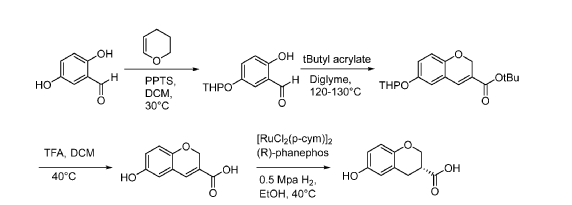
[0440] Step 1: 2,5-Dihydroxybenzaldehyde (13.6 kg, 98.18 mol) was dried using 2 x azeotropic concentrations with 2 x 125-130 kg of THF at up to 35 °C, concentrating under vacuum to 27-41 kg each time. The THF was then removed using 4 x azeotropic concentrations with 4 x 179-187 kg of DCM at up to 35 °C, concentrating under vacuum to 27-41 kg each time. The concentrate was diluted with DCM (284 kg) and pyridine p-toluenesulfonate (PPTS; 1.25 kg, 4.97 mol) was added. 3,4-dihydro-2H-pyran (10.4 kg, 123.63 mol) was added slowly at between 25-35 °C and the reaction was stirred at 30 °C for 90 minutes. The mixture was added to a solution of Na2CO3 (7.1 kg) in water (138 kg) at -15 °C and allowed to warm to 25 °C and then stirred for 6 h. The mixture was filtered through Celite® (33 kg), washing with DCM (92.5 kg). The filtrate was allowed to stand for 1 h and then the organic phase was separated and concentrated to 27-41 kg.
The DCM was then removed using 3 x azeotropic concentrations with 3 x 10⁵ kg n-heptane at up to 35 °C, concentrating under vacuum to 27-41 kg each time. The concentrate was diluted with n- heptane (210 kg) and the heated to 30-40 °C and stirred for 6 h. The solution was then cooled to – 5 to -15 °C over 4 h, stirred for 9 h and filtered, washing the filter cake with n-heptane (39.5 kg).
The wet cake was dried at 30-40 °C for 24 h in vacuo to give 2-hydroxy-5-(oxan-2- yloxy)benzaldehyde (9.38 kg, 40.6%). Additional product (8.00 kg, 34.3%) was recovered by dissolving solid attached to the walls of the reaction vessel with 42 kg DCM and concentrating the resultant solution in vacuo to give a further 8.00 kg (34.3% yield ) of product to give a total yield of 74.9% (17.38 kg). LCMS (ES-): 15.18 mm, m/z 221.12 [M-H]-.
[0441] Step 2: To a stirring solution of 2-hydroxy-5-(oxan-2-yloxy)benzaldehyde (16.95 kg, 76.27 mol) in diglyme (113.4 kg) was added K2CO3 (21.4 kg, 154.83 mol) and the mixture was heated to between 80-90 °C. Tert-butyl prop-2-enoate (20.0 kg, 156.04 mol) was added, and the mixture was heated to between 120-130 °C and stirred for 18 hr. The mixture was cooled and
filtered, and the filter cake washed with EtOAc (80.0 kg). The filtrate was diluted with EtOAc (238.0 kg) and water (338.0 kg) and stirred for 1 hr at 20-30 °C, then stood for 2 hr. The mixture was filtered through Celite® (40.0 kg), and the filter cake washed with EtOAc (84.0 kg). The filtrate was left to stand for 2 hr and the aqueous layer was extracted with EtOAc (312.0 kg), stirring for 1 hr at 0-30 °C and standing for 2 hr. The organic layers were combined and washed with 2 x 345 kg water, stirring at between 20-30 °C for 1 hr and standing for 2 hr for each wash. The combined organics were then concentrated to 182.4 kg maintaining the temperature below 50 °C under vacuum. This gave the product tert-butyl 6-(oxan-2-yloxy)-2H-chromene-3-carboxylate as a 9.3% solution in diglyme/EtOAc (66.9% yield) and was used in the next stage without further isolation. LCMS (ES-): 20.26 mm, m/z 247.12 [M-THP]-.
[0442] Step 3: Tert-butyl 6-(oxan-2-yloxy)-2H-chromene-3-carboxylate (16.9 kg, 50.84 mol) as a 181.8 kg solution in diglyme/EtOAc was concentrated to 68 kg under vacuum at 50 °C. TFA (110.3 kg, 1002.46 mol) was added and the reaction was warmed to 40 °C under nitrogen flow and then stirred for 8 hrs. The mixture was then diluted with DCM (222.0 kg) and cooled to between -5 and -15 °C, and then stirred for 7 hrs. The solid was filtered and the filter cake washed with DCM (67.0 kg). The wet cake was dried for 24 hr under vacuum at between 30-40 °C to give 6-hydroxy-2H-chromene-3-carboxylic acid (8.75 kg, 78.5% yield). LCMS (ES-): 0.85 min, m/z 191.11 [M-H]-.
[0443] Step 4: To a stirring solution of 6-hydroxy-2H-chromene-3-carboxylic acid (7.19 kg, 37.4 mol) in N2-degassed EtOH (60 kg) was added (R)-Phanephos (131 g, 0.227 mol), [RuCl2(p-cym)]2 (70 g, 0.114 mol), and Et3N (5.6 kg, 55.3 mol). The reaction atmosphere was replaced with 3 x N2 and then 3 x H2, adjusting the H2 pressure to between 0.5-0.6 MPa, and then stirred for 18 hrs at 40 °C. The atmosphere was then replaced with 3 x N2 and then 3 x H2, adjusting the H2 pressure to between 0.5-0.6 MPa again and the mixture was stirred for a further 18 hrs.
[0444] The mixture was concentrated in vacuo to ca. 30 kg at no more than 40 °C. The reaction was diluted with MTBE (53 kg) and cooled to between 15-25 °C. 5% Na2CO3 (80 kg) was added dropwise, and the mixture was stirred for 2 hrs and stood for 2 hrs at between 15-25 °C. The aqueous layer was collected and 5% Na2CO3 (48 kg) was added to the organic layer, then stirred for 2 hrs at 15-25 °C and filtered through Celite® (10.0 kg). The wet cake was washed with water (20 kg) and the combined aqueous filtrate and aqueous layer were diluted with IP Ac (129.0 kg). The pH of the mixture was adjusted to 1-3 with dropwise addition of 6 N HC1 (29 kg) at 15-25 °C and stirred for 2 hrs. The mixture was filtered through Celite® (10 kg), washing the filter cake with IP Ac (34 kg) and the filtrate was left to stand for 2 hrs at 15-25 °C. The aqueous layer was then extracted with IP Ac (34 kg) and the combined organic layers were concentrated to ca. 35 kg under vacuum at no more than 40 °C. Me-cyclohexane (21 kg) was added dropwise at 15-25 °C and concentrated to ca. 35 kg under vacuum at no more than 40 °C. Further Me-cyclohexane (20 kg) was added dropwise at 15-25 °C and stirred for 3 hrs. The mixture was then stirred at 40-50 °C for 4 hrs and cooled to 15-25 °C over 3 hrs and then stirred for a further 2 hrs.
[0445] The mixture was then filtered, washing the filter cake with 16.4 kg of IPAc/Me-cyclohexane (1/4, v/v). The wet cake was dried for 24 hrs at 35-45 °C under vacuum to give (3R)-6-hydroxy-3,4-dihydro-2H-l-benzopyran-3-carboxylic acid (5.2 kg, 68.6% yield, chiral purity 95.5%). Further product was isolated by rinsing solid from the reaction vessel wall with EtOH (42 kg) and concentrating to dryness. The resulting solid was suspended in IP Ac (875mL) and Me-cyclohexane (2625mL) and stirred for 5 h at 40 °C and then cooled to 20 °C over 2 h and stirred for 16 h and filtered. The filter cake was then split into 2 equal batches and each batch suspended in IP Ac (912mL) and Me-cyclohexane (2737mL). The resulting mixtures were stirred at 45 °C for 18 h and then filtered and the filter cake dried at 45 °C to give (3R)-6-hydroxy-3,4-dihydro-2H-l-benzopyran-3 -carboxylic acid (1.27 kg, 17% yield, chiral purity 96.2%). LCMS (ES-): 1.74 min, m/z 193.03 [M-H]-.
[0446] Chiral resolution to improve chiral purity:
[0447] (3R)-6-Hydroxy-3,4-dihydro-2H-l-benzopyran-3-carboxylicacid (P2; 5.94 kg, 30.59 mol) (chiral purity =95.5%) was dissolved in IP Ac (138.2 kg) and stirred for 2 hrs at 20-30 °C. The solution obtained was filtered through Celite® (12 kg), washing through with IP Ac (25 kg). In a separate vessel, (S)-(+)-2-phenylglycinol (4.4 kg, 32.07 mol) was dissolved in IP Ac (56 kg), stirring for 1 hr at 40-50 °C. The filtrate was added to this solution over 4 hrs at 40-50 °C, and stirred for 1 hr. The mixture was then stirred for 1 hr at 15-25 °C, and concentrated to ca. 120 kg under vacuum at no more than 40 °C. The concentrate was stirred for 3 hrs at 15-25 °C and filtered, washing through with IP Ac (12 kg) (chiral purity = 96.2%).
[0448] The wet cake was redissolved in EtOH (29 kg), heated to 40-50 °C and diluted with IP Ac (64 kg). 30 g of dry product was added and stirred for 30 min at 15-25 °C. The mixture was concentrated to ca. 42 kg under vacuum at no more than 40 °C, and rediluted with IP Ac (64 kg). This step was repeated two additional times, then stirred at 40-50 °C for 8 hrs. The mixture was filtered, washing through with IP Ac (13 kg) (chiral purity = 97.7%). This recrystallisation process was repeated two further times, for a total of 3 recrystallisation rounds to give material with 98.9% chiral purity.
[0449] The wet cake (10.7 kg) was then dissolved in IN HC1 (45.4 kg) and stirred for 1 hr at 20-30 °C. The mixture was filtered through Celite® (11.5 kg), washing through with IP Ac (28 kg). The aqueous layer was extracted with IP Ac (28.8 kg) and the combined organic layers were washed with water (30 kg), then concentrated to ca. 24 kg at 40 °C under vacuum. Me-cyclohexane (19 kg) was added at 20 °C and the mixture was concentrated to ca. 24 kg at 40 °C under vacuum. This step was repeated twice more. The concentrate was diluted with Me-cyclohexane (29 kg) and stirred for 1 hr at 15-25 °C. The mixture was filtered, and the wet cake was rinsed with Me-Cyclohexane (59 kg). The wet cake was dried under vacuum at 35-45 °C for 16 hrs to give (3R)-6-hydroxy-3,4-dihydro-2H-l-benzopyran-3-carboxylic acid (3.02 kg, 50.2% yield).
PAT
https://patentscope.wipo.int/search/en/detail.jsf?docId=US350349340&_cid=P11-MGN37Z-55206-1
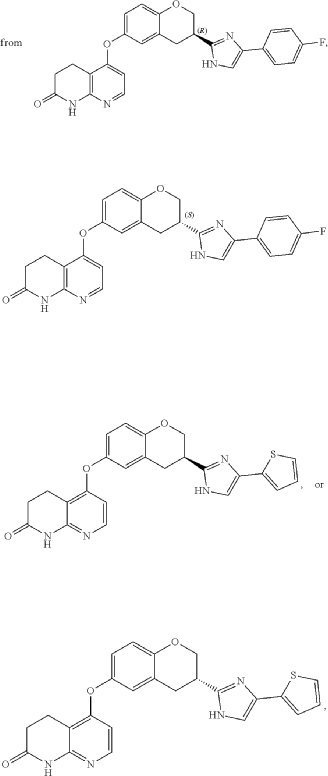
PAT
- Methods of treating solid tumors with mitogen activated protein kinase (mapk) pathway alterationsPublication Number: WO-2024173931-A2Priority Date: 2023-02-17
- Crystalline forms of (s)-5-((3-(4-(4-fluorophenyl)-1h-imidazol-2-yl)chroman-6-yl)oxy)-3,4-dihydro-1,8-naphthyridin-2(1h)-onePublication Number: TW-202421110-APriority Date: 2022-11-29
- Crystalline forms of (s)-5-((3-(4-(4-fluorophenyl)-1h-imidazol-2-yl)chroman-6-yl)oxy)-3,4-dihydro-1,8-naphthyridin-2(1h)-onePublication Number: WO-2024115583-A1Priority Date: 2022-11-29
- Chiral synthesis of fused bicyclic raf inhibitorsPublication Number: US-2022041595-A1Priority Date: 2020-07-28
- Chiral synthesis of fused bicyclic raf inhibitorsPublication Number: WO-2022023450-A1Priority Date: 2020-07-28
- Chiral synthesis of fused bicyclic raf inhibitorsPublication Number: EP-4188923-A1Priority Date: 2020-07-28
- Chiral synthesis of fused bicyclic RAF inhibitorsPublication Number: KR-20230058630-APriority Date: 2020-07-28
- Chiral Synthesis of Fused Bicyclic RAF InhibitorsPublication Number: CN-116348465-APriority Date: 2020-07-28
- Chiral Synthesis of Fused Bicyclic RAF InhibitorsPublication Number: JP-2023535595-APriority Date: 2020-07-28
AS ON JUNE2025 4.45 LAKHS VIEWS ON BLOG WORLDREACH AVAILABLEFOR YOUR ADVERTISEMENT
join me on Linkedin
Anthony Melvin Crasto Ph.D – India | LinkedIn
join me on Researchgate
RESEARCHGATE
join me on Facebook
Anthony Melvin Crasto Dr. | Facebook
join me on twitter
Anthony Melvin Crasto Dr. | twitter
+919321316780 call whatsaapp
EMAIL. amcrasto@gmail.com
……
| Clinical data | |
|---|---|
| Other names | JZP-815 |
| Identifiers | |
| IUPAC name | |
| CAS Number | 2760321-00-2 |
| PubChem CID | 162772363 |
| IUPHAR/BPS | 13233 |
| UNII | P26TTM6U27 |
| KEGG | D13132 |
| Chemical and physical data | |
| Formula | C26H21FN4O3 |
| Molar mass | 456.477 g·mol−1 |
| 3D model (JSmol) | Interactive image |
| SMILES | |
| InChI | |
References
- “JZP-815”. PatSnap.
- Riaud M, Maxwell J, Soria-Bretones I, Dankner M, Li M, Rose AA (February 2024). “The role of CRAF in cancer progression: from molecular mechanisms to precision therapies”. Nature Reviews. Cancer. 24 (2): 105–122. doi:10.1038/s41568-023-00650-x. PMID 38195917.
///////////flezurafenib, JZP-815, JZP 815, P26TTM6U27, ANTINEOPLASTIC, CANCER


 New Drug Approvals


