New Drug Approvals

Home » 2020 » September (Page 2)

Monthly Archives: September 2020

DRUG APPROVALS BY DR ANTHONY MELVIN CRASTO .....FOR BLOG HOME CLICK HERE

Blog Stats

  • 4,809,460 hits

Flag and hits

Flag Counter

Enter your email address to follow this blog and receive notifications of new posts by email.

Join 37.9K other subscribers
Follow New Drug Approvals on WordPress.com

Archives

Categories

Recent Posts

Flag Counter

ORGANIC SPECTROSCOPY

Read all about Organic Spectroscopy on ORGANIC SPECTROSCOPY INTERNATIONAL 

Enter your email address to follow this blog and receive notifications of new posts by email.

Join 37.9K other subscribers
DR ANTHONY MELVIN CRASTO Ph.D

DR ANTHONY MELVIN CRASTO Ph.D

DR ANTHONY MELVIN CRASTO, Born in Mumbai in 1964 and graduated from Mumbai University, Completed his Ph.D from ICT, 1991,Matunga, Mumbai, India, in Organic Chemistry, The thesis topic was Synthesis of Novel Pyrethroid Analogues, Currently he is working with AFRICURE PHARMA, ROW2TECH, NIPER-G, Department of Pharmaceuticals, Ministry of Chemicals and Fertilizers, Govt. of India as ADVISOR, earlier assignment was with GLENMARK LIFE SCIENCES LTD, as CONSUlTANT, Retired from GLENMARK in Jan2022 Research Centre as Principal Scientist, Process Research (bulk actives) at Mahape, Navi Mumbai, India. Total Industry exp 32 plus yrs, Prior to joining Glenmark, he has worked with major multinationals like Hoechst Marion Roussel, now Sanofi, Searle India Ltd, now RPG lifesciences, etc. He has worked with notable scientists like Dr K Nagarajan, Dr Ralph Stapel, Prof S Seshadri, etc, He did custom synthesis for major multinationals in his career like BASF, Novartis, Sanofi, etc., He has worked in Discovery, Natural products, Bulk drugs, Generics, Intermediates, Fine chemicals, Neutraceuticals, GMP, Scaleups, etc, he is now helping millions, has 9 million plus hits on Google on all Organic chemistry websites. His friends call him Open superstar worlddrugtracker. His New Drug Approvals, Green Chemistry International, All about drugs, Eurekamoments, Organic spectroscopy international, etc in organic chemistry are some most read blogs He has hands on experience in initiation and developing novel routes for drug molecules and implementation them on commercial scale over a 32 PLUS year tenure till date Feb 2023, Around 35 plus products in his career. He has good knowledge of IPM, GMP, Regulatory aspects, he has several International patents published worldwide . He has good proficiency in Technology transfer, Spectroscopy, Stereochemistry, Synthesis, Polymorphism etc., He suffered a paralytic stroke/ Acute Transverse mylitis in Dec 2007 and is 90 %Paralysed, He is bound to a wheelchair, this seems to have injected feul in him to help chemists all around the world, he is more active than before and is pushing boundaries, He has 100 million plus hits on Google, 2.5 lakh plus connections on all networking sites, 100 Lakh plus views on dozen plus blogs, 227 countries, 7 continents, He makes himself available to all, contact him on +91 9323115463, email amcrasto@gmail.com, Twitter, @amcrasto , He lives and will die for his family, 90% paralysis cannot kill his soul., Notably he has 38 lakh plus views on New Drug Approvals Blog in 227 countries......https://newdrugapprovals.wordpress.com/ , He appreciates the help he gets from one and all, Friends, Family, Glenmark, Readers, Wellwishers, Doctors, Drug authorities, His Contacts, Physiotherapist, etc He has total of 32 International and Indian awards

Verified Services

View Full Profile →

Archives

Categories

Flag Counter

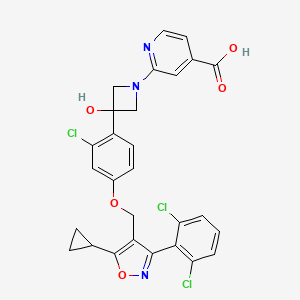
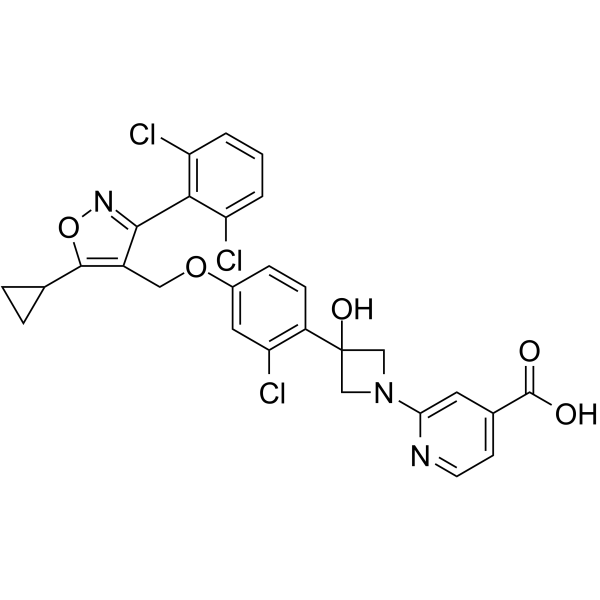
CILOFEXOR


Cilofexor.png

Cilofexor Chemical Structure


CILOFEXOR

C28H22Cl3N3O5 ,

586.8 g/mol

1418274-28-8

GS-9674, Cilofexor (GS(c)\9674)

UNII-YUN2306954

YUN2306954

2-[3-[2-chloro-4-[[5-cyclopropyl-3-(2,6-dichlorophenyl)-1,2-oxazol-4-yl]methoxy]phenyl]-3-hydroxyazetidin-1-yl]pyridine-4-carboxylic acid

Cilofexor is under investigation in clinical trial NCT02943447 (Safety, Tolerability, and Efficacy of Cilofexor in Adults With Primary Biliary Cholangitis Without Cirrhosis).

Cilofexor (GS-9674) is a potent, selective and orally active nonsteroidal FXR agonist with an EC50 of 43 nM. Cilofexor has anti-inflammatory and antifibrotic effects. Cilofexor has the potential for primary sclerosing cholangitis (PSC) and nonalcoholic steatohepatitis (NASH) research.

Gilead , following a drug acquisition from  Phenex , is developing cilofexor tromethamine (formerly GS-9674), the lead from a program of farnesoid X receptor (FXR; bile acid receptor) agonists, for the potential oral treatment of non-alcoholic steatohepatitis (NASH), primary biliary cholangitis/cirrhosis (PBC) and primary sclerosing cholangitis. In March 2019, a phase III trial was initiated for PSC; at that time, the trial was expected to complete in August 2022.

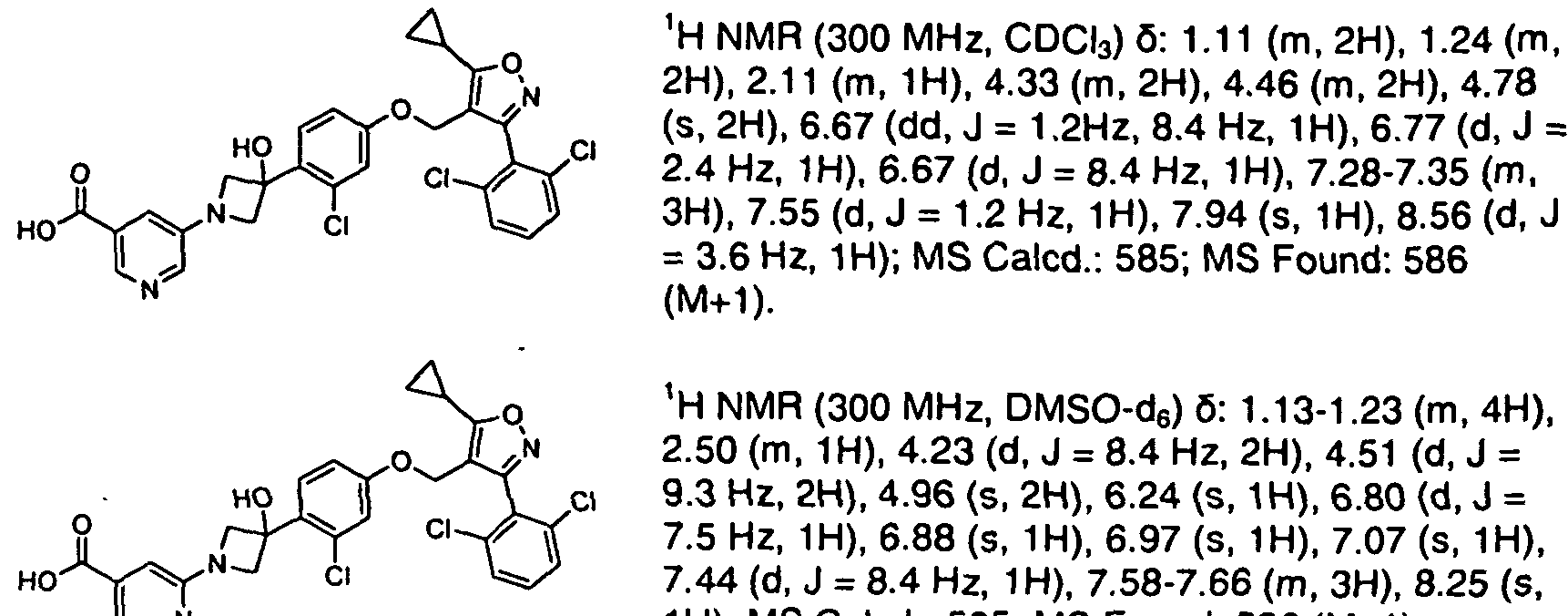
PATENT

Product case WO2013007387 , expiry EU in 2032 and in the US in 2034.

https://patents.google.com/patent/WO2013007387A1/en

Figure imgf000039_0001

PATENT

WO2020150136 claiming 2,6-dichloro-4-fluorophenyl compounds.

PATENT

https://patentscope.wipo.int/search/en/detail.jsf?docId=WO2020172075&tab=PCTDESCRIPTION&_cid=P20-KEP1ZU-65392-1

WO-2020172075

Novel crystalline forms of cilofexor as FXR agonists useful for treating nonalcoholic steatohepatitis.   Gilead , following a drug acquisition from  Phenex , is developing cilofexor tromethamine (formerly GS-9674), the lead from a program of farnesoid X receptor (FXR; bile acid receptor) agonists, for the potential oral treatment of non-alcoholic steatohepatitis (NASH), primary biliary cholangitis/cirrhosis (PBC) and primary sclerosing cholangitis. In March 2019, a phase III trial was initiated for PSC; at that time, the trial was expected to complete in August 2022. Family members of the cilofexor product case WO2013007387 , expire in the EU in 2032 and in the US in 2034.

solid forms of compounds that bind to the NR1H4 receptor (FXR) and act as agonists or modulators of FXR. The disclosure further relates to the use of the solid forms of such compounds for the treatment and/or prophylaxis of diseases and/or conditions through binding of said nuclear receptor by said compounds.


[0004] Compounds that bind to the NR1H4 receptor (FXR) can act as agonists or modulators of FXR. FXR agonists are useful for the treatment and/or prophylaxis of diseases and conditions through binding of the NR1H4 receptor. One such FXR agonist is the compound of Formula I:


I.


[0005] Although numerous FXR agonists are known, what is desired in the art are physically stable forms of the compound of Formula I, or pharmaceutically acceptable salt thereof, with desired properties such as good physical and chemical stability, good aqueous solubility and good bioavailability. For example, pharmaceutical compositions are desired that address

challenges of stability, variable pharmacodynamics responses, drug-drug interactions, pH effect, food effects, and oral bioavailability.


[0006] Accordingly, there is a need for stable forms of the compound of Formula I with suitable chemical and physical stability for the formulation, therapeutic use, manufacturing, and storage of the compound.


[0007] Moreover, it is desirable to develop a solid form of Formula I that may be useful in the synthesis of Formula I. A solid form, such as a crystalline form of a compound of Formula I may be an intermediate to the synthesis of Formula F A solid form may have properties such as bioavailability, stability, purity, and/or manufacturability at certain conditions that may be suitable for medical or pharmaceutical uses.

Description

Cilofexor (GS-9674) is a potent, selective and orally active nonsteroidal FXR agonist with an EC50 of 43 nM. Cilofexor has anti-inflammatory and antifibrotic effects. Cilofexor has the potential for primary sclerosing cholangitis (PSC) and nonalcoholic steatohepatitis (NASH) research[1][2].

IC50 & Target

EC50: 43 nM (FXR)[1]

In Vivo

Cilofexor (GS-9674; 30 mg/kg; oral gavage; once daily; for 10 weeks; male Wistar rats) treatment significantly increases Fgf15 expression in the ileum and decreased Cyp7a1 in the liver in nonalcoholic steatohepatitis (NASH) rats. Liver fibrosis and hepatic collagen expression are significantly reduced. Cilofexor also significantly reduces hepatic stellate cell (HSC) activation and significantly decreases portal pressure, without affecting systemic hemodynamics[3].

Animal Model: Male Wistar rats received a choline-deficient high fat diet (CDHFD)[3]
Dosage: 30 mg/kg
Administration: Oral gavage; once daily; for 10 weeks
Result: Significantly increased Fgf15 expression in the ileum and decreased Cyp7a1 in the liver. Liver fibrosis and hepatic collagen expression were significantly reduced.
Clinical Trial
NCT Number Sponsor Condition Start Date Phase
NCT02943460 Gilead Sciences
Primary Sclerosing Cholangitis
November 29, 2016 Phase 2
NCT02808312 Gilead Sciences
Nonalcoholic Steatohepatitis (NASH)
July 13, 2016 Phase 1
NCT02781584 Gilead Sciences
Nonalcoholic Steatohepatitis (NASH)|Nonalcoholic Fatty Liver Disease (NAFLD)
July 13, 2016 Phase 2
NCT02943447 Gilead Sciences
Primary Biliary Cholangitis
December 1, 2016 Phase 2
NCT03987074 Gilead Sciences|Novo Nordisk A+S
Nonalcoholic Steatohepatitis
July 29, 2019 Phase 2
NCT03890120 Gilead Sciences
Primary Sclerosing Cholangitis
March 27, 2019 Phase 3
NCT02854605 Gilead Sciences
Nonalcoholic Steatohepatitis (NASH)
October 26, 2016 Phase 2
NCT03449446 Gilead Sciences
Nonalcoholic Steatohepatitis
March 21, 2018 Phase 2
NCT02654002 Gilead Sciences
Nonalcoholic Steatohepatitis (NASH)
January 2016 Phase 1
Patent ID Title Submitted Date Granted Date
US2019142814 Novel FXR (NR1H4) binding and activity modulating compounds 2019-01-15
US2019055273 ACYCLIC ANTIVIRALS 2017-03-09
US10220027 FXR (NR1H4) binding and activity modulating compounds 2017-10-13
US10071108 Methods and pharmaceutical compositions for the treatment of hepatitis b virus infection 2018-02-19
US2018000768 INTESTINAL FXR AGONISM ENHANCES GLP-1 SIGNALING TO RESTORE PANCREATIC BETA CELL FUNCTIONS 2017-09-06
Patent ID Title Submitted Date Granted Date
US9820979 NOVEL FXR (NR1H4) BINDING AND ACTIVITY MODULATING COMPOUNDS 2016-12-05
US9539244 NOVEL FXR (NR1H4) BINDING AND ACTIVITY MODULATING COMPOUNDS 2015-08-12 2015-12-03
US9895380 METHODS AND PHARMACEUTICAL COMPOSITIONS FOR THE TREATMENT OF HEPATITIS B VIRUS INFECTION 2014-09-10 2016-08-04
US2017355693 FXR (NR1H4) MODULATING COMPOUNDS 2017-06-12
US2016376279 FXR AGONISTS AND METHODS FOR MAKING AND USING 2016-09-12
Patent ID Title Submitted Date Granted Date
US9139539 NOVEL FXR (NR1H4) BINDING AND ACTIVITY MODULATING COMPOUNDS 2012-07-12 2014-08-07
US2018133203 METHODS OF TREATING LIVER DISEASE 2017-10-27

ClinicalTrials.gov

CTID Title Phase Status Date
NCT03890120 Safety, Tolerability, and Efficacy of Cilofexor in Non-Cirrhotic Adults With Primary Sclerosing Cholangitis Phase 3 Recruiting 2020-08-31
NCT02781584 Safety, Tolerability, and Efficacy of Selonsertib, Firsocostat, and Cilofexor in Adults With Nonalcoholic Steatohepatitis (NASH) Phase 2 Recruiting 2020-08-13
NCT03987074 Safety, Tolerability, and Efficacy of Monotherapy and Combination Regimens in Adults With Nonalcoholic Steatohepatitis (NASH) Phase 2 Completed 2020-07-29
NCT02943460 Safety, Tolerability, and Efficacy of Cilofexor in Adults With Primary Sclerosing Cholangitis Without Cirrhosis Phase 2 Completed 2020-06-09
NCT02943447 Safety, Tolerability, and Efficacy of Cilofexor in Adults With Primary Biliary Cholangitis Without Cirrhosis Phase 2 Completed 2020-02-11

ClinicalTrials.gov

CTID Title Phase Status Date
NCT03449446 Safety and Efficacy of Selonsertib, Firsocostat, Cilofexor, and Combinations in Participants With Bridging Fibrosis or Compensated Cirrhosis Due to Nonalcoholic Steatohepatitis (NASH) Phase 2 Completed 2019-12-24
NCT02854605 Evaluating the Safety, Tolerability, and Efficacy of GS-9674 in Participants With Nonalcoholic Steatohepatitis (NASH) Phase 2 Completed 2019-01-29
NCT02808312 Pharmacokinetics and Pharmacodynamics of GS-9674 in Adults With Normal and Impaired Hepatic Function Phase 1 Completed 2018-10-30
NCT02654002 Study in Healthy Volunteers to Evaluate the Safety, Tolerability, Pharmacokinetics and Pharmacodynamics of GS-9674, and the Effect of Food on GS-9674 Pharmacokinetics and Pharmacodynamics Phase 1 Completed 2016-07-27

EU Clinical Trials Register

EudraCT Title Phase Status Date
2019-000204-14 A Phase 3, Randomized, Double-Blind, Placebo-Controlled Study Evaluating the Safety, Tolerability, and Efficacy of Cilofexor in Non-Cirrhotic Subjects with Primary Sclerosing Cholangitis Phase 3 Restarted, Ongoing 2019-09-11
2016-002496-10 A Phase 2, Randomized, Double-Blind, Placebo-Controlled Study Evaluating the Safety, Tolerability, and Efficacy of GS-9674 in Subjects with Nonalcoholic Steatohepatitis (NASH) Phase 2 Completed 2017-02-21
2016-002443-42 A Phase 2, Randomized, Double-Blind, Placebo Controlled Study Evaluating the Safety, Tolerability, and Efficacy of GS-9674 in Subjects with Primary Biliary Cholangitis Without Cirrhosis Phase 2 Completed 2017-01-09
2016-002442-23 A Phase 2, Randomized, Double-Blind, Placebo Controlled Study Evaluating the Safety, Tolerability, and Efficacy of GS-9674 in Subjects with Primary Sclerosing Cholangitis Without Cirrhosis Phase 2 Completed 2017-01-09

///////////CILOFEXOR, Cilofexor (GS(c)\9674), GS-9674, phase 3


C1CC1C2=C(C(=NO2)C3=C(C=CC=C3Cl)Cl)COC4=CC(=C(C=C4)C5(CN(C5)C6=NC=CC(=C6)C(=O)O)O)Cl

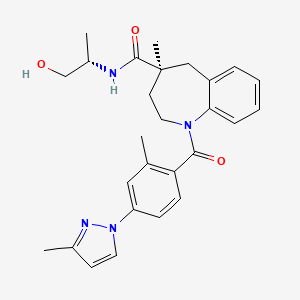
LAZUVAPAGON


img

Unii-CK6VS66Q6X.png

LAZUVAPAGON

KRPN-118

CAS 2379889-71-9
Chemical Formula: C27H32N4O3
Molecular Weight: 460.58

(4S)-N-((2S)-1-Hydroxypropan-2-yl)-methyl-1-(2-methyl-4-(3-methyl-1H-pyrazol-1-yl)benzoyl)-2,3,4,5-tetrahydro-1H-1-benzazepine-4-carboxamide

1H-1-Benzazepine-4-carboxamide, 2,3,4,5-tetrahydro-N-((1S)-2-hydroxy-1-methylethyl)-4-methyl-1-(2-methyl-4-(3-methyl-1H-pyrazol-1-yl)benzoyl)-, (4S)-

(4S)-N-[(2S)-1-hydroxypropan-2-yl]-methyl-1-[2-methyl-4-(3- methyl-1H-pyrazol-1-yl)benzoyl]-2,3,4,5-tetrahydro-1H-1-benzazepine-4-carboxamide

Vasopressin V2 receptor agonist

Kyorin Pharmaceutical under license from Sanwa Kagaku Kenkyusho , is developing SK-1404 ([14C]-SK-1404, presumed to be lazuvapagon), for the iv treatment of nocturia, and as an oral formulation, as KRPN-118

PATENT

WO2020171055

PATENT

WO2014104209

https://patentscope.wipo.int/search/en/detail.jsf?docId=WO2014104209

PATENT

WO-2020171073

https://patentscope.wipo.int/search/en/detail.jsf?docId=WO2020171073&tab=FULLTEXT&_cid=P20-KEM6XV-16484-1

Process for preparing benzazepine derivatives, particularly lazuvapagon a V2 receptor agonist, and their intermediates, useful for treating diabetes insipidus, hemophilia and overactive bladder.

[Fifth Step] to [Sixth Step]
[Chemical
Formula 33] [In the formula, R 1 and R 2 have the same meanings as those in the first step, and * represents an asymmetric center. ]

[0074]
 In the fifth step and the sixth step, the reaction can be performed according to a conventional method.
In the fifth step, compound (IX) is treated with a base (eg, sodium hydroxide, potassium hydroxide, etc.) in a suitable solvent (eg, alcohol solvent such as methanol, ethanol, etc., water), usually at room temperature to an organic solvent. A carboxylic acid compound of the compound (X) can be obtained by reacting at a temperature of the boiling point of the solvent for 30 minutes to 1 day. Next, in the sixth step, the obtained carboxylic acid compound is subjected to amidation with L-alaninol to obtain the compound (V). For the amidation, a method using a condensing agent, a method of reacting L-alaninol with a mixed acid anhydride or acid chloride of carboxylic acid, and the like can be used. In the method using a condensing agent, for example, the carboxylic acid compound and L-alaninol are condensed in a suitable organic solvent (chloroform, dimethylformamide, etc.) in the presence of a base (eg, diisopropylethylamine, triethylamine, etc.) (for example, 1 , 3-dicyclohexylcarbodiimide (DCC), 1-ethyl-3-[3-(dimethylamino)propyl]carbodiimide (EDC), etc.) alone or in combination with 1-hydroxybenztriazole (HOBt). (V) can be obtained. Further, in the method using a mixed acid anhydride, for example, a carboxylic acid derivative in an appropriate organic solvent (eg, dichloromethane, toluene, etc.) in the presence of a base (eg, pyridine, triethylamine, etc.), an acid chloride (eg, pivaloyl chloride, Tosyl chloride, etc.) or an acid derivative (eg, ethyl chloroformate, isobutyl chloroformate, etc.), and the resulting mixed acid anhydride is reacted with L-alaninol usually at 0° C. to room temperature to give compound (V). Can be obtained. Further, in the method of passing through an acid chloride, for example, an acid chloride is obtained by using a chlorinating agent (eg, thionyl chloride, oxalyl chloride, etc.) in a suitable organic solvent (eg, toluene, xylene, etc.) Acid chloride in the presence of a base (eg sodium carbonate, triethylamine etc.) in a suitable organic solvent (eg ethyl acetate, toluene etc.) with L-alaninol,

[0075]
 Compound (V) can also exist as a solvate. The solvate of compound (V) can be obtained by a conventional method for producing a solvate. Specifically, it can be obtained by mixing the compound (V) with a solvent while heating if necessary, and then cooling and crystallizing the mixture while stirring or standing. It is desirable that the cooling be carried out while adjusting the cooling rate if necessary in consideration of the influence on the quality of crystal, grain size and the like. For example, cooling at a cooling rate of 20 to 1° C./hour is preferable, and cooling at a cooling rate of 10 to 3° C./hour is more preferable. As the organic solvent used in these methods, alcohol solvents such as methanol, ethanol, propanol, isopropanol, normal propanol, and tertiary butanol are preferable. The amount of the organic solvent used is preferably 3 to 20 times by weight, more preferably 5 to 10 times by weight, of the compound (V).

PATENT

WO-2020171055

https://patentscope.wipo.int/search/en/detail.jsf?docId=WO2020171055&tab=FULLTEXT&_cid=P20-KEM6S2-14698-1

The present inventors have investigated the method described in Patent Document 1 by using N-[(S)-1-hydroxypropan-2-yl]-4-methyl-1-[2-methyl-4-(3-methyl-1H). -Pyrazol-1-yl)benzoyl]-2,3,4,5-tetrahydro-1H-benzo[b]azepine-4-carboxamide chiral compound was prepared and analyzed. As a result, the compound was amorphous (amorphous). Solid). Amorphous is known to be a thermodynamically non-equilibrium metastable state and generally has high solubility and dissolution rate, but is low in stability and is often unfavorable in terms of drug development. Therefore, an object of the present invention is to increase the applicability as a drug substance to (S)-N-[(S)-1-hydroxypropan-2-yl]-4 represented by the formula (I). -Methyl-1-[2-methyl-4-(3-methyl-1H-pyrazol-1-yl)benzoyl]-2,3,4,5-tetrahydro-1H-benzo[b]azepine-4-carboxamide It is to provide an alcohol solvate or a crystal thereof.
[Chemical 1]

[Reference Example 1] Compound (I) (amorphous)
Compound (I) was produced by the following method.
[Chemical 5]

[0046]
(First Step)
1-(2-Methyl-4-(3-methyl-1H-pyrazol-1-yl)benzoyl)-5-oxo-2,3,4,5-tetrahydro-1H-benzo[b] Azepine-4-carboxylic acid ethyl ester was treated with methyl bromide in the presence of (R,R)-3,5-bistrifluoromethylphenyl-NAS bromide, cesium carbonate and cesium fluoride in a mixed solvent of benzene bromide and water. By carrying out methylation using (R)-4-methyl-1-(2-methyl-4-(3-methyl-1H-pyrazol-1-yl)benzoyl)-5-oxo-2,3,4 ,5-Tetrahydro-1H-benzo[b]azepine-4-carboxylic acid ethyl ester was obtained.

[0047]
(Second Step)
(R)-4-Methyl-1-(2-methyl-4-(3-methyl-1H-pyrazol-1-yl)benzoyl)-5-oxo-2,3,4,5- Reduction of the ketone portion of tetrahydro-1H-benzo[b]azepine-4-carboxylic acid ethyl ester with a borane-ammonia complex prepared from sodium borohydride and ammonium sulfate in a toluene solvent gave (4R)-5. -Hydroxy-4-methyl-1-(2-methyl-4-(3-methyl-1H-pyrazol-1-yl)benzoyl)-2,3,4,5-tetrahydro-1H-benzo[b]azepine- 4-Carboxylic acid ethyl ester was obtained.

[0048]
(Third Step)
(4R)-5-hydroxy-4-methyl-1-(2-methyl-4-(3-methyl-1H-pyrazol-1-yl)benzoyl)-2,3,4,5- By chlorinating the hydroxyl group of tetrahydro-1H-benzo[b]azepine-4-carboxylic acid ethyl ester with phosphorus oxychloride in the presence of pyridine in a toluene solvent, (4S)-5-chloro-4-methyl-1 -(2-Methyl-4-(3-methyl-1H-pyrazol-1-yl)benzoyl)-2,3,4,5-tetrahydro-1H-benzo[b]azepine-4-carboxylic acid ethyl ester was obtained. It was

[0049]
(Step 4)
(4S)-5-chloro-4-methyl-1-(2-methyl-4-(3-methyl-1H-pyrazol-1-yl)benzoyl)-2,3,4,5- By stirring tetrahydro-1H-benzo[b]azepine-4-carboxylic acid ethyl ester in a methanol solvent in the presence of 10% palladium-carbon under slightly pressurized conditions of hydrogen gas, (S)-4-methyl- 1-(2-methyl-4-(3-methyl-1H-pyrazol-1-yl)benzoyl)-2,3,4,5-tetrahydro-1H-benzo[b]azepine-4-carboxylic acid ethyl ester Obtained.

[0050]
(Fifth Step)
(S)-4-Methyl-1-(2-methyl-4-(3-methyl-1H-pyrazol-1-yl)benzoyl)-2,3,4,5-tetrahydro-1H- Benzo[b]azepine-4-carboxylic acid ethyl ester is hydrolyzed with 30% sodium hydroxide in a solvent of water and methanol to give (S)-4-methyl-1-(2-methyl-4-( 3-Methyl-1H-pyrazol-1-yl)benzoyl)-2,3,4,5-tetrahydro-1H-benzo[b]azepine-4-carboxylic acid was obtained.

[0051]
(Sixth Step)
(S)-4-Methyl-1-(2-methyl-4-(3-methyl-1H-pyrazol-1-yl)benzoyl)-2,3,4,5-tetrahydro-1H- Benzo[b]azepine-4-carboxylic acid was converted to an acid chloride form using thionyl chloride in a toluene solvent. This acid chloride and L-alaninol are reacted in a mixed solvent of ethyl acetate and water in the presence of sodium carbonate to give (S)-N-((S)-1-hydroxypropan-2-yl)-4-methyl. -1-(2-methyl-4-(3-methyl-1H-pyrazol-1-yl)benzoyl)-2,3,4,5-tetrahydro-1H-benzo[b]azepine-4-carboxamide (compound ( I)) was obtained.

[0052]
 FIG. 7 shows the powder X-ray diffraction spectrum of the compound (I) obtained in the first to sixth steps. No clear peak was observed in the X-ray diffraction pattern, and the compound (I) of Reference Example 1 was found to be amorphous.

[0053]
[Example 1] Isopropanol solvate
of compound (I) To 5.0 g of amorphous compound (I) of Reference Example 1, 65 mL of isopropanol was added, and the mixture was stirred at room temperature for 30 minutes. After the precipitated suspension was dissolved by heating, it was allowed to cool to room temperature and stirred overnight at 5°C. The suspension was filtered, washed with chilled isopropanol and dried at 40° C. overnight to give 4.9 g of a white solid.

[0054]
 When the obtained compound was analyzed by a thermogravimetric apparatus, the content of isopropanol was 8.2% with respect to the compound (I), and the molar ratio was 0.7 times the amount with respect to the compound (I). It was

[0055]
 The powder X-ray diffraction spectrum and the infrared absorption spectrum of the compound obtained in Example 1 are shown in FIG. 1 and FIG. 2, respectively. The characteristic peaks shown in Table 1 were shown as the diffraction angle (2θ) or as the interplanar spacing d. The obtained compound was crystalline.

[0056]
[table 1]
FIG. 2 shows an infrared absorption spectrum of the compound obtained in Example 1.

/////////////LAZUVAPAGON, KRPN-118

CC1=NN(C=C1)C2=CC(=C(C=C2)C(=O)N3CCC(CC4=CC=CC=C43)(C)C(=O)NC(C)CO)C