New Drug Approvals

Home » 2014 (Page 76)

Yearly Archives: 2014

DRUG APPROVALS BY DR ANTHONY MELVIN CRASTO .....FOR BLOG HOME CLICK HERE

Blog Stats

  • 4,818,824 hits

Flag and hits

Flag Counter

Enter your email address to follow this blog and receive notifications of new posts by email.

Join 37.9K other subscribers
Follow New Drug Approvals on WordPress.com

Archives

Categories

Recent Posts

Flag Counter

ORGANIC SPECTROSCOPY

Read all about Organic Spectroscopy on ORGANIC SPECTROSCOPY INTERNATIONAL 

Enter your email address to follow this blog and receive notifications of new posts by email.

Join 37.9K other subscribers
DR ANTHONY MELVIN CRASTO Ph.D

DR ANTHONY MELVIN CRASTO Ph.D

DR ANTHONY MELVIN CRASTO, Born in Mumbai in 1964 and graduated from Mumbai University, Completed his Ph.D from ICT, 1991,Matunga, Mumbai, India, in Organic Chemistry, The thesis topic was Synthesis of Novel Pyrethroid Analogues, Currently he is working with AFRICURE PHARMA, ROW2TECH, NIPER-G, Department of Pharmaceuticals, Ministry of Chemicals and Fertilizers, Govt. of India as ADVISOR, earlier assignment was with GLENMARK LIFE SCIENCES LTD, as CONSUlTANT, Retired from GLENMARK in Jan2022 Research Centre as Principal Scientist, Process Research (bulk actives) at Mahape, Navi Mumbai, India. Total Industry exp 32 plus yrs, Prior to joining Glenmark, he has worked with major multinationals like Hoechst Marion Roussel, now Sanofi, Searle India Ltd, now RPG lifesciences, etc. He has worked with notable scientists like Dr K Nagarajan, Dr Ralph Stapel, Prof S Seshadri, etc, He did custom synthesis for major multinationals in his career like BASF, Novartis, Sanofi, etc., He has worked in Discovery, Natural products, Bulk drugs, Generics, Intermediates, Fine chemicals, Neutraceuticals, GMP, Scaleups, etc, he is now helping millions, has 9 million plus hits on Google on all Organic chemistry websites. His friends call him Open superstar worlddrugtracker. His New Drug Approvals, Green Chemistry International, All about drugs, Eurekamoments, Organic spectroscopy international, etc in organic chemistry are some most read blogs He has hands on experience in initiation and developing novel routes for drug molecules and implementation them on commercial scale over a 32 PLUS year tenure till date Feb 2023, Around 35 plus products in his career. He has good knowledge of IPM, GMP, Regulatory aspects, he has several International patents published worldwide . He has good proficiency in Technology transfer, Spectroscopy, Stereochemistry, Synthesis, Polymorphism etc., He suffered a paralytic stroke/ Acute Transverse mylitis in Dec 2007 and is 90 %Paralysed, He is bound to a wheelchair, this seems to have injected feul in him to help chemists all around the world, he is more active than before and is pushing boundaries, He has 100 million plus hits on Google, 2.5 lakh plus connections on all networking sites, 100 Lakh plus views on dozen plus blogs, 227 countries, 7 continents, He makes himself available to all, contact him on +91 9323115463, email amcrasto@gmail.com, Twitter, @amcrasto , He lives and will die for his family, 90% paralysis cannot kill his soul., Notably he has 38 lakh plus views on New Drug Approvals Blog in 227 countries......https://newdrugapprovals.wordpress.com/ , He appreciates the help he gets from one and all, Friends, Family, Glenmark, Readers, Wellwishers, Doctors, Drug authorities, His Contacts, Physiotherapist, etc He has total of 32 International and Indian awards

Verified Services

View Full Profile →

Archives

Categories

Flag Counter

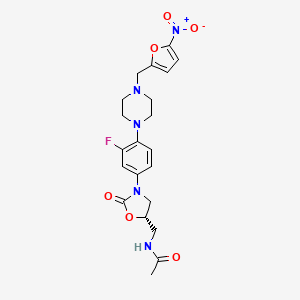
Ranbezolid from Ranbaxy as an oxazolidinone antibacterial


Ranbezolid structure.svg

Ranbezolid

392659-39-1 hydrochloride

392659-38-0 (free base)

N-{[(5S)-3-(3-Fluoro-4-{4-[(5-nitro-2-furyl)methyl]-1-piperazinyl}phenyl)-2-oxo-1,3-oxazolidin-5-yl]methyl}acetamide

(S)-N-[[3-fluoro-4-[N-1[4-{2-furyl-(5-nitro)methyl}]piperazinyl]-phenyl]-2-oxo-5-oxazolidinyl]-methyl]acetamide

AC1LAX1P,  RBx7644 (*Hydrochloride*),RBx-7644
Molecular Formula: C21H24FN5O6   Molecular Weight: 461.443563
Ranbaxy Lab Ltd  ORIGINATOR
Ranbezolid is a novel oxazolidinone antibacterial. It competitively inhibits monoamine oxidase-A (MAO-A).[1]

Infections due to Gram-positive bacteria such as methicillin-resistant Staphylococcus aureus (MRSA), vancomycin-resistant Enterococcus faecium (VRE), and penicillin-resistant Streptococcus pneumoniae(PRSP) are the leading cause of morbidity and mortality in hospital settings and community today. Oxazolidinones are a new class of totally synthetic antibacterial agents active against Gram-positive infections. Linezolid  (Zyvox™, Pharmacia/Pfizer,  is a drug in this class, approved in the United States and Europe for treatment of Gram-positive nosocomial and community-acquired pneumoniae and skin infections. Oxazolidinones inhibit the bacterial protein synthesis prior to the chain initiation step, by binding to the 23S rRNA of 50S ribosomal subunit, and interfering with the initiator fMet–tRNA binding to the P-site of the ribosomal peptidyltransferase centre


Ranbezolid hydrochloride, RBx-7644

9-23-2005
Plymorphic forms of phenyl oxazolidinone derivatives

The title compound is prepared by reductive alkylation of the known piperazinyl oxazolidinone derivative (I) with 5-nitro-2-furfural (II) in the presence of NaBH(OAc)3, followed by conversion to the corresponding hydrochloride salt.

EP 1303511; US 2002103186; WO 0206278; WO 0307870; WO 0308389

…………….

synthesis

The antibacterial activity of RBx-7644 is due to the 5(S)-acetamidomethyl configuration at the oxazolidinone ring, and thus, asymmetric synthesis of only the 5(S)-enantiomer was desirable: 3,4-Difluoronitrobenzene (I) is condensed with piperazine in acetonitrile to give 4-(2-fluoro-4-nitrophenyl)-piperazine (II) as a light yellow compound. Compound (II) is dissolved in dichloromethane and triethylamine, followed by the addition of Boc-anhydride, to provide compound (III). 4-(tert-Butoxycarbonyl)-1-(2-fluoro-4-nitrophenyl)piperazine (III), upon hydrogenation with H2 over Pd/C in methanol at 50 psi, yields 4-(tert-butoxycarbonyl)-1-(2-fluoro-4-aminophenyl)piperazine (IV) as a dark solid. Compound (IV) reacts with benzylchloroformate in dry THF in the presence of solid sodium bicarbonate to afford the desired compound (V). 4-(tert-Butoxycarbonyl)-1-[2-fluoro-4-(benzyloxycarbonylamino)phenyl]piperazine (V), upon treatment with n-BuLi and (R)-glycidyl butyrate at -78 癈, gives the desired (R)-(-)-3-[3-fluoro-4-[4-(tert-butoxycarbonyl)piperazin-1-yl]phenyl]-5-(hydroxymethyl)-2-oxazolidinone (VI). The hydroxymethyl compound (VI) is treated with methanesulfonyl chloride in dichloromethane in the presence of triethylamine to give (R)-(-)-3-[3-fluoro-4-[4-(tert-butoxycarbonyl)piperazin-1-yl]phenyl]-5-(methylsulfonyloxymethyl)-2-oxazolidinone (VII). The sulfonyl derivative (VII) is treated with sodium azide in dimethylformamide to provide the azide (VIII) as a white solid. (R)-(-)-3-[3-Fluoro-4-[4-(tert-butoxycarbonyl)piperazin-1-yl)phenyl]-5-(azidomethyl)-2-oxazolidinone (VIII), upon hydrogenation with H2 over Pd/C at 45 psi, gives (S)-(-)-3-[3-fluoro-4-[4-(tert-butoxycarbonyl)-piperazin-1-yl]phenyl]-5-(aminomethyl)-2-oxazolidinone (IX). The aminomethyl compound (IX), upon treatment with acetic anhydride in dichloromethane in the presence of triethylamine, affords the acetamide derivative (X). The acetamidomethyl-oxazolidinone derivative (X), upon treatment with trifluoroacetic acid, gives (S)-(-)-3-[3-fluoro-4-(1-piperazinyl)phenyl]-5-(acetamidomethyl)-2-oxazolidinone, which, without isolation, is treated with 5-nitro-2-furaldehyde in the presence of sodium triacetoxy borohydride to provide compound (XI). Compound (XI), upon treatment with ethanolic HCl, affords RBx-7644 as a light yellow crystalline solid.


………………….

polymorphs

http://www.google.com/patents/US20050209248

(S)-N-[[3-fluoro-4-[N-1[4-{2-furyl-(5-nitro)methyl}]piperazinyl]-phenyl]-2-oxo-5-oxazolidinyl]-methyl]acetamidehydrochloride having the Formula I.

Figure US20050209248A1-20050922-C00001


The compound of Formula I, namely, (S)-N-[[3-fluoro-4-[N-1 [4-{2-furyl-(5-nitro)methyl}] piperazinyl]-phenyl]-2-oxo-5-oxazolidinyl]-methyl]acetamide hydrochloride is a phenyl oxazolidinone derivative, as disclosed in PCT application WO 02/06278. It is said to be useful as antimicrobial agent, effective against a number of human and veterinary pathogens, including gram-positive aerobic bacteria, such as multiply resistant staphylococci, streptococci and enterococci as well as anaerobic organisms such as Bacterioides spp. andClostridia spp. species, and acid fast organisms such as Mycobacterium tuberculosis, Mycobacterium avium and Mycobacterium spp.

The PCT application WO 02/06278 describes the preparation of compounds of Formula I. The products of Formula I obtained by following the cited methods tend to be hygroscopic and difficult to filter. These types of disadvantageous properties have proven to be serious obstacles to the large-scale manufacture of a compound. Further, handling problems are encountered during the preparation of pharmaceutical compositions comprising the hygroscopic compound of Formula I obtained by following the method disclosed in WO 02/06278.

EXAMPLE 1 Preparation of Polymorphic ‘Form A’ of the Compound of Formula I

50 gm of free base of Formula I was dissolved in ethanol (750 ml) by heating at about 60° C. and to this solution was added ethanolic HCl (13.36 ml, 8.9 N) at about 45-50° C. The reaction mixture was cooled to about 10° C., and stirred for about 4 hours. The separated solid was filtered off and dried under vacuum at 60° C. The solid was then digested in ethanol (150 ml) at 70-80° C. for about 4 hours. It was then cooled to about 10° C., the solid was filtered and dried under vacuum at 60-65° C. to give 30 gm of the pure polymorphic ‘Form A’ of compound of Formula I.

………………


Synthesis and SAR of novel oxazolidinones: Discovery of ranbezolid

Bioorg Med Chem Lett 2005, 15(19): 4261

http://www.sciencedirect.com/science/article/pii/S0960894X05008310

Synthesis and SAR of novel oxazolidinones: Discovery of ranbezolid

Pages 4261-4267
Biswajit Das, Sonali Rudra, Ajay Yadav, Abhijit Ray, A.V.S. Raja Rao, A.S.S.V. Srinivas, Ajay Soni, Suman Saini, Shalini Shukla, Manisha Pandya, Pragya Bhateja, Sunita Malhotra, Tarun Mathur, S.K. Arora, Ashok Rattan, Anita Mehta


Graphical abstract

Novel oxazolidinones were synthesized containing a number of substituted five-membered heterocycles attached to the ‘piperazinyl–phenyl–oxazolidinone’ core of eperezolid. Further, the piperazine ring of the core was replaced by other diamino-heterocycles. These modifications led to several compounds with potent activity against a spectrum of resistant and susceptible Gram-positive organisms, along with the identification of ranbezolid (RBx 7644) as a clinical candidate.

Substitution of five-membered heterocycles on to the ‘piperazinyl–phenyl–oxazolidinone’ core structure led to the identification of ranbezolid as a clinical candidate. Further replacement of piperazine ring with other diamino-heterocycles led to compounds with potent antibacterial activity.

image

Full-size image (8 K)

Scheme 5.

Reagents and conditions: (a) Method A: TFA, CH2Cl2, 0 °C → rt; 5-chloromethyl-2-furaldehyde, potassium carbonate, DMF, rt; or (b) Method B: TFA, CH2Cl2, 0 °C → rt; 5-nitrofuran-2-carboxaldehyde, sodiumtriacetoxyborohydride, THF, molecular sieves 3 Å, rt. 7 = ranbezolid


  • Synthesis of compound 7: (S)-N-[[3-[3-Fluoro-4-(N-4-tert-butoxycarbonyl-piperazin-1-yl)phenyl]-2-oxo-5-oxa-zolidinyl]-methyl]acetamide (28a, 3.65 kg, 8.37 mol) was dissolved in dichloromethane (30.86 L) and cooled to 5 °C. To it trifluoroacetic acid (6.17 L) added dropwise and stirred for 14 h allowing the reaction mixture to warm to rt. The reaction mixture was evaporated in vacuo and the residue dissolved in tetrahydrofuran (58 L) followed by addition of molecular sieves 4 Å (4.2 kg). To the resulting mixture 5-nitro-2-furaldehyde (1.5 kg, 10.77 mol) was added followed by sodium triacetoxyborohydride (5.32 kg, 25.1 mol) and stirred for 14 h. The reaction mixture was filtered over Celite and filtrate evaporated in vacuo. The residue was dissolved in ethylacetate (85.6 L) and washed with satd sodium bicarbonate solution (36 L) and water (36 L). The organic layer was dried over anhyd sodium sulfate (3 kg) and evaporated in vacuo. The crude residue was purified by column chromatography (1–3% methanol in ethylacetate) to obtain (S)-N-[[3-[3-fluoro-4-[N-4-(5-nitro-2-furylmethyl)-piperazin-1-yl]phenyl]-2-oxo-5-oxa-zolidinyl]methyl]acetamide (39, 2.6 kg, yield 67%). Mp: 136 °C. 1H NMR (CDCl3): δ 7.42 (dd, 1H, phenyl–H), 7.29 (m, 2H, furyl–H), 7.07 (d, 1H, phenyl–H), 6.92 (t, 1H, phenyl–H), 6.51 (d, 1H, furyl–H), 6.11 (t, 1H, –NHCO–), 4.77 (m, 1H, oxazolidinone ring C5–H), 4.01 (t, 1H), 3.85–3.45 (m, 5H), 3.09 (m, 4H, piperazine–H), 2.72 (m, 4H, piperazine–H), 2.02 (s, 3H, –COCH3). MS m/z (rel. int.): 462.1 [(M+H)+, 100%], 484 [(M+Na)+, 25%], 500.2 [(M+K)+, 20%]. HPLC purity: 98%.

  • Compound 39(3.6 kg, 7.81 mol) was dissolved in abs ethanol (53.8 L) by heating to 60 °C. The resulting solution was cooled to 45 °C and ethanolic hydrochloride (1.48 L, 7.9 N) was added dropwise in 10 min. The mixture was then cooled to 10 °C and stirred for 4 h and the precipitate formed was filtered and washed with ethanol and dried to obtain (S)-N-[[3-[3-fluoro-4-[N-4-(5-nitro-2-furylmethyl)-piperazin-1-yl]phenyl]-2-oxo-5-oxazolidinyl]-methyl]acetamide hydrochloride, ranbezolid (7, 3.2 kg, yield from 39: 82%, yield from 28a: 55%).

  • Ranbezolid
  • Mp: 207–209 °C.

  •  1H NMR (DMSO, 300 MHz): δ 8.30 (t, 1H, –NHCO–), 7.75 (d, J = 3.3 Hz, 1H, furyl–H), 7.52 (dd, 1H, phenyl–H), 7.3–7.0 (m, 3H, phenyl–H, furyl–H), 4.70 (m, 1H, oxazolidinone ring C5H), 4.63 (s, 2H), 4.08 (t, J = 8.8 Hz, 1H, –CH2–), 3.73 (t, J = 7.5 Hz, 1H), 3.43 (br m, piperazine–H merged with H2O in DMSO), 1.83 (s, 3H, –COCH3).

  • HPLC purity: 98%. Anal. Calcd for C21H25ClN5O6·0.5H2O: C, 50.76; H, 5.48; N, 14.09. Anal. Found: C, 50.83; H, 5.17; N, 13.83.

ADDED communication FROM/by DR VIJAY KAUL

vijay kaul

vijay kaul   EX RANBAXY SCIENTIST

General Manager, R&D at Calyx Chemicals & Pharmaceuticals Ltd.

  • in.linkedin.com/pub/vijay-kaul/b/aa9/962

DR VIJAY KAUL       QUOTE……………Kindly go through my patent describing a two step cost effective environmentally benign process for the key intermediate of Ranbezolid.
Process for the preparation of 4-(4-benzyloxy-carbonylamino-2-fluorophenyl)-piperazine-1-carboxylic acid tert-butyl ester W02005051933  ,……………….UNQUOTE

novel methods for the synthesis of the 4-(4- benzyloxy-carbonylamino-2-fluorophenyl)-piperazine-l-carboxylic acid tert-butyl ester of Formula I, which provides improvements over prior methods of synthesis. In one aspect, there is provided a process for the synthesis of highly pure 4-(4- benzyloxy-carbonylamino-2-fluorophenyl)-piperazine-l-carboxylic acid tert-butyl ester of Formula I,


Figure imgf000003_0001

Formula I comprising the steps of: condensing piperazine with l,2-difluoro-4-nitrobenzene to form l-(2-fluoro-4-nitro-phenyl)- piperazine of Formula II,


Figure imgf000004_0001

contacting the compound of Formula II with di-tert-butoxycarbonyl anhydride to form 4- (2- fluoro-4-nitrophenyl)-piperazine 1-carboxylic acid tert-butyl ester of Formula III,


Figure imgf000004_0002

reducing the compound of Formula III to form 4-(4-amino-2-fluorophenyl)-piperazin-l- carboxylic acid tert-butyl ester of Formula IV,


Figure imgf000004_0003

Formula IV and reacting the compound of Formula IN with benzylchloroformate to form 4-(4-benzyloxy- carbonylamino-2-fluorophenyl)-piperazine- 1-carboxylic acid tert-butyl ester of Formula I. In one aspect, the step of condensing piperazine with l,2-difluoro-4-nitrobenzene is carried out in an aromatic hydrocarbon, such as toluene, xylene and the like, or mixtures thereof, and at a temperature of, for example, about 40 °C to about 90 °C, or from about 80 °C to about 90 °C.

Oxazolidinone compounds can be prepared from compounds of Formula I using, for example, using methods disclosed in U.S. Patent No. 6,734,307 and PCT Publication Nos. WO 02/06278, WO 03/007870, WO 03/097059, WO04/089944 and WO04/14392, which are incorporated herein by reference. Scheme I below shows a synthetic route starting from a compound of Formula I to oxazolidinone compounds.


Figure imgf000006_0001

Formula lb


Figure imgf000006_0002

Formula lc


Figure imgf000006_0003

Formula Id Scheme I A compound of Formula I


Figure imgf000007_0001

Formula I can be reacted with a base, e.g., butyl lithium, and glycidyl butyrate to form a compound of

Formula la.


Figure imgf000007_0002

Formula la

The compound of Formula la can be reacted with methane sulphonyl chloride, followed by ammonium hydroxide, and finally acetyl halide of Formula CH3CO-hal (wherein hal is Br, CI or I) to form a compound of Formula lb.


Figure imgf000007_0003

Formula lb

The compound of Formula lb can be deprotected to form a compound of Formula Ic.


Figure imgf000007_0004

The compound of Formula Ic can be reacted with R-T-(W)0-ι-R12 to form a compound of Formula Id

Figure imgf000008_0001

EXAMPLE Preparation of 4-(4-benzyloxy-carbonylamino-2-fluorophenyl -piperazine- 1 – carboxylic acid tert-butyl ester of Formula I

Piperazine (0.77 mol, 66.2 g) was mixed with toluene (500 mL) and stirred at room temperature and subsequently stirred at 50 °C until a homogenous solution was obtained. 1,2- difluoro-4-nitrobenzene (0.314 mol, 50 g) was added to the piperazine/toluene solution and the reaction mixture was stirred at 80-90 °C for 3-6 hours.

The reaction mixture then was cooled to 40-45 °C and diluted with deionized water. The organic layer was separated and about 250-350 mL of toluene was evaporated off under reduced pressure at 40 °C. Di-tert- butoxycarbonyl anhydride (0.334mol, 75 g) was then added dropwise to the reaction mixture at room temperature. The resulting reaction mixture was stirred at room temperature for 1-2 hours and then further diluted with hexane (200 mL) and stirred for 15-20 minutes at room temperature.

The solid product formed in the reaction mixture was filtered, washed with hexane (150 mL), and dried under reduced pressure at 60-70°C to yield 4-(2-fluoro-4- nitrophenyl)-piperazine- 1-carboxylic acid tert butyl ester of Formula III. Yield = 1.8-1.9 (w\w); Purity = 96-98% by HPLC.

The compound of Formula III (0.246 mol, 80 g) was added to toluene (800 mL) followed by the addition of palladium on carbon (4 g) at room temperature with continuous stirring. Hydrogen gas was bubbled into the resulting reaction mixture at a pressure of 72 psi. The reaction mixture was stirred for 12-16 hours and then diluted with toluene (150 mL). The reaction mixture was filtered through a celite pad and washed with toluene (200 mL).

Sodium bicarbonate solution was added to the reaction mixture at room temperature with continuous stirring. Benzyl chloroformate (0.310 mol, 103 g) was added dropwise to the reaction mixture with continuous stirring for 2-3 hours. Ethyl acetate (1600 mL) was added to the reaction mixture and stirred for about 30 minutes followed by addition of deionized water (400 mL). The organic layer was separated and the solvent was removed under reduced pressure. The semi-solid product was washed with hexane (350 mL) to obtain 4-(4-benzyloxy- carbonylamino-2-fluorophenyl)-piperazine- 1-carboxylic acid tert-butyl ester of Formula I as a solid. Yield = 1.16-1.23 (w/w); Purity = 97-99% by HPLC.

References

  1. European Journal of Pharmacology. 2006. 545, 167–172
  2. US2005209248, 9-23-2005
    Plymorphic forms of phenyl oxazolidinone derivatives

  3. DU YU ET AL: “Synthesis and antibacterial activity of linezolid analogUES” BIOORGANIC & MEDICINAL CHEMISTRY LETTERS, OXFORD, GB, vol. 12, 2002, pages 857-859, XP002245432 ISSN: 0960-894X
    2 * IN HWA CHUNG ET AL: “SYNTHESIS AND IN VITRO ANTIBACTERIAL ACTIVITY OF QUATERNARY AMMONIUM CEPHALOSPORIN DERIVATIVES BEARING OXAZOLIDINONE MOIETY” ARCHIVES OF PHARMACAL RESEARCH, NATL. FISHERIES UNIVERSITY, PUSAN, KR, vol. 22, no. 6, 1999, pages 579-584, XP001037701 ISSN: 0253-6269
    3 * PAE A N ET AL: “3D QSAR studies on new oxazolidinone antibacterial agents by comparative molecular field analysis” BIOORGANIC & MEDICINAL CHEMISTRY LETTERS, OXFORD, GB, vol. 9, no. 18, 20 September 1999 (1999-09-20), pages 2685-2690, XP004179952 ISSN: 0960-894X
    4 * PAE A N ET AL: “Synthesis and In Vitro Activity of new Oxazolidinone Antibacterial Agents Having Substituted Isoxazoles” BIOORGANIC & MEDICINAL CHEMISTRY LETTERS, OXFORD, GB, vol. 9, 1999, pages 2679-2684, XP002301080 ISSN: 0960-894X
    5 * TUCKER J A ET AL: “PIPERAZINYL OXAZOLIDINONE ANTIBACTERIAL AGENTS CONTAINING A PYRIDINE, DIAZENE, OR TRIAZENE HETEROAROMATIC RING” JOURNAL OF MEDICINAL CHEMISTRY, AMERICAN CHEMICAL SOCIETY. WASHINGTON, US, vol. 41, no. 19, 1998, pages 3727-3735, XP001203467 ISSN: 0022-2623
  4. 1-1-2013
    Anti-anaerobic potential of ranbezolid: insight into its mechanism of action against Bacteroides fragilis.
    International journal of antimicrobial agents
    11-15-2009
    Synthesis and biological activity of novel oxazolidinones.
    Bioorganic & medicinal chemistry letters
    4-1-2009
    Mode of action of Ranbezolid against staphylococci and structural modeling studies of its interaction with ribosomes.
    Antimicrobial agents and chemotherapy
    8-1-2008
    Effect of oxazolidinone, RBx 7644 (ranbezolid), on inhibition of staphylococcal adherence to plastic surfaces.
    Journal of chemotherapy (Florence, Italy)
    4-1-2008
    Utilization of Bombyx mori larvae as a surrogate animal model for evaluation of the anti-infective potential of oxazolidinones.
    Journal of infection and chemotherapy : official journal of the Japan Society of Chemotherapy
    9-15-2007
    Synthesis and in vitro antibacterial activity of novel methylamino piperidinyl oxazolidinones.
    Bioorganic & medicinal chemistry letters
    9-18-2006
    Ranbezolid, a novel oxazolidinone antibacterial: in vivo characterisation of monoamine oxidase inhibitory potential in conscious rats.
    European journal of pharmacology
    10-1-2005
    Synthesis and SAR of novel oxazolidinones: discovery of ranbezolid.
    Bioorganic & medicinal chemistry letters
    6-1-2005
    Activity of RBx 7644 and RBx 8700, new investigational oxazolidinones, against Mycobacterium tuberculosis infected murine macrophages.
    International journal of antimicrobial agents
    10-1-2004
    In vitro activity of RBx 7644 (ranbezolid) on biofilm producing bacteria.
    International journal of antimicrobial agents
  5. 3-1-2003
    Antianaerobe activity of RBX 7644 (ranbezolid), a new oxazolidinone, compared with those of eight other agents.
    Antimicrobial agents and chemotherapy
    3-1-2003
    Antipneumococcal and antistaphylococcal activities of ranbezolid (RBX 7644), a new oxazolidinone, compared to those of other agents.
    Antimicrobial agents and chemotherapy
WO1993023384A1 * Apr 21, 1993 Nov 25, 1993 Michael Robert Barbachyn Oxazolidinones containing a substituted diazine moiety and their use as antimicrobials
WO1997030981A1 * Feb 18, 1997 Aug 28, 1997 Michael R Barbachyn Azolyl piperazinyl phenyl oxazolidinone antimicrobials
WO1998001447A1 * Jul 1, 1997 Jan 15, 1998 Michael John Betts Pyridyl-piperazinyl-phenyl-oxazolidinone derivatives and their use as antibacterials
WO2002006278A1 * Jul 16, 2001 Jan 24, 2002 Sudershan K Arora Oxazolidinone derivatives as antimicrobials
WO2002048139A2 * Dec 14, 2001 Jun 20, 2002 Robert C Gadwood Oxazolidinone photoaffinity probes
WO2003002560A1 * Jun 24, 2002 Jan 9, 2003 Castillo Juan Carlos Del New derivatives of oxazolidinones as antibacterial agents
WO2003007870A2 * May 10, 2002 Jan 30, 2003 Sudershan K Arora Oxazolidinone derivatives as antimicrobials
WO2004018439A1 * Aug 21, 2003 Mar 4, 2004 Shiv Kumar Agarwal Novel antibacterial agents


Gold Nanoparticles Made to Heat Up from Near-Infrared Light for Tumor Killing


Lyranara.me's avatarLyra Nara Blog

heat nanoparticles Gold Nanoparticles Made to Heat Up from Near Infrared Light for Tumor Killing

Gold has been a popular material to make nanoparticles because of its biocompatibility, but to get it to do some neat tricks isn’t enough to simply produce spherical gold nanoparticles. One limitation in using gold for killing tumors has been that cheap spherical gold nanoparticles are not plasmonic to near-infrared light, meaning they don’t heat up when such light illuminates them. Making gold nanoparticles plasmonic requires forming shapes out of the element that have been expensive to produce. Researchers at ETH Zurich (Eidgenössische Technische Hochschule Zürich) have developed a new technique for cheap manufacturing of different shapes of plasmonic gold-based nanoparticles that may open new possibilities for cancer treatment.

Instead of creating new shapes purely out of gold, a difficult process, the team instead arranged readily available spherical gold nanoparticles coated with silicon dioxide into plasmonic shapes. The silicon dioxide works like a spacer, keeping the gold spheres at predefined distances…

View original post 205 more words

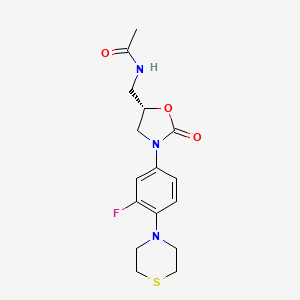
SUTEZOLID for Treatment of tuberculosis


Sutezolid structure.svg

Sutezolid

168828-58-8

N-({(5S)-3-[3-fluoro-4-(thiomorpholin-4-yl)phenyl]-2-oxo-oxazolidin-5-yl}methyl) acetamide

(S)—N-[[3-[3-fluoro-4-(4-thiomorpholinyl)phenyl]-2-oxo-5-oxazolidinyl]methyl]acetamide

Sutezolid, PNU-100480, U-100480, NSC742407, PNU 100480, 168828-58-8, Sutezolid [INN]
Molecular Formula: C16H20FN3O3S   Molecular Weight: 353.41170

Sutezolid (PNU-100480, PF-02341272) is an oxazolidinone antibiotic currently in development as a treatment for extensively drug-resistant tuberculosis.

Rapid evaluation in whole blood culture of regimens for XDR-TB containing PNU-100480 (sutezolid), TMC207, PA-824, SQ109, and pyrazinamide

Sutezolid, an antimicrobial oxazolidinone and the thiomorpholine analogue of linezolid, had been in early clinical development for the treatment of tuberculosis. However, development was discontinued.

The compound had been found to be active against Gram-positive bacteria such as multiresistant staphylococci, streptococci and enterococci. It was being developed by Pfizer. In 2011, orphan drug designation was assigned in the U.S. and the E.U. for the treatment of tuberculosis.

In 2013, Sequella acquired an exclusive worldwide license for the development and commercialization of sustezolid.

8-5-2011
Combination Therapy for Tuberculosis

http://www.google.com/patents/US20110190199

Scheme 1 illustrates a general synthetic sequence for preparing compounds of the present invention.


Figure US20110190199A1-20110804-C00007


Example 3 Preparation of (5S)-5-{[(4-chlorobenzylidene)amino]methyl}-3-(3-fluoro-4-thiomorpholin-4-ylphenyl)-1,3-oxazolidin-2-one

The title compound in Example 2 (194 g, 0.56 mole), and the title compound of Example 1 (195 g, 0.84 mole), and lithium tert-butoxide (116 g, 1.4 mole) were charged into a 3000 mL three neck round bottom flask under nitrogen. The reactants were slurried with methyl tert-butyl ether (1200 mL) and the mixture was warmed to 56° C. and stirred for 2 h as a yellow solid gradually formed. The reaction was cooled to room temperature, and diluted with 1200 mL water. The mixture was then stirred vigorously over 60 min as the solid changed from dark yellow to a more pale yellow solid. The mixture was cooled to 10° C., filtered, and the filter cake was washed with ice cold methyl tert-butyl ether (450 mL). The resulting light yellow solid was dried in air for 30 min, then placed in a vacuum oven and dried at 40° C. overnight to afford the title compound (243 g, 99% yield). 1H NMR (400 MHz, CDCl3): δ 2.8 (m, 4H), 3.2 (m, 4H), 3.9 (m, 2H), 4.1 (m, 2H), 5.0 (m, 1H), 6.9 (m, 1H), 7.2 (m, 1H), 7.4 (m, 3H), 7.6 (m, 2H), 8.4 (s, 1H).

Example 4 Preparation of N-{[(5S)-3-(3-fluoro-4-thiomorpholin-4-ylphenyl)-2-oxo-1,3-oxazolidin-5-yl]methyl}acetamide

The title compound in Example 3 (243 g, 0.56 mole) was combined with EtOAc (1300 mL) and water (1300 mL) in a 5000 mL three neck round bottom flask equipped with a mechanical stirrer. The mixture was treated drop-wise with 12N HCl (140 mL, 1.68 moles) and the mixture was stirred vigorously for 1 hour at room temperature. The layers were separated and the aqueous layer was washed with EtOAc (1×500 mL). The resulting aqueous solution containing (S)-5-(aminomethyl)-3-(3-fluoro-4-thiomorpholinophenyl)oxazolidin-2-one hydrochloride was combined with a mixture of dichloromethane (1800 mL) and MeOH (120 mL), and the vigorously stirred mixture was charged with acetic anhydride (132 mL, 1.4 mole) in one portion and subsequently treated drop-wise with 10 N NaOH (200 mL, 2.0 mole) over 15 min. An extremely thick reaction mixture resulted from addition of the base, which gradually thinned as the pH rose and the acylation rapidly progressed. The reaction was stirred vigorously for 1 hour after the mixture resolved to two phases. At that time, 10 M NaOH (160 mL, 1.6 mole) was added drop-wise to the mixture until the pH was stable at 7. The layers were separated, the aqueous layer was extracted with dichloromethane (250 mL), and the combined organic layers were dried over anhydrous potassium carbonate. The volatiles were removed in vacuo to give an off-white solid which was titrated with methyl tert-butyl ether (250 mL), collected, and dried in vacuo to give title compound (5) (186.1 g, 94% yield) as a fine white solid with greater than 98% HPLC purity (retention time=3.93 minutes, HPLC conditions reported below).

The crude solid was dissolved in warm 6% methanol in dichloromethane (1250 mL) in a 5000 mL three neck round bottom flask equipped with a mechanical stirrer. The solution was warmed to reflux, diluted by the portion-wise (500 mL) addition of 2500 mL isopropanol (IPA), and, in order to maintain reflux, the temperature was ramped to 50-70° C. On completion of this addition of IPA, the reflux condenser was replaced with a short-path distillation head and distillation was continued into a cooled flask. During distillation, a 500 mL portion of fresh IPA was added after 500 mL of distillate was collected to maintain between 2000 and 2500 mL IPA present at all times. After this addition (internal flask temperature dropped to 60° C.) the mixture became slightly cloudy and remained so for the balance of the distillation, becoming increasingly cloudy as the distillate temperature exceeded 70° C.; particulate matter appeared as the distillate temperature exceeded 75° C. The temperature controller was ramped to 85° C. and held there until the conclusion of the distillation. When the distillate was clearly isopropanol alone (82-83° C.) the volume was reduced to 2500 mL hot IPA, the heating mantle was removed, stirring was discontinued, and the paddle was removed from the flask. The mixture was allowed to continue to crystallize as the flask cooled. The white crystalline solid was then collected by filtration, washed with methyl tert-butyl ether (250 mL), and dried in vacuo at 40° C. to afford 180 g (91% yield) of the title compound in greater than 99% HPLC purity (retention time=3.93 minutes, HPLC conditions reported below). 1H NMR (400 MHz, DMSO-d6): δ 1.8 (s, 3H), 2.7 (m, 4H), 3.2 (m, 4H), 3.4 (m, 2H), 3.7 (m, 1H), 4.7 (m, 1H), 7.1 (m, 1H), 7.15 (m, 1H), 7.2 (m, 1H), 8.2 (m, 1H). Mass Spec. C16H20FN3O3S: m/z 354.1 (M+1).

HPLC conditions for analyses mentioned in the text: HP Series 1100; Column: Symmetry C8 5 uM 4.6×50 mm; Flow rate 1.2 mL/min; Solvent A: water with 0.1% formic acid, Solvent B: acetonitrile with 0.1% formic acid; Injection volume=10 uL of 1 mg/mL (acetonitrile); Gradient: Solvent B 0-100% over 7 minutes then 100% B for 1 minute; wavelength=254 nm.


Identification of a novel oxazolidinone (U-100480) with potent antimycobacterial activity
J Med Chem 1996, 39(3): 680

http://pubs.acs.org/doi/full/10.1021/jm950956y

Figure

(S)-N-[[3-[3-Fluoro-4-(4-thiomorpholinyl)phenyl]-2-oxo-5oxazolidinyl]methyl]acetamide (6, U-100480). A solution of (R)-[3-[3-fluoro-4-(4-thiomorpholinyl)phenyl]-2-oxo-5-oxazolidinyl]methyl azide (19.662 g, 58.28 mmol) in dry THF (290 mL) was treated with triphenylphosphine (16.815 g, 64.11 mmol) over 10 min. After 2.0 h, TLC analysis (10% MeOH/CHCl3) revealed the conversion to iminophosphorane was complete. H2O (2.10 mL, 116.56 mmol) was added and the reaction mixture heated to 40 °C (internal temperature) for 5 h and then allowed to cool to ambient temperature overnight. At this point, TLC analysis (10% MeOH/CHCl3) indicated incomplete hydrolysis of the iminophosphorane intermediate. More H2O (8.40 mL) was added, and the reaction was heated to 40 °C for 5 h. At this time, TLC indicated complete conversion to the 5-(aminomethyl)oxazolidinone intermediate. The reaction mixture was first concentrated by rotary evaporation (benzene was added several times to azeotrope off the H2O) and then under high vacuum to give the crude amine as an off-white solid. This material was dissolved in CH2Cl2 (250 mL), treated with pyridine (46.099 g, 47.10 mL, 582.79 mmol) and acetic anhydride (29.749 g, 27.49 mL, 291.40 mmol), and then stirred overnight at ambient temperature. TLC analysis (10% MeOH/CHCl3) showed complete conversion to 6. The reaction mixture was diluted with CH2Cl2, transferred to a separatory funnel, and then washed with 1 N HCl until the washings were acidic. The organic layer was then washed with saturated aqueous NaHCO3 and brine, dried over Na2SO4, filtered, and concentrated in vacuo to give crude 6 (U-100480) as a cream-colored solid. The crude product was triturated with hot CHCl3; most but not all of the solids dissolved. After cooling to ambient temperature, the solids were filtered off (cold CHCl3 wash) and dried in vacuo to furnish 13.174 g of analytically pure title compound as a white solid. A second crop of 3.478 g, also analytically pure, afforded a combined yield of 81%:

mp 186.5−187.0 oC; [α]D −8° (c 1.00, CHCl3);

IR (mull) 1749, 1746, 1641, 1656, 1518, 1448, 1419, 1225, 1215, 1158, 1106, 1083, 867 cm-1;

 1H NMR (300 MHz, CDCl3) δ 7.42 (dd, 1H, J = 2.6, 14.0 Hz), 7.06 (ddd, 1H, J = 1.0, 2.6, 8.8 Hz), 6.95 (dd, 1H, J = 9.0, 9.0 Hz), 6.61 (br t, 1H, J = 6.0 Hz), 4.81−4.72 (m, 1H), 4.02 (dd, 1H, J = 9.0, 9.0 Hz), 3.75 (dd, 1H, J = 6.7, 9.1 Hz), 3.71−3.55 (m, 2H), 3.32−3.27 (m, 4H), 2.84−2.79 (m, 4H), 2.02 (s, 3H);

MS m/z (rel intensity) 353 (M+, 100), 309 (31), 279 (5), 250 (17), 235 (14), 225 (20), 212 (7), 176 (19), 138 (18), 42 (28);

HRMS calcd for C16H20N3O3FS 353.1209, found 353.1200. Anal. (C16H20N3O3FS) C, H, N.

see aLSO

WO 1995007271

WO 2010026526

Repurposed drugs for tuberculosis treatment.

http://www.nature.com/nrd/journal/v12/n5/fig_tab/nrd4001_F1.html

Repurposed drugs for tuberculosis treatment.

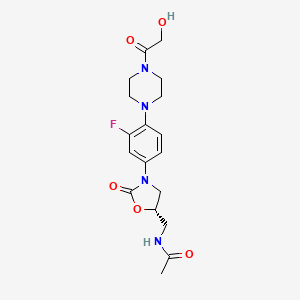
EPEREZOLID


Eperezolid.png

EPEREZOLID

pfizer.originator

 CAS NO  165800-04-4 

Eperezolid [USAN], PNU 100592, U-100592,
Molecular Formula: C18H23FN4O5
Molecular Weight: 394.397423

(S)-N-[[3-[3-Fluoro-4-[4-(2-hydroxyacetyl)piperazin-1-yl]phenyl]-2-oxo-1,3-oxazolidin-5-yl]methyl]acetamide

(S)-N-[[3-[3-fluoro-4-[4-(hydroxyacetyl)-l-piperazinyl]- phenyl]-2-oxo-5-oxazolidinyl]methyl]acetamide

Oxazolidinones are a new class of Gram-positive antibacterial agents which are known to those skilled in the art, see for example US 5,688,792. (S)-N-[[3-[3- fluoro-4-(4-morpholinyl)phenyl]-2-oxo-5-oxazolidinyl]methyl]acetamide, known as linezolid, the compound of Example 5 of US Patent 5,688,792 is known and has the following chemical formula:


(S)-N-[[3-[3-fluoro-4-[4-(hydroxyacetyl)-l-piperazinyl]-phenyl]-2-oxo-5- oxazolidinyl]methyl]acetamide, known as eperezolid, the compound of

Example 8 of US Patent 5,837,870 is known and has the following chemical formula:


Linezolid and eperezolid can be produced by the processes set forth in US Patents 5,688,791 and 5,837,870 as well as that of International Publication WO99/24393. It is preferably produced by the process of US Patent 5,837,870.

It is preferred that the linezolid produced be used in crystal form π, which has the characteristics set forth in CHART A. Once linezolid is synthesized, crystal Form π is prepared by starting with linezolid of high enantiomeric purity. It is preferred that the linezolid be more than 98% enantiomerically pure, it is more preferred that the linezolid be more than 99% pure and it is even more preferred that the linezolid be 99.5% pure. The linezolid of greater than 98% enantiomeric purity to be used to form crystal form II can either be in solution or be a solid. The linezolid starting material, solid or solution, is mixed with a solvent selected from the group consisting of compounds of the formula: water, acetonitrile, chloroform, methylene chloride, R OH where R\ is Cι-C6 alkyl; Rι-CO-R2 where R2 is Cι-C alkyl and Ri is as defined above; phenyl substituted with 1 thru 3 Ri where Ri is as defined above; Rι-CO-O-R2 where Ri is -C alkyl and Ri is as defined above; Rι-O-R2 where

is Cι-C6 alkyl and Ri is as defined above. It is preferred that the solvent be selected from the group consisting of water, ethyl acetate, methanol, ethanol, propanol, isopropanol, butanol, acetonitrile, acetone, methyl ethyl ketone, chloroform, methylene chloride, toluene, xylene, diethyl ether, or methyl-t-butyl ether. It is more preferred that the solvent be ethyl acetate, acetone, acetonitrile, propanol, or isopropanol. It is most preferred that the solvent be ethyl acetate. The mixture of linezolid in the solvent is agitated at a temperature below 80° until crystals of Form II are formed and crystals of other solid forms, such as Form I, disappear. It is preferred to dissolve the linezolid in ethyl acetate at a temperature near the boiling point of the solvent. This mixture is cooled to a temperature of about 70°. The mixture may be seeded with crystals of Form II to facilitate crystallization. It is preferred that the solid product is cooled and agitated at a temperature between about 45° and about 60° until the solids consist only of Form II crystals. It is most preferred to maintain the slurry at a temperature of about 55°. It is preferred to mix the linezolid and solvent for at least 10 min, it is even more preferred to mix the linezolid and solvent for at least 20 min and it is most preferred to mix the linezolid and solvent for at least 30 min. The time and temperature will vary depending on the solvent selected. With ethyl acetate it is preferred to mix for not less that 60 minutes. The crystalline slurry may be further cooled to improve yield, and the solid Form II product may be isolated. The mixture may be further cooled and agitated. Other measures which can be used to facilitate crystallization include, but are not limited to, cooling, concentration of the solution by evaporation or distillation, or through addition of other solvents. The crystals are isolated by procedures known to those skilled in the art.

It is well known to those skilled in the art that the oxazolidinones are useful as anti-bacterial agents especially against Gram-positive organisms. US Patent 5,688,792 discloses that oxazolidinones can be administered IV. The preferred formulation for linezolid IV solution is: Linezolid 2.0 mg mL

Sodium Citrate Dihydrate (USP) 1.64 mg/mL

Citric Acid Anhydrous (USP) 0.85 mg/mL

Dextrose Monohydrate (USP) 50.24 mg/mL

Hydrochloric Acid ( 10%) q.s. to pH 4.8 (pH 4.6 to 5.0) Sodium hydroxide (10%) q.s. to pH 4.8 (pH 4.6 to 5.0)

Water for Injection (USP) q.s. ad 1.0 mL

The linezolid IV solution is formulated by heating water for injection from about 50 to about 65°. Next the sodium citrate, citric acid and dextrose are added and stirred until dissolved. An aqueous slurry of linezolid is added to the previous mixture and stirred until dissolved. The mixture is cooled to 25° with stirring. The pH is measured and adjusted if necessary. Last the mixture is brought to volume, if necessary, with water for injection. The mixture is filtered, filled into infusion containers, over wrapped and terminally moist heat sterilized.

The aqueous solution for IV administration can be placed in the container which is selected from the group consisting of a bag, a bottle, a vial, a large volume parenteral, a small volume parenteral, a prefilled syringe and a cassette. It is realized that a vial is a bottle. However, those skilled in the art use the term “bottle” to refers to larger bottles and “vials” to refer to smaller bottles. It is preferred that the container be a bag, a bottle, a vial or a prefilled syringe. It is more preferred that the container be a bag or bottle. It is most preferred that the container be a bag. The shape and/or size of the container is unimportant. It is preferred that the container be a bag sufficient to hold 25 to 2,000 mL of IV solution. It is preferred that the linezolid mixture be put in bags in amounts of 100, 200 or 300 mL of solution however smaller or larger volumes are acceptable.

……………..

http://www.google.com/patents/WO2007138381A2?cl=en

. Scheme 2. Synthesis of eperezolid


RR==IH-

s


Et3N,


17 (eperezolid)

1-(2-Fluoro-4-nitrophenyl)piperazine (8). To 3,4-difluoronitrobenzene (20.5 g, 129 mmol) in acetonitrile (290 mL) was added triethylamine (36 mL) and piperazine (32 g, 387 mmol). The mixture was stirred at reflux for 18 h, after which it was cooled to room temperature and partitioned between H2O (500 mL) and EtOAc (400 mL). The layers were separated and the aqueous layer was extracted with EtOAc (2 x 300 mL). The organic layers were combined and washed with saturated NaCI solution (400 mL). The saturated NaCI layer was extracted again with EtOAc (2 x 200 mL). The organic layers were combined, dried over Na2SO4, filtered and concentrated to yield 8 as a yellow solid (29 g, quant.). 1H NMR (400 MHz, CDCI3) δ 1.63 (s, 1 H), 3.04-3.06 (m, 4H), 3.25-3.28 (m, 4H), 6.91 (t, J=8.7, 1 H), 7.90 (dd, J=13.2, 2.5, 1 H), 7.97- 8.00 (m, 1H).

3-Fluoro-4-(piperazin-1-yl)benzenamine (9). Compound 8 (10.0 g, 44.4 mmol) was dissolved in anhydrous EtOH (222 mL) and placed in a Parr pressure flask. PtO2 catalyst (31 mg) was added and the mixture was agitated under 50-60 psi of H2 on a Parr apparatus for 30 min, after which the reaction mixture was vented, more catalyst was added (78 mg) and the reaction mixture was submitted to 50-60 psi of H2 for another 30 min. The reaction mixture was filtered on Celite, the solid was washed with MeOH1 and the combined filtrates were concentrated to give 9 as a yellow solid (8.7 g, quant.). 1H NMR (400 MHz, CDCI3) δ 1.64 (bs,

1 H), 2.92-2.94 (m, 4H), 3.02-3.04 (m, 4H), 5.53 (bs, 2H)1 6.38-6.45 (m, 2H), 6.80 (t, J=8.5, 1 H).

Benzyl 4-(4-((benzyloxy)carbonyl)piperazin-1 -yl)-3-fluorophenylcarbamate (10).

Compound 10 was obtained in 78% yield (light yellow solid) using the protocol described in J. Med. Chem. 1996, 39, 673-679. 1H NMR (400 MHz, CDCI3) δ 2.98 (bs, 4H), 3.65-3.68 (m, 4H),

5.16 (s, 2H), 5.19 (s, 2H), 6.59 (bs, 1H), 6.85 (t, J=9.1 , 1 H), 6.94-6.97 (m, 1 H), 7.27-7.41 (m,

11H).

Benzyl 4-(2-fluoro-4-((R)-5-(hydroxymethyl)-2-oxo-oxazolidin-3-yl)phenyl) piperazine-1-carboxylate (11). Compound 11 was obtained in 66% yield (off-white solid) using the protocol described in J. Med. Chem. 1996, 39, 673-679. 1H NMR (400 MHz, CDCI3) δ 3.01

(bs, 4H), 3.66-3.69 (m, 4H), 3.74-3.79 (m, 1H)1 3.92-4.03 (m, 3H), 4.71-4.77 (m, 1H), 5.16 (s,

2H), 6.91 (t, J=9.1 , 1 H), 7.11-7.14 (m, 1H), 7.91-7.38 (m, 5H), 7.46 (dd, J=14.2, 2.5, 1 H).

Benzyl 4-(2-fluoro-4-((/?)-5-(methanesulfonyloxymethyl)-2-oxo-oxazolidin-3- yl)phenyl) piperazine-1-carboxylate (12). Compound 12 was obtained in quantitative yield (off- white foam) using the protocol described in J. Med. Chem. 1996, 39, 673-679. 1H NMR (400 MHz, CDCI3) δ 3.02 (bs, 4H), 3.10 (s, 3H), 3.67-3.69 (m, 4H), 3.92 (dd, J=9.1 , 6.1 , 1 H), 4.12 (t, J=QA, 1H), 4.44 (dd, J=11.7, 3.8, 1H), 4.49 (dd, J=11.7, 3.8, 1H), 4.88-4.94 (m, 1H), 5.16 (s, 2H), 6.93 (t, J=9.1 , 1 H), 7.08-7.12 (m, 1 H), 7.30-7.38 (m, 5H), 7.44 (dd, J=14.0, 2.6, 1 H).

Benzyl 4-(4-((S)-5-(aminomethyl)-2-oxo-oxazolidin-3-y!)-2-fluorophenyl) piperazine- 1-carboxylate (13). Compound 13 was obtained in 70% yield from 12 (4.4 g, 8:67 mmol), following the same procedure as for compound 6. After work-up, crude 13 was purified by flash chromatography using a gradient of 0-2-5-10% MeOH / CHCI3 as eluent. 1H NMR (400 MHz,

CDCI3) δ 1.33 (bs, 2H), 2.94-3.03 (m, 5H), 3.11 (dd, J=13.7, 4.1 , 1 H), 3.66-3.69 (m, 4H)1 3.82

(dd, J=8.6, 6.7, 1 H), 4.00 (t, J=8.7, 1 H)14.63-4.69 (m, 1 H), 5.16 (s, 2H), 6.91 (t, J=9.1 , 1 H)17.12- 7.15 (m, 1 H)1 7.30-7.38 (m, 5H)1 7.47 (dd, J=14.3, 2.6, 1 H).

Benzyl 4-(4-((S)-5-(acetylaminomethyl)-2-oxo-oxazolidin-3-yl)-2-fluorophenyl) piperazine-1-carboxylate (14). Compound 14 was obtained in 90% yield from 13 (5.3 g, 12.4 mmol), following the same procedure as for compound 7. After work-up, the compound was used without any further purification. 1H NMR (400 MHz, CDCI3) δ 2.02 (s, 3H), 3.01 (bs, 4H), 3.57-3.77 (m, 7H)14.01 (t, J=9.0, 1 H)14.73-4.79 (m, 1 H)1 5.16 (s, 2H)16.05 (t, J=6.2, 1H)16.91 (t, J=9.2, 1H), 7.05-7.08(m, 1 H)1 7.32-7.38 (m, 5H)1 7.44 (dd, J=14.2, 2.62, 1 H).

Λ/-[((S)-3-(3-fluoro-4-(piperazin-1-yl)phenyl]-2-oxo-oxazolidin-5-yl)methyl)acetamide (15). To a solution of 14 (748 mg, 1.59 mmol) in abs. ethanol (40 ml.) was added cyclohexene (1 ml.) and 10% Pd / C (400 mg). The mixture was refluxed for 2 h, when TLC indicated complete reaction. The reaction mixture was filtered through celite and concentrated to give 15 as an off-white solid (520 mg, 97%). The product was essentially pure, but could be purified by chromatography (90:10:1.5 CH2CI2:MeOH:conc. NH4OH). 1H NMR (400 MHz, CDCI3) 52.01 (s, 3H), 3.02 (d, J=Al, 8H), 3.57-3.76 (m, 3H), 4.01 (t, J=9.0, 1H), 4.73-4.79 (m, 1H), 6.29 (m, 1H)1 6.92 (t, J=9.1 , 1 H), 7.04-7.07(m, 1 H), 7.39-7.43 (m, 1 H).

Λ/-(((S)-3-(4-(4-(2-(benzyloxy)acetyl)piperazin-1-yl)-3-fluorophenyl)-2-oxooxazolidin- 5-yl)methyl)acetamide (16). To a solution of 15 (537 mg, 1.60 mmol) and triethylamine (0.22 mL, 3.53 mmol) in CH2CI2 (35 mL) at 0 0C was added benzyloxyacetyl chloride (0.30 ml_, 1.92 mmol). The mixture was stirred at 0 0C for 1 h, then 15 min at room temperature when TLC indicated complete reaction. The reaction mixture was washed with water (2 x 30 mL), and saturated sodium bicarbonate (2 x 30 mL), and dried over MgSO4. After chromatography (gradient elution 5-10% MeOH / CH2CI2) the product was obtained as a white foam (709 mg, 91%). 1H NMR (400 MHz, CDCI3) δ 2.02 (s, 3H), 2.98-3.14 (m, 4H), 3.56-3.86 (m, 7H), 4.02 (t, J=9.0, 1 H), 4.22 (S, 2H), 4.62 (s, 2H), 4.73-4.80 (m, 1H)1 6.02 (t, J=5.9,1 H), 6.96-7.10 (m, 2H), 7.28-7.40 (m, 5H), 7.45-7.53 (m, 1 H).

Λ/-(((S)-3-(3-fluoro-4-(4-(2-hydroxyacetyl)piperazin-1-yl)phenyl)-2-oxooxazoiidin-5- yl)methyl)acetamide (17, eperezolid). To a solution of 16 (709 mg, 1.46 mmol) in abs. ethanol (40 mL) was added cyclohexene (1 mL) and 10% Pd / C (250 mg). The mixture was refluxed for 15 h, when TLC indicated complete reaction. The reaction mixture was filtered through Celite™ and concentrated to give 17 (470 mg, 82% yield). The product was essentially pure, but could be purified by chromatography. 1H NMR (400 MHz, CDCI3) δ 2.02 (s, 3H), 3.06-3.10 (m, 4H), 3.45-3.50 (m, 2H), 3.58-3.77 (m, 3H), 3.85-3.87 (m, 2H), 4.02 (t, J=9.0, 1 H), 4.21 (s, 2H), 4.74- 4.80 (m, 1H), 6.09 (t, J=6.0, 1 H), 6.97 (t, J=QA , 1 H), 7.07-7.10 (m, 1 H), 7.46-7.50 (m, 1 H). LCMS : 96.1% (254 nm), 95.1% (220 nm), 94.5% (320 nm). MS : 395 (MH)+.

……………….

http://www.google.com/patents/WO1997037980A1

EXAMPLE 8 (S)-N-[[3-[3-fluoro-4- 4-(hydro3ζyacetyl)-l-piperazinyl]-phenyl]-2- oxo-5-oxazoHdinyl]methylJ-acetamide sesquihydrate (VIII) To a stirred mixture of (S)-N-[[3-[3-fluoro-4-(l-piperazinyl)phenyl]-2-oxo-5- oxazoHdinyl]methyl]acetamide hydrochloride (EXAMPLE 7, 16.2 kg, 43.5 moles), tetrahydrofuran (205 kg) and triethylamine (10.1 kg, 100 moles) is added acetoxyacetyl chloride (6.5 kg, 47.8 moles) in tetrahydrofuran (11.1 kg) over 35 minutes keeping the temperature at 22-23°. After 40 minutes, at which time TLC and HPLC analysis indicated complete formation of the acetoxyacetamide intermediate, the mixture is concentrated under reduced pressure to 30 1, diluted with methanol (100 1) and concentrated to 30 1. To the residue is added methanol (25 1) and an aqueous solution of potassium carbonate (5.6 kg in 56 1). The resulting mixture is stirred 20 hr at 22-25° at which time TLC and HPLC analysis indicates the reaction is complete. The pH is adjusted to 7-7.5 with hydrochloric acid (4 N, 14.3 1). The mixture is stirred 18 hr at 15-22° then 3 hrs at 2-5°. The soHds are collected on a filter, washed with water (68 1) and dried at 20-25° with recycled nitrogen to give the desired product. The crude product is dissolved in water (225 1) at 60-70°, clarified through a 0.6 micron filter, diluted with water rinse (55 1) and stirred 17 hrs. at 15°. The solids are collected on a filter, washed with water at 15° and dried at 45° with recycled nitrogen to a water content of 0.33%. These soHds are dissolved in a solution of ethyl acetate (143 1), methanol (65 1) and water (1.95 1) at 60-65°. The solution is cooled to 15-25° and stirred 16 hrs for crystallization. The soHds are coUected on a filter, washed with ethyl acetate (75 1) and dried with 45° nitrogen to give the desired product. The product is recrystallized two more times from water (147 1 then 133 1) at 60-70°, clarified each time through a 0.6 micron filter and rinsed with water (40 1 and 30 1). The soHds are dried on the filter at 30° with recycled nitrogen to give, after deagglomeration through a mill, the title compound as the sesquihydrate (6.45% water), TLC (siHca gel; methanol/methylene chloride, 5/95) Rf = 0.45; [α]D = -20° (c = 1.0, ethanol).


pamidronate eperezolid

12-8-2000
BICYCLIC OXAZOLIDINONES AS ANTIBACTERIAL AGENT
8-4-2000
ASSAYS FOR MODULATORS OF ELONGATION FACTOR P ACTIVITY
3-22-2000
Method of treating psoriasis, arthritis and reducing the toxicity of cancer chemotherapy
12-17-1999
MULTIVALENT MACROLIDE ANTIBIOTICS MULTIVALENT MACROLIDE ANTIBIOTICS MULTIVALENT MACROLIDE ANTIBIOTICS
8-4-2004
BICYCLIC HETEROCYCLIC SUBSTITUTED PHENYL OXAZOLIDINONE ANTIBACTERIALS, AND RELATED COMPOSITIONS AND METHODS
9-12-2003
Bicyclic heterocyclic substituted phenyl oxazolidinone antibacterials, and related compositions and methods
8-20-2003
Bicyclic heterocyclic substituted phenyl oxazolidinone antibacterials, and related compositions and methods
4-9-2003
Compositions and methods for treating bacterial infections
2-12-2003
Piperidinyloxy and pyrrolidinyloxy oxazolidinone antibacterials
2-5-2003
Oxazolidinone tablet formulation
7-3-2002
Bicyclic heterocyclic substituted phenyl oxazolidinone antibacterials, and related compositions and methods
11-30-2001
Treatment of urinary tract infections with antibacterial oxazolidinones
10-3-2001
N-substituted amidine and guanidine oxazolidinone antibacterials and methods of use thereof
6-27-2001
Enhancement of oxazolidinone antibacterial agents activity by using arginine derivatives
8-15-2012
Oxazolidinone derivatives with cyclic amidoxime or cyclic amidrazone pharmaceutical compositions thereof
10-20-2010
Oxazolidinone derivatives
7-31-2009
NOVEL OXAZOLIDINONE DERIVATIVES
6-20-2008
PREPARATION AND UTILITY OF SUBSTITUTED OXZOLIDINONES
9-19-2007
Antibiotic conjugates
3-31-2006
Antibiotic conjugates
10-5-2005
Pyridoarylphenly oxazolidinone antibacterials, and related compositions and methods
4-8-2005
Container for linezolid intravenous solution
1-21-2005
Substituted isoxazoles and their use as antibiotics
9-29-2004
Container for linezolid intravenous solution

Tuberculosis: the drug development pipeline at a glance.


Tuberculosis: The drug development pipeline at a glance

Review Article
Pages 1-16
Baptiste Villemagne, Céline Crauste, Marion Flipo, Alain R. Baulard, Benoit Déprez, Nicolas Willand


Graphical Abstract

image

Highlights

► This review presents anti-tuberculosis compounds currently in clinical trials. ► Promising strategies in preclinical development are described. ► The chemical synthesis, target and mechanism of action are highlighted. ► Activities observed in preclinical and clinical studies are reported.


Tuberculosis is a major disease causing every year 1.8 million deaths worldwide and represents the leading cause of mortality resulting from a bacterial infection. Introduction in the 60’s of first-line drug regimen resulted in the control of the disease and TB was perceived as defeating. However, since the progression of HIV leading to co-infection with AIDS and the emergence of drug resistant strains, the need of new anti-tuberculosis drugs was not overstated. However in the past 40 years any new molecule did succeed in reaching the market. Today, the pipeline of potential new treatments has been fulfilled with several compounds in clinical trials or preclinical development with promising activities against sensitive and resistant Mycobacterium tuberculosis strains. Compounds as gatifloxacin, moxifloxacin, metronidazole or linezolid already used against other bacterial infections are currently evaluated in clinical phases 2 or 3 for treating tuberculosis. In addition, analogues of known TB drugs (PA-824, OPC-67683, PNU-100480, AZD5847, SQ609, SQ109, DC-159a) and new chemical entities (TMC207, BTZ043, DNB1, BDM31343) are under development. In this review, we report the chemical synthesis, mode of action when known, in vitro and in vivo activities and clinical data of all current small molecules targeting tuberculosis.

Eur J Med Chem. 2012 May;51:1-16. doi: 10.1016/j.ejmech.2012.02.033. Epub 2012 Feb 25.

Villemagne, B.; Crauste, C.; Flipo, M.; Baulard, A.R.; Déprez, B.; Willand, N. Tuberculosis: Villemagne, B.; Crauste, C.; Flipo, M.; Baulard, A.R.; Déprez, B.; Willand, N. Tuberculosis: The drug development pipeline at a glance. . Eur. J. Med. Chem. 201251, 1–16, doi:10.1016/j.ejmech.2012.02.033.

MicuRx Pharmaceuticals (USA) has MRX I IN PHASE 1 for resistant Gram-positive bacteria


Figure imgf000071_0001MRX I

MRX-I

1112968-42-9  cas no

C18 H15 F3 N4 O4

  • 4(1H)​-​Pyridinone, 2,​3-​dihydro-​1-​[2,​3,​6-​trifluoro-​4-​[(5S)​-​5-​[(3-​isoxazolylamino)​methyl]​-​2-​oxo-​3-​oxazolidinyl]​phenyl]​-


IN phase 1 FOR GRAM POSITIVE BACTERIA

MicuRx Pharmaceuticals (USA)

MicuRx Pharmaceuticals is developing two oxazolidinone compounds MRX-I and MRX-II. MRX-I is an oral oxazolidinone antibiotic that targets infections due to resistant Gram-positive bacteria, including MRSA and vancomycin-resistant enterococci (VRE). The company announced the completion of a double-blinded, placebo-controlled Phase 1 clinical study, and that the compound has been shown to be safe and well-tolerated at all doses tested with no evidence of myelosuppression.

In October 2012, the company announced the establishment of Shanghai MengKe Pharmaceuticals, a joint venture with Shanghai Zhangjiang Biomedical Industry Venture Capital formed to fund the development and commercialization of MRX-I for the Chinese market. MRX-II is currently under pre-clinical development [1,2].


Figure US08178683-20120515-C00084

MRX-I: A Potent and Safe Oxazolidinone Antibiotic

MRX-I is a next-generation oral oxazolidinone antibiotic for treating Gram-positivebacterial infections, including methicillin-resistant Staphylococcus aureus (MRSA) and vancomycin-resistant enterococci (VRE). In April 2012, MicuRx announced positive Phase I clinical results demonstrating that MRX-I is safe and well tolerated in human subjects, with no signs of myelosuppression, a major toxicity concern for most oxazolidinone agents, including linezolid.In preclinical studies, MRX-I cures in vivoinfections due to Gram-positive bacteria including MRSA and VRE effectively. In addition, MRX-I exhibits 2-fold improved activity against MRSA strains as compared to linezolid.

WO 2009020616  OR

http://www.google.fm/patents/US20090048305?cl=ja

Example 1 Compound of Structure


Figure US20090048305A1-20090219-C00033


Scheme for the Compound of Example 1


Figure US20090048305A1-20090219-C00034


Intermediate 17. 2,3,4,5-Tetrafluoronitrobenzene (1.17 g, 6.0 mmol) in N-methylpiperidone (NMP; 25 mL) was added dropwise with stirring to 4-piperidone hydrochloride (0.84 g, 6.2 mmol) and N,N-diisopropyl-N-ethylamine (DIEA; 2.45 mL, 14.0 mmol) in NMP (20 mL) at ca.-10 to −5° C. under nitrogen. The mixture was allowed to warm up to r.t. and stirred o.n. The mixture was taken into EtOAc (ca. 100 mL), washed with 2% aq. citric acid (2×50 mL), water (10×50 mL), brine, and dried (Na2SO4). Solvent was removed under vacuum, and the crude product was washed with hexanes (4×20 mL) and dried. Yellow crystals.1H NMR (400 MHz): 7.74 (m, 1H); 3.73 (t, J=6.0 Hz, 4H); 2.66 (t, J=6.0 Hz, 4H). MS (m/z): 275 [M+H].

Intermediate 18. Triethylamine (TEA; 5.6 mL, 43.87 mmol) was added to the Intermediate 17 (8.1 g, 29.56 mmol) in THF (120 mL) at 0° C., followed by triisopropylsilyl triflate (TIPSOTf; 10.7 g, 34.97 mmol). The mixture was allowed to warm up to r.t. over ca. 40 min, and stirred for another 2 h. Solvent was removed on a rotary evaporator. EtOAc (180 mL) was added, and the solution washed with 10% aq. NaHCO(40 mL), brine (60 mL) and dried (Na2SO4). Solvent was removed under vacuum and to afford the product as a red-brownish oil. This was directly used at the next step without purification.

Intermediate 19. Ceric ammonium nitrate (CAN, 19.0 g, 34.65 mmol) was added portionwise with stirring to a solution of the Intermediate 18 (12.4 g, 28.80 mmol) in dry DMF (100 mL) at 0° C. The reaction mixture was allowed to warm up to r.t. and stirred for another 4 h. Most of solvent was removed under vacuum. Water (ca. 75 mL) was added and the mixture was extracted with EtOAc (2×100 mL). The combined organic layers were washed with brine and dried (Na2SO4). Solvent was removed and the residue purified by column chromatography (gradient 20% to 30% EtOAc in petroleum ether). The product was obtained as a yellow solid. 1H NMR (400 MHz): 7.84 (m, 1H); 7.14 (m, 1H); 5.43 (d, J=8.2 Hz, 1H); 4.06 (t, J=7.2 Hz, 2H); 2.74 (t, J=7.2 Hz, 2H). MS (m/z): 273 [M+H].

Intermediate 20. NH4Cl (0.33 g, 6.2 mmol) in water (5 mL) was added to a hot solution of the Intermediate 19 (0.170 g, 0.62 mmol) in EtOH (10 mL). Iron powder (0.173 g, 3.1 mmol) was added portionwise with stirring, and the mixture at ca. 100-105° C. for 50 min. The solution was filtered, and the precipitate washed with EtOH (5×10 mL). EtOH was removed under vacuum, and residue distributed between EtOAc (ca. 50 mL) and water (10 mL). Aq. layer was washed with EtOAc (3×20 mL), and combined organic layers were washed with water (3×7 mL), brine, and dried (MgSO4). Solvent was removed under vacuum to afford the product as yellow crystals. 1H NMR (400 MHz): 7.03 (m, 1H); 6.36 (m, 1H); 5.19 (d, J=8.0 Hz, 1H); 4.12 (d, J=7.2 Hz, 2H); 3.80 (t, J=7.2 Hz, 2H); 2.66 (t, J=7.2 Hz, 2H). MS (m/z): 243 [M+H].

Intermediate 21.60% NaH in mineral oil (1.4 g, 36.0 mmol) was added portionwise with stirring to the Intermediate 20 (2.9 g, 11.94 mmol) in THF (20 mL) at 0° C. under Ar, and the mixture was stirred at this temperature for 30 min. Benzyl chloroformate (4.1 g, 24.03 mmol) was added dropwise with stirring. The reaction mixture was allowed to warm up to r.t. and stirred o.n. The reaction was carefully quenched with water (10 mL), and THF was removed under vacuum. The residue was taken in DCM (80 mL). Organic layer was washed with brine (50 mL) and dried (Na2SO4). Solvent was removed under vacuum, and the residue dissolved with MeOH (40 mL). Aq. NH(25 mL) was added with stirring, and the mixture was stirred at r.t. for 2 h. Solvent was removed under vacuum, and EtOAc (100 mL) was added. The organic layer was washed with brine and dried (Na2SO4). Solvent was removed under vacuum, and the residue purified by column chromatography (gradient 25% to 100% DCM/petroleum ether). White solid. 1H NMR (400 MHz): 7.95 (m, 1H); 7.41 (m, 6H); 7.07 (m, 2H); 5.28 (s, 2H); 3.88 (t, J=7.6 Hz, 2H); 2.69 (t, J=7.6 Hz, 2H). MS (m/z): 377 [M+H].

Compound of Example 1. 1.06M Lithium hexamethyldisilylamide (LHMDS; 3.0 mL, 3.18 mmol) in THF was added dropwise with stirring to a solution of the Intermediate 21 (1.0 g, 2.66 mmol) in THF (8.0 mL) at −78° C., and the mixture was stirred at this temperature for 30 min. (R)-Glycidyl butyrate (0.8 mL, 5.55 mmol) was added dropwise, and the mixture was allowed to warm up to r.t. and stirred o.n. The reaction was quenched with 10% aq. NH4Cl (15 mL), and THF was removed under vacuum. The residue was extracted with EtOAc (2×30 mL). Combined organic layers were washed with brine and dried (Na2SO4). Solvent was removed under vacuum. MeOH (5 mL) and 20% aqueous Cs2CO(5 mL) were added, and the mixture was stirred at r.t. for 20 min. The mixture was taken into EtOAc (50 mL), washed with water (2×15 mL), brine, and dried (Na2SO4). Solvent was removed under vacuum and the crude product was purified by column chromatography (2% methanol/DCM). Off-white solid. 1H NMR (400 MHz): 7.44 (m, 1H); 7.10 (d, J=7.6 Hz, 1H); 5.33 (d, J=8.0 Hz, 1H); 4.84 (m, 1H); 4.19 (m, 1H); 4.08 (m, 2H); 3.92 (t, J=7.4 Hz, 2H); 3.81 (dd, J=12.4, 3.2 Hz, 1H); 2.71 (t, J=7.4 Hz, 2H); 2.14 (br, 1H). MS (m/z): 343 [M+H].

………………………………..

WO2010091272A1

http://www.google.com/patents/WO2010091272A1?cl=en

Scheme 4 below.


Figure imgf000024_0001

Scheme 4. Example for synthesis of (isoxazole-3-yl)amino compounds of formula I.

a) Piperidin-4-one hydrochloride, DIEA, NMP, -5 0C to r.t; b) TMSOTf,

TEA, THF, 0 0C to r.t.; c) O-allyl-0′ -methyl carbonate, Pd(OAc)2, DMSO, 2,3,4,5-tetrafluoronitrobenzene, 60 0C; d) Fe, NH4Cl, EtOH, 95 0C; e) isobutyl chloroformate, Py, DCM, 0 0C to r.t.; f) two steps: 1) (Λ)-glycidyl butyrate or chlorohydrine, Bu1OLi, THF, MeCN, 0-30 0C; 2) 10% aq. K2CO3; g) MsCl, TEA, THF, 0 0C; h) 3-[N-(/er/-butoxycarbonyl)amino]isoxazole, Bu1OK, DMF, 20-40 0C; i) aq. HCl, EtOH, EtOAc, 0 0C to r.t.

Select innovative steps pertaining to the particular utility of Scheme 4 for an efficient synthesis and production of the compounds of formula I (illustrated by structure 26 in the Scheme 4) are summarized in paragraphs (i-iv) below:

i) The novel efficient method for an installation of the dihydropyridone ring into an ortho-F compound of formula I provided herein involve the use of an alkoxide (e.g, methoxide) capture reagent (e.g., 2,3,4,5-tetrafluoronitrobenzene). The dihydropyri done-forming step for a transformation of the compounds 19 to compounds 20 performed in absence of the methoxide-capture reagent(s) is accompanied by formation of the hard-to-remove ort/zo-methoxy impurity (e.g., l-(2,6-difluoro-3-methoxy-4-nitrophenyl)-2,3-dihydropyridone) resulted from undesired substitution of ortho-F atom with MeOH, AIkOH, or anion thereof. This is a serious problem specific for the synthesis of ortho-F dihydropyridone compounds, arising from the unique reactivity of ortho-F substrates 19 and may not be encountered in synthesis of des-ortho-F compounds lacking the key ortho-F substitution. The methods disclosed herein involve the use of a methoxide-capture nitrobenzene additive to eliminate or minimize above methoxy-aryl by-product to allow for a high-yielding preparation and manufacture of precursors 19 and compounds of formula I, with a purity suitable for pharmaceutical applications (generally, better than 90-95%). Additional MeO-capture additives may include acylating, alkylating, or arylating agents (e.g., carboxylic acid anhydride or an active ester capable of methoxide acylation). Optionally, one or more alkoxide-capture reagent(s), or a combination thereof can be used.

ii) New practical method for the key oxazolidinone-forming step (from

22 to 23) provided herin involves the use of an alkali metal alkoxide (e.g., LiOBu- 1) instead of the conventionally used BuLi (as more generally described, e.g., in J. Med. Chem., 1988, vol. 41, pp. 3727-3735). The procedure provided herein thus eliminates the use of a highly flammable and unstable organometallic chemical. Moreover, the new processes provided herein also eliminates the need for costly cryogenic (-78 0C) conditions impractical for the industrial manufacture of the reagents 23 and of the compounds of formula I. [00111] iii) Novel process for the preparation of 5-[(isoxazole-3-yl)amino]methyl derivatives 25 that employs an alkali metal alkoxide ( e.g., KOBu-t) in place of previously used NaH (as more generally described, e.g., in International Patent Publication No. WO 00/21960, incorporated herein by reference in its entirety). This eliminates the use of an extremely flammable base and allows for an efficient preparation and manufacture of the precursors 25 and the compounds of formula I.

iv) New practical method for the synthesis of the compounds of formula I

(Ri = (isoxazole-3-yl)amino; structure 26 in Scheme 4) employing aq. HCl – organic solvent(s) system for deprotection of acid-cleavable protective groups (PG; e.g., PG = tert-butoxycarbonyl or Boc group). The method provided herein eliminates the use of highly toxic and expensive reagents conventionally employed for des-ortho-F 1-phenyldihydropyridone compounds (the method as described, for example, in International Patent Publication No. WO 2004/033449, advocating the use of trifluoroacetic acid and 1 ,2-dichloroethane Boc-deprotection system). The efficiency of the new deprotection method invented herein is particularly surprising in view of the fact that enamino ketones (such as dihydropyridones) are generally degradable by a strong aqueous acids, such as aq. HCl (as more generally described, e.g., by Katritzky et al. in J. Chem. Research, Miniprint, 1980, pp. 3337-3360).


……………………………….

US8178683


https://www.google.com/patents/US8178683

Example 5 Compound of Structure


Figure US08178683-20120515-C00041


Scheme for Compound of Example 5


Figure US08178683-20120515-C00042


Intermediate 25.

Method A. A solution of tert-butyl isoxazol-3-ylcarbamate (187 mg, 1.00 mmol) in DMF (1 mL) was added dropwise with stirring to a suspension of NaH (60% in mineral oil, 48 mg, 1.20 mmol) in DMF (2 mL). The mixture was stirred under Nfor 15 min. at 35° C. The Intermediate 22 (357 mg, 0.85 mmol) in DMF (1 mL) was added, and the mixture was stirred at 50° C. for 1.5 h. The reaction mixture was taken into EtOAc (30 mL), washed with 10% aq. NH4Cl (2×15 mL), brine, and dried (Na2SO4). Solvent was removed under vacuum and the crude material was purified by column chromatography (2% MeOH/DCM) to afford the product as a light yellow solid.

Method B. A solution of tert-butyl isoxazol-3-ylcarbamate (694 mg, 3.8 mmol) in DMF (3 mL) was added dropwise with stirring to ButOK (439 mg, 3.8 mmol) in DMF (3 mL) at 0° C. The mixture was warmed up to r.t. and stirred for 30 min. The Intermediate 22 (1.34 g, 3.2 mmol) in DMF (6 mL) mL) was added, and the mixture was stirred at 35° C. for 2 h. The reaction was quenched with saturated aq. NH4Cl solution (10 mL), and isolation performed just as described above for Method A to afford the product as a light yellow solid. 1H NMR (400 MHz): 8.28 (s, 1H), 7.44 (m, 1H), 7.09 (d, J=7.6 Hz, 1H), 7.00 (s, 1H, 5.32 (d, J=7.6 Hz, 1H), 5.15 (m, 1H), 4.44 (m, 1H), 4.20 (m, 2H, 3.94 (m, 3H), 2.70 (t, J=7.4 Hz, 2H), 1.45 (s, 9H). MS (m/z): 509 [M+H].

Compound of Example 5

Method A. TFA (2.0 mL) was added dropwise to the solution of the Intermediate 25 (310 mg, 0.61 mmol) in 1,2-dichloroethane (DCE; 2 mL) at 0° C., and the solution was stirred at 0° C. for 30 min. Volatiles were removed under vacuum, and the residue taken into EtOAc (30 mL). The solution was washed with saturated NaHCOsolution (2×15 mL), brine, and dried (Na2SO4). Solvent was removed under vacuum and the crude product was purified by column chromatography (3% MeOH/DCM). Light-yellow solid.

Method B. 4M HCl in THF (56 mL) was added dropwise to the Intermediate 25 (3.0 g, 5.9 mmol) at 0° C. Water (0.59 mL) was added, and the solution was stirred at r.t. for 2 h. Most of volatiles were removed under vacuum, the residue taken into water (30 mL) and sat. aq. NaHCO(15 mL), and pH adjusted to ca. 8. After stirring for 15 min, the mixture was extracted with EtOAc (3×60 mL). Combined organic layers were washed with brine (2×30 mL), and dried (Na2SO4). Solvent was removed under vacuum. The residue was re-dissolved in 2% MeOH in DCM (3 mL), and passed through a short pad of silica, eluting the product with 2% MeOH in DCM. Light-yellow solid. 1H NMR (400 MHz, DMSO-d6): 8.41 (d, J=1.6 Hz, 1H); 7.57 (m, 1H), 7.50 (d, J=8.0 Hz, 1H), 6.58 (t, J=5.8 Hz, 1H), 6.02 (d, J=1.6 Hz, 1H), 5.08 (d, J=8.0 Hz, 1H), 4.90 (m, 1H), 4.17 (t, J=8.6 Hz, 1H), 3.86 (m, 3H), 3.48 (t, J=5.6 Hz, 2H), 2.49 (m, overlapped with DMSO-d6, 2H). MS (m/z): 409 [M+H].


pick up int 22

from below

Example 3 Compound of Structure


Figure US08178683-20120515-C00037


Scheme for Compound of Example 3


Figure US08178683-20120515-C00038


Intermediate 22. Methylsulfonyl chloride (MsCl; 79 uL, 1.00 mmol) was added dropwise with stirring to the compound of Example 1 (290 mg, 0.85 mmol) and TEA (177 uL, 1.27 mmol, 1.50 equiv.) in DCM (5 mL) at ca. 0° C. The mixture was stirred for 20 min and allowed to warm up to r.t. The reaction mixture distributed between water and the DCM. Aq. layer was extracted with DCM (2×10 mL), and the combined organic layers washed with brine and dried (Na2SO4). Solvent was removed under vacuum to afford the product that was used for the next step without purification.

Intermediate 23. A mixture of the Intermediate 22 (567 mg, 1.35 mmol) and NaN(438 mg, 6.75 mmol) in DMF (5 mL) was stirred at 55° C. o.n. After cooling to r.t., water (15 mL) was added, and the reaction mixture was extracted with DCM (3×30 mL). Combined organic layers were washed with brine (30 ml) and dried (Na2SO4). Solvent was removed under vacuum to afford the product as a light yellow solid. This was used directly for the next step without further purification.

Compound of Example 3. A mixture of the Intermediate 23 (785 mg, 2.14 mmol) and bicyclo[2.2.1]hepta-2,5-diene (2.2 mL, 21.4 mmol) in 1,4-dioxane (22 mL) under Nwas heated at 100° C. for 3 h. Most of volatiles were removed under vacuum, and the residue was purified by column chromatography (1% MeOH/DCM). Thus isolated product was recrystallized from MeOH. White solid. 1H NMR (400 MHz): 7.83 (s, 2H), 7.05 (m, 2H), 5.30 (d, J=8 Hz, 1H), 5.16 (m, 1H), 4.83 (d, J=3.6 Hz, 2H), 4.33 (m, 1H), 4.06 (m, 1H), 3.91 (t, J=14.8 Hz, 2H), 2.69 (t, J=14.8 Hz, 2H). MS (m/z): 394 [M+H].


  1. MicuRx Pharmaceuticalsresistant Gram-positive bacteria, Inc. MicuRx and Shanghai Zhangjiang biomedical industry venture capital partner to develop next-generation antibiotic MRX-I for Chinese market. Available online: http://www.micurx.com/doc/10-24-12%20JV-FINAL.doc (accessed on 11 April 2013).
  2. MicuRx Pharmaceuticals. Discovery and development. Available online: http://www.micurx.com/d1.htm(accessed on 12 December 2012).
  3. CN 102206213
  4. CN 102485224
  5.  CN 102485225
US5668286 * Pharmacia & Upjohn Company Oxazolidinone derivatives and pharmaceutical compositions containing them
US6919329 * Feb 24, 2003 Jul 19, 2005 Pharmacia & Upjohn Company N-Aryl-2-oxazolidinone-5-carboxamides and their derivatives
US7105547 * Oct 3, 2003 Sep 12, 2006 Pharmacia And Upjohn Company Antimicrobial 1-aryl dihydropyridone compounds
US7141588 * Aug 22, 2003 Nov 28, 2006 Pfizer, Inc. N-aryl-2-oxazolidinone-5-carboxamides and their derivatives
WO2003006440A2 Jul 12, 2002 Jan 23, 2003 Jackson B Hester Jr Amide-containing compound having improved solubility and method of improving the solubility of an amide-containing compound
WO2003072553A1 * Feb 24, 2003 Sep 4, 2003 Upjohn Co N-aryl-2-oxazolidinone-5-carboxamides and their derivates and their use as antibacterials
WO2004033449A1 * Oct 3, 2003 Apr 22, 2004 Mikhail Fedor Gordeev Antimicrobial 1-aryl dihydropyridone compounds
WO2004059120A1 Dec 16, 2003 Jul 15, 2004 Baker Hughes Inc Anchor device to relieve tension from the rope socket prior to perforating a well
WO2004087697A1 Mar 22, 2004 Oct 14, 2004 Christina Renee Harris N-aryl-2-oxazolidinone-5-carboxamides derivatives with antibacterial activity
WO2005019213A1 Aug 9, 2004 Mar 3, 2005 Robert Charles Gadwood N-aryl-2-cyanooxazolidinones and their derivatives
WO2005113520A1 May 9, 2005 Dec 1, 2005 Michael Robert Barbachyn Substituted 2,3,5-trifluorphenyl oxazolidinones for use as antibacterial agents
WO2006038100A1 Oct 6, 2005 Apr 13, 2006 Ranbaxy Lab Ltd Oxazolidinone derivatives as antimicrobials
WO2007000644A1 Jun 20, 2006 Jan 4, 2007 Pharmacia & Upjohn Co Llc Homomorpholine oxazolidinones as antibacterial agents
WO2007004049A1 Jun 26, 2006 Jan 11, 2007 Pharmacia & Upjohn Co Llc Oxazolidinones containing azetidine as antibacterial agents

Moringa Oleifera Kills 97% of Pancreatic Cancer Cells in Vitro


Moringa Oleifera Kills 97% of Pancreatic Cancer Cells in Vitro:


A hot-water extract of moringa leaves was shown to kill up to 97% of human pancreatic cancer cells (Panc-1) after 72 hours in this study. Moringa, also called the “miracle tree,” has a long history of use in traditional and Ayurvedic medicine due to its many beneficial properties as an anti-fungal, anti-bacterial, antidepressant, anti-diabetes, pain and fever reducer and even relief from asthma. But it also contains numerous powerful anti-cancer compounds such as kaempferol, rhamnetin, isoquercetin and others.

Latest research is now proving out moringa’s anti-cancer potential with positive results so far against ovarian cancer, liver cancer, lung cancer, and melanoma. Moringa is now extensively cultivated throughout Southeast Asia, Oceania, the Caribbean and Central America, but the largest crop in the world is produced by India – where it grows natively.

That may be one reason why the death rate from pancreatic cancer in India is a stunning 84% lower than in the United States.

http://www.ncbi.nlm.nih.gov/pubmed/23957955

Posizolid in phase 2 for tuberculosis


Posizolid.png

POSIZOLID

252260-02-9  CAS NO

(5R)-3-[4-[1-[(2S)-2,3-Dihydroxypropanoyl]-3,6-dihydro-2H-pyridin-4-yl]-3,5-difluorophenyl]-5-(1,2-oxazol-3-yloxymethyl)-1,3-oxazolidin-2-one

AstraZeneca (Originator)


AZD-2563, AZD-5847


Posizolid, Posizolid [INN], SureCN374786, AC1L4U5J, AC1Q6O1X, CHEMBL131854, AZD-2563, AZD-5847   AR-1H7626, A820111
Molecular Formula: C21H21F2N3O7   Molecular Weight: 465.404146

Posizolid is an oxazolidinone antibiotic under investigation by AstraZeneca for the treatment of bacterial infections. At a concentration of 2 mg/L it inhibited 98% of all Gram-positive bacteria tested in vitro.[1]


Tuberculosis is a disease caused by Mycobacterium tuberculosis (Mtu), which in 1990 was declared a global epidemic by the World Health Organisation (WHO). It affects more than one third of the world’s population resulting in 8 million new patients and 2 million deaths every year. Also there exists a scenario called “Latent TB”, which occurs when germs remain in the body in a quiescent state but without any apparent effect on the health of the individual. In many cases this stage may last for many years or decades. In case of normal human being the chance of activation is 2-23% in a lifetime. However in case of immuno-compromised patients (like HIV) the chances of activation rise to 10% every year.

The current treatment of drug sensitive tuberculosis is at least six months long and requires a combination of isoniazid, rifampicin, pyrazinamide and ethambutol in the first two months followed by isoniazid and rifampicin for a period of four months. In recent years, drug resistance to these drugs has increased and the last of drugs for tuberculosis was introduced into clinical practice in the late 1960’s. The evolution of resistance could result in strains against which currently available antitubercular agents will be ineffective and treatment in such cases may last two years with no guarantee of cure. So there is an urgent need to introduce new drugs particularly those with either a novel mechanism of action and/or containing new pharmacophoric groups and new treatment regimens to overcome not only rising drug resistance but also improve the overall treatment duration.

R. Sood et al (Infectious Disorders—Drug Targets 2006, 343-354) report that “Oxazolidinones are a new class of totally synthetic antibacterial agents with wide spectrum of activity against a variety of clinically significant susceptible and resistant bacteria. These compounds have been shown to inhibit translation at the initiation phase of protein synthesis. DuP-721, the first oxazolidinone showed good activity against M. tuberculosis when given orally or parenterally to experimental animals but was not developed further due to lethal toxicity in animal models. Later two oxazolidinones, PNU-100480 and Linezolid, demonstrated promising antimycobacterial activities in the murine model. While Linezolid has been approved for clinical use for broad spectrum area, PNU-100840 was not developed further. DA-7867 showed good in vitro and better in vivo efficacy than Linezolid but was poorly tolerated in rat toxicology studies. The antimycobacterial activity of AZD2563 has not been explored. RBx 7644 had modest antimycobacterial activity whilst RBx 8700 has potent antibacterial and concentration dependent activity against all slow growing mycobacteria. It demonstrated better activity than RBx 7644 against MDR strains of M. tuberculosis along with intracellular activity”.

In published patent application WO-99/64417 we disclose the compound


Figure US20120035219A1-20120209-C00001


ie. (5R)-3-[4-[1-[(2S)-2,3-dihydroxypropanoyl]-3,6-dihydro-2H-pyridin-4-yl]-3,5-difluoro-phenyl]-5-(isoxazol-3-yloxymethyl)oxazolidin-2-one also known as AZD2563. As reported by R. Sood et al (op cit) the antimycobacterial activity of AZD2563 has not been explored.

In a first aspect of the invention we now provide (5R)-3-[4-[1-[(2S)-2,3-dihydroxypropanoyl]-3,6-dihydro-2H-pyridin-4-yl]-3,5-difluoro-phenyl]-5-(isoxazol-3-yloxymethyl)oxazolidin-2-one or a pharmaceutically-acceptable salt, or an in-vivo-hydrolysable ester thereof, for use in the treatment of Mycobacterium tuberculosis.

The compound can form stable acid or basic salts, and in such cases administration of a compound as a salt may be appropriate, and pharmaceutically acceptable salts may be made by conventional methods such as those described following.

Suitable pharmaceutically-acceptable salts include acid addition salts such as methanesulfonate, tosylate, α-glycerophosphate. fumarate, hydrochloride, citrate, maleate, tartrate and hydrobromide. Also suitable are salts formed with phosphoric and sulfuric acid. In another aspect suitable salts are base salts such as an alkali metal salt for example sodium, an alkaline earth metal salt for example calcium or magnesium, an organic amine salt for example triethylamine, morpholine, N-methylpiperidine, N-ethylpiperidine, procaine, dibenzylamine, N,N-dibenzylethylamine, tris-(2-hydroxyethyl)amine, N-methyl d-glucamine and amino acids such as lysine. There may be more than one cation or anion depending on the number of charged functions and the valency of the cations or anions. In one aspect of the invention the pharmaceutically-acceptable salt is the sodium salt.

Synthesis of 5R)-3-[4-[1-[(2S)-2,3-dihydroxypropanoyl]-3,6-dihydro-2H-pyridin-4-yl]-3,5-difluoro-phenyl]-5-(isoxazol-3-yloxymethyl)oxazolidin-2-one (AZD 2563) is disclosed in our published patent application WO-99/64417.


……………….

http://www.google.com/patents/WO1999064417A2?cl=en

Example 22: 5(R)-IsoxazoI-3-yloxymethyl-3-(4-(l-(2(S)-hvdroxy-3-phosphoryl- propanovD-l^^S^-tetrahvdropyrid^-vπ^^-difluorophenvDoxazolidin^-one


Figure imgf000071_0001

To a stiπed solution of the starting material Reference Example 15 (lOOmg, 0.15mmol) in dioxan (1ml) was added 4M HCl / dioxan (3ml). The solution was stiπed at ambient temperature for 30 mins. and then evaporated. The residue was triturated well with ether giving the title compound as a white powder (80mg, 96%).

NMR (300Mz. DMS0-d6): 2.43 (m, partially obscured), 3.6 – 4.35 (m, 8H), 4.35 – 4.60 (m, 3H), 5.09 (m, IH), 5.85 (s, IH), 6.30 (s, IH), 7.31 (d, 2H), 8.60 (s, IH). MS: ESP+ (M+H) = 546.

…………………….

EP 1082323; JP 2002517498; WO 9964417

The condensation of the protected 3,5-difluoroaniline (I) with 1-benzyl-4-piperidone (II) by means of BuLi in THF gives 4-(1-benzyl-4-hydroxypiperidin-4-yl)-3,5-difluoroaniline (III), which is dehydrated with refluxing conc. HCl to yield the tetrahydropyridine (IV). The reaction of (IV) with benzyl chloroformate in acetone/water affords the carbamate (V), which is cyclized with (R)-glycidyl butyrate (VI) by means of BuLi in THF to provide the oxazolidinone (VII). The condensation of (VII) with isoxazol-3-ol (VIII) by means of PPh3 and DIAD in THF gives the expected ether adduct (IX), which is debenzylated by reaction with 1-chloroethyl chloroformate in dichloromethane, yielding the free tetrahydropyridine derivative (X). The condensation of (X) with (S)-2,3-O-isopropylideneglyceric acid (XI) by means of DEC or DCC and TEA in dichloromethane affords the corresponding acyl tetrahydropyridine (XII), which is finally deprotected with HCl in THF to provide the target dihydroxy compound.


………………..

WO 0140236

The condensation of the protected 3,5-difluoroaniline (I) with 1-benzyl-4-piperidone (II) by means of BuLi in THF gives 4-(1-benzyl-4-hydroxypiperidin-4-yl)-3,5-difluoroaniline (III), which is dehydrated with refluxing conc. HCl to yield the tetrahydropyridine (IV). The reaction of (IV) with benzyl chloroformate in acetone/water affords the carbamate (V), which is cyclized with (R)-glycidyl butyrate (VI) by means of BuLi in THF to provide the oxazolidinone (VII). The condensation of (VII) with isoxazol-3-ol (VIII) by means of PPh3 and DIAD in THF gives the expected ether adduct (IX), which is debenzylated by reaction with 1-chloroethyl chloroformate in dichloromethane, yielding the free tetrahydropyridine derivative (X). The condensation of (X) with (S)-2,3-O-isopropylideneglyceric acid (XI) by means of DEC or DCC and TEA in dichloromethane affords the corresponding acyl tetrahydropyridine (XII), which is finally deprotected with HCl in THF to provide the target dihydroxy compound.


References

  1. Wookey, A.; Turner, P. J.; Greenhalgh, J. M.; Eastwood, M.; Clarke, J.; Sefton, C. (2004). “AZD2563, a novel oxazolidinone: definition of antibacterial spectrum, assessment of bactericidal potential and the impact of miscellaneous factors on activity in vitro”. Clinical Microbiology and Infection 10 (3): 247–254. doi:10.1111/j.1198-743X.2004.00770.xPMID 15008947.


  1. AstraZeneca. New tuberculosis drug trial begins in South Africa. Available online: http://www.astrazeneca.com/Research/news/Article/20121210–new-tuberculosis-drug-trial-begins-in-south-africa (accessed on 12 April 2013).
  2. Working Group on New TB Drugs. AZD5847 oxazolidinone. Available online: http://www.newtbdrugs.org/project.php?id=174 (accessed on 12 April 2013).
  3. National Institute of Allergy and Infectious Diseases (NIAID). Phase 2a EBA trial of AZD5847. Available online: http://www.clinicaltrials.gov/ct2/show/NCT01516203 (accessed on 12 April 2013).
  4. Villemagne, B.; Crauste, C.; Flipo, M.; Baulard, A.R.; Déprez, B.; Willand, N. Tuberculosis: The drug development pipeline at a glance. Eur. J. Med. Chem. 201251, 1–16, doi:10.1016/j.ejmech.2012.02.033.
2-10-2012
Compound for the Treatment of Tuberculosis


WO1993022298A1 * Apr 28, 1993 Nov 11, 1993 Hiroyuki Kawamura Oxazolidine derivative and pharmaceutically acceptable salt thereof
WO1993023384A1 * Apr 21, 1993 Nov 25, 1993 Michael Robert Barbachyn Oxazolidinones containing a substituted diazine moiety and their use as antimicrobials
WO1994022857A1 * Apr 7, 1994 Oct 13, 1994 Masakazu Fukushima Thiazolidine derivative and pharmaceutical composition containing the same
WO1997006791A1 * Aug 13, 1996 Feb 27, 1997 Scripps Research Inst METHODS AND COMPOSITIONS USEFUL FOR INHIBITION OF αvβ5 MEDIATED ANGIOGENESIS
WO1997009328A1 * Aug 13, 1996 Mar 13, 1997 David J Anderson Phenyloxazolidinones having a c-c bond to 4-8 membered heterocyclic rings
EP0645376A1 * Sep 15, 1994 Mar 29, 1995 MERCK PATENT GmbH Substituted 1-phenyl-oxazolidin-2-one derivatives, their preparation and their use as adhesion-receptor antagonists
EP0710657A1 * Oct 19, 1995 May 8, 1996 MERCK PATENT GmbH Antagonists of adhesion receptors

Radezolid in phase 2, Rib-X Pharmaceuticals


Antibiotics 02 00500 i017

Radezolid

869884-78-6 cas no

http://www.ama-assn.org/resources/doc/usan/radezolid.pdf

869884-78-6, RX-103, RX-1741, RX-O1_667, Radezolid (USAN/INN),  UNII-53PC6LO35W
Molecular Formula: C22H23FN6O3
Molecular Weight: 438.454823

Rib-X Pharmaceuticals

Phase II completed

N-{[(5S)-3-(2-fluoro-4′-{[(1H-1,2,3-triazol-5-ylmethyl)amino]methyl}biphenyl-4-yl)-2-oxo-1,3-oxazolidin-5-yl]methyl}acetamide

(5S)-N-[3-(2-Fluoro-4′-{[(1H-[1,2,3]triazol-4-ylmethyl)-amino]-methyl}-biphenyl-4-yl)-2-oxo-oxazolidin-5-ylmethyl]-acetamide

Rib-X Pharmaceuticals has completed two Phase II clinical trials of radezolid for the treatment of pneumonia and uncomplicated skin infections. The trial completion dates were in 2008 and 2009, but to date the Phase III trials have not been initiated [1-6].


Radezolid (INN, codenamed RX-1741) is a novel oxazolidinone antibiotic being developed by Rib-X Pharmaceuticals, Inc. for the treatment of serious multi-drug–resistant infections. Radezolid has completed two phase-II clinical trials. One of these clinical trials was for uncomplicated skin and skin-structure infections (uSSSI) and the other clinical trial was for community acquired pneumonia (CAP).

Oxazolidinone antibiotics are a relatively new class of antibacterial agents with activity against a broad spectrum of gram-positive pathogens. The first member of this new class to be commercialized, linezolid, was approved in 2000. Since that time the development of linezolid resistant organisms has prompted efforts to discover more effective members of the oxazolidinone class.

A new family of biaryl oxazolidinone antibacterials with activity against both linezolid-susceptible and -resistant Gram-positive bacteria, as well as certain Gram-negative bacteria has been reported (see Bioorganic & Medicinal Chemistry Letters, 2008, 18, 6175-6178, and PCT Patent Publication WO 2005/019211).

Among the known biaryloxazolidinones is N-[3-(2-fluoro-4′-{[(1H-[1,2,3]triazol-4-ylmethyl)-amino]-methyl}-bipheny- l-4-yl)-2-oxo-oxazolidin-5-ylmethyl]-acetamide, more commonly known as radezolid (RX-1741), currently being developed for multi-drug-resistant infections.

Although a monohydrochloride salt of radezolid was disclosed in PCT Patent Publication WO 2006/133397, there is a continuing need for new salts and polymorphs thereof having improved properties such as solubility to optimize bioavailability on therapeutic administration.
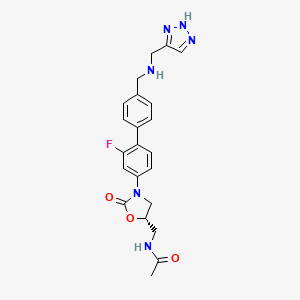
 

Radezolid

Synthesis 1

http://www.google.co.il/patents/WO2005019211A2?hl=iw&cl=en

Scheme A


Figure imgf000025_0002

Scheme B illustrates the synthesis of intermediates 7 and 8 of the present invention using Suzuki coupling chemistry between boronic acids and aryl triflates. Boronic ester 6 is treated with an appropriate aryl triflate to yield the BOC-protected biaryl 7. The BOC group of 7 is removed to provide amine 8, an intermediate useful in the synthesis of certain compounds of the present invention.

Scheme B


Figure imgf000026_0001

8, R = NH2-HCI Scheme C depicts the synthesis of intermediates 9-13, which are useful in producing certain methoxy-substituted biaryl derivatives of the present invention. Suzuki coupling of boronic ester 6 produces biaryl aldehyde 9, which can be reduced to alcohol 10. Mesylation of 10 yields 11 that can be converted to azide 12. Reduction of azide 12 yields amine 13.

Scheme C


Figure imgf000027_0001

Scheme D depicts the synthesis of pyridyl intermediates, which are useful for the synthesis of compounds of the present invention, via similar chemistry to that shown in Scheme C. Coupling of boronic ester 6 to a halopyridine aldehyde produces biaryl aldehyde 14. Aldehyde 14 serves as the precursor to intermediates 15-18 via chemistry described above.

Scheme D


Figure imgf000028_0001

Biaryl aldehyde 19 (Scheme E) can be synthesized from a Suzuki coupling of iodide 1 and 4-formylphenylboronic acid. Scheme E illustrates how intermediate aldehydes of type 19, 9, and 14 can be converted via reductive amination chemistry to other amines, such as amines 20-22, which are useful as intermediates for the synthesis of certain compounds of the invention.

Scheme E


Figure imgf000028_0002

Scheme F depicts the general synthesis of compounds of type la and lb from amines of type 5, 13, 18, and 20-22. Compounds of type la and lb are synthesized via acylation of amines 5, 13 and 18 and 20-22 with the appropriate acids using, for example, l-(3-dimethylaminopropyl)-3-ethylcarbodiimide hydrochloride (EDCI) as the coupling agent. Compounds 4001-4007 were specifically synthesized from amine 5 and the appropriate carboxylic acids. Scheme F


Figure imgf000029_0001

Scheme G highlights the synthesis of compounds of general structure II from amines of type 5 and 18. The amine can be acylated with carboxylic acids using EDCI (or other commonly employed peptide coupling reagents known in the art) to afford amides II.

Acid chlorides can be purchased or synthesized and allowed to react with amines 5 and 18, in the presence of bases such as triethylamine, to also produce amides II.

Alternatively, carboxylic acids can be pre-loaded onto a solid polymeric support, such as a tetrafluorophenol containing resin (TFP resin), and reacted with amines to yield amide products of general structure II (such as compounds 4008-4015).

Scheme G


Figure imgf000029_0002

Scheme H illustrates the synthesis of compounds of general structure Ilia from amines of type 5, 13, and 18 using reductive amination chemistry. For example, biaryl amine compounds 4016-4028 are synthesized in this manner. Scheme H


Figure imgf000030_0001

Scheme I depicts the synthesis of general structure Illb of the present invention from amine intermediate 8. For example, compounds 4029-4031 are synthesized using this reductive amination chemistry.

Scheme I


Figure imgf000030_0002

Scheme J shows the synthesis of compounds of general structure IVa and IVb. Amines 20, 21, and 22 can be converted to tertiary amines IVa, such as compounds 4032-4034 and 4036, using standard reductive amination chemistry employed earlier for other derivatives.

This reductive amination chemistry can be employed on biaryl aldehyde intermediates such as 19, 9, and 14 to yield optionally substituted amines of general structure IVb, illustrated by compound 4037.

Scheme J


Figure imgf000030_0003

producing compounds of the present invention. Known iodoaryl oxazolidinone intermediate 50 (see U.S. Patent Nos. 5,523,403 and 5,565,571) is coupled to a substituted aryl boronic acid (the Suzuki reaction) to produce biaryl alcohol 51. Mesylate 52, azide 53, and amine 54 are then synthesized using chemistry well known to those skilled in the art. Scheme 1


Figure imgf000154_0001

NaN3, DMF, 70 °C


Figure imgf000154_0002


Figure imgf000154_0003

http://www.google.co.il/patents/WO2005019211A2?hl=iw&cl=en

……………….

NO 2

http://www.google.com/patents/US20100234615

TABLE 1
Compound
Number Structure
1
Figure US20100234615A1-20100916-C00053

Example 1 Synthesis of Compound 1

Compound 1 and its hydrochloride salt are synthesized according to the following Scheme:


Figure US20100234615A1-20100916-C00176
Figure US20100234615A1-20100916-C00177


4-Methoxybenzyl Azide

1001.

A solution of 4-methoxybenzyl chloride 1000 (51.8 g, 331.0 mmol) in anhydrous DMF (200 mL) was treated with solid sodium azide (21.5 g, 331.0 mmol, 1.0 equiv) at 25° C., and the resulting mixture was stirred at 25° C. for 24 h. When TLC and HPLC/MS showed that the reaction was complete, the reaction mixture was quenched with H2O (400 mL) and ethyl acetate (EtOAc, 400 mL) at room temperature.

The two layers were separated, and the aqueous layer was extracted with EtOAc (200 mL). The combined organic extracts were washed with H2O (2×200 mL) and saturated NaCl aqueous solution (100 mL), dried over MgSO4, and concentrated in vacuo. The crude 4-methoxybenzyl azide (51.2 g, 53.95 g theoretical, 94.9% yield) was obtained as colorless oil, which by HPLC and 1H NMR was found to be essentially pure and was directly used in the subsequent reaction without further purifications. For 4-methoxybenzyl azide 1001:

1H NMR (300 MHz, CDCl3) δ 3.84 (s, 3H, ArOCH3), 4.29 (s, 2H, Ar—CH2), 6.96 (d, 2H, J=8.7 Hz), 7.28 (d, 2H, J=7.8 Hz).

C-[1-(4-Methoxy-benzyl)-1H-[1,2,3]triazol-4-yl]-methylamine and C-[3-(4-Methoxy-benzyl)-3H-[1,2,3]triazol-4-yl]-methylamine

(1003 and 1004).

A solution of 4-methoxybenzyl azide 1001 (61.2 g, 375.5 mmol) in toluene (188 mL) was heated with propargylamine 1002 (commercially available, 30.97 g, 38.6 mL, 563.0 mmol, 1.5 equiv) at 25° C., and the resulting reaction mixture was warmed up to gentle reflux at 100-110° C. for 21 h. When TLC and HPLC/MS showed that the reaction was complete, the reaction mixture was cooled down to room temperature before being concentrated in vacuo to remove the excess amount of propargylamine and solvent.

The oily residue was then treated with 30% ethyl acetate-hexane (v/v, 260 mL), and the resulting mixture was warmed up to reflux and stirred at reflux for 30 min before being cooled down to room temperature for 1 h. The pale-yellow solids were then collected by filtration, washed with 30% ethyl acetate-hexane (v/v, 2×100 mL), and dried in vacuo at 40° C. for overnight to afford the crude, cycloaddition product (78.8 g, 81.75 g theoretical, 96.4%) as a mixture of two regioisomers, C-[1-(4-methoxy-benzyl)-1H-[1,2,3]triazol-4-yl]-methylamine and C-[3-(4-methoxy-benzyl)-3H-[1,2,3]triazol-4-yl]-methylamine (1003 and 1004), in a ratio of 1.2 to 1 by 1H NMR.

The crude cycloaddition product was found to be essentially pure and the two regioisomers were not separated before being used directly in the subsequent reaction without further purification. For 1003 and 1004:

1H NMR (300 MHz, DMSO-d6) δ 1.82 (br. s, 2H, NH2), 3.72 and 3.73 (two s, 3H, Ar—OCH3), 5.47 and 5.53 (two s, 2H, ArCH2), 6.89 and 6.94 (two d, 2H, J=8.7 Hz, Ar—H), 7.17 and 7.29 (two d, 2H, J=8.7 Hz, Ar—H), 7.58 and 7.87 (two br. s, 1H, triazole-CH); C11H14N4O, LCMS (EI) m/e 219 (M++H) and 241 (M++Na).

4-({tert-Butoxycarbonyl-[1-(4-methoxy-benzyl)-1H-[1,2,3]triazol-4-ylmethyl]-amino}-methyl)-phenylboronic acid and 4-({tert-Butoxycarbonyl-[3-(4-methoxy-benzyl)-3H-[1,2,3]triazol-4-ylmethyl]-amino}-methyl)-phenylboronic acid (1008 and 1009).

Method A. A solution of the regioisomeric C-[1-(4-methoxy-benzyl)-1H-[1,2,3]triazol-4-yl]-methylamine and C-[3-(4-methoxy-benzyl)-3H-[1,2,3]triazol-4-yl]-methylamine (1003 and 1004, 20.0 g, 91.74 mmol) in 1,2-dichloroethane (DCE, 280 mL) was treated with 4-formylphenylboronic acid 1005 (commercially available, 12.39 g, 82.57 mmol, 0.9 equiv) at room temperature, and the resulting reaction mixture was stirred at room temperature for 10 min. Sodium triacetoxyborohydride (NaB(OAc)3H, 29.2 g, 137.6 mmol, 1.5 equiv) was then added to the reaction mixture in three portions over the period of 1.5 h at room temperature, and the resulting reaction mixture was stirred at room temperature for an additional 3.5 h.

When TLC and HPLC/MS showed that the reductive animation reaction was complete, the reaction mixture was concentrated in vacuo. The residue, which contained a regioisomeric mixture of 4-({[1-(4-methoxy-benzyl)-1H-[1,2,3]triazol-4-ylmethyl]-amino}-methyl)-phenylboronic acid and 4-({[3-(4-methoxy-benzyl)-3H-[1,2,3]triazol-4-ylmethyl]-amino}-methyl)-phenylboronic acid as the reductive animation products (1006 and 1007), was then treated with tetrahydrofuran (THF, 100 mL) and water (H2O, 100 mL).

The resulting solution was subsequently treated with solid potassium carbonate (K2CO3, 37.98 g, 275.2 mmol, 3.0 equiv) and di-tert-butyl dicarbonate (BOC2O, 20.02 g, 91.74 mmol, 1.0 equiv) at room temperature and the reaction mixture was stirred at room temperature for 2 h. When TLC and HPLC/MS showed that the N-BOC protection reaction was complete, the reaction mixture was treated with ethyl acetate (EtOAc, 150 mL) and water (H2O, 100 mL). The two layers were separated, and the aqueous layer was extracted with ethyl acetate (50 mL). The combined organic extracts were washed with H2O (50 mL), 1.5 N aqueous HCl solution (2×100 mL), H2O (100 mL), and saturated aqueous NaCl solution (100 mL), dried over MgSO4, and concentrated in vacuo.

The crude, regioisomeric 4-({tert-butoxycarbonyl-[1-(4-methoxy-benzyl)-1H-[1,2,3]triazol-4-ylmethyl]-amino}-methyl)-phenylboronic acid and 4-({tert-butoxycarbonyl-[3-(4-methoxy-benzyl)-3H-[1,2,3]triazol-4-ylmethyl]-amino}-methyl)-phenylboronic acid (1008 and 1009, 35.98 g, 37.32 g, 96.4%) was obtained as a pale-yellow oil, which solidified upon standing at room temperature in vacuo.

This crude material was directly used in the subsequent reaction without further purification. For 1008 and 1009:

1H NMR (300 MHz, DMSO-d6) δ 1.32 and 1.37 (two br. s, 9H, COOC(CH3)3), 3.70, 3.73 and 3.74 (three s, 3H, Ar—OCH3), 4.07-4.39 (m, 4H), 5.49 and 5.52 (two s, 2H), 6.70-8.04 (m, 9H, Ar—H and triazole-CH); C23H29BN4O5, LCMS (EI) m/e 453 (M++H) and 475 (M++Na).

Method B. A solution of the regioisomeric C-[1-(4-methoxy-benzyl)-1H-[1,2,3]triazol-4-yl]-methylamine and C-[3-(4-methoxy-benzyl)-3H-[1,2,3]triazol-4-yl]-methylamine (1003 and 1004, 20.06 g, 92.0 mmol) in tetrahydrofuran (THF, 300 mL) was treated with 4-formylphenylboronic acid (13.11 g, 87.4 mmol, 0.95 equiv) at room temperature, and the resulting reaction mixture was stirred at room temperature for 10 min. Sodium triacetoxyborohydride (NaB(OAc)3H, 29.25 g, 138.0 mmol, 1.5 equiv) was then added to the reaction mixture in three portions over the period of 1.5 h at room temperature, and the resulting reaction mixture was stirred at room temperature for an additional 3.5 h.

When TLC and HPLC/MS showed that the reductive animation reaction was complete, the reaction mixture, which contained a regioisomeric mixture of 4-({[1-(4-methoxy-benzyl)-1H-[1,2,3]triazol-4-ylmethyl]-amino}-methyl)-phenylboronic acid and 4-({[3-(4-methoxy-benzyl)-3H-[1,2,3]triazol-4-ylmethyl]-amino}-methyl)-phenylboronic acid as the reductive animation products (1006 and 1007), was then treated with water (H2O, 200 mL).

The resulting aqueous solution was subsequently heated with solid potassium carbonate (K2CO3, 38.0 g, 276 mmol, 3.0 equiv) and di-tert-butyl dicarbonate (BOC2O, 20.08 g, 92 mmol, 1.0 equiv) at room temperature and the reaction mixture was stirred at room temperature for 2 h. When TLC and HPLC/MS showed that the N-BOC protection reaction was complete, the reaction mixture was treated with ethyl acetate (EtOAc, 150 mL) and water (H2O, 100 mL). The two layers were separated, and the aqueous layer was extracted with ethyl acetate (50 mL).

The combined organic extracts were washed with H2O (50 mL), 1.5 N aqueous HCl solution (2×100 mL), H2O (100 mL), and saturated aqueous NaCl solution (100 mL), dried over MgSO4, and concentrated in vacuo. The crude, 4-({tert-butoxycarbonyl-[1-(4-methoxy-benzyl)-1H-[1,2,3]triazol-4-ylmethyl]-amino}-methyl)-phenylboronic acid and 4-({tert-butoxycarbonyl-[3-(4-methoxy-benzyl)-3H-[1,2,3]triazol-4-ylmethyl]-amino}-methyl)-phenylboronic acid (1008 and 1009, 38.45 g, 39.50 g, 97.3%) was obtained as a pale-yellow oil, which solidified upon standing at room temperature in vacuo. This crude material was found to be essentially identical in every comparable aspect as the material obtained from Method A and was directly used in the subsequent reaction without further purification.

(5S)-{4′-[5-(Acetylamino-methyl)-2-oxo-oxazolidin-3-yl]-2′-fluoro-biphenyl-4-ylmethyl}-[1-(4-methoxy-benzyl)-1H-[1,2,3]triazol-4-ylmethyl]-carbamic acid tert-butyl ester and (5S)-{4′-[5-(Acetylamino-methyl)-2-oxo-oxazolidin-3-yl]-2′-fluoro-biphenyl-4-ylmethyl}-[1-(4-methoxy-benzyl)-1H-[1,2,3]triazol-5-ylmethyl]-carbamic acid tert-butyl ester

(1011 and 1012).

A suspension of the crude regioisomeric mixture of 4-({tert-butoxycarbonyl-[1-(4-methoxy-benzyl)-1H-[1,2,3]triazol-4-ylmethyl]-amino}-methyl)-phenylboronic acid and 4-({tert-butoxycarbonyl-[3-(4-methoxy-benzyl)-3H-[1,2,3]triazol-4-ylmethyl]-amino}-methyl)-phenylboronic acid (1008 and 1009, 37.62 g, 83.23 mmol) and N-[3-(3-fluoro-4-iodo-phenyl)-2-oxo-oxazolidin-5-ylmethyl]-acetamide (1010, 28.32 g, 74.9 mmol, 0.90 equiv) in toluene (150 mL) was treated with powder K2CO(34.45 g, 249.7 mol, 3.0 equiv), EtOH (50 mL), and H2O (50 mL) at 25° C.,

and the resulting mixture was degassed three times under a steady stream of Argon at 25° C. Pd(PPh3)(866 mg, 0.749 mmol, 0.01 equiv) was subsequently added to the reaction mixture, and the resulting reaction mixture was degassed three times again under a stead stream of Argon at 25° C. before being warmed up to gentle reflux for 18 h. When TLC and HPLC/MS showed the coupling reaction was complete, the reaction mixture was cooled down to room temperature before being treated with H2O (100 mL) and ethyl acetate (100 mL). The two layers were then separated, and the aqueous layer was extracted with EtOAc (100 mL).

The combined organic extracts were washed with H2O (50 mL), 1.5 N aqueous HCl solution (2×150 mL), H2O (100 mL), and the saturated aqueous NaCl solution (100 mL), dried over MgSO4, and concentrated in vacuo. The residual oil was solidified upon standing at room temperature in vacuo to afford the crude, (5S)-{4′-[5-(acetylamino-methyl)-2-oxo-oxazolidin-3-yl]-2′-fluoro-biphenyl-4-y]methyl}-[1-(4-methoxy-benzyl)-1H-[1,2,3]triazol-4-ylmethyl]-carbamic acid tert-butyl ester (1011) and (5S)-{4′-[5-(acetylamino-methyl)-2-oxo-oxazolidin-3-yl]-2′-fluoro-biphenyl-4-ylmethyl}-[1-(4-methoxy-benzyl)-1H-[1,2,3]triazol-5-ylmethyl]-carbamic acid tert-butyl ester (1012) as a regioisomeric mixture.

This crude product (43.36 g, 49.28 g theoretical, 88%) was used directly in the subsequent reaction without further purification. For the mixture of 1011 and 10121H NMR (300 MHz, DMSO-d6) δ 1.35 and 1.38 (two br. s, 9H, COO(CH3)3), 1.85 (s, 3H, COCH3), 3.45 (t, 2H, J=5.4 Hz), 3.73 and 3.76 (two s, 3H, Ar—OCH3), 3.79 (dd, 1H, J=6.6, 9.1 Hz), 4.18 (t, 1H, J=9.1 Hz), 4.35-4.43 (m, 4H), 4.73-4.81 (m, 1H), 5.50 (br. s, 2H), 6.90 and 6.98 (two d, 2H, J=8.7 Hz), 7.28 and 7.32 (two d, 2H, J=8.7 Hz), 7.35 (dd, 2H, J=2.2, 8.6 Hz), 7.42 (dd, 1H, J=2.2, 8.6 Hz), 7.49-7.63 (m, 4H, aromatic-H), 7.90 and 7.99 (two br. s, 1H, triazole-CH), 8.29 (t, 1H, J=5.8 Hz, NHCOCH3); C35H39FN6O6, LCMS (EI) m/e 659 (M++H) and 681 (M++Na).

(5S)-N-{3-[2-Fluoro-4′-({[1-(4-methoxy-benzyl)-1H-[1,2,3]triazol-4-ylmethyl]-amino}-methyl)-biphenyl-4-yl]-2-oxo-oxazolidin-5-ylmethyl}-acetamide Hydrochloride (1013)

and

(5S)-N-{3-[2-Fluoro-4′-({[1-(4-methoxy-benzyl)-1H–[1,2,3]triazol-5-ylmethyl]-amino}-methyl)-biphenyl-4-yl]-2-oxo-oxazolidin-5-ylmethyl}-acetamide Hydrochloride (1014).

A solution of a regioisomeric mixture of (5S)-{4′-[5-(acetylamino-methyl)-2-oxo-oxazolidin-3-yl]-2′-fluoro-biphenyl-4-ylmethyl}-[1-(4-methoxy-benzyl)-1H-[1,2,3]triazol-4-ylmethyl]-carbamic acid tert-butyl ester and (5S)-{4′-[5-(acetylamino-methyl)-2-oxo-oxazolidin-3-yl]-2′-fluoro-biphenyl-4-ylmethyl}-[1-(4-methoxy-benzyl)-1H-[1,2,3]triazol-5-ylmethyl]-carbamic acid tert-butyl ester (1011 and 1012, 37.28 g, 56.65 mmol) in ethyl acetate (EtOAc, 150 mL) and methanol (MeOH, 30 mL) was treated with a solution of 4 N hydrogen chloride in 1,4-dioxane (113.3 mL, 453.2 mmol, 8.0 equiv) at room temperature, and the resulting reaction mixture was stirred at room temperature for 12 h. When TLC and HPLC/MS showed that the N-BOC deprotection reaction was complete,

the solvents were removed in vacuo. The residue was then suspended in 250 mL of 5% methanol (MeOH) in acetonitrile (CH3CN), and the resulting slurry was stirred at room temperature for 1 h. The solids were then collected by filtration, washed with toluene (2×100 mL) and 5% methanol in acetonitrile (2×50 mL), and dried in vacuo to afford a regioisomeric mixture of the crude, (5S)-N-{3-[2-fluoro-4′-({[1-(4-methoxy-benzyl)-1H-[1,2,3]triazol-4-ylmethyl]-amino}-methyl)-biphenyl-4-yl]-2-oxo-oxazolidin-5-ylmethyl}-acetamide hydrochloride and (5S)-N-{3-[2-fluoro-4′-({[1-(4-methoxy-benzyl)-1H-[1,2,3]triazol-5-ylmethyl]-amino}-methyl)-biphenyl-4-yl]-2-oxo-oxazolidin-5-ylmethyl}-acetamide hydrochloride (1013 and 1014, 30.0 g, 33.68 g theoretical, 89.1% yield) as off-white crystals in a ratio of 1.2 to 1.

This material was found by 1H NMR and HPLC/MS to be essentially pure and was directly used in the subsequent reactions without further purification. For the regioisomeric mixture of 1013 and 1014:

1H NMR (300 MHz, DMSO-d6) δ 1.84 (s, 3H, COCH3), 3.44 (t, 2H, J=5.4 Hz), 3.71 and 3.74 (two s, 3H, Ar—OCH3), 3.80 (dd, 1H, J=6.6, 9.1 Hz), 4.17 (t, 1H, J=9.1 Hz), 4.23-4.30 (m, 4H), 4.73-4.80 (m, 1H), 5.58 and 5.70 (two s, 2H), 6.88 and 6.93 (two d, 2H, J=8.7 Hz), 7.15 and 7.32 (two d, 2H, J=8.7 Hz), 7.43 (dd, 2H, J=2.2, 8.6 Hz), 7.52-7.62 (m, 6H, aromatic-H), 8.28 (s, 1H, triazole-CH), 8.32 (t, 1H, J=5.8 Hz, NHCOCH3), 9.91 and 10.32 (two br. s, 2H, ArCH2N+H2); C30H31FN6O4, LCMS (EI) m/e 559 (M++H) and 581 (M++Na).

(5S)-N-[3-(2-Fluoro-4′-{[(1H-[1,2,3]triazol-4-ylmethyl)-amino]-methyl}-biphenyl-4-yl)-2-oxo-oxazolidin-5-ylmethyl]-acetamide hydrochloride (1 hydrochloride salt).

A solution of the crude regioisomeric mixture of (5S)-N-{3-[2-fluoro-4′-({[1-(4-methoxy-benzyl)-1H-[1,2,3]triazol-4-ylmethyl]-amino}-methyl)-biphenyl-4-yl]-2-oxo-oxazolidin-5-ylmethyl}-acetamide hydrochloride and (5S)-1H-{3-[2-fluoro-4′-({[1-(4-methoxy-benzyl)-1H-[1,2,3]triazol-5-ylmethyl]-amino}-methyl)-biphenyl-4-yl]-2-oxo-oxazolidin-5-ylmethyl}-acetamide hydrochloride (1013 and 1014, 29.17 g, 49.07 mmol) in trifluoroacetic acid(TFA, 150 mL) was warmed up to 65-70° C., and the resulting reaction mixture was stirred at 65-70° C. for 12 h. When TLC and HPLC/MS showed that the deprotection reaction was complete, the solvents were removed in vacuo.

The residual solids were then treated with ethyl acetate (EtOAc, 100 mL) and H2O (150 mL) before being treated with a saturated aqueous solution of sodium carbonate (30 mL) at room temperature. The resulting mixture was then stirred at room temperature for 1 h before the solids were collected by filtration, washed with EtOAc (2×50 mL) and H2O (2×50 mL), and dried in vacuo at 40-45° C. to afford the crude, (5S)-N-[3-(2-fluoro-4′-{[(1H-[1,2,3]triazol-4-ylmethyl)-amino]-methyl)-biphenyl-4-yl)-2-oxo-oxazolidin-5-ylmethyl]-acetamide (1 as the free base, 18.9 g, 21.49 g theoretical, 87.9%) as off-white powders, which by HPLC/MS and 1H NMR was found to be one pure regioisomer and this regioisomer was found to be identical as the material obtained from deprotection of 1013 alone by the same method.

For 1 as the free base: 1H NMR (300 MHz, DMSO-d6) δ 1.85 (s, 3H, COCH3), 3.44 (t, 2H, J=5.4 Hz), 3.74 (s, 2H), 3.77 (s, 2H), 3.79 (dd, 1H, J=6.4, 9.2 Hz), 4.17 (t, 1H, J=9.1 Hz), 4.72-4.81 (m, 1H), 7.39-7.62 (m, 7H, aromatic-H), 7.73 (s, 1H, triazole-CH), 8.29 (t, 1H, J=5.8 Hz, NHCOCH3), 9.72 (br. s, 2H, ArCH2N+H2), 15.20 (br. s, 1H, triazole-NH); C22H23FN6O3, LCMS (EI) m/e 439 (M++H) and 461 (M++Na).

A suspension of 1 free base (18.0 g, 41.1 mmol) in ethyl acetate (EtOAc, 80 mL), and methanol (MeOH, 20 mL) was treated with a solution of 4.0 N hydrogen chloride in 1,4-dioxane (41.1 mL, 164.4 mmol, 4.0 equiv) at room temperature, and the resulting mixture was stirred at room temperature for 8 h. The solvents were then removed in vacuo, and the residue was further dried in vacuo before being treated with a mixture of 10% methanol in acetonitrile (80 mL). The solids were collected by filtration, washed with 10% MeOH/acetonitrile (2×40 mL), and dried in vacuo to afford 1 hydrochloride salt (18.13 g, 19.50 g theoretical, 93% yield) as off-white crystals.

The crude 1 hydrochloride salt can be recrystallized from acetonitrile and water, if necessary, according to the following procedure: A suspension of the crude 1 hydrochloride salt (50.0 g) in acetonitrile (1250 mL) was warmed up to reflux before the distilled water (H2O, 280 mL) was gradually introduced to the mixture. The resulting clear yellow to light brown solution was then stirred at reflux for 10 min before being cooled down to 45-55° C. The solution was then filtered through a Celite bed at 45-55° C., and the filtrates were gradually cooled down to room temperature before being further cooled down to 0-5° C. in an ice bath for 1 h. The solids were then collected by filtration, washed with acetonitrile (2×50 mL), and dried in vacuo at 40° C. for 24 h to afford the recrystallized 1 hydrochloride salt (42.5 g, 50.0 g theoretical, 85% recovery) as off-white crystals.

For 1: 1H NMR (300 MHz, DMSO-d6) δ 1.86 (s, 3H, COCH3), 3.45 (t, 2H, J=5.4 Hz), 3.84 (dd, 1H, J=6.4, 9.2 Hz), 4.19 (t, 1H, J=9.1 Hz), 4.24 (br. s, 2H), 4.31 (br. s, 2H), 4.74-4.79 (m, 1H), 7.44 (dd, 1H, J=2.2, 8.6 Hz), 7.57-7.66 (m, 6H, aromatic-H), 8.17 (s, 1H, triazole-CH), 8.30 (t, 1H, J=5.8 Hz, NHCOCH3), 9.72 (br. s, 2H, ArCH2N+H2), 15.20 (br. s, 1H, triazole-NH);

13C NMR (75 MHz, DMSO-d6) δ 22.57, 40.69, 41.50, 47.36, 49.23, 71.85, 105.70 (d, J=28.5 Hz), 114.14 (d, J=2.9 Hz), 122.29 (d, J=13.3 Hz), 128.82 (d, J=3.0 Hz), 130.70, 130.94, 131.0, 131.22, 135.30, 137.92 (br. s), 139.66 (d, J=11.2 Hz), 154.11, 159.13 (d, J=243.5 Hz), 170.19;

C22H23FN6O3—HCl, LCMS (EI) m/e 439 (M++H) and 461 (M++Na).

……………………………..

http://www.sciencedirect.com/science/article/pii/S0960894X0801192X

Full-size image (49 K)


References

  1. Sutcliffe, J.A. Antibiotics in development targeting protein synthesis. Ann. NY Acad. Sci. 20111241, 122–152, doi:10.1111/j.1749-6632.2011.06323.x.
  2. Rib-X. Radezolid. Available online: http://www.rib-x.com/pipeline/radezolid.php#development (accessed on 14 April 2013).
  3. Rib-X Pharmaceuticals, Inc. Safety and efficacy study of oxazolidinone to treat pneumonia. Available online: http://www.clinicaltrials.gov/ct2/show/NCT00640926 (accessed on 14 April 2013).
  4. Rib-X Pharmaceuticals, Inc. Safety and efficacy study of oxazolidinones to treat uncomplicated skin infections. Available online: http://www.clinicaltrials.gov/ct2/show/NCT00646958 (accessed on 14 April 2013).
  5. Shaw, K.J.; Barbachyn, M.R. The oxazolidinones: Past, present, and future. Ann. NY Acad. Sci. 20111241, 48–70, doi:10.1111/j.1749-6632.2011.06330.x.
  6. Skripkin, E.; McConnell, T.S.; DeVito, J.; Lawrence, L.; Ippolito, J.A.; Duffy, E.M.; Sutcliffe, J.; Franceschi, F. Rχ-01, a new family of oxazolidinones that overcome ribosome-based linezolid resistance.Antimicrob. Agents Chemother. 200852, 3550–3557, doi:10.1128/AAC.01193-07.


Cited Patent Filing date Publication date Applicant Title
US6969726 * Jun 2, 2004 Nov 29, 2005 Rib X Pharmaceuticals Inc Biaryl heterocyclic compounds and methods of making and using the same
US20050043317 * Jun 2, 2004 Feb 24, 2005 Jiacheng Zhou Biaryl heterocyclic compounds and methods of making and using the same
9-17-2010
BIARYL HETEROCYCLIC COMPOUNDS AND METHODS OF MAKING AND USING THE SAME
9-17-2010
Process for the synthesis of triazoles
4-28-2010
BIARYL HETEROCYCLIC COMPOUNDS AND METHODS OF MAKING AND USING THE SAME
11-26-2008
Biaryl heterocyclic compounds and methods of making and using the same
10-26-2007
Method for reducing the risk of or preventing infection due to surgical or invasive medical procedures
10-12-2007
Method for reducing the risk of or preventing infection due to surgical or invasive medical procedures
10-12-2007
Method for reducing the risk of or preventing infection due to surgical or invasive medical procedures
12-13-2006
Biaryl heterocyclic compounds and methods of making and using the same
11-30-2005
Biaryl heterocyclic compounds and methods of making and using the same

QIDP Designation for Radezolid for Acute Bacterial Skin and Skin Structure Infections, Community-acquired Bacterial Pneumonia

Rib-X Pharmaceuticals announced that the FDA designated radezolid as a Qualified Infectious Disease Product (QIDP) for the indications of acute bacterial skin and skin structure infections (ABSSSI) and community-acquired bacterial pneumonia (CABP).

The QIDP designation will enable Rib-X to benefit from certain incentives for the development of new antibiotics, including an additional five years of market exclusivity, priority review and eligibility for fast-track status, provided under the new Generating Antibiotic Incentives Now (GAIN) program. GAIN was included in the FDA Safety and Innovation Act (FDASIA), formerly known as PDUFA V, which received bipartisan Congressional support and was signed into law by President Obama in July 2012.

Radezolid has completed two Phase 2 clinical trials with an oral formulation in uncomplicated skin and skin structure infections (uSSSI) and in CABP. A Phase 1 study with an IV formulation was recently completed in healthy subjects. Rib-X recently announced data from a positive Phase 1 IV dosing study conducted in healthy subjects and an in vivo long-term safety study vs. linezolid (ZyvoxPfizer).

Radezolid is a next-generation oxazolidinone with a safety profile permitting long-term treatment of resistant infections, including those caused by methicillin-resistant Staphylococcus aureus (MRSA).

For more information call (203) 624-5606 or visit www.rib-x.com


BC-3781, LEFAMULIN……A Pleuromutilin by Nabriva (Austria) in phase 2


Antibiotics 02 00500 i025

BC-3781

Topical pleuromutilin antibiotic agent

Gram-positive, including MRSA, PHASE 2 COMPLETED

Nabriva (Austria)

SEE UPDATED POST AT   https://newdrugapprovals.org/2014/10/10/nabrivas-lefamulin-bc-3781-receives-fda-fast-track-status-to-treat-cabp-and-absssi/   ………….C0NTAINS SYNTHESIS

BC-3781
The pleuromutilin BC-3781 belongs to the first generation of pleuromutilins to combine excellent oral
bioavailability with substantial activity against Gram-positive pathogens and atypicals as well as some
Gram-negative pathogens. In particular, BC-3781 is highly active against multi-drug resistant (MDR)
pathogens including methicillin resistant Staphylococcus aureus (MRSA), MDR Streptococcus pneumonia
(i.e. macrolide and quinolone resistance), and vancomycin resistant Enterococcus faecium. It is
characterized by excellent in vivo activities (e.g. pneumonia model), outstanding PK/PD parameters,
allowing once a day dosing, and a novel mode of action. BC-3781 is being developed for both oral and IV
administration and is intended for the treatment of serious multi-drug resistant skin & skin structure
infections (CSSI) and moderate to severe pneumonia (CAP, HAP etc).

Pleuromutilins have been known since 1951, but only entered the market in 2007 with the approval of retapamulin for topical use. Until today, there are no pleuromutilins for systemic use approved in human clinical practice.

Nabriva is currently working on the development of new compounds is this class. The lead compound, BC-3781, if approved, will be the first pleuromutilin for systemic use in humans.

The compound shows potent in vitro activity against a large collection of staphylococcistreptococci, andE. faecium. When compared to linezolid and vancomycin, the compound shows greater overall potency againstS. aureus [121]. BC-3781 shows improved activity against most bacteria commonly associated with community-acquired respiratory tract infections, the compound is especially potent against S. pneumoniaincluding penicillin resistant strains. It also shows improved activity against H. influenzaM. catarrhalisM. pneumoniae and C. pneumoniae.

BC-3781 is undergoing Phase I clinical trials for CAP and in March of 2011 has completed a Phase II clinical study comparing it to vancomycin for treatment of aBSSSI [119,120,121,122,123]. Nabriva Therapeutics AG announced that the cooperation with Forest Laboratories to develop the compound had elapsed, and that Nabriva retained all rights in BC-3781. The company informed that the product was Phase III ready and that it was seeking partners to continue further development [203].

Nabriva is also developing BC-7013 for topical use against Gram-positive infections and working on the discovery of new pleuromutilins [119,124].

Dr William Prince, CMO Nabriva Therapeutics commented:
“This is the first patient study with a systemic pleuromutilin. It will be an important proof of concept
for an exciting new class of antibiotics. The phase II study builds on our extensive preclinical and
phase I data which have demonstrated that BC-3781 can achieve therapeutically relevant blood and
tissue levels in man with excellent tolerability when administered by either oral or intravenous
routes.”

Dr. David Chiswell, CEO Nabriva Therapeutics commented:
“With a worldwide problem due to antibiotic resistant bacteria, there is a very significant need for
new classes of antibiotics with unique modes of action such as the pleuromutilins. The commercial
prospects for BC-3781 as the leading compound of an exciting new class are excellent, especially as it
has an ideal anti-bacterial spectrum for both skin and respiratory infections and is being developed
with both oral and intravenous formulations”

BC-3781 is highly active against key pathogens, including MRSA, associated with skin infections and
community and hospital acquired pneumonia and is more potent than Linezolid and vancomycin. The
compound’s novel mode of action ensures that it overcomes resistance mechanisms affecting all
approved classes of antibiotics. BC-378


About Nabriva Therapeutics
Nabriva Therapeutics is a biotechnology company focused on developing a new class of antibiotics for
the treatment of serious infections caused by resistant pathogens. Nabriva’s lead systemic product,
BC-3781, is being developed for the treatment of serious skin infections and bacterial pneumonia
caused by S. aureus, , S. pneumoniae, H. influenza, Mycoplasma, Legionella and other bacteria,
including drug resistant strains such as MRSA and vancomycin resistant E. faecium. In addition,
Nabriva Therapeutics’ topical pleuromutilin product candidate, BC-7013, is in clinical phase I. Nabriva
Therapeutics has a proven track record in world-class medicinal chemistry, clinical expertise, a
seasoned management team and solid IP. Nabriva Therapeutics is located in Vienna, Austria.

For more information on Nabriva please visit http://www.nabriva.com.


REF

http://www.phase4-partners.com/wp-content/uploads/2013/09/100412.pdf

http://www.glsv-vc.com/downloads/2010-06-02_First%20Patient_PressRelease.pdf

119

Nabriva. Pleuromutilins. Available online: http://www.nabriva.com/programs/pleuromutilins/ (accessed on 7 December 2012).
120

Forest Laboratories. Our pipeline: Solid, and set for further growth. Available online: http://www.frx.com/research/pipeline.aspx (accessed on 13 April 2013).
121

Sader, H.S.; Biedenbach, D.J.; Paukner, S.; Ivezic-Schoenfeld, Z.; Jones, R.N. Antimicrobial activity of the investigational pleuromutilin compound BC-3781 tested against Gram-positive organisms commonly associated with acute bacterial skin and skin structure infections. Antimicrob. Agents Chemother. 2012,56, 1619–1623, doi:10.1128/AAC.05789-11.

122
Sader, H.S.; Paukner, S.; Ivezic-Schoenfeld, Z.; Biedenbach, D.J.; Schmitz, F.J.; Jones, R.N. Antimicrobial activity of the novel pleuromutilin antibiotic BC-3781 against organisms responsible for community-acquired respiratory tract infections (CARTIs). J. Antimicrob. Chemother. 201267, 1170–1175, doi:10.1093/jac/dks001.

123
Nabriva Therapeutics AG. Study comparing the safety and efficacy of two doses of BC-3781 vs. vancomycin in patients with acute bacterial skin and skin structure infection (ABSSSI). Available online: http://www.clinicaltrials.gov/ct2/show/NCT01119105 (accessed on 13 April 2013).

124
Novak, R. Are pleuromutilin antibiotics finally fit for human use? Ann. NY Acad. Sci. 20111241, 71–81, doi:10.1111/j.1749-6632.2011.06219.x.


Valnemulin.svgvalnemulin


retapamulin