
 DRUG APPROVALS BY DR ANTHONY MELVIN CRASTO
.....FOR BLOG HOME CLICK HERE
DRUG APPROVALS BY DR ANTHONY MELVIN CRASTO
.....FOR BLOG HOME CLICK HEREFlag and hits
ORGANIC SPECTROSCOPY

SUBSCRIBE

 Subscribe in a reader
Enter your email address:
Delivered by FeedBurner
Subscribe to New Drug Approvals by Email


Recent Comments
 | shivkr2 on SPSR Excellence Award 2025 – S… |
 | Bonkasaurus on Infigratinib phosphate |
 | PALOVAROTENE | ORGAN… on Palovarotene |
| Pfizer just purchase… on Temanogrel | |
| Pfizer To Cash In On… on Temanogrel |
US confirms first case of Mers coronavirus

http://www.bbc.com/news/world-us-canada-27264460
Health officials have reported the first case of Mers coronavirus in the US after a man fell ill following travel to Saudi Arabia.
The unidentified patient has been hospitalised in Indiana with the Middle East respiratory syndrome (Mers).
Saudi Arabia says more than 100 people infected with Mers have died since an outbreak began in 2012.
Mers, unusually lethal and found in camels, causes symptoms including fever, pneumonia and kidney failure.
Local Indiana health officials, along with members of the Centers for Disease Control and Prevention, are investigating the case.
The man, said to be a health care worker from Saudi Arabia, fell ill about a week ago after arriving in the US.
He reportedly stopped in London before landing in Chicago and taking a bus to Indiana.
Concerns grow in Europe over threat from deadly pig virus
http://www.bbc.com/news/science-environment-27256466
France is expected to suspend pig-related imports from a number of countries as worries grow over the spread of a deadly swine virus.
Porcine Epidemic Diarrhoea Virus (PEDv) has killed some seven million piglets in the US in the past year.
The disease has also been found in Canada, Mexico and Japan.
While the virus isn’t harmful to humans or food, France is concerned over the potential economic impact and is set to suspend imports of live pigs and sperm.
PEDv is spread in faecal matter and attacks the guts of pigs, preventing them from absorbing liquids and nutrients.
Older animals can survive but fatality rates among piglets run between 80% and 100%.
So virulent is the agent that one expert estimated that a spoonful of infected manure would be enough to sicken the entire US herd.
The disease is believed…
View original post 671 more words

Orphan Drugs: FDA April 2014 Approvals

.
.
The chart below identifies orphan drug designated products receiving FDA approval in April 2014 (as of 05/03/14) in ascending “Approval Date” order.
FDA April 2014 Orphan Drugs Receiving Approval
| # | Generic Name/Approval Date | Sponsor Company | Indication |
| 1 | ethiodized oil injection (Lipiodol)/ 04.04 | Guerbet LLC | Imaging tumors in adults with known hepatocellular carcinoma (HCC) |
| 2 | Ramucirumab (Cyramza)/ 04.21 | Eli Lilly and Company | Gastric Cancer or gastro-esophageal junction adenocarcinoma |
| 3 | Siltuximab (Sylvant)/ 04.23 | Janssen Biotech | Multicentric Castleman’s Disease (MCD) |
| 4 | Mercaptopurine/ 04.28 | Nova Laboratories Limited (UK) | Acute Lymphoblastic Leukemia (ALL) |
| 5 | Ceritinib (Zykadia)/ 04.29 | Novartis Pharmaceuticals Corp | ALK+ metastatic non-small cell lung cancer (NSCLC) who have progressed onor are intolerant
to crizotinib |
.
Please Note: FDA Official Logo from FDA website.
Copyright © 2012-2014, Orphan Druganaut Blog. All rights reserved.
‘Achilles heel’ of pancreatic cancer identified

A research team at Georgetown Lombardi Comprehensive Cancer Center reports that inhibiting a single protein completely shuts down growth of pancreatic cancer, a highly lethal disease with no effective therapy.
Their study, published online today in Science Signaling, demonstrates in animal models and in human cancer cells that while suppressing Yes-associated protein (Yap) did not prevent pancreatic cancer from first developing, it stopped any further growth.
“We believe this is the true Achilles heel of pancreatic cancer, because knocking out Yap crushes this really aggressive cancer. This appears to be the critical switch that promotes cancer growth and progression,” says the study’s senior investigator, Chunling Yi, PhD, an assistant professor of oncology at Georgetown Lombardi.
Yi added that because Yap is over-expressed in other cancers, such as lung, liver and stomach tumors, researchers are already working on small molecule drugs that will inhibit activity of the protein and its…
View original post 229 more words
30-year puzzle in breast cancer solved
In a new study published today in Cell Reports, scientists at the Fred Hutchinson Cancer Research Center demonstrate that mice lacking one copy of a gene called CTCF have abnormal DNA methylation and are markedly predisposed to cancer. CTCF is a very well-studied DNA binding protein that exerts a major influence on the architecture of the human genome, but had not been previously linked to cancer.
Over 30 years ago, frequent loss of one copy of chromosome 16 was first reported in breast cancer but the gene or genes responsible remained to be identified. Dr. Gala Filippova, staff scientist at Fred Hutch and co-author of the study, originally cloned the human CTCF gene and mapped it to chromosome 16, within the same region that is frequently lost in human cancers. That same year, Dr. Chris Kemp of the Human Biology Division at Fred Hutch, co-authored a paper demonstrating that…
View original post 234 more words
Buparlisib in phase 3 for Breast tumor; Hematological neoplasm; Solid tumor

Buparlisib
5-[2,6-Di(4-morpholinyl)-4-pyrimidinyl]-4-(trifluoromethyl)-2-pyridinamine.
5-[2,6-Di(morpholin-4-yl)pyrimidin-4-yl]-4-(trifluoromethyl)pyridin-2-amine
5-(2,6-Di-4-morpholinyl-4-pyrimidinyl)-4- trifluoromethylpyridin-2-amine
944396-07-0
Chemical Formula: C18H21F3N6O2
Mass: 410.16781
NVP-BKM-120, BKM-120;
Novartis AG phase 3 for breast cancer
Phosphoinositide 3-kinase inhibitor
Buparlisib, also known as BKM120, is an orally bioavailable specific oral inhibitor of the pan-class I phosphatidylinositol 3-kinase (PI3K) family of lipid kinases with potential antineoplastic activity. PI3K inhibitor BKM120 specifically inhibits class I PIK3 in the PI3K/AKT kinase (or protein kinase B) signaling pathway in an ATP-competitive manner, thereby inhibiting the production of the secondary messenger phosphatidylinositol-3,4,5-trisphosphate and activation of the PI3K signaling pathway. This may result in inhibition of tumor cell growth and survival in susceptible tumor cell populations. Activation of the PI3K signaling pathway is frequently associated with tumorigenesis. Dysregulated PI3K signaling may contribute to tumor resistance to a variety of antineoplastic agents.
NVP-BKM-120 is an oral selective phosphatidylinositol 3-kinase (PI3K) inhibitor in phase III clinical development at Novartis for the treatment of breast cancer in combination with fulvestrant in postmenopausal women with hormone receptor-positive HER2-negative locally advanced or metastatic breast cancer which progressed on or after aromatase inhibitor treatment.
Early clinical development at Novartis Oncology, a division of Novartis, is also ongoing for the treatment of solid tumors, advanced endometrial carcinoma, non-small cell lung cancer (NSCLC), bladder cancer, gastrointestinal stromal cancer and for the treatment of metastatic castration-resistant prostate cancer.
Novartis is conducting phase II clinical trials for the treatment of follicular lymphoma, diffuse large B-cell lymphoma, mantle cell lymphoma and squamous cell carcinoma of head and neck.
The University of Kansas is evaluating the compound in phase I clinical trials for the treatment of advanced colorectal cancer in combination with irinotecan, while additional phase I trials are ongoing at the Dana-Farber Cancer Institute for the treatment of renal cell carcinoma. The Dana-Farber Cancer Institute is also conducting phase II clinical trials for the oral treatment of recurrent glioblastoma and preclinical studies for the treatment of ovarian cancer. Novartis is also conducting early clinical studies for the treatment of metastatic melanoma
pyrimidine derivative 5-(2,6-Di- 4-morpholinyl-4-pyrimidinyl)-4-trifluoromethylpyridin-2-amine (Compound A, see below), its hydrates, its salts and hydrates and solvates of its salts, to said specific solid forms thereof, to pharmaceutical compositions containing said solid forms, to processes for the preparation of pharmaceutical compositions containing said solid forms, to methods of using said solid forms and to pharmaceutical compositions for the therapeutic treatment of warm-blooded animals, especially humans. Background of the invention
WO 2007/084786 (priority date: January 20, 2006) describes certain pyrimidine derivatives having PI3 inhibiting properties, their use as pharmaceuticals and manufacturing processes thereof. One pyrimidine derivative disclosed in WO 2007/084786 is the selective
phosphatidylinositol 3-kinase inhibitor compound 5-(2,6-Di-4-morpholinyl-4-pyrimidinyl)-4- trifluoromethylpyridin-2-amine, hereinafter referred to as “Compound A” or “the compound of formula A”.

Compound A is described in WO 2007/084786 in free form and as the hydrochloric acid salt. The manufacturing process for preparing Compound A is described in Example 10 of this document. The manufacturing processes described therein are, although suitable, regarded as disadvantageous for commercial production.
Due to the high potency of pyrimidine derivatives, in particular PI3K inhibitors, there is a need for improved manufacturing methods of such compounds. In particular there is a need to provide processes that fulfill one or more of the following criteria: scalable, safer; simpler; higher yielding and more economical when compared to known.
…………………………………….
WO 2007084786
http://www.google.com/patents/WO2007084786A1?cl=en
Example 10
Preparation of 4-(“trifluoromethyπ-5-(2,6-dimorpholmoρyrirnidin-4-yπpyridin-2- amine
c

[0388] To a slurry of 2-moφholino-4,6-dichloropyrimidine (prepared as in
Method 22, 2.0 g, 8.54 mmol) in NMP (14 mL), triethylamine (1.43 mL, 10.25 mmol) was added. The heterogeneous mixture was stirred for 15 minutes, then treated with morpholine (0.75 mL, 8.54 mmol). Upon refluxing at 85 0C under argon for 2 hours, the solution was cooled, then added to EtOAc (160 mL). The organic solution was washed with 25 mL of NaHCO3(sat.) (2 x), water (2 x) and brine, dried over Na2SO4, filtered and concentrated. The crude material was dissolved in 200 mL EtOAc and filtered through a SiO2 pad, further eluting with EtOAc, yielding 2.2 g (93%) of 2,4-dimorpholino-6- chloropyrimidine as an off-white solid. LCMS (m/z): 285.0 (MH+), 1H NMR (CDCl3): δ 5.86 (s, IH), 3.71-3.76(m, 12H), 3.52-3.56(m, 4H).
[0389] 4-(trifluoromethyl)-5-(2,6-dimoφholmopyrimidin-4-yl)pyridin-2-amine 8

[0390] Argon gas was bubbled through a heterogeneous mixture of 2,4- dimoφholino-6-chloropyrimidine (4.1 g, 14.3 mmol) and 4-(trifluoromethyl)-5-(4,4,5,5- tetramethyl-l,3,2-dioxaborolan-2-yl)pyridm-2-amine (16.5 g, 57.3 mmol) in 1,2- dimethoxyethane and 2M Na2Cθ3 (3:1) for 20 minutes. 1,1′-
Bis(diphenylphosphino)ferrocene palladium (IT) chloride (292 mg, 0.36 mmol) was added and the high pressure glass vessel containing the mixture was sealed. The reaction mixture was then heated at 900C for 15 hours, cooled and diluted with EtOAc (300 mL). The organic solution was washed with 300 mL of a mixture of water: Na2Cθ3(sat.):NH4θH(conc.) = 5:4:1, then NH4Cl(sat), and brine (2x), dried over Na2SO4, filtered and concentrated. The crude material was purified by SiO2 chromatography (50- 90% EtOAc/hexanes with 0.1% TEA) resulting in 5.62 g (95%) of 4-(trifluoromethyl)-5- (2,6-dimorpholinopyrimidin-4-yl)pyridin-2-amine as an off-white solid.
LCMS (m/z): 411.3 (MH+);
1H NMR (CDCl3): δ 8.27 (s, IH), 6.78 (s, IH), 5.97 (s, IH), 4.77 (bs, 2H), 3.59-3.80(m, 12H), 3.58-3.61(m, 4H).
…………….
WO2012044727 or equi as below
http://www.google.com/patents/EP2621908A2?cl=en
Example 1: 4,4′-(6-Chloropyrimidine-2,4-diyl)di[morpholine] (3) U 2011/053808
63
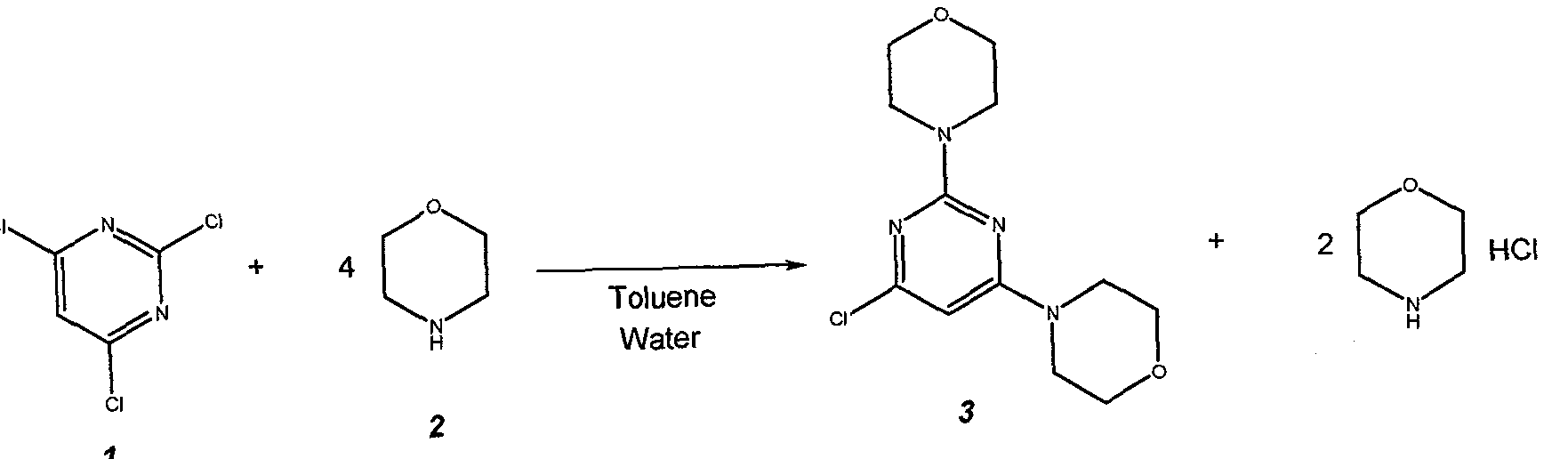
Prepare a solution of 22 g (0.12 mol) of 2,4,6-trichloropyrimidine 1 , in 95.2 g (110 mL) of toluene and charge it to the 25 mL addition funnel. Charge a nitrogen-flushed 500 mL round bottom 4- neck flask that equipped with a condenser, heating mantle, thermocouple, 125 mL addition funnel, mechanical stirrer and nitrogen inlet / outlet with 62.7 g (63 mL, 0.72 mol) of morpholine 2, 95.2 g (110 mL) of toluene and 44 g (44 mL) of water. Add the toluene solution of 1 over 10 minutes. Heat the reaction mixture to 83 ± 3 °C. Stir at 83 ± 3 °C for 2 h. Check the progress of the reaction. Cool to 30 + 3 °C. Transfer the 2-phase mixture to a 1L separatory funnel.
Separate the phases. Wash the organic phase (top) twice with 200 mL (2 x 100 mL) of warm (30 °C) water. Separate the phases after each wash. Transfer the organic (top) phase back to the 500 mL reaction flask that equipped with a condenser, heating mantle, thermocouple, 125 mL addition funnel, mechanical stirrer and nitrogen inlet / outlet. Stir and add 50.0 mL of 10.0 N aqueous hydrochloric acid solution. Heat the solution to 53 ± 3 °C and stir for 12 – 18 h. Check the progress of the reaction. Cool to 22 + 3 °C. Transfer the 2-phase mixture to a 1 L separatory funnel. Separate the phases. Transfer the aqueous (bottom) phase to a 500 mL round bottom 4-neck flask equipped with a cooling bath, thermocouple, addition funnel, pH probe, mechanical stirrer and nitrogen inlet / outlet. Stir and cool to 0 ± 3 °C. Add 85.0 g of 25% aqueous sodium hydroxide solution by drops over 30 minutes, maintaining a batch temperature of 10 ± 10 °C throughout the addition. Warm to 20 ± 3 °C and stir for 30 minutes. Isolate the solids by vacuum filtration. Wash the cake with 3 x 100 mL of water. Dry the solids (55°C, 30 mbar) for 24 hours to afford 30.9 g (91.9% yield) of 3 as a white crystalline solid.
Example 2:
4,4′-[6-(4>4,5,5-Tetramethyl-1,3,2-dioxaborolan-2-yl)pyrimidine-2,4-diyl]di[morpholine] (4)

Charge a nitrogen-flushed 2 L round bottom 4-neck flask that equipped with a condenser, heating mantle, thermocouple, rubber septum, mechanical stirrer and nitrogen inlet / outlet with 100.0 g (0.351 mol) of 4,4′-(6-chloropyrimidine -2,4-diyl)di[morpholine] 3 and 943 g (1200 mL) of acetonitrile. Stir and heat to 60 + 3 °C. Hold this solution at 60 + 3 °C for charge to batch. Charge a nitrogen-flushed 3 L reactor that equipped with an overhead stirrer, condenser, nitrogen inlet/outlet and rubber septum with 115.9 g (0.457 mol) of bis(pinacolato)- diboron, 51.7 g (0.527 mol) of potassium acetate, 12.9 g (0.014 mol) of tris(dibenzylideneacetone) – dipalladium(O), 7.9 g (0.029 mol) of tricyclohexylphosphine and 393 g (500 mL) of acetonitrile. Stir and heat the slurry to 84 ± 3 °C (reflux). Collect 00 mL of distillate. Transfer the warm 3 acetonitrile solution via peristaltic pump to the 3 L reactor containing the reaction mixture over 30 minutes and continue collecting distillate. Wash the 2 L flask and transfer lines with 79 g (100 mL) of acetonitrile and transfer the wash to the batch. Maintain distillation at 84 ± 3 °C and collect an additional 900 mL of distillate (batch volume ~ 1100 mL). Check the progress of the reaction 2 h from the start of the addition of 3. Cool the reaction mixture to 70 ± 3 °C and charge 693 g (800 mL) of toluene over 1-2 min. The batch will cool upon the addition of the toluene. Further cool the reaction mixture to 50 ± 3 °C. Charge to a clean 1 L flask, 347 g (400 mL) of toluene and warm it to 50 °C. This will be used as the cake wash. Filter the reaction mixture through a 15 g pad of Celite 545. Wash the filter cake with the warm (50 °C) toluene (400 mL) and collect this wash separately from the batch. This wash will be charged to the distillation residue later in the process. Transfer the filtrate back to the 3 L reactor. Concentrate the batch (25 °C to 40 °C internal temperature, 50 mbar) until a batch volume of 250 mL is reached.
Charge toluene cake wash held in reserve (~400 mL) and continue to concentrate the batch (37 °C to 43 °C internal temperature, 50 mbar) until a batch volume of 250 mL is reached. Check for complete removal of acetonitrile using the described Process Steering Control. Warm to 50 °C and stir for 15 min. Add 164 g (240 mL) of heptane over 30 minutes maintaining 50 °C throughout the addition. Stir the resulting suspension for 1 h. Cool the slurry to 23 ± 3 °C over 1 h and hold at this temperature for at least 1 h. Blanket the filtering funnel used for isolation of the product with nitrogen (to avoid moisture) and quickly filter the solids. Wash the filter cake twice with a mixture of 22 g (25 mL) of toluene and 51 g (75 mL) of heptane. Dry the solids at 50 °C, 35 mbar for 16 h to afford 4.4 g (72.7% corrected yield) of 4 as a sandy, beige solid. Example 3: 5-Bromo-4-(trifluoromethyl)pyridin-2-amine (4a)

4b 4a
Charge a nitrogen-flushed 3 L reactor that equipped with an overhead stirrer, condenser, nitrogen inlet/outlet and rubber septum with 112.14 g (0.63 mol) of N-bromosuccinimide (NBS) and 645 g (725 mL) of tetrahydrofuran. Stir and cool the slurry to -5 ± 3 °C. Charge a nitrogen- flushed 1 L round bottom 4-neck flask that equipped with a thermocouple, mechanical stirrer and nitrogen inlet / outlet with 97.26 g (0.6 mol) of 2-amino-4-(trifluoromethyl)pyridine, 4b and 511 g (575 mL) of tetrahydrofuran. Stir to dissolve the 4b. Transfer the 4b solution to the addition funnel on the reactor and add the solution to the NBS slurry over 2 h maintaining an internal temperature of 0 ± 3 °C throughout the addition. Rinse the 1 L flask and addition funnel with 44 g (50 mL) of tetrahydrofuran and add the wash to the reaction mixture. Warm the solution to 20 + 3 °C over 30 minutes. Check for completeness of the reaction. Quench by charging a solution of 24.6 g of sodium thiosulfate pentahydrate dissolved in 475 mL of water over 10 minutes, maintaining a batch temperature of 20 ± 3 °C throughout the addition. Stir for 1 h after the quench. Concentrate (internal temp = 25 °C, 50 mbar) to remove tetrahydrofuran. Add 379 g (500 mL) of fert-butyl methyl ether. Stir and warm the resulting solution/suspension to 30 ± 3 °C and stir for 15 minutes. Separate the phases. Wash the extract four times with a solution of 32 g of sodium chloride dissolved in 768 g (768 mL) of water (4 x 200 mL per wash), separating the phases after each wash. Finally, wash the extract with 150 g (150 mL) of water. Separate the phases. Charge 152 g (200 mL) of terf-butyl methyl ether. Partially concentrate (57 ± 3 °C) to a volume of 350 mL. Cool to 50 °C and add 265 g (350 mL) of ferf-butyl methyl ether. Resume the concentration (57 ± 3 °C) until a batch volume of 350 mL is reached. Cool to 50 °C and add 265 g (350 mL) of fe/f-butyl methyl ether. Again, resume the concentration (57 ± 3 °C) until a batch volume of 350 mL is reached. Cool to 50 °C and add 103 g (150 mL) of terf-butyl methyl ether to raise the batch volume to 500 mL. Charge 1026 g (1500 mL) of heptane over 15 minutes maintaining 45 ± 3 °C throughout the addition. Slowly increase the vacuum and concentrate (internal temp = 40 °C to 50 °C) to a batch volume of 1000 mL. Release the vacuum and seed the batch. Resume the distillation, further increase the vacuum (slowly) and concentrate (internal temp = 25 °C to 40 °C) to a batch volume of 500 mL. Stir the resulting suspension at 0 °C for 30 min. Filter the solids. Wash the filter cake with 68 g (100 mL) of cold (0 °C) heptane (containing 30 ppm Octastat). Dry the solids (40 °C, 50 mbar) for 16 h to afford 109.8 g (78.0% yield) 4a as an orange solid.
Example 4: 5-(2,6-Di-4-morpholinyl^^yrimidinyl)-^trifluoromethylpyridin-2-ami^ (5)

Charge a 500 mL round bottom 3-neck flask that equipped with a thermocouple, mechanical stirrer, nitrogen inlet/outlet and cooling bath with 202.8 g (0.622 mol) of cesium carbonate and 260 g (260 mL) of water. Stir and cool the resulting solution to 22 ± 3 °C. Transfer the solution to the addition funnel. Charge a nitrogen-flushed 3 L reactor that equipped with an overhead stirrer, condenser, pH probe, nitrogen inlet/outlet and 500 mL addition funnel with 50.0 g (0.207 mol) of 5-bromo-4-(trifluoromethyl) pyridin-2-amine 4a, 190.9 g (0.456 mol) of 4,4′-[6-(4,4,5,5- tetramethyl-1 ,3,2- dioxaborolan-2-yl)pyrimidine-2,4-diyl]di[morpholine] 4, 6.75 g (0.0103 mol) of 1,1′-bis(di-ferf-butylphosphino) ferrocene palladium dichloride and 556 g (625 mL) of thf. Stir the slurry at 22 ± 3 °C. Add the aqueous cesium carbonate solution via the addition funnel to the slurry over 1 – 2 min. Stir rapidly (to ensure good mixing), heat to 45 ± 3 °C over 15 min and hold at this temperature for at least 30 minutes. Check for completeness of the reaction. Cool to 22 ± 3 °C. Separate the phases. Partially concentrate the THF (25 °C, 90 mbar) to a volume of 400 mL. Add 654 g (750 mL) of isopropyl acetate, resume the vacuum distillation and concentrate to a volume of 400 mL. Add 610 g (700 mL) of isopropyl acetate, stir and filter the hazy solution through a 25 g pad of Celite. Wash the reactor and filter cake with 87 g (100 mL) of isopropyl acetate and add the wash to the batch. Add 1 L of 0. 25N aqueous N-acetyl-L- cysteine solution and stir at 60 ± 3 °C for 1 h. Cool to 22 ± 3 °C and drain the aqueous wash. Add 1 L of 0.25N aqueous N-acetyl-L-cysteine pH = 7 solution and stir at 60 ± 3 °C for 1 h. Cool to 22 ± 3 °C and drain the aqueous wash. Again, add 1 L of 0.25N aqueous N-acetyl-L-cysteine pH = 7 solution and stir at 60 ± 3 °C for 1 h. Cool to 22 ± 3 °C and drain the aqueous wash. Charge 34.5 g of Si-Thiol functionalized silica gel and stir the suspension at 60 ± 3 °C for 1 h. Cool to 22 ± 3 °C and filter to remove the silica gel. Add 1 L of 1 N aqueous hydrochloric acid solution and stir for 15 minutes. Separate the phases and retain the aqueous phase which now contains product. Extract the organic phase again by adding 500 mL of 1N aqueous HCI solution and stirring for 15 minutes. Separate the phases and combine the aqueous extracts. Adjust the pH to 2.3 ± 0.2 by the addition of ~280 mL of 4N aqueous sodium hydroxide solution. Charge 17.2 g of Si-Thiol functionalized silica gel and stir the suspension at 50 ± 3 °C for 1 h. Cool to 22 ± 3 °C and filter to remove the silica gel. Adjust the pH to 5.0 ± 0.2 by the slow addition of ~75 mL of 4N aqueous sodium hydroxide solution maintaining a batch temperature of 15 ± 3 °C. Stir the slurry for at least 16 h at 22 ± 3 °C to allow the product to completely solidify. Filter the solids and wash the filter cake once with 250 g (250 mL) of water. Dry the solids (50 °C, 35 mbar) for 16 h to obtain 75 g (89% yield) of 5 as a tan solid. Following this procedure, Compound 5 is the hemihydrate polymorph form HA of the Compound of Formula A.
Alternative procedure:
Charge a 500 mL round bottom 3-neck flask that equipped with a thermocouple, mechanical stirrer, nitrogen inlet/outlet and cooling bath with 202.8 g (0.622 mol) of cesium carbonate and 260 g (260 mL) of water. Stir and cool the resulting solution to 22 ± 3 °C. Transfer the solution to the addition funnel. Charge a nitrogen-flushed 3 L reactor that equipped with an overhead stirrer, condenser, pH probe, nitrogen inlet/outlet and 500 mL addition funnel with 50.0 g (0.207 mol) of 5-bromo-4-(trifluoromethyl) pyridin-2-amine 4a, 90.9 g (0.456 mol) of
4,4′[6(4,4,5,5tetramethyl1 ,3,2 dioxaborolan2yl)pyrimidine2,4diyl]di[morpholine] 4, 6.75 g (0.0103 mol) of 1 ,1′-bis(di-fert-butylphosphino) ferrocene palladium dichloride and 556 g (625 mL) of tetrahydrofuran. Stir the slurry at 22 ± 3 °C. Add the aqueous cesium carbonate solution via the addition funnel to the slurry over 1-2 min. Stir rapidly (to ensure good mixing), heat to 45 ± 3 °C over 15 min and hold at this temperature for at least 30 minutes. Check for completeness of the reaction . Cool to 22 + 3 °C. Separate the phases. Partially concentrate the THF (25 C, 90 mbar) to a volume of 400 mL. Add 654 g (750 mL) of isopropyl acetate, resume the vacuum distillation and concentrate to a volume of 400 mL. Add 610 g (700 mL) of isopropyl acetate, stir and filter the hazy solution through a 25 g pad of Celite. Wash the reactor and filter cake with 87 g (100 mL) of isopropyl acetate and add the wash to the batch. Add 1 L of 0.125N aqueous N- acetyl-L-cysteine solution and stir at 60 ± 3 °C for 1 h. Cool to 22 + 3 °C C and drain the aqueous wash. Add 1 L of 0.25N aqueous N-acetyl-L-cysteine pH = 7 solution and stir at 60 + 3 °C for 1 h. Cool to 22 + 3 °C and drain the aqueous wash. Again, add 1 L of 0.25N aqueous N- acetyl-L-cysteine pH = 7 solution and stir at 60 + 3 °C for 1 h. Cool to 22 ± 3 °C and drain the aqueous wash. Charge 34.5 g of Si-Thiol functionalized silica gel and stir the suspension at 60 + 3 °C for 1 h. Cool to 22 ± 3 °C and filter to remove the silica gel. Add 1 L of N aqueous hydrochloric acid solution and stir for 15 minutes. Separate the phases and retain the aqueous phase which now contains product. Extract the organic phase again by adding 500 mL of 1N aqueous hydrochloric acid solution and stirring for 15 minutes. Separate the phases and combine the aqueous extracts. Adjust the pH to 2.3 + 0.2 by the addition of ~280 mL of 4N aqueous sodium hydroxide solution. Charge 17.2 g of Si-Thiol functionalized silica gel and stir the suspension at 50 ± 3 °C for 1 h. Cool to 22 ± 3 °C and filter to remove the silica gel. Adjust the pH to 5.0 ± 0.2 by the slow addition of ~75 mL of 4N aqueous sodium hydroxide solution maintaining a batch temperature of 15 ± 3 °C. Stir the slurry for at least 16 h at 22 ± 3 °C to allow the product to completely solidify. Filter the solids and wash the filter cake once with 250 g (250 mL) of water. Dry the solids (50 °C, 35 mbar) for 16 h to obtain 75 g (89% yield) of 5 as a tan solid. Following this procedure, Compound 5 is the hemihydrate polymorph form HA of the Compound of Formula A.
…………..
Improved process for manufacturing 5-(2,6-di-4-morpholinyl-4-pyrimidinyl)-4-trifluoromethylpyridin-2-amine
Improved process for the preparation of buparlisib, an oral PI3K inhibitor Novartis is developing for the treatment of solid tumors, including breast cancer and hematological tumors. In January 2014, a phase III development was ongoing and Novartis expected to file for regulatory approval for breast cancer in 2015. Buparlisib was originally claimed in WO2007084786, protection for which expires in both the US and Europe in January 2027. Also see WO2012044727 for a more recent process case.
Burger, M.T.; Pecchi, S.; Wagman, A.; et al.
Discovery of BKM120, a pan class I PI3 kinase inhibitor in phase I/II clinical trials
240th ACS Natl Meet (August 22-26, Boston) 2010, Abst MEDI 489
Vu, A.T.; Morris, J.; Malhotra, S.V.
Efficient and improved synthesis of a PI3K inhibitor anticancer agent
241st ACS Natl Meet (March 27-30, Anaheim) 2011, Abst ORGN 115
Newly approved drugs: EMA presents figures
In the EU, the number of approved drugs is rising with a new active ingredient; however, stagnated, the number of newly approved generics.
read at
loxoprofen

loxoprofen
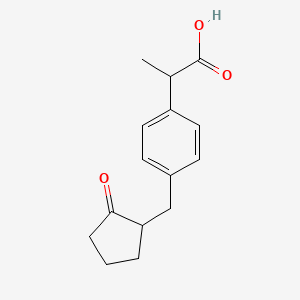
(RS)-2-{4-[(2-oxocyclopentyl)methyl]phenyl}propanoic acid
Cyclooxygenase inhibitor; Prostanoid receptor antagonist
Inflammatory disease; Pain
Loxoprofen (INN) is a non-steroidal anti-inflammatory drug in the propionic acid derivatives group, which also includes ibuprofen and naproxen among others. It is marketed in Brazil, Mexico and Japan by Sankyo as its sodium salt, loxoprofen sodium, under the trade name Loxonin, Argentina as Oxeno and in India as Loxomac. It is available in these countries for oral administration, and a transdermal preparation was approved for sale in Japan on January 2006.[1]
Pharmacokinetics
Loxoprofen is a prodrug. It is quickly converted to its active trans-alcohol metabolite following oral administration, and reaches its peak plasma concentration within 30 to 50 minutes.
Mechanism of action
As most NSAIDs, loxoprofen is a non-selective cyclooxygenase inhibitor, and works by reducing the synthesis of prostaglandins from arachidonic acid.
Interactions
Loxoprofen should not be administered at the same time as second-generation quinolone antibiotics such as ciprofloxacin and norfloxacin, as it increases their inhibition of GABA and this may cause seizures.[2] It may also increase the plasma concentration of warfarin, methotrexate, sulfonylurea derivatives and lithium salts, so care should be taken when loxoprofen is administered to patients taking any of these drugs.[2]
synthesis

Ethyl 2-oxocyclopentanecarboxylate (I) reacts with ethyl 2-(4-chloromethylphenyl)propionate (II) in the presence of KOH in hot DMF to afford ethyl 2-[4-(1-ethoxycarbonyl-2-oxocyclopentan-1-ylmethyl)phenyl]propionate (III), which is then hydrolyzed and decarboxylated by treatment with 47% HBr in refluxing dioxane.


http://zhou.nankai.edu.cn/index.php/highlights
Method for the preparation of loxoprofen (2S,1’R,2’S) trans-alcohol. Appears to be the first filing from the assignee. Sankyo (now Daiichi Sankyo) has developed and launched oral loxoprofen (Loxonin), an NSAID, is indicated for the symptom relief of inflammation and pain associated with eg rheumatoid arthritis, osteoarthritis and low back pain. Regional and national filings based on the product patent, WO03059880 start expiring from Jan 2023.
References
- Daiichi Sankyo Co. (January 24, 2006). “Percutaneous Absorption-Type Analgesic and Anti-inflammatory Drug Loxonin Poultice 100mg Receives Approval for Manufacture” (Press release). Doctor’s Guide Global Edition. Retrieved 2007-04-19.
- (Portuguese) “LOXONIN – Bula do Medicamento [Label Information]”. Centralx. 2007. Retrieved 2007-04-19.
|
7-29-1987
|
Leukotriene antagonists
|
|
|
5-20-1987
|
Phenothiazine and derivatives and analogs and use as leukotriene biosynthesis inhibitors
|
|
|
5-20-1987
|
Propylphenoxy pyridine carboxylates as leukotriene antagonists
|
|
|
5-20-1987
|
Phenothiazone derivatives and analogs
|
|
|
5-20-1987
|
Leukotriene antagonists
|
|
|
5-6-1987
|
Benzofuran 2-carboxylic acid esters useful as inhibitors of leukotriene biosynthesis
|
|
|
1-7-1987
|
1,4-diaza-phenothiazines
|
|
|
10-15-1986
|
Leukotriene antagonists
|
|
|
9-10-1986
|
Benzo[A]phenothiazines and hydro-derivatives
|
|
|
9-3-1986
|
4-oxo-benzopyran carboxylic acids
|
|
7-9-1986
|
Ophthalmic anti-inflammatory agents
|
|
|
10-27-1983
|
ANALGESIC AND ANTI-INFLAMMATORY AGENTS
|
|
|
8-24-1983
|
Analgesic and anti-inflammatory agents
|
|
|
7-18-1979
|
Substituted phenylacetic acid derivatives and process for the preparation thereof
|
Fulvestrant… For the treatment of hormone receptor positive metastatic breast cancer in postmenopausal women with disease progression following anti-estrogen therapy.

fulvestrant
| Fibrosis; Breast tumor; Female genital tract tumor; Uterus tumor |
Estrogen receptor antagonist
(7α,17β)-7-{9-[(4,4,5,5,5-pentafluoropentyl)sulfinyl]nonyl}estra-1,3,5(10)-triene-3,17-diol
129453-61-8 CAS
C32H47F5O3S
606.771
Fulvestrant is a drug treatment of hormone receptor-positive metastatic breast cancer in post-menopausal women with disease progression following anti-estrogen therapy. It is an estrogen receptor antagonist with no agonist effects, which works both by down-regulating and by degrading the estrogen receptor.
| Canada | 2351004 | 2003-02-18 | EXPIRY 2021-01-08 |
| United States | 6774122 | 2001-01-09 | EXPIRY 2021-01-09 |
Fulvestrant (Faslodex, AstraZeneca) is a drug treatment of hormone receptor-positive metastatic breast cancer in postmenopausal women with disease progression following anti-estrogen therapy. It is an estrogen receptor antagonist with no agonist effects, which works by down-regulating the estrogen receptor.[1] It is administered as a once-monthly injection.

Clinical uses
Fulvestrant is a selective estrogen receptor down-regulator (SERD). Fulvestrant is indicated for the treatment of hormone receptor positive metastatic breast cancer in postmenopausal women with disease progression following anti-estrogen therapy. The dosing schedule for fulvestrant remains under investigation in an attempt to optimize its effectiveness.[2]
Clinical trials
Metastatic or locally advanced breast cancer
Fulvestrant provided effective second-line therapy in this setting for postmenopausal women who had relapsed or progressed after previous endocrine therapy.[3]
In particular 4 clinical trials in this setting did show similar efficacy to the other hormonal agents (aromatase inhibitors and tamoxifen) with good tolerability profile. Fulvestrant had a lower incidence of joint disorders.[4][5]
NICE evaluation
The U.K. National Institute for Health and Clinical Excellence (NICE) said in 2011 that it found no evidence Faslodex was significantly better than existing treatments, so its widespread use would not be a good use of resources for the country’s National Health Service
The first month’s treatment of Faslodex, which starts with a loading dose, costs £1,044.82 ($1,666), and subsequent treatments cost £522.41 a month.
A month’s supply of anastrozole (Arimidex), which is off patent, costs £5.99, and letrozole (Femara) costs £84.86.[6][7][8]
Patent extension
The original patent for Faslodex expired in October 2004. Drugs subject to pre-marketing regulatory review are eligible for patent extension, and for this reason AstraZeneca got an extension of the patent to December 2011.[9][10]
AstraZeneca has filed later patents. There is no generic Faslodex available.[11] A later patent for Faslodex expires in January 2021.[12]
FASLODEX® (fulvestrant) injection for intramuscular administration is an estrogen receptor antagonist. The chemical name is 7-alpha-[9-(4,4,5,5,5-penta fluoropentylsulphinyl) nonyl]estra-1,3,5-(10)- triene-3,17beta-diol. The molecular formula is C32H47F5O3S and its structural formula is:
 |
Fulvestrant is a white powder with a molecular weight of 606.77. The solution for injection is a clear, colorless to yellow, viscous liquid.
Each injection contains as inactive ingredients: 10% w/v Alcohol, USP, 10% w/v Benzyl Alcohol, NF, and 15% w/v Benzyl Benzoate, USP, as co-solvents, and made up to 100% w/v with Castor Oil, USP as a co-solvent and release rate modifier.
-
Fulvestrant is a pure antiestrogen that represent a significant breakthrough in the treatment of breast cancer. Despite its pure antagonist activity, studies on ovariectomized rats have confirmed that fulvestrant, in contrast to Tamoxifen which acts like estrogen to reduce periosteal bone formation, does not alter estrogen-like or antiestrogenic effects. Fulvestrant also has some distinct advantages on target organs other than breast tissue.
-
Fulvestrant is a steroidal pure antiestrogen with a chemical structure similar to estradiol. Studies of etrogen receptor (ER) function have demonstrated that estradiol binding to the ER initiate a sequence of events. Fulvestrant antagonizes estrogen action by occupying the ER and preventing estrogen-stimulated gene activation, thus interfering with the estrogen related processes essential for cell-cycle competion.
-
Fulvestrant, 7-alpha- [9-(4,4,5,5,5pentafluoropentylsulphinyl) nonyl]-estra-1,3,5 (10)-triene-3,17β-diol, has the following formula:

-
WO Patent application No. 02/32922 describes a process for preparing an intermediate compound useful for preparing, e.g. fulvestrant, which process comprises aromatization of a compoud, and thereafter if necessary or desired, carrying out one or more of the following steps: (i) removing any hydroxy protecting group; (ii) converting a precursor group to a different such group.
-
EP Patent No. 0138504 relates to certain 7α-substituted derivatives of oestradiol and related steroids which possess antioestrogenic activity. US Patent No. 4659516 , EP Patent No. 0138504 and Bowler, Steroids 1989, 54, 71 describe a process for making steroids such as fulvestrant, by which 1,6-conjugate addition of an alkyl group to an estra-4,6-diene-3-one gave a ratio of 7α- to 7β-epimer of 1.2 : 1 (isolated). In WO 02/32922 it is stated that the ratio of epimers obtained using this process on an industrial scale is 1.9: 1.
-
US patent No 6288051 describes 7α-(5 -methylaminopentyl)-estratrienes.
-
There remains a need in the art for improved methods of preparing fluvestrant and other 7α-alkylated 19-norsteroids.

PATENT
http://www.google.com/patents/EP1771462B1?cl=en


Preparative Example 16: Preparation of fulvestrant (Cp 9305) from Cp 9363 – indirect process (depicted in Figure 12)
-
A solution of 40.5 grams of Cp 9363 in 320 grams tetrahydrofuran and 81 grams methanol was cooled to 5°C and treated with a warm solution of 27 grams sodium (meta) periodate in 183 grams water. The mixture was allowed to stand at room temperature overnight, concentrated under vacuum and then dissolved in dichloromethane, extracted with water and evaporated to give 40 grams of Cp 9368 (fulvestrant 17-acetate).
-
The oily residue of Cp 9368 (40 grams) was dissolved in 320 grams of methanol under nitrogen and treated for 3 hours at room temperature with a solution of 20 grams of potassium hydroxide in 128 grams methanol. After neutralisation with 30 grams of acetic acid, the reaction mixture was concentrated under vacuum and then dissolved in dichloromethane, extracted with water and evaporated. The oily residue was crystallised from 400 grams of toluene, then dried under vacuum to constant weight. 26.6 grams of fulvestrant were obtained.
Example 17: Preparation of fulvestrant (Cp 9305) from Cp 9304 – direct process (depicted in Figure 9)
-
A solution of 41 grams of Cp 9304 in 328 grams tetrahydrofuran and 82 grams methanol was cooled to 5°C and treated with a warm solution of 27 grams sodium (meta)periodate in 185 grams water. The mixture was allowed to stand at room temperature overnight, concentrated under vacuum and then dissolved in dichloromethane, extracted with water, evaporated, and crystallised from toluene to give 28 grams of Cp 9305 (fulvestrant). Further purification can be effected by recrystallisation from ethyl acetate.
PAPER
Org. Process Res. Dev., 2010, 14 (3), pp 544–552
http://pubs.acs.org/doi/abs/10.1021/op900315j

7α-[9-(4,4,5,5,5-Pentafluoropentylsulfinyl)nonyl]estra-1,3,5-(10)-triene-3,17β-diol (Fulvestrant) (6)

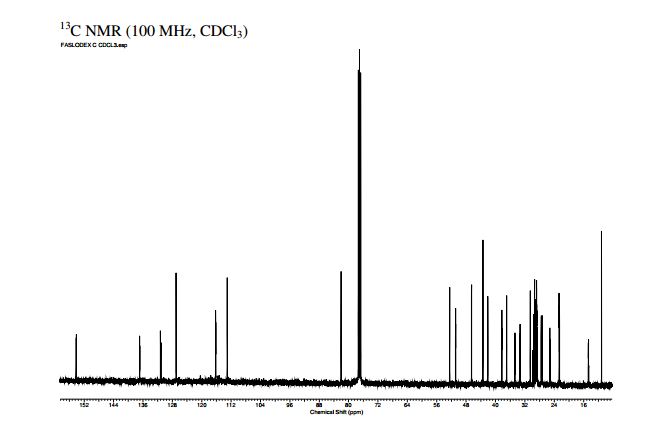

7α-[9-(4,4,5,5,5-Pentafluoropentylsulfinyl)nonyl]estra-1,3,5-(10)-triene-3,17β-diol (Fulvestrant)
References
- S. Kansra, S. Yamagata, L. Sneade, L. Foster & N. Ben-Jonathan (2005). “Differential effects of estrogen receptor antagonists on pituitary lactotroph proliferation and prolactin release”. Mol Cell Endocrinol 239 (1-2): 27–36. doi:10.1016/j.mce.2005.04.008. PMID 15950373.
- Angela Mae Obermiller, PharmD; and Mehmet Sitki Copur, MD (2011). “The Longstanding Quest for a Better Endocrine Therapy Continues High-Dose Fulvestrant: Have We Found Its Effective Dose, Combination, Setting, or Sequence?”. Contemporary Oncology 3 (1).
- Croxtall, J. D.; McKeage, K. (2011). “Fulvestrant”. Drugs 71 (3): 363–380. doi:10.2165/11204810-000000000-00000. PMID 21319872.
- Fulvestrant in the treatment of advanced breast cancer: a systematic review and meta-analysis of randomized controlled trials. Valachis A, Mauri D, Polyzos NP, Mavroudis D, Georgoulias V, Casazza G. Crit Rev Oncol Hematol. 2010 Mar;73(3):220-7. Epub 2009 Apr 14. Review. PMID:19369092
- Fulvestrant for systemic therapy of locally advanced or metastatic breast cancer in postmenopausal women: a systematic review. Flemming J, Madarnas Y, Franek JA. Breast Cancer Res Treat. 2009 May;115(2):255-68. Epub 2008 Aug 6. Review. PMID:18683044
- UK cost body rules against AstraZeneca cancer drug, Reuters, Nov 9, 2011
- UK’s NICE says no to AstraZeneca breast cancer drug Faslodex, The Pharma Letter, 10 November 2011
- National Institute for Health and Clinical Excellence Guidance Breast cancer (metastatic) – fulvestrant
- Patent Term Extensions The United States Patent and Trademark Office.
- Determination of Regulatory Review Period for Purposes of Patent Extension; FASLODEX A Notice by the Food and Drug Administration on 04/17/2003
- Generic Faslodex Availability, Drugs.COM
- Pink Ribbon Blues: How Breast Cancer Culture Undermines Women’s Health By Gayle A. Sulik, Oxford University Press (Oct. 2010)
VERY New patent
WO-2014064712
Process for the preparation of fulvestrant and its intermediates. Appears to be the first filing from Intas Pharmaceuticals on this API. Family members of the product patent, WO0151056 (assigned to AstraZeneca), expire in the EU states and in the US in 2021
 |
|
| Clinical data | |
|---|---|
| Trade names | Faslodex |
| AHFS/Drugs.com | Monograph |
| Pregnancy category |
|
| Routes of administration |
Intramuscular injection |
| ATC code | L02BA03 (WHO) |
| Legal status | |
| Legal status |
|
| Pharmacokinetic data | |
| Protein binding | 99% |
| Biological half-life | 40 days |
| Identifiers | |
| Synonyms | ICI-182,780 |
| CAS Number | 129453-61-8  |
| PubChem (CID) | 104741 |
| IUPHAR/BPS | 1015 |
| DrugBank | DB00947  |
| ChemSpider | 94553 |
| UNII | 22X328QOC4 |
| KEGG | D01161 |
| ChEBI | CHEBI:31638 |
| ChEMBL | CHEMBL1358 |
| ECHA InfoCard | 100.170.955 |
| Chemical and physical data | |
| Formula | C32H47F5O3S |
| Molar mass | 606.772 g/mol |
| 3D model (Jmol) | Interactive image |
//////////

Researchers create protein with potential for weight loss, diabetes treatment
It sounds like a magic bullet: Administer a protein, watch the subject lose weight. But that’s exactly what University of Florida scientists found when they discovered a new way to deliver a protein that helps develop cells that convert fat into energy.
The study builds upon on a discovery by Bruce Spiegelman, a cell biologist at the Boston-based Dana-Farber Cancer Institute, who found that human muscles release a hormone he called irisin during exercise. Spiegelman also found that mice lost a small amount of weight when given the irisin gene using a virus to ferry it into cells.
Now the UF team—including researcher Dr. Li-Jun Yang, Shi-Wu Li, and postdoctoral researcher William Donelan—has for the first time created a stable protein form of irisin, opening the door to human studies that weren’t previously possible because the virus has not been approved for use in people.
“We found that if you…
View original post 422 more words


 New Drug Approvals