
Home » 2013 (Page 39)
Yearly Archives: 2013
 DRUG APPROVALS BY DR ANTHONY MELVIN CRASTO
.....FOR BLOG HOME CLICK HERE
DRUG APPROVALS BY DR ANTHONY MELVIN CRASTO
.....FOR BLOG HOME CLICK HEREFlag and hits
ORGANIC SPECTROSCOPY

SUBSCRIBE

 Subscribe in a reader
Enter your email address:
Delivered by FeedBurner
Subscribe to New Drug Approvals by Email


Recent Comments
 | shivkr2 on SPSR Excellence Award 2025 – S… |
 | Bonkasaurus on Infigratinib phosphate |
 | PALOVAROTENE | ORGAN… on Palovarotene |
| Pfizer just purchase… on Temanogrel | |
| Pfizer To Cash In On… on Temanogrel |
Welcome to Bioinfomedical.com

http://www.bioinfomedical.com/index.php

Prof. Dr. Rafael Boritzer
P.O.Box 88355, Honolulu, Hawaii 96830 U.S.A.
http://www.bioinfomedical.com/index.php
we are marketers of non-branded recombinant proteins with a primary mission of high quality, low priced material for encouraging biopharma research and development outside of North America. We try to integrate our supply services with education of our clients’ with industry videos and information.
Welcome to Bioinfomedical.com
BioInfoMedical was established in 1989 by a team of experienced medical specialists, world-known scientists and marketing professionals. The company has two operating divisions:
InfoMedical Biotechnology and InfoMedical Consulting.
InfoMedical Biotechnology provides products and services used in gene, protein and cell research, drug discovery and development, as well as in biopharmaceutical manufacturing.
InfoMedical Consulting assists companies in strategic market expansion, industry research, environmental analysis, and developing successful market plans for worldwide business-winners.
We are proud to serve our customers around the globe. Our clients are: academic research institutions, biotechnology and pharmaceutical companies, medical research centers, hospitals, reference laboratories, agricultural and chemical companies, as well as leading private and governmental business organizations.
…………………………………………………………………………………………………….
see a video of DR RAFI
………………………………………………………………………………………………………….

Cytokines
- Adiponectin
- Angiopoietin
- Apoliprotein
- B-Cell Activating Factor
- Beta Defensin
- Bone Morphogenetic Protein
- B type Natriuretic Peptide
- Endoglin
- Flt3 Ligand
- Hedgehog Protein
- Interleukin
- Interferon
- Leukemia Inhibitory Factor
- Resistin
- Thrombopoietin
- Trefoil Factor
- Tumor Necrosis Factor
- Visfatin
- Other
- EBI3
- Serum Amyloid A
- Betacellulin
- Follistatin
Growth Factors
- Colony Stimulating Factor
- CTGF
- Epidermal Growth Factor
- Erythropoietin
- Fibroblast Growth Factor
- Galectin
- Growth Hormone
- Hepatocyte Growth Factor
- IGFBP
- Insulin-Like Growth Factor
- Insulin
- Keratinocyte Growth Factor
- Leptin
- Macrophage Migration Inhibitory Factor
- Melanoma Inhibitory Activity
- Myostatin
- Noggin
- Osteoprotegerin
- PDGF
- Placental Lactogen
- Prolactin
- RANK Ligand
- Stem Cell Factor
- Transforming Growth Factor
- VEGF
- Other
- Activin-A
- Retinol Binding Protein
- Omentin
- Oncostatin-M
Chemokines
- Eotaxin
- GRO
- Interleukin-8 (CXCL8)
- IP-10 (CXCL10)
- I-TAC (CXCL11)
- Lymphotactin (XCL1)
- MCP
- MDC (CCL22)
- MEC (CCL28)
- MIG (CXCL9)
- MIP
- Platelet Factor-4 (CXCL4)
- Rantes (CCL5)
- SDF (CXCL12)
- TARC (CCL17)
- Other
- ENA 78
- NAP-2 (CXCL7)
CD Antigens
Neurotrophins
- Beta-Nerve Growth Factor
- Ciliary-Neurotrophic Factor
- Glia Maturation Factor
- Pigment Epithelium-Derived Factor
- Other
Hormones
- Endothelin
- Exendin
- FSH
- GHRP
- GLP
- Glucagon
- HCG
- Inhibin A
- LHRH
- Peptide Hormones
- PTH
- Stanniocalcin
- Thymosin
- Thyrostimulin
- TSH
- Other
Enzymes
- 14-3-3
- Adenylate Kinase
- Carbonic Anhydrase
- Casein Kinase-2
- Creatin Kinases
- Cyclophilin
- Deaminase
- Dehydrogenase
- DNA Polymerase
- EGF Receptor
- Enteropeptidase/Enterokinase
- FGF Receptors
- FK506 Binding Protein
- Gluteradoxin
- Hexokinase
- Isomerase
- Kallikrein
- LYVE1
- Matrix Metalloproteinase
- Natural Enzymes
- Neuron Specific Enolase
- Oxidase
- Paraoxonase
- Peptidase
- Peroxiredoxin
- Phosphatase
- Phosphoinositide 3-kinase
- Phosphorylase
- Proteasome
- Protein Kinase-A
- Protein Kinase-C
- Protein Kinases
- Reductase
- Secreted Phospholipase A2
- Synthase
- Synthetase
- TIE1,TIE2
- Transferase
- Tyrosine Kinase
- Ubiquitin Conjugating Enzyme
- VEGF Receptors
- Other
- Mutase
- Mitogen-Activated Protein Kinase
- Hydroxylase
- Hydrolase
- Hydratase
- Glycosylase
- Lipase
- Esterase
- Epimerase
- Decarboxylase
- Nuclease
- Nudix Type Motif
- Oxygenase
- Activating Transcrition Factor
- Aldolase
- Aurora Kinase
- Calcium and Integrin Binding
- Cyclin
- Cyclin-Dependent Kinase
- Endonuclease
- Enolase
- Jun N-terminal Kinase
- Jun Proto-Oncogene
- Lyase
- Nucleotidase
- Peroxisome Proliferator Activated Receptor
- Polymerase
- Protein Kinase Akt1/PKB alpha
Viral Antigens
- Borrelia
- Chagas
- Chlamydia
- Cytomegalo
- Dengue
- EBV
- Encephalitis
- HBsAg
- Hepatitis A
- Hepatitis B
- Hepatitis C
- Hepatitis D
- Hepatitis E
- Herpes
- HIV
- HTLV
- Influenza
- Malaria
- Measles
- Rubella
- SARS
- Toxoplasma
- Treponema
- West Nile
- Varicella
- Papillomavirus
- Mycoplasma
- Hantavirus
- Parvovirus
Recombinant Proteins
- Albumin
- Allergy
- Annexin
- Beta 2 Microglobulin
- B Cell Lymphoma
- BID
- Calbindin
- Calmodulin
- Cardiac Troponin
- Cell Division Cycle
- Chromogranin
- Collagen
- Complement Component
- Cytokeratin
- Cystatin
- Eukaryotic Translation Initiation Factor
- FABP
- Ferritin
- Heat Shock Protein
- High-Mobility Group
- Killer Cell
- Member RAS Oncogene Family
- Myelin Oligodendrocyte Glycoprotein
- Myosin Light Chain
- p53
- PCNA
- Profilin
- Programmed Cell Death
- Protein-A, A/G & G
- Regenerating Islet-Derived
- Secretagogin
- Selectin
- Serpin
- SMAD
- Streptavidin
- Superoxide Dismutase
- Synaptobrevin
- Synaptosomal Associated Protein
- Synuclein
- SRY (Sex Determining Region Y)-Box
- Stathmin
- Thioredoxin
- TNF receptor-Associated Factor
- Trypsin
- Vimentin
- Other
- Visinin-Like Protein
- Ubiquitin
- Syndecan
- Sirtuin
- Regulator of G-Protein Signaling
- Ras-Related C3 Botulinum Toxin Substrate
- Outer Membrane Protein
- Non-Metastatic Cells
- Myoglobin
- Microtubule-Associated Protein
- Melanoma Antigen Family A
- Hypoxia-Inducible Factor
- DNA-Damage Protein
- Endoplasmic Reticulum Protein
- Chromosome Open Reading Frame
- Calcium Binding Protein
- ADP-Ribosylation Factor
- Small Nuclear Ribonucleoprotein Polypeptide
- Calcium Binding Protein
- Centromere Protein
- Chloride Intracellular Channel
- Chromatin Modifying Protein
- Chromobox
- Coagulation Factors
- C-Reactive Protein
- Crystallin
- Cytochrome
- Dynein Light Chain
- Ephrin
- Exosome Component
- NANOG
- Reticulocalbin
- Ribosomal Protein
- Septin
- Transgelin
- Tropomyosin
- U6 Small Nuclear RNA
- Vacuolar Protein Sorting
- Fibronectin
Natural Proteins
Monoclonal Antibodies
- Anti Human Cytokine
- Anti Human Lymphocyte
- Anti Mouse Cytokine
- Anti Human Chemokine
- Anti Human Enzyme
- Anti Human Heat Shock Protein
- Anti Mouse Lymphocyte
- Anti-GST
- Anti Viral
- Other
Polyclonal Antibodies
Test Category New
http://www.bioinfomedical.com/index.php

Diet Pill Dilemma: Why Is FDA Approving Drugs When Europe Isn’t?

We’ve all dreamt of popping a pill to help us safely lose weight, or at least eat that chocolate cake without guilt. But alas, even though the Food and Drug Administration has approved two new diet drugs in recent months, that dream probably isn’t any closer to reality.
In the current issue of the BMJ (formerly the British Medical Journal), Sidney Wolfe, founder of the advocacy group Public Citizen, slams the FDA for approving the drugs – lorcaserin (US brand name Belviq) and topiramate (called Qsymia). The FDA’s European counterpart rejected both of them because of heart risks that turned up during preliminary trials.
read all this at
http://commonhealth.wbur.org/2013/08/diet-pill-dilemma-why-is-fda-approving-drugs-when-europe-isnt
A Return to Health

One Woman’s Ayurvedic Experience
by Jodi Boone
Over a cup of tea, she told me how they found her tumour. Mira, a middle-aged woman with large blue eyes and a gentle smile, holds a Ph.D. in Organizational Development and works as an administrator for the Swedish Army.
She explained how the stress and long hours of her work had culminated in 25 kilos of extra weight and high blood pressure. “For 20 years, I didn’t have time for myself – no time for exercise and no energy to shop or cook meals at home,” Mira said. Devoted to her studies in her 20’s and later to her career, Mira acknowledged that her trip to India in 2010 was the first time in her life she’d taken to focus on her health.
“I’d never been to India before, and I’d never heard of Ayurveda,” said Mira. One evening, as she searched…
View original post 955 more words
Fruit Lowers the Risk of Diabetes


The press is all over a recent study done at the Harvard school of public health that was published in the British Medical Journal last week. The study showed that those that ate fruit had a lower risk of diabetes. Specifically they singled out blueberries for a 25% reduction in risk. Grapes offered 11%, apples 5%, prunes 11%, pears 7%. This was not a randomized trial so there are a lot of uncontrolled variables but that being said they did look at 187,382 patients so that sample size does give this study a lot of weight. It also brings further support to a recommendation I have been giving to my diabetic or pre-diabetic patients for years, become a vegan and forget about the ADA (American Diabetes Association) diet.
A study done in 2006 published in Diabetes Care compared patients on a Vegan diet to patients on the ADA diet. The Vegan diet patients…
View original post 311 more words

New Drug Shows Promise for Type 2 Diabetes
TUESDAY Sept. 3, 2013 — An injectable drug that mimics the action of a little-known hormone may hold promise for patients with type 2 diabetes.
The experimental drug, called LY, is a copy of a hormone called fibroblast growth factor 21 (FGF21), and researchers report that it seems to help protect against obesity and may boost the action of insulin.
READ ALL AT
http://www.drugs.com/news/new-shows-promise-type-2-diabetes-47140.html
FGF21
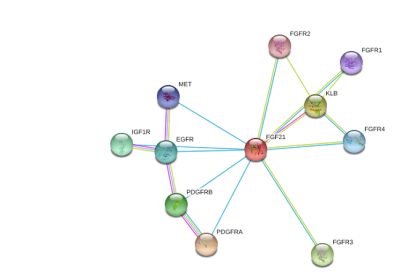
http://alfin2600.blogspot.in/2012/10/fgf21-learning-to-live-longer-from.html
Fibroblast growth factor-21 (FGF21) is a hormone secreted by the liver during fasting that elicits diverse aspects of the adaptive starvation response. Among its effects, FGF21 induces hepatic fatty acid oxidation and ketogenesis, increases insulin sensitivity, blocks somatic growth and causes bone loss. Here we show that transgenic overexpression of FGF21 markedly extends lifespan in mice without reducing food intake or affecting markers of NAD+ metabolism or AMP kinase and mTOR signaling. Transcriptomic analysis suggests that FGF21 acts primarily by blunting the growth hormone/insulin-like growth factor-1 signaling pathway in liver. These findings raise the possibility that FGF21 can be used to extend lifespan in other species
Type II diabetes is the most prevalent form of diabetes. The disease is caused by insulin resistance and pancreatic β cell failure, which results in decreased glucose-stimulated insulin secretion. Fibroblast growth factor (FGF) 21, a member of the FGF family, has been identified as a metabolic regulator and is preferentially expressed in the liver and adipose tissue and exerts its biological activities through the cell surface receptor composed of FGFR1c and β-Klotho on target cells such as liver and adipose tissues (WO0136640, and WO0118172).
The receptor complex is thought to trigger cytoplasmic signaling and to up-regulate the GLUT1 expression through the Ras/MAP kinase pathway.
Its abilities to provide sustained glucose and lipid control, and improve insulin sensitivity and β-cell function, without causing any apparent adverse effects in preclinical settings, have made FGF21 an attractive therapeutic agent for type-2 diabetes and associated metabolic disorders.
There have been a number of efforts towards developing therapies based on FGF21. WO2006065582, WO2006028714, WO2006028595, and WO2005061712 relate to muteins of FGF21, comprising individual amino-acid substitutions. WO2006078463 is directed towards a method of treating cardiovascular disease using FGF21. WO2005072769 relates to methods of treating diabetes using combinations of FGF21 and thiazolidinedione. WO03059270 relates to methods of reducing the mortality of critically ill patients comprising administering FGF21. WO03011213 relates to a method of treating diabetes and obesity comprising administering FGF21.
However, many of these proposed therapies suffer from the problem that FGF21 has an in-vivo half-life of between 1.5 and 2 hrs in humans. Some attempts have been made to overcome this drawback. WO2005091944, WO2006050247 and WO2008121563 disclose FGF21 molecules linked to PEG via lysine or cysteine residues, glycosyl groups and non-natural amino acid residues, respectively. WO2005113606 describes FGF21 molecules recombinantly fused via their C-terminus to albumin and immunoglobulin molecules using polyglycine linkers.
However, developing protein conjugates into useful, cost-effective pharmaceuticals presents a number of significant and oftentimes competing challenges: a balance must be struck between in vivo efficacy, in vivo half-life, stability for in vitro storage, and ease and efficiency of manufacture, including conjugation efficiency and specificity. In general, it is an imperative that the conjugation process does not eliminate or significantly reduce the desired biological action of the protein in question.
The protein-protein interactions required for function may require multiple regions of the protein to act in concert, and perturbing any of these with the nearby presence of a conjugate may interfere with the active site(s), or cause sufficient alterations to the tertiary structure so as to reduce active-site function. Unless the conjugation is through the N′ or C′ terminus, internal mutations to facilitate the linkage may be required. These mutations can have unpredictable effects on protein structure and function. There therefore continues to be a need for alternative FGF21-based therapeutics.
The reference to any art in this specification is not, and should not be taken as, an acknowledgement of any form or suggestion that the referenced art forms part of the common general knowledge.
The Claimed Intermediate database by Tcipatent Ltd

Eddie Kehoe
Principal & Technical Director at Tcipatent Ltd
Hove, Brighton and Hove, United KingdomPharmaceuticalsThe Claimed Intermediate – a Structure Searchable Process Patent Database for Marketed Pharmaceutical Drugs (INNs).
Patent examining, searching, analysis and abstracting especially in the Chemical subject area.


The Claimed Intermediate is an online database
which covers Process Patents for Named Marketed Pharmaceutical Drugs – whether intermediates are claimed or not – for a low-cost subscription.
- Structure Searchable
- Includes INNs in at least one major Market
- Includes Drug Synthesis often buried in a Plethora of Patents
- Informs Pipeline decisions
- Provides targeted Patent data in a Visual form
- Informs Commercial Synthesis profitability

shared message from Eddie Kehoe
If anybody would like a trial of the database they could contact either myself eddie.kehoe@tcipatent.com, or my wife and fellow director, Pat Kehoe (pat.kehoe@tcipatent.com).
Here are temporary logons , please request trial
(deactivated automatically in five working days):
Link: Link: www.tcipatent.com/tcidb/
Structure Searchable Patent Database for Processes covering Named Marketed Pharmaceutical Drugs (INNs). The database is an ongoing Watching Service combined with a Backward Drug Service.
Eddie Kehoe
Principal & Technical Director
Tcipatent Ltd
www.tcipatent.com
info@tcipatent.om
tcipatent.com
Office: +44 (0)1273 736080
43 Farm Road, Hove, BN3 1FD, United Kingdom
Eddie Kehoe:
eddie.kehoe@tcipatent.com
Mobile – 07425629637
Skype – eddieskihoe
TWITTER-TCIPATENT
Pat Kehoe:
pat.kehoe@tcipatent.com
Mobile – 07585295531
Skype – patkehoe170348

Database Updates:
Recently Added Records
| Aliskiren | Ambrisentan |
| Asenapine | Atorvastatin |
| Bosentan | Cabazitaxel |
| Cefamandole | Dasatinib |
| Desogestrel | Dexmedetomidine |
| Docetaxel | Doripenem |
| Doxapram | Duloxetine |
| Etonogestrel | Etoricoxib |
| Etravirine | Fluvastatin |
| Gefitinib | Iodixanol |
| Iohexol | Iopamidol |
| Linagliptin | Mitiglinide |
| Montelukast | Moxonidine |
| Oseltamivir | Paclitaxel |
| Perampanel | Pitavastatin |
| Pravastatin | Praziquantel |
| Ritodrine | Rosuvastatin |
| Silodosin | Sitagliptin |
| Ticagrelor | Ulipristal |
| Zidovudine |
………..

photo
Coopers Cask – Pub in Hove BN3 1FB
Eddie is closeby
HOME REMEDIES FOR CHOLESTEROL

Home Remedies for Cholesterol: Onions contain high levels of quercetin, an important flavonoid that reduces cholesterol. high concentrations of the compound quercetin hinderS the oxidation process of LDL, or “bad,” cholesterol, which help prevent the negative effects of this type of cholesterol.
===> http://www.askveda.in/ – Ayurveda health-tips, home remedies & expert advice
Antibody lipid treatments enter final furlong
A tiny pain-free jab every two weeks could be the future of cholesterol-lowering for high-risk patients, according to clinical researchers gathered in Amsterdam for the European Society of Cardiology congress.
Eli Roth at the University of Cincinnati said that two companies are currently neck and neck in the race to bring the first PCSK9 antibody to market. Partners Sanofi and Regeneron may have the edge, with Phase III data on their fully human monoclonal antibody alirocumab slated to be presented before the end of the year, while the chief competition comes from Amgen with its antibody AMG 145, said Dr Roth. Both antibodies can be delivered via subcutaneous auto-injectors, which many patients say they prefer to taking daily pills, he added.
http://www.pharmatimes.com/Article/13-09-02/Antibody_lipid_treatments_enter_final_furlong.aspx
Alirocumab is a human monoclonal antibody designed for the treatment ofhypercholesterolemia.[1]
This drug was discovered by Regeneron Pharmaceuticals and is being co-developed by Regeron and Sanofi.
THERAPEUTIC CLAIM Treatment of hypercholesterolemia
CHEMICAL NAMES
1. Immunoglobulin G1, anti-(human neural apoptosis-regulated proteinase 1) (human
REGN727 heavy chain), disulfide with human REGN727 κ-chain, dimer
2. Immunoglobulin G1, anti-(human proprotein convertase subtilisin/kexin type 9
(EC=3.4.21.-, neural apoptosis-regulated convertase 1, proprotein convertase 9,
subtilisin/kexin-like protease PC9)); human monoclonal REGN727 des-448-
lysine(CH3-K107)-1 heavy chain (221-220′)-disulfide with human monoclonal
REGN727 light chain dimer (227-227”:230-230”)-bisdisulfide
MOLECULAR FORMULA C6472H9996N1736O2032S42
MOLECULAR WEIGHT 146.0 kDa
SPONSOR Regeneron Pharmaceuticals
CODE DESIGNATION REGN727, SAR236553
CAS REGISTRY NUMBER 1245916-14-6
Drug Developers Need to More Fully Identify And Address Root Causes Of R&D Inefficiency, According To Tufts Center For The Study Of Drug Development
Boston, MA–(Marketwire) – While patent expirations on many top selling medicines are spurring the research-based drug industry to embrace new development paradigms to replenish sparse R&D pipelines, drug developers need to more fully identify and address root causes of R&D inefficiency, according to the Tufts Center for the Study of Drug Development.
read all at


 New Drug Approvals