New Drug Approvals

Home » Posts tagged 'CANCER' (Page 5)

Tag Archives: CANCER

DRUG APPROVALS BY DR ANTHONY MELVIN CRASTO .....FOR BLOG HOME CLICK HERE

Blog Stats

  • 4,811,178 hits

Flag and hits

Flag Counter

Enter your email address to follow this blog and receive notifications of new posts by email.

Join 37.9K other subscribers
Follow New Drug Approvals on WordPress.com

Archives

Categories

Recent Posts

Flag Counter

ORGANIC SPECTROSCOPY

Read all about Organic Spectroscopy on ORGANIC SPECTROSCOPY INTERNATIONAL 

Enter your email address to follow this blog and receive notifications of new posts by email.

Join 37.9K other subscribers
DR ANTHONY MELVIN CRASTO Ph.D

DR ANTHONY MELVIN CRASTO Ph.D

DR ANTHONY MELVIN CRASTO, Born in Mumbai in 1964 and graduated from Mumbai University, Completed his Ph.D from ICT, 1991,Matunga, Mumbai, India, in Organic Chemistry, The thesis topic was Synthesis of Novel Pyrethroid Analogues, Currently he is working with AFRICURE PHARMA, ROW2TECH, NIPER-G, Department of Pharmaceuticals, Ministry of Chemicals and Fertilizers, Govt. of India as ADVISOR, earlier assignment was with GLENMARK LIFE SCIENCES LTD, as CONSUlTANT, Retired from GLENMARK in Jan2022 Research Centre as Principal Scientist, Process Research (bulk actives) at Mahape, Navi Mumbai, India. Total Industry exp 32 plus yrs, Prior to joining Glenmark, he has worked with major multinationals like Hoechst Marion Roussel, now Sanofi, Searle India Ltd, now RPG lifesciences, etc. He has worked with notable scientists like Dr K Nagarajan, Dr Ralph Stapel, Prof S Seshadri, etc, He did custom synthesis for major multinationals in his career like BASF, Novartis, Sanofi, etc., He has worked in Discovery, Natural products, Bulk drugs, Generics, Intermediates, Fine chemicals, Neutraceuticals, GMP, Scaleups, etc, he is now helping millions, has 9 million plus hits on Google on all Organic chemistry websites. His friends call him Open superstar worlddrugtracker. His New Drug Approvals, Green Chemistry International, All about drugs, Eurekamoments, Organic spectroscopy international, etc in organic chemistry are some most read blogs He has hands on experience in initiation and developing novel routes for drug molecules and implementation them on commercial scale over a 32 PLUS year tenure till date Feb 2023, Around 35 plus products in his career. He has good knowledge of IPM, GMP, Regulatory aspects, he has several International patents published worldwide . He has good proficiency in Technology transfer, Spectroscopy, Stereochemistry, Synthesis, Polymorphism etc., He suffered a paralytic stroke/ Acute Transverse mylitis in Dec 2007 and is 90 %Paralysed, He is bound to a wheelchair, this seems to have injected feul in him to help chemists all around the world, he is more active than before and is pushing boundaries, He has 100 million plus hits on Google, 2.5 lakh plus connections on all networking sites, 100 Lakh plus views on dozen plus blogs, 227 countries, 7 continents, He makes himself available to all, contact him on +91 9323115463, email amcrasto@gmail.com, Twitter, @amcrasto , He lives and will die for his family, 90% paralysis cannot kill his soul., Notably he has 38 lakh plus views on New Drug Approvals Blog in 227 countries......https://newdrugapprovals.wordpress.com/ , He appreciates the help he gets from one and all, Friends, Family, Glenmark, Readers, Wellwishers, Doctors, Drug authorities, His Contacts, Physiotherapist, etc He has total of 32 International and Indian awards

Verified Services

View Full Profile →

Archives

Categories

Flag Counter

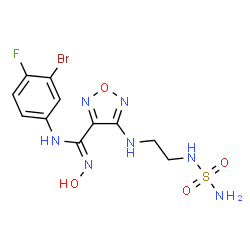
INCB24360 (epacadostat)


ChemSpider 2D Image | epacadostat | C11H13BrFN7O4S

Epacadostat
(Z)-N-(3-bromo-4-fluorophenyl)-N’-hydroxy-4-[2-(sulfamoylamino)ethylamino]-1,2,5-oxadiazole-3-carboxamidine
1,2,5-Oxadiazole-3-carboximidamide, 4-[[2-[(aminosulfonyl)amino]ethyl]amino]-N-(3-bromo-4-fluorophenyl)-N’-hydroxy-
1204669-58-8
INCB024360
N-(3-Brom-4-fluorphenyl)-N’-hydroxy-4-{[2-(sulfamoylamino)ethyl]amino}-1,2,5-oxadiazol-3-carboximidamid
UNII 71596A9R13
(Z)-N-(3-bromo-4-fluorophenyl)-N’-hydroxy-4-(2-(sulfamoylamino)ethylamino)-1,2,5-oxadiazole-3-carboximidamide
1,2,5-Oxadiazole-3-carboximidamide, 4-[[2-[(aminosulfonyl)amino]ethyl]amino]-N’-(3-bromo-4-fluorophenyl)-N-hydroxy-

Molecular Formula, C11H13BrFN7O4S

Average mass438.233 Da

cas 1204669-58-8 (or 1204669-37-3)

Synonym: IDO1 inhibitor INCB024360
indoleamine-2,3-dioxygenase inhibitor INCB024360
Code name: INCB 024360
INCB024360
Chemical structure: 1,2,5-Oxadiazole-3-carboximidamide, 4-((2-((Aminosulfonyl)amino)ethyl)amino)-N-(3-bromo-4-fluorophenyl)-N’-hydroxy-, (C(Z))-
Company Incyte Corp.
Description Indoleamine 2,3-dioxygenase 1 (IDO1) inhibitor
Molecular Target Indoleamine 2,3-dioxygenase 1 (IDO1)
Mechanism of Action Indoleamine 2,3-dioxygenase (INDO) inhibitor
Therapeutic Modality Small molecule


  • OriginatorIncyte Corporation
  • DeveloperFred Hutchinson Cancer Research Center; Incyte Corporation; Merck AG
  • ClassAmides; Antineoplastics; Imides; Oxadiazoles; Small molecules
    • Phase IIFallopian tube cancer; Malignant melanoma; Non-small cell lung cancer; Ovarian cancer; Peritoneal cancer; Solid tumours

    Most Recent Events

    • 15 Jan 2016Phase-II clinical trials in Solid tumours (Combination therapy, Late-stage disease, Second-line therapy or greater) in USA (PO)
    • 11 Jan 2016Phase-II clinical trials in Non-small cell lung cancer (Combination therapy, Late-stage disease, Second-line therapy or greater) in USA (PO)
    • 11 Jan 2016The US FDA and Health Canada approve IND application and Clinical Trial Application, respectively, for a phase Ib trial in Ovarian cancer (Combination therapy, Recurrent, Second-line therapy or greater)

In 2016, orphan drug designation was assigned to the compound in the US. for the treatment of stage IIB-IV melanoma

EpacadostatAn orally available hydroxyamidine and inhibitor of indoleamine 2,3-dioxygenase (IDO1), with potential immunomodulating and antineoplastic activities. epacadostat targets and binds to IDO1, an enzyme responsible for the oxidation of tryptophan into kynurenine. By inhibiting IDO1 and decreasing kynurenine in tumor cells, epacadostat increases and restores the proliferation and activation of various immune cells, including dendritic cells (DCs), NK cells, and T-lymphocytes, as well as interferon (IFN) production, and a reduction in tumor-associated regulatory T cells (Tregs). Activation of the immune system, which is suppressed in many cancers, may inhibit the growth of IDO1-expressing tumor cells. IDO1 is overexpressed by a variety of tumor cell types and DCsINCB24360 (epacadostat), An Agent For Cancer Immunotherapy

Incyte and Merck Expand Clinical Collaboration to Include Phase 3 Study Investigating the Combination of Epacadostat with Keytruda® (pembrolizumab) as First-line Treatment for Advanced Melanoma

Pivotal study to evaluate Incyte’s IDO1 inhibitor in combination with Merck’s anti-PD-1 therapy in patients with advanced or metastatic melanoma

WILMINGTON, Del. and KENILWORTH, N.J. — October 13, 2015 — Incyte Corporation (Nasdaq: INCY) and Merck (NYSE:MRK), known as MSD outside the United States and Canada, today announced the expansion of the companies’ ongoing clinical collaboration to include a Phase 3 study evaluating the combination of epacadostat, Incyte’s investigational selective IDO1 inhibitor, with Keytruda® (pembrolizumab), Merck’s anti-PD-1 therapy, as first-line treatment for patients with advanced or metastatic melanoma. The Phase 3 study, which is expected to begin in the first half of 2016, will be co-funded by Incyte and Merck.

“We are very pleased to expand our collaboration with Merck and to move the clinical development program for epacadostat in combination with Keytruda into Phase 3,” said Hervé Hoppenot, President and Chief Executive Officer of Incyte. “We believe the combination of these two immunotherapies shows promise and, if successfully developed, may help to improve clinical outcomes for patients with metastatic melanoma.”

“The initiation of this large Phase 3 study with Incyte in the first-line advanced melanoma treatment setting is an important addition to our robust immunotherapy clinical development program for Keytruda,” said Dr. Roger Dansey, senior vice president and therapeutic area head, oncology late-stage development, Merck Research Laboratories. “We continue to explore the benefit that Keytruda brings to patients suffering from advanced melanoma when used alone, and we are pleased to be able to add this important combination study with epacadostat to our Keytruda development program.”

Under the terms of the agreement Incyte and Merck have also agreed, for a period of two years, not to initiate new pivotal studies of an IDO1 inhibitor in combination with a PD-1/PD-L1 antagonist as first-line therapy in advanced or metastatic melanoma with any third party. During this time, the companies will each offer the other the opportunity to collaborate on any new pivotal study involving an IDO1 inhibitor in combination with a PD-1/PD-L1 antagonist for types of melanoma and lines of therapy outside of the current collaboration agreement.

The agreement is between Incyte and certain subsidiaries and Merck through its subsidiaries.

Epacadostat and Keytruda are part of a class of cancer treatments known as immunotherapies that are designed to enhance the body’s own defenses in fighting cancer; the two therapies target distinct regulatory components of the immune system. IDO1 is an immunosuppressive enzyme that has been shown to induce regulatory T cell generation and activation, and allow tumors to escape immune surveillance. Keytruda is a humanized monoclonal antibody that blocks the interaction between PD-1 and its ligands, PD-L1 and PD-L2. Preclinical evidence suggests that the combination of these two agents may lead to an enhanced anti-tumor immune response compared with either agent alone.

Safety and efficacy data from the ongoing Phase 1/2 study evaluating the combination of epacadostat with Keytruda in patients with advanced malignancies is scheduled to be highlighted as a late-breaking oral presentation (Abstract #142) at the upcoming Society for Immunotherapy of Cancer 30th Anniversary Annual Meeting & Associated Programs, November 4–8, 2015 at the Gaylord National Resort & Convention Center in National Harbor, MD.

Metastatic Melanoma

Melanoma, the most serious form of skin cancer, strikes adults of all ages and accounts for approximately five percent of all new cases of cancer in the United States each year. The number of new cases of melanoma continues to rise by almost three percent each year which translates to 76,000 new cases yearly in the U.S. alone.[i] The 5-year survival rate for late-stage or metastatic disease is 15 percent.[ii] 

About Epacadostat (INCB024360)

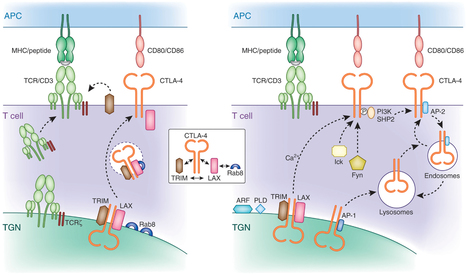
Indoleamine 2,3-dioxygenase 1 (IDO1) is an immunosuppressive enzyme that has been shown to induce regulatory T cell generation and activation, and allow tumors to escape immune surveillance. Epacadostat is an orally bioavailable small molecule inhibitor of IDO1 that has nanomolar potency in both biochemical and cellular assays and has demonstrated potent activity in enhancing T lymphocyte, dendritic cell and natural killer cell responses in vitro, with a high degree of selectivity. Epacadostat has shown proof-of-concept clinical data in patients with unresectable or metastatic melanoma in combination with the CTLA-4 inhibitor ipilimumab, and is currently in four proof-of-concept clinical trials with PD-1 and PD-L1 immune checkpoint inhibitors in a variety of cancer histologies.
PATENT

WO 2014066834

https://www.google.com/patents/WO2014066834A1?cl=en

EXAMPLE 1

4-({2-[(Aminosulfonyl)amino]ethyl}amino)- V-(3-bromo-4-fluorophenyl)- V -hydroxy- l,2,5-oxadiazole-3-carboximidamide

Figure imgf000055_0001

Step 1: 4-Amino-N’-hydroxy-l,2,5-oxadiazole-3-carboximidamide

[00184] Malononitrile (320.5 g, 5 mol) was added to water (7 L) preheated to 45 °C and stirred for 5 min. The resulting solution was cooled in an ice bath and sodium nitrite (380 g, 5.5 mol) was added. When the temperature reached 10 °C, 6 N hydrochloric acid (55 mL) was added. A mild exothermic reaction ensued with the temperature reaching 16 °C. After 15 min the cold bath was removed and the reaction mixture was stirred for 1.5 hrs at 16-18 °C. The reaction mixture was cooled to 13 °C and 50% aqueous hydroxylamine (990 g, 15 mol) was added all at once. The temperature rose to 26 °C. When the exothermic reaction subsided the cold bath was removed and stirring was continued for 1 hr at 26-27 °C, then it was slowly brought to reflux. Reflux was maintained for 2 hrs and then the reaction mixture was allowed to cool overnight. The reaction mixture was stirred in an ice bath and 6 N hydrochloric acid (800 mL) was added in portions over 40 min to pH 7.0. Stirring was continued in the ice bath at 5 °C. The precipitate was collected by filtration, washed well with water and dried in a vacuum oven (50 °C) to give the desired product (644 g, 90%). LCMS for C3H6N5O2

(M+H)+: m/z = 144.0. 13C MR (75 MHz, CD3OD): δ 156.0, 145.9, 141.3. Step 2: 4-Amino-N-hydroxy-l,2,5-oxadiazole-3-carboximidoyl chloride [00185] 4-Amino-N,-hydroxy-l ,2,5-oxadiazole-3-carboximidamide (422 g, 2.95 mol) was added to a mixture of water (5.9 L), acetic acid (3 L) and 6 Ν hydrochloric acid (1.475 L, 3 eq.) and this suspension was stirred at 42 – 45 °C until complete solution was achieved. Sodium chloride (518 g, 3 eq.) was added and this solution was stirred in an ice/water/methanol bath. A solution of sodium nitrite (199.5 g, 0.98 eq.) in water (700 mL) was added over 3.5 hrs while maintaining the temperature below 0 °C. After complete addition stirring was continued in the ice bath for 1.5 hrs and then the reaction mixture was allowed to warm to 15 °C. The precipitate was collected by filtration, washed well with water, taken in ethyl acetate (3.4 L), treated with anhydrous sodium sulfate (500 g) and stirred for 1 hr. This suspension was filtered through sodium sulfate (200 g) and the filtrate was concentrated on a rotary evaporator. The residue was dissolved in methyl i-butyl ether (5.5 L), treated with charcoal (40 g), stirred for 40 min and filtered through Celite. The solvent was removed in a rotary evaporator and the resulting product was dried in a vacuum oven (45 °C) to give the desired product (256 g, 53.4%). LCMS for C3H4CIN4O2 (M+H)+: m/z = 162.9. 13C NMR (100 MHz, CD3OD): 5 155.8, 143.4, 129.7.

Step 3: 4-Amino-N’-hydroxy-N-(2-methoxyethyl)-l,2,5-oxadiazole-3-carboximidamide [00186] 4-Amino-N-hydroxy-l ,2,5-oxadiazole-3-carboximidoyl chloride (200.0 g, 1.23 mol) was mixed with ethyl acetate (1.2 L). At 0-5 °C 2-methoxyethylamine [Aldrich, product # 143693] (119.0 mL, 1.35 mol) was added in one portion while stirring. The reaction temperature rose to 41 °C. The reaction was cooled to 0 – 5 °C. Triethylamine (258 mL, 1.84 mol) was added. After stirring 5 min, LCMS indicated reaction completion. The reaction solution was washed with water (500 mL) and brine (500 mL), dried over sodium sulfate, and concentrated to give the desired product (294 g, 1 19%) as a crude dark oil.

LCMS for C6Hi2 503 (M+H)+: m/z = 202.3. 1H NMR (400 MHz, DMSO- ): δ 10.65 (s, 1 H), 6.27 (s, 2 H), 6.10 (t, J = 6.5 Hz, 1 H), 3.50 (m, 2 H), 3.35 (d, J = 5.8 Hz, 2 H), 3.08 (s, 3 H).

Step 4: N’-Hydroxy-4-[(2-methoxyethyl)amino]-l,2,5-oxadiazole-3-carboximidamide

[00187] 4-Amino-N-hydroxy-N-(2-methoxyethyl)-l,2,5-oxadiazole-3- carboximidamide (248.0 g, 1.23 mol) was mixed with water (1 L). Potassium hydroxide (210 g, 3.7 mol) was added. The reaction was refluxed at 100 °C overnight (15 hours). TLC with 50% ethyl acetate (containing 1% ammonium hydroxide) in hexane indicated reaction completed (product Rf = 0.6, starting material Rf = 0.5). LCMS also indicated reaction completion. The reaction was cooled to room temperature and extracted with ethyl acetate (3 x 1 L). The combined ethyl acetate solution was dried over sodium sulfate and concentrated to give the desired product (201 g, 81%) as a crude off-white solid. LCMS for C6H12N5O3 (M+H)+: m/z = 202.3 LH NMR (400 MHz, OMSO-d6): δ 10.54 (s, 1 H), 6.22 (s, 2 H), 6.15 (t, J = 5.8 Hz, 1 H), 3.45 (t, J= 5.3 Hz, 2 H), 3.35 (m, 2 H), 3.22 (s, 3 H). Step 5: N-Hydroxy-4-[(2-methoxyethyl)amino]-l,2,5-oxadiazole-3-carboximidoyl chloride

[00188] At room temperature N’-hydroxy-4-[(2-methoxyethyl)amino]- 1 ,2,5- oxadiazole-3-carboximidamide (50.0 g, 0.226 mol) was dissolved in 6.0 M hydrochloric acid aqueous solution (250 mL, 1.5 mol). Sodium chloride (39.5 g, 0.676 mol) was added followed by water (250 mL) and ethyl acetate (250 mL). At 3-5 °C a previously prepared aqueous solution (100 mL) of sodium nitrite (15.0 g, 0.217 mol) was added slowly over 1 hr. The reaction was stirred at 3 – 8 °C for 2 hours and then room temperature over the weekend. LCMS indicated reaction completed. The reaction solution was extracted with ethyl acetate (2 x 200 mL). The combined ethyl acetate solution was dried over sodium sulfate and concentrated to give the desired product (49.9 g, 126%) as a crude white solid. LCMS for

C6HioClN403 (M+H)+: m/z = 221.0. !H NMR (400 MHz, DMSO-d6): δ 13.43 (s, 1 H), 5.85 (t, J= 5.6 Hz, 1 H), 3.50 (t, J= 5.6 Hz, 2 H), 3.37(dd, J= 10.8, 5.6 Hz, 2 H), 3.25 (s, 3 H).

Step 6 : N-(3-Bromo-4-fluorophenyl)-N’-hydroxy-4- [(2-methoxyethyl)amino] – 1 ,2,5- oxadiazole-3-carboximidamide [00189] N-Hydroxy-4-[(2-methoxyethyl)amino]- 1 ,2,5-oxadiazole-3-carboximidoyl chloride (46.0 g, 0.208 mol) was mixed with water (300 mL). The mixture was heated to 60 °C. 3-Bromo-4-fluoroaniline [Oakwood products, product # 013091] (43.6 g, 0.229 mol) was added and stirred for 10 min. A warm sodium bicarbonate (26.3 g, 0.313 mol) solution (300 mL water) was added over 15 min. The reaction was stirred at 60 °C for 20 min. LCMS indicated reaction completion. The reaction solution was cooled to room temperature and extracted with ethyl acetate (2 x 300 mL). The combined ethyl acetate solution was dried over sodium sulfate and concentrated to give the desired product (76.7 g, 98%) as a crude brown solid. LCMS for Ci2Hi4BrF503 (M+H)+: m/z = 374.0, 376.0. 1H NMR (400 MHz, DMSO- tf): δ 11.55 (s, 1 H), 8.85 (s, 1 H), 7.16 (t, J= 8.8 Hz, 1 H), 7.08 (dd, J= 6.1, 2.7 Hz, 1 H), 6.75 (m, 1 H), 6.14 (t, J= 5.8 Hz, 1 H), 3.48 (t, J = 5.2 Hz, 2 H), 3.35 (dd, J= 10.8, 5.6 Hz, 2 H), 3.22 (s, 3 H).

Step 7: 4-(3-Bromo-4-fluorophenyl)-3-{4- [(2-methoxyethyl)amino]-l,2,5-oxadiazol-3- yl}-l,2,4-oxadiazol-5(4H)-one

[00190] A mixture of N-(3-bromo-4-fluorophenyl)-N’-hydroxy-4-[(2- methoxyethyl)amino]-l,2,5-oxadiazole-3-carboximidamide (76.5 g, 0.204 mol), 1,1 ‘- carbonyldiimidazole (49.7 g, 0.307 mol), and ethyl acetate (720 mL) was heated to 60 °C and stirred for 20 min. LCMS indicated reaction completed. The reaction was cooled to room temperature, washed with 1 N HC1 (2 x 750 mL), dried over sodium sulfate, and concentrated to give the desired product (80.4 g, 98%) as a crude brown solid. LCMS for

Figure imgf000058_0001

(M+H)+: m/z = 400.0, 402.0. 1H NMR (400 MHz, DMSO-c½): δ 7.94 (t, J = 8.2 Hz, 1 H), 7.72 (dd, J = 9.1, 2.3 Hz, 1 H), 7.42 (m, 1 H), 6.42 (t, J= 5.7 Hz, 1 H), 3.46 (t, J = 5.4 Hz, 2 H), 3.36 (t, J= 5.8 Hz, 2 H), 3.26 (s, 3 H).

Step 8: 4-(3-Bromo-4-fluorophenyl)-3-{4-[(2-hydroxyethyl)amino]-l,2,5-oxadiazol-3- yl}-l,2,4-oxadiazol-5(4H)-one

[00191] 4-(3-Bromo-4-fluoroplienyl)-3-{4-[(2-metlioxyethyl)amino]-l,2,5-oxadiazol- 3-yl}-l,2,4-oxadiazol-5(4H)-one (78.4 g, 0.196 mol) was dissolved in dichloromethane (600 mL). At -67 °C boron tribromide (37 mL, 0.392 mol) was added over 15 min. The reaction was warmed up to -10 °C in 30 min. LCMS indicated reaction completed. The reaction was stirred at room temperature for 1 hour. At 0 – 5 °C the reaction was slowly quenched with saturated sodium bicarbonate solution (1.5 L) over 30 min. The reaction temperature rose to 25 °C. The reaction was extracted with ethyl acetate (2 x 500 mL, first extraction organic layer is on the bottom and second extraction organic lager is on the top). The combined organic layers were dried over sodium sulfate and concentrated to give the desired product (75 g, 99%) as a crude brown solid. LCMS for Ci2HioBrFN504 (M+H)+: m/z = 386.0, 388.0.

1H NMR (400 MHz, DMSO-^): δ 8.08 (dd, J = 6.2, 2.5 Hz, 1 H), 7.70 (m, 1 H), 7.68 (t, J = 8.7 Hz, 1 H), 6.33 (t, J = 5.6 Hz, 1 H), 4.85 (t, J= 5.0 Hz, 1 H), 3.56 (dd, J= 10.6, 5.6 Hz, 2 H), 3.29 (dd, J= 11.5, 5.9 Hz, 2 H).

Step 9 : 2-({4- [4-(3-Bromo-4-fluorophenyl)-5-oxo-4,5-dihydro- 1 ,2,4-oxadiazol-3-yl] – l,2,5-oxadiazol-3-yl}amino)ethyl methanesulfonate

[00192] To a solution of 4-(3-bromo-4-fluorophenyl)-3-{4-[(2-hydroxyethyl)amino]- l,2,5-oxadiazol-3-yl}-l,2,4-oxadiazol-5(4H)-one (1.5 kg, 3.9 mol, containing also some of the corresponding bromo-compound) in ethyl acetate (12 L) was added methanesulfonyl chloride (185 mL, 2.4 mol) dropwise over 1 h at room temperature. Triethylamine (325 mL, 2.3 mol) was added dropwise over 45 min, during which time the reaction temperature increased to 35 °C. After 2 h, the reaction mixture was washed with water (5 L), brine (1 L), dried over sodium sulfate, combined with 3 more reactions of the same size, and the solvents removed in vacuo to afford the desired product (7600 g, quantitative yield) as a tan solid. LCMS for C HnBrFNsOeS a (M+Na)+: m/z = 485.9, 487.9. !H NMR (400 MHz, DMSO- d6): δ 8.08 (dd, J = 6.2, 2.5 Hz, 1 H), 7.72 (m, 1 H), 7.58 (t, J = 8.7 Hz, 1 H), 6.75 (t, J = 5.9 Hz, 1 H), 4.36 (t, J = 5.3 Hz, 2 H), 3.58 (dd, J = 11.2, 5.6 Hz, 2 H), 3.18 (s, 3 H).

Step 10: 3-{4-[(2-Azidoethyl)amino]-l,2,5-oxadiazol-3-yl}-4-(3-bromo-4-fluorophenyl)- l,2,4-oxadiazol-5(4H)-one

To a solution of 2-({4-[4-(3-bromo-4-f uorophenyl)-5-oxo-4,5-dihydro-l ,2,4- oxadiazol-3-yl]-l ,2,5-oxadiazol-3-yl}amino)ethyl methanesulfonate (2.13 kg, 4.6 mol, containing also some of the corresponding bromo-compound) in dimethylformamide (4 L) stirring in a 22 L flask was added sodium azide (380 g, 5.84 mol). The reaction was heated at 50 °C for 6 h, poured into ice/water (8 L), and extracted with 1 : 1 ethyl acetate:heptane (20 L). The organic layer was washed with water (5 L) and brine (5 L), and the solvents removed in vacuo to afford the desired product (1464 g, 77%) as a tan solid. LCMS for CnHgBrFNsOs a

(M+Na)+: m/z = 433.0, 435.0. !H NMR (400 MHz, DMSO-J6): δ 8.08 (dd, J = 6.2, 2.5 Hz, 1 H), 7.72 (m, 1 H), 7.58 (t, J= 8.7 Hz, 1 H), 6.75 (t, J = 5.7 Hz, 1 H), 3.54 (t, J = 5.3 Hz, 2 H), 3.45 (dd, J= 1 1.1 , 5.2 Hz, 2 H).

Step 11: 3-{4-[(2-Aminoethyl)amino]-l,2,5-oxadiazol-3-yl}-4-(3-bromo-4-fluorophenyl)-

1.2.4- oxadiazol-5(4H)-one hydrochloride

[00194] Sodium iodide (1080 g, 7.2 mol) was added to 3-{4-[(2-azidoethyl)amino]-

1.2.5- oxadiazol-3-yl}-4-(3-bromo-4-fluorophenyl)-l ,2,4-oxadiazol-5(4H)-one (500 g, 1.22 mol) in methanol (6 L). The mixture was allowed to stir for 30 min during which time a mild exotherm was observed. Chlorotrimethylsilane (930 mL, 7.33 mol) was added as a solution in methanol (1 L) dropwise at a rate so that the temperature did not exceed 35 °C, and the reaction was allowed to stir for 3.5 h at ambient temperature. The reaction was neutralized with 33 wt% solution of sodium thiosulfate pentahydrate in water (-1.5 L), diluted with water (4 L), and the pH adjusted to 9 carefully with solid potassium carbonate (250 g – added in small portions: watch foaming). Di-ieri-butyl dicarbonate (318 g, 1.45 mol) was added and the reaction was allowed to stir at room temperature. Additional potassium carbonate (200 g) was added in 50 g portions over 4 h to ensure that the pH was still at or above 9. After stirring at room temperature overnight, the solid was filtered, triturated with water (2 L), and then MTBE (1.5 L). A total of 11 runs were performed (5.5 kg, 13.38 mol). The combined solids were triturated with 1 : 1 THF:dichloromethane (24 L, 4 runs in a 20 L rotary evaporator flask, 50 °C, 1 h), filtered, and washed with dichloromethane (3 L each run) to afford an off- white solid. The crude material was dissolved at 55 °C tetrahydrofuran (5 mL/g), treated with decolorizing carbon (2 wt%) and silica gel (2 wt%), and filtered hot through celite to afford the product as an off-white solid (5122 g). The combined MTBE, THF, and dichloromethane filtrates were concentrated in vacuo and chromatographed (2 kg silica gel, heptane with a 0-100% ethyl acetate gradient, 30 L) to afford more product (262 g). The combined solids were dried to a constant weight in a convection oven (5385 g, 83%).

In a 22 L flask was charged hydrogen chloride (4 N solution in 1 ,4-dioxane, 4 L, 16 mol). tert-Butyl [2-({4-[4-(3-bromo-4-fluorophenyl)-5-oxo-4,5-dihydro-l ,2,4- oxadiazol-3-yl]-l ,2,5-oxadiazol-3-yl}amino)ethyl]carbamate (2315 g, 4.77 mol) was added as a solid in portions over 10 min. The slurry was stirred at room temperature and gradually became a thick paste that could not be stirred. After sitting overnight at room temperature, the paste was slurried in ethyl acetate (10 L), filtered, re-slurried in ethyl acetate (5 L), filtered, and dried to a constant weight to afford the desired product as a white solid (combined with other runs, 5 kg starting material charged, 41 13 g, 95%). LCMS for

Ci2HnBrFN603 (M+H)+: m/z = 384.9, 386.9. 1H NMR (400 MHz, DMSO-^): δ 8.12 (m, 4 H), 7.76 (m, 1 H), 7.58 (t, J = 8.7 Hz, 1 H), 6.78 (t, J = 6.1 Hz, 1 H), 3.51 (dd, J = 1 1.8, 6.1 Hz, 2 H), 3.02 (m, 2 H).

Step 12: tert-Butyl ({[2-({4-[4-(3-bromo-4-nuorophenyl)-5-oxo-4,5-dihydro-l,2,4- oxadiazol-3-yl]-l,2,5-oxadiazol-3-yl}amino)ethyl]amino}sulfonyl)carbamate

A 5 L round bottom flask was charged with chlorosulfonyl isocyanate [Aldrich, product # 142662] (149 mL, 1.72 mol) and dichloromethane (1.5 L) and cooled using an ice bath to 2 °C. teri-Butanol (162 mL, 1.73 mol) in dichloromethane (200 mL) was added dropwise at a rate so that the temperature did not exceed 10 °C. The resulting solution was stirred at room temperature for 30-60 min to provide tert-bvAy\ [chlorosulfonyl]carbamate.

A 22 L flask was charged with 3- {4-[(2-aminoethyl)amino]- 1 ,2,5-oxadiazol-3- yl}-4-(3-bromo-4-fluorophenyl)-l,2,4-oxadiazol-5(4H)-one hydrochloride (661 g, 1.57 mol) and 8.5 L dichloromethane. After cooling to -15 °C with an ice/salt bath, the solution oi tert- Vmtvl i Vi 1 r>rosulfonyl]carbamate (prepared as above) was added at a rate so that the temperature did not exceed -10 °C (addition time 7 min). After stirring for 10 min, triethylamine (1085 mL, 7.78 mol) was added at a rate so that the temperature did not exceed -5 °C (addition time 10 min). The cold bath was removed, the reaction was allowed to warm to 10 °C, split into two portions, and neutralized with 10% cone HC1 (4.5 L each portion). Each portion was transferred to a 50 L separatory funnel and diluted with ethyl acetate to completely dissolve the white solid (-25 L). The layers were separated, and the organic layer was washed with water (5 L), brine (5 L), and the solvents removed in vacuo to afford an off- white solid. The solid was triturated with MTBE (2 x 1.5 L) and dried to a constant weight to afford a white solid. A total of 4113 g starting material was processed in this manner (5409 g, 98%). 1H NMR (400 MHz, DMSO-^): δ 10.90 (s, 1 H), 8.08 (dd, J = 6.2, 2.5 Hz, 1 H), 7.72 (m, 1 H), 7.59 (t, J = 8.6 Hz, 1 H), 6.58 (t, J = 5.7 Hz, 1 H), 3.38 (dd, J= 12.7, 6.2 Hz, 2 H), 3.10 (dd, J= 12.1 , 5.9 Hz, 2 H), 1.41 (s, 9 H).

Step 13: N-[2-({4-[4-(3-Bromo-4-fluorophenyl)-5-oxo-4,5-dihydro-l,2,4-oxadiazol-3-yl]- l,2,5-oxadiazol-3-yl}amino)ethyl]sulfamide

[00198] To a 22 L flask containing 98:2 trifluoroacetic acid:water (8.9 L) was added tert-bvXyl ({[2-({4-[4-(3-bromo-4-fluorophenyl)-5-oxo-4,5-dihydro-l,2,4-oxadiazol-3-yl]- l,2,5-oxadiazol-3-yl}amino)ethyl]amino}sulfonyl)carbamate (1931 g, 3.42 mol) in portions over 10 minutes. The resulting mixture was stirred at room temperature for 1.5 h, the solvents removed in vacuo, and chased with dichloromethane (2 L). The resulting solid was treated a second time with fresh 98:2 trifluoroacetic acid:water (8.9 L), heated for 1 h at 40- 50 °C, the solvents removed in vacuo, and chased with dichloromethane (3 x 2 L). The resulting white solid was dried in a vacuum drying oven at 50 °C overnight. A total of 5409 g was processed in this manner (4990 g, quant, yield). LCMS for C12H12BrFN705S (M+H)+: m/z = 463.9, 465.9. 1H NMR (400 MHz, DMSO- ): δ 8.08 (dd, J = 6.2, 2.5 Hz, 1 H), 7.72 (m, 1 H), 7.59 (t, J= 8.7 Hz, 1 H), 6.67 (t, J = 5.9 Hz, 1H), 6.52 (t, J= 6.0 Hz, 1 H), 3.38 (dd, J = 12.7, 6.3 Hz, 2 H), 3.11 (dd, J = 12.3, 6.3 Hz). Step 14: 4-({2-[(Aminosulfonyl)amino]ethyl}amino)-N-(3-bromo-4-fluorophenyl)-N’- hydroxy-l,2,5-oxadiazole-3-carboximidamide
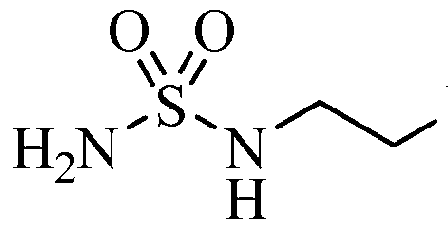
Figure imgf000063_0001

[00199] To a crude mixture of N-[2-({4-[4-(3-bromo-4-fluorophenyl)-5-oxo-4,5- dihydro-l,2,4-oxadiazol-3-yl]-l,2,5-oxadiazol-3-yl}amino)ethyl]sulfamide (2.4 mol) containing residual amounts of trifluoroacetic acid stirring in a 22 L flask was added THF (5 L). The resulting solution was cooled to 0 °C using an ice bath and 2 N NaOH (4 L) was added at a rate so that the temperature did not exceed 10 °C. After stirring at ambient temperature for 3 h (LCMS indicated no starting material remained), the pH was adjusted to 3-4 with concentrated HC1 (-500 mL). The THF was removed in vacuo, and the resulting mixture was extracted with ethyl acetate (15 L). The organic layer was washed with water (5 L), brine (5 L), and the solvents removed in vacuo to afford a solid. The solid was triturated with MTBE (2 x 2 L), combined with three other reactions of the same size, and dried overnight in a convection oven to afford a white solid (3535 g). The solid was recrystallized (3 x 22 L flasks, 2:1 watenethanol, 14.1 L each flask) and dried in a 50 °C convection oven to a constant weight to furnish the title compound as an off-white solid (3290 g, 78%). LCMS for CnHnBrF yC S (M+H)+: m/z = 437.9, 439.9. i NMR (400 MHz, DMSO-J^): δ 11.51 (s, 1 H), 8.90 (s, 1 H), 7.17 (t, J= 8.8 Hz, 1 H), 7.11 (dd, J= 6.1, 2.7 Hz, 1 H), 6.76 (m, 1 H), 6.71 (t, J = 6.0 Hz, 1 H), 6.59 (s, 2 H), 6.23 (t, J= 6.1 Hz, 1 H), 3.35 (dd, J= 10.9, 7.0 Hz, 2 H), 3.10 (dd, J= 12.1, 6.2 Hz, 2 H).

PATENT

WO 2010005958

https://www.google.com/patents/WO2010005958A2?cl=en

EXAMPLES Example 1

4-({2-[(Aminosulfonyl)amino]ethyl}amino)-7V-(3-bromo-4-fluorophenyl)-iV’-hydroxy- l,2,5-oxadiazole-3-carboximidamide

Figure imgf000043_0001

Step A: 4-Amino-N’-hydroxy-l,2,5-oxadiazole-3-carboximidamide

Figure imgf000043_0002

Malononitrile [Aldrich, product # M1407] (320.5 g, 5 mol) was added to water (7 L) preheated to 45 0C and stirred for 5 min. The resulting solution was cooled in an ice bath and sodium nitrite (380 g, 5.5 mol) was added. When the temperature reached 10 0C, 6 N hydrochloric acid (55 mL) was added. A mild exothermic reaction ensued with the temperature reaching 16 0C. After 15 min the cold bath was removed and the reaction mixture was stirred for 1.5 hrs at 16-18 0C. The reaction mixture was cooled to 13 0C and 50% aqueous hydroxylamine (990 g, 15 mol) was added all at once. The temperature rose to 26 0C. When the exothermic reaction subsided the cold bath was removed and stirring was continued for 1 hr at 26-270C, then it was slowly brought to reflux. Reflux was maintained for 2 hrs and then the reaction mixture was allowed to cool overnight. The reaction mixture was stirred in an ice bath and 6 N hydrochloric acid (800 mL) was added in portions over 40 min to pH 7.0. Stirring was continued in the ice bath at 5 0C. The precipitate was collected by filtration, washed well with water and dried in a vacuum oven (50 0C) to give the desired product (644 g, 90%). LCMS for C3H6N5O2 (M+H)+: m/z = 144.0. 13C NMR (75 MHz, CD3OD): δ 156.0, 145.9, 141.3. Step B: 4-Amino-N-hydroxy-l,2,5-oxadiazole-3-carboximidoyl chloride

Figure imgf000044_0001

4-Amino-N’-hydroxy-l,2,5-oxadiazole-3-carboximidamide (422 g, 2.95 mol) was added to a mixture of water (5.9 L), acetic acid (3 L) and 6 Ν hydrochloric acid (1.475 L, 3 eq.) and this suspension was stirred at 42 – 45 0C until complete solution was achieved. Sodium chloride (518 g, 3 eq.) was added and this solution was stirred in an ice/water/methanol bath. A solution of sodium nitrite (199.5 g, 0.98 eq.) in water (700 mL) was added over 3.5 hrs while maintaining the temperature below 0 0C. After complete addition stirring was continued in the ice bath for 1.5 hrs and then the reaction mixture was allowed to warm to 15 0C. The precipitate was collected by filtration, washed well with water, taken in ethyl acetate (3.4 L), treated with anhydrous sodium sulfate (500 g) and stirred for 1 hr. This suspension was filtered through sodium sulfate (200 g) and the filtrate was concentrated on a rotary evaporator. The residue was dissolved in methyl f-butyl ether (5.5 L), treated with charcoal (40 g), stirred for 40 min and filtered through Celite. The solvent was removed in a rotary evaporator and the resulting product was dried in a vacuum oven (45 0C) to give the desired product (256 g, 53.4%). LCMS for C3H4ClN4O2(M+H)+: m/z = 162.9. 13c NMR (100 MHz, CD3OD): δ 155.8, 143.4, 129.7.

Step C: 4-Amino-N’-hydroxy-N-(2-methoxyethyl)- 1 ,2,5-oxadiazole-3-carboximidamide

Figure imgf000044_0002

4-Amino-N-hydroxy-l,2,5-oxadiazole-3-carboximidoyl chloride (200.0 g, 1.23 mol) was mixed with ethyl acetate (1.2 L). At 0-50C 2-methoxyethylamine [Aldrich, product # 143693] (119.0 mL, 1.35 mol) was added in one portion while stirring. The reaction temperature rose to 41 0C. The reaction was cooled to 0 – 5 °C. Triethylamine (258 mL, 1.84 mol) was added. After stirring 5 min, LCMS indicated reaction completion. The reaction solution was washed with water (500 mL) and brine (500 mL), dried over sodium sulfate, and concentrated to give the desired product (294 g, 119%) as a crude dark oil. LCMS for C6Hi2N5O3 (M+H)+: m/z = 202.3. 1H NMR (400 MHz, DMSO-J6): δ 10.65 (s, 1 H), 6.27 (s, 2 H), 6.10 (t, J= 6.5 Hz, 1 H), 3.50 (m, 2 H), 3.35 (d, J= 5.8 Hz, 2 H), 3.08 (s, 3 H).

Step D: N’-Hydroxy-4-[(2-methoxyethyl)amino]-l ,2,5-oxadiazole-3-carboximidamide

Figure imgf000045_0001

4-Amino-N’-hydroxy-N-(2-methoxyethyl)-l,2,5-oxadiazole-3-carboximidaniide (248.0 g, 1.23 mol) was mixed with water (1 L). Potassium hydroxide (210 g, 3.7 mol) was added. The reaction was refluxed at 100 0C overnight (15 hours). TLC with 50% ethyl acetate (containing 1% ammonium hydroxide) in hexane indicated reaction completed (product Rf= 0.6, starting material Rf = 0.5). LCMS also indicated reaction completion. The reaction was cooled to room temperature and extracted with ethyl acetate (3 x 1 L). The combined ethyl acetate solution was dried over sodium sulfate and concentrated to give the desired product (201 g, 81%) as a crude off-white solid. LCMS for C6H12N5O3 (M+H)+: m/z = 202.3 1H NMR (400 MHz, DMSO-Gk): δ 10.54 (s, 1 H), 6.22 (s, 2 H), 6.15 (t, J= 5.8 Hz, 1 H), 3.45 (t, J= 5.3 Hz, 2 H), 3.35 (m, 2 H), 3.22 (s, 3 H).

Step E: N-Hydroxy-4-[(2-methoxyethyl)amino]-l,2,5-oxadiazole-3-carboximidoyl chloride

Figure imgf000045_0002

Ν. ,Ν O

At room temperature N’-hydroxy-4-[(2-methoxyethyl)amino]-l,2,5-oxadiazole-3- carboximidamide (50.0 g, 0.226 mol) was dissolved in 6.0 M hydrochloric acid aqueous solution (250 mL, 1.5 mol). Sodium chloride (39.5 g, 0.676 mol) was added followed by water (250 mL) and ethyl acetate (250 mL). At 3-5 0C a previously prepared aqueous solution (100 mL) of sodium nitrite (15.0 g, 0.217 mol) was added slowly over 1 hr. The reaction was stirred at 3 – 8 0C for 2 hours and then room temperature over the weekend. LCMS indicated reaction completed. The reaction solution was extracted with ethyl acetate (2 x 200 mL). The combined ethyl acetate solution was dried over sodium sulfate and concentrated to give the desired product (49.9 g, 126%) as a crude white solid. LCMS for C6Hi0ClN4O3 (M+H)+: m/z = 221.0. 1H NMR (400 MHz, DMSO-J6): δ 13.43 (s, 1 H), 5.85 (t, J= 5.6 Hz, 1 H), 3.50 (t, J= 5.6 Hz, 2 H), 3.37(dd, J= 10.8, 5.6 Hz, 2 H), 3.25 (s, 3 H).

Step F: N-(3-Bromo-4-fluorophenyl)-N’-hydroxy-4-[(2-methoxyethyl)amino]- 1 ,2,5- oxadiazole-3 -carboximidamide

Figure imgf000046_0001

N-Hydroxy-4-[(2-methoxyethyl)amino]-l,2,5-oxadiazole-3-carboximidoyl chloride (46.0 g, 0.208 mol) was mixed with water (300 mL). The mixture was heated to 60 °C. 3-Bromo-4- fluoroaniline [Oakwood products, product # 013091] (43.6 g, 0.229 mol) was added and stirred for 10 nrnn. A warm sodium bicarbonate (26.3 g, 0.313 mol) solution (300 mL water) was added over 15 min. The reaction was stirred at 60 0C for 20 min. LCMS indicated reaction completion. The reaction solution was cooled to room temperature and extracted with ethyl acetate (2 x 300 mL). The combined ethyl acetate solution was dried over sodium sulfate and concentrated to give the desired product (76.7 g, 98%) as a crude brown solid. LCMS for Ci2Hi4BrFN5O3 (M+H)+: m/z = 374.0, 376.0. 1H NMR (400 MHz, DMSO-J6): δ 11.55 (s, 1 H), 8.85 (s, 1 H), 7.16 (t, J= 8.8 Hz, 1 H), 7.08 (dd, J= 6.1, 2.7 Hz, 1 H), 6.75 (m, 1 H), 6.14 (t, J= 5.8 Hz, 1 H), 3.48 (t, J= 5.2 Hz, 2 H), 3.35 (dd, J= 10.8, 5.6 Hz, 2 H), 3.22 (s, 3 H).

Step G: 4-(3-Bromo-4-fluorophenyl)-3-{4-[(2-methoxyethyl)amino]-l,2,5-oxadiazol-3-yl}- 1 ,2,4-oxadiazol-5(4H)-one

Figure imgf000046_0002

A mixture of N-(3-bromo-4-fluorophenyl)-N’-hydroxy-4-[(2-methoxyethyl)amino]-l,2,5- oxadiazole-3-carboximidamide (76.5 g, 0.204 mol), l,r-carbonyldiimidazole (49.7 g, 0.307 mol), and ethyl acetate (720 mL) was heated to 60 0C and stirred for 20 min. LCMS indicated reaction completed. The reaction was cooled to room temperature, washed with 1 Ν HCl (2 x 750 mL), dried over sodium sulfate, and concentrated to give the desired product (80.4 g, 98%) as a crude brown solid. LCMS for C13H12BrFN5O4 (M+H)+: m/z = 400.0, 402.0. 1H NMR (400 MHz, OMSO-d6): δ 7.94 (t, J= 8.2 Hz, 1 H), 7.72 (dd, J= 9.1, 2.3 Hz, 1 H), 7.42 (m, 1 H), 6.42 (t, J= 5.7 Hz, 1 H), 3.46 (t, J= 5.4 Hz, 2 H), 3.36 (t, J= 5.8 Hz, 2 H), 3.26 (s, 3 H).

Step H: 4-(3-Bromo-4-fluorophenyl)-3-{4-[(2-liydroxyethyl)amino]-l,2,5-oxadiazol-3-yl}- 1 ,2,4-oxadiazol-5(4H)-one

Figure imgf000047_0001

4-(3-Bromo-4-fluorophenyl)-3-{4-[(2-methoxyetliyl)amino]-l,2,5-oxadiazol-3-yl}-l,2,4- oxadiazol-5(4H)-one (78.4 g, 0.196 mol) was dissolved in dichloromethane (600 mL). At -67 0C boron tribromide (37 mL, 0.392 mol) was added over 15 min. The reaction was warmed up to -10 0C in 30 min. LCMS indicated reaction completed. The reaction was stirred at room temperature for 1 hour. At 0 – 5 0C the reaction was slowly quenched with saturated sodium bicarbonate solution (1.5 L) over 30 min. The reaction temperature rose to 25 0C. The reaction was extracted with ethyl acetate (2 x 500 mL, first extraction organic layer is on the bottom and second extraction organic lager is on the top). The combined organic layers were dried over sodium sulfate and concentrated to give the desired product (75 g, 99%) as a crude brown solid. LCMS for C12H10BrFN5O4 (M+H)+: m/z = 386.0, 388.0. 1H NMR (400 MHz, DMSO-^6): δ 8.08 (dd, J= 6.2, 2.5 Hz, 1 H), 7.70 (m, 1 H), 7.68 (t, J= 8.7 Hz, 1 H), 6.33 (t, J= 5.6 Hz, 1 H), 4.85 (t, J= 5.0 Hz, 1 H), 3.56 (dd, J= 10.6, 5.6 Hz, 2 H), 3.29 (dd, J= 11.5, 5.9 Hz, 2 H).

Step I: 2-({4-[4-(3-Bromo-4-fluorophenyl)-5-oxo-4,5-dihydro-l,2,4-oxadiazol-3-yl]-l,2,5- oxadiazol-3-yl}amino)ethyl methanesulfonate

Figure imgf000047_0002

To a solution of 4-(3-bromo-4-fluorophenyl)-3-{4-[(2-hydroxyethyl)amino]-l,2,5-oxadiazol- 3-yl}-l,2,4-oxadiazol-5(4H)-one (1.5 kg, 3.9 mol, containing also some of the corresponding bromo-compound) in ethyl acetate (12 L) was added methanesulfonyl chloride (185 mL, 2.4 mol) dropwise over 1 h at room temperature. Triethylamine (325 mL, 2.3 mol) was added dropwise over 45 min, during which time the reaction temperature increased to 35 0C. After 2 h, the reaction mixture was washed with water (5 L), brine (I L), dried over sodium sulfate, combined with 3 more reactions of the same size, and the solvents removed in vacuo to afford the desired product (7600 g, quantitative yield) as a tan solid. LCMS for

Ci3HnBrFN5O6SNa (M+Na)+: m/z = 485.9, 487.9. 1H NMR (400 MHz, DMSCW6): δ 8.08 (dd, J= 6.2, 2.5 Hz, 1 H), 7.72 (m, 1 H), 7.58 (t, J= 8.7 Hz, 1 H), 6.75 (t, J- 5.9 Hz, 1 H), 4.36 (t, J= 5.3 Hz, 2 H), 3.58 (dd, J= 11.2, 5.6 Hz, 2 H), 3.18 (s, 3 H).

Step J: 3-{4-[(2-Azidoethyl)amino]-l,2,5-oxadiazol-3-yl}-4-(3-bromo-4-fluorophenyl)- 1 ,2,4-oxadiazol-5(4H)-one

Figure imgf000048_0001

To a solution of 2-({4-[4-(3-bromo-4-fluorophenyl)-5-oxo-4,5-dihydro-l,2,4-oxadiazol-3-yl]- l,2,5-oxadiazol-3-yl}amino)ethyl methanesulfonate (2.13 kg, 4.6 mol, containing also some of the corresponding bromo-compound) in dimethylformamide (4 L) stirring in a 22 L flask was added sodium azide (380 g, 5.84 mol). The reaction was heated at 500C for 6 h, poured into ice/water (8 L), and extracted with 1 : 1 ethyl acetate:heptane (20 L). The organic layer was washed with water (5 L) and brine (5 L), and the solvents removed in vacuo to afford the desired product (1464 g, 77%) as a tan solid. LCMS for C12H8BrFN8O3Na (M+Na)+: m/z =

433.0, 435.0. 1H NMR (400 MHz, DMSO-*/*): δ 8.08 (dd, J= 6.2, 2.5 Hz, 1 H), 7.72 (m, 1 H), 7.58 (t, J= 8.7 Hz, 1 H), 6.75 (t, J= 5.7 Hz, 1 H), 3.54 (t, J= 5.3 Hz, 2 H), 3.45 (dd, J= 11.1, 5.2 Hz, 2 H).

Step K: 3-{4-[(2-Aminoethyl)amino]-l,2,5-oxadiazol-3-yl}-4-(3-bromo-4-fluorophenyl)- 1 ,2,4-oxadiazol-5(4H)-one hydrochloride

Figure imgf000049_0001

Sodium iodide (1080 g, 7.2 mol) was added to 3-{4-[(2-azidoethyl)amino]-l,2,5-oxadiazol-3- yl}-4-(3-bromo-4-fluorophenyl)-l,2,4-oxadiazol-5(4H)-one (500 g, 1.22 mol) in methanol (6 L). The mixture was allowed to stir for 30 min during which time a mild exotherm was observed. Chlorotrimethylsilane (930 mL, 7.33 mol) was added as a solution in methanol (1 L) dropwise at a rate so that the temperature did not exceed 35 0C, and the reaction was allowed to stir for 3.5 h at ambient temperature. The reaction was neutralized with 33 wt% solution of sodium thiosulfate pentahydrate in water (~1.5 L), diluted with water (4 L), and the pΗ adjusted to 9 carefully with solid potassium carbonate (250 g – added in small portions: watch foaming). Di-fe/t-butyl dicarbonate (318 g, 1.45 mol) was added and the reaction was allowed to stir at room temperature. Additional potassium carbonate (200 g) was added in 50 g portions over 4 h to ensure that the pΗ was still at or above 9. After stirring at room temperature overnight, the solid was filtered, triturated with water (2 L), and then MTBE (1.5 L). A total of 11 runs were performed (5.5 kg, 13.38 mol). The combined solids were triturated with 1 : 1 TΗF:dichloromethane (24 L, 4 runs in a 20 L rotary evaporator flask, 50 0C, 1 h), filtered, and washed with dichloromethane (3 L each run) to afford an off- white solid. The crude material was dissolved at 55 0C tetrahydrofuran (5 mL/g), treated with decolorizing carbon (2 wt%) and silica gel (2 wt%), and filtered hot through celite to afford the product as an off-white solid (5122 g). The combined MTBE, THF, and dichloromethane filtrates were concentrated in vacuo and chromatographed (2 kg silica gel, heptane with a 0-100% ethyl acetate gradient, 30 L) to afford more product (262 g). The combined solids were dried to a constant weight in a convection oven (5385 g, 83%).

In a 22 L flask was charged hydrogen chloride (4 N solution in 1,4-dioxane, 4 L, 16 mol). fert-Butyl [2-({4-[4-(3-bromo-4-fluorophenyl)-5-oxo-4,5-dihydro-l,2,4-oxadiazol-3-yl]- l,2,5-oxadiazol-3-yl}amino)ethyl]carbamate (2315 g, 4.77 mol) was added as a solid in portions over 10 min. The slurry was stirred at room temperature and gradually became a thick paste that could not be stirred. After sitting overnight at room temperature, the paste was slurried in ethyl acetate (10 L), filtered, re-slurried in ethyl acetate (5 L), filtered, and dried to a constant weight to afford the desired product as a white solid (combined with other runs, 5 kg starting material charged, 4113 g, 95%). LCMS for C12HnBrFN6O3 (M+H)+: m/z

= 384.9, 386.9. 1H NMR (400 MHz, DMSO-J6): δ 8.12 (m, 4 H), 7.76 (m, 1 H), 7.58 (t, J= 8.7 Hz, 1 H), 6.78 (t, J= 6.1 Hz, 1 H), 3.51 (dd, J= 11.8, 6.1 Hz, 2 H), 3.02 (m, 2 H).

Step L: tert-Butyl ({[2-({4-[4-(3-bromo-4-fluorophenyl)-5-oxo-4,5-diliydro-l,2,4-oxadiazol- 3-yl]-l,2,5-oxadiazol-3-yl}amino)ethyl]amino}sulfonyl)carbamate

Figure imgf000050_0001

A 5 L round bottom flask was charged with chlorosulfonyl isocyanate [Aldrich, product #

142662] (149 mL, 1.72 mol) and dichloromethane (1.5 L) and cooled using an ice bath to 2 0C. tert-Butanol (162 mL, 1.73 mol) in dichloromethane (200 mL) was added dropwise at a rate so that the temperature did not exceed 10 0C. The resulting solution was stirred at room temperature for 30-60 min to provide tert-butyl [chlorosulfonyljcarbamate.

A 22 L flask was charged with 3-{4-[(2-aminoethyl)amino]-l,2,5-oxadiazol-3-yl}-4-(3- bromo-4-fluorophenyl)-l,2,4-oxadiazol-5(4H)-one hydrochloride (661 g, 1.57 mol) and 8.5 L dichloromethane. After cooling to -15 0C with an ice/salt bath, the solution of tert-butyl [chlorosulfonyl]carbamate (prepared as above) was added at a rate so that the temperature did not exceed -10 0C (addition time 7 min). After stirring for 10 min, triethylamine (1085 mL, 7.78 mol) was added at a rate so that the temperature did not exceed -5 0C (addition time 10 min). The cold bath was removed, the reaction was allowed to warm to 10 0C, split into two portions, and neutralized with 10% cone HCl (4.5 L each portion). Each portion was transferred to a 50 L separatory funnel and diluted with ethyl acetate to completely dissolve the white solid (~25 L). The layers were separated, and the organic layer was washed with water (5 L), brine (5 L), and the solvents removed in vacuo to afford an off-white solid. The solid was triturated with MTBE (2 x 1.5 L) and dried to a constant weight to afford a white solid. A total of 4113 g starting material was processed in this manner (5409 g, 98%). *Η NMR (400 MHz, OMSO-d6): δ 10.90 (s, 1 H), 8.08 (dd, J= 6.2, 2.5 Hz, 1 H), 7.72 (m, 1 H), 7.59 (t, J= 8.6 Hz, 1 H), 6.58 (t, J= 5.7 Hz, 1 H), 3.38 (dd, J= 12.7, 6.2 Hz, 2 H), 3.10 (dd, J = 12.1, 5.9 Hz, 2 H), 1.41 (s, 9 H). Step M: N-[2-({4-[4-(3-Bromo-4-fluorophenyl)-5-oxo-4,5-dmydro-l ,2,4-oxadiazol-3-yl]- l,2,5-oxadiazol-3-yl}amino)ethyl]sulfamide

Figure imgf000051_0001

To a 22 L flask containing 98:2 trifluoroacetic acid:water (8.9 L) was added tert-butyl ({[2- ({4-[4-(3-bromo-4-fluorophenyl)-5-oxo-4,5-diliydro-l,2,4-oxadiazol-3-yl]-l,2,5-oxadiazol-3- yl}amino)ethyl]amino}sulfonyl)carbamate (1931 g, 3.42 mol) in portions over 10 minutes. The resulting mixture was stirred at room temperature for 1.5 h, the solvents removed in vacuo, and chased with dichloromethane (2 L). The resulting solid was treated a second time with fresh 98:2 trifluoroacetic acid:water (8.9 L), heated for 1 h at 40-50 0C, the solvents removed in vacuo, and chased with dichloromethane (3 x 2 L). The resulting white solid was dried in a vacuum drying oven at 50 0C overnight. A total of 5409 g was processed in this manner (4990 g, quant, yield). LCMS for C]2H12BrFN7O5S (M+H)+: m/z = 463.9, 465.9.

1H NMR (400 MHz, OM$>O-d6): δ 8.08 (dd, J= 6.2, 2.5 Hz, 1 H), 7.72 (m, 1 H), 7.59 (t, J= 8.7 Hz, 1 H), 6.67 (t, J= 5.9 Hz, IH), 6.52 (t, J= 6.0 Hz, 1 H), 3.38 (dd, J= 12.7, 6.3 Hz, 2 H), 3.11 (dd, J= 12.3, 6.3 Hz).

Step N: 4-( {2-[(Aminosulfonyl)amino]ethyl} amino)-N-(3-bromo-4-fluorophenyl)-N- hydroxy-l,2,5-oxadiazole-3-carboximidamide

To a crude mixture of N-[2-({4-[4-(3-bromo-4-fluorophenyl)-5-oxo-4,5-dihydro-l,2,4- oxadiazol-3-yl]-l,2,5-oxadiazol-3-yl}amino)ethyl]sulfamide (2.4 mol) containing residual amounts of trifluoroacetic acid stirring in a 22 L flask was added THF (5 L). The resulting solution was cooled to 0 °C using an ice bath and 2 Ν NaOH (4 L) was added at a rate so that the temperature did not exceed 10 0C. After stirring at ambient temperature for 3 h (LCMS indicated no starting material remained), the pH was adjusted to 3-4 with concentrated HCl (-500 mL). The THF was removed in vacuo, and the resulting mixture was extracted with ethyl acetate (15 L). The organic layer was washed with water (5 L), brine (5 L), and the solvents removed in vacuo to afford a solid. The solid was triturated with MTBE (2 x 2 L), combined with three other reactions of the same size, and dried overnight in a convection oven to afford a white solid (3535 g). The solid was recrystallized (3 x 22 L flasks, 2: 1 water: ethanol, 14.1 L each flask) and dried in a 50 0C convection oven to a constant weight to furnish the title compound as an off-white solid (3290 g, 78%). LCMS for CnH14BrFN7O4S (M+H)+: m/z = 437.9, 439.9. 1H NMR (400 MHz, DMSO-J6): δ 11.51 (s, 1 H), 8.90 (s, 1 H), 7.17 (t, J= 8.8 Hz, 1 H), 7.11 (dd, J= 6.1, 2.7 Hz, 1 H), 6.76 (m, 1 H), 6.71 (t, J= 6.0 Hz, 1 H), 6.59 (s, 2 H), 6.23 (t, J= 6.1 Hz, 1 H), 3.35 (dd, J= 10.9, 7.0 Hz, 2 H), 3.10 (dd, J= 12.1, 6.2 Hz, 2 H).

The final product was an anhydrous crystalline solid. The water content was determined to be less than 0.1% by Karl Fischer titration.

CLIP

Print
INCB24360
Company:Incyte Corp.
Target: IDO1
Disease: Cancer

Incyte’s Andrew P. Combs presented the company’s clinical candidate for cancer immunotherapy. The basic tenet of this burgeoning field is that the human body’s immune system is a tremendous resource for fighting disease; scientists just need to figure out how to unleash it. One target that’s proven to be particularly attractive for this purpose in recent years is indoleamine-2,3-dioxygenase-1, or IDO1 (C&EN, April 6, page 10).

IDO1 plays a role in signaling the immune system to stand down from attacking foreign bodies it might otherwise go after, such as fetuses. Tumors also produce IDO1 to evade the immune system, so molecules that can inhibit this enzyme could bring the full force of the body’s defenses to bear on these deadly invaders.

Incyte’s search for an IDO1 inhibitor began with a high-throughput screen, which led to a proof-of-concept compound. But the compound had poor oral bioavailability. What’s more, the molecule and its analogs underwent glucuronidation during its metabolism: Enzymes tacked on a glucuronic acid group to the structure’s amidoxime, which was key to its activity.

The chemists reasoned they could block this metabolism by sterically hindering that position. Making such molecules proved to be more difficult than they expected. But then they unearthed a Latvian paper from 1993 that gave them the synthetic method they needed to make the series of compounds that would lead to their clinical candidate INCB24360 (epacadostat).

With its furazan core, as well as its amidoxime, bromide, and sulfuric diamide functional groups, INCB24360 is something of an odd duck, Combs acknowledged. “Some of you in the audience may be looking at this and saying, ‘That molecule does not look like something I would bring forward or maybe even make,’ ” he said, noting that the structure breaks many medicinal chemistry rules. “We’re a data-centric company, and we followed the data, not the rules,” Combs told C&EN.

The compound has completed Phase I clinical trials and is now being used in collaborative studies with several other pharmaceutical companies that combine INCB24360 with other cancer immunotherapy agents.

09338-scitech1-Incytecxd
TEAMWORK
Incyte’s team (from left): Andrew Combs, Dilip Modi, Joe Glenn, Brent Douty, Padmaja Polam, Brian Wayland, Rick Sparks, Wenyu Zhu, and Eddy Yue.
Credit: Incyte
WO2007113648A2 * Mar 26, 2007 Oct 11, 2007 Pfizer Products Inc. Ctla4 antibody combination therapy
US20070185165 * Dec 19, 2006 Aug 9, 2007 Combs Andrew P N-hydroxyamidinoheterocycles as modulators of indoleamine 2,3-dioxygenase
US20100055111 * Feb 14, 2008 Mar 4, 2010 Med. College Of Georgia Research Institute, Inc. Indoleamine 2,3-dioxygenase, pd-1/pd-l pathways, and ctla4 pathways in the activation of regulatory t cells
US20120058079 * Nov 11, 2011 Mar 8, 2012 Incyte Corporation, A Delaware Corporation 1,2,5-Oxadiazoles as Inhibitors of Indoleamine 2,3-Dioxygenase

REFERENCES

1: Vacchelli E, Aranda F, Eggermont A, Sautès-Fridman C, Tartour E, Kennedy EP, Platten M, Zitvogel L, Kroemer G, Galluzzi L. Trial watch: IDO inhibitors in cancer therapy. Oncoimmunology. 2014 Dec 15;3(10):e957994. eCollection 2014 Nov. Review. PubMed PMID: 25941578; PubMed Central PMCID: PMC4292223.

2: Liu X, Shin N, Koblish HK, Yang G, Wang Q, Wang K, Leffet L, Hansbury MJ, Thomas B, Rupar M, Waeltz P, Bowman KJ, Polam P, Sparks RB, Yue EW, Li Y, Wynn R, Fridman JS, Burn TC, Combs AP, Newton RC, Scherle PA. Selective inhibition of IDO1 effectively regulates mediators of antitumor immunity. Blood. 2010 Apr 29;115(17):3520-30. doi: 10.1182/blood-2009-09-246124. Epub 2010 Mar 2. PubMed PMID: 20197554.

3: Koblish HK, Hansbury MJ, Bowman KJ, Yang G, Neilan CL, Haley PJ, Burn TC, Waeltz P, Sparks RB, Yue EW, Combs AP, Scherle PA, Vaddi K, Fridman JS. Hydroxyamidine inhibitors of indoleamine-2,3-dioxygenase potently suppress systemic tryptophan catabolism and the growth of IDO-expressing tumors. Mol Cancer Ther. 2010 Feb;9(2):489-98. doi: 10.1158/1535-7163.MCT-09-0628. Epub 2010 Feb 2. PubMed PMID: 20124451.

//////////1204669-58-8 , INCB024360, INCB24360, epacadostat, PHASE 2, CANCER, orphan drug designation
Fc1ccc(cc1Br)N/C(=N\O)c2nonc2NCCNS(N)(=O)=O

CRD 1152, CURADEV PHARMA PRIVATE LTD


Several candidates….one is…….CRD1152

ONE OF THEM IS CRD 1152

Kynurenine pathway regulators (solid tumors)

Compound 2

CAS1638121-21-7

US159738837

N3-(3-Chloro-4- fluorophenyl) furo[2,3- c]pyridine-2,3- diamine

COMPD 190

CAS 1638118-99-6

US159738837

COMPD248

US159738837

7-Chloro-N3- (3-chloro-4- fluorophenyl) furo[2,3- c]pyridine-2,3- diamine,  166

DMSO-d6: δ 7.87 (d, J = 5.1 Hz, 1H), 7.25 (s, 2H), 7.16-7.10 (m, 2H), 6.88 (d, J = 5.1 Hz, 1H), 6.59 (dd, J′ = 6.2 Hz, J″ = 2.6 Hz, 1H), 6.48 (dt, J′ = 8.8 Hz, J″ = 6.7 Hz, J′′′ = 3.4 Hz, 1H) M + H] 312

US159738837

OR

N3-(3,4- difluorophenyl)- 7-(pyridin-4- yl)furo[2,3- c]pyridine-2,3- diamine, 184

CD3CN: δ 8.72 (s, 2H), 8.26 (s, 3H), 7.07-7.03 (m, 2H), 6.47-6.40 (m, 2H), 5.74 (s, 1H), 5.55 (s, 2H) M + H] 339

US159738837

OR

COMPD73

CAS 1638117-85-7

US159738837

Several candidates………..CRD1152

67

66

Company Curadev Pharma Pvt. Ltd.
Description Small molecule dual indoleamine 2,3-dioxygenase 1 (IDO1) and tryptophan 2,3-dioxygenase (TDO1; IDO) inhibitor
Molecular Target Indoleamine 2,3-dioxygenase (INDO) (IDO) ; Tryptophan 2,3-dioxygenase (TDO2) (TDO)
Mechanism of Action Indoleamine 2,3-dioxygenase (INDO) inhibitor
Therapeutic Modality Small molecule
Latest Stage of Development Preclinical
Standard Indication Cancer (unspecified)
Indication Details Treat cancer
Regulatory Designation
Partner Roche

Hoffmann-La Roche partners with Curadev Pharma Ltd. for IDO1 and TDO inhibitors (April 20, 2015)

Curadev Pharma Pvt Ltd., founded in 2010 and headquartered in New Delhi, announced that it has entered into a research collaboration and exclusive license agreement with Roche for the development and commercialization of IDO1 and TDO inhibitors to treat cancer. The agreement covers the development of CRD1152, the lead preclinical immune tolerance inhibitor and a research collaboration with Roche’s research and early development organization to further explore the IDO and TDO pathways.

IDO1 (indoleamine-2,3-dioxygenase-1) and TDO (tryptophan-2,3-dioxygenase) are enzymes that mediate cancer-induced immune suppression. This mechanism is exploited by tumor cells as well as certain type of immune cells, limiting the anti-tumor immune response. Dual inhibition of the IDO1 and TDO pathways promises to maintain the immune response, prevent local tumor immune escape and potentially avoid resistance to other immunotherapies when used in combination, and could lead to new treatment options for cancer patients. Curadev’s preclinical lead-compound, a small-molecule that shows potent inhibition of the two rate-limiting enzymes in the tryptophan to kynurenine metabolic pathways, has the potential for mono therapy as well as combination with Roche’s broad oncology pipeline and portfolio.

Under the terms of agreement, which includes a research collaboration with Roche’s research and early development organization, Curadev will receive an upfront payment of $25 million and will be eligible to receive up to $530 million in milestone payments, as well as escalating royalties potentially reaching double digits for the first product from the collaboration developed and commercialized by Roche. Curadev is also eligible for milestones and royalties on any additional products resulting from the research collaboration.

Curadev Announces Research Collaboration and Licensing Agreement to Develop Cancer Immunotherapeutic

Curadev’s dual IDO and TDO immune tolerance inhibitor – a novel approach in cancer immunotherapy

Apr 20, 2015, 06:30 ET from Curadev

NEW DELHI, India, April 20, 2015 /PRNewswire/ —

Curadev Pharma Private Ltd. today announced that it has entered into a research collaboration and exclusive license agreement with Roche for the development and commercialization of IDO1 and TDO inhibitors. The agreement covers the development of the lead preclinical immune tolerance inhibitor and a research collaboration with Roche’s research and early development organization to further explore the IDO and TDO pathways.

IDO1 (indoleamine-2, 3-dioxygenase-1) and TDO (tryptophan-2, 3-dioxygenase) are enzymes that mediate cancer-induced immune suppression. This mechanism is exploited by tumor cells as well as certain type of immune cells, limiting the anti-tumor immune response.

Dual inhibition of the IDO1 and TDO pathways promises to maintain the immune response, prevent local tumor immune escape and potentially avoid resistance to other immunotherapies when used in combination, and could lead to new treatment options for cancer patients. Curadev’s preclinical lead-compound, a small-molecule that shows potent inhibition of the two rate-limiting enzymes in the tryptophan – to kynurenine metabolic pathways, has the potential for mono therapy as well as combination with Roche’s broad oncology pipeline and portfolio.

“We are very excited to be working with the global leader in oncology with their unrivalled expertise in clinical development,” said Arjun Surya, PhD, Chief Scientific Officer, Curadev. “The collaboration acknowledges our focused research efforts on patient-critical drug targets that have yielded a drug candidate that could make a significant difference in the development of novel treatments for patients suffering from cancer.”

Under the terms of agreement, which includes a research collaboration with Roche’s research and early development organization to further extend Curadev’s findings, Curadev will receive an upfront payment of $25 million and will be eligible to receive up to $530 million in milestone payments based on achievement of certain predetermined events and sales levels as well as escalating royalties potentially reaching double digits for the first product from the collaboration developed and commercialized by Roche. Curadev would also be eligible for milestones and royalties on any additional products resulting from the research collaboration. Roche will fund future research, development, manufacturing and commercialization costs and will also provide additional research funding to Curadev for support of the research collaboration.

About Curadev

Headquartered in New Delhi, India, Curadev Pharma Private Limited was founded in 2010 by a team of professionals from the pharmaceutical and biotech sectors with the mission to improve human health and enhance the quality of human life by accelerating the discovery and delivery of new drugs. Curadev focuses on the creation and out-licensing of pre-IND assets and IND packages for drug development.

For further information:

Curadev Partnering

Manish Tandon – VP and Chief Financial Officer, manish@curadev.in

PATENT

US20160046596) INHIBITORS OF THE KYNURENINE PATHWAY

https://patentscope.wipo.int/search/en/detail.jsf?docId=US159738837&recNum=2&maxRec=17&office=&prevFilter=&sortOption=Pub+Date+Desc&queryString=FP%3A%28curadev%29&tab=PCTDescription

Monali Banerjee
Sandip Middya
Ritesh Shrivastava
Sushil Raina
Arjun Surya
Dharmendra B. Yadav
Veejendra K. Yadav
Kamal Kishore Kapoor
Aranapakam Venkatesan
Roger A. Smith
Scott K. Thompson

ONE ………….Example 2

Synthesis of N3-(3-Chloro-4-fluoro-phenyl)-furo[2,3-c]pyridine-2,3-diamine (Compound 2)


Step 1: 3-Methoxymethoxy-pyridine


      To a stirred solution of 3-hydroxypyridine (60 g, 662.9 mmol) in THF:DMF (120:280 mL) at 0° C. was added t-BuOK (81.8 gm, 729.28 mmol) portion-wise. After stirring the reaction mixture for 15 min, methoxymethyl chloride (52 mL, 696.13 mmol) was added to it at 0° C. and the resulting mixture was stirred for 1 hr at 25° C. Reaction mixture was diluted with water and extracted with ethyl acetate (4×500 mL). The organic layer was dried over anhydrous sodium sulfate, concentrated under reduced pressure to afford 100 g crude which was purified by column chromatography using silica (100-200 mesh) and 10% EtOAc-hexane as eluent to afford 3-methoxymethoxy-pyridine (54 g) as pale brown liquid. LCMS: 140 (M+H).

Step 2: 3-Methoxymethoxy-pyridine-4-carbaldehyde


      To a stirred solution of 3-methoxymethoxypyridine (2 g, 14.3885 mmol) in anhydrous THF (40 mL) was added TMEDA (1.83 g, 15.82 mmol) at 25° C. The reaction mixture was cooled to −78° C., n-BuLi (7.3 mL, 15.82 mmol, 2.17 M in hexane) was added dropwise manner maintaining the temperature −78° C. After stirring for 2 hr at −78° C., DMF (1.52 g, 20.86 mmol) was added to it and stirred for 2 hr at 25° C. Reaction mixture was cooled to −40° C. and saturated ammonium chloride solution was added drop wise. The reaction mass was extracted with ethyl acetate (250 mL×2), EtOAc part was washed with water followed by brine, dried over sodium sulfate and concentrated under reduced pressure to afford 3 g of crude product which was passed through a pad of silica (100-200 mesh) using 10% EtOAc-hexane as eluent to afford 1.6 g of 3-methoxymethoxy-pyridine-4-carbaldehyde as pale yellow liquid. GC-MS: 167 (m/z).

Step 3: 3-Hydroxy-pyridine-4-carbaldehyde


      To a stirred solution of 3-methoxymethoxypyridine-4-carbaldehyde (11 g, 65.83 mmol) in THF (50 mL) was added 3N HCl (100 mL) and stirred at 60° C. for 1 hr. The reaction mixture was cooled under ice bath and pH was adjusted to 7 with solid K2CO3. Resulting mixture was extracted with EtOAc (250 mL×5). The organic layer was dried over sodium sulfate, concentrated under reduced pressure to afford 15 g of crude which was purified by column chromatography using silica gel (100-200 mesh) and 23% EtOAc/hexane as eluent to afford 4 g of 3-hydroxy-pyridine-4-carbaldehyde as pale yellow solid. GC-MS: 123 (m/z), 1H-NMR (DMSO-d6, 400 MHz): δ 11.04 (bs, 1H), 10.37 (s, 1H), 8.46 (s, 1H), 8.20 (d, 1H, J=4.88 Hz), 7.46 (d, 1H, J=4.88 Hz). GC-FID: 99.51%.

Step 4: 4-{[3-Chloro-4-fluoro-phenylimino]-methyl}-pyridin-3-ol


      3-Hydroxypyridine-4-carbaldehyde (3 g, 24.39 mmol) was taken in mixed solvent (TFE (20 mL):MeCN (20 mL)) and 4-fluoro-3-chloroaniline (3.55 g, 24.39 mmol) was added to it at 25° C. The resulting mixture was stirred at this temperature for 1 hr. The reaction mass was concentrated and purified by triturating with n-pentane to afford 6 g of 4-{[3-chloro-4-fluoro-phenylimino]-methyl}-pyridin-3-ol). LCMS: 251.2 (M+H).

Step 5: N3-(3-Chloro-4-fluoro-phenyl)-furo[2,3-c]pyridine-2,3-diamine


      To a stirred solution of 4-{[3-chloro-4-fluoro-phenylimino]-methyl}-pyridin-3-ol (6 g, 24 mmol) in mixed solvent [DCM (10 mL):TFE (10 mL)] was added TMSCN (10.5 mL, 84 mmol) at 25° C. The reaction mixture was stirred 3 hr at 25° C., concentrated, and the crude material was triturated with n-pentane to provide 4.9 g (73% yield) of N3-(3-chloro-4-fluoro-phenyl)-furo[2,3-c]pyridine-2,3-diamine as pale pink solid. LCMS: 278 (M+H), HPLC: 98.65%, 1H-NMR (DMSO-d6, 400 MHz): δ 8.41 (s, 1H), 8.06 (d, 1H, J=5.08 Hz), 7.14-7.10 (m, 2H), 6.91 (s, 2H), 6.86 (d, 1H, J=5.08 Hz), 6.56-6.54 (m, 1H), 6.48-6.45 (m, 1H).

Monali Banerjee – Director, R&D

Ms. Banerjee has more than 10 years of research experience, during which she has held positions of increasing responsibility. Her past organizations include TCG Lifesciences (Chembiotek) and Sphaera Pharma. Ms. Banerjee is a versatile scientist with a deep understanding of the fundamental issues that underlie various aspects of drug discovery. At Curadev, she has been responsible for target selection, patent analysis, pharmacophore design, assay development, ADME/PK and in vivo and in vitro pharmacology. Ms. Banerjee holds a Masters in Biochemistry and a Bachelors in Chemistry both from Kolkata University.

writeup

The essential amino acid Tryptophan (Trp) is catabolized through the kynurenine (KYN) pathway. The initial rate-limiting step in the kynurenine pathway is performed by heme-containing oxidoreductase enzymes, including tryptophan 2,3-dioxygenase (TDO), indoleamine 2,3-dioxygenase-1 (IDO1), and indoleamine 2,3-dioxygenase-2 (IDO2). IDO1 and IDO2 share very limited homology with TDO at the amino acid level and, despite having different molecular structures, each enzyme has the same biochemical activity in that they each catalyze tryptophan to form N-formylkynurenine. IDO1, IDO2, and/or TDO activity alter local tryptophan concentrations, and the build-up of kynurenine pathway metabolites due to the activity of these enzymes can lead to numerous conditions associated with immune suppression.
      IDO1 and TDO are implicated in the maintenance of immunosuppressive conditions associated with the persistence of tumor resistance, chronic infection, HIV infection, malaria, schizophrenia, depression as well as in the normal phenomenon of increased immunological tolerance to prevent fetal rejection in utero. Therapeutic agents that inhibit IDO1, IDO2, and TDO activity can be used to modulate regulatory T cells and activate cytotoxic T cells in immunosuppressive conditions associated with cancer and viral infection (e.g. HIV-AIDS, HCV). The local immunosuppressive properties of the kynurenine pathway and specifically IDO1 and TDO have been implicated in cancer. A large proportion of primary cancer cells have been shown to overexpress IDO1. In addition, TDO has recently been implicated in human brain tumors.
      The earliest experiments had proposed an anti-microbial role for IDO1, and suggested that localized depletion of tryptophan by IDO1 led to microbial death (Yoshida et al., Proc. Natl. Acad. Sci. USA, 1978, 75(8):3998-4000). Subsequent research led to the discovery of a more complex role for IDO1 in immune suppression, best exemplified in the case of maternal tolerance towards the allogeneic fetus where IDO1 plays an immunosuppressive role in preventing fetal rejection from the uterus. Pregnant mice dosed with a specific IDO1 inhibitor rapidly reject allogeneic fetuses through induction of T cells (Munn et al., Science, 1998, 281(5380): 1191-3). Studies since then have established IDO1 as a regulator of certain disorders of the immune system and have discovered that it plays a role in the ability of transplanted tissues to survive in new hosts (Radu et al., Plast. Reconstr. Surg., 2007 June, 119(7):2023-8). It is believed that increased IDO1 activity resulting in elevated kynurenine pathway metabolites causes peripheral and ultimately, systemic immune tolerance. In-vitro studies suggest that the proliferation and function of lymphocytes are exquisitely sensitive to kynurenines (Fallarino et al., Cell Death and Differentiation, 2002, 9(10):1069-1077). The expression of IDO1 by activated dendritic cells suppresses immune response by mechanisms that include inducing cell cycle arrest in T lymphocytes, down regulation of the T lymphocyte cell receptor (TCR) and activation of regulatory T cells (T-regs) (Terness et al., J. Exp. Med., 2002, 196(4):447-457; Fallarino et al., J. Immunol., 2006, 176(11):6752-6761).
      IDO1 is induced chronically by HIV infection and in turn increases regulatory T cells leading to immunosuppression in patients (Sci. Transl. Med., 2010; 2). It has been recently shown that IDO1 inhibition can enhance the level of virus specific T cells and concomitantly reduce the number of virus infected macrophages in a mouse model of HIV (Potula et al., 2005, Blood, 106(7):2382-2390). IDO1 activity has also been implicated in other parasitic infections. Elevated activity of IDO1 in mouse malaria models has also been shown to be abolished by in vivo IDO1 inhibition (Tetsutani K., et al., Parasitology. 2007 7:923-30.
      More recently, numerous reports published by a number of different groups have focused on the ability of tumors to create a tolerogenic environment suitable for survival, growth and metastasis by activating IDO1 (Prendergast, Nature, 2011, 478(7368):192-4). Studies of tumor resistance have shown that cells expressing IDO1 can increase the number of regulatory T cells and suppress cytotoxic T cell responses thus allowing immune escape and promoting tumor tolerance.
      Kynurenine pathway and IDO1 are also believed to play a role in maternal tolerance and immunosuppressive process to prevent fetal rejection in utero (Munn et al., Science, 1998, 281(5380):1191-1193). Pregnant mice dosed with a specific IDO1 inhibitor rapidly reject allogeneic fetuses through suppression of T cells activity (Munn et al., Science, 1998, 281(5380):1191-1193). Studies since then have established IDO1 as a regulator of immune-mediated disorders and suggest that it plays a role in the ability of transplanted tissues to survive in new hosts (Radu et al., Plast. Reconstr. Surg., 2007 June, 119(7):2023-8).
      The local immunosuppressive properties of the kynurenine pathway and specifically IDO1 and TDO have been implicated in cancer. A large proportion of primary cancer cells overexpress IDO1 and/or TDO (Pilotte et al., Proc. Natl. Acad. Sci. USA, 2012, Vol. 109(7):2497-2502). Several studies have focused on the ability of tumors to create a tolerogenic environment suitable for survival, growth and metastasis by activating IDO1 (Prendergast, Nature, 2011, 478:192-4). Increase in the number of T-regs and suppression of cytotoxic T cell responses associated with dysregulation of the Kynurenine pathway by overexpression of IDO1 and/or TDO appears to result in tumor resistance and promote tumor tolerance.
      Data from both clinical and animal studies suggest that inhibiting IDO1 and/or TDO activity could be beneficial for cancer patients and may slow or prevent tumor metastases (Muller et al., Nature Medicine, 2005, 11(3):312-319; Brody et al., Cell Cycle, 2009, 8(12):1930-1934; Witkiewicz et al., Journal of the American College of Surgeons, 2008, 206:849-854; Pilotte et al., Proc. Natl. Acad. Sci. USA, 2012, Vol. 109(7):2497-2502). Genetic ablation of the IDO1 gene in mice (IDO1−/−) resulted in decreased incidence of DMBA-induced premalignant skin papillomas (Muller et al., PNAS, 2008, 105(44):17073-17078). Silencing of IDO1 expression by siRNA or a pharmacological IDO1 inhibitor 1-methyl tryptophan enhanced tumor-specific killing (Clin. Cancer Res., 2009, 15(2). In addition, inhibiting IDO1 in tumor-bearing hosts improved the outcome of conventional chemotherapy at reduced doses (Clin. Cancer Res., 2009, 15(2)). Clinically, the pronounced expression of IDO1 found in several human tumor types has been correlated with negative prognosis and poor survival rate (Zou, Nature Rev. Cancer, 2005, 5:263-274; Zamanakou et al., Immunol. Lett. 2007, 111(2):69-75). Serum from cancer patients has higher kynurenine/tryptophan ratio, a higher number of circulating T-regs, and increased effector T cell apoptosis when compared to serum from healthy volunteers (Suzuki et al., Lung Cancer, 2010, 67:361-365). Reversal of tumoral immune resistance by inhibition of tryptophan 2,3-dioxygenase has been studied by Pilotte et al. (Pilotte et al., Proc. Natl. Acad. Sci. USA, 2012, Vol. 109(7):2497-2502). Thus, decreasing the rate of kynurenine production by inhibiting IDO1 and/or TDO may be beneficial to cancer patients.
      IDO1 and IDO2 are implicated in inflammatory diseases. IDO1 knock-out mice don’t manifest spontaneous disorders of classical inflammation and existing known small molecule inhibitors of IDO do not elicit generalized inflammatory reactions (Prendergast et al. Curr Med Chem. 2011; 18(15):2257-62). Rather, IDO impairment alleviates disease severity in models of skin cancers promoted by chronic inflammation, inflammation-associated arthritis and allergic airway disease. Moreover, IDO2 is a critical mediator of autoantibody production and inflammatory pathogenesis in autoimmune arthritis. IDO2 knock-out mice have reduced joint inflammation compared to wild-type mice due to decreased pathogenic autoantibodies and Ab-secreting cells (Merlo et al. J. Immunol. (2014) vol. 192(5) 2082-2090). Thus, inhibitors of IDO1 and IDO2 are useful in the treatment of arthritis and other inflammatory diseases.
      Kynurenine pathway dysregulation and IDO1 and TDO play an important role in the brain tumors and are implicated in inflammatory response in several neurodegenerative disorders including multiple sclerosis, Parkinson’s disease, Alzheimer’s disease, stroke, amyotrophic lateral schlerosis, dementia (Kim et al., J. Clin. Invest, 2012, 122(8):2940-2954; Gold et al., J. Neuroinflammation, 2011, 8:17; Parkinson’s Disease, 2011, Volume 2011). Immunosuppression induced by IDO1 activity and the Kynurenine metabolites in the brain may be treated with inhibitors of IDO1 and/or TDO. For example, circulating T-reg levels were found to be decreased in patient with glioblastoma treated with anti-viral agent inhibitors of IDO1 (Soderlund, et al., J. Neuroinflammation, 2010, 7:44).
      Several studies have found Kynurenine pathway metabolites to be neuroactive and neurotoxic. Neurotoxic kynurenine metabolites are known to increase in the spinal cord of rats with experimental allergic encephalomyelitis (Chiarugi et al., Neuroscience, 2001, 102(3):687-95). The neurotoxic effects of Kynurenine metabolities is exacerbated by increased plasma glucose levels. Additionally, changes in the relative or absolute concentrations of the kynurenines have been found in several neurodegenerative disorders, such as Alzheimer’s disease, Huntington’s disease and Parkinson’s disease, stroke and epilepsy (Németh et al., Central Nervous System Agents in Medicinal Chemistry, 2007, 7:45-56; Wu et al. 2013; PLoS One; 8(4)).
      Neuropsychiatric diseases and mood disorders such as depression and schizophrenia are also said to have IDO1 and Kynurenine dysregulation. Tryptophan depletion and deficiency of neurotransmitter 5-hydroxytryptamine (5-HT) leads to depression and anxiety. Increased IDO1 activity decreases the synthesis of 5-HT by reducing the amount of Tryptophan availability for 5-HT synthesis by increasing Tryp catabolism via the kynurenine pathway (Plangar et al. (2012) Neuropsychopharmacol Hung 2012; 14(4): 239-244). Increased IDO1 activity and levels of both kynurenine and kynurenic acid have been found in the brains of deceased schizophrenics (Linderholm et al., Schizophrenia Bulletin (2012) 38: 426-432)). Thus, inhibition of IDO1, IDO1, and TDO may also be an important treatment strategy for patients with neurological or neuropsychiatric disease or disorders such as depression and schizophrenia as well as insomnia.
      Kynurenine pathway dysregulation and IDO1 and/or TDO activity also correlate with cardiovascular risk factors, and kynurenines and IDO1 are markers for Atherosclerosis and other cardiovascular heart diseases such as coronary artery disease (Platten et al., Science, 2005, 310(5749):850-5, Wirlietner et al. Eur J Clin Invest. 2003 July; 33(7):550-4) in addition to kidney disease. The kynurenines are associated with oxidative stress, inflammation and the prevalence of cardiovascular disease in patients with end-stage renal disease (Pawlak et al., Atherosclerosis, 2009, (204)1:309-314). Studies show that kynurenine pathway metabolites are associated with endothelial dysfunction markers in the patients with chronic kidney disease (Pawlak et al., Advances in Medical Sciences, 2010, 55(2):196-203).

///////CRD1152, CRD-1152, CRD 1152, CURADEV PHARMA PRIVATE LTD, ROCHE, IDO1 and TDO inhibitors, COLLABORATION, CANCER, indoleamine-2,3-dioxygenase-1, Hoffmann-La Roche, kynurenine pathway regulators, solid tumors

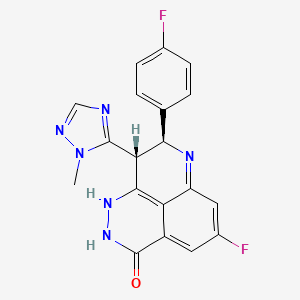
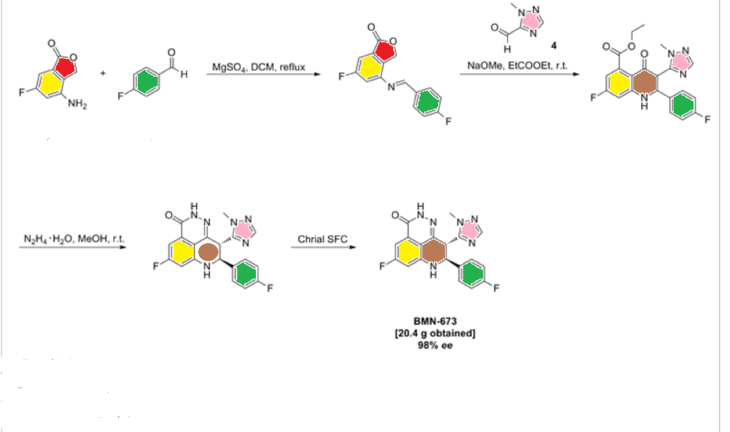
Talazoparib, BMN 673


Talazoparib.svg

Talazoparib, BMN-673, MDV-3800

(2S,3S)-methyl-7-fluoro-2-(4-fluorophenyl)-3-(1-methyl-1H-1,2,4-triazol-5-yl)-4-oxo-1,2,3,4-tetrahydroquinoline-5-carboxylate

(8S,9R)-5-fluoro-8-(4-fluorophenyl)-9-(1-methyl-1H-1,2,4-triazol-5-yl)-8,9-dihydro-2H-pyrido[4,3,2-de]phthalazin-3(7H)-one

(8S,9R)-5-Fluoro-8-(4-fluorophenyl)-9-(1-methyl-1H-1,2,4-triazol-5-yl)-2,7,8,9-tetrahydro-3H-pyrido[4,3,2-de]phthalazin-3-one

CAS 1207456-01-6
Chemical Formula: C19H14F2N6O
Exact Mass: 380.11972

BMN673, BMN673, BMN-673, LT673, LT 673, LT-673,  Talazoparib

BioMarin Pharmaceutical Inc

phase 3

Poly ADP ribose polymerase 2 inhibitor; Poly ADP ribose polymerase 1 inhibitor

cancer

(85,9R)-5-fluoro-8-(4-fluorophenyl)-9-(l-methyl-lH-l,2,4-triazol-5-yl)-8,9-dihydro-2H-pyrido[4,3,2-de]phthalazin-3(7H)-one toluenesulfonate salt

CAS 1373431-65-2(Talazoparib Tosylate)

1H NMR DMSOD6

str1

13C NMR DMSOD6

str1

HMBC NMR

str1

HSQC NMR

str1

Talazoparib (BMN-673) is an investigational drug that acts as a PARP inhibitor. It is in clinical trials for various cancers.

Talazoparib.png

Medivation, under license from BioMarin Pharmaceuticals, following its acquisition of LEAD Therapeutics, is developing a PARP-1/2 inhibitor, talazoparib, for treating cancer, particularly BRCA-mutated breast cancer. In February 2016, talazoparib was reported to be in phase 3 clinical development

Talazoparib, also known as BMN-673, is an orally bioavailable inhibitor of the nuclear enzyme poly(ADP-ribose) polymerase (PARP) with potential antineoplastic activity (PARP1 IC50 = 0.57 nmol/L). BMN-673 selectively binds to PARP and prevents PARP-mediated DNA repair of single strand DNA breaks via the base-excision repair pathway. This enhances the accumulation of DNA strand breaks, promotes genomic instability and eventually leads to apoptosis. PARP catalyzes post-translational ADP-ribosylation of nuclear proteins that signal and recruit other proteins to repair damaged DNA and is activated by single-strand DNA breaks. BMN-673 has been proven to be highly active in mouse models of human cancer and also appears to be more selectively cytotoxic with a longer half-life and better bioavailability as compared to other compounds in development. Check for active clinical trials or closed clinical trials using this agent.

Talazoparib is C19H14F2N6O.

Talazoparib tosylate is C26H22F2N6O4S.[1]

Approvals and indications

None yet.

Mechanism of action

Main article: PARP inhibitor

Clinical trials

After trials for advanced hematological malignancies and for advanced or recurrent solid tumors.[2] it is now in phase 3 for metastatic germline BRCA mutated breast cancer.[3] Trial estimated to complete in June 2016.[4]

As of January 2016 it in 14 active clinical trials.[5]

WO2010017055,  WO2015069851, WO 2012054698, WO 2011130661, WO 2013028495, US 2014323725, WO 2011097602

PAPER


Discovery and Characterization of (8S,9R)-5-Fluoro-8-(4-fluorophenyl)-9-(1-methyl-1H-1,2,4-triazol-5-yl)-2,7,8,9-tetrahydro-3H-pyrido[4,3,2-de]phthalazin-3-one (BMN 673, Talazoparib), a Novel, Highly Potent, and Orally Efficacious Poly(ADP-ribose) Polymerase-1/2 Inhibitor, as an Anticancer Agent

BioMarin Pharmaceutical Inc., 105 Digital Drive, Novato, California 94949, United States
J. Med. Chem., 2016, 59 (1), pp 335–357
DOI: 10.1021/acs.jmedchem.5b01498
Publication Date (Web): December 10, 2015
Copyright © 2015 American Chemical Society
*Phone: 1-415-506-3319. E-mail: bwang@bmrn.com.

Abstract

Abstract Image

We discovered and developed a novel series of tetrahydropyridophthlazinones as poly(ADP-ribose) polymerase (PARP) 1 and 2 inhibitors. Lead optimization led to the identification of (8S,9R)-47 (talazoparib; BMN 673; (8S,9R)-5-fluoro-8-(4-fluorophenyl)-9-(1-methyl-1H-1,2,4-triazol-5-yl)-2,7,8,9-tetrahydro-3H-pyrido[4,3,2-de]phthalazin-3-one). The novel stereospecific dual chiral-center-embedded structure of this compound has enabled extensive and unique binding interactions with PARP1/2 proteins. (8S,9R)-47 demonstrates excellent potency, inhibiting PARP1 and PARP2 enzyme activity with Ki = 1.2 and 0.87 nM, respectively. It inhibits PARP-mediated PARylation in a whole-cell assay with an EC50 of 2.51 nM and prevents proliferation of cancer cells carrying mutant BRCA1/2, with EC50 = 0.3 nM (MX-1) and 5 nM (Capan-1), respectively. (8S,9R)-47 is orally available, displaying favorable pharmacokinetic (PK) properties and remarkable antitumor efficacy in the BRCA1 mutant MX-1 breast cancer xenograft model following oral administration as a single-agent or in combination with chemotherapy agents such as temozolomide and cisplatin. (8S,9R)-47 has completed phase 1 clinical trial and is currently being studied in phase 2 and 3 clinical trials for the treatment of locally advanced and/or metastatic breast cancer with germline BRCA1/2 deleterious mutations.

http://pubs.acs.org/doi/abs/10.1021/acs.jmedchem.5b01498

http://pubs.acs.org/doi/suppl/10.1021/acs.jmedchem.5b01498/suppl_file/jm5b01498_si_001.pdf

Preparation of (8S,9R)-5-Fluoro-8-(4-fluorophenyl)-9-(1-methyl-1H-1,2,4-triazol-5-yl)-2,7,8,9-tetrahydro-3H-pyrido[4,3,2-de]phthalazin-3-one Tosylate Salt ((8S,9R)-47 Tosylate Salt)

A suspension of (8S,9R)-47 (BMN 673) (400 mg, 1.05 mmol) in a mixture of acetone (27 mL) and THF (13 mL) was heated to reflux until the suspension became clear. TsOH (220 mg, 1.16 mmol) was then added to the solution. White solids started to precipitate out from the solution shortly after the addition of TsOH. After stirring at 25 °C for 30 min, the mixture was filtered to collect the white crystal solids, which were washed with a mixture of acetone (10 mL) and 1,4-dioxane (4 mL) and then dried under vacuum at 45 °C for 3 days. This afforded the product as a white crystalline solid (540 mg, yield 93%). 1H NMR (400 MHz, DMSO-d6) δ (ppm) 2.29 (s, 3H), 3.67 (s, 3H), 4.97–5.06 (m, 2H), 6.91–6.94 (dd, J1 = 2.0 Hz, J2 = 10.8 Hz, 1H), 7.06–7.19 (m, 5H), 7.19–7.51 (m, 4H), 7.74 (s, 1H), 7.87 (s, 1H), 10.32 (brs, 1H), 12.36 (s, 1H). LC-MS (ESI)m/z: 381 (M + H)+. Anal. Calcd for C19H14F2N6O·toluene sulfonic acid: C, 56.52; H, 4.01; N, 15.21. Found: C, 56.49; H, 3.94; N, 15.39.

(8S,9R)-5-Fluoro-8-(4-fluorophenyl)-9-(1-methyl-1H-1,2,4-triazol-5-yl)-2,7,8,9-tetrahydro-3H-pyrido[4,3,2-de]phthalazin-3-one (8S,9R)-47 or BMN 673 and (8R,9S)-5-Fluoro-8-(4-fluorophenyl)-9-(1-methyl-1H-1,2,4-triazol-5-yl)-2,7,8,9-tetrahydro-3H-pyrido[4,3,2-de]phthalazin-3-one (8R,9S)-47

Compound 47 was dissolved in DMF, and chiral resolution was performed using supercritical-fluid chromatography (SFC) with a CHIRALPAK IA chiral column and methanol (20% with 0.1% DEA) and CO2 (80%) as the eluents. Yield 90%. For (8S,9R)-47 (BMN 673): retention time 8.8 min and ee 99.3%. For (8R,9S)-47: retention time 10.2 min and ee 99.2%.
Alternatively, compound (8S,9R)-47 could also be made using (2S,3R)-60a as a starting material and employing the same procedure described for the conversion of 60a to 47.
The optical rotation for both (8S,9R)-47 and (8R,9S)-47 was measured using a RUDOLPH (AUTOPOL V) automatic polarimeter at a concentration of 6.67 mg/mL in MeOH/MeCN/DMF = 0.5:0.5:1 at 20 °C. The specific rotation for (8S,9R)-47 was +92.2°, whereas it was −93.4° for (8R,9S)-47.

PATENT

WO-2016019125

WO2016019125

The compound (85,9R)-5-fluoro-8-(4-fluorophenyl)-9-(l-methyl-lH-l,2,4-triazol-5-yl)-8,9-dihydro-2H-pyrido[4,3,2-de]phthalazin-3(7H)-one toluenesulfonate salt (Compound (A))

Compound (A)

is an inhibitor of poly(ADP-ribose)polymerase (PARP). Methods of making it are described in WO2010017055, WO2011097602, and WO2012054698. However, the disclosed synthetic routes require chiral chromatography of one of the synthetic intermediates in the route to make Compound (A), methyl 7-fluoro-2-(4-fluorophenyl)-3-(l -methyl- lH-1, 2,4-triazol-5-yl)-4-oxo- 1 ,2,3,4-tetrahydroquinoline-5-carboxylate (Intermediate (A)),

Intermediate (A)

to yield the chirally pure (2S,35)-methyl 7-fluoro-2-(4-fluorophenyl)-3-(l-methyl-lH- 1,2,4-triazol-5-yl)-4-oxo-l,2,3,4-tetrahydroquinoline-5-carboxylate (Compound (1))

Compound (1).

Using conventional chiral chromatography is often solvent and time intensive.

Use of more efficient chromatography methods, such as simulated moving bed (SMB) chromatography still requires the use of expensive chiral chromatography resins, and is not practical on a large scale to purify pharmaceutical compounds. Also, maintaining

Compound (1) in solution for an extended time period during chromatography can lead to epimerization at the 9-position and cleavage of the methyl ester group in Compound (1). Replacing the chromatography step with crystallization step(s) to purify Compound (1) is desirable and overcomes these issues. Therefore, it is desirable to find an alternative to the use of chiral chromatography separations to obtain enantiomeric Compound (1).

Scheme 1 below describes use of Ac49 as a coformer acid for the preparation of Compound (la) and for the chiral resolution of Compound (1).

Scheme 1

Compound (1 )

Example 2 – Preparation of Compound (1) Using Scheme 1

Step la

Intermediate (A) (5 g, 12.5 mmol) was dissolved in 9: 1 v/v MIBK/ethanol (70 mL, 14 vol.) at 50 °C with stirring and dissolution was observed in less than about 5 minutes. [(lS)-en<io]-(+)-3-bromo-10-camphor sulfonic acid monohydrate (4.1 g, 12.5 mmol) was added and dissolution was observed in about 10-20 minutes. Seeding was then performed with Compound (la) (95% e.e., 5 mg, 0.1% w.) and the system was allowed to equilibrate for about 1 hour at 50 °C, was cooled to about 20 °C at 0.15 °C/min, and then equilibrated at 20 °C for 2 hours. The solid phase was isolated by filtration, washed with ethanol, and dried at about 50 °C and 3 mbar for about 2 to 3 hours to yield Compound (la) as a 0.6 molar equiv. EtOH solvate and 0.6 molar equiv. hydrate (93.4% e.e.).

Step lb

Compound (la) was then suspended in MIBK/ethanol 95/5% by volume (38 mL, 10 vol.) at 50 °C with stirring. After about 2 hours at 50 °C, the suspension was cooled to about 5 °C for 10 to 15 hours. The solid phase was recovered by filtration and dried at about 50 °C and 3 mbar for about 3 hours. Compound (la) (97.4% e.e.) was recovered. Step 2

000138] Compound (1) was released by suspending Compound (la) (3.9 g, 5.5 mmoi), without performing the optional reslurrying in Step 1, in 20 mL of water at room temperature and treating with 5M sodium hydroxide in water (1.3 mL, 1.2 mol). The mixture was kept at room temperature for about 15 hours and the solid was isolated by filtration and dried at 50 °C and 3 mbar for about 3 hours. Compound (1) was recovered (94.4% e.e.).

Example 3 – Large Scale Preparation of Compound (1) Using Scheme 1

The procedure of Example 1 was followed using 3.3 kg of Intermediate (A) and the respective solvent ratios to provide 95.7% e.e. in Step la; 99.2% e.e. in Step lb; and 99.2% e.e. in Step 2.

Example 4 – Alternative Preparation of Compound (1) Using Scheme 1

Step la

Intermediate (A) (751 mg, 1.86 mmol)) was dissolved in 9: 1 v/v

MIBK/ethanol (7.5 mL, 10 vol.) at 50 °C with stirring. [(15)-eni o]-(+)-3-bromo-10-camphor sulfonic acid monohydrate (620 mg, 1.88 mmol, 1 equiv.) was added. Formation of a precipitate was observed at about 1 hour at 50 °C. The system was then cooled to about 5 °C at 0.1 °C/min, and then equilibrated at 5 °C for about 60 hours. The solid phase was isolated by filtration and dried at about 50 °C and 3 mbar for about 2 hours to yield

Compound (la)(92% e.e.). See Figures 1-4 for XRPD (Figure 1), chiral HPLC (Figure 2), Ή NMR (Figure 3), and TGA/DSC analyses (Figure 4). The XRPD pattern from the material in Example 3 is similar to that in Example 1 with some slight shifts in the positions of specific diffraction peaks (highlighted by black arrows in Figure l). The ‘H NIVIR was consistent with a mono-salt of Compound (la) containing 0.5 molar equivalent of EtOH and 0.6% by weight residual MIBK. The TGA analysis showed a stepwise mass loss of 3.5% between 25 and 90 °C (potentially representing loss of the 0.5 molar equivalent of EtOH) and a gradual mass loss of 1.2% between 90 and 160 °C (potentially representing the loss of adsorbed water). The DSC analysis had a broad endotherm between 25 and 90 °C

representing desolvation and an endotherm at 135 °C representing melt/degradation.

Step lb

Compound (la) (100.3 mg, 0.141 mmol) was re-suspended in 95:5 v/v MIBK EtOH (1 mL, 10 vol.) at 50 °C and stirred for 1 hour before cooling to 5 °C at

0.1 °C/min. The solid (99.4% e.e.) was recovered by filtration after 1 night at 5 °C. Shifts in the XRPD diffraction peaks were no longer detected (Figure 5; compare Figure 1). Figure 6 shows the chiral HPLC for Compound (la).

Step 2

Compound (la) (100.2 mg, 0.141 mmol) from Step la was suspended in water (2 mL, 20 vol.) at 50 °C and 5 M NaOH in water (34 μL·, 1.2 molar equiv) was added. The resulting suspension was kept at 50 °C for one night, cooled to room temperature

(uncontrolled cooling) and filtered to yield Compound (1) (92% e.e.). The chiral purity was not impacted by this step and no [(15)-enJo]-(+)-3-bromo-10-camphor sulfonic acid was detected by NMR. Figure 7 compares the XRPD of Compound (1) in Step 2 with

Intermediate (A), the starting material of Step 1. Figure 8 shows the NMR of Compound (1) in Step 2 with Intermediate (A), the starting material of Step 1.

Example 5 – Alternative Preparation of Compound (1) Using Scheme 1 Step la

000144] Intermediate (A) (1 equiv.) was added with stirring to a solution of MIBK (12-13 vol), ethanol (1-1.5 vol), and water (0.05-0.10 vol) and the reaction was heated within 15 minutes to an internal temperature of about 48 °C to about 52 °C . [(lS)-endo]-(+)-3-bromo- 10-camphor sulfonic acid (1 equiv) was added and the reaction was stirred for about 5-10 mins at an internal temperature of about 48 °C to about 52 °C until dissolution occurred. Seed crystals of Compound (la) were added and the reaction was allowed to proceed for 1 hour at an internal temperature of about 48 °C to about 52 °C. The reaction was cooled at a rate of 0.15 °C /min to about 19-21 °C. The suspension was stirred for 2 hours at an internal temperature of about 19 °C to 21 °C and then was collected by filtration and washed twice with ethanol. The product was characterized by 1H NMR and 13C NMR (Figures 13a and 13b), IR Spectrum (Figure 14), DSC (Figure 15), and chiral HPLC (Figure 16).

Step 2a

To Compound (la) (1 equiv.) was added acetone (1.1 vol), IPA (0.55 vol), and methanol (0.55 vol) and the reaction was heated to an internal temperature of about 38 °C to 42 °C. Aqueous ammonia (25%) (1.3 equiv) was added and the reaction was stirred for about 10 minutes. The pH of the reaction was confirmed and the next step performed if > 7. Water was added (0.55 vol), the reaction was cooled to an internal temperature of about 35 °C, seed crystals of Compound (1) were added, and the reaction was stirred for about 10 mins. Water was added (3.3 vol) dropwise within about 30 minutes, the suspension was cooled within 30 minutes to an internal temperature of about 0 °C to 5 °C, and the reaction was stirred for 15 minutes. The solid was collected by filtration and washed three times with water.

Step 2b

To the product of Step 2a) was added acetone (4 vol), ΓΡΑ (1 vol), and methanol (1 vol) and the reaction was heated to an internal temperature of about 38 °C to 42 °C resulting in a clear solution. Water (2 vol) and seed crystals of Compound (1) were added and the system was stirred for about 15 minutes at an internal temperature of about 35 °C. Water (342 mL) was added dropwise in about 30 minutes. The suspension was then cooled in 30 min to an internal temperature of about 0 °C to 5 °C and was stirred for an additional 15 minutes. The solid was collected by filtration, washed twice with water, and chiral purity was determined. If > 99% e.e., then the solid was dried at an internal temperature of about 60 °C under reduced pressure to yield Compound (1). The product was characterized by Ή NMR (Figure 19), 13C NMR (Figure 20), IR (Figure 21), DSC (Figure 22), chiral HPLC (Figure 23).

Scheme 2 below describes use of Acl 10 as a coformer acid for the preparation of Compound (lb) and the chiral resolution of Compound (1).

Intermediate (A)

Compound (1 b)

Intermediate (A)

Compound (1 b)

Compound (1 )

Example 6 – Preparation of Compound (1) Using Scheme 2

Step la

Intermediate (A) (102 mg, 0.256 mmol) was dissolved in MIBK (1 mL, 10 vol.) at 65 °C with stirring. (lS)-phenylethanesulfonic acid, prepared using procedures known to one of skill in the art, in MIBK (3.8 M, 80 μί, 1 molar equiv.) was added and a suspension was observed after 30 minutes at 65 °C. The system was kept at 65 °C for another 30 minutes before cooling to 5 °C at 0.1 C/min. After one night at 5 °C, the solid was filtered, dried at 50 °C, 3 mbar pressure for about 2 hours to yield Compound (lb). See Figures 9-12 for XRPD (Figure 9), chiral HPLC (Figure 10), Ή NMR (Figure 11), and TGA/DSC analyses (Figures 12a and 12b). The XRPD diffraction pattern of the solid obtained in Example 5 differed from the XRPD pattern obtained with the solid from in the salt screen of Example 1 and was consistent with the production of different solids in Examples 1 and 5. The Ή NMR was consistent with the mono-salt with a 0.3% by weight residue of dioxane. In Figure 12a, the thermal behavior was consistent with a non-solvated form exhibiting a melt/degradation at 201 °C. Figure 12b compares the melt pattern of Compound (lb) in Example 5 with Compound (lb) in Example 1.

Steps lb and 2 can be carried out using procedures similar to those used in Examples 2-5.

Example 7 – Polymorphism of Compound (la)

Compound (1) (92% e.e., 10 mg, mmol) was placed in 1.5 mL vials and the solvents (1 mL or less) of Table 3 were added at 50 °C until dissolution was achieved. [(1S)-eni o]-(+)-3-bromo-10-camphorsulfonic acid was added as a solid at 50 °C. The samples were kept at 50 °C for about 1 hour prior to being cooled to room temperature overnight

(uncontrolled cooling rate). Clear solutions were successively cooled to 4 °C, -20 °C and evaporated at room temperature. Any gum obtained after evaporation was re-suspended in diethyl ether. The solid phases generated were characterized by XRPD and if relevant, by Ή NMR and TGA/DSC.

Table 3. Compound (la) Polymorphism Conditions

C.S. means clear solution and Susp. means suspension. “A” means the XRPD diffraction pattern was new but similar to that for Ac49 in

Example 1. “B” means the XRPD diffraction pattern was the same as that for Ac49 in Example 1. “M.E.” means molar equiv.

Page 38 of 64

NAI- 1500460480V I

Each of the seven solvents in which solvates were observed (heterosolvates not included) were mixed with MIBK (90% vol). Solutions of Intermediate (A) were prepared in the solvent mixtures (10 vol) at 50 C and [(15)-en<io]-(+)-3-bromo-10-camphor sulfonic acid (1 molar equivalent) was added. The resulting clear solutions were cooled to 5 °C at 0.2 C/min. Surprisingly, no crystallization was reported in any sample. Seeding was performed with a few crystals of each solvate at about 25 °C. The solid phases were analyzed by XRPD and the liquid phases were analyzed by chiral HPLC. See Table 4 for a summary of the results (where “Dias 2” is the (2R, 3R) diastereomer of Compound (la)) .

Table 4. Compound (la) Solvate Analysis

As seen in Table 4 above, the ethanol/MIBK system yielded 93% pure Compound (la) which demonstrates that Compound (la) does crystallize in a very pure form as an ethanolate solvate.

Other objects, features and advantages of the compounds, methods and compositions described herein will become apparent from the following description. It should be understood, however, that the description and the specific examples, while indicating specific embodiments, are given by way of illustration only, since various changes and modifications within the spirit and scope of the present description will become apparent from this detailed description.

All publications including patents, patent applications and published patent applications cited herein are hereby incorporated by reference for all purposes.

PATENT

US 2011196153

http://www.google.co.ve/patents/US20110237581


STR1.jpg

Patent

US 2011237581

PATENTSTR1.jpg

PATENT

http://www.google.com/patents/WO2015069851A1?cl=en

SYNTHETIC EXAMPLES

Example 1

\ ,

(1 a) (2) (3) (la) (5)

To a flask was added N-methyl-l,2,4-triazole (la)(249.3 g, 3.0 mol, 1 equiv.),

2-methyl-THF (1020 mL, about 1 :4 m/v), and DMF (2)(230.2 g, 3.15 mol, 1.05 equiv.), in any order. The solution was cooled to an internal temperature of about -5 to 0 °C. To the flask was added LiHMDS (3) as a 20% solution in 2-methyl-THF (3012 g, 3.6 mol, 1.2 equiv.) dropwise within about 60 minutes. During the addition of the LiHMDS (3), the desired Compound (la) was precipitated as the 2-methyl-THF solvate, and the flask was cooled to about -30 °C. The reaction was stirred for about 30 minutes at an internal temperature of about -5 to 0 °C.

The precipitated crystals were removed from the reaction mixture by filtration and washed with 2-methyl-THF. The product, Compound (la) as the 2-methyl-THF solvate, was dried under vacuum at an internal temperature of about 60 °C (about 72.5% as measured by NMR) to yield Compound (la).

Example 2

As shown in Example 2, the Compounds of Formula I are useful in the synthesis of more complex compounds. See General Scheme 1 for a description of how the first step can be accomplished. Compounds of Formula I can be reacted with compound (6) to yield Compounds of Formula II. In Example 2, Compound (la) can be reacted with

Compound (6) to yield Compound (7). The remaining steps are accomplished using procedures known to one of ordinary skill in the art, for example, as disclosed in

WO2010017055 and WO2011097602 to yield Compound (12).


PATENT

US 2014323725/http://www.google.com/patents/WO2011097602A1

5-fluoro-8-(4-fluorophenyl)-9-(l-methyl-lH-l,2,4-triazol-5-yl)-8,9- dihydro-2H-pyrido[4,3,2-Je]phthalazin-3(7H)-one, as shown in formula (1), and its enantiomer compounds, as shown in formulas (la) and (lb):

Example 1

(Z)-6-Fluoro-3-(( 1 -methyl- IH- 1 ,2,4-triazol-5 -yl)methylene)-4-nitroisobenzofuran- 1 (3H)-one (3)

[0053] To a 80 L jacketed glass reactor equipped with a chiller, mechanical stirrer, thermocouple, and nitrogen inlet/outlet, at 15 – 25 °C, anhydrous 2-methyl-tetrahydrofuran (22.7 kg), 6-fluoro-4- nitroisobenzofuran-l(3H)-one (2) (2.4 kg, 12.2 mol, 1.00 eq.), and 2-methyl-2H-l,2,4-triazole-3- carbaldehyde (49.6 – 52.6 % concentration in dichloromethane by GC, 3.59 – 3.38 kg, 16.0 mol, 1.31 eq.) were charged consecutively. Triethylamine (1.50 kg, 14.8 mol, 1.21 eq.) was then charged into the above reaction mixture. The reaction mixture was stirred for another 10 minutes. Acetic anhydride (9.09 – 9.10 kg, 89.0 – 89.1 mol, 7.30 eq.) was charged into the above reaction mixture at room temperature for 20 – 30 minutes. The reaction mixture was heated from ambient to reflux temperatures (85 – 95 °C) for 80 – 90 minutes, and the mixture was refluxed for another 70 – 90 minutes. The reaction mixture was monitored by HPLC, indicating compound (2) was reduced to < 5 %. The resulting slurry was cooled down to 5 – 15 °C for 150 – 250 minutes. The slurry was aged at 5 – 15 °C for another 80 – 90 minutes. The slurry was filtered, and the wet cake was washed with ethyl acetate (2L x 3). The wet cake was dried under vacuum at 40 – 50 °C for 8 hours to give 2.65 – 2.76 kg of (Z)-6-fluoro-3-((l -methyl-lH-l ,2,4-triazol-3- yl)methylene)-4-nitroisobenzofuran-l(3H)-one (3) as a yellow solid (2.66 kg, yield: 75.3 %, purity: 98.6 – 98.8 % by HPLC). LC-MS (ESI) m/z: 291 (M+l)+. Ή-ΝΜΡ (400 MHz, DMSO-d6) δ (ppm): 3.94 (s, 3H), 7.15 (s, 1H), 8.10 (s, 1H), 8.40-8.42 (dd, Jx = 6.4 Hz, J2 = 2.4 Hz, 1H), 8.58-8.61 (dd, Jx = 8.8 Hz, J2 = 2.4 Hz, 1H).

Example 2

Methyl 5- enzoate (4)

Example 2A

[0054] (¾-6-Fluoro-3-((l-methyl-lH-l,2,4-taazol-3-yl)m (3) (177 g, 0.6 mol, 1.0 eq.), and HC1 (2 N in methanol, 3 L, 6 mol, 10 eq.) were charged into a 5 L 3-neck flask equipped with mechanical stirrer, thermometer, and nitrogen inlet/outlet. The reaction mixture was stirred at room temperature for 25 hours. The reaction mixture was monitored by HPLC, indicating 0.8 % compound (3) remained. The reaction mixture was concentrated under vacuum at 40 °C to dryness, and methyl 5-fluoro-2-(2-(l -methyl- lH-l,2,4-triazole-3-yl)acetyl)-3-nitrobenzoate hydrochloride (4) was obtained as a yellow solid (201 g, yield: 93.4 %). It was used for the next step without further purification. LC-MS (ESI) m/z: 323 (M+l)+ ¾-NMR (400 MHz, DMSO-J6) δ (ppm): 3.89 (s, 3H), 3.92 (s, 3H), 4.60 (s, 2H), 7.85 (s, 1H), 8.25-8.28 (dd, Jx = 8.4 Hz, J2 = 2.8 Hz, 2H), 8.52-8.54 (dd, Jx = 8.4 Hz, J2 = 2.8 Hz, 2H).

Example 2B

An alternative workup procedure to that illustrated in Example 2A follows. Instead of evaporating the reaction mixture to dryness, it was condensed to 2 volumes, followed by solvent exchange with 12 volumes of THF, and then 12 volumes of heptane. The slurry mixture was concentrated to 2 volumes and filtered to give the product. As such, 1.8 kilograms of (Z)-6-fluoro-3-((l-methyl-lH-l,2,4-triazol-3- yl)methylene)-4-nitroisobenzofuran-l(3H)-one (3) gave 2.15 kilograms (yield 96.4 %) of the product methyl 5-fluoro-2-(2-(l -methyl- lH-l,2,4-triazole-3-yl)acetyl)-3-nitrobenzoate hydrochloride (4).

Example 3

Methyl 7-fluoro-2-(4-fluorophenyl)-3-(l-methyl-lH-l,2,4-triazol-5-yl)-4-oxo-l,2,3,4- tetrahydroquinoline-5 -carboxylate (5)

Example 3A

To a suspension of methyl 5-fluoro-2-(2-(l-methyl-lH-l,2,4-triazol-5-yl)acetyl)-3-nitrobenzoate (4) (5 g, 15.5 mmol, leq.) and 4-fluorobenzaldehyde (3.6 g, 29 mmol, 1.87 eq.) in a mixture of solvents tetrahydrofuran (30 mL) and MeOH (5 mL) was added titanium(III) chloride (20 % w/w solution in 2N Hydrochloric acid) (80 mL, 6 eq.) dropwise with stirring at room temperature. The reaction mixture was allowed to stir at 30~50°C for 2 hours. The mixture was then diluted with water (160 mL), and the resulting solution was extracted with ethyl acetate (100 mL x 4). The combined organic layers were washed with saturated NaHC03 (50 mL x 3) and aqueous NaHS03 (100 mL x 3), dried by Na2S04, and concentrated to dryness. This afforded a crude solid, which was washed with petroleum ether (120 mL) to obtain the title compound as a yellow solid (5.9 g, yield: 95 %, purity: 97 %). LC-MS (ESI) m/z: 399 (M+l)+. ^-NMR (400 MHz, CDCla) δ (ppm): 3.58 (s, 3H), 3.87 (s, 3H), 4.16-4.19 (d, J2=13.2 Hz, 1H), 4.88 (s, 1H), 5.37-5.40 (d, J2=13.2 Hz, 1H), 6.47-6.53 (m, 2H) , 6.97-7.01 (m, 2H), 7.37-7.41 (m, 2H), 7.80 (s, 1H).

Example 3B

An alternative workup procedure to that illustrated in Example 3A follows. After the completion of the reaction, the mixture was extracted with isopropyl acetate (20 volumes x 4) without water dilution. The product was isolated by solvent exchange of isopropyl acetate with heptanes followed by re-slurry with MTBE and filtration. As such, 3 kilograms of methyl 5-fluoro-2-(2-(l-methyl-lH-l,2,4-triazol-5- yl)acetyl)-3-nitrobenzoate (4) afforded 2.822 kilograms of the title compound (5) (yield 81 %).

Example 3C

To a stirred solution of methyl 5-fluoro-2-(2-(l-methyl-lH-l,2,4-triazol-5-yl)acetyl)-3- nitrobenzoate (4) (580 mg, 2 mmol) and 4-fluorobenzaldehyde (488 mg, 4 mmol) in methanol (0.75 mL) and tetrahydrofuran (4.5 mL) was added concentrated HC1 solution (w/w 37 %, 6 mL), then reductive powdered Fe (672 mg, 12 mmol) was added slowly to the reaction system. After the addition was complete, the resulting mixture was heated to 60 °C and kept at this temperature for 3 hours. After the disappearance of the starting material (4) as monitored by LC-MS, the reaction mixture was partitioned between ethyl acetate (30 mL) and water (30 mL) and the aqueous phase was extracted with ethyl acetate (20 mL x 3). The combined organic phase was dried with Na2S04, concentrated in vacuo and purified by column chromatography (ethyl acetate: petroleum ether = 1 : 1) to give the title compound (5) as a pale yellow solid (300 mg, yield 40 %). LC-MS (ESI) m/z: 399 (M+l)+. LH-NMR (400 MHz, CDC13) δ (ppm): 3.58 (s, 3H), 3.87 (s, 3H), 4.17 (d, 1H), 4.87 (s, 1H), 5.38 (d, 1H), 6.50 (dd, 2H), 6.99 (dd, 2H), 7.38 (dd, 2H), 7.80 (s, 1H).

Example 3D

To a stirred solution of methyl 5-fluoro-2-(2-(l-methyl-lH-l,2,4-triazol-5-yl)acetyl)-3- nitrobenzoate (4) (580 mg, 2 mmol) and 4-fluorobenzaldehyde (488 mg, 4 mmol) in methanol (0.75 mL) and tetrahydrofuran (4.5 mL) was added SnCl2 (2.28 g, 12 mmol) and concentrated HC1 (w/w 37 %, 6 mL), the resulting mixture was reacted at 45 °C for 3 hours, until LC-MS indicating the disappearance of the starting material (4) and about 50 % formation of the product. The mixture was then partitioned between ethyl acetate (30 mL) and water (30 mL) and the aqueous phase was extracted with ethyl acetate (20 mL x 3). The combined organic phase was dried with Na2S04, concentrated in vacuo and purified by column chromatography (ethyl acetate: petroleum ether = 1 : 1) to give the title compound (5) as a pale yellow solid (10 mg, yield 1.3 %). LC-MS (ESI) m/z: 399 (M+l)+. LH-NMR (400 MHz, CDC13) δ (ppm): 3.58 (s, 3H), 3.87 (s, 3H), 4.17 (d, 1H), 4.87 (s, 1H), 5.38 (d, 1H), 6.50 (dd, 2H), 6.99 (dd, 2H), 7.38 (dd, 2H), 7.80 (s, 1H).

Example 3E

A solution of methyl 5-fluoro-2-(2-(l-methyl-lH-l,2,4-triazol-5-yl)acetyl)-3-nitrobenzoate (4) (580 mg, 2 mmol) and 4-fluorobenzaldehyde (488 mg, 4 mmol) in methanol (20 mL) and acetic acid (1 mL) was stirred at room temperature for 24 hours under hydrogen (1 barr) in the presence of a catalytic amount of 10 % Pd/C (212 mg, 0.2 mmol). After the reaction was complete, the catalyst was removed by filtration through a pad of Celite, the solvent was removed in vacuo, and the residue was purified by column chromatography (ethyl acetate: petroleum ether = 1 : 1) to give the title compound (5) as a pale yellow solid (63 mg, yield 8 %). LC-MS (ESI) m/z: 399 (M+l)+ . 1HNMR (400 MHz, DMSO-d6) δ (ppm): 3.56 (s, 3H), 3.86 (s, 3H), 7.02 (dd, 2H), 7.21 (dd, 2H), 7.90 (s, 1H), 8.08 (s, 1H), 8.26 (dd, 1H), 8.56 (dd, 1H).

Example 4

5-Fluoro-8-(4-fluorophenyl)-9-(l-methyl-lH-l,2,4-triazol-5-yl)-8,9-dihydro-2H-pyrido[4,3,2-

 Methyl 7-fluoro-2-(4-fluorophenyl)-3-(l -methyl-lH-l ,2,4-triazol-5-yl)-4-oxo-l,2,3,4- tetrahydroquinoline-5-carboxylate (5) (150 g, 0.38 mol, 1.0 eq.) and methanol (1.7 L) were charged into a 3 L 3-neck flask equipped with a mechanical stirrer, thermometer, and nitrogen inlet/outlet. The resulted suspension was stirred at room temperature for 15 minutes. Hydrazine hydrate (85 % of purity, 78.1 g, 1.33 mol, 3.5 eq.) was charged dropwise into the above reaction mixture within 30 minutes at ambient temperature. The reaction mixture was stirred at room temperature overnight. The reaction was monitored by HPLC, showing about 2 % of compound (5) left. The obtained slurry was filtered. The wet cake was suspended in methanol (2 L) and stirred at room temperature for 3 hours. The above slurry was filtered, and the wet cake was washed with methanol (0.5 L). The wet cake was then dried in vacuum at 45 – 55 °C for 12 hours. This afforded the title compound as a pale yellow solid (112 g, yield: 78.1 %, purity: 95.98 % by HPLC). LC-MS (ESI) m/z: 381 (M+l)+. ^-NMR (400 MHz, DMSO-J6) δ (ppm): 3.66 (s, 3H), 4.97-5.04 (m, 2H), 6.91-6.94 (dd, Jx = 2.4, J2 = 11.2 Hz, 1H), 7.06-7.09 (dd, Jx = 2.4, J2 = 8.8 Hz, 1H), 7.14-7.18 (m, 3H), 7.47-7.51 (m, 2H), 7.72 (s, 1H), 7.80 (s, 1H), 12.35 (s, 1H).

Example 5

5 -Amino-7-flu in- 1 (2H)-one

To a solution of 6-fluoro-3-((l-methyl-lH-l,2,4-triazol-3-yl)methylene)-4-nitroiso-benzofuran- l(3H)-one (3) (4.0 g, 135 mmol) in THF (100 mL) was added hydrazine monohydrate (85 %) (6 mL) at room temperature under nitrogen atmosphere. The mixture was stirred for 2 hours, then acetic acid (6 mL) was added and the mixture was heated to and kept at 60 °C for 18 hours. The resulting mixture was diluted with water (100 mL) and extracted with ethyl acetate (100 mL x 3). The organic layer was dried over anhydrous Na2S04 and evaporated to dryness to afford the title compound as a yellow solid (1.6 g, yield 42 %). LC-MS (ESI) m/z: 275(M+1)+.

Example 6

(£’)-7-fluoro-5-(4-fluorobenzylideneamino)-4-((l -methyl- IH- 1 ,2,4-triazol-5-yl)methyl)phthalazin- 1 (2H)- one

(7)

To a suspended of 5-amino-7-fluoro-4-((l-methyl-lH-l,2,4-triazol-3-yl)methyl) phthalazin- l(2H)-one (7) (1.6 g, 5.8 mmol) in acetonitrile (50 mL) was added 4-fluorobenzaldehyde (2.2 g, 17.5 mmol). The mixture was stirred under reflux under nitrogen for 48 hours. The precipitate was filtered and washed with a mixture of solvents (ethyl acetate/hexane, 1 :1, 10 mL). After drying in vacuum, it afforded the title compound as a yellow solid (1.2 g, yield 52 %). LC-MS (ESI) m/z: 381(M+1)+.

Example 7

5-Fluoro-8 4-fluorophenyl)-9 l-methyl H-l,2,4-triazol-5-yl)-8,9-dihydro-2H^yrido[4,3,2-

(8) (1 )

To a suspension of (£’)-7-fluoro-5-(4-fluorobenzylideneamino)-4-((l-methyl-lH-l,2,4-triazol-5- yl)methyl)phthalazin-l(2H)-one (8) (2.0 g, 5.3 mmol) in THF (80 mL) was added cesium carbonate (3.4 g, 10.6 mmol). The reaction mixture was stirred at 55 °C for 4 hours and cooled down to room temperature. The mixture was diluted with water (50 ml) and extracted with ethyl acetate (50 mL x 3). The combined organic layers were dried over anhydrous Na2S04 and evaporated to dryness to afford the title compound as a white solid (1.6 g, yield 80 %). LC-MS (ESI) m/z: 381(M+1)+. ^-NMR (400 MHz, DMSO- ) δ (ppm): 3.66 (s, 3H), 4.97-5.04 (m, 2H), 6.91-6.94 (dd, Jx = 2.4, J2 = 11.2 Hz, 1H), 7.06-7.09 (dd, Ji = 2.4, J2 = 8.8 Hz, 1H), 7.14-7.18 (m, 3H), 7.47-7.51 (m, 2H), 7.72 (s, 1H), 7.80 (s, 1H), 12.35 (s, 1H).

Example 8

(£)-Methyl 5-fluoro-2-(3-(4-fluorophenyl)-2-(l-methyl-lH-l,2,4-triazol-5-yl)acryloyl)-3-nitrobenzoate

(9)

To a stirred solution of methyl 5-fluoro-2-(2-(l-methyl-lH-l,2,4-triazol-5-yl)acetyl)-3- nitrobenzoate (4) (580mg, 2 mmol) and 4-fluorobenzaldehyde (488 mg, 4 mmol) in dimethylsulfoxide (2 mL) was added L-proline (230 mg, 2 mmol). The resulting mixture was kept with stirring at 45 °C for 48 hours. The reaction system was then partitioned between ethyl acetate (50 mL) and water (30 mL), and the organic phase was washed with water (20 mL x 3), dried with Na2S04, concentrated in vacuo, and purified by column chromatography (ethyl acetate: petroleum ether = 1 :3) to give the title compound (9) as a pale yellow foam (340 mg, yield 40 %). LC-MS (ESI) m/z: 429 (M+l)+. ^-NMR (400 MHz, DMSO-dg); δ (ppm): 3.56 (s, 3H), 3.86 (s, 3H), 7.02 (dd, 2H), 7.21 (dd, 2H), 7.90 (s, IH), 8.08 (s, IH), 8.26 (dd, IH), 8.56 (dd, IH).

Example 9

Methyl 7-fluoro-2-(4-fluorophenyl)- 1 -hydroxy-3-( 1 -methyl- IH- 1 ,2,4-triazol-5-yl)-4-oxo- 1 ,2,3,4- tetrahydroquinoline-5 -carboxylate (10)

To a solution of (£)-Methyl 5-fluoro-2-(3-(4-fluorophenyl)-2-(l-methyl-lH-l,2,4-triazol-5- yl)acryloyl)-3-nitrobenzoate (9) (200 mg, 0.467 mmol) in methanol (20 mL) was added 10 % Pd/C (24 mg). After the addition, the mixture was stirred under H2 (1 atm) at room temperature for 0.5 h. The reaction system was then filtered and evaporated under reduced pressure. The residue was purified by chromatography (ethyl acetate: petroleum ether = 1 :1) to give the title compound (10) (110 mg, yield 57 %) as an off-white foam. LC-MS (ESI) m/z: 415 (M+H)+. ¾-NMR (400 MHz, DMSO-d6) δ (ppm): 3.53 (s, 3H), 3.73 (s, 3H), 5.08 (d, 2H), 5.27 (d, 2H), 6.95 (dd, IH), 7.08 (dd, 2H), 7.15 (dd, IH), 7.42 (dd, 2H), 7.77 (s, IH), 9.92 (s, IH). Example 10

Methyl 7-fluoro-2-(4-fluorophenyl)-3-(l-methyl-lH-l,2,4-triazol-5-yl)-4-oxo-l,2,3,4-

(10) (5)

To a stirred solution of methyl 7-fluoro-2-(4-fluorophenyl)-l-hydroxy-3-(l-methyl-lH-l,2,4- triazol-5-yl)-4-oxo-l, 2,3, 4-tetrahydroquinoline-5 -carboxylate (10) (41.4 mg, 0.1 mmol) in methanol (5 mL) was added concentrated HCl solution (w/w 37 %, 1 mL) and reductive powdered Fe (56 mg, 1 mmol). The reaction mixture was refluxed for 3 hours. After the disappearance of compound (10) as monitored by LC-MS, the reaction system was partitioned between ethyl acetate (20 mL) and water (20 mL) and then the aqueous phase was extracted with ethyl acetate (10 mL x 3). The combined organic phase was dried with Na2S04, concentrated in vacuo and purified by column chromatography (ethyl acetate: petroleum ether = 1 :1) to give the title compound (5) as a pale yellow solid (12 mg, yield 30 %). LC-MS (ESI) m/z: 399 (M+l)+. ¾-NMR (400 MHz, CDC13) δ (ppm): 3.58 (s, 3H), 3.87 (s, 3H), 4.17 (d, 1H), 4.87 (s, 1H), 5.38 (d, 1H), 6.50 (dd, 2H), 6.99 (dd, 2H), 7.38 (dd, 2H), 7.80 (s, 1H).

Example 11

Methyl 7-fluoro-2-(4-fluorophenyl)-3-(l-methyl-lH-l,2,4-triazol-5-yl)-4-oxo-l,2,3,4-

To a solution of (£)-Methyl 5-fluoro-2-(3-(4-fluorophenyl)-2-(l-methyl-lH-l,2,4-triazol-5- yl)acryloyl)-3-nitrobenzoate (9) (214 mg, 0.5 mmol) in methanol (5 mL) was added concentrated HCl solution (w/w 37 %, 1 mL), then reductive Fe powder (140 mg, 2.5 mmol) was added slowly to the reaction system. After the addition was complete the resulting mixture was refluxed for 24 hours. The reaction mixture was then filtered, concentrated, neutralized with saturated NaHC03 (20 mL), and extracted with ethyl acetate (10 mL x 3). The residue was purified by chromatography (ethyl acetate: petroleum ether = 1 : 1) to give the title compound (5) (30 mg, yield 15 %) as an off-white foam. LC-MS (ESI) m/z: 399 (M+H)+. ^-NMR (400 MHz, DMSO-d6) δ (ppm): 3.56 (s, 3H), 3.86 (s, 3H), 7.02 (dd, 2H), 7.21 (dd, 2H), 7.90 (s, 1H), 8.08 (s, 1H), 8.26 (dd, 1H), 8.56 (dd, 1H).

Example 12

(8R,9S)-5-fluoro-8-(4-fluorophenyl)-9-(l-me

Je]phthalazin-3(7H)-one (la) and (8S,9R)-5-fluoro-8-(4-fluorophenyl)-9-(l-methyl-lH-l,2,4-triazol-5-

(1) (la) (lb)

A chiral resolution of 5-fluoro-8-(4-fluorophenyl)-9-(l-methyl-lH-l,2,4-triazol-5-yl)-8,9- dihydro-2H-pyrido[4,3,2-Je]phthalazin-3(7H)-one (1) (52.5 g) was carried out on a super-fluid chromatography (SFC) unit using a CHIRALPAK IA column and C02/methanol/diethylamine

(80/30/0.1) as a mobile phase. This afforded two enantiomers with retention times of 7.9 minute (23.6 g, recovery 90 %, > 98 % ee) and 9.5 minute (20.4 g, recovery 78 %, > 98 % ee) as analyzed with a CHIRALPAK IA 0.46 cm x 15 cm column and C02/methanol/diethylamine (80/30/0.1) as a mobile phase at a flow rate of 2 g/minute.

Example 13

(2R,3R)-methyl 7-fluoro-2-(4-fluorophenyl)-3-(l-methyl-lH-l,2,4-triazol-5-yl)-4-oxo-l,2,3,4- tetrahydroquinoline-5-carboxylate (6a) and (2S,3S)-methyl 7-fluoro-2-(4-fluorophenyl)-3-(l-methyl-lH-

(5) (6a) (6b)

Example 13A

The chiral resolution of compound (5) was carried out on a SFC unit with a CHIRALPAK®IC 3 cm (I.D.) x 25 cm, 5 μηι column, using C02/MeOH (80/20) as a mobile phase at a flow rate of 65 g/ minute while maintaining the column temperature at 35 °C and with a detection UV wavelength of 254 nm. As such, a racemate of compound (5) (5 g) in methanol solution was resolved, which resulted in two enantiomers with a retention times of 2.35 minute (2.2 g, 88 % recovery, >98 % ee) and 4.25 minute (2.3 g, 92 % recovery, >98 % ee), respectively when analyzed using CHIRALPAK®IC 0.46 cm x 15 cm column and CO2/MeOH(80/20) as a mobile phase at a flow rate of 2 mL/ minute.

Example 13B

The chiral resolution of compound (5) was carried out on a SFC unit with a CHIRALPAK®IC 5cm (I.D.) x 25 cm, 5 μηι column, using C02/MeOH (75/25) as a mobile phase at a flow rate of 200 mL/ minute while maintaining the column temperature at 40 °C and with a detection UV wavelength of 255 nm. As such, a racemate of compound (5) (1.25 kg) in methanol solution was resolved, which resulted in two enantiomers in about 83 % yield and 97.4 % purity.

Example 13C

Alternatively, the separation can also be achieved on a Simulated Moving Bed (SMB) unit with a CHIRALPAK®IC column and acetonitrile as a mobile phase. The retention times for the two enantiomers are 3.3 and 4.1 minutes, respectively. In certain embodiments, the productivity can be greater than 6 kg Feed/day/kg CSP.

Example 14

(8R,9S)-5-fluoro-8 4-fluorophenyl)-9<l-me

Je]phthalazin-3(7H)-one (la) and (8S,9R)-5-fluoro-8-(4-fluorophenyl)-9-(l-methyl-lH-l,2,4-triazol-5- (lb)

Example 14A

To a solution of (2R,3R)-methyl 7-fluoro-2-(4-fluorophenyl)-3-(l-methyl-lH-l,2,4-triazol-5-yl)- 4-oxo-l,2,3,4-tetrahydroquinoline-5-carboxylate (6a) or (2S,3S)-methyl 7-fluoro-2-(4-fluorophenyl)-3-(l- methyl-lH-l,2,4-triazol-5-yl)-4-oxo-l,2,3,4-tetrahydroquinoline-5-carboxylate (6b) (400 mg, 1.0 mmol) in ethanol (8.0 mL) was added hydrazine monohydrate (85 %, 2.0 mL), and the solution stirred at room temperature for 2 hours. The resulting solution was then concentrated to a volume of 2 mL and filtered, and the resultant cake washed with ethanol (1 mL). After drying in vacuum at 50°C, this afforded the title compound as a white solid (209 mg, yield 55 %). LC-MS (ESI) m/z: 381(M+1)+. ^-NMR (400 MHz, DMSO-dg): δ (ppm): 3.681 (s, 3H), 4.99-5.06 (m, 2H), 6.92-6.96 (m, 1H), 7.08-7.11 (m, 1H), 7.16-7.21 (t, J= 8.8 Hz, 2H), 7.49-7.53 (m, 2H), 7.75 (s, 1H), 7.83 (s, 1H), 12.35 (s, 1H).

Example 14B

To a solution of (2R,3R)-methyl 7-fluoro-2-(4-fluorophenyl)-3-(l-methyl-lH-l,2,4-triazol-5-yl)- 4-oxo-l,2,3,4-tetrahydroquinoline-5-carboxylate (6a) or (2S,3S)-methyl 7-fluoro-2-(4-fluorophenyl)-3-(l- methyl-lH-l,2,4-triazol-5-yl)-4-oxo-l,2,3,4-tetrahydroquinoline-5-carboxylate (6b) (446 g) in acetonitrile (10 volume) was added hydrazine monohydrate (2.9 eq.), and the solution stirred at room temperature for 2 hours. The resulting solution was then concentrated to a volume of 2 mL and filtered. The crude product was re-slurried with water (3~5 volumes) at 15-16 °C. After drying in vacuum at 50 °C, this affords the title compound as a white solid (329 g, yield 77%, 99.93% purity). LC-MS (ESI) m/z:

381(M+1)+; ¾-NMR (400 MHz, DMSO-d6) δ (ppm): 3.681 (s, 3H), 4.99-5.06 (m, 2H), 6.92-6.96 (m, 1H), 7.08-7.11 (m, 1H), 7.16-7.21 (t, J= 8.8 Hz, 2H), 7.49-7.53 (m, 2H), 7.75 (s, 1H), 7.83 (s, 1H), 12.35 (s, 1H).

Talazoparib (BMN-673) is an orally available poly ADP ribose polymerase (PARP) inhibitor currently in development by Pfizer for the treatment of advanced breast cancer patients with germline BRCA mutations.[1] Talazoparib is similar to the first in class PARP inhibitor, olaparib.[2][3] However, talazoparib is thought to be more potent than olaparib.[3]

Mechanism of action

Talazoparib acts as an inhibitor of poly ADP ribose polymerase(PARP) which aids in single strand DNA repair. Cells that have BRCA1/2mutations are susceptible to the cytotoxic effects of PARP inhibitors because of an accumulation of DNA damage.[1] Talazoparib is theorized to have a higher potency than olaparib due to the additional mechanism of action called PARP trapping. PARP trapping is the mechanism of action where the PARP molecule is trapped on the DNA, which interferes with the cells ability to replicate. Talazoparib is found to be ~100 fold more efficient in PARP trapping than olaparib.[4] However, this increased potency may not translate directly to clinical effectiveness as many other factors must be considered.[3][4]

Commercialization

Talazoparib was originally developed by BioMarin Pharmaceutical Inc. However, Medivation Inc. acquired all worldwide rights to talazoparib in August 2015 to expand their global oncology franchise.[5] Medivation acquired talazoparib for $410 million with additional payments of up to $160 million in royalties and milestones. Under this agreement, Medivation assumed all financial responsibilities for the continued development, regulatory, and commercialization of talazoparib.[5][6]

Clinical trials

As of January 2016, talazoparib is in 14 active clinical trials [7] including a new arm of I-SPY 2.[8] These trials cover a variety of cancers types and combination therapies. The most notable clinical trials are the ABRAZO and EMBRACA studies.

ABRAZO

ABRAZO is a phase II study for the safety and efficacy of treatment of BRCA breast cancer patients with Talazoparib monotherapy. This study is for patients who have failed at least two prior chemotherapy treatments for metastatic breast cancer or been previously treated with a platinum regimen.[6][9][10] The original target enrollment for the study was 70 patients but Biomarin expanded the trial to 140 patients.[9][10] The estimated completion date is December 2016.[10]

EMBRACA

EMBRACA is a phase III study for the treatment of BRCA breast cancer patients with Talazoparib.[11][12][13] This trial is an open-label, randomized, parallel, 2-arm, multi-center comparison of talazaporib against physician’s preference for the treatment of patients with locally advanced or metastatic breast cancer. Patients must also have received prior chemotherapy regimens for metastatic breast cancer.[12][13] Patients participating in this study are randomly selected for either talazoparib or physician’s choice of chemotherapy at a 2:1 ratio to talazoparib.[6] The target enrollment for the study was 430 patients [12][13] and the estimated completion date is June 2017.[13]

References

  1. Jump up to:a b Medivation Inc. “Talazoparib”.
  2. Jump up^ FDA (19 December 2014). “FDA approves Lynparza to treat advanced ovarian cancer”FDA News Release.
  3. Jump up to:a b c Jessica Brown, Stan Kaye, Timothy Yap (29 March 2016). “PARP inhibitors: the race is on”British Journal of Cancer114: 713–5. doi:10.1038/bjc.2016.67PMC 4984871Freely accessiblePMID 27022824.
  4. Jump up to:a b Yuqiao Shen, Mika Aoyagi-Scharber, Bing Wang (June 2015). “Trapping Poly(ADP-Ribose) Polymerase”Journal of Pharmacology and Experimental Therapeutics.
  5. Jump up to:a b Biomarin (24 August 2015). “Medivation to Expand Global Oncology Franchise With the Acquisition of All Worldwide Rights to Talazoparib (BMN 673), a Potent PARP Inhibitor, From BioMarin”.
  6. Jump up to:a b c Silus Inman (25 August 2015). “Medivation Acquires BioMarin’s PARP Inhibitor Talazoparib”.
  7. Jump up^ BMN 673 trials registered
  8. Jump up^ I-SPY 2 TRIAL: Neoadjuvant and Personalized Adaptive Novel Agents to Treat Breast Cancer (I-SPY 2)
  9. Jump up to:a b “BioMarin Provides Program Update for Talazoparib in Metastatic Breast Cancer”. 20 July 2015.
  10. Jump up to:a b c “A Phase 2, 2-Stage, 2-Cohort Study of Talazoparib (BMN 673), in Locally Advanced and/or Metastatic Breast Cancer Patients With BRCA Mutation (ABRAZO Study)”ClinicalTrials.gov.
  11. Jump up^ “EMBRACA CLINICAL STUDY IS NOW ENROLLING”.
  12. Jump up to:a b c “A Study Evaluating Talazoparib (BMN 673), a PARP Inhibitor, in Advanced and/or Metastatic Breast Cancer Patients With BRCA Mutation (EMBRACA Study)”ClinicalTrials.gov.
  13. Jump up to:a b c d “BioMarin Initiates Phase 3 BMN 673 Trial for Metastatic gBRCA Breast Cancer”Benzinga.

External links

nmr……http://www.medkoo.com/uploads/product/Talazoparib__BMN-673_/qc/BMN673-QC-BBC20130523-Web.pdf

Patent                       Submitted                        Granted

PROCESSES OF SYNTHESIZING DIHYDROPYRIDOPHTHALAZINONE DERIVATIVES [US2014323725]2014-06-022014-10-30

CRYSTALLINE (8S,9R)-5-FLUORO-8-(4-FLUOROPHENYL)-9-(1-METHYL-1H-1,2,4-TRIAZOL-5-YL)-8,9-DIHYDRO-2H-PYRIDO[4,3,2-DE]PHTHALAZIN-3(7H)-ONE TOSYLATE SALT [US2014228369]2014-04-142014-08-14

Crystalline (8S,9R)-5-fluoro-8-(4-fluorophenyl)-9-(1-methyl-1H-1,2,4-triazol-5-yl)-8,9-dihydro-2H-pyrido[4,3,2-de]phthalazin-3(7H)-one tosylate salt [US8735392]2011-10-202014-05-27

DIHYDROPYRIDOPHTHALAZINONE INHIBITORS OF POLY(ADP-RIBOSE)POLYMERASE (PARP) [US8012976]2010-02-112011-09-06

DIHYDROPYRIDOPHTHALAZINONE INHIBITORS OF POLY(ADP-RIBOSE)POLYMERASE (PARP) FOR USE IN TREATMENT OF DISEASES ASSOCIATED WITH A PTEN DEFICIENCY [US2014066429]2013-08-212014-03-06

METHODS AND COMPOSITIONS FOR TREATMENT OF CANCER AND AUTOIMMUNE DISEASE [US2013184342]2013-03-132013-07-18

WO2012054698A1 Oct 20, 2011 Apr 26, 2012 Biomarin Pharmaceutical Inc. Crystalline (8s,9r)-5-fluoro-8-(4-fluorophenyl)-9-(1-methyl-1h-1,2,4-triazol-5-yl)-8,9-dihydro-2h-pyrido[4,3,2-de]phthalazin-3(7h)-one tosylate salt
WO2015069851A1 Nov 6, 2014 May 14, 2015 Biomarin Pharmaceutical Inc. Triazole intermediates useful in the synthesis of protected n-alkyltriazolecarbaldehydes
US8420650 Mar 31, 2011 Apr 16, 2013 Biomarin Pharmaceutical Inc. Dihydropyridophthalazinone inhibitors of poly(ADP-ribose)polymerase (PARP)
US8541403 Feb 3, 2011 Sep 24, 2013 Biomarin Pharmaceutical Inc. Dihydropyridophthalazinone inhibitors of poly(ADP-ribose)polymerase (PARP) for use in treatment of diseases associated with a PTEN deficiency
US8735392 Oct 20, 2011 May 27, 2014 Biomarin Pharmaceutical Inc. Crystalline (8S,9R)-5-fluoro-8-(4-fluorophenyl)-9-(1-methyl-1H-1,2,4-triazol-5-yl)-8,9-dihydro-2H-pyrido[4,3,2-de]phthalazin-3(7H)-one tosylate salt
US8765945 Feb 8, 2011 Jul 1, 2014 Biomarin Pharmaceutical Inc. Processes of synthesizing dihydropyridophthalazinone derivatives
US8999987 Mar 6, 2013 Apr 7, 2015 Biomarin Pharmaceutical Inc. Dihydropyridophthalazinone inhibitors of poly(ADP-ribose)polymerase (PARP)
US9018201 Aug 21, 2013 Apr 28, 2015 Biomarin Pharmaceuticial Inc. Dihydropyridophthalazinone inhibitors of poly(ADP-ribose)polymerase (PARP) for use in treatment of diseases associated with a PTEN deficiency

SEE………..http://orgspectroscopyint.blogspot.in/2016/02/talazoparib.html

http://apisynthesisint.blogspot.in/2016/02/talazoparib.html


Talazoparib
Talazoparib.svg
Systematic (IUPAC) name
(8S,9R)-5-Fluoro-8-(4-fluorophenyl)-9-(1-methyl-1H-1,2,4-triazol-5-yl)-2,7,8,9-tetrahydro-3H-pyrido[4,3,2-de]phthalazin-3-one
Clinical data
Legal status
  • Investigational
Chemical data
Formula C19H14F2N6O
Molar mass 380.35 g/mol


Talazoparib
Talazoparib.svg
Legal status
Legal status
  • Investigational
Identifiers
ChemSpider
UNII
KEGG
ChEMBL
Chemical and physical data
Formula C19H14F2N6O
Molar mass 380.35 g/mol
3D model (JSmol)

/////////////BMN 673, talazoparib, phase 3, BMN673, BMN673, BMN-673, LT673, LT 673, LT-673, Poly ADP ribose polymerase 2 inhibitor, Poly ADP ribose polymerase 1 inhibitor, cancer, MDV-3800 , MDV 3800

Cn1c(ncn1)[C@H]2c3c4c(cc(cc4N[C@@H]2c5ccc(cc5)F)F)c(=O)[nH]n3

O=C1NN=C2C3=C1C=C(F)C=C3N[C@H](C4=CC=C(F)C=C4)[C@H]2C5=NC=NN5C

AMG-319


AMG-319

N-((1S)-1-(7-fluoro-2-(2-pyridinyl)-3-quinolinyl)ethyl)-9H-purin-6-amine, WO2008118468

(S)-N-(1-(7-fluoro-2-(pyridin-2-yl)quinolin-3-yl)ethyl)-9H-purin-6-amine

 CAS 1608125-21-8

Chemical Formula: C21H16FN7
Exact Mass: 385.14512

Phosphoinositide-3 kinase delta inhibitor

AMGEN, PHASE 2

PI3K delta isoform selective inhibitor that is being investigated in human clinical trials for the treatment of PI3K-mediated conditions or disorders, such as cancers and/or proliferative diseases

Useful for treating PI3K-mediated disorders such as acute myeloid leukemia, myelo-dysplastic syndrome, myelo-proliferative diseases, chronic myeloid leukemia, T-cell acute lymphoblastic leukemia, B-cell acute lymphoblastic leukemia, non-Hodgkins lymphoma, B-cell lymphoma, or breast cancer.

Amgen is developing AMG-319, a small molecule PI3K-δ inhibitor, for treating lymphoid malignancies and solid tumors including, head and neck squamous cell carcinoma.

AMG-319 is a highly selective, potent, and orally bioavailable small molecule inhibitor of the delta isoform of the 110 kDa catalytic subunit of class IA phosphoinositide-3 kinases (PI3K) with potential immunomodulating and antineoplastic activities. PI3K-delta inhibitor AMG 319 prevents the activation of the PI3K signaling pathway through inhibition of the production of the second messenger phosphatidylinositol-3,4,5-trisphosphate (PIP3), thus decreasing proliferation and inducing cell death. Unlike other isoforms of PI3K, PI3K-delta is expressed primarily in hematopoietic lineages. The targeted inhibition of PI3K-delta is designed to preserve PI3K signaling in normal, non-neoplastic cells.

PATENT

http://www.google.com/patents/WO2008118468A1?cl=en


PATENT

WO2013152150

http://www.google.com/patents/WO2013152150A1?cl=en

PATENT

WO-2015171725


Example 4: Method of making N-((lSM-(7-fluoro-2-(2-pyridinyl)- 3-quinolinyl)ethyl)-9H-purin-6-amine

N-((l S)- 1 -(7-Fluoro-2-(2-pyridinyl)-3-quinolinyl)ethyl)-9H-purin-6-amine (4) is synthesized in four steps beginning with (S)-l-(7-fluoro-2-(pyridin-2-yl)quinolin-3-yl)ethanamine hydrochloride (1). A nucleophilic aromatic substitution between coupling partners 1 and purine 5 affords the penultimate intermediate 2. Cleavage of the p-methoxybenzyl (PMB) group leads to the isolation of the desired butyl acetate solvate 3. A crystalline form change is induced through an aqueous-acetone recrystallization to afford the target hydrate 4.

Synthetic Scheme

Step 1. Preparation of PMB protected pyridylpurinamine tosylate (2)

(S)- 1 -(7-Fluoro-2-(pyridin-2-yl)quinolin-3-yl)ethanamine is prepared similar to that described in US20130267524. The (S)-l-(7-fluoro-2-(pyridin-2-

yl)quinolin-3-yl)ethanamine hydrochloride (1) is coupled to PMB-chloropurine (5, prepared similar to that described in J. Med. Chem. 1988,31, 606-612) in the presence of K2CO3 in IPA. Upon reaction completion the K2CO3 is removed via filtration and the product is crystallized by the addition of /?-toluenesulfonic acid (pTSA). Isolation of the PMB-protected pyridylpurinamine tosylate (2) is conducted via filtration.

Dry 100 L reactor under nitrogen. Set the temperature to 20 ± 5 °C. Charge (l S)-N-chloro-l-(7-fluoro-2-(pyridin-2-yl)quinolin-3-yl)ethanamine HCl salt (1) to the reactor. Then 9-(4-methoxybenzyl)-6-chloro-9H-purine (5) is added. Potassium carbonate is added to the reactor. Isopropyl alcohol is added to the reactor and the mixture is heated to 80 °C and stirred for 24 hours. Additional isopropyl alcohol is added to the reactor and the mixture is cooled to 20 °C. The mixture is filtered through Celite and the solid is washed with isopropyl alcohol and the isopropyl alcohol solutions containing 9-(4-methoxybenzyl)-N-((S)- 1 -(7-fluoro-2-(pyridin-2-yl)quinolin-3-yl)ethyl)-9H-purin-6-amine are collected.

The 9-(4-methoxybenzyl)-N-((S)- 1 -(7-fluoro-2-(pyridin-2-yl)quinolin-3-yl)ethyl)-9H-purin-6-amine isopropyl alcohol solution is heated to 50 °C. /^-Toluene sulfonic acid monohydrate is dissolved in isopropyl alcohol and added to the 9-(4-methoxybenzyl)-N-((S)-l-(7-fluoro-2-(pyridin-2-yl)quinolin-3-yl)ethyl)-9H-purin-6-amine in portions. The mixture is slowly cooled to 20 ± 5 °C over 6 ± 2 hrs. The crystalline 9-(4-methoxybenzyl)-N-((S)- 1 -(7-fluoro-2-(pyridin-2-yl)quinolin-3-yl)ethyl)- 9H-purin-6-amine toluene sulfonic acid salt is collected, rinsed with isopropyl alcohol and dried with vacuum.

Example 5: Method of Making the Crystalline Hydrate Form of N-((1S)-1- (7-fluoro-2-(2-pyridinyl)-3-quinolinyl)ethyl)-9H-purin-6-amine Step 1: Isolation of a Butyl Acetate (BuOAc) Solvate of N-((lS)-l-(7-fluoro-2-(2-pyridinyl)-3-quinolinyl)ethyl)-9H-purin-6-amine (3)

To a 2 L jacketed reactor equipped with a condenser, a mechanical stirrer, and a bubbler, under an atmosphere of N2, was added N-((l S)-l-(7-fluoro-2-(2-pyridinyl)-3-quinolinyl)ethyl)-9-(4-methoxybenzyl)-9H-purin-6-amine (2, 100.0 g, 0.148 mol), followed by acetic acid (AcOH; 240 mL) and 1 -dodecanethiol (71.1 mL, 0.295 mol). The vessel was evacuated and back-filled with nitrogen three times. Methanesulfonic acid (MSA; 28.7 mL, 0.443 mol) was added to the vessel over 10 minutes. Then, the reaction was heated to 80 °C and stirred for 20 hrs. The reaction was then cooled to ambient temperature, after which toluene (1000 mL) and water (700 mL) were sequentially added. The solution was then stirred for 30 minutes. The phases were separated by removing the organic phase, adding another charge of toluene (1000 mL) to the aqueous phase, and the mixture was stirred for another 30 minutes. After removing the organic phase again, the aqueous phase was charged to a jacketed 5 L reactor equipped with a mechanical stirrer followed by n-butyl acetate (1500 mL,) and heated to 50 °C. The aqueous phase was neutralized to pH 6.3 with 10 N NaOH (350 mL). The organic (BuOAc) phase was azeotropically dried to 600 ppm water, while keeping a constant volume. The dried organic phase was polish filtered at 50 °C to remove salts, which were subsequently washed with hot BuOAc (285 mL). The BuOAc was charged back into the 2 L jacketed reactor equipped with a mechanical stirred and distillation apparatus, and then concentrated to 54 mg/g of N-((l S)-l-(7-fluoro-2-(2-pyridinyl)-3-quinolinyl)ethyl)-9H-purin-6-amine in solution. The solution was then seeded with 1 wt% seed of the BuOAc solvate of N-((l S)- 1 -(7-fluoro-2-(2-pyridinyl)-3-quinolinyl)ethyl)-9H-purin-6-amine. The slurry was further concentrated to 300 mL total volume and cooled to ambient temperature over 1 hour. Heptane (460 mL) was added dropwise to the solution, and the solution was aged overnight. The supernatant concentration was checked, and determined to be 5.3 mg/g of N-((l S)-l-(7-fluoro-2-(2-pyridinyl)-3-quinolinyl)ethyl)-9H-purin-6-amine. The supernatant was filtered and the resulting solid cake was washed with 1 : 1 BuOAc:heptane (280 mL), followed by heptane (280 mL). The washed cake was then

allowed to dry on the filter. The BuOAc solvate of N-((l S)- l -(7-fluoro-2-(2-pyridinyl)-3-quinolinyl)ethyl)-9H-purin-6-amine was obtained as a white solid (59.5 g, 99.6 LCAP, 86.3 wt%, 90 % corrected yield). !H NMR (400 MHz, CDC13) δ 13.72 (s, 1H), 8.80 (s, 1H), 8.37 (s, 1H), 8.31 (s, 1H), 8.09 (d, J = 7.8 Hz, 1H), 7.92 (d, J = 18.8 Hz, 2H), 7.76 (t, J = 1 1.6 Hz, 2H), 7.39 (s, 1H), 7.31 (td, J = 8.7, 2.5 Hz, 1H), 6.15 (s, 1H), 4.06 (t, J = 6.7 Hz, 1H), 2.04 (s, 1H), 1.65 – 1.44 (m, 3H), 1.39 (dt, J = 14.9, 7.4 Hz, 1H), 1.33 – 1.20 (m, 2H), 0.93 (t, J = 7.4 Hz, 1H), 0.88 (t, J = 6.8 Hz, 1H); 13C NMR (101 MHz, CDC13) δ 152.28 (s), 148.46 (s), 138.10 (s), 137.22 (s), 135.58 (s), 129.47 (s), 124.80 (s), 123.53 (s), 1 13.24 – 1 13.09 (m), 1 12.89 (d, J = 20.3 Hz), 64.40 (s), 48.60 (s), 31.91 (s), 30.67 (s), 29.05 (s), 22.72 (s), 19.15 (s), 14.15 (s); IR: 3193, 3087, 2967, 2848, 1738, 1609, 1493, 1267, 1242, 1 143, 933, 874, 763, 677, 646, 627, 606, 581 , 559, 474 cm“1; exact mass m/z calcd for C2iH16FN7, (M + H)+386.1451 , found 386.1529; MP = 144 °C.

Step 2: Isolation of the Crystalline Hydrate of N-((lS)-l-(7-fluoro-2-(2-pyridinvn-3-quinolinyl)ethyl)-9H-purin-6-amine 4

To a 100 L reactor with its jacket set to 20 °C, 1.206 kg butyl acetate solvate of N-((l S)- l -(7-fluoro-2-(2-pyridinyl)-3-quinolinyl)ethyl)-9H-purin-6-amine 3 was charged, followed by 6.8 L of acetone and 6.8 L of water. The resulting mixture was stirred at 90 rpm under nitrogen for 13 minutes to ensure complete dissolution of all solids. During these charges, the reactor contents increased in temperature that maximized at 26 °C. The solution was then transferred to another clean 100 L reactor through a 5 μιη filter, and stirred at 85 rpm under nitrogen. The solution was heated to 45 °C, and water (14.8 L) was added to reach a water content (by Karl Fischer, KF) of 75 wt%. The reactor solution was assayed by HPLC and shown to contain 42 mg/g N-((l S)- l -(7-fluoro-2-(2-pyridinyl)-3-quinolinyl)ethyl)-9H-purin-6-amine. The solution was seeded with a slurry of 1 13 g of the crystalline hydrate of N-((l S)- l -(7-fluoro-2-(2-pyridinyl)-3-quinolinyl)ethyl)-9H-purin-6-amine in 1 L water, and the seed slurry was rinsed into the reactor with an additional 1 L water. The reactor contents were cooled to 0 °C over 16 h and held at that temperature for 1 h. The supernatant was then assayed, and found to contain 7.6 mg/g of N-((l S)- l -(7-fluoro-2-(2-pyridinyl)-3-quinolinyl)ethyl)-9H-purin-6-amine. Next, 10 L of water was added to the reactor over 38 min and aged for 1 h. The supernatant was assayed at 4.9 mg/g, and the solids were isolated by filtration. The solids were washed with an acetone/water solution (140 mL acetone in 2.7 L water), then 4 L water, and dried under nitrogen on the filter for 68 h. The crystalline hydrate of N-((l S)-l -(7-fluoro-2-(2-pyridinyl)-3-quinolinyl)ethyl)-9H-purin-6-amine was isolated as an off-

white solid (1.12 kg, 616 ppm acetone, 3.73 wt% water, 99.56 LCAP, 95.88 wt%). This material was co-milled at 3900 rpm using a 0.024″ screen to yield an off-white powder (1.09 kg, 99.7 LCAP, 95.4 wt%, 75% yield). Calculated losses were 212 g (18%) to liquors, 5.5g (0.5%) to washes, and 23 g (2%) to fouling. ¾ NMR (400 MHz, DMSO) δ 12.86 (s, 1H), 8.69 (s, 1H), 8.64 (s, 1H), 8.27 (s, 1H), 8.10 (s, 1H), 8.06 – 7.91 (m, 4H), 7.76 (dd, J = 10.4, 2.4 Hz, 1H), 7.50 (ddd, J = 19.2, 9.5, 3.6 Hz, 2H), 6.03 (s, 1H), 3.38 (s, 2H), 1.63 (d, J = 6.6 Hz, 3H). 13C NMR (101 MHz, DMSO) δ 163.58, 161.12, 158.36, 157.94, 151.99, 147.98, 146.49, 146.36, 136.82, 134.07, 130.24, 130.14, 124.69, 124.65, 123.30, 1 17.36, 1 17.1 1, 112.10, 1 1 1.90, 46.02, 22.01. HRMS m/z Calcd. for C2iH17FN7 (M + H): 386.15295. Found: 386.15161.


PAPER

1: Cushing TD, Hao X, Shin Y, Andrews K, Brown M, Cardozo M, Chen Y, Duquette J, Fisher B, Gonzalez-Lopez de Turiso F, He X, Henne KR, Hu YL, Hungate R, Johnson MG, Kelly RC, Lucas B, McCarter JD, McGee LR, Medina JC, San Miguel T, Mohn D, Pattaropong V, Pettus LH, Reichelt A, Rzasa RM, Seganish J, Tasker AS, Wahl RC, Wannberg S, Whittington DA, Whoriskey J, Yu G, Zalameda L, Zhang D, Metz DP. Discovery and in vivo evaluation of (S)-N-(1-(7-fluoro-2-(pyridin-2-yl)quinolin-3-yl)ethyl)-9H-purin-6-amine (AMG319) and related PI3Kδ inhibitors for inflammation and autoimmune disease. J Med Chem. 2015 Jan 8;58(1):480-511. doi: 10.1021/jm501624r. Epub 2014 Dec 3. PubMed PMID: 25469863.

http://pubs.acs.org/doi/abs/10.1021/jm501624r

Abstract Image

The development and optimization of a series of quinolinylpurines as potent and selective PI3Kδ kinase inhibitors with excellent physicochemical properties are described. This medicinal chemistry effort led to the identification of 1 (AMG319), a compound with an IC50 of 16 nM in a human whole blood assay (HWB), excellent selectivity over a large panel of protein kinases, and a high level of in vivo efficacy as measured by two rodent disease models of inflammation.

(S)-N-(1-(7-Fluoro-2-(pyridin-2-yl)quinolin-3-yl)ethyl)-9H-purin-6-amine (1)

 1H NMR (400 MHz, [D6]DMSO) δ ppm 12.76 (1 H, br s), 8.69 (1 H, br s), 8.63 (1 H, s), 8.21 (1 H, br s), 7.96–8.12 (4 H, m), 7.93 (1 H, s), 7.76 (1 H, dd, J = 10.4, 2.5 Hz), 7.45–7.57 (2 H, m), 6.00 (1 H, d, J = 1.2 Hz), 1.61 (3 H, d, J = 6.7 Hz). Mass spectrum (ESI) m/e = 386.0 (M + 1).

//////////

C[C@H](NC1=C2N=CNC2=NC=N1)C3=CC4=CC=C(F)C=C4N=C3C5=NC=CC=C5

CEP 18770, Delanzomib


An external file that holds a picture, illustration, etc. Object name is JRPS-8-145-g006.jpg

CEP-18770, Delanzomib

cas 847499-27-8

Chemical Formula: C21H28BN3O5

Exact Mass: 413.21220, UNII-6IF28942WO;

CT-47098
NPH 007098
NPH007098

[(1R)-1-[[(2S,3R)-3-Hydroxy-2-[[(6-phenylpyridin-2-yl)carbonyl]amino]-1-oxobutyl]amino]-3-methylbutyl]boronic acid

[(lR)-l-[[(2S,3R)-3-hydroxy-2- [6-phenyl-pyridine-2-carbonyl)amino]-l-oxobutyl]amino]-3-methylbutylboronic acid,

Boronic acid, ((1R)-1-(((2S,3R)-3-hydroxy-1-oxo-2-(((6-phenyl-2-pyridinyl)carbonyl)amino)butyl)amino)-3-methylbutyl)-

Cephalon, Inc.

In phase 2, multiple mylenoma, Ethical Oncology Science (EOS), licensee

CEP-18770 was discovered through collaboration between Cephalon and Novuspharma/CTI.

Cephalon, Inc., 145 Brandywine Parkway, West Chester, Pennsylvania 19380, and Cell Therapeutics Europe S.r.l., Via L. Ariosto, 23, I-20091 Bresso, Italy

Cephalon was acquired by Teva in October 2011. In 2013, EOS was acquired by Clovis Oncology.

Chemical Process Research and Development, Teva Branded Pharmaceutical Products R&D Inc., 383 Phoenixville Pike, Malvern, Pennsylvania 19355, United States

CEP-18770 is a reversible P2 threonine boronic acid inhibitor of the chymotrypsin-like activity of the proteasome. Displays anti-multimyeloma (MM) effect.

HPLC………http://www.apexbt.com/downloader/document/A4009/HPLC.pdf

NMR………http://www.apexbt.com/downloader/document/A4009/NMR.pdf

CP NMR

CLICK ON IMAGE FOR CLEAR VIEW

Delanzomib, also known as CEP-18770,  is An orally bioavailable synthetic P2 threonine boronic acid inhibitor of the chymotrypsin-like activity of the proteasome, with potential antineoplastic activity. Proteasome inhibitor CEP 18770 represses the proteasomal degradation of a variety of proteins, including inhibitory kappaBalpha (IkappaBalpha), resulting in the cytoplasmic sequestration of the transcription factor NF-kappaB; inhibition of NF-kappaB nuclear translocation and transcriptional up-regulation of a variety of cell growth-promoting factors; and apoptotic cell death in susceptible tumor cell populations. In vitro studies indicate that this agent exhibits a favorable cytotoxicity profile toward normal human epithelial cells, bone marrow progenitors, and bone marrow-derived stromal cells relative to the proteasome inhibitor bortezomib. The intracellular protein IkappaBalpha functions as a primary inhibitor of the proinflammatory transcription factor NF-kappaB

New series of dipeptidyl boronate inhibitors of 20S proteasome were identified to be highly potent drug-like candidates with IC50 values of 1.2 and 1.6 nM, respectively, which showed better activities than the drug bortezomib on the market

ref

 Zhu Y, Zhao X, Zhu X, Wu G, Li Y, Ma Y, et al. Design, synthesis, biological evaluation, and structure−activity relationship (SAR) discussion of dipeptidyl boronate proteasome inhibitors, Part I: Comprehensive understanding of the SAR of á-amino acid boronates. J Med Chem. 2009;52:4192–4199. [PubMed]
Arastu-Kapur S, Anderl JL, Kraus M, Parlati F, Shenk KD, Lee SJ, et al. Nonproteasomal targets of the proteasome inhibitors bortezomib and carfilzomib: A link to clinical adverse events. Clin Cancer Res. 2011;17:2734–2743. [PubMed]

The potent, selective, and orally bioavailable threonine-derived 20S human proteasome inhibitor that has been advanced to preclinical development, [(1R)-1-[ [ (2S,3R)- 3-hydroxy-2-[ (6-phenylpyridine- 2-carbonyl) amino]-1 -oxobutyl] amino]- 3-methylbutyl] boronic acid (CEP-18770, has been reported

ref .

Dorsey BD, Iqbal M, Chatterjee S, Menta E, Bernardini R, Bernareggi A, et al. Discovery of a potent, selective, and orally active proteasome inhibitor for the treatment of cancer. J Med Chem. 2008;51:1068–1072. [PubMed]

Further, the anti-multiple myeloma protea-some inhibitor CEP-18770 enhanced the anti-myeloma activity of bortezomib and melphalan. The combination of anti-multiple myeloma proteasome inhibitor CEP-18770 intravenously and bortezomib exhibited complete regression of bortezomib-sensitive tumours. Moreover, this combination markedly delayed progression of bortezomib-resistant tumours compared to treatment with either agent alone

Paper

Development and scale-up of an optimized route to the peptide boronic acid, CEP-18770
Org Process Res Dev 2013, 17(3): 422

http://pubs.acs.org/doi/abs/10.1021/op400010u

Abstract Image USED AS PRODRUG

CEP-18770 is an unstable peptide boronic acid and an amorphous solid, making it a challenging synthetic target. Process R&D led to a new process that avoided chromatography through crystalline intermediates, increased atom and volume efficiency, provided a chromophore, and gave higher yields and purity. A stable, crystalline diethanolamine adduct was discovered that has the potential to be used as a prodrug.

Figure

Compound 8 proved to be a direct substitute for delanzomib in the formulation process. In the first step of the IV formulation process, delanzomib is dissolved in water along with several excipients. Predictably, the delanzomib degrades during this process. It was found that upon dissolution in the lyophilization medium, 8 hydrolyzes to delanzomib,

N-[(1S,2R)-1-[[[(1R)-1–1[(3aS,4S,6S,7aR)-hexahydro-3a,5,5-trimethyl-4,6-methano-1,3,2-benzodioxaborol-2-yl]-3-methylbutyl]amino]carbonyl]-2-hydroxypropyl]-6-phenyl-2-pyridinecarboxamide (5)

 1H NMR (400 MHz, DMSO-d6) 8.98 (d,J = 2.99 Hz, 1H), 8.76 (d, J = 8.55 Hz, 1H), 8.2 (m, 3H), 8.11 (t, J = 7.71 Hz, 1H), 8.02 (d, J = 7.54 Hz, 1H), 7.54 (m, 3H), 5.26 (d, J = 4.95 Hz, 1H), 4.49 (dd, J = 4.22, 8.52 Hz, 1H), 4.13 (m, 2H), 2.6 (m, b, 1H), 2.19 (m, b, 1H), 2.02 (br m, 1H), 1.83 (t, J = 5.38 Hz, 1H), 1.75 (br s, 1H), 1.68 (br m, 1H), 1.62 (d, J = 13.9 Hz, 1H), 1.36 (d, J = 10.05 Hz, 1H), 1.3(br m, 3H), 1.22 (d, J = 11.65 Hz, 6H), 1.12 (d, J = 6.26 Hz, 3H), 0.84 (d, J = 6.57 Hz, 6H), 0.79 (s, 3H).
6-(2S,3R)-N-[(1R)-1-(1,3,6,2-dioxoazaborocan-2-yl)-3-methylbutyl]-3-hydroxy-2-[(6-phenylpyridin-2-yl)formamido]butanamide (8)

1H NMR (400 MHz, DMSO-d6) 8.8 (d, J = 8.52 Hz, 1H), 8.2 (m, 3H), 8.1 (t, J = 7.68 Hz, 1H), 8.0 (dd, J = 6.7, 0.9 Hz, 1H), 7.5 (m, 3H), 7.2 (br d, 1H), 6.5 (br t, 1H), 5.1 (d, J = 4.92 Hz, 1H), 4.5 (dd, 1H), 4.2 (m, 1H), 3.6 (m, 2H), 3.5 (m, 2H), 3.1 (m, 1H), 3.0 (m, 2H), 2.7 (m, 2H), 1.6 (m, 1H), 1.3 (m, 1H), 1.2 (m, 1H), 1.1 (d, J = 6.32 Hz, 3H), 0.8 (dd, J = 6.68, 6.53 Hz, 6H).

PAPER

Discovery of a Potent, Selective, and Orally Active Proteasome Inhibitor for the Treatment of Cancer

Cephalon, Inc., 145 Brandywine Parkway, West Chester, Pennsylvania 19380, and Cell Therapeutics Europe S.r.l., Via L. Ariosto, 23, I-20091 Bresso, Italy
J. Med. Chem., 2008, 51 (4), pp 1068–1072
DOI: 10.1021/jm7010589

http://pubs.acs.org/doi/abs/10.1021/jm7010589

Abstract Image

The ubiquitin−proteasome pathway plays a central role in regulation of the production and destruction of cellular proteins. These pathways mediate proliferation and cell survival, particularly in malignant cells. The successful development of the 20S human proteasome inhibitor bortezomib for the treatment of relapsed and refractory multiple myeloma has established this targeted intervention as an effective therapeutic strategy. Herein, the potent, selective, and orally bioavailable threonine-derived 20S human proteasome inhibitor that has been advanced to preclinical development, [(1R)-1-[[(2S,3R)-3-hydroxy-2-[(6-phenylpyridine-2-carbonyl)amino]-1-oxobutyl]amino]-3-methylbutyl]boronic acid 20 (CEP-18770), is disclosed.

 [(1R)-1-[[(2S,3R)-3-Hydroxy-2-[(6-phenylpyridine-2-carbonyl)amino]-1-oxobutyl]amino]-3-methylbutyl]boronic Acid (20)

1H NMR (CD3OD, 400 MHz) δ 8.17 (m, 2H), 8.13 (m, 1H), 8.05 (m, 2H), 7.5 (m, 3H), 4.75 (d, J = 3.04 Hz, 1H), 4.42 (dq, J = 6.4, 2.92 Hz, 1H), 2.77 (t, b, 1H), 1.61 (m, 1H), 1.35 (t, J = 7.48 Hz, 2H), 1.29 (d, J = 6.36 Hz, 3H), 0.89 (d, J = 6.52 Hz, 6H);
13C NMR (CD3OD) δ 20.76, 22.64, 23.78, 27.17, 41.14, 57.19, 68.13, 121.93, 124.95, 128.16, 130.04, 131.18, 139.48, 140.24, 150.05, 157.79, 167.23, 177.43;
MS m/z 452 (M + K), 436 (M + Na), 396 (M − OH), 378, 352, 264.
HRMS (M + Na) Calcd: 435.2056. Found: 435.2057.
Anal. Calcd for C21H28BN3O5: C, 61.03; H, 6.83; N, 10.17%. Found: C, 63.22; H, 6.52; N, 10.17%.

Patent

http://www.google.com/patents/WO2010056733A1?cl=en

Preferred among these compounds is [(lR)-l-[[(2S,3R)-3-hydroxy-2- [6-phenyl-pyridine-2-carbonyl)amino]-l-oxobutyl]amino]-3-methylbutylboronic acid, also known as CEP- 18770, which has the following structure:


PATENT

http://www.google.co.in/patents/WO2005021558A2

NOT SAME BUT SIMILAR

Example E.4 Boronic acid, [(lR)-l-[[(2S,3R)-3-hydroxy-2-[[4-(3-pyridyl)benzoyl]amino]-l- oxobutyI]amino]-3-methyIbutyl].

[00275] A mixture of 4-(pyridin-3-yl)benzamide, N-[(1S,2R)-1-[[[(1R)-1-

[(3aS,4S,6S,7aR)-hexahydro-3a,5,5-trimethyl-4,6-methano-l,3,2-benzodioxaborol-2- yl]-3-methylbutyl]amino]carbonyl]-2-hydroxypropyl]- of Example D.8.3 (155 mg, 0.283 mmol), 2-methylpropylboronic acid (81 mg, 0.793 mmol) and 2N aqueous hydrochloric acid (0.3 ml) in a heterogeneous mixture of methanol (3 ml) and hexane (3 ml) was stirred at room temperature for 24 hours. The hexane layer was removed and the methanolic layer was washed with fresh hexane (about 5 ml). Ethyl acetate (10 ml) was added to the methanol layer which was then concentrated. The residue was taken up with ethyl acetate and the mixture was concentrated. This step was repeated (2-3 times) until an amorphous white solid was obtained. The solid was then triturated with diethyl ether (5 ml) and the surnatant was removed by decantation. This step was repeated. The residue (126 mg) was combined with the product of a similar preparation (140 mg) and dissolved in ethyl acetate (about 40 ml) and a small amount of methanol (2-3 ml). The solution was washed with a mixture of NaCl saturated solution (7 ml) and 10% NaHCO3 (2 ml). The layers were separated and the aqueous phase was further washed with ethyl acetate (2 x 20 ml). The combined organic phases were dried over sodium sulfate and concentrated. The residue was taken up with ethyl acetate (about 20 ml) and the minimum amount of methanol, and then concentrated to small volume (about 5 ml). The resulting white was collected by filtration and dried under vacuum at 50°C (160 mg, 65% overall yield).

1H NMR (MeOH-d4): 8.90 (IH, s); 8.49 (IH, d, J=4.0); 8.20 (IH, d, J=8.1); 8.06 (2H, d, J=8.1); 7.85 (2H, d, J=8.1); 7.58 (IH, t br., J=6.0); 4.80 (IH, d, J=3.9); 4.40-4.29 (IH, m); 2.78 (IH, t, J=7.5); 1.73-1.61 (IH, m); 1.38 (2H, t, J=6.9); 1.31 (3H, d, J=6.3); 0.94 (6H, d, J=6.31). [00276] Further compounds prepared according to the above procedure for

Example E.4 are reported in Table E-4. Table E-4

E.4.3 IS THE COMPD

D.8.12 Chemical Name: 6-Phenyl-2-pyridinecarboxamide,N-[(lS,2R)-l-[[[(lR)- l-[(3aS,4S,6S,7aR)-hexahydro-3a,5,5-trimethyl-4,6-

Figure imgf000146_0002 THIS IS PRECURSOR OF FINAL PDT

methano-l,3,2-benzodioxaborol-2-yl]-3- methylbutyl]amino]carbonyl]-2-hydroxypropyl]. Analytical Data: Η -NMR (DMSO-d6): 9.20-8.95 (IH, m); 8.76 (IH, d, J=8.55 Hz); 8.26-8.16 (4H, m); 8.12 (IH, t, J= 7.77 Hz); 8.02 (IH, d, J= 7.56 Hz); 7.60-7.47 (4H, m); 5.27 (IH, d, J= 4.97 Hz); 4.50 (IH, dd, J= 4.22 Hz, J= 8.50 Hz); 4.16-4.07 (2H, m); 2.65-2.56 (IH, m); 2.25-2.15 (IH, m); 2.09-1.98 (IH, m); 1.84 (IH, t, J= 5.62 Hz); 1.79- 1.73 (IH, m); 1.73-1.66 (IH, m); 1.66-1.59 (IH, m); 1.40-1.26 (4H, m); 1.23 (7H, d, J= 10.89 Hz); 1.15-1.10 (4H, m); 0.85 (7H, d, J= 6.56 Hz); 0.79 (IH, bs).

References

1. Fuchs, Ota. Proteasome inhibition as a therapeutic strategy in patients with multiple myeloma. Multiple Myeloma (2009), 101-125. CODEN: 69MVM2 AN 2010:737549

2. Genin, E.; Reboud-Ravaux, M.; Vidal, J. Proteasome inhibitors: recent advances and new perspectives in medicinal chemistry. Current Topics in Medicinal Chemistry (Sharjah, United Arab Emirates) (2010), 10(3), 232-256. CODEN: CTMCCL ISSN:1568-0266. CAN 152:516315 AN 2010:423458

3. Sanchez, Eric; Li, Mingjie; Steinberg, Jeffrey A.; Wang, Cathy; Shen, Jing; Bonavida, Benjamin; Li, Zhi-Wei; Chen, Haiming; Berenson, James R. The proteasome inhibitor CEP-18770 enhances the anti-myeloma activity of bortezomib and melphalan. British Journal of Haematology (2010), 148(4), 569-581. CODEN: BJHEAL ISSN:0007-1048. AN 2010:353952

4. Dick, Lawrence R.; Fleming, Paul E. \Building on bortezomib: second-generation proteasome inhibitors as anti-cancer therapy. Drug Discovery Today (2010), 15(5/6), 243-249. CODEN: DDTOFS ISSN:1359-6446. AN 2010:318415

5. Ruggeri, Bruce; Miknyoczki, Sheila; Dorsey, Bruce; Hui, Ai-Min. The development and pharmacology of proteasome inhibitors for the management and treatment of cancer. Advances in Pharmacology (San Diego, CA, United States) (2009), 57(Contemporary Aspects of Biomedical Research: Drug Discovery), 91-135. CODEN: ADPHEL ISSN:1054-3589. AN 2010:62762

6. Chen-Kiang, Selina; Di Liberto, Maurizio; Huang, Xiangao. Targeting CDK4 and CDK6 kinases or genes thereof in cancer therapy for sensitizing drug-resistant tumors. PCT Int. Appl. (2009), 149pp. CODEN: PIXXD2 WO 2009061345 A2 20090514 CAN 150:531264 AN 2009:586623

7. Rickles, Richard; Lee, Margaret S. Use of adenosine A2A receptor agonists and phosphodiesterase (PDE) inhibitors for the treatment of B-cell proliferative disorders, and combinations with other agents. PCT Int. Appl. (2009), 70 pp. CODEN: PIXXD2 WO 2009011893 A2 20090122 CAN 150:160095 AN 2009:86451

8. Rickles, Richard; Pierce, Laura; Lee, Margaret S. Combinations for the treatment of B-cell proliferative disorders. PCT Int. Appl. (2009), 79pp. CODEN: PIXXD2 WO 2009011897 A1 20090122 CAN 150:160094 AN 2009:83374

9. Hoveyda, Hamid; Fraser, Graeme L.; Benakli, Kamel; Beauchemin, Sophie; Brassard, Martin; Drutz, David; Marsault, Eric; Ouellet, Luc; Peterson, Mark L.; Wang, Zhigang. Preparation and methods of using macrocyclic modulators of the ghrelin receptor. U.S. Pat. Appl. Publ. (2008), 178pp. CODEN: USXXCO US 2008194672 A1 20080814 CAN 149:288945 AN 2008:975261

10. Piva, Roberto; Ruggeri, Bruce; Williams, Michael; Costa, Giulia; Tamagno, Ilaria; Ferrero, Dario; Giai, Valentina; Coscia, Marta; Peola, Silvia; Massaia, Massimo; Pezzoni, Gabriella; Allievi, Cecilia; Pescalli, Nicoletta; Cassin, Mara; di Giovine, Stefano; Nicoli, Paola; de Feudis, Paola; Strepponi, Ivan; Roato, Ilaria; Ferracini, Riccardo; Bussolati, Benedetta; Camussi, Giovanni; Jones-Bolin, Susan; Hunter, Kathryn; Zhao, Hugh; Neri, Antonino; Palumbo, Antonio; Berkers, Celia; Ovaa, Huib; Bernareggi, Alberto; Inghirami, Giorgio. CEP-18770: a novel, orally active proteasome inhibitor with a tumor-selective pharmacologic profile competitive with bortezomib. Blood (2008), 111(5), 2765-2775. CODEN: BLOOAW ISSN:0006-4971. CAN 149:486154 AN 2008:292777

11. Dorsey, Bruce D.; Iqbal, Mohamed; Chatterjee, Sankar; Menta, Ernesto; Bernardini, Raffaella; Bernareggi, Alberto; Cassara, Paolo G.; D’Arasmo, Germano; Ferretti, Edmondo; De Munari, Sergio; Oliva, Ambrogio; Pezzoni, Gabriella; Allievi, Cecilia; Strepponi, Ivan; Ruggeri, Bruce; Ator, Mark A.; Williams, Michael; Mallamo, John P. Discovery of a Potent, Selective, and Orally Active Proteasome Inhibitor for the Treatment of Cancer. Journal of Medicinal Chemistry (2008), 51(4), 1068-1072. CODEN: JMCMAR ISSN:0022-2623. CAN 148:345774 AN 2008:146611

12. Dorsey, Bruce D.; Menta, Ernesto; Bernardini, Raffaella; Bernareggi, Alberto; Casara, Paolo G.; D’Arasmo, Germano; Ferretti, Edmondo; De Munari, Sergi; Oliva, Ambrogio; Iqbal, Mohamed; Chatterjee, Sankar; Ruggeri, Bruce; Ator, Mark A.; Williams, Michael; Mallamo, John P. CEP-18770: Discovery of a Potent, Selective and Orally Active Proteasome Inhibitor for the Treatment of Cancer. Frontiers in CNS and Oncology Medicinal Chemistry, ACS-EFMC, Siena, Italy, October 7-9 (2007), COMC-027. CODEN: 69KAR2 AN 2007:1171000

13. Marblestone Jeffrey G Ubiquitin Drug Discovery & Diagnostics 2009 – First Annual Conference. IDrugs : the investigational drugs journal (2009), 12(12), 750-3.

Patent Submitted Granted
Proteasome inhibitors and methods of using the same [US7576206] 2005-05-19 2009-08-18
PROTEASOME INHIBITORS AND METHODS OF USING THE SAME [US7915236] 2009-11-26 2011-03-29
BORONATE ESTER COMPOUNDS AND PHARMACEUTICAL COMPOSITIONS THEREOF [US2009325903] 2009-12-31
US7442830 * 6 Aug 2007 28 Oct 2008 Millenium Pharmaceuticals, Inc. Proteasome inhibitors
US7687662 * 2 Jul 2008 30 Mar 2010 Millennium Pharmaceuticals, Inc. Proteasome inhibitors
US8003819 * 12 Feb 2010 23 Aug 2011 Millennium Pharmaceuticals, Inc. Proteasome inhibitors
US8962572 4 Oct 2011 24 Feb 2015 Fresenius Kabi Usa, Llc Bortezomib formulations
WO2012177835A1 21 Jun 2012 27 Dec 2012 Cephalon, Inc. Proteasome inhibitors and processes for their preparation, purification and use

/////CEP-18770, delanzomib

B(C(CC(C)C)NC(=O)C(C(C)O)NC(=O)C1=CC=CC(=N1)C2=CC=CC=C2)(O)O

Chi-Med Says Fruquintinib Successful in Lung Cancer Trial


Fruquintinib

Phase 3…cancer

Hutchison Medipharma Enterprises Limited

Hutchison MediPharma for the treatment of locally advanced or metastatic colorectal cancer

 C21H19N3O5
Exact Mass: 393.1325

cas 1194506-26-7, 6 ((6,7-dimethoxyquinazolin-4-yl) oxy) – N, 2-dimethylbenzofuran-3-carboxamide,

3-​Benzofurancarboxamid​e, 6-​[(6,​7-​dimethoxy-​4-​quinazolinyl)​oxy]​-​N,​2-​dimethyl-

Synonym: Fruquintinib; HMPL-013; HMPL 013; HMPL013.

HPLC.http://www.medkoo.com/Product-Data/Fruquintinib/QC-Fruquintinib-CRB50706web.pdf

Fruquintinib, also known as HMPL-013, is an orally available, small molecule inhibitor of vascular endothelial growth factor receptors (VEGFRs), with potential anti-angiogenic and antineoplastic activities.

HMPL-013, a novel small molecule compound that selectively inhibits vascular endothelial growth factor receptor (VEGFR), is in phase III clinical studies at Hutchison MediPharma for the treatment of locally advanced or metastatic colorectal cancer. Phase II clinical trials are also ongoing for the treatment of non-squamous non-small cell lung cancer.

Early clinical development is under way at the company for the treatment of gastric cancer in combination with paclitaxel.

Fruquintinib’s mechanism of action is the inhibition of all three forms of VEGF receptors (VEGFR-1, 2, 3). Competitive advantages over currently marketed therapies are the compound’s unique kinase profile, a highly potent efficacy and excellent kinase selectivity, large safety margin, a broad spectrum antitumor activity and a low cost of goods.
Upon oral administration, fruquintinib inhibits VEGF-induced phosphorylation of VEGFRs 1, 2, and 3 which may result in the inhibition of migration, proliferation and survival of endothelial cells, microvessel formation, the inhibition of tumor cell proliferation, and tumor cell death. Expression of VEGFRs may be upregulated in a variety of tumor cell types.

In 2013, the company entered into a licensing, co-development, and commercialization agreement in China with Eli Lilly.

Angiogenesis is a physiological process of growing new blood vessels from pre-existing vessels. It takes place in a healthy subject to heal wounds, i.e., restoring blood flow to tissues after injury or insult.

Excessive angiogenesis may be triggered by certain pathological conditions such as cancer, age-related macular degeneration, and chronic inflammatory disease. As a result, new blood vessels feed diseased tissues and destroy normal tissues. In cancer, new blood vessels also allow tumor cells to escape into the circulation and lodge in other organs.

Vascular endothelial growth factor (VEGF), a homodimeric glycoprotein, and its receptors, e.g., kinase insert domain receptor (KDR), constitute an important angiogenic pathway. Studies have shown that inhibition of KDR resulted in endothelial cell apoptosis and, thus, suppression of angiogenesis. See Rubin M. Tuder, Chest, 2000; 117: 281. KDR inhibitors are therefore potential candidates for treating an angiogenesis-related disorder.

Chi-Med Says Fruquintinib Successful in Lung Cancer Trial

Written by Richard Daverman, PhD, Executive Editor, Greg B. Scott.

Hutchison MediPharma, a division of Chi-Med reported that fruquintinib met its primary endpoint in a second proof-of-concept China trial, this time as a treatment for advanced non-squamous non-small cell lung cancer. The company said fruquintinib “clearly” met its primary endpoint of  progression-free survival, though specific data are being held for a scientific meeting. In 2013, Hutchison out-licensed China rights for the drug to Lilly. In May, the first proof-of-concept trial triggered two payments from Lilly to HMP totaling $18 million. More details…. http://www.chinabiotoday.com/articles/20150904

………….

Patent

US 20090281130

https://www.google.com.ar/patents/US20090281130

EXAMPLE 1 Synthesis of 6-(6,7-dimethoxyquinazolin-4-yloxy)-N,2-dimethylbenzofuran-3-carboxamide:

Figure US20090281130A1-20091112-C00009

To a solution of 4-chloro-6,7-dimethoxyquinazoline (1 equiv.) in 2 ml CH3CN were added 6-hydroxy-N,2-dimethylbenzofuran-3-carboxamide (1 equiv.) and K2CO3 (1.5 equiv.). The mixture was refluxed under stirring for 10 hr. After the solvent was evaporated, the residue was washed with water, dried over MgSO4, filtered, concentrated, and purified by column chromatography to give the title compound in a yield of 85%.

1H NMR (DMSO-d6, 400 MHz) δ: 2.49 (s, 3H), 2.81 (d, J=8.4 Hz, 3H,10), 3.97 (s, 3H), 3.98 (s, 3H), 7.24 (dd, J=2.0, 8.4 Hz, 1H), 7.38 (s, 1H), 7.58 (s, 1H), 7.61 (d, J=2.0 Hz, 1H), 7.79 (d, J=8.4 Hz, 1H), 7.96 (m, 1H), 8.52 (s, 1H).

MS(m/e): 394.1 (M+1).


………………

WO 2009137797

https://www.google.com/patents/WO2009137797A2

……………….

CN 101575333

Example a: 6- (6,7-dimethoxy-quinazolin-4-oxo) -N, 2- dimethyl-benzofuran-3-carboxamide

[0048]

Figure CN101575333BD00111

[0049] 4-Chloro-6,7-dimethoxy-quinazoline (1 mmol) was dissolved in 2 ml of acetonitrile, followed by addition of 6-hydroxy -N, 2- dimethyl-benzofuran-3- amide (1 mmol) and potassium carbonate (1.5 mmol). The reaction mixture was heated at reflux for 10 hours, concentrated to dryness, washed with water, and purified to give the desired product, yield 85%.

[0050] 1H NMR (DMS0-d6,400MHz) δ ppm:. 2 49 (s, 3H); 2.81 (d, J = 8. 4Hz; 3H, 10); 3.97 (s; 3H); 3.98 (s, 3H);. 7 24 (dd, J = 2. 0,8 4Hz;. 1H);. 7 38 (s, lH);. 7 58 (s, lH); 7.61 (d, J = 2. OHz; 1H);. 7 79 (d, J = 8. 4Hz; 1H);. 7 96 (m, 1H);. 8 52 (s, 1H).

[0051] MS (m / e)::. 394 1 (M + l).

………..


EP1265874A2 * Jan 23, 2001 Dec 18, 2002 Gödecke Gmbh Method for the simplified production of (3-chloro-4-fluoro-phenyl)- 7-(3-morpholino-4-yl-propoxy)-6-nitro-quinazoline-4-yl]-amine or (3-chloro-4-fluoro-phenyl)- 7-(3-morpholino-4-yl-propoxy)-6-amino-quinazoline-4-yl]-amine
US20070208056 * Jan 23, 2007 Sep 6, 2007 Bristol-Myers Squibb Company Piperidinyl derivatives as modulators of chemokine receptor activity
US20080033000 * May 15, 2007 Feb 7, 2008 Senex Biotechnology, Inc. Identification of CDKI pathway inhibitors
2 See also references of EP2297115A2
Citing Patent Filing date Publication date Applicant Title
US8212033 * Sep 29, 2010 Jul 3, 2012 Hutchison Medipharma Enterprises Limited Use of substituted quinazoline compounds in treating angiogenesis-related diseases
US8497372 Jun 4, 2012 Jul 30, 2013 Hutchison Medipharma Enterprises Limited Use of substituted quinazoline compounds in treating age-related macular degeneration
US8575184 Sep 1, 2010 Nov 5, 2013 Bristol-Myers Squibb Company Quinazolines as potassium ion channel inhibitors

Hutchison Medipharma Enterprises Limited


Simon To, M.B.A.
Chairman

Simon To

Mr To has been a Director since 2000 and an Executive Director and Chairman since 2006. He is also Chairman of the Remuneration Committee and a member of the Technical Committee of the Company. He is managing director of Hutchison Whampoa (China) Limited (“Hutchison China”) and has been with Hutchison China for over thirty years, building its business from a small trading company to a billion dollar investment group. He has negotiated major transactions with multinationals such as Procter & Gamble, Lockheed, Pirelli, Beiersdorf, United Airlines and British Airways.

Mr To’s career in China spans more than thirty years and he is well known to many of the top Government leaders in China. Mr To is the original founder of Hutchison Whampoa Limited’s healthcare business and has been instrumental in the acquisitions made to date. He received a First Class Honours Bachelor’s Degree in Mechanical Engineering from Imperial College, London and an MBA from Stanford University’s Graduate School of Business.

Christian Hogg, M.B.A.
Chief Executive Officer, Hutchison China MediTech Limited and Director, Hutchison MediPharma Holdings Limited

Christian Hogg

Mr Hogg has been an Executive Director and Chief Executive Officer since 2006. He is also a member of the Technical Committee of the Company. He joined Hutchison Whampoa (China) Limited in 2000 and has since led all aspects of the creation, implementation and management of the Company’s strategy, business and listing. This includes the creation of the Company’s start-up businesses and the acquisition and operational integration of assets that led to the formation of the Company’s China joint ventures.

Prior to joining Hutchison China, Mr Hogg spent ten years with Procter & Gamble starting in the US in Finance and then Brand Management in the Laundry and Cleaning Products Division. Mr Hogg then moved to China to manage P&G’s detergent business followed by a move to Brussels to run P&G’s global bleach business. Mr Hogg received a Bachelor’s degree in Civil Engineering from the University of Edinburgh and an MBA from the University of Tennessee.

Weiguo Su, Ph.D.
Executive Vice President and Chief Scientific Officer

Weiguo Su

Dr. Su has headed all drug discovery and research since he joined, including creating our R&D strategy, the formation and growth of research platform, and the research and discovery of each and every small molecule drug candidate in the Company’s portfolio.

Prior to joining in 2005, Dr. Su spent 15 years with Pfizer’s US R&D organization. Dr. Su delivered several high quality new drug candidates during his time with Pfizer, most recently as a director in the Medicinal Chemistry Department.

He received his Ph.D. and post-doctoral fellowship in Chemistry from Harvard University under the guidance of Nobel Laureate Professor E. J. Corey, and his Bachelor’s degree in Chemistry from Fudan University in Shanghai, China.

Ba

R & D Center Address (A):
Building 4, 720 Cailun Road
Zhangjiang Hi-Tech Park
Pudong, Shanghai, China
Postal Code: 201203, China
Head Office Address (B):
Building 4, 917 Halei Road
Zhangjiang Hi-Tech Park
Pudong, Shanghai, China
Postal Code: 201203, China
Tel:     +86 21 2067 3000 Email: BD@hmplglobal.com

Addresses in Chinese:

R & D Center ( A): Chinese Cai Lun Road, Zhangjiang Hi-Tech Park in Pudong New Area, Shanghai, Lane 720 (intermediate哈雷路爱迪way out), Building 4

Head Office (B): Harley Road, Zhangjiang Hi-Tech Park, Pudong New Area, China, Shanghai, Lane 917, Building 4

HMP location


///////

Honokiol, from magnolia bark, shuts down cancer cells in lab


Sweetbay Magnolia Magnolia virginiana Flower Closeup 2146px.jpg
Magnolia virginiana

Honokiol, from magnolia bark, shuts down cancer cells in lab

Compound in magnolia may combat head and neck cancers

Honokiol, from magnolia bark, shuts down cancer cells in lab

Honokiol.png

Magnolias are prized for their large, colorful, fragrant flowers. Does the attractive, showy tree also harbor a potent cancer fighter?

Yes, according to a growing number of studies, including one from VA and the University of Alabama at Birmingham that is now online in the journal Oncotarget.

The study focused on squamous cell head and neck cancers, a scourge among those who use tobacco and alcohol. According to the National Cancer Institute, at least 3 in 4 head and neck cancers are caused by the use of tobacco and alcohol. The cancers have only a 50 percent survival rate, killing some 20,000 Americans each year.

Enter honokiol–chemical formula C18H18O2. As one of the major active compounds in magnolia extract, the phytochemical has been used for centuries in traditional Chinese and Japanese medicine to treat anxiety and other conditions. More recently, scientists have been discovering that the compound, found in magnolia bark, is a wily and versatile adversary of cancer. It seems to exploit many biochemical pathways to shrink tumors of various types, or to keep them from growing in the first place.

The Alabama scientists have now shown how it works against head and neck cancers: It blocks a protein called epidermal growth factor receptor, or EGFR. Prior research has found that almost all head and neck cancer cells display an over-abundance of the protein, and it had been suggested in the literature as a potential target.

The VA-UAB team says, based on its lab studies, that honokiol binds more strongly with EGFR than does the drug gefitinib (sold as Iressa), which is commonly used to treat head and neck cancers.

The researchers tested honokiol on cell lines derived from human cancers of the oral cavity, larynx, tongue, and pharynx. In all cases, the botanical shut down the aberrant cells. The team also tested it against tumors implanted into mice, with similar results.

Senior author Dr. Santosh K. Katiyar and his colleagues wrote, “Conclusively, honokiol appears to be an attractive bioactive small molecule phytochemical for the management of head and neck cancer which can be used either alone or in combination with other available therapeutic drugs.”

Katiyar has published extensively in the past on other natural substances that work against tumors, especially skin cancer. Some of his recent work has focused on compounds in green tea, for example, and grape seed proanthocyanidins.

Purification

There are several methods for purifying and isolating honokiol. In nature, honokiol exists with its structural isomer magnolol, which differs from honokiol only by the position of onehydroxyl group. Because of the very similar properties of magnolol and honokiol, purification has often been limited to a HPLC or electromigration. However, methods developed in 2006 by workers in the lab of Jack L. Arbiser, took advantage of the proximity of the phenolic hydroxyl groups in magnolol, which form a protectable diol, to generate amagnolol acetonide (Figure 1), with a subsequent simple purification via flash chromatography over silica.[4]

Figure 1

Magnolol and Honokiol are normally inseparable. Honokiol is easily separable from the protected magnolol acetonide

Additionally a rapid separation approach was published in the Journal of Chromatography A in 2007. The process uses high-capacity high-speed countercurrent chromatography(high-capacity HSCCC).[5] Through this method honokiol can be separated and purified to above 98% purity with a high yield in under an hour.

Honokiol is a lignan isolated from the bark, seed cones, and leaves of trees belonging to the genus Magnolia. It has been identified as one the chemical compounds in some traditional eastern herbal medicines along with magnolol, 4-O-methylhonokiol, andobovatol.

Traditional medicine

Seed Cone

Extracts from the bark or seed cones of the Magnolia tree have been widely used in traditional medicine in China, Korea, and Japan.[2]

Houpu has traditionally been used in Eastern medicine as analgesic and to treat anxiety and mood disorders.[2][6] However, it has been shown to treat a number of other conditions. In China, magnolia bark is called Houpu and is most commonly taken from the Magnolia obovata and the Magnolia officinalis species.[7] Some Chinese traditional formulas containing Houpu include Banxia Houpu Tang (半夏厚朴丸), Xiao Zhengai Tang, Ping Wei San(平胃散) and Shenmi Tang.[2] Japanese Kampo formulas include, Hange-koboku-to (半夏厚朴湯) and Sai-boku-to (柴朴湯).[2][6]

Seeds

Modern medicine

In the late 1990s, honokiol saw a revival in interest as a potent and highly tolerable antitumorigenic and neurotrophiccompound.

Alternative medicine

Currently there are a large number of supplements containing honokiol on the market, and its use has been widely well received among practitioners of new age, homeopathic, and holistic medicine

Stereo image
[hide]Right frame
Magnoliafruitopen.JPG
Mature Magnolia fruit just starting to open, with a few seeds visible
Honokiol
Honokiol.png
Names
IUPAC name

2-(4-hydroxy-3-prop-2-enyl-phenyl)- 4-prop-2-enyl-phenol
Other names

houpa, hnk
Identifiers
35354-74-6 Yes
ChEMBL ChEMBL16901 Yes
ChemSpider 65254 Yes
Jmol-3D images Image
KEGG C10630 Yes
PubChem 72303
Properties
C18H18O2
Molar mass 266.334 g/mol
Appearance White solid
sparingly (25 °C)
Related compounds
Related biphenols
diethylstilbestrol,
dihydroxyeugenol
Related compounds
magnolol.
4-O-Methylhonokiol
Except where otherwise noted, data are given for materials in their standard state (at 25 °C [77 °F], 100 kPa).

Magnolia seeds and fruit on a tree in northern Argentina


The root and stem bark of Magnolia has been used as a traditional Chinese medicine for the treatment of thrombotic stroke, gastrointestinal complaints, and anxiety. Honokiol (HNK), a substituted biphenyl and an active component isolated and purified from Magnolia, has anti-oxidant, antithrombosis, antibacterial, neurotrophic, xanthine oxidase inhibitory, and anxiolytic effects (Taira et al., Free Radic Res Commun. 1993;19 Suppl l:S71-77; Teng et al. Thromb Res. 1988;50:757-765; Clark et al., J. Pharm. Sci. 1981;70:951-952; Chang et al., Anticancer Res. 1994;14:501-506; Kuribara et al., J. Pharm Pharmacol. 1998;50:819-826; Esumi et al., Bioorg & Medicinal Chem Let 2004, 14: 2621-25).

In the early 1990s, reports of HNK’s anticancer effects were published. In 1994, Hirano et al (Life Sci. 1994;55(13): 1061-9) examined the anti leukemic-cell efficacy of 28 naturally occurring and synthetic flavonoids and 11 naturally occurring ligands on human promyelocytic leukemic cell line HL-60, and cytotoxicity of these compounds was compared with four clinical anti-cancer agents. HNK was identified as one of the most potent compounds in this screen, with an IC50 value less than 100 ng/ml. In 1998, Hibasami et al. demonstrated that HNK induced apoptosis in human lymphoid leukemia Molt 4B cells (Hibasami et al., Int. J. MoI. Med. 1998).

HNK has also been found to induce apoptosis in human squamous cell lung cancer CH27 cells (Yang SE, et al Biochem Pharmacol. 2002;63:1641-1651) and in human colorectal RKO cells (Wang et al World J Gastroenterol. 2004; 10:2205-2208). In 2004, Chen et al. (World J Gastroenterol. 2004; 10: 3459-3463) reported that HNK was effective in an in vivo animal model of human colon cancer by inhibiting tumor growth and prolonging the lifespan of tumor bearing mice.

Honokiol is an inhibitor of angiogenesis and antitumor activity in vivo. HNK can cause apoptosis in tumor cells and inhibit angiogenesis through blocking phosphorylation of vascular endothelial growth factor receptor 2 (VEGFR2), the major mitogenic and chemoattractant endothelial growth factor (Bai et al. (2003) J. Biol. Chem. 278, 35501- 35507). Honokiol also exhibits direct antitumor activity through induction of apoptosis through tumor necrosis factor apoptosis-inducing ligand (TRAIL/ Apo2L) signaling and has been found to be highly effective against angiosarcoma in nude mice in vivo (Bai et al. (2003) J. Biol. Chem. 278, 35501-35507).

Esumi et al. (Biorganic & Medicinal Chemistry Letters (2004) 14: 2621-2625) describe a synthesis method to produce HNK. This report also evaluates the structure activity relationship of O-methylated and/or its hydrogenated analogs of HNK in an in vitro neurotrophic assay. Esumi et al. conclude that the 5-allyl and 4′-hydroxyl groups are essential for the neurotrophic activity of HNK.

PCT Publication No. WO 02/076393 and U.S. Publication No. 2004/0105906 to Emory University describe pharmaceutical compositions and methods of treating conditions such angiogenic-, neoplastic-, and cancer-related conditions and skin conditions by administration of honokiol-type and/or magnolol-type compounds, as shown in Figures 1-4. For example, such compositions comprise at least one compound of formula Al :

Figure imgf000006_0001

AI wherein R1, R2, R3, R4, R5, R1, R2, R3, R4, and R’5 can be independently selected from groups that include, but are not limited to, hydrogen, hydroxyl groups, amides, amines, hydrocarbons, halogenated hydrocarbons, cyclic hydrocarbons, cyclic heterocarbons, halogenated cyclic heterocarbons, benzyl, halogenated benzyl, organo selenium compounds, sulfides, carbonyl, thiol, ether, dinitrogen ring compounds, thiophenes, pyridines, pyrroles, imidazoles, and pyrimidines. Honokiol-type and magnolol-type compounds are shown to inhibit SVR cell proliferation.

In November of 2004, Arbiser et al. reported that honokiol inhibited the growth of multuple myeloma cell lines via induction of Gl growth arrest, followed by apoptosis with IC50 values at 48h of 5 to 10 μg/mL. It was also reported that honokiol inhibited growth of doxorubin (Dox)-resistant (RPMI-Dox40), mephalan resistant (RPMI-LR5) and dexamethasone (Dex)-resistant (MM. IR) cell lines. It was suggested that the mechanism of honokiol triggered cytotoxicity is the honokiol induced increased expressin of Bax and Bad, down-regulated Mc-I protein expression, followed by caspase-8/9/3 cleavage, (Arbiser, J. et al. Poster at the American Society of Hematology Annual Meeting, 2004. Abstract published online November 4, 2004).

In July of 2005, Battle et al. reported that honokiol induces caspase-dependent apoptosis in B-cell chronic lymphocytic leukemia (B-CLL) cells (Blood. July 2005; 106:690- 697). Honokiol induced caspase-dependent cell death in all of the B-CLL cells examined, which were primary tumor cells derived from B-CLL patients, and was more toxic toward B- CLL cells than to normal mononuclear cells. The honokiol-induced apoptosis was characterized by the activation of caspase-3, -8, and -9 and cleavage of poly(adenosine diphosphate-ribose) polymerase (PARP). It was also reported that honokiol enhanced cytotoxicity induced by fludarabine, cladribine, or chlorambucil.

In September 2005, Ishitsuka et al reported that honokiol overcomes conventional drug resistance in human multiple myeloma by induction of caspase-dependent and – independent apoptosis (Blood, 1 September 2005, Vol. 106, No. 5, pp.1794-1800). HNK induced cytotoxicity in human multiple myeloma (MM) cell lines and tumor cells from patients with relapsed refractory MM through induction of apoptosis via both caspase- dependent and -independent pathways. HNK also enhanced MM cell cytotoxicity and apoptosis induced by bortezomib.

It is an object of the present invention to provide new compounds, compositions, methods and uses for the treatment of disorders associated with angiogenesis, cell proliferation, tumor growth, tumorogenesis, and myeloma.

the intermediates for the synthesis of honokiol are 3-allyl-4- hydroxybenzeneboronate 5 and 4-allyl-2-bromophenol 9. The boronate 5 can be prepared from 2-iodophenol 1 by bromination, followed by Suzuki coupling to introduce the allyl group, and boronation under Suzuki conditions. Compound 9 can be prepared from 4- iodophenol 6 by bromination and allylation (Suzuki coupling). The coupling of 5 and 9 under Suzuki conditions can yield honokiol from Suzuki coupling, not other allyl-oriented products from the Heck reaction, as it was shown that Suzuki coupling can succeed in the presence of C=C double bond (see Miyaura, N.; Suzuki, A. (1995), Chem. Rev. 95, 2457- 2483; and Suzuki, A. (1999), J. Organometal. Chem. 576, 147-168, and the references cited therein). Thus, honokiol and derivatives can be synthesized from commercially available starting materials in 6 steps (Scheme 1). Scheme 1

Figure imgf000100_0001

Treatment of honokiol with TMS-diazomethane in methanol results in mono- and di- methylated compounds I-III, and hydrogenation of honokiol with Wilkinson’s catalyst yields di- and tetrahydrohonokiols VI-VIII, as reported by Esumi, T. et al. (2004), Bioorg. Med. Chern. Lett. 14, 2621-2625. The amino and fluoro analogues (IV and V) can be constructed from iodoacetanilide under Suzuki coupling conditions. From 2-iodoacetanilide 10, after bromination, allylation, and boronation, the boronated intermediate 13 can be prepared. The other bromo intermediate 16 can be prepared from 4-iodoacetanilide 14 via bromination and allylation. The coupling of boronate 13 and bromide 16 under Suzuki conditions can afford, after deprotection, the compound IV. Diazotization followed by Schiemann reaction can convert the amino analogue TV to fluoro analogue V (Scheme 2).

Figure imgf000102_0001

The dimethoxy honokiol derivative, III, can also be prepared, for example, by the treatment of honokiol with potassium carbonate, iodomethane. (Scheme 2a). The hydrogenated honokiol analog can alternatively be prepared by the hydrogenation of honokiol with sodium borohydride and nickel(II) chloride to yields tetrahydrohonokiols VI- Vπi. (Scheme 2a). Scheme 2a

Figure imgf000103_0001

The preparation of the vinyl analogue IX is based on combining the Wittig reaction with Suzuki coupling. The intermediate aldehyde 18 can be prepared from 4-iodophenol 17 via the Reimer-Tiemann reaction, while 3-bromo-4-hydroxybenzenealdehyde 23 can be prepared from para-hydroxybenzoic ester 21 via bromination and reduction. The Wittig reaction of these two aldehydes can yield the corresponding vinyl substituted benzenes 19 and 24. Compound 19 can afford the boronate 20, which can be coupled with 24, to yield the compound IX (Scheme 3).

Figure imgf000104_0001

Reagents and conditions: (a) CHCl3, aq. NaOH, 70 °C; (b) Ph3PCH3Br1 n-BuLi, THF; (c) PdC!2(dppf), dppf, KOAc, dioxane, bis(pinacoato)diboron, 80 °C; (d) DIBALH, -70 °C; (e) PdCI2(dppf), dppf, K3PO4, dioxane, reflux.

For the synthesis of honokiol analogues with changed positions of the allyl or hydroxyl groups, the boronate 5, and the bromophenols 4 and 9 can be used as intermediates. Suzuki coupling of one of these intermediates with an appropriate halide or boronate can provide the compounds X-XVII. Compounds X-XII and XTV-XV can be prepared by Suzuki coupling of boronate 5 with an appropriate halide. Halide 25, needed for compound X, can be prepared from 2-bromo-6-iodophenol 2 via allylation, while the intermediate, 5-allyl-2- bromophenol 29 for compound XI, can be furnished from 3-iodophenol 26 via bromination and allylation. The preparation of halide 5-allyl-3-bromophenol 33, an intermediate for the synthesis of compound XIV, requires an organothallium reagent. The thallation of 3- bromophenol 30 followed by treatment with iodide can yield 3-bromo-5-iodophenol 32. After allylation, the allyl-substituted intermediate 33 can be prepared. The synthesis of compound XII can begin with 2-iodoacetanilide 10, via sulfonation, nitration, and reduction to obtain the intermediate 36. Aniline 36, after diazotization, followed by acid and base treatments, will afford 2-amino-3-iodophenol 37. Diazotization, Sandmeyer reaction, and allylation of compound 37 will yield halide 39. By a coupling reaction of these halides (25, 29, 33, and 39) with boronate 5, these compounds (X-XII, and XTV) can be prepared. Compound XV can be synthesized by Suzuki coupling of halide 4 with boronate 5 (Scheme 4).

Scheme 4

Figure imgf000106_0001

Alternatively, compounds X, XV, and XVII can be synthesized by an allylation- Claisen pathway. Biphenol compounds can be reacted first with potassium carbonate and allyl bromide, followed by reaction with BCl3 to yield honokiol-like compounds, for example, X, XV, and XVII. (Scheme 4a). To a cooled solution (O0C with an ice bath) of diallyl starting material (1 eq.) in dry diehloromethane (Concentration of the solution : 0.1 mol.L“1) was added dropwise a solution Of BCl3 (IM in diehloromethane; 1.5 eq. = 0.75 eq for each allyl group). The reaction is then stirred at O0C until disappearance of the starting material on TLC (If after 15 minutes, the reaction is not complete, 1 more equivalent of BCl3 can be added). After hydrolysis with water (about same volume than diehloromethane), the two layers are separated. The organic layer is washed again with water, dried under MgSO4 then evaporated under vacuum. The residue is finally purified by column chromatography to give the di- hydroxy derivative . Scheme 4a

Figure imgf000107_0001

Bromide 9 is also a useful intermediate for coupling with some boronates. For example, Suzuki coupling of bromide 9 with boronate 42, which is prepared from 4-bromo-3- iodophenol 40 via allylation and boronation, can yield the compound XIII. Similarly, the coupling between bromide 9 and boronate 43 can afford the compound XVT. The compound XVII can be prepared from 4-allyl-2-bromophenol 9 via boronation followed by Suzuki coupling with 2-allyl-6-bromophenol 25 (Scheme 5).

Figure imgf000108_0001

The compounds XVIII and XIX can be synthesized from commercially available bisphenol 45 and the dihydroxynaphthalene-disulfuric acid salt 47. Thus, the bisphenol 45, through the Williamson reaction and Claisen rearrangement, can be converted to compound XVπi. Similarly, desulfonation of dihydroxynaphthalene-disulfuric acid salt .47, followed by the Williamson reaction and Claisen rearrangement, can produce the compound XIX (Scheme 6).Scheme 6

Figure imgf000110_0001

Dioxolane compounds can be prepared from magnoliol by reaction of magnoliol with 2,2′-dimethoxypropane and p-toluenesulfonic acid. (Scheme 7). This synthesis also provides a method of separating mixtures of honokiol and magnoliol. Scheme 7

Figure imgf000111_0001

The following examples are offered by way of illustration and not by way of limitation.

……..

http://www.google.com/patents/US20080300298

ZSTK 474


ZSTK474

4-[4-[2-(difluoromethyl)benzimidazol-1-yl]-6-morpholin-4-yl-1,3,5-triazin-2-yl]morpholine

ZSTK474; 475110-96-4; 4,4′-(6-(2-(Difluoromethyl)-1H-benzo[d]imidazol-1-yl)-1,3,5-triazine-2,4-diyl)dimorpholine; ZSTK-474; ZSTK 474; TCMDC-137004;

2-(2-Difluoromethylbenzimidazol-1-yl)-4,6-bis(morpholino)-1,3,5-triazine

2-(2-difluoromethylbenzimidazol-1-yl)-4,6-dimorpholino-1,3,5-triazine

Zenyaku Kogyo (Innovator)

phase2………Treatment of Solid Tumors Therapy

ZSTK474 is a cell permeable and reversible P13K inhibitor with an IC₅₀ at 6nm. It was identified as part of a screening library, selected for its ability to block tumor cell growth. ZSTK474 has shown strong antitumor activities against human cancer xenographs when administered orally to mice without a significant toxic effect.

Phosphatidylinositol 3-kinase (PI3K) has been implicated in a variety of diseases including cancer. A number of PI3K inhibitors have recently been developed for use in cancer therapy. ZSTK474 is a highly promising antitumor agent targeting PI3K. We previously reported that ZSTK474 showed potent inhibition against four class I PI3K isoforms but not against 140 protein kinases.

However, whether ZSTK474 inhibits DNA-dependent protein kinase (DNA-PK), which is structurally similar to PI3K, remains unknown. To investigate the inhibition of DNA-PK, we developed a new DNA-PK assay method using Kinase-Glo. The inhibition activity of ZSTK474 against DNA-PK was determined, and shown to be far weaker compared with that observed against PI3K. The inhibition selectivity of ZSTK474 for PI3K over DNA-PK was significantly higher than other PI3K inhibitors, namely NVP-BEZ235, PI-103 and LY294002.

Other Names: ZSTK-474

Chemical Formula:  C19H21F2N7O2

CAS Number: 475110-96-4

Molecular Weight: 417.41

ZSTK474.png


WO 2002088112

http://www.google.co.in/patents/EP1389617A1?cl=en

The condensation of 2,4-dichloro-6-(4-morpholinyl)-1,3,5-triazine

with 2-(difluoromethyl)-1H-benzimidazole  by means of K2CO3 in DMF gives

2-chloro-4-[2-(difluoromethyl)-1H-benzimidazol-1-yl]-6-(4-morpholinyl)-1,3,5-triazine ,


which is then condensed with morpholine by means of K2CO3 in DMF to afford the target trisubstituted triazine.

ZSTK474


aReagents and conditions: (i) K2CO3, DMF, room temp; (ii) morpholine, DMF or THF, room temp; (iii) NaH or K2CO3, DMF or DMSO, 120 °C.

Figure

  • 2-(2-difluoromethylbenzimidazol-1-yl)-4,6-dimorpholino-1,3,5-triazine(compound 19)
    Melting point: 211-214°C
    NMR(CDCl3) δ : 3.79(8H, t, J=4Hz), 3.88(8H, t, J=4Hz), 7.3-7.4(2H, m), 7.56(1H, t, J=53Hz), 7.88(1H, d, J=7Hz), 8.32(1H, d, J=7Hz)
    MS m/z: 417(M+

……………………


J. Med. Chem., 2011, 54 (20), pp 7105–7126
DOI: 10.1021/jm200688y
1 (0.35 g, 84% yield): mp (EtOH) 217–219 °C (lit. 211–214 °C);

1H NMR (CDCl3) δ 8.33 (dd, J = 7.3, 1.4 Hz, 1H), 7.89 (dd, J = 7.2, 1.5 Hz, 1H), 7.56 (t, JHF= 53.6 Hz, 1H), 7.46–7.37 (m, 2H), 3.91–3.86 (m, 8H), 3.81–3.76 (m, 8H).

Kawashima, S.; Matsuno, T.; Yaguchi, S.; Sasahara, H.; Watanabe, T.Preparation of Heterocyclic Compounds as Antitumor Agents. PCT Int. Appl. WO 02088112, 2002;
Chem. Abstr. 2002, 137, 370113.
………………………………….
2-(difluoromethyl)-1H-benzimidazole
A mixture of o-phenylenediamine (5.41 g, 50 mmol) and difluoroacetic acid (9.6 g, 100 mmol) in 4 M HCl (20 mL) was heated under reflux for 1 h and diluted with hot water (50 mL). The solution was treated with charcoal and filtered through Celite before being neutralized with aqueous NH3. The resulting white precipitate was collected, washed with water, and dried to give 2-(difluoromethyl)-1H-benzimidazole  (6.07 g, 72% yield): mp 156–158 °C; 1H NMR (DMSO-d6) δ 13.28 (br, 1H), 7.76–7.68 (m, 1H), 7.61–7.54 (m, 1H), 7.36–7.26 (m, 2H), 7.26 (t,JHF= 53.3 Hz, 1H).
Ge, F.; Wang, Z.; Wan, W.; Lu, W.; Hao, J.One-pot synthesis of 2-trifluoromethyl and 2-difluoromethyl substituted benzo-1,3-diazoles Tetrahedron Lett. 2007, 48, 32513254

TRIAZINE, PYRIMIDINE AND PYRIDINE ANALOGS AND THEIR USE AS THERAPEUTIC AGENTS AND DIAGNOSTIC PROBES [US2011275762]2011-11-10

Patent Submitted Granted
Heterocyclic compound and antitumor agent containing the same as active ingredient [US7071189] 2004-06-17 2006-07-04
Treatment of prostate cancer, melanoma or hepatic cancer [US2007244110] 2007-10-18
Heterocyclic compound and antitumor agent containing the same as effective ingredient [US7307077] 2006-11-02 2007-12-11
IMMUNOSUPPRESSIVE AGENT AND ANTI-TUMOR AGENT COMPRISING HETEROCYCLIC COMPOUND AS ACTIVE INGREDIENT [US7750001] 2008-05-15 2010-07-06
PYRIMIDINYL AND 1,3,5-TRIAZINYL BENZIMIDAZOLES AND THEIR USE IN CANCER THERAPY [US2011009405] 2011-01-13
SUBSTITUTED PYRIMIDINES AND TRIAZINES AND THEIR USE IN CANCER THERAPY [US2011053907] 2011-03-03
IMMUNOSUPPRESSIVE AGENT AND ANTI-TUMOR AGENT COMPRISING HETEROCYCLIC COMPOUND AS ACTIVE INGREDIENT [US2010267700] 2010-10-21
AMORPHOUS BODY COMPOSED OF HETEROCYCLIC COMPOUND, SOLID DISPERSION AND PHARMACEUTICAL PREPARATION EACH COMPRISING THE SAME, AND PROCESS FOR PRODUCTION OF THE SAME [US8227463] 2010-09-30 2012-07-24
PYRAZOLO[1,5-a]PYRIDINES AND THEIR USE IN CANCER THERAPY [US2010226881] 2010-09-09
PYRIMIDINYL AND 1,3,5-TRIAZINYL BENZIMIDAZOLE SULFONAMIDES AND THEIR USE IN CANCER THERAPY [US2010249099] 2010-09-30

…………..

Zenyaku Kogyo

Sector: Health Care
Industry: Biotech & Pharma
Sub-Industry: Specialty Pharma
Zenyaku Kogyo Co. Ltd. produces pharmaceuticals. The Company manufactures and sells over-the-counter drugs, health foods, and prescription medicines, as well as skin care products.
Address:
5-6-15 Otsuka
Bunkyo, 112-8650
Japan
Otsuka
Bunkyo
Map of Otsuka, Bunkyo, Tokyo 112-0012, Japan
……

Evofosfamide


TH-302.svg

Evofosfamide, HAP-302 , TH-302

Evofosfamide
TH-302.svg
Names
IUPAC name

(1-Methyl-2-nitro-1H-imidazol-5-yl)methyl N,N’-bis(2-bromoethyl)phosphorodiamidate
Other names

TH-302; HAP-302
Identifiers
918633-87-1 Yes
ChemSpider 10157061 Yes
Jmol-3D images Image
PubChem 11984561
Properties
C9H16Br2N5O4P
Molar mass 449.04 g·mol−1
6 to 7 g/l


TH-302 is a nitroimidazole-linked prodrug of a brominated derivative of an isophosphoramide mustard previously used in cancer drugs

evofosfamide (first disclosed in WO2007002931), useful for treating cancer.

Threshold Pharmaceuticals and licensee Merck Serono are codeveloping evofosfamide, the lead in a series of topoisomerase II-inhibiting hypoxia-activated prodrugs and a 2-nitroimidazole-triggered bromo analog of ifosfamide, for treating cancer, primarily soft tissue sarcoma and pancreatic cancer (phase 3 clinical, as of April 2015).

In November 2014, the FDA granted Fast Track designation to the drug for the treatment of previously untreated patients with metastatic or locally advanced unresectable soft tissue sarcoma.


Evofosfamide (INN,[1] USAN;[2] formerly known as TH-302) is an investigational hypoxia-activated prodrug that is in clinical development for cancer treatment. The prodrug is activated only at very low levels of oxygen (hypoxia). Such levels are common in human solid tumors, a phenomenon known as tumor hypoxia.[3]

Evofosfamide is being evaluated in clinical trials for the treatment of multiple tumor types as a monotherapy and in combination with chemotherapeutic agents and other targeted cancer drugs
Discovered at Threshold, TH-302 is a hypoxia-activated prodrug (HAP) designed to exploit low oxygen levels in hypoxic tumor regions. Therapeutics that specifically target resistant hypoxic zones could provide significant additional antitumor activity and clinical benefit over current chemotherapeutic and radiation therapies.

Evofosfamide (TH-302) was developed by Threshold Pharmaceuticals Inc. (Threshold).[4] The company is located in South San Francisco, CA, USA.

In 2012, Threshold signed a global license and co-development agreement for evofosfamide with Merck KGaA, Darmstadt, Germany, which includes an option for Threshold to co-commercialize eofosfamide in the United States. Threshold is responsible for the development of evofosfamide in the soft tissue sarcoma indication in the United States. In all other cancer indications, Threshold and Merck KGaA are developing evofosfamide together.[5] From 2012 to 2013, Merck KGaA paid 110 million US$ for upfront payment and milestone payments to Threshold. Additionally, Merck KGaA covers 70% of all evofosfamide development expenses.[6]
Discovered at Threshold, TH-302 is a hypoxia-activated prodrug (HAP) designed to exploit low oxygen levels in hypoxic tumor regions. Therapeutics that specifically target resistant hypoxic zones could provide significant additional antitumor activity and clinical benefit over current chemotherapeutic and radiation therapies.

History

Date Event
Jun 2005 Threshold files evofosfamide (TH-302) patent applications in the U.S.[49]
Jun 2006 Threshold files a evofosfamide (TH-302) patent application in the EU and in Japan[50]
Sep 2011 Threshold starts a Phase 3 trial (TH-CR-406) of evofosfamide in combination with doxorubicin in patients with soft tissue sarcoma
Feb 2012 Threshold signs an agreement with Merck KGaA to co-develop evofosfamide
Apr 2012 A Phase 2b trial (TH-CR-404) of evofosfamide in combination with gemcitabine in patients with pancreatic cancer meets primary endpoint

SEE

WO2007002931

http://www.google.com/patents/WO2007002931A2?cl=en

Example 8

Synthesis of Compounds 25, 26 [0380] To a solution of 2-bromoethylammmonium bromide (19.4 g) in DCM (90 mL) at – 1O0C was added a solution OfPOCl3 (2.3 mL) in DCM (4 mL) followed by addition of a solution of TEA (14.1 mL) in DCM (25 mL). The reaction mixture was filtered, the filtrate concentrated to ca. 30% of the original volume and filtered. The residue was washed with DCM (3×25 mL) and the combined DCM portions concentrated to yield a solid to which a mixture of THF (6 mL) and water (8 mL) was added. THF was removed in a rotary evaporator, the resulting solution chilled overnight in a fridge. The precipitate obtained was filtered, washed with water (10 mL) and ether (30 mL), and dryed in vacuo to yield 2.1 g of:

Isophosphoramide mustard

can be synthesized employing the method provided in Example 8, substituting 2- bromoethylammmonium bromide with 2-chloroethylammmonium chloride. Synthesis of Isophosphoramide mustard has been described (see for example Wiessler et al., supra).

The phosphoramidate alkylator toxin:

was transformed into compounds 24 and 25, employing the method provided in Example 6 and the appropriate Trigger-OH.

Example 25

Synthesis of l-N-methyl-2-nitroimidazole-5-carboxylis acid

A suspension of the nitro ester (39.2 g, 196.9 rnmol) in IN NaOH (600 mL) and water (200 mL) was stirred at rt for about 20 h to give a clear light brown solution. The pH of the reaction mixture was adjusted to about 1 by addition of cone. HCl and the reaction mixture extracted with EA (5 x 150 mL). The combined ethyl acetate layers were dried over MgS O4 and concentrated to yield l-N-methyl-2-nitroimidazole-5-carboxylis acid (“nitro acid”) as a light brown solid (32.2 g, 95%). Example 26

Synthesis of l-N-methyl-2-nitroimidazole-5-carboxylis acid

A mixture of the nitro acid (30.82 g, 180.23 mmol) and triethylamine (140 niL, 285 mmol) in anhydrous THF (360 mL) was stirred while the reaction mixture was cooled in a dry ice-acetonitrile bath (temperature < -20 0C). Isobutyl chloroformate (37.8 mL, 288 mmol) was added drop wise to this cooled reaction mixture during a period of 10 min and stirred for 1 h followed by the addition of sodium borohydride (36 g, 947 mmol) and dropwise addition of water during a period of 1 h while maintaining a temperature around or less than O0C. The reaction mixture was warmed up to O0C. The solid was filtered off and washed with THF. The combined THF portions were evaporated to yield l-N-methyl-2- nitroimidazole-5-methanol as an orange solid (25 g) which was recrystallized from ethyl acetate.

……………………………………….

WO-2015051921

EXAMPLE 1

1

N-Formylsarcosine ethyl ester 1 (1 ,85 kg) was dissolved in toluene (3,9 kg) and ethyl formate (3,28 kg) and cooled to 10 °C. A 20 wt-% solution of potassium tert-butoxide (1 ,84 kg) in tetrahydrofuran (7,4 kg) was added and stirring was continued for 3h. The reaction mixture was extracted 2x with a solution of sodium chloride in water (10 wt-%) and the combined water extracts were washed lx with toluene.

Aqueous hydrogen chloride (25% wt-%; 5,62 kg) was added to the aqueous solution, followed by ethylene glycol (2,36 kg). The reaction mixture was heated to 55-60 °C for lh before only the organic solvent residues were distilled off under vacuum.

Aqueous Cyanamide (50 wt-%, 2,16 kg) was then added at 20 °C, followed by sodium acetate (3,04 kg). The resulting reaction mixture was heated to 85-90 °C for 2h and cooled to 0-5 °C before a pH of ~ 8-9 was adjusted via addition of aqueous sodium hydroxide (32% wt-%; 4,1 kg). Compound 3 (1,66 kg; 75%) was isolated after filtration and washing with water.

Ή-NMR (400 MHz, d6-DMSO): δ= 1,24 (3H, t, J= 7,1 Hz); 3,53 (3H, s); 4,16 (2H, q, J= 7,0 Hz) ; 6,15 (s, 2 H); 7,28 (s, 1H).

HPLC (Rt = 7,7 min): 97,9% (a/a).

REFERENCES


1

Threshold Pharmaceuticals Form 8-K from 3 Nov 2014


DHAKA BANGLADESH


.

Steamers and ferries in Sadarghat Port

Kawran Bazar

.

Dry fish sellers at the Karwan Dry Fish Market (Bazar), Dhaka, Bangladesh.

Tazemetostat


Tazemetostat.svg

Tazemetostat

Current developer:  Epizyme, Inc., Cambridge, MA 02139.

EPZ-6438 (Tazemetostat)
CAS: 1403254-99-8

HBR 1467052-75-0

タゼメトスタット臭化水素酸塩

Current developer:  Epizyme, Inc., Cambridge, MA 02139.

EPZ-6438 (Tazemetostat)
CAS: 1403254-99-8

HBR

Chemical Formula: C34H44N4O4
Exact Mass: 572.33626

USFDA APPROVED 23/1/2020 AS HBR SALT, TAZVERIK, EPIZYME

N-((4,6-dimethyl-2-oxo-1,2-dihydropyridin-3-yl)methyl)-5-(ethyl(tetrahydro-2H-pyran-4-yl)amino)-4-methyl-4′-(morpholinomethyl)-[1,1′-biphenyl]-3-carboxamide
SIMLES: O=C(C1=CC(C2=CC=C(CN3CCOCC3)C=C2)=CC(N(CC)C4CCOCC4)=C1C)NCC5=C(C)C=C(C)NC5=O

(1,1′-Biphenyl)-3-carboxamide, N-((1,2-dihydro-4,6-dimethyl-2-oxo-3-pyridinyl)methyl)-5-(ethyl(tetrahydro-2H-pyran-4-yl)amino)-4-methyl-4′-(4-morpholinylmethyl)-

N-((4,6-Dimethyl-2-oxo-1,2-dihydropyridin-3-yl)methyl)-5-(ethyl(oxan-4-yl)amino)-4-methyl-4′-((morpholin-4-yl)methyl)(1,1′-biphenyl)-3-carboxamide

UNII-Q40W93WPE1

Tazemetostat, sold under the brand name Tazverik, is a medication used for the treatment of adults and adolescents aged 16 years and older with metastatic (when cancer cells spread to other parts of the body) or locally advanced (when cancer has grown outside the organ it started in, but has not yet spread to distant parts of the body) epithelioid sarcoma not eligible for complete resection (surgically removing all of a tissue, structure, or organ).[1]

Tazemetostat is a cancer drug that acts as a potent selective EZH2 inhibitor.[2]

Tazemetostat blocks activity of the EZH2 methyltransferase, which may help keep the cancer cells from growing.[1] Most cases of epithelioid sarcoma begin in the soft tissue under the skin of an extremity, though it can start in other areas of the body.[1] Surgical removal is considered the main treatment when the cancer is localized to one area of the body.[1] Chemotherapy or radiation may also be given.[1] However, there is a high likelihood for local and regional spread of the disease even with treatment and approximately 50% of patients have metastatic disease at the time of diagnosis.[1] Metastatic disease is considered life-threatening to the patient.[1]

The most common side effects are pain, fatigue, nausea, decreased appetite, vomiting and constipation.[1] People taking tazemetostat are at increased risk of developing secondary malignancies including: T-cell lymphoblastic lymphoma (a type of blood cancer that affects the lymphatic system usually found in the lymph nodes), myelodysplastic syndrome (a disorder resulting from poorly formed or dysfunctional blood cells) and acute myeloid leukemia (a cancer of the blood and bone marrow).[1]

According to the NCI Drug Dictionary, “tazemetostat is an orally available, small molecule selective and S-adenosyl methionine (SAM) competitive inhibitor of histone methyl transferase EZH2, with potential antineoplastic activity. Upon oral administration, tazemetostat selectively inhibits the activity of both wild-type and mutated forms of EZH2. Inhibition of EZH2 specifically prevents the methylation of histone H3 lysine 27 (H3K27). This decrease in histone methylation alters gene expression patterns associated with cancer pathways and results in decreased tumor cell proliferation in EZH2 mutated cancer cells. EZH2, which belongs to the class of histone methyltransferases (HMTs), is overexpressed or mutated in a variety of cancer cells and plays a key role in tumor cell proliferation.”[3]

History

The U.S. Food and Drug Administration (FDA) approved tazemetostat in January 2020,[1] based on the results of a clinical trial (NCT02601950) enrolling 62 subjects with metastatic or locally advanced epithelioid sarcoma.[1][4] During the clinical trial, subjects received 800 milligrams (mg) of tazemetostat twice a day until the disease progressed or the subject reached an unacceptable level of toxicity.[1][4] Tumor response assessments were performed every eight weeks during the clinical trial.[1] The trial measured how many subjects experienced complete or partial shrinkage (by a certain amount) of their tumors during treatment (overall response rate).[1] The overall response rate was 15%, with 1.6% of subjects having a complete response and 13% having a partial response.[1] Of the nine subjects that had a response, six (67%) subjects had a response lasting six months or longer.[1]

The trial was conducted at 22 sites in France, United Kingdom, Taiwan, Italy, Canada, Belgium, and the United States.[4]

The FDA granted the application for tazemetostat accelerated approval and orphan drug designation.[1] The FDA granted the approval of Tazverik to Epizyme Inc.[1]

PATENT

PRODUCT PAT

US 8410088 EXP 21/1/2034

WO 2012142504

US 9090562 EXP 13/4/32

SEE  Proceedings of the National Academy of Sciences of the United States of America (2013), 110(19), 7922-7927, S7922/1-S7922/5….http://www.pnas.org/content/110/19/7922.abstract

http://www.epizyme.com/wp-content/uploads/2014/11/Ribrag-ENA-FINAL.pdf

2D chemical structure of 1403254-99-8

Tazemetostat, also known as EPZ-6438,  is a potent, selective, and orally bioavailable small-molecule inhibitor of EZH2 enzymatic activity. EPZ-6438 induces apoptosis and differentiation specifically in SMARCB1-deleted MRT cells.

Treatment of xenograft-bearing mice with EPZ-6438 leads to dose-dependent regression of MRTs with correlative diminution of intratumoral trimethylation levels of lysine 27 on histone H3, and prevention of tumor regrowth after dosing cessation.

These data demonstrate the dependency of SMARCB1 mutant MRTs on EZH2 enzymatic activity and portend the utility of EZH2-targeted drugs for the treatment of these genetically defined cancers. EPZ-6438 is currently in clinical trials.

Epizyme, Inc., Eisai R&D Management Co.Ltd.

Epizyme is developing tazemetostat, a lead from several small molecule EZH2 inhibitors, for treating cancer (phase 1 clinical, as of April 2015). Japanese licensee Eisai was developing the program for the potential oral treatment of cancers, including non-Hodgkin’s lymphoma; however, in March 2015, Epizyme regained worldwide, ex-Japan, rights to the program.

It appeared that Eisai was planning to investigate the program in Japan .

WO-2015057859 From, Eisai Research Institute; Epizyme Inc, indicates Novel crystalline polymorphic form C of tazemetostat, useful for treating an EZH2-mediated cancer, including non-Hodgkin’s lymphoma and breast cancer.

see WO2013155317, claiming novel hydrobromide salt of tazemetostat.

PREDICT

TAZ 1H NMR

TAZ 13

TAZ 13 2

………………………………….

PATENT

WO 2012142504

http://www.google.com/patents/WO2012142504A1?cl=en

Example 44: Synthesis of N-((4,6-dimethyl-2-oxo-l ,2-dihydropyridin-3- yl)methyl)-5-(ethyl (tetrahydro-2H-pyran-4-yl)amino)-4-methyl-4′-(moφholinomethyl)-[l , – biphenyl]-3-carboxamide

Compound 44

[Step 1 : Synthesis of 5-brom -2-methyl-3-nitrobenzoic acid

To stirred solution of 2-methyl-3-nitrobenzoic acid ( 100 g, 552 mmol) in cone. H2S04 (400 mL), 1 ,3-dibromo-5,5-dimethyl-2,4-imidazolidinedione (88 g, 308 mmol) was added in a portion wise manner at room temperature and the reaction mixture was then stirred at room temperature for 5 h. The reaction mixture was poured onto ice cold water, the precipitated solid was filtered off, washed with water and dried under vacuum to afford the desired compound as a solid ( 140 g, 98%). The isolated compound was taken directly into the next step. Ή NMR (DMSO-4$, 400 MHz) δ 8.31 (s, 1 H), 8.17 (s, 1 H), 2.43 (s, 3H).

Step 2: Synthesis of methyl -bromo-2-methyl-3-nitrobenzoate

To a stirred solution of 5-bromo-2-methyl-3-nitrobenzoic acid (285 g, 1 105 mmol) in DMF (2.8L) at room temperature was added sodium carbonate (468 g, 4415 mmol) followed by addition of methyl iodide (626.6 g, 4415 mmol). The resulting reaction mixture was heated at 60 °C for 8 h. After completion (monitored by TLC), the reaction mixture was filtered (to remove sodium carbonate) and washed with ethyl acetate ( 1 L X 3). The combined filtrate was washed with water (3L X 5) and the aqueous phase was back extracted with ethyl acetate (1L X 3). The combined organic layers were dried over anhydrous sodium sulfate, filtered and concentrated under reduced pressure to afford the title compound as a solid (290g, 97% yield). The isolated compound was taken directly into the next step. Ή NMR (CDC13, 400 MHz) δ 8.17 (s, 1H), 7.91 (s, 1H), 3.96 (s, 3H), 2.59 (s, 3H).

Step 3: Synthesis of methyl 3-amino-5-bromo-2-methylbenzoate

To a stirred solution of methyl 5-bromo-2-methyl-3-nitrobenzoate (290 g,

1058 mmol) in ethanol (1 .5L) was added aqueous ammonium chloride (283 g, 5290 mmol dissolved in 1.5L water). The resulting mixture was stirred at 80°C to which iron powder (472 g, 8451 mmol) was added in a portion wise manner. The resulting reaction mixture was heated at 80 °C for 12 h. Upon completion as determined by TLC, the reaction mixture was hot filtered over celite® and the celite bed was washed with methanol (5L) followed by washing with 30% MeOH in DCM (5L). The combined filtrate was concentrated in-vacuo, the residue obtained was diluted with aqueous sodium bicarbonate solution (2L) and extracted with ethyl acetate (5L X 3). The combined organic layers were dried over anhydrous sodium sulfate, filtered and concentrated under reduced pressure to afford the title compound as a solid (220 g, 85%). The compound was taken directly into the next step. Ή NMR (CDC13, 400 MHz) δ 7.37 (s, 1 H), 6.92 (s, 1 H), 3.94 (s, 3H), 3.80 (bs, 2H), 2.31 (s, 3H).

Step 4: Synthesis of methyl 5-bromo-2-methyl-3-((tetrahydro-2H-pyran-4-yl) amino) benzoate

To a stirred solution of methyl 3-amino-5-bromo-2-methylbenzoate (15 g, 61 .5 mmol) and dihydro-2H-pyran-4(3)-one (9.2 g, 92 mmol) in dichloroethane (300 mL) was added acetic acid (22 g, 369 mmol) and the reaction mixture stirred at room temperature for 15 minutes, then the reaction mixture was cooled to 0°C and sodium triacetoxyborohydnde (39 g, 184 mmol) was added. The reaction mixture was stirred overnight at room temperature. Upon completion of the reaction as determined by TLC, aqueous sodium bicarbonate solution was added to the reaction mixture until a pH of 7-8 was obtained. The organic phase was separated and the aqueous phase was extracted with ethyl acetate. The combined organic layers were dried over anhydrous sodium sulfate, filtered and concentrated under reduced pressure. The crude compound was purified by column chromatography (100-200 mesh silica gel) eluting with ethyl acetate: hexane to afford the desired compound as a solid ( 14 g, 69%). ‘H NMR (DMSO-<fc, 400 MHz) δ 7.01 (s, 1 H), 6.98 (s, 1 H), 5.00 (d, 1 H, J=7.6 Hz), 3.84-3.87 (m, 2H), 3.79 (s, 31 1), 3.54-3.56 (mf 1 H), 3.43 (L 21 1, J 12 Hz), 2.14 (s. 31 1). 1 . 1 – 1 .84 (m: 211). 1 .47- 1 .55 (m, 2H).

Step 5: Synthesis of methyl 5-bromo-3-(ethyl (tetrahydro-2H-pyran-4-yl) amino)-2- methylbenzoate

To a stirred solution of methyl 5-bromo-2-methyl-3-((tetrahydro-2H-pyran-4-yl) amino) benzoate (14 g, 42.7 mmol) in dichloroethane (150 mL) was added acetaldehyde (3.75 g, 85.2 mmol) and acetic acid ( 15.3 g, 256 mmol). The resulting reaction mixture was stirred at room temperature for 15 minutes. The mixture was cooled to 0 °C and sodium

triacetoxyborohydnde (27 g, 128 mmol) was added. The reaction mixture was stirred at room temperature for 3 hours. Upon completion of the reaction as determined by TLC, aqueous sodium bicarbonate solution was added to the reaction mixture until a pH 7-8 was obtained, the organic phase was separated and the aqueous phase was extracted with ethyl acetate. The combined organic layers were dried over anhydrous sodium sulfate, filtered and concentrated under reduced pressure. The crude compound was purified by column chromatography (100- 200 mesh silica gel) eluting with ethyl acetate: hexane to afford the desired compound as a viscous liquid (14 g, 93%). Ή NMR (DMSO-cfo 400 MHz) δ 7.62 (s, 1 H), 7.52 (s, 1 H), 3.80 (bs, 5H), 3.31 (t, 2H), 2.97-3.05 (m, 2H), 2.87-2.96 (m, 1 H), 2.38 (s, 3H), 1.52-1.61 (m, 2H), 1 .37-1.50 (m, 2H), 0.87 (t, 3H, J=6.8 Hz).

Step 6: Synthesis of 5-bromo-N-((4, 6-dimethyl-2-oxo-l , 2-dihydropyridin-3-yl) methyl)-3 -(ethyl (tetrahydro-2H-pyra -4-yl) amino)-2-methylbenzamide

To a stirred solution of 5-bromo-3-(ethyl (tetrahydro-2H-pyran-4-yl) amino)-2- methylbenzoate (14 g, 39.4 mmol) in ethanol ( 100 mL) was added aqueous NaOH (2.36 g, 59.2 mmol in 25mL water) and the resulting mixture was stirred at 60 °C for 1 h. Upon completion of the reaction as determined by TLC, the solvent was removed under reduced pressure and the residue obtained was acidified with IN HC1 until a pH 7 was obtained and then aqueous citric acid solution was added until a pH 5-6 was obtained. The aqueous layer was extracted with 10% MeOH in DCM (200mL X 3), the combined organic layers were dried over anhydrous sodium sulfate, filtered and concentrated under reduced pressure to give the respective acid (14 g, 100%).

The above acid (14 g, 40.9 mmol) was then dissolved in DMSO (70 mL) and 3- (amino methyl)-4, 6-dimethylpyridin-2( l H)-one ( 12.4 g, 81 .9 mmol) was added to it. The reaction mixture was stirred at room temperature for 15 minutes, then PYBOP (31.9 g, 61.4 mmol) was added and stirring was continued for overnight at room temperature. Upon completion of the reaction as determined by TLC, the reaction mixture was poured onto ice- cold water (700 mL), stirred for 30 minutes and the precipitated solid was collected by filtration, washed with water (500 mL) and air dried. The solid obtained was stirred with acetonitrile (75mL X 2), filtered and air dried. The solid obtained was again stirred with 5% MeOH in DCM ( l OOmL), filtered and dried completely under vacuum to afford the title compound as a solid ( 14 g, 74 %). Ή NMR (DMSO- 6, 400 MHz) δ 1 1.47 (s, 1 H), 8.23 (t, 1 H), 7.30 (s, 1 H), 7.08 (s, 1 H), 5.85 (s, 1 H), 4.23 (d, 2H, J=4.4 Hz), 3.81 (d, 2H, J=l 0.4 Hz), 3.20-3.26 (m, 2H), 3.00-3.07 (m, I H), 2.91 -2.96 (m, 2H), 2.18 (s, 3H), 2.14 (s, 3H), 2.10 (s, 3H), 1.58-1.60 (m, 2H), 1.45-1.50 (m, 2H), 0.78 (t, 3H, J=6.8 Hz).

Step 7: Synthesis of N-((4, 6-dimethyl-2-oxo-l , 2-dihydropyridin-3-yl) methyl)-5- (ethyl (tetrahydro-2H-pyran-4-yl) amino)-4-methyl-4′-(morpholinomethyl)-[l , l ‘-biphenyl]-3- carboxamide

Figure imgf000226_0001 TITLE COMPD

To a stirred solution of 5-bromo-N-((4, 6-dimethyl-2-oxo-l , 2-dihydropyridin-3-yl) methyl)-3-(ethyl (tetrahydro-2H-pyran-4-yl) amino)-2-methylbenzamide (14 g, 29.5 mmol) in dioxane/ water mixture (70 mL/ 14 mL) was added 4-(4-(4, 4, 5, 5-tetramethyl- l , 3, 2- dioxaborolan-2-yl) benzyl) morpholine (13.4 g, 44.2 mmol) followed by addition of Na2C03 (1 1 .2 g, 106.1 mmol). The solution was purged with argon for 15 minutes and then Pd (PPh3)4 (3.40 g, 2.94 mmol) was added and the solution was again purged with argon for a further 10 min. The reaction mixture was heated at 100°C for 4 h. After completion (monitored by TLC), the reaction mixture was diluted with water and extracted with 10% MeOH/DCM.

The combined organic layers were dried over anhydrous sodium sulphate, filtered and concentrated under reduced pressure. The crude compound was purified by column chromatography (100- 200 mesh silica gel) eluting with methanol: DCM to the title compound as a solid (12 g, 71 %).

Analytical Data: LCMS: 573.35 (M + 1 )+; HPLC: 99.5% (@ 254 nm) (R,;3.999; Method: Column: YMC ODS-A 1 50 mm x 4.6 mm x 5 μ; Mobile Phase: A; 0.05% TFA in water/ B; 0.05% TFA in acetonitrile; Inj. Vol : 10 μΐ, Col. Temp.: 30 °C; Flow rate: 1 .4 mL/min.;

Gradient: 5% B to 95% B in 8 min, Hold for 1 .5 min, 9.51 -12 min 5% B);

Ή NMR (DMSO-i 6, 400 MHz) 5 1 1 .46 (s, I H), 8. 19 (t, 1 H), 7.57 (d, 2H, J=7.2 Hz), 7.36-7.39 (m, 3H), 7.21 (s, I H), 5.85 (s, I H), 4.28 (d, 2H, J=2.8 Hz), 3.82 (d, 2H, J=9.6 Hz), 3.57 (bs, 4H), 3.48 (s, 2H), 3.24 (t, 2H, J=10.8Hz), 3.07-3.09 (m, 2H), 3.01 (m, I H), 2.36 (m, 4H), 2.24 (s, 3H), 2.20 (s, 3H), 2.10 (s, 3H), 1 .64-1 .67 (m, 2H), 1 .51 – 1 .53 (m, 2H), 0.83 (t, 3H, J=6.4 Hz).

TRIHYDROCHLORIDE

Step 8: Synthesis of N-((4,6-dimethyl-2-oxo-l ,2-dihydropyridin-3-yl)methyl)-5- (ethyl (tetrahydro-2H-pyran-4-yl)amino)-4-methyl-4′-(morpholinomethyl)-[ 1 , 1 ‘-biphenyl]-3- carboxamide trihydrochloride

N-((4, 6-dimethyl-2-oxo-l , 2-dihydropyridin-3-yl) methyl)-5-(ethyl (tetrahydro- 21 l-pyran-4-yl) amino)-4-methyI-4′-(niorpholinornethyl)-[ 1 , 1 ‘-biphenyl]-3-carboxamide ( 12 g, 21.0 mmol) was dissolved in methanolic HC1 (200 mL) and stirred at room temperature for 3 h. After three hours of stirring, the reaction mixture was concentrated under reduced pressure. The solid obtained was stirred with ether ( l OOmL X 2) to afford the desired salt as a solid ( 1 1 g, 77 %).

Analytical Data of the tri-HCl salt: LCMS: 573.40 (M + 1 )+; HPLC: 99.1 % (@ 254 nm) (R,;3.961 ; Method: Column: YMC ODS-A 150 mm x 4.6 mm x 5 μ; Mobile Phase: A; 0.05% TFA in water/ B; 0.05% TFA in acetonitrile; Inj. Vol: 10 pL, Col. Temp.: 30 °C; Flow rate: 1.4 mL/min.; Gradient: 5% B to 95% B in 8 min, Hold for 1.5 min, 9.51 -12 min 5% B);

Ή NMR (D20 400 MHz) δ 7.92 (bs, I H,) 7.80 (s, I H), 7.77 (d, 2H, J=8 Hz), 7.63 (s, I H), 7.61 (s, I H), 6.30 (s, I H), 4.48 (s, 2H), 4.42 (s, 2H), 4.09-4.1 1 (m, 4H), 3.95-3.97 (m, 2H), 3.77 (t, 3H, J=10.4 Hz), 3.44-3.47 (m, 3H), 3.24-3.32 (m, 3H), 2.42 (s, 3H), 2.35 (s, 3H), 2.26 (s, 3H), 2.01 (m, 2H), 1 .76 (m, 2H), 1 .04 (t, 3H, J=6.8 Hz).

…………………………………………

PATENT

WO2013155317

 http://www.google.com/patents/WO2013155317A1?cl=en

N-((4,6-dimethyl-2-oxo-l,2-dihydropyridin-3- yl)methyl)-5-(ethyl (tetrahydro-2H-pyran-4-yl)amino)-4-methyl-4′-(morpholinomethyl)-[l,l’- biphenyl] -3-carboxamide hydrobromide:

N-((4,6-dimethyl-2-oxo-l,2-dihydropyridin-3-yl)methyl)-5-(ethyl

(tetrahydro-2H-pyran-4-yl)amino)-4-methyl-4′-(morpholinomethyl)-[l,l’-biphenyl]-3- carboxamide hydrobromide:

As used herein, “Compound I” refers to N-((4,6-dimethyl-2-oxo-l,2-dihydropyridin-3- yl)methyl)-5-(ethyl (tetrahydro-2H-pyran-4-yl)amino)-4-methyl-4′-(morpholinomethyl)-[l,l’- biphenyl]-3-carboxamide. The hydrobromide of Compound I can be used to inhibit the histone methyltransferase activity of EZH2, either in a subject or in vitro. The hydrobromide of Compound I can also be used to treat cancer in a subject in need thereof.

Scheme 1

……………………………………..Compound I                                       Compound I – HBr

HPLC

HPLC was conducted on an Agilent 1200 HPLC quaternary pump, low pressure mixing, with an in-line degasser. Analytical method conditions: 8 μΐ^ sample (20 mg of ER-581982-06 diluted with 50 mL of a methanol to provide approximately 0.4 mg/mL solution) was injected onto a Agilent Zorbax Eclipse XDB-C18 (4.6 x 150 mm, 3.5 um), Chromatography conditions: mobile phase A, water with 5mM ammonium formate; mobile phase B, 5 mM ammonium formate in 50/45/5 acetonitrile/methanol/water; flow rate, 1.5 ml/min.; gradient: isocratic at 10% B from 0 to 3 min; linear increase to 70% B from 3 to 7 min; isocratic at 70% B from 7 to 12 min; linear increase to 100% B from 12 to 15 min isocratic at 100% B from 15 to 20 min;

column temperature, 35 °C; detection, UV 230 nm. Approximate retention time of Compound I = 10.7 min.

Synthesis of Polymorph A

5-bromo-2-methyl-3-nitrobenzoic acid stirred solution of 2-methyl-3-nitrobenzoic acid (100 g, 552 mmol) in cone. H2S04 (400 mL), l,3-dibromo-5,5-dimethyl-2,4- imidazolidinedione (88 g, 308 mmol) was added in a portion wise manner at room temperature and the reaction mixture was then stirred at room temperature for 5 h. The reaction mixture was poured onto ice cold water, the precipitated solid was filtered off, washed with water and dried under vacuum to afford the desired compound as a solid (140 g, 98%). The isolated compound was taken directly into the next step. 1H NMR (DMSO-J6, 400 MHz) δ 8.31 (s, 1H), 8.17 (s, 1H), 2.43 (s, 3H).

Methyl 5-bromo-2-methyl-3-nitrobenzoate To a stirred solution of 5-bromo-2- methyl-3-nitrobenzoic acid (285 g, 1105 mmol) in DMF (2.8L) at room temperature was added sodium carbonate (468 g, 4415 mmol) followed by addition of methyl iodide (626.6 g, 4415 mmol). The resulting reaction mixture was heated at 60 °C for 8 h. After completion (monitored by TLC), the reaction mixture was filtered (to remove sodium carbonate) and washed with ethyl acetate (1L X 3). The combined filtrate was washed with water (3L X 5) and the aqueous phase was back extracted with ethyl acetate (1L X 3). The combined organic layers were dried over anhydrous sodium sulfate, filtered and concentrated under reduced pressure to afford the title compound as a solid (290g, 97% yield). The isolated compound was taken directly into the next step. 1H NMR (CDC13, 400 MHz) δ 8.17 (s, 1H), 7.91 (s, 1H), 3.96 (s, 3H), 2.59 (s, 3H).

Methyl 3-amino-5-bromo-2-methylbenzoate (1) To a stirred solution of methyl 5- bromo-2-methyl-3-nitrobenzoate (290 g, 1058 mmol) in ethanol (1.5L) was added aqueous ammonium chloride (283 g, 5290 mmol dissolved in 1.5L water). The resulting mixture was stirred at 80°C to which iron powder (472 g, 8451 mmol) was added in a portion wise manner. The resulting reaction mixture was heated at 80 °C for 12 h. Upon completion as determined by TLC, the reaction mixture was hot filtered over celite® and the celite bed was washed with methanol (5L) followed by washing with 30% MeOH in DCM (5L). The combined filtrate was concentrated in- vacuo, the residue obtained was diluted with aqueous sodium bicarbonate solution (2L) and extracted with ethyl acetate (5L X 3). The combined organic layers were dried over anhydrous sodium sulfate, filtered and concentrated under reduced pressure to afford the title compound as a solid (220 g, 85%). The compound was taken directly into the next step. 1H

NMR (CDCI3, 400 MHz) δ 7.37 (s, 1H), 6.92 (s, 1H), 3.94 (s, 3H), 3.80 (bs, 2H), 2.31 (s, 3H).

Methyl 5-bromo-2-methyl-3-((tetrahydro-2H-pyran-4-yl) amino) benzoate (2) A reactor was charged with methyl 3-amino-5-bromo-2-methylbenzoate (455.8 g, 1.87 mol), 1,2- Dichloroethane (4.56 L), and acetic acid (535 ml, 9.34 mol). To the mixture were added dihydro-2H-pyran-4(3H)-one (280 g, 2.80 mol) and sodium triacetoxyborohydride (594 g, 2.80 mol) maintaining the internal temperature below 40 °C. The mixture was stirred at 25 °C for 2.5 h and then the reaction was quenched with a solution of sodium hydroxide (448 g, 11.20 mol) in water (5.61 L). After stirring for 20 minutes at ambient temperature, the organic layer was separated and the aqueous layer was extracted with ethyl acetate (3.65 L). The organic layers were combined, washed with brine (1.5 L), and concentrated under vacuum.

The residue was treated with ethyl acetate (1.8 L) and heated to 65-70 °C. The mixture was stirred at 65-70 °C for 15 minutes to give a clear solution and then treated with n-heptane (7.3 L) maintaining the temperature between 60-70 °C. Once the heptane was completely added to the solution, the mixture was held at 65-70 °C for 15 minutes and then allowed to cool to 18- 22 °C over 3 h. The resulting suspension was stirred at 18-22 °C for 4 h, cooled to 0-5 °C over 1 h, and held at 0-5 °C for 2 h. The precipitate was filtered, washed twice with n-heptane (1.4 L), and dried under vacuum to give the title compound (540 g, 88%). The XRPD pattern of this compound is shown in Figure 17.

Methyl 5-bromo-3-(ethyl (tetrahydro-2H-pyran-4-yl) amino)-2-methylbenzoate (3)

To a stirred solution of methyl 5-bromo-2-methyl-3-((tetrahydro-2H-pyran-4-yl) amino) benzoate (14 g, 42.7 mmol) in dichloroethane (150 mL) was added acetaldehyde (3.75 g, 85.2 mmol) and acetic acid (15.3 g, 256 mmol). The resulting reaction mixture was stirred at room temperature for 15 minutes. The mixture was cooled to 0 °C and sodium triacetoxyborohydride (27 g, 128 mmol) was added. The reaction mixture was stirred at room temperature for 3 hours. Upon completion of the reaction as determined by TLC, aqueous sodium bicarbonate solution was added to the reaction mixture until a pH 7-8 was obtained, the organic phase was separated and the aqueous phase was extracted with ethyl acetate. The combined organic layers were dried over anhydrous sodium sulfate, filtered and concentrated under reduced pressure. The crude compound was purified by column chromatography (100-200 mesh silica gel) eluting with ethyl acetate: hexane to afford the desired compound as a viscous liquid (14 g, 93%). 1H NMR DMSO-d6, 400 MHz) δ 7.62 (s, 1H), 7.52 (s, 1H), 3.80 (bs, 5H), 3.31 (t, 2H), 2.97-3.05 (m, 2H), 2.87-2.96 (m, 1H), 2.38 (s, 3H), 1.52-1.61 (m, 2H), 1.37-1.50 (m, 2H), 0.87 (t, 3H, J=6.8 Hz).

Methyl 5-(ethyl(tetrahydro-2H-pyran-4-yl)amino)-4-methyl-4′-(morpholinomethyl)-

[l,l’-biphenyl]-3-carboxylate (4): A mixture of methyl 5-bromo-3-(ethyl(tetrahydro-2H-pyran- 4-yl)amino)-2-methylbenzoate (580 g, 1.63 mol), 4-(4-(4,4,5,5-tetramethyl-l,3,2-dioxaborolan- 2-yl)benzyl)morpholine (592 g, 1.95 mol), 1,4-dioxane (3.86 L), sodium carbonate (618 g, 5.83 mol), and water (771 ml) was degassed by bubbling nitrogen through the mixture at 20 °C for 20 minutes and treated with tetrakis(triphenylphosphine)palladium(0) (14.11 g, 12.21 mmol). The resulting mixture was degassed for an additional 20 minutes and then heated to 87-89 °C for 17 h. After cooling to 20 °C, the mixture was diluted with ethyl acetate (5.80 L) and a solution of (R)-2-Amino-3-mercaptopropionic acid (232 g) in water (2.320 L). After stirring for 1 h at 20 °C, the organic layer was separated and washed again with a solution of (R)-2-Amino-3- mercaptopropionic acid (232 g) in water (2.320 L). The aqueous layers were combined and extracted with ethyl acetate (5.80 L). The organic layers were combined, washed with a solution of sodium hydroxide (93 g) in water (2.32 L), and concentrated under vacuum at 35 °C to give the title compound as an orange oil (1.21 kg, 164% yield).

5-(Ethyl(tetrahydro-2H-pyran-4-yl)amino)-4-methyl-4′-(morpholinomethyl)-[l,l’- biphenyl]-3-carboxylic acid (5): Methyl 5-(ethyl(tetrahydro-2H-pyran-4-yl)amino)-4-methyl-4′- (morpholinomethyl)-[l,l’-biphenyl]-3-carboxylate (69.0 g, 152.5 mmol) (based on the theoretical yield from the previous step) was suspended in ethanol (380 mL) and treated with a solution of sodium hydroxide (24.84 g, 621.0 mmol) in water (207 mL). The mixture was stirred at 40°C for 18 h. After cooling to 0-5 °C, the mixture was neutralized to pH 6.5 with 1 N hydrochloric acid (580 mL) maintaining the temperature below 25 °C. Then, the mixture was extracted twice with a mixture of dichloromethane (690 mL) and methanol (69.0 mL). The organic layers were combined and concentrated under vacuum to give a crude product as a yellow solid (127g).

The crude product was dissolved in 2-methyltetrahydrofuran (656 mL) at 70 °C and then treated with IPA (828 mL). The mixture was allowed to cool to rt over 3-4 h and then stirred overnight at rt. The precipitate was filtered, washed twice with IPA (207 mL), and dried under vacuum to give the title compound as an off white solid (53.54 g, 80%). The XRPD pattern of this compound is shown in Figure 9.

N-((4,6-dimethyl-2-oxo-l,2-dihydropyridin-3-yl)methyl)-5-(ethyl(tetrahydro-2H- pyran-4-yl)amino)-4-methyl-4′-(morpholinomethyl)-[l,l’-biphenyl]-3-carboxamide

(Compound I): A mixture of 5-(ethyl(tetrahydro-2H-pyran-4-yl)amino)-4-methyl-4′- (morpholinomethyl)-[l,l’-biphenyl]-3-carboxylic acid (540 g, 1.23 mol) and 3-(aminomethyl)- 4,6-dimethyl-dihydro-pyridin-2(lH)-one hydrochloride (279 g, 1.48 mol) was suspended in DMSO (2.70 L) and treated with triethylamine (223 ml, 1.60 mol). The mixture was stirred at 25 °C for 30 min and treated with EDC-HC1 (354 g, 1.85 mol) and HOBT hydrate (283 g, 1.85 mol). The reaction mixture was stirred at rt for 16 h. After addition of triethylamine (292 ml, 2.09 mol), the mixture was cooled to 15 °C, diluted with water (10.1 L) maintaining the temperature below 30 °C, and stirred at 19-25 °C for 4 h. The resulting precipitate was filtered, washed twice with water (2.70 L), and dried under vacuum to give a crude product (695 g, wt-wt analysis = 78%).

For the further purification of the product, recrystallization was conducted. A crude product (20.00 g, 34.92 mmol) was suspended in a mixture of ethanol (190 ml) and water (10.00 ml) and heated to 75°C until a clear solution was obtained. The solution was allowed to cool to rt overnight. The precipitate was filtered, washed twice with a mixture of ethanol (30.0 ml) and water (30.0 ml), and dried under vacuum at 35 °C to give the title compound as an off white solid (14.0 g, 70% recovery from the crude and 90% yield based on wt-wt assay).

4-((3′-(((4,6-dimethyl-2-oxo-l,2-dihydropyridin-3-yl)methyl)carbamoyl)-5′- (ethyl(tetrahydro-2H-pyran-4-yl)amino)-4′-methyl-[l,l’-biphenyl]-4-yl)methyl)morpholin- 4-ium bromide (Polymorph A): A crude N-((4,6-dimethyl-2-oxo-l,2-dihydropyridin-3- yl)methyl)-5-(ethyl(tetrahydro-2H-pyran-4-yl)am

biphenyl]-3-carboxamide (595 g, 464 g based on wt-wt assay, 810.3 mmol) was suspended in ethanol (3.33 L). After heating to 70 °C, the mixture was treated with 48% aqueous HBr (97 ml, 850.8 mmol) and stirred at 70 °C for 30 min. The resulting orange-red solution was treated with ethyl acetate (3.33 L) maintaining the temperature above 60 °C. The mixture was slowly cooled to rt over 18 h. The mixture was cooled to 0 °C over 1 h and stirred at that temperature for 5.5 h. The resulting precipitate was filtered, washed twice with ethyl acetate (1.39 L), and dried under vacuum to give the title compound as an off white solid (515 g, 97% yield).

Recrystallization of Polymorph A: 4-((3′-(((4,6-dimethyl-2-oxo-l,2-dihydropyridin-3- yl)methyl)carbamoyl)-5′-(ethyl(tetrahydro-2H-pyran-4-yl)amino)-4′-methyl-[l,l’-biphenyl]-4- yl)methyl)morpholin-4-ium bromide (0.50 g, 0.77 mmol; 95.6% pure by HPLC) was suspended in ethanol (3.0 mL) and heated to 80 °C until a clear solution was obtained. To the solution was added MTBE (5.0 mL) slowly. The resulting solution was allowed to cool to 18-22 °C over 3 h and stirred at 18-22 °C for 15 h. The precipitate was filtered, washed twice with MTBE (2 mL) and dried under vacuum to give 0.45 g of the title compound (89% recovery, 96.6% pure by HPLC).

Compound I is protonated at the nitrogen of the morpholino substituent, providing a monohydrobromide of Compound I having the following structure:

This particular monohydrobromide can be referred to as “4-((3′-(((4,6-dimethyl-2-oxo- l,2-dihydropyridin-3-yl)methyl)carbamoyl)-5′-(ethyl(tetrahydro-2H-pyran-4-yl)amino)-4′- methyl-[l, -biphenyl]-4-yl)methyl)morpholin-4-ium bromide.” Figure 11 depicts the X-ray crystal structure of this particular salt form.

…………………………………………………………..

see

WO-2015057859

Eisai Research Institute; Epizyme Inc

Novel crystalline polymorphic form C of tazemetostat, useful for treating an EZH2-mediated cancer, including non-Hodgkin’s lymphoma and breast cancer.

…………………

Synthesis

Trade Names

Country Trade Name Vendor Annotation
USA Tazverik Epizyme, 2020

Formulations

  • oral tabs. and suspension

References

    • Knutson, S. K. et al., Proc. Natl. Acad. Sci USA, (2013) 110(19), 7922-7927.
    • WO 2012 142504 (Epizyme/Eisai Co; 18.10.2012; appl. 13.4.2012; USA-prior. 13.4.2011).
    • WO 2013 155317 (Epizyme/Eisai Co; 17.10.2013; appl. 11.4.2013).
    • WO 2015 057859 (Epizyme/Eisai Co; 23.4.2015; appl. 15.10.2014; USA-prior. 16.10.2013).
  • EZH2 inhibitors for treating lymphona:

    • WO 2015 195848 (Epizyme; 23.12.2015; appl. 17.6.2015; USA-prior. 17.6.2014).

////////

PAPER

RSC Advances (2015), 5(33), 25967-25978

http://pubs.rsc.org/en/content/articlelanding/2015/ra/c5ra02365c#!divAbstract

RSC Adv., 2015,5, 25967-25978,

DOI: 10.1039/C5RA02365C

The histone lysine methyltransferase EZH2 has been implicated as a key component in cancer aggressiveness, metastasis and poor prognosis. This study discovered a new class of hexahydroisoquinolin derivatives as EZH2 inhibitors. A structure–activity relationship study showed that the steric hindrance was important to the activity for EZH2. A preliminary optimization study led to the discovery of several potent compounds with low nanomolar to sub-nanomolar potency for EZH2. Biological evaluation indicated that SKLB1049 was a highly potent with improved solubility compared to EPZ6438, SAM-competitive, and cell-active EZH2 inhibitor that decreased global H3K27me3 in SU-DHL-6 and Pfeiffer lymphoma cells in a concentration- and time-dependent manner. Further study indicated that SKLB1049 caused cell arrest in G0/G1 phase. These compounds would be useful as chemical tools to further explore the biology of EZH2 and provided us with a start point to develop new EZH2 inhibitors.

Graphical abstract: Design, synthesis and biological evaluation of novel 1-methyl-3-oxo-2,3,5,6,7,8-hexahydroisoquinolins as potential EZH2 inhibitors

In vitro protocol:

Proc Natl Acad Sci U S A. 2013 May 7;110(19):7922-7.

In vivo protocol:

Proc Natl Acad Sci U S A. 2013 May 7;110(19):7922-7.

References

1: Knutson SK, Warholic NM, Johnston LD, Klaus CR, Wigle TJ, Iwanowicz D, Littlefield BA, Porter-Scott M, Smith JJ, Moyer MP, Copeland RA, Pollock RM, Kuntz KW, Raimondi A, Keilhack H. Synergistic Anti-Tumor Activity of EZH2 Inhibitors and Glucocorticoid Receptor Agonists in Models of Germinal Center Non-Hodgkin Lymphomas. PLoS One. 2014 Dec 10;9(12):e111840. doi: 10.1371/journal.pone.0111840. eCollection 2014. PubMed PMID: 25493630; PubMed  Central PMCID: PMC4262195.

2: Knutson SK, Kawano S, Minoshima Y, Warholic NM, Huang KC, Xiao Y, Kadowaki T,  Uesugi M, Kuznetsov G, Kumar N, Wigle TJ, Klaus CR, Allain CJ, Raimondi A, Waters NJ, Smith JJ, Porter-Scott M, Chesworth R, Moyer MP, Copeland RA, Richon VM, Uenaka T, Pollock RM, Kuntz KW, Yokoi A, Keilhack H. Selective inhibition of EZH2 by EPZ-6438 leads to potent antitumor activity in EZH2-mutant non-Hodgkin lymphoma. Mol Cancer Ther. 2014 Apr;13(4):842-54. doi: 10.1158/1535-7163.MCT-13-0773. Epub 2014 Feb 21. PubMed PMID: 24563539

3. Inhibitors of human histone methyltransferase EZH2, and methods of use thereof for treating cancer. By Kuntz, Kevin W.; Knutson, Sarah K.; Wigle, Timothy James Nelson . From U.S. Pat. Appl. Publ. (2013), US 20130040906 A1 20130214.

4. Aryl-or heteroaryl-substituted benzamide compounds as anticancer agents and their preparation By Kuntz, Kevin Wayne; Chesworth, Richard; Duncan, Kenneth William; Keilhack, Heike; Warholic, Natalie; Klaus, Christine; Zheng, Wanjun; Seki, Masashi; Shirotori, Syuji; Kawano, Satoshi From PCT Int. Appl. (2012), WO 2012142504 A1 20121018.

5: Knutson SK, Warholic NM, Wigle TJ, Klaus CR, Allain CJ, Raimondi A, Porter Scott M, Chesworth R, Moyer MP, Copeland RA, Richon VM, Pollock RM, Kuntz KW, Keilhack H. Durable tumor regression in genetically altered malignant rhabdoid tumors by inhibition of methyltransferase EZH2. Proc Natl Acad Sci U S A. 2013 May 7;110(19):7922-7. doi: 10.1073/pnas.1303800110. Epub 2013 Apr 25. PubMed PMID: 23620515; PubMed Central PMCID: PMC3651445.

WO2013155317A1 * Apr 11, 2013 Oct 17, 2013 Epizyme, Inc. Salt form of a human hi stone methyltransf erase ezh2 inhibitor
WO2013155464A1 * Apr 12, 2013 Oct 17, 2013 Epizyme, Inc. Combination therapy for treating cancer
WO2014049488A1 * Sep 16, 2013 Apr 3, 2014 Pfizer Inc. Benzamide and heterobenzamide compounds
WO2014062732A1 * Oct 15, 2013 Apr 24, 2014 Epizyme, Inc. Substituted benzene compounds
WO2014062733A2 * Oct 15, 2013 Apr 24, 2014 Epizyme, Inc. Substituted benzene compounds
WO2014172044A1 * Mar 14, 2014 Oct 23, 2014 Epizyme, Inc. Substituted benzene compounds
WO2015004618A1 * Jul 9, 2014 Jan 15, 2015 Glaxosmithkline Intellectual Property (No.2) Limited Enhancer of zeste homolog 2 inhibitors
WO2015010049A1 * Jul 18, 2014 Jan 22, 2015 Epizyme, Inc. Substituted benzene compounds
WO2015010078A2 Jul 18, 2014 Jan 22, 2015 Epizyme, Inc. Substituted 6,5-fused bicyclic heteroaryl compounds
WO2011140325A1 * May 5, 2011 Nov 10, 2011 Glaxosmithkline Llc Indazoles
WO2012142504A1 * Apr 13, 2012 Oct 18, 2012 Eisai Co., Ltd. Aryl-or heteroaryl-substituted benzene compounds
WO2014062720A2 * Oct 15, 2013 Apr 24, 2014 Epizyme, Inc. Methods of treating cancer
WO2011140324A1 * May 5, 2011 Nov 10, 2011 Glaxosmithkline Llc Indoles
WO2011140325A1 * May 5, 2011 Nov 10, 2011 Glaxosmithkline Llc Indazoles
WO2012005805A1 * May 5, 2011 Jan 12, 2012 Glaxosmithkline Llc Azaindazoles
US4522811 Jul 8, 1982 Jun 11, 1985 Syntex (U.S.A.) Inc. Serial injection of muramyldipeptides and liposomes enhances the anti-infective activity of muramyldipeptides
US5763263 Jul 24, 1996 Jun 9, 1998 Dehlinger; Peter J. Method and apparatus for producing position addressable combinatorial libraries
US7563589 May 27, 2005 Jul 21, 2009 The University Of North Carolina At Chapel Hill Including EED, EZH2 and SUZ12 wherein the reconstituted complex has histone methyltransferase (HMTase) activity for lysine 27 of histone H3 (H3-K27); cancer

References

  1. Jump up to:a b c d e f g h i j k l m n o p q r “FDA approves first treatment option specifically for patients with epithelioid sarcoma, a rare soft tissue cancer”U.S. Food and Drug Administration (FDA) (Press release). 23 January 2020. Retrieved 23 January 2020.  This article incorporates text from this source, which is in the public domain.
  2. ^ Lue JK, Amengual JE (October 2018). “Emerging EZH2 Inhibitors and Their Application in Lymphoma”. Curr Hematol Malig Rep13 (5): 369–382. doi:10.1007/s11899-018-0466-6PMID 30112706S2CID 52010283.
  3. ^ “Tazemetostat”NCI Drug Dictionary. National Cancer Institute.
  4. Jump up to:a b c “Drug Trials Snapshots: Tazverik”U.S. Food and Drug Administration (FDA). 23 January 2020. Retrieved 22 February 2020.  This article incorporates text from this source, which is in the public domain.

External links

Tazemetostat
Tazemetostat.svg
Clinical data
Trade names Tazverik
Other names EPZ-6438
AHFS/Drugs.com Monograph
MedlinePlus a620018
License data
Legal status
Legal status
Identifiers
CAS Number
PubChem CID
DrugBank
ChemSpider
UNII
KEGG
ChEMBL
Chemical and physical data
Formula C34H44N4O4
Molar mass 572.750 g·mol−1
3D model (JSmol)
About  EPZ-­‐6438  Epizyme  is developing  EPZ-­‐6438,  a  small  molecule  inhibitor  of  EZH2  created  with  our
proprietary  product  platform,  for  the  treatment  of  non-­‐Hodgkin  lymphoma  patients and  patients  with  INI1-­‐deficient  solid  tumors.  In  many  human  cancers,  misregulated  EZH2  enzyme  activity  results  in  misregulation  of  genes  that  control  cell  proliferation—without  these  control  mechanisms,  cancer  cells  are  free  to  grow
About  Epizyme,  Inc.
Epizyme,  Inc.  is  a  clinical  stage  biopharmaceutical  company  creating  novel  epigenetic therapeutics  for  cancer  patients.
Epizyme  has  built  a  proprietary  product  platform  that  the  company  uses  to  create  small  molecule  inhibitors  of  a  96 member  class  of  enzymes  known  as  histone  methyltransferases,  or  HMTs.  HMTs  are  part  of  the  system  of  gene  regulation,  referred
to  as  epigenetics,  that  controls  gene  expression.  Genetic  alterations  can  result  in  changes to
the  activity  of  HMTs,  making  them  oncogenic  (cancer -­‐causing).  By  focusing  on  the  genetic  drivers  of  cancers,  Epizyme’s  targeted  science  seeks  to  match  the  right  medicines  with  the  right  patients.

Epizyme®, Inc.
400 Technology Square, 4th Floor
Cambridge, MA 02139

Phone: (617) 229-5872
Fax: (617) 349-0707
contact@Epizyme.com

Victoria Richon, vice president of biological sciences, Epizyme Inc.

Jason Rhodes (left) has been appointed to president of Epizyme Inc.,

100 Technology Square

Central Square – The square – Cambridge, MA, United States
/////////TAZVERIK, EPIZYME, FDA 2020, APPROVALS 2020, Tazemetostat, EPZ-6438, EPZ 6438