
FLAGS AND HITS
 DRUG APPROVALS BY DR ANTHONY MELVIN CRASTO
 FACEBOOK
...................................................................Join me on twitter
FACEBOOK
...................................................................Join me on twitter
 ..................................................................Join me on google plus
 Googleplus
MYSELF



World’s first biosimilar antibody is approved in Korea

celltrion Worlds first biosimilar antibody* is approved in Korea
South Korean biosimilar manufacturer Celltrion, today declared that, Korean Food and Drug Administration approved its first biosimilar monoclonal antibody, Remsima.
Remsima is a biosimilar version of Remicade, the blockbuster in Rheumatoid Arthitis (RA). Korean FDA approved the product in several indications including RA, ankylosing spondylitis, ulcerative colitis, psoriasis and Crohn’s disease.
http://www.biosimilarnews.com/worlds-first-biosimilar-antibody-is-approved-in-korea
Oncobiologics launches Phase I clinical trial for Humira biosimilar ONS 3010

Oncobiologics launches Phase I clinical trial for Humira biosimilar:ONS 3010
Oncobiologics, Inc. announced that it has received approval to initiate a Phase I clinical trial in Europe for its first biosimilar molecule, ONS-3010, a highly biosimilar version… READ MORE
How leptin, the ‘satiety hormone,’ reverses diabetes

Treatment with leptin, the hormone associated with fullness or satiety, reverses hyperglycemia in animals models of poorly controlled type 1 (T1D) and type 2 (T2D) diabetes by suppressing the neuroendocrine pathways that cause blood glucose levels to soar, a Yale-led team of researchers has found. The study appears in the Advance Online Publication of Nature Medicine.
The leptin hormone regulates metabolism, appetite, and body weight. The researchers discovered that, in a fasting state, rats with poorly controlled T1D and T2D diabetes had lower plasma insulin and leptin concentrations and large increases in concentrations of plasma corticosterone—a stress hormone made in the adrenal glands that raises levels of blood glucose.
The researchers then found that normalizing plasma leptin concentrations in the T1D rats with a leptin infusion resulted in marked reductions in plasma glucose concentrations, which could mostly be attributed to reduction in rates of liver conversion of…
View original post 180 more words
New discoveries could help neutralize chemical weapons

In this image, the nerve agent sarin is bound to a bioscavenger enzyme. Credit: Jeremy Smith
Researchers at the University of Tennessee, Knoxville, are a step closer to creating a prophylactic drug that would neutralize the deadly effects of the chemical weapons used in Syria and elsewhere.
Jeremy Smith, UT-ORNL Governor’s Chair and an expert in computational biology, is part of the team that is trying to engineer enzymes—called bioscavengers—so they work more efficiently against chemical weapons. The work is a joint effort between scientists at UT, Oak Ridge National Laboratory and a French national laboratory in Grenoble. Their study was published recently in the Journal of Physical Chemistry.
Nerve agents, such as sarin, are among the most highly toxic chemical weapons. The study focuses on engineering enzymes that catalyze the hydrolysis of nerve agents as a prophylactic approach to diminishing their toxic effects.
“Enzymes exist that can…
View original post 311 more words
‘Onion’ vesicles for drug delivery developed

Black and white CryoTEM images of the vesicles were turned into colorized 3-D models to better show their layers. Credit: University of Pennsylvania
One of the defining features of cells is their membranes. Each cell’s repository of DNA and protein-making machinery must be kept stable and secure from invaders and toxins. Scientists have attempted to replicate these properties, but, despite decades of research, even the most basic membrane structures, known as vesicles, still face many problems when made in the lab. They are difficult to make at consistent sizes and lack the stability of their biological counterparts.
Now, University of Pennsylvania researchers have shown that a certain kind of dendrimer, a molecule that features tree-like branches, offers a simple way of creating vesicles and tailoring their diameter and thickness. Moreover, these dendrimer-based vesicles self-assemble with concentric layers of membranes, much like an onion.
By altering the concentration of the dendrimers…
View original post 974 more words
DR RAFI….2024: Biosimilars 10 years from now…….http://blog.bioinfomedical.com/

The worldwide biologics market was 160 billion dollars in 2012. Half of this was from US sales..READ ALL AT
http://blog.bioinfomedical.com/2024-biosimilars-10-years-from-now/
ABOUT AUTHOR OF THE BLOGPOST

Dr. Rafael “Rafi” Boritzer
Global Biotech Marketer, Serial Entrepreneur, Academician, Chair of Bioinfomedical Ltd.
| Current |
|---|
Chairman of the Board of Directors
Bioinfomedical Ltd. / InfoMedical L.L.C.
Started and built entrepreneurial venture that began as a consulting firm and grew into a successful business engaged in the global transfer of medical/gerontological technologies and software, marketing of research cytokines, and strategic alliances with bio-similar producers. Fostered relationships in Hawaii, Central/Southeast Asia, Oceania, Central Europe, Middle East, and East Africa, to accelerate growth of the business and further its objectives. Created differentiation strategies designed to cope with competitive marketing pressures primarily in long-term healthcare, specialty medical institutions and pharmaceutical distributors in the U.S. and Southeast Asia.
ABOUT HIM BY HIM
Over the course of my 20+ year career as an interdisciplinary and multicultural university educator, social scientist, marketer, entrepreneur and administrator, I have directed organizations, programs and initiatives that promote academic excellence, improve student performance, and strengthen educational outcomes. I have taught at Professor levels in the disciplines of healthcare administration, healthcare management information systems, sociology, global marketing and more. I have a track record in leading and participating in accreditation requirements, and in driving the design and development of curriculum and course offerings, at both graduate and undergraduate levels. My international experience encompasses five continents and I have an in-depth understanding of geopolitical contexts of business and effects on global and local economy and education.
Complementing my teaching and administrative background is executive and research experience in healthcare, geriatrics, entrepreneurship, and marketing, including the conceptualization, startup, and growth of a successful firm engaged in the global transfer of medical/gerontological technologies and software, marketing of research cytokines, and strategic alliances. InfoMedical Biotechnology (www.bioinfomedical.com) satisfies customers’ demand for high quality cytokine products. The use of medical diagnostics is growing in importance, as bigger proportion of the world’s population age and the cost of healthcare continues to rise. The company provides scientists with tools to investigate the genetic and molecular basis for human development and disease; knowledge that is applied in development, discovery and manufacture of new drugs.
Specialties: Education Program Development; Teaching; Student Recruitment-Retention; Distance Learning Modalities; Research & funding; Community Health; Sustainable Entrepreneurship; Strategic Planning; Sociology; Disruptive Innovation; and Global Business Strategies.
Knowledge-based approaches to co-crystal design
Knowledge-based approaches to co-crystal design – CrystEngComm (RSC Publishing) //
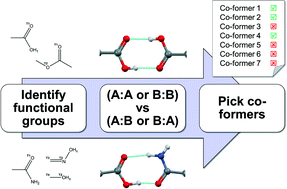
Peter A. Wood, Neil Feeder, Matthew Furlow, Peter T. A. Galek, Colin R. Groom and Elna Pidcock
CrystEngComm, 2014, 16, 5839 DOI:10.1039/C4CE00316K
Knowledge-based approaches to co-crystal design – CrystEngComm (RSC Publishing) //
Knowledge-based approaches to co-crystal design
Tel: +44 (0)1223 336408
DOI: 10.1039/C4CE00316K
FDA Approves Incruse Ellipta…(Med-Chemist)
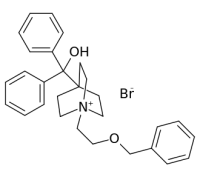
http://www.med-chemist.com/2014/06/fda-approves-incruse-ellipta.html

MS Drug RPC1063 Discovered at TSRI Is Safe and Effective in Phase II Study
 Brazil 2014 worldcup week POST
RPC1063
(S)-5-(3-(5-hydroxy-5,6,7,8-tetrahydronaphthalen-l-yl) -l,2,4-oxadiazol-5-yl) -2- isopropoxybenzonitrile ……..any error report amcrasto@gmail.com

COMPD IS I-S
X=-OH AND Y = CN ………any error report amcrasto@gmail.com
(S)-5-(3-(5-hydroxy-5,6,7,8-tetrahydronaphthalen-l-yl) -l,2,4-oxadiazol-5-yl) -2- isopropoxybenzonitrile
Receptos, Inc. INNOVATOR

WO 2011060389

THIS IS COMPD RPC1063 as above.ignore rest
RPC1063 is a novel, differentiated sphingosine 1-phosphate 1 receptor (S1P1) selective modulator exhibiting picomolar potency that is effective in rodent models of both multiple sclerosis (MS) and inflammatory bowel disease (IBD), and possesses an excellent safety profile in non-clinical toxicology studies. Receptos has completed a Phase 1 study with RPC1063 which tested single ascending doses, multiple ascending doses and dose titration regimens in healthy volunteers. The Phase 1 results confirmed optimal pharmacokinetic, pharmacodynamic and safety features, which provide supportive data for the differentiation strategy for RPC1063 as a potential best-in-class second generation S1P1 receptor modulator.
A Phase 2/3 study has been initiated to study RPC1063 in the indication of relapsing multiple sclerosis (RMS). RPC01-201, designed to demonstrate the clinical efficacy of RPC1063 in patients suffering from RMS, is a Phase 2/3 placebo-controlled (Phase 2) and active comparator-controlled (Phase 3) trial, and is the first of two planned pivotal studies for RPC1063 in RMS. Receptos anticipates initiating a second Phase 2 study with RPC1063 in ulcerative colitis in 2012.
A compound discovered and synthesized in The Scripps Research Institute (TSRI) labs of Professors Hugh Rosen and Edward Roberts has provided positive results for safety and efficacy in Phase 2 clinical trials for relapsing multiple sclerosis, according to Receptos, the biopharmaceutical company developing the drug for approval by the US Food and Drug Administration.
“The Rosen and Roberts laboratories are very gratified to see these direct improvements in the lives of patients and families dealing with this debilitating illness,” said Rosen. “These data support our labs’ approach at TSRI—that discovery of fundamental mechanisms in chemical biology provides the foundation for intelligent intervention in disease processes. Meeting the needs of patients and their families is our high calling in biomedical science.”
The drug candidate, RPC1063, was first discovered at TSRI from work in the National Institutes of Health (NIH) Molecular Libraries Initiative. The randomized, double-blind Phase 2 study assessed the efficacy, safety and tolerability of two orally administered doses of RPC1063 against placebo in 258 patients with relapsing multiple sclerosis across 77 sites in 13 countries. There was a highly statistically significant 86 percent reduction in MRI measures of disease activity.
A Phase 3 trial—a randomized, double-blind study involving 1,200 patients with relapsing multiple sclerosis—was launched in December 2013.

On June 9th, 2014 Receptos announced that a portion of its Phase 2 results in relapsing multiple sclerosis (RMS) met the primary endpoint of reducing MRI brain lesion activity. News of being a potential best in class profile has caused RCPT shares to shoot up 50% in a matter of two days. Detailed results of the RADIANCE trial are expected to be presented in coming months.
The MS market is valued at around $16B, but faces competition from existing products (below). Positioning a successful therapy will prove to be difficult even if FDA approval is attained. With Phase 3 initiation just announced, RPC1063 is years away from the market.

Given the competitive landscape and Receptos’ top line results, the company may be seen as a potential takeover target by the investing community. For example, Teva’s Copaxone lost US market exclusivity May 2014 and has patents expiring in May 2015 in most of the rest of the world. As a result of generics, Teva expects to take a $550M hit during 2014. A therapy such as RPC1063 could minimize these losses in the upcoming future.


SYNTHESIS
http://www.google.com/patents/WO2011060389A1?cl=en
Scheme 1:

Reagents: (i) Zn(CN)2, Pd(PPh3)4, NMP; (ii) RuCl(p-cymene)[(R,R)-Ts-DPEN], HC02H- TEA complex; (iii) NH2OH*HCl, Na2C03 or TEA, EtOH; (iv) HOBt, EDC, benzoic acid, DMF.
Scheme 2:

Reagents: (i) DPPA, DBU, toluene; (ii) PG = protecting group e.g. Boc: Pd/C, H2, Boc20, TEA, MeOH; (iii) NH2OH*HCl, NaHC03, EtOH; (iv) HOBt, EDC, benzoic acid, DMF (v) deprotection e.g. 4M HC1 in dioxane; (vi) (a) R’-LG or R”-LG, where LG represents a leaving group, K2C03, CH3CN; (b) R’-C02H or R2-C02H, HOBt, EDC, DMF or Rl-COCl or R2-COCl, TEA, DCM; (c) R -S02C1 or R3-S02C1, TEA, DCM (d) R2-CHO, HOAc, NaB¾ or NaCNBH3 or Na(OAc)3BH, MeOH; (e) R1– OCOC1 or R2-OCOCl, DIEA, DMF; (f) HN(R5R5), CDI, TEA, DCM; (g) ¾NS02NH2, Δ, dioxane; (h) dimethyloxirane, Δ, EtOH; (vii) (a) If R’ or R” = H, then reactions (vi)(a-d) can be performed; (b) If R’ or R” contains an ester then (i) hydrolysis NaOH, EtOH or (ii) reduction NaBFL,, MeOH can be performed; (c) If R’ or R” contains an acid then couplings HN(R5R5), HOBt, EDC, DMF can be performed; (d) If R’ or R” contains an appropriate activated alkene then Michael additions HN(R5R5), DMF can be performed.
The (R)-enantiomer was prepared in the same manner outlined in Scheme 2 starting from (5)-5-hydroxy-5,6,7,8-tetrahydronaphthalene-l-carbonitrile.
Scheme 3:

Reagents: (i) Sodium borohydride, ethanol, silica gel; (ii) PG = protecting group e.g. TBDMS chloride, imidazole; (iii) 4,4,4′,4′,5,5,5′,5′-octamethyl-2,2′-bi( 1,3,2- dioxaborolane), PdCl2(dppf).CH2Cl2, potassium acetate, dioxane.
Scheme 4:

Reagents: (i) Zn(CN)2, Pd(PPh3)4, NMP; (ii) For racemic material: Sodium borohydride, ethanol, silica gel; For (/?)-indanol: 0S)-(-)-2-methyl-CBS- oxazaborolidine, BH3-DMS, toluene; For (5)-indanol: (R)-(+)-2-methyl-CBS- oxazaborolidine, BH3-DMS, toluene; (iii) NH2OH*HCl, Na2C03 or TEA, EtOH.
Scheme 5:


Reagents: (i) Oxalylchloride, DCM; (ii) Ethanolamine, Et3N, DCM; (iii) SOCl2, DCM, KOH, MeOH (iv) N-Bromosuccinimide, azoisobutyronitrile, DCM; (v) Protected (e.g. TBDMS) 4-(4,4,5,5-tetramethyl-l,3,2-dioxaborolan-2-yl)-2,3-dihydro- lH-inden-l-ol, K2C03, Pd(PPh3)4, DME, H20; (vi) deprotection e.g. TBAF, THF; (vii) SOCl2, DCM; (viii) R’-NH2 or R”-NH2, DLPEA, DMA.
Scheme 6:
W

Reagents: (i) (R)-2-methylpropane-2-sulfinamide, Ti(OEt)4, toluene; (ii) NaB¾, THF; (iii) 4N HC1 in dioxane, MeOH; (iv) Boc20, TEA, DCM; (v) 4,4,4′,4′,5,5,5′,5′- octamethyl-2,2′-bi(l,3,2-dioxaborolane), PdCl2(dppf).CH2Cl2> potassium acetate, dioxane; (vi) 5-(5-bromooxazol-2-yl)-2-isopropoxybenzonitrile, K2C03, Pd(PPh3)4, DME, H20; (vii) 4N HC1 in dioxane; (viii) (a) R’-LG or R”-LG, where LG represents a leaving group, K2C03, CH3CN; (b) R1-C02H or R2-C02H, HOBt, EDC, DMF or R’-COCl or R2-COCl, TEA, DCM; (c) R’-SOaCl or R3-S02C1, TEA, DCM (d) R2– CHO, HOAc, NaB¾ or NaCNBH3 or Na(OAc)3BH, MeOH; (e) R’-OCOCl or R2– OCOC1, DIEA, DMF; (f) HN(R5R5), CDI, TEA, DCM; (g) H2NS02NH2, Δ, dioxane; (h) dimethyloxirane, Δ, EtOH; (ix) (a) If R’ or R” = H, then reactions (viii)(a-d) can be performed; (b) If R’ or R” contains an ester then (i) hydrolysis NaOH, EtOH or (ii) reduction NaBFLt, MeOH can be performed; (c) If R’ or R” contains an acid then couplings HN(R5R5), HOBt, EDC, DMF can be performed; (d) If R’ or R” contains an appropriate activated alkene then Michael additions HN(R5R5), DMF can be performed. [0255] The (5)-enantiomer can be prepared using (5)-2-methylpropane-2-sulfinamide in step (i).
[0256] Scheme 7:

Reagents: (i) HOBt, EDC, 2-(3,4-diethoxyphenyl)acetic acid, DMF; (ii) S0C12, DCM; (iii) R’-NH2, DIPEA, DMA.
[0257] Scheme 8:

Reagents: (i) Zn(CN)2, Pd(PPh3)4, NMP; (ii) (R)-2-methylpropane-2-sulfinamide, Ti(OEt)4, toluene; (iii) NaB¾, THF; (iv) 4M HC1 in dioxane, MeOH; (v) PG = protecting group e.g. Boc20, TEA, DCM; (vi) NH2OH*HCl, TEA, EtOH; (vii) R’- halide, NaH, DMF.

Reagents: (i) (a) HOBt, EDC, 2-(3,4-diethoxyphenyl)acetic acid, DMF (b) deprotection e.g. 4N HCl in dioxane; (ii) (a) R’-LG, where LG represents a leaving group, K2C03, CH3CN; (b) if R’ contains an ester then (a) followed by NaOH, EtOH; (c) R’-C02H, HOBt, EDC, DMF or R’-COCl, TEA, DCM; (d) R’-S02C1, TEA, DCM (e) R’-CHO, HOAc, NaBFL or NaCNBH3 or Na(OAc)3BH, MeOH.
[0259] The (5)-enantiomer can be prepared using protected (/?)-l-amino-N-hydroxy-2,3 dihydro-lH-indene-4-carboximidamide in step (i).
Scheme 10:

Reagents: (i) HOBt, EDC, 4-phenyl-5-(trifluoromethyl)thiophene-2-carboxylic acid, DMF; (ii) 2N HCL in ether, DCM.
[0261] Scheme 11:


Reagents: (i) PG = protecting group e.g. Boc20, DMAP, ACN; (ii) NH2OH*HCl, Na2C03, EtOH; (iii) HOBt, EDC, benzoic acid, DMF; (iv) deprotection e.g. 4N HCl in dioxane.
Scheme 12:

Reagents: (i) NH2OH*HCl, Na2C03, EtOH; (ii) HOBt, EDC, benzoic acid, DMF. [0263] Scheme 13:

Reagents: (i) NH2OH*HCl, Na2C03, EtOH; (ii) HOBt, EDC, 3-cyano-4- isopropoxybenzoic acid, DMF.
[0264] Scheme 14:

Reagents: (i) PG= protecting group e.g. tert-butylchlorodimethylsilane, TEA, DCM; (ii) Zn(CN)2, Pd(PPh3)4, NMP; (iii) NH2OH*HCl, Na2C03, EtOH; (iv) HOBt, EDC, benzoic acid, DMF.
Selected compounds and their corresponding analytical data is shown in Table 1, where the LCMS data was collected using Method 2 (see General Methods). The enantiomeric purity was determined for key intermediates and selected final compounds and is presumed from the synthesis for the remaining compounds. TABLE 1
see compd 2

TABLE 2

Experimental Procedures
[0266] 5-oxo-5, 6, 7, 8-tetrahydronaphthalene-l-carbonitrile (INT-1)

[0267] To a stirred solution of 5-bromo-3,4-dihydronaphthalen-l(2H)-one (9.95g, 44.2 mmol) in NMP (50 mL) was added Zn(CN)2 (10.38 g, 88.4 mmol). The mixture was degassed twice by bubbling N2 through the solution for 30 min then evacuated. Pd(Ph3)4 (0.5g, 0.44 mmol) was added and the mixture was heated to 110°C under N2. After 5h, the mixture was cooled to room temperature and poured onto ice (600 mL), using water (300 mL) to complete the transfer. After the ice had melted, the solution was filtered and the resulting solid was collected, suspended in DCM, and filtered again. The solid was collected, washed with water, and purified by column chromatography (EA/ hex) to provide 6.9 g (91%) of 5-oxo-5,6,7,8-tetrahydronaphthalene-l-carbonitrile INT-1 as a white solid. LCMS- ESI (m/z) calculated for CnH9NO: 171.2; found 172.1 [M+H]+, tR = 2.95 min. Ή NMR (400 MHz, CDCI3) 6 8.26 (dd, J = 7.9, 1.4 Hz, 1H), 7.82 (dd, J = 7.6, 1.4 Hz, 1H), 7.44 (t, J = 7.8 Hz, 1H), 3.20 (t, J = 6.1 Hz, 2H), 2.72 (dd, J = 7.2, 6.1 Hz, 2H), 2.30 – 2.17 (m, 2H). I3C NMR (101 MHz, CDC13) δ 196.22, 147.39, 137.18, 133.39, 131.59, 127.19, 116.93, 112.94, 38.48, 28.05, 22.28.
[0268] (R)-5-hydroxy-5, 6, 7, 8-tetrahydronaphthalene-l -carbonitrile (INT-2)

[0269] To a stirred solution of 5-oxo-5,6,7,8-tetrahydronaphthalene-l-carbonitrile INT-1 (3.0 g, 17.5 mmol) in 5:1 HC02:NEt3 (24 mL) was added RuCl(p-cymene)[(R,R)-Ts-DPEN] (0.13 g, 0.26 mmol). The mixture was stirred at 30°C for 15 h then partitioned between EA and H20. The combined organic layers were dried over Na2S04 and chromatographed (EA/ hex) to provide 2.99 g (99%) of (R)-5-hydroxy-5,6,7,8-tetrahydronaphthalene-l -carbonitrile INT-2 as a white solid. LCMS-ESI (m/z) calculated for CnHnNO: 173.2; found 174.1 [M+H]+, 156.1 [Μ-Ν¾]+, tR = 2.60 min. Ή NMR (400 MHz, CDC13) δ 7.71 (d, J = 7.8 Hz, 1H), 7.54 (dt, J = 8.7, 4.4 Hz, 1H), 7.34 – 7.26 (m,lH), 4.85 – 4.71 (m, 2H), 3.48 (s, 1H), 3.13 – 2.96 (m, lH), 2.90 (ddd, J = 17.7, 7.8, 5.6 Hz, 1H), 2.15 – 1.95 (m, 2H), 1.97 – 1.76 (m, 2H). Chiral HPLC: (R)-5-hydroxy-5,6,7,8-tetrahydronaphthalene-l-carbonitrile was eluted with 5% IPA / hexane: 99.1% ee, tR = 15.3 min.
[0270] (S)-5-hydroxy-5,6,7,8-tetrahydronaphthalene-l-carbonitrile INT-3 was prepared in an analogous fashion using INT-1 and RuCl(p-cymene)[(S,S)-Ts-DPEN]. Chiral HPLC: 99.4% ee, tR for the (S)-enantiomer = 17.99 min.
[0271] General Procedure 1. Preparation of Amide Oximes
[0272] To (R)- or (S)-cyanides (1 eq) in EtOH (0.56 M) was added hydroxylamine hydrochloride (3 eq) and either NaHC03 or TEA (3 eq) and the reaction mixture heated at 85°C for 1-2 h. The organic soluble amide oximes were isolated by removal of the solvent and partitioning between water and DCM. The water soluble amide oximes were chromatographed or used directly in the cyclization. Pure amide oximes can be obtained by recrystallization from alcoholic solvents.
[0273] (R)-N,5-dihydroxy-5,6, 7,8-tetrahydronaphthalene-l-carboximidamide (INT-4)

[0274] Prepared using General Procedure 1. To a stirring solution of (R)-5-hydroxy-5 ,6,7,8- tetrahydronaphthalene-l-carbonitrile INT-2 (79.1 mg, 0.46 mmol) in EtOH (2 mL) was added hydroxylamine hydrochloride (34.9 mg, 0.50 mmol) and sodium bicarbonate (42.2 mg, 0.50 mmol). The mixture was heated at 70°C for 18 h. The product was purified by chromatography (MeOHV DCM) to provide 27.3 mg (29%) (R)-N,5-dihydroxy-5,6,7,8- tetrahydronaphthalene-l-carboximidamide INT-4 as a white solid. LCMS-ESI (m/z) calculated for CuHnNO: 173.2; found 174.1 [M+H]+, 156.1 [M-NH ]+, tR = 2.60 min.(S)- N,5-dihydroxy-5,6,7,8-tetrahydronaphthalene-l-carboximidamide ENT-5 was prepared in an analogous fashion from (S)-5-hydroxy-5,6,7,8-tetrahydronaphthalene-l-carbonitrile INT -3.
[0275] General Procedure 2. Cyclization to Oxadiazole Amines
[0276] A solution of the appropriate acid (1 eq), HOBt (1.3 eq), and EDC (1.3 eq) in DMF
(0.08 M in acid) was stirred at room temperature under an atmosphere of N2. After the complete formation of the HOBt- acid complex (1-3 h), the (R)- or (S)-amide oxime (1.1 eq) was added to the mixture. After complete formation of the coupled intermediate (ca. 0.5- 2 h), the mixture was heated to 75-95°C until the cyclization was complete (8-12 h). The reaction mixture was diluted with saturated NaHC03 and extracted with EA. The combined organic extracts were dried, concentrated, and could be purified by chromatography (EA/hexanes), preparative HPLC or recrystallization.
[0277] (R)-5-(3-(5-hydroxy-5, 6, 7,8-tetrahydronaphthalen-l-yl)-l,2,4-oxadiazol-5-yl)-2- isopropoxybenzonitnle (Compound 1)

[0278] Prepared using General Procedure 2. To a stirring solution of 3-cyano-4- isopropoxybenzoic acid (16.7 mg, 0.08 mmol) in DMF (1 mL) were added HOBt (14.3 mg, 0.11 mmol) and EDCI (20.3 mg, 0.11 mmol). After stirring for 30 min, (R)-N,5-dihydroxy- 5,6,7, 8-tetrahydronaphthalene-l-carboximidamide INT-4 (27.3 mg, 0.09 mmol) was added as a solution in DMF (1.5 mL). After stirring at room temperature for an additional 60 min, the mixture was heated to 90°C for 15 h. The mixture was diluted with EA and washed with NaHC03. The combined organic layers were dried, concentrated, chromatographed (EA/ hexanes) to provide 12.72 mg (42.4%) (R)-5-(3-(5-hydroxy-5,6,7,8-tetrahydronaphthalen-l- yl)-l,2,4-oxadiazol-5-yl)-2-isopropoxybenzonitrile 1 as a white solid. LCMS-ESI (m z) calculated for C22H21N303: 375.4; found 376.1 [M+H]+, tR = 3.73 min. 1H NMR (400 MHz, CDC13) δ 8.42 (d, J = 2.2 Hz, 1H), 8.33 (dd, J = 8.9, 2.2 Hz, 1H), 7.97 (dd, J = 7.7, 1.3 Hz, 1H), 7.66 (d, J = 7.2 Hz, 1H), 7.38 (t, J = 7.7 Hz, 1H), 7.12 (d, J = 9.0 Hz, 1H), 4.91 – 4.83 (m, 1H), 4.79 (dq, J = 12.0, 6.0 Hz, 1H), 3.20 (dt, J = 17.8, 5.4 Hz, 1H), 3.01 (dt, J = 13.3, 6.4 Hz, lH), 2.13 – 1.81 (m, 4H), 1.79 (d, J = 7.2 Hz, 1H), 1.47 (d, J = 5.6 Hz, 6H). 13C NMR (101 MHz, CDC13) δ 172.70, 169.48, 162.75, 140.10, 137.4, 134.13, 133.88, 131.68, 129.96, 126.18, 125.97, 116.82, 115.26, 113.54, 103.95, 72.73, 68.47, 31.62, 28.50, 21.73, 18.57. Chiral HPLC: (R)-5-(3-(5-hydroxy-5,6,7,8-tetrahydronaphthalen-l-yl)-l,2,4-oxadiazol-5-yl)- 2-isopropoxybenzonitrile was eluted with 10% IPA / hexane: 99.4% ee, tR = 40.85 min.
[0279] (S)-5-(3-(5-hydroxy-5,6,7,8-tetrahydronaphthalen-l-yl) -l,2,4-oxadiazol-5-yl) -2- isopropoxybenzonitrile 2 was prepared in an analogous fashion from (S)-5-hydroxy-5,6,7,8- tetrahydronaphthalene-l-carbonitrile INT-5. Chiral HPLC: 99.1% ee, tR for the (S)- enantiomer = 38.19 min.


DR ANTHONY MELVIN CRASTO

ORGANIC SPECTROSCOPY


 New Drug Approvals