New Drug Approvals

Home » PHASE1 (Page 11)

Category Archives: PHASE1

DRUG APPROVALS BY DR ANTHONY MELVIN CRASTO .....FOR BLOG HOME CLICK HERE

Blog Stats

  • 4,805,095 hits

Flag and hits

Flag Counter

Enter your email address to follow this blog and receive notifications of new posts by email.

Join 37.9K other subscribers
Follow New Drug Approvals on WordPress.com

Archives

Categories

Recent Posts

Flag Counter

ORGANIC SPECTROSCOPY

Read all about Organic Spectroscopy on ORGANIC SPECTROSCOPY INTERNATIONAL 

Enter your email address to follow this blog and receive notifications of new posts by email.

Join 37.9K other subscribers
DR ANTHONY MELVIN CRASTO Ph.D

DR ANTHONY MELVIN CRASTO Ph.D

DR ANTHONY MELVIN CRASTO, Born in Mumbai in 1964 and graduated from Mumbai University, Completed his Ph.D from ICT, 1991,Matunga, Mumbai, India, in Organic Chemistry, The thesis topic was Synthesis of Novel Pyrethroid Analogues, Currently he is working with AFRICURE PHARMA, ROW2TECH, NIPER-G, Department of Pharmaceuticals, Ministry of Chemicals and Fertilizers, Govt. of India as ADVISOR, earlier assignment was with GLENMARK LIFE SCIENCES LTD, as CONSUlTANT, Retired from GLENMARK in Jan2022 Research Centre as Principal Scientist, Process Research (bulk actives) at Mahape, Navi Mumbai, India. Total Industry exp 32 plus yrs, Prior to joining Glenmark, he has worked with major multinationals like Hoechst Marion Roussel, now Sanofi, Searle India Ltd, now RPG lifesciences, etc. He has worked with notable scientists like Dr K Nagarajan, Dr Ralph Stapel, Prof S Seshadri, etc, He did custom synthesis for major multinationals in his career like BASF, Novartis, Sanofi, etc., He has worked in Discovery, Natural products, Bulk drugs, Generics, Intermediates, Fine chemicals, Neutraceuticals, GMP, Scaleups, etc, he is now helping millions, has 9 million plus hits on Google on all Organic chemistry websites. His friends call him Open superstar worlddrugtracker. His New Drug Approvals, Green Chemistry International, All about drugs, Eurekamoments, Organic spectroscopy international, etc in organic chemistry are some most read blogs He has hands on experience in initiation and developing novel routes for drug molecules and implementation them on commercial scale over a 32 PLUS year tenure till date Feb 2023, Around 35 plus products in his career. He has good knowledge of IPM, GMP, Regulatory aspects, he has several International patents published worldwide . He has good proficiency in Technology transfer, Spectroscopy, Stereochemistry, Synthesis, Polymorphism etc., He suffered a paralytic stroke/ Acute Transverse mylitis in Dec 2007 and is 90 %Paralysed, He is bound to a wheelchair, this seems to have injected feul in him to help chemists all around the world, he is more active than before and is pushing boundaries, He has 100 million plus hits on Google, 2.5 lakh plus connections on all networking sites, 100 Lakh plus views on dozen plus blogs, 227 countries, 7 continents, He makes himself available to all, contact him on +91 9323115463, email amcrasto@gmail.com, Twitter, @amcrasto , He lives and will die for his family, 90% paralysis cannot kill his soul., Notably he has 38 lakh plus views on New Drug Approvals Blog in 227 countries......https://newdrugapprovals.wordpress.com/ , He appreciates the help he gets from one and all, Friends, Family, Glenmark, Readers, Wellwishers, Doctors, Drug authorities, His Contacts, Physiotherapist, etc He has total of 32 International and Indian awards

Verified Services

View Full Profile →

Archives

Categories

Flag Counter

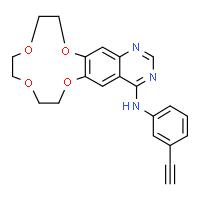
ICOTINIB


ICOTINIB

4-((3-ethynylphenyl)amino)-6,7-benzo-12-crown-4-quinazoline

N-(3-Ethynylphenyl)-7,8,10,11,13,14-hexahydro[1,4,7,10]tetraoxacyclododecino[2,3-g]quinazolin-4-amine

[1,4,7,10]Tetraoxacyclododecino[2,3-g]quinazolin-4-amine, N-(3-ethynylphenyl)-7,8,10,11,13,14-hexahydro-

BPI 2009H, UNII-JTD32I0J83

610798-31-7  CAS BASE


Compound Structure

Icotinib Hydrochloride, 1204313-51-8, CS-0918, HY-15164, Conmana Zhejiang Beta Pharma Ltd.

CLINICALS………http://clinicaltrials.gov/search/intervention=Icotinib

Icotinib Hydrochloride (BPI-2009H), or Icotinib, is a highly selective, first generation epidermal growth factor receptor tyrosine kinase inhibitor (EGFR-TKI). EGFR is an oncogenic driver and patients with somatic mutations, particularly an exon 19 deletion or exon 21 L858R mutation, within the tyrosine kinase domain have activating mutations that lead to unchecked cell proliferation. Overexpression of EGFR causes inappropriate activation of the anti-apoptotic Ras signaling pathway, found in many different types of cancer. Icotinib is a quinazoline derivative that binds reversibly to the ATP binding site of the EGFR protein, preventing completion of the signal transduction cascade.[1]

Clinical Evaluation

Icotinib is indicated for the treatment for EGFR mutation-positive, advanced or metastatic non-small cell lung cancer (NSCLC) as a second-line or third-line treatment, for patients who have failed at least one prior treatment with platinum-based chemotherapy. The ICOGEN trial was a double-blind, head-to-head phase III study comparing icotinib with gefitinib in all-comers. From 27 centers in China, 399 patients were randomized between the two treatments testing for a primary objective of progression-free survival and secondary objectives of overall survival, time to progression, quality of life, percentage of patients who achieved an objective response, and toxic effects. The ICOGEN results showed icotinib to have a median PFS of 4.6 months (95% CI 3.5 – 6.3) as compared to gefitinib which has a PFS of 3.4 months (95% CI 2.3 – 3.8). After the study was completed, post-hoc analysis revealed that in the icotinib treatment group, patients with activating EGFR mutations showed improved PFS as compared to patients with wild-type EGFR. Icotinib also was associated with fewer adverse events than gefitinib when considering all grades of reactions together (61% versus 70% respectively, p = 0.046).[2] The phase IV ISAFE trial evaluated 5,549 patients and showed icotinib to have an overall response rate of 30% and a low adverse event rate of 31.5%.[3]

Regulatory Approvals

Icotinib was approved in China by the SFDA in June, 2011.[4] Since approval, Icotinib has treated over 40,000 patients in China successfully and is now undergoing global development.

January 2014, Beta Pharma, Inc. was given a “May Proceed” from the US FDA to conduct a Phase I study for the evaluation of icotinib as a treatment of EGFR+ Non-Small Cell Lung Cancer (NSCLC).

Icotinib is a potent and specific EGFR inhibitor with IC50 of 5 nM, including the EGFR, EGFR(L858R), EGFR(L861Q), EGFR(T790M) and EGFR(T790M, L858R). Phase 4.Icotinib hydrochloride is the epidermal growth factor receptor kinase targeting a new generation of targeted anti-cancer drugs, completely independent from the original tumor clinical practitioners and experts of science, through eight years of the development, its first adaptation disease is advanced non-small cell lung cancer. Icotinib is an orally available quinazoline-based inhibitor of epidermal growth factor receptor (EGFR), with potential antineoplastic activity. Icotinib selectively inhibits the wild-type and several mutated forms of EGFR tyrosine kinase. This may lead to an inhibition of EGFR-mediated signal transduction and may inhibit cancer cell proliferation. EGFR, a receptor tyrosine kinase, is upregulated in a variety of cancer cell types. Icotinib was approved in China in 2011

Icotinib has been found to be noninferior to gefitinib in patients with non-small-cell lung cancer (NSCLC), according to reports from the phase III Chinese double-blind ICOGEN study.

“[I]cotinib is a valid therapeutic option for patients with non-small-cell lung cancer as a second-line or third-line treatment, although patients might find taking icotinib three times a day an inconvenience,” write Yan Sun (Chinese Academy of Medical Sciences and Peking Union Medical College, Beijing, China) and colleagues.

Icotinib is an oral epidermal growth factor receptor (EGFR) tyrosine kinase inhibitor (TKI) that has exhibited good antitumor activity in phase II studies. However, it has a shorter half-life than gefitinib, another TKI, which means that it needs to be taken more often.


Design and discovery of 4-anilinoquinazoline ureas as multikinase inhibitors targeting BRAF, VEGFR-2 and EGFR. Qingwen Zhang, Yuanyuan Diao, Fei Wang, Ying Fu, Fei Tang, Qidong You, Houyuan Zhou, Med. Chem. Commun., 2013, 4, 979

  • Tyrosine kinase receptors are trans-membrane proteins that, in response to an extracellular stimulus, propagate a signaling cascade to control cell proliferation, angiogenesis, apoptosis and other important features of cell growth. One class of such receptors, epidermal growth factor receptor (EGFR) tyrosine kinases, are over-expressed in many human cancers, including brain, lung, liver, bladder, breast, head and neck, esophagus, gastrointestinal, breast, ovary, cervix or thyroid cancer.
  • EGFR is expressed in many types of tumor cells. Binding of cognate ligands (including EGF, TGFα (i.e., Transforming Growth Factor-α) and neuregulins) to the extracellular domain causes homo- or heterodimerization between family members; the juxtaposition of cytoplasmic tyrosine kinase domains results in transphosphorylation of specific tyrosine, serine and threonine residues within each cytoplasmic domain. The formed phosphotyrosines act as docking sites for various adaptor molecules and subsequent activation of signal transduction cascades (Ras/mitogen-activated, PI3K/Akt and Jak/STAT) that trigger proliferative cellular responses.
  • Various molecular and cellular biology and clinical studies have demonstrated that EGFR tyrosine kinase inhibitors can block cancer cell proliferation, metastasis and other EGFR-related signal transduction responses to achieve clinical anti-tumor therapeutic effects. Two oral EGFR kinase inhibitors with similar chemical structures are Gefitinib (Iressa; AstraZeneca), approved by the U.S. FDA for advanced non-small cell lung cancer in 2003 (and later withdrawn), and Erlotinib Hydrochloride (Tarceva; Roche and OSI), approved by the U.S. FDA for advanced non-small cell lung cancer and pancreatic cancer treatment in 2004.
  • Chinese Patent Publication No. CN1305860C discloses the structure of 4-[(3-ethynyl-phenyl)amino]-6,7-benzo-12-crown-quinoline (free base) on page 29, Example 15, Compound 23.

Icotinib was launched in China in August 2011, after approval by the State Food and Drug Administration. It is a targeted EGFR tyrosine kinase inhibitor that, like erlotinib (Tarceva) and gefitinib (Iressa), shows benefit in patients with EGFR m+ NSCLC.

……………………………………..

http://www.google.com/patents/EP2392576A1

    •  Formula I (Icotinib hydrochloride):

Figure imgb0011

Method 1:

    • Figure imgb0002

Method 2:

    • Figure imgb0003

Method 3:

  • Figure imgb0004
  • BPI-02 is obtained by recrystallization.

http://www.google.com/patents/EP2392576A1 Example 1Step 1

    • Figure imgb0005
    • Preparation: 16 kg (400 mol) of sodium hydroxide was dissolved in 80 L of water in a 400 L reactor, and then 18.8 L (140 mol) of triethylene glycol, 32 L of THF were added into the reactor. After cooling below 5 °C, a solution of 47.84 kg (260 mol) of tosyl chloride and 50 L of THF was added dropwise. Following the addition, the reaction mixture was kept at this temperature for 2 hours, and it was then poured into 240 L of ice water. The precipitate was formed and filtered, washed with a small amount of water, and dried. 58.64 kg of BPI-01 as a white crystalline powder was yielded at 91.4%. mp: 77-80 °C, HPLC: 97%. TLC (petroleum ether: ethyl acetate = 1:1) Rf = 0.87.
    • NMR data: 1H-NMR (CDCl3): δ ppm: 7.78 (d, 4H, J = 10.4 Hz, benzene protons by sulfonyl group); 7.34 (d, 4H, J = 11.6 Hz, benzene protons by methyl group); 4.129 (dd, 4H, J = 5.6 Hz, ethylene protons by the sulfonyl group); 3.64 (dd, 4H, J = 5.6 Hz, ethylene protons away from the sulfonyl group); 3.517 (s, 4H, ethylene protons in the middle); 2.438 (s, 6H, methyl protons on the benzene).

Step 2

    • Figure imgb0006
    • Preparation: A solution containing 3.64 kg (20 mol) of ethyl 3,4-dihydroxybenzoate and 12.4 kg (89.6 mol) of potassium carbonate in 300 L of N,N-dimethylformamide was stirred and heated to 85-90 °C for about 30 minutes. A solution of 9.17 kg (20 mol) of BPI-01 in 40 L of N,N-dimethylformamide was added dropwise over 1.5-2 hours. After the addition, the reaction was kept for 30 minutes; the reaction completion was confirmed by TLC (developing solvent: petroleum ether:ethyl acetate = 1:1, Rf = 0.58). The reaction mixture was removed from the reactor and filtered. Then, the filtrate was evaporated to remove N,N-dimethylformamide; 240 L of ethyl acetate was added to dissolve the residue. After filtration and vacuum evaporation, the residual solution was extracted with 300 L of petroleum ether. After evaporation of the petroleum ether, the residual solids were re-crystallized with isopropanol in a ratio of 1:2.5 (W/V); 1.68 kg of BPI-02 as a white powder was obtained in a yield of 28%. mp: 73-76 °C, HPLC: 96.4%. NMR data: 1H-NMR (CDCl3): δ ppm: 7.701 (d, 1H, J = 2.4 Hz, benzene proton at position 6); 7.68 (s, 1 H, benzene proton at position 2); 6.966 (d, 1H, J = 10.8 Hz, benzene proton at position 5); 4.374-3.81 (q, 2H, J = 9.6 Hz, methylene protons of the ethyl); 3.78-4.23 (dd, 12H, J = 4.8 Hz, crown ether protons); 1.394 (t, 3H, J = 9.6 Hz, methyl protons of the ethyl). MS: m/z 296.

Step 3

    • Figure imgb0007
    • Preparation: A solution of 592 g (2 mol) of BPI-02 and 600 mL of acetic acid in a 5 L reaction flask was cooled to 0°C; 1640 mL (25.4 mol) of concentrated nitric acid was slowly added. The internal temperature should not exceed 10 °C. While cooled below 0°C, 1 L of concentrated sulfuric acid was added dropwise. The internal temperature should not be higher than 5°C. After the addition, the reaction was kept at 0-5 °C for 1-2 hours. After completion of the reaction, the reaction solution was poured into 15 L of ice water in a plastic bucket. After mixing, filtration, and re-crystallization in ethanol, 449 g of BPI-03 as a light yellow to yellow crystalline powder was obtained in 65.7% yield. mp: 92-95 °C, HPLC: 98.2%. TLC (petroleum ether: ethyl acetate =1:1) Rf = 0.52. NMR data: 1H-NMR (CDCl3): δ ppm: 7.56 (s, 1H, benzene proton at position 5); 7.20 (s, 1H, benzene proton at position 2); 4.402 (q, 2H, J = 9.2 Hz, methylene protons of the ethyl); 4.294 (dd, 12H, J = 4.8 Hz, crown ether protons); 1.368 (t, 3H, J = 9.2 Hz, methyl protons of the ethyl).

Step 4

    • Figure imgb0008
    • Preparation: In a 3 L hydrogenation reactor, 2 L of methanol and 195 g (0.57 mol) of BPI-03 were added, and then 63 mL of acetyl chloride was slowly added. After a short stir, 33 g of Pd/C containing 40% water was added. The reaction was conducted under 4 ATM hydrogen until hydrogen absorption stopped, and then the reaction was kept for 1-2 hours. After completion of the reaction, the reaction mixture was transferred into a 5 L reactor. After filtration, crystallization, and filtration, the product was obtained. The mother liquor was concentrated under vacuum, and more product was obtained. The combined crops were 168 g of BPI-04 as a white to pink crystalline powder in a yield of 85%. mp: 198-201 °C, HPLC: 99.1 %. TLC (petroleum ether: ethyl acetate = 1:1) Rf = 0.33. NMR data: 1H-NMR (DMSO-d6): δ ppm: 8-9 (br., 3H, 2 protons of the amino group and a proton of the hydrochloric acid); 7.37 (s, 1H, benzene proton at position 5); 6.55 (s, 1H , benzene proton at position 2); 4.25 (q, 2H, J = 7.06 Hz, methylene protons of the ethyl); 4.05 (dd, 12H, J = 4.04 Hz, crown ether protons); 1.31 (t, 3H, J = 7.06 Hz, methyl protons of the ethyl).

Step 5

    • Figure imgb0009
    • Preparation: 1105 g (3.175 mol)of BPI-04, 4810 g (106.9 mol) of formamide, and 540 g (8.55 mol) of ammonium formate were added to a 10 L 3-neck bottle. The reaction mixture was heated to 165 °C under reflux for 4 hours. After cooling to room temperature, 3 L of water was added, and then the mixture was stirred for 10 minutes. After filtration, washing, and drying, 742 g of BPI-05 as a white crystalline powder was obtained in a yield of 80%. mp: 248-251 °C, HPLC: 99.78%. TLC (chloroform: methanol = 8:1) Rf = 0.55. NMR data: 1H-NMR (DMSO-d6): δ ppm: 12.06 (s, 1H, NH of the quinazoline); 8.0 (d, 1H, J = 3.28 Hz, proton of the quinazoline position 3); 7.62 (s, 1H, proton of the quinazoline position 6); 7.22 (s, 1H, proton of the quinazoline position 9); 4.25 (dd, 12H, J = 4.08 Hz, crown ether protons).

Step 6

    • Figure imgb0010
    • Preparation: 337 g (1.13 mol) of BPI-05, 7.1 L of chloroform, 1.83 L (19.58mol) of POCI3 and 132 ml of N,N-dimethylformamide were added to a 10 L 3-neck bottle. The reaction mixture was stirred at reflux temperature. After dissolution, reaction completion was checked by TLC (developing solvent: chloroform: methanol = 15:1, Rf = 0.56); the reaction took approximately 8 hours to complete. Then, the reaction solution was cooled and evaporated under vacuum to dryness. The residue was dissolved in 4 L of chloroform; 4 kg of crushed ice was poured into the solution and the mixture was stirred for 0.5 hours. After separation, the aqueous phase was extracted twice with 2 L of chloroform. The organic phases were combined, 4 L of ice water was added and the pH was adjusted with 6 N NaOH to pH 8-9 while the temperature was maintained below 30 °C. After separation, the organic phase was washed with saturated NaCl, dried over anhydrous sodium sulfate and the solvents removed by vacuum evaporation. The residual solids were washed with acetone and filtered; 268 g of BPI-06 as a white crystalline powder was obtained in a yield of 77% with mp: 164-167°C and HPLC purity of 99%. NMR data: 1H-NMR (CDCl3): δ ppm: 8.89 (s, 1H, proton of the quinazoline position 2); 7.68 (s, 1H, proton of the quinazoline position 9); 7.42 (s, 1H, proton of the quinazoline position 6); 4.38-3.81 (dd, 12H, J = 3.88 Hz, crown ether protons).

Step 7

  • Figure imgb0011
  • Preparation of the compound of the present invention: To a suspension of 20.8 g of BPI-06 in 500 mL of ethanol was added 25 mL of N,N-dimethylformamide and a solution of 8.98 g m-acetylene aniline in 200 mL of isopropanol. The reaction mixture was stirred at room temperature for 5 minutes until dissolved completely, and then the reaction solution was heated at reflux for 3 hours. After concentration and drying, the residual solids were dissolved in ethyl acetate, washed with water, and dried over anhydrous sodium sulfate. Thus, 27.1 g of the compound of Formula I was obtained as a white crystalline powder. NMR data: 1H-NMR (Bruker APX-400, solvent: DMSO-d6, TMS as internal standard): δ ppm: 3.58 (dd, 2H, two protons of the crown position 12); 3.60 (dd, 2H, two protons of the crown position 13); 3.73 (dd, 2H, two protons of the crown position 10); 3.80 (dd, 2H, two protons of the crown position 15); 4.30 (s, 1H, proton of the alkynyl); 4.34 (dd, 2H, two protons of the crown position 16); 4.40 (dd, 2H, two protons of the crown position 9); 7.39 (d, 1H, benzene proton at position 25); 7.46 (dd, 1H, benzene proton at position 26); 7.49 (s, 1H, proton of the quinazoline position 6); 7.82 (d, 1H, benzene proton at position 27); 7.94 (t due dd, 1H, proton of the quinazoline position 19); 8.85 (s, 1H, benzene proton at the position 23); 8.87 (s, 1H, proton of the quinazoline position 2); 11.70 (s, 1H, proton of the aromatic amine as salt); 14-16 (bs, 1H, hydrochloride), see Figure 5. NMR data: 13C-NMR (DMSO-d6), see Figure 6. Mass spectrometry (MS): Instrument: ZAB-HS, testing conditions: EI, 200°C, 700ev, MS measured molecular weight: m/z 427.

…………………………………..

https://www.google.co.in/patents/WO2013064128A1?cl=en&dq=icotinib&hl=en&sa=X&ei=1oi2UsP9LYa4rgfUzoF4&ved=0CDcQ6AEwAA


Figure imgf000003_0002

Synthesis of compound 1 A

1 Synthesis of Compound 2

Figure imgf000008_0003

2

79.5g 3,4 – dihydroxybenzene nitrile, 272g of potassium carbonate, acetonitrile (6L) was added to a 10L three-necked reaction flask, and dissolved with stirring, heated to reflux and reflux was added dropwise an acetonitrile solution of the compound 1 (compound 1, 200 g; acetonitrile , 2L), and completion of the dropping, the HPLC monitoring of the completion of the reaction, the mixture was cooled to room temperature, filtered, and the solvent was removed, and the resulting solid was washed with ethyl acetate was dissolved, filtered, and the filtrate was concentrated, the resulting residue was dissolved in petroleum ether by rotary evaporation, the resulting solid was purified to give 18.9g of the compound 2.

1 LAI MR (CDC1 3-Sppm): 7.30 ~ 7.33 (m, 1H); 7.25 (s, 1H); 6.97-6.99 (d, 1H); 4.19 – 4.23 (m, 4H); 3.83 ~ 3.91 (m, 4H); 3.77 (s, 4H). MS: (M + H) +250 2 Synthesis of compound A

Figure imgf000009_0001

2 A

41.6g of compound 2 was dissolved in 580ml of acetic acid, dropwise addition of 83ml of fuming nitric acid at 30 ° C under completion of the dropping, the dropwise addition of 42ml of concentrated sulfuric acid at 30 ° C under the reaction at room temperature overnight, TLC monitoring completion of the reaction, the reaction solution was poured into ice water 4L , the precipitated solid was filtered, washed with cold water (500 mL X 2), vacuum 35 ° C and dried crude A compound 46g, isopropanol recrystallization was purified to give 33g of compound A.

1 LAI MR (CDC1 3-Sppm): 7.90 (s, 1H); 7.36 (s, 1H); 4.33 ~ 4.36 (m, 4H); 3.87 ~ 3.89 (m, 4H); 3.737 (s, 4H). Embodiment of Example 2 Synthesis of Compound B

Figure imgf000009_0002

AB

32g of compound A, 30.5g of iron powder, 5% acetic acid solution in methanol 1070ml 2L reaction flask was heated to reflux

TLC monitoring of the end of the reaction cooled and concentrated, dissolved in ethyl acetate, filtered, dried over anhydrous NaS0 4 23g of compound B. The solvent was removed.

1HNMR (d 6-DMSO-Sppm): 7.07 (s, 1H); 6.36 (s, 1H); 5.73 (s, 2H); 3.95 ~ 4.22 (m, 4H); 3.77-3.78 (m, 2H); 3.34 3.62 (m, 6H).Embodiment of Example 3 Synthesis of Compound CI

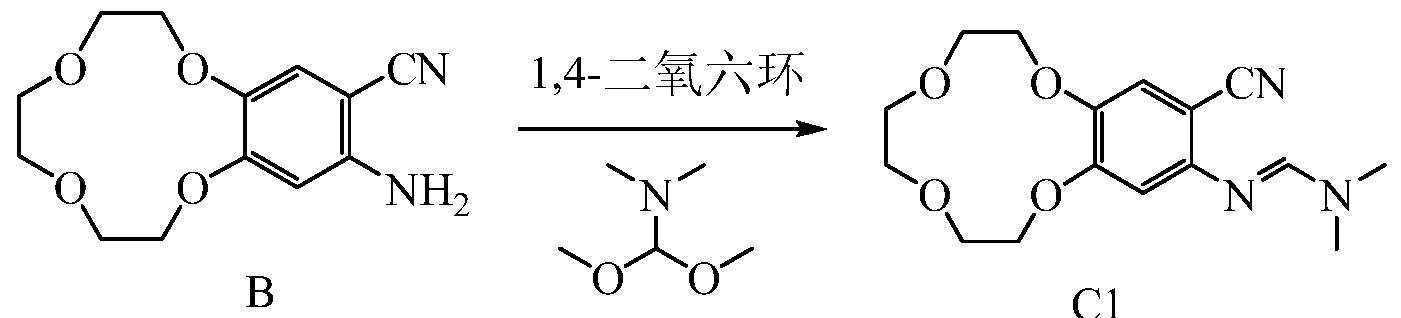
Figure imgf000009_0003

B CI

500mL three-necked flask, the Add 5g compound B, 5g v, v-dimethyl formamide dimethyl acetal and 160ml of dioxane was heated to reflux the TLC monitoring progress of the reaction, the reaction time is about 12 hours, after the end of the reaction The reaction solution was cooled to room temperature, spin-dry to give 5.8g of compound Cl.

1 LAI MR (CDCl 3-Sppm): 7.56 (s, 1H); 7.15 (s, 1H); 6.51 (s, 1H); 4.12-4.18 (m, 4H); 3.89-3.91 (m, 2H); 3.78 -3.80 (m, 6H); 3.07 (s, 6H); Example 4 Icotinib Synthesis


Figure imgf000010_0001

5 g of the compound Cl, 2.2 g inter-aminophenyl acetylene, 230ml of acetic acid was added to a 500 ml reaction flask was heated to 100 ° c,

TLC monitoring of the reaction. The end of the reaction, the reaction system spin dry methanol was added, and shock dispersion, filtration, wash with methanol, 5g Icotinib.

^ M (d 6-DMSO-5ppm): 11.98 (s, IH); 9.50 (s, IH); 8.53 (s 1H); 8.14 (s, IH); 8.04-8.05 (m, IH); 7.90-7.92 (m, IH); 7.38-7.42 (m, IH); 7.31 (s IH); 7.20-7.22 (m, IH); 4.29-4.30 (m, 4H); 4.21 (s, IH); 3.74-3.81 ( m, 4H); 3.64 (s, 4H); 1.91 (s, 3H); Synthesis Example 5 Exe hydrochloride erlotinib

Figure imgf000010_0002

Exeter for Nick for; s

700mg Icotinib Add to a 100 ml reaction flask, add 40 ml of methanol, stirred pass into the hydrogen chloride gas or concentrated hydrochloric acid, and filtered to give crude hydrochloric acid Icotinib after, and purified by recrystallization from isopropanol to give 760mg hydrochloride Icotinib.

1HNMR (d 6-DMSO-Sppm): 11.37 (s, IH); 8.87 (s, IH); 8.63 (s, IH); 7.90 (s, IH); 7.78-7.80 (d, IH); 7.48-7.52 (m, IH); 7.40-7.41 (m, 2H); 4.36-4.38 (d, 4H); 4.30 (s, IH); 3.75-3.81 (d, 4H); 3.61 (s, 4H); Example 6 Synthesis of Compound B

Figure imgf000011_0001

AB

25g of compound A, 25 g of iron powder, 3% acetic acid in methanol solution 900ml with Example 2 are the same, to give 16.6g of compound B.

Embodiment of Example 7 Synthesis of Compound B

Figure imgf000011_0002

AB

40 g of compound A, 40 g of iron powder and 7% acetic acid in methanol solution was 1200ml, in Example 2, to give 28.4g of compound B.

Example 8 Compound B Synthesis

Figure imgf000011_0003

AB

25 g of compound A, 5 g of Pd / C in 3% acetic acid in methanol solution 900ml Add 2L reaction flask, of the hydrogen, TLC monitoring of the end of the reaction, filtered, and the solvent was removed to give 17g of compound B.

Example 9 Compound B Synthesis

Figure imgf000011_0004

AB

40g of compound A, 17 g of magnesium and 5% acetic acid in methanol solution 1200ml, in Example 2, to give 25.2g of compound B. Example 10 Compound B Synthesis


Figure imgf000012_0001

AB

25 g of compound A, 32.5g of zinc powder and 5% acetic acid in methanol solution 900ml with Example 2 are the same, to give 17.1g of compound B.

Example Synthesis of compound 11 B


Figure imgf000012_0002

AB

25g of compound A, 28 g of iron powder, 5% trifluoroacetic acid in methanol solution 700ml, in Example 2, 16g of compound B.

Embodiment Example 12 Synthesis of Compound C1


Figure imgf000012_0003

3g compound B, 3G v, v-dimethyl formamide dimethyl acetal and 140ml of dioxane, reflux the reaction time is 10-11 hours, the other in the same manner as in Example 3 to give 3.2g of the compound Cl.

Example 13 Synthesis of Compound C1


Figure imgf000012_0004

8g compound B, 8G N, v-dimethyl formamide dimethyl acetal and 180ml of dioxane under reflux for a reaction time of approximately 12-13 hours, with the same manner as in Example 3 to give 8.7g of compound C. Embodiment Example 14 Synthesis of Compound CI

Figure imgf000013_0001

3g compound B, 3 g of N, N-dimethyl formamide dimethyl acetal and 140ml of toluene, the reaction time is 13-15 hours under reflux, with the same manner as in Example 3 to give 2.9g of the compound Cl.

Example 15 Synthesis of Compound C1

Figure imgf000013_0002

The same as in Example 14, except that reaction time is 10 hours, to obtain 2.6g compound Cl t

Embodiment Example 16 Synthesis of Compound C1


Figure imgf000013_0003

500mL three-necked flask, add 3 g of compound B, 3.7 g v, v-dimethylformamide, diethyl acetal and 140ml of dioxane was heated to reflux, TLC monitoring the progress of the reaction, the reaction time of approximately 11-12 hours, After completion of the reaction, the mixture was cooled to room temperature, spin-dry the reaction solution to give 2.5g of the compound Cl.

Example 17 Synthesis of Compound C1


Figure imgf000013_0004

G of compound B, 5.1 g of the N, N-dimethyl formamide di-t-butyl acetal was dissolved in 140ml dioxane was heated to reflux the TLC monitoring progress of the reaction, the reaction time of approximately 11-12 hours after the completion of the reaction, was cooled to room temperature, the reaction solution was spin-dry to give 2.6g of the compound Cl.

Embodiment Example 18 Synthesis of Compound CI


Figure imgf000014_0001

3g compound B, 4.4g N, N-dimethyl formamide diisopropyl acetal was dissolved in 140ml dioxane was heated to reflux, tlc monitoring the progress of the reaction, the reaction time of approximately 11-12 hours after the completion of the reaction, was cooled to room temperature, the reaction solution was spin-dry to give 2.4g of the compound Cl.

The implementation of the synthesis of Example 19 Icotinib


Figure imgf000014_0002

3g compound Cl, 1.3 g inter-aminophenyl acetylene, 130 ml of acetic acid was added 250 ml reaction flask and heated to 70-80

V, TLC monitoring of the reaction. Spin dry the reaction system, methanol was added, and shock dispersion, filtered, and the methanol wash was 2.8g Icotinib. Implementation of Example 20 Icotinib synthesis


Figure imgf000014_0003

C1 Icotinib

. Example 25 Icotinib Hydrochloride synthesis


Figure imgf000016_0001

Icotinib Hydrochloride

The 500mg Icotinib Add to a 100 ml reaction flask, add 30ml of ethanol was stirred under hydrogen chloride gas was passed into the after, filtered crude hydrochloride Icotinib recrystallized from isopropanol to give 515mg hydrochlorideIcotinib. Example 26 Icotinib Hydrochloride Synthesis

500mg Icotinib Add 100 ml reaction flask, add 40 ml of tetrahydrofuran was stirred under hydrogen chloride gas was passed into the after, filtered crude hydrochloride Icotinib recrystallized from isopropanol to give 500mg hydrochlorideIcotinib. EXAMPLE 27 Icotinib Hydrochloride Synthesis


Figure imgf000016_0002


500mg Icotinib Add 100 ml reaction flask, add 50 ml of isopropanol and stirred under hydrogen chloride gas was passed into the after, filtered crude hydrochloride Icotinib recrystallized from isopropanol to give 500mg hydrochloride Icotinib.

………………………………………………………………….


http://www.google.com/patents/EP2392576A1 NMR data: 1H-NMR (Bruker APX-400, solvent: DMSO-d6, TMS as internal standard): δ ppm: 3.58 (dd, 2H, two protons of the crown position 12); 3.60 (dd, 2H, two protons of the crown position 13); 3.73 (dd, 2H, two protons of the crown position 10); 3.80 (dd, 2H, two protons of the crown position 15); 4.30 (s, 1H, proton of the alkynyl); 4.34 (dd, 2H, two protons of the crown position 16); 4.40 (dd, 2H, two protons of the crown position 9); 7.39 (d, 1H, benzene proton at position 25); 7.46 (dd, 1H, benzene proton at position 26); 7.49 (s, 1H, proton of the quinazoline position 6); 7.82 (d, 1H, benzene proton at position 27); 7.94 (t due dd, 1H, proton of the quinazoline position 19); 8.85 (s, 1H, benzene proton at the position 23); 8.87 (s, 1H, proton of the quinazoline position 2); 11.70 (s, 1H, proton of the aromatic amine as salt); 14-16 (bs, 1H, hydrochloride), see Figure 5. NMR data: 13C-NMR (DMSO-d6), see Figure 6. Mass spectrometry (MS): Instrument: ZAB-HS, testing conditions: EI, 200°C, 700ev, MS measured molecular weight: m/z 427.

………………………..

NEW PATENT

WO-2013064128

Zhejiang Beta Pharma Incorporation, 浙江贝达药业有限公司

http://www.google.co.in/patents/WO2013064128A1?cl=en

General synthetic route

Compound A, the present invention is provided for availability, but are not limited to, the following synthetic route to achieve:

Figure imgf000007_0001

The present invention is to provide beta available but are not limited to, the following synthetic route is now:

Figure imgf000007_0002

A BETA


The present invention is to provide a compound C, can be used, but are not limited to, the following synthetic route to achieve:

Figure imgf000007_0003

Wherein

And are independently selected from the group consisting of methyl, ethyl, propyl or isopropyl, or

, And they are connected in common to the N atom form a 3-7 membered ring. R 3 and R4 are independently selected from the group consisting of methyl, ethyl, propyl, isopropyl, n-butyl, sec-butyl, tert-butyl, iso-butyl or benzyl group, or,

R 3 and R4 to form a 3-7 membered ring.

The present C can be used for the direct preparation of Icotinib:

Figure imgf000008_0001

Wherein

And are independently selected from the group consisting of methyl, ethyl, propyl or isopropyl, or

, And they are connected in common to the N atom form a 3-7 membered ring.

Figure imgf000008_0002

Icotinib

Icotinib Hydrochloride

Example Synthesis of compound 1 A

1 Synthesis of Compound 2

Figure imgf000008_0003

2

79.5g 3,4 – dihydroxybenzene nitrile, 272g of potassium carbonate, acetonitrile (6L) was added to a 10L three-necked reaction flask, and dissolved with stirring, heated to reflux and reflux was added dropwise an acetonitrile solution of the compound 1 (compound 1, 200 g; acetonitrile , 2L), and completion of the dropping, the HPLC monitoring of the completion of the reaction, the mixture was cooled to room temperature, filtered, and the solvent was removed, and the resulting solid was washed with ethyl acetate was dissolved, filtered, and the filtrate was concentrated, the resulting residue was dissolved in petroleum ether by rotary evaporation, the resulting solid was purified to give 18.9g of the compound 2.

1 LAI MR (CDC1 3-Sppm): 7.30 ~ 7.33 (m, 1H); 7.25 (s, 1H); 6.97-6.99 (d, 1H); 4.19 – 4.23 (m, 4H); 3.83 ~ 3.91 (m, 4H); 3.77 (s, 4H). MS: (M + H) +250 2 Synthesis of compound A

Figure imgf000009_0001

2 A

41.6g of compound 2 was dissolved in 580ml of acetic acid, dropwise addition of 83ml of fuming nitric acid at 30 ° C under completion of the dropping, the dropwise addition of 42ml of concentrated sulfuric acid at 30 ° C under the reaction at room temperature overnight, TLC monitoring completion of the reaction, the reaction solution was poured into ice water 4L , the precipitated solid was filtered, washed with cold water (500 mL X 2), vacuum 35 ° C and dried crude A compound 46g, isopropanol recrystallization was purified to give 33g of compound A.

1 LAI MR (CDC1 3-Sppm): 7.90 (s, 1H); 7.36 (s, 1H); 4.33 ~ 4.36 (m, 4H); 3.87 ~ 3.89 (m, 4H); 3.737 (s, 4H). Embodiment of Example 2 Synthesis of Compound B

Figure imgf000009_0002

AB

32g of compound A, 30.5g of iron powder, 5% acetic acid solution in methanol 1070ml 2L reaction flask was heated to reflux

TLC monitoring of the end of the reaction cooled and concentrated, dissolved in ethyl acetate, filtered, dried over anhydrous NaS0 4 23g of compound B. The solvent was removed.

1HNMR (d 6-DMSO-Sppm): 7.07 (s, 1H); 6.36 (s, 1H); 5.73 (s, 2H); 3.95 ~ 4.22 (m, 4H); 3.77-3.78 (m, 2H); 3.34 3.62 (m, 6H). Embodiment of Example 3 Synthesis of Compound CI

Figure imgf000009_0003

B CI

500mL three-necked flask, the Add 5g compound B, 5g v, v-dimethyl formamide dimethyl acetal and 160ml of dioxane was heated to reflux the TLC monitoring progress of the reaction, the reaction time is about 12 hours, after the end of the reaction The reaction solution was cooled to room temperature, spin-dry to give 5.8g of compound Cl.

1 LAI MR (CDCl 3-Sppm): 7.56 (s, 1H); 7.15 (s, 1H); 6.51 (s, 1H); 4.12-4.18 (m, 4H); 3.89-3.91 (m, 2H); 3.78 -3.80 (m, 6H); 3.07 (s, 6H); Example 4 Icotinib Synthesis

Figure imgf000010_0001

5 g of the compound Cl, 2.2 g inter-aminophenyl acetylene, 230ml of acetic acid was added to a 500 ml reaction flask was heated to 100 ° c,

TLC monitoring of the reaction. The end of the reaction, the reaction system spin dry methanol was added, and shock dispersion, filtration, wash with methanol, 5g Icotinib.

^ M (d 6-DMSO-5ppm): 11.98 (s, IH); 9.50 (s, IH); 8.53 (s 1H); 8.14 (s, IH); 8.04-8.05 (m, IH); 7.90-7.92 (m, IH); 7.38-7.42 (m, IH); 7.31 (s IH); 7.20-7.22 (m, IH); 4.29-4.30 (m, 4H); 4.21 (s, IH); 3.74-3.81 ( m, 4H); 3.64 (s, 4H); 1.91 (s, 3H);

Synthesis Example 5 Exe hydrochloride erlotinib

Figure imgf000010_0002

Exeter for Nick for; s

700mg Icotinib Add to a 100 ml reaction flask, add 40 ml of methanol, stirred pass into the hydrogen chloride gas or concentrated hydrochloric acid, and filtered to give crude hydrochloric acid Icotinib after, and purified by recrystallization from isopropanol to give 760mg hydrochloride Icotinib.

1HNMR (d 6-DMSO-Sppm): 11.37 (s, IH); 8.87 (s, IH); 8.63 (s, IH); 7.90 (s, IH); 7.78-7.80 (d, IH); 7.48-7.52 (m, IH); 7.40-7.41 (m, 2H); 4.36-4.38 (d, 4H); 4.30 (s, IH); 3.75-3.81 (d, 4H); 3.61 (s, 4H);

Example 18 Synthesis of Compound CI

Figure imgf000014_0001

3g compound B, 4.4g N, N-dimethyl formamide diisopropyl acetal was dissolved in 140ml dioxane was heated to reflux, tlc monitoring the progress of the reaction, the reaction time of approximately 11-12 hours after the completion of the reaction, was cooled to room temperature, the reaction solution was spin-dry to give 2.4g of the compound Cl.

The implementation of the synthesis of Example 19 Icotinib

Figure imgf000014_0002

3g compound Cl, 1.3 g inter-aminophenyl acetylene, 130 ml of acetic acid was added 250 ml reaction flask and heated to 70-80

V, TLC monitoring of the reaction. Spin dry the reaction system, methanol was added, and shock dispersion, filtered, and the methanol wash was 2.8g Icotinib. Implementation of Example 20 Icotinib synthesis

Figure imgf000014_0003

C1 Icotinib

8g compound Cl, 3.5g inter-aminophenyl acetylene, dissolved in 380ml of acetic acid, heated to 100-120 ° C, TLC monitoring of the reaction. Spin dry the reaction system, by adding ethanol shock dispersion, filter, the ethanol wash 7.2g Icotinib. Implementation of Example 21 Icotinib Synthesis

Figure imgf000015_0001

The C1 Exeter erlotinib reaction temperature of 120-15CTC Example 4 was 2.2 g Icotinib.

Example 22 Icotinib Synthesis

3g compound Cl, 1.8 g inter-aminophenyl acetylene and 130 ml of acetic acid was added 250 ml reaction flask and heated to 90-100C, TLC monitoring of the reaction. Spin dry the reaction system, isopropanol shock dispersion, filtration, isopropyl alcohol wash was 2.9g Icotinib.

The implementation of the synthesis of Example 23 Icotinib

Figure imgf000015_0002

3G compound CI and 1.3 g of m-aminophenyl acetylene dissolved in 130ml of formic acid was heated to 80-90 ° C, TLC monitoring of the reaction. Spin dry the reaction system, methanol was added, and shock dispersion, filtered, and the methanol wash was 2.7g Icotinib.

Example 24 Icotinib synthesis

Figure imgf000015_0003

3g of compound C1 and 1.3g aminophenyl acetylene dissolved in 130ml of trifluoroacetic acid was heated to 70-80 ° C, TLC monitoring of the reaction. Spin dry the reaction system, methanol was added, and shock dispersion, filtered, and the methanol wash was 2.7g Icotinib. Example 25 Icotinib Hydrochloride synthesis

Figure imgf000016_0001

Icotinib Hydrochloride

The 500mg Icotinib Add to a 100 ml reaction flask, add 30ml of ethanol was stirred under hydrogen chloride gas was passed into the after, filtered crude hydrochloride Icotinib recrystallized from isopropanol to give 515mg hydrochloride Icotinib. Example 26 Icotinib Hydrochloride Synthesis

500mg Icotinib Add 100 ml reaction flask, add 40 ml of tetrahydrofuran was stirred under hydrogen chloride gas was passed into the after, filtered crude hydrochloride Icotinib recrystallized from isopropanol to give 500mg hydrochloride Icotinib. EXAMPLE 27 Icotinib Hydrochloride Synthesis

Figure imgf000016_0002

Exeter erlotinib erlotinib hydrochloride Exeter

500mg Icotinib Add 100 ml reaction flask, add 50 ml of isopropanol and stirred under hydrogen chloride gas was passed into the after, filtered crude hydrochloride Icotinib recrystallized from isopropanol to give 500mg hydrochloride Icotinib. Example 28 Icotinib Hydrochloride synthesis

Figure imgf000016_0003

Icotinib

Icotinib Hydrochloride


Icotinib
Icotinib.svg
Clinical data
Trade names Conmana, Icotinib
Legal status
?
Routes Oral tablets
Pharmacokinetic data
Bioavailability 52%
Metabolism Hepatic (mainly CYP3A4, lessCYP1A2)
Half-life 5.5 hrs (median)
Excretion >98% as metabolites, of which >90% via faeces, 9% via urine
Identifiers
CAS number 1204313-51-8 Yes
ATC code ?
PubChem CID 22024915
DrugBank DB00530
ChemSpider 10762174 Yes
UNII 9G6U5L461Q Yes
Chemical data
Formula C22H21N3O4 
Mol. mass 391.420 g/mol

References

  1.  Sordella, R. (20 August 2004). “Gefitinib-Sensitizing EGFR Mutations in Lung Cancer Activate Anti-Apoptotic Pathways”. Science 305(5687): 1163–1167. doi:10.1126/science.1101637. PMID 15284455.
  2.  Shi, Yuankai; Zhang, Li; Liu, Xiaoqing; Zhou, Caicun; Zhang, Li; Zhang, Shucai; Wang, Dong; Li, Qiang; Qin, Shukui; Hu, Chunhong; Zhang, Yiping; Chen, Jianhua; Cheng, Ying; Feng, Jifeng; Zhang, Helong; Song, Yong; Wu, Yi-Long; Xu, Nong; Zhou, Jianying; Luo, Rongcheng; Bai, Chunxue; Jin, Yening; Liu, Wenchao; Wei, Zhaohui; Tan, Fenlai; Wang, Yinxiang; Ding, Lieming; Dai, Hong; Jiao, Shunchang; Wang, Jie; Liang, Li; Zhang, Weimin; Sun, Yan. “Icotinib versus gefitinib in previously treated advanced non-small-cell lung cancer (ICOGEN): a randomised, double-blind phase 3 non-inferiority trial”. The Lancet Oncology 14 (10): 953–961. doi:10.1016/s1470-2045(13)70355-3.
  3. Tan, Fenlai; Gu, Aiqin; Zhang, Yiping; Jiao, Shun Chang; Wang, Chang-li; He, Jintao; Jia, Xueke; Zhang, Li; Peng, Jiewen; Wu, Meina; Ying, Kejing; Wang, Junye; Ma, Kewei; Zhang, Shucai; You, Changxuan; Ding, Lieming; Wang, Yinxiang; Shen, Haijiao; Wan, Jiang; Sun, Yan (2013). “Safety and efficacy results of a phase IV, open-label, multicenter, safety-monitoring study of icotinib in treating advanced non-small cell lung cancer (NSCLC): ISAFE study”. ASCO 2013 Meeting: e19161.
  4.  Chen, Xiaofeng; Zhu, Quan; Liu, Yiqian; Liu, Ping; Yin, Yongmei; Guo, Renhua; Lu, Kaihua; Gu, Yanhong; Liu, Lianke; Wang, Jinghua; Wang, Zhaoxia; Røe, Oluf Dimitri; Shu, Yongqian; Zhu, Lingjun; Chellappan, Srikumar P. (16 May 2014). “Icotinib Is an Active Treatment of Non-Small-Cell Lung Cancer: A Retrospective Study”. PLoS ONE 9 (5): e95897.doi:10.1371/journal.pone.0095897.


WO2007138613A2 * 12 Mar 2007 6 Dec 2007 Venkateshappa Chandregowda A process for synthesis of [6,7-bis-(2-methoxyethoxy)-quinazolin-4-yl]-(3-ethynylphenyl)amine hydrochloride
WO2010003313A1 7 Jul 2009 14 Jan 2010 Zhejiang Beta Pharma Inc. Icotinib hydrochloride, synthesis, crystallographic form, medical combination, and uses thereof
CN1305468C 29 May 2003 21 Mar 2007 中国人民解放军第三○二医院 Bolengsu compound and its preparation, medicine composition and use
US7078409 26 Mar 2003 18 Jul 2006 Beta Pharma, Inc. Fused quinazoline derivatives useful as tyrosine kinase inhibitors
Patent Submitted Granted
Icotinib Hydrochloride, Synthesis, Crystalline Forms, Pharmaceutical Compositions, and Uses Thereof [US2011182882] 2011-07-28
Fused quinazoline derivatives useful as tyrosine kinase inhibitors [US7078409] 2004-03-11 2006-07-18

APD 334 to treat to autoimmune diseases


Figure


APD 334

Arena Pharmaceuticals, Inc.  innovator

2-[7-[4-Cyclopentyl-3-(trifluoromethyl)benzyloxy]-1,2,3,4-tetrahydrocyclopenta[b]indol-3(R)-yl]acetic acid

Company Arena Pharmaceuticals Inc.
Description Sphingosine 1-phosphate receptor 1 (S1PR1; S1P1; EDG1) agonist
Molecular Target Sphingosine 1-phosphate receptor 1 (S1PR1) (S1P1) (EDG1)
Mechanism of Action Sphingosine 1-phosphate (S1P) receptor agonist
Therapeutic Modality Small molecule
Latest Stage of Development Phase I
Standard Indication Autoimmune (unspecified)
Indication Details Treat autoimmune diseases

APD334, an orally available agonist of the S1P1 receptor, is an internally discovered investigational drug candidate intended for the potential treatment of a number of conditions related to autoimmune diseases, including multiple sclerosis, psoriasis and rheumatoid arthritis. S1P1 receptors have been demonstrated to be involved in the modulation of several biological responses, including lymphocyte trafficking from lymph nodes to the peripheral blood. By isolating lymphocytes in lymph nodes, fewer immune cells are available in the circulating blood to effect tissue damage. We have optimized APD334 as a potent and selective small molecule S1P1 receptor agonist that reduces the severity of disease in preclinical autoimmune disease models.

Autoimmune diseases are characterized by an inappropriate immune response against substances and tissues that are normally present in the body. In an autoimmune reaction, a person’s antibodies and immune cells target healthy tissues, triggering an inflammatory response. Reducing the immune and/or inflammatory response is an important goal in the treatment of autoimmune disease.

ACS Med. Chem. Lett., Article ASAP
DOI: 10.1021/ml500389m
APD334 was discovered as part of our internal effort to identify potent, centrally available, functional antagonists of the S1P1 receptor for use as next generation therapeutics for treating multiple sclerosis (MS) and other autoimmune diseases. APD334 is a potent functional antagonist of S1P1 and has a favorable PK/PD profile, producing robust lymphocyte lowering at relatively low plasma concentrations in several preclinical species. This new agent was efficacious in a mouse experimental autoimmune encephalomyelitis (EAE) model of MS and a rat collagen induced arthritis (CIA) model and was found to have appreciable central exposure.
……………….
compd 3
Figure US08580841-20131112-C00018
(R)-2-(7-(4-cyclopentyl-3- (trifluoromethyl)benzyloxy)- 1,2,3,4- tetrahydrocyclopenta[b] indol-3-yl)acetic acid
………………………
WO 2011094008
L-arginine salt of (R)-2-(7-(4-cyclopentyl-3-
(trifluoromethyl)benzyloxy)-l ,2,3,4-tetrahydrocyclopenta[b]indol-3-yl)acetic acid of Formula (la):
Figure imgf000111_0001

The present invention relates to processes and intermediates useful in the preparation of of (R)-2-(7-(4-cyclopentyl-3-(trifluoromethyl)benzyloxy)-l,2,3,4-tetrahydrocyclopenta[b]indol- 3-yl)acetic acid of Formula (la) or salts thereof, an SlPl receptor modulator that is useful in the treatment of SlPl receptor-associated disorders, for example, diseases and disorders mediated by lymphocytes, transplant rejection, autoimmune diseases and disorders, inflammatory diseases and disorders (e.g. , acute and chronic inflammatory conditions), cancer, and conditions characterized by an underlying defect in vascular integrity or that are associated with angiogenesis such as may be pathologic (e.g. , as may occur in inflammation, tumor development and atherosclerosis).

BACKGROUND OF THE INVENTION

SlPl receptor agonists have been shown to possess at least immunosuppressive, antiinflammatory, and/or hemostatic activities, e.g. by virtue of modulating leukocyte trafficking, sequestering lymphocytes in secondary lymphoid tissues, and/or enhancing vascular integrity. Accordingly, SlPl receptor agonists can be useful as immunosuppressive agents for at least autoimmune diseases and disorders, inflammatory diseases and disorders (e.g. , acute and chronic inflammatory conditions), transplant rejection, cancer, and/or conditions that have an underlying defect in vascular integrity or that are associated with angiogenesis such as may be pathologic (e.g., as may occur in inflammation, tumor development, and atherosclerosis) with fewer side effects such as the impairment of immune responses to systemic infection.

The sphingosine-1 -phosphate (SIP) receptors 1-5 constitute a family of G protein- coupled receptors containing a seven-transmembrane domain. These receptors, referred to as SlPl to S1P5 (formerly termed endothelial differentiation gene (EDG) receptor-1, -5, -3, -6, and -8, respectively; Chun et al., Pharmacological Reviews, 54:265-269, 2002), are activated via binding by sphingosine-1 -phosphate, which is produced by the sphingosine kmase-catalyzed phosphorylation of sphingosine. SlPl, S1P4, and S1P5 receptors activate Gi but not Gq, whereas S1P2 and S1P3 receptors activate both Gi and Gq. The S1P3 receptor, but not the SlPl receptor, responds to an agonist with an increase in intracellular calcium.

In view of the growing demand for S 1P1 agonists useful in the treatment of S 1P1 receptor-associated disorders, the compound (R)-2-(7-(4-cyclopentyl-3- (trifluoromethyl)benzyloxy)-l ,2,3,4-tetrahydrocyclopenta[b]indol-3-yl)acetic acid of Formula

(la):

Figure imgf000003_0001

has emerged as an important new compound, see PCT patent application, Serial No.

PCTVUS2009/004265 hereby incorporated by reference in its entirety. Accordingly, new and efficient routes leading to (R)-2-(7-(4-cyclopentyl-3-(trifluoromethyl)benzyloxy)-l, 2,3,4- tetrahydrocyclopenta[b]indol-3-yl)acetic acid of Formula (la), salts, and intermediates related thereto are needed. The processes and compounds described herein help meet these and other needs.

Example 7: Preparation of (i?)-2-(7-(4-Cyclopentyl-3-(trifluoromethyl)benzyloxy)-l,2,3,4- tetrahydrocyclopenta[b]indol-3-yl)acetic acid (Compound of Formula (la)) and L-Arginine Salt of (JR)-2-(7-(4-cyclopentyl-3-(trifluoromethyl)benzyloxy)-l,2,3,4- tetrahydrocyclopenta[b]indol-3-yl)acetic acid (Compound of Formula (la)).

Method 1

Preparation of (/?)-2-(7-(4-Cyclopentyl-3-(trifluoromethyl)benzyloxy)-l ,2,3,4- tetrahydrocyclopenta[b]indol-3-yl)acetic acid (Compound of Formula (la)) and L-Arginine Salt Thereof.

Step A: Preparation of (i?)-2-(7-(4-cyclopentyl-3-(trifluoromethyl)benzyloxy)-l,2,3,4- tetrahydrocyclopenta [b] indol-3-yl)acetic acid.

To a solution of rac-ethyl 2-(7-(4-cyclopentyl-3-(trifluoromethyl)benzyloxy)-l,2,3,4- tetrahydrocyclopenta[b]indol-3-yl)acetate (20.00 g, 41.19 mmol) in acetonitrile (185 ml) in a 500 mL three-neck RBF equipped with magnetic stir bar, N2 inlet, thermocouple, and condenser was added potassium phosphate buffer (15 ml, 1.0 M, pH = 7.80) and followed by addition of lipase B, Candida antarctica, immobilized recombinant from yeast (1.0 g, 5865 U/g, 5865 U). The resultant yellow suspension was stirred at about 40 °C under N2 for 16 hours. To the mixture, 1 M citric acid was added to adjust the pH to 3.96 which was then filtered on a Whatman filter cup. The solids were washed with ACN (3 x 15 mL). The combined filtrate and washings were concentrated at about 30 °C under vacuum to give an orange residue, which was partitioned between EtOAc (60 mL) and brine (60 mL). The layers were separated and the aqueous layer was extracted with EtOAc (2 x 40 mL). The combined organic layers were washed with H20 (2 x 80 mL), brine (2 x 80 mL), dried over Na2S04, decanted, and concentrated at 30 °C under vacuum to give an orange oil, which was dried under vacuum at room temperature overnight to give a light orange oil (22.203 g) containing (R)-2-(7-(4-cyclopentyl-3-(trifluoromethyl)benzyloxy)-l ,2,3,4-tetrahydrocyclopenta|¾]indol-3- yl)acetic acid. The crude was assayed to be 41.41 wt % (9.194 g) with 99.42% ee.

Step B: Preparation of L-Arginine Salt of (i?)-2-(7-(4-Cyclopentyl-3- (trifluoromethyl)benzyloxy)-l,2,3,4-tetrahydrocyclopenta[b]indol-3-yl)acetic acid (Compound of Formula (la)).

To the crude (21.837 g) (R)-2-(7-(4-cyclopentyl-3-(trifluoromethyl)benzyloxy)-l,2,3,4- tetrahydrocyclopenta[b]indol-3-yl)acetic acid (41.41 %w/w; 9.043 g, 19.77 mmol) containing the (5)-isomer as the ester impurity in a 200 mL round bottom flask was added IPA (150.72 mL). The mixture was heated at 60 °C under N2 till the oily residue dissolved completely. The resultant orange solution was heated at about 60 °C for 5 min. Seeds of L-arginine salt of (R)-2- (7-(4-cyclopentyl-3-(trifluoromethyl)benzyloxy)-l,2,3,4-tetrahydrocyclopenta[b]indol-3- yl)acetate (362 mg) were added. The seeds were suspended in the orange solution. A 2.27 M aqueous solution of L-arginine (8.709 mL, 3.44 g, 19.77 mmol) pre-warmed to about 60 °C was added into the mixture dropwise over 30 min. A light yellow precipitate formed gradually during the addition. The suspension was stirred for about an additional 30 min. The temperature of the suspension was allowed to drop at about 0.4 °C per minute to room temperature. The mixture was agitated occasionally at room temperature overnight. The suspension was filtered and the cake was washed with IP A (3 6 mL) and EtOAc (3 x 15 mL). The filter cake was dried at room temperature under vacuum overnight to give L-arginine salt of (R)-2-(7-(4- cyclopentyl-3-(trifluoromethyl)benzyloxy)-l,2,3,4-tetrahydrocyclopenta[b]indol-3-yl)acetate as a white solid (11.631 g, 44.7%): HPLC 99.38 Area %, 99.6 % ee. TGA, PXRD, PLM, SEM and DSC indicated the solid as a non-solvated, crystalline compound with an average aggregates size of 18.05 microns and a melting point of 202.69 °C.

Ή NMR (400 MHz, DMSO-d6) δ ppm 1.53-1.80 (m, 8H), 1.81-1.92 (m, 2H), 1.93-2.13 (m, 3H), 2.19 (dd, J= 15.12, 8.18 Hz, 1H), 2.46 (dd, J= 15.12, 6.61 Hz, 1H), 2.57-2.77 (m, 3H), 3.03-3.19 (m, 2H), 3.21-3.35 (m, 2H), 3.39-3.51 (m, 1H), 5.13 (s, 2H), 6.70 (dd, J= 8.75, 2.40 Hz, 1H), 6.93 (d, J= 2.40 Hz, 1H), 7.23 (d, 7= 8.75 Hz, 1H), 7.64 (d, J= 8.08 Hz, 1H), 7.72 (d, 7= 8.08 Hz, 1H), 7.74 (s, 1 H), 7.10-8.70 (br. s, 6H), 10.49 (s, 1H). LCMS m/z calcd for C32H40F3N5O5: 631.69, found: 632.1 (Msalt+H)+, 458.3 (100, (Macid+H)+).

Method 2

Preparation of (l?)-2-(7-(4-Cyclopentyl-3-(trifluoromethyl)benzyloxy)-l ,2,3,4- tetrahydrocyclopenta[b]indol-3-yl)acetic acid (Compound of Formula (la)).

Additional procedures to prepare (R)-2-(7-(4-Cyclopentyl-3- (1xiiluoromethyl)benzyloxy)-l,2,3,4-tetrahydrocyclopenta[b]indol-3-yl)acetic acid (Compound of Formula (la)) using other lipases were utilized, for example, the following were shown to hydrolyze rac-ethyl 2-(7-(4-cyclopentyl-3-(trifluoromethyl)benzyloxy)-l ,2,3,4- tetrahydrocyclopenta[b]indol-3-yl)acetate to (R)-2-(7-(4-Cyclopentyl-3- (trifluoromethyl)benzyloxy)-l ,2,3,4-tetrahydrocyclopenta[b]indol-3-yl)acetic acid (Compound of Formula (la)). General hydrolysis conditions and % enantiomeric excess (% ee) are shown below for the following enzymes, lipase B Candida Antarctica, lipase Mucor miehei (MML), and P. fluorescens.

Figure imgf000095_0001

5% DMF inP. fluorescens 7.5 30 C 19-20 phosphate Buffer

Free enzyme (i.e., non-immoblized)

Each of the above enzymes provided the desired (R)-2-(7-(4-Cyclopentyl-3- (trifluoromethyl)benzyloxy)-l ,2,3,4-tetrahydrocyclopenta[b]indol-3-yl)acetic acid (Compound of Formula (la)) with varying degrees of % ee.

Example 8: Preparation of L-Arginine Salt of (l?)-2-(7-(4-Cyclopentyl-3- (trifluoromethyl)benzyloxy)-l,2,3,4-tetrahydrocyclopenta[b]indol-3-yl)acetic acid.

Method 1

(R)-2-(7-(4-Cyclopentyl-3-(trifluoromethyl)benzyloxy)-l,2,3,4- tetrahydrocyclopenta[b]indol-3-yl)acetic acid (174.7 mg, 0.381 mmol) was dissolved in EPA (1.57 mL) and L-arginine (66.4 mg, 0.381 mmol) was added as a solution in water (263 μΕ,). The homogeneous solution was warmed to 40 °C. After 15 min at this temperature, a precipitate had formed. The reaction mixture was warmed to 70 °C causing the precipitate to dissolve. The heat bath was turned off. A precipitate began to form at 40 °C and the reaction mixture was allowed to cool to about 28 °C before collecting the solids by filtration. The solids were washed with 14% water in EPA to give the L-arginine salt of (R)-2-(7-(4-cyclopentyl-3- (1riiluoromethyl)benzyloxy)-l,2,3,4-tetrahydrocyclopenta[b]indol-3-yl)acetic acid (130 mg).

Method 2

Example 8: Preparation of L-Arginine Salt of (i?)-2-(7-(4-Cyclopentyl-3- (trifluoromethyl)benzyloxy)-l,2,3,4-tetrahydrocyclopenta[b]indol-3-yl)acetic acid.

Step A: Preparation of l-Cyclopentyl-2-(trifluoromethyl)benzene (Compound of Formula (lib)).

Figure imgf000096_0001

To a 50 L three-neck round-bottom flask equipped with a mechanical stirrer, thermocouple, and nitrogen inlet, was added dry THF (35 L) and cooled to 0-5 °C. To the flask was added Iron (III) chloride (2.7 kg, 0.15 eq) portion wise over 30-60 min. and stirred for 15- 30 min. resulting in a clear greenish solution. Under a nitrogen atmosphere in a dry 100 gallon glass lined reactor was added THF (87.5 L) and magnesium turnings (4.05 kg, 1.5 eq), and cooled to 0-5 °C. To the THF and magnesium mixture was added the solution of FeCl3 in THF at a rate to maintain the internal temperature below 10 °C. To the resulting yellow/green mixture was added TMEDA (15.5 kg, 1.2 eq) at a rate to maintain the internal temperature below 20 °C. The resulting reaction mixture was heated to 40-45 °C for 1 hour and a mixture of 1 bromo-2-

(trifluoromethyl) benzene (25 kg, 1.0 eq) and bromocyclopentane (19.9 kg, 1.2 eq) was added to the reaction mixture at a rate to maintain an internal temperature below 25 °C. The resulting reaction mixture was allowed to stir at room temperature overnight and subsequently cooled to an internal temperature of 0-5 °C. To the resulting mixture was added 6 N HC1 (100 L, 1.5 h) at such a rate as to maintain the internal temperature below 15 °C (caution, very exothermic). After the quench, MTBE (200 L) was added and the reactor contents was stirred for 30 min. The phases were separated and the aqueous layer back extracted with MTBE (75 L). The combined organic layers were washed with H20 (50 L), brine (50 L) and dried (MgS04). The mixture was filtered through an in-line (1 micron) filter cartridge followed by an additional in-line (0.45 micron) filter cartridge into a clean dry reactor. The solvent was evaporated under vacuum (jacket < 30 °C) and co-evaporated with heptanes (2 x 25 L) to provide a viscous liquid. The viscous liquid was dissolved in heptanes (100 L) and passed through a silica plug (25 kg). The silica plug was eluted with heptanes (TLC, Rf ~ 0.8, silica gel, heptanes) and the fractions containing the product were evaporated to provide the title compound as a yellow liquid, 11.7 kg (49.2%), purity as determined by HPLC was 94.1%. Ή NMR conforms to reference standard.

Step B: Preparation of 4-(Chloromethyl)-l-cyclopentyl-2-(trifluoromethyl)benzene (Compound of Formula (He)).

Figure imgf000097_0001

To a 100 gallon glass lined reactor equipped with a stirrer was added concentrated sulphuric acid (48.6 L) and cooled to an internal temperature between about -5 to -10 °C under an atmosphere of N2. To the sulfuric acid was added thionyl chloride (26.99 kg, 2 eq) at a rate to maintain the internal temperature below -5 °C. To the resulting mixture 1,3,5-trioxane (15.3 kg, 1.5 eq) was added portion wise at a rate to maintain the internal temperature below -5 °C. After the addition of 1,3,5-trioxane, l-cyclopentyl-2-(trifluoromethyl) benzene (24.0 kg) was added drop wise over a period of approximately 2-3 hours. The reaction mixture was stirred at 0 °C for approximately 3-4 hours, allowed to warm to room temperature overnight and subsequently cooled to an internal temperature of 0-5 °C. To the resulting mixture was added water (316 L) drop wise over a period of approximately 5-6 hours (Note: Very exothermic). After the quench with water, the resulting aqueous mixture was extracted with MTBE (243 L and 123 L). The combined organics were washed with saturated NaHC03 (100 L), brine (100 L), water (100 L), brine (100 L), and dried (MgS04). The mixture was filtered through an in-line (1 micron) filter cartridge followed by an additional in-line (0.45 micron) filter cartridge into a clean dry reactor. The solvent was evaporated under vacuum (jacket < 30 °C) and further evaporated under vacuum at 35-40 °C. The resulting oil was distilled under high vacuum to provide the title compound as a yellow liquid, 24.8 kg (83%), purity as determined by HPLC was 99.47%. Ή

NMR conforms to reference standard.

Step C: Preparation of Ethyl 2-(2-Morpholinocyclopent-2-enylidene)acetate (Compound of Formula (Kg), Whe

Figure imgf000098_0001

Cyclopentanone (22.00 kg), morpholine (22.88 kg) and cyclohexane (43.78 kg) were charged to a 400 L glass-lined reactor equipped with overhead agitation, jacket temperature control, a nitrogen inlet, and a Dean-Stark trap. The reactor contents were heated to about 85 °C to 95 °C for approximately 26 h while removing water using the Dean-Stark trap. The reaction to form the enamine (i.e., 4-cyclopentenylmorpholine, Compound of Formula (lie) wherein R1 and R2 together with the nitrogen atom form a morpholine ring) is deemed complete when the morpholine amount is verified to be < 3% by GC peak area.

The reactor contents were cooled to about 60 °C and ethyl glyoxalate (Compound of Formula (ΠΤ) wherein R3 is ethyl; 58.74 kg, 50% solution in toluene) was added to the mixture slowly so as to maintain an internal temperature of < 80 °C. The reactor contents were heated to about 85 °C to 95 °C for at least 25 hours while removing water using the Dean-Stark trap. The reaction was deemed complete when the eneamine (i.e., 4-cyclopentenylmorpholine) amount by GC was verified to be less than 0.5% by GC peak area. The cyclohexane/toluene mixture was distilled under vacuum, ethanol (261.80kg) was charged to the reactor, and the resulting solution was again distilled under vacuum. Ethanol (34.76 kg) and water 44.00 kg) were charged to the reactor and the reactor contents stirred at 25 °C. The mixture was stirred further for 6 h at about 0-5 °C.

The resulting product slurry was collected by filtration, washed with aqueous ethanol (34.76 kg ethanol dissolved in 176.00 kg water). The filter-cake was further washed with water (110.00 kg), dried initially at approximately 36 °C for 1 hour under vacuum and subsequently at approximately 50 °C under vacuum for 17 h. The title compound was obtained as a tan solid (23.48 kg, 37.8% yield).

Step D: Preparation of Ζί/ZEthyl 2-(7-(Benzyloxy)-l,2-dihydrocyclopenta[b]indol- 3(4H)-ylidene)acetate

Figure imgf000098_0002

To a 400 L glass-lined reactor equipped with overhead agitation, jacket temperature control, and a nitrogen inlet was added (4-(benzyloxy)phenyl)hydrazine hydrochloride (21.08 kg, 1.000 mole equiv.), ethyl 2-(2-mo holinocyclopent-2-en lidene)acetate (22.02 kg, 1.104 mole equiv.), ethanol (51.2 kg, 2.429 mass equiv.), and acetic acid (36.8 kg, 1.746 mass eq.). After the reactor contents are allowed to stand for 10 minutes, agitation and then heating to 60°C to 65°C (60°C target) was started. While stirring at that temperature, samples of the reaction mixture were taken over intervals of approximately 30 minutes and analyzed by HPLC for (4-

(benzyloxy)phenyl)hydrazine, ethyl 2-(2-morpholinocyclopent-2-enylidene)acetate, and hydrazone content. When (4-(benzyloxy)phenyl)hydrazine HPLC % area was < 1, TFA (11.6 kg, 101.7 mol, 1.200 mole equiv., 0.550 mass equiv.) was charged over approximately 1 hour while the stirred reaction mixture was maintained at 60°C ± 5°C with reactor jacket cooling. As stirring at 60°C to 65°C was continued, the hydrazone and imine content of the reaction mixture was monitored by HPLC. After stirring at 60°C to 65°C for at least 12 hours the imine content of the reaction mixture was < 5% area by HPLC, and the stirred reaction mixture was cooled to 20°C to 25°C over approximately 3 hours. Stirring was maintained at that temperature to allow isomerization of the Z isomer to the desired E isomer. The E isomer crystallizes from the reaction mixture. The Z isomer and E isomer % area content of the reaction mixture was monitored by HPLC during this period of stirring at 20°C to 25°C, which was continued until the Z-isomer content of the reaction mixture was < 15% area by HPLC.

The stirred reaction mixture was cooled (0°C to 5°C) over at least 2 hours and then filtered. The reactor was charged with ethanol (27.4 kg, 1.300 mass equiv.), which was stirred and chilled to 0°C to 5°C and then used in two approximately equal portions to slurry-wash the product filter cake twice. The reactor was charged with ethanol (13.8 kg, 0.655 mass equiv.), which was stirred and chilled to 0°C to 5°C and then used to wash the product filter cake by displacement. The reactor was charged with USP purified water (100 kg, 4.744 mass equiv.), and the temperature was adjusted to 20°C to 25°C. The USP purified water was then used in three approximately equal portions to wash the product filter cake three times, the first two by reslurrying and the third by displacement. The reactor was charged with ethanol (16.4 kg, 0.778 mass equiv.), stirred and chilled to 0°C to 5°C, and then used to wash the product filter cake by displacement. The washed product filter cake was dried under full vacuum first with a jacket temperature of 35°C for 1 hour and then with a jacket temperature of 50°C. While drying continues with a jacket temperature of 50°C, the product solids are turned over every 1 hour to 3 hours, and product samples are analyzed for loss on drying (LOD) every >4 hours. When LOD was < 1%, the product was cooled to < 30°C. The yield of the title compound was 13.06 kg (37.59 mol, 44.7%). Step E: Preparation of Ethyl 2-(7-Hydroxy-l,2,3,4-tetrahydrocyclopenta[b]indol-3- yl)acetate.

Figure imgf000100_0001

To a 200 liter Hastelloy reactor was added ethyl 2-(7-(benzyloxy)-l ,2- dihydrocyclopenta[b]indol-3(4H)-ylidene)acetate (E/Z mixture, 12 kg), 10% Pd/C (50% wet with H20; 1.80 kg) and ethyl acetate (108 kg). The suspension was degassed 3x with N2 and triethylamine (1.76 kg) was added. To the resulting mixture was added formic acid (3.34 kg) while maintaining the internal temperature at below 35 °C. The reaction progression was followed by HPLC to monitor the complete consumption of starting material (i.e., E/Z mixture of ethyl 2-(7-(benzyloxy)-l ,2-dihydrocyclopenta[b]indol-3(4H)-ylidene)acetate) and the debenzylated intermediate. After approximately 30 minutes an additional amount of formic acid (0.50 kg) was added and the combined peak area of ethyl 2-(7-(benzyloxy)-l ,2- dihydrocyclopenta[b]indol-3(4H)-ylidene)acetate and the related debenzylated intermediate was determined to be < 1 % area by HPLC. The reactor contents were filtered through a 1.2 μιη cartridge filter followed by an in-line 0.2 μπι inline polishing filter. To the filtrate was added water (60 kg) and the biphasic mixture was partitioned. The organics were separated and concentrated under vacuum at approximately 60°C ± 5°C to a minimum stir volume, ethyl acetate (21.6 kg) was added and the mixture was further concentrated under vacuum to a minimum stir volume. Once again ethyl acetate (16.8 kg) was charged to the crude mixture and the resulting solution was heated to approximately 60 °C. Heptanes (37.2 kg) were charged maintaining the internal temperature at 60 °C. The solution was slowly cooled to approximately 0 to 5 °C and approximately 2-3 hr to facilitate crystallization. The slurry was filtered, the filter cake was reslurried in heptanes (27.12 kg) and ethyl acetate (7.08 kg). The resulting suspension was filtered and the solids dried under vacuum at approximately 40 ± 5 °C (until the loss on drying (LOD) is < 1%) to afford the title compound (6.23 kg, 70.3 % yield) as a solid.

Step F: Preparation of ( ft^-Ethyl 2-(7-(4-Cyclopentyl-3- (trifluoromethyl)benzyloxy)-l,2,3,4-tetrahydrocyclopenta[b]indol-3-yl)acetate (Compound of Formula (Ilk), Wher

Figure imgf000100_0002

To a 50 liter glass reactor containing ethyl 2-(7 -hydroxy- 1 ,2,3, 4- tetrahydrocyclopenta[b]indol-3-yl)acetate (2.000 kg, 1.000 equiv.) was added cesium carbonate

(3.266 kg, 1.300 equiv.) and acetonitrile (15.720 kg) under nitrogen. To the resulting mixture was added 4-(chloromethyl)-l-cyclopentyl-2-(trifluoromethyl)benzene (2.228 kg, 1.100 equiv.) over approximately one hour while maintaining the stirred reactor contents at 40°C ± 5°C. After the addition of 4-(chloromethyl)-l-cyclopentyl-2-(trifluoromethyl)benzene the reactor contents were heated to 65°C ± 5°C with stirring until the concentration of ethyl 2-(7-hydroxy-l , 2,3,4- tetrahydrocyclopenta[b]indol-3-yl)acetate in the reaction mixture was less than 2.0 % area by

HPLC. The reaction mixture was cooled to 50°C ± 5°C and filtered under nitrogen through a fine filter cloth with suction to remove cesium salts (Note: ethyl 2-(7-(4-cyclopentyl-3-

(trifluoromethyl)benzyloxy)-l ,2,3,4-tetrahydrocyclopenta[b]indol-3-yl)acetate may precipitate below 30 °C). The filter cake was washed with fresh hot (50°C ± 5 °C) acetonitrile (5.658 kg divided in approximately three equal portions). The filtrates were returned to the reactor. The combined filtrates were concentrated by vacuum distillation with a jacket temperature of 60°C ± 10°C. To the reactor was added ethyl alcohol (3.156 kg) and once again concentrated with stirring by vacuum distillation with a jacket temperature of 60°C ± 10 °C. Once again, ethyl alcohol (3.156 kg) was added to the reactor and the contents were concentrated by vacuum distillation with a jacket temperature of 60 °C ± 10 °C to a reactor volume of approximately 14 L. The stirred reactor contents were cooled to 0 °C ± 5°C and the temperature maintained for 4 hours to facilitate the crystallization of the product. The resulting slurry was filtered. The filter cake was washed with cold 0 °C ± 5 °C ethyl alcohol (2 x 3.156 kg). The filter cake was dried under vacuum at 35 °C ± 5 °C until the weight loss over >1 hour was <2% to provide 3.0943 kg (81.0% yield) of the title compound as a solid.

Step G: Preparation of (!?)-2-(7-(4-cyclopentyl-3-(trifluoromethyl)benzyloxy)- l,2,3,4-tetrahydrocyclo

Figure imgf000101_0001

A 1.0 M buffer solution was prepared containing potassium phosphate monobasic (29.1 g, 0.0335 equiv.) in USP purified water (213 g) and potassium phosphate dibasic (368.2 g, 0.331 equiv.) in USP purified water (2.107 g). To a 50 liter glass reactor was added ethyl 2-(7-(4- cyclopentyl-3-(trifluoromethyl)benzyloxy)-l,2,3,4-tetrahydrocyclopenta[b]indol-3-yl)acetate

(3.094 kg, 1.000 equiv.), Lipase B, Candida antarctica, immobilized (88.18 g, 293250 units/kg of ethyl ester starting material) and acetonitrile (22.32 kg). To the stirred contents of the reactor was added the previously prepared 1.0 M potassium phosphate buffer. The resulting mixture was stirred under nitrogen at a temperature of 40°C ± 5°C until the (R)-2-(7-(4-cyclopentyl-3-

(rrifluoromethyl)benzyloxy)-l ,2,3,4-tetrahydrocyclopenta[b]indol-3-yl)acetic acid concentration was >35% area as determined by HPLC (Note: although the reaction usually is complete after about 10 hours, the reaction mixture may be held at 40°C ± 5°C overnight). The stirred reactor contents were cooled to 25 °C ± 5°C and the pH was adjusted to between 4 and 5 by addition of a solution of citric acid (278.5 g, 0.228 equiv.) dissolved in USP purified water (1.454 kg). The reactor contents were filtered to remove immobilized lipase and phosphate and citrate salts. The reactor and solids were washed with acetonitrile (4.827 kg) and the combined filtrates were added backed into the reactor. The stirred reactor contents were concentrated to a volume of 1.0 L to 2.0 L by vacuum distillation at a jacket temperature of 55 °C ± 5°C. To the reactor was added ethyl acetate (5.582 kg) and USP purified water (6.188 kg). The contents were stirred at 20°C ± 5°C for at least 10 minutes and a solution of sodium chloride (1 kg) in USP purified water (1 kg) was added to facilitate phase separation. After phase separation was complete, the lower aqueous layer was drained. A solution of sodium chloride (5.569 kg) in USP purified water (12.38 kg) was divided in two approximately equal portions and the ethyl acetate phase was washed (2x). The ethyl acetate phase was transferred into a carboy and the reactor was rinsed with ethyl acetate (838.5 g) and added to the carboy containing the ethyl acetate phase. The reactor was washed sequentially with USP purified water (12.38 kg), acetone (4.907 kg), and ethyl acetate (838.5 g) and the ethyl acetate mixture from the carboy was transferred back to the reactor and concentrated with stirring to a volume of 1 L to 2 L by vacuum distillation at a jacket temperature of 55°C ± 5°C. To the reactor was added 2-propanol (14.67 kg) and after stirring the resulting mixture was concentrated to a volume of 1 L to 2 L by vacuum distillation at a jacket temperature of 55°C ± 5°C. To the reactor was added 2-propanol (7.333 kg) and heated with stirring at 60°C ± 5°C until the contents dissolved. The stirred reactor contents were cooled to 20°C ± 5°C and filtered through a medium-porosity fritted-glass filter to remove any inorganic solids to provide a 2-propanol solution containing 1.3188 kg of the title compound.

Step H: Preparation of L-Arginine Salt of (i?)-2-(7-(4-Cyclopentyl-3- (trifluoromethyl)benzyloxy)-l ,2,3?4-tetrahydrocyclopenta [b] indol-3-yl)acetic acid

(Compound of For

Figure imgf000102_0001

To a 50 liter glass reactor containing the 2-propanol solution prepared in Step G of (R)- 2-(7-(4-cyclopen1yl-3-(trifluoromethyl)ben2yloxy)-l,2,3,4-tetrahydrocyclopenta[b]indol-3- yl)acetic acid (1.3188 kg, 1.000 equiv.) was added an additional amount of 2-propanol (6.3389 kg) to adjust the total volume to approximately 16.7 L/kg of (R)-2-(7-(4-cyclopentyl-3- (trifluoromethyl)benzyloxy)-l,2,3,4-tetrahydrocyclopenta[b]indol-3-yl)acetic acid. The reactor contents were stirred and heated to 60 °C ± 5 °C. To the reactor was added seed material (L- arginine salt of (R)-2-(7-(4-cyclopentyl-3-(trifluoromethyl)benzyloxy)-l , 2,3,4- tetrahydrocyclopenta[b]indol-3-yl)acetic acid, 26.4 g, 0.0145 equiv.). The reactor contents were stirred for approximately 5 minutes at 60 °C ± 5 °C and a solution of L-arginine (502.5 g, 1.000 equiv.) in USP purified water (1.27 kg) preheated to 60°C ± 5°C was added over approximately

1 hour while maintaining the stirred reactor contents at 60°C ± 5°C. The stirring of the reactor contents at 60°C ± 5°C was maintained for approximately 1 hour and then allowed to cool at an approximate rate of 0.2°C/min to 1.0°C/min. to a temperature of 25°C ± 5°C. Once at approximately 25°C the contents of the reactor were stirred for approximately 1 hour maintaining the temperature of 25°C ± 5°C. The resulting slurry was filtered and the filter cake was washed with 2- propanol (6.2511 kg divided in three approximately equal portions) and with ethyl acetate (13.560 kg divided in six approximately equal portions. The filter cake was dried under vacuum at 40°C ± 5°C (until the weight loss over >1 hour is <2%) to provide 1.657 kg of the title compound (32.9% yield) as a crystalline solid.

HPLC purity: 99.64 Area %; Enantiomeric purity: 99.3%; DSC melting onset temperature 203.46 °C; TGA Weight Loss out to ~1 10 °C was 0.05%. NMR confirms the structure of the L-salt.

Five additional lots of the L-arg salt have been prepared using substantially this same synthetic method as described above, the DSC melting onset temperatures for a sample from each of the lots is as follows: 203.96 °C, 203.00 °C, 203.11 °C, 203.79 °C and 203.97 °C; the TGA Weight Loss out to ~1 10 °C for a sample from each of the lots is as follows: 0.04%, 0.04%, 0.03%, 0.10%, and 0.12%.


WO2009078983A1 * Dec 15, 2008 Jun 25, 2009 Arena Pharm Inc Tetrahydrocyclopenta[b]indol-3-yl carboxylic acid derivatives useful in the treatment of autoimmune and inflammatory disorders
WO2010011316A1 * Jul 22, 2009 Jan 28, 2010 Arena Pharmaceuticals, Inc. SUBSTITUTED 1,2,3,4- TETRAHYDROCYCLOPENTA[b]INDOL-3-YL) ACETIC ACID DERIVATIVES USEFUL IN THE TREATMENT OF AUTOIMMUNE AND INFLAMMATORY DISORDERS
US20090004265 Jan 19, 2006 Jan 1, 2009 Bayer Healthcare Ag Prevention and Treatment of Thromboembolic Disorders

TAK-733……. clinical studies for cancer treatment.


TAK-733

CAS: 1035555-63-5

Synonym: TAK-733; TAK 733; TAK733.

IUPAC/Chemical name: 

(R)-3-(2,3-Dihydroxypropyl)-6-fluoro-5-(2-fluoro-4-iodophenylamino)-8-methylpyrido[2,3-d]pyrimidine-4,7(3H,8H)-dione

Chemical Formula: C17H15F2IN4O4

Exact Mass: 504.01060

Molecular Weight: 504.23

Elemental Analysis: C, 40.49; H, 3.00; F, 7.54; I, 25.17; N, 11.11; O, 12.69

Phase I clinical studies for cancer treatment.Takeda Pharmaceutical

Solid Tumors Therapy

Description of TAK-733: TAK-733 is an orally bioavailable small-molecule inhibitor of MEK1 and MEK2 (MEK1/2) with potential antineoplastic activity. MEK inhibitor TAK-733 selectively binds to and inhibits the activity of MEK1/2, preventing the activation of MEK1/2-dependent effector proteins and transcription factors, which may result in the inhibition of growth factor-mediated cell signaling and tumor cell proliferation. MEK1/2 (MAP2K1/K2) are dual-specificity threonine/tyrosine kinases that play key roles in the activation of the RAS/RAF/MEK/ERK pathway and are often upregulated in a variety of tumor cell types.

Current developer: Millennium Pharmaceuticals, Inc./Takeda Pharmaceutical Company Limited.

TAK-733 is being developed at Millennium Pharmaceuticals for the treatment of adult patients with advanced non-hematological malignancies. Phase I clinical trials are ongoing for the treatment of advanced metastatic melanoma. In preclinical studies, the compound has been shown to bind to and potently inhibit MEK.

………………………………….

Discovery of TAK-733, a potent and selective MEK allosteric site inhibitor for the treatment of cancer

  • Takeda San Diego;10410 Science Center Drive, San Diego, CA 92121, United States

http://www.sciencedirect.com/science/article/pii/S0960894X11000941

Full-size image (17 K)

Scheme 3.

Synthesis of compounds 26 and 27 (Route 4). Reagents and conditions: (a) 1-chloro-2,4-dinitrobenzene, K2CO3, DMF; (b) (R)-O-((2,2-dimethyl-1,3-dioxolan-4-yl)methyl)hydroxylamine or 2,2-dimethyl-1,3-dioxan-5-amine, K2CO3 or Cs2CO3, DMF; (c) HCl, THF; (d) Selectfluor, CH3CN,DMF.

TAK-733 exhibited potent enzymatic and cell activity with an IC50 of 3.2 nM against constitutively active MEK enzyme and an EC50 of 1.9 nM against ERK phosphorylation in cells. TAK-733 did not inhibit any other kinases, receptors or ion channels that were tested with inhibitor concentrations up to 10 μM. TAK-733 was found to bind plasma protein moderately (ca. 97% for human and 96% for mouse), and exhibit high permeability and high microsomal stability across species. It did not inhibit P450s up to 30 μM.

The co-crystal structure of TAK-733 in the MEK1 allosteric site has been solved (Fig. 3). As predicted, the pyridone oxygen makes a hydrogen bond with the backbone NH of Ser212. The 2-fluoro-4-iodoaniline moeity sits in the deep lipophilic pocket. The pyrimidinone oxygen makes a hydrogen bond with Lys97, and the propanediol terminal hydroxyl interacts with both Lys97 and the ADP phosphate.

Full-size image (47 K)
Figure 3.

The X-ray co-crystal structure of TAK-733 in the MEK1 allosteric site.

(R)-3-(2,3-Dihydroxypropyl)-6-fluoro-5-(2-fluoro-4-iodophenylamino)-8-methylpyrido[2,3-d]pyrimidine-4,7(3H,8H)-dione

Molecular Weight: 504.23
TAK-733 Formula: C17H15F2IN4O4
CAS Number: 1035555-63-5

Biological Activity of TAK-733:

TAK-733 is an orally bioavailable small-molecule inhibitor of MEK1 and MEK2 (MEK1/2) with potential antineoplastic activity. MEK inhibitor TAK-733 selectively binds to and inhibits the activity of MEK1/2, preventing the activation of MEK1/2-dependent effector proteins and transcription factors, which may result in the inhibition of growth factor-mediated cell signaling and tumor cell proliferation. MEK1/2 (MAP2K1/K2) are dual-specificity threonine/tyrosine kinases that play key roles in the activation of the RAS/RAF/MEK/ERK pathway and are often upregulated in a variety of tumor cell types.

References:

BRAF L597 mutations in melanoma are associated with sensitivity to MEK inhibitors.
Dahlman et al. Cancer Discov. 2012 Jul 13. PMID: 22798288.Discovery of TAK-733, a potent and selective MEK allosteric site inhibitor for the treatment of cancer.
Dong et al. Bioorg Med Chem Lett. 2011 Mar 1;21(5):1315-9. PMID: 21310613.


Zhao Y * et al. Takeda California, San Diego, Millenium Pharmaceuticals Inc., Cambridge and IRIX Pharmaceuticals, Greenville, USA
Process Research and Kilogram Synthesis of an Investigational, Potent MEK Inhibitor.Org. Process Res. Dev. 2012;
16: 1652-1659

MEK kinases regulate the pathway that mediates proliferative and anti-apoptotic signaling factors that promote tumor growth and metastasis. TAK-733 is an MEK kinase inhibitor that entered phase I clinical trials for the treatment of cancer. A noteworthy feature of this short synthesis (25% yield overall) is the one-pot, three-step synthesis of the fluoropyridone D, in which the fluorine atom is present at the outset.
The reaction of F with the nosylate G gave a mixture of N- and O-alkylation products (8:1) from which the desired N-alkylation product was isolated by crystallization. The mixture of N-methyl pyrrolidine (NMP) and methanol used in the final deprotection step, helped to ensure formation of the desired polymorph. The nine-step discovery synthesis (3% overall yield) is also presented.

Information about this agent

TAK-733 is  currently in Phase I clinical trials and is being developed by Millennium Pharmaceuticals, Inc. (a part of Takeda Pharmaceutical Company Limited).


References

1: Acquaviva J, Smith DL, Jimenez JP, Zhang C, Sequeira M, He S, Sang J, Bates RC, Proia DA. Overcoming acquired BRAF inhibitor resistance in melanoma via targeted inhibition of Hsp90 with ganetespib. Mol Cancer Ther. 2014 Feb;13(2):353-63. doi: 10.1158/1535-7163.MCT-13-0481. Epub 2014 Jan 7. PubMed PMID: 24398428.

2: Zhang Y, Xue D, Wang X, Lu M, Gao B, Qiao X. Screening of kinase inhibitors targeting BRAF for regulating autophagy based on kinase pathways. Mol Med Rep. 2014 Jan;9(1):83-90. doi: 10.3892/mmr.2013.1781. Epub 2013 Nov 7. PubMed PMID: 24213221.

3: Nakamura A, Arita T, Tsuchiya S, Donelan J, Chouitar J, Carideo E, Galvin K, Okaniwa M, Ishikawa T, Yoshida S. Antitumor activity of the selective pan-RAF inhibitor TAK-632 in BRAF inhibitor-resistant melanoma. Cancer Res. 2013 Dec 1;73(23):7043-55. doi: 10.1158/0008-5472.CAN-13-1825. Epub 2013 Oct 11. PubMed PMID: 24121489.

4: Garraway LA, Baselga J. Whole-genome sequencing and cancer therapy: is too much ever enough? Cancer Discov. 2012 Sep;2(9):766-8. doi: 10.1158/2159-8290.CD-12-0359. PubMed PMID: 22969114.

5: Dahlman KB, Xia J, Hutchinson K, Ng C, Hucks D, Jia P, Atefi M, Su Z, Branch S, Lyle PL, Hicks DJ, Bozon V, Glaspy JA, Rosen N, Solit DB, Netterville JL, Vnencak-Jones CL, Sosman JA, Ribas A, Zhao Z, Pao W. BRAF(L597) mutations in melanoma are associated with sensitivity to MEK inhibitors. Cancer Discov. 2012 Sep;2(9):791-7. Epub 2012 Jul 13. PubMed PMID: 22798288; PubMed Central PMCID: PMC3449158.

6: von Euw E, Atefi M, Attar N, Chu C, Zachariah S, Burgess BL, Mok S, Ng C, Wong DJ, Chmielowski B, Lichter DI, Koya RC, McCannel TA, Izmailova E, Ribas A. Antitumor effects of the investigational selective MEK inhibitor TAK733 against cutaneous and uveal melanoma cell lines. Mol Cancer. 2012 Apr 19;11:22. PubMed PMID: 22515704; PubMed Central PMCID: PMC3444881.

7: Dong Q, Dougan DR, Gong X, Halkowycz P, Jin B, Kanouni T, O’Connell SM, Scorah N, Shi L, Wallace MB, Zhou F. Discovery of TAK-733, a potent and selective MEK allosteric site inhibitor for the treatment of cancer. Bioorg Med Chem Lett. 2011 Mar 1;21(5):1315-9. doi: 10.1016/j.bmcl.2011.01.071. Epub 2011 Jan 22. PubMed PMID: 21310613.

US8030317 Dec 18, 2007 Oct 4, 2011 Takeda Pharmaceutical Company Limited MAPK/ERK kinase inhibitors
US20080255160 Dec 18, 2007 Oct 16, 2008 Qing Dong Mapk/erk kinase inhibitors
WO2008000020A1 Jun 27, 2007 Jan 3, 2008 Gary L Corino Improved process

EP1894932A1 Jun 10, 2005 Mar 5, 2008 Japan Tobacco, Inc. 5-amino-2,4,7-trioxo-3,4,7,8-tetrahydro-2H-pyrido[2,3-d]pyrimidine derivatives and related compounds for the treatment of cancer
US20050222177 * Jul 29, 2004 Oct 6, 2005 Irm Llc Diseases with abnormal activation of the Abl, BCR-Abl, Bmx, CSK, TrkB, FGFR3, Fes, Lck, B-RAF, C-RAF, MKK6, alpha and beta SAPK2 kinases; antiproliferative; pyrrolo[2,3-d]pyrimidine-7-carboxylic acid [3-phenylcarbamoyl-phenyl]-amides and pyrrolo[3,2-c]pyridine analogs


Fosravuconazole in phase 1 for the treatment of fungal infections.


Fosravuconazole

Phosphoric acid 2(R)-[4-(4-cyanophenyl)thiazol-2-yl]-1(R)-(2,4-difluorophenyl)-1-(1H-1,2,4-triazol-1-ylmethyl)propyoxymethyl monoester

(2R,3R)-3-r4-(4-cyanophenyl)thiazol-2-yll-2-(2,4-difluorophenyl)- 1 -(1 H- 1 ,2,4- triazol-l-yl)-2-[(dihydrogen phosphonoxy)methoxylbutane

BEF-1224
BMS-379224
E-1224

Phosphoric acid 2(R)-[4-(4-cyanophenyl)thiazol-2-yl]-1(R)-(2,4-difluorophenyl)-1-(1H-1,2,4-triazol-1-ylmethyl)propyoxymethyl monoester bis(L-lysine) salt is used as drug


The azole antifungal agent E-1224 is a prodrug of ravuconazole. In 2009, originator Eisai licensed E-1224 to Drugs for Neglected Diseases Initiative for the treatment of American trypanosomiasis (Chagas disease) in Latin America and the Caribbean. DNDi was conducting phase II clinical trials with the prodrug for this indication, however, development of the compound has been discontinued due to lack of sustained efficacy. Ravuconazole was originally licensed by Eisai to Bristol-Myers Squibb (BMS). BMS developed the drug’s prodrug, referred to by BMS as BMS-379224. For strategic reasons, BMS did not pursue development of the compound. In 2010, E-1224 was licensed exclusively to Brain Factory for development, commercialization and sublicense in Japan for the treatment of fungal infections.


About Ravuconazole and Ravuconazole Prodrug
The compound on the left is ravuconazole; the compound on the right is the dihydrogen phosphonoxy methoxy derived ravuconazole prodrug which has improved solubility and bioavailability.


……………………………………………………………


WO 2001052852

 http://www.google.com/patents/WO2001052852A1?cl=en

Triazole antifungal compounds are well known in the prior art. Of the several classes known, one particularly potent class contains a tertiary hydroxyl group. For example, U. S. Patent 5,648,372 discloses that (2R,3R)-3-[4-(4- cyanophenyl)thiazol-2-yl]-2-(2,4-difluorophenyl)- 1 -( 1 H- 1 ,2,4-triazol- 1 -yl)- butan-2-ol has anti-fungal activity.

The utility of this class of compounds is limited by their low water solubility. For example, the solubility of the above triazole compound in water at pH 6.8 is 0.0006 mg/mL. This greatly impedes developing suitable parenteral dosage forms.

One method of addressing this problem was disclosed in European Patent Application 829478, where the water solubility of an azole antifungal agent was increased by attaching a linked amino-acid to the azole portion of the molecule

Alternatively, WO 97/28169 discloses that a phosphate moiety can be attached directly to the tertiary hydroxyl portion of the anti-fungal compound, e.g. the compound having the formula

U.S. Patent 5,707,977 and WO 95/19983 disclose water soluble prodrugs having the general formula

wherein X is OP(O)(OH)2 or an easily hydrolyzable ester OC(O)RNR l’rR>2.

WO 95/17407 discloses water-soluble azole prodrugs of the general formula

wherein X is P(O)(OH)2, C(O)-(CHR’)n-OP(O)(OH)2 or C(O)-(CHR’)π

-(OCHR,CHR1)mOR2.

WO 96/38443 discloses water-soluble azole prodrugs of the general formula

U.S. Patent 5,883,097 discloses water-soluble amino acid azole prodrugs such as the glycine ester

The introduction of the phosphonooxymethyl moiety into hydroxyl containing drugs has been disclosed as a method to prepare water-soluble prodrugs of hydroxyl containing drugs.

European Patent Application 604910 discloses phosphonooxymethyl taxane derivatives of the general formula

wherein at least one of R1 ‘, R2″, R3′, R6′ or R7′ is OCH2OP(O)(OH)2.

European Patent Application 639577 discloses phosphonooxymethyl taxane derivatives of the formula T-[OCH2(OCH2)mOP(O)(OH)2]n wherein T is a taxane moiety bearing on the C13 carbon atom a substituted 3-amino-2- hydroxypropanoyloxy group; n is 1, 2 or 3; m is 0 or an integer from 1 to 6 inclusive, and pharmaceutically acceptable salts thereof. WO 99/38873 discloses O-phosphonooxymethyl ether prodrugs of a diaryl 1,3,4-oxadiazolone potassium channel opener.

Golik, J. et al, Bioorganic & Medicinal Chemistry Letters, 1996, 6:1837- 1842 discloses novel water soluble prodrugs of paclitaxel such as


EXAMPLE 1

(2R,3R)-3-r4-(4-cyanophenyl)thiazol-2-yll-2-(2,4-difluorophenyl)- 1 -(1 H- 1 ,2,4- triazol-l-yl)-2-[(dihydrogen phosphonoxy)methoxylbutane, sodium salt

(2R,3R)-3-r4-(4-cyanophenyl)thiazol-2-yll-2-(2,4-difluorophenyl)-l-(lH- 1 ,2,4-triazol- 1 -yl)-2-[(di-tert-butyl phosphonoxy)methoxy1butane

To a solution of (2R,3R)-3-[4-(4-cyanophenyl)thiazol-2-yl]-2-(2,4- difluorophenyl)-l-(lH-l,2,4-triazol-l-yl)butan-2-ol, II, (8.74 g, 20 mmol) in THF (40 mL) under a nitrogen atmosphere was added sodium hydride (0.80 g, 60% in oil, 20 mmol) at rt. The resulting mixture was stirred at rt for 0.25 h and then di- tert-butyl chloromethyl phosphate, III (10.3 g, 40 mmol) was added. The reaction mixture was heated at 50 °C for 16 h. The reaction mixture was then allowed to cool to rt and was concentrated under reduced pressure. The residue was dissolved in Et2O and was washed with H2O and brine. The organic layer was dried over MgSO4 and was concentrated under reduced pressure to obtain 17.0 g of crude subtitled compound. IV, as a gum. A small portion of this crude compound was purified by reverse phase chromatography on C- 18. The column was eluted with 30% CH3CN/H2O, 38% CH3CN/H2O, 45% CH3CN/H2O and then 50% CH3CN/Η2O. The product containing fractions were concentrated under reduced pressure in order to remove CH3CN. The resulting aqueous layer was then extracted with Et2O. The Et O layers were washed with brine, dried and concentrated under reduced pressure to afford purified subtitled compound, IV, as a white solid. 1H NMR (300 MHz, CDC13): δ 8.35 (s, 1H), 7.98 (d, 2H, J=9), 7.76 (s, 1H), 7.71 (d, 2H, J=9), 7.63 (s, 1H), 7.36-7.27 (m, 1H), 6.86-6.78 (m, 2H), 5.53 (dd, 1H, J=28,6), 5.53 (dd, 1H, J=9,6), 5.17 (d, 1H, J=15), 5.03 (d, 1H, J=15), 4.01 (q, 1H, J=7), 1.47 (s, 9H), 1.45 (s, 9H), 1.37 (d, 3H, J=7). MS [ESI+ (M+H)+] 660.2 obs. B. (2R,3R)-3-r4-(4-cyanoρhenyl)thiazol-2-yll-2-(2,4-difluorophenyl)-l-(lH- 1 ,2,4-triazol-l-yl)-2-[(dihydrogen phosphonoxy)methoxy]butane, sodium saltdeprotection

The crude (2R,3R)-3-[4-(4-cyanophenyl)thiazol-2-yl]-2-(2,4- difluoropheny 1)- 1 -( 1 H- 1 ,2 ,4-triazol- 1 -y l)-2- [(di-tert-buty 1 phosphonoxy)methoxy]butane, IV, (17 g) was dissolved in CH C1 (100 mL). To this solution was added TFA (50 mL) and the reaction mixture was stirred at rt for 0.25 h. The reaction mixture was then concentrated under reduced pressure. To the residue was added H2O (200 mL), Et2O (100 mL) and EtOAc (100 mL). The pH of the aqueous layer was adjusted to 7.6 by addition of solid Na2CO3 and then the organic and aqueous layers were separated. The aqueous layer was then subjected to reverse phase chromatography on 400 g of C-18 eluted with H2O to 5% CH3CN/Η2O. The product containing fractions were concentrated under reduced pressure, frozen and lyophilized to afford 1.5 g of the subtitled compound, I, as a white solid. (1.5 g, 12% over two steps). Η NMR (500 MHz, D2O) δ 8.91 (s, IH), 7.92 (s, IH), 7.81 (d, 2H, J=8), 7.80 (s, IH), 7.77 (d, 2H, J=8), 7.21 (dd, IH, J=15,9), 6.99 (ddd, IH, J=9,9,2), 6.91 (ddd, IH, J=9,9,2), 5.35 (dd, IH, J=6,6), 5.29 (d, IH, J=15), 5.21 (dd, IH, J=6,6), 5.19 (d, IH, J=15), 3.86 (q, IH, J=7), and 1.35 (d, 3H, J=7); MS [(ESI (M-HV 546.1]; Anal. Calcd for C23Hi8F2N5θ5SιPι Na2/3.5 H2O: C, 42.21 : H, 3.85: N, 10.70: Na, 7.03. Found: C, 42.32: H, 3.83: N, 10.60: Na, 7.04.


Di-tert-butyl chloromethyl phosphate, III:

Di-tert-butyl chloromethyl phosphate, III, may be made by any of the following methods.

Method 1

Silver di-t-butyl phosphate (6.34 g, 20 mmol), which was prepared by mixing di- t-butyl phosphate (obtained from di-t-butyl phosphite by the method of Zwierzak and Kluba, Tetrahedron, 1971 , 27, 3163) with one equivalent of silver carbonate in 50% aqueous acetonitrile and by lyophilizing to dryness, was placed together with chloroiodomethane (35 g, 200 mmol) in benzene and stirred at room temperature for 18 hrs. The reaction mixture was filtered and the filtrate concentrated under reduced pressure. The residue was chromatographed on silica and eluted with 2:1 hexanes-ethyl acetate. Appropriate fractions were concentrated to dryness to obtain the subtitled compound III (3.7 g, 71% yield): H NMR (CDCI3) δ 5.63 (d, 2H, J=17), 1.51 (s, 18H); MS (MH+ = 259).

Method 2

Tetrabutylammonium di-t-butyl phosphate was prepared by dissolving di-t-butyl phosphate [ 20g, 94 mmol (obtained from di-t-butyl phosphite by the method of Zwierzak and Kluba, Tetrahedron, 1971, 27, 3163)] in methanolic tetrabutylammonium hydroxide (47 mL of 1M solution, 47 mmol). The reaction mixture had a temperature of 23 °C and pH of 4.33. The pH of the reaction mixture was adjusted to 6.5-7.0 by addition of methanolic tetrabutylammonium hydroxide (48 mL of 1M solution, 48 mmol) over 0.2 h. The reaction mixture was stirred for 0.5 h at approximately 26 °C and then was concentrated under reduced pressure at a bath temperature below 40 °C. The crude residue was azeotroped three times by adding toluene (3×100 mL) and then the mixture was concentrated under reduced pressure. The crude residue was then triturated in cold hexanes (0°C) for 1 h and then the solid was collected by filtration, washed with a minimum amount of cold hexanes and dried to give a first crop of tetrabutylammonium di-t-butyl phosphate as a white solid. (24. Og). The mother liquor was concentrated under reduced pressure and then triturated in cold hexanes (20 mL) for 1 h. The solid was collected by filtration, washed with a minimum amount of cold hexanes and dried to give a second crop of tetrabutylammonium di-t-butyl phosphate as a white solid. [(8.5g), 32.5g total (77%)]. A solution of tetrabutylammonium di-t-butyl phosphate (218 g, 480 mmol) in benzene (200 mL) was added dropwise to stirred chloroiodomethane (800g, 4535 mmol) over 1.5 h at rt. The reaction mixture was stirred an additional 1.5 h at rt and then was concentrated under reduced pressure. The oily residue was dissolved in Et2O and filtered to remove white solids which had precipitated. The organic layer was washed with saturated NaHCO3 and H O/brine (1/1). The organic layer was then dried over magnesium sulfate, filtered and concentrated under reduced pressure to yield a red brown oil (320 g). The red brown oil was subjected to chromatography on silica gel (800g) eluted with 20% EtOAc/Hexanes, 25% EtOAc/Hexanes then 30% EtOAc/Hexanes. The product containing fractions were concentrated under reduced pressure to yield a golden oil. The oil was diluted with CH2C12 (30 mL) , concentrated under reduced pressure and then dried under vacuum to yield the subtitled compound III (61.3g, 49% yield). 1H NMR (Benzene-d6) δ 5.20 (2H, d, J=15), 1.22 (18H, s).

Method 3

Iodochloromethane (974 g, 402 mL, 5.53 mol) at 25°C was treated with tetrabutylammonium di-t-butylphosphate (250 g, 0.553 mol). The phosphate was added portion wise over 10 minutes. The heterogeneous mixture became a clear pink solution after approximately 15 minutes. The mixture was stirred for three hours, and the iodochloromethane was then removed by rotary evaporation with a bath temperature of <30°C. The residue was taken up in 1 L t-butyl methyl ether and stirred for 15 minutes to precipitate tetrabutylammonium iodide by-product. Tetrabutylammonium iodide was removed by vacuum filtration through a sintered glass funnel. The filtrate was concentrated by rotary evaporation to an oil which contained a 5:1 mixture of III and undesired dimer impurity

III”

The mixture can be purified by a silica gel chromatography to obtain III as pure compound in ~60% yield as an oil.

EXAMPLE 2

(2R,3R)-3-[4-(4-cyanophenyl)thiazol-2-yl]-2-(2,4-difluorophenyl)-l-(lH-l,2,4- triazol- 1 -yl)-2- (dihydrogen phosphonoxy)methoxy]butane

A. An oven dried, 1L round-bottom flask equipped with a mechanical stirrer, nitrogen inlet adapter, pressure-equalizing addition funnel fitted with a rubber septum and temperature probe was charged with sodium hydride (2.89 g, 0.069 mol, 60%) and THF (50 mL). To this stirred suspension, (2R,3R)-3-[4-(4- cyanophenyl)thiazol-2-yl]-2-(2,4-difluorophenyl)- 1 -( 1 H- 1 ,2,4-triazol- 1 -yl)butan- 2-ol, II, (10 g, 0.023 mol) in 30 mL of THF was added dropwise over 20 minutes at room temperature. After stirring for 45 minutes, a solution of iodine (2.99 g, 0.0115 mol) in THF (30 mL)) was added dropwise over 10 minutes followed by dropwise addition of compound di tert butylchloromethyl phosphate, III (13.29 g, 0.035 mol, -68% purity) over 15 minutes. The reaction mixture was stirred for 4 hours at about 41 °C to complete the reaction. The completion of the reaction was judged by in-process HPLC. The reaction mixture was poured into ice cold water (100 mL). The aqueous phase was separated and extracted with ethyl acetate (3 x 50 mL) and the combined organic extract was washed with 10% sodium thiosulfite (50 mL), water (50 mL), brine (50 mL), dried over magnesium sulfate and concentrated under reduced pressure to give pale yellow oil (22.8 g, In-process HPLC: ~ 97% pure). The crude product was used “as is” in step B.

B. To a round-bottom flask equipped with magnetic stirrer, cooling bath, pH probe and N2 inlet-outlet was charged the product of Step A above (7.5 g) in CH2C12 (23 mL) and cooled to 0 °C. To this stirred solution, trifluoroacetic acid (8.8 mL) was added slowly and stirred for 3 h to complete the reaction. The completion of the reaction was judged by in-process HPLC. The reaction mixture was poured into a cold solution of 2N NaOH (64 mL). The reaction mixture was extracted with t-butyl acetate (2 x 65 mL) to remove all the organic impurities. The aqueous layer containing the title product as bis sodium salt was treated with activated charcoal (10 g) and filtered through a bed of Celite. The clear filtrate was acidified with IN HC1 to pH 2.5. The free acid, the title product, was extracted into ethyl acetate (2 x 50 mL). The combined organic layer was washed with water, dried over MgSO4) filtered, and the filtrate concentrated under reduced pressure to afford 3.39 g of crude title product.

EXAMPLE 3

Bis lysine salt of (2R,3R)-3-r4-(4-cyanophenyl)thiazol-2-yl]-2-(2,4- difluorophenyl)- 1 -( 1 H- 1 ,2,4-triazol- 1 -yl)-2-[(dihydrogen phosphonoxy)methoxy]butane

The above obtained title product from Example 2 was dissolved in methanol (75 mL) and to this L-lysine (1.8 g) was added and heated at 60 °C for 4.5 h. The hot reaction mixture was filtered through a bed of Celite. The filtrate was concentrated to about 5 mL, mixed with ethanol (100 mL) and heated to 65 °C to crystallize the bis lysine salt. The salt was collected on a Buchner funnel and dried under vacuum to afford 3.71 g of the title compound as an off white crystalline solid.


About Eisai Co., Ltd.
Eisai Co., Ltd. is a research-based human health care (hhc) company that discovers, develops, and markets products throughout the world. Eisai focuses its efforts in three therapeutic areas: integrative neuroscience, including neurology and psychiatric medicines; integrative oncology, which encompasses oncotherapy and supportive-care treatments; and vascular and immunological reactions. Eisai contributes to the well-being of people around the world through a global network of research facilities, manufacturing sites and marketing subsidiaries. For more information about Eisai Co., Ltd., please visit http://www.eisai.co.jp/index-e.html.

ref

BMS-379224, a water-soluble prodrug of ravuconazole
42nd Intersci Conf Antimicrob Agents Chemother (ICAAC) (September 27-30, San Diego) 2002, Abst F-817


WO2000030655A1 * Nov 17, 1999 Jun 2, 2000 Squibb Bristol Myers Co Water soluble prodrugs of azole compounds


WO2006118351A1 May 1, 2006 Nov 9, 2006 Eisai Co Ltd Mono-lysine salts of azole compounds
WO2012060448A1 Nov 4, 2011 May 10, 2012 Eisai R&D Management Co., Ltd. Combined pharmaceutical composition as antifungal agent
CN101341160B Dec 20, 2006 Jan 25, 2012 卫材R&D管理有限公司 Process for production of water-soluble azole prodrug
EP1345915A1 * Oct 18, 2001 Sep 24, 2003 Bristol-Myers Squibb Company Improved process for water soluble azole compounds
EP2291084A1 * May 20, 2009 Mar 9, 2011 Neurogesx, Inc. Carbonate prodrugs and methods of using the same
US7230023 Aug 20, 2003 Jun 12, 2007 Sankyo Company, Limited Triazole compound containing a phosphonate group
US8735376 May 20, 2009 May 27, 2014 Acorda Therapeutics, Inc. Carbonate prodrugs and methods of using the same

some animations


Idasanutlin, RG-7388, идасанутлин ,إيداسانوتلين , 依达奴林


Abstract Image

Idasanutlin(RG-7388)

cas     1229705-06-9

идасанутлин [Russian]
إيداسانوتلين [Arabic]
依达奴林 [Chinese]

4-{ [(2R,3S,4R,5S)-4-(4-Chloro-2-fluoro-phenyl)-3-(3-chloro-2-fluoro-phenyl)-4-cyano-5-(2,2- dimethyl-prop yl)-pyrrolidine-2-carbonyl] -amino }-3-methoxy-benzoic acid (C31H29Cl2F2N304)

4-{[(2R,3S,4R,5S)-4-(4-Chloro-2-fluoro-phenyl)-3-(3-chloro-2-fluoro-phenyl)-4-cyano-5-(2,2-dimethyl-propyl)-pyrrolidine-2-carbonyl]-amino}-3-methoxy-benzoic acid

MW 616.4973

F. Hoffmann-La Roche AgHoffmann-La Roche Inc.ROCHE PHASE1

for the oral treatment of cancer, including solid tumors and hematological tumors, including acute myelogenous leukemia

Acute myelogenous leukemia; Cancer; Prostate tumor

Mdm2 p53-binding protein inhibitor

RG7388ChemSpider 2D Image | idasanutlin | C31H29Cl2F2N3O4


str0

INTRO
RG7388 is a MDM2 inhibitor with superior potency and selectivity
RG7388 is an oral, selective, small molecule MDM2 antagonist that inhibits binding of MDM2 to p53.

RG7388 is the second generation inhibitor of P53-MDM2 interaction. It is orally active, potently and selectively antagonizing the P53-MDM2 interaction with Ki at low nM. It is designed to selectively target MDM2, a key negative regulator of the p53 tumor suppressor protein. Blocking this essential interaction may lead to apoptosis via activation of p53 in tumor cells with functional p53 signaling. It is currently in clinical evaluation.

Description:
Value IC50: 30 nM (IC50 Average of three wt-p53 SJSA1 Cancer cell lines, RKO, HCT116)
. RG7388 is an Oral, Selective, small molecule antagonist that inhibits binding of MDM2 to p53 MDM2 Blocking the MDM2-p53 Interaction stabilizes p53 and activates p53-mediated cell death and inhibition of cell Growth.
RG7388 Showed all the Characteristics expected of an MDM2 inhibitor in terms of speci? c binding to the target, mechanistic outcomes Resulting from Activation of the p53 pathway, and in vivo ?. Although e cacy Mechanism of Action of the cellular is identical to that of RG7388 RG7112, it is much More potent and Selective.

Tumor suppressor p53 is a powerful growth suppressive and pro-apoptotic protein that plays a central role in protection from tumor development.A potent transcription factor, p53 is activated following cellular stress and regulates multiple downstream genes implicated in cell cycle control, apoptosis, DNA repair, and senescence.While p53 is inactivated in about 50% of human cancers by mutation or deletion, it remains wild-type in the remaining cases but its function is impaired by other mechanisms. One such mechanism is the overproduction of MDM2, the primary negative regulator of p53, which effectively disables p53 function.An E3 ligase, MDM2 binds p53 and regulates p53 protein levels through an autoregulatory feedback loop. Stabilization and activation of wild-type p53 by inhibition of MDM2 binding has been explored as a novel approach for cancer therapy.

PAPER

J. Med. Chem., 2013, 56 (14), pp 5979–5983

DOI: 10.1021/jm400487c
Abstract Image

Restoration of p53 activity by inhibition of the p53–MDM2 interaction has been considered an attractive approach for cancer treatment. However, the hydrophobic protein–protein interaction surface represents a significant challenge for the development of small-molecule inhibitors with desirable pharmacological profiles. RG7112 was the first small-molecule p53–MDM2 inhibitor in clinical development. Here, we report the discovery and characterization of a second generation clinical MDM2 inhibitor, RG7388, with superior potency and selectivity.

str0

str0

compd 12

1H NMR (400 MHz, DMSO-d6)

δ12.86 (s, 1 H), 10.46 (s, 1 H), 8.35 (d, J = 8.86 Hz, 1 H), 7.71 (t, J = 6.95 Hz, 1 H), 7.48 – 7.61 (m,4 H), 7.29 – 7.42 (m, 3 H), 4.53 – 4.61 (m, 2 H), 4.38 (br. s., 1 H), 3.86 – 3.99 (m, 4 H), 1.62 (dd,J = 9.87, 14.00 Hz, 1 H), 1.24 (d, J = 14.00 Hz, 1 H), 0.95 (s, 9 H) ppm;

13C NMR (101 MHz, DMSO-d6) δ 171.2, 166.9, 160.8, 158.3, 156.8, 154.4, 147.5, 134.8, 134.7, 131.0, 130.8, 130.0,
128.6, 126.1, 125.9, 125.6, 125.3, 122.7, 119.6, 119.4, 119.2, 119.1, 117.7, 117.4, 117.3, 117.2, 111.0,
64.7, 63.4, 63.3, 63.3, 63.2, 55.8, 50.2, 43.9, 30.1, 29.5, 25.5 ppm;

HRMS (ES+) m/z CalcdC31H29Cl2F2N3O3+ H [M+H]+: 616.1576, found: 616.1574.

Anal. Calcd for C31H29Cl2F2N3O3: C, 60.4; H, 4.74; Cl, 11.5; F, 6.16; N, 6.82. Found: C, 60.3; H, 4.79; Cl, 11.3; F, 6.02; N, 6.82.


PATENT

see

WO-2014128094

http://www.google.com/patents/WO2014128094A1?cl=en

F Hoffmann-La Roche AG; Hoffmann-La Roche Inc

Asymmetric synthesis of a substituted pyrrolidine-2-carboxamide

Process for the preparation of RG-7388 and their novel intermediates. Roche is developing idasanutlin (RG-7388), a small-molecule MDM2 antagonist that inhibits binding of MDM2 to p53, for the oral treatment of cancer, including solid tumors and hematological tumors, including acute myelogenous leukemia, as of September 2014, the drug is in Phase 1 trials. See WO2014114575 claims physically stable solid dispersion comprising a compound eg idasanutlin, with an aqueous solubility of less than 1 μg/ml and an ionic polymer eg copovidone, for treating cancer.

Compound I.

Figure imgf000007_0001

Scheme 2

process to produce a compound of the formula

Figure imgf000012_0001

which comprises

a) reacting a compound of the formula (IV)

Figure imgf000012_0002

with a compound of the formula (V)

Figure imgf000013_0001

in the presence of a silver catalyst; b) isomerising the product of (a) by reaction with a suitable base selected from a strong amine or with an insoluble base in the above solvents at a temperature range of from about 20 to 80 °C; and c) hydrolyzing the product of (b) in any suitable hydroxide in a solvent having water miscibility at a temperature between about 20 to about 80°C to obtain a compound of formula I; wherein

R1 is a non-tertiary alkyl or benzyl, or other ester protecting group.

Example 1 : (Z)-3-(3-Chloro-2-fluoro-phenyl)-2-(4-chloro-2-fluoro-phenvl)-acrvlonitrile

Figure imgf000022_0001

A 250-L glass-lined reactor was charged with 2-(4-chloro-2-fluorophenyl)acetonitrile (15.0 kg, 88.5 mol, Eq: 0.988), 3-chloro-2-fluorobenzaldehyde (14.2 kg, 89.6 mol, Eq: 1.00), MeOH (140 L). In one portion, a solution of sodium hydroxide [prepared from 50 wt% solution (0.23 L, 4.4 mmol, Eq: 0.05) diluted in methanol (10 L)] was added. The resulting mixture was heated to 50 °C for 4.5 h, and then the resulting thick slurry was cooled down to 20 °C. Consumption of 3- chloro-2-fluorobenzaldehyde was monitored by HPLC analysis. The solid product was isolated by filtration via a 0.3 m filter/dryer and the cake washed with methanol (58 L). The product was dried under vacuum with N2 purge at 60°C to provide the stilbene as a white powder, 24.2 kg (88.5% yield) with 99.87% purity by HPLC analysis.

1H NMR (300 MHz, CDC13) δ 8.10-8.15 (1H, m), 7.79 (1H, s), 7.48-7.59 (2H, m), 7.20-7.28 (3H, m).

Compound 5: 1H NMR (400 MHz, DMSO-d6) δ: 12.89 (br. s., 1H), 10.50 (s, 1H), 8.39 (d, J = 8.8 Hz, 1H), 7.75 (t, J = 6.8 Hz, 1H), 7.51 – 7.64 (m, 4H), 7.33 – 7.46 (m, 3H), 4.57 – 4.66 (m, 2H), 4.36 – 4.47 (m, 1H), 3.95 – 4.03 (m, 1H), 3.94 (s, 3H), 1.66 (dd, J = 14.2, 9.9 Hz, 1H), 1.28 (d, J = 13.8 Hz, 1H), 0.99 (s, 9H).

Figure imgf000027_0001

A 500-mL, round bottomed flask equipped with a magnetic stirrer and nitrogen inlet/bubbler was charged with copper(II) acetate (150 mg, 0.826 mmol), (R)-BINAP (560 mg, 0.899 mmol), and 2-methyltetrahydrofuran (120 mL). The suspension was stirred at room temperature under N2 for 3 h when a clear blue solution was obtained. Then 12.0 mL (68.7 mmol) of N,N- diisopropylethylamine was added, followed by 20.0 g (64.5 mmol) of Compound (1) and 24.0 g (71.8 mmol) of Compound (2). The suspension was stirred at room temperature under N2 for 18 h, and LCMS analysis indicated complete reaction. The reaction mixture was diluted with 100 mL of 5% ammonium acetate solution and stirred for 15 min, then poured into a 500-mL separatory funnel. The organic phase separated was washed with an additional 5% ammonium acetate solution (100 mL), then with 100 mL of 5% sodium chloride solution (100 mL), and „

– 27 – concentrated at 40 °C under reduced pressure to a thick syrup (ca. 60 g ). This syrup (containing 6 and 7) was dissolved in tetrahydrofuran (120 mL), methanol (60.0 mL), and water (6.00 mL). Then sodium hydroxide (50% solution, 6.00 mL, 114 mmol) was added dropwise. The mixture was stirred at room temperature for 18 h. LCMS and chiral HPLC indicated complete hydrolysis and isomerization. The reaction mixture was acidified with 20.0 mL (349 mmol) of acetic acid, and then concentrated at 40 °C under reduced pressure to remove ca. 80 mL of solvent. The residue was diluted with 2-propanol (200 mL), and further concentrated to remove ca. 60 mL of solvent, and then water (120 mL) was added. The slurry was stirred under reflux for 1 h, at room temperature overnight, then filtered and the flask was rinsed with of 2-propanol- water (2: 1) (20.0 mL). The filter cake was washed with 2-propanol- water (1: 1) (2 x 100 mL = 200 mL), and with water (2 x 200 mL = 400 mL), then vacuum oven dried at 60 °C to give 33.48 g (84.2% yield) of crude Compound 5 as a white solid ; 99.26% pure and 87.93% ee as judged by LCMS and chiral HPLC analysis. Compound 6 (exo cycloaddition product, 2,5-cis): 1H NMR (400 MHz, CDC13) δ 9.66 (brs, 1H),

8.42 (d, J = 8.3 Hz, 1H), 7.89 (m, 1H), 7.65 (dd, J = 8.6, 1.8 Hz, 1H), 7.55 (d, J = 1.8 Hz, 1H), 7.40 (m, 1H), 7.32 (td, J = 8.3, 1.5 Hz, 1H), 7.22-7.15 (m, 3H), 4.45 (m, 2H), 4.36 (q, J = 7.2 Hz, 2H), 4.25 (m, 1H), 3.91 (s, 3H), 1.39 (t, J = 7.2 Hz, 3H), 1.30 (dd, J = 14.2, 9.3 Hz, 1H), 0.92 (s, 9H), 0.84 (d, J = 14.2 Hz, 1H).

Compound 7 (endo cycloaddition product, 2,5-cis): 1H NMR (400 MHz, CDC13) δ 9.97 (brs, 1H), 8.30 (d, J = 8.4 Hz, 1H), 7.65 (dd, J = 8.3, 1.8 Hz, 1H), 7.56 (d, J = 1.7 Hz, 1H), 7.51 (m, 1H),

7.43 (t, J = 8.4 Hz, 1H), 7.23 (m, 1H), 7.17 (dd, J =12.6, 2.0 Hz, 1H), 7.11 (m, 1H), 6.89 (td, J = 8.1, 1.2 Hz, 1H), 5.05 (dd, J = 10.8, 2.1 Hz, 1H), 4.53 (d, J = 10.8 Hz, 1H), 4.37 (q, J = 7.2 Hz, 2H), 4.22 (d, J = 8.7 Hz, 1H), 3.95 (s, 3H), 1.85 (dd, J = 14.1, 8.7 Hz, 1H), 1.48 (d, J =14.1 Hz, 1H), 1.40 (t, J = 7.2 Hz, 1H), 0.97 (s, 9H).

…………………

WO2014114575A1

http://www.google.com/patents/WO2014114575A1?cl=en

The compound 4-{ [(2R,3S,4R,5S)-4- (4-Chloro-2-fluoro-phenyl)-3-(3-chloro-2-fluoro-phenyl)-4-cyano-5-(2,2-dimethyl-propyl)- pyrrolidine-2-carbonyl] -amino }-3-methoxy-benzoic acid (Compound A), as well as methods for making it, is disclosed in U.S. Patent No. 8,354,444 and WO2011/098398.

Figure imgf000003_0001

4-{ [(2R,3S,4R,5S)-4-(4-Chloro-2-fluoro-phenyl)-3-(3-chloro-2-fluoro-phenyl)-4-cyano-5-(2,2- dimethyl-prop yl)-pyrrolidine-2-carbonyl] -amino }-3-methoxy-benzoic acid (C31H29Cl2F2N304) (Compound A) is a potent and selective inhibitor of the p53-MDM2 interaction that activates the p53 pathway and induces cell cycle arrest and/or apoptosis in a variety of tumor types expressing wild-type p53 in vitro and in vivo. Compound A belongs to a novel class of MDM2 inhibitors having potent anti-cancer therapeutic activity, in particular in leukemia such as AML and solid tumors such as for example non-small cell lung, breast and colorectal cancers.

The above-identified international patent application and US Patent describe Compound A in crystalline form and is herein incorporated by reference in its totality. The crystalline form of the compound has an on- set melting point of approximately 277 °C. The crystalline forms have relatively low aqueous solubility (<0.05 μg/mL in water) at physiological pHs (which range from pHl.5-8.0) and consequently less than optimal bioavailability (high variability)

…………………………..

WO2013139687A1

Compound A is an orally administered pyrrolidine that inhibits the binding of MDM2 to p53 and is thus useful in the treatment of cancer. It has the following chemical structure:

Figure imgf000004_0001

Molecular Weight =616.4973

Molecular Formula =C31 H29CI2F2N304

Compound A recently entered into phase I clinical trials for the treatment of solid tumors. See ClinicalTrials.gov, identifier NCT01462175. This compound is disclosed in US Pub 2010/0152190 A1 . To the extent necessary, this patent publication is herein incorporated by reference. The Compound A, as well as a method for making it, is also disclosed in WO201 1/098398.

Applicants have discovered that Compound A is especially effective, and best tolerated, in cancer therapy when administered in the specific doses and pursuant to the specific protocols herein described.

PATENT

http://www.google.com/patents/US20100152190

Example 52a Preparation of intermediate (Z)-3-(3-chloro-2-fluoro-phenyl)-2-(4-chloro-2-fluoro-phenyl)-acrylonitrile

Figure US20100152190A1-20100617-C00114

In a manner similar to the method described in Example 1b, 4-chloro-2-fluorophenylacetonitrile (5 g, 30 mmol) was reacted with 3-chloro-2-fluorobenzaldehyde (5 g, 32 mmol), methanolic solution (25 wt %) of sodium methoxide (21 mL, 92 mmol) in methanol (200 mL) at 45° C. for 5 h to give (Z)-3-(3-chloro-2-fluoro-phenyl)-2-(4-chloro-2-fluoro-phenyl)-acrylonitrile as a white powder (9 g, 97%).

Example 52b Preparation of intermediate rac-(2R,3S,4R,5S)-3-(3-chloro-2-fluoro-phenyl)-4-(4-chloro-2-fluoro-phenyl)-4-cyano-5-(2,2-dimethyl-propyl)-pyrrolidine-2-carboxylic acid tert-butyl ester

Figure US20100152190A1-20100617-C00115

In a manner similar to the method described in Example 1c, [3-methyl-but-(E)-ylideneamino]-acetic acid tert-butyl ester prepared in Example 1a (2.3 g, 11 mmol) was reacted with (Z)-3-(3-chloro-2-fluoro-phenyl)-2-(4-chloro-2-fluoro-phenyl)-acrylonitrile (2.5 g, 8 mmol) prepared in Example 52a, AgF (0.7 g, 5.5 mmol), and triethylamine (2.9 g, 29 mmol) in dichloromethane (200 mL) at room temperature for 18 h to give rac-(2R,3S,4R,5S)-3-(3-Chloro-2-fluoro-phenyl)-4-(4-chloro-2-fluoro-phenyl)-4-cyano-5-(2,2-dimethyl-propyl)-pyrrolidine-2-carboxylic acid tert-butyl ester as a white foam (3 g, 64%).

Example 52c Preparation of intermediate rac-(2R,3S,4R,5S)-3-(3-chloro-2-fluoro-phenyl)-4-(4-chloro-2-fluoro-phenyl)-4-cyano-5-(2,2-dimethyl-propyl)-pyrrolidine-2-carboxylic acid trifluoroacetic acid

Figure US20100152190A1-20100617-C00116

In a manner similar to the method described in Example 25a, rac-(2R,3S,4R,5S)-3-(3-chloro-2-fluoro-phenyl)-4-(4-chloro-2-fluoro-phenyl)-4-cyano-5-(2,2-dimethyl-propyl)-pyrrolidine-2-carboxylic acid tert-butyl ester prepared in Example 52b (0.4 g, 0.8 mmol) was reacted with trifluoroacetic acid in dichloromethane at room temperature to give rac-(2R,3S,4R,5S)-3-(3-chloro-2-fluoro-phenyl)-4-(4-chloro-2-fluoro-phenyl)-4-cyano-5-(2,2-dimethyl-propyl)-pyrrolidine-2-carboxylic acid trifluoroacetic acid as a white solid (0.5 g, 100%).

HRMS (ES+) m/z Calcd for C23H22Cl2F2N2O2+H [(M+H)+]: 467.1099, found: 467.1098.

Example 137 Preparation of rac-(2R,3S,4R,5S)-3-(3-chloro-2-fluoro-phenyl)-4-(4-chloro-2-fluoro-phenyl)-4-cyano-5-(2,2-dimethyl-propyl)-pyrrolidine-2-carboxylic acid amide

Figure US20100152190A1-20100617-C00384

In a manner similar to the method described in Examples 1e, rac-(2R,3S,4R,5S)-3-(3-chloro-2-fluoro-phenyl)-4-(4-chloro-2-fluoro-phenyl)-4-cyano-5-(2,2-dimethyl-propyl)-pyrrolidine-2-carboxylic acid trifluoroacetic acid prepared in Example 52c (0.5 g, 0.86 mmol) was reacted with a dioxane solution (0.5 M) of ammonia (2 mL, 1 mmol), HATU (0.38 g, 1 mmol) and iPr2NEt (0.6 g, 4.6 mmol) in CH2Clat room temperature for 20 h to give rac-(2R,3S,4R,5S)-3-(3-chloro-2-fluoro-phenyl)-4-(4-chloro-2-fluoro-phenyl)-4-cyano-5-(2,2-dimethyl-propyl)-pyrrolidine-2-carboxylic acid amide as a white solid (0.3 g, 75%).

HRMS (ES+) m/z Calcd for C23H23Cl2F2N3O+H [(M+H)+]: 466.1259, found: 466.1259.

Example 52a Preparation of intermediate (Z)-3-(3-chloro-2-fluoro-phenyl)-2-(4-chloro-2-fluoro-phenyl)-acrylonitrile

Figure US20100152190A1-20100617-C00114

In a manner similar to the method described in Example 1b, 4-chloro-2-fluorophenylacetonitrile (5 g, 30 mmol) was reacted with 3-chloro-2-fluorobenzaldehyde (5 g, 32 mmol), methanolic solution (25 wt %) of sodium methoxide (21 mL, 92 mmol) in methanol (200 mL) at 45° C. for 5 h to give (Z)-3-(3-chloro-2-fluoro-phenyl)-2-(4-chloro-2-fluoro-phenyl)-acrylonitrile as a white powder (9 g, 97%).

Example 52b Preparation of intermediate rac-(2R,3S,4R,5S)-3-(3-chloro-2-fluoro-phenyl)-4-(4-chloro-2-fluoro-phenyl)-4-cyano-5-(2,2-dimethyl-propyl)-pyrrolidine-2-carboxylic acid tert-butyl ester

Figure US20100152190A1-20100617-C00115

In a manner similar to the method described in Example 1c, [3-methyl-but-(E)-ylideneamino]-acetic acid tert-butyl ester prepared in Example 1a (2.3 g, 11 mmol) was reacted with (Z)-3-(3-chloro-2-fluoro-phenyl)-2-(4-chloro-2-fluoro-phenyl)-acrylonitrile (2.5 g, 8 mmol) prepared in Example 52a, AgF (0.7 g, 5.5 mmol), and triethylamine (2.9 g, 29 mmol) in dichloromethane (200 mL) at room temperature for 18 h to give rac-(2R,3S,4R,5S)-3-(3-Chloro-2-fluoro-phenyl)-4-(4-chloro-2-fluoro-phenyl)-4-cyano-5-(2,2-dimethyl-propyl)-pyrrolidine-2-carboxylic acid tert-butyl ester as a white foam (3 g, 64%).

Example 52c Preparation of intermediate rac-(2R,3S,4R,5S)-3-(3-chloro-2-fluoro-phenyl)-4-(4-chloro-2-fluoro-phenyl)-4-cyano-5-(2,2-dimethyl-propyl)-pyrrolidine-2-carboxylic acid trifluoroacetic acid

Figure US20100152190A1-20100617-C00116

In a manner similar to the method described in Example 25a, rac-(2R,3S,4R,5S)-3-(3-chloro-2-fluoro-phenyl)-4-(4-chloro-2-fluoro-phenyl)-4-cyano-5-(2,2-dimethyl-propyl)-pyrrolidine-2-carboxylic acid tert-butyl ester prepared in Example 52b (0.4 g, 0.8 mmol) was reacted with trifluoroacetic acid in dichloromethane at room temperature to give rac-(2R,3S,4R,5S)-3-(3-chloro-2-fluoro-phenyl)-4-(4-chloro-2-fluoro-phenyl)-4-cyano-5-(2,2-dimethyl-propyl)-pyrrolidine-2-carboxylic acid trifluoroacetic acid as a white solid (0.5 g, 100%).

HRMS (ES+) m/z Calcd for C23H22Cl2F2N2O2+H [(M+H)+]: 467.1099, found: 467.1098.

Example 137 Preparation of rac-(2R,3S,4R,5S)-3-(3-chloro-2-fluoro-phenyl)-4-(4-chloro-2-fluoro-phenyl)-4-cyano-5-(2,2-dimethyl-propyl)-pyrrolidine-2-carboxylic acid amide

Figure US20100152190A1-20100617-C00384

In a manner similar to the method described in Examples 1e, rac-(2R,3S,4R,5S)-3-(3-chloro-2-fluoro-phenyl)-4-(4-chloro-2-fluoro-phenyl)-4-cyano-5-(2,2-dimethyl-propyl)-pyrrolidine-2-carboxylic acid trifluoroacetic acid prepared in Example 52c (0.5 g, 0.86 mmol) was reacted with a dioxane solution (0.5 M) of ammonia (2 mL, 1 mmol), HATU (0.38 g, 1 mmol) and iPr2NEt (0.6 g, 4.6 mmol) in CH2Cl2 at room temperature for 20 h to give rac-(2R,3S,4R,5S)-3-(3-chloro-2-fluoro-phenyl)-4-(4-chloro-2-fluoro-phenyl)-4-cyano-5-(2,2-dimethyl-propyl)-pyrrolidine-2-carboxylic acid amide as a white solid (0.3 g, 75%).

HRMS (ES+) m/z Calcd for C23H23Cl2F2N3O+H [(M+H)+]: 466.1259, found: 466.1259.

Physical properties

Example 447 Preparation of 4-{[(2R,3S,4R,5S)-4-(4-chloro-2-fluoro-phenyl)-3-(3-chloro-2-fluoro-phenyl)-4-cyano-5-(2,2-dimethyl-propyl)-pyrrolidine-2-carbonyl]-amino}-3-methoxy-benzoic acid methyl ester

Figure US20100152190A1-20100617-C00699

In a 25 mL round-bottomed flask, (2R,3S,4R,5S)-3-(3-chloro-2-fluorophenyl)-4-(4-chloro-2-fluorophenyl)-4-cyano-5-neopentylpyrrolidine-2-carboxylic acid (250 mg, 535 μmol), was combined with CH2Cl(5 ml). DIPEA (277 mg, 374 μl, 2.14 mmol) and dipenylphospenic chloride (380 mg, 306 μl, 1.6 mmol) were added and the reaction was stirred at RT for 20 minutes. Methyl 4-amino-3-methoxybenzoate (100 mg, 552 μumol) was added and the reaction mixture was stirred at RT overnight.

The crude reaction mixture was concentrated in vacuum. The crude material was purified by flash chromatography (silica gel, 40 g, 5% to 25% EtOAc/Hexanes) to give the desired product as a white solid (275 mg, 81% yield).

Example 448 Preparation of 4-{[(2R,3S,4R,5S)-4-(4-Chloro-2-fluoro-phenyl)-3-(3-chloro-2-fluoro-phenyl)-4-cyano-5-(2,2-dimethyl-propyl)-pyrrolidine-2-carbonyl]-amino}-3-methoxy-benzoic acid

Figure US20100152190A1-20100617-C00700

In a 25 mL round-bottomed flask, methyl 4-((2R,3S,4R,5S)-3-(3-chloro-2-fluorophenyl)-4-(4-chloro-2-fluorophenyl)-4-cyano-5-neopentylpyrrolidine-2-carboxamido)-3-methoxybenzoate (150 mg, 238 μmol, Eq: 1.00) was combined with CH2Cl(2 ml) to give a colorless solution. Aluminum bromide (Aldrich, 254 mg, 952 μmol, Eq: 4) and dimethyl sulfide (1.69 g, 2 mL, 27.2 mmol, Eq: 114) were added. The reaction mixture was stirred for overnight.

The reaction mixture was diluted with CH3CN (6 ml), EtOAc (10 ml) and water (10 ml), stirred and layers separated. The aqueous layer was extracted with EtOAc (2×10 mL). The organic layers were combined, washed with saturated NaCl (1×15 mL), dried over MgSOand concentrated in vacuum.

The crude material was dissolved in DMSO (4 ml) and was purified by preparative HPLC (70-100% ACETONITRILE/water). The fractions were combined, concentrated and freeze dried to give a white powder as desired product (75 mg, 51% yield). (ES+) m/z Calcd: [(M+H)+]: 616, found: 616.

Alternatively, the title compound could be prepared by the following method.

In a 500 mL round-bottomed flask, methyl 4-((2R,3S,4R,5S)-3-(3-chloro-2-fluorophenyl)-4-(4-chloro-2-fluorophenyl)-4-cyano-5-neopentylpyrrolidine-2-carboxamido)-3-methoxybenzoate (3.74 g, 5.93 mmol, Eq: 1.00) was combined with THF (140 ml) and MeOH (160 ml) at 50° C. to give a colorless solution. 1 N NaOH (23.7 ml, 23.7 mmol, Eq: 4) was added. The reaction mixture was stirred at 40° C. for 18 hrs.

The reaction mixture was concentrated to remove about ½ of the solvent, filtered to removed the insoluble, acidified with 1N HCl to PH=4-5 and the resulting solid was collected by filtration and was washed with water, small amount of MeOH and diethyl ether. It was then dried in vacuum oven (60° C.) overnight. Obtained was a white solid as the desired product (2.96 g, 80.5% yield). H1NMR and LC/MASS data were the same as that in the above procedure.

Paper

see

Bioorganic & Medicinal Chemistry (2014), 22(15), 4001-4009

Physical properties

Update………

Practical Synthesis of MDM2 Antagonist RG7388. Part 2: Development of the Cu(I) Catalyzed [3 + 2] Asymmetric Cycloaddition Process for the Manufacture of Idasanutlin

Small Molecules Technical Development, F. Hoffmann-La Roche Ltd., 4070 Basel, Switzerland
Therapeutic Modalities, Roche Pharma Research and Early Development, Roche Innovation Center Basel, F. Hoffmann-La Roche Ltd., 4070 Basel, Switzerland
Org. Process Res. Dev., Article ASAP
DOI: 10.1021/acs.oprd.6b00319
Publication Date (Web): October 31, 2016
Copyright © 2016 American Chemical Society
*Address: F. Hoffmann-La Roche Ltd., Small Molecules Technical Development, Grenzacherstrasse 124, Bldg 86/Room 602, 4070 Basel, Switzerland. Phone: +41 61 687 39 34. E-mail: pankaj.rege@roche.com.

Abstract

Abstract Image

A concise catalytic asymmetric synthesis of idasanutlin (1) was developed in which the key pyrrolidine core, containing four contiguous stereocenters, was constructed via a Ag/MeOBIPHEP promoted [3 + 2] cycloaddition reaction. Further development of the [3 + 2] cycloaddition reaction resulted in an improvement in diastereoselectivity and enantioselectivity by changing the catalyst system to Cu(I)/BINAP. While producing equivalent high quality API, the copper(I) catalyzed process not only increased the overall yield but also demonstrated benefit with respect to cycle times, waste streams, and processability. The optimized copper(I) catalyzed process has been used to prepare more than 1500 kg of idasanutlin (1).

str0str1str2

PAPER

Practical Synthesis of MDM2 Antagonist RG7388. Part 1: A Cu(II)-Catalyzed  Asymmetric [3 + 2] Cycloaddition

Process Research and Synthesis, Hoffmann-La Roche Inc., 340 Kingsland Street, Nutley, New Jersey 07110, United States
Org. Process Res. Dev., Article ASAP
DOI: 10.1021/acs.oprd.6b00320
Publication Date (Web): October 31, 2016
Copyright © 2016 American Chemical Society

Abstract

Abstract Image

An efficient asymmetric synthesis of MDM2 antagonist RG7388 is reported. The highly functionalized chiral pyrrolidine carboxamide was assembled via a Cu(OAc)2/(R)-BINAP catalyzed asymmetric [3 + 2] cycloaddition, which gave the exo and endo adducts in a ratio of 10:1, with high enantiomeric excess for the exo isomer. A one-pot hydrolysis and retro-Mannich/Mannich isomerization of the cycloaddition adducts in the presence of aqueous sodium hydroxide afforded RG7388 in high chemical and enantiomeric purities and 69% overall yield.

str0str1

str2str3

str0

PATENTS

WO1996038131A1 * May 30, 1996 Dec 5, 1996 James Matthew Butler Method of producing a solid dispersion of a poorly water soluble drug
WO2010114928A2 * Mar 31, 2010 Oct 7, 2010 F.Hoffmann-La Roche Ag Compositions and uses thereof
WO2013139687A1 * Mar 15, 2013 Sep 26, 2013 F. Hoffmann-La Roche Ag Method for administration of an anti tumor agent
WO2013149981A1 * Apr 2, 2013 Oct 10, 2013 F. Hoffmann-La Roche Ag Pharmaceutical composition with improved bioavailability, safety and tolerability
CN102871950A * Jul 15, 2011 Jan 16, 2013 上海睿智化学研究有限公司 一种熊果酸固体分散体及其制备方法
US20100152190 * Feb 9, 2010 Jun 17, 2010 David Joseph Bartkovitz Substituted Pyrrolidine-2-Carboxamides
US8354444 Feb 9, 2010 Jan 15, 2013 Hoffmann-La Roche Inc. Substituted pyrrolidine-2-carboxamides
US8709419 Aug 10, 2011 Apr 29, 2014 Hoffmann-La Roche, Inc. Combination therapy
US20130245089 * Feb 5, 2013 Sep 19, 2013 Hoffmann-La Roche Inc. Method for administration
WO2011098398A1 * Feb 4, 2011 Aug 18, 2011 F. Hoffmann-La Roche Ag Substituted pyrrolidine-2-carboxamides
WO2012007409A1 * Jul 11, 2011 Jan 19, 2012 F. Hoffmann-La Roche Ag N-substituted pyrrolidines
WO2013135648A1 Mar 12, 2013 Sep 19, 2013 F. Hoffmann-La Roche Ag Substituted pyrrolidine-2-carboxamides
WO2013139687A1 * Mar 15, 2013 Sep 26, 2013 F. Hoffmann-La Roche Ag Method for administration of an anti tumor agent
WO2013139724A1 Mar 18, 2013 Sep 26, 2013 F. Hoffmann-La Roche Ag Combination therapy (vemrufenib and a mdm2 inhibitor) for the treatment proliferative disorders
WO2013178570A1 May 27, 2013 Dec 5, 2013 F. Hoffmann-La Roche Ag Substituted pyrrolidine-2-carboxamides
WO2014114575A1 * Jan 20, 2014 Jul 31, 2014 F. Hoffmann-La Roche Ag Pharmaceutical composition with improved bioavailability

REFERENCES

1 Discovery of RG7388, a Potent and Selective p53-MDM2 Inhibitor in Clinical Development. By Ding, Qingjie; Zhang, Zhuming; Liu, Jin-Jun; Jiang, Nan; Zhang, Jing; Ross, Tina M.; Chu, Xin-Jie; Bartkovitz, David; Podlaski, Frank; Janson, Cheryl; et al  From Journal of Medicinal Chemistry (2013), 56(14), 5979-5983.

2. Pyrrolo[1,2-c]imidazolone derivatives as inhibitors of MDM2-p53 interactions and their preparation and use for the treatment of cancer. By Chu, Xin-Jie; Ding, Qingjie; Jiang, Nan; Liu, Jin-Jun; Ross, Tina Morgan; Zhang, Zhuming From U.S. Pat. Appl. Publ. (2012), US 20120065210 A1 20120315.

3. Pyrrolidine-2-carboxamide derivatives and their preparation and use as anticancer agents. By Chu, Xin-Jie; Ding, Qingjie; Jiang, Nan; Liu, Jin-Jun; Ross, Tina Morgan; Zhang, Zhuming. From U.S. Pat. Appl. Publ. (2012), US 20120010235 A1 20120112.

4. Preparation of substituted pyrrolidine-2-carboxamides as anticancer agents. By Bartkovitz, David Joseph; Chu, Xin-Jie; Ding, Qingjie; Jiang, Nan; Liu, Jin-Jun; Ross, Tina Morgan; Zhang, Jing; Zhang, Zhuming
From PCT Int. Appl. (2011), WO 2011098398 A1 20110818.

5. Preparation of substituted pyrrolidine-2-carboxamides as anticancer agents. By Bartkovitz, David Joseph; Chu, Xin-Jie; Ding, Qingjie; Jiang, Nan; Liu, Jin-Jun; Ross, Tina Morgan; Zhang, Jing; Zhang, Zhuming
From U.S. Pat. Appl. Publ. (2010), US 20100152190 A1 20100617.

6  B. Higgins, et al, Antitumor Activity of the MDM2 Antagonist RG7388, Mol Cancer Ther 2013;12(11 Suppl):B55

Discovery of RG7388, a potent and selective p53-MDM2 inhibitor in clinical development

J Med Chem 2013, 46(14): 5979

Physical properties

update

Org. Process Res. Dev.201620 (12), pp 2057–2066

Several polymorphs, pseudopolymorphs, hydrates, and an amorphous form of 1 are known, and the most relevant forms are summarized in Table 1. The access to the different polymorphic forms is mainly determined by the solvate present in the crystallization process. The use of acetonitrile in the crystallization process of 1 (vide supra) results in the formation of a corresponding low soluble acetonitrile solvate. The acetonitrile in the solvate can easily be removed by drying, resulting in the solvate free Form III.
Table 1. Summary of the Most Important Polymorphs and Pseudo-Polymorphs of 1and Thermal Behavior
form thermal events solid form
Form I endothermic solid–solid conversion around 270 °C followed by melting as Form III polymorph
Form II around 280 °C (melting) polymorph
Form III around 282 °C (melting) polymorph
Form V between 25 and 140 °C loss of weight (dehydration) and conversion to Form I hydrate
Form IX desolvation and conversion into Form III followed by melting of Form III acetonitrile solvate
amorphous glass transition around 146 °C amorphous

The final recrystallization process is the following: a water–acetonitrile mixture (1:2.5% w/w) is added to a polish-filtered THF solution of 1 (14% w/w). Crystallization of 1 starts after addition of approximately 1/3 of the aqueous mixture. The isolated acetonitrile solvate (Form IX) of 1 is dried at 80 °C under vacuum to obtain 1 in 93% yield. The acetonitrile in the solvate is easily removed by drying, resulting in the solvate free Form III. As listed in Table 1, Form III is a slightly hygroscopic polymorph of 1 and is reliably produced during clinical supply.

Pathways for Formation of Genotoxic Impurities 16 and 17

Figure

/////////

DARA BioSciences receives FDA orphan drug designation for KRN5500 (SPK 241) …..Antitumor agent


KRN5500

Antitumor agent

151276-95-8  cas

IUPAC/Chemical name: 

(2E,4E)-N-(2-(((2R,3R,4R,5R,6S)-6-((7H-purin-6-yl)amino)-2-((S)-1,2-dihydroxyethyl)-4,5-dihydroxytetrahydro-2H-pyran-3-yl)amino)-2-oxoethyl)tetradeca-2,4-dienamide

C28H43N7O7

Exact Mass: 589.32240

L-glycero-beta-L-manno-Heptopyranosylamine, 4-deoxy-4-((((1-oxo-2,4-tetradecadienyl)amino)acetyl)amino)-N-1H-purin-6-yl-, (E,E)-

L-glycero-beta-L-manno-Heptopyranosylamine, 4-deoxy-4-(((((2E,4E)-1-oxo-2,4-tetradecadienyl)amino)acetyl)amino)-N-1H-purin-6-yl-

(6-[4-Deoxy-4-[(2E,4E)-tetradecadienoylglycyl]amino-L-glycero-ß-L-manno-heptopyranosyl]amino-9H-purine)
NSC-650426, SPK-241, KRN-5500
N6-[4-Deoxy-4-[N2-[2(E),4(E)-tetradecadienoyl]glycylamino]-L-glycero-beta-L-manno-heptopyranosyl]adenine; N6-[4-Deoxy-4-[2-[tetradeca-2(E),4(E)-dienamido]acetamido]-L-glycero-beta-L-manno-heptopyranosyl]adenine
Kirin Brewery (Originator), National Cancer Institute (Codevelopment)
Antibiotics and Alkaloids, Antineoplastic Antibiotics, Colorectal Cancer Therapy, ONCOLYTIC DRUGS
    • (1) Melting point: 182-183 °C,
    • (2) Specific rotation [a]0 2S = 0 (c = 0.1, in methanol),
    • (3) Elementary analysis:
    • (4) FD mass spectrum (m/z): 590 (M + H) , C28 H4 3 N707
    • (5) Infrared spectrum (KBr disc): 3250 cm-1, 1650 cm-1, 1620 cm-1,
    • (6) Proton nuclear magnetic resonance spectrum (500 MHz, in CD30D) δH: 0.89 (3H, t, J = 7.3 Hz), 1.20-1.50 (14H, m), 2.18 (2H, dt, J = 7.3, 7.3 Hz), 3.6-3.8 (5H, m), 3.95 (1 H, d, J = 16.3 Hz), 3.98 (1H, d, J = 16.3 Hz), 4.00 (1H, dd, J = <1, 2.9 Hz), 4.15 (1H, dd, J = 10.8, 10.8 Hz), 5.66 (1 H, brs), 5.98 (1 H, d, J = 15.7 Hz), 6.12 (1 H, dt, J = 7.3, 15.7 Hz), 6.22 (1 H, dd, J = 10.0, 15.7 Hz), 7.17 (1 H, dd, J = 10.0, 15.7 Hz), 8.15 (1 H, s), 8.30 (1 H, s).
    • EP 0525479; JP 1993186494; US 5461036; US 5631238

DARA BioSciences receives FDA orphan drug designation for KRN5500
DARA BioSciences has received orphan drug designation from the US Food and Drug Administration’s (FDA) Office of Orphan Products Development for KRN5500, for treating multiple myeloma

http://www.pharmaceutical-technology.com/news/newsdara-biosciences-receives-fda-orphan-drug-designation-for-krn5500-4295251?WT.mc_id=DN_News

Multiple myeloma is a hematologic cancer or cancer of the blood.

KRN5500 is a non-opioid, non-narcotic compound that is currently being tested in Phase I clinical trial.

Earlier this year, KRN5500 received orphan status to be developed for the parenteral treatment of painful, chronic, chemotherapy-induced peripheral neuropathy (CCIPN) that is refractory to conventional analgesics in patients with cancer.

“We believe this myeloma-specific orphan designation enhances both the viability and the future market opportunity for this valuable pipeline product.”

DARA BioSciences MD, CEO and chief medical officer David J Drutz said: “It is noteworthy in this regard that up to 20% of myeloma patients have intrinsic peripheral neuropathy, an incidence that increases to the range of 75% in patients treated with neurotoxic drugs such as thalidomide or bortezomib.


KRN5500 is a semisynthetic derivative of the nucleoside-like antineoplastic antibiotic spicamycin, originally isolated from the bacterium Streptomyces alanosinicus. KRN 5500 inhibits protein synthesis by interfering with endoplasmic reticulum and Golgi apparatus functions. This agent also induces cell differentiation and caspase-dependent apoptosis.

KRN5500 is available as a solution for intravenous (IV) administration.  KRN5500 was discovered in an effort to identify new agents that induced differentiation of myeloid leukemia cells.

Safety and efficacy data from Phase I trials have been leveraged to support DARA Therapeutics’ active IND and ongoing Phase 2a clinical trial.  The objective of this Phase 2a feasibility study is to determine the potential of KRN5500 (a spicamycin analogue) to be a breakthrough medicine for the treatment of neuropathic pain in cancer patients.

Four clinical trials have been conducted in cancer patients, including one in Japan and 3 in the United States.  Three of these studies are complete; the fourth was closed to patient accrual and treatment in December 2004.

A total of 91 patients with solid tumors have been treated with single IV KRN5500 doses of up to 21 mg/m2 and weekly doses of up to 42 mg/m2.  While KRN5500 has not shown anti-cancer efficacy in any trial, its use in pain elimination is encouraging. (source: http://www.darabiosciences.com/krn5500.htm).


Chemical structures of KRN5500 and its known metabolites.

………………..

http://www.google.com/patents/EP0525479A1?cl=en

spk 241

  • 6-[4′-N-(N’-trans,trans-2,4-tridecadienylglycyl)spicamynyl-amino]purine,
  • (20) SPK241:


Example 52: Preparation of SPK241

  • [0214]
    To trans-2-dodecenal (4.5 g) dissolved in methylene chloride (80 ml) was added (carbomethoxymethylene)triphenylphosphorane (8.3 g), and the mixture was stirred for 2 hours. The reaction mixture was subjected to chromatography on a silica gel column with eluent systems of n-hexane- ethyl acetate (from 100:1 to 20:1) to give the methyl ester of trans,trans-2,4-tetradecadienoic acid (5.4 g). Potassium hydroxide (6.5 g) was dissolved in a mixed solvent of ethanol-water (1:1) (100 ml). The methyl ester of trans,trans-2,4-tetradecadienoic acid (5.4 g) was added to the mixture, and the resulting mixture was stirred at 60 °C for 40 minutes. After the reaction mixture was cooled, it was adjusted to the weak acidic range of pH with citric acid and extracted with ethyl acetate. The ethyl acetate layer was dried over anhydrous sodium sulfate and concentrated to give trans,trans-2,4-tetradecadienoic acid (4.4 g). Hereafter, the title compound can be synthesized by the two methods described below.
  • [0215]
    In the first method, trans,trans-2,4-tetradecadienoic acid (4.3 g) is first dissolved in N,N-dimethylformamide (DMF, 50 ml). Para-nitrophenol (2.67 g) and N,N’-dicyclohexylcarbodiimide (3.9 g) were added to trans,trans-2,4-tetradecadienoic acid solution, and the mixture was stirred for 12 hours. After precipitates produced were removed by filtration and the solvent (DMF) was removed by distillation, the residue was subjected to chromatography on a silica gel column with eluent systems of n-hexane-ethyl acetate (from 200:1 to 50:1) to give the active ester of trans,trans-2,4-tetradecadienoic acid (5.1 g). To the active ester (500 mg) dissolved in DMF (30 ml) were added 6-(4′-N-glycyl-spicamynyl-amino)purine hydrochloride (556 mg) and triethylamine (1.2 ml). The mixture was stirred for 12 hours. After the solvent was removed by distillation, the residue was subjected to chromatography on a silica gel column with eluent systems of chloroform-methanol (from 7:1 to 5:1) to give SPK241 in the yield of 398 mg.
  • [0216]
    In the second method, trans,trans-2,4-tetradecadienoic acid (99.6 g) was dissolved in thionyl chloride (87 ml), and the mixture was stirred at room temperature. The excessive thionyl chloride was removed by distillation to give trans,trans-2,4-tetradecadienoic acid chloride (102.0 g). To glycine (66.8 g) dissolved in an aqueous 2N sodium hydroxide solution (540 ml) were added at the same time trans,trans-2,4-tetradecadienoic acid chloride (102.0 g) and 2N sodium hydroxide (270 ml) with 1/10 portions at a 3 minute interval. After the addition was completed, the mixture was warmed to room temperature, stirred for 15 minutes and acidified with concentrated hydrochloric acid (140 ml) under ice-cooling. Precipitates thus produced were collected by filtration and desiccated to give trans,trans-2,4-tetradecadienoyl glycine (75.0 g). To the solution of trans,trans-2,4-tetradecadienoyl glycine (4.7 g) and 6-(4′-N-glycyl-spicamynyl-amino)-purine (5.1 g) in N,N-dimethylformamide (DMF, 60 ml) was added N-hydroxysuccinimide (2.1 g), and the mixture was ice-cooled. 1-Ethyl-3-(3-dimethylaminopropyl)carbodiimide hydrochloride (3.4 g) dissolved in DMF (100 ml) was added dropwise to the mixture. After the addition was completed, the mixture was heated to room temperature and stirred for 12 hours. Water (500 ml) was added to the reaction mixture, and precipitates produced were collected by filtration and desiccated. Sodium methoxide (3.1 g) was added to a suspension of the precipitates in methanol (100 ml), and the mixture was stirred at room temperature, then ice-cooled and acidified by adding dropwise thereto a 10% methanolic hydrochloric acid solution. Precipitates produced were filtered, dried and subjected to chromatography on a silica gel column with eluent systems of chloroform-methanol (from 7:1 to 5:1) to give SPK241 in the yield of 5.00 g.

Physicochemical properties of SPK241

  • [0217]
    • (1) Melting point: 182-183 °C,
    • (2) Specific rotation [a]0 2S = 0 (c = 0.1, in methanol),
    • (3) Elementary analysis:
    • (4) FD mass spectrum (m/z): 590 (M + H) , C28 H4 3 N707
    • (5) Infrared spectrum (KBr disc): 3250 cm-1, 1650 cm-1, 1620 cm-1,
    • (6) Proton nuclear magnetic resonance spectrum (500 MHz, in CD30D) δH: 0.89 (3H, t, J = 7.3 Hz), 1.20-1.50 (14H, m), 2.18 (2H, dt, J = 7.3, 7.3 Hz), 3.6-3.8 (5H, m), 3.95 (1 H, d, J = 16.3 Hz), 3.98 (1H, d, J = 16.3 Hz), 4.00 (1H, dd, J = <1, 2.9 Hz), 4.15 (1H, dd, J = 10.8, 10.8 Hz), 5.66 (1 H, brs), 5.98 (1 H, d, J = 15.7 Hz), 6.12 (1 H, dt, J = 7.3, 15.7 Hz), 6.22 (1 H, dd, J = 10.0, 15.7 Hz), 7.17 (1 H, dd, J = 10.0, 15.7 Hz), 8.15 (1 H, s), 8.30 (1 H, s).


 ……………………………….
EP 0525479; JP 1993186494; US 5461036; US 5631238
Spicamycin derivs. and the use thereof
The hydrolysis of the spicamycin mixture (I) with R = alkyl by means of HCl in alcohol or water gives 6-(spicaminylamino)purine (II). (The hydrolysis can also be performed with other inorganic acids such as H2SO4 or organic ones such as acetic acid or formic acid.) The condensation of (II) with N-(tert-butoxycarbonyl)glycine (III) by the active ester method yields the protected glycyl derivative (IV), which is deprotected with TFA (or methanolic HCl) to afford the glycyl derivative (V). Finally, this compound is condensed with tetradeca-2(E),4(E)-dienoic acid (VI) by the active ester method to provide the target carboxamide derivative.
Otake, N.; Kawai, H.; Kawasaki, T.; Odagawa, A.; Kamishohara, M.; Sakai, T. (Kirin Brewery Co., Ltd.)


EP 0525479; JP 1993186494; US 5461036; US 5631238
…………….


DE3407979A1 * Mar 3, 1984 Sep 6, 1984 Kirin Brewery Spicamycin sowie verfahren zu seiner herstellung
JPS59161396A Title not available
US3155647 Jul 24, 1963 Nov 3, 1964 Olin Mathieson Septaciding and derivatives thereof
WO1990015811A1 Jun 14, 1990 Dec 27, 1990 Kirin Brewery Spicamycin x and its use
EP1328236A2 * Sep 20, 2001 Jul 23, 2003 The General Hospital Corporation Methods of decreasing or preventing pain using spicamycin derivatives
EP2305264A1 * Sep 20, 2001 Apr 6, 2011 The General Hospital Corporation Spicamycin derivatives for use in decreasing or preventing pain
EP2349285A2 * Oct 9, 2009 Aug 3, 2011 Dara Biosciences, Inc. Methods for treating or preventing pain using spicamycin derivatives
EP2597082A1 Nov 24, 2011 May 29, 2013 Symrise AG Compounds for masking an unpleasant taste
US5905069 * Jan 26, 1998 May 18, 1999 The General Hospital Corporation Methods of decreasing or preventing pain using spicamycin or derivatives thereof
US7196071 Sep 20, 2001 Mar 27, 2007 The General Hospital Corporation Methods of decreasing or preventing pain using spicamycin derivatives
US7375094 Mar 15, 2007 May 20, 2008 The General Hospital Corporation Produced via Streptomyces; antitumor agents; time-release agents; for opiod-resistant pain; drug screening
US7632825 Apr 30, 2008 Dec 15, 2009 Bayer Pharmaceuticals Corporation Methods of decreasing or preventing pain using spicamycin derivatives

References

 1: Mizumura Y. [Spicamycin derivative]. Nippon Rinsho. 2006 Feb;64(2):322-8. Review. Japanese. PubMed PMID: 16454188.

2: Bayés M, Rabasseda X, Prous JR. Gateways to clinical trials. Methods Find Exp Clin Pharmacol. 2004 Apr;26(3):211-44. PubMed PMID: 15148527.

3: Borsook D, Edwards AD. Antineuropathic effects of the antibiotic derivative spicamycin KRN5500. Pain Med. 2004 Mar;5(1):104-8. PubMed PMID: 14996243.

4: Bayés M, Rabasseda X, Prous JR. Gateways to clinical trials. Methods Find Exp Clin Pharmacol. 2003 Dec;25(10):831-55. PubMed PMID: 14735233.

5: Bayes M, Rabasseda X, Prous JR. Gateways to clinical trials. Methods Find Exp Clin Pharmacol. 2003 Nov;25(9):747-71. PubMed PMID: 14685303.

6: Supko JG, Eder JP Jr, Ryan DP, Seiden MV, Lynch TJ, Amrein PC, Kufe DW, Clark JW. Phase I clinical trial and pharmacokinetic study of the spicamycin analog KRN5500 administered as a 1-hour intravenous infusion for five consecutive days to patients with refractory solid tumors. Clin Cancer Res. 2003 Nov 1;9(14):5178-86. PubMed PMID: 14613997.

7: Yamamoto N, Tamura T, Kamiya Y, Ono H, Kondoh H, Shirao K, Matsumura Y, Tanigawara Y, Shimada Y. Phase I and pharmacokinetic study of KRN5500, a spicamycin derivative, for patients with advanced solid tumors. Jpn J Clin Oncol. 2003 Jun;33(6):302-8. PubMed PMID: 12913085.

8: Kobierski LA, Abdi S, DiLorenzo L, Feroz N, Borsook D. A single intravenous injection of KRN5500 (antibiotic spicamycin) produces long-term decreases in multiple sensory hypersensitivities in neuropathic pain. Anesth Analg. 2003 Jul;97(1):174-82, table of contents. PubMed PMID: 12818962.

9: Gadgeel SM, Boinpally RR, Heilbrun LK, Wozniak A, Jain V, Redman B, Zalupski M, Wiegand R, Parchment R, LoRusso PM. A phase I clinical trial of spicamycin derivative KRN5500 (NSC 650426) using a phase I accelerated titration “2B” design. Invest New Drugs. 2003 Feb;21(1):63-74. PubMed PMID: 12795531.

10: Byrd JC, Lucas DM, Mone AP, Kitner JB, Drabick JJ, Grever MR. KRN5500: a novel therapeutic agent with in vitro activity against human B-cell chronic lymphocytic leukemia cells mediates cytotoxicity via the intrinsic pathway of apoptosis. Blood. 2003 Jun 1;101(11):4547-50. Epub 2003 Feb 20. PubMed PMID: 12595316.

Oncobiologics launches Phase I clinical trial for Humira biosimilar ONS 3010


Oncobiologics launches Phase I clinical trial for Humira biosimilar:ONS 3010

Oncobiologics, Inc. announced that it has received approval to initiate a Phase I clinical trial in Europe for its first biosimilar molecule, ONS-3010, a highly biosimilar version… READ MORE

http://www.biosimilarnews.com/oncobiologics-launches-phase-i-clinical-trial-for-humira-biosimilar?utm_source=Biosimilar%20News%20%7C%20Newsletter&utm_campaign=5c2d4bbf24-16_06_2014_Biosimilar_News&utm_medium=email&utm_term=0_9887459b7e-5c2d4bbf24-335885197


Achillion Kicks Off Phase 1 Trial of Hep C Drug ACH-3422


Achillion Kicks Off Phase 1 Trial of Hep C Drug

http://www.dddmag.com/news/2014/06/achillion-kicks-phase-1-trial-hep-c-drug?et_cid=3987909&et_rid=523035093&type=cta
Tue, 06/10/2014

Achillion Pharmaceuticals Inc. announced the company has begun dosing ACH-3422, a uridine-analog nucleotide polymerase inhibitor, for seven days in patients with genotype 1 chronic hepatitis C viral infection (HCV) in its ongoing Phase 1 clinical trial. Proof-of-concept results from this trial are expected to be reported during the fall of 2014. Furthermore, Achillion announced that the U.S. Food and Drug Administration (FDA) has removed the clinical hold on sovaprevir, an NS3/4A protease inhibitor, to permit the conduct of trials in patients with HCV. Sovaprevir doses of 200 mg once daily, the previously evaluated dose that was well-tolerated with clinical activity in two completed Phase 2 studies, may be used in additional therapeutic clinical trials.


AbbVie’S Investigational Oncology Compound ABT-199/GDC-0199, Venetoclax


ChemSpider 2D Image | 4-(4-{[2-(4-Chlorophenyl)-4,4-dimethyl-1-cyclohexen-1-yl]methyl}-1-piperazinyl)-N-({3-nitro-4-[(tetrahydro-2H-pyran-4-ylmethyl)amino]phenyl}sulfonyl)-2-(1H-pyrrolo[2,3-b]pyridin-5-yloxy)benzamide | C45H50ClN7O7SVenetoclax.svg

ABT 199, RG 7601, GDC 0199

Venetoclax

4-(4-{[2-(4-Chlorophenyl)-4,4-dimethyl-1-cyclohexen-1-yl]methyl}-1-piperazinyl)-N-({3-nitro-4-[(tetrahydro-2H-pyran-4-ylmethyl)amino]phenyl}sulfonyl)-2-(1H-pyrrolo[2,3-b]pyridin-5-yloxy)benzamide

SYNTHESIS UPDATED BELOW …………..


CAS 1257044-40-8 [RN]

2-(1H-pyrrolo[2,3-b]pyridin-5-yloxy)-4-(4-((2-(4-chlorophenyl)-4,4-dimethylcyclohex-1-enyl)methyl)piperazin-1-yl)-N-(3-nitro-4-((tetrahydro-2H-pyran-4-yl)methylamino)phenylsulfonyl)benzamide

4-[4-[[2-(4-chlorophenyl)-4,4-dimethylcyclohexen-1-yl]methyl]piperazin-1-yl]-N-[3-nitro-4-(oxan-4-ylmethylamino)phenyl]sulfonyl-2-(1H-pyrrolo[2,3-b]pyridin-5-yloxy)benzamide

ABT 199

  • Molecular Formula: C45H50ClN7O7S
  • Average mass: 868.439209 Da
  • Monoisotopic mass: 867.318115 Da
  • 4-(4-{[2-(4-Chlorophenyl)-4,4-dimethyl-1-cyclohexen-1-yl]methyl}-1-piperazinyl)-N-({3-nitro-4-[(tetrahydro-2H-pyran-4-ylmethyl)amino]phenyl}sulfonyl)-2-(1H-pyrrolo[2,3-b]pyridin-5-yloxy)benzamide

NORTH CHICAGO, Ill., May 31, 2014/NEWS.GNOM.ES/ — AbbVie (NYSE: ABBV) released interim results from a Phase Ib clinical trial of ABT-199/GDC-0199, an investigational B-cell lymphoma 2 (BCL-2) selective inhibitor, in combination with rituximab (Abstract 7013). Results showed anoverall response rate (ORR) of 84 percent, in patients with relapsed/refractory chronic lymphocytic leukemia(CLL), the most common leukemia in the UnitedStates. These results were presented at the 50thAnnual Meeting of the American Society of ClinicalOncology (ASCO), May 30 – June 3 in Chicago.

http://news.gnom.es/pr/abbvie-presents-new-results-from-studies-of-investigational-oncology-compound-abt-199gdc-0199-at-the-2014-american-society-of-clinical-oncology

ABT-199.png

ABT-199 is a so-called BH3-mimetic drug, which is designed to block the function of the protein Bcl 2. In 1988, it was discovered that Bcl-2 allowed leukaemia cells to become long-lived, a discovery made at the Walter and Eliza Hall Institute by Professors David Vaux, Suzanne Cory and Jerry Adams. Subsequent research led by them and other institute scientists, including Professors Andreas Strasser, David Huang, Peter Colman and Keith Watson, has explained much about how Bcl-2 and related molecules function to determine if a cell lives or dies. These discoveries have contributed to the development of a new class of drugs called BH3-mimetics that kill, and thereby rapidly remove, leukaemic cells by blocking Bcl-2. (source:http://www.wehi.edu.au).


Highlights of recent research using this agent

GDC-0199 (RG7601) is a novel small molecule Bcl-2 selective inhibitor designed to restore apoptosis, also known as programmed cell death, by blocking the function of a pro-survival Bcl-2 family protein. The Bcl-2 family proteins, which are expressed at high levels in many tumors, play a central role in regulating apoptosis and, consequently, are thought to impact tumor formation, tumor growth and resistance.

Venetoclax (previously: GDC-0199, ABT-199, RG7601 )[1] is a small molecule oral drug being investigated to treat chronic lymphocytic leukemia (CLL).[2][3]

In 2015, the FDA granted Breakthrough Therapy Designation to venetoclax for CLL in previously treated (relapsed/refractory) patients with the 17p deletion genetic mutation.[3]

Mechanism of action

Venetoclax (a BH3-mimetic[4]) acts as a Bcl-2 inhibitor, ie. it blocks the anti-apoptotic B-cell lymphoma-2 (BCL2) protein, leading toprogrammed cell death in CLL cells.[2]

Clinical trials

A phase 1 trial established a dose of 400mg/day.[2]

A trial of venetoclax in combination with rituximab had an encouraging complete response rate.[5]

A phase 2 trial met its primary endpoint which was overall response rate.[3] Interim results from a Phase 2b trial are encouraging, especially in patients with the 17p deletion.[2]

A phase 3 trial (NCT02005471)[1] has started.[3]

NOW IN PHASE 3  UPDATED…………

4-(4-{[2-(4-chlorophenyl)-4,4-dimethylcyclohex-1-en-1-yl]methyl}piperazin-1-yl)-N-({3-nitro-4-[(tetrahydro-2H-pyran-4-ylmethyl)amino]phenyl}sulfonyl)-2-(1H-pyrrolo[2,3-b]pyridin-5-yloxy)benzamide (hereafter, “Compound 1”) is a potent and selective Bcl-2 inhibitor having, inter alia, antitumor activity as an apoptosis-inducing agent. Compound 1 has the formula:

Figure US20140275540A1-20140918-C00001

Compound 1 is currently the subject of ongoing clinical trials for the treatment of chronic lymphocytic leukemia. U.S. Patent Publication No. 2010/0305122 describes Compound 1, and other compounds which exhibit potent binding to a Bcl-2 family protein, and pharmaceutically acceptable salts thereof. U.S. Patent Publication Nos. 2012/0108590 and 2012/0277210 describe pharmaceutical compositions comprising such compounds, and methods for the treatment of neoplastic, immune or autoimmune diseases comprising these compounds. U.S. Patent Publication No. 2012/0157470 describes pharmaceutically acceptable salts and crystalline forms of Compound 1. The disclosures of U.S. 2010/0305122; 2012/0108590; 2012/0157470 and 2012/0277210 are hereby incorporated by reference in their entireties.


str1

PATENT

US 2015183783

http://www.google.com/patents/US20150183783

PATENT

CN 104370905

http://www.google.com/patents/CN104370905A?cl=en

str1

ABT-199 is developed AbbVie Bel-2 inhibitors, I trial (NCT01328626) enrolled 84 patients with relapsed type / refractory CLL / SLL patients and 44 cases of relapsing / refractory non-Hodgkin lymphoma patients. ABT-199 treatment response CLL / SLL rate of 79% (complete response rate of 22%), median duration of response time was 20.5 months; ABT-199 treatment of non-Hodgkin’s lymphoma response rate of 48% (complete response rate was 7.5%). The efficacy of ABT-199 is capable of obinutuzumab, idelalisib, ibrutinib rival, is expected to become the first listed Bcl_2 inhibitors, ABT-199 is currently ongoing Phase III clinical study.

ABT-199 compound CAS number 1257044-40-8, the compound is structured as follows:


Figure CN104370905AD00051

Patent W02012058392, W02012071336, W02010138588 et al. Discloses the preparation of ABT-199 in order to -IH- 5-bromo-pyrrolo [2, 3-b] pyridine as raw material to protect hydroxylation, after replacing the compound 5, and reaction of compound 6, hydrolysis to give compound 9, compound 10 and compound 9 obtained by condensation of ABT-199, a specific line as follows:

Figure CN104370905AD00052

use of 2-fluoro-4-nitrobenzoate (A) as a raw material, and substituted 5-hydroxy-7-aza-indole (B), reduction to produce compound ( D), the compound (D) with the compound by cyclization after (H) substitution, hydrolysis to yield compound (J), and then with the compound (K) to afford ABT-199.

Figure CN104370905AC00021

Preparation of a compound of Example (F) of the

Example

Figure CN104370905AD00062

First step: Synthesis of Compound (C)

  2-fluoro-4-nitrobenzoate in IL three-necked flask 50. 0g, dissolved with dimethylformamide N’N- 250ml, was added successively 5-hydroxy-7-aza-indole indole 33. 6g, potassium carbonate 34. 7g, the reaction was heated to 50 degrees under nitrogen gas protection for 2 hours, poured into 2L of ice water was added and extracted three times with ethyl acetate, the organic phase was dried with saturated sodium chloride spin dry to give Compound (C) crude 82. 0g, crude without purification in the next reaction direct investment.

Step two: Synthesis of Compound (D)

  The compound of the previous step (C) of the crude product was dissolved in methanol 400ml, was added 10% palladium on carbon 4. 0g, through the reaction of hydrogen at atmospheric pressure, after the end of the reaction by TLC spin solvent to give compound (D) The crude product 73. 2g, crude without purification in the next reaction direct investment.

The third step: Synthesis of compound (F)

  Take the previous step the compound (D) crude 20. 0g, t-butanol were added 150ml, compound (E) 10. g, potassium carbonate 9. 7g, completion of the addition the reaction was refluxed for 48 hours the reaction solution was cooled, added acetic acid ethyl ester was diluted, washed with water three times, the combined aqueous phases extracted once with ethyl acetate, the combined ethyl acetate phases twice, dried over anhydrous sodium sulfate and the solvent was spin, the crude product obtained was purified by silica gel column chromatography to give 13. 9g, three-step overall yield of 57.4%.

Preparation Example II Compound (H),


Figure CN104370905AD00071

[0029] Take compound (G) (prepared according to W02012058392 method) 5. 0g, dissolved with 50ml of dichloromethane, was added triethylamine 5. 6ml, the reaction solution was cooled to 0-5 ° with stirring, was added dropwise methanesulfonyl chloride 2. 7g, the addition was complete the reaction was warmed to room temperature overnight, after the end of the reaction by TLC the reaction was quenched with water, the organic phase was dried over anhydrous sodium sulfate and the solvent was spin, purified by silica gel column chromatography to give compound (H) 6. 5g , a yield of 99%.

Three ABT-199 Preparation of  Example

Figure CN104370905AD00072

First step: Synthesis of Compound (I)

  In IOOml three-necked flask were added the compound (F) 2. 5g, compound ⑶2. 3g, potassium carbonate I. 9g, Ν ‘was added and reacted at 50 degrees N- dimethylformamide 15ml, nitrogen atmosphere, TLC detection After the reaction, the reaction solution was poured into ice-water, extracted with ethyl acetate twice added ethyl acetate phase was dried over anhydrous sodium sulfate spin, and purified by silica gel column chromatography to give compound (I) 3. 6g, yield 88 %.

Step two: Synthesis of Compound (J)

  In IOml single jar Compound (I) I. 0g, followed by adding water 5ml, ethanol 5ml, tetrahydrofuran 5ml, sodium hydroxide 136mg, the reaction was stirred at room temperature the reaction, ethyl acetate was added after dilution of the reaction by TLC, adjusted with IN hydrochloric acid PH4-5, extracted three times with ethyl acetate, dried over anhydrous sodium sulfate and spin dried to give compound (J) 907mg, 93% yield.

Step two: Synthesis of ABT-199

In a 25ml single neck flask was added the compound (J) 100mg, EDCI67mg, dichloromethane 10ml, the reaction was stirred for 30 minutes, was added the compound (K) (prepared in accordance with W02012058392) 55mg, finally added a catalytic amount of DMAP, the force After opening the reaction was stirred overnight, after the end of the reaction by TLC the solvent was spin, HPLC purified preparation obtained by pure ABT-199 ^ 9811, 65% yield.

PATENT

WO 2014165044

http://www.google.com/patents/WO2014165044A1?cl=en

PATENT

US 2014275540

http://www.google.com/patents/US20140275540

Figure US20140275540A1-20140918-C00031


  • An exemplary reaction according to Scheme 2 is shown below.Figure US20140275540A1-20140918-C00033
    Scheme 3 below. Compound (E) is commercially available or may be prepared by techniques known in the art, e.g., as shown in U.S. Pat. No. 3,813,443 and Proceedings of the Chemical Society, London, 1907, 22, 302.
  • Scheme 4 below. Compound (M) is commercially available or may be prepared by techniques known in the art, e.g., as shown in GB 585940 and J. Am. Chem. Soc., 1950, 72, 1215-1218.
  • In another embodiment, the compound of formula (1) is prepared from compound (D) and compound (I) as shown in Scheme 5 below. Compound (J) may be prepared by techniques known in the art, e.g., as shown in WO 2009/117626 and Organometallics, 2008, 27 (21), 5605-5611.
  • Example 1 Synthesis of tert-butyl 4-bromo-2-fluorobenzoate (Compound (C))
    To a 100 ml jacketed reactor equipped with a mechanical stirrer was charged 4-bromo-2-fluoro1-iodobenzene, “Compound (A)” (5 g, 1.0 eq) and THF (25 ml). The solution was cooled to −5° C. 2 M isopropyl magnesium chloride in THF (10.8 ml, 1.3 eq) was slowly added maintaining the internal temperature below 0° C. The mixture was stirred at 0° C. for 1 h. Di-tert-butyl dicarbonate (5.44 g, 1.5 eq) in THF (10 ml) was added. After 1 h, the solution was quenched with 10% citric acid (10 ml), and then diluted with 25% NaCl (10 ml). The layers were separated and the organic layer was concentrated to near dryness and chased with THF (3×10 ml). The crude oil was diluted with THF (5 ml), filtered to remove inorganics, and concentrated to dryness. The crude oil (6.1 g, potency=67%, potency adjusted yield=88%) was taken to the next step without further purification. 1H NMR (DMSO-d6): δ 1.53 (s, 9H), 7.50-7.56 (m, 1H), 7.68 (dd, J=10.5, 1.9 Hz, 1H), 7.74 (t, J=8.2 Hz, 1H).
  • Example 2 Synthesis of tert-butyl 2-((1H-pyrrolo[2,3-b]pyridin-5-yl)oxy)-4-bromobenzoate (Compound (D))
  • To a 3 L three-neck Morton flask were charged 1H-pyrrolo[2,3-b]pyridin-5-ol (80.0 g, 1.00 eq.), tert-butyl 4-bromo-2-fluorobenzoate (193 g, 1.15 eq.), and anhydrous DMF (800 mL). The mixture was stirred at 20° C. for 15 min. The resulting solution was cooled to about zero to 5° C. A solution of sodium tert-butoxide (62.0 g) in DMF (420 mL) was added slowly over 30 min while maintaining the internal temperature at NMT 10° C., and rinsed with DMF (30 mL). The reaction mixture was stirred at 10° C. for 1 hour (an off-white slurry) and adjusted the internal temperature to ˜45° C. over 30 min. The reaction mixture was stirred at 45-50° C. for 7 hr and the reaction progress monitored by HPLC (IP samples: 92% conversion % by HPLC). The solution was cooled to ˜20° C. The solution was stirred at 20° C. overnight.
  • Water (1200 mL) was added slowly to the reaction mixture at <30° C. over 1 hour (slightly exothermic). The product slurry was adjusted to ˜20° C., and mixed for NLT 2 hours. The crude product was collected by filtration, and washed with water (400 mL). The wet-cake was washed with heptane (400 mL) and dried under vacuum at 50° C. overnight to give the crude product (236.7 g).
  • Re-crystallization or Re-slurry: 230.7 g of the crude product, (potency adjusted: 200.7 g) was charged back to a 3 L three-neck Morton flask. Ethyl acetate (700 mL) was added, and the slurry heated slowly to refluxing temperature over 1 hr (small amount of solids left). Heptane (1400 mL) was added slowly, and the mixture adjusted to refluxing temperature (78° C.). The slurry was mixed at refluxing temperature for 30 min., and cooled down slowly to down to ˜−10° C. at a rate of approximate 10° C./hour), and mixed for 2 hr. The product was collected by filtration, and rinsed with heptane (200 ml).
  • The solid was dried under vacuum at ˜50° C. overnight to give 194.8 g, 86% isolated yield of the product as an off-white solid. MS-ESI 389.0 (M+1); mp: 190-191° C. (uncorrected). 1H NMR (DMSO-d6): δ 1.40 (s, 9H), 6.41 (dd, J=3.4, 1.7 Hz, 1H), 7.06 (d, J=1.8 Hz, 1H), 7.40 (dd, J=8.3, 1.8 Hz, 1H), 7.51 (t, J=3.4 Hz, 1H), 7.58 (d, J=2.6 Hz, 1H), 7.66 (d, J=8.3 Hz, 1H), 8.03 (d, J=2.7 Hz, 1H), 11.72 (s, 1H, NH).
  • Example 3 Synthesis of 2-chloro-4,4-dimethylcyclohexanecarbaldehyde (Compound (F))
  • To a 500 mL RB flask were charged anhydrous DMF (33.4 g, 0.456 mol) and CH2Cl2 (80 mL). The solution was cooled down <−5° C., and POCl3 (64.7 g, 0.422 mol) added slowly over 20 min @<20° C. (exothermic), rinsed with CH2Cl2 (6 mL). The slightly brown solution was adjusted to 20° C. over 30 min, and mixed at 20° C. for 1 hour. The solution was cooled back to <5° C. 3,3-Dimethylcyclohexanone (41.0 g, 90%, ˜0.292 mol) was added, and rinsed with in CH2Cl2 (10 mL) (slightly exothermic) at <20° C. The solution was heated to refluxing temperature, and mixed overnight (21 hours).
  • To a 1000 mL three neck RB flask provided with a mechanical stirrer were charged 130 g of 13.6 wt % sodium acetate trihydrate aqueous solution, 130 g of 12% brine, and 130 mL of CH2Cl2. The mixture was stirred and cooled down to <5° C. The above reaction mixture (clear and brown) was transferred, quenched into it slowly while maintaining the internal temperature <10° C. The reaction vessel was rinsed with CH2Cl2 (10 mL). The quenched reaction mixture was stirred at <10° C. for 15 min. and allowed to rise to 20° C. The mixture was stirred 20° C. for 15 min and allowed to settle for 30 min. (some emulsion). The lower organic phase was separated. The upper aq. phase was back extracted with CH2Cl2 (50 mL). The combined organic was washed with a mixture of 12% brine (150 g)-20% K3PO4 aq. solution (40 g). The organic was dried over MgSO4, filtered and rinsed with CH2Cl2 (30 ml). The filtrate was concentrated to dryness under vacuum to give a brown oil (57.0 g, potency=90.9 wt % by qNMR, ˜100%). 1H NMR (CDCl3): δ 0.98 (s, 6H), 1.43 (t, J=6.4 Hz, 2H), 2.31 (tt, J=6.4, 2.2 Hz, 2H), 2.36 (t, J=2.2 Hz, 2H), 10.19 (s, 1H).
  • Example 4 Synthesis of 2-(4-chlorophenyl)-4,4-dimethylcyclohex-1-enecarbaldehyde (Compound (G))
  • To a 250 mL pressure bottle were charged 2-chloro-4,4-dimethylcyclohex-1-enecarbaldehyde (10.00 g), tetrabutylammonium bromide (18.67 g), and acetonitrile (10 mL). The mixture was stirred at 20° C. for 5 min. 21.0 wt % K2CO3 aq. solution (76.0 g) was added. The mixture was stirred at room temperature (rt) for NLT 5 min. followed by addition of 4-chlorophenylboronic acid (9.53 g) all at once. The mixture was evacuated and purged with N2 for three times. Palladium acetate (66 mg, 0.5 mol %) was added all at once under N2. The reaction mixture was evacuated and purged with N2 for three times (an orange colored mixture). The bottle was back filled with N2 and heated to ˜35° C. in an oil bath (bath temp ˜35° C.). The mixture was stirred at 30° C. overnight (15 hours). The reaction mixture was cooled to RT, and pulled IP sample from the upper organic phase for reaction completion, typically starting material <2% (orange colored mixture). Toluene (100 mL) and 5% NaHCO3-2% L-Cysteine aq. solution (100 mL) were added. The mixture was stirred at 20° C. for 60 min. The mixture was filtered through a pad of Celite to remove black solid, rinsing the flask and pad with toluene (10 mL). The upper organic phase was washed with 5% NaHCO3 aq. solution-2% L-Cysteine (100 mL) once more. The upper organic phase was washed with 25% brine (100 mL). The organic layer (105.0 g) was assayed (118.8 mg/g, 12.47 g product assayed, 87% assayed yield), and concentrated to ˜1/3 volume (˜35 mL). The product solution was directly used in the next step without isolation. However, an analytical sample was obtained by removal of solvent to give a brown oil. 1HNMR (CDCl3): δ 1.00 (s, 6H), 1.49 (t, J=6.6 Hz, 2H), 2.28 (t, J=2.1 Hz, 2H), 2.38 (m, 2H), 7.13 (m, 2H), 7.34 (m, 2H), 9.47 (s, 1H).
  • Example 5 Synthesis of tert-butyl 4-((4′-chloro-5,5-dimethyl-3,4,5,6-tetrahydro-[1,1′-biphenyl]-2-yl)methyl)piperazine-1-carboxylate (Compound (H))
  • To a 2 L three neck RB flask provided with a mechanical stirrer were charged a solution of 4′-chloro-5,5-dimethyl-3,4,5,6-tetrahydro-[1,1′-biphenyl]-2-carbaldehyde (50.0 g) in toluene (250 mL), BOC-piperazine (48.2 g) and anhydrous THF (250 mL). The yellow solution was stirred at 20° C. for 5 min. Sodium triacetoxyborohydride (52.7 g) was added in portion (note: the internal temperature rose to ˜29.5° C. in 15 min cooling may be needed). The yellow mixture was stirred at ˜25° C. for NLT 4 hrs. A conversion of starting material to product of 99.5% was observed by HPLC after a 3 hour reaction time.
  • 12.5 wt % brine (500 g) was added slowly to quench the reaction. The mixture was stirred at 20° C. for NLT 30 min and allowed to settle for NLT 15 min. The lower aq. phase (˜560 mL) was separated (note: leave any emulsion in the upper organic phase). The organic phase was washed with 10% citric acid solution (500 g×2). 500 g of 5% NaHCO3 aq. solution was charged slowly into the flask. The mixture was stirred at 20° C. for NLT 30 min., and allowed to settle for NLT 15 min. The upper organic phase was separated. 500 g of 25% brine aq. solution was charged. The mixture was stirred at 20° C. for NLT 15 min., and allowed to settle for NLT 15 min. The upper organic phase was concentrated to ˜200 mL volume under vacuum. The solution was adjusted to −30° C., and filtered off the inorganic salt. Toluene (50 mL) was used as a rinse. The combined filtrate was concentrated to ˜100 mL volume. Acetonitrile (400 mL) was added, and the mixture heated to ˜80° C. to achieve a clear solution. The solution was cooled down slowly to 20° C. slowly at rate 10° C./hour, and mixed at 20° C. overnight (the product is crystallized out at ˜45-50° C., if needed, seed material may be added at 50° C.). The slurry was continued to cool down slowly to ˜−10° C. at rate of 10° C./hours. The slurry was mixed at ˜−10° C. for NLT 6 hours. The product was collected by filtration, and rinsed with pre-cooled acetonitrile (100 mL). The solid was dried under vacuum at 50° C. overnight (72.0 g, 85%). MS-ESI: 419 (M+1); mp: 109-110° C. (uncorrected); 1H NMR (CDCl3): δ 1.00 (s, 6H), 1.46 (s, 9H), 1.48 (t, J=6.5 Hz, 2H), 2.07 (s, br, 2H), 2.18 (m, 4H), 2.24 (t, J=6.4 Hz, 2H), 2.80 (s, 2H), 3.38 (m, 4H), 6.98 (m, 2H), 7.29 (m, 2H).
  • Example 6 Synthesis of 1-((4′-chloro-5,5-dimethyl-3,4,5,6-tetrahydro-[1,1′-biphenyl]-2-yl)methyl)piperazine dihydrochloride (Compound (I))
  • To a 2.0 L three-neck RB flask equipped with a mechanical stirrer were charged the Boc reductive amination product (Compound (H), 72.0 g) and IPA (720 mL). The mixture was stirred at rt for 5 min, and 59.3 g of concentrated hydrochloride aq. solution added to the slurry. The reaction mixture was adjusted to an internal temperature of ˜65° C. (a clear and colorless solution achieved). The reaction mixture was agitated at ˜65° C. for NLT 12 hours.
  • The product slurry was cooled down to −5° C. slowly (10° C./hour). The product slurry was mixed at ˜−5° C. for NLT 2 hours, collected by filtration. The wet cake was washed with IPA (72 mL) and dried at 50° C. under vacuum overnight to give 73.8 g (95%) of the desired product as a bis-hydrochloride IPA solvate (purity >99.5% peak area at 210 nm). MS-ESI: 319 (M+1); 1HNMR (CDCl3): δ 0.86 (s, 6H), 1.05 (d, J=6.0 Hz, 6H, IPA), 1.42 (t, J=6.1 Hz, 2H), 2.02 (s, br, 2H), 2.12 (m, 2H), 3.23 (m, 4H), 3.4 (s, br, 4H), 3.68 (s, 2H), 3.89 (septet, J=6.0 Hz, 1H, IPA), 7.11 (d, J=8.1 Hz, 2H), 7.41 (d, J=8.1 Hz, 2H).
  • Example 7 Synthesis of 3-nitro-4-(((tetrahydro-2H-pyran-4-yl)methyl)amino)-benzenesulfonamide (Compound (N))
  • To a 500 mL three-neck RB flask equipped with a mechanical stirrer were charged the 4-chloro-3-nitrobenzenesulfonamide, Compound M (10.0 g), diisopropylethylamine (17.5 g), (tetrahydro-2H-pyran-4-yl)methanamine (7.0 g) and acetonitrile (150 mL). The reaction mixture was adjusted to an internal temperature of 80° C. and agitated for no less than 12 hours.
  • The product solution was cooled down to 40° C. and agitated for no less than 1 hour until precipitation observed. The product slurry was further cooled to 20° C. Water (75 mL) was slowly charged over no less than 1 hour, and the mixture cooled to 10° C. and agitated for no less than 2 hours before collected by filtration. The wet cake was washed with 1:1 mix of acetonitrile:water (40 mL). The wet cake was then reslurried in water (80 mL) at 40° C. for no less than 1 hour before collected by filtration. The wet cake was rinsed with water (20 mL), and dried at 75° C. under vacuum to give 12.7 g of the desired product in 99.9% purity and in 91% weight-adjusted yield. 1H NMR (DMSO-d6): δ 1.25 (m, 2H), 1.60 (m, 2H), 1.89 (m, 1H), 3.25 (m, 2H), 3.33 (m, 2H), 3.83 (m, 2H), 7.27 (d, J=9.3 Hz, 1H), 7.32 (s, NH2, 2H), 7.81 (dd, J=9.1, 2.3 Hz, 1H), 8.45 (d, J=2.2 Hz, 1H), 8.54 (t, J=5.9 Hz, 1H, NH).
  • Example 8 Synthesis of tert-butyl 2-((1H-pyrrolo[2,3-b]pyridin-5-yl)oxy)-4-(4-((4′-chloro-5,5-dimethyl-3,4,5,6-tetrahydro-[1,1′-biphenyl]-2-yl)methyl)piperazin-1-yl)benzoate (Compound (K))
  • General Considerations:
  • this chemistry is considered air and moisture sensitive. While the catalyst precursors in their solid, dry form can be handled and stored in air without special precautions, contact with even small amounts of solvent may render them susceptible to decomposition. As a result, traces of oxygen or other competent oxidants (e.g., solvent peroxides) must be removed prior to combination of the catalyst precursors with solvent and care must be used to prevent ingress of oxygen during the reaction. Also, care must be taken to use dry equipment, solvents, and reagents to prevent formation of undesirable byproducts. The sodium t-butoxide used in this reaction is hygroscopic and it should be properly handled and stored prior to or during use.
  • To a 2.0 L three-neck RB flask equipped with a mechanical stirrer were charged the bis-hydrochloride salt (Compound (I), 42.5 g) and toluene (285 ml). 20% K3PO4 (285 ml) was added and the biphasic mixture was stirred for 30 min. The layers were separated and the organic layer was washed with 25% NaCl (145 ml). The organic layer concentrated to 120 g and used in the coupling reaction without further purification.
  • NaOtBu (45.2 g) and Compound (I) in toluene solution (120 g solution −30 g potency adjusted) were combined in THF (180 ml) in a suitable reactor and sparged with nitrogen for NLT 45 min. Pd2dba3 (0.646 g), Compound (J) (0.399 g), and Compound (D) (40.3 g) were combined in a second suitable reactor and purged with nitrogen until oxygen level was NMT 40 ppm. Using nitrogen pressure, the solution containing Compound (I) and NaOtBu in toluene/THF was added through a 0.45 μm inline filter to the second reactor (catalyst, Compound (J) and Compound (D)) and rinsed with nitrogen sparged THF (30 ml).
  • The resulting mixture was heated to 55° C. with stirring for NLT 16 h, then cooled to 22° C. The mixture was diluted with 12% NaCl (300 g) followed by THF (300 ml). The layers were separated.
  • The organic layer was stirred with a freshly prepared solution of L-cysteine (15 g), NaHCO3 (23 g), and water (262 ml). After 1 h the layers were separated.
  • The organic layer was stirred with a second freshly prepared solution of L-cysteine (15 g), NaHCO3 (23 g), and water (262 ml). After 1 h the layers were separated. The organic layer was washed with 12% NaCl (300 g), then filtered through a 0.45 μm inline filter. The filtered solution was concentrated in vacuo to ˜300 mL, and chased three times with heptane (600 mL each) to remove THF.
  • The crude mixture was concentrated to 6 volumes and diluted with cyclohexane (720 ml). The mixture was heated to 75° C., held for 15 min, and then cooled to 65° C. over NLT 15 min. Seed material was charged and the mixture was held at 65° C. for 4 hours. The suspension was cooled to 25° C. over NLT 8 h, then held at 25° C. for 4 hours. The solids were filtered and washed with cyclohexane (90 ml) and dried at 50° C. under vacuum.
  • Isolated 52.5 g (88.9% yield) as a white solid. Melting point (uncorrected) 154-155° C. 1H NMR (DMSO-d6): δ 0.93 (s, 6H), 1.27 (s, 9H), 1.38 (t, J=6.4 Hz, 2H), 1.94 (s, 2H), 2.08-2.28 (m, 6H), 2.74 (s, 2H), 3.02-3.19 (m, 4H), 6.33 (dd, J=3.4, 1.9 Hz, 1H), 6.38 (d, J=2.4 Hz, 1H), 6.72 (dd, J=9.0, 2.4 Hz, 1H), 6.99-7.06 (m, 2H), 7.29 (d, J=2.7 Hz, 1H), 7.30-7.36 (m, 2H), 7.41-7.44 (m, 1H), 7.64 (t, J=6.7 Hz, 1H), 7.94 (d, J=2.7 Hz, 1H), 11.53 (s, 1H).
  • Example 9 Synthesis of 2-((1H-pyrrolo[2,3-b]pyridin-5-yl)oxy)-4-(4-((4′-chloro-5,5-dimethyl-3,4,5,6-tetrahydro-[1,1′-biphenyl]-2-yl)methyl)piperazin-1-yl)benzoic acid (Compound (L))
  • Solution preparation: 10% KH2PO4 (aq): KH2PO4 (6 g) in water (56 g); 2:1 heptane/2-MeTHF:heptane (16 mL) in 2-MeTHF (8 mL).
  • Compound (K) (5.79 g), potassium tert-butoxide (4.89 g), 2-methyltetrahydrofuran (87 mL), and water (0.45 mL) were combined in a suitable reactor under nitrogen and heated to 55° C. until reaction completion. The reaction mixture was cooled to 22° C., washed with the 10% KH2PO4 solution (31 g) twice. The organic layer was then washed with water (30 g).
  • After removal of the aqueous layer, the organic layer was concentrated to 4 volumes (˜19 mL) and heated to no less than 50° C. Heptane (23 ml) was slowly added. The resulting suspension was cooled to 10° C. Solids were then collected by vacuum filtration with recirculation of the liquors and the filter cake washed with 2:1 heptane/2-MeTHF (24 ml). Drying of the solids at 80° C. under vacuum yielded 4.0 g of Compound (L) in approximately 85% weight-adjusted yield. 1H NMR (DMSO-d6): δ 0.91 (s, 6H), 1.37 (t, J=6.4 Hz, 2H), 1.94 (s, br, 2H), 2.15 (m, 6H), 2.71 (s, br, 2H), 3.09 (m, 4H), 6.31 (d, J=2.3 Hz, 1H), 6.34 (dd, J=3.4, 1.9 Hz, 1H), 6.7 (dd, J=9.0, 2.4 Hz, 1H), 7.02 (m, 2H), 7.32 (m, 2H), 7.37 (d, J=2.6 Hz, 1H), 7.44 (t, J=3.0 Hz, 1H), 7.72 (d, J=9.0 Hz, 1H), 7.96 (d, J=2.7 Hz, 1H) & 11.59 (m, 1H).
  • Example 10 Synthesis of 4-(4-{[2-(4-chlorophenyl)-4,4-dimethylcyclohex-1-en-1-yl]methyl}piperazin-1-yl)-N-({3-nitro-4-[(tetrahydro-2H-pyran-4-ylmethyl)amino]phenyl}sulfonyl)-2-(1H-pyrrolo[2,3-b]pyridin-5-yloxy)benzamide (Compound (I))
  • Solution preparation prior to reaction: 10% Acetic Acid:Acetic Acid (37 mL) in water (333 g); 5% NaHCO3:NaHCO3 (9 g) in water (176 g); 5% NaCl:NaCl (9 g) in water (176 g).
  • Compound (N) (13.5 g), DMAP (10.5 g), EDAC (10.7 g) and dichloromethane (300 mL) were combined in a suitable reactor and agitated at 25° C. In a second suitable reactor was charged the Acid (Compound (L), 25 g), Et3N (8.7 g) and dichloromethane (120 mL). The resulting Acid (Compound (L)) solution was slowly charged to the initial suspension of Compound (N) and agitated until reaction completion.

STR1

  • STR1
  • N,N-dimethylethylenediamine (9.4 g) was then charged to the reaction mixture with continued agitation. The reaction mixture was warmed to 35° C. and washed with 10% Acetic acid solution (185 mL) twice. The lower organic layer was diluted with more dichloromethane (75 mL) and methanol (12.5 mL). The organic, product layer was then washed with 5% NaHCO3 solution (185 mL) and then washed with 5% NaCl solution (185 mL) at 35° C. The lower, organic layer was separated and then concentrated to 8 vol (˜256 mL) diluted with methanol (26 mL) and warmed to 38° C. Ethyl Acetate (230 mL) was slowly charged. The resulting suspension was slowly cooled to 10° C. and then filtered. The wet cake was washed twice with a 1:1 mix of dichloromethane and ethyl acetate (˜2 vol, 64 mL). After drying the wet cake at 90° C., 32 g (84%) of Compound (I) was isolated.
  • 1H NMR (DMSO-d6): δ 0.90 (s, 6H), 1.24 (m, 2H), 1.36 (t, J=6.4 Hz, 2H), 1.60 (m, 2H), 1.87 (m, 1H), 1.93 (s, br, 2H), 2.12 (m, 2H), 2.19 (m, 4H), 2.74 (s, br, 2H), 3.06 (m, 4H), 3.26 (m, 4H), 3.83 (m, 2H), 6.17 (d, J=2.1 Hz, 1H), 6.37 (dd, J=3.4, 1.9 Hz, 1H), 6.66 (dd, J=9.1, 2.2 Hz, 1H), 7.01 (m, 2H), 7.31 (m, 2H), 7.48 (m, 3H), 7.78 (dd, J=9.3, 2.3 Hz, 1H), 8.02 (d, J=2.61 Hz, 1H), 8.54 (d, J=2.33 Hz, 1H), 8.58 (t, J=5.9 Hz, 1H, NH), 11.65 (m, 1H).


Figure US20140275540A1-20140918-C00001

PATENT

str1


str1


str1

Patent Submitted Granted
APOPTOSIS-INDUCING AGENTS FOR THE TREATMENT OF CANCER AND IMMUNE AND AUTOIMMUNE DISEASES [US2014275082] 2014-02-10 2014-09-18
Processes For The Preparation Of An Apoptosis-Inducing Agent [US2014275540] 2014-03-12 2014-09-18
APOPTOSIS INDUCING AGENTS FOR THE TREATMENT OF CANCER AND IMMUNE AND AUTOIMMUNE DISEASES [US2010305122] 2010-12-02
Panel of micrornas that silence the MCL-1 gene and sensitize cancer cells to ABT-263 [US8742083] 2010-12-23 2014-06-03
Treatment Of Cancers Using PI3 Kinase Isoform Modulators [US2014377258] 2014-05-30 2014-12-25
METHODS OF TREATMENT USING SELECTIVE BCL-2 INHIBITORS [US2012129853] 2011-11-22 2012-05-24
INHIBITION OF MCL-1 AND/OR BFL-1/A1 [US2015051249] 2013-03-14 2015-02-19
COMBINATION THERAPY OF A TYPE II ANTI-CD20 ANTIBODY WITH A SELECTIVE BCL-2 INHIBITOR [US2014248262] 2013-09-06 2014-09-04

References

External links

  • ABT-199 inc formula and structure

References

 1: Souers AJ, Leverson JD, Boghaert ER, Ackler SL, Catron ND, Chen J, Dayton BD, Ding H, Enschede SH, Fairbrother WJ, Huang DC, Hymowitz SG, Jin S, Khaw SL, Kovar PJ, Lam LT, Lee J, Maecker HL, Marsh KC, Mason KD, Mitten MJ, Nimmer PM, Oleksijew A, Park CH, Park CM, Phillips DC, Roberts AW, Sampath D, Seymour JF, Smith ML, Sullivan GM, Tahir SK, Tse C, Wendt MD, Xiao Y, Xue JC, Zhang H, Humerickhouse RA, Rosenberg SH, Elmore SW. ABT-199, a potent and selective BCL-2
inhibitor, achieves antitumor activity while sparing platelets. Nat Med. 2013 Jan 6. doi: 10.1038/nm.3048. [Epub ahead of print] PubMed PMID: 23291630.

Venetoclax
Venetoclax.svg
Systematic (IUPAC) name
4-(4-{[2-(4-Chlorophenyl)-4,4-dimethyl-1-cyclohexen-1-yl]methyl}-1-piperazinyl)-N-({3-nitro-4-[(tetrahydro-2H-pyran-4-ylmethyl)amino]phenyl}sulfonyl)-2-(1H-pyrrolo[2,3-b]pyridin-5-yloxy)benzamide
Identifiers
CAS Number 1257044-40-8
PubChem CID: 49846579
ChemSpider 29315017
Chemical data
Formula C45H50ClN7O7S
Molecular mass 868.44 g/mol

/////////

CC1(CCC(=C(C1)c2ccc(cc2)Cl)CN3CCN(CC3)c4ccc(c(c4)Oc5cc6cc[nH]c6nc5)C(=O)NS(=O)(=O)c7ccc(c(c7)[N+](=O)[O-])NCC8CCOCC8)C

OR

CC1(CCC(=C(C1)C2=CC=C(C=C2)Cl)CN3CCN(CC3)C4=CC(=C(C=C4)C(=O)NS(=O)(=O)C5=CC(=C(C=C5)NCC6CCOCC6)[N+](=O)[O-])OC7=CN=C8C(=C7)C=CN8)C

CEP-26401 Irdabisant; Histamine H3 Receptor Antagonists


1005402-19-6

313.3941, C18 H23 N3 O2

Histamine H3 Receptor Antagonists in phase 1

6-[4-[3-[2(R)-Methylpyrrolidin-1-yl]propoxy]phenyl]pyridazin-3(2H)-one

3(2H)-Pyridazinone, 6-[4-[3-[(2R)-2-methyl-1-pyrrolidinyl]propoxy]phenyl]-

6-(4-{3-[(2R)-2-methylpyrrolidin-1-yl]propoxy}phenyl)pyridazin-3(2H)-one

6-[4-[3-[(2R)-2-methyl-1-pyrrolidinyl]propoxy]phenyl]-3(2H)-pyridazinone

irdabisant

Cephalon Inc, innovator


CEP-26401 is a histamine H3 receptor antagonist in phase I clinical development at Cephalon to improve cognition in Alzheimer’s disease patients and for the treatment of schizophrenia. Cephalon was acquired by Teva in October 2011.


CEP-26401 [irdabisant; 6-{4-[3-((R)-2-methyl-pyrrolidin-1-yl)-propoxy]-phenyl}-2H-pyridazin-3-one HCl] is a novel, potent histamine H3 receptor (H3R) antagonist/inverse agonist with drug-like properties. High affinity of CEP-26401 for H3R was demonstrated in radioligand binding displacement assays in rat brain membranes (Ki = 2.7 ± 0.3 nM) and recombinant rat and human H3R-expressing systems (Ki = 7.2 ± 0.4 and 2.0 ± 1.0 nM, respectively).

CEP-26401 displayed potent antagonist and inverse agonist activities in [35S]guanosine 5′-O-(γ-thio)triphosphate binding assays. After oral dosing of CEP-26401, occupancy of H3R was estimated by the inhibition of ex vivo binding in rat cortical slices (OCC50 = 0.1 ± 0.003 mg/kg), and antagonism of the H3R agonist R-α-methylhistamine- induced drinking response in the rat dipsogenia model was demonstrated in a similar dose range (ED50 = 0.06 mg/kg).

CEP-26401 improved performance in the rat social recognition model of short-term memory at doses of 0.01 to 0.1 mg/kg p.o. and was wake-promoting at 3 to 30 mg/kg p.o. In DBA/2NCrl mice, CEP-26401 at 10 and 30 mg/kg i.p. increased prepulse inhibition (PPI), whereas the antipsychotic risperidone was effective at 0.3 and 1 mg/kg i.p. Coadministration of CEP-26401 and risperidone at subefficacious doses (3 and 0.1 mg/kg i.p., respectively) increased PPI. These results demonstrate potent behavioral effects of CEP-26401 in rodent models and suggest that this novel H3R antagonist may have therapeutic utility in the treatment of cognitive and attentional disorders.

CEP-26401 may also have therapeutic utility in treating schizophrenia or as adjunctive therapy to approved antipsychotics


. …………………………. str revealed by


By Carmen Drahl • Posted in http://cenblog.org/the-haystack/2011/03/drug-candidate-structures-revealed-at-acsanaheim/    


……………………

WO 2008013838 or  http://www.google.com/patents/EP2502918A1?cl=en

Example 11

    • Figure imgb0089

Step 1.

    • [0174]
      Figure imgb0090
    • A mixture of 1-(4-hydroxyphenyl)ethanone (20.4 g, 150 mmol), K2CO3 (62.1 g, 3.0 eq.), and 3-bromo-1-chloropropane (29.6 mL, 2.0 eq.) in CH3COCH3 (200 mL) was heated to 65 °C overnight. The mixture was filtered, washed with acetone, and concentrated to dryness. The crude product was dissolved in 150 mL of CH2Cl2, and washed with saturated NaHCO3, NaCl solution and dried over Na2SO4. Concentration to dryness under vaccum afforded product (31.5 g, 99 % yield): MS m/z 213 (M + H).

Step 2.

    • Figure imgb0091
    • A mixture of the product from step 1 1 (4.6 g, 1.0 eq.) and glyoxalic acid monohydrate (4.6g, 1.0 eq.) was stirred in 15 mL of acetic acid at 100 °C for 2 h. The solvent was evaporated and to the residue was added 25 mL of water, and cooled to 0 °C while conc. aqueous NH4OH was added to pH 8. To this mixture, hydrazine hydrate (4.76 mL, 2 eq.) was added and heated to 100 °C for 1 h. The resulting solid was filtered, washed with water. The crude material was dissolved in CH2Cl2/MeOH and purified by column chromatography with CH2Cl2 to 10 % MeOH in CH2Cl2; Mp 191-3 °C; MS m/z 265 (M + H).

Step 3.

  • Figure imgb0092
  • A mixture of the product from step 2 (5.5 g, 21 mmol), K2CO3 (3.5 eq, 10.1g), 100 mg ofNaI, and R-2-methylpyrrolidine hydrochloride (2 eq., 5.1 g) in 250 mL of acetonitrile was heated to 80 °C for 2 days. The reaction mixture was then filtered, washed with CH2Cl2 (2 x 50mL), and concentrated. The residue was dissolved in 200 mL of CH2Cl2, and washed with saturated NaHCO3, saturated NaCl, dried with Na2SO4 and concentrated. The residue was purified by ISCO graduate chromatography with 100% CH2Cl2 to 5%MeOH: 95% CH2Cl2:0.5 mL of 2-aminopropane and then to 10%MeOH: 90% CH2Cl2:0.5 mL of 2-aminopropane to give the product. The product was dissolved in 15 mL of MeOH and then added 30 mL of 0.5 N HCl in EtOH. Evaporation of the solvent, and crystallization from MeOH: Et2O afforded the example 11 as the HCl salt (2.65g, 41 %): Mp 240-2 °C; MS m/z 314 (M + H).

……………….


Bioorg Med Chem Lett. 2012 Jun 15;22(12):4198-202. doi: 10.1016/j.bmcl.2012.04.001. http://www.sciencedirect.com/science/article/pii/S0960894X12004404


…………

Bioorganic and Medicinal Chemistry Letters, 2014 ,  vol. 24,   5  p. 1303 – 1306

http://www.sciencedirect.com/science/article/pii/S0960894X14000912

Full-size image (14 K)

……………

Journal of Medicinal Chemistry, 2011 ,  vol. 54,   13  p. 4781 – 4792

http://pubs.acs.org/doi/full/10.1021/jm200401v

Abstract Image

6-{4-[3-(R)-2-Methylpyrrolidin-1-yl)propoxy]phenyl}-2H-pyridazin-3-one (8a)

A mixture of 7 (5.5 g, 21 mmol), K2CO3 (10.1 g, 73.5 mmol), NaI (100 mg), and (R)-2-methylpyrrolidine hydrochloride (5.1 g, 42 mmol) in acetonitrile (250 mL) was heated at 80 °C for 3 days. The reaction was complete by HPLC analysis. The mixture was filtered, washed with CH2Cl2 (2 × 50 mL), and concentrated. The residue was dissolved in CH2Cl2 (200 mL) and washed with saturated NaHCO3, saturated NaCl solution, dried with Na2SO4, and concentrated. The product was purified by ISCO chromatography using 100% CH2Cl2 to 9:1:05 CH2Cl2/MeOH/i-PrNH2. The pure product was dissolved in MeOH (15 mL), filtered through 0.45 μm filter, and then 30 mL of 0.5 N HCl in EtOH was added. The solvent was concentrated and the product crystallized from MeOH–ether to give 8a·HCl (2.65 g, 41%, 99% purity). Mp 240–242 °C (MeOH–ether). 1H NMR (DMSO-d6 δ): 1.39 (d, 3H, J = 6.8 Hz), 1.64 (m, 1H), 1.95 (m, 2H), 2.17 (m, 5H), 3.07 (m, 2H), 3.40 (m, 2H), 3.61 (m, 1H), 4.15 (m, 2H), 6.96 (d, 1H, J = 10.0 Hz), 7.05 (d, 2H, J = 8.64 Hz), 7.81 (d, 2H, J = 8.64 Hz), 8.0 (d, 1H, J = 10.0 Hz), 10.52 (bs, 1H), 13.08 (s, 1H). LCMS m/z: 314 (M + 1). Anal. (C18H23ClN3O2·0.4H2O) C, H, N.
Synthesis of 6-{4-[3-(R)-2-Methylpyrrolidin-1-yl)propoxy]phenyl}-2H-pyridazin-3-one (8a). Method B

3-Chloro-6-{4-[3-((R)-2-methylpyrrolodin-1-yl)propoxy]phenylpyridazine 13 (0.1 g 0.3 mmol) in 3 mL of glacial acetic acid and sodium acetate (0.027 g, 0.33 mmol) was heated to 115 °C for 2 h. The mixture was cooled to room temperature and then concentrated. The residue was dissolved in EtOAc and washed with saturated NaHCO3, saturated NaCl solution and dried over Na2SO4. The product was purified using ISCO silica gel chromatography (EtOAc/EtOH/NH4OH 9:1:0.5) to give 8a an off white solid (0.081 g, 86% yield, 98% purity). This compound was identical in its physical and spectral properties to that synthesized by method A.