New Drug Approvals

Home » cancer (Page 10)

Category Archives: cancer

DRUG APPROVALS BY DR ANTHONY MELVIN CRASTO .....FOR BLOG HOME CLICK HERE

Blog Stats

  • 4,822,598 hits

Flag and hits

Flag Counter

Enter your email address to follow this blog and receive notifications of new posts by email.

Join 37.9K other subscribers
Follow New Drug Approvals on WordPress.com

Archives

Categories

Recent Posts

Flag Counter

ORGANIC SPECTROSCOPY

Read all about Organic Spectroscopy on ORGANIC SPECTROSCOPY INTERNATIONAL 

Enter your email address to follow this blog and receive notifications of new posts by email.

Join 37.9K other subscribers
DR ANTHONY MELVIN CRASTO Ph.D

DR ANTHONY MELVIN CRASTO Ph.D

DR ANTHONY MELVIN CRASTO, Born in Mumbai in 1964 and graduated from Mumbai University, Completed his Ph.D from ICT, 1991,Matunga, Mumbai, India, in Organic Chemistry, The thesis topic was Synthesis of Novel Pyrethroid Analogues, Currently he is working with AFRICURE PHARMA, ROW2TECH, NIPER-G, Department of Pharmaceuticals, Ministry of Chemicals and Fertilizers, Govt. of India as ADVISOR, earlier assignment was with GLENMARK LIFE SCIENCES LTD, as CONSUlTANT, Retired from GLENMARK in Jan2022 Research Centre as Principal Scientist, Process Research (bulk actives) at Mahape, Navi Mumbai, India. Total Industry exp 32 plus yrs, Prior to joining Glenmark, he has worked with major multinationals like Hoechst Marion Roussel, now Sanofi, Searle India Ltd, now RPG lifesciences, etc. He has worked with notable scientists like Dr K Nagarajan, Dr Ralph Stapel, Prof S Seshadri, etc, He did custom synthesis for major multinationals in his career like BASF, Novartis, Sanofi, etc., He has worked in Discovery, Natural products, Bulk drugs, Generics, Intermediates, Fine chemicals, Neutraceuticals, GMP, Scaleups, etc, he is now helping millions, has 9 million plus hits on Google on all Organic chemistry websites. His friends call him Open superstar worlddrugtracker. His New Drug Approvals, Green Chemistry International, All about drugs, Eurekamoments, Organic spectroscopy international, etc in organic chemistry are some most read blogs He has hands on experience in initiation and developing novel routes for drug molecules and implementation them on commercial scale over a 32 PLUS year tenure till date Feb 2023, Around 35 plus products in his career. He has good knowledge of IPM, GMP, Regulatory aspects, he has several International patents published worldwide . He has good proficiency in Technology transfer, Spectroscopy, Stereochemistry, Synthesis, Polymorphism etc., He suffered a paralytic stroke/ Acute Transverse mylitis in Dec 2007 and is 90 %Paralysed, He is bound to a wheelchair, this seems to have injected feul in him to help chemists all around the world, he is more active than before and is pushing boundaries, He has 100 million plus hits on Google, 2.5 lakh plus connections on all networking sites, 100 Lakh plus views on dozen plus blogs, 227 countries, 7 continents, He makes himself available to all, contact him on +91 9323115463, email amcrasto@gmail.com, Twitter, @amcrasto , He lives and will die for his family, 90% paralysis cannot kill his soul., Notably he has 38 lakh plus views on New Drug Approvals Blog in 227 countries......https://newdrugapprovals.wordpress.com/ , He appreciates the help he gets from one and all, Friends, Family, Glenmark, Readers, Wellwishers, Doctors, Drug authorities, His Contacts, Physiotherapist, etc He has total of 32 International and Indian awards

Verified Services

View Full Profile →

Archives

Categories

Flag Counter

IMATINIB


Imatinib3Dan.gif

Imatinib2DACS.svg

Imatinib

CAS No:- [152459-95-5]

IUPAC Name:- 4-[(4-Methyl-1-piperazinyl)methyl]-N-[4-methyl-3-[[4-(3-pyridinyl)-2-pyrimidinyl]amino]phenyl]benzamide

M. P.:- 211-213 °C

MW: 493.604

4-[(4-methylpiperazin-1-yl)methyl]-N-(4-methyl-3-{[4-(pyridin-3-yl)pyrimidin-2-yl]amino}phenyl)benzamide

-[(4-methylpiperazin-1-yl)methyl]-N-(4-methyl-3-{[4-(pyridin-3-yl)pyrimidin-2-yl]amino}phenyl)benzamide

N-(4-methyl-3-((4-(pyridin-3-yl)pyrimidin-2-yl)amino)phenyl)-4-((4-methylpiperazin-1-
yl)methyl)benzamide


Imatinib (INN), marketed by Novartis as Gleevec (Canada, South Africa and the USA) or Glivec (Australia, Europe and Latin America), and sometimes referred to by its investigational name STI-571, is a tyrosine-kinase inhibitor used in the treatment of multiple cancers, most notably Philadelphia chromosome-positive (Ph+) chronic myelogenous leukemia (CML).[1]

Like all tyrosine-kinase inhibitors, imatinib works by preventing a tyrosine kinase enzyme, in this case BCR-Abl, fromphosphorylating subsequent proteins and initiating the signalling cascade necessary for cancer growth and survival, thus preventing the growth of cancer cells and leading to their death by apoptosis.[2] Because the BCR-Abl tyrosine kinase enzyme exists only in cancer cells and not in healthy cells, imatinib works as a form of targeted therapy—only cancer cells are killed through the drug’s action.[3] In this regard, imatinib was one of the first cancer therapies to show the potential for such targeted action, and is often cited as a paradigm for research in cancer therapeutics.[4]

Imatinib has been cited as the first of the exceptionally expensive cancer drugs, costing $92,000 a year. Doctors and patients complain that this is excessive, given that its development costs have been recovered many times over, and that the costs of synthesizing the drug are orders of magnitude lower. In the USA, the patent protecting the active principle will expire on 4 January 2015 while the patent protecting the beta crystal form of the active principal ingredient will expire on 23 May 2019.[5]

The developers of imatinib were awarded the Lasker Award in 2009 and the Japan Prize in 2012.[6][7]

bcr-abl kinase (green), which causes CML, inhibited by imatinib (red; small molecule).

Medical uses

Imatinib is used to treat chronic myelogenous leukemia (CML), gastrointestinal stromal tumors (GISTs) and a number of othermalignancies.

Chronic myelogenous leukemia

The U.S. Food and Drug Administration (FDA) has approved imatinib as first-line treatment for Philadelphia chromosome-positive CML, both in adults and children. The drug is approved in multiple Philadelphia chromosome-positive cases of CML, including after stem cell transplant, in blast crisis, and newly diagnosed.[8]

Gastrointestinal stromal tumors

The FDA first granted approval for advanced GIST patients in 2002. On 1 February 2012, imatinib was approved for use after the surgical removal of KIT-positive tumors to help prevent recurrence.[9] The drug is also approved in unresectable KIT-positive GISTs.[8]

Other

The FDA has approved imatinib for use in adult patients with relapsed or refractory Philadelphia chromosome-positive acute lymphoblastic leukemia (Ph+ ALL), myelodysplastic/ myeloproliferative diseases associated with platelet-derived growth factor receptor gene rearrangements, aggressive systemic mastocytosis without or an unknown D816V c-KIT mutation, hypereosinophilic syndrome and/or chronic eosinophilic leukemia who have the FIP1L1-PDGFRα fusion kinase (CHIC2 allele deletion) or FIP1L1-PDGFRα fusion kinase negative or unknown, unresectable, recurrent and/or metastaticdermatofibrosarcoma protuberans.[8] On 25 January 2013, Gleevec was approved for use in children with Ph+ ALL.[10]

For treatment of progressive plexiform neurofibromas associated with neurofibromatosis type I, early research has shown potential for using the c-KIT tyrosine kinase blocking properties of imatinib.[11][12][13][14]

Legal challenge to generics

In 2007, imatinib became a test case through which Novartis challenged India’s patent laws. A win for Novartis would make it harder for Indian companies to produce generic versions of drugs still manufactured under patent elsewhere in the world. Doctors Without Borders argues a change in law would make it impossible for Indian companies to produce cheap generic antiretrovirals (anti-HIV medication), thus making it impossible for Third World countries to buy these essential medicines.[43] On 6 August 2007, the Madras High Court dismissed the writ petition filed by Novartis challenging the constitutionality of Section 3(d) of Indian Patent Act, and deferred to the World Trade Organization (WTO) forum to resolve the TRIPS compliance question. As of 2009 India has refused to grant patent exclusivity..

On April 01, 2013 Supreme Court of India dismissed the plea of Novartis for the grant of patent.

in germany

Mechanism of action

Mechanism of action of imatinib
Imatinib
Drug mechanism
1IEP.png

Crystallographic structure of tyrosine-protein kinase ABL (rainbow colored, N-terminus = blue, C-terminus = red) complexed with imatinib (spheres, carbon = white, oxygen = red, nitrogen = blue).[31]
Therapeutic use chronic myelogenous leukemia
Biological target ABL, c-kit, PDGF-R
Mechanism of action Tyrosine-kinase inhibitor
External links
ATC code L01XE01
PDB ligand id STI: PDBe, RCSB PDB
LIGPLOT 1iep

Imatinib is a 2-phenyl amino pyrimidine derivative that functions as a specific inhibitor of a number of tyrosine kinase enzymes. It occupies the TK active site, leading to a decrease in activity.

There are a large number of TK enzymes in the body, including the insulin receptor. Imatinib is specific for the TK domain inabl(the Abelson proto-oncogene), c-kit and PDGF-R (platelet-derived growth factorreceptor).

In chronic myelogenous leukemia, the Philadelphia chromosome leads to a fusion protein of abl with bcr(breakpoint cluster region), termed bcr-abl. As this is now aconstitutively active tyrosine kinase, imatinib is used to decrease bcr-abl activity.

The active sites of tyrosine kinases each have a binding site for ATP. The enzymatic activity catalyzed by a tyrosine kinase is the transfer of the terminal phosphate from ATP to tyrosine residues on its substrates, a process known as protein tyrosinephosphorylation. Imatinib works by binding close to the ATP binding site of bcr-abl, locking it in a closed or self-inhibited conformation, and therefore inhibiting the enzyme activity of the protein semi-competitively.[32] This fact explains why many BCR-ABL mutations can cause resistance to imatinib by shifting its equilibrium toward the open or active conformation.[33]

Imatinib is quite selective for bcr-abl – it does also inhibit other targets mentioned above (c-kit and PDGF-R), but no other knowntyrosine kinases. Imatinib also inhibits the abl protein of non-cancer cells but cells normally have additional redundant tyrosine kinases which allow them to continue to function even if abl tyrosine kinase is inhibited. Some tumor cells, however, have a dependence on bcr-abl.[34] Inhibition of the bcr-abl tyrosine kinase also stimulates its entry in to the nucleus, where it is unable to perform any of its normal anti-apoptopic functions.[35]

The Bcr-Abl pathway has many downstream pathways including the Ras/MapK pathway, which leads to increased proliferation due to increased growth factor-independent cell growth. It also affects the Src/Pax/Fak/Rac pathway. This affects the cytoskeleton, which leads to increased cell motility and decreased adhesion. The PI/PI3K/AKT/BCL-2 pathway is also affected. BCL-2 is responsible for keeping the mitochondria stable; this suppresses cell death by apoptosis and increases survival. The last pathway that Bcr-Abl affects is the JAK/STAT pathway, which is responsible for proliferation.[36]

synthesis

…………………………

Imatinib is known as an inhibitor of protein-tyrosine kinase and is indicated for the treatment of chronic myeloid leukemia (CML). Imatinib also has potential for the treatment of various other cancers that express these kinase including acute lymphocyte leukemia and certain solid tumors. It can also be used for the treatment of atherosclerosis, thrombosis, restenosis, or fibrosis. Thus, imatinib can also be used for the treatment of non-malignant diseases. Imatinib is usually administered orally in the form of a suitable salt, e.g., in the form of imatinib mesylate.

The chemical name of Imatinib is 4-(4-methyl piperazine -1- methyl) -N-4-methyl-3-[4- (3- pyridyl) pyrimidine-2-amino] – benzamide and is represented by the following structural formula:

Figure imgf000003_0001

(Imatinib)

Imatinib Mesylate is an inhibitor of signal transduction (STI571) invented by Novartis AG after 7 years of hard work; it is the first inhibitor of cancer signal transduction ratified in the whole world. It is sold by Novartis as Gleevec capsules containing imatinib mesylate in amounts equivalent to 100 mg or 400 mg of imatinib free base.

Imatinib Mesylate is the rare drug in America, European Union and Japan. In May 10, 2001, it was ratified by American Food and Drug Administration (FDA) to treat the chronic myelogenous leukemia patients. EP0564409 (US5521 184) describes the process for the preparation of imatinib and the use thereof, especially as an anti tumour agent.

There are generally two synthetic routes for synthesis of Imatinib, suitable for the industrial production. One synthetic process as described in scheme-I comprises using 2-methyl-5-nitroaniline as the raw material which is reacted with cyanamide to obtain guanidine; cyclization reaction with 3-dimethylamino-l-(3-pyridyl)-2-propylene-l- ketone; reduction step of nitro to amine and condensation reaction with 4- (Chloromethyl)benzoyl chloride and N-methylpiperazidine to obtain Imatinib (WO 2004/108669). -I

Figure imgf000004_0001

Scheme-2 describes the successful process for the synthesis of Imatinib using 4-methyl-3- nitroanilines as the raw material, comprising reacting 4-methyl-3-nitroanilines with 4- (Chloromethyl)benzoyl chloride and N-methyl piperazidine in turns; followed by reduction of nitro group to amino group; then reaction with cyanamide to obtain guanidine; finally cyclization reaction with 3- dimethyl amino- 1 -(3- pyridyl)-2- propylene-1 -ketone to obtain Imatinib (WO 03/066613). The said PCT application discloses the use of 4-4-(methyl piperazin-l-ylmethyl)-benzoic acid methyl ester as one of the raw material but rest of the reactants are different from that of N-(5-amino -2- methylphenyl)-4-(3-pyridyl)-2-pyrimidine amine in presence of trimethyl aluminium.

Scheme-2

Figure imgf000005_0001

Common feature of the processes for preparing imatinib according to (WO 2004/108669) and (WO03/066613) lies in use of cyanamide as a reagent. The main difference between the two routes is that the reaction sequence of cyclization of pyrimidine chain is different. Example 10 of PCT International Publication no. WO 2003/066613 is less applicable to industrial purposes. These include the reaction between N-(3-bromo-4-methyl-phenyl)-4- (4-methyl-piperazin-l -ylmethyl)-benzamide and 4-(3-pyridyl)-2-pyrimidineamine which uses a mixture of rac-BINAP (a phosphine oxide catalyst) and Pd2 (dba)3*CHCl3. These catalysts are very expensive, therefore, their use is unfit for commercial production.

CN1630648A describes a process comprising reaction of 3- bromine-4- methyl aniline with 4-(4-methyl-piperazin- methyl) methyl benzoate in presence of trimethyl-Aluminum to obtain N-(4-methyl-3-bromobenzene)-4-(4-methyl-piperazin- 1 -methyl)-benzamide, which further reacts with 2-amino-4-(3-pyridyl)- pyrimidine in presence of palladium as catalyst to obtain Imatinib.

Figure imgf000006_0001
Figure imgf000006_0002

The drawback of the above process is the use of trimethyl-Aluminum, which is flammable and reacts severely when comes in contact with water.

CN101016293A describes another process using N-(4-methyl-3-3- aminophenyl)-4-(4- methyl-piperazin-1 -methyl)- benzamide as the raw material. The said raw material is reacted with 2-halogen-4-(3-pyridyl)- pyrimidine to obtain Imatinib.

Figure imgf000006_0003

The process disclosed in CN 101016293 A comprises use of halogenated agent, such as phosphorus oxychloride, which is used to synthesize 2-halogeno-4- methyl- (3-pyridyl) – pyridine is lachrymator and corrosive and has great influence to the surroundings. EP0564409 describes a coupling reaction between N-(5-amino -2-methylphenyl)-4-(3- pyridyl)-2-pyrimidine amine and 4-(4-methyl piperazin-l-ylmethyl)-benzoyl chloride in the presence of high quantity of pyridine to starting reactant amine N-(5-amino -2- methylphenyl)-4-(3-pyridyl)-2-pyrimidine amine. The ratio of the pyridine to the said reactant is 138 which is equivalent to about 40 parts v/w. Use of such a large quantity of pyridine is unsafe as it is a toxic solvent according to ICH guidelines. The workup of the reaction comprises evaporation of the remaining pyridine and further processing, which finally involves chromatography for purification, which is highly undesirable on industrial scale because it is expensive and time consuming.

Figure imgf000007_0001

US2006/0149061 and US20060223817 also discloses a similar synthetic approach comprising the use of similar pyridine /starting amine ratio (140 equivalents which is equals about 41 parts v/w). The product obtained is purified by slurring in ethyl acetate.

WO2004/074502 describes a coupling reaction between N-(5-amino -2-methylphenyl)-4- (3-pyridyl)-2-pyrimidine amine and 4-(4-methyl piperazin-l-ylmethyl)-benzoyl chloride wherein solvent like dimethyl pharmamide , dimethyl acetamide, N-methyl pyrilidinone are used as solvents instead of pyridine. However the method described in this patent application lacks an advantage in that the coupling reaction produces the hydrohalide salt of imatinib, e.g. imatinib trihydrochloride monohydrate, which has to be treated with a base in order to afford the imatinib base, thus an extra step is required. Further, conventional methods for coupling N-(5-amino -2-methylphenyl)-4-(3-pyridyl)-2- pyrimidine amine require reaction with an acid halide, e.g. 4-(4-methyl piperazin-1- ylmethyl)-benzoyl chloride, which requires an additional production step that can involve harsh and/or toxic chlorinating agent.

Figure imgf000008_0001

WO2008/1 17298 describes a coupling reaction between N-(5-amino -2-methylphenyl)-4- (3-pyridyl)-2-pyrimidine amine and 4-(4-methyl piperazin-l-ylmethyl)-benzoyl chloride in presence of a base selected from potassium carbonate, sodium carbonate, potassium or sodium hydroxide. Use of potassium carbonate as base results into the formation of Imatinib dihydrochloride which ultimately requires an additional operation of neutralization by using excessive base to get imatinib.

Figure imgf000008_0002

WO2008/136010 describes a coupling reaction between N-(5-amino -2-methylphenyl)-4- (3-pyridyl)-2-pyrimidine amine and 4-(4-methyl piperazin-l-ylmethyl)-benzoyl chloride in presence of base potassium hydroxide resulting into 78.6% yield of crude imatinib base. Preparation of crude requires imatinib hydrochloride preparation during the workup which is then basified to get base in crude form. This also describes maleate salt preparation as mode of purification which is again basified to give pure Imatinib base.

Figure imgf000009_0001

US patent application 2004/0248918 discloses a different approach using N-(5-amino -2- methylphenyl)-4-(3-pyridyl)-2-pyrimidine amine and 4-(2-chloromethyl)-benzoyl chloride as raw material. The reaction for the preparation of Imatinib is carried out in tetrahydrofuran as a reaction solvent and in the presence of pyridine as a base. However the method described in this patent application lacks an advantage as purification of the product requires column chromatography using chloroform: methanol (3: 1 v/v), which is not suitable purification method when performing the reaction on large scale, followed by crystallizati

Figure imgf000009_0002

US patent application 2008/0103305 discloses a process comprising reacting N-(5-amino -2-methylphenyl)-4-(3-pyridyl)-2-pyrimidine amine or its alkyl derivative and an acid salt of 4-[(4-methyl-l-piperazinyl)-methyl] benzoyl derivative as given below in the scheme-3 using pyridine in an amount of about 2 to 10 volumes per gram of the said amine. However the drawback associated with this process is use of pyridine especially when reaction is performed on large scale. -3

Figure imgf000010_0001

………………………….

SYNTHESIS

Anticancer drug imatinib mesylate (Imatinib <wbr> Mesylate)

Inverse synthetic analysis will be divided into four imatinib into fragment A has 1,3 – parents electrical, fragment B are 1,3 – parent nuclear, fragments A and B constitute a pyrimidine ring.

Anticancer drug imatinib mesylate (Imatinib <wbr> Mesylate)

Compound 4 can be obtained in two ways, benzyl bromide 1 and secondary amines 2 by SN2 reaction, or the aldehyde 3 with a secondary amine 2 by reductive amination. Sodium cyanoborohydride electron withdrawing effect of the cyano group, thereby reducing the activity of the negative hydrogen, it may be present in acidic solution. Also in the acidic conditions of aldehydes and secondary amines imine positive ions, which is higher than the activity of aldehyde reduction.This is why the reductive amination reagent with inert negative and hydrogen under acidic conditions. 4 hydrolyzed ester with thionyl chloride into the acid chloride 5 . The reaction of aniline and cyanamide dinucleophile guanidine 7 . Compound 8 and DMF-DMA reaction electrophilic reagent parents 9 , 7 , and 9 ring closure under alkaline conditions to generate 10 . Finally, reduction, amidation, and a salt of imatinib mesylate generated.

………………………………..

Org. Process Res. Dev., 2012, 16 (11), pp 1794–1804
DOI: 10.1021/op300212u
Abstract Image

An efficient, economic process has been developed for the production of imatinib with 99.99% purity and 50% overall yield from four steps. Formation and control of all possible impurities is described. The synthesis comprises the condensation of N-(5-amino-2-methylphenyl)-4-(3-pyridinyl)-2-pyrimidineamine with 4-(4-methylpiperazinomethyl)benzoyl chloride in isopropyl alcohol solvent in the presence of potassium carbonate to yield imatinib base.

…………………………

Org. Biomol. Chem., 2013,11, 1766-1800

DOI: 10.1039/C2OB27003J

http://pubs.rsc.org/en/content/articlelanding/2013/ob/c2ob27003j#!divAbstract

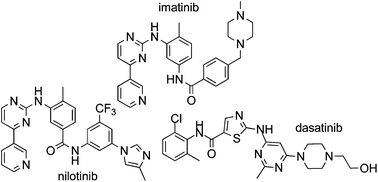
Imatinib (1), nilotinib (2) and dasatinib (3) are Bcr-Abl tyrosine kinase inhibitors approved for the treatment of chronic myelogenous leukemia (CML). This review collates information from the journal and patent literature to provide a comprehensive reference source of the different synthetic methods used to prepare the aforementioned active pharmaceutical ingredients (API’s).

Graphical abstract: The synthesis of Bcr-Abl inhibiting anticancer pharmaceutical agents imatinib, nilotinib and dasatinib

……………………..

Organic Process Research & Development, 12(3), 490-495. DOI: 10.1021/op700270nAs an example of research aimed at industrial production one involving imatinib. This cancer drug was one of the first offspring of rational drug design and if you believe the Wikipedia page hugely expensive despite its simple appearance (no stereocenters!). A group of Northwest University researchers set out to improve the existing Novartis procedure DOI and here is how they did it.

2-acetylpyridine (1) was alkylated with the acetal of N,N-dimethylformamide 2 to enamine 3. A pyrimidine ring in 5was formed with base and reagent guanidine nitrate 4 and nitrotoluene fragment 6 was added in a Ullmann-type reaction with CuI generating secondary amine 7. The nitro group was reduced by hydrazine / FeCl3/C to the amine which was then converted to amide 8 with acid chloride 9. The final step is addition of piperazine 10 to form imatinib11.So is this procedure an improvement on the existing method and ready-made for industrial implementation? Surely they have eradicated the use of toxic cyanamide, cumbersome sodium metal and expensive palladium but they have also introduced equally toxic hydrazine and the harmful and explosive guanidine nitrate. As a further point of criticism the final step is demonstrated on a 0.5 gram scale. If the journal Organic Process Research & Development would live up to its standards the scale would at least be a kilogram.Liu, Y., Wang, C., Bai, Y., Han, N., Jiao, J., Qi, X. (2008). A Facile Total Synthesis of Imatinib Base and Its Analogues. Organic Process Research & Development, 12(3), 490-495. DOI: 10.1021/op700270n
………………………………………….

Tetrahedron Lett. 2007, 48, 3455. DOI: 10.1016/j.tetlet.2007.03.033

Angelo Carotti and his group from University of Bari have developed a solid-phase synthesis of Imatinib which acts as a selective tyrosine kinase inhibitor (Tetrahedron Lett. 2007, 48, 3455. DOI: 10.1016/j.tetlet.2007.03.033). By applying microwave heating in five steps of the synthesis (preparation of linker 1, nucleophilic substitution, reduction of the nitro group, formation of guanidine and final cyclization) the total process could be accelerated. Key steps were the guanylation of aniline 2 where a higher yield and purity of product 3 could be obtained under microwave irradiation, and the final cyclization to resin bound Imatinib where the reaction time could be reduced from 20 h to 50 min. Addiotionally, resin stability was ensured due to the shorter reaction time.

………………………………

…………………………………….

http://www.google.com/patents/EP2509973A1?cl=en

process for the preparation of imatinib, which comprises the reaction of 4-Methyl-N-(4-pyridin-3-yl-pyrimidin-2-yl)- benzene-l,3-diamine (II) also referred as N-(5-amino -2-methylphenyl)-4-(3-pyridyl)-2- pyrimidine amine with 4-(4-Methyl-piperazin-l-ylmethyl)-benzoic acid ester (III) in the presence of a base in a suitable solvent to yield substantially pure imatinib base in about 90% yield.

Figure imgf000012_0001

R is C1-C4 alkyl group The preparation of 4-Methyl-N-(4-pyridin-3-yl-pyrimidin-2-yl)-benzene-l,3-diamine (II) and 4-(4-Methyl-piperazin-l-ylmethyl)-benzoic acid ester (III) may be carried out according to prior art methods.

Compound of formula (II) can be synthesized by the process disclosed in WO2004/ 108669 comprising

Figure imgf000012_0002

reacting 2-methyl-5-nitroaniline with 50% aqueous solution of cyanamide to obtain N-(2- Methyl-5-nitrophenyl)-guanidinium nitrate, which further reacted with 3-dimethylamino- l-pyridin-3-yI-propenone to yield (2-methyI-5-nitrophenyl)-(4-pyridin-3-yI-pyrimidin -2- yl)-amine, finally, reduction of nitro group to obtain compound of formula (Π).

Componds of formula (III) can be synthesized by the process disclosed in synthtic communications 2003, 3597

Figure imgf000013_0001

comprising reacting a-halogen-/?-toluinitrile or methanesulfonic acid 4-cyano-benzyl ester or toluene-4-sulfonic acid 4-cyano-benzyl ester with N-methylpiperazine, followed by hydrolysis of the cyano to acid which formed as dihydrochloride contain half crystalline hydrate, finally reaction with alcohol to obtain compound of formula (III).

The synthetic route for preparing imatinib according to the present invention is is given below

Figure imgf000013_0002

EXAMPLES

Example 1

To a solution of 4-Methyl-N-(4-pyridin-3-yl-pyrimidin-2-yl)-benzene-l,3-diamine (27.7g) and 4-(4-Methyl-piperazin-l-ylmethyl)-benzoic acid methyl ester (50g) in Tetrahydrofuran (250ml), a solution of sodium methylate (lOg) in methanol (10ml) was added. The reaction mixture was heated to reflux. After completion of the reaction solution was poured into ice-water and a large amount of solid precipitated, which was filtered and washed with water and dried to obtain Imatinib base (45g). Yield: 91%.

The spectral data is as follows:

Ή NMR ( 500M , DMSO ) δ : 10.2 (s, lH), 9.30 (s, 1H), 8.99 (s, 1H), 8.72 (d, J=4.0

Hz, 1H), 8.57 (s, 1H), 8.53 (s, 1H), 8.11 (s, 1H), 8.00 (s, 1H), 7.98 (s, 1H), 7.58-7.51 (m, 4H), 7.44 (d, J=4.3 Hz, 1H), 7.22 (d, J=8.1 Hz, 1H), 3.70 (s, 2H), 3.50-3.25 (m, 2H),

3.20-2.90 (m, 4H), 2.81 (s, 3H), 2.40 (s, 3H), 2.24 (s, 3H). 13C NMR (125M ,

DMSO ) δ : 164.9, 161.3, 161.1, 159.4, 150.8, 147.7, 137.7, 137.1, 134.9, 134.3, 132.3, 129.9, 129.1, 127.7, 127.6, 123.9, 117.2, 1 16.8, 107.5, 59.9, 52.1, 48.9, 42.2, 17.5.

MS (M++l): 494.3

Example 2

To a solution of 4-Methyl-N-(4-pyridin-3-yl-pyrimidin-2-yl)-benzene-l,3-diamine (27.7g) and 4-(4-Methyl-piperazin-l-ylmethyl)-benzoic acid methyl ester (50g) in toluene (250ml), a solution of sodium ethoxide (20g) in methanol (10ml) was added. The reaction mixture was heated to reflux. After completion of the reaction, solution was poured into ice-water and a large amount of solid precipitated, which was filtered and washed with water and dried to obtain Imatinib base (44g). Yield: 91%.

Example 3

To a solution of potassium butoxide (250g) in methanol (1000ml), a solution of 4-Methyl- N-(4-pyridin-3-yl-pyrimidin-2-yl)-benzene-l,3-diamine (277g) and 4-(4-Methyl- piperazin-l-ylmethyl)-benzoic acid propyl ester (600g) in Tetrahydrofuran (2500ml) was added. The reaction mixture was stirred at room temperature. After completion of the reaction solution was poured into ice-water and a large amount of solid precipitated, which was filtered and washed with water and dried to obtain Imatinib base (450g). Yield: 91%. Example 4

To a solution of potassium butoxide (25kg) in ethanol (lOOLitre), a solution of 4-Methyl- N-(4-pyridin-3-yI-pyrimidin-2-yl)-benzene-l,3-diamine (27.7kg) and 4-(4-MethyI- piperazin-l-ylmethyl)-benzoic acid ethyl ester (50.0kg) in toluene (250Litre) was added. The reaction mixture was stirred at room temperature. After completion of reaction, solution was poured into ice-water and a large amount of solid precipitated, which was filtered and washed with water, and dried to obtain Imatinib base (40.0kg). Yield: 81%.

…………………………………

FIGURE 2.

FIGURE 2.

Synthesis of SKI696. (A) isopropanol/sodium hydroxide (a); iron/acetic acid/EtOH/water (b); triethyl amine/acetonitrile (c); 1-ethyl-3-(3-dimethylaminopropyl)carbodiimide hydrochloride/N,N-dimethylaminopyridine/dimethylformamide (d); trifluoroacetic acid/dichloromethane (e); potassium carbonate/acetonitrile (f). (B) 18F-KF/Kryptofix/1,2-dichlorobenzene (g); dimethylformamide/acetonitrile (h).

http://jnm.snmjournals.org/content/52/8/1301/F2.expansion.html

………………………………….

http://www.beilstein-journals.org/bjoc/single/articleFullText.htm?publicId=1860-5397-9-265

In order to prepare the core heterocyclic unit a direct condensation between a 1,3-dicarbonyl compound 3.39 and an amidine or guanidine 3.40 is frequently employed (Scheme 36a). Alternatively, an amidine can be condensed with a vinylogous amide 3.41 resulting in the direct formation of 2,4-disubstituted pyrimidines. These condensations often require relatively harsh reaction conditions despite this they are of great value as they involve cheap or easily accessible materials and typically only form water as the principle byproduct.

A modification of the above pyrimidine synthesis has been applied in the generation of imatinib (3.36, Gleevec) which is Novartis’ tyrosine kinase inhibitor used for the treatment of chronic myeloic leukaemia. In a patented route the aldol product 3.47 undergoes a condensation reaction with guanidine 3.48 in basic media to give the 2-aminopyrimidine 3.49 (Scheme 37) [93]. After generating the functional pyrimidine core a hydrazine-mediated reduction of the nitro group in the side chain was conducted with Raney-Nickel as the catalyst. Amide formation with 4-chloromethylbenzoyl chloride (3.50) and a direct displacement of the benzylic chloride with N-methylpiperazine (1.118) complete this synthesis of imatinib in excellent overall yields.

[1860-5397-9-265-i37]
Scheme 37: Synthesis of imatinib.

One noteworthy feature of this imatinib synthesis is that it is specifically designed for facile isolation of intermediates by precipitation due to their limited solubility in non-polar solvents [94]. Whilst this process was efficient in enabling the isolation of pure material after each step, it does not encourage telescoping of steps, which would in principal increase the overall efficiency of the process. Recently, similar approaches have been utilised in the academic environment using enabling techniques in a route to imatinib. For instance, our group has employed continuous flow synthesis methods to imatinib [95,96]. The route not only afforded imatinib but led to many previously inaccessible derivatives in an automated fashion within a single working day (Scheme 38). In addition, this particular sequence showcases the uses of scavenger resins for in-line purification as the synthesis progresses and features the use of a Buchwald–Hartwig amination in a late stage fragment coupling. While it was sufficient to access only small amounts of these structures (around 50 mg), these techniques are currently being adopted by several major pharmaceutical companies in order to enhance drug development and even manufacturing sequences.

[1860-5397-9-265-i38]
Scheme 38: Flow synthesis of imatinib.
pick up ref from
http://www.beilstein-journals.org/bjoc/single/articleFullText.htm?publicId=1860-5397-9-265

…………………………………..

Imatinib is a tyrosine-kinase inhibitor used for the treatment of cancer.  A key steps in its synthesis is the enamine formation highlighted in green below.

1) Show a mechanism for this transformation?

2) This particular enamine is rather stable.  Comment on it relatively high stability?  (i.e. What make it so stable?)

Imatinib Synthesis

……………………………………..

Org. Biomol. Chem., 2009,7, 5129-5136

DOI: 10.1039/B913333J

http://pubs.rsc.org/en/content/articlelanding/2009/ob/b913333j#!divAbstract

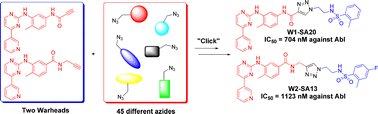
Protein kinases catalyze the phosphorylation of serine, threonine, tyrosine and histidine residues in proteins. Aberrant regulation of kinase activity has been implicated in many diseases including cancer. Thus development of new strategies for kinase inhibitor design remains an active area of research with direct relevance to drug development. Abelson (Abl)tyrosine kinase is one of the Src-family of tyrosine kinases and is directly implicated in Chronic Myelogenous Leukemia (CML). In this article, we have, for the first time, developed an efficient method for the construction of small molecule-based bisubstrate inhibitors of Abl kinase using click chemistry. Subsequent biochemical screenings revealed a set of moderately potentinhibitors, a few of which have comparable potency to Imatinib (an FDA-approved drug for treatment of chronic myeloid leukemia) against Abl.

Graphical abstract: Rapid synthesis of Abelson tyrosine kinase inhibitors using click chemistry

……………………………………

Medicine for Blood Cancer

‘Imitinef Mercilet’ is a medicine which cures blood cancer.
Its available free of cost at “Adyar Cancer Institute in Chennai”.
Create Awareness. It might help someone.Cancer Institute in Adyar, Chennai

‘Imitinef Mercilet’ is apparently an alternative spelling of the drug Imatinib mesylate which is used in the treatment of some forms of leukemia along with other types of cancer. Imatinib, often referred to a “Gleevec”, has proved to be an effective treatment for some forms of cancers. However, “blood cancer” is a generalized term for cancers that affect the blood, lymphatic system or bone marrow. The three types of blood cancer are listed as leukemia, lymphoma, and multiple myeloma. These three malignancies require quite different kinds of treatments. While drugs (including Imatinib), along with other treatments such as radiation can help to slow or even stop the progress of these cancers, there is currently no single drug treatment that can be said to actually cure all such cancers.

Category: Cancer
Address: East Canal Bank Road , Gandhi Nagar
Adyar, Chennai -600020
Landmark: Near Michael School
Phone: 044-24910754 044-24910754 ,
044-24911526 044-24911526 , 044-22350241

Imatinib is a small molecule selectively inhibiting specific tyrosine kinases that has emerged recently as a valuable treatment for patients with advanced GIST. The use of imatinib as monotherapy for the treatment of GIST has been described in PCT publication WO 02/34727, which is here incorporated by reference. However, it has been reported that primary resistance to imatinib is present in a population of patients, for example 13.7% of patients in one study. In addition, a number of patients acquire resistance to treatment with imatinib. More generally this resistance is partial with progression in some lesions, but continuing disease control in other lesions. Hence, these patients remain on imatinib treatment but with a clear need for additional or alternative therapy.

Imatinib is 4-(4-methylpiperazin-1-ylmethyl)-N-[4-methyl-3-(4-pyridin-3-yl)pyrimidin-2-ylamino)phenyl]-benzamide having the formula I

The preparation of imatinib and the use thereof, especially as an anti-tumour agent, are described in Example 21 of European patent application EP-A-0 564 409, which was published on 6 Oct. 1993, and in equivalent applications and patents in numerous other countries, e.g. in U.S. Pat. No. 5,521,184 and in Japanese patent 2706682

flow synthesis

The flow-based route required minimal manual intervention and was achieved despite poor solubility of many reaction components

21 January 2013Michael Parkin

UK chemists have used a combination of flow chemistry methods with solid-supported scavengers and reagents to synthesise the active pharmaceutical ingredient, imatinib, of the anticancer drug Gleevec. The method avoids the need for any manual handling of intermediates and allows the drug to be synthesised in high purity in less than a day.

Gleevec, developed by Novartis, is a tyrosine kinase inhibitor used for the treatment of chronic myeloid leukaemia and gastrointestinal stromal tumours.

READ ALL AT

http://www.rsc.org/chemistryworld/2013/01/flow-synthesis-anticancer-drug

IMATINIB

CREDIT

http://www.veomed.com/va041542042010

‘Wrapping’ Gleevec Fights Drug-Resistant Cancer, Study Shows

 http://www.sciencedaily.com/releases/2007/05/070501115127.htm

The anti-cancer drug Gleevec® is far more effective against a drug-resistant strain of cancer when the drug wraps the target with a molecular bandage that seals out water from a critical area. This image shows the bandage (black box) on the modified version of the drug, WBZ-7. (Credit: Image courtesy of Rice University)

A new study in Cancer Research finds that the anti-cancer drug Gleevec® is far more effective against a drug-resistant strain of cancer when the drug wraps the target with a molecular bandage that seals out water from a critical area.

FIG 23.8 Optimization of imatinib as a chemotherapeutic agent. The discovery that 2-phenylaminopyrimidine inhibitors of PKC also inhibit the unrelated v-Abl oncogene turned attention to its potential use in the treatment of chronic myelogenous leukaemia. Starting with the 2-phenylaminopyrimidine backbone, addition of the benzamidine group increased activity against tyrosine kinases, the methyl group reduced its activity against PKC (so-called ‘ target hopping ’ ). Addition of a 3’-pyridyl group improved the activity in cellular assays. Subsequent addition of N -methylpiperazine increased water solubility and oral bioavailability, enabling the drug to survive the stomach and to enter the bloodstream.

 ……………………..

An automated flow-based synthesis of imatinib: the API of gleevec M.D. Hopkin, I.R. Baxendale, S.V. Ley, J.C.S. Chem. Commun.2010, 46, 2450-2452.

References

  1. Jump up^ Novartis Pharma AG. Gleevec® (imatinib mesylate) tablets prescribing information. East Hanover, NJ; 2006 Sep. Anon. Drugs of choice for cancer. Treat Guidel Med Lett. 2003; 1:41–52
  2. Jump up^ Goldman JM, Melo JV (October 2003). “Chronic myeloid leukemia–advances in biology and new approaches to treatment”. N. Engl. J. Med. 349 (15): 1451–64.doi:10.1056/NEJMra020777. PMID 14534339.
  3. Jump up^ Fausel, C. Targeted chronic myeloid leukemia therapy: Seeking a cure. Am J Health Syst Pharm 64, S9-15 (2007)
  4. Jump up^ Stegmeier F, Warmuth M, Sellers WR, Dorsch M (May 2010). “Targeted cancer therapies in the twenty-first century: lessons from imatinib”. Clin. Pharmacol. Ther. 87(5): 543–52. doi:10.1038/clpt.2009.297. PMID 20237469.
  5. Jump up^ “Novartis fails to patent Glivec (Gleevec) in India”.
  6. Jump up^ Rowley to receive Japan Prize for her role in the development of targeted cancer therapy Eurekalert, Press release, 24 January 2012
  7. Jump up^ Leukemia Drug and Magnet Material Net Japan Prizes by Dennis Normile, Science Insider, 25 January 2012
  8. ^ Jump up to:a b c “FDA Highlights and Prescribing Information for Gleevec(imatinib mesylate)”.
  9. Jump up^ “Prolonged Use of Imatinib in GIST Patients Leads to New FDA Approval”.
  10. Jump up^ “FDA approves Gleevec for children with acute lymphoblastic leukemia”. FDA News Release. US Food and Drug Administration. 25 January 2013. Retrieved 3 April 2013.
  11. Jump up^ Yang FC, Ingram DA, Chen S, Zhu Y, Yuan J, Li X, Yang X, Knowles S, Horn W, Li Y, Zhang S, Yang Y, Vakili ST, Yu M, Burns D, Robertson K, Hutchins G, Parada LF, Clapp DW (October 2008). “Nf1-dependent tumors require a microenvironment containing Nf1+/–and c-kit-dependent bone marrow”. Cell 135 (3): 437–48.doi:10.1016/j.cell.2008.08.041. PMC 2788814. PMID 18984156. Lay summaryScience Daily.
  12. Jump up^ “Gleevec NF1 Trial”. Nfcure.org. Retrieved 2013-04-03.
  13. Jump up^ “GIST in Neurofibromatosis 1”. Gistsupport.org. 2010-05-14. Retrieved 2013-04-03.
  14. Jump up^ “”Pilot Study of Gleevec/Imatinib Mesylate (STI-571, NSC 716051) in Neurofibromatosis (NF1) Patient With Plexiform Neurofibromas (0908-09)” (Suspended)”. Clinicaltrials.gov. Retrieved 2013-04-03.
  15. Jump up^ Droogendijk HJ, Kluin-Nelemans HJ, van Doormaal JJ, Oranje AP, van de Loosdrecht AA, van Daele PL (July 2006). “Imatinib mesylate in the treatment of systemic mastocytosis: a phase II trial”. Cancer 107 (2): 345–51. doi:10.1002/cncr.21996.PMID 16779792.
  16. Jump up^ Tapper EB, Knowles D, Heffron T, Lawrence EC, Csete M (June 2009). “Portopulmonary hypertension: imatinib as a novel treatment and the Emory experience with this condition”. Transplant. Proc. 41 (5): 1969–71.doi:10.1016/j.transproceed.2009.02.100. PMID 19545770.
  17. Jump up^ Boucher P, Gotthardt M, Li WP, Anderson RG, Herz J (April 2003). “LRP: role in vascular wall integrity and protection from atherosclerosis”. Science 300 (5617): 329–32.doi:10.1126/science.1082095. PMID 12690199.
  18. Jump up^ Lassila M, Allen TJ, Cao Z, Thallas V, Jandeleit-Dahm KA, Candido R, Cooper ME (May 2004). “Imatinib attenuates diabetes-associated atherosclerosis”. Arterioscler. Thromb. Vasc. Biol. 24 (5): 935–42. doi:10.1161/01.ATV.0000124105.39900.db.PMID 14988091.
  19. Jump up^ Reeves PM, Bommarius B, Lebeis S, McNulty S, Christensen J, Swimm A, Chahroudi A, Chavan R, Feinberg MB, Veach D, Bornmann W, Sherman M, Kalman D (July 2005). “Disabling poxvirus pathogenesis by inhibition of Abl-family tyrosine kinases”. Nat. Med.11 (7): 731–9. doi:10.1038/nm1265. PMID 15980865.
  20. Jump up^ He G, Luo W, Li P, Remmers C, Netzer WJ, Hendrick J, Bettayeb K, Flajolet M, Gorelick F, Wennogle LP, Greengard P (September 2010). “Gamma-secretase activating protein is a therapeutic target for Alzheimer’s disease”. Nature 467 (7311): 95–8.doi:10.1038/nature09325. PMC 2936959. PMID 20811458.
  21. Jump up^ “Alzheimer’s may start in liver – Health – Alzheimer’s Disease | NBC News”. MSNBC. Retrieved 2013-01-06.
  22. Jump up^ Holmes C, Boche D, Wilkinson D, Yadegarfar G, Hopkins V, Bayer A, Jones RW, Bullock R, Love S, Neal JW, Zotova E, Nicoll JA (July 2008). “Long-term effects of Abeta42 immunisation in Alzheimer’s disease: follow-up of a randomised, placebo-controlled phase I trial”. Lancet 372 (9634): 216–23. doi:10.1016/S0140-6736(08)61075-2. PMID 18640458.
  23. Jump up^ Eliminating Morphine Tolerance – Reformulated Imatinib 23 Feb 2012, 5:00 PST
  24. Jump up^ “GLIVEC Tablets – Summary of Product Characteristics (SPC)”. electronic Medicines Compendium. Novartis Pharmaceuticals UK Ltd.
  25. ^ Jump up to:a b c “Gleevec (imatinib) dosing, indications, interactions, adverse effects, and more”.Medscape Reference. WebMD. Retrieved 24 January 2014.
  26. Jump up^ “Imatinib”. Macmillan Cancer Support. Retrieved 26 December 2012.
  27. ^ Jump up to:a b Haberfeld, H, ed. (2009). Austria-Codex (in German) (2009/2010 ed.). Vienna: Österreichischer Apothekerverlag. ISBN 3-85200-196-X.
  28. Jump up^ Kerkelä R, Grazette L, Yacobi R, Iliescu C, Patten R, Beahm C, Walters B, Shevtsov S, Pesant S, Clubb FJ, Rosenzweig A, Salomon RN, Van Etten RA, Alroy J, Durand JB, Force T (August 2006). “Cardiotoxicity of the cancer therapeutic agent imatinib mesylate”. Nat. Med. 12 (8): 908–16. doi:10.1038/nm1446. PMID 16862153.
  29. Jump up^ Shima H, Tokuyama M, Tanizawa A, Tono C, Hamamoto K, Muramatsu H, Watanabe A, Hotta N, Ito M, Kurosawa H, Kato K, Tsurusawa M, Horibe K, Shimada H (October 2011). “Distinct impact of imatinib on growth at prepubertal and pubertal ages of children with chronic myeloid leukemia”. J. Pediatr. 159 (4): 676–81.doi:10.1016/j.jpeds.2011.03.046. PMID 21592517.
  30. ^ Jump up to:a b c d “GLIVEC (imatinib)” (PDF). TGA eBusiness Services. Novartis Pharmaceuticals Australia Pty Ltd. 21 August 2013. Retrieved 24 January 2014.
  31. Jump up^ PDB 1IEP; Nagar B, Bornmann WG, Pellicena P, Schindler T, Veach DR, Miller WT, Clarkson B, Kuriyan J (August 2002). “Crystal structures of the kinase domain of c-Abl in complex with the small molecule inhibitors PD173955 and imatinib (STI-571)”. Cancer Res. 62 (15): 4236–43. PMID 12154025.
  32. Jump up^ Takimoto CH, Calvo E. “Principles of Oncologic Pharmacotherapy” in Pazdur R, Wagman LD, Camphausen KA, Hoskins WJ (Eds)Cancer Management: A Multidisciplinary Approach. 11 ed. 2008.
  33. Jump up^ Gambacorti-Passerini CB, Gunby RH, Piazza R, Galietta A, Rostagno R, Scapozza L (February 2003). “Molecular mechanisms of resistance to imatinib in Philadelphia-chromosome-positive leukaemias”. Lancet Oncol. 4 (2): 75–85. doi:10.1016/S1470-2045(03)00979-3. PMID 12573349.
  34. Jump up^ Deininger MW, Druker BJ (September 2003). “Specific targeted therapy of chronic myelogenous leukemia with imatinib”. Pharmacol. Rev. 55 (3): 401–23.doi:10.1124/pr.55.3.4. PMID 12869662.
  35. Jump up^ Vigneri P, Wang JY (February 2001). “Induction of apoptosis in chronic myelogenous leukemia cells through nuclear entrapment of BCR-ABL tyrosine kinase”. Nat. Med. 7 (2): 228–34. doi:10.1038/84683. PMID 11175855.
  36. Jump up^ Weisberg E, Manley PW, Cowan-Jacob SW, Hochhaus A, Griffin JD (May 2007). “Second generation inhibitors of BCR-ABL for the treatment of imatinib-resistant chronic myeloid leukaemia”. Nature Reviews Cancer 7 (5): 345–56. doi:10.1038/nrc2126.PMID 17457302.
  37. Jump up^ Scheinfeld N, Schienfeld N (February 2006). “A comprehensive review of imatinib mesylate (Gleevec) for dermatological diseases”. J Drugs Dermatol 5 (2): 117–22.PMID 16485879.
  38. Jump up^ Klopp, T, ed. (2010). Arzneimittel-Interaktionen (in German) (2010/2011 ed.). Arbeitsgemeinschaft für Pharmazeutische Information. ISBN 978-3-85200-207-1.
  39. ^ Jump up to:a b Staff, Innovation.org (a project of the Pharmaceutical Research and Manufacturers of America)The Story of Gleevec
  40. Jump up^ Claudia Dreifus for the New York Times. November 2, 2009 Researcher Behind the Drug Gleevec
  41. ^ Jump up to:a b A Conversation With Brian J. Druker, M.D., Researcher Behind the Drug Gleevecby Claudia Dreifus, The New York Times, 2 November 2009
  42. Jump up^ Gambacorti-Passerini C (2008). “Part I: Milestones in personalised medicine—imatinib”. Lancet Oncology 9 (600): 600. doi:10.1016/S1470-2045(08)70152-9.PMID 18510992.
  43. Jump up^ Druker BJ, Lydon NB (January 2000). “Lessons learned from the development of an abl tyrosine kinase inhibitor for chronic myelogenous leukemia”. J. Clin. Invest. 105 (1): 3–7. doi:10.1172/JCI9083. PMC 382593. PMID 10619854.
  44. ^ Jump up to:a b c U.S. Patent 5,521,184
  45. Jump up^ “Imatinib Patent Family”. Espacenet. 1996. Retrieved 2014-07-23.
  46. ^ Jump up to:a b EP 0564409
  47. Jump up^ Staff, European Medicines Agency, 2004.EMEA Scientific Discussion of Glivec
  48. Jump up^ Note: The Indian patent application, which became the subject of litigation in India that gathered a lot of press, does not appear to be publicly available. However according todocuments produced in the course of that litigation (page 27), “The Appellant’s application under the PCT was substantially on the same invention as had been made in India.”
  49. ^ Jump up to:a b WO 9903854
  50. Jump up^ U.S. Patent 6,894,051
  51. Jump up^ FDA Orange Book; Patent and Exclusivity Search Results from query on Appl No 021588 Product 001 in the OB_Rx list.
  52. Jump up^ Novartis press release, May 10, 2001. [http://www.evaluategroup.com/Universal/View.aspx?type=Story&id=5838 FDA approves Novartis’ unique cancer medication Glivec®
  53. Jump up^ Cohen MH et al. Approval Summary for Imatinib Mesylate Capsules in the Treatment of Chronic Myelogenous Leukemia Clin Cancer Res May 2002 8; 935
  54. Jump up^ Margot J. Fromer for Oncology Times. December 2002. What’s in a Name? Quite a Lot When It Comes to Marketing & Selling New Cancer Drugs
  55. Jump up^ Novartis Press Release. April 30 2001Novartis Oncology Changes Trade Name of Investigational Agent Glivec(TM) to Gleevec(TM) in the United States
  56. Jump up^ Experts in Chronic Myeloid Leukemia. The price of drugs for chronic myeloid leukemia (CML) is a reflection of the unsustainable prices of cancer drugs: from the perspective of a large group of CML experts Blood. 2013 May 30;121(22):4439-42. PMID 23620577
  57. Jump up^ Andrew Pollack for the New York Times, April 25, 2013 Doctors Denounce Cancer Drug Prices of $100,000 a Year
  58. Jump up^ Schiffer CA (July 2007). “BCR-ABL tyrosine kinase inhibitors for chronic myelogenous leukemia”. N. Engl. J. Med. 357 (3): 258–65. doi:10.1056/NEJMct071828.PMID 17634461.
  59. Jump up^ As Pills Treat Cancer, Insurance Lags Behind, By ANDREW POLLACK, New York Times, 14 April 2009
  60. Jump up^ Living With a Formerly fatal Blood Cancer, By JANE E. BRODY, New York Times, 18 January 2010
  61. Jump up^ Patented Medicine Review Board (Canada). Report on New Patented Drugs – Gleevec.
  62. Jump up^ “pharmacychecker.com”. pharmacychecker.com. Retrieved 2013-04-03.
  63. Jump up^ Gardiner Harris and Katie Thomas for the New York Times. April 1 2013 Top court in India rejects Novartis drug patent
  64. Jump up^ Note: The Indian patent application No.1602/MAS/1998 does not appear to be publicly available. However according to the decision of the IPAB on 26 June 2009 (page 27) discussed below, “The Appellant’s application under the PCT was substantially on the same invention as had been made in India.”
  65. Jump up^ Staff, European Medicines Agency, 2004. EMEA Scientific Discussion of Glivec
  66. Jump up^ Indian Supreme Court Decision paragraphs 5-6
  67. Jump up^ Novartis v UoI, para 8-9
  68. ^ Jump up to:a b Shamnad Basheer for Spicy IP March 11, 2006First Mailbox Opposition (Gleevec) Decided in India
  69. Jump up^ Staff, LawyersCollective. September 6, 2011[http://www.lawyerscollective.org/news/archived-news-a-articles/126-novartis-case-background-and-update-supreme-court-of-india-to-recommence-hearing.html Novartis case: background and update – Supreme Court of India to recommence hearing
  70. Jump up^ R. Jai Krishna and Jeanne Whalen for the Wall Street Journal. April 1, 2013Novartis Loses Glivec Patent Battle in India
  71. Jump up^ Intellectual Property Appellate Board decision dated 26 June 2009, p 149
  72. Jump up^ W.P. No.24759 of 2006
  73. Jump up^ “Supreme Court rejects bid by Novartis to patent Glivec”.
  74. Jump up^ Novartis v UoI, Para 191
  75. Jump up^ Novartis v UoI, Para 24-25
  76. Jump up^ “How the Indian judgment will reverberate across the world”.
  77. Jump up^ “Patented drugs must be priced smartly”.
  78. Jump up^ Patent with a purpose, Prof. Shamnad Basheer, Indian Express, 3 April 2013
  79.  Kevin Grogan for PharmaTimes. February 27, 2012 Novartis explains stance over India patent law challenge
  80.  Berne Declaration. May 8, 2007 Short questions and answers about the court case initiated by Novartis in India

External links

Imatinib

Title: Imatinib
CAS Registry Number: 152459-95-5
CAS Name: 4-[(4-Methyl-1-piperazinyl)methyl]-N-[4-methyl-3-[[4-(3-pyridinyl)-2-pyrimidinyl]amino]phenyl]benzamide
Additional Names: N-[5-[4-(4-methylpiperazinomethyl)benzoylamido]-2-methylphenyl]-4-(3-pyridyl)-2-pyrimidineamine
Molecular Formula: C29H31N7O
Molecular Weight: 493.60
Percent Composition: C 70.57%, H 6.33%, N 19.86%, O 3.24%
Literature References: Tyrosine kinase inhibitor; highly specific for BCR-ABL, the enzyme associated with chronic myelogenous leukemia (CML) and certain forms of acute lymphoblastic leukemia (ALL). Also shown to inhibit the transmembrane receptor KIT and platelet-derived growth factor (PDGF) receptors. Prepn: J. Zimmermann, EP 564409; idem, US 5521184 (1993, 1996 both to Ciba-Geigy); idem et al., Bioorg. Med. Chem. Lett. 7, 187 (1997). Structural mechanism of ABL specificity: T. Schindler et al., Science 289, 1938 (2000). Activity vs KIT and PDGF receptor kinases: E. Buchdunger et al., J. Pharmacol. Exp. Ther. 295, 139 (2000). Clinical trial in CML: H. Kantarjian et al., N. Engl. J. Med. 346, 645 (2002); in gastrointestinal stromal tumors related to KIT: G. D. Demetri et al., ibid. 347, 472 (2002). Review of clinical experience: D. G. Savage, K. H. Antman, ibid. 346, 683-693 (2002); and pharmacology: V. K. Pindolia et al., Pharmacotherapy 22, 1249-1265 (2002); and development of therapeutic target: B. J. Druker, Adv. Cancer Res. 91, 1-30 (2004).
Properties: mp 211-213°. pKa1 8.07; pKa2 3.73; pKa3 2.56; pKa4 1.52.
Melting point: mp 211-213°
pKa: pKa1 8.07; pKa2 3.73; pKa3 2.56; pKa4 1.52
 
Derivative Type: Methanesulfonate
CAS Registry Number: 220127-57-1
Manufacturers’ Codes: STI-571; CGP-57148B
Trademarks: Gleevec (Novartis); Glivec (Novartis)
Molecular Formula: C29H31N7O.CH3SO3H
Molecular Weight: 589.71
Percent Composition: C 61.10%, H 5.98%, N 16.63%, O 10.85%, S 5.44%
Literature References: Prepn of crystalline form: J. Zimmermann et al., WO 9903854 (1999 to Novartis).
Properties: Occurs in 2 crystalline modifications. a-form, begins to melt at 226°; b-form, mp 217°. Lipophilic at pH 7.4. Soly in water: >100 g/l (pH 4.2); 49 mg/l (pH 7.4).
Melting point: mp 217°
Therap-Cat: Antineoplastic.
Keywords: Antineoplastic, Tyrosine Kinase Inhibitors,  imatinib mesylate, GGP-57148B, STI-571, CGP-57148 (free base), Gleevec, Glivec, imatinib
IMATINIB BASE
Mp 206 – 207 °C (lit.:1   207 – 210 °C);
1=  1 Y.‐F. Liu, C.‐L. Wang, Y.‐J. Bai, N. Han, J.‐P. Jiao and X.‐L. Qi, Org. Process Res. Dev., 2008, 12, 490.
IR νmax/cm-1 3275.0(w), 2928.5(w),
2796.5(w), 1645.9(m), 1586.0(m), 1575.1(s), 1554.0(m), 1531.5(s), 1510.3(m), 1478.1(m),
1448.9(s), 1416.7(m), 1377.7(m), 1352.2(m), 1334.8(m), 1325.6(m), 1308.8(m), 1290.3(s),
1261.1(m), 1204.3(m), 1164.1(m), 1141.7(m), 1124.6(w), 1102.6(m), 1089.2(w), 1052.0(w),
1024.4(w), 1010.0(m), 992.5(w), 968.3(w), 924.5(w), 886.2(w), 857.9(w), 850.3(w),
807.8(m), 795.7(s), 748.1(m), 703.2(m), 690.1(m), 670.7(m);
δH (d6-DMSO, 600 MHz) =
10.14 (1 H, s, NH), 9.26 (1 H, d, J = 1.5 Hz, 2H-pyridin-3-yl), 8.95 (1 H, s, NH), 8.66 (1 H, dd,
J = 4.8 and 1.2 Hz, 6H-pyridin-3-yl), 8.49 (1 H, d, J = 5.1 Hz, 6H-pyridin-2-amine), 8.46 (1 H,
ddd, J = 7.9, 1.5 and 1.2 Hz, 4H-pyridin-3-yl), 8.06 (1 H, d, J = 1.5 Hz, 3H-2-aminotoluene),
7.89 (2 H, d, J = 8.1 Hz, 2H-benzamide), 7.50 (1 H, dd, J = 7.9 and 4.8 Hz, 5H-pyridin-3-yl),
7.46 (1 H, dd, J = 8.3 and 1.5 Hz, 5H-2-aminotoluene), 7.42 – 7.40 (3 H, m, 3H-benzamide
and 5H-pyridin-2-amine), 7.18 (1 H, d, J = 8.3 Hz, 6H-2-aminotoluene), 3.51 (2 H, s, CH2),
2.50 – 2.20 (8 H, m, piperazine CH2), 2.20 (3 H, s, CCH3), 2.13 (3 H, s, NCH3);
δC (CDCl3,
150 MHz) = 165.42(C), 162.72(C), 160.57(C), 158.99(CH), 151.44(CH), 148.48(CH),
142.52(C), 137.77(C), 136.60(C), 134.92(CH), 133.88(C), 132.66(C), 130.75(CH),
129.28(CH), 127.00(CH), 124.23(C), 123.71(CH), 115.35(CH), 113.19(CH), 108.32(CH),
62.49(CH2), 55.07(CH2), 53.10(CH2), 45.98(CH3), 17.65(CH3);
Rf (MeOH) = 0.09; Rt 3.48,
M+H m/z = 494.2; HRMS calculated for C29H31N7ONa [M + Na]+, 516.2488; found 516.2491.
Inline image 1
1H NMR
Inline image 3
13 C NMR
Inline image 4
WO2006024863A1 * 2 Sep 2005 9 Mar 2006 Cipla Ltd Stable crystal form of imatinib mesylate and process for the preparation thereof
WO2006048890A1 * 20 Oct 2005 11 May 2006 Raja Jyotir Jani Imatinib mesylate crystal form and process for preparation thereof
WO2006054314A1 * 11 Aug 2005 26 May 2006 Natco Pharma Ltd Polymorphic forms of imatinib mesylate
WO2007023182A1 * 24 Aug 2006 1 Mar 2007 Novartis Ag Delta and epsilon crystal forms of imatinib mesylate
WO2007059963A1 * 23 Nov 2006 31 May 2007 Novartis Ag F,g,h,i and k crystal forms of imatinib mesylate
WO2007136510A2 * 27 Apr 2007 29 Nov 2007 Ivax Pharmaceuticals Sro Polymorphic forms of imatinib mesylate and processes for their preparation as well as of amorphous imatinib mesylate and form alpha
WO2008150481A2 * 29 May 2008 11 Dec 2008 Sicor Inc Processes for the preparation of crystalline form beta of imatinib mesylate
WO2010133976A2 24 May 2010 25 Nov 2010 Actavis Group Ptc Ehf Substantially pure imatinib or a pharmaceutically acceptable salt thereof
WO2011023146A1 19 Aug 2010 3 Mar 2011 Zentiva, K.S. Imatinib mesylate polymorphs generated by crystallization in aqueous inorganic salt solutions
WO2011049474A1 21 Oct 2010 28 Apr 2011 Tomasz Kozluk Salts of imatinib with tartaric acids
WO2011095835A1 22 Dec 2010 11 Aug 2011 Actavis Group Ptc Ehf Highly pure imatinib or a pharmaceutically acceptable salt thereof
WO2011099039A1 15 Feb 2011 18 Aug 2011 Reliance Life Sciences Pvt. Ltd. Process for the preparation of alpha form of imatinib mesylate
WO2011108953A1 4 Mar 2011 9 Sep 2011 Tomasz Kozluk PROCESS FOR PREPARATION OF POLYMORPHIC FORM α AND NEW POLYMORPHIC FORM OF IMATINIB MESYLATE ISOLATED IN THAT PROCESS
WO2011114337A1 15 Mar 2010 22 Sep 2011 Natco Pharma Limited Process for the preparation of highly pure crystalline imatinib base
WO2011157450A1 17 Jun 2011 22 Dec 2011 Krka, D. D., Novo Mesto New polymorphic form of imatinib base and preparation of salts thereof
WO2011158255A1 * 14 Jun 2011 22 Dec 2011 Aptuit Laurus Private Limited Process for preparation of stable imatintb mesylate alpha form
WO2012014000A1 * 30 Jul 2010 2 Feb 2012 Narain Singh Awadesh STABLE α-CRYSTAL FORM OF IMATINIB MESYLATE AND PREPARING PROCESS THEREOF
WO2013136141A1 * 22 Aug 2012 19 Sep 2013 Fresenius Kabi Oncology Ltd. An improved process for the preparation of alpha form of imatinib mesylate
CN102321070A * 27 Jul 2011 18 Jan 2012 江苏先声药物研究有限公司 Method for preparing imatinib methylolsulfonate alpha crystal through inverse solvent recrystallization method
CN102321070B 27 Jul 2011 22 May 2013 江苏先声药物研究有限公司 Method for preparing imatinib methylolsulfonate alpha crystal through inverse solvent recrystallization method
CN102633775B 6 Apr 2012 17 Jul 2013 江南大学 Method for preparing alpha-crystal-form imatinib mesylate
DE102007021043B4 * 4 May 2007 8 Apr 2010 Chemagis Ltd. Alpha-Form von Imatinib Mesylat und Verfahren zu seiner Herstellung
EP1988089A1 26 Oct 2007 5 Nov 2008 Sicor, Inc. Imatinib base, and imatinib mesylate and processes for preparation thereof
EP2009008A1 26 Oct 2007 31 Dec 2008 Sicor, Inc. Imatinib base, and imatinib mesylate and processes for preparation thereof
EP2311821A1 27 Apr 2007 20 Apr 2011 Sicor, Inc. Polymorphic form of Imatinib mesylate and processes for its preparation
EP2497464A2 20 Feb 2012 12 Sep 2012 Adamed SP. Z O.O. Pharmaceutical composition of imatinibe methanesulphonate and a process for its manufacture
EP2546248A1 * 23 Nov 2006 16 Jan 2013 Novartis AG Crystal form H of imatinib mesylate
EP2578580A1 * 23 Nov 2006 10 Apr 2013 Novartis AG G, I and K crystal forms of imatinib mesylate
EP2749557A1 * 31 Dec 2012 2 Jul 2014 Deva Holding Anonim Sirketi Process for preparation of alpha polymorph of imatinib mesylate from IPA and THF solvate forms of imatinib mesylate
EP2829538A1 * 27 Apr 2007 28 Jan 2015 Sicor, Inc. Polymorphic form of imatinib mesylate and process for its preparation
US7550591 2 May 2007 23 Jun 2009 Chemagis Ltd. 4-(4-methyl-piperazin-1-ylmethyl-benzoic acid with N-(5- amino-2-methylphenyl)-4-(3pyridyl)-2-pyrimidine-amine in the presence of a coupling reagent such as 2-(5-norborene-2,3- dicarboximido)- 1,1,3,3-tetramethyluronium tetrafluoroborate to produce imatinib, salt formation wtih methanesululfonic acid
US7879860 24 Aug 2006 1 Feb 2011 Novartis Ag Variations in melting points, hygroscopicities, solubilities, flow properties and/or thermodynamic stabilities
US7893076 23 Nov 2006 22 Feb 2011 Novartis Ag Crystalline form F of the methanesulfonic acid addition salt of Imatinib, 4-(4-methylpiperazin-1-ylmethyl)-N-[4-methyl-3-(4-(pyridin-3-yl)pyrimidin-2-ylamino)phenyl]-benzamide; suitable for topical, enteral, for example oral or rectal, or parenteral administration
US7947699 9 Jan 2009 24 May 2011 Actavis Group Ptc Ehf Anhydrous amorphous imatinib mesylate
US7977348 17 Apr 2008 12 Jul 2011 Sicor Inc. Polymorphic forms of imatinib mesylate and processes for preparation of novel crystalline forms as well as amorphous and form α
US8067421 27 Apr 2007 29 Nov 2011 Sicor Inc. Imatinib mesylate solvates with solvents selected from aliphatic alcohols, ethers, dioxolane, nitromethane, and acetic acid, and crystalline imatinib mesylate characterized by data selected from powder XRD patterns and solid state 13C NMR spectra; solubility in gastric juices
US8198289 14 Jan 2011 12 Jun 2012 Novartis Ag Crystal form H imatinib mesylate for pharmaceutical use
US8269003 2 Sep 2005 18 Sep 2012 Cipla Limited Stable crystal form of imatinib mesylate and process for the preparation thereof
US8414918 25 Sep 2008 9 Apr 2013 Teva Pharmaceutical Industries Ltd. Stable imatinib compositions
US8507515 15 Jul 2011 13 Aug 2013 Novartis Ag Crystalline form G of imatinib mesylate
US8592440 15 Jul 2011 26 Nov 2013 Novartis Ag Crystalline form I of imatinib mesylate
US8633213 15 May 2012 21 Jan 2014 Novartis Ag Crystalline form F of imatinib mesylate
US8846706 15 Jul 2011 30 Sep 2014 Novartis Ag Crystalline form K of imatinib mesylate
USRE43932 21 Sep 2011 15 Jan 2013 Novartis Ag Crystal modification of a N-phenyl-2-pyrimidineamine derivative, processes for its manufacture and its use

ANTHONY MELVIN CRASTO

THANKS AND REGARD’S
DR ANTHONY MELVIN CRASTO Ph.D


Infinity and AbbVie partner to develop and commercialise Duvelisib for cancer… for the treatment of chronic lymphocytic leukemia


Figure imgf000008_0001


Duvelisib

Infinity and AbbVie partner to develop and commercialise duvelisib for cancer

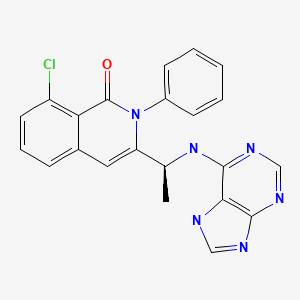
INK 1197; IPI 145; 8-Chloro-2-phenyl-3-[(1S)-1-(9H-purin-6-ylamino)ethyl]-1(2H)-isoquinolinone

1(2H)-Isoquinolinone, 8-chloro-2-phenyl-3-((1S)-1-(9H-purin-6-ylamino)ethyl)-
8-Chloro-2-phenyl-3-((1S)-1-(7H-purin-6-ylamino)ethyl)isoquinolin-1(2H)-one


(S)-3-(l-(9H-purin-6-ylamino)ethyl)-8-chloro-2-phenylisoquinolin-l(2H)-one

UNII-610V23S0JI; IPI-145; INK-1197;

Originator…….. Millennium Pharmaceuticals

Molecular Formula C22H17ClN6O
Molecular Weight 416.86
CAS Registry Number 1201438-56-3

 
Infinity Pharmaceuticals has partnered with AbbVie to develop and commercialise its duvelisib (IPI-145), an oral inhibitor of phosphoinositide-3-kinase (PI3K)-delta and PI3K-gamma, to treat patients with cancer. 


Infinity Pharmaceuticals has partnered with AbbVie to develop and commercialise its duvelisib (IPI-145), an oral inhibitor of phosphoinositide-3-kinase (PI3K)-delta and PI3K gamma, to treat patients with cancer.

Duvelisib has shown clinical activity against different blood cancers, such as indolent non-Hodgkin’s lymphoma (iNHL) and chronic lymphocytic leukemia (CLL).

AbbVie executive vice-president and chief scientific officer Michael Severino said: “We believe that duvelisib is a very promising investigational treatment based on clinical data showing activity in a broad range of blood cancers.”

http://www.pharmaceutical-technology.com/news/newsinfinity-abbvie-partner-develop-commercialise-duvelisib-cancer-4363381?WT.mc_id=DN_News 


Duvelisib (IPI-145,  INK-1197), an inhibitor of PI3K-delta and –gamma, originated at Takeda subsidiary Intellikine. It is now being developed by Infinity Pharmaceuticals, which began a phase III trial in November, following US and EU grant of orphan drug status for both CLL and small lymphocytic leukemia

INK-1197 is a dual phosphatidylinositol 3-Kinase delta (PI3Kdelta) and gamma (PI3Kgamma) inhibitor in phase III clinical development at Infinity Pharmaceuticals for the treatment of chronic lymphocytic leukemia and small lymphocytic lymphoma. The company is also carring phase II trials for the treatment of patients with mild asthma undergoing allergen challenge, for the treatment of rheumatoid arthritis and for the treatment of refractory indolent non-Hodgkin’s lymphoma. Phase I clinical trials for the treatment of advanced hematological malignancies (including T-cell lymphoma and mantle cell lymphoma) are currently under way.
IPI-145 is an oral inhibitor of phosphoinositide-3-kinase (PI3K)-delta and PI3K-gamma. The PI3K-delta and PI3K-gamma isoforms are preferentially expressed in leukocytes (white blood cells), where they have distinct and non-overlapping roles in key cellular functions, including cell proliferation, cell differentiation, cell migration and immunity. Targeting PI3K-delta and PI3K-gamma may provide multiple opportunities to develop differentiated therapies for the treatment of blood cancers and inflammatory diseases.
Licensee Infinity Pharmaceuticals is developing INK-1197. In 2014, Infinity licensed Abbvie for joint commercialization in the U.S. and exclusive commercialization elsewhere. Originator Millennium Pharmaceuticals had also been developing the compound; however, no recent development has been reported for this research. In 2013, orphan drug designations were assigned by the FDA and the EMA for the treatment of chronic lymphocytic leukemia, for the treatment of small lymphocytic lymphoma and for the treatment of follicular lymphoma.

currently enrolling patients DYNAMO™, a Phase 2 study designed to evaluate the activity and safety of IPI-145 in approximately 120 people with refractory indolent non-Hodgkin lymphoma (iNHL) and DUO™, a Phase 3 clinical study of IPI-145 in approximately 300 people with relapsed/refractory chronic lymphocytic leukemia (CLL). These studies are supported by Phase 1 data reported at the 2013 American Society of Hematology (ASH) Annual Meeting which showed that IPI-145 was well tolerated and clinically active in a broad range of malignancies, including iNHL and CLL. These studies are part of DUETTS™, a worldwide investigation of IPI-145 in blood cancers.

Chemical structure for Duvelisib

WO 2011008302

http://www.google.com/patents/WO2011008302A1?cl=en

Reaction Scheme 1

Reaction Scheme 2:

201 202 203

204 205

Reaction Scheme 3:

Reaction Scheme 4A:

Reaction Scheme 4B:

2

Example 14b: Synthesis of (S)-3-(l-(9H-purin-6-ylamino)ethyl)-8-chloro-2-phenylisoquinolin-l(2H)-one (9)

(compound 4904)

Scheme 27b. The synthesis of (S)-3-(l-(9H-purin-6-ylamino)ethyl)-8-chloro-2-phenylisoquinolin-l(2H)-one (9)

(compound 4904) is described.

[00493] The compound of Formula 4904 (compound 292 in Table 4) was synthesized using the synthetic transformations as described in Examples 12 and 14a, but 2-chloro-6-methyl benzoic acid (compound 4903) was used instead of 2, 6 ,dimethyl benzoic acid (compound 4403). By a similar method, compound 328 in Table 4 was synthesized using the synthetic transformations as described starting from the 2-chloro-6-methyl m-fluorobenzoic acid.


…………………………………….

http://www.google.com/patents/WO2012097000A1?cl=en  OR   http://www.google.com/patents/US8809349?cl=en

Formula (I):

(I),

or a pharmaceutically acceptable salt, solvate, or hydrate thereof. In one embodiment, the method comprises any one, two, three, four, five, six, seven, or eight, or more of the following steps:

“Formula (I)” includes (S)-3-(l -(9H-purin-6-ylamino)ethyl)-8-chloro-2- phenylisoquinolin-l(2H)-one in its imide tautomer shown below as (1-1) and in its lactim tautomer shown below as (1-2):

(1-1)………………………………………………………………………………… (1-2)

[0055] FIG. 27 shows an FT-IR spectra of Polymorph Form C.


[0056] FIG. 28 shows a ‘H-NMR spectra of Polymorph Form C.


[0057] FIG. 29 shows a 13C-NMR spectra of Polymorph Form C.


Example 1

Synthesis of (S)-3-(l-aminoethyl)-8-chloro-2-phenylisoquinolin-l(2H)-one

Example 1A

1 2

[00563] Compound 1 (6.00 kg) was treated with 1-hydroxybenzotriazole monohydrate (HOBt»H20), triethylamine, Ν,Ο-dimethylhydroxylamine hydrochloride, and EDCI in dimethylacetamide (DMA) at

10 °C. The reaction was monitored by proton NMR and deemed complete after 2.6 hours, affording Compound 2 as a white solid in 95% yield. The R-enantiomer was not detected by proton NMR using (R)-(- ) -alpha-ace tylmandelic acid as a chiral-shift reagent.

[00564] Compound 3 (4.60 kg) was treated with p-toluenesulfonic acid monohydrate and 3,4-dihydro-2H- pyran (DHP) in ethyl acetate at 75 °C for 2.6 hours. The reaction was monitored by HPLC. Upon completion of the reaction, Compound 4 was obtained as a yellow solid in 80% yield with >99% (AUC) purity by HPLC analysis.

[00565] Compound 5 (3.30 kg) was treated with thionyl chloride and a catalytic amount of DMF in methylene chloride at 25 °C for five hours. The reaction was monitored by HPLC which indicated a 97.5% (AUC) conversion to compound 6. Compound 6 was treated in situ with aniline in methylene chloride at 25 °C for 15 hours. The reaction was monitored by HPLC and afforded Compound 7 as a brown solid in 81% yield with >99% (AUC) purity by HPLC analysis. [00566] Compound 2 was treated with 2.0 M isopropyl Grignard in THF at -20 °C. The resulting solution was added to Compound 7 (3.30 kg) pre -treated with 2.3 M n-hexyl lithium in tetrahydrofuran at -15 °C. The reaction was monitored by HPLC until a 99% (AUC) conversion to Compound 8 was observed.

Compound 8 was treated in situ with concentrated HC1 in isopropyl alcohol at 70 °C for eight hours. The reaction was monitored by HPLC and afforded Compound 9 as a brown solid in 85% yield with 98% (AUC) purity and 84% (AUC) ee by HPLC analysis.

Example ID

[00567] Compound 9 (3.40 kg) was treated with D-tartaric acid in methanol at 55 °C for 1-2 hours. The batch was filtered and treated with ammonium hydroxide in deionized (DI) water to afford enantiomerically enriched Compound 9 as a tan solid in 71% yield with >99% (AUC) purity and 91% (AUC) ee by HPLC analysis.

Example 2

Synthesis of (S)-3-(l-aminoethyl)-8-chloro-2-phenylisoquinolin-l(2H)-one

Example 2A

[00568] To Compound 7 (20.1 g) was charged 100 mL of anhydrous THF. The resulting solution was cooled to about -10 °C and 80 mL of n-hexyl lithium (2.3 M in hexanes, 2.26 equiv.) was slowly added (e.g. , over about 20 min). The resulting solution was stirred at about -10 °C for about 20 min.

[00569] To Compound 2 (26.5 g; 1.39 equiv.) was charged 120 mL of anhydrous THF. The resulting mixture was cooled to about -10 °C and 60 mL of isopropyl magnesium chloride (2.0 M in THF, 1.47 equiv.) was slowly added (e.g. , over about 15-20 min). The resulting mixture was then stirred at about -10 °C for about 20 min. The mixture prepared from Compound 2 was added to the solution prepared from Compound 7 while maintaining the internal temperature between about -10 and about 0 °C. After the addition was complete (about 5 min), the cold bath was removed, and the resulting mixture was stirred at ambient temperature for about 1 h, then cooled. [00570] A solution of 100 mL of anisole and 33 mL of isobutyric acid (4.37 equiv.) was prepared. The anisole solution was cooled to an internal temperature of about -3 °C. The above reaction mixture was added to the anisole solution such that the internal temperature of the anisole solution was maintained at below about 5 °C. The ice bath was then removed (after about 15 min, the internal temperature was about 7 °C). To the mixture, 100 mL of 10 wt aqueous NaCl solution was rapidly added (the internal temperature increased from about 7 °C to about 15 °C). After stirring for about 30 min, the two phases were separated. The organic phase was washed with another 100 mL of 10 wt aqueous NaCl. The organic phase was transferred to a flask using 25 mL of anisole to facilitate the transfer. The anisole solution was then concentrated to 109 g. Then, 100 mL of anisole was added.

[00571] To the approximately 200 mL of anisole solution was added 50 mL of TFA (8 equiv.) while maintaining the internal temperature below about 45-50 °C. The resulting solution warmed to about 45-50 °C and stirred for about 15 hrs, then cooled to 20-25 °C. To this solution was added 300 mL of MTBE dropwise and then the resulting mixture was held at 20-25 °C for 1 h. The mixture was filtered, and the wet cake washed with approximately 50 mL of MTBE. The wet cake was conditioned on the filter for about 1 h under nitrogen. The wet cake was periodically mixed and re-smoothed during conditioning. The wet cake was then washed with 200 mL of MTBE. The wet cake was further conditioned for about 2 h (the wet cake was mixed and resmoothed after about 1.5 h). The wet cake was dried in a vacuum oven at about 40 °C for about 18 h to afford Compound 9»TFA salt in about 97.3% purity (AUC), which had about 99.1 % S- enantiomer (e.g. , chiral purity of about 99.1 %).

[00572] Compound 9»TFA salt (3 g) was suspended in 30 mL of EtOAc at about 20 °C. To the EtOAc suspension was added 4.5 mL (2.2 eq.) of a 14% aqueous ammonium hydroxide solution and the internal temperature decreased to about 17 °C. Water (5 mL) was added to the biphasic mixture. The biphasic mixture was stirred for 30 min. The mixing was stopped and the phases were allowed to separate. The aqueous phase was removed. To the organic phase (combined with 5 mL of EtOAc) was added 10 mL of 10% aqueous NaCl. The biphasic mixture was stirred for about 30 min. The aqueous phase was removed. The organic layer was concentrated to 9 g. To this EtOAc mixture was added 20 mL of i-PrOAc. The resulting mixture was concentrated to 14.8 g. With stirring, 10 mL of n-heptane was added dropwise. The suspension was stirred for about 30 min, then an additional 10 mL of n-heptane was added. The resulting suspension was stirred for 1 h. The suspension was filtered and the wet cake was washed with additional heptane. The wet cake was conditioned for 20 min under nitrogen, then dried in a vacuum oven at about 40 °C to afford Compound 9 free base in about 99.3% purity (AUC), which had about 99.2% S-enantiomer (e.g., chiral purity of about 99.2%).

Example 2B [00573] A mixture of Compound 7 (100 g, 0.407 mol, 1 wt) and THF (500 mL, 5 vol) was prepared and cooled to about 3 °C. n-Hexyllithium (2.3 M in hexanes, 400 mL, 0.920 mol, 2.26 equiv) was charged over about 110 minutes while maintaining the temperature below about 6 °C. The resulting solution was stirred at 0 ± 5 °C for about 30 minutes. Concurrently, a mixture of Compound 2 (126 g, 0.541 mol, 1.33 equiv) and THF (575 mL, 5.8 vol) was prepared. The resulting slurry was charged with isopropylmagnesium chloride (2.0 M in THF, 290 mL, 0.574 mol, 1.41 equiv) over about 85 minutes while maintaining the temperature below about 5 °C. The resulting mixture was stirred for about 35 minutes at 0 ± 5 °C. The Compound 2 magnesium salt mixture was transferred to the Compound 7 lithium salt mixture over about 1 hour while maintaining a temperature of 0 ± 5 °C. The solution was stirred for about 6 minutes upon completion of the transfer.

[00574] The solution was added to an about -5 °C stirring solution of isobutyric acid (165 mL, 1.78 mol, 4.37 equiv) in anisole (500 mL, 5 vol) over about 20 minutes during which time the temperature did not exceed about 6 °C. The resulting solution was stirred for about 40 minutes while being warmed to about 14 °C. Then, a 10% sodium chloride solution (500 mL, 5 vol) was rapidly added to the reaction. The temperature rose to about 21 °C. After agitating the mixture for about 6 minutes, the stirring was ceased and the lower aqueous layer was removed (about 700 mL). A second portion of 10% sodium chloride solution (500 mL, 5 vol) was added and the mixture was stirred for 5 minutes. Then, the stirring was ceased and the lower aqueous layer was removed. The volume of the organic layer was reduced by vacuum distillation to about 750 mL (7.5 vol).

[00575] Trifluoroacetic acid (250 mL, 3.26 mol, 8.0 equiv) was added and the resulting mixture was agitated at about 45 °C for about 15 hours. The mixture was cooled to about 35 °C and MTBE (1.5 L, 15 vol) was added over about 70 minutes. Upon completion of the addition, the mixture was agitated for about 45 minutes at about 25-30 °C. The solids were collected by vacuum filtration and conditioned under N2 for about 20 hours to afford Compound 9*TFA salt in about 97.5% purity (AUC), which had a chiral purity of about 99.3%.

[00576] Compound 9»TFA salt (100 g) was suspended EtOAc (1 L,10 vol) and 14% aqueous ammonia (250 mL, 2.5 vol). The mixture was agitated for about 30 minutes, then the lower aqueous layer was removed. A second portion of 14% aqueous ammonia (250 mL, 2.5 vol) was added to the organic layer. The mixture was stirred for 30 minutes, then the lower aqueous layer was removed. Isopropyl acetate (300 mL, 3 vol) was added, and the mixture was distilled under vacuum to 500 mL (5 vol) while periodically adding in additional isopropyl acetate (1 L, 10 vol).

[00577] Then, after vacuum-distilling to a volume of 600 mL (6 vol), heptanes (1.5 L, 15 vol) were added over about 110 minutes while maintaining a temperature between about 20 °C and about 30 °C. The resulting slurry was stirred for about 1 hour, then the solid was collected by vacuum filtration. The cake was washed with heptanes (330 mL, 3.3 vol) and conditioned for about 1 hour. The solid was dried in an about 45 °C vacuum oven for about 20 hours to afford Compound 9 free base in about 99.23% purity (AUC), which has a chiral purity of about 99.4%.

Example 3

Chiral Resolution of (S)-3-(l-aminoethyl)-8-chloro-2-phenylisoquinolin-l(2H)-one (Compound 9)

[00578] In some instances, (S)-3-(l-aminoethyl)-8-chloro-2-phenylisoquinolin-l(2H)-one (Compound 9) obtained by synthesis contained a minor amount of the corresponding (R)-isomer. Chiral resolution procedures were utilized to improve the enantiomeric purity of certain samples of (S)-3-(l-aminoethyl)-8- chloro-2-phenylisoquinolin- 1 (2H)-one.

[00579] In one experiment, Compound 9 (3.40 kg) was treated with D-tartaric acid in methanol at about 55 °C for about 1 to about 2 hours. The mixture was filtered and treated with ammonium hydroxide in deionized (DI) water to afford Compound 9 in greater than about 99% (AUC) purity, which had a chiral purity of about 91% (AUC).

[00580] In another procedure, MeOH (10 vol.) and Compound 9 (1 equiv.) were stirred at 55 ± 5 °C. D- Tartaric acid (0.95 equiv.) was charged. The mixture was held at 55 ± 5 °C for about 30 min and then cooled to about 20 to about 25 °C over about 3 h. The mixture was held for about 30 min and then filtered. The filter cake was washed with MeOH (2.5 vol.) and then conditioned. The cake was returned to the reactor and water (16 vol.) was charged. The mixture was stirred at 25 ± 5 °C. NH4OH was then charged over about 1 h adjusting the pH to about 8 to about 9. The mixture was then filtered and the cake was washed with water (4 vol.) and then heptanes (4 vol.). The cake was conditioned and then vacuum dried at 45-50 °C to afford Compound 9 free base with a chiral purity of about 99.0%.

Example 4

Synthesis of (S)-3-(l-(9H-purin-6-ylamino)ethyl)-8-chloro-2-phenylisoquinolin-l(2H)-one

[00581] A mixture of Compound 7 (1 equiv.) and anhydrous THF (5 vol.) was prepared. Separately, a mixture of Compound 2 (1.3 equiv.) and anhydrous THF (5 vol.) was prepared. Both mixtures were stirred for about 15 min at about 20 to about 25 °C and then cooled to -25 ± 15 °C. n-Hexyl lithium (2.05 equiv.) was added to the Compound 7 mixture, maintaining the temperature at > 5 °C. i-PrMgCl (1.33 equiv.) was added to the Compound 2 mixture, maintaining the temperature at > 5 °C. The Compound 2 mixture was transferred to the Compound 7 mixture under anhydrous conditions at 0 ± 5 °C. The resulting mixture was warmed to 20 ± 2 °C and held for about 1 h. Then, the reaction was cooled to -5 ± 5 °C, and 6 N HC1 (3.5 equiv.) was added to quench the reaction, maintaining temperature at below about 25 °C. The aqueous layer was drained, and the organic layer was distilled under reduced pressure until the volume was 2-3 volumes. IPA (3 vol.) was added and vacuum distillation was continued until the volume was 2-3 volumes. IPA (8 vol.) was added and the mixture temperature was adjusted to about 60 °C to about 75 °C. Cone. HC1 (1.5 vol.) was added and the mixture was subsequently held for 4 hours. The mixture was distilled under reduced pressure until the volume was 2.5-3.5 volumes. The mixture temperature was adjusted to 30 ± 10 °C. DI water (3 vol.) and DCM (7 vol.) were respectively added to the mixture. Then, NH4OH was added to the mixture, adjusting the pH to about 7.5 to about 9. The temperature was adjusted to about 20 to about 25 °C. The layers were separated and the aqueous layer was washed with DCM (0.3 vol.). The combined DCM layers were distilled until the volume was 2 volumes. i-PrOAc (3 vol.) was added and vacuum distillation was continued until the volume was 3 volumes. The temperature was adjusted to about 15 to about 30 °C. Heptane (12 vol.) was charged to the organic layer, and the mixture was held for 30 min. The mixture was filtered and filter cake was washed with heptane (3 vol.). The cake was vacuum dried at about 45 °C afford Compound 9.

[00582] Then, MeOH (10 vol.) and Compound 9 (1 equiv.) were combined and stirred while the temperature was adjusted to 55 ± 5 °C. D-Tartaric acid (0.95 equiv.) was charged. The mixture was held at 55 ± 5 °C for about 30 min and then cooled to about 20 to about 25 °C over about 3 h. The mixture was held for 30 min and then filtered. The filter cake was washed with MeOH (2.5 vol.) and then conditioned. Water (16 vol.) was added to the cake and the mixture was stirred at 25 ± 5 °C. NH4OH was charged over 1 h adjusting the pH to about 8 to about 9. The mixture was then filtered and the resulting cake washed with water (4 vol.) and then heptanes (4 vol.). The cake was conditioned and then vacuum dried at 45-50 °C to afford Compound 9.

[00583] To a mixture of i-PrOH (4 vol.) and Compound 9 (1 equiv.) was added Compound 4 (1.8 equiv.), Et3N (2.5 equiv.) and i-PrOH (4 vol.). The mixture was agitated and the temperature was adjusted to 82 ± 5 °C. The mixture was held for 24 h. Then the mixture was cooled to about 20 to about 25 °C over about 2 h. The mixture was filtered and the cake was washed with i-PrOH (2 vol.), DI water (25 vol.) and n-heptane (2 vol.) respectively. The cake was conditioned and then vacuum dried at 50 ± 5 °C to afford Compound 10.

To a mixture of EtOH (2.5 vol.) and Compound 10 (1 equiv.) was added EtOH (2.5 vol.) and DI water (2 vol.). The mixture was agitated at about 20 to about 25 °C. Cone. HC1 (3.5 equiv.) was added and the temperature was adjusted to 35 ± 5 °C. The mixture was held for about 1.5 h. The mixture was cooled to 25 ± 5 °C and then polish filtered to a particulate free vessel. NH4OH was added, adjusting the pH to about 8 to about 9. Crystal seeds of Form C of a compound of Formula (I) (0.3 wt ) were added to the mixture which was held for 30 minutes. DI water (13 vol.) was added over about 2 h. The mixture was held for 1 h and then filtered. The resulting cake was washed with DI water (4 vol.) and n-heptane (2 vol.) respectively. The cake was conditioned for about 24 h and then DCM (5 vol.) was added. This mixture was agitated for about 12 h at about 20 to about 25 °C. The mixture was filtered and the cake washed with DCM (1 vol.). The cake was conditioned for about 6 h. The cake was then vacuum-dried at 50 ± 5 °C. To the cake was added DI water (10 vol.), and i-PrOH (0.8 vol.) and the mixture was agitated at 25 ± 5 °C for about 6 h. An XRPD sample confirmed the compound of Formula (I) was Form C. The mixture was filtered and the cake was washed with DI water (5 vol.) followed by n-heptane (3 vol.). The cake was conditioned and then vacuum dried at 50 ± 5 °C to afford a compound of Formula (I) as polymorph Form C. Example 5

Synthesis of (S)-3-(l-(9H-purin-6-ylamino)ethyl)-8-chloro-2-phenylisoquinolin-l(2H)-one

Example 5A

[00584] Compound 9 (2.39 kg) was treated with Compound 4 and triethylamine in isopropyl alcohol at 80 °C for 24 hours. The reaction was monitored by HPLC until completion, affording 8-chloro-2-phenyl-3- ((lS)-l-(9-(tetrahydro-2H^yran-2-yl)-9H^urin-6-ylamino)ethyl)isoquinolin-l(2H)-one (compound 10) as a tan solid in 94% yield with 98% (AUC) purity by HPLC analysis.

[00585] 8-Chloro-2-phenyl-3-((lS)-l-(9-(tetrahydro-2H-pyran-2-yl)-9H-purin-6-ylamino)ethyl)- isoquinolin-l(2H)-one (compound 10) (3.63 kg) was treated with HC1 in ethanol at 30 °C for 2.3 hours. The reaction was monitored by HPLC until completion, and afforded a compound of Formula (I) as a tan solid in 92% yield with >99% (AUC) purity and 90.9% (AUC) ee by HPLC analysis.

Example 5B

[00586] 3-(l-Aminoethyl)-8-chloro-2-phenylisoquinolin-l(2H)-one (Compound 9) (0.72 mmol), 6-chloro- 9-(tetrahydro-2H-pyran-2-yl)-9H-purine (Compound 4) (344 mg, 1.44 mmol) and DIPEA

(279 mg, 2.16 mmol) were dissolved in «-BuOH (20 mL), and the resulting mixture was stirred at reflux for 16 h. The reaction mixture was concentrated in vacuo and purified by flash column chromatography on silica gel (eluting with 30% to 50% Hex/EA) to afford the product, 8-chloro-2-phenyl-3-((lS)-l-(9-(tetrahydro-2H- pyran-2-yl)-9H-purin-6-ylamino)ethyl)isoquinolin-l(2H)-one (Compound 10), as a white solid (60% yield). [00587] 8-Chloro-2-phenyl-3-((lS)-l-(9-(tetrahydro-2H-pyran-2-yl)-9H-purin-6-ylamino)ethyl)- isoquinolin-l(2H)-one (Compound 10) (0.42 mmol) was dissolved in HCl/EtOH (3 M, 5 mL), and the resulting mixture was stirred at room temperature for 1 h. The reaction mixture was quenched with saturated NaHC03 aqueous solution and the pH was adjusted to about 7-8. The mixture was extracted with CH2C12 (50 mL x 3), dried over anhydrous Na2S04, and filtered. The filtrate was concentrated in vacuo, and the residue was recrystallized from ethyl acetate and hexanes (1 : 1). The solid was collected by filtration and dried in vacuo to afford the product (S)-3-(l-(9H-purin-6-ylamino) ethyl)-8-chloro-2-phenylisoquinolin- l(2H)-one (Formula (I)) (90% yield) as a white solid as polymorph Form A.

Example 5C

[00588] 3-(l-Aminoethyl)-8-chloro-2-phenylisoquinolin-l(2H)-one (Compound 9) and 6-chloro-9- (tetrahydro-2H-pyran-2-yl)-9H-purine (Compound 4) are combined in the presence of triethylamine and isopropyl alcohol. The reaction solution is heated at 82 °C for 24 hours to afford Compound 10. The intermediate compound 10 is treated with concentrated HCl and ethanol under aqueous conditions at 35 °C to remove the tetrahydropyranyl group to yield (S)-3-(l-(9H-purin-6-ylamino)ethyl)-8-chloro-2- phenylisoquinolin-l(2H)-one. Isolation/purification under aqueous conditions affords polymorph Form C.

Example 6

Synthesis of (S)-3-(l-(9H^urin-6-ylamino)ethyl)-8-chloro-2-phenylisoquinolin-l(2H)-one

[00589] 3-(l-Aminoethyl)-8-chloro-2-phenylisoquinolin-l(2H)-one (Compound 9) (150 g; 90% ee) and 6- chloro-9-(tetrahydro-2H-pyran-2-yl)-9H-purine (Compound 4) (216 g, 1.8 equiv) were charged to a round bottom flask followed by addition of IPA (1.2 L; 8 vol) and triethylamine (175 mL; 2.5 equiv). The resultant slurry was stirred at reflux for one day. Heptane (1.5 L; 10 vol) was added dropwise over two hours. The batch was then cooled to 0-5 °C, held for one hour and filtered. The cake was washed with heptane (450 mL; 3 vol) and returned to the reactor. IPA (300 mL; 2 vol) and water (2.25 L; 15 vol) were added and the resultant slurry stirred at 20-25 °C for three and half hours then filtered. The cake was washed with water (1.5 L; 10 vol) and heptane (450 mL; 3 vol) and then vacuum dried at 48 °C for two and half days to give 227 g (90.1 %) of the intermediate (Compound 10) as an off-white solid with >99% (AUC) purity and >94 ee (chiral HPLC). The ee was determined by converting a sample of the cake to the final product and analyzing it with chiral HPLC.

[00590] The intermediate (Compound 10) (200 g) was slurried in an ethanol (900 mL; 4.5 vol) / water (300 mL; 1.5 vol) mixture at 22 °C followed by addition of cone. HC1 (300 mL; 1.5 vol) and holding for one and half hours at 25-35 °C. Addition of HC1 resulted in complete dissolution of all solids producing a dark brown solution. Ammonium hydroxide (260 mL) was added adjusting the pH to 8-9. Product seeds of polymorph Form C (0.5 g) (Form A seeds can also be used) were then added and the batch which was held for ten minutes followed by addition of water (3 L; 15 vol) over two hours resulting in crystallization of the product. The batch was held for 3.5 hours at 20-25 °C and then filtered. The cake was washed with water (1 L; 5 vol) followed by heptane (800 mL; 4 vol) and vacuum dried at 52 °C for 23 hours to give 155.5 g (93.5%) of product with 99.6% (AUC) purity and 93.8% ee (chiral HPLC).

Example 7

-3-(l-(9H-purin-6-ylamino)ethyl)-8-chloro-2-phenylisoquinolin-l(2H)-one

[00591] A mixtue of isopropanol (20.20 kg, 8 vol.), Compound 9 (3.17 kg, 9.04 mol, 1 eq.), Compound 4 (4.61 kg, 16.27 mol, 1.8 eq.) and triethylamine (2.62 kg, 20.02 mol, 2.4 eq.) was prepared and heated to an internal temperature of 82 ± 5 °C. The mixture was stirred at that temperature for an additional about 24 h. The temperature was adjusted to 20 ± 5 °C slowly over a period of about 2 h and the solids were isolated via vacuum filtration through a 24″ polypropylene table top filter equipped with a Sharkskin paper. The filter cake was rinsed sequentially with IPA (5.15 kg, 3 vol.), purified water (80.80 kg, 25 vol.) and n-heptane (4.30 kg, 2 vol.). The cake was further dried for about 4 days in vacuo at 50 ± 5 °C to afford Compound 10.

[00592] To a mixture of ethanol (17.7 kg, 5 vol.) and Compound 10 (4.45 kg, 8.88 mol. 1.0 eq.) was added purified water (8.94 kg, 2 vol.). To this mixture was slowly added concentrated HC1 (3.10 kg, 3.5 eq.) while maintaining the temperature below about 35 °C. The mixture was stirred at 30 ± 5 °C for about 1.5 h and HPLC analysis indicated the presence the compound of Formula (I) in 99.8% (AUC) purity with respect to compound 10.

[00593] Then, the compound of Formula (I) mixture was cooled to 25 ± 5 °C. The pH of the mixture was adjusted to about 8 using pre filtered ammonium hydroxide (1.90 kg). After stirring for about 15 min, Form C crystal seeds (13.88 g) were added. After stirring for about 15 min, purified water (58.0 kg, 13 vol.) was charged over a period of about 2 h. After stirring the mixture for 15 h at 25 ± 5 °C, the solids were isolated via vacuum filtration through a 24″ polypropylene table top filter equipped with a PTFE cloth over Sharkskin paper. The filter cake was rinsed with purified water (18.55 kg, 4 vol.) followed by pre -filtered n-heptane (6.10 kg, 2 vol.). After conditioning the filter cake for about 24 h, HPLC analysis of the filter cake indicated the presence the compound of Formula (I) in about 99.2% (AUC) purity.

[00594] To the filter cake was added dichloromethane (29.9 kg, 5 vol.) and the slurry was stirred at 25 ± 5 °C for about 24 h. The solids were isolated via vacuum filtration through a 24″ polypropylene table top filter equipped with a PTFE cloth over Sharkskin paper, and the filter cake was rinsed with DCM (6.10 kg, 1 vol.). After conditioning the filter cake for about 22 h, the filter cake was dried for about 2 days in vacuo at 50 ± 5 °C to afford the compound of Formula (I) in 99.6% (AUC) purity. The compound of Formula (I) was consistent with a Form A reference by XRPD.

[00595] To this solid was added purified water (44.6 kg, 10 vol.) and pre filtered 2-propanol (3.0 kg, 0.8 vol.). After stirring for about 6 h, a sample of the solids in the slurry was analyzed by XRPD and was consistent with a Form C reference. The solids were isolated via vacuum filtration through a 24″ polypropylene table top filter equipped with a PTFE cloth over Sharkskin paper, and the filter cake was rinsed with purified water (22.35 kg, 5 vol.) followed by pre filtered n-heptane (9.15 kg, 3 vol.). After conditioning the filter cake for about 18 h, the filter cake was dried in vacuo for about 5 days at 50 ± 5 °C.

[00596] This process afforded a compound of Formula (I) in about 99.6% (AUC) purity, and a chiral purity of greater than about 99% (AUC). An XRPD of the solid was consistent with a Form C reference standard. :H NMR (DMSO-<i6) and IR of the product conformed with reference standard.

…………………………..

http://www.google.com/patents/US20140120083

In some embodiments, the compound has the following structure:

Figure US20140120083A1-20140501-C00331

which is also referred to herein as Compound 292.

In some embodiments, a polymorph of a compound disclosed herein is used. Exemplary polymorphs are disclosed in U.S. Patent Publication No. 2012-0184568 (“the ‘568 publication”), which is hereby incorporated by reference in its entirety.

In one embodiment, the compound is Form A of Compound 292, as described in the ‘568 publication. In another embodiment, the compound is Form B of Compound 292, as described in the ‘568 publication. In yet another embodiment, the compound is Form C of Compound 292, as described in the ‘568 publication. In yet another embodiment, the compound is Form D of Compound 292, as described in the ‘568 publication. In yet another embodiment, the compound is Form E of Compound 292, as described in the ‘568 publication. In yet another embodiment, the compound is Form F of Compound 292, as described in the ‘568 publication. In yet another embodiment, the compound is Form G of Compound 292, as described in the ‘568 publication. In yet another embodiment, the compound is Form H of Compound 292, as described in the ‘568 publication. In yet another embodiment, the compound is Form I of Compound 292, as described in the ‘568 publication. In yet another embodiment, the compound is Form J of Compound 292, as described in the ‘568 publication.

In specific embodiments, provided herein is a crystalline monohydrate of the free base of Compound 292, as described, for example, in the ‘568 application. In specific embodiments, provided herein is a pharmaceutically acceptable form of Compound 292, which is a crystalline monohydrate of the free base of Compound 292, as described, for example, in the ‘568 application.

Any of the compounds (PI3K modulators) disclosed herein can be in the form of pharmaceutically acceptable salts, hydrates, solvates, chelates, non-covalent complexes, isomers, prodrugs, isotopically labeled derivatives, or mixtures thereof.

Chemical entities described herein can be synthesized according to exemplary methods disclosed in U.S. Patent Publication No. US 2009/0312319, International Patent Publication No. WO 2011/008302A1, and U.S. Patent Publication No. 2012-0184568, each of which is hereby incorporated by reference in its entirety, and/or according to methods known in the art.


……………………………………………

KEY     Duvelisib, IPI-145,  INK-1197, AbbVie, INFINITY, chronic lymphocytic leukemia, phase 3, orphan drug


WO2013088404A1 Dec 14, 2012 Jun 20, 2013 Novartis Ag Use of inhibitors of the activity or function of PI3K
WO2014004470A1 * Jun 25, 2013 Jan 3, 2014 Infinity Pharmaceuticals, Inc. Treatment of lupus, fibrotic conditions, and inflammatory myopathies and other disorders using pi3 kinase inhibitors
WO2014072937A1 Nov 7, 2013 May 15, 2014 Rhizen Pharmaceuticals Sa Pharmaceutical compositions containing a pde4 inhibitor and a pi3 delta or dual pi3 delta-gamma kinase inhibitor
US7449477 * Nov 22, 2004 Nov 11, 2008 Eli Lilly And Company 7-phenyl-isoquinoline-5-sulfonylamino derivatives as inhibitors of akt (protein kinase B)
US20090312319 * Jul 15, 2009 Dec 17, 2009 Intellikine Certain chemical entities, compositions and methods
US20100168153 * Nov 16, 2007 Jul 1, 2010 Novartis Ag Salts and crystall forms of 2-methyl-2-[4-(3-methyl-2-oxo-8-quinolin-3-yl-2,3-dihydro-imidazo[4,5-c]quinolin-1-yl)-phenyl]-propionitrile
WO2013012915A1 Jul 18, 2012 Jan 24, 2013 Infinity Pharmaceuticals Inc. Heterocyclic compounds and uses thereof
WO2013012918A1 Jul 18, 2012 Jan 24, 2013 Infinity Pharmaceuticals Inc. Heterocyclic compounds and uses thereof
WO2013032591A1 Jul 18, 2012 Mar 7, 2013 Infinity Pharmaceuticals Inc. Heterocyclic compounds and uses thereof
WO2013049332A1 Sep 27, 2012 Apr 4, 2013 Infinity Pharmaceuticals, Inc. Inhibitors of monoacylglycerol lipase and methods of their use
WO2013088404A1 Dec 14, 2012 Jun 20, 2013 Novartis Ag Use of inhibitors of the activity or function of PI3K
WO2013154878A1 Apr 3, 2013 Oct 17, 2013 Infinity Pharmaceuticals, Inc. Heterocyclic compounds and uses thereof
WO2014004470A1 * Jun 25, 2013 Jan 3, 2014 Infinity Pharmaceuticals, Inc. Treatment of lupus, fibrotic conditions, and inflammatory myopathies and other disorders using pi3 kinase inhibitors
WO2014071105A1 Nov 1, 2013 May 8, 2014 Infinity Pharmaceuticals, Inc. Treatment of rheumatoid arthritis and asthma using p13 kinase inhibitors
WO2014071109A1 Nov 1, 2013 May 8, 2014 Infinity Pharmaceuticals, Inc. Treatment of cancers using pi3 kinase isoform modulators
WO2014072937A1 Nov 7, 2013 May 15, 2014 Rhizen Pharmaceuticals Sa Pharmaceutical compositions containing a pde4 inhibitor and a pi3 delta or dual pi3 delta-gamma kinase inhibitor
WO2001081346A2 Apr 24, 2001 Nov 1, 2001 Icos Corp Inhibitors of human phosphatidyl-inositol 3-kinase delta
US6800620 Jan 6, 2003 Oct 5, 2004 Icos Contacting leukocytes, osteoclasts with an enzyme inhibitors, a 9h-purin-3h-quinazolin-4-one derivatives, treating bone-resorption disorder, antiproliferative agents treating leukemia cells
US20060276470 * Aug 18, 2003 Dec 7, 2006 Jackson Shaun P (+-)-7-Methyl-2-morpholin-4-yl-9-(1-phenylaminoethyl)-pyrido[1,2-a]pyrimidin-4-one, for example; selective inhibitors of phosphoinositide (PI) 3-kinase beta for use in anti-thrombotic therapy
US20080032960 * Apr 4, 2007 Feb 7, 2008 Regents Of The University Of California PI3 kinase antagonists

Poziotinib for the treatment of Adenocarcinoma of Lung Stage IIIB or Adenocarcinoma of Lung Stage IV


Chemical structure for Poziotinib

Poziotinib

l-(4-(4-(3,4-dichloro-2-fluorophenylamino)-7-methoxyquinazol in-6- yloxy)piperidin-l-yl)prop-2-en-l-one

: 1 – [4 – [[4 – [(3, 4 – dichloro – 2 – phenyl) amino] – 7 – methoxy – 6 – base] quinazoline oxygen radicals] – 1 – piperidine base] – 2 – acrylic – 1 – ketone

UNII-OEI6OOU6IK;

cas 1092364-38-9

HM781-36B

NOV120101

Erbb2 tyrosine kinase receptor inhibitor; EGFR family tyrosine kinase receptor inhibitor

Non-small-cell lung cancer; Stomach tumor

for the treatment of Adenocarcinoma of Lung Stage IIIB or Adenocarcinoma of Lung Stage IV

http://www.centerwatch.com/clinical-trials/listings/external-studydetails.aspx?StudyID=NCT01819428

The purpose of this open-label, single-arm, multi-center phase II trial is to evaluate the efficacy and safety of novel pan-HER inhibitor, NOV120101 (Poziotinib), as a first-line monotherapeutic agent in patients with lung adenocarcinoma harboring EGFR mutation…….http://clinicaltrials.gov/show/NCT01819428


KR 1013319

………………………………………………………….


WO2013051883

http://www.google.com/patents/WO2013051883A2?cl=en

1 -(4-(4-(3 ,4-dichloro-2-fluorophenylamino)-7-methoxyquinazolin-6- yloxy)piperidin-l-yl)-prop-2-en-l-one hydrochloride of formula (I) below is an important drug having antiproliferative activities such as anti-tumor activity, which can be used for selectively and effectively treating drug resistance caused by tyrosine kinase mutation. Its free base form, i.e., l-(4-(4-(3,4-dichloro-2- fluoropheny lamino)-7-methoxyquinazolin-6-y loxy)piperidin- 1 -y l)-prop-2-en- 1 – one having formula (II) below is identified as CAS Registry Number 1092364-38-

9.

The compound of formula (II) may be prepared by, e.g., the method disclosed in Korean Patent No. 1013319, the reaction mechanism thereof being shown in Reaction Scheme 1 below. The compound of formula (II) prepared according to Reaction Scheme 1 may then be reacted with hydrochloric acid to produce the compound of formula (I).

wherein R is halogen.

Figure imgf000008_0003


formula (I):

In accordance with another aspect of the present invention, there are provided N-(3,4-dichloro-2-fluorophenyl)-7-methoxy-6-(piperidin-4- yloxy)quinazolin-4-amine dihydrochloride of formula (III), tert-butyl 4-(4-(3,4- dichloro-2-fluorophenylamino)-7-methoxyquinazolin-6-yloxy)piperidin-l- carboxylate of formula (IV) and 4-(3,4-dichloro-2-fluorophenylamino)-7- methoxyquinazolin-6-ol of formula (V), which can be used as intermediates for preparing the compound of formula (I).

Example 1: Preparation of 4-(3,4-dichloro-2-fluorophenyIamino)-7- methoxyquinazolin-6-yl acetate the compound of formula (VI))

7-methoxy-4-oxo-3,4-dihydroquinazolin-yl acetate (100 g) was added to toluene (850 ml) and NN-diisopropylethylamine (82.5 ml). Phosphorusoxy chloride (100 ml) was added thereto over 20 minutes at 75°C, followed by stirring for 3 hours. Toluene (450 ml) and 3,4-dichloro-2-fluoroaniline (84.6 g) were added to the resulting mixture, followed by stirring for 2 hours. Upon completion of the reaction, the resulting mixture was cooled to 25°C. The solid thus obtained was filtered under a reduced pressure and washed with toluene (400 ml). Isopropanol (1,000 ml) was added to the solid, which was then stirred for 2 hours. The resulting solid was filtered and washed with isopropanol (400 ml). The solid was dried at 40°C in an oven to produce the compound of formula (VI) (143 g, yield: 83%).

1H-NMR (DMSO-d6, 300 MHz, ppm) δ 8.92 (s, 1H), 8.76 (s, 1H), 7.69- 7.57 (m, 3H), 4.01 (s, 3H), 2.38 (s, 3H).

Example 2: Preparation of 4-(3,4-dichloro-2-fluorophenylamino)-7- methoxyquinazolin-6-ol (the com ound of formula (V))

4-(3,4-dichloro-2-fluorophenylamino)-7-methoxyquinazolin-6-yl acetate (100 g) was admixed with methanol (1,000 ml). The mixture was cooled to 10 to 15°C, added with an ammonia solution (460 g), and stirred for 3 hours at 25°C. The solid thus obtained was filtered and washed with a mixed solvent of methanol (200 ml) and water (200 ml). The resulting solid was dried at 40°C in an oven to produce the compound of formula (V) (74 g, yield: 83%).

1H-NMR (DMSO-d6, 300 MHz, ppm) 6 9.57 (br, 2H), 8.35 (s, 1H), 7.68 (s, 1H), 7.61-7.52 (m, 2H), 7.21 (s, 1H), 3.97 (s, 3H).

Example 3: Preparation of /er/-but l-4-(4-(3,4-dichloro-2- fluorophenylamino)-7-methoxyquinazolin-6-yloxy)piperidin-l-carboxylate (the compound of formu

4-(3,4-dichloro-2-fluorophenylamino)-7-methoxyquinazolin-6-ol (60 g) was admixed with N-dimethylformamide (360 ml) under stirring, followed by addition of tert-butyl 4-(tosyloxy)piperidin-l-carboxylate (120 g) and potassium carbonate (72 g) to the mixture. The reaction temperature was raised to 70°C, and the mixture was stirred for 14 hours. The temperature of the resulting solution was cooled to 25°C, and water (480 ml) was slowly added thereto. The solid thus obtained was filtered and dried. The solid was dissolved in a mixed solvent (600 ml) of dichloromethane and methanol. Active carbon (6 g) was then added thereto, followed by stirring for 30 minutes. The resulting mixture was filtered through a Celite pad, distilled under a reduced pressure, added with acetone (300 ml), and stirred for 2 hours. The resulting solid was filtered and washed with acetone (100 ml). The solid was dried at 40°C in an oven to produce the compound of formula (IV) (75 g, yield: 83%).

1H-NMR (DMSO-d6, 300 MHz, ppm) 6 8.69 (s, 1H), 8.47 (t, 1H), 7.34- 7.29 (m, 2H), 7.20 (s, 1H), 4.63-4.60 (m, 1H), 3.82 (s, 3H), 3.83-3.76 (m, 2H), 3.37-3.29 (m, 2H), 1.99-1.96 (m, 2H), 1.90-1.84 (m, 2H), 1.48 (s, 9H).

Example 4: Preparation of N-(3,4-dichIoro-2-fluorophenyi)-7- methoxy-6-(piperidin-4-yloxy)quinazoIin-4-amine dihydrochloride (the compound of formula (III))

Acetone (740 ml) was added to ter/-butyl 4-(4-(3,4-dichloro-2- fluorophenylamino)-7-methoxyquinazolin-6-yloxy)piperidin-l-carboxylate (75 g), which was then stirred. The mixture was added with hydrochloric acid (145 ml) for 10 minutes and stirred for 5 hours. Upon completion of the reaction, the resulting mixture was filtered, and the solid thus obtained was washed with acetone (73 ml). The solid was dried at 30°C in an oven to produce the compound of formula (III) (71 g, yield: 99%).

1H-NMR (DMSO-d6, 300 MHz, ppm) 512.95 (bs, 1H), 9.42 (bs, 1H), 9.18 (bs, 1H), 9.01 (s, 1H), 8.86 (s, 1H), 7.69-7.56 (m, 2H), 7.45 (s, 1H), 5.11- 5.08 (m, 1H), 4.03 (s, 3H), 3.29-3.20 (m, 4H), 2.33-2.30 (m, 2H), 1.96-1.93 (m, 2H).

Example 5: Preparation of l-(4-(4-(3,4-dichloro-2- fluorophenylamino)-7-methoxyquinazoIin-6-yloxy)piperidin-l-yl)prop-2-en- 1-one (the compound of formula II))

N-(3,4-dichloro-2-fluorophenyl)-7-methoxy-6-(piperidin-4- yloxy)quinazolin-4-amine dihydrochloride (100 g) and sodium hydrogen carbonate (66 g) were added to a mixed solvent of tetrahydrofuran (630 ml) and water (1 L), and the temperature of the reaction mixture was cooled to 0°C with iced water. Acryloyol chloride (24 ml) diluted with tetrahydrofuran (370 ml) was slowly added to the reaction mixture over 30 minutes, followed by stirring at 0°C for 30 minutes. Upon completion of the reaction, aqueous acetone (2.0 L) was added to the resulting mixture, which was stirred for 12 hours and filtered to produce 1 -(4-(4-(3 ,4-dichloro-2-fluorophenylamino)-7-methoxyquinazolin-6- yloxy)piperidin-l-yl)prop-2-en-l-one (72 g, yield: 75%). The solid thus obtained was dissolved in a mixed solvent of dichloromethane (200 ml) and methanol (100 ml), added with ethyl acetate (1.2 L), and stirred for 12 hours. The resulting solid was filtered and washed with ethyl acetate (100 ml). The solid was dried at 40°C in an oven to produce the compound of formula (II) (55 g, yield: 76%, total yield = 57%).

Ή-NMR (CDC13, 300 MHz, ppm) 68.68(s, 1H), 8.39(t, 3H), 7.3 l(m, 3H), 6.61(m, 1H), 6.29(m, 1H), 5.72(m, 1H), 4.75(m, 1H), 4.02(s, 3H), 3.89(m, 2H), 3.60(m, 2H), 1.86(m, 4H). Example 6: Preparation of l-(4-(4-(3,4-dichloro-2- fluorophenylamino)-7-methoxyquinazolin-6-yIoxy)piperidin-l-yl)prop-2-en- 1-one hydrochloride (the com ound of formula (I))

1 -(4-(4-(3 ,4-dichloro-2-fluorophenylamino)-7-methoxyquinazolin-6- yloxy)piperidine-l-yl)prop-2-en-l-one (150 g) was added to methanol (700 ml). Hydrochloric acid (38.2 ml) diluted with methanol (300 ml) was added thereto, followed by stirring for 24 hours. The solid thus obtained was filtered and washed with acetone (100 ml). The resulting solid was dried at 40°C in an oven for 24 hours to produce the compound of formula (I) (131 g, yield: 81%).

1H-NMR (DMSO-d6, 300 MHz, ppm) 512.31 (bs, 1H), 8.83 (s, 1H), 8.67 (s, 1H), 7.64-7.55 (m, 2H), 7.39 (s, 1H), 6.87-6.78 (m, 1H), 6.12-6.06 (m, 1H), 5.68-5.64 (m, IH), 5.07-5.01 (m, IH), 4.06-3.88 (m, 5H), 3.51 (t, IH), 3.32 (t, IH), 2.10 (t, IH), 1.60 (t, IH).

…………………………………………………………..


WO-2014116070

http://www.sumobrain.com/patents/wipo/Method-preparing-1-4-34/WO2014116070.html


Process for preparing poziotinib – comprising the reaction of a 4-(3,4-dichloro-2-fluorophenylamino)-7-methoxyquinazolin-6-ol compound with an N-acyl piperidine derivative.

A process for preparing poziotinib comprising the reaction of a 4-(3,4-dichloro-2-fluorophenylamino)-7-methoxyquinazolin-6-ol compound with an N-acyl piperidine derivative in the presence of an inert polar protic solvent (eg N,N-dimethylformamide), and a base (eg sodium bicarbonate) is claimed. Also claimed are processes for preparing intermediates of poziotinib. Poziotinib is known to be an inhibitor of EGFR family, and Erbb2 tyrosine kinase receptors, useful for the treatment of stomach tumor and non-small-cell lung cancer.  Novel method for preparing poziotinib. Follows on from WO2013051883 claiming method for preparing poziotinib and its intermediates. Hanmi, in collaboration with National Oncoventure, is developing poziotinib for the oral treatment of non small cell lung cancer and gastric cancer. As of August 2014, the drug is in phase 2 trials for both indications.

Compound of formula (II) is (I) and compound of formula (I) (poziotinib) is (II) (claim 1, page 13).The synthesis of (II) via intermediate (I) is described (example 1, pages 8-11).

Preparation Example 1: Preparation of 4-(3,4-dichloro-2-fluorophenylamino)- 7-methoxyquinazolin-6-ol, the compound of formula (II)

Step (i): Preparation of 4-(3,4-dichloro-2-fluorophenylamino)-7- methoxyquinazolin-6-yl acetate, the compound of formula (V)

7-methoxy-4-oxo-3,4-dihydroquinazolin-6-yl acetate (100 g) was added to toluene (850 mL) and NN-diisopropylethylamine (82.5 mL). Phosphorus oxychloride (100 mL) was added thereto over 20 minutes at 75°C, followed by stirring for 3 hours. Toluene (450 mL) and 3,4-dichloro-2-fluoroaniline (84.6 g) were added to the resulting mixture, followed by stirring for 2 hours. Upon completion of the reaction, the resulting mixture was cooled to 25°C, and the solid thus obtained was filtered under a reduced pressure and washed with toluene (400 mL). Isopropanol (1,000 mL) was added to the solid, and the resulting mixture was stirred for 2 hours. The solid thus obtained was filtered and washed with isopropanol (400 mL), and then was dried at 40°C in an oven to obtain the target compound (143 g, yield: 83%).

1H-NMR (DMSO-d 6 , 300 MHz, ppm) δ 8.92 (s, 1H), 8.76 (s, 1H), 7.69- 7.57 (m, 3H), 4.01 (s, 3H), 2.38 (s, 3H).

Step (ii): Preparation of 4-(3,4-dichloro-2-fluorophenylamino)-7- methoxyquinazolin-6-ol, the compound of formula (II)

4-(3,4-dichloro-2-fluorophenyIamino)-7-methoxyquinazolin-6-y l acetate (100 g) prepared in step (i) was admixed with methanol (1,000 mL). The mixture was cooled to 10 to 1 °C, added with an ammonia solution (460 g), and stirred for 3 hours at 25°C. The solid thus obtained was filtered and washed with a mixed solvent of methanol (200 mL) and water (200 mL). The resulting solid was dried at 40°C in an oven to obtain the target compound (74 g, yield: 83%). 1H-NMR (DMSO-d 6 , 300 MHz, ppm) 5 9.57 (br, 2H), 8.35 (s, 1H), 7.68 (s,

1H), 7.61-7.52 (m, 2H), 7.21 (s, 1H), 3.97 (s, 3H).

Example 1: Preparation of l-(4-(4-(3,4-dichIoro-2-fluorophenylamino)-7- methoxyquinazolin-6-yloxy)piperidin-l-yl)prop-2-en-l-one, the compound of formula (I) Step (1-1 : Preparation of l-acryloylpiperidin-4-yl 4- methylbenzenesulfonate. the compound of formula (HI)

Piperidin-4-yl 4-methylbenzenesulfonate hydrochloride (200 g, 685 mmol), tetrahydrofuran (THF, 1.6 L) and NaHCO 3 (172 g, 2047 mmol) were added to water (2 L), and the mixture was cooled to 0°C. A solution prepared by adding acryloyl chloride (56 mL, 519 mmol) to THF (0.4 L) was added thereto over 30 minutes, followed by stirring for 1 hour. Upon completion of the reaction, MeOH (0.4 L) was added thereto for quenching. The solution was extracted with ethyl ester (2 L), and washed with water (2 L). The organic layer was separated, distilled under a reduced pressure, and the residue thus obtained was recrystallized from dichloromethane-hexane to obtain the target compound (174 g, yield: 82%). 1H-NMR (300 MHz, DMSO-d 6 ) δ 7.82 (d, 2H), 7.48 (d, 2H), 6.80-6.71 (m,

1H), 6.10-6.03 (m, 1H), 5.67-5.62 (m, 1H), 4.76-4.71 (m, 1H), 3.70-3.68 (m, 2H), 3.43-3.31 (m, 2H), 2.42 (s, 3H), 1.73 (m, 2H), 1.52 (m, 2H).

Step (1-2): Preparation of l-(4-(4-(3,4-dichloro-2-fluorophenylamino)-7- methoxyquinazolin-6-yloxy)piperidin-l-yl)prop-2-en-l-one, the compound of formula (I)

4-(3,4-dichloro-2-fluorophenylamino)-7-methoxyquinazolin-6-o l (12 g, 34 mmol) prepared in Preparation Example 1, l-acryloylpiperidin-4-yl 4- methylbenzenesulfonate (16 g, 51 mmol) prepared in step (1-1), K 2 CO 3 (9.4 g, 68 mmol) and dimethylacetamide (DMAc, 300 mL) were admixed. The reaction temperature was raised to 70°C, and the mixture was stirred for 24 hours. Upon completion of the reaction, the mixture was cooled down to room temperature, extracted with ethyl ester (300 mL), and then washed with water (300 mL). The organic layer was separated, and distilled under a reduced pressure. The residue thus obtained was solidified by adding ethyl ester, filtered, and dried to obtain the target compound (12.8 g, yield: 77%). 1H-NMR (300 MHz, DMSO-d 6 ) δ 9.65 (bs, 1H), 8.40 (s, 1H), 7.88 (s, 1H),

7.64-7.56 (m, 2H), 7.24 (s, 1H), 6.89-6.80 (m, 1H), 6.15-6.08 (m, 1H), 5.70-5.66 (m, 1H), 4.78 (m, 1H), 3.94 (s, 3H), 3.87 (m, 2H), 3.48 (m, 2H), 2.03 (m, 2H), 1.70 (m, 1H). Example 2: Preparation of l-(4-(4-(3,4-dichloro-2-fluorophenylamino)-7- methoxyquinazoIin-6-yloxy)piperidin-l-yl)prop-2-en-l-one, the compound of formula (I)


SEE

http://www.yuaigongwu.com/thread-8891-1-1.html


WO2005030765A1 * Sep 22, 2004 Apr 7, 2005 Astrazeneca Ab Quinazoline derivatives as antiproliferative agents
WO2008150118A2 * Jun 5, 2008 Dec 11, 2008 Hanmi Pharm Ind Co Ltd Novel amide derivative for inhibiting the growth of cancer cells
WO2010122340A2 * Apr 22, 2010 Oct 28, 2010 Astrazeneca Ab Process 738
US20070135463 * Dec 6, 2006 Jun 14, 2007 Frank Himmelsbach Bicyclic heterocycles, drugs containing said compounds, the use thereof and method for preparing same


Ginseng fights fatigue in cancer patients, Mayo Clinic-led study finds


Ralph Turchiano's avatarCLINICALNEWS.ORG

15 JUN 2012

ROCHESTER, Minn. — High doses of the herb American ginseng (Panax quinquefolius) over two months reduced cancer-related fatigue in patients more effectively than a placebo, a Mayo Clinic-led study found. Sixty percent of patients studied had breast cancer. The findings are being presented at the American Society of Clinical Oncology’s annual meeting.

Researchers studied 340 patients who had completed cancer treatment or were being treated for cancer at one of 40 community medical centers. Each day, participants received a placebo or 2,000 milligrams of ginseng administered in capsules containing pure, ground American ginseng root.

“Off-the-shelf ginseng is sometimes processed using ethanol, which can give it estrogen-like properties that may be harmful to breast cancer patients,” says researcher Debra Barton, Ph.D., of the Mayo Clinic Cancer Center.

At four weeks, the pure ginseng provided only a slight improvement in fatigue symptoms. However, at eight weeks, ginseng offered cancer…

View original post 249 more words

Bayer receives Canadian approval for Nexavar to treat differentiated thyroid cancer


Sorafenib3Dan.gif


SORAFENIB

SYNTHESIS https://newdrugapprovals.org/2014/06/26/bayer-healthcare-has-obtained-approval-from-the-japanese-ministry-of-health-labour-and-welfare-mhlw-for-its-nexavar-sorafenib-for-treatment-of-patients-with-unresectable-differentiated-thyroid-ca/


Bayer receives Canadian approval for Nexavar to treat differentiated thyroid cancer

Health Canada has approved Bayer’s Nexavar (sorafenib tablets) for treatment of patients with locally advanced or metastatic, progressive, differentiated (papillary/follicular/Hurthle cell) thyroid carcinoma, refractory to radioactive iodine.

Nexavar’s approval in Canada is supported by a positive outcome from the Phase III DECISION (‘stuDy of sorafEnib in loCally advanced or metastatIc patientS with radioactive Iodine refractory thyrOid caNcer’) trial.

http://www.pharmaceutical-technology.com/news/newsbayer-receives-canadian-approval-nexavar-treat-differentiated-thyroid-cancer-4313077?WT.mc_id=DN_News


FOOTBALL BRAZIL 2014


Inovio Kicks Off Study of Cervical Cancer Immunotherapy INO 3112


Inovio Kicks Off Study of Cervical Cancer Immunotherapy


Inovio Pharmaceuticals Inc. announced it has initiated a Phase 1/2a clinical trial to evaluate safety, immunogenicity, clinical responses and disease-free survival of its DNA immunotherapy product, INO-3112, in treating human papillomavirus (HPV)-associated cervical cancer. Read more…

FULL STORYhttp://www.dddmag.com/news/2014/06/inovio-kicks-study-cervical-cancer-immunotherapy?et_cid=4010798&et_rid=523035093&type=cta

Inovio Pharmaceuticals Inc. announced it has initiated a Phase 1/2a clinical trial to evaluate safety, immunogenicity, clinical responses and disease-free survival of its DNA immunotherapy product, INO-3112, in treating human papillomavirus (HPV)-associated cervical cancer. INO-3112 is a combination of Inovio’s lead active immunotherapy product, VGX-3100, and its proprietary immune activator expressing interleukin-12 (IL-12). VGX-3100 is currently being evaluated in a randomized Phase 2 efficacy trial for the treatment of high grade cervical dysplasia (pre-cancer).

DARA BioSciences receives FDA orphan drug designation for KRN5500 (SPK 241) …..Antitumor agent


KRN5500

Antitumor agent

151276-95-8  cas

IUPAC/Chemical name: 

(2E,4E)-N-(2-(((2R,3R,4R,5R,6S)-6-((7H-purin-6-yl)amino)-2-((S)-1,2-dihydroxyethyl)-4,5-dihydroxytetrahydro-2H-pyran-3-yl)amino)-2-oxoethyl)tetradeca-2,4-dienamide

C28H43N7O7

Exact Mass: 589.32240

L-glycero-beta-L-manno-Heptopyranosylamine, 4-deoxy-4-((((1-oxo-2,4-tetradecadienyl)amino)acetyl)amino)-N-1H-purin-6-yl-, (E,E)-

L-glycero-beta-L-manno-Heptopyranosylamine, 4-deoxy-4-(((((2E,4E)-1-oxo-2,4-tetradecadienyl)amino)acetyl)amino)-N-1H-purin-6-yl-

(6-[4-Deoxy-4-[(2E,4E)-tetradecadienoylglycyl]amino-L-glycero-ß-L-manno-heptopyranosyl]amino-9H-purine)
NSC-650426, SPK-241, KRN-5500
N6-[4-Deoxy-4-[N2-[2(E),4(E)-tetradecadienoyl]glycylamino]-L-glycero-beta-L-manno-heptopyranosyl]adenine; N6-[4-Deoxy-4-[2-[tetradeca-2(E),4(E)-dienamido]acetamido]-L-glycero-beta-L-manno-heptopyranosyl]adenine
Kirin Brewery (Originator), National Cancer Institute (Codevelopment)
Antibiotics and Alkaloids, Antineoplastic Antibiotics, Colorectal Cancer Therapy, ONCOLYTIC DRUGS
    • (1) Melting point: 182-183 °C,
    • (2) Specific rotation [a]0 2S = 0 (c = 0.1, in methanol),
    • (3) Elementary analysis:
    • (4) FD mass spectrum (m/z): 590 (M + H) , C28 H4 3 N707
    • (5) Infrared spectrum (KBr disc): 3250 cm-1, 1650 cm-1, 1620 cm-1,
    • (6) Proton nuclear magnetic resonance spectrum (500 MHz, in CD30D) δH: 0.89 (3H, t, J = 7.3 Hz), 1.20-1.50 (14H, m), 2.18 (2H, dt, J = 7.3, 7.3 Hz), 3.6-3.8 (5H, m), 3.95 (1 H, d, J = 16.3 Hz), 3.98 (1H, d, J = 16.3 Hz), 4.00 (1H, dd, J = <1, 2.9 Hz), 4.15 (1H, dd, J = 10.8, 10.8 Hz), 5.66 (1 H, brs), 5.98 (1 H, d, J = 15.7 Hz), 6.12 (1 H, dt, J = 7.3, 15.7 Hz), 6.22 (1 H, dd, J = 10.0, 15.7 Hz), 7.17 (1 H, dd, J = 10.0, 15.7 Hz), 8.15 (1 H, s), 8.30 (1 H, s).
    • EP 0525479; JP 1993186494; US 5461036; US 5631238

DARA BioSciences receives FDA orphan drug designation for KRN5500
DARA BioSciences has received orphan drug designation from the US Food and Drug Administration’s (FDA) Office of Orphan Products Development for KRN5500, for treating multiple myeloma

http://www.pharmaceutical-technology.com/news/newsdara-biosciences-receives-fda-orphan-drug-designation-for-krn5500-4295251?WT.mc_id=DN_News

Multiple myeloma is a hematologic cancer or cancer of the blood.

KRN5500 is a non-opioid, non-narcotic compound that is currently being tested in Phase I clinical trial.

Earlier this year, KRN5500 received orphan status to be developed for the parenteral treatment of painful, chronic, chemotherapy-induced peripheral neuropathy (CCIPN) that is refractory to conventional analgesics in patients with cancer.

“We believe this myeloma-specific orphan designation enhances both the viability and the future market opportunity for this valuable pipeline product.”

DARA BioSciences MD, CEO and chief medical officer David J Drutz said: “It is noteworthy in this regard that up to 20% of myeloma patients have intrinsic peripheral neuropathy, an incidence that increases to the range of 75% in patients treated with neurotoxic drugs such as thalidomide or bortezomib.


KRN5500 is a semisynthetic derivative of the nucleoside-like antineoplastic antibiotic spicamycin, originally isolated from the bacterium Streptomyces alanosinicus. KRN 5500 inhibits protein synthesis by interfering with endoplasmic reticulum and Golgi apparatus functions. This agent also induces cell differentiation and caspase-dependent apoptosis.

KRN5500 is available as a solution for intravenous (IV) administration.  KRN5500 was discovered in an effort to identify new agents that induced differentiation of myeloid leukemia cells.

Safety and efficacy data from Phase I trials have been leveraged to support DARA Therapeutics’ active IND and ongoing Phase 2a clinical trial.  The objective of this Phase 2a feasibility study is to determine the potential of KRN5500 (a spicamycin analogue) to be a breakthrough medicine for the treatment of neuropathic pain in cancer patients.

Four clinical trials have been conducted in cancer patients, including one in Japan and 3 in the United States.  Three of these studies are complete; the fourth was closed to patient accrual and treatment in December 2004.

A total of 91 patients with solid tumors have been treated with single IV KRN5500 doses of up to 21 mg/m2 and weekly doses of up to 42 mg/m2.  While KRN5500 has not shown anti-cancer efficacy in any trial, its use in pain elimination is encouraging. (source: http://www.darabiosciences.com/krn5500.htm).


Chemical structures of KRN5500 and its known metabolites.

………………..

http://www.google.com/patents/EP0525479A1?cl=en

spk 241

  • 6-[4′-N-(N’-trans,trans-2,4-tridecadienylglycyl)spicamynyl-amino]purine,
  • (20) SPK241:


Example 52: Preparation of SPK241

  • [0214]
    To trans-2-dodecenal (4.5 g) dissolved in methylene chloride (80 ml) was added (carbomethoxymethylene)triphenylphosphorane (8.3 g), and the mixture was stirred for 2 hours. The reaction mixture was subjected to chromatography on a silica gel column with eluent systems of n-hexane- ethyl acetate (from 100:1 to 20:1) to give the methyl ester of trans,trans-2,4-tetradecadienoic acid (5.4 g). Potassium hydroxide (6.5 g) was dissolved in a mixed solvent of ethanol-water (1:1) (100 ml). The methyl ester of trans,trans-2,4-tetradecadienoic acid (5.4 g) was added to the mixture, and the resulting mixture was stirred at 60 °C for 40 minutes. After the reaction mixture was cooled, it was adjusted to the weak acidic range of pH with citric acid and extracted with ethyl acetate. The ethyl acetate layer was dried over anhydrous sodium sulfate and concentrated to give trans,trans-2,4-tetradecadienoic acid (4.4 g). Hereafter, the title compound can be synthesized by the two methods described below.
  • [0215]
    In the first method, trans,trans-2,4-tetradecadienoic acid (4.3 g) is first dissolved in N,N-dimethylformamide (DMF, 50 ml). Para-nitrophenol (2.67 g) and N,N’-dicyclohexylcarbodiimide (3.9 g) were added to trans,trans-2,4-tetradecadienoic acid solution, and the mixture was stirred for 12 hours. After precipitates produced were removed by filtration and the solvent (DMF) was removed by distillation, the residue was subjected to chromatography on a silica gel column with eluent systems of n-hexane-ethyl acetate (from 200:1 to 50:1) to give the active ester of trans,trans-2,4-tetradecadienoic acid (5.1 g). To the active ester (500 mg) dissolved in DMF (30 ml) were added 6-(4′-N-glycyl-spicamynyl-amino)purine hydrochloride (556 mg) and triethylamine (1.2 ml). The mixture was stirred for 12 hours. After the solvent was removed by distillation, the residue was subjected to chromatography on a silica gel column with eluent systems of chloroform-methanol (from 7:1 to 5:1) to give SPK241 in the yield of 398 mg.
  • [0216]
    In the second method, trans,trans-2,4-tetradecadienoic acid (99.6 g) was dissolved in thionyl chloride (87 ml), and the mixture was stirred at room temperature. The excessive thionyl chloride was removed by distillation to give trans,trans-2,4-tetradecadienoic acid chloride (102.0 g). To glycine (66.8 g) dissolved in an aqueous 2N sodium hydroxide solution (540 ml) were added at the same time trans,trans-2,4-tetradecadienoic acid chloride (102.0 g) and 2N sodium hydroxide (270 ml) with 1/10 portions at a 3 minute interval. After the addition was completed, the mixture was warmed to room temperature, stirred for 15 minutes and acidified with concentrated hydrochloric acid (140 ml) under ice-cooling. Precipitates thus produced were collected by filtration and desiccated to give trans,trans-2,4-tetradecadienoyl glycine (75.0 g). To the solution of trans,trans-2,4-tetradecadienoyl glycine (4.7 g) and 6-(4′-N-glycyl-spicamynyl-amino)-purine (5.1 g) in N,N-dimethylformamide (DMF, 60 ml) was added N-hydroxysuccinimide (2.1 g), and the mixture was ice-cooled. 1-Ethyl-3-(3-dimethylaminopropyl)carbodiimide hydrochloride (3.4 g) dissolved in DMF (100 ml) was added dropwise to the mixture. After the addition was completed, the mixture was heated to room temperature and stirred for 12 hours. Water (500 ml) was added to the reaction mixture, and precipitates produced were collected by filtration and desiccated. Sodium methoxide (3.1 g) was added to a suspension of the precipitates in methanol (100 ml), and the mixture was stirred at room temperature, then ice-cooled and acidified by adding dropwise thereto a 10% methanolic hydrochloric acid solution. Precipitates produced were filtered, dried and subjected to chromatography on a silica gel column with eluent systems of chloroform-methanol (from 7:1 to 5:1) to give SPK241 in the yield of 5.00 g.

Physicochemical properties of SPK241

  • [0217]
    • (1) Melting point: 182-183 °C,
    • (2) Specific rotation [a]0 2S = 0 (c = 0.1, in methanol),
    • (3) Elementary analysis:
    • (4) FD mass spectrum (m/z): 590 (M + H) , C28 H4 3 N707
    • (5) Infrared spectrum (KBr disc): 3250 cm-1, 1650 cm-1, 1620 cm-1,
    • (6) Proton nuclear magnetic resonance spectrum (500 MHz, in CD30D) δH: 0.89 (3H, t, J = 7.3 Hz), 1.20-1.50 (14H, m), 2.18 (2H, dt, J = 7.3, 7.3 Hz), 3.6-3.8 (5H, m), 3.95 (1 H, d, J = 16.3 Hz), 3.98 (1H, d, J = 16.3 Hz), 4.00 (1H, dd, J = <1, 2.9 Hz), 4.15 (1H, dd, J = 10.8, 10.8 Hz), 5.66 (1 H, brs), 5.98 (1 H, d, J = 15.7 Hz), 6.12 (1 H, dt, J = 7.3, 15.7 Hz), 6.22 (1 H, dd, J = 10.0, 15.7 Hz), 7.17 (1 H, dd, J = 10.0, 15.7 Hz), 8.15 (1 H, s), 8.30 (1 H, s).


 ……………………………….
EP 0525479; JP 1993186494; US 5461036; US 5631238
Spicamycin derivs. and the use thereof
The hydrolysis of the spicamycin mixture (I) with R = alkyl by means of HCl in alcohol or water gives 6-(spicaminylamino)purine (II). (The hydrolysis can also be performed with other inorganic acids such as H2SO4 or organic ones such as acetic acid or formic acid.) The condensation of (II) with N-(tert-butoxycarbonyl)glycine (III) by the active ester method yields the protected glycyl derivative (IV), which is deprotected with TFA (or methanolic HCl) to afford the glycyl derivative (V). Finally, this compound is condensed with tetradeca-2(E),4(E)-dienoic acid (VI) by the active ester method to provide the target carboxamide derivative.
Otake, N.; Kawai, H.; Kawasaki, T.; Odagawa, A.; Kamishohara, M.; Sakai, T. (Kirin Brewery Co., Ltd.)


EP 0525479; JP 1993186494; US 5461036; US 5631238
…………….


DE3407979A1 * Mar 3, 1984 Sep 6, 1984 Kirin Brewery Spicamycin sowie verfahren zu seiner herstellung
JPS59161396A Title not available
US3155647 Jul 24, 1963 Nov 3, 1964 Olin Mathieson Septaciding and derivatives thereof
WO1990015811A1 Jun 14, 1990 Dec 27, 1990 Kirin Brewery Spicamycin x and its use
EP1328236A2 * Sep 20, 2001 Jul 23, 2003 The General Hospital Corporation Methods of decreasing or preventing pain using spicamycin derivatives
EP2305264A1 * Sep 20, 2001 Apr 6, 2011 The General Hospital Corporation Spicamycin derivatives for use in decreasing or preventing pain
EP2349285A2 * Oct 9, 2009 Aug 3, 2011 Dara Biosciences, Inc. Methods for treating or preventing pain using spicamycin derivatives
EP2597082A1 Nov 24, 2011 May 29, 2013 Symrise AG Compounds for masking an unpleasant taste
US5905069 * Jan 26, 1998 May 18, 1999 The General Hospital Corporation Methods of decreasing or preventing pain using spicamycin or derivatives thereof
US7196071 Sep 20, 2001 Mar 27, 2007 The General Hospital Corporation Methods of decreasing or preventing pain using spicamycin derivatives
US7375094 Mar 15, 2007 May 20, 2008 The General Hospital Corporation Produced via Streptomyces; antitumor agents; time-release agents; for opiod-resistant pain; drug screening
US7632825 Apr 30, 2008 Dec 15, 2009 Bayer Pharmaceuticals Corporation Methods of decreasing or preventing pain using spicamycin derivatives

References

 1: Mizumura Y. [Spicamycin derivative]. Nippon Rinsho. 2006 Feb;64(2):322-8. Review. Japanese. PubMed PMID: 16454188.

2: Bayés M, Rabasseda X, Prous JR. Gateways to clinical trials. Methods Find Exp Clin Pharmacol. 2004 Apr;26(3):211-44. PubMed PMID: 15148527.

3: Borsook D, Edwards AD. Antineuropathic effects of the antibiotic derivative spicamycin KRN5500. Pain Med. 2004 Mar;5(1):104-8. PubMed PMID: 14996243.

4: Bayés M, Rabasseda X, Prous JR. Gateways to clinical trials. Methods Find Exp Clin Pharmacol. 2003 Dec;25(10):831-55. PubMed PMID: 14735233.

5: Bayes M, Rabasseda X, Prous JR. Gateways to clinical trials. Methods Find Exp Clin Pharmacol. 2003 Nov;25(9):747-71. PubMed PMID: 14685303.

6: Supko JG, Eder JP Jr, Ryan DP, Seiden MV, Lynch TJ, Amrein PC, Kufe DW, Clark JW. Phase I clinical trial and pharmacokinetic study of the spicamycin analog KRN5500 administered as a 1-hour intravenous infusion for five consecutive days to patients with refractory solid tumors. Clin Cancer Res. 2003 Nov 1;9(14):5178-86. PubMed PMID: 14613997.

7: Yamamoto N, Tamura T, Kamiya Y, Ono H, Kondoh H, Shirao K, Matsumura Y, Tanigawara Y, Shimada Y. Phase I and pharmacokinetic study of KRN5500, a spicamycin derivative, for patients with advanced solid tumors. Jpn J Clin Oncol. 2003 Jun;33(6):302-8. PubMed PMID: 12913085.

8: Kobierski LA, Abdi S, DiLorenzo L, Feroz N, Borsook D. A single intravenous injection of KRN5500 (antibiotic spicamycin) produces long-term decreases in multiple sensory hypersensitivities in neuropathic pain. Anesth Analg. 2003 Jul;97(1):174-82, table of contents. PubMed PMID: 12818962.

9: Gadgeel SM, Boinpally RR, Heilbrun LK, Wozniak A, Jain V, Redman B, Zalupski M, Wiegand R, Parchment R, LoRusso PM. A phase I clinical trial of spicamycin derivative KRN5500 (NSC 650426) using a phase I accelerated titration “2B” design. Invest New Drugs. 2003 Feb;21(1):63-74. PubMed PMID: 12795531.

10: Byrd JC, Lucas DM, Mone AP, Kitner JB, Drabick JJ, Grever MR. KRN5500: a novel therapeutic agent with in vitro activity against human B-cell chronic lymphocytic leukemia cells mediates cytotoxicity via the intrinsic pathway of apoptosis. Blood. 2003 Jun 1;101(11):4547-50. Epub 2003 Feb 20. PubMed PMID: 12595316.

Targeting a key driver of cancer


Lyranara.me's avatarLyra Nara Blog

Targeting a key driver of cancer

In a recent breakthrough, a team led by UCSF’s Kevan Shokat was able to exploit a previously unknown “Achilles heel” in K-Ras, part of a family of protein mutations that’s responsible for many cancers. The team discovered a binding site, or “pocket,” where they could design a chemical compound (shown in color) to attach to K-Ras and inhibit its activity. Credit: Shokat Lab

In the epic fight against cancer, a protein called Ras has been one of the arch-villains. First identified in human cancers in the 1980s, this protein is responsible for roughly one-third of all cases, as well as some of the deadliest, including lung, colon and pancreatic cancers.

Ras is a key switch in a multi-step cascade of molecular interactions that take place within cells. Mutations in Ras proteins can result in excessive signals for cells to proliferate and cause them to ignore cues for programmed cell death, leading…

View original post 1,309 more words

Progesterone could become tool versus brain cancer


Lyranara.me's avatarLyra Nara Blog

The hormone progesterone could become part of therapy against the most aggressive form of brain cancer. High concentrations of progesterone kill glioblastoma cells and inhibit tumor growth when the tumors are implanted in mice, researchers have found.  The results were recently published in the Journal of Steroid Biochemistry and Molecular Biology.

Glioblastoma is the most common and the most aggressive form of brain cancer in adults, with average survival after diagnosis of around 15 months. Surgery, radiation and chemotherapy do prolong survival by several months, but targeted therapies, which have been effective with other forms of cancer, have not lengthened survival in patients fighting glioblastoma.

The lead author of the current paper is Fahim Atif, PhD, Assistant Professor of Emergency Medicine at Emory University. The findings with glioblastoma came out of Emory researchers’ work on progesterone as therapy for traumatic brain injury and more recently, stroke. Atif, Donald…

View original post 232 more words

Lung-MAP Launches: First Precision Medicine Trial From National Clinical Trials Network


Today, NCI and many collaborators launched a unique clinical trial for people with a form of lung cancer. The study, LungMAP, will match participants to one of several different investigational treatments based on the genomic profiles of their tumors: http://1.usa.gov/1qkzdgB

Today, NCI and many collaborators launched a unique clinical trial for people with a form of lung cancer. The study, LungMAP, will match participants to one of several different investigational treatments based on the genomic profiles of their tumors: http://1.usa.gov/1qkzdgB


A unique public-private collaboration among the National Cancer Institute (NCI), part of the National Institutes of Health, SWOG Cancer Research, Friends of Cancer Research, the Foundation for the National Institutes of Health (FNIH), five pharmaceutical companies (Amgen, Genentech, Pfizer, AstraZeneca, and AstraZeneca’s global biologics R&D arm, MedImmune), and Foundation Medicine today announced the initiation of the Lung Cancer Master Protocol (Lung-MAP) trial.


http://www.cancer.gov/newscenter/newsfromnci/2014/LungMAPlaunch?utm_content=sf27390795&utm_medium=spredfast&utm_source=facebook&utm_campaign=National+Cancer+Institute&cid=sf27390795