New Drug Approvals

Home » 0rphan drug status (Page 8)

Category Archives: 0rphan drug status

DRUG APPROVALS BY DR ANTHONY MELVIN CRASTO .....FOR BLOG HOME CLICK HERE

Blog Stats

  • 4,825,964 hits

Flag and hits

Flag Counter

Enter your email address to follow this blog and receive notifications of new posts by email.

Join 37.9K other subscribers
Follow New Drug Approvals on WordPress.com

Archives

Categories

Recent Posts

Flag Counter

ORGANIC SPECTROSCOPY

Read all about Organic Spectroscopy on ORGANIC SPECTROSCOPY INTERNATIONAL 

Enter your email address to follow this blog and receive notifications of new posts by email.

Join 37.9K other subscribers
DR ANTHONY MELVIN CRASTO Ph.D

DR ANTHONY MELVIN CRASTO Ph.D

DR ANTHONY MELVIN CRASTO, Born in Mumbai in 1964 and graduated from Mumbai University, Completed his Ph.D from ICT, 1991,Matunga, Mumbai, India, in Organic Chemistry, The thesis topic was Synthesis of Novel Pyrethroid Analogues, Currently he is working with AFRICURE PHARMA, ROW2TECH, NIPER-G, Department of Pharmaceuticals, Ministry of Chemicals and Fertilizers, Govt. of India as ADVISOR, earlier assignment was with GLENMARK LIFE SCIENCES LTD, as CONSUlTANT, Retired from GLENMARK in Jan2022 Research Centre as Principal Scientist, Process Research (bulk actives) at Mahape, Navi Mumbai, India. Total Industry exp 32 plus yrs, Prior to joining Glenmark, he has worked with major multinationals like Hoechst Marion Roussel, now Sanofi, Searle India Ltd, now RPG lifesciences, etc. He has worked with notable scientists like Dr K Nagarajan, Dr Ralph Stapel, Prof S Seshadri, etc, He did custom synthesis for major multinationals in his career like BASF, Novartis, Sanofi, etc., He has worked in Discovery, Natural products, Bulk drugs, Generics, Intermediates, Fine chemicals, Neutraceuticals, GMP, Scaleups, etc, he is now helping millions, has 9 million plus hits on Google on all Organic chemistry websites. His friends call him Open superstar worlddrugtracker. His New Drug Approvals, Green Chemistry International, All about drugs, Eurekamoments, Organic spectroscopy international, etc in organic chemistry are some most read blogs He has hands on experience in initiation and developing novel routes for drug molecules and implementation them on commercial scale over a 32 PLUS year tenure till date Feb 2023, Around 35 plus products in his career. He has good knowledge of IPM, GMP, Regulatory aspects, he has several International patents published worldwide . He has good proficiency in Technology transfer, Spectroscopy, Stereochemistry, Synthesis, Polymorphism etc., He suffered a paralytic stroke/ Acute Transverse mylitis in Dec 2007 and is 90 %Paralysed, He is bound to a wheelchair, this seems to have injected feul in him to help chemists all around the world, he is more active than before and is pushing boundaries, He has 100 million plus hits on Google, 2.5 lakh plus connections on all networking sites, 100 Lakh plus views on dozen plus blogs, 227 countries, 7 continents, He makes himself available to all, contact him on +91 9323115463, email amcrasto@gmail.com, Twitter, @amcrasto , He lives and will die for his family, 90% paralysis cannot kill his soul., Notably he has 38 lakh plus views on New Drug Approvals Blog in 227 countries......https://newdrugapprovals.wordpress.com/ , He appreciates the help he gets from one and all, Friends, Family, Glenmark, Readers, Wellwishers, Doctors, Drug authorities, His Contacts, Physiotherapist, etc He has total of 32 International and Indian awards

Verified Services

View Full Profile →

Archives

Categories

Flag Counter

Caplacizumab-yhdp, カプラシズマブ


FDA approves first therapy Cablivi (caplacizumab-yhdp) カプラシズマブ  , for the treatment of adult patients with a rare blood clotting disorder

FDA

February 6, 2019

The U.S. Food and Drug Administration today approved Cablivi (caplacizumab-yhdp) injection, the first therapy specifically indicated, in combination with plasma exchange and immunosuppressive therapy, for the treatment of adult patients with acquired thrombotic thrombocytopenic purpura (aTTP), a rare and life-threatening disorder that causes blood clotting.

“Patients with aTTP endure hours of treatment with daily plasma exchange, which requires being attached to a machine that takes blood out of the body and mixes it with donated plasma and then returns it to the body. Even after days or weeks of this treatment, as well as taking drugs that suppress the immune system, many patients will have a recurrence of aTTP,” said Richard Pazdur, M.D., director of the FDA’s Oncology Center of Excellence and acting director of the Office of Hematology and Oncology Products in the FDA’s Center for Drug Evaluation and Research. “Cablivi is the first targeted treatment that inhibits the formation of blood clots. It provides a new treatment option for patients that may reduce recurrences.”

Patients with aTTP develop extensive blood clots in the small blood vessels throughout the body. These clots can cut off oxygen and blood supply to the major organs and cause strokes and heart attacks that may lead to brain damage or death. Patients can develop aTTP because of conditions such as cancer, HIV, pregnancy, lupus or infections, or after having surgery, bone marrow transplantation or chemotherapy.

The efficacy of Cablivi was studied in a clinical trial of 145 patients who were randomized to receive either Cablivi or a placebo. Patients in both groups received the current standard of care of plasma exchange and immunosuppressive therapy. The results of the trial demonstrated that platelet counts improved faster among patients treated with Cablivi, compared to placebo. Treatment with Cablivi also resulted in a lower total number of patients with either aTTP-related death and recurrence of aTTP during the treatment period, or at least one treatment-emergent major thrombotic event (where blood clots form inside a blood vessel and may then break free to travel throughout the body).The proportion of patients with a recurrence of aTTP in the overall study period (the drug treatment period plus a 28-day follow-up period after discontinuation of drug treatment) was lower in the Cablivi group (13 percent) compared to the placebo group (38 percent), a finding that was statistically significant.

Common side effects of Cablivi reported by patients in clinical trials were bleeding of the nose or gums and headache. The prescribing information for Cablivi includes a warning to advise health care providers and patients about the risk of severe bleeding.

Health care providers are advised to monitor patients closely for bleeding when administering Cablivi to patients who currently take anticoagulants.

The FDA granted this application Priority Review designation. Cablivi also received Orphan Drug designation, which provides incentives to assist and encourage the development of drugs for rare diseases.

The FDA granted the approval of Cablivi to Ablynx.

 EU

Cablivi is the first therapeutic approved in Europe, for the treatment of a rare blood-clotting disorder

On September 03, 2018, the European Commission has granted marketing authorization for Cablivi™ (caplacizumab) for the treatment of adults experiencing an episode of acquired thrombotic thrombocytopenic purpura (aTTP), a rare blood-clotting disorder. Cablivi is the first therapeutic specifically indicated for the treatment of aTTP   1. Cablivi was designated an ‘orphan medicine’ (a medicine used in rare diseases) on April 30, 2009. The approval of Cablivi in the EU is based on the Phase II TITAN and Phase III HERCULES studies in 220 adult patients with aTTP. The efficacy and safety of caplacizumab in addition to standard-of-care treatment, daily PEX and immunosuppression, were demonstrated in these studies. In the HERCULES study, treatment with caplacizumab in addition to standard-of-care resulted in a significantly shorter time to platelet count response (p<0.01), the study’s primary endpoint; a significant reduction in aTTP-related death, recurrence of aTTP, or at least one major thromboembolic event during study drug treatment (p<0.0001); and a significantly lower number of aTTP recurrences in the overall study period (p<0.001). Importantly, treatment with caplacizumab resulted in a clinically meaningful reduction in the use of PEX and length of stay in the intensive care unit (ICU) and the hospital, compared to the placebo group. Cablivi was developed by Ablynx, a Sanofi company. Sanofi Genzyme, the specialty care global business unit of Sanofi, will work with relevant local authorities to make Cablivi available to patients in need in countries across Europe.

About aTTP aTTP is a life-threatening, autoimmune blood clotting disorder characterized by extensive clot formation in small blood vessels throughout the body, leading to severe thrombocytopenia (very low platelet count), microangiopathic hemolytic anemia (loss of red blood cells through destruction), ischemia (restricted blood supply to parts of the body) and widespread organ damage especially in the brain and heart. About Cablivi Caplacizumab blocks the interaction of ultra-large von Willebrand Factor (vWF) multimers with platelets and, therefore, has an immediate effect on platelet adhesion and the ensuing formation and accumulation of the micro-clots that cause the severe thrombocytopenia, tissue ischemia and organ dysfunction in aTTP   2.

Note – Caplacizumab is a bivalent anti-vWF Nanobody that received Orphan Drug Designation in Europe and the United States in 2009, in Switzerland in 2017 and in Japan in 2018. The U.S. Food and Drug Administration (FDA) has accepted for priority review the Biologics License Application for caplacizumab for treatment of adults experiencing an episode of aTTP. The target action date for the FDA decision is February 6, 2019

http://hugin.info/152918/R/2213684/863478.pdf

http://www.ema.europa.eu/docs/en_GB/document_library/EPAR_-_Summary_for_the_public/human/004426/WC500255075.pdf

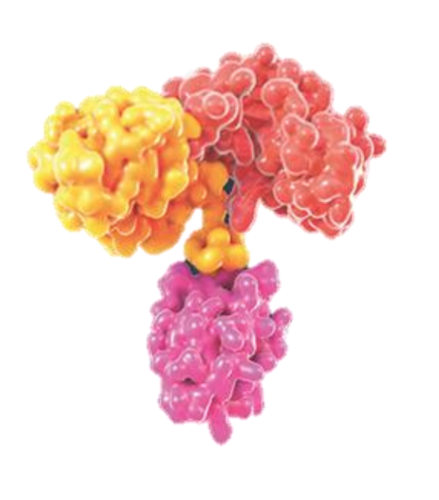
Image result for Caplacizumab

More………….

EVQLVESGGG LVQPGGSLRL SCAASGRTFS YNPMGWFRQA PGKGRELVAA ISRTGGSTYY
PDSVEGRFTI SRDNAKRMVY LQMNSLRAED TAVYYCAAAG VRAEDGRVRT LPSEYTFWGQ
GTQVTVSSAA AEVQLVESGG GLVQPGGSLR LSCAASGRTF SYNPMGWFRQ APGKGRELVA
AISRTGGSTY YPDSVEGRFT ISRDNAKRMV YLQMNSLRAE DTAVYYCAAA GVRAEDGRVR
TLPSEYTFWG QGTQVTVSS
(disulfide bridge: 22-96, 153-227)

Sequence:

1EVQLVESGGG LVQPGGSLRL SCAASGRTFS YNPMGWFRQA PGKGRELVAA
51ISRTGGSTYY PDSVEGRFTI SRDNAKRMVY LQMNSLRAED TAVYYCAAAG
101VRAEDGRVRT LPSEYTFWGQ GTQVTVSSAA AEVQLVESGG GLVQPGGSLR
151LSCAASGRTF SYNPMGWFRQ APGKGRELVA AISRTGGSTY YPDSVEGRFT
201ISRDNAKRMV YLQMNSLRAE DTAVYYCAAA GVRAEDGRVR TLPSEYTFWG
251QGTQVTVSS

EU 2018/8/31 APPROVED, Cablivi

Treatment of thrombotic thrombocytopenic purpura, thrombosis

Immunoglobulin, anti-(human von Willebrand’s blood-coagulation factor VIII domain A1) (human-Lama glama dimeric heavy chain fragment PMP12A2h1)

Other Names

  • 1: PN: WO2011067160 SEQID: 1 claimed protein
  • 98: PN: WO2006122825 SEQID: 98 claimed protein
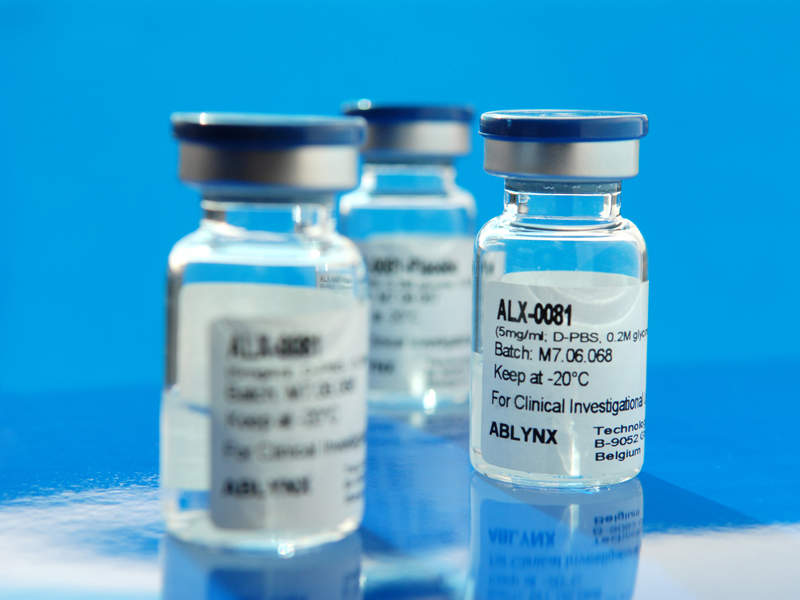
  • ALX 0081
  • ALX 0681
  • Caplacizumab
FORMULA
C1213H1891N357O380S10
CAS
915810-67-2
MOL WEIGHT
27875.8075

Caplacizumab (ALX-0081) (INN) is a bivalent VHH designed for the treatment of thrombotic thrombocytopenic purpura and thrombosis.[1][2]

This drug was developed by Ablynx NV.[3] On 31 August 2018 it was approved in the European Union for the “treatment of adults experiencing an episode of acquired thrombotic thrombocytopenic purpura (aTTP), in conjunction with plasma exchange and immunosuppression”.[4]

It is an anti-von Willebrand factor humanized immunoglobulin.[5] It acts by blocking platelet aggregation to reduce organ injury due to ischemia.[5] Results of the phase II TITAN trial have been reported.[5]

In February 2019, caplacizumab-yhdp (CABLIVI, Ablynx NV) has been approved by the Food and Drug Administration for treatment of adult patients with acquired thrombotic thrombocytopenic purpura (aTTP). The drug is used in combination with plasma exchange and immunosuppressive therapy. [6]

PATENTS

WO 2006122825

WO 2009115614

WO 2011067160

WO 2011098518

WO 2011162831

WO 2013013228

WO 2014109927

WO 2016012285

WO 2016138034

WO 2016176089

WO 2017180587

WO 2017186928

WO 2018067987

Image result for Caplacizumab

Caplacizumab
Monoclonal antibody
Type Single domain antibody
Source Humanized
Target VWF
Clinical data
Synonyms ALX-0081
ATC code
Identifiers
CAS Number
DrugBank
ChemSpider
  • none
UNII
KEGG
Chemical and physical data
Formula C1213H1891N357O380S10
Molar mass 27.88 kg/mol

CLIP

https://www.tandfonline.com/doi/full/10.1080/19420862.2016.1269580

Caplacizumab (ALX-0081) is a humanized single-variable-domain immunoglobulin (Nanobody) that targets von Willebrand factor, and thereby inhibits the interaction between von Willebrand factor multimers and platelets. In a Phase 2 study (NCT01151423) of 75 patients with acquired thrombotic thrombocytopenic purpura who received SC caplacizumab (10 mg daily) or placebo during plasma exchange and for 30 d afterward, the time to a response was significantly reduced with caplacizumab compared with placebo (39% reduction in median time, P = 0.005).39Peyvandi FScully MKremer Hovinga JACataland SKnöbl PWu HArtoni AWestwood JPMansouri Taleghani MJilma B, et al. Caplacizumab for acquired thrombotic thrombocytopenic purpura. N Engl J Med 2016; 374(6):51122; PMID:26863353; http://dx.doi.org/10.1056/NEJMoa1505533[Crossref][PubMed][Web of Science ®][Google Scholar] The double-blind, placebo-controlled, randomized Phase 3 HERCULES study (NCT02553317) study will evaluate the efficacy and safety of caplacizumab treatment in more rapidly curtailing ongoing microvascular thrombosis when administered in addition to standard of care treatment in subjects with an acute episode of acquired thrombotic thrombocytopenic purpura. Patients will receive an initial IV dose of either caplacizumab or placebo followed by daily SC injections for a maximum period of 6 months. The primary outcome measure is the time to platelet count response. The estimated enrollment is 92 patients, and the estimated primary completion date of the study is October 2017. A Phase 3 follow-up study (NCT02878603) for patients who completed the HERCULES study is planned.

References

///////////////caplacizumab, Cablivi,  Ablynx, Priority Review, Orphan Drug designation,  fda 2019, eu 2018, Caplacizumab, nti-vWF Nanobody, Orphan Drug Designation, aTTP, Cablivi, Ablynx, Sanofi , ALX-0081, カプラシズマブ  , PEPTIDE, ALX 0081

Voretigene neparvovec , ボレチジーンネパルボベック;


Voretigene neparvovec
Voretigene neparvovec-rzyl;
Luxturna (TN)

ボレチジーンネパルボベック;

DNA (synthetic adeno-associated virus 2 vector AAV2-hRPE65v2)

CAS: 1646819-03-5
2017/12/19, FDA  Luxturna, SPARK THERAPEUTICS

Vision loss treatment, Retinal dystrophy

AAV2-hRPE65v2
AAV2.RPE65
LTW-888
SPK-RPE65
rAAV.hRPE65v2
rAAV2-CBSB-hRPE65
2SPI046IKD (UNII code)

melting point (°C) 72-90ºC Rayaprolu V. et al. J. Virol. vol. 87. no. 24. (2013)

FDA

https://www.fda.gov/downloads/BiologicsBloodVaccines/CellularGeneTherapyProducts/ApprovedProducts/UCM592766.pdf

LUXTURNA

STN: 125610
Proper Name: voretigene neparvovec-rzyl
Trade Name: LUXTURNA
Manufacturer: Spark Therapeutics, Inc.
Indication:

  • Is an adeno-associated virus vector-based gene therapy indicated for the treatment of patients with confirmed biallelic RPE65 mutation-associated retinal dystrophy. Patients must have viable retinal cells as determined by the treating physician(s).

Product Information

Related Information

Voretigene neparvovec (Luxturna) is a novel gene therapy for the treatment of Leber’s congenital amaurosis.[1] It was developed by Spark Therapeutics and Children’s Hospital of Philadelphia.[2][3] It is the first in vivo gene therapy approved by the FDA.[4]

Leber’s congenital amaurosis, or biallelic RPE65-mediated inherited retinal disease, is an inherited disorder causing progressive blindness. Voretigene is the first treatment available for this condition.[5] The gene therapy is not a cure for the condition, but substantially improves vision in those treated.[6] It is given as an subretinal injection.

It was developed by collaboration between the University of Pennsylvania, Yale University, the University of Florida and Cornell University. In 2018, the product was launched in the U.S. by Spark Therapeutics for the treatment of children and adult patients with confirmed biallelic RPE65 mutation-associated retinal dystrophy. The same year, Spark Therapeutics received approval for the product in the E.U. for the same indication.

Chemistry and production

Voretigene neparvovec is an AAV2 vector containing human RPE65 cDNA with a modified Kozak sequence. The virus is grown in HEK 293 cells and purified for administration.[7]

History

Married researchers Jean Bennett and Albert Maguire, among others, worked for decades on studies of congenital blindness, culminating in approval of a novel therapy, Luxturna.[8]

It was granted orphan drug status for Leber congenital amaurosis and retinitis pigmentosa.[9][10] A biologics license application was submitted to the FDA in July 2017 with Priority Review.[5] Phase III clinical trial results were published in August 2017.[11] On 12 October 2017, a key advisory panel to the Food and Drug Administration (FDA), composed of 16 experts, unanimously recommended approval of the treatment.[12] The US FDA approved the drug on December 19, 2017. With the approval, Spark Therapeutics received a pediatric disease priority review voucher.[13]

The first commercial sale of voretigene neparvovec — the first for any gene therapy product in the US — occurred in March 2018.[14][14][4] The price of the treatment has been announced at $425,000 per eye.[15]

INDICATION

LUXTURNA (voretigene neparvovec-rzyl) is an adeno-associated virus vector-based gene therapy indicated for the treatment of patients with confirmed biallelic RPE65 mutation-associated retinal dystrophy.

Patients must have viable retinal cells as determined by the treating physicians.

IMPORTANT SAFETY INFORMATION FOR LUXTURNA

Warnings and Precautions

  • Endophthalmitis may occur following any intraocular surgical procedure or injection. Use proper aseptic injection technique when administering LUXTURNA, and monitor for and advise patients to report any signs or symptoms of infection or inflammation to permit early treatment of any infection.

  • Permanent decline in visual acuity may occur following subretinal injection of LUXTURNA. Monitor patients for visual disturbances.

  • Retinal abnormalities may occur during or following the subretinal injection of LUXTURNA, including macular holes, foveal thinning, loss of foveal function, foveal dehiscence, and retinal hemorrhage. Monitor and manage these retinal abnormalities appropriately. Do not administer LUXTURNA in the immediate vicinity of the fovea. Retinal abnormalities may occur during or following vitrectomy, including retinal tears, epiretinal membrane, or retinal detachment. Monitor patients during and following the injection to permit early treatment of these retinal abnormalities. Advise patients to report any signs or symptoms of retinal tears and/or detachment without delay.

  • Increased intraocular pressure may occur after subretinal injection of LUXTURNA. Monitor and manage intraocular pressure appropriately.

  • Expansion of intraocular air bubbles Instruct patients to avoid air travel, travel to high elevations or scuba diving until the air bubble formed following administration of LUXTURNA has completely dissipated from the eye. It may take one week or more following injection for the air bubble to dissipate. A change in altitude while the air bubble is still present can result in irreversible vision loss. Verify the dissipation of the air bubble through ophthalmic examination.

  • Cataract Subretinal injection of LUXTURNA, especially vitrectomy surgery, is associated with an increased incidence of cataract development and/or progression.

Adverse Reactions

  • In clinical studies, ocular adverse reactions occurred in 66% of study participants (57% of injected eyes), and may have been related to LUXTURNA, the subretinal injection procedure, the concomitant use of corticosteroids, or a combination of these procedures and products.

  • The most common adverse reactions (incidence ≥5% of study participants) were conjunctival hyperemia (22%), cataract (20%), increased intraocular pressure (15%), retinal tear (10%), dellen (thinning of the corneal stroma) (7%), macular hole (7%), subretinal deposits (7%), eye inflammation (5%), eye irritation (5%), eye pain (5%), and maculopathy (wrinkling on the surface of the macula) (5%).

Immunogenicity

Immune reactions and extra-ocular exposure to LUXTURNA in clinical studies were mild. No clinically significant cytotoxic T-cell response to either AAV2 or RPE65 has been observed.

In clinical studies, the interval between the subretinal injections into the two eyes ranged from 7 to 14 days and 1.7 to 4.6 years. Study participants received systemic corticosteroids before and after subretinal injection of LUXTURNA to each eye, which may have decreased the potential immune reaction to either AAV2 or RPE65.

Pediatric Use

Treatment with LUXTURNA is not recommended for patients younger than 12 months of age, because the retinal cells are still undergoing cell proliferation, and LUXTURNA would potentially be diluted or lost during the cell proliferation. The safety and efficacy of LUXTURNA have been established in pediatric patients. There were no significant differences in safety between the different age subgroups.

Please see US Full Prescribing Information for LUXTURNA.

References:

1. LUXTURNA [package insert]. Philadelphia, PA: Spark Therapeutics, Inc; 2017. 2. Gupta PR, Huckfeldt RM. Gene therapy for inherited retinal degenerations: initial successes and future challenges. J Neural Eng. 2017;14(5):051002. 3. Kay C. Gene therapy: the new frontier for inherited retinal disease. Retina Specialist. March 2017. http://www.retina-specialist.com/CMSDocuments/2017/03/RS/rs0317I.pdf. Accessed November 14, 2017 4. Polinski NK, Gombash SE, Manfredsson FP, et al. Recombinant adeno-associated virus 2/5-mediated gene transfer is reduced in the aged rat midbrain. Neurobiol Aging. 2015;36(2):1110-1120. 5. Moore T. Restoring retinal function in a mouse model of hereditary blindness. PLoS Med. 2005;2(11):e399. 6. McBee JK, Van Hooser JP, Jang GF, Palczewski K. Isomerization of 11-cis-retinoids to all-trans-retinoids in vitro and in vivo. J Biol Chem. 2001;276(51):48483-48493. 7. Thomas CE, Ehrhardt A, Kay MA. Progress and problems with the use of viral vectors for gene therapy. Nat Rev Genet. 2003;4(5):346-358. 8. Trapani I, Puppo A, Auricchio A. Vector platforms for gene therapy of inherited retinopathies. Prog Retin Eye Res. 2014;43:108-128. 9. Russell S, Bennett J, Wellman JA, et al. Efficacy and safety of voretigene neparvovec (AAV2-hRPE65v2) in patients with RPE65-mediated inherited retinal dystrophy: a randomised, controlled, open-label, phase 3 trial. Lancet. 2017;390(10097):849-860.

Illustration of the RPE65 gene delivery method

Illustration of the RPE65 protein production cycle

PAPERS

Progress in Retinal and Eye Research (2018), 63, 107-131

Lancet (2017), 390(10097), 849-860.

References

  1. ^ “Luxturna (voretigene neparvovec-rzyl) label” (PDF). FDA. December 2017. Retrieved 31 December 2017. (for label updates, see FDA index page)
  2. ^ “Spark’s gene therapy for blindness is racing to a historic date with the FDA”Statnews.com. 9 October 2017. Retrieved 9 October 2017.
  3. ^ Clarke,Reuters, Toni. “Gene Therapy for Blindness Appears Initially Effective, Says U.S. FDA”Scientific American. Retrieved 2017-10-12.
  4. Jump up to:a b “First Gene Therapy For Inherited Disease Gets FDA Approval”NPR.org. 19 Dec 2017.
  5. Jump up to:a b “Press Release – Investors & Media – Spark Therapeutics”Ir.sparktx.com. Retrieved 9 October 2017.
  6. ^ McGinley, Laurie (19 December 2017). “FDA approves first gene therapy for an inherited disease”Washington Post.
  7. ^ Russell, Stephen; Bennett, Jean; Wellman, Jennifer A.; Chung, Daniel C.; Yu, Zi-Fan; Tillman, Amy; Wittes, Janet; Pappas, Julie; Elci, Okan; McCague, Sarah; Cross, Dominique; Marshall, Kathleen A.; Walshire, Jean; Kehoe, Taylor L.; Reichert, Hannah; Davis, Maria; Raffini, Leslie; George, Lindsey A.; Hudson, F Parker; Dingfield, Laura; Zhu, Xiaosong; Haller, Julia A.; Sohn, Elliott H.; Mahajan, Vinit B.; Pfeifer, Wanda; Weckmann, Michelle; Johnson, Chris; Gewaily, Dina; Drack, Arlene; et al. (2017). “Efficacy and safety of voretigene neparvovec (AAV2-hRPE65v2) in patients with RPE65 -mediated inherited retinal dystrophy: A randomised, controlled, open-label, phase 3 trial”The Lancet390 (10097): 849–860. doi:10.1016/S0140-6736(17)31868-8PMC 5726391PMID 28712537.
  8. ^ “FDA approves Spark’s gene therapy for rare blindness pioneered at CHOP – Philly”Philly.com. Retrieved 2018-03-24.
  9. ^ “Voretigene neparvovec – Spark Therapeutics – AdisInsight”adisinsight.springer.com.
  10. ^ Ricki Lewis, PhD (October 13, 2017). “FDA Panel Backs Gene Therapy for Inherited Blindness”Medscape.
  11. ^ Lee, Helena; Lotery, Andrew (2017). “Gene therapy for RPE65 -mediated inherited retinal dystrophy completes phase 3”. The Lancet390 (10097): 823–824. doi:10.1016/S0140-6736(17)31622-7PMID 28712536.
  12. ^ “Landmark Therapy to Treat Blindness Gets One Step Closer to FDA Approval”Bloomberg.com. 2017-10-12. Retrieved 2017-10-12.
  13. ^ “Spark grabs FDA nod for Luxturna, a breakthrough gene therapy likely bearing a pioneering price”FiercePharma.
  14. Jump up to:a b “The anxious launch of Luxturna, a gene therapy with a record sticker price”STAT. 2018-03-21. Retrieved 2018-03-24.
  15. ^ Tirrell, Meg (3 January 2018). “A US drugmaker offers to cure rare blindness for $850,000”. CNBC. Retrieved 3 January 2018.

Further reading

Voretigene neparvovec
Gene therapy
Vector Adeno-associated virusserotype 2
Nucleic acid type DNA
Editing method RPE65
Clinical data
Trade names Luxturna
Pregnancy
category
  • US: N (Not classified yet)
Routes of
administration
subretinal injection
ATC code
Legal status
Legal status
Identifiers
KEGG

//////////FDA 2017, Voretigene neparvovec , Voretigene neparvovec-rzyl, Luxturna, ボレチジーンネパルボベック, 1646819-03-5 , FDA  Luxturna, SPARK THERAPEUTICS, Vision loss treatment, Retinal dystrophy., AAV2-hRPE65v2, LTW-888, SPK-RPE65, Orphan drug,

Elapegademase, エラペグアデマーゼ (遺伝子組換え)


AQTPAFNKPK VELHVHLDGA IKPETILYYG RKRGIALPAD TPEELQNIIG MDKPLSLPEF
LAKFDYYMPA IAGSREAVKR IAYEFVEMKA KDGVVYVEVR YSPHLLANSK VEPIPWNQAE
GDLTPDEVVS LVNQGLQEGE RDFGVKVRSI LCCMRHQPSW SSEVVELCKK YREQTVVAID
LAGDETIEGS SLFPGHVKAY AEAVKSGVHR TVHAGEVGSA NVVKEAVDTL KTERLGHGYH
TLEDTTLYNR LRQENMHFEV CPWSSYLTGA WKPDTEHPVV RFKNDQVNYS LNTDDPLIFK
STLDTDYQMT KNEMGFTEEE FKRLNINAAK SSFLPEDEKK ELLDLLYKAY GMPSPA

str1

>>Elapegademase<<<
AQTPAFNKPKVELHVHLDGAIKPETILYYGRKRGIALPADTPEELQNIIGMDKPLSLPEF
LAKFDYYMPAIAGSREAVKRIAYEFVEMKAKDGVVYVEVRYSPHLLANSKVEPIPWNQAE
GDLTPDEVVSLVNQGLQEGERDFGVKVRSILCCMRHQPSWSSEVVELCKKYREQTVVAID
LAGDETIEGSSLFPGHVKAYAEAVKSGVHRTVHAGEVGSANVVKEAVDTLKTERLGHGYH
TLEDTTLYNRLRQENMHFEVCPWSSYLTGAWKPDTEHPVVRFKNDQVNYSLNTDDPLIFK
STLDTDYQMTKNEMGFTEEEFKRLNINAAKSSFLPEDEKKELLDLLYKAYGMPSPA

ChemSpider 2D Image | ELAPEGADEMASE | C10H20N2O5

Elapegademase, エラペグアデマーゼ (遺伝子組換え)

EZN-2279

Protein chemical formula C1797H2795N477O544S12

Protein average weight 115000.0 Da

Peptide

APPROVED, FDA, Revcovi, 2018/10/5

CAS: 1709806-75-6

Elapegademase-lvlr, Poly(oxy-1,2-ethanediyl), alpha-carboxy-omega-methoxy-, amide with adenosine deaminase (synthetic)

L-Lysine, N6-[(2-methoxyethoxy)carbonyl]-
N6-[(2-Methoxyethoxy)carbonyl]-L-lysine

EZN-2279; PEG-rADA; Pegademase recombinant – Leadiant Biosciences; Pegylated recombinant adenosine deaminase; Polyethylene glycol recombinant adenosine deaminase; STM-279, UNII: 9R3D3Y0UHS

  • Originator Sigma-Tau Pharmaceuticals
  • Developer Leadiant Biosciences; Teijin Pharma
  • Class Antivirals; Polyethylene glycols
  • Mechanism of Action Adenosine deaminase stimulants
  • Orphan Drug Status Yes – Immunodeficiency disorders; Adenosine deaminase deficiency
  • Registered Adenosine deaminase deficiency; Immunodeficiency disorders
  • 05 Oct 2018 Registered for Adenosine deaminase deficiency (In adults, In children) in USA (IM)
  • 05 Oct 2018 Registered for Immunodeficiency disorders (In adults, In children) in USA (IM)
  • 04 Oct 2018 Elapegademase receives priority review status for Immunodeficiency disorders and Adenosine deaminase deficiency in USA

検索キーワード:Elapegademase (Genetical Recombination)
検索件数:1


エラペグアデマーゼ(遺伝子組換え)
Elapegademase (Genetical Recombination)

[1709806-75-6]

Elapegademase is a PEGylated recombinant adenosine deaminase. It can be defined molecularly as a genetically modified bovine adenosine deaminase with a modification in cysteine 74 for serine and with about 13 methoxy polyethylene glycol chains bound via carbonyl group in alanine and lysine residues.[4] Elapegademase is generated in E. coli, developed by Leadiant Biosciences and FDA approved on October 5, 2018.[15]

Indication

Elapegademase is approved for the treatment of adenosine deaminase severe combined immune deficiency (ADA-SCID) in pediatric and adult patients.[1] This condition was previously treated by the use of pegamedase bovine as part of an enzyme replacement therapy.[2]

ADA-SCID is a genetically inherited disorder that is very rare and characterized by a deficiency in the adenosine deaminase enzyme. The patients suffering from this disease often present a compromised immune system. This condition is characterized by very low levels of white blood cells and immunoglobulin levels which results in severe and recurring infections.[3]

Pharmacodynamics

In clinical trials, elapegademase was shown to increase adenosine deaminase activity while reducing the concentrations of toxic metabolites which are the hallmark of ADA-SCID. As well, it was shown to improve the total lymphocyte count.[6]

Mechanism of action

The ADA-SCID is caused by the presence of mutations in the ADA gene which is responsible for the synthesis of adenosine deaminase. This enzyme is found throughout the body but it is mainly active in lymphocytes. The normal function of adenosine deaminase is to eliminate deoxyadenosine, created when DNA is degraded, by converting it into deoxyinosine. This degradation process is very important as deoxyadenosine is cytotoxic, especially for lymphocytes. Immature lymphocytes are particularly vulnerable as deoxyadenosine kills them before maturation making them unable to produce their immune function.[3]

Therefore, based on the causes of ADA-SCID, elapegademase works by supplementing the levels of adenosine deaminase. Being a recombinant and an E. coli-produced molecule, the use of this drug eliminates the need to source the enzyme from animals, as it was used previously.[1]

Absorption

Elapegademase is administered intramuscularly and the reported Tmax, Cmax and AUC are approximately 60 hours, 240 mmol.h/L and 33000 hr.mmol/L as reported during a week.[Label]

Volume of distribution

This pharmacokinetic property has not been fully studied.

Protein binding

This pharmacokinetic property is not significant as the main effect is in the blood cells.

Metabolism

Metabolism studies have not been performed but it is thought to be degraded by proteases to small peptides and individual amino acids.

Route of elimination

This pharmacokinetic property has not been fully studied.

Half life

This pharmacokinetic property has not been fully studied.

Clearance

This pharmacokinetic property has not been fully studied.

Toxicity

As elapegademase is a therapeutic protein, there is a potential risk of immunogenicity.

There are no studies related to overdose but the highest weekly prescribed dose in clinical trials was 0.4 mg/kg. In nonclinical studies, a dosage of 1.8 fold of the clinical dose produced a slight increase in the activated partial thromboplastin time.[Label]

FDA label. Download (145 KB)

General References

  1. Rare DR [Link]
  2. Globe News Wire [Link]
  3. NIH [Link]
  4. NIHS reports [File]
  5. WHO Drug Information 2017 [File]
  6. Revcovi information [File]

/////////////Elapegademase, Peptide, エラペグアデマーゼ (遺伝子組換え) , EZN-2279, Elapegademase-lvlr, Orphan Drug, STM 279, FDA 2018

COCCOC(=O)NCCCC[C@H](N)C(=O)O

“ALL FOR DRUGS” CATERS TO EDUCATION GLOBALLY, No commercial exploits are done or advertisements added by me. This is a compilation for educational purposes only. P.S. : The views expressed are my personal and in no-way suggest the views of the professional body or the company that I represent


READ

ANTHONY MELVIN CRASTO

https://newdrugapprovals.org/

NDA

DRUG APPROVALS BY DR ANTHONY MELVIN CRASTO …..FOR BLOG HOME CLICK HERE

Join me on Linkedin

View Anthony Melvin Crasto Ph.D's profile on LinkedIn

Join me on Facebook FACEBOOK

Join me on twitterFollow amcrasto on Twitter
Join me on google plus Googleplus

 amcrasto@gmail.com

CALL +919323115463  INDIA

//////////////


Calaspargase pegol, カラスパルガーゼペゴル


LPNITILATG GTIAGGGDSA TKSNYTAGKV GVENLVNAVP QLKDIANVKG EQVVNIGSQD
MNDDVWLTLA KKINTDCDKT DGFVITHGTD TMEETAYFLD LTVKCDKPVV MVGAMRPSTS
MSADGPFNLY NAVVTAADKA SANRGVLVVM NDTVLDGRDV TKTNTTDVAT FKSVNYGPLG
YIHNGKIDYQ RTPARKHTSD TPFDVSKLNE LPKVGIVYNY ANASDLPAKA LVDAGYDGIV
SAGVGNGNLY KTVFDTLATA AKNGTAVVRS SRVPTGATTQ DAEVDDAKYG FVASGTLNPQ
KARVLLQLAL TQTKDPQQIQ QIFNQY
(tetramer; disulfide bridge 77-105, 77′-105′, 77”-105”, 77”’-105”’)

Image result for Calaspargase pegol

str3

Calaspargase pegol

Molecular Formula, C1516-H2423-N415-O492-S8 (peptide monomer), Molecular Weight, 10261.2163

APPROVED, Asparlas, FDA 2018/12/20

CAS 941577-06-6

UNII T9FVH03HMZ

カラスパルガーゼペゴル;

(27-Alanine,64-aspartic acid,252-threonine,263-asparagine)-L-asparaginase 2 (EC 3.5.1.1, L-asparagineamidohydrolase II) Escherichia coli (strain K12) tetramer alpha4, carbamates with alpha-carboxy-omega-methoxypoly(oxyethylene)

Asparaginase (Escherichia coli isoenzyme II), conjugate with alpha-(((2,5-dioxo-1-pyrrolidinyl)oxy)carbonyl)-omega-methoxypoly(oxy-1,2-ethanediyl)

List Acronyms
Peptide
  • Calaspargase pegol
  • calaspargase pegol-mknl
  • EZN-2285
  • Used to treat acute lymphoblastic leukemia., Antineoplastic
  • BAX-2303
    SC-PEG E. Coli L-asparaginase
    SHP-663

Calaspargase pegol-mknl (trade name Asparlas) is a drug for the treatment of acute lymphoblastic leukemia (ALL). It is approved by the Food and Drug Administration for use in the United States as a component of a multi-agent chemotherapeutic regimen for ALL in pediatric and young adult patients aged 1 month to 21 years.[1]

Calaspargase pegol was first approved in 2018 in the U.S. as part of a multi-agent chemotherapeutic regimen for the treatment of patients with acute lymphoblastic leukemia.

In 2008, orphan drug designation was assigned in the E.U.

Calaspargase pegol is an engineered protein consisting of the E. coli-derived enzyme L-asparaginase II conjugated with succinimidyl carbonate monomethoxypolyethylene glycol (pegol).[2] The L-asparaginase portion hydrolyzes L-asparagine to L-aspartic acid depriving the tumor cell of the L-asparagine it needs for survival.[2] The conjugation with the pegol group increases the half-life of the drug making it longer acting.

Asparaginase is an important agent used to treat acute lymphoblastic leukemia (ALL) [1]. Asparagine is incorporated into most proteins, and the synthesis of proteins is stopped when asparagine is absent, which inhibits RNA and DNA synthesis, resulting in a halt in cellular proliferation. This forms the basis of asparaginase treatment in ALL [1][2][6].

Calaspargase pegol, also known as asparlas, is an asparagine specific enzyme which is indicated as a part of a multi-agent chemotherapy regimen for the treatment of ALL [3]. The asparagine specific enzyme is derived from Escherichia coli, as a conjugate of L-asparaginase (L-asparagine amidohydrolase) and monomethoxypolyethylene glycol (mPEG) with a succinimidyl carbonate (SC) linker to create a stable molecule which increases the half-life and decreases the dosing frequency [Label][1].

Calaspargase pegol, by Shire pharmaceuticals, was approved by the FDA on December 20, 2018 for acute lymphoblastic anemia (ALL) [3].

Indication

This drug is is an asparagine specific enzyme indicated as a component of a multi-agent chemotherapeutic regimen for the treatment of acute lymphoblastic leukemia in pediatric and young adult patients age 1 month to 21 years [Label].

The pharmacokinetics of calaspargase pegol were examined when given in combination with multiagent chemotherapy in 124 patients with B-cell lineage ALL [3]. The FDA approval of this drug was based on the achievement and maintenance of nadir serum asparaginase activity above the level of 0.1 U/mL when administering calaspargase, 2500 U/m2 intravenously, at 3-week intervals.

Associated Conditions

Pharmacodynamics

The effect of this drug is believed to occur by selective killing of leukemic cells due to depletion of plasma L-asparagine. Leukemic cells with low expression of asparagine synthetase are less capable of producing L-asparagine, and therefore rely on exogenous L-asparagine for survival [Label]. When asparagine is depleted, tumor cells cannot proliferate [6].

During remission induction, one dose of SC-PEG (2500 IU/m2) results in a sustained therapeutic serum asparaginase activity (SAA) without excessive toxicity or marked differences in the proportion of patients with low end-induction minimum residual disease (MRD) [5].

Pharmacodynamic (PD) response was studied through measurement of plasma and cerebrospinal fluid (CSF) asparagine concentrations with an LC-MS/MS assay (liquid chromatography–mass spectrometry). Asparagine concentration in plasma was sustained below the assay limit of quantification for more than 18 days after one dose of calaspargase pegol, 2,500 U/m2, during the induction phase of treatment. Average cerebrospinal asparagine concentrations decreased from a pretreatment concentration of 0.8 μg/mL (N=10) to 0.2 μg/mL on Day 4 (N=37) and stayed decreased at 0.2 μg/mL (N=35) 25 days after the administration of one of 2,500 U/m2 in the induction phase [Label].

Mechanism of action

L-asparaginase (the main component of this drug) is an enzyme that catalyzes the conversion of the amino acid L-asparagine into both aspartic acid and ammonia [Label][2]. This process depletes malignant cells of their required asparagine. The depletion of asparagine then blocks protein synthesis and tumor cell proliferation, especially in the G1 phase of the cell cycle. As a result, tumor cell death occurs. Asparagine is important in protein synthesis in acute lymphoblastic leukemia (ALL) cells which, unlike normal cells, cannot produce this amino acid due to lack of the enzyme asparagine synthase [2][Label].

Pegylation decreases enzyme antigenicity and increases its half-life. Succinimidyl carbamate (SC) is used as a PEG linker to facilitate attachment to asparaginase and enhances the stability of the formulation [4][1]. SC-PEG urethane linkages formed with lysine groups are more hydrolytically stable [2].

Toxicity

Pancreatitis, hepatotoxicity, hemorrhage, and thrombosis have been observed with calaspargase pegol use [Label].

Pancreatitis: Discontinue this drug in patients with pancreatitis, and monitor blood glucose.

Hepatotoxicity: Hepatic function should be tested regularly, and trough levels of this drug should be measured during the recovery phase of the drug cycle [Label].

Hemorrhage or Thrombosis: Discontinue this drug in serious or life-threatening hemorrhage or thrombosis. In cases of hemorrhage, identify the cause of hemorrhage and treat appropriately. Administer anticoagulant therapy as indicated in thrombotic events [Label].

A note on hypersensitivity:

Observe the patient for 1 hour after administration of calaspargase pegol for possible hypersensitivity [Label]. In cases of previous hypersensitivity to this drug, discontinue this drug immediately.

Lactation: Advise women not to breastfeed while taking this drug [Label].

Pregnancy: There are no available data on the use of calaspargase pegol in pregnant women to confirm a risk of drug-associated major birth defects and miscarriage. Published literature studies in pregnant animals suggest asparagine depletion can cause harm to the animal offspring. It is therefore advisable to inform women of childbearing age of this risk. The background risk of major birth defects and miscarriage for humans is unknown at this time [Label].

Pregnancy testing should occur before initiating treatment. Advise females of reproductive potential to avoid becoming pregnant while taking this drug. Females should use effective contraceptive methods, including a barrier methods, during treatment and for at least 3 months after the last dose. There is a risk for an interaction between calaspargase pegol and oral contraceptives. The concurrent use of this drug with oral contraceptives should be avoided. Other non-oral contraceptive methods should be used in women of childbearing potential [Label].

References
  1. Angiolillo AL, Schore RJ, Devidas M, Borowitz MJ, Carroll AJ, Gastier-Foster JM, Heerema NA, Keilani T, Lane AR, Loh ML, Reaman GH, Adamson PC, Wood B, Wood C, Zheng HW, Raetz EA, Winick NJ, Carroll WL, Hunger SP: Pharmacokinetic and pharmacodynamic properties of calaspargase pegol Escherichia coli L-asparaginase in the treatment of patients with acute lymphoblastic leukemia: results from Children’s Oncology Group Study AALL07P4. J Clin Oncol. 2014 Dec 1;32(34):3874-82. doi: 10.1200/JCO.2014.55.5763. Epub 2014 Oct 27. [PubMed:25348002]
  2. Appel IM, Kazemier KM, Boos J, Lanvers C, Huijmans J, Veerman AJ, van Wering E, den Boer ML, Pieters R: Pharmacokinetic, pharmacodynamic and intracellular effects of PEG-asparaginase in newly diagnosed childhood acute lymphoblastic leukemia: results from a single agent window study. Leukemia. 2008 Sep;22(9):1665-79. doi: 10.1038/leu.2008.165. Epub 2008 Jun 26. [PubMed:18580955]
  3. Blood Journal: Randomized Study of Pegaspargase (SS-PEG) and Calaspargase Pegol (SPC-PEG) in Pediatric Patients with Newly Diagnosed Acute Lymphoblastic Leukemia or Lymphoblastic Lymphoma: Results of DFCI ALL Consortium Protocol 11-001 [Link]

References

  1. ^ “FDA approves longer-acting calaspargase pegol-mknl for ALL” (Press release). Food and Drug Administration. December 20, 2018.
  2. Jump up to:a b “Calaspargase pegol-mknl”NCI Drug Dictionary. National Cancer Institute.

FDA label, Download(300 KB)

General References

  1. Angiolillo AL, Schore RJ, Devidas M, Borowitz MJ, Carroll AJ, Gastier-Foster JM, Heerema NA, Keilani T, Lane AR, Loh ML, Reaman GH, Adamson PC, Wood B, Wood C, Zheng HW, Raetz EA, Winick NJ, Carroll WL, Hunger SP: Pharmacokinetic and pharmacodynamic properties of calaspargase pegol Escherichia coli L-asparaginase in the treatment of patients with acute lymphoblastic leukemia: results from Children’s Oncology Group Study AALL07P4. J Clin Oncol. 2014 Dec 1;32(34):3874-82. doi: 10.1200/JCO.2014.55.5763. Epub 2014 Oct 27. [PubMed:25348002]
  2. Appel IM, Kazemier KM, Boos J, Lanvers C, Huijmans J, Veerman AJ, van Wering E, den Boer ML, Pieters R: Pharmacokinetic, pharmacodynamic and intracellular effects of PEG-asparaginase in newly diagnosed childhood acute lymphoblastic leukemia: results from a single agent window study. Leukemia. 2008 Sep;22(9):1665-79. doi: 10.1038/leu.2008.165. Epub 2008 Jun 26. [PubMed:18580955]
  3. Asparlas Approval History [Link]
  4. NCI: Calaspargase Pegol [Link]
  5. Blood Journal: Randomized Study of Pegaspargase (SS-PEG) and Calaspargase Pegol (SPC-PEG) in Pediatric Patients with Newly Diagnosed Acute Lymphoblastic Leukemia or Lymphoblastic Lymphoma: Results of DFCI ALL Consortium Protocol 11-001 [Link]
  6. Medsafe NZ: Erwinaze inj [File]
Calaspargase pegol-mknl
Clinical data
Trade names Asparlas
Synonyms EZN-2285
Legal status
Legal status
Identifiers
CAS Number
DrugBank
UNII
KEGG
ChEMBL

/////////////Calaspargase pegol, Peptide, FDA 2018, EZN-2285, カラスパルガーゼペゴル  , BAX-2303, SC-PEG E. Coli L-asparaginase , SHP-663, orphan drug

CC(C)C[C@@H](C(=O)O)NC(=O)OCCOCCOCCOCCOCCOCCOCCOCCOCCOCCOCCOCCOCCOCCOCCOCCOCCOCCOCCOCCOCCOCCOCCOCCOCCOCCOCCOCCOCCOCCOCCOCCOCCOCCOCCOCCOCCOCCOCCOCCOCCOCCOCCOCCOCCOCCOCCOCCOCCOCCOCCOCCOCCOCCOCCOCCOCCOCCOCCOCCOCCOCCOCCOCCOCCOCCOCCOCCOCCOCCOCCOCCOCCOCCOCCOCCOCCOCCOCCOCCOCCOCCOCCOCCOCCOCCOCCOCCOCCOCCOCCOCCOCCOCCOCCOCCOCCOCCOCCOCCOCCOCCOCCOCCOCCOCCOCCOCCOCCOCCOCCOCCOC.COCCOCCOCCOCCOCCOCCOCCOCCOCCOCCOCCOCCOCCOCCOCCOCCOCCOCCOCCOCCOCCOCCOCCOCCOCCOCCOCCOCCOCCOCCOCCOCCOCCOCCOCCOCCOCCOCCOCCOCCOCCOCCOCCOCCOCCOCCOCCOCCOCCOCCOCCOCCOCCOCCOCCOCCOCCOCCOCCOCCOCCOCCOCCOCCOCCOCCOCCOCCOCCOCCOCCOCCOCCOCCOCCOCCOCCOCCOCCOCCOCCOCCOCCOCCOCCOCCOCCOCCOCCOCCOCCOCCOCCOCCOCCOCCOCCOCCOCCOCCOCCOCCOCCOCCOCCOCCOCCOCCOCCOCCOCCOCCOC(=O)NCCCC[C@@H](C(=O)O)N

IMETELSTAT


Image result for IMETELSTAT

Image result for IMETELSTAT

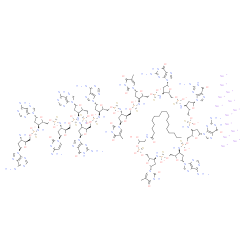
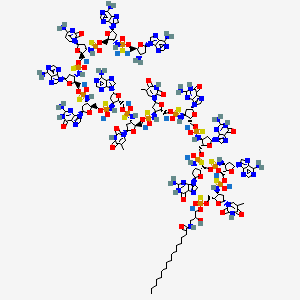
2D chemical structure of 868169-64-6

IMETELSTAT

CAS 868169-64-6, N163L

Molecular Formula, C148-H211-N68-O53-P13-S13, Molecular Weight, 4610.2379,

Nucleic Acid Sequence

Sequence Length: 135 a 1 c 4 g 3 tmodified

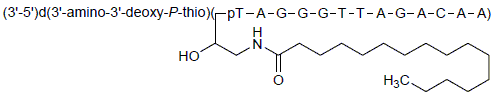
DNA d(3′-amino-3′-deoxy-P-thio)(T-A-G-G-G-T-T-A-G-A-C-A-A) 5′-[O-[2-hydroxy-3-[(1-oxohexadecyl)amino]propyl] hydrogen phosphorothioate]

PHASE 3, GERON, Myelodysplasia

Image result for IMETELSTAT

ChemSpider 2D Image | Imetelstat sodium | C148H197N68Na13O53P13S13

IMETELSTAT SODIUM

CAS 1007380-31-5, GRN163L, GRN 163L Sodium Salt

Molecular Formula: C148H198N68Na13O53P13S13
Molecular Weight: 4895.941 g/mol

5′-(O-(2-hydroxy-3-((1-oxohexadecyl)amino)propyl)phosphorothioate)-d(3′-amino-3′-deoxy-p-thio)(t-a-g-g-g-t-t-a-g-a-c-a-a), sodium salt (13)

DNA, d(3′-amino-3′-deoxy-p-thio)(T-A-G-G-G-T-T-A-G-A-C-A-A), 5′-(o-(2-hydroxy-3-((1-oxohexadecyl)amino)propyl) hydrogen phosphorothioate), sodium salt (1:13)

UNII-2AW48LAZ4I, Antineoplastic

In 2014, Geron entered into an exclusive worldwide license and collaboration agreement with Janssen Biotech for the treatment of hematologic cancers. However, in 2018, the agreement was terminated and Geron regained global rights to the product.

In 2015, imetelstat was granted orphan drug status in the U.S. for the treatment of myelodysplastic syndrome, as well as in both the U.S. and the E.U. for the treatment of myelofibrosis. In 2017, fast track designation was received in the U.S. for the treatment of adult patients with transfusion-dependent anemia due to low or intermediate-1 risk myelodysplastic syndromes (MDS) who are non-del(5q) and who are refractory or resistant to treatment with an erythropoiesis stimulating agent (ESA).

Imetelstat Sodium is the sodium salt of imetelstat, a synthetic lipid-conjugated, 13-mer oligonucleotide N3′ P5′-thio-phosphoramidate with potential antineoplastic activity. Complementary to the template region of telomerase RNA (hTR), imetelstat acts as a competitive enzyme inhibitor that binds and blocks the active site of the enzyme (a telomerase template antagonist), a mechanism of action which differs from that for the antisense oligonucleotide-mediated inhibition of telomerase activity through telomerase mRNA binding. Inhibition of telomerase activity in tumor cells by imetelstat results in telomere shortening, which leads to cell cycle arrest or apoptosis.

Imetelstat sodium, a lipid-based conjugate of Geron’s first-generation anticancer drug, GRN-163, is in phase III clinical trials at Geron for the treatment of myelodysplastic syndrome, as well as in phase II for the treatment of myelofibrosis. 

Geron is developing imetelstat, a lipid-conjugated 13-mer thiophosphoramidate oligonucleotide and the lead in a series of telomerase inhibitors, for treating hematological malignancies, primarily myelofibrosis.

Imetelstat, a first-in-class telomerase inhibitor and our sole product candidate, is being developed for the potential treatment of hematologic myeloid malignancies. Imetelstat is currently in two clinical trials being conducted by Janssen under the terms of an exclusive  worldwide collaboration and license agreement.

Originally known as GRN163L, imetelstat sodium (imetelstat) is a 13-mer N3’—P5’ thio-phosphoramidate (NPS) oligonucleotide that has a covalently bound 5’ palmitoyl (C16) lipid group. The proprietary nucleic acid backbone provides resistance to the effect of cellular nucleases, thus conferring improved stability in plasma and tissues, as well as significantly improved binding affinity to its target. The lipid group enhances cell permeability to increase potency and improve pharmacokinetic and pharmacodynamic properties. The compound has a long residence time in bone marrow, spleen and liver. Imetelstat binds with high affinity to the template region of the RNA component of telomerase, resulting in direct, competitive inhibition of telomerase enzymatic activity, rather than elicit its effect through an antisense inhibition of protein translation. Imetelstat is administered by intravenous infusion.

Preclinical Studies with Imetelstat

A series of preclinical efficacy studies of imetelstat have been conducted by Geron scientists and academic collaborators. These data showed that imetelstat:

  • Inhibits telomerase activity, and can shorten telomeres.
  • Inhibits the proliferation of a wide variety of tumor types, including solid and hematologic, in cell culture systems and rodent xenograft models of human cancers, impacting the growth of primary tumors and reducing metastases.
  • Inhibits the proliferation of malignant progenitor cells from hematologic cancers, such as multiple myeloma, myeloproliferative neoplasms and acute myelogenous leukemia.
  • Has additive or synergistic anti-tumor effect in a variety of cell culture systems and xenograft models when administered in combination with approved anti-cancer therapies, including radiation, conventional chemotherapies and targeted agents.

Clinical Experience with Imetelstat

Over 500 patients have been enrolled and treated in imetelstat clinical trials.

PHASE 1

Six clinical trials evaluated the safety, tolerability, pharmacokinetics and pharmacodynamics both as a single agent and in combination with standard therapies in patients with solid tumors and hematologic malignancies:

  • Single agent studies of imetelstat were in patients with advanced solid tumors, multiple myeloma and chronic lymphoproliferative diseases. Combination studies with imetelstat were with bortezomib in patients with relapsed or refractory multiple myeloma, with paclitaxel and bevacizumab in patients with metastatic breast cancer, and with carboplatin and paclitaxel in patients with advanced non-small cell lung cancer (NSCLC).
  • Doses ranging from 0.5 mg/kg to 11.7 mg/kg were tested in a variety of dosing schedules ranging from weekly to once every 28 days.
  • The human pharmacokinetic profile was characterized in clinical trials of patients with solid tumors and chronic lymphoproliferative diseases. Single-dose kinetics showed dose-dependent increases in exposure with a plasma half-life (t1/2) ranging from 4-5 hours. Residence time in bone marrow is long (0.19-0.51 µM observed at 41-45 hours post 7.5 mg/kg dose).
  • Telomerase inhibition was observed in various tissues where the enzymes’s activity was measurable.

PHASE 2

Imetelstat was studied in two randomized clinical trials, two single arm proof-of-concept studies and an investigator sponsored pilot study:

  • Randomized trials were in combination with paclitaxel in patients with metastatic breast cancer and as maintenance treatment following a platinum-containing chemotherapy regimen in patients with NSCLC.
  • Single arm studies were as a single agent or in combination with lenalidomide in patients with multiple myeloma and as a single agent in essential thrombocythemia (ET) or polycythemia vera (PV).
  • An investigator sponsored pilot study was as a single agent in patients with myelofibrosis (MF) or myelodysplastic syndromes (MDS).

SAFETY AND TOLERABILITY

The safety profile of imetelstat across the Phase 1 and 2 trials has been generally consistent. Reported adverse events (AEs) and laboratory investigations associated with imetelstat administration included cytopenias, transient prolonged activated partial thromboplastin time (aPTT; assessed only in Phase 1 trials), gastrointestinal symptoms, constitutional symptoms, hepatic biochemistry abnormalities, and infusion reactions. Dose limiting toxicities include thrombocytopenia and neutropenia.

A Focus on Hematologic Myeloid Malignancies

Early clinical data from the Phase 2 clinical trial in ET and the investigator sponsored pilot study in MF suggest imetelstat may have disease-modifying activity by suppressing the proliferation of malignant progenitor cell clones for the underlying diseases, and potentially allowing recovery of normal hematopoiesis in patients with hematologic myeloid malignancies.

Results from these trials were published in the New England Journal of Medicine:

Current Clinical Trials

Imetelstat is currently being tested in two clinical trials: IMbark, a Phase 2 trial in myelofibrosis (MF), and IMerge, a Phase 2/3 trial in myelodysplastic syndromes (MDS).

IMbark

IMbark is the ongoing Phase 2 clinical trial to evaluate two doses of imetelstat in intermediate-2 or high-risk MF patients who are refractory to or have relapsed after treatment with a JAK inhibitor.

Internal data reviews were completed in September 2016, April 2017 and March 2018. The safety profile was consistent with prior clinical trials of imetelstat in hematologic malignancies, and no new safety signals were identified. The data supported 9.4 mg/kg as an appropriate starting dose in the trial, but an insufficient number of patients met the protocol defined interim efficacy criteria and new patient enrollment was suspended in October 2016. As of January 2018, median follow up was approximately 19 months, and median overall survival had not been reached in either dosing arm. In March 2018, the trial was closed to new patient enrollment. Patients who remain in the treatment phase of the trial may continue to receive imetelstat, and until the protocol-specified primary analysis, all safety and efficacy assessments are being conducted as planned in the protocol, including following patients, to the extent possible, until death, to enable an assessment of overall survival.

IMerge

IMerge is the ongoing two-part Phase 2/3 clinical trial of imetelstat in red blood cell (RBC) transfusion-dependent patients with lower risk MDS who are refractory or resistant to treatment with an erythropoiesis stimulating agent (ESA). Part 1 is a Phase 2, open-label, single-arm trial of imetelstat administered as a single agent by intravenous infusion, and is ongoing. Part 2 is designed to be a Phase 3, randomized, controlled trial, and has not been initiated.

Preliminary data as of October 2017 from the first 32 patients enrolled in the Part 1 (Phase 2) of IMerge were presented as a poster at the American Society of Hematology Annual Meeting in December 2017.

The data showed that among the subset of 13 patients who had not received prior treatment with either lenalidomide or a hypomethylating agent (HMA) and did not have a deletion 5q chromosomal abnormality (non-del(5q)), 54% achieved RBC transfusion-independence (TI) lasting at least 8 weeks, including 31% who achieved a 24-week RBC-TI. In the overall trial population, the rates of 8- and 24-week RBC-TI were 38% and 16%, respectively. Cytopenias, particularly neutropenia and thrombocytopenia, were the most frequently reported adverse events, which were predictable, manageable and reversible.

Based on the preliminary data from the 13-patient subset, Janssen expanded Part 1 of IMerge to enroll approximately 20 additional patients who were naïve to lenalidomide and HMA treatment and non-del(5q) to increase the experience and confirm the benefit-risk profile of imetelstat in this refined target patient population

PATENT

WO 2005023994

WO 2006113426
WO 2006113470

 WO 2006124904

WO 2008054711

WO 2008112129

US 2014155465

WO 2014088785

PATENT

WO 2016172346

http://appft1.uspto.gov/netacgi/nph-Parser?Sect1=PTO1&Sect2=HITOFF&d=PG01&p=1&u=/netahtml/PTO/srchnum.html&r=1&f=G&l=50&s1=20160312227.PGNR.

PATENT

WO2018026646

https://patentscope.wipo.int/search/en/detail.jsf?docId=WO2018026646

Patients of acute myeloid leukemia (AML) have limited treatment options at diagnosis; treatment typically takes the form of chemotherapy to quickly reduce the leukemic cell burden. Invasive leukapheresis procedures to remove large numbers of leukocytes (normal and diseased) may be applied in parallel to chemotherapy to temporarily lower tumor cell burden. Induction phase chemotherapy can be successful but, most healthy cells residing in patient bone marrow are also killed, causing illness and requiring additional palliative therapy to ward off infection and raise leukocyte counts. Additional rounds of chemotherapy can be used in an attempt to keep patients in remission; but relapse is common.

[0005] Telomerase is present in over 90% of tumors across all cancer types; and is lacking in normal, healthy tissues. Imetelstat sodium is a novel, first-in-class telomerase inhibitor that is a covalently-lipidated 13-mer oligonucleotide (shown below) complimentary to the human telomerase RNA (hTR) template region. Imetelstat sodium does not function through an anti-sense mechanism and therefore lacks the side effects commonly observed with such therapies. Imetelstat sodium is the sodium salt of imetelstat (shown below):

Imetelstat sodium

Unless otherwise indicated or clear from the context, references below to imetelstat also include salts thereof. As mentioned above, imetelstat sodium in particular is the sodium salt of imetelstat.

[0006] ABT-199/venetoclax (trade name Venclexta) is an FDA approved Bcl-2 inhibitor for use in chronic lymphocytic leukemia (CLL) patients with dell7p who are relapsed/refractory. ABT-199 is also known as ABT 199, GDC0199, GDC-0199 or RG7601. The chemical name for ABT-199 is 4-[4-[[2-(4-chlorophenyl)-4,4-dimethylcyclohexen-l-yl]methyl]piperazin-l-yl]-N-[3-nitro-4-(oxan-4-ylmethylamino)phenyl]sulfonyl-2-(lH-pyrrolo[2,3-b]pyridin-5-yloxy)benzamide (Cas No. 1257044-40-8). Unless otherwise indicated or clear from the context, references below to ABT-199 also include pharmaceutically acceptable salts thereof. Specifically in the Examples however, ABT-199 was used in the free base form.

[0007] ABT-199, shown below in the free base form, is highly specific to Bcl-2, unlike other first generation inhibitors which show affinity for related Bel family members and induce greater side effects. Inhibition of Bcl-2 blocks the pro-apoptotic signals caused by damage to or abnormalities within cellular DNA and ultimately leads to programmed cell death in treated cells via the caspase cascade and apoptosis through the intrinsic pathway.

ABT-199 (shown in the free base form)

PATENT

WO-2019011829

https://patentscope.wipo.int/search/en/detail.jsf?docId=WO2019011829&tab=PCTDESCRIPTION&maxRec=1000

Improved process for preparing imetelstat .  claiming use of a combination comprising a telomerase inhibitor, specifically imetelstat sodium and a Bcl-2 inhibitor, specifically ABT-199 for treating hematological cancer such as acute myeloid leukemia, essential thrombocythemia and polycythemia vera, specifically acute myeloid leukemia.

Imetelstat (SEQ ID NO: 1 ) is a N3′- P5′ thiophosphoramidate oligonucleotide covalently linked to a palmitoyl lipid moiety and has been described in WO-2005/023994 as compound (1 F). The sodium salt of imetelstat acts as a potent and specific telomerase inhibitor and can be used to treat telomerase-mediated disorders, e.g. cancer, including disorders such as myelofibrosis (MF), myelodysplastic syndromes (MDS) and acute myelogenous leukemia (AML).

The structure of imetelstat sodium is shown below :

The structure of imetelstat can also be represented as shown below

imetelstat

The LPT group represents the palmitoyi lipid that is covalently linked to the N3′- P5′ thiophosphor-amidate oligonucleotide. The base sequence of the thirteen nucleotides is as follows :

TAGGGTTAGACAA and is represented by the bases B1 to B13. The -NH-P(=S)(OH)-and -0-P(=S)(OH)- groups of the structure can occur in a salt form. It is understood that salt forms of a subject compound are encompassed by the structures depicted herein, even if not specifically indicated.

Imetelstat sodium can also be represented as follows

o H

LPT = CH3-(CH2)i4-C-N-CH2-(CHOH)-CH2-

The -NH-P(=S)(OH)- group and the thymine, adenine, guanine and cytosine bases can occur in other tautomeric arrangements then used in the figures of the description. It is understood that all tautomeric forms of a subject compound are encompassed by a structure where one possible tautomeric form of the compound is described, even if not specifically indicated.

Prior art

The synthetic scheme used in WO-2005/023994 to prepare imetelstat as compound (1 F) is described in Scheme 1 and Scheme 2. The synthesis of this oligonucleotide is achieved using the solid-phase phosphoramidite methodology with all reactions taking place on solid-phase support. The synthesis of imetelstat is carried out on controlled pore glass (LCAA-CPG) loaded with

3-palmitoylamido-1-0-(4, 4′-dimethoxytrityl)-2-0-succinyl propanediol. The oligonucleotide is assembled from the 5′ to the 3′ terminus by the addition of protected nucleoside 5′-phosphor-amidites with the assistance of an activator. Each elongation cycle consists of 4 distinct, highly controlled steps : deprotection, amidite coupling, sulfurization and a capping step.

Scheme 1 : imetelstat synthetic scheme cycle 1

3. Sulfurization

In Scheme 1 the solid-phase supported synthesis starts with removal of the acid-labile 4,4-dimethoxy-trityl (DMT) protecting group from the palmitoylamidopropanediol linked to the solid-phase support. The first phosphoramidite nucleotide is coupled to the support followed by sulfurization of the phosphor using a 0.1 M solution of phenylacetyl disulfide (PADS) in a mixture of acetonitrile and 2,6-lutidine (1 : 1 ratio). Then a capping step is applied to prevent any unreacted solid-phase support starting material from coupling with a phosphoramidite nucleotide in the following reaction cycles. Capping is done using an 18:1 :1 mixture of THF / isobutyric anhydride / 2,6-lutidine.

After the first cycle on the solid-phase support, chain elongation is achieved by reaction of the 3′-amino group of the support-bound oligonucleotide with an excess of a solution of the protected nucleotide phosphoramidite monomer corresponding to the next required nucleotide in the sequence as depicted in Scheme 2.

Scheme 2 : imetelstat synthetic scheme cycle 2-13

In Scheme 2 the first cycle is depicted of the chain elongation process which is achieved by deprotection of the 3′-amino group of the support-bound oligonucleotide (a), followed by a coupling reaction of the 3′-amino group of the support-bound oligonucleotide (b) with an excess of a solution of a 5′-phosphoramidite monomer corresponding to the next required nucleotide in the sequence of imetelstat. The coupling reaction is followed by sulfurization of the phosphor of the support-bound oligonucleotide (c) and a capping step (see Scheme 3) to prevent any unreacted solid-phase support starting material (b) from coupling with a 5′-phosphoramidite nucleotide in the following reaction cycles. The reaction cycle of Scheme 2 is repeated 12 times before the solid-phase support-bound oligonucleotide is treated with a 1 :1 mixture of ethanol and concentrated ammonia, followed by HPLC purification to obtain imetelstat.

Scheme 3

The capping step using an 18:1 : 1 mixture of THF / isobutyric anhydride / 2,6-lutidine is done to convert after the coupling step any remaining solid-phase support bound oligonucleotide (b) with a primary 3′-amino group into oligonucleotide (e) with a protected (or ‘capped’) 3′-amino group in order to prevent the primary 3′-amino group from coupling with a phosphoramidite nucleotide in the next reaction cycles.

WO-01/18015 discloses in Example 3 with SEQ ID No. 2 a N3’^P5′ thiophosphoramidate oligonucleotide and a process for preparing this oligonucleotide encompassing a capping step.

Herbert B-S et al. discusses the lipid modification of GRN163 (Oncogene (2005) 24, 5262-5268).

Makiko Horie et al. discusses the synthesis and properties of 2′-0,4′-C-ethylene-bridged nucleic acid oligonucleotides targeted to human telomerase RNA subunit (Nucleic Acids Symposium Series (2005) 49, 171-172).

Description of the invention

The coupling reaction in the solid-phase support bound process disclosed in WO-01/18015 and WO-2005/023994 include a capping step to prevent any unreacted primary 3′ amino groups on the support-bound oligonucleotide from reacting during subsequent cycles.

It has now surprisingly been found that the use of a capping step as described in the prior art is superfluous and that imetelstat can be prepared using a 3-step cycle without an additional capping step with nearly identical yield and purity compared to the prior art 4-step cycle that uses a specific capping step. Eliminating the capping step from each cycle benefits the overall process by reducing the number of cycle steps by 22% (from 54 to 42 steps) and consequent reduction of process time. Also, the solvent consumption is reduced due to the reduction of cycle steps which makes for a greener process.

Wherever the term “capping step” is used throughout this text, it is intended to define an additional chemical process step wherein the primary free 3′-amino group on the solid-phase support bound oligonucleotide is converted into a substituted secondary or tertiary 3′-amino group that is not capable of participating in the coupling reaction with a protected 3′-aminonucleoside-5′-0-cyanoethyl-N,N-diisopropylamino-phosphoramidite monomer in the ensuing coupling step.

In one embodiment, the present invention relates to a method of synthesizing an oligonucleotide N3′ – P5′ thiophosphoramidate of formula

imetelstat

the method comprises of

a) providing a first 3′-amino protected nucleotide attached to a solid-phase support of formula (A) wherein PG is an acid-labile protecting group;

b) deprotecting the protected 3′-amino group to form a free 3′-amino group;

c) reacting the free 3′-amino group with a protected 3′-aminonucleoside-5′-0-cyanoethyl-N,N- diisopropylaminophosphoramidite monomer of formula (B n) wherein n = 2 to form an internucleoside N3′- P5′-phosphoramidite linkage;

mer (B’n)

d) sulfurization of the internucleoside phosphoramidite group using an acyl disulfide to form a N3′- P5′ thiophosphoramidate;

e) repeating 1 1 times in successive order the deprotection step b), the coupling step c) with a protected 3′-aminonucleoside-5′-0-cyanoethyl-N,N-diisopropylamino-phosphoramidite monomer of formula (B n) wherein the protected nucleoside base B’ in monomer (B n) is successively the protected nucleobase B3 to B13 in the respective 1 1 coupling steps, and the sulfurization step d);

f) removing the acid-labile protecting group PG; and

g) cleaving and deprotecting imetelstat from the solid-phase support;

characterized in that no additional capping step is performed in any of the reaction steps a) to e).

In one embodiment, the present invention relates to a method of synthesizing the N3′ – P5′

thiophosphoramidate oligonucleotide imetelstat of formula

imetelstat

the method comprises of

a) providing a first 3′-amino protected nucleotide attached to a solid-phase support of formula (A) wherein PG is an acid-labile protecting group;

b) deprotecting the protected 3′-amino group to form a free 3′-amino group;

c) reacting the free 3′-amino group with a protected 3′-aminonucleoside-5′-0-cyanoethyl- Ν,Ν-diisopropylaminophosphoramidite monomer of formula (B n), wherein B n with n = 2 is protected A, to form an internucleoside N3′- P5′-phosphoramidite linkage;

mer

d) sulfurization of the internucleoside phosphoramidite group using an acyl disulfide to form a N3′- P5′ thiophosphoramidate;

e) repeating 1 1 times in successive order the deprotection step b), the coupling step c) with a protected 3′-aminonucleoside-5′-0-cyanoethyl-N,N-diisopropylamino-phosphoramidite monomer of formula (B n) wherein the nucleoside base B’ of monomer (B n) is protected B except when B is thymine, and wherein Bn is successively nucleobase B3 to B13 in the respective 1 1 coupling steps, and the sulfurization step d);

f) removing the acid-labile protecting group PG; and

g) deprotecting and cleaving imetelstat from the solid-phase support;

characterized in that no additional capping step is performed in any of the reaction steps a) to e).

In one embodiment, the present invention relates to a method of synthesizing the N3′ – P5′

thiophosphoramidate oligonucleotide imetelstat of formula

imetelstat

thymine

adenine

guanine


cytosine

9 H

LPT =CH3-(CH2)i4-C-N-CH2-(CHOH)-CH2-

the method comprises of

a) providing a first protected 3′-amino nucleotide attached to a solid-phase support of formula (A) wherein PG is an acid-labile protecting group;

b) deprotecting the PG-protected 3′-amino nucleotide to form a free 3′-amino nucleotide of formula (A’);

c) coupling the free 3′-amino nucleotide with a protected 3′-aminonucleoside-5′-0- cyanoethyl-N,N-diisopropylaminophosphoramidite monomer (B n), wherein B nwith n = 2 is protected A, to form an internucleoside N3′- P5′-phosphoramidite linkage;

monomer (B’n)

d) sulfurizing the N3′- P5′-phosphoramidite linkage using an acyl disulfide to form an internucleoside N3′- P5′ thiophosphoramidate linkage;

e) repeating 1 1 times in successive order:

the deprotecting step b);

the coupling step c) with a protected 3′-aminonucleoside-5′-0-cyanoethyl-N,N- diisopropylamino-phosphoramidite monomer (B n) wherein the nucleoside base B’ of monomer (B n) is protected B except when B is thymine, and wherein Bn is successively nucleobase B3 to B13 in the respective 1 1 coupling steps; and

the sulfurizing step d);

to produce a protected N3′ – P5′ thiophosphoramidate oligonucleotide imetelstat attached to the solid-phase support;

f) removing the 3′-terminal acid-labile protecting group PG from the protected N3′ – P5′ thiophosphoramidate oligonucleotide imetelstat; and

g) deprotecting and cleaving the protected N3′ – P5′ thiophosphoramidate oligonucleotide imetelstat from the solid-phase support to produce imetelstat;

characterized in that no additional capping step is performed in any of the reaction steps a) to e).

A wide variety of solid-phase supports may be used with the invention, including but not limited to, such as microparticles made of controlled pore glass (CPG), highly cross-linked polystyrene, hybrid controlled pore glass loaded with cross-linked polystyrene supports, acrylic copolymers, cellulose, nylon, dextran, latex, polyacrolein, and the like.

The 3′-amino protected nucleotide attached to a solid-phase support of formula (A)

can be prepared as disclosed in WO-2005/023994 wherein a controlled pore glass support loaded with 3-palmitoylamido-1-0-(4, 4′-dimethoxytrityl)-2-0-succinyl propanediol has been coupled with a protected 3′-aminonucleoside-5′-0-cyanoethyl-N,N-diisopropylaminophosphoramidite monomer of formula (B^ )

monomer (B’-| ) wherein B’-| = T

wherein PG is an acid-labile protecting group. Suitable acid-labile 3′-amino protecting groups PG are, but not limited to, e.g. triphenylmethyl (i.e. trityl or Tr), p-anisyldiphenylmethyl (i.e. mono-methoxytrityl or MMT), and di-p-anisylphenylmethyl (i.e. dimethoxytrityl or DMT).

The protected 3′-aminonucleoside-5′-0-cyanoethyl-N,N-diisopropylaminophosphoramidite monomers of formula (B n) have a 3′-amino protecting group PG which is an acid-labile group, such as triphenylmethyl (i.e. trityl or Tr), p-anisyldiphenylmethyl (i.e. monomethoxytrityl or MMT), or di-p-anisylphenylmethyl (i.e. dimethoxytrityl or DMT). Furthermore the nucleoside base B’ is protected with a base-labile protecting group (except for thymine).

ed A ed C ed A ed A

B’s = protected A G = guanine

B’g = protected G C = cytosine

The nucleotide monomers and B’2 to B’13 are used successively in the 13 coupling steps starting from the provision of a solid-phase support loaded with 3-palmitoylamido-1-0-(4, 4′-dimethoxytrityl)-2-0-succinyl propanediol and coupled to nucleotide monomer and the following cycle of 12 deprotection, coupling, and sulfurization reactions wherein the nucleotide monomers B’2 to B -I 3 are used.

The 3′-amino protecting group PG can be removed by treatment with an acidic solution such as e.g. dichloroacetic acid in dichloromethane or toluene.

The nucleoside base B’ in the protected 3′-aminonucleoside-5′-0-cyanoethyl-N,N-diisopropyl-aminophosphoramidite monomers of formula (B n) is protected with a base-labile protecting group which is removed in step g). Suitable base-labile protecting groups for the nucleoside base adenine, cytosine or guanine are e.g. acyl groups such as acetyl, benzoyl, isobutyryl, dimethyl-formamidinyl, or dibenzylformamidinyl. Under the reaction conditions used in oligonucleotide synthesis the thymine nucleoside base does not require protection. Such protected 3′- amino-nucleoside-5′-0-cyanoethyl-N,N-diisopropylaminophosphoramidite monomers of formula (B N) having a 3′-amino protected with an acid-labile group protecting group PG and a nucleoside base B’ protected with a base-labile protecting group are commercially available or can be prepared as described in WO-2006/014387.

The coupling step c) is performed by adding a solution of protected 3′-aminonucleoside-5′-0-cyanoethyl-N,N-diisopropylaminophosphoramidite monomer of formula (BN) and a solution of an activator (or a solution containing the phosphoramidite monomer (BN) and the activator) to the reaction vessel containing the free amino group of an (oligo)nucleotide covalently attached to a solid support. The mixture is then mixed by such methods as mechanically vortexing, sparging with an inert gas, etc. Alternately, the solution(s) of monomer and activator can be made to flow through a reaction vessel (or column) containing the solid-phase supported (oligo)nucleotide with a free 3′-amino group. The monomer and the activator either can be premixed, mixed in the valve-block of a suitable synthesizer, mixed in a pre-activation vessel and preequilibrated if desired, or they can be added separately to the reaction vessel.

Examples of activators for use in the invention are, but not limited to, tetrazole, 5-(ethylthio)-1 H-tetrazole, 5-(4-nitro-phenyl)tetrazole, 5-(2-thienyl)-1 H-tetrazole, triazole, pyridinium chloride, and the like. Suitable solvents are acetonitrile, tetrahydrofuran, dichloromethane, and the like. In practice acetonitrile is a commonly used solvent for oligonucleotide synthesis.

The sulfurization agent for use in step d) is an acyl disulfide dissolved in a solvent. Art know acyl disulfides are e.g. dibenzoyl disulphide, bis(phenylacetyl) disulfide (PADS), bis(4-methoxybenzoyl) disulphide, bis(4-methylbenzoyl) disulphide, bis(4-nitrobenzoyl) disulphide and bis(4-chlorobenzoyl) disulfide.

Phenylacetyl disulfide (PADS) is a commonly used agent for sulfurization reactions that it is best ‘aged’ in a basic solution to obtain optimal sulfurization activity (Scotson J.L. et al., Org. Biomol. Chem., vol. 14, 10840 – 10847, 2016). A suitable solvent for PADS is e.g. a mixture of a basic solvent such as e.g. 3-picoline or 2,6-lutidine with a co-solvent such as acetonitrile, toluene, 1-methyl-pyrrolidinone or tetrahydrofuran. The amount of the basic solvent to the amount of the co-solvent can be any ratio including a 1 :1 ratio. Depending upon the phosphite ester to be converted into its corresponding thiophospate, both ‘fresh’ and ‘aged’ PADS can be used however ‘aged’ PADS has been shown to improve the rate and efficiency of sulfurization. ‘Aged’ PADS solutions are freshly prepared PADS solutions that were maintained some time before usage in the sulfurization reaction. Aging times can vary from a few hours to 48 hours and the skilled person can determine the optimal aging time by analysing the sulfurization reaction for yield and purity.

For the preparation of imetelstat in accordance with the present invention, a PADS solution in a mixture of acetonitrile and 2,6-lutidine, preferably in a 1 :1 ratio, with an aging time of 4 to 14 hours is used. It has been found that when 2,6-lutidine is used, limiting the amount of 2,3,5-collidine (which is often found as an impurity in 2,6-lutidine) below 0.1 % improves the efficiency of sulfurization and less undesirable phosphor oxidation is observed.

In step g) imetelstat is deprotected and cleaved from the solid-phase support. Deprotection includes the removal of the β-cyanoethyl groups and the base-labile protecting groups on the nucleotide bases. This can be done by treatment with a basic solution such as a diethylamine (DEA) solution in acetonitrile, followed by treatment with aqueous ammonia dissolved in an alcohol such as ethanol.

The reaction steps a) to f) of the present invention are carried out in the temperature range of 10°C to 40°C. More preferably, these reactions are carried out at a controlled temperature ranging from 15°C to 30°C. In particular reaction step b) of the present invention is carried out in the temperature range of 15°C to 30°C; more in particular 17°C to 27°C. In particular reaction step d) of the present invention is carried out in the temperature range of 17°C to 25°C; more in particular 18°C to 22°C; even more in particular 19°C. The step g) wherein imetelstat is deprotected and cleaved from the solid-phase support is carried out at a temperature ranging from 30°C to 60°C. Depending upon the equipment and the specific reaction conditions used, the optimal reaction temperature for each step a) to g) within the above stated ranges can be determined by the skilled person.

After each step in the elongation cycle, the solid-phase support is rinsed with a solvent, for instance acetonitrile, in preparation for the next reaction.

After step g), crude imetelstat is obtained in its ammonium salt form which is then purified by a preparative reversed phase high performance liquid chromatography (RP-HPLC) by using either polymeric or silica based resins to get purified imetelstat in triethyl amine form. An excess of a sodium salt is added, and then the solution is desalted by diafiltration thereby yielding imetelstat sodium which is then lyophilized to remove water.

Experimental part

‘Room temperature’ or ‘ambient temperature’ typically is between 21-25 °C.

Experiment 1 (no capping step)

All the reagents and starting material solutions were prepared including 3% dichloroacetic acid (DCA) in toluene, 0.5 M 5-(ethylthio)-1 H-tetrazole in acetonitrile, 0.15 M of all 4 nucleotide monomers of formula (B n) in acetonitrile, 0.2 M phenyl acetyl disulfide (PADS) in a 1 :1 mixture of acetonitrile and 2,6-lutidine and 20% DEA (diethylamine) in acetonitrile.

The oligonucleotide synthesis was performed in the direction of 5′ to 3′ utilizing a repetitive synthesis cycle consisting of detritylation followed by coupling, and sulfurization performed at ambient temperature.

A column (diameter : 3.5 cm) was packed with a solid-support loaded with 3-palmitoylamido-1-0- (4, 4′-dimethoxytrityl)-2-0-succinyl propanediol (3.5 mmol based on a capacity of 400 μιηοΙ/g) that was coupled with the nucleotide monomer B Detritylation was achieved using 3% dichloroacetic acid (DCA) in toluene (amount is between 6.5 and 13.4 column volumes in each detritylation step) and the solid-support bound nucleotide was washed with acetonitrile (amount: 5 column volumes). Coupling with the next nucleotide monomer of formula (B n) was achieved by pumping a solution of 0.5 M 5-(ethylthio)-1 H-tetrazole in acetonitrile and 0.15 M of the next nucleotide monomer of formula (B n) in the sequence, dissolved in acetonitrile, through the column. The column was washed with acetonitrile (amount : 2 column volumes). Then sulfurization was performed by

pumping a solution of 0.2 M phenyl acetyl disulfide (PADS) in a 1 :1 mixture of acetonitrile and 2,6-lutidine mixture through the column followed by washing the column with acetonitrile (amount : 5 column volumes).

The synthesis cycle of detritylation, coupling with the next nucleotide monomer of formula (B n) and sulfurization was repeated 12 times, followed by detritylation using 3% dichloroacetic acid (DCA) in toluene (amount is between 6.5 and 13.4 column volumes).

Upon completion of the synthesis cycle, the crude oligonucleotide on the solid-support support was treated with a diethylamine (DEA) solution followed by treatment with ammonium hydroxide solution: ethanol (3: 1 volume ratio) at a temperature of 55°C. The reaction mixture was aged for

4 to 24 hours at 55°C, cooled to room temperature, and slurry was filtered to remove the polymeric support. The solution comprising imetelstat in its ammonium form was subjected to the HPLC analysis procedure of Experiment 3.

Experiment 2 (with capping step)

All the reagents and starting material solutions were prepared including 3% dichloroacetic acid (DCA) in toluene, 0.5 M 5-(ethylthio)-1 H-tetrazole in acetonitrile, 0.15 M of all 4 nucleotide monomers of formula (B n) in acetonitrile, 0.2 M phenyl acetyl disulfide (PADS) in a 1 :1 mixture of acetonitrile and 2,6-lutidine mixture, 20% N-methylimidazole (NMI) in acetonitrile as capping agent A, isobutryic anhydride in a 1 :1 mixture of acetonitrile and 2,6-lutidine mixture as capping agent B and 20% DEA in acetonitrile.

The oligonucleotide synthesis was performed in the direction of 5′ to 3′ utilizing a repetitive synthesis cycle consisting of detritylation followed by coupling, and sulfurization performed at ambient temperature.

A column (diameter : 3.5 cm) was packed with a solid-support loaded with 3-palmitoylamido-1-0-(4, 4′-dimethoxytrityl)-2-0-succinyl propanediol (3.5 mmol based on a capacity of 400 μιηοΙ/g) that was coupled with the nucleotide monomer B Detritylation was achieved using 3% dichloroacetic acid (DCA) in toluene (amount is between 6.5 and 13.4 column volumes in each detritylation step) and the solid-support bound nucleotide was washed with acetonitrile (amount : 5 column volumes). Coupling with the next nucleotide monomer of formula (B n) was achieved by pumping a solution of 0.5 M 5-(ethylthio)-1 H-tetrazole in acetonitrile and 0.15 M of the next nucleotide monomer of formula (B n) in the sequence, dissolved in acetonitrile, through the column. The column was washed with acetonitrile (amount : 2 column volumes). Then sulfurization was performed by pumping a solution of 0.2 M phenyl acetyl disulfide (PADS) in a 1 :1 mixture of acetonitrile and 2,6-lutidine mixture through the column followed by washing the column with acetonitrile (amount :

5 column volumes).

The sulfurization was followed by a capping step. Each capping in a given cycle used 37-47 equivalents (eq.) of the capping agent NMI, and 9-1 1 equivalents of the capping agent B isobutryic anhydride (IBA), and 1 .4-1.8 equivalents of 2,6 lutidine. Capping agents A and B were pumped through the column with separate pumps at different ratios such as 50:50, 35:65, 65:35.

The synthesis cycle of detritylation, coupling with the next nucleotide monomer of formula (B n) and sulfurization, and capping step was repeated 12 times, followed by detritylation using 3% dichloroacetic acid (DCA) in toluene (amount is between 6.5 and 13.4 column volumes).

Upon completion of the synthesis cycle, the crude oligonucleotide on the solid-support support was treated with a diethylamine (DEA) solution followed by treatment with ammonium hydroxide solution: ethanol (3: 1 volume ratio) at a temperature of 55°C. The reaction mixture was aged for 4 to 24 hours at 55°C, cooled to room temperature, and slurry was filtered to remove the polymeric support. The solution comprising imetelstat in its ammonium form was subjected to the HPLC analysis procedure of Experiment 3.

Experiment 3 : comparision of no-capping vs. capping

Imetelstat obtained in Experiment 1 and Experiment 2 was analysed by HPLC. The amount of the desired full length oligonucleotide having 13 nucleotides was determined and listed in the Table below for Experiment 1 and Experiment 2. Also, the total amount of shortmer, specifically the 12mer, was determined and listed in the Table below for Experiment 1 and Experiment 2.

HPLC analysis method :

column type: Kromasil C18, 3.5 μιτι particle size, 4.6 X 150 mm

eluent:

A: 14.4 mM TEA/386 mM HFIP (hexafluoroisopropanol) /100 ppm(w/v) Na2EDTA in water B: 50% MeOH, 50% EtOH containing 5% IPA

Gradient :

Step Run time (minutes) %B

1 0 10

2 5 10

3 12 26 (linear)

4 35 45 (linear)

5 40 50 (linear)

6 42 50

7 44 10 (linear)

8 50 10

Table : capping vs. no-capping experiments (Experiment 1 was run twice and results are listed as Experiment 1a and 1 b).

The HPLC analysis of Experiment 1 and Experiment 2 demonstrates that yield and purity are comparable for the no-capping experiment vs. the capping experiment.

Main peak % includes Full length oligonucleotide + PO impurities + depurinated impurities.

PO impurities are impurities including one or more oxophosphoramidate internucleoside linkages instead of thiophosphoramidate internucleoside linkages.

Solvent use and reaction time

0.45 L of acetonitrile/mmol is used to prepare capping agent A and capping agent B reagents which corresponds to approximately 25 % of the overall acetonitrile use during the preparation of the reagents. Since each chemical reaction step is followed by a solvent wash, after each capping step too, a solvent wash takes place which is equivalent to about 40 column volumes of the solvent. Considering that about 212 column volumes of the solvent wash is done for a given synthesis run, about 19 % of the wash solvent is used for the capping steps. Each capping step takes between 3 – 6 minutes. This corresponds to about 8 % of the overall synthesis time including the 13 cycles and DEA treatment.

Experiment 4 (detritylation temperature)

The detritylation temperature has an impact in terms of controlling n-1 and depurinated impurities. The temperature of the deblocking solution at the entrance of the synthesizer was chosen between 17.5 and 27 °C (at 3.5 mmol scale) and the selected temperature was kept the same for all detritylation steps. The acetonitrile washing was also kept at the same temperature of the deblocking solution. The % depurinated impurities increased linearly with temperature while n-1 was higher at lower temperatures.

Temperature n-1 % Depurinated Impurity %

17.5 10.7 5.3

19 7.6 6.4

22 5.4 8.7

25 6.1 10.8

27 5.3 12.3

Experiment 5 (sulfurization step temperature)

In the experiments below, the temperature (RT means room temperature) of the PADS solution used in the sulfurization reactions was tested for the % of less favourable PO impurities (these are impurities where phosphor oxidation occurred instead of sulfurization). Lower temperature results in lower PO %.

SEQ ID NO:1 – imetelstat and imetelstat sodium

5′-R-TAGGGTTAGACAA-NH2-3′

wherein R represents palmitoyl [(CH2)1 CH3] amide is conjugated through an aminoglycerol linker to the 5′-thiophosphate group of an N3′ – P5′ thiophosphoramidate (NPS) -linked oligonucleotide.

///////////IMETELSTAT,  GRN163L, PHASE 3, orphan drug, FAST TRACK

CCCCCCCCCCCCCCCC(=O)NCC(COP(=S)([O-])OCC1C(CC(O1)N2C=C(C(=O)NC2=O)C)NP(=S)([O-])OCC3C(CC(O3)N4C=NC5=C4N=CN=C5N)NP(=S)([O-])OCC6C(CC(O6)N7C=NC8=C7N=C(NC8=O)N)NP(=S)([O-])OCC9C(CC(O9)N1C=NC2=C1N=C(NC2=O)N)NP(=S)([O-])OCC1C(CC(O1)N1C=NC2=C1N=C(NC2=O)N)NP(=S)([O-])OCC1C(CC(O1)N1C=C(C(=O)NC1=O)C)NP(=S)([O-])OCC1C(CC(O1)N1C=C(C(=O)NC1=O)C)NP(=S)([O-])OCC1C(CC(O1)N1C=NC2=C1N=CN=C2N)NP(=S)([O-])OCC1C(CC(O1)N1C=NC2=C1N=C(NC2=O)N)NP(=S)([O-])OCC1C(CC(O1)N1C=NC2=C1N=CN=C2N)NP(=S)([O-])OCC1C(CC(O1)N1C=CC(=NC1=O)N)NP(=S)([O-])OCC1C(CC(O1)N1C=NC2=C1N=CN=C2N)NP(=O)(OCC1C(CC(O1)N1C=NC2=C1N=CN=C2N)N)[S-])O.[Na+].[Na+].[Na+].[Na+].[Na+].[Na+].[Na+].[Na+].[Na+].[Na+].[Na+].[Na+].[Na+]

Tagraxofusp タグラクソフスプ


MGADDVVDSS KSFVMENFSS YHGTKPGYVD SIQKGIQKPK SGTQGNYDDD WKGFYSTDNK
YDAAGYSVDN ENPLSGKAGG VVKVTYPGLT KVLALKVDNA ETIKKELGLS LTEPLMEQVG
TEEFIKRFGD GASRVVLSLP FAEGSSSVEY INNWEQAKAL SVELEINFET RGKRGQDAMY
EYMAQACAGN RVRRSVGSSL SCINLDWDVI RDKTKTKIES LKEHGPIKNK MSESPNKTVS
EEKAKQYLEE FHQTALEHPE LSELKTVTGT NPVFAGANYA AWAVNVAQVI DSETADNLEK
TTAALSILPG IGSVMGIADG AVHHNTEEIV AQSIALSSLM VAQAIPLVGE LVDIGFAAYN
FVESIINLFQ VVHNSYNRPA YSPGHKTRPH MAPMTQTTSL KTSWVNCSNM IDEIITHLKQ
PPLPLLDFNN LNGEDQDILM ENNLRRPNLE AFNRAVKSLQ NASAIESILK NLLPCLPLAT
AAPTRHPIHI KDGDWNEFRR KLTFYLKTLE NAQAQQTTLS LAIF
(disulfide bridge: 187-202, 407-475)

Image result for Tagraxofusp US FDA APPROVAL

methionyl (1)-Corynebacterium diphtheriae toxin fragment (catalytic and transmembrane domains) (2-389, Q388R variant)-His390-Met391-human interleukin 3 (392-524, natural P399S variant) fusion protein, produced in Escherichia coli antineoplastic,https://www.who.int/medicines/publications/druginformation/issues/PL_118.pdf

Tagraxofusp

タグラクソフスプ

CAS: 2055491-00-2
C2553H4026N692O798S16, 57694.4811

FDA 2018/12/21, Elzonris APPROVED

Antineoplastic, Immunotoxin, Peptide

DT-3881L3 / DT388IL3 / Molecule 129 / Molecule-129 / SL-401

UNII8ZHS5657EH

Diphteria toxin fusion protein with peptide and interleukin 3 Treatment of blastic plasmacytoid dendritic cell neoplasm (CD123-directed)

FDA approves first treatment for rare blood disease

>>tagraxofusp<<< MGADDVVDSSKSFVMENFSSYHGTKPGYVDSIQKGIQKPKSGTQGNYDDDWKGFYSTDNK YDAAGYSVDNENPLSGKAGGVVKVTYPGLTKVLALKVDNAETIKKELGLSLTEPLMEQVG TEEFIKRFGDGASRVVLSLPFAEGSSSVEYINNWEQAKALSVELEINFETRGKRGQDAMY EYMAQACAGNRVRRSVGSSLSCINLDWDVIRDKTKTKIESLKEHGPIKNKMSESPNKTVS EEKAKQYLEEFHQTALEHPELSELKTVTGTNPVFAGANYAAWAVNVAQVIDSETADNLEK TTAALSILPGIGSVMGIADGAVHHNTEEIVAQSIALSSLMVAQAIPLVGELVDIGFAAYN FVESIINLFQVVHNSYNRPAYSPGHKTRPHMAPMTQTTSLKTSWVNCSNMIDEIITHLKQ PPLPLLDFNNLNGEDQDILMENNLRRPNLEAFNRAVKSLQNASAIESILKNLLPCLPLAT AAPTRHPIHIKDGDWNEFRRKLTFYLKTLENAQAQQTTLSLAIF

December 21, 2018

Release

The U.S. Food and Drug Administration today approved Elzonris (tagraxofusp-erzs) infusion for the treatment of blastic plasmacytoid dendritic cell neoplasm (BPDCN) in adults and in pediatric patients, two years of age and older.

“Prior to today’s approval, there had been no FDA approved therapies for BPDCN. The standard of care has been intensive chemotherapy followed by bone marrow transplantation. Many patients with BPDCN are unable to tolerate this intensive therapy, so there is an urgent need for alternative treatment options,” said Richard Pazdur, M.D., director of the FDA’s Oncology Center of Excellence and acting director of the Office of Hematology and Oncology Products in the FDA’s Center for Drug Evaluation and Research.

BPDCN is an aggressive and rare disease of the bone marrow and blood that can affect multiple organs, including the lymph nodes and the skin. It often presents as leukemia or evolves into acute leukemia. The disease is more common in men than women and in patients 60 years and older.

The efficacy of Elzonris was studied in two cohorts of patients in a single-arm clinical trial. The first trial cohort enrolled 13 patients with untreated BPDCN, and seven patients (54%) achieved complete remission (CR) or CR with a skin abnormality not indicative of active disease (CRc). The second cohort included 15 patients with relapsed or refractory BPDCN. One patient achieved CR and one patient achieved CRc.

Common side effects reported by patients in clinical trials were capillary leak syndrome (fluid and proteins leaking out of tiny blood vessels into surrounding tissues), nausea, fatigue, swelling of legs and hands (peripheral edema), fever (pyrexia), chills and weight increase. Most common laboratory abnormalities were decreases in lymphocytes, albumin, platelets, hemoglobin and calcium, and increases in glucose and liver enzymes (ALT and AST). Health care providers are advised to monitor liver enzyme levels and for signs of intolerance to the infusion. Women who are pregnant or breastfeeding should not take Elzonris because it may cause harm to a developing fetus or newborn baby.

The labeling for Elzonris contains a Boxed Warning to alert health care professionals and patients about the increased risk of capillary leak syndrome which may be life-threatening or fatal to patients in treatment.

The FDA granted this application Breakthrough Therapy and Priority Reviewdesignation. Elzonris also received Orphan Drug designation, which provides incentives to assist and encourage the development of drugs for rare diseases.

The FDA granted the approval of Elzonris to Stemline Therapeutics.

Tagraxofusp is an IL-3 conjugated truncated diphtheria toxin.[4] It is composed by the catalytic and translocation domains of diphtheria toxin fused via Met-His linker to a full-length human IL-3.[67] Tagraxofusp was developed by Stemline Therapeutics Inc and FDA approved on December 21, 2018, as the first therapy for blastic plasmacytoid dendritic cell neoplasm.[3] This drug achieved approval after being designed with the title of breakthrough therapy, priority review, and orphan drug status.[2] Tagraxofusp has been designed as an orphan drug in EU since November 2015.[7]

Tagraxofusp is indicated for the treatment of blastic plasmacytoid dendritic cell neoplasm (BPDCN) in adults and pediatric patients over 2 years old. This treatment allows an alternative for the previous intense treatment which consisted of intensive chemotherapy followed by bone marrow transplantation.[2]

BPDCN is a rare hematologic malignancy derived from plasmacytoid dendritic cells. It is characterized by the significantly increased expression of cells expressing CD4/CD56/CD123 and other markers restricted to plasmacytoid dendritic cells and a lack of expression of lymphoid, natural killer or myeloid lineage-associated antigens.[1] A key feature of the malignant cells is the overexpression of CD123, also known as interleukin-3 receptor, and the constant requirement of IL-3 for survival.[6]

Associated Conditions

PharmacodynamicsIn vitro studies showed that BPDCN blasts are ultrasensitive to tagraxofusp by presenting IC50 values in the femtomolar scale.[6] One of the main physiological changes of BPDCN is the presence of elevated interferon alpha and to produce an inflammatory response. In trials with tagraxofusp and following cell depletion, there was observed a significant reduction in the levels of interferon alpha and interleukin 6.[5]

In clinical trials, tagraxofusp reported complete remission and complete remission with a skin abnormality not indicative of active disease in 54% of the treated patients.[2]

Mechanism of actionTagraxofusp binds to cells expressing the IL-3 receptor and delivers in them the diphtheria toxin after binding. This is very useful as the malignant cells in BPDCN present a particularly high expression of IL-3 receptor (CD123+ pDC).[5] To be more specific, tagraxofusp gets internalized to the IL-3 receptor-expressing cell allowing for diphtheria toxin translocation to the cytosol and followed by the binding to ADP-ribosylation elongation factor 2 which is a key factor for protein translation. Once the protein synthesis is inhibited, the cell goes under a process of apoptosis.[4,6]

As the apoptosis induction requires an active state of protein synthesis, tagraxofusp is not able to perform its apoptotic function in dormant cells.[6]

Absorption

The reported Cmax in clinical trials was of around 23 ng/ml.[6] After a 15 min infusion of a dose of 12 mcg/kg the registered AUC and Cmax was 231 mcg.h/L and 162 mcg/L respectively.[Label]

Volume of distributionIn BPDCN patients, the reported volume of distribution is of 5.1 L.[Label]

Protein bindingTagraxofusp is not a substrate of p-glycoprotein and other efflux pump proteins associated with multidrug resistance.[6]

MetabolismFor the metabolism, as tagraxofusp is a fusion protein, it is expected to get processed until small peptides and amino acids by the actions of proteases.

Route of eliminationTagraxofusp is eliminated as small peptides and amino acids. More studies need to be performed to confirm the main elimination route.

Half lifeThe reported half-life of tagraxofusp is of around 51 minutes.[6]

ClearanceThe clearance of tagraxofusp was reported to fit a mono-exponential model.[6] The reported clearance rate is reported to be of 7.1 L/h.[Label]

ToxicityThere haven’t been analysis observing the carcinogenic, mutagenic potential nor the effect on fertility. However, in studies performed in cynomolgus monkeys at an overdose rate of 1.6 times the recommended dose, it was observed severe kidney tubular degeneration. Similar studies at the recommended dose reported the presence of degeneration and necrosis of choroid plexus in the brain were. This effect seems to be progressive even 3 weeks after therapy withdrawal.[Label]

  1. Kharfan-Dabaja MA, Lazarus HM, Nishihori T, Mahfouz RA, Hamadani M: Diagnostic and therapeutic advances in blastic plasmacytoid dendritic cell neoplasm: a focus on hematopoietic cell transplantation. Biol Blood Marrow Transplant. 2013 Jul;19(7):1006-12. doi: 10.1016/j.bbmt.2013.01.027. Epub 2013 Feb 5. [PubMed:23396213]
  2. FDA news [Link]
  3. FDA approvals [Link]
  4. Oncology nursing news [Link]
  5. Stemline therapeutics news [Link]
  6. Blood journal [Link]
  7. NHS reports [Link]

FDA label, Download (455 KB)

/////////Antineoplastic, Immunotoxin, Peptide, Tagraxofusp, Elzonris, タグラクソフスプ  , Stemline Therapeutics, Breakthrough Therapy,  Priority Review designation,  Orphan Drug designation, fda 2018, DT-3881L3 , DT388IL3 ,  Molecule 129 ,  Molecule-129 ,  SL-401, 

FDA approves first treatment Firdapse (amifampridine) for Lambert-Eaton myasthenic syndrome, a rare autoimmune disorder


FDA approves first treatment Firdapse (amifampridine) for Lambert-Eaton myasthenic syndrome, a rare autoimmune disorder

The U.S. Food and Drug Administration today approved Firdapse (amifampridine) tablets for the treatment of Lambert-Eaton myasthenic syndrome (LEMS) in adults. LEMS is a rare autoimmune disorder that affects the connection between nerves and muscles and causes weakness and other symptoms in affected patients. This is the first FDA approval of a treatment for LEMS.

https://www.fda.gov/NewsEvents/Newsroom/PressAnnouncements/UCM627093.htm?utm_campaign=11282018_PR_FDA%20approves%20treatment%20for%20LEMS&utm_medium=email&utm_source=Eloqua


November 28, 2018

Release

The U.S. Food and Drug Administration today approved Firdapse (amifampridine) tablets for the treatment of Lambert-Eaton myasthenic syndrome (LEMS) in adults. LEMS is a rare autoimmune disorder that affects the connection between nerves and muscles and causes weakness and other symptoms in affected patients. This is the first FDA approval of a treatment for LEMS.

“There has been a long-standing need for a treatment for this rare disorder,” said Billy Dunn, M.D., director of the Division of Neurology Products in the FDA’s Center for Drug Evaluation and Research. “Patients with LEMS have significant weakness and fatigue that can often cause great difficulties with daily activities.”

In people with LEMS, the body’s own immune system attacks the neuromuscular junction (the connection between nerves and muscles) and disrupts the ability of nerve cells to send signals to muscle cells. LEMS may be associated with other autoimmune diseases, but more commonly occurs in patients with cancer such as small cell lung cancer, where its onset precedes or coincides with the diagnosis of cancer. The prevalence of LEMS is estimated to be three per million individuals worldwide.

The efficacy of Firdapse was studied in two clinical trials that together included 64 adult patients who received Firdapse or placebo. The studies measured the Quantitative Myasthenia Gravis score (a 13-item physician-rated categorical scale assessing muscle weakness) and the Subject Global Impression (a seven-point scale on which patients rated their overall impression of the effects of the study treatment on their physical well-being). For both measures, the patients receiving Firdapse experienced a greater benefit than those on placebo.

The most common side effects experienced by patients in the clinical trials were burning or prickling sensation (paresthesia), upper respiratory tract infection, abdominal pain, nausea, diarrhea, headache, elevated liver enzymes, back pain, hypertension and muscle spasms. Seizures have been observed in patients without a history of seizures. Patients should inform their health care provider immediately if they have signs of hypersensitivity reactions such as rash, hives, itching, fever, swelling or trouble breathing.

The FDA granted this application Priority Review and Breakthrough Therapydesignations. Firdapse also received Orphan Drug designation, which provides incentives to assist and encourage the development of drugs for rare diseases.

The FDA granted the approval of Firdapse to Catalyst Pharmaceuticals, Inc.

///////////Priority Review,  Breakthrough Therapy,  Firdapse,  Orphan Drug designation, fda 2018, amifampridine

FDA approves new treatment for patients with acute myeloid leukemia


FDA approves new treatment Daurismo (glasdegib) for patients with acute myeloid leukemia 
The U.S. Food and Drug Administration today approved Daurismo (glasdegib) tablets to be used in combination with low-dose cytarabine (LDAC), a type of chemotherapy, for the treatment of newly-diagnosed acute myeloid leukemia (AML) in adults who are 75 years of age or older or who have other chronic health conditions or diseases (comorbidities) that may preclude the use of intensive chemotherapy.
“Intensive chemotherapy is usually used to control AML, but many adults with AML are unable to have intensive chemotherapy because of its toxicities. Today’s approval gives health care providers another tool to use in the treatment of AML patients with various, unique needs. Clinical trials showed that  ..

November 21, 2018

Release

The U.S. Food and Drug Administration today approved Daurismo (glasdegib) tablets to be used in combination with low-dose cytarabine (LDAC), a type of chemotherapy, for the treatment of newly-diagnosed acute myeloid leukemia (AML) in adults who are 75 years of age or older or who have other chronic health conditions or diseases (comorbidities) that may preclude the use of intensive chemotherapy.

“Intensive chemotherapy is usually used to control AML, but many adults with AML are unable to have intensive chemotherapy because of its toxicities. Today’s approval gives health care providers another tool to use in the treatment of AML patients with various, unique needs. Clinical trials showed that overall survival was improved using Daurismo in combination with LDAC compared to LDAC alone for patients who would not tolerate intensive chemotherapy,” said Richard Pazdur, M.D., director of the FDA’s Oncology Center of Excellence and acting director of the Office of Hematology and Oncology Products in the FDA’s Center for Drug Evaluation and Research.

AML is a rapidly progressing cancer that forms in the bone marrow and results in an increased number of abnormal white blood cells in the bloodstream and bone marrow. The National Cancer Institute at the National Institutes of Health estimates that in 2018, approximately 19,520 people will be diagnosed with AML and approximately 10,670 patients with AML will die of the disease. Almost half of the adults diagnosed with AML are not treated with intensive chemotherapy because of comorbidities and chemotherapy related toxicities.

The efficacy of Daurismo was studied in a randomized clinical trial in which 111 adult patients with newly diagnosed AML were treated with either Daurismo in combination with LDAC or LDAC alone. The trial measured overall survival (OS) from the date of randomization to death from any cause. Results demonstrated a significant improvement in OS in patients treated with Daurismo. The median OS was 8.3 months for patients treated with Daurismo plus LDAC compared with 4.3 months for patients treated with LDAC only.

Common side effects reported by patients receiving Daurismo in clinical trials include low red blood cell count (anemia), tiredness (fatigue), bleeding (hemorrhage), fever with low white blood cell count (febrile neutropenia), muscle pain, nausea, swelling of the arms or legs (edema), low platelet counts (thrombocytopenia), shortness of breath (dyspnea), decreased appetite, distorted taste (dysgeusia), pain or sores in the mouth or throat (mucositis), constipation and rash.

The prescribing information for Daurismo includes a Boxed Warning to advise health care professionals and patients about the risk of embryo-fetal death or severe birth defects. Daurismo should not be used during pregnancy or while breastfeeding. Pregnancy testing should be conducted in females of reproductive age prior to initiation of Daurismo treatment and effective contraception should be used during treatment and for at least 30 days after the last dose. The Boxed Warning also advises male patients of the potential risk of drug exposure through semen and to use condoms with a pregnant partner or a female partner that could become pregnant both during treatment and for at least 30 days after the last dose. Daurismo must be dispensed with a patient Medication Guide that describes important information about the drug’s uses and risks. Patients should also be advised not to donate blood or blood products during treatment. Health care providers should also monitor patients for changes in the electrical activity of the heart, called QT prolongation.

The FDA granted this application Priority Review designation. Daurismo also received Orphan Drug designation, which provides incentives to assist and encourage the development of drugs for rare diseases.

The FDA granted the approval of Daurismo to Pfizer.

https://www.fda.gov/NewsEvents/Newsroom/PressAnnouncements/ucm626443.htm?utm_campaign=112118_PR_FDA%20approves%20new%20treatment%20for%20patients%20with%20acute%20myeloid%20leukemia&utm_medium=email&utm_source=Eloqua

//////////////Daurismo, glasdegib, fda 2018, Priority Review, Orphan Drug 

USFDA approval to Lumoxiti (moxetumomab pasudotoxtdfk) a new treatment for hairy cell leukemia


Image result for moxetumomab pasudotox tdfk

USFDA approval to Lumoxiti is a new treatment for hairy cell leukemia

On September 13, 2018, the U.S. Food and Drug Administration approved Lumoxiti (moxetumomab pasudotoxtdfk) injection for intravenous use for the treatment of adult patients with relapsed or refractory Hairy Cell Leukemia (HCL) who have received at least two prior systemic therapies, including treatment with a purine nucleoside analog 1. Lumoxiti is a CD22-directed cytotoxin and is the first of this type of treatment for patients with HCL. The efficacy of Lumoxiti was studied in a single-arm, open-label clinical trial of 80 patients who had received prior treatment for HCL with at least two systemic therapies, including a purine nucleoside analog. The trial measured durable complete response (CR), defined as maintenance of hematologic remission for more than 180 days after achievement of CR. Thirty percent of patients in the trial achieved durable CR, and the overall response rate (number of patients with partial or complete response to therapy) was 75 percent. The FDA granted this application Fast Track and Priority Review designations. Lumoxiti also received Orphan Drug designation, which provides incentives to assist and encourage the development of drugs for rare diseases. The FDA granted the approval of Lumoxiti to AstraZeneca Pharmaceuticals. About Hairy Cell Leukemia HCL is a rare, slow-growing cancer of the blood in which the bone marrow makes too many B cells (lymphocytes), a type of white blood cells that fight infection. HCL is named after these extra B cells which look “hairy” when viewed under a microscope. As the number of leukemia cells increases, fewer healthy white blood cells, red blood cells and platelets are produced.

About Lumoxiti2 Lumoxiti (moxetumomab pasudotox) is a CD22-directed cytotoxin and a first-in-class treatment in the US for adult patients with relapsed or refractory hairy cell leukaemia (HCL) who have received at least two prior systemic therapies, including treatment with a purine nucleoside analog. Lumoxiti is not recommended in patients with severe renal impairment (CrCl ≤ 29 mL/min). It comprises the CD22 binding portion of an antibody fused to a truncated bacterial toxin; the toxin inhibits protein synthesis and ultimately triggers apoptotic cell death.

September 13, 2018

Release

The U.S. Food and Drug Administration today approved Lumoxiti (moxetumomab pasudotox-tdfk) injection for intravenous use for the treatment of adult patients with relapsed or refractory hairy cell leukemia (HCL) who have received at least two prior systemic therapies, including treatment with a purine nucleoside analog. Lumoxiti is a CD22-directed cytotoxin and is the first of this type of treatment for patients with HCL.

“Lumoxiti fills an unmet need for patients with hairy cell leukemia whose disease has progressed after trying other FDA-approved therapies,” said Richard Pazdur, M.D., director of the FDA’s Oncology Center of Excellence and acting director of the Office of Hematology and Oncology Products in the FDA’s Center for Drug Evaluation and Research. “This therapy is the result of important research conducted by the National Cancer Institute that led to the development and clinical trials of this new type of treatment for patients with this rare blood cancer.”

HCL is a rare, slow-growing cancer of the blood in which the bone marrow makes too many B cells (lymphocytes), a type of white blood cell that fights infection. HCL is named after these extra B cells which look “hairy” when viewed under a microscope. As the number of leukemia cells increases, fewer healthy white blood cells, red blood cells and platelets are produced.

The efficacy of Lumoxiti was studied in a single-arm, open-label clinical trial of 80 patients who had received prior treatment for HCL with at least two systemic therapies, including a purine nucleoside analog. The trial measured durable complete response (CR), defined as maintenance of hematologic remission for more than 180 days after achievement of CR. Thirty percent of patients in the trial achieved durable CR, and the overall response rate (number of patients with partial or complete response to therapy) was 75 percent.

Common side effects of Lumoxiti include infusion-related reactions, swelling caused by excess fluid in body tissue (edema), nausea, fatigue, headache, fever (pyrexia), constipation, anemia and diarrhea.

The prescribing information for Lumoxiti includes a Boxed Warning to advise health care professionals and patients about the risk of developing capillary leak syndrome, a condition in which fluid and proteins leak out of tiny blood vessels into surrounding tissues. Symptoms of capillary leak syndrome include difficulty breathing, weight gain, hypotension, or swelling of arms, legs and/or face. The Boxed Warning also notes the risk of hemolytic uremic syndrome, a condition caused by the abnormal destruction of red blood cells. Patients should be made aware of the importance of maintaining adequate fluid intake, and blood chemistry values should be monitored frequently. Other serious warnings include: decreased renal function, infusion-related reactions and electrolyte abnormalities. Women who are breastfeeding should not be given Lumoxiti.

The FDA granted this application Fast Track and Priority Review designations. Lumoxiti also received Orphan Drug designation, which provides incentives to assist and encourage the development of drugs for rare diseases.

The FDA granted the approval of Lumoxiti to AstraZeneca Pharmaceuticals.

1 https://www.fda.gov/NewsEvents/Newsroom/PressAnnouncements/ucm620448.htm

2 https://www.astrazeneca.com/media-centre/press-releases/2018/us-fda-approves-lumoxiti-moxetumomab-pasudotox-tdfk-for-certain-patientswith-relapsed-or-refractory-hairy-cell-leukaemia.html

/////////// Lumoxiti, moxetumomab pasudotoxtdfk, FDA 2018, Fast Track,  Priority Review ,  Orphan Drug, AstraZeneca

Icosapent ethyl, イコサペント酸エチル


DB08887.png

Ethyl eicosapentaenoate.png

Icosapent ethyl

330.5042 , C22H34O2

cas 86227-47-6 / 73310-10-8

ethyl (5Z,8Z,11Z,14Z,17Z)-icosa-5,8,11,14,17-pentaenoate

Ethyl eicosapentaenoic acid

イコサペント酸エチル

(5Z,8Z,11Z,14Z,17Z)-Eicosapetaenoic acid ethyl ester
(all-Z)-5,8,11,14,17-Eicosapentaenoic acid ethyl ester
5,8,11,14,17-Eicosapentaenoic acid, ethyl ester, (5Z,8Z,11Z,14Z,17Z)- [ACD/Index Name]
5,8,11,14,17-Eicosapentaenoic acid, ethyl ester, (all-Z)-
6GC8A4PAYH
86227-47-6 [RN]
all-cis-5,8,11,14,17-Eicosapentaenoic Acid Ethyl Ester
Timnodonic acid ethyl ester
Vascepa
  • 5,8,11,14,17-Eicosapentaenoic acid, ethyl ester, (all-Z)-
  • (5Z,8Z,11Z,14Z,17Z)-5,8,11,14,17-Eicosapentaenoic acid ethyl ester
  • (all-Z)-5,8,11,14,17-Eicosapentaenoic acid ethyl ester
  • AMR 101
  • C20:5 n-3 Ethyl ester
  • Epadel
  • Epadel S 300
  • Ethyl (5Z,8Z,11Z,14Z,17Z)-eicosa-5,8,11,14,17-pentaenoate
  • Ethyl all-Z-5,8,11,14,17-eicosapentanenoate
  • Ethyl all-cis-5,8,11,14,17-eicosapentaenoate
  • Ethyl eicosapentaenoate
  • Ethyl icosapentate
  • Icosapent ethyl
  • Incromega EPA
  • Timnodonic acid ethyl ester
  • Vascepa
  • cis-Eicosapentaenoic acid ethyl ester

(all-Z)-5,8,11,14,17-Eicosapentaenoic acid ethyl ester; Ethyl all-cis-5,8,11,14,17-eicosapentaenoate;Timnodonic acid ethyl ester; cis-Eicosapentaenoic acid ethyl ester; Ethyl (5Z,8Z,11Z,14Z,17Z)-eicosa-5,8,11,14,17-pentaenoate; Epadel; Icosapent; EPA ethyl ester; E-EPA; Ethyl eicosapentaenoate; OMEGA-3 ACIDS ETHYL ESTER; EPA-E;

AMARIN PHARMACEUTICALS IRELAND LTD

AMR 101 / AMR-101 / AMR101

Icosapent ethyl or ethyl eicosapentaenoic acid is a synthetic derivative of the omega-3 fatty acid eicosapentaenoic acid (EPA). It is used as adjunct therapy for severe hypertriglyceridemia (TG levels > 500 mg/dL). FDA approved on July 26, 2012.

In 2000, Amarin licensed exclusive U.S. rights to icosapent ethyl ester from the Scottish company Laxdale, and acquired the company in July 2004. In 2015, the product was licensed to Eddingpharm by Amarin for the development and commercialization in China, Hong Kong and Taiwan. Fast-track status has been granted in the U.S. for the treatment of HD. Orphan drug designation was assigned to the compound for this indication in both the U.S. and E.U.

fda

IND 107616 was submitted on 25 March 2010 for the indication of severe hypertriglyceridemia; Epanova had been previously investigated for the treatment of Crohn’s Disease under IND in the Division of Gastroenterology Products. An end-of-phase 2 (EOP2) meeting was held on 02 June 2010. Regarding the indication under consideration at this time, a special protocol assessment (SPA) for the single phase 3 trial OM-EPA-003 (also known as “EVOLVE”) was submitted 02 July 2010 and ultimately agreed upon, after amendments, on 22 October 2010. On 25 April 2012, the applicant proposed an alternative to conducting a thorough QTc study by assessing ECGs recorded during OM-EPA-003; this was found acceptable. A clinical pre-NDA meeting was held on 14 November 2012. The nonclinical development strategy was found reasonable. A clinical package containing OM-EPA-003 (pivotal) and OMEPA-004 (a 6-week phase 3 trial , with long-term safety supported by data from the former Crohn’s disease program (“EPIC” trials), was found adequate for submission. Agreement was reached regarding the clinical pharmacology portion of the submission. Details regarding data pooling for the Integrated Summary of Safety (ISS) were found acceptable

from the former Crohn’s disease program (“EPIC” trials), was found adequate for submission. Agreement was reached regarding the clinical pharmacology portion of the submission. Details regarding data pooling for the Integrated Summary of Safety (ISS) were found acceptable

CMC Drug Substance & Drug Product Chemistry, manufacturing, and controls data related to both the drug substance (omega-3- carboxylic acids) and drug product (Epanova Capsules 1 g) are detailed in the review by Martin Haber, PhD, and Xavier Ysern, PhD. They recommend the NDA for approval. There are no pending CMC issues. The drug substance at sites in Nova Scotia and Prince Edward Island, Canada, from crude fish oil obtained from fish It is a complex mixture of PUFAs, predominantly the omega-3 acids EPA (55%), DHA (20%), and docosapentaenoic acid %). It consistently contains omega-3 and omega-6 PUFA components: total omega-3 fatty acids are limited to not less than % and total omega-6 fatty acids are limited to not more than %. The drug substance also contains 0.3% (m/m) α-tocopherol as . During purification, . Environmental pollutants (heavy metals, pesticides, are controlled by specific tests on the drug substance . Drug substance specifications include tests for acid value, saponification value, ester value, peroxide value, p-anisidine value, total oxidation value, cholesterol, oligomers, , fatty acid composition (PUFAs, EPA, DHA, DPA, total omega-3 fatty acids, total omega-6 fatty acids, other polyunsaturated fatty acids, As described in the review by Drs. Haber and Ysern, the qualitative identify of the drug substance was developed by examining consistencies of peak patterns across 21 discrete lots: there are omega-3 and omega-6 PUFA peaks consistently present in the GC chromatograms (although not necessarily always above the limit of quantitation), which can be used to establish the fingerprint identity of omega-3-carboxylic acids . The quantitative fatty acid composition is given in the table below, excerpted from p. 25 of their review:

Ethyl eicosapentaenoic acid (E-EPAicosapent ethyl) is a derivative of the omega-3 fatty acid eicosapentaenoic acid (EPA) that is used in combination with changes in diet to lower triglyceride levels in adults with severe (≥ 500 mg/dL) hypertriglyceridemia. This was the second class of fish oil-based drug to be approved for use as a drug and was approved by the FDA in 2012. These fish oil drugs are similar to fish oil dietary supplements but the ingredients are better controlled and have been tested in clinical trials.

The company that developed this drug, Amarin Corporation, challenged the FDA’s ability to limit its ability to market the drug for off-label use and won its case on appeal in 2012, changing the way the FDA regulates pharmaceutical marketing.

Medical use

E-EPA is used in addition to changes in diet to reduce triglyceride levels in adults with severe (≥ 500 mg/dL) hypertriglyceridemia.[1]

Intake of large doses (2.0 to 4.0 g/day) of long-chain omega-3 fatty acids as prescription drugs or dietary supplements are generally required to achieve significant (> 15%) lowering of triglycerides, and at those doses the effects can be significant (from 20% to 35% and even up to 45% in individuals with levels greater that 500 mg/dL). It appears that both eicosapentaenoic acid (EPA) and docosahexaenoic acid (DHA) lower triglycerides, however, DHA alone appears to raise low-density lipoprotein (the variant which drives atherosclerosis; sometimes very inaccurately called: “bad cholesterol”) and LDL-C values (always only a calculated estimate; not measured by labs from person’s blood sample for technical and cost reasons), whilst EPA alone, does not and instead lowers the parameters aforementioned.[2]

Other fish-oil based drugs

There are other omega-3 fish oil based drugs on the market that have similar uses and mechanisms of action.[3]

Dietary supplements

There are many fish oil dietary supplements on the market.[8] There appears to be little difference in effect between dietary supplements and prescription forms of omega-3 fatty acids, but EPA and DHA ethyl esters (prescription forms) work less well when taken on an empty stomach or with a low-fat meal.[2] The ingredients of dietary supplements are not as carefully controlled as prescription products and have not been fixed and tested in clinical trials, as prescription drugs have,[9] and the prescription forms are more concentrated, requiring fewer capsules to be taken and increasing the likelihood of compliance.[8]

Side effects

Special caution should be taken with people who have with fish and shellfish allergies.[1] In addition, as with other omega-3 fatty acids, taking E-EPA puts people who are on anticoagulants at risk for prolonged bleeding time.[1][2] The most commonly reported side effect in clinical trials has been joint pain; some people also reported pain in their mouth or throat.[1] E-EPA has not been tested in pregnant women is rated pregnancy category C; it is excreted in breast milk and the effects on infants are not known.[1]

Pharmacology

After ingestion, E-EPA is metabolized to EPA. EPA is absorbed in the small intestine and enters circulation. Peak plasma concentration occurs about 5 hours after ingestion and the half-life is about 89 hours. EPA is metabolized mostly in the liver like other dietary fatty acids.[1]

Mechanism of action

EPA, the active metabolite of E-EPA, like other omega-3 fatty acid based drugs, appears to reduce production of triglycerides in the liver, and to enhance clearance of triglycerides from circulating very low-density lipoprotein (VLDL) particles; the way it does that is not clear, but potential mechanisms include increased breakdown of fatty acids; inhibition of diglyceride acyltransferase which is involved in biosynthesis of triglycerides in the liver; and increased activity of lipoprotein lipase in blood.[1][3]

Physical and chemical properties[edit]

E-EPA is an ethyl ester of eicosapentaenoic acid, which is an omega-3 fatty acid.[1]

History

In July 2012, the US Food and Drug Administration approved E-EPA for severe hypertriglyceridemia as an adjunct to dietary measures; Amarin Corporation had developed the drug.[10]

E-EPA was the second fish-oil drug to be approved, after omega-3 acid ethyl esters (GlaxoSmithKline‘s Lovaza which was approved in 2004[11]) and sales were not as robust as Amarin had hoped. The labels for the two drugs were similar, but doctors prescribed Lovaza for people who had triglycerides lower than 500 mg/dL based on some clinical evidence. Amarin wanted to actively market E-EPA for that population as well which would have greatly expanded its revenue, and applied to the FDA for permission to do so in 2013, which the FDA denied.[12] In response, in May 2015 Amarin sued the FDA for infringing its First Amendment rights,[13] and in August 2015 a judge ruled that the FDA could not “prohibit the truthful promotion of a drug for unapproved uses because doing so would violate the protection of free speech.”[14] The ruling left open the question of what the FDA would allow Amarin to say about E-EPA, and in March 2016 the FDA and Amarin agreed that Amarin would submit specific marketing material to the FDA for the FDA to review, and if the parties disagreed on whether the material was truthful, they would seek a judge to mediate.[15]

PAPER

https://link.springer.com/article/10.1023%2FB%3ACONC.0000039128.78645.a8

Synthesis of Fatty-Acid Ethanolamides from Linum catharticum Oils and Cololabis saira Fats
Chemistry of Natural Compounds (Translation of Khimiya Prirodnykh Soedinenii) (2004), 40, (3), 222-226

PAPER

Journal of Molecular Catalysis B: Enzymatic, 84, 173-176; 2012

https://www.sciencedirect.com/science/article/pii/S1381117712000896?via%3Dihub

STARTING MATERIAL CAS 10417-94-4

  • (all-Z)-Δ5,8,11,14,17-Eicosapentaenoic acid
  • (all-cis)-5,8,11,14,17-Eicosapentaenoic acid

PATENT

CN 104846023

https://patents.google.com/patent/CN104846023A/en

Example 1

[0041] A method for preparing a concentrated fish oil fatty acid glycerides, the process steps shown in Figure 1, comprising the steps of:

[0042] S11 using crude enzyme preparation of deep sea fish art: the ratio: (m m) of deep-sea fish through the machine crushed bone formation minced, weighed 600g yue meat, meat by:: water = 0 5.1 water was added seal, in the dark, under nitrogen flow, at 75 ° C cooking lh. Using NaOH to adjust pH to 8.0. Mass fraction of 2% trypsin (trypsin: food grade, Zhengzhou Hong Cheng Chemical Products Limited), in the dark, enzyme 17h at 20 ° C. After 20min by centrifugation 3000r / min, the upper layer was enzymolysis, namely crude fish oil;

[0043] S12 is prepared refined fish oil: Crude fish oil prepared in Step S11 is added a volume ratio of 0.5% phosphoric acid: degummed (crude phosphoric acid fish oil), a concentration of 70% phosphoric acid, followed by centrifugation speed of 3000 rpm / min, and then add a volume ratio of 1% deacidification NaOH, the NaOH concentration is 20%, after centrifugation, the rotational speed of 3000- rpm / min, to obtain refined fish oil;

. [0044] S13 of the refined fish oil fatty acid ethyl ester prepared by esterification process: step S12 is added to the fish oil refining prepared in mass ratio of 0.5% of sodium ethoxide, and a mass ratio of 0.5 in ethanol (ethanol: fish oil refining ), 40 ° C water bath for 1 hour, 1% (by mass) citric acid (citric acid: fish oil refining), standing layer, the upper layer and the liquid was washed with hot deionized water, standing layered repeated three times to give fatty acid ethyl ester.

. [0045] S14 of the fatty acid ethyl ester was extracted Separation: fatty acid ethyl ester obtained in step S13 is subjected to supercritical fluid extraction (extraction process of separation vessel as a rectification column I – separation kettle II), extraction conditions: a rectification column temperature 25-30-35-40 ° C, a pressure of 6 MPa rectification column, separation kettle I temperature 25 ° C, pressure in the separator tank I is 6 MPa, the temperature in the separation tank II 30-45 ° C, C0 2 flow rate of 151,711;

. [0046] S15 of the fatty acid ethyl ester after enzymatic extraction separation processing: The fatty acid ethyl ester obtained in step S14 using Penicillium expansum lipase enzyme, 4% of the amount of enzyme added,, reaction temperature 40 ° C , reaction pH of 10, speed 150 revolutions / min, hydrolysis time 4h, to obtain fatty acid glycerides.

[0047] Example 2

[0048] A process for preparing concentrated fish oil fatty acid glycerides, comprising the steps of:

. [0049] S21 using crude enzyme preparation of deep sea fish art: The procedure of Example 1 with reference to embodiment 11, wherein the cooking temperature is 85 ° C, hydrolysis temperature 25 ° C, centrifuge speed is 4000r / min;

. [0050] S22 refined fish oil preparation: The procedure of Example 1 with reference to embodiment 12; wherein, phosphate: the crude fish oil volume ratio is 1.5%, the phosphoric acid concentration of 75%; K0H: crude fish oil volume ratio of 3%, K0H the concentration of 30%, a centrifugal speed of 4000r / min;

. [0051] S23 of the refined fish oil fatty acid ethyl ester prepared by esterification process: The procedure of Example 1 with reference to embodiment 13; wherein, potassium ethoxide: refined fish oil mass ratio of 1 billion% ethanol: refined fish oil mass ratio of 2.0 , heat the water bath 60 ° C for 3 hours, and acetic acid is acetic acid: refined fish oil mass ratio of 3.0%;

. [0052] S24 was extracted to separate fatty acid ethyl ester: The procedure of Example 1 with reference to embodiment 14; wherein the extraction conditions: temperature rectification column 30-35-40-45 ° C, a pressure rectification column is 15 megabytes Pa, temperature of separation vessel I 35 ° C, pressure in the separator tank I is 8 MPa, the temperature in the separation tank II was 40 ° C, C0 2 flow rate of 171,711;

. [0053] S25 of the fatty acid ethyl ester after enzymatic extraction is carried out the separation treatment: The procedure of Example 1 with reference to embodiment 15; wherein 10% of the amount of enzyme added, reaction temperature 50 ° C, pH 8 hydrolysis, speed 300 rpm / min, hydrolysis time 12h, to obtain fatty acid glycerides.

[0054] Example 3

[0055] – Preparation Method Species of concentrated fish oil fatty acid glycerides, comprising the steps of:

. [0056] S31 using crude enzyme preparation of deep sea fish art: The procedure of Example 1 with reference to embodiment 11, wherein the cooking temperature is 90 ° C, hydrolysis temperature 35 ° C, centrifuge speed is 5000r / min;

. [0057] S32 prepared fine fish oil: The procedure of Example 1 with reference to embodiment 12; wherein, phosphate: the crude fish oil volume ratio of 3% phosphoric acid concentration of 85%; NaOH: crude fish oil volume ratio of 6% and the concentration of NaOH 50%, a centrifugal speed of 5000r / min;

. [0058] S33 of the refined fish oil fatty acid ethyl ester prepared by esterification process: The procedure of Example 1 with reference to embodiment 13; wherein, potassium ethoxide: refined fish oil mass ratio of 1.5%, ethanol: refined fish oil mass ratio of 4.0 heat treatment is 80 ° C water bath for 5 hours, citric acid and citric acid are added: refined fish oil mass ratio of 5.0%;

. [0059] S34 was extracted to separate fatty acid ethyl ester: The procedure of Example 1 with reference to embodiment 14; wherein the extraction conditions: temperature rectification column 30-35-40-45 ° C, pressure column 17 trillion Pa, I of separation vessel temperature 40 ° C, pressure in the separator tank I is 10 MPa, the temperature in the separation tank II is 45 ° C, C0 2 flow rate is? L / h;

. [0060] S35 of the fatty acid ethyl ester after enzymatic extraction separation processing: The procedure of Example 1 with reference to embodiment 15; wherein 20% of the amount of enzyme added, reaction temperature 60 ° C, a pH of 6.5 hydrolysis, speed 300 rpm / min, hydrolysis time 24h, to obtain fatty acid glycerides.

[0061] Comparative Example

[0062] S1 • obtaining crude fish: The procedure of Example 1 with reference to embodiment 11;

. [0063] S2 refined fish oil preparation: see Example 1, Step 12;

. [0064] S3 of refined fish oil fatty acid ethyl ester prepared by esterification process: Step 1, Example 13 process embodiment with reference, to obtain fatty acid ethyl ester.

PATENT

https://patents.google.com/patent/WO2014054435A1

WO 2014054435

 In recent years, highly unsaturated fatty acids such as eicosapentaenoic acid (EPA) and docosahexaenoic acid (DHA) have been clarified for their pharmacological effects and are used as raw materials for pharmaceuticals and health foods. Since these polyunsaturated fatty acids have a plurality of double bonds, it is not easy to obtain them by chemical synthesis. Therefore, most of industrially used highly unsaturated fatty acids are produced by extraction or purification from marine organism-derived materials rich in polyunsaturated fatty acids, such as fish oil, etc. However, the content of highly unsaturated fatty acid is not necessarily high, because the biological material is a mixture of various kinds of fatty acids having different numbers of carbon atoms, number and position of double bonds, constitutional ratio of stereoisomers, and the like. For this reason, conventionally, it has been required to selectively purify a target highly unsaturated fatty acid from a biological raw material.
 Patent Document 1 discloses a supercritical gas extraction method after a thin film distillation method when a raw material containing a highly unsaturated fatty acid or an alkyl ester thereof is treated by a thin film distillation method, a supercritical gas extraction method and a urea addition method A method for purifying a highly unsaturated fatty acid or an alkyl ester thereof is described.
 In Patent Document 2, a raw material containing a highly unsaturated fatty acid such as EPA is subjected to vacuum precision distillation treatment, and the resulting EPA or a fraction containing a lower alcohol ester thereof is mixed with an aqueous silver nitrate solution, whereby a high purity eicosapentaene A method of purifying an acid or a lower alcohol ester thereof is described. It is described that the condition of the vacuum precision distillation is a pressure of 5 mmHg (665 Pa) or less, preferably 1 mmHg (133 Pa) or less, 215 ° C. or less, preferably 210 ° C. or less.
 Further, Patent Document 3 discloses a process for producing eicosapentaenoic acid or an ester thereof having a concentration of 80% or more by gradually distilling a raw material containing a highly unsaturated fatty acid or an alkyl ester thereof using a distillation tower having three or more stages Is described. It is described that the condition of the distillation is 10 Torr (1330 Pa) or less, preferably 0.1 Torr (13.3 Pa) or less, 210 ° C. or less, preferably 195 ° C. or less.
 However, highly unsaturated fatty acids having higher concentrations and purities than those obtained by the above-mentioned conventional methods are required as raw materials for pharmaceuticals and health foods.
There are cis and trans isomers in highly unsaturated fatty acids. Most of the highly unsaturated fatty acids in vivo are cis, however, they may be converted from cis form to trans form by heating or the like at the stage of purification from biological origin materials (Non-Patent Document 1). Therefore, polyunsaturated fatty acids conventionally purified industrially from biologically derived raw materials contain a certain amount of trans isomer. However, trans fatty acids have been reported to increase health risks, especially LDL cholesterol levels, and increase the risk of cardiovascular disease. In the United States and Canada, foods are obliged to indicate the content of trans fatty acids.
 Therefore, there is a need for a highly unsaturated fatty acid-containing composition which not only contains the targeted highly unsaturated fatty acid at a high concentration as a raw material for pharmaceuticals and health foods but also contains a trans fatty acid content as low as possible . However, conventionally, purification of highly unsaturated fatty acids has not been conducted focusing on the stereoisomer ratio.
Patent Document 1: Japanese Patent Application Laid-Open No. 10-95744
Patent Document 2: Japanese Patent Application Laid-Open No. 7-242895
Patent Document 3: Japanese Patent No. 3005638

Non-patent literature

[0010]
Non-patent document 1: Journal of the American Oil Chemists’ Society, 1989, 66 (12): 1822-1830

Example 

[0035]
 Hereinafter, the present invention will be described in more detail by way of examples, but the present invention is not limited to only these examples.

[0036]
 In the following examples, the method of composition analysis of highly unsaturated fatty acids and the method of quantitating stereoisomers are as follows.
9 μL of the measurement sample was diluted to 1.5 mL of n-hexane, and the content ratio of each fatty acid and the content ratio of isomers were analyzed using a gas chromatography analyzer (Type 6890 GC, manufactured by Agilent Technologies) under the following conditions did. The results are expressed as mass% converted from the area of the chromatogram.
<Column condition>
Column: DB-WAX 0.25 mm × 30 m manufactured by J & W Co., column temperature: 210 ° C.
He flow rate: 1.0 ml / min, He pressure: 134 kPa
<Detection condition>
2 flow rate: 30 ml / min, Air flow rate : 400 ml / min
He flow rate: 10 ml / min, DET temperature: 260 ° C.
The isomer ratio in the target highly unsaturated fatty acid was obtained by the following formula.

[0037]
[Expression 1]

[0038]
(Example 1)
Raw material: 1000 mL of anhydrous ethanol solution in which 50 g of sodium hydroxide was dissolved was added to 1 kg of sardine oil, mixed and stirred at 70 to 80 ° C. for 1 hour, then 500 mL of water was added and mixed well, 1 It was left standing for a while. The separated aqueous phase was removed and the oil phase was washed several times with water to neutralize the washings to give 820 g of ethyl esterified sardine oil.
As shown in Table 1, the composition of the sardine oil was 44.09% (mass%, hereinafter the same) of eicosapentaenoic acid (EPA), 1.52% of eicosatetraenoic acid (ETA), 1.52% of arachidonic acid (AA) 1.77%, docosahexaenoic acid (DHA) 6.92%. Also, the trans isomer ratio in EPA was 1.23%.
Step (1) 160 ml of n-hexane was added to 300 g of the ethyl esterified sardine oil prepared above, and the mixture was stirred well and dissolved. To this was added 500 mL of an aqueous solution containing 50% by weight of silver nitrate, and the mixture was stirred under conditions of 5 to 30 ° C. After standing, the separated n-hexane phase was removed, and the aqueous phase was recovered.
Step (2): 2000 mL of fresh n-hexane was added to the aqueous phase obtained in the step (1), and the mixture was sufficiently stirred at 50 to 69 ° C. to extract the fatty acid ethyl ester into n-hexane. After standing, the separated aqueous phase was removed and the n-hexane phase was concentrated. The crude fatty acid ethyl ester crude product contained in this n-hexane phase contained 74.54% EPA, 0.32% ETA, 0.17% AA and 14.87% DHA in total fatty acids as shown in Table 1 It was. Also, the trans isomer ratio in EPA was 0.19%.
Step (3): The n-hexane phase containing the fatty acid ethyl ester obtained in the step (2) was maintained under conditions of a top vacuum degree of 1 Pa or less and a distillation temperature of 170 to 190 ° C. using a packed tower precision distillation apparatus While performing vacuum distillation to obtain a highly purified EPA ethyl ester-containing composition in a yield of about 60%. As shown in Table 1, this EPA ethyl ester-containing composition contained 98.25% of EPA, 0.43% of ETA, 0.21% of AA, and 0.05% of DHA in total fatty acids. Also, the trans isomer ratio in EPA was 0.45%.
The yield of EPA in this example in which the steps were performed in the order of (1), (2), (3) was about 53%.

[0039]
Example 2 The
steps (1), (2) and (3) were carried out in the same manner as in Example 1 except that the step (3) was carried out while maintaining the distillation temperature of 180 to 185 ° C., EPA ethyl ester-containing composition was obtained in a yield of about 58%. As shown in Table 1, this EPA ethyl ester-containing composition contained 98.29% of EPA, 0.40% of ETA, 0.32% of AA, and 0.05% of DHA in total fatty acids. Also, the trans isomer ratio in EPA was 0.28%, and the trans isomer was extremely small.
Comparative Example 1 An
EPA ethyl ester-containing composition was obtained in the same manner as in Example 1, except that the top vacuum degree was set to 13.3 Pa (0.1 Torr) in the step (3). As shown in Table 1, the composition contained EPA content ratio as high as 97.44% in the total fatty acid, but the trans isomer ratio in EPA was high (1.37%).

[0040]
Comparative Example 2 The
EPA ethyl ester-containing composition was obtained by performing vacuum distillation (step (3)) of ethyl esterified sardine oil and then steps (1) and (2). The conditions of each step were the same as in Example 1. As shown in Table 1, this composition contained 95.05% EPA, 0.72% ETA, 0.50% AA, 0.21% DHA in total fatty acids, the trans isomer ratio in EPA was 1.55% Met. The yield of EPA in this comparative example in which the steps were carried out in the order of (3), (1) and (2) was about 31%, and the EPA yield greatly decreased as compared with Example 1.
By changing the condition of the vacuum distillation in this Comparative Example (0.5 Pa, 185 to 195 ° C.), it was possible to raise the content of EPA in the total fatty acids in the composition to 98.12%, however, The rate further declined and the trans isomer ratio in EPA was 2.01%, further increased.

[0041]
[table 1]

[0042]
Examples 3 to 4 and Comparative Example 3 In the
step (3), the distillation temperature was 180 ° C. (Example 3), 190 ° C. (Example 4), 200 ° C. (Comparative Example 3), and the vacuum distillation time was A highly purified EPA ethyl ester-containing composition was obtained in the same manner as in Example 1 except that various changes were made and the trans isomer ratio of EPA in the composition was determined. The results are shown in Fig. 1. 1, in Examples 3 to 4 having a distillation temperature of 190 ° C. or less, the trans isomer ratio was less than 1% by mass, but in Comparative Example 3 having a distillation temperature of 200 ° C., the trans isomer The ratio exceeds 1% by mass.

References

  1. Jump up to:a b c d e f g h Icosapent ethyl Label Last revised June 2015. Check for updates at FDA label index page here
  2. Jump up to:a b c Jacobson TA, et al, NLA Expert Panel. National Lipid Association Recommendations for Patient-Centered Management of Dyslipidemia: Part 2. J Clin Lipidol. 2015 Nov-Dec;9(6 Suppl):S1-S122.e1. PMID 26699442 Free full text
  3. Jump up to:a b Weintraub, HS (2014). “Overview of prescription omega-3 fatty acid products for hypertriglyceridemia”Postgrad Med126: 7–18. doi:10.3810/pgm.2014.11.2828PMID 25387209. Retrieved 20 April 2015.
  4. Jump up^ University of Utah Pharmacy Services (15 August 2007) “Omega-3-acid Ethyl Esters Brand Name Changed from Omacor to Lovaza”
  5. Jump up^ Omtryg Label Revised April 2014
  6. Jump up^ FDA Omega-3 acid ethyl esters products Page accessed 31 March 2016
  7. Jump up^ “Epanova (omega-3-carboxylic acids)”CenterWatch. Retrieved 15 December 2014.
  8. Jump up to:a b Ito MK. A Comparative Overview of Prescription Omega-3 Fatty Acid Products. P T. 2015 Dec;40(12):826-57. PMID 26681905 Free PMC Article PMC 4671468
  9. Jump up^ Sweeney MET. Hypertriglyceridemia Pharmacologic Therapy for Medscape Drugs & Diseases, Ed. Khardori R. Updated: 14 April 2015, page accessed 1 April 2016
  10. Jump up^ CenterWatch Vascepa (icosapent ethyl) Page accessed 31 March 2016
  11. Jump up^ VHA Pharmacy Benefits Management Strategic Healthcare Group and the Medical Advisory Panel. October 2005 National PBM Drug Monograph Omega-3-acid ethyl esters (Lovaza, formerly Omacor)
  12. Jump up^ Matthew Herper for Forbes. 17 October 2013 Why The FDA Is Right To Block Amarin’s Push To Market Fish Oil To Millions
  13. Jump up^ Thomas, Katie (7 May 2015). “Drugmaker Sues F.D.A. Over Right to Discuss Off-Label Uses”New York Times. Retrieved 17 May 2017.
  14. Jump up^ Andrew Pollack for the New York Times. 7 August 2015 Court Forbids F.D.A. From Blocking Truthful Promotion of Drug
  15. Jump up^ Katie Thomas for the New York Times. 8 March 2016 F.D.A. Deal Allows Amarin to Promote Drug for Off-Label Use
CN1288732A *2000-07-122001-03-28刘玉Soft concentrated fish oil capsule and its supercritical CO2 extraction and rectification process
CN101255380A *2007-03-032008-09-03苑洪德Triglyceride type fish oil and method for making same
CN101818176A *2010-04-092010-09-01浙江兴业集团有限公司;华南理工大学Method for transforming fatty acid ethyl ester into glyceride
CN102964249A *2012-11-162013-03-13成都圆大生物科技有限公司Process capable of simultaneously producing and separating high-purity EPA (eicosapentaenoic acid) ethyl ester and high-purity DHA (docosahexaenoic acid) ethyl ester
CN102994236A *2012-12-112013-03-27成都圆大生物科技有限公司Method for preparing fatty acid ethyl ester with Omega-3 content of more than 90 percent
Ethyl eicosapentaenoic acid
Ethyl eicosapentaenoate.png
Names
IUPAC name

Ethyl (5Z,8Z,11Z,14Z,17Z)-eicosa-5,8,11,14,17-pentaenoate
Other names

Eicosapentaenoic acid ethyl ester; Ethyl eicosapentaenoate; Eicosapent; Icosapent ethyl; EPA ethyl ester; E-EPA
Identifiers
3D model (JSmol)
ChEBI
ChemSpider
PubChem CID
Properties
C22H34O2
Molar mass 330.51 g·mol−1
Except where otherwise noted, data are given for materials in their standard state (at 25 °C [77 °F], 100 kPa).

////////////Icosapent ethyl, fda 2012, Timnodonic acid ethyl ester, Vascepa, AMR 101, AMR-101, E-EPA, Ethyl eicosapentaenoic acid , Fast-track status, Orphan drug designation 

CCOC(=O)CCC\C=C/C\C=C/C\C=C/C\C=C/C\C=C/CC