
 DRUG APPROVALS BY DR ANTHONY MELVIN CRASTO
.....FOR BLOG HOME CLICK HERE
DRUG APPROVALS BY DR ANTHONY MELVIN CRASTO
.....FOR BLOG HOME CLICK HEREFlag and hits
ORGANIC SPECTROSCOPY

SUBSCRIBE

 Subscribe in a reader
Enter your email address:
Delivered by FeedBurner
Subscribe to New Drug Approvals by Email


Recent Comments
 | shivkr2 on SPSR Excellence Award 2025 – S… |
 | Bonkasaurus on Infigratinib phosphate |
 | PALOVAROTENE | ORGAN… on Palovarotene |
| Pfizer just purchase… on Temanogrel | |
| Pfizer To Cash In On… on Temanogrel |
Ceftobiprole

C20H22N8O6S2
534.57
209467-52-7
(6R,7R)-7-[(2Z)-2-(5-amino-1,2,4-thiadiazol-3-yl)-2-(N-hydroxyimino)acetamido]-8-oxo-3-{[(3E,3’R)-2-oxo-[1,3′-bipyrrolidin]-3-ylidene]methyl}-5-thia-1-azabicyclo[4.2.0]oct-2-ene-2-carboxylic acid
- BAL-9141
- BAL-9141-000
- BAL-9141000
- BAL9141-000
- RO 63-9141
- RO-63-9141
- RO-639141
ceftobiprole medocaril sodium
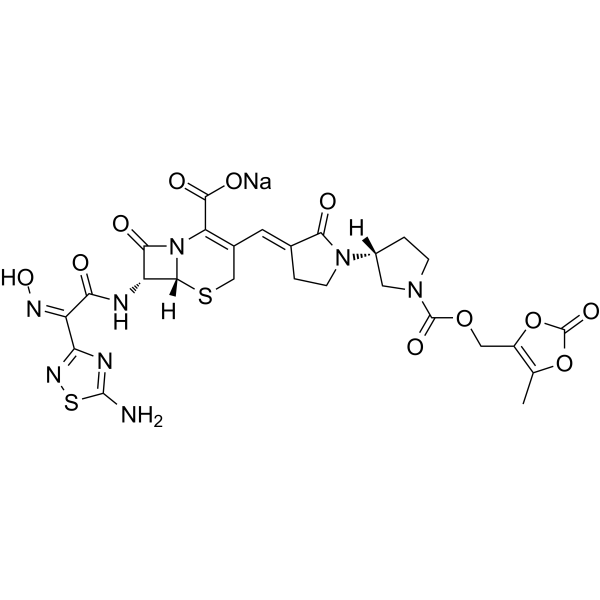
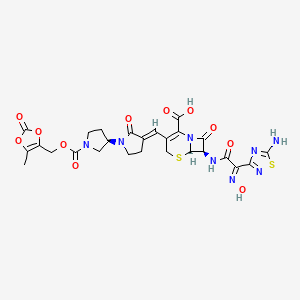
| Molecular Weight | 712.64 |
|---|---|
| Formula | C26H25N8NaO11S2 |
| CAS No. | 252188-71-9 |
| Appearance | Solid |
| Color | Off-white to light yellow |
| SMILES | O=C(C(N(C1=O)[C@@](SC2)([H])[C@@H]1NC(/C(C3=NSC(N)=N3)=N\O)=O)=C2/C=C(CCN4[C@@](CC5)([H])CN5C(OCC(OC6=O)=C(O6)C)=O)/C4=O)O[Na] |
fda approved 4/3/2024, To treat certain bloodstream infections, bacterial skin and associated tissue infections, and community-acquired bacterial pneumonia
Press Release zevtera
Ceftobiprole, sold under the brand name Zevtera among others, is a fifth-generation[5] cephalosporin antibacterial used for the treatment of hospital-acquired pneumonia (excluding ventilator-associated pneumonia) and community-acquired pneumonia. It is marketed by Basilea Pharmaceutica under the brand names Zevtera and Mabelio.[6][7][8][9][10][11] Like other cephalosporins, ceftobiprole exerts its antibacterial activity by binding to important penicillin-binding proteins and inhibiting their transpeptidase activity which is essential for the synthesis of bacterial cell walls. Ceftobiprole has high affinity for penicillin-binding protein 2a of methicillin-resistant Staphylococcus aureus strains and retains its activity against strains that express divergent mecA gene homologues (mecC or mecALGA251). Ceftobiprole also binds to penicillin-binding protein 2b in Streptococcus pneumoniae (penicillin-intermediate), to penicillin-binding protein 2x in Streptococcus pneumoniae (penicillin-resistant), and to penicillin-binding protein 5 in Enterococcus faecalis.[12]
Medical uses
In the US, ceftobiprole is indicated for the treatment of adults with Staphylococcus aureus bloodstream infections (bacteremia) including those with right-sided infective endocarditis;[4] adults with acute bacterial skin and skin structure infections;[4] and people with community-acquired bacterial pneumonia.[4]
Microbiology
Ceftobiprole has shown in vitro antimicrobial activity against a broad range of Gram-positive and Gram-negative pathogens. Among the Gram-positive pathogens, ceftobiprole has demonstrated good in vitro activity against methicillin-resistant Staphylococcus aureus, methicillin-susceptible Staphylococcus aureus and coagulase-negative staphylococci, as well as against strains of methicillin-resistant Staphylococcus aureus with reduced susceptibility to linezolid, daptomycin or vancomycin.[13] Ceftobiprole has also displayed potent activity against Streptococcus pneumoniae (including penicillin-sensitive, penicillin-resistant and ceftriaxone-resistant strains) and Enterococcus faecalis, but not against Enterococcus faecium. For Gram-negative pathogens, ceftobiprole has shown good in vitro activity against Haemophilus influenzae (including both ampicillin-susceptible and ampicillin-non-susceptible isolates), Pseudomonas aeruginosa and strains of Escherichia coli, Klebsiella pneumoniae and Proteus mirabilis that do not produce extended-spectrum β-lactamases (ESBL). Like all other cephalosporins, ceftobiprole was inactive against strains that produce extended-spectrum β-lactamases.[14]
The efficacy of ceftobiprole has been demonstrated in two large randomized, double-blind, phase 3 clinical trials in patients with hospital-acquired and community-acquired pneumonia. Ceftobiprole was non-inferior to ceftazidime plus linezolid in the treatment of hospital-acquired pneumonia (excluding ventilator-acquired pneumonia) and non-inferior to ceftriaxone with or without linezolid in the treatment of community-acquired pneumonia.[15][16]
Pharmacology

(1)_(30204271666).jpg)
Ceftobiprole is the active moiety of the prodrug ceftobiprole medocaril and is available for intravenous treatment only. It is mainly excreted via the kidney.[17]
Society and culture
Legal status
(1)_(29608654394).jpg)
Ceftobiprole has been approved for the treatment of adults with hospital acquired pneumonia (excluding ventilator-acquired pneumonia) and community-acquired pneumonia in twelve European countries, Canada, and Switzerland.[18]
In February 2010, the Committee for Medicinal Products for Human Use of the European Medicines Agency adopted a negative opinion, recommending the refusal of the marketing authorization for the medicinal product Zeftera, intended for treatment of complicated skin and soft-tissue infections in adults. The company that applied for authorization is Janssen-Cilag International N.V. The applicant requested a re-examination of the opinion. After considering the grounds for this request, the CHMP re-examined the opinion, and confirmed the refusal of the marketing authorization in June 2010.[19]
syn

https://www.sciencedirect.com/topics/neuroscience/ceftobiprole
syn
WO2010136423
Processes for producing ceftobiprole medocaril are known per se. What the processes known from the prior art have in common is that, starting from 7-aminocephalosporanic acid, a large number of intermediates have to be produced, isolated and purified in order to obtain ceftobiprole medocaril of the general formula (1) in sufficient purity.
The compound of the general formula (1) is known per se and is described, for example, in WO 99/65920. It can be used for the treatment and prophylaxis of bacterial infectious diseases, especially infectious diseases caused by methicillin-resistant Staphylococcus Aureus strains.
WO 99/65920 describes, as the last step in the production process of ceftobiprole Medocaril, a reaction in which the Medocaril prodrug unit is introduced into a compound of the general formula (2).
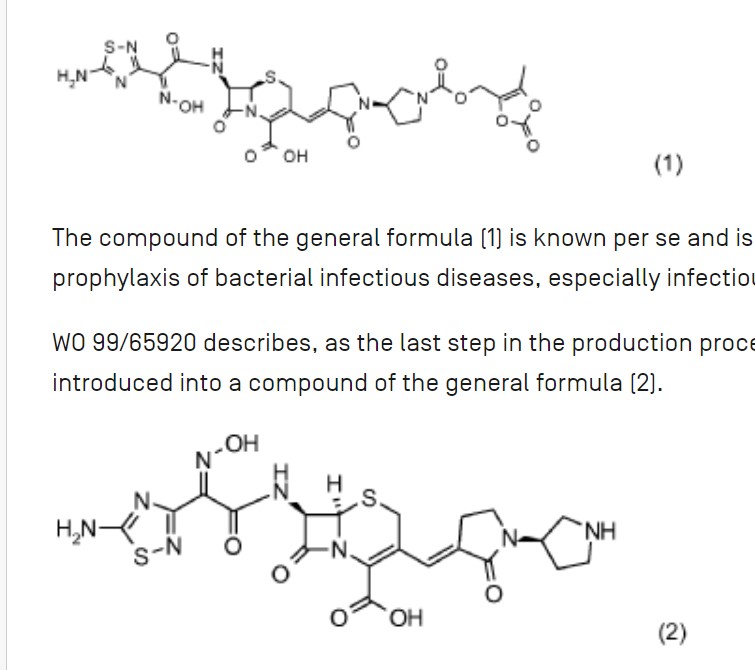
The compound of the general formula (2) is also known per se and has been described, for example, in EP 0 849 269 A1. The compound of the general formula (2) is prepared according to EP 0 849 269 A1 starting from (2R,6R,7R)-te rt. B u toxyc abonylamin o-3-formyl-8-oxo-5-thia-1 -azabicyclo[4.2.0]oct-3-ene-2-carboxylic acid benzhydryl ester by Wittig reaction with (1 ‘-allyloxycarbonyl-2- oxo-[1,3’]bipyrrolidinyl-3-yl)-triphenylphosphonium bromide. The resulting Δ2 reaction product is reisomerized to the desired Δ3 isomer by sulfoxidation and subsequent reduction and then deprotected from the benzhydryl ester with trifluoroacetic acid. The acylation in position 7 occurs by reaction with (Z)-(5-amino-[1,2,4]-thiadiazol-3-yl)-trityloxyiminothioacetic acid S-benzothiazol-2-yl ester. The compound of the general formula (2) is then obtained by removing the protective groups.
In EP 1 067 131 A1 the formation of the ylide in toluene or a mixture of toluene and dichloromethane is tert by adding alkali. Butylate in tetrahydrofuran, which allows the base to be added as a solution. The reaction of the ylide with the corresponding aldehyde is described at a reaction temperature of -70 0 C.
EP 0 841 339 A1 relates to cephalosporin derivatives and processes for their production. WO 95/29182 also discloses intermediates for the production of cephalosporins.
WO 01/90111 describes a further production of ceftobiprole Medocaril in several stages starting from desacetyl-7-aminocephalosporanic acid by acylation with (Z)-(5-amino-[1,2,4]-thiadiazol-3-yl)- trityloxyiminothioacetic acid S-benzothiazol-2-yl ester in N,N-dimethylformamide, followed by in situ esterification with diphenyldiazomethane in dichloromethane to give the corresponding benzohydryl ester, which is precipitated and isolated by adding hexane. In the next step, this product is oxidized to the corresponding aldehyde using TEMPO/NaOCI in dichloromethane/water or with Braunstein in tetrahydrofuran/dichloromethane. The next reaction step involves the Wittig reaction to the 3-vinyl-substituted derivative, in which the reaction takes place in dichloromethane/toluene/tetrahydrofuran at -78°C. The crude product is stirred with ethanol and made from dichloromethane/tert. Butyl methyl ether recrystallized or purified chromatographically. According to the method disclosed in WO 01/901 11, the Wittig reaction is carried out at low temperatures of -80 to -70 0 C in a complex solvent mixture of dichloromethane, toluene and tetrahydrofuran. This leads to significant disadvantages when carrying out the reaction on a production scale, since regeneration of the process solvents is difficult.
EXAMPLES
1. Example: (6R,7R)-7-Amino-3[E-(R)-1′-(5-tert-butyloxycarbonyl)-2-oxo-[I.S’lbipyrrolidinyl-S-ylidenemethyll-β- oxo-S-thia-i -aza-bicyclo^^.Oloct^-ene-2-carboxylic acid
5 , 1 4 g of 7-amino-3-formyl-ceph-3-em-4-carboxy I at was dissolved in 2 7 , 8 m bis(trimethylsilyl)acetamide and 50 ml propylene oxide. 16.8 g of (1 R/S,3’R)-(1′-tert-butyloxycarbonyl-2-oxo-[1,3′]bipyrrolidinyl-3-yl)-triphenylphosphonium bromide (EP1067131, WO02/14332) slowly added in portions. Stirring was continued at 1 ° C until the starting material had reacted and then the crystalline precipitate was added
Nitrogen atmosphere filtered off and washed with 50 ml cyclohexane/bis(tirmethylsilyl)acetamide 99.5/0.5. After drying under vacuum, the desired product was obtained in silylated form.
The material was dissolved in 100ml dichloromethane and at 0 0 C with 50ml 3%
NaHCC> 3 solution added. The phases were separated, the organic phase was washed with 30 ml of water and the combined water phases were adjusted to pH 3.5 with 3% H 3 PO 4 after activated carbon treatment. The crystalline precipitate was filtered, washed with water and dried under vacuum.
Auswaage: 6,09g
1H-nmr(DMSO-d6) δ 1.39(s,9H), 2.00(m, 2H), 2.8-3.2(m, 2H), 3.2-3.5(m,6H), 3.84(ABq, 2H, J= 18.2Hz), 4.57(m,1H), 4.82(d,1H, J=5.1Hz), 5.01 (d,1H, J=5.1Hz), 7.21 (m,1H)
13 C-nmr(DMSO-d 6 ) d 24.63, 26.11 , 28.09, 28.89, 41.54, 44.94, 45.31 , 47.98, 48.34, 51.27, 52.00, 58.98, 63.76, 79.95, 121.95 , 126.19, 126.28, 129.90, 134.21, 154.97 , 164.36, 169.05, 169.13
MS- ESI negative mode: 927.2(2M-H, 100%, 463.1(M-H, 25%)
H2O content: 2.2 %
IR (golden gate, cm“1): 2978, 1793, 1682, 1551, 1397, 1363, 1330
2. Beispiel: (6R,7R)-7-Trimethylsilylamino-3[E-(R)-1′-(5-tert.butyloxycarbonyl)-2- oxo-[1 , 3′]bipyrrolidinyl -3 -ylidenemethyll-δ-oxo-δ-thia-i-aza-bicyclo^^.0]oct- 2-ene-2-carbonsäure trimethylsilylester
10.28 g of 7-amino-3-formyl-ceph-3-em-4-carboxylate were dissolved in 55.6 ml of bis(trimethylsilyl)acetamide and 100 ml of propylene oxide. 33.6 g of (1R/S, 3’R)-(1′-tert. Butyloxycarbonyl-2-oxo-[1,3′]bipyrrolidinyl-3-yl)-triphenylphosphonium bromide (EP1067131, WO02.) were then added at 0 0 C /14332) slowly added in portions over 22 hours. The mixture was stirred at 1° C. until the starting material had reacted and then the reaction mixture was cooled to -20 ° C. The crystalline precipitate was filtered off under a nitrogen atmosphere and washed in portions with 180 ml of cyclohexane/bis(trimethylsilyl)acetamide 99.5/0.5. After drying under vacuum, the bissilylated
Product received.
Weight: 16.2g
1H-nmr(CDCI3) δ 0.04,0.10,0.12(3s, 9H), 0,34(s, 9H), 1,43 (s, 9H), 1.74 (br s, 1H),
1.9-2.2 (m, 2H), 2.8-3.0 (m,2H), 3.2-3.7 (m,8H), 4.7-4.95 (m, 3H), 7.43 (m, 1H)
3. Beispiel: Dicyclohexylammonium (6R,7R)-7-Amino-3[E-(R)-1′-(5-tert. butyloxycarbonyl)-2-oxo-[1 ,3′]bipyrrolidinyl-3-ylidenemethyl]-8-oxo-5-thia-1 – aza-bicyclo[4.2.0]oct-2-ene-2-carboxylat
1.0g (6R,7R)-7-Trimethylsilylamino-3[E-(R)-1′-(5-tert.butyloxycarbonyl)-2-oxo-[I.Slbipyrrolidinyl-S-ylidenemethyO-δ-oxo-δ -thia-i-aza-bicyclo^^.Oloct^-ene^- carboxylic acid trimethylsilyl esters were dissolved in 10ml dichloromethane and a solution of 300mg dicyclohexylamine in 1ml EtOH and 10ml ethyl acetate was added. The precipitate was filtered off, washed with ethyl acetate and dried in vacuo.
Auswaage: 0,9g 1H-nmr(D2O/DMSO-d6) δ 0.9-1 .3(m, 10H), 1 .30(s,9H), 1 .4-2.18m,12H), 2.7- 3.5(01,1 OH), 3.64(ABq, J= 17.2Hz, 2H), 4.5 (m,1 H) * , 4.58 (d,1 H, J=5.1 Hz); 4.88 (d,1 H, J=5.1 Hz), 7.07 (s,1 H)
* partly overlaid by D20 signal
MS- ESI negative mode: 927.2(2M-H, 100%), 463.1 (M-H, 25%)
IR (golden gate, cm “1): 2932, 2856, 1754, 1692, 1671 , 1630, 1569, 1394, 1329
4. Specifically: (6R, 7R )-7-[(Z)-2-(5-Amino-[1 ,2,4]thiadiazol-3-yl)-2-hydroxyimino- acetylamino]-8-oxo- 3-[(E)-(R)-2-oxo-[1 , 3′]bipyrrolidinyl-3-ylidenemethyl]-5-thia-1-aza-bicyclo[4.2.0]oct-2-jen-2 carbons Trifluoroacetate
4.1 Variant A:
3.0g (6R,7R)-7-Amino-3[E-(R)-1′-(5-tert-butyloxycarbonyl)-2-oxo-[1,3′]bipyrrolidinyl-3-ylidenemethyl]-8 -oxo-5-thia-1-aza-bicyclo[4.2.0]oct-2-ene-2-carboxylic acid in silylated form was dissolved in 150 ml of dichloromethane at 0°. 600 μl of DMF/water 5/1 and 1.8 ml of bis(trimethylsilyl) acetamide and 2.29 g of 2-trityloxyimino-2-(5-amino-1,2,4-thiadiazol-3-yl) acetic acid chloride were then added Hydrochoride (J. Antibiotics 37:557 – 571, 1984) was added in portions.
After 3 hours at 0°, the mixture was poured into 30 ml MeOH/120 ml water and the methylene chloride phase was separated off. The organic phase was concentrated to 66g and 25ml of trifluoroacetic acid was added. After 10 minutes, 1.5 ml triethylsilane and 10 ml water were added and the mixture was cooled to -15 ° C. The organic phase was separated off and again with 6 ml
Washed trifluoroacetic acid/water 1/1. The combined aqueous phases were diluted to 150 ml with water and filtered through an adsorber resin column with XAD-1600. After washing out the column with water, elution was carried out with water/acetonitrile 85/15. The product-containing fractions were concentrated in vacuo and allowed to stand at 0° for post-crystallization. The crystalline
Product was filtered off, washed with water and dried under vacuum.
Auswaage: 2,66g
4.2 Variant B:
7.4g (6R,7R)-7-Amino-3[E-(R)-1′-(5-tert-butyloxycarbonyl)-2-oxo-[1,3′]bipyrrolidinyl-3-ylidenemethyl]-8 -oxo-5-thia-1-aza-bicyclo[4.2.0]oct-2-ene-2-carboxylic acid was dissolved at 0° in 781 ml of dichloromethane with the addition of 6.7 ml of triethylamine. 8.65 g of 2-trityloxyimino-2-(5-amino-1,2,4-thiadiazol-3-yl)-acetic acid chloride hydrochloride were then added in portions. After the starting material had reacted, the mixture was poured into 500 ml of water and the methylene chloride phase was separated off. The organic phase was dried over Na 2 SC> 4 and concentrated in vacuo.
The residue was dissolved in 148 ml of dichloromethane and 4.5 ml of triethylsilane and 74 ml of trifluoroacetic acid were added at room temperature. After 30 minutes, 222 ml of dichloromethane and 222 ml of water were added and the mixture was cooled to -20 0 C. The organic phase was separated off and washed again with a mixture of 37 ml of trifluoroacetic acid and 148 ml of water. The combined aqueous phases were diluted with water to 364 ml, filtered through an adsorber resin and eluted with acetonitrile/water 15/85.
The filtrate was concentrated to 35g on a Rotavapor, filtered and washed with water.
After drying in a vacuum, 4.5 g of the sample was obtained.
1H-nmr(DMSO-d6) δ 1.9-2.2(m,2H), 2.8-3.5(m, 8H), 3.85(Abq, 2H; J=18.3Hz), 4.63(m,1 H), 5.16(d, 2H, J=4.9Hz), 5.85(dd, 1 H, J1 = 4.9Hz, J2=8.4Hz), 7.23(s, 1 H),
8.06(s, 2H), 9.08 (br. s, 2H), 9.49(d, 2H, J=8.4Hz), 1 1.95 (s, 1 H)
5. Being typical: (6R.7R )-7-[(Z)-2-(5-Amino-[1 ,2,4]thiadiazol-3-yl)-2-hydroxyimino- acetylamino]- 8-oxo- . 3-[(E)-(R)-2-oxo-[1 ,3′]bipyrrolidinyl-3-ylidenemethyl]-5- thia-1 -aza-bicyclo[4.2.0]oct-2-jan-2 carbons
6.0g (6R,7R)-7-Amino-3[E-(R)-1′-(5-tert-butyloxycarbonyl)-2-oxo-[1,3′]bipyrrolidinyl-3-ylidenemethyl]-8 -oxo-5-thia-1-aza-bicyclo[4.2.0]oct-2-ene-2-carboxylic acid in silylated form was dissolved in 300 ml of dichloromethane at 0°. 1200 μl of DMF/water 5/1 and 8.1 ml of bis(tirmethylsilyl)acetamide were then added as well as 5.3g of 2-trityloxyimino-2-(5-amino-1,2,4-thiadiazol-3-yl)acetic acid chloride Hydrochoride (J. Antibiotics 37:557 – 571, 1984) added in portions. The mixture was then poured into 60 ml MeOH/240 ml water and the methylene chloride phase was separated off. The organic phase was concentrated to 48g and 1.5 ml of triethylsilane was added. After adding 50ml
Trifluoroacetic acid was stirred at room temperature for 60 min, 20 ml of water was added and the mixture was cooled to -15°C. The organic phase was separated off and washed again with 20 ml trifluoroacetic acid/water 1/1. The combined aqueous phases were diluted to 500 ml with water and treated with 2.0 g of activated carbon. After filtration, the solution was concentrated in vacuo.
The residue was diluted to 50 ml with water and adjusted to pH 6.9 with saturated NaHCO 3 solution. The mixture was stirred at 0 0 C for 2 hours, filtered and the precipitate washed with water.
Auswaage: 4,5g
1H-nmr(DMSO-d6/CF3COOD) δ 1.9-2.3(m,2H), 2.8-3.5(m,8H), 3.85(ABq, 2H, 18.7Hz), 4.61 (m,1 H), 5.16(d, 1 H,J=4.8Hz), 5.86(dd, 1 H,J1 =4.8Hz, J2=8.4Hz),
7.24(s,1 H), 8.05(br s, 2H), 8.93(s, 2H), 9.50(d,1 H,J=8.4Hz), 11.96(s, 1 H)
MS- ESI negative mode: 533.2(M-H, 10%)
6. Beispiel: Ceftobiprol Medocaril Na-SaIz
0, 5 3 g ( 6 R , 7 R )-7-[(Z)-2-(5-amino-[1,2,4]thiadiazol-3-yl)-2-hydroxyimino-acetylamino]-8- oxo-3-[(E)-(R)-2-oxo-[1,3′]bipyrrolidinyl-3-ylidenemethyl]-5-thia-1 – aza-bicyclo[4.2.0]oct-2-ene- 2 carboxylic acid were dissolved in 5 ml of dimethyl sulfoxide and 0.27 g of carbonic acid (5-methyl-2-oxo-[1,3]dioxol-4-ylmethyl)-4-nitrophenyl ester were added and stirred at room temperature. A solution of sodium ethyl hexanoate in 30 ml of acetone was added for precipitation. The precipitate was filtered and washed with acetone.
Auswaage: 0,6g
1H-nmr(DMSO-d6) δ 1.9-2.05(m, 2H), 2.10(s,3H), 2.7-3.1 (m,2H), 3.1-3.6(m,6H), 3.64(q, 2H; J=17.1 Hz), 4.56(m,1 H), 4.87(s,2H), 4.98(d,1 H,J=4.9Hz), 5.65(dd,1 H,J1 =4.9Hz, J2=8.4Hz), 7.34(s,1 H), 8.02(s,2H), 9.36(d,1 H,J=8.4Hz)
MS- ESI negative mode: 689.0(M-H, 100%)
| Clinical data | |
|---|---|
| Trade names | Zevtera, Mabelio |
| Other names | RO0639141-000,[1] BAL9141,[2] ceftobiprole medocaril |
| AHFS/Drugs.com | International Drug Names |
| License data | US DailyMed: Ceftobiprole |
| Routes of administration | Intravenous |
| Drug class | Cephalosporin antibacterial |
| ATC code | J01DI01 (WHO) |
| Legal status | |
| Legal status | AU: S4 (Prescription only)[3]UK: POM (Prescription only)US: ℞-only[4]In general: ℞ (Prescription only) |
| Identifiers | |
| showIUPAC name | |
| CAS Number | 209467-52-7 252188-71-9 |
| PubChem CID | 6918430 |
| DrugBank | DB04918 |
| ChemSpider | 23350302 |
| UNII | 5T97333YZK |
| KEGG | D08885 |
| ChEMBL | ChEMBL520642 |
| CompTox Dashboard (EPA) | DTXSID40870229 |
| ECHA InfoCard | 100.129.666 |
| Chemical and physical data | |
| Formula | C20H22N8O6S2 |
| Molar mass | 534.57 g·mol−1 |
| 3D model (JSmol) | Interactive image |
| hideSMILESC1CNC[C@@H]1N2CC/C(=C\C3=C(N4[C@@H]([C@@H](C4=O)NC(=O)/C(=N\O)/c5nc(sn5)N)SC3)C(=O)O)/C2=O | |
| hideInChIInChI=1S/C20H22N8O6S2/c21-20-24-14(26-36-20)11(25-34)15(29)23-12-17(31)28-13(19(32)33)9(7-35-18(12)28)5-8-2-4-27(16(8)30)10-1-3-22-6-10/h5,10,12,18,22,34H,1-4,6-7H2,(H,23,29)(H,32,33)(H2,21,24,26)/b8-5+,25-11-/t10-,12-,18-/m1/s1 Key:VOAZJEPQLGBXGO-SDAWRPRTSA-N | |
| (what is this?) (verify) | |
References
- ^ Hebeisen P, Heinze-Krauss I, Angehrn P, Hohl P, Page MG, Then RL (March 2001). “In vitro and in vivo properties of Ro 63-9141, a novel broad-spectrum cephalosporin with activity against methicillin-resistant staphylococci”. Antimicrobial Agents and Chemotherapy. 45 (3): 825–836. doi:10.1128/AAC.45.3.825-836.2001. PMC 90381. PMID 11181368.
- ^ Jones RN, Deshpande LM, Mutnick AH, Biedenbach DJ (December 2002). “In vitro evaluation of BAL9141, a novel parenteral cephalosporin active against oxacillin-resistant staphylococci”. The Journal of Antimicrobial Chemotherapy. 50 (6): 915–932. doi:10.1093/jac/dkf249. PMID 12461013.
- ^ “Prescription medicines: registration of new chemical entities in Australia, 2015”. Therapeutic Goods Administration (TGA). 21 June 2022. Archived from the original on 10 April 2023. Retrieved 10 April 2023.
- ^ Jump up to:a b c d https://www.accessdata.fda.gov/drugsatfda_docs/label/2024/218275s000lbl.pdf
- ^ Scheeren TW (1 January 2015). “Ceftobiprole medocaril in the treatment of hospital-acquired pneumonia”. Future Microbiology. 10 (12): 1913–1928. doi:10.2217/fmb.15.115. PMID 26573022.
- ^ “Basilea announces distribution agreement with Cardiome to commercialize antibiotic Zevtera/Mabelio (ceftobiprole) in Europe and Israel”. Basilea (Press release). 12 September 2017. Retrieved 7 April 2024.
- ^ “Basilea to launch Zevtera/Mabelio (ceftobiprole medocaril) in Europe through a commercial services provider” (Press release). Basilea Pharmaceutica. Archived from the original on 31 March 2019. Retrieved 20 September 2016.
- ^ “Basilea announces launch of antibiotic Zevtera (ceftobiprole medocaril) in Germany”. Basilea (Press release). 5 December 2014. Retrieved 7 April 2024.
- ^ “Swissmedic approves Basilea’s antibiotic Zevtera (ceftobiprole medocaril) for the treatment of pneumonia”. Basilea (Press release). 22 December 2014. Retrieved 7 April 2024.
- ^ “Basilea signs exclusive distribution agreement for Zevtera (ceftobiprole medocaril) in the Middle East and North Africa with Hikma Pharmaceuticals LLC”. Basilea (Press release). 15 October 2015. Retrieved 7 April 2024.
- ^ “Basilea announces that Health Canada approved Zevtera for the treatment of bacterial lung infections”. Basilea (Press release). 12 October 2015. Retrieved 7 April 2024.
- ^ Syed YY (September 2014). “Ceftobiprole medocaril: a review of its use in patients with hospital- or community-acquired pneumonia”. Drugs. 74 (13): 1523–1542. doi:10.1007/s40265-014-0273-x. PMID 25117196. S2CID 2925496.
- ^ Zhanel GG, Lam A, Schweizer F, Thomson K, Walkty A, Rubinstein E, et al. (2008). “Ceftobiprole: a review of a broad-spectrum and anti-MRSA cephalosporin”. American Journal of Clinical Dermatology. 9 (4): 245–254. doi:10.2165/00128071-200809040-00004. PMID 18572975. S2CID 24357533.
- ^ Farrell DJ, Flamm RK, Sader HS, Jones RN (July 2014). “Ceftobiprole activity against over 60,000 clinical bacterial pathogens isolated in Europe, Turkey, and Israel from 2005 to 2010”. Antimicrobial Agents and Chemotherapy. 58 (7): 3882–3888. doi:10.1128/AAC.02465-14. PMC 4068590. PMID 24777091.
- ^ Farrell DJ, Flamm RK, Sader HS, Jones RN (April 2014). “Activity of ceftobiprole against methicillin-resistant Staphylococcus aureus strains with reduced susceptibility to daptomycin, linezolid or vancomycin, and strains with defined SCCmec types”. International Journal of Antimicrobial Agents. 43 (4): 323–327. doi:10.1016/j.ijantimicag.2013.11.005. PMID 24411474.
- ^ Nicholson SC, Welte T, File TM, Strauss RS, Michiels B, Kaul P, et al. (March 2012). “A randomised, double-blind trial comparing ceftobiprole medocaril with ceftriaxone with or without linezolid for the treatment of patients with community-acquired pneumonia requiring hospitalisation”. International Journal of Antimicrobial Agents. 39 (3): 240–246. doi:10.1016/j.ijantimicag.2011.11.005. PMID 22230331.
- ^ Awad SS, Rodriguez AH, Chuang YC, Marjanek Z, Pareigis AJ, Reis G, et al. (July 2014). “A phase 3 randomized double-blind comparison of ceftobiprole medocaril versus ceftazidime plus linezolid for the treatment of hospital-acquired pneumonia”. Clinical Infectious Diseases. 59 (1): 51–61. doi:10.1093/cid/ciu219. PMC 4305133. PMID 24723282.
- ^ “Zevtera 500 mg powder for concentrate for solution for infusion – Summary of Product Characteristics (SmPC)”. (emc). 5 April 2023. Retrieved 1 June 2023.
- ^ “Zeftera (previously Zevtera) EPAR”. European Medicines Agency (EMA). 18 February 2010. Retrieved 6 April 2024. Text was copied from this source which is copyright European Medicines Agency. Reproduction is authorized provided the source is acknowledged.
External links
- Clinical trial number NCT03138733 for “Ceftobiprole in the Treatment of Patients With Staphylococcus Aureus Bacteremia” at ClinicalTrials.gov
- Clinical trial number NCT03137173 for “Ceftobiprole in the Treatment of Patients With Acute Bacterial Skin and Skin Structure Infections” at ClinicalTrials.gov
- Clinical trial number NCT00326287 for “Ceftobiprole in the Treatment of Patients With Community-Acquired Pneumonia” at ClinicalTrials.gov
- Clinical trial number NCT03439124 for “Ceftobiprole in the Treatment of Pediatric Patients With Pneumonia” at ClinicalTrials.gov
////////Ceftobiprole, BAL-9141, BAL-9141-000, BAL-9141000, BAL9141-000, RO 63-9141, RO-63-9141, RO-639141, fda 2024, zevtera, approvals 2024, Ceftobiprole medocaril sodium salt
[H][C@@]1(NC(=O)C(=N/O)\C2=NSC(N)=N2)C(=O)N2C(C(O)=O)=C(CS[C@]12[H])\C=C1/CCN(C1=O)[C@]1([H])CCNC1
DANICOPAN

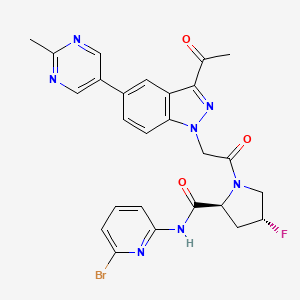
Danicopan
USFDA 3/29/2024, To treat extravascular hemolysis with paroxysmal nocturnal hemoglobinuria, Voydeya
C26H23BrFN7O3
580.418
(2S,4R)-1-[2-[3-acetyl-5-(2-methylpyrimidin-5-yl)indazol-1-yl]acetyl]-N-(6-bromopyridin-2-yl)-4-fluoropyrrolidine-2-carboxamide
- ACH 0144471
- ACH-4471
- ACH0144471
- ALXN 2040
- ALXN-2040
- ALXN2040
Danicopan, sold under the brand name Voydeya, is a medication used for the treatment of paroxysmal nocturnal hemoglobinuria.[2] It is a complement inhibitor which reversibly binds to factor D to prevent alternative pathway-mediated hemolysis and deposition of complement C3 proteins on red blood cells.[2]
Danicopan was approved for medical use in Japan in January 2024, and in the United States in March 2024.[3][4]
Paroxysmal nocturnal hemoglobinuria (PNH) is a rare acquired hematologic disease characterized by hemolysis, thrombophilia, and bone marrow dysfunction.1,7 Both hemolysis and thrombophilia are mediated primarily by the complement system.1 Standard therapy for PNH involves the use of complement C5 inhibitors (e.g. eculizumab, ravulizumab) which are effective in mitigating complement-mediated intravascular hemolysis and thromboembolism.1 Unfortunately, complement C5 inhibition does not address C3-mediated extravascular hemolysis, which occurs earlier in the complement cascade within the alternative pathway.1,5
Danicopan is a small molecule complement factor D inhibitor that selectively blocks the alternative pathway, thereby working to address extravascular hemolysis when used in conjunction with C5 inhibitors.3 It was first approved in January 2024 in Japan for patients with PNH,2,6 shortly after which the EMA adopted a positive opinion and recommended granting it marketing authorization.2 It was subsequently approved by the FDA in March 2024.4
SYN
WO2015130795
SYN
https://patents.google.com/patent/US9796741

SYN
PAT
https://patents.google.com/patent/US20230094124A1/en
https://patents.google.com/patent/US20230094124A1/en


- Step 1: Synthesis of tert-Butyl (2S,4R)-2-((6-bromopyridin-2-yl)carbamoyl) fluoropyrrolidine-1-carboxylate (3): N-Boc-trans-4-Fluoro-L-proline (50.8 kg) was added to DCM (1000 L) in a glass-lined reactor under an atmosphere of nitrogen. The reaction mixture was cooled to 0±5° C. and N-methylimidazole (44.7 kg) was added while maintaining the temperature at 0±5° C. Methanesulfonyl chloride (29.97 kg) was slowly added to the reaction mixture followed by the addition of 2-amino-6-bromopyridine (2). The reaction temperature was warmed to room temperature and stirred for 12 h. The reaction was monitored by HPLC. After completion of the reaction water (2,000 kg) was added, the reaction was stirred and the DCM layer separated. The aqueous layer was once more extracted with DCM (1000 L). The combined DCM layer was washed in succession with dilute HCl, aqueous NaHCO3 and brine. The DCM extract was evaporated to dryness and tert-butyl (2S,4R)-2-((6-bromopyridin-2-yl)carbamoyl)-4-fluoropyrrolidine-1-carboxylate (3) was isolated using DCM heptane mixture and dried. Yield, 71.76 Kg (84.86%))
- [0404]
Step 2: Synthesis of (2S,4R)-N-(6-Bromopyridin-2-yl)-4-fluoropyrrolidine-2-carboxamide (4): To a solution 4M HCl/Dioxane (168 kg) was added intermediate 3 (40 kg) at 25±5° C. under an atmosphere of nitrogen and the reaction was stirred for 1 h. The reaction was monitored by HPLC and after completion, the reaction was diluted with DCM (800 L) and washed with aqueous NaHCO3. The DCM layer was separated and concentrated. The product, 2S,4R)-N-(6-bromopyridin-2-yl)-4-fluoropyrrolidine-2-carboxamide, (4), was isolated using DCM/heptane and dried. Yield, 25.81 kg, 87%. - [0405]
Step 3: Synthesis of tert-Butyl 2-(3-acetyl-5-bromo-1H-indazol-1-yl)acetate (6): 1-(5-Bromo-1H-indazol-yl)ethan-1-one (5, 30 kg) was added to a reactor containing DMF (210 L) under an atmosphere of nitrogen followed by potassium carbonate (4.05 kg). Tert-butyl bromoacetate (3.42 kg) was added to the reaction mixture with stirring and maintaining the temperature at 30±10° C. After addition was complete, the reaction mixture was heated at 50±5° C. for 1 h. After the reaction was complete the reaction mixture was cooled to 25±5° C. and diluted with water (630 L). The precipitated solid was filtered, washed with water (90 L) and dried. Yield, 43.13 kg, 97.13%. - [0406]
Step 4: Synthesis of tert-Butyl 2-(3-acetyl-5-(2-methylpyrimidin-5-yl)-1H-indazol-1-yl)acetate (9): Bispinnacolato diboron (14.67 kg) was added to a solution of 4-bromo methylpyrimidine (7, 10 kg) in dioxane (206 kg) under an atmosphere of nitrogen followed by the addition of potassium acetate (17 kg). The reaction mixture was degassed using nitrogen. Pd(dppf)Cl2 (0.94 kg) was added and the reaction mixture heated to 90±5° C. until the pyrimidine was consumed. The reaction mixture was cooled to 25±5° C. and intermediate 6 (16.33 kg) was added followed by potassium carbonate (20.7 kg) and water (16.33 kg) and the reaction was degassed using nitrogen. The reaction was again heated to 90±5° C. until completion. The reaction mixture was cooled to 25±5° C. and diluted with ethyl acetate (269 kg) and water (150 kg) maintaining the temp at 10±5° C. Activated charcoal (1 kg) was added to the mixture with stirring and then filtered through a bed of celite. The ethyl acetate layer was separated, washed with 5% aqueous sodium chloride followed by 5% L-Cysteine solution to remove palladium related impurities. The ethyl acetate layer was evaporated to dryness. The product (9) was isolated from MTBE/heptane. Yield, 11.8 kg, 56%. - [0407]
Step 5: Synthesis of 2-(3-Acetyl-5-(2-methylpyrimidin-5-yl)-1H-indazol-1-yl)acetic acid (10): To a stirred solution of intermediate 9 (50 kg) in DCM (465 kg) at 15±5° C. was added TFA (374.5 kg) while maintaining the said temperature. The reaction was warmed to 35±5° C. and stirring continued until completion of the reaction. DCM and TFA were distilled off under reduced pressure. The residue was dissolved in DCM (kg) and stirred with aqueous sodium bicarbonate. The biphasic mixture was acidified with concentrated HCl and the pH was adjusted to 2-3. The precipitated solid was filtered, washed with water and dried. Yield, 42.4 kg, quantitative. - [0408]
Step 6: Synthesis of Compound 1: To a solution of intermediate 9 (42 kg) in DMF (277 kg) was added intermediate 4 (38.7 kg) and the reaction was cooled to 10±5° C. Coupling agent TBTU (56.7 kg) was added to the reaction mixture followed by the addition of DIPEA (86.5 kg) while maintaining the reaction temperature at 10±5° C. The reaction was warmed to 25±+5° C. and stirred until complete. The reaction mixture was diluted with ethyl acetate (1344 kg) and washed with water twice. (The reaction may be washed with aq. K2CO3 if fluorine related impurities are present.) Anhydrous sodium sulfate was added to silica gel and added to the ethyl acetate layer and filtered. The ethyl acetate layer was passed over a column of silica gel (40 kg) and the pure fractions were collected. The fractions were treated with activated charcoal and then filtered over celite. The palladium content was checked, and if above 10 ppm, the ethyl acetate layer was treated with palladium scavenging resin (SilabondThiol®). The ethyl acetate was evaporated to dryness under vacuum and the residue was crystallized from IPA (crystalline seed may be added) and heptane to afford Compound 1 Form II. Yield, 60 kg, 78%.
Society and culture
Legal status
In February 2024, the Committee for Medicinal Products for Human Use of the EMA adopted a positive opinion, recommending the granting of a marketing authorization for the medicinal product Voydeya, intended as add-on therapy to ravulizumab or eculizumab for the treatment of residual hemolytic anemia in adults with paroxysmal nocturnal hemoglobinuria (PNH).[2][5] The applicant for this medicinal product is Alexion Europe.[2]
Names
Danicopan is the international nonproprietary name.[6]
| Clinical data | |
|---|---|
| Trade names | Voydeya |
| Other names | ACH-4471 |
| Routes of administration | By mouth |
| Drug class | Complement factor D inhibitor |
| ATC code | L04AJ09 (WHO) |
| Legal status | |
| Legal status | US: ℞-only[1]In general: ℞ (Prescription only) |
| Identifiers | |
| showIUPAC name | |
| CAS Number | 1903768-17-1 |
| DrugBank | DB15401 |
| ChemSpider | 75531295 |
| UNII | JM8C1SFX0U |
| KEGG | D11641 |
| ChEMBL | ChEMBL4250860 |
| ECHA InfoCard | 100.398.865 |
| Chemical and physical data | |
| Formula | C6H3BrFN7O3 |
| Molar mass | 320.038 g·mol−1 |
| 3D model (JSmol) | Interactive image |
| hideSMILESCC(=O)C1=NN(CC(=O)N2C[C@H](F)C[C@H]2C(=O)NC2=CC=CC(Br)=N2)C2=C1C=C(C=C2)C1=CN=C(C)N=C1 | |
| hideInChIInChI=1S/C26H23BrFN7O3/c1-14(36)25-19-8-16(17-10-29-15(2)30-11-17)6-7-20(19)35(33-25)13-24(37)34-12-18(28)9-21(34)26(38)32-23-5-3-4-22(27)31-23/h3-8,10-11,18,21H,9,12-13H2,1-2H3,(H,31,32,38)/t18-,21+/m1/s1Key:PIBARDGJJAGJAJ-NQIIRXRSSA-N | |
References
- ^ “Novel Drug Approvals for 2024”. U.S. Food and Drug Administration. 1 April 2024. Retrieved 2 April 2024.
- ^ Jump up to:a b c d “Voydeya EPAR”. European Medicines Agency. 22 February 2024. Archived from the original on 23 February 2024. Retrieved 24 February 2024. Text was copied from this source which is copyright European Medicines Agency. Reproduction is authorized provided the source is acknowledged.
- ^ “Voydeya (danicopan) granted first-ever regulatory approval in Japan for adults with PNH to be used in combination with C5 inhibitor therapy”. AstraZeneca (Press release). 19 January 2024. Archived from the original on 24 February 2024. Retrieved 24 February 2024.
- ^ Research Cf (4 April 2024). “Novel Drug Approvals for 2024”. FDA.
- ^ “First oral treatment against residual hemolytic anemia in patients with paroxysmal nocturnal hemoglobinuria”. European Medicines Agency (EMA) (Press release). 23 February 2024. Retrieved 24 February 2024.
- ^ World Health Organization (2019). “International nonproprietary names for pharmaceutical substances (INN): recommended INN: list 81”. WHO Drug Information. 33 (1). hdl:10665/330896.
Further reading
- Lee JW, Griffin M, Kim JS, Lee Lee LW, Piatek C, Nishimura JI, et al. (December 2023). “Addition of danicopan to ravulizumab or eculizumab in patients with paroxysmal nocturnal haemoglobinuria and clinically significant extravascular haemolysis (ALPHA): a double-blind, randomised, phase 3 trial”. The Lancet. Haematology. 10 (12): e955–e965. doi:10.1016/S2352-3026(23)00315-0. PMID 38030318.
External links
- “Danicopan (Code C148181)”. NCI Thesaurus.
//////////fda 2024, Voydeya, danicopan, approvals 2024, ACH-4471, ACH 4471, ACH 0144471, ACH-4471, ACH0144471, ALXN 2040, ALXN-2040, ALXN2040


 New Drug Approvals

