New Drug Approvals

Home » 2020 » March (Page 2)

Monthly Archives: March 2020

DRUG APPROVALS BY DR ANTHONY MELVIN CRASTO .....FOR BLOG HOME CLICK HERE

Blog Stats

  • 4,809,449 hits

Flag and hits

Flag Counter

Enter your email address to follow this blog and receive notifications of new posts by email.

Join 37.9K other subscribers
Follow New Drug Approvals on WordPress.com

Archives

Categories

Recent Posts

Flag Counter

ORGANIC SPECTROSCOPY

Read all about Organic Spectroscopy on ORGANIC SPECTROSCOPY INTERNATIONAL 

Enter your email address to follow this blog and receive notifications of new posts by email.

Join 37.9K other subscribers
DR ANTHONY MELVIN CRASTO Ph.D

DR ANTHONY MELVIN CRASTO Ph.D

DR ANTHONY MELVIN CRASTO, Born in Mumbai in 1964 and graduated from Mumbai University, Completed his Ph.D from ICT, 1991,Matunga, Mumbai, India, in Organic Chemistry, The thesis topic was Synthesis of Novel Pyrethroid Analogues, Currently he is working with AFRICURE PHARMA, ROW2TECH, NIPER-G, Department of Pharmaceuticals, Ministry of Chemicals and Fertilizers, Govt. of India as ADVISOR, earlier assignment was with GLENMARK LIFE SCIENCES LTD, as CONSUlTANT, Retired from GLENMARK in Jan2022 Research Centre as Principal Scientist, Process Research (bulk actives) at Mahape, Navi Mumbai, India. Total Industry exp 32 plus yrs, Prior to joining Glenmark, he has worked with major multinationals like Hoechst Marion Roussel, now Sanofi, Searle India Ltd, now RPG lifesciences, etc. He has worked with notable scientists like Dr K Nagarajan, Dr Ralph Stapel, Prof S Seshadri, etc, He did custom synthesis for major multinationals in his career like BASF, Novartis, Sanofi, etc., He has worked in Discovery, Natural products, Bulk drugs, Generics, Intermediates, Fine chemicals, Neutraceuticals, GMP, Scaleups, etc, he is now helping millions, has 9 million plus hits on Google on all Organic chemistry websites. His friends call him Open superstar worlddrugtracker. His New Drug Approvals, Green Chemistry International, All about drugs, Eurekamoments, Organic spectroscopy international, etc in organic chemistry are some most read blogs He has hands on experience in initiation and developing novel routes for drug molecules and implementation them on commercial scale over a 32 PLUS year tenure till date Feb 2023, Around 35 plus products in his career. He has good knowledge of IPM, GMP, Regulatory aspects, he has several International patents published worldwide . He has good proficiency in Technology transfer, Spectroscopy, Stereochemistry, Synthesis, Polymorphism etc., He suffered a paralytic stroke/ Acute Transverse mylitis in Dec 2007 and is 90 %Paralysed, He is bound to a wheelchair, this seems to have injected feul in him to help chemists all around the world, he is more active than before and is pushing boundaries, He has 100 million plus hits on Google, 2.5 lakh plus connections on all networking sites, 100 Lakh plus views on dozen plus blogs, 227 countries, 7 continents, He makes himself available to all, contact him on +91 9323115463, email amcrasto@gmail.com, Twitter, @amcrasto , He lives and will die for his family, 90% paralysis cannot kill his soul., Notably he has 38 lakh plus views on New Drug Approvals Blog in 227 countries......https://newdrugapprovals.wordpress.com/ , He appreciates the help he gets from one and all, Friends, Family, Glenmark, Readers, Wellwishers, Doctors, Drug authorities, His Contacts, Physiotherapist, etc He has total of 32 International and Indian awards

Verified Services

View Full Profile →

Archives

Categories

Flag Counter

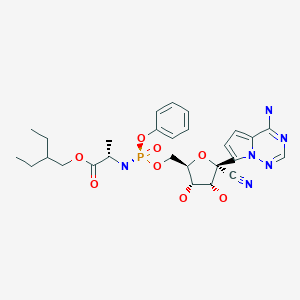
Remdesivir, レムデシビル , ремдесивир , ريمديسيفير , 瑞德西韦 ,


Remdesivir (USAN.png

GS-5734 structure.png

ChemSpider 2D Image | remdesivir | C27H35N6O8P

Remdesivir

Formula
C27H35N6O8P
CAS
1809249-37-3
Mol weight
602.576

レムデシビル

UNII:3QKI37EEHE
ремдесивир [Russian] [INN]
ريمديسيفير [Arabic] [INN]
瑞德西韦 [Chinese] [INN]
 
2-Ethylbutyl (2S)-2-{[(S)-{[(2R,3S,4R,5R)-5-(4-aminopyrrolo[2,1-f][1,2,4]triazin-7-yl)-5-cyano-3,4-dihydroxytetrahydro-2-furanyl]methoxy}(phenoxy)phosphoryl]amino}propanoate (non-preferred name)

L-Alanine, N-((S)-hydroxyphenoxyphosphinyl)-, 2-ethylbutyl ester, 6-ester with 2-C-(4-aminopyrrolo(2,1-f)(1,2,4)triazin-7-yl)-2,5-anhydro-D-altrononitrile

2-Ethylbutyl (2S)-2-(((S)-(((2R,3S,4R,5R)-5-(4-aminopyrrolo(2,1-f)(1,2,4)triazin-7-yl)-5-cyano-3,4-dihydroxytetrahydrofuran-2-yl)methoxy)(phenoxy)phosphoryl)amino)propanoate

  • 2-Ethylbutyl (2S)-2-[[(S)-[[(2R,3S,4R,5R)-5-(4-aminopyrrolo(2,1-f)(1,2,4)triazin-7-yl)-5-cyano-3,4-dihydroxytetrahydrofuran-2-yl]methoxy]phenoxyphosphoryl]amino]propanoate
  • 2-Ethylbutyl (2S)-2-[[[[(2R,3S,4R,5R)-5-(4-aminopyrrolo(2,1-f)(1,2,4)triazin-7-yl)-5-cyano-3,4-dihydroxytetrahydrofuran-2-yl]methoxy]phenoxyphosphoryl]amino]propanoate
  • 2-Ethylbutyl N-[(S)-[2-C-(4-aminopyrrolo(2,1-f)(1,2,4)triazin-7-yl)-2,5-anhydro-D-altrononitril-6-O-yl]phenoxyphosphoryl]-L-alaninate
  • GS 5734
  • L-Alanine, N-[(S)-hydroxyphenoxyphosphinyl)-, 2-ethylbutyl ester,6-ester with 2-C-(4-aminopyrrolo[2,1-f][1,2,4]triazin-7-yl)-2,5-anhydro-D-altrononitrile
 
GS-5734

Treatment of viral infections

Phase III, clinical trials for the treatment of hospitalized patients with severe acute respiratory syndrome coronavirus 2 (SARS-CoV-2) infection (COVID-19). National Institute of Allergy and Infectious Diseases (NIAID) is evaluating remdesivir in phase II/III clinical trials for the treatment of Ebola virus infection.

The compound has been evaluated in preclinical studies for the potential treatment of Middle East respiratory syndrome coronavirus (MERS-CoV) and severe acute respiratory syndrome coronavirus (SARS-CoV) infections.

Remdesivir is a nucleoside analogue, with effective antiviral activity, with EC50s of 74 nM for ARS-CoV and MERS-CoV in HAE cells, and 30 nM for murine hepatitis virus in delayed brain tumor cells.

Remdesivir (development code GS-5734) is a novel antiviral drug in the class of nucleotide analogs. It was developed by Gilead Sciences as a treatment for Ebola virus disease and Marburg virus infections,[1] though it has subsequently also been found to show antiviral activity against other single stranded RNA viruses such as respiratory syncytial virusJunin virusLassa fever virusNipah virus, Hendra virus, and the coronaviruses (including MERS and SARS viruses).[2][3] It is being studied for SARS-CoV-2 and Nipah and Hendra virus infections.[4][5][6] Based on success against other coronavirus infections, Gilead provided remdesivir to physicians who treated an American patient in Snohomish County, Washington in 2020, infected with SARS-CoV-2[7] and is providing the compound to China to conduct a pair of trials in infected individuals with and without severe symptoms.[8]

Research usage

Laboratory tests suggest remdesivir is effective against a wide range of viruses, including SARS-CoV and MERS-CoV. The medication was pushed to treat the West African Ebola virus epidemic of 2013–2016. Although the drug turned out to be safe, it was not particularly effective against filoviruses such as the Ebola virus.

Ebola virus

Remdesivir was rapidly pushed through clinical trials due to the West African Ebola virus epidemic of 2013–2016, eventually being used in at least one human patient despite its early development stage at the time. Preliminary results were promising and it was used in the emergency setting during the Kivu Ebola epidemic that started in 2018 along with further clinical trials, until August 2019, when Congolese health officials announced that it was significantly less effective than monoclonal antibody treatments such as mAb114 and REGN-EB3. The trials, however, established its safety profile.[9][10][11][12][13][14][15][16]

SARS-CoV-2

In response to the 2019–20 coronavirus outbreak induced by coronavirus SARS-CoV-2, Gilead provided remdesivir for a “small number of patients” in collaboration with Chinese medical authorities for studying its effects.[17]

Gilead also started laboratory testing of remdesivir against SARS-CoV-2. Gilead stated that remdesivir was “shown to be active” against SARS and MERS in animals.[3][18]

In late January 2020, remdesivir was administered to the first US patient to be confirmed to be infected by SARS-CoV-2, in Snohomish County, Washington, for “compassionate use” after he progressed to pneumonia. While no broad conclusions were made based on the single treatment, the patient’s condition improved dramatically the next day,[7] and he was eventually discharged.[19]

Also in late January 2020, Chinese medical researchers stated to the media that in exploratory research considering a selection of 30 drug candidates. Remdesivir and two other drugs, chloroquine and lopinavir/ritonavir, seemed to have “fairly good inhibitory effects” on SARS-CoV-2 at the cellular level. Requests to start clinical testing were submitted,[20][21]. On February 6, 2020, a clinical trial of remdesivir began in China.[22]

Other viruses

The active form of remdesivir, GS-441524, shows promise for treating feline coronavirus.[23]

Mechanism of action and resistance

Remdesivir is a prodrug that metabolizes into its active form GS-441524. GS-441524 is an adenosine nucleotide analog that confuses viral RNA polymerase and evades proofreading by viral exoribonuclease (ExoN), causing a decrease in viral RNA production. It was unknown whether it terminates RNA chains or causes mutations in them.[24]However, it has been learned that the RNA dependent RNA polymerase of ebolavirus is inhibited for the most part by delayed chain termination.[25]

Mutations in the mouse hepatitis virus RNA replicase that cause partial resistance were identified in 2018. These mutations make the viruses less effective in nature, and the researchers believe they will likely not persist where the drug is not being used.[24]

MORE SYNTHESIS COMING, WATCH THIS SPACE…………………..


SYNTHESIS

Remdesivir can be synthesized in multiple steps from ribose derivatives. The figure below is one of the synthesis route of remdesivir invented by Chun et al. from Gilead Sciences.[26]In this method, intermediate a is firstly prepared from L-alanine and phenyl phosphorodichloridate in presence of triethylamine and dichloromethane; triple benzyl-protected ribose is oxidized by dimethyl sulfoxide with acetic anhydride and give the lactone intermediate b; pyrrolo[2,1-f][1,2,4]triazin-4-amine is brominated, and the amine group is protected by excess trimethylsilyl chloriden-Butyllithium undergoes a halogen-lithium exchange reaction with the bromide at -78 °C to yield the intermediate c. The intermediate b is then added to a solution containing intermediate c dropwise. After quenching the reaction in a weakly acidic aqueous solution, a mixture of 1: 1 anomers was obtained. It was then reacted with an excess of trimethylsilyl cyanide in dichloromethane at -78 °C for 10 minutes. Trimethylsilyl triflate was added and reacts for an additional 1 hour, and the mixture was quenched in an aqueous sodium hydrogen carbonate. A nitrile intermediate was obtained. The protective group, benzyl, was then removed with boron trichloride in dichloromethane at -20 °C. The excess of boron trichloride was quenched in a mixture of potassium carbonate and methanol. A benzyl-free intermediate was obtained. The isomers were then separated via reversed-phase HPLC. The optically pure compound and intermediate a are reacted with trimethyl phosphate and methylimidazole to obtain a diastereomer mixture of remdesivir. In the end, optically pure remdesivir can be obtained through methods such as chiral resolution.

The synthesis of Remdesivir was invented by Byoung Kwon Chun et al. from Gilead Sciences, Inc. and claimed in the patent, WO2016069826A1.
中文: 瑞德西韋的合成方法是由吉利德科學公司的 Byoung Kwon Chun等人所發明,並在WO2016069826A1中聲明專利。

Synthesis of Remdesivir

PATENT

WO 2018204198

https://patentscope.wipo.int/search/en/detail.jsf;jsessionid=E7724EB6CA3959303E18B3D392E0219F.wapp1nA?docId=WO2018204198&tab=PCTDESCRIPTION

Prevention and treatment methods for some Arenaviridae , Coronaviridae , Filoviridae, Flaviviridae, and Paramyxoviridae viruses present challenges due to a lack of vaccine or post-exposure treatment modality for preventing or managing these infections. In some cases, patients only receive supportive and resource intensive therapy such as electrolyte and fluid balancing, oxygen, blood pressure maintenance, or treatment for secondary infections. Thus, there is a need for antiviral therapies having a potential for broad antiviral activity.

[0004] The compound (S)-2-ethylbutyl 2-(((S)-(((2R,3 S,4R,5R)-5-(4-aminopyrrolo[2, 1-f][l,2,4]triazin-7-yl)-5-cyano-3,4-dihydroxytetrahydrofuran-2-yl)methoxy)(phenoxy) phosphoryl)amino)propanoate, referred herein as Compound 1 or Formula I, is known to exhibit antiviral properties against Arenaviridae, Coronaviridae, Filoviridae, and

Paramyxoviridae viruses as described in Warren, T. et al., Nature (2016) 531 :381-385 and antiviral activities against Flaviviridae viruses as described in co-pending United States provisional patent application no. 62/325,419 filed April 20, 2016.

[0005] (S)-2-Ethylbutyl 2-(((S)-(((2R,3S,4R,5R)-5-(4-aminopyrrolo[2, l-f][l,2,4]triazin-7-yl)-5-cyano-3,4-dihydroxytetrahydrofuran-2-yl)methoxy)(phenoxy)phosphoryl)amino)

propanoate or 2-ethylbutyl ((S)-(((2R,3 S,4R,5R)-5-(4-aminopyrrolo[2, l-f][l,2,4]triazin-7-yl)-5-cyano-3,4-dihydroxytetrahydrofuran-2-yl)methoxy)(phenoxy)phosphoryl)-L-alaninate, (Formula I), has the following structure:

Formula I

PATENT

WO 2017184668

https://patents.google.com/patent/WO2017184668A1/en

A. Preparation of Compounds

Example 1. (2S)-ethyl 2-(chloro(phenoxy)phosphorylamino)pro anoate (Chloridate A)

Figure imgf000086_0001

[0246] Ethyl alanine ester hydrochloride salt (1.69 g, 11 mmol) was dissolved in anhydrous CH2CI2 (10 mL) and the mixture stirred with cooling to 0 °C under N2(g). Phenyl dichlorophosphate (1.49 mL, 10 mmol) was added followed by dropwise addition of Et3N over 10 min. The reaction mixture was then slowly warmed to RT and stirred for 12 h. Anhydrous Et20 (50 mL) was added and the mixture stirred for 30 min. The solid that formed was removed by filtration, and the filtrate concentrated under reduced pressure. The residue was subjected to silica gel chromatography eluting with 0-50% EtOAc in hexanes to provide intermediate A (1.13 g, 39%). H NMR (300 MHz, CDC13) δ 7.39-7.27 (m, 5H), 4.27 (m, 3H), 1.52 (m, 3H), 1.32 (m, 3H). 31P NMR (121.4 MHz, CDC13) δ 8.2, 7.8.

Example 2. (2S)-2-ethylbutyl 2-(chloro(phenoxy)phosphorylamino)propanoate

(Chloridate B

Figure imgf000087_0001

[0247] The 2-ethylbutyl alanine chlorophosphoramidate ester B was prepared using the same procedure as chloridate A except substituting 2-ethylbutyl alanine ester for ethyl alanine ester. The material is used crude in the next reaction. Treatment with methanol or ethanol forms the displaced product with the requisite LCMS signal.

Example 3. (2S)-isopropyl 2-(chloro(phenoxy)phosphorylamino)propanoate

(Chloridate C)

Figure imgf000087_0002

C

[0248] The isopropyl alanine chlorophosphoramidate ester C was prepared using the same procedure as chloridate A except substituting isopropyl alanine ester for the ethyl alanine ester. The material is used crude in the next reaction. Treatment with methanol or ethanol forms the displaced product with the requisite LCMS signal.

Example 4. (2S)-2-ethylbutyl 2-((((2R,3S,4R,5R)-5-(4-aminopyrrolo[l,2-firi,2,41triazin- 7-yl)-5-cvano-3,4-dihvdroxytetrahydrofuran-2- yl)methoxy)(phenoxy)phosphorylamino)propanoate (Compound 9)

[0249] Compound 9 can be prepared by several methods described below. Procedure 1

Figure imgf000088_0001

[0250] Prepared from Compound 1 and chloridate B according to the same method as for the preparation of compound 8 as described in PCT Publication no. WO 2012/012776. 1H NMR (300 MHz, CD3OD) δ 7.87 (m, 1H), 7.31-7.16 (m, 5H), 6.92-6.89 (m, 2H), 4.78 (m, 1H), 4.50-3.80 (m, 7H), 1.45-1.24 (m, 8H), 0.95-0.84 (m, 6H). 31P NMR (121.4 MHz, CD3OD) δ 3.7. LCMS m/z 603.1 [M+H], 601.0 [M-H].

Procedure 2

Figure imgf000088_0002

9

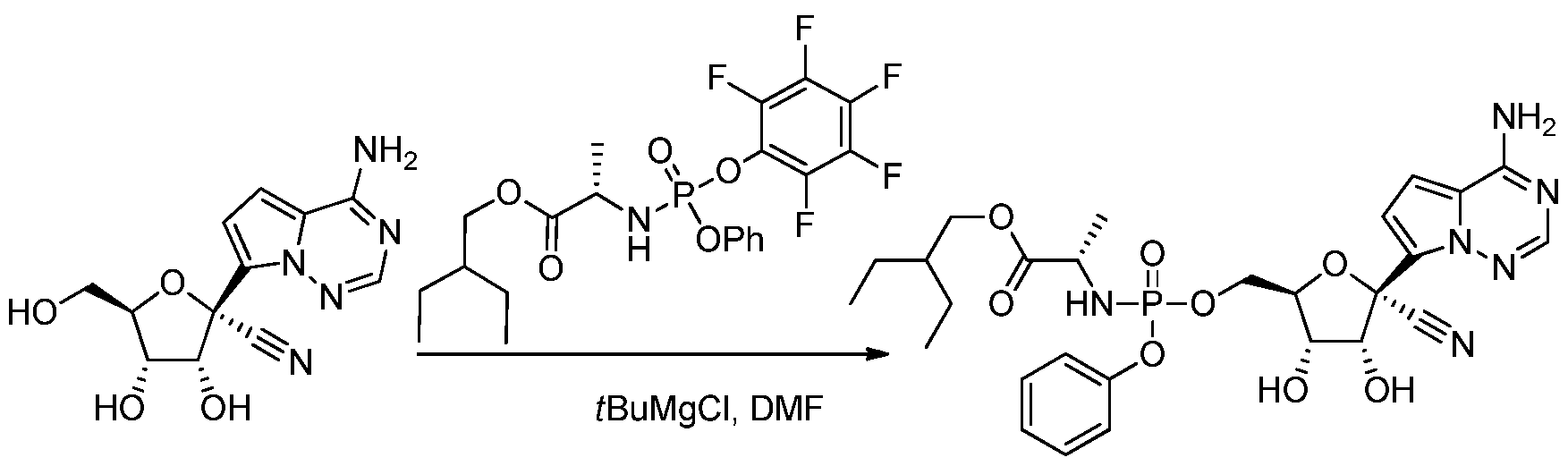
[0251] (2S)-2-ethylbutyl 2-(((((2R,3S,4R,5R)-5-(4-aminopyrrolo[2,l-f][l,2,4]triazin-7- yl)-5-cyano-3,4-dihydroxytetrahydrofuran-2-yl)methoxy)(phenoxy)phosphoryl)amino) propanoate. (2S)-2-ethylbutyl 2-(((4-nitrophenoxy)(phenoxy)phosphoryl)amino)propanoate (1.08 g, 2.4 mmol) was dissolved in anhydrous DMF (9 mL) and stirred under a nitrogen atmosphere at RT. (2R,3R,4S,5R)-2-(4-aminopyrrolo[2,l-f][l,2,4]triazin-7-yl)-3,4- dihydroxy-5-(hydroxymethyl)tetrahydrofuran-2-carbonitrile (350 mg, 1.2 mmol) was added to the reaction mixture in one portion. A solution of i-butylmagnesium chloride in THF (1M, 1.8 mL, 1.8 mmol) was then added to the reaction drop wise over 10 minutes. The reaction was stirred for 2 h, at which point the reaction mixture was diluted with ethyl acetate (50 mL) and washed with saturated aqueous sodium bicarbonate solution (3 x 15 mL) followed by saturated aqueous sodium chloride solution (15 mL). The organic layer was dried over anhydrous sodium sulfate and concentrated under reduced pressure. The resulting oil was purified with silica gel column chromatography (0-10% MeOH in DCM) to afford (2S)-2- ethylbutyl 2-(((((2R,3S,4R,5R)-5-(4-aminopyrrolo[2, l-f][l,2,4]triazin-7-yl)-5-cyano-3,4- dihydroxytetrahydrofuran-2-yl)methoxy)(phenoxy)phosphoryl)amino) propanoate (311 mg, 43%, 1 :0.4 diastereomeric mixture at phosphorus) as a white solid. H NMR (400 MHz, CD3OD) δ 7.85 (m, 1H), 7.34 – 7.23 (m, 2H), 7.21 – 7.09 (m, 3H), 6.94 – 6.84 (m, 2H), 4.78 (d, / = 5.4 Hz, 1H), 4.46 – 4.33 (m, 2H), 4.33 – 4.24 (m, 1H), 4.18 (m, 1H), 4.05 – 3.80 (m, 3H), 1.52 – 1.39 (m, 1H), 1.38 – 1.20 (m, 7H), 0.85 (m, 6H). 31P NMR (162 MHz, CD3OD) δ 3.71, 3.65. LCMS m/z 603.1 [M+H], 600.9 [M-H]. HPLC (2-98% MeCN-H20 gradient with 0.1% TFA modifier over 8.5 min, 1.5mL/min, Column: Phenomenex Kinetex C18, 2.6 um 100 A, 4.6 x 100 mm ) tR = 5.544 min, 5.601 min

Separation of the (S) and (R) Diastereomers

[0252] (2S)-2-ethylbutyl 2-(((((2R,3S,4R,5R)-5-(4-aminopyrrolo[2,l-f][l,2,4]triazin-7-yl)- 5-cyano-3,4-dihydroxytetrahydrofuran-2-yl)methoxy)(phenoxy)phosphoryl)amino) propanoate was dissolved in acetonitrile. The resulting solution was loaded onto Lux Cellulose-2 chiral column, equilibrated in acetonitrile, and eluted with isocratic

acetonitrile/methanol (95 :5 vol/vol). The first eluting diastereomer had a retention time of 17.4 min, and the second eluting diastereomer had a retention time of 25.0 min.

[0253] First Eluting Diastereomer is (S)-2-ethylbutyl 2-(((R)-(((2R,3S,4R,5R)-5-(4- aminopyrrolo[2, 1 -f] [ 1 ,2,4]triazin-7-yl)-5-cyano-3 ,4-dihydroxytetrahydrofuran-2- yl)methoxy)(phenoxy)phos horyl)amino)propanoate:

Figure imgf000089_0001

!HNMR (400 MHz, CD3OD) δ 8.05 (s, 1H), 7.36 (d, / = 4.8 Hz, 1H), 7.29 (br t, J = 7.8 Hz, 2H), 7.19 – 7.13 (m, 3H), 7.11 (d, / = 4.8 Hz, 1H), 4.73 (d, / = 5.2 Hz, 1H), 4.48 – 4.38 (m, 2H), 4.37 – 4.28 (m, 1H), 4.17 (t, / = 5.6 Hz, 1H), 4.08 – 3.94 (m, 2H), 3.94 – 3.80 (m, 1H), 1.48 (sep, / = 12.0, 6.1 Hz, 1H), 1.34 (p, / = 7.3 Hz, 4H), 1.29 (d, / = 7.2 Hz, 3H), 0.87 (t, / = 7.4 Hz, 6H). 31PNMR (162 MHz, CD3OD) δ 3.71 (s). HPLC (2-98% MeCN-H20 gradient with 0.1 % TFA modifier over 8.5 min, 1.5mL/min, Column: Phenomenex Kinetex C18, 2.6 um 100 A, 4.6 x 100 mm ) is = 5.585 min. [0254] Second Eluting Diastereomer is (S)-2-ethylbutyl 2-(((S)-(((2R,3S,4R,5R)-5-(4- aminopyrrolo[2, 1 -f] [ 1 ,2,4]triazin-7-yl)-5-cyano-3 ,4-dihydroxytetrahydrofuran-2- yl)methoxy)(phenoxy)phosphoryl)amino)propanoate:

Figure imgf000090_0001

HNMR (400 MHz, CD3OD) δ 8.08 (s, 1H), 7.36 – 7.28 (m, 3H), 7.23 – 7.14 (m, 3H), 7.08 (d, 7 = 4.8 Hz, 1H), 4.71 (d, 7 = 5.3 Hz, 1H), 4.45 – 4.34 (m, 2H), 4.32 – 4.24 (m, 1H), 4.14 (t, / = 5.8 Hz, 1H), 4.08 – 3.94 (m, 2H), 3.93 – 3.85 (m, 1H), 1.47 (sep, / = 6.2 Hz, 1H), 1.38 – 1.26 (m, 7H), 0.87 (t, / = 7.5 Hz, 6H). 31PNMR (162 MHz, CD3OD) δ 3.73 (s). HPLC (2- 98% MeCN-H20 gradient with 0.1% TFA modifier over 8.5 min, 1.5mL/min, Column: Phenomenex Kinetex C18, 2.6 urn 100 A, 4.6 x 100 mm ) tR = 5.629 min.

Example 5. (S)-2-ethylbutyl 2-(((S)-(((2R,3S,4R,5R)-5-(4-aminopyrrolor2J- f|[l,2,41triazin-7-yl)-5-cvano-3,4-dihvdroxytetrahvdrofuran-2- yl)methoxy)(phenoxy)phosphoryl)amino)propanoate (32)

Figure imgf000090_0002

[0255] The preparation of (S)-2-ethylbutyl 2-(((S)-(((2R,3S,4R,5R)-5-(4-aminopyrrolo[2,l f][l,2,4]triazin-7-yl)-5-cyano-3,4-dihydroxytetrahydrofuran-2- yl)methoxy)(phenoxy)phosphoryl)amino)propanoate is described below.

Preparation of (3R,4R,5R)-3,4-bis(benzyloxy)-5-((benzyloxy)methyl)dihydrofuran-2(3H)- one.

Figure imgf000090_0003

[0256] (3R,4R,5R)-3,4-bis(benzyloxy)-5-((benzyloxy)methyl)tetrahydrofuran-2-ol (15.0g) was combined with MTBE (60.0 mL), KBr (424.5 mg), aqueous K2HP04solution (2.5M, 14.3 mL), and TEMPO (56 mg). This mixture was cooled to about 1 °C. Aqueous bleach solution (7.9%wt.) was slowly charged in portions until complete consumption of starting material as indicated through a starch/iodide test. The layers were separated, and the aqueous layer was extracted with MTBE. The combined organic phase was dried over MgS04 and concentrated under reduced pressure to yield the product as a solid.

Preparation (4-amino-7-iodopyrrolor2,l-fl ri,2,41triazine)

Figure imgf000091_0001

[0257] To a cold solution of 4-aminopyrrolo[2, l-f][l,2,4]-triazine (10.03 g; 74.8 mmol) in N,N-dimethylformamide (70.27 g), N-iodosuccinimide (17.01g; 75.6 mmol) was charged in portions, while keeping the contents at about 0 °C. Upon reaction completion (about 3 h at about 0 °C), the reaction mixture was transferred into a 1 M sodium hydroxide aqueous solution (11 g NaOH and 276 mL water) while keeping the contents at about 20-30 °C. The resulting slurry was agitated at about 22 °C for 1.5 h and then filtered. The solids are rinsed with water (50 mL) and dried at about 50 °C under vacuum to yield 4-amino-7- iodopyrrolo[2,l-f] [l,2,4]triazine as a solid. !H NMR (400 MHz, DMSO-d6) δ 7.90 (s, 1H), 7.78 (br s, 2H), 6.98 (d, J = 4.4 Hz, 1H), 6.82 (d, J = 4.4 Hz, 1H). 13C NMR (101 MHz, DMSO-d6) δ 155.7, 149.1, 118.8, 118.1, 104.4, 71.9. MS m/z = 260.97 [M+H].

Preparation (3R,4R,5R)-2-(4-aminopyrrolor2, l-firi,2,41triazin-7-yl)-3,4-bis(benzyloxy)-5- ((benzyloxy)methyl)tetrahvdrofuran-2-ol via (4-amino-7-iodopyrrolor2,l-fl ri,2,41triazine)

Figure imgf000091_0002

[0258] To a reactor under a nitrogen atmosphere was charged iodobase 2 (81 g) and THF (1.6 LV). The resulting solution was cooled to about 5 °C, and TMSC1 (68 g) was charged. PhMgCl (345mL, 1.8 M in THF) was then charged slowly while maintaining an internal temperature at about < 5°C. The reaction mixture was stirred at about 0°C for 30 min, and then cooled to about -15 °C. zPrMgCl-LiCl (311 mL, 1.1 M in THF) was charged slowly while maintaining an internal temperature below about -12 °C. After about 10 minutes of stirring at about -15 °C, the reaction mixture was cooled to about -20 °C, and a solution of lactone 1 (130 g) in THF (400 mL) was charged. The reaction mixture was then agitated at about -20 °C for about 1 h and quenched with AcOH (57 mL). The reaction mixture was warmed to about 0 °C and adjusted to pH 7-8 with aqueous NaHCC>3 (5 wt%, 1300 mL). The reaction mixture was then diluted with EtOAc (1300 mL), and the organic and aqueous layers were separated. The organic layer was washed with IN HC1 (1300 mL), aqueous NaHCC>3 (5 wt%, 1300 mL), and brine (1300 mL), and then dried over anhydrous Na2S04 and concentrated to dryness. Purification by silica gel column chromatography using a gradient consisting of a mixture of MeOH and EtOAc afforded the product.

Preparation ((2S)-2-ethylbutyl 2- (((perfluorophenoxy)(phenoxy)phosphoryl)amino)propanoate) (mixture of Sp and Rp):

1 ) phenyl dichlorophosphate

CH2CI2, -78 °C to ambient

2) pentafluorophenol

Et3N, 0 °C to ambient

Figure imgf000092_0001

[0259] L- Alanine 2-ethylbutyl ester hydrochloride (5.0 g, 23.84 mmol) was combined with methylene chloride (40 mL), cooled to about -78 °C, and phenyl dichlorophosphate (3.65 mL, 23.84 mmol) was added. Triethylamine (6.6 mL, 47.68 mmol) was added over about 60 min at about -78 °C and the resulting mixture was stirred at ambient temperature for 3h. The reaction mixture was cooled to about 0 °C and pentafluorophenol (4.4 g, 23.84 mmol) was added. Triethylamine (3.3 mL, 23.84 mmol) was added over about 60 min. The mixture was stirred for about 3h at ambient temperature and concentrated under reduced pressure. The residue was dissolved in EtOAc, washed with an aqueous sodium carbonate solution several times, and concentrated under reduced pressure. The residue was purified by silica gel column chromatography using a gradient of EtOAc and hexanes (0 to 30%). Product containing fractions were concentrated under reduced pressure to give (2S)-2-ethylbutyl 2-(((perfluorophenoxy)(phenoxy)phosphoryl)amino)propanoate as a solid. H NMR (400 MHz, Chloroform-d) δ 7.41 – 7.32 (m, 4H), 7.30 – 7.17 (m, 6H), 4.24 – 4.16 (m, 1H), 4.13 – 4.03 (m, 4H), 4.01 – 3.89 (m, 1H), 1.59 – 1.42 (m, 8H), 1.40 – 1.31 (m, 8H), 0.88 (t, J = 7.5 Hz, 12H). 31P NMR (162 MHz, Chloroform-d) δ – 1.52. 19F NMR (377 MHz, Chloroform-d) δ – 153.63, – 153.93 (m), – 160.05 (td, J = 21.9, 3.6 Hz), – 162.65 (qd, J = 22.4, 20.5, 4.5 Hz). MS m/z = 496 [M+H]. Preparation of Title Compound (mixture of Sp and Rp):

Figure imgf000093_0001

[0260] The nucleoside (29 mg, 0.1 mmol) and the phosphonamide (60 mg, 0.12 mmol) and N,N-dimethylformamide (2 mL) were combined at ambient temperature. 7¾ri-Butyl magnesiumchloride (1M in THF, 0.15 mL) was slowly added. After about lh, the reaction was diluted with ethyl acetate, washed with aqueous citric acid solution (5%wt.), aqueous saturated NaHC03 solution and saturated brine solution. The organic phase was dried over Na2S04 and concentrated under reduced pressure. The residue was purified by silica gel column chromatography using a gradient of methanol and CH2CI2 (0 to 5%). Product containing fractions were concentrated under reduced pressure to provide the product.

Preparation of (3aR,4R,6R,6aR)-4-(4-aminopyrrolor2, l-firi,2,41triazin-7-yl)-6- (hvdroxymethyl)-2,2-dimethyltetrahydrofuror3,4-diri,31dioxole-4-carbonitrile:

Figure imgf000093_0002

[0261] To a mixture of (2R,3R,4S,5R)-2-(4-aminopyrrolo[2, l-f] [l,2,4]triazin-7-yl)-3,4- dihydroxy-5-(hydroxymethyl)tetrahydrofuran-2-carbonitrile (5.8g, 0.02 mol), 2,2- dimethoxypropane (11.59 mL, 0.09 mol) and acetone (145 mL) at ambient temperature was added sulfuric acid (18M, 1.44 mL). The mixture was warmed to about 45 °C. After about 30 min, the mixture was cooled to ambient temperature and sodium bicarbonate (5.8 g) and water 5.8 mL) were added. After 15 min, the mixture was concentrated under reduced pressure. The residue was taken up in ethyl acetate (150 mL) and water (50 mL). The aqueous layer was extracted with ethyl acetate (2 x 50 mL). The combined organic phase was dried over sodium sulfate and concentrated under reduced pressure to give crude (2R,3R,4S,5R)-2-(4-aminopyrrolo[2, l-f] [l,2,4]triazin-7-yl)-3,4-dihydroxy-5- (hydroxymethyl)tetrahydrofuran-2-carbonitrile. !H NMR (400 MHz, CD3OD) δ 7.84 (s, 1H), 6.93 (d, / = 4.6 Hz, 1H), 6.89 (d, / = 4.6 Hz, 1H), 5.40 (d, / = 6.7 Hz, 1H), 5.00 (dd, / = 6.7, 3.3 Hz, 1H), 4.48 – 4.40 (m, 1H), 3.81 – 3.72 (m, 2H), 1.71 (s, 3H), 1.40 (s, 3H). MS m/z = 332.23 [M+l].

Preparation of (2S)-2-ethylbutyl 2-(((((2R,3S,4R,5R)-5-(4-aminopyrrolor2,l-firi,2,41triazin- 7-yl)-5-cvano-3,4-dihvdroxytetrahydrofuran-2- yl)methoxy)(phenoxy)phosphoryl)amino)propanoate:

Figure imgf000094_0001

[0262] Acetonitrile (100 mL) was combined with (2S)-2-ethylbutyl 2-(((4- nitrophenoxy)(phenoxy)phosphoryl)-amino)propanoate (9.6 g, 21.31 mmol), the substrate alcohol (6.6 g, 0.02 mol), magnesium chloride (1.9 g, 19.91 mmol) at ambient temperature. The mixture was agitated for about 15 min and N,N-diisopropylethylamine (8.67 mL, 49.78 mmol) was added. After about 4h, the reaction was diluted with ethyl acetate (100 mL), cooled to about 0 °C and combined with aqueous citric acid solution (5%wt., 100 mL). The organic phase was washed with aqueous citric acid solution (5%wt., 100 mL) and aqueous saturated ammonium chloride solution (40 mL), aqueous potassium carbonate solution

(10%wt., 2 x 100 mL), and aqueous saturated brine solution (100 mL). The organic phase was dried with sodium sulfate and concentrated under reduced pressure to provide crude product. !H NMR (400 MHz, CD3OD) δ 7.86 (s, 1H), 7.31 – 7.22 (m, 2H), 7.17 – 7.09 (m, 3H), 6.93 – 6.84 (m, 2H), 5.34 (d, / = 6.7 Hz, 1H), 4.98 (dd, / = 6.6, 3.5 Hz, 1H), 4.59 – 4.50 (m, 1H), 4.36 – 4.22 (m, 2H), 4.02 (dd, / = 10.9, 5.7 Hz, 1H), 3.91 (dd, / = 10.9, 5.7 Hz, 1H), 3.83 (dq, / = 9.7, 7.1 Hz, 1H), 1.70 (s, 3H), 1.50 – 1.41 (m, 1H), 1.39 (s, 3H), 1.36 – 1.21 (m, 7H), 0.86 (t, / = 7.4 Hz, 6H). MS m/z = 643.21 [M+l]. Preparation of (S)-2-ethylbutyl 2-(((S)-(((2R.3S.4R.5R)-5-(4-aminopyrrolor2.1- firi,2,41triazin-7-yl)-5-cvano-3,4-ditivdroxytetratiydrofuran-2- yl)methoxy)( henoxy)phosphoryl)amino)propanoate (Compound 32)

Figure imgf000095_0001

Compound 32

[0263] The crude acetonide (12.85 g) was combined with tetrahydrofuran (50 mL) and concentrated under reduced pressure. The residue was taken up in tetrahydrofuran (100 mL), cooled to about 0 °C and concentrated HC1 (20 mL) was slowly added. The mixture was allowed to warm to ambient temperature. After consumption of the starting acetonide as indicated by HPLC analysis, water (100 mL) was added followed by aqueous saturated sodium bicarbonate solution (200 mL). The mixture was extracted with ethyl acetate (100 mL), the organic phase washed with aqueous saturated brine solution (50 mL), dried over sodium sulfated and concentrated under reduced pressure. The residue was purified by silica gel column chromatography using a gradient of methanol and ethyl acetate (0 to 20%).

Product containing fractions were concentrated under reduced pressure to provide the product.

PATENT

US 20170071964

US 20160122374

PAPER

Journal of Medicinal Chemistry (2017), 60(5), 1648-1661.

https://pubs.acs.org/doi/full/10.1021/acs.jmedchem.6b01594

The recent Ebola virus (EBOV) outbreak in West Africa was the largest recorded in history with over 28,000 cases, resulting in >11,000 deaths including >500 healthcare workers. A focused screening and lead optimization effort identified 4b (GS-5734) with anti-EBOV EC50 = 86 nM in macrophages as the clinical candidate. Structure activity relationships established that the 1′-CN group and C-linked nucleobase were critical for optimal anti-EBOV potency and selectivity against host polymerases. A robust diastereoselective synthesis provided sufficient quantities of 4b to enable preclinical efficacy in a non-human-primate EBOV challenge model. Once-daily 10 mg/kg iv treatment on days 3–14 postinfection had a significant effect on viremia and mortality, resulting in 100% survival of infected treated animals [ Nature 2016531, 381−385]. A phase 2 study (PREVAIL IV) is currently enrolling and will evaluate the effect of 4b on viral shedding from sanctuary sites in EBOV survivors.

(S)-2-Ethylbutyl 2-(((S)-(((2R,3S,4R,5R)-5-(4-Aminopyrrolo[2,1-f][1,2,4]triazin-7-yl)-5-cyano-3,4-dihydroxytetrahydrofuran-2-yl)methoxy)(phenoxy)phosphoryl)amino)propanoate (4b)

Compound 4b was prepared from 4 and 22b as described previously.(17)1H NMR (400 MHz, methanol-d4): δ 7.86 (s, 1H), 7.33–7.26 (m, 2H), 7.21–7.12 (m, 3H), 6.91 (d, J = 4.6 Hz, 1H), 6.87 (d, J = 4.6 Hz, 1H), 4.79 (d, J = 5.4 Hz, 1H), 4.43–4.34 (m, 2H), 4.28 (ddd, J = 10.3, 5.9, 4.2 Hz, 1H), 4.17 (t, J = 5.6 Hz, 1H), 4.02 (dd, J = 10.9, 5.8 Hz, 1H), 3.96–3.85 (m, 2H), 1.49–1.41 (m, 1H), 1.35–1.27 (m, 8H), 0.85 (t, J = 7.4 Hz, 6H).
 
13C NMR (100 MHz, methanol-d4): δ 174.98, 174.92, 157.18, 152.14, 152.07, 148.27, 130.68, 126.04, 125.51, 121.33, 121.28, 117.90, 117.58, 112.29, 102.60, 84.31, 84.22, 81.26, 75.63, 71.63, 68.10, 67.17, 67.12, 51.46, 41.65, 24.19, 20.56, 20.50, 11.33, 11.28.
 
 31P NMR (162 MHz, methanol-d4): δ 3.66 (s).
 
HRMS (m/z): [M]+ calcd for C27H35N6O8P, 602.2254; found, 602.2274.
 
[α]21D – 21 (c 1.0, MeOH).

PAPER

Nature (London, United Kingdom) (2016), 531(7594), 381-385.

https://www.nature.com/articles/nature17180

Remdesivir
GS-5734 structure.png
Clinical data
Other names GS-5734
Routes of
administration
By mouthinsufflation
ATC code
  • None
Legal status
Legal status
Identifiers
CAS Number
DrugBank
ChemSpider
UNII
KEGG
Chemical and physical data
Formula C27H35N6O8P
Molar mass 602.585 g·mol−1
3D model (JSmol)
Remdesivir
GS-5734 structure.png
Clinical data
Other names GS-5734
Routes of
administration
By mouthinsufflation
ATC code
  • None
Legal status
Legal status
Identifiers
CAS Number
DrugBank
ChemSpider
UNII
KEGG
Chemical and physical data
Formula C27H35N6O8P
Molar mass 602.585 g·mol−1
3D model (JSmol)

//////////////Remdesivir, レムデシビル , UNII:3QKI37EEHE, ремдесивир ريمديسيفير 瑞德西韦 , GS-5734 , GS 5734, PHASE 3 , CORONOVIRUS, COVID-19

CCC(CC)COC(=O)[C@H](C)N[P@](=O)(OC[C@H]1O[C@](C#N)([C@H](O)[C@@H]1O)c2ccc3c(N)ncnn23)Oc4ccccc4

wdt-23

NEW DRUG APPROVALS

ONE TIME

$10.00

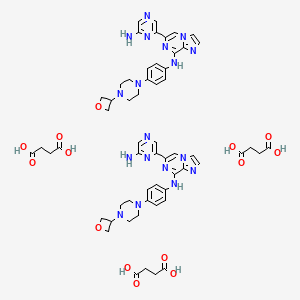
LANRAPRENIB


Lanraplenib Chemical Structure

2D chemical structure of 1800046-95-0

LANRAPLENIB

GS-9876

Phase II, GILEAD

Phase II Gilead Cutaneous lupus erythematosus

Rheumatoid arthritis

Sjogren syndrome

GS-9876
 LANRAPLENIB

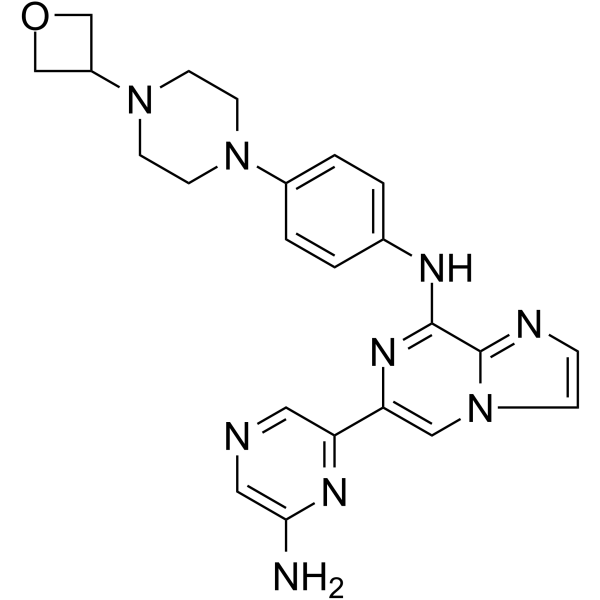
Imidazo(1,2-a)pyrazin-8-amine, 6-(6-amino-2-pyrazinyl)-N-(4-(4-(3-oxetanyl)-1-piperazinyl)phenyl)-

6-(6-Aminopyrazin-2-yl)-N-(4-(4-(oxetan-3-yl)piperazin-1-yl)phenyl)imidazo|1,2-a]pyrazin-8-amine

6-(6-Amino-2-pyrazinyl)-N-(4-(4-(3-oxetanyl)-1-piperazinyl)phenyl)imidazo(1,2-a)pyrazin-8-amine

Molecular Weight

443.50

Formula

C₂₃H₂₅N₉O

CAS No.

1800046-95-0

Lanraplenib (GS-9876) is a highly selective and orally active SYK inhibitor (IC50=9.5 nM) in development for the treatment of inflammatory diseases. Lanraplenib (GS-9876) inhibits SYK activity in platelets via the glycoprotein VI (GPVI) receptor without prolonging bleeding time (BT) in monkeys or humans.

Description

Lanraplenib (GS-9876) is a highly selective and orally active SYK inhibitor (IC50=9.5 nM) in development for the treatment of inflammatory diseases. Lanraplenib (GS-9876) inhibits SYK activity in platelets via the glycoprotein VI (GPVI) receptor without prolonging bleeding time (BT) in monkeys or humans[1][2][3].

IC50 & Target

IC50: 9.5 nM (SYK)[1]

In Vitro

Lanraplenib (GS-9876) inhibits anti-IgM stimulated phosphorylation of AKT, BLNK, BTK, ERK, MEK, and PKCδ in human B cells with EC50 values of 24-51 nM. Lanraplenib (GS-9876) inhibits anti-IgM mediated CD69 and CD86 expression on B-cells (EC50=112±10 nM and 164±15 nM, respectively) and anti-IgM /anti-CD40 co-stimulated B cell proliferation (EC50=108±55 nM). In human macrophages, Lanraplenib (GS-9876) inhibits IC-stimulated TNFα and IL-1β release (EC50=121±77 nM and 9±17 nM, respectively)[1].
Lanraplenib (GS-9876) inhibits glycoprotein VI (GPVI)-induced phosphorylation of linker for activation of T cells and phospholipase Cγ2, platelet activation and aggregation in human whole blood, and platelet binding to collagen under arterial flow[2].

Lanraplenib succinate.png

Lanraplenib succinate

1800047-00-0

UNII-QJ2PS903VZ

QJ2PS903VZ

GS-SYK Succinate

1241.3 g/mol, C58H68N18O14

6-(6-aminopyrazin-2-yl)-N-[4-[4-(oxetan-3-yl)piperazin-1-yl]phenyl]imidazo[1,2-a]pyrazin-8-amine;butanedioic acid

PAPER

https://pubs.acs.org/doi/10.1021/acsmedchemlett.9b00621

https://pubs.acs.org/doi/suppl/10.1021/acsmedchemlett.9b00621/suppl_file/ml9b00621_si_001.pdf

Abstract Image

Spleen tyrosine kinase (SYK) is a critical regulator of signaling in a variety of immune cell types such as B-cells, monocytes, and macrophages. Accordingly, there have been numerous efforts to identify compounds that selectively inhibit SYK as a means to treat autoimmune and inflammatory diseases. We previously disclosed GS-9973 (entospletinib) as a selective SYK inhibitor that is under clinical evaluation in hematological malignancies. However, a BID dosing regimen and drug interaction with proton pump inhibitors (PPI) prevented development of entospletinib in inflammatory diseases. Herein, we report the discovery of a second-generation SYK inhibitor, GS9876 (lanraplenib), which has human pharmacokinetic properties suitable for once-daily administration and is devoid of any interactions with PPI. Lanraplenib is currently under clinical evaluation in multiple autoimmune indications.

Step 6. 6-(6-Aminopyrazin-2-yl)-N-(4-(4-(oxetan-3-yl)piperazin-1-yl)phenyl)imidazo|1,2-a]pyrazin-8-amine (39). To a solution of tert-butyl(6-(6-(bis(tert-butoxycarbonyl)amino)pyrazm-2-yl)imidazo[1,2-a]pyrazin-8-yl)(4-(4-(oxetan-3-yl)piperazin1yl)phenyl)carbamate 45 (200 mg, 0.269 mmol) in DCM (2 ml) was added TFA (0.5 ml, 6.578 mmol). The reaction was stirred at room temperature for 16h, treated with saturated sodium bicarbonate, extracted with EtOAc, and purified on silica gel, eluting with 5%MeOH / EtOAc to 20%MeOH / EtOAc. The desired fractions were combined and concentrated to provide 100 mg (83% yield) of the title compound 39. m/z calcd for C23H25N9O [M+H] + 444.23, found LCMS-ESI+ (m/z): [M+H] + 444.20. 1H NMR (300 MHz d6-DMSO) δ: 9.5 (s,lH), 8.588 (s, 1H), 8.47 (s, 1H), 8.12 (d, 1H), 7.95-7.92 (d5 2H), 7.88 (s, 1H), 7.62 (s, 1H), 6.99-6.96 (d, 2H), 6.46 (s, 2H), 4.57- 4.53 (m, 2H), 4.48-4.44 (m, 2H), 3.43 (m, 1H), 3.15-3.12 (m, 4H), 2.41- 2.38 (m, 4H).

MORE SYNTHESIS COMING, WATCH THIS SPACE…………………..


SYNTHESIS

PATENT

WO 2015100217

WO 2016010809

PATENT

WO 2016172117

https://patentscope.wipo.int/search/en/detail.jsf?docId=WO2016172117

Protein kinases, the largest family of human enzymes, encompass well over 500 human proteins. Spleen Tyrosine Kinase (Syk) is a member of the Syk family of tyrosine kinases, and is a regulator of early B-cell development as well as mature B-cell activation, signaling, and survival.

Acute Graft Versus Host Disease (aGVHD), also known as fulminant Graft Versus Host Disease, generally presents symptoms within the first 100 days following allogenic hematopoietic stem cell transplantation and is generally characterized by selective damage to the skin, liver, mucosa, and gastrointestinal tract. Chronic Graft Versus Host Disease (cGVHD) occurs in recipients of allogeneic hematopoietic stem cell transplant (HSCT). GVHD is considered chronic when it occurs >100 days post-transplant, though aspects of cGVHD may manifest themselves prior to the 100 day point and overlap with elements of aGVHD. The disease has a cumulative incidence of 35-70% of transplanted patients, and has an annual incidence of approximately 3,000-5,000 and a prevalence of approximately 10,000 in the US. cGVHD is difficult to treat and is associated with worse outcomes compared to those without cGVHD. Current standard of care includes a variety of approaches including systemic corticosteroids often combined with calcineurin inhibitors, mTOR inhibitors, mycophenylate mofetil, or rituximab. Despite treatment, response rates are poor (40-50%) and cGVHD is associated with significant morbidity such as serious infection and impaired quality of life; the 5-year mortality is 30-50% (Blazar et al., Nature Reviews Immunology 12, 443-458, June 2012).

Human and animal models have demonstrated that aberrant B-lymphocyte signaling and survival is important in the pathogenesis of cGVHD. B-cell targeted drugs, including SYK inhibitors (fostamatinib – Sarantopoulos et al, Biology of Blood and Marrow Transplantation, 21(2015) S 11 -S 18) and BTK inhibitors (ibrutinib – Nakasone et al, Int. J. HematoL- 27 March 2015), have been shown to selectively reduce the function and frequency of aberrant GVHD B-cell populations ex vivo.

There remains a need for new methods, pharmaceutical compositions, and regimens for the treatment of GVHD, including aGVHD and cGVHD.

Example 2. Preparation of 6-(6-aminopyrazin-2-yl)-N-(4-(4-(oxetan-3-yl)piperazin-l- yl)phenyl)imid azo [ 1,2-a] pyrazin-8-amine (2)

2-Bis(tert-butoxycarbonyl)amino-6-bromopyrazine XIV: To a mixture of 6-bromopyrazin-2-amine (5 g, 28.7 mmol) and di-tert-butyl dicarbonate (25.09 g, 1 14.94 mmol) was added DCM (10 ml) followed by DMAP (0.351 g, 29 mmol). The reaction was heated to 55 °C for lh, cooled to RT, the reaction was partitioned between water and DCM, purified on silica gel and concentrated to provide of 2-bis(tert-butoxycarbonyl)amino-6-bromopyrazine XIV. LCMS-ESI+ (m/z): [M+H]+: 374.14. XH NMR (DMSO) δ: 8.84(d, 2H), 1.39 (s, 18H).

tert-Butyl (6-(6-(bis(tert-butoxycarbonyl)amino)pyrazin-2-yl)imidazo[l,2-a]pyrazin-8-yl)(4-(4-(oxetan-3-yl)piperazin-l-yl)phenyl)carbamate XVI – CHEMISTRY A route: tert-Butyl 4-(4-(oxetan-3-yl)piperazin-l-yl)phenyl(6-(tributylstannyl)imidazo[l,2-a]pyrazin-8-yl)carbamate V (215 mg, 0.291 mmol), was combined with 2-bis(tert-butoxycarbonyl)amino-6-bromopyrazine XIV (217.58 mg, 0.581 mmol),

bis(triphenylphosphine)palladium(II) dichloride(30.61 mg, 0.044 mmol) and 1,4-dioxane (5ml). The reaction mixture was stirred in a microwave reactor at 120 °C for 30 min. The reaction mixture was quenched with saturated KF, extracted with EtOAc, purified on silica gel, eluted with EtOAc. The desired fractions were combined and concentrated to provide 100 mg (46% yield) of tert-butyl (6-(6-(bis(tert-butoxycarbonyl)amino)pyrazin-2-yl)imidazo[l,2-a]pyrazin-8-yl)(4-(4-(oxetan-3-yl)piperazin-l-yl)phenyl)carbamate XVI. LCMS-ESI+ (m/z): [M+H]+: 744.4. lH NMR (300 MHz d6-DMSO) δ: 9.37 (s, 1H), 9.18 (s, 1H), 8.77 (s, 1H), 8.33 (d, 1H), 7.87 (d, 1H), 7.28-7.25 (d, 2H), 6.92-6.89 (d, 2H), 4.55-4.41 (m, 4H), 3.4 (m, lH), 3.14-3. 11 (m,4H), 2,37-2.34 (m, 4H), 1.37 (s, 18H), 1.3 (s, 9H).

tert-Butyl (6-(6-(bis(tert-butoxycarbonyl)amino)pyrazin-2-yl)imidazo[l,2-a]pyrazin-8-yl)(4-(4-(oxetan-3-yl)piperazin-l-yl)phenyl)carbamate XVI – CHEMISTRY B route: Step 1 : To a dry 250 mL round-bottomed flask was added 2-bis(tert-butoxycarbonyl)amino-6-bromopyrazine XIV (l .Og, l .Oequiv, 2.67mmol), KOAc (790mg, 8.02mmol, 3.0equiv), 4,4,4′,4′,5,5,5′,5′-octamethyl-2,2′-bi(l ,3,2-dioxaborolane) (750mg, 2.94mmol, l . l equiv), Pd(dba) (171mg, 0.187mmol, 0.07equiv) and X-phos (128mg, 0.267mmol, O. lequiv) followed by 1,4-dioxane (25mL) and the solution was sonicated for 5 min and then purged with N2 gas for 5 min. The flask with contents was then placed under N2 atmosphere and heated at 1 10 °C for 90 min. Once full conversion to the pinacolboronate was achieved by LCMS, the reaction was removed from heat and allowed to cool to RT. Once cool, the reaction contents were filtered through Celite and the filter cake was washed 3 x 20 mL EtOAc. The resultant solution was then concentrated down to a deep red-orange

syrup providing N, N-BisBoc 6-(4,4,5,5-tetramethyl-l,3,2-dioxaborolan-2-yl)pyrazin-2-amine XV, which was used directly in the next step.

Step 2: The freshly formed N, N-BisBoc 6-(4,4,5,5-tetramethyl-l ,3,2-dioxaborolan-2-yl)pyrazin-2-amine XV (2.67 mmol based on 100% conversion, 2.0 equiv based on bromide) was dissolved in 20 Ml of 1,2-dimethoxy ethane and to that solution was added tert-butyl (6-bromoimidazo[l,2-a]pyrazin-8-yl)(4-(4-(oxetan-3-yl)piperazin-l-yl)phenyl)carbamate IV (707mg, 1.34mmol, l .Oequiv), Na2CC>3 (283mg, 2.67mmol, 2.0equiv), Pd(PPh3)4 (155mg, 0.134mmol, 0.1 equiv) and water (l OmL) and the solution was degassed for 5 min using N2 gas. The reaction was then placed under N2 atmosphere and heated at 110 °C for 90 min. LCMS showed complete consumption of the bromide starting material and the reaction was removed from heat and allowed to cool to RT. The reaction was diluted with 100 mL water and 100 mL 20% MeOH/DCM and the organic layer was recovered, extracted 1 x sat. NaHCCb, 1 x sat brine and then dried over Na2SC>4. The solution was then filtered and concentrated down to an orange-red solid. The sample was then slurried in warm MeOH, sonicated then filtered, washing 2 x 20 mL with cold MeOH and then the cream-colored solid was dried on hi-vacuum overnight to yield 905 mg of tert-butyl (6-(6-(bis(tert-butoxycarbonyl)amino)pyrazin-2-yl)imidazo[l,2-a]pyrazin-8-yl)(4-(4-(oxetan-3-yl)piperazin- 1 -yl)phenyl)carbamate XVI.

6-(6-Aminopyrazin-2-yl)-N-(4-(4-(oxetan-3-yl)piperazin-l-yl)phenyl)imidazo[l,2-a]pyrazin-8-amine (2): To a solution of tert-butyl (6-(6-(bis(tert-butoxycarbonyl)amino)pyrazin-2-yl)imidazo[l,2-a]pyrazin-8-yl)(4-(4-(oxetan-3-yl)piperazin-l -yl)phenyl)carbamate XVI (200 mg, 0.269 mmol) in DCM (2 ml) was added TFA (0.5 ml, 6.578 mmol). The reaction was stirred at rt for 16h, saturated sodium bicarbonate was added, extracted with EtOAC and purified on silica gel, eluted with 5%MeOH / EtOAc, 20%MeOH / EtOAc. The desired fractions were combined and concentrated to provide the title compound 2. LCMS-ESI+(m/z): [M+H]+: 444.2. lH NMR (300 MHz d6-DMSO) δ: 9.5 (s, lH), 8.588 (s, IH), 8.47 (s, IH), 8. 12 (d, IH), 7.95-7.92 (d, 2H), 7.88 (s, IH), 7.62 (s, IH), 6.99-6.96 (d, 2H), 6.46 (s, 2H), 4.57-4.53 (m, 2H), 4.48-4.44 (m, 2H), 3.43 (m, IH), 3.15-3.12 (m, 4H), 2.41 -2.38 (m, 4H).

Example 2 – Alternate Synthesis

H2S04, water 

Di-feri-butyl {6-[8-({4-[4-(oxetan-3-yl)piperazin-l-yl]phenyl}amino)imidazo[l,2-fl]pyrazin-6-yl]pyrazin-2-yl}imidodicarbonate:

To a 720 L reactor, was added di-fer/-butyl (6-bromopyrazin-2-yl)imidodicarbonate (18.5 kg, 1.41 equiv, 49 mol), bis(pinacolato)diboron (13.8 kg, 1.56 equiv, 54 mol), potassium propionate (11.9 kg, 3.02 equiv, 106 mol), and bis(di-fer/-butyl(4-dimethylaminophenyl) phosphine)dichloropalladium (1.07 kg, 0.0043 equiv, 1.5 mol), followed by degassed toluene (173 L). The mixture was degassed then heated at 65 °C until the reaction was deemed complete (0% tert-butyl 2-((6-bromopyrazin-2-yl)(tert-butoxycarbonyl)amino)-2-oxoacetate) by UPLC. Upon completion, the reaction was cooled to 23 °C. Once cooled, 6-bromo-N-(4-(4-(oxetan-3-yl)piperazin-l -yl)phenyl)imidazo[l ,2-a]pyrazin-8-amine (15.0 kg, 1.00 equiv, 35 mol) was added and the mixture was degassed. A degassed aqueous potassium carbonate solution prepared using water (54 L) and potassium carbonate (20.6 g, 4.26 equiv, 149 mol) was then added to the reaction mixture and the reactor contents was degassed. The reactor contents was heated at 65 °C until reaction was deemed complete (1% 6-bromo-N-(4-(4-(oxetan-3-yl)piperazin-l-yl)phenyl)imidazo[l,2-a]pyrazin-8-amine) by UPLC. Upon completion, the reaction was cooled to 24 °C.

The cooled mixture was concentrated and then diluted with dichloromethane (300 L), transferred to a 1900 L reactor and rinsed forward with dichloromethane (57 L). N-acetyl-L-cysteine (3.8 kg) was charged and the mixture was agitated for 15 h. Water (135 L) was then added and the mixture was filtered and rinsed forward with dichloromethane (68 L). The organic layer was recovered and washed with a brine solution prepared using water (68 L) and sodium chloride (7.5 kg).

The resultant organic layer was polish filtered then concentrated and fert-butyl methyl ether (89.9 kg) was slowly charged keeping the temperature at 31 °C. The contents was cooled to 0 °C and aged, then filtered and rinsed with tert-butyl methyl ether (32.7 kg) and dried at 40 °C to give 17.2 kg of di-tert-butyl {6-[8-({4-[4-(oxetan-3-yl)piperazin-l-yl]phenyl} amino)imidazo[l,2-a]pyrazin-6-yl]pyrazin-2-yl}imidodicarbonate.

LCMS-ESf (m/z): [M+H]+: 644.3. ΧΗ ΝΜΚ (400 MHz, CDC13) δ: 9.43 (s, 1H), 8.58 (s, 1H), 8.53 (s, 1H), 8.02 (s, 1H), 7.84 (m, 2H), 7.63 (d, 1H), 7.61 (d, 1H), 7.04 (m, 2H), 4.71 (m,4H), 3.59 (m, lH), 3.27 (m, 4H), 2.55 (m, 4H), 1.46 (s, 18H).

6-(6-Aminopyrazin-2-yl)-N-(4-(4-(oxetan-3-yl)piperazin-l-yl)phenyl)imidazo[l,2-a]pyrazin-8-amine succinate (Example 2):

To a slurry of di-tert-butyl {6-[8-({4-[4-(oxetan-3-yl)piperazin-l -yl]phenyl} amino)imidazo[l,2-a]pyrazin-6-yl]pyrazin-2-yl}imidodicarbonate (225 g, 0.35 mol, 1 mol eq.) in water (12 parts) was added a solution of sulfuric acid (3.1 parts, 6.99 mol, 20 mol eq.) in water (5 parts). The reaction was heated to ca. 40 °C and stirred at this temperature for ca. 4 h at which point the reaction is deemed complete. The reaction mixture was cooled to ca. 22 °C, acetone (3 parts) was charged and a solution of sodium carbonate (4.1 parts, 8.75 mol, 25.0 mol eq.) in water (15 parts) was added. The resulting slurry was filtered and the wet cake was washed with water in portions (4 x 1 parts), then with fert-butyl methyl ether (4 parts). The wet cake (Example 2 free base) was dried at ca. 60 °C. To the slurry of dry Example 2 free base in 2-propanol (2.3 parts) was added a solution of succinic acid (Based on the isolated Example 2 free base: 0.43 parts, 1.6 mol eq.) in 2-propanol (15 parts). The resulting slurry was heated to ca. 40 °C and stirred at this temperature for ca. 2 h and then cooled to ca. 22 °C, followed by a stir period of ca. 16 h. The slurry was filtered at ca. 22 °C and the wet cake was washed with 2-propanol (5 parts) and dried at ca. 60 °C to afford the product.

LCMS-ESI+ (m/z): [M+H]+: 620.65. ¾ NMR (400 MHz d6-DMSO) δ: 12.2 (broad s, 1.5H), 9.58 (s, IH), 8.63 (s, IH), 8.50 (s, IH), 8.15 (s, IH), 7.95 (d, 2H), 7.90 (s, IH), 7.64 (s, IH), 7.00 (d, 2H), 6.50 (s, 2H), 4.52 (dd, 4H), 3.45 (m, IH), 3.19 (m, 4H), 2.40 (m, 10H).

REF

[1]. Di Paolo J, et al. FRI0049 Preclinical Characterization of GS-9876, A Novel, Oral SYK Inhibitor That Shows Efficacy in Multiple Established Rat Models of Collagen-Induced Arthritis.Annals of the Rheumatic Diseases 2016;75:443-444.

[2]. Clarke AS, et al. Effects of GS-9876, a novel spleen tyrosine kinase inhibitor, on platelet function and systemic hemostasis. Thromb Res. 2018 Oct;170:109-118.

[3]. Kivitz AJ, et al. GS-9876, a Novel, Highly Selective, SYK Inhibitor in Patients with Active Rheumatoid Arthritis: Safety, Tolerability and Efficacy Results of a Phase 2 Study [abstract]. Arthritis Rheumatol.2018; 70 (suppl 10).

/////////////LANRAPLENIB, GS-9876, SYK inhibitor

NC1=CN=CC(C2=CN3C(C(NC4=CC=C(N5CCN(C6COC6)CC5)C=C4)=N2)=NC=C3)=N1

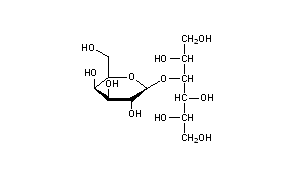
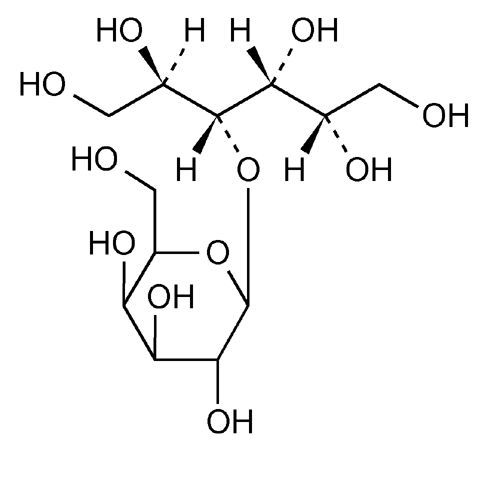
Lactitol, ラクチトール


Chemical structure of lactitol

Lactitol

Lactitol

ラクチトール;

Formula
C12H24O11
CAS
585-86-4
Mol weight
344.3124

To treat chronic idiopathic constipation (CIC) in adults

FDA 2/12/2020, APPROVED, Pizensy

Lactitol, NS-4, Portolac, Importal

Lactitol
CAS Registry Number: 585-86-4
CAS Name: 4-O-b-D-Galactopyranosyl-D-glucitol
Additional Names: b-galactoside sorbitol; lactit; lactit M; lactite; lactobiosit; lactosit; lactositol
Molecular Formula: C12H24O11
Molecular Weight: 344.31
Percent Composition: C 41.86%, H 7.03%, O 51.11%
Literature References: Polyol sweetener; relative sweetness compared to sucrose is 36%. Prepd by hydrogenation of lactose, q.v.: M. J. B. Senderens, Compt. Rend. 170, 47 (1920); M. L. Wolfrom et al., J. Am. Chem. Soc. 60, 571 (1938). Pharmacology: D. H. Patil et al., Br. J. Nutr. 57, 195 (1987). Crystal structure: J. A. Kanters et al., Acta Crystallogr. C46, 2408 (1990); J. Kivikoski et al., Carbohydr. Res. 223, 45 (1992). Toxicology: E. J. Sinkeldam et al., J. Am. Coll. Toxicol. 11, 165 (1992). Clinical trial in chronic hepatic encephalopathy: O. Riggio et al., Hepatogastroenterology 37, 524 (1990); as a laxative: L. Goovaerts, G. P. Ravelli, Acta Ther. 19, 61 (1993). Review of properties and applications: J. A. van Velthuijsen, J. Agric. Food Chem. 27, 680-686 (1979); of chemistry and use in foods: C. H. den Uyl, Dev. Sweeteners 3, 65-81 (1987).
Properties: Crystals from absolute ethanol, mp 146°. [a]D23 +14° (c = 4 in water). Sol in water, dimethyl sulfoxide, N,N-dimethylformamide; slightly sol in ethanol, ether. Strongly hygroscopic.
Melting point: mp 146°
Optical Rotation: [a]D23 +14° (c = 4 in water)
Derivative Type: Monohydrate
CAS Registry Number: 81025-04-9
Trademarks: Importal (Novartis); Portolac (Zyma)
Properties: White, sweet, odorless, crystalline solid. Non-hygroscopic. mp 94-97° (van Velthuijsen), water of crystallization evaporates 145°-185°; also reported as mp 120° (den Uyl). [a]D22 +12.3°. Soly at 25° (g/100 g solvent): water 206; ethanol 0.75; ether 0.4; DMSO 233; DMF 39; at 50°: water 512; ethanol 0.88; at 75°: water 917.
Melting point: mp 94-97° (van Velthuijsen); mp 120° (den Uyl)
Optical Rotation: [a]D22 +12.3°
Derivative Type: Dihydrate
CAS Registry Number: 81025-03-8
Trademarks: Lacty (CCA Biochem)
Properties: White, sweet, odorless, crystalline powder. Data for food grade, mp 75°. [a]D25 +13.5-15.0°. pH of 10% solution 4.5 – 8.5. 140 g will dissolve in 100 ml water at 25°.
Melting point: mp 75°
Optical Rotation: [a]D25 +13.5-15.0°
Use: Sweetener in food.
Therap-Cat: Laxative. In treatment of hepatic encephalopathy.
Keywords: Laxative/Cathartic

Lactitol is a sugar alcohol used as a replacement bulk sweetener for low calorie foods with approximately 40% of the sweetness of sugar. It is also used medically as a laxative. Lactitol is produced by two manufacturers, Danisco and Purac Biochem.

Applications

MedicalLactitol is used in a variety of low food energy or low fat foods. High stability makes it popular for baking. It is used in sugar-freecandiescookies (biscuits)chocolate, and ice cream. Lactitol also promotes colon health as a prebiotic. Because of poor absorption, lactitol only has 2.4 kilocalories (9 kilojoules) per gram, compared to 4 kilocalories (17 kJ) per gram for typical saccharides. Hence, lactitol is about 60% as caloric as typical saccharides.

Lactitol is listed as an excipient in some prescription drugs.[1][2]

Lactitol is a laxative and is used to prevent or treat constipation,[3] e.g., under the trade name Importal.[4][5]

In February 2020, Lactitol was approved for use in the United States as an osmotic laxative for the treatment of chronic idiopathic constipation (CIC) in adults.[6][7][8]

Lactitol in combination with Ispaghula husk is an approved combination for idiopathic constipation as a laxative and is used to prevent or treat constipation.[medical citation needed]

Safety and health

Lactitol, erythritolsorbitolxylitolmannitol, and maltitol are all sugar alcohols.[medical citation needed] The U.S. Food and Drug Administration (FDA) classifies sugar alcohols as “generally recognized as safe” (GRAS). They are approved as food additives, and are recognized as not contributing to tooth decay or causing increases in blood glucose.Lactitol is also approved for use in foods in most countries around the world.

Like other sugar alcohols, lactitol causes cramping, flatulence, and diarrhea in some individuals who consume it. This is because humans lack a suitable beta-galactosidase in the upper gastrointestinal (GI) tract, and a majority of ingested lactitol reaches the large intestine,[9] where it then becomes fermentable to gut microbes (prebiotic) and can pull water into the gut by osmosis.{[medical citation needed] Those with health conditions should consult their GP or dietician prior to consumption.{[medical citation needed]

History

The U.S. Food and Drug Administration (FDA) approved Pizensy based on evidence from a clinical trial (Trial 1/ NCT02819297) of 594 patients with CIC conducted in the United States.[8] The FDA also considered other supportive evidence including data from Trial 2 (NCT02481947) which compared Pizensy to previously approved drug (lubiprostone) for CIC, and Trial 3 (NCT02819310) in which patients used Pizensy for one year as well as data from published literature.[8]

The benefit and side effects of Pizensy were evaluated in a clinical trial (Trial 1) of 594 patients with CIC.[8] In this trial, patients received treatment with either Pizensy or placebo once daily for 6 months.[8] Neither the patients nor the health care providers knew which treatment was being given until after the trials were completed.[8]

In the second trial (Trial 2) of three months duration, improvement in CSBMs was used to compare Pizensy to the drug lubiprostonewhich was previously approved for CIC.[8] The third trial (Trial 3) was used to collect the side effects in patients treated with Pizensy for one year.[8]

SYN

Lactitol (CAS NO.: 585-86-4), with its other name of 4-O-beta-D-Galactopyranosyl-D-glucitol, could be produced through many synthetic methods.

Following is one of the synthesis routes: Lactitol is obtained by catalytic hydrogenation of lactose (I) in the presence of either, nickel catalysts such as Raney nickel (1-9), or ruthenium catalysts (10). Alternatively, lactose (I) is reduced by employing NaBH(9).

Production Method of Lactitol

CLIP

https://onlinelibrary.wiley.com/doi/full/10.1002/apj.2275

image

MORE SYNTHESIS COMING, WATCH THIS SPACE…………………..


SYNTHESIS

References

  1. ^ “Lactitol (Inactive Ingredient)”Drugs.com. 23 September 2018. Retrieved 24 February 2020.
  2. ^ “Lactitol Monohydrate (Inactive Ingredient)”Drugs.com. 3 October 2018. Retrieved 24 February 2020.
  3. ^ Miller LE, Tennilä J, Ouwehand AC (2014). “Efficacy and tolerance of lactitol supplementation for adult constipation: a systematic review and meta-analysis”Clin Exp Gastroenterol7: 241–8. doi:10.2147/CEG.S58952PMC 4103919PMID 25050074.
  4. ^ “Importal”Drugs.com. 3 February 2020. Retrieved 24 February 2020.
  5. ^ FASS.se (the Swedish Medicines Information Engine). Revised 2003-02-12.
  6. ^ “Pizensy: FDA-Approved Drugs”U.S. Food and Drug Administration (FDA). Retrieved 24 February 2020.
  7. ^ “Pizensy- lactitol powder, for solution”DailyMed. 21 February 2020. Retrieved 24 February 2020.
  8. Jump up to:a b c d e f g h “Drug Trial Snapshot: Pizensy”U.S. Food and Drug Administration (FDA). 12 February 2020. Retrieved 4 March 2020. This article incorporates text from this source, which is in the public domain.
  9. ^ Grimble GK, Patil DH, Silk DB (1988). “Assimilation of lactitol, an unabsorbed disaccharide in the normal human colon”Gut29 (12): 1666–1671. doi:10.1136/gut.29.12.1666PMC 1434111PMID 3220306.

External links

  •  Media related to Lactitol at Wikimedia Commons
  • “Lactitol”Drug Information Portal. U.S. National Library of Medicine.
Lactitol
Chemical structure of lactitol
Names
IUPAC name

4-O-α-D-Galactopyranosyl-D-glucitol
Other names

Lactitol
Lacty
Identifiers
3D model (JSmol)
ChEBI
ChemSpider
ECHA InfoCard 100.008.698
E number E966 (glazing agents, …)
KEGG
PubChem CID
UNII
Properties
C12H24O11
Molar mass 344.313 g·mol−1
Melting point 146 °C (295 °F; 419 K)
Pharmacology
A06AD12 (WHO)
Except where otherwise noted, data are given for materials in their standard state (at 25 °C [77 °F], 100 kPa).
☒ verify (what is ☑☒ ?)
Infobox references
Lactitol
Clinical data
Trade names Importal, Pizensy
Other names Lactitol Hydrate (JANJP)
License data
Routes of
administration
By mouth
ATC code
Legal status
Legal status
Identifiers
CAS Number
PubChem CID
DrugBank
ChemSpider
UNII
KEGG
ChEBI
ChEMBL
E number E966 (glazing agents, …) Edit this at Wikidata
CompTox Dashboard(EPA)
ECHA InfoCard 100.008.698 Edit this at Wikidata
Chemical and physical data
Formula C12H24O11
Molar mass 344.313 g·mol−1
3D model (JSmol)

CLIP

https://www.drugfuture.com/Pharmacopoeia/USP32/pub/data/v32270/usp32nf27s0_m44100.html

Lactitol
Click to View Image

C12H24O11344.31

4-OD-Galactopyranosyl-D-glucitol [585-86-4].
Monohydrate. 362.34 [81025-04-9].
Dihydrate. 380.35 [81025-03-8].
» Lactitol contains not less than 98.0 percent and not more than 101.0 percent of C12H24O11, calculated on the anhydrous basis.
Packaging and storage— Preserve in well-closed containers.
Labeling— Label it to indicate whether it is the monohydrate, the dihydrate, or the anhydrous form.
Water, Method I 921 between 4.5% and 5.5% (monohydrate); between 9.5% and 10.5% (dihydrate); and not more than 0.5% for the anhydrous form.
Residue on ignition 281: not more than 0.5%.
Heavy metals 231 Dissolve 4 g of it in 25 mL of water: the limit is 5 µg per g.
Reducing sugars— Dissolve 500 mg of it in 2.0 mL of water in a 10-mL conical flask. Into a similar flask, pipet 2 mL of a dextrose solution containing 0.5 mg per mL. Concomitantly add 1 mL of alkaline cupric tartrate TS to each solution, heat to boiling, and cool: the lactitol solution shows no more turbidity than that produced in the dextrose solution, in which a reddish brown precipitate forms (0.2%, as dextrose).

Related compounds—

Standard solution— Dissolve an accurately weighed quantity of USP Lactitol RS in water to obtain a solution having a known concentration of about 0.3 mg per mL.
Chromatographic system— Proceed as directed in the Assay, except to chromatograph the Standard solution instead of the Standard preparation.
Test solution— Use the Assay preparation, prepared as directed in the Assay.

Procedure— Separately inject equal volumes (about 25 µL) of the Standard solution and the Test solution into the chromatograph, record the chromatograms, and measure the peak responses. The relative retention times are about 0.53 for lactose, 0.58 for glucose, 0.67 for galactose, 0.72 for lactulitol, 1.0 for lactitol, 1.55 for galactitol, and 1.68 for sorbitol. Calculate the percentages of galactitol, sorbitol, lactulitol, lactose, glucose, and galactose in the portion of Lactitol taken by the formula:

100(CV/W)(rU / rS)

in which C is the concentration, in mg per mL, of USP Lactitol RS in the Standard solution; V is the volume, in mL, of the Test solution; W is the weight, in mg, of Lactitol in the Test solution; rU is the peak response of the relevant related compound, if observed, obtained from the Test solution; and rS is the lactitol peak response obtained from the Standard solution. The total of the percentages of all related compounds is not more than 1.5%.

Assay—

Mobile phase— Use water.
Standard preparation— Dissolve an accurately weighed quantity of USP Lactitol RS in water to obtain a solution having a known concentration of about 10.0 mg per mL.
Assay preparation— Transfer about 1000 mg of Lactitol, accurately weighed, to a 100-mL volumetric flask, dissolve in and dilute with water to volume, and mix.
Chromatographic system (see Chromatography 621)—The liquid chromatograph is equipped with a refractive index detector and a 7.8-mm × 30-cm column that contains packing L34. The column is maintained at 85, and the flow rate is about 0.7 mL per minute. Chromatograph the Standard preparation, and record the peak responses as directed for Procedure: the relative standard deviation for replicate injections is not more than 1.0% for lactitol.

Procedure— Separately inject equal volumes (about 25 µL) of the Standard preparation and the Assay preparation into the chromatograph, record the chromatograms, and measure the peak responses. Calculate the quantity, in mg, of C12H24O11 in the portion of Lactitol taken by the formula:

100C(rU / rS)

in which C is the concentration, in mg per mL, of USP Lactitol RS in the Standard preparation, and rU and rS are the lactitol peak responses obtained from the Assay preparation and the Standard preparation, respectively.

Auxiliary Information— Please check for your question in the FAQs before contacting USP.

Topic/Question Contact Expert Committee
Monograph Elena Gonikberg, Ph.D.
Senior Scientist
1-301-816-8251
(MDGRE05) Monograph Development-Gastrointestinal Renal and Endocrine
Reference Standards Lili Wang, Technical Services Scientist
1-301-816-8129
RSTech@usp.org
USP32–NF27 Page 1263

Pharmacopeial Forum: Volume No. 31(4) Page 1143

Chromatographic Column—

Chromatographic columns text is not derived from, and not part of, USP 32 or NF 27.

//////////////////Lactitol, ラクチトール , APPROVALS 2020, FDA 2020,  NS-4, Portolac, Importal

https://www.accessdata.fda.gov/drugsatfda_docs/appletter/2020/211281Orig1s000ltr.pdf

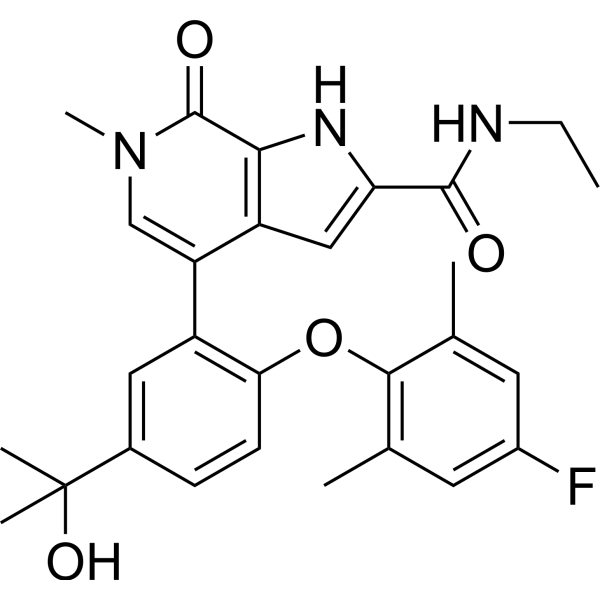
ABBV 744


ABBV-744 Chemical Structure

ABBV 744

N-Ethyl-4-[2-(4-fluoro-2,6-dimethylphenoxy)-5-(1-hydroxy-1-methylethyl)phenyl]-6,7-dihydro-6-methyl-7-oxo-1H-pyrrolo[2,3-c]pyridine-2-carboxamide

1H-Pyrrolo[2,3-c]pyridine-2-carboxamide, N-ethyl-4-[2-(4-fluoro-2,6-dimethylphenoxy)-5-(1-hydroxy-1-methylethyl)phenyl]-6,7-dihydro-6-methyl-7-oxo-

Molecular Weight

491.55

Formula

C₂₈H₃₀FN₃O₄

CAS No.

2138861-99-9

ABBV-744 is a highly BDII-selective BET bromodomain inhibitor, used in the research of inflammatory diseases, cancer, and AIDS.

Acute Myeloid Leukemia (AML)

Phase I, AbbVie is evaluating oral agent ABBV-744 in early clinical trials for the treatment of metastatic castration resistant prostate cancer (CRPC) and for the treatment of relapsed or refractory acute myeloid leukemia (AML).

PATENT

WO 2017177955

https://patentscope.wipo.int/search/en/detail.jsf?docId=WO2017177955&tab=FULLTEXT

Bromodomains refer to conserved protein structural folds which bind to N-acetylated lysine residues that are found in some proteins. The BET family of bromodomain containing proteins comprises four members (BRD2, BRD3, BRD4 and BRDt) . Each member of the BET family employs two bromodomains to recognize N-acetylated lysine residues typically, but not exclusively those found on transcription factors (Shi, J., et al. Cancer Cell 25 (2) : 210-225 (2014) ) or on the amino-terminal tails of histone proteins. Numbering from the N-terminal end of each BET protein the tandem bromodomains are typically labelled Binding Domain I (BDI) and Binding Domain II (BDII) . These interactions modulate gene expression by recruiting transcription factors to specific genome locations within chromatin. For example, histone-bound BRD4 recruits the transcription factor P-TEFb to promoters, resulting in the expression of a subset of genes involved in cell cycle progression (Yang et al., Mol. Cell. Biol. 28: 967-976 (2008) ) . BRD2 and BRD3 also function as transcriptional regulators of growth promoting genes (LeRoy et al., Mol. Cell 30: 51-60 (2008) ) . BET family members were recently established as being important for the maintenance of several cancer types (Zuber et al., Nature 478: 524-528 (2011) ; Mertz et al; Proc. Nat’l. Acad. Sci. 108: 16669-16674 (2011) ; Delmore et al., Cell 146: 1-14, (2011) ; Dawson et al., Nature 478: 529-533 (2011) ) . BET family members have also been implicated in mediating acute inflammatory responses through the canonical NF-KB pathway (Huang et al., Mol. Cell. Biol. 29: 1375-1387 (2009) ) resulting in the upregulation of genes associated with the production of cytokines (Nicodeme et al., Nature 468: 1119-1123, (2010) ) . Suppression of cytokine induction by BET bromodomain inhibitors has been shown to be an effective approach to treat inflammation-mediated kidney disease in an animal model (Zhang, et al., J. Biol. Chem. 287: 28840-28851 (2012) ) . BRD2 function has been linked to pre-disposition for dyslipidemia or improper regulation of adipogenesis, elevated inflammatory profiles and increased susceptibility to autoimmune diseases (Denis, Discovery Medicine 10: 489-499 (2010) ) . The human immunodeficiency virus utilizes BRD4 to initiate transcription of viral RNA from stably integrated viral DNA (Jang et al., Mol. Cell, 19: 523-534 (2005) ) . BET bromodomain inhibitors have also been shown to reactivate HIV transcription in models of latent T cell infection and latent monocyte infection (Banerjee, et al, J. Leukocyte Biol. doi: 10.1189/jlb. 0312165) . BRDt has an important role in spermatogenesis that is blocked by BET bromodomain inhibitors (Matzuk, et al., Cell 150: 673-684 (2012) ) . Thus, compounds that inhibit the binding of BET family bromodomains to their cognate acetylated lysine proteins are being pursued for the treatment of cancer, inflammatory diseases, kidney diseases, diseases involving metabolism or fat accumulation, and some viral infections, as well as for providing a method for male contraception. Accordingly, there is an ongoing medical need to develop new drugs to treat these indications.

FIDANZE, Steven D., et al. BROMODOMAIN INHIBITORS. WO 2017177955 A1.

////////////ABBV 744, Acute Myeloid Leukemia, AML,  Phase 1 , AbbVie

CC(O)(C)C1=CC(C(C2=C3NC(C(NCC)=O)=C2)=CN(C)C3=O)=C(OC4=C(C)C=C(F)C=C4C)C=C1

NIDUFEXOR


Nidufexor Chemical Structure

Nidufexor.png

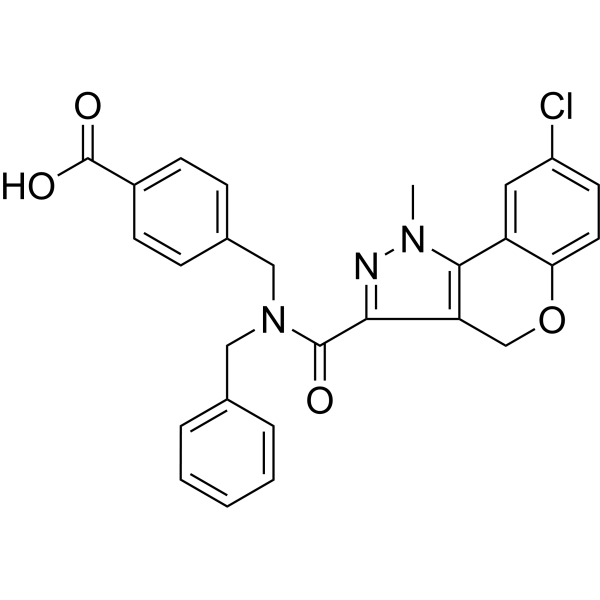
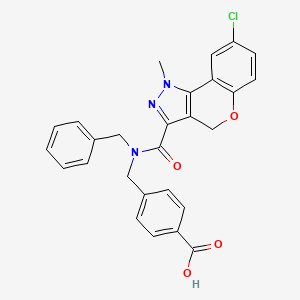
NIDUFEXOR

LMB763

4-[[benzyl-(8-chloro-1-methyl-4H-chromeno[4,3-c]pyrazole-3-carbonyl)amino]methyl]benzoic acid

Nidufexor is a farnesoid X receptor (FXR) agonist.

Molecular Weight

487.93

Formula

C₂₇H₂₂ClN₃O₄

CAS No.

1773489-72-7

PHASE 2 Treatment of Liver and Biliary Tract Disorders,
Agents for Diabetic Nephropathy, NOVARTIS

Nidufexor

1773489-72-7LMB-763UNII-CJ1PL0TE6JCJ1PL0TE6JBCP28929EX-A1854

Nidufexor pound LMB-763 pound(c)

ZINC584641402

4-((N-benzyl-8-chloro-1-methyl-1,4-dihydrochromeno[4,3-c]pyrazole-3-carboxamido)methyl)benzoic acid

HY-109096

CS-0039398

https://pubs.acs.org/doi/pdf/10.1021/acs.jmedchem.9b01621

1 (7.6 g, 89% yield) as a white solid. Melting point: 232.6 °C.

1 H NMR (400 MHz, DMSO): δ 12.93 (s, 1H), 7.96−7.85 (m, 2H), 7.71 (dd, J = 7.1, 2.5 Hz, 1H), 7.42−7.20 (m, 8H), 7.06 (dd, J = 8.7, 1.9 Hz, 1H), 5.45 (d, J = 3.9 Hz, 2H), 5.25 (d, J = 9.2 Hz, 2H), 4.58 (d, J = 12.1 Hz, 2H), 4.12 (d, J = 16.6 Hz, 3H).

13C NMR (101 MHz, DMSO-d6): δ 167.07, 162.21, 151.98, 142.65, 139.18, 132.20, 132.67, 129.70, 129.50, 129.50, 128.53, 128.53, 127.43, 127.43, 127.43, 127.43, 127.43, 125.53, 122.24, 119.0, 117.09, 116.64, 64.51, 50.68, 48.24. LC-MS m/z: 488.2/490.2 (M +H)+ ; chlorine pattern; method 3; RT = 1.41 min.

Elemental Analysis calcd for C27H22ClN3O4: C 66.46, H 4.54, N 8.61; found: C 66.43, H 4.56, N 8.62.

TRIS Salt Formation. Methanol (400 mL) was added to a mixture of 1 (4.0 g, 8.2 mmol) and 2-amino-2-hydroxymethylpropane-1,3-diol (TRIS, 1.0 g, 8.2 mmol). The mixture was heated to 70 °C for 0.5 h. After cooling to room temperature, the solvent was removed in vacuum. The residue was sonicated in dichloromethane (10 mL) and concentrated again. The resulting white solid was dried under vacuum overnight. The crude material was crystallized by slurring the solid residue in a 4:1 mixture of acetonitrile and methanol (5 mL). The mixture was stirred at room temperature for 24 h to give 4-((N-benzyl-8-chloro-1-methyl-1,4-dihydrochromeno- [4,3-c]pyrazole-3-carboxamido)methyl)benzoic acid TRIS salt as a white salt (3.7 g, 73% yield). Melting point: 195.6 °C. 1 H NMR (400 MHz, DMSO): δ 7.92−7.80 (m, 2H), 7.78−7.64 (m, 1H), 7.41− 7.19 (m, 8H), 7.13−7.00 (m, 1H), 5.44 (s, 2H), 5.25−5.14 (m, 2H), 4.61−4.48 (m, 2H), 4.18−4.03 (m, 3H), 3.39 (s, 7H). TRIS OH masked by water peak. LC-MS m/z: 488.0/490.0 (M+H)+ ; chlorine pattern, method 3. RT = 1.58 min. Elemental Analysis calc for C31H33ClN4O7: C 61.00, H 5.36, N 9.15; found: C 60.84, H 5.34, N 9.13.

https://pubs.acs.org/doi/suppl/10.1021/acs.jmedchem.9b01621/suppl_file/jm9b01621_si_001.pdf

Patent

WO 2015069666

https://patentscope.wipo.int/search/en/detail.jsf?docId=WO2015069666&tab=PCTDESCRIPTION

///////NIDUFEXOR, LMB 763, Phase II, PHASE 2, Liver and Biliary Tract Disorders,  Diabetic Nephropathy, NOVARTIS

CN1C(C2=CC(Cl)=CC=C2OC3)=C3C(C(N(CC4=CC=CC=C4)CC5=CC=C(C(O)=O)C=C5)=O)=N1

LNP 023


LNP023

4-[(2S,4S)-4-Ethoxy-1-[(5-methoxy-7-methyl-1H-indol-4-yl)methyl]piperidin-2-yl]benzoic acid.png

LNP 023

CAS 1644670-37-0

ROTATION +

4-((2S,4S)-4-ethoxy-1-((5-methoxy-7-methyl-1H-indol-4-yl)methyl)piperidin-2-yl)benzoic acid

M.Wt 422.525
Formula C25H30N2O4

4-[(2S,4S)-4-ethoxy-1-[(5-methoxy-7-methyl-1H-indol-4-yl)methyl]piperidin-2-yl]benzoic acid

LNP023

RENRQMCACQEWFC-UGKGYDQZSA-N

PATENT US9682968, Example-26a

BDBM160475

ZINC223246892

HY-127105

CS-0093107

4-((2S,4S)-(4-ethoxy-1-((5-methoxy-7-methyl-1H-indol-4-yl)methyl)piperidin-2-yl))benzoic acid

4-[(2~{S},4~{S})-4-ethoxy-1-[(5-methoxy-7-methyl-1~{H}-indol-4-yl)methyl]piperidin-2-yl]benzoic acid

LNP023 (LNP-023) is a highly potent, reversible, selective inhibitor of factor B (IC50=10 nM), the proteolytically active component of the C3 and C5 convertases.

LNP023 (LNP-023) is a highly potent, reversible, selective inhibitor of factor B (IC50=10 nM), the proteolytically active component of the C3 and C5 convertases; shows direct, reversible, and high-affinity binding to human FB with Kd of 7.9 nM in SPR assays, demonstrates potent inhibition of AP-induced MAC formation in 50% human serum with IC50 of 0.13 uM; shows no inhibition of factor D (FD), as well as classical or lectin complement pathway activation (up to 100 uM), and no significant effects (up to 10 μM) in a broad assay panel of receptors, ion channels, kinases, and proteases; blocks zymosan-induced MAC formation membrane attack complex (MAC) with IC50 of 0.15 uM, prevents KRN-induced arthritis in mice and is effective upon prophylactic and therapeutic dosing in an experimental model of membranous nephropathy in rats afer oral adminstration; also prevents complement activation in sera from C3 glomerulopathy patients and the hemolysis of human PNH erythrocytes.

Other Indication

Phase 2 Clinical

PATENT

WO 2015009616

https://patents.google.com/patent/WO2015009616A1/en

PATENT

https://patents.google.com/patent/US9682968B2/en

Example-26Example-26a4-((2S,4S)-(4-ethoxy-1-((5-methoxy-7-methyl-1H-indol-4-yl)methyl)piperidin-2-yl))benzoic acid ((+) as TFA Salt)

Figure US09682968-20170620-C00315

A mixture of methyl 4-((2S,4S)-4-ethoxy-1-((5-methoxy-7-methyl-1H-indol-4-yl)methyl)piperidin-2-yl)benzoate, Intermediate 6-2b peak-1 (tr=1.9 min), (84 mg, 0.192 mmol) and LiOH in H2O (1 mL, 1 mmol) in THF (1 mL)/MeOH (2 mL) was stirred at room temperature for 16 h, and then concentrated. The resulting residue was purified by RP-HPLC (HC-A) to afford the title compound. Absolute stereochemistry was determined by comparison with enantiopure synthesis in Example-26c. 1H NMR (TFA salt, 400 MHz, D2O) δ 8.12 (d, J=8.19 Hz, 2H), 7.66 (br. d, J=8.20 Hz, 2H), 7.35 (d, J=3.06 Hz, 1H), 6.67 (s, 1H), 6.25 (d, J=3.06 Hz, 1H), 4.65 (dd, J=4.28, 11.49 Hz, 1H), 4.04 (d, J=13.00 Hz, 1H), 3.87-3.98 (m, 2H), 3.53-3.69 (m, 5H), 3.38-3.50 (m, 1H), 3.20-3.35 (m, 1H), 2.40 (s, 3H), 2.17-2.33 (m, 2H), 2.08 (br. d, J=15.70 Hz, 1H), 1.82-1.99 (m, 1H), 1.28 (t, J=7.03 Hz, 3H); HRMS calcd. for C26H31N2O(M+H)423.2284, found 423.2263.

PATENT

WO 2020016749

https://patentscope.wipo.int/search/en/detail.jsf;jsessionid=D7DA400C5FC41AD0EA9F0AB9B74A1D86.wapp1nB?docId=WO2020016749&tab=PCTDESCRIPTION

The present invention relates to a process for the preparation of phenylpiperidinyl indole derivatives. More particularly, the present invention relates to a process for the preparation of the compound of formula (I)

also referred to as 4-((2S,4S)-(4-ethoxy-1 -((5-methoxy-7-methyl-1 /-/-indol-4-yl)methyl)piperidin-2-yl))benzoic acid, or a pharmaceutically acceptable salt thereof, which is capable of inhibiting the activation of the alternative pathway of the complement system. The complement system plays a major role in the innate and adaptive immunity system and comprises a group of proteins that are normally present in an inactive state. These proteins are organized in three activation pathways: the classical, the lectin, and the alternative pathways (Holers, In Clinical Immunology: Principles and practice, ed. R.R. Rich, Mosby Press; 1996, 363-391 ). Molecules from microorganisms, antibodies or cellular components can activate these pathways resulting in the formation of protease complexes known as the C3-convertase and the C5-convertase. The classical pathway is a calcium / magnesium-dependent cascade, which is normally activated by the formation of antigen-antibody complexes. It can also be activated in an antibody-independent manner by the binding of C-reactive protein complexed to

ligand and by many pathogens including gram-negative bacteria. The alternative pathway is a magnesium-dependent cascade, which is activated by deposition and activation of C3 on certain susceptible surfaces (e.g. cell wall polysaccharides of yeast and bacteria, and certain biopolymer materials). The alternative pathway (AP) utilizes C3 fragments (C3b) to opsonize the pathogens hence targeting them for phagocytosis without the need for antibodies. Hyperactivity of the complement system, and in particular in its AP, plays a role in a large number of complement-driven diseases, such as C3 glomerulopathy (C3G), paroxysmal nocturnal hemoglobinuria (PNH) and IgA nephropathy (IgAN). Phenylpiperidinyl indole derivatives, such as compound of formula (I), or a pharmaceutically acceptable salt thereof, play a role in the inhibition of complement factor B, a known critical enzyme for activation of the alternative complement pathway (Lesavre et al J. Exp. Med. 1978, 148, 1498-1510; Volanakis et al New Eng. J. Med. 1985, 312, 395-401 ), which may also be a suitable target for the inhibition of the amplification of the complement pathways. The phenylpiperidinyl indole derivatives, such as compound of formula (I), or a pharmaceutically acceptable salt thereof, and a method for preparing such derivatives, are described in WO2015/009616. In particular, compound of formula (I) is described in example 26, of WO2015/009616. One of the drawbacks of the synthesis was the use of hazardous chemicals (such as sodium hydride, or dimethylacetamide, which represent safety concerns on a larger scale) and the poor enantio- and diastereo-selectivity of the steps, leading to unwanted stereoisomers.

Thus, there is a need to provide an alternative reaction route in a process for producing compound of formula (I), or a pharmaceutically acceptable salt thereof, generating less by products, and easier to handle on a large scale.

Scheme 1 , vide infra.

Compound of fformula (II)


ormu a ( )


formula (1)

Scheme 1

1. Asymmetric synthesis of compound of formula (II): .

One aspect of the present invention relates to an asymmetric process for preparing a compound of formula (II), or salt thereof, as outlined in Scheme 2 below, wherein the stereocenters in position 2 and in position 4 on the piperidine are obtained in high enantio- and diastereo-selectivity.

formula (ii)

Scheme 2

Example 1 : Synthesis of Benzyl-2-r4-(methoxycarbonyl)phenyl1-4-oxopiperidine-1 -carboxylate according to the following sequence:

R = Methyl R = Methyl R =: Methyl

Step 1 : Synthesis of Benzyl-2-[4-(methoxycarbonyl)phenyl]-4-oxo-3, 4-dihydro pyridine-1(2W)-carboxylate (C3, wherein Pi = Cbz and R = methyl)

iPrMgCI (2N THF, 109.96 g, 54.98 ml_, 2.0 eq) was charged in a reactor. A solution of bis[2 -(N,N-dimethylaminoethyl)] ether (2.5 eq, 22.03 g, 137.46 mmol) in THF (24 ml.) was added at 15 – 25 °C. The mixture was stirred for 1 hour. A solution of C1 (20.17 g, 76.98 mmol, 1 .4 eq) in THF (102 ml.) was added slowly at 15 – 25 °C. The mixture was heated to 25 – 30 °C, stirred for more than 1 hour, and checked by HPLC. The mixture was cooled to -30 °C. A solution of C2 (methyl 4-iodobenzoate, 6.0 g, 54.98 mmol, 1 .0 eq) in THF (20 ml.) was added, followed by a solution of benzyl chloroformate (1 .15 eq, 10.79 g, 63.23 mmol) in THF (36 ml_). The mixture was stirred for 2 hours and quenched with AcOH (6.60 g, 109.96 mmol, 2 eq). Isopropyl acetate (60 ml.) was added. Hydrogen chloride (15%, 90 g) was added to adjust the pH = 1 – 2. The organic layer was separated and washed with brine (15%, 100 g), and concentrated. Isopropyl acetate (160 ml.) was added and concentrated to remove the THF. The crude product was recrystallized in Isopropyl

acetate (1 14 ml.) and n-heptane (120 ml_). The product was dried at 60 °C to provide C3 as light yellow solid (16.0 g, 79.65 % yield). 1 H-NMR (400 MHz, DMSO-d6) d (ppm) = 8.1 1 (dd, J=8.39, 1.01 Hz, 1 H), 7.91 (d, J=8.39 Hz, 2H), 7.33 – 7.37 (m, 6H), 5.82 (d, J= 7.20 Hz, 1 H), 5.20 – 5.35 (m, 3H) , 3.83 (s, 3H), 3.41 (br. s, 1 H), 3.31 (dd, J=16.64, 7.52 Hz, 1 H), 2.66 (br. d, J=16.55 Hz, 1 H).

Step 2: Synthesis of Benzyl-2-[4-(methoxycarbonyl)phenyl]-4-oxopiperidine-1 -carboxylate (C4, wherein Pi = Cbz and R = methyl)

A solution of C3 (25 g, 68.42 mmol, 1 .0 eq) in AcOH (200 ml.) was heated to 50 – 60 °C to form a clear solution. The solution was then cooled to 35 °C. Zn powder (13.42 g, 205.26 mmol, 3.0 eq) was added portionwise while keeping the inner temperature at 35 – 40 °C. After addition, the mixture was stirred for more than 8 hours and checked by HPLC. THF (250 ml.) was added. The mixture was cooled to 25 °C, filtered, and the filter cake was washed with THF (125 volume). The filtrate was concentrated to dryness. Isopropanol (375 ml.) was added. The solution was cooled to 0 – 5 °C. EDTA-4Na.2H20 (40 g) in water (200 ml.) was added. The mixture was neutralized to pH = 9 – 10 with 30% sodium hydroxide solution and stirred for 2 hours. The organic layer was collected, washed with brine (15%, 250 g) and concentrated to about 50 ml_. MTBE (100 ml.) was added and concentrated to about 50 ml_. MTBE (80 ml.) was added followed by n-heptane (20 ml.) dropwise. Then the mixture was cooled to 0 °C gradually. The mixture was filtered and the filter cake was dried to afford C4 as a light yellow solid (20.1 1 g, 80.0 % yield). 1 H NMR (400 MHz, CDCIs) d (ppm)= 7.99 (d, J=8.31 Hz, 2H), 7.27 – 7.39 (m, 7H), 5.83 (br. s, 1 H), 5.14 – 5.28 (m, 2H), 4.20 – 4.42 (m, 1 H), 3.92 (s, 3H), 3.12 – 3.33 (m, 1 H), 2.84 – 3.04 (m, 2H), 2.46 – 2.65 (m, 1 H), 2.23 – 2.45 (m, 1 H).

Example 2: Synthesis of Benzyl -4-hvdroxy-2-(4-(methoxycarbonyl)phenyl)piperidine-1- 

carboxylate (C5. wherein Pi = Cbz and R = methyl)

P1 = Cbz P i = Cbz

R = Methyl R = Methyl

A 0.1 M pH = 7.0 PBS was prepared with disodium phosphate dodecahydrate (22.2 g), sodium dihydrogen phosphate dihydrate (6.2 g) and purified water (999 g). To a reactor equipped with a pH meter 0.1 M pH = 7.0 PBS (499 g), D-glucose (40.2 g, 233.14 mmol, 2.0 eq), NADP (EnzymeWorks, 0.72 g), GDH (EnzymeWorks, 0.41 g) and KRED-EW124 (EnzymeWorks, 2.05 g)

were added, followed by addition of emulsion of C4 (41 g, 1 1 1 .60 mmol, 1 .0 eq) in DMSO (102.5 ml_). The mixture was heated to JT < 45 °C, IT 41 ± 3 °C and stirred at IT 41 ± 3 °C for > 16 h while controlling pH 6.9-7.2 by adding 1 M sodium hydroxide solution. A mixture of NADP (0.29 g), GDH (0.16 g) and KRED-EW124 (0.82 g, #Enzyme Works Inc. China) in 0.1 M pH = 7.0 PBS (1 1 g) were charged and stirred at IT 41 ± 3 °C for > 20 hours. The reaction was monitored by HPLC.

The reaction was filtered to afford white wet cake. To a 1 .0 L Radleys reactor equipped with anchor agitator crude C5 wet cake (80 g) and acetonitrile (500 ml.) were charged. The mixture was stirred to form a light yellow suspension (700 RPM). The suspension was heated to IT = 70 ± 5 °C and stirred for 4 hours, and then cooled to IT = 25 ± 5 °C. The suspension was filtered and the cake was washed with acetonitrile (75 ml_). To a clean 500 ml. Radleys reactor equipped with anchor agitator the resulting mother liquor was charged. The mother liquid was concentrated to about 95 g, solvent exchanged with three portions of toluene (105 g) to 95 g residue. Toluene (170 g) was charged and the reaction was checked by GC (acetonitrile / (toluene + acetonitrile) < 1 .2%). The suspension was heated to IT = 80 ± 5 °C, held for 1 hour, cooled to IT = 45 ± 3 °C and adjusted the agitation speed to low mode. Sequential operations of seeding and aging for 2 hours, charging n-heptane (10.2 g) in 0.5 hours and aging for 1 hour, charging n-heptane (34 g) over 1 .5 hours and aging for 0.5 hours were carried out. The mixture was cooled to IT = 10 ± 3 °C over 7 hours and maintained at 10 ± 3 °C for 2 hours. The mixture was filtered and the cake was washed with cold mixed solvents of toluene (50 ml.) and n-heptane (10 ml.) to afford a light yellow solution of C5 (330 g, trans/cis = 90/10, assay 6.8%, yield 52%). The mother liquor was telescoped to the next step. 1 H-NMR (400 MHz, CDCI3, mixture of two isomers, data for the minor isomer is shown in brackets): d (ppm) = 7.99 (d, J=8.44 Hz, 2H) [7.92 (d, J=8.44 Hz, 0.04H)], 7.23 – 7.39 (m, 7H) [7.10 – 7.18 (m, 0.21 H)], 5.69 (br. s, 1 H) [5.40-5.42 (m, 0.1 1 H)], 5.19 (s, 2H) [5.14 (s, 0.23H)], 4.26 (br. d, J=13.33 Hz, 1 H) [4.18-4.20(m, 0.13H)], 3.91 (s, 3H) [3.90 (s, 0.4H)], 3.67 – 3.79 (m, 1 H) [3.38-3.45 (m, 0.1 1 H)], 2.83 (td, J=13.51 , 2.81 Hz, 1 H), 2.64 (br. d, J=13.33 Hz, 1 H) [2.41 -2.47 (m, 0.12H)], 1 .81-1 .91 (m, 2H) [2.17-2.22 (m, 0.12H)], 1 .72 – 1 .77 (m, 1 H), 1 .45 – 1 .56 (m, 1 H). HRMS: Calcd for C21 H24NO5 (M+H): 370.1654m, found 370.1662.

Example 3: Synthesis of Methyl 4-r(2S,4S)-4-ethoxypiperidin-2-yl1benzoate (Compound of formula according to the following sequence:

R = Methyl R = Methyl R = Methyl

Step 1 : Synthesis of Benzyl (4S)-4-((tert-butyldimethylsilyl)oxy)-2-(4-(methoxycarbonyl) phenyl)piperidine-1 -carboxylate (C8, wherein Pi = Cbz, P2 = TBS and R = methyl).

To a 500 ml. Radleys Reactor charged with C5 in a toluene/heptane solution (1 .0 eq, 145.67 g from previous step, assay 6.07%, 23.94 mmol). The solution was concentrated to about 25 g. Then dichloromethane (1 17.1 g) was charged and the solution was cooled to 23 ± 4 °C. To the clear solution, imidazole (3.42 g, 50.26 mmol, 2.1 eq) and TBS-CI (6.13 g, 40.69 mmol, 1 .7 eq) were introduced. The yellow suspension was stirred at 23 ± 4 °C for 10 hours. The reaction was monitored by HPLC. Then 10% Na2CC>3 (70.7 g) was charged and the mixture was stirred for 1 hours. The organic phase was washed with 5% brine (53 g) and concentrated to about 30 g. Then the solvent was exchange with toluene (45 g) to about 25 g. The residue was diluted with dichloromethane (66 g) and the mixture was filtered through a pad of 200-300 mesh silica gel (1 .66 g). The silica gel was eluted with another portion of dichloromethane (17.5 g). The eluent was concentrated and the residue was subjected to solvent exchange with acetonitrile (71 .1 g + 98.2 g) to 90 g (yield 100%). C8 in acetonitrile solution was used in the next step. 1 H-NMR (400 MHz, CDCI3, mixture of two isomers, data for the minor isomer is shown in brackets): d (ppm) = 8.01 (d, J=8.44 Hz, 2H) [7.94 (d, J=8.44 Hz, 0.17H)], 7.26 – 7.34 (m, 7H) [7.09 – 7.18 (m, 0.13H)], 5.65 (br. d, J=2.04 Hz, 1 H) [5.41 (br. d, J=2.04 Hz, 0.08H)], 5.19 (s, 2H) [5.13 (s, 0.16H)], 4.22 (br. d, J=13.69 Hz, 1 H) [4.10-4.14(m, 0.19H)], 3.92 (s, 3H) [3.90 (s, 0.3H)], 3.62 – 3.69 (m, 1 H) [3.43-3.50 (m, 0.08H)], 2.81 (td, J=13.54, 2.87 Hz, 1 H), 2.49 (br. d, J=13.57 Hz, 1 H) [2.31 -2.35 (m, 0.1 OH)], 1.84-1 .92 (m, 1 H) [2.08-2.14 (m, 0.07H)], 1 .74 – 1 .75 (m, 1 H), 1 .48 – 1 .59 (m, 1 H), 0.86 (s, 9H) [0.56 (s, 0.65H)], 0.03 (s, 3H) [0.09 (s, 0.27H)].

Step 2: Synthesis of Benzyl (4S)-4-ethoxy-2-(4-(methoxycarbonyl)phenyl)piperidine-1 -carboxylate (C9, wherein Pi = Cbz, R = methyl)

To a 250 ml. Radleys Reactor equipped with impeller agitator C8 in acetonitrile solution (135.5 g, assay 12.53%, 35.10 mmol) was charged and rinsed with acetonitrile (with 8.5 g). Et3SiH (12.25 g, 105.31 mmol, 3.0 eq) was charged. The reactor was cooled to IT = 4 ± 5 °C. TESOTf (1 .392 g,

5.265 mmol, 0.15 eq) was charged. A solution of 2,4,6-trimethyM ,3,5-trioxane (4.64 g, 35.10 mmol, 1 .0 eq) in acetonitrile (7.9 g) was added to the mixture in 60 min at IT = 4 ± 5 °C. After addition, the mixture was stirred for 15 min and followed by HPLC. To the reaction mixture was charged 5% aqueous Na2CC>3 (21 .22 g) and water (30 g). Followed by n-heptane (20.4 g) and the mixture was stirred at 25 ± 5 °C for 30 min. Phase cut and the bottom acetonitrile phase was collected. The acetonitrile phase was concentrated to about 65 g. MTBE (100.6 g) and 5% aqueous Na2CC>3 (43.44 g) were charged to the residual acetonitrile solution. The mixture was stirred for 30 min. The upper MTBE phase was collected and filtered via Charcoal film. The charcoal film was washed with MTBE (7.4 g). The mother liquor was concentrated to about 35 g. To the residue methanol (79.2 g) was charged and the solution was concentrated to 70 g. The solution was telescoped to the next step. 1 H NMR (400 MHz, CDCI3, mixture of two isomers, data for the minor isomer is shown in brackets) d (ppm) = 8.01 (d, J= 8.31 Hz, 2H) [7.96 (d, J= 8.31 Hz, 0.21 H)], 7.29 – 7.32 (m, 7H) [7.07 – 7.22 (m, 0.40H)], 5.68 (br. s, 1 H) [5.32 – 5.34 (m, 0.10H)], 5.19 (s, 2H) [5.1 1 (s, 0.19H)], 4.27 (br. d, J=13.08 Hz, 1 H) [4.05 – 4.14 (m, 0.15H)], 3.91 (s, 3H) [3.89 (s, 0.15H)], 3.41 – 3.54 (m, 2H) [3.14 – 3.25 (m, 0.21 )], 3.30 – 3.40 (m, 1 H) [3.86 – 3.75 (m, 0.13H)], 2.84 (td, J=13.51 , 2.81 Hz, 1 H), 2.66 (br. d, J=13.20 Hz, 1 H), 1 .62 – 1 .95 (m, 2H), 1 .40 – 1 .53 (m, 1 H), 1 .18 (t, J= 6.97 Hz, 3H).

Step3: Synthesis of Methyl 4-((4S)-4-ethoxypiperidin-2-yl)benzoate (removal of the protecting group Pi = Cbz – R = methyl)

To a 500 ml. autoclave charged with 10% Pd/C (50% wet, 3.83 g), C9 solution in methanol (assay 19.97%, 192 g, 96.46 mmol) and methanol (28 g). The reactor was purged with vacuum/H2, three times. The mixture was hydrogenated at 3 bar and at a temperature of 25 ± 4 °C for 4 hours. The mixture was filtered and the Pd/C cake was washed with methanol (20 g). The mother liquor was concentrated to 48 g, solvent swapped twice with 142 g isopropyl acetate to 106 g, cooled to 8 ± 5 °C, and 3% hydrogen chloride solution (90.2 g) was added. After phase separation, the aqueous phase was collected and washed with isopropyl acetate (86.4 g). To the aqueous phase MTBE (72 g) and 10% Na2C03 (99.2 g) were added. After phase separation, the aqueous phase was extracted with MTBE (72 g). The combined MTBE phase was washed with water (40 g). The MTBE solution was introduced into the next step. 1 H NMR (400 MHz, CDCI3, mixture of two isomers, data for the minor isomer is shown in brackets) d (ppm) = 7.96 (m, J= 8.31 Hz, 2H), 7.40 – 7.46 (m, 2H), 4.06 (dd, J=1 1 .62, 2.45 Hz, 1 H), 3.88 (s, 3H), 3.70 – 3.79 (m, 1 H) [3.64 – 3.69 (m, 0.12H)], 3.48 -3.56 (m, 2H) [3.38 – 3.45(m, 0.1 1 H)], 3.1 1 – 3.18 (m, 1 H) [3.21 – 3.26 (m, 0.1 1 H)], 2.88 – 2.97 (m, 1 H) [2.73 – 2.80 (m, 0.12H )], 1 .94 – 2.00 (m, 1 H) [ 2.14 – 2.19 (m, 0.10H)], 1.84 – 1 .89 (m, 1 H) [2.02 – 2.07 (m, 0.12H)], 1 .75 (S, 1 H), 1 .65 – 1 .70 (m, 1 H) [1 .45 – 1 .49 (m, 0.10H)], 1 .59 – 1 .64 (m, 1 H) [1 .36 – 1 .42 (m, 0.1 1 H)], 1 .22 – 1 .25 (t, 3H) [1 .17 – 1 .20 (t, J= 6.97, 0.24H)].

Step 4: Synthesis of Methyl 4-[(2S,4S)-4-ethoxypiperidin-2-yl]benzoate (Compound of formula (II) – R = methyl).

To a 500 ml. one neck flask was added the crude solution of step 3 (above) in MTBE (telescoped from last step, 1 10 g, assay 10.52%, light yellow solution, 43.95 mmol). The solution was concentrated to 18.4 g and the solvent was exchanged (JT = 60 °C) with 55 g of n-heptane twice to get 35 g yellow solution. The solution was transferred to 100 ml. Easy Max equipped with impeller agitator. The solution was heated to 50 °C with 300 RPM , aged for 30 min, cooled to 41 ± 2 °C and seed was added. The agitation was adjusted to low speed. The mixture was aged at 41 ± 2 °C for 2 hours, cooled to 35 ± 2 °C in 8 – 10 hours and then aged at 35 ± 2 °C for 1 – 2 hours n-heptane (7.9 g) was added dropwise. The agitation was adjusted to medium speed. The mixture was cooled to IT = 25 ± 2 °C in 1 hour and aged at 25 ± 2 °C for 10 – 20 minutes. The mixture was filtered. The filtrate was re-charged to the reactor for rinsing the solid on the reactor wall. The mixture was filtered and the filter cake was washed with pre-cooled (-5 °C) n-heptane (7.9g). The cake was dried at 40 °C for > 10 hours to afford 6.4 g of white solid (50% yield). 1H NMR (400 MHz, CDCIs) d (ppm) = 7.99 (m, J=8.31 Hz, 2H), 7.45 (m, J=8.19 Hz, 2H), 4.09 (dd, J=1 1 .62, 2.20 Hz, 1 H), 3.90 (s, 3H), 3.75 (t, J=2.81 Hz, 1 H), 3.53 (q, J= 6.97 Hz, 2H), 3.17 (td, J=12.13, 2.63 Hz, 1 H), 2.91 – 2.99 (m, 1 H), 1.99 (dd, J=13.57, 2.69 Hz, 1 H), 1 .88 (dt, J=13.79, 2.58 Hz, 1 H), 1 .69 – 1 .79 (m, 1 H), 1 .57 – 1 .68 (m, 2H), 1 .25 (t, J= 7.03 Hz, 3H).

Example 4: Enantioselective synthesis of compound according to the following

sequence:

Step 1 : Synthesis of Benzyl 4-oxo-3,4-dihydropyridine-1 (2H)-carboxylate (C6, wherein Pi = Cbz and R = methyl)

To a 2.0 L reactor, 4-methoxypyridine (C1 , 45.0 g, 412.39 mmol, 1 .0 eq) and methanol (900 ml.) were added. The mixture was cooled to -75 °C with dry ice/acetone bath. A solution of benzyl

chloroformate (73.86 g, 432.99 mmol, 1 .05 eq) in THF (90 ml.) was charged dropwise while keeping IT < -70 °C. The reaction was stirred for 1 hour to afford a white suspension at -70 °C. Sodium borohydride (16.38 g, 432.99 mmol, 1 .05 eq) was added in portions while keeping IT < -70 °C. The reaction was stirred at -70 °C for 2 hours. Water (200 g) was added and the cooling bath was removed. A solution of 36% hydrogen chloride (16.72 g, 164.95 mmol, 0.4 eq) in water (50 ml.) was added in 10 min at 0 – 5 °C and stirred for 1 hour. Then 20% Na2CC>3 (85.5 g) was added to adjust pH = 7 while maintained IT < 5 °C. Organic solvents were removed under vacuum. The resulting residue was extracted with dichloromethane (450 ml_). The dichloromethane phase was washed with 3wt% hydrogen chloride (151 ml.) and 3 wt% Na2C03 (151 ml_). After solvent exchange with MTBE, about 4 volume (180 ml) of the MTBE mixture was obtained. The mixture was heated to 50 °C to afford a solution and then cooled to 45 °C. Crystal seed of C6 was charged and the mixture was aged at 40 – 45 °C for 7 hours. The mixture was cooled to 10 – 15 °C in 3 hours. The white suspension was filtered and the wet cake was rinsed with cold MTBE (45 ml_). The cake was dried under vacuum at 40 – 50 °C for 2 hours to afford C6 as a white powder (91.56 g, 60% yield). 1H NMR (400 MHz, CDCI3): d (ppm) = 7.85 (br. s, 1 H), 7.37 – 7.43 (m, 5H), 5.43 (br. s, 1 H), 5.26 (s, 2H), 4.05 (t, J=7.34 Hz, 2H), 2.54 – 2.58 (m, 2H).

Step 2: Synthesis of Benzyl (S)-2-(4-(methoxycarbonyl)phenyl)-4-oxopiperidine-1 -carboxylate ((S)-C4, wherein Pi = Cbz and R = methyl)

Method 1 : A 500 ml Radleys reactor was purged 3 times with vacuum/N2. C6 (8 g, 34.60 mmol, 1.0 eq), C7 (9.34 g, 51.89 mmol, 1 .5 eq), tert- Amyl alcohol (160 ml.) and deionized water (16 ml.) were added. The mixture was stirred for > 40 minutes to give a clear colorless solution. The solution was purged 4 times with vacuum / N2 and bubbled with N2 via a syringe needle for 1 hour. To the colorless solution was charged the mixed solid of (S)-XylBINAP (0.381 g, 0.519 mmol, 0.015 eq) and Rh(Acac)(C2H4)2 (0.134 g, 0.519 mmol, 0.015 eq). The mixture was continued to bubble with N2 for 15 minutes and purged 4 times with vacuum / N2. The suspension was stirred for another 2 hours to dissolve (S)-XylBINAP. The reaction mixture was stirred at 55 ± 4 °C for 15 hours. The reaction was followed by HPLC. The mixture was cooled and treated with 7.7% sodium hypochlorite (1 g, 1 .04 mmol, 0.03 eq) for 1 .5 hours at 40 ± 4 °C. tert- Amyl alcohol was distilled off. The residue was extracted with isopropyl acetate (64 ml.) and ethyl acetate (8 ml.) and filtered. The organic phase was washed with 5% NaHC03 (50 g) then with 15% brine (40 g) at 50 ± 5 °C. Some solvents were removed and ethyl acetate (21 .6 g) was added. The solution was treated with Smopex-234 (1 .2 g) at IT =55 ± 5 °C for 2 hours then filtered via 200 – 300 mesh silica gel (1 .6 g). After solvent exchange with n-heptane, MTBE (44.4 g) was added. The mixture was cooled to IT = 42 ± 3 °C. (S)-C4 seed (10 mg) was added. The mixture was aged for 2 hours and cooled to IT =

31 ± 3 °C in 3 hours n-heptane (23.2 g) was then charged in 1 – 2 hours. The mixture was aged for 2 hours and cooled to IT = 20 ± 3 °C in 2 hours. The mixture was filtered and the cake was washed with a mixed solvent of MTBE (4.4 g) and n-heptane (4.1 g). Dried the wet cake at 60 °C for > 5 hours to afford (S)-C4 (7.63 g, 60% yield) as yellow powder. 1H NMR (400 MHz, CDCI3): d (ppm) = 7.99 (d, J=8.44 Hz, 2 H), 7.28 – 7.37 (m, 7H), 5.82 (br. s, 1 H), 5.14 – 5.28 (m, 2H), 4.30 (br. s, 1 H), 3.91 (s, 3H), 3.22 (br. d, J=8.31 Hz, 1 H), 2.84 – 3.03 (m, 2H), 2.46 – 2.64 (m, 1 H), 2.38 (br. d, J=16.26 Hz, 1 H).

Method 2: To a 500 ml Radleys reactor purged 3 times with vacuum/N2, C6 (8 g, 34.60 mmol, 1 .0 eq), C7 (9.34 g, 51 .89 mmol, 1 .5 eq), fe/f-Amyl alcohol (160 ml.) and deionized water (16 ml.) were added. The mixture was stirred for roughly 40 minutes to give a clear colorless solution. The solution was purged 4 times with vacuum / N2 and bubbled with N2 via a syringe needle for 1 hour. To the colorless solution, was charged the mixed solid of (R, R)-Ph-BPE-Rh(Acac) (0.005 eq., 0.122 g, 0.173 mmol). The mixture was continued to bubble with N2 for 15 minutes and purged with vacuum / N2. The reaction mixture was stirred at 55 ± 4 °C for 15 hours. The reaction was followed by HPLC. Tert- amyl alcohol was distilled off. The residue was extracted with isopropyl acetate (64 ml.) and ethyl acetate (8 ml_), and then filtered. The organic phase was washed with 5% NaHC03 (50 g), then with 15% brine (40 g) at 50 ± 5 °C. Some solvents were removed and ethyl acetate (21 .6 g) was added. The solution was treated with Smopex-234 (1 .2 g) at IT = 55 ± 5 °C for 2 hours then filtered via 200 – 300 mesh silica gel (1 .6 g). After solvent exchange with n-heptane, MTBE (44.4 g) was added. The mixture was cooled to IT = 42 ± 3 °C. (S)-C4 seed (10 mg) was added. The mixture was aged for 2 hours and cooled to IT = 31 ± 3 °C in 3 hours n-heptane (23.2 g) was then charged in 1 – 2 hours. The mixture was aged for 2 hours and cooled to IT = 20 ± 3 °C in 2 hours. The mixture was filtered and the cake was washed with a mixed solvent of MTBE (4.4 g) and n-heptane (4.1 g). The wet cake was dried at 60 °C for roughly 5 hours to afford (S)-C4 (10.17 g, 80% yield) as yellow powder. 1 H NMR (400 MHz, CDCI3) d (ppm) = 7.99 (d, J=8.44 Hz, 2 H), 7.28 – 7.37 (m, 7H), 5.82 (br. s, 1 H), 5.14 – 5.28 (m, 2H), 4.30 (br. s, 1 H), 3.91 (s, 3H), 3.22 (br. d, J=8.31 Hz, 1 H), 2.84 – 3.03 (m, 2H), 2.46 – 2.64 (m, 1 H), 2.38 (br. d, J=16.26 Hz, 1 H).

Method 3: To a 500 ml Radleys reactor purged 3 times with vacuum/N2. C6 (8 g, 34.60 mmol, 1 .0 eq), C7 (9.34 g, 51 .89 mmol, 1 .5 eq), tert- amyl alcohol (160 ml.) and deionized water (16 ml.) were added. The mixture was stirred for roughly 40 minutes to give a clear colorless solution. The solution was purged 4 times with vacuum / N2, and bubbled with N2 via a syringe needle for 1 hour. To the colorless solution was charged the mixed solid of (S)-XylBINAP-Rh(Acac) (0.01 eq., 0.324

g, 0.346 mmol). The mixture was continued to bubble with N2 for 15 minutes and purged with vacuum / N2. The reaction mixture was stirred at 55 ± 4 °C for 15 hours. The reaction was followed by HPLC. Tert- amyl alcohol was distilled off. The residue was extracted with isopropyl acetate (64 mL) and ethyl acetate (8 mL), and then filtered. The organic phase was washed with 5% NaHC03 (50 g), then with 15% brine (40 g) at 50 ± 5 °C. Some solvents were removed and ethyl acetate (21 .6 g) was added. The solution was treated with Smopex-234 (1 .2 g) at IT =55 ± 5 °C for 2 hours then filtered via 200 – 300 mesh silica gel (1 .6 g). After solvent exchange with n-heptane, MTBE (44.4 g) was added. The mixture was cooled to IT = 42 ± 3 °C. (S)-C4 seed (10 mg) was added. The mixture was aged for 2 hours and cooled to IT = 31 ± 3 °C in 3 hours n-heptane (23.2 g) was then charged in 1 – 2 hours. The mixture was aged for 2 hours and cooled to IT = 20 ± 3 °C in 2 hours. The mixture was filtered, and the cake was washed with a mixed solvent of MTBE (4.4 g) and n-heptane (4.1 g). The wet cake was dried at 60 °C for roughly 5 hours to afford (S)-C4 (10.30 g, 81 % yield) as yellow powder. 1H NMR (400 MHz, CDCI3) d (ppm) = 7.99 (d, J=8.44 Hz, 2 H), 7.28 – 7.37 (m, 7H), 5.82 (br. s, 1 H), 5.14 – 5.28 (m, 2H), 4.30 (br. s, 1 H), 3.91 (s, 3H), 3.22 (br. d, J=8.31 Hz, 1 H), 2.84 – 3.03 (m, 2H), 2.46 – 2.64 (m, 1 H), 2.38 (br. d, J=16.26 Hz, 1 H).

Example 5: Synthesis of Benzyl -4-hvdroxy-2-(4-(methoxycarbonyl)phenyl)piperidine- 

1-carboxylate f(S)-C5, wherein Pi = Cbz and R = methyl)

R = Methyl R = Methyl

Preparation of 0.1 M PBS, pH 7.0, with 0.1 % TPGS buffer solution: To a 500 ml. Radleys reactor equipped with impeller agitator was charged Na2HP04.12H20 (8.63 g), NaH2P04.2H20 (2.41 g), Tap Water (388.6 g) and TPGS-750-M.001 (0.388 g). The mixture was stirred for > 3 hours at IT = 60 ± 5 °C and then cooled to IT = 51 ± 3 °C. 80 g of the buffer solution was taken from the reactor to a flask and cooled to < 35 °C. Check pH value of the buffer solution (7.0 ± 0.5). To the above Radleys reactor (S)-C4 (20.0 g, 54.4 mmol, 1 .0 eq), Isopropanol (16.36 g, 272.2 mmol, 5.0 eq) and 0.1 % TPGS buffer solution (60 g) were added. To a 25 mL flask was charged KRED-P3-G09 (0.4 g, #Codexis), NADP+ (0.1 g) and 0.1 % TPGS buffer solution (60 g) from the above flask. All the solid was dissolved. The solution of enzyme was charged to the 500 mL Reactor at IT =50 ± 5 °C. Rinsed the 25 mL flask with 0.1 % TPGS buffer (10 g) and transferred the solution to the 500 mL reactor at IT =50 ± 5 °C. The mixture was stirred with agitation speed > 500 RPM at 51 ± 3 °C for >

8 hours. The reaction was followed by HPLC. To the reactor 2-MeTHF (200 mL) was added and the mixture was stirred for > 60 minutes at 50 ± 5 °C. The mixture was held for > 50 minutes without agitation and the bottom aqueous phase was separated. The organic phase was washed twice with another 200 g of water at 50 ± 5 °C. The organic phase was concentrated to about 70 g. After solvent exchange with twice 158 g acetonitrile to give about 80 g solution, which was cooled to < 30 °C then filtered via MCC. MCC cake was washed with isopropyl acetate (40 mL/35.5 g) to afford (S)-C5 in a light color solution (1 14.3 g, assay 16.95% 96.34% yield). The acetonitrile / isopropyl acetate solution was telescoped to the next step directly. 1 H NMR (400 MHz, CDCI3): d (ppm) = 7.98 (d, J=8.44 Hz, 2H), 7.23 – 7.38 (m, 7H), 5.61 – 5.72 (m, 1 H), 5.18 (s, 2H), 4.23 (br. d, J=13.33 Hz, 1 H), 3.90 (s, 3H), 3.62 – 3.75 (m, 1 H), 2.81 (td, J=13.51 , 2.81 Hz, 1 H), 2.62 (br. d, J=13.33 Hz, 1 H), 2.45 (br. s, 1 H), 1 .79 – 1 .91 (m, 2H), 1 .41 – 1 .56 (m, 1 H).

Example 6: Asymmetric synthesis of Methyl 4-r(2S.4S)-4-ethoxypiperidin-2-yl1benzoate

(Compound of formula . or a salt thereof. – R= methyl) according to the following

sequence:

(S)-C5 (S)-C9 Compound of (Pi = Cbz) (Pi = Cbz, P2 = TBS) (Pi = Cbz) formula (II) R = Methvl R = Methyl R = Methyl R = Methyl

Step 1 : Synthesis of Benzyl (2S,4S)-4-{[tert-butyl(dimethyl)silyl]oxy}-2-[4-(methoxy carbonyl) phenyl]piperidine-1 -carboxylate ((S)-(C8), wherein Pi = Cbz, P2 = TBS, and R = methyl).

To a 500 ml Radleys Reactor was charged with (S)-C5 solution (in acetonitrile / isopropyl acetate, 271 .8 g, assay 14.72%, contained 40.0 g of (S)-C5, 108.31 mmol, 1 .0 eq) from the previous step. After solvent exchange with isopropyl acetate (159.8 g / 180 ml_), 100 g clear solution was obtained. Isopropyl acetate (176 g /198 ml_), imidazole (26.54 g, 389.90 mmol, 3.6 eq) and TBS-CI (27.75 g, 184.12 mmol, 1 .7 eq) were added. The yellow suspension was stirred at 55 ± 4 °C for 7 hours. The reaction was followed by HPLC. The reaction mixture was cooled to 23 ± 4 °C and filtered through MCC (2 g). The cake was washed with isopropyl acetate (88.8 g / 100 ml_). 6% NaHC03 (240 g) was added and the mixture was stirred for 20 minutes. The organic phase was washed with 5% brine (2×240 g) and concentrated to about 105 g. After solvent exchange with toluene (120 g / 135.4 ml_), 105 g solution was obtained. Dichloromethane (298 g / 224.5 ml.) was added and the solution was filtered via 200-300 mesh silica gel (4.4 g). The silica gel was eluted with another portion of dichloromethane (44 g / 33 ml_). The mother liquor was concentrated and the solvent was exchanged with acetonitrile (2×280 ml_, 442.4 g in total) to 100 g. The residue was diluted with acetonitrile (105 g / 132.9 ml.) to afford a light yellow solution (205 g, assay 25.55%, 100% yield), which was used for the next step directly. 1 H NMR (400 MHz, CDCI3) d (ppm) = 8.01 (d, J=8.44 Hz, 2 H), 7.23 – 7.37 (m, 7 H), 5.60 – 5.70 (m, 1 H), 5.18 (s, 2H), 4.22 (br. d, J=13.45 Hz, 1 H), 3.90 (s, 3H), 3.62 – 3.71 (m, 1 H), 2.82 (td, J=13.51 , 2.81 Hz, 1 H), 2.49 (br. d, J=13.45 Hz, 1 H), 1.83 – 1 .96 (m, 1 H), 1 .75 – 1 .80 (m, 1 H), 1 .47 – 1.60 (m, 1 H), 0.86 (s, 9H), 0.03 (s, 3H), 0.00 (s, 3H).

Step 2: Synthesis of Benzyl (2S, 4S)-4-ethoxy-2-[4-(methoxycarbonyl)phenyl]piperidine-1 -carboxylate ((S)-C9, wherein Pi = Cbz amd R = methyl)

To a 500 ml. Radleys Reactor equipped with impeller agitator (S)-C8 in an acetonitrile solution (170.8 g, assay 29.28%, 103.38 mmol, 1 .0 eq) and fresh acetonitrile (220 g) were charged, followed by Et3SiH (36.06 g, 310.13 mmol, 3.0 eq). The mixture was cooled to IT =4 ± 5 °C and TESOTf (5.47 g, 20.68 mmol, 0.2 eq) was charged. To the mixture was charged a solution of 2,4,6-trimethyl-1 ,3,5-trioxane (13.66 g, 103.38 mmol, 1 .0 eq) in acetonitrile (23 g) over 60 minutes at IT =4 ± 5 °C. Upon addition, the mixture was stirred for 15 minutes. The reaction was followed by HPLC. To the reaction mixture was charged 5% aqueous sodium hydroxide (16.54 g, 20.68 mmol, 0.2 eq) and 20 g water, followed by n-heptane (60 g). The mixture was stirred for 30 minutes at 20 ± 5 °C. The bottom acetonitrile phase was collected. To the acetonitrile phase was charged with MTBE (1 1 1 g) and 10% brine (300 g). The mixture was stirred for 30 minutes. The upper MTBE phase was washed with 10% brine (2×300 g), concentrated to 90 g. MTBE (185 g) and water (150 g) were charged. After phase separation at 38 ± 4 °C and solvent exchange of the organic layer with isopropyl acetate (2×266.4 g), 205 g solution was obtained, which was filtered through Charcoal film slowly. The charcoal film was washed with isopropyl acetate (22.2 g) to afford as a light yellow solution (223 g, 100% yield). The solution was telescoped to the next step directly. 1 H NMR (400 MHz, CDCI3) d (ppm) = 8.01 (d, J=8.44 Hz, 2H), 7.25 – 7.38 (m, 7H), 5.68 (br. s, 1 H), 5.19 (s, 2H), 4.27 (br. d, J=13.33 Hz, 1 H), 3.92 (s, 3H), 3.42 – 3.54 (m, 2H), 3.34 (ddd, J=10.88, 6.91 , 4.22 Hz, 1 H), 2.84 (td, J=13.51 , 2.81 Hz, 1 H), 2.66 (br. d, J=13.20 Hz, 1 H), 1 .96 (br. d, J=10.51 Hz, 1 H), 1 .75 – 1 .90 (m, 1 H), 1 .33 – 1 .53 (m, 1 H), 1 .18 (t, J= 6.97 Hz, 3H).

Step 3: Synthesis of Methyl 4-((2S,4S)-4-ethoxypiperidin-2-yl)benzoate (compound of Formula (II), or a salt thereof – R= methyl)

To a 500 ml. autoclave which was purged with vacuum / N2 (S)-C9 in an isopropyl acetate solution (278.4 g, assay 17.96%, 50 g of (S)-C9, 125.80 mmol) and 10% Pd/C (5.0 g, 50% wet) were

charged. The reactor was purged with vacuum / H2 and stirred for > 7 hours at 25 ± 5 °C. The reaction was followed by HPLC analysis. Filtered the reaction mixture via MCC (7.7 g) which was pre-washed with isopropyl acetate . Rinsed the reactor and MCC with isopropyl acetate (39 g). The mother liquor was combined to afford compound of formula (II) as a light yellow solution (315 g, assay 10.0%, 95.1 % yield). 1 H NMR (400 MHz, CDCI3) d (ppm) = 7.99 (m, J=8.31 Hz, 2H), 7.45 (m, J=8.19 Hz, 2H), 4.09 (dd, J=1 1 .62, 2.20 Hz, 1 H), 3.90 (s, 3H), 3.75 (t, J=2.81 Hz, 1 H), 3.53 (q, J= 6.97 Hz, 2H), 3.17 (td, J=12.13, 2.63 Hz, 1 H), 2.91 – 2.99 (m, 1 H), 1 .99 (dd, J=13.57, 2.69 Hz, 1 H), 1 .88 (dt, J=13.79, 2.58 Hz, 1 H), 1 .69 – 1 .79 (m, 1 H), 1 .57 – 1 .68 (m, 2H), 1 .25 (t, J= 7.03 Hz, 3H).

Step 4: Synthesis of the maleic salt of compound of formula (II) (R = methyl)

To a 500 ml. Radleys Reactor equipped with impeller agitator a solution of methyl 4-((2S,4S)-4-ethoxypiperidin-2-yl)benzoate (381 g, assay 10.03%, 145.12 mmol, 1 .0 eq) from the previous step was charged. The solution was concentrated to 281 g and fresh isopropyl acetate (28.6 g) was added. Then a solution of maleic acid (8.45 g, 72.56 mmol, 0.5 eq) in acetone (30.5 ml.) was added at 51 ± 3 °C in 30 minutes. After stirring for 15 minutes, a seed of the maleic salt of compound of formula (II) was added and the mixture was aged for 2 hours. A solution of maleic acid (8.45 g, 72.56 mmol, 0.5 eq) in acetone (30.5 ml.) was charged at 51 ± 3 °C in 60 minutes and the mixture was aged for 2 hours. The mixture was cooled to IT = 10 ± 3 °C in 6 hours and stirred for > 120 minutes. The mixture was filtered and the filter cake was washed with pre-cooled isopropyl acetate (44.4 g). The cake was dried under high vacuum at 55 °C for 5 – 12 hours to afford maleic salt of compound of formula (II) as white solid (49.8 g, Yield 90.4%). 1 H NMR (400 MHz, CDCIs) d (ppm) 9.35 – 9.78 (m, 2H), 8.02 (m, J=8.31 Hz, 2H), 7.58 (m, J=8.31 Hz, 2H), 6.17 (s, 2H), 4.56 (br. d, J=1 1.13 Hz, 1 H), 3.90 (s, 3H), 3.86 (s, 1 H), 3.48 – 3.57 (m, 2H), 3.38 – 3.44 (m, 2H), 2.42 (br. t, J=13.57 Hz, 1 H), 1 .98 – 2.20 (m, 3H), 1 .24 (t, J= 6.97 Hz, 3H).

The maleic salt of compound of formula (II) may be characterized by a x-ray powder diffraction pattern (XRPD) comprising four or more 2Q values (CuKa l=1 .5418 A) selected from the group consisting of 5.893, 6.209, 1 1 .704, 13.014, 16.403, 17.295, 17.592, 18.629, 18.942, 21 .044, 21 .733, 21 .737, 22.380, 23.528, 24.195, 26.013, 26.825, 29.017, 29.515, 32.250, 35.069, 35.590, and 37.932, measured at a temperature of about 22 °C and an x-ray wavelength, l, of 1 .5418 A.

Example 7: Synthesis of fert-butyl 4-formyl-5-methoxy-7-methyl-1 H-indole-1 -carboxylate

(Compound of formula (III), or a salt thereof) according to the following seguence:

Step 1 : Synthesis of 7-methyl-1 H-indol-5-ol (C11 )

To a 250 ml. flask equipped with a thermometer 3.4% Na2HP04 (100 g, pH = 8.91 ) was charged, followed by addition of Fremy’s salt (4.84 g, 2.4 eq). The mixture was stirred at 20 ± 5 °C until a clear solution was formed. A solution of 7-methylindoline in acetone (9.1 g, 1 1 %) was added in one portion. The mixture was stirred at 20 ± 5 °C for 1 .5 hours. Then sodium sulfite (0.38 g) was added. The mixture was extracted with ethyl acetate (100 ml. x 2) The combined organic extracts were dried over anhydrous sodium sulfate, filtered and concentrated. To the residue 20ml_ acetonitrile was added. The solution was used directly in the next step.

Step 2: Synthesis of fert-butyl 5-hydroxy-7-methyl-1 H-indole-1 -carboxylate (C12, wherein P3 = Boc)

The above as prepared solution was cooled to 0 ± 5 °C. DMAP (0.34 g, 0.4 eq) was charged followed by addition of (Boc)20 (4.9 g, 3.0 eq). The mixture was warmed to 20 ± 5 °C, stirred at 20 ± 5 °C for 30 minutes and concentrated. To the residue was added methanol (40 ml_). The mixture was cooled to 0 ± 5 °C. Potassium carbonate (5.1 g, 5.0 eq) was added. The mixture was stirred at 0 ± 5 °C for 4 hours, warmed to 20 ± 5 °C and stirred for additional 2 hours. The mixture was cooled to 0 ± 5 °C. Acetic acid (2 g) was added. pH was 7-8. The mixture was filtered and the filter cake was washed with methanol (10 mL x 2). The filtrate was concentrated and ethyl acetate (30 ml.) was added. The mixture was washed with water (20 ml.) and 5% brine (20 ml_). The organic layer was concentrated to afford a dark oil, which was slurried with (3:2) n-heptane: Ethyl acetate (5 g) to afford a yellow solid. The solid was collected by filtration and dried to give C12 as yellow solid. 27.4% isolate yield from C10. 1 H-NMR (400 MHz, DMSO-d6): d (ppm) = 9.13 (s, 1 H), 7.52 (d, J= 3.67 Hz, 1 H), 6.74 (d, J= 2.2 Hz, 1 H), 6.56 (m, 1 H), 6.50 (d, J= 3.67 Hz, 1 H), 2.45 (s, 3 H), 1.57 (s, 9 H). LCMS (m/z): positive mode 248.1 [M]+, LCMS (m/z): negative mode 246.1 [M-1 ]-.

Step 3: Synthesis of fert-butyl 4-formyl-5-hydroxy-7-methyl-1 H-indole-1 -carboxylate (C13, wherein P3 = Boc)

To a solution of fe/f-butyl 5-hydroxy-7-methyl-1 H-indole-1 -carboxylate (C12) (53.8% assay, 1 .0 g, 2.2 mmol) in THF (20 ml.) was added dropwise the solution of CH3MgBr in THF (1 N, 2.2 ml_, 2.2 mmol). The resulting mixture was stirred at 20 – 25 °C for 10 minutes. (CHO)n (0.2 g, 6.53 mmol)

was added to the mixture. The reaction mixture was heated to 65 – 70 °C and stirred for 1 hours. The reaction mixture was cooled to 20 – 25 °C. Saturated NH4CI (20 ml.) and MTBE (20 ml.) were added. The mixture was separated and the aqueous layer was extracted with MTBE (20 ml_). The organic layers were combined and concentrated to give compound C13 as yellow solid (0.7 g, 79% assay, 92% yield). 1H-NMR (400 MHz, DMSO-d6) d (ppm) = 10.74 (s, 1 H), 10.54 (s, 1 H), 7.82 (d, J= 4.0 Hz, 1 H), 7.34 (d, J= 4.0 Hz, 1 H), 6.81 (s, 1 H), 2.59 (s, 3H), 1 .65 (s, 9H). LCMS (m/z): positive mode 290.1 [M]+.

Step 4: Synthesis of fert-Butyl 4-formyl-5-methoxy-7-methyl-1 H-indole-1 -carboxylate (Compound of formula (III)).

To a solution of compound C13 (50 mg, 0.182 mmol) in dry DMF (3 ml.) was added K2CO3 (50.2 mg, 0.363 mmol). The mixture was stirred for 10 minutes and then dimethyl sulfate (25.2 mg, 0.20 mmol) was added. The reaction mixture was stirred for 1 hours and poured into ice-water (12 ml_). The mixture was filtered and the filter cake was washed with water. The cake was dried under vacuum to give tert- Butyl 4-formyl-5-methoxy-7-methyl-1 H-indole-1 -carboxylate (Compound of formula (III)) as pale solid (48 mg, 91 % yield). 1 H-NMR (400 MHz, DMSO-d6) d (ppm) = 10.51 (s, 1 H), 7.80 (d, J= 4.0 Hz, 1 H), 7.31 (d, J= 4.0 Hz, 1 H), 6.81 (s, 1 H), 3.95 (s, 3H), 2.61 (s, 3H), 1 .59 (s, 9H). LCMS (m/z): negative mode 274.1 [M-1 ]-.

Example 8: Synthesis of fert-butyl 4-formyl-5-methoxy-7-methyl-1 H-indole-1 -carboxylate

(Compound of formula (III), or a salt thereof) according to the following sequence:


f available (P3 = Boc) 
formula (ill)

Step 1 : Synthesis of 5-(benzyloxy)-1 ,3-dimethyl-2 -nitrobenzene

To a solution of commercially available 3,5-dimethyl-4-nitrophenol (100.0 g, 590.4 mmol) in DMF (500 ml_), CS2CO3 (230.8 g, 708.5 mmol) was added and the resulting mixture was stirred for 10 minutes. Then, (bromomethyl)benzene (104.1 g, 590.4 mmol) was added dropwise to the mixture within 30 minutes. The reaction mixture was stirred at 20-25 °C for 1 hour, and then poured into ice-water (1800 ml_). The solid separated out was collected by filtration and washed with water (500 ml_). The cake was dissolved in ethyl acetate (500 ml.) and the solution was washed with a saturated solution of NaCI (50 ml_), was separated, and the solution was concentrated to give 5-(benzyloxy)-l ,3-dimethyl-2-nitrobenzene 2 (147 g, 97.8% yield) as brown solid. HPLC purity

99.7%. 1H-NMR (400 MHz, DMSO-d6) d (ppm) = 7.42 (m, 5 H), 6.94 (s, 2H), 5.16 (s, 2 H), 2.25 (s, 6 H); LCMS (m/z): negative mode 256.2 [M-1 ]-

Step 2: Synthesis of fert-butyl 5-hydroxy-7-methyl-1 H-indole-1 -carboxylate (C12, wherein P3 = Boc)

To a solution of 5-(benzyloxy)-1 ,3-dimethyl-2-nitrobenzene (60.0 g, 233.2 mmol, from Step 1) in DMF (300 ml.) were added DMF-DMA (87.8 g, 699.6 mmol) and pyrrolidine (50.3 g, 699.6 mmol). The solution was heated to 85-90 °C and stirred for 19 hours under nitrogen, then the mixture was cooled to 20-25 °C. The volatile components (DMF-DMA, pyrrolidine and DMF) were removed at 65-70 °C on a rotary evaporator. The crude mixture was dissolved in ethyl acetate (300 ml_), and Raney Nickel (6.0 g) was added. The reaction mixture was subjected to catalytic hydrogenation under atmospheric pressure, overnight. Then, the reaction mixture was put under nitrogen. The mixture was filtrated and the filtrate was concentrated to provide 5-(benzyloxy)-7-methyM H-indole as a black oil. 5-(benzyloxy)-7-methyl-1 H-indole was used without further purification into the next step.

5-(benzyloxy)-7-methyl-1 H-indole was dissolved in acetonitrile (300 ml_), (Boc)20 (53.6 g, 233.2 mmol) and DMAP (5.7 g, 46.6 mmol) were added. The reaction mixture was stirred at 20-25 °C for 1 hour. Acetonitrile was removed on a rotary evaporator, and the residual mixture was dissolved in ethyl acetate (300 ml_). The solution was washed with a saturated aqueous solution of NaHC03 and then concentrated to give a crude oil which was purified by column chromatography (Si02, 500 g) using a mixture of heptane / MTBE (1 :10) to provide the intermediate tert-butyl 5-(benzyloxy)-7-methyl-1 H-indole-1 -carboxylate as a brown oil (42.1 g, 49.2% yield). HPLC purity 93.5%. 1 H-NMR (400 MHz, DMSO-d6) d (ppm) = 7.59 (d, J= 3.67 Hz, 1 H), 7.40 (m, 5 H), 7.04 (d, J= 2.45 Hz, 1 H), 6.81 (d, J= 2.2 Hz, 1 H), 6.57 (d, J= 3.67 Hz, 1 H), 5.1 1 (s, 2 H), 2.51 (s, 3 H), 1.58 (s, 9 H). LCMS (m/z): negative mode 336.2 [M-1 ]- To a solution of intermediate tert-butyl 5-(benzyloxy)-7-methyl-1 H-indole-1-carboxylate (36.7 g, 100 mmol) in ethanol (250 mL), under nitrogen, 10% Pd/C (10.6 g, 10 mmol) and ammonium formate (6.8 g, 105 mmol) were added. The solution was heated to 45-50 °C and stirred for 5 hours under nitrogen. Then the mixture was cooled to room temperature, filtered, and the filtrate was concentrated to give a residue oil. The residual oil was dissolved in ethyl acetate (250 mL), the solution was washed with a saturated aqueous solution of NaCI (100 mL), the phases were separated. The organic layers were collected and concentrated. The obtained crude mixtures was slurried with a (1 :15) mixture of MTBE / Heptane (160 mL) for 2 hours. The precipitate was filtered and washed with heptane (50 mL). The cake was dried under vacuum to give tert-butyl 5-hydroxy-7-methyl-1 H-indole-1 -carboxylate (C12) as a tawny solid (21 .8 g, 87.2% yield). HPLC purity 97.7%. 1 H-NMR (400 MHz, DMS0-d6) d (ppm) = 9.13 (s, 1 H), 7.52 (d, J= 3.67 Hz, 1 H), 6.74 (d, J= 2.2 Hz, 1 H), 6.56 (m, 1 H), 6.50 (d, J= 3.67 Hz, 1 H), 2.45 (s, 3 H), 1 .57 (s, 9 H). LCMS (m/z): negative mode 246.2 [M-1 ]-

Step 3: Synthesis of fert-butyl 4-formyl-5-hydroxy-7-methyl-1 H-indole-1 -carboxylate (C13, wherein P3 = Boc)

To a mixture of MgCI2 (1 1 .6 g, 1 19.7 mmol) and (CHO)n (5.0 g, 159.6 mmol), in THF (150 ml), under nitrogen, triethylamine (17.8 ml_, 127.7 mmol) was added dropwise and the resulting mixture was stirred at 20-25 °C for 10 minutes. Then, tert-butyl 5-hydroxy-7-methyl-1 H-indole-1 -carboxylate (C12) (10.0 g, 39.9 mmol) was added to the mixture. The reaction mixture was heated to 65-70 °C and stirred for 3 hours. The reaction mixture was cooled to 20-25 °C, followed by addition of 2N HCI (70 ml) and isopropyl acetate (150 ml). The mixture was separated and the organic layer was washed with a 5% NaCI solution. Then, the solution was concentrated to give a crude solid. The solid was slurried with ethanol (100 ml.) for 1 hour. The solid precipitate was filtrated, and washed with ethanol (20 ml_). The cake was dried under vacuum to give tert-butyl 4-formyl-5-hydroxy-7-methyl-1 H-indole-1 -carboxylate (C13) as a tawny solid (7.2 g, 63.9% yield). HPLC purity 96.5%. The filtrate solution was concentrated to 20 mL, then stirred for 1 hour. The solid was filtrated, and washed with ethanol (5 mL). The cake was dried by vacuum to give an additional amount of tert-butyl 4-formyl-5-hydroxy-7-methyl-1 H-indole-1 -carboxylate (C13) as a tawny solid (1 .1 g, 95.3% assay, 9.5% yield.). HPLC purity 90.5%. 1 H-NMR (400 MHz, DMSO-d6) d (ppm) = 10.69 (s, 1 H), 10.47 (s, 1 H), 7.75 (d, J= 3.35 Hz, 1 H), 7.27 (d, J= 3.55 Hz, 1 H), 6.74 (s, 1 H), 2.51 (s, 3 H), 1 .59 (s, 9 H); LCMS (m/z): negative mode 274.2 [M-1 ]-.

Step 4: Synthesis of fert-Butyl 4-formyl-5-methoxy-7-methyl-1 H-indole-1 -carboxylate (Compound of formula (III)).

To a suspension of tert-butyl 4-formyl-5-hydroxy-7-methyl-1 H-indole-1 -carboxylate (C13) (6.0 g, 21 .3 mmol) in MeCN (60 mL), 50% K2C03 solution (20 mL) and dimethyl sulfate (2.26 mL, 23.4 mmol) were added. The resulting mixture was stirred at 35-40 °C for 3 hours. The reaction mixture was cooled to 20-25 °C and isopropyl acetate (30 mL) was added. The mixture was then extracted; the water layer was extracted with isopropyl acetate (15 mL), the organic layers were combined and concentrated to give a crude residual. The crude residual was dissolved in isopropyl acetate (60 mL), the solution was washed with a statured NH4CI solution, and then concentrated to give a crude product (6.6 g). The crude was slurried with ethyl acetate / Heptane (100 mL, 1/50) for 3 hours. The solid was filtrated, washed with heptane (20 mL). The cake was dried under vacuum to give tert-butyl 4-formyl-5-methoxy-7-methyl-1 H-indole-1 -carboxylate (Compound of formula (III))

as a pink solid (5.5 g, 87.8% yield). HPLC purity 99.3%. 1 H-NMR (400 MHz, DMSO-d6) d (ppm) = 10.52 (s, 1 H), 7.79 (d, J= 3.67 Hz, 1 H), 7.31 (d, J= 3.67 Hz, 1 H), 7.02 (s, 1 H) , 3.95 (s, 3 H), 2.61 (s, 3 H), 1 .60 (s, 9 H); LCMS (m/z): positive mode 290 [M]+.

Example 9: Synthesis of Compound of formula , or salt thereof (R = methyl).

Method 1 (Pa = Boc and R = methyl): To a vessel were added lr(CO)2acac (1 mg, 0.1 mol%), compound of formula (II) (maleic salt, 3 mmol, 1 .137g), compound of formula (III) (3 mmol, 0.867g) in 9 ml. of degassed ethanol. The autoclave was purged 3 times with nitrogen and 3 times with H2 under stirring (250 RPM). The reactions were run for 24 hours at 75 °C under 20 bar of H2 at 700 RPM. An aliquot of the reaction was diluted in methanol and was analyzed by HPLC. Compound of formula (C15) was obtained after 24 hours in 88% conversion.

Method 2 (Pa = Boc and R = methyl): To a vessel were added lrCI3, xH20 (0.05 mol%, 0.9 mg, anhydrous), compound of formula (II) (maleic salt, 6 mmol, 2.274 g ), compound of formula (III) (6 mmol, 1 .735g) in 12 ml. of degassed ethanol. The autoclave was purged 3 times with nitrogen and 3 times with carbon monoxide (CO) (250 RPM). The autoclave was pressurized with 1 bar of CO and 19 bar of H2 and run for 24 hours at 75 °C under 20 bar of H2 / CO at 700 RPM. An aliquot of the reaction was diluted in methanol and was analyzed by HPLC. Compound of formula (C15) was obtained after 24 hours in 62% conversion.

1H NMR (400 MHz, DMSO-d6) d ppm 8.13 (d, J=8.16 Hz, 2H), 7.77 (br. d, J=7.84 Hz, 2H), 7.62 -7.68 (m, 1 H), 6.85 (s, 1 H), 6.80 (d, J= 3.76 Hz, 1 H), 4.01 (s, 3H), 3.92 (s, 3H), 3.73 (br. s, 1 H), 3.55 – 3.67 (m, 4H), 3.39 – 3.42 (m, 1 H), 2.60 – 2.70 (m, 5H), 1 .99 – 2.02(br. d, 1 H), 1 .82 – 1.90 (m, 2H), 1.74 (s, 9H), 1 .64 – 1 70(m, 1 H), 1 .35 (t, J= 6.97 Hz, 3H).

1. Schubart A, et al. Proc Natl Acad Sci U S A. 2019 Mar 29. pii: 201820892.

 Proceedings of the National Academy of Sciences of the United States of America (2019), 116(16), 7926-7931.

//////LNP 023, BDBM160475, ZINC223246892HY-127105CS-0093107, LNP023

O=C(O)c1ccc(cc1)[C@@H]4C[C@H](CCN4Cc2c(OC)cc(C)c3nccc23)OCC

Eptinezumab エプチネズマブ;


Fig. 4.7

Eptinezumab

エプチネズマブ;

(Heavy chain)
EVQLVESGGG LVQPGGSLRL SCAVSGIDLS GYYMNWVRQA PGKGLEWVGV IGINGATYYA
SWAKGRFTIS RDNSKTTVYL QMNSLRAEDT AVYFCARGDI WGQGTLVTVS SASTKGPSVF
PLAPSSKSTS GGTAALGCLV KDYFPEPVTV SWNSGALTSG VHTFPAVLQS SGLYSLSSVV
TVPSSSLGTQ TYICNVNHKP SNTKVDARVE PKSCDKTHTC PPCPAPELLG GPSVFLFPPK
PKDTLMISRT PEVTCVVVDV SHEDPEVKFN WYVDGVEVHN AKTKPREEQY ASTYRVVSVL
TVLHQDWLNG KEYKCKVSNK ALPAPIEKTI SKAKGQPREP QVYTLPPSRE EMTKNQVSLT
CLVKGFYPSD IAVEWESNGQ PENNYKTTPP VLDSDGSFFL YSKLTVDKSR WQQGNVFSCS
VMHEALHNHY TQKSLSLSPG K
(Light chain)
QVLTQSPSSL SASVGDRVTI NCQASQSVYH NTYLAWYQQK PGKVPKQLIY DASTLASGVP
SRFSGSGSGT DFTLTISSLQ PEDVATYYCL GSYDCTNGDC FVFGGGTKVE IKRTVAAPSV
FIFPPSDEQL KSGTASVVCL LNNFYPREAK VQWKVDNALQ SGNSQESVTE QDSKDSTYSL
SSTLTLSKAD YEKHKVYACE VTHQGLSSPV TKSFNRGEC
(Disulfide bridge: H22-H95, H138-H194, H214-L219, H220-H’220, H223-H’223, H255-H315, H361-H419, H’22-H’95, H’138-H’194, H’214-L’219, H’255-H’315, H’361-H’419, L22-L89, L139-L199, L’22-L’89, L’139-L’199)

Formula
C6352H9838N1694O1992S46
cas
1644539-04-7
Mol weight
143281.2247

Antimigraine, Anti-calcitonin gene-related peptide (GCRP) antibody

Immunoglobulin G1, anti-(calcitonin gene-related peptide) (human-oryctolagus cuniculus monoclonal ALD403 heavy chain), disulfide with human-oryctolagus cuniculus monoclonal ALD403 kappa-chain, dimer

Approved 2020 fda

ALD403, UNII-8202AY8I7H

Humanized anti-calcitonin gene-related peptide (CGRP) IgG1 antibody for the treatment of migraine.

Eptinezumab, sold under the brand name Vyepti, is a medication for the preventive treatment of migraine in adults.[2] It is a monoclonal antibody that targets calcitonin gene-related peptides (CGRP) alpha and beta.[3][4] It is administered by intravenous infusion every three months.[2]

Image result for Eptinezumab

Eeptinezumab-jjmr was approved for use in the United States in February 2020.[5]

Image result for Eptinezumab

References

  1. ^ “Alder BioPharmaceuticals Initiates PROMISE 2 Pivotal Trial of Eptinezumab for the Prevention of Migraine”. Alder Biopharmaceuticals. 28 November 2016.
  2. Jump up to:a b “Vyeptitm (eptinezumab-jjmr) injection, for intravenous use” (PDF). U.S. Food and Drug Administration (FDA). Retrieved 24 February2020.
  3. ^ Dodick DW, Goadsby PJ, Silberstein SD, Lipton RB, Olesen J, Ashina M, et al. (November 2014). “Safety and efficacy of ALD403, an antibody to calcitonin gene-related peptide, for the prevention of frequent episodic migraine: a randomised, double-blind, placebo-controlled, exploratory phase 2 trial”. The Lancet. Neurology13 (11): 1100–1107. doi:10.1016/S1474-4422(14)70209-1PMID 25297013.
  4. ^ “International Nonproprietary Names for Pharmaceutical Substances (INN)” (PDF)WHO Drug Information. WHO. 31 (1). 2017.
  5. ^ “Vyepti: FDA-Approved Drugs”U.S. Food and Drug Administration (FDA). Retrieved 24 February 2020.

External links

Image result for Eptinezumab

Eptinezumab
Monoclonal antibody
Type Whole antibody
Source Humanized
Target CALCACALCB
Clinical data
Trade names Vyepti
Other names ALD403,[1] eeptinezumab-jjmr
License data
Routes of
administration
IV
Drug class Calcitonin gene-related peptide antagonist
ATC code
  • None
Legal status
Legal status
Identifiers
CAS Number
ChemSpider
  • none
UNII
KEGG
Chemical and physical data
Formula C6352H9838N1694O1992S46
Molar mass 143283.20 g·mol−1

Biologics license application submitted for eptinezumab, an anti-CGRP antibody for migraine prevention

Alder BioPharmaceuticals has submitted a biologics license application (BLA) for eptinezumab, a humanized IgG1 monoclonal antibody that targets calcitonin gene-related peptide (CGRP), for migraine prevention. If the US Food and Drug Administration grants approval, Alder will be on track to launch the drug in Q1 2020. The BLA included data from the PROMISE 1 and PROMISE 2 studies, which evaluated the effects of eptinezumab in episodic migraine patients (n=888) or chronic migraine patients (n=1,072), respectively.  In PROMISE 1, the primary and key secondary endpoints were met, and the safety and tolerability were similar to placebo, while in PROMISE 2, the primary and all key secondary endpoints were met, and the safety and tolerability was consistent with earlier eptinezumab studies.
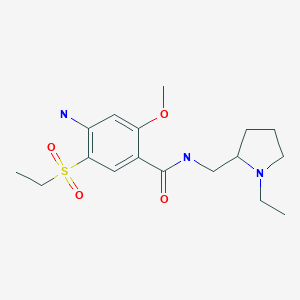

Alder announced one-year results from the PROMISE 1 study in June 2018, which indicated that, following the first quarterly infusion, episodic migraine patients treated with 300 mg eptinezumab experienced 4.3 fewer monthly migraine days (MMDs) from a baseline of 8 MMDs, compared to 3.2 fewer MMDs for placebo from baseline (p= 0.0001). At one year after the third and fourth quarterly infusions, patients treated with 300 mg eptinezumab experienced further gains in efficacy, with a reduction of 5.2 fewer MMDs compared to 4.0 fewer MMDs for placebo-treated patients.  In addition, ~31% of episodic migraine patients achieved, on average per month, 100% reduction of migraine days from baseline compared to ~ 21% for placebo. New 6-month results from the PROMISE 2 study were also released in June 2018.  These results indicated that, after the first quarterly infusion, chronic migraine patients dosed with 300 mg of eptinezumab experienced 8.2 fewer MMDs, from a baseline of 16 MMDs, compared to 5.6 fewer MMDs for placebo from baseline (p <.0001). A further reduction in MMDs was seen following a second infusion; 8.8 fewer MMDs for patients dosed with 300 mg compared to 6.2 fewer MMDs for those with placebo. In addition, ~ 21% of chronic migraine patients achieved, on average, 100% reduction of MMDs from baseline compared to 9% for placebo after two quarterly infusions of 300 mg of eptinezumab.

If approved, eptinezumab would become the fourth antibody therapeutic for migraine prevention on the US market, following the approval of erenumab-aooe (Aimovig; Novartis), galcanezumab-gnlm (Emgality; Eli Lilly & Company) and fremanezumab-vfrm (Ajovy; Teva Pharmaceuticals) in 2018.

//////////Eptinezumab, Monoclonal antibody, Peptide, エプチネズマブ  , fda 2020, approvals 2020

Amisulpride, アミスルプリド ,


71675-85-9.png

ChemSpider 2D Image | Amisulpride | C17H27N3O4S

Amisulpride.svg

Amisulpride

FDA 2020, Barhemsys APPROVED, 2020/2/27

Name
Amisulpride (INN);
Deniban (TN);
Solian (TN)
アミスルプリド;
Formula
C17H27N3O4S
CAS
71675-85-9
Mol weight
369.479

Antipsychotic, Dopamine receptor antagonist, Neuropsychiatric agent

amisulpride(标准品)

275-831-7 [EINECS]
Synthesis ReferenceUS4401822
4-Amino-N-[(1-ethyl-2-pyrrolidinyl)methyl]-5-(ethylsulfonyl)-2-methoxybenzamide
Amisulpride
CAS Registry Number: 71675-85-9
CAS Name: 4-Amino-N-[(1-ethyl-2-pyrrolidinyl)methyl]-5-(ethylsulfonyl)-2-methoxybenzamide
Additional Names: 4-amino-N-[(1-ethyl-2-pyrrolidinyl)methyl]-5-(ethylsulfonyl)-o-anisamide; aminosultopride
Manufacturers’ Codes: DAN-2163
Trademarks: Deniban (Synthelabo); Socian (Synthelabo); Solian (Synthelabo); Sulamid (Baldacci)
Molecular Formula: C17H27N3O4S
Molecular Weight: 369.48
Percent Composition: C 55.26%, H 7.37%, N 11.37%, O 17.32%, S 8.68%
Literature References: Dopamine receptor antagonist. Prepn: M. Thominet et al., BE 872585eidem, US 4401822 (1979, 1983 both to Soc. d’Etudes Sci. Ind. de l’Ile-de-France).
Crystal structure: H. L. DeWinter et al., Acta Crystallogr. C46, 313 (1990). Psychopharmacology: G. Perrault et al., J. Pharmacol. Exp. Ther. 280, 73 (1997). HPLC determn in plasma and urine: B. Malavasi et al., J. Chromatogr. B 676, 107 (1996). Series of articles on pharmacology and clinical efficacy in schizophrenia: Int. Clin. Psychopharmacol. 12, Suppl. 2, S11-S36 (1997).
Properties: Crystals from acetone, mp 126-127°. LD50 in male mice (mg/kg): 56-60 i.v.; 175-180 i.p.; 224-250 s.c.; 1024-1054 orally (Thominet).
Melting point: mp 126-127°
Toxicity data: LD50 in male mice (mg/kg): 56-60 i.v.; 175-180 i.p.; 224-250 s.c.; 1024-1054 orally (Thominet)
Therap-Cat: Antipsychotic.
Keywords: Antipsychotic; Benzamides; Dopamine Receptor Antagonist.
Amisulpride (trade name Solian) is an antipsychotic drug sold by Sanofi-Aventis.  but is approved for use in Europe and Australia for the treatment of psychoses and schizophrenia. Additionally, it is approved in Italy for the treatment of dysthymia (under the brand name Deniban). Amisulpride is a selective dopamine antagonist.

Amisulpride is an antiemetic and antipsychotic medication used at lower doses intravenously to prevent and treat postoperative nausea and vomiting; and at higher doses orally and intramuscularly to treat schizophrenia and acute psychotic episodes. It is sold under the brandnames Barhemsys[6] (as an antiemetic) and Solian, Socian, Deniban and others (as an antipsychotic).[2] It is also used to treat dysthymia.[7]

It is usually classed with the atypical antipsychotics. Chemically it is a benzamide and like other benzamide antipsychotics, such as sulpiride, it is associated with a high risk of elevating blood levels of the lactation hormone, prolactin (thereby potentially causing the absence of the menstrual cycle, breast enlargement, even in males, breast milk secretion not related to breastfeeding, impaired fertility, impotence, breast pain, etc.), and a low risk, relative to the typical antipsychotics, of causing movement disorders.[8][9][10] It has also been found to be modestly more effective in treating schizophrenia than the typical antipsychotics.[9]

Amisulpride is approved for use in the United States in adults for the prevention of postoperative nausea and vomiting (PONV), either alone or in combination with an antiemetic of a different class; and to treat PONV in those who have received antiemetic prophylaxis with an agent of a different class or have not received prophylaxis.[6]

Amisulpride is believed to work by blocking, or antagonizing, the dopamine D2 receptor, reducing its signalling. The effectiveness of amisulpride in treating dysthymia and the negative symptoms of schizophrenia is believed to stem from its blockade of the presynapticdopamine D2 receptors. These presynaptic receptors regulate the release of dopamine into the synapse, so by blocking them amisulpride increases dopamine concentrations in the synapse. This increased dopamine concentration is theorized to act on dopamine D1 receptors to relieve depressive symptoms (in dysthymia) and the negative symptoms of schizophrenia.[7]

It was introduced by Sanofi-Aventis in the 1990s. Its patent expired by 2008, and generic formulations became available.[11] It is marketed in all English-speaking countries except for Canada and the United States.[10] A New York City based company, LB Pharmaceuticals, has announced the ongoing development of LB-102, also known as N-methyl amisulpride, an antipsychotic specifically targeting the United States.[12][13] A poster presentation at European Neuropsychopharmacology[14] seems to suggest that this version of amisulpride, known as LB-102 displays the same binding to D2, D3 and 5HT7 that amisulpride does.[15][16]

Medical uses

Schizophrenia

In a 2013 study in a comparison of 15 antipsychotic drugs in effectiveness in treating schizophrenic symptoms, amisulpride was ranked second and demonstrated high effectiveness. 11% more effective than olanzapine (3rd), 32-35% more effective than haloperidolquetiapine, and aripiprazole, and 25% less effective than clozapine (1st).[9] Although according to other studies it appears to have comparable efficacy to olanzapine in the treatment of schizophrenia.[17][18] Amisulpride augmentation, similarly to sulpirideaugmentation, has been considered a viable treatment option (although this is based on low-quality evidence) in clozapine-resistant cases of schizophrenia.[19][20] Another recent study concluded that amisulpride is an appropriate first-line treatment for the management of acute psychosis.[21]

Contraindications

Amisulpride’s use is contraindicated in the following disease states[2][22][8]

Neither is it recommended to use amisulpride in patients with hypersensitivities to amisulpride or the excipients found in its dosage form.[2]

Adverse effects

Very Common (≥10% incidence)[1]
  • Extrapyramidal side effects (EPS; including dystonia, tremor, akathisiaparkinsonism). Produces a moderate degree of EPS; more than aripiprazole (not significantly, however), clozapine, iloperidone (not significantly), olanzapine (not significantly), quetiapine (not significantly) and sertindole; less than chlorpromazine (not significantly), haloperidol, lurasidone (not significantly), paliperidone (not significantly), risperidone (not significantly), ziprasidone (not significantly) and zotepine (not significantly).[9]
Common (≥1%, <10% incidence)[1][2][23][22][8]
  • Hyperprolactinaemia (which can lead to galactorrhoea, breast enlargement and tenderness, sexual dysfunction, etc.)
  • Weight gain (produces less weight gain than chlorpromazine, clozapine, iloperidone, olanzapine, paliperidone, quetiapine, risperidone, sertindole, zotepine and more (although not statistically significantly) weight gain than haloperidol, lurasidone, ziprasidone and approximately as much weight gain as aripiprazole and asenapine)[9]
  • Anticholinergic side effects (although it does not bind to the muscarinic acetylcholine receptors and hence these side effects are usually quite mild) such as
– constipation
– dry mouth
– disorder of accommodation
– Blurred vision
Rare (<1% incidence)[1][2][23][22][8]

Hyperprolactinaemia results from antagonism of the D2 receptors located on the lactotrophic cells found in the anterior pituitary gland. Amisulpride has a high propensity for elevating plasma prolactin levels as a result of its poor blood-brain barrier penetrability and hence the resulting greater ratio of peripheral D2 occupancy to central D2 occupancy. This means that to achieve the sufficient occupancy (~60–80%[24]) of the central D2 receptors in order to elicit its therapeutic effects a dose must be given that is enough to saturate peripheral D2receptors including those in the anterior pituitary.[25][26]

  • Somnolence. It produces minimal sedation due to its absence of cholinergic, histaminergic and alpha adrenergic receptor antagonism. It is one of the least sedating antipsychotics.[9]

Discontinuation

The British National Formulary recommends a gradual withdrawal when discontinuing antipsychotics to avoid acute withdrawal syndrome or rapid relapse.[27] Symptoms of withdrawal commonly include nausea, vomiting, and loss of appetite.[28] Other symptoms may include restlessness, increased sweating, and trouble sleeping.[28] Less commonly there may be a felling of the world spinning, numbness, or muscle pains.[28] Symptoms generally resolve after a short period of time.[28]

There is tentative evidence that discontinuation of antipsychotics can result in psychosis.[29] It may also result in reoccurrence of the condition that is being treated.[30] Rarely tardive dyskinesia can occur when the medication is stopped.[28]

Overdose

Torsades de pointes is common in overdose.[31][32] Amisulpride is moderately dangerous in overdose (with the TCAs being very dangerous and the SSRIs being modestly dangerous).[33][34]

Interactions

Amisulpride should not be used in conjunction with drugs that prolong the QT interval (such as citalopramvenlafaxinebupropionclozapinetricyclic antidepressantssertindoleziprasidone, etc.),[33] reduce heart rate and those that can induce hypokalaemia. Likewise it is imprudent to combine antipsychotics due to the additive risk for tardive dyskinesia and neuroleptic malignant syndrome.[33]

Pharmacology

Pharmacodynamics

Amisulpride and its relatives sulpiridelevosulpiride, and sultopride have been shown to bind to the high-affinity GHB receptor at concentrations that are therapeutically relevant (IC50 = 50 nM for amisulpride).[37]Amisulpride functions primarily as a dopamine D2 and D3 receptor antagonist. It has high affinity for these receptors with dissociation constantsof 3.0 and 3.5 nM, respectively.[36] Although standard doses used to treat psychosis inhibit dopaminergic neurotransmission, low doses preferentially block inhibitory presynaptic autoreceptors. This results in a facilitation of dopamine activity, and for this reason, low-dose amisulpride has also been used to treat dysthymia.[2]

Amisulpride, sultopride and sulpiride respectively present decreasing in vitro affinities for the D2 receptor (IC50 = 27, 120 and 181 nM) and the D3 receptor (IC50 = 3.6, 4.8 and 17.5 nM).[39]

Though it was long widely assumed that dopaminergic modulation is solely responsible for the respective antidepressant and antipsychoticproperties of amisulpride, it was subsequently found that the drug also acts as a potent antagonist of the serotonin 5-HT7 receptor (Ki = 11.5 nM).[36] Several of the other atypical antipsychotics such as risperidone and ziprasidone are potent antagonists at the 5-HT7 receptor as well, and selective antagonists of the receptor show antidepressant properties themselves. To characterize the role of the 5-HT7 receptor in the antidepressant effects of amisulpride, a study prepared 5-HT7 receptor knockout mice.[36] The study found that in two widely used rodent models of depression, the tail suspension test, and the forced swim test, those mice did not exhibit an antidepressant response upon treatment with amisulpride.[36] These results suggest that 5-HT7 receptor antagonism mediates the antidepressant effects of amisulpride.[36]

Amisulpride also appears to bind with high affinity to the serotonin 5-HT2B receptor (Ki = 13 nM), where it acts as an antagonist.[36] The clinical implications of this, if any, are unclear.[36] In any case, there is no evidence that this action mediates any of the therapeutic effects of amisulpride.[36]

Society and culture

Brand names

Brand names include: Amazeo, Amipride (AU), Amival, Solian (AUIERUUKZA), Soltus, Sulpitac (IN), Sulprix (AU), Midora (RO) and Socian (BR).[40][41]

Availability

Amisulpride was not approved by the Food and Drug Administration for use in the United States until February 2020, but it is used in Europe,[41]Israel, Mexico, India, New Zealand and Australia[2] to treat psychosis and schizophrenia.[42][43]

Amisulpride was approved for use in the United States in February 2020.[44][6]

CLIP

Dopamine receptor antagonist. Prepn: M. Thominet et al., BE 872585; eidem, U.S. Patent 4,401,822 (1979, 1983 both to Soc. d’Etudes Sci. Ind. de l’Ile-de-France).

CLIP

4-Amino-N-((1-ethyl-2-pyrrolidinyl)methyl)-5-(ethylsulfonyl)-o-anisamide, could be produced through many synthetic methods.

Following is one of the synthesis routes:
Firstly, the acetylation of 5-aminosalicylic acid (I) with acetic anhydride in hot acetic acid affords 5-acetaminosalicylic acid (II), which is methylated with dimethyl sulfate and K2CO3 in refluxing acetone producing methyl 2-methoxy-5-acetaminobenzoate (III). Secondly, nitration of (III) with HNOin acetic acid affords methyl 2-methoxy-4-nitro-5-acetaminobenzoate (IV), which is deacetylated with H2SO4 in refluxing methanol to give methyl 2-methoxy-4-nitro-5-aminobenzoate (V). Next, the diazotation of (V) with NaNO2-HCl, followed by reaction with sodium ethylmercaptide, oxidation with H2O2 and hydrolysis with NaOH in ethanol yields 2-methoxy-4-nitro-5-(ethylsulfonyl)benzoic acid (VI), which is condensed with N-ethyl-2-aminomethylpyrrolidine (VII) in the presence of ethyl chloroformate and triethylamine in dioxane affording 2-methoxy-4-nitro-N-[(1-ethyl-2-pyrrolidinyl) methyl]-5-(ethylsulfonyl)benzamide (VIII). At last, this compound is reduced with H2 over Raney-Ni in ethanol.

Production Route of Amisulpride

CLIP

BE 0872585; ES 476755; FR 2415099; GB 2083458; JP 54145658; US 4294828; US 4401822

Alkylation of 2-methoxy-4-amino-5-mercaptobenzoic acid (X) with diethyl sulfate acid Na2CO3 gives 2-methoxy-4-amino-5-ethylthiobenzoic acid (XI), which is oxidized with H2O2 in acetic acid yielding 2-methoxy-4-amino-5-(ethylsulfonyl)benzoic acid (XII). Finally, this compound is condensed with (VII) by means of ethyl chloroformate.

CLIP

FR 2460930

Acetylation of 5-aminosalicylic acid (I) with acetic anhydride in hot acetic acid gives 5-acetaminosalicylic acid (II), which is methylated with dimethyl sulfate and K2CO3 in refluxing acetone yielding methyl 2-methoxy-5-acetaminobenzoate (III). Nitration of (III) with HNO3 in acetic acid affords methyl 2-methoxy-4-nitro-5-acetaminobenzoate (IV), which is deacetylated with H2SO4 in refluxing methanol to give methyl 2-methoxy-4-nitro-5-aminobenzoate (V). The diazotation of (V) with NaNO2-HCl, followed by reaction with sodium ethylmercaptide, oxidation with H2O2 and hydrolysis with NaOH in ethanol yields 2-methoxy-4-nitro-5-(ethylsulfonyl)benzoic acid (VI), which is condensed with N-ethyl-2-aminomethylpyrrolidine (VII) by means of ethyl chloroformate and triethylamine in dioxane affording 2-methoxy-4-nitro-N-[(1-ethyl-2-pyrrolidinyl) methyl]-5-(ethylsulfonyl)benzamide (VIII). Finally, this compound is reduced with H2 over Raney-Ni in ethanol.

CLIP

Treatment of thiourea (I) with iodomethane provided S-methylthiouronium iodide (II). This was further condensed with N-methylpiperazine (III) to afford the intermediate piperazine-1-carboxamidine (IV)

CLIP

Regioselective lithiation of 1,2,4-trichlorobenzene (V) with n-BuLi at -60 C, followed by quenching of the resultant organolithium compound (VI) with N,N-dimethylformamide yielded 2,3,5-trichlorobenzaldehyde (VII) (1), which was then reduced with NaBH4 to provide alcohol (VIII). Bromination of (VIII) using PBr3 afforded compound (IX), whose bromide atom was displaced with KCN to give the trichlorophenylacetonitrile (X). Claisen condensation of (X) with ethyl formate in the presence of NaOEt furnished the oxo nitrile sodium enolate (XI), which was subsequently O-alkylated with iodomethane yielding the methoxy acrylonitrile (XII). Finally, cyclization of (XII) with the piperazine-1-carboxamidine (IV) in EtOH gave rise to the target pyrimidine derivative

PATENT

https://patents.google.com/patent/US20130096319A1/en

Amisulpride is represented by the formula (I) as given below.

Figure US20130096319A1-20130418-C00001

The product patent U.S. Pat. No. 4,401,822 describes preparation of amisulpride as shown in scheme (I)

Figure US20130096319A1-20130418-C00002

The synthesis of amisulpride involves oxidation of 2-methoxy-4-amino-5-ethyl-thio benzoic acid (III) using acetic acid and hydrogen peroxide at 40-45° C. for few hours to obtain 2-methoxy-4-amino-5-ethyl-sulfonyl benzoic acid (IV). In our attempt to repeat this reaction, we found that almost 22 hours were required for completion and the purity of compound (IV) was 87.6%.

    • [0006]
      Thus, the product patent method suffers from the disadvantages such as high reaction time, low yield and low purity.
    • [0007]
      Liu Lie et al, Jingxi Huagong Zhongjianti 2008, 38 (3), 29-32 describes the process for the preparation of 2-methoxy-4-amino-5-ethyl-sulfonyl benzoic acid (IV) as shown in scheme (II).
    • Figure US20130096319A1-20130418-C00003
    • [0008]
      4-amino salicylic acid (VI) is treated with dimethyl sulphate in the presence of potassium hydroxide and acetone to give 4-amino-2-methoxy-methyl benzoate in 4 hours, which is further treated with potassium thiocynate to give compound of formula (VIII). 4-Amino-2-,methoxy-5-thiocyanatobenzoate (VIII) is treated with bromoethane to give 4-amino-5-ethylthio-2-methoxy benzoic acid (IX) which is further converted to 2-methoxy-4-amino-5-ethyl-sulfonyl benzoic acid (IV) via oxidation with hydrogen peroxide and acetic acid.
    • [0009]
      The yield of conversion of compound (VIII) to compound (IX) is 57% and the overall yield of compound (IV) from compound (VI) is 24% only. Thus, the above process suffers from the disadvantages such as low yield and in that it uses bromoethane which is skin and eye irritant and has carcinogenic effects.
    • [0010]
      Therefore, there is, an unfulfilled need to provide industrially feasible process for the preparation of 2-methoxy-4-amino-5-ethyl-sulfonyl benzoic acid (IV) and amisulpride (I) with higher purity and yield, since it is one of the key intermediates in the manufacture of amisulpride.

SUMMARY OF THE INVENTION

The present invention is related to a novel process for the preparation of amisulpride (I) that involves: (i) methylation of 4-amino-salicylic-acid (VI) with dimethyl sulphate and base, optionally in presence of TBAB to obtain 4-amino-2-methoxy methyl benzoate (VII) and (ii) oxidation of 4-amino-2-methoxy-5-ethyl thio benzoic acid (IX) or 4-amino-2-methoxy-5-ethyl thio methyl benzoate (X) with oxidizing agent in the presence of sodium tungstate or ammonium molybdate to give 2-methoxy-4-amino-5-ethyl-sulfonyl benzoic acid (IV) or 2-methoxy-4-amino-5-ethyl-sulfonyl methyl benzoate (XI) respectively.
    • Example 13

    • [0097]
      Preparation of crude amisulpride
    • [0098]
      To a stirring mixture of 4-amino-2-methoxy-5-ethyl sulphonyl benzoic acid (IV) and acetone (5.0 L) at 0-5° C., triethyl amine (0.405 Kg) was added and stirred followed by addition of ethyl chloroformate (0.368 Kg). N-ethyl-2-amino methyl pyrrolidine (0.627 Kg) was added to the reaction mass at 5-10° C. Temperature of reaction mass was raised to 25-30° C. and stirred for 120 min. To the same reaction mass triethyl amine (0.405 Kg) and ethyl chloroformate (0.368 Kg) was added with maintaining the temperature. Reaction mass was stirred for 120 min. After completion of reaction, water (4.0 L) was added. Reaction mass was filtered and washed with water (2.0 L). Filtrate was collected and water was added (9.0 L). pH of the reaction mass was adjusted to 10.8-11.2 by using 20% NaOH solution. Reaction mass was stirred for 240-300 min, filtered and washed with water. Solid was dried under vacuum
    • [0099]
      Yield : 70%
    • [0100]
      Purity: 98%

Example 14

  • [0101]
    Purification of amisulpride
  • [0102]
    Amisulpride (1 kg) was charged in acetone (6 liters) and the reaction mixture was heated till a clear solution was obtained. Slurry of activated carbon (0.1 kg in 1 liter) was added in acetone. The reaction mass was stirred at 50-55 ° C. for 60 minutes and filtered hot. The filtrate was concentrated and further heated to dissolve the solid. The reaction mass was cooled to 0-5° C., stirred and filtered. The precipitated solid was washed with acetone and dried.
  • [0103]
    Yield: 750 gm (75%)
  • [0104]
    HPLC purity: 99.8% (quantitative)
  • [0105]
    M.P.: 125° C.
  • [0106]
    DSC: shows endotherm at 133° C.
  • [0107]
    Particle size: d10=0.637, d50=6.0, d90=13.325 microns

CLIP

https://watermark.silverchair.com/bmw186.pdf?token=AQECAHi208BE49Ooan9kkhW_Ercy7Dm3ZL_9Cf3qfKAc485ysgAAAmEwggJdBgkqhkiG9w0BBwagggJOMIICSgIBADCCAkMGCSqGSIb3DQEHATAeBglghkgBZQMEAS4wEQQM_rfBl_qrJE7Y7K67AgEQgIICFOQ9ug62uUxOD4oCuuUGlGD3N04qUgCHew1O5UIyknvohf-_QUaJclqSZM6k5UhPTLgjkYyVMVgS04HMcDKUVXr1cMUfV6cExwayFb8z3MQUF4Ny6s8hPuAMJO4XsTm4qh0nnEykHwgMonNWdDr32D4B7NuEVwGE_5Z-d1yQvAdkNeCmEbHIaue3OTiocWodCsAv8yUdnXf1AtreXJkvsiAQtk4oCddsM_a2njiXJAc-VcFgTImCvsaCY-_eWT91Dc3gb7fpEAJSPLl06xx30GziAvF_hl5P33TaMFmVm_p-0rJGWi-_x92Tlo1CkuR1N1oWlcnuBSPqKeX3tbMO3phnIYtbDPycftd6UKI2f9-zyMRHgSId4xJCpaxvy6fndrWZ1qrHTyQLt_XqncL7zD8aYHER67kV3g30ZgAtcivHoMSHj9h4wGD5WLZ5-M4cZ0dpUyKx3E2njYBEBe0LNQyqDmP8HKpM_RBN2C2nuD2h1fJkiwf2kLAdlBC6gOhjl60XqU_7ARJZf_86kR3OhUJ5f8Ey2R-k3zwDHEc3tU10AlEky9ne-UWVHGjOCd9L-SV-eXfjOnaERGw9EHahxajGBCRuqa07-BtbV0mr53AKyaS5YUTQ2EZ7P3WarhImsJpYiQxWAuSlYn2F11RTMu_KjP7-DMXbX6pcq20axI2NNwrBtfsDXFbQWZ8q9R0FYGsUS90

References

  1. Jump up to:a b c d “Amisulpride 100 mg Tablets – Summary of Product Characteristics (SmPC)”(emc). 5 July 2019. Retrieved 26 February 2020.
  2. Jump up to:a b c d e f g h i j k “Solian tablets and solution product information” (PDF)TGA eBusiness Services. Sanofi-Aventis Australia Pty Ltd. 27 September 2019. Retrieved 26 February2020.
  3. Jump up to:a b c Rosenzweig, P.; Canal, M.; Patat, A.; Bergougnan, L.; Zieleniuk, I.; Bianchetti, G. (2002). “A review of the pharmacokinetics, tolerability and pharmacodynamics of amisulpride in healthy volunteers”. Human Psychopharmacology17 (1): 1–13. doi:10.1002/hup.320PMID 12404702.
  4. ^ Caccia, S (May 2000). “Biotransformation of Post-Clozapine Antipsychotics Pharmacological Implications”. Clinical Pharmacokinetics38 (5): 393–414. doi:10.2165/00003088-200038050-00002PMID 10843459.
  5. ^ Noble, S; Benfield, P (December 1999). “Amisulpride: A Review of its Clinical Potential in Dysthymia”. CNS Drugs12 (6): 471–483. doi:10.2165/00023210-199912060-00005.
  6. Jump up to:a b c “Barhemsys (amisulpride) injection, for intravenous use” (PDF). U.S. Food and Drug Administration (FDA). February 2020. Retrieved 26 February 2020.
  7. Jump up to:a b Pani L, Gessa GL (2002). “The substituted benzamides and their clinical potential on dysthymia and on the negative symptoms of schizophrenia”. Molecular Psychiatry7 (3): 247–53. doi:10.1038/sj.mp.4001040PMID 11920152.
  8. Jump up to:a b c d Rossi, S, ed. (2013). Australian Medicines Handbook (2013 ed.). Adelaide: The Australian Medicines Handbook Unit Trust. ISBN 978-0-9805790-9-3.
  9. Jump up to:a b c d e f g Leucht, S; Cipriani, A; Spineli, L; Mavridis, D; Orey, D; Richter, F; Samara, M; Barbui, C; Engel, RR; Geddes, JR; Kissling, W; Stapf, MP; Lässig, B; Salanti, G; Davis, JM (September 2013). “Comparative efficacy and tolerability of 15 antipsychotic drugs in schizophrenia: a multiple-treatments meta-analysis”. Lancet382 (9896): 951–962. doi:10.1016/S0140-6736(13)60733-3PMID 23810019.
  10. Jump up to:a b Brayfield, A, ed. (June 2017). “Amisulpride: Martindale: The Complete Drug Reference”MedicineComplete. Pharmaceutical Press. Retrieved 5 August 2017.
  11. ^ De Silva, V; Hanwella, R (April 2008). “Pharmaceutical patents and the quality of mental healthcare in low- and middle-income countries”. The Psychiatrist32 (4): 121–23. doi:10.1192/pb.bp.107.015651.
  12. ^ “Pipeline”LB Pharmaceuticals. Retrieved 29 August 2019.
  13. ^ “About Us”LB Pharmaceuticals. Retrieved 26 February 2020.
  14. ^ “Data presented at 2017 ECNP meeting (European Neuropsychopharmacology, 2017, 27 (S4), S922-S923)”LB Pharmaceuticals. Retrieved 26 February 2020.
  15. ^ “Building a translational bridge from animals to man for clinical candidate LB-102, a next-generation benzamide antipsychotic (P.101)” (PDF)LB Pharmaceuticals. Retrieved 29 August 2019.
  16. ^ Grattan V, Vaino AR, Prensky Z, Hixon MS (August 2019). “Antipsychotic Benzamides Amisulpride and LB-102 Display Polypharmacy as Racemates, S Enantiomers Engage Receptors D2 and D3, while R Enantiomers Engage 5-HT7”ACS Omega4 (9): 14151–4. doi:10.1021/acsomega.9b02144ISSN 2470-1343PMC 6714530PMID 31497735.
  17. ^ Komossa, K; Rummel-Kluge, C; Hunger, H; Schmid, F; Schwarz, S; Silveira da Mota Neto, JI; Kissling, W; Leucht, S (January 2010). “Amisulpride versus other atypical antipsychotics for schizophrenia”The Cochrane Database of Systematic Reviews (1): CD006624. doi:10.1002/14651858.CD006624.pub2PMC 4164462PMID 20091599.
  18. ^ Leucht, S; Corves, C; Arbter, D; Engel, RR; Li, C; Davis, JM (January 2009). “Second-generation versus first-generation antipsychotic drugs for schizophrenia: a meta-analysis”. Lancet373 (9657): 31–41. doi:10.1016/S0140-6736(08)61764-XPMID 19058842.
  19. ^ Solanki, RK; Sing, P; Munshi, D (October–December 2009). “Current perspectives in the treatment of resistant schizophrenia”Indian Journal of Psychiatry51 (4): 254–60. doi:10.4103/0019-5545.58289PMC 2802371PMID 20048449.
  20. ^ Mouaffak, F; Tranulis, C; Gourevitch, R; Poirier, MF; Douki, S; Olié, JP; Lôo, H; Gourion, D (2006). “Augmentation Strategies of Clozapine With Antipsychotics in the Treatment of Ultraresistant Schizophrenia”. Clinical Neuropharmacology29 (1): 28–33. doi:10.1097/00002826-200601000-00009PMID 16518132.
  21. ^ Nuss, P.; Hummer, M.; Tessier, C. (2007). “The use of amisulpride in the treatment of acute psychosis”Therapeutics and Clinical Risk Management3 (1): 3–11. doi:10.2147/tcrm.2007.3.1.3PMC 1936283PMID 18360610.
  22. Jump up to:a b c Joint Formulary Committee (2013). British National Formulary (BNF) (65 ed.). London, UK: Pharmaceutical Press. ISBN 978-0-85711-084-8.
  23. Jump up to:a b Truven Health Analytics, Inc. DRUGDEX System (Internet) [cited 2013 Sep 19]. Greenwood Village, CO: Thomsen Healthcare; 2013.
  24. ^ Brunton, L; Chabner, B; Knollman, B (2010). Goodman and Gilman’s The Pharmacological Basis of Therapeutics (12th ed.). New York: McGraw-Hill Professional. ISBN 978-0-07-162442-8.
  25. ^ McKeage, K; Plosker, GL (2004). “Amisulpride: a review of its use in the management of schizophrenia”. CNS Drugs18 (13): 933–956. doi:10.2165/00023210-200418130-00007ISSN 1172-7047PMID 15521794.
  26. ^ Natesan, S; Reckless, GE; Barlow, KB; Nobrega, JN; Kapur, S (October 2008). “Amisulpride the ‘atypical’ atypical antipsychotic — Comparison to haloperidol, risperidone and clozapine”. Schizophrenia Research105 (1–3): 224–235. doi:10.1016/j.schres.2008.07.005PMID 18710798.
  27. ^ Joint Formulary Committee, BMJ, ed. (March 2009). “4.2.1”. British National Formulary (57 ed.). United Kingdom: Royal Pharmaceutical Society of Great Britain. p. 192. ISBN 978-0-85369-845-6Withdrawal of antipsychotic drugs after long-term therapy should always be gradual and closely monitored to avoid the risk of acute withdrawal syndromes or rapid relapse.
  28. Jump up to:a b c d e Haddad, Peter; Haddad, Peter M.; Dursun, Serdar; Deakin, Bill (2004). Adverse Syndromes and Psychiatric Drugs: A Clinical Guide. OUP Oxford. p. 207–216. ISBN 9780198527480.
  29. ^ Moncrieff J (July 2006). “Does antipsychotic withdrawal provoke psychosis? Review of the literature on rapid onset psychosis (supersensitivity psychosis) and withdrawal-related relapse”. Acta Psychiatrica Scandinavica114 (1): 3–13. doi:10.1111/j.1600-0447.2006.00787.xPMID 16774655.
  30. ^ Sacchetti, Emilio; Vita, Antonio; Siracusano, Alberto; Fleischhacker, Wolfgang (2013). Adherence to Antipsychotics in Schizophrenia. Springer Science & Business Media. p. 85. ISBN 9788847026797.
  31. ^ Isbister, GK; Balit, CR; Macleod, D; Duffull, SB (August 2010). “Amisulpride overdose is frequently associated with QT prolongation and torsades de pointes”. Journal of Clinical Psychopharmacology30 (4): 391–395. doi:10.1097/JCP.0b013e3181e5c14cPMID 20531221.
  32. ^ Joy, JP; Coulter, CV; Duffull, SB; Isbister, GK (August 2011). “Prediction of Torsade de Pointes From the QT Interval: Analysis of a Case Series of Amisulpride Overdoses”. Clinical Pharmacology & Therapeutics90 (2): 243–245. doi:10.1038/clpt.2011.107PMID 21716272.
  33. Jump up to:a b c Taylor, D; Paton, C; Shitij, K (2012). Maudsley Prescribing Guidelines in Psychiatry(11th ed.). West Sussex: Wiley-Blackwell. ISBN 978-0-47-097948-8.
  34. ^ Levine, M; Ruha, AM (July 2012). “Overdose of atypical antipsychotics: clinical presentation, mechanisms of toxicity and management”. CNS Drugs26 (7): 601–611. doi:10.2165/11631640-000000000-00000PMID 22668123.
  35. ^ Roth, BL; Driscol, J. “PDSP Ki Database”Psychoactive Drug Screening Program (PDSP). University of North Carolina at Chapel Hill and the United States National Institute of Mental Health. Retrieved 14 August 2017.
  36. Jump up to:a b c d e f g h i j k l m n o p q r s t u v w x y z aa ab ac ad ae af ag ah ai aj ak al am an ao ap aq ar asat au av aw Abbas AI, Hedlund PB, Huang XP, Tran TB, Meltzer HY, Roth BL (2009). “Amisulpride is a potent 5-HT7 antagonist: relevance for antidepressant actions in vivo”Psychopharmacology205 (1): 119–28. doi:10.1007/s00213-009-1521-8PMC 2821721PMID 19337725.
  37. Jump up to:a b Maitre, M.; Ratomponirina, C.; Gobaille, S.; Hodé, Y.; Hechler, V. (April 1994). “Displacement of [3H] gamma-hydroxybutyrate binding by benzamide neuroleptics and prochlorperazine but not by other antipsychotics”. European Journal of Pharmacology256(2): 211–214. doi:10.1016/0014-2999(94)90248-8PMID 7914168.
  38. ^ Schoemaker H, Claustre Y, Fage D, Rouquier L, Chergui K, Curet O, Oblin A, Gonon F, Carter C, Benavides J, Scatton B (1997). “Neurochemical characteristics of amisulpride, an atypical dopamine D2/D3 receptor antagonist with both presynaptic and limbic selectivity”. J. Pharmacol. Exp. Ther280 (1): 83–97. PMID 8996185.
  39. ^ Blomme, Audrey; Conraux, Laurence; Poirier, Philippe; Olivier, Anne; Koenig, Jean-Jacques; Sevrin, Mireille; Durant, François; George, Pascal (2000), “Amisulpride, Sultopride and Sulpiride: Comparison of Conformational and Physico-Chemical Properties”, Molecular Modeling and Prediction of Bioactivity, Springer US, pp. 404–405, doi:10.1007/978-1-4615-4141-7_97ISBN 9781461368571
  40. ^ “Amisulpride international”Drugs.com. 3 February 2020. Retrieved 26 February 2020.
  41. Jump up to:a b “Active substance: amisulpride” (PDF). 28 September 2017. EMA/658194/2017; Procedure no.: PSUSA/00000167/201701. Retrieved 26 February 2020.
  42. ^ Lecrubier, Y.; et al. (2001). “Consensus on the Practical Use of Amisulpride, an Atypical Antipsychotic, in the Treatment of Schizophrenia”. Neuropsychobiology44 (1): 41–46. doi:10.1159/000054913PMID 11408792.
  43. ^ Kaplan, A. (2004). “Psychotropic Medications Around the World”Psychiatric Times21(5).
  44. ^ “Barhemsys: FDA-Approved Drugs”U.S. Food and Drug Administration (FDA). Retrieved 26 February 2020.

External links

Amisulpride
Amisulpride.svg
Amisulpride-xtal-1990-ball-and-stick-model.png
Clinical data
Trade names Solian, Barhemsys, others
Other names APD421
AHFS/Drugs.com International Drug Names
License data
Pregnancy
category
  • AU: C
Routes of
administration
By mouthintravenous
ATC code
Legal status
Legal status
Pharmacokinetic data
Bioavailability 48%[3][2]
Protein binding 16%[2]
Metabolism Hepatic (minimal; most excreted unchanged)[2]
Elimination half-life 12 hours[3]
Excretion Renal[3] (23–46%),[4][5]Faecal[2]
Identifiers
CAS Number
PubChem CID
IUPHAR/BPS
DrugBank
ChemSpider
UNII
KEGG
ChEBI
ChEMBL
CompTox Dashboard (EPA)
ECHA InfoCard 100.068.916 Edit this at Wikidata
Chemical and physical data
Formula C17H27N3O4S
Molar mass 369.48 g/mol g·mol−1
3D model (JSmol)

  1. Rosenzweig P, Canal M, Patat A, Bergougnan L, Zieleniuk I, Bianchetti G: A review of the pharmacokinetics, tolerability and pharmacodynamics of amisulpride in healthy volunteers. Hum Psychopharmacol. 2002 Jan;17(1):1-13. [PubMed:12404702]
  2. Moller HJ: Amisulpride: limbic specificity and the mechanism of antipsychotic atypicality. Prog Neuropsychopharmacol Biol Psychiatry. 2003 Oct;27(7):1101-11. [PubMed:14642970]
  3. Weizman T, Pick CG, Backer MM, Rigai T, Bloch M, Schreiber S: The antinociceptive effect of amisulpride in mice is mediated through opioid mechanisms. Eur J Pharmacol. 2003 Oct 8;478(2-3):155-9. [PubMed:14575800]
  4. Leucht S, Pitschel-Walz G, Engel RR, Kissling W: Amisulpride, an unusual “atypical” antipsychotic: a meta-analysis of randomized controlled trials. Am J Psychiatry. 2002 Feb;159(2):180-90. [PubMed:11823257]
  5. Rehni AK, Singh TG, Chand P: Amisulpride-induced seizurogenic effect: a potential role of opioid receptor-linked transduction systems. Basic Clin Pharmacol Toxicol. 2011 May;108(5):310-7. doi: 10.1111/j.1742-7843.2010.00655.x. Epub 2010 Dec 22. [PubMed:21176108]

Patent

Publication numberPriority datePublication dateAssigneeTitle
US4052445A *1975-02-011977-10-04Deutsche Gold- Und Silber-Scheideanstalt Vormals RoesslerProcess for the production of alkyl sulfonic acids
Family To Family Citations
FR2415099B11978-01-201981-02-20Ile De France
US20100105755A1 *2008-09-122010-04-29Auspex Pharmaceuticals, Inc.Substituted benzamide modulators of dopamine receptor

Non-Patent

Title
Jeyakumar et al. (Tetrahedron Letters 47 (2006) 4573-4576) *
Sato et al. (Tetrahedron 57 (2001) 2469-2476) *
WO2019113084A1 *2017-12-052019-06-13Sunovion Pharmaceuticals Inc.Crystal forms and production methods thereof
Family To Family Citations
CN102807516A *2012-08-162012-12-05四川省百草生物药业有限公司Intermediate in amisulpride and method for preparing amisulpride by using intermediate
CN103819383A *2012-11-192014-05-28上海美迪西生物医药有限公司Synthesis method for amisulpride
CN103319385B *2013-06-182015-07-08苏州诚和医药化学有限公司Method for synthesizing 2-methoxy-4-amino-5-ethylsulfonyl benzoic acid
CN103450058B *2013-09-182015-10-14广安凯特医药化工有限公司A kind of preparation method of amisulpride acid
CN103553989B *2013-11-082015-03-11苏州诚和医药化学有限公司Synthetic method of 2-methoxyl-4-amino-5-ethyl sulfuryl methyl benzoate
CN104725292B *2015-03-232017-07-25湖北荆江源制药股份有限公司A kind of preparation method of (S) () Amisulpride
CN105237422A *2015-09-062016-01-13南京理工大学Synthetic method of 4-amino-5-chloro-2-methoxyl benzoic acid

///////////////Amisulpride, アミスルプリド , 标准品 , FDA 2020, 2020 APPROVALS, Barhemsys, SOLIAN,  Antipsychotic, Benzamides,  Dopamine Receptor Antagonist,

CCN1CCCC1CNC(=O)C1=CC(=C(N)C=C1OC)S(=O)(=O)CC

Rimegepant sulfate, リメゲパント硫酸塩;


ChemSpider 2D Image | Rimegepant | C28H28F2N6O3

Rimegepant.svg

Rimegepant

  • Molecular FormulaC28H28F2N6O3
  • Monoisotopic mass534.219116 Da
1289023-67-1 [RN]
1-Piperidinecarboxylic acid, 4-(2,3-dihydro-2-oxo-1H-imidazo[4,5-b]pyridin-1-yl)-, (5S,6S,9R)-5-amino-6-(2,3-difluorophenyl)-6,7,8,9-tetrahydro-5H-cyclohepta[b]pyridin-9-yl ester
9751
BMS 927711

Antimigraine, Calcitonin receptor-like receptor antagonist

Treatment of migraine

Rimegepant sulfate.png

str1

Structure of RIMEGEPANT SULFATE

Rimegepant sulfate (USAN)

リメゲパント硫酸塩;

Formula
(C28H28F2N6O3)2. H2SO4. 3H2O
CAS
1374024-48-2
Mol weight
1221.2386

Nurtec ODT, FDA 2020, 2020/2/27 fda approved

Biohaven Pharmaceuticals developed Rimegepant, also known as BMS-927711, acquired in 2016 from Bristol-Myers Squibb, Rimegepant, also known as BMS-927711. Rimegepant is a potent, selective, competitive and orally active calcitonin gene-related peptide (CGRP) antagonist in clinical trials for treating migraine. Rimegepant has shown in vivo efficacy without vasoconstrictor effect; it is superior to placebo at several different doses (75 mg, 150 mg, and 300 mg) and has an excellent tolerability profile.

Rimegepant is a medication for the treatment of an acute migraine with or without aura (a sensory phenomenon or visual disturbance) in adults. However, it is not to be used prophylactically. In the US, it is marketed under the brand name, Nurtec ODT.[1]

It is not indicated for the preventive treatment of migraine.[1] It is taken by mouth, to dissolve on the tongue.[1] It takes effect within an hour and can provide relief for up to 48 hours, according to Biohaven. It is not a narcotic and has no addictive potential, and consequently will not be designated a controlled substance. It works by blocking CGRP receptors. 86% of patients did not require additional rescue medication within 24 hours of a single dose of Nurtec. All this info was obtained from a press release from Biohaven. (https://www.prnewswire.com/news-releases/biohavens-nurtec-odt-rimegepant-receives-fda-approval-for-the-acute-treatment-of-migraine-in-adults-301013021.html)

Rimegepant was approved for use in the United States as of February 27th, 2020 by the U.S. Food and Drug Administration (FDA) to be produced and marketed by Biohaven Pharmaceuticals.[2]

Charlie Conway

Charlie Conway, Chief Scientific Officer at Biohaven Pharmaceuticals

Vlad Coric, M.D.

Vlad Coric, M.D., CEO at Biohaven

No alternative text description for this image


clip

https://www.biohavenpharma.com/investors/news-events/press-releases/02-27-2020

BIOHAVEN’S NURTEC™ ODT (RIMEGEPANT) RECEIVES FDA APPROVAL FOR THE ACUTE TREATMENT OF MIGRAINE IN ADULTS
– First and only calcitonin gene-related peptide (CGRP) receptor antagonist available in a fast-acting orally disintegrating tablet (ODT)- A single oral dose of NURTEC ODT 75 mg can provide fast pain relief and return patients to normal function within one hour, and deliver sustained efficacy that lasts up to 48 hours for many patients- 86 percent of patients treated with a single dose of NURTEC ODT did not use a migraine rescue medication within 24 hours- Biohaven to host investor conference call on Friday, February 28, 2020 at 8:00 am ET

NEW HAVEN, Conn., Feb. 27, 2020 /PRNewswire/ — Biohaven Pharmaceutical Holding Company Ltd. (NYSE: BHVN) today announced that the U.S. Food and Drug Administration (FDA) has approved NURTEC™ ODT (rimegepant) for the acute treatment of migraine in adults. NURTEC ODT is the first FDA-approved product for Biohaven, a company dedicated to advancing innovative therapies for neurological diseases.

Nurtec™ ODT convenient 8-count package

NURTEC™ ODT Convenient 8-count Package

 NURTEC™ ODT zoom in showing one individual quick-dissolving tablet (not actual size)

A single quick-dissolving tablet of NURTEC ODT can provide fast pain relief and return patients to normal function within one hour, and deliver sustained efficacy that lasts up to 48 hours for many patients. NURTEC ODT disperses almost instantly in a person’s mouth without the need for water, offering people with migraine a convenient, discreet way to take their medication anytime and anywhere they need it. NURTEC ODT is not indicated for the preventive treatment of migraine. Biohaven expects topline results from its prevention of migraine trial later this quarter.

Vlad Coric, M.D., CEO of Biohaven commented, “The FDA approval of NURTEC ODT marks an important milestone for the migraine community and a transformative event for Biohaven. Millions of people suffering from migraine are often not satisfied with their current acute treatment, at times having to make significant tradeoffs because of troublesome side effects and reduced ability to function. NURTEC ODT is an important new oral acute treatment for migraine that offers patients the potential to quickly reduce and eliminate pain and get back to their lives.” Dr. Coric added, “We believe NURTEC ODT will be the first of many innovative Biohaven medicines to become available to treat devastating neurological diseases, a therapeutic category many other companies have abandoned. We are dedicated to helping patients with these conditions, who often have limited or no treatment options, live better, more productive lives.”

NURTEC ODT, with its novel quick-dissolve oral tablet formulation, works by blocking CGRP receptors, treating a root cause of migraine. NURTEC ODT is not an opioid or narcotic, does not have addiction potential and is not scheduled as a controlled substance by the U.S. Drug Enforcement Administration.

NURTEC ODT may offer an alternative treatment option, particularly for patients who experience inadequate efficacy, poor tolerability, or have a contraindication to currently available therapies. More than 3,100 patients have been treated with rimegepant with more than 113,000 doses administered in clinical trials, including a one-year long-term safety study. In the pivotal Phase 3 trial, NURTEC ODT was generally well tolerated; the most common adverse reaction was nausea (2%) in patients who received NURTEC ODT compared to 0.4% of patients who received placebo.

Mary Franklin, Executive Director of the National Headache Foundation commented, “Everyone knows someone living with migraine, yet it remains an invisible disease that is often overlooked and misunderstood. Almost all people with migraine need an acute treatment to stop a migraine attack as it occurs, which can happen without warning. The approval of NURTEC ODT is exciting for people with migraine as it provides a new treatment option to help people regain control of their attacks and their lives.”

Peter Goadsby, M.D., Ph.D., Professor of Neurology and Director of the King’s Clinical Research Facility, King’s College Hospital commented, “I see many patients in my practice whose lives are disrupted by migraine, afraid to go about everyday life in case of a migraine attack. Many feel unsure if their acute treatment will work and if they can manage the side effects. With the FDA approval of NURTEC ODT, there is renewed hope for people living with migraine that they can get back to living their lives without fear of the next attack.”

The FDA approval of NURTEC ODT is based on results from the pivotal Phase 3 clinical trial (Study 303) and the long-term, open-label safety study (Study 201). In the Phase 3 trial, NURTEC ODT achieved statistical significance on the regulatory co-primary endpoints of pain freedom and freedom from most bothersome symptom (MBS) at two hours post dose compared to placebo. NURTEC ODT also demonstrated statistical superiority at one hour for pain relief (reduction of moderate or severe pain to no pain or mild pain) and return to normal function. The benefits of pain freedom, pain relief, return to normal function and freedom from MBS were sustained up to 48 hours for many patients. Importantly, these benefits were seen with only a single dose of NURTEC ODT. Eighty-six percent of patients treated with NURTEC ODT did not require rescue medication (e.g. NSAIDS, acetaminophen) within 24 hours post dose. The long-term safety study assessed the safety and tolerability of rimegepant with multiple doses used over up to one year. The study evaluated 1,798 patients, who used rimegepant 75 mg as needed to treat migraine attacks, up to one dose per day. The study included 1,131 patients who were exposed to rimegepant for at least six months, and 863 who were exposed for at least one year, all of whom treated an average of at least two migraine attacks per month. The safety of treating more than 15 migraines in a 30-day period has not been established.

NURTEC ODT is contraindicated in patients with a history of hypersensitivity to rimegepant, NURTEC ODT, or to any of its components. Hypersensitivity reactions with dyspnea and severe rash, including delayed serious hypersensitivity days after administration, occurred in less than 1% of subjects taking NURTEC ODT in clinical studies.

Biohaven Conference Call Information
Biohaven is hosting a conference call and webcast on Friday, February 28, 2020, at 8:00 a.m. ET.  Participants are invited to join the conference by dialing 877-407-9120 (toll-free) or 412-902-1009 (international). To access the audio webcast with slides, please visit the “Events & Presentations” page in the Investors section of the Company’s website.

Biohaven’s Commitment to Patient Access 
Biohaven is committed to supporting the migraine community by eliminating barriers to medication access. The company has launched a patient support program. For more information and to enroll, please call 1-833-4-NURTEC or visit www.nurtec.com.

NURTEC ODT will be available in pharmacies in early March 2020 in packs of eight tablets. Each eight tablet pack covers treatment of eight migraine attacks with one dose, as needed, up to once daily.  Sample packs containing two tablets will also be made available to healthcare providers. Patients with migraine should discuss with their primary care provider or neurologist whether NURTEC ODT is appropriate for them.

About NURTEC ODT
NURTEC™ ODT (rimegepant) is the first and only calcitonin gene-related peptide (CGRP) receptor antagonist available in a quick-dissolve ODT formulation that is approved by the U.S. Food and Drug Administration (FDA) for the acute treatment of migraine in adults. The activity of the neuropeptide CGRP is thought to play a causal role in migraine pathophysiology. NURTEC ODT is a CGRP receptor antagonist that works by reversibly blocking CGRP receptors, thereby inhibiting the biologic activity of the CGRP neuropeptide. The recommended dose of NURTEC ODT is 75 mg, taken as needed, up to once daily. For more information about NURTEC ODT, visit www.nurtec.com.

About Migraine
Nearly 40 million people in the U.S. suffer from migraine and the World Health Organization classifies migraine as one of the 10 most disabling medical illnesses. Migraine is characterized by debilitating attacks lasting four to 72 hours with multiple symptoms, including pulsating headaches of moderate to severe pain intensity that can be associated with nausea or vomiting, and/or sensitivity to sound (phonophobia) and sensitivity to light (photophobia). There is a significant unmet need for new acute treatments as more than 90 percent of migraine sufferers are unable to work or function normally during an attack.

About CGRP Receptor Antagonism
Small molecule CGRP receptor antagonists represent a novel class of drugs for the treatment of migraine. This unique mode of action potentially offers an alternative to current agents, particularly for patients who have contraindications to the use of triptans, or who have a poor response to triptans or are intolerant to them.

What is NURTEC ODT? 
NURTEC™ ODT (rimegepant) is indicated for the acute treatment of migraine with or without aura in adults.

No alternative text description for this image

Raising the “flag of freedom from migraine” over Biohaven headquarters in New Haven CT

Mechanism of action

Rimegepant is a small molecule calcitonin gene-related peptide (CGRP) receptor antagonist.[3]

PATENTS

WO 2011046997

PATENT

WO 2012050764

https://patents.google.com/patent/WO2012050764A1

The disclosure generally relates to a synthetic process for preparing compounds of formula I including the preparation of chemical intermediates useful in this process. CGRP inhibitors are postulated to be useful in pathophysiologic conditions where excessive CGRP receptor activation has occurred. Some of these include neurogenic vasodilation, neurogenic inflammation, migraine, cluster headache and other headaches, thermal injury, circulatory shock, menopausal flushing, and asthma. CGRP antagonists have shown efficacy in human clinical trials. See Davis CD, Xu C. Curr Top Med Chem. 2008 8(16):1468-79; Benemei S, Nicoletti P, Capone JG, Geppetti P. Curr Opin Pharmacol 2009 9(1):9-14. Epub 2009 Jan 20; Ho TW, Ferrari MD, Dodick DW, Galet V, Kost J, Fan X, Leibensperger H, Froman S, Assaid C, Lines C, Koppen H, Winner PK. Lancet. 2008 372:2115. Epub 2008 Nov 25; Ho TW, Mannix LK, Fan X, Assaid C, Furtek C, Jones CJ, Lines CR, Rapoport AM; Neurology 2008 70: 1304. Epub 2007 Oct 3.

CGRP receptor antagonists have been disclosed in PCT publications WO 2004/092166, WO 2004/092168, and WO 2007/120590. The compound (5S,6S,9R)- 5-amino-6-(2,3-difluorophenyl)-6,7,8!9-tetrahydiO-5H-cyclohepta[b]pyridin-9-yl 4- (2-oxo-2,3-dihydiO-lH-imidazo[4,5-b]pyridin-l-yl)piperidine-l-carboxylate is an inhibitor of the calcitonin gene-related peptide (CGRP) receptor.

Figure imgf000004_0001
Figure imgf000005_0001

cheme 1 illustrates a synthesis of formula I compounds. heme 1,

Figure imgf000011_0001

DESCRIPTION OF SPECIFIC EMBODIMENTS

Figure imgf000012_0001

( 6S, 9R)-6~ (2, 3 -difluorophenyl)-9-(triisopropylsiIyloxy) – 6, 7, 8, 9-tetrahydro-5H- cyclohepta[b]pyridin-5 -amine. To a 100 mL hastelloy autoclave reactor was charged (6S,9R)-6-(2,3-difluorophenyl)-9-(triisopiOpylsilyloxy)-6,7,8,9-tetrahydi -5H- cyclohepta[b]pyridin-5-one (5.00 g, 1 1.22 mmol), 1,4-dioxane (50 mL) and titanium tetra(isopropoxide) (8.33 mL, 28.11 mmol). The reactor was purged three times with nitrogen and three times with ammonia. After the purge cycle was completed, the reactor was pressurized with ammonia to 100 psig. The reaction mixture was heated to 50°C (jacket temperature) and stirred at a speed to ensure good mixing. The reaction mixture was aged at 100 psig ammonia and 50°C for 20 h. The mixture was then cooled to 20°C then 5 % Pd/Alumina (1.0 g, 20 wt%) was charged to the autoclave reactor. The reactor was purged three times with nitrogen and three times with hydrogen. After the purged cycle completed, the reactor was pressurized with hydrogen to 100 psig and mixture was heated to 50°C (jacket temperature) and stirred at a speed to ensure good mixing. The reaction mixture was aged at 100 psig H2 and 50°C for 23h (reactor pressure jumped to -200 psig due to soluble ammonia in the mixture). The mixture was then cooled to 20 °C then filtered then transferred to a 100 ml 3-necked flask. To the mixture water (0.55 mL) was added drop wise, which resulted in yellow slurry. The resulting slurry was stirred for 30 mm then filtered, then the titanium dioxide cake was washed with 1,4-dioxane (30 mL). The filtrate was collected and the solvent was removed. The resulting oil was dissolved in isopropanol (40 mL). To the solution ~5N HC1 in isopropanol (9.0 ml) was added drop wise resulting in a thick slurry. To the slurry isopropyi acetate (60 ml) was added and heated to 45 °C for 10 min and then cooled to 22 °C over approximately 3 h to afford a white solid (3.0 g, 51.5 %). Ή NMR (500 MHz, CD3OD)

δ ppm 8.89 (d, J= 5.3, 1H), 8,42 (bs, 1H), 8.05 (bs, 1H), 7.35 (dd, J= 8.19 , 16.71), 7.2 (bs, 2H), 7.22 (m, 1H) 7.15 (m, 1H), 5.7 (dd, J = 1.89, J = 8.51), 5.4 (m, 1H), 3.5 ( m, 1H), 1.9-2.5 (B, 4h) 1.4 (sept, J = 15.13,3H), 1.2 (t, J= Ί.5Ί 18H); 13C NMR (125 MHz, CD3OD) δ 153.5, 151.6, 151.5, 151.3, 149.4, 143.4, 135.03, 129.8, 129.8, 127.8, 126.8, 126.4, 118.6, 72.4, 54.1, 41.4, 34.3, 32.3, 25.4, 18.6, 18.5, 13.7, 13.6, 13.5, 13.3.

Example 2

Figure imgf000013_0001

(6S,9R)-5-cmino-6-(2 -difluorophenyl)-6, 7,8,9-tetrahydro~5H-cyclohepta[b^ 9-o To a 250 ml flask was charged (6S,9R)-6-(253-difluoiOphenyl)-9-

(tnisopiOpylsilyloxy)-6,7,8,9-tetrahydro-5H-cyclohepta[b]pyridin-5-amine di HC1 salt (15 g, 25.88 mtnol) and a solution of isopropanol: water (45 mL : 15 mL). The mixture was heated to 82 °C for 6h then dried via azeotropic distillation at atmospheric pressure using isopropanol until the KF was less than < 3 %. After fresh isopropanol (25 ml) was added, the mixture was heated to 70 °C and then isopropyl acetate (45 ml) was added that resulting in a white slurry. The slurry cooled to 22 °C for 15 min to afford a white solid (9.33 g, 99%). 1H NMR (500 MHz CD3OD) δ 8.77 (d, J= 5.7 Hz, 1H), 8.47 (d, J= 7.9 Hz, 1H), 8.11 (dd, J= 6.0, 8.2 Hz, 1H), 7.21-7.32 (m, 3H), 5.53 (dd, J= 3.8, 9.8 Hz, 1H) 5.33 (d, J = 9.8 Hz, 1H), 3.5 (bm, 1H), 2.25- 2.40 (m, 2H), 2.15 (bm, 1H), 1.90 (bm, 1H); 13C NMR (125 MHz, MeOD) δ 159.4, 153.9, 151.9 and 151.8, 149.7, 143.6, 141.8, 135.7, 130.6, 127.7, 126.8, 1 18.9, 70.0, 54.9, 42.2, 34.5, 33.4. Example 3

Figure imgf000014_0001

(5S, 6S, 9R)-5-amino-6-(2, 3-difluorophenyl)-6, 7>8,9-tetrahydro-5H- cyclohepta[b ]pyridin-9~yl~4-(2-oxo-2, 3-dihydro-lH-imidazo[4, 5-b ]pyridin-l- yl)piperidine-l-carboxylate. To a round bottom flask was charged (5S,6S,9R)-5- amino-6-(2,3-difluorophenyl)-6,7,8,9-tetrahydro-5H-cyclohepta[b]pyridin-9-ol dihydrochloride (1.00 g, 2.73 mmol) and dichloromethane (15 mL). A solution of sodium carbonate (0.58 g, 5.47 mmol), 20 wt% aqueous sodium chloride (5 mL), and water (10 mL) was added and the biphasic mixture was aged for 30 min. The phases were allowed to separate and the organic stream was retained. The dichloromethane solvent was then switched with azeotropic drying to tetrahydrofuran, with a final volume of (15 mL). At 20 °C was added, l-(l-(lH~imidazole-l-carbonyl)piperidin- 4-yl)-lH-imidazo[4,5-b]pyridin-2(3H)-one (0.95 g, 3.01 mmol), followed by a 20 wt% potassium ter/-butoxide solution in THF (4 mL, 6.20 mmol). The thin slurry was aged for lh, and then the reaction was quenched with the addition of 20 wt% aqueous sodium chloride (5 mL) and 20 wt% aqueous citric acid (2.5 mL). The layers were allowed to separate and the organic rich layer was retained. The organic layer was washed with 20 wt% aqueous sodium chloride (1 mL). The organic tetrahydrofuran stream was then concentrated in vacuo to afford an oil which was resuspended in dichloromethane (20 mL) and dried with MgS04. The

dichloromethane stream was concentrated in vacuo to afford an oil, which was crystallized from ethanohheptane to afford a white solid (1.14 g, 78.3%). LCMS: [M+H] = 535: 1H MR (600 MHz, 6-DMSO) δ 11.58 (IH, bs), 8.45 (IH, bd), 8.03 (IH, d, J= 7.3 Hz), 7.91 (IH, bs), 7.54 (IH, bd), 7.36 (IH, bm), 7.34 (IH, bm), 7.28 (IH, m), 7.21 (IH, m), 7.01 (IH, bs), 6.01 (IH, dd, J= 3.2, 9.8 Hz), 4.48 (IH, d, J= 9.5 Hz), 4.43 (IH, bm), 4.38 (IH, bm), 4.11 (IH, bm), 3.08 (IH, bm), 2.93 (IH, bm), 2.84 (IH, m), 2.62 (IH, bm), 2.20 (2H, bm), 2.13 (IH, bm), 2.12 (IH, bm), 1.75 (IH, bm), 1.72 (1H, bm), 1.66 (1H, bm); C NMR (125 MHz, i/6-DMSO) δ 156.6, 154.2, 153.0, 149.8, 148.1, 146.4, 143.5, 139.6, 137.4, 134.0, 132.8, 124.7, 124.5, 123.3, 122.2, 116.3, 115.0, 114.3, 73.7, 52.8, 50.0, 43.8, 43.3, 32.0, 30.3, 28.6; nip 255°C.

Example 4

Figure imgf000015_0001

l-(l-(lH^mdazole-l-carbonyl)piperidin-4-yl)-lH-imidazo

To a round bottom flask was added, Ι,Γ-carbonyldiimidazole (8.59 g, 51.4 mmoi), diisopropylethylamine (12.6 mL, 72.2 mmol) and tetrahydrofuran (100 niL). This mixture was warmed to 40°C and aged for 10 min, after which l-(piperidin-4-yl)-lH- imidazo[4,5-b]pyridin-2(3H)-one dihydrochloride (10 g, 34,3 mmol) was added. The slurry was aged at 40 °C for 3 h, and then upon reaction completion, the solvent was swapped to acetonitrile which afforded an off white solid (9.19 g, 85.9%). LCMS: [M+H] = 313; Ή NMR (400 MHz, 6-DMSO) δ 11.58 (1H, s), 8.09 (1H, s), 7.97 (1H, d, J= 8.0 Hz), 7.73 (1H, d, J= 4.0 Hz), 7.53 (1H, s), 7.05 (1H, s), 7.00 (1H, dd, J= 4.0, 8.0 Hz), 4.52, (1H, dd, J= 8.0, 12.0 Hz), 4.05 (2H, bd, J= 8,0 Hz), 3.31 (2H, m), 2.34 (2H, m), 1.82 (2H, bd, J = 12.0 Hz); 13C NMR (100 MHz, i/6~DMSO) δ 153.0, 150.4, 143.4, 139.8, 137.2, 128.9, 123.0, 1 18.7, 116.4, 115.2, 49.3, 45.1 , 28.5; mp 226°C.

Example 5

Figure imgf000015_0002

l-(l-(lH-imidazole-l-carbonyl)piperidin-4-yl)-lH-imidazo[4,5

To a 250 ml round bottom flask was added 3-N-piperidin-4-ylpyridine-2, 3 -diamine dihydrochloride (10 g, 52 mmol) and acetonitrile (100 mL). Triethyl amine (11.44 g, 1 13 mmol) and 1 , -Carbonyldiimidazole (18.34 g, 113 mmol) were added at ambient temperature and the mixture was stirred for 2 h. The solvent was evaporated under vacuum to—30 ml reaction volume and isopropyl acetate (50 mL) was added into the resulting sluny at 40°C. The slurry was cooled to 10-15 °C and then stirred for 1 h to afford an off white solid (10 g, 85%).

PATENT

US 20130225636

EP 2815749

PAPER

 Journal of Medicinal Chemistry (2012), 55(23), 10644-10651.

https://pubs.acs.org/doi/full/10.1021/jm3013147

Calcitonin gene-related peptide (CGRP) receptor antagonists have demonstrated clinical efficacy in the treatment of acute migraine. Herein, we describe the design, synthesis, and preclinical characterization of a highly potent, oral CGRP receptor antagonist BMS-927711 (8). Compound 8 has good oral bioavailability in rat and cynomolgus monkey, attractive overall preclinical properties, and shows dose-dependent activity in a primate model of CGRP-induced facial blood flow. Compound 8 is presently in phase II clinical trials.

PAPER

Organic letters (2015), 17(24), 5982-5.

https://pubs.acs.org/doi/full/10.1021/acs.orglett.5b02921

An asymmetric synthesis of novel heterocyclic analogue of the CGRP receptor antagonist rimegepant (BMS-927711, 3) is reported. The cycloheptane ring was constructed by an intramolecular Heck reaction. The application of Hayashi–Miyaura and Ellman reactions furnished the aryl and the amine chiral centers, while the separable diastereomeric third chiral center alcohols led to both carbamate and urea analogues. This synthetic approach was applicable to both 6- and 5-membered heterocycles as exemplified by pyrazine and thiazole derivatives.

History

Originally discovered at Bristol-Myers Squibb,[4] it was under development by Biohaven Pharmaceuticals and is now also being marketed in the US by the same company after receiving FDA approval late February 2020.[5]

References

  1. Jump up to:a b c “Nurtec ODT (rimegepant) orally disintegrating tablets, for sublingual or oral use” (PDF). February 2020. Retrieved 27 February 2020.
  2. ^ “Nurtec ODT: FDA-Approved Drugs”U.S. Food and Drug Administration (FDA). Retrieved 28 February 2020.
  3. ^ Diener HC, Charles A, Goadsby PJ, Holle D (October 2015). “New therapeutic approaches for the prevention and treatment of migraine”. The Lancet. Neurology14 (10): 1010–22. doi:10.1016/S1474-4422(15)00198-2PMID 26376968.
  4. ^ “Rimegepant – Biohaven Pharmaceuticals Holding Company”Adis Insight. Springer Nature Switzerland AG.
  5. ^ “Rimegepant (BHV-3000) – for acute treatment of Migraine”. Biohaven Pharmaceuticals.

External links

Rimegepant
Rimegepant.svg
Clinical data
Trade names Nurtec ODT
Other names BHV-3000, BMS-927711
License data
Routes of
administration
By mouth
Drug class calcitonin gene-related peptide receptor antagonist
ATC code
  • none
Legal status
Legal status
Identifiers
CAS Number
PubChem CID
DrugBank
ChemSpider
UNII
KEGG
ChEMBL
CompTox Dashboard(EPA)
Chemical and physical data
Formula C28H28F2N6O3
Molar mass 534.568 g·mol−1
3D model (JSmol)

//////////Rimegepant , リメゲパント硫酸塩, Rimegepant sulfate,  migraine, BMS-927711, fda 2020