New Drug Approvals

Home » 2014 (Page 73)

Yearly Archives: 2014

DRUG APPROVALS BY DR ANTHONY MELVIN CRASTO .....FOR BLOG HOME CLICK HERE

Blog Stats

  • 4,818,729 hits

Flag and hits

Flag Counter

Enter your email address to follow this blog and receive notifications of new posts by email.

Join 37.9K other subscribers
Follow New Drug Approvals on WordPress.com

Archives

Categories

Recent Posts

Flag Counter

ORGANIC SPECTROSCOPY

Read all about Organic Spectroscopy on ORGANIC SPECTROSCOPY INTERNATIONAL 

Enter your email address to follow this blog and receive notifications of new posts by email.

Join 37.9K other subscribers
DR ANTHONY MELVIN CRASTO Ph.D

DR ANTHONY MELVIN CRASTO Ph.D

DR ANTHONY MELVIN CRASTO, Born in Mumbai in 1964 and graduated from Mumbai University, Completed his Ph.D from ICT, 1991,Matunga, Mumbai, India, in Organic Chemistry, The thesis topic was Synthesis of Novel Pyrethroid Analogues, Currently he is working with AFRICURE PHARMA, ROW2TECH, NIPER-G, Department of Pharmaceuticals, Ministry of Chemicals and Fertilizers, Govt. of India as ADVISOR, earlier assignment was with GLENMARK LIFE SCIENCES LTD, as CONSUlTANT, Retired from GLENMARK in Jan2022 Research Centre as Principal Scientist, Process Research (bulk actives) at Mahape, Navi Mumbai, India. Total Industry exp 32 plus yrs, Prior to joining Glenmark, he has worked with major multinationals like Hoechst Marion Roussel, now Sanofi, Searle India Ltd, now RPG lifesciences, etc. He has worked with notable scientists like Dr K Nagarajan, Dr Ralph Stapel, Prof S Seshadri, etc, He did custom synthesis for major multinationals in his career like BASF, Novartis, Sanofi, etc., He has worked in Discovery, Natural products, Bulk drugs, Generics, Intermediates, Fine chemicals, Neutraceuticals, GMP, Scaleups, etc, he is now helping millions, has 9 million plus hits on Google on all Organic chemistry websites. His friends call him Open superstar worlddrugtracker. His New Drug Approvals, Green Chemistry International, All about drugs, Eurekamoments, Organic spectroscopy international, etc in organic chemistry are some most read blogs He has hands on experience in initiation and developing novel routes for drug molecules and implementation them on commercial scale over a 32 PLUS year tenure till date Feb 2023, Around 35 plus products in his career. He has good knowledge of IPM, GMP, Regulatory aspects, he has several International patents published worldwide . He has good proficiency in Technology transfer, Spectroscopy, Stereochemistry, Synthesis, Polymorphism etc., He suffered a paralytic stroke/ Acute Transverse mylitis in Dec 2007 and is 90 %Paralysed, He is bound to a wheelchair, this seems to have injected feul in him to help chemists all around the world, he is more active than before and is pushing boundaries, He has 100 million plus hits on Google, 2.5 lakh plus connections on all networking sites, 100 Lakh plus views on dozen plus blogs, 227 countries, 7 continents, He makes himself available to all, contact him on +91 9323115463, email amcrasto@gmail.com, Twitter, @amcrasto , He lives and will die for his family, 90% paralysis cannot kill his soul., Notably he has 38 lakh plus views on New Drug Approvals Blog in 227 countries......https://newdrugapprovals.wordpress.com/ , He appreciates the help he gets from one and all, Friends, Family, Glenmark, Readers, Wellwishers, Doctors, Drug authorities, His Contacts, Physiotherapist, etc He has total of 32 International and Indian awards

Verified Services

View Full Profile →

Archives

Categories

Flag Counter

13C NMR OF SIMPLE MOLECULES…………..Brush up….???


ما هو هذا، لماذا أنت قلق، فرشاة مع الأشياء البسيطة، وسوف يخرج عبقري، وتعلم معي، قطرات صغيرة من الماء جعلالمحيطات، وسوف يكون خبيرا في هذا

what is this, why are you worried, brush up with simple things, you will come out genius, learn with me, small drops of water make an ocean, you will be an expert in this

あなたが心配している理由は、これは簡単なことでブラッシュアップ、、何か、あなたは、天才が出てくる私と一緒に学ぶことが、水の小さな滴が海を作るには、この専門家になる


structure

Name: 1,2-dimethoxymethane

C4H10O2

From the molecular formula, the compound has “0 degrees of unsaturation” (no double bonds or rings).

C13 Spectrum

The 13C NMR has two peaks, a quartet at  54 (a CH3) and a triplet at  80 (a CH2). Since the molecule has four carbons and only two 13C NMR peaks, there must be symmetry. Both peaks are in the regions where carbons next to electronegative atoms occur (oxygen).


τι είναι αυτό, γιατί είσαι ανήσυχος, βούρτσα με απλά πράγματα, θα βγει ιδιοφυΐα, να μάθουν μαζί μου, μικρές σταγόνες του νερού κάνει έναν ωκεανό, θα είστε ένας εμπειρογνώμονας σε αυτό

আপনি চিন্তিত কেন এই সহজ জিনিস নিয়ে ব্রাশ,, কি, আপনি, প্রতিভা বাইরে আসতে আমার সাথে শিখতে হবে, জলের ছোট ঝরিয়া একটি মহাসাগর না, আপনি এই একজন বিশেষজ্ঞ হতে হবে


C5H7O2N

From the molecular formula, the compound has “3 degrees of unsaturation” (3 double bonds or rings).


structure

: ethyl cyanoacetate

C13 Spectrum

The 13C NMR has 5 peaks, a quartet at  14 (a CH3), a triplet at  59 (a CH2), another triplet at  22 (another CH2), and two singlets, one at  118 and one at  172. Since the molecule has five carbons and five 13C NMR peaks, there must be no symmetry. The singlet at  172 is in the carbonyl region, most likely an acid or an ester. The CH2 at  59 is in the region where carbons next to electronegative atoms occur (i.e., oxygen) and the CH3 at  14 is a simple terminal methyl, suggesting an -O-CH2CH3 residue. The singlet at  118 would be consistent with a nitrile carbon and the shielded CH2 at  22 suggests that it may be adjacent to the sp-carbon of the nitrile


מה זה, למה אתה מודאגלרענן עם דברים פשוטיםאתה תצא גאון, ללמוד איתי, טיפות קטנות של מיםיגרמו לים, אתה תהיה מומחה בזה
C6H10OFrom the molecular formula, the compound has “2 degrees of unsaturation” (2 double bonds or rings).

C13 Spectrum

structure

2-butanon-4-ene

The 13C NMR has 6 peaks, a quartet at  25 (a CH3), a triplet at  49 (a CH2), another quartet at  17 (another CH3), two doublets (a CH) , one at  124 and one at  131, and one singlet at  207. Since the molecule has six carbons and six 13C NMR peaks, there must be no symmetry. The singlet at  207 is in the carbonyl region, most likely an aldehyde or ketone. The CH3 groups at  17 and 25 are consistent with simple terminal methyl groups, with one slightly shifted by an mildly electronegative group (a carbonyl?). The doublets at  124 and 131 are in the alkene region, suggesting a -CHCH- group. The remaining CH2 group at  49 is probably deshielded by two electronegative groups.


o que é isso, por que você está preocupado, retocar com coisas simples, você vai sair gênio, aprender comigo, pequenas gotas de água fazem um oceano, você vai ser um especialista neste

C8H8O

From the molecular formula, the compound has “5 degrees of unsaturation” (5 double bonds or rings).

structure

acetophenone


C13 Spectrum

The 13C NMR has 6 peaks, a quartet at  27 (a CH3), three doublets (CH groups), at  129, 128 and 133, and two singlets, one at  137 and one at  197. Since the molecule has eight carbons and six 13C NMR peaks, there must some degree of symmetry. The singlet at  197 is in the carbonyl region, most likely an aldehyde or ketone. The CH3 groups at  27 is consistent with a simple terminal methyl group, slightly shifted by an mildly electronegative group (a carbonyl?). The doublets at  129, 128 and 133 and the singlet at 137 are in the aromatic region, suggesting a monosubstituted aromatic group, with symmetry in four of the six carbons.


நீங்கள் கவலை ஏன் இந்த எளிய பொருட்களை கொண்டு துலக்க, என்ன, நீங்கள், மேதை வெளியே வர எனக்கு கற்று, நீர் சிறு துளிகள் ஒரு கடல் செய்ய, நீங்கள் இந்த ஒரு நிபுணர் இருக்கும்

के तपाईं चिंतित हो किन यो सरल कुरा संग ब्रश,, के हो, तपाईं, प्रतिभा बाहिर आउन मलाई संग सिक्न हुनेछ, पानी सानो थोपा एक महासागर बनाउन, तपाईं यस मा एक विशेषज्ञ हुनेछ\

તમને ચિંતા થતી હોય કે શા માટે આ સરળ બાબતો સાથે બ્રશ, શું છે, તમે પ્રતિભા બહાર આવે મારી સાથે શીખશે, પાણી નાના ટીપાં સમુદ્ર કરો, તો તમે આ એક નિષ્ણાત હશે

kas tas ir, kāpēc jūs uztraucaties, suka ar vienkāršām lietām, jūs iznākt ģēnijs, mācīties kopā ar mani, nelieli ūdens pilieni veikt okeānu, jums būs eksperts šajā

что это такое, почему ты беспокоишься, освежить с простых вещей, вы будете выходить гений, узнать со мной, маленькие капли воды сделать океан, вы будете экспертом в этом

 hvað er þetta, af hverju ert þú áhyggjur, bursta upp með einföldum hlutum, verður þú að koma út snillingur, læra með mér, litla dropa af vatni gera haf, verður þú að vera sérfræðingur í þessu
C6H8OFrom the molecular formula, the compound has “3 degrees of unsaturation” (3 double bonds or rings). 

structure

cyclohexanon-2-ene

C13 Spectrum
The 13C NMR has 6 peaks, three triplets (CH2 groups) at  46, 30 and 41, two doublets (CH groups), at  129 and 145, and one singlet at  198. Since the molecule has six carbons and six 13C NMR peaks, there must be no symmetry. The singlet at  198 is in the carbonyl region, most likely an aldehyde or ketone. Two of the three CH2 groups are shifted by electronegative groups, suggesting a X-CH2-CH2-CH2-Y unit. The doublets at  129 and 145 are in the alkene region, suggesting a -CHCH- group. The three degrees of unsaturation suggests that the molecule also has a ring.

这是什么,你为什么担心,刷了简单的事情,你会出来的天才,学我,小水珠做出的海洋,你将在这方面的专家

 당신이 걱정하는 이유는 간단한 것들로 브러시, 무엇인가, 당신은 천재 나올 나와 함께 배울 것, 물 작은 방울은 바다를 만들어,이 분야의 전문가가 될 것입니다
 

  • Electronegative groups are “deshielding” and tend to move NMR signals from attached carbons further “downfield” (to higher ppm values). 
  • The -system of alkenes, aromatic compounds and carbonyls strongly deshield C nuclei and move them “downfield” to higher ppm values. 
  • Carbonyl carbons are strongly deshielded and occur at very high ppm values. Within this group, carboxylic acids and esters tend to have the smaller  values, while ketones and aldehydes have values  200.
The 13C chemical shift is dependent both on the presence of electronegative groups and on the steric environment. This is best demonstrated by examining a variety of hexane isomers:


Simple interior (primary and secondary) carbons tend to be in the range  25 – 45. Methyl groups which terminate unbranched alkyl chains, however, are significantly shielded (moved to lower  values), as shown by the examples above ( 14, 14.3 and 8.7). The origin of this effect is thought to be steric compression in the gamma () position due to gauche interactions. This is shown schematically below and the gamma position is marked above in the example for hexane.


The presence of an electronegative atom such as oxygen tends to move the chemical shift of the Œ-carbon down into the region  65 – 90, as shown in the examples below:


Halogens, however, have effects which are difficult to predict and carbons adjacent to halogens tend to have chemical shifts in the  30 – 50 region, as shown below. The effects are not simply additive, however, and multiple substitution can often be shielding (move the signal to lower  values). The nitrile carbon is significantly shielding and adjacent carbons tend to occur in the  20 – 25 region.


Alkene carbons tend to have chemical shifts in the range  110 – 140, as shown in the examples below. Conjugation between alkene centers has little effect, as demonstrated by the two middle structures shown below. Conjugation with an oxygen, however, has a dramatic shielding effect, which is attributed to contributions from the resonance forms shown below.


Alkyne carbons occur in the region  65 -85, and are significantly shielding to the carbons which are immediately adjacent ( 1.5 for the terminal methyl of 2-pentyne).


Carbonyls are the most highly deshielded carbons which are typically encountered. Their intensity is usually weak, since there are no attached hydrogens to contribute to the Nuclear Overhauser Effect enhancement (with the exception of aldehydes). Typical chemical shifts occur in the region  170 – 210 with esters, carboxylic acids and amides at the low end, and simple ketones and aldehydes at the high end of the range.


Aromatic carbons have chemical shifts in the range  120 – 140 and are shifted within this range by the nature of the attached substituent. The multiplicity of aromatic peaks in the non-decoupled spectrum is useful for identifying aromatic substitution patterns.

آپ پریشان کیوں ہیں اس سادہ چیزوں کے ساتھ برش،، کیا ہے، آپ، ہوشیار باہر آ میرے ساتھ سیکھ جائے گی، پانی کے چھوٹے چھوٹے قطرے ایک سمندر بنانے کے لئے، آپ کو اس میں ایک ماہر ہو جائے گا

ANTHONY MELVIN CRASTO

THANKS AND REGARD’S
DR ANTHONY MELVIN CRASTO Ph.D

amcrasto@gmail.com

MOBILE-+91 9323115463
GLENMARK SCIENTIST ,  INDIA
web link
http://anthonycrasto.jimdo.com/

Congratulations! Your presentation titled “Anthony Crasto Glenmark scientist, helping millions with websites” has just crossed MILLION views.
アンソニー     安东尼   Энтони    안토니     أنتوني
join my process development group on google
you can post articles and will be administered by me on the google group which is very popular across the world
LinkedIn group
 
blogs are
 
shark


1H NMR OF SIMPLE MOLECULES.. Brush up


ما هو هذا، لماذا أنت قلق، فرشاة مع الأشياء البسيطة، وسوف يخرج عبقري، وتعلم معي، قطرات صغيرة من الماء جعلالمحيطات، وسوف يكون خبيرا في هذا

what is this, why are you worried, brush up with simple things, you will come out genius, learn with me, small drops of water make an ocean, you will be an expert in this

あなたが心配している理由は、これは簡単なことでブラッシュアップ、、何か、あなたは、天才が出てくる私と一緒に学ぶことが、水の小さな滴が海を作るには、この専門家になる


 structure

4-methylbenzaldehyde

NMR Spectrum

The proton NMR has three peaks; a singlet at  2.2 (3H), and a singlet at  10 (1H) and two doublets centered around  7.6. The doublets centered at  7.6 are in the aromatic region; the fact that two doublets are observed (2H each) suggests a 1,4-disubstituted aromatic compound.

The peak at  2.2 is in the region for a methyl group adjacent a mildly electronegative group. The singlet at  10 is in the region observed for aldehydic protons. The presence of two doublets in the aromatic region is highly characteristic of 1,4-disubstitution.

τι είναι αυτό, γιατί είσαι ανήσυχος, βούρτσα με απλά πράγματα, θα βγει ιδιοφυΐα, να μάθουν μαζί μου, μικρές σταγόνες του νερού κάνει έναν ωκεανό, θα είστε ένας εμπειρογνώμονας σε αυτό

 structure

methyl acetate (methyl ethanoate)

NMR Spectrum

The proton NMR has two singlets of equal area. The fact that the molecule has 6 hydrogens means that there must be two non-identical CH3 groups in the molecule and that they are non-adjacent. The peak at  1.95 is in the area generally observed for methyl groups adjacent to carbonyls; the peak at  3.85 is in the region for methyl groups adjacent to electronegative atoms, i.e., oxygen.

আপনি চিন্তিত কেন এই সহজ জিনিস নিয়ে ব্রাশ,, কি, আপনি, প্রতিভা বাইরে আসতে আমার সাথে শিখতে হবে, জলের ছোট ঝরিয়া একটি মহাসাগর না, আপনি এই একজন বিশেষজ্ঞ হতে হবে

 structure
diethyl ketone (3-pentanone)

NMR Spectrum

The proton NMR has a quartet and a triplet, indicating a CH2 adjacent to a CH3. The peak at  2.5 is in the area generally observed for methyl groups adjacent to mildly electronegative groups; the peak at  1.2 is in the region for simple methyl groups adjacent to carbons (CH3CH2). The molecule contains oxygen, but the peak at  2.5 is not shifted enough for this to represent an -O- linkage, so it must represent a carbonyl.


מה זה, למה אתה מודאג, לרענן עם דברים פשוטים, אתה תצא גאון, ללמוד איתי, טיפות קטנות של מיםיגרמו לים, אתה תהיה מומחה בזה


 structure

acetaldehyde (ethanal)

NMR Spectrum

The proton NMR has two peaks; at high resolution, fine coupling is evident between them (J 1 Hz) with the peak at  9.7 being a quartet and the peak at  2.1 being a doublet, indicating a CH coupled to a CH3. The peak at  9.7 is in the area generally observed for aldehydic protons; the peak at  2.1 is in the region for a methyl group adjacent a carbonyl. The molecule contains oxygen, but the peak at  2.1 is not shifted enough for this to represent an -O- linkage, so it must represent a carbonyl. The very small coupling constant suggests that the proton and the CH3 group are not immediately adjacent, but that this represents an example of cross-space coupling.

o que é isso, por que você está preocupado, retocar com coisas simples, você vai sair gênio, aprender comigo, pequenas gotas de água fazem um oceano, você vai ser um especialista neste

 structure

Name: ethyl acetate (ethyl ethanoate)

NMR Spectrum

The proton NMR has three peaks; a quartet at  4.1 (2H), a triplet at  1.2 (3H) and a singlet at  1.97 (3H). The quartet and triplet suggest a CH2 coupled to a CH3 in an ethyl group. The peak at  4.1 is in the area generally observed for CH groups adjacent to electronegative groups, i.e., oxygen. The peak at  2 is in the region for a methyl group adjacent a carbonyl.


நீங்கள் கவலை ஏன் இந்த எளிய பொருட்களை கொண்டு துலக்க, என்ன, நீங்கள், மேதை வெளியே வர எனக்கு கற்று, நீர் சிறு துளிகள் ஒரு கடல் செய்ய, நீங்கள் இந்த ஒரு நிபுணர் இருக்கும்

के तपाईं चिंतित हो किन यो सरल कुरा संग ब्रश,, के हो, तपाईं, प्रतिभा बाहिर आउन मलाई संग सिक्न हुनेछ, पानी सानो थोपा एक महासागर बनाउन, तपाईं यस मा एक विशेषज्ञ हुनेछ\

તમને ચિંતા થતી હોય કે શા માટે આ સરળ બાબતો સાથે બ્રશ, શું છે, તમે પ્રતિભા બહાર આવે મારી સાથે શીખશે, પાણી નાના ટીપાં સમુદ્ર કરો, તો તમે આ એક નિષ્ણાત હશે

kas tas ir, kāpēc jūs uztraucaties, suka ar vienkāršām lietām, jūs iznākt ģēnijs, mācīties kopā ar mani, nelieli ūdens pilieni veikt okeānu, jums būs eksperts šajā

что это такое, почему ты беспокоишься, освежить с простых вещей, вы будете выходить гений, узнать со мной, маленькие капли воды сделать океан, вы будете экспертом в этом

 hvað er þetta, af hverju ert þú áhyggjur, bursta upp með einföldum hlutum, verður þú að koma út snillingur, læra með mér, litla dropa af vatni gera haf, verður þú að vera sérfræðingur í þessu
 structuremethyl vinyl ether (methyl ethenyl ether)

NMR Spectrum
The proton NMR has four groups of peaks; the singlet at  3.6 (3H) is consistent with an isolated CH3 group adjacent to an electronegative center, such as oxygen. The sets of highly split doublets centered at  6.5, 4.2 and 4.0 (there is overlap of these at  4.1) span the region where alkene hydrogens are observed. The complex splitting pattern observed resembles an ABC pattern for a terminal alkene.

这是什么,你为什么担心,刷了简单的事情,你会出来的天才,学我,小水珠做出的海洋,你将在这方面的专家

 당신이 걱정하는 이유는 간단한 것들로 브러시, 무엇인가, 당신은 천재 나올 나와 함께 배울 것, 물 작은 방울은 바다를 만들어,이 분야의 전문가가 될 것입니다
 structureName: 1,2-dimethoxyethane

NMR Spectrum
The proton NMR has two peaks; both singlets are consistent with isolated groups adjacent to an electronegative center, such as oxygen. The fact that the molecule contains ten hydrogens, but only shows singlets for two and three hydrogens requires a great deal of symmetry in the molecule, i.e., both CH3 groups must be identical, as must both CH2 groups.
structure4-isopropyl-1-methoxybenzene (4-(1-methylethyl)-1-methoxybenzene)

NMR Spectrum
The proton NMR has four sets of peaks; a singlet at  3.6 (3H), two sets of doublets centered around  6.9 (4H), a septet at  2.7 (1H) and a doublet at  1.6. The singlet at  3.6 is consistent with an isolated CH3adjacent to an electronegative center, such as an oxygen. The septet and doublet strongly suggest an isopropyl group CH(CH32 in which the carbon is bonded to something mildly electronegative and the two doublets centered at  6.9 strongly suggest a 1,4-disubstituted aromatic compound.
structure 3-bromomethyltoluene (3-bromomethyl-1-methylbenzene)

NMR Spectrum
The proton NMR has three sets of peaks; a singlet at  4.3 (2H), a messy singlet around  7.1 (4H), and a singlet at  2.3 (3H). The singlet at  2.3 is consistent with an isolated CH3 adjacent to a mildly electronegative center. The singlet at 4.3 is consistent with a CH2 group adjacent to two mildly electronegative centers (X-CH2-Y), and the singlet at  7.1 is consistent with a disubstituted aromatic compound. The substitution pattern is not what is normally seen in 1,4-disubstitution (two doublets), suggesting 1,2 or 1,3-disubstitution.
آپ پریشان کیوں ہیں اس سادہ چیزوں کے ساتھ برش،، کیا ہے، آپ، ہوشیار باہر آ میرے ساتھ سیکھ جائے گی، پانی کے چھوٹے چھوٹے قطرے ایک سمندر بنانے کے لئے، آپ کو اس میں ایک ماہر ہو جائے گا

ANTHONY MELVIN CRASTO

THANKS AND REGARD’S
DR ANTHONY MELVIN CRASTO Ph.D

amcrasto@gmail.com

MOBILE-+91 9323115463
GLENMARK SCIENTIST ,  INDIA
web link
http://anthonycrasto.jimdo.com/

Congratulations! Your presentation titled “Anthony Crasto Glenmark scientist, helping millions with websites” has just crossed MILLION views.
アンソニー     安东尼   Энтони    안토니     أنتوني
join my process development group on google
you can post articles and will be administered by me on the google group which is very popular across the world
LinkedIn group
 
blogs are
 
shark


Diethyl benzylmalonate, IR, NMR, Mass


structure

The mass spectrum displays a molecular ion, an m-45 and a peak at m/e = 91, all of which are consistent with a molecule containing benzyl and ethoxy groups.

The 13C spectrum contains six peaks, indicating that the molecule has some elements of symmetry. The quartet at  56 and the triplet at  71 represent a CH3 and a CH2 group which are deshielded by electronegative atoms (most likely oxygen); the peaks at  161 – 128 are in the aromatic region; the fact that three doublets and one singlet are observed strongly suggests monosubstitution.

The proton NMR also shows evidence for two ethyl groups, a CH-CH2– group, and a monosubstituted aromatic group; the chemical shift suggests that the carbons of the CH-CH2– adjacent to one or more electronegative groups.

The IR is consistent with an aromatic compound containing a carbonyl group.

The simplest structure which is consistent with all of these data would be an aromatic compound linked via a -CH2CH group to a diethyl ester.


Structure: structure

IUPAC Name: ethyl ethyl benzylpropanedioate (diethyl benzylmalonate)

607-81-8

C14H18O4; MW = 250.29


1H NMR

The proton NMR has a coupled quartet and a triplet, consistent with an ethyl group in which the CH2 (at  4.1) is adjacent to an electronegative atom (most likely oxygen). The presence of a coupled triplet and doublet suggests the presence of a CH-CH2– group in which both carbons are adjacent to one or more electronegative atoms. The singlet at  7.1 is consistent with a monosubstituted aromatic compound.


NMR Spectrum

13C NMR

The 13C spectrum contains nine peaks, indicating that the molecule has some elements of symmetry. The quartet at  14 and the triplet at  60 represent a simple CH3 and a CH2 which is deshielded by an electronegative atom (most likely oxygen); the doublet at  58 and the triplet at  36 are CH and CH2 groups which are adjacent to one or more electronegative groups. The peaks at  141 – 125 are in the aromatic region; the fact that three doublets and one singlet are observed strongly suggests monosubstitution.


13C NMR Assignments: C-13 assignments


MASS

The mass spectrum consists of a molecular ion at 250, a base peak at 91 (a benzyl group), an m-45 peak at 205, indicating the presence of an ethoxy group; other significant peaks at 131 and 176 must be consistent with the proposed structure. The spectrum is consistent with a molecule containing ethoxy and benzyl groups.

Mass Spectrum

Mass Spectrum Fragments: C-13 assignments


IR

3400-3200 cm1: no OH peak 3100 cm1: small peak, suggesting unsaturated CH 2900 cm1: strong peak suggesting saturated CH 2200 cm1: no unsymmetrical triple bonds 1730 cm1: strong carbonyl 1610 and 1500 cm1: weak peaks, vaguely consistent with aromatic carbon-carbon double bonds


ADDITIONAL INFO FOR READER ON SPECTROSCOPY

SEE THE FUN WHEN A CARBONYL IS INTRODUCED

BENZOYLMALONIC ACID DIETHYL ESTER Structure

1H NMR


13 C NMR

IR


MASS


RAMAN


4-methoxyphenyl methanol, (4-メトキシフェニル)メタノール NMR, IR , MASS


(4-methoxyphenyl)methanol

Structure: structure

IUPAC Name: 4-methoxyphenyl methanol

C6H10O3; MW = 138.17

The molecule contains two oxygens, and from the analysis, contains four double bonds, carbonyls or rings. The large number of degrees of unsaturation strongly suggests an aromatic compound (DU = 4).

The mass spectrum displays a molecular ion, which is the base peak, an m-1 and an m-17, all of which are consistent with a simple alcohol.

The 13C spectrum contains six peaks, indicating that the molecule has some elements of symmetry. The quartet at  56 and the triplet at  71 represent a CH3 and a CH2 group which are deshielded by electronegative atoms (most likely oxygen); the peaks at  161 – 128 are in the aromatic region; the fact that two doublets and two singlets are observed strongly suggests 1,4-disubstitution.

The proton NMR also shows evidence for aromatic 1,4-disubstitution and suggests that the methyl and methylene are isolated and adjacent to electronegative groups. A peak consistent with an alcoholic OH can also be seen.

The IR is consistent with an aromatic alcohol containing no carbonyl group, suggesting that the second oxygen is involved in an ether linkage.

The simplest structure which is consistent with all of these data would be an aromatic compound containing an alcohol group and a methyl ether, situated 1,4 relative to each other.


IH NMR

The proton NMR has two doublets at  6.9, consistent with aromatic 1,4-disubstitution, and three singlets, areas 3, 2 and 1. The singlets at  3.6 and 4.7 are highly shifted and suggest isolated CH3 and CH2 groups adjacent to one or more electronegative atoms or groups. The singlet, area 1, would be consistent with an alcohol.


NMR Spectrum

Predict NMR spectrum


13C NMR

The 13C spectrum contains six peaks, indicating that the molecule has some elements of symmetry. The quartet at  56 and the triplet at  71 represent a CH3 and a CH2 group which are deshielded by electronegative atoms (most likely oxygen); the peaks at  161 – 128 are in the aromatic region; the fact that two doublets and two singlets are observed strongly suggests 1,4-disubstitution.

13C NMR Data: q-56.0; t-71.0; d-114.3; d-128.3; s-160.9; s-133.2

13C NMR Assignments: C-13 assignments


MASS

The mass spectrum consists of a molecular ion at 138, which is also the base peak, an m-1 peak at 137, indicating the presence of a labile hydrogen (OH or CHO), and an m-17 peak (loss of HO-). The spectrum is consistent with an alcohol which cannot readily break down to form other stable radical cations.

Mass Spectrum


Mass Spectrum Fragments: C-13 assignments


IR


3400-3200 cm1: strong OH peak 3100 cm1: small peak, suggesting possible unsaturated CH 2900 cm1: strong peak suggesting saturated CH 2200 cm1: no unsymmetrical triple bonds 1710 cm1: no carbonyl 1610 and 1500 cm1: sharp peaks, consistent with aromatic carbon-carbon double bonds

Synthetic Communications, 18, p. 613, 1988 DOI: 10.1080/00397918808064019
Synthesis, p. 1081, 1984
Tetrahedron Letters, 32, p. 3243, 1991


LM11A-31-BHS….. (2S,3S)-2-amino-3-methyl-N-(2-morpholinoethyl)-pentanamide


LM11A-31-BHS

(2S,3S)-2-amino-3-methyl-N-(2-morpholinoethyl)-pentanamide

2-Amino-3-methyl-N-[2-(4-morpholinyl)ethyl]-pentanamide dihydrochloride

  • CAS Number 1214672-15-7
  • Empirical Formula C12H25N3O2 · 2HCl
  • Molecular Weight 316.27

LM11A-31 is a non-peptide ligand of the p75 neurotrophin receptor (p75NTR). LM11A-31 blocks pro-NGF induced cell death in neuronal cultures, and protects neuronal cells from the the cytotoxic effects of cisplatin or methotrexate. Oral administration of LM11A-31 promotes the survival of oligodendrocytes and myelinated axons in a mouse spinal cord injury model and improves function in both weight-bearing and non-weight bearing tests.Inhibits death of hippocampal neurons at 100–1,000 pM

http://amcrasto.wix.com/anthony-melvin-crasto/apps/blog/lm11a-31-new-drug-can-help-paralyzed

PharmatrophiX

LM11A-31, NEW DRUG CAN HELP PARALYZED PEOPLE WALK AGAIN

Figure 2.


LM11A-31, C12 H25 N3 O2, Pentanamide, 2-amino-3-methyl-N-[2-(4-morpholinyl)ethyl]- WO 2010102212 TO LONGO FRANK, PUB 10.09.2010 THE UNIVERSITY OF NORTH CAROLINA AT CHAPEL HILL

PATENT LINK

http://patentscope.wipo.int/search/en/WO2010102212

Scientists have developed a pill which they claim could help paralyzed people walk again.

The new drug allowed mice with no movement in their lower limbs to walk with ‘well-coordinated steps’ and even to replicate swimming motions, researchers said.

The experimental drug, called LM11A-31, was developed by Professor Frank Longo, of Stanford University, California.

The researchers gave three different oral doses of LM11A-31, as well as a placebo, to different groups of mice beginning four hours after injury and then twice daily for a 42 day experimental period, the ‘Daily Mail’ reported.

In tests, the experimental medication did not increase pain in the mice and showed no toxic effects on the animals.

It also efficiently crossed the blood brain barrier, which protects the central nervous system from potentially harmful chemicals carried around in the rest of the bloodstream.

An injury to the spinal cord stops the brain controlling the body and this is the first time an oral drug has been shown to provide an effective therapy.

“This is a first to have a drug that can be taken orally to produce functional improvement with no toxicity in a rodent model,” Professor Sung Ok Yoon, of Ohio State University, Columbus, said.

“So far, in the spinal cord injury field with rodent models, effective treatments have included more than one therapy, often involving invasive means. Here, with a single agent, we were able to obtain functional improvement,” Yoon said.

The small molecule in the study was tested for its ability to prevent the death of cells called oligodendrocytes.

These cells surround and protect axons, long projections of a nerve cell, by wrapping them in a myelin sheath that protect the fibres.

In addition to functioning as axon insulation, myelin allows for the rapid transmission of signals between nerve cells.

The drug preserved oligodendrocytes by inhibiting the activation of a protein called p75. Yoon’s lab previously found p75 is linked to the death of these specialised cells after a spinal cord injury. When they die, axons that are supported by them degenerate.

“Because we know oligodendrocytes continue to die for a long period of time after an injury, we took the approach that if we could put a brake on that cell death, we could prevent continued degeneration of axons,” she said.

FULL TEXT – JOURNAL OF NEUROSCIENCE

Small, Nonpeptide p75NTR Ligands Induce Survival Signaling and Inhibit proNGF-Induced Death  in Journal of neuroscience, 26(20): 5288-5300; doi: 10.1523/​JNEUROSCI.3547-05.2006 by SM Massa – 2006 – Cited by 51 – Related articles
17 May 2006 – At 5 nm, LM11A-24 and -31 inhibit TUNEL staining to a degree  We further prioritized LM11A31, because preliminary studies

Small, Nonpeptide p75NTR Ligands Induce Survival Signaling and Inhibit proNGF-Induced Death
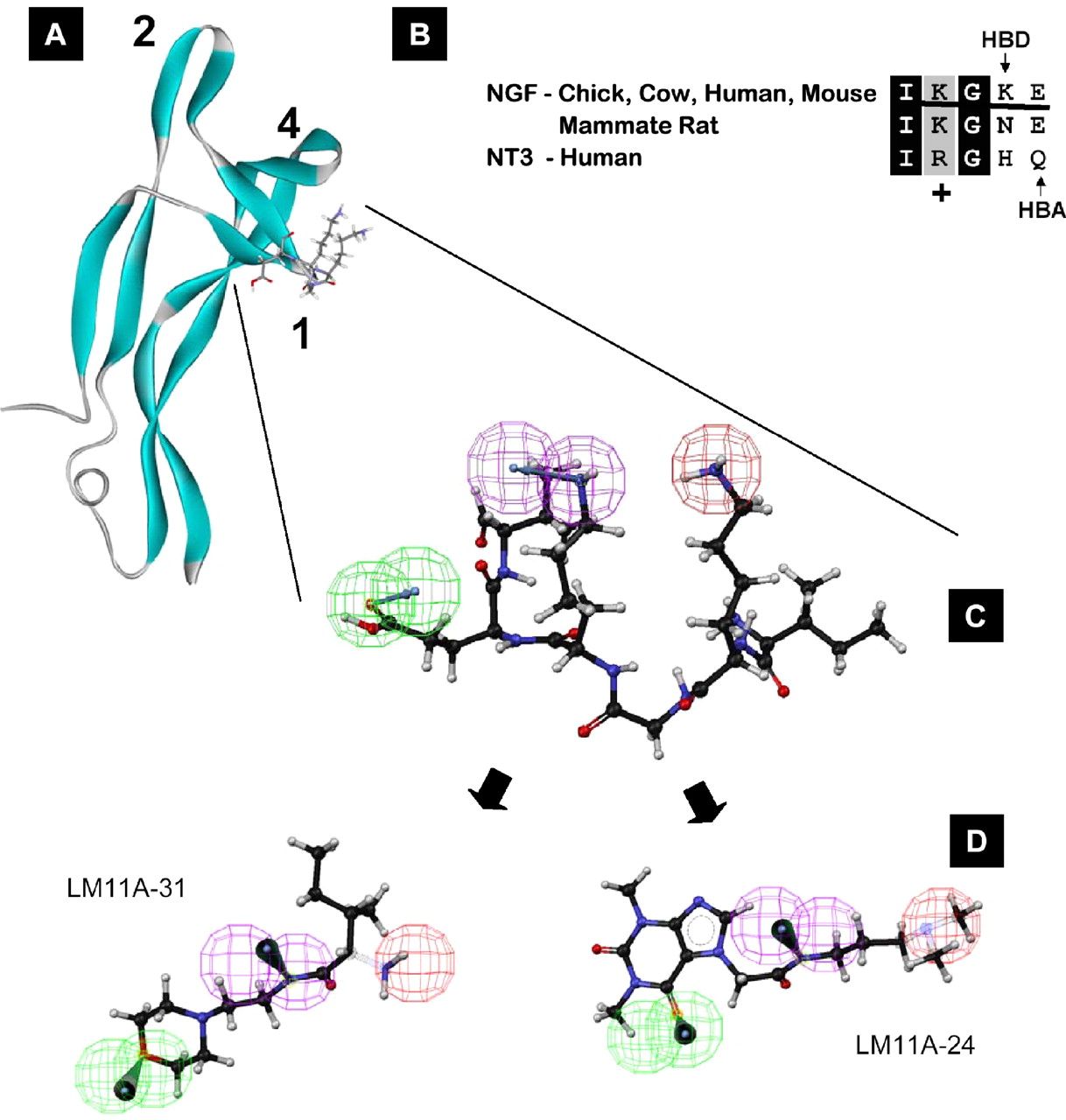
Figure 1.

2010 SLIDE PRESENTATION RE P75 (E.G. LM11A31) BY PHARMATROPHIX’S 

investorvillage.com/smbd.asp?mb=160&mn=440341…

3 Nov 2010 – 2010 slide presentation re p75 (e.g. LM11A31) by PharmatrophiX’s founder. Longo is PharmatrophiX’s founder.

The experimental drug was developed by Prof Frank Longo from Stanford UniversityThe experimental drug was developed by Prof Frank Longo from Stanford University

Prof Frank Longo from Stanford University publications

http://med.stanford.edu/profiles/cancer/frdActionServlet?choiceId=showFacPublications&fid=7249&

Patents

1 US2013005731  (A1) ― 2013-01-03

http://worldwide.espacenet.com/publicationDetails/originalDocument?CC=US&NR=2013005731A1&KC=A1&FT=D&ND=3&date=20130103&DB=worldwide.espacenet.com&locale=en_EP

2 WO2011150347  (A2) ― 2011-12-01

http://worldwide.espacenet.com/publicationDetails/originalDocument?CC=WO&NR=2011150347A2&KC=A2&FT=D&ND=3&date=20111201&DB=worldwide.espacenet.com&locale=en_EP

3 US2011230479  (A1) ― 2011-09-22

http://worldwide.espacenet.com/publicationDetails/originalDocument?CC=US&NR=2011230479A1&KC=A1&FT=D&ND=3&date=20110922&DB=worldwide.espacenet.com&locale=en_EP

<a href=”http://www.bloglovin.com/blog/4674983/?claim=hj3e8pdf2nd”>Follow my blog with Bloglovin</a>

………………..

http://www.google.com.mx/patents/US7723328

TABLE I
Structures of Compounds 1-6
Compound Name
Figure US07723328-20100525-C00018
Compound 1 (also referred to herein as “LM11A-28”)
Figure US07723328-20100525-C00019
Compound 2 (also referred to herein as “LM11A-7”)
Figure US07723328-20100525-C00020
Compound 3 (also referred to herein as “LM11A-24”, “24”, and “C24”)
Figure US07723328-20100525-C00021
Compound 4 (also referred to herein as “LM11A-31” and “31”)
Figure US07723328-20100525-C00022
Compound 5 (also referred to herein as “LM11A-36”, “36”, and “C36”)
Figure US07723328-20100525-C00023
Compound 6 (also referred to herein as “LM11A-38” and “C38”)
Figure US07723328-20100525-C00024
Compound 7


…………………….

http://www.google.co.in/patents/WO2010102212A2?cl=en

Table I. Structures of Compounds i-vii


Figure imgf000050_0001
Figure imgf000051_0001

Example 32: Preparation of enantiomerically pure 2-amino-3-methyl-N-(2- morpholino-ethyϊ)-pentanamide

[00332] 2-amino-3-methyl-N-(2-morpholinoethyl)-pentanamide can be prepared by a method shown in Scheme 4 below. First, 2-aminoethanol (Compound IE) is transformed to its derivative with a leaving group (Compound 2E). Examples of the leaving group include halides and alkoxy or other activated hydroxyl group. Second, Compound 2E reacts with morpholine at a neutral or basic condition to yield 2-morpholinoethanamine (Compound 3E). The aforementioned two steps may also be performed continuously as one step with Compound 2E being generated in situ. For example, Compound 3 E can be prepared from Compound IE directly through a Mitsunobu reaction wherein the hydroxyl group of Compound IE is activated by diethyl azodicarboxylate (DEAD) before morpholine is added. The final product, 2-amino-3-methyl-N-(2-moipholinoethyl)-pentanamide (Compound 5E), can be obtained by coupling 2-morpholinoethanamine with 2-amino-3- methylpentanoic acid (Compound 4E) via a peptide coupling agent. Examples of the peptide coupling agent include l,r-carbonyldiimidazole (CDI), hydroxybenzotriazole (HOBT), 1,3-dicyclohexylcarbodiimide (DCC), 1- hydroxybenzo-7-azatriazole (HOAt), and the like. Scheme 4:

H2N^0H — H2N^ / LG , p , .

1 Ot= LG: a leaving group

1E zt


Figure imgf000099_0001

[00333] A chiral 2-amino-3-methyl-N-(2-moφholinoethyl)-pentanamide (Compound 5E) can be obtained by using the corresponding chiral 2-amino-3- methylpentanoic acid (Compound 4E) in the above coupling step. For example, (2S,3S)-2-amino-3-methyl-N-(2-moφholinoethyl)-pentanamide; (2R,3R)-2-amino- 3 -methyl-N-(2-morpholinoethyl)-pentanamide; (2R,3 S)-2-amino-3 -methyl-N-(2- moφholinoethyl)-pentanamide; and (2S,3R)-2-ammo-3-methyl-N-(2- morpholinoethyl)-pentanamide can be obtained by using (2S,3S)-2-amino-3- methylpentanoic acid, i.e., L-isoleucine; (2R,3R)-2-amino-3-methylpentanoic acid, i.e., D-isoleucine; (2R,3S)-2-amino-3-methylpentanoic acid, i.e., D-alloisoleucine; and (2S,3R)-2-amino-3-methylpentanoic acid, i.e., L-alloisoleucine, respectively. [00334] The chiral purity, also known as, enantiomeric excess or EE, of a chiral Compound 5E can be determined by any method known to one skilled in the art. For example, a chiral Compound 5E can be hydrolyzed to Compound 3E and the corresponding chiral Compound 4E. Then, the chiral Compound 4E obtained through hydrolysis can be compared with a standard chiral sample of Compound 4E to determine the chiral purity of the chiral Compound 5E. The determination can be conducted by using a chiral HPLC.

……………….

http://www.google.co.in/patents/EP2498782A1?cl=en

Scheme A shows the chemical structures of the present compounds.


Figure imgf000013_0001

(2S,3S)-2-amino-3-methyl-/V-(2-mor holinoethyl)pentanamide


Figure imgf000013_0002

(2R,3R)-2-amin -3-methyl-A/-(2-morpholinoethyl)pentanamide


Figure imgf000013_0003

(2S,3R)-2-amino-3-meth l-A/-(2-morpholinoethyl)pentanamide


Figure imgf000013_0004

] Q (2R,3S)-2-amino-3-methyl-/ /-(2-morpholinoethyl)pentanamide

The free base compound of 2-amino-3-niethyl- -(2-morpholinoethyl)-pentanamide can be prepared from isoleucine by synthetic methods known to one skilled in the art.

Standard procedures and chemical transformation and related methods are well known to one skilled in the art, and such methods and procedures have been described, for example, in standard references such as Fiesers’ Reagents for Organic Synthesis, John Wiley and Sons, New York, NY, 2002: Organic Reactions, vols, 1-83, John Wiley and Sons, New York, NY, 2006; March J, and Smith M,, Advanced Organic Chemistry, 6th ed., John Wiley and Sons, New York, NY; and Larock R.C., Comprehensive Organic Transformations, Wiley-VCH Publishers, New York, 1999. All texts and references cited herein are incorporated by reference in their entirety. Other related synthetic methods can be found in U.S. Patent Application Publication Nos. 2006/024072 and 2007/0060526, the contents of which are herein incorporated by reference in their entirety for all purposes. The amorphous dihydrochloride (di-HCl) salt of 2-amino-3-methyl-N-(2-morpholinoethyl)-pentanamide can be prepared by mixing two molar ecjuivalents of HC1 with one molar equivalent of 2-amino- 3-methyl-N-(2-morpholinoethyl)~pentanamide in appropriate solvent(s) and then separating the di-HCl salt from the solvent(s) mixture.

The amorphous di-HCl salt of 2-aniino-3-methyl-N-(2-moi holinoethyl)-pentariamide was analyzed via the methods as described above. The XRD analysis indicated it was amorphous/low ordered as shown in Figure 1 , The DSC thermogram exhibited a broad endotherm with onset temperature 37 °C and peak temperature 74 °C and an enthalpy value of ΔΗ = 80 J/g. The TGA thermogram indicated the di-HCl salt is anhydrous and starts to decompose after about 200°C. An overlay of DSC and TGA thermograms are shown in Figure 2. The moisture sorption-desorpiion isotherm of the di-HC! salt (Figures 3 A and 3 B ) was collected using dynamic vapor sorption (DVS) analysis. The material did not adsorb much moisture from 0% to 20% RH, then it showed steady sorption up to 140 wt% moisture at 95% RH (likely deliquescence). This sample showed rapid desorption from 95% to 70% RH and then continues desorbing at a relatively slower pace to a mass about 5 wt% greater than the original value at 0% RH. This sample shows a small hysteresis between the sorption and desorption phase. O verall this material is quite hygroscopic. The crude solubility of the di-HCl salt in water was >30 mg/niL. The proton N MR spectrum of the amorphous di-HCl salt is shown in Figure 4. Example 2. Preparation of 2-amino-3-methyl- -(2-morpholinoethy[)-pentanamide (free base):

Five grams of 2-amino-3-methyl-N-(2-morpholinoethyl)-pentanamide di-HCl salt was dissolved in 150 mL of ethanol. Sodium bicarbonate (5.3 g), dissolved in 100 mL of HPLC water, was added to this solution. The mixed solution was sonicated for ~10 minutes. This solution was concentrated using a rotovap, and the residue was dissolved in 300 mL of methylene chloride. This solution was passed through a short plug of carbonate bonded silica gel. This solution was concentrated using rotovap and the residue was lyophilized to dry, resulting in 3.6 g of the free base as a white solid. Proton NMR, C-13 NMR and LC/MS confirmed the structure of this material as the free base of 2-amino-3-methyl-N-(2- morpholmoethyl)-pentanamide.

In the process of converting the di-HCl salt to free base, the sample was lyophilized to avoid formation of oil. XRD analysis of the lyophilized free base surprisingly re vealed it was crystalline, as shown in Figure 5. The DSC thermogram exhibited an endotherm with extrapolated onset temperature 51 °C and peak temperature 53 °C and an enthalpy value of Δ¾= 104 J/g. The TGA thermogram shows less than 0.6 wt% loss at 105 °C, suggesting it was solvent free. An overlay of the DSC and TGA thermograms can be seen in Figure 6. The crude solubility of free base in water was >30 mg/mL. The proton NMR was consistent with the free base. The NMR and Raman spectra are shown in Figures 7 and 8A and 8B, respectively. The moisture sorption-desorption isotherm (Figures 9 A and 9B) was collected using dynamic vapor sorption (DVS) analysis. The sample did not adsorb much moisture content from 0% to 45% RH under the experimental conditions. Above 45 %RH the sample appears to adsorb moisture of – 10 wt% from 45% to 50% RH followed by rapid sorption up to 96 wt% moisture at 95% RH. In the desorption phase, the free base shows a rapid desorption from 95% to 80°/» RH, then the sample desorbs at a relatively slow pace to the original weight at 0% RH. The sample may form a hydrate near 45 %>RH, The putative hydrate appears to deliquesce resulting in an amorphous glass by the end of the scan.

……………

new patent
WO-2014052659

Crystalline forms of neurotrophin mimetic compounds and their salts

Type II TNF receptor agonist; NGF receptor modulator

Crystalline forms of (2S,3S)-2-amino-3-methyl-N-(2-morpholinoethyl)-pentanamide (LM11A-31-BHS), useful for the treatment of neurodegenerative disorders such as Alzheimer’s disease (AD), Parkinson’s disease and multiple sclerosis. See WO2011066544 claiming deuterated compounds of LM11A-31-BHS, useful for treating neurodegenerative diseases. PharmatrophiX is investigating the p75 neutrophin receptor ligand, LM11A-31-BHS, for the oral treatment of AD. By March 2013, a phase I trial was planned. The drug was formerly being investigated in collaboration with Elan Corp and the deal was terminated by the fourth quarter of 2010.

Ioforminol (GE-145; AN-113111) as an iv contrast agent (Phase 2)


ioforminol

Ioforminol [INN], UNII-95FNF21CDN, 1095110-48-7, FEK-256-062

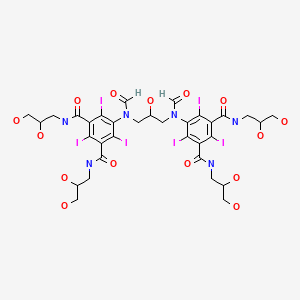
5-[formyl-[3-[formyl-[3,5-bis(2,3-dihydroxypropylcarbamoyl)-2,4,6- triiodophenyl]amino]-2-hydroxypropyl]amino]-N,N’-bis(2,3-dihydroxypropyl)-2,4,6-triiodobenzene- 1 ,3-dicarboxamide
1,3-Benzenedicarboxamide, 5,5′-[(2-hydroxy-1,3-
propanediyl)bis(formylimino)]bis[N1,N3-bis(2,3-dihydroxypropyl)-2,4,6-triiodo-

All-ambo-5,5′-[2-hydroxypropane-1,3-diylbis(formylazanediyl)]bis[N,N’-bis(2,3-
dihydroxypropyl)-2,4,6-triiodobenzene-1,3-dicarboxamide]

https://download.ama-assn.org/resources/doc/usan/x-pub/ioforminol.pdf

MOLECULAR FORMULA C33H40I6N6O15

MOLECULAR WEIGHT 1522.1

SPONSOR GE HealthCare Ltd

CODE DESIGNATION FEK-256-062

CAS REGISTRY NUMBER 1095110-48-7

WHO NUMBER 9245

Visualisation of anatomical structures of the body during computed tomography for diagnostic purposes


ChemSpider 2D Image | ioforminol | C33H40I6N6O15

All diagnostic imaging is based on the achievement of different signal levels from different structures within the body. Thus, in X-ray imaging for example, for a given body structure to be visible in the image, the X-ray attenuation by that structure must differ from that of the surrounding tissues. The difference in signal between the body structure and its surroundings is frequently termed contrast and much effort has been devoted to means of enhancing contrast in diagnostic imaging since the greater the contrast between a body structure and its surroundings the higher the quality of the images and the greater their value to the physician performing the diagnosis. Moreover, the greater the contrast the smaller the body structures that may be visualized in the imaging procedures, i.e. increased contrast can lead to increased spatial resolution. The diagnostic quality of images is strongly dependent on the inherent noise level in the imaging procedure, and the ratio of the contrast level to the noise level can thus be seen to represent an effective diagnostic quality factor for diagnostic images.

For the last 50 years the field of X-ray contrast agents has been dominated by soluble iodine containing compounds. Commercial available contrast media containing iodinated contrast agents are usually classified as ionic monomers such as diatrizoate (Gastrografen™), ionic dimers such as ioxaglate (Hexabrix™), nonionic monomers such as iohexol (Omnipaque™), iopamidol (Isovue™), iomeprol (lomeron™) and the non-ionic dimer iodixanol (Visipaque™). The most widely used commercial non-ionic X-ray contrast agents such as those mentioned above are considered safe. Contrast media containing iodinated contrast agents are used in more than 20 million of X-ray examinations annually in the USA and the number of adverse reactions is considered acceptable. However, since a contrast enhanced X- ray examination will require up to about 200 ml contrast media administered in a total dose, there is a continuous drive to provide improved contrast media.

Achieving improvement in such a diagnostic quality factor has long been and still remains an important goal.

In techniques such as X-ray, one approach to improve the diagnostic quality factor has been to introduce contrast enhancing materials formulated as contrast media into the body region being imaged. Thus for X-ray, early examples of contrast agents were insoluble inorganic barium salts which enhanced X-ray attenuation in the body zones into which they distributed. For the last 50 years the field of X-ray contrast agents has been dominated by soluble iodine containing compounds.

Commercial available contrast media containing iodinated contrast agents are usually classified as ionic monomers such as diatrizoate (marketed e.g. under the trade mark Gastrografen™), ionic dimers such as ioxaglate (marketed e.g. under the trade mark Hexabrix™), nonionic monomers such as iohexol (marketed e.g. under the trade mark Omnipaque™), iopamidol (marketed e.g. under the trade mark Isovue™), iomeprol (marketed e.g. under the trade mark Iomeron™) and the non-ionic dimer iodixanol (marketed under the trade mark Visipaque™). The clinical safety of iodinated X-ray contrast media has continuously been improved over the recent decades through development of new agents; from ionic monomers (Isopaque™) to non-ionic monomers (e.g. Omnipaque™) and non-ionic dimers (e.g. Visipaque™).

The utility of the contrast media is governed largely by its toxicity, by its diagnostic efficacy, by adverse effects it may have on the subject to which the contrast medium is administered, but also by the ease of production, storage and administration. The toxicity and adverse biological effects of a contrast medium are contributed to by the components of the formulation medium, i.e. of the diagnostic composition, e.g. the solvent or carrier as well as the contrast agent itself and its components such as ions for the ionic contrast agents and also by its metabolites.

The manufacture of non-ionic X-ray contrast media involves the production of the active

pharmaceutical ingredient (API), i.e. the contrast agent prepared in the primary production, followed by the formulation into the drug product, herein denoted the X-ray composition, prepared in the secondary production. In the preparation of an X-ray composition, the contrast agent is admixed with additives, such as salts, optionally after dispersion in a physiologically tolerable carrier. The contrast agent has to be completely solved in the carrier when additives are included and the composition is prepared. A well-known process for preparing X-ray compositions includes heating the contrast agent in the carrier, such as water for injection, to ensure complete dissolution. For instance, for the contrast media Visipaque™ the secondary production process includes dissolution of the contrast agent iodixanol in water for injection and heating to about 98 °C. Heating at this temperature for an adequate period of time ensures that the contrast agent is completely dissolved.

However, different X-ray contrast agents have different solubility. For instance WO 2009/008734 of GE Healthcare AS discloses a new class of compounds and their use as X-ray contrast agents. The compounds are dimers containing two linked iodinated phenyl groups. Compound I, now called

Ioforminol, falling within the formula I of WO2009/008734, has been found by the applicant to have particularly favourable properties. Ioforminol is supersaturated at the relevant storage conditions.


Figure imgf000003_0001

Compound I, Ioforminol:

5-[formyl-[3-[formyl-[3,5-bis(2,3-dihydroxypropylcarbamoyl)-2,4,6- triiodophenyl]amino]-2-hydroxypropyl]amino]-N,N’-bis(2,3-dihydroxypropyl)-2,4,6-triiodobenzene- 1 ,3-dicarboxamide.

A solution in which the concentration of the solute (API) exceeds the equilibrium solute concentration at a given temperature is said to be supersaturated. This is possible because the solute does not precipitate immediately when the solution is cooled below the saturation temperature. Such solutions are denoted supersaturated.

As the solubility of Ioforminol decreases with decreasing temperature, the supersaturation increases. At room temperature the solubility of Ioforminol is limited. To achieve solutions with a concentration higher than the thermodynamic equilibrium concentration, at room temperature, Ioforminol is dissolved at a temperature above room temperature. When a clear solution has been achieved the solution is cooled and enters a state defined as supersaturated.

Supersaturated solutions are thermodynamically unstable and prone to nucleate and therefore to precipitate on storage. Among several factors, the onset of the precipitation depends on the degree of supersaturation, presence of the crystals of the solute and foreign particles such as dust or other impurities, i.e. purity, and storage temperature of the solution.

The injection solution of Ioforminol, i.e. the administrable X-ray composition, is highly supersaturated. The nucleation (precipitation) in the injection solution at storage conditions is strongly undesirable. The physical stability of the solution, i.e. prevention of the nucleation for a certain time at storage conditions, may be improved substantially by heat treatment of the solution well above its saturation temperature for a sufficiently long period of time.

WO2011/117236 of the applicant is directed to a process involving hea treatment at low pH to avoid degradation and precipitation of an X-ray contrast agent composition. However, a high heat load is needed to obtain a seed- free solution. This heat load causes a greater degradation of the product and a lower pH in the final product resulting in liberation of iodine. This sets a restriction to the total heat load that may be given to the formulated solution.


………………..

WO2014052091A1

X-ray contrast media containing a chemical compound as the active pharmaceutical ingredient(s) having two triiodinated phenyl groups linked by a linking group are usually referred to as dimeric contrast agents or dimers. During the years a wide variety of iodinated dimers have been proposed. Currently, one contrast medium having an iodinated non-ionic dimer as the active pharmaceutical ingredient is on the market^ the product Visipaque™ containing the compound iodixanol. In WO2009/008734 of the applicant a novel dimeric contrast agent named loforminol is disclosed.

The properties of this is described in more detail in the publications Chai et al. “Predicting cardiotoxicity propensity of the novel iodinated contrast medium GE-145: ventricular fibrillation during left coronary arteriography in pigs”, Acta Radiol, 2010, and in Wistrand, L.G., et al “GE-145, a new low-osmolar dimeric radiographic contrast medium”, Acta Radiol, 2010. loforminol (GE-145) is named Compound 1 herein and has the following structure:


Figure imgf000003_0001

Compound 1 :

5,5′-(2-Hydroxypropane-1 ,3-diyl)bis(formylazanediyl)bis(N1 ,N3-bis(2,3- dihydroxypropyl)-2,4,6-triiodoisophthalamide)

The manufacture of non-ionic X-ray contrast media involves the production of the chemical drug, the active pharmaceutical ingredient (API), i.e. the contrast agent, followed by the formulation into the drug product, herein denoted the X-ray composition. WO2009/008734 of the applicant provides a synthetic route for preparing the API loforminol.

loforminol can e.g., as provided by the general preparation description and Example 1 of WO2009/008734, be synthesized from 5- amino-N,N’-bis-(2,3-dihydroxy-propyl)-2,4,6-triiodo-isophthalamide (compound (4)), which is commercially available. The preparation of this compound is known from the synthesis of both iohexol and iodixanol and can also be prepared from 5- nitroisophthalic acid for instance as described in WO2006/016815, including hydrogenation and subsequent iodination e.g. by iodine chloride, I CI. Alternatively,

5-amino-2,4,6-triiodoisophthalic acid may be used, which is commercially available precursor, e.g. from Sigma-Aldrich. The free amino group of the isophthalamide compound (compound (4)) is then acylated and the hydroxyl groups in the substituents may also be protected by acylation. The protecting groups may be removed for example by hydrolysis to give N1 ,N3-bis(2,3-dihydroxypropyl)-5- formylamino-2,4,6-triiodoisophthalamide.

In a dimerization step this is reacted e.g. with epichlorohydrin to provide the loforminol contrast agent compound. The state of the art synthesis of loforminol, as disclosed in examples 1 and 2 of WO2009/008734, is shown in Scheme 1 below.


Figure imgf000004_0001

Scheme 1 .

As described in WO2009/008734 compound 3 is a mixture comprising 1 – formylamino-3,5-bis(2,3-bis(formyloxy)propan-1 -ylcarbamoyl)-2,4,6-trioodobenzene, and X is then a formyl group. In each synthetic step it is important to optimize the yield and minimize the production of impurities. The problem to be solved by the present invention may be regarded as the provision of optimizing the process for preparation of compound mixture (3) of scheme 1 , i.e. a mixture comprising 1 -formylamino-3,5-bis(2,3- bis(formyloxy)propan-1 -ylcarbamoyl)-2,4,6-trioodobenzene.

The process is hence directed to the preparation of compound mixture (3) by the formylation of the amino function of 5-amino-N1 ,N3-bis(2,3-dihydroxypropyl)-2,4,6-triiodoisophthalamide (4), including a work-up procedure.

Examples

Example 1 : Preparation of compound mixture (3) comprising 1-formylamino- 3,5-bis(2,3-bis(formyloxy)propan-1-ylcarbamoyl)-2,4,6-trioodobenzene

5-amino-N1 ,N3-bis(2,3-dihydroxypropyl)-2,4,6-triiodoisophthalamide (compound (4)) (7.5 kg, 10.6 moles) was dissolved in formic acid (4.9 I) and heated to 45 until a clear solution was obtained (~4 hours), then the thick amber solution was cooled to 10 °C.

Formic acid (9.4 I) was charged into a different reactor and cooled to 10 <€, after reaching the target temperature acetic anhydride was added at such a rate that the temperature did not exceeded 15 <€.

After 2.5 hours all acetic anhydride was added to the formic acid and the mixed anhydride solution was added drop wise to the compound (4) solution. The rate of addition was adjusted so that the temperature never exceeded 20 °C. After 2 hours all mixed anhydride had been added and the reaction was left stirring at 15 °C for additional 1 hour. Isopropanol (4.9 I) was added carefully and the suspension became noticeable thicker and was left stirring at ambient temperature. After 16 hours the reaction slurry was filtered on a vacuum nutch and washed with isopropanol (3 * 1 .5 I) to give compound mixture (3) comprising 1 -formylamino-3,5- bis(2,3-bis(formyloxy)propan-1 -ylcarbamoyl)-2,4,6-trioodobenzene as a dense white powder (7.98kg). The quantitative yield with regards to N-formylation was > 99 %.

…………….

WO2009008734A2

Preparation of intermediates (when not commercially available)

The precursors to the compounds of formulas (IVa) and (IVb), the tri-iodinated phenyl groups having a free amino group are commercially available or can be produced following procedures described or referred to e.g. in WO95/35122 and WO98/52911. 5-amino-2,4,6-triiodo-isophtalic acid for example is available e.g. from Aldrich and 5-amino-2,4,6-triiodo-N,N’-bis(2,3-dihydroxypropyl)-isophtalamide is commercially available e.g. from Fuji Chemical Industries, Ltd.

Examples of commercial available precursors of the compounds of formulas (IVa) and (IVb), either commercially available or previously described in the literature include:


Figure imgf000019_0001

5-Amino-N,N’-bis-(2,3-dihydroxy-propyl)-2,4,6-triiodo-isophthalamide


Figure imgf000019_0002

5-Amino-N-(2,3-dihydroxy-propyl)-N’-(2-hydroxy-1-hydroxymethyl-ethyl)- 2,4,6-triiodo-isophthalamide (WO2002044125)

Figure imgf000020_0001

5-Amino-N,N’-bis-(2,3-dihydroxy-propyl)-2,4,6-triiodo-N,N’-dimethyl- isophthalamide


Figure imgf000020_0002

5-Amino-N-(2,3-dihydroxy-propyl)-N’-(2-hydroxy-ethyl)-2,4,6-triiodo-is ophthalamide (WO 8700757)

The compounds of formulas (IVa) and (IVb), may be prepared by acylation of the corresponding compounds having free amino groups. In this reaction, hydroxyl groups in the substituents R may also be protected by acylation.

Acylation may be effected by any convenient method, e.g. by use of activated formic acid such as mixed anhydrides which can prepared by a variety of methods described in the literature.

A convenient method of preparing mixed anhydrides is to add a carboxylic acid anhydride to an excess of formic acid under controlled temperature. It is also possible to make mixed anhydrides by addition of a carboxylic acid chloride to a solution of a formic acid salt. Formyl-mixed anhydrides may include acetyl, isobutyryl, pivaloyl, benzoyl etc.

In the present implementation acetic-formic mixed anhydride is employed. To an excess of cooled pre-prepared acetic-formic mixed anhydride is added a 5-amino- monomer and the mixture is stirred overnight. The mixture is concentrated in vacuo and may be used directly in the alkylation step as described in the experimental section (procedure B) or alternatively the O-acylated groups may be hydrolysed prior to alkylation as described in the experimental section (procedure A). Hydrolysis is conveniently performed in aqueous basic media as exemplified in the experimental section or may alternatively be effected by alcoholysis e.g. as described in WO1997000240.

It is also possible to dissolve the 5-aminomonomer in formic acid and subsequently add the carboxylic acid anhydride but in order to reduce unwanted acylation it is preferred to prepare the mixed anhydride separately and subsequently mix this with the 5-aminomonomer as described above.

Experimental

Example 1

5,5′-(2-hvdroxypropane-1 ,3-diyl)bis(formylazanediyl)bis(N1,N3-bis(2,3- dihvdroxypropyl)-2.4,6-triiodoisophthalamide)


Figure imgf000021_0001

Procedure A:

1 a) N,N’-Bis-(213-dihvdroxy-propyl)-5-formylamino-2,4,6-triiodo-isophthalamide Formic acid (300 ml) was charged in a dry 1000 ml flask fitted with a dropping funnel, stir bar, thermometer and a gas inlet. The acid was cooled on an ice bath under a nitrogen blanket and acetic anhydride (144.8 g, 1.418 mol) was added drop wise at a rate so that the temperature did not exceed 2.5 C. After complete addition, the ice bath was removed and the temperature was allowed to reach 10 °C. The mixture was again ice cooled and 5-amino-N,N’-bis(2,3-dihydroxypropyl)-2,4,6- triiodo-isophthalamide (100 g, 141.8 mmol) was added over 5 minutes and the mixture was left stirring over night while attaining ambient temperature. The mixture was evaporated to dryness and methanol (300 ml) and water (300 ml) was added. 2 M potassium hydroxide was added until all material was in solution and a stable pH 12.5 was attained. The methanol was removed in vacuo. The mixture was neutralized with 4 M HCI and a slow precipitation started. 300 ml water was added and the product was precipitated over night. The precipitate was collected and rinsed with a small amount of water and dried on filter to a moist cake and further dried in vacuo to yield 84.8 g ( 81.5 %) of N,N’-bis-

(2,3-dihydroxy-propyl)-5-formylamino-2,4,6-triiodo-isophthalamide.

1H-NMR 500 MHz (solvent: D2O, ref. H2O=4.8 ppm, 25 0C): 8.35 and 8.05 ppm (2s,

1 H), 3.94 ppm (m, 2H), 3.67 ppm (m, 2H), 3.55 ppm (m, 2H), 3.45 ppm (m, 2H),

3.34 ppm (m, 2H).

LC-MS (column Agilent Zorbax SB-Aq 3.5 μm 3.0 x 100 mm, solvents: A = water/ 0.1 % formic acid and B = acetonitrile/ 0.1% formic acid; gradient 0-30 % B over 20 min; flow 0.3 ml/ min, UV detection at 214 and 254 nm, ESI-MS) gave two peaks centred at 5.5 minutes with m/z (M + H+) 733.828, m/z (M + NH4+) 750.855, m/z (M + Na+) 755.817 corresponding to the structure.

1 b) 5,5′-(2-hvdroxypropane-1 ,3-diyl)bis(formylazanediyl)bis(N1,N3-bis(2,3- dihvdroxypropyl)-2,4,6-triiodoisophthalamide)

Potassium hydroxide (1.07 g) was dissolved in water (6.9 ml) and methanol (3.4 ml) in a 50 ml round bottomed flask fitted with a magnetic stir bar. Boric acid (0.41 g, 6.6 mmol) and N,N’-bis-(2,3-dihydroxy-propyl)-5-formylamino-2,4,6-triiodo- isophthalamide (7.0 g, 9.56 mmol) was added to the stirred solution.. Epichlorohydrin (260 ul, 3.32 mmol) was added to the solution and a pH electrode was fitted in the flask and the pH was maintained at pH 12.7 by drop wise addition of 4 M potassium hydroxide for 4 h. At this point, the mixture was left stirring over night. The pH was adjusted with 4 M hydrochloric acid to pH 4 and the methanol was removed in vacuo. The remaining aqueous solution was diluted with water (75 ml) and treated with ion exchangers (AMB200C and IRA67) to zero conductivity. The ion exchangers were removed by filtration and rinsed with water and the combined aqueous filtrates were freeze dried. The crude product was purified by preparative HPLC (column Phenomenex Luna C18 10 μm solvents: A = water and B = acetonitrile; gradient 05-20 % B over 60 min. After freeze drying 3.80 g of 5,5′- (2-hydroxypropane-1 ,3-diyl)bis(formylazanediyl)bis(N1,N3-bis(2,3-dihydroxypropyl)- 2,4,6-triiodoisophthalamide) (74.8 % yield) was obtained.

1H-NMR 500 MHz (solvent: D2O, ref. H2O=4.8 ppm, 25 0C): 8.34 and 8.08 ppm (m, 2 H), 2.80-4.80 ppm (m 26 H). LC-MS TOF; 1522.68 m/z (M + H+), 1544.66 m/z (M + Na+).

…………

 New patent

WO-2014052091

Process for the preparation of 1-formylamino-3,5-bis(2,3-bis(formyloxy)propan-1-ylcarbamoyl)-2,4,6-trioodobenzene, used as a key intermediate in the preparation of ioforminol. Also claims a process for the preparation of ioforminol, useful in X-ray imaging. GE Healthcare is developing ioforminol (GE-145; AN-113111) as an iv contrast agent (Phase 2). See WO2013104690 claiming X-ray imaging contrast media with low iodine concentration and X-ray imaging process. Also see concurrently published WO2014052092 claiming preparation of ioforminol. Appears to be the first filing from Medi-Physics on this compound.


……………

The most preferred iodinated agents are;


Figure imgf000010_0001

Diatrizoic acid


Figure imgf000010_0002

loxaglinic acid


Figure imgf000010_0003


Figure imgf000011_0001

loversol


Figure imgf000011_0002

lodixanol


Figure imgf000011_0003

lomeprol


Figure imgf000011_0004

lobitriol


The most preferred chelates are:


Figure imgf000012_0001

Gadopentetate


Figure imgf000013_0001

Ňadoversetamide


Figure imgf000014_0001


Figure imgf000014_0002


Figure imgf000014_0003

Gadoxetinic acid

Sun Pharma has bought Ranbaxy for $4 billion to create the world’s fifth-biggest generic drugmaker.


Sun buys Ranbaxy for $4 billion

Dilip sanghvi, sun pharma promoter

The move will make the company the largest pharma firm in India, while Daiichi Sankyo – majority owner of Ranbaxy – will become the second largest shareholder in Sun Pharma with a 9% stake and the right to nominate one director to Sun Pharma’s Board of Directors. http://www.pharmatimes.com/Article/14-04-07/Sun_buys_Ranbaxy_for_4_billion.aspx

Read more at: http://www.pharmatimes.com/Article/14-04-07/Sun_buys_Ranbaxy_for_4_billion.aspx#ixzz2yGIjkMob


Dilip Shanghvi, Managing Director of Sun Pharma said in a release, “Ranbaxy has a significant presence in the Indian pharma market and in the US where it offers a broad portfolio of ANDAs and first-to-file opportunities. In high-growth emerging markets, it provides a strong platform which is highly complementary to Sun Pharma’s strengths,”

Under the agreement, Ranbaxy shareholders will get 0.8 shares of Sun Pharma for each Ranbaxy share.

Arun Sahwney, managing director and chief executive officer of Ranbaxy said in a statement, “Sun Pharma has a proven track record of creating significant long-term shareholder value and successfully integrating acquisitions into its growing portfolio of assets,”

Who Will Benefit?

Daiichi Sankyo Co. Ltd is the parent company of Ranbaxy as they acquired it from previous promoters and investors. As soon as Ranbaxy was acquired, their plants came under a scanner from US Food and Drug Administration (FDA), which troubled Daiichi as their own reputation was under stake.

Now, they will be the most relived entity as Sun Pharma will manage all such cases pertaining to Ranbaxy. Daiichi will now control 9% of Sun Pharma as a result of the current acquisition.

Insiders are claiming that Daiichi will sell this 9% stake as well and come out of the business all together.

Ranbaxy shareholders have cheered this latest development as their shares have gained since the announcement of this deal.

New ammunition in the fight against type 2 diabetes


Lyranara.me's avatarLyra Nara Blog

Gastric banding can play a vital role in the treatment of type 2 diabetes in people who are overweight and not obese, according to new research.

he Monash University study, led by Emeritus Professor Paul O’Brien and Dr John Wentworth from the Centre for Obesity Research and Education (CORE), has determined that weight loss surgery (gastric banding) for overweight people with diabeteshad a profound impact on the illness.

The research has been released today in the prestigious medical journal The Lancet Diabetes and Endocrinology.

“This is the first randomised controlled trial demonstrating that treatment of type 2 diabetes in overweight people by substantial weight loss is safe and hugely beneficial,” Professor O’Brien said. “As there are no alternative options that can achieve such a result, this study indicates a potentially attractive path for the overweight person with diabetes and for those providing the care.”

The study…

View original post 234 more words

Cuba may have found cure for cancer


cuba's cancercure

Cuban doctors have filed Wednesday in Havana, the result of 14 years of research, a solution of antitumor peptides whose natural analogue is able to offer positive dynamics in cancer treatments

http://youthandeldersja.wordpress.com/2014/03/22/cuba-may-have-found-cure-for-cancer/

Stem Cells from Muscle Can Repair Nerve Damage After Injury, Pitt Researchers Show


In some ground-breaking research, scientists have been able to use stem cells derived from human muscle tissue to repair nerve damage and restore function after injury to sciatic nerves.

And, even after 12 weeks, the regenerated nerve looked and functioned as a normal nerve.

Link to Story:

http://chrom.so/1i2fklC

In some ground-breaking research, scientists have been able to use stem cells derived from human muscle tissue to repair nerve damage and restore function after injury to sciatic nerves.

And, even after 12 weeks, the regenerated nerve looked and functioned as a normal nerve.

Link to Story:

http://www.upmc.com/media/NewsReleases/2014/Pages/pitt-study-stem-cells-repair-nerve-damage.aspx

http://chrom.so/1i2fklC