New Drug Approvals

Home » 2014 (Page 60)

Yearly Archives: 2014

DRUG APPROVALS BY DR ANTHONY MELVIN CRASTO .....FOR BLOG HOME CLICK HERE

Blog Stats

  • 4,818,095 hits

Flag and hits

Flag Counter

Enter your email address to follow this blog and receive notifications of new posts by email.

Join 37.9K other subscribers
Follow New Drug Approvals on WordPress.com

Archives

Categories

Recent Posts

Flag Counter

ORGANIC SPECTROSCOPY

Read all about Organic Spectroscopy on ORGANIC SPECTROSCOPY INTERNATIONAL 

Enter your email address to follow this blog and receive notifications of new posts by email.

Join 37.9K other subscribers
DR ANTHONY MELVIN CRASTO Ph.D

DR ANTHONY MELVIN CRASTO Ph.D

DR ANTHONY MELVIN CRASTO, Born in Mumbai in 1964 and graduated from Mumbai University, Completed his Ph.D from ICT, 1991,Matunga, Mumbai, India, in Organic Chemistry, The thesis topic was Synthesis of Novel Pyrethroid Analogues, Currently he is working with AFRICURE PHARMA, ROW2TECH, NIPER-G, Department of Pharmaceuticals, Ministry of Chemicals and Fertilizers, Govt. of India as ADVISOR, earlier assignment was with GLENMARK LIFE SCIENCES LTD, as CONSUlTANT, Retired from GLENMARK in Jan2022 Research Centre as Principal Scientist, Process Research (bulk actives) at Mahape, Navi Mumbai, India. Total Industry exp 32 plus yrs, Prior to joining Glenmark, he has worked with major multinationals like Hoechst Marion Roussel, now Sanofi, Searle India Ltd, now RPG lifesciences, etc. He has worked with notable scientists like Dr K Nagarajan, Dr Ralph Stapel, Prof S Seshadri, etc, He did custom synthesis for major multinationals in his career like BASF, Novartis, Sanofi, etc., He has worked in Discovery, Natural products, Bulk drugs, Generics, Intermediates, Fine chemicals, Neutraceuticals, GMP, Scaleups, etc, he is now helping millions, has 9 million plus hits on Google on all Organic chemistry websites. His friends call him Open superstar worlddrugtracker. His New Drug Approvals, Green Chemistry International, All about drugs, Eurekamoments, Organic spectroscopy international, etc in organic chemistry are some most read blogs He has hands on experience in initiation and developing novel routes for drug molecules and implementation them on commercial scale over a 32 PLUS year tenure till date Feb 2023, Around 35 plus products in his career. He has good knowledge of IPM, GMP, Regulatory aspects, he has several International patents published worldwide . He has good proficiency in Technology transfer, Spectroscopy, Stereochemistry, Synthesis, Polymorphism etc., He suffered a paralytic stroke/ Acute Transverse mylitis in Dec 2007 and is 90 %Paralysed, He is bound to a wheelchair, this seems to have injected feul in him to help chemists all around the world, he is more active than before and is pushing boundaries, He has 100 million plus hits on Google, 2.5 lakh plus connections on all networking sites, 100 Lakh plus views on dozen plus blogs, 227 countries, 7 continents, He makes himself available to all, contact him on +91 9323115463, email amcrasto@gmail.com, Twitter, @amcrasto , He lives and will die for his family, 90% paralysis cannot kill his soul., Notably he has 38 lakh plus views on New Drug Approvals Blog in 227 countries......https://newdrugapprovals.wordpress.com/ , He appreciates the help he gets from one and all, Friends, Family, Glenmark, Readers, Wellwishers, Doctors, Drug authorities, His Contacts, Physiotherapist, etc He has total of 32 International and Indian awards

Verified Services

View Full Profile →

Archives

Categories

Flag Counter

New technique uses ATP as trigger for targeted anti-cancer drug delivery


Lyranara.me's avatarLyra Nara Blog

New technique uses ATP as trigger for targeted anti-cancer drug delivery

Biomedical engineering researchers from North Carolina State University and the University of North Carolina have developed a new technique that uses adenosine-5′-triphosphate (the so-called ‘energy molecule’) to trigger the release of anti-cancer drugs directly into cancer cells. The spherical nanoparticles are coated with a shell that incorporates hyaluronic acid, which interacts with proteins found on the surface of some cancer cells. The nanoparticle is filled with DNA molecules that release anti-cancer drug doxorubicin when they come into contact with the adenosine-5′-triphosphate inside a cancer cell. Credit: Ran Mo

Biomedical engineering researchers have developed a new technique that uses adenosine-5′-triphosphate (ATP), the so-called “energy molecule,” to trigger the release of anti-cancer drugs directly into cancer cells. Early laboratory tests show it increases the effectiveness of drugs targeting breast cancer. The technique was developed by researchers at North Carolina State University and the University of North Carolina at Chapel Hill.

“This is…

View original post 339 more words

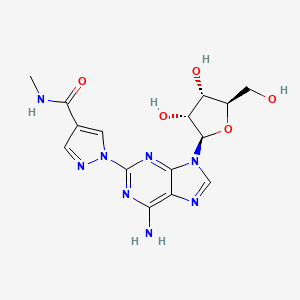
Regadenoson……..Adenosine A2a receptor agonist, for Coronary artery disease; Sickle cell anemia


Regadenoson structure.svg

2-{4-[(methylamino)carbonyl]- 1H-pyrazol-1-yl}adenosine

(1-{9-[(2R,3R,4S,5R)-3,4-dihydroxy-5-(hydroxymethyl)oxolan-2-yl]-6-aminopurin-2-yl}pyrazol-4-yl)-N-methylcarboxamide.

US FDA:link

313348-27-5  875148-45-1

Lexiscan, CVT-3146, UNII-7AXV542LZ4, 313348-27-5, CVT 3146, 2-[4-(methylcarbamoyl)-1h-pyrazol-1-yl]adenosine, Rapiscan, Lexiscan (TN)
Molecular Formula: C15H18N8O5
Molecular Weight: 390.35402
Regadenoson is an A2A adenosine receptor agonist that causes coronary vasodilation and used for myocardial perfusion imagining. Manufactured by Astellas and FDA approved April 10, 2008
Codeveloped by Gilead Palo Alto and Astellas, and now marketed by Astellas and Rapidscan, regadenoson is a selective A2a adenosine receptor agonist. The product is indicated as a coronary vasodilator to allow radionuclide myocardial perfusion imaging (MPI) in patients unable to undergo adequate exercise stress. Family members of the product case, WO0078779 start expiring from 2019 to 2025.
CV Therapeutics (Originator), Fujisawa (Licensee)

Regadenoson (INN, code named CVT-3146) is an A2A adenosine receptor agonist that is a coronary vasodilator. It produces hyperemia quickly and maintains it for a duration that is useful for radionuclide myocardial perfusion imaging.[1]

It was approved by the United States Food and Drug Administration on April 10, 2008 and is marketed by Astellas Pharma under the tradename Lexiscan.[2] It is approved for use in the European Union and under the name of Rapiscan. It is currently being marketed by GE Healthcare and is being sold in both the United Kingdom and Germany.

Regadenoson has a 2- to 3-minute biological half-life, as compared with adenosine‘s 30-second half-life. Regadenoson stress protocols using a single bolus have been developed, obviating the need for an intravenous line. Regadenoson stress tests are not affected by the presence of beta blockers, as regadenoson vasodilates but does not stimulate beta adrenergic receptors.


Regadenoson is an A2A adenosine receptor agonist that is a coronary vasodilator [see CLINICAL PHARMACOLOGY]. Regadenoson is chemically described as adenosine, 2-[4-[(methylamino)carbonyl]-1H-pyrazol-1-yl]-, monohydrate. Its structural formula is:


LEXISCAN® (regadenoson) Structural Formula Illustration


The molecular formula for regadenoson is C15H18N8O5 • H2O and its molecular weight is 408.37. Lexiscan is a sterile, nonpyrogenic solution for intravenous injection. The solution is clear and colorless. Each 1 mL in the 5 mL pre-filled syringe contains 0.084 mg of regadenoson monohydrate, corresponding to 0.08 mg regadenoson on an anhydrous basis, 10.9 mg dibasic sodium phosphate dihydrate or 8.7 mg dibasic sodium phosphate anhydrous, 5.4 mg monobasic sodium phosphate monohydrate, 150 mg propylene glycol, 1 mg edetate disodium dihydrate, and Water for Injection, with pH between 6.3 and 7.7.

Regadenoson is also referred to in the literature as CVT- 3146 or (1-{9-[(4S,2R,3R,5R)-3,4-dihydroxy-5-(hydroxymethyl)oxolan-2-yl]-6- aminopurin-2-yl}pyrazol-4-yl)-N-methylcarboxamide and has the formula:


Methods for synthesizing regadenoson and related compounds are set forth in U.S. Patent No. 6,403,567, the specification of which is incorporated herein by reference in its entirety.

Regadenoson may be administered by pharmaceutical administration methods that are known in the art. It is preferred that regadenoson is dosed i.v. It is more preferred that regadenoson is administered in a single dose i.v. The term “single dose” refers generally to a single quickly administered dose of a therapeutic amount of regadenoson. The term “single dose” does not encompass a dose or doses administered over an extended period of time by, for example continuous i.v. infusion.

Regadenoson will typically be incorporated into a pharmaceutical composition prior to use. The term “pharmaceutical composition” refers to the combination of regadenoson with at least one liquid carrier that together form a solution or a suspension. Lyophilized powders including compositions of this invention fall within the scope of “pharmaceutical compositions” so long as the powders are intended to be reconstituted by the addition of a suitable liquid carrier prior to use. Examples of suitable liquid carriers include, but are not limited to water, distilled water, de-ionized water, saline, buffer solutions, normal isotonic saline solution, dextrose in water, and combinations thereof.

Regadenoson [(l-{9-[(4S, 2R, 3R, 5R)-3,4-dihydroxy-5-(hydroxymethyl)oxalan-2-yl]-6- aminopurin-2-yl}pyrazol-4-yl)-N-methylcarboxamine] is a selective A2A-adenosine receptor agonist that is a coronary vasodilator. It is currently marketed in the form of a monohydrate as a pharmacologic stress agent indicated for radionuclide myocardial perfusion imaging (MPI) in patients unable to undergo adequate exercise stress.

U.S. Patent No. 8,106,183 describes amorphous regadenoson, and three forms of regadenoson, referred to as Form A (a monohydrate), Form B and Form C.

The synthesis of regadenoson is described, for example, in U.S. Patent Nos. 6,403,567 and 7,183,264. The syntheses disclosed are multi-step processes that proceed via 2- hydrazinoadenosine, which is prepared from the corresponding iodo-derivative (2- iodoadenosine).


……………………………

http://www.google.com/patents/WO2012149196A1?cl=en


EXAMPLE 1

Synthesis of N-Methyl-4-carboxamide

20 g (143 mmol, 1 equiv) of ethyl pyrazole-4-carboxylate and 200 mL (2310 mmol, 16.2 equiv) of a 40 % aqueous solution of methylamine were added to a three-necked flask equipped with a condenser and a heating mantle. The mixture was stirred to aid dissolution, and heated to 65 °C for 2 hours. The reaction was monitored using HPLC at 220 nm with a C18 column. The reaction mixture was then concentrated in vacuo to obtain a syrup / solid. The crude product was co-evaporated with acetonitrile (3 x 200 mL). 100 mL of acetonitrile was then added to the solids and the mixture was stirred for several hours until the solids were well suspended. The solids were then isolated by filtration, washed with 100 mL acetonitrile, and dried in an oven at 40°C to afford 14.4 g (80 % yield) of N-methyl-4-carboxamide with a purity of 93.5% by HPLC.

EXAMPLE 2

Synthesis of IDAAR-Cu+2

This preparation has reported in the literature. See, e.g., Chinese Chemical Letters, (21(1), 51-54, 2010.

An Erlenmeyer flask was charged with 350 mL of water and 75 g of Chelex 100 resin. With stirring, an aqueous solution of copper sulfate pentahydrate (59 g in 350 mL of water) was slowly added over a period of 15 minutes. The resulting slurry was stirred for 2 hours, then filtered. The resulting solids were washed with 100 – 200 mL of water and dried in a vacuum oven at 50 °C for 16 hours to afford 18 g of IDAAR-Cu+2. The copper content of the product was determined to be 11 wt % using Inductively Coupled Plasma Optical Emission Spectroscopy (ICP-OES).

EXAMPLE 3

Synthesis of Regadenoson Monohydrate

5 g (17.5 mmol, 1 equiv) of 2-fluoroadenosine, 3.07g (24.5 mmol, 1.4 equiv) of N- methylpyrazole-4-carboxamide, and 32 mL of dimethylsulfoxide were added under a nitrogen atmosphere to a dry 3-necked reaction flask equipped with a condenser and a heating mantle.. The mixture was stirred to afford a solution. 100 mL of acetonitrile was then added followed by the addition of 2.2 g of IDAAR-Cu2+ and 5.34 g (5.24 mL, 35.1 mmol, 2 equiv) of

diazabicycloundecene (DBU). The reaction mixture was heated to 70 – 80 °C overnight and monitored by HPLC at 260 nm with a C18 column until the reaction was complete. Then, the reaction mixture was evaporated in vacuo to remove most of the acetonitrile. The remaining dimethylsufoxide solution was purified by reverse phase chromatography using methanol and water. The product was dried in vacuo at a temperature that did not exceed 40° C to afford 3 g (44% yield) of regadenoson monohydrate.

EXAMPLE 4

Synthesis of 2-Hydazineadenosine

2-fluoroadenosine (4g, 14 mmol) was dissolved in 100 mL ethanol in a 300 mL three- necked flask. Hydrazine hydrate (4.1 mL, 6 equivalents, 84 mmol) was added and the mixture was heated to reflux for 1 hour. The reaction mixture was allowed to cool to room temperature and stirred overnight (16 hours). The resulting white precipitate was isolated by filtration and dried in oven at 40°C overnight to afford 2-hydrazinoadenosine (yield: 94%, 3.5g, 96% purity).

EXAMPLE 5

Synthesis of Regadenoson Form D

2-Fluoroadenosine (45 g, 0.158 moL, 1 eq.), 4-(N-methylcarboxamido)pyrazole (27.64 g, 0.221 moL, 1.4 eq.), dimethylsulfoxide (DMSO) (320 mL) and acetonitrile (960 mL) were added to a dry 3000 ml 3-neck reaction flask equipped with a condenser and heating mantle. After stirring for 10 minutes, IDAAR-Cu (20.07 g, 0.032 moL, 0.2 eq.) and DBU (48.0 g, 0.316 moL, 2 eq.) were added. The resulting mixture was then heated to 65°C overnight (18 hours).

The reaction mixture was then filtered and the filtrate was evaporated followed by 2 x 500 mL co-evaporation with xylene. The residue was diluted with 5 L acetonitrile, transferred to a 10 L flask and kept in a cold room (4°C) overnight. The resulting white precipitate was isolated by filtration and stirred in 1.8 L of water. The mixture was heated to 80° C for 2 hours, then allowed to cool in a cold room (4°C) overnight.

The white precipitate was isolated by filtration, then dissolved in 200 ml of 1 : 1 mixture of DMSO and methanol. The clear and slightly yellow solution was loaded to a reverse phase column (10 L) and eluted with water/methanol (gradient with a 5% increase of MeOH every 10 L).

The fractions with HPLC purity of more than 99.9% were combined and concentrated to a paste. The supernatant liquid was decanted and the flask heated in an oil-bath at 150° C under reduced pressure of 20mmHg for 6 hours to afford 6.2 g of Regadenoson Form D as white solid (99.94% HPLC, KF analysis 0.8%).

The fractions with HPLC purity between 50 and 99.8% (~ 23g of product as indicated by HPLC) were combined and subjected to a second purification stage.


………………………………

WO 0078779

https://www.google.com/patents/WO2000078779A2?cl=en

Example 5


(l-{9-[(4S,2R,3R,5R)-3,4-dihydroxy-5-(hydroxymethyl)oxolan-2-yl]-6-aminopurin-2- yl}pyrazol-4-yl)-N-methylcarboxamide (16)

Compound 12 (0.05 mg, 0.12 mmol) was added to 4 mL methylamine (40% sol. In water). The mixture heated at 65 °C in for 24 h. After concentration in vacuo, the residue was purified using prep. TLC (10% MeOH:DCM). ‘HNMR (CD3OD) 62.90 (s, 3 H), 3.78 (m, 1

H), 3.91 (m, 1 H), 4.13 (d, 1 H), 4.34 (d, 1 H), 4.64 (m, 1 H), 6.06 (d, 1 H), 8.11 (s, 1 H), 8.38

(s, 1 H), 9.05 (s, 1 H).


…………………..

https://www.google.com/patents/US6403567

U.S. Patent Nos. 6,403,567

Scheme 1.


Compound I can be prepared by reacting compound 1 with appropriately substituted 1,3 -dicarbonyl in a mixture of AcOH and MeOH at 80° C. (Holzer et al., J. Heterocycl. Chem. (1993) 30, 865). Compound II, which can be obtained by reacting compound I with 2,2-dimethoxypropane in the presence of an acid, can be oxidized to the carboxylic acid III, based on structurally similar compounds using potassium permanganate or pyridinium chlorochromate (M. Hudlicky, (1990) Oxidations in Organic Chemistry, ACS Monographs, American Chemical Society, Washington D.C.). Reaction of a primary or secondary amine having the formula HNR6R7, and compound III using DCC (M. Fujino et al., Chem. Pharm. Bull. (1974), 22, 1857), PyBOP (J. Martinez et al., J. Med. Chem. (1988) 28, 1874) or PyBrop (J. Caste et al. Tetrahedron, (1991), 32, 1967) coupling conditions can afford compound IV.


Compound V can be prepared as shown in Scheme 2. The Tri TBDMS derivative 4 can be obtained by treating compound 2 with TBDMSCl and imidazole in DMF followed by hydrolysis of the ethyl ester using NaOH. Reaction of a primary or secondary amine with the formula HNR6R7, and compound 4 using DCC (M. Fujino et al., Chem. Pharm. Bull. (1974), 22, 1857), PyBOP (J. Martinez et al., J. Med. Chem. (1988) 28, 1874) or PyBrop (J. Caste et al. Tetrahedron, (1991), 32, 1967) coupling conditions can afford compound V.


A specific synthesis of compound 11 is illustrated in Scheme 3. Commercially available guanosine 5 was converted to the triacetate 6 as previously described (M. J. Robins and B. Uznanski, Can. J. Chem. (1981), 59, 2601-2607). Compound 7, prepared by following the literature procedure of Cerster et al. (J. F. Cerster, A. F. Lewis, and R. K. Robins, Org. Synthesis, 242-243), was converted to compound 9 in two steps as previously described (V. Nair et al., J. Org. Chem., (1988), 53, 3051-3057). Compound 1 was obtained by reacting hydrazine hydrate with compound 9 in ethanol at 80° C. Condensation of compound 1 with ethoxycarbonylmalondialdehyde in a mixture of AcOH and MeOH at 80° C. produced compound 10. Heating compound 10 in excess methylamine afforded compound 11.


The synthesis of 1,3-dialdehyde VII is described in Scheme 4. Reaction of 3,3-diethoxypropionate or 3,3-diethoxypropionitrile or 1,1-diethoxy-2-nitroethane VI (R3=CO2R, CN or NO2) with ethyl or methyl formate in the presence of NaH can afford the dialdehyde VII (Y. Yamamoto et al., J. Org. Chem. (1989) 54, 4734).

EXAMPLE 5


(1-{9-[(4S,2R,3R,5R)-3,4-dihydroxy-5-(hydroxymethyl)oxolan-2-yl]-6-aminopurin-2 -yl}pyrazol-4N-methylcarboxamide which can also be identified as 2-(4-methylaminocarbonylpyrazol-1-yl)adenosine (16)

The mixture heated at 65° C. in for 24 h. After concentration in vacuo, the residue was purified using prep. TLC (10% MeOH:DCM). 1HNMR (CD3OD) δ2.90 (s, 3 H), 3.78 (m, 1 H), 3.91 (m, 1 H), 4.13 (d, 1 H), 4.34 (d, 1 H), 4.64 (m, 1 H), 6.06 (d, 1 H), 8.11 (s, 1 H), 8.38 (s, 1 H), 9.05 (s, 1 H).

………………………….

US 7,183,264

http://www.google.com/patents/US7183264

EXAMPLE 5


(1-{9-[(4S,2R,3R,5R)-3,4-dihydroxy-5-(hydroxymethyl)oxolan-2-yl]-6-aminopurin-2-yl}pyrazol-4-yl)-N-methylcarboxamide (16)


Compound 12 (0.05 mg, 0.12 mmol) was added to 4 mL methylamine (40% sol. In water). The mixture heated at 65° C. in for 24 h. After concentration in vacuo, the residue was purified using prep. TLC (10% MeOH:DCM). 1HNMR (CD3OD) δ2.90 (s, 3 H), 3.78 (m, 1 H), 3.91 (m, 1 H), 4.13 (d, 1 H), 4.34 (d, 1 H), 4.64 (m, 1 H), 6.06 (d, 1 H), 8.11 (s, 1 H), 8.38 (s, 1 H), 9.05 (s, 1 H).


References

  1. Cerqueira MD (July 2004). “The future of pharmacologic stress: selective A2A adenosine receptor agonists”. Am. J. Cardiol. 94 (2A): 33D–40D; discussion 40D–42D. doi:10.1016/j.amjcard.2004.04.017. PMID 15261132.
  2. CV Therapeutics and Astellas Announce FDA Approval for Lexiscan(TM)


12-28-2007
Use of A2A Adenosine Receptor Agonists in the Treatment of Ischemia
2-28-2007
N-pyrazole A2A receptor agonists
1-10-2007
Polymer coating for medical devices
5-5-2006
Polymer coating for medical devices


1-32-2012
USE OF A2A ADENOSINE RECEPTOR AGONISTS
1-32-2012
PROCESS FOR PREPARING AN A2A-ADENOSINE RECEPTOR AGONIST AND ITS POLYMORPHS
10-21-2011
PROCESS FOR PREPARING AN A2A-ADENOSINE RECEPTOR AGONIST AND ITS POLYMORPHS
6-8-2011
PROCESS FOR PREPARING AN A2A-ADENOSINE RECEPTOR AGONIST AND ITS POLYMORPHS
6-9-2010
Process for preparing an A2A-adenosine receptor agonist and its polymorphs
3-3-2010
PROCESS FOR PREPARING AN A2A-ADENOSINE RECEPTOR AGONIST AND ITS POLYMORPHS
2-3-2010
Use of A2A adenosine receptor agonists
9-3-2008
Polymer coating for medical devices
7-4-2008
POLYMER COATING FOR MEDICAL DEVICES
4-30-2008
Polymer coating for medical devices


US6403567 Jun 22, 1999 Jun 11, 2002 Cv Therapeutics, Inc. To stimulate mammalian coronary vasodilatation and for imaging the heart; regadenoson
US7183264 Aug 29, 2003 Feb 27, 2007 Cv Therapeutics, Inc. Such as ethyl-1-(9-((4S,2R,3R,5R)-3,4-dihydroxy-5-(hydroxy-methyl)oxolan-2-yl)-6 -aminopurin-2-yl)pyrazole-4-carboxylate; adenosine receptors (A2A); for stimulating mammalian coronary vasodilatation for therapy and imaging the heart
US7732595 Feb 2, 2007 Jun 8, 2010 Gilead Palo Alto, Inc. Process for preparing an A2A-adenosine receptor agonist and its polymorphs
US8106183 Apr 22, 2010 Jan 31, 2012 Gilead Sciences, Inc. Process for preparing an A2A-adenosine receptor agonist and its polymorphs


NEW PATENT

Novel process for the preparation of (1-{9-[(4S,2R,3R,5R)-3,4-dihydroxy-5-(hydroxymethyl)oxolan-2-yl)-6-aminopurin-2-yl}pyrazole-4-yl)-N-methylcarboxamide

WO-2014068589

Biophore India Pharmaceuticals Pvt Ltd

Engineered Virus With Dual Protease Key System Opens to Release Gene Therapy


Lyranara.me's avatarLyra Nara Blog

engineered virus 1 Engineered Virus With Dual Protease Key System Opens to Release Gene Therapy

Viruses cause many diseases but can also serve as vectors for delivery of genetic cargo for therapeutic purposes. Rice University researchers have now modified the adeno-associated virus, commonly used to deliver gene therapy, to work like a lock box that opens itself up only in the presence of two different chemical “keys”.

The virus responds to proteases, enzymes that break down other proteins, opening up and releasing the cargo only when both of the markers are present. By selecting which proteases unlock the virus, a new form of therapy may develop that allows doctors to precisely tune where gene delivery happens.

More from Rice:

“We were looking for other types of biomarkers beyond cellular receptors present at disease sites,” [Junghae Suh, bioengineer at Rice] said. “In breast cancer, for example, it’s known the tumor cells oversecrete extracellular proteases, but perhaps more important are the infiltrating immune cells that migrate into the tumor…

View original post 262 more words

RO 5114436……..The chemokine receptor CCR5 is a clinically validated target for Human Immunodeficiency Virus (HIV) disease and a potentially interesting target for the inflammation therapy area


RO 5114436

1220514-67-9  CAS OF FREE BASE

1220514-58-8 0F HCL SALT

Hoffmann La Roche,


3-​Furancarboxamide, N-​[(1S)​-​3-​[(3aR,​6aS)​-​5-​[(4,​6-​dimethyl-​5-​pyrimidinyl)​carbonyl]​hexahydropyrrolo[3,​4-​c]​pyrrol-​2(1H)​-​yl]​-​1-​(3-​fluorophenyl)​propyl]​tetrahydro-​, (3R)​-

(R)-Tetrahydrofuran-3-carboxylic acid [(S)-3-[5-(4,6-dimethylpyrimidine-5-carbonyl)hexahydropyrrolo[3,4-c]pyrrol-2-yl]-1-(3-fluorophenyl)propyl]amide

The chemokine receptor CCR5 is a clinically validated target for Human Immunodeficiency Virus (HIV) disease and a potentially interesting target for the inflammation therapy area. The first small-molecule CCR5 antagonist on the market, maraviroc (Selzentry), was approved by the FDA for treatment of HIV-1 infection.(1) Medicinal chemistry research at Roche led to the discovery of a series of 3,7-diazabicyclo[3.3.0]octane compounds,(2) represented by RO5114436 (1), that are potent CCR5 antagonists. Compound 1 also showed high potency in functional assays for inflammation. The PK properties of 1 were superior to those of maraviroc in preclinical species, including rat, dog, and monkey.


octahydro-pyrrolo[3,4-c]pyrrole derivatives useful in the treatment of a variety of disorders, including those in which the modulation of CCR5 receptors is implicated. More particularly, the present invention relates to 3-(hexahydro- pyrrolo[3,4-c]pyτrol-2-yl)-l-phenyl-propylamine and [3-(hexahydro-pyrrolo[3,4- c]pyτrol-2-yl)-propyl]-phenyl-amine compounds and related derivatives, to compositions containing, to uses of such derivatives and to processes for preparing said compoundsz. Disorders that may be treated or prevented by the present derivatives include HIV and genetically related retroviral infections (and the resulting acquired immune deficiency syndrome, AIDS), diseases of the immune system and inflammatory diseases.

A-M. Vandamme et al. (Antiviral Chemistry & Chemotherapy, 1998 9:187-203) disclose current HAART clinical treatments of HIV- 1 infections in man including at least triple drug combinations. Highly active anti-retroviral therapy (HAART) has traditionally consisted of combination therapy with nucleoside reverse transcriptase inhibitors (NRTI), non-nucleoside reverse transcriptase inhibitors (NNRTI) and protease inhibitors (PI). These compounds inhibit biochemical processes required for viral replication. In compliant drug-naive patients, HAART is effective in reducing mortality and progression of HIV- 1 to AIDS. While HAART has dramatically altered the prognosis for HIV infected persons, there remain many drawbacks to the current therapy including highly complex dosing regimes and side effects which can be very severe (A. Carr and D. A. Cooper, Lancet 2000356(9239):1423-1430). Moreover, these multidrug therapies do not eliminate HIV-1 and long-term treatment usually results in multidrug resistance, thus limiting their utility in long term therapy. Development of new drug therapies to provide better HIV-1 treatment remains a priority. Compounds of the present invention modulate the activity of the chemokine CCR5 receptors. The chemokines are a large family of pro-inflammatory peptides that exert their pharmacological effect through G-protein-coupled receptors. The name “chemokine”, is a contraction of “chemotactic cytokines”. The chemokines are a family of leukocyte chemotactic proteins capable of attracting leukocytes to various tissues, which is an essential response to inflammation and infection. Human chemokines include approximately 50 small proteins of 50-120 amino acids that are structurally homologous. (M. Baggiolini etal, Annu. Rev. Immunol. 1997 15:675-705)

Modulators of the CCR5 receptor may be useful in the treatment of various inflammatory diseases and conditions, and in the treatment of infection by HIV-1 and genetically related retroviruses. As leukocyte chemotactic factors, chemokines play an indispensable role in the attraction of leukocytes to various tissues of the body, a process which is essential for both inflammation and the body’s response to infection. Because chemokines and their receptors are central to the pathophysiology of inflammatory and infectious diseases, agents which are active in modulating, preferably antagonizing, the activity of chemokines and their receptors, are useful in the therapeutic treatment of such inflammatory and infectious diseases. The chemokine receptor CCR5 is of particular importance in the context of treating inflammatory and infectious diseases. CCR5 is a receptor for chemokines, especially for the macrophage inflammatory proteins (MIP) designated MIP- la and MIP- lb, and for a protein which is regulated upon activation and is normal T-cell expressed and secreted (RANTES).

……………..

OPRD [PAPER
Figure

http://pubs.acs.org/doi/abs/10.1021/op100020z

Org. Process Res. Dev., 2010, 14 (3), pp 592–599
DOI: 10.1021/op100020z

A practical asymmetric synthesis of a 3,7-diazabicyclo[3.3.0]octane derivative (1), a representative of a new class of potent CCR5 receptor antagonists, is described. The benzylamine stereogenic center of 1 was introduced by a ruthenium-catalyzed asymmetric reductive amination using (R)-MeOBIPHEP as ligand. Aldehyde 4, prepared by Parikh−Doering oxidation, was used without workup in the reductive amination reaction, which not only simplified the process but also overcame the instability of 4. The 3,7-diazabicyclo[3.3.0]octane core was obtained by a [3 + 2] cycloaddition.

(R)-Tetrahydrofuran-3-carboxylic acid [(S)-3-[5-(4,6-dimethylpyrimidine-5-carbonyl)hexahydropyrrolo[3,4-c]pyrrol-2-yl]-1-(3-fluorophenyl)propyl]amide Hydrochloride Salt (1·HCl).
Oxalyl chloride (46.0 g, 36.2 mmol) was added over 1 h to a solution of (R)-tetrahydrofuran-3-carboxylic acid 3(16) (40.1 g, 34.5 mmol) in toluene (310 mL) containing DMF (0.5 mL) with stirring, while maintaining the temperature at 10 °C with an ice bath. …………DELETED…………………….The aqueous phase was extracted with Me-THF (20 mL), and the combined organic phase was evaporated at 40 °C to give the free base of 1 (11.44 g, 23.08 mmol) as a slightly tacky dry foam.
A solution of the free base of 1 (11.44 g, 23.08 mmol) in acetone (57.4 mL) and water (1.45 mL) was acidified with 12 N HCl (2.42 mL, 29.0 mmol). The clear solution was seeded with authentic product and stirred for 3.5 h, after which the resulting slurry was filtered and washed with ice-cold acetone (12 mL in two portions). Drying in a vacuum oven at 68 °C, 30−50 Torr gave 1·HCl as a dry, white powder (10.57 g, 86.1% theory, 97.8% purity by HPLC area).
Analytical data for 1·HCl salt:
mp 149−150 °C.
1H NMR (300 MHz, D2O) 1.73−1.91 (m, 1 H), 1.98−2.26 (m, 3 H), 2.34 (s, 3 H), 2.37 (s, 3 H), 2.82−3.37 (m, 8 H), 3.40−4.10 (m, 9 H), 4.81 (t, J = 7.54 Hz, 1 H), 6.93−7.13 (m, 3 H), 7.33 (td, J = 7.82, 5.84 Hz, 1 H), 8.83 (s, 1 H).
MS m/z 496.2 [M + H]+.
……………………..
WO/2005/121145
CLOSEST EXAMPLE

Example 14

(S)-4,4-Difluoro-cyclohexanecarboxylic acid [3- [5-(4,6-dimethyl-pyrimidine-5- carbonyl)-hexahydro-pyrrolo[3,4-c]pyrrol-2-yl]-l-(3-fluoro-phenyl)-propyl]-amide (I- 485)


56 step 2 I ^ 57a: R = Boc 57b: R = H

step 1 – To a solution of 56 (562 mg, 2.1 mmol, prepared as described in WO2004/018425) and 44 (518 mg, 2.1 mmol) in DCM (20mL) containing HOAc (0.31 mL) was added NaBH(OAc)3 (579 mg, 2.73 mmol) in 1 portion and the reaction mixture was stirred for 18 hrs at RT. The reaction was quenched by the addition of 10% K2CO3 (20 mL) and stirring continued for 30 min. The product was twice extracted with DCM (25 mL). The combined extracts were dried (MgSO ) and concentrated in vacuo. The crude product was purified by flash chromatography on silica eiuting with DCM/ 5% MeOH (containing 2% NH4OH) to afford 821 mg (79% theory) of 57a as a white foam: ms (ES+) m/z 498 (M+H)+. step 2 – A solution of 57a (821 mg, 1.65 mmol) dissolved in 10 M HCl in MeOH(40 mL) was heated at 65° C for 2 h. The MeOH was evaporated under reduced pressure and the residue cautiously partitioned between DCM (35 mL) and 20% K2CO3 solution. The aqueous layer was extracted with DCM (2 x 35 mL). The combined organic extracts were dried (Na2SO4) and concentrated in vacuo to afford 641 mg (98%) of 57b as a viscous liquid: ms (ES+) m/z 398 (M+H)+. step 3 – To a solution of 57b (98 mg, 0.25 mmol) in DCM (4 mL) at RT was added 4,4-difluorocyclohexanecarboxyιic acid (49 mg, 0.30mmol). To the resulting solution was added sequentially EDCI (61.4 mg, 0.32 mmol), HOBt (43 mg. 0.32 mmol) and DIPEA (0.13 mL, 0.74 mmol). The mixture was stirred for 4 h. The reaction mixture washed with brine and dried (Na2SO4), then concentrated in vacuo. The crude product was flash chromatographed on silica eiuting with DCM/ 7.5% MeOH (containing 2% NH OH) to afford 113 mg (84%) of 1-485 a white foam: ms (ES+) m/z 544 (M+H)+.

Example 13

Cyclopentanecarboxylic acid {3- [5-(4,6-dimethyl-pyrimidine-5-carbonyl)- hexahydro-pyrrolo[3,4-c]pyrrol-2-yl]-l-phenyl-propyl}-amide (1-29)


To a solution of 12 (0.24 g, 0.70 mmol) in DCM (10 mL) were added 4,6-dimethyl- pyrimidine-5-carboxylic acid (55, 0.12 g, 0.84 mmol) , EDCI (0.17 g, 0.91 mmol), HOBt (0.12 g, 0.91 mmol) and DIPEA (0.36 mL, 2.10 mmol). The mixture was stirred at RT for 3 h. The reaction mixture was washed with saturated NaHCO3 and the organic layer was dried (Na2SO4). The crude product was purified by SiO2 column chromatography eiuting with DCM:MeOH:NH4OH (150:10:1) to afford 0.27 g (81 %) of 1-29:: mp 48.0- 49.0 °C; ms (ES+) m/z 476 (M + H); Anal. (C28H37N5O2.0.2M CH2C12) C; calcd, 68.76; found, 68.61; H; calcd, 7.65; found, 7.51; N; calcd, 14.22; found, 14.28


……………..
REF

  • 1   Haycock-Lewandowski, S. J.; Wilder, A.; Åhman, J. Org. Process Res. Dev. 2008, 12, 10941103

    (b) Åhman, J.; Birch, M.; Haycock-Lewandowski, S. J.; Long, J.; Wilder, A. Org. Process Res. Dev. 2008, 12, 11041113

    and references therein

  • 2.

    Lee, E. K.; Melville, C. R.; Rotstein, D. M. Chem. Abstr. 2005, 144, 69821

    PCT Int. Publication Number WO/2005/121145 A2, 2005

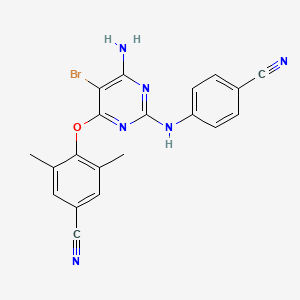
Etravirine


Etravirine2DCSD.svg

4-[6-Amino-5-bromo-2- [(4-cyanophenyl)amino] pyrimidin-4-yl]oxy-3,5-dimethylbenzonitrile

EMA:Link, US FDA:link

269055-15-4

Intelence,  TMC-125, TMC 125, TMC125, Intelence(TM), DAPY deriv, Intelence (TN),
UNII-0C50HW4FO1
Molecular Formula: C20H15BrN6O
Molecular Weight: 435.2767

It was originally developed and launched by Johnson & Johnson, for the treatment of HIV-1 infection. Family members of the product case, WO0027825, hold SPC protection in the EU until 2023 and expire in the US in 2020.

Etravirine (ETR,[1] brand name Intelence, formerly known as TMC125) is a drug used for the treatment of HIV. Etravirine is a non-nucleoside reverse transcriptase inhibitor (NNRTI). Etravirine works by reducing the amount of HIV and increasing the number of CD4 or T cells in the blood. Unlike the currently available agents in the class, resistance to other NNRTIs does not seem to confer resistance to etravirine.[2] Etravirine is marketed by Tibotec, a subsidiary of Johnson & Johnson. In January 2008, the Food and Drug Administration approved its use for patients with established resistance to other drugs, making it the 30th anti-HIV drug approved in the United States and the first to be approved in 2008.[3] It was also approved for use in Canada on April 1, 2008.[4]

Etravirine is licensed in the United States, Canada, Israel, Russia and the European Union,[5] and is under regulatory review in Switzerland and Australia.[6]


Indications and dosage

Etravirine, in combination with other anti-retrovirals, is indicated for the treatment of human immunodeficiency virus type 1 (HIV-1) infection in antiretroviral treatment-experienced adult patients, who have evidence of viral replication and HIV-1 strains resistant to a non-nucleoside reverse transcriptase inhibitor (NNRTI) and other antiretroviral agents.

The recommended dose of etravirine is 200 mg (2 x 100 mg tablets, or 1 x 200 mg tablet as of 03/18/2011) taken twice daily following a meal. The type of food does not affect the exposure to etravirine.[7]

Contraindication

Each 100 mg etravirine tablet contains 160 mg of lactose. Patients with rare hereditary problems of galactose intolerance, the Lapp lactase deficiency or glucose-galactose malabsorption should not take this medicine.[8]


Mechanism of action

Etravirine is a second-generation non-nucleoside reverse transcriptase inhibitor (NNRTI), designed to be active against HIV with mutations that confer resistance to the two most commonly prescribed first-generation NNRTIs, mutation K103N for efavirenz and Y181C for nevirapine.[9] This potency appears to be related to etravirine’s flexibility as a molecule. Etravirine is a diarylpyrimidine (DAPY), a type of organic molecule with some conformational isomerism that can bind the enzyme reverse transcriptase in multiple conformations, allowing for a more robust interaction between etravirine and the enzyme, even in the presence of mutations.[10] Other diarylpyrimidine-analogues are currently being developed as potential anti-HIV agents, notably rilpivirine.

Warnings and risks

In 2009, the prescribing information for etravirine was modified to include “postmarketing reports of cases of Stevens–Johnson syndrome, toxic epidermal necrolysis and erythema multiforme, as well as hypersensitivity reactions characterized by rash, constitutional findings, and sometimes organ dysfunction, including hepatic failure. Intelence therapy should be immediately discontinued when signs and symptoms of severe skin or hypersensitivity reactions develop.”[11]

Etravirine (I), formerly TMC 125 and chemically known as 4-[[6-amino-5-bromo-2-[(4-cyanophenyl)amino]-4- pyrimidinyl]oxy]-3,5-dimethylbenzonitrile, is an NNRTI approved in 2008 for use in combination with other antiretroviral agents in treatment- experienced adult patients with multidrug-resistant HIV infections. Etravirine is marketed worldwide as an oral tablet and was first disclosed by De Corte et al in US 7,037,917.

Etravirine (I)

De Corte et al in US 7,037,917 provides a method for manufacturing of diarylpyrimidine compounds wherein a compound of formula (II) is heated with ammonia in presence of a inert solvent such as 1,4-dioxane in a pressure vessel at 1500C for 4 days.


(H) (I) X – halogen

Davies et al in Drugs of the Future 2005, 30(5): 462-468 discloses that the intermediate compound (II) can be prepared in two different routes. The first route discloses that 5-bromo-2,4,6-trichloropyrimidine is reacted with 4- aminobenzonitrile by means of diisopropylethylamine in refluxing dioxane giving a diarylamine which is then reacted with 4-hydroxy-3,5- dimethylbenzonitrile to give intermediate of formula (II) (Scheme – 1).

Scheme – 1 lll)

The second method for synthesis of compound of formula (II) discloses that 4-guanidinobenzonitrile is cyclized with diethylmalonate by means of sodium ethoxide to give 4-(4,6-dihydroxypyrimidine-2-yl-amino)- benzonitrile, which upon treatment with POCI3 yields the corresponding dichloro derivative. Further bromination with bromine and sodium bicarbonate in aqueous methanol affords 4-(5-bromo-4,6-dichloropyrimidin- 2-ylamine)-benzonitrile, which on condensation with the sodium salt of cyano-2,6-dimethylphenolate in presence of N-methylpyrrolidone and dioxane gives intermediate of formula (II) (Scheme – II).


However, the abovementioned procedure for synthesis of diarylpyrimidine NNRTIs suffers from the disadvantage that the conversion of compound of formula II to the final compound is very slow. The reaction of compound of formula (II) with ammonia, even in refluxing dioxane requires four days for completion and the yields obtained are not very satisfactory.

Recently, De Kock et al, in US 2008/0194602 has reported that diarylpyrimidine oxide derivatives possesses HIV replication inhibiting properties. The diarylpyrimidine oxide derivatives are prepared from corresponding diarylpyrimidine derivatives of formula III by N-oxidation of the tertiary nitrogen of pyrimidine ring.


(III)

There are various method reported for synthesis of diarylpyrimidine derivatives of formula III, as summarized in Scheme – 3.


One of the most preferred processes reported for synthesis of diarylpyrimidine derivatives of formula (III), is by halogenating a compound of formula (IV). Further, the compound of formula (IV) is reported to be prepared from 4-aminobenzonitrile and cyanamide. This reaction is conducted in water in the presence of a strong acid, to yield 4-cyanophenyl guanidine, which is then reacted with an alkyl malonic ester, in the presence of a strong base and at increased temperature. The obtained 4,6- dihydroxypyrimidine is then treated with a halogenating agent. The pyrimidine derivative is then reacted with a 4-substituted benzonitrile and then further with ammonia to yield the intermediates (IV).

Although, the process disclosed herein relates to synthesis of N-oxide derivatives and not particularly etravirine, the same method could be used for synthesis of etravirine. However, the said process again suffers from the limitation that it utilizes cyanamide, which is a highly toxic compound. Thus, from the above, it would be evident, that though NNRTIs, such as etravirine, are the main-stay therapy for treatment of HIV infections,


File:Etravirine synthesis.svg


……………………………….

http://www.google.com/patents/EP2342186A2?cl=en

Scheme – 4.


aq. ammonia

Halogenation


(I) (IV)


EXAMPLES:

Example 1

Synthesis of 4-[(2,6-dichloro)-4-pyrimidinyloxy]-3,5 dimethylbenzonitrile (Compound-V):

2,4,6-Trichloropyrimidine (100 g, 0.545 m) was dissolved in 1,4-dioxane (300 ml) and 3,5,-dimethyl-4-hydroxybenzonitrile (80.1 g, 0.545m) was added under stirring. Addition of N,N-diisopropylethylamine (141.0Og, 1.09m) was carried to this solution over a period of 30 minutes. Reaction mass was heated at 700C and stirred for 2.0 hours. The reaction mass was cooled slowly to 15°C and obtained product was filtered at 12-15°C followed by washing the cake with 50 ml of 1,4-dioxane. Finally the cake was washed with water (200ml) to get the desired product. Melting point: 208-2100C.

Yield: 128 g, %Yield=80%;

Example 2

Synthesis of 4-[[6-chloro-2-[(4-cyanophenyl)amino]-4-pyrimidinyl]oxy]- 3,5-dimethylbenzonitrile (Compound-VT) Compound-V (100 g, 0.34 m) was dissolved in N-methylpyrrolidone (500 ml) and 4-Aminobenzonitrile (40.12 g, 0.34m) was added under stirring. The reaction mass was cooled to 00C. To this solution, addition of potassium t- butoxide was carried out (76.3g, 0.68m) in lots over a period of 1.0 hour at 0 to 100C. The reaction mass was allowed to come at room temperature gradually over 1 to 2 hours. Then slowly the reaction mass was added in chilled water (2.0L) by maintaining the reaction mass temperature below 2O0C. The reaction mass was filtered and washed the cake with 200 ml water. Wet cake was again dissolved in 1.0L water below 200C and filtered. The obtained product was purified by using ethyl acetate (2×300 ml) at 60- 7O0C followed by filtration at 10-150C. Yield: 50 g.

Example 3

Synthesis of 4-[[6-amino-2-[(4-cyanophenyl)amino]-4-pyrimidinyl]oxy]- 3,5-dimethylbenzonitriIe (Compound – IV)

Aqueous ammonia (25%) (600 ml) was added to a solution of Compound- VI (100 g, 0.266 m) in 1,4-Dioxane (1000 ml) and the reaction mass was heated in pressure autoclave at 12O0C and maintain at 120-1250C forlO-12 hours. The reaction mass was allowed to cool to 500C, and again heated to 70-800C, at which water (200 ml) was added slowly. The reaction mass gradually cooled to 100C and filtered to obtain wet cake, which was dried to get desired product.

Yield: 75 g, %Yield= 80%. Example 4

Synthesis of Etravirine

Compound-IV (100 g, 0.28 m) was taken in methylene dichloride (800 ml) and cooled to a temperature of 0 to 5°C. Slowly liquid bromine (47.2 g, 0.294 m) was added at 0 to 50C by dissolving in 200 ml of methylene dichloride. The reaction mass was stirred at 0 to 50C for 2 to 4 hrs. Chilled water (800 ml) was added in to the reaction mass and pH was adjusted at 9 to 10 by slow addition of sodium hydroxide solution at 0 to 5°C. Sodium metabisulphite solution was added at 0 to 50C and the reaction mass was stirred at 0-100C for 1 hour by maintaining the reaction mass pH at 8 to 9. The reaction mass was filtered and washed the cake with 200 ml water. Dry the wet product at 50-600C & recrystallize from acetone. Yield: 100 g, Melting point: 252 to 254°C.


………………………………………..

http://www.google.com/patents/EP2212298B1?cl=en


  • The synthesis of compounds of Formula I can be readily achieved by synthetic chemists of ordinary skill. Such methods can be carried out utilizing corresponding deuterated and optionally, other isotope-containing reagents and/or intermediates to synthesize the compounds delineated herein, or invoking standard synthetic protocols known in the art for introducing isotopic atoms to a chemical structure. Relevant procedures and intermediates are disclosed, for instance in PCT patent publication WO2000/27825 ; European Patent 1 002 795 ; United State patent 7,241,458 ; and Ludovici, DW et al, Biorg Med Chem Lett 2001, 11:2235. The compounds may be prepared as illustrated in the schemes shown below.

Exemplary Synthesis

  • [0043]
  • [0044]
    Scheme 1 shows a general route for preparing compounds of Formula I. An appropriately deuterated benzonitrile 10 is converted to the corresponding aryl guanidine compound 11 by refluxing in ethanol with cyanamide and nitric acid. Reaction with diethylmalonate and sodium ethoxide in ethanol produces the cyanophenylamino-4-dihyroxypyrimidine 12, which is then chlorinated by treatment with POCl3, and brominated by treatment with bromine gas and aqueous sodium bicarbonate in methanol to yield compound 13. Compound 13 is combined with appropriately deuterated 4-cyanophenol 14 in the presence of N-methylpyrrolidone (“NMP”) and dioxane to form tricyclic compound 15. Compound 15 is then treated with ammonia in isopropyl alcohol (“IPA”) to form a compound of Formula I.

  • [0045]
    Scheme 2 shows how various deuterated benzonitriles 10, useful in Scheme 1, may be prepared. Reaction A, starting with compound 20, illustrates the preparation of the 4-amino-2,3,5,6-d4-benzonitrile reagent 10a. Treatment of commercially available 4-chloro-2,3,5,6-d 4-aniline (20) with palladium(II) trifluoroacetate, 2-di-tert-butylphosphino-1,1 ‘-binaphthyl, zinc flakes, and zinc cyanide according to the procedure described by Littke, A et al., Org Lett, 2007, 9:1711-1714 affords 10a.
  • [0046]
    Scheme 2B shows the preparation of an alternative benzonitrile intermediate 4-amino-2,6-d2-benzonitrile 10b, starting with commercially available 4-nitroaniline (21). Treatment of 21 with commercially available deuterium chloride in deuterated water according to the procedure described by Suehiro, T et al., Bull Chem Soc Jap, 1987, 60:3321-3330 affords the 2,6-d2-4-nitroaniline 22, which can be elaborated through nitrochloro intermediate 23 and chloroaniline intermediate 24 to the necessary d2-benzonitrile building block 10b using the procedures described in Suehiro, T et al., Bull Chem Soc Jap, 1987, 60:3321-3330.

  • [0047]
    Scheme 3 shows the synthesis of appropriately deuterated.cyanophenols 14 useful in Scheme 1. Sequence A, starting with commercially available ortho-cresol-d 7 30, shows the preparation of the 2,6-d2-4-hydroxy-3,5-bis(methyl-d3)benzonitrile intermediate 14a (R1, R2 = CD3; Y1, Y2 = D). Treatment of 30 with commercially available d 2-diiodomethane and diethylzinc according to the procedure described by Macdonald, TL et al., Tet Lett, 1989, 39:5215-5218 affords the 2,6-bis(methyl-d3)phenol 31. Subsequent bromination of the phenol with N-bromosuccinimde (NBS) in carbon tetrachloride using the protocol described by Srinivasan, KV et al., TetLett, 1994, 35:7055-7056 affords the 4-bromo-substituted phenol 32 Treatment of the bromophenol 32 with copper(I) cyanide in refluxing DMF according to the procedure described in Chinese patent publication 1687060 affords the requisite benzonitrile 14a.
  • [0048]
    Scheme 3B, starting with commercially available 1-(methoxymethoxy)benzene (33), illustrates the preparation of 4-hydroxy-3,5-bis(methyl-d3)benzonitrile 14b (R1, R2 = CD3; Y1 Y2 = H). Treatment of 33 with n-butyllithium followed by treatment of the in situ generated organolithium with commercially available d3-iodomethane according to the procedure described by Hayes, RN et al., Aus J Chem, 1989, 42:865-874 affords the 2-(methyl-d3)phenol 34, which can then be processed as shown to afford the desired bis(methyl-d3)benzonitrile (14b: R1, R2 = CD3; Y1, Y2 = H).


Examples

  • [0102]
    Example 1. Synthesis of 2,6-d2-4-hydroxy-3,5-bis(methyl-d3)benzonitrile (14b). Intermediate 14b was prepared as outlined in Scheme 4 below. Details of the synthesis follow.

  • [0103]
    Synthesis of 3,4,5-d3-2,6-bis(methyl-d3)phenol (31). To a sealed tube containing a suspension of 2,6-dimethylphenol 40 (2.0 g, 16.4 mmol) in D2O (25 mL), was added 5% Pt/C (20 wt%, 0.40 g). The mixture was purged with nitrogen then placed under an H2 atmosphere and stirred at ambient temperature for 15 minutes (min). The tube was then sealed and the mixture heated to 180 °C for a period of 24 hours (h). After cooling to ambient temperature, the mixture was diluted with. Et2O and filtered through Celite. The aqueous phase was extracted with Et2O (3 x 25 mL) and the organic extracts were dried, (MgSO4), filtered, and concentrated in vacuo to afford 1.8 g (84%) of pure 31 as a white solid; 98% D incorporation by 1H NMR.
  • [0104]
    Synthesis of 4-bromo-3,5-d22,6-bis(methyl-d3)phenol (32). To a solution of 31 (1.6 g, 12.2 mmol) in AcOH (12 mL) at ambient temperature, was added 4,4-dibromo-3-methyl-pyrazol-5-one (3.1 g, 12.2 mmol, 1.0 equiv). The mixture was stirred at ambient temperature for period of 20 h then filtered through Celite and washed with cold AcOH (5 mL). The mixture was then concentrated in vacuo and the residue obtained was diluted with H2O (15 mL) and neutralized with a saturated aqueous NaHCO3 solution. The aqueous mixture was then extracted with hexane/Et2O (1:1, 3 x 15 mL) and the organic extracts were dried, (MgSO4), filtered, and concentrated in vacuo. Purification of the crude mixture on SiO2 (10%-20% EtOAc/Hex) afforded 1.4 g (79 %) of pure 32 as a white solid;
  • [0105]
    Synthesis of 2,6-di-4-hydroxy-3,5-bis(methyl-d3)benzonitrile (14b). To a sealed vessel containing a solution of phenol 32 (1.45 g, 6.93 mmol) in DMF (15 mL), was added zinc cyanide (0.98 g, 8.32 mmol, 1.2 equiv), Pd2(dba)3 (0.36 g, 0.35 mmol, 5 mol%), dppf (0.19 g, 0.35 mmol, 5 mol%), polymethylhydrosiloxane (PMHS, 0.15 g, 10 wt%) and water (0.35 mL). The vessel was sealed and heated to 120 °C for a period of 18 h. After cool ing to ambient temperature, the mixture was diluted with H2O (20 mL) and Et2O (20 mL). The aqueous phase was further extracted with Et2O (3 x 20 mL) and the organic extracts were dried, (MgSO4) filtered, and concentrated in vacuo. Purification of the crude mixture on SiO2 (10%-20% EtOAc/Hex) afforded 1.0 g (92%) of pure 14b as an off-white solid.
  • [0106]
    Example 2. Synthesis of 104. Compound 104 was prepared as outlined in Scheme 5 below. Details of the synthesis follow. Pyrimidine 42 was prepared as set forth in Ludovici, DW et al., Biorg. Med. Chem. Lett. 2001, 11:2235-2239.

  • [0107]
    Synthesis of 4-(5-bromo-6-cbloro-2-(4-cyanophenylamino)pyrimidin-4-yloxy)-2,6-d2 3,5-bis(methyl-d3)benzonitrile (43). To a sealed tube containing a solution of nitrile 41 (100 mg, 0.64 mmol, 1.1 equiv) in 1,4-dioxane (0.6 mL), was added NaH (26 mg, 0.64 mmol, 1,1 equiv). The mixture was stirred at ambient temperature for a period of 2 min, NMP (0.6 mL) was added, and the resulting mixture was stirred for an additional 10 min at ambient temperature. Pyrimidine 42 (0.20 g, 0.58 mmol, 1.0 equiv) was added to the mixture, and the vessel was sealed and heated to 155 °C for a period of 16 h. After cooling to ambient temperature, the mixture was diluted with H2O (4 mL) and the crude product was filtered off and washed with additional water. Purification of the crude solid on SiO2 (70% CH2Cl2/Hexanes) afforded 72 mg (27%) of pure 43 as a white solid.
  • [0108]
    Synthesis of 4-(6-amino-5-bromo-2-(4-cyanopheaylamino)pyrimidin-4-yloxy)-2,6-dideutero-3,5-bis(trideuteromethyl)benzonitrile (104) Pyrimidine 43 (72 mg, 0.16 mmol) was dissolved in a 0.5 M solution of 1,4-dioxane (4 mL) in a sealed tube. The vessel was heated to 130 °C for a period of 24 h. After cooling to ambient temperature, the mixture was concentrated in vacuo. Purification of the crude mixture on SiO2 (0.25%-0.5% MeOH*/ CH2Cl2) (*2.0 M NH3 in MeOH) afforded 12.1 mg (17%) of pure 104 as a white solid. 1H NMR (400 MHz, CDCl3): δ 7.39 (d, J=8.8, 2H), 7.30 (d, J=8.8, 2H), 6.82 (br s, 1H), 5.33 (br s, 2H). HPLC (method: 150 mm C18-RP column-gradient method 5-95% ACN; Wavelength: 254 nm): retention time: 5.39 min; purity: 97.8%. MS (M+H): 443.0, 445.1.

http://www.google.com/patents/EP2212298B1?cl=en


…………………………………

http://www.google.com/patents/WO2012001695A1?cl=en

Etravirine can exist in different polymorphic forms, which differ from each other in terms of stability, physical properties, spectral data and methods of preparation.

Etravirine and its salts were described in US patent nos. 7,037,917. According to the patent also described a process for the preparation of etravirine which comprises treating 4-[[6-chloro-5-bromo-2[(4-cyanophenyl)amino]-4-pyrimidinyl]oxy]-3,5- dimethylbenzonitrile with ammonia.

Process for the preparation of etravirine was described in Drugs of the Future 2005, 30(5): 462-468. According to the process of etravirine which comprises treating 4- [[6-chloro-5 -bromo-2 [(4-cyanophenyl)amino] -4-pyrimidinyl] oxy] -3 ,5 -dimethylbenzonitrile with ammonia.

Process for the preparation of 4-[[6-chloro-2-[(4-cyanophenyl)amino]-4- pyrimidinyl]oxy]-3,5-dimethylbenzonitrile was described in Organic process research & development., 2010, 14(3); 657-660. According to the process of 4-[[6-chloro-2-[(4- cyanophenyl)amino]-4-pyrimidinyl]oxy]-3,5-dimethylbenzonitrile which comprises reacting 4-aminobenzonitrile in N-methylpyrrolidone with 4-[(2,6-dichloro)-4- pyrimidinyloxy]-3,5-dimethylbenzonitrile in the presence of potassium tert-butoxide. Process for the preparation of etravirine was described in Organic process research & development., 2010, 14(3); 657-660. According to the publication, crystalline solid of etravirine was obtained by dissolving crude etravirine in acetone at 50 to 55°C and was treated with activated charcoal, and isolating. The crystalline etravirine obtained by the process of the prior art is herein after designated as etravirine crystalline form I. The powdered x-ray diffractogram (PXRD) of etravirine crystalline Form I is shown in figure 1. Crystalline Form I is characterized by peaks in the powder x-ray diffraction spectrum having 2Θ angle positions at about 8.7, 9.1, 13.0, 19.4, 19.6, 23.5, 26.5, 26.8 and 28.5 ± 0.2 degrees.

preparation of 4- [[6-chloro-2- [(4-cyanophenyl)amino] -4-pyrimidinyl] oxy] -3 ,5 -dimethylbenzonitrile of formula I:

which comprises reacting the 4-(4,6-dichloropyrimidine-2-yl-amino)benzonitrile of formula II:


with 4-hydroxy-3,5-dimethylbenzonitrile of formula III:


in the presence of a base to obtain a compound of formula I.

Examples

Preparation of l-(4-cvanophenyl)guanidine

Preparative example 1 :

A solution of P-aminobenzonitrile (100 gm), ethanol (500 ml), concentrated nitric acid (36 ml) and aqueous cyanamide (50%, 54 ml) was heated at reflux. The solution was maintained for 16 hours at reflux. The reaction mass was further cooled to 0°C and then added methyl tert-butyl ether (500 ml) at 0 to 5°C. The reaction mass was maintained for 5 hours at 0 to 5°C and separated solid obtained was collected by filtration to obtain 59 gm of guanidine nitrate.

Guanidine nitrate (59 gm) was dissolved in water (590 ml) and then added sodium hydroxide solution (1M, 325 ml). The separated solid obtained was filtered and dried to obtain 33 gm of l-(4-cyanophenyl)guanidine. Preparation of 4-(4,6-dihvdroxypyrimidine-2-yl-amino)benzonitrile

Preparative example 2: Diethyl malonate (30 gm) was added to l-(4-cyanophenyl)guanidine (30 gm) at room temperature. A solution of sodium (17.2 gm) in ethanol (450 ml) was added to the above reaction mass. The contents were heated to reflux and maintained for 12 hours. Distilled off the solvent completely under vacuum and then added water (500 ml). The reaction mass was stirred for 30 minutes and filtered. The solid obtained was dried to obtain 40 gm of 4-(4,6-dihydroxypyrimidine-2-yl-amino)benzonitrile.

Preparation of 4-(4,6-dichloropyrimidine-2-yl-amino)benzonitrile

Preparative example 3 :

Phosphoryl chloride (159 ml), Ν,Ν-dimethyl aniline (1 18 ml) and 4-(4,6- dihydroxypyrimidine-2-yl-amino)benzonitrile (40 gm) are added and heated to reflux. The reaction mass was maintained for 6 hours at reflux and then poured into ice water (1000 ml). The reaction mass stirred for 2 hours at room temperature and filtered. The solid obtained was dried to obtain 35 gm of 4-(4,6-dichloropyrimidine-2-yl- amino)benzonitrile.

Preparation of 4- [ [6-chloro-2- [(4-cyanophenyl)aminol -4-pyrimidinyl] oxyl -3,5- dimethylbenzonitrile

Example 1 :

4-(4,6-Dichloropyrimidine-2-yl-amino)benzonitrile (35 gm) as obtained in preparative example 3 was added to 4-hydroxy-3,5-dimethylbenzonitrile (22 gm) and then added a mixture of N-methylpyrrolidone and potassium carbonate (22 gm ) at 45°C. The reaction mass was stirred for 12 hours at 45°C and then added water (1000 ml). The reaction mass was cooled to 25°C and stirred for 2 hours at 25°C, filtered. The wet solid obtained was dissolved in acetone (140 ml) under stirring and the separated solid was filtered, and then dried at 50°C to obtain 24 gm of 4-[[6-chloro-2-[(4- cyanophenyl)amino]-4-pyrimidinyl]oxy]-3,5-dimethylbenzonitrile.

Preparation of 4-ff6-amino-2-[(4-cvanophenyl)aminol-4-pyrimidinylloxyl-3,5- dimethylbenzonitrile

Example 2: 4-[[6-chloro-2-[(4-cyanophenyl)amino]-4-pyrin idinyl]oxy]-3,5-dimethyl- benzonitrile (24 gm) was dissolved in aqueous ammonia (240 ml) and 1,4-dioxane (274 ml) at room temperature. The contents were heated to 120°C and maintained for 12 hours at 120°C. To the reaction mass was added water (360 ml) and the reaction mass was slowly cooled to 50 to 60°C. The reaction mass was further cooled to 0 to 5°C and stirred for 1 hour at 0 to 5°C, filtered. The wet solid obtained was dissolved in toluene (150 ml) under stirring. The separated solid was filtered and dried at 50°C to obtain 10 gm of 4-[[6-amino-2-[(4-cyanophenyl)amino]-4-pyrimidinyl]oxy]-3,5- dimethylbenzonitrile.

Preparation of etravirine

Example 3 :

4- [ [6-amino-2- [(4-cyanophenyl)amino] -4-pyrimidinyl]oxy] -3 ,5 -dimethyl – benzonitrile (10 gm) was dissolved in dichloromethane (100 ml) at 0 to 5°C and then added bromine solution (4.7 gm in 50 ml of dichloromethane). The reaction mass was stirred for 4 hours at 0 to 5°C and then added water (100 ml). The pH of the reaction mass was adjusted to 9 to 10 with sodium hydroxide solution (4N, 10 ml). Sodium metabisulphite solution (0.5 gm in 2 ml of water) was added to the reaction mass and pH of the reaction mass was maintained between 7.5 to 8.5 with sodium hydroxide solution (4N, 10 ml). The separated solid was filtered and dried at 50 to 55°C to obtain crude etravirine.

Crude etravirine obtained above was dissolved in acetone (200 ml) at 50 to 55°C and then treated with activated charcoal (1.5 gm). The reaction mass was filtered through celite and the filtrate was distilled off acetone completely to obtain residue. The residue was cooled to 5 to 10°C and filtered. The solid obtained was dried at 60°C to obtain 5.2 gm of pure etravirine.

………………………………..

http://www.google.com/patents/WO2013159286A1?cl=en

Etravirine (Etravirine, -165335, TMC-125) under the trade name British Terai (Intelence), chemical name 4 – [6 – amino-5 – bromo-2 – (4 – cyanide Diaminodiphenol) pyrimidine-4 – oxy] -3, 5 – dimethyl-benzonitrile, the following structural formula:


Figure imgf000002_0001

Etravirine is a Johnson & Johnson subsidiary Tibotec has developed a next-generation non-nucleoside reverse transcriptase inhibitors (NN-RTI), with anti-HIV-infection. Clinical studies have shown that patients with the first use of NN-RTI drug therapy, etravirine showed strong antiviral activity; patients previously used antiviral drugs, this product also has the characteristics of rapid and long-lasting effect. In addition, HIV-1-infected patients with oral ribavirin according to the song has a good distribution of drug metabolism and is well tolerated. January 18, 2008 the FDA approved Tibotec Therapeutics’s priority review program by etravirine tablets combined with other anti-HIV drugs for the treatment of other antiretroviral drugs ineffective in adult HIV-infected patients.

Currently on the synthesis of etravirine have the following main categories:

One, WO0027825A1 etravirine first disclosed the following synthetic route:


Figure imgf000003_0001

The above line is not easy to get raw materials, and the last step amination exist for a long time, conversion rate of defects, is not suitable for industrial production.

.. Second, Bioorg Med Chem Lett, 2001,11 (17) ,2235-9 etravirine reported the following methods:


Figure imgf000003_0002

This method not only synthetic route length (total of 5-step reaction), starting 4 – cyanophenyl guanidine expensive and difficult to obtain, and the condensation reaction selectivity in step 4, ammonolysis step 5 incomplete conversion, resulting in The total yield of less than 10%, is not suitable for industrial production.

Three, WO2010150279A2 reported the following synthetic methods:

Figure imgf000004_0001

This method, although only four steps, each step is also more readily available raw materials, the reaction rate is improved amination, etravirine total crude yield of 40%. However, with the second reaction step up to nearly 12% of the byproduct [i.e. a compound of formula (3)], can be purified after the amination reaction of the next step, the compound (3) with a compound of formula (2) and the same formula isomers, very similar structures and physicochemical properties, and therefore, the formula (2) the difficulty of purification of the compounds higher.


Figure imgf000004_0002

This method yields a condensation reaction of step 4 is only 48% ammoniated reaction yield of step 5 is also only 44%, the yield is low this two-step reaction, the product purity is not high, leading to the final step of bromine on behalf of the reaction yield is also low, as low as 43%, only 9% of the total yield of these three steps, not suitable for industrial production. Therefore, an urgent need to develop a simple, low cost of production etravirine preparation.

Figure imgf000009_0003


Figure imgf000013_0001

Figure imgf000014_0001


Figure imgf000010_0002
Figure imgf000014_0002

Preparation methods according to Qu Wei Lin

Qu Wei Lin preparation method according to the present invention is shown in the formula (V), preferably based preparation steps according to Qu Wei Lin intermediates of the present invention (il), (i2) and (ii), the step ( ii) to obtain a compound of formula IV, the following bromination step further:

(Iii) at room temperature (eg 25 – 28 ° C) in an inert solvent, in the presence of bromide reagents, step (ii) of the resulting compound of formula IV).


Figure imgf000015_0001

In another preferred embodiment, the reagent or the solvent in step (iii) of the bromination reaction can be used by those of ordinary skill in the reagents or solvents used, preferably bromination reagent bromosuccinimide (NBS ) or Br 2, the inert solvent used for the bromination reaction solvent, preferably acetone.

Compounds of formula II is calculated by the method according to Qu Wei obtained a 50% yield of the forest of the present invention, preferably 55%; better to 60%; optimally 65%. The main advantages of the present invention are:

1 provides a method for preparing formula IV as shown by curved intermediate Wei Lin, the method using the same or substantially the same solvent system, can be performed continuously multistep reaction without separation and purification between steps, the operation is very simple, compound The yield is much higher than existing methods, and high-purity compounds obtained can be directly used in the preparation according to Qu Wei Lin.

2 provides a method for preparing formula V according to Qu Wei Lin, the method based on production method according to Qu Wei Lin intermediates in the present invention provides a significantly improved yield according to Qu Wei Lin, thereby significantly reducing its production cost, high value industrial applications. Below with reference to specific embodiments, further illustrate the present invention. It should be understood that these embodiments are merely illustrative of the invention and are not intended to limit the scope of the invention. Example experimental method does not indicate the specific conditions of the following examples, usually in accordance with conventional conditions, or in accordance with the conditions recommended by the manufacturer. Unless otherwise indicated, percentages and parts are by weight. Example 1

4 – [[6 – amino-2 – [(4 – cyanophenyl) amino] -4 – pyrimidinyl] oxy] -3,5 – dimethylbenzonitrile A mixture of 3,5 – dimethyl – 4 – hydroxybenzonitrile (1 1.8g, 0.080mol) was dissolved in lOOmL N-methylpyrrole embankment ketone (ΝΜΡ) was then added K 2 CO 3 (ll Og, 0.080mol.). Warmed to 90 ° C, incubated for 2 hours.

The above reaction mixture was cooled to 25 ° C, the solution of 4 – (4,6 – dichloro-pyrimidin-2 – amino) benzonitrile (21.3g, 0.081mol), incubated for 3 hours. Heated to 50 ° C, and then continue to heat for 10 hours. Filtered and the solid rinsed two times with 30mL NMP.

The combined filtrates were saturated with ammonia gas was heated to 120 ° C, the reaction was kept for 10 hours.

Thereto was added water 500mL. Crystallization, filtration, the filter cake was rinsed with 50 mL of water.

The obtained wet cake was added to a mixed solvent of 90 mL of acetone and 15 mL of water was heated at reflux for 30 minutes. Cooling to room temperature, filtered and dried in vacuo to give 4 – [[6 – amino-2 – [(4 – cyanophenyl) amino] -4 – pyrimidinyl] oxy] -3,5 – dimethylbenzonitrile 25.0g yield of 87.8%.

HPLC purity 98.7%. MS (ESI) m / z: (M + H) 357.4, (M + Na) 379.4. Example 2

4 – [[6 – amino-2 – [(4 – cyanophenyl) amino] -4 – pyrimidinyl] oxy] -3,5 – dimethylbenzonitrile A mixture of 3,5 – dimethyl – 4 – hydroxybenzonitrile (6.0g, 0.041mol) was dissolved in 75mL N, N-dimethylformamide (DMF) was then added Na 2 CO 3 (5.2g, 0.049mol). Heated to 80 ° C, incubated for 2 hours.

The above reaction mixture was cooled to 25 ° C, the solution of 4 – (4,6 – dichloro-pyrimidin-2 – amino) benzonitrile

(13.0g, 0.049mol), incubated for 4 hours. Heated to 55 ° C, and then continue to heat for 8 hours. Filtered and the solid rinsed two times with 20mL DMF.

The combined filtrate was slowly added 25% aqueous ammonia 30ml. Heated to 110 ° C, the reaction was kept for 15 hours. Water was added to the system 300mL. Crystallization, filtration, the filter cake was rinsed with 30 mL of water.

The obtained wet cake was added into a 50 mL of acetone was heated at reflux for 1 hour. Cooling to room temperature, filtered and dried in vacuo to give 4 – [[6 – amino-2 – [(4 – cyanophenyl) amino] -4 – pyrimidinyl] oxy] -3,5 – dimethylbenzonitrile 12.3 g yield of 84.3%.

HPLC purity 98.2%. An example of mass spectral data consistent with the implementation. Example 3

4 – [[6 – amino-2 – [(4 – cyanophenyl) amino] -4 – pyrimidinyl] oxy] -3,5 – dimethylbenzonitrile A mixture of 3,5 – dimethyl – 4 – hydroxybenzonitrile (6.0g, 0.041mol) was dissolved in 60mL of tetrahydrofuran (THF), and then sodium acetate (13.5 g, 0.16mol). Warmed to reflux, the reaction was kept for 3 hours.

The above reaction mixture was cooled to 30 ° C, the solution of 4 – (4,6 – dichloro-pyrimidin-2 – amino) benzonitrile (21.6g, 0.082mol), incubated for 3 hours. Heated to 60 ° C, and then continue to heat for 12 hours.

Then, the reaction mixture up one step, the ammonia gas until saturation. Heated to 120 ° C, the reaction was kept for 12 hours.

Water was added to the system 300mL. Crystallization, filtration, the filter cake was rinsed with 30 mL of water.

The obtained wet cake was added to a mixed solvent of 40 mL of acetone and 20 mL of water was heated at reflux for 30 minutes. Cooling to room temperature, filtered and dried in vacuo to give 4 – [[6 – amino-2 – [(4 – cyanophenyl) amino] -4 – pyrimidinyl] oxy] -3,5 – dimethylbenzonitrile 11.3 g yield of 77.2%.

HPLC purity 97.7%. An example of mass spectral data consistent with the implementation. Example 4

4 – [[6 – amino-2 – [(4 – cyanophenyl) amino] -4 – pyrimidinyl] oxy] -3,5 – dimethylbenzonitrile A mixture of 3,5 – dimethyl – 4 – hydroxybenzonitrile (6.0g, 0.041mol) was dissolved in 60mLl, 4 – dioxane, and then added sodium ethoxide (2.8g, 0.041mol). Heated to 75 ° C, the reaction was kept for 1 hour.

The above reaction mixture was cooled to 20 ° C, the solution of 4 – (4,6 – dichloro-pyrimidin-2 – amino) benzonitrile

(Ll. Og, 0.042mol), incubated for 3 hours. Warmed to 45 ° C, and then incubation was continued for 10 hours.

Then, a step up of the reaction mixture was slowly added 25% aqueous ammonia 30ml. Warming up to

120 ° C, the reaction was kept for 15 hours.

Water was added to the system 300mL. Crystallization, filtration.

The obtained wet cake was added to a mixed solvent of acetone and 15mL 35mL of water, heated at reflux for 30 minutes. Cooling to room temperature, filtered and dried in vacuo to give 4 – [[6 – amino-2 – [(4 – cyanophenyl) amino] -4 – pyrimidinyl] oxy] -3,5 – dimethylbenzonitrile 11.8g The yield was 80.8%.

HPLC purity 98.1%. An example of mass spectral data consistent with the implementation. Example 5

Preparation according to Qu Wei Lin

Obtained in Example 1 4 – [[6 – amino-2 – [(4 – cyanophenyl) amino] -4 – pyrimidinyl] oxy] -3,5 – dimethylbenzonitrile (35.6g, O.lOmol) was dissolved in 300ml of acetone at room temperature, was added portionwise N-bromosuccinimide (NBS) (17.8g, O.lOmol). After the addition was complete, stirring was continued at room temperature for 2 hours.

Then, stirring was added 0.5M sodium hydroxide solution 140mL, stirring was continued for 30 minutes, filtered, and the filter cake was dried under vacuum, the crude product may, in accordance etravirine.

The crude product is recrystallized from acetone, may, in accordance etravirine 35.0g, yield 80.4%.

HPLC purity 99.3%. MS (ESI) m / z: (M + H) 436.3, (M + Na) 458.3. Comparative

Different solvent systems Preparation of 4 – [[6 – amino-2 – [(4 – cyanophenyl) amino] -4 – pyrimidinyl] oxy] -3,5 – dimethylbenzonitrile

3,5 – dimethyl-4 – hydroxybenzonitrile as starting material a compound of formula II, the preparation of compounds of formula via a two-step IV, the preparation methods, see WO2012001695 Example specification of a page 11-12 and Example 2, calculated by the compound of formula II, in the present Comparative Example 4 – [[6 – amino-2 – [(4 – cyanophenyl) amino] -4 – pyrimidinyl] oxy] -3,5 – dimethyl benzene carbonitrile yield of approximately 21%. Conclusion:

1 The present invention is a method for preparing the compound of formula IV, although the reaction of a compound prepared by a plurality of formula IV, however, use the same or substantially the same throughout the solvent system, multi-step continuous reaction without separation and purification between steps, operation is very simple, and the resulting compound of formula IV is very high yield (yield not less than 77%), far exceeding the prior art, 21% yield and high purity, used directly without purification step Preparation according to Qu Wei Lin.

(2) Preparation method according to Qu Wei Lin of the present invention is a system of law based on the compound of formula IV, is a compound of formula IV further bromination. The method significantly improves the yield according to Qu Wei Lin: A compound of formula II according to the calculation of the starting material, the method according to the present invention, Qu Wei Lin yield up to 60-70%, much higher than the existing technology By Qu Wei Lin in yield, as Bioorg. Med. Chem. Lett., 2001, 11 (17), revealed 2235-9 method through a three-step system may, in accordance yield about Qu Wei Lin 14%, WO2012001695A1 disclosed method, three-step total yield of only 9%, thereby significantly reducing the cost of production, high industrial value. All documents mentioned in the present invention are incorporated by reference as if each reference was individually incorporated by reference, as cited in the present application. It should also be understood that, after reading the foregoing teachings of the present invention, those skilled in the art that various modifications of the present invention or modifications, and these equivalents falling as defined by the appended claims scope of claims of the present application.

………………………………………………..

Organic process research & development., 2010, 14(3); 657-660

http://pubs.acs.org/doi/abs/10.1021/op9003289

Abstract Image

Etravirine (1) is a novel diarylpyrimidine non-nucleoside reverse transcriptase inhibitor and has recently been approved by the U.S. Federal Drug Administsration for the treatment of AIDS. Its reported synthesis is fraught with many difficulties, the foremost being the poor yield and long reaction time required at the aminolysis stage. We attributed this problem to the presence of a bromide group adjacent to the reaction site of the advance intermediate (6). In order to circumvent this issue, we proposed to defer the installation of the bromide group at a later stage, preferably after aminolysis. Indeed, this protocol has worked well. However, in the process of installation of diarylether and diarylamine functionalities at appropriate positions, we had to reverse the sequence of displacement reactions of the dichloride intermediate (9) with 3,5-dimethyl-4-hydroxybenzonitrile (5) and 4-aminobenzonitrile (3). The classical bromination led to the completion of etravirine synthesis.

Etravirine (1)

To a cooled solution of 17 (850 g, 2.387 mol) in DCM (6.8 L) at 0−5 °C was added bromine solution (401 g, 2.5 mol in 1.7 L of DCM). The reaction was stirred at this temperature for 4 h, diluted with water (6.8 L), and basified with 4 M NaOH solution at pH 9−10. At this point, sodium metabisulphite solution (42.5 g in 170 mL water) was added. The pH of the reaction was maintained between 7.5−8.5 over a period of 1 h by adding 4 M NaOH solution. The solid was filtered, washed with water (12 L), and dried at 55−60 °C temperature to get crude etravirine.
The crude product was dissolved in 15.9 L of acetone at 50−55 °C and treated with 11 g of activated charcoal. After charcoal clarification, 12.5 L of acetone was distilled out, and the residue was cooled to 5−10 °C and filtered. Wet cake was washed with 1.0 L of chilled acetone and finally dried at 55−60 °C under vacuum (600−700 mm of Hg) to give 1 (836 g, 80% yield with 99.80% purity by HPLC);
mp 255−257 °C (lit.(5) mp 255−256 °C);
IR (KBr): 3484, 3380, 3349, 2223, 1523, 1505, 1454, 1403, 1313, 1243, 1200, 1174, 1139, 1059, 1005 cm−1;
MS (m/z): 435, 437;
1H NMR (DMSO-d6, 400 MHz): δ 2.12 (s, 6 H),7.11 (br s, 2 H),7.42 (d, 2 H), 7.54 (d, 2 H), 7.74 (s, 2 H), 9.57 (br s, 1 H);
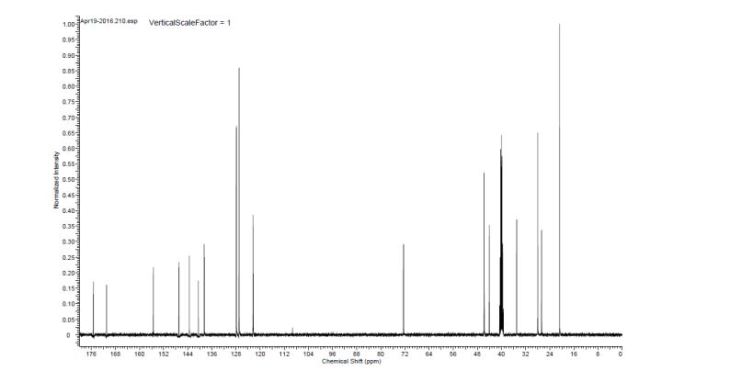
13C NMR (DMSO-d6, 100 MHz): 15.9, 74.6, 102.4, 108.6, 118.4, 119.0, 119.8, 132.7, 133.1, 144.9, 154.4, 156.8, 162.7, 163.75.

References

  1. “Appendix A: Key to Acronyms”. Guidelines for the Use of Antiretroviral Agents in HIV-1-Infected Adults and Adolescents. Department of Health and Human Services.
  2. Stellbrink HJ (October 2007). “Antiviral drugs in the treatment of AIDS: what is in the pipeline?”. Eur. J. Med. Res. 12 (9): 483–95. PMID 17933730.
  3. “FDA Approves HIV Drug Etravirine”. Associated Press. January 18, 2008.
  4. “First New NNRTI in Nearly a Decade to Benefit Canadians with HIV/AIDS” (PDF) (Press release). Janssen-Ortho Inc. 2008-04-01. Retrieved 2008-07-09.
  5. “Intelence receives marketing authorisation in the European Union for HIV combination therapy”. Tibotec. Retrieved 2008-08-29.
  6. “Etravirine (TMC125, Intelence) granted accelerated approval in US”. aidsmap. Retrieved 2008-01-24.
  7. “Intelence prescribing information” (pdf). FDA. Retrieved January 2012.
  8. “Etravine: Summary of product characteristics”. EMEA. p. 5. Retrieved July 2011.
  9. Evans, David (2008-01-15). “Etravirine—Countdown to Launch”. AIDSmeds.com. Retrieved 2008-02-02.
  10. Das K, Clark AD, Lewi PJ, Heeres J, De Jonge MR, Koymans LM, Vinkers HM, Daeyaert F, Ludovici DW, Kukla MJ, De Corte B, Kavash RW, Ho CY, Ye H, Lichtenstein MA, Andries K, Pauwels R, De Béthune MP, Boyer PL, Clark P, Hughes SH, Janssen PA, Arnold E; Clark (2004). “Roles of conformational and positional adaptability in structure-based design of TMC125-R165335 (etravirine) and related non-nucleoside reverse transcriptase inhibitors that are highly potent and effective against wild-type and drug-resistant HIV-1 variants”. J. Med. Chem. 47 (10): 2550–60. doi:10.1021/jm030558s. PMID 15115397.
  11. “FDA Medwatch Safety Information”. Retrieved 2009-08-27.
  12. DE SPIEGELEER B ET AL: “Synthesis and HPLC purification of [77Br]TMC123-R165335 (etravirine), a new anti-HIV drug of the DAPY-NNTRI class“, JOURNAL OF LABELLED COMPOUNDS AND RADIOPHARMACEUTICALS, JOHN WILEY, CHICHESTER, GB, vol. 49, 1 January 2006 (2006-01-01), pages 683-686, XP002510173, ISSN: 0362-4803, DOI: 10.1002/JLCR.1085
    2 * See also references of WO2010150279A2


Etravirine3D.PNG

8-4-2006
Process for preparing particles containing an antiviral


WO2009051782A1 * Oct 17, 2008 Apr 23, 2009 Concert Pharmaceuticals Inc Deuterated etravirine
WO2010150279A2 * Jun 18, 2010 Dec 29, 2010 Emcure Pharmaceuticals Limited Process for synthesis of diarylpyrimidine non-nucleoside reverse transcriptase inhibitor
WO2011017079A1 * Jul 27, 2010 Feb 10, 2011 Teva Pharmaceutical Industries Ltd. Process for the preparation and purification of etravirine and intermediates thereof
WO2012001695A1 * Jun 28, 2010 Jan 5, 2012 Hetero Research Foundation A process for etra virine intermediate and polymorphs of etravirine
WO2013159286A1 * Apr 24, 2012 Oct 31, 2013 Shanghai Desano Pharmaceuticals Investment Co., Ltd. Etravirine and method for preparing intermediate thereof
US20060106043 * Oct 12, 2005 May 18, 2006 Boehringer Ingelheim International Gmbh Method for treating HIV infection through co-administration of tipranavir and etravirine
US20090105147 * Oct 17, 2008 Apr 23, 2009 Concert Pharmaceuticals Inc. Deuterated etravirine
4-11-2012
PROCESS FOR THE PREPARATION AND PURIFICATION OF ETRAVIRINE AND INTERMEDIATES THEREOF
2-22-2012
HIV INHIBITING 2-(4-CYANOPHENYL)-6-HYDROXYLAMINOPYRIMIDINES
2-3-2012
CO-CRYSTAL OF ETRAVIRINE AND NICOTINAMIDE
8-17-2011
Non-nucleoside reverse transcriptase inhibitors
8-12-2011
PROCESS FOR SYNTHESIS OF DIARYLPYRIMIDINE NON-NUCLEOSIDE REVERSE TRANSCRIPTASE INHIBITOR
7-30-2010
COMBINATION FORMULATIONS
3-12-2010
PROCESS FOR PREPARING PARTICLES CONTAINING AN ANTIVIRAL
2-19-2010
HYDROBROMIDE SALT OF AN ANTI-HIV COMPOUND
8-7-2009
PROCESS FOR PREPARING SPRAY DRIED FORMULATION OF TMC125
9-5-2008
Hiv Inhibiting 2-(4-Cyanophenyl)-6-Hydroxylaminopyrimidines


NEW PATENT

WO-2014068588

Biophore India Pharmaceuticals Pvt Ltd

Process for preparing etravirine by reacting 4-((6-amino-5-bromo-2-((4-cyanophenyl)amino)pyrimidin-4-yl)oxy)-3,5-dimethylbenzonitrile with 4-hydroxy-3,5-dimethyl benzonitrile in presence of a base such as N-methylpyrrolidone. Also claims the preparation of intermediates involved in synthesis of etravirine. Useful for treating HIV infection.

Vibrant’s Vibrating Pill Shakes It Up as Promise for Chronic Constipation Treatment


Lyranara.me's avatarLyra Nara Blog

Chronic constipation affects millions of people in the United States, which often results in visits to physician to get a prescription filed. The extremely inconvenient condition results in great discomfort (which may be at least slightly comically-relieved by the unlimited poo puns it affords). Many medications exist already, but like all drugs, they list a plethora of side effects including nausea, vomiting, diarrhea, gas, bloating, abdominal pain, stomach cramps, rectal bleeding, allergic reactions, and more. On top of these side effects, often times the medications fail to offer adequate relief. As such, nearly 50% of patients report being unsatisfied with their treatments. A team of researchers at the Neurogastroenterology and Motility division at Tel-Aviv Sourasky Medical Center’s Department of Gastroenterology and Hepatology has released results of a pilot study for its solution: a pill that vibrates to relieve constipation via mechanical stimulation.

vibrant pill dispenser Vibrants Vibrating Pill Shakes It Up as Promise for Chronic Constipation Treatment

The Vibrant pill is equipped with a small internal motor, and is programmed to vibrate 6-8 hours…

View original post 159 more words

Tezacitabine


4-amino-1-[(2R,3E,4S,5R)-3-(fluoromethylidene)-4-hydroxy-5-(hydroxymethyl)oxolan-2-yl]pyrimidin-2-one

130306-02-4 

Fmdc cpd, FMdC, MDL-101731, Mdl 101731, Mdl 101,731, 2′-Deoxy-2′-(fluoromethylene)cytidine, Cytidine, 2′-deoxy-2′-(fluoromethylene)-, (2E)-
Molecular Formula: C10H12FN3O4   Molecular Weight: 257.218383

Tezacitabine is a ribonucleotide reductase inhibitor. It is a synthetic purine nucleoside analogue with potential antineoplastic activity. It is used for DNA synthetic.[1]

EP 0372268; JP 1990178272; US 5378693 The acetylation of uridine (I) with acetic anhydride gives the 2′,3′,5′-triacetyl derivative (II), which is treated with SOCl2 and sodium ethoxide yielding the 4-ethoxypyrimidinone (III). The partial protection of (III) with 1,3-dichloro-1,1,3,3-tetraisopropyldisiloxane (IV) yields the silylated compound (V), which is oxidized with oxalyl chloride to the silylated furanone (VI). The reaction of (VI) with fluoromethyl phenyl sulfone (A) by means of diethyl chlorophosphate (B) and lithium hexamethyldisylazide in THF affords the fluorovinyl sulfone (VII) as a mixture of (E) and (Z) isomers that is separated by flash chromatography. The (Z)-isomer (VII) is treated with tributyl tin hydride and AIBN in refluxing benzene to give the fluorovinyl stannane (VIII), which is finally treated with CsF and NH3 in refluxing methanol to afford the target compound.


US 5607925


http://www.drugfuture.com/synth/syndata.aspx?ID=165222


………………..


http://www.google.com/patents/WO2005049563A2?cl=en  

5-30-2012
HIGH MOLECULAR WEIGHT DERIVATIVE OF NUCLEIC ACID ANTIMETABOLITE
9-12-2003
Stable compositions comprising tezacitabine


References

  1.  Tsimberidou AM, Alvarado Y, Giles FJ (August 2002). “Evolving role of ribonucleoside reductase inhibitors in hematologic malignancies”Expert Rev Anticancer Ther 2 (4): 437–48. doi:10.1586/14737140.2.4.437PMID 12647987.

Rucaparib, PF-01367338 for the treatment of patients with advanced ovarian cancer and in patients with locally advanced or metastatic breast cancer.


Figure
Rucaparib, PF-01367338
283173-50-2  cas 
6H-​Pyrrolo[4,​3,​2-​ef]​[2]​benzazepin-​6-​one, 8-​fluoro-​1,​3,​4,​5-​tetrahydro-​2-​[4-​[(methylamino)​methyl]​phenyl]​-
6H- ​Azepino[5,​4,​3-​cd]​indol-​6-​one, 8-​fluoro-​1,​3,​4,​5-​tetrahydro-​2-​[4-​[(methylamino)​methyl]​phenyl] ​-
8-​Fluoro-​2-​[4-​[(methylamino)​methyl]​phenyl]​-​1,​3,​4,​5-​ tetrahydro-​6H-​azepino[5,​4,​3-​cd]​indol-​6-​one;
8-Fluoro-2-(4-methylaminomethyl-phenyl)-1,3,4,5-tetrahydro-azepino[5,4,3-cd]indol-6-one
8-Fluoro-2-(4-methylaminomethyl-phenyI)-l,3,4,5-tetrahydro-azepino[5,4,3- cd]indol-6-one
MW..C19 H18 F N3 O
cas of csa salt—–1327258-57-0
773059-19-1 (hydrochloride)
773059-22-6 (L-tartrate)
773059-23-7 (acetate)
459868-92-9  PHOSPHATE
AG-014699
AG-14699
CO-338
PF-01367338
AG-014447 (free base)
AG-14447 (free base) 
Agouron (Originator)
Pfizer (Originator)
WO 2014052550, WO 2014037313, WO 2000042040WO 2004087713WO 2005012305
Inhibition of poly(ADP ribose) polymerase, or PARP, is an exciting new mechanism for the treatment of cancer.(1) The PARP enzyme is responsible for repair of damaged DNA in both normal and tumor cells, and inhibition of this repair mechanism is expected to make the cell more likely to undergo apoptosis. Preclinical work has shown that PARP inhibitors coadministered with a standard chemotherapuetic agent are more effective than the standard treatment alone
Rucaparib is a NAD+ ADP-ribosyltransferase inhibitor in phase II clinical development at Cancer Research UK for the treatment of patients with advanced ovarian cancer and in patients with locally advanced or metastatic breast cancer. Clovis Oncology is conducting early clinical evaluation of rucaparib for the treatment of triple negative breast cancer or ER/PR +, HER2 negative with known BRCA1/2 mutations p2 and for the treatment of gBRCA mutation breast cancer.. Pfizer discontinued development of rucaparibin 2011.In 2011, the compound was licensed to Clovis Oncology by Pfizer for the treatment of cancer. In 2012, orphan drug designation was assigned in the U.S. and the E.U. for the treatment of ovarian cancer.The compound 8-fluoro-2-{4-[(methylamino)methyl]phenyl}-1 ,3,4,5-tetrahydro-6H-azepino[5,4,3- cd]indol-6-one represented by formula


is a small molecule inhibitor of poly(ADP-ribose) polymerase (PARP). 8-Fluoro-2-{4- [(methylamino)methyl]phenyl}-1,3,4,5-tetrahydro-6H-azepino[5,4,3-cd]indol-6-one and salts thereof, is disclosed in U.S. Patent No. 6,495,541 and PCT Application No. PCT/IB2004/000915, International Publication No. WO 2004/087713, the disclosures of which are incorporated herein by reference in their entireties. U.S. Provisional Patent Applications No. 60/612,459 and 60/679,296, entitled “Polymorphic Forms of the Phosphate Salt of 8-Fluoro-2-{4-[(methylamino)methyl]phenyl}-1 ,3,4,5-tetrahydro-6H- azepino[5,4,3-cd]indol-6-one,” the disclosures of which are incorporated herein by reference in their entireties, describe novel polymorphic forms of the phosphate salt of 8-fluoro-2-{4- [(methylamino)methyl]phenyl}-1 ,3,4,5-tetrahydro-6H-azepino[5,4,3-cd]indol-6-one, and methods for their preparation. U.S. Provisional Patent Applications No. 60/612,458; and 60/683,006, entitled “Therapeutic Combinations Comprising Poly(ADP-Ribose) Polymerases Inhibitor,” the disclosures of which are incorporated herein by reference in its entirety, describe pharmaceutical combinations of 8-fluoro-2-{4- [(methylamino)methyl]phenyl}-1 ,3,4,5-tetrahydro-6H-azepino[5,4,3-cd]indol-6-one.


………………………………………
http://www.google.com/patents/WO2000042040A1?cl=en
Example IIII:8-Fluoro-2-(4-methylaminomethyl-phenyI)-l,3,4,5-tetrahydro-azepino[5,4,3- cd]indol-6-one

4-(8-fluoro-6-oxo-3,4,5,6-tetrahydro-lH-azepino[5,4,3-cd]indol-2-yl)- benzaldehyde (100 mg, 0.32 mmol; prepared in a manner similar to that described for compound 12 for 2-bromo-8-fluoro-l,3,4,5-tetrahydro-azepino[5,4,3-cd]indol-6-one and 4-formylphenylboronic acid) was reacted with methylamine (1.62 mmol) as described for Compound PPP to yield 8-fluoro-2-(4-methylaminomethyl-phenyl)- l,3,4,5-tetrahydro-azepino[5,4,3-cd]indol-6-one, 32 mg (31%) as a yellow solid: m.p. 1543-155 °C; Η NMR (300 MHz, d6-DMSO) 2.28 (s, 3H), 3.04 (m, 2H), 3.40 (m, 2H), 3.69 (s, 2H), 7.32 (dd, 7= 9.0, 2.4 Hz, IH), 7.44 (m, 3H), 7.57 (d, 7= 8.1 Hz, 2H), 8.25 (br t, IH), 11.67 (br s, IH). HRMS (MALDI MH+) Calcd for C19H18N3OF: 324,1512. Found: 325.1524. Anal. (C19H18N3OF03 H2O) C, H, N.

……………………………..
Org. Process Res. Dev., 2012, 16 (12), pp 1897–1904
DOI: 10.1021/op200238p
http://pubs.acs.org/doi/full/10.1021/op200238p
Abstract Image
Novel PARP inhibitor 1 is a promising new candidate for treatment of breast and ovarian cancer. A modified synthetic route to 1 has been developed and demonstrated on 7 kg scale. In order to scale up the synthesis to multikilogram scale, several synthetic challenges needed to be overcome. The key issues included significant thermal hazards present in a Leimgruber–Batcho indole synthesis, a low-yielding side-chain installation, a nonrobust Suzuki coupling and hydrogen cyanide generation during a reductive amination. In addition to these issues, changing from intravenous to oral delivery required a new salt form and therefore a new crystallization procedure. This contribution describes development work to solve these issues and scaling up of the new process in the pilot plant.
8-Fluoro-2-(4-methylaminomethyl-phenyl)-1,3,4,5-tetrahydro-azepino[5,4,3-cd]indol-6-one (1)
To a solution of aqueous sodium hydroxide (40% w/w, 3.6 kg, 2.0 equiv) in water (88 L, 14 L/kg) and methanol (35 L, 5.5 L/kg) was added 12 ……………………………………………………deleted……………………..and dried at 45 °C under vacuum to give 1 as a 1:1 THF solvate (5.57 kg, 14.08 mol, 84% yield);
mp (THF) dec at 220 °C;
δH: (400 MHz, DMSO-d6) 2.25 (s, 3H), 2.99–3.01 (m 2H), 3.65 (s, 2H), 7.27 (dd, 1H, J = 2.4, 9.3 Hz), 7.39 (dd, 1H, J = 2.4, 9.3 Hz), 7.42 (d, 2H, J = 8.5 Hz), 7.53 (d, 2H, J = 8.3 Hz), 8.18 (t, br, 1H, J = 5.7 Hz), 11.60 (s, 1H);
δC: (100 MHz, DMSO-d6) 28.74, 35.58, 41.84, 54.74, 100.47 (d, J = 25.8 Hz), 109.44 (d, J = 25.8 Hz), 111.47, 123.19, 125.72 (d, J = 8.8 Hz), 127.55, 128.20, 129.86, 135.38 (d, J = 3.7 Hz), 136.67 (d, J = 12.4 Hz), 140.52, 158.31 (d, J = 233), 168.39.
8-Fluoro-2-(4-methylaminomethyl-phenyl)-1,3,4,5-tetrahydro-azepino[5,4,3-cd]indol-6-one (S)-camphorsulfonate Salt (21)
To a slurry of 1 (5.32 kg, 13.48 mol) in isopropanol (30 L, 5.5 L/kg) and water (39 L, 7.3 L/kg) was added a solution of (S)-camphorsulfonic acid (3.75 kg, 16.18 mol, 1.2 equiv) in water (10.6 L, 2 L/kg). The resultant slurry was then heated to 70 °C and held for 1 h to ensure dissolution. …………………………..deleted…………………..C to give 21 as a white crystalline solid (7.09 kg, 12.76 mol, 95% yield); mp (IPA/water) 303 °C;
δH: (400 MHz, DMSO-d6) 0.74 (s, 3H), 1.05 (s, 3H), 1.28 (m, 1H), 1.80 (d, 1H, J = 18.0 Hz), 1.81–1.88 (m, 1H), 1.93 (app t, 1H, J = 4.5 Hz), 2.24 (m, 1H), 2.41 (d, 1H, J = 14.6 Hz), 2.62 (s, 3H), 2.66–2.72 (m, 1H), 2.91 (d, 1H, J = 14.7 Hz), 3.04–3.07 (m, br, 2H), 3.36–3.45 (m, br, 2H), 4.20 (s, 2H), 7.37 (dd, 1H, J = 2.4, 9.3 Hz), 7.44 (dd, 1H, J = 2.4, 11.0 Hz), 7.63 (d, 2H, J = 8.3 Hz), 7.71 (d, 2H, J = 8.3 Hz), 8.26 (t, br, 1H, J = 5.5 Hz), 11.76 (s, 1H);
δC: (100 MHz, DMSO-d6) 19.51, 20.02, 24.14, 26.37, 28.74, 32.28, 41.77, 42.13, 42.22, 46.71, 47.00, 51.06, 58.21, 100.65 (d, J = 25.8 Hz), 109.72 (d, J = 25.8 Hz), 112.41, 123.03, 126.04 (d, J = 8.7 Hz), 127.98, 130.19, 131.22, 132.22, 134.50, 136.83 (d, J = 12.0 Hz), 158.52 (d, J = 235 Hz), 168.27, 216.24.
………………….
WO 2006033003

The compound 8-fluoro-2-{4-[(methylamino)methyl]phenyl}-1 ,3,4,5-tetrahydro-6H-azepino[5,4,3- cd]indol-6-one represented by formula


is a small molecule inhibitor of poly(ADP-ribose) polymerase (PARP). 8-Fluoro-2-{4- [(methylamino)methyl]phenyl}-1,3,4,5-tetrahydro-6H-azepino[5,4,3-cd]indol-6-one and salts thereof, is disclosed in U.S. Patent No. 6,495,541 and PCT Application No. PCT/IB2004/000915, International Publication No. WO 2004/087713, the disclosures of which are incorporated herein by reference in their entireties.


U.S. Provisional Patent Applications No. 60/612,459 and 60/679,296, entitled “Polymorphic Forms of the Phosphate Salt of 8-Fluoro-2-{4-[(methylamino)methyl]phenyl}-1 ,3,4,5-tetrahydro-6H- azepino[5,4,3-cd]indol-6-one,” the disclosures of which are incorporated herein by reference in their entireties, describe novel polymorphic forms of the phosphate salt of 8-fluoro-2-{4- [(methylamino)methyl]phenyl}-1 ,3,4,5-tetrahydro-6H-azepino[5,4,3-cd]indol-6-one, and methods for their preparation. U.S. Provisional Patent Applications No. 60/612,458; and 60/683,006, entitled “Therapeutic Combinations Comprising Poly(ADP-Ribose) Polymerases Inhibitor,” the disclosures of which are incorporated herein by reference in its entirety, describe pharmaceutical combinations of 8-fluoro-2-{4- [(methylamino)methyl]phenyl}-1 ,3,4,5-tetrahydro-6H-azepino[5,4,3-cd]indol-6-one.

Figure imgf000011_0003

Figure imgf000011_0004


Example 13. Synthesis of 8-Fluoro-2-(4-methylaminomethyl-phenyl)-1,3.4.5-tetrahvdro-azepinor5.4.3- ccflindol-6-one (15) i


Lactam 14 (14.42 g, 0.038 mol) was dissolved in hydrobromic acid in acetic acid (30%-32%, 140 ml). The reaction solution was stirred for 46 hours at room temperature in a 500ml flask that was connected to an ethanolamine scrubber system. HPLC analysis indicated the completion of the reaction. Ice (30 g) was added to the reaction solution followed by addition of aqueous NaOH (327 ml, 10 M, 3.27 mol) while the temperature was maintained between 25 0C and 35 0C. When addition of NaOH was complete, the pH was 10. The resulting solid was collected by filtration, washed with water (2 x 50 ml). The filter cake was then suspended in water (125 ml) and stirred for 2 hours. The solid was collected by filtration, washed with water (2 x 25 ml) and dried to afford 10.76 g of product (88% yield). 1H NMR (300 MHz, DMSO-d6) δ 2.577(s, 3H), 3.053(m, 2H), 3.406(m, 2H), 4.159(s, 2H), 7.36(dd, 1 H, J= 2.4 Hz and J= 9.3 Hz), 7.44(dd, 1 H, J= 2.4 Hz and J= 11.1 Hz), 7.63(d, 2H, J=8.1 Hz), 7.70(d, 2H, J= 8.1 Hz), 8.265(t, 1H, J= 5.7 Hz), 11.77(s, 1 H). Exact mass calculated for C19H19FN3O: 324.1512. Found: 324.1497.


MK-0822; Odanacatib 奥当卡替……….has been identified as a potent and selective inhibitor of Cathepsin K.


MK-0822; Odanacatib.

603139-19-1

 Formula: C25H27F4N3O3S

 Mass: 525.17093

Merck Frosst Canada Ltd. phase 3

(2S)-N-(1-Cyanocyclopropyl)-4-fluoro-4-methyl-2-({(1S)-2,2,2-trifluoro-1-[4′-(methylsulfonyl)biphenyl-4-yl]ethyl}amino)pentanamide

(S)-N-(1-cyanocyclopropyl)-4-fluoro-4-methyl-2-(((S)-2,2,2-trifluoro-1-(4′-(methylsulfonyl)-[1,1′-biphenyl]-4-yl)ethyl)amino)pentanamide

N1-(1-Cyanocyclopropyl)-4-fluoro-N2-[2,2,2-trifluoro-1(S)-[4′-(methylsulfonyl)biphenyl-4-yl]ethyl]-L-leucinamide

Odanacatib (pINN; codenamed MK-0822) is an investigational treatment for osteoporosis and bone metastasis. It is an inhibitor of cathepsin K,  an enzyme involved in bone resorption. It is being developed by Merck & Co. As of November 2009, Merck is conducting phase III clinical trials.

  Odanacatib, also known as MK-0822,  is an inhibitor of cathepsin K with potential anti-osteoporotic activity. Odanacatib selectively binds to and inhibits the activity of cathepsin K, which may result in a reduction in bone resorption, improvement of bone mineral density, and a reversal in osteoporotic changes. Cathepsin K, a tissue-specific cysteine protease that catalyzes degradation of bone matrix proteins such as collagen I/II, elastin, and osteonectin plays an important role in osteoclast function and bone resorption

Osteoporosis is a disease characterized by excessive bone loss causing skeletal fragility and an increased risk of fracture. One in two women and one in eight men over the age of 50 will have an osteoporotic fracture. Cathepsin K is a recently discovered member of the papain superfamily of cysteine proteases that is abundantly expressed in osteoclasts, the cells responsible for bone resorption.
MK-0822 is in phase III clinical trials at Merck & Co. for the treatment of postmenopausal osteoporosis. Several phase II trials had been ongoing for the treatment of cancer, specifically for the treatment of women with breast cancer and metastatic bone disease and also for the treatment of osteoarthritis in the knee and for the treatment of arthritis; however, no recent development has been reported for these indications. MSD KK (formed in 2010 following the merger of Banyu and Schering-Plough KK) is developing the compound for the treatment of osteoporosis in Japan.
Bone is a living tissue that is remodeled every five to seven years in a dynamic process governed by the balance between bone formation and resorption in which osteoblasts and osteoclasts play a pivotal role. The abundant and selective expression of Cathepsin K in osteoclasts has made it an attractive therapeutic target for the treatment of osteoporosis.
Odanacatib (MK-0822) 1 has been identified as a potent and selective inhibitor of Cathepsin K.

A variety of disorders in humans and other mammals involve or are associated with abnormal bone resorption. Such disorders include, but are not limited to, osteoporosis, glucocorticoid induced osteoporosis, Paget’s disease, abnormally increased bone turnover, periodontal disease, tooth loss, bone fractures, rheumatoid arthritis, osteoarthritis, periprosthetic osteolysis, osteogenesis imperfecta, metastatic bone disease, hypercalcemia of malignancy, and multiple myeloma. One of the most common of these disorders is osteoporosis, which in its most frequent manifestation occurs in postmenopausal women. Osteoporosis is a systemic skeletal disease characterized by a low bone mass and microarchitectural deterioration of bone tissue, with a consequent increase in bone fragility and susceptibility to fracture. Osteoporotic fractures are a major cause of morbidity and mortality in the elderly population. As many as 50% of women and a third of men will experience an osteoporotic fracture. A large segment of the older population already has low bone density and a high risk of fractures. There is a significant need to both prevent and treat osteoporosis and other conditions associated with bone resorption. Because osteoporosis, as well as other disorders associated with bone loss, are generally chronic conditions, it is believed that appropriate therapy will typically require chronic treatment.

Osteoporosis is characterized by progressive loss of bone architecture and mineralization leading to the loss in bone strength and an increased fracture rate. The skeleton is constantly being remodeled by a balance between osteoblasts that lay down new bone and osteoclasts that breakdown, or resorb, bone. In some disease conditions and advancing age the balance between bone formation and resorption is disrupted; bone is removed at a faster rate. Such a prolonged imbalance of resorption over formation leads to weaker bone structure and a higher risk of fractures. Bone resorption is primarily performed by osteoclasts, which are multinuclear giant cells. Osteoclasts resorb bone by forming an initial cellular attachment to bone tissue, followed by the formation of an extracellular compartment or lacunae. The lacunae are maintained at a low pH by a proton-ATP pump. The acidified environment in the lacunae allows for initial demineralization of bone followed by the degradation of bone proteins or collagen by proteases such as cysteine proteases. See Delaisse, J. M. et al, 1980, Biochem J 192:365-368; Delaisse, J. et ah, 1984, Biochem Biophys Res Commun:44l-447; Delaisse, J. M. et α/., 1987, Bone 8^305-313, which are hereby incorporated by reference in their entirety. Collagen constitutes 95 % of the organic matrix of bone. Therefore, proteases involved in collagen degradation are an essential component of bone turnover, and as a consequence, the development and progression of osteoporosis.

Cathepsins belong to the papain superfamily of cysteine proteases. These proteases function in the normal physiological as well as pathological degradation of connective tissue. Cathepsins play a major role in intracellular protein degradation and turnover and remodeling. To date, a number of cathepsin have been identified and sequenced from a number of sources. These cathepsins are naturally found in a wide variety of tissues. For example, cathepsin B, F, H, L, K, S, W, and Z have been cloned. Cathepsin K (which is also known by the abbreviation cat K) is also known as cathepsin O and cathepsin O2. See PCT Application WO 96/13523, Khepri Pharmaceuticals, Inc., published May 9, 1996, which is hereby incorporated by reference in its entirety. Cathepsin L is implicated in normal lysosomal proteolysis as well as several diseases states, including, but not limited to, metastasis of melanomas. Cathepsin S is implicated in Alzheimer’s disease and certain autoimmune disorders, including, but not limited to juvenile onset diabetes, multiple sclerosis, pemphigus vulgaris, Graves’ disease, myasthenia gravis, systemic lupus erythemotasus, rheumatoid arthritis and Hashimoto’s thyroiditis; allergic disorders, including, but not limited to asthma; and allogenic immunbe responses, including, but not limited to, rejection of organ transplants or tissue grafts. Increased Cathepsin B levels and redistribution of the enzyme are found in tumors, suggesting a role in tumor invasion and matastasis. In addition, aberrant Cathpsin B activity is implicated in such disease states as rheumatoid arthritis, osteoarthritis, pneumocystisis carinii, acute pancreatitis, inflammatory airway disease and bone and joint disorders.

Cysteine protease inhibitors such as E-64 (trαns-epoxysuccinyl-L- leucylamide-(4-guanidino) butane) are known to be effective in inhibiting bone resorption. See Delaisse, J. M. et al., 1987, Bone 8:305-313, which is hereby incorporated by reference in its entirety. Recently, cathepsin K was cloned and found specifically expressed in osteoclasts See Tezuka, K. et al., 1994, J Biol Chem 269:1106-1109; Shi, G. P. et αZ.,1995, EEES Lett 357: 129-134; Bromme, D. and Okamoto, K., 1995, Biol Chem Hoppe Seyler 376:379-384; Bromme, D. et al, 1996, J Biol Chem 271:2126-2132: Drake, F. H. et al, 1996, J Biol Chem 271:12511- 12516, which are hereby incorporated by reference in their entirety. Concurrent to the cloning, the autosomal recessive disorder, pycnodysostosis, characterized by an osteopetrotic phenotype with a decrease in bone resorption, was mapped to mutations present in the cathepsin K gene. To date, all mutations identified in the cathepsin K gene are known to result in inactive protein. See Gelb, B. D. et al., 1996, Science 273:1236-1238; Johnson, M. R. et al., 1996, Genome Res 6:1050-1055, which are hereby incorporated by reference in their entirety. Therefore, it appears that cathepsin K is involved in osteoclast mediated bone resorption.

Cathepsin K is synthesized as a 37 kDa pre-pro enzyme, which is localized to the lysosomal compartment and where it is presumably autoactivated to the mature 27 kDa enzyme at low pH. See McQueney, M. S. et al., 1997, J Biol Chem 272:13955-13960; Littlewood-Evans, A. et al, 1997, Bone 20:81-86, which are hereby incorporated by reference in their entirety. Cathepsin K is most closely related to cathepsin S having 56 % sequence identity at the amino acid level. The S2P2 substrate specificity of cathepsin K is similar to that of cathepsin S with a preference in the PI and P2 positions for a positively charged residue such as arginine, and a hydrophobic residue such as phenylalanine or leucine, respectively. See Bromme, D. et al., 1996, J Biol Chem 271: 2126-2132; Bossard, M. J. et al, 1996, J Biol Chem 271:12517-12524, which are hereby incorporated by reference in their entirety. Cathepsin K is active at a broad pH range with significant activity between pH 4-8, thus allowing for good catalytic activity in the resorption lacunae of osteoclasts where the pH is about 4-5.

Human type I collagen, the major collagen in bone is a good substrate for cathepsin K. See Kafienah, W., et al, 1998, Biochem J 331:727-732, which is hereby incorporated by reference in its entirety. In vitro experiments using antisense oligonucleotides to cathepsin K, have shown diminished bone resorption in vitro, which is probably due to a reduction in translation of cathepsin K mRNA. See Inui, T., et al, 1997, Biol Chem 272:8109-8112, which is hereby incorporated by reference in its entirety. The crystal structure of cathepsin K has been resolved. See McGrath, M. E., et al, 1997, Nat Struct Biol 4:105-109; Zhao, B., et al, 1997, Nat Struct Biol 4: 109-11, which are hereby incorporated by reference in their entirety. Also, selective peptide based inhibitors of cathepsin K have been developed See Bromme, D., et al, 1996, Biochem 315:85-89; Thompson, S. K., et al, 1997, Proc Natl Acad Sci U S A 94: 14249-14254, which are hereby incorporated by reference in their entirety. Accordingly, inhibitors of Cathepsin K can reduce bone resorption. Such inhibitors would be useful in treating disorders involving bone resorption, such as osteoporosis.

……………….

The discovery of odanacatib (MK-0822), a selective inhibitor of cathepsin K
Bioorg Med Chem Lett 2008, 18(3): 923

http://www.sciencedirect.com/science/article/pii/S0960894X07015065

Full-size image (7 K)

Full-size image (21 K)

Scheme 2.

Reagents and conditions: (a) ClCOOiBu, NMM, NaBH4, DME, 85%; (b) Ts2O, pyr, dichloroethane, 83%; (c) MeMgBr, toluene/THF, 85%; (d) DAST, CH2Cl2, 60%; (e) Ba(OH)2, EtOH/H2O, 100%; (f) TBSCl, Et3N; (g) CF3C(OH)OEt, PhH, 88% (two steps); (h) BrPhLi, THF; (i) TBAF, THF, 75% (two steps); (j) H5IO6, CrO3, CH3CN, 60%; (k) 1-amino-1-cyanocyclopropane hydrochloride, i-Pr2NEt, HATU, DMF, 80%; (l) MeSPhB(OH)2, PdCl2dppf, Na2CO3, DMF, 70%; (m) H2O2, Na2WO42H2O, Bu4NHSO4, EtOAc, 97%.  see      Supplementary data.  


………………

WO 2003075836  or http://www.google.com/patents/EP1482924A2?cl=en

EXAMPLE 10

Synthesis of N l-cyanocyclopropyl)-N2{(lS)-2,2,2-trifluoro-l-[4′-(m^

1 , 1 -biphenyl-4-yl]ethyl ) -L-leucinamide


To a mixture of Ν-{(lS)-2,2,2-trifluoro-l-[4′-(methylsulfonyl)-l,l’- biphenyl-4-yl]ethyl} -L-leucine from Example 8 (0.83 g), O-(7-azabenzotriazol-l-yl)- N, N, N\ N’-tetramethyluronium hexafluorophosphate (0.78 g), cyclopropylamine hydrochloride (0.466 g) in DMF (18 mL) at 0 °C was added triethylamine (0.9 mL). The mixture was kept at room temperature for 48 hours and then poured into dilute aqueous ammonium cholride and diethyl ether. The ether layer was separated and the aqueous further extracted with diethylether. The combined ether extracts were washed with brine, dried with magnesium sulfate and the solvent was removed in vacuo. The residue was purified in SiO2 using ethyl acetate and hexanes (1:1) as eluant, followed by a swish in diethyl ether to yield the title compound.

H NMR (CD3COCD3) δ 8.15(1H, bs), 8.05(2H, d), 8.0(2H, d), 7.8(2H, d), 7.65(2H, d), 4.35-4.45(lH, m), 3.35-3.45(lH, m), 3.2(3H, s), 2.65-2.7(lH, m), 1.85-1.95(1H, m), 1.3-1.6(5H, m), 1.05-1.15(1H, m), 0.85-0.95(6H, m).

……….

WO 2008119176

Figure imgf000004_0001

http://www.google.com/patents/WO2008119176A1?cl=en

EXAMPLE 1

4-FLUORO-iV- {(1 S)-2,2,2-TRIFLUORO- 1 -[4′-(METHYLSULFONYL)BIPHENYL^- YL]ETHYL}-L-LEUCINE DICYCLOHEXYLAMINE SALT


Biphenyl acid (20.74 g) was dissolved in 2-propanol (186 mL) / water (20.7 mL). A solution of iV,jV-dicyclohexylamine (9.82 mL) in 2-propanol (21 mL) / water (2 mL) was added (-10% of volume) and the solution was seeded with DCHA salt (10 mg). A heavy seed bed formed and the slurry was let stir at rt for 30 min. Addition of DCHA was continued over 20-30 min. The slurry was let stir at rt overnight and filtered. The filter cake was washed with 2-propanol / water (2 x 30 mL, 10:1) and MTBE (2 x 30 mL). DCHA salt was obtained as a white solid, 24.4 g, 84% yield. 1H NMR (CD3OD) δ 8.07 (d, 2H, J- 8.0), 7.94 (d, 2H, J= 8.0), 7.75 (d, 2H, J= 8.0), 7.61 (d, 2H, J= 8.0), 4.31 (m, IH), 3.46 (bq, IH, J= 4), 3.22 (m, 2H), 3.19 (s, 3H), 2.11 (bm, 5H), 1.91 (bm, 5H), 1.75 (bm, 2H), 1.49 (d, 3H, J= 21.6), 1.48 (d, 3H, J= 21.6), 1.35 (m, 9H); 19F NMR (CD3OD) δ – 72.9, – 129.4; mp 209-211°C, [α]D 20 + 18.7 (c = 0.29, MeOH).

EXAMPLE 2

N-(I -CYANOCYCLOPROPYL)-4-FLUORO-N2– {(1 S)-2,2,2-TRIFLUORO- 1 -[4′- (METHYLSULFOΝYL)BIPHEΝYL-4- YL]ETHYL}-L-LEUCINAMIDE


Acid (1.9 g) was dissolved in DMAc (10 mL) and cooled to 0°C. 1 –

Aminocyclopropane carbonitrile hydrochloride (0.57 g) and HATU (1.85 g) were added. The resulting slurry was stirred for 15 min and DIEA (2.12 mL) was added over 1.5 h. The reaction was aged for 1 h. Water (11.2 mL) was added via dropping funnel over 70 min and the slurry was aged for Ih at 2O0C. The mixture was filtered and the filter cake was washed with a solution of DMAc:water (9.4 mL, 1 : 1.2), water (18.7 mL), 2-propanol (9.3 mL) The batch was dried to yield 1.67 g, 79% yield of the corresponding amide.

Amide (2.56 g), was dissolved in THF (30.7 mL) at 30°C. Water (19 mL) was added via dropping funnel. The batch was seeded and aged for Ih at 2O0C. Additional water (40.9 mL) was added over 1.5 h and the batch was aged for 16 h. The batch was filtered and washed with water (15 mL). The solids were dried to a constant weight to yield 2.50 g, 97% yield of pure amide. 1H NMR (CD3OD) δ 8.17 (bs, IH), 8.05 (d, 2H, J= 8.5), 7.96 (d, 2H, J= 8.5), 7.80 (d, 2H, J= 8.0), 7.64 (d, 2H, J= 8.0), 4.43 (m, IH), 3.55 (ddd, IH, J= 5.0, 8.5, 8.0), 3.18 (s, 3H), 2.84 (bm, IH), 2.02 (m, 2H), 1.46 (d, 3H, J= 21.5), 1.43 (d, 3H, J= 22.0), 1.36 (m, 2H), 1.07 (m, IH), 0.94 (m, IH); 13C NMR (CD3OD) δ; 19F NMR (CD3OD) δ -73.2, -136.8; IR (cm“1) 3331, 2244, 1687, 1304, 1152; mp 223-224 0C, [α]D 20 + 23.3 (c = 0.53, MeOH).

EXAMPLE 3

N-(l-CYANOCYCLOPROPYL)-4-FLUORO-iV2-{(l1S)-2,2,2-TRrFLUORO-l-[4′- (METHYLSULFONYL)BIPHENYL^-YL]ETHYL) -L-LEUCINAMIDE


A round-bottom flask was charged with biphenyl acid’DCHA salt (76.6 g, 99.2% ee, diastereomeric ratio 342:1) and DMF (590 g). Solid aminocyclopropane carbonitrile-HCl (15.2 g), HOBt-H2O (17.9 g), and EDCΗC1 (29.1 g) were all charged forming a white slurry. The batch was then heated to 38-42°C and aged for 5 hours. The batch was then cooled to 20- 250C and held overnight. HPLC analysis showed 99.4% conversion. The batch was heated to 38-42°C and water (375 g) was charged to batch over 2 hours. The batch remained as a slurry throughout the water addition. The batch was then heated to 58-620C and aged for 1 hour. Following age, water (375 g) was charged over 3 hours, at a rate of 2.1 g/min. The batch was then cooled to 15-25°C and aged overnight. The batch was filtered and washed with 39% DMF in water (2 x 300 g) and 2-propanol (180 g). The solids were dried in the filter at 40-600C for 24 hours. The desired crude product was isolated as a white solid (57g, 92% yield, 99.4 wt%). A round-bottom flask was charged with crude solid (57 g) and acetone/water solution (324 g, 88/12). The slurry was then heated to 400C, at which point the batch was in solution, and aged for an hour. Water (46 g) was then charged over 30 minutes. The batch was then seeded (1.7 g, 3.0 wt%), and the batch was aged at 40°C for an hour prior to proceeding with the crystallization. Water (255 g) was charged over 4.5 h. The batch was then cooled to 230C over 1.5 h, aged for 4 h and filtered. The solids were washed with acetone/water (158 g, 45/55) and water (176 g). The filter cake was dried with nitrogen sweep / vacuum at 55°C. The desired product (57.2 g , 99.9wt%, 99.8A% (enantiomer ND), was obtained in 94.9% yield. 1H NMR (CD3OD) δ 8.17 (bs, IH), 8.05 (d, 2H, J= 8.5), 7.96 (d, 2H, J= 8.5), 7.80 (d, 2H, J= 8.0), 7.64 (d, 2H, J= 8.0), 4.43 (m, IH), 3.55 (ddd, IH, J= 5.0, 8.5, 8.0), 3.18 (s, 3H), 2.84 (bm, IH), 2.02 (m, 2H), 1.46 (d, 3H, J= 21.5), 1.43 (d, 3H, J= 22.0), 1.36 (m, 2H), 1.07 (m, IH), 0.94 (m, IH); 13C NMR

(CD3OD) δ; 19F NMR (CD3OD) δ -73.2, -136.8; IR (cm“1) 3331, 2244, 1687, 1304, 1152; mp 223-224 0C, [α]D 20 + 23.3 (c = 0.53, MeOH).

……………..

J. Org. Chem., 2009, 74 (4), pp 1605–1610
DOI: 10.1021/jo802031

JOC 2009 74(4): 1605-1610

http://pubs.acs.org/doi/abs/10.1021/jo8020314

Abstract Image

An enantioselective synthesis of the Cathepsin K inhibitor odanacatib (MK-0822) 1 is described. The key step involves the novel stereospecific SN2 triflate displacement of a chiral α-trifluoromethylbenzyl triflate 9a with (S)-γ-fluoroleucine ethyl ester 3 to generate the required α-trifluoromethylbenzyl amino stereocenter. The triflate displacement is achieved in high yield (95%) and minimal loss of stereochemistry. The overall synthesis of 1 is completed in 6 steps in 61% overall yield.

(2S)-N-(1-Cyanocyclopropyl)-4-fluoro-4-methyl-2-({(1S)-2,2,2-trifluoro-1-[4′-(methylsulfonyl)biphenyl-4-yl]ethyl}amino)pentanamide (1)
To a visually clean 5-necked 50-L round-bottomed flask equipped with a mechanical stirrer, a thermocouple, a dropping funnel, and a nitrogen inlet was added biaryl acid 12a (1.87 kg, 4.0 mol) and DMAc (9.3 L)…………………………………….deleted……………………………………………………. and dried under vacuum at 35 °C to yield 1 as a white solid (2.50 kg, 97% yield, 99.7 area %, 99.9% de by HPLC):
mp 223−224 °C;
1H NMR (CD3OD) δ 8.17 (br s, 1H), 8.05 (d, 2H, J = 8.5 Hz), 7.96 (d, 2H, J = 8.5 Hz), 7.80 (d, 2H, J = 8.0 Hz), 7.64 (d, 2H, J = 8.0 Hz), 4.43 (m, 1H), 3.55 (ddd, 1H, J = 5.0, 8.5, 8.0 Hz), 3.18 (s, 3H), 2.84 (br m, 1H), 2.02 (m, 2H), 1.46 (d, 3H, J = 21.5 Hz), 1.43 (d, 3H, J = 22.0 Hz), 1.36 (m, 2H), 1.07 (m, 1H), 0.94 (m, 1H); 13C NMR (125 MHz, acetone-d6) δ 175.2, 146.0, 141.2, 140.6, 136.1, 130.3, 128.9 (q, J = 282.8 Hz), 128.7, 128.6, 128.4, 120.9, 95.9 (d, J = 164.3 Hz), 63.5 (q, J = 30.0 Hz), 59.2 (d, J = 3.5 Hz), 44.8 (d, J = 23.1 Hz), 44.3, 27.5 (d, J = 23.9 Hz), 27.1 (d, J = 24.9 Hz), 20.7, 16.5;
19F NMR (CD3OD) δ −73.2, −136.8; IR (cm−1) 3331, 2244, 1687, 1304, 1152; [α]20D + 23.3 (c 0.53, MeOH);
HRMS calcd for C25H28F4N3O3S [MH]+ 526.1782; found 526.1781;
HPLC Phenomenex Spherisorb 4.6 mm × 25 cm column; eluants (A) 0.1% aqueous H3PO4 and (B) acetonitrile; 1 mL/min; gradient A/B 60:40 to 30:70 over 30 min; λ = 265 nm; temperature 45 °C; tR(1 (major diastereoisomer)) = 15.8 min, tR(1 (minor diastereoisomer)) = 16.4 min; HPLC (chiral) Chiralpak AD 4.6 mm × 15 cm column; eluants (A) hexanes, (B) ethanol, and (C) methanol; 1 mL/min; isocratic A/B/C 80:10:10 for 60 min; λ = 265 nm; temperature 40 °C; tR((S,S)-1) = 14.5 min, tR((R,S)-1) = 11.9 min, tR((S,R)-1) = 18.2 min, tR((R,R)-1) = 25.3 min, >99.5% (S,S).

…………..

In vitro protocol: XXX
In vivo protocol: bone marrow of CatK(-/-) mice:  Bone. 2011 Oct;49(4):623-35Pharmacokinetics and metabolism in rats, dogs, and monkeys: Drug Metab Dispos. 2011 Jun;39(6):1079-87.

in Ovariectomized Rabbits. Calcif Tissue Int. 2013 Oct 2. [Epub ahead of print]Clinical study:Int J Clin Pharmacol Ther. 2013 Aug;51(8):688-92.J Clin Endocrinol Metab. 2013 Feb;98(2):571-80.

Br J Clin Pharmacol. 2013 May;75(5):1240-54.

J Bone Miner Res. 2010 May;25(5):937-47.

Clin Pharmacol Ther. 2009 Aug;86(2):175-82.Review papers:Clin Interv Aging. 2012;7:235-47.Clin Calcium. 2011 Jan;21(1):59-62.

IDrugs. 2009 Dec;12(12):799-809.

Ther Adv Musculoskelet Dis. 2013 Aug;5(4):199-209.

References

1: Chapurlat RD. Treatment of postmenopausal osteoporosis with odanacatib. Expert Opin Pharmacother. 2014 Jan 24. [Epub ahead of print] PubMed PMID: 24456412.

2: Odanacatib, a cathepsin K inhibitor, superior to alendronate. Bonekey Rep. 2013 Sep 4;2:426. doi: 10.1038/bonekey.2013.160. eCollection 2013. PubMed PMID: 24422127; PubMed Central PMCID: PMC3789222.

3: Retraction notice: Odanacatib for the treatment of postmenopausal osteoporosis. Expert Opin Pharmacother. 2014 Jan;15(1):151. doi: 10.1517/14656566.2014.868399. Epub 2013 Nov 30. PubMed PMID: 24289716.

4: Anderson MS, Gendrano IN, Liu C, Jeffers S, Mahon C, Mehta A, Mostoller K, Zajic S, Morris D, Lee J, Stoch SA. Odanacatib, a selective cathepsin K inhibitor, demonstrates comparable pharmacodynamics and pharmacokinetics in older men and postmenopausal women. J Clin Endocrinol Metab. 2013 Dec 20:jc20131688. [Epub ahead of print] PubMed PMID: 24276460.

5: Chapurlat RD. Odanacatib for the treatment of postmenopausal osteoporosis. Expert Opin Pharmacother. 2014 Jan;15(1):97-102. doi: 10.1517/14656566.2014.853038. Epub 2013 Oct 25. Retraction in: Expert Opin Pharmacother. 2014 Jan;15(1):151. PubMed PMID: 24156249.

6: Stoch SA, Witter R, Hrenuik D, Liu C, Zajic S, Mehta A, Chandler P, Morris D, Xue H, Denker A, Wagner JA. Odanacatib does not influence the single dose pharmacokinetics and pharmacodynamics of warfarin. J Popul Ther Clin Pharmacol. 2013;20(3):e312-20. Epub 2013 Oct 2. PubMed PMID: 24142206.

7: Jensen PR, Andersen TL, Pennypacker BL, Duong le T, Delaissé JM. The bone resorption inhibitors odanacatib and alendronate affect post-osteoclastic events differently in ovariectomized rabbits. Calcif Tissue Int. 2014 Feb;94(2):212-22. doi: 10.1007/s00223-013-9800-0. Epub 2013 Oct 2. PubMed PMID: 24085265.

8: Bonnick S, De Villiers T, Odio A, Palacios S, Chapurlat R, Dasilva C, Scott BB, Le Bailly De Tilleghem C, Leung AT, Gurner D. Effects of Odanacatib on BMD and Safety in the Treatment of Osteoporosis in Postmenopausal Women Previously Treated With Alendronate: A Randomized Placebo-Controlled Trial. J Clin Endocrinol Metab. 2013 Dec;98(12):4727-35. doi: 10.1210/jc.2013-2020. Epub 2013 Sep 24. PubMed PMID: 24064689.

9: Zerbini CA, McClung MR. Odanacatib in postmenopausal women with low bone mineral density: a review of current clinical evidence. Ther Adv Musculoskelet Dis. 2013 Aug;5(4):199-209. doi: 10.1177/1759720X13490860. PubMed PMID: 23904864; PubMed Central PMCID: PMC3728981.

10: Williams DS, McCracken PJ, Purcell M, Pickarski M, Mathers PD, Savitz AT, Szumiloski J, Jayakar RY, Somayajula S, Krause S, Brown K, Winkelmann CT, Scott BB, Cook L, Motzel SL, Hargreaves R, Evelhoch JL, Cabal A, Dardzinski BJ, Hangartner TN, Duong le T. Effect of odanacatib on bone turnover markers, bone density and geometry of the spine and hip of ovariectomized monkeys: a head-to-head comparison with alendronate. Bone. 2013 Oct;56(2):489-96. doi: 10.1016/j.bone.2013.06.008. Epub 2013 Jun 24. PubMed PMID: 23806798.

11: Cabal A, Jayakar RY, Sardesai S, Phillips EA, Szumiloski J, Posavec DJ, Mathers PD, Savitz AT, Scott BB, Winkelmann CT, Motzel S, Cook L, Hargreaves R, Evelhoch JL, Dardzinski BJ, Hangartner TN, McCracken PJ, Duong le T, Williams DS. High-resolution peripheral quantitative computed tomography and finite element analysis of bone strength at the distal radius in ovariectomized adult rhesus monkey demonstrate efficacy of odanacatib and differentiation from alendronate. Bone. 2013 Oct;56(2):497-505. doi: 10.1016/j.bone.2013.06.011. Epub 2013 Jun 20. PubMed PMID: 23791777.

12: Stoch SA, Witter R, Hreniuk D, Liu C, Zajic S, Mehta A, Brandquist C, Dempsey C, Degroot B, Stypinski D, Denker A, Wagner JA. Absence of clinically relevant drug-drug interaction between odanacatib and digoxin after concomitant administration. Int J Clin Pharmacol Ther. 2013 Aug;51(8):688-92. doi: 10.5414/CP201864. PubMed PMID: 23782582.

13: Nakamura T, Shiraki M, Fukunaga M, Tomomitsu T, Santora AC, Tsai R, Fujimoto G, Nakagomi M, Tsubouchi H, Rosenberg E, Uchida S. Effect of the cathepsin K inhibitor odanacatib administered once weekly on bone mineral density in Japanese patients with osteoporosis-a double-blind, randomized, dose-finding study. Osteoporos Int. 2014 Jan;25(1):367-76. doi: 10.1007/s00198-013-2398-2. Epub 2013 May 29. PubMed PMID: 23716037.

14: Brixen K, Chapurlat R, Cheung AM, Keaveny TM, Fuerst T, Engelke K, Recker R, Dardzinski B, Verbruggen N, Ather S, Rosenberg E, de Papp AE. Bone density, turnover, and estimated strength in postmenopausal women treated with odanacatib: a randomized trial. J Clin Endocrinol Metab. 2013 Feb;98(2):571-80. doi: 10.1210/jc.2012-2972. Epub 2013 Jan 21. PubMed PMID: 23337728.

15: Fratzl-Zelman N, Roschger P, Fisher JE, Duong le T, Klaushofer K. Effects of Odanacatib on bone mineralization density distribution in thoracic spine and femora of ovariectomized adult rhesus monkeys: a quantitative backscattered electron imaging study. Calcif Tissue Int. 2013 Mar;92(3):261-9. doi: 10.1007/s00223-012-9673-7. Epub 2012 Nov 23. PubMed PMID: 23179105.

16: Stoch SA, Zajic S, Stone JA, Miller DL, van Bortel L, Lasseter KC, Pramanik B, Cilissen C, Liu Q, Liu L, Scott BB, Panebianco D, Ding Y, Gottesdiener K, Wagner JA. Odanacatib, a selective cathepsin K inhibitor to treat osteoporosis: safety, tolerability, pharmacokinetics and pharmacodynamics–results from single oral dose studies in healthy volunteers. Br J Clin Pharmacol. 2013 May;75(5):1240-54. doi: 10.1111/j.1365-2125.2012.04471.x. PubMed PMID: 23013236; PubMed Central PMCID: PMC3635595.

17: Ng KW. Potential role of odanacatib in the treatment of osteoporosis. Clin Interv Aging. 2012;7:235-47. doi: 10.2147/CIA.S26729. Epub 2012 Jul 12. Review. PubMed PMID: 22866001; PubMed Central PMCID: PMC3410681.

18: Langdahl B, Binkley N, Bone H, Gilchrist N, Resch H, Rodriguez Portales J, Denker A, Lombardi A, Le Bailly De Tilleghem C, Dasilva C, Rosenberg E, Leung A. Odanacatib in the treatment of postmenopausal women with low bone mineral density: five years of continued therapy in a phase 2 study. J Bone Miner Res. 2012 Nov;27(11):2251-8. doi: 10.1002/jbmr.1695. PubMed PMID: 22777865.

19: Jayakar RY, Cabal A, Szumiloski J, Sardesai S, Phillips EA, Laib A, Scott BB, Pickarski M, Duong le T, Winkelmann CT, McCracken PJ, Hargreaves R, Hangartner TN, Williams DS. Evaluation of high-resolution peripheral quantitative computed tomography, finite element analysis and biomechanical testing in a pre-clinical model of osteoporosis: a study with odanacatib treatment in the ovariectomized adult rhesus monkey. Bone. 2012 Jun;50(6):1379-88. doi: 10.1016/j.bone.2012.03.017. Epub 2012 Mar 24. PubMed PMID: 22469953.

20: Khosla S. Odanacatib: location and timing are everything. J Bone Miner Res. 2012 Mar;27(3):506-8. doi: 10.1002/jbmr.1541. PubMed PMID: 22354850.

21      nmr……..http://www.medkoo.com/Product-Data/Odanacatib/Odanacatib-QC-BBC20130906Web.pdf

http://www.medkoo.com/Product-Data/Odanacatib/JOC2009p1605-NMR-Data.pdf

Full-size image (18 K)

WO2003075836A2 Feb 28, 2003 Sep 18, 2003 Axys Pharm Inc Cathepsin cysteine protease inhibitors
WO2005019161A1 Aug 19, 2004 Mar 3, 2005 Merck Frosst Canada Inc Cathepsin cysteine protease inhibitors
WO2005021487A1 Aug 23, 2004 Mar 10, 2005 Christopher Bayly Cathepsin inhibitors
WO2006034004A2 Sep 16, 2005 Mar 30, 2006 Axys Pharm Inc Processes and intermediates for preparing cysteine protease inhibitors
CA2477657A1 * Feb 28, 2003 Sep 18, 2003 Axys Pharmaceuticals, Inc. Cathepsin cysteine protease inhibitors


Lems, Willem F.; Geusens, Piet. Established and forthcoming drugs for the treatment of osteoporosis. Current Opinion in Rheumatology (2014), 26(3), 245-251.

Schwarz, Peter; Jorgensen, Niklas Rye; Abrahamsen, Bo. Status of drug development for the prevention and treatment of osteoporosis. Expert Opinion on Drug Discovery (2014), 9(3), 245-253.

Anderson, Matt S.; Gendrano, Isaias Noel; Liu, Chengcheng; Jeffers, Steven; Mahon, Chantal; Mehta, Anish; Mostoller, Kate; Zajic, Stefan; Morris, Denise; Lee, Jessie; et al. Odanacatib, a selective cathepsin K inhibitor, demonstrates comparable pharmacodynamics and pharmacokinetics in older men and postmenopausal women.Journal of Clinical Endocrinology and Metabolism (2014), 99(2), 552-560.

Nelo Rivera, Yadagiri R. Pendri, Sreenivas MENDE, Bramhananda N. REDDY. Process for preparing fluoroleucine alkyl esters. PCT Int. Appl., WO2013148554 A1,Oct 3, 2013

Humphrey, Guy and Yong, Kelvin. Improved amidation process for the preparation of dipeptide nitriles from fluorinated amino acids in the absence of HOBt coupling agent. PCT Int. Appl., WO2012148555, 01 Nov 2012

Kassahun, Kelem et al. Cathepsin cysteine protease inhibitors. PCT Int. Appl., WO2012112363, 23 Aug 2012

Qiu, Xiao-Long; Yue, Xuyi; Qing, Feng-Ling. Fluorine-​containing chiral drugs. Chiral Drugs (2011), 195-251.

O’Shea, Paul D. et al. A Practical Enantioselective Synthesis of Odanacatib, a Potent Cathepsin K Inhibitor, via Triflate Displacement of an α-Trifluoromethylbenzyl Triflate. Journal of Organic Chemistry, 74(4), 1605-1610; 2009

O’Shea, Paul and Gosselin, Francis. Amidation process for the preparation of cathepsin K inhibitor 4-fluoro-N-[(S)-2,2,2-trifluoro-1-[4′-(methylsulfonyl)-1,1′-biphenyl-4-yl]ethyl]-L-leucine 1-cyanocyclopropylamide. PCT Int. Appl., WO2008119176, 09 Oct 2008

Gauthier, Jacques Yves et al. The discovery of odanacatib (MK-0822), a selective inhibitor of cathepsin K. Bioorganic & Medicinal Chemistry Letters, 18(3), 923-928; 2008

Sarah J. Dolman, Francis Gosselin, Paul D. O’Shea, Ian W. Davies. Selective metal-halogen exchange of 4,4′-dibromobiphenyl mediated by lithium tributylmagnesiate. Tetrahedron, 2006, 62, 5092–5098

Gauthier, Jacques Yves and Truong, Vouy Linh. Preparation of amino acid derivatives as cathepsin cysteine protease inhibitors. PCT Int. Appl., WO2005019161, 03 Mar 2005

Bayly, Christopher et al. Preparation of amino acid derivatives as cathepsin inhibitors. PCT Int. Appl., WO2005021487, 10 Mar 2005

Limanto, John et al. An Efficient Chemoenzymatic Approach to (S)-γ-Fluoroleucine Ethyl Ester. Journal of Organic Chemistry, 70(6), 2372-2375; 2005

Devine, Paul et al. Process for preparing fluoroleucine alkyl esters. U.S. Pat. Appl. Publ., US20050234128, 20 Oct 2005

Bayly, Christopher I. et al. Cathepsin cysteine protease inhibitors and their therapeutic use. PCT Int. Appl., WO2003075836, 18 Sep 2003

updated

Manufacturing Process For the Synthesis of Odanacatib_MK-0822_Cathepsin K inhibitor_osteoporosis drug_Merck 默沙东治疗骨质疏松症药物奥当卡替的化学合成

GSK-1292263 Glucose-Dependent Insulinotropic Receptor (GDIR, GPR119) Agonists


  • str1

    str1


    GSK-1292263

    CAS 1032823-75-8

    3-isopropyl-5-(4-(((6-(4-(methylsulfonyl)phenyl)pyridin-3-yl)oxy)methyl)piperidin-1-yl)-1,2,4-oxadiazole

    5-[1-(3-Isopropyl-1,2,4-oxadiazol-5-yl)piperidin-4-ylmethoxy]-2-[4-(methylsulfonyl)phenyl]pyridine

    5-[({1-[3-(1-Methylethyl)-1,2,4-oxadiazol-5-yl]-4-piperidinyl}methyl)oxy]-2-[4-(methylsulfonyl)phenyl]pyridine

    MF C23H28N4O4S

    MW: 456.18313

    1292263
    GSK-1292263
    GSK-1292263A
    GSK-263A

    Smithkine Beecham Corp, INNOVATOR

    GSK-1292263 is a novel GPR119 receptor agonist that is currently under development for the treatment of type 2 diabetes. Treatment of male Sprague-Dawley rats with a single dose of GSK-1292263 (3-30 mg/kg) in the absence of nutrients correlated with increased levels of circulating gastrointestinal peptides; glucagon-like peptide 1 (GLP-1), gastric inhibitory polypeptide (GIP), peptide YY (PYY) and glucagon.

    GSK-1292263 had been evaluated in phase II clinical studies at GlaxoSmithKline for the oral treatment of type 2 diabetes and as monotherapy or in combination with sitagliptin for the treatment of dyslipidemia; however no recent development has been reported for this research.

    Following administration of glucose in the oral glucose tolerance test (OGTT), greater increases in total GLP-1, GIP and PYY were seen in GSK-1292263-treated rats than in control animals. Despite significant decreases in the glucose AUC, no statistically significant differences in insulin responses and insulin AUC were observed between rats administered GSK-1292263 and those receiving vehicle control.

    In the intravenous glucose tolerance test, significant increases in the peak insulin response and insulin AUC(0-15 min) of 30-60% were reported in the GSK-1292263 treatment group, compared with values in the vehicle control cohort. This insulin upregulation correlated with a significant increase in the glucose disposal rate (Brown, K.K. et al. Diabetes [70th Annu Meet Sci Sess Am Diabetes Assoc (ADA) (June 25-29, Orlando) 2010] 2010, 59(Suppl. 1): Abst 407).

    The safety, tolerability, pharmacokinetics and pharmacodynamics of single and multiple oral doses of GSK-1292263 were evaluated in a recently completed randomized, placebo-controlled clinical trial in healthy volunteers (ClinicalTrials.gov Identifier NCT00783549).

    A total of 69 subjects received single escalating doses of GSK-1292263 (10-400 mg) prior to administration of a 250-mg dose given once daily for 2 and 5 days, which was also evaluated in combination with sitagliptin (100 mg). Treatment with GSK-1292263 at all doses was described as well tolerated, with the most common drug-related effects being mild headache, dizziness, hyperhidrosis, flushing and post-OGTT hypoglycemia.

    NMR

    1H NMR (400 MHz, DMSO-d6) δ 8.44 (d, J = 3.0 Hz, 1H), 8.28 (d, J = 8.8 Hz, 2H), 8.06 (d, J = 8.8 Hz, 1H), 7.99 (bd, J = 8.5 Hz, 2H), 7.54 (dd, J = 8.8, 3.0 Hz, 1H), 4.03 (d, J = 6.3 Hz, 2H), 4.03–3.97 (m, 2H), 3.25 (s, 3H), 3.20–3.09 (m, 2H), 2.81 (q, J = 6.7 Hz, 1H), 2.13–2.00 (m, 1H), 1.88 (bd, J = 12.8 H, 2H), 1.42–1.29 (m, 2H), 1.18 (d, J = 7.0 Hz, 6H).

    13C NMR (100.6 MHz, DMSO-d6) 175.3, 170.9, 155.5, 147.0, 143.5, 140.5, 138.6, 127.9, 127.0, 122.4, 122.3, 72.5, 45.7, 44.1, 35.0, 28.0, 26.7, 20.8.

    HRMS calcd for C23H29N4O4S (M + H)+ 457.1904, found, 457.1900.

    Anal. Calcd for C23H28N4O4S: C, 60.51; H, 6.18; N, 12.27. Found: C, 60.64; H, 6.16; N, 12.24.

    str1

    str1

    str1

    Hypoglycemia was not reported with the 5-day dosing schedule. Pharmacokinetic profiling revealed dose-proportional AUC and Cmax at single lower doses, but not at single higher ones. Following repeated once-daily dosing (5 days), drug accumulation was observed consistent with a mean half-life of 12-18 hours. A dose-dependent increase in glucose AUC(0-3 h) during OGTT was seen in GSK-1292263-treated subjects. The treatment was also associated with an increase in PYY during the prandial periods.

    Coadministration with sitagliptin led to increases in the plasma concentrations of active GLP-1 but reduced the levels of total GLP-1, GIP and PYY. Sitagliptin affected the exposure to GSK-1292263 (50% increase) but GSK-1292263 did not affect sitagliptin exposure. The data support further evaluation of GSK-1292263 for the treatment of type 2 diabetes (Source: Nunez, D.J. et al. Diabetes [70th Annu Meet Sci Sess Am Diabetes Assoc (ADA) (June 25-29, Orlando) 2010] 2010, 59(Suppl. 1): Abst 80-OR).

    WO 2008070692

    http://www.google.com.au/patents/WO2008070692A2?cl=en

    Example 169: 5-[({1 -[3-(1 -Methylethyl)-1,2,4-oxadiazol-5-yl]-4- piperidinyl}methyl)oxy]-2-[4-(methylsulfonyl)phenyl]pyridine hydrochloride

    Figure imgf000171_0001

    Step 1 : A mixture of 6-bromo-3-pyridinol (7 g, 40 mmol), [4-(methylsulfonyl)phenyl]boronic acid (8 g, 40 mmol), 2M Na2CO3 (30 ml_), PdCI2(PPh3)2 (1 g) and DME (60 ml.) under N2 was heated at 80 0C overnight. The reaction was allowed to cool to room temperature and was diluted with EtOAc and water. The resulting precipitate was filtered off and the aqueous layer was extracted with EtOAc. The combined organic extracts were dried over MgSO4, filtered and concentrated. The aqueous phase was also concentrated. Each of the residues was recrystallized from MeOH. The solid material from the organic phase recrystallization and the mother liquors from both aqueous and organic recrystallizations were combined, concentrated and purified by chromatography on a silica gel column using 0 to 10% MeOH/CH2CI2 to give 6-[4-(methylsulfonyl)phenyl]-3-pyridinol (2.9 g, 29%) as a tan solid. Step 2: Diisopropyl azodicarboxylate (0.175 ml_, 0.89 mmol) was added dropwise to a solution of 6-[4-(methylsulfonyl)phenyl]-3-pyridinol (150 mg, 0.59 mmol), {1-[3-(1- methylethyl)-1 ,2,4-oxadiazol-5-yl]-4-piperidinyl}methanol (prepared as in Example 20, Steps 1-3, 200 mg, 0.89 mmol), PPh3 (233 mg, 0.89 mmol), and THF (10 ml.) at ambient temperature. The mixture was stirred at ambient temperature for 4 h. The mixture was concentrated, and the resulting crude was purified by reverse-phase preparative HPLC using a CH3CN:H2O gradient (10:90 to 100:0) with 0.05% TFA as a modifier, then taken up in CH2CI2 and free-based with saturated NaHCO3 (aq) to give 5-[({1-[3-(1-methylethyl)-1 ,2,4-oxadiazol-5-yl]-4-piperidinyl}methyl)oxy]-2-[4- (methylsulfonyl)phenyl]pyridine (220 mg) as a white solid. Step 3: A mixture of the resulting white solid (50 mg, 0.1 1 mmol) in THF (3 ml.) was stirred at ambient temperature as 4Λ/ HCI in dioxane (28 μl_) was added dropwise. The resulting white precipitate was filtered, air-dried, then triturated with diethyl ether to give 35 mg (65%) of the title compound as a white solid. 1H NMR (400 MHz, CDCI3): δ 8.46 (d, 1 H, J = 0.7 Hz), 8.18 (bs, 2H), 8.05 (bs, 2H), 7.83 (bs, 1 H), 7.61- 7.45 (m, 1 H), 4.24 (d, 2H, J = 10.4 Hz), 4.00 (d, 2H, J = 0.6 Hz), 3.21-3.03 (m, 5H), 2.89 (m, 1 H), 2.15 (d, 1 H, J = 1.1 Hz), 1.96 (bs, 2H), 1.50 (bs, 2H), 1.28 (d, 6H, J = 6.9 Hz); LRMS (ESI), m/z 457 (M+H).

    PATENT

    http://www.google.co.ug/patents/US20120077812

    Example 100

    5-[({1-[3-(1-Methylethyl)-1,2,4-oxadiazol-5-yl]-4-piperidinyl}methyl)oxy]-2-[4-(methylsulfonyl)phenyl]pyridine[0480]Figure US20120077812A1-20120329-C00124

    Step 1: A mixture of 2-methylpropanenitrile (100 g, 1.45 mol), hydroxylamine hydrochloride (111 g, 1.59 mol) and NaOH (64 g, 1.59 mol) in EtOH (2 L) and water (500 mL) was stirred at reflux overnight. The mixture was evaporated to dryness and extracted with dichloromethane. The organic extract was dried over Na2SO4 and concentrated to afford the desired N-hydroxy-2-methylpropanimidamide (50 g, 34%).

    Step 2: A solution of 4-piperidinemethanol (140 g, 1.22 mol) in CH2Cl2 (1 L) was treated with a slurry of NaHCO3(205 g, 2.44 mol) in water (1.4 L) at 0° C. The mixture was stirred at 0° C. for 15 min, and then charged with a solution of cyanogen bromide in CH2Cl2, (1.34 mol) at 0° C. The reaction mixture was stirred and allowed to warm to ambient temperature, and stirred overnight. The aqueous layer was separated and extracted with CH2Cl2. The combined organic extracts were dried over Na2SO4, filtered, and the filtrate was concentrated. The crude product was combined with other batches made similarly and purified by chromatography on a silica gel column to give 300 g of 4-(hydroxymethyl)-1-piperidinecarbonitrile. Step 3: A solution of 1N ZnCl2 in Et2O (182 mL, 182 mmol) was added to a solution of 4-(hydroxymethyl)-1-piperidinecarbonitrile (21.3 g, 152 mmol) and N-hydroxy-2-methylpropanimidamide (18.6 g, 182 mmol) in EtOAc (50 mL) at ambient temperature. The reaction mixture was left at ambient temperature for 30 min, decanted, and was treated with concentrated HCl (45 mL) and ethanol 20 mL). The mixture was heated at reflux for 2 h. The mixture was evaporated to dryness, and the resulting residue was charged with water and the pH was adjusted to basic with K2CO3. The mixture was extracted with EtOAc and the material obtained was combined with 9 other batches prepared similarly and purified by silica gel chromatography to give 150 g of {1-[3-(1-methylethyl)-1,2,4-oxadiazol-5-yl]-4-piperidinyl}methanol.

    Step 4: A solution of {1-[3-(1-methylethyl)-1,2,4-oxadiazol-5-yl]-4-piperidinyl}methanol (prepared as in Step 3, 174 g, 0.77 mol) and triethylamine (140 mL, 1.0 mol) in dichloromethane (1 L) at 5° C. was treated with a solution of methanesulfonyl chloride (69 mL, 0.89 mol) in dichloromethane (150 mL) over a 1 h period. The mixture was stirred at 5° C. for 30 min, and then was quenched by the addition of water (400 mL). The mixture was stirred for 30 min, and then the organic extract was washed with water (2×400 mL), dried (MgSO4) and concentrated. The residue was treated with heptane (1 L), stirred for 3 h, and the resulting solid was collected by filtration (heptane wash) and air-dried to afford {1-[3-(1-methylethyl)-1,2,4-oxadiazol-5-yl]-4-piperidinyl}methyl methanesulfonate (219.7 g, 94%) as an off-white solid. 1NMR (400 MHz, CDCl3): δ 4.21-4.15 (m, 2H), 4.08 (d, 2H, J=6.6 Hz), 3.04 (m, 2H), 3.01 (s, 3H), 2.86 (septet, 1H, J=6.9 Hz), 2.05-1.93 (m, 1H), 1.88-1.81 (m, 2H), 1.43-1.31 (m, 2H), 1.26 (d, 6H, J=6.8 Hz); LRMS (ESI), m/z 304 (M+H).

    Step 5: A mixture of 6-bromo-3-pyridinol (36 g, 207 mmol), [4-(methylsulfonyl)phenyl]boronic acid (50 g, 250 mmol), 2M Na2CO3 (315 mL) and DME (500 mL) was degassed with N2 for 30 min, and then Pd(PPh3)4 (12 g, 10 mmol) was added and the mixture was heated at 80° C. for 18 h. The reaction was allowed to cool to room temperature and was diluted with dichloromethane (500 mL) and water (500 mL) and stirred for 30 min. The reaction was filtered and the solids were rinsed with dichloromethane and the aqueous layer was extracted with dichloromethane. The combined organic extracts were extracted with 1N NaOH (2×600 mL), and then cooled to 5° C. and the pH was adjusted to ˜8 with 6N HCl. The resulting precipitate was collected by filtration (water wash) and air-dried to afford a yellow solid. This procedure was repeated and the solids were combined to provide (71.2 g, 68%) of 6-[4-(methylsulfonyl)phenyl]-3-pyridinol. 1H NMR (400 MHz, DMSO-d6): δ 10.27 (s, 1H), 8.25 (d, 1H, J=2.7 Hz), 8.21 (d, 2H, J=8.5 Hz), 8.00-7.90 (m, 3H), 7.27 (dd, 1H, Ja=8.7 Hz, Jb=2.8 Hz), 3.21 (s, 3H); LRMS (ESI), m/z 250 (M+H).

    Step 6: A mixture of {1-[3-(1-methylethyl)-1,2,4-oxadiazol-5-yl]-4-piperidinyl}methyl methanesulfonate (82.3 g, 271 mmol), 6-[4-(methylsulfonyl)phenyl]-3-pyridinol (71.0 g, 285 mmol), powdered potassium carbonate (118 g, 855 mmol) and N,N-dimethylformamide (750 mL) was mechanically stirred and heated at 80° C. under nitrogen for 20 h. The reaction was cooled to ambient temperature, poured onto ice water (3 L) and allowed to stand for 1 h. The resulting solid was filtered, rinsed with water (2×500 mL) and air-dried. The solid was taken up in dichloromethane (300 mL) and methanol (500 mL). The dichloromethane was slowly removed via rotovap at 55° C. The methanol solution was allowed to stand at ambient temperature for 16 h. The resulting crystalline solid was filtered, rinsed with cold methanol and dried under vacuum at 60° C. for 18 h to afford the desired product (105.7 g, 84%) as a light tan solid. 1H NMR (400 MHz, CDCl3): δ 8.41 (d, 1H, J=2.8 Hz), 8.13 (d, 2H, J=8.6 Hz), 8.01 (d, 2H, J=8.6 Hz), 7.74 (d, 1H, J=8.7 Hz), 7.29 (dd, 1H, Ja=8.7 Hz, Jb=3.0 Hz), 4.24 (d, 2H, J=13.1 Hz), 3.95 (d, 2H, J=6.2 Hz), 3.17-3.04 (m, 5H), 2.94-2.84 (m, 1H), 2.11 (bs, 1H), 1.97 (d, 2H, J=12.6 Hz), 1.54-1.42 (m, 2H), 1.29 (d, 6H, J=7.0 Hz); LRMS (ESI), m/z 457 (M+H).

    Alternative preparation: Step 1: 2-Bromo-5-[({1-[3-(1-methylethyl)-1,2,4-oxadiazol-5-yl]-4-piperidinyl}methyl)oxy]pyridine (220 mg, 29%) was prepared as a white solid from {1-[3-(1-methylethyl)-1,2,4-oxadiazol-5-yl]-4-piperidinyl}methanol (prepared as in Example 20, Steps 1-3, 348 mg, 2.0 mmol), 6-bromo-3-pyridinol (348 mg, 2.0 mmol) and Ph3P (629 mg, 2.4 mmol) in THF (5 mL) followed by diisopropyl azodicarboxylate (0.51 mL, 2.6 mmol) in a manner similar to Example 1, Step 2. 1H NMR (400 MHz, CDCl3): δ 8.04 (s, 1H), 7.37 (d, 1H, J=8.8 Hz), 7.08 (d, 1H, J=8.8 Hz), 4.26-4.16 (m, 2H), 3.85 (d, 2H, J=6.2 Hz), 3.14-3.04 (m, 2H), 2.95-2.76 (m, 1H), 2.11-1.96 (m, 1H), 1.98-1.88 (m, 2H), 1.52-1.36 (m, 2H), 1.28 (d, 6H, J=6.9 Hz); LRMS (ESI), m/z 381/383 (M+H).

    Step 2: 5-[({1-[3-(1-Methylethyl)-1,2,4-oxadiazol-5-yl]-4-piperidinyl}methyl)oxy]-2-[4-(methylsulfonyl)phenyl]pyridine (51 mg, 21%) was prepared from 2-bromo-5-[({1-[3-(1-methylethyl)-1,2,4-oxadiazol-5-yl]-4-piperidinyl}methyl)oxy]pyridine (220 mg, 0.52 mmol), [4-(methylsulfonyl)phenyl]boronic acid (105 mg, 0.52 mmol), 2M Na2CO3 (5 mL), Pd(PPh3)4 (50 mg, 0.04 mmol) and DME (5 mL) in a manner similar to Example 21, Step 3.

    Paper

    Development of Large-Scale Routes to Potent GPR119 Receptor Agonists

    API Chemistry Department, Analytical Science & Development Department, #Medicinal Chemistry Department, and§Particle Sciences and Engineering Department, GlaxoSmithKline, 709 Swedeland Road, King of Prussia, Pennsylvania 19406, United States
    Org. Process Res. Dev., Article ASAP
    Publication Date (Web): July 13, 2016
    Copyright © 2016 American Chemical Society

    Abstract

    Abstract Image

    Practical and scalable syntheses were developed that were used to prepare multikilogram batches of GSK1292263A (1) and GSK2041706A (15), two potent G protein-coupled receptor 119 (GPR119) agonists. Both syntheses employed relatively cheap and readily available starting materials, and both took advantage of an SNAr synthetic strategy.

    ///////////1292263, GSK-1292263, GSK-1292263A, GSK-263A, GSK1292263, GSK1292263A,  GSK 1292263, GSK 1292263A, GSK 263A, GSK263A, 1032823-75-8

    O=S(C1=CC=C(C2=CC=C(OCC3CCN(C4=NC(C(C)C)=NO4)CC3)C=N2)C=C1)(C)=O