
Home » 2014 (Page 29)
Yearly Archives: 2014
 DRUG APPROVALS BY DR ANTHONY MELVIN CRASTO
.....FOR BLOG HOME CLICK HERE
DRUG APPROVALS BY DR ANTHONY MELVIN CRASTO
.....FOR BLOG HOME CLICK HEREFlag and hits
ORGANIC SPECTROSCOPY

SUBSCRIBE

 Subscribe in a reader
Enter your email address:
Delivered by FeedBurner
Subscribe to New Drug Approvals by Email


Recent Comments
 | shivkr2 on SPSR Excellence Award 2025 – S… |
 | Bonkasaurus on Infigratinib phosphate |
 | PALOVAROTENE | ORGAN… on Palovarotene |
| Pfizer just purchase… on Temanogrel | |
| Pfizer To Cash In On… on Temanogrel |
Draft USP Chapter 1223 Validation of Alternative Microbiological Methods published

The USP published the draft of the revised chapter 1223 “Validation of Alternative Microbiologiocal Methods.” Read more.
GMP News: Draft USP Chapter 1223 Validation of Alternative Microbiological Methods published
With the GMP News from 21. November 2012 we informed you about the status of the revision of USP chapter 1223, Validation of Alternative Microbiological Methods. Now the USP published a draft of the document.
The draft provides guidance with regard to the selection and implementation of appropriate methods, i.e. important steps for the evaluation of possible methods, for the selection of the analytical technology and finally for the qualification with regard to a current product. In this context the chapter includes information about demonstration that the new method is comparable to the compendial method, and about applicability as a replacement for an existing method. Furthermore the document provides information about the qualification of a method in the laboratory.
The public can provide comments on the draft chapter 1223 until September 30, 2014. The draft chapter can be found at USP website. You are required to register to gain access to the USP PF online, but this is a free service to the pharmaceutical community.
-
Validation of Alternative Microbiology Methods for Product …
www.microbiologynetwork.com/…/PharmTech_2005_Validation-of-Alt…by S Sutton – 2005 – Cited by 12 – Related articleshe validation of alternative microbiological methods for pharmaceutical testing is a very confusing topic, the more so as people use phrases such as “alternate …
-
<1223> validation of alternative microbiological methods
The purpose of this chapter is to provide guidance for validating methods for use asalternatives to the official compendial microbiological methods. For microbial …
-
[PDF]
Alternative methods for control of microbiological quality …
Specific validation recommendations …. The role of rapid microbiological methodswithin the process analytical … “Validation studies of alternate microbiological.
-
[PDF]
Method Validation of U.S. EPA Microbiological Methods of …
http://www.epa.gov/fem/…/final_microbiology_method_guidance_110409.pd…by S Parshionikar – 2009 – Cited by 1 – Related articles1.0 Alternate Method Approval Processes. 1.1 Alternate Test … guidance for thevalidation of microbiological methods likely to be used in future EPA methods.
-
Validation of Alternative Methods for the Analysis of Drinking …
by A Boubetra – 2011 – Cited by 10 – Related articlesIn this respect, the ISO 16140 standard (ISO, ISO 16140. Microbiology of Food and Animal Feeding Stuffs—Protocol for the Validation of Alternative Methods, …
-
[PDF]
Protocol for the validation of alternative microbiological …
NordVal c/o National Veterinary Institute. P.O.Box 750 Sentrum. N–0106 Oslo. Norway. Protocol for the validation of alternative microbiological methods.
-
Alternative Microbiological Methods | U.S. Pharmacopeial …
This workshop will focus on new and revised information on the validation of alternative microbiological methods, validation of alternative methods to antibiotic …
-
[PDF]
Guidelines for the Validation of Analytical Methods for the …
Sep 8, 2011 – be fulfilled in the evaluation of microbiological methods to be used in our …… Validation of an Alternative method: Demonstration that adequate …
-
[PPT]
A Regulatory View of Rapid Microbiology Methods – Food …
Rapid Microbiology Methods … Traditional Methods (plate counts, mpn) … USP Draft Chapter <1223> – Validation of Alternative Microbiological Methods.
-
usp 1223 validation of alternative microbiological methods
wenku.baidu.com/view/6db6520502020740be1e9b9d1223 VALIDATION OF ALTERNATIVE MICROBIOLOGICAL METHODSINTRODUCTION The purpose of this chapter is to provide guidance for validating …
-
PDA Microbiology Conference Update: Revision of USP 1223
blog.rapidmicromethods.com/2012/…/usp-chapter–1223-validation-of.ht…Oct 23, 2012 – USP Chapter 1223, Validation of Alternative Microbiological Methods, has been under revision for at least the past year. During today’s …
-
GMP News: Revision of USP 1223 – current Status
GMP News 21/11/2012. Revision of USP 1223 – current Status. The chapter <1223> Validation of Alternative Microbiological Methods of the USP is still under …
-
GMP News: Draft USP Chapter 1223 Validation of …
http://www.gmp-compliance.org/enews_4397_Draft-USP-Chapter–1223-Valid…17 hours ago – November 2012 we informed you about the status of the revision of USPchapter 1223, Validation of Alternative Microbiological Methods.
 1223
1223 VALIDATION OF ALTERNATIVE MICROBIOLOGICAL METHODS
INTRODUCTIONThe purpose of this chapter is to provide guidance for validating methods for use as alternatives to the official compendial microbiological methods. For microbial recovery and identification, microbiological testing laboratories sometimes use alternative test methods to those described in the general chapters for a variety of reasons, such as economics, throughput, and convenience. Validation of these methods is required. Some guidance on validation of the use of alternate methods is provided in the Tests and Assays section in the General Notices and Requirements. This section also notes that in the event of a dispute, only the result obtained by the compendial test is conclusive.Validation studies of alternate microbiological methods should take a large degree of variability into account. When conducting microbiological testing by conventional plate count, for example, one frequently encounters a range of results that is broader (%RSD 15 to 35) than ranges in commonly used chemical assays (%RSD 1 to 3). Many conventional microbiological methods are subject to sampling error, dilution error, plating error, incubation error, and operator error.Validation of Compendial Procedures1225 defines characteristics such as accuracy, precision, specificity, detection limit, quantification limit, linearity, range, ruggedness, and robustness in their application to analytical methods. These definitions are less appropriate for alternate microbiological method validation as “at least equivalent to the compendial method” given the comparative nature of the question (see the Tests and Assays—Procedures section in General Notices and Requirements). The critical question is whether or not the alternate method will yield results equivalent to, or better than, the results generated by the conventional method.Other industry organizations have provided guidance for the validation of alternate microbiological methods.* The suitability of a new or modified method should be demonstrated in a comparison study between the USP compendial method and the alternate method. The characteristics defined in this chapter may be used to establish this comparison.
TYPES OF MICROBIOLOGICAL TESTSIt is critical to the validation effort to identify the portion of the test addressed by an alternate technology. For example, there is a variety of technologies available to detect the presence of viable cells. These techniques may have application in a variety of tests (e.g., bioburden, sterility test) but may not, in fact, replace the critical aspects of the test entirely. For example, a sterility test by membrane filtration may be performed according to the compendial procedure up to the point of combining the processed filter with the recovery media, and after that the presence of viable cells might then be demonstrated by use of some of the available technologies. Validation of this application would, therefore, require validation of the recovery system employed rather than the entire test.There are three major types of determinations specific to microbiological tests. These include tests to determine whether microorganisms are present in a sample, tests to quantify the number of microorganisms (or to enumerate a specific subpopulation of the sample), and tests designed to identify microorganisms. This chapter does not address microbial identification.Qualitative Tests for the Presence or Absence of MicroorganismsThis type of test is characterized by the use of turbidity in a liquid growth medium as evidence of the presence of viable microorganisms in the test sample. The most common example of this test is the sterility test. Other examples of this type of testing are those tests designed to evaluate the presence or absence of a particular type of microorganism in a sample (e.g., coliforms in potable water and E. coli in oral dosage forms).Quantitative Tests for MicroorganismsThe plate count method is the most common example of this class of tests used to estimate the number of viable microorganisms present in a sample. The membrane filtration and Most Probable Number (MPN) multiple-tube methods are other examples of these tests. The latter was developed as a means to estimate the number of viable microorganisms present in a sample not amenable to direct plating or membrane filtration.General ConcernsValidation of a microbiological method is the process by which it is experimentally established that the performance characteristics of the method meet the requirements for the intended application, in comparison to the traditional method. For example, it may not be necessary to fully validate the equivalence of a new quantitative method for use in the antimicrobial efficacy test by comparative studies, as the critical comparison is between the new method of enumeration and the plate count method (the current method for enumeration). As quantitative tests, by their nature, yield numerical data, they allow for the use of parametric statistical techniques. In contrast, qualitative microbial assays, e.g., the sterility test in the example above, may require analysis by nonparametric statistical methods. The validation of analytical methods for chemical assays follows well-established parameters as described in Validation of Compendial Procedures1225. Validation of microbiological methods shares some of the same concerns, although consideration must be given to the unique nature of microbiological assays (see Table 1).Table 1. Validation Parameters by Type of Microbiological Test Parameter
Qualitative
TestsQuantitative
TestsAccuracy No Yes Precision No Yes Specificity Yes Yes Detection limit Yes Yes Quantification limit No Yes Linearity No Yes Operational range No Yes Robustness Yes Yes Repeatability Yes Yes Ruggedness Yes Yes
VALIDATION OF QUALITATIVE TESTS FOR DEMONSTRATION OF VIABLE MICROORGANISMS IN A SAMPLESpecificityThe specificity of an alternate qualitative microbiological method is its ability to detect a range of microorganisms that may be present in the test article. This concern is adequately addressed by growth promotion of the media for qualitative methods that rely upon growth to demonstrate presence or absence of microorganisms. However, for those methods that do not require growth as an indicator of microbial presence, the specificity of the assay for microbes assures that extraneous matter in the test system does not interfere with the test.Limit of DetectionThe limit of detection is the lowest number of microorganisms in a sample that can be detected under the stated experimental conditions. A microbiological limit test determines the presence or absence of microorganisms, e.g., absence of Salmonella spp. in 10 g. Due to the nature of microbiology, the limit of detection refers to the number of organisms present in the original sample before any dilution or incubation steps; it does not refer to the number of organisms present at the point of assay.One method to demonstrate the limit of detection for a quantitative assay would be to evaluate the two methods (alternative and compendial) by inoculation with a low number of challenge microorganisms (not more than 5 cfu per unit) followed by a measurement of recovery. The level of inoculation should be adjusted until at least 50% of the samples show growth in the compendial test. It is necessary to repeat this determination several times, as the limit of detection of an assay is determined from a number of replicates (not less than 5). The ability of the two methods to detect the presence of low numbers of microorganisms can be demonstrated using the Chi square test. A second method to demonstrate equivalence between the two quantitative methods could be through the use of the Most Probable Number technique. In this method, a 5-tube design in a ten-fold dilution series could be used for both methods. These would then be challenged with equivalent inoculums (for example, a 10–1, 10–2, and 10–3 dilution from a stock suspension of approximately 50 cfu per mL to yield target inocula of 5, 0.5, and 0.05 cfu per tube) and the MPN of the original stock determined by each method. If the 95% confidence intervals overlapped, then the methods would be considered equivalent.RuggednessThe ruggedness of a qualitative microbiological method is the degree of precision of test results obtained by analysis of the same samples under a variety of normal test conditions, such as different analysts, instruments, reagent lots, and laboratories. Ruggedness can be defined as the intrinsic resistance to the influences exerted by operational and environmental variables on the results of the microbiological method. Ruggedness is a validation parameter best suited to determination by the supplier of the test method who has easy access to multiple instruments and batches of components.RobustnessThe robustness of a qualitative microbiological method is a measure of its capacity to remain unaffected by small but deliberate variations in method parameters, and provides an indication of its reliability during normal usage. Robustness is a validation parameter best suited to determination by the supplier of the test method. As there are no agreed upon standards for current methods, acceptance criteria are problematic and must be tailored to the specific technique. It is essential, however, that an estimate of the ruggedness of the alternate procedure be developed. The measure of robustness is not necessarily a comparison between the alternate method and the traditional, but rather a necessary component of validation of the alternate method so that the user knows the operating parameters of the method.
VALIDATION OF QUANTITATIVE ESTIMATION OF VIABLE MICROORGANISMS IN A SAMPLEAs colony-forming units follow a Poisson distribution, the use of statistical tools appropriate to the Poisson rather than those used to analyze normal distributions is encouraged. If the user is more comfortable using tools geared towards normally distributed data, the use of a data transformation is frequently useful. Two techniques are available and convenient for microbiological data. Raw counts can be transformed to normally distributed data either by taking the log10 unit value for that count, or by taking the square root of count +1. The latter transformation is especially helpful if the data contain zero counts.AccuracyThe accuracy of this type of microbiological method is the closeness of the test results obtained by the alternate test method to the value obtained by the traditional method. It should be demonstrated across the operational range of the test. Accuracy is usually expressed as the percentage of recovery of microorganisms by the assay method.Accuracy in a quantitative microbiological test may be shown by preparing a suspension of microorganisms at the upper end of the range of the test, that has been serially diluted down to the lower end of the range of the test. The operational range of the alternate method should overlap that of the traditional method. For example, if the alternate method is meant to replace the traditional plate count method for viable counts, then a reasonable range might be from 100 to 106 cfu per mL. At least 5 suspensions across the range of the test should be analyzed for each challenge organism. The alternate method should provide an estimate of viable microorganisms not less than 70% of the estimate provided by the traditional method, or the new method should be shown to recover at least as many organisms as the traditional method by appropriate statistical analysis, an example being an ANOVA analysis of the log10 unit transforms of the data points. Note that the possibility exists that an alternate method may recover an apparent higher number of microorganisms if it is not dependent on the growth of the microorganisms to form colonies or develop turbidity. This is determined in the Specificity evaluation.PrecisionThe precision of a quantitative microbiological method is the degree of agreement among individual test results when the procedure is applied repeatedly to multiple samplings of suspensions of laboratory microorganisms across the range of the test. The precision of a microbiological method is usually expressed as the standard deviation or relative standard deviation (coefficient of variation). However, other appropriate measures may be applied.One method to demonstrate precision uses a suspension of microorganisms at the upper end of the range of the test that has been serially diluted down to the lower end of the range of the test. At least 5 suspensions across the range of the test should be analyzed. For each suspension at least 10 replicates should be assayed in order to be able to calculate statistically significant estimates of the standard deviation or relative standard deviation (coefficient of variation). Generally, a RSD in the 15% to 35% range would be acceptable. Irrespective of the specific results, the alternate method should have a coefficient of variation that is not larger than that of the traditional method. For example, a plate count method might have the RSD ranges as shown in the following table.Table 2. Expected RSD as a Function of cfu per Platecfu per Plate Expected RSD 30–300 <15% 10–30 <25% <10 <35% SpecificityThe specificity of a quantitative microbiological method is its ability to detect a panel of microorganisms suitable to demonstrate that the method is fit for its intended purpose. This is demonstrated using the organisms appropriate for the purpose of the alternate method. It is important to challenge the alternate technology in a manner that would encourage false positive results (specific to that alternate technology) to demonstrate the suitability of the alternate method in comparison to the traditional method. This is especially important with those alternate methods that do not require growth for microbial enumeration (for example, any that do not require enrichment or can enumerate microorganisms into the range of 1–50 cells).Limit of QuantificationThe limit of quantification is the lowest number of microorganisms that can be accurately counted. As it is not possible to obtain a reliable sample containing a known number of microorganisms, it is essential that the limit of quantification of an assay is determined from a number of replicates (n > 5) at each of at least 5 different points across the operational range of the assay. The limit of quantification should not be a number greater than that of the traditional method. Note that this may have an inherent limit due to the nature of bacterial enumeration and the Poisson distribution of bacterial counts (see Validation of Microbial Recovery from Pharmacopeial Articles1227). Therefore, the alternate method need only demonstrate that it is at least as sensitive as the traditional method to similar lower limits.LinearityThe linearity of a quantitative microbiological test is its ability to produce results that are proportional to the concentration of microorganisms present in the sample within a given range. The linearity should be determined over the range of the test. A method to determine this would be to select at least 5 concentrations of each standard challenge microorganism and conduct at least 5 replicate readings of each concentration. An appropriate measure would be to calculate the square of the correlation coefficient, r2, from a linear regression analysis of the data generated above. While the correlation coefficient does not provide an estimate of linearity, it is a convenient and commonly applied measure to approximate the relationship. The alternate method should not have an r2 value less than 0.95.Limit of DetectionSee Limit of Detection under Validation of Qualitative Tests for Demonstration of Viable Microorganisms in a Sample.RangeThe operational range of a quantitative microbiological method is the interval between the upper and lower levels of microorganisms that have been demonstrated to be determined with precision, accuracy, and linearity.RuggednessSee Ruggedness under Validation of Qualitative Tests for Demonstration of Viable Microorganisms in a Sample.RobustnessSee Robustness under Validation of Qualitative Tests for Demonstration of Viable Microorganisms in a Sample.
* PDA Technical Report No. 33. The Evaluation, Validation and Implementation of New Microbiological Testing Methods. PDA Journal of Pharmaceutical Science & Technology. 54 Supplement TR#33 (3) 2000 and Official Methods Programs of AOAC International.
European Pharmacopoeia Commission announces Strategy for Implementation of ICH Q3D

The publication of the final ICH Q3D guideline, which has been announced for September of this year, will lead to extensive revisions to chapters and monographs in the European Pharmacopoeia. Find out in what steps the Pharmacopoeia Commission will proceed.
GMP News: European Pharmacopoeia Commission announces Strategy for Implementation of ICH Q3D
In a press release from 7 July 2014, the ICH Steering Committee announced that the finalisation of the ICH Q3D Guideline on Elemental Impurities is planned for September 2014. A press release of the European Pharmacopoeia Commission entitled “The European Pharmacopoeia Commission validates its strategy regarding elemental impurities and the implementation plan of the upcoming ICH Q3D guideline” was released 11 days later. In this release, the Commission explains their approach with regard to the integration of the content of ICH Q3D in the European Pharmacopoeia. This is supposed to be done in the following steps:
- Chapter 5.20 of the Pharmacopoeia (“Metal catalysts or metal reagent residues”), which so far includes a literal rendition of the EMA Guideline “Specification limits for residues of metal catalysts or metal reagents“, will be replaced by the wording of the ICH Q3D Guideline, as soon as it is published as Step 4 document.
- Chapter 5.20 will only become legally binding when it is referenced in a pharmacopoeia monograph. For this purpose references to Chapter 5.20 are supposed to be inserted in the general monographs 2034 (“Substances for pharmaceutical use’) and 2619 (“Pharmaceutical preparations”). The time at which this will take place, has not yet been fixed and depends on the CHMP, which must formally decide to replace the EMA guideline by ICH Q3D in Chapter 5.20.
- In all individual monographs (except in those that relate to substances for veterinary medicinal products) references to Chapter 2.4.8 will be removed. This Chapter still describes wet chemical tests for heavy metals. A list of the affected monographs will appear in the January 2015 issue of the journal “Pharmeuropa”. The publication of the revised monographs is intended for the 9th edition of the European Pharmacopoeia with an implementation date of 1 January 2017.
-
- Chapter 2.4.20 (“Determination of metal catalyst and metal reagent residues”) covering the topics of “sample preparation” and “method suitability”, will be reviewed and adapted to the requirements according to ICH Q3D.
After the revision of the individual chapters and monographs it is at the discretion of the responsible quality control laboratories to choose an appropriate analytical strategy in accordance with the requirements of ICH Q3D.
………………..
clippings
-
Description:
The Q3D draft Guideline has been relased for consultation under Step 2B of the ICH process in July 2013.
This new guidance is proposed to provide a global policy for limiting metal impurities qualitatively and quantitatively in drug products and ingredients. The existing ICH Q3A Guideline classifies impurities as organic, inorganic, and residual solvents. The Q3A and Q3B Guidelines effectively address the requirements for organic impurities. An additional Guideline Q3C was developed to provide clarification of the requirements for residual solvents. The proposed new Guideline Q3D would provide similar clarification of the requirements for metals, which are included in the ICH inorganic impurities classification.
Status:Step 2b
EU:
Transmission to CHMP in June 2013, issued as EMA/CHMP/ICH/353369/2013. Deadline for comments: 31 December 2013
MHLW:
Released for consultation, 4 October 2013, PFSB/ELD. Deadline for comments: 29 November 2013
FDA:
Published in the Federal Register 23 October 2013, Vol. 78, No. 205, p. 63219-20. Deadline for comments: 23 December 2013

………………………….
Q3D Elemental Impurities – Food and Drug Administration
Sep 30, 2013 – This document reached step 2B of the ICH Process on June 6, 2013. For questions … Q3D. Approval by the Steering Committee under Step 2b
………………
Guideline for Elemental Impurities – ICH
DRAFT CONSENSUS GUIDELINE. GUIDELINE FOR ELEMENTAL IMPURITIES. Q3D. Current Step 2b version dated 26 July 2013. At Step 2 of the ICH Process, …
5 August 2013
The ICH Q3D Guideline for Elemental Impurities reached Step 2b of the ICH Process in July 2013 and now enters the consultation period (Step 3).
This new Guideline is proposed to provide a global policy for limiting metal impurities qualitatively and quantitatively in drug products and ingredients. The existing ICH Q3A Guideline classifies impurities as organic, inorganic, and residual solvents. The Q3A and Q3B Guidelines effectively address the requirements for organic impurities.
An additional Guideline Q3C was developed to provide clarification of the requirements for residual solvents.
The proposed new Guideline Q3D would provide similar clarification of the requirements for metals, which are included in the ICH inorganic impurities classification.
The draft Guideline is now available for download under the Quality Guideline page. ローテンシルト通販ニクソン腕時計You are invited to provide comments on the draft Guideline by e-mailing the ICH Secretariat. More details under the Open Consultation page.
Note that stakeholders from EU, US and Japan are encouraged to submit their comments to their respective Regulatory Authorities.
Water Systems in FDA Warning Letters

Among the FDA Warning Letters of the past two years there are every now and then letters citing deficiencies in water systems. On the bottom line the reason for objections is always the same. Read more.
GMP News: Water Systems in FDA Warning Letters
Taking a look at FDA Warning Letters from the past two years, objections with regard to pharmaceutical water systems are rather seldom. However, when there are complaints, it is the more interesting that the reason for these complaints is mostly the same: missing reliability. What the authority means in this case is the proof that the water system is capable of securely and reliably producing water in the required quality – taking into account for example the fluctuations in the feed water. The necessary means for this purpose are the validation of the water system and the establishment of a monitoring system which continuously verifies the function.
Excerpts from Warning Letters:
1. Failure to validate and monitor the water purification system to ensure that water is of appropriate quality. […] In your response to the observations noted during the 2012 inspection, you indicated your firm’s intention to conduct a comprehensive gap analysis of the purified water system. However, you have failed to indicate when you will initiate this gap analysis and when it will be completed. Your firm also failed to detail how you will determine the source(s) of high endotoxin and TOC in your purified water and how your firm will remedy identified problem(s). We note that, for example, your firm installed an endotoxin removal unit on your purified water system in January 2011 in response to the OOS results for endotoxin in the water used for API. However, your firm has not demonstrated that the water produced by the purified water system is now suitable for use in production. The operational parameters and effectiveness of the new endotoxin removal unit have not been qualified. Your firm does not monitor the microbial and chemical attributes of the feed water, and have no assurances that the purified water system is capable of consistently producing water that meets specifications for a given quality of feed water.
2. Your firm failed to assure that your water system is suitably designed and operated to produce appropriate water quality. Regarding the latter, your firm has not established and validated appropriate cleaning and sanitizing schedules for your purified water system. You have hired a water process subject matter expert and taken other steps to strengthen monitoring of the purified water system. Your response is not acceptable because you have not demonstrated that your purified water system is capable of operating in a continuing state of control.
3. […] your firm failed to subject the water to routine microbiological testing. Furthermore, your firm failed to validate the water system to ensure consistent water quality for drug production and implement procedures for maintaining or monitoring the quality of the water produced.
Cimicoxib

Cimicoxib
Uriach (Originator)
4-[4-Chloro-5-(3-fluoro-4-methoxyphenyl)-1H-imidazol-1-yl]benzenesulfonamide
IN PHASE 2
Cimicoxib (trade name Cimalgex) is a non-steroidal anti-inflammatory drug (NSAID) used in veterinary medicine to treat dogs for pain and inflammation associated with osteoarthritis and for the management of pain and inflammation associated with surgery.[1] It acts as a COX-2 inhibitor.
Cimicoxib is a selective COX-2 inhibitor being developed by Affectis as a treatment for depression and schizophrenia. If approved, Cimicoxib would be the first drug in decades to treat depression by a new mechanism of action
Cimicoxib, an imidazole derivative, is a selective cyclooxygenase-2 (COX-2) inhibitor. The product was in phase II development at Affectis Pharmaceuticals for the oral treatment of major depression, however, no recent development have been reported. Originally developed by Uriach, the compound was acquired by Palau Pharma, a spin-off created by Uriach in November 2006.
In 2007, Palau Pharma licensed global rights to cimicoxib to Affectis Pharmaceuticals for all CNS indications. Palau had been clinically evaluating the compound for the treatment of osteoarthritis, pain and rheumatoid arthritis, however, no recent development has been reported for these indications. The compound holds potential for the treatment of schizophrenia.


Treatment of 4-(acetylamino)phenylsulfonyl chloride (I) with tert-butylamine yields sulfonamide (II), which on deprotection with potassium hydroxide gives amine (III). Reaction of compound (III) with 4-methoxy-3-fluorobenz-aldehyde gives imine (IV), which is cyclized with tosylmethyl isocyanide to afford imidazole (V). Regioselective chlorination of compound (V) with N-chlorosuccinimide (NCS) to afford the chloroimidazole (VI) and then deprotection of the sulfonamide group of (VI) yields cimicoxib in 40% overall yield.

EP 1122243; JP 2002527508; WO 0023426, ES 2184633; WO 0316285
……………………………….
http://www.google.com/patents/EP1424329A1?cl=en
EXAMPLE 1
4-Amino-N- tert -butylbenzenesulfonamide Method A:
-
[0031]


a) N-tert-Butyl-4-nitrobenzenesulfonamide
-
[0032]To a solution of tert-butylamine (0.47 L, 6.4 mol) in THF (0.55 L) is slowly added, at 0 °C, a solution of 4-nitrobenzenesulfonyl chloride (50 g, 0.23 mol) in THF (0.55 L) and the resulting mixture is stirred for 24 h at room temperature. The solvent is removed and the residue is taken up in a CHCl3/0.5 N HCl mixture, the layers are separated and the aqueous phase is extracted with CHCl3. The combined organic extracts are washed with H2O and brine and dried over MgSO4. The solvent is removed, yielding 56.3 g of a yellowish solid which is directly used in the next reaction (yield: 97%).
Mp: 105-109°C; 1H-NMR (300 MHz, CDCl3) δ (TMS): 1.29 (s, 9 H), 5.07 (s, 1 H), 8.13 (d, J = 9 Hz, 2 H), 8.39 (d, J = 9 Hz, 2 H).
b) Title compound
-
[0033]A solution of N-tert-butyl-4-nitrobenzenesulfonamide (10.0 g, 39 mmol) in EtOH (100 mL) is stirred for 48 h under a H2 atmosphere in the presence of 10% Pd/C (1.50 g). The resulting mixture is filtered and concentrated to give the desired product as a slightly-coloured solid (8.7 g, yield: 98%).
Mp: 127 °C; 1H-NMR (300 MHz, CDCl3 + CD3OD) δ (TMS): 1.19 (s, 9 H), 3.74 (s, CD3OD + 1 H), 6.93 (d, J = 9 Hz, 2 H), 7.66 (d, J = 9 Hz, 2 H).
Method B:
-
[0034]


a) 4-Acetylamino-N-tert-butylbenzenesulfonamide
-
[0035]To a suspension of 4-acetylaminobenzenesulfonyl chloride (10 g, 43 mmol) in DME (103 mL) is added, at 0 °C, tert-butylamine (9 mL, 86 mmol) in DME (103 mL). Next, the reaction mixture is stirred for 4 h at reflux. The solvent is removed and CHCl3 is added. The resulting suspension is filtered and the solid is washed with CHCl3, H2O and Et2O. The solid obtained is dried in vacuo to give 8.0 g of the product as a white solid (yield: 68%).
Mp: 200-201 °C; 1H-NMR (300 MHz, CDCl3 + CD3OD) δ (TMS): 1.15 (s, 9 H), 2.12 (s, 3 H), 4.21 (s, 2H + CD3OD), 7.66 (d, J = 9 Hz, 2 H), 7.75 (d, J = 9 Hz, 2 H).
b) Title compound
-
[0036]A solution of 4-acetylamino-N-tert-butylbenzenesulfonamide (8.0 g, 29.6 mmol), KOH (8.30 g, 148 mmol), H2O (6 mL) and MeOH (24 mL) is heated at 100°C for 2 h. H2O (24 mL) is added and the mixture is heated for two more hours. It is allowed to cool, H2O is added and it is brought to pH 8 with 1N HCl. It is then extracted with EtOAc, dried over Na2SO4 and the solvent is removed, to give 6.0 g of the product as a white solid (yield: 89%).
EXAMPLE 2 N- tert -Butyl-4-[(3-fluoro-4-methoxybenzylidene)amino]benzenesulfonamide
-
[0037]

-
[0038]A mixture of 4-amino-N-tert-butylbenzenesulfonamide (52.3 g, 0.23 mol, obtained in example 1), 3-fluoro-4-methoxybenzaldehyde (35.3 g, 0.23 mol) and toluene (2.5 L) is heated at reflux in a Dean-Stark for 24 h. The solvent is removed, yielding 83.5 g of the title compound (yield: quantitative).
Mp: 129-131 °C; 1H-NMR (300 MHz, CDCl3) δ (TMS): 1.23 (s, 9 H), 3.98 (s, 3 H), 4.65 (s, 1 H), 7.04 (t, J = 8.1 Hz, 1 H), 7.21 (d, J = 6.7 Hz, 2 H), 7.58 (m, 1 H), 7.73 (dd, JH-F = 11.8 Hz, J = 2 Hz, 1 H), 7.90 (d, J = 6.7 Hz, 2 H), 8.33 (s, 1 H).

EXAMPLE 3 N-tert-Butyl-4-[5-(3-fluoro-4-methoxyphenyl)imidazol-1-yl]benzenesulfonamide
-
[0039]

-
[0040]A mixture of N-tert-butyl-4-[(3-fluoro-4-methoxybenzylidene)amino]benzenesulfonamide (41.5 g, 114 mmol, obtained in example 2), tosylmethylisocyanide (33.22 g, 171 mmol), K2CO3 (31.1 g, 228 mmol), DME (340 mL) and MeOH (778 mL) is heated at reflux for 3 h. The solvent is removed and the residue is taken up in a CHCl3/H2O mixture and the layers are separated. The aqueous phase is extracted with CHCl3 and the combined organic extracts are dried over MgSO4 and concentrated. A crude product is obtained, which is washed with Et2O several times to give 41.40 g of a creamy solid that is directly used in the next reaction (yield: 90%).
Mp: 229-232°C; 1H-NMR (300 MHz, CDCl3) δ (TMS): 1.24 (s, 9 H), 3.89 (s, 3 H), 4.51 (s, 1 H), 6.90 (m, 3 H), 7.23 (s, 1 H), 7.29 (d, J = 8.7 Hz, 2 H), 7.73 (s, 1 H), 7.94 (d, J = 8.7 Hz, 2 H).

EXAMPLE 4 N-tert-Butyl-4-[4-chloro-5-(3-fluoro-4-methoxyphenyl)imidazol-1-yl]benzenesulfonamide
-
[0041]

-
[0042]A mixture of N-tert-butyl-4-[5-(3-fluoro-4-methoxyphenyl)imidazol-1-yl]benzenesulfonamide (41.40 g, 103 mmol, obtained in example 3) and acetonitrile (840 mL) is heated at reflux and acetonitrile is added until complete dissolution (200 mL more). Next, N-chlorosuccinimide (15.0 g, 113 mmol) is added and the mixture is refluxed for 24 h. The solvent is removed and the residue is suspended in EtOAc and 1N HCl and is stirred for 10 min. The solid obtained is filtered and washed directly in the filter with 1N HCl, 1N NaOH, saturated NH4Cl solution, H2O and Et2O. A solid is obtained, which is dried in vacuo to give 37.0 g of the product as a creamy solid (yield: 82%).
Mp: 208-210 °C; 1H-NMR (300 MHz, CDCl3) δ (TMS): 1.24 (s, 9 H), 3.89 (s, 3 H), 4.51 (s, 1 H), 6.90 (m, 3 H), 7.23 (d, J = 8.7 Hz, 2 H), 7.63 (s, 1 H), 7.92 (d, J = 8.7 Hz, 2 H).

EXAMPLE 5 4-[4-Chloro-5-(3-fluoro-4-methoxyphenyl)imidazol-1-yl]benzenesulfonamide
-
[0043]

-
[0044]A mixture of N-tert-butyl-4-[4-chloro-5-(3-fluoro-4-methoxyphenyl)imidazol-1-yl]benzenesulfonamide (37.0 g, 85 mmol, obtained in example 4), concentrated HCl (200 mL) and H2O (200 mL) is heated at reflux for 3 h. The mixture is allowed to cool and is brought to pH 6 with 6N NaOH. A white precipitate appears, which is collected by filtration and washed with plenty of H2O and then with CHCl3. 31 g of the title compound of the example is obtained (yield: 97%), which are recrystallized from acetonitrile.
Mp: 211-212 °C; -
1H-NMR (300 MHz, CDCl3 + CD3OD) δ (TMS): 3.90 (s, 3 H), 4.16 (s, CD3OD + 2 H), 6.93 (m, 3 H), 7.30 (d, J = 8.6 Hz, 2 H), 7.73 (s, 1 H), 7.95 (d, J = 8.7 Hz, 2 H).

References
- “European Public Assessment Report: Cimalgex (cimicoxib)”. European Medicines Agency.
|
9-1-2013
|
Detection and quantification of cimicoxib, a novel COX-2 inhibitor, in canine plasma by HPLC with spectrofluorimetric detection: development and validation of a new methodology.
|
Journal of pharmaceutical and biomedical analysis
|
|
|
6-1-2013
|
Efficacy and safety of cimicoxib in the control of perioperative pain in dogs.
|
The Journal of small animal practice
|
|
|
4-5-2007
|
NO-donor COX-2 inhibitors. New nitrooxy-substituted 1,5-diarylimidazoles endowed with COX-2 inhibitory and vasodilator properties.
|
Journal of medicinal chemistry
|
|
|
10-21-2004
|
New water-soluble sulfonylphosphoramidic acid derivatives of the COX-2 selective inhibitor cimicoxib. A novel approach to sulfonamide prodrugs.
|
Journal of medicinal chemistry
|
|
|
7-31-2003
|
Synthesis and structure-activity relationship of a new series of COX-2 selective inhibitors: 1,5-diarylimidazoles.
|
Journal of medicinal chemistry
|
|
4-15-2005
|
Compositions of a cyclooxygenase-2 selective inhibitor and a serotonin-modulating agent for the treatment of central nervous system damage
|
|
|
4-8-2005
|
Compositions of a cyclooxygenase-2 selective inhibitor and an IKK inhibitor for the treatment of ischemic mediated central nervous system disorders or injury
|
|
1-9-2009
|
Process for the Preparation of 4-(imidazol-1-yl)benzenesulfonamide Derivatives
|
|
|
9-5-2008
|
Medicament that is Intended for Oral Administration, Comprising a Cyclooxygenase-2 Inhibitor, and Preparation Method Thereof
|
|
|
4-2-2008
|
Method of preparing 4-(imidazol-1-yl)benzenesulphonamide derivatives
|
|
|
6-29-2007
|
Compositions of a cyclooxygenase-2 selective inhibitor administered under hypothermic conditions for the treatment of ischemic mediated central nervous system disorders or injury
|
|
|
7-8-2005
|
Compositions of a cyclooxygenase-2 selective inhibitor and a neurotrophic factor-modulating agent for the treatment of central nervous system mediated disorders
|
|
|
5-27-2005
|
Compositions of a cyclooxygenase-2 selective inhibitor administered under hypothermic conditions for the treatment of ischemic mediated central nervous system disorders or injury
|
|
|
5-13-2005
|
Compositions of a cyclooxygenase-2 selective inhibitior and a non-NMDA glutamate modulator for the treatment of central nervous system damage
|
|
|
4-22-2005
|
Compositions of a cyclooxygenase-2 selective inhibitor and a low-molecular-weight heparin for the treatment of central nervous system damage
|
|
|
4-22-2005
|
Mediated central nervous system compositions of a cyclooxygenase-2 selective inhibitor and a corticotropin releasing factor antagonist for the treatment of ischemic disorders or injury
|
Tilmacoxib

Tilmacoxib
 ethoxymethyl-7-fluoro-3-oxo-1,2,3,5-tetrahydrobenzo(4,5)imidazo(1,2a)pyridine-4-N–(2-fluorophenyl)carboxamide
Japan Tobacco (JT) (Originator)
Tilmacoxib or JTE-522 is a COX-2 inhibitor and is an effective chemopreventive agent against rat experimental liver fibrosis.[1]
A member of the class of 1,3-oxazoles that is that is 1,3-oxazole which is substituted at positions 2, 4 and 5 by methyl, cyclohexyl, and 3-fluoro-4-sulfamoylphenyl groups, respectively.
………..
4-(4-Cycloalkyl/aryl-oxazol-5-yl)benzenesulfonamides as selective cyclooxygenase-2 inhibitors: Enhancement of the selectivity by introduction of a fluorine atom and identification of a potent, highly selective, and orally active COX-2 inhibitor JTE-522
J Med Chem 2002, 45(7): 1511
http://pubs.acs.org/doi/abs/10.1021/jm010484p
A series of 4-(4-cycloalkyl/aryl-oxazol-5-yl)benzenesulfonamide derivatives were synthesized and evaluated for their abilities to inhibit cyclooxygenase-2 (COX-2) and cyclooxygenase-1 (COX-1) enzymes. In this series, substituent effects at the ortho position to the sulfonamide group on the phenyl ring were examined. Most substituents reduced or lost both COX-2 and COX-1 activities. In contrast, introduction of a fluorine atom preserved COX-2 potency and notably increased COX1/COX-2 selectivity. This work led to the identification of a potent, highly selective, and orally active COX-2 inhibitor JTE-522 [9d, 4-(4-cyclohexyl-2-methyloxazol-5-yl)-2-fluorobenzenesulfonamide], which is currently in phase II clinical trials for the treatment of rheumatoid arthritis, osteoarthritis, and acute pain.
9d as a white solid: mp 166−167 °C; 1H NMR (CDCl3) δ 1.3−1.5 (m, 3H), 1.6−1.9 (m, 7H), 2.51 (s, 3H), 2.79 (tt, J = 3.7, 11.3 Hz, 1H), 5.11 (s, 2H), 7.36−44 (m, 2H), 7.94 (t, J = 7.9 Hz, 1H). Anal. (C16H19FN2O3S) C, H, N.
………………
WO 1996019463 OR http://www.google.com/patents/EP0745596A1?cl=en
Example 2
-
[0080]Synthesis of 5-(4-aminosulfonyl-3-fluorophenyl)-4-cyclohexyl-2-methyloxazole (formula (I); R=cyclohexyl, R1=4-aminosulfonyl-3-fluorophenyl, R2=methyl, Z=oxygen atom)
Step 10) Cyclohexyl 3-fluorobenzyl ketone (formula (IV’); R’=cyclohexyl, R1‘=3-fluorophenyl)
-
[0081]To a solution of tetrakis(triphenylphosphine)palladium (2.00 g) and zinc powder (17.98 g) in 1,2-dimethoxyethane (50 ml) was added a solution of cyclohexanecarbonyl chloride (20.00 g) in 1,2-dimethoxyethane (50 ml) at room temperature under a nitrogen atmosphere. A solution of 3-fluorobenzyl bromide (26.00 g) in 1,2-dimethoxyethane (100 ml) was gradually added dropwise to the mixture with stirring under ice-cooling. The mixture was stirred under ice-cooling for 30 minutes, and at room temperature for 2 hours. The insoluble matter was removed by filtration and the filtrate was concentrated under reduced pressure. Then, ethyl acetate (200 ml) was added to the residue, and the mixture was washed with 1N hydrochloric acid, and then with saturated aqueous sodium hydrogencarbonate solution and saturated brine, and dried over anhydrous sodium sulfate. The solvent was evaporated to give 29.20 g of an oily crude product.
Step 16) 2-Cyclohexyl-1-(3-fluorophenyl)-2-oxoethyl acetate (formula (V”); R’=cyclohexyl, R1‘=3-fluorophenyl, R2‘=methyl, Z=oxygen atom)
-
[0082]Lead tetraacetate (75.00 g) was added to a solution of the compound (29.20 g) obtained in the above Step 10) in acetic acid (300 ml). The mixture was refluxed under heating for 1.5 hours, and the solvent was evaporated under reduced pressure. Ethyl acetate was added to the residue. The mixture was washed with water, a saturated aqueous sodium hydrogencarbonate solution and saturated brine, and dried over anhydrous sodium sulfate. The solvent was evaporated under reduced pressure, and the residue was purified by silica gel column chromatography (developing solvent; hexane:ethyl acetate=9:1) to give 18.30 g of the title compound as an oil (yield 50%).
Step 17) 4-Cyclohexyl-5-(3-fluorophenyl)-2-methyloxazole (formula (XIII); R’=cyclohexyl, R1‘=3-fluorophenyl, R2=methyl, Z=oxygen atom)
-
[0083]A solution of the compound (18.00 g) obtained in the above Step 16) and ammonium acetate (15.00 g) in acetic acid (100 ml) was refluxed under heating for 5 hours, and the solvent was evaporated under reduced pressure. Ethyl acetate was added to the residue. The mixture was washed with water, saturated aqueous sodium hydrogencarbonate solution and saturated brine, and dried over anhydrous sodium sulfate. The solvent was evaporated under reduced pressure to give 17.20 g of an oily crude product. Step 15) 5-(4-Aminosulfonyl-3-fluorophenyl)-4-cyclohexyl-2-methyloxazole (formula (I); R=cyclohexyl, R1=4-aminosulfonyl-3-fluorophenyl, R2=methyl, Z=oxygen atom)

-
[0084]To a solution of the compound (17.00 g) obtained in the above Step 17) in chloroform (80 ml) was added dropwise chlorosulfonic acid (27 ml) with stirring under ice-cooling, and the mixture was heated at 100°C for 3 hours. The reaction mixture was cooled to room temperature, and dropwise added to ice-water (300 ml) with stirring. The organic layer was separated, washed with saturated brine, and dried over anhydrous sodium sulfate. The solvent was evaporated under reduced pressure to give 20.31 g of a crude product.
-
[0085]Aqueous ammonia (28%) was added to a solution of the obtained compound (10.00 g) in tetrahydrofuran (40 ml) with stirring at room temperature, and the mixture was stirred at room temperature for one hour. The solvent was evaporated under reduced pressure and ethyl acetate was added to the residue. The mixture was washed with water and saturated brine, and dried over anhydrous sodium sulfate. The solvent was evaporated, and the residue was separated and purified by silica gel column chromatography (developing solvent; dichloromethane:ethyl acetate=6:1) to give 5.74 g of the title compound (yield 61%).


Example 2′
-
[0086]The compound of Example 2 (formula (I); R=cyclohexyl, R1=4-aminosulfonyl-3-fluorophenyl, R2=methyl, Z=oxygen atom) was synthesized according to another synthetic method.
Step 11) Cyclohexyl 3-fluorobenzyl ketone oxime (formula (XI); R’= cyclohexyl, R1‘=3-fluorophenyl)
-
[0087]To a solution of the compound (353 g) obtained according to a method similar to that of the above Example 2, Step 10) in ethanol (1300 ml) were added hydroxylamine hydrochloride (123 g) and sodium acetate (158 g). The mixture was refluxed under heating for 2 hours, and the solvent was evaporated under reduced pressure. Ethyl acetate was added to the residue. The mixture was washed with water, saturated aqueous sodium hydrogencarbonate solution and saturated brine, and dried over anhydrous sodium sulfate. The solvent was evaporated under reduced pressure, and the crude product was recrystallized from n-heptane to give 160 g of the title compound (yield 42%).
Step 14) 4-Cyclohexyl-5-(3-fluorophenyl)-2-methyloxazole (formula (XIII); R’=cyclohexyl, R1‘=3-fluorophenyl, R2=methyl, Z=oxygen atom)
-
[0088]Acetic anhydride (95 ml) was dropwise added to a solution of the compound (158 g) obtained in the above Step 11) in acetic acid (900 ml) with stirring at room temperature, and the mixture was refluxed under heating for 7 hours. The solvent was evaporated under reduced pressure and n-heptane was added to the residue. The mixture was washed with water, saturated aqueous sodium hydrogencarbonate solution, saturated brine and acetonitrile. The solvent was evaporated under reduced pressure to give 119 g of the title compound as an oil.
-
[0089]Then, the obtained compound (119 g) was reacted in the same manner as in the above Example 2, Step 15) to give a compound of Example 2 (formula (I); R=cyclohexyl, R1=4-aminosulfonyl-3-fluorophenyl, R2=methyl, Z=oxygen atom).


Example 3
-
[0090]Synthesis of 4-cyclohexyl-5-(3-fluoro-4-methylsulfonylphenyl)-2-methyloxazole (formula (I); R=cyclohexyl, R1=3-fluoro-4-methylsulfonylphenyl, R2=methyl, Z=oxygen atom)
Step 15) 4-Cyclohexyl-5-(3-fluoro-4-methylsulfonylphenyl)-2-methyloxazole (formula (I); R=cyclohexyl, R1=3-fluoro-4-methylsulfonylphenyl, R2=methyl, Z=oxygen atom)
-
[0091]To a solution of the compound (17.00 g) obtained in the above Example 2, Step 17) in chloroform (80 ml) was dropwise added chlorosulfonic acid (27 ml) with stirring under ice-cooling. The mixture was heated at 100°C for 3 hours. The reaction mixture was cooled to room temperature and dropwise added to ice-water (300 ml) with stirring. The organic layer was separated, washed with saturated brine, and dried over anhydrous sodium sulfate. The solvent was evaporated under reduced pressure to give 20.31 g of a crude product.
-
[0092]Water (25 ml) was added to the obtained compound (3.66 g). To the mixture were added sodium sulfite (1.42 g) and sodium hydrogencarbonate (1.89 g) successively with stirring at room temperature. The mixture was heated at 70°C for 2 hours. Ethanol (25 ml) and methyl iodide (2.20 g) were added to the mixture, and the mixture was heated at 100°C for 2 hours. The mixture was cooled to room temperature and extracted with ethyl acetate. The extract was washed with saturated brine and dried over anhydrous sodium sulfate.
-
[0093]The solvent was evaporated under reduced pressure, and the residue was saparated and purified by silica gel column chromatography (developing solvent; hexane:ethyl acetate=2:1) to give 0.82 g of the title compound (yield 24%).

References
- Yamamoto, H., Kondo, M., Nakamori, S., Nagano, H., Wakasa, K., Sugita, Y., Chang-De, J., Kobayashi, S., Damdinsuren, B., Dono, K., Umeshita, K., Sekimoto, M., Sakon, M., Matsuura, N., Monden, M. (2003). “JTE-522, a cyclooxygenase-2 inhibitor, is an effective chemopreventive agent against rat experimental liver fibrosis1”. Gastroenterology 125 (2): 556–571. doi:10.1016/s0016-5085(03)00904-1. PMID 12891558.
-
3-28-20024-(4-cycloalkyl/aryl-oxazol-5-yl)benzenesulfonamides as selective cyclooxygenase-2 inhibitors: enhancement of the selectivity by introduction of a fluorine atom and identification of a potent, highly selective, and orally active COX-2 inhibitor JTE-522(1).Journal of medicinal chemistry
|
7-5-1999
|
The discovery of rofecoxib, [MK 966, Vioxx, 4-(4′-methylsulfonylphenyl)-3-phenyl-2(5H)-furanone], an orally active cyclooxygenase-2-inhibitor.
|
Bioorganic & medicinal chemistry letters
|
Apricoxib, A COX-2 inhibitor.

APRICOXIB
A COX-2 inhibitor.
MF; C19H20N2O3S
Mol wt: 356.439
CAS: 197904-84-0
CS-701; TG01, R-109339, TG-01 ,TP-1001
TP-2001, Capoxigem, Kymena, UNII-5X5HB3VZ3Z,
Benzenesulfonamide, 4-[2-(4-ethoxyphenyl)-4-methyl-1H-pyrrol-1-yl]-;
4-[2-(4-Ethoxyphenyl)-4-methyl-1H-pyrrol-1-yl]benzenesulfonamide
4-[2-(4-ethoxyphenyl)-4-methyl-1H-pyrrol-1-yl]benzenesulfonamide .
PHASE 2 http://clinicaltrials.gov/search/intervention=Apricoxib
Daiichi Sankyo (innovator)Daiichi Sankyo Co Ltd,
Current developer: Tragara Pharmaceuticals, Inc.

Apricoxib is an orally bioavailable nonsteroidal anti-inflammatory agent (NSAID) with potential antiangiogenic and antineoplastic activities. Apricoxib binds to and inhibits the enzyme cyclooxygenase-2 (COX-2), thereby inhibiting the conversion of arachidonic acid into prostaglandins. Apricoxib-mediated inhibition of COX-2 may induce tumor cell apoptosis and inhibit tumor cell proliferation and tumor angiogenesis. COX-related metabolic pathways may represent crucial regulators of cellular proliferation and angiogenesis.
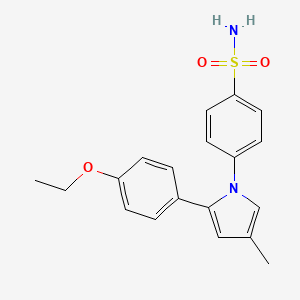
R-109339 is a cyclooxygenase-2 (COX-2) inhibitor currently in phase II clinical development at Tragara Pharmaceuticals for the oral treatment of non-small cell lung cancer (NSCLC) and for the treatment of inflammation. Additional phase II clinical trials are ongoing in combination with gemcitabine and erlotinib for the treatment of pancreas cancer. The company had been evaluating R-109339 for the treatment of colorectal cancer, but development for this indication was discontinued for undisclosed reasons. Daiichi Sankyo and Tragara Pharmaceuticals had been conducting phase II clinical trials with the drug candidate for the oral treatment of arthritis and for the treatment of breast cancer, respectively; however, no recent development for this indication has been reported.
COX catalyzes the formation of prostaglandins and thromboxane from arachidonic acid, which is derived from the cellular phospholipid bilayer by phospholipase A2. In addition to several other functions, prostaglandins act as messenger molecules in the process of inflammation. The compound is also designed to act against a well-defined cancer pathway that affects several routes of cancer pathogenesis. In preclinical cancer models, R-109339 demonstrated superiority to compounds with similar mechanisms of action and potential for use in combination with cisplatin. Furthermore, the compound demonstrated the ability to inhibit the cachexia and weight loss seen in mouse tumor models.

Apricoxib, (CS-706, 1) 2-(4-ethoxyphenyl)-4-methyl-1-(4-sulfamoylphenyl)-pyrrole, a small-molecule, orally active, selective COX-2 inhibitor was discovered by investigators at Daiichi Sankyo in 1996. Clinical studies demonstrated potent analgesic activity and preclinical studies demonstrated good pharmacokinetics, pharmacodynamics and gastrointestinal tolerability. As an anticancer agent, preclinical studies demonstrated efficacy in biliary tract cancer models and colorectal carcinoma, and Recamp et al.
The original synthetic route is outlined below. Though the initial two steps were accomplished with decent yields, the final step of pyrrolidine formation followed by dehydration and dehydrocyanation produced only 3% of 1 as a brown powder. The yield in the last step of the synthesis of the 2-(4-methoxyphenyl) analog, 2-(4-methoxyphenyl)-4-methyl-1-(4-sulfamoylphenyl)-pyrrole, was 6%, indicating that this synthesis route is problematic.
14 Kimura T, Noguchi Y, Nakao A, Suzuki K, Ushiyama S, Kawara A, Miyamoto M. 799823. EP. 1997:A1.

……………………….
Synthesis
Published online Aug 19, 2011. doi: 10.1016/j.bmcl.2011.08.050
SEE AT
http://www.ncbi.nlm.nih.gov/pmc/articles/PMC3310163/
An efficient synthesis of apricoxib (CS-706), a selective cyclooxygenase inhibitor, was developed using copper catalysed homoallylic ketone formation from methyl 4-ethoxybenzoate followed by ozonolysis to an aldehyde, and condensation with sulphanilamide. This method provided multi-gram access of aprocoxib in good yield. Apricoxib exhibited potency equal to celecoxib at inhibition of prostaglandin E2 synthesis in two inflammatory breast cancer cell lines.
We envisioned that 7 could be prepared by ozonolysis of homoallylic ketone (8) (Route B). A recent development in the synthesis of homoallylic ketones by Dorr et al. via copper-catalyzed cascade addition of alkenylmagnesium bromide to an ester a24 was examined. Treatment of commercially available methyl 4-ethoxybenzoate with 1-propenylmagnesium bromide (4.0 equiv) in presence of CuCN (0.6 equiv) resulted in 95% yield of desired ketone8 after silica gel chromatography, along with a minor amount of unreacted ester).b25


The product was a mixture of cis/trans R/S stereoisomers, as detected in the 1H NMR spectrum, and was used directly in the next step without separation. Ozone was bubbled through a solution of 8 in MeOH/CH2Cl2 at −78°C, until all starting materials were consumed. The ozonide was then reduced to aldehyde 7 by treatment with Me2S overnight. Removal of volatiles and subsequent addition and evaporation of toluene gave the crude 1,4-dicarbonyl compound 7 which was sufficiently pure for the following condensation step. The 1H NMR signal at 9.78 ppm of the crude product confirmed the formation of the aldehyde. No attempt was made to characterize the enantiomeric ratio of 7 since the dehydration/aromatization reaction of the next step removes the chirality of the product. Treatment of 7 with sulfanilamide in 40% acetic acid-acetonitrile at 70°C for three hours resulted in a brown product. Purification by silica gel flash chromatography yielded 71% of pure 1 as a white solid.c26
01
1H, 13C, and COSY NMR spectra of compounds 1 and 8.

……………
SYNTHESIS

synthesis
In one strategy, bromination of 4-ethoxyacetophenone (I) with Br2 yields 2-bromo-1-(4-ethoxyphenyl)ethanone (II) along with the byproduct 2-bromo-1-(3-bromo-4-ethoxyphenyl)ethanone, which are separated using HPLC. Alkylation of propionaldehyde N,Ndiisobutylenamine (III) with bromo ketone (II) and subsequent ketalization with neopentyl glycol (IV) using p-TsOH·H2O and, optionally, H2SO4 in MeCN gives monoprotected ketoaldehyde (V) (1). Finally, cyclization of ketoaldehyde derivative (V) with 4-aminobenzenesulfonamide (VI) in the presence of AcOH in PrOH/H2O at 90-100 °C furnishes apricoxib
Intermediate (V) can also be prepared by reaction of 1-(4- ethoxyphenyl)-2-buten-1-one (VII) with CH3NO2 in the presence of DBU in THF to produce nitro ketone (VIII). Subsequent treatment of nitroderivative (VIII) with neopentyl glycol (IV) and NaOMe and MeOH gives acetal (V) (2).In an alternativestrategy, condensation of 4-ethoxyacetaldehyde (IX) with 4-sulfamoylaniline (VI) in refluxing EtOH furnishesN-(4-ethoxybenzylidene)-
4-sulfamoylaniline (X), which then condenses with trimethylsilyl cyanide (XI) in the presence of ZnCl2 in THF yielding α- amino nitrile (XII). Cyclization of this compound with methacrolein (XIII) using LiHMDS in THF affords apricoxib
reference for above
- Drugs of the Future 2011, 36(7): 503-509
- Kojima, S., Ooyama, J. (Daiichi Sankyo Co., Ltd.). Process for production of brominated acetophenone. WO 2008020617.
- Fujimoto, K., Takebayashi, T., Noguchi, Y., Saitou, T. (Daiichi Sankyo Co., Ltd.). Production of 4-methyl-1,2-diarylpyrrole and intermediate for synthesizing the same. JP 2000080078
- Kimura, T., Noguchi, Y., Nakao, A., Suzuki, K., Ushiyama, S., Kawara, A., Miyamoto, M. (Daiichi Sankyo Co., Ltd.). 1,2-Diphenylpyrrole derivatives,their preparation and their therapeutic uses. CA 2201812, EP 0799823, JP 1997823971, US 5908858.
|
References |
1. Bierbach, Ulrich. Platinum acridine anti-cancer compounds and methods thereof. PCT Int. Appl. (2010), 54pp. CODEN: PIXXD2 WO 2010048499 A1 20100429 CAN 152:517954 AN 2010:529827
2. Zaknoen, Sara L.; Lawhon, Tracy. Methods and compositions for the treatment of cancer, tumors, and tumor-related disorders. PCT Int. Appl. (2009), 119 pp. CODEN: PIXXD2 WO 2009070546 A1 20090604 CAN 151:24882 AN 2009:676598
3. Zaknoen, Sara L.; Lawhon, Tracy. Cancer treatment using a 1,2-diphenylpyrrole derivative cyclooxygenase 2 (COX-2) inhibitor and antimetabolite combinations. PCT Int. Appl. (2009), 107pp. CODEN: PIXXD2 WO 2009070547 A1 20090604 CAN 151:24877 AN 2009:672256
4. Estok, Thomas M.; Zaknoen, Sara L.; Mansfield, Robert K.; Lawhon, Tracy. Therapies for treating cancer using combinations of COX-2 inhibitors and anti-HER2(ErbB2) antibodies or combinations of COX-2 inhibitors and HER2(ErbB2) receptor tyrosine kinase inhibitors. PCT Int. Appl. (2009), 121pp. CODEN: PIXXD2 WO 2009042618 A1 20090402 CAN 150:390188 AN 2009:386123
5. Estok, Thomas M.; Zaknoen, Sara L.; Mansfield, Robert K.; Lawhon, Tracy. Therapies for treating cancer using combinations of COX-2 inhibitors and aromatase inhibitors or combinations of COX-2 inhibitors and estrogen receptor antagonists. PCT Int. Appl. (2009), 88pp. CODEN: PIXXD2 WO 2009042612 A1 20090402 CAN 150:390184 AN 2009:385226
6. Estok, Thomas M.; Zaknoen, Sara L.; Mansfield, Robert K.; Lawhon, Tracy. Combination therapy for the treatment of cancer using COX-2 inhibitors and dual inhibitors of EGFR (ErbB1) and HER-2 (ErbB2). PCT Int. Appl. (2009), 87pp. CODEN: PIXXD2 WO 2009042613 A1 20090402 CAN 150:390183 AN 2009:385196
7. Lawhon, Tracy; Zaknoen, Sara; Estok, Thomas; Green, Mark. Patient selection and therapeutic methods using markers of prostaglandin metabolism. PCT Int. Appl. (2009), 121pp. CODEN: PIXXD2 WO 2009009776 A2 20090115 CAN 150:136599 AN 2009:55595
8. Estok, Thomas M.; Zaknoen, Sara L.; Mansfield, Robert K.; Lawhon, Tracy. Methods and compositions for the treatment of cancer, tumors, and tumor-related disorders using combination of a 1,2-diphenylpyrrole derivative and an EGFR inhibitor. PCT Int. Appl. (2009), 104 pp. CODEN: PIXXD2 WO 2009009778 A1 20090115 CAN 150:136628 AN 2009:54177
9. Rohatagi, Shashank; Kastrissios, Helen; Sasahara, Kunihiro; Truitt, Kenneth; Moberly, James B.; Wada, Russell; Salazar, Daniel E. Pain relief model for a COX-2 inhibitor in patients with postoperative dental pain. British Journal of Clinical Pharmacology (2008), 66(1), 60-70.
10. Senzaki, Michiyo; Ishida, Saori; Yada, Ayumi; Hanai, Masaharu; Fujiwara, Kosaku; Inoue, Shin-Ichi; Kimura, Tomio; Kurakata, Shinichi. CS-706, a novel cyclooxygenase-2 selective inhibitor, prolonged the survival of tumor-bearing mice when treated alone or in combination with anti-tumor chemotherapeutic agents. International Journal of Cancer (2008), 122(6), 1384-1390. CODEN: IJCNAW ISSN:0020-7136. CAN 148:440459 AN 2008:228248
11. Kojima, Shunshi; Ooyama, Jo. Process for production of brominated acetophenone as drug intermediate. PCT Int. Appl. (2008), 37pp. CODEN: PIXXD2 WO 2008020617 A1 20080221 CAN 148:262335 AN 2008:220659
12. Ushiyama, Shigeru; Yamada, Tomoko; Murakami, Yukiko; Kumakura, Sei-ichiro; Inoue, Shin-ichi; Suzuki, Keisuke; Nakao, Akira; Kawara, Akihiro; Kimura, Tomio. Preclinical pharmacology profile of CS-706, a novel cyclooxygenase-2 selective inhibitor, with potent antinociceptive and anti-inflammatory effects. European Journal of Pharmacology (2008), 578(1), 76-86.
13. Oitate, Masataka; Hirota, Takashi; Murai, Takahiro; Miura, Shin-ichi; Ikeda, Toshihiko. Covalent binding of rofecoxib, but not other cyclooxygenase-2 inhibitors, to allysine aldehyde in elastin of human aorta. Drug Metabolism and Disposition (2007), 35(10), 1846-1852. CODEN: DMDSAI ISSN:0090-9556. CAN 147:439860 AN 2007:1124386
14. Kiguchi, Kaoru; Ruffino, Lynnsie; Kawamoto, Toru; Franco, Eugenia; Kurakata, Shin-ichi; Fujiwara, Kosaku; Hanai, Masaharu; Rumi, Mohammad; DiGiovanni, John. Therapeutic effect of CS-706, a specific cyclooxygenase-2 inhibitor, on gallbladder carcinoma in BK5.ErbB-2 mice. Molecular Cancer Therapeutics (2007), 6(6), 1709-1717.
15. Moberly, James B.; Xu, Jianbo; Desjardins, Paul J.; Daniels, Stephen E.; Bandy, Donald P.; Lawson, Janet E.; Link, Allison J.; Truitt, Kenneth E. A randomized, double-blind, celecoxib- and placebo-controlled study of the effectiveness of CS-706 in acute postoperative dental pain. Clinical Therapeutics (2007), 29(3), 399-412.
16. Rohatagi, S.; Kastrissios, H.; Gao, Y.; Zhang, N.; Xu, J.; Moberly, J.; Wada, R.; Yoshihara, K.; Takahashi, M.; Truitt, K.; Salazar, D. Predictive population pharmacokinetic/pharmacodynamic model for a novel COX-2 inhibitor. Journal of Clinical Pharmacology (2007), 47(3), 358-370.
17. Moberly, James B.; Harris, Stuart I.; Riff, Dennis S.; Dale, James Craig; Breese, Tara; McLaughlin, Patrick; Lawson, Janet; Wan, Yaping; Xu, Jianbo; Truitt, Kenneth E. A Randomized, Double-Blind, One-Week Study Comparing Effects of a Novel COX-2 Inhibitor and Naproxen on the Gastric Mucosa. Digestive Diseases and Sciences (2007), 52(2), 442-450.
18. Oitate, Masataka; Hirota, Takashi; Koyama, Kumiko; Inoue, Shin-ichi; Kawai, Kenji; Ikeda, Toshihiko. Covalent binding of radioactivity from [14C] rofecoxib, but not [14C] celecoxib or [14C] CS-706, to the arterial elastin of rats. Drug Metabolism and Disposition (2006), 34(8), 1417-1422.
19. Kastrissios, H.; Rohatagi, S.; Moberly, J.; Truitt, K.; Gao, Y.; Wada, R.; Takahashi, M.; Kawabata, K.; Salazar, D. Development of a predictive pharmacokinetics model for a novel cyclooxygenase-2 inhibitor. Journal of Clinical Pharmacology (2006), 46(5), 537-548. CODEN: JCPCBR ISSN:0091-2700. CAN 145:327959 AN 2006:479516
20. Denis, Louis J.; Compton, Linda D. Method using camptothecin compounds, pyrimidine derivatives, and antitumor agents for treating abnormal cell growth. U.S. Pat. Appl. Publ. (2005), 32 pp. CODEN: USXXCO US 2005272755 A1 20051208 CAN 144:17160 AN 2005:1294044
21. Wajszczuk, Charles Paul; Gans, Hendrik J. Dekoning; Di Salle, Enrico; Piscitelli, Gabriella; Massimini, Giorgio; Purandare, Dinesh. Methods using exemestane, alone or with other therapeutic agents, for treating estrogen-dependent disorders. U.S. Pat. Appl. Publ. (2004), 21 pp., Cont.-in-part of WO 2002 72,106. CODEN: USXXCO US 2004082557 A1 20040429 CAN 140:368700 AN 2004:353144
22. Di Salle, Enrico; Piscitelli, Gabriella; Massimini, Giorgio; Purandare, Dinesh; Dekoning, Gans Hendrik. Combined method for treating hormone-dependent disorders with aromatase inactivator exemestane and other therapeutic agents. PCT Int. Appl. (2002), 49 pp. CODEN: PIXXD2 WO 2002072106 A2 20020919 CAN 137:226651 AN 2002:716096
23. McKearn, John P.; Gordon, Gary; Cunningham, James J.; Gately, Stephen T.; Koki, Alane T.; Masferrer, Jaime L. Method of using a cyclooxygenase-2 inhibitor and an integrin antagonist as a combination therapy in the treatment of neoplasia. PCT Int. Appl. (2000), 348 pp. CODEN: PIXXD2 WO 2000038786 A2 20000706 CAN 133:84244 AN 2000:456950
24. McKearn, John P.; Gordon, Gary; Cunningham, James J.; Gately, Stephen T.; Koki, Alane T.; Masferrer, Jaime L. Method of using a cyclooxygenase-2 inhibitor and one or more antineoplastic agents as a combination therapy in the treatment of neoplasia. PCT Int. Appl. (2000), 236 pp. CODEN: PIXXD2 WO 2000038730 A2 20000706 CAN 133:84243 AN 2000:456927
25. McKearn, John P.; Masferrer, Jaime L.; Milas, Luka. Combination therapy of radiation and a cyclooxygenase 2 (COX-2) inhibitor for the treatment of neoplasia. PCT Int. Appl. (2000), 96 pp. CODEN: PIXXD2 WO 2000038716 A1 20000706 CAN 133:84241 AN 2000:456913
26. McKearn, John P.; Gordon, Gary; Cunningham, James J.; Gately, Stephen T.; Koki, Alane T.; Masferrer, Jaime L. Method of using a cyclooxygenase-2 inhibitor and a matrix metalloproteinase inhibitor as a combination therapy in the treatment of neoplasia. PCT Int. Appl. (2000), 437 pp. CODEN: PIXXD2 WO 2000037107 A2 20000629 CAN 133:68922 AN 2000:441655
27. Noguchi, Yasuo; Saito, Toshinori; Fujimoto, Katsuhiko; Takebayashi, Toyonori. Preparation of 4-methyl-1,2-diarylpyrroles and and their intermediates. Jpn. Kokai Tokkyo Koho (2000), 14 pp. CODEN: JKXXAF JP 2000080078 A 20000321 CAN 132:207760 AN 2000:181022
28. Kurakata, Shinichi; Hanai, Masaharu; Kanai, Saori; Kimura, Tomio. Use of cyclooxygenase-2 inhibitors for the treatment and prevention of tumors, tumor-related disorders and cachexia. Eur. Pat. Appl. (1999), 49 pp. CODEN: EPXXDW EP 927555 A1 19990707 CAN 131:82985 AN 1999:440003
29. Kimura, Fumio; Noguchi, Yasuo; Nakao, Akira; Suzuki, Keisuke; Ushiyama, Shigeru; Kawahara, Akihiro; Miyamoto, Masaaki. Diphenylpyrrole derivatives as cyclooxygenase-2 inhibitors. Jpn. Kokai Tokkyo Koho (1999), 69 pp.
30. Kimura, Tomio; Noguchi, Yasuo; Nakao, Akira; Suzuki, Keisuke; Ushiyama, Shigeru; Kawara, Akihiro; Miyamoto, Masaaki. Preparation of 1,2-diphenylpyrroles as cyclooxygenase-2 inhibitors. Eur. Pat. Appl. (1997), 140 pp. CODEN: EPXXDW EP 799823 A1 19971008 CAN 127:331392 AN 1997:678926
31. Rao P N Praveen; Grover Rajesh K Apricoxib, a COX-2 inhibitor for the potential treatment of pain and cancer. IDrugs : the investigational drugs journal (2009), 12(11), 711-22.
|
9-13-2002
|
Method of using COX-2 inhibitors in the treatment and prevention of ocular COX-2 mediated disorders
|
|
|
6-2-1999
|
1,2-diphenylpyrrole derivatives, their preparation and their therapeutic uses
|
|
7-14-2006
|
Use of MEK inhibitors in treating abnormal cell growth
|
|
|
4-7-2006
|
Therapeutic combinations comprising poly (ADP-ribose) polymerases inhibitor
|
|
|
12-9-2005
|
Method for treating abnormal cell growth
|
|
|
6-31-2005
|
Method of using a cyclooxygenase-2 inhibitor and sex steroids as a combination therapy for the treatment and prevention of dismenorrhea
|
|
|
5-4-2005
|
Methods and compositions for treatment and prevention of tumors, tumor-related disorders and cachexia
|
|
|
4-30-2004
|
Compositions of cyclooxygenase-2 selective inhibitors and NMDA receptor antagonists for the treatment or prevention of neuropathic pain
|
|
|
4-30-2004
|
Methods for treating estrogen-dependent disorders
|
|
|
4-16-2004
|
Method of using a COX-2 inhibitor and an alkylating-type antineoplastic agent as a combination therapy in the treatment of neoplasia
|
|
|
3-26-2004
|
Method of using cox-2 inhibitors in the treatment and prevention of ocular cox-2 mediated disorders
|
|
|
3-19-2004
|
Method of using a COX-2 inhibitor and an aromatase inhibitor as a combination therapy
|
|
8-22-2012
|
Methods and Compositions for the Treatment of Cancer, Tumors, and Tumor-Related Disorders
|
|
|
12-21-2011
|
HUMAN MONOCLONAL ANTIBODIES TO ACTIVIN RECEPTOR-LIKE KINASE-1
|
|
|
10-6-2011
|
Use of cyclooxygenase-2 inhibitors for the treatment and prevention of tumours, tumour-related disorders and cachexia
|
|
|
6-30-2010
|
Methods and compositions for the treatment and prevention of tumors, tumor-related disorders and cachexia
|
|
|
11-13-2009
|
HETEROAROMATIC DERIVATIVES USEFUL AS ANTICANCER AGENTS
|
|
|
5-27-2009
|
Human monoclonal antibodies to activin receptor-like kinase-1
|
|
|
4-31-2009
|
BICYCLIC HETEROAROMATIC DERIVATIVES USEFUL AS ANTICANCER AGENTS
|
|
|
11-7-2008
|
Pharmaceutical Compositions Comprising an Amorphous Form of a Vegf-R-Inhibitor
|
|
|
10-24-2008
|
Compositions for the Treatment of Inflammation and Pain Using a Combination of a Cox-2 Selective Inhibitor and a Ltb4 Receptor Antagonist
|
|
|
10-32-2007
|
1,2-Diphenylpyrrole derivatives, their preparation and their therapeutic uses
|
Golden Root (Rhodiola rosea)…….a queen of adaptogenic herbs

Golden Root (Rhodiola rosea) – Also called Arctic Root or Roseroot, golden root is considered a queen of adaptogenic herbs. As one blogger puts it, “[Golden root] allows us to regulate our immune, physiological and neurological responses to stress, allowing us to survive not only rough environmental/weather challenges, but also to adapt and adjust our often neurotic mental habits and crazy social/political climates as well.
”The Russians use it to improve physical stamina and adapt to environmental stress. In Siberia, people still say, “Those who drink Rhodiola tea will live more than 100 years old.” The extract possesses positive mood enhancing and anti-stress properties with no detectable levels of toxicity. Golden root works by enhancing the body’s ability to make serotonin, dopamine, and other neurotransmitters that aid in happiness and stress-reduction.
Rhodiola rosea (commonly golden root, rose root, roseroot, Aaron’s rod, arctic root, king’s crown, lignum rhodium, orpin rose) is a perennial flowering plant in the family Crassulaceae. It grows in cold regions of the world, including much of the Arctic, the mountains ofCentral Asia, scattered in eastern North America from Baffin Island to the mountains of North Carolina, and mountainous parts of Europe, such as the Alps, Pyrenees, and Carpathian Mountains, Scandinavia, Iceland, Great Britain and Ireland. It grows on sea cliffs and on mountains[2] at altitudes up to 2280 meters.[where?][citation needed] Several shoots grow from the same thick root. Shoots may reach 5 to 35 cm in height. R. rosea is dioecious – having separate female and male plants.
History
The first time that R. rosea is described was from Dioscorides in De Materia Medica.
Uses

Plant
Some studies have found support for it having antidepressant effects.[3][4] It is not approved by the U.S. Food and Drug Administration (FDA) to cure, treat, or prevent any disease. In fact, the FDA has forcibly removed some products containing R. rosea from the market due to disputed claims that it treats cancer, anxiety, influenza, the common cold, bacterial infections, and migraines.[5]
R. rosea may be effective for improving mood and alleviating depression. Pilot studies on human subjects[6][7][8] showed it improves physical and mental performance, and may reduce fatigue.
In Russia and Scandinavia, R. rosea has been used for centuries to cope with the cold Siberianclimate and stressful life.[citation needed][9][10] Such effects were provided with evidence in laboratory models of stress using the nematode C. elegans,[11] and in rats in which Rhodiola effectively prevented stress-induced changes in appetite, physical activity, weight gain and the estrus cycle.[12]
The plant has been used in traditional Chinese medicine, where it is called hóng jǐng tiān (红景天). The medicine can be used to prevent altitude sickness.[citation needed]
The aerial portion is consumed as food in some parts of the world, sometimes added to salads.[13]
Phytochemicals and potential health effects

Withering flower
Scientists have identified about 140 chemical compounds in the subterranean portions of R. rosea.[14] Rhodiola roots contain phenols,rosavin, rosin, rosarin, organic acids, terpenoids, phenolcarbonic acids and their derivatives, flavonoids, anthraquinones, and alkaloids.
The chemical composition of the essential oil from R. rosea root growing in different countries varies. For example, rosavin, rosarin and rosin at their highest concentration according to many tests can be found only in R. rosea of Russian origin; the main component of the essential oil from Rhodiola growing in Bulgaria are geraniol and myrtenol; in China the main components are geraniol and 1-octanol; and in India the main component is phenylethilic alcohol. Cinnamic alcohol was discovered only in the sample from Bulgaria.[15]
R. rosea contains a variety of compounds that may contribute to its effects,[16] including the class of rosavins that includes rosavin, rosarin, and rosin. Several studies have suggested that the most active components are likely to be rhodioloside and tyrosol,[17] with other components being inactive when administered alone, but showing synergistic effects when a fixed combination of rhodioloside, rosavin, rosarin and rosin was used.[18] Authentication, as well as potency, of R. rosea crude material and standardized extracts thereof are carried out with validated high-performance liquid chromatography analyses to verify the content of the marker constituents salidroside, rosarin, rosavin, rosin and rosiridin.[19]
Although rosavin, rosarin, rosin and salidroside (and sometimes p-tyrosol, rhodioniside, rhodiolin and rosiridin) are among suspected active ingredients of R. rosea, these compounds are mostly polyphenols. There is no evidence that these chemicals have any physiological effect in humans that could prevent or reduce risk of disease.[20]
Although these phytochemicals are typically mentioned as specific to Rhodiola extracts, there are many other constituent phenolic antioxidants, including proanthocyanidins,quercetin, gallic acid, chlorogenic acid and kaempferol.[21][22]

Dried R. rosea root
Animal tests have suggested a variety of beneficial effects for R. rosea extracts,[23] and there is some scientific evidence for its efficacy as a treatment for depression and fatigue [6][7][24][25] in humans.
Scientific evidence
R. rosea extract exerts an antifatigue effect that increases mental performance, particularly the ability to concentrate in healthy subjects[6][7][24] and burnout patients with fatigue syndrome.[25] Rhodiola significantly reduced symptoms of fatigue and improved attention after four weeks of repeated administration.[25] A 2007 clinical trial from Armenia showed significant effect for a Rhodiola extract in doses of 340–680 mg per day in male and female patients from 18 to 70 years old with mild to moderate depression. No side effects were demonstrated at these doses.[3] One study found inhibition of MAO-A and MAO-B.[26] Studies on whether Rhodiola improves physical performance have been inconclusive, with some studies showing some benefit,[27] while others show no significant difference.[28]
Two systematic reviews on R. rosea extracts concluded that the research evidence is contradictory, and definite conclusions over its efficacy to relieve mental and physical fatigue are hampered by the lack of rigorously-designed, well-controlled randomized control trials [29]
In clinical medical trials on people R. rosea extract has a positive effect on sensitive and fading skin improving overall skin condition.[30][full citation needed]
R. rosea promotes the release of norepinephrine from rat pineal corpus cavernosum smooth muscle cell and artery endothelium cell, which was correlated with its effect of resisting senility.[31] R. rosea extract has been found to increase the life span of fruit fly (Drosophila) by 24% independently of dietary restriction.[32]
R. rosea may enhance the detoxification of many toxic heavy metals.[33]
References
- Jump up^ “Rhodiola rosea – Plants For A Future database report”. http://www.pfaf.org. Retrieved 2008-02-23.
- Jump up^ Stace, C.A. (2010). New flora of the British isles (Third ed.). Cambridge, U.K.: Cambridge University Press. p. 138. ISBN 9780521707725.
- ^ Jump up to:a b Darbinyan V, Aslanyan G, Amroyan E, Gabrielyan E, Malmström C, Panossian A (2007). “Clinical trial of Rhodiola rosea L. extract in the treatment of mild to moderate depression”. Nord J Psychiatry 61 (5): 343–8. doi:10.1080/08039480701643290.PMID 17990195.
- Jump up^ Dwyer AV, Whitten DL, Hawrelak JA (March 2011). “Herbal medicines, other than St. John’s Wort, in the treatment of depression: a systematic review” (PDF). Altern Med Rev 16 (1): 40–9. PMID 21438645.
- Jump up^ See for example, Letter, dated April 21, 2005, Food and Drug Administration
- ^ Jump up to:a b c Shevtsov VA, Zholus BI, Shervarly VI, et al. (Mar 2003). “A randomized trial of two different doses of Rhodiola rosea extract versus placebo and control of capacity for mental work”. Phytomedicine 10 (2–3): 95–105. doi:10.1078/094471103321659780.PMID 12725561.
- ^ Jump up to:a b c Darbinyan V, Kteyan A, Panossian A, Gabrielian E, Wikman G, Wagner H (Oct 2000). “Rhodiola rosea in stress induced fatigue—a double blind cross-over study of a standardized extract with a repeated low-dose regimen on the mental performance of healthy physicians during night duty”. Phytomedicine 7 (5): 365–71. doi:10.1016/S0944-7113(00)80055-0. PMID 11081987.
- Jump up^ Ha Z, Zhu Y, Zhang X, et al. (Sep 2002). “[The effect of rhodiola and acetazolamide on the sleep architecture and blood oxygen saturation in men living at high altitude]”.Zhonghua Jie He He Hu Xi Za Zhi (in Chinese) 25 (9): 527–30. PMID 12423559.
- Jump up^ Azizov, AP; Seĭfulla, RD (May–Jun 1998). “[The effect of elton, leveton, fitoton and adapton on the work capacity of experimental animals].”. Eksperimental’naia i klinicheskaia farmakologiia 61 (3): 61–3. PMID 9690082.
- Jump up^ Darbinyan, V; Kteyan, A; Panossian, A; Gabrielian, E; Wikman, G; Wagner, H (Oct 2000). “Rhodiola rosea in stress induced fatigue–a double blind cross-over study of a standardized extract SHR-5 with a repeated low-dose regimen on the mental performance of healthy physicians during night duty.”. Phytomedicine : international journal of phytotherapy and phytopharmacology 7 (5): 365–71. doi:10.1016/S0944-7113(00)80055-0. PMID 11081987.
- Jump up^ Wiegant FA, Surinova S, Ytsma E, Langelaar-Makkinje M, Wikman G, Post JA (Jun 2008). “Plant adaptogens increase lifespan and stress resistance in C. elegans”.Biogerontology 10 (1): 27–42. doi:10.1007/s10522-008-9151-9. PMID 18536978.
- Jump up^ Mattioli L, Funari C, Perfumi M (May 2008). “Effects of Rhodiola rosea L. extract on behavioural and physiological alterations induced by chronic mild stress in female rats”.Journal of Psychopharmacology (Oxford) 23 (2): 130–42.doi:10.1177/0269881108089872. PMID 18515456.
- Jump up^ Saratikov A.S. (1974). Golden Root (Rhodiola Rosea) (2nd ed.). Publishing House of Tomsk University. p. 158.
- Jump up^ Panossian, A., Wikman, G. (2010). “Rosenroot (Roseroot): Traditional Use, Chemical Composition, Pharmacology, and Clinical Efficacy”. Phytomedicine 17 (5-6): 481–493.doi:10.1016/j.phymed.2010.02.002.
- Jump up^ Evstavieva L., Todorova M., Antonova D., Staneva J. (2010). “Chemical composition of the essential oils of Rhodiola rosea L. of three different origins”. Pharmacogn Mag. 6 (24): 256–258.
- Jump up^ Kucinskaite A, Briedis V, Savickas A (2004). “[Experimental analysis of therapeutic properties of Rhodiola rosea L. and its possible application in medicine]”. Medicina (Kaunas) (in Lithuanian) 40 (7): 614–9. PMID 15252224.
- Jump up^ Mao Y, Li Y, Yao N (Nov 2007). “Simultaneous determination of salidroside and tyrosol in extracts of Rhodiola L. by microwave assisted extraction and high-performance liquid chromatography”. J Pharm Biomed Anal 45 (3): 510–5. doi:10.1016/j.jpba.2007.05.031.PMID 17628386.
- Jump up^ Panossian A, Nikoyan N, Ohanyan N, et al. (Jan 2008). “Comparative study of Rhodiola preparations on behavioral despair of rats”. Phytomedicine 15 (1–2): 84–91.doi:10.1016/j.phymed.2007.10.003. PMID 18054474.
- Jump up^ Ganzera M, Yayla Y, Khan IA (April 2001). “Analysis of the marker compounds of Rhodiola rosea L. (golden root) by reversed phase high performance liquid chromatography”. Chem. Pharm. Bull. 49 (4): 465–7. doi:10.1248/cpb.49.465.PMID 11310675.
- Jump up^ Boudet AM (2007). “Evolution and current status of research in phenolic compounds”.Phytochemistry 68 (22–24): 2722–35. doi:10.1016/j.phytochem.2007.06.012.PMID 17643453.
- Jump up^ Yousef GG, Grace MH, Cheng DM, Belolipov IV, Raskin I, Lila MA (Nov 2006). “Comparative phytochemical characterization of three Rhodiola species”. Phytochemistry67 (21): 2380–91. doi:10.1016/j.phytochem.2006.07.026. PMID 16956631.
- Jump up^ Liu Q, Liu ZL, Tian X (Feb 2008). “[Phenolic components from Rhodiola dumulosa]”.Zhongguo Zhong Yao Za Zhi (in Chinese) 33 (4): 411–3. PMID 18533499.
- Jump up^ Perfumi M, Mattioli L (Jan 2007). “Adaptogenic and central nervous system effects of single doses of 3% rosavin and 1% salidroside Rhodiola rosea L. extract in mice”.Phytother Res 21 (1): 37–43. doi:10.1002/ptr.2013. PMID 17072830.
- ^ Jump up to:a b Spasov. A.A., Mandrikov, V.B., Mitonova, I.A., 2000b. The effect of Dhodaxonon psycho-physiologic and physical adaptation of students to the academic load. Experimental and Clinical Pharmacology 63 (1), 76-78.
- ^ Jump up to:a b c Olsson E.M.G., von Schéele B., Panossian A.G. (2009). “A randomized double-blind placebo controlled parallel group study of an extract of Rhodiola rosea roots as treatment for patients with stress related fatigue”. Planta medica 75 (2): 105–112.doi:10.1055/s-0028-1088346. PMID 19016404.
- Jump up^ van Diermen, D.; Marston, A.; Bravo, J.; Reist, M.; Carrupt, PA.; Hostettmann, K. (Mar 2009). “Monoamine oxidase inhibition by Rhodiola rosea L. roots.”. J Ethnopharmacol122 (2): 397–401. doi:10.1016/j.jep.2009.01.007. PMID 19168123.
- Jump up^ De Bock K, Eijnde BO, Ramaekers M, Hespel P (Jun 2004). “Acute Rhodiola rosea intake can improve endurance exercise performance”. Int J Sport Nutr Exerc Metab 14(3): 298–307. PMID 15256690.
- Jump up^ Walker TB, Altobelli SA, Caprihan A, Robergs RA (Aug 2007). “Failure of Rhodiola rosea to alter skeletal muscle phosphate kinetics in trained men”. Metab Clin Exp. 56(8): 1111–7. doi:10.1016/j.metabol.2007.04.004. PMID 17618958.
- Jump up^ Ishaque, Sana; Shamseer, Larrisa; Bukutu, Cecilia; Vohra, Sunita. “Rhodiola rosea for physical and mental fatigue: a systematic review”. BMC Complementary and Alternative Medicine 12 (1): 70. doi:10.1186/1472-6882-12-70. PMID 3541197.
- Jump up^ Diemant et al., 2008
- Jump up^ Effect of Rodiola on level of NO and NOS in cultured rats penile corpus cavernosum smooth muscle cell and artery endothelium cell Kong X., Shi F., Chen Y., Lu H., Yao M., Hu M. Chinese Journal of Andrology 2007 21:10 (6-11)
- Jump up^ Schriner, Samuel E.; Lee, Kevin; Truong, Stephanie; Salvadora, Kathyrn T.; Maler, Steven; Nam, Alexander; Lee, Thomas; Jafari, Mahtab; Englert, Christoph (21 May 2013). “Extension of Drosophila Lifespan by Rhodiola rosea through a Mechanism Independent from Dietary Restriction”. PLoS ONE 8 (5): e63886. doi:10.1371/journal.pone.0063886.
- Jump up^ Boon-Niermeijer, E.K.; van den Berg, A.; Wikman, G.; Wiegant, F.A.C. “Phyto-adaptogens protect against environmental stress-induced death of embryos from the freshwater snail Lymnaea stagnalis”. Phytomedicine 7 (5): 389–399. doi:10.1016/S0944-7113(00)80060-4.
External links
 Media related to Rhodiola rosea at Wikimedia Commons
- Whole Health MD, Reference Library
- Plants For A Future, Rhodiola rosea Rose Root PFAF
- Wilderness Medical Society, Lack of Effect of Rhodiola on Hypoxemia and Oxidative Stress
Gotu Kola (Centella asiatica), this herb is known for calming depressive episodes, strengthening cognitive function, and helping one deal with both mental and physical stress

Gotu Kola (Centella asiatica) – An antiseptic, antispasmodic, peripheral vasodilator, and nerving and relaxant, this herb is known for calming depressive episodes, strengthening cognitive function, and helping one deal with both mental and physical stress.
Centella asiatica, commonly known as centella and gotu kola, is a small, herbaceous, annual plant of the family Mackinlayaceae or subfamily Mackinlayoideae of family Apiaceae, and is native to wetlands in Asia.[2][3] It is used as a medicinal herb in Ayurvedic medicine,traditional African medicine, and traditional Chinese medicine. It is also known as the Asiatic pennywort or Indian pennywort in English, among various other names in other languages.
Description
Centella grows in tropical swampy areas.[4] The stems are slender, creeping stolons, green to reddish-green in color, connecting plants to each other. It has long-stalked, green, reniform leaves with rounded apices which have smooth texture with palmately netted veins. The leaves are borne on pericladial petioles, around 2 cm. The rootstock consists of rhizomes, growing vertically down. They are creamish in color and covered with root hairs.[5]
The flowers are white or pinkish to red in color, born in small, rounded bunches (umbels) near the surface of the soil. Each flower is partly enclosed in two green bracts. The hermaphrodite flowers are minute in size (less than 3 mm), with 5-6 corolla lobes per flower. Each flower bears five stamens and two styles. The fruit are densely reticulate, distinguishing it from species of Hydrocotyle which have smooth, ribbed or warty fruit.[3] The crop matures in three months, and the whole plant, including the roots, is harvested manually.
Habitat
Centella grows along ditches and in low, wet areas. In Indian and Southeast Asian centella, the plant frequently suffers from high levels of bacterial contamination, possibly from having been harvested from sewage ditches. Because the plant is aquatic, it is especially sensitive to pollutants in the water, which are easily incorporated into the plant.
Culinary use

Flowers and leaves centella asiatica

Bai bua bok served as a refreshing drink in Thailand
Centella is used as a leafy green in Sri Lankan cuisine, where it is called gotu kola. In Sinhalese, gotu is translated as “conical shape” andkola as “leaf”. It is most often prepared as malluma (මැල්ලුම), a traditional accompaniment to rice and curry, and goes especially well with vegetarian dishes, such as dhal, and jackfruit or pumpkin curry. It is considered quite nutritious. In addition to finely chopped gotu kola,malluma almost always contains grated coconut, and may also contain finely chopped green chilis, chili powder, turmeric powder and lime(or lemon) juice. A variation of the nutritious porridge known as kola kenda is also made with gotu kola by the Sinhalese people of Sri Lanka. Kola Kenda is made with very well-boiled red rice (with extra liquid), coconut milk and gotu kola, which is pureed. The porridge is accompanied with jaggery for sweetness. Centella leaves are also used in sweet “pennywort” drinks.
In Indonesia, the leaves are used for sambai oi peuga-ga, an Aceh type of salad, and is also mixed into asinan in Bogor.
In Vietnam and Thailand, this leaf is used for preparing a drink or can be eaten in raw form in salads or cold rolls. In Bangkok, vendors in the famous Chatuchak Weekend Market sell it alongside coconut, roselle, chrysanthemum, orange and other health drinks.
In Malay cuisine the leaves of this plant are used for ulam, a type of Malay salad.[6]
It is one of the constituents of the Indian summer drink thandaayyee.
In Bangladeshi cuisine mashed centella is eaten with rice and is popular for its medicinal properties.
Medicinal effects
According to the American Cancer Society, although centella is promoted for its health benefits, “available scientific evidence does not support claims of its effectiveness for treating cancer or any other disease in humans”.[7] However some research has shown a possible health benefit in the form of reduction of the progression of subclinical arterial lesions in low-risk asymptomatic subjects.[8]
Other names
In South Asia, other common names of centella include సరస్వతి ఆకు (sarswathi aku) in Telugu; കുടവൻ (kudavan), മുത്തിൾ (muththil), or കുടങ്ങൽ (kudangal) in Malayalam; থানকুনি (thankuni) in Bengali; ගොටුකොල (gotu kola) in Sinhala; मधुकपर्णी (mandukaparni) inSanskrit; ब्राम्ही / ब्राह्मी (brahmi) in Marathi: ಒಂದೆಲಗ (ondelaga) in Kannada; வல்லாரை (vallaarai) in Tamil; brahmi booti in Hindi; perookin Manipuri; মানিমুনি (manimuni) in Assamese; timare in Tulu; tangkuanteh in Paite; ब्रह्मबुटि (brahmabuti) or घोड टाप्रे (ghod-tapre) in Nepali; and खोलचा घायँ (kholcha ghyan) in Newari (Nepal Bhasa).
In India, particularly, it is popularly known by a variety of names: bemgsag, brahma manduki, brahmanduki, brahmi, ondelaga or ekpanni (south India, west India), sarswathi aku(Andhra Pradesh), gotu kola, khulakhudi, mandukparni, mandookaparni, or thankuni (Bengal), depending on region. Bacopa monnieri is the more widely known Brahmi; both have some common therapeutic properties in Vedic texts and are used for improving memory. C. asiatica is called brahmi particularly in north India,[9][10] although that may be a case of mistaken identity introduced during the 16th century, when brahmi was confused with mandukaparni, a name for C. asiatica.[11] [12] Probably the earliest study ofmandookaparni as medya rasayana (improving the mental ability) was carried out at the Dr. A. Lakshmipathy Research Centre (now under CCRAS).[13]
In Southeast Asia, it is known as ស្លឹកត្រចៀកក្រាញ់ (sleuk tracheakkranh) in Khmer; မြင်းခွာပင် (mying khwar ) in Burmese; ใบบัวบก (bai bua bok) in Thai; rau má (“mother vegetable”) in Vietnamese; pegagan or antanan in Indonesian; takip-kohol (literally “snail lid“)[14] or yahong yahong (“little bowl”) in Filipino; and pegagan or pegaga in Malay.
In East Asia, it is known as 雷公根 (lei gong gen; literally “thunder god’s root”) or 崩大碗 (“chipped big bowl”) in Chinese; and 병풀 (byeong-pul, literally “bottle/jar plant”) in Korean.

Folklore
Gotu kola is a minor feature in the longevity tradition of the T’ai chi ch’uan master Li Ching-Yuen. He purportedly lived to be 197 or 256, due in part to his usage of traditionalChinese herbs, including gotu kola.
See also
References
- Jump up^ “Pharmacological Review on Centella asiatica: A Potential Herbal Cure-all.”. Indian J Pharm Sci: 546–56. September 2010.
- Jump up^ United States Department of Agriculture. “Plant Profile for Centella asiatica”. Retrieved 15 July 2012 (Use Native Status Link on Page).
- ^ Jump up to:a b Floridata. “Centella asiatica“. Retrieved 15 July 2012.
- Jump up^ Meschino Health. “Comprehensive Guide to Gotu Kola (Centella asiatica)”. Retrieved 15 July 2012.
- Jump up^ “Leaf Extract Treatment During the Growth Spurt Period Enhances Hippocampal CA3 Neuronal Dendritic Arborization in Rats”. Evid Based Complement Alternat Med: 349–57. September 2006.
- Jump up^ “Nasi ulam”. Retrieved 2009-05-07.
- Jump up^ “Gotu Kola”. American Cancer Society. 28 November 2011. Retrieved August 2013.
- Jump up^ “Pycnogenol® and Centella Asiatica for asymptomatic atherosclerosis progression”.International Angiology. 33(1): 20–26. February 2014.
- Jump up^ Daniel, M. (2005). Medicinal plants: chemistry and properties. Science Publishers. p. 225. ISBN 978-1-57808-395-4.
- Jump up^ “In north India, however, brāhmī is commonly identified as Centella asiatica (Linn.) Urban, which in Malayalam is known as muttil. It seems that this identification of brāhmīas C. asiatica has been in use for long in northern India, as Hēmādri’s ‘Commentary on Aṣṭāṅgahṛdayaṃ (Āyuṛvēdarasāyanaṃ) treats maṇḍūkapaṛṇī (C. asiatica) as a synonym of brahmi.” Warrier, P K; V P K Nambiar, C Ramankutty, V.P.K. & Ramankutty, R Vasudevan Nair (1996). Indian Medicinal Plants: A Compendium of 500 Species, Volume 1. Orient Blackswan. p. 238. ISBN 978-81-250-0301-4.
- Jump up^ Khare, C. P. (2003). Indian Herbal Remedies: Rational Western Therapy, Ayurvedic, and Other Traditional Usage, Botany. Springer. p. 89. ISBN 978-3-540-01026-5.
- Jump up^ “Mandukaparni (Centella asiatica)”. National R & D Centre for Rasayana. Retrieved 15 August 2013.
- Jump up^ Appa Rao MVR, Srinivas K, Koteshwar Rao T. “The effect of Mandookaparni (Centella asiatica) on the general mental ability (medhya) of mentally retarded children”. J. Res Indian Med. 1973;8:9–16.
- Jump up^ “Takip-kohol / Centella asiatica / Pennyworth: Philippine Medicinal Herbs / Philippine Alternative Medicine”. Stuartxchange.org. Retrieved 2014-03-22.
External links
- Caldecott, Todd (2006). Ayurveda: The Divine Science of Life. Elsevier/Mosby. ISBN 0-7234-3410-7. Contains a detailed monograph on Centella asiatica (Mandukaparni; Gotu Kola) as well as a discussion of health benefits and usage in clinical practice. Available online at http://www.toddcaldecott.com/index.php/herbs/learning-herbs/304-mandukaparni
- Research on the effect of Centella Asiatica on mild cognitive impairment (MCI) and other common age-related clinical problems
- Indian recipes using Centella leaves
- Centella asiatica in West African plants – A Photo Guide.
Oat Straw (Avena sativa) helpful in calming the nerves of those who are detoxing from drug or alcohol addiction, and can even help curb nicotine cravings.

Oat Straw (Avena sativa) – Not only can this herb effectively treat anxiety, it is also used to treat migraines, shingles, fatigue, and even epilepsy. This herb can be especially helpful in calming the nerves of those who are detoxing from drug or alcohol addiction, and can even help curb nicotine cravings.
Avena Sativa – Oats Benefits
Are you feeling stressed, tired, depressed, fed-up, run down or even lacking your usual sexual desire? If so, have you considered a daily dose of Avena sativa (also known as Oats or Oatstraw)?
This wonderful herb is thought to be soothing to the brain and nervous system, whilst at the same time increasing sexual desire, and performance, in both men and women!

Avena sativa is quickly becoming a popular natural alternative to pharmaceutical erection enhancers without the dangerous side effects. Also known as Oats Milky Seed or Oatstraw, Avena Sativa is used to stimulate both men and women quickly and effectively. It is often described as the “Natural Viagra”! Its stimulating effects are well known in the animal world, especially with horses where it is widely known that if you feed them oats their behaviour will be wild and energetic! And we’ve all heard the term “sowing your oats”.
Dr. Larry Clapp has studied alternative virility medicines extensively and concludes that “ten drops, under the tongue, twice a day works very powerfully to enhance erectile function.” Other studies have also suggested powerful results in both sexes.
In women, the effect seems to be that of increasing sexual desire rather than physical performance. Avena sativa contains compounds which are both sedative and soothing to the brain and nervous system, hence it is said to be a good herb as a nerve restorative. In women the aphrodisiac effect seems to work by relaxing the body which in turn allows a natural increase in desire.

In men it appears to be effective for treating impotence and premature ejaculation, probably by increasing healthy blood flow.
As a food, oats are known to be good for the heart because they keep blood fats under control. They also have other medicinal properties.
Avena sativa seeds are not only a rich source of carbohydrate and soluble fibre, they also have the highest content of Iron, Zinc and Manganese of any grain. It is said to be useful as a nerve restorative.
Avena sativa has no known side effects, unlike the sometimes dangerous sexual prescription drugs. It is used as a nervous system general tonic as well as a general health tonic.
Avena sativa is often the primary ingredient in expensive sexual formulas and in the popular alternatives Herbal V, Cobra and Biogra. There is no need to purchase expensive herbal formulas. The pure herb is more powerful and is not expensive to use.
Avena sativa does not appear to interact with drugs so it is often used as a safe alternative to other herbs that are used for anxiety, such as St John’s wort, which cannot be taken with many prescription medications. Avena sativa may also be of use in helping with drug withdrawal and is often combined with valerian and skullcap.
Oats are sometimes added to the bath as a topical treatment for the skin condition eczema. Generally, there are no side effects or contra-indications from using avena sativa herbal supplements.

Freshly gathered Oatstraw
Medicinal Uses
Oatstraw is a cooling nervine and uterine tonic, anti-depressant, anti-spasmodic, nutritive, demulcent, and vulnerary herb. It’s high in vitamin E, protein, and minerals, and works by essentially feeding and soothing the nervous system, especially in times of stress, nervous exhaustion, and depression. It’s extremely helpful in menopause cases and with the recovery from shingles, estrogen deficiencies, persistant colds, and muscular sclerosis. As a tonic herb, it’s helpful for the whole system and can boost brain function and metabolism. It has high levels of silicic acid which help treat skin conditions such as excema, psoriasis, and irritations when applied externally as a soothing bath or compress. For depression, it combines well with lady’s slipper and skullcap. In Aryuvedic medicine, oatstraw is used for treating addictions and considered rejuvenating.
Dosage
Oatstraw can be taken as a tincture, with 3-5 ml three times daily, made into an infusion to taste drunk throughout the day. An infusion of oatstraw is high in B vitamins and protein. Oats, the fruit of the plant, can be made into a porridge or gruel. For irritated skin, both oatstraw and oats can be used in a bath at 1 pound of straw to 2 liters of water, boiled for half an hour, added to the bath water. As a foot-soak, it can help rejuvenate tired feet, especially when combined with a little peppermint and green tea. Oats themselves can be ground up and used in skincare products like as washes and scrubs (such as in my Dirty Girl Facial Scrub) and added to bath waters.

http://www.vitaminsestore.com/oatstraw-benefits-side-effects-reviews-and-dosage/
Tiny amounts of BPA can alter mammary gland development

Researchers see BPA effects in monkey mammary glands
Study adds to growing health concerns about common plastic additive
PULLMAN, Wash.—A new study finds that fetal exposure to the plastic additive bisphenol A, or BPA, alters mammary gland development in primates. The finding adds to the evidence that the chemical can be causing health problems in humans and bolsters concerns about it contributing to breast cancer.
“Previous studies in mice have demonstrated that low doses of BPA alter the developing mammary gland and that these subtle changes increase the risk of cancer in the adult,” says Patricia Hunt, a geneticist in Washington State University’s School of Molecular Biosciences. “Some have questioned the relevance of these findings in mice to humans. But finding the same thing in a primate model really hits uncomfortably close to home.”
View original post 288 more words


 New Drug Approvals